Category: Obituaries

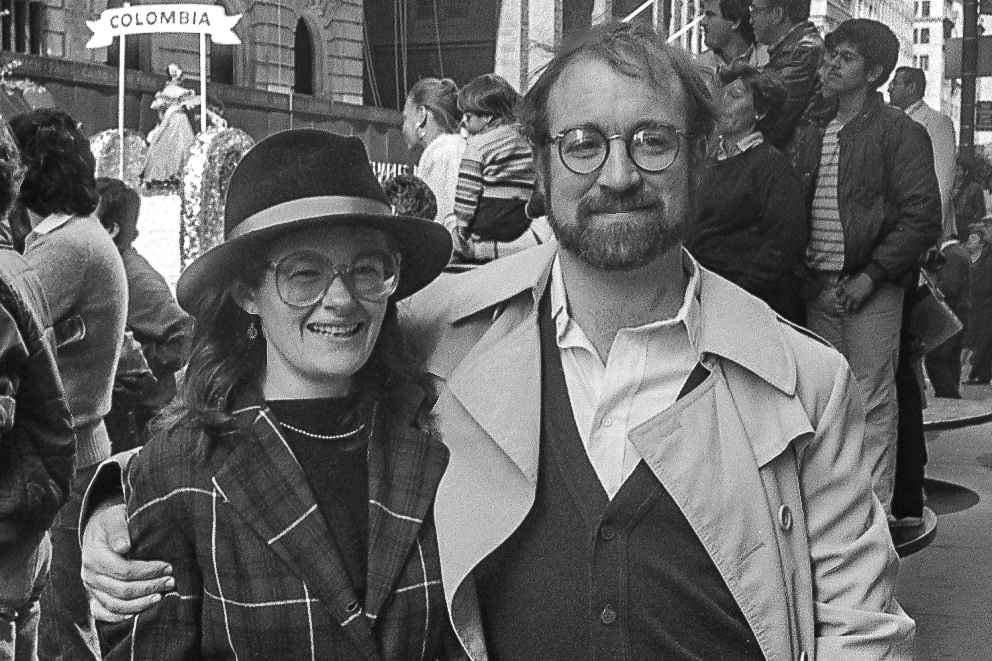
  • Norman Podhoretz, 95, contentious and influential neo-conservative

    Norman Podhoretz, 95, contentious and influential neo-conservative

    NEW YORK — Norman Podhoretz, the boastful, hard-line editor and author whose books, essays, and stewardship of Commentary magazine marked a political and deeply personal break from the left and made him a leader of the neoconservative movement, has died. He was 95.

    Mr. Podhoretz died “peacefully and without pain” on Dec. 16, his son John Podhoretz confirmed in a statement on Commentary’s website. His cause of death was not immediately released.

    “He was a man of great wit and a man of deep wisdom and he lived an astonishing and uniquely American life,” John Podhoretz said.

    Norman Podhoretz was among the last of the so-called “New York intellectuals” of the mid-20th century, a famously contentious circle that at various times included Norman Mailer, Hannah Arendt, Susan Sontag, and Lionel Trilling. As a young man, Mr. Podhoretz longed to join them. In middle age, he departed. Like Irving Kristol, Gertrude Himmelfarb, and other founding neoconservatives, Podhoretz began turning from the liberal politics he shared with so many peers and helped reshape the national dialogue in the 1960s and after.

    The son of Jewish immigrants, Mr. Podhoretz was 30 when he was named editor-in-chief of Commentary in 1960, and years later transformed the once-liberal magazine into an essential forum for conservatives. Two future U.S. ambassadors to the United Nations, Daniel Patrick Moynihan and Jeane Kirkpatrick, received their appointments in part because of essays they published in Commentary that called for a more assertive foreign policy.

    Despised by former allies, Mr. Podhoretz found new friends all the way to the White House, from President Ronald Reagan, a reader of Commentary; to President George W. Bush, who in 2004 awarded Mr. Podhoretz the Presidential Medal of Freedom, the nation’s highest civilian honor, and praised him as a “man of “fierce intellect” who never “tailored his opinion to please others.”

    Mr. Podhoretz, who stepped down as editor-in-chief in 1995, had long welcomed argument. The titles of his books were often direct and provocative: Making It, The Present Danger, World War IV, Ex-Friends: Falling Out with Allen Ginsberg, Lionel and Diana Trilling, Lillian Hellman, Hannah Arendt, and Norman Mailer. He pressed for confrontation everywhere from El Salvador to Iran, and even disparaged Reagan for talking to Soviet leaders, calling such actions “the Reagan road to detente.” For decades, he rejected criticism of Israel, once writing that “hostility toward Israel” is not only rooted in antisemitism but a betrayal of “the virtues and values of Western civilization.”

    Meanwhile, Mr. Podhoretz became a choice target for disparagement and creative license. New York Times reviewer Michiko Kakutani called World War IV an “illogical screed based on cherry-picked facts and blustering assertions.” Ginsberg, once a fellow student at Columbia University, would mock the heavy-set editor for having “a great ridiculous fat-bellied mind which he pats too often.” Joseph Heller used Mr. Podhoretz as the model for the crass Maxwell Lieberman in his novel Good as Gold. Woody Allen cited Podhoretz’s magazine in Annie Hall, joking that Commentary and the leftist Dissent had merged and renamed themselves Dysentery.

    Born to succeed

    Mr. Podhoretz never doubted he would be famous. Born and raised in a working-class neighborhood in Brooklyn, he would credit the adoration of his family with giving him a sense of destiny. By his own account, Mr. Podhoretz was “the smartest kid in the class,” brash and competitive, a natural striver who believed that “one of the longest journeys in the world is the journey from Brooklyn to Manhattan.”

    He would indeed arrive in the great borough, and beyond, thriving as an English major at Columbia University, from which he graduated in 1950, and receiving a master’s degree in England from Cambridge University. By his mid-20s, he was publishing reviews in all the best magazines, from the New Yorker to Partisan Review, and socializing with Mailer, Hellman, and others.

    He was named associate editor of Commentary in 1956, and given the top job four years later. Around the same time, he married the writer and editor Midge Decter, another future neoconservative, and remained with her until her death in 2022.

    In childhood, Norman Podhoretz’s world was so liberal that he later claimed he never met a Republican until high school. When Mr. Podhoretz took over Commentary, founded in 1945 by the American Jewish Committee, the magazine was a small, anti-Communist publication. Mr. Podhoretz’s initial goal was to move it to the left — he serialized Paul Goodman’s Growing Up Absurd, published articles advocating unilateral disarmament — and make it more intellectual, with James Baldwin, Alfred Kazin, and Irving Howe among the contributors. Subscriptions increased dramatically.

    But signs of the conservative future also appeared, and of his own confusion over a world in transition. He was a prominent critic of Ginsberg, Jack Kerouac, and other Beat writers, dismissing the upstart movement in 1958 as a “revolt of the spiritually underprivileged” and branding Kerouac a “know-nothing.” In a 1963 essay, Mr. Podhoretz admitted to being terrified of Black people as a child, agonized over “his own twisted feelings,” wondered whether he, or anyone, could change and concluded that “the wholesale merging of the two races is the most desirable alternative for everyone concerned.”

    Liberal no more

    Making It, released in 1967, was a final turning point. A blunt embrace of status seeking, the book was shunned and mocked by the audience Mr. Podhoretz cared about most: New York intellectuals. Mr. Podhoretz would look back on his early years and conclude that to advance in the world one had to make a “brutal bargain” with the upper classes, in part by acknowledging they were the upper classes. Friends urged him not to publish Making It, his agent wanted nothing to do with it and his original publisher, Farrar, Straus & Giroux, refused to promote it (Mr. Podhoretz gave back his advance and switched to Random House). Even worse, he was no longer welcome at literary parties, a deep wound for an author who had confessed that “at the precocious age of 35 I experienced an astonishing revelation: It is better to be a success than a failure.”

    By the end of the decade, Mr. Podhoretz was sympathizing less with the young leftists of the 1960s than with the way of life they were opposing. Like other neoconservatives, he remained supportive of Democrats into the 1970s, but allied himself with more traditional politicians such as Edmund Muskie rather than the anti-Vietnam War candidate George McGovern. He would accuse the left of hostility to Israel and tolerance of antisemitism at home, with Gore Vidal (who called Mr. Podhoretz a “publicist for Israel”) a prime target. Echoing the opinions of Decter, he also rejected the feminist and gay rights movements as symptoms of a “plague” among “the kind of women who do not wish to be women and among those men who do not wish to be men.”

    “Tact is unknown to the Podhoretzes,” Vidal wrote of Mr. Podhoretz and Decter in 1986. “Joyously they revel in the politics of hate.”

    Mr. Podhoretz was close to Moynihan, and he worked on the New York Democrat’s successful Senate run in 1976, when in the primary Moynihan narrowly defeated the more liberal Bella Abzug. From 1981 to 1987, during the Reagan administration, Mr. Podhoretz served as an adviser to the United States Information Agency and helped write Kirkpatrick’s widely quoted 1984 convention speech that chastised those who “blame America first.” He was a foreign policy adviser for Republican Rudolph Giuliani’s brief presidential run in 2008 and, late in life, broke again with onetime allies when he differed with other conservatives and backed Donald Trump.

    “I began to be bothered by the hatred against Trump that was building up from my soon to be new set of ex-friends,” he told the Claremont Review of Books in 2019. “You could think he was unfit for office — I could understand that — but my ex-friends’ revulsion was always accompanied by attacks on the people who supported him. They called them dishonorable, or opportunists or cowards — and this was done by people like Bret Stephens, Bill Kristol, various others.

    “And I took offense at that. So that inclined me to what I then became: anti-anti-Trump.”
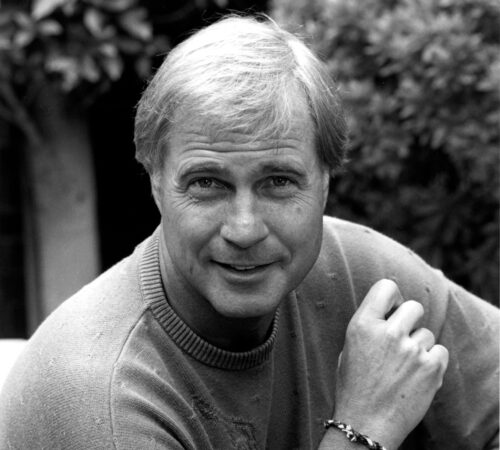
  • Gil Gerard, 82, TV’s ‘Buck Rogers’ star

    Gil Gerard, 82, TV’s ‘Buck Rogers’ star

    Gil Gerard, who played television’s hunky sci-fi hero William “Buck” Rogers soon after the Star Wars franchise took hold in the late 1970s, has died. He was 82.

    Mr. Gerard died Tuesday in hospice as a result of a rare, aggressive form of cancer, said his manager, Tina Presley Borek. His wife, Janet Gerard, posted a posthumous Facebook message he left behind for fans that read in part:

    “Don’t waste your time on anything that doesn’t thrill you or bring you love. See you out somewhere in the cosmos.”

    Mr. Gerard starred in NBC’s campy Buck Rogers in the 25th Century, which ran for two seasons from 1979 to 1981. A theatrical film based on the series also delighted youngsters and their parents alike. It was Buck Rogers’ second turn on TV after a show in the 1950s, a radio series, and a 1939 film serial.

    The story was based on Philip Francis Nowlan’s serialized 1928 pulp novella Armageddon 2419 A.D. Nowlan’s character was named Anthony Rogers. The name was changed when the story began running in newspapers as a comic strip.

    “My life has been an amazing journey,” Mr. Gerard wrote in his social media post. “The opportunities I’ve had, the people I’ve met and the love I have given and received have made my 82 years on the planet deeply satisfying.”

    As the TV story goes, Rogers was a 20th century NASA pilot who was placed in frozen animation when his ship was hit by a meteor storm. He pops awake 500 years later in the year 2491. He gazes upon a futuristic, domed Earth with all its threats, including aliens, space pilots, and the evil Draconians.

    He had helpers: the robot sidekick Twiki and a beautiful space pilot, Wilma Deering, played by Erin Gray.

    A native of Little Rock, Arkansas, Mr. Gerard worked steadily in TV commercials. He was featured in a number of other TV shows and movies, including starring roles in the 1982 TV movie Hear No Evil as Dragon and the short-lived Sidekicks in 1986.

    In 1992, he hosted the reality series Code 3, following firefighters responding to emergency calls around the U.S. There were many guest appearances in the 1990s, including on Days of Our Lives.

    Mr. Gerard and Gray were together again in 2007 for the TV film Nuclear Hurricane. They also returned to the Buck Rogers universe as Rogers’ parents in the pilot episode of James Cawley’s Buck Rogers Begins internet video series in 2009.

    Mr. Gerard spoke openly about addictions to drugs, alcohol, and compulsive overeating. He was the subject of a one-hour documentary, Action Hero Makeover, in 2007 after his weight ballooned to 350 pounds.

    Done by Adrienne Crow, then a longtime companion, for the Discovery Health Channel, the film documented his progress after gastric bypass surgery.

    Mr. Gerard was married and divorced four times before Janet. He had a son, actor Gilbert Vincent Gerard, with model and actor Connie Sellecca. Their divorce included a bitter custody battle for “Gib,” who was born in 1981. Sellecca was granted main custody.

    “My journey has taken me from Arkansas to New York to Los Angeles, and finally, to my home in North Georgia with my amazing wife, Janet, of 18 years,” Mr. Gerard wrote in the post put on Facebook after his death.

    “It’s been a great ride, but inevitably one that comes to a close as mine has.”

  • Ira ‘Ike’ Schab, 105, one of last remaining Pearl Harbor survivors

    Ira ‘Ike’ Schab, 105, one of last remaining Pearl Harbor survivors

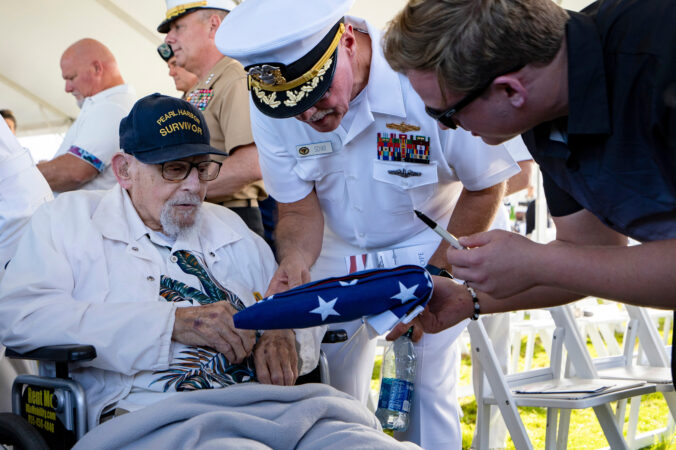
    World War II Navy veteran Ira “Ike” Schab, one of the dwindling number of survivors of the 1941 Japanese bombing of Pearl Harbor, has died. He was 105.

    Daughter Kimberlee Heinrichs told the Associated Press that Mr. Schab died at home early Saturday in the presence of her and her husband.

    With his passing, there remain only about a dozen survivors of the surprise attack, which killed just over 2,400 troops and propelled the United States into the war.

    Mr. Schab was a sailor of just 21 at the time of the attack, and for decades he rarely spoke about the experience.

    But in recent years, aware that the corps of survivors was dwindling, the centenarian made a point of traveling from his home in Beaverton, Ore., to the annual observance at the Hawaii military base.

    “To pay honor to the guys that didn’t make it,” he said in 2023.

    For last year’s commemoration, Mr. Schab spent weeks building up the strength to be able to stand and salute.

    But this year he did not feel well enough to attend, and less than three weeks later, he passed away.

    Born on Independence Day in 1920 in Chicago, Mr. Schab was the eldest of three brothers.

    He joined the Navy at 18, following in the footsteps of his father, he said in a February interview for Pacific Historic Parks.

    On what began as a peaceful Sunday, Dec. 7, 1941, Mr. Schab, who played the tuba in the USS Dobbin’s band, was expecting a visit from his brother, a fellow service member assigned to a nearby naval radio station. Mr. Schab had just showered and donned a clean uniform when he heard a call for fire rescue.

    He went topside and saw another ship, the USS Utah, capsizing. Japanese planes roared through the air.

    “We were pretty startled. Startled and scared to death,” Mr. Schab recalled in 2023. “We didn’t know what to expect, and we knew that if anything happened to us, that would be it.”

    He scurried back below deck to grab boxes of ammunition and joined a daisy chain of sailors feeding shells to an anti-aircraft gun above.

    His ship lost three sailors, according to Navy records. One was killed in action, and two died later of fragment wounds from a bomb that struck the stern. All had been manning an anti-aircraft gun.

    Mr. Schab spent most of the war with the Navy in the Pacific, going to the New Hebrides, now known as Vanuatu, and then the Mariana Islands and Okinawa, Japan.

    After the war he studied aerospace engineering and worked on the Apollo spaceflight program as an electrical engineer for General Dynamics, helping send astronauts to the moon.

    Mr. Schab’s son also joined the Navy and is a retired commander.

    Speaking at a 2022 ceremony, Mr. Schab asked people to honor those who served at Pearl Harbor.

    “Remember what they’re here for. Remember and honor those that are left. They did a hell of a job,” he said. “Those who are still here, dead or alive.”

  • Peter Arnett, Pulitzer winner who covered wars in Vietnam and Iraq, has died at 91

    Peter Arnett, Pulitzer winner who covered wars in Vietnam and Iraq, has died at 91

    Peter Arnett was already an accomplished combat correspondent in 1966 when he embedded with an American infantry battalion tasked with routing out enemy snipers from a tunnel system near Saigon. Mr. Arnett was standing next to the unit commander when bullets tore through the map the officer was holding, hitting the colonel in the chest.

    Medics ran up to bandage Lt. Col. George Eyster, a West Pointer who died the next day at a field hospital. Mr. Arnett wrote his obituary, which was among the scores of stories he filed from the humid jungle battlefields of Vietnam for more than a decade. He won the Pulitzer Prize for international reporting that year.

    Mr. Arnett stayed in Vietnam beyond the very end. When Viet Cong guerrillas entered the Associated Press bureau during the 1975 fall of Saigon, his boss Nate Polowetzky told him to get out of there. Mr. Arnett refused. “He told me, in effect, to go screw myself,” Polowetzky said.

    The New Zealand native would go on to cover more wars (15 to 20, he said), including the Gulf War. He was one of the few Western reporters in Baghdad in January 1991 when allied missiles started raining down, reporting live from the city for CNN. He interviewed Saddam Hussein in the second week of the war, and in 1997, Osama bin Laden.

    When Mr. Arnett asked bin Laden about his plans, the 9/11 mastermind replied: “You’ll see them and hear about them in the media. God willing.”

    Mr. Arnett died Wednesday at 91, in Newport Beach, Calif. The cause was prostate cancer, said his daughter, Elsa Arnett.

    After arriving in Vietnam, Mr. Arnett was given lifesaving advice from one of his AP colleagues, Malcolm Browne: Lie prone under fire; look for cover and move toward it; do not get close to a radioman or medic because they are prime targets; and if you hear a shot, don’t get up to see where it came from because the second shot might get you.

    Mr. Arnett, one of the most famous journalists of his era, wrote gripping battlefield stories that transported readers sitting in their living rooms to the scene of the news.

    The stories that won him the Pulitzer included a dispatch about an Army captain who watched helplessly as a Viet Cong machine gunner kept pummeling the body of one of his men, rolling it over and over. In a story titled “Everyone Knew the Americans Were Coming,” Arnett wrote on a failed U.S. mission aimed at hunting down Viet Cong fighters who easily got away.

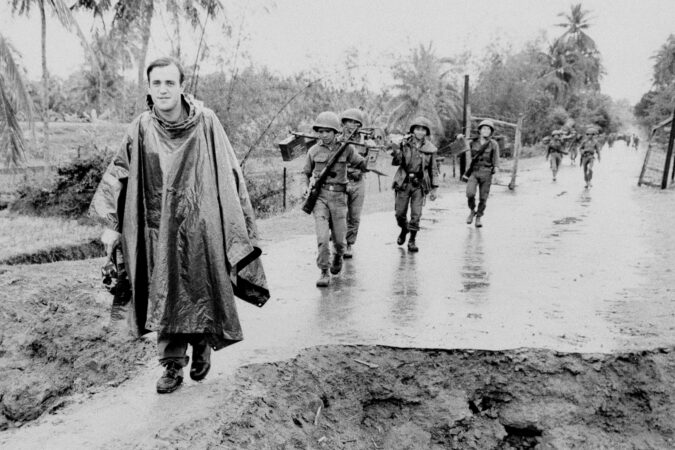
    Peter Arnett walks in front of a U.S. tank in Vietnam in 1967.

    Reporting on the Vietnam War forced Mr. Arnett to repress his human instincts. On one hot day at the Saigon market, Mr. Arnett watched a Buddhist monk squat on the pavement and douse himself in gasoline before flicking a lighter.

    “I could have prevented that immolation by rushing at him and kicking the gasoline away,’” Mr. Arnett recalled. “As a human being I wanted to. As a reporter I couldn’t. … If I had stopped him, the [South Vietnamese] secret police who were watching from a distance would have immediately arrested him and carried him off to God knows where. If I had attempted to prevent them doing this, I would have propelled myself directly into Vietnamese politics. My role as a reporter would have been destroyed.”

    Instead, Mr. Arnett photographed the burning monk and dashed back to his office to write his story.

    But Mr. Arnett’s eagerness to report entangled him in controversy. In the Gulf War, as one of the few Western journalists reporting from behind enemy lines in Iraq, he was granted access by Hussein’s regime to what officials said was an industrial plant that produced milk powder and was the only source of infant formula in Baghdad. It had been hit by U.S. bombs.

    Mr. Arnett reported on CNN what he saw and heard, and went to bed. The next day, he learned that he had reported on “one of the most controversial stories of my career.” U.S. officials disputed the claim that the factory made baby milk powder and instead alleged it was used for the production of biological weapons protected by the Iraqi military. White House officials called him a “conduit for Iraqi disinformation,” while Rep. Laurence Coughlin (R., Pa.) called him the “Joseph Goebbels of Saddam Hussein’s Hitler-like regime.”

    Sen. Al Simpson (R., Wyo.) went so far as to accuse the brother of Mr. Arnett’s Vietnamese-born wife of being a Viet Cong operative. (Simpson later apologized, saying there was no evidence to prove that claim.)

    Mr. Arnett kept reporting, showing the damaged buildings in the town of Al-Dour that Iraqi officials said had been hit by U.S. and allied bombs and had resulted in 24 civilian deaths.

    “There was nothing in his tone that was judgmental, nothing that indicated sympathy for the Iraqis,” wrote Howard Rosenberg, the Los Angeles Times’s TV critic. “Without interpretation, he reported only what he said he saw, accompanied by the appropriate disclaimers regarding censorship.”

    In 1999, Mr. Arnett left CNN after being involved in a story that alleged that the U.S. military had used deadly sarin nerve gas on deserting American soldiers during the Vietnam War. When a subsequent Pentagon investigation said there was no evidence of sarin gas ever having been shipped to Southeast Asia and disputed other key portions of the story, CNN retracted it.

    Mr. Arnett faced further criticism in 2003, when he gave an interview to Iraqi state television.

    “It is clear that within the United States there is growing challenge to President Bush about the conduct of the war and also opposition to the war. So our reports about civilian casualties here, about the resistance of the Iraqi forces … help those who oppose the war,” he said.

    The remarks sparked backlash from the administration of President George W. Bush and lawmakers from both parties. His employer, NBC, initially defended him, saying the remarks were “analytical in nature,” but eventually fired him, saying it had been wrong for Mr. Arnett to “grant an interview to state-controlled Iraqi TV — especially at a time of war — and it was wrong for him to discuss his personal observations and opinions in that interview.”

    Peter Gregg Arnett was born in Riverton, New Zealand, on Nov. 13, 1934.

    He began his journalism career in his country of birth, writing for the Southland Times newspaper. Restless and bored, he left his home country seeking adventure. When he arrived in Southeast Asia, he decided to stay, enchanted by the “opium smugglers, revolutionaries and obscure little wars in obscure little kingdoms.”

    He ended up reporting from Thailand and Indonesia before he arrived in Vietnam.

    In Vietnam, he worked and competed with the other big-name journalists including David Halberstam and Marguerite Higgins.

    He became a naturalized U.S. citizen in the mid-1980s while CNN’s Moscow bureau chief. Mr. Arnett thought it was important that he should be an American citizen because he was representing an American news organization, according to his family. Mr. Arnett said in a 2015 interview that his U.S. citizenship “solidified my credentials to challenge American policy.”

    “I was perfectly happy to be a New Zealander, and it wasn’t an issue in my work. The Associated Press and CNN were more interested in the journalism than the nationality,” Mr. Arnett said. He added, however, that there were “a lot of comments during the Gulf War” about his foreign origins.

    “But the point was, I was an American. If I hadn’t been, it would have been a way to further discredit my journalism.”

    He met Nina Nguyen Thu-Nga, a South Vietnamese woman, while covering the war. He married her and they had two children, Andrew and Elsa, before divorcing in 1983. His frequent and extended travels abroad were to blame, according to Mr. Arnett’s family. They remarried in 2006 and stayed together until his death.

  • Craig Kellem, celebrated talent agent, TV producer, and ‘comedic genius,’ has died at 82

    Craig Kellem, celebrated talent agent, TV producer, and ‘comedic genius,’ has died at 82

    Craig Kellem, 82, of Philadelphia, former talent agent, celebrated TV producer, show developer, writer, longtime script consultant, author, and “comedic genius,” died Monday, Nov. 24, of complications from dementia at Saunders House assisted living in Wynnewood.

    Born in Philadelphia, Mr. Kellem moved to New York as a teenager and, at 22, burst onto the entertainment scene in 1965 as a talent scout and agent for what was then called Creative Management Associates. He rose to vice president of the company’s TV Department and, over the next 30 years, served as director of development for late night, syndication, and daytime TV at 20th Century Fox Television, vice president of comedy development at Universal Television, and executive vice president of the Arthur Co. at Universal Studios.

    He worked with fellow TV producer Lorne Michaels at Above Average Productions in the 1970s and was a popular associate producer for the first season of Saturday Night Live in 1975 and ’76. He was quoted in several books about that chaotic first season, and his death was noted in the show’s closing credits on Dec. 6.

    At Universal Studios, he created and produced FBI: The Untold Stories in 1991. At Universal Television in the 1980s, he developed nearly a dozen shows that aired, including Charles in Charge and Domestic Life in 1984. In 1980, he developed Roadshow for 20th Century Fox Television.

    Mr. Kellem worked for years in New York and Los Angeles.

    “He had a lot of energy and ideas,” said his wife, Vivienne. “He had a creative spirit.”

    His producing, creating, developing, and writing credits on IMDb.com also include The Munsters Today, The New Adam-12, Dragnet, and What a Dummy. He produced TV films and specials, and worked on productions with Eric Idle, Gladys Knight, Sammy Davis Jr., and the Beach Boys.

    In 1998, he and his daughter, Judy Hammett, cofounded Hollywoodscript.com and, until his retirement in 2021, he consulted for writers and edited and critiqued screenplays. In 2018, they coauthored Get It On the Page: Top Script Consultants Show You How.

    “He loved working with writers,” his daughter said. “He was super creative. It was part of his essence.”

    Mr. Kellem enjoyed time with his daughter Joelle (left) and his wife Vivienne.

    As an agent in the 1960s and ’70s, Mr. Kellem represented George Carlin, Lily Tomlin, and other entertainers. His eye for talent, dramatic timing, and sense of humor were legendary.

    “My dad’s humor opened hearts, tore down walls, and allowed people to connect with each other’s humanity, vulnerability, and spirit,” said his daughter Joelle. His daughter Judy said: “He was a comedic genius.”

    His wife said: “He was a fascinating, funny, loving, and sensitive man.”

    Craig Charles Kellem was born Jan. 24, 1943. He grew up with a brother and two sisters in West Mount Airy, played with pals in nearby Carpenter’s Woods, and bought candy in the corner store at Carpenter Lane and Greene Street.

    Mr. Kellem and his son, Sean.

    “Craig was like a father to me,” said his brother, Jim. “He helped guide my children and was always there for the whole family.”

    He graduated from high school in New York and moved up to senior positions at Creative Management Associates after starting in the mailroom. He married in his 20s and had a daughter, Judy.

    After a divorce, he met Vivienne Cohen in London in 1977, and they married in 1980, and had a son, Sean, and a daughter, Joelle. He and his wife lived in California, Washington, New Hampshire, and New Jersey before moving to Fairmount in 2017.

    Mr. Kellem enjoyed movies, walking, and daily workouts at the gym. He volunteered at shelters, helped underserved teens, and routinely carried dog treats in his car in case he encountered a stray in need. “That’s the kind of man Craig was,“ his wife said.

    Mr. Kellem and his daughter Judy operated their own writing consultation business together for years.

    His son, Sean, said: “My dad’s personality was big, and he was deeply compassionate toward other human beings.” His daughter Joelle said: “He was an open, sensitive, warm, and passionate human being who believed deeply in the work of bettering oneself and taking care of others.”

    His daughter Judy said: “They don’t make people like my dad.”

    In addition to his wife, children, and brother, Mr. Kellem is survived by four grandchildren and other relatives. Two sisters died earlier.

    Private services are to be held later.

    Donations in his name may be made to the Alzheimer’s Association, 399 Market St., No. 250, Philadelphia, Pa. 19106; and Main Line Heath HomeCare and Hospice, 240 N. Radnor Chester Rd., Suite 100, Wayne, Pa. 19087.

    Mr. Kellem enjoyed daily workouts at the gym.
  • Joe Ely, a Texas songwriter whose legacy touched rock and punk, dies at 78

    Joe Ely, a Texas songwriter whose legacy touched rock and punk, dies at 78

    AUSTIN, Texas — Joe Ely, 78, the influential Texas-born singer-songwriter whose blend of honky-tonk, rock, and roadhouse blues made him a favorite among other musicians and led to collaborations with Bruce Springsteen and the Clash, has died.

    Mr. Ely died in Taos, N.M., of complications from Lewy body dementia, Parkinson’s disease, and pneumonia, with his wife and daughter by his side, according to a post on his Facebook account Monday night and later confirmed by his representatives.

    Mr. Ely was considered a key figure in the progressive country music movement as a founder of the influential country-rock band the Flatlanders with Jimmie Dale Gilmore and Butch Hancock, and later as a solo artist.

    “Joe Ely performed American roots music with the fervor of a true believer who knew music could transport souls,” said Kyle Young, CEO of the Country Music Hall of Fame and Museum.

    “But his true measure came through in the dynamic intensity of his powerhouse live performances, where he could stand his ground aside fellow zealots Bruce Springsteen, who recorded duets with Ely, and the [Rolling] Stones and the Clash, who took Ely on tour as an opening act,” Young said.

    After signing with MCA, Mr. Ely released his first solo album in 1977. He would release more than 20 albums over his career, including Love and Freedom earlier this year.

    Born in Amarillo, Texas, Mr. Ely stayed connected to his Texas roots through decades of recording and performing that lacked a mainstream breakthrough but made him a favorite of other artists.

    “Every time I start a new album I head up to West Texas and drive around, you know, drive on those old cotton roads and in the wide-open spaces, and every once in a while I’ll come across a place where I’ve spent some time,” Mr. Ely told Texas Monthly in 2011.

    It was a soundcheck for a show in London that led to the collaboration with British punk band the Clash. Mr. Ely would later open for the Clash at several shows and sang backup vocals for their hit song “Should I Stay or Should I Go?”

  • Roberta Fallon, artist, writer, and Artblog cofounder, has died at 76

    Roberta Fallon, artist, writer, and Artblog cofounder, has died at 76

    Roberta Fallon, 76, of Bala Cynwyd, cofounder, editor, and longtime executive director of theartblog.org, prolific freelance writer for The Inquirer, Daily News, and other publications, adjunct professor at St. Joseph’s University, artist, sculptor, mentor, and volunteer, died Friday, Dec. 5, at Thomas Jefferson University Hospital of injuries she suffered after being hit by a car on Nov. 24.

    Ms. Fallon’s husband, Steven Kimbrough, said the crash remains under investigation by the police.

    Described by family and friends as empathetic, energetic, and creative, Ms. Fallon and fellow artist Libby Rosof cofounded the online Artblog in 2003. For nearly 22 years, until the blog became inactive in June, Ms. Fallon posted commentary, stories, interviews, reviews, videos, podcasts, and other content that chronicled the eclectic art world in Philadelphia.

    The site drew more than 4,500 subscribers and championed galleries and artists of all kinds, especially women, LGBTQ and student artists, and other underrepresented innovators. “I think we have touched base with every major arts organization in Philadelphia at one point or another, and many of the smaller ones,” Ms. Fallon told The Inquirer in May. “We became part of the arts economy.”

    She earned grants from the Knight Foundation and other groups to fund her work. She organized artist workshops and guided tours of local studios she called art safaris.

    For years, she and Rosof raised art awareness in Center City by handing out miniatures of their artwork to startled passersby. She said in a 2005 Inquirer story: “We think art needs to be for everyone, not just in galleries.”

    She mentored other artists and became an expert on the business of art. “She was so generous and curious about people,” Rosof said. “She was innovative and changed the way art reached people.”

    Artist Rebecca Rutstein said Ms. Fallon’s “dedicated art journalism filled a vacuum in Philadelphia and beyond. Many of us became known entities because of her artist features, and we are forever grateful.” In a 2008 Inquirer story about the city’s art scene, artist Nike Desis said: “Roberta and Libby are the patron saints of the young.”

    Ms. Fallon never tired of enjoying art.

    Colleague and friend Gilda Kramer said: “The Artblog for her was truly a labor of love.”

    In November, Ms. Fallon and other art writers created a website called The Philly Occasional. In her Nov. 12 article, she details some of her favorite shows and galleries in Philadelphia and New York, and starts the final paragraph by saying: “P.S. I can’t let you go without telling you about what I just saw at the Barnes Foundation.”

    She worked at a small newspaper in Wisconsin before moving to West Philadelphia from Massachusetts in 1984 and wrote many art reviews and freelance articles for The Inquirer, Daily News, Philadelphia Weekly, Philadelphia Citizen, and other publications. In 2012, she wrote more than a dozen art columns for the Daily News called “Art Attack.”

    She met Rosof in the 1980s, and together they curated exhibits around the region and displayed their own sculptures, paintings, and installations. Art critic Edith Newhall reviewed their 2008 show “ID” at Projects Gallery for The Inquirer and called it “one of the liveliest, most entertaining shows I’ve seen at this venue.”

    Ms. Fallon stands in front of a mural at 13th and Spruce Streets. She is depicted as the figure profiled in the lower left in the white blouse.

    Most often, Ms. Fallon painted objects and sculpted in concrete, wood, metal, textiles, and other material. She was a founding member of the Philadelphia Sculptors and Bala Avenue of the Arts.

    She studied at the Pennsylvania Academy of the Fine Arts and Temple University’s Tyler School of Art and Architecture, and later taught professional practice art classes at St. Joseph’s. Moore College of Art and Design, which will archive Artblog, awarded her an honorary doctorate.

    “Roberta was an exceptional creative artist” and “a force,” artist Marjorie Grigonis said on LinkedIn. Artist Matthew Rose said: “Robbie was a North Star for many people.”

    Her husband said: “Her approach to life was giving. She succeeded by adding value to wherever she was.”

    Ms. Fallon (second from right) enjoyed time with her family.

    Roberta Ellen Fallon was born Feb. 8, 1949, in Milwaukee. She went to the University of Wisconsin-Madison to study sociology after high school and dropped out to explore Europe and take art classes in Paris. She returned to college, changed her major to English, and earned a bachelor’s degree in 1974.

    She met Steven Kimbrough in Wisconsin, and they married in 1980, and had daughters Oona and Stella, and a son, Max. They lived in West Philadelphia for six years before settling in Bala Cynwyd in 1993.

    Ms. Fallon was a neighborhood political volunteer. She enjoyed movies and reading, and she and her husband traveled often to museums and art shows in New York and elsewhere.

    They had a chance to relocate to Michigan a few years ago, her husband said. But she preferred Philadelphia for its art and culture. “She was like a local celebrity in the art scene,” her daughter Stella said.

    Ms. Fallon and her husband, Steven Kimbrough, visited New York in 1982.

    Her husband said: “Everybody likes her. Everybody wants to be around her. She made a difference for a lot of people.”

    Her daughter Stella said: “The world would be a better place if we all tried to be like my mom.”

    In addition to her husband and children, Ms. Fallon is survived by four grandchildren, a sister, a brother, and other relatives.

    A memorial service is to be held later.

    Donations in her name may be made to Moore College of Art and Design, 1916 Race St., Philadelphia, Pa. 19103.

    Ms. Fallon (left) and Libby Rosof hand out free art at 17th and Market Streets in 2005.
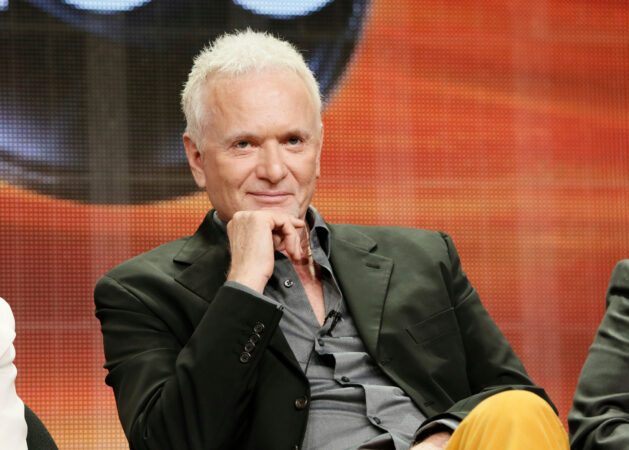
  • ‘General Hospital’ star Anthony Geary of Luke and Laura fame dies at 78

    ‘General Hospital’ star Anthony Geary of Luke and Laura fame dies at 78

    Anthony Geary, who rose to fame in the 1970s and ’80s as half the daytime TV super couple Luke and Laura on General Hospital, has died. He was 78.

    “We are deeply saddened by the passing of Anthony Geary, whose portrayal of Luke Spencer helped define General Hospital and daytime television,” ABC said in a statement confirming his death.

    Geary died Sunday in Amsterdam of complications from a surgical procedure three days prior.

    “The entire General Hospital family is heartbroken over the news of Tony Geary’s passing,” Frank Valentini, executive producer of the ABC show, said in a statement Monday. “Tony was a brilliant actor and set the bar that we continue to strive for.”

    In a career spanning more than 40 years, Geary earned eight Daytime Emmy awards as Luke Spencer after joining the soap in 1978. Luke’s pairing with Genie Francis’ Laura Webber Baldwin (as she was known at the time) propelled the two onto magazine covers and into the cultural mainstream.

    The 1981 wedding of Luke and Laura was a pop culture phenom done in two parts, drawing guest appearances that included Elizabeth Taylor. A record 30 million viewers watched.

    “He was a powerhouse as an actor. Shoulder to shoulder with the greats. No star burned brighter than Tony Geary. He was one of a kind. As an artist, he was filled with a passion for the truth, no matter how blunt, or even a little rude it might be, but always hilariously funny,” Francis said in a statement.

    In addition to his role as Luke, Geary had numerous TV and stage credits, including stints on other soaps: The Young and the Restless and Bright Promise. Geary played Luke on and off until 2015, though he returned for a cameo in 2017.

    He lived a quiet life with husband Claudio Gama in Amsterdam.

    In a 1993 interview, Geary spoke of the many highs and lows of playing Luke.

    “I felt like I had to be Luke 24 hours a day or people would be disappointed,” he said. “As far as I’m concerned, they are mythic creatures. They come from two sides of the universe together and have a mutual connection, which is basically lust and appreciation for individuality. They love the eccentricity in each other.”

    Geary’s Luke began as a small-time hitman recruited to dismantle the relationship of Laura and her first husband, Scotty Baldwin. Their story arc turned darker when Luke sexually assaulted Laura. The assault led to a redemption trail for Luke, who evolved into a hero and even served as mayor of the show’s small town, Port Charles.

    “He was not created to be a heroic character,” Geary told ABC’s Nightline in 2015. “He was created to be an anti-hero, and I have treasured the anti-side of the hero and pushed it for a long time. … He’s not a white hat or a black hat, he’s all shades of gray. And that has been the saving grace of playing him all these years.”

    Geary was born to Mormon parents in Coalville, Utah. He was discovered while attending the University of Utah and performing on stage. He joined a touring company of The Subject Was Roses, which brought him to Los Angeles.

    Over the years, he appeared frequently in stage productions alongside his screen work.

    Geary’s first appearance on TV was as Tom Whalom on an episode of Room 222. He went on to appear in All in the Family, The Partridge Family, The Mod Squad, Marcus Welby, M.D., The Streets of San Francisco, and Barnaby Jones.

  • Rob Reiner, 78, son of a comedy giant who became one in turn

    Rob Reiner, 78, son of a comedy giant who became one in turn

    Rob Reiner, the son of a comedy giant who became one himself as one of the preeminent filmmakers of his generation with movies such as The Princess Bride, When Harry Met Sally …, and This Is Spinal Tap, has died. He was 78.

    Mr. Reiner and his wife, Michele Singer Reiner, 68, were found fatally stabbed Sunday at their home in the Brentwood neighborhood of Los Angeles. The Los Angeles Police Department on Monday arrested the Reiners’ 32-year-old son, Nick Reiner, and booked him on suspicion of killing his parents.

    It was a tragic, shocking end to a life and career that began with a complicated father-son relationship. Mr. Reiner grew up thinking his father, the legendary funnyman Carl Reiner, didn’t understand him or find him funny. But the younger Mr. Reiner would in many ways follow in his father’s footsteps, working both in front of and behind the camera, in comedies that stretched from broad sketch work to accomplished dramedies.

    “My father thought, ‘Oh, my God, this poor kid is worried about being in the shadow of a famous father,’” Mr. Reiner told 60 Minutes in October, recalling the temptation to change his name. “And he says, ‘What do you want to change your name to?’ And I said, ‘Carl.’ I just wanted to be like him.”

    After starting out as a writer for The Smothers Brothers Comedy Hour, Mr. Reiner’s breakthrough came when he was, at age 23, cast in Norman Lear’s All in the Family as Archie Bunker’s liberal son-in-law, Michael “Meathead” Stivic. But by the 1980s, Mr. Reiner began working as a feature film director, producing some of the most beloved films of that, or any, era. His first film, the largely improvised 1984 cult classic This Is Spinal Tap, remains the quintessential mockumentary.

    After the 1985 John Cusack summer comedy, The Sure Thing, Reiner made Stand By Me (1986), The Princess Bride (1987) and When Harry Met Sally … (1989), a four-year stretch that resulted in a trio of American classics, all of them among the most quoted movies of the 20th century.

    A legacy on and off screen

    For the next four decades, Mr. Reiner, a warm and gregarious presence on screen and an outspoken liberal advocate off it, remained a constant fixture in Hollywood. The production company he co-founded, Castle Rock Entertainment, launched an enviable string of hits, including Seinfeld and The Shawshank Redemption. By the turn of the century, its success rate had fallen considerably, but Mr. Reiner revived it, and this fall released the long-in-coming sequel Spinal Tap II: The End Continues.

    All the while, Mr. Reiner was one of the film industry’s most passionate Democrat activists, regularly hosting fundraisers and campaigning for liberal issues. He was co-founder of the American Foundation for Equal Rights, which challenged in court California’s ban on same-sex marriage, Proposition 8. He also chaired the campaign for Prop 10, a California initiative to fund early childhood development services with a tax on tobacco products. And Mr. Reiner was an outspoken critic of President Donald Trump.

    “Beneath all of the stories he produced was a deep belief in the goodness of people — and a lifelong commitment to putting that belief into action,” former President Barack Obama said in a statement.

    Political engagement ran in the family, too. Mr. Reiner’s father opposed the Communist hunt of McCarthyism in the 1950s and his mother, Estelle Reiner, a singer and actor, protested the Vietnam War.

    “If you’re a nepo baby, doors will open,” Mr. Reiner told the Guardian in 2024. “But you have to deliver. If you don’t deliver, the door will close just as fast as it opened.”

    “All in the Family” to “Stand By Me”

    Robert Reiner was born in the Bronx on March 6, 1947. As a young man, he quickly set out to follow his father into entertainment.

    Before he came to be a beloved actor on All in the Family, Mr. Reiner was just a teenager training in New Hope, Pa.

    The late filmmaker got his start at the Bucks County Playhouse.

    In a 2016 interview with the Hollywood Reporter, Mr. Reiner said his senior year at Beverly Hills High School sparked a career path in acting because drama class felt “familiar and comfortable.”

    After graduating at 17, he apprenticed at the Playhouse in 1964. As noted by Philadelphia Magazine, the Playhouse was one of a short list of regional theaters where Broadway plays would be workshopped. In turn, a lot of famous — or in Mr. Reiner’s case, soon to be famous — people came to New Hope, including Liza Minnelli and Robert Redford.

    Mr. Reiner’s time working on shows as a Playhouse Apprentice meant he rubbed elbows with Alan Alda, Merv Griffin, and Shelly Berman, a spokesperson said. It was the same year Minelli appeared at the Playhouse and Arthur Godfrey was in Our Town.

    “Reiner mentioned often his gratitude for the training he received on our stage, and his fondness for his time in New Hope,” Bucks County Playhouse producing director Alexander Fraser said. “He joins Grace Kelly, Jessica Walter, Robert Redford, Richard Kind, and many others in using their experience as an apprentice in launching remarkable careers.”

    Mr. Reiner then studied at the University of California, Los Angeles film school and, in the 1960s, began appearing in small parts in various television shows.

    But when Lear saw Mr. Reiner as a key cast member in All in the Family, it came as a surprise to the elder Reiner.

    “Norman says to my dad, ‘You know, this kid is really funny.’ And I think my dad said, ‘What? That kid? That kid? He’s sullen. He sits quiet. He doesn’t, you know, he’s not funny.’ He didn’t think I was anyway,” Mr. Reiner told 60 Minutes.

    On All in the Family, Mr. Reiner served as a pivotal foil to Carroll O’Connor’s bigoted, conservative Archie Bunker. Mr. Reiner was seven times nominated for an Emmy for his performance on the show, winning in 1974 and 1978. In Lear, Mr. Reiner also found a mentor. He called him “a second father.”

    “It wasn’t just that he hired me for All in the Family,” Mr. Reiner told American Masters in 2005. “It was that I saw, in how he conducted his life, that there was room to be an activist as well. That you could use your celebrity, your good fortune, to help make some change.”

    Lear also helped launch Mr. Reiner as a filmmaker. He put up $7.5 million of his own money to help finance Stand By Me, Mr. Reiner’s adaptation of the Stephen King novella The Body. The movie, about four boys who go looking for the dead body of a missing boy, became a coming-of-age classic, made breakthroughs of its young cast (particularly River Phoenix), and even earned the praise of King.

    “Rest in peace, Rob,” King said Monday on X. “You always stood by me.”

    With his stock rising, Mr. Reiner devoted himself to adapting William Goldman’s 1973’s The Princess Bride, a book Mr. Reiner had loved since his father gave him a copy as a gift. Everyone from François Truffaut to Robert Redford had considered adapting Goldman’s book. It ultimately fell to Mr. Reiner (from Goldman’s own script) to capture the unique comic tone of The Princess Bride. But only once he had Goldman’s blessing.

    “At the door he greeted me and he said, ‘This is my baby. I want this on my tombstone. This is my favorite thing I’ve ever written in my life. What are you going to do with it?’” Mr. Reiner recalled in a Television Academy interview. “And we sat down with him and started going through what I thought should be done with the film.”

    Though only a modest success in theaters, the movie — starring Cary Elwes, Mandy Patinkin, Wallace Shawn, André the Giant, and Robin Wright — would grow in stature over the years, leading to countless impressions of Inigo Montoya’s vow of revenge and the risky nature of land wars in Asia.

    “When Harry Met Sally …”

    Mr. Reiner was married to Penny Marshall, the actor and filmmaker, for 10 years beginning in 1971. Like Mr. Reiner, Marshall experienced sitcom fame, with Laverne & Shirley, but found a more lasting legacy behind the camera.

    After their divorce, Mr. Reiner, at a lunch with Nora Ephron, suggested a comedy about dating. In writing what became When Harry Met Sally … Ephron and Mr. Reiner charted a relationship between a man and a woman (played in the film by Billy Crystal and Meg Ryan) over the course of 12 years.

    Along the way, the movie’s ending changed, as did some of the film’s indelible moments. The famous line “I’ll have what she’s having,” said after witnessing Ryan’s fake orgasm at Katz’s Delicatessen, was a suggestion by Crystal — delivered by none other than Mr. Reiner’s mother, Estelle.

    The movie’s happy ending also had some real-life basis. Mr. Reiner met Michele Singer, a photographer, on the set of When Harry Met Sally … .— In 1989, they were wed. They had three children together: Nick, Jake, and Romy.

    Mr. Reiner’s subsequent films included another King adaptation, Misery (1990), and a pair of Aaron Sorkin-penned dramas: the military courtroom tale A Few Good Men (1992) and 1995’s The American President.

    By the late ’90s, Mr. Reiner’s films (1996’s Ghosts of Mississippi, 2007’s The Bucket List) no longer had the same success rate. But he remained a frequent actor, often memorably enlivening films like Sleepless in Seattle (1993) and The Wolf of Wall Street (2013). In 2023, he directed the documentary Albert Brooks: Defending My Life.

    In an interview earlier this year with Seth Rogen, Mr. Reiner suggested everything in his career boiled down to one thing.

    “All I’ve ever done is say, ‘Is this something that is an extension of me?’ For Stand by Me, I didn’t know if it was going to be successful or not. All I thought was, ‘I like this because I know what it feels like.’”

    Inquirer writer Emily Bloch contributed to this story.

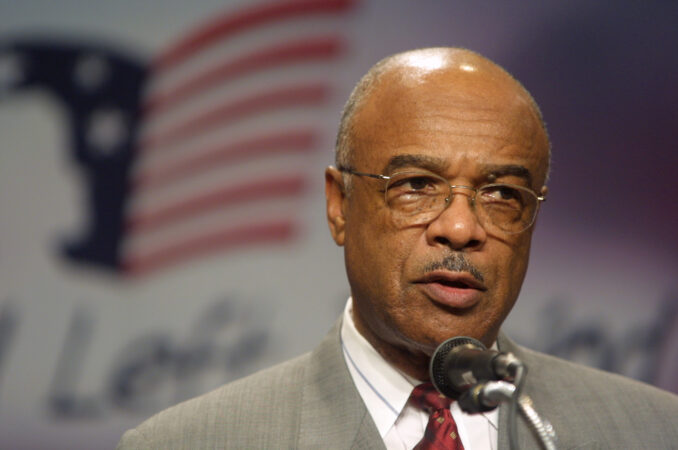
  • Rod Paige, 92, nation’s first Black  secretary of education

    Rod Paige, 92, nation’s first Black secretary of education

    Rod Paige, an educator, coach, and administrator who rolled out the nation’s landmark No Child Left Behind law as the first African American to serve as U.S. education secretary, died Tuesday.

    Former President George W. Bush, who tapped Mr. Paige for the nation’s top federal education post, announced the death in a statement but did not provide further details. Mr. Paige was 92.

    Under Mr. Paige’s leadership, the Department of Education implemented No Child Left Behind policy that in 2002 became Bush’s signature education law and was modeled on Mr. Paige’s previous work as a schools superintendent in Houston. The law established universal testing standards and sanctioned schools that failed to meet certain benchmarks.

    “Rod was a leader and a friend,” Bush said in his statement. “Unsatisfied with the status quo, he challenged what we called ‘the soft bigotry of low expectations.’ Rod worked hard to make sure that where a child was born didn’t determine whether they could succeed in school and beyond.”

    Roderick R. Paige was born to two teachers in the small Mississippi town of Monticello, which had roughly 1,400 inhabitants. The oldest of five siblings, Mr. Paige served a two-year stint the U.S. Navy before becoming a football coach at the high school and then junior college levels. Within years, Mr. Paige rose to head coach of Jackson State University, his alma mater and a historically Black college in the Mississippi capital city.

    There, his team became the first — with a 1967 football game — to integrate Mississippi Veterans Memorial Stadium, once an all-white venue.

    After moving to Houston in the mid-1970s to become head coach of Texas Southern University, Mr. Paige pivoted from the playing field to the classroom and education — first as a teacher, and then as administrator and eventually the dean of its college of education from 1984 to 1994.

    Amid growing public recognition of his pursuit of educational excellence, Mr. Paige rose to become superintendent of the Houston Independent School District, then one of the largest school districts in the country.

    He quickly drew the attention of Texas’ most powerful politicians for his sweeping educational reforms in the diverse city. Most notably, he moved to implement stricter metrics for student outcomes, something that became a central point for Bush’s 2000s bid for president. Bush — who later would dub himself the “Education President” — frequently praised Mr. Paige on the campaign trail for the Houston reforms he called the “Texas Miracle.”

    And once Bush won election, he tapped Mr. Paige to be the nation’s top education official.

    As education secretary from 2001 to 2005, Mr. Paige emphasized his belief that high expectations were essential for childhood development.

    “The easiest thing to do is assign them a nice little menial task and pat them on the head,” he told the Washington Post at the time. “And that is precisely what we don’t need. We need to assign high expectations to those people, too. In fact, that may be our greatest gift: expecting them to achieve, and then supporting them in their efforts to achieve.”

    While some educators applauded the law for standardizing expectations regardless of student race or income, others complained for years about what they consider a maze of redundant and unnecessary tests and too much “teaching to the test” by educators.

    In 2015, House and Senate lawmakers agreed to pull back many provisions from “No Child Left Behind,” shrinking the Education Department’s role in setting testing standards and preventing the federal agency from sanctioning schools that fail to improve. That year, then-President Barack Obama signed the sweeping education law overhaul, ushering in a new approach to accountability, teacher evaluations, and the way the most poorly performing schools are pushed to improve.

    After serving as education secretary, Mr. Paige returned to Jackson State University a half century after he was a student there, serving as the interim president in 2016 at the age of 83.

    Into his 90s, Mr. Paige still publicly expressed deep concern, and optimism, about the future of U.S. education. In an opinion piece appearing in the Houston Chronicle in 2024, Paige lifted up the city that helped propel him to national prominence, urging readers to “look to Houston not just for inspiration, but for hard-won lessons about what works, what doesn’t and what it takes to shake up a stagnant system.”