Category: Editorials

  • Tom Kean Jr. did the right thing by stepping away to be treated for depression. Now he owes voters some answers. | Editorial

    Tom Kean Jr. did the right thing by stepping away to be treated for depression. Now he owes voters some answers. | Editorial

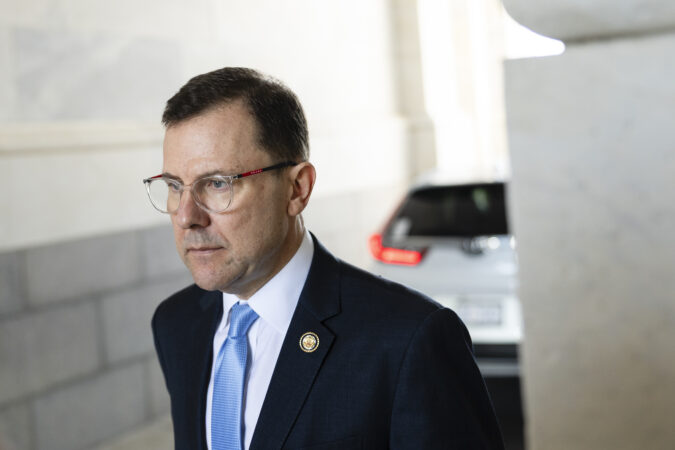
    One of the most perplexing sagas in recent political history has ended: U.S. Rep. Tom Kean Jr. has returned to work after being away for almost four months without notice or clear explanation.

    In a June 30 speech on the House floor, the North Jersey Republican revealed he had been in treatment for depression.

    “When people hear the word depression, many think it simply means feeling sad,” Kean said. “But depression is so much more than that. It is physical. It is emotional. Until you experience it yourself, it is difficult to fully understand how powerful this illness can be.”

    There is no denying that depression is a serious mental health issue, one that retains a public stigma even as almost 48 million Americans struggle with the disorder. Kean, a self-described “private person by nature,” deserves praise for revealing his diagnosis.

    But private or not, Keane is a public servant who owes voters a fuller explanation. So far, he has declined to answer any further questions.

    At the very least, the congressman’s return put an end to weeks of rampant speculation as to his whereabouts. None of which was helped by a lack of transparency by Kean’s team, which, after stating in April that he was dealing with a “personal health matter,” deflected all questions — sometimes to bizarrely cryptic effect. At one point, a staffer told reporters that “there are no cameras where Tom is.”

    There may have been no cameras, but during his time away, Kean managed to maintain his reelection campaign and appears to have traded stock. He was also getting paid.

    Unlike most Americans, elected officials are not required to show up to get a paycheck. The Constitution does not detail expectations for attendance or penalties for absenteeism. This means that deciding how much time off is appropriate, and why, is left mainly up to the voters.

    Perhaps Kean’s constituents in the 7th Congressional District are satisfied with the explanation for his long absence. While his inability to vote may have hampered his fellow Republicans’ ability to pass legislation, the constituent service functions performed by his office seem to have gone unaffected.

    Still, Kean has yet to make a full public accounting for what happened, which should include answering direct questions. Given his public responsibilities — and that he is up for reelection in November — constituents have a right to understand what happened and what they can expect going forward.

    A few questions Kean should be prepared to address include:

    • What symptoms led him to head to the hospital in the first place?
    • Roughly 25% of Americans with mental illness are not currently receiving care due to costs. Was his treatment covered by his congressional health insurance policy?
    • What guardrails have he and his staff established to ensure he seeks help more quickly in the future?
    • Given the widespread curiosity and speculation around this incident, are there things he would do differently when viewed in hindsight?
    • His diagnosis seems to have changed him. What changes can his constituents now expect to see? In the past, Kean was notorious for dodging interactions with constituents, holding town halls only very infrequently, for example. Will this change?
    • He has voted against federal policies that would expand healthcare coverage. Has his experience changed his perspective?
    • Will he hold a town hall?

    This board sent these queries to the congressman earlier this week. As of Wednesday afternoon, he has yet to answer.

  • Krasner isn’t perfect. The Pa. Supreme Court’s ruling on his exoneration push is worse. | Editorial

    Krasner isn’t perfect. The Pa. Supreme Court’s ruling on his exoneration push is worse. | Editorial

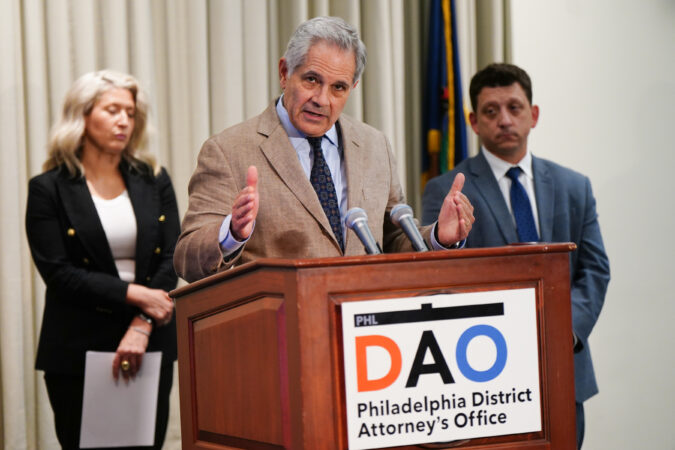
    When the Pennsylvania Supreme Court authorized the state’s top prosecutor to review Philadelphia’s efforts to reverse tainted convictions, the message was clear.

    The move was a stinging rebuke of District Attorney Larry Krasner and attempts by his office’s Conviction Integrity Unit to overturn verdicts it believed were marred by official misconduct.

    It was also an unprecedented and dubious decision in which the cure may be worse than the disease.

    Writing for the majority, Justice Kevin Dougherty found that the district attorney’s office repeatedly “made unreliable concessions unsupported by the facts and law” and “violated its duty of candor.”

    The justices — Dougherty was joined by Daniel McCaffery, P. Kevin Brobson, and Sallie Updyke Mundy — ruled that any attempts by Krasner’s office to win exonerations must now be overseen by the attorney general.

    Justices Debra Todd, Christine Donohue, and David Wecht disagreed, finding little to warrant such sweeping action by the court.

    At the heart of the matter was the case of Lavar Brown, who was convicted in the robbery and fatal shooting of the manager of a North Philadelphia Rite Aid.

    Krasner’s office believed Brown deserved a new trial because of past prosecutorial misconduct. The victim’s family accused Krasner of a conflict of interest over payments made to the district attorney by former law partners who had been involved in Brown’s case.

    As Justice Wecht writes in his dissent, the court’s majority used the Brown case as a springboard to “scrutinize decisions made by the Philadelphia District Attorney’s Office in other, wholly unrelated cases.”

    This board has long supported Krasner’s efforts to examine past convictions. No one should be imprisoned because of misconduct by the police or prosecutors, and the district attorney’s office has supported 59 exonerations so far.

    It has been well established that some police and prosecutors have been willing to bend the rules — if not break them — in order to facilitate convictions and arrests. Unlike too many of his predecessors, Krasner has held police officers accountable for unjustified use of force, charging dozens and convicting three.

    In some instances, however, victims, law enforcement, and some judges have called foul, accusing Krasner of being overzealous.

    The district attorney’s office itself recently withdrew a recommendation to overturn a murder conviction, saying prosecutors had filed court documents that were “not supported by the record.” This looks less like the systemic misconduct the court described than an office catching and correcting its own mistakes.

    It is also important to note that Krasner’s integrity unit has not sought to undo the vast majority of convictions. According to the district attorney, just 1.2% of the cases have resulted in his office seeking exoneration. While Krasner and his team believe in the innocence of many of these defendants, it is also important that everyone gets a fair trial — even those who are ultimately found guilty.

    Adding another wrinkle to the high court’s decision is the fact that people who had policy disagreements with Krasner at the district attorney’s office are now part of the state attorney general’s office, including some of the veteran prosecutors Krasner fired upon assuming office in 2018.

    At the time, Krasner thoughtlessly compared the state office to Paraguay, a reference to the flight of high-ranking Nazi officials to Latin American countries after World War II. Some of those same prosecutors will now be overseeing some of the same convictions they obtained.

    Wecht’s fellow justices should consider his words carefully and rethink this oversight measure, which he called “unprecedented and unconstitutional.” A more targeted remedy — one focused specifically on the issues identified in the ruling — would have been far less troubling.

    Krasner is far from perfect. In an interview with this board, he acknowledged that some errors have been made by attorneys under his supervision. But for the court’s majority to take the drastic step of removing authority from Philadelphia’s top prosecutor, more substantive charges are required.

    A simple difference of opinion does not suffice.

  • The retirement loophole that just won’t die | Editorial

    The retirement loophole that just won’t die | Editorial

    City Hall just can’t quit abusing a retirement perk known as the Deferred Retirement Option Plan, or DROP, that was supposed to be self-sustaining but costs Philadelphians millions of dollars a year.

    Now, along comes City Councilmember Curtis Jones Jr. and his wife, City Representative Jazelle Jones, to take it up a notch.

    The power couple plans to collect up to $752,000 in combined retirement payouts. But rather than ride off into the sunset, they both plan to keep their respective six-figure jobs.

    The scheme raises a question that has long plagued DROP: What is the point of a retirement incentive if the person doesn’t retire?

    The problem goes back to 1999, when former Mayor Ed Rendell pitched it as a good government idea when it was really nothing more than a sweetheart enrichment program for city workers at taxpayer expense.

    At the time, Rendell said DROP would not cost the city any additional revenue. But one study found that in its first 11 years, DROP cost the city $258 million, which is almost enough to cover the school district’s $300 million budget deficit this year.

    For those unfamiliar with DROP, it is a program that allows eligible municipal employees to select a mandatory retirement date up to four years in advance. While they continue to get paid to do their job, the city makes pension payments into a special interest-bearing account that results in a lump-sum payout upon retirement.

    After retiring, they receive their standard monthly pension. City workers contribute to the pension fund, but that does not cover all the pension fund liabilities, let alone the added costs of DROP, which are ultimately borne by taxpayers.

    The added costs prompted several cities to eliminate or heavily restrict their DROP programs, including San Diego, San Francisco, Houston, and Baltimore.

    In Philadelphia, more than 12,000 municipal employees collected DROP payments totaling $1.5 billion from 1999 to 2018. The payments have since topped $2 billion, according to one recent report by former Inquirer reporter Ralph Cipriano, who has long followed the program as an independent journalist.

    Bottom line: DROP is not revenue-neutral.

    Rendell’s other claim was that by entering DROP, the city would have four years to find or train a replacement for the retiring worker.

    It was always ludicrous that it would take years to find or train a replacement when most places of employment manage to survive when a person gives two weeks’ notice. But that was the story, and the city stuck with it.

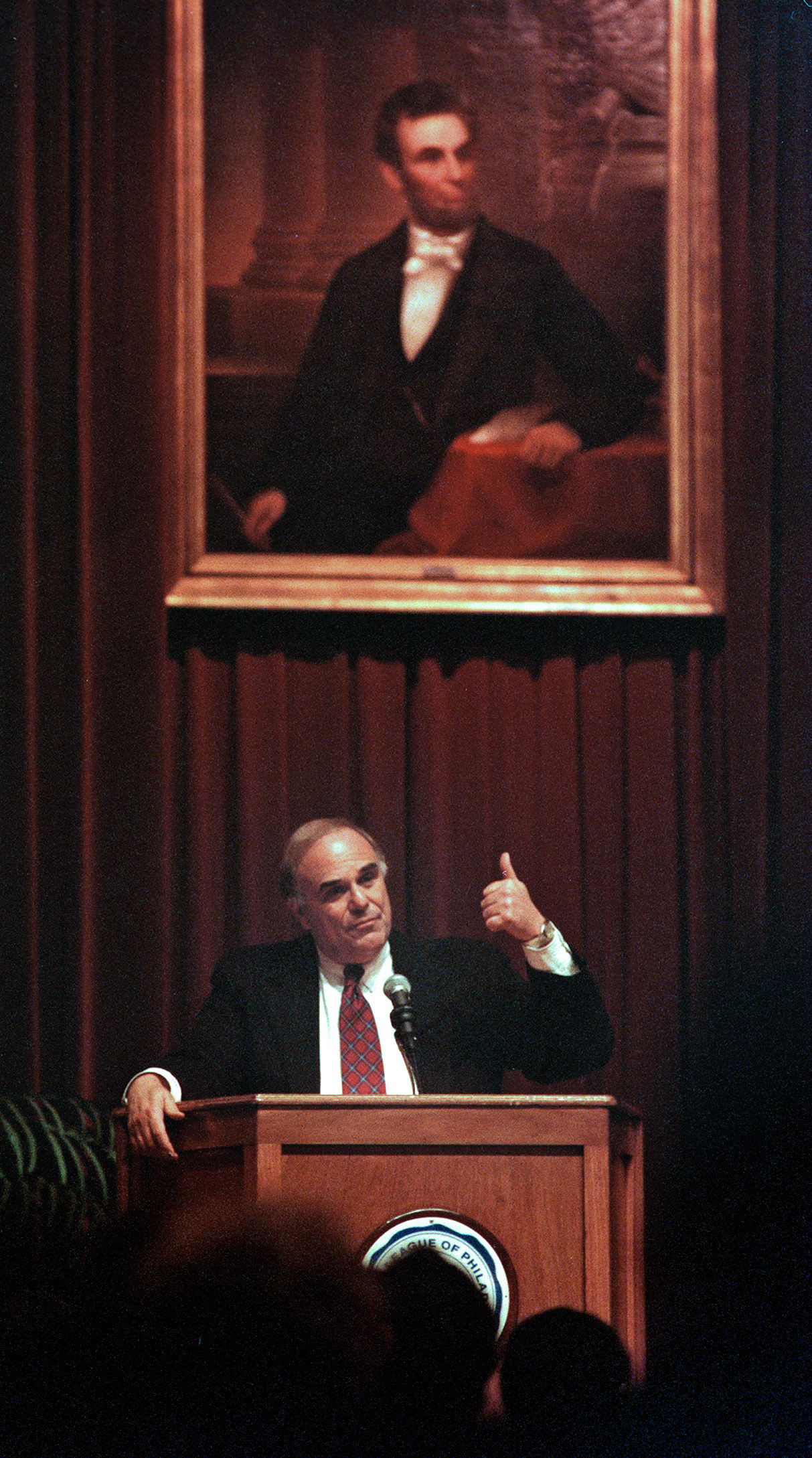
    Mayor Ed Rendell delivers his State of the City address in Lincoln Hall at the Union League in February 1999. Rendell claimed the Deferred Retirement Option Plan would not cost the city any additional revenue. Instead, around $2 billion has been spent since 1999.

    In the case of Jazelle Jones, four years’ notice was apparently not enough.

    She was set to retire in September 2024, but Mayor Cherelle L. Parker asked her to stay on the job and issued a special exception so she could be rehired.

    Following a one-day retirement, Jones, 70, received a $97,000 payout for unused sick and vacation time, in addition to a DROP payment of nearly $320,000. She was then rehired with a $4,000 pay bump.

    Jones, whose annual salary is $199,000, serves as the city’s chief ambassador and director of special events, such as parades, concerts, festivals, and athletic events.

    Parker defended the move because of Jones’ experience overseeing major events like the current World Cup games.

    But there is no defending her Council member husband’s plan to collect his DROP payment and continue serving in office.

    DROP was never intended for elected officials, since voters determine whether they get to keep their seats.

    Controversy erupted in the early 2000s after several elected officials collected large DROP payments, retired for a day, and returned to office. City Councilmember Frank Rizzo Jr. lost his election bid in 2011 after he accepted a DROP payment.

    In 2010, Council barred future elected officials from participating in the program — but grandfathered anyone already in office. That included Curtis Jones Jr., 68, who was first elected in November 2007.

    He enrolled in DROP in August 2024 but plans to run for a sixth term next year. If Jones is reelected, he could then retire for a day in 2028, collect his $432,221 DROP payment, and then serve another four-year term. The Council member told The Inquirer he instead plans to retire in December 2027, collecting a reduced DROP payment closer to $350,000.

    What a mensch.

    Jones has publicly discussed delaying bridge repairs in his district to avoid traffic jams that may rankle voters during his reelection campaign.

    Perhaps voters should beat a path to finding candidates who put the public’s interest before their personal gain.

    Even better, the city should put an end to DROP.

  • What lurks beneath Trump’s botched Reflecting Pool renovation | Editorial

    The immediate problem with Washington’s algae-choked Lincoln Memorial Reflecting Pool is that, contrary to President Donald Trump’s typically inflated promises, it’s not reflecting much other than its hospitality to primitive aquatic life. And yet in a figurative sense, this relatively inconsequential public works project reflects the president’s excesses as faithfully as a mirror. Among them:

    A visitor at the Lincoln Memorial takes a selfie Wednesday as workers repair the Reflecting Pool in Washington.

    Narcissism: The Narcissus of myth fell in love with his own reflection in a pool of water, so it’s fitting that the same tendency lured Trump into this National Mall quagmire. Not content to quietly assess and address the feature’s deficiencies as if it’s his, well, job, the president made an ocean of a pond, insisting that repairing it would somehow simultaneously glorify America and himself, between which he makes little distinction.

    Trump has bizarrely exaggerated the pool’s dimensions, falsely calling it “longer than the tallest building in the world” and suggesting its persistent murk was not just an age-old design flaw but a national calamity. Echoing a mantra dating to his original campaign, he claimed that he alone could fix it where his predecessors had failed, transforming its condition from “filthy,” “disgusting,” and “garbage-ridden” into “the most beautiful” “American-flag blue” for up to a century hence. And he said he could do it quickly and cheaply, vowing to complete the renovation in as little as a week for no more than $2 million.

    The Reflecting Pool is cleaned of algae, utilizing “ozone nano bubbles” by National Park Service employees and contractors, on June 16 at the Lincoln Memorial Reflecting Pool in Washington.

    Incompetence: But unlike the last attempt to remedy the pool’s persistent issues, during the Obama administration, Trump’s project did not grapple with the underlying plumbing problems that conspire with the Mid-Atlantic climate to create an ideal habitat for algae. His contractors simply resurfaced the pool’s concrete bottom with foam and a blue-tinted sealant.

    Predictably, the algae persisted. Worse, the new surface did not, detaching and floating free in forlorn pieces. Workers dumped hydrogen peroxide into the water in a desperate attempt to beat back the pond scum, while the untimely demise of a few unlucky ducks in and around the pool raised further concerns. The project, meanwhile, took about six times as long as the president promised and cost eight times as much, with further work expected to prolong the effort beyond the Fourth of July.

    A blue protective coating, as part of a renovation project to the Lincoln Memorial Reflecting Pool, is seen being sprayed in May.

    Corruption: The nation’s approaching 250th birthday was cited as the dubious reason for awarding the work on an emergency basis without competitive bidding, allowing the administration to handpick companies with little or no experience as federal contractors. Some of the business went to an Ohio company called Greenwater Services — a bit of honest advertising given the water’s current hue — owned by James J. Cafaro, a Trump neighbor who has given hundreds of thousands of dollars to committees linked to the president.

    This isn’t Cafaro’s first inauspicious encounter with the federal government. In 2001, he pleaded guilty to a conspiracy to bribe Democratic Rep. James Traficant of Ohio. He went on to testify that he gave the congressman, who was pushing Federal Aviation Administration officials to adopt a laser system sold by Cafaro’s company, an envelope stuffed with cash. In 2002, Traficant was convicted of corruption charges and expelled from Congress.

    A piece of the blue coating floats among algae at the Lincoln Memorial Reflecting Pool June 21 on the National Mall in Washington.

    Deception: Lest anyone leap to the conclusion that these unsavory facts suggest the administration didn’t hire the best people for the job, Trump advanced the theory that the real culprit is a conspiracy.

    Having begun the project with a fictive account of the pool’s history and false promises of a glorious future, he recently alleged without evidence that the project came up short because unidentified enemies had sabotaged the feature with “a very sharp knife or razors” and algae-promoting “chemicals” in the “dark of night.”

    A demonstrator at the Lincoln Memorial speaks with a National Guard member as workers repair the Reflecting Pool in Washington, Wednesday.

    Authoritarianism: The farce took a fascist turn when Trump declared on social media that half a dozen people had been arrested for alleged vandalism of the pool.

    One of the targets said he was arrested on an obscenity charge for taunting National Guard troops deployed around the pool. Another said he was taken into custody and detained for hours for touching a piece of federal flotsam. His lawyer, Norm Eisen, argued persuasively that the arrest was an attempt to distract from the mismanagement and corruption surrounding the project, calling it “textbook authoritarian behavior.”

    In short, the president’s promise to embody national greatness has been exposed as a shoddy racket wrapped in lies and oppression. The pool reflects after all.

  • Philadelphia budget’s ugly attack on the arts | Editorial

    Philadelphia budget’s ugly attack on the arts | Editorial

    At $5 million, Philadelphia’s primary arts and cultural fund is not one of its many substantial burdens for taxpayers, amounting to well under a thousandth of the multibillion-dollar municipal budget. And yet, the city’s politicians can’t seem to resist the allure of the minuscule expense as a canvas for their financial creativity.

    Having narrowly survived fiscal extinction during the pandemic, the Philadelphia Cultural Fund took another disproportionate cut in the city’s recently enacted budget for fiscal 2027, which begins next week. The spending plan recently passed by City Council and signed by Mayor Cherelle L. Parker appropriates $3.5 million for the fund, nearly a third less than this year, according to the fund’s executive director, Gabriela Sanchez. It’s hardly a rounding error in Philadelphia’s $7.1 billion budget, but it’s likely to devastate many of the tiny arts and cultural groups the line item supports citywide.

    Nearly 100 of the almost 300 arts organizations that depend on the fund are expected to lose the aid as a result, Sanchez said in a statement. She said the fund would halve its eligibility threshold, limiting grants to groups with budgets of no more than $1.5 million, among other “untenable decisions,” hobbling neighborhood theaters, festivals, music programs, and more. “In practice,” Sanchez added, “this means that community-based arts and culture groups … will lose essential operating funding that sustains their day-to-day work.”

    Created three decades ago to supplant more traditionally Philadelphian methods for distributing tax money — according to the whims and still less defensible motives of local politicians — the cultural fund brought a measure of evenhandedness and transparency to bear, offering clear rules and a fair process. Today, it funds groups ranging from A Book a Day, which has donated thousands of books to institutions serving young readers in West Philadelphia, to the Wyck Association, dedicated to preserving and interpreting the historic house of that name in Germantown.

    The impact of these groups, economic and otherwise, is far greater than their cost: A 2024 report by the Greater Philadelphia Cultural Alliance found that nonprofit arts groups generate more than $2 billion in yearly economic activity, providing $1 billion in household incomes and $265 million in tax revenues. The alliance also found that the sector suffers from inadequate, unreliable, and uneven public funding.

    The cut is cruelly contrary to what city arts groups and some Council members argued for amid the Trump administration’s retreat from federal arts funding, which was to increase the cultural fund’s allocation by 20%. It’s also at odds with a city budget that raises overall spending by about 3% over this fiscal year. At that rate, given the fund’s benefits, the city should at least be able to hold it harmless and maintain this year’s relatively meager contribution.

    Philadelphia’s arts groups shouldn’t be perpetually on the budgetary brink just because most of them are small and lack powerful political patrons, making them easy to pick on. The mayor and Council should find a way to restore this funding and stop creating trouble for the city’s invaluable creators.

  • The U.S. healthcare system is an embarrassment. Americans need a public option. | Editorial

    The U.S. healthcare system is an embarrassment. Americans need a public option. | Editorial

    Long ago, when most Americans left the house for mass entertainment, they flocked to carnivals that crisscrossed the country to delight small towns and big cities. Shows typically included a barker whose steady stream of superfluous oratory enticed folks to spend their hard-earned cash on sometimes dubious performances.

    Too often today, our nation’s capital resembles that midway where a slick barker spouts enticements to assure people who want to believe what they want to believe that he will always give them what they want. That may be fine when the tickets sold are for harmless attractions, but what mostly seems for sale in 21st-century Washington is this country’s very soul.

    One glaring example of our current predicament is an embarrassingly disappointing healthcare system that fails to meet the needs of millions of Americans who can neither afford adequate medical treatment nor a health insurance plan to help them pay for a doctor or the cost of a hospital stay.

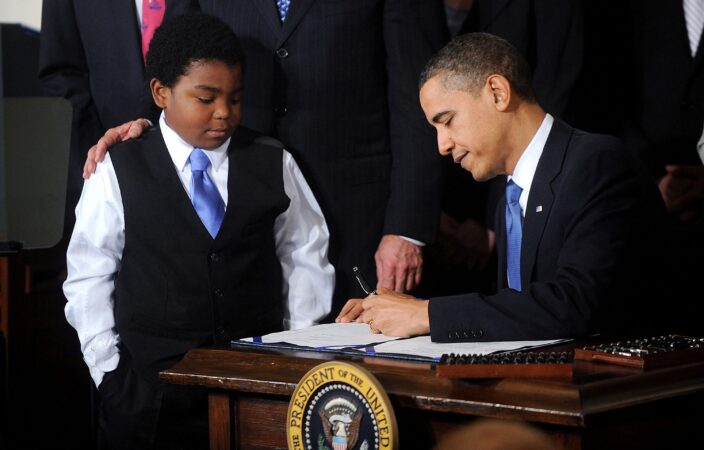
    Even as the Affordable Care Act (ACA) was being signed into law by President Barack Obama in 2010, it was clear it would need future adjustments. Unfortunately, that necessity has been ignored by President Donald Trump, who in both his first and current administrations has found it more beneficial politically to criticize rather than improve Obamacare.

    The ACA has helped cut the percentage of Americans without health insurance from nearly 16% in 2016 to 8% last year. That means more work needs to be done. But while Trump keeps promising a better alternative to Obamacare, he’s barely delivered on even the “concept of a plan” to improve healthcare access for all.

    Trump proposed an ACA alternative in January that he calls “The Great Healthcare Plan,” but it’s too weak to get the health insurance industry to become a better partner in extending coverage to more Americans. Trump’s plan would instead end the ACA subsidies that have helped millions of people pay for health insurance while cutting prescription drug prices and requiring insurance companies to do a better job reporting their costs and profits.

    A National Institutes of Health study concluded the Obama administration “bowed to the demands of the medical industrial complex comprised of hospitals, insurance companies, and drug companies” to help it make the ACA law because “it was not politically feasible” to get the bill passed any other way. Unfortunately, the feasibility of improving Obamacare has become even more remote under Trump.

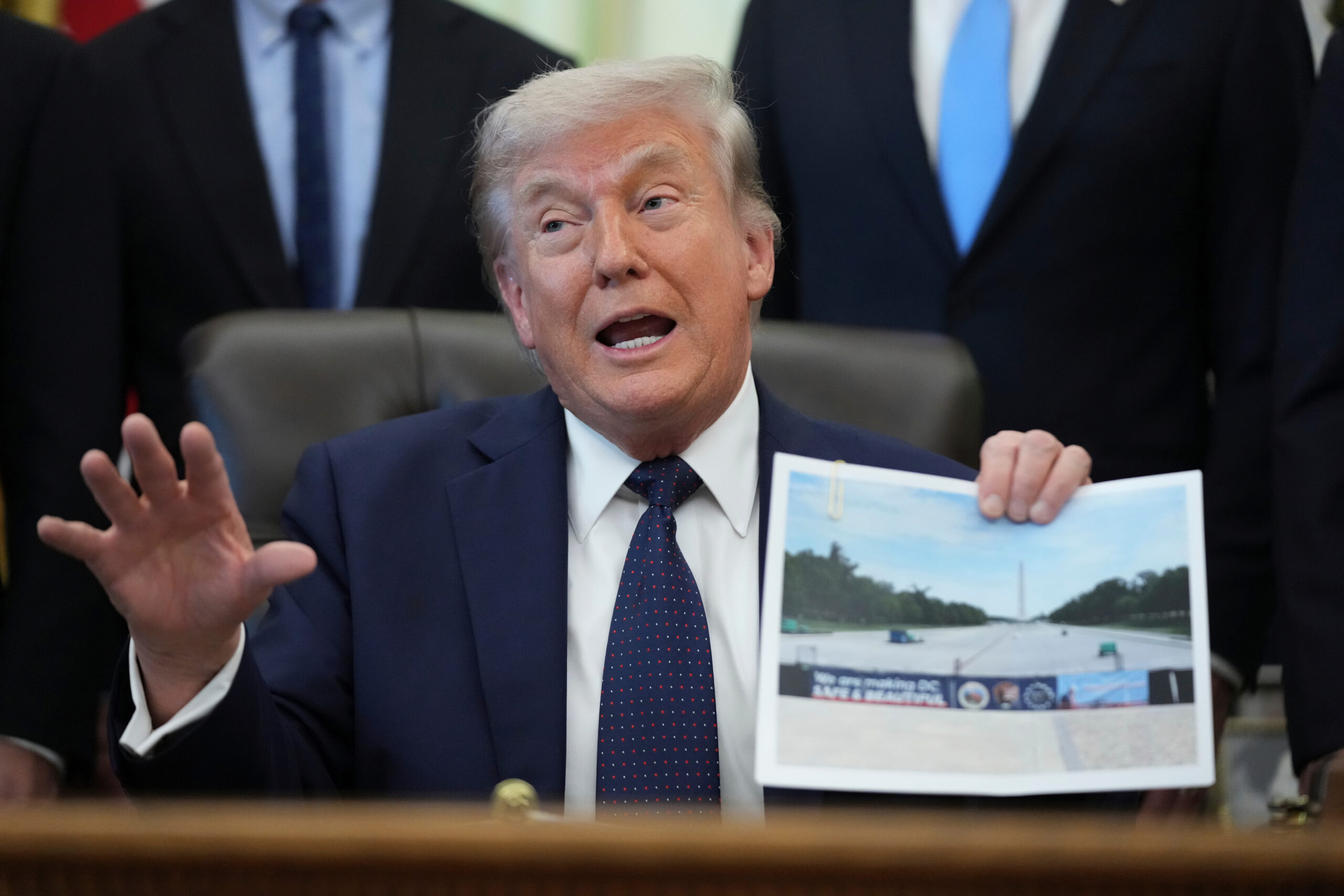
    President Donald Trump holds a picture of the Lincoln Memorial Reflecting Pool during an event on health care affordability in the Oval Office in April.

    That’s a sign of the political strength of major health insurance companies, including UnitedHealth Group, Cigna, Kaiser Permanente, Elevance Health (the parent company of Anthem Blue Cross Blue Shield), and CVS Health, which acquired Aetna in 2018. Those firms have earned more than $9 trillion since the ACA was passed in 2010, and show no sign of wanting to ever voluntarily reduce any income derived from federally subsidized premiums paid by Obamacare customers.

    It’s time to stop the giveaway to health insurance companies and reconsider an idea that has failed past attempts to survive Washington politics. Americans need a public option similar to Medicare that would allow eligible participants of all ages to pay adjusted health insurance premiums based on their incomes. Switzerland, Germany, and the Netherlands have similar programs, and President Harry S. Truman proposed a public option for the United States more than 70 years ago, but Congress wouldn’t approve it.

    “Millions of our citizens do not now have a full measure of opportunity to achieve and enjoy good health,” Truman said in 1945. “Millions do not now have protection or security against the economic effects of sickness. The time has arrived for action to help them attain that opportunity and that protection.” That same speech could be made today, but this Congress and president seem even more in thrall to the powerful insurance companies that today employ more than three-fourths of all U.S. doctors.

    The American Medical Association, in a recent report, cited Washington’s kowtowing to corporate healthcare interests trying to maximize profits as a contributing factor to a current statistic that one in five physicians in the United States say they plan to retire within the next two years. “Many physicians find themselves practicing in direct conflict with their own values, the values that led them to a career in healthcare in the first place,” said the AMA report.

    With thousands of doctors abandoning their practices and millions of Americans still unable to afford health insurance, it’s time for a bolder, better healthcare system. This country is too prosperous to have so many Americans worrying themselves to death while trying to figure out how to afford decent medical care.

    This nation cannot afford our president’s weak ideas to fill huge gaps in America’s healthcare delivery system. Franklin Delano Roosevelt showed how it’s done in steering the passage of the Social Security Act in 1935. Lyndon B. Johnson got both Medicare and Medicaid through Congress 30 years later. And Obama opened the door for a successor to craft the next phase of the Affordable Care Act. It’s time for Trump to stop promising something even better and produce it.

  • No more gambling with public health: Pa. must ban skill games | Editorial

    No more gambling with public health: Pa. must ban skill games | Editorial

    The Pennsylvania Supreme Court finally made clear what has been obvious to every other commonsense observer: Skill games are slot machines.

    The question now is what will the General Assembly do about the estimated 70,000 skill games that it irresponsibly allowed to proliferate across the commonwealth?

    If Gov. Josh Shapiro and state lawmakers place public health and safety above raking in more tax revenue, they will follow Kentucky’s lead and ban skill games.

    But don’t expect Harrisburg to do the right thing when it comes to gambling. Governors and state legislators here have been hooked on gambling for two decades.

    They view the billions in tax revenue that comes from gambling as easy money that helps avoid raising taxes or operating the government more efficiently. But they ignore the hard truth that much of that tax revenue comes from billions of dollars in losses from repeat and problem gamblers.

    Research has found that slot machines are designed to addict users. Indeed, some Pennsylvania casino operators boasted early on that many customers came as often as six times a week.

    The explosion of online gambling apps — especially on sports — via smartphones, is even more addictive. One Pennsylvania man said he sometimes placed 500 bets a day.

    Unregulated gaming devices known as “skill games” inside a convenience store in Philadelphia. The State Supreme Court recently ruled the devices are slot machines.

    Studies have linked problem gambling to job loss, depression, suicide, domestic violence, and divorce. But lawmakers continue to ignore the growing public health crisis that impacts broader society. That’s because the same lawmakers are also in the vise grip of the influential gambling lobby that pours millions into their campaign coffers.

    Recall that the gambling lobby helped write the law that legalized slot machines in Pennsylvania back in 2004. Then-Gov. Ed Rendell and former State Sen. Vince Fumo (D., Philadelphia) pushed through the measure with little debate. They morphed a 33-line document about background checks at horse racetracks into a 145-page bill known as Act 71, which cleared the way for up to 61,000 slot machines in 14 locations.

    In the ensuing years, Harrisburg lawmakers have legalized more and more gambling, adding table games, online betting, and sports betting.

    Pennsylvania now leads the country in gambling revenues it takes in, thanks to a surge in online betting that is reaching teens and kids as young as 11.

    The commonwealth also has one of the highest addiction rates.

    Casino backers argue that problem gambling only affects around 3% of the population. But that includes most people who do not gamble.

    Advertisements for sports betting apps are seen in downtown Kansas City, Mo., in November.

    Studies found 60% to 90% of casino revenues come from problem or at-risk gamblers. When it comes to sports betting, 86% of the revenues come from just 5% of the gamblers. So, the business model essentially depends on problem gamblers.

    But as Harrisburg lawmakers rushed to legalize additional gambling options, they looked the other way as thousands of skill games popped up in local taverns, gas stations, laundromats, convenience stores, and social clubs, like VFW halls.

    In the gambling industry food chain that preys on the most vulnerable, skill games are among the bottom-feeders.

    But skill games have been allowed to operate for years with no regulation or taxation. Many machines are in poor neighborhoods in Philadelphia and small towns.

    Some small business owners — such as the corner taverns and social clubs — argue that skill games help attract customers. But if a business is dependent on repeat gamblers mindlessly pumping money into a machine, it is time to innovate.

    In addition, skill games have been linked to increased crime, including armed robbery and murder.

    Last year, a Philadelphia jury ordered Pace-O-Matic, the leading skill game maker, to pay $15.3 million to the estate of a Hazleton store clerk killed during a 2020 robbery.

    A convenience store clerk in Frankford who was shot during an armed robbery recently sued Banilla Gaming, a North Carolina-based skill games manufacturer, alleging it enticed the robbery because of the large amounts of cash the store maintained to pay gamblers.

    Skill game devices inside Philly Market in the city’s Frankford section.

    In 2024, the Philadelphia City Council voted to ban skill games because they attracted crime, but the Commonwealth Court quickly lifted the ban.

    Now, it is up to the General Assembly’s lawmakers to fix what they have long ignored.

    Shapiro has proposed regulating and taxing skill games at 52% — the same rate as slot machines in casinos. Before becoming governor, he expressed disdain for gambling, but now he is all in. Shapiro estimated skill games could bring in $2 billion in revenue for the state — glossing over that the money comes from individual gambling losses. (The state doesn’t even use the word gambling; they call it “gaming” as if it is all good, clean fun.)

    Pace-O-Matic, the most influential skill game player, wants a much lower tax rate of around 16%. Its army of lobbyists — and lawmakers willing to do their bidding — will surely have a lot to say about what comes next. So will the lawmakers on the side of the casino lobby, which wants an even playing field.

    Average citizens don’t have a voice in this fight.

    The state Supreme Court gave the General Assembly 120 days to figure out what to do next. If the legislature fails to act within that period, the skill games will be deemed illegal and could be subject to seizure.

    During the 2023-2024 session, three state Senate Democrats introduced a bill that called for banning skill games. That remains the best path forward.

    But expecting Harrisburg to protect citizens from gambling ills is a long shot.

  • Hungary’s Viktor Orbán was called ‘Trump before Trump.’ Will the president also follow him in defeat? | Editorial

    Hungary’s Viktor Orbán was called ‘Trump before Trump.’ Will the president also follow him in defeat? | Editorial

    Hungarian Prime Minister Viktor Orbán, whose illiberal right-wing policies have served as a template for Donald Trump’s second term, was roundly defeated Sunday. His electoral loss, after 16 years in power, offers a lesson for those seeking to safeguard the American experiment from the president’s autocratic bent.

    Perhaps the biggest takeaway from challenger Péter Magyar’s victory is that if the will of the voters is strong enough, even a hollowed-out democracy can still speak for the people. This bodes ill for Republicans in upcoming elections, as the United States is nowhere near the level of institutional degradation achieved by Orbán and his party.

    It has not been for lack of trying, though.

    Guided by the Project 2025 blueprint — a plan Trump disavowed during his campaign but which he has followed since his return to the White House — the president has attempted to dismantle constitutional checks and balances, undermine elections, and bully and dominate business and civil society.

    Trump adviser Steve Bannon once called Orbán “Trump before Trump” and Hungary under his leadership offered a grim preview of what a successfully MAGA-fied America would look like: Government control of universities and the media, courts and federal jobs occupied by loyalists, extreme gerrymandering limiting political opposition, and curbed press freedoms.

    But just as Trump and his enablers moved much more swiftly in trying to undercut democratic institutions and weaken the rule of law than their Eastern European counterparts, the cracks in the foundation that ultimately led to Orbán’s overwhelming loss are already visible in Washington.

    Magyar and his Tisza party were expected to hold a two-thirds parliamentary majority on the strength of focusing on corruption and a poor economy. While Trump has been busy enriching himself, his family, and his cronies to the tune of billions of dollars, everyday Americans are struggling.

    Peter Magyar, the leader of the opposition Tisza party waves a national flag after claiming victory in a parliamentary election in Budapest, Hungary, Sunday.

    Although the U.S. is not Hungary, Democrats still looking to find a winning message can’t do much better than what Magyar promised in his victory speech, a country “where citizens can count on their government, where everyone is entitled to proper healthcare, a carefree childhood, and a dignified old age.”

    Contrast that with a president who claims that citizens of the richest nation in the world who want a better life, better look elsewhere. “It’s not possible for us to take care of daycare, Medicaid, Medicare, all these individual things,” Trump said at an April 2 Easter luncheon. “They can do it on a state basis. You can’t do it on a federal. We have to take care of one thing: military protection.”

    Yes, having a strong military is important, but even more so is the responsible stewardship of America’s armed forces. By some estimates, Trump’s war of choice in Iran costs taxpayers $2 billion a day, with a long term price tag coming in at $1 trillion over the next decade on military-related spending alone. That doesn’t even consider the pain at the pump and the checkout lane as the still unresolved conflict hikes up prices on everything from gas to groceries.

    Trump’s blinkered priorities are not limited to the economy.

    While the president and his secretary of state watched a mixed martial arts match in Miami Saturday, peace talks with Iran were falling apart. On Sunday, Trump attacked Pope Leo XIV on social media, claiming the U.S.-born pontiff should “stop catering to the radical left” and “get his act together as pope” before posting an AI-generated image of himself as Jesus healing the sick.

    As far as we know, Viktor Orbán never publicly compared himself to Christ, but other parallels with Trump remain strong, including the use of the autocratic playbook, and the graft and incompetence of their administrations.

    After Sunday, supporters of democracy can hope the similarities don’t end there.

  • The partial shutdown forcing TSA agents to work without pay could not have come at a worse time | Editorial

    The partial shutdown forcing TSA agents to work without pay could not have come at a worse time | Editorial

    Lost in the economic and political fallout from Donald Trump’s war in Iran is the growing chaos at airports and an increased terrorist threat inside the United States.

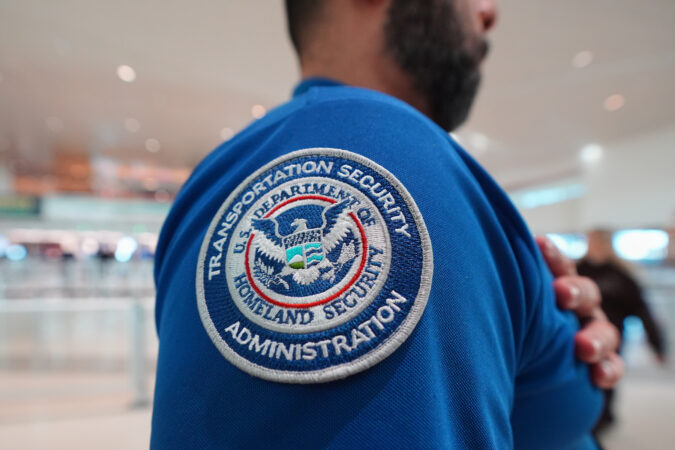
    More than 60,000 Transportation Security Administration employees have been working without pay because of the partial government shutdown that began on Feb. 14. More than 300 TSA agents have quit and thousands more have been calling out from work, prompting long lines at many airports.

    TSA temporarily closed the security checkpoint at Terminal C in the Philadelphia International Airport last week.

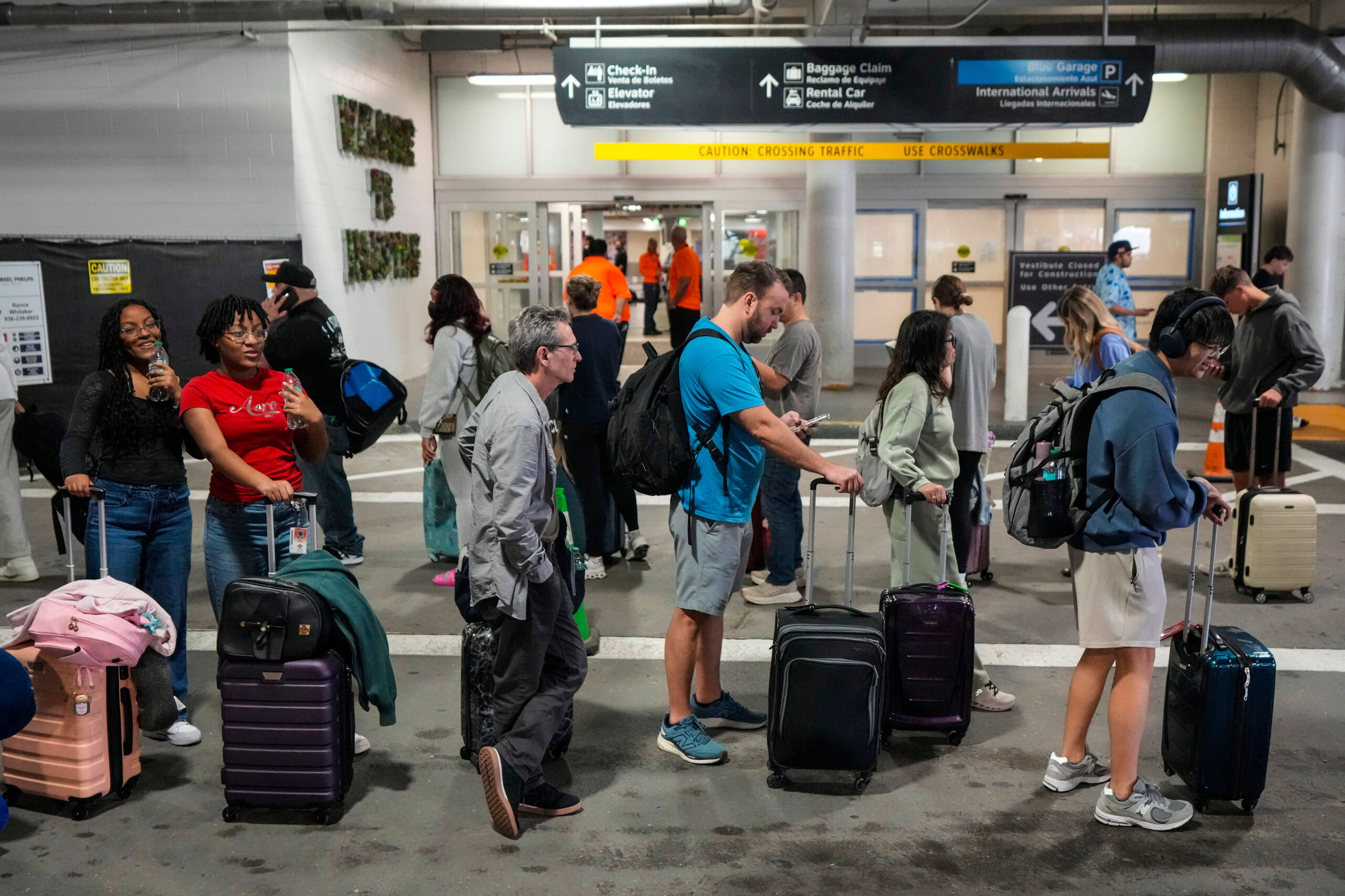
    Despite staffing shortages, the wait times for travelers in Philadelphia remained manageable for now. But travelers at other airports waited more than three hours to get through security.

    The partial shutdown that resulted in funding lapses for the Department of Homeland Security could not come at a more dangerous time. Federal law enforcement agencies remain on high alert following threats to the United States after Trump and Israel began bombing Iran.

    Airline passengers wait in long lines outside the terminal to get through the TSA security screening at William P. Hobby Airport in Houston on March 8.

    Indeed, Trump’s war has apparently already spurred several terror attacks on U.S. soil.

    • Two teens from Bucks County who said they were inspired by ISIS were charged with trying to set off homemade bombs during a protest outside the residence of New York Mayor Zohran Mamdani.
    • Iran-linked hackers claimed responsibility for a cyberattack on Stryker, a Michigan-based company that makes a range of medical equipment and technology.
    • A U.S. citizen born in Lebanon drove a truck into a synagogue in Michigan last week after four of his relatives were killed in an Israeli airstrike.
    • A naturalized citizen from Sierra Leone accused of killing an ROTC instructor at Old Dominion University was previously convicted of supporting ISIS.
    • A U.S. citizen from Senegal who was wearing a T-shirt with the colors of the Iranian flag was accused of killing three people and injuring a dozen more outside of a bar in Austin, Texas, the day after the initial attack on Iran.

    The motives for the attacks are still being investigated but law enforcement officials urged people to report suspicious activity, and police have increased patrols around synagogues and public transit hubs.

    The growing threats come as the Trump administration spent the past year decimating national security.

    FBI Director Kash Patel fired counterterrorism agents because they were involved in the investigation that led to Trump’s criminal indictment in 2023 on charges of mishandling classified documents.

    At the same time, the FBI and Homeland Security have shifted thousands of agents to focus on immigration enforcement, while the Justice Department’s elite national security division has faced mass firings, resignations, and forced retirements.

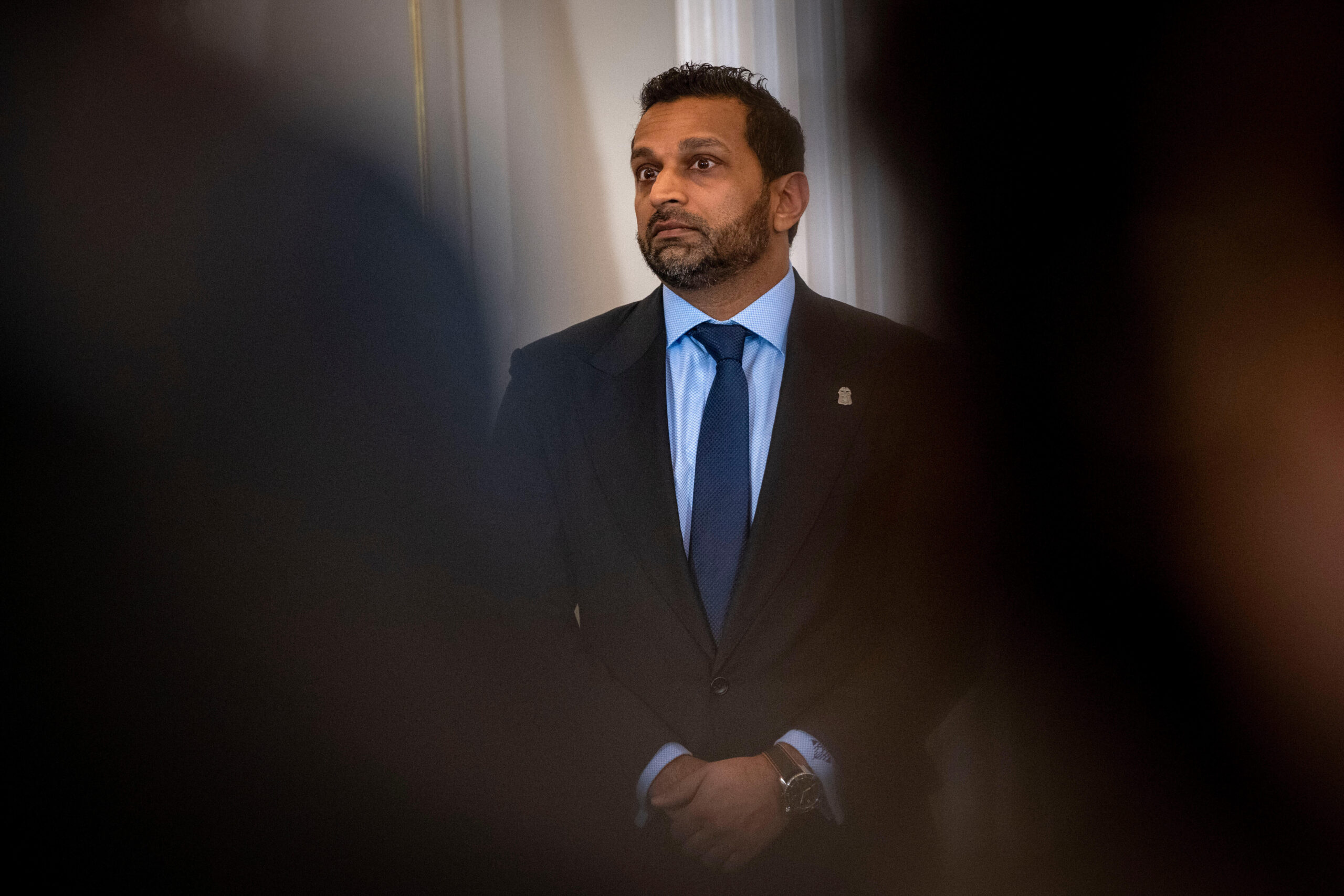
    FBI Director Kash Patel fired counterterrorism agents because they were involved in the investigation that led to President Trump’s criminal indictment in 2023 on charges of mishandling classified documents.

    More unsettling, the person now overseeing Homeland Security’s terrorism prevention programs is a 22-year-old former Trump campaign worker fresh out of college with no apparent national security expertise.

    Meanwhile, thousands of TSA agents — who are charged with screening customer baggage and cargo for weapons and explosives — are overworked and not getting paid.

    TSA agents, who make an average of $35,000, endured a 43-day government shutdown last fall, making this the second time in six months they have been forced to work without pay.

    A TSA union representative said several employees reported lacking money for daycare and food. “They just want to know why the hell they can’t get paid when we have money to shoot missiles into other countries,” Johnny Jones, secretary-treasurer of American Federation of Government Employees TSA Council 100 and a Dallas-based TSA worker, told USA Today.

    Republican and Democratic lawmakers blamed each other for the shutdown underscoring the deep political divide and dysfunction in Washington.

    Airline chief executives demanded Congress find a way to pay the TSA workers as the shutdown disrupts travel and undermines safety.

    Trump, who took a break from his war to play golf over the weekend, offered cold comfort when asked if Americans should worry about terror attacks in the United States: “I guess,” he responded. “Some people will die.”

    Trump, quite literally, to America: Drop dead.

  • The ‘secretary of war’ and a tech CEO shouldn’t be the only ones debating ethical use of AI | Editorial

    The ‘secretary of war’ and a tech CEO shouldn’t be the only ones debating ethical use of AI | Editorial

    Since the dawn of modern computing, there has been speculation that technology would someday outpace humanity’s ability to control it. Yet, for all those concerns, technology kept advancing, and such a scenario often felt far away. At least until artificial intelligence came onto the scene.

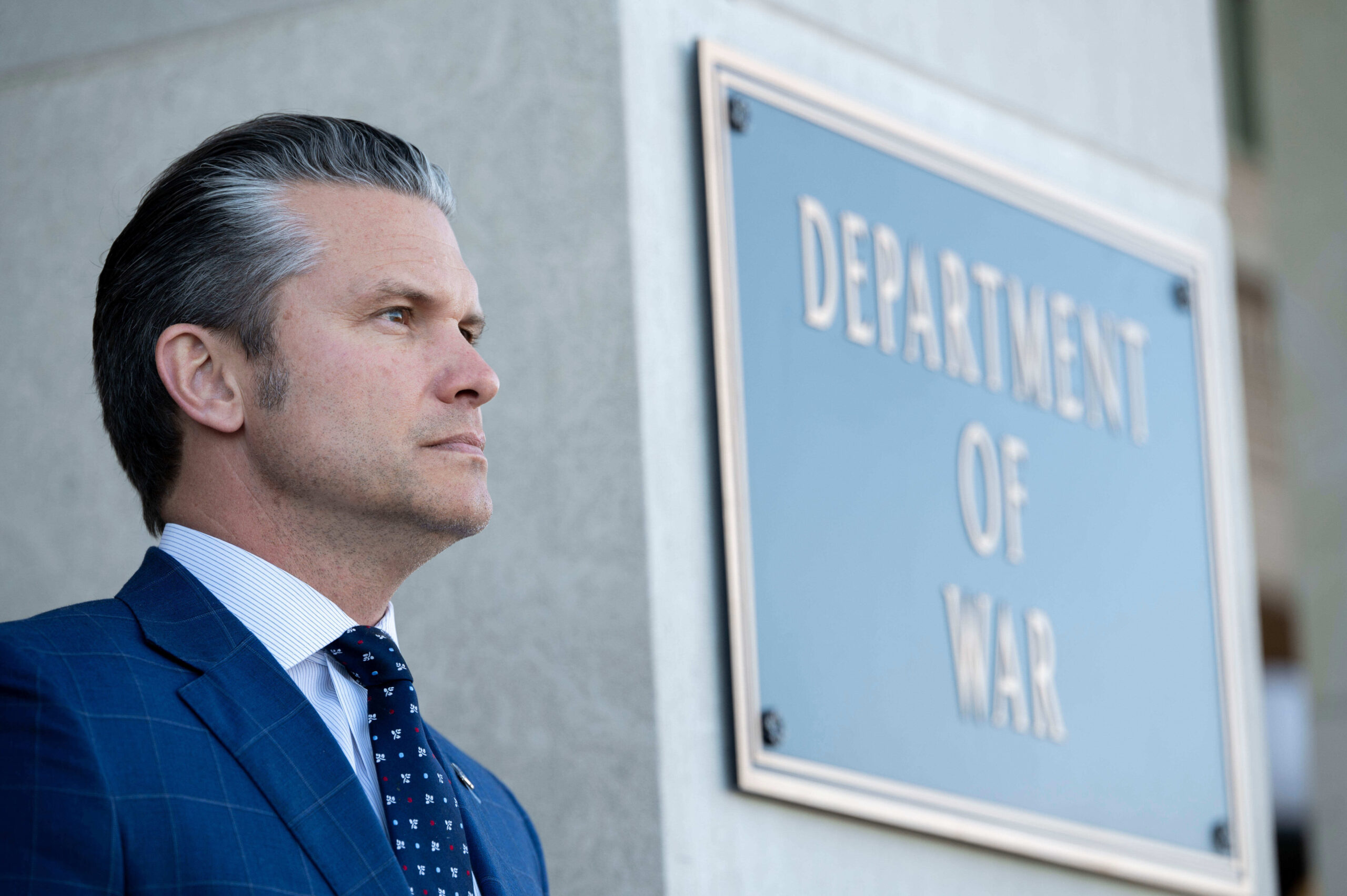
    Now, the Trump administration is using AI to assist the war in Iran, and Defense Secretary Pete Hegseth has demanded that tech companies agree to collaborate with the military without guardrails. Swarms of autonomous killer drones are within reach, and President Donald Trump wants to control them without restriction.

    What could possibly go wrong?

    Last week, Hegseth unilaterally terminated the Pentagon’s partnership with Anthropic, the creator of Claude, considered the most highly regarded AI system available. The government asked for unfettered use of Claude, including for mass domestic surveillance, or to create weapons that kill without human input. CEO Dario Amodei refused.

    The Trump-anointed secretary of war responded by designating Anthropic as a supply-chain risk to national security. A move that would ban all defense contractors from using Anthropic products. In effect, Hegseth is trying to force an American company to do work it did not agree to take on; work that can potentially be used to violate the law and Americans’ constitutional rights.

    Defense Secretary Pete Hegseth stands outside the Pentagon during a welcome ceremony for the Japanese defense minister in January.

    The move comes not long after public acknowledgment that the military used Claude to help plan the capture of Venezuelan President Nicolás Maduro. The AI technology is also being used in the bombing campaign against Iran. One of the stated uses is “target identification.” During U.S. and Israeli strikes against Iran, an elementary school that neighbors an Iranian naval base was struck, resulting in the deaths of dozens of children. While the U.S. has yet to confirm responsibility, the incident is a clear sign to exercise caution, not to forge ahead recklessly.

    Anthropic has benefited from the clash with the administration, as many people who oppose the president’s policies look to reward anyone who stands up against Trump. Claude overtook competitor ChatGPT for the first time in user downloads, hitting No. 1 on Apple’s App Store. But Anthropic is no clear-cut hero.

    In a statement, the company rightly underlined that “mass domestic surveillance of Americans constitutes a violation of fundamental rights.” But it also said it was willing to help the Pentagon in the future. It just doesn’t believe that today’s AI systems “are reliable enough to be used in fully autonomous weapons.”

    Meanwhile, the United States is hardly the only country likely to develop the capacity to deploy autonomous lethal weapons. China’s leading AI firm, DeepSeek, is working with the People’s Liberation Army to create its own autonomous battle systems. Under Hegseth’s punitive order, DeepSeek is now treated more favorably than Anthropic.

    Anthropic CEO Dario Amodei.

    Like nuclear weapons, artificial intelligence has become the subject of an international arms race. Both have the power to cause unprecedented death and destruction. Nations have reason to fear being left behind, and it may be too late to close Pandora’s box.

    The debate is one of many around the growth of artificial intelligence. Americans are as concerned about the potential for job losses through creative destruction, the proliferation of data centers, and the potential for a less human future as they are excited about the possibility of widespread self-driving cars. Newsrooms, college campuses, and businesses are all grappling with how to use AI technology ethically and productively.

    It is time for more lawmakers to join this complicated conversation.

    Instead of leaving matters to a negotiation between Hegseth and a tech CEO, Congress should issue legally binding guidelines for the use of artificial intelligence in war — including restrictions on mass surveillance and autonomous weapons. Congress could also debate the usage of AI in other areas, like healthcare and education.

    It is distinctly possible that the systems will improve outcomes for some people. AI has detected cancers that human doctors missed, research has shown that Waymo is significantly safer than human drivers, and AI has enabled newsrooms to restore coverage to smaller cities and towns that have struggled to sustain their own outlets.

    At the same time, even the best AI assistants can still hallucinate facts and make mistakes. That’s embarrassing when it happens on a term paper or a court filing; it can be deadly on the battlefield.

    Above all, human control over lethal weapons is essential. Echoing the nuclear proliferation treaties that benefited humanity in the 20th century, the United States should lead the way in assembling a broad coalition of powerful nations that agree to ban fully autonomous weapons.

    In the meantime, Trump and Hegseth’s decision to spurn Anthropic points the way toward a 21st-century disaster.