Category: Opinion

  • The city’s crime rate has fallen dramatically. It didn’t happen by chance.

    The city’s crime rate has fallen dramatically. It didn’t happen by chance.

    For years, Philadelphia, like many American cities, grappled with historic levels of violence brought on by the upheaval of the pandemic. Today, a very different story is unfolding.

    Violent crime in Philadelphia has declined sharply and sustainably, and much of that progress is owed to the extraordinary work and unwavering commitment of the men and women of the Philadelphia Police Department.

    Homicides are down again this year, by roughly 15% to 18% compared with last year, putting the city on pace for its lowest total since the 1960s. Shootings, both fatal and nonfatal, have fallen to levels not seen in more than a decade.

    At the same time, homicide clearance rates have reached historic highs, bringing accountability, answers, and a measure of justice to families who have suffered unimaginable loss.

    These results did not happen by chance. They are the product of relentless professionalism, data-driven policing, and deep engagement with the communities officers serve.

    Behind every statistic is a patrol officer, detective, analyst, supervisor, or civilian professional who showed up day after day, determined to protect this city. Lives have been saved, neighborhoods strengthened, and trust rebuilt because of their work.

    Philadelphia is safer today than it has been in a generation, and that progress deserves recognition.

    Changing threats

    But public safety is not defined solely by addressing violent crime. Some of the most damaging threats we face today are quieter, more personal, and increasingly digital.

    Across Philadelphia and the surrounding region, criminals continue to target the most vulnerable among us. Elderly residents are being deceived out of their life savings through increasingly sophisticated fraud schemes. Young people are being exploited through sextortion, often by offenders operating overseas who use fear, manipulation, and anonymity to cause devastating harm. Businesses of every size are facing ransomware attacks that can cripple operations, disrupt critical services, and threaten livelihoods.

    At the same time, our business community and world-class academic institutions face persistent threats from nation-state actors seeking to steal intellectual property, sensitive data, and cutting-edge research. These efforts target innovation, economic competitiveness, and national security itself, and they often unfold silently over months or years before being discovered.

    Such crimes leave deep scars. They are often underreported, emotionally devastating, and constantly evolving. Addressing them requires persistence, adaptability, and a willingness to confront threats that do not always fit traditional definitions of crime.
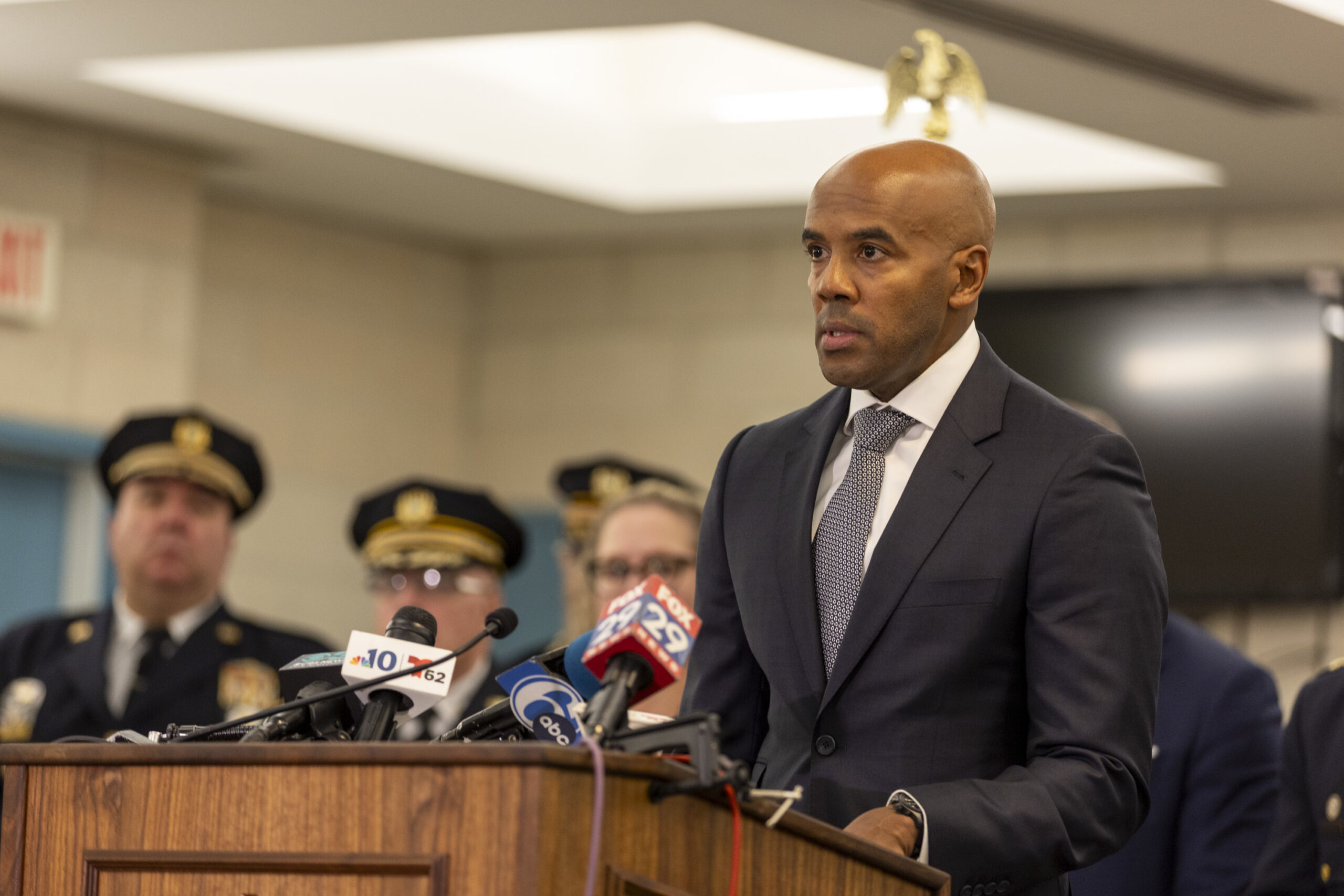
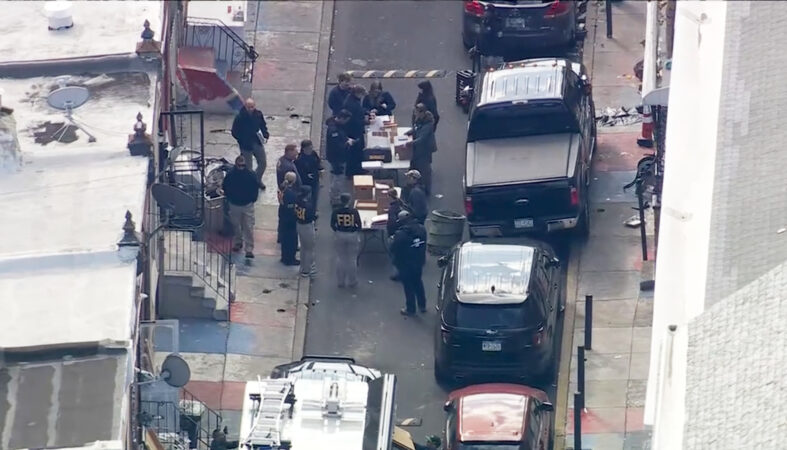
    Special Agent in Charge Wayne A. Jacobs at a news conference at the 24th Police District Headquarters in Philadelphia in October

    Every day, the men and women of the FBI show up with a clear purpose: to protect people and hold perpetrators accountable. Our agents, intelligence analysts, and professional staff work tirelessly to identify offenders, dismantle criminal networks, prevent acts of terrorism, disrupt foreign intelligence threats, and bring those responsible to justice, whether they operate across the street or across the world.

    But enforcement alone is not enough. Preventing harm before it occurs is one of the most powerful tools we have.

    That is why outreach and education are central to our mission.

    Building partnerships

    Through partnerships with schools, senior centers, businesses, universities, and community organizations, we work to raise awareness, share intelligence, and empower people to recognize threats early. Helping a senior avoid a scam, a teenager seek help before harm escalates, or an institution protect sensitive research can be just as impactful as an arrest.

    None of this work happens in isolation. The progress Philadelphia has made, both in reducing violent crime and in confronting complex threats like fraud, sextortion, ransomware, and foreign intellectual property theft, is rooted in strong partnerships. Federal, state, and local law enforcement, prosecutors, private-sector leaders, and academic institutions are aligned around a shared responsibility to keep this city safe.

    Those partnerships will be more important than ever as Philadelphia prepares for a historic year in 2026. With global events, national celebrations, and millions of visitors expected, success will depend on seamless coordination, shared intelligence, and a unified approach to prevention and preparedness.

    We are ready because we have built this foundation together.

    Philadelphia’s progress is real. The challenges ahead are serious. And by continuing to work side by side, guided by intelligence, driven by prevention, and grounded in partnership, we will keep this city safe in 2026 and beyond.

    Wayne A. Jacobs is the special agent in charge of the FBI’s Philadelphia Field Office, a position he’s held since November 2023.
  • Term limits offer Pennsylvania rare bipartisan opportunity

    Term limits offer Pennsylvania rare bipartisan opportunity

    For decades, Congress has been the land of the permanent incumbent. Nearly nine in 10 Americans support congressional term limits, yet every attempt to impose them has failed because Washington won’t limit itself. But Pennsylvania has the power to change that.

    As I previously argued in the Hill, there’s a path forward that doesn’t require Congress to vote against its own interests, or the near-impossible task of a constitutional amendment. The answer lies in coordinated state action that could force the U.S. Supreme Court to reconsider its 1995 decision in U.S. Term Limits v. Thornton.

    In Thornton, the Supreme Court ruled that states cannot add qualifications for federal office beyond those in the Constitution. That decision effectively shut down state-led reform, even though the people overwhelmingly support it.

    But landmark Supreme Court reversals often emerge when multiple states pass laws that force the court to reexamine old precedents. From Brown v. Board of Education to Dobbs v. Jackson Women’s Health Organization, coordinated state action has repeatedly succeeded in prompting judicial reconsideration.

    The strategy is straightforward: Pennsylvania, along with states like Texas, Florida, and Tennessee, would pass identical laws establishing term limits for their members of Congress. Each law would face legal challenges and be struck down under Thornton, as expected. But with multiple states acting simultaneously, the issue would surface across several federal circuits, creating pressure for the Supreme Court to revisit the question.

    Under the Articles of Confederation, delegates were not permitted to serve more than three of any six years, a clear endorsement of rotation in office. The founders never intended public service to become a lifelong career.

    If term limits are enacted, they should apply prospectively, with current members grandfathered in and everyone’s “term clock” beginning at zero. This avoids endless lawsuits while setting a new standard for the future.

    Pennsylvania is uniquely positioned to lead this effort. While the commonwealth has a divided legislature, with Republicans controlling the Senate and Democrats holding a narrow House majority, term limits have historically drawn bipartisan support. This is precisely the kind of reform that could bridge partisan divides and demonstrate that Pennsylvania can lead on issues that matter to voters across the political spectrum.

    The state has recent experience standing up to federal overreach. In 2025, Pennsylvania Secretary of the Commonwealth Al Schmidt, a Republican, fought back against the U.S. Department of Justice’s demand for sensitive voter data, calling it “unprecedented and unlawful” federal overreach.

    Schmidt emphasized that, in America, states run elections, not the federal government. This bipartisan defense of state sovereignty, supported by officials across party lines, demonstrates Pennsylvania’s willingness to assert its constitutional authority when necessary.

    Pennsylvania voters overwhelmingly support this reform. A January poll found that 78% of Pennsylvania voters support term limits on Congress, including 79% of Republicans, 78% of Democrats, and 80% of independents. This rare consensus across party lines makes term limits legislation an opportunity for Pennsylvania’s divided government to demonstrate it can work together on reforms that voters clearly want.

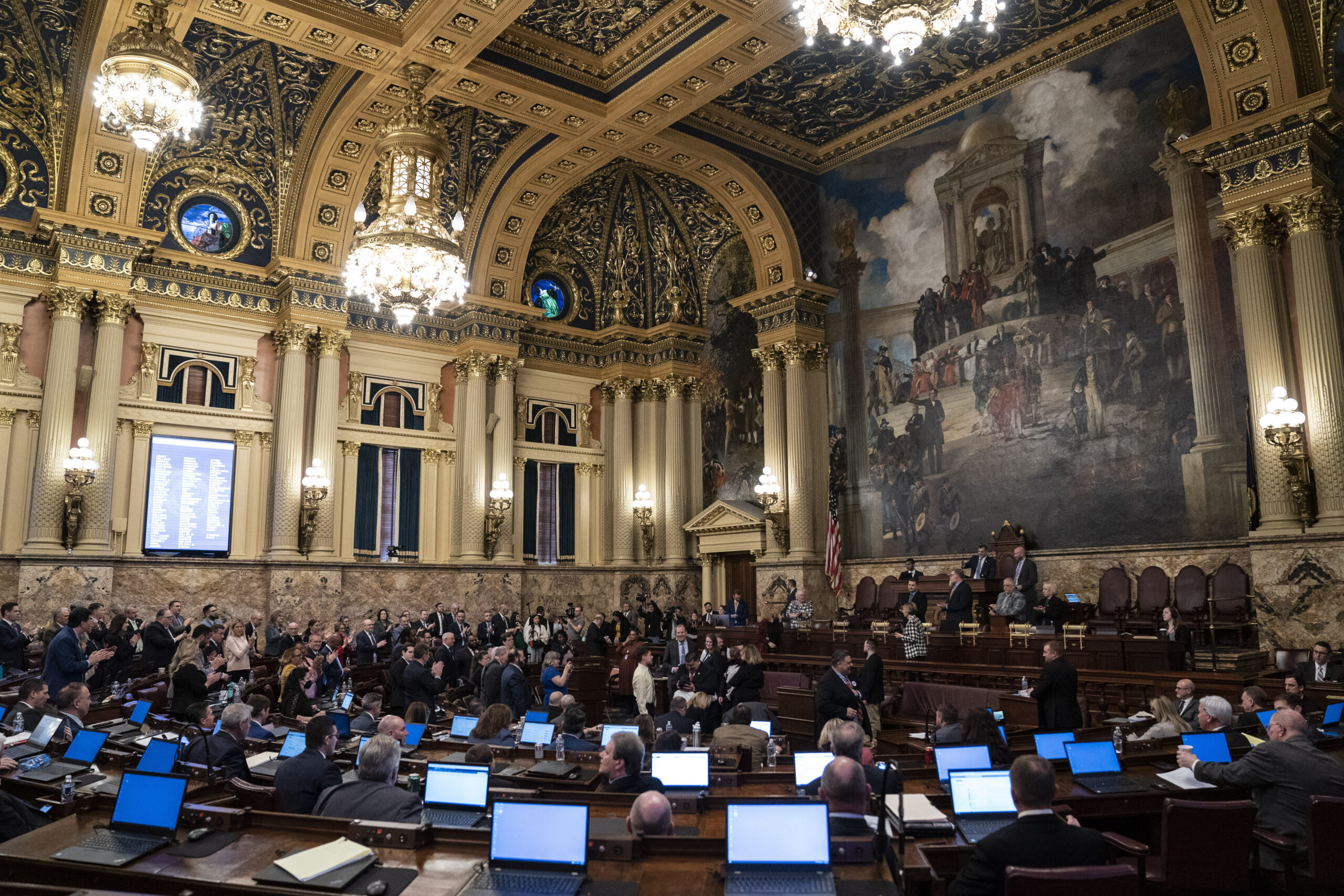
    Working to pass term limits legislation would be consistent with the Pennsylvania General Assembly’s history of defending state authority against federal intrusion, writes Tanner Willis.

    The Pennsylvania legislature has shown it can take principled stands on constitutional questions when there’s sufficient public support. Passing term limits legislation, knowing it will be challenged under Thornton, would be consistent with Pennsylvania’s history of defending state authority against federal intrusion. If Pennsylvania acts alongside states like Utah, Arizona, and Kentucky, the combined pressure could succeed where individual efforts have failed.

    If Congress won’t act, and the people can’t amend the Constitution directly, Pennsylvania still has one powerful tool: coordinated challenge.

    The path forward is simple. Pass the law, invite the challenge, and let the Supreme Court decide. The only question is whether Pennsylvania has the courage to lead.

    Tanner Willis is a business operations analyst based in Arlington, Va. He is the author of the book “Smoke and Silence: The Lives of Ol’ Mort.”

  • Resolve to save a life in the new year. Register as an organ donor.

    Resolve to save a life in the new year. Register as an organ donor.

    My husband, Phil, a New Jersey native, father of three children under 7, and former Penn State University football receiver, needs a kidney.

    According to the National Kidney Registry, more than 90,000 people in the United States are currently waiting for a donor kidney. In the Philadelphia metropolitan area, that number hovers around 5,000.

    My husband suffered an acute kidney injury in December 2023 caused by liver rejection medicine, a complication that affects 4% of transplant recipients.

    Chronic kidney disease is common in the U.S., affecting one in seven adults. Most people don’t feel symptoms at first, but if it gets worse, it can lead to kidney failure and serious health problems. Dialysis is a lifesaving treatment for kidney failure, but requires the patient to be hooked to a dialysis machine for hours at a time, often for several days each week.

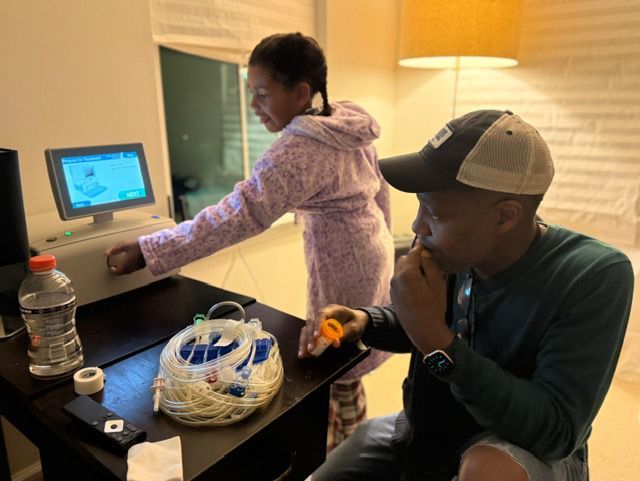
    Phil Collins and his daughter, Charlie, set up the dialysis machine.

    The small joys and normalcy of daily life quickly shift around dialysis schedules and doctors’ appointments.

    It’s been nearly two years since we were placed on the transplant list, and our three small children rely on us to keep their world from being turned upside down even more than it already is.

    Phil Collins and Morgen Perdue-Collins with their children. Collins has been waiting for a donor kidney for two years.

    They see the dialysis boxes stacked taller than they are in the front room, the catheter that we have to be careful of during playtime with their dad, and the frequent hospital visits because of a weakened immune system. Our daughter is even able to set up the peritoneal dialysis machine with help from Phil.

    As a partner of someone on the transplant list, my grief is silent and omnipresent. I find myself torn between supporting my sick husband, bringing my best self to the classroom each day, and ensuring our three little ones can simply be kids.

    When I drive to work, I see the billboards off I-95 for others who need a kidney; the wives and husbands and grandchildren and parents who are feeling just as overwhelmed and hopeful as I am. Maybe there is a match out there; perhaps someone will see their billboard, car magnet, or transplant profile and respond.

    Like so many other families with someone on the transplant list, I help the best way I can. I work to know what the weekly lab numbers mean, whether my husband’s sluggishness is due to low iron and blood count, and if there are early signs of an infection.

    Each December, his weakened immune system seems to lead him to the hospital, where he spends more time than our family would like. There is also guilt in not being able to know everything, and how best to help him in every critical time of need.

    Phil Collins with his daughter, Charlie, at a Penn State game after his liver transplant, but before he suffered an acute kidney injury in 2023 caused by the liver rejection medicine. According to his wife, Morgen Perdue-Collins, it is a complication that affects 4% of transplant recipients.

    Throughout this journey, Phil remains ever the optimist. Always looking on the positive side, while struggling to stay awake or suffering from terrible headaches and exhaustion. He remains diligently waiting and hoping things will turn around.

    But it has been two years, and we are still waiting.

    There are ways to help; for example, getting a donor match screening, as my friend, Meredith, did. She donated with extraordinary grace to a stranger last April, and this year, her family member received a kidney thanks to her advanced donation.

    To become an organ donor, you have a few options:

    • Join your state’s registry. Visit the Donate Life America website to sign up for your state’s online donation registry.
    • Use your driver’s license. Declare your intentions to be an organ donor on your driver’s license.
    • Start the donor screening process. On the Donate Life America website, you can also scroll down to “Start the donor screening process.”
    • Donate through the National Kidney Registry. If you want to donate a kidney to someone in need, you can visit the National Kidney Registry.

    Hesitation about organ donation, whether during life or after death, can stem from cultural beliefs, religious views, or medical mistrust. Many common myths about organ donation have long been disproven, but becoming a living organ donor is a demanding process, with a full return to normal taking eight weeks.

    According to the United Network for Organ Sharing, 11 people die every day waiting for a kidney.

    The truth remains simple: You have the power to save a life, to restore a family, and to give someone like Phil the most extraordinary gift of all.

    Morgen Perdue-Collins is a Philadelphia teacher, and her husband, Phil, is still looking for a match. You can visit his kidney donation page here. And visit the National Kidney Donation site here.

  • Letters to the Editor | Dec. 31, 2025

    Letters to the Editor | Dec. 31, 2025

    Silence replaces scrutiny

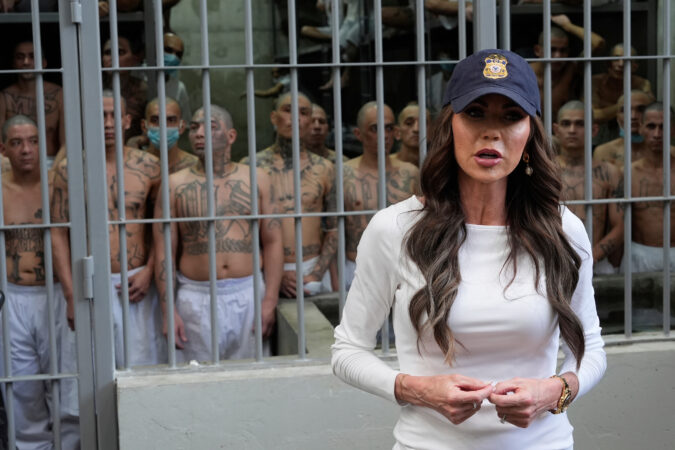
    The quiet removal of the 60 Minutes segment on the CECOT prison in El Salvador further erodes the credibility of both CBS News and Donald Trump. If there is nothing to hide — if the actions taken are defensible, lawful, and aligned with American values — then secrecy makes no sense. Transparency is not a threat to principled leadership; it is its proof.

    CBS’s explanation that the story “was not ready” strains credulity. The piece had already undergone multiple reviews and revisions. Pulling it at the last moment suggests not editorial caution, but external pressure. When a respected news organization appears to yield to political influence, it compromises the very role a free press is meant to serve.

    That role, notably, was upheld by Canada, which aired the segment in full. Americans have since circulated it widely across political lines. And in watching it, many of us — Republicans and Democrats alike — can agree on one fundamental point: Sending migrants, not terrorists, to third-country detention sites where abuse is likely or inevitable is not an American value. Suppressing that reality does not make it less true; it only makes the suppression more troubling.

    President Trump’s actions in this matter are disgraceful. CBS’s acquiescence, if that is what occurred, is deeply disappointing. A free press is not measured by comfort or convenience, but by its willingness to report what those in power would prefer remain unseen.

    Credit is due to the 60 Minutes journalists who continue to pursue rigorous, balanced reporting. An informed public is essential to democracy — and dangerous only to autocracy.

    Karan E. Guyon, Kennett Square

    Strategic gerrymandering

    A Dec. 22 letter to the editor from Larry Senour acknowledged the justifiable criticism of the Republican Party for gerrymandering congressional districts to give candidates favored by Donald Trump an advantage, but decried the Democratic response of gerrymandering some blue states that should equally be called out, according to the letter writer. Unfortunately, these are not normal times, and we have the members of one corporate-dominated political party whose lack of concern for ordinary citizens allowed Donald Trump to take power, and another now-fascist party that must be stopped at all costs. Whataboutism does not apply here.

    Bob Jantzen, retired professor, Radnor

    . . .

    Larry Senour’s recent letter purports to be “objective criticism,” but is either subjective, or Mr. Senour doesn’t understand the context when he criticizes early gerrymandering by Democrats. Customarily, any redistricting is done about every 10 years based on census results. Donald Trump implored the governors of Texas and other red states to redistrict early, in order to gain more Republican representation in Congress. Texas Gov. Greg Abbott did so almost immediately to assist in reducing the chance of Democrats becoming the majority party in the midterm elections and/or those of 2028.

    The writer criticizes the efforts by blue states responding in kind, in an effort to level the playing field. Though Mr. Senour frames the issue as one of failed bipartisanship, unbiased readers would see the efforts of Democrats as justified. Mr. Senour failed to mention that Democrats’ efforts were a direct response to Texas’ prior efforts to unfairly alter the electorate in specific districts.

    Harry Nydick, Maple Shade

    Join the conversation: Send letters to letters@inquirer.com. Limit length to 150 words and include home address and day and evening phone number. Letters run in The Inquirer six days a week on the editorial pages and online.

  • Using a migrant’s shooting death to attack immigration itself

    Using a migrant’s shooting death to attack immigration itself

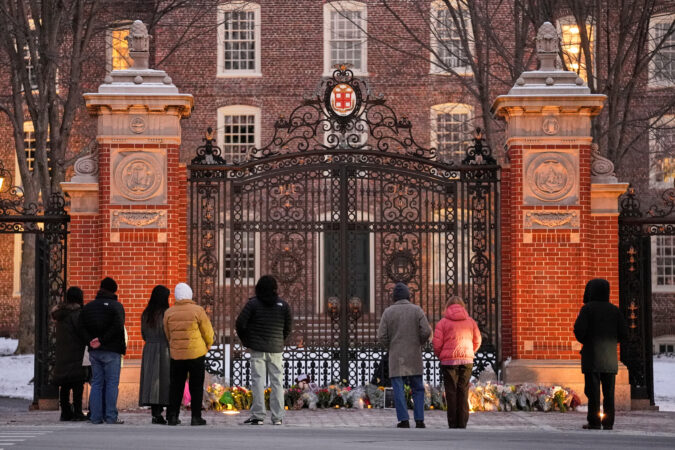
    In the days after the mass shooting at Brown University and the killing of a Massachusetts Institute of Technology professor, the Trump administration suspended the diversity visa “green card lottery,” saying the suspected shooter, a Portuguese national, had obtained permanent residency through it. It’s a convenient move that redirects attention from what happened to whom to blame.

    But one of the two students killed at Brown was a migrant, too.

    Mukhammad Aziz Umurzokov was a Brown freshman, raised by a family that came to the United States from Uzbekistan to build a life here. Those who knew him described his kindness and generosity. Friends and family said he dreamed of becoming a neurosurgeon, a goal shaped in part by the brain surgery he needed as a child.

    Mukhammad Aziz Umurzokov, 18, a college freshman and immigrant from Uzbekistan, was killed in the shooting at Brown University on Dec. 13.

    This young man represented what so many families come here hoping for: safety, education, a bright future. His death should have sparked a national reckoning with gun violence. Instead, the policy response once again targeted immigration, even as an immigrant family is among those grieving.

    Freezing the diversity visa lottery doesn’t touch the core problem of mass shootings at schools across the country. It doesn’t answer the question that matters most in the wake of any campus shooting: How is it so easy to get a gun, let alone bring it into a place built for learning?

    The administration’s response hinges on a simple narrative in which the suspected shooter’s immigration history becomes the headline, and the first policy move becomes a freeze on a visa program that has nothing to do with how a gun was obtained or used.

    Even the publicly reported timeline is more complicated than that talking point suggests. What’s clear is that the suspension of this visa program diverts attention from gun access and campus safety.

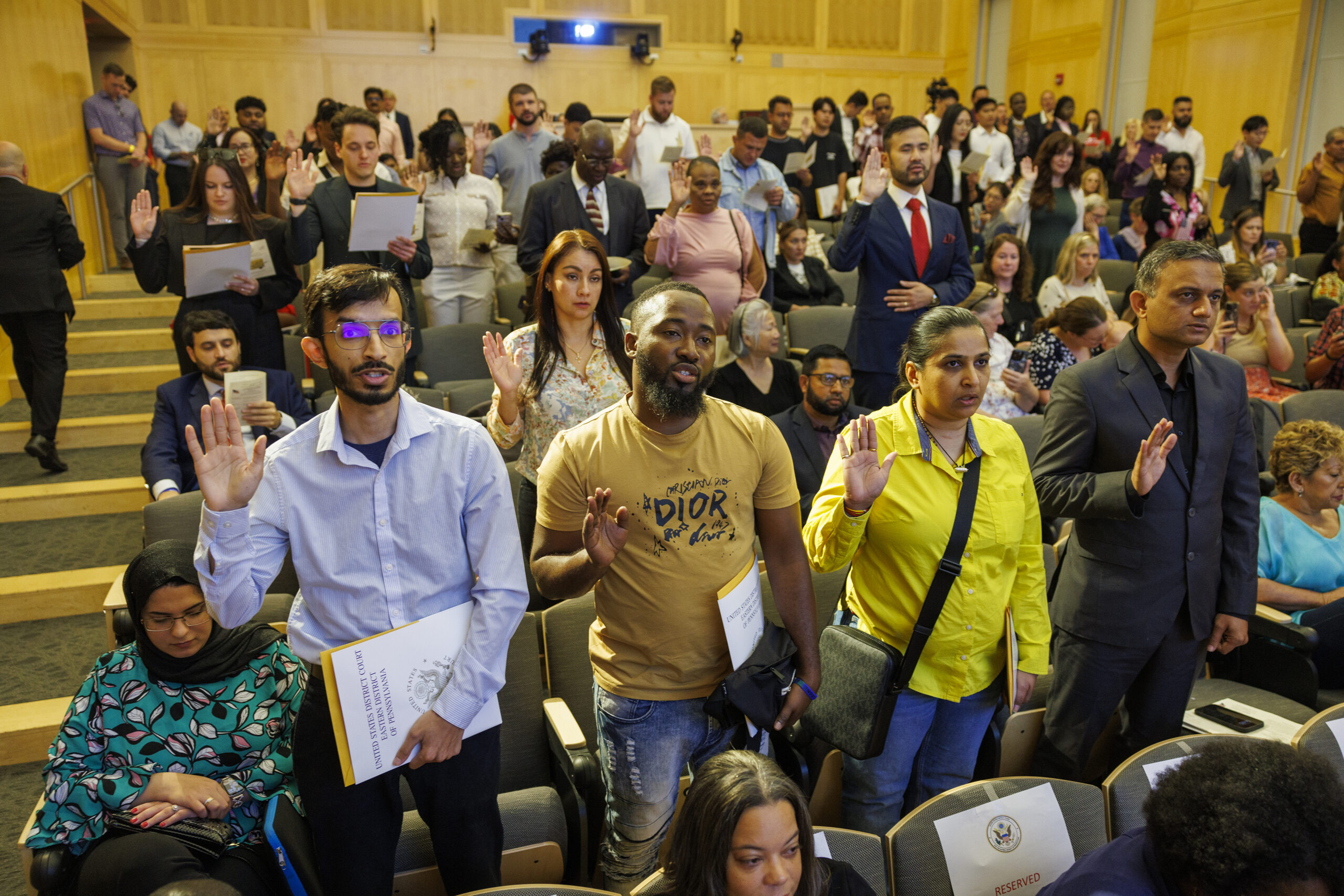
    Immigrants from around the world take the U.S. citizenship oath at the National Constitution Center in Philadelphia in 2024.

    The diversity visa lottery is one of the few legal routes for people from underrepresented countries to come to the United States. This year alone, more than 5,500 people from Uzbekistan were selected in the lottery. For many families, it represents the only legal path forward. The administration has closed the door on that pathway.

    So when the administration suspends the program in the name of “safety,” it does more than change a policy. It tells grieving immigrant families that their place here can shift with every news cycle.

    It also asks the public to draw the wrong lesson from what happened at Brown. If leaders want to prevent another campus shooting, they have to deal with the common denominator across these tragedies: easy access to guns and the absence of meaningful guardrails.

    Suspending a visa program does not keep a firearm out of an attacker’s hands. It does not make a classroom safer. It does not protect the next student walking into an engineering building on an ordinary day.

    Umurzokov should not be an afterthought in this debate. His family came here to build a future. He earned his place at Brown. He wanted a life spent helping others. Yet none of that kept him safe.

    If we are serious about honoring the lives of people like Mukhammad Aziz Umurzokov, we should resist the impulse to turn grief into scapegoating.

    In a nation built by immigrants and now mourning an immigrant student, leaders should be focused on preventing the next shooting, not using this tragedy to deepen fear while guns remain exactly where they are.

    Mehri Hamrokulova grew up between the U.S. and Uzbekistan, and recently graduated from Colgate University with a degree in sociology, focusing on immigrant experiences.

  • Pa. just gave low-income workers a tax credit boost. Now it’s Philadelphia’s turn.

    Pa. just gave low-income workers a tax credit boost. Now it’s Philadelphia’s turn.

    Last month, Gov. Josh Shapiro and the General Assembly adopted the state’s first working Pennsylvanians tax credit, ensuring anyone who qualifies for the federal earned income tax credit (EITC) will also automatically receive a state credit equal to 10% of the federal credit when they file taxes next year.

    Pennsylvania joins 31 states and the District of Columbia in giving low-income workers an effective, research-backed wage boost; in 2024, the federal and state credits combined lifted an estimated 6.8 million working people from poverty.

    While the new state EITC is incredibly welcome and historic, it is relatively modest compared with other refundable state EITCs. Most range from 20% to 50% of the federal credit, with a handful below 10% or over 50%. This major step forward still won’t overcome the hardship facing low-wage workers — hardship compounded by Pennsylvania’s and Philadelphia’s deeply regressive overall tax structure.

    The Institute on Taxation and Economic Policy’s “Who Pays?” report found that the lowest-income Pennsylvanians pay 15.1% of their income in state and local taxes — more than double the share paid by the wealthiest 1%, making the new state EITC essential for offsetting the lopsided tax code.

    In the same way states are building upon federal tax credits, localities should consider building on state tax credits.

    In Philadelphia, low earners pay an even higher share of their income in state and local taxes, in part due to the highly regressive, flat wage tax.

    The city’s wage tax refund ordinance, a well-intentioned credit aiming to address regressivity by retroactively reducing the city’s income tax to 1.5%, reaches very few people. This year, 2,700 applications were approved, even though 50,000 were eligible, a dismal 4.5% take-up rate (which is actually double last year’s rate).

    One major reason for this abysmal take-up is linkage to the state’s special income tax forgiveness program, requiring people to first be approved by the Pennsylvania Revenue Department for individuals earning no more than $8,750, or $24,750 for a family of three.

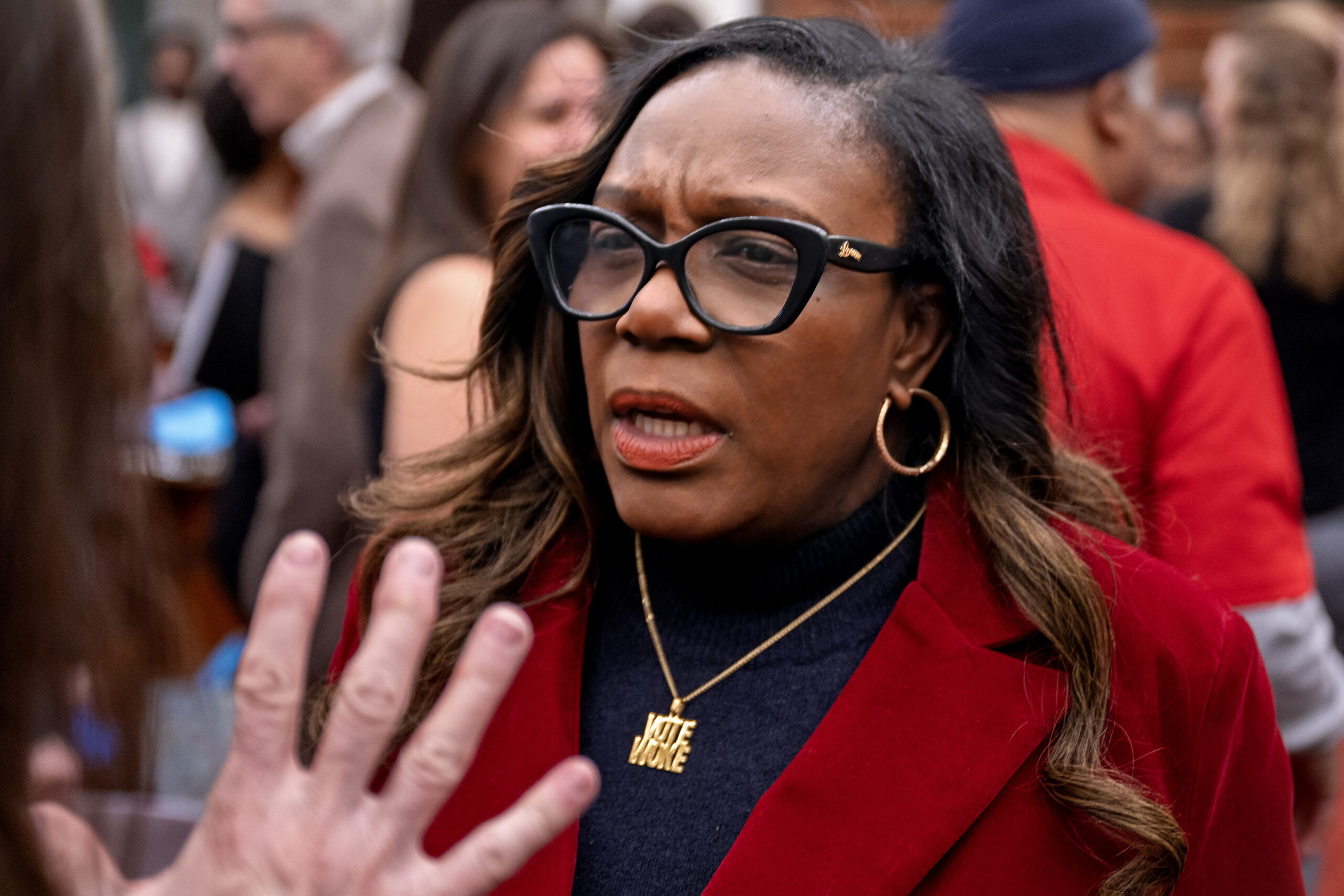
    Councilmember Kendra Brooks in chambers as City Council meets Dec. 11.

    Councilmembers Kendra Brooks and Nicolas O’Rourke introduced legislation as part of the People’s Tax Plan that would raise income eligibility to that of the PACENET prescription assistance program and expand the wage tax refund to include the entire 3.75% wage tax, but the proposals have not moved forward.

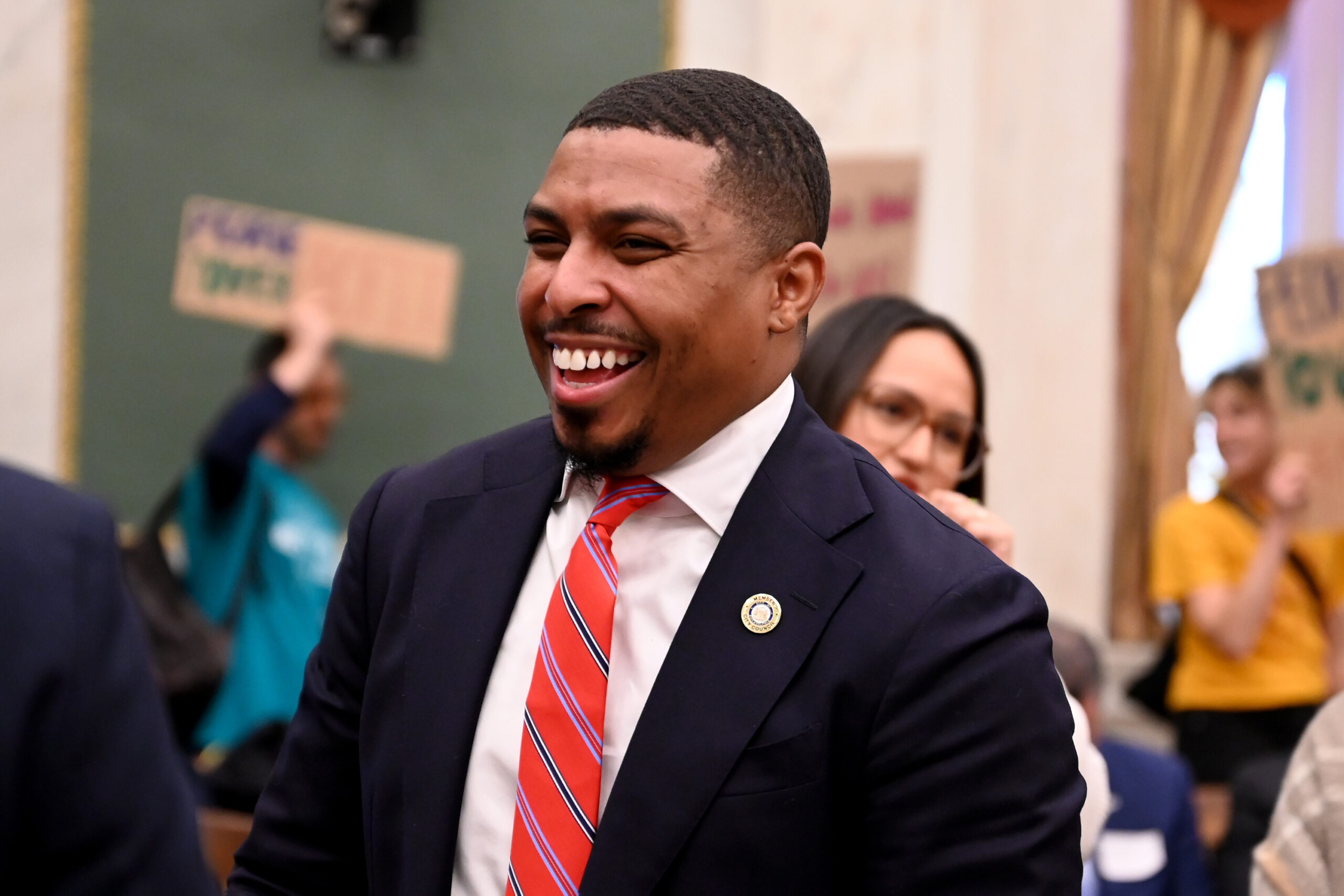
    Councilmember Nicolas O’Rourke in chambers as City Council meets Dec. 11.

    Pennsylvania’s new state EITC opens the door for a far more generous and administratively simple wage tax refund that reaches more residents. Tying the wage tax refund directly to the new state EITC and coordinating with the state can streamline this process.

    Montgomery County, Md., pioneered one practical and high take-up approach: It partners with the state to automatically deliver the refundable portion of its county credit to all residents receiving a refund from the state. The credit is directly deposited or mailed with no additional application required.

    Similarly, Philadelphia can improve eligibility for the wage tax refund by disconnecting it from the state’s income tax forgiveness program and instead linking it to the state’s working Pennsylvanians tax credit. Local policymakers should also automate applications, wage and residence documentation, and payouts.

    Our city’s poverty rate is nearly double the state average. Local refundable credits, such as earned income tax credits and child tax credits, are anti-poverty tools proven to quickly lift incomes and stabilize households facing increasingly high costs. With the federal government retreating from long-standing health and economic security programs, the responsibility now falls even more heavily on states and cities to step up.

    A strengthened, refundable, and automatic local EITC is exactly the kind of targeted investment that can help Philadelphia reverse decades of persistent poverty.

    Kamolika Das is the local tax policy director at the Institute on Taxation and Economic Policy, a nonprofit, nonpartisan tax policy organization that conducts analyses of tax and economic proposals. She lives in Queen Village with her husband and daughter.

  • Philadelphia’s streets are still treacherous for pedestrians, but signs point to progress | Editorial

    Philadelphia’s streets are still treacherous for pedestrians, but signs point to progress | Editorial

    For nearly a decade, city transportation and public safety officials have taken part in Vision Zero, an ambitious, nationwide program designed to help communities reduce the number of lives lost to traffic collisions.

    In recent years, City Hall has narrowed lanes, installed red-light cameras, and built speed humps in roadways in an effort to slow traffic and keep pedestrians safe.

    Even with those changes, Philadelphians are twice as likely to be killed by a vehicle as San Franciscans, and nearly three times more likely to be killed than New Yorkers. Even Los Angeles, where street designs are famously incompatible with walking, is slightly safer for pedestrians. Still, there is evidence that the city’s efforts are starting to have a positive effect.

    According to an analysis by the Bicycle Coalition of Greater Philadelphia, the city has suffered 94 fatalities this year. That’s a 39% decrease from the 155 Philadelphians who lost their lives in 2020.

    Like so many other quality-of-life concerns, street safety was negatively impacted by the COVID-19 pandemic. Fatalities nearly doubled between 2019 and 2020, as a mix of increased instances of aggressive driving and decreased police enforcement took a toll. A trend among car manufacturers to make vehicles bigger and heavier than earlier models also served to amplify the danger for pedestrians.

    According to the Bicycle Coalition of Greater Philadelphia’s “Traffic Victims Report,” pedestrian fatalities this year are down 39% compared with 2024.

    According to the Insurance Institute for Highway Safety, those national shifts have contributed to a roughly 80% increase in pedestrian deaths since 2009.

    City officials, including Mayor Cherelle L. Parker, deserve credit for swimming against this national tide. While there is little City Hall can do to regulate vehicle size, officials have used the tools that are available to reduce fatalities.

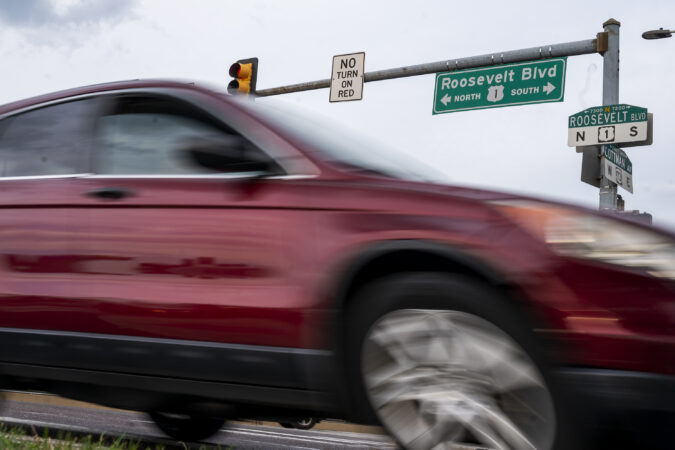
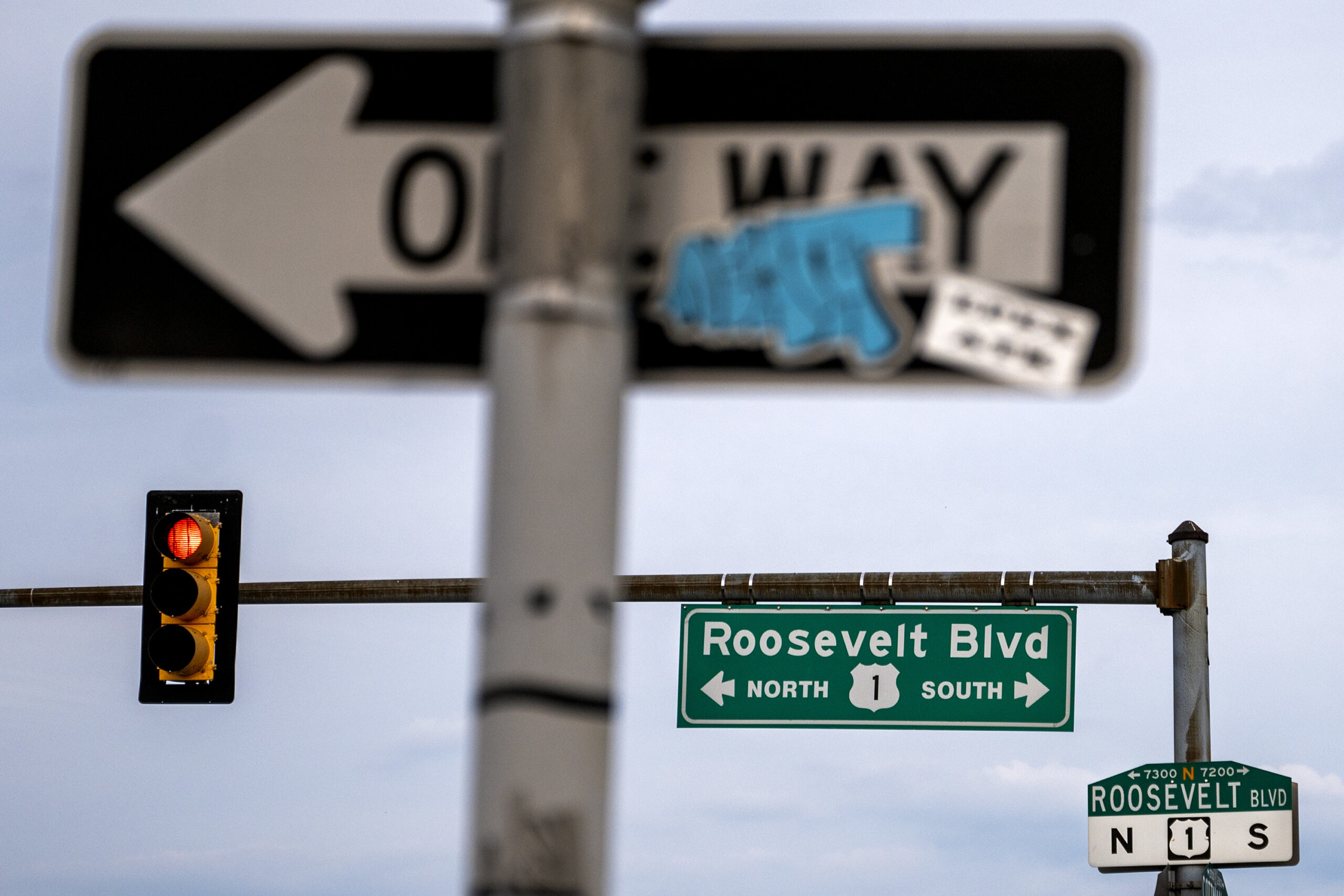
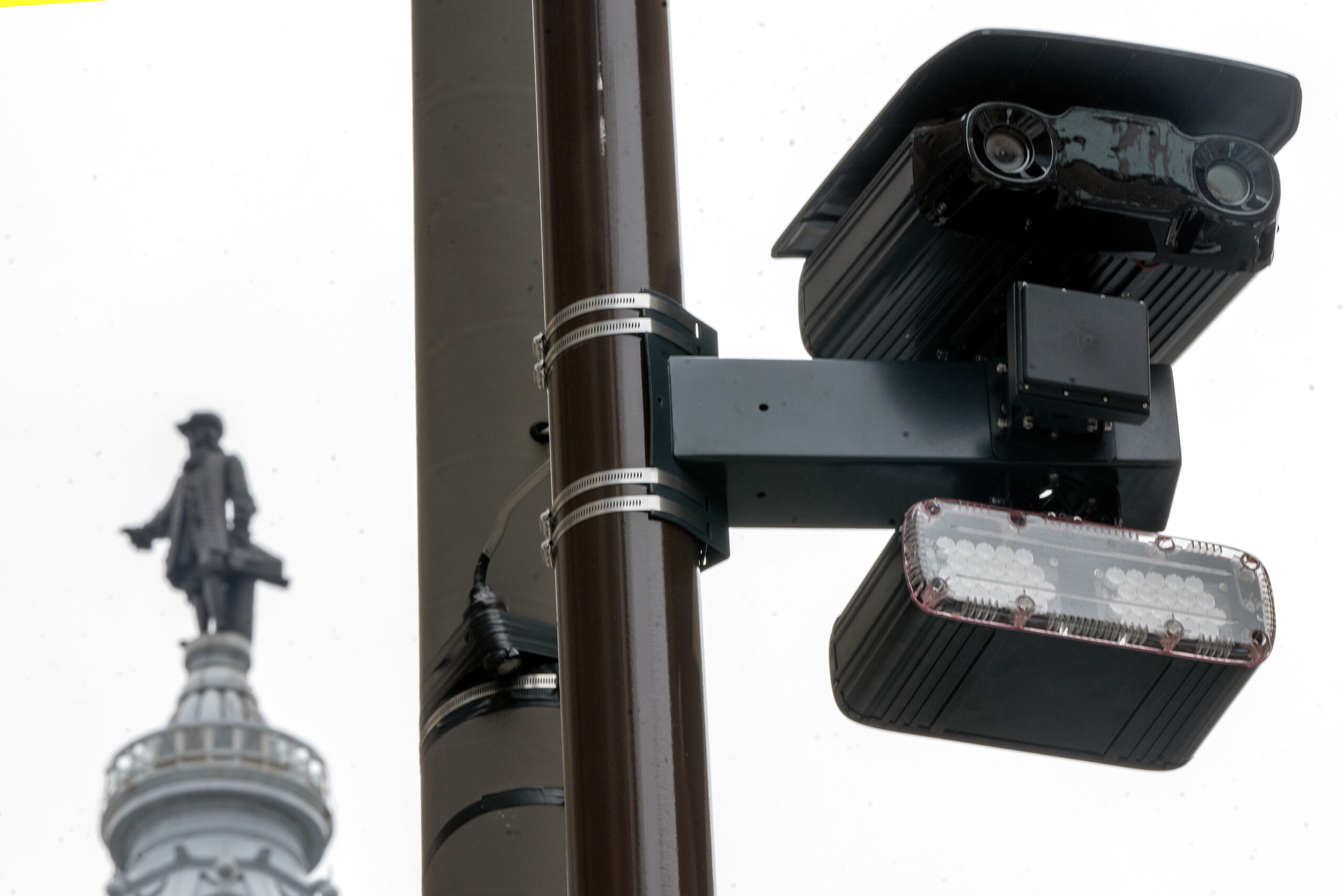
    The city’s biggest success story is Roosevelt Boulevard. Once dubbed one of the most dangerous roads in America, the Boulevard is no longer even the most dangerous corridor in Philadelphia (Broad Street now holds that dubious distinction). The change is largely a result of the installation of speed cameras, which officials credit with saving around 50 lives since they were installed in 2020. The cameras have now been installed for Broad Street, as well.

    Additionally, the Parker administration has placed a welcome focus on safety around schools and playgrounds. Given that an average of about five Philadelphia children are struck by a vehicle every week, those efforts should be accelerated. After some initial consternation, City Council approved speed cameras for seven school zones this year. If those programs show success, they should be expanded.

    An automated speed enforcement camera is mounted on North Broad Street at Arch Street.

    So, too, should support from the police. In an interview with Philadelphia Magazine, Police Commissioner Kevin J. Bethel responded to a plea for more traffic enforcement with a reference to ongoing staffing issues, saying that his officers must prioritize the most serious calls. With 100 Philadelphians dying in collisions each year, citations and arrests for traffic violations should remain a point of emphasis.

    The plan to reduce traffic fatalities also requires some assistance from Harrisburg. City officials would like to set their own speed limits, arguing that state rules that are designed for rural and suburban communities don’t work in dense, urban areas with heavy pedestrian traffic.

    There is still much to be done when it comes to keeping pedestrians in the city safe, but Philadelphians can take comfort in knowing that the tools currently in place are doing what they’re intended to do — save lives.

  • Letters to the Editor | Dec. 30, 2025

    Letters to the Editor | Dec. 30, 2025

    Resign to run

    Paul Davies is right to worry that campaigning can distract officials, invite misuse of public resources, and deepen voter cynicism. Those risks are real. But Philadelphia’s resign-to-run rule addresses them by turning a run for higher office into a luxury purchase.

    If candidates must quit a six-figure job for a year to campaign, the field skews toward the independently wealthy, the well-connected, and those backed by private money. That is not a theoretical concern. It is part of what is broken in American government today: representation filtered through privilege and increasingly detached from the daily realities of most voters. It also discourages experienced public servants from stepping up, even when they know the work and the neighborhoods best.

    Councilmember Isaiah Thomas is right to push for change. The better approach is to strengthen guardrails and enforce them. Require clear firewalls around staff and city resources. Publish transparent schedules, travel, and spending during campaign season. Investigate violations quickly. If an officeholder neglects constituents while campaigning, voters can punish that. If they misuse taxpayer-funded resources, prosecute them.

    Good government should prevent corruption without shrinking democracy to only those who can afford to buy their way into candidacy.

    Brandon McNeice, head of school and CEO, Cornerstone Christian Academy, Philadelphia

    What a mess

    My husband and I are senior citizens living in West Philadelphia near not one but two SEPTA trolley lines, which have allowed us to fully enjoy the riches of our city. Thanks to SEPTA, we can make a trip to the library, the bank, the grocery store, or wherever — and be back home in minutes. The trolley also makes it easy for us to grab lunch from our favorite vendors at Reading Terminal Market, slip into our seats for concerts at the Kimmel Center, make it on time to doctor appointments, patronize stores along Chestnut Street, explore culture and history sites with out-of-town visitors, and, even with the trolley-to-subway transfer, speedily made it to Citizens Bank Park in ample time to catch the first pitch.

    Now, though, that’s all changed, thanks to the ongoing ineptitude of SEPTA. The route diversions make trips much longer. Contending with crowds of frustrated, tense riders waiting to make the trolley-to-El transfer at 40th and Market. The physical demands that the transfer places on us older folks. All this has pushed us increasingly into our car for suburban shopping, since parking downtown is hard to find, or relying on ride-share options that tax our budget and do nothing to help the environment. And news reports these days say there’s no end in sight. So everyone loses — retailers, restaurateurs, cultural institutions, and especially those of us who’ve relied on SEPTA as a vital resource. It defies understanding how the public transit operator of a major city has been so utterly unable to fix something that its incompetence caused in the first place — and, by the way, nothing but resounding silence from City Hall and City Council.

    Beth Palubinsky, Philadelphia

    Oil, not drugs

    Donald Trump has all but conceded that his focus on toppling Nicolás Maduro in Venezuela is about the oil and not the drugs. He’s demanded that Venezuela return the assets it seized from U.S. oil companies, and uses Venezuela’s reluctance to comply as justification for his blockade of oil tankers. This raises questions about who the men killed in “drug boats” were. And if he really wanted to interdict drugs coming into the country, he would be working with Mexico.

    Trump has always put the needs of the rich and powerful ahead of the average American. It is all about oil and helping the Big Oil companies. It is American imperialism dressed up as concerns about people dying from fentanyl. Amazingly, Sen. John Fetterman has bought the baloney about the “drug boats.”

    Another lie that Trump has told is that he inherited an economic mess, but contradicted himself by saying the economy is great and America is the hottest country right now. That last claim sounded like a Realtor selling a property, and not a president. And, ignoring his “Day One” promises, he pledged that the economy would be great in 2026. And then when that doesn’t happen? 2027? 2028? His third term?

    It should be very clear from his speech that he has no clue about what he is doing regarding the economy, and Treasury Secretary Scott Bessent is too much of a sycophant to tell him the truth. In politics, when you go on the defensive, it means you’re losing with the voters. Trump is certainly doing that, and he can’t make the higher prices disappear.

    George Magakis Jr., Norristown

    Join the conversation: Send letters to letters@inquirer.com. Limit length to 150 words and include home address and day and evening phone number. Letters run in The Inquirer six days a week on the editorial pages and online.

  • Reaction to Trump’s unpopular policies offers hope for fixing our broken immigration system

    Reaction to Trump’s unpopular policies offers hope for fixing our broken immigration system

    EL PASO, Texas — I had barely been in the city for a few hours before I was asked the same question by two different people: Had I heard about the four panadería workers who were arrested by immigration agents?

    It was a bit of a rhetorical question that led to similar expressions of sympathy for those detained, and it also underscored two distinct truths: 1) Without employees, the bakery owner would have to close, so this hurts people who just want to work. 2) Everyone knew what they were doing, and the law is the law.

    Like most in the political middle, I agreed.

    My conversations with people on both sides of the border reinforced something that should go without saying, yet here it is: There is a sensible middle ground between the Biden administration’s ill-advised border strategies and the Trump administration’s virulent anti-immigrant policies and dehumanizing rhetoric.

    Over the years, polling has shown that commonsense immigration reform has broad support. Bipartisan bills have failed in the recent past, but perhaps something good can come out of the Trump administration’s cruel overreach on immigration enforcement.

    The border is far away from most Americans. It’s easy to scapegoat and demonize. As one activist here told me, even Democrats have been fine with throwing money at the continued militarization of this part of the world in the name of “border security.” That militarization is now knocking at people’s doors in places like Chicago and New Orleans, and folks across the country don’t like what they see.

    Jonathan Escalante stands over the broken window of his mother’s car, which was shattered by federal immigration agents who took her away, during a federal immigration crackdown in Kenner, La., on Dec. 9.

    Most Americans want immigration control; they are not anti-immigrant. Let alone supporters of what’s becoming a “papers, please” society under Donald Trump, where simply having the wrong skin tone or speaking another language can put a target on your back.

    As the outrages pile on and voters turn against the president’s tactics, it opens an opportunity. If Democrats capture the White House in 2028, they must make fixing our broken immigration system a priority — with public sentiment on their side.

    In that vein, the United States needs a functioning immigration system that keeps people from coming illegally, allows immigrants to fill jobs U.S.-born workers won’t do, honors America’s commitment to protecting those seeking asylum, and creates that line immigrants are supposed to queue up in to come here “the right way.”

    Broadly speaking, deterring people from crossing illegally should not depend on immigrants being afraid to die in the Arizona desert or be maimed by razor wire trying to ford the Rio Grande into Texas. Humane deterrence would involve not only expedited deportation if caught, but also holding employers accountable for hiring people who are not authorized to work.

    While some immigrants are fleeing their country over safety concerns, economic migrants are looking for a better life. I hate to break it to you, but people come to the U.S. not because they admire Jeffersonian democracy, but because there are jobs here.

    Brothers Leonardo Oviedo, 22, (right) and Angel Mota, 19, (left) swipe through photos of family they left behind in Venezuela. Both arrived in New York in 2020 with other asylum-seekers seeking refuge and spoke of plans to land jobs.

    Many of those jobs are the kind that citizens will not do. Not because they’re lazy or afraid of hard work, but because they have other opportunities. For immigrants, it’s all relative. Monthly pay in Venezuela is roughly $130. In the U.S., you can make twice that in a week earning minimum wage.

    Whether it’s picking fruits and vegetables, putting up houses, processing meat, taking care of the elderly, or other demanding and arduous tasks that are not going away, the U.S. needs immigrants for these jobs — ideally through a dynamic work visa system that responds to demand. We also need — and should welcome — specialized professionals, such as medical doctors or tech workers.

    A potential pathway to permanent migration, if desired, could start with a work visa. I say “if desired” because many immigrants would love to come here to work temporarily and then return home. A side effect of stricter border controls after 9/11 was that immigrants no longer went back and forth as readily, and instead remained full time in the U.S.

    For asylum-seekers, more immigration judges — under the judicial branch, instead of the U.S. Department of Justice — could speed up adjudication, granting protection to those who qualify and rejecting those who don’t.

    A working immigration system also means hitting the reset button and adjusting the legal status of the 13 million or so immigrants who are currently in the country without authorization.

    Undocumented immigrants who have been here for a determined amount of time and meet agreed-upon criteria (pay taxes and/or fines) should be able to earn permanent legal residency, known as a green card, and be able to eventually attain citizenship if they qualify. Worried Republicans need only look at the increased support Trump gained among naturalized Americans in the 2024 election if they think that being an immigrant means you automatically vote for Democrats.

    Of course, there is still a long way to go before any of these proposals has a shot at being considered. And while there is still time for the president to change his approach, the $45 billion authorized for new immigration detention centers and almost $30 billion going toward U.S. Immigration and Customs Enforcement likely means there’s no turning back.

    Things will get a lot worse before they get better. But as the new year approaches, there is at least some hope.

  • Bring back vintage panic and rage

    Bring back vintage panic and rage

    Remember Y2K? That panic was cute.

    In 1999, we simultaneously braced for a new millennium and the end of the world.

    Y2K loomed ahead, a huge question mark. Best Buy convinced us that everything from air traffic to banking to the machine in your “computer room” would be affected. Chaos was to ensue.

    Or maybe not. It was a curious, innocent type of fear — not the gut-punching terror that dominates today’s news.

    This was before smartphones, before push alerts every five minutes. Panic traveled by television anchors, phones tethered to the kitchen wall, office rumors, and chain emails that screamed “FWD: URGENT!!”

    We prepared for the chaos with zeal, clearing out Wawa like we were preparing for a decade underground. Nothing says “national crisis” like a region hoarding Shortis and Tastykakes. If the world were ending, we were not going down without one last soft pretzel.

    Looking back, the panic feels almost sweet. No one knew exactly why we were worried — something about floppy disks and zeros? It was an amusing type of fear — not the adrenaline surges and terror layered across today’s news feeds.

    A big crowd packed Veterans Stadium for the final opening day in its history at the start of the 2003 season.

    Here in Philly, our emotion was focused wholly on saying goodbye to Veterans Stadium, beer-soaked basement jail and all. We panicked more about losing that stadium than we ever did about losing our computers. Underneath the apocalyptic preparation was a communal consciousness that understood we were safe.

    Freedom Fries

    A few years later, our national anxiety shifted from computers to potatoes. In 2003, “French fries” were hastily rebranded as “Freedom Fries.” Restaurants reprinted menus. Congress cafeterias complied. Late-night comics had a field day.

    It was Red October at McDonald’s. The poor soul who ordered French — not freedom — fries got no potato side with disapproval to boot, writes Angela Ryan.

    In an unprecedented show of unity, Americans declared a “War on Terror” and pushed for an invasion of Iraq. France wouldn’t participate, so the U.S. did the most Philly thing we’ve ever done and declared a nationwide rebranding of the French fry.

    It was Red October at McDonald’s. The poor soul who ordered French — not freedom — fries got no potato side, with disapproval to boot.

    This was the norm for national crises then. They were the civic version of Dikembe Mutombo: gentle and kinda funny. We felt safe. Disagreements were just that — disagreements. They didn’t split families, and they weren’t the origin story for the latest school shooter.

    National conversations were civilized (as much as they can be in Philly), respectful, and safe. Things felt steady. We felt safe. When Mutombo hugged Allen Iverson after big wins, it felt like the whole city was getting that hug. We were together. We were OK.

    Eastern Conference All-Stars Allen Iverson (3) and Dikembe Mutombo (55), of the Philadelphia 76ers, and Michael Jordan (23), of the Washington Wizards, watch from the bench during the 2002 NBA All-Star game in Philadelphia, Sunday, Feb. 10, 2002.

    Those were what I call vintage panics — silly enough to laugh at later, harmless enough to leave us intact.

    Y2K didn’t kill us. Freedom Fries resulted in menu changes, not bloodshed. The Vet came down. Wawa expanded. This was the era of the DREAM Act. Diversity in most any form was encouraged. Panics were survivable.

    Rage then vs. rage now

    Today’s rage is different. It’s constant, heavy, and often deadly. Rage is in our politics, our traffic, our classrooms, our feeds. It no longer renames a side dish; it breaks communities. It divides families. Sometimes it takes lives.

    Another awful headline recently made me stop and think: Maybe this is it. Maybe we’ve gone too far. The contrast with the potato wars of 2003 could not be sharper.

    Back then, we funneled our fury into countdown clocks, menu edits, and worrying whether Mutombo’s knees would last through the NBA Finals. Now the stakes are so much higher.

    Y2K didn’t take us out. Freedom Fries didn’t tear us apart. Sports heartbreak never broke this city’s spirit — if we survived those four straight trips to the NFC championship, we could survive anything.

    What we have now? Much harder.

    A call to calm

    We’ve tried a call to arms. We’ve armed ourselves with anger, suspicion, conspiracy, and endless fights. It hasn’t worked.

    So here’s another option: A call to calm.

    To put down the rage, the hostility, the weapons, both literal and digital. To remember there was a time when our national arguments were about VCR clocks and potatoes. When even our panics were crispy, golden, and — in hindsight — almost sweet.

    Because potatoes don’t storm capitols. Potatoes don’t undermine democracy. Potatoes don’t bleed.

    And maybe we should offer a long-overdue apology to the French. You gave us the Statue of Liberty. You didn’t deserve to be demoted for the sake of alliteration.

    And much like that movement, this idea is so crazy it might work: a National Chicken Tender Movement. Not aimed at treating our fellow citizens with suspicion or rage — but with tenderness.

    Because we don’t need bigger enemies.

    We do need smaller panics.

    And maybe what we all need most right now is this:

    Small fries.

    A little calm.

    And a touch of Mutombo-level kindness.

    Angela B. Ryan is a writer, lawyer, former Villanova Law professor, and mother to four under 4 based in Villanova. She started the National Chicken Tender Movement today, and she is the only person left in the country who refers to French fries as Freedom Fries.