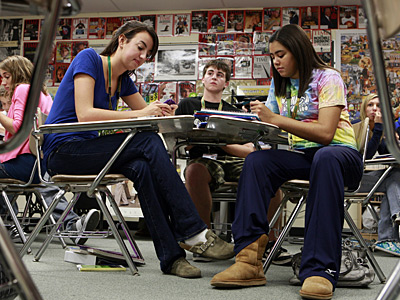
As a high school teacher of over 20 years, I read with great interest the opinions of State Rep. Mandy Steele and professor Christopher J. Ferguson about a possible cell phone ban in schools. While both raise valid points, each of their pieces reflects one of the biggest problems in education today. Like so many other articles and opinion pieces about education, there is a glaring lack of input from classroom teachers. More than anybody else in the field of education, teachers see and feel the impact of phones on students in the classroom. How refreshing it would be if policymakers and so-called experts started giving teachers more input into such important decisions. It never ceases to amaze me how many people suggest what is best for students, yet have little to no experience actually teaching in a K-12 classroom. Teachers do not all agree, and they are not always right, but they are certainly worth listening to. Classroom teachers are experts; it’s just a shame they aren’t treated as such.
Patrick Oswald, Downingtown
. . .
In his recent op-ed, Christopher J. Ferguson argues against banning cell phones, characterizing them as “one-size-fits-all” approaches and suggesting that their efficacy is not supported by research. Ferguson maintains that “intuition” has motivated support for school cell phone restrictions, and notes that “intuition is often wrong, which is why we need good science studies.” As a retired clinical psychologist, I couldn’t agree with him more on that point; however, the evidence he cites to support his anti-ban position is thin and vague at best. In contrast, psychologist Jonathan Haidt’s widely acclaimed and meticulously researched 2024 book, The Anxious Generation, sets the gold standard for scientific analysis of this important topic. Haidt’s evidence-based documentation of smartphone harms clashes directly with several statements Ferguson makes without providing any specific supporting evidence. In the end, he jumps to his own conclusion, that “the problem with schools is schools, not cell phones,” and claims that “the data are already in,” showing that cell phone bans fail to produce benefits. Of course, we will need more data to conclusively demonstrate their effectiveness, because bell-to-bell bans are still in their infancy and have been enacted in a minority of states. In the meantime, however, the evidence of adverse social and emotional consequences associated with children’s access to smartphones is too compelling to casually dismiss.
Marcie G. Lowe,Oreland
Redacted Epstein files
It’s the 18 and a half minute gap from the Watergate tapes all over again.
Sam Goldwasser, Bala Cynwyd
Join the conversation: Send letters to letters@inquirer.com. Limit length to 150 words and include home address and day and evening phone number. Letters run in The Inquirer six days a week on the editorial pages and online.
Donald Trump’s first year back in the White House has brought only one surprise: the speed with which he has upended the American Experiment. This board spent 2024 warning of the dangers a second Trump administration could bring. It was hardly soothsaying.
Sadly, Trump’s 2025 performance has reminded many voters that his undeniable luck, charisma, and bravado may be entertaining, but the reality of governance demands more. The office of the presidency demands more.
For his second term, no longer constrained by the guardrails the conservative establishment placed on his first presidential stint, and surrounded by sycophants and incompetents, Trump has wasted no time trying to live out his authoritarian fantasies while being unable to keep the trains running on time.
Indeed, he is very much the man whose administration helped give the world a COVID-19 vaccine in record time before bowing to anti-vax conspiracy theories that ultimately cost American lives.
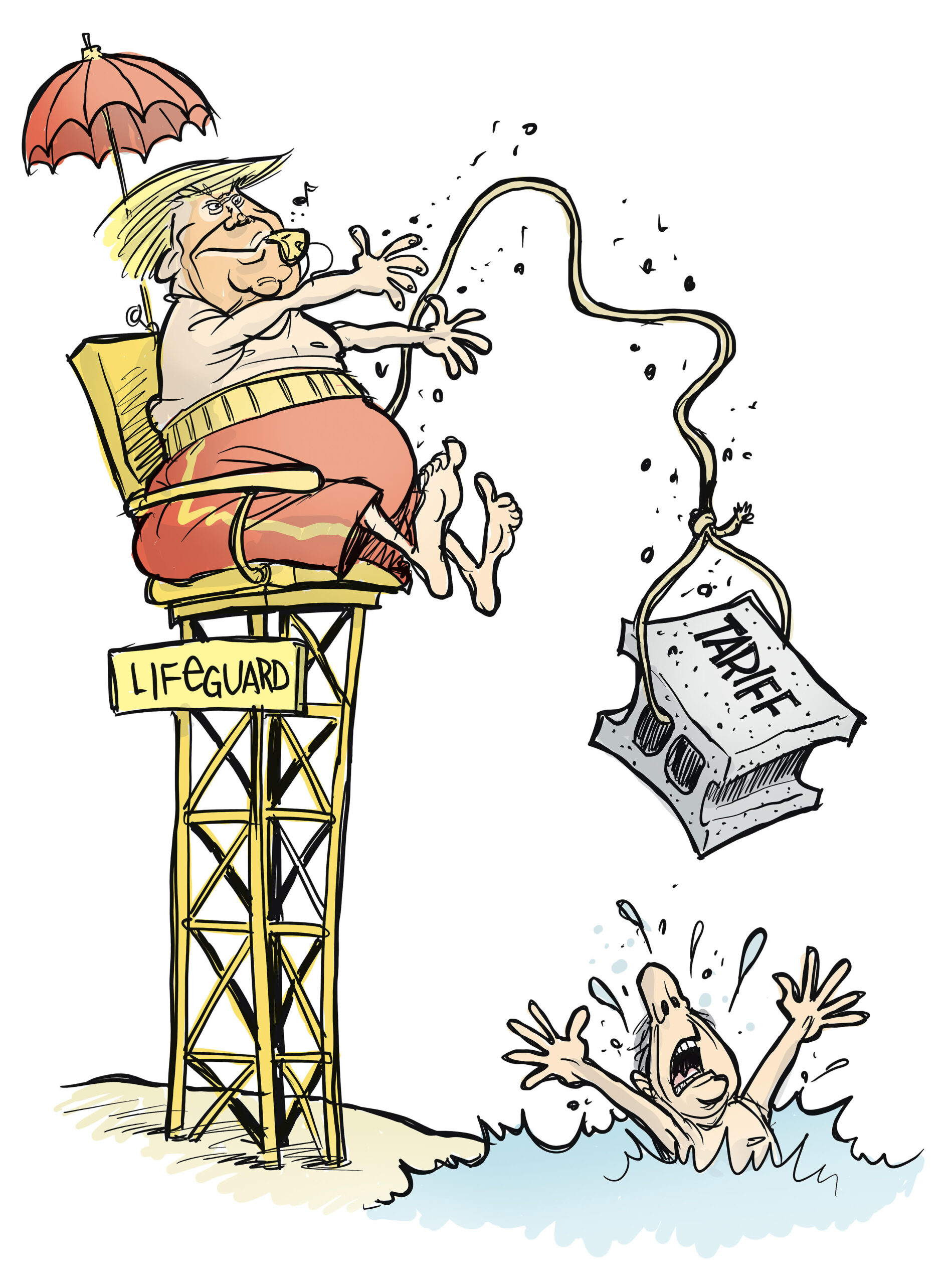
Instead of allowing inflation to continue to abate and the U.S. economy to live up to its label as “the envy of the world,” he haphazardly and likely illegallyinstituted tariffs on global trading partners that amount to a tax on American consumers. Rather than sitting back and taking credit for curtailing immigration at the southern border, which concerned a large number of voters, he’s lost public support as masked federal agents abuse, harass, and intimidate immigrants and citizens alike.
Trump’s signature legislation, the One Big Beautiful Bill Act, is set to make the rich richer and the poor poorer, all while a shrinking middle continues to lose faith in America’s institutions — some of which have willingly acquiesced to whatever Trump demands.
But while Trump has failed to make life better for everyday people, he has been successful in enriching himself, his family, and his cronies. He has captured the U.S. Department of Justice and the FBI, pushing them to pursue his perceived political enemies; used the U.S. Department of Homeland Security to implement cruel immigration policies and as a de facto secret police; and devastated America’s standing in the world by destroying the U.S. Agency for International Development, which helped generate enormous goodwill while improving the lives of millions of people around the globe.
The following appraisal of Trump’s presidency so far is not a “we told you so,” because we are all in this together. It is a reminder that those of us who value democracy and the rule of law must continue to stand fast and push back in defense of the ideals that fueled our nation’s founding and the rights and obligations codified in the Constitution.
As 2025 ends and a new year begins, we must not allow the avalanche of outrages to numb us to the fact that Trump remains unfit for office.
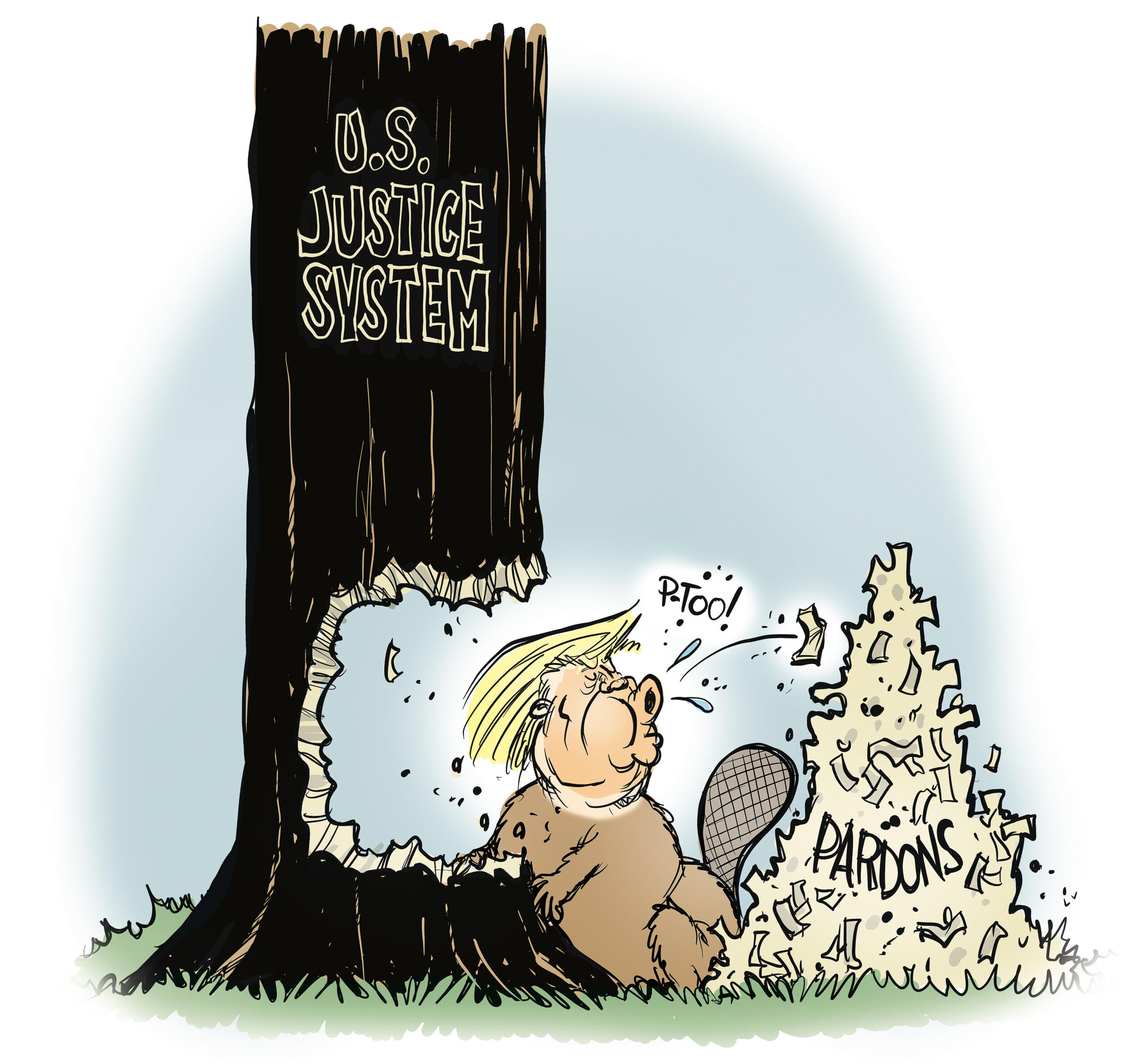
Donald Trump and his administration have attacked judges and maligned the courts, while the president has used his pardon power to eliminate accountability for his political allies and business interests.
Pardoned lawlessness
As far as ominous indicators of dire times ahead, “Abandon hope, all ye who enter here” is difficult to beat. But Trump’s blanket pardon of the roughly1,600 people involved in the attack on the Capitol comes in a close second.
Signed shortly after he took power, among a raft of other troubling executive orders, the clemency shown to the insurrectionists — including those who brutally assaulted law enforcement officers — showed the administration had no interest in accountability for its political allies nor any true concern for the rule of law.
Among Trump’s biggest abuses of presidential power are pardoning Rudy Giuliani and dozens of others accused of trying to overturn the 2020 election, campaign donor and convicted fraudster Trevor Milton, cryptocurrency kingpin Changpeng Zhao, and former Honduran President Juan Orlando Hernández, who had been sentenced to 45 years in prison for drug trafficking.
But why wait for a pardon when the president can simply pressure Justice Department lawyers to drop the corruption case against New York Mayor Eric Adams, or dismiss allegations that Trump border czar Tom Homan took $50,000 from FBI agents posing as business executives.
It is part of the administration’s stifling hypocrisy that while it righteously claims to seek justice by going after people like former FBI Director James Comey or New York Attorney General Letitia James, or labels all undocumented immigrants as criminals, it brazenly ignores due process — a bedrock principle of the American legal system.
If there are bright spots in a U.S. justice system in which the attorney general operates more like the president’s lawyer than a servant to the American people, it’s that grand juries remain independent, refusing to indict on trumped-up charges. And the courts — run by judges appointed by presidents of both parties, including some by Trump himself — are still a bulwark against the administration’s abuses.
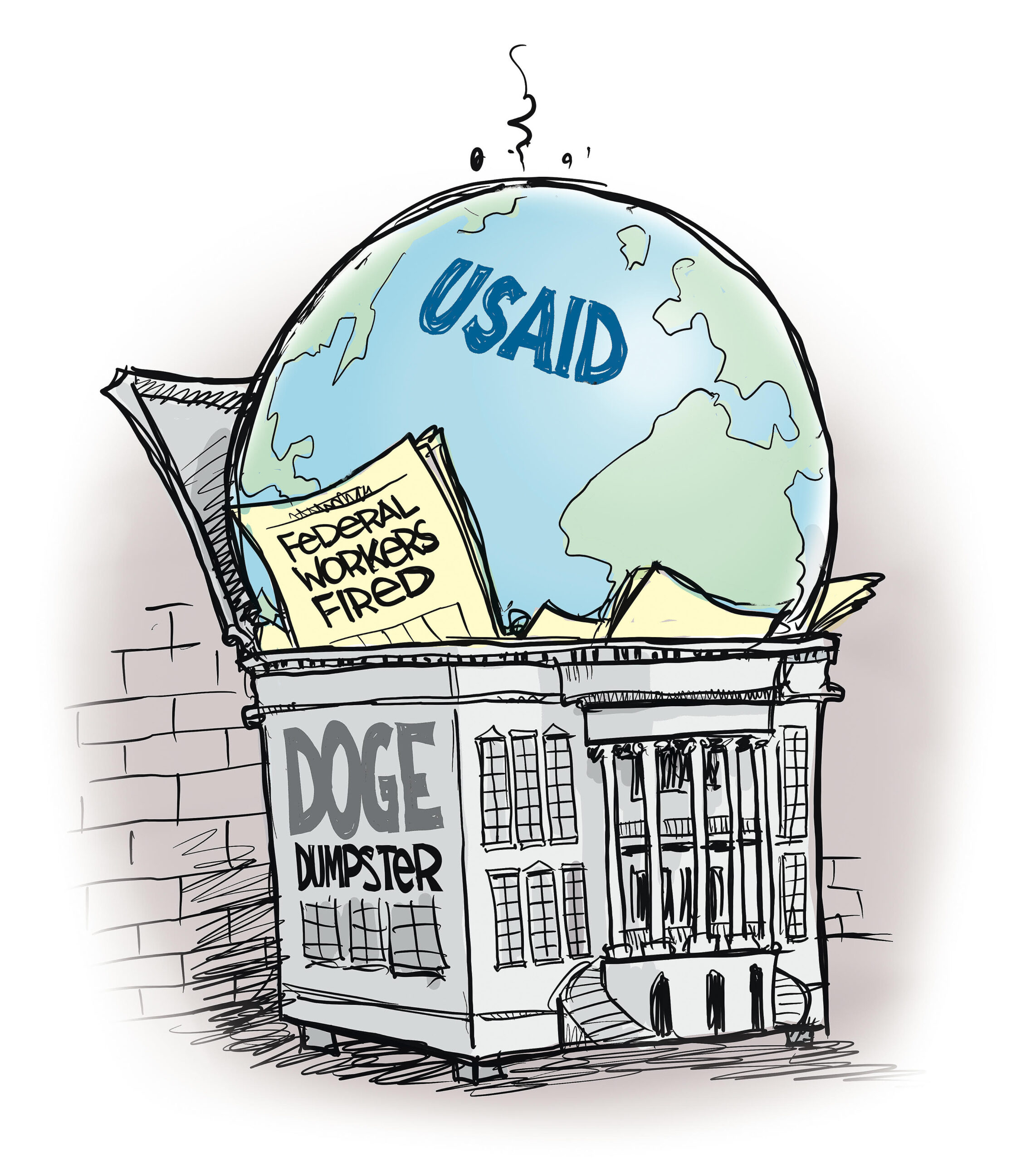
Donald Trump allowed billionaire Elon Musk to fire hundreds of thousands of government workers as head of the so-called Department of Government Efficiency. It is estimated that DOGE’s dismantling of the U.S. Agency for International Development has already led to the deaths of nearly 700,000 people.
Costly savings
The Department of Government Efficiency was Elon Musk’s chance to eliminate the U.S. Agency for International Development, an agency he called a “criminal organization” that needed to die. That the tech billionaire’s passion to eliminate USAID dovetailed with a bullet point in the conservative blueprint for Trump’s second term was likely welcomed by the administration.
Musk, who spent $250 million to help get Trump elected, was the public face of DOGE and promised to eliminate $2 trillion in government spending by identifying and eliminating waste, fraud, and abuse. What he did was bring in a squadron of techies more versed in crunching code than in carefully evaluating government services.
The chaos that followed meant not only the dismantling of USAID — which, as of Dec. 22, was estimated to have led to almost 700,000 deaths, more than half of them children, through the elimination of health and nutrition programs — but the firing or early retirement of nearly 300,000 federal employees.
DOGE also terminated more than $2.6 billion in contracts at the National Institutes of Health tied to medical research and clinical trials, leading to setbacks that may impact Americans’ health for generations.
So what was the result of DOGE’s actions? How much of that promised $2 trillion will show up on the positive side of the government’s ledger? According to an analysis by the libertarian Cato Institute, DOGE had no noticeable effect on the trajectory of government spending.
It did reduce the federal labor force, with savings that may amount to about $40 billion annually. That’s a lot less than it sounds when you consider it’s equal to 0.57% out of around $7 trillion in U.S. spending.
In his campaign for the president, Donald Trump promised he would lower consumer prices. A dubious pledge under most circumstances was made worse by policies, including the chaotic application of tariffs, that threaten the economy as a whole.
Self-inflicted decline
Looking at the data, it was easier to see why Vice President Kamala Harris did not distance herself from President Biden’s economic policies in her 2024 run for the White House. After all, after suffering through the pandemic like the rest of the world, the U.S. economy was bouncing back faster and stronger than that of other developed nations.
Unfortunately for Harris, to many voters, “Bidenomics” did not mean higher wages, lower unemployment, record stock market gains, and that post-pandemic inflation was starting to ease. It certainly didn’t mean billions in investment in infrastructure projects or in domestic production of critical semiconductors through the CHIPS and Science Act.
It meant the high cost of a dozen eggs.
Trump took advantage of the bad economic vibes and pledged to lower prices on Day One if elected. This was a dubious promise under most circumstances. Considering the president’s signature economic policies — indiscriminate tariffs and mass deportations — were destined to actively hurt consumer prices, it was political malpractice.
It is no wonder, then, that people have begun to sour on Trump’s economy, with the latest polling finding 57% of Americans disapprove. People are worried about losing their jobs, as unemployment has increased, and household debt levels are at record highs.
The impact of the president’s tariffs, which are taxes paid by the importer, not the exporter, is gradually being felt on the price of goods. Meanwhile, the administration’s crackdown on immigration, both legal and illegal, is hurting industries that depend on immigrant labor, including construction, agriculture, and health services.
According to the administration, fewer immigrants in jobs means more jobs for native workers, but so far, that result has not materialized. Instead, the projected economic impact of mass deportation on the labor force and consumer market (i.e., fewer people in the country purchasing goods and services) could reduce the U.S. gross domestic product — a common measure of economic growth — by 4.2% to 6.8%, according to the American Immigration Council. On the low end, that would be similar to the impact of the Great Recession on GDP.
Trump also promised to reduce energy prices by half within 18 months of taking office. The growing demand from data centers and the administration’s continued efforts to delay or kill renewable energy projects make it unlikely he will be able to deliver.
Trump infamously said his tariffs meant kids would get “two dolls instead of 30” come Christmas, but even that may have been optimistic, as data find more Americans are relying on installment or buy-now-pay-later plans to cover their holiday shopping.
The president, who had called Americans’ affordability concerns a “fake narrative” and a “con job,” backtracked in a prime-time speech on Dec. 18 in the most Trumpian way possible: He lied.
Trump falsely blamed immigrants for driving up the cost of housing, claimed gasoline is $2.50 a gallon “in much of the country,” and took credit for the mathematically impossible “400, 500, and even 600%” reduction in the cost of some prescription drugs, and for securing $18 trillion in investments in the U.S.
“Inflation has stopped, wages are up, prices are down, our nation is strong,” Trump said.
Donald Trump’s immigration enforcement agencies are seeding terror in communities while his administration’s immigration policies are unashamedly bigoted.
Anti-American sentiment
The Trump administration does not like immigrants. Period.
It does not like those who crossed the border illegally in search of a better life, nor those who are fleeing persecution and are seeking asylum in the land of opportunity. It does not like those who come here to study in America’s universities, nor those who want to fill jobs in fields in which there are not enough native-born workers.
The administration is looking for any excuse — any one example it can point to — to paint all immigrants as rapists, as murderers, as garbage. Any excuse to shut the golden door that has welcomed people from across the world to the benefit of a nation that is as dynamic as it is diverse.
What Trump and the ethnonationalists who surround him fail to understand is that the United States is an ideal — one so strong it has held disparate groups of people together for almost 250 years. The secret to America’s success is that everyone has the right to life, liberty, and the pursuit of happiness.
Perhaps that’s why the administration’s immigration enforcement feels so wrong to so many. Why it’s losing support even among those who voted for Trump.
That is why people are standing up against Trump’s tactics. They are organizing and pushing back, peacefully, against people being snatched up off the streets, against neighbors being intimidated, families split apart, cities roiled by chaos of the government’s own making.
Because while the administration may not like immigrants, America does.
Donald Trump called the very real threat of climate change a “con job.” His administration’s policies not only ignore efforts to mitigate the problem, they actively seek to make it worse.
Climate of denial
The American people’s concern about affordability is at least not the biggest “con job,” according to Trump. That distinction belongs to climate change, humanity’s era-defining challenge that the president has long called “a hoax.”
Speaking to the United Nations in September, Trump said predictions about the impact of a warming planet “were made by stupid people that have cost their countries fortunes and given those same countries no chance for success.”
Never mind that the effects of climate change are already evident in rising sea levels, increasing temperatures, and more frequent extreme weather events such as wildfires and flooding.
Not content with simply ignoring decades of science that prove greenhouse gas emissions caused by human activity are negatively affecting the planet, the Trump administration has swiftly moved to defund climate research, reverse U.S. climate change mitigation efforts, and impede the development of clean energy sources.
On Monday, the government suspended all large offshore wind farms under construction, citing “national security risks.” It was the latest example of Trump using regulatory red tape to hinder these kinds of projects to the detriment of both the environment and clean energy jobs.
Trump and his allies in Congress have also eliminated subsidies for solar panels, wind turbines, and electric vehicles — all while promoting fossil fuel use, including oil, gas, and coal.
While Trump’s climate and energy policies are a danger to the entire world, his administration’s policies also put Americans at risk in their own backyards. The Environmental Protection Agency has rolled back multiple efforts to promote clean air and water, including limits on toxic pollutants from coal-fueled power plants, greenhouse gas emission limits from coal- and gas-fueled power plants, and delayed timelines for water utilities to remove some “forever chemicals” from drinking water.
As Trump tries to leave a legacy by demolishing part of the White House to build a $300 million ballroom or emblazoning his name atop the Kennedy Center, it may be his shortsighted gutting of climate and environmental rules that truly leaves a mark for the ages.
Since retaking the White House, Donald Trump has added billions of dollars to his personal wealth, much of it through crypto and other digital currency schemes.
Shameless enrichment
The man who once couldn’t make money off a casino is $3.4 billion richer since he took office on Jan. 20. He did this, as reported in a comprehensive piece by the New Yorker’s David D. Kirkpatrick, by ignoring conflicts of interest and gauchely trading on the prestige and power of the U.S. presidency for personal gain.
The corruption is so flagrant and transparent that many voters perhaps think this is normal. But while there is likely nothing illegal in what is known about the president’s business ventures, no clear evidence of any quid pro quo, there is nothing ordinary or ethical about what Trump and his associates are doing.
For example, potential access to Trump at his Mar-a-Lago club now comes with a $1 million initiation fee — up from $100,000 in 2016. In May, the president hosted a gala at a Virginia golf club for the biggest buyers of his meme coin, an intrinsically worthless digital token for which the 220 attendees at the event shelled out $148 million. The venture, along with a separate $MELANIA meme coin, reportedly netted the Trumps $385 million.
Cryptocurrency is where Trump and his family are profiting the most.
The digital currency, which can be traded without relying on banks to verify transactions — or regulate or report them — has so far earned the Trump family billions. It is here where some of the most egregious conflicts of interest are made manifest, as individuals and foreign governments with interests before the United States, including government regulation of crypto itself, have made large investments that end up in Trump’s coffers.
Shortly after Trump won the election, a Chinese billionaire accused of fraud invested $30 million in World Liberty Financial, a Trump family cryptocurrency interest. In May, an Abu Dhabi, United Arab Emirates-backed investment firm put $2 billion into the company.
While Trump’s two sons strike lucrative business deals around the world, Trump’s foreign policy seems to be dictated by his drive for fortune. A plan for the “Gaza Riviera” was tied to the end of the war between Israel and Hamas, while either mineral deals from Kyiv or business ventures in Russia have become part of the calculus around the war in Ukraine.
In his short time back in the White House, Trump has shown that the presidency of the United States is open for business.
The U.S. Department of Justice, which seems to otherwise have no trouble doing Donald Trump’s bidding under Attorney General Pam Bondi, continues to drag its feet in releasing the Jeffrey Epstein files mandated by Congress.
Protecting the powerful
Among the promises Trump made in his bid for the White House in 2024, releasing the investigation files regarding convicted sex offender Jeffrey Epstein should have been the easiest to fulfill. Yet, more than a year later, it took an act of Congress to force the Department of Justice to release the files — or at least some of them, at least partially.
The documents made available recently were criticized by lawmakers and victims as incomplete and full of heavy redactions, with some of the published material quickly taken down over unspecified administration concerns.
Epstein, who took his own life in 2019 inside a federal jail cell, was accused of exploiting or abusing hundreds of women and girls over decades, procuring them for his famous friends, who included financial titans and political leaders.
Despite the president’s denials, he and Epstein once shared a friendship, reportedly bonding over the pursuit of women. There are videos and photos of them together, and Trump repeatedly flew on Epstein’s plane (known as “the Lolita Express”), though the president claimed he “never had the privilege” to visit Epstein’s notorious island.
The island, Little St. James, was once described by government officials as “the perfect hideaway and haven for trafficking young women and underage girls for sexual servitude, child abuse and sexual assault.”
The Trump administration’s efforts to delay and obfuscate regarding the files remain an affront to justice and decency. Survivors of the horrors perpetrated by Epstein and the rich and powerful he catered to deserve a public accounting of what happened to them, and there must be accountability for those who participated.
If the president has nothing to hide, if the “privilege” was indeed never his, then whose was it? Whom is Trump protecting?
In response to the Dec. 14 mass shooting at Bondi Beach in Australia, right-wing voices in the U.S. have quickly moved to point to this tragedy as evidence that gun control does not work. This is not only a disgusting lie, but also a claim that is so divorced from reality it would be laughable were its consequences not so dire.
According to the Associated Press, since the Port Arthur massacre in 1996, which saw Australia implement sweeping gun control laws, that nation has experienced a total of six mass shootings. According to the Gun Violence Archive, the U.S. had twice that number in December 2025 alone.
This does not have to be our reality. We do not have to continue losing members of our communities to gun violence. Gun control works, and while our legislators should have passed commonsense gun control decades ago, the least they can do is pass it now.
Katherine Roberts, Philadelphia
Freedom doesn’t defend itself
The United States was founded on the idea that individual rights must be protected from usurpation. Those rights, rooted in natural law and expressed through law and custom, were never meant to survive on principle alone. They endure only when citizens actively understand and defend them. History shows that rights are rarely taken outright; more often, they are lost through neglect.
A free society depends on the recognition that liberty is shared. In a nation defined by difference, coexistence is not optional, and respect is not sentimental — it is structural. When Americans ignore one another or reduce differences to something threatening, the civic bonds that hold the country together begin to weaken. Division does not start with conflict; it begins when responsibility is abandoned.
The greater danger emerges when ignorance gains influence and truth is treated as negotiable. In such moments, freedom is not abolished but rebranded — used to justify exclusion, distortion, and power without accountability. Institutions remain standing, but their purpose thins. Law continues, but its moral authority erodes.
This is the warning worth repeating: Rights lost through complacency are not easily recovered through outrage. Self-government depends not only on laws and elections, but on an informed and engaged citizenry. When truth yields to convenience and civic duty gives way to faction, the damage is no longer political — it becomes foundational.
Joel Alan Eisenberg, Warminster
An easy fix
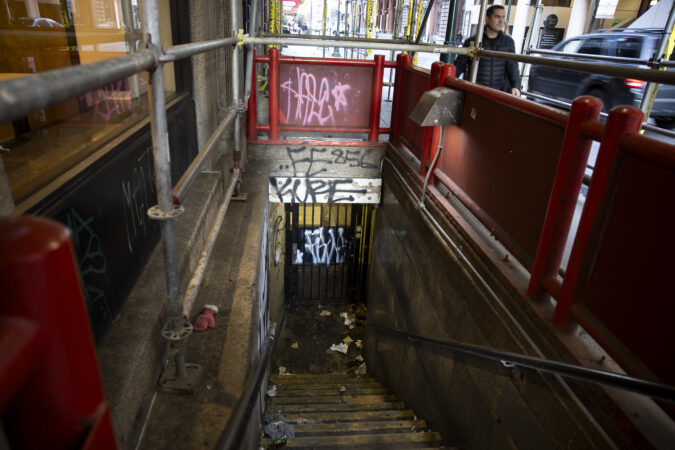
The city is expecting people from New Jersey to come see the Mummers Parade, as well as visitors during the 2026 celebration. It’s really a shame how they will be greeted when they come up from the 15th Street PATCO station, because the elevator never works, and the steps are falling apart.
I have complained many times over the last few years. PATCO tells me it’s the city’s responsibility once you get past the turnstile. I’ve complained to the city, to the visitors bureau, to the mayor’s office. When I finally got a response, they told me to complain to SEPTA. When I told them it is not a SEPTA station, I never heard from them again. How can they not know this? I can’t believe I’m the only one who ever told them about this. I know the city has bigger problems, but this is something that can be easily fixed if they want people to come in to spend money in the city.
In the Graduate Hospital part of the city, we struggle with similar issues, and have in the past worked with various groups to help us keep the sidewalks clean. These groups are helpful and employ local workers.
The one missing ingredient is that of personal responsibility: If every homeowner, landlord (those who rent out their residential properties), and business simply cleaned up their own public space on a daily basis, the city would be immensely cleaner.
It would be lovely if the city would champion this notion of personal and shared responsibility — it would reap great benefits and would cost nothing. A real win-win. It would also require the city to expand its own enforcement in addition to policing antidumping measures and the like. As a physician, I can tell you that this is also a public health issue, and not just one of aesthetics.
David Share, chair, South of South Neighborhood Association Clean and Green Committee
Power of the people
As we approach our 250th birthday as a nation, I wonder what the founders would think of the current state of affairs.
They would be alarmed at the power wielded by our president. They would be even more concerned about how inept the people’s branch, Congress, is. The lack of bipartisanship is causing the imbalance of power between the branches of government. Without Congress doing its job, someone else has to do what needs to be done.
The founders would feel like America is right back where it was before the American Revolution, i.e., taxation without representation.
A national movement should be organized to protest how we’re paying taxes through the nose and not getting representation from our elected representatives. The time is now. Start by marching on the National Mall in Washington, D.C.
Brian Reilly, Medford
. . .
I believe in the adage, ”It bears repeating.” When you apply that to Donald Trump, I can understand why people are interested in reading many different accounts of his depraved thirst for power and his ruthless attempts to get it. However, reading those details repeated over and over again ad infinitum will not necessarily tell me how to fight Trump.
Your editorial was an accurate and direct analysis of the Jeffrey Epstein files release, and we see once again the deceptions in which Trump engages.
The burning question in my mind is, after the recording of all his lies, over 30,000, what do we do about it?
We can’t just moan and complain and write editorials for the next three years. We need to do something more effective.
I personally think we need to have more “No Kings” protests and big demonstrations, as we had against the Vietnam War.
Judy Rubin,Philadelphia
Dishonor endures
As I read the recent Associated Press article about Vice President JD Vance’s recent speech, in which he refused to denounce bigots in the Republican Party, I couldn’t help comparing Vance’s positions with former Washington Post journalist Jennifer Rubin’s recent Substack post, “Remember the Unsung Resistance Fighters.” While Vance states outright his desire for a country in which white supremacy guided by Christian nationalism rules, Rubin asks us to acknowledge those of us who continue to stand in opposition, supporting instead the rule of law and the Constitution of the United States of America.
Someday, Trump will be gone from office. To all the Republican government officials — including the U.S. Supreme Court — your voting record will remain. And with that voting record, so, too, will your dishonor.
Cindy Maguire, Merion Station
Join the conversation: Send letters to letters@inquirer.com. Limit length to 150 words and include home address and day and evening phone number. Letters run in The Inquirer six days a week on the editorial pages and online.
For years, I envied Jews who enjoyed Christmas without getting into the weeds of what it’s all about, who put up a tree and lights without a sense of guilt. I admired Jews who wrote the best Christmas songs in history (google it), even though the holiday will never be their own.
But the day itself has never been my favorite. It ranks slightly ahead of Good Friday and Easter, but not by much. While no mindful Jew needs to be reminded of what a small minority we are, Christmas puts us in our tribal place. No amount of secular candy canes or court-ordered ecumenical neutrality softens the reality that the day is not for us.
This is not a complaint or a condemnation of the celebration. If there is a war on Christmas, I am not a combatant.
Unlike the Grinch, I never begrudge others their joy, even though I can’t embrace it. I wish others a merry Christmas and mean it. Why shouldn’t they be happy?
Adaptation
I have no resentment toward public displays of Christmas decorations. So long as they are not paid for with tax dollars, who are they hurting? There are far greater injustices to litigate, more serious public displays to mourn. With antisemitism on the rise, nobody has the luxury of getting upset over a creche.
Chef Rui Guang Yu prepares long life noodles at Nom Wah in Philadelphia. Chinese food generally does not violate kosher dietary laws.
But it has become more than an adaptation.
Tradition
The Christmas Chinese dinner is one of the truly great and unique nights of the American Jewish year. Jewish families patronize the same restaurant every year with the dedication generally reserved for delis and houses of worship.
What makes the night different from all other nights is the special joy that can only be found in our shared otherness. Being with those who share your identity — religious and otherwise — is always a blessing. But that feeling of togetherness is never more poignant than in those moments when what makes us different from others also makes us so alike among ourselves.
And it is often reciprocated by the people feeding us. The owners of the restaurants seem as happy to see us as we are to see them. And to share in our joy.
That I especially feel my Jewishness in a Chinese restaurant on a Christian holiday is the stuff of comedy.
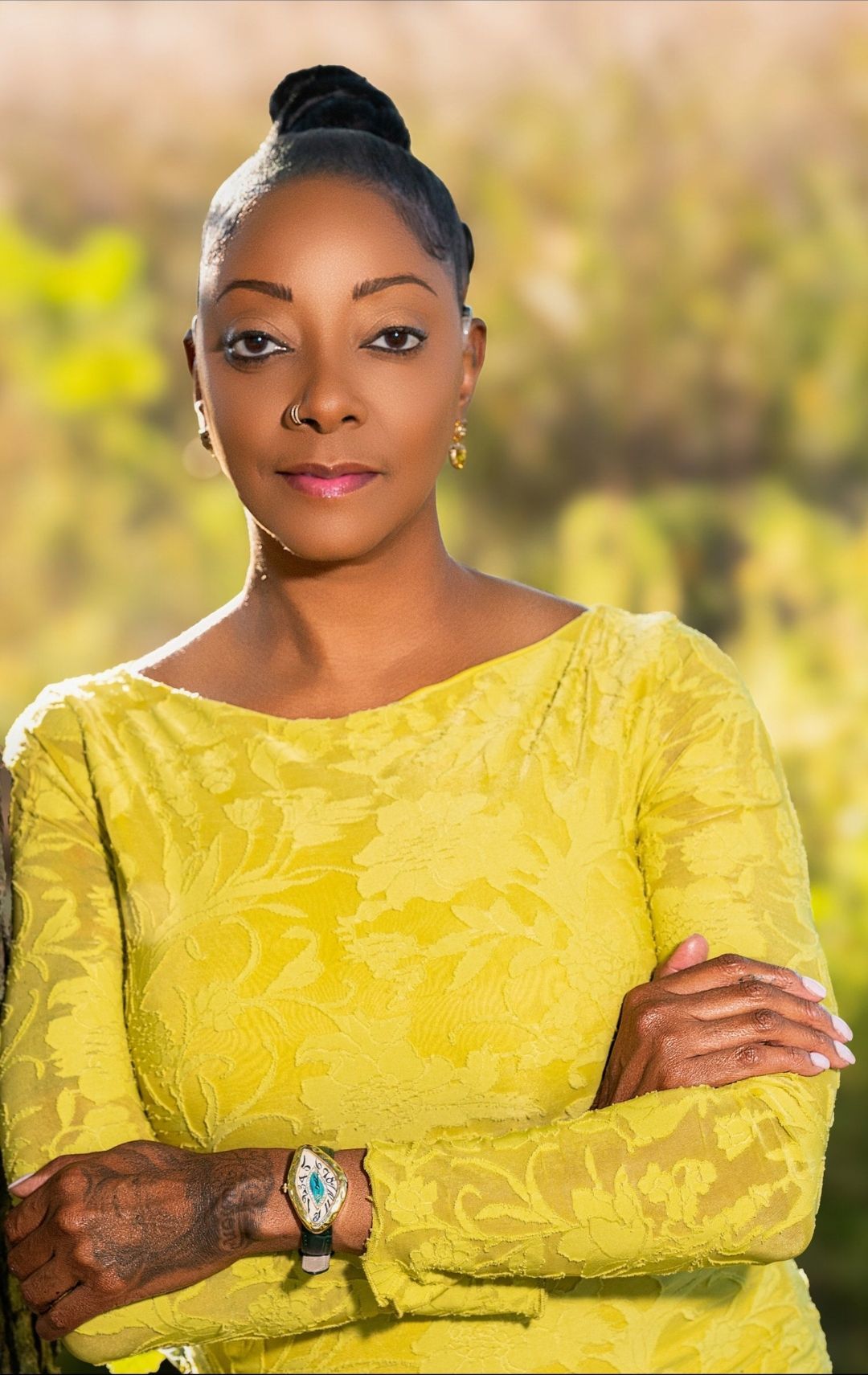
Christmas hasn’t always meant warmth, family, or celebration for me. For nearly a decade, the holidays were some of the most frightening days of my life. While others wrapped gifts and prepared meals, I was consumed with one mission: securing enough pills to avoid opioid withdrawal.
People rarely talk about this side of addiction — the logistics, the panic, the constant calculations. For me, the days leading up to Christmas weren’t merry or bright. They were a dangerous countdown.
My entire holiday hinged on whether a doctor would answer the phone before the office closed. I’d sit in my car with trembling hands, rehearsing my tone before calling, trying to sound calm even as fear tightened my stomach.
I knew exactly which doctors might authorize an early refill and which ones suspected I had become addicted. My 10-year addiction, which began when I was prescribed painkillers after knee surgery, had me cycling through more than 65 doctors in a half dozen states — each one recorded in the many calendars I hid in drawers. They were my secret maps for survival.
I would flip through them frantically, searching for any appointment I could make to save me from a night of withdrawal. I wasn’t looking for relief or euphoria. I was looking for a way to avoid the sickness that came the moment I ran out.
Many of the pharmacies I used were inside large chain stores. While they stayed open late, their pharmacies did not. As the metal grates rolled down over the pharmacy windows, the rest of the store hummed on. That contrast haunted me — bright aisles full of shoppers on one side, and on the other, the closed counter that meant I would be sick by morning. Once those grates came down, my options disappeared.
My withdrawals weren’t mild. At the height of my addiction, I was taking close to 30 pills a day just to feel normal.
At the height of my addiction, I was taking close to 30 pills a day just to feel normal, writes Chekesha Lakenya Ellis.
When the supply ran low, withdrawal hit me brutally and immediately. My stomach would bubble, my skin would prickle, and waves of nausea and trembling would take over. My chest tightened until breathing felt like work. Fear of that sickness controlled my entire life — especially during the holidays.
There were Christmas Eves when I sat alone in my car, looking at my dwindling supply of pills, trying to make it last through the night. I would delay doses longer than my body was used to, forcing myself to wait, bargaining with myself, fighting back tears each time the sickness crept in. It wasn’t safe. It wasn’t smart. But that was all I could do.
At family gatherings, I appeared frail and hollow. While everyone raved about my mother’s sweet potato pie, I barely touched my plate. My stomach was in knots, and nausea had stolen my appetite.
I’d slip into the bathroom, sit on the edge of the tub, and try to steady my breathing before returning to the table. People often assume addiction is about chasing a high. Mine wasn’t. Mine was about avoiding the physical collapse that came when the drugs left my system. I wasn’t celebrating Christmas — I was surviving it.
Addiction has a way of making you disappear, even when you’re standing right in front of the people who love you.
Today, my holidays are very different. More than 15 years into recovery, I can sit at a Christmas table fully present. I can breathe without fear. I can enjoy a meal. I can laugh. I can be myself again.
The holidays are hard for many people, but especially for those battling addiction, writes the auuthor.
But I never forget the version of me who couldn’t.
And I haven’t forgotten the people who are living that experience right now.
If you’re struggling this holiday season — if you are using, withdrawing, unhoused, hiding your pain, or simply trying to make it to tomorrow — I want you to know something:
Your story is not over.
You are not beyond help.
You are not alone.
Even if all you can do today is stay alive, that is enough. The holidays are hard for many people, but especially for those battling addiction. I survived nights I didn’t think I would survive. And if I could make it out, so can you.
This Christmas, my prayer is that you hold on — just long enough for the light to break through.
There is life beyond this moment. Even if you can’t feel hope right now, hope can still find you.
With the announcement of record sales across the country on Black Friday, including $11.8 billion in online transactions, the holiday shopping season was off to a great start. In the next few weeks, the average person was expected to spend about 10% of their annual shopping budget. By Dec. 25, the National Retail Federation expected a record-setting $1 trillion to be spent nationwide on consumer goods.
As a Christian, I am not supposed to like the commercialization of Christmas. I was taught from childhood that the birth of Jesus is “the reason for the season,” not gifts. In recent years, critics of all faiths — and none — have joined a growing chorus of anti-consumerist sentiment toward the holidays.
But rather than dismissing holiday shopping as a symbol of materialism and excess, I have come to view it as an expression of generosity and joy that captures the purpose of the season.
Rather than dismissing holiday shopping as a symbol of materialism and excess, I have come to view it as an expression of generosity, writes B. G. White.
The tradition of giving gifts at Christmastime was introduced several centuries ago in Europe by Christians who took stories about the gift-giving of an ancient saint, Nicholas of Myra, and turned him into the modern Santa Claus. As the Industrial Revolution created a new middle class and increased the availability of consumer goods, the tradition grew.
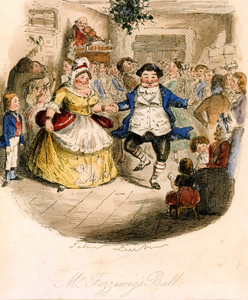
The importance of material generosity at Christmas was especially championed by Charles Dickens in his 1843 novella A Christmas Carol, which depicts the infamous Ebenezer Scrooge’s transformation from a penny-pinching grump to a joyful philanthropist.
Hand-colored plate illustration from the first-edition/first-issue copy of Dickens’ “A Christmas Carol.”
Dickens’ largely secular vision of giving gifts at Christmas helped to make a holiday originally confined to Christians more accessible for an increasingly pluralistic world.
Of course, there are problems with the connection between Christmas and shopping. I do not like how it can exacerbate class difference, revealing a vast disparity in the quantity and quality of gifts from one household to the next. The upper and middle classes can use Christmas as another opportunity for an exotic vacation or the acquisition of yet another status symbol.
One only needs, however, to recall the refrain from so many holiday movies to realize that the vast expenditure inherent to the season is not the main problem.
As Charlie Brown struggles in A Charlie Brown Christmas to pull together the perfect Christmas play, he realizes that, while he may need a Christmas tree for the set, it does not need to be particularly tall, pretty, or even upright. A short, scrawny tree will do just fine.
Instead of trying to buy happiness, or a better relationship with a loved one, or the perfect Christmas tree, we can use Christmas to focus on what someone really needs, writes B. G. White.
Christmas is about being content with what you already have and, out of that contentment, being generous to others. Instead of trying to buy happiness, or a better relationship with a loved one, or the perfect Christmas tree, we can use Christmas to focus on what someone really needs.
To keep ourselves focused on others and avoid unnecessarily lavish gifts, my wife and I use holiday sales as a means to get a discount on items that we would otherwise buy for our kids at some other point in the year. We also focus on practical gifts people will actually use — last year, we got a battery caddy for my mom and gardening gloves for my dad. Our son requested an expensive toy this year — an electric train set — so we found a small one that is in good secondhand condition, which reduces waste and expenditure.
Perhaps the greatest reason why I like to give gifts at Christmas is that they embody the heart of the Christmas story — the one, ironically, that so many Christians use to create skepticism about Christmas gifts — in which God “gave” Jesus as a savior for the world (John 3:16).
Perhaps, then, giving gifts does not destroy Christmas; it captures its very essence.
B. G. White is a faculty member in the theology department at Boston College.
Donald Trump has a fixation on putting his name on everything he can find. His latest is the Kennedy Center. Animals mark their territory, but the smell dissipates quickly. The stench from Trump’s antics will take years to remove.
Barry Adams, Malvern
. . .
The John F. Kennedy Center for the Performing Arts has had wonderfully harmonious moments.
The recent addition of Donald J. Trump’s name to the center creates a brash, clanging disharmony.
Consider three examples:
Kennedy inspired the creation of the Peace Corps. Trump eviscerated the U.S. Agency for International Development, leaving children starving and food rotting.
Kennedy instituted the Alliance for Progress, which brought hopes of prosperity and peace to Latin America. Trump ordered the military to murder suspected drug smugglers from Latin America.
Kennedy laid the moral foundation for the Civil Rights Act (1964) and the Voting Rights Act (1965). Trump directed states to redraw congressional boundaries so as to reduce nonwhite representation.
Bring back harmony and erase Trump’s name from the Kennedy Center. Adding Trump’s name is an insult to the memory and inspirational presidency of Kennedy, who said, “Ask not what your country can do for you — ask what you can do for your country.” In Trump’s case, it’s always been the other way around.
In 2025, facing punishment for misdeeds is no longer a sure thing. Whether it’s a federal conviction for storming the U.S. Capitol, bringing illegal drugs into the country, or defrauding investors, if you support the president, he’ll make it all go away. Donald Trump bragged during his campaign that he could shoot someone in the middle of Fifth Avenue without losing any of his supporters. He may have been right — and he is sharing that immunity with any of his friends who need it.
Wayne Williams, Malvern
. . .
How come Donald Trump can get away with just about anything: demolishing the East Wing, dismantling the U.S. Agency for International Development, freezing congressionally appropriated funds, just to name a few? And while each of those things occurred when he was president, bending the rules has been his MO, as a business person, since Day One. If you or I did the same thing, they’d throw the book at us. Trump? He gets the U.S. Supreme Court to say a president can’t be held accountable for anything he does while in office. The founders are turning over in their graves. Can you imagine what Trump would do if Joe Biden did everything he has done over the past 11 months?
Biden Derangement Syndrome, indeed.
Michael Miller Jr., Philadelphia
Join the conversation: Send letters to letters@inquirer.com. Limit length to 150 words and include home address and day and evening phone number. Letters run in The Inquirer six days a week on the editorial pages and online.
For 29% of the world, the world’s 2.3 billion Christians, the days leading up to Dec. 25 are filled with traditions to help us prepare for one of the two most important religious celebrations of the year.
On Christmas Day, the mangers in Nativity scenes in front of churches across the nation, empty until now, will feature depictions of the infant Jesus.
Christians can then, as the carol goes, know the thrill of hope, and the weary world can rejoice.
For a day, an hour, a moment, Christians in the U.S. will seem to be one body in Christ — but perhaps not even the Nativity can bridge the gulf that has grown between Christians over President Donald Trump’s immigration policies.
In fact, this holiday season, some of that deep division has flared up publicly, centered on Nativity scenes at churches — across denominations and geographies — that depict the Holy Family behind barbed wire, or flanked by federal agents from U.S. Immigration and Customs Enforcement and U.S. Customs and Border Protection.
An “ICE WAS HERE” sign is posted in the empty spot for the baby Jesus at a Nativity scene displayed at St. Susanna Church in Dedham, Mass., earlier this month.
In Massachusetts, at the Roman Catholic St. Susanna Church, the Holy Family is missing — replaced by a sign saying “ICE WAS HERE.” At Oak Lawn Methodist in Dallas, the Holy Family is behind a barbed wire fence, with a sign that says “Holy is the refugee.” At Missiongathering Church in Charlotte, N.C., ICE agents wearing bulletproof vests surround the Holy Family.
At Oak Lawn United Methodist Church’s nativity, Mary and Joseph are silhouettes, surrounded by a chain link fence topped with razor wire. Their halos are old bicycle wheels. A shopping cart and two metal bins, frequently used by the unhoused as firepits, flank the scene.
And at Lake Street Church of Evanston, in Evanston, Ill., not only are ICE and CBP figures included, but Mary wears a gas mask, and the infant Jesus has his hands zip-tied together — the way a witness describes federal agents from ICE and CBP zip-tying children together after raiding an apartment building in Chicago in October — and is swaddled in a Mylar blanket like those used in detention centers.
The pastors involved say the Nativities remind everyone that “God is with us” now. The scene “reflects the context that Jesus would be coming into if he were born today,” St. Susanna’s Father Stephen Josoma told the National Catholic Reporter.
The Rev. Michael Woolf, pastor of Lake Street, was even more direct when he posted on Instagram after someone had removed the zip ties from the Jesus figure in his church’s Nativity:
“We restored the zip ties on baby Jesus. The #Christmas story is literally about an authoritarian ruler using violence, causing fear, and eventually driving the holy family to become refugees in Egypt. The parallels couldn’t be more clear between Scripture and our nativity. We’re not going anywhere.”
There is a long tradition of having Nativity scenes reflect contemporary concerns and realities. For example, during World War I, according to Emma Cieslik, a museum professional and religious scholar writing for the website Hyperallergic, the Holy Family huddled in the trenches. More recently, the Christmas Lutheran Church in Bethlehem created a Nativity scene with the infant Jesus cradled by rubble from the bombing of Gaza, and the Vatican itself hosted Nativity scenes depicting the war in Ukraine.
Still, there has been plenty of pushback. The bishop of the Archdiocese of Boston has been critical of St. Susanna’s Nativity, for example, and online comments at X dispute any characterization of the Holy Family as migrants or refugees. (Ahem, Matthew 2:13-14 anybody?)
But the strongest reactions have taken place at the churches in places that were impacted by Trump-directed immigration surges.
At Missiongathering in Charlotte, a person was caught on video knocking over the ICE figures in the Nativity and tearing up the “Know Your Rights” signs around it. At Lake Street Church on Chicago’s North Side, vandals knocked down the ICE and CBP figures, then battered and decapitated the Mary figure.
The violence is symbolic, but the fury is undeniable. This administration has so thoroughly demonized migrants and refugees, labeling all as criminals, that any hint of resemblance between today’s migrants and refugees and the Holy Family reads as anathema to some Christians. But anyone who thinks the parallels are politically driven needs to get their history straight. Way back in 1952, Pope Pius XII was writing in his Exsul Familia Nazarethana that “the migrant Holy Family of Nazareth, fleeing into Egypt, is the archetype of every refugee family.”
And here’s the thing: These Nativities that have enraged people aren’t exclusively reflecting the reality of migrants and refugees who are endangered by the Trump administration policies — they are reflecting the danger to all of us.
Folks may feel safe in their own status, but anyone can be treated the same way the administration is treating migrants and refugees. It is happening already, in fact, with federal agents refusing to accept valid U.S. birth certificates and passports as proof of citizenship.
“No document will protect you,” Malka Older, who heads up the international community of writers and human rights activists Global Voices, and has years of experience working at humanitarian aid, disaster risk reduction, and emergency preparedness organizations, wrote recently on Bluesky.
“All they have to do is take it from you and ‘lose’ it; take it from you and say you never gave it to them; claim it’s fake; make a new rule that you need another document. Citizenship is a made-up status that governments decide the rules for.”
Older said “it has never been about immigration. It’s racism, and it’s intimidation, and profit for some. Allowing it to happen to any group means it’s a possibility for everyone, and that’s how fascism maintains power.”
Which brings me back to Christmas Day, and what every pastor who has placed one of those ICE Nativity scenes knows.
It is a broken world now, and it was a broken world when Christ was born into it.
Amid the soaring Glorias, the sparkle of lights, and the colorful paper wrapped around gifts we give each other in echo of the gifts brought to the Christ child by the Magi, we should remember that three days after Christmas Day, Christians will be marking the slaughter of the Holy Innocents. The one the Holy Family fled from, the one that made them refugees.
They were warned, as we are warned, that authoritarian rulers will stop at nothing to get their way.
Donald Trump, a spray-tanned, 21st-century version of Ebenezer Scrooge, claims the affordability crisis is a “Democratic hoax,” and that parents should deal with it by buying fewer toys. With a heart that’s at least two sizes too small, he just can’t relate to those who scrape to get by. The only struggle he can relate to has to do with pronouncing the word acetaminophen.
Like the main character in Charles Dickens’ A Christmas Carol, Trump enjoys demeaning people — as he did last week when he unveiled a series of plaques near the Oval Office, deliberately distorting the legacies of former Presidents Joe Biden and Barack Obama. Trump isn’t in the same league with either of them. Not even close. Same thing with President John F. Kennedy, but that didn’t stop him from having his name slapped onto the John F. Kennedy Center for the Performing Arts last week.
Please, Santa, make sure your sleigh doesn’t drop off any presents at the White House on Christmas Eve. Same thing with Mar-a-Lago. Remember Trump’s posting an AI-generated meme dropping what looks like feces on “No Kings” protesters back in October?Just tell Dasher, Dancer, Rudolph, and the rest to fly right on by both of these locations.
President Donald Trump speaks during an address to the nation from the Diplomatic Reception Room at the White House in Washington in December.
Unemployment rose to 4.6% last month, the highest increase since 2021. For African Americans, it’s way higher, at 8.3%. Kudos to Rep. Ayanna Pressley (D., Mass.), among others, for demanding answers about what’s going on. Please don’t forget to drop off something really nice for them.
Also, as I’m sure you’re aware, America is on the verge of a healthcare crisis. Once federal subsidies to the Affordable Care Act expire Dec. 31, millions will see their health insurance costs skyrocket. This isn’t the kind of thing you and the elves typically work on up at the North Pole, but members of Congress have failed to come up with a solution.
If something drastic doesn’t happen soon, millions may wind up dropping their policies, which could prove catastrophic. We can’t count on that old Scrooge, I mean the president, who campaigned claiming he had a “concept of a plan” to fix healthcare. He hasn’t done it yet, and I doubt he ever will. Instead of boxed gifts, anything you can do to help us resolve this important issue would be deeply appreciated.
Trump really deserves that No. 1 spot on your naughty list this year. It’s one thing to try to secure America’s borders, but it’s a whole other thing to allow masked U.S. Immigration and Customs Enforcement agents to carry out a reign of terror on undocumented immigrants and U.S. citizens alike.
There have been many other lowlights from the first 11 months of his second term: imposing tariffs on foreign countries that have raised costs for American consumers, dismantling the U.S. Agency for International Development, and stopping diversity, equity, and inclusion in the federal government and anywhere else he can.
On top of everything else, Trump doesn’t even bother to hide his bigotry anymore. Under his leadership, officials have admitted white Afrikaners — descendants of the European colonizers whose segregationist practices led to the formalization of apartheid in South Africa — granting them refugee status while doing everything in his power to deport Black and brown migrants. I haven’t recovered from his calling Somalis “garbage” and saying that they should leave the country.
They and anyone else Trump doesn’t like have to go because he’s worried about “chain migration,” but first lady Melania Trump, who brought her parents to the States using the same process, can stay? Make it make sense.
Volunteers take phone calls from children asking where Santa is and when he will deliver presents to their house, during the annual NORAD Tracks Santa Operation, at the North American Aerospace Defense Command, or NORAD, at Peterson Air Force Base, in Colorado Springs, Colo., last Christmas Eve.
I could go on and on, but I’m trying to embrace the holiday spirit. Please give my regards to Mrs. Claus and to all of the elves who work so hard to make the Yuletide season jolly.
When you make your way down my chimney, you will find your cookies and milk in their usual place. I don’t need anything personally, but please do what you can to make life easier for Americans scraping to get by in the so-called golden age of Trump. As a certain humbug himself might say, thank you for your attention to this matter!
Heather Huot, the top executive at Catholic Charities, named her only daughter after Lidia, a homeless, mentally ill, and often cranky elderly woman she met as a young social worker at Women of Hope Vine, a transitional housing facility run by the organization Huot now leads.
As “mean spirited” as Lidia was, Huot said, Lidia still celebrated forsythia.
When their bright yellow blossoms heralded winter’s end, Lidia would drag Huot outside to marvel. “Despite all the hardships,” Huot said, “there are things to be celebrated.”
Which brings us to the Christmas holiday season.
Even if it were possible, which it’s not, to overlook all the troubles in our world, with wars and starvation, or even to overlook all the troubles in our nation, there would still be the troubles of the season — too much work, too much loneliness, too many struggles.
Where’s the forsythia?
Two weeks ago, it was outside the Archdiocesan Pastoral Center in the form of a living Nativity scene, complete with a wee baby goat named Lady, an artificial-snow machine, an actual camel, and an elementary school choir in their Catholic school uniforms singing “Joy To the World.”
Yes, “Joy To The World,” because 500 children, some of whom live in tough circumstances, got a chance to celebrate Christmas and with it, maybe, the hope that the holiday brings. It was the 70th annual Archbishop’s Benefit for Children, a Catholic Charities of Philadelphia event funded by a grant from the Riley Family Foundation. No expense was spared.
Heather Huot, the chief of Catholic Charities Philadelphia, pets a calf during a living Christmas scene in front of the Archdiocesan Pastoral Center in Center City Philadelphia.
More than 60 volunteers from area high schools lunched on pizza and cookies before heading across the street to a lavishly decorated ballroom in the Sheraton Philadelphia Downtown. Balloons, banners, party favors, huge plates of cookies, a container of ice cream cups, and a bucket of all different flavors of milk awaited at each table. Kids and chaperones crowded the dance floor, only to make way for an appearance by Santa, who high-fived his way around the ballroom. At the party’s end, the volunteers sprang into action distributing bags of toys — all beautifully wrapped.
In a way, the party is a metaphor for Catholic Charities as a whole. Both the party and the organization are big and multifaceted with lots of moving parts, involving all types of people, not only Catholics.
Each year, Catholic Charities spends about $158 million to run about 40 different programs in four main categories — care for seniors; support for at-risk children, youth, and families; food and shelter; and its biggest category, many-pronged assistance for people with intellectual and developmental disabilities and their families.
As an overview, there’s housing for at-risk youth in Bensalem. In Philadelphia, people may be familiar with St. John’s Hospice on Race Street, which provides food, showers, shelter, and case management to men. There are several smaller transitional housing shelters for women in the city.
Social workers funded by Catholic Charities assist students at six Catholic high schools across the region. Other social workers handle case management under contract with the City of Philadelphia. A program teaches teenagers involved in the juvenile justice system about conflict resolution. Family navigators step in to assist families with issues ranging from employment to parenting support. There are adoption and foster-care services.
For the elderly, Catholic Charities supports senior centers and works to help seniors stay independent through case management.
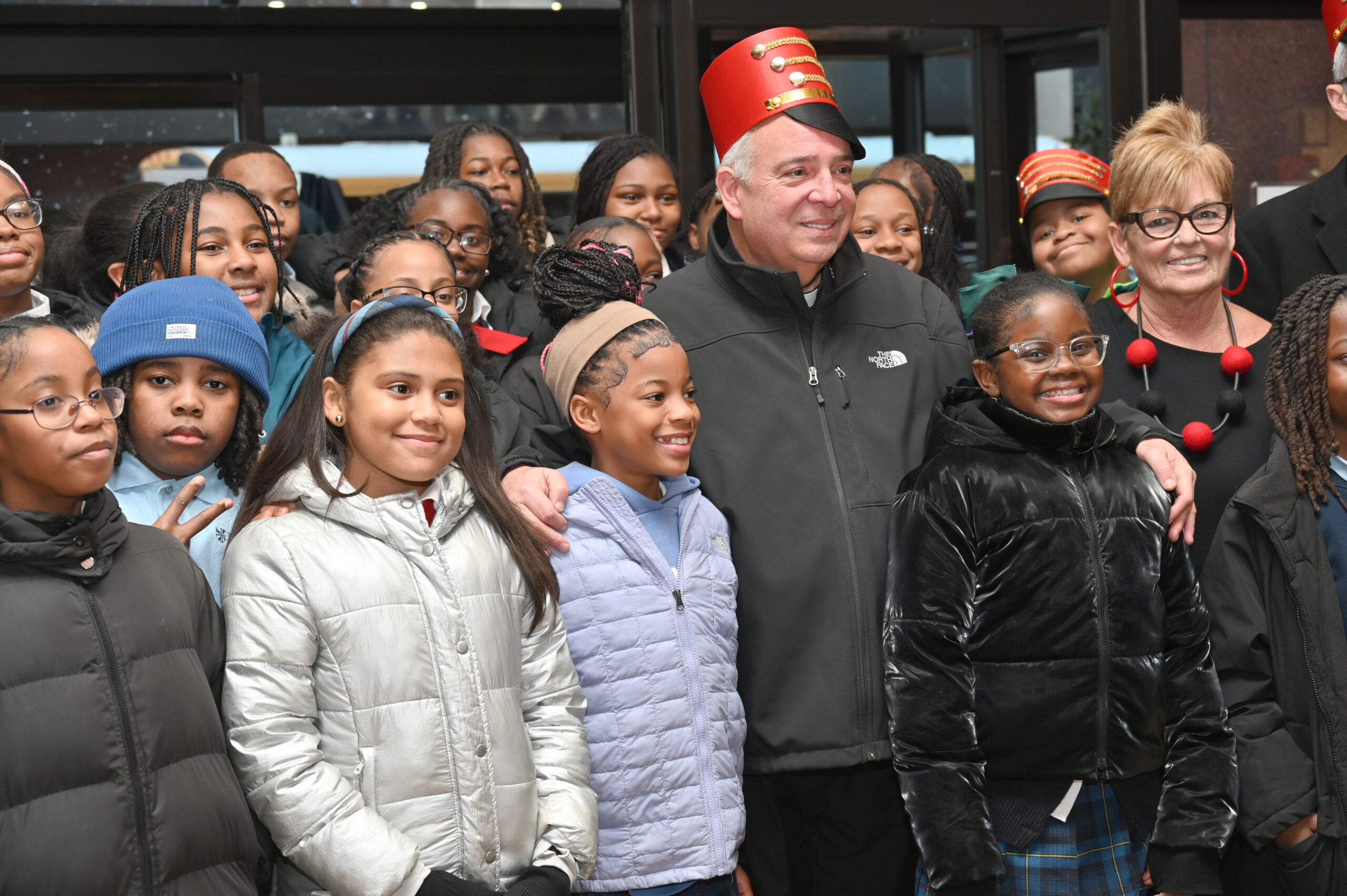
Archbishop Nelson Pérez poses with students during a holiday party.
Just over half of Catholic Charities’ annual budget is allocated to supporting people with intellectual or developmental disabilities. A major focus is housing for adults. For example, at the Divine Providence Village in Springfield, Delaware County, 72 women live in six cottages on a 22-acre campus with a pool, greenhouse, and picnic pavilion.
In addition, there is employment support, a day program, field trips, a family-living program, and respite care to help families overwhelmed by caregiving responsibilities.
Nearly 80% of Catholic Charities’ funding comes from government sources, which, these days, requires Huot to focus her prayers. “I ask God to help me get through this and to give me the strength and the people around me to get through this,” she said. “At the same time, we have to recognize that God provides in ways you don’t expect.
“We’ve been blessed with generous benefactors who have stepped in,” she said. “The Philadelphia community is incredibly generous. We get a bad rap as the people who throw snowballs at Santa Claus, but Philadelphians will give you the shirt off their backs. They are passionate about caring for one another.”
The generosity moved Lakisha Brown to tears as she shepherded her two children and a third to the party earlier this month. Brown, 44, lives in a three-bedroom subsidized housing apartment at Catholic Charities’ Visitation Homes in Kensington.
“This is the best I ever lived,” she said. But, she said, just outside her door “is a constant reminder of where I came from and where I never want to go.”
Brown’s father died when she was in elementary school and her mother struggled with alcohol addiction. Brown left home when she was 16 under the protection of a man who started their relationship with gifts and ended it with beatings.
“He left me in a coma,” she said.
Brown had her own struggles with addiction. She spent many nights without a roof over her head. If lucky, she could sleep in safety in an abandoned car on a quiet block. One night, she went to a party in a hotel. When she woke up, her clothes were off. Whatever happened wasn’t consensual.
Soon after, she learned she was pregnant and, knowing that, she vowed to give her baby a clean birth. She found a drug program and a place to live. Slowly, through housing and support from Catholic Charities, she rebuilt her life.
Erika Hollender holds up her grandchild so Layani, 3, can touch Percy the camel.
“They help us with budgeting, with money management,” said Brown, who relies on disability, welfare, and food benefits while trying to cope with her own mental health issues. “When we get some money, we want to spend it on the children. We were parenting out of guilt and shame.”
Those are the big things, but what Brown wants people to understand is that the level of care is deep, personal, and specific. It’s being able to ask a staff person for a roll of toilet paper and trash bags — basics that are sometimes unaffordable when money must be allocated to food and shelter.
“A mom’s job is never done,” she said, explaining why people should donate to Catholic Charities. “It is needed for mothers who come from nothing. It is needed.”
For more information about Philly Gives, including how to donate, visit phillygives.org.
About Catholic Charities of Philadelphia
People served: 294,000 annually (in the 2023-24 fiscal year)
Annual spending: $158.6 million across four pillars of mercy and charity
Point of pride: Catholic Charities of Philadelphia is the heart of the church’s mission in action, serving all people regardless of background. With decades of experience, nearly 40 comprehensive programs, and deep community partnerships, Catholic Charities turns compassion into action, and action into lasting and impactful change.
You can help: By serving meals, volunteering at a food pantry or shelter, hosting a food or clothing drive, and sharing your gifts and passions with seniors.