Category: Opinion

  • Congress should renew Affordable Care Act subsidies — regardless of whether Trump cares | Editorial

    Congress should renew Affordable Care Act subsidies — regardless of whether Trump cares | Editorial

    The longest shutdown of the federal government in this nation’s history ended after Republicans finally agreed to consider Democrats’ appeal for an extension of expiring Affordable Care Act subsidies that help families buy health insurance.

    What action Republicans will ultimately take is anyone’s guess before the subsidies expire in January. As for President Donald Trump, he treats healthcare like every other issue: mostly making nebulous, politically calculated statements that are counterproductive when leadership from the White House is needed.

    For years, Trump has derisively called “Obamacare” bad legislation that never should have been passed, but he has never offered a better alternative.

    “My first day in office, I am going to ask Congress to put a bill on my desk getting rid of this disastrous law and replacing it with reforms that expand choice, freedom, affordability,” Trump said on the campaign trail in 2016. Several proposed replacements to the ACA were subsequently introduced after his election, but each was defeated in the Senate, with even some Republicans voting against the inadequate alternatives.

    Trump never produced anything better than Obamacare during his first administration, but that didn’t stop him from again making the healthcare law a major talking point during his reelection campaign. “We’re signing a healthcare plan within two weeks, a full and complete healthcare plan,” Trump said in July 2020. “We’re going to be doing a very inclusive healthcare plan. I’ll be signing it sometime very soon.”

    But the plan never came, and Trump lost the election.

    He stewed during Joe Biden’s four years as president, but promised voters during his 2024 campaign that he was ready to replace Obamacare. Pressed by reporters to reveal his alternative, Trump had to admit he had only “concepts of a plan.” Nearly a year has passed since his second inauguration, but Trump’s concepts of a better plan to make sure health insurance is affordable are still a mystery.

    Unless that changes before the increased ACA subsidies expire, Congress should vote to extend them.

    The subsidies help Americans who earn up to 400% of the federal poverty level — $15,650 annually for an individual and $32,150 for a family of four — pay for insurance. Without those subsidies, a person now paying $325 a year for health insurance might have to pay as much as $1,562 annually.

    Many whose insurance costs will go up may decide to rejoin the ranks of the uninsured. That would be a travesty. The medically uninsured rate in America almost halved from 17.8% when the ACA became law in 2010 to 9.5% in 2023. Studies show uninsured adults have less access to medical care, receive poorer quality of care, and experience worse health outcomes than insured adults.
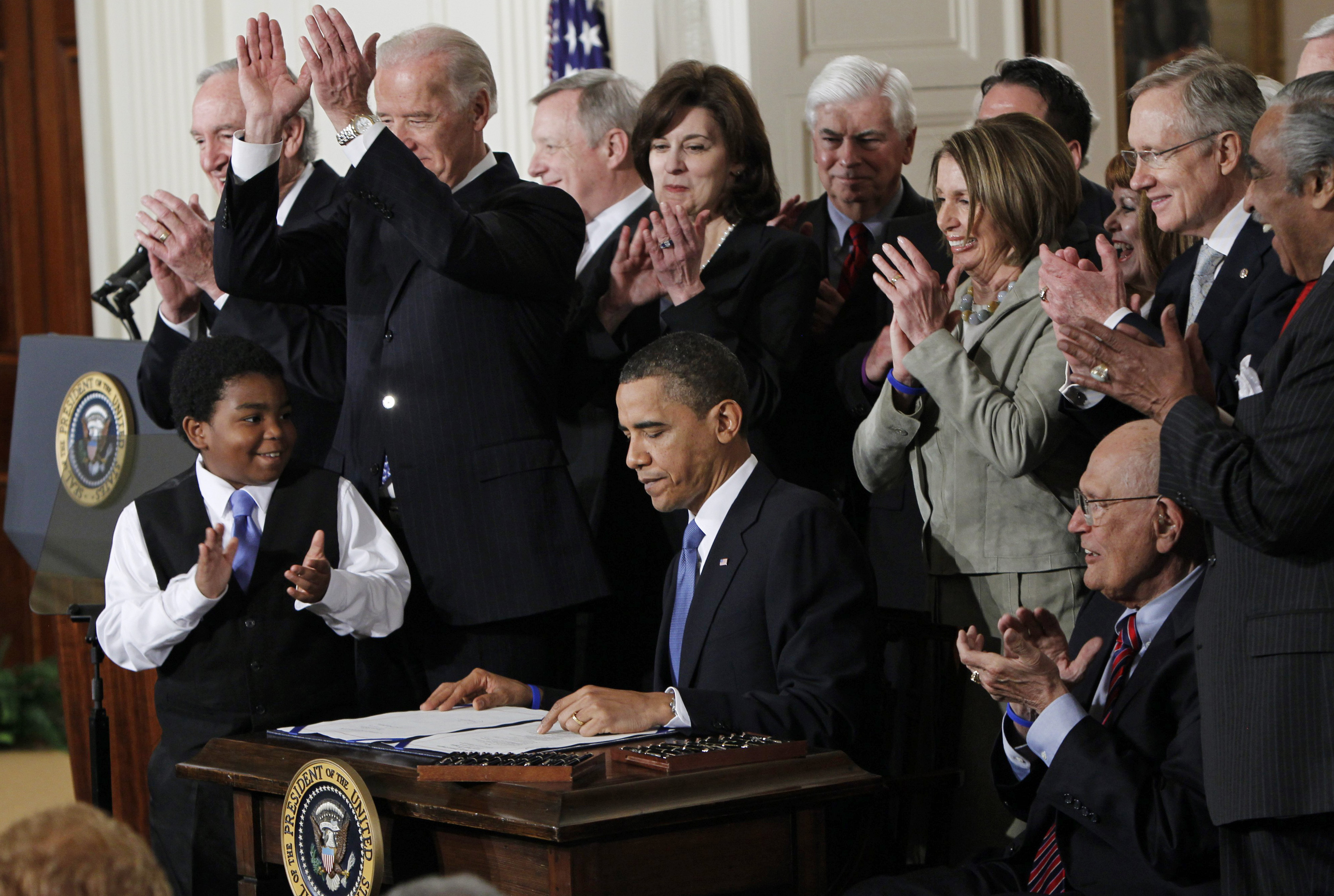
    President Barack Obama is applauded after signing the Affordable Care Act into law in the East Room of the White House in 2010.

    Ending the subsidies will turn back the clock. That doesn’t mean Obamacare shouldn’t be touched. Adjustments should be made based on how much healthcare in America has changed since the law was signed in 2010 and fully implemented in 2014.

    The ACA was this country’s alternative to installing a “single-payer” healthcare system, such as Canada’s, where most funding and payments for medical treatment come directly from the government via taxes paid by the public. The ACA system in America instead retains the third-party role of private medical insurance companies such as Blue Cross, Aetna, and Cigna, whose revenue has increased greatly under Obamacare.

    Most Canadians also have private insurance to pay costs not included in their government coverage, so even they don’t consider a taxpayer-funded, single-payer system the best way to provide healthcare. In fact, a survey of 11 healthcare systems provided by the world’s highest-income nations ranked Canada 10th and the United States last.

    Despite spending far more of our gross domestic product on healthcare, America is at the bottom in terms of access to patient care, administrative efficiency, equity, and healthcare outcomes. In other words, we’re spending a lot of money and getting sicker in return.

    The study by the Commonwealth Fund said the highest-ranked nations, including Norway and the Netherlands, which topped the list, shared four distinguishing features:

    1. They provide universal coverage and remove cost barriers.
    2. They invest in primary care systems that provide high-value services to all people in all communities.
    3. They reduce administrative burdens that divert time and spending from health improvement efforts.
    4. They invest in social services, especially for children and working-age adults.

    That last point brings up another issue regarding healthcare and Trump. The omnibus legislation passed in July, which he dubbed the “One Big Beautiful Bill,” made drastic cuts to Medicaid to help pay for tax cuts expected to reduce federal revenue by $4 trillion between 2025 and 2034. Why should Medicaid, which helps cover medical costs for low-income families, older adults, and people with disabilities, be sacrificed so that Trump can boast he cut taxes?

    Trump’s minions falsely said the cuts were needed to combat fraud and abuse, including a bogus claim that undocumented immigrants were receiving Medicaid benefits.

    Why is this president always finding some perceived wrong among the most vulnerable Americans while lavishing praise and largess on the wealthy? Certainly, he’s more familiar with the latter, having grown up rich and being more comfortable among his people. But so many less fortunate Americans voted for him, including more than a few who depend on Medicaid.

    Shouldn’t he at least occasionally seem to care for their health?

  • As Pa. and other states go all-in on sports betting, expect wagers — and cheating scandals — to keep coming

    As Pa. and other states go all-in on sports betting, expect wagers — and cheating scandals — to keep coming

    News item: The NBA asked several teams to hand over cellphones, documents and other property as part of its investigation into illegal sports gambling.

    The Athletic, Nov. 15

    The latest investigation into sports gambling is not the first and won’t be the last. Nor is it a shock since the heedless race into legalized sports gambling is ruining the games — and some lives — all in the name of money.

    Betting on sports has become so pervasive that the integrity of the games can no longer be trusted.

    Just last month, 34 people — including an NBA Hall of Famer, a current star, and a former player — were indicted as part of an elaborate betting scheme that included one player who pleaded guilty in July to faking injuries to leave games early so gamblers could win prop bets on his performances.

    The same gambling ring was also tied to suspicious wagers on college basketball, including games played by Temple University. A gambling watchdog flagged suspicious betting activity in a game last year between Temple and the University of Alabama at Birmingham, where UAB went from a two-point favorite to an eight-point favorite in a matter of hours. UAB ended up winning 100-72.

    Portland Trail Blazers head coach Chauncey Billups, who was indicted in a federal sports betting investigation, leaves a federal courthouse in Portland, Ore., after an appearance last month.

    Separately, three college basketball players from Fresno State were banned last month for betting on their own games and “manipulating” their performances to alter outcomes, according to the NCAA.

    Gambling is not just undermining basketball games.

    The NFL suspended 10 players in 2023 for violating its league gambling policy. The same year, the NHL suspended Ottawa Senators forward Shane Pinto for 41 games, making him the first modern-day hockey player banned for sports gambling.

    Two Cleveland Guardians pitchers, Emmanuel Clase and Luis Ortiz, were indicted last week for rigging pitches in certain situations to benefit tipped-off bettors.

    For the uninitiated, bettors can wager on just about anything during games, including whether the batter will make an out or hit a home run, or whether the next shot in a basketball game will be for two points or three. These micro-bets create opportunities for players to do what is called “spot fixing.” The in-game betting also explains why sports announcers give updated odds during games.

    The Guardians pitchers are not the first to raise concerns about betting on baseball. Last year, San Diego Padres infielder Tucupita Marcano was banned for life, and four others received one-year suspensions for gambling, including Phillies minor league infielder José Rodríguez.

    Cleveland Guardians closer Emmanuel Clase was indicted earlier this month on charges that he tipped off bettors to some of his pitches.

    Baseball has battled past betting scandals, from the 1919 World Series to Pete Rose betting on games he managed. Last week, a Senate committee sent a letter to Major League Baseball commissioner Rob Manfred raising concern over a “new integrity crisis” in American sports.

    Fans are losing trust. Six in 10 now worry about games being fixed.

    Even for those who don’t bet, the barrage of TV commercials and promotion of sports gambling inside the arenas is ruining the fan experience.

    Many celebrities and former athletes, including former Sixers greats Allen Iverson and Charles Barkley, appear in commercials that make gambling seem cool. All the incessant advertising helps normalize something that is addictive. One study found that during broadcasts of the Stanley Cup finals, hockey fans were exposed to gambling logos and ads an average of 3.5 times per minute.

    The upshot: Many young men and boys are getting addicted to sports gambling, upending their lives and their families.

    At a Phillies game last year, my son and I listened to three young guys behind us talk nonstop about in-game bets while they tried to complete a challenge of drinking nine beers in nine innings.

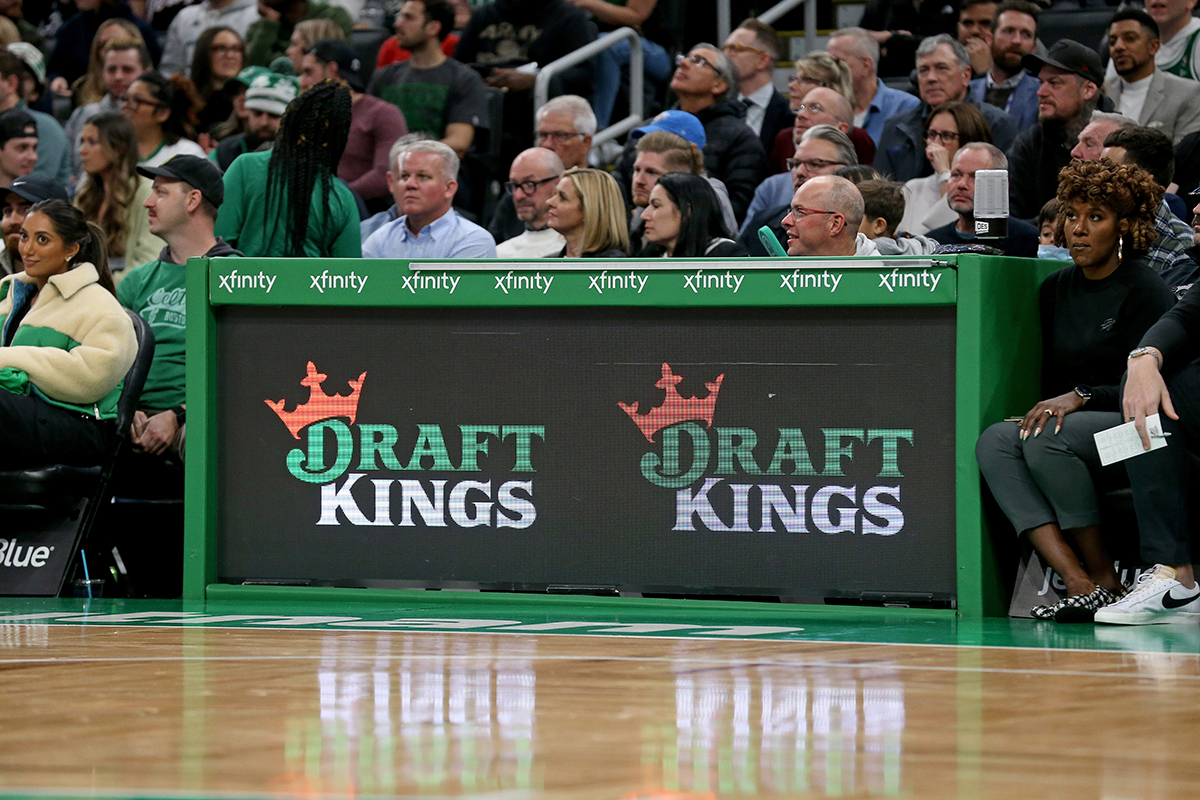
    An ad for the sports betting site Draft Kings appears courtside at an NBA game at the TD Garden in Boston in November 2022. One study found that hockey fans were exposed to gambling logos and ads an average of 3.5 times per minute during broadcasts of the Stanley Cup finals.

    For some, the addiction comes quickly. Rob Minnick started betting on Philadelphia sports teams at age 18. Within days, he was placing bets on the West Coast games using a pair of online sports betting sites, FanDuel and DraftKings.

    Then Minnick got hooked on playing slots on his phone. Eventually, the South Jersey native told me he was gambling for up to eight hours a day, running up credit card debt and borrowing money from friends and family to maintain his habit.

    Minnick went in and out of debt over six years. After a gambling binge that ended at a casino, he decided to seek treatment. He now helps others recover from gambling addiction.

    “It was all fueled by seeing the commercials for FanDuel and other sports betting apps,” Minnick said.

    Minnick is not alone. There has been a surge in people seeking help for gambling addiction, especially in states like New Jersey and Pennsylvania, where sports betting is legal.

    Gambling results in other social ills. Gambling addiction has long been associated with increased risk of depression and suicide. Some early research has found an increase in debt and bankruptcy in states with legalized sports betting.

    An undated photo of “Shoeless” Joe Jackson, of the Chicago White Sox, who admitted accepting $5,000 to throw the 1919 World Series in one of baseball’s past betting scandals.

    Blame the explosion in sports gambling — and the subsequent problems — on elected officials and the gambling lobby.

    Illegal sports gambling has long operated in the shadows. Yes, it was unregulated and untaxed, but it was not ubiquitous.

    Then, former New Jersey Gov. Chris Christie challenged the federal ban on sports betting in most states in an effort to help the still-struggling casinos in Atlantic City. In 2018, the U.S. Supreme Court struck down the ban, opening the floodgates to betting on sports.

    States rushed to open sportsbooks, including Pennsylvania and Delaware. Online gambling apps made it easy for anyone with a mobile phone to gamble anytime and anywhere.

    Last year, Americans bet nearly $150 billion on sports, according to the American Gaming Association.

    Today, more than one in five Americans bet on sports. More alarmingly, nearly half of men between the ages of 18 and 49 have an active online sports betting account.

    More gambling has translated into more debt. One quarter of sports gamblers said they have been unable to pay a bill — including their rent — because of debts from wagers. And 15% said they have taken out a loan to fund their sports gambling habit.

    Most elected officials ignore the social costs of problem gambling because of the easy tax revenues that roll in.

    Harrisburg lawmakers may be the worst gambling addicts.

    Since 2004, Pennsylvania has legalized slots, table games, sports gambling, and online betting, while adding pricier lottery games with little concern for the economic harm and increased addiction. The influential gambling lobby successfully blocked efforts in Harrisburg this year to increase the tax on sports betting.

    The sports leagues once opposed legalized gambling. But now, the leagues are partners with the major online betting sites.

    Not long ago, NFL commissioner Roger Goodell opposed legalized gambling before going all in. In 2017, he said, “The integrity of our game is No. 1.”

    Don’t bet on it.

  • While some pay for police, others are getting a free ride | Shackamaxon

    While some pay for police, others are getting a free ride | Shackamaxon

    This week’s Shackamaxon asks: Who should pay for public safety, and why didn’t Philadelphia’s big employers do more to save SEPTA?

    Bills for thee, unlimited OT for me

    My intrepid newsroom colleagues Ryan W. Briggs and Max Marin have shed light on another frustrating phenomenon in local government: the city’s haphazard and uneven policy on security for events.

    While some independent community and cultural groups have been hit with bills as high as $40,000 for their festivals, others haven’t been asked to contribute a dime. This includes events hosted by local politicians, who get their costs added to the city’s $150 million police overtime bill.

    Instead of forcing communities to end or curtail long-standing and successful events over security costs, the city should focus on finding ways to lower the cost. This should start by taking away the decision-making process from individual police captains and making these calls at the Managing Director’s Office.

    The city should also invest in security options that don’t require personnel, like the portable vehicle barricades used by the Center City District for its Open Streets events. This would eliminate or reduce the need for police presence. Lowering the overall amount the city pays for events will make it easier to take on the cost for all of them and eliminate the need for the current, inequitable status quo.

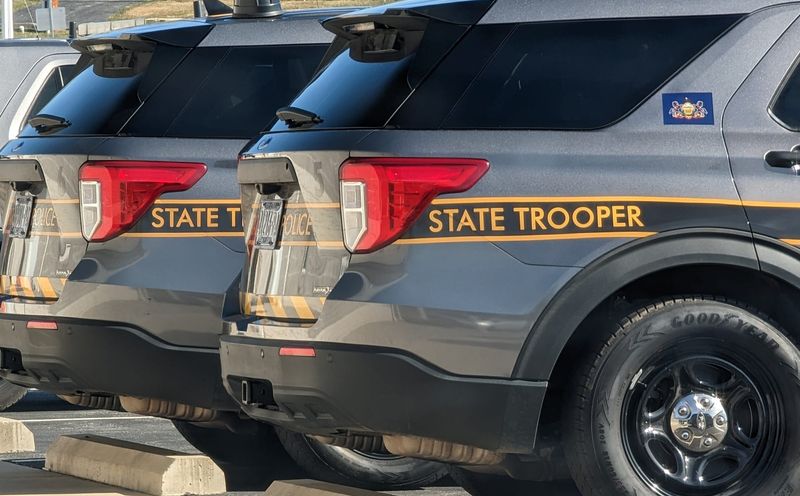
    Some of Pennsylvania’s towns and villages do not spend on their own police force, instead relying on the Pennsylvania State Police.

    More blue for less green

    City Council members and some favored community groups aren’t the only ones benefiting from an uneven cost structure for public safety.

    While Philadelphia spends almost $900 million per year on policing, at a cost of over $550 per resident, some of Pennsylvania’s towns and villages are getting an absolute bargain — they don’t pay for police at all.

    It’s a growing phenomenon in which rural and exurban communities, most of them Republican-led, are essentially defunding the police — it isn’t just hamlets in Forest County that are benefiting from the dollar savings either. Sizable towns like Lower Macungie, the second-largest population center in Lehigh County, rely solely on the Pennsylvania State Police to keep order.

    State Rep. Justin Fleming has proposed a solution. His bill would create a fee structure for towns that forgo local police coverage, with the aim of growing and strengthening the state police. Fleming, who represents a small town outside Harrisburg that pays for its own police force, presents his plan as a fair way to cover the cost of public safety across the commonwealth. It is long overdue.

    An automated speed enforcement camera is mounted on North Broad Street at Arch Street in September.

    The truth about the PPA

    No one likes getting a ticket, but many Philadelphia motorists harbor a special resentment for the Philadelphia Parking Authority. The recent implementation of (PPA-administered) speed cameras on Broad Street has led to an outbreak of often-conspiratorial claims about the agency.

    Some critics have gone so far as to claim the PPA is a “private company,” or that “all the money goes to Harrisburg.” Even City Council President Kenyatta Johnson claimed ignorance when asked about some aspects of the PPA on a local podcast, saying he needed to look into it.

    In reality, the PPA is a state agency, governed by a board that’s appointed by the governor and legislative leaders. In a typical year, it directs more than $50 million to local needs, and Executive Director Rich Lazer has moved away from the opaque and patronage-heavy policies the agency was once known for.

    The speed cameras, far from being a way to raise revenue, are aimed at changing behavior. When implemented on Roosevelt Boulevard, speeding decreased — as did fines. You can’t make money from speedsters if they stop speeding.

    Of course, there’s an easy way to avoid ever getting a ticket: park legally and don’t speed. If anything, the city would be better off if its other enforcement agencies were as effective as the dreaded PPA.

    SEPTA commuters at 11th and Market Streets.

    Transit failure

    It is no secret that Gov. Josh Shapiro and Harrisburg Democrats folded on mass transit funding this year. Despite claiming a sustainable solution was their “top priority,” they agreed to subject riders to two more years of uncertainty, with no guarantee of a future solution.

    But there’s another set of regional power brokers who failed to adequately address the public transportation system’s needs: our biggest employers.

    Thomas Jefferson University, Comcast, Children’s Hospital of Pennsylvania, the University of Pennsylvania, and the Chamber of Commerce will gladly say they support transit funding. Just don’t ask them to spend a dime on it.

    While the lobbies for casinos, sports gambling, so-called skill games, and marijuana all have plenty of cash to splash, transit has next to nothing. That lack of money made it hard to win over Senate Republicans, who mostly represent districts without many mass transit riders, leaving them immune to grassroots pressure to fund the system. This meant that a last-minute effort to fund transportation off taxing sports betting failed, with gambling companies and their social media influencer allies scaring legislators off.

    According to local transit advocate Jon Geeting, Philadelphia’s major institutions have contributed next to nothing to the yearslong effort to forge a sustainable solution in Harrisburg. Geeting told me, “It’s really disappointing and sad that for three years in a row, it fell to out-of-state philanthropy to support the entirety of state transit funding advocacy.”

    Despite the collective billions at their disposal, efforts by local industry and institutions to support mass transit funding have mostly consisted of sending in op-eds and occasionally speaking at rallies. If we are to save public transit in Philadelphia, Comcast and Penn should not be content to have the same reach as determined high school students.

  • Letters to the Editor | Nov. 21, 2025

    Letters to the Editor | Nov. 21, 2025

    Low bar

    The staggeringly vile actions of Donald Trump continue to pour out of his administration. Two recent articles highlight that.

    The ruler of Saudi Arabia, a country that supports terrorism, denies human rights, beheads its enemies in public, and has others brutally murdered on foreign soil, is welcomed by this president with open arms. Trump brushes off Mohammed bin Salman’s crimes with a wave of the hand, saying “things happen,” then considers selling him F-35s, the most advanced fighter jet in the world, in a deal that could land the plane’s technology in the hands of bin Salman’s close ally, China.

    And on Air Force One last week, Trump, who has stalled the release of the Jefferey Epstein files until it became clear even his allies in Congress were going to force his hand, responded to Bloomberg News correspondent Catherine Lucey with, “Quiet, quiet, piggy,” when she asked him about the files. It is just one in a long list of examples of Trump’s antipathy toward strong women.

    But I guess we should expect nothing less from a man who admires dictators and is a convicted sexual abuser. These are just two examples of what so saddens me, that so many in my country can support him. A common refrain from my friends who do support him is that they don’t like the man, but they like his policies. Is there no one out there among Republicans who is not amoral and lacks honor, and who can implement the same policies they support?

    Steven Barrer, Huntingdon Valley

    Pardonpalooza

    The recent editorial on Donald Trump’s abuse of presidential pardon power is so important. Everyone should read it. Trump’s Department of Injustice, under Pam Bondi, is a travesty. Trump talks about “weaponizing” the Justice Department, and that’s exactly what he has done. The Justice Department is supposed to be independent of the executive branch, not subservient to it. Bondi does whatever Trump tells her to do, whether it’s legal or not. The Injustice Department was just caught using Trump’s signature, with or without his permission, to pardon criminals.

    In a recent letter to the editor, Terry Hansen wrote about Daniel Rodriguez, one of the insurrectionists on Jan. 6, 2021, who received a pardon from Trump. He repeatedly drove a stun gun into the skull of a police officer, Michael Fanone, causing him to lose consciousness and suffer a heart attack. Rodriguez was sentenced to 12 years in prison. Trump pardoned him.

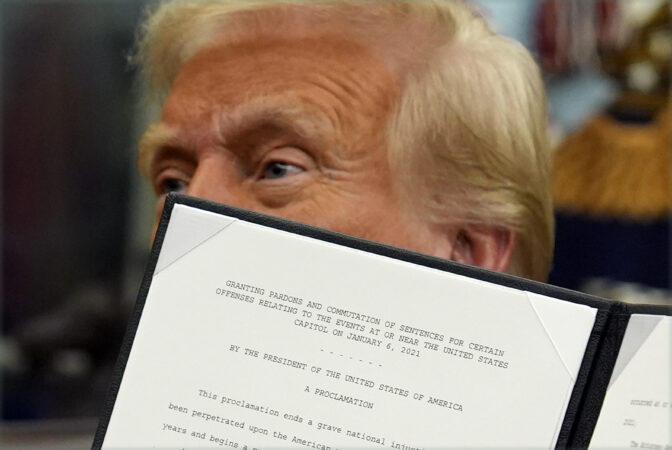
    Trump has pardoned all 1,500 of the insurrectionists from Jan. 6. Trump issued two pardons for Daniel Edwin Wilson — the first for the invasion of the U.S. Capitol Building on Jan. 6 and the second recently for gun charges. He pardoned Suzanne Kaye, who was sentenced to 18 months for threatening an FBI agent. Trump has also pardoned numerous convicted criminals for all sorts of violent crimes, fraud, embezzlement, extortion, and other felonies — all in just his first 10 months in office.

    The big question is, why? Trump never does anything that does not benefit Trump or the Trump family’s fortunes. Is he setting a new precedent? Or is he sending a message to his loyal followers: No matter what you do on my behalf, I will pardon you. Don’t you worry.

    Most presidents don’t hand out pardons until their last year in office. We have three more Trump years to go. What more can we expect?

    Patrick Thompson, Media

    Hope on the horizon

    Unexpectedly, I long for the days of George H.W. Bush’s call for “a kinder, gentler nation” and Richard Nixon’s creation of the Environmental Protection Agency and focus on energy efficiency. After decades of increasing respect for the rights of all, regardless of race, gender, and social status, we have entered a period of degradation, incivility, greed, and violent threats toward others. Earth is threatened by strident demands to stop renewable energy projects. Immigrants, even American citizens, are being ruthlessly and indiscriminately torn from families. As noted in a recent Inquirer editorial, drug runner suspects have been summarily executed without due process. The government shutdown caused needless hardship for furloughed federal employees and for the hardworking poor who rely on SNAP and affordable healthcare. This month’s election offered a glimmer of hope, but the greed of a few continues to oppress the many. Let’s hope our course changes with next year’s midterm election, if we have one.

    John Groch, West Chester

    Fatal illusion

    Trudy Rubin’s recent column correctly identifies the fundamental flaw in Donald Trump’s Gaza peace plan: its failure to address Palestinian political aspirations.

    Peace is indeed achievable, as Rubin suggests, but it requires more than clever diplomacy or economic incentives. It demands one basic ingredient that has been consistently missing: genuine recognition of Palestinian aspirations to live free from occupation.

    Rubin describes how Trump’s plan “regurgitates ideas that have previously failed” by offering economic benefits without political sovereignty. But this pattern extends far beyond the current administration. For decades, Israel has pursued a strategy of dividing the Palestinian people — separating Gaza from the West Bank, Fatah from Hamas, and creating internal rivalries — to maintain the occupation while claiming there is “no partner for peace.”

    As long as Israel continues this division strategy, violence will persist. The occupation itself breeds resistance, and Israel seems to exploit Palestinian disunity as justification for maintaining control.

    Real peace requires moral clarity: the recognition that Palestinians have the right to live free from military occupation, just as Israelis have the right to security. These rights are not mutually exclusive, but the current approach — attempting to offer economic development under permanent military control — is fundamentally wrong and will never succeed.

    Sam Kuttab, cofounder, Prayers for Peace Alliance, Philadelphia

    . . .

    “If you will it, it is no dream” was a core belief of those who defied the odds and built the great country of Israel.

    I am appalled at the treatment of Yifat Tomer-Yerushalmi, Israel’s top military prosecutor, by her own government, after she shone a light on the brutal abuse of Palestinian prisoners. Prime Minister Benjamin Netanyahu calling her a traitor, as well as his apparent indifference to violent attacks by settlers in the West Bank, further undermines his legitimate authority.

    I agree with Trudy Rubin that the only path to long-term peace is a two-state solution. I hope responsible leaders in Israel will rise and will this dream to come true.

    Rob Howard, Rosemont

    Faux surplus

    Nearly every article about the possibility of school closures in Philadelphia includes some version of this statement: The school district has 70,000 surplus seats. But the class size expectations used to calculate that number are not reported. ats.

    Citing the 70,000 number without explaining expected class sizes, estimated special education programs, and specialists’ needs (or maybe even a library one day!) creates an exaggerated sense of urgency that manipulates the public into supporting closures.

    At my child’s school, the district claims we are not at capacity, but our special education teachers are sharing classrooms, autistic students have no sensory room, there is no storage for excess materials, and if we ever got funding for a library, there would be no place to put it.

    If I have two pairs of pants, you could technically say I have a surplus of pants, but we all know two pairs of pants is still not many pants. Claiming everything beyond the bare minimum is a surplus sends a message that we have no right to expect more for our students.

    Tamara Sepe, Philadelphia

    Join the conversation: Send letters to letters@inquirer.com. Limit length to 150 words and include home address and day and evening phone number. Letters run in The Inquirer six days a week on the editorial pages and online.

  • Trump’s bullying of female reporters won’t stop journalists from asking tough questions

    Trump’s bullying of female reporters won’t stop journalists from asking tough questions

    It has long been established that some of Donald Trump’s most frequently used rhetorical weapons have been misogynistic insults. It is just as well known that the president seldom hides his contempt for journalists.

    So it’s hardly surprising anymore when Trump degrades female reporters. But the president reached a new level of low even for him when he had the nerve to refer to Bloomberg News White House correspondent Catherine Lucey as “piggy” during a briefing with reporters last week aboard Air Force One.

    Trump was angered when Lucey attempted to press him about the government’s case file on convicted sex offender Jeffrey Epstein. Trump literally leaned in Lucey’s direction, jabbed a pointed finger at her, and said, “Quiet! Quiet, piggy!”

    Even after everything we’ve seen from Trump over the past decade, it was a startling and disgusting thing to witness coming from a sitting president of the United States.

    Here’s the thing: Lucey’s a dogged reporter. I know. I used to work with Lucey when she was at the Daily News from 2000 to 2012. Lucey isn’t about to let the president’s schoolyard taunts stop her from asking tough questions.

    Catherine Lucey, now a White House correspondent with Bloomberg, spent a dozen years as a reporter at the Daily News before departing in 2012.

    Same thing with ABC News reporter Mary Bruce. On Tuesday, Trump accused her of being a “terrible person and a terrible reporter.” That’s not going to stop her, either. Journalists are a determined lot. The good ones in the White House pool recognize that their job is to hold him accountable and will stop at nothing short of exposing the truth.

    It’s in our collective DNA.

    Bruce did the right thing when she challenged Trump earlier this week by asking if it was appropriate for his family to be doing business in Saudi Arabia.

    She was also working in the spirit of journalism’s best traditions when she went on to also address Saudi Crown Prince Mohammed bin Salman, asking: “Your Royal Highness, the U.S. intelligence concluded that you orchestrated the brutal murder of a journalist. [The] 9/11 families are furious that you are here in the Oval Office. Why should Americans trust you? And the same to you, Mr. President.”

    After asking Bruce whom she worked for, Trump accused ABC of being “fake news.” He defended his family’s business operations in Saudi Arabia, and said the reporter should not have “embarrassed our guest by asking a question like that.”

    “A lot of people didn’t like that gentleman that you’re talking about,” Trump added, referring to the late Washington Post columnist Jamal Khashoggi. “Whether you like him or didn’t like him, things happen.”

    ABC News reporter Mary Bruce asks a question as President Donald Trump meets Saudi Arabia’s Crown Prince Mohammed bin Salman in the Oval Office Tuesday.

    A chill washed over me when I heard him say that. According to U.S. intelligence, Khashoggi reportedly was killed and dismembered on Oct. 2, 2018, in the Saudi Consulate in Istanbul.

    The National Press Club issued a statement afterward, saying the organization is “deeply troubled by President Trump’s comments today regarding the killing of journalist Jamal Khashoggi. Mr. Khashoggi’s murder inside a diplomatic facility was a grave violation of human rights and a direct attack on press freedom.”

    Just this past September, the president ordered NBC’s Yamiche Alcindor to be quiet and listen, and told her she was second-rate, which she is not. Alcindor had asked about his intentions for the Windy City after he posted a meme saying, in part, “Chicago about to find out why it’s called the Department of War.”

    Trump’s animosity toward journalists goes way back. Following a 2015 Republican primary debate, he said of Megyn Kelly, “There was blood coming out of her eyes, blood coming out of her wherever.”

    Even with the numerous lawsuits he’s filed against news outlets, Trump should have figured out by now that he’ll never stop the press. The president can insult and bar certain news organizations from the White House. But good journalists know how to work around that.

    Even if a network does replace one reporter, another journalist will step in and do the exact same thing. If a newspaper fires a print journalist, these days they’ll move their work to the Substack publishing platform or social media, the way former Washington Post columnist Karen Attiah did shortly after she was let go.

    Observers often wonder why journalists don’t fight back more against Trump’s verbal attacks. “Most reporters want to cover the news, not be the news,” as ABC News correspondent Jonathan Karl told Paul Fahri of the Columbia Journalism Review earlier this year. In other words, they try and stay focused on the job at hand.

    And these days, getting bullied by the man-child in the Oval Office seems to come with the territory.

  • As Ukraine falters, Trump tries to hand the country to Putin with a shamefully pro-Russia peace plan

    As Ukraine falters, Trump tries to hand the country to Putin with a shamefully pro-Russia peace plan

    While America has been obsessing over Jeffrey Epstein, Vladimir Putin has been making dangerous headway in Ukraine — and expanding his war into Europe.

    Under such circumstances, genuine peace negotiations are impossible because Putin thinks he is winning. America’s top foreign policy priority should be to reverse the Russian leader’s mindset by increasing military sales to Ukraine — which the Europeans will pay for.

    Instead, the Trump team and Russian officials together have drawn up a new 28-point “peace” plan, without first consulting Ukraine or European allies. This pro-Russian plan calls for major Ukrainian concessions and would leave the country naked to further Russian aggression.

    The White House has already denied Ukraine the weapons that could still stop the Russians, thereby effectively helping Putin slaughter Ukrainian civilians nightly with missiles and drones that target apartment buildings and heating systems.

    In pursuit of his mythical Nobel Peace Prize, Trump appears poised, yet again, to sell out Ukraine. If so, he will also be selling out our European allies — and the United States.

    Most Americans don’t realize Russia is already at war with Europe. This new mode of hybrid warfare is carried out on land, air, and sea, but without ground troops — yet. Moscow is frequently using drones to shut down airports in Germany, Denmark, Norway, Belgium, and Poland. Russian hackers are attacking European networks.

    Russian ships are cutting Europe’s underwater cables, its warplanes are invading European airspace and buzzing military planes, and its saboteurs are carrying out assassinations and arson attacks, including failed plans to bring down European airliners.

    Because this war is unconventional, and hitting individual countries in Europe, the European Union and its members haven’t yet figured out how to respond.

    Putin seeks not only to frighten Europeans but to unnerve Americans, as well. U.S. intelligence agencies concluded last year that failed Russian arson attempts on planes were a “test run” for using similar devices on transatlantic cargo shipments, according to the Washington Post. And Putin frequently hints at nuclear war against the West.

    Has Trump denounced such behavior, or warned Putin to stop his attacks on U.S. allies? Nyet. Only occasional grumbling has been heard from the White House.

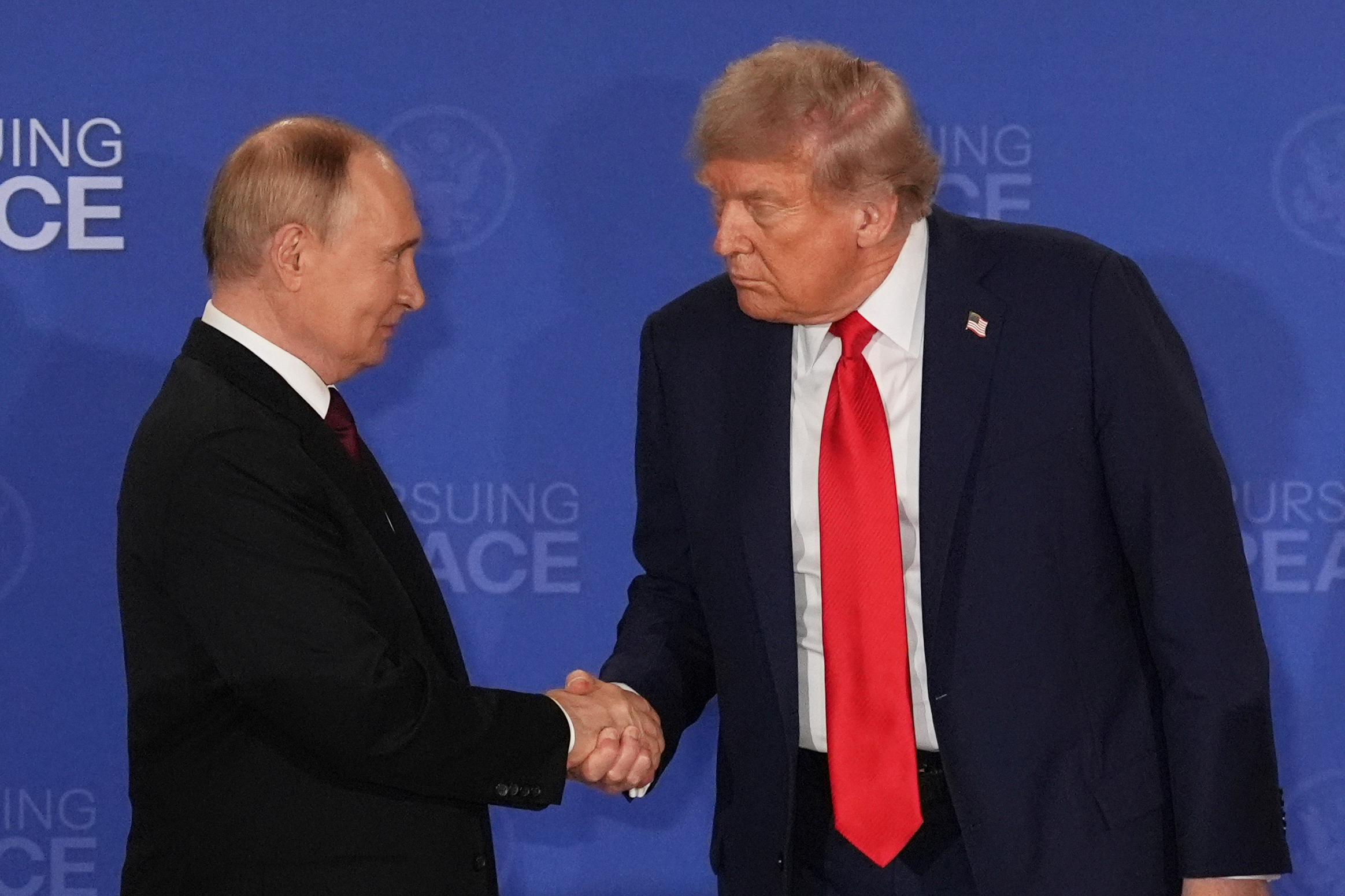
    President Donald Trump shakes the hand of Russia’s President Vladimir Putin during a joint press conference at Joint Base Elmendorf-Richardson, Alaska, in August.

    The president probably never even took briefings on Russian sabotage. Anything negative about Putin is rebuffed as the “Russia, Russia, Russia hoax.”

    Instead, Trump has been busy misusing U.S. forces to threaten war on Venezuela (which poses no military threat to America, and contrary to Trump’s claims, ships no fentanyl to U.S. shores). Perhaps this wag-the-dog war is meant to scare a weak Nicolás Maduro.

    But Trump has made clear he doesn’t dare (or want to) stand up to Putin.

    His new secondary sanctions on Russian oil sales haven’t been seriously pursued against India or China, which buy huge and increasing shares of Russian oil and gas.

    Moreover, as Moscow takes advantage of Ukraine’s dire shortage of man power, air defenses, and long-range missiles, Trump refuses to help. Even though Europe has pledged to pay for key weapons systems for Kyiv, Trump won’t sell them.

    Although Ukraine makes an array of drones, they can’t shoot down ballistic missiles or cope with Russia’s current mass production of drones, helped by thousands of North Korean workers and endless shipments of parts from China.

    Promised U.S.-made Patriot air defense systems, which could take out the ballistic missiles, have never arrived in Ukraine. Only this week, after a nine-month delay, did Washington permit Kyiv to once again fire long-range U.S.-made ATACMS missiles. Defense Secretary Pete Hegseth had banned their use early this year.

    And most cowardly, after hinting for months that he would send desperately needed long-range Tomahawk missiles to Ukraine, Trump finally came out with a big “No Tomahawks.”

    There’s more. Although Ukraine is a world champion producer of all varieties of drones, and the United States lags far behind in unmanned warfare, Trump has yet to conclude a much-discussed drone deal with Volodymyr Zelensky, whereby Ukraine would swap drones, technology, and testing for U.S. weapons.

    Such White House blindness — and weakness — convinces Putin he can get away with destroying Ukraine.

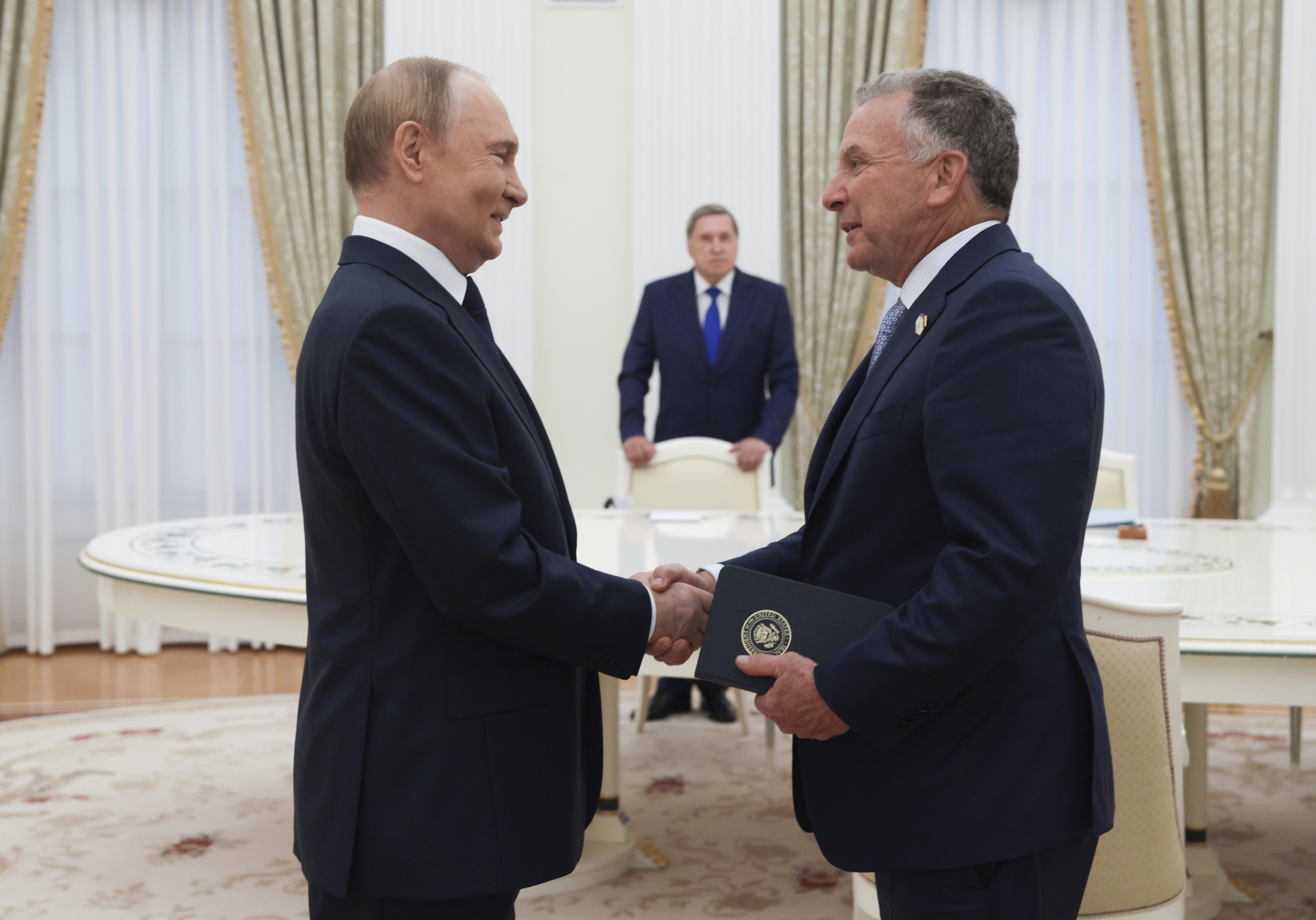
    Russian President Vladimir Putin and President Donald Trump’s special envoy Steve Witkoff (right) shake hands during their meeting in Moscow in August.

    And so the Russian leader is doing with a disastrous plan pushed by Trump’s supremely naive negotiator, real estate mogul Steve Witkoff, who has has no grasp of Putin’s history or goals and seems to swallow his lies whole.

    Witkoff’s draft plan would reportedly require Ukraine to give up the 14 per cent of the Donbas region it still controls, and cut the size of its armed forces by half. It would require Ukraine to abandon key categories of weapons, endorse a permanent rollback of vital U.S. assistance including long-range weapons, and ban foreign troops from basing on Ukrainian soil.

    And the deal provides no U.S. guarantees except lip service to protect against Putin’s certain violations in the future.

    Trump might as well say publicly that he endorses Putin’s dream of swallowing Ukraine. He is effectively telling Ukraine and Zelensky: Drop Dead.

    Putin isn’t fighting for a piece of land. He wants to absorb Ukraine back into the Russian empire.

    Viktor Medvedchuk, a Ukrainian traitor and close Putin ally, whom the Russian president wanted to install in Zelensky’s place after the invasion, recently spelled out Kremlin goals to the official TASS newswire. He said that Ukraine will not “survive as a state” in the future, and Moscow considers the reunification of Ukraine with Russia a strategic goal.

    Trump clearly doesn’t care.

    The administration is pushing to strip language from an annual U.N. General Assembly Human Rights Committee resolution that recognizes Ukraine’s territorial integrity and rights as a sovereign nation. The U.S. delegation will vote against anything that condemns Putin.

    Trump has made clear he believes Putin bears no blame for invading Ukraine (it’s all Zelensky’s fault or even Joe Biden’s). He has crossed over totally to the Russian dictator’s camp.

    Unless he wakes up from his Putin-induced trance, he is incapable of making peace.

    Although things look bleak for Ukraine, I believe its fighters will manage to hold back the Russians this winter, but at a brutal cost to civilians’ and soldiers’ lives. Trump will bear much blame for the suffering to come.

    But after the Epstein-induced awakening of GOP members of Congress, I hope some Republican senators will find the courage to denounce Trump’s attempt to hand over Ukraine to Russia.

    They should recognize that the retort of Rep. Marjorie Taylor Greene (R., Ga.) after Trump called her a traitor also applies to his position on Ukraine.

    “Let me tell you what a traitor is. A traitor is an American [who] serves foreign countries and themselves,” Greene said. With his heedless pursuit of Putin and a peace prize, Trump is serving the Kremlin, in service to his ego, as he attempts to sacrifice Ukraine.

  • Creative resistance is as American as apple pie — especially in Philadelphia

    Creative resistance is as American as apple pie — especially in Philadelphia

    Art matters. And because it does, artists and art institutions have been targets of authoritarian regimes from Red Square to Tiananmen Square. Black Lives Matter Plaza, located near the White House, was removed in March. That same month, President Donald Trump issued an executive order targeting the Smithsonian Institution and interpretive signs at National Park Service sites, including the President’s House.

    Paul Robeson, athlete, singer, actor, and human rights activist, lived his final years in West Philadelphia. At a protest rally in London in 1937, Robeson said: “The artist must elect to fight for freedom or for slavery. I have made my choice. I had no alternative.”

    With democracy now under assault, “Fall of Freedom,” a national artist-led protest, has issued a call for creative resistance, of actions against authoritarian control and censorship, to take place in venues nationwide beginning Friday.

    “Fall of Freedom is an urgent reminder that our stories and our art are not luxuries, but essential tools of resistance,” Pulitzer Prize-winning playwright Lynn Nottage wrote in a statement. “When we gather in theaters and public spaces, we are affirming our humanity and our right to imagine a more just future.”

    Creative resistance is as American as apple pie, and this city is, after all, the birthplace of our democracy.

    The political cartoon “Join, or Die,” published in 1754 in the Pennsylvania Gazette, became a symbol of the American Revolution and stoked public opinion against Britain.

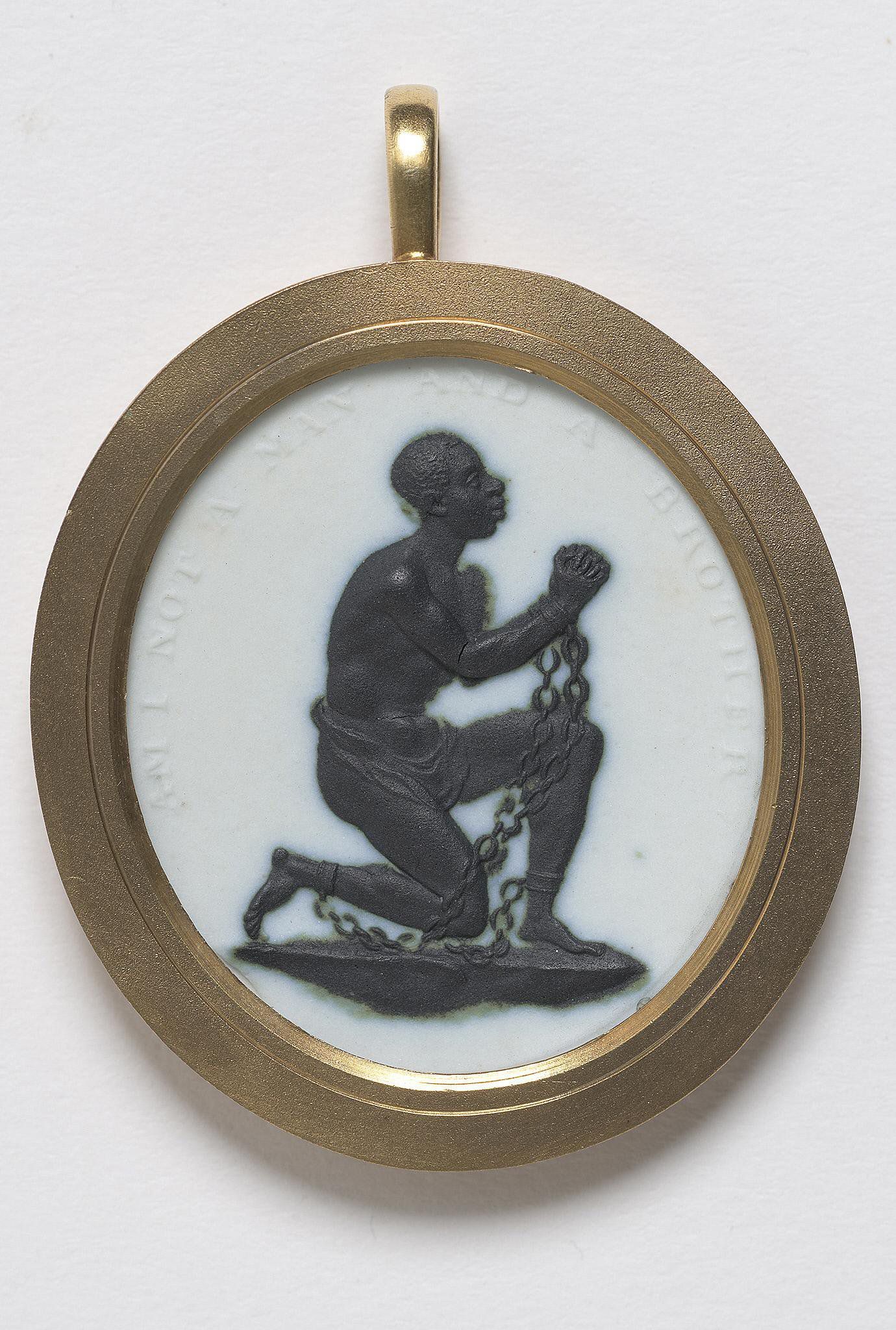
    During his tenure as president of the Pennsylvania Abolition Society, Benjamin Franklin helped distribute Josiah Wedgwood’s anti-slavery medallion “Am I Not a Man and a Brother.” In a letter to Wedgwood, Franklin wrote, “I am persuaded [the medallion] may have an Effect equal to that of the best written Pamphlet in procuring favour to those oppressed people.”

    Wedgewood medallion with the words “Am I not a man and a brother” in relief along the edge, ca. 1780s, from the collection of the Philadelphia Museum of Art. The museum’s education materials on the medallion stipulate that it was “modeled by William Hackwood and fabricated by Josiah Wedgwood in England in 1787 for the Society for Effecting the Abolition of the Slave Trade, this medallion functioned as a potent political emblem for promoting the abolition of slavery. It reached the United States in 1788, when Wedgwood sent a batch to Philadelphia for former enslaver and ‘cautious abolitionist’ Benjamin Franklin to distribute.”

    And indeed it did. Wedgwood’s engraving became the iconic image of the anti-slavery movement. It was printed on broadsides, snuffboxes, decorative objects, and household items. Abolitionist art was part of domestic life in Philadelphia.

    The American Anti-Slavery Society, whose founding members included Philadelphians James Forten, Lucretia Mott, and Robert Purvis, commissioned a copper token featuring a related “Am I Not a Woman and a Sister” design. Proceeds from the sale of the token were used to fund the abolition movement.

    Abolitionists used art to create a visual language of freedom. Artists created illustrations and paintings that showed “how bad slavery was.” There were theatrical performances and public readings of Harriet Beecher Stowe’s Uncle Tom’s Cabin, the best-selling novel of the 19th century.

    Robert Douglass Jr. studied at the Pennsylvania Academy of the Fine Arts. He is considered Philadelphia’s first African American photographer. Active with the National Colored Conventions movement, Douglass created a counternarrative to derogatory racial stereotypes. His daguerreotype of Francis “Frank” Johnson, a forefather of jazz, is in the collection of the Historical Society of Pennsylvania.

    On the heels of the Jazz Age, a group of religious activists formed the Young People’s Interracial Fellowship in North Philadelphia in 1931. The fellowship brought together Black and white congregations for dialogue, cultural exchange, and joint activism.

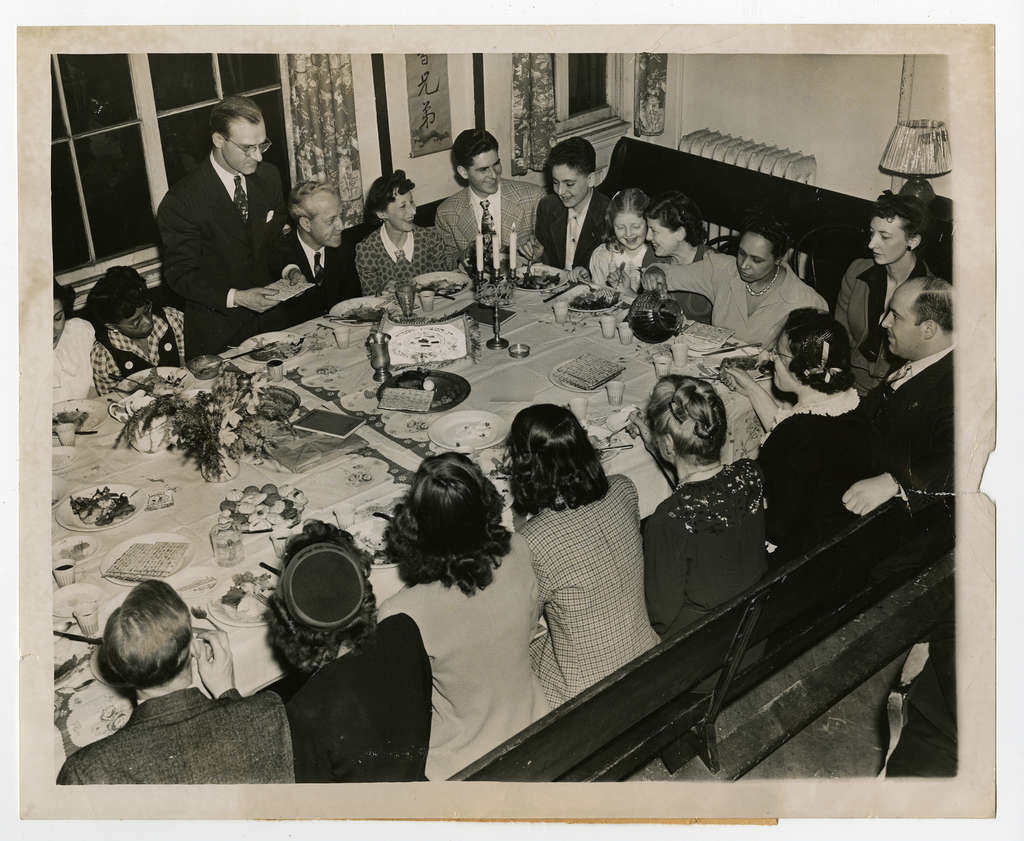
    A 1944 seder at Fellowship House.

    In 1941, the organization evolved into Fellowship House, whose mission was to resist racial discrimination through education, cultural programs, and community organizing.

    Notable cultural figures who spoke at Fellowship House include Marian Anderson, Dave Brubeck, and Robeson. In April 1945, seven months before the release of the short film The House I Live In, Frank Sinatra, the film’s star, stopped by Fellowship House to speak about the importance of racial tolerance. He told the young people that “disunity only helps the enemy.”

    The film’s title song, an anti-racism patriotic anthem, became one of Sinatra’s signature songs.

    Abel Meeropol, an educator, poet, and songwriter, composed both the film’s title song, “The House I Live In,” and the anti-lynching poem and song, “Strange Fruit,” which would become inextricably associated with one of Philadelphia’s jazz greats.

    Born on April 7, 1915, at Philadelphia General Hospital in West Philly, Billie Holiday, née Eleanora Fagan, is one of the greatest jazz singers of all time.

    No artist has met the moment with more courage than Lady Day, whose 1939 recording of “Strange Fruit” was named song of the century by Time magazine in 1999, and was added to the National Recording Registry in 2002.

    Strange Fruit is a timeless and empowering act of creative resistance.

    While Holiday is sui generis, jazz musicians were the vanguard of the civil rights movement.

    At so-called black and tan clubs like the Down Beat and the Blue Note, Black and white people intermingled on an equal basis for the first time.

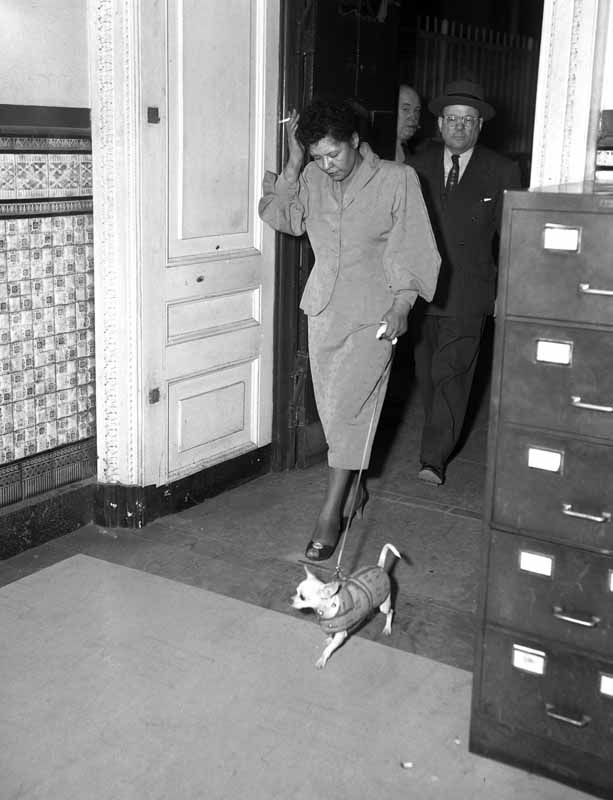
    Billie Holiday leaving City Hall in 1956 after her release following a drug bust. Police Capt. Clarence Ferguson walks behind her.

    Jazz clubs were constantly harassed by Philadelphia police led by vice squad Capt. Clarence Ferguson and his protégé, Inspector Frank Rizzo. The nightspots became battlegrounds in the struggle for racial justice. Jazz musicians’ unbowed demeanor fashioned a new racial identity.

    In remarks to the 1964 Berlin Jazz Festival, the Rev. Dr. Martin Luther King Jr. riffed on the importance of jazz and the jazz culture. He observed: “It is no wonder that so much of the search for identity among American Negroes was championed by jazz musicians. Long before the modern essayists and scholars wrote of racial identity as a problem for a multiracial world, musicians were returning to their roots to affirm that which was stirring within their souls.”

    “Much of the power of our Freedom Movement in the United States has come from this music,” he added. “It has strengthened us with its sweet rhythms when courage began to fail. It has calmed us with its rich harmonies when spirits were down.”

    At a time when our constitutional rights are being trampled and American history is being whitewashed, I am answering “Fall of Freedom’s” call — as a cultural worker and as a Philadelphian.

    Under the “Fall of Freedom” banner, and in collaboration with Scribe Video Center, I will lead a walking tour of Holiday’s Philadelphia.

    We will trace her footsteps through Center City and South Philly. We will visit the clubs where she sang, the hotels where she stayed, and the site of the jazz club immortalized in the Tony Award–winning play Lady Day at Emerson’s Bar and Grill. Along the way, we will also highlight places connected to Robeson.

    Courage is contagious. When we gather on South Broad, we are the resistance.

    Faye Anderson is the founder and director of All That Philly Jazz, a place-based public history project. She can be contacted at phillyjazzapp@gmail.com.

  • Letters to the Editor | Nov. 20, 2025

    Letters to the Editor | Nov. 20, 2025

    The Pardoner’s Tale

    It seems the idea of a con man selling false pardons to fearful sinners was the subject of satire as far back as Geoffrey Chaucer’s The Canterbury Tales. Whereas Chaucer’s barbs were directed at a corrupt medieval church hierarchy, we now almost daily witness a corrupt president handing out pardons like candy to his friends and co-indictees/conspirators, while at the same time prosecuting his perceived enemies. Chaucer was well aware of the irony of his tale’s narrator capitalizing on the very sin of avarice that he condemned. This rogue president continues to flout the spirit of clemency and the rule of law, brazenly lining his own pockets and those of his cronies. Meanwhile, an ineffectual Congress and a compromised U.S. Supreme Court allow this mockery of justice to go on unchecked. Who will finally call out the hypocrisy and end this criminal enterprise? We the people grow impatient.

    Charles Derr, Philadelphia

    Glaring omission

    A recent Associated Press article on the global conference on climate change in Brazil left out one crucial fact.

    While most of the world’s nations sent delegations to the annual gathering, the United States did not send any official emissary. Not only is the current administration ignoring the perils of climate change, but by being absent, we are missing an opportunity to promote American technology to the rest of the world.

    While we ignore the problem and prioritize the use of fossil fuels, the Trump administration is endangering Americans’ health and our economy. We need a government in Washington that takes climate change more seriously, rather than one that keeps its head in the sand and enriches its fossil fuel donors.

    Steve Stern, Mount Laurel

    Cassandras for our time

    As an emeritus professor at Drexel University, I would like to express my appreciation of professor Lisa Tucker of Drexel’s School of Law for her coauthorship with Dean Erwin Chemerinsky of their op-ed in praise of Justices Sonia Sotomayor and Ketanji Brown Jackson’s principled dissents from the U.S. Supreme Court’s repeated failures to uphold the rule of law against President Donald Trump’s serial breaches of it. Drexel itself faced its own crisis when, at a time when Mr. Trump refused to accept his defeat in the 2020 presidential election, faculty realized that its School of Law had previously conferred an honorary doctorate on his chief defender, Rudolph Giuliani. Together with action by Drexel’s Faculty Senate and petitioners from each of its schools, both the faculty and student body of the law school called unanimously for Giuliani to be stripped of his degree, and the board of trustees revoked it. The nation’s law schools would, I think, do well to apply this precedent to Mr. Trump’s conduct in office, and to the Supreme Court majority that has been his chief enabler.

    Robert Zaller, Drexel University, Distinguished University Professor of History, emeritus

    Join the conversation: Send letters to letters@inquirer.com. Limit length to 150 words and include home address and day and evening phone number. Letters run in The Inquirer six days a week on the editorial pages and online.

  • It’s essential that Mayor Parker’s H.O.M.E. plan prioritize resources for ‘people-first’ housing

    It’s essential that Mayor Parker’s H.O.M.E. plan prioritize resources for ‘people-first’ housing

    After months of state and federal budget stalemates that have threatened essential services for Philadelphia’s most vulnerable, we now know those budget outcomes don’t address critical housing needs, and as such, we have an opportunity right now as a city to meet the moment through the first year of spending in Mayor Cherelle L. Parker’s housing affordability plan.

    As a city, we are currently scrambling to decide what to do with $200 million per year for four years to address housing, when just last year we were discussing spending $1.3 billion on a Sixers arena in Chinatown. Clearly, the issue is not a lack of resources, but where we choose to direct them.

    Housing in Philadelphia has rarely been people-first in its approach; rather, it’s been about extraction from communities in one form or another. One could argue that the first great Philadelphia housing plan started with the city’s founding in 1682 and was built on the displacement of the Lenape people, who had inhabited the region for generations.

    In a neighborhood like Kensington — where I live and work — housing was developed at the turn of the 20th century to advance industry, and the profits to be made from it, by putting factories in formerly rural spaces and then surrounding those workplaces with as many homes as possible. This was a housing plan meant to extract as much as possible — rental payments, increased worker productivity, patronage of local businesses — from those who lived and worked here.

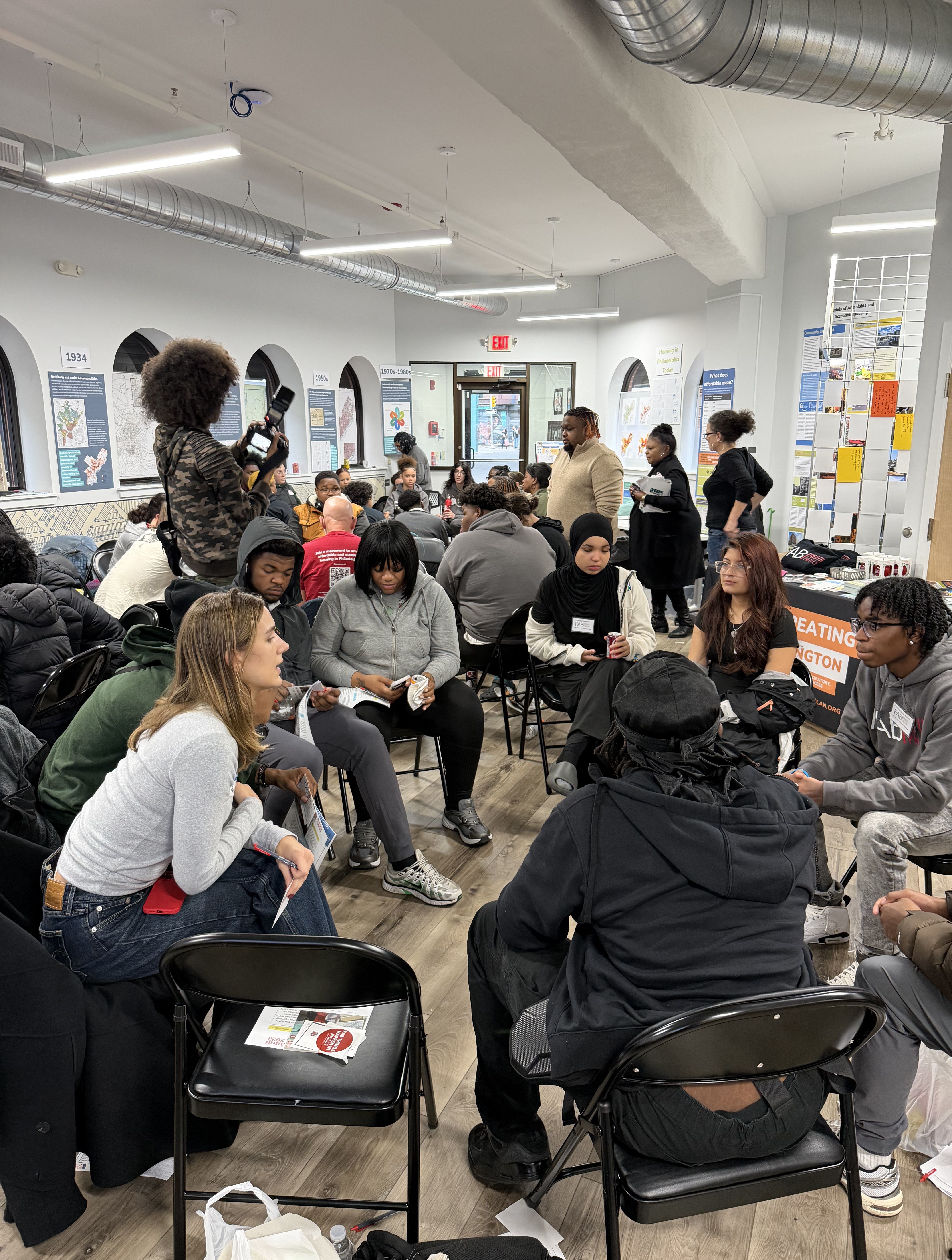
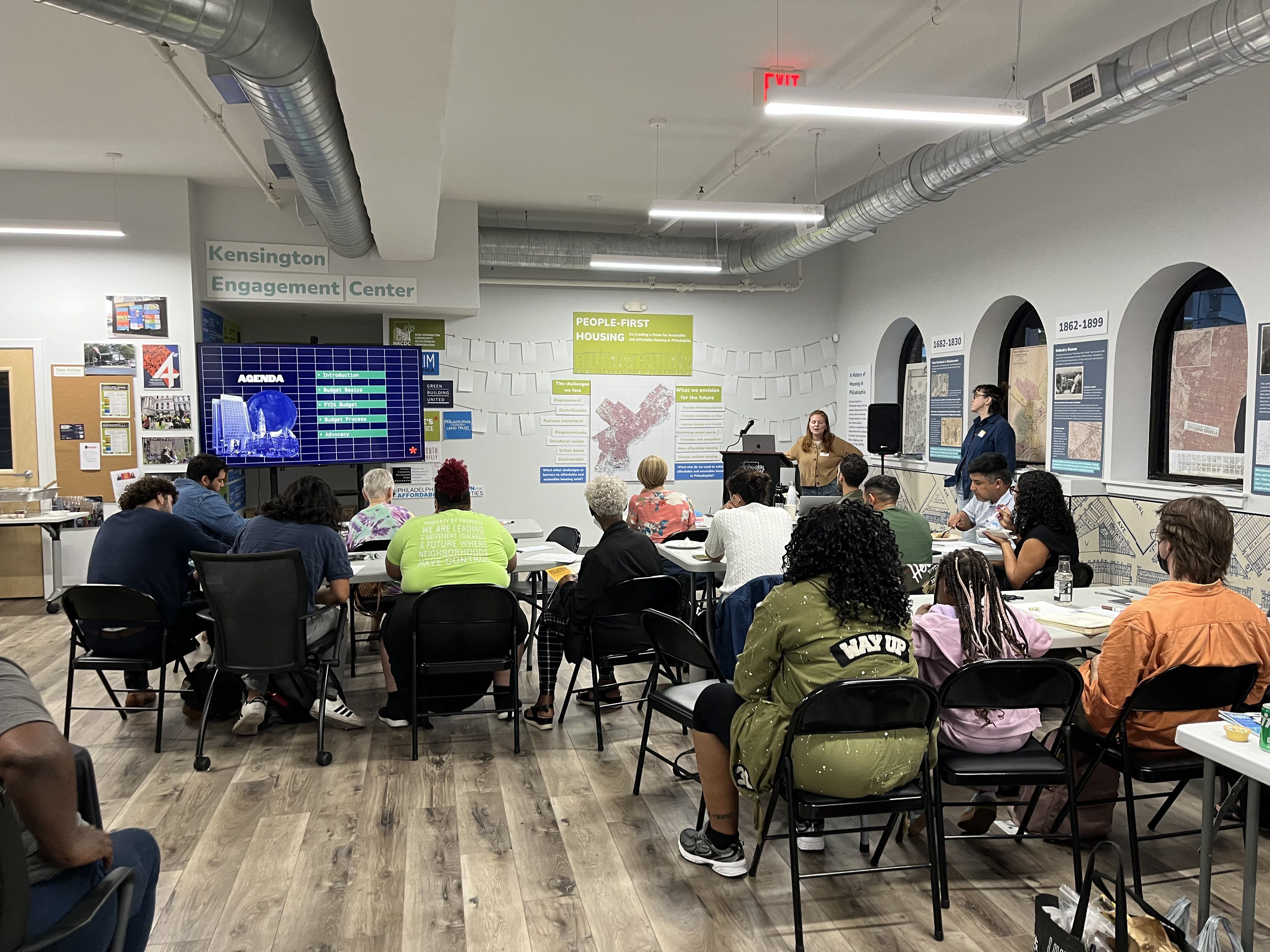
    Fab Youth Philly brings together young people for a teen town hall to discuss housing issues on Nov. 15 at the Kensington Engagement Center.

    Profit-first models aren’t only relegated to the past. Just a few weeks ago, the Reinvestment Fund reported that corporate investors are most active in Black and brown — often intentionally disinvested — neighborhoods, where they are responsible for one in four residential purchases, creating more extraction through landlords rather than creating and maintaining wealth among homeowners.

    Any transformative housing plan must be built on values: to address historical and current misaligned missions that continue to drive exploitative forces in our neighborhoods. The start of the mayor’s H.O.M.E. program is a moment to ensure the plans that we will be paying for over the next 30 years are people-first in their mission, purpose, and function.

    Real change happens when we are collectively grounded in hope, community, facts, and information about where we have been, all of which can serve as a guide to where we’d like to go.

    Over the last few years, New Kensington Community Development Corp. has been facilitating the Co-Creating Kensington planning and implementation process, in which we have received feedback from 700 residents about their priorities. In January, we completed the rehabilitation of a three-story building at 3000 Kensington Ave., converting it into the Kensington Engagement Center, a meeting place and exhibition space that was designed to facilitate conversations with the community on their priorities.

    Conversations with our neighbors and partners revealed that housing is an increasingly pressing issue for Kensington residents (as well as for the rest of Philadelphia). We collectively recognized a moment of alignment with the release of the Philadelphia H.O.M.E. Initiative and the soon-to-be-released Pennsylvania Housing Action Plan.

    We convened several organizations already prioritizing housing affordability across the city, including Philly Boricuas, Green Building United, the Philadelphia Coalition for Affordable Communities, the Women’s Community Revitalization Project, Fab Youth Philly, and the Philadelphia Community Land Trust. Together, we codesigned a 14-part people-first housing workshop series and exhibit.

    This deep-dive approach is based on an understanding that community engagement needs to go beyond pizza parties and setting up tables at events. For a community to truly participate in its future, it needs to be informed, there needs to be shared power, and there needs to be collaboration and collective visioning.

    The People’s Budget Office facilitates a Budget 101 Workshop at the Kensington Engagement Center on Oct. 7.

    The workshop series has engaged more than 175 residents from 15 neighborhoods and has covered topics from housing wins, gentrification and displacement, how municipal resources are directed toward housing, environmental concerns, tenants’ rights, illegal evictions, and more.

    Angela Brooks, Philadelphia’s chief housing and development officer and new chair of the board of the Land Bank, came out for a workshop on the H.O.M.E. plan to help residents understand how the initiative will work and to hear resident feedback.

    Most recently, we hosted a teen town hall facilitated by Fab Youth Philly, in which more than 70 young people came together to share their hopes, dreams, and concerns and gave guidance on how the city can support young people — for example, looking at how the McKinney-Vento Homeless Assistance Act implements programs that serve youth.

    What we’ve learned so far is that the best way to build momentum for change is through informed, collective action and leveraging strategic pressure points by investing in relationships early. Creativity and diversity in leadership and lived experience are critical to ensuring movements are resilient, and we need to question the status quo.

    Communities must be built for the people who live in them, so that they aren’t just about four walls built by colonizers and conquerors, but about communities of choice and relevance so people can thrive.

    Trickle-down approaches do not work. The city’s H.O.M.E. plan needs to concretely prioritize resources for residents whose households earn no more than 30% of the area’s median income. We need to serve those on housing program wait lists before adding more and higher earners. We need to preserve the affordable housing we already have, and we need to invest more deeply in home repair programs like Built to Last.

    As someone serving on the H.O.M.E. advisory board and as a nonprofit leader of a community development corporation, I learned there are several housing issues we aren’t addressing at all in the city’s H.O.M.E. plan, such as those affecting young people and individuals impacted by the criminal justice system who have urgent needs but do not meet many of the traditional service categories.

    How do we move forward?

    For those of us who are currently centering housing, learning and being in community is essential. But we also need actionable moments.

    I recommend all these organizations because they put people first in housing plans — countering the notion that housing is just a commodity. Instead, they affirm the fundamental idea that housing is about people — and that people deserve a home.

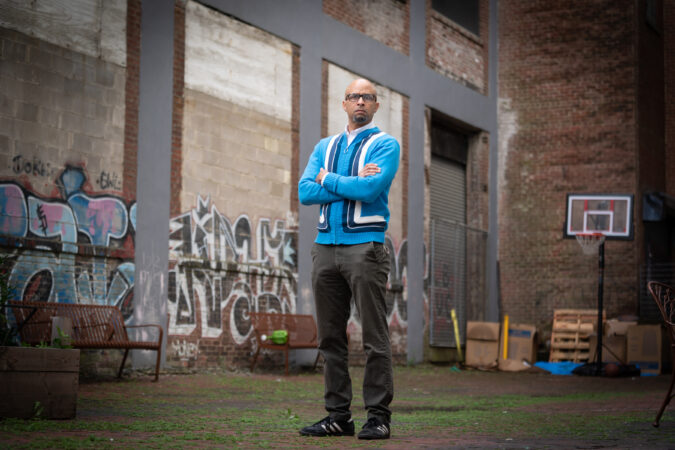
    Bill McKinney is a Kensington resident and the executive director of the New Kensington Community Development Corp.

  • Epstein’s victims are forgotten amid political frenzy over files

    Epstein’s victims are forgotten amid political frenzy over files

    There is a glaring omission in the wall-to-wall coverage of the Jeffrey Epstein case. Even as new headlines roar with fresh allegations, the facts of the crimes and the trauma inflicted on the innocent children continue to fall to the wayside.

    The current focus on the rich and powerful and the political backstory surrounding fights over lists, transcripts, and depositions does little if anything for the still-young women who were trapped in Epstein’s depravity. Accountability and transparency are what will support them.

    One thing is not in dispute: What happened to those children was no hoax. Those horrific crimes were the result of years of grooming and entrapment of young teenage girls. These crimes sadly happen at an alarming rate, often right under our noses.

    Why? One major reason is that society fails to talk about them openly and honestly, leaving the public with the perception that it is a “them” rather than a “we” issue.

    Forgetting the victims

    The victims of Epstein and Ghislaine Maxwell have been pushed from the spotlight. Headlines about the nation’s most notorious case of child abuse and sex trafficking are no longer about the victims, but sound like a promotion for a bizarre remake of Lifestyles of the Rich and Famous.

    Forgetting about the abuse these young women and girls endured is a tragedy. Here is a glimpse into their reality:

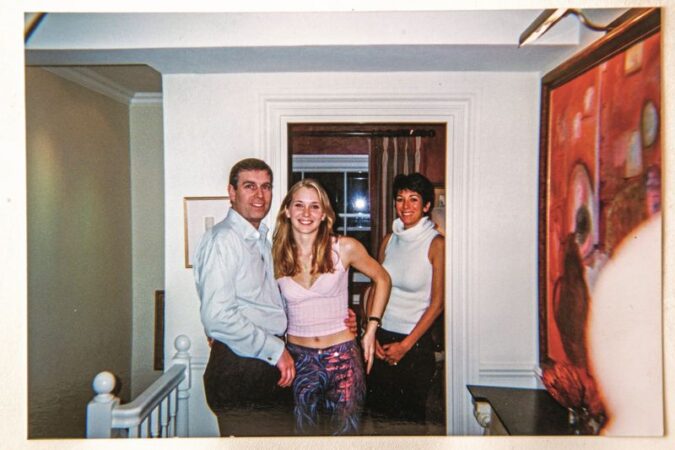
    Virginia Giuffre was 17 when Maxwell recruited her from Mar-a-Lago for a job as Epstein’s masseuse. They groomed and lured her into years of sexual abuse by trafficking her internationally. Sadly, she took her own life earlier this year. Her friends and family are robbed of sharing her life.

    Maria Farmer was an aspiring artist who met Epstein and Maxwell during her studies. Under the pretext of supporting her career, they sexually abused her while security prevented her from leaving. Her pleas to authorities were ignored, allowing the abuse to continue for years. This is trauma she will never escape.

    Farmer’s sister, Annie, also became a victim of Epstein and Maxwell’s perversion. At 16, she was lured to their New Mexico ranch under the false pretense of a trip for high-achieving students. Epstein and Maxwell forced themselves on her.

    Sarah Ransome, 22, was pursuing a fashion career when Maxwell offered her mentorship. Instead, she was lured into Epstein’s circle, sexually abused, and trafficked to wealthy international rapists on “Epstein Island,” a captivity she couldn’t escape, even by trying to swim away.

    Courtney Wild was just 14 when a friend convinced her to go to Palm Beach, Fla., for a job giving massages to Epstein. “Massage” as a code word for abuse and rape. Not once, but hundreds of times. Epstein made her recruit other girls in an operation that ensnared children in cycles of abuse and coercion.

    Uncomfortable? Now put yourself in the victims’ shoes.

    An epidemic of evil

    An estimated 48,000 U.S. minors are trafficked into sexual abuse annually, leaving nearly 60 million adult survivors of child sexual abuse. That’s about one out of every five Americans. With society unwilling to even talk about their reality, it shouldn’t come as a big surprise that less than 30% of sex crimes are even reported.

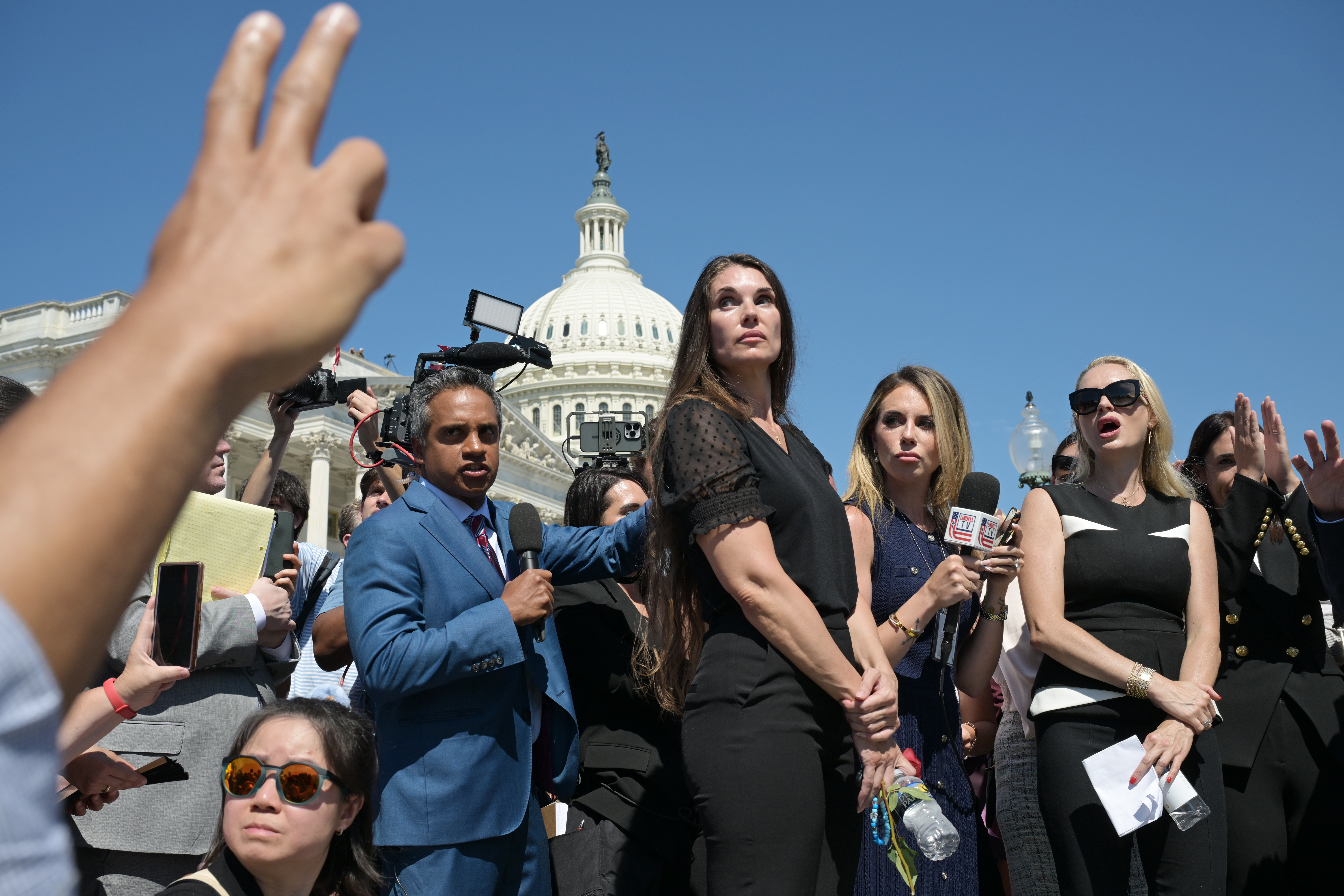
    Anouska De Georgiou (right) gathers with other Jeffrey Epstein accusers at a news conference outside the U.S. Capitol on Sept. 3.

    Epstein’s name might be the most famous, but there are thousands more like him who count on silence, confusion, and distraction. Those creatures have something else in common: They continue to hunt for prey and inflict horrible abuse on the next victim.

    Lack of accountability is a blueprint for “Epstein Islands” popping up in every community. Shying away from the uncomfortable details doesn’t soften the crime. Secrets don’t help victims heal. Epstein and Maxwell kept secrets, and other abusers hope you do, too.

    Victims of sexual abuse are forced to keep secrets. Keeping documents sealed under the pretext of protecting victims is the real hoax.

    If you’re serious about wanting to prevent these crimes from happening again, release all the Epstein files.

    Paul DelPonte is executive director and CEO of the National Crime Prevention Council. Aaron Hanson has served as the sheriff of Douglas County, Neb., since 2023, and has nearly 30 years of law enforcement experience.