Category: Pets

  • Chesco pet sitters are watching more than dogs and cats — chickens, goats, and sheep need care, too

    Chesco pet sitters are watching more than dogs and cats — chickens, goats, and sheep need care, too

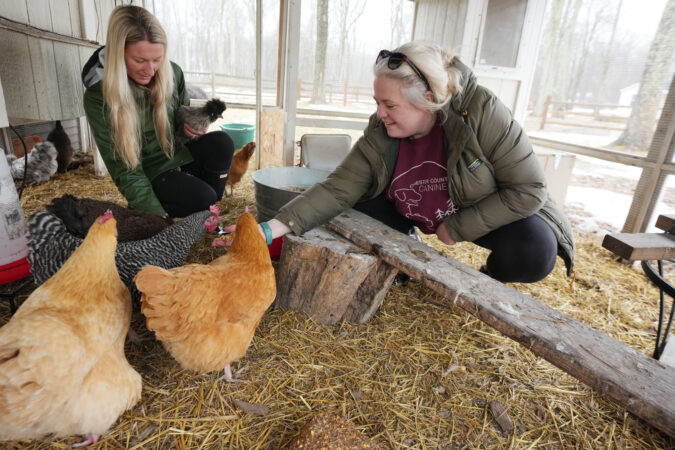
    When Nora Murphy Kramp walked away from her veterinary assistant career to pet sit full time, she didn’t expect that years later, a large chunk of her clientele would be chickens.

    And goats. And pigs. Oh, my.

    “It’s more common than not,” said Murphy Kramp, founder of Chester County Canines, based near Malvern. “Basically, if it’s, ‘Hey, come take care of my dogs,’ if they happen to have a nice backyard, a year later, it’s like, ‘Oh, hey, come take care of my dogs. We have six chickens now — them, too.’”

    There was a boom of people getting pets during the height of the COVID-19 pandemic. Aside from more traditional pets, that uptick also included chickens, pet sitters say. And an even bigger push occurred last year: As the cost of eggs inflated, people figured they would do it themselves.

    But for some of her clients, chickens are just the start: Some have added goats and sheep to their little homesteads, too.

    Chester County is a ripe place for it, merging its strong agricultural past and the growing number of residents.
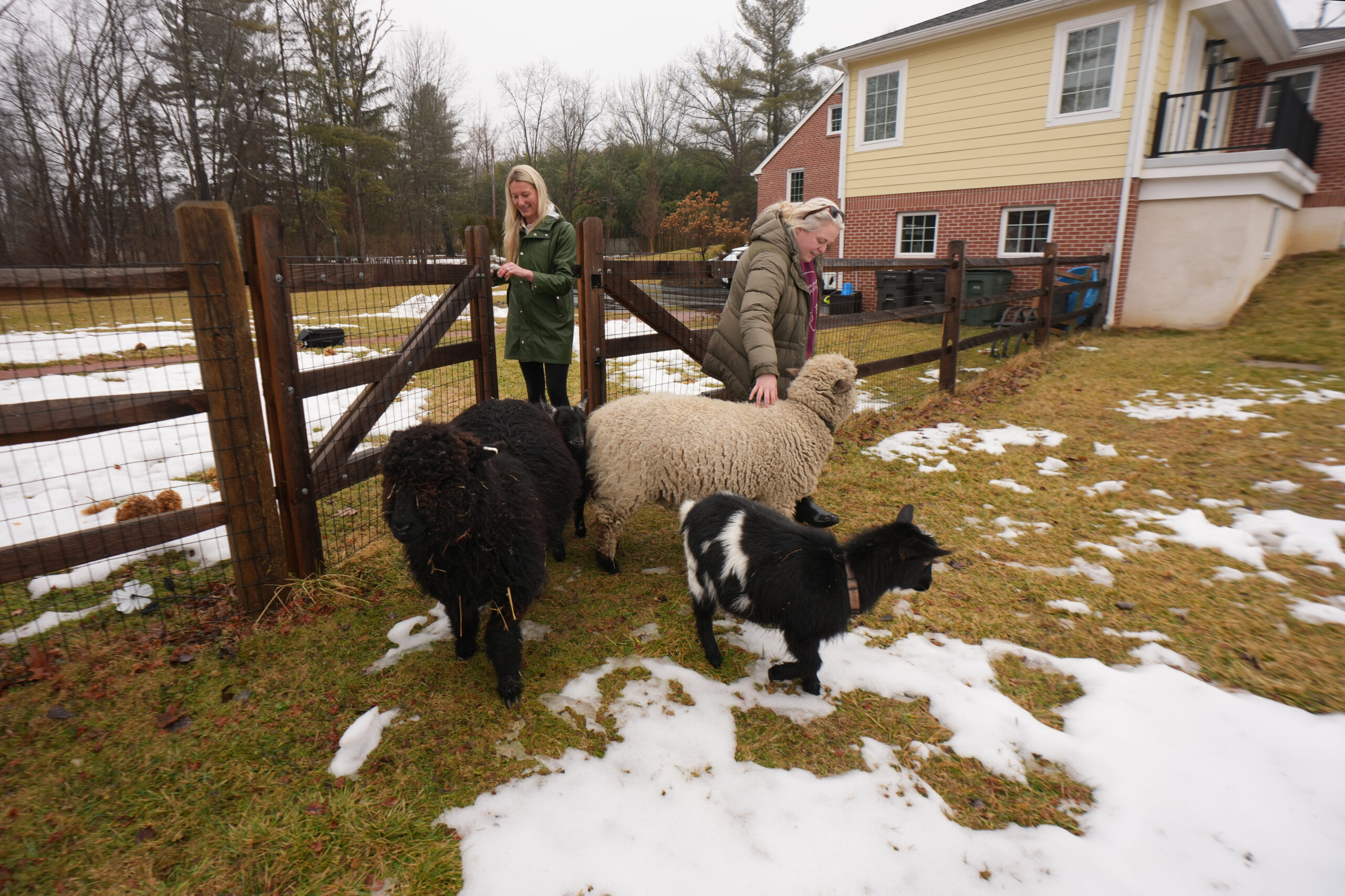
    Julie Gunderson, left, and her pet sitter Nora Murphy Kramp, right, at Gunderson’s house with her farm animals, in Chester County, Pa., Feb. 20, 2026.

    Over time, development has increased along with population — the county is one of the fastest-growing in the state — bringing all the amenities one could ask for. But with many municipalities having ordinances friendly to homesteading, allowing residents to farm animals with enough acreage, or chickens if the coop can be far enough from the house, more and more people have been embracing the so-called country life. (Murphy Kramp had to enter a “chicken lottery” to secure her own chickens last spring, due to the surge in popularity. A study last year found that there are more than 85 million backyard chickens nationwide, rivaling the population of cats and dogs.)

    When people leave Philadelphia, with its tightly packed rowhouses or apartments, getting chickens can be one of the first things they do, observed Shiena Powelson, the owner of I Sit, They Stay, a pet-sitting business based in Chester County near Pottstown.

    “There’s a lot of open spaces out this way, where there’s purposely no building going on, so it allows people to have these animals without being on top of the neighbor,” Powelson said. “On my road, I have these young families that have the chicken coops, but then there’s also a 15-acre horse farm four houses down from me. It’s a nice mix.”

    Powelson, who grew up in an animal-loving family that ran a pet store in Pottstown, started her career as an educator at the Philadelphia Zoo. On the side, she fostered her pet-sitting business, and moved to it full time about 15 years ago. From the jump, she has had an interesting assortment of pets to care for: reptiles and exotic birds. She used to sit for full-on farms, mucking horse stalls or caring for sheep, but now she is finding more of a hybrid: people who live in residential communities but have chickens, ducks, and even pot-bellied pigs.
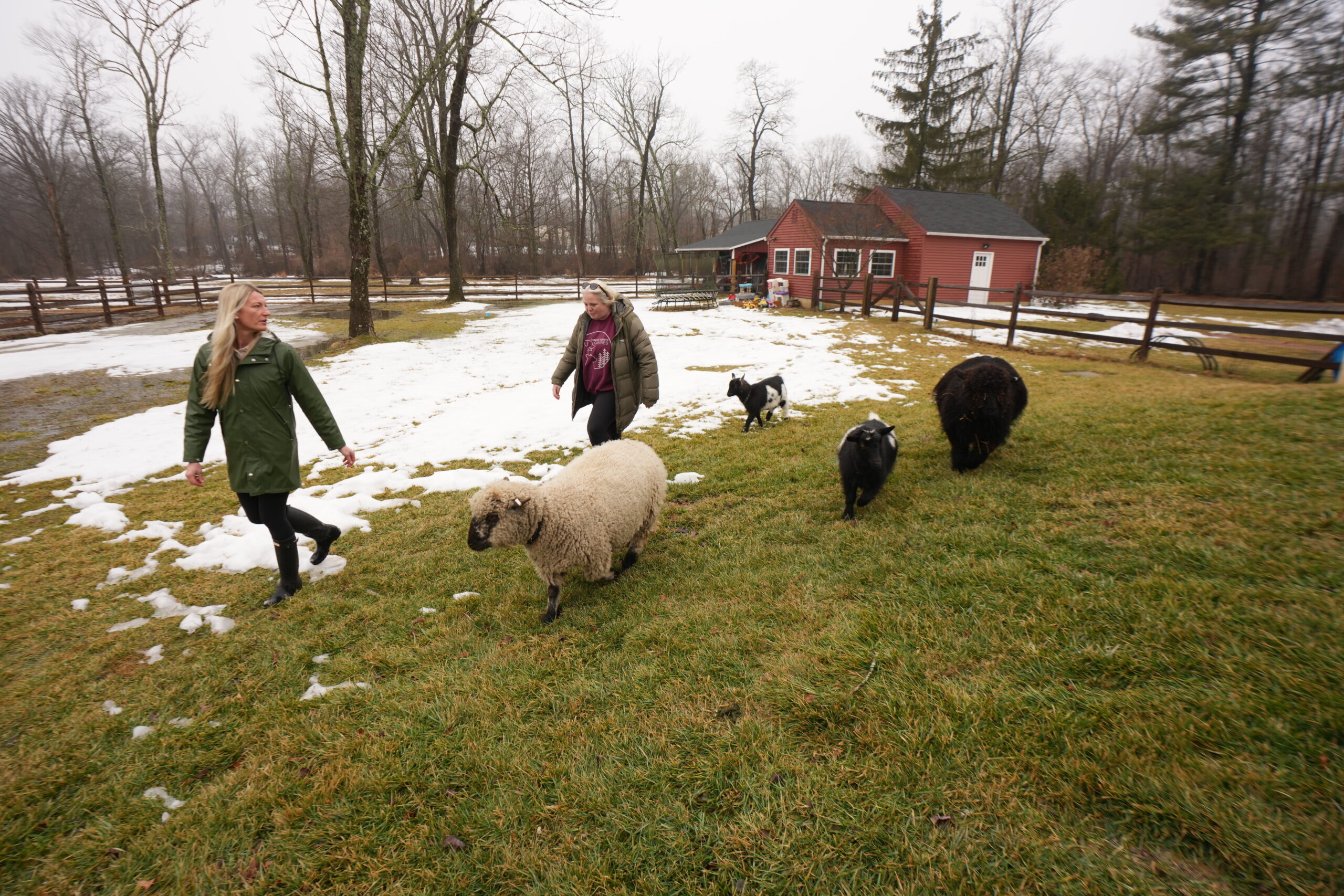
    Julie Gunderson, left, and her pet sitter Nora Murphy Kramp, right, at Gunderson’s house with her farm animals in Chester County.

    “When you pull in this development, you would never expect there would be two pot-bellied pigs living in the development,” she said.

    Chickens, she has found, tend to be a familial thing, where parents teach their kids where the food comes from and how to care for the animals.

    John Marshall, one of Powelson’s clients, grew up in Montgomery County and had a friend whose family had chickens. He thought it was awesome. With his own land, he decided to get his own. Now, the 54-year-old has had chickens on his couple of acres in the Pottstown area for about 30 years.

    “It’s amazing, because it’s like having a dog. People just fall in love,” Marshall said. “They just become your little buddies. A lot of people think they’re real hard to take care of, but they’re not, if you set the coop up right.”

    Caring for farm animals requires a different part of Powelson’s brain — digging back into her zoo background. Does she have her boots for muddy coops? Does she have her heavy jacket to work outside when it’s 10 degrees?
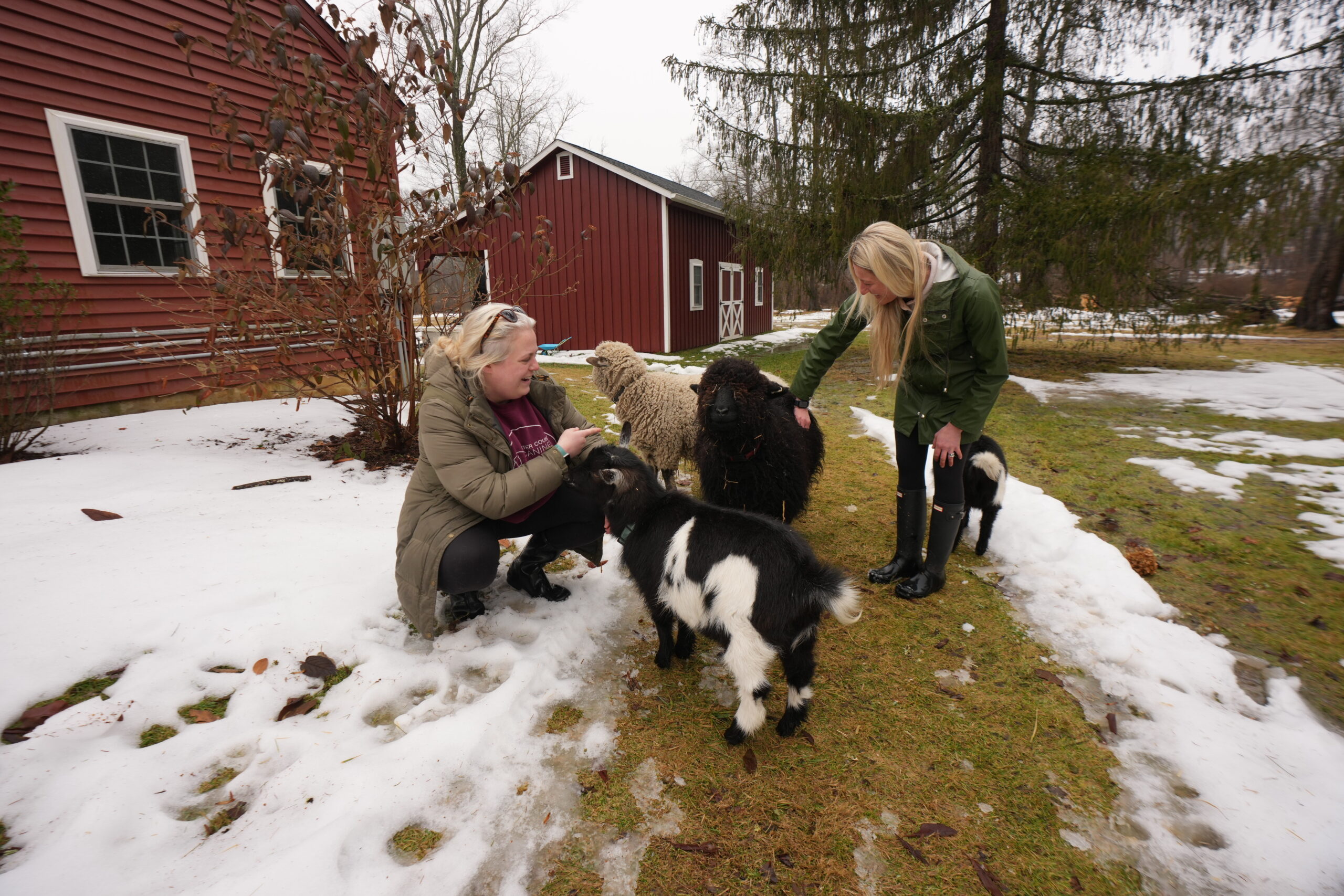
    Nora Murphy Kramp, left, and her client Julie Gunderson, right, at Gunderson’s house with her farm animals, in Chester County, Pa, Feb. 20, 2026.

    “It feels very different when I’m going to let someone’s dog out and can just hang out with them,” she said. “It’s a nice variety.”

    With chickens and other farm critters, there are stalls to clean and muck. Murphy Kramp gets there at the crack of dawn to feed the animals.

    During one hot summer, she told a client, Julie Gunderson, that she probably needed a fan for the chicken coop. From vacation, Gunderson ordered one, and Murphy Kramp assembled it and set it up. It gave Gunderson peace of mind, knowing someone was that hands-on with her chickens while she was away.

    “I had talked to a lot of people along the way who have slightly bigger operations — still backyard farms — but they would tell me, ‘Oh, you’ll never get away together, someone’s always going to have to stay home to take care of the animals,’” Gunderson said. “I just feel very fortunate to have found Nora. I really trust her.”

    Gunderson, 38, didn’t grow up on a farm, or with pets other than dogs. But she had an early appreciation of farm animals, spending time at the barn with her grandfather in Rhode Island. She decided to give chickens a try during the COVID-19 pandemic, after she went from working full time to staying at home with her first child to everything shutting down in rapid succession.

    With five acres of land, and a county friendly to backyard farms like hers, it felt seamless to add two goats and two sheep a few years later.

    It has been a way for her to learn a new skill, and to do something with her family, she said.

    “It was kind of just like, how do I kind of get something new that educates me and teaches me something similar to how I felt when I was working, where I feel like I’m growing in some way,” she said.

    With her three kids, all under age 6, they gather eggs and clean up the goat and sheep barn.

    “If people are on the fence, I say do it,” she said. “There are plenty of pet sitters to help you when you need to get away.”
  • 30 miniature horses are for sale in Gettysburg this weekend. Here’s what’s involved in owning one.

    30 miniature horses are for sale in Gettysburg this weekend. Here’s what’s involved in owning one.

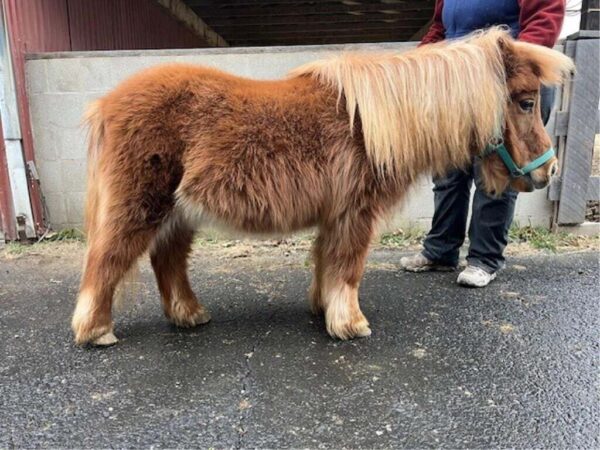
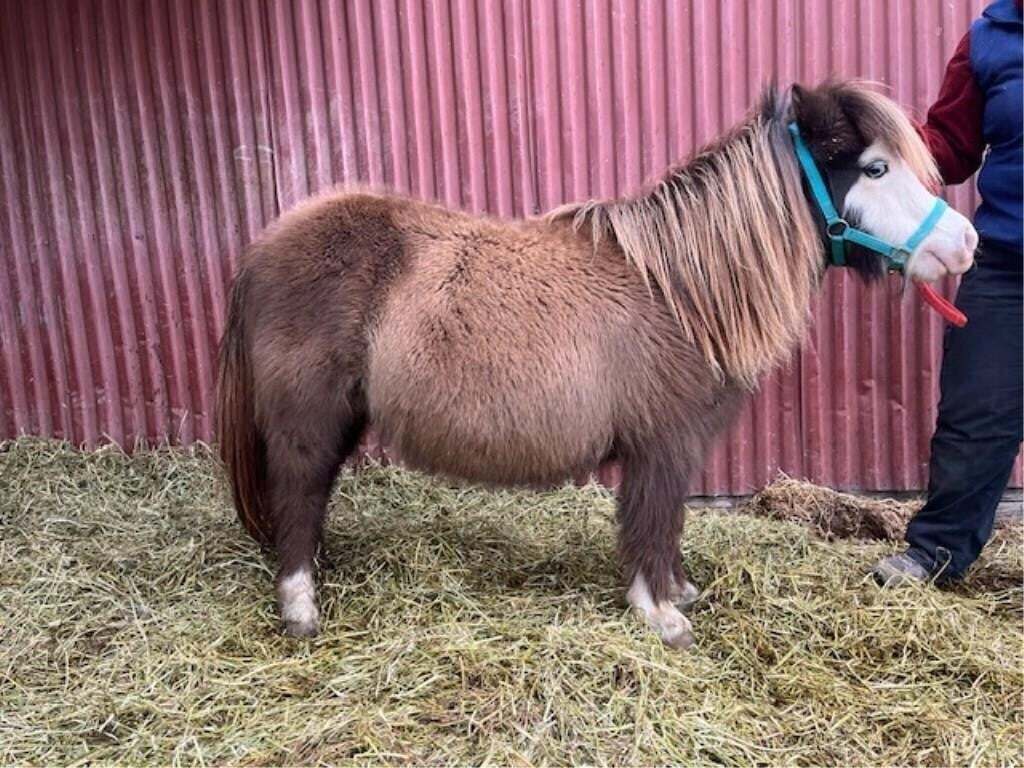
    Everything at Land of Little Horses animal theme park in Gettysburg must go this weekend. That means tractors, picnic tables, porta potties, and about 30 miniature horses.

    Sparkle, Pumpernickel, Russel’s Majestic Princess Gingerbread, Summer Wish, Shortcake, and the others will head for greener pastures at the Saturday morning auction, which will mark the end of the 55-year-old park.

    In December, the park owners announced on social media that they’d decided to retire and close the facility, which hosted horse shows, trail rides, and grooming activities. They declined to be interviewed for this story.

    Selling horses, let alone miniature horses, is a first for auctioneer Larry Swartz.

    “We have had strong interest from really across the nation, even a breeder from Hawaii has reached out,” Swartz said.

    (If you’re wondering if a mini horse can be transported on an airplane, it can, Swartz said.)

    Swartz predicts one particular miniature horse, an 11-year-old chocolate mare with a bald face, to fetch the highest price.

    “Cameo was the star of their show here,” Swartz said. “We expect her probably to be the high seller.”

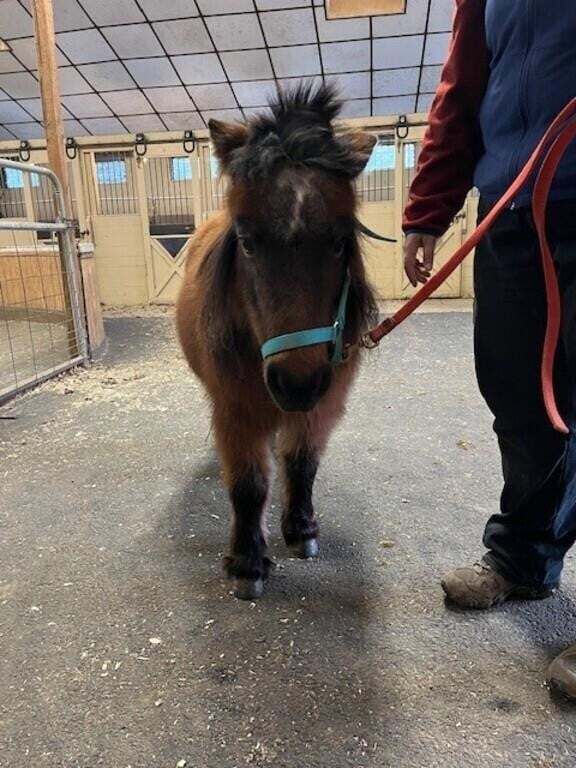
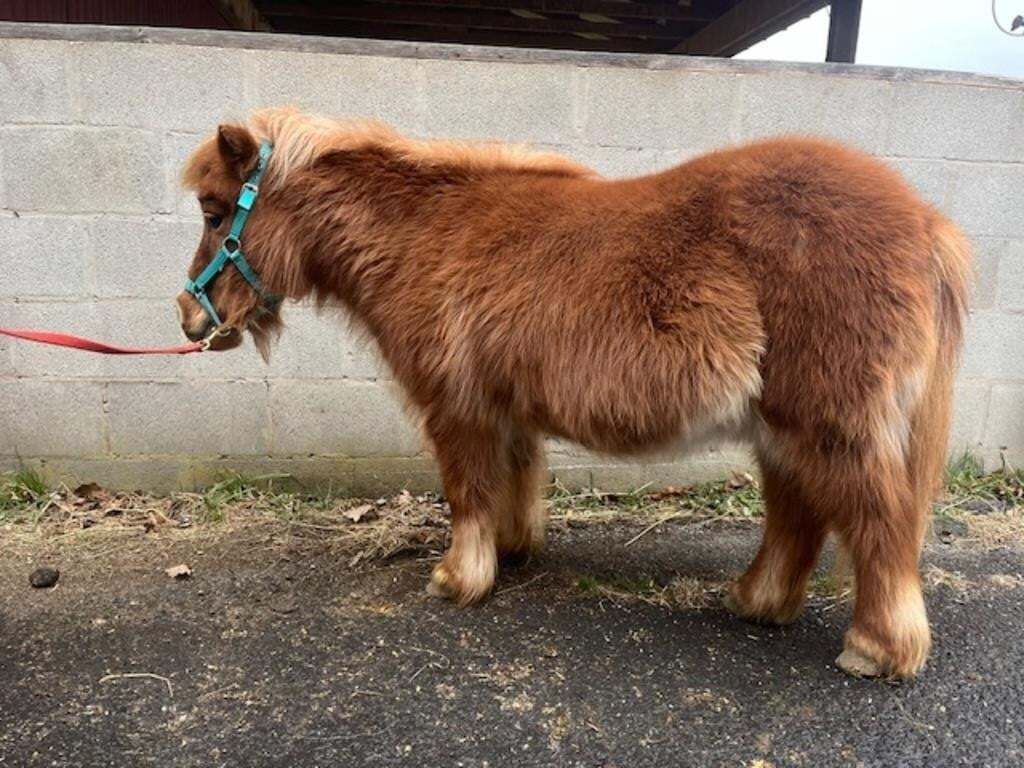
    Cameo, an 11-year-old miniature horse for sale at the Land of Little Horses auction, can wave, smile, untie, and sit down.

    Not only does she have distinctive markings, she can wave, smile, untie, lay down, and sit.

    As of Wednesday afternoon, she was already going for $3,550 in the online prebidding which started Feb. 14 and ends when the live auction starts Saturday at 10 a.m. at the Gettysburg farm at 125 Glenwood Dr. The auction will also be available to view on livestream. Swartz expects each miniature horse to sell for around $2,000 to $3,000.

    The origins of miniature horses in the United States may date back to the 1800s, according to the American Miniature Horse Association, a Texas-based nonprofit that sets regulations and compiles registries of miniature horses around the country and world.

    Sparkle, a 16-year-old miniature horse who will be available at the Land of Little Horses auction, is food motivated.

    The horses were originally brought over from Britain to assist in the mining industry for hauling wagons of coal, said Valerie Shingledecker, the association’s operations manager. The United States now has around 100,000 of them, according to the association’s registry.

    Texas, California, and Florida have the largest number of association-registered miniature horses in the country as of this month. States along the Appalachian Mountain range, where much 19th-century coal mining activity was concentrated, have the next-highest number. Pennsylvania has the fifth-largest population of association-registered miniature horses at about 3,800.

    Can you own a miniature horse?

    In recent decades, miniature horses are more commonly seen at petting zoos and in horse shows performing tricks, like pulling people in wagons.

    They can also be kept as pets. In Philadelphia, residents can apply for a license to own a horse if they have a stable or one quarter acre of land per horse, according to a 2013 law. If residents have neither, they can still keep one so long as they have fewer than three horses in the same space and submit an equine veterinarian-approved exercise plan for the horses.

    Most importantly manure must be disposed of every 24 hours.

    Macy is a 30-year-old Falabella miniature horse who knows how to smile. She’ll be up for auction at the Land of Little Horses sale.

    Under the Americans with Disabilities Act, a miniature horse can function as a service animal for people with disabilities. Facilities covered by the ADA are required to adopt policies detailing where and when service miniature horses are permitted. Facilities may elect to not allow them inside if they’re not housebroken.

    If you’re interested in owning one, get ready for a long-haul commitment, Shingledecker said. These horses “cannot exceed 34 inches in height at the withers as measured from the last hairs of the mane,” according to the American Miniature Horse Association. They’re about a quarter the size of a regular horse and can live for over 30 years. However, they’re “easy keepers,” she said, meaning they don’t require a lot of food — about $2 of hay a day or $730 a year.

    They also need vaccines and have to have their feet trimmed every six weeks by a farrier, but they don’t need horseshoes.

    All in all, Shingledecker estimates one miniature horse costs about $1,500 a year to take care of.

    Though they’re generally well-behaved, it’s important to remember they’re still animals with their own set of defense mechanisms.

    “It is a horse, it’s not a dog,” she said. ”They can kick and they can bite if they were not socialized well. Don’t put them in the house.”

    If they become afraid, they’ll either run, kick, or bite, Shingledecker said. “On the whole, they’re very friendly, very easy to work with.”

  • These clever dogs rival toddlers when it comes to learning words

    These clever dogs rival toddlers when it comes to learning words

    In many households, it’s a forbidden four-letter word. It can’t be uttered aloud, only spelled, so those within earshot don’t get too worked up.

    “Can you take the dog for a W-A-L-K?”

    Many dog owners know their pets excel at learning words such as “walk,” “sit,” “stay,” and even their own names. But researchers have discovered the word-acquisition ability of certain canines can rival that of toddlers.

    A study published in the journal Science on Thursday found that some dogs can learn words simply by overhearing conversations, even when the pets are not directly addressed, an ability humans begin to acquire at about 18 months old.

    “This can really give us more appreciation to how exceptional dogs can be,” said lead author Shany Dror, a comparative cognition researcher at the University of Veterinary Medicine in Vienna and Eötvös Loránd University in Budapest.

    For their experiments, Dror and her team recruited 10 dogs and their owners from around the world. The breeds included a miniature Australian shepherd, a German shepherd, a Labrador retriever, and several border collies — all herding or sporting breeds known for their trainability.

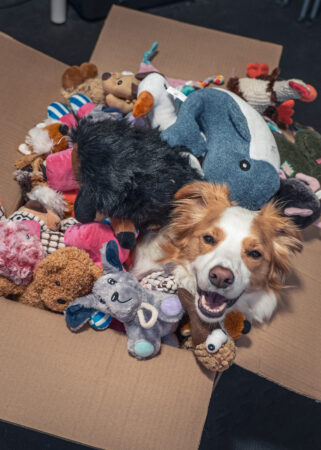
    Dogs tend to be better at learning words for actions — think “fetch” or “roll over” — than at retaining the names of objects. So Dror sought out what she called “gifted” dogs that had previously demonstrated an ability to learn the names of their toys.

    Basket, a 7-year-old border collie in New York, was among them.

    “I noticed she started to actually know the names of her toys without me giving her assistance when she was about 8 months old,” said one of her owners, Elle Baumgartel-Austin.

    The researchers instructed the dog owners to discuss two toys that their dogs had never seen before. The dogs were present for those conversations. But the owners never directly addressed their pets.

    “It was very funny watching the video after the fact, just to see what she was doing,” Baumgartel-Austin said. Basket had followed the toy with her eyes as they talked. “She got a little frustrated. It was not very fun to see two humans play with a toy that she wanted.”

    To assess what the dogs learned by eavesdropping, a day or more later the owners were guided to place the toys in a different room among other plushies and then ask their dog to retrieve one of the two new toys by name. Seven of the 10 dogs, including Basket, regularly fetched the correct toy. Although the sample size was small, the results were statistically significant.

    The discovery not only reveals a previously unknown cognitive ability of canines, but it could also offer clues to how human language may have evolved.

    Overhearing the conversations of parents and other adults is part of how toddlers learn to talk. That some dogs are able to do so as well suggests that an ability to read social cues needed to follow a conversation predates language itself.

    “This is something that came before language,” Dror said. “Because dogs don’t have language, and yet they do have these abilities.”

    Gabriella Lakatos, a researcher at Britain’s University of Hertfordshire who also has studied human-dog interactions, said the findings “extend the list of behaviors and abilities previously described in dogs as analogous to those of young children.”

    Among other animals, the ability to eavesdrop has also been documented in bonobos. Canine researchers have known since the early 2000s that some dogs can recognize more than 200 items by name and can even infer the names of new toys by excluding ones they already know.

    But Juliane Kaminski, a comparative psychology associate professor at Britain’s University of Portsmouth who conducted that early research, cautioned against overinterpreting the results to say dogs can deeply learn language the same way people do. “The interpretation in terms of ‘word learning’ in the linguistic sense seems a little too strong for me,” she said. “What the study shows is that dogs can learn labels without being explicitly directed toward” an object.

    She added it is still unclear why only a handful of dogs are able to learn the names of their toys. Her own work with label-learning dogs suggests they are more curious and focused than their less-gifted canine counterparts.

    “However, what we do not know is what comes first,” Kaminski said. Are some dogs born better learners? Or do they simply get used to fetching objects when asked?

    “It’s a chicken-and-egg problem, and we need further research to explore this,” she said.

    Dror tried for years in vain to train other less gifted but still very good dogs — including her own German shepherd, Mitos — to associate names with toys. “Nothing worked. It was very frustrating.”

    Still, Mitos nuzzled his way into the new paper. He died last year at 15, just as Dror was submitting the research for publication, and she dedicated the paper to him. “It’s definitely hard to lose someone that’s been such a huge part of your life for so long,” she said.

    Now, Dror has a new puppy — a schipperke named Flea. She is introducing her to toys and hoping she can learn.

  • The Boozy Mutt, a Fairmount dog-friendly bar, will be closing after two years in business

    The Boozy Mutt, a Fairmount dog-friendly bar, will be closing after two years in business

    Another Philadelphia bar has gone to the dogs.

    Fairmount’s pup-friendly pub the Boozy Mutt is closing its doors Jan. 3 after just over two years in business, co-owners Sam and Allison Mattiola announced via Instagram on Monday.

    “After much thought, we made the difficult decision to close the Boozy Mutt … What began as a dream became something truly special because of our community — our guests, our team, and all the good mutts who walked through our doors,” read the post, which has been shared over 1,400 times. Nearly every comment is from a dejected dog parent wishing for another round of beer and belly rubs.

    The Mattiolas, who are married, opened the Boozy Mutt at 2639 Poplar St. in December 2023, transforming former rock-and-roll dive the North Star into roughly 7,000 square feet for pooches and their people to roam across two floors and an outdoor patio. The venture was inspired by pandemic-era trips to a dog park with Bernadoodle Buba, where the couple would camp out with lawn chairs and a pack of beers to make friends.

    At the Mutt, as regulars called it, dogs are allowed to mingle off-leash under the supervision of aptly-named “Rufferees” who monitor and facilitate healthy play. All owners had to register their pet’s vaccinations before gaining access to the space, which includes a self-service dog wash room, outdoor TVs, a summertime-only puppy pool, and a menu of bite-sized “human grade” dog treats.

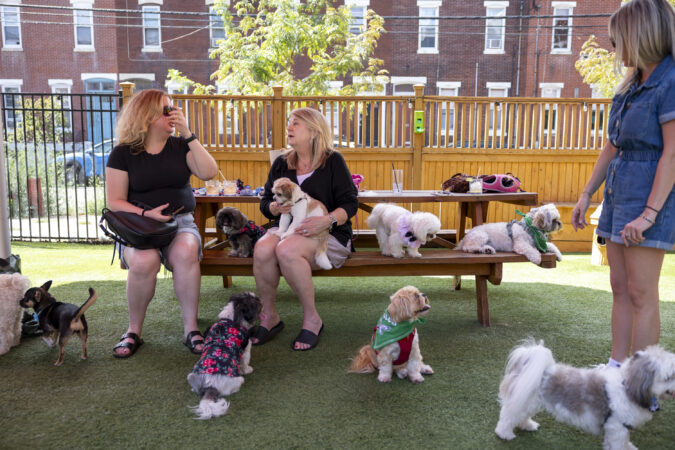
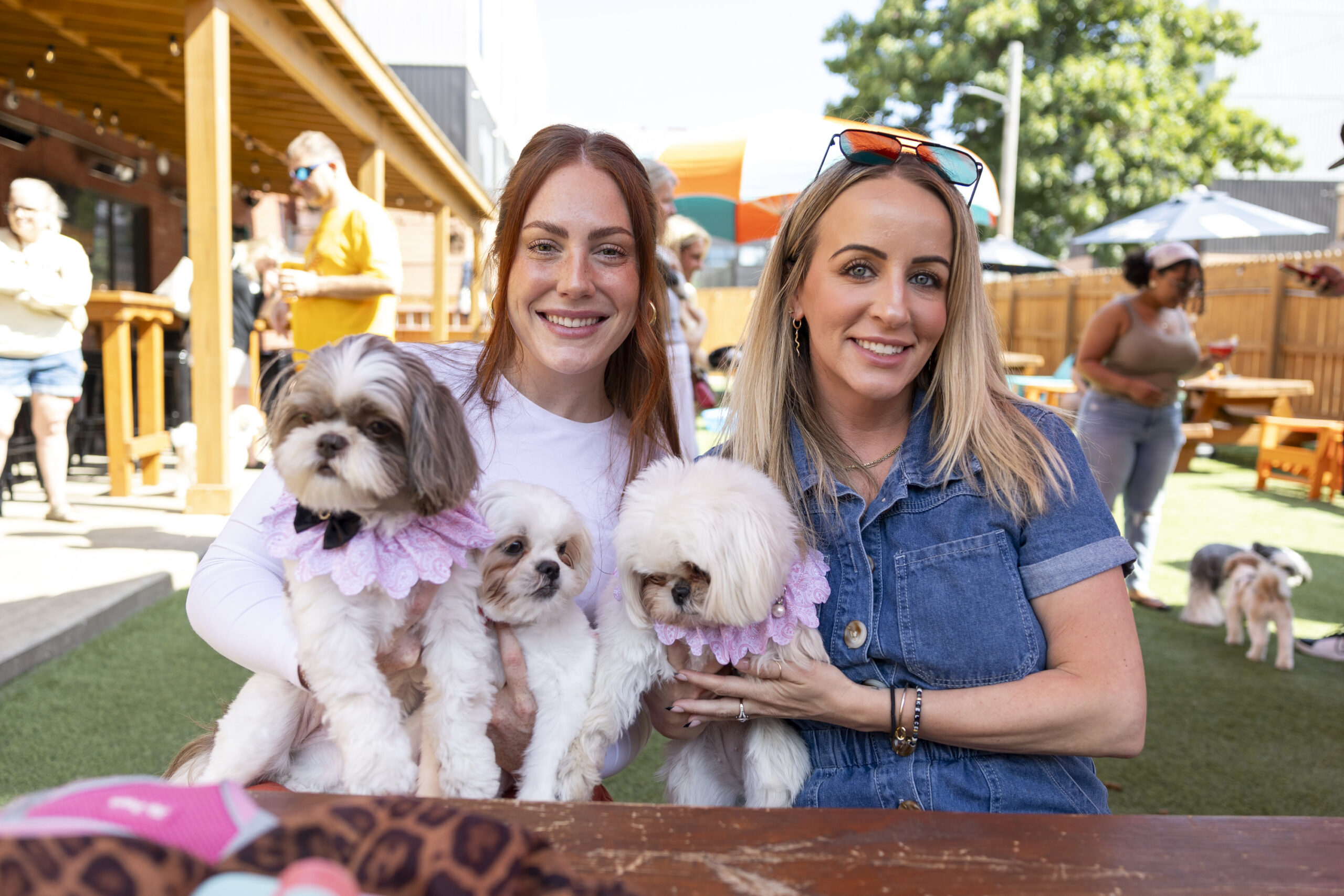
    Tess Bodden (left) and Jenn Maher pose with their pet shih tzus Hazel, Hendrix, and Kelce at the Boozy Mutt, a popular third space for dog parents in Fairmount.

    The bar felt like a version of Cheers for pet parents almost immediately, regulars told The Inquirer, thanks in part to a rotation of events that ranged from weekly quizzos to breed meetups and Pitch-A-Friend nights for singles. A monthly membership was $40, while an annual Mutt subscription cost $360.

    The bar had upward of 100 regular members, Sam Mattiola said, all of whom will receive prorated refunds in the coming days. “People would tell us that this was their third space, that they go home, they go to work, and they go to the Boozy Mutt,” he said. “We walk away with our heads held high knowing that we achieved our goal of creating a place that made people feel at home.”

    And yet, the Mattiolas said, running a bar that catered to dogs and their owners in equal measure proved increasingly challenging as the cost of rent, insurance, food, and alcohol continued to increase. While dog-friendly bars and beer gardens have taken off in the South, the concept has had mixed success in Philly: Manayunk dog bar Bark Social closed abruptly last year after its parent company declared bankruptcy. Its replacement, an outpost of the Atlanta-based company Fetch Park, opened in November.

    “It’s a pretty overhead-intensive business model that we have, and it’s just gotten pretty hard to make the math work after the last couple of years,” Sam Mattiola explained. “There was just always something new hitting [us] in the face.”

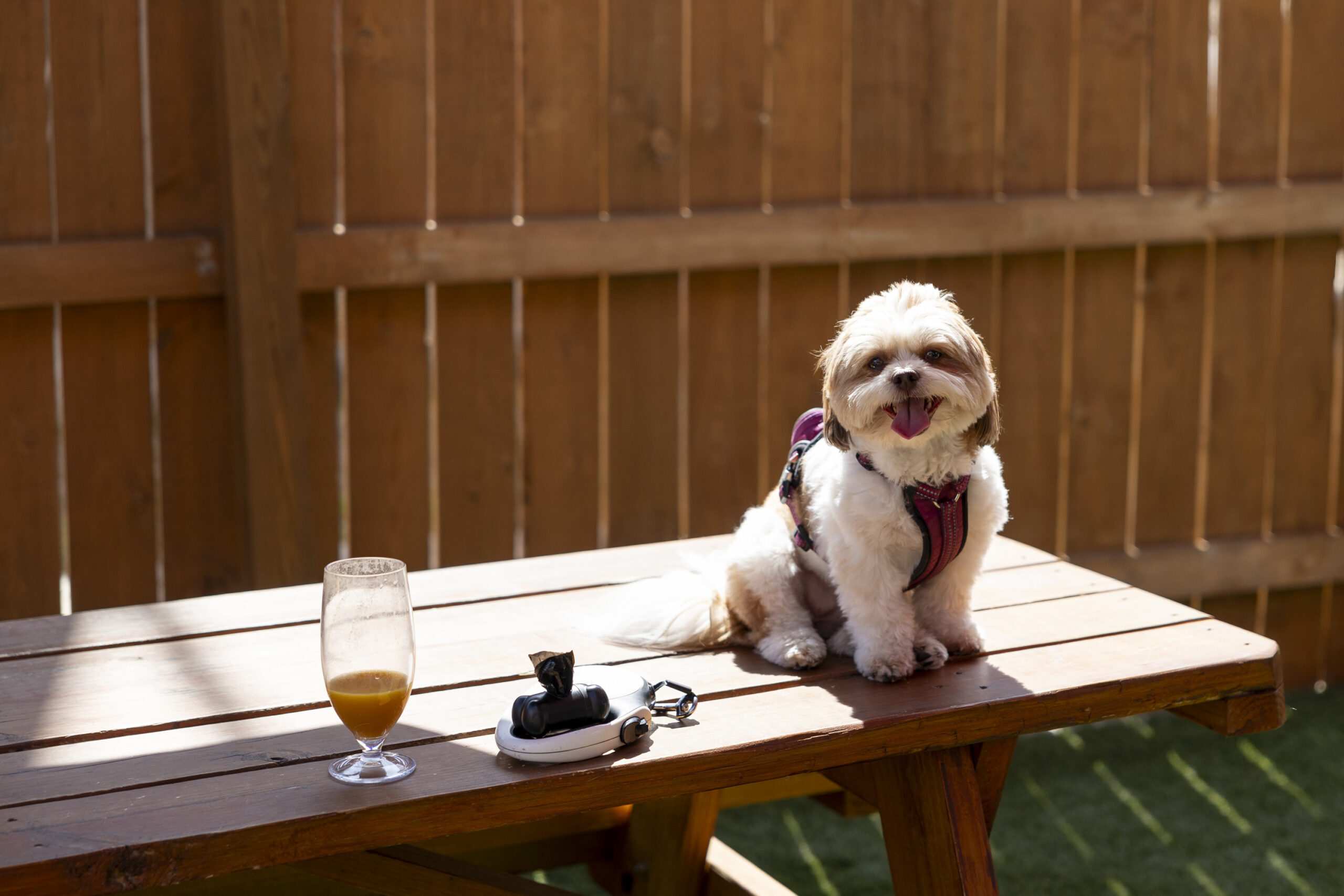
    Darby, a 5-year-old shih tzu, sits on a picnic table at the Boozy Mutt in Fairmount during an August 2025 breed meetup.

    The Boozy Mutt’s 26 employees were informed of the impending closure before the announcement went public Monday, Allison Mattiola said, and the couple has spent the last three days putting together job recommendations. Neither she or her husband had worked in hospitality prior, and the couple has no immediate plans to revive the business elsewhere.

    Where is Fido to go?

    Already, the Boozy Mutt’s impending closure has been ruff — pun intended — for Fairmount pet parents.

    “It’s a loss for us and a loss for the dogs,” said Sarah Kuwik, whose 2½-year-old pooch Willie “grew up at the Mutt.”

    Kuwik started taking what she described as her “50-pound mutt” to the bar almost immediately after it opened. It has given Willie a social life most adults would envy.

    Willie goes on dates at the Mutt with his girlfriend Bea, a 3-year-old golden retriever who clings to him like a magnet. And in June, Willie had a joint WrestleMania-themed birthday party with his best friend Levon, also a mutt with boundless energy.

    Willie (left) poses with his golden retriever girlfriend Bea (right) and his best pup friend Levon at the Boozy Mutt, where the trio first met.

    Kuwik doesn’t know how Willie will handle the news: “He’ll pull us toward [the Boozy Mutt] every time we’re on Poplar [Street] … it’s going to be very confusing.”

    The Boozy Mutt is also what drew Valerie Speare to Fairmount in the first place. Speare put an offer on her current rowhouse a mere four blocks from the bar after grabbing brunch there in between open houses last spring. Now she goes to the Mutt four times a week with her pugs Lily and Winston, who are both deeply playful (and deeply codependent).

    The Mutt “is exactly the kind of thing I want in a neighborhood,” said Speare, who has lived in the area for a year-and-a-half. “Where else can I go have a mimosa on a Saturday morning and have my dog sitting in my lap?”

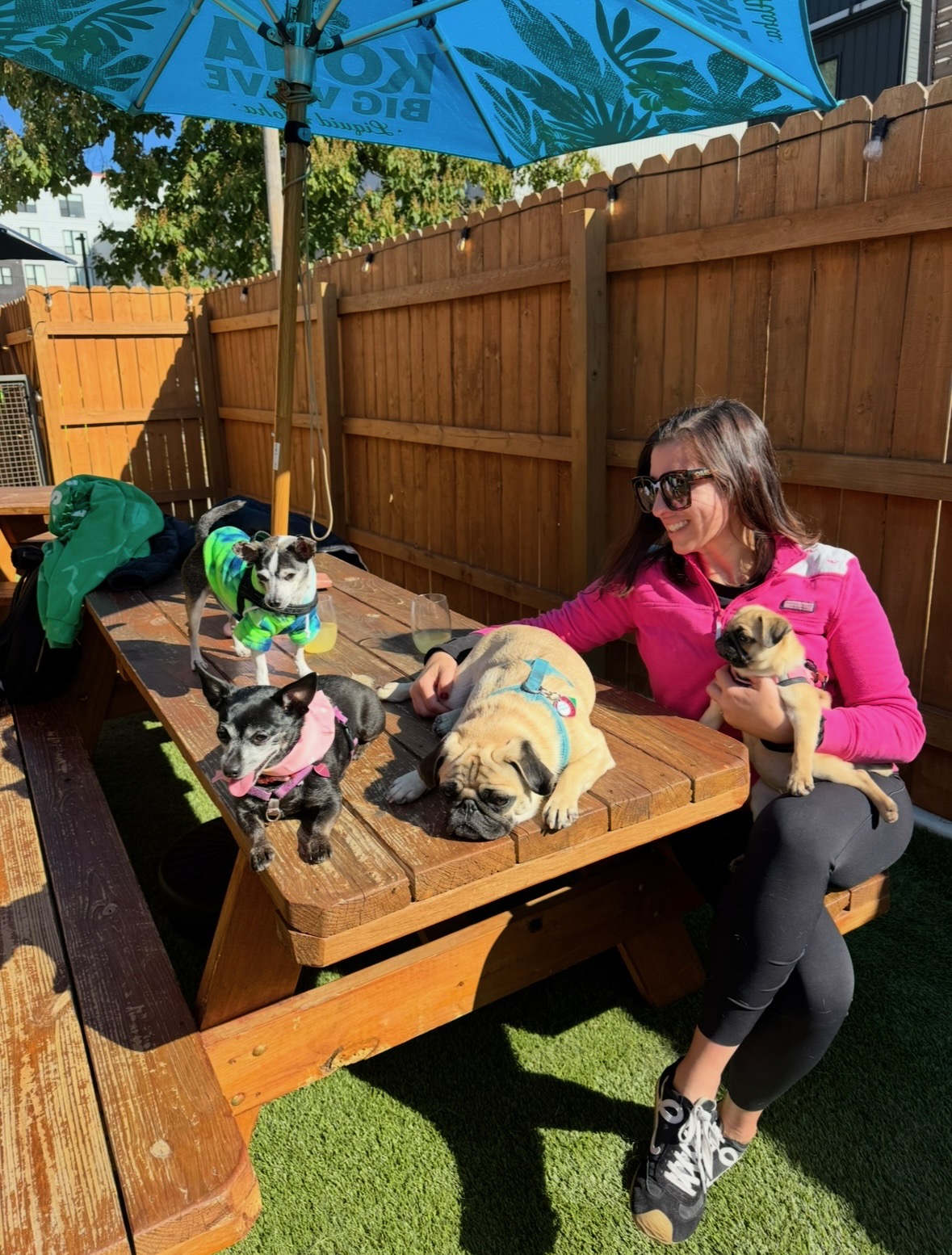
    Valerie Speare, of Fairmount, and her pugs Winston and Lily lounge with Chihuahua pals at the Boozy Mutt. Speare takes her pugs to the bar four times a week, she estimates.

    For others, the bar has fostered connections that extend beyond puppy playdates. Katherine Ross has lived in Fairmount since 2004, but has seen the neighborhood — and the people in it — with new eyes, thanks to her 4-year-old pug Hoagie.

    At the Mutt, Hoagie likes to beg for bites of Old Bay and truffle-coated fries or splash in the puppy pool. Ross, meanwhile, has enjoyed getting to meet her neighbors.

    “I’ve lived in this neighborhood for over 20 years, and to be honest with you, I didn’t know all that many people until I got a dog,” Ross said. “Having a place like the Boozy Mutt brought a lot of friendships together.”