NEW YORK — Jacob Misiorowski has The Heater (105.5 mph!), and Cristopher Sánchez had The Streak (50⅔ scoreless innings!), and Shohei Ohtani is, well, Shohei Ohtani!
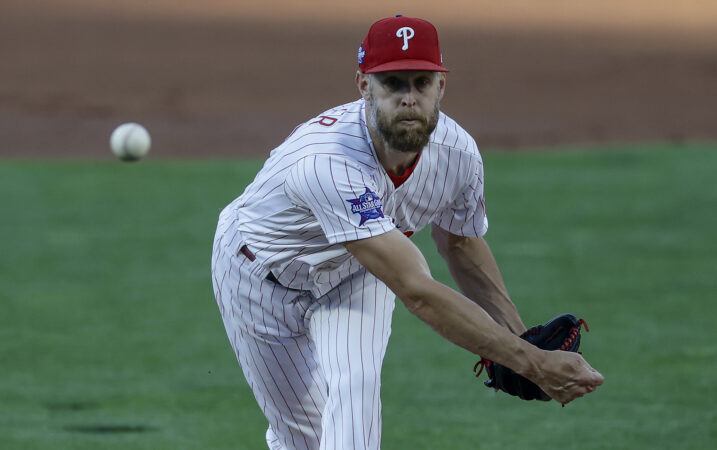
But at the midpoint of the schedule, there’s another nominee for the best pitching story in baseball: The Comeback, by Zack Wheeler.
Wheeler gave up one run in seven innings here Friday night against the Mets. And although he got a major assist from center fielder Derek Hill, it still marked the eighth time in his last nine starts that he allowed less than three runs.
It’s almost like the 36-year-old righty didn’t have a rib removed nine months ago to relieve a compressed vein near his collarbone.
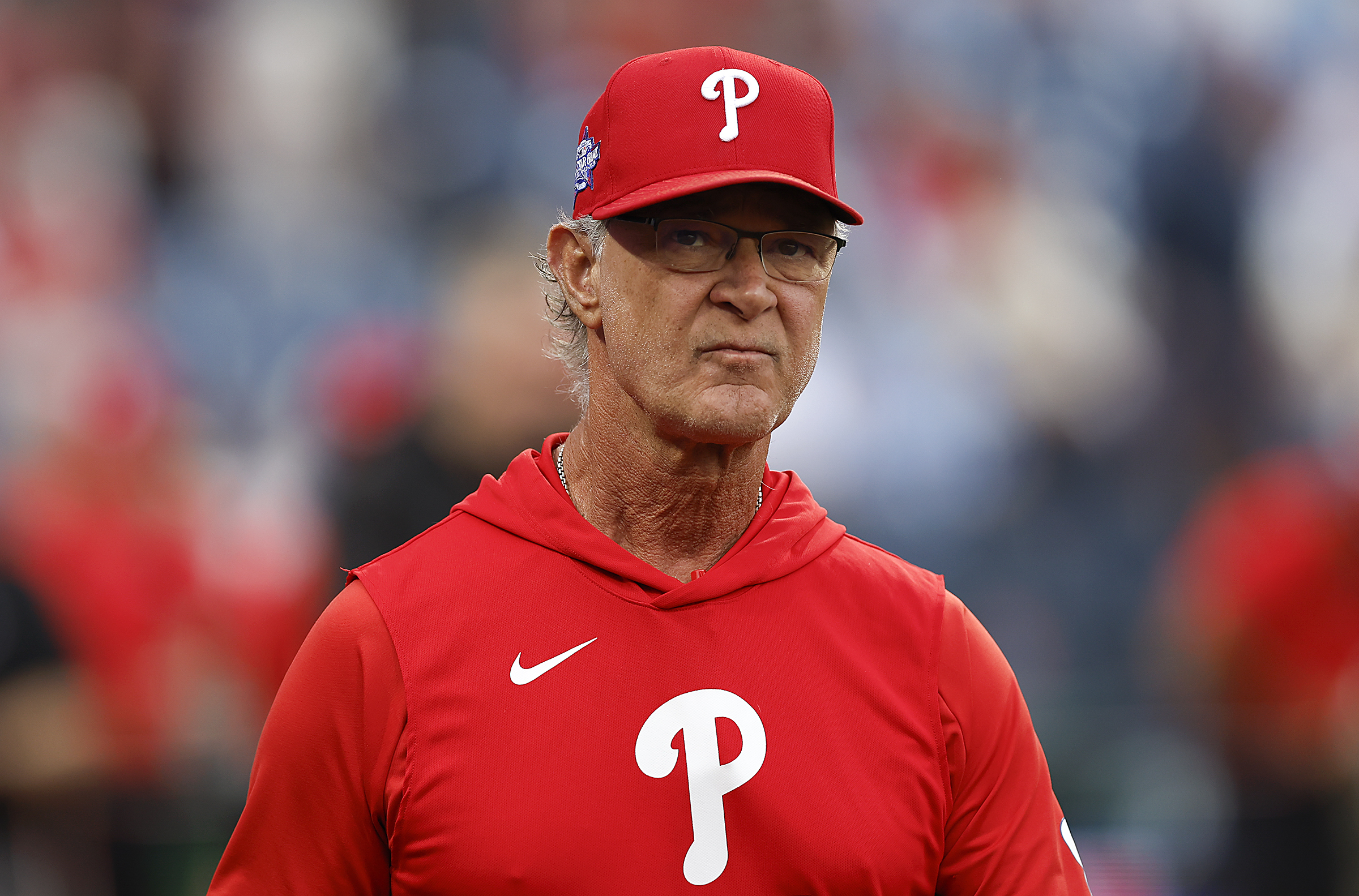
“Yeah,” interim manager Don Mattingly said, “it’s been pretty remarkable.”
Never mind that Wheeler had the less threatening form of thoracic outlet syndrome. It’s a condition that has derailed many pitching careers. Yet here he is, with a 2.03 ERA that ranks fifth among 100 pitchers with at least 70 innings entering play Saturday.
If you didn’t know what Wheeler went through last summer, beginning with the discovery of a blood clot near his right shoulder after an Aug. 15 start, well, you wouldn’t know.
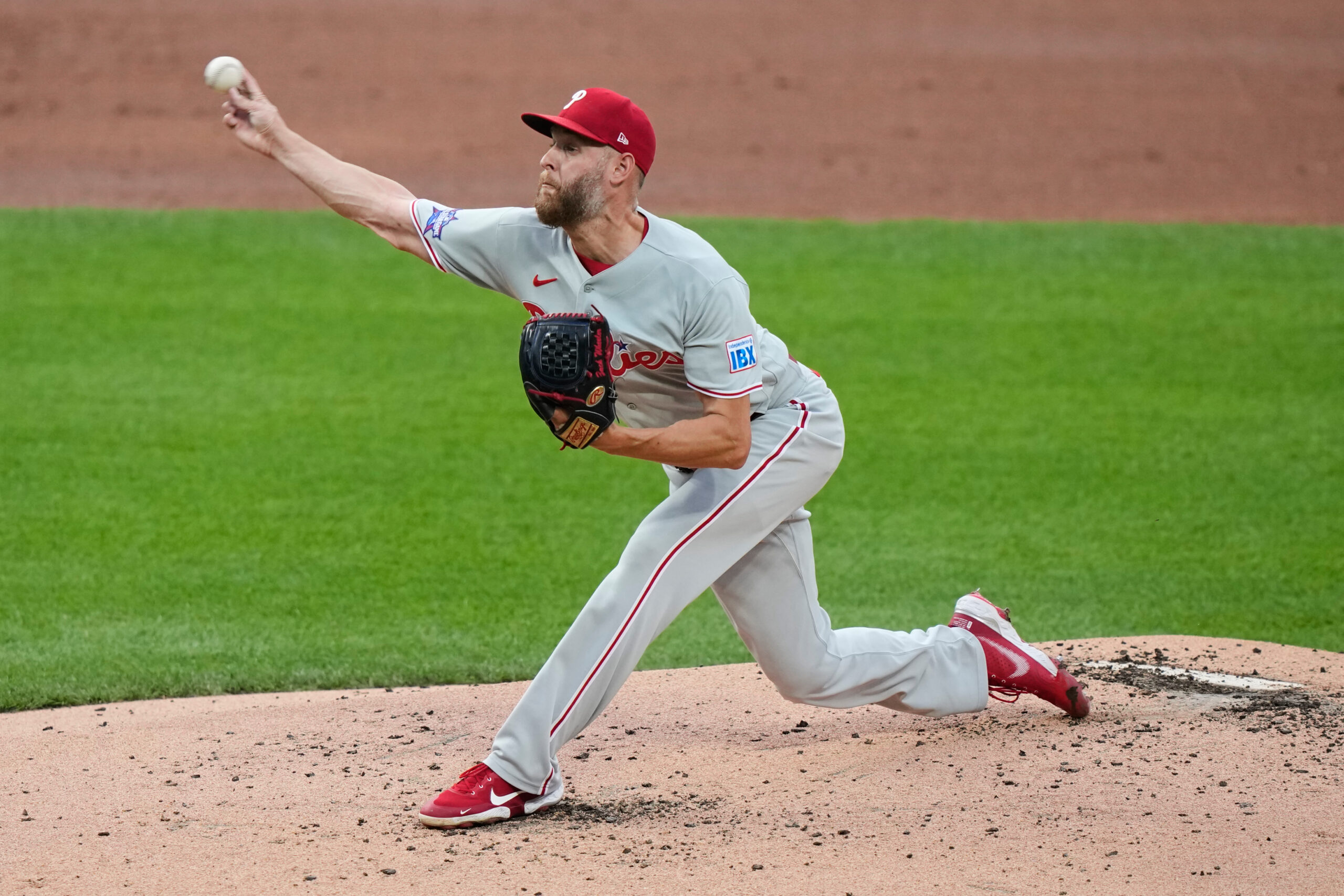
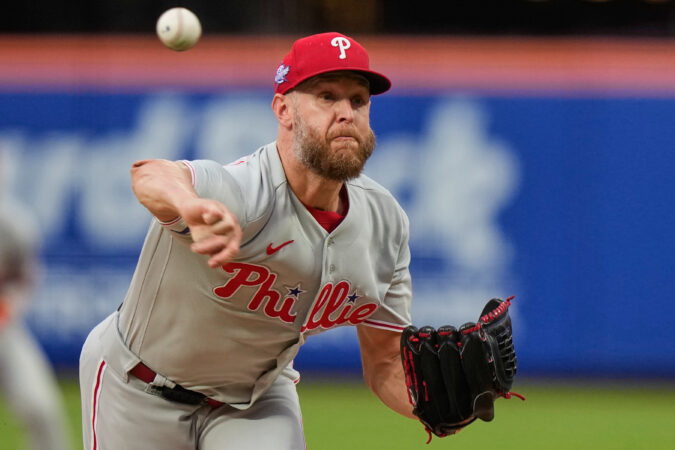
Zack Wheeler’s 2.03 ERA ranked fifth among 100 pitchers with at least 70 innings.
His average fastball velocity is down a tick to 95.3 mph, but he can still dial up 97. (He scraped 97.7 mph Friday night against Mets star Juan Soto.) And he still changes speeds with a sweeper, splitter, and curveball.
Wheeler won’t admit that he’s surprised by any of this. Then again, he couldn’t allow himself to expect anything less.
“I mean, you almost have to, right?” he said. “You’ve got to have that mindset when you get hurt and you’re going to have surgery. You just build out your plan in your head — what it’s going to be like, and where you want to be at the end — and you kind of just tick those boxes off as you go.
“You’re always going to have your ups and downs. That’s going to happen with the human body. It doesn’t always go your way. But for the most part it went pretty smooth, and, yeah, I always envisioned myself coming back and hitting the ground running.”
Even as he was coming back from surgery and regaining strength after losing “a good bit” of weight, Wheeler said he set the same three goals: “win the Cy Young, win the World Series, and make the All-Star Game.” He could check off the latter next Saturday when the All-Star rosters are announced.
Wheeler was named to the National League team last year and in 2023 but didn’t attend the game either time. This year, with Philadelphia hosting the game, he won’t have to travel. But if the Phillies stay on rotation, he would start the final game before the break, leaving him unavailable to pitch in the All-Star Game.
In any case, Wheeler has never had a lower ERA through his first 12 starts of a season. Even in his runner-up Cy Young finishes in 2021 and 2024, his ERA through 12 starts was 2.51 and 2.32, respectively.
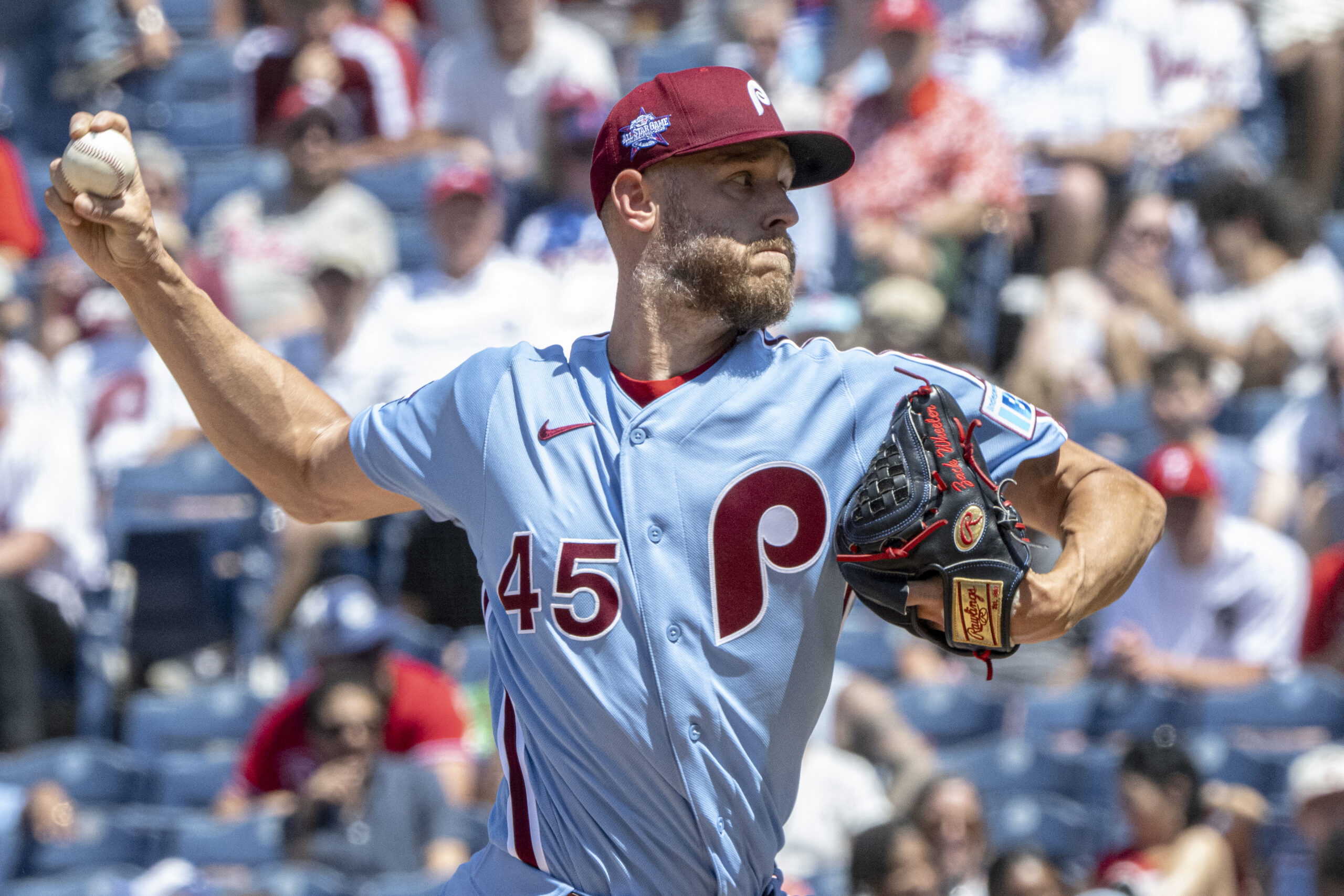
Zack Wheeler is making a strong case to be an All-Star for the third time in the last four years.
And yet, ever the perfectionist, Wheeler insists his command isn’t as sharp as it can be.
“Something’s still a tick off, and I hate saying that just because it was a good game,” Wheeler said. “But I’m so used to throwing eight or nine pitches out of 10 where I exactly want it. So, when that’s not happening, I feel like it’s just not there all the way.
“But I know things are going well. I’m feeling strong, so I’ll take that for sure.”
One day after grounding into three double plays, as part of a 1-for-19 funk, third baseman Alec Bohm wasn’t in the lineup Saturday against Mets righty Christian Scott.
“He just looked tired last night,” Mattingly said of Bohm. “I thought he was dragging a little bit. It’s just a day.”
Edmundo Sosa started in Bohm’s place.
Extra bases
Reliever Brad Keller (right forearm inflammation) has progressed to throwing a bullpen session within the next few days, Mattingly said. … Andrew Painter is slated to start Sunday for the first time since getting demoted to triple A on June 17. … Jesús Luzardo (6-4, 4.39 ERA) will start the series finale at 1:40 p.m. Sunday and Mets lefty opener Cionel Pérez (3-3, 4.99).
Last summer, at a win-now moment in their competitive cycle, the Phillies addressed two holes in the roster with one-stop shopping at the trade deadline.
Sort of.
Priority No. 1 felt familiar. Despite trading for a reliever at other recent deadlines, the Phillies’ playoff runs in 2023 and ’24 were torpedoed by the bullpen. So, they went in search of a lockdown late-inning anchor.
But they had another obvious shortcoming: a righty-hitting outfielder to platoon in left field or, better yet, stop the revolving door in center.
For weeks, Dave Dombrowski and his front office made calls and put out feelers. But gridlock in the wild-card standings — think of the Schuylkill Expressway at rush hour — led to market fluidity until a few days before the July 31 deadline.
After fence-sitting amid ownership uncertainty, the Twins finally decided to break up their roster. On the eve of the deadline, the Phillies landed Jhoan Duran for two top-100 prospects (pitcher Mick Abel and teenage catcher Eduardo Tait), a steep price for a closer, albeit a star who came with two full seasons of club control.
Harrison Bader’s name came up in the Duran talks, a source with knowledge of the conversations said, but the Twins kept the center fielder out of the deal as they orchestrated an everything-must-go bonanza in which they wound up unloading 11 major league players. The next day, Bader went to the Phillies for two minor leaguers.
Two trades. One-stop shopping.
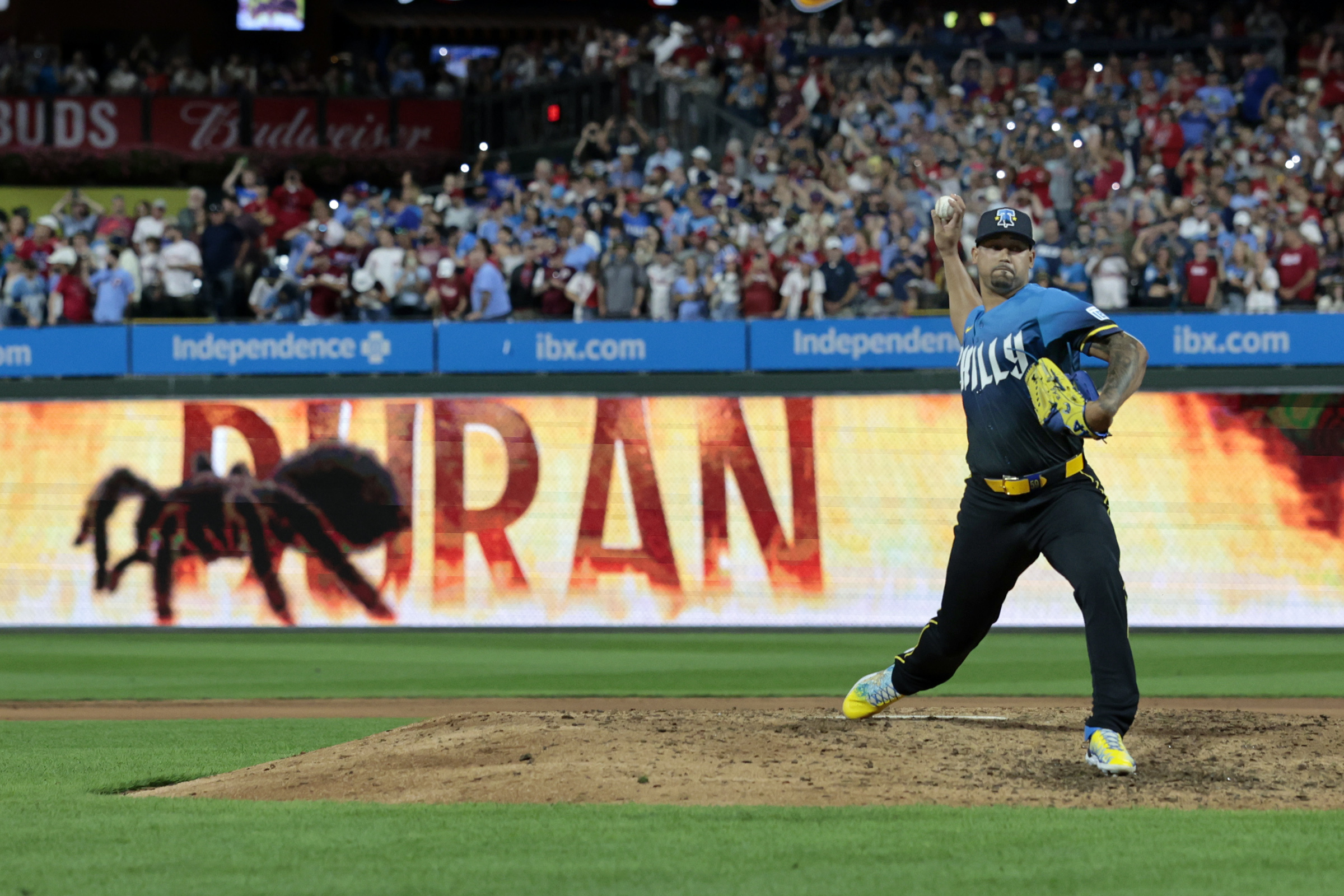
Jhoan Duran has locked down the ninth inning for the Phillies since he was acquired at the trade deadline last year.
Eleven months later — still in win-now mode, and back on a 90-win pace at the mathematical midpoint of the season after a 9-19 start that cost manager Rob Thomson his job — the Phillies again have multiple needs. The top priority is up for debate, even among some in the organization, but in some order:
Right-handed hitter
Back-end starting pitcher
Late-inning bridge to Duran
And with the trade deadline a little more than five weeks away — jot it down: Aug. 3, 6 p.m. — it’s worth wondering if they can one-stop shop once again.
Before we explore a few potential trade partners, a few caveats:
1. Across the sport, right-handed hitters had a .703 OPS through Thursday, which would be the third-lowest mark since 1991. Righty-hitting outfielders had a .709 OPS, tied for the second-lowest in the last 70 years. And two of the best, Mike Trout and Byron Buxton, have no-trade clauses and no interest in waiving them.
2. That said, the easiest place for the Phillies to add a right-handed bat is in the outfield … unless they move Bryce Harper back to right field and open first base (or third, if they shift Alec Bohm to first). Harper recently reiterated that he’d be open to it “for the right player.”
Dombrowski, on the other hand …
“We haven’t talked to him about it, and I really don’t contemplate it because I really like the way he goes about his business at first base,” he said recently. “I look at him as being our first baseman.”
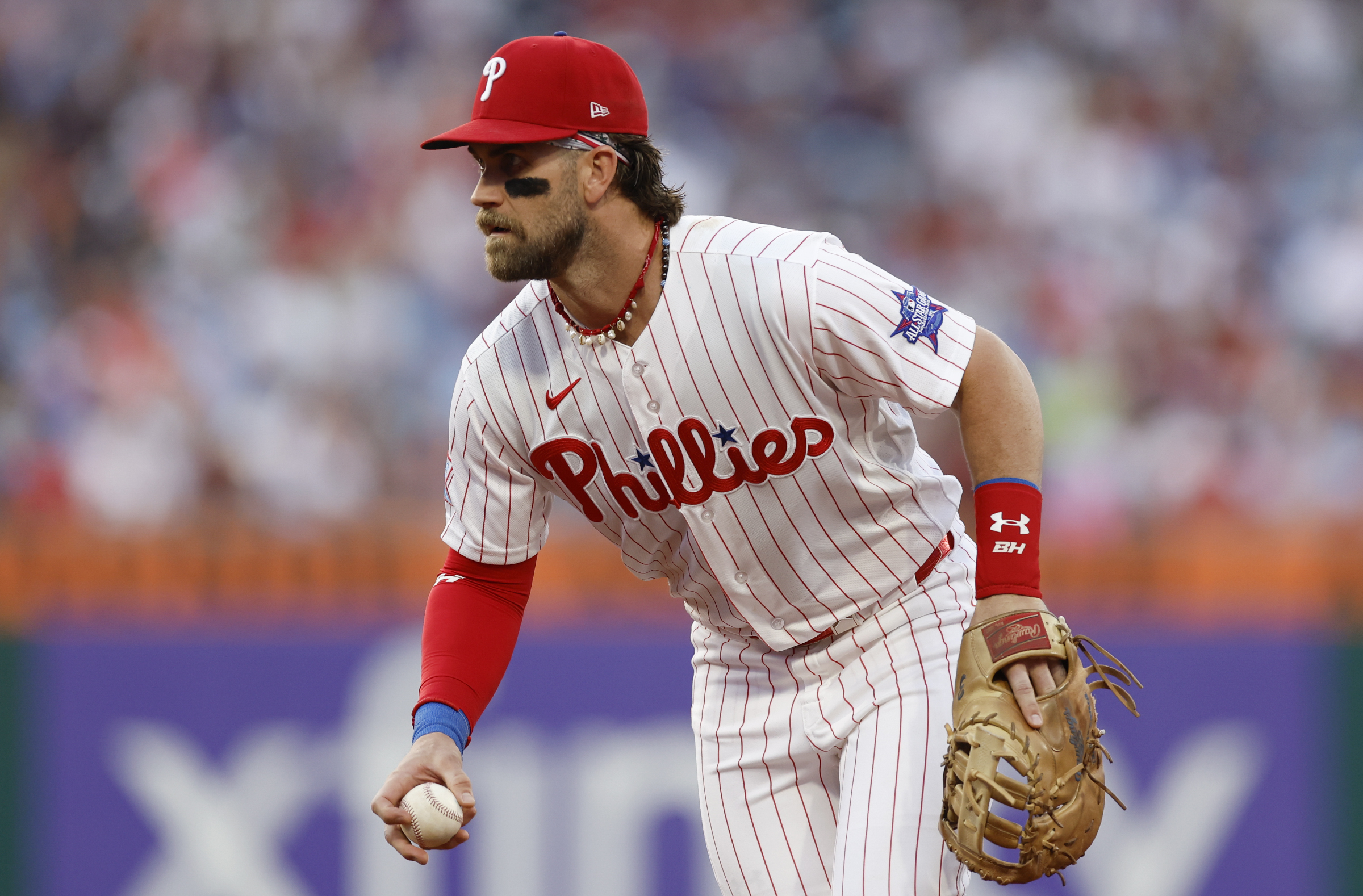
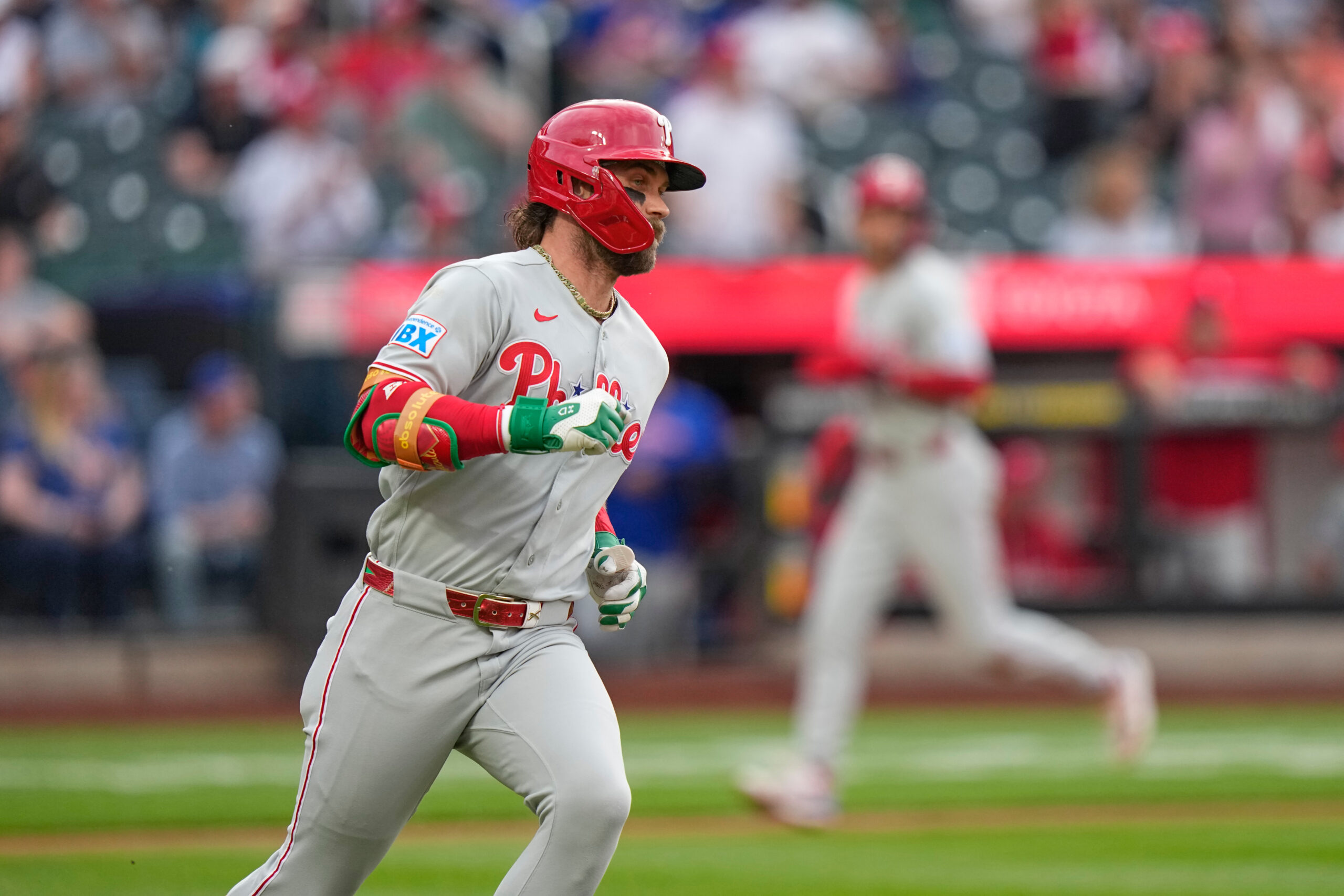
The Phillies plan to keep Bryce Harper at first base, president of baseball operations Dave Dombrowski reiterated recently.
3. Over the last few years, the Phillies traded Abel, Tait, and fellow prospects Hendry Mendez, Starlyn Caba, William Bergolla Jr., George Klassen, Sam Aldegheri, Hao-Yu Lee, Mickey Moniak, Ben Brown, Logan O’Hoppe, and TJ Rumfield, among others. The teams hasn’t been burned, but it has drained the farm system.
Andrew Painter (starting Sunday in triple A), Justin Crawford (graduated to the majors), and Aidan Miller (injured) were largely untouchable in previous talks. If that’s still the case, the best chips in a top-heavy system are right-hander Gage Wood, infielder Aroon Escobar, outfielder Dante Nori, and 17-year-old outfielder Francisco Renteria, off to a flying start in the Dominican Summer League.
It begs the question of whether the Phillies have the prospect capital to fill each of their needs.
“We feel good where our system’s at,” general manager Preston Mattingly said recently on Phillies Extra, The Inquirer’s baseball podcast. “We’re not concerned about a lack of assets in the minor leagues. A lot of times you see that top-100 [prospects] list. That’s not necessarily what teams internally talk about, and those are not the players they ask about.”
4. Remember that Schuylkill-style traffic jam in the standings last July? Well, entering the weekend, 24 teams were in a playoff spot or no more than five games out. Only four American League teams — four! — were even above .500.
Given the dearth of obvious sellers, one league source predicted that contenders may have to trade with each other. Think of the 2024 deadline, when the Phillies got outfielder Austin Hays in a buyer-to-buyer swap with the Orioles.
5. Oh, and did we mention there’s a work stoppage looming in December? The owners and players are at odds over, well, everything. And regardless of whether the owners get their salary cap, the sport’s economic system will change in ways that front offices can’t possibly anticipate as they maneuver at the deadline.
Got all that? Amid that backdrop, here’s a look at three teams that might match up with the Phillies on one or more of their needs.
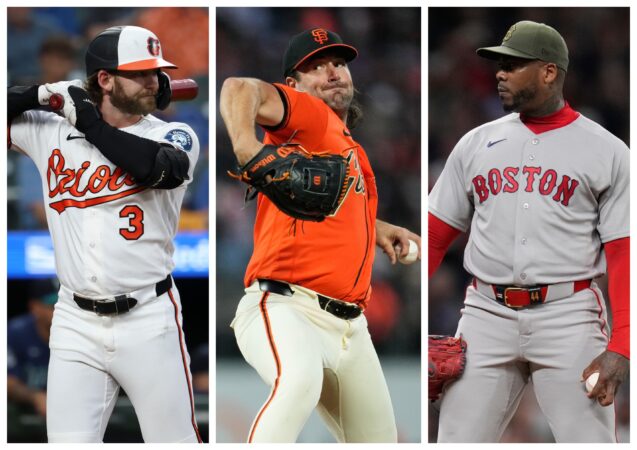
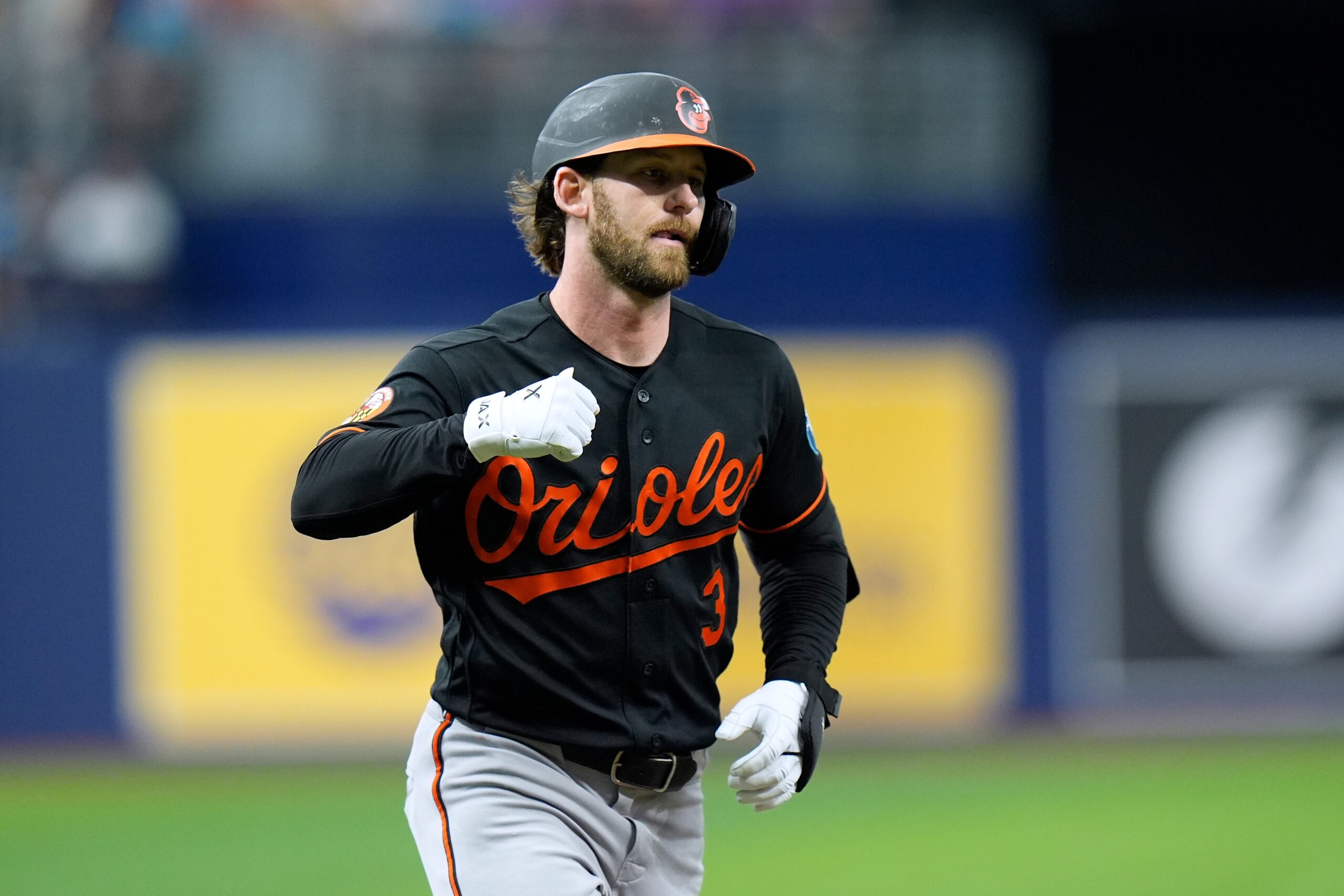
Despite not hitting for as much power as usual, Orioles outfielder Taylor Ward is reaching base at a .389 clip entering the weekend.
Baltimore Orioles
Here’s all you need to know about the state of play in the AL: The Orioles haven’t been over .500 since April 14, but were only 1½ games out of a wild-card spot entering the weekend.
No wonder a white flag isn’t flying over Camden Yards.
The next two weeks may determine which trade-deadline lane the Orioles choose. They play 12 of 15 games before the All-Star break at home, where they were 22-19 with a plus-13 run differential going into the weekend.
And if they’re still undecided on a path as the deadline approaches, the Phillies will visit Baltimore on July 31.
Ward, 32, was popular in trade rumors for years with the Angels before finally getting dealt to the Orioles in the offseason. He entered the weekend with only five homers after averaging 24 in the last four seasons, but appears to have traded power for on-base ability, reaching at a .389 clip.
(Phillies right-handed hitters had combined for a .269 on-base percentage, last in the majors.)
Ward would fit atop the order ahead of Kyle Schwarber and Harper, enabling interim manager Don Mattingly to finally slide Trea Turner down. Or the Phillies could put Ward in the cleanup spot behind Harper and work on restoring his fly-ball and barrel rates to his career levels.
As a free agent after the season, Ward probably won’t come at a high acquisition cost. But the Orioles would get a better return if they package him with rental starter Trevor Rogers or controllable relievers Yennier Cano or Rico Garcia.
Potential trade: Ward and Cano for Nori and right-hander Ramon Marquez.
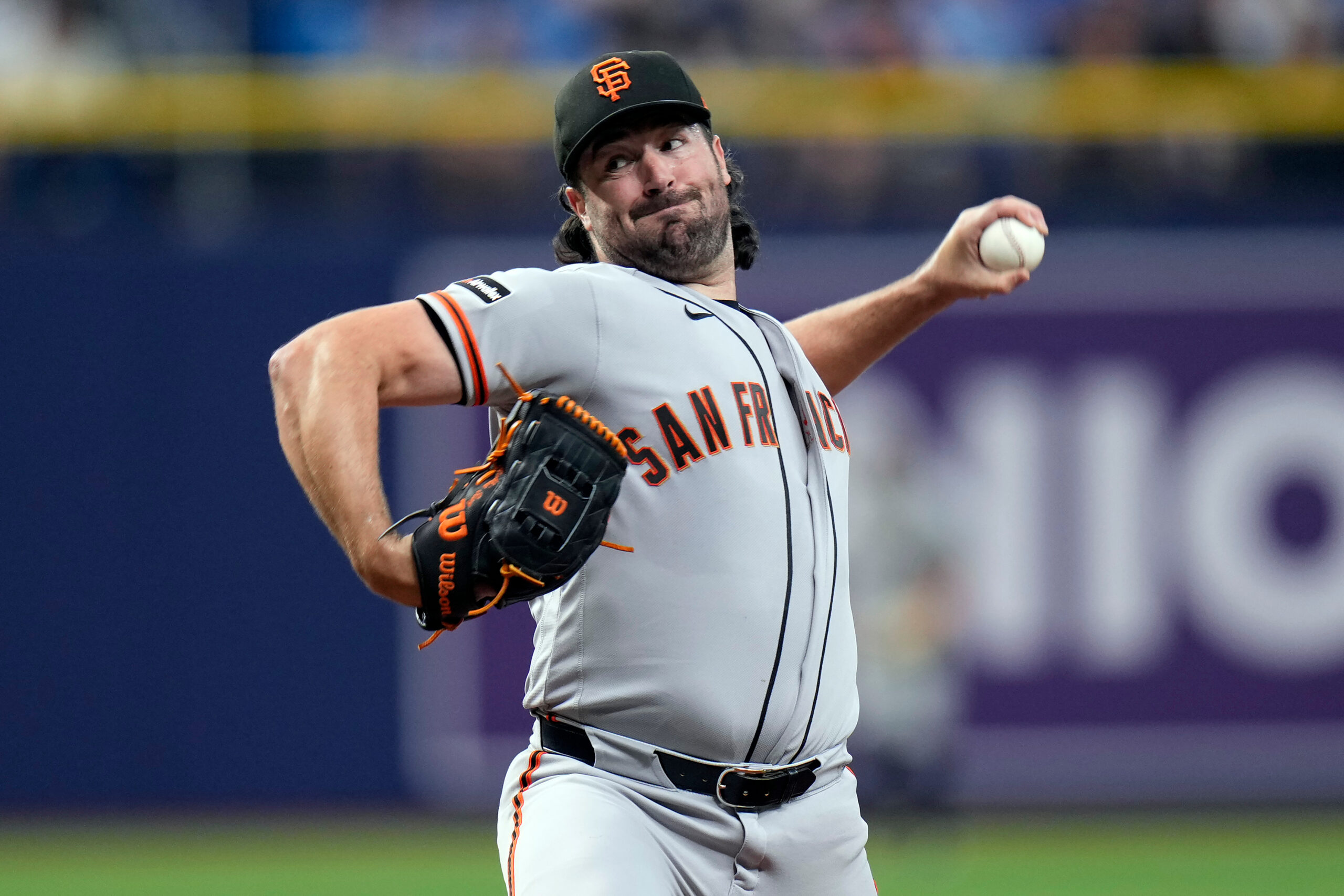
Giants lefty Robbie Ray has allowed one earned run or fewer in four of his last five starts.
San Francisco Giants
Two years ago, the Phillies raced to a big lead en route to an NL East title. But they went 33-33 after the All-Star break and lost their momentum in part because they lacked a competent No. 5 starter.
Dombrowski regretted not getting one at the deadline.
“I’ll take the responsibility,” he said after a divisional-round knockout. “When you look at the fifth spot that we had, that was not a good spot at all for us the last two months of the season.”
Maybe it will inform how Dombrowski acts now, with Painter back in triple A and a hole at the back of the rotation. But teams don’t use five starters in the postseason. So, unless the Phillies can upgrade from Aaron Nola, or even Jesús Luzardo, they won’t want to give up an asset.
In that case, the rental market is an option. And the Giants’ Robbie Ray is a classic rental. The 34-year-old lefty will be a free agent after the season. He has pitched well lately, too, allowing one earned run or fewer in four of his last five starts.
In lieu of what the Giants really want to do — offload unwieldy long-term contracts for Matt Chapman, Willy Adames, and Rafael Devers — they almost certainly will move Ray.
If the Phillies take on the $12.5 million that Ray is owed through the end of the season, the return would be minimal. But the Giants can get a better prospect by including, say, controllable outfielder Heliot Ramos, who is nearing a return from a quadriceps strain.
Potential trade: Ray and Ramos for outfielder Gabriel Rincones Jr. and righty Jean Cabrera.
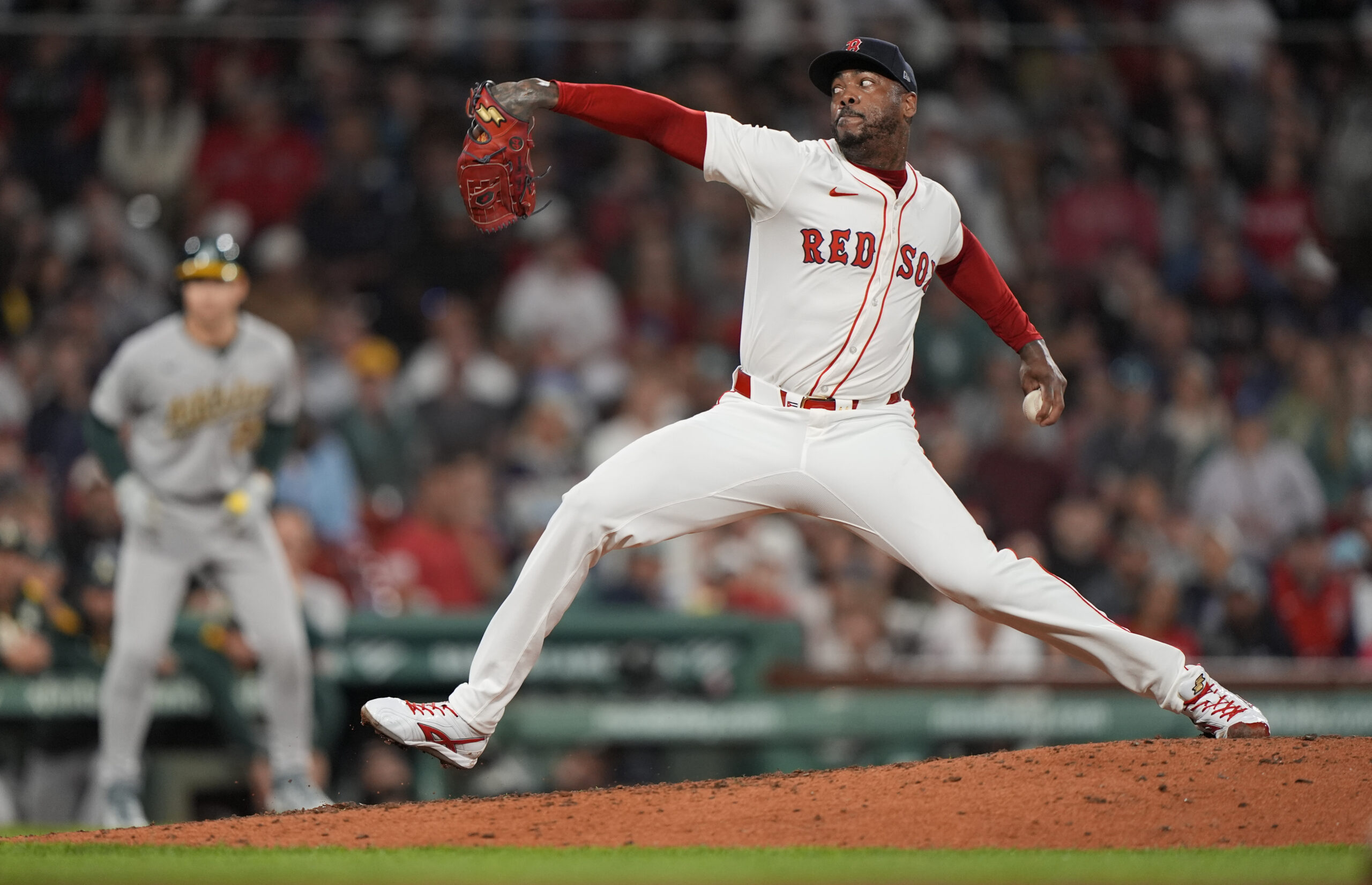
Aroldis Chapman has a 1.41 and 46 saves for the Red Sox over the last two seasons.
Boston Red Sox
When the Red Sox finally accept reality and go into sell mode, they will have players who are in demand.
Atop the list: fire-breathing closer Aroldis Chapman.
Even at age 38, Chapman is lighting up radar guns and overpowering hitters. Entering the weekend, these were his numbers in two years with the Red Sox: 1.39 ERA, 47-for-50 in save chances, 114 strikeouts, 25 walks in 84 innings. His fastball still averages 97.4 mph.
Chapman has 382 career saves, 10th on the all-time list. With the Phillies, he would supplant José Alvarado as the high-leverage lefty and set up for Duran. He has filled a setup role before, notably in 2023 for the World Series-winning Rangers.
Two years ago, the Phillies acquired walk-year closer Carlos Estévez from the Angels for two pitching prospects (Klassen and Aldegheri). The Sox will likely seek a similar haul for Chapman, a free agent at season’s end.
They will have a harder time maximizing the value for outfielder Jarren Duran. Although he’s under team control through 2028, the 29-year-old’s production has dropped off since his All-Star season in 2024.
Duran is a left-handed hitter, not an ideal fit for the Phillies. But given the lack of righty-hitting outfield options, he’s worth considering as a buy-low candidate.
Potential trade: Chapman and Duran for Escobar, Marquez, and righty Matthew Fisher.
NEW YORK — Zack Wheeler stood on the mound, looked out to center field, and, well, LOL.
For real. He laughed out loud.
How else was the Phillies ace supposed to react? Given the level of ridiculousness of the catch that Derek Hill just made — sprint to the warning track, perfectly timed leap, hang in the air, and reach over the wall to take a two-run homer away from Mets star Juan Soto — even super-intense Wheeler couldn’t stifle a chuckle.
“I mean,” Wheeler said later, “that won us the game right there.”
Well, technically, it would take Trea Turner‘s go-ahead single — which drove in Hill, by the way — in the seventh inning to decide the Phillies’ 2-1 victory Friday night. Maybe that was because it took a while for them to pick up their jaws from the turf after Hill’s first-inning catch, which was every bit as good as home-run robberies get.
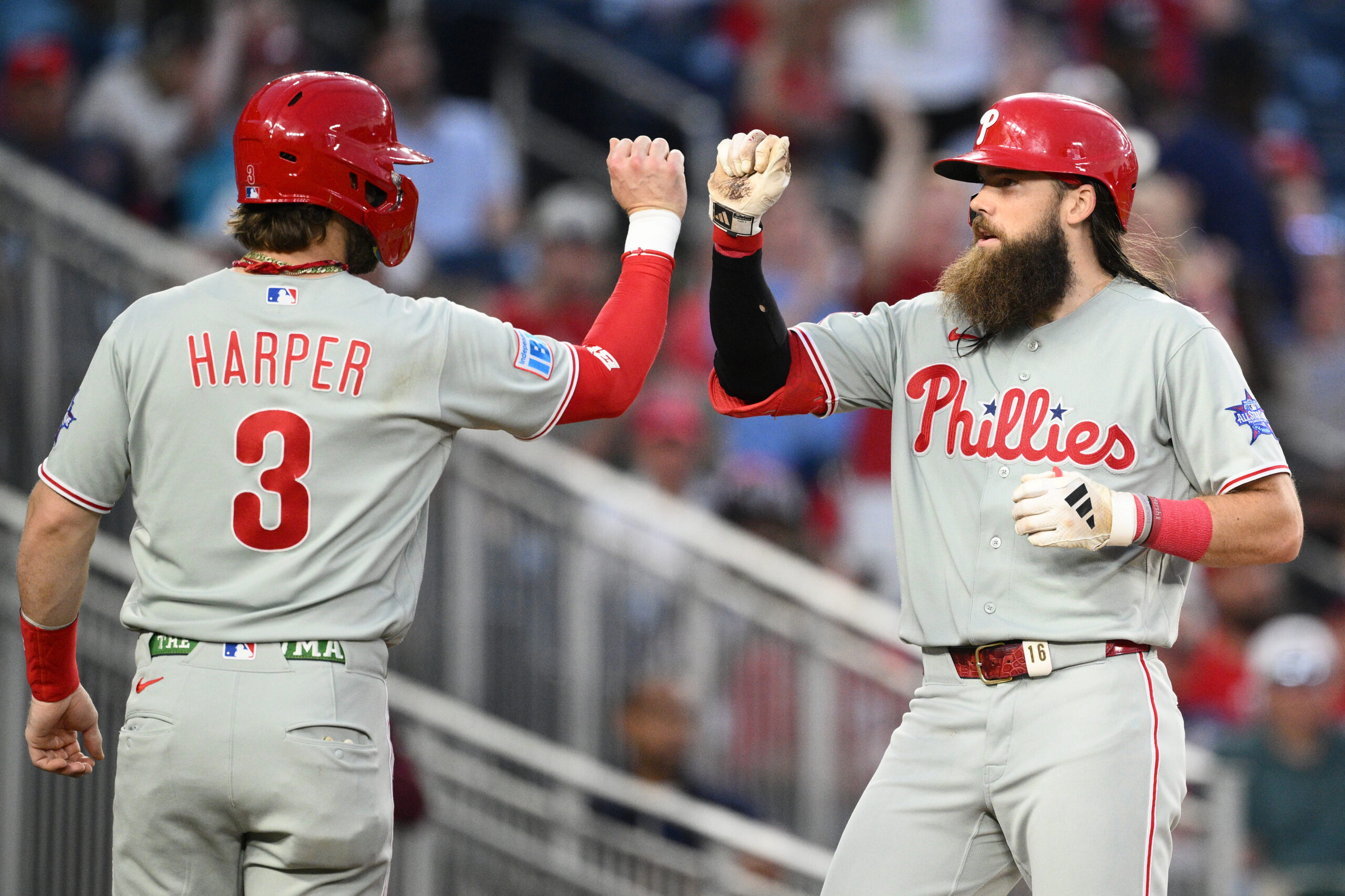
So, you bet Wheeler laughed. And right fielder Brandon Marsh chest-bumped with Hill. In the dugout, players tipped their caps. Some even went to watch it again between innings.
“I had a pretty good view, and that was unbelievable,” interim manager Don Mattingly said. “The replay was almost even better.”
Said Marsh: “Probably one of the best catches I’ve ever seen … in person, for sure.”
The Phillies won their fourth game in a row and, at 46-36, climbed to a season-high 10 games over .500 after a 9-19 start. They also deepened their rival’s misery. The Mets fired manager Carlos Mendoza, then dropped their seventh straight game while fans chanted to fire president of baseball operations David Stearns.
But there’s no telling how much differently the series-opener would have gone if not for Hill’s catch.
Staked to a 1-0 lead on Bryce Harper’s single, the third consecutive hit to begin the game against Mets rookie lefty Zach Thornton, Wheeler gave up a leadoff single to Carson Benge before throwing an 0-2 fastball to Soto.
“Honestly, I ain’t got much on that,” he said. “I just kind of blacked out on it. Just kind of pure instinct and whatnot. But I knew I had a chance because the wind was kind of knocking things down a little bit. Marshy was giving me some good comms on the side, letting me know where the wall was.”
Ever made a catch like that before?
“Not quite like that one,” Hill said. “Minor leagues and stuff like that a couple times, but no, this atmosphere was a little different. And obviously the guy [Soto] I did it against makes it a little bit cooler.”
Everything, it seems, is going Hill’s way. When he lost a fly ball in the twilight in the sixth inning, Marsh raced over from right field to catch it.
“I just see him coming across like a freaking bull,” Hill said. “I didn’t see it at all until it hit his glove. I was like, ‘Oh, cool. Thanks, dog.’”
Bryce Harper drove in the Phillies’ first run with a single in the first inning Friday.
Consider it the cherry on top of a charmed week for Hill, acquired by the Phillies two weeks ago from the White Sox after right fielder Adolis García tore the lat muscle near his right shoulder and needed season-ending surgery.
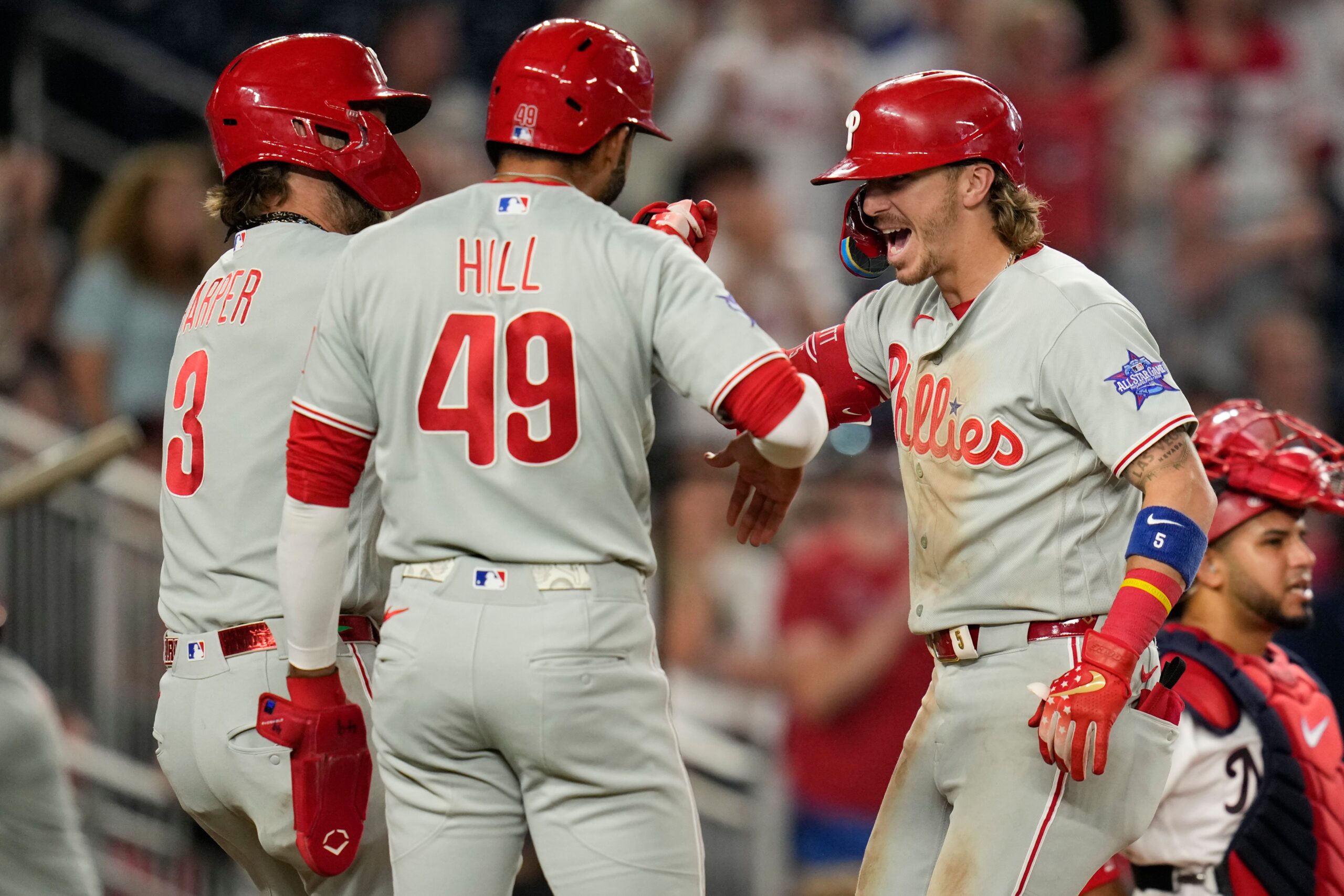
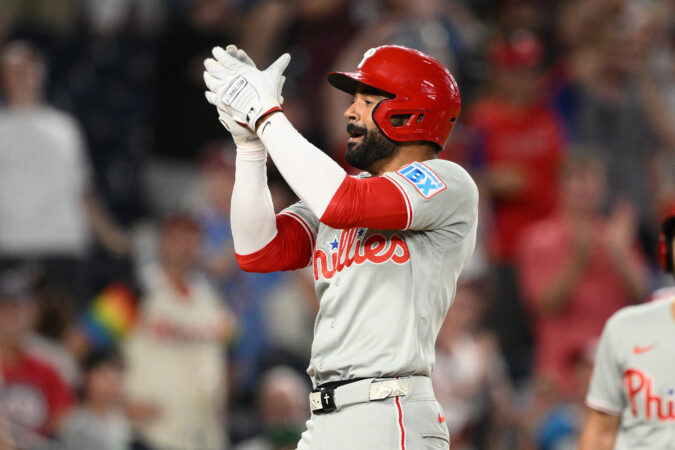
Hill came up as a pinch-hitter in the ninth inning Wednesday night in Washington, and down to his last strike, smashed a go-ahead two-run homer to fuel a 5-4 victory.
One night later, he came off the bench and picked up two hits, including a two-run homer in a five-run ninth inning in a come-from-behind 10-5 victory.
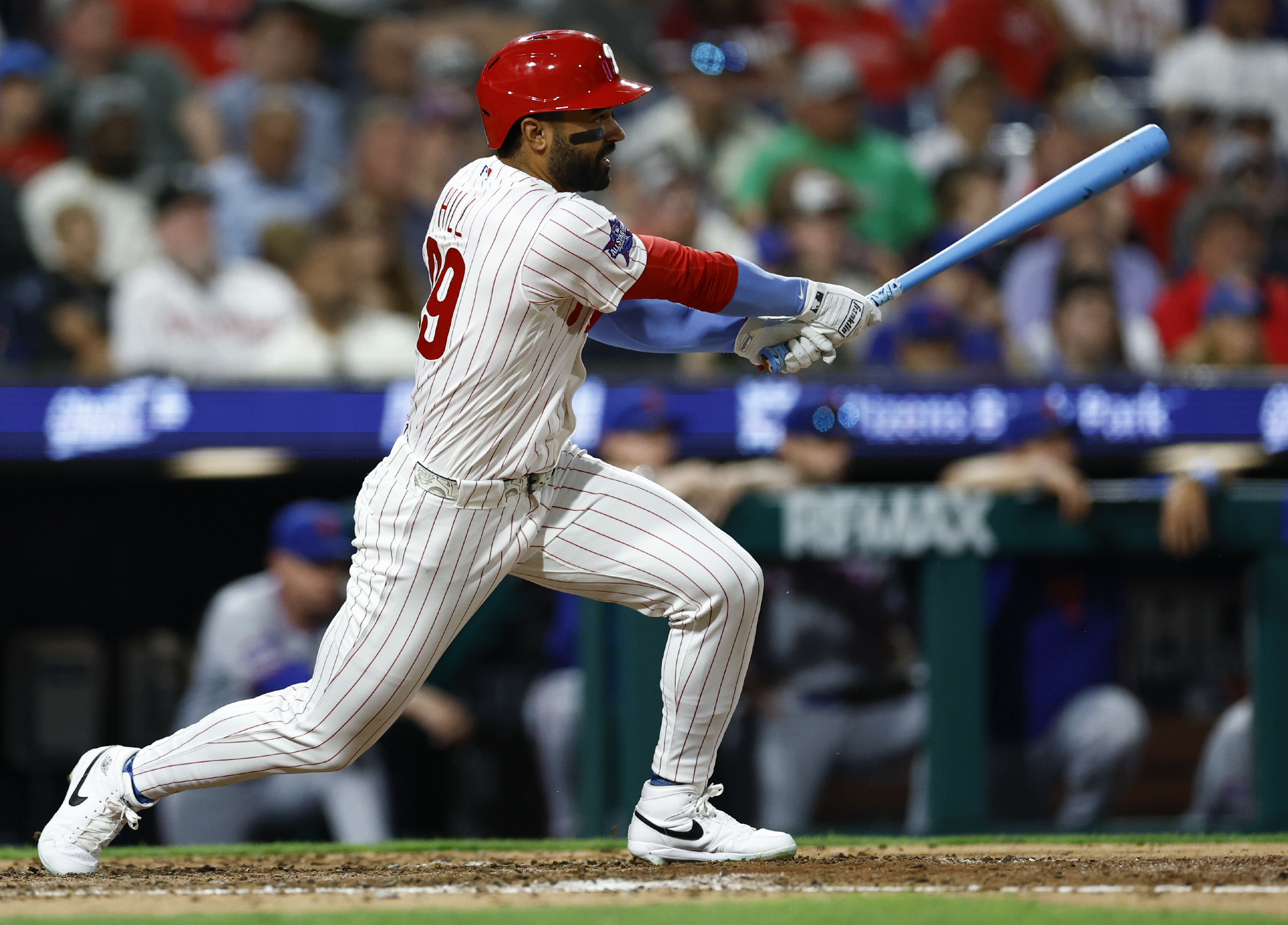
And now this. After taking two runs off the board in the first inning, Hill led off the seventh with an infield single and scored the go-ahead run on a two-out, two-strike single by Turner.
Could the Phillies possibly ask for any more from a part-time player who has bounced from the Tigers to the Mariners, Nationals, Rangers, Giants, Marlins, White Sox, and now Phillies since 2022?
“No, it’s been good,” Mattingly said. “It’s good to see, and he has integrated great with our club. I think just personality-wise, work-wise, he’s professional, the way he goes about his defense, everything. Really good.”
Speaking of which, Turner is percolating after a rough first half. The reigning National League batting champ finished with two hits for the fourth game in a row and is 8-for-20 to hike his average to .235 and his OPS to .625.
If Turner is turning the corner at the plate, he would represent a more impactful addition than anyone the Phillies could get at the trade deadline.
“I think Trea’s fine,” Mattingly said. “I mean, when do we decide that he’s [back]? When he’s getting two hits a night for 10 straight days? He’s getting his hits.”
Wheeler, meanwhile, is rolling in a remarkable comeback after having a rib removed last September to treat thoracic outlet syndrome. In his 12th start, he allowed one run on four hits in seven innings to leave his ERA at 2.03.
But what if Hill doesn’t make that catch?
“It’s the best one I’ve seen in person,” Wheeler said. “I knew [Soto] got it, so I looked back and he’s on a dead sprint towards the wall. I’m like, ‘Man, he’s about to go get this thing.’ Sure enough he did.”
Back in the dugout, Wheeler gave Hill a hug.
“I’m not gonna say it won us the game, but it won us the game,” Marsh said. “It was a special, special play.”
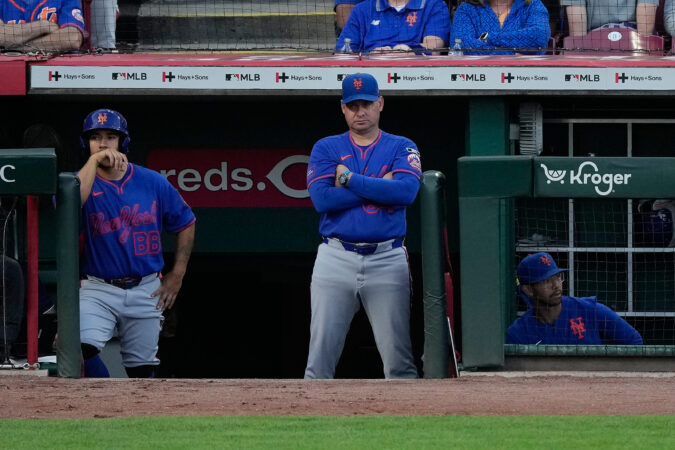
NEW YORK — Don Mattingly has lived through his share of managerial firings by the baseball teams in this city.
“Oh really?” he said, smiling.
Indeed, in 14 seasons with the George Steinbrenner-era Yankees, Mattingly played for eight managers, including Billy Martin three times and Lou Piniella twice. The Boss fired a manager midway through a season five times in Mattingly’s career.
And even if that wasn’t the case, Mattingly is managing the Phillies right now only because president of baseball operations Dave Dombrowski fired Rob Thomson on April 28 after a 9-19 start.
Surely, then, Mattingly must have thoughts on the Mets’ decision Friday to can manager Carlos Mendoza amid a six-game losing streak and with the third-worst record (34-47) in the National League.
Oh, and just in time for a visit from the Phillies.
“We don’t know what’s been going on over there, and we’ve got enough stuff to deal with ourselves,” Mattingly said. “So, I kind of just get back to the coldhearted [viewpoint]. If I’m hitting, I need to get a good pitch to hit and I need to hit it hard. If I’m playing [defense], I need to make baseball plays for the situation of the game.
“I don’t worry about what’s going on with them.”
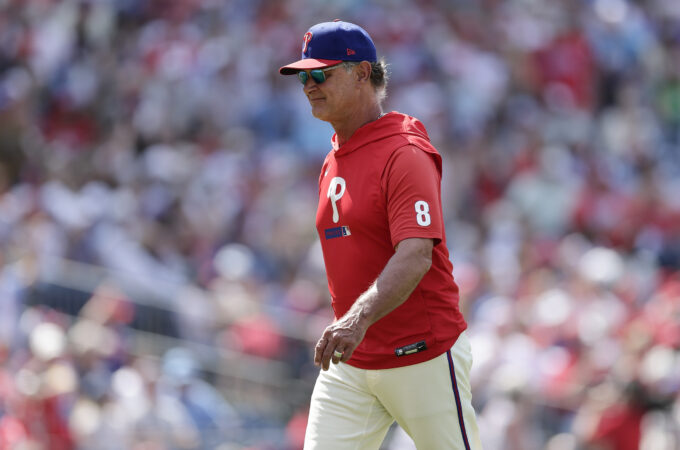
Phillies interim manager Don Mattingly said he does not get caught up in other organizations’ personnel decisions.
For the Phillies, the managerial change served as a pivot point in the season. But as Mattingly notes, it had less to do with a difference between him and Thomson than with better starting pitching. The offense has started to come around, too.
The Phillies were 36-15 under Mattingly — and 45-36 overall, a 90-win pace at the mathematical midpoint of the season entering Friday night.
It may be too late for the Mets to save their season. But maybe they’ll get a boost under interim manager Andy Green, who was promoted after spending the past 2½ seasons as farm director.
Like Mattingly, Green didn’t expect to be in this position. Green has managed previously in the majors, steering the Padres to a 274-366 record from 2016-19.
“I just think it [feels like] you are where you’re supposed to be, right?” Mattingly said. “It just falls into your lap more than anything else, and then you just take it and just do the best job you can.”
Alan Rangel will take the hill Saturday for the Phils.
Rangel ready
Two and a half hours before Friday night’s game began, Alan Rangel stepped out from the Phillies’ dugout and took a photo of Citi Field.
He will pitch here Saturday.
Mattingly said the Phillies were still deciding if Rangel will start the game or enter after an opener. Either way, it will be his latest audition for what amounts to the Phillies’ fifth-starter spot.
It will mark Rangel’s second turn since replacing demoted righty Andrew Painter. The 28-year-old righty, released as a minor leaguer with the Angels in 2024, came in after opener Tim Mayza on Monday night in Washington and allowed one run in five walk-free innings.
“He’s got an interesting mix, honestly,” Mattingly said. “[Commanding the ball] up-down is a mix that you’ve seen work in the game with different guys. You don’t have to be throwing 100 to have success, and he’s got a mix that can work. He has stuff to get people out.”
Painter, meanwhile, is scheduled to start Sunday for triple-A Lehigh Valley. It wouldn’t be surprising to see Painter throw primarily fastballs. It’s essential for him to regain confidence in his heater after opponents batted .404 and slugged .660 against it in the majors.
Phillies shortstop Trea Turner has begun to heat up slightly.
Extra bases
Mattingly on struggling Trea Turner, who went 6-for-20 in four games in Washington to raise his average to .231 and OPS to .618: “I think Trea’s fine. I mean, when do we decide that he’s there? When he’s getting two hits a night for 10 straight days? He’s getting his hits.” … Rangel will be opposed at 4:10 p.m. Saturday by Mets righty Christian Scott (2-0, 3.10 ERA). Scott, the Mets’ fifth-round pick in 2021, and Painter were teammates at Calvary Christian Academy in Fort Lauderdale, Fla.
Major League Baseball proposed limiting most free agent contracts to five years and 15% of a team’s salary cap and to eliminate deferred compensation, fleshing out details of a plan likely to spark a confrontation with the players’ association.
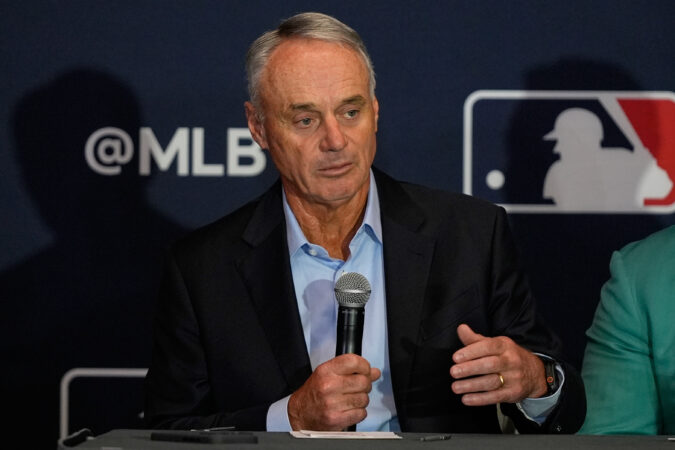
“There’s no question that we’re very far apart,” union head Bruce Meyer said during an online news conference.
During a bargaining session Thursday at the union’s office, MLB said it would accept the union’s proposal granting free agency a year early for players who have reached age 30 if the union accepted the league’s salary cap system. MLB also proposed boosting the minimum salary from $780,000 to $1 million for those with two years of big league service.
MLB also proposed increasing the pre-arbitration bonus pool from $50 million to $65 million next year and $75 million by 2032, the sixth season of MLB’s proposed seven-year deal.
Meyer said “the debate got a little more vigorous today.”
“The league has done us a favor because their proposals are in fact so obviously and extremely bad for players at all levels that it’s actually been a benefit for our unity,” Meyer said. “Anybody who’s banking on Major League Baseball players cracking, it’s never happened. It’s not going to happen. That’s why we’re the only ones who don’t have a salary cap.”
MLB also said it would agree to eliminate the qualifying offer for free agents that since its inception in 2012 has restricted the market for some players.
Bargaining started May 13 for a contract to replace the five-year deal that expires Dec. 1, and owners proposed a salary cap for the first time since the union fought off the system during a 7½-month strike in 1994-95. MLB is expected to impose a lockout in December, halting free agent signings and trades.
After the prior agreement expired in December 2021, intensive bargaining did not start until late February as the threat approached of losing regular-season games — along with revenue and salary. The sides reached an agreement on March 10, the 99th day of the lockout, preserving the 162-game schedule.
In the league’s cornerstone proposal, made last month, team spending would be capped next year at $245.3 million, using figures for luxury tax payrolls that include $20.1 million for benefits and the pre-arbitration bonus pool. It also would establish a payroll floor of $171.2 million, forcing several teams to spend more. The two-time World Series champion Los Angeles Dodgers, baseball’s biggest spenders, had a $415.2 million payroll on opening day this year — around $170 million over the proposed cap.
“The biggest issue baseball fans want solved to strengthen the game is fixing the payroll disparity that leaves too many fans without hope of their team competing for a World Series title,” MLB spokesman Glen Caplin said in a statement. “Every other major U.S. sport has tackled this problem, and every year more small market teams in those leagues have a chance to win. The salary cap and floor proposal levels the playing field.”
Meyer took issue with that.
“It’s appalling that the stewards of the game, the people whose job it is to grow the game primarily and promote the game have for whatever period of time now in the last couple of years been saying nothing but the game’s broken,” he said.
As part of the plan, MLB would establish a “cornerstone player” similar to the NBA’s Bird rule, which would allow a team to re-sign a player at 16% of the cap. A free agent switching clubs would be limited to a $36.8 million salary next year and a re-signing player to $39.2 million.
Salaries for free agents in additional seasons of a multiyear contract would be limited to 5% increases, as would salaries for younger players in multiyear deals that cover potential free-agent seasons.
Contracts would be capped by service time: at $500 million and 12 years for those yet to make major league debuts, $461 million and 11 seasons for those with 0-1 years of service, $421 million and 10 years for 1-2, $382 million and nine seasons for 2-3, $343 million and eight years for 3-4, $304 million and seven years for 4-5, and $265 million and six years for free-agent eligible players.
Agent Scott Boras claimed the then-record $252 million, 10-year contract he negotiated for Alex Rodriguez in December 2000 would not have been allowed.
“It’s like offering a few pieces of furniture if you agree to live in a house with a 4-foot ceiling,” he said, “an attempt to move player contract values back to the 1990s.”
Banning deferred compensation would eliminate a business practice used most prominently by the Dodgers, who owe just under $1.1 billion to 10 players from 2028-47. In addition, MLB would restrict bonus provisions in player contracts and mandate a standard award bonus package.
MLB said it would accept the union’s proposal to drop free-agent eligibility to five seasons of service from six for those turning 30 by the Nov. 1 of the offseason. MLB said 354 players on big league rosters as of Thursday would reach free agency a year earlier. MLB would start the change in the 2027-28 offseason.
As part of the minimum salary proposal, MLB said players with less than two years of service would have a $900,000 minimum and if earning a full year of service would get an additional $100,000 from the pre-arbitration bonus pool. Minor league minimums for players with major league contracts would increase from $63,600 to $73,400 for initial big league deals and $127,100 to $146,700 for additional contracts.
The union proposed to jointly lobby with MLB for the prohibition on prop bets; to allow player endorsement and sponsorship of legal betting entities, including sportsbooks and prediction markets; to have players under MLB betting investigations to be placed on administrative leave, similar to the domestic violence policy; and to allow players near the end of suspensions for betting to have unpaid 15-day minor league assignments, similar to the drug policy.
In addition, players asked for increases for in-season meal and tip allowances; housing benefits for players with major league contracts who are assigned to the minors; and increased moving expenses, including for assignments from one minor league affiliate to another.
Meyer expects at least one more bargaining session before the All-Star break.
NEW YORK — Carlos Mendoza was fired as manager of the underperforming New York Mets on Friday and replaced by Andy Green.
New York is 34-47 following a six-game losing streak, 15 games behind NL East-leading Atlanta and 9½ games back of the NL’s last wild-card berth.
The Phillies open a three-games series against the Mets at Citi Field on Friday night.
Mets owner Steve Cohen had high expectations for a team without a World Series title since 1986. New York opened the season with baseball’s highest payroll at $358 million and was projected to pay an additional $124 million in luxury tax.
“Our commitment to bringing our fans a championship-caliber team has not changed,” Cohen said in a statement. ”There is no sugarcoating it: This season has been a disappointment and our fans deserve better than what we’ve delivered.”
A former Yankees assistant coach, Mendoza replaced Buck Showalter after the 2023 season and led the Mets to a 206-199 record. While New York advanced to the NL Championship Series in 2024, the Mets failed to reach the playoffs last year and are among the sport’s biggest disappointments this season.
“Carlos has led the organization with passion and grace and is beloved by everyone who works with him on a daily basis,” president of baseball operations David Stearns said in a statement. “Carlos’ impact on our players, staff, and culture over the last three seasons has been transformative. Unfortunately, we know we are falling short and change is necessary to move forward.”
Green, a former major league infielder, joined the Mets in 2023 as senior vice president of baseball development. He managed San Diego to a 274-366 record from 2016-19.
We will learn to believe in these Phillies. These Bryce Harper Phillies. These Kyle Schwarber Phillies. These Zack Wheeler and Cristopher Sánchez Phillies.
We will learn that, while they might occasionally lose, they are never defeated.
We will learn that, until the last strike of the last out is recorded, they have not yet lost.
We came to learn this about the core of these Phillies in the dead of summer in 2022, and perhaps we should relearn it as summer begins in 2026. Then, they sparked a drive to the World Series with a handful of exhilarating victories. Now, after a wild midweek series in Washington, they might be doing the same.
We will come to accept that, as long as Harp and Schwarbs and Wheels and Sanchey are active and competing and leading the charge, the rest will follow until the very end.
That quartet might not be the best players in baseball, but they are always the best players they can be, and that’s often all that matters, because it inspires their peers to be the same. That’s how the Phillies manage comeback miracles like they produced in D.C. this past week.
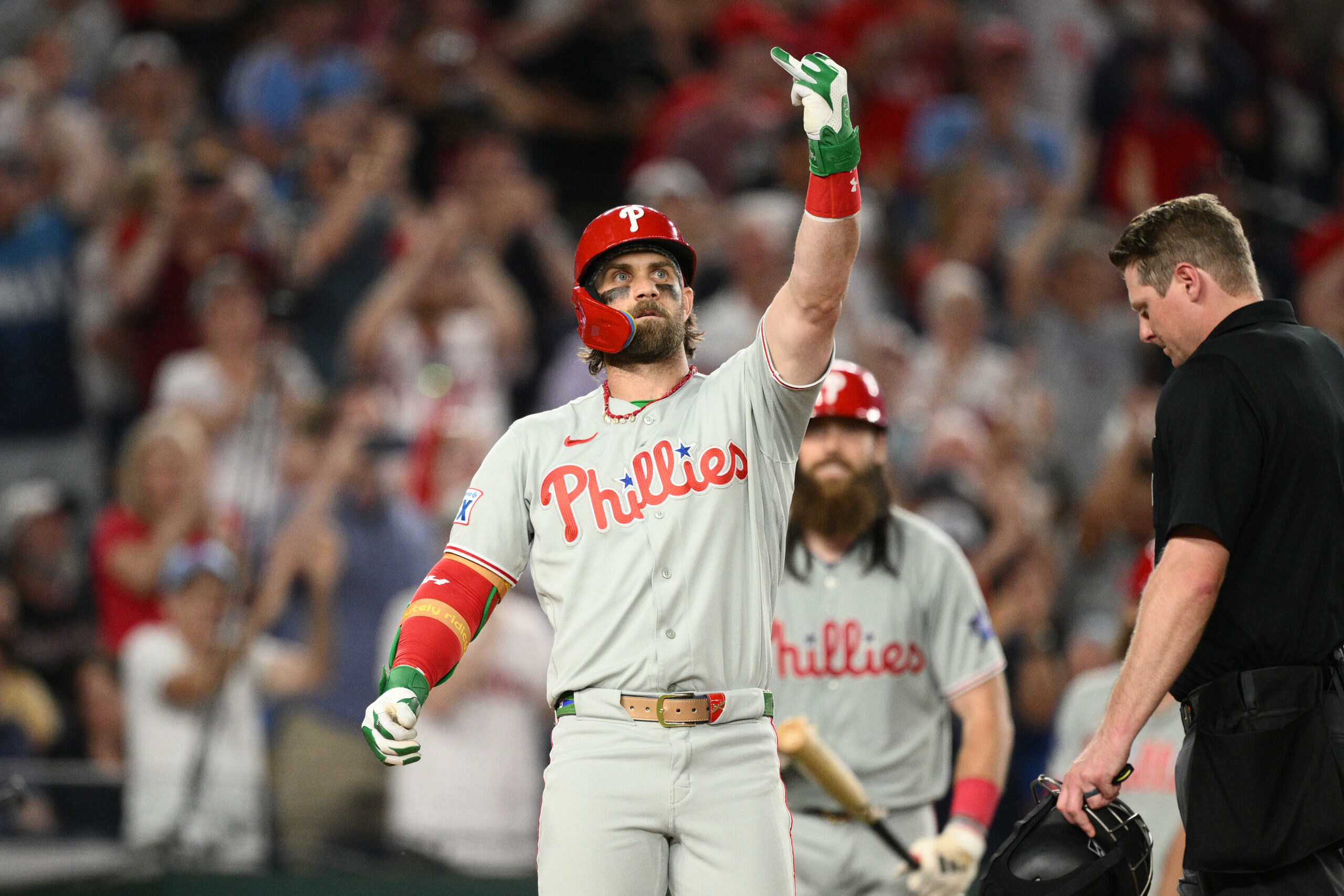
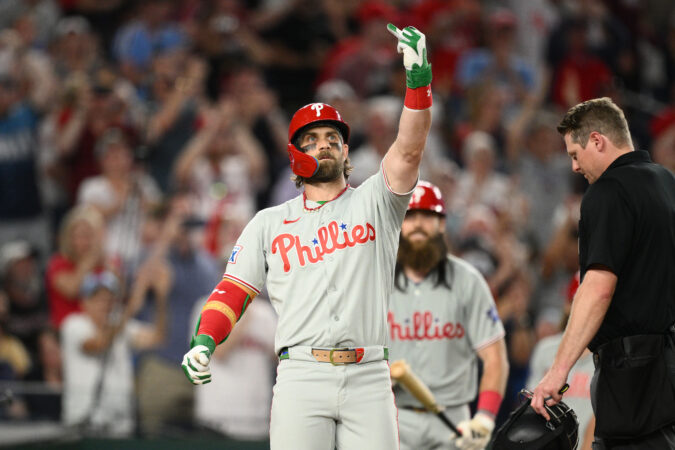
Bryce Harper flashed a finger — which he clarified was his ring finger — toward the upper deck in right field as he rounded the bases of his go-ahead two-run homer on Thursday in Washington.
Then, incredibly, it happened Thursday night, too, a 10-5 thriller that launched them to Queens for three against the last-place Mets, who, despite the presence of duplicitous error machine Bo Bichette, have lost six in a row, costing manager Carlos Mendoza his job on Friday.
They won three of four in D.C. Wheeler was scheduled to start Friday in New York.
“We’re coming. Watch out,” Harper told 94 WIP radio. “Obviously, we have a great ball club.”
Great? Maybe.
The momentum is palpable.
Why?
Because the Phillies hit go-ahead home runs in each of the ninth innings of those games, the first time that’s happened in Major League Baseball history.
Harper, scorching, was in the middle of it all Thursday.
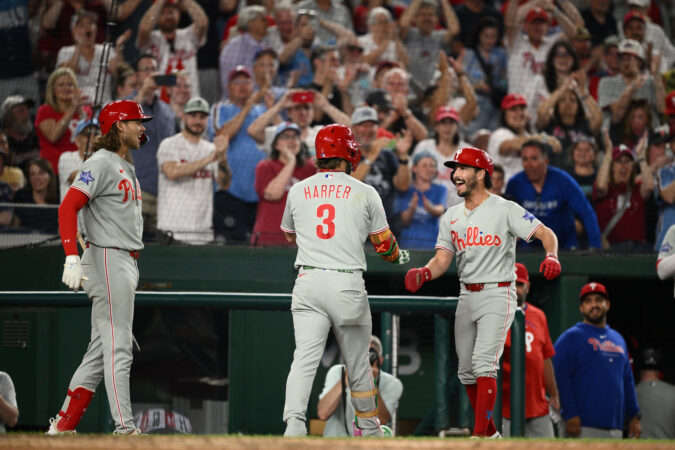
Down 5-0 in the fifth, Harper beat out an infield single and scored the first run on Brandon Marsh’s third home run of the four-game series. Harper drove in the third run in the seventh with a 3-2 bases-loaded walk that began a three-run, game-tying frame. Then Harper drove in the go-ahead runs with a 390-foot blast to left-center, the surest sign that Harper’s hot: When he’s going “oppo,” he’s unstoppable.
Harper is 13-for-31 with three homers and seven RBIs in his last eight games. The Phils entered the weekend having won five of six and sit four games behind the idle Braves, the closest they’ve been to the top of the NL East since tax day, when Rob Thomson was still their manager.
They were 9-19 when Thomson was fired 12 days later, and they’re 36-17 since bench coach Don Mattingly took over as interim manager. Maybe it’s been addition by subtraction. More likely, it’s coincidence, since this core group of Phillies has been winning in heart-stopping fashion since it came together in 2022, when the Phils fired Joe Girardi and Thomson took over as interim manager.
The DNA of this club seems independent of its boss.
“Each team is different,” Harper told reporters afterward. “It’s how we are. It’s who we are.”
There were other big moments from big names Thursday, and all week, really. Schwarber, who didn’t start Tuesday or Wednesday, worked a 10-pitch, two-out, pinch-hit walk in the ninth on Wednesday that framed a bigger moment for a lesser player. Trea Turner put his season from hell on hold for the ninth inning Tuesday, when his two-out single began an eight-run inning in which his second two-out single drove in the eighth run.
How could something like this possibly happen again Thursday?
“You’ve got to keep fighting back,” Harper said.
Sánchez stumbled to a 5-0 deficit after 2⅔ innings but stabilized and faced just one batter over the minimum in recording the final seven outs. That preserved the bullpen, as four relievers pitched a scoreless inning apiece. José Alvarado finally looked untouchable in the seventh, and Orion Kerkering, who’d blown a save two days earlier, earned the win when, in the eighth, he stranded a leadoff double at second base and preserved the tie.
It is contagious.
How contagious?
Derek Hill celebrates his two-run home run during the ninth inning on Wednesday.
Derek Hill, who was Wednesday’s hero with a pinch-hit, go-ahead, ninth-inning homer, padded the lead Thursday with a two-run shot for a five-run lead. He’s a journeyman outfielder who has been a Phillie for just two weeks, the roster replacement for the Phils’ latest free-agent outfield bust, Adolis García, who had latissimus dorsi repair surgery and is done for the season.
How contagious?
Edmundo Sosa had the first homer, double, and five-RBI night of his eight-year career in Tuesday’s 14-9 win, when they erased a two-run deficit in the ninth. Sosa has a knack for the dramatic. He ended May with a two-run homer in the eighth inning to complete a late comeback in Los Angeles.
How contagious?
Bryson Stott’s three-run homer on Tuesday was his first go-ahead homer in the ninth inning in four years.
“We just have that never-quit mentality,” said Brandon Marsh, the team’s most consistent hitter this season.
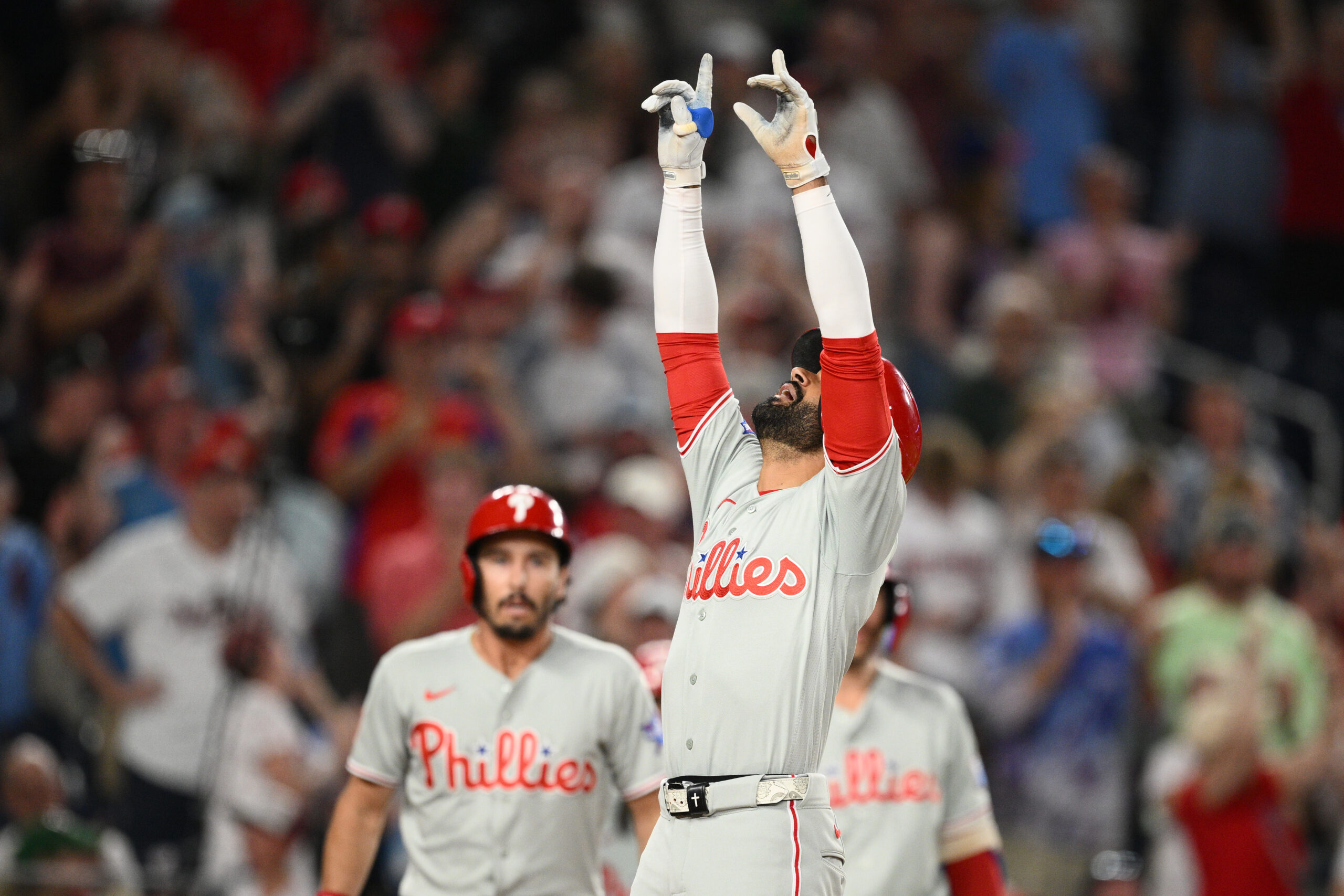
Marsh padded his unlikely All-Star resume with a two-run shot in the ninth inning Tuesday that re-tied the game, 8-8, and set up Stott’s moment. Marsh was 9-for-14 and scored five runs in the three comeback wins.
Marsh knows of what he speaks because he’s lived this life before. It’s all he’s ever known, really.
Marsh landed in Philly as a deadline trade piece in 2022 from the Angels having played just 163 games in the majors. He landed in the middle of the Phillies’ crucial surge.
It began July 25, when Stott’s three-run home run in the eighth inning gave the Phillies a 6-4 lead over the visiting Braves. That was the first of 13 wins in 15 games, which allowed them to play .500 ball the rest of the season and still reach the playoffs for the first time in a decade.
Bryson Stott (right) hit the go-ahead three-run homer on Tuesday in the Phillies’ 14-9 comeback win over the Nationals.
It was the first of five games in that span that crackled with late-game electricity.
On July 29, in the top of the 10th inning, Rhys Hoskins ripped an 0-2 fastball 410 feet over the centerfield wall in Pittsburgh for a 4-2 win. The next night, again in the 10th, Hoskins put a ball in play that the Pirates threw away, and that was the difference.
On Aug. 3, the day after Marsh became a Phillie, he was in Atlanta and saw J.T. Realmuto drive in Hoskins with a fielder’s-choice grounder to tie it at 1 in the eighth, then saw the next batter, Nick Castellanos, blast a two-run game-winner.
A week later the Phils managed six hits and three runs in the bottom of the eighth to win, 4-3, over the visiting Marlins.
Does this recent competence mean that the Phillies will reach the World Series this season? Not necessarily.
What it means is, with this Core Four, the faithful should never forsake the season … and they should watch every game until the very last out.
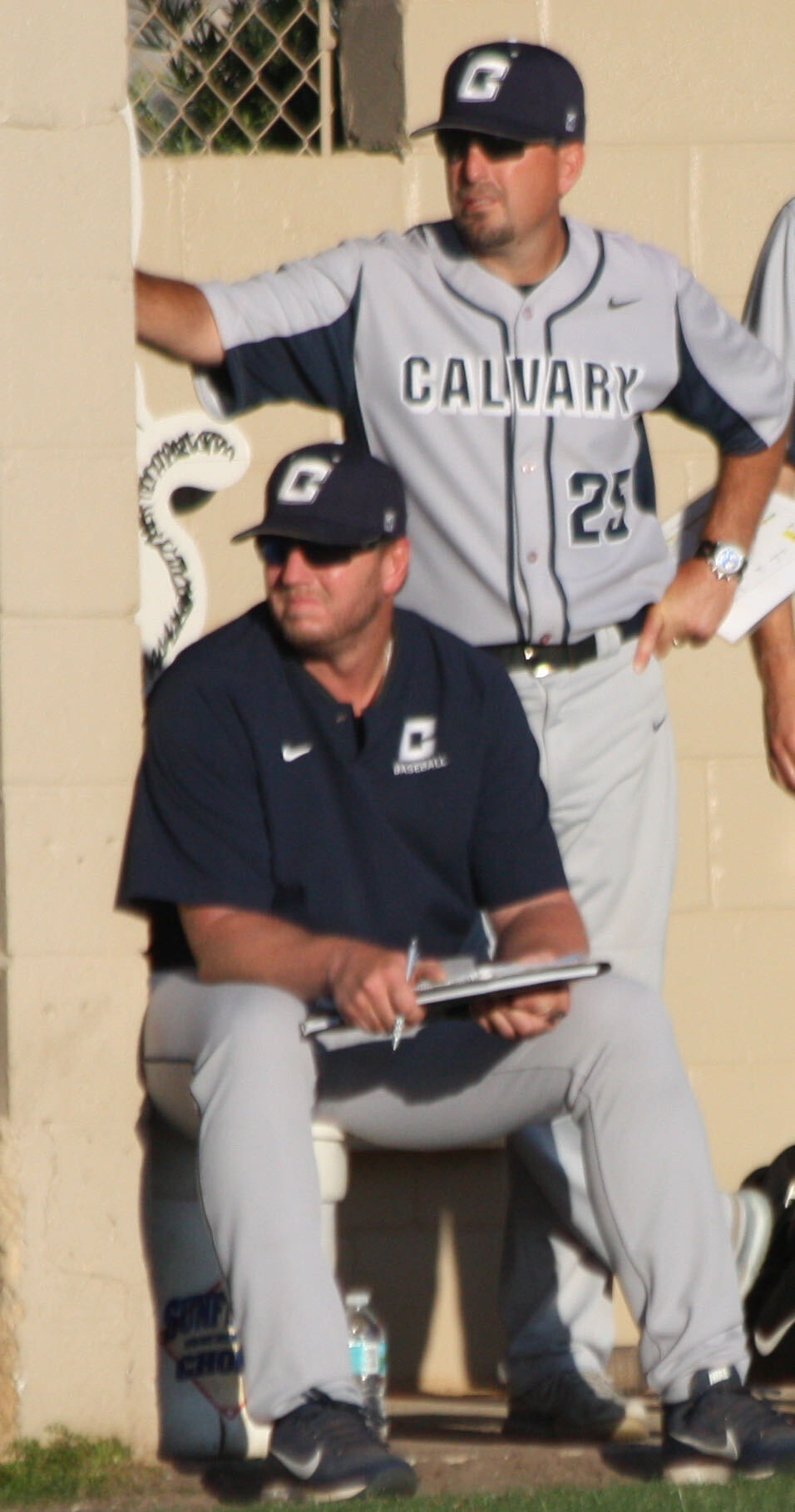
The night before Roy Halladay died, he was with his team. It was Nov. 6, 2017, and Calvary Christian High School was playing an exhibition game in Clearwater, Fla.
Halladay, a pitching coach, showed up in baseball pants and a batting practice jacket, with a clipboard beneath his arm. This would not have been unusual for March or April, but fall ball was much more relaxed.
The rest of the staff, which was dressed in shorts and T-shirts, erupted in laughter. Halladay didn’t hesitate to fire back. “Thanks for the heads up,” he said with a grin.
As the Warriors jogged onto the field, just past 7 p.m., the future Hall of Famer sat on the bench. After a few innings, infielder Christian Cairo joined him.
He liked watching games with Halladay. The former Phillie and Blue Jay brought the same intensity to coaching that he did to his 16-year MLB playing career, but with a newfound lightness.
He’d routinely crack jokes from the dugout. Months earlier, a hitter from a local high school walked up to the plate. He had straight, long hair, all the way down to his back. Halladay turned to the mound.
“Hey!” he yelled. “Look out for the bunt! This chick can run!”
The high schoolers loved it.
“Ridiculous stuff like that,” said Halladay’s 25-year-old son, Braden. “It was funny because he’s saying this to, like, 14-year-old kids.”
Coach Greg Olsen (seated) and pitching coach Roy Halladay during a Calvary Christian game in spring of 2017.
Halladay was in prime form on Nov. 6. The game wouldn’t count toward Calvary Christian’s record, but he was still taking notes and videos on his iPad.
He was also razzing everyone in sight: his players, their players, umpires.
“We were talking crap with each other,” Cairo said. “It was a lot of fun.”
At 9:30 p.m., the two teams left the field. By the next afternoon, ominous rumors had started to spread. Braden, then 17, got a call from his mother. She told him to pick up his 13-year-old brother, Ryan, and drive them to their house.
Pitcher Nolan Hudi texted Braden while he was in the car. He sent a link to a Twitter post: a selfie of him and Roy in the cockpit of his plane, taken three days prior.
The photo had gone viral. People were commenting “RIP.”
Hudi asked if people on social media had ever tweeted such morbid things about his father.
“No,” Braden said.
That morning, at 11:47 a.m., Halladay had flown his Icon A5 out of Brooksville-Tampa Bay Regional Airport. A few minutes after taking off, he crashed into the Gulf of Mexico.
The boys he coached are now men. Braden works in data analytics for the Texas Rangers. Cairo, 25, is a minor leaguer in the Phillies system. Some have played for other affiliates; Hudi spent a couple of years pitching at the University of South Florida.
They all cherish that 2017 season. Not just for what they learned (which was plenty) but for what they saw. As a big leaguer, Halladay was fierce and, at times, intimidating.
But as a coach, he was more laid back. He’d play pranks. He’d chirp. He’d try goofy things to help his team win, like flying a drone over a rival’s batting practice.
It was all refreshingly fun. What the players didn’t realize, though, was that they were giving Halladay something too.
“A way for him to enjoy baseball,” Braden said, “in a very pure form again.”
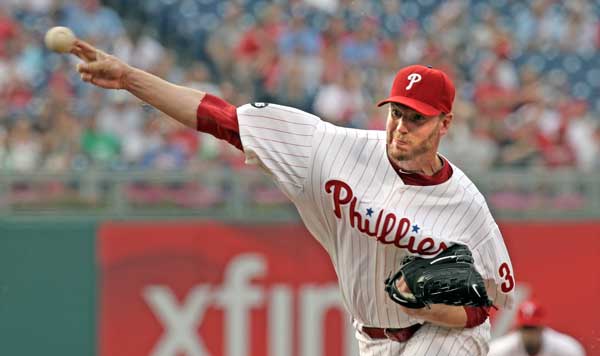
Roy Halladay won two Cy Young awards in his 16-year career, including in 2010 with the Phillies.
Roy being Roy
Halladay never liked the spectacle his success could bring. And it was difficult for him to escape.
His sons started playing travel ball in the early 2010s, at the height of his career. The Phillie would frequently be stopped for autographs at games and tournaments.
This attention got so bad that he started keeping a Groucho Marx-style disguise — black-rimmed glasses and a fake nose and mustache — in the back of his car.
“He thought it was hilarious,” Braden said, “because it’s the stupidest disguise you can come up with.”
But while Halladay didn’t enjoy the chaos, he did enjoy teaching. In 2011, Hudi played alongside Braden on a Florida team called the West Coast Warriors. Halladay, fresh off his second Cy Young Award, would stop by to help out.
One day, he approached Hudi during a bullpen session in Tarpon Springs. Halladay asked what pitches he threw. The 11-year-old’s answer was essentially “nothing.” He asked if he’d ever tried a cutter. Hudi shook his head.
Halladay grabbed a baseball and showed him a grip. Then he reached for a pen, and traced around Hudi’s hand, so the middle schooler could practice at home.
“He outlined where my fingers were,” Hudi said. “I thought that was so cool.”
Parents would ask Halladay if he’d be willing to coach, but he always demurred. The big leaguer wanted his son to carve out his own identity in the sport. Having a world-class athlete around would make that challenging.
But in 2014, he had a change of heart. Halladay had recently retired. Braden was only a year and a half removed from high school, and had experienced a few seasons on his own.
Roy Halladay talking to pitcher Nolan Hudi during a game in 2017.
The son encouraged his father to join the coaching staff of his travel ball team, the Dunedin Panthers. Halladay stayed through 2015, serving as pitching coach and later head coach.
He did not take this role lightly. Once, a baserunner bowled over Dunedin’s catcher at home plate. The league’s rules stated this should be an automatic out, but the umpires didn’t call it.
Halladay was furious. He explained to the crew that they’d made a mistake. One umpire, who didn’t recognize the eight-time All-Star, told him that he didn’t “know the rules of baseball.”
This set off Halladay even more. He was ejected. Braden, who wasn’t standing far away, overheard a conversation between the officials not long after.
“He goes, ‘Hey, dude, you know you just ejected Roy Halladay, right?’” Braden recalled. “And the umpire goes, ‘Oh my God.’”
Halladay decided to have himself a day. He went to the concession stand and bought three cheeseburgers. He filled his big Yeti tumbler with Diet Coke, got in his truck, and pulled it behind the left field fence.
He sat there for the rest of the game, scrutinizing the umpire’s every call. If he missed one, Halladay would let him know it, loudly proclaiming that the official didn’t “know the rules of baseball.”
Braden enrolled at Calvary Christian in 2016. He spent his freshman year playing junior varsity, without his father, and was promoted to varsity as a sophomore.
Halladay joined head coach Greg Olsen’s staff that year. Hudi transferred in from East Lake High School in Clearwater not long after. He and Braden were close friends; Hudi would sleep over at the Halladays’ house fairly often.
To Hudi, the 6-foot-6 Halladay was not a star pitcher. He was an eccentric parent. One time, when the boys were older, Hudi made the mistake of drinking Halladay’s last Dr Pepper.
Halladay barged into the game room, where Hudi and Braden were watching TV.
“Who drank the last [expletive] Dr Pepper?” he asked.
Hudi, holding the can with trepidation, said he didn’t know.
The pitcher stormed out. He returned 30 minutes later with two six-packs.
“He’s like, ‘This six-pack is yours,’” Hudi recalled. “And then he holds up another case, and he’s like, ‘Don’t [expletive] touch this. This is mine.’”
Roy Halladay had a 3.25 ERA in four seasons with the Phillies and tossed a perfect game in 2010.
Halladay brought the same attitude to the Warriors in 2017. Braden wasn’t used to seeing his father act this way on a baseball field.
“Whenever he was home, he was kind of a funny, not-take-things-too-serious kind of person,” he said. “It was more so that you’d notice at the field that he wasn’t doing that. And he actually was kind of a little bit scary.”
But at Calvary Christian, there was no pressure to uphold a persona.
“I think he just got to be himself,” Braden said.
A method to his madness
Olsen had been around a lot of coaches at this point, some of them former big leaguers. But he quickly learned that reaching the pinnacle of the sport didn’t necessarily translate to on-field instruction.
This was especially true when it came to resonating with kids. They could easily discern coaches who were sincere from those who were not. And if they deemed a coach insincere, it was over.
Halladay didn’t have this problem. He could explain grips and mechanical adjustments with ease (and without condescension).
Roy Halladay with his son Braden in 2017.
He would go beyond telling a player what to do. He’d help them find their feel. That way, when the high schoolers were alone on the mound, they could throw a curveball or a splitter, or any other pitch, and make corrections in the moment.
The coach showed no favoritism, not even to his son. He studied like he was still in the big leagues, sitting on a bucket with his enormous iPad, scribbling notes during games and practices.
“It was like a 55-inch flat-screen TV,” Hudi said. “And he’s a big guy, so him holding that giant thing made it look even crazier. Nobody knew what he was writing down.”
He didn’t need to show them. Halladay routinely proved he’d done his homework. In 2017, he helped Hudi redesign his entire windup, from stepping sideways to stepping behind the rubber, with his hands overhead.
Halladay wanted the pitcher’s momentum going toward the plate; otherwise, his stride would be inconsistent.
“The wealth of knowledge was crazy,” Hudi said. “And it went so much further than pitch grips.”
Halladay helped his team with mental skills, too. Olsen would often see him talking to players between innings, to strategize for upcoming at-bats or guide them through a tough moment.
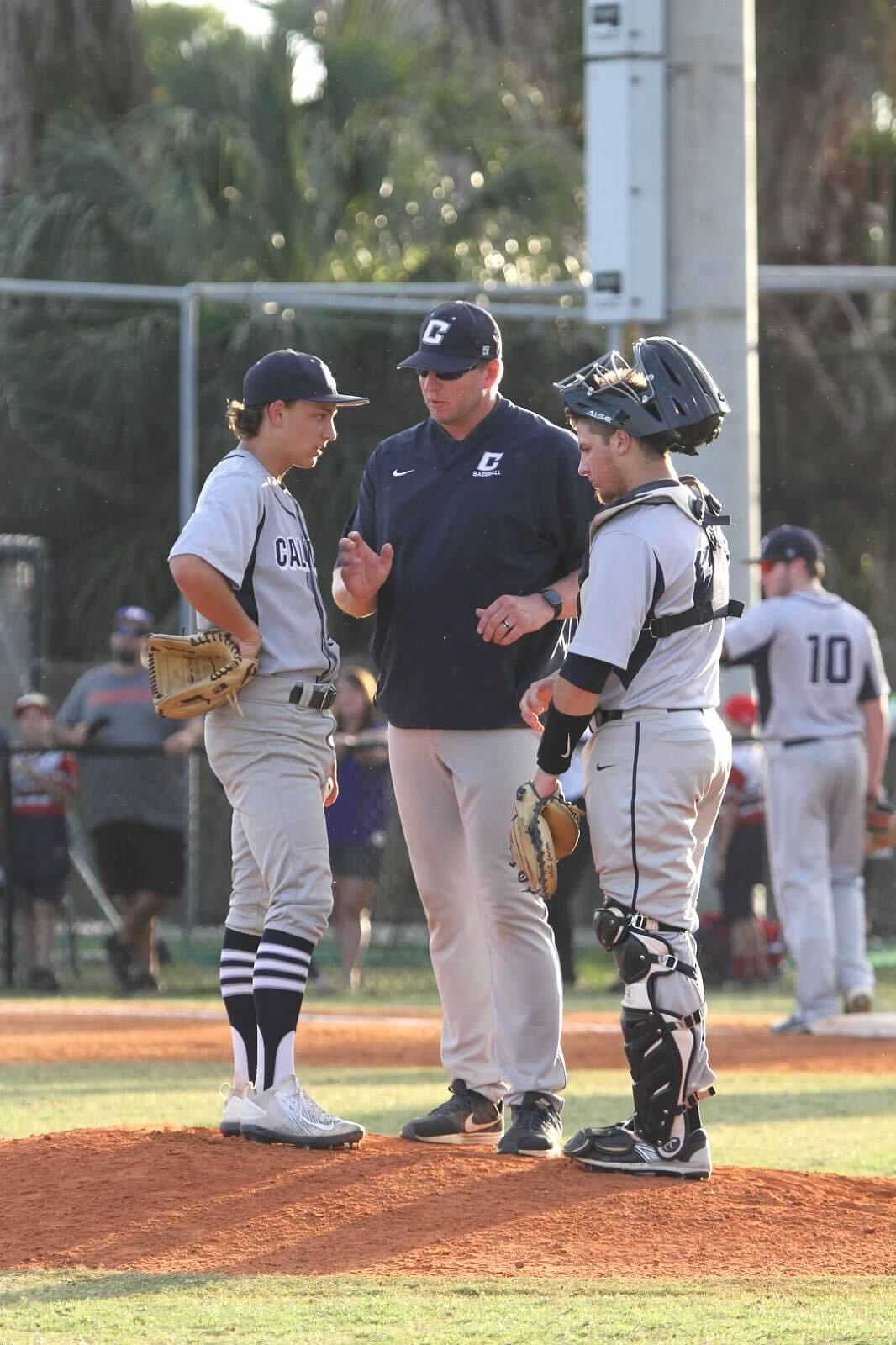
He’d tailor his mound visits to whatever was needed, no matter how unorthodox it looked.
Braden remembered one game when he was losing his command. Halladay walked out to the mound but didn’t say a word. He just stared.
After the inning was over, the pitcher approached his father.
“Hey man, what was that?” Braden said.
“Were you thinking about throwing strikes?” Halladay asked.
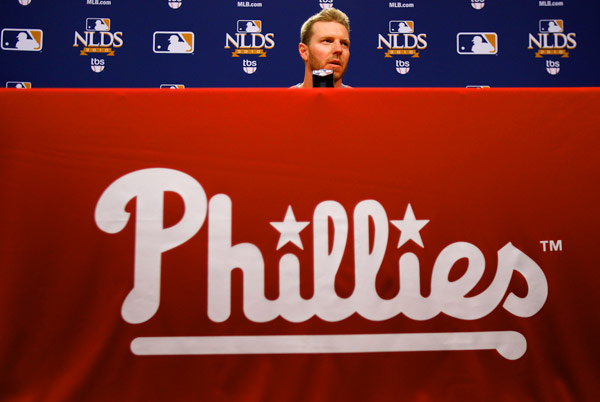
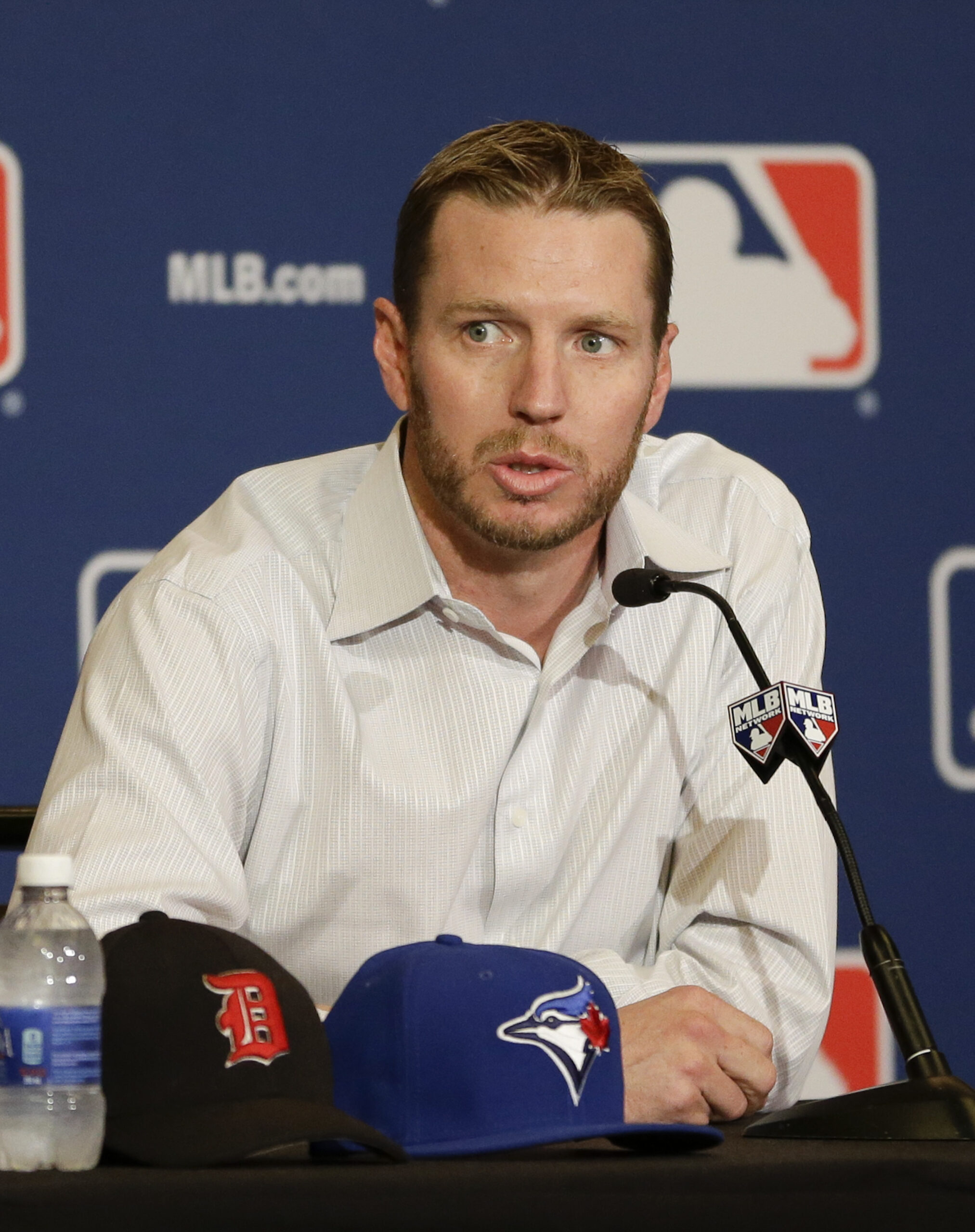
At his retirement news conference in 2013, Roy Halladay had a Dunedin Panthers hat among the caps for the teams he played for.
“No,” Braden said. “I was thinking about how weird that was.”
His father smiled.
“Exactly!” he said.
This was just one of many instances when Halladay was validated for his quirky ideas. He and Olsen would stand next to each other in the dugout, signaling pitches to Calvary’s catcher.
They usually agreed. But every once in a while, Halladay would propose something unusual. In the district semifinal, a formidable Tampa Catholic hitter took his final at-bat. He’d struck out twice earlier in the game on sliders.
Halladay wanted a fastball down the middle.
“He was like, ‘Look, we gotta go off script at some point,’” Olsen recalled. “And he was right. We threw a ball right down the middle, and the hitter froze. That was his genius of pitch calling.”
Two weeks later, in the regional final, Halladay called for a splitter in the ninth inning with a runner on first and a one-run lead.
There was one problem: The pitcher had never thrown a splitter in a game before.
“In that moment, I felt like this is either going to work, or our season could be over,” Olsen said. “Because the kid’s gonna hit it out. But he made the right call. We jammed him, he grounded out, and we won the game.”
Cairo, who was sidelined with a hand injury, had a front-row seat to all of this. Sometimes, the infielder would sit next to Halladay on the bench and go through pitch sequencing.
Other times, they’d just talk crap.
“I remember this one pitcher was talking a lot after we scored like six runs on him,” Cairo said. “Roy told him to go sit in his truck or something like that. That was fun.”
Calvary Christian didn’t lose a game that year. The Warriors were perfect in the regular season — despite enduring injuries to multiple players — and made it to the state championship in Fort Myers in late May.
By now, everyone knew of Halladay’s idiosyncrasies. So no one was surprised when he was caught flying a drone over Pensacola Catholic’s practice.
The opposing coaches saw a metal device whizzing through the air. They told a security guard, who spotted Halladay in the dugout with a remote control and a grin.
The security guard was not as amused. Had anyone else pulled this stunt, they would’ve been kicked out of the game. But Halladay knew the tournament officials wouldn’t do that.
He got a slap on the wrist.
“The official was like, ‘Hey, dude, like, you can’t spy on the other team with aerial equipment,’” Braden said. “And he was like, ‘Ahhhh … sorry, sorry.’”
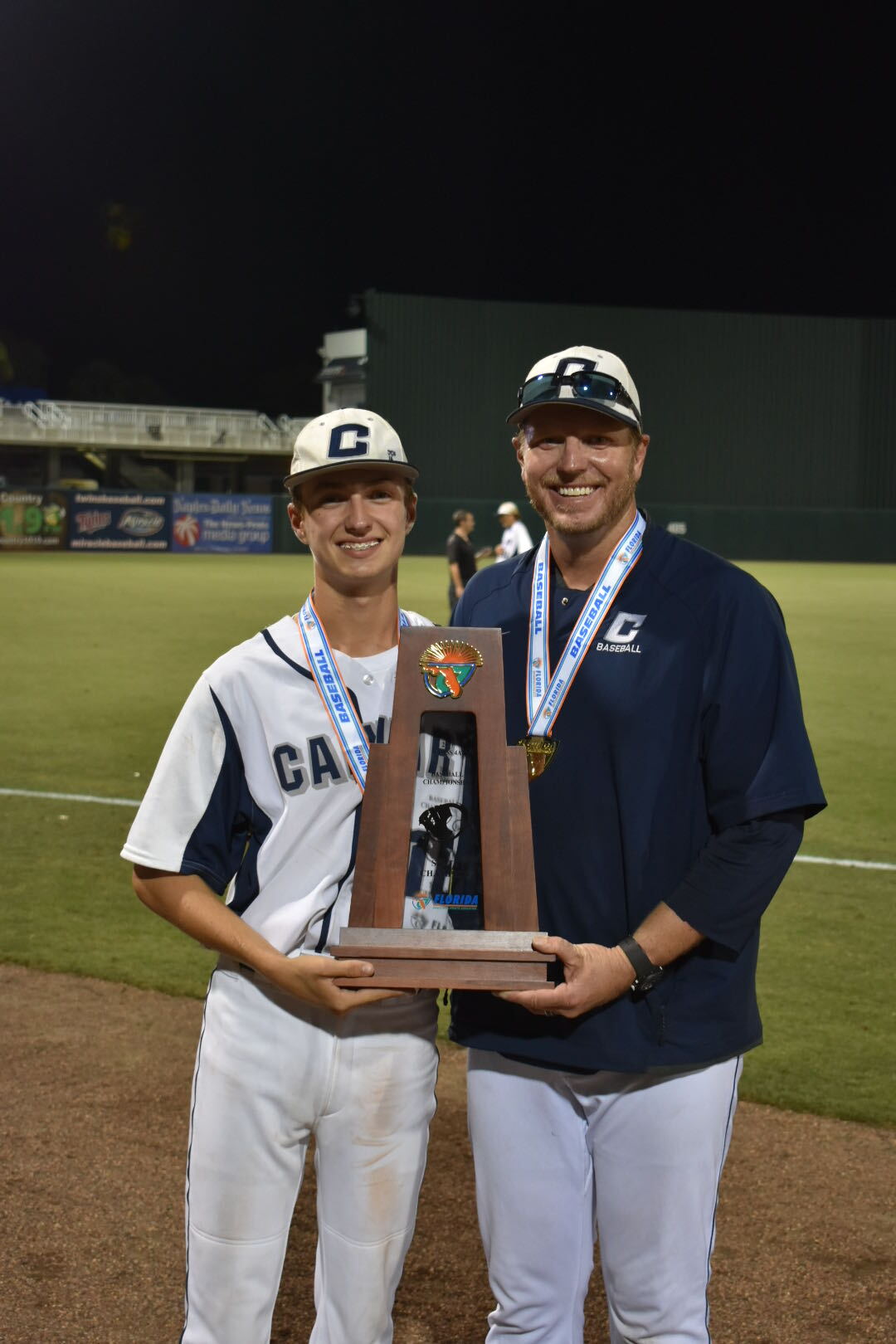
Roy Halladay and coach Greg Olsen after winning the state championship in 2017.
‘I really felt him there’
The drone surveillance didn’t end up being necessary. Calvary Christian won the Class 4A state baseball title handily. By the sixth inning, they’d amassed an 11-1 lead over Pensacola Catholic. The game ended by mercy rule.
The high schoolers sprinted from the dugout, jumping into a dogpile. Halladay flitted around the group, giving bear hugs big enough to lift players off the ground.
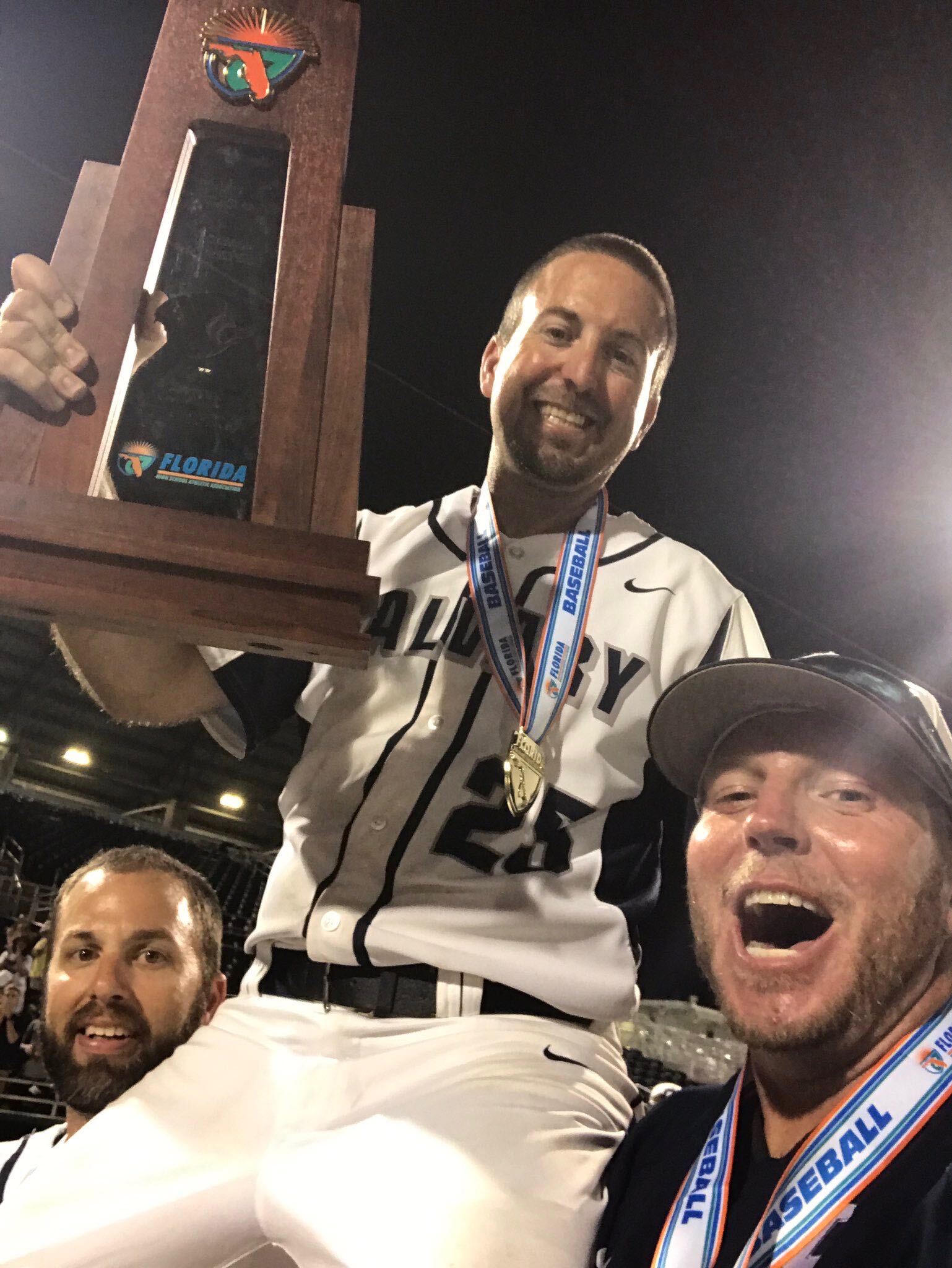
He and assistant coach Mike White hoisted Olsen on their shoulders, as he carried a wooden trophy. The former Phillie beamed from ear to ear. This wasn’t a World Series. But it was sweet all the same.
Halladay couldn’t wait to do it again next season, which is why he arrived to an exhibition game in full baseball garb in early November. But that would be the last time he’d see his team.
Yes here are the HS kids and me with my son! Proud dad, Proud coach, Proud member of a coaching staff! #familypic.twitter.com/3WgoW0kwC6
Braden described the days after his father’s death as a blur. Teammates and coaches came by the house to express condolences. Cairo and Hudi barely left his side.
On Nov. 8, Olsen gave the younger Halladay a call. Calvary Christian had another exhibition game scheduled for Nov. 9, against East Lake.
Braden was supposed to start, but Olsen said they could cancel it altogether if he wanted. He told his coach he would think about it.
Less than 24 hours later, Braden was in his car, driving to the ballpark. As he warmed up in the bullpen, he heard a loud noise.
The high schooler looked toward the sky to find a small airplane flying overhead.
“It looked exactly like my dad’s,” he said. “That brought me closer to him in that moment.”
At 7 p.m., Braden stepped onto the mound, with his father’s Calvary jersey hanging in the dugout. A typical November game would draw about 30 to 40 people; on this night, there were four to five hundred.
Braden insisted that he’d take it one inning at a time, but once he started, he couldn’t stop. Four frames later — a long outing by fall ball standards — he’d allowed one hit and no runs.
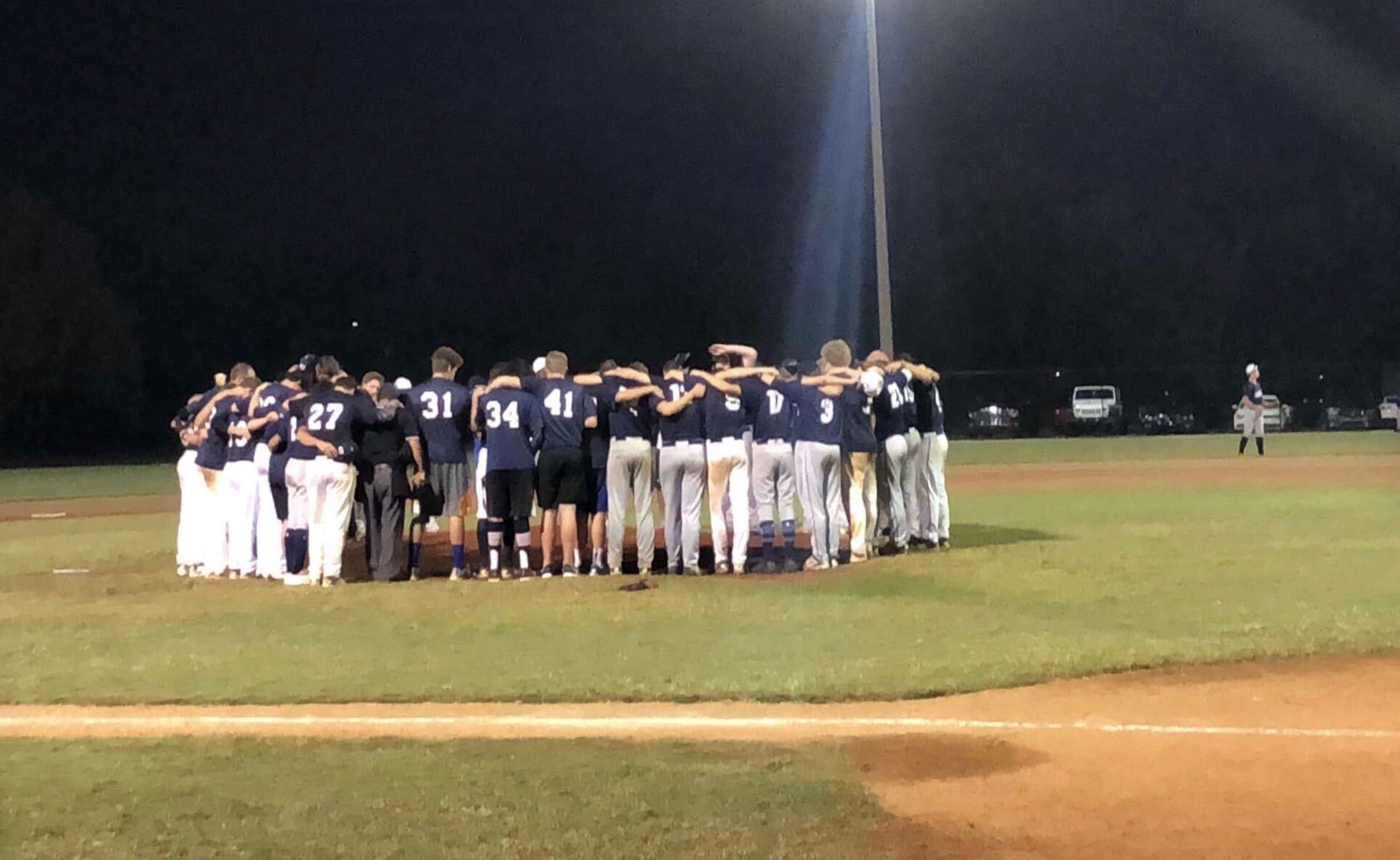
The Calvary team gathers on the mound to say a prayer following Braden’s first start after his father’s passing in 2017.
Braden told Olsen he was done. He walked off the mound, grabbed his father’s jersey, and began to cry.
“Obviously when he passed away, my thought was, ‘I lost my father,’” he said. “But that was my first moment of … he’s still with me. I still have him. I really felt him there.”
The players circled around the mound and said a prayer. Someone took a photo and sent it to Braden. Through the darkness, a ray of light shined down on his head.
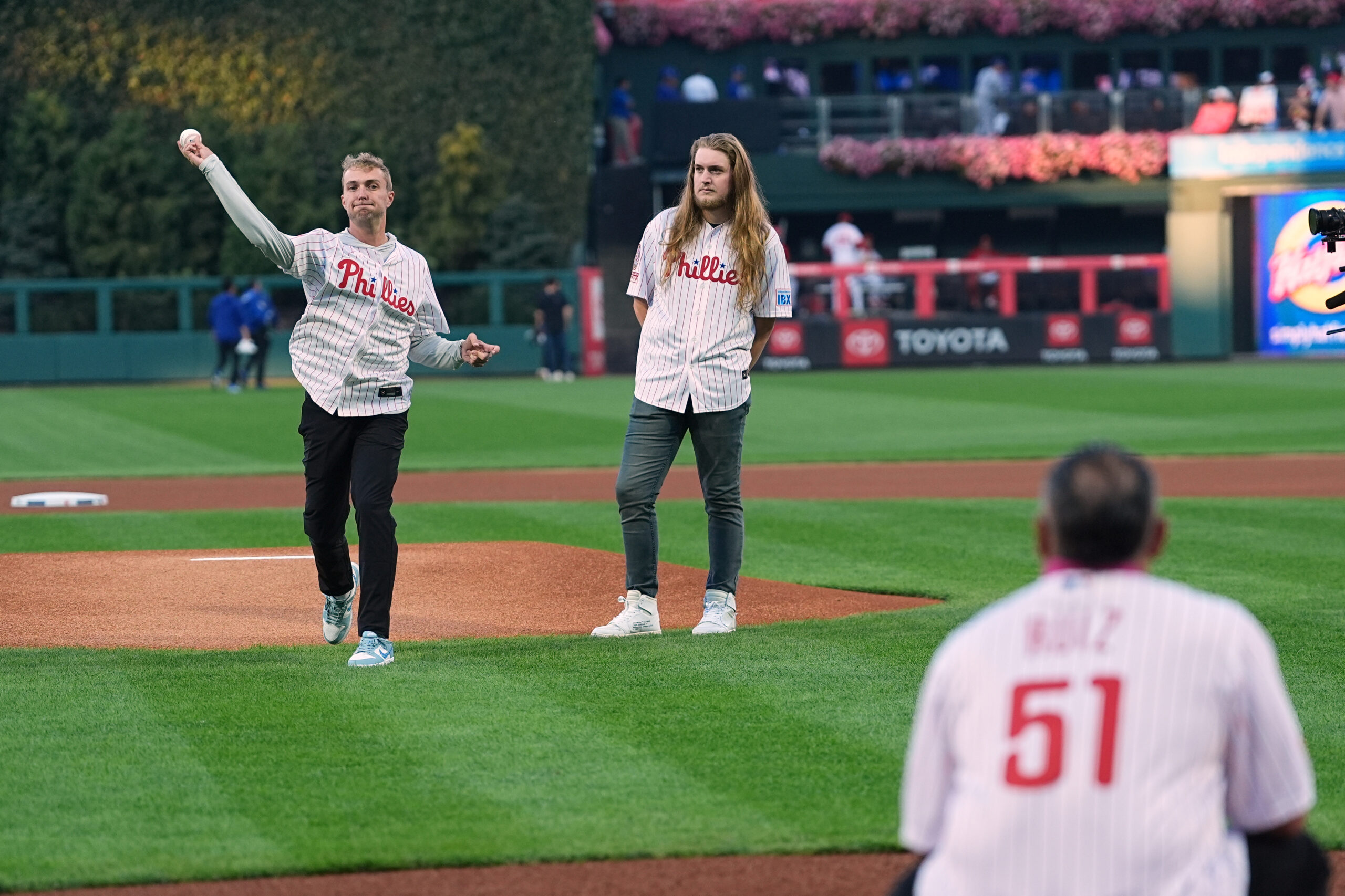
Braden Halladay (left) accompanied by his brother Ryan, throws the first pitch to former Phillies catcher Carlos Ruiz, marking the 15th anniversary of their father Roy Halladay’s postseason no-hitter, ahead of an NLDS game against the Dodgers in 2025.
A different side of Halladay
On Nov. 14, 2017, the Phillies held a celebration of life at their spring training complex. It was open to the public; thousands of people attended.
After the ceremony, Halladay’s friends and family moved to the batting cages beneath the stadium. Standing on bright green turf, with the nets pulled back, they grieved.
This was the first time many of his players had met his Phillies and Blue Jays teammates. And as the high schoolers traded stories with Chase Utley and Ryan Howard and Cliff Lee, it dawned on them that they’d seen a completely different person.
The former big leaguers painted a picture of a cutthroat competitor; a titan of the sport whose intensity seeped out. To the boys of Calvary Christian, he just was a goofy dad.
This is how they will remember him. They’ll never forget the perfect game, or the postseason no-hitter, or the countless shutouts. But for those 17 high schoolers, who are now 17 men, the coach they knew meant so much more.
WASHINGTON — In the right field corner of Nationals Park, a group of entirely shirtless fans took over Section 236.
They were steadily growing in number on Thursday night, while the Phillies — yet again — fell behind early against the Nationals. The fans, who were waving their discarded shirts and chanting for most of the game, were participating in a movement known as “Tarps Off.”
It’s a trend that is not unique to this series, and not unique to the Nationals. But the Phillies took notice of this particular group in right field earlier this week, when their chants started to include expletives directed at former Nationals Bryce Harper and Trea Turner.
The “F— Bryce Harper” chants resumed in full force on Thursday. And so when Harper blasted a two-run home run to break a 5-5 stalemate in the ninth inning, he made sure he acknowledged them. As he rounded the bases, he flashed a finger — which he clarified was his ring finger — toward the upper deck in right field.
“Obviously, everybody heard it,” Harper said. “We heard it the other night. I mean, they were doing same thing to Trea — which is crazy, because they should probably know their history a little bit with them winning the World Series here — but yeah, it’s part of it. I love coming in here and playing here.”
By the time Derek Hill stepped into the box and hit another homer, capping a five-run ninth inning and the 10-5 win, the Tarps Off group had mostly dispersed.
The Phillies secured the series victory over Washington with their third consecutive comeback win. Each of them had involved a go-ahead home run in the ninth inning.
“We just have that never-quit mentality,” said Brandon Marsh.
Phillies pitcher Cristopher Sánchez had his shortest outing on Thursday since April 7.
And in each ninth inning, the Phillies had a different hero. On Tuesday, it was Bryson Stott. On Wednesday, it was Hill. And on Thursday, it was the former face of the Nationals franchise.
“You guys know everywhere I go, I get booed and they say my name or boo or anything else. I love it. It’s all part of it,” Harper said. “It’s weird coming from a fan base that I sweated for for seven years, but there’s a lot of people around here that enjoy me, so it’s all part of it, it’s all fun.”
Their latest comeback helped the Phillies recover from an uncharacteristic start from Cristopher Sánchez. The lefty wasn’t as sharp as usual, and it seemed like Washington capitalized on every mistake he made to jump out to a four-run lead in the first inning.
Curtis Mead started it off. The former Phillies prospect they traded to Tampa Bay in 2019 to acquire Sánchez blasted a homer over the bullpen in left field. Sánchez couldn’t rebound, hitting the next batter and allowing three singles before finally getting out of the first.
“I thought probably his command tonight was not as good as we’ve seen,” said interim manager Don Mattingly. “Seemed like the changeup command was not great tonight. Stuff was good, he was throwing the ball good. Probably a little unfortunate on some plays, that if you get an out here and out there, it limits some of that damage.”
The defense didn’t help Sánchez, costing him quite a few pitches en route to his shortest outing — five innings — since April 7. J.T. Realmuto committed a throwing error in the third inning trying to catch Dylan Crews stealing second, and Alec Bohm booted a ball at third.
Sánchez struck out six batters, including five on his slider.
“I missed a couple pitches, and they got me, but outside of that, I think I felt great today,” he said through team interpreter Diego D’Aniello.
Brandon Marsh’s (right) two-run homer helped the Phillies chip away at a 5-0 deficit.
After the Phillies fell behind 5-0, their relievers locked things down as the offense chipped away. Marsh hit a two-run homer in the sixth inning to put the Phillies on the board. In the seventh, they capitalized on two singles and four walks to tie the game, as Washington’s bullpen — which has a National League-worst 5.05 ERA — collapsed again.
“We were very patient there in the seventh,” Mattingly said. “In the strike zone. We talked about it, hitting there. … [Justin Crawford] gets a hit, Trea gets a hit, gets it started, and then you’re into [Kyle Schwarber], and he walks, Harp walks, and it just kind of snowballs.”
Chase Shugart, José Alvarado, Orion Kerkering, and Tim Mayza each pitched a scoreless inning for the Phillies. Kerkering was the only reliever to allow a hit. He gave up a leadoff double in the eighth and then battled back to strike out two consecutive pinch-hitting lefties with his fastball and induced a groundout to preserve the 5-5 tie.
It set the stage for some more ninth-inning magic.
“Everyone heard what those group of dudes were saying up there,” Marsh said. “I feel like Harp gets a lot of heat just for being who he is and how good he is, and I feel like it just comes with being one of the best players to ever play.
“Him coming in clutch for us in that moment, I mean, I don’t even know the word to describe it. The boys needed it, and he came through for us, and another crazy ninth inning.”
WASHINGTON — From Kyle Schwarber’s perspective, pinch-hitting is one of the most difficult things to do in baseball.
Derek Hill takes it one step further.
“It’s the hardest thing to do in sports,” the Phillies outfielder said.
On Wednesday night, both Schwarber and Hill were called on to do it in the ninth inning, and both delivered. Schwarber, who had been on the bench with lower back tightness, drew a crucial 10-pitch walk to put the tying run aboard against the Nationals. And Hill blasted a go-ahead, two-run home run in the 5-4 win over the Washington Nationals.
After playing the unlikely hero, Hill left the Phillies clubhouse Wednesday night to see family before reporters entered, but he fielded questions pregame on Thursday about the moment.
“Obviously the guys, they fought their butts off all nine innings, so just to be able to come in there and contribute was really cool,” Hill said.
And he followed it up with another big ninth-inning moment in Thursday’s 10-5 win. Hill came off the bench in the seventh, and after Bryce Harper’s go-ahead homer, he launched another two-run shot to give the Phillies more insurance.
Entering Friday’s series opener against the Mets, Hill was hitting .375 with a 1.042 OPS in 24 plate appearances with the Phillies. He has collected at least one hit in the last six games he’s appeared in. Of those, he only started three.
Derek Hill was hitting .333 entering Thursday’s game since joining the Phillies.
When opportunities are few, how does he stay ready?
“I went through a lot of trials and tribulations over the last some-odd years,” Hill said Thursday. “Just kind of failing, succeeding here and there, and just being able to take little pieces out of the successes, and hopefully continue doing that.”
According to interim manager Don Mattingly, experience is the real key to success as a pinch-hitter. Hill has 39 pinch-hit plate appearances since debuting in the majors in 2020, including 18 this year.
“I think it’s hard. I think it’s easier for older guys that kind of know their swing, they walk up with a plan,” Mattingly said. “I think it is something that it’s always hard. Pinch-hitting is tough, because you get one shot.”
Making contributions like the ones Hill made in the Nationals series can certainly help a new player integrate into a clubhouse. But the 30-year-old Hill didn’t need any help in that department.
“He’s been a good guy in our clubhouse. He’s a guy that’s prepared, he’s low maintenance, ready to go at all times,” Mattingly said. “We go look for a pinch-hitter, and he’s ready with a bat in his hand, or he knows when we defend with him, and things like that.”
Added Schwarber: “He fits right in with our group.”
According to Hill, Brandon Marsh in particular has been a big help in adjusting to the Phillies. The outfielders already knew each other before the trade, having played together in the Arizona Fall League as prospects in 2019.
“We all see the work that he’s been putting in down in the cages, and he’s a phenomenal athlete and a hell of a ballplayer,” Marsh said. “We’re lucky to have him, and just being a buddy of his from a couple years ago, and seeing him throughout these past couple years, and now getting to play together has been special for us.
“He’s been awesome for us, and we’re going to need him. We’re going to keep relying on D-Hill, for sure.”
Interim manager Don Mattingly said of Derek Hill: “He’s been a good guy in our clubhouse.”
Hill said he’s taking the opportunity to learn from Marsh while he gets an up-close look at the career season Marsh has been putting together.
“Marshy is the man, obviously,” Hill said. “We kind of already have that camaraderie and everything like that. And he’s a high energy guy, and I like to think of myself as the same.”
Thursday night’s series finale against the Nationals marked the halfway point of the Phillies’ season. The year is far from over and things still need to be done before playoff races truly take shape.
But when they do, the three consecutive ninth-inning outbursts this week against the Nationals might become even more significant in hindsight. And Hill, mere weeks after being acquired in a desperation move because of García’s injury, turned out to play a crucial role in two of the comebacks.
“Every single game matters,” Hill said. “At the end of the year, you’re going to look back at a couple games and be like, those are ones that got us in, or those are the ones that didn’t get us in. So to be able to keep that focus on 162 is pretty important.”