Category: Phillies/MLB

  • ‘Overlooked’ Santino Harwood got his chance at an HBCU despite not being Black. Now he’s in the Swingman Classic.

    ‘Overlooked’ Santino Harwood got his chance at an HBCU despite not being Black. Now he’s in the Swingman Classic.

    Santino Harwood was set on playing baseball at a Division I school but his chances were dimming when he started his senior year at Roman Catholic without a college offer. He had chances to play at Division II and Division III schools but the infielder from Mayfair always dreamed of Division I.

    “Kids these days want to hear that they’re a D-I player and going to a D-I institution,” said his father, Edgar. “I said, ‘That really does not matter.’ You need to go where you fit in and where you like the program. They feel like they’re disfigured if they’re D-II or D-III and they don’t have that status symbol next to them.”

    Santino played like a Division I player in high school, but he was just 5-foot-11, causing college coaches to overlook the shortstop. Finally, an assistant at Delaware State noticed. They didn’t have a scholarship for him but told him he could walk on. Deal, he said. And then the coach made sure Harwood knew that the school was a historically Black college and university.

    “He said, ‘You have to understand that you’re going to be a minority’,” said Edgar, as his son is white.

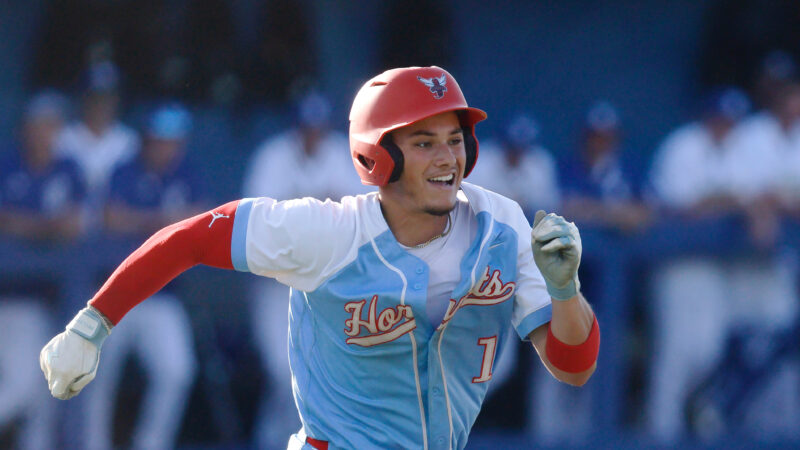
    Santino didn’t mind. He just wanted a chance. He was in. The shortstop hit .296 this season, played crisp defense, and stole bases with ease for Delaware State, which reports its student body as 76% Black. Harwood grew up playing baseball with kids of various races — “Being from Philly, my friend group is mostly Black,” he said — so being a white kid at an HBCU was nothing new.

    “It’s a great environment to be around,” Santino said of Delaware State. “It’s a great energy. They make you feel comfortable … I feel like baseball has the most diverse community. We have a lot of Hispanic, Black kids, white kids. Everyone comes together and is here for the same reason. That’s why we all get along.”

    And next month, he will represent Delaware State at Citizens Bank Park days before the All-Star Game when he plays in the HBCU Swingman Classic on July 10.

    The event was developed by Hall of Famer Ken Griffey Jr. to give players from HBCU schools — overlooked guys like Harwood — a chance to showcase their skills. Jimmy Rollins will manage a team, Griffey will be there, and Harwood will get his chance to star in a big-league park.

    “Our president Dr. [Tony] Allen, his goal is to create the most diverse HBCU at Delaware State University,” baseball coach Pedro Swann said. “If you walk around campus, you’ll see all types of shade. There’s a mixture of everything. Plus, Santino has a little drip and a little swag to him. So he fits right in and has no problem blending in with the HBCU culture. That’s what I love about him. He’s friends with everyone.”
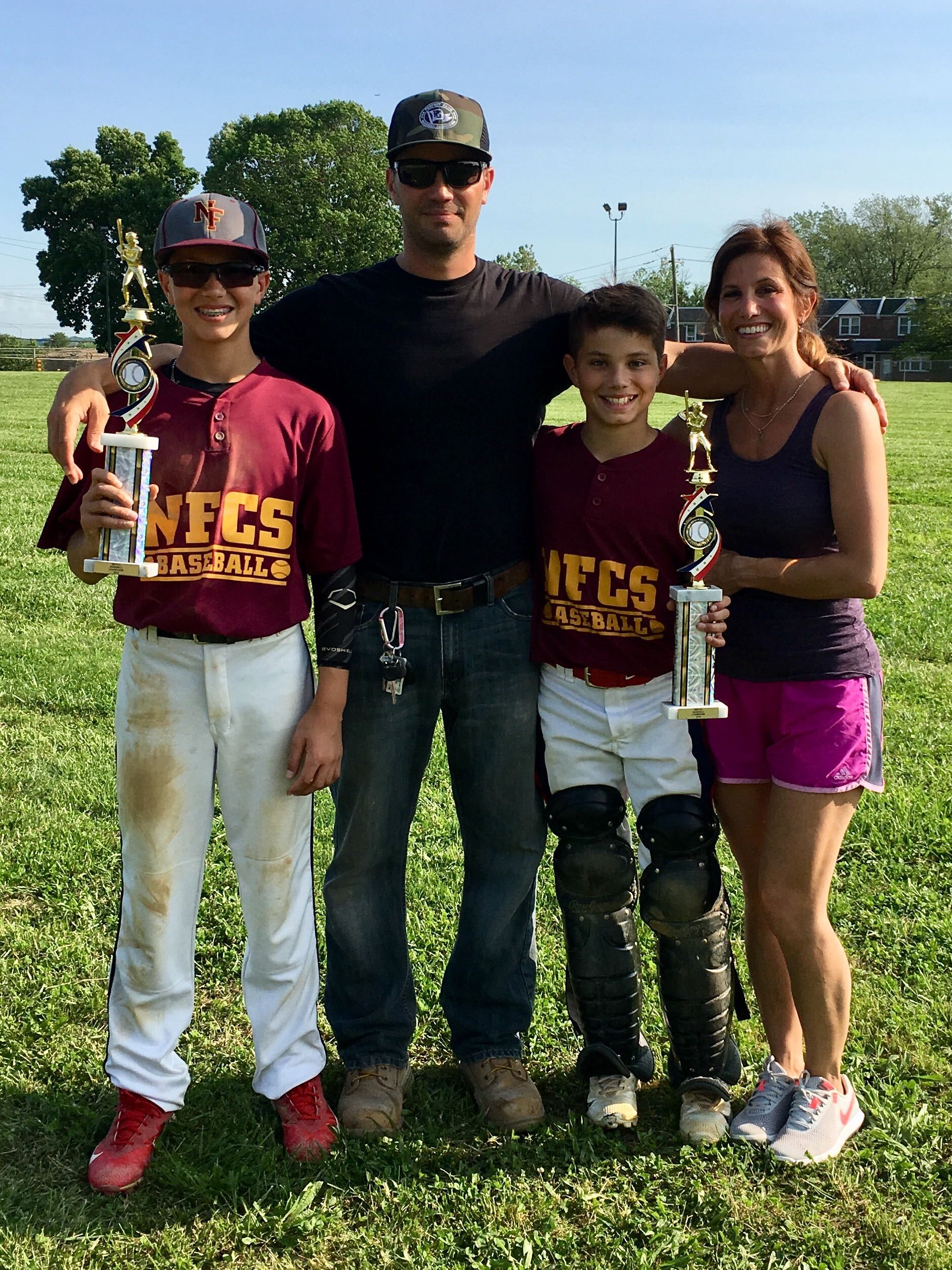
    Santino Harwood (second from right) and his brother, Edgar; father, Edgar, and mom, Michelle after a game at New Foundations Charter School.

    The Santino Rule

    The 8- and 9-year-olds from Holy Terrors were called to the stage at the end-of-season banquet years ago when a table in the catering hall started to boo. Edgar looked around and saw it was another team from Northeast Philly that played in the age group above his son’s team. Fine, he thought. We’ll play up in age and beat them.

    Holy Terrors — a youth organization at Brous and Princeton Avenues — won the Department of Recreation title against 11- and 12-year-olds despite 8-year-old Santino batting leadoff. Opposing teams were livid.

    “I said, ‘Why are you mad? He’s 8 years old,’” Edgar said. “‘He’s my leadoff hitter. Just strike him out if you can. But that’s probably not going to happen.’”

    A year later, Edgar said the league instituted a new rule that banned players from playing up in age.

    “The Santino Rule,” Edgar said. “The pamphlet came out, and, boy, they put that sucker in boldface lettering. It was really weird. For me, playing up is a bonus if you can do it and you can hold your water.”

    Edgar soon started a travel team called Falcons Baseball that practiced for three to four hours at fields in the Northeast. Even that wasn’t enough for his son, as the coach often would cap practice by driving his car up to the cage and turning on the headlights so Santino could get more swings after dark.

    “There was always that want and desire,” Edgar said.
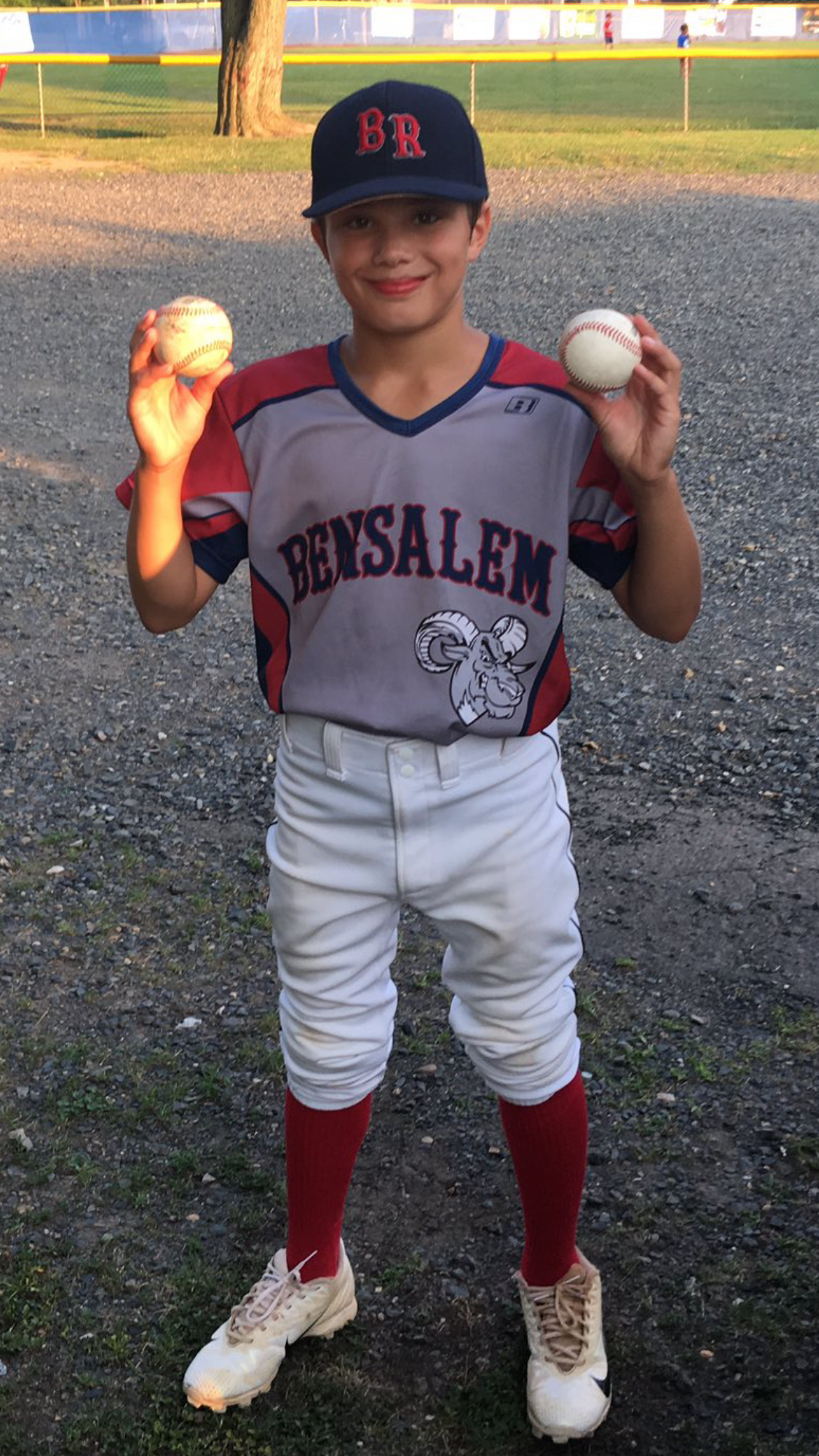
    Santino Harwood after a game with the Bensalem Ramblers.

    Those Falcons teams were diverse — “Black, white, Hispanic,” Edgar said — and the players became more than teammates. They hung out at the Harwoods’ home, barbecued, and bonded like “brothers” over their love of baseball.

    “You have a melting pot of identities in the United States now,” Edgar said. “You have to get an understanding and learn to love one another and understand each other. Just like brothers, you’re going to bump heads. Everyone bumps heads whether you’re at work or on the baseball field or with your neighbor.

    “But you have to learn these things now that you have to understand each other. You have to have a respect for different attitudes, different thought processes, different identities, cultural or national.”
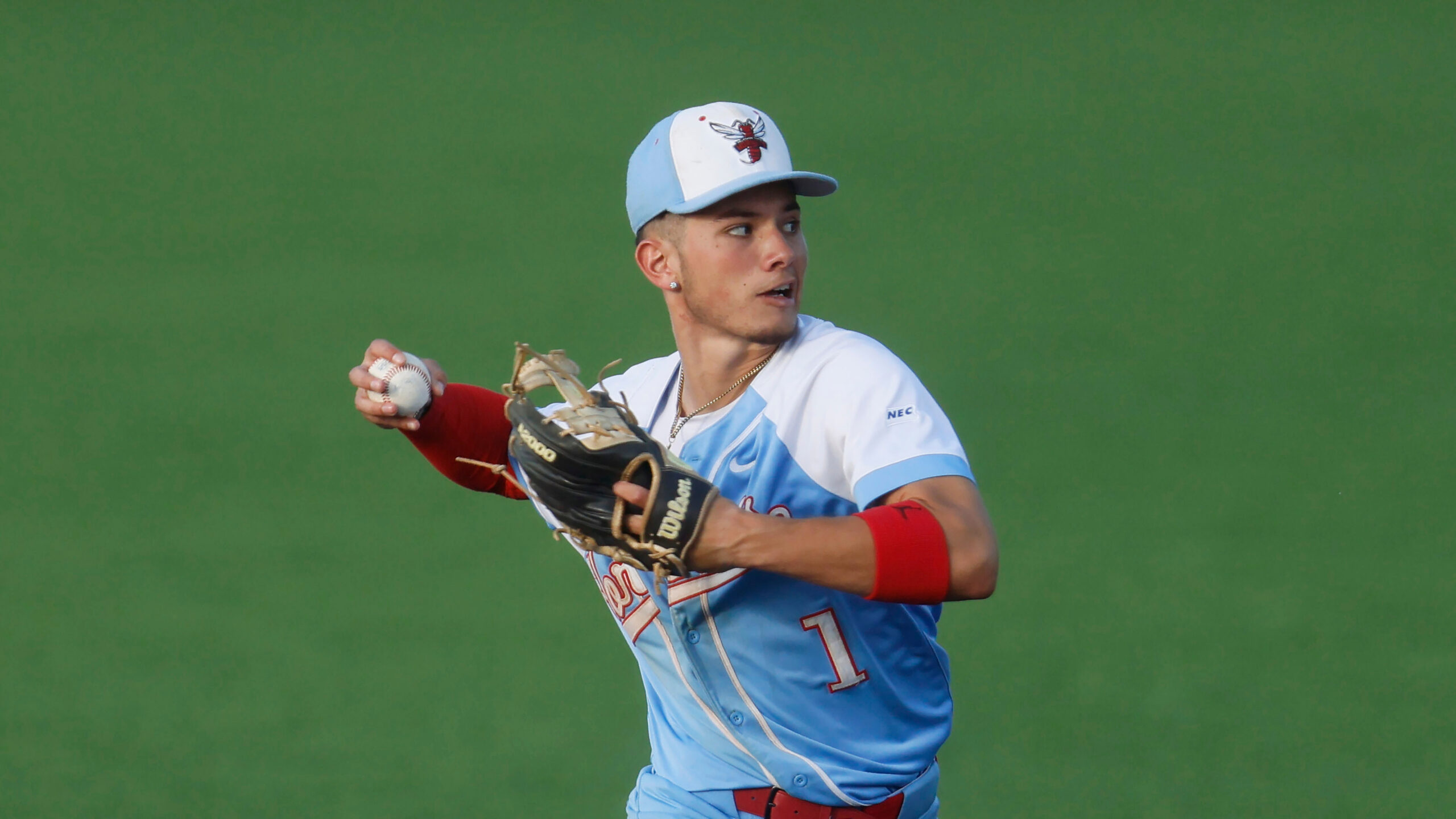
    Santino Harwood went to Delaware State without a scholarship.

    Earning his way

    The Delaware State baseball team is full of players like Santino, who were overlooked by other programs before finding their way to the Hornets. The roster is racially diverse, just like that Falcons team.

    “Last season, we had a guy from Idaho,” Swann said. “You pair him with someone from like Teaneck, N.J., and it’s polar opposites. But the guys got along. When you get out on that field, it’s not about what color you are. It’s about how you catch and throw the ball.”

    Santino went to Delaware State without a scholarship, but his dad told him not to worry.

    “You need to be prepared for the opportunities that can get you to that scholarship,” Edgar said. “Whether or not you think someone in front of you doesn’t deserve it, that’s irrelevant. When you have your opportunities, can you showcase to the point where you get that same bonus or package?”

    He hit .296 as a freshman in 2025, and his coach called him into the office after the season. He was no longer a walk-on. Harwood called home and told his parents. They were thrilled.

    He stole 15 bases last season as a sophomore with a .413 on-base percentage in 44 games. Swann told him early in the season that he was building a case to be picked in the Swingman game.

    “I said, ‘Man, that would be cool. You’d get to play in your hometown. That would be awesome,’” Swann said. “Then he ended up getting selected. He took the lead role in the infield this season and was our quarterback out there. He never backed down from any battle. He’s a Philly kid, so he has that fighting spirit and chip on his shoulder. I love the way he plays the game.”
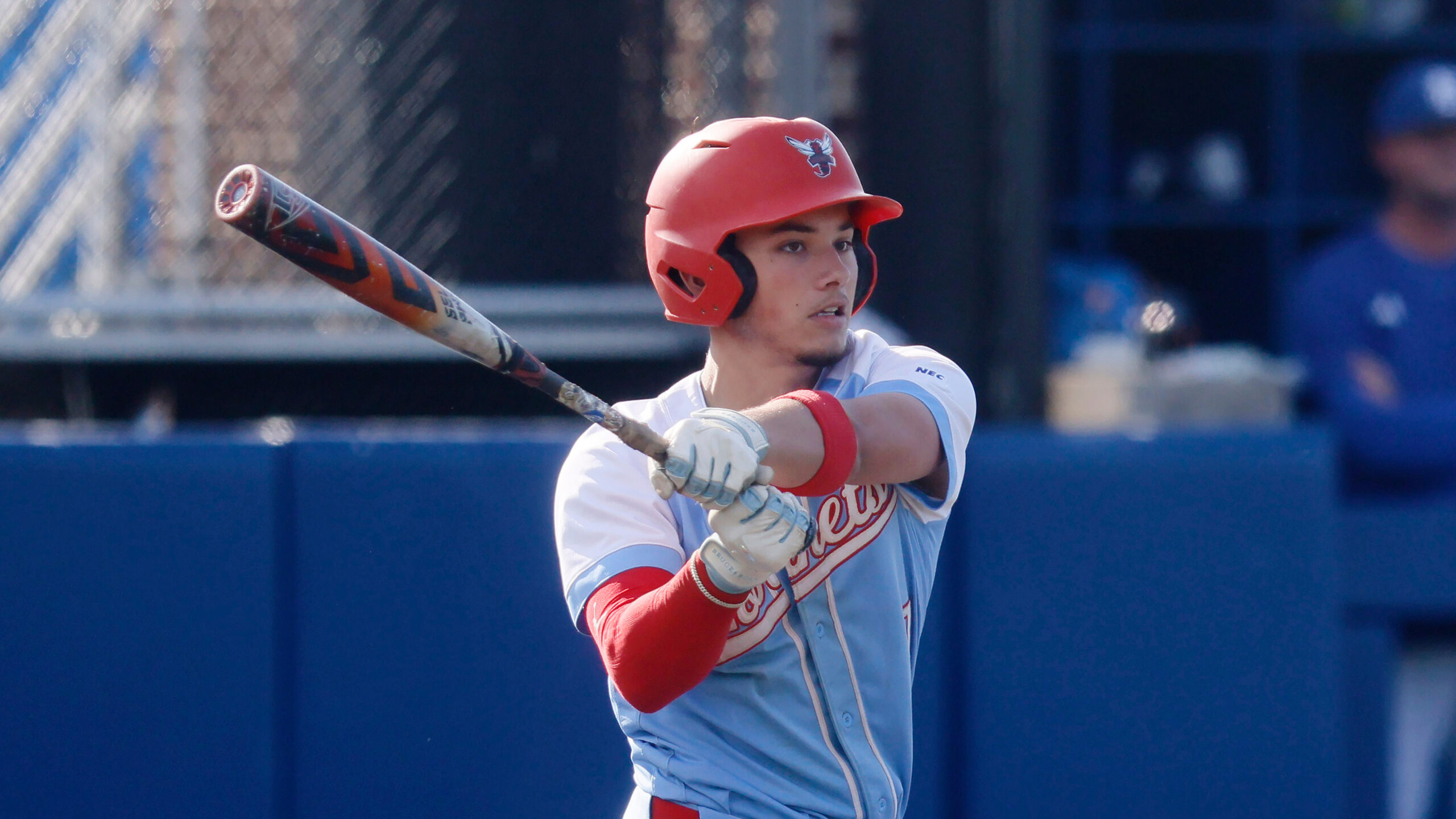
    Delaware State shortstop Santino Harwood had a .409 on-base percentage and 15 stolen bases in 45 games last season.

    Santino grew up an Atlanta Braves fan — his dad is from Georgia — but still is honored to play at Citizens Bank Park.

    “This is a once-in-a-lifetime experience,” he said. “It’s a privilege to play there. I feel like that’s every kid’s dream. For me to get a taste of it in the Swingman is nothing more than a blessing.”

    Santino dreamed of playing Division I baseball but had to wait for his opportunity. Even then, he had to earn a scholarship. First, his coach had to make sure he would be comfortable. Santino didn’t think twice about it. The HBCU, he said, has felt like home. And he’ll represent it next month on a big stage.

    “I’m so happy to see him get an opportunity that he’s really worked so hard for,” Edgar said. “No one knows the hours and the days that we’ve been out there trying to get him better at this sport. And it doesn’t really matter if anyone knows or not, right? It’s an opportunity that me and his mom are going to enjoy.”

  • Phillies Extra with Preston Mattingly

    Phillies Extra with Preston Mattingly

    Father’s Day will hit a little differently this year for Don and Preston Mattingly. After years of working in baseball for different teams, often on opposite sides of the country, they are together with the Phillies as the first father-and-son manager-and-GM combination ever. Preston Mattingly joins Phillies Extra to discuss working with his dad, as well as the Phillies’ decision to demote Andrew Painter to the minors and their preparations for the trade deadline. Watch here.

  • Mets jump on José Alvarado in seventh inning of Phillies’ 6-4 loss

    Mets jump on José Alvarado in seventh inning of Phillies’ 6-4 loss

    José Alvarado thought the inning was over.

    The Mets had already scored one run against the Phillies reliever to break the 3-3 tie in the seventh, and threatened for more with two runners on. But Marcus Semien fouled a cutter back into J.T. Realmuto’s glove for what Alvarado thought was an inning-ending strikeout, and he started to walk off the mound.

    Home plate umpire Brian Walsh checked the ball and found a dirt mark on it, proving that it had touched the ground before entering Realmuto’s glove. It gave the Mets second baseman a new life. And Semien made the most of it, sending Alvarado’s next pitch to the center field wall, above a jumping Justin Crawford.

    “It ends up being the right call,” interim manager Don Mattingly said. “Not a call I like, but the right call.”

    What was nearly an inning-ending strikeout instead became a bases-clearing triple, putting the Mets ahead to beat the Phillies, 6-4, in Thursday’s series opener. Alvarado, whose season ERA has risen to 6.58, was charged with the loss.

    Alvarado was nearly out of the inning even before that. He had allowed a leadoff single to start the seventh inning, but battled back to induce a line out and pop out, respectively, from Bo Bichette and Juan Soto, who had been the Mets’ most dangerous hitter all night. He then brought pinch-hitting Mark Vientos to a 1-2 count.

    But Alvarado lost his command, throwing three straight cutters in the dirt to walk Vientos. He allowed another pinch-hitter to reach when Eric Wagaman singled, bringing up Semien.

    “Hitters feel confident that they can hit against me right now,” Alvarado said through team interpreter Diego D’Aniello. “It seems like 100 mph is something they see a lot at this level. It’s not surprising anymore. They’re just hitting well against me right now.”

    All three hits Alvarado gave up on Thursday came on his sinker. Hitters are batting .333 against the pitch this year, and .268 on his cutter.

    After the Phillies optioned fellow lefty Tanner Banks earlier on Thursday, it is more crucial that Alvarado turns his season around. Alvarado and Tim Mayza are the Phillies’ only left-handed options on the roster, though Kyle Backhus (left elbow inflammation) is progressing on his rehab assignment and is nearing a return.

    “We’re a nick away from catching strike three, just touches the ground. So we just keep paying attention to him,” Mattingly said of Alvarado. “But, I mean, the ball’s coming out, it’s not like he’s down in velo or anything like that. Just got to get the ball to the right spots.”

    It didn’t help that the Phillies’ bats went cold after the fourth inning. After the Mets jumped out to an early lead against starter Aaron Nola, courtesy of a pair of solo homers from Soto and an RBI double A.J. Ewing hit over Brandon Marsh’s head in right field, the Phillies chipped away to tie it in the fourth.

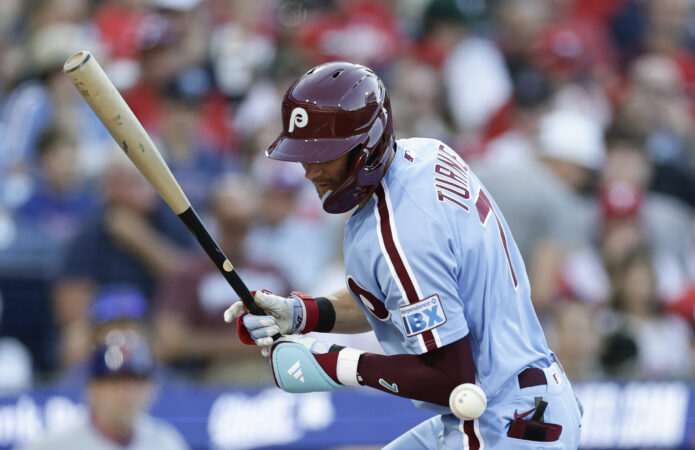
    Trea Turner was hit by a sweeper in the leg in the bottom of the first, and he scored on a single from Alec Bohm. Turner was later taken out of the game with a bruised right calf.

    “He said he had trouble on defense, felt like he was a liability on defense, so he couldn’t really move,” Mattingly said, adding that he hoped the day off Friday would help Turner be ready for Saturday night’s game.

    Bohm delivered another RBI in the third, doubling to drive in Kyle Schwarber and cut the Mets’ lead to 3-2. The Phillies’ designated hitter had reached first on a dropped third strike from Mets catcher Francisco Alvarez, and advanced to second when Alvarez botched the throw to first.

    In the fourth, Derek Hill tied the game at 3, singling up the middle to drive in Bryson Stott. But that proved to be the Phillies’ final hit until the ninth inning, as the bats fell mostly silent against the Mets bullpen.

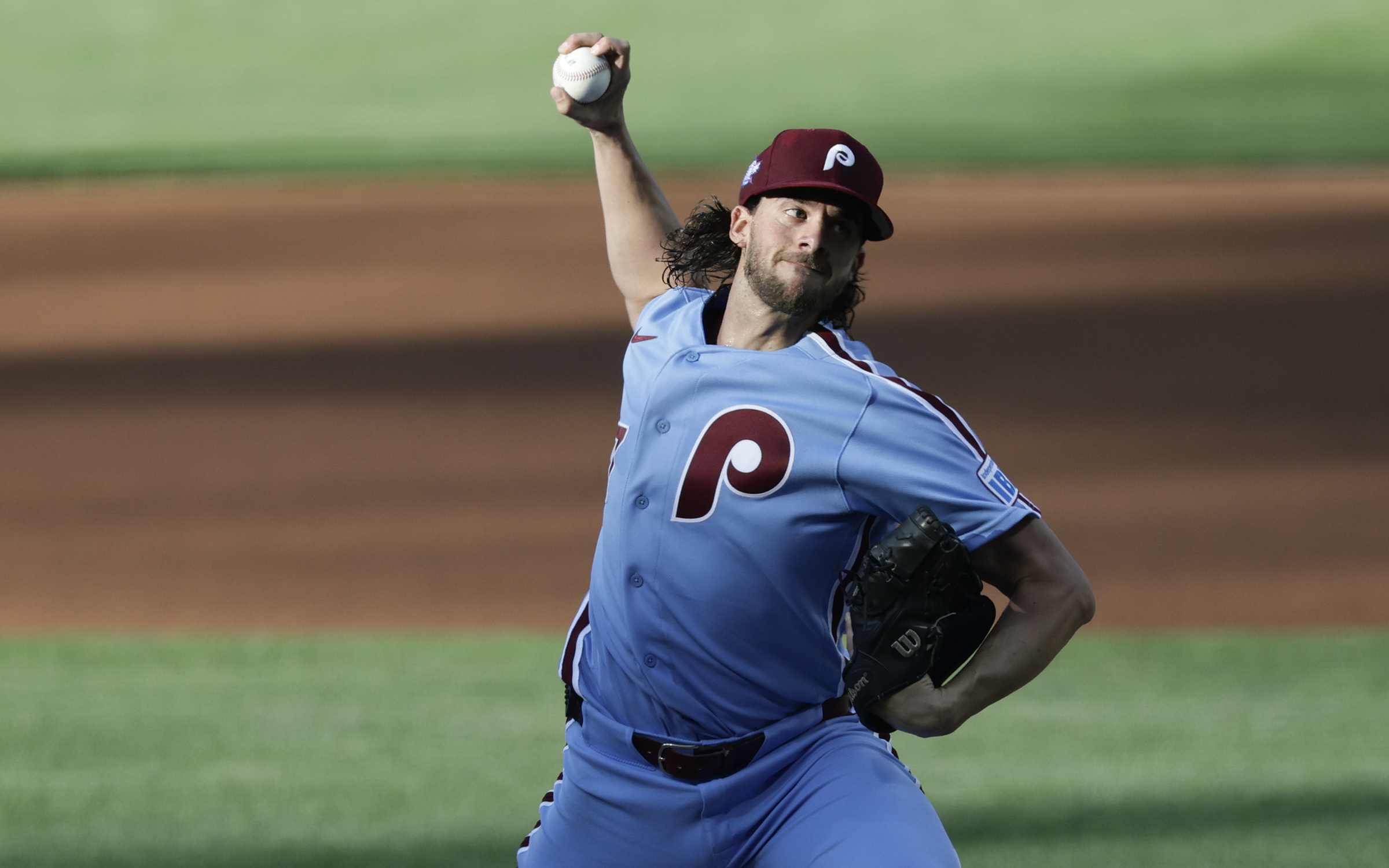
    Phillies pitcher Aaron Nola allowed seven hits, but he limited the Mets to three runs to keep his team within striking distance.

    Nola allowed seven hits, but he limited the Mets to three runs to keep his team within striking distance. Seth Johnson and Bryse Wilson, who both had been recalled earlier on Thursday, each appeared in relief. Johnson retired the side in order in the sixth with a pair of strikeouts on his 99-mph fastball, while Wilson pitched a scoreless eighth and ninth after the Mets took the lead against Alvarado.

    “Seth was good tonight,” Mattingly said. “He’s been throwing the ball good in triple A, one of the best relievers in triple-A baseball. So stuff was good, threw in the strike zone, attacked, so it was good.”

    Down to their final out in the ninth, the offense showed a little life. Gabriel Rincones Jr., pinch-hitting for Hill, delivered the Phillies’ first hit since the fourth on an infield single to Bichette. Crawford followed it up with an RBI single to bring up Schwarber, representing the winning run with two on base.

    Schwarber worked a 2-2 count against Devin Williams, and hit a sharp liner, 104.6 mph off the bat, but it was straight at right fielder Brett Baty for the final out.

  • Phillies’ Trea Turner exits game vs. Mets after being hit by pitch

    Phillies’ Trea Turner exits game vs. Mets after being hit by pitch

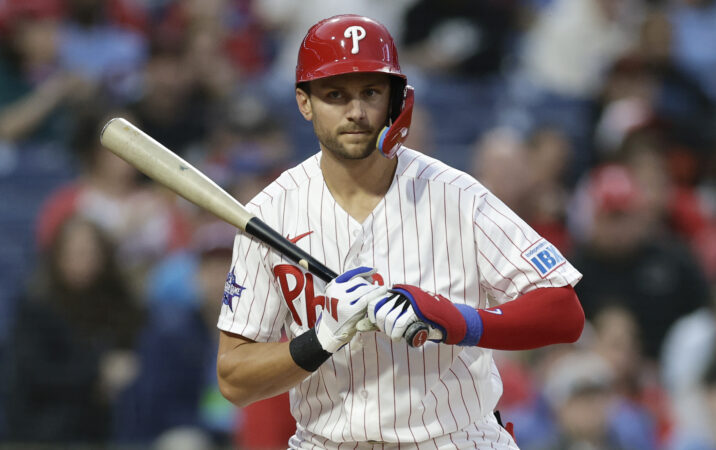
    For the second time this week, Trea Turner left a game early after being hit by a pitch.

    The Phillies shortstop departed Thursday’s 6-4 loss to the Mets with a bruised right calf after taking a 79.2 mph sweeper off the leg from Sean Manaea in the first inning. Turner remained in the game initially as a baserunner, scoring a run, but was replaced at shortstop by Edmundo Sosa in the third inning.

    Sosa switched from left field, where he had started the game. Justin Crawford entered the game in center, sliding Derek Hill to right field and Brandon Marsh to left.

    “Got hit in a tough spot, right above the bottom of the calf towards the bottom, where he starts getting into the Achilles,” interim manager Don Mattingly said. “He was having trouble putting pressure, pushing off. … He said he was having trouble on defense, felt like he was a liability on defense, so he couldn’t really move. Day off [Friday], hopefully it’ll be good by the night game [Saturday]. We’ll see.”

    Turner exited Monday’s game against the Marlins with a bruised right wrist after getting drilled with a fastball, and sat out on Tuesday as it was still inflamed.

    In his return to the lineup Wednesday, Turner finished with three hits, and said he felt like he was “on a good track” at the plate.

  • ‘Phillies Extra’ Q&A: Larry Bowa on Philly’s 1976 All-Star Game, a Trea Turner rebound, and more

    ‘Phillies Extra’ Q&A: Larry Bowa on Philly’s 1976 All-Star Game, a Trea Turner rebound, and more

    Larry Bowa remembers the roar.

    Fifty years ago, the All-Star Game came to Philadelphia as part of the country’s bicentennial celebration. Bowa was among five Phillies players in the game, and when they were introduced with the National League squad, the ovation shook Veterans Stadium.

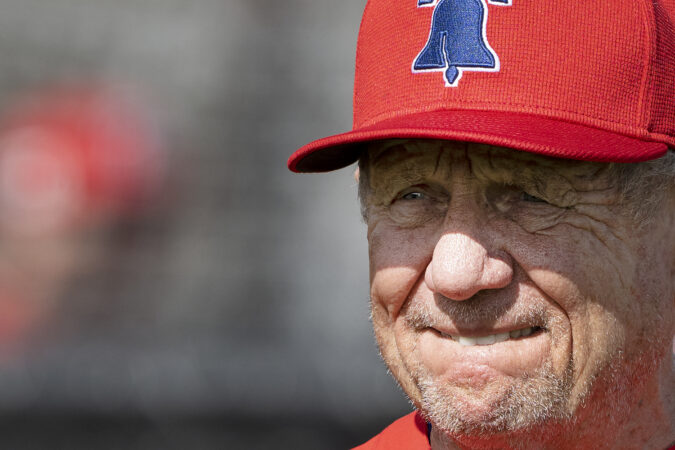
    With the Midsummer Classic set to return to town next month, Bowa, 80, joined the Phillies Extra podcast to recall Philly’s baseball summer of ’76, as well as the state of the current Phillies.

    Here are a few excerpts from the conversation with the World Series-winning former Phillies shortstop. Watch the full interview below and subscribe to the Phillies Extra podcast on Spotify or Apple Podcasts.

    Q: When someone brings up the 1976 All-Star Game in Philadelphia, is there a specific moment or memory that comes to mind?

    A: The fact that we played in our own city was unbelievable. The crowd reaction when they introduced all of us is something that you never, ever forget. With the exception of winning the ’80 World Series, that was an incredible moment for me to play in front of your hometown in your ballpark.

    And looking at the cast of characters, the players on both sides — I happened to just check out the roster a couple days ago — and the American League had some good pitchers there. And the thing that stands out in my mind, you have a meeting before — it’s a lot different now, obviously; it’s more of an entertainment thing now. Back then, it was, “Hey, you better win or you’re going to be embarrassed.”

    I remember Pete Rose. Mark “The Bird” Fidrych was going to pitch against us, and he was on fire. He had one of those years where he’s talking to the ball and doing all that. And three or four of us were sitting around there, and Pete says, “You know what I’m going to do? He’s going to start talking to that ball, I’m gonna hit a base hit up the middle.” … And I knew Pete was a great player, and I said, “Man, if this guy’s that good …” Sure enough, base hit, right up the middle. He’s talking to the ball, and boom. And he looked in the dugout, and he gave me like a little thumbs-up, and I went, this game must be easy for him because to call that against a pitcher that was probably the greatest pitcher at that time in the American League, it was unbelievable.

    Just the reaction of the crowd, especially when they said, “And now from the Phillies,” and they introduced all of us. And if I’m not mistaken, I think there were seven Reds on that team and five Phillie guys, which at that time, those two teams were pretty good. You can throw in the Dodgers, they were really good, too. So, there were three teams there that were well represented in that game.

    Cristopher Sánchez’s streak of scoreless innings ended at 50⅔ on Wednesday, the longest in franchise history.
    Q: Have you ever seen anything like Cristopher Sánchez, just in terms of a transformation or the kind of growth that he’s had?

    A: No, I haven’t. And when I first saw him pitch, the control was a huge issue, and now I’m watching this individual pitch now, and to me, and I know there might be some guys slighted, but he’s the best pitcher in baseball. The outs that he makes other teams get are very soft. As an infielder, as an outfielder, you’re always ready, because he doesn’t walk a lot of guys. He doesn’t run deep counts. His work ethic is off the charts. He’s a very humble individual. Hopefully, this can continue because literally right now we have two No. 1s. I mean, you talk about Sánchez and [Zack] Wheeler, and I still believe in my heart that we’re going to be in the playoffs. I know Atlanta has got a big lead and all that. I’m not even worried about that. But when we get in, and I know we’re going to get in, I wouldn’t want to face this team with the pitching staff that we have, especially in a short series, whether it’s five games, whether it’s seven games.

    Sánchez is the kind of guy that you wouldn’t know if he won 20 games or if he lost 20 games. You wouldn’t know if he’s losing 8-1 or winning 1-0 . He’s a humble individual. … I wish, and I love Ranger [Suárez], [but] I wish Ranger had a little bit of Sánchez’s work ethic because I think Ranger could have attained the same type of success.

    But Sánchez’s work ethic, I haven’t seen anybody — I should say this, Clayton Kershaw worked like that, and that when I watch Sánchez, I’m thinking of Clayton Kershaw, the work ethic that they put in. Hopefully this thing can continue, because right now, when we take the field and we have Wheeler or Sánchez on the mound, it’s almost like that team in ’72 when [Steve] Carlton took the mound, we knew we were going to win. And I think that’s the feeling right now when those two guys take the take the mound in Philadelphia.

    Trea Turner, the reigning National League batting champion, has struggled for most of the 2026 season.
    Q: If they could get Trea Turner going at the top of the order in that one or two spot, that would be a huge boost to an offense that could really use it. What do you see from Trea?

    A: I expect him to be where he’s supposed to be at the end of the year. People don’t see the work he puts in. … This guy works harder than anybody out there. I think sometimes he lets his hitting affect when he goes [on the field at shortstop], not as much as he did the first year when he first came over, but when he feels he’s not helping the ballclub offensively, I think it weighs on him a little bit. I think they made a great move hitting him second.

    I don’t think Trea’s the kind of guy that’s going to work pitchers and all that and look for walks. He’s one of those guys that, once he gets into his groove, I don’t care where you throw him, he’s going to get base hits. And lately he’s been coming on. I expect a good second half … I think he’s going to be fine, but he’s his own worst critic. Believe me, he wants to do well. He knows he’s disappointed the team. It seems like when Trea doesn’t get on — I know we got the big boys in [Kyle Schwarber] and [Bryce Harper] — but when Trea gets on, we’re a very good offensive ballclub. When he’s not, sometimes we have to struggle for runs.

    Nothing against the other guys on the team, but Trea seems to be the guy that ignites us. And them switching the lineup a little bit lately, having Schwarber lead off, I think it might have eased his mind a little bit. But I expect big things from him moving forward, because he’s too good a hitter to be hitting what he’s hitting. To me, he’s the catalyst for our team.

  • A fan kept Tug McGraw’s 1980 World Series jersey in his dresser. Now it’s being auctioned off.

    A fan kept Tug McGraw’s 1980 World Series jersey in his dresser. Now it’s being auctioned off.

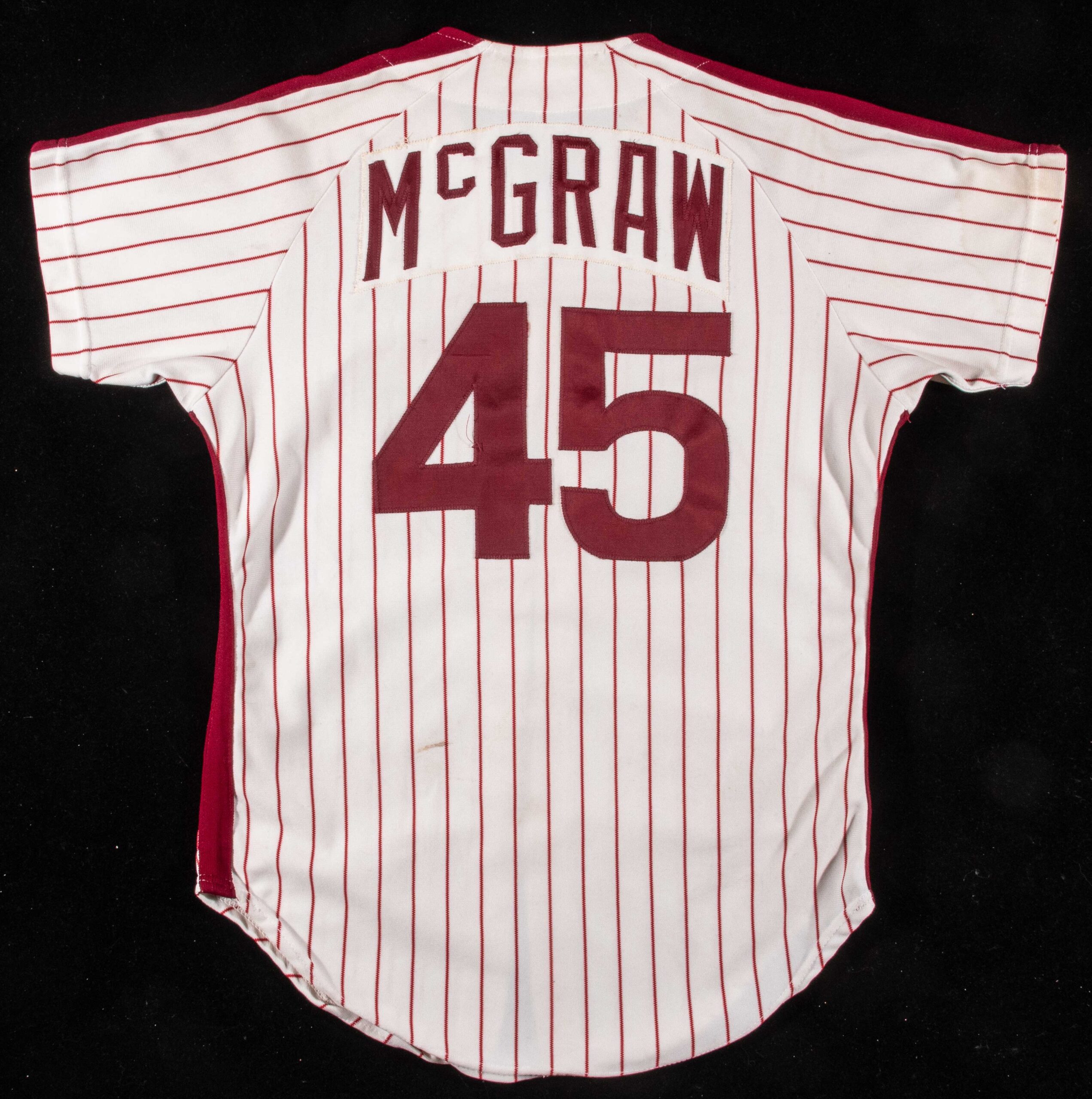
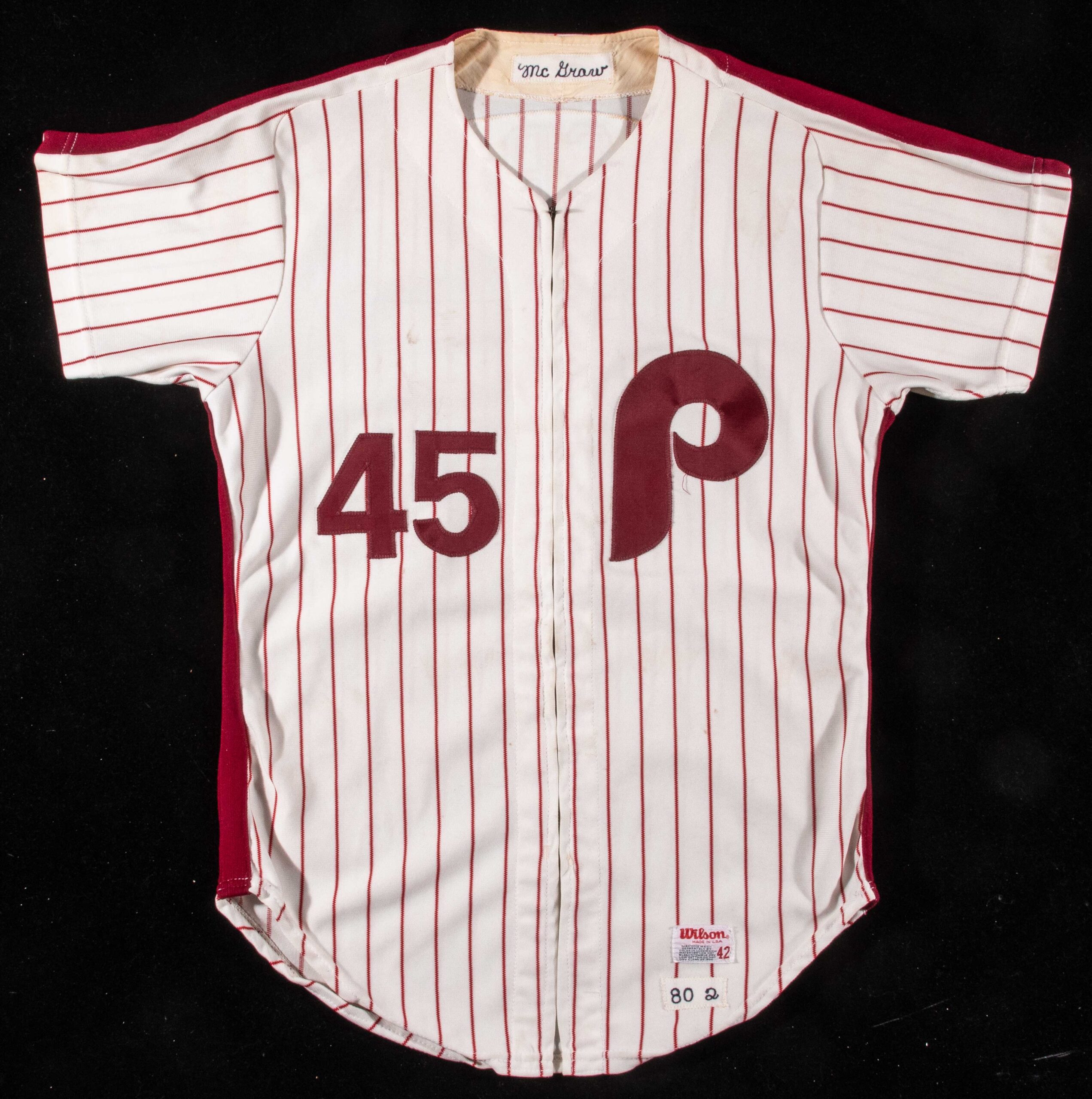
    The pass allowed the fan entrance into a party Philadelphia thought it would never see: a World Series celebration in the Phillies clubhouse at Veterans Stadium. And he left the champagne-soaked room with a one-of-a-kind souvenir: the jersey of the pitcher who threw the clinching pitch.

    Tug McGraw simply handed the 19-year-old fan his jersey that night in 1980, shortly after he struck out Kansas City’s Willie Wilson to clinch the Phillies’ elusive crown. The fan kept the jersey in his dresser drawer, removing it only to show friends or bring to his children’s schools for show-and-tell.

    It will soon find a new home as the white jersey with No. 45 on the back will be up for bidding in July at a live auction during the MLB All-Star Village at the Convention Center.

    “That was the first moment of its type in the city’s history,” said Dave Hunt, the president of Hunt Auctions. “There were championships before that but not like that one. I think the Flyers would be right before it but I feel like that moment was a different type of celebration and what it did for the city. And what moment do you think of? You close your eyes and that’s it. That’s the one.”

    The fan, who is remaining anonymous, was the son of an acquaintance to Ruly Carpenter, who owned the Phillies in 1980 when they won it all. He suffered a knee injury in 1978 as “a young athlete” and the Carpenters invited him to rehab at Veterans Stadium under the tutelage of Phillies trainer Gus Hoefling.

    He spent time around the Phillies and became close with some of the players, allowing him to score a pass to enter the clubhouse after Game 6 of the World Series.

    “He goes down into the celebration and obviously, it’s chaotic,” Hunt said. “But it settles down and Tug is one of the people he got acquainted with. He’s like ‘Here. This is for you.’”

    Tug McGraw’s jersey from Game 6 of the 1980 World Series is being auctioned off in July by Hunt Auctions.

    A few months ago, the man brought the jersey to Hunt Auctions, which is based in Exton. He expects the jersey to bring more than $300,000. The jersey passed the eye test as it had all the stitches and tags to match other game-worn Phillies jerseys from that era.

    But they needed to make sure this was the jersey. They used a third-party photo matching company that “definitively” ruled that the jersey was worn by McGraw in Game 6. The authentication company, MeiGray, studied the alignment of the pinstripes under the left arm of McGraw’s jersey in photos and videos before ruling that images from Game 6 matched the jersey but Game 1 did not.

    Tug McGraw gave his jersey to a teenager after the Phillies won the 1980 World Series. It’ll be auctioned off in July.

    McGraw’s jersey is still in great condition as it rarely left the fan’s drawer.

    “Frankly, thankfully,” Hunt said. “That is one unfortunate part of the world that we’re in. Many times, we’ll be presented with incredible pieces that have since deteriorated because they weren’t taken care of. This was just indiscriminately stored safely in a drawer for all these years. It’s beautiful. The condition is what you want to see. It’s not cleaned. It’s not altered. It’s not changed. But it’s also not abused or damaged.”

    The jersey has been in the fan’s possession for nearly 46 years, but Hunt said the fan is not sad to part with something he cherished.

    “Having worked with so many different players and their families, it’s a natural course of life that we all go through,” Hunt said. “You decide, ‘How do I want to make sure these things survive going into the future?’ This wasn’t a case of needing to sell it or anything. It just sort of naturally came to be, and here we are.”

  • Nationals say Andrew Painter was ‘as advertised’ in Phillies debut: ‘He’s got really plus stuff’

    Nationals left fielder Daylen Lile can recall facing Andrew Painter as a teenager.

    Lile, 23, is four months older than the 22-year-old Phillies pitcher, and they grew up competing on the travel ball circuit many years before they played against each other at Citizens Bank Park. They also faced off in the 2020 Perfect Game All-American Classic in Oklahoma City, a showcase of the top high school baseball players in the country that also doubles as a charity fundraiser for pediatric cancer research.

    Lile, a Kentucky native, represented the West, while Painter, a Floridian, played for the East.

    “Seeing him through travel ball and seeing him now, kind of the same pitcher,” Lile said. “… Just keeping hitters guessing. He’s got really plus stuff. He’s got really good extension, being a tall guy.”

    Lile was one of the few Nationals hitters who found success against Painter in his sparkling major-league debut on Tuesday. Over 5⅓ innings of work, Painter allowed one earned run on four hits and one walk to secure his first major league win. He struck out eight, mixing all six of his pitches.

    “He was as advertised,” said Nationals manager Blake Butera. “He’s going to be a really good pitcher in this game for a long time. That was pretty impressive stuff.”

    Lile was responsible for half of the Nationals’ hits against Painter, notching a single to lead off the second and a double with one out in the fourth. He joked that it was nice payback after Painter struck him out, back when they were both 17.

    “I think he got me one time, but it was nice to get him back today,” Lile said.

    Nationals right fielder James Wood and third baseman Brady House also played in that showcase in Oklahoma City six years ago as Painter’s teammates on the East team.

    Each of them were early draft picks, then top prospects, and now all four have officially made it to the majors.

    “It’s kind of crazy,” Lile said. “Obviously, we talk about it. We’re pretty young, but to see all of us doing what we’re doing up here, it’s pretty special.”

    Painter’s road here has taken more twists and turns than expected. He entered the spring of 2023 battling for a Phillies rotation spot, but he suffered a UCL tear that required Tommy John surgery and sidelined him for nearly two years.

    After returning to competitive action in the minor leagues last season, he was expected to potentially impact the major league club. But erratic fastball command led to inconsistent results in triple-A Lehigh Valley, and a call-up never arrived.

    That is, until he made the Phillies opening day roster this year. And according to the hitters on the other side on Tuesday night, his heater was a big part of what made him so effective.

    “He was kind of manipulating his fastball well,” said Wood, who went 0-for-3 against Painter. “He had a little bit of cut to it. So I feel like that made it play up.”

    Wood, hitting leadoff for the Nationals, became Painter’s first career strikeout in the first inning when he swung through a splitter below the zone. He struck out again in the fifth, whiffing on Painter’s fastball.

    When asked if Painter reminded him of another pitcher he’s faced before, Wood didn’t have a comparison.

    “No, he’s Andrew Painter,” Wood said. “He’s a good pitcher in his own right.”

  • ‘He looked like a star:’ Andrew Painter’s impressive debut helps the Phillies snap early-season skid

    ‘He looked like a star:’ Andrew Painter’s impressive debut helps the Phillies snap early-season skid

    Andrew Painter hadn’t even completed his walk in from the bullpen when he heard the first ovation. As he crossed the first-base line, fans behind the Phillies’ dugout stood and cheered, a gesture befitting the occasion.

    But it didn’t compare to the last ovation.

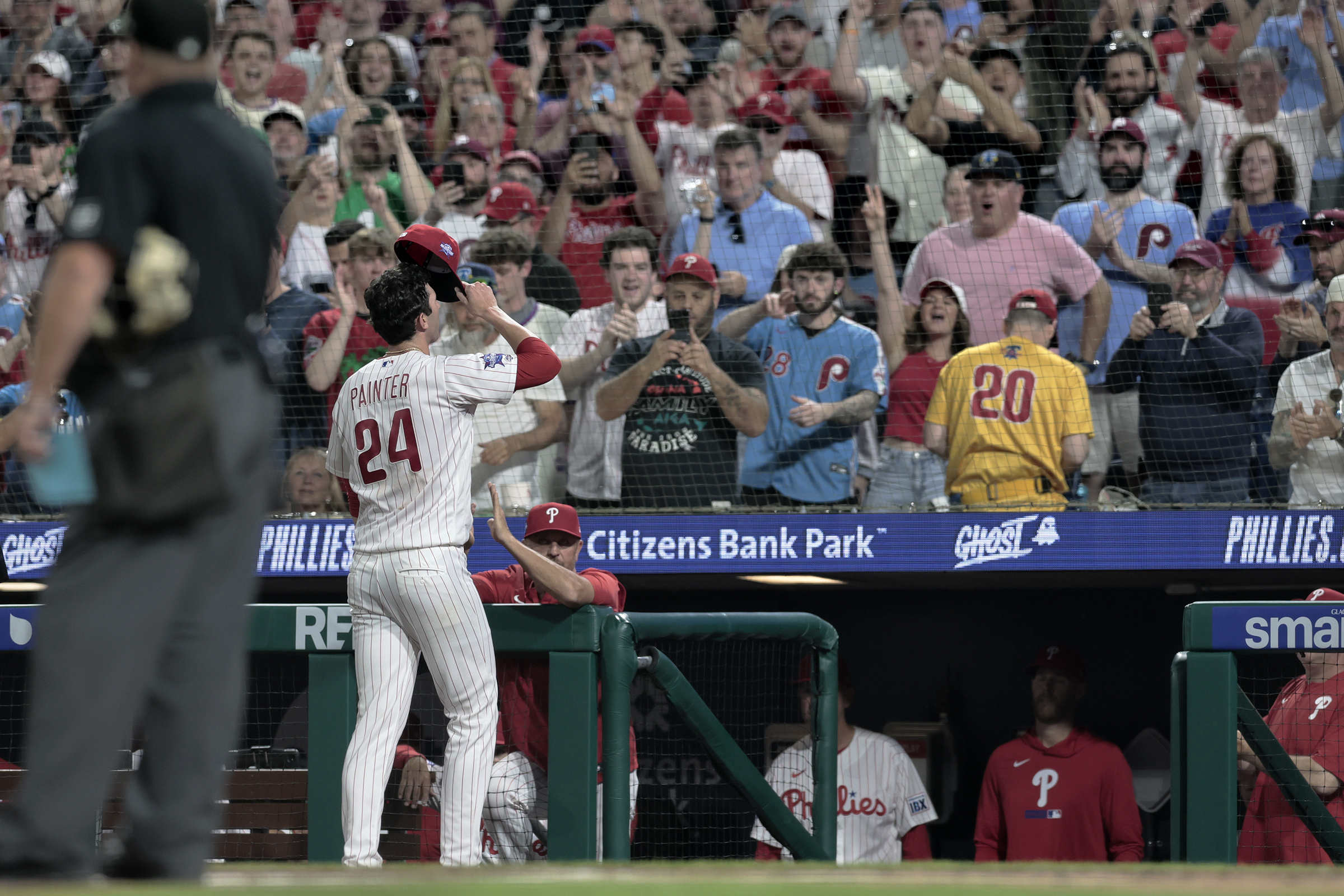
    At 8:02 p.m. Tuesday, 80 minutes after a first pitch that was three years in the making, Painter relinquished the ball and left the mound to a roar that might have lifted the cherry-red cap clear off his head if manager Rob Thomson hadn’t reminded him to do it himself.

    “That was awesome,” Painter said later, after the Phillies held on for a feel-good 3-2 victory over the Nationals. “I don’t think I could’ve drawn it up much better.”

    Somehow, almost impossibly, the most anticipated major-league debut by a Phillies pitcher in two decades, since franchise icon Cole Hamels in 2006, actually lived up to the hype.

    And then some.

    First, the line: 5⅓ innings, four hits, one run, one walk, eight strikeouts, 84 pitches, 57 strikes. But that doesn’t even do justice to how well Painter pitched before 40,708 paying customers at the corner of 11th and Pattison.

    Ten days shy of turning 23, the youngest Phillies starter since Ranger Suárez in 2018 — with “Andrew’s Painters” in Section 302, “Painter’s Painters” in Section 218, and who knows how many other groups of homage-paying fans popping up across the ballpark — Painter dialed his fastball to 98.7 mph, unleashed wicked curveballs and sweepers and bat-slowing changeups, and even got a few strikeouts with a splitter that he’s been perfecting.

    And then there was his demeanor — chill as could be.

    “He didn’t seem fazed by anything,” said Kyle Schwarber, who hit a solo homer in the third inning. “Even before the game, there was no pacing, no nothing. It was pretty cool.”

    J.T. Realmuto added: “He seemed super calm, confident. You would have never known it was his first start.”

    And from Adolis García, who hit his first Phillies homer in the fourth inning: “He looked like a star.”

    Fellow rookie Justin Crawford scored what proved to be the winning run in the fifth inning on an error by Nationals first baseman Luis García Jr. With Crawford in center field, it marked the first time since Aug. 7, 2015, that the Phillies started an under-23 pitcher and position player in a game (Aaron Nola and Maikel Franco).

    “When those young guys come up, there’s a lot of excitement,” Thomson said. “And guys root for them because they remember their first appearance or game in the big leagues.”

    Crawford debuted with two hits on opening day. This was Painter’s moment.

    Take it from the top. His first pitch hummed in at 96.6 mph for a called strike. Realmuto tossed out the ball for a souvenir. Four pitches later, another keepsake: a curveball that struck out Nationals leadoff hitter James Wood.

    Then came a Houdini act. After yielding back-to-back singles to open the second, Painter escaped with three fly balls.

    Nationals manager Blake Butera stacked the lineup with six left-handed hitters and two switch-hitters to increase the degree of difficulty. Lefties batted .287 with an .857 OPS against Painter last season in the minor leagues.

    But Painter mixed his pitches like a blender to the lefties, preventing them from sitting on the heater. And the second time through the order, he began sprinkling in splitters.

    “We were, I mean, not necessarily saving it, but I didn’t feel like he needed it that first time through because he was throwing everything else so well,” Realmuto said. “It’s always good as a starting pitcher to be able to have something in your back pocket for the second or third time through the lineup.”

    It’s part of what makes the special ones great. And make no mistake: The Phillies believe Painter is special.

    For years, president of baseball operations Dave Dombrowski has hung up the phone on rival executives who have made trade offers for Painter. In 2023, when Painter was 19, the Phillies seriously considered him in spring training for a spot in the season-opening starting rotation.

    But then Painter tore an elbow ligament, had surgery, and missed two seasons. When he returned to the mound in triple-A last season, Dombrowski believed he’d be ready for the majors by the summer. But Painter struggled to command his fastball, posted a 5.40 ERA in 22 triple-A starts, and never got called up.

    “We’ve been waiting for a while for this,” Thomson said, “and so have our players.”

    Painter conceded that he thought about his debut often over the last three years. It helped him to get through the long, sweaty days of rehab at the team’s facility in Clearwater, Fla., and the challenging nights last season in Lehigh Valley.

    Was it all that he imagined?

    “It probably exceeded it,” he said. “A lot of people showed up. I think there were about 40 [family and friends] here. Maybe even more, honestly. Just the support system behind me, everyone come out, taking time out of their week to come watch me pitch, it’s great.

    “The crowd showed up tonight and kind of rallied behind me. Just kind of soaked all of it in. I came in, I didn’t want to place an expectation on myself. I just wanted to go out there and make sure I was convicted in every pitch that I was throwing and feel confident with everything that I was throwing.”

    Painter didn’t want to stop throwing in the sixth inning. But after allowing a one-out single to CJ Abrams on his 84th pitch, he got a visit from Thomson, who tapped him on the chest.

    “Did you enjoy it?” the manager said.

    Painter initially shook his head no before realizing what Thomson said. Yes, Painter said. He enjoyed it.

    “Just make sure you tip your cap when you walk off,” Thomson said.

    Cue the ovation.

    “I almost forgot,” Painter said of the cap-tip. “But I did it.”

    Phillies pitcher Andrew Painter tips his hat as he comes out of the game in the sixth inning of his MLB debut.

    With the promise of many more in the future.

    “If we can keep him healthy, this guy’s going to be really good for a long time,” Thomson said. “He’s going to have a really great career. He’s one of those upper-echelon guys that’s got the combination of power and command. The future is bright for him.”

  • Phillies seek a way out of their season-opening batting woes

    Phillies seek a way out of their season-opening batting woes

    The Phillies are not hitting the panic button yet.

    Amid a three-game slide — including a 13-2 drubbing Monday at the hands of the rebuilding Nationals — the offense is trying to keep everything in perspective.

    “We’ve got 158 games left,” manager Rob Thomson said Tuesday. “You’re going to run through three-game stretches, sometimes five-game stretches, where you don’t hit, you don’t play well. It’s just kind of magnified because it’s the start of the year.”

    It’s not exactly business as usual either, though. Trea Turner, who entered Tuesday with a .167 average, hit on the field before the game Monday and Tuesday. That is typically not part of his routine, as Turner usually prefers to hit inside in the batting cages. J.T. Realmuto also joined Turner hitting outside on Tuesday.

    Everything is a small sample size at this point in the season, but still there are some troubling trends. The Phillies entered Tuesday 10-for-71 (.141) with just a .197 slugging percentage against left-handed pitching in four games.

    Kyle Schwarber entered Tuesday .125 overall and .091 against left-handers.

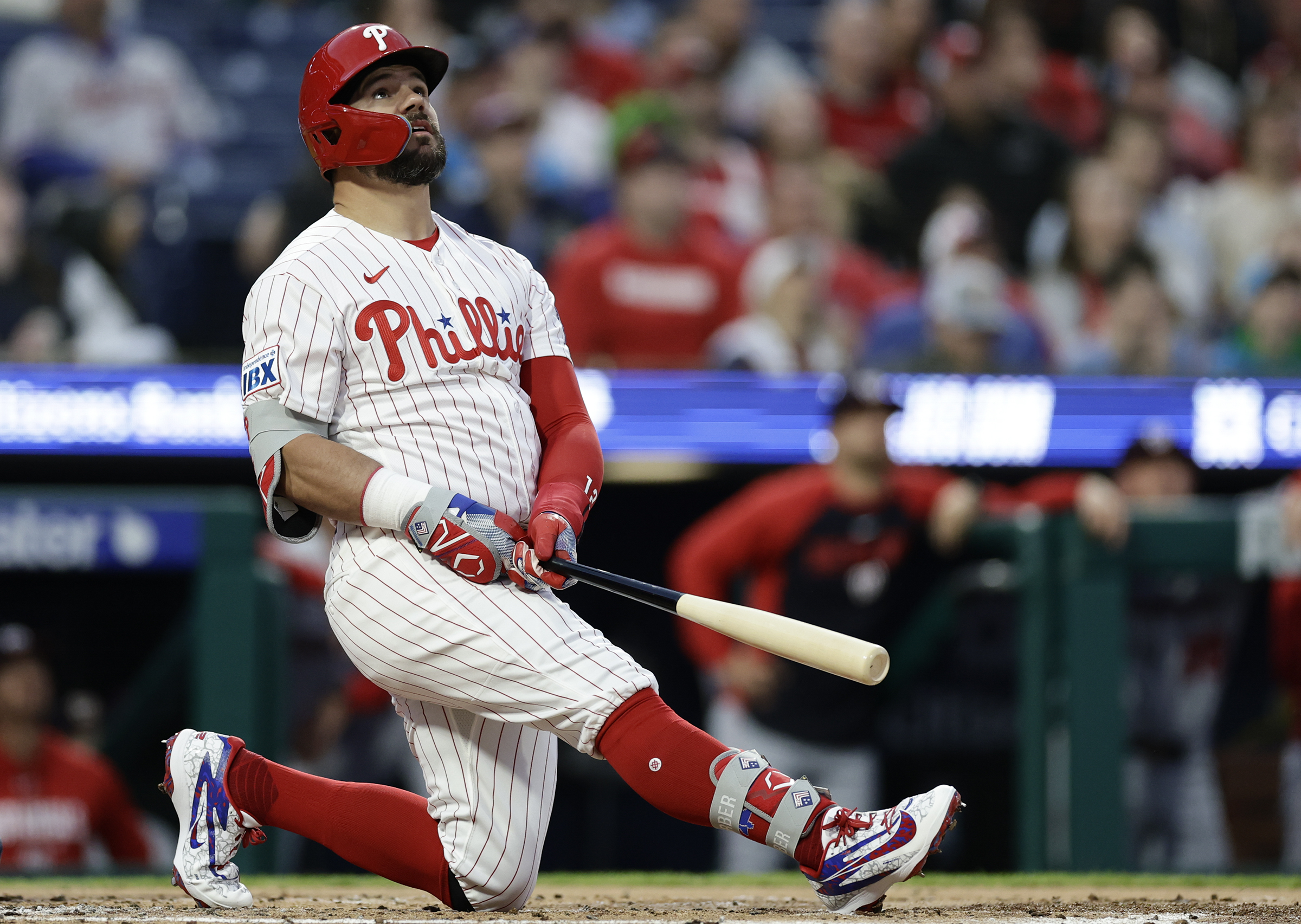
    Phillies designated hitter Kyle Schwarber was batting .125 but hit a home run on Tuesday night.

    “As a team I don’t think that we look into right, left, anything like that,” Schwarber said. “It’s more about being able to go out there, and like we say, work your at-bat and work what you want to swing at, what you don’t want to swing at, and work the process, not the result.”

    After striking out swinging in his first plate appearance Tuesday against left-handed Nationals opener PJ Poulin, Schwarber bashed a solo home run off right-handed Zack Littell in the third inning, his second homer of the year.

    Thomson has said he thinks the offense is trying to do too much.

    “I hate saying it’s baseball, but obviously we need to get better,” Schwarber said. “Everyone’s looking to work to keep getting better, and it’s hard to chase a result, especially at the plate. You have to kind of chase the process of it, and the more that you go about that, and the more that you really focus on it, I feel like the results will be there.”

    Brandon Marsh knows that as well as anyone. Last season, he went though an 0-for-31 slide in March and April. He began digging himself out after a rehab assignment to triple-A Lehigh Valley for a hamstring strain, where he received a pep talk from catcher Garrett Stubbs.

    This year, though, Marsh has been one of the most productive Phillies through four games, with a .417 batting average and 1.083 OPS. He is 1-for-5 against lefties.

    “It’s still early, really small sample size, a lot more ball to be played,” Marsh said. “But I like where I’m at, just got to continue, to keep trying to get better every single day. A lot more I can improve on, that’s for sure, offensively and defensively.”

    Extra bases

    Top Phillies prospect Aidan Miller (back) is still not swinging a bat, but his activities have “increased,” according to Thomson. … Orion Kerkering (hamstring strain) was scheduled to pitch an inning for triple-A Lehigh Valley in Durham on Tuesday as he continues his rehab assignment. … Cristopher Sánchez (1-0, 0.00 ERA) is scheduled to start Wednesday’s series finale against Nationals right-hander Cade Cavalli (0-0, 4.91 ERA).

  • Former Phillie Lenny Dykstra waives preliminary hearing on drug charges

    Former Phillie Lenny Dykstra waives preliminary hearing on drug charges

    HAWLEY, Pa. — Former Phillies All-Star center fielder Lenny Dykstra waived his preliminary hearing on two misdemeanor drug charges Tuesday before District Judge Randy Schmalzle, meaning the matter will now be addressed in a higher court.

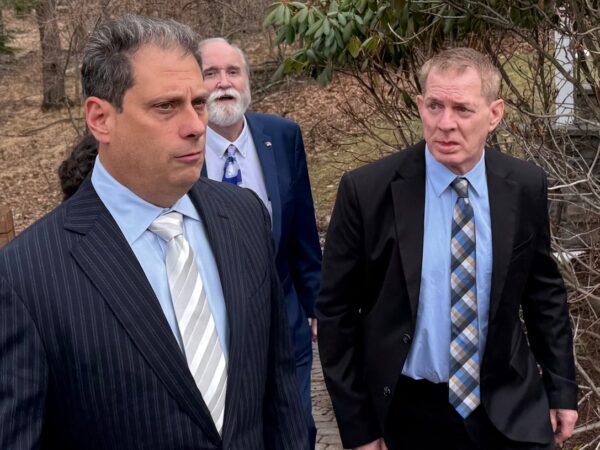
    Dykstra, 63, appeared with his two attorneys, Matthew Blit and Thomas Mincer, and the member of the 1993 National League champions was dressed in a dark suit, blue shirt, and tie. Dykstra said little in the windowless courtroom during the roughly 10-minute proceeding, other than to say he understood the meaning of waiver. Assistant District Attorney Dave Marra was also present.

    “Thomas Mincer and I are pleased to report that today was Lenny Dykstra’s first court appearance,” Blit said in a statement. “Attorney Mincer had a very productive meeting with the District Attorney’s office and we are pleased to report that everything is moving [in] a positive direction.”

    The charges stem from a New Year’s Eve traffic stop in Pike County in northeastern Pennsylvania, when Dykstra was the passenger in a GMC pickup driven by Scranton resident Kevin Zelna. State Trooper Kody Nowicki pulled the GMC over after Zelna failed to stay in his lane, according to testimony by Nowicki and a criminal complaint. Zelna, 37, was charged with several counts, including driving under the influence.

    When Dykstra told law enforcement that he wanted to retrieve his ID and credit card, “troopers observed, in plain view, a glass smoking device and a jar/container containing suspected narcotics.” Nowicki later testified that the contents tested positive for crack cocaine.

    Mincer released the following statement Jan. 6:

    “We firmly assert that the alleged narcotics in the vehicle did not belong to Lenny, who is currently recovering from a serious stroke. Lenny was not knowingly in possession of or under the influence of any narcotics, had none on his person and was not taken into custody at the scene. The driver was arrested and taken into custody at the scene and accused of 17 counts, including being under the influence, not Lenny. Attorney Matthew Blit and our team remain steadfast in our commitment to absolve Lenny of all possession charges.”

    Dykstra’s preliminary hearing was originally scheduled for Feb. 3 and then Feb. 17. Dykstra recently completed a 75-day rehabilitation stint, according to Dennis D’Augostine, a pastor at Steamtown Church in Scranton, where the former major leaguer lives. D’Augostine has been working with Dykstra and said he baptized him on March 8.

    Lenny Dykstra during his 2012 sentencing on grand theft auto charges in Los Angeles.

    Dykstra played 12 major league seasons as a center fielder, his first 4½ with a New York Mets team that won the 1986 World Series. He was traded to the Phillies in 1989 and helped the team reach the World Series in 1993, when he finished second to Barry Bonds in the NL MVP voting. Dykstra retired with the Phillies in 1996 at age 33.

    He spent time in prison after pleading guilty in federal court to bankruptcy fraud and money laundering in 2012. Dykstra also pleaded no contest to grand theft auto in California.