Category: Philly First

  • Helping Philadelphia’s Children Heal

    Helping Philadelphia’s Children Heal

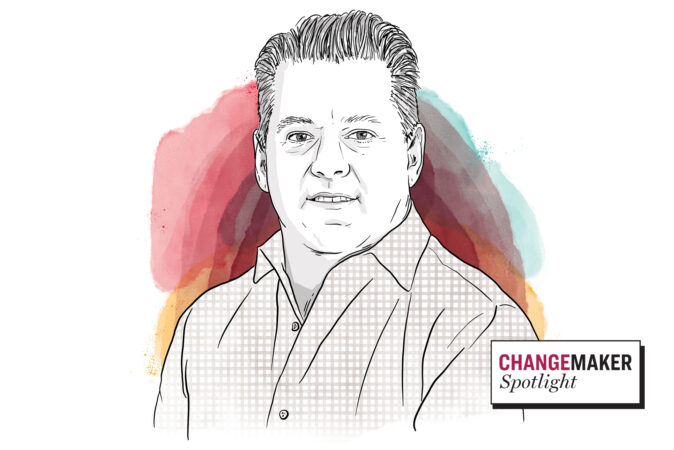
    For more than five decades, Philadelphia’s Children’s Crisis Treatment Center (CCTC) has opened its doors to vulnerable young people and families who have been impacted by violence, loss, and adversity. “Helping a child heal doesn’t just change their life. It strengthens their family, their extended network, and, in a very real way, their community,” the organization’s CEO Antonio “Tony” Valdés, 61, said. “That’s what continues to inspire me: understanding that the work we do at CCTC ripples outward, touching countless lives beyond the one child sitting in front of us.” Since taking the helm in 1997, Valdés has transformed CCTC from a small local agency into a cornerstone of children’s mental health care in the greater Philly region, helping the nonprofit expand from four programs to 15, to reach more than 3,500 young people each year.

    Valdés has spent his career focused on the guiding belief that every child, no matter their circumstances, deserves the chance to feel safe, seen, and supported. Under his leadership, CCTC has redefined what community-based care looks like, meeting families where they are, honoring their cultures and experiences, and building systems of care rooted in empathy and equity. In this Q&A, Valdés reflects on the urgent mental health needs facing Philadelphia’s children, the evolution of trauma-informed care, and how CCTC continues to offer hope where it’s needed most.

    What inspired you to do the work you do today?

    I think it has a lot to do with how I grew up. I was very fortunate as a child. My parents are immigrants, my father from Cuba, my mother from the Dominican Republic. When I was young, my dad started his own business and we moved from the States back to the Dominican Republic. Living in another country as a teenager gave me a deeper sense of perspective.

    It made me think about culture as the environment we live and grow in, the “soup,” so to speak, that shapes our narratives and defines how we experience the world. That way of seeing things naturally led me to think about systems: families, neighborhoods, schools, and how they all influence children’s lives.

    So when I began working in mental health, I was already thinking in those systemic terms. A few years later, I had the chance to work with children and it immediately clicked. I realized that the earlier you reach a child, the greater the impact you can have.

    Helping a child heal doesn’t just change their life. It strengthens their family, their extended network, and, in a very real way, their community. That’s what continues to inspire me: understanding that the work we do at CCTC ripples outward, touching countless lives beyond the one child sitting in front of us.

    What do you bring to this job that is unique?

    First, I’m very persistent. Once I decide to go down a path, I keep pushing forward. Second, I’m personable and social. I interact casually with people, which makes me approachable. Finally, I bring a practical, analytical approach to the work. Many CEOs in this field come from operations or program backgrounds, and I do too, but I also have a knack for numbers and finance. That combination allows me to manage the business side of CCTC effectively while staying deeply connected to our programs and the families we serve.

    Right now, our annual budget is about $30-35 million, and managing that while staying true to our mission requires both persistence and practicality.


    You’ve talked about the importance of early intervention. Why does that matter so much?

    The earlier you intervene and support families, the better. A lot of our work at CCTC focuses on helping parents and caregivers understand what their children are experiencing, what we call “psychoeducation.” We help them see that many behaviors, even the difficult ones, make sense in light of what a child has lived through. It’s not “bad behavior.” It’s a natural response to trauma. It’s actually not normal for a child to go through terrible things and show no signs of distress.

    Science now backs this up. The landmark Adverse Childhood Experiences (ACEs) study, conducted more than 20 years ago, revealed powerful connections between early trauma and long-term health outcomes, including not only behavioral issues or substance use problems, but even higher rates of heart disease and cancer. What we’ve learned since then, through brain imaging and neuroscience, is that trauma in early childhood can actually shape how the brain develops. The brain adapts to prioritize survival, and other areas, the ones that regulate learning, relationships, and emotion, can be underdeveloped as a result.

    That’s why early, loving, consistent relationships are so crucial. The most powerful protective factor is the presence of caring, dependable adults in a child’s early life. The next is a sense of belonging and community. When those are strong, children build resilience.

    Some adversity can actually help children grow, as long as that balance tips toward safety, love, and connection.

    How has CCTC evolved since its early days?

    The people who founded CCTC in the early ’70s probably wouldn’t have used the language we use today, but they were clearly responding to a growing awareness that children’s behavior was often rooted in trauma. That early insight has shaped CCTC from the beginning. Over the years, the field has evolved, and so have we. About 18 years ago, we made a major shift by embedding trauma-informed principles into every part of the organization. It changed not only how we treat children, but how we support staff, collaborate with partners, and engage with the community. It became a core philosophy, not just a clinical model.

    That focus has kept us true to our mission. We’re not trying to be all things to all people. We’re a children’s behavioral health agency and everything we do aligns with that purpose. Staying disciplined in that way allows us to build stronger partnerships and deliver deeper impact.

    Today, we serve children from about 18 months through 18 years old, but most of the kids we work with are between three and 13. Roughly 75% are 10 or younger. That’s really where our heart is: early and elementary-age children, because that’s where we can make the greatest difference.

    What’s been the biggest challenge for CCTC over the years?

    One of the biggest challenges has been working within systems that are incredibly complex, whether that’s government, insurance, or even community and political structures. These systems often tend to move toward the least common denominator: keeping things steady, avoiding risk. Innovation doesn’t always get rewarded.

    But CCTC has always been an organization that looks ahead. We’re constantly asking: What’s next? Where do we need to be two, three, four years from now? That kind of thinking sometimes puts us at odds with the larger system, and that can be frustrating. There have been times when we knew an idea would make a real difference, but it took years before the funding or policy landscape caught up.

    A good example is care coordination, or what some call “case management.” We’ve always believed in helping families navigate all the challenges that can prevent them from engaging in treatment: housing instability, food insecurity, lost utilities, lack of transportation. For years, that kind of work wasn’t funded or even recognized as essential. But to us, it was obvious, since if a family’s basic needs aren’t met, therapy alone won’t change much.

    What’s a big goal for CCTC’s future?

    One of our biggest goals is to bring what we do directly into the natural settings where children and families already are. That’s where real access happens: in schools, recreation centers, community programs, and other places that feel familiar and safe.

    When mental health care is part of everyday life, it becomes normalized. We’re already doing some of this, placing parenting groups and educational programs in community settings, to help families better understand the roots of behavioral challenges. Many parents we meet are doing their best, but no one’s ever helped them recognize how their own childhood experiences might still be shaping their parenting today.

    What transformations have you seen in the development of children who have come to CCTC?

    I look at it on two levels: observable outcomes and how a child functions in their life. On the surface, success shows up in things like fewer suspensions or detentions, reduced fights, and improved grades.

    But real success goes beyond behavior. It’s about helping children make sense of what happened to them. Kids who’ve experienced trauma should never simply forget it. They need to learn how to live with it, understand its impact, and gain the skills to respond differently. That helps them manage triggers, regulate emotions, and gain self-awareness.

    What misconceptions about trauma or mental and behavioral health do you most want to challenge?

    There are a few. The first is one that still lingers. The idea that “kids are young, they’ll forget.” That’s just not true. When a child experiences something terrible at four years old and starts acting out at nine, those behaviors are often connected. Ignoring that link does a real disservice to the child.

    The second misconception is about resilience. People sometimes say, “She’s stronger because of what she went through.” Trauma doesn’t make you stronger; protective factors do. Maybe that person had strong family support, stable housing, or a teacher who cared. Those things build resilience, not the trauma itself.

    And the third is about the multigenerational nature of trauma. When harmful behaviors aren’t addressed, they echo through families. A parent who grew up with abuse or neglect might not repeat the same actions, but the emotional patterns of anger, control, and detachment can still carry forward. Recognizing that connection across time, generations, and communities is key to breaking the cycle.

    What is your mantra?

    I try to live by the idea of focusing on what you can actually impact. I stay focused on what makes the biggest difference.


    PHILLY QUICK ROUND

    Favorite Philly food? For Dominican food, I really like Mamajuana in Fishtown and a few spots in North Philly, like El Meson and Barú.

    Sports team you love: I’ve been a Phillies fan my whole life.

    What you wish people knew about those who call Philly home: What I wish people knew about Philadelphians is how much the city has changed over the past 20 years. Many outsiders still see Philly as it was 25-30 years ago, but today it’s far more diverse, not just in food and restaurants, but across neighborhoods.

    Greatest Philadelphian of all time? My pick for greatest Philadelphian of all time is easy: Ben Franklin.

    Favorite thing to do when you have free time in and around Philly: I love exploring new restaurants I haven’t tried yet, especially with friends.


    Lucy Danziger is a journalist, an author, and the former editor-in-chief of Self Magazine, Women’s Sports & Fitness, and The Beet.
  • The CEO Shaping the Health of Greater Philadelphia

    The CEO Shaping the Health of Greater Philadelphia

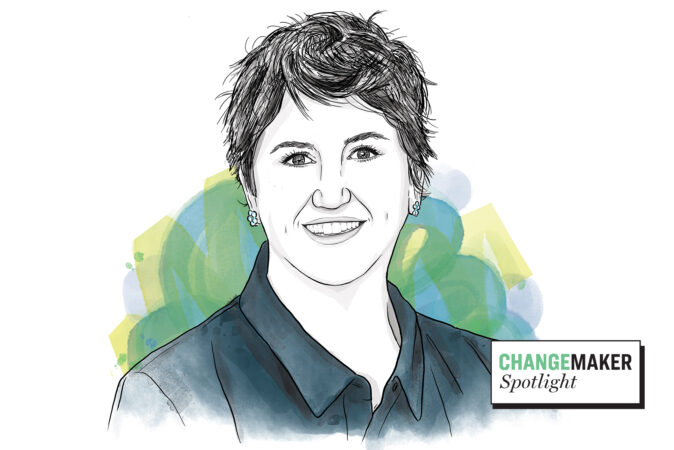
    “I grew up admiring my father,” Kelly Munson, the president and CEO of Independence Health Group, parent company of Independence Blue Cross (IBX), said. Thurman Munson was a major league baseball star and captain of the New York Yankees in the 1970s, and Munson said he taught her the importance of hard work, humility, and giving back: “What I loved most was his resilience.”

    Now, Munson is bringing those lessons to her own leadership position. This October, she became the first woman to lead Independence Health Group in its 87-year history. The organization, which has 14,000 employees and serves more than 7.1 million people across 32 states, including the District of Columbia, plays a vital role in shaping the health of communities across the region and nationally.

    Previously, Munson served as president and CEO of AmeriHealth Caritas, an Independence Health Group company that provides national leadership for vulnerable populations. She was named CEO of the parent company after an extensive national search for the position. Here, she reflects on the moments that shaped her career, her admiration for Philadelphia, and her vision for the future of the company.

    Why did you choose to dedicate your career to health care?

    When I was in college, I was studying political science and happened to take a nutrition class. That’s where I learned that the [national] school lunch program was, at one point, counting ketchup as a fruit. I remember being stunned by that. Around the same time, I read an article about the impact of inadequate nutrition on schoolchildren, the way missing something as simple as breakfast could lower test scores and hold kids back.

    It struck me deeply that through no fault of their own, children were starting the day at a disadvantage, unable to focus and thrive, simply because of what food they had access to. That realization lit a fire in me. I knew then that I wanted to dedicate my life to health care, to helping address these inequities.

    What excites you most about being part of Philadelphia and its surrounding communities?

    I’ve been here for two years now, and what’s struck me most is how misunderstood Philadelphia can be from the outside. People often see the passionate sports fans, or some of the stereotypes, and miss what the city is truly about. Once you’re here, you realize it’s one of the most soulful, passionate places you could imagine. There’s an energy and pride that runs through everything, from the sports teams to the neighborhoods to the people who call it home.

    Independence Blue Cross has been woven into that fabric for generations. It’s not just an employer; it’s part of the lifeblood of the region, serving police officers, teachers, families, and communities across the area. In fact, IBX was the city of Philadelphia’s first health insurer! To lead an organization so deeply rooted here, in a city that’s so alive, is incredibly exciting.

    Previously, you were CEO of AmeriHealth Caritas, a Medicaid health plan that is a subsidiary of Independence Health Group. When it comes to AmeriHealth Caritas, what are you the most proud of and what is your vision for the company’s future?

    Honestly, what I’m most proud of are the associates at AmeriHealth Caritas. They are extraordinary: mission-driven, compassionate, and deeply committed to serving vulnerable populations. That mission is exactly why I joined the company. At our core, what we do is care for those who need it most.

    All our teams go beyond traditional health care. They bring high-touch, community-centered support, with care management programs that truly change lives. For those at highest risk, we assign dedicated care managers who ensure people get the extra help they need. That hands-on approach translates directly into healthier outcomes.


    Is there a member story that has made a lasting impression?

    There are a few that stay with me, but one comes to mind immediately. I received an email from a man thanking us because, for the first time in 15 years, his elderly mother was able to enjoy a family barbeque with his brother, who had been living with serious mental illness, and they got through the event without a behavioral episode. It was a simple moment, but it meant the world to them as a family.

    Through our programs, we helped the man’s brother secure consistent therapy, proper medication management, safe housing, which he had not had, and even a job. Over the next two years, he was able to reconnect with his family, get engaged, and spend meaningful time with his mother. Sadly, he passed away from cancer two years later, but for the first time, he was healthier, happier, and able to be fully present with his loved ones.

    That experience reminded me that when we help a member, we’re often impacting an entire family. Health is rarely just one issue; it’s intertwined with many layers of social and medical needs. We consider the whole person and their loved ones.

    Independence Health Group has a history of community involvement, including employee volunteer work. How will you carry that forward in your role?

    Community engagement is at the heart of who we are. Across IBX and the AmeriHealth brand, employees have contributed more than 122,000 volunteer hours, with hundreds of nonprofits nationwide, not only to support the communities we serve but also to build trust and strengthen the networks that help our members.

    We help organizations with technology, infrastructure, and funding to ensure they can thrive. I’m committed to continuing this legacy and empowering our teams to make an even greater difference in the communities we serve.

    How is Independence Health Group addressing disparities in social determinants of health?

    Social and environmental factors often shape health outcomes even more than medical care itself, especially in Medicaid populations. Many of our members face multiple challenges at once: food insecurity, housing instability, utility needs, limited health literacy. Our goal is to identify those gaps early, connect members with the right resources, and measure whether those interventions truly make a difference. When social gaps are closed, members are up to 7% more likely to get preventive care, and hospitalizations can drop by a third. That’s powerful.

    I’m especially proud of our partnerships driving equity at a systemic level. Through the Regional Coalition to Eliminate Race-Based Medicine, IBX worked with 12 health systems to remove bias from clinical algorithms, resulting in more than 1,100 patients moving onto or up the kidney transplant list. By the end of 2024, 188 received kidney transplants. Our Accelerate Health Equity initiative brings hospitals, insurers, and community organizations together to tackle inequities across Philadelphia.

    Rising drug costs continue to be a concern for consumers. What strategies are effective for addressing affordability?

    It’s a serious challenge. Pharmacy costs have risen more than 230% over the past two decades, driven largely by high-priced specialty drugs. Many of these medications bring real value to patients, but the costs can be overwhelming.

    We’re focused on evidence-based strategies that maintain quality while improving affordability. That includes expanding access to biosimilar drugs, which offer the same effectiveness at a lower cost; ensuring members try proven, lower-cost options before moving to more expensive treatments; and helping members receive infusions or medications in lower-cost care settings when appropriate.

    We also work closely with providers to ensure members understand their options, like choosing between generics and brand names depending on what’s clinically appropriate. It’s about empowering people with choices that protect both their health and their wallet, without compromising quality of care.

    Who do you admire in your personal life or family?

    I grew up admiring my father, Thurman Munson. He was captain of the New York Yankees in the ’70s; what I loved most was his resilience. He came from very humble beginnings. They were so poor growing up that sometimes he had to go without shoes or resources, but he performed at the highest level anyway. In high school and college, he would have to mow seven lawns before showing up at the ball park for practice. Yet he achieved something extraordinarily rare while staying grounded, valuing family, and teaching us the importance of hard work and humility.

    And my mom was equally remarkable. When he passed [at the age of 32], she carried through those values. She picked right up with that same approach to raising us to be hard-working kids. Having both of them as role models shaped who I am, and I don’t take for granted the lessons they gave me about resilience, humility, and having an impact.

    What do you do with a few free hours?

    The number one way that I recharge is to do anything with any one of my kids, or all three and my husband, preferably. My favorite thing is to go hiking. So when I can, I get them to go hiking with me.

    Do you have a mantra? Any words you live by, or sayings that resonate with you?

    Actually I do. I was trying to make a big work decision one time, and I was struggling with it. A gentleman came by my office and he could tell that I had been struggling, and he just leaned in and shared a quote by Goethe: “Things that matter most must never be at the mercy of things that matter least.”

    These words helped me decide. It really boils down to knowing what matters most to you.


    PHILLY QUICK ROUND

    Favorite food: Jim’s Steaks. It’s absolutely fantastic.

    Which sports team’s shirt do you wear most often? The Yankees. I’m sorry, but no other baseball hat goes on my head. I’m the daughter of a former captain. It’s family.

    What do you love about Philadelphia? Well, of course it’s the fans. You come here, and everyone is passionate, and it’s so much fun.

    Who is the greatest Philadelphian of all time? Everyone who fought for freedom and human rights.

    I feel most Philadelphian when …. I’m in a sports bar watching an Eagles game.


    Lucy Danziger is a journalist, an author, and the former editor-in-chief of Self Magazine, Women’s Sports & Fitness, and The Beet.

  • An Infrastructure for Empowerment

    An Infrastructure for Empowerment

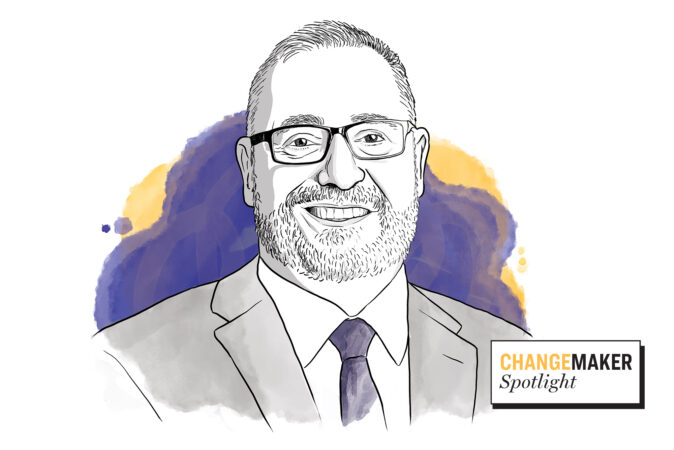
    A 2019 recipient of the Philadelphia Award, the Rev. Luis Cortés Jr., 67, has come a long way from working after school at his father’s grocery store, known as a “bodega” in East Harlem. The bodega is where he learned the impact of social connection. “I’ve never seen sociology papers written from the bodega perspective, but there can be,” Cortés said.

    Those early observations informed Cortés’ belief that perseverance and financial literacy can help close the gap for Latino communities. In 1986, Cortés founded the nonprofit Esperanza, which means “hope” in Spanish. The faith-based organization is guided by Jesus’ mandate in Matthew 25:40 to serve and advocate for “the least of these” around us.

    Known simply as “Rev” by members of the wider Philadelphia community, Cortés is proud of the breadth of services Esperanza offers. The organization improves the lives of those in North Philadelphia through education, housing stability, work training, civic empowerment, and the arts. Over the last 40 years, Esperanza has grown to serve more than 30,000 families annually. Cortés aspires to do more, still.

    How did your upbringing in New York City influence you?

    The first 10 years of my life were in Spanish Harlem, then we moved to Black Harlem and I attended New York City public schools. My father ran a grocery store, a bodega in the neighborhood, and I worked at the store. Working at the store teaches you a lot about life. You get to know the customers. You get to know their families. You get to know their hopes, aspirations, fears, and you begin to become part of the fabric of their lives. You learn about things that are happening in people’s lives that are very real and painful.

    It’s always the same things: the desire to have safety, and also long-term aspirations, [like to] be able to provide for their family.

    What experiences in your life or background led you to dedicate your career to social services and community support?

    I decided to go into the ministry because I could work on behalf of communities. I went from “I’m going to be a lawyer to help people,” to being a minister to help people. I became immersed in civil rights, both in my theological training as well as [in] my ministerial pursuit.

    I worked for a group called IFCO [Interreligious Foundation for Community Organization], based out of the Abyssinian Church under Rev. Lucius Walker. We [supported] self-determination for Puerto Rico. We [supported] civil rights in the U.S., [and] the National Anti-Klan Network. I’m willing to persevere for the greater good of the community. I realized I’m better at civil rights work and community development work.


    If someone were to ask you about entering the clergy today, what would you advise?

    I think that entering the clergy allows you to get into the most theoretical, philosophical, theological thoughts in the history of humankind. All areas of inquiry are open to you.

    Esperanza is a faith-based organization. How is faith woven into all that Esperanza does?

    The fact is, all human beings are equal and all human beings need to be loved and respected.

    That’s our theological and our epistemological premise. Every individual has something to share, both for the growth of their family and for the whole. If you start there, everything [is] about opportunity. Money should not inhibit your growth and your ability to serve others. At Esperanza the religious aspects will always be present as long as we maintain the theoretical framework that all human beings are created by God. And all human beings are equal, regardless of who they are in the present day, because that will not define who you will be tomorrow.

    Economics is a touchstone for you and for Esparanza. What’s behind your focus on financial literacy?

    I learned early that money is a tool. And no matter how much money you have, it is still a tool, and an important one. How do we learn to use and apply that tool?

    The example I use is this: When I worked at my family’s store, I would always take a Snickers bar and a Pepsi. The fact that I wasn’t thinking about it irritated my father. So one day he asks me four basic questions: How many are in a box? How many do I have to sell to break even? How long is the box there? And why is the box there?

    He wasn’t upset that I was eating a Snickers bar. He was upset that I didn’t know what [it] meant to the overall economics of the store, and that I was taking that tool [of money and economics] for granted. Money is a tool no matter how little you have. And you need to understand the tool and how you apply the tool.

    We need to find ways to educate people about money, about status, immediate gratification versus long-term gratification. You cannot just live for tomorrow, but you should not just live for today. That’s my philosophy.

    Is there a division of Esperanza that you hold a soft spot for?

    In our art gallery, Galéria Esperanza, we highlight Latino artists from Philadelphia who don’t get a shot anywhere else. There are great composers, [musicians, dancers, and other Latino artists] in history. And so Esperanza Art Center melds [the performing arts, including theater, film, music, and dance, to feature those artists]. And then [another] important [piece] is access: [kids] 18 and under and college students [can attend for] free, and senior citizens are free.

    We need to thank the philanthropic community because they made that access possible. We built and paid for our theater, the Teatro Esperanza. I convinced the performing groups, including Philadelphia Ballet, Philadanco and Opera Philadelphia, to come, but I still needed a way to help finance those groups.

    We have a library, which is now a community library. The businesses use it in the evenings. It’s reserved for our high school juniors, seniors, and college students during the day. It’s wonderful. We don’t get any government funding for that, but we need it. We hold community school meetings here at Esperanza as well.

    Can you share a recent success story?

    It is the opening of Esperanza Academy Charter School‘s elementary building in September. It took us almost 12 years to gain permission, raise the money to build, and open our elementary school. Once we finally got permission we had to raise money. It took five years to raise $40 million for the construction. We have a state-of-the-art facility. It is a physically beautiful space for our children. The parents see it and cry.

    There have been a lot of recent changes politically on the local, state, and national levels. How has Esperanza had to shift its focus?

    Civic rights, civic engagement have become a larger focus in the more recent months. We have an immigration division, so we put out training sessions to know your rights.

    We also have explained to staff what their rights are. We’ve explained to business owners [and] clergy. A lot of clergy thought that ICE cannot come into their church. The law is clear. ICE can walk into your church on a Sunday morning while you’re preaching. They cannot go into any space that’s private. So put “private” on every door.

    Learning the rules of engagement is important, even though the rules of engagement are not always followed by the government these days. But knowing them is important because they will affect your case as you move forward.

    We’re proceeding with our work. People need housing. People need food. People need education. Nothing changes. We have to continue to let people know that this political climate is abnormal. But you need to understand that while it’s abnormal, it may be legal. And if it is legal, you need to understand what your rights are. You need to understand where you must comply.

    What is the biggest challenge for Esperanza in the coming year?

    The biggest challenges include programming for senior citizens around heat mitigation, cuts to our college (a Hispanic-serving institution), and reductions in community development funding. We had to make tough decisions. The loss of funding meant we couldn’t hire a group of people, and hard-working people had to be let go.

    These are fundamental issues about being humane and they’re very important. I see a lot of inhumaneness by governmental structures these days.

    Esperanza turns 40 years old in 2026. Are there any special events in the works?

    We will be celebrating our 40th anniversary in April with a sponsored event. And then, we also are celebrating the 25th anniversary of [Esperanza Academy Charter School] and the 25th anniversary of [Esperanza College of Eastern University].

    We’ll be holding an event the day before our 40th anniversary event [that is] a musical celebration with a jazz orchestra band for the community [celebrating] 250 years of Latin music. We’ll have big-band-style performers with Pablo Batista heading it up. Pablo was this year’s Grand Marshal for the Puerto Rican parade. He’s one of the top percussionists and a global icon who’s been living in [Philadelphia] for his whole life.

    What do you want your legacy to be?

    That’s easy: to build Esperanza College into one of our major universities in Philly. And the institution will compete and become the mechanism by which people can become empowered.


    PHILLY QUICK ROUND

    What’s your favorite Philly food splurge? I have two: the Tres Leches cake from Vickie’s Sweets and the homemade ice cream from Helados Chupi Chupi.

    Favorite Philly restaurant? Tierra Colombiana. You can get the best Latin food in the city.

    Favorite Philly small business? Cafe Tinto and Amy’s Pastelillos, both in North Philly.

    Which sports teams do you root for? I was a Sixers fan before I came to Philadelphia. All the other teams I became a fan of after I moved to Philadelphia. They grow on you. The Flyers, Phillies, the Eagles are in a renaissance period right now.

    Favorite Philly artist, performer, musician and/or band? Percussionist Pablo Batista and the band Low Cut Connie.

    What elements of Philly remind you of your childhood neighborhood of East Harlem in NYC? Any time I walk into a bodega and I can talk in Spanish, it’s like a time warp.

    What’s one place in or around Philadelphia everyone should visit at least once? Teatro Esperanza.

    What do you wish people knew about the people who call Philly home? We always get up. We get knocked down, but we always get up. It’s part of that Rocky theme. There’s a lot of persistence in Philadelphia. It makes our city more dynamic.