Category: Policy

  • Lotteries and other school equity reforms can have mixed results

    Lotteries and other school equity reforms can have mixed results

    As final grades post, lockers empty and end-of-year celebrations draw to a close, anxiety about the future looms. For many children in Philadelphia a lottery determined where they’ll head to school next year. The city is far from alone in adopting a practice that one online forum likened to “wading through some kind of toxic gas.” The goal, broadly speaking, is to ensure that any student anywhere can benefit from excellent schools despite entrenched housing segregation in many of America’s cities.

    Yet, despite the endorsement of the Nobel Prize committee, the question of whether these lotteries actually enhance equity is complicated.

    Consider the case of Washington D.C., where 76% of the public school system is Black and Hispanic, 43% of students are designated as “at risk” academically and 15% are English language learners. For more than a decade, the city has embraced what is called the “common lottery.” Families enter for a variety of reasons, including seeking a particular type of education—dual language immersion, or an arts-centric curriculum—or even looking for a school in close proximity to a caregiver’s workplace. For some students, the lottery has offered a ticket to a superior educational experience than the one at their neighborhood school. The history informing the adaptation of the common lottery, however, suggests that such a fix can both promote and evade equity, serving as a bandaid to old, not fully healed wounds.

    Over a half century ago, Washingtonians came together to rethink how place determined the quality of education. In 1967, local activist Julius Hobson successfully sued the superintendent of schools for discriminating against Black and poor public school children. Federal Judge J. Skelly Wright, who previously desegregated schools in New Orleans, ordered multiple remedies, including boundary revisions to foster racial and socioeconomic integration.

    To fulfill one of the court’s mandates, in February 1968, a group of 35 civic-minded residents from every section of the city formed a committee to redraw how the district set attendance boundaries. After several weeks of deliberation, the committee produced six maps and settled on two, one for junior high schools and one for high schools, to present to the board of education. On May 8, 1968, the nine-member board approved the changes, affecting approximately 9,000 of the District’s 146,000 students.

    Yet, the ink had barely dried on the new maps when the school board considered additional revisions to school assignments. Enrollment patterns explained some of the changes, such as long-awaited school construction to alleviate overcrowding. But other changes looked more like carving out loopholes, blurring the lines between families’ legitimate appeals and race and class biases.

    In July 1969, the school board laid out the list of reasons that might justify a student transferring from their assigned school to one outside of their assigned geographic boundary. They included “medical reasons,” “diplomatic requests” and “gross inconvenience to parents and/or family routine.”

    The board also unanimously approved shifting 21 students, 18 white and three Black, from Gordon Junior High, located in Georgetown, to Alice Deal Junior High in upper Northwest, a historically white and affluent area of the city. In 1970, Gordon Junior High was only 53% white, whereas Alice Deal was 60% white. School board member Albert Rosenfield proposed the change on behalf of his well-to-do, well-connected constituents. For Rosenfield, the city “must have a tax base,” and appeasing a few families, some with seats in Congress, could prevent their exit and help sustain the city’s coffers.

    Concerned white parents who believed the transfers “enhance[d] segregation” quickly sued the board, and the court agreed.

    Yet, the legal victory didn’t stop the school board from implementing quieter administrative measures which enabled parents to justify transferring their children to schools outside of their assigned boundaries to alleviate a purported burden. For the 1971-1972 school year, families submitted 700 appeals at the elementary school level and 1,639 for junior high and high school. The district approved 90% of transfer requests for elementary school students and over half of those coming from secondary students.

    And so, by the 1980s, even though the boundary changes were supposed to help equalize educational opportunities regardless of one’s address, a system of widespread exemptions had created had made that promise illusory for many families. For example, in the spring of 1983, a third of Alice Deal’s 987 students were from outside of the school’s geographic boundaries. Their families had successfully navigated the sysem, which now determined which students could get exemptions on a first come, first served basis. Parents could even claim that “curriculum offerings” necessitated a transfer. This approach to fairness spurred competition for entrance into some prestigious schools. In 1986, approximately 175 parents assembled overnight outside of district offices for a chance to claim a coveted spot in their school of choice.

    Over the next 40 years, families’ ability to navigate the public school system only grew more complicated: controversial school closures, expanding citywide (or magnet) school options and the emergence of charter schools all affected how students could pursue a public education. Recognizing the burden to families and school administrators, in 2014, D.C. Public Schools and most charter schools turned to a common lottery to streamline the application process. (That same year, the district also accepted recommendations for boundary revisions, the first since 1968.)

    The lottery was a well-intentioned step toward expanding educational opportunity—and it has worked for many families. For the 2026-2027 school year, 74% of the 20,987 families who tested their luck received good news: a chance to enroll at one of their selected schools. And in recent years, the district’s new Equitable Access option gives students who are “at-risk” academically a higher chance of success on lottery day.

    Of course, none of this matters for some families; indeed, according to the D.C. Policy Center, residents in the city’s Jackson-Reed High School feeder pattern were the least likely to use the lottery, opting instead to attend their in-boundary school assignment, or a private school. But for those who want, or need, the lottery, as the state superintendent remarks, it provides a chance to take advantage of “the strength of so many D.C. education programs and the meaningful learning experiences they create.”

    Made By History sponsors. FOR USE ON MADE BY HISTORY STORIES ONLY.

    Still, luck isn’t a guaranteed pathway to equity. The lottery made no matches for one quarter of this year’s applicants, who may or may not get off of waitlists.

    The good news is the district has witnessed the dividends of more systemic efforts to nurture students. In math, researchers recently crowned the nation’s capital first among 38 states for “academic recovery” following the Covid-19 pandemic; and the same goes for reading performance among 35 states. But the work continues. As the city prepares to search for new leadership over D.C. Public Schools, the district is still chasing pre-pandemic benchmarks, and despite evidence of progress, nationally, math (ranked 27th) and reading (ranked 45th) are two subjects ripe for growth.

    Philadelphia public schools, which also offers a lottery, is currently bracing for school closures and hundreds of teacher and staff cuts in response to a budget deficit. Lotteries can be useful additions to the equity landscape, but they can only do so much to reach the most vulnerable students.

    Erica Sterling is an assistant professor of history at the University of Virginia.

    Made by History takes readers beyond the headlines with articles written and edited by professional historians. Opinions expressed do not necessarily reflect the views of The Inquirer.


  • The history of American Jews exposes the fundamental questions of citizenship

    The history of American Jews exposes the fundamental questions of citizenship

    The history of American Jews’ citizenship makes the president’s case to eliminate birthright citizenship, now awaiting a Supreme Court decision, no surprise—but this should offer little comfort.

    The central plotline of the story of Jews in the United States tends to revolve around citizenship: Jews arrived, gained citizenship, the end. Yet this story accounts for neither how citizenship has worked for Jews nor how it works in general. A far more accurate history of Jewish citizenship in the United States exposes the persistent political questions asked, answered, and unresolved when policymakers try to decide who is and isn’t “American.”

    For the past 250 years, American leaders have used citizenship law to draw and re-draw the lines of individual belonging through collective categories. From the beginning, Congress granted “any alien being a free white person” access to citizenship, writing into naturalization law in 1790 broad thresholds for membership. In 1868 the Fourteenth Amendment revolutionized citizenship by opening it to “all persons born or naturalized in the United States.” Yet Congress also legislated that for the purposes of naturalization, “all persons” only included “free white persons” and “aliens of African nativity…and African descent,” not Chinese people or “Asiatics.”

    Jews who immigrated from Europe tended to gain access to naturalization as “white” under citizenship law, but government officials found Jews a useful—and sometimes confounding—guide to help them apply the law, even when Jews were not directly involved.

    Take a 1909 naturalization appeal from four men, described in their rejected application as “Armenians by race.” The men were not Jewish, but Judge Henry Cabot Lowell, who presided over their appeal, nonetheless found himself contemplating Jewish citizenship. Harvard-educated and hailing from an elite Boston family, Lowell consulted scientific treatises to conclude that “Hebrews” and Armenians were both “Asiatic” in origin. Prevailing scientific racism of the day convinced him that neither met the threshold of whiteness. As he wrote in his decision, it was “hard to find loophole for admitting the Hebrews” to citizenship. But at least until Congress acted, he saw no reason to exclude Armenians if Jews could benefit from the loophole.

    Jewish leaders panicked when they witnessed high-level government officials slotting them into racialized categories other than “white.” They understood that the historical fact of citizenship would not necessarily protect Jews in years to come, especially as eugenicist ideas gained traction among policymakers designing new restrictive immigration laws. In the early 20th century, elite Jews lobbied politicians, filed reports, intervened in naturalization cases, and testified at congressional hearings to bolster Jews’ claims to citizenship. Their efforts met partial success. As passed in the 1920s, immigration quota laws dropped the classification of Jews as “Hebrews,” instead counting Jews among others of their same “national origin.” Still, the countries from which most Jews immigrated, such as Russia and Poland, now faced some of the harshest restrictions.

    In practice, the new quota laws reduced the number of Jews who could naturalize and raised suspicion about those who did. Foreign-born Americans from many different backgrounds experienced discrimination that legal status did not avert.

    But accusations of foreignness and dual loyalty clung to Jews in unique ways, as illustrated by a remarkable case from 1947. That year, a naturalized Jewish man sought to return to the United States after living in British-mandate Palestine for over a decade. Detained by U.S. border control agents, the Ukrainian-born man learned that his American passport had been revoked under a 1940 law that prohibited naturalized citizens from living abroad for over five years. Native-born citizens were not subject to the same law. The ACLU, American Jewish Committee, and American Jewish Congress seized on this fact to call the law unconstitutional and defend the Jewish man on his appeal. But for the Jewish organizations, the constitutional violation was a piece of a much larger threat to Jewish citizenship in the United States. When Congress authorized the 1940 statute, it did so under pressure from a State Department official who insisted that “these Zionists” regularly manipulated the protections of American citizenship for their own nationalist ends.

    The court rejected the Jewish man’s appeal, and in doing so diminished the distinctly Jewish dimension of the case by tying him to other naturalized Americans, such as Japanese-Americans, whose constitutional rights to equal protection could be overridden by national interests according to recent Supreme Court precedent.

    Citizenship debates routinely entangled Jews’ status with that of other groups because the categories of citizenship were neither self-evident nor self-executing. Only in motion, by scrutinizing groups, comparing them to one another, and gauging the changing winds of national interests, did government officials bend citizenship to their will.

    In a remarkable exchange on the Senate floor in the spring of 1964, two senators debated the exclusion of religion from proposed anti-discrimination legislation targeting federally-funded programs. Albert Gore, Sr., a Democrat from Tennessee, contended that Jews lacked shelter under the law’s categories of “race, color, or national origin” because Jews were a religion. Joseph Clark, a fellow Democrat from Pennsylvania, countered that those categories protected Jews just fine because many Jews lacked any faith, so whatever discrimination they faced must be race-based. Signed into law that summer as Title VI of the Civil Rights Act, the statute (unlike many others in the same law) did not include religion among its protected categories.

    For many decades, the question of Jews’ standing under Title VI seemed to be resolved in practice, as government officials and Jewish leaders agreed that its jurisdiction did not include Jews. But it was only a matter of time before the answer faded back into a question.

    Over the last two decades—and especially since Oct. 7, 2023—government officials and many Jewish leaders have argued that Jews should have standing in anti-discrimination laws on the basis of race, color, or national origin. Detractors argue that Jews—or certain expressions of Jewishness such as Zionism—do not fit squarely into those categories. The arguments matter because the categories of citizenship law are consequential, but their answers aren’t intrinsic to citizenship. Rather, citizenship remains a tool to ask questions about belonging; as political aims change so too will its meaning.

    Made By History sponsors. FOR USE ON MADE BY HISTORY STORIES ONLY.

    For American Jews, citizenship has not offered a singular point of arrival or a final answer to the puzzle of national belonging. This lesson from the history of American Jews may offer some reassurance that Trump’s bid to overturn birthright citizenship is just another stop on a zig-zagging journey. Whether the Supreme Court endorses the administration’s tendentious reading of the 14th Amendment or not, the twisted and entangled process of arguing over citizenship will continue.

    A less sanguine lesson from the same history should warn all American citizens that an attack against birthright citizenship is an attack against them. No one is naturally or natively a citizen, wherever they were born. Political leaders are constantly remaking citizenship—just look at how the categories used to define, question, or defend Jews have changed over time. The protections of citizenship are as mutable as they are unreliable.

    Faith in any fundamental meaning of citizenship not only misses the point but also carries profound risk. Even the most capacious understanding of citizenship will not resolve the question of human belonging, but the starkly narrow one on offer from the Trump administration today threatens our ability to keep asking the question.

    Lila Corwin Berman is a professor of history at NYU and author of Who Is American? Belonging and the Question of Jewish Citizenship.

    Made by History takes readers beyond the headlines with articles written and edited by professional historians. Opinions expressed do not necessarily reflect the views of The Inquirer.
  • Gavin Newsom sat by his mother during her assisted suicide, and came to terms with anger and grief

    Gavin Newsom sat by his mother during her assisted suicide, and came to terms with anger and grief

    It was the spring of 2002 when Gavin Newsom’s mother Tessa, dying of cancer, stunned him with a voicemail. If he wanted to see her again, she told him, it would need to be before the following Thursday, when she planned to end her life.

    Newsom, then a 34-year-old San Francisco supervisor, did not try to dissuade her, he recounted in an interview with the Washington Post. The fast-rising politician was wracked with guilt from being distant and busy as she dealt with the unbearable pain of the breast cancer spreading through her body.

    Newsom’s account of his mother’s death at the age of 55 by assisted suicide, and his feelings of grief and remorse toward a woman with whom he had a loving but complex relationship, is one of the most revealing and emotional passages in the California governor’s book, Young Man in a Hurry: A Memoir of Discovery, which will be published Feb. 24.

    Newsom, a potential Democratic candidate for president, has seldom spoken of the chapter in his family’s life, which is likely to generate controversy if he enters the race. Assisted suicide, at the time, was illegal in California and remains illegal in all but 12 states and the District of Columbia, according to the advocacy group Death with Dignity.

    When that Thursday in 2002 arrived, Newsom and his sister Hilary did as his mother asked and sat by her bedside in Pacific Heights, Newsom said in an interview this week. He wanted her suffering to end, he said, but it would be years before he could forgive her for asking him to be there.

    “I hated her for it — to be there for the last breath — for years,” he said in an interview in San Diego this week. “I want to say it was a beautiful experience. It was horrible.”

    Forty-five minutes before the “courageous doctor” arrived to administer the medicine that would end her life, Newsom and his sister gave their mother her regular dose of painkillers to keep her comfortable, he said.

    When the doctor arrived, Tessa Newsom lucidly answered his questions and told him she was sure of her decision, Gavin Newsom said. Her labored breathing and the gravity of the moment became too much for Newsom’s sister. She left the room. Newsom stayed.

    “Then I sat there with her for another 20 minutes after she was dead,” he said, his voice breaking briefly and his eyes welling as he told the story. “My head on her stomach, just crying, waiting for another breath.”

    Despite his painful memories, Newsom said that he believes assisted suicide should be legal nationally, that people should have “the freedom to make that decision themselves.” California legalized the practice in 2015 with the “End of Life Option Act.”

    Six years after voters approved the practice, and two years after he became governor in 2019, Newsom signed a second bill that reduced the waiting period for a drug-induced suicide from 15 days to 48 hours and eliminated a requirement for a formal written declaration of intent at the end of the process. Last year, Newsom signed a third bill that eliminated a sunset clause in the 2015 bill, making assisted suicide legal in California indefinitely.

    When the bill came up in the California legislature, Newsom heard objections not only from churches and religious groups, but also from “the old Irish Catholic side of my family.”

    They were “up in arms about that bill, and obviously, by extension, by what my mom did,” he recalled. But Newsom said his own experience with his mother strengthened his support for the bill.

    “I watched the physical deterioration, the mental deterioration, just the cries of pain,” he said this week. “She would have just suffered.”

    Last year in an interview on the Diary of a CEO podcast, Newsom said he had no regrets about his role — “If you want to come after me, come after me, she needed to do it,” he said.

    Tessa Newsom worked three jobs to support her two children after her husband left, Newsom wrote in the book. His father, William Newsom, an attorney who became a judge, was the best friend of the billionaire Gordon Getty — and had for a time helped manage the Getty Trust. Their father’s friendship with the Gettys, which began in high school, created what Newsom described as a “surreal” double life for the two Newsom children, who joined their father and the Gettys during summer vacations that involved private jets, resorts and limousines.

    Tessa Newsom, a quiet but dominant force who shaped his work ethic, he said, did not approve of Newsom’s political ambitions.

    She urged him to stay immersed in his business, the PlumpJack Group, a wine and hospitality company that he founded in 1992.

    “Get out before it’s too late,” Tessa Newsom told her son after he had become a San Francisco supervisor in 1997 and was considering a 2003 run for mayor of San Francisco, which had been his father’s dream.

    She never fully explained the admonition. But William Newsom had also harbored political ambitions for a time — running for San Francisco county supervisor and state senator. And the younger Newsom learned years later, through an oral history his father recorded, that his electoral failures and subsequent debt had led to the unraveling of his parents’ marriage, Newsom said in an interview with the Post and in his book.

    Newsom — a father of four who is married to Jen Siebel, a documentary filmmaker — said his mother’s warning still haunts him.

    “I think about it any time when things are really going down — that she was right,” he said with a laugh. And while many people don’t believe that Newsom is still wrestling with whether he will run for president, his mother’s warnings are part of the quandary, he said.

    “I don’t think people are taking me as literally as they should. We’ll see what happens,” he said of a potential presidential run. “Every day, I just try to get better, and be a better husband, be a better father. I’ve got to take care of them, and I can’t do what my father did.”

  • Trump’s wide ambitions for Board of Peace sparks new support for the United Nations

    Trump’s wide ambitions for Board of Peace sparks new support for the United Nations

    UNITED NATIONS — President Donald Trump’s latest attempt to sidestep the United Nations through his new Board of Peace appears to have inadvertently backfired after major world powers rejected U.S. aspirations for it to have a larger international mandate beyond the Gaza ceasefire and recommitted their support for the over 80-year-old global institution.

    The board to be chaired by Trump was originally envisioned as a small group of world leaders overseeing his plan for Gaza’s future. But the Republican president’s ambitions have expanded to envisioning the board as a mediator of worldwide conflicts, a not very subtle attempt to eclipse the Security Council, which is charged with ensuring international peace and security.

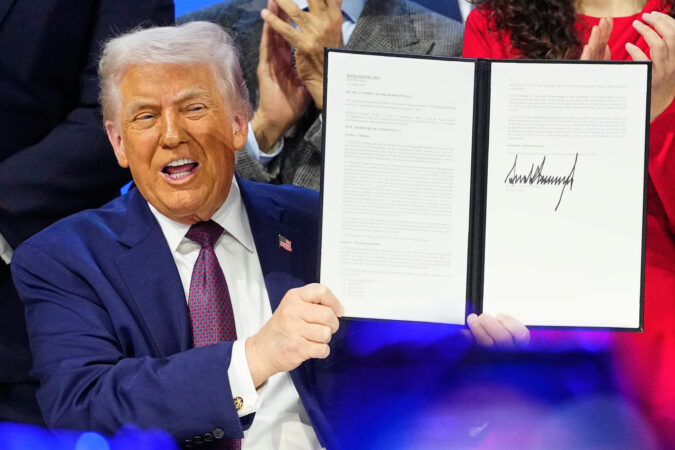
    The board’s charter also caused some dismay by stating Trump will lead it until he resigns, with veto power over its actions and membership.

    Secretary of State Marco Rubio tried to ease concerns by saying the board’s focus right now is only on the next phases of the Gaza ceasefire plan.

    “This is not a replacement for the U.N., but the U.N. has served very little purpose in the case of Gaza other than the food assistance,” Rubio said at a congressional hearing Wednesday.

    But Trump’s promotion of a broadened mandate and his floating of an idea that the Board of Peace “might” replace the U.N. have put off major players and been dismissed by U.N. officials.

    “In my opinion, the basic responsibility for international peace and security lies with U.N., lies with the Security Council,” Secretary General Antonio Guterres said Thursday. “Only the Security Council can adopt decisions binding on all, and no other body or other coalition can legally be required to have all member states to comply with decisions on peace and security.”

    In Security Council statements, public speeches and behind closed doors, U.S. allies and adversaries have dismissed Trump’s latest plan to overturn the post-World War II international order with what he describes as a “bold new approach to resolving global conflict.”

    “The U.S. rollout of the much broader Board of Peace charter turned the whole exercise into a liability,” according to the International Crisis Group’s Richard Gowan, a U.N. watcher and program director. “Countries that wanted to sign on to help Gaza saw the board turning into a Trump fan club. That was not appealing.”

    “If Trump had kept the focus of the board solely on Gaza, more states, including some more Europeans, would have signed up,” he said.

    Key Security Council members haven’t signed on

    The four other veto-wielding members of the Security Council — China, France, Russia, and the United Kingdom — have refused or have not indicated whether they would join Trump’s board, as have economic powers such as Japan and Germany.

    Letters sent this month inviting various world leaders to be “founding members” of the Board of Peace coincided with Trump’s vow to take over Greenland, a semiautonomous territory of NATO ally Denmark, and punish some European countries that resisted. That was met with stark rebuttal from Canada, Denmark and others, who said Trump’s demand threatened to upend an alliance that has been among the West’s most unshakeable.

    Shortly after, Trump pulled a dramatic reversal on Greenland, saying he had agreed with the NATO secretary-general on a “framework of a future deal” on Arctic security.

    Amid the diplomatic chaos, British Prime Minister Keir Starmer, who at the time had not responded to Trump’s Board of Peace invitation, met with Guterres in London and reiterated “the UK’s enduring support for the UN and the international rules-based system,” according to a statement.

    Starmer emphasized the U.N.’s “pivotal role in tackling global problems which shape lives in the UK and all over the world.” The United Kingdom later declined to join the board.

    France, Spain, and Slovenia declined Trump’s offer by mentioning its overlapping and potentially conflicting agenda with the U.N.

    French President Emmanuel Macron said last week that the board goes beyond “the framework of Gaza and raises serious questions, in particular with respect to the principles and structure of the United Nations, which cannot be called into question.”

    Spain would not join because the board excluded the Palestinian Authority and because the body was “outside the framework of the United Nations,” Prime Minister Pedro Sánchez said.

    Some countries are urging a stronger U.N.

    America’s adversaries also have shunned the board.

    “No single country should dictate terms based on its power, and a winner-takes-all approach is unacceptable,” China’s U.N. ambassador, Fu Cong, said at a Security Council meeting Monday.

    He called for the United Nations to be strengthened, not weakened, and said the Security Council’s status and role “are irreplaceable.”

    In a clear reference to the Board of Peace, Fu said, “We shall not cherry-pick our commitments to the organization, nor shall we bypass the U.N. and create alternative mechanisms.”

    So far, about 26 of some 60 invited countries have joined the board, and about nine European countries have declined. India did not attend Trump’s signing ceremony at the World Economic Forum meeting in Davos, Switzerland, last week but is reportedly still deciding what to do. Trump revoked Canadian Prime Minister Mark Carney’s invitation.

    “It’s hardly surprising that very few governments want to join Trump’s wannabe-U.N., which so far looks more like a pay-to-play club of human rights abusers and war crimes suspects than a serious international organization,” said Louis Charbonneau, U.N. director for Human Rights Watch. “Instead of handing Trump $1 billion checks to join his Board of Peace, governments should work on strengthening the U.N.”

    Eight Muslim nations that agreed to join the board issued a joint statement that supported its mission in Gaza and advancement of Palestinian statehood. Turkey, Saudi Arabia, Egypt, Jordan, Indonesia, Pakistan, Qatar and the United Arab Emirates made no mention of Trump’s global peacemaking plan.

    The Crisis Group’s Gowan said their focus could be a way to “get a foothold in discussions of Gaza” at the start, as Trump’s ceasefire plan has already faced several setbacks.

    “I remain unconvinced that this is a real long-term threat to the U.N.,” Gowan said.

  • How brokers gamed the ACA marketplace, roiling subsidy debate in Congress

    How brokers gamed the ACA marketplace, roiling subsidy debate in Congress

    The Florida insurance brokers offered an enticing deal to unemployed and homeless people: Enroll in a Healthcare.gov health plan they weren’t eligible for in exchange for gift cards, food, alcohol, or cash. They coached them to lie about their income to qualify for heavily subsidized coverage, according to court documents. Sometimes they enrolled people without their knowledge.

    A federal jury convicted Cory Lloyd and Steven Strong last month of collecting millions of dollars in commissions between 2018 and 2022 through a widespread plot to defraud the federal insurance marketplace. People earning at least the federal poverty level can get income-based subsidies to help them afford monthly premiums for plans sold through the Affordable Care Act. Under Lloyd and Strong’s scheme, the federal government paid at least $180 million in ineligible subsidies.

    Many more agents and brokers — likely thousands, according to two career staffers at the Centers for Medicare and Medicaid Services, who spoke on the condition of anonymity because they weren’t authorized to speak to press — are gaming the marketplace where 24 million Americans get health insurance.

    Corruption among Healthcare.gov agents and brokers had emerged as a sticking point in Washington as Congress failed to reach a deal to halt the year-end expiration of enhanced subsidies for insurance premiums, which will drive up the cost of plans for millions of Americans. Republicans invoked the fraud to argue against extending the subsidies while Democrats said the solution is better enforcement rather than withholding assistance from Americans who need it.

    Last year, the Biden administration temporarily suspended 850 insurance agents and brokers suspected of fraudulent or abusive conduct. CMS hasn’t terminated any agents or brokers this year — although spokesman Christopher Krepich said the agency has “initiated terminations” even as it sets up stricter enrollment rules for customers amid Administrator Mehmet Oz’s promises to root out fraud.

    Around 100,000 agents and brokers are authorized by Healthcare.gov. They facilitate more than three-quarters of enrollments. For each person enrolled, insurers pay them a small monthly commission, typically between $5 and $20. Florida, where Lloyd and Strong operated, offers the largest commissions in the country, averaging $28 per enrollee, according to the nonpartisan health policy organization KFF.

    A new government report underscored how easy it is to game the marketplace.

    When the Government Accountability Office, which evaluates federal programs and spending, submitted 20 fraudulent applications to Healthcare.gov for coverage this year, 19 were initially approved even though the agency didn’t submit documents requested to prove income, citizenship, and Social Security numbers. The marketplace terminated one enrollee for insufficient documentation. The government is still paying more than $10,000 a month in subsidies for 18 remaining enrollments.

    Investigators also discovered misuse of Society Security numbers — in one case, a single number was used for 125 policies in 2023 — and identified serious shortcomings in how CMS assesses marketplace fraud.

    Stopping marketplace fraud is “not a priority” for CMS, said Seto Bagdoyan, a director at GAO who worked on the report.

    Krepich said the agency has undertaken “a thorough investigation into improper agent and broker activity” and is committed to “ensuring consumers are never enrolled in coverage without their knowledge or consent.”

    Democrats complain the Trump administration is doing little to fix the problem despite its bluster about waste, fraud, and abuse in federal health programs.

    Rep. Lloyd Doggett (Texas), the top Democrat on a subcommittee overseeing CMS, wrote a letter to Oz last week requesting closer scrutiny of the reinstated agents and brokers. “The remedy is not to deny a mother access to care for her sick child,” Doggett said in a statement. “What we need is effective law enforcement.”

    Like brokers for Lloyd and Strong, who did not return requests for comment, many have enrolled people without their knowledge, switched their plan without their consent or created fake enrollments to maximize commissions.

    The GAO concluded that the enhanced subsidies worsened fraud in recent years as bad actors seized upon the beefier assistance to lure new customers. As enrollments on Healthcare.gov skyrocketed under the extra subsidies, fraudulent sign-ups grew too. The Congressional Budget Office estimated those misstating their incomes to get more subsidies nearly doubled from 1.3 million to 2.3 million between 2023 and 2025.

    “We believe that the expansion of the subsidies — which put more money in the pool — invigorated the financial incentive to sign up as many people as possible,” Bagdoyan said.

    The GAO’s findings were among the hurdles to Republicans in Congress agreeing to extend extra subsidies for a marketplace they’ve accused of failing to sufficiently police from bad actors.

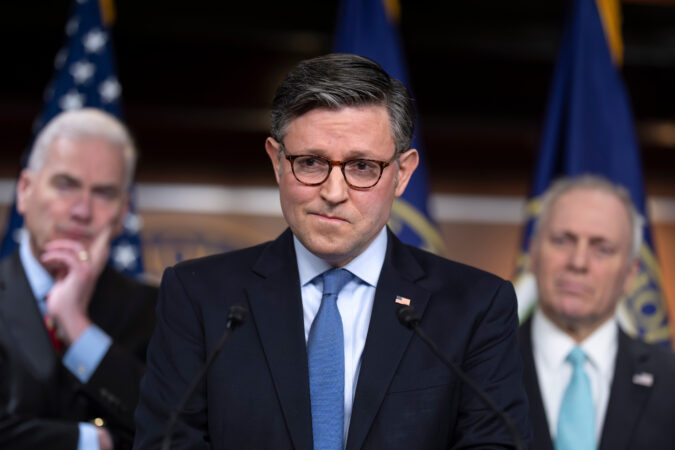
    “These findings validate long-standing Republican warnings: Obamacare’s subsidy system lacks even the most basic guardrails and has created an environment where criminals, identity thieves, and unscrupulous brokers can exploit taxpayers with ease,” House Speaker Mike Johnson (R., La.) said in a statement last week.

    Democrats say the proper response isn’t to let the extra subsidies expire but to go after the brokers.

    “I’ve always said any fraud is too much,” said Sen. Ron Wyden (Oregon), the top Democrat on the Senate Finance Committee, which has oversight of healthcare issues.

    Wyden introduced a bill to create new civil penalties for brokers who commit fraud. He said Republicans haven’t signed onto his bill or offered similar measures.

    After receiving hundreds of thousands of complaints about fraud, the Biden administration started requiring customers to hold a three-way call with their broker and the marketplace call center in July 2024. But the new policy left plenty of loopholes, agents told GAO. The rule didn’t apply to new enrollees. And the marketplace took only “limited steps to verify the identity of the consumer on the three-way call,” the report says.

    Oz has been vowing to root out the abuse, slamming the prior administration for rules he said were too lenient and touting stricter enrollment rules CMS released in June. Those rules don’t include any direct, new restrictions on agents and brokers but could indirectly make fraud harder by ending year-round enrollment for people earning less than 150% of the federal poverty level, roughly $23,000 for an individual.

    “The past administration prioritized achieving big program enrollment numbers over protecting program integrity,” Oz said in a video posted recently to X.

    CMS is also preparing to implement stricter verification requirements laid out in Trump’s sweeping tax-and-spending law he signed this summer. That legislation bans the marketplaces from awarding subsidies before verifying a customer’s personal information, including their income and legal status, before awarding any subsidies, which could make it harder for bad actors to sign people up.

  • Trump administration says it wants to ‘completely deconstruct’ SNAP program. Here’s what’s actually happening.

    Trump administration says it wants to ‘completely deconstruct’ SNAP program. Here’s what’s actually happening.

    SNAP benefits are restored, and the program is funded through next year. But the Trump administration is now looking to “completely deconstruct the program,” its top USDA official said.

    Agriculture Secretary Brooke Rollins said that millions of low-income Supplemental Nutrition Assistance Program recipients will have to reapply for their benefits as part of an effort to crack down on “fraud.”

    “It’s going to give us a platform and a trajectory to fundamentally rebuild this program, have everyone reapply for their benefit, make sure that everyone that’s taking a taxpayer-funded benefit through SNAP or food stamps, that they literally are vulnerable, and they can’t survive without it,” she told Newsmax last week.

    On Tuesday, Rollins told Fox Business that her plan is for the U.S. Department of Agriculture to “completely deconstruct” SNAP.

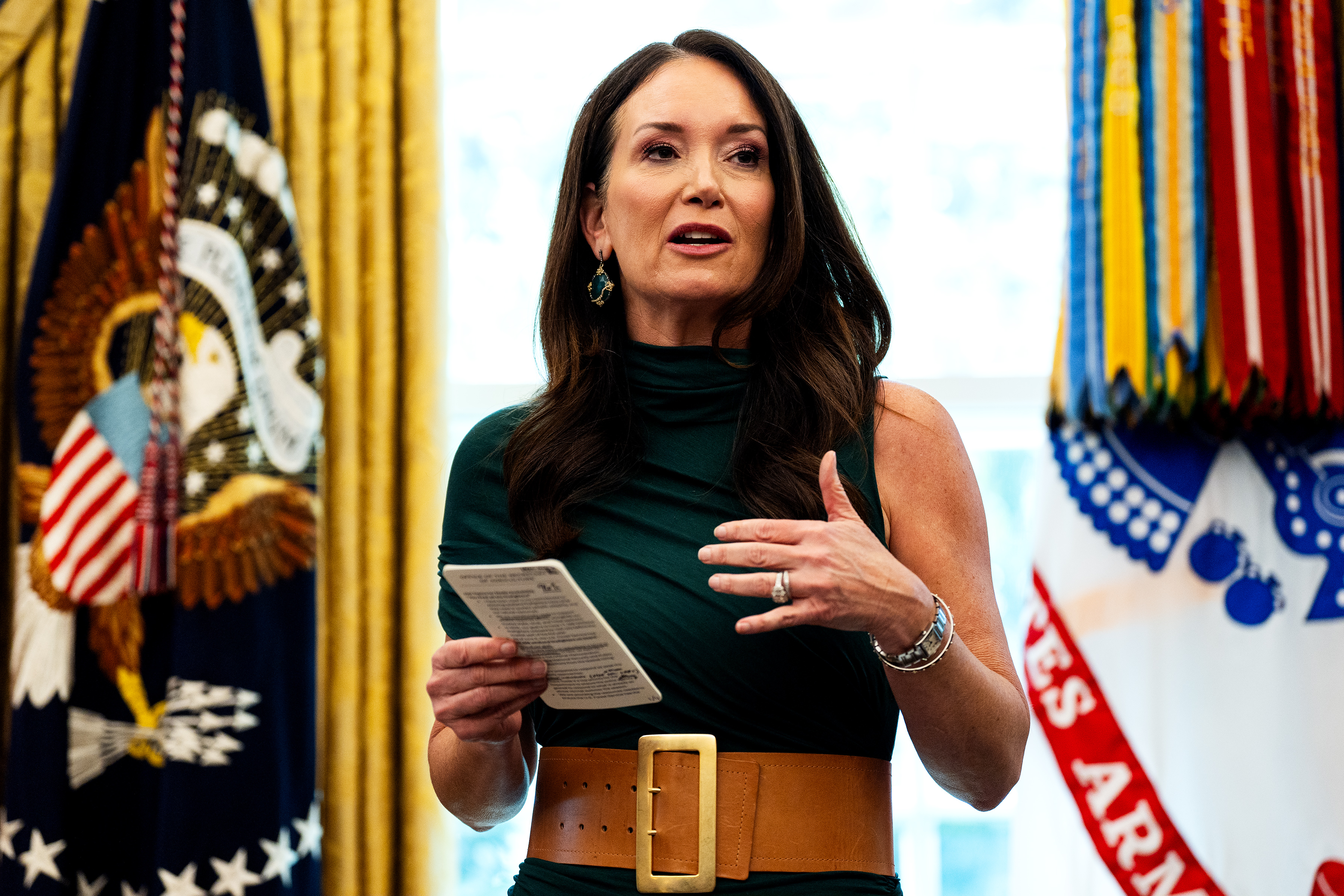
    Agriculture Secretary Brooke Rollins speaks to the media in the Oval Office of the White House in June. Rollins had various roles in the first Trump administration.

    However, there is no official guidance from USDA on the plans Rollins spoke of and the rules have not changed, said Community Legal Services staff attorney Mackenzie Libbey.

    “Most SNAP recipients in Pennsylvania are already required to reverify household and income information every six months. SNAP recipients should continue submitting their semiannual reports and annual renewals as the current rules require,” Libbey said.

    In a statement, the USDA did not confirm the existence of new changes to SNAP. Instead, a spokesperson for the agency said the “standard recertification processes for households is a part of that work.”

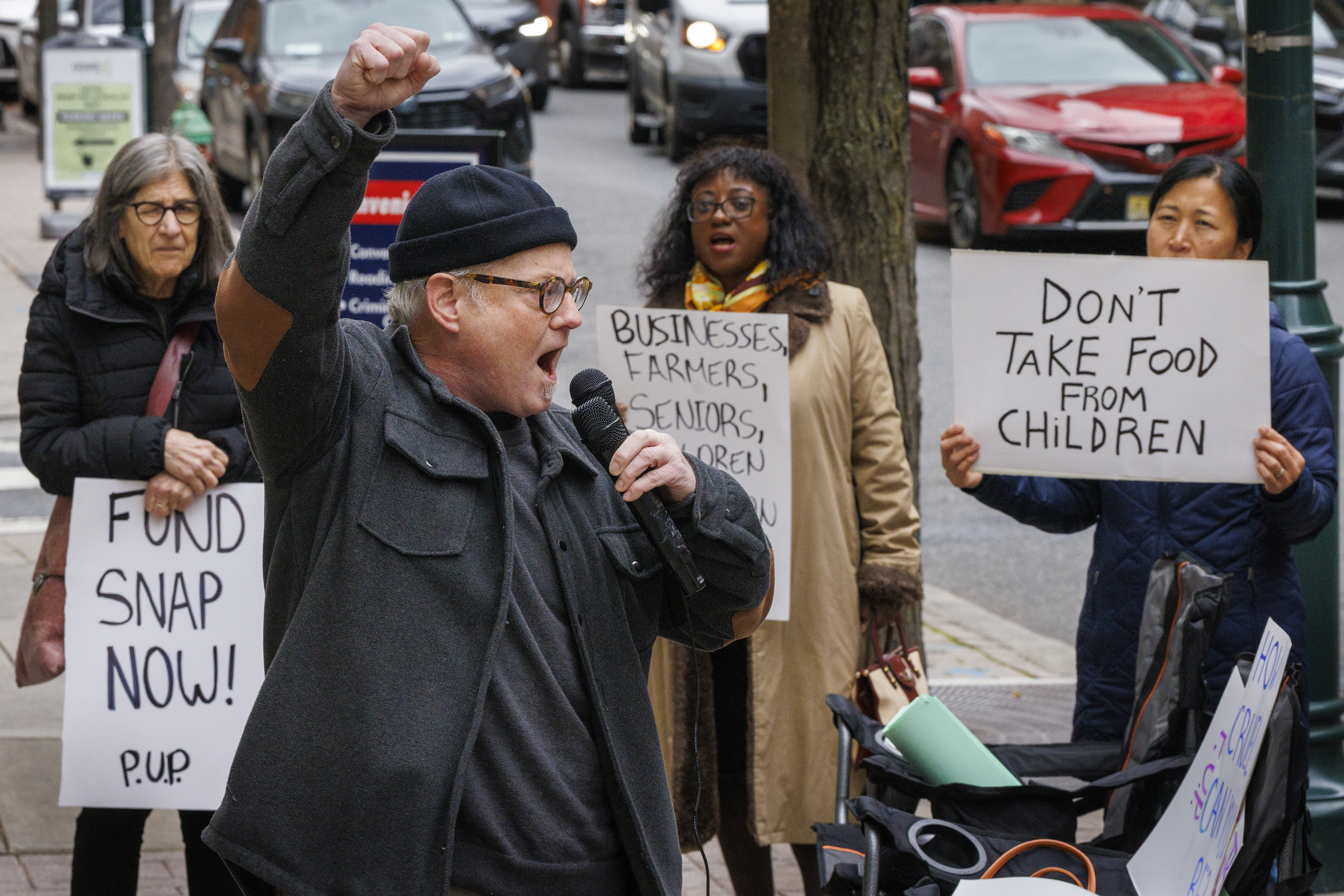
    Jeff Garis, Outreach and Patnership Director, Penn Policy chants during rally along side SNAP recipients, clergy members, and other advocates at a rally and news conference outside of Reading Terminal Market, to urge the Trump administration to restore full SNAP funding, Wednesday, November 12, 2025.

    Are SNAP benefits changing?

    There are a few changes to SNAP work requirements that were implemented on Sept. 1 and Nov. 1.

    President Donald Trump in September signed new requirements into law that denied states the ability to waive work requirements for most SNAP recipients. Work requirement waivers are now available only for specific reasons, such as pregnancy, needing to be home to care for someone ill, or participation in a drug or alcohol treatment program, to name a few.

    On Nov. 1, some older low-income Americans were forced back to work when Congress and Trump passed additional work requirements, raising the maximum working age cap from 54 to 64 years old.

    Parents with dependents age 14 and over also must go back to work or lose benefits. Previously, SNAP recipients with dependents under 18 did not have to meet work requirements. Veterans and former foster youth ages 18 through 24 are no longer exempt from work requirements either, under new federal law.

    Do you have to reapply for SNAP benefits?

    SNAP recipients do not currently need to reapply to the program. SNAP recipients should continue filing their semiannual reports every six months to recertify their income and household.

    Lisa Mellon, 59, of Bridesburg, Pa., is walking her groceries to her friends car, who was kind enough to driver her around 40 minutes to the Feast of Justice at St. John’s Lutheran Church and back home on Tuesday, Nov. 11, 2025.

    Will snap benefits be issued in December?

    Yes. The SNAP program is funded through Sept. 30, 2026, after Congress reached an agreement on a spending deal last week. Most other federal government agencies and programs are funded only through Jan. 30.

    Congress will need to strike another spending deal before the January deadline; otherwise the federal government could be shut down again.

    However, SNAP benefits have been guaranteed through next September regardless of another shutdown.

    How do you qualify for SNAP benefits?

    SNAP requirements are based on your work hours and income. Other factors, like whether a member of your household is disabled, elderly, or a veteran, can provide households with additional benefits.

    Resources:

    Work requirements

    SNAP recipients must be working, volunteering, or participating in an education or training program for at least 20 hours a week (or 80 hours a month). They also must report those work hours.

    These rules apply to you if you:

    • Are ages 18 through 64.
    • Do not have a dependent child under 14 years old.
    • Are considered physically and mentally able to work.

    Income requirements

    Households cannot exceed these monthly income limits to be eligible for SNAP benefits.

    How to apply for SNAP

    Apply for SNAP online, in person, or by mail.

    • Online: Apply online using Pennsylvania’s online benefits access tool, COMPASS, at www.compass.dhs.pa.gov.
    • In person: Find your county assistance office (CAO) at pa.gov/agencies/dhs/contact/cao-information. Visit your CAO and apply with help from staff.
    • Mail: Download and complete an application, available in English and Spanish. Mail or drop off the application to your county’s assistance office.