Category: Elections

  • State Rep. Chris Rabb isn’t running for reelection to Harrisburg as he goes ‘all in’ for Congress

    State Rep. Chris Rabb isn’t running for reelection to Harrisburg as he goes ‘all in’ for Congress

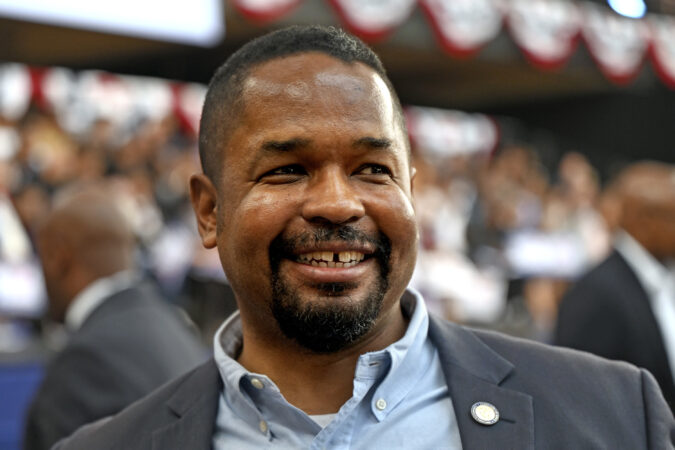
    State Rep. Chris Rabb announced Thursday he will not seek reelection to Harrisburg this year while he runs for a seat in Congress.

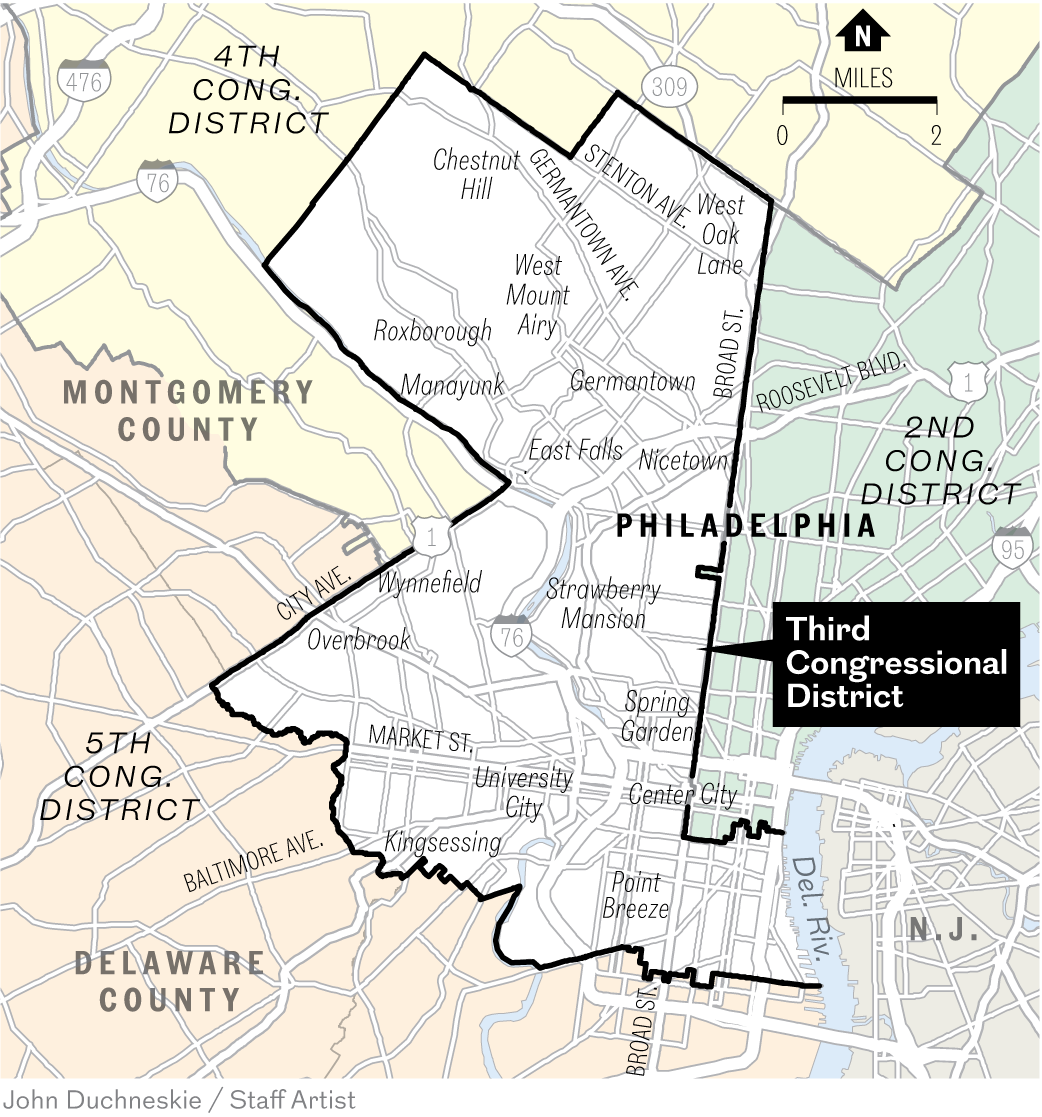
    State lawmakers are allowed to simultaneously run for two offices. But Rabb, a Democrat, said he is fully committed to his campaign for Pennsylvania’s 3rd Congressional District, which covers roughly half of Philadelphia and is, by some measures, the most Democratic district in the nation.

    “I’m so inspired and overwhelmed by the tremendous outpouring of support we are seeing all across the city, and today I want to send a message loud and clear: I am all in on this race for Congress,” Rabb said in a statement.

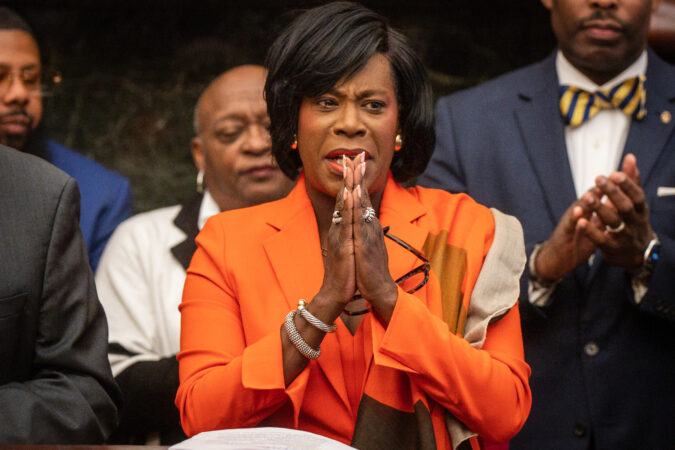
    Rabb served five terms in the Pennsylvania House’s 200th District in Northwest Philadelphia, a seat once held by Mayor Cherelle L. Parker. A progressive who often operates as a political lone wolf, Rabb has frequently clashed with the city’s Democratic establishment, especially Parker and her allies in the Northwest Coalition political organization.

    In his first election, Rabb in 2016 defeated Tonyelle Cook-Artis, Parker’s close friend who now serves as an aide in the mayor’s office. Two years later, he bested Melissa Scott, who is now the Parker administration’s chief information officer. In 2022, redistricting forced Rabb to run against fellow incumbent State Rep. Isabella Fitzgerald, and he won again.

    Two other state lawmakers from Philadelphia are running in the crowded Democratic primary for the 3rd Congressional District, which is being vacated by retiring U.S. Rep. Dwight Evans (D., Philadelphia).

    Map of Pennsylvania’s Third Congressional District.

    State Sen. Sharif Street, of North Philadelphia, is not up for reelection this year, meaning he will keep his seat in Harrisburg if he loses the congressional race without having to run two campaigns. Street last year resigned as chair of the Pennsylvania Democratic Party after facing questions about whether his congressional campaign would conflict with his party leadership role.

    State Rep. Morgan Cephas, who chairs the Philadelphia delegation in the state House and represents a West Philadelphia district, is up for reelection this year. Her campaign on Thursday said she intends to simultaneously run for another term while vying for the congressional seat.

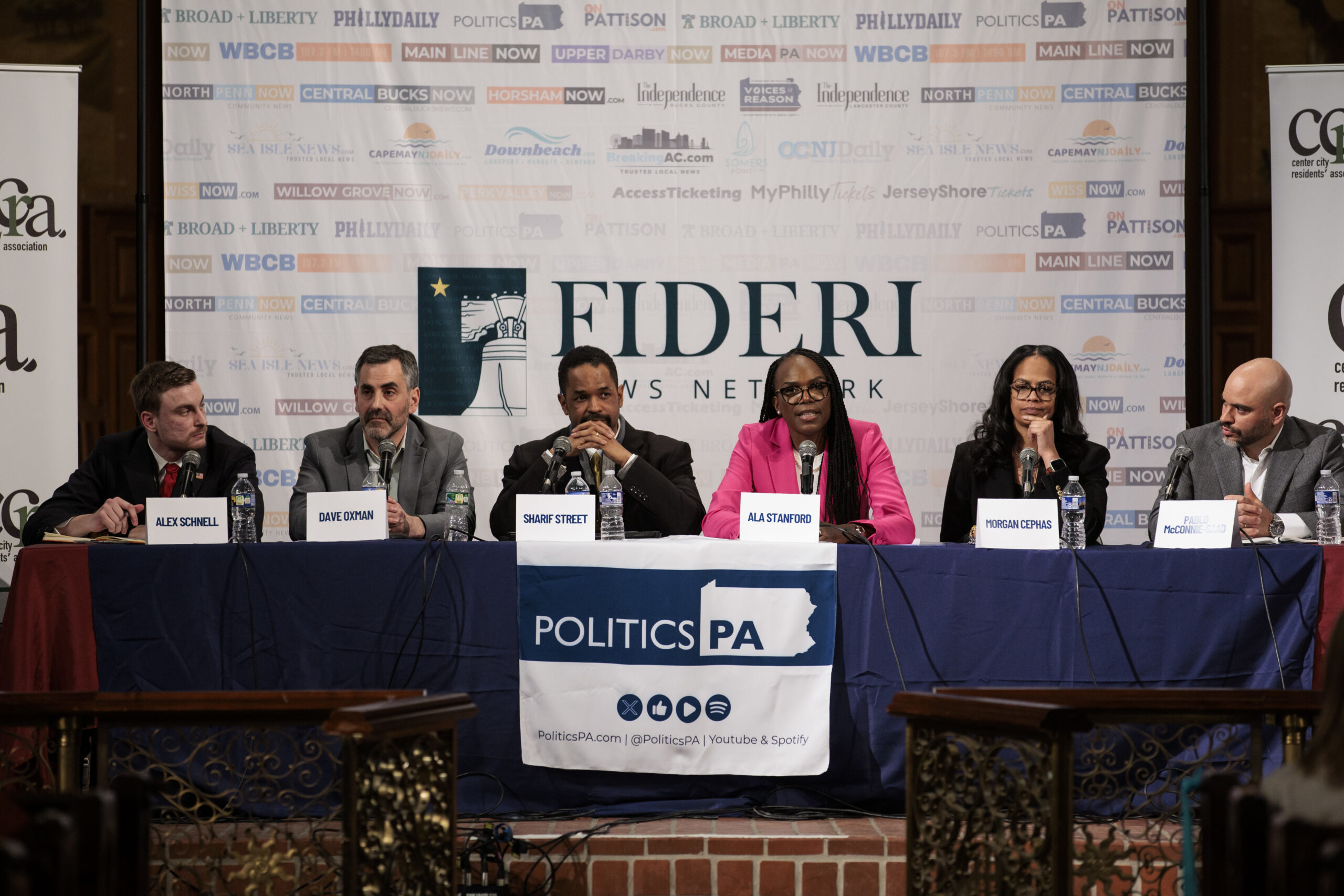
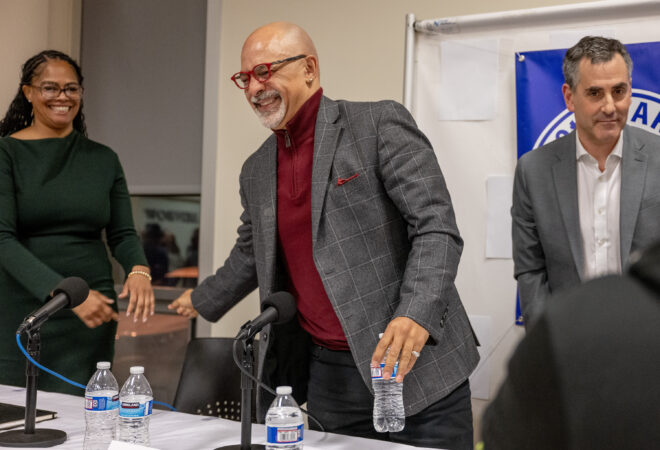
    (left to right) Alex Schnell, physician Dave Oxman, State Sen. Sharif Street, physician Ala Stanford, State Rep. Morgan Cephas, and Pablo McConnie-Saad appear during a candidate forum for the 3rd Congressional District seat at Church of the Holy Trinity on Monday, Feb. 9, 2026 in Philadelphia. The seat vacancy comes from Rep. Dwight Evans’ retirement.

    It is common for state legislators to run two simultaneous campaigns while seeking federal office. Their reelection bids often require little effort, as incumbents rarely face serious challenges. (Rabb’s career as an anti-establishment legislator in the backyard of one of Philadelphia’s most powerful political factions, however, has made him an outlier in that regard.)

    Rabb’s decision to fully commit to the congressional race follows the revelation last week that he let go of his campaign treasurer, Yolanda Brown, and reported her to federal authorities after she made “unauthorized withdrawals” from his campaign bank account.

    He declined to say how much money went missing. In his most recent campaign finance report, Rabb reported raising $127,000 in the last three months of 2025 and entering the year with $99,000 in cash on hand, which at the time represented the fifth-largest reserve among the 3rd District hopefuls.

    Rabb’s decision not to run for reelection means the Northwest Coalition now has its best opportunity in a decade to recapture the 200th District state House seat. Northwest Philadelphia’s liberal voter base, however, also opens the door for another progressive to follow in Rabb’s footsteps.

    “It has been the honor of a lifetime to serve Philadelphia families across the 200th House District for the past 10 years and I look forward to seeing the great candidates who will run,” Rabb said. “In the coming weeks, I’m committed to working with my fellow progressive leaders and advocates across this district to ensure that this seat continues to be held by a true champion for Philadelphia’s working families.”

    Anyone hoping to succeed Rabb in Harrisburg will have to act quickly. Candidates must submit petitions to appear on the ballot. The window to gather signatures opened this week and closes March 10.

    Rabb said Wednesday that his congressional campaign collected the required 1,000 signatures in just 12 hours, which he said makes him the first candidate in Pennsylvania to submit qualifying petitions and shows that his campaign “continues to build strong grassroots support across Philadelphia.”

  • Sen. Dave McCormick says Chester County proves the need for national election rules. But the GOP proposal wouldn’t have solved the county’s problems.

    Sen. Dave McCormick says Chester County proves the need for national election rules. But the GOP proposal wouldn’t have solved the county’s problems.

    When Sen. Dave McCormick stood on the Senate floor to call for nationwide rules mandating proof of citizenship and photo identification for voters, he invoked a drama that had played out three months earlier in Chester County.

    The county had mistakenly left all third-party and unaffiliated voters off the Election Day voter rolls, creating a chaotic scene in which more than 12,000 voters were forced to cast provisional ballots, which take more time to count as officials must verify the eligibility of each voter. A subsequent investigation by a law firm hired by the county attributed the issue to human error and insufficient oversight.

    “Every time Americans hear about election problems like Chester County’s, they rightly question the integrity of our electoral process,” McCormick said.

    But in his recounting of events, the Pennsylvania Republican gave incomplete and inaccurate information about Chester County’s election error.

    What did McCormick say about Chester County?

    Americans, he said, overwhelmingly believe there are problems with U.S. elections, and he argued that has been demonstrated for them on multiple occasions, including in November when Chester County omitted more than 70,000 third-party and unaffiliated voters from its Election Day pollbooks.

    “Registered voters were turned away at the polls. And an unknown number of unverified voters cast regular ballots,” McCormick claimed.

    But there is no evidence that voters were turned away or that ineligible voters cast ballots. McCormick’s office did not respond to questions.

    Were voters turned away?

    According to county officials, no voter who wanted to vote was turned away.

    Instead, for most of the day voters were offered the opportunity to vote by provisional ballot while county and state officials worked to get supplemental pollbooks distributed to polling places across the county.

    Some voters did testify at county election board meetings that they voluntarily left their polling place when their name was not in the pollbook but that they returned later in the day when they could vote on machines.

    Did unverified voters cast ballots?

    There is no evidence that ineligible voters cast ballots. The identity and eligibility of all voters who cast ballots were verified, county officials said.

    When the pollbook issue was discovered on Election Day, Chester County officials initially recommended that poll workers ask voters not included in the pollbook to sign the pollbook manually and vote as normal, according to the independent investigation of the incident.

    To ensure those voters were eligible to vote, county officials said, poll workers were instructed to follow a detailed process that included verifying voters’ eligibility in the full voter list and verifying their identity with photo identification.

    The Chester County Republican Committee has disputed the county’s version of events, contending that photo ID was not checked for all voters who wrote their names into pollbooks and that poll workers were unable to verify voters’ identities using signature matching.

    Around 7:40 a.m., less than an hour after polls opened, Pennsylvania Department of State officials recommended the county shift to asking voters to cast provisional ballots to eliminate the risk of an ineligible voter casting a ballot, thereby invalidating the election.

    A county spokesperson said there is no evidence that ineligible voters cast ballots during November’s election.

    Whether voters wrote their names into a pollbook or cast a provisional ballot, “the identity and eligibility of each individual was verified by the poll workers,” said Chester County spokesperson Andrew Kreider.

    Would the SAVE Act have changed anything?

    The SAVE Act is a collection of election policies proposed by congressional Republicans that would require proof of citizenship to register to vote and mandate all voters show photo ID at the polls.

    Such requirements would not have prevented Chester County’s error, which investigators determined was a clerical error resulting from inexperienced staff with insufficient training and oversight.

    “Sen. McCormick was ignoring the facts and feeding into this larger narrative that our elections can’t be trusted and just feeding into the president’s narrative that there’s something wrong with Pennsylvania elections,” said Lauren Cristella, the CEO of the Committee of Seventy, a Philadelphia-based civic engagement and good-government organization.

    In addition to Chester County, McCormick pointed to his own experience in close elections — both his 2022 primary loss and his 2024 general election win — as a reason he supports the bill’s proof of citizenship and voter ID requirements.

    The policy, which passed the Republican-led U.S. House, still faces an uphill battle in the U.S. Senate, where it would need 60 votes to advance. It has faced significant opposition from Democrats who say it would needlessly make it harder for people to vote.

    The proof of citizenship requirement, critics say, would place a higher burden on married people whose last names no longer match their birth certificates.

    Speaking to reporters last week, Democratic Gov. Josh Shapiro said he was “vehemently opposed” to the policy, arguing it would nationalize elections.

    “We are not going to turn our elections over to Donald Trump,” he said.

  • Big-money and out-of-state donors helped Josh Shapiro raise $30 million while Stacy Garrity raised $1.5 million from Pa.’s grassroots

    Big-money and out-of-state donors helped Josh Shapiro raise $30 million while Stacy Garrity raised $1.5 million from Pa.’s grassroots

    Democratic Gov. Josh Shapiro is racking up contributions from out-of-state billionaires as well as thousands of individual donors across the country.

    His likely Republican challenger, State Treasurer Stacy Garrity, meanwhile, is capturing small-donor donations from Pennsylvanians.

    That’s according to an analysis of the latest campaign finance filings in the Pennsylvania governor’s contest, as a clearer picture of the race emerges nine months out from Election Day. Shapiro entered 2026 with $30 million on hand — money raised over several years as he has built a national profile — while Garrity raised $1.5 million in her first five months on the campaign trail as she tries to unseat the popular Democratic incumbent. Last year, Shapiro brought in $23.3 million.

    Here are three takeaways from the first campaign finance filings in the race, tracking fundraising heading into 2026.

    Almost all of Stacy Garrity’s contributors are from Pennsylvania, while 62% of Shapiro’s are in state

    Nearly all of Garrity’s individual 1,155 contributors — more than 97% — live in Pennsylvania, and on average gave $889 each.

    Shapiro — who has amassed a national following and is a rumored 2028 Democratic presidential contender — had a much further reach and attracted many more donors from around the country. He received contributions from 4,981 individual donors, 62% of whom are from Pennsylvania. The average individual donor to Shapiro contributed $3,461, a number buoyed by multiple six- and seven-figure contributions.

    Shapiro received most of his remaining individual donations from California (7.1%), New York (6.3%), New Jersey (2.5%), Florida (2.5%), and Massachusetts (2.4%), according to an Inquirer analysis.

    (The analysis includes only donors who contributed more than $50 in 2025. Campaigns are required to list only individual donors who contribute above that threshold.)

    (function() { var l = function() { new pym.Parent( ‘shapiro-garrity3__graphic’, ‘https://media.inquirer.com/storage/inquirer/ai2html/shapiro-garrity3/index.html’); }; if(typeof(pym) === ‘undefined’) { var h = document.getElementsByTagName(‘head’)[0], s = document.createElement(‘script’); s.type = ‘text/javascript’; s.src = ‘https://pym.nprapps.org/pym.v1.min.js’; s.onload = l; h.appendChild(s); } else { l(); } })();

    Shapiro’s broad donor base is a result of his status as a popular incumbent governor who is liked among people of both political parties, said Robin Kolodny, a Temple University political science professor who focuses on campaign finance.

    “These amounts that you’re seeing is a very strong signal that ‘This is our guy,’” Kolodny said. “That underscores he is a popular incumbent.”

    Kolodny also noted that Shapiro’s state-level fundraising cannot be transferred to a federal political action committee should he decide to run in 2028. But his war chest shows his ability to raise money nationally and his popularity as the leader of the state, she added.

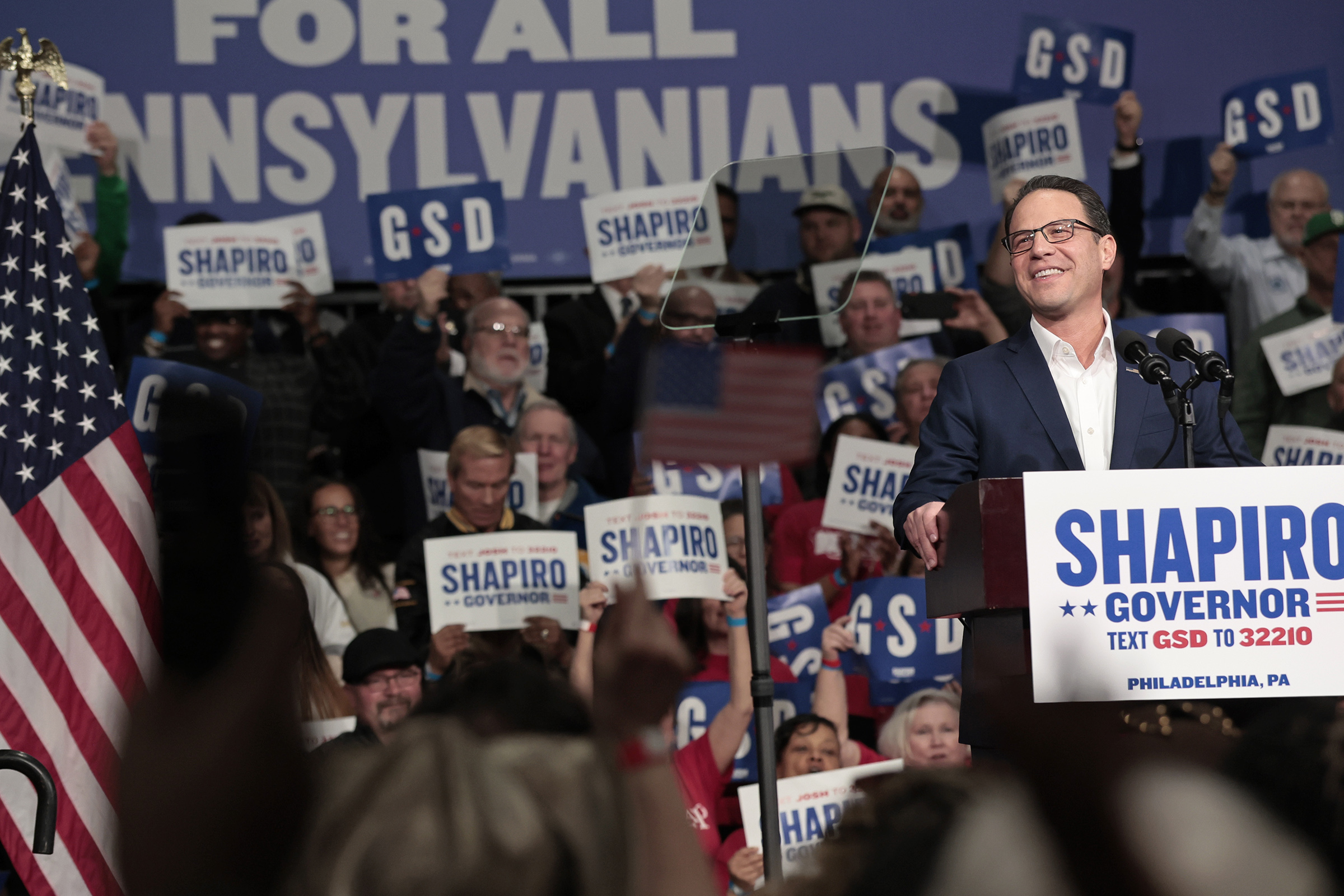
    Governor Josh Shapiro during a reelection announcement event at the Alan Horwitz “Sixth Man” Center in Philadelphia on Thursday, Jan. 8, 2026.

    Only a small percentage of the population contributes to political campaigns, Kolodny said. And sometimes, it’s the smallest contributions that pay off the most, she said. Small-dollar donations suggest grassroots support that can translate into a person assisting the campaign in additional ways to get out the vote, she said.

    Both Shapiro and Garrity have received a significant number of small-dollar donations that illustrate some level of excitement in the race — though Shapiro’s more than 3,000 in-state donors outnumber Garrity’s total by nearly 3-1.

    “Think of fundraising as not just a money grab, but also as a campaign strategy,” Kolodny said.

    Since announcing his reelection campaign in January, Shapiro has run targeted social media ads and sent fundraising texts, asking for supporters to “chip in” $1 or $5. The strategy worked, bringing in $400,000 in the first two days after his announcement, with an average contribution of $41, according to Shapiro’s campaign. This funding is not reflected in his 2025 campaign finance report.

    Most of Shapiro’s money came from out-of-state donors, including billionaire Mike Bloomberg and a George Soros PAC

    While Shapiro garnered thousands of individual contributions from Pennsylvania in all 67 counties, according to his campaign, the latest filings show it was the big-money checks from out-of-state billionaires that ran up his total.

    Approximately 64% of the $23.3 million Shapiro raised last year came from out-of-state donors.

    And more than half — 57% — of Shapiro’s total raised came from six- or seven-figure contributions by powerful PACs or billionaire donors.

    By contrast, only 31% of Garrity’s total fundraising came from six-figure contributions.

    The biggest single contribution in the governor’s race came from billionaire and former New York City Mayor Michael Bloomberg, who gave Shapiro $2.5 million last year.

    Shapiro also received $1 million from a political action committee led by billionaire Democratic supporter George Soros; and $500,000 from Kathryn and James Murdoch, from the powerful family of media mogul Rupert Murdoch.

    Kolodny noted that big contributions from people like Bloomberg are a drop in the bucket of his total political or philanthropic spending.

    window.addEventListener(“message”,function(a){if(void 0!==a.data[“datawrapper-height”]){var e=document.querySelectorAll(“iframe”);for(var t in a.data[“datawrapper-height”])for(var r,i=0;r=e[i];i++)if(r.contentWindow===a.source){var d=a.data[“datawrapper-height”][t]+”px”;r.style.height=d}}});

    “This is not something extraordinary,” Kolodny said. “He’s got nothing but money.”

    In Pennsylvania, Shapiro received notably high contributions from Philadelphia Phillies owner John Middleton, who gave $125,000, and Nemacolin Resort owner Maggie Hardy, who gave $250,000, among others. He also received a number of five-figure contributions from private equity officials, venture capitalists, and industry executives in life sciences, construction, and more.

    Garrity’s single biggest donation was $250,000 from University City Housing Co., a real estate firm providing housing near Drexel University and the University of Pennsylvania. Her largest contributions from individuals included $50,000 from her finance chair, Bob Asher of Asher Chocolates, and another $50,000 from Alfred Barbour, a retired executive from Concast Metal Products.

    Garrity has served as Pennsylvania’s state treasurer since 2020 and has led the low-profile statewide office with little controversy. She did not join the race for governor until August and raised only a fraction of the funds Shapiro did in that same time. Meanwhile, Shapiro spent 2025 at the political forefront as a moderate Democrat trying to challenge President Donald Trump in a state that helped elect him. Shapiro also benefited from his national name recognition after he was considered for Vice President Kamala Harris’ running mate in 2024.

    Shapiro has so far outraised Garrity 30-1, and top Pennsylvania Republicans have said they want to see Garrity fundraising more aggressively nationally.

    Kolodny said Garrity’s low fundraising is a reflection of the state of the race: Republicans put up a weak candidate in 2022 against Shapiro during his first run for governor, and now many powerful donors want to keep the relationship they have formed with Shapiro over the last three years.

    “That will reflect as a lack of enthusiasm for her,” Kolodny said. “Now she could turn that around, but from what I see, I don’t see her that much, only recently. She had the last six months; she could have done a lot more.”

    Controversy over donations tied to associates of Jeffrey Epstein

    Shapiro’s top contributions from individual donors also included a $500,000 check from Reid Hoffman, the Silicon Valley-based billionaire cofounder of LinkedIn. His name showed up thousands of times in the trove of documents recently released by the U.S. Department of Justice related to the investigation into financier and convicted sex offender Jeffrey Epstein.

    Garrity has highlighted the donations Shapiro received from Hoffman, and has publicly called on Shapiro to return the tech billionaire’s campaign contributions from last year and prior years, totaling more than $2 million since 2021.

    Hoffman has claimed he had only a fundraising relationship with Epstein, but publicly admitted he had visited his island. He has not been charged with wrongdoing.

    A spokesperson for Shapiro said Garrity should “stop playing politics with the Epstein files.”

    “Donald Trump is mentioned in the files over 5,000 times. Is she going to ask him to rescind his endorsement?” asked Manuel Bonder, Shapiro’s spokesperson.

    Garrity has previously downplayed Trump’s appearance in the Epstein files, and argued that Democrats would have released them much sooner if there was clear evidence of Trump partaking in any inappropriate behavior.

    Trump endorsed Garrity for governor last month.

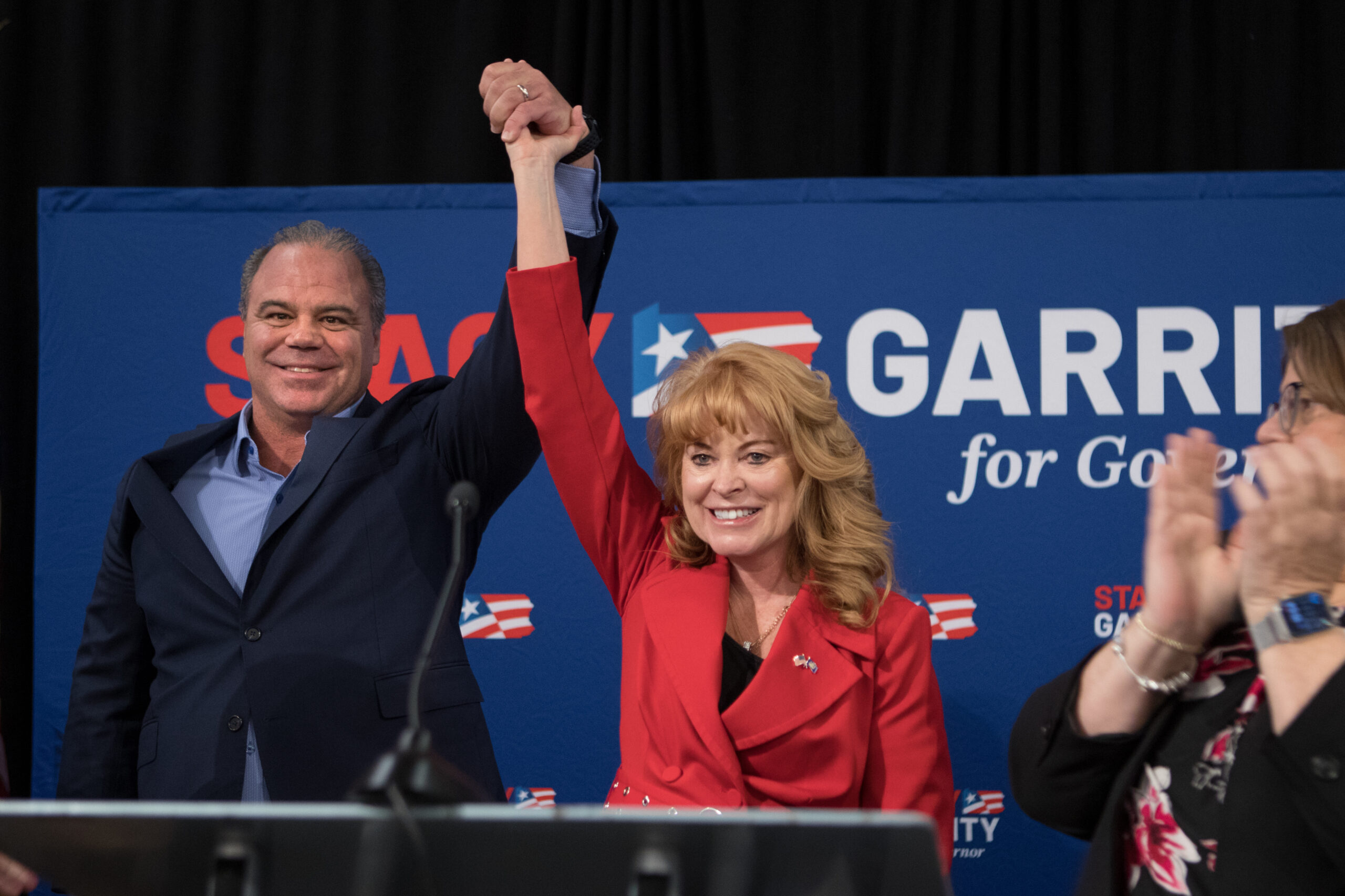
    GOP candidate for Pennsylania Governor, Stacy Garrity and Jason Richey hold up their arms in Harrisburg, Pa., Saturday, February 7, 2026. The PA State Republican Committee endorsed the two in their quest for the governor’s mansion. (For the Inquirer/Kalim A. Bhatti)

    If Shapiro were to return the funds from Hoffman, it would be bad for Garrity, Kolodny said, because she has made very few other political attacks against him.

    “That’s her [main] issue,” she said.

  • Philly DA Larry Krasner casts doubt on running against Mayor Cherelle Parker

    Philly DA Larry Krasner casts doubt on running against Mayor Cherelle Parker

    Philadelphia District Attorney Larry Krasner on Wednesday dismissed rumors that he may challenge Mayor Cherelle L. Parker when she will face reelection next year, and he said in a statement that he is focused on his job as the city’s top prosecutor.

    Krasner, who last year won his third term as district attorney and has cultivated a national brand, told The Inquirer that talk he might challenge the incumbent divides the city’s leadership.

    His statement came after the news website Axios Philly reported that some political insiders were floating Krasner’s name as a potential mayoral contender.

    “Especially in these times, all Philadelphia residents need to stand together and work together for Philly,” Krasner said. “Not sure whose agenda this narrative serves, but there’s nothing new about insiders stirring things up to benefit themselves at the expense of everyone else.”

    Talk of Parker facing a potential primary challenge ramped up in recent days after the mayor’s political action committee filed a campaign finance report showing she had raised $1.7 million last year, a striking sum for a sitting mayor two years out from a reelection bid.

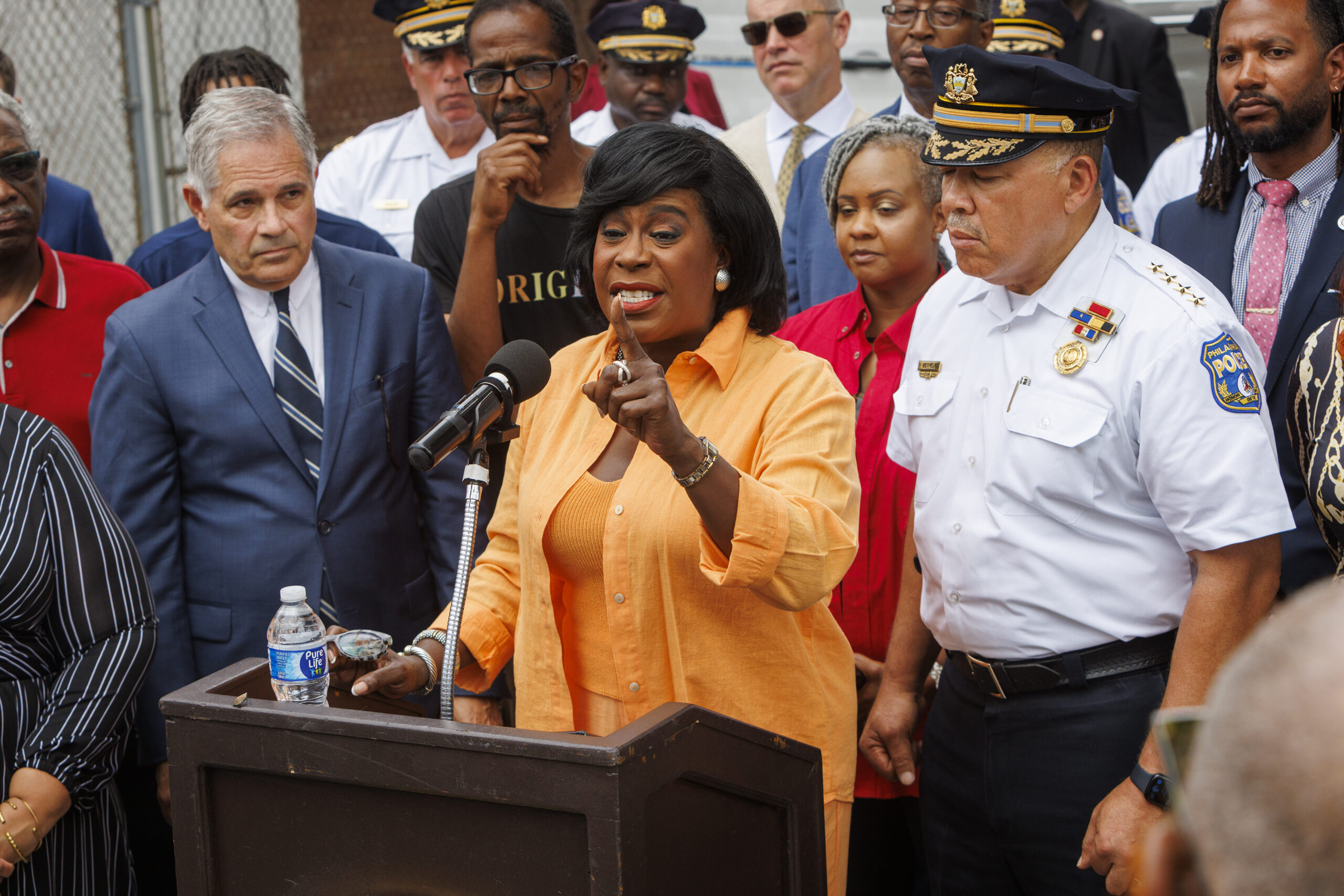
    In this 2024 file photo, Philadelphia Mayor Cherelle L. Parker is flanked by Police Commissioner Kevin Bethel and District Attorney Larry Krasner during a news conference.

    The fundraising report fueled speculation among the city’s political class that Parker, a centrist Democrat who is backed by much of the party establishment, may be expecting a challenge in the primary.

    A progressive would be a natural fit for a challenger. The city’s left has opposed some of Parker’s initiatives, including her law enforcement-driven plan to address the Kensington drug market. Activists have also been critical of Parker’s cautious approach to President Donald Trump, whom she generally avoids attacking directly.

    Krasner, 64, is the most prominent progressive in the city. He won reelection last year in landslide fashion, and he has positioned himself as the city’s most vocal Trump opponent, often drawing comparisons between the federal government and 20th-century fascism.

    And several past district attorneys have run for mayor, including Ed Rendell, who went on to serve two terms in City Hall and then was elected governor of Pennsylvania.

    But for Krasner, any run at Parker would be tricky.

    Krasner, who is white, has been successful in electoral politics in large part because of support from the city’s significant bloc of Black voters, politicians, and clergy. Those groups are also key to the base of support that has backed Parker, who comes from a long line of Black politicians hailing from the city’s Northwest.

    Allies of the district attorney say a better fit — if he decided to seek higher office — could be running for a federal seat.

    Political observers have suggested a handful of Democrats, including Krasner, could run for the U.S. Senate seat currently occupied by Sen. John Fetterman. The Democratic senator, who will be up for reelection in 2028, has an independent streak and has angered many in the party for at times siding with Republicans.

    Several other Democrats have been floated as potential contenders for the seat, including U.S. Reps. Brendan Boyle, of Philadelphia, and Chris Deluzio, whose Western Pennsylvania district includes Allegheny County. Some have also speculated that former U.S. Rep. Conor Lamb, also of Western Pennsylvania, could run.

    Fetterman has not said whether he intends to run for reelection. Left-leaning organizations have already pledged to back a primary challenger against him.

  • FBI cited debunked claims to obtain warrant for Fulton County vote records, documents show

    FBI cited debunked claims to obtain warrant for Fulton County vote records, documents show

    The FBI relied heavily on previously debunked claims of widespread election irregularities in Georgia as it persuaded a federal judge last month to sign off on plans to seize scores of 2020 voting records from the state’s most populous county, court documents unsealed Tuesday show.

    In a pair of Jan. 28 search warrant affidavits, authorities said they were seeking evidence that would determine whether “deficiencies” in the vote tabulation in Fulton County, home to Atlanta, were the result of intentional wrongdoing that could constitute a crime.

    But many of the irregularities they raised — including claims of duplicate ballots and missing ballot images — have been previously explained by county officials as the types of routine errors that frequently occur, are typically corrected in the moment, and are not significant enough to sway the outcome of an election. Independent reviews have backed up that conclusion.

    The affidavits cited previously aired theories from several prominent election deniers whose names were redacted in the documents unsealed Tuesday but whose descriptions align with publicly known details about those who advanced conspiracy theories about the election.

    The documents also revealed that the FBI’s investigation was prompted by a referral from former Trump campaign lawyer and prominent election denier Kurt Olsen, who was recently appointed to a White House position tasked with monitoring election integrity.

    “Some of those allegations have been disproven while some of those allegations have been substantiated, including through admissions by Fulton County,” FBI Special Agent Hugh Raymond Evans wrote in the affidavits, which sought court authorization to search the county’s primary election warehouse and the office of the county’s clerk of courts.

    He added, “If these deficiencies were the result of intentional action, it would be a violation of federal law,” whether or not any of them were significant enough to affect the outcome of the race.

    Evans’s affidavits were made public Tuesday after Fulton County officials and a coalition of news outlets, including The Washington Post, urged a federal judge to release the typically sealed court filing. The Justice Department did not oppose the request.

    The assertions laid out in the 23-page documents are likely to stoke alarm among county officials and democracy advocates who have condemned the investigation as an attempt by the Justice Department to substantiate Trump’s long-held grievances about his 2020 election loss to Joe Biden.

    Multiple audits, nearly a dozen court rulings and former Trump attorney general William P. Barr have found no evidence of widespread fraud sufficient enough to affect the outcome of the race in Georgia.

    More broadly, Trump’s critics have raised concerns that the criminal probe of Fulton County officials could pose a threat to state-level control of voting and the future of independent elections.

    Dozens of agents descended on Fulton County’s election warehouse last month and spent several hours combing through the county’s records under supervision from FBI Deputy Director Andrew Bailey. They left with more than 700 boxes of material, including all physical ballots from the 2020 race.

    A copy of the search warrant, previously obtained by The Post, revealed that the search was part of a criminal inquiry into possible violations of two federal laws: one requiring officials to retain voting records and the other criminalizing efforts to defraud voters through denying them an impartially conducted election.

    But until the public release Tuesday of the affidavit underlying the warrant, the exact focus of the investigation — and the evidence agents cited to persuade a judge to sign off on the search — was unknown.

    Federal authorities did not have to prove any claims laid out as the basis for the warrant. They were required only to demonstrate a substantial likelihood that a crime occurred and that evidence of that crime could be found at the two locations they sought to search.

    U.S. Magistrate Judge Catherine M. Salinas in Atlanta found the Justice Department had met that threshold and signed off on the warrant Jan. 28 — just hours before agents arrived at the warehouse.

    Since the search, FBI Director Kash Patel has waved off concern expressed by Trump’s critics over the bureau’s investigation, describing the search as “just like one we would do anywhere else.”

    “We did the same thing there we do in any criminal case or investigation,” Patel told Fox News in an interview last week. “We collected evidence, we presented that evidence to a federal magistrate judge, who made a finding of probable cause.”

    Fulton County officials have urged a different federal judge — Trump appointee J.P. Boulee — to order the return of all material seized by the FBI.

    “Claims that the 2020 election results were fraudulent or otherwise invalid have been exhaustively reviewed and, without exception, refuted,” Fulton County Attorney Y. Soo Jo wrote in a recent filing. “Eleven different post-election lawsuits, challenging various aspects of Georgia’s election process, failed to demonstrate fraud.”

    Boulee has yet to rule on that request.

    — — –

    Aaron Schaffer and Mark Berman contributed to this report.

  • Republicans are pushing to drastically change the way you cast ballots

    Republicans are pushing to drastically change the way you cast ballots

    As President Donald Trump calls for sweeping changes to election law — including saying that Republicans should “take over the voting” — Republicans in Congress are planning to vote this week on the SAVE America Act, which would make massive changes to how Americans vote ahead of November’s midterms.

    They want to require all Americans to prove they are citizens when registering to vote, and to show an ID when voting in person or by mail, as well as make mail voting more difficult.

    Trump and Republicans say this would make voters feel more confident there’s no fraud in federal elections. “We need elections where people aren’t able to cheat,” Trump told NBC News. “And we’re gonna do that. I’m gonna do that. I’m gonna get it done.”

    But there’s no evidence of widespread election fraud. There is evidence, say some nonpartisan elections experts, that this bill could disenfranchise millions of eligible voters by requiring new voters to provide documents that tens of millions of U.S. citizens lack immediate access to.

    The nonpartisan Campaign Legal Center asserts the bill “is harmful to our democracy and a threat to the freedom to vote for all Americans. … Its extreme documentation requirements would actually amount to one of the harshest voter suppression laws nationwide.”

    Here’s how the SAVE Act could dramatically change elections and its chance of becoming law.

    3 major changes

    1. You’d have to provide a proof of citizenship to register to vote: Millions of Americans register to vote every year, and they are already required to verify they are citizens when they do. Under this bill, they’d have to prove it.

    For example, those who change states, or are newly eligible to vote would have to provide proof of their citizenship, like a passport, a military ID submitted with proof of place of birth, or — when submitted alongside other documents — a birth certificate. Newly married voters who change their last name would have to reregister to vote with all of these documents — plus provide proof as to why their current name doesn’t match their birth certificate.

    But about half of Americans don’t have passports, and not all Americans have a copy of their birth certificate.

    “Our research shows that more than 21 million Americans lack ready access to those documents,” writes the nonpartisan Brennan Center for Justice.

    Even some Republican election experts have questioned whether all this documentation is necessary.

    “The premise of the SAVE Act is we need to ensure there are processes that confirm citizenship,” says Matt Germer, director of the governance program at the R Street Institute, a conservative think tank. “But I think much of the burden of citizenship verification should be on the government, which holds much of this data in the first place.”

    2. It requires IDs to vote nationwide: Strong majorities of Americans, including Democrats, support voters presenting a photo ID to cast ballots.

    Only government (state, tribal, or federal) IDs would be accepted.

    3. It would probably make voting by mail more difficult: Mail-in voting is popular and safe, say election experts. Almost all states offer some form of it. Trump has voted by mail, and Republicans certainly use it too.

    But this bill would put strict restrictions on who can vote by mail without providing valid identification. Some disabled voters and active duty troops would be exempt from the new rules.

    Some Republican election officials have expressed concern this takes away from states’ constitutional right to run their own elections how they best see fit. Mail-in voting first became popular among rural conservatives in Western states.

    “When I was in office,” former Kentucky secretary of state Trey Grayson said in a recent interview, “the number one principle of election administration was that the states run elections and Congress should be minimally involved. On the Republican side, we really believed that. It was really, really important.”

    Democrats adamantly oppose

    The bill could pass the Republican-controlled House this week, but in the Senate, Democrats plan to block the legislation by filibustering it.

    “It’s Jim Crow 2.0,” Senate Minority Leader Charles E. Schumer (D., N.Y.) told MS NOW recently. “What they’re trying to do here is the same thing that was done in the South for decades to prevent people of color from voting.”

    This isn’t the first time Republicans have tried to pass some version of the bill, and Trump has been increasingly vocal about election reform. Some of his ideas appear blatantly unconstitutional. But that hasn’t stopped the president from arguing for them.

  • Trump leaves Republicans guessing on midterms plans as outlook darkens

    Trump leaves Republicans guessing on midterms plans as outlook darkens

    Republicans looking to the White House to lead in the face of the party’s dimming prospects for November’s midterms are facing a crucial hang-up: the president.

    The party’s flagship campaign committee and super PACs have no indication of how President Donald Trump will deploy his $300 million-plus war chest because he has not approved a spending plan. Republican donors are funding expensive Senate primaries in Texas and Georgia because Trump has not cleared the field with his endorsement, or, in the case of Louisiana, endorsed a challenger to the incumbent Republican.

    People who have spoken with Trump about these obstacles said he at times can sound detached and noncommittal about his plans for spending and endorsements. One person close to the White House said some days the president seems not to care. Having already been impeached twice and indicted four times, Trump is less afraid of being impeached again than he is determined not to let a Democratic-controlled House halt his policy agenda, a White House official said. The official and others spoke to the Washington Post on the condition of anonymity to detail private conversations.

    But a White House official said Trump is excited to get more engaged in midterm strategy and looking forward to increasing his travel this month, including a campaign-style event outside of Washington this week. An Oval Office meeting to go over a handful of House endorsements Wednesday night turned into a five-hour gabfest on the midterms, according to two people present. Trump said he wants to defy the tendency of the president’s party losing seats in Congress in the midterms, one of the people said.

    “We’ll spend whatever it takes,” the person recalled Trump saying. “Go get it done.”

    The president’s political team, led by White House adviser James Blair, campaign strategist Chris LaCivita, and pollster Tony Fabrizio, met in Palm Beach, Fla., on Friday to review research from every competitive race in both chambers and develop estimates for what Republicans will have to spend to win. The team also briefed a retreat of the Senate Republicans’ campaign arm on Saturday.

    For much of last year, the White House was an island of optimism. Trump’s team would argue that Republicans were better positioned than at the same point in his first term, based on data such as the president’s approval rating, the generic ballot, and voter registration.

    Democrats, however, don’t need a 2018-size blue wave to win the House, where Republicans hold the narrowest possible majority and are defending 14 seats rated as toss-ups by the Cook Political Report. Democrats are defending four toss-up seats, and Cook shifted 18 seats in their favor in January.

    Republicans are anxiously awaiting a clear picture of the Trump team’s plans as the president’s sagging approval ratings and Democratic overperformances in special elections have darkened the GOP’s outlook for the midterms. Most Republicans are not ready to criticize Trump in public. But privately, there is rising frustration with an apparent lack of urgency from Trump and his staff, according to people who spoke to the Post.

    “Every time I talk to him on the phone, he says, ‘How’s the race going?’ and then he cites polls back to me so I know he’s following it closely,” Sen. John Cornyn (R., Texas) said, noting that Fabrizio is also his pollster and that LaCivita is a consultant to the super PAC supporting his reelection.

    Still, Trump’s endorsement has eluded Cornyn. “There’s only one person in the world who’s going to make that decision, and we can’t wait,” the senator said.

    Cornyn’s primary in Texas next month is dominating Republican anxieties on the Senate side since national strategists see his toughest challenger, state Attorney General Ken Paxton, as weaker in the general election, according to a memo from the National Republican Campaign Committee obtained by the Post. Holding the Senate seat for the GOP with Paxton as the nominee would cost an additional $100 million in a state where effective advertising costs $8 million a week, according to people involved in the race.

    “Texas cannot be taken for granted,” the memo said, presenting internal polling that puts Cornyn ahead of the Democratic candidates and Paxton behind them. Either Republican would face a competitive general election, the survey showed, with Texas state Rep. James Talarico running stronger than U.S. Rep. Jasmine Crockett on the Democratic side.

    An online survey released Monday that was conducted between Jan. 20 and 31 by the Hobby School of Public Affairs at the University of Houston found Paxton leading Cornyn 38% to 31%, with Rep. Wesley Hunt at 17%. On the Democratic side, Crockett led Talarico 47% to 39%.

    In a presentation to the Republican Senate caucus on Tuesday, National Republican Senatorial Committee Chair Tim Scott of South Carolina said a recent Fox News poll giving Democrats a six-point advantage in House races would put all nine Senate battlegrounds up for grabs, according to two people present. He also noted that Democratic candidates are raising more money for competitive races such as those in Georgia, North Carolina, and Ohio.

    Senate Republicans were heartened Feb. 1 when Trump endorsed John E. Sununu in the Republican primary for Senate in New Hampshire, after extensive lobbying by Senate Majority Leader John Thune (R., S.D.). Sununu has criticized Trump in the past but was leading in polls, and national Republicans saw him as the strongest candidate to flip the seat being vacated by a retiring Democrat, Jeanne Shaheen.

    But lobbying for Trump to endorse Cornyn has stalled as the incumbent has not established a clear polling lead — even after allies have poured $50 million into ads supporting Cornyn. Trump treasures his endorsement as definitive in primaries — and it often is, in part because he resists backing underdogs.

    Early voting opens Feb. 17 for the March 3 primary. If no one wins a majority, the top two candidates will compete in a runoff on May 26.

    Trump renewed hopes that he would wade into the race by telling reporters Feb. 1, “I’m giving it a very serious look.” The day before, a Democrat won a special election in a state Senate district that Trump won by 17 points in 2024.

    “I’ve had many conversations about why I think that makes the most sense to get behind John Cornyn,” Thune told reporters last week. “I don’t have any inside knowledge of when or what that might look like or when it might happen.”

    Trump might clear the field with an endorsement in Georgia to challenge Democrat Jon Ossoff, the person close to the White House said. The Republican primary includes Reps. Buddy Carter and Mike Collins, as well as former football coach Derek Dooley, who is backed by Gov, Brian Kemp. That race, though, is not considered as much a priority for Senate leaders as Texas is.

    Senate Republicans, including Thune, have been frustrated by Trump’s treatment of Senate incumbents, according to two people familiar with the tensions. Sen. Thom Tillis of North Carolina declined to run for reelection in the battleground state after feuding with Trump over Medicaid cuts in the president’s 2025 tax cuts and spending package. Last month, Trump recruited and endorsed a challenger to Sen. Bill Cassidy in Louisiana — which the White House official said was the result of Cassidy’s vote five years ago to convict Trump in the Senate impeachment trial of inciting the Jan. 6, 2021, riot at the Capitol.

    “I do think it’s a real problem when Senate Leadership Fund is on record supporting Cornyn and Cassidy, and President Trump is either silent or in opposition,” Tillis said, referring to the main super PAC supporting Senate Republicans. “We’re literally going to have Republican-on-Republican money being spent, and that makes no sense leading up to a general [election] where we’re going to have headwinds.”

    On the House side, the White House’s push to protect the House majority using redrawn congressional maps in Texas, North Carolina, and Missouri appears poised to net zero seats because of Democratic counteractions in California, Maryland, and Virginia. The latter two still face legislative or judicial hurdles.

    The White House still expects to pick up Republican seats from a new map in Florida, after Gov. Ron DeSantis (R) last month announced a state legislative special session in April. DeSantis said he wanted to wait until then in the hopes of a new Supreme Court ruling that could reshape as many as 19 House districts across the South by further weakening the Voting Rights Act of 1965.

    Trump has noted that the stakes of the midterms include, for him personally, the likelihood of being investigated or even impeached by a Democratic-controlled House. His first administration uniformly disregarded oversight requests and litigated subpoenas until after his term. Now some advisers expect that the administration can stonewall congressional oversight and that Democratic focus on investigating Trump could backfire on them leading up to the 2028 presidential election.

    Republicans still hold an overall advantage in fundraising. The House GOP campaign arm, which historically struggles to attract donors in uphill midterms, outraised its Democratic counterpart in 2025. The Democratic National Committee has more debt than cash, while the Republican National Committee has $95 million in the bank.

    Trump’s main super PAC, MAGA Inc., finished 2025 with a $304 million stockpile. But the PAC, led by LaCivita and Fabrizio, has been mum with allies about its spending plans. The person close to the White House said the president is likely to approve spending in multiple waves, and may reserve funds to maintain his political kingmaker role in future elections and for legal fees.

    “Thanks to President Trump’s leadership, MAGA Inc. will have the resources to help candidates who support President Trump’s America First agenda of securing our border, keeping our streets safe, supercharging our economy, and making life more affordable for all Americans,” PAC spokesperson Alex Pfeiffer said.

    While lawmakers await details on what assistance they can expect from the super PAC, Trump’s team noted it was the largest outside spender in the Dec. 2 special election to retain a House seat in Tennessee.

    “President Trump and his team were all in for me. I wouldn’t have won without them,” said Rep. Matt Van Epps, who won by 8.8 points in a district Trump carried by 22 points in 2024. “I know they’ll do the same for the entire America First team in this year’s midterm.”

    The White House said it is actively scheduling multiple trips for the president in battleground states and districts in the coming weeks and months that will include local lawmakers. The White House has also encouraged cabinet secretaries to minimize foreign trips and focus solely on domestic travel this year, encouraging officials to seek guidance on prioritizing battleground districts. White House officials are also helping to book cabinet members on local media in target areas.

    Since Thanksgiving, Trump has visited the battleground districts of Reps. Rob Bresnahan (R., Pa.) and Don Davis (R., N.C.), as well as Detroit (home to a Senate and governor’s race) and Iowa (home to a Senate race and two target House races). Vice President JD Vance visited battleground House districts held by Ryan Mackenzie (R., Pa.) and Marcy Kaptur (D., Ohio). Medicare administrator Mehmet Oz visited the districts of Rep. Michael Lawler (R., N.Y.) and Brian Fitzpatrick (R., Pa.).

    The White House provided statements from Lawler, North Carolina U.S. Senate candidate Michael Whatley, Sen. Jon Husted of Ohio, Sen. Dan Sullivan of Alaska, and RNC adviser Danielle Alvarez praising Trump and his staff for their support.

    “It is only February, and there is time for more, but I’m glad to have very strong support from the President and his administration,” Husted said.
  • Democratic ward leaders endorse Sharif Street for Congress, solidifying him as Philly’s establishment favorite

    Democratic ward leaders endorse Sharif Street for Congress, solidifying him as Philly’s establishment favorite

    Philadelphia’s Democratic Party has endorsed State Sen. Sharif Street for the city’s open congressional seat.

    The endorsement Monday came as no surprise, given Street’s insider connections. He previously chaired the Pennsylvania Democratic Party and is close to party leaders in the city. And Bob Brady, who chairs the Democratic City Committee, said last fall that he expected his fellow ward leaders to vote to endorse Street.

    But it nonetheless strengthens Street’s status as the favorite in the race among the local Democratic establishment. Street, the son of former Mayor John F. Street, was endorsed by the politically powerful unions in the Philadelphia Building & Construction Trades Council last year.

    “I am deeply honored to have received the overwhelming support of the grassroots leaders who power our party,” Street, who represents a North Philadelphia district in the state Senate, said in a statement. “This endorsement is more than just a vote of confidence — it is a demonstration that we are building a broad-based coalition.”

    Street is one of about a dozen Democrats vying to succeed retiring U.S. Rep. Dwight Evans in Pennsylvania’s 3rd Congressional District. Other contenders include State Reps. Morgan Cephas and Chris Rabb and physicians Ala Stanford and Dave Oxman.

    Street has also emerged as the front-runner in the financial race. Recently disclosed campaign reports showed he raised $348,000 from donors in the last quarter of 2025, the largest haul among the candidates.

    The 3rd Congressional District is, by some measures, the most heavily Democratic district in the U.S. House, and includes West and Northwest Philadelphia and parts of Center City, Southwest, South, and North Philadelphia.

    The winner of the Democratic primary in May is all but guaranteed victory in November. Democrats hold a 7-to-1 voter registration edge over Republicans in Philadelphia.

    Map of Pennsylvania’s Third Congressional District.

    Earning the party nod may help Street stand out in a crowded field and will bolster his ground game for campaigning, activating the party’s hundreds of committeepeople to get out the vote for him.

    But it doesn’t guarantee victory. Insurgent candidates have defied the party’s dominance several times in recent city elections, and the district includes several progressive pockets that could open the door for a candidate who can coalesce the left against Street.

    The endorsement followed a vote by the Democratic ward leaders in the district. A candidate must receive at least 50% of the vote to win the party endorsement.

    If no candidate reaches that mark, each ward prints its own sample ballots with its preferred candidates, which often happens in open contests like this year’s primary.

    The party’s endorsement of Street means all ward leaders are now encouraged to include him in the literature distributed to voters before and on election day. Some wards, however, choose to print their own slates anyway.

    The party did not immediately disclose the final vote tally at the endorsement meeting.

    Northwest Philadelphia’s 50th Ward, which is led by Mayor Cherelle L. Parker, has not yet made an endorsement in the race, said Aren Platt, executive director of the mayor’s campaign, People for Parker.

    Top candidates in the race, including Street, were scheduled to face off at a candidates forum hosted by the Center City Residents Association on Monday night.

  • Mayor Cherelle Parker’s campaign raised an eye-popping $1.7 million last year though she won’t face reelection until 2027

    Mayor Cherelle Parker’s campaign raised an eye-popping $1.7 million last year though she won’t face reelection until 2027

    Mayor Cherelle L. Parker’s campaign raised almost $1.7 million last year despite her not facing reelection until 2027, according to a new campaign finance report.

    That is the most any Philadelphia mayor has raised during their second year in office since at least the early 2000s, when the city’s current ethics and campaign finance rules took effect, according to Parker’s campaign. She is also the only mayor in that time frame to avoid a dip in fundraising after her first year in office, when many donors shell out to support the city’s new leader.

    “The Mayor has strong support from across the City and the region,” Aren Platt, the executive director of the mayor’s campaign committee, People for Parker, said in a written statement. “These numbers equate to people investing in her vision as Mayor for the City and supporting the work that she is doing.”

    Her campaign also spent $812,000 in 2025, a huge sum for a nonelection year. Parker entered 2026 with nearly $1.6 million in the bank — a significant haul two years out from a municipal election cycle. (For context, Parker’s campaign in 2023 raised almost $3.4 million, and spent just over $3.2 million en route to winning the mayor’s race.)

    State law gives politicians wide latitude in how they spend their campaign donations beyond traditional election expenses like buying TV ads and printing fliers.

    Parker’s campaign expenditures last year included airfare to Colorado for a mayoral roundtable at the Aspen Institute, and almost $20,000 to cover costs for a constituent’s funeral.

    Parker’s hefty off-year fundraising is reflective of the increasingly constant and professionalized world of political fundraising in Philadelphia. Local politicians no longer wait until challengers emerge to press donors for cash or host major fundraisers.

    “Philadelphia elections keep getting more expensive, so now all the candidates have professional fundraisers, which means the frequency of their events and calls has risen dramatically as well,” said John Hawkins, a City Hall lobbyist.

    City Council President Kenyatta Johnson, for instance, last year raised about $960,000 and entered 2026 with more than $1.1 million in the bank. Johnson, who, like Parker, will not face reelection until 2027, said he raises money in off years so that he can support other Council members and fund community programs.

    “I am blessed to support 16 other hardworking members of Council,” he said Friday. “I always support different community initiatives that come before me, individuals always seeking support for a variety of different initiatives.”

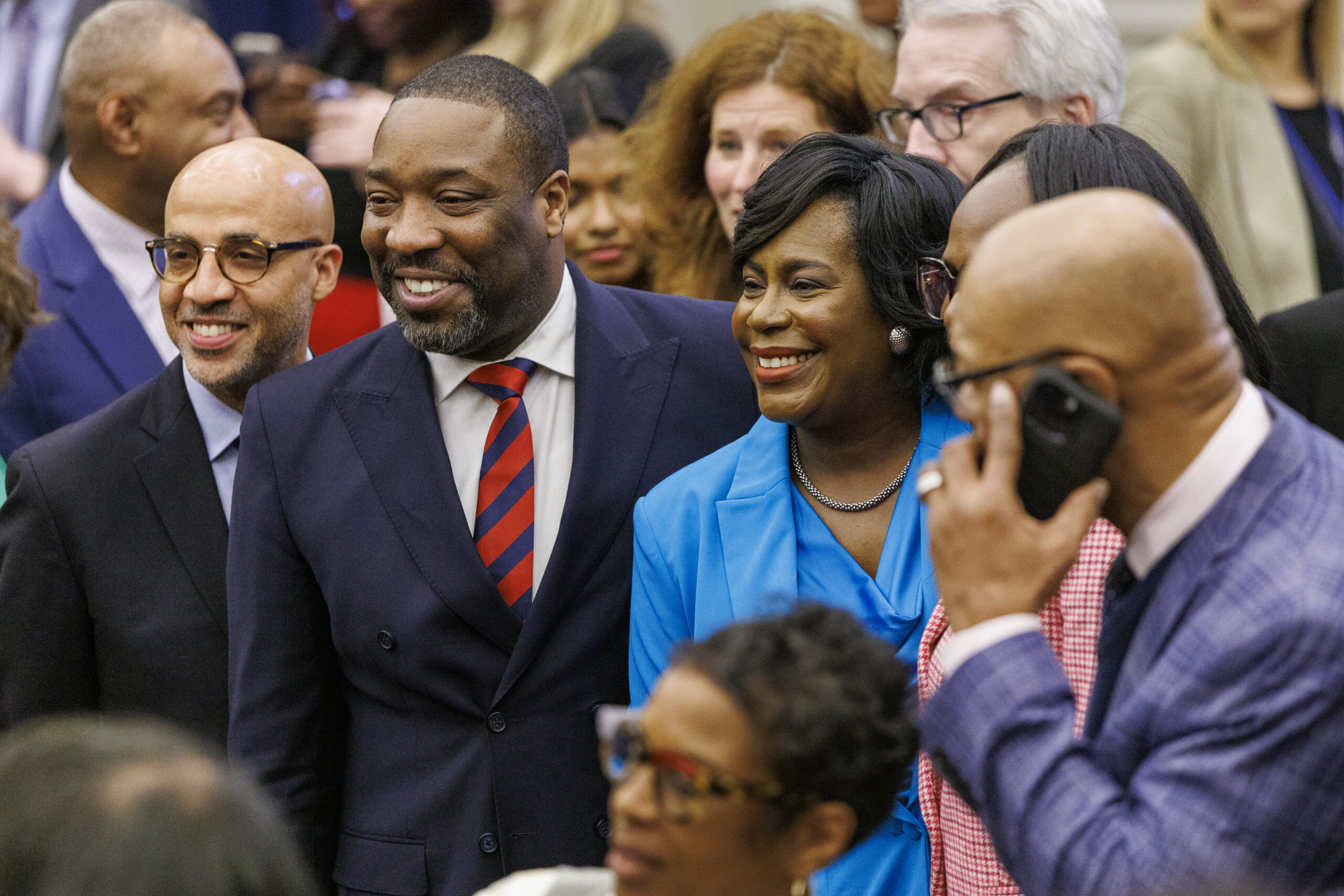
    Philadelphia Mayor Cherelle L. Parker stands beside Council President Kenyatta Johnson (left) after she finisher her budget address to City Council, City Hall, Thursday, March 13, 2025.

    Johnson, a close ally of the mayor, is also seen as a potential contender in the race to succeed Parker, which would happen in 2031 if she wins reelection. Racking up money between now and then could allow him to enter the race in a strong financial position.

    “My focus is being the best City Council president that I can be,” Johnson said when asked if he was considering the city’s top job.

    Using the rules to their advantage

    Philadelphia’s campaign finance laws rules limit contributions to $3,700 per calendar year from individual donors, and cap political committees and businesses allowed to make political donations at contributions of $14,800 per year.

    That means incumbents can collect the maximum amount from donors in each of the four years in their terms before running for reelection. That is not possible in federal elections, where contribution limits apply to the entire election cycle.

    The city’s rules give incumbents a potential advantage over new candidates, who typically have the opportunity to raise money over only one or two calendar years after they enter a race.

    Incumbents do not always maximize that opportunity. But Parker last year set a new standard.

    She is also among the growing number of Philly elected officials taking advantage of a rule that allows politicians to accept donations larger than the city’s contribution limits if they do not spend the excess money on electioneering activities, such as buying ads or paying canvassers to knock on doors.

    The electricians union, the politically active Local 98 of the International Brotherhood of Electrical Workers, for instance, gave $50,000 to Parker’s campaign in 2025. At most $14,800 of that can be spent on persuading city voters to support Parker during her next campaign. The remaining $35,200 will be deposited into a separate bank account known as a Segregated Pre-candidacy Excess Contribution, or SPEC, account.

    While SPEC accounts are nothing new, more Philly elected officials are using them. In addition to Parker, at least a half dozen Council members, including Johnson, now have SPEC accounts, said Shane Creamer, executive director of the Philadelphia Board of Ethics.

    “We haven’t seen this in the lead-up to past elections, certainly not in this number,” Creamer said, adding that the trend shows that politicians are being conscientious about the city’s rules. “I think it suggests that, fundraising aside, there’s an effort to comply with the contribution limits.”

    How Parker raises money

    Parker hosts major fundraising events, such her annual birthday party, which last September took place at the Live! Casino & Hotel. She also calls donors to ask for contributions, and her supporters sometimes host smaller fundraisers to collect money for her campaign.

    Labor unions gave more than $330,000 to Parker last year, campaign finance reports show. That includes $50,000 from the electricians union, $64,800 from the Carpenters union, and $45,000 from the Laborers District Council.

    Organized labor — especially the Philadelphia Building and Construction Trades Council, the Carpenters union, and Local 32BJ of the Service Employees International Union — fueled Parker’s victory in the 2023 mayor’s race.

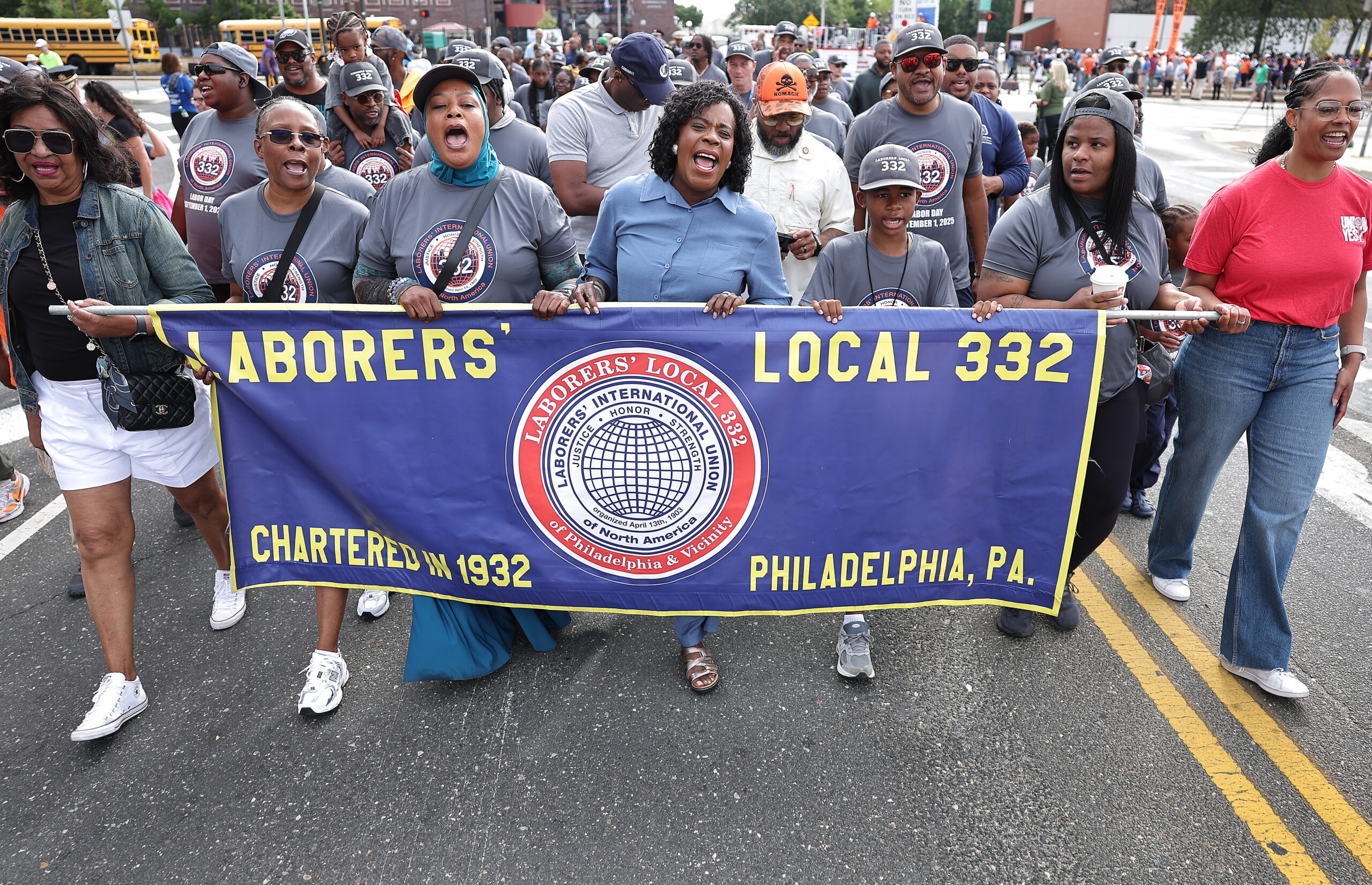
    Mayor Cherelle L. Parker (center) joins the chant as she marches with Local 332 during the annual Tri-State Labor Day Parade in Philadelphia on Monday, Sept. 1, 2025.

    Campaign finance records also show Parker last year accepted a $10,000 donation from one of her rivals in the 2023 Democratic primary: Jeff Brown, the owner of Brown’s Super Stores.

    “We’re very aligned on policy, and if you look at her campaign promises, she is doing fairly well. She’s made some progress on all of them,” said Brown, who serves on the mayor’s business roundtable and an advisory panel providing input on the city’s efforts to revitalize Market East. “I’m invested in the city, and I want to see a functional, good mayor who can lay out a vision and get things done.”

    Corporate interests also donated heavily to Parker in 2025. Her campaign contributions from law firms last year included $10,000 from Ballard Spahr, $11,000 from Duane Morris, $5,000 from Buchanan Ingersoll, and $11,000 from Cozen O’Connor. She also received $5,000 from Comcast, $1,000 from Independence Blue Cross, and $4,700 from the Chamber of Commerce for Greater Philadelphia.

    Wealthy individuals shelled out big bucks, too. Investor Richard Vague gave $16,000; developer Carl Dranoff contributed $15,000; former Aramark CEO Joseph Neubauer gave $30,000; and Firstrust Bank executive chair Richard J. Green gave $15,000.

    How Parker spends campaign money

    Although campaign donors may imagine their contributions pay for yard signs and radio spots, the money also often covers strategy meetings held at expensive restaurants, gifts for constituents, and costs related to officeholders’ public duties.

    Elected officials are prohibited from using political donations for personal expenses. But beyond that, the rules for spending campaign cash are famously lax and rarely enforced.

    Parker’s expenditures on the recently filed reports included a $1,200 tab at Vernick Fish, and 14 more modest purchases from Shanghai Gourmet in Chinatown, totaling $424.

    In addition to the Aspen Institute roundtable, Parker’s campaign helped her pay for trips to Miami for a tour of wellness and homeless centers that are part of the Florida judicial system, to Martha’s Vineyard, Mass., for a Black Economic Alliance gathering, to Puerto Rico for a National League of Cities event, and to Harvard University’s Bloomberg Center for Cities.

    Aren Platt (right) executive director of Mayor Cherelle L. Parker’s political committee is with her after a Kamala Harris campaign event in Germantown Nov. 3, 2024. Platt was senior campaign adviser in Parker’s run for mayor, and served briefly as deputy mayor before leaving her administration.

    The campaign paid $112,000 in consulting fees for ALP Impact Strategies, Platt’s firm; and $30,000 to 215 Bears, the private security company owned by Shawntee Willis, whom Parker has hired as a special assistant in the mayor’s office and who works closely with her police detail.

    It also paid $158,563.73 to Rittenhouse Political Partners, the fundraising firm founded by well-known political consultant Aubrey Montgomery and used by Parker, Johnson, and five other members of Council who saw large fundraising hauls last year.

    Rittenhouse’s clients include some of the most aggressive off-year fundraisers in Philly politics and some of the most prominent adopters of SPEC accounts.

    Montgomery declined to comment.

    Staff writer Anna Orso contributed to this article.

  • Sandra Schultz Newman, the first woman elected to the Pa. Supreme Court, has died at 87

    Sandra Schultz Newman, the first woman elected to the Pa. Supreme Court, has died at 87

    Sandra Schultz Newman, 87, of Gladwyne, Montgomery County, the first woman elected to the Pennsylvania Supreme Court, the first female assistant district attorney in Montgomery County, the first woman named to the board of directors of the old Royal Bank of Pennsylvania, longtime private practice attorney, role model, mentor, and colorful “Philadelphia icon,” died Monday, Feb. 2. Her family did not disclose the cause of her death.

    Reared in South Philadelphia and Wynnefield, and a graduate of Drexel, Temple, and Villanova Universities, Justice Newman, a Republican, was elected to the Commonwealth Court of Pennsylvania in November 1993 and to the state Supreme Court in 1995. She won a second 10-year term on the Supreme Court in 2005 but, having to step down in just two years due to a mandatory retirement age, left at the end of 2006.

    “I love the court. I love my colleagues. The collegiality was great, and I’m going to miss that,” Justice Newman told The Inquirer. “But I just felt like I wanted to move on.”

    During her 10-year tenure, Justice Newman was chair of the Supreme Court’s Judicial Council Committee on Judicial Safety and Preparedness and the court’s liaison to Common Pleas Court and Municipal Court in Philadelphia. She ruled on hundreds of issues and wrote opinions about all kinds of landmark cases, from environmental protections to school funding to clergy privilege to the Gary Heidnik and John E. du Pont murder cases.

    She had worked in criminal and family law and handled many divorce and custody cases as a private attorney in the 1980s, and was praised later by court observers for her attention to Philadelphia Family Court matters. Lynn Marks, of Pennsylvanians for Modern Courts, told the Daily News in 2005: “She’s been a wonderful justice, and she’s made herself accessible to the public interest community.”

    In 2025, her colleagues on the Supreme Court named their Philadelphia courtroom after her. “She was a remarkable jurist, public servant, and trailblazer for women, whose work and impact will leave a legacy beyond the bench,” Supreme Court Chief Justice Debra Todd said in a tribute.

    News outlets across the state covered Justice Newman’s election to the Supreme Court as she campaigned in 1995, and she easily collected more votes in the Nov. 7 election than any of the other three candidates, all men. She told the Daily Item in Sunbury, Pa., in September ’95: “I don’t think anyone should be elected solely on their gender. But I don’t think anybody should not be elected because of it, either.”

    Justice Newman touted her collegiality and feminine life experience during the 1995 campaign and told The Inquirer she wanted to be a “role model for everyone in Pennsylvania.” She told the Press Enterprise in Bloomsburg, Pa.: “I think I can bring a sensitivity and understanding on many issues, such as criminal issues like rape. I have a deep sense for the need of a safe society.”

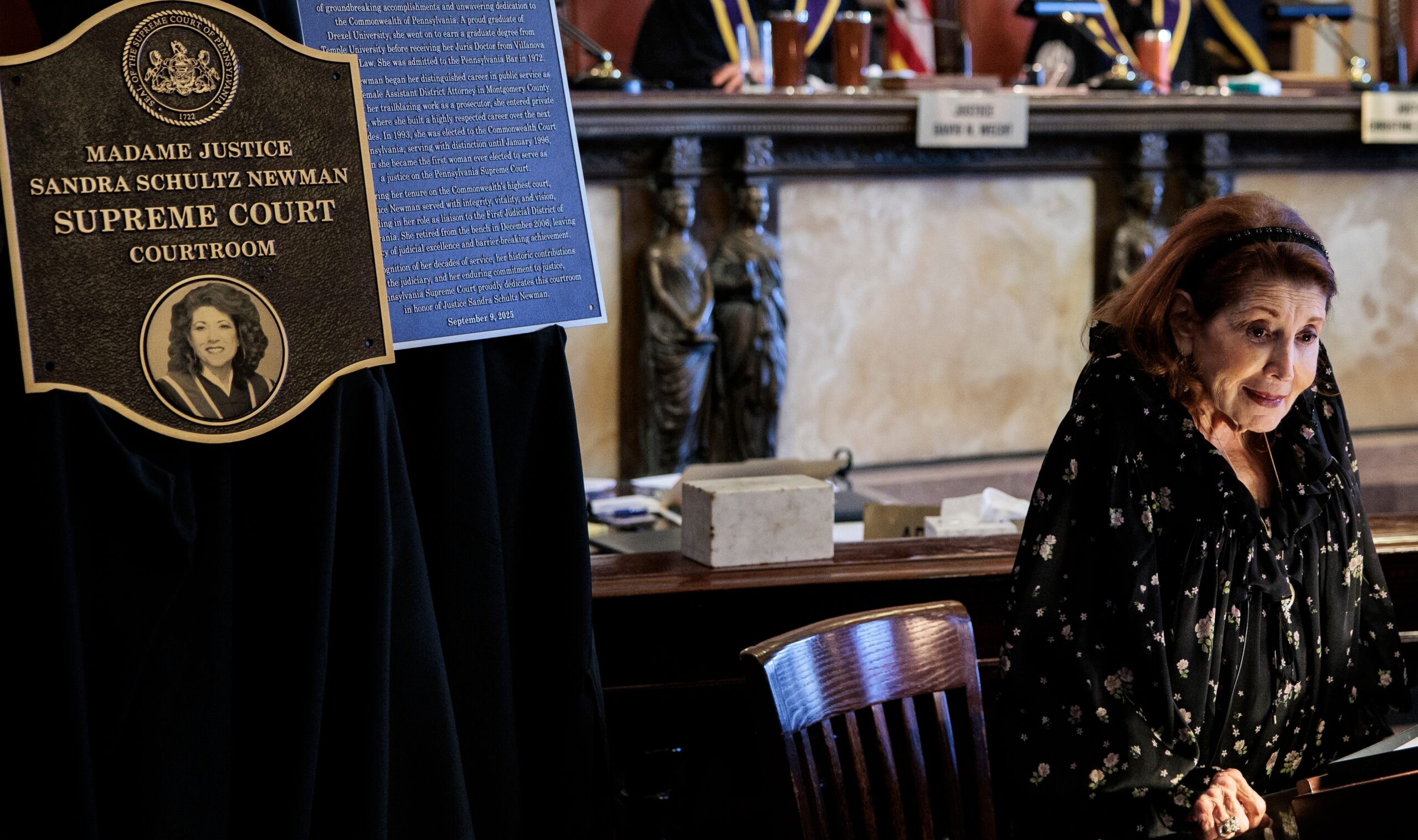
    Justice Newman speaks in 2025 during the ceremony in which the Supreme Court named its Philadelphia courtroom after her.

    After her election, Inquirer staff writer Robert Zausnersaid: “Wealthy yet down-to-earth, Newman talked often during the campaign about her grandchildren and insisted that people ‘call me Sandy’ once she was outside her courtroom.”

    Former Gov. Tom Ridge called Justice Newman a “pioneering legal giant” and said she “inspired generations of legal professionals across the Commonwealth.” Ezra Wohlgelernter, chancellor of the Philadelphia Bar Association, noted her “pathbreaking career” and “valuable service to our city and to the Commonwealth” in a tribute.

    Either “the first” or “the only” in many of her professional pursuits, Justice Newman was called a “Philadelphia icon,” “a force of nature,” and a “beautiful and radiant star” in online tributes. She flirted with running for political office several times and was colorfully profiled in Philadelphia Magazine in 1988. In that story, writer Lisa DePaulo called her “part woman/part tigress.”

    She famously endorsed a controversial cosmetic product on TV in 2006 and attended many galas and charity auctions, and her name appeared in the society and opinion pages nearly as often as the news section. In a 1983 feature, Inquirer writer Mary Walton described Justice Newman as “beautiful … with tousled auburn hair and a slender figure that she liked to cloak in expensive designer clothes.”

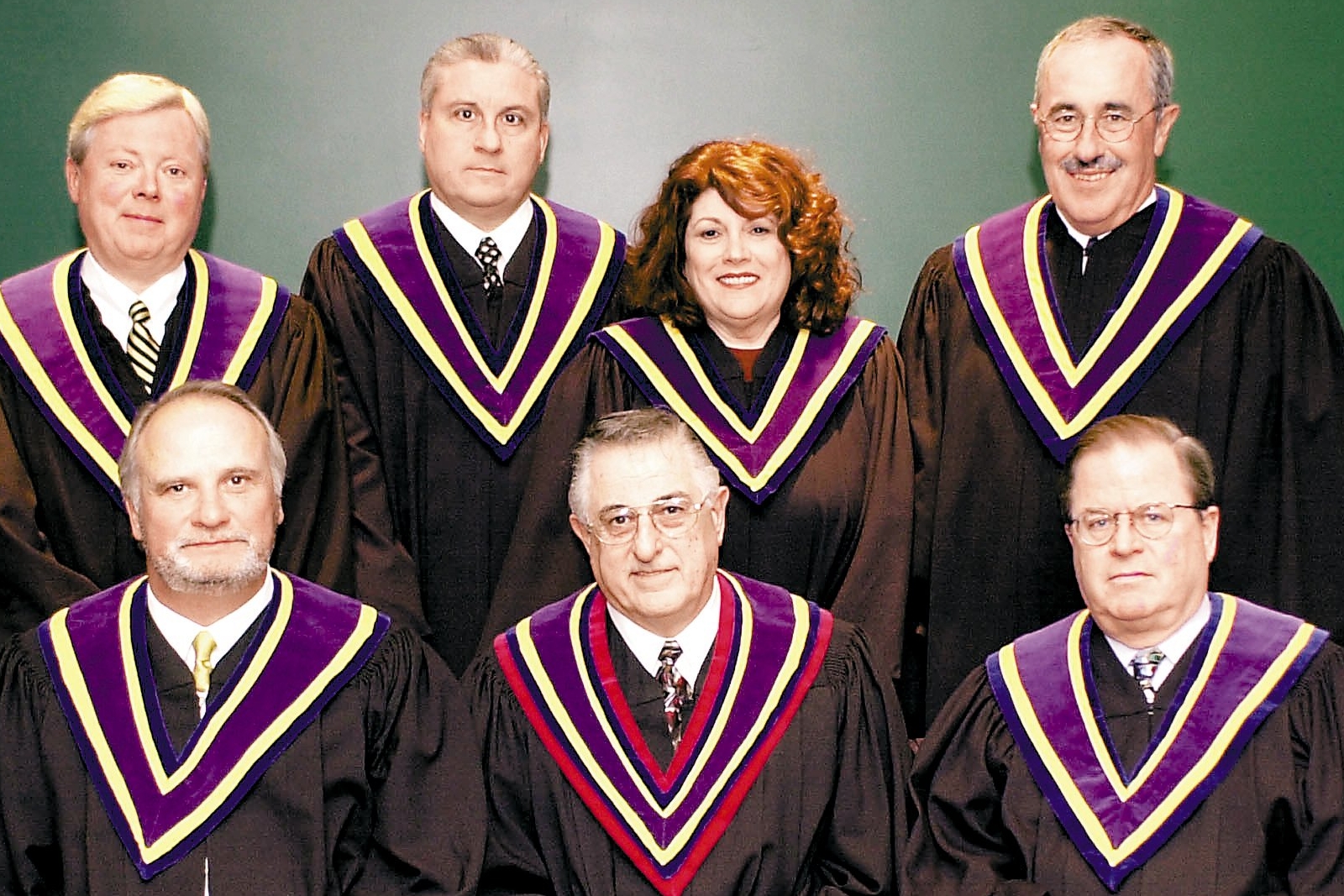
    Justice Newman was the only woman on the state Supreme Court in 2002.

    A friend said online she was “irrepressible in an Auntie Mame sort of way.” Another said: “The world has become a little quieter.”

    Justice Newman served as the first female assistant district attorney in Montgomery County from 1972 to 1974 and was an in-demand, high-profile partner at Astor, Weiss & Newman from 1974 to 1993. She returned to private practice in 2006 and handled mostly alternative dispute resolution cases until recently.

    She told the Press Enterprise in 1995 that colleagues in the Montgomery County District Attorney’s Office had adorned her desk with a green plant on her first day in 1972. “It was marijuana from the evidence room,” she said.

    She wrote papers and book chapters about trial practice, death penalty statutes, and the electoral system in Pennsylvania. She spoke about all kinds of legal topics at seminars, conferences, and other events.

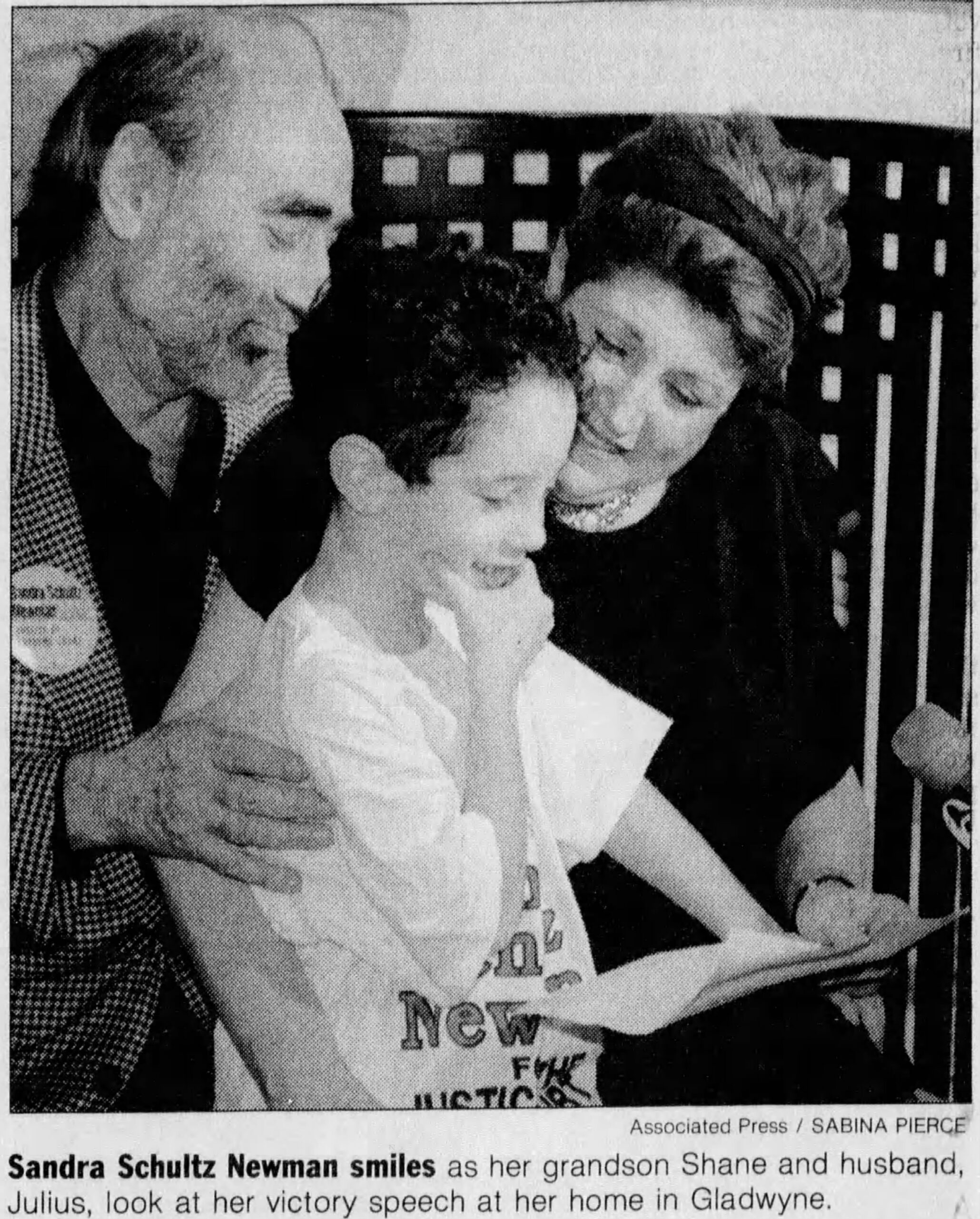
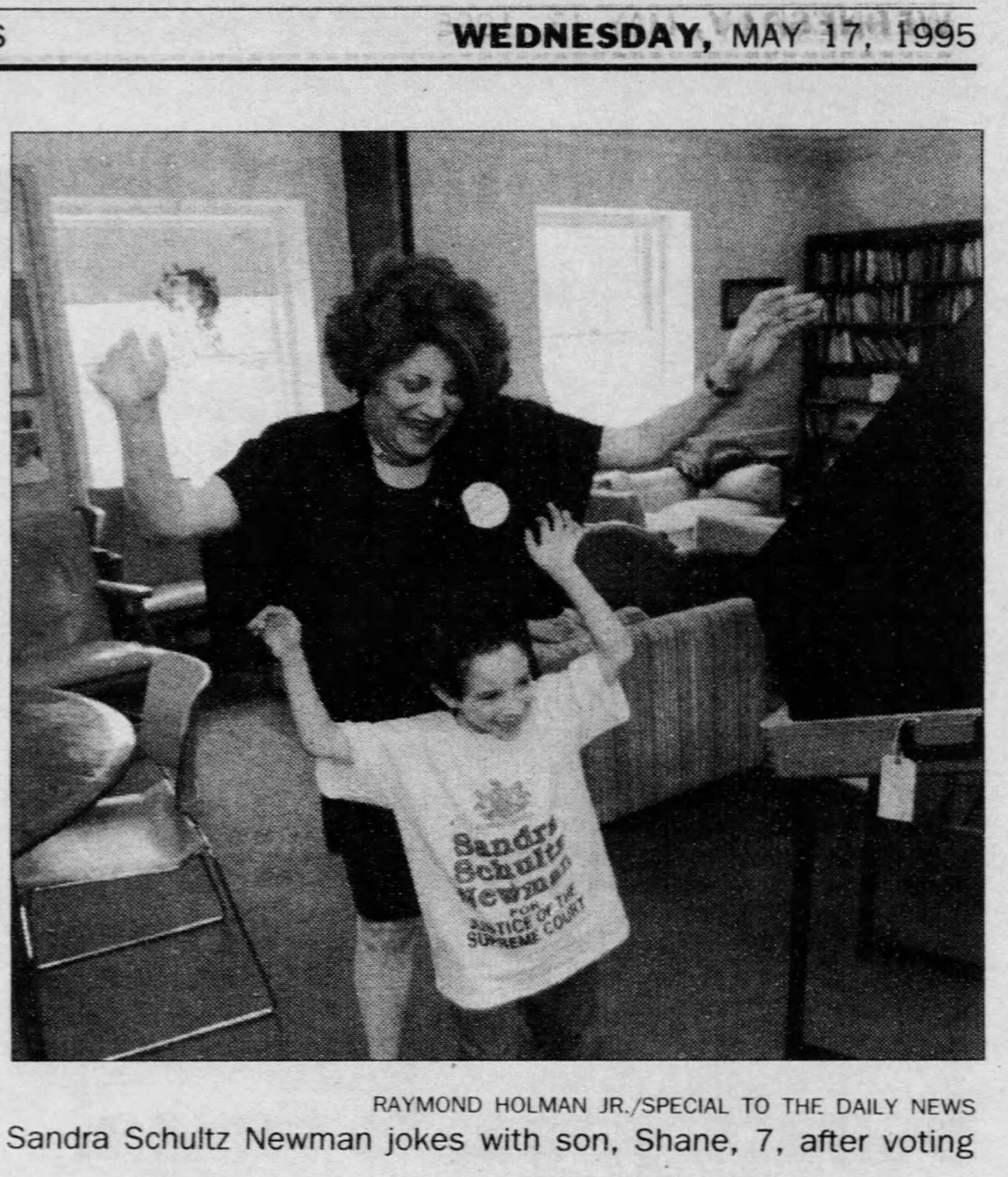
    This photo of Justice Newman, her husband, Julius, and grandson Shane was taken for The Inquirer after she won on Election Day in 1995.

    She cofounded what is now the Drexel University Thomas R. Kline School of Law in 2006, was a trustee for Drexel’s College of Medicine, and received dozens of service and achievement awards from Drexel, Villanova, the Pennsylvania and Philadelphia Bar Associations, the Women’s Bar Association of Western Pennsylvania, the Pennsylvania Association for Justice, and other groups.

    She was the president of boards, chair of many committees, and active with the National Association of Women Justices, the Juvenile Law Center, the American Law Institute, and other organizations. She taught law classes at the Delaware Law School of Widener University in 1984 and ’85, and at Villanova from 1986 to 1993.

    She earned a bachelor’s degree at Drexel in 1959 and a master’s degree in hearing science at Temple in 1969. In 1972, she was one of a handful of women to get a law degree at what is now Villanova’s Charles Widger School of Law. Later, she received four honorary doctorate degrees and was named a Distinguished Daughter of Pennsylvaniaby then-Gov. Ridge in 1996.

    Outside the courtroom, Justice Newman volunteered for charities and legal associations. She was part of a group that tried unsuccessfully to buy the Eagles from then-owner Leonard Tose in 1983, and she was criticized in the early 2000s for her financial involvement in a bungled long-running effort to fund a new Family Court Building in Philadelphia.

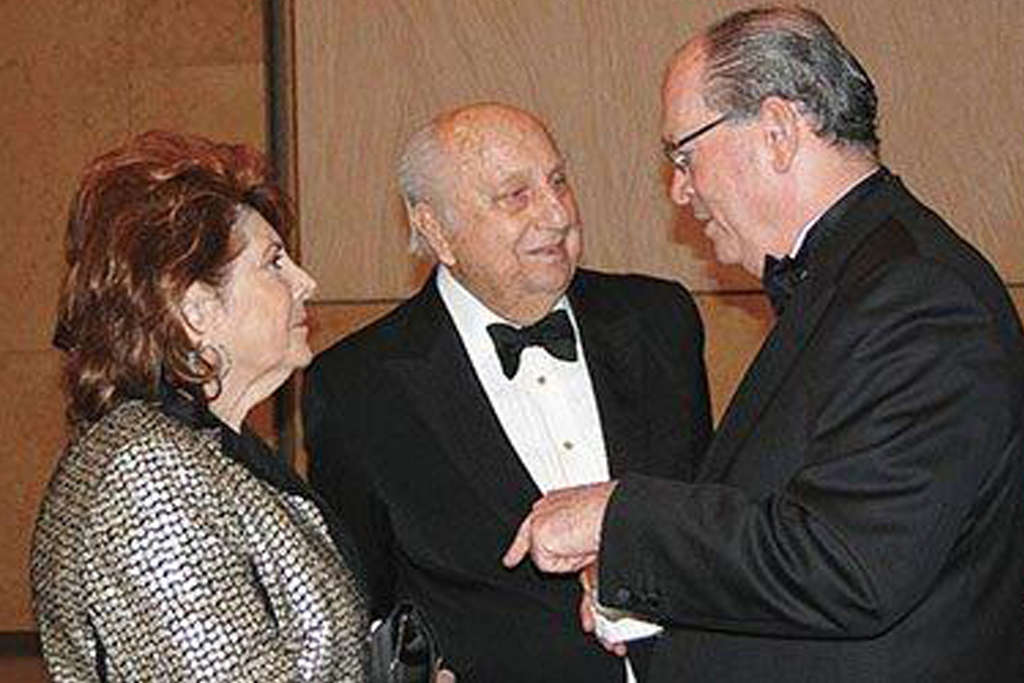
    Justice Newman chats with philanthropists and business leaders Raymond G. Perelman (middle) and Joseph Neubauer at the gala opening of the new Barnes Museum in 2018.

    “Justice Newman filled every room she entered with her strength, energy, and exuberance for life and for the law,” Supreme Court Justice P. Kevin Brobson said in a tribute. “She lived with intention and spent her entire career focused on creating and expanding opportunities for future generations of legal professionals, especially women.”

    Sandra Schultz was born Nov. 4, 1938. She graduated from Overbook High School and married cosmetic surgeon Julius Newman in 1959. They had sons Jonathan and David, and lived in Wynnefield, Penn Valley, and Gladwyne.

    Her husband and son David died earlier. She married fellow lawyer Martin Weinberg in 2007, and their union was annulled 11 months later.

    Justice Schultz was a longtime fashionista. She reveled in shopping trips to New York, and DePaulo reported in 1988 that her closet in Gladwyne was 800 square feet. She was also funny, generous, and kind, friends said.

    Justice Newman dances with her grandson on Election Day in 1995. This photo appeared in the Daily News.

    She funded several college scholarships, collected art, owned racehorses, cooked memorable matzo balls, enjoyed giving gifts, and tried to have dinner every night with her family. Sometimes, DePaulo reported, in the 1970s, she took her young sons to her law school classes at Villanova.

    “Despite how busy she was, her family was always her priority,” said her brother, Mark. “She was also a true bipartisan who fought for equal rights and preserving our democratic institutions.”

    In 2003, she was asked by Richard G. Freeman, editor in chief of the Philadelphia Lawyer, to describe her judicial decision-making process. She said: “There are beliefs that you have to put aside. One of the wonderful things about being on our court is that you can make new law where your beliefs fit into the law.”

    In addition to her son Jonathan and brother, Justice Newman is survived by four grandchildren and other relatives. A grandson died earlier.

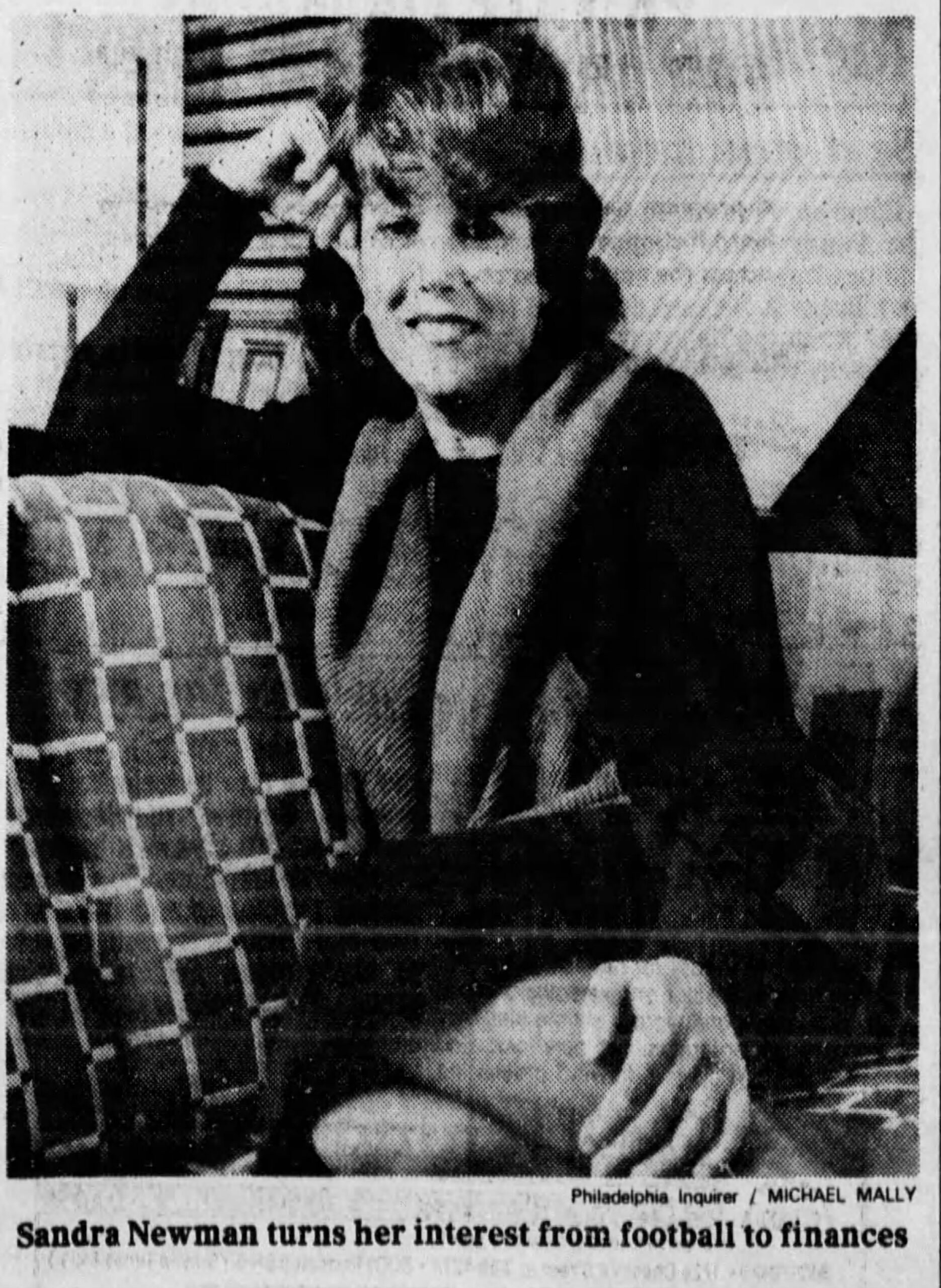
    This photo of Justice Newman appeared in The Inquirer in 1983.

    Services are private.

    Donations in her name may be made to the Crohn’s and Colitis Foundation, 733 Third Ave., Suite 510, New York, N.Y. 10017.

    Correction: One of the communities that Justice Schultz grew up in has been corrected.