Category: Philadelphia Politics

  • People who are self-employed could become exempt from paying a Philly business tax | City Council roundup

    People who are self-employed could become exempt from paying a Philly business tax | City Council roundup

    Philadelphia-based independent contractors and others who are self-employed could soon become exempt from paying certain business taxes as part of a measure aimed at easing tax burdens on small businesses.

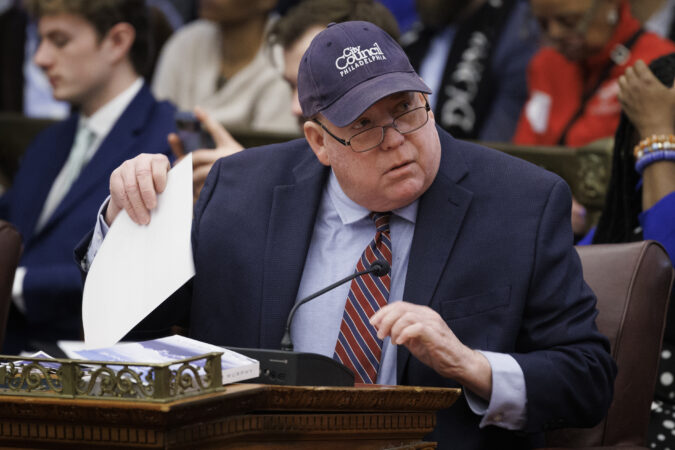
    City Councilmember Mike Driscoll, a Democrat who represents parts of Northeast Philadelphia, introduced legislation Thursday to carve out entrepreneurs, sole proprietorships, and businesses that have only one employee from having to pay the city’s business income and receipts tax, commonly known as BIRT.

    Also on Thursday, members floated legislation to address the rising cost of water bills and introduced a bill to make it easier for restaurants to secure outdoor dining permits.

    What was the meeting’s highlight?

    Relief for the small(est) businesses: The bill is likely to find support in Council, where lawmakers have been searching for ways to provide relief to small businesses after earlier this year eliminating a popular tax break that allowed companies to exclude their first $100,000 in income from business taxes in Philadelphia.

    That exemption effectively meant that thousands of small businesses did not have to pay the tax. However, Mayor Cherelle L. Parker’s administration in June successfully moved to eliminate the exemption, saying the city was likely to lose a court battle over the matter.

    The change came after a medical device manufacturer sued the city, saying the exemption violated state law, which includes a “uniformity” clause that prohibits municipalities from creating different classes of taxpayers.

    Now, thousands of businesses newly have to pay the BIRT beginning with 2025 tax bills that are due in April. If Driscoll’s measure is adopted, it would begin in the 2026 tax year, meaning that eligible business owners would see the exemption when paying taxes due in April 2027.

    He said the legislation addresses concerns from small businesses that the impending tax bills will be financially unsustainable for them.

    “A $50,000 business should not face a $3,200 tax hike,” Driscoll said. “That is not policy. That is displacement.”

    Driscoll said that the city’s law department approved his legislation and that he is confident it does not violate the uniformity clause.

    What else happened this week?

    Making water more affordable: Council will consider a package of legislation to address rising water bills. Councilmember Jamie Gauthier of West Philadelphia introduced three measures:

    • A bill that expands eligibility for payment assistance programs to people who earn up to 300% of the federal poverty level. (This year, the FPL is $32,150 for a family of four.) There is currently a tiered assistance structure for people who earn up to 250%.
    • A bill requiring that the city reduce a resident’s water bill if it rose because of a water meter failure that lasted more than a year.
    • A resolution to hold hearings on whether lawmakers can expand assistance programs to renters. The Philadelphia Water Department does not allow bills to be in renters’ names.

    A spokesperson for Gauthier said the package of legislation has 10 cosponsors — a majority of Council — making it likely to pass.

    Parker opposes incineration ban: A Council committee on Monday advanced a bill to ban the city from incinerating trash, over the objections of Parker’s administration.

    Currently, the city sends about two-thirds of the trash it collects to landfills and one-third to a waste-to-energy incinerator in Chester operated by Reworld, formerly known as Covanta.

    Both of those contracts expire June 30, and Gauthier wants to prohibit the Parker administration from signing a new deal.
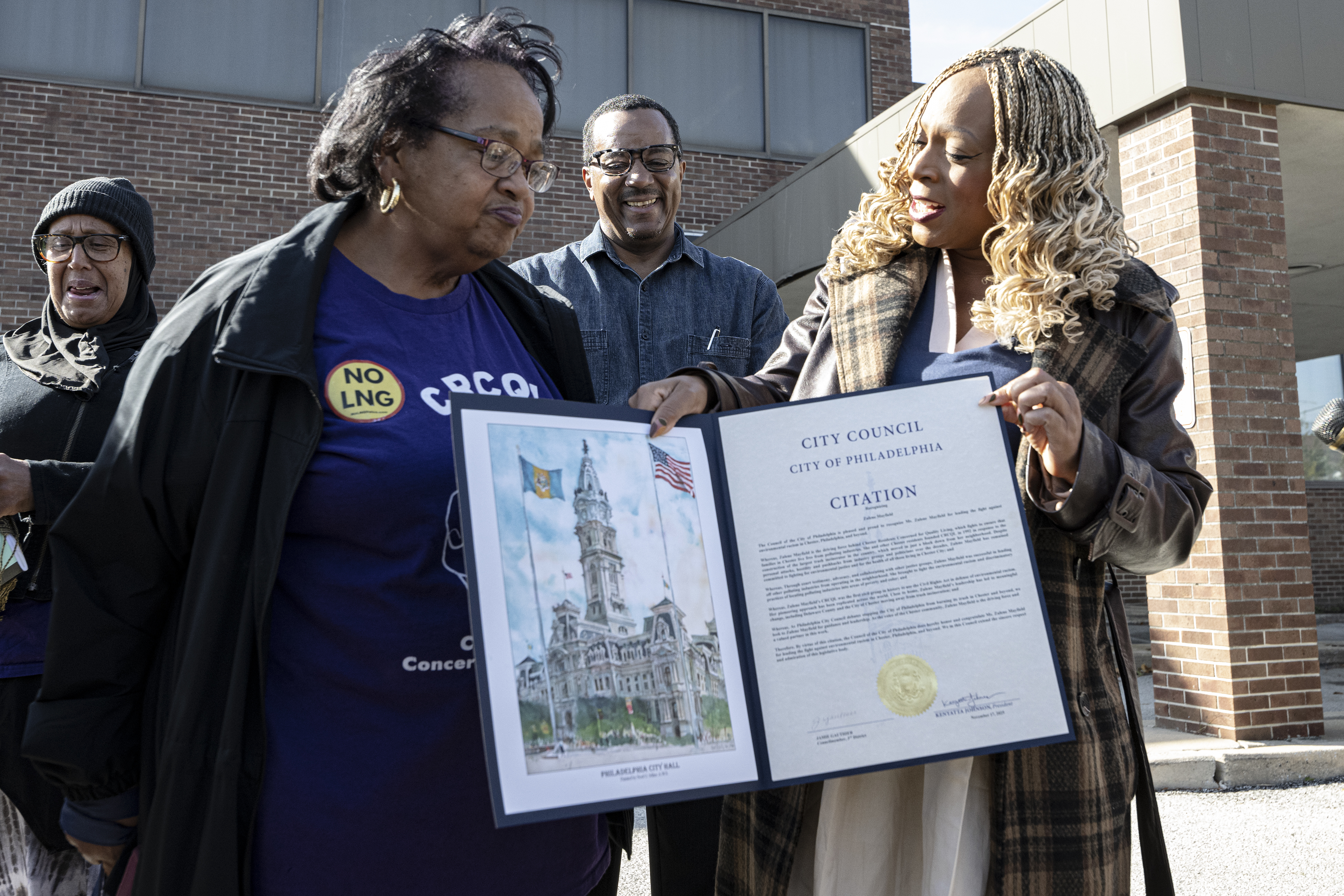
    Chester resident Zulene Mayfield, left, Philadelphia Councilmember Jamie Gauthier, right, and Chester Mayor Stefan Roots meet to discuss Gauthier’s “Stop Trashing Our Air Act,” which would ban the city from incinerating waste, during a visit with lawmakers and staff in Chester, Pa., on Friday, Nov. 7, 2025.

    On Monday, Chester officials pleaded with Philly to end its relationship with the facility, saying it contributes to high rates of illness.

    Reworld defended its record, saying it exceeds government regulations.

    Carlton Williams, who leads the Philadelphia Office of Clean and Green Initiatives, asked lawmakers to hold off approving a ban on incineration to allow the city time to study the issue.

    But the committee approved the measure, sending it to the full Council for a vote as early as Dec. 4.

    Dining out: Council is taking another crack at streamlining the city’s drawn-out permitting process for outdoor dining.

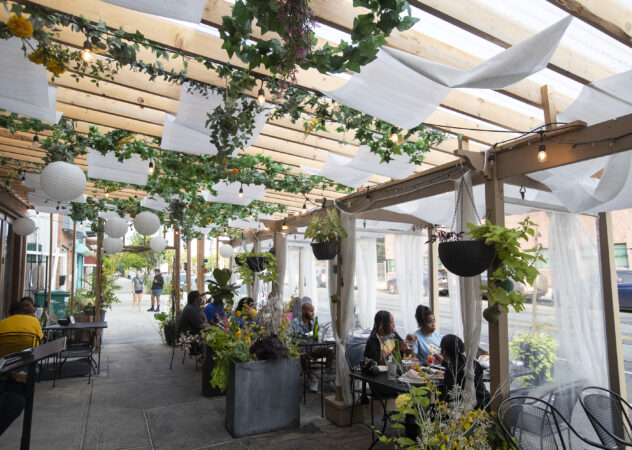
    The outdoor dining area at Booker’s Restaurant and Bar at 5021 Baltimore Ave. in 2021.

    Councilmember Rue Landau, who represents the city at-large, said it can take more than a year and a half for restaurants to get licensed if they are not in areas around Center City and a handful of commercial corridors in other neighbors.

    Beyond those locations, restaurants must get their district Council person to sponsor zoning legislation, which can take months.

    Landau introduced legislation Thursday to expand the “by-right” areas where sidewalk cafes can exist without special zoning. Where the areas are expanded to will be up to district Council members.

    Quote of the week

    Danny Garcia trains for an upcoming fight in August 2024.

    All in the family: Council members on Thursday honored boxer Danny Garcia, a North Philly native and an illustrious fighter who is retiring from the sport. He appeared in Council chambers to thank members and tell the city how much he loves it back.

    Staff writers Jake Blumgart and Beatrice Forman contributed to this article.
  • It can take two years for a restaurant to get approved for outdoor dining. One Philly councilmember is trying to make it easier

    It can take two years for a restaurant to get approved for outdoor dining. One Philly councilmember is trying to make it easier

    Philadelphia City Council is taking yet another crack at streamlining the city’s complex and drawn-out permitting process for outdoor dining.

    At-large Councilmember Rue Landau introduced legislation Thursday to expand the “by-right” areas where sidewalk cafes can exist without a special zoning ordinance. The proposed bill, if approved, could hasten the daunting permitting process and dramatically increase the space available for outdoor dining.

    Currently the law allows sidewalk cafes to be licensed in certain areas that are largely centered on Center City and smaller commercial corridors in East Passyunk, the Italian Market, Manayunk, and other neighborhoods throughout the city. Restaurants outside those corridors must ask their district Council member to get legislation approved to authorize a sidewalk cafe license. The step can add months to a process restaurateurs say is already lengthy, confusing, and costly.

    All restaurants seeking sidewalk cafes must submit copies of plans to Philadelphia’s Streets Department and Department of Licenses and Inspections separately for approval before securing a $1 million insurance policy and paying an annual $227 licensing fee, according to the application’s website. Approvals and disapprovals should be ready within 30 days of applying.

    In reality, restaurant owners said, the process often involves thousands of dollars to keep an architect on retainer, as both departments can take months to review plans. And in the interim, at least one restaurant owner alleged, businesses can be fined for having tables and chairs outside while they wait for a decision.

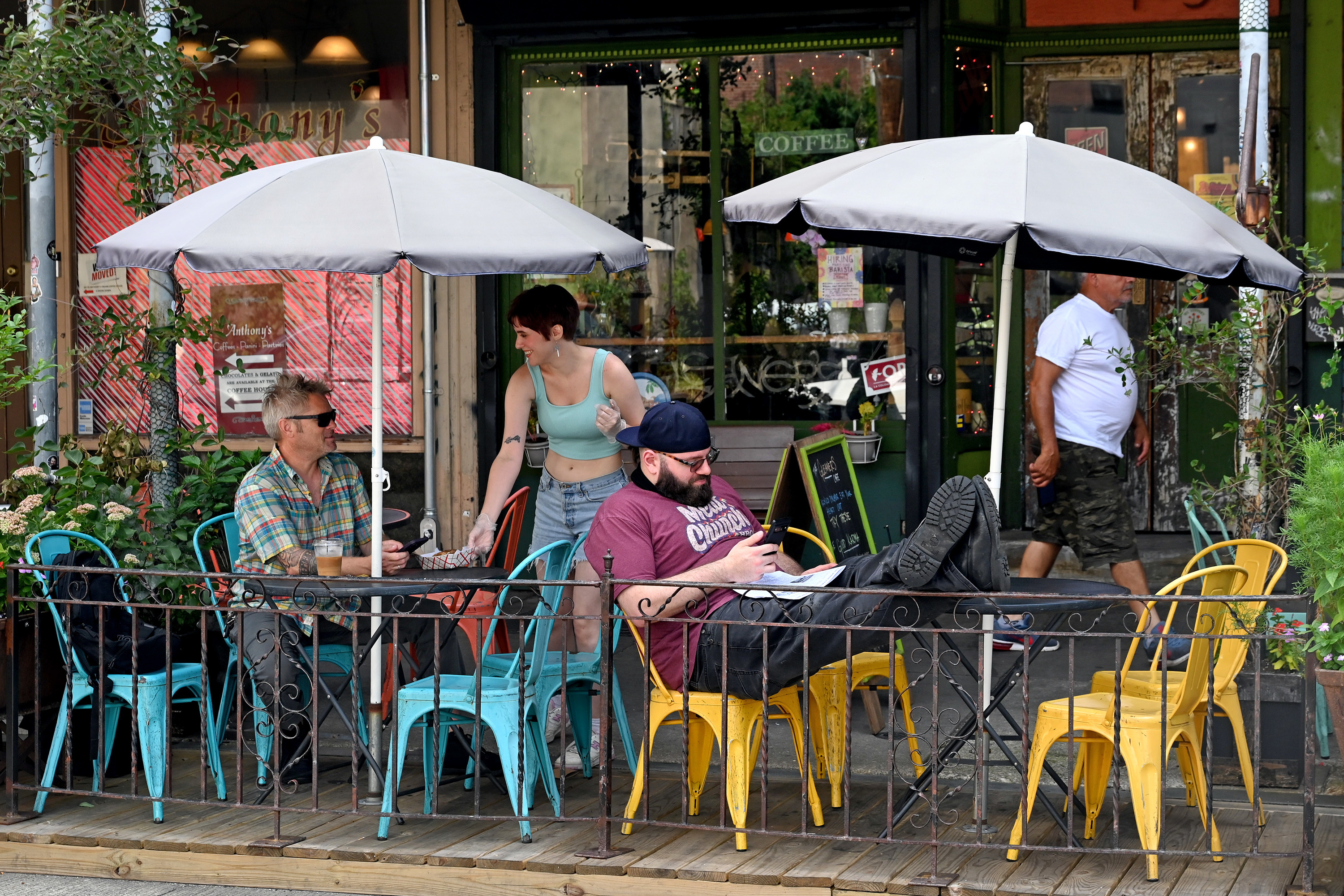
    The sidewalk cafe at Gleaner’s Cafe at 917 S. 9th Street, one of the addresses covered under current outdoor dining legislation.

    Landau believes the new legislation stands to remove one hurdle from a system that is overall in need of reform.

    “The ordinance process alone takes many months, and is just one part of a lengthy and convoluted process,” Landau said in an interview Wednesday. “Currently, it takes approximately between 18 and 27 months just to put a couple of tables and chairs outside of your business.”

    Sidewalk cafes are different from streeteries, which occupy parking spaces and require a $1,750 licensing fee alongside myriad approvals from different city departments, depending on the structure. Both face similar challenges.

    Sidewalk cafes and streeteries proliferated during the pandemic, allowing many restaurants to keep serving patrons as COVID-19 limited indoor dining. At their peak, there were roughly 800 sidewalk cafes or streeteries operating in Philly. That number fell drastically after 2022, when the city made streeteries permanent and announced a web of since-revised regulations that many restaurants could not keep up with, often requiring businesses to consult engineers and architects to build structures that the city might request to be torn down only months later.

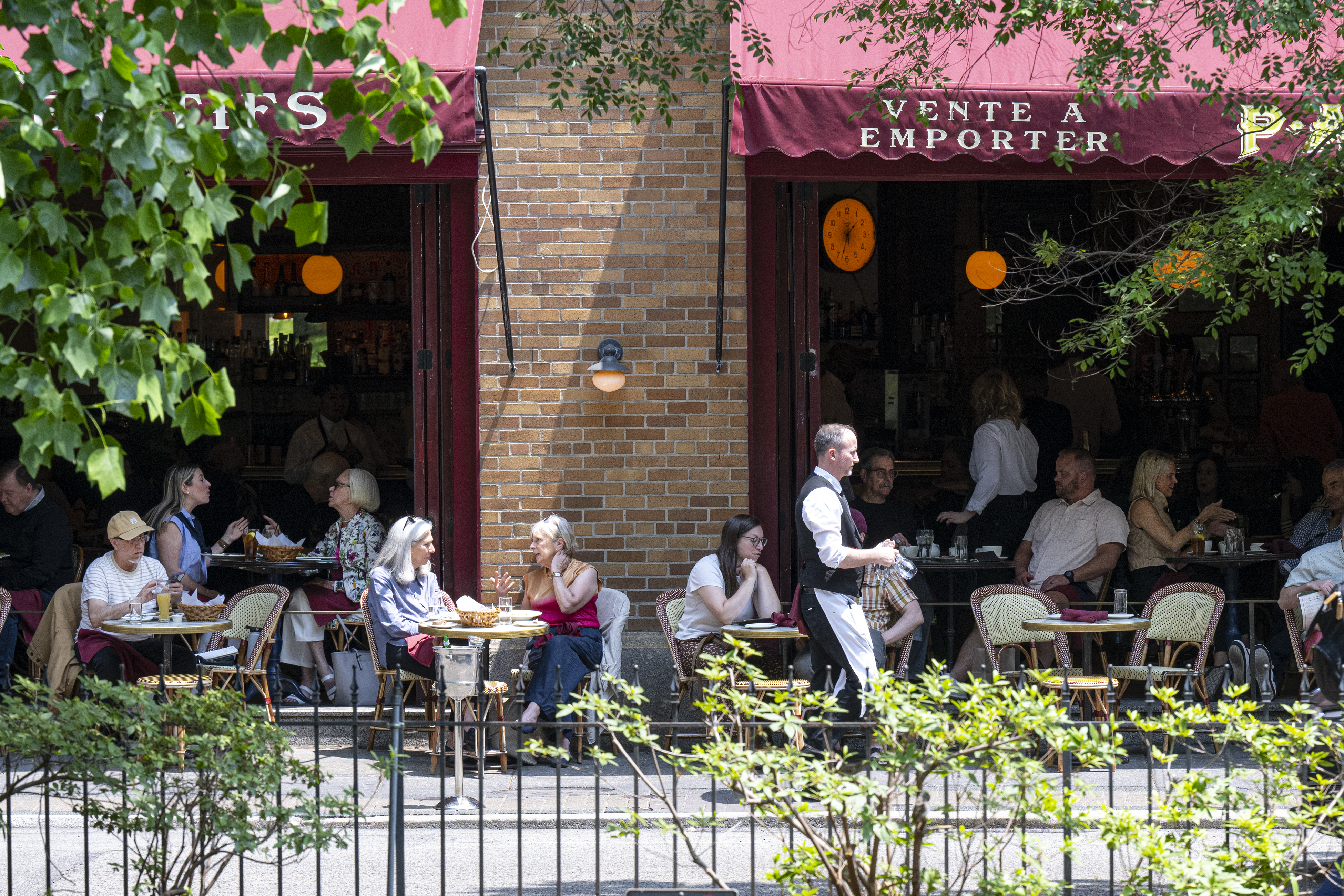
    Restaurant-goers dine at tables and chairs on a sidewalk outside Parc.

    There are just 28 active streetery and 287 active sidewalk cafe licenses in Philly as of November 2025, according to L&I’s business license dashboard.

    “The current outdoor dining licensing process in Philadelphia is characterized by complexity and high cost, which pose significant barriers for businesses seeking to utilize outdoor dining opportunities,” City Controller Christy Brady wrote in an August 2024 report on the licensing systems.

    window.addEventListener(“message”,function(a){if(void 0!==a.data[“datawrapper-height”]){var e=document.querySelectorAll(“iframe”);for(var t in a.data[“datawrapper-height”])for(var r,i=0;r=e[i];i++)if(r.contentWindow===a.source){var d=a.data[“datawrapper-height”][t]+”px”;r.style.height=d}}});

    What would the proposed law change?

    Landau’s proposed legislation would increase the number of streets in Philly where sidewalk cafes are considered “by-right,” which means business owners would not have to call on City Council to preapprove their tables and chairs.

    Landau held more than a dozen listening sessions with community members in eight Council districts, she said, and worked with the Pennsylvania Restaurant and Lodging Association to consult over 100 Philadelphia restaurant owners before drafting the legislation.

    (function() {
    var l2 = function() {
    new pym.Parent(‘sidewalkcafe’,
    ‘https://media.inquirer.com/storage/inquirer/projects/innovation/arcgis_iframe/sidewalkcafe.html’);
    };
    if (typeof(pym) === ‘undefined’) {
    var h = document.getElementsByTagName(‘head’)[0],
    s = document.createElement(‘script’);
    s.type = ‘text/javascript’;
    s.src = ‘https://pym.nprapps.org/pym.v1.min.js’;
    s.onload = l2;
    h.appendChild(s);
    } else {
    l2();
    }
    })();

    The proposed bill still follows the tradition of councilmanic prerogative, allowing each district Council member to select which streets receive the “by-right” designation for sidewalk cafes. Councilmember Jamie Gauthier included the entirety of the 3rd District — encompassing the majority of West Philly — while others carved out several streets. Councilmembers Cindy Bass and Brian O’Neill have yet to designate streets, Landau said.

    The bill will then go to the streets subcommittee for a hearing, Landau said, where blocks can still be added.

    “There’s plenty of time for councilpeople to get some skin in the game,” Landau said. “We don’t want to be exclusive here.”

    Bass, who represents the 8th District — which includes parts of Mount Airy, Germantown, and West Oak Lane — and O’Neill, who represents Northeast Philly in the 10th District, could not be reached for comment.

    The now-dismantled outdoor dining area at Booker’s Restaurant and Bar at 5021 Baltimore Ave., which some once considered to be one of the most beautiful streeteries in Philly.

    How do restaurant owners feel?

    The proposed legislation is cold comfort for Jeremy Page, general manager of the West Philly brunch institution Booker’s. The restaurant’s application for a revamped sidewalk cafe has languished with L&I since he filed in April, Page said.

    While Booker’s sits squarely within Gauthier’s district, the restaurant won’t be spared any red tape. It already secured the necessary ordinance and spent $2,000 on an architect to draw up plans for six outdoor tables.

    “I was very surprised I had to do that. Nobody tells you,” Page said. He said he was heartened by Landau’s legislation. “It feels like someone finally sees what’s going on and is locking in to make a change.”

    Setting up the new outdoor space was bittersweet: Between 2020 and September 2025, Booker’s had a 33-seat sidewalk cafe enclosed with wooden slats that staff would decorate with string lights, flowers, and garlands. It was lauded by some as among the city’s most beautiful outdoor dining arrangements.

    When the city announced its new outdoor dining regulations in 2022, the structure was no longer compliant, Page said. But Booker’s kept the structure up for three years as it searched for a workaround, incurring roughly $10,000 in fines until Page said he finally tore down the covering in September. It has been replaced by simple tables and chairs.

    The change resulted in a loss in business that forced Booker’s to let go of five staff members, Page said.

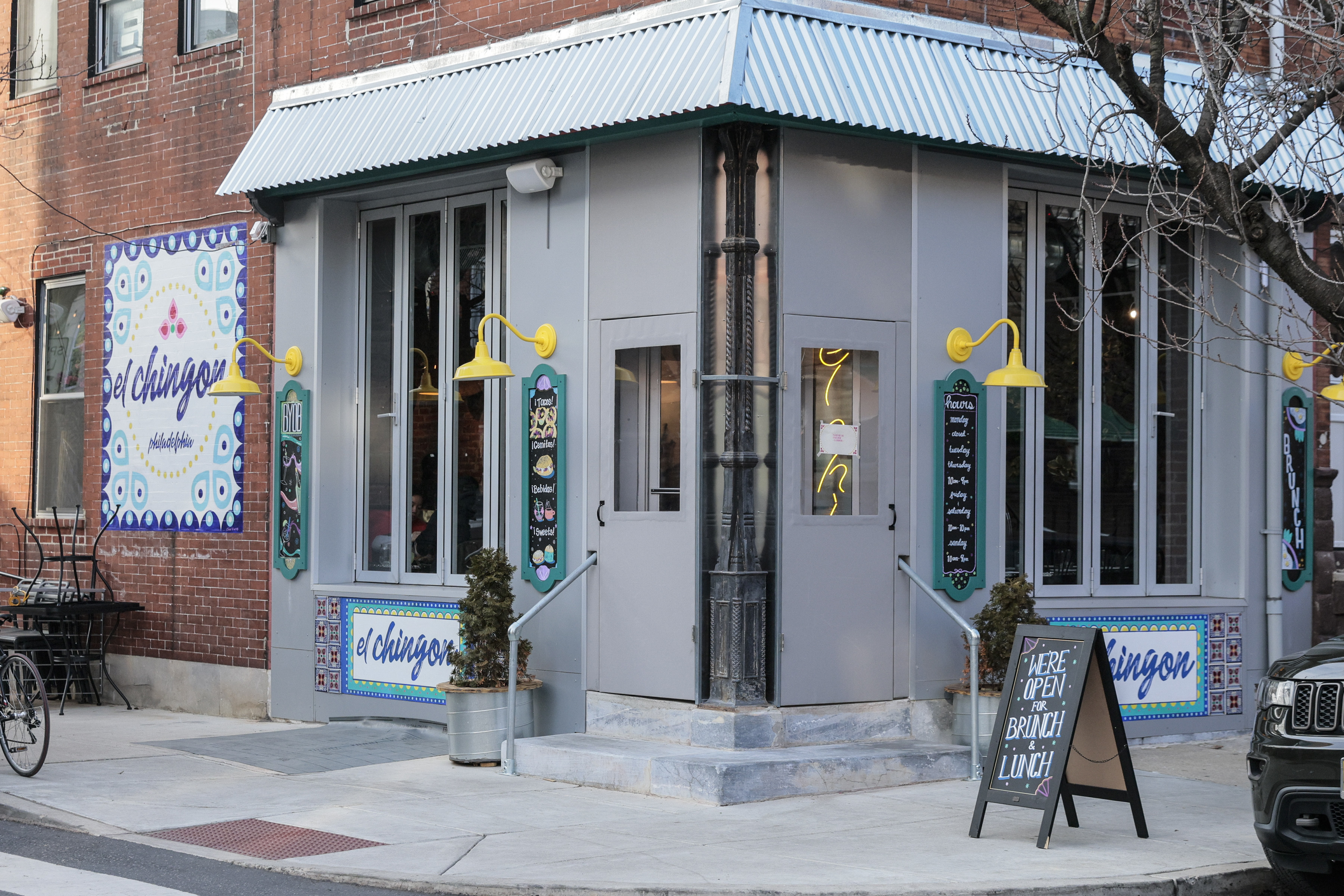
    El Chingon at 1524 S 10th St. It took two years for the Michelin-award Mexican restaurant to get a sidewalk cafe license.

    “I miss it so much,” Page said. “It’s extremely impactful when you are getting fined for something that was legal at one point and then, all of a sudden, is not legal anymore.”

    Carlos Aparicio recalled a similar experience. The owner of South Philly’s El Chingón, now a Michelin-recognized restaurant, spent two years going back and forth with different city departments until his 12-seat sidewalk cafe was approved in fall 2023.

    During that time, Aparicio told The Inquirer, he was hit by fines and told by an L&I officer that the agency would remove his tables and chairs. After that, he started hiding the furniture at his house during off hours.

    “It was very confusing and upsetting,” Aparicio said. “We’re not doing anything bad. We’re not selling drugs. We’re not trying to do anything but build community.”

    El Chingón is just one block outside East Passyunk Avenue’s by-right area. Aparicio estimated he spent $10,000 after securing his zoning ordinance to retain an architect, an engineer, and a lawyer to help him navigate the permitting process.

    It’s experiences like these that incense Landau, she said.

    “All the restaurants that we spoke to, they all said that the city does not waste any time to fine them or tell them what it’s doing wrong, but it’s not there to help them in a positive way,” Landau said. ”We must cut red tape to make it easier for restaurants to do a very simple thing: put some tables and chairs outside.”

    Staff writer Anna Orso contributed to this article.
  • ACLU slams Mayor Parker for invoking the organization’s name amid ‘DEI rollback’

    ACLU slams Mayor Parker for invoking the organization’s name amid ‘DEI rollback’

    The ACLU’s Pennsylvania chapter slammed Philadelphia Mayor Cherelle L. Parker’s administration for invoking the organization’s name during a news conference this week, saying the group was not involved in what its leaders described as the mayor’s “DEI rollback.”

    In a blistering statement issued late Wednesday, the ACLU-PA said Parker’s use of the organization’s name during a news conference announcing controversial changes to the city’s contracting policies created “the impression that the city’s decisions were vetted by our constitutional experts and aligned with our values.”

    That was not the case, the group said.

    “ACLU-PA was not consulted nor involved,” the statement said. “We welcome genuine collaboration with city leadership on policies that advance justice, liberty, and equity, especially for historically marginalized communities. Until such a partnership occurs, we ask that the administration refrain from using our name as a buzzword seal of approval.”

    The Parker administration pushed back, with City Solicitor Renee Garcia saying Thursday that officials “were clear” that the administration consulted with an attorney who worked for the city’s outside counsel and who later went to work for the ACLU.

    “We didn’t give ‘impressions,’” Garcia said, “we just gave the facts.”

    Still, the civil rights group’s distancing from Parker was the latest criticism the mayor faced over her decision to eliminate a decades-old program that aimed to direct a significant portion of the city’s contracting dollars to firms owned by people of color, women, and people with disabilities.

    Parker and her administration said the decision was made to align city policies with shifting legal precedent that has threatened affirmative action-style government programs. But critics have said the city preemptively conceded to the conservative legal movement that has sought to dismantle diversity, equity, and inclusion programs across the country.

    Parker has said the city’s new system, which will incentivize contracting with businesses considered “small and local,” will ultimately be a more effective and equitable program.

    In announcing her decision to make the city’s procurement policies race- and gender-neutral, Parker did not say that her administration worked directly with the ACLU in crafting its policy shift, nor did she mention the organization’s Pennsylvania chapter.

    But Parker and members of her administration invoked the group’s name during the Tuesday news conference as they described the timeline of events that led up to the city’s decision to quietly change its policies this fall before announcing them publicly.

    Mayor Cherelle L. Parker with city solicitor Renee Garcia (right) at City Hall Feb. 5, 2024.

    Garcia said that the administration consulted in June with constitutional law experts, including Carmen Iguina González, who was at the time a Washington-based attorney at Hecker Fink, a law firm. Iguina González is a former clerk to Supreme Court Justice Sonia Sotomayor, considered one of the most liberal jurists on the high court.

    About three months after the meeting with city officials, Iguina González became the deputy director for immigration detention at the ACLU’s National Prison Project.

    She could not be reached for comment.

    During Tuesday’s news conference, Vanessa Garrett Harley, a deputy mayor and a top aide to Parker, cited the meeting with Iguina González in response to critics who have called the administration’s policy shift “conservative.”

    She said Iguina González counseled the city to strike race- and gender-based diversity goals from its contracting policies.

    “People [are] saying, ‘Oh, it was a conservative move. It was a conservative way of looking at the law,’” Garrett Harley said. “She had clerked for Justice Sotomayor. She’s currently at the ACLU. So this was not somebody who would have had a conservative mindset.”

    Garrett Harley continued: “If we’ve got people on all sides… saying, ‘You have no other choice,’ then we’ve got to pivot and do what we have to do to protect the fiscal responsibility of the City of Philadelphia.”

    Vanessa Garrett Harley, a deputy mayor, speaks during a press conference in June.

    Later in the news conference, Parker also mentioned the ACLU, saying she was glad the city sought outside an outside opinion from Iguina González.

    “I remember that meeting clearly,” Parker said. “And again — although she’s not with the firm, she made the transition and she’s now with the ACLU — I believe in her.”

    This week was not the first time the ACLU has been at odds with Parker, a centrist Democrat who ran for mayor in 2023 on a tough-on-crime platform.

    The group’s state chapter was critical of her while she campaigned and embraced the use of stop-and-frisk as a valuable policing tactic. The ACLU, which has long contended the practice is racially biased and ineffective, monitored the city’s use of stop-and-frisk for more than a decade.

    And once Parker took office last year, Pennsylvania ACLU leaders expressed opposition to parts of her plan to address the open-air drug market in Kensington, including the so-called wellness court, a fast-track court for people accused of minor drug-related offenses.

  • Funding for Mayor Cherelle Parker’s H.O.M.E. initiative will be delayed until next year

    Funding for Mayor Cherelle Parker’s H.O.M.E. initiative will be delayed until next year

    Mayor Cherelle L. Parker promised to build or preserve 30,000 homes in her first term. But much of her plan to reach that goal now won’t get underway until her four-year term is more than halfway over.

    City Council this week again delayed a key piece of legislation that needs to pass before the Parker administration can sell hundreds of millions of dollars in city bonds, the primary source of funds for the myriad housing programs being created or expanded through the mayor’s Housing Opportunities Made Easy initiative, or H.O.M.E.

    The delay comes as lawmakers negotiate to amend the legislation — a resolution setting the first-year budget for H.O.M.E. — to increase spending levels beyond the currently proposed $195 million and to lower income eligibility thresholds for some programs, prioritizing poorer residents.

    The most recent setback came this week, when Council President Kenyatta Johnson canceled a Monday hearing to advance the resolution and declined to reschedule it before Thursday’s regular Council meeting, when the administration said the proposal would need to receive final approval for the first $400 million round of bonds to be sold in 2025. (The city plans to sell a second and final $400 million tranche of bonds in 2027.)

    The administration sent Johnson’s office an initial draft of the resolution in July, but the Council president has repeatedly delayed advancing the measure throughout the fall.

    “It is critically important to get the first-year spending plan right because what is agreed upon in the first year will influence all future spending for the H.O.M.E. program,” Johnson said in a statement explaining the cancellation of Monday’s hearing. “It is also essential that the final legislation include spending priorities important to City Councilmembers.”

    Parker is known as a hard-line negotiator who rarely cedes ground, and Johnson’s delays might be meant to send the signal that if she doesn’t bend on Council’s demands, he won’t meet her timelines.

    The saga marks a rare moment of discord between Parker and Johnson, who have worked hand in glove on most issues since both took office in January 2024 — including the passage of the initial package of legislation related to H.O.M.E. last spring.

    At left is Council president Kenyatta Johnson speaking with Philadelphia Mayor Cherelle L. Parker before start of her press conference regarding her first budget in Philadelphia City Hall on Thursday, June 6, 2024.

    In a hearing last week, Johnson appeared to side with lawmakers, led by Housing Committee Chair Jamie Gauthier, who were pushing for the administration to lower income thresholds for some H.O.M.E. programs, saying the city should prioritize the neediest Philadelphians.

    Parker has proposed expanding income eligibility requirements in some cases so that the programs can also be accessible to middle-class residents, saying she does not want to pit “the have-nots vs. the have-a-littles.”

    ‘Pit one against the other’

    Even with the bonds delayed until next year, the mayor does not appear to have given up the fight to maintain her vision for the housing initiative. At an unrelated Council hearing on the school district on Tuesday, Parker brought up the H.O.M.E. initiative unprompted.

    She then called out four Council members who have middle-class constituencies that are likely to benefit from increased income thresholds for housing programs: Curtis Jones Jr., whose district includes Roxborough and Overbook; Anthony Phillips, who represents East Mount Airy and West Oak Lane; Mike Driscoll, of the Lower Northeast; and Katherine Gilmore Richardson, who represents the city at large but is a Democratic ward leader for Wynnefield.

    “I am unapologetic about making sure that constituents represented by you … should not be left out of any investment that we make in the city of Philadelphia,” Parker said. “Every community can be lifted up with the work that we are doing, so I won’t let us pit one against the other.”

    The remarks, however, effectively pitted members with poorer constituencies against those with middle-class bases. Johnson represents Southwest Philadelphia and the western half of South Philly; Gauthier’s district covers much of West Philadelphia.

    Despite the dustup, it remains unlikely that a lasting fissure has emerged in Parker and Johnson’s relationship, given that they still share many policy priorities and can benefit each other politically.

    “Council President Kenyatta Johnson and I have an amazing working relationship,” Parker, a former Council member, said in an interview Monday. “Council has a right to do its due diligence. If I hadn’t been there, if I wasn’t a former staffer in there, maybe it would be foreign [to me]. No. We’re going through the process, and I have to trust the process.”

    Additionally, Johnson standing up for Council members’ concerns over the H.O.M.E. budget may help shield him from questions about whether he is overly compliant with the mayor’s agenda.

    “Both branches of government remain committed to ensuring the H.O.M.E. program is implemented transparently, equitably, and in a way that maximizes benefits to Philadelphia residents,” Johnson said in his statement. “Taking extra time to finalize these critical elements will result in a stronger, more effective program.”

    Tracking progress

    The administration is not waiting for the H.O.M.E. bonds to be sold to start notching wins for Parker’s 30,000 housing units goal. The city’s Philly Stat 360 website has already begun tallying units built and preserved during her tenure.

    To be sure, some of the mayor’s strategies for the H.O.M.E. initiative do not require bond money. For instance, Parker has led a shake-up of the Land Bank, which she hopes will accelerate the redevelopment of unoccupied city-owned parcels into housing, and she won Council approval last spring for zoning changes meant to streamline building.

    But the potential infusion of $800 million is undoubtedly the centerpiece of the initiative. The money will help launch programs like Parker’s One Philly Mortgage, which aims to provide 30-year fixed-rate loans to qualified homebuyers, and will buttress existing ones like the Basic Systems Repair Program, which has been credited with preventing the displacement of low-income residents who end up moving if they cannot afford needed home repairs.

    “It’s never been done in the history of our city, and we do that together in partnership with each other, and that’s what we’re working to do right now,” Parker said.

    Staff writers Jake Blumgart, Kristen A. Graham, and Anna Orso contributed to this article.
  • Philly City Council is advancing legislation to let members keep their jobs while running for Congress

    Philly City Council is advancing legislation to let members keep their jobs while running for Congress

    Philadelphia City Council is attempting once again to change city law to allow members to keep their jobs while running for higher office, an effort that has already failed three times in the last 20 years.

    Maybe the fourth time’s really the charm?

    This attempt is a little bit different. A Council committee on Wednesday advanced legislation to change the 70-year-old resign-to-run rule that requires city officeholders to leave their jobs while campaigning for another office.

    But the legislation — which must be approved by a majority of voters through a ballot question — doesn’t repeal the rule entirely. It merely narrows it to allow members to keep their seats if they are seeking state or federal office, such as seats in Congress or the state General Assembly.

    Under the new proposal, Philadelphia’s resign-to-run rule would remain in place for members seeking a city office, like mayor or district attorney.

    That distinction makes the rule change more likely to become reality, said Councilmember Isaiah Thomas, who sponsored the legislation even though voters rejected attempts to eliminate the rule in 2007 and 2014.

    More than a year ago, Thomas proposed that the city try again to eliminate the rule entirely. But this week, he amended his proposal to apply only to those seeking state or federal office, calling that a compromise.

    “I personally think that you should be able to run for mayor and keep your seat in City Council,” Thomas said. “But that’s not what the majority of people who I’ve talked to feel. And I don’t think that this should be about how I feel. It should be about what’s best for the city.”

    A necessary measure or a barrier to entry?

    Thomas, a Democrat in his second term who represents the city at-large, is one of several Council members rumored to have aspirations for higher office. But there is not currently an obvious seat for him or his colleagues to seek.

    The earliest a rule change could be implemented is next year — too late for a Council member to run without resigning in the crowded and closely watched race to succeed retiring U.S. Rep. Dwight Evans (D., Philadelphia).

    Thomas said he is not currently interested in serving in Washington — he has two young children — but said he has some “amazing colleagues” who may want to run for Congress in the future.

    Councilmember Isaiah Thomas speaks during a City Council Committee on Legislative Oversight hearing held at the Museum of the American Revolution in April.

    The resign-to-run rule has been codified in the Home Rule Charter since 1951 when the charter was established. Proponents have long said that public servants should not be influencing policy while campaigning for another office.

    But others contend that the rule — which applies to Council members, row office holders, and members of the mayor’s administration — creates an unnecessary barrier for people who want to run for higher office but can’t financially withstand giving up their salary.

    The rule also recently led to a handful of lawmaker vacancies. In 2022, six of City Council’s 17 members — including now-Mayor Cherelle L. Parker — resigned to run for mayor, at times making it complicated for the city’s legislative body to govern.

    Ethics questions emerge

    Multiple ethics officers said they oppose the change as it’s currently proposed. Jordana Greenwald, general counsel for the city’s Board of Ethics, said the board was not involved in drafting the rule change, and has a handful of “technical” concerns about its implementation.

    “What we don’t want is for this to be passed and then it to become something where there are unintended problems or pitfalls for people who choose to take advantage,” Greenwald said.

    Thomas said there is “plenty of time” to address the board’s concerns before passage. He is hopeful the legislation can be passed in time for a question to appear on the 2026 primary election ballot in May.

    But Lauren Cristella, CEO of the good-government group Committee of Seventy, questioned the urgency and said Council should give the Board of Ethics time to do its “due diligence.”

    While the Committee of Seventy has supported past attempts to repeal resign-to-run, Cristella said she does not understand the purpose of a carveout for members seeking state or federal office.

    And she said any repeal should be paired with a three-term limit for Council members, who are currently not term limited.

    “Philadelphians deserve comprehensive, not piecemeal, reform here,” she said.

    Several Council members said they support Thomas’ legislation, pointing out that state and federal lawmakers do not need to resign from their jobs to seek higher office.

    “It’s an issue of consistency across the board,” said Councilmember Cindy Bass, a Democrat who represents parts of North and Northwest Philadelphia. “It’s crazy when everyone’s doing something different.”

  • Mayor Cherelle Parker defends ending racial diversity goals for Philly contracts: ‘Fighting the fight the way I know best’

    Mayor Cherelle Parker defends ending racial diversity goals for Philly contracts: ‘Fighting the fight the way I know best’

    Mayor Cherelle L. Parker faced criticism last week for quietly eliminating racial diversity goals from city contracting in what appeared to be a preemptive concession to the conservative legal movement’s dismantling of affirmative action.

    But this week, Parker is going on the offensive. The mayor said she was eager to eliminate the city’s racial participation targets long before the current legal threats to the policy emerged, saying the city’s 40-year-old effort to use its contracting process to boost diverse businesses had failed.

    “Did the Supreme Court ruling have anything to do with our decision-making? Absolutely,” Parker said Monday, referring to a 2023 ruling that threatened race-based affirmative action programs. “But it wasn’t the impetus for it. I ran on providing access to economic opportunity for all here in the city of Philadelphia.”

    That case, Students for Fair Admissions v. Harvard, could mark the beginning of the end for a wide variety of government programs that seek to boost diversity or aid people of color.

    In her first extensive comments since The Inquirer reported Parker’s administration had ended race- and gender-conscious contracting policies, the mayor defended her decision Monday at a last-minute “roundtable” meeting she organized in Northwest Philadelphia with business leaders.

    And she doubled down during a news conference Tuesday at the African American Chamber of Commerce headquarters, where she signed an executive order codifying the city’s shift to favoring firms that are registered as “small and local.”

    “We knew the system was broken years before,” Parker, the city’s first Black female mayor, said. “Because every time we would look at the numbers and we would want to see how many Black and brown and women and disabled business owners were growing in the city of Philadelphia, the numbers became stagnant.”

    Historically disadvantaged firms win city contracts worth more than $370 million annually, and supporters of the program criticized Parker for not fighting to preserve it.

    City Councilmember Kendra Brooks of the progressive Working Families Party said Parker was “caving” to President Donald Trump, whose administration has sought to roll back policies on diversity, equity, and inclusion.

    “People want to see leaders fighting for something,” Brooks said last week, “and right now we don’t see our city fighting for anything.”

    But Chief Deputy Mayor Vanessa Garrett Harley said Monday that the administration examined the Philadelphia Office of Economic Opportunity’s registry of disadvantaged businesses that should get a leg up in city procurement opportunities, and found that only 20% were actually winning contracts.

    “Obviously, it was not working,” Garrett Harley said.

    Deputy Mayor Vanessa Garrett Harley speaks during a press conference in Philadelphia, Pa., on Thursday, June 27, 2024.

    Parker said that setting diversity goals was not enough to grow women- and minority-owned businesses. Instead, she said, they need technical assistance, access to capital, and other tools so that they can develop to the point where they are able to regularly compete for city contracts without relying on set-asides.

    Her administration is focused on providing those resources, she said, and not just “checking boxes.”

    “I’m fighting,” Parker said. “But I’m fighting the fight the way I know best: to achieve the results and act and extract the tangible results that I need for the people who live in this city, who own businesses in the city.”

    ‘Small and local:’ A new world for city contracting

    Parker on Tuesday signed an executive order detailing city’s new contracting system. As previously detailed in The Inquirer, the city will now give preference to “small and local” firms rather than requiring participation for businesses owned by women, minorities, and people with disabilities.

    The executive order does not set a target goal for what share of city contracting dollars should go to “small and local” businesses.

    The city’s previous goal of directing 35% of contracting dollars to disadvantaged firms was similarly not enumerated in law. Instead, Parker’s order outlines a structure for setting benchmarks and providing assistance to firms seeking to do business with the city.

    For example, it charges the economic opportunity office with setting overall contracting goals, as well as establishing “participation ranges” for individual contracts. Those ranges will be used to give contractors benchmarks for money that should be set aside for subcontractors and suppliers that are considered disadvantaged businesses.

    The office is also responsible for maintaining the registry of small and local businesses. Garrett Harley said the “overwhelming majority” of businesses that are registered with the city as minority-, women-, or disabled-owned will qualify as “small and local.”

    Nadir Jones, the city’s director of business impact and economic advancement, said firms already registered with the city will be “grandfathered in” and will not need to register again as small or local.

    To qualify as “local,” a business must either be headquartered in Philadelphia city limits or meet two of three other criteria:

    • More than 60% of employees live in Philadelphia.
    • More than half of the business’ employees work in the city at least 60% of the time.
    • More than 75% of the business’ gross receipts came from Philadelphia.

    To qualify as “small,” Jones said, a business must have fewer than 750 employees.

    Parker said her administration is working with outside advisers to hone the program. That includes the African American Chamber of Commerce, which announced Tuesday it had established a Special Task Force on Economic Access and Procurement in response to the contracting changes.

    “We will continue to advocate for policies that are not only measurable and defendable, but also those that produce real impact,” said Regina Hairston, the organization’s president and CEO. “However, as we have recently learned, these policy changes are happening whether we fully support them or not.”

    A risk-averse legal strategy

    Parker’s elimination of racial diversity targets in city contracting — due in part to the hypothetical threat of litigation raised by City Solicitor Renee Garcia — in some ways parallels the mayor’s decision earlier this year to settle a lawsuit challenging a city tax break that primarily benefited small businesses.

    In both instances, critics said that the Parker administration overstated the legal jeopardy the programs faced and gave up without a fight. But there are key differences between Parker’s handling of the contracting goals and the tax break, which exempted firms’ first $100,000 in revenue from the business income and receipts tax, or BIRT.

    If anything, there was less of an immediate threat to the city’s contracting diversity goals, which are not facing any legal challenge. The administration instead preemptively abolished its racial diversity targets due to rulings on separate issues, such as affirmative action in college admissions or the city’s project labor agreements.

    The catalyst for Parker eliminating the BIRT exemption was a 2024 lawsuit filed by a Massachusetts medical device manufacturer challenging the constitutionality of the tax break. Critics of Parker’s decision argued that if the city had fought it in court, the case could have been thrown out because the company may have struggled to demonstrate harm, given that the tax break actually benefited the firm.

    Instead, the city settled with the company, and Parker pressed Council to remove the tax break from city law.

    Renee Garcia, Philadelphia City Solicitor speak on Jan 22, 2025 during a hearing exploring Philadelphia’s readiness and commitment to protecting immigrant, LGBTQ+, and other marginalized communities in preparation for the impending Trump administration.

    During the debate over the BIRT exemption, Garcia said Philadelphia could potentially lose hundreds of millions of dollars in tax revenue if it didn’t cave to the legal challenge. Critics of the city’s approach cast doubt on whether that was a realistic outcome.

    But in the case of the contracting DEI goals, the potential risks articulated by the administration are far less dire.

    Garcia said Monday the primary financial risk involved in maintaining the contracting diversity program is that if the city ever did get sued, and then lost a protracted court battle, it may have to pay the plaintiff’s attorney’s fees.

    She also cited the possibility of creating unwanted legal precedent if the hypothetical lawsuit against the city reached the U.S. Supreme Court and lost — something that could still happen if a suit is filed against any of the hundreds of jurisdictions across the country that still have racial participation goals in contracting.

    “This way, we do it on our terms,“ Garcia said. ”We have time to build it. We have a plan.”

    The most important difference between the business tax and contracting issues is that Parker was in favor of the BIRT exemption but does not support the old contracting system.

    In her budget address in March, Parker said she was begrudgingly seeking to end the tax break because state judicial rulings, in the administration’s view, had forced the city’s hand. But when it comes to the city’s contracting practices, Parker’s aims in some ways align with those seeking to undo longstanding city policy on diversity in contracting.

    The administration’s messaging on the issue has become somewhat mixed. On one hand, Garcia said Parker was “anguished” when she realized she had to make changes to the contracting system due to the legal environment.

    “She did not want to do this,” Garcia said.

    On the other hand, Parker said she has long planned to reform the contracting system. Asked if her policy goals or new legal rulings were driving the decision, Parker said: “It’s both. It’s not either/or.”

    “We are building something that does not exist here in the city of Philadelphia,” she said. “We are asking you to join the fight with us.”

  • EEOC sues Penn for failing to release information related to antisemitism investigation

    EEOC sues Penn for failing to release information related to antisemitism investigation

    The U.S. Equal Employment Opportunity Commission is suing the University of Pennsylvania for failing to release information related to an investigation it began in 2023 over the school’s treatment of Jewish faculty and other employees regarding antisemitism complaints.

    Penn, according to the complaint filed in federal court Tuesday, has not complied with a subpoena for information, including the identification of employees who could have been exposed to alleged harassment and the names of all employees who complained about the behavior.

    In its quest to find people potentially affected, the EEOC demanded a list of employees in Penn’s Jewish Studies Program, a list of all clubs, groups, organizations and recreation groups related to the Jewish religion — including points of contact and a roster of members — and names of employees who lodged antisemitism complaints.

    Penn usually does not comment on litigation, but in this case, the school ardently objected to the EEOC’s characterization of its cooperation and the personal nature of the material it was still seeking.

    The school said in a statement it has cooperated extensively with the EEOC, including providing more than 100 documents and over 900 pages.

    But the private university said it will not disclose personal information, specifically “lists of Jewish employees, Jewish student employees and those associated with Jewish organizations, or their personal contact information” to the government.

    “Violating their privacy and trust is antithetical to ensuring Penn’s Jewish community feels protected and safe,” the university said Tuesday.

    Penn also provided information on employees who complained and agreed that it could be shared, the school said, but the school would not provide information on those who objected.

    “Penn also offered to help the EEOC reach employees who are willing to speak with the agency by informing all employees of the investigation and how they could reach out to the agency,” the university said. “The EEOC rejected that offer.”

    The original complaint was launched by EEOC Commissioner Andrea Lucas, now chair of the body, on Dec. 8, 2023, two months after Hamas’ attack on Israel that led to unrest on college campuses, including Penn, and charges of antisemitism. It was also just three days after former Penn President Liz Magill had testified before a Republican-led congressional committee on the school’s handling of antisemitism complaints; the testimony drew a bipartisan backlash and led to Magill’s resignation days later.

    Lucas, who was appointed chair this year by President Donald Trump, also brought similar antisemitism charges against Columbia University that earlier this year resulted in the school paying $21 million for “a class settlement fund.”

    EEOC complaints typically come from those who allege they were aggrieved. Lucas, according to the complaint, made the charge in Penn’s case because of the “probable reluctance of Jewish faculty and staff to complain of harassing environment due to fear of hostility and potential violence directed against them.“

    The EEOC’s investigation ensued after Lucas’ complaint to the EEOC’s Philadelphia office that alleged Penn was subjecting Jewish faculty, staff, and other employees including students “to an unlawful hostile work environment based on national origin, religion, and/or race.”

    The allegation, the complaint said, is based on news reports, public statements made by the university and its leadership, letters from university donors, board members, alumni and others. It also cited complaints filed against Penn in federal court and with the U.S. Department of Education over antisemitism allegations and testimony before a congressional committee.

    The EEOC complaint pointed to public comments by Magill, addressing antisemitism while she led Penn.

    “I am appalled by incidents on our own campus, and I’ve heard too many heartbreaking stories from those who are fearful for their safety right here at Penn,” Magill said in 2023. “This is completely unacceptable.”

    Magill also in a message had addressed “a small number of Penn staff members” who “received vile, disturbing antisemitic emails that threatened violence against members of our Jewish community,” in November 2023.

    The complaint cited incidents of antisemitic obscenities being shouted on the campus, destruction of property in Penn’s Hillel, a swastika painted in an academic building, graffiti outside a fraternity and a pro-Palestinian encampment on the campus in 2024 that eventually was dismantled by police.

    “Throughout its investigation, the EEOC has endeavored to locate employees exposed to this harassment and to identify other harassing events not noted by respondent in its communications, but respondent has refused to furnish this information, thereby hampering the EEOC’s investigation,” the complaint said.

    Penn said it had received three antisemitism complaints, according to the federal complaint, but the EEOC questioned that number given the university’s workforce of more than 20,000. It demanded that the school provide names of all people who attended listening sessions as part of the school’s task force on antisemitism and all faculty and staff members who took the task force’s survey.

    Penn objected to the subpoena and the commission partially modified it in September, ordering the school to comply within 21 days, the complaint said.

    In its statement to The Inquirer, Penn defended its response to antisemitism.

    “Penn has worked diligently to combat antisemitism and protect Jewish life on campus,” the school said.

  • School closings are coming to Philly. Here are four themes that are emerging as leaders come closer to decisions.

    School closings are coming to Philly. Here are four themes that are emerging as leaders come closer to decisions.

    Sweeping changes are coming to the Philadelphia School District, with officials promising large-scale school closings, co-locations, grade reconfigurations, and new construction over the next several years.

    The district is launching a survey this week to gain more input into that plan after Superintendent Tony B. Watlington Sr. pushed back a November deadline to announce his recommendations amid concerns from school communities.

    But those working closely on the facilities planning process said Monday that four themes are emerging that will shape the recommendations: strengthening K-8 schools, reinvesting in neighborhood schools, reducing school transitions for students, and expanding access to grades 5-12 criteria-based schools.

    Here’s what to know about each of the themes:

    Strengthening K-8 schools

    “Many school programs with declining enrollment, or which operate in aging buildings, struggle to offer a full range of high-quality classes, activities, enrichment opportunities, and supports,” the district said.

    Students and teachers in K-8 schools need better spaces and staffing and more resources, and the district cannot achieve that in its current configuration — the district has 216 schools but about 300 buildings, many of which are in poor shape. And enrollment is unevenly distributed — some schools, particularly those in the Northeast, are overcrowded, while others have thousands of empty seats.

    Citywide, there are 70,000 excess seats in district schools.

    The district might merge two schools or co-locate multiple schools in a single building, said Claire Landau, a senior adviser to Watlington tasked with steering the facilities planning process. It might also invest in “more suitable buildings.”

    Reinvesting in neighborhood high schools

    “Some neighborhood high schools lack a full range of academic enrichment and post-high school preparation pathways, while some smaller magnet high schools lack extracurricular programs and diverse enrichment opportunities,” the district said.

    Possible outcomes for reinvesting in neighborhood high schools include “targeted building improvements,” partnerships, and theme-based or career-connected programs in the district’s traditional neighborhood high schools.

    Reducing school transitions for students

    “Transitions for schools can be disruptive to learning and community connection. Research supports that students do better when they have fewer transitions between school programs during their pre-K-12 experience,” the district said.

    There are currently 13 different grade configurations in the district; the aim is to shrink that. To achieve this, the district could increase pre-K-8 schools and adjust grade configurations.

    Expanding access to grades 5-12 criteria-based schools

    “Philadelphia community desires schools that allow students to learn in one community from middle grades through high school,” the district said. (Some of those already exist — Masterman, for instance, and GAMP.)

    To achieve that goal, the district could create more seats at existing 5-12 schools, or create new 5-12 pathways, with an eye toward neighborhood equity.

    “This is not going to be a plan that erases or proposes to move away from all of our more traditional middle school grade spans, but we will be looking for opportunities to provide more access to pre-K-through-8 programming and 5-through-12 programming — because of how much support we’ve heard for it from communities across this process as well as what the research shows as far as students doing better in these environments,” said Landau.

    The mayor weighs in

    Mayor Cherelle L. Parker weighed in on the matter at a district hearing before City Council on Tuesday, saying she was in lockstep with Watlington and the school board president.

    “We need to recreate a comprehensive plan for repurposing every underutilized school building in the city of Philadelphia,” Parker said.

    But, the mayor said, “that plan will have to include housing, and that includes housing for public servants and educators who deserve to live in the communities that they serve, along with thinking about access to the repurposing of those buildings, to aid us in our desire to build affordable and workforce housing in the city of Philadelphia.”

  • Party soul-searching, the Latino vote, and a South Jersey strategy: Takeaways from Tuesday’s election

    Party soul-searching, the Latino vote, and a South Jersey strategy: Takeaways from Tuesday’s election

    A Navy pilot in New Jersey. A democratic socialist in New York City. Three Pennsylvania jurists who never wanted to hit the campaign trail in the first place.

    The Democrats who scored big wins in Tuesday’s elections came from across the political spectrum and succeeded in disparate campaign environments.

    The results were momentous for a party hungry for wins in President Donald Trump’s second term. But they are also likely to revive longstanding debates on how the party should present itself to the American people going into the 2026 midterms and 2028 presidential race.

    Should Democrats embrace a bold vision and tack left? Are left-of-center candidates with bipartisan appeal still the way to win statewide races? Or could the party simply embrace the reality of being a big-tent party?

    Here are five takeaways from Tuesday’s elections, including the state of play for both parties’ soul-searching exercises.

    Democrats gained momentum, but received no clear signs about the future of the party

    The energy is clearly there.

    Turnout soared on Tuesday, despite being an off-year election, and Democrats won by surprisingly large margins up and down the ballot.

    Even Montgomery County, where there were no competitive elections for county offices, saw its highest-ever off-year turnout at 50.7% of registered voters, and Democrats flipped every contested school board race.

    At the top of the ticket, New Jersey’s Mikie Sherrill and Virginia’s Abigail Spanberger, both U.S. representatives with national security backgrounds, ran up the scores in their gubernatorial races while portraying themselves as pragmatists.

    window.addEventListener(“message”,function(a){if(void 0!==a.data[“datawrapper-height”]){var e=document.querySelectorAll(“iframe”);for(var t in a.data[“datawrapper-height”])for(var r,i=0;r=e[i];i++)if(r.contentWindow===a.source){var d=a.data[“datawrapper-height”][t]+”px”;r.style.height=d}}});

    Zohran Mamdani, meanwhile, handily defeated former Gov. Andrew Cuomo in the New York City mayor’s race by promising radical change and progressive policy solutions.

    So where does that leave Democrats as they try to find a recipe for success in next year’s congressional races?

    For Philadelphia’s progressive District Attorney Larry Krasner, who won a third term Tuesday, the answer is clear.

    “There’s a new politics,” Krasner said Wednesday. “It’s pretty clear that the American people, Philadelphians, are tired of insiders who promise them things they don’t do. They’re tired of political dynasties.”

    window.addEventListener(“message”,function(a){if(void 0!==a.data[“datawrapper-height”]){var e=document.querySelectorAll(“iframe”);for(var t in a.data[“datawrapper-height”])for(var r,i=0;r=e[i];i++)if(r.contentWindow===a.source){var d=a.data[“datawrapper-height”][t]+”px”;r.style.height=d}}});

    Democratic strategist Brendan McPhillips, who has worked for progressive candidates as well as Joe Biden’s and Kamala Harris’ campaigns in Pennsylvania, said the party should embrace the ideological diversity of its constituencies.

    “People have tried to ask this question of who represents the soul of the party, and I just think it’s a bad question,” he said. “The party is a huge tent, and last night proves you can run for Democratic office in New York City and New Jersey and Bucks County and Erie, Pa., and each of those races can look entirely different.”

    Democrats made gains with Latino voters

    One of the more worrying signs for Democrats in the Trump era has been the president’s increasing popularity among Latino voters.

    They flipped that narrative Tuesday.

    After 10 months of aggressive U.S. Immigration and Customs Enforcement raids under Trump that are seen by many in the Latino community as indiscriminate and cruel, Democrats appear to have undone some of Trump’s gains in what has long been a blue constituency.

    In New Jersey, the two counties where Sherrill made the biggest gains compared with Harris in the 2024 presidential election were Passaic and Hudson, both of which are more than 40% Hispanic, according to the U.S. Census.

    Sherrill won Hudson by 50 percentage points, which represents a 22-point swing from Harris. And she won Passaic by 15 percentage points after Trump surprisingly carried the county with a 3-point margin in 2024.

    In Philadelphia, Krasner won eight wards that the more conservative Patrick Dugan — Krasner’s opponent in both the general election and the Democratic primary — had won in their first round in May.

    All were in or near the Lower Northeast, and the biggest swing came in the heavily Latino 7th Ward, which includes parts of Fairhill and Kensington. Krasner’s share of the vote there grew from 46% in the primary to 86% in the general.

    It’s really hard to unseat Pennsylvania judges

    Only one Pennsylvania Supreme Court justice since 1968 has failed to win a retention election, in which voters face a yes-or-no decision on whether to give incumbents new 10-year terms, rather than a choice between candidates.

    Tuesday’s results will be discouraging for anyone hoping to increase that number soon.

    Hoping to break liberals’ 5-2 majority on the state’s highest court, Republicans spent big in an attempt to oust three justices who were originally elected as Democrats. Democratic groups then poured in their own money to defend the incumbents.

    In the end, Justices Christine Donohue, Kevin Dougherty, and David Wecht all won by more than 25 percentage points.

    Ciattarelli’s South Jersey strategy failed

    In his third attempt to become governor, Republican Jack Ciattarelli bet big on South Jersey, the more conservative but less populous part of the Garden State.

    It didn’t work.

    In his 2021 campaign against Democratic Gov. Phil Murphy, Ciattarelli carried Atlantic, Cape May, Cumberland, Gloucester, and Salem Counties with a combined 56.8% of the vote. Trump then went on to sweep all five counties last year.

    But on Tuesday, Ciattarelli performed 8 percentage points worse in the region, giving Sherrill a narrow lead in South Jersey, where she won three of the five counties south of Camden.

    (function() { var l = function() { new pym.Parent( ‘sj-shift__graphic’, ‘https://media.inquirer.com/storage/inquirer/ai2html/sj-shift/index.html’); }; if(typeof(pym) === ‘undefined’) { var h = document.getElementsByTagName(‘head’)[0], s = document.createElement(‘script’); s.type = ‘text/javascript’; s.src = ‘https://pym.nprapps.org/pym.v1.min.js’; s.onload = l; h.appendChild(s); } else { l(); } })();

    Republicans now face their own soul-searching question: How to win without Trump?

    In 2024, Trump’s coattails helped Republicans win control of Congress and other elected offices across the country — including in two Pennsylvania swing districts.

    With the president in his second and final term, how will the GOP win without him on the ballot?

    For Jim Worthington, the Trump megadonor and owner of the Newtown Athletic Club in Bucks County, Tuesday’s results show that the GOP needs to do more work on the ground if it wants to succeed without the man who has dominated Republican politics since 2015.

    Elections, he said, are “not about the policies as much they’re just turnout. Red team, blue team.”

    The blue team won Tuesday, he said, because the red team didn’t do enough of the legwork needed to get its voters to cast mail ballots and to drive in-person turnout on Election Day. Worthington said the results left him concerned about Republican Treasurer Stacy Garrity’s chances of unseating Democratic Gov. Josh Shapiro next year.

    “If we don’t get a robust vote-by-mail, paid-for program, it’s going to be very difficult, very difficult, if not impossible for Stacy Garrity to win,” Worthington said. “During this whole 2025 year when we could have been building this toward 2026, we lost a year because we didn’t do it.”

    Staff writer Anna Orso contributed to this article.
    This suburban content is produced with support from the Leslie Miller and Richard Worley Foundation and The Lenfest Institute for Journalism. Editorial content is created independently of the project donors. Gifts to support The Inquirer’s high-impact journalism can be made at inquirer.com/donate. A list of Lenfest Institute donors can be found at lenfestinstitute.org/supporters.

  • Philly has had a ‘soda tax’ since 2017. One lawmaker wants the city to consider repealing it.

    Philly has had a ‘soda tax’ since 2017. One lawmaker wants the city to consider repealing it.

    City Councilmember Jimmy Harrity wants to revisit the contentious debate that led to the 2017 creation of Philadelphia’s sweetened beverage tax, arguing that the levy has cost the city jobs and will eventually prove insufficient to pay for the programs it was enacted to support, such as subsidized prekindergarten.

    “We‘re going to keep on pulling more money out of the general fund each year, taking away from other programs,” Harrity, a Democrat, said Monday at a hearing of Council’s Labor and Civil Service Committee, which he chairs. “If we were in business and these numbers were the numbers of the business, we wouldn’t be in business long.”

    The tax, which is paid by distributors of sweetened beverages sold in Philadelphia, is 1.5 cents per ounce. Council approved it in 2016 despite vociferous opposition from the beverage industry and Teamsters Local 830, which testified Monday the tax has led to 1,000 of its members who drove trucks for distributors losing work.

    Harrity, an ally of the Teamsters, noted that revenue from the tax has declined as Philadelphians either drink fewer sweetened beverages or find ways to purchase them outside the city. The tax produced about $73.4 million in the 2023 fiscal year, but only $64.4 million last year, he said.

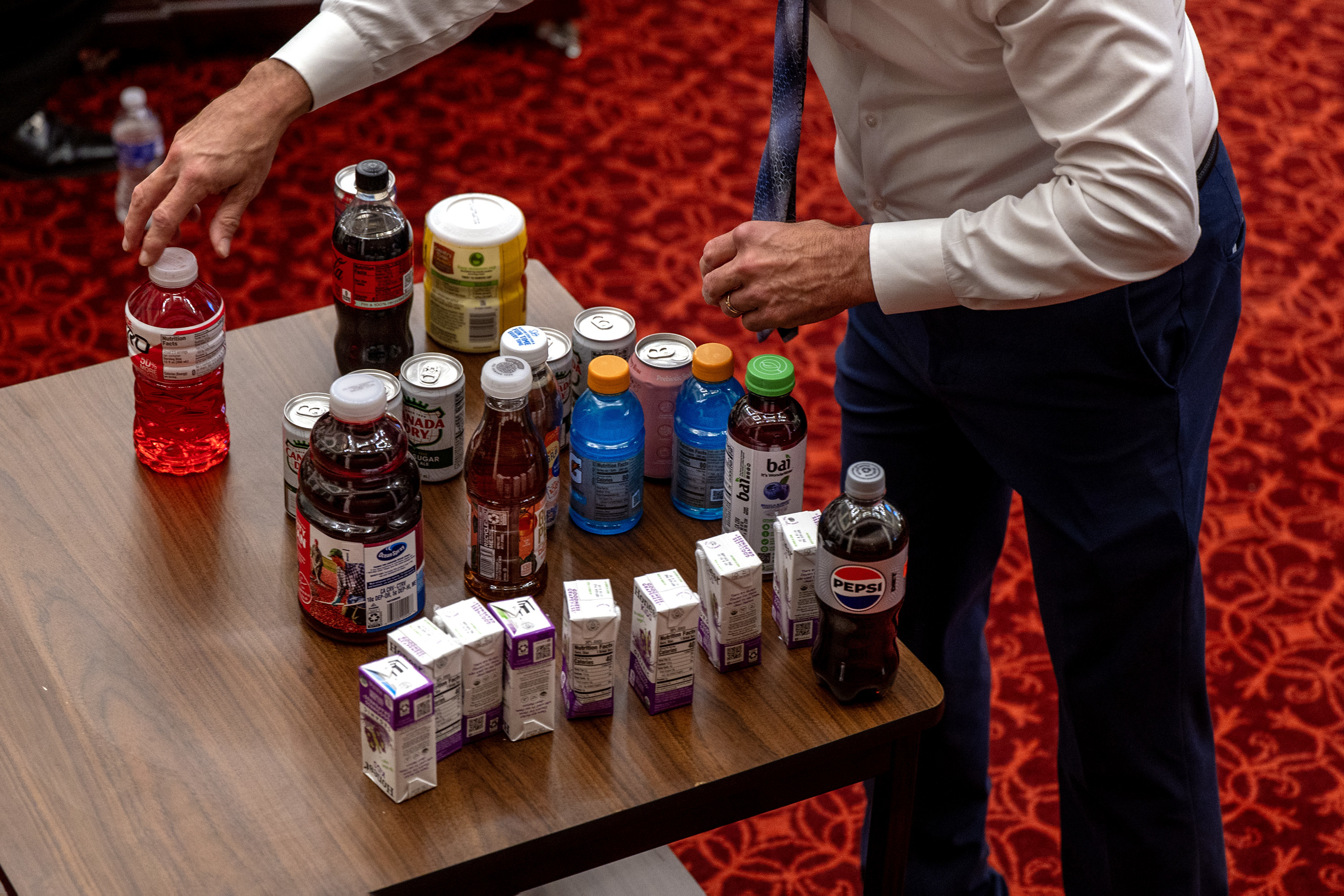
    A Council staffer arranges a table of sugary drinks before Councilmember Jimmy Harrity (not shown) holds a hearing in City Council Monday, Oct. 27, 2025 on former Mayor Jim Kenney’s tax on sweetened beverages.

    For Harrity, that means that the city should consider eliminating the “soda tax,” as it is widely known, in favor of a more “sustainable” funding stream. He did not offer any alternatives.

    But based on his colleagues’ reactions, it is unlikely the tax will be reconsidered in a serious way any time soon.

    Several Council members, public health advocates, and childcare industry representatives defended the tax, which was championed by former Mayor Jim Kenney. They noted that research by the University of Pennsylvania indicates it has been a public health success story that has helped to keep down obesity rates.

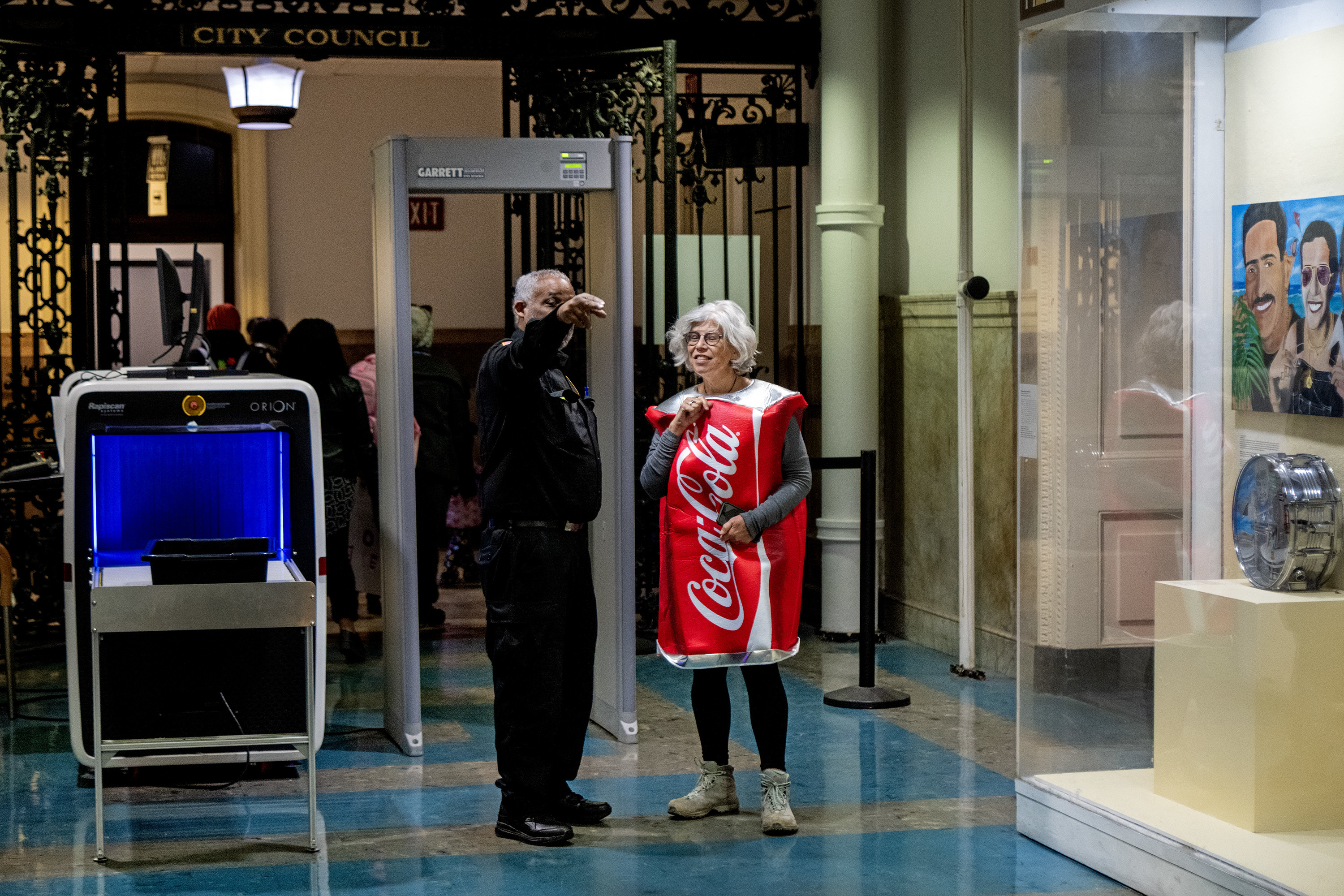
    Marcy Boroff with Children First dresses as a coke can for a City Council hearing Monday, Oct. 27, 2025 on former Mayor Jim Kenney’s tax on sweetened beverages. She was there to support the tax. Children First advocates for policy changes to improve child health, education, and welfare, especially for low-income children. .

    And they stressed its critical role in paying for the three initiatives that Kenney launched alongside the tax: PHL Pre-K, which provides free childcare to 5,250 kids; community schools, which offer a multitude of services to families in 20 Philly schools; and the Rebuild program, which renovates and improves recreation centers and playgrounds.

    “We have to make tough decisions that will actually benefit the greater good, and that’s what we did here,” Democratic Councilmember Rue Landau said during the hearing, adding that “the majority of us up here on this panel think this is a great investment.”

    ‘What we always intended’

    Mayor Cherelle L. Parker, a Democrat who voted for the tax as a Council member, also remains supportive of it.

    “We would not have been able to fund these programs without that beverage tax money,” said city Finance Director Rob Dubow, who has held his role under Parker, Kenney, and former Mayor Michael A. Nutter. Nutter twice tried unsuccessfully to implement a “soda tax” before Kenney succeeded.

    Dubow told lawmakers that the decline in the tax’s revenue over time was always part of the plan and that city leaders intended for the regular city budget to make up the difference for funding Rebuild, pre-K, and community schools when they created the tax. The moment when the soda tax began taking in less money than the city pays out for the three programs it helped launch was the 2024 fiscal year, he said.

    “We pay for it out of the general fund, which is what we always intended we would do,” Dubow said.

    This year, Rebuild, pre-K, and community schools are projected to cost $110 million, Dubow said. Of that, $73 million pays for the 5,250 slots in the city’s pre-K program.

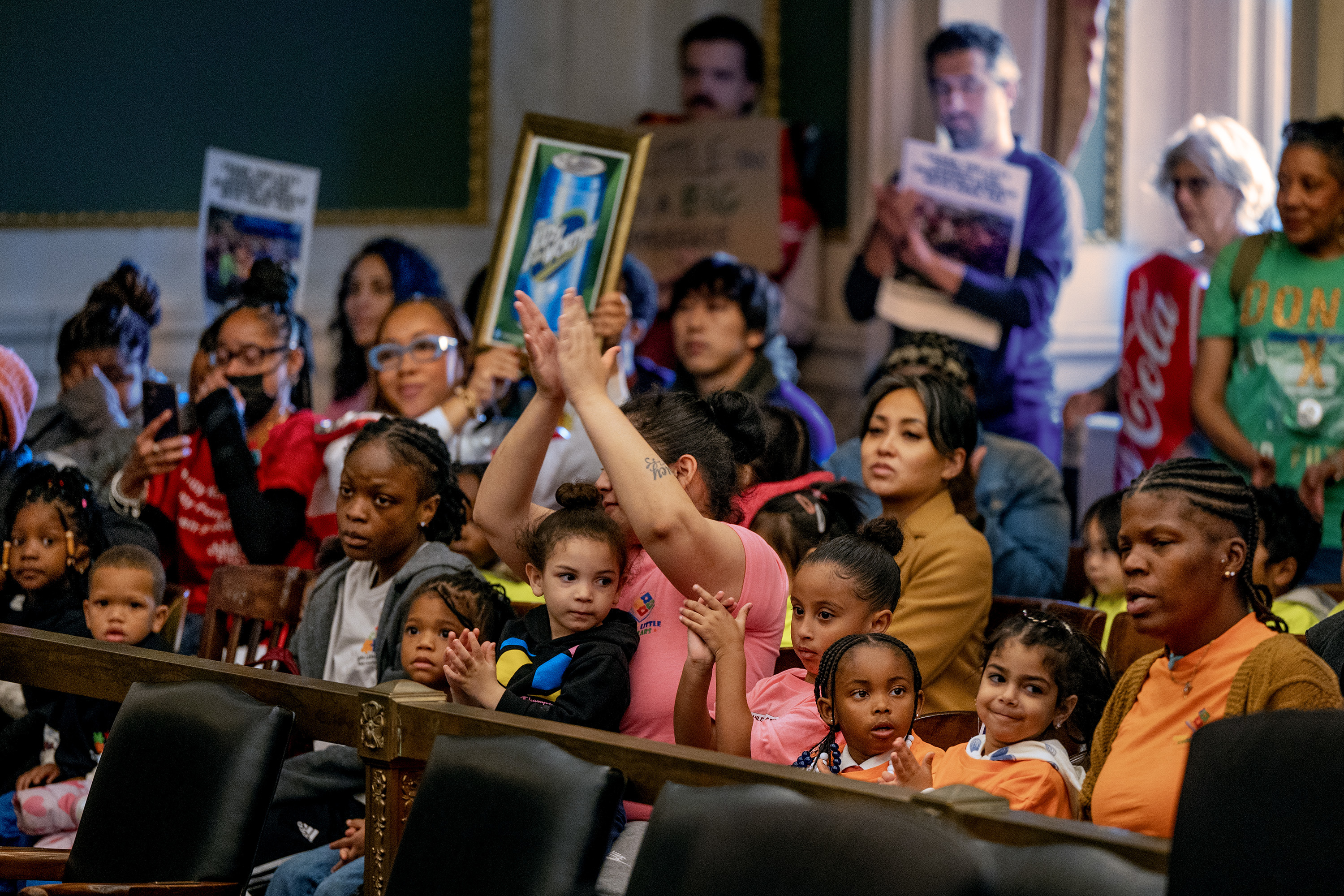
    Preschoolers and their caregivers attend a City Council hearing held by Councilmember Jimmy Harrity Monday, Oct. 27, 2025 on former Mayor Jim Kenney’s tax on sweetened beverages. The tax funds the city’s universal pre-kindergarten program

    ‘Why not Taj Mahals?’

    Councilmember Brian O’Neill was the only other Council member besides Harrity to vocally criticize the tax at Monday’s hearing.

    O’Neill, Council’s lone Republican, noted that Council members have traditionally had control over capital funding for Philadelphia Parks and Recreation projects in their districts. That money, he noted, is split evenly among the 10 district Council members.

    Rebuild, he lamented, instead gives the power to decide which projects move forward to the mayor’s administration. Consequently, he said, the program has produced uneven results and overbudget and unnecessarily ambitious playground and recreation center renovations.

    “This program — Rebuild, they call it — they didn’t decide to bring playgrounds up to some minimum level where people over the years may not have spent their money well,” O’Neill said. “They decided to build Taj Mahals in many cases. … You know what happens when you build a playground and spend tons of money on it? … All the playgrounds around it look terrible.“

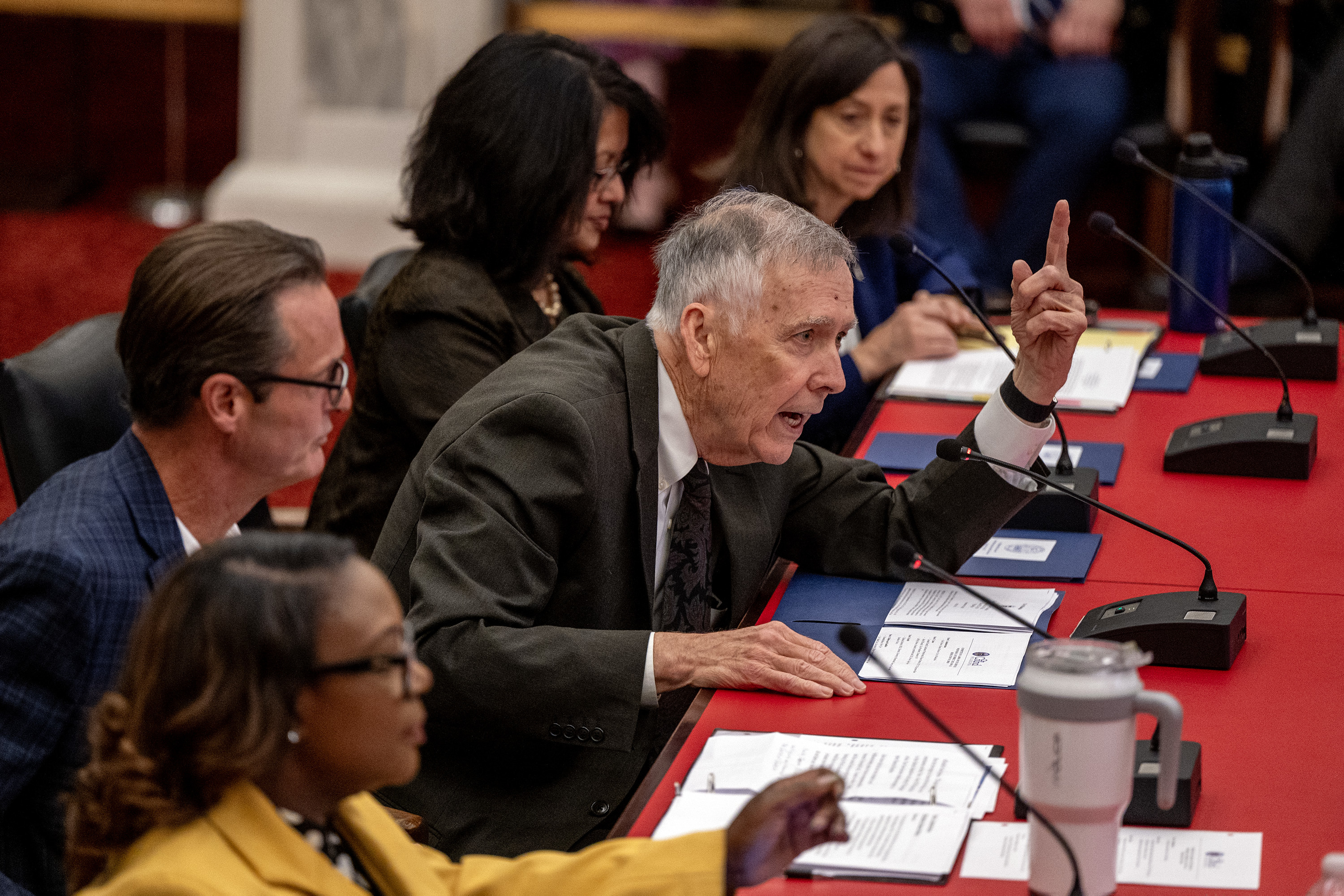
    Councilmember Brian J. O’Neill (center) speaks during a hearing in City Council Monday, Oct. 27, 2025 on former Mayor Jim Kenney’s tax on sweetened beverages. Behind him, front to rear, are: Councilmembers Kendra Brooks, Jimmy Harrity, Nina Ahmad, and Rue Landau.

    That comment did not go over well with some of his colleagues.

    “My community benefited from a rec center that was through the Rebuild program,” said Councilmember Kendra Brooks, a member of the progressive Working Families Party who lives in Nicetown. “It’s not a Taj Mahal. It’s a quality rec center in the middle of North Philadelphia. It does not have everything, because I personally went and bought a refrigerator.”

    And Councilmember Nina Ahmad, a Democrat, questioned why building grandiose rec centers would be a problem in the first place.

    “Why not Taj Mahals for all our folks? Why not have the best-quality rec centers so our children want to go there, our children want to spend time there?” Ahmad said. “We live in a first-world country and yet we are begging for scraps for our youngest citizens.”