Category: Philadelphia Politics

  • Penn releases letter rejecting Trump compact

    Penn releases letter rejecting Trump compact

    The University of Pennsylvania on Friday afternoon released the letter that President J. Larry Jameson sent to the U.S. Department of Education last week, explaining why the school rejected the compact proposed by President Donald Trump’s administration.

    Several other schools, including the Massachusetts Institute of Technology, Dartmouth College, and Brown University, already have released their letters rejecting the compact.

    “Our university policies and practices are already aligned with many of the core principles of the Compact…” Jameson wrote. But “we find that significant portions of the Compact and its overarching framing would undermine Penn’s ability to advance our mission and the nation’s interests.”

    The “Compact for Academic Excellence in Higher Education” was the latest attempt by the Trump administration to force changes in the way universities operate as the president tries to reshape higher education to match his vision. It offered colleges that sign preferential consideration for federal funding. It’s still not clear what penalty, if any, Penn — which receives about $1 billion annually in federal funding — will face for not signing.

    “Institutions of higher education are free to develop models and values other than [those in the compact], if the institution elects to forego federal benefits,” the compact states.

    Penn last week declined to release its letter, but Jameson in a message to the campus community Friday afternoon said “in the spirit of transparency” he would share it. He said he’d received many requests for its release.

    The university has not had further discussions with the government since rejecting the compact, Jameson said, noting “we believe there remains opportunity to advance the long-standing relationship between American higher education and the federal government which has greatly benefited our community, nation and world.”

    But he also was clear that Penn’s greatest partnership is with the public.

    “America’s great universities already have a compact with the American people,” he said. “It is built on the open exchange of ideas, merit-based selection and achievement, and freedom of inquiry to yield knowledge. It affirms that knowledge should serve the public good, that education should remain a ladder of opportunity, and that discovery should make life better, richer, and freer.”

    Jameson highlighted seven areas where he said Penn and the compact appear to be in alignment and five areas that pose concerns.

    Areas of agreement include hiring and promotion standards and “merit based admissions” that comply with the law, including the 2023 U.S. Supreme Court decision that banned the use of race-based admission, Jameson said. The university also has reinstituted a standardized test score requirement for admission; Penn like many others had paused the requirement during the pandemic. And, its undergraduate student body is 13% international, Jameson said. That’s under the 15% mark that the compact would require.

    Penn also is in compliance with federal foreign gift regulations and has “viewpoint-neutral rules” governing protests and expression, he said.

    The university last year adopted an “institutional neutrality” policy, which states that the school will no longer make statements about world events unless they have a direct effect on Penn’s operations; the compact calls for schools to adhere to institutional neutrality.

    While the university hasn’t agreed to freezing tuition for five years as the compact asks, the school has taken steps to make education more affordable, Jameson said, noting that its aid is all grants and no loans and is need based. Nearly half its students receive aid, he said.

    And, Jameson said, Penn officials “share concerns about grade inflation and believe there may be an opportunity to engage the higher education community to seek a broader solution.”

    But Penn objects to federal funding being meted out based on signing a compact, Jameson said.

    “Research and our nation are better served by competition that rewards promise and performance,” he said. “Penn seeks no special consideration beyond fair and merit-based funding.”

    The compact fails to promise or even mention academic freedom, which is “the bedrock of our national system of higher education,” Jameson said. It seeks to protect conservative thought alone, he said.

    “One-sided conditions conflict with the viewpoint diversity and freedom of expression that are central to how universities contribute to democracy and to society,” Jameson wrote.

    He also objected to the compact mandating free tuition to students in the “hard sciences.”

    “We celebrate the sciences,” Jameson wrote. “However, we focus our financial aid efforts on those who cannot afford to pay, ensuring that a Penn education is accessible to those who are offered admission.”

    Jameson also called out the compact’s financial penalties for failing to comply “based on subjective standards and undefined processes.” That could endanger teaching and research, he said.

    “Universities must be accountable for their actions,” he wrote. “We believe that existing laws and policies suffice to achieve compliance and accountability.”

    Many groups on campus had spoken out against the compact and were watching closely, given that the university had struck an agreement with the Education Department in July over the participation of a transgender athlete on the women’s swim team.

    Penn’s announcement that it would reject the compact brought praise from local and state officials, including Democratic Gov. Josh Shapiro.

  • Killing of Kada Scott prompts hearing on Philly’s handling of domestic violence cases | City Council roundup

    Killing of Kada Scott prompts hearing on Philly’s handling of domestic violence cases | City Council roundup

    City Council will probe the Philadelphia justice system’s procedures for “protecting victims of abuse and domestic violence” following the killing of 23-year-old Mount Airy resident Kada Scott.

    Prosecutors have charged Keon King with murder and other crimes for allegedly kidnapping Scott, shooting her, and burying her body behind a closed East Germantown school in early October.

    King was arrested in two separate incidents in December and January in which authorities allege he violently assaulted an ex-girlfriend. In the second incident, he is accused of kidnapping her and choking her in his car.

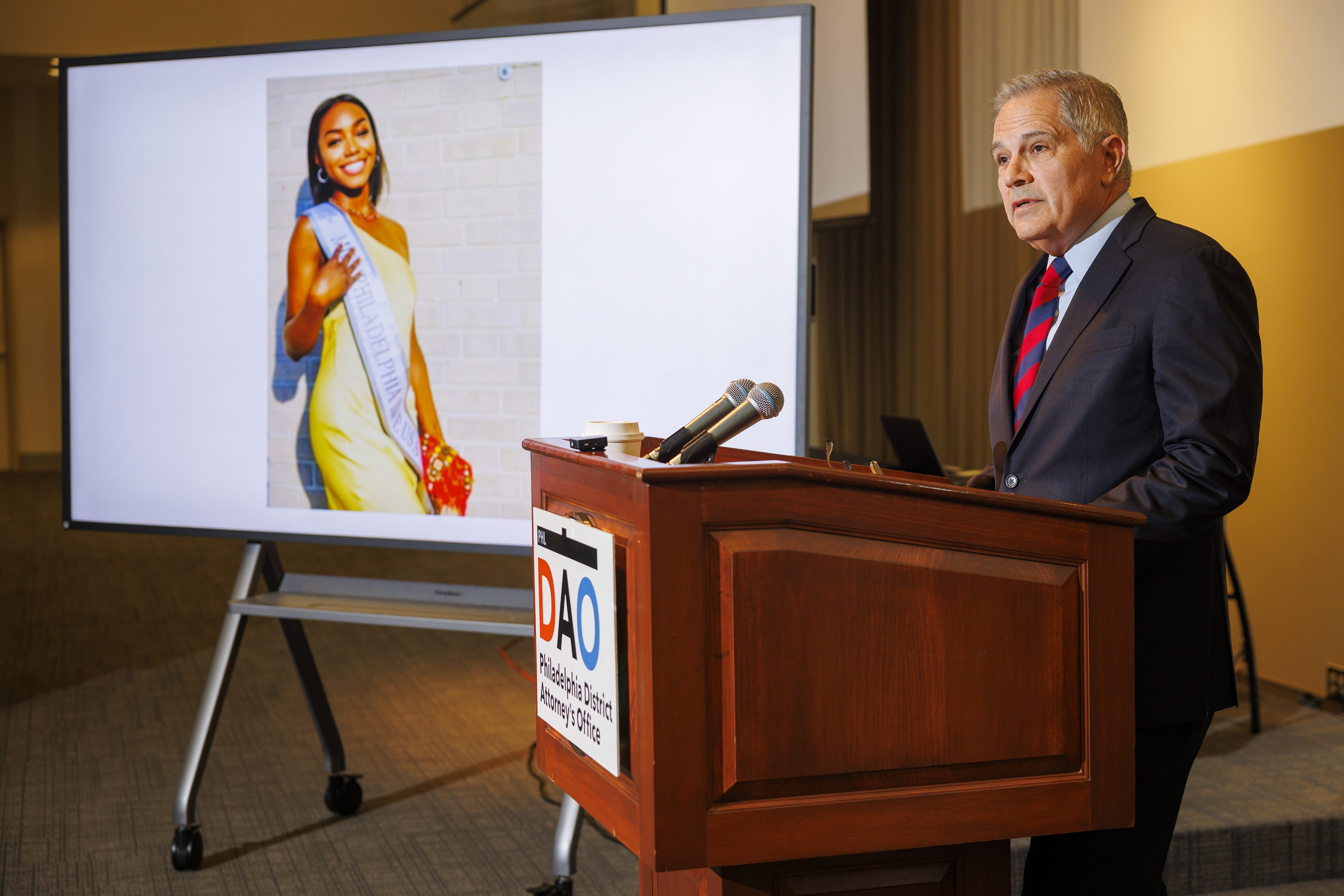
    Philadelphia District Attorney Larry Krasner held a press conference at his office regarding the death of Kada Scott on Monday, October 20, 2025.

    District Attorney Larry Krasner’s office requested bail to be set at just under $1 million in that case. A judge instead set bail at $200,000, allowing King to be released after posting the necessary $20,000. Krasner’s office did not appeal the bond decision.

    Prosecutors then withdrew both cases after the victim and witnesses failed to appear in court. Krasner has admitted that dropping charges against King for the second incident was a mistake because there was enough video evidence to proceed with the prosecution. But he also directed blame at the courts for letting King out on bail following each arrest.

    “As the City of Philadelphia, I think we failed the young lady, right?” Council President Kenyatta Johnson told reporters Thursday. “You got two agencies, two city departments, pointing fingers at one another, and at the end of the day, that’s not going to bring resolution to the family. And so at the end of the day, that needs to be addressed. And so we’ll look at the system as a whole.”

    Council approved a resolution authored by Johnson that will allow the Committee on Public Safety to hold hearings on how the courts, sheriff’s office, district attorney’s office, and police department work to protect domestic violence victims.

    Kada Scott ‘a beacon of light and love’

    Remembering Scott: Council also approved a resolution by Councilmember Anthony Phillips honoring Scott’s life and legacy, describing her as a “a beacon of light and love, remembered for her faith, kindness and countless lives she touched.“

    Scott, who opened a beauty spa in Mount Airy when she was 19 years old, “was the kind of person who made others feel seen,” said Phillips, whose 9th District includes Mount Airy.

    Prosecutors have charged Keon King with the murder of Kada Scott, pictured.

    “Kada was a young woman whose light and kindness reflect the very best of us,” Phillips said in a speech on the Council floor. “She had vision and determination. She believed in the power of self-care, community, and purpose.”

    Councilmember Cindy Bass, whose 8th District includes the school where Scott’s remains were found, added that “it’s never been more important that we get our young men together.”

    “There is a vulnerability that exists, and protection is needed. Protection is important,” Bass said. “What we do and how we handle our situations in our community — there’s just so much to be done.”

    Childcare providers could get tax break

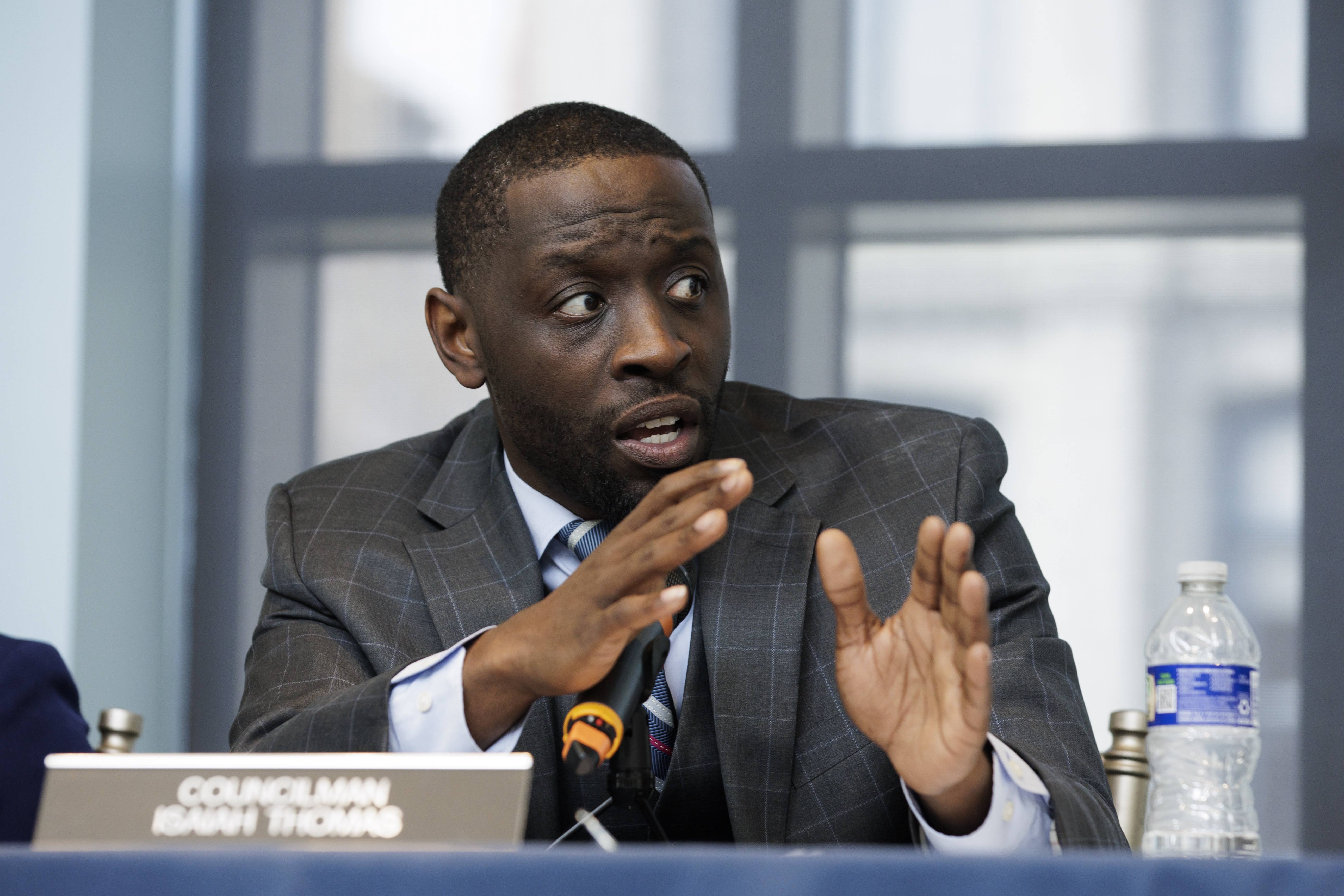
    Targeted relief: Councilmember Isaiah Thomas last spring pushed for the city to aggressively cut the business income and receipts tax, or BIRT.

    Johnson and Mayor Cherelle L. Parker ultimately went with a less aggressive schedule of tax cuts than Thomas had wanted. But the sophomore lawmaker is now trying another route to lighten the BIRT burden: cutting rates for a specific industry.

    Thomas on Thursday introduced a bill that would halve BIRT’s two tax rates for childcare providers, which are facing a nationwide crisis over costs, staffing, and financial viability. The gross receipts portion of BIRT would be reduced from 0.1415% to 0.07075% for daycare owners, and the net income rate would go from 5.81% to 2.805%.

    City Councilmember Isaiah Thomas wants to give daycares a tax break.

    “There’s one business and one industry in the city of Philadelphia that touches every district and a lot of families, especially working families, that are struggling,” Thomas said. “This legislation is another example of us trying to think through what we can do to support businesses who support families as well as families who are in need.”

    Regulatory bill sparked by Center City bike lane debate passes after arduous legislative process

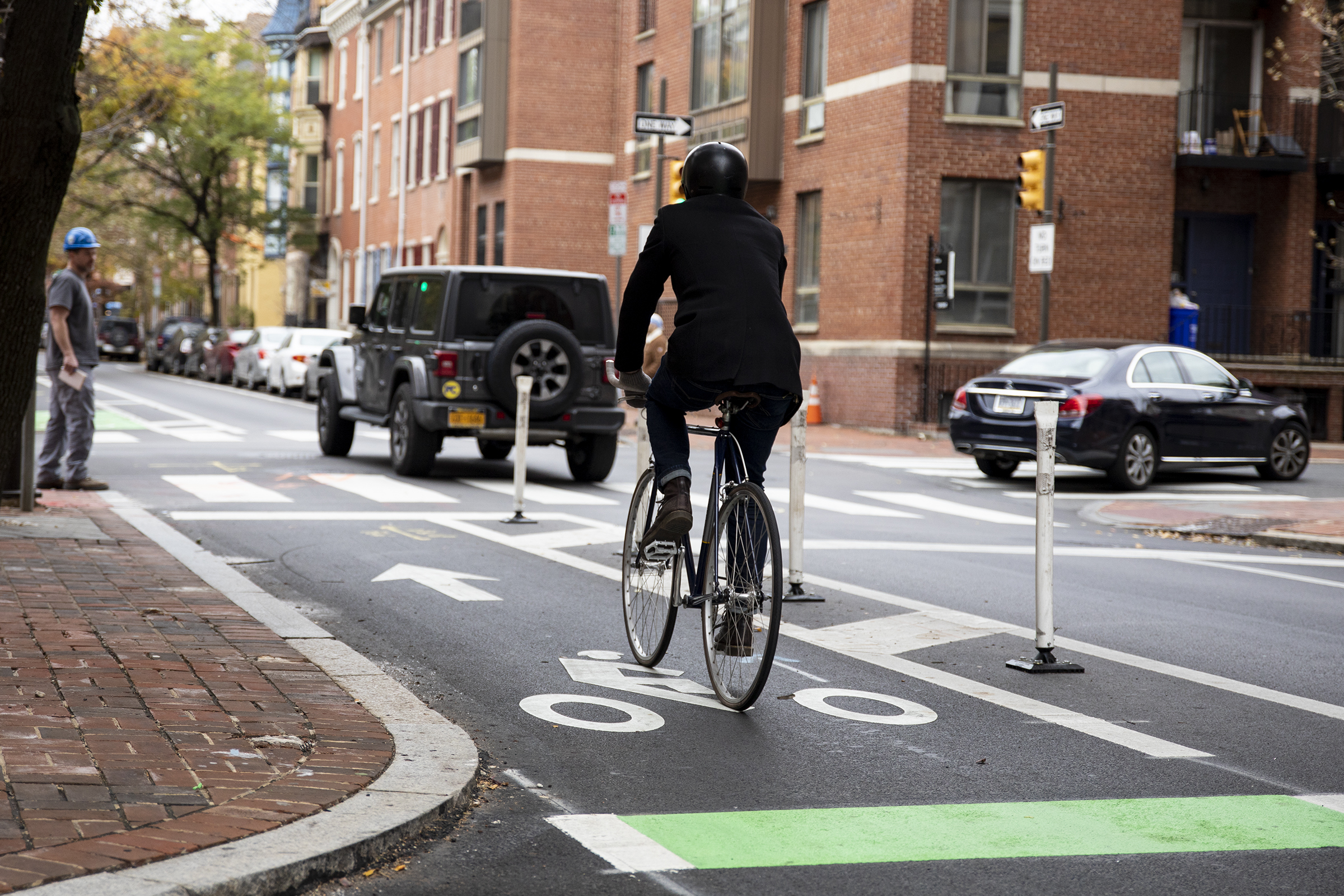
    Unloading over loading zones: Heated fights over legislation with narrow impact are nothing new in City Council, where limited proposals often become battlegrounds in larger disputes over issues such as gentrification or the opioid crisis.

    But a bill on loading zones in parts of Center City, approved Thursday, may have set a new standard.

    The bill, which was proposed by the Parker administration and carried by Johnson, will allow the mayor’s administration to add or remove loading zones in parts of Center City without new ordinances from Council.

    It ultimately passed in a 16-0 vote, with Councilmember Brian O’Neill absent.

    But the journey to Thursday’s vote began with the high-profile death of a cyclist, involved a lawsuit, went through two rounds of amendments limiting and expanding its scope, and ended with plans for further proposals to tweak the law.

    The saga began when Johnson passed a bill making it illegal for vehicles to idle in bike lanes following the 2024 death of Barbara Friedes, who was killed while riding in a bike lane on the 1800 block of Spruce Street. Parker’s administration then adjusted loading zones in Center City streets with bike lanes, with the goal of providing spaces for residents who used the bike lanes for unloading their vehicles.

    After neighbors complained the loading zones would take away a handful of parking spots, attorney George Bochetto successfully sued the city, with Common Pleas Court Judge Sierra Thomas Street this summer ruling the administration did not have the authority to promulgate loading zone regulations without Council approval.

    The case led to the revelation that a 1980s city law granting that regulatory authority was somehow never officially codified, throwing into legal jeopardy hundreds of parking regulations promulgated over the last four decades. The bill passed Thursday was intended to fix that legal conundrum by reiterating Council’s intention to grant the administration that authority.

    A cyclist rides along Spruce Street.

    But Johnson and Councilmember Mark Squilla, whose districts include parts of Center City, at one point amended the bill so that it applied only to loading zone regulations and to the Spruce and Pine Streets corridors, which have bike lanes. They eventually reversed course on the geography of the bill, adopting a new amendment allowing it to affect all areas of their districts included in the old law. But they maintained the part of the original amendment narrowing its scope to loading zones and not other parking rules.

    Meanwhile, Councilmember Jeffery “Jay” Young Jr., whose 5th District also has a slice of Center City, removed his territory from the bill entirely.

    Next, Councilmember Jamie Gauthier is expected to work with the administration to fix the regulatory black hole in University City, which is part of her 3rd District. And Johnson said Thursday he may be open to revisiting whether the administration should be given explicit statutory authority to regulate other parking rules beyond loading zones in the affected area of his district.

    “We always have an open mind,” he said.

    Quotable: Honoring the late Philadelphia newspaper editor Michael Days

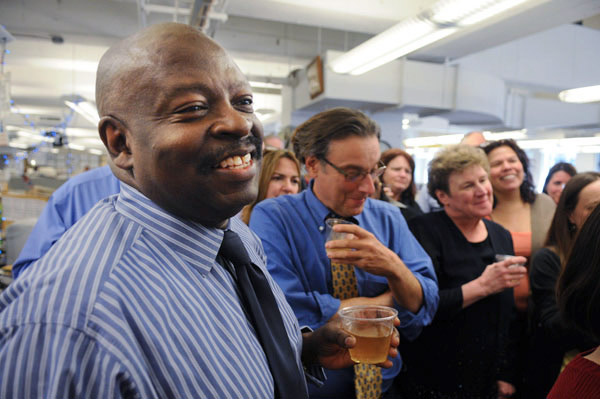
    Glory Days: Michael Days was a longtime editor of the Philadelphia Daily News, an executive at The Inquirer, and the inaugural president of the National Association of Black Journalists-Philadelphia.

    He died on Saturday in Trenton at 72 years old. Council on Thursday approved a resolution by Johnson and Majority Leader Katherine Gilmore Richardson honoring Days “for his extensive career serving Philadelphians.”

    Philadelphia Daily News Editor Michael Days celebrates with the newsroom after word of the Pulitzer win.

    A North Philadelphia native and devout Catholic, Days was revered as a principled reporter and editor, a mentor for young journalists of color, and a leader who helmed the Daily News when it won the 2010 Pulitzer Prize for investigative reporting.

    Staff writer Ellie Rushing contributed to this article.

  • A new effort to catch illegal dumpers is underway in Philadelphia

    A new effort to catch illegal dumpers is underway in Philadelphia

    Four tires, twenty grand.

    That’s the message Philadelphia city officials want to send to people considering illegally dumping garbage in the city as a new enforcement unit hits the streets.

    The officers are armed with violation notices that could cost dumpers $5,000 per item. That means that tossing four tires into a vacant lot — which several years ago would have resulted in a ticket for a couple of hundred bucks, max — can now run a violator the price of a Honda and result in arrest.

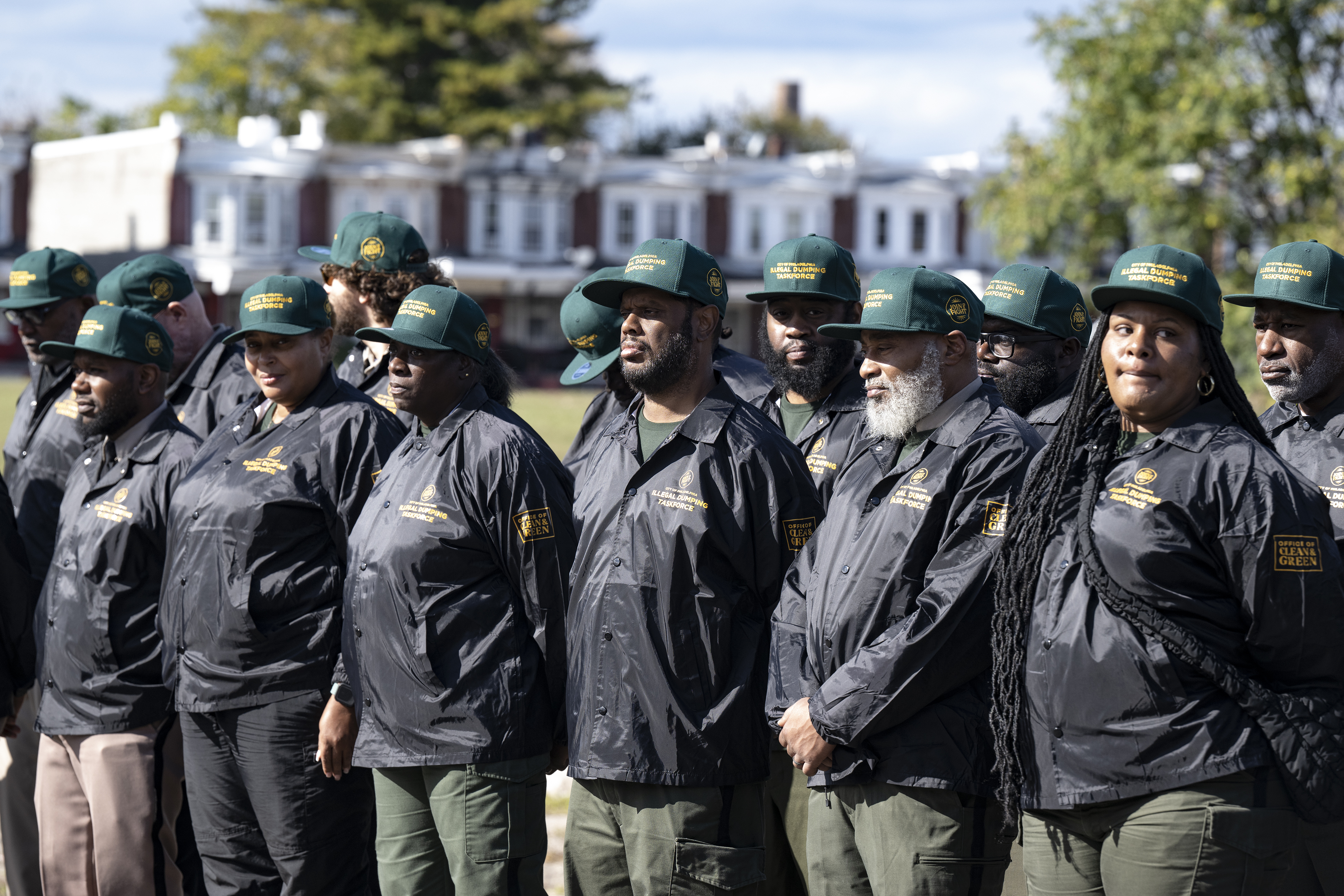
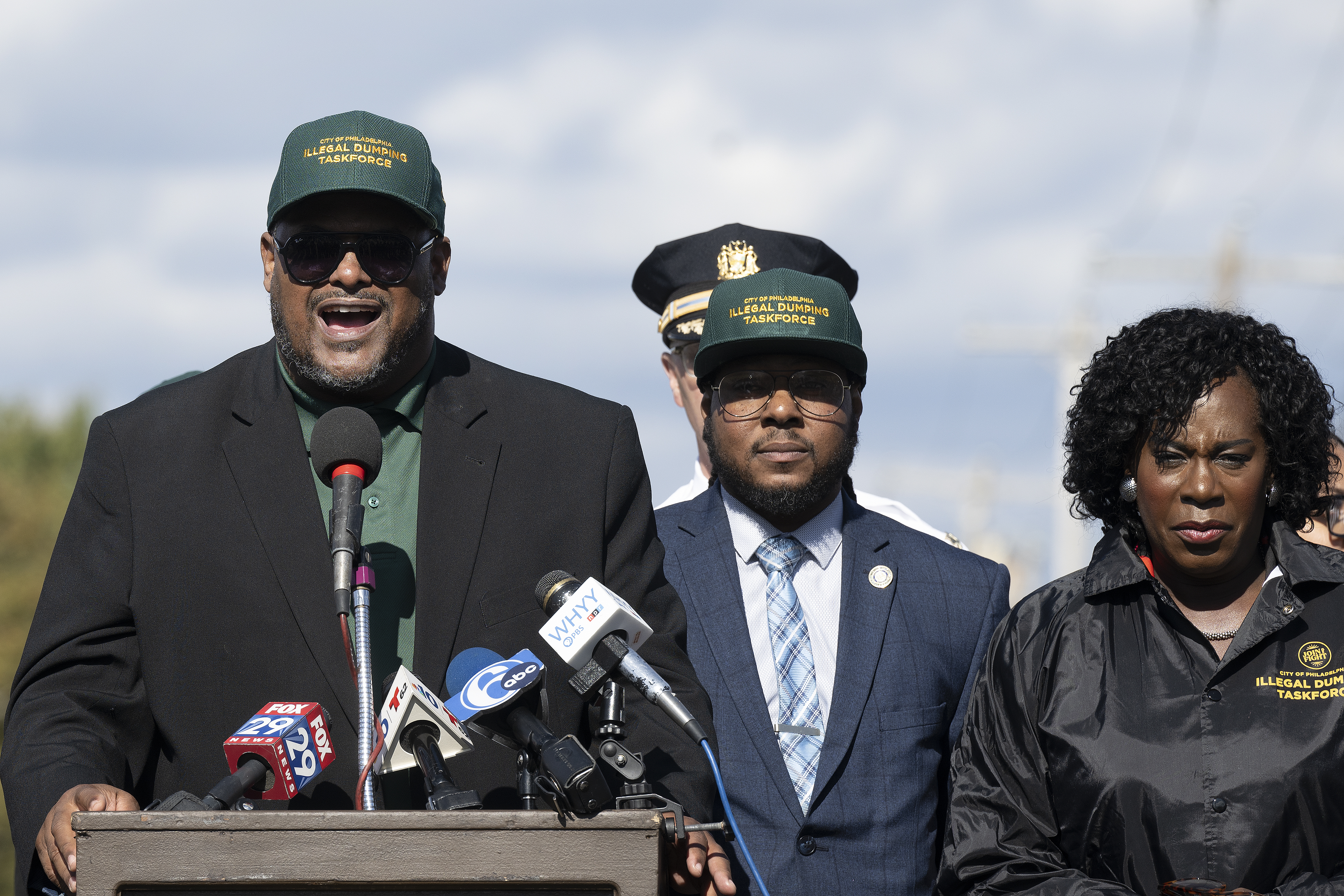
    The new unit of 40 officers focused on identifying the people who dump is part of an expanded task force that Mayor Cherelle L. Parker announced on Thursday. The group also includes a dozen people who monitor 400 surveillance cameras placed near frequent dumping sites, as well as partners in the police department who investigate severe cases.

    “Part of the reason why people think it’s open season to illegally dump in the city of Philadelphia … it’s because they never thought that enforcement would occur,” Parker said. “Besides it being unsightly and unhealthy for people, it’s a crime.”

    City officials said they have brought 17 cases against people who dumped waste illegally so far this year, resulting in more than $3.7 million in collected fines.

    The mayor said her administration would ramp up that effort with the initiation of the task force.

    “Philly ain’t playin’,” she said.

    Members of the new Illegal Dumping Task Force stand during an introductory press conference with Philadelphia Mayor Cherelle Parker and the Office of Clean and Green Initiatives on Thursday, Oct. 23, 2025, at 10th and Courtland Streets in Philadelphia.

    The program is one tenet of Parker’s plan to clean up the city, which was a key campaign promise when she ran for mayor in 2023. Since she took office last year, the administration has implemented a variety of strategies, including twice-weekly trash collection in parts of the city, block-by-block street cleanups on a semiannual basis, and bolstered graffiti abatement.

    Parker made the announcement while standing in North Philadelphia’s infamous Logan Triangle, the 35-acre plot that has been an eyesore for the better part of 50 years. It was once home to hundreds of rowhouses, but the families moved out in the 1980s when it became clear their homes were sinking into the bed of the Wingohocking Creek.

    Today, the triangle is a cautionary tale of failed redevelopment — a place where ideas like a basketball center or a dirt bike track or an apple orchard have never been realized. It is now, and has long been, a dumping site.

    It’s also the site where, last week, two people were arrested for unloading trash, said Carlton Williams, the city’s director of clean and green initiatives.

    Philadelphia Mayor Cherelle L. Parker (right) and Carlton Williams (left) of the Office of Clean and Green Initiatives announce stricter laws to combat illegal dumping during a news conference at Logan Triangle, a frequent dumping site at 10th and Courtland Streets, on Thursday in Philadelphia.

    Not only could those people face criminal penalties, but the administration is focused on levying hefty fines and holding dumpers responsible for cleanup costs. The city is also newly fining people who hire contractors to short dump.

    “We’re gonna hit you where it hurts: in the pocketbook,” Parker said.

    Tackling the city’s notoriously bad illegal dumping problem will be a multiyear effort, and Parker has made stronger enforcement a priority. A study conducted in 2019, prior to her tenure, estimated that the city was spending nearly $50 million annually to address illegal dumping, but 90% of that was for cleanup and not prevention.

    Despite the spending, many in the city say dumping sites are a major problem. A 2023 Lenfest Institute for Journalism/SSRS poll of 1,200 Philadelphians found that six in 10 residents believed reducing dumping should be a top priority for the mayor. Concern was most acute among residents who are low-income, Black, and Latino.

    City Councilmember Quetcy Lozada, a Democrat and a Parker ally whose district borders Logan Triangle, said the administration’s focus on illegal dumping can begin to remedy what she described as “extremely stressful” situations for residents who have long watched waste pile up near their homes without abatement.

    “Our residents have done their part, and those calls for help went unanswered for a really, really long time,” Lozada said. “But today feels different.”

    How to report illegal dumping

    Anyone who sees illegal dumping happening can call 911. Residents who want to report illegal dumping after the fact can file a complaint through 311.

  • Carousel House will be Philly’s ‘flagship’ rec center. But people with disabilities will have to wait until 2028 to reunite.

    Carousel House will be Philly’s ‘flagship’ rec center. But people with disabilities will have to wait until 2028 to reunite.

    In March 2023, Kathryn Ott Lovell, then Philadelphia’s parks and recreation commissioner, announced that the plan to build a new Carousel House in West Philly was finally coming together.

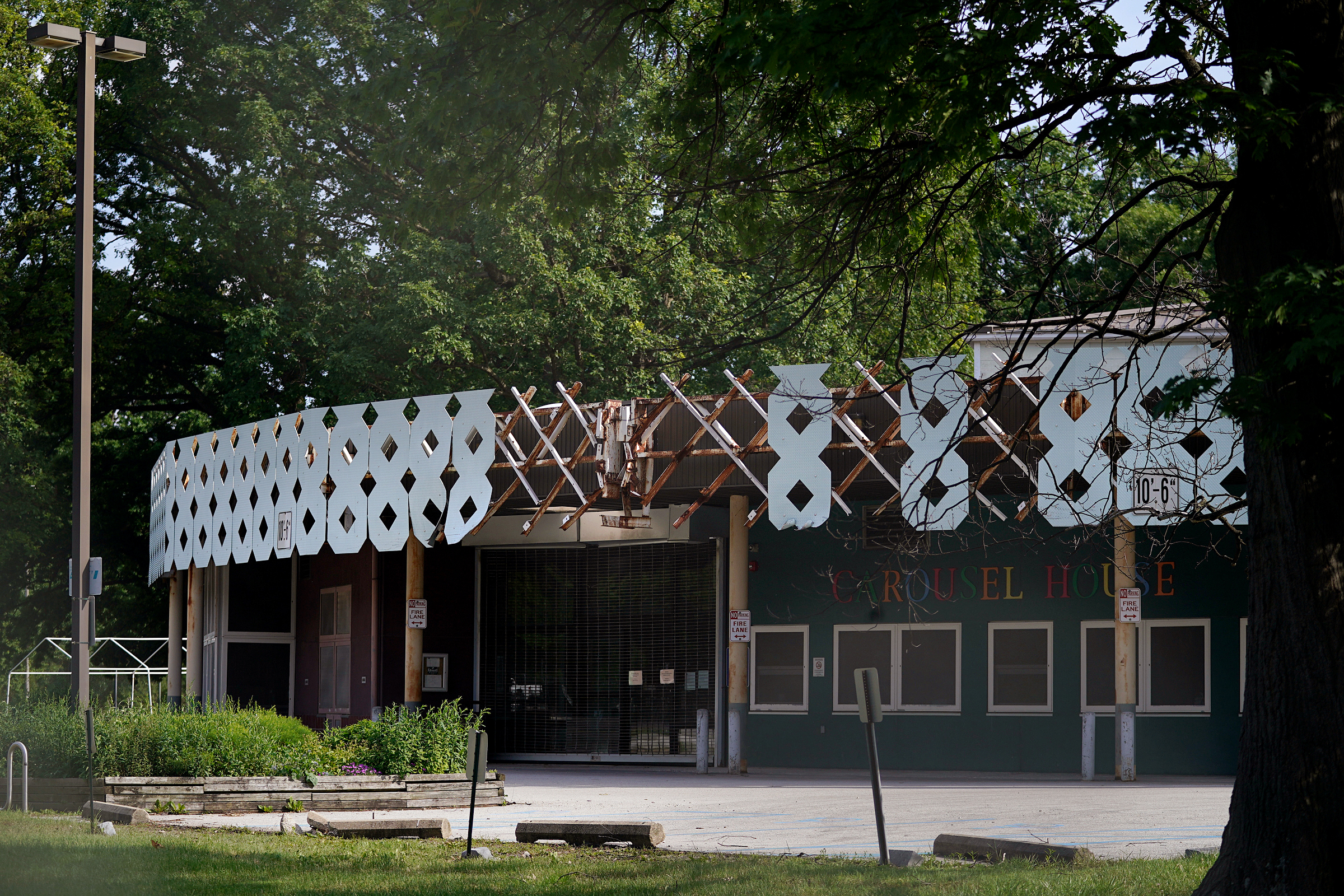
    The city’s only recreation center dedicated to people with disabilities had closed its doors temporarily in 2020 during the coronavirus pandemic, then permanently in 2021. City officials said years of deferred maintenance had made it unsafe.

    “I’m excited to stop talking and start doing,” Ott Lovell said during the 2023 presentation at the Please Touch Museum.

    The city’s disability community was also excited to reunite at Carousel House. To many, the rec center on Belmont Avenue had become like a second home, with dances, movies, swimming, arts and crafts, and summer camp.

    The city’s youth wheelchair basketball team was looking forward to returning to its home base. Since the rec center closed, the squad has been practicing in New Jersey.

    Two and a half years later, however, Ott Lovell has moved on to a new job, Mayor Cherelle L. Parker has replaced Jim Kenney, and the Carousel House plan is still in the design phase.

    The new ribbon-cutting date: summer 2028.

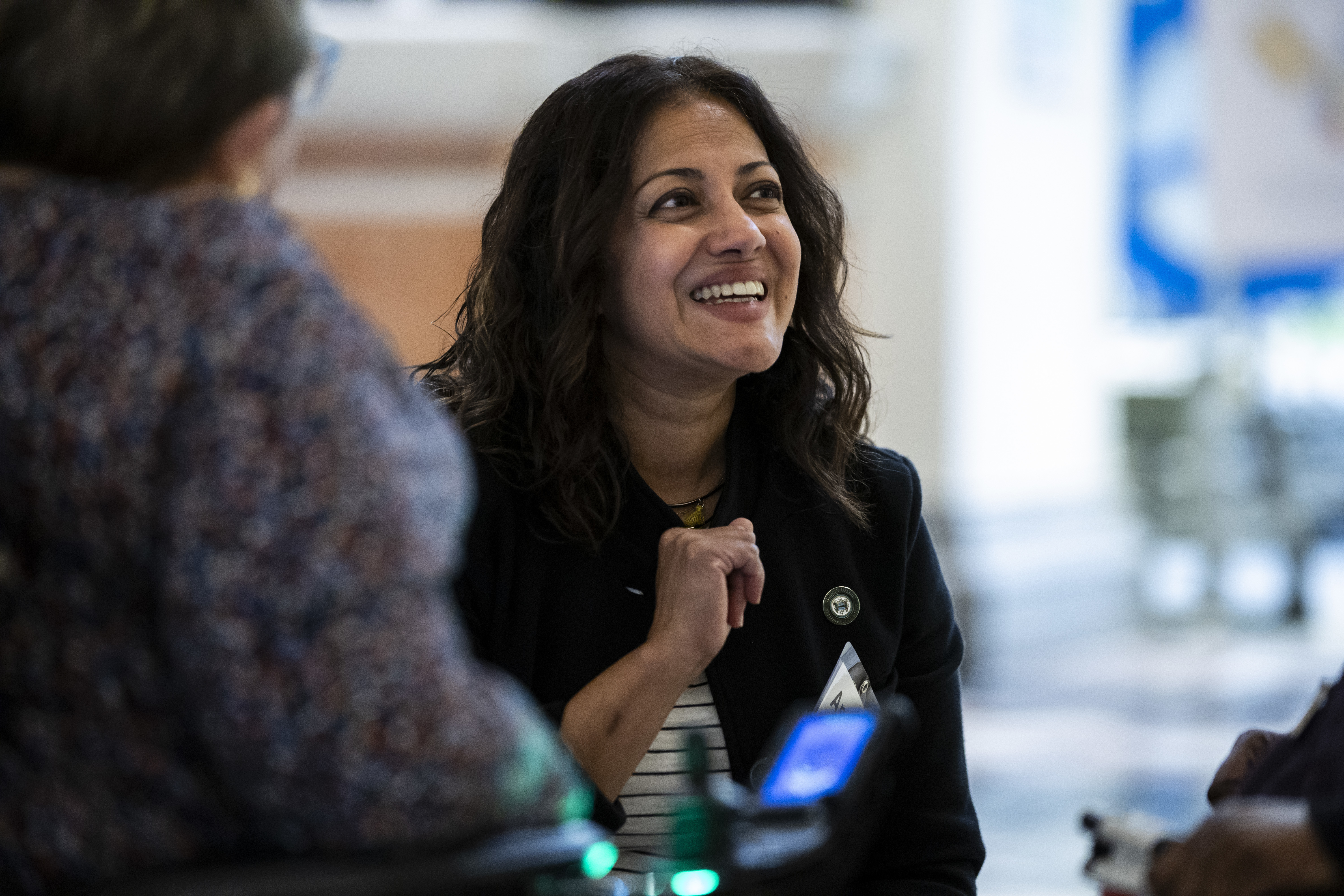
    “I know this is a point of pain for many people, the timeline associated with this project,” Aparna Palantino, a deputy city managing director, acknowledged at a meeting Tuesday night announcing the “relaunch” of the project.

    The previous plan called for Carousel House to reopen this year.

    Palantino, who heads the city’s capital program office, said the expected cost of the project had risen from $35 million to $40 million. The work will still be funded primarily with beverage-tax proceeds, but the city had to line up grants to cover the difference, as well as conduct additional environmental and structural analyses.

    “The result of all that is this amazing space that will provide so many more opportunities than the former one did,” Palantino told an audience of several dozen.

    Aparna Palantino, deputy managing director of Capital Program Office, speaks with attendees during the Carousel House Rebuild Community Relaunch at the Please Touch Museum on Tuesday, Oct. 21, 2025, in Philadelphia. The Carousel House project is estimated to be completed in Summer 2028.

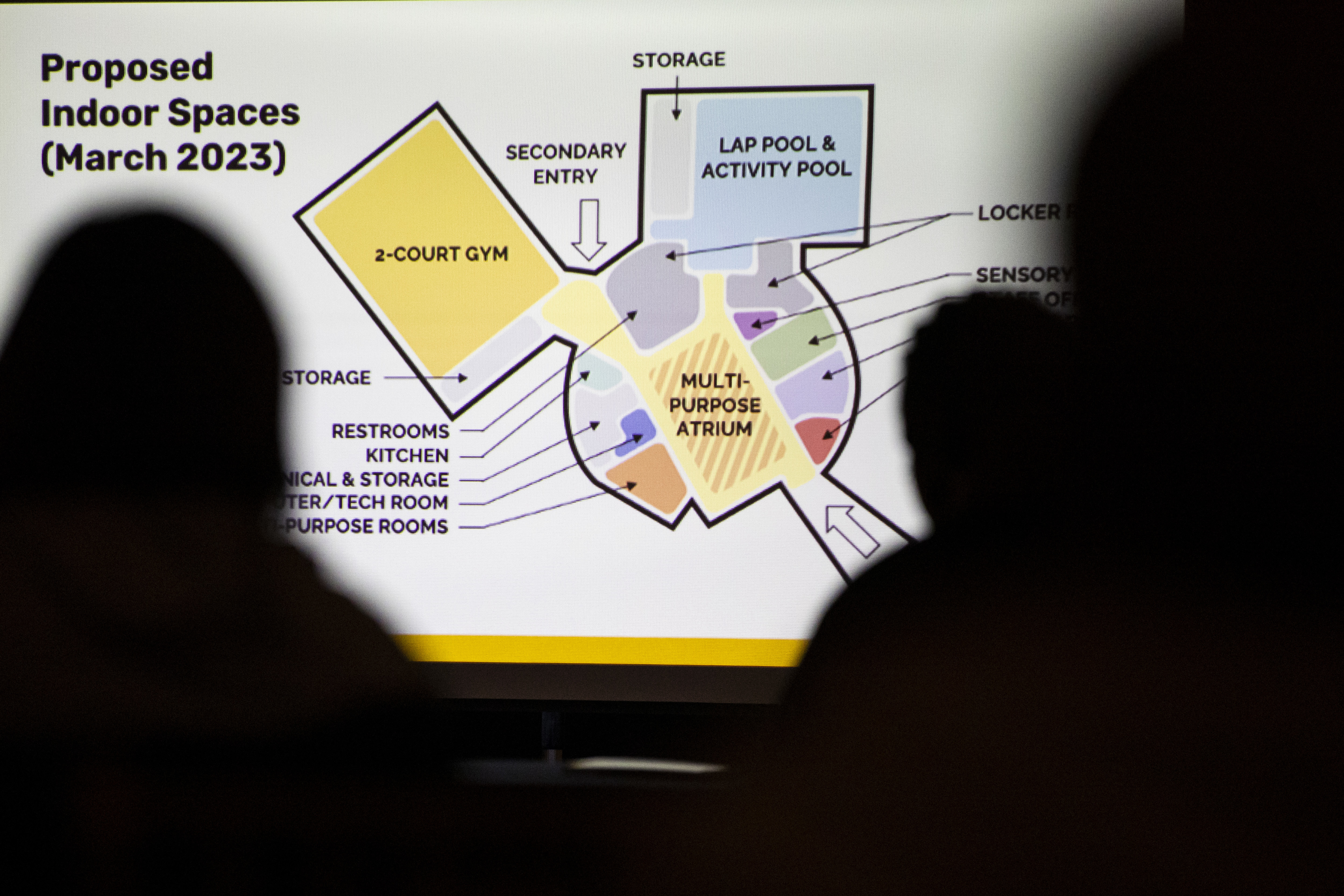
    The state-of-the-art rec center will preserve some parts of the iconic Carousel House building and include two basketball courts, a heated lap pool and an activity pool with a zero-entry sloping entrance, a computer lab, a gym, a sensory room, and other amenities.

    That all sounds great to people like Mike Martin, who has used a wheelchair for the last 30 years and has been going to Carousel House since the late 1990s. Such a place is needed in Philadelphia, where an estimated 17% of residents have a disability.

    But the lengthy delays in the project have Martin, 74, questioning whether he will ever see the vision become a reality.

    Martin and others would have preferred for the city to fix the existing building four years ago, when rec centers were reopening after the COVID-19 shutdown. A 2021 “Save the Carousel House” protest failed to sway city leaders.

    “The design is way more than I think we expected, not that we’re complaining at all,” said Martin, who serves on the Carousel House advisory committee. “We’ll see what kind of political will there is to push this through. I just don’t want to get my hopes up is what it comes down to.”

    Once a model

    Carousel House was considered a milestone when it opened in 1987: a city-funded rec center, specifically for people with physical and cognitive limitations, three years before the Americans with Disabilities Act would be signed into law.

    The Carousel House is pictured in Philadelphia’s West Fairmount Park on Wednesday, June 2, 2021. The city said it was permanently closing the recreation center for disabled people due to the facility’s deterioration.

    But in recent years, disability-rights advocates, both locally and nationally, have come to view that approach as outdated and even discriminatory. How is telling people with disabilities to go to one center, they ask, any different from designating centers for Black people, LGBTQ+ people, or other identity groups?

    “People with disabilities shouldn’t have to go to one place. That’s segregation, no matter how you look at it,” Fran Fulton, the late Philadelphia disability-rights activist, told The Inquirer in 2022. “There is no doubt having people who know how to work with children and adults with different types of disabilities is an advantage. But it doesn’t have to be just Carousel House.”

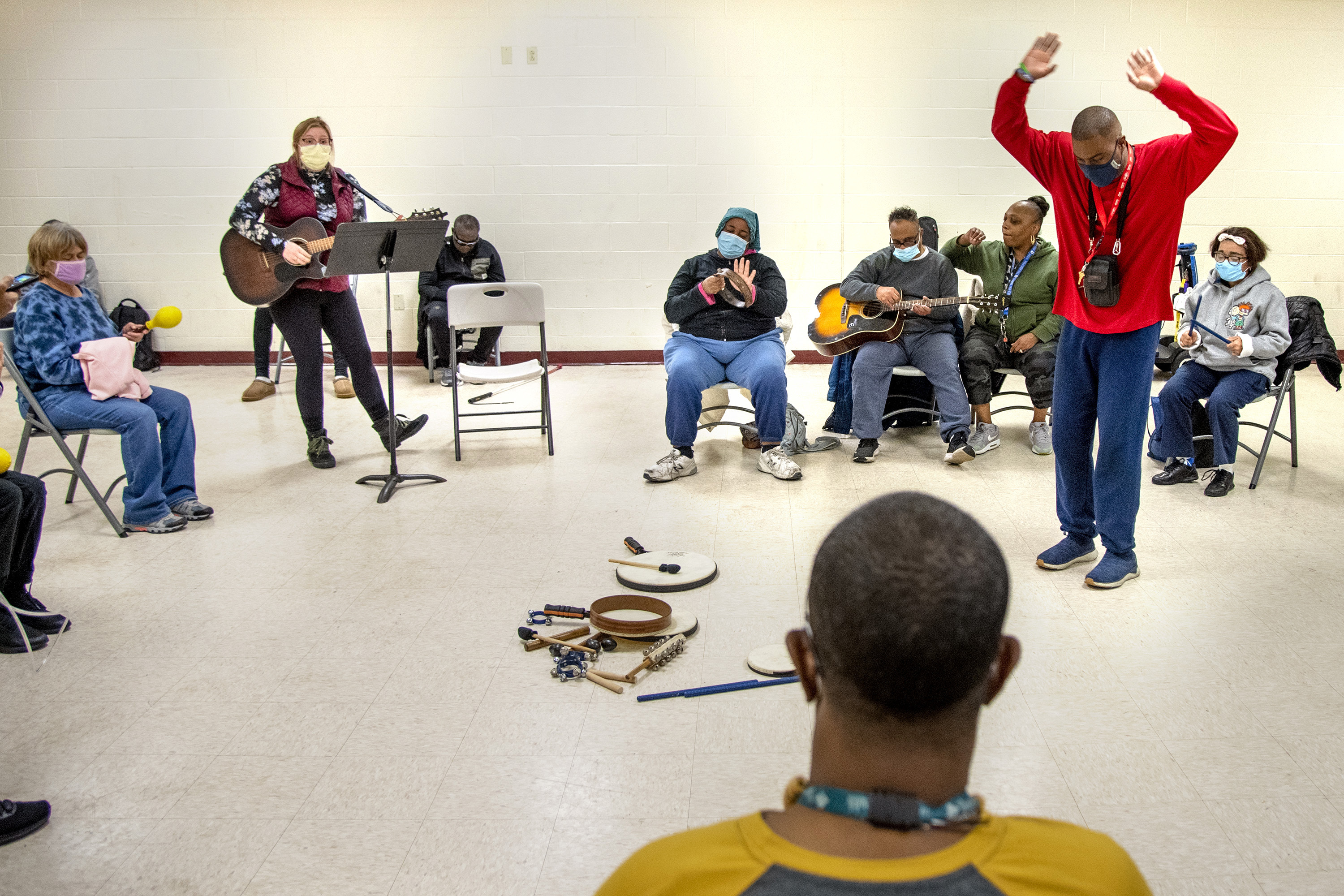
    Sadiki Smith (right) stands to dance as music therapist Madison Frank (left) with her guitar leads a music therapy session at Gustine Recreation Center Tuesday, November 29, 2022. Since the closing of the Carousel House, the city’s only rec center for people with physical and intellectual disabilities, many of the programs have moved to Gustine.

    The city was already moving in that direction before the pandemic with its long-term Rec for All inclusion plan. The goal is to eventually make the city’s 150 rec centers accessible to all residents. The new Carousel House will be open to all people in the surrounding neighborhoods, not just those with disabilities.

    That is welcome news for Lucinda Hudson, president of the Parkside Association of Philadelphia, who attended Tuesday’s meeting.

    “It’s well needed, and I think the community is pleased with how it’s coming together,” Hudson said. “We need a facility to be inclusive for all, and to support the handicapped community.”

    Worth the wait?

    Palantino said that while the Carousel House project has faced significant delays, city officials have continued to work behind the scenes. It is the largest project in the city’s beverage-tax funded Rebuild program, which has so far committed or spent $470 million.

    She believes the new building will be worth the wait.

    “It will be a universal space, so an entire family can come here and enjoy the amenities. The former Carousel House was a little more restrictive in the population it served,” Palantino said in an interview. “This will be the flagship rec center in the city when it’s completed.”

    Attendees look at blueprints during the Carousel House Rebuild Community Relaunch at the Please Touch Museum on Oct. 21.

    Families that frequented the Carousel House, however, are running out of patience.

    The Gustine Recreation Center in East Falls has continued some of the programs for people with disabilities, including music therapy, basketball, and social groups. But that center doesn’t have the space and amenities that Carousel House provided.

    “It’s just not the same,” said Tamar Riley, whose 43-year-old son had been going to Carousel House since he was 12.

    “Hopefully we can get this off the ground,” Riley, president of the advisory council for Carousel House, said of the plans presented this week. “It’s been a really long time. I know it’s going to be a beautiful place once the city gets it up and running.”

    The closure of Carousel House also forced Katie’s Komets, Philadelphia’s team in the National Wheelchair Basketball Association, to move its weekly practices to RiverWinds Community Center in West Deptford, Gloucester County.

    As a result, there is only one Philly player on the team, according to Joe Kirlin, who with his wife, Roseann, created a fund to support the team. The team is named after their late daughter.

    “The problem is city kids just can’t get over there,” Joe Kirlin said.

    Caroline Fitzpatrick (right), 14, of South Jersey, talks with friends during the Philadelphia Parks & Recreation’s 24th Annual Katie Kirlin Junior Wheelchair Basketball Tournament in Philadelphia on Sunday, Jan. 23, 2022. Fitzpatrick plays on Katie’s Komets team from Philadelphia.

    He said wheelchair athletes in the city are missing out on potential college opportunities. This year, all three high school graduates on Katie’s Komets received scholarships to play college wheelchair basketball.

    “That wouldn’t have happened if they didn’t start as kids playing wheelchair basketball,” Roseann Kirlin said.

    Lorraine Gomez, a community activist and president of the Viola Street Residents Association in East Parkside, said after Tuesday’s meeting that she appreciated the city’s efforts to keep the surrounding neighborhoods informed about the project.

    Gomez is looking forward to being able to use the indoor pool and walking track in the winter, and said people with disabilities also deserve “to have their space back.”

    “This is what the community needs,” Gomez said. “It’ll be a place where we can stay in touch with each other.”

    For Hudson, of the Parkside association, the most important thing now is to break ground.

    “So many things get put on the books, but don’t happen,” Hudson said. “This has got to be built.”

  • City Controller Christy Brady is facing a challenge from Republican Ari Patrinos

    City Controller Christy Brady is facing a challenge from Republican Ari Patrinos

    City Controller Christy Brady, seeking her first full term as Philadelphia’s independently elected fiscal watchdog, is being challenged by Republican Ari Patrinos in the Nov. 4 general election.

    The controller’s office is charged with auditing the city’s finances and investigating fraud, waste, and abuse.

    But despite that critical role, there hasn’t been much drama in this year’s race.

    Patrinos, a former stockbroker and Philadelphia public school teacher, acknowledged the odds are against him in heavily Democratic Philadelphia and said he has no particular complaints about Brady’s performance.

    Instead, he said, he ran because “it was important that somebody run on the ticket.”

    “The truth is nobody wanted to run, and my ward leader asked me if I would run,” said Patrinos, who has not reported raising any money for his campaign. “I didn’t have any specific attacks on Brady. My concern is that the city is too single-party, and I think the city functions better when you have a two-party system.”

    Brady, a Democrat who has a $250,000 campaign war chest she likely won’t need to use this year, has the support of much of the local political establishment, including the Democratic City Committee and the building trades unions.

    A 30-year veteran of the controller’s office, Brady has struck a notably conciliatory tone during her tenure, striving to work collaboratively with Mayor Cherelle L. Parker’s administration rather than butt heads with the executive branch, as many of her predecessors have done.

    “Because of my experience when I took office two years ago, I hit the ground running,” she said.

    She pointed to her office’s audit that uncovered that the Philadelphia School District had made about $700,000 in payments to fake vendors as part of a cyber scam and to her investigation finding that fraudulent use of the property tax homestead exemption was costing the city and school district about $11.4 million per year.

    Brady was appointed acting controller in 2022 by then-Mayor Jim Kenney when Rebecca Rhynhart resigned from the post to run for mayor. Brady then won a 2023 special election to finish Rhynhart’s term, which ends in January.

    Seeking a full four-year term for the first time, Brady this year ran uncontested in the Democratic primary.

    “The biggest question I get [on the campaign trail] is: What does a controller do?” she said. “And so I’m getting out there and spreading the word of what we’re currently working on and what we do in the office.”

    The controller earns an annual salary of $171,000 and oversees an office with more than 120 employees and a budget of about $11.8 million.

    Patrinos also had no opponent in the May primary. He said he has been spending much of his time on the campaign trail promoting Pat Dugan’s campaign for district attorney.

    Dugan, a self-described “lifelong Democrat,” lost to District Attorney Larry Krasner in the Democratic primary but has accepted the GOP nomination to take a second swing at the incumbent in the general election.

    “I spend like half my time when I campaign advocating for Dugan because I’m very concerned about the crime,” Patrinos said.

    From Philly to Harvard and back

    Patrinos, who lives in Chestnut Hill, said he was a Democrat until about four years ago, adding that he voted for Joe Biden in the 2020 presidential election.

    His conversion was prompted primarily by his alma mater, Harvard College, which he felt had too enthusiastically embraced a “woke” stance.

    “The immediate driving factor was on the cultural front. It was what was going at Harvard,” he said. “I’m a little bit of an anti-woke warrior. … 2020 was peak woke.“

    Academia’s leftward trajectory and the Biden administration’s “terrible” handling of the pandemic combined to leave Patrinos with the feeling that he had no place in the Democratic Party, he said.

    “These Ivy League liberal types who really don’t have a sense of what’s going on in the lives of average Americans — they seemed to be so indifferent to the negative effects of their policies,” he said.

    He became involved in local Republican politics and helped boost President Donald Trump’s Philadelphia campaign in 2024.

    “I’m not a MAGA guy, so I didn’t join [the GOP] because of Trump,” he said, “but honestly I’m very happy with the higher education stuff, the hardcore stand he’s taken with Harvard.”

    Patrinos, a Central High School graduate who also has a master’s degree in political science from the University of Chicago, was a stockbroker in New York City before moving back to Philly about 15 years ago.

    He then became a math and history teacher and worked at West Philadelphia High School and Strawberry Mansion High School. Patrinos said he suffered a seizure several years ago that temporarily limited his employment opportunities, but is now seeking other jobs should he come up short against Brady.

    If elected, Patrinos said, he would audit the Philadelphia Department of Licenses and Inspections (L&I), examine whether SEPTA could do a better job preventing fare evasion, and push the school district to prepare more students for careers in information technology.

    Controller and mayor on the same page

    Brady’s approach to the mayor’s administration is the exception when it comes to the recent history of her office.

    A decade ago, then-City Controller Alan Butkovitz’s relationship with Mayor Michael A. Nutter became so toxic that Nutter at one point issued a statement calling Butkovitz “a sad and sick person.”

    Their successors, Kenney and Rhynhart, started off with widespread expectations that they might have a better working partnership, given that Rhynhart served as a top executive branch official under Nutter and, briefly, Kenney. But the relationship soured in a matter of months after Rhynhart publicly criticized the administration’s bookkeeping, prompting a call from Kenney that reportedly “got personal” and the cancellation of their planned monthly meetings.

    Cherelle L. Parker, then a candidate for mayor of Philadelphia, stops to greet a group, including Christy Brady,(center seated), during election day lunch at Famous 4th Street Deli in Philadelphia on Tuesday, May 16, 2023.

    That outcome does not appear likely with Brady and Parker.

    Brady shares many political allies with Parker, especially the Philadelphia Building and Construction Trades Council, a coalition of unions that spends big on elections and has reason to be pleased with both Brady and Parker’s tenures so far.

    Brady, for instance, touts her office’s audit of L&I that revealed inspectors often failed to confirm that construction sites were being run by licensed contractors — providing ammunition to the trades unions, which often rail against “fly-by-night” contractors that do not employ their members. And the mayor last year split the department into two agencies, with one focused largely on enforcing construction regulations.

    Brady said her healthy relationship with the Parker administration should not be confused with a reticence to call out fraud and waste.

    “I am an independently elected official. I am not afraid to stand up for what’s right,” she said. “I believe in the rules and regulations in city government.”

    Her approach to the executive branch, she said, is designed to advance the aim of any auditor: ”getting management to implement your recommendations.”

    “In my experience in the controller’s office, when you fight, they’re not going to listen to your recommendation,” said Brady, a certified public accountant who graduated from the Philadelphia College of Textiles and Science, now Jefferson University. “When we issue our reports, the mayor has been thanking me for the recommendations. And I really appreciate that relationship because I believe that we can make change.”

    Staff writer Ryan W. Briggs contributed to this article.

  • Mayor Parker shakes up the Philadelphia Land Bank board to try to further her housing plan

    Mayor Parker shakes up the Philadelphia Land Bank board to try to further her housing plan

    Mayor Cherelle L. Parker is shaking up the board of the Philadelphia Land Bank, which helps control the sale of city-owned land but hasn’t been moving fast enough to advance her housing priorities.

    Parker’s first land bank board chair, Herb Wetzel, has been asked to step down as well as board member Majeedah Rashid, who leads the Nicetown Community Development Corp. The board has 13 members.

    Angela D. Brooks, who serves as the city’s chief housing officer, will be joining the board. Earlier this year Parker appointed Brooks to lead the mayor’s campaign, Housing Opportunities Made Easy, or H.O.M.E., to build or renovate 30,000 houses over the course of her administration.

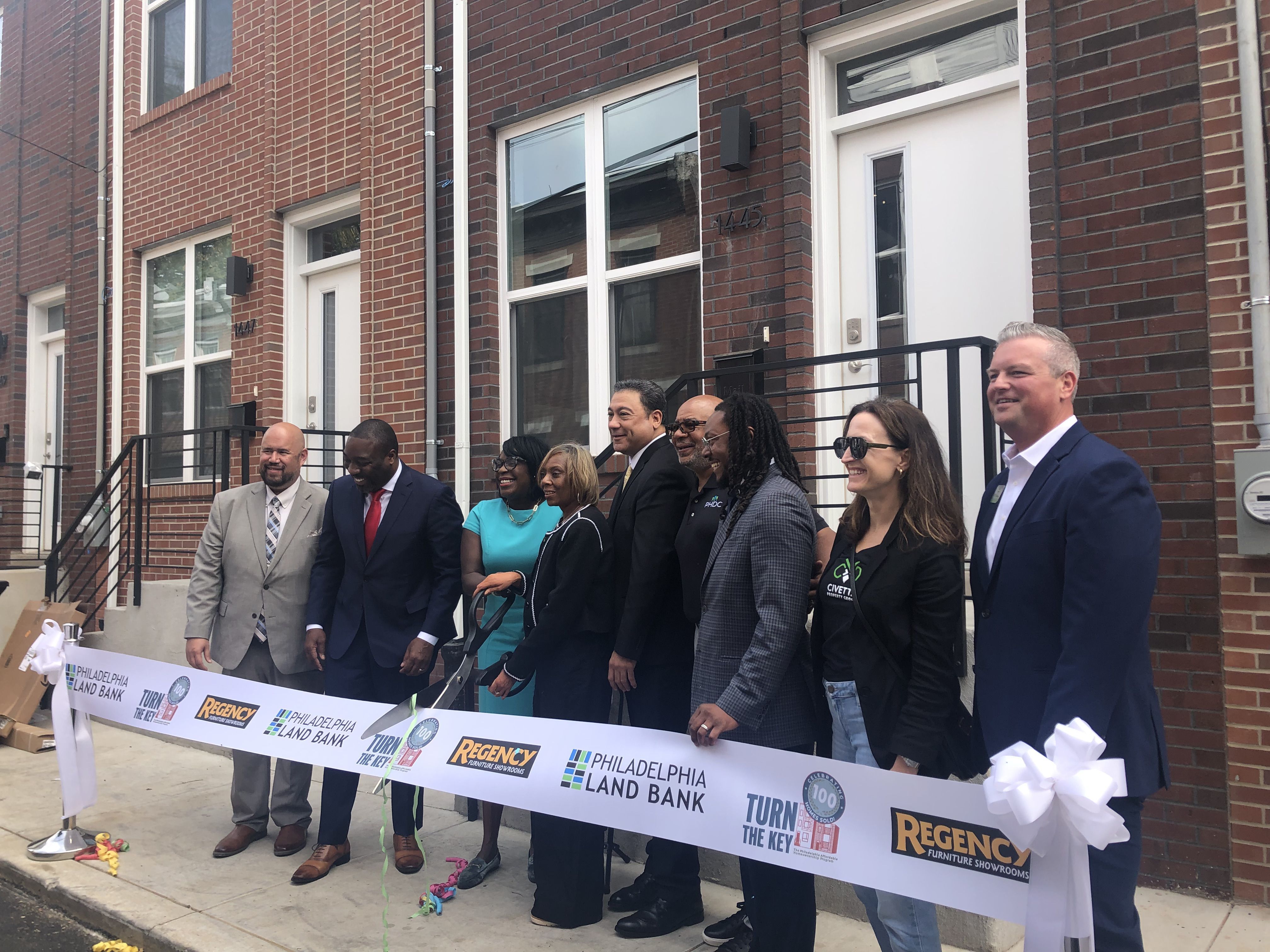
    The mayor has long championed the Turn the Key program as part of that plan, a policy that depends on getting inexpensive city-owned land to developers so they can build houses that are affordable to working and middle-class families.

    Rashid is being replaced by Alexander Balloon, who formerly served on the Land Bank’s board and is the executive director of the Passyunk Avenue Revitalization Corp.

    “It is clear from the Land Bank’s success with its Turn The Key program: A strong and effective Land Bank is essential for reaching the H.O.M.E. initiative’s goal to produce and preserve 30,000 homes,” Parker said in a statement.

    Several Turn the Key proposals have been held up by the Land Bank board, which has been riven between factions that are either more or less friendly to private-sector developers.

    Rashid and other board members who come from a nonprofit development background have argued that scarce city-owned land should be earmarked for affordable housing, community gardens, and similar projects.

    Mayor Cherelle L. Parker and Turn the Key’s 100th homebuyer hold giant scissors as they prepare to cut a ceremonial ribbon.

    Although the Turn the Key program produces units that are more affordable than market-rate homes, many of the projects are built by private-sector developers and still unaffordable to Philadelphians with low incomes.

    “Majeedah Rashid has worked with me on economic development issues dating to my time in the Pennsylvania General Assembly, and her advice has been invaluable,” Parker said in a statement. “Our city is stronger for Herb’s and Majeedah’s public service.”

    Rashid did not respond to a request for comment.

    During Balloon’s previous tenure on the board, he was among members who pushed for vacant city-owned land to be put back into productive use as quickly as possible because empty lots attract crime and litter and are a drag on city services.

    Private-sector developers often can build more — and faster — than their nonprofit counterparts because they are less reliant on public funds, which are increasingly unreliable from the federal level.

    “I’m excited to rejoin the Philadelphia Land Bank and help Mayor Parker deliver on her bold vision to build and preserve 30,000 homes across our city,” Balloon said in an email statement. “This is an inspiring moment for Philadelphia’s growth and the success of the Turn the Key program and other initiatives.”

    Wetzel’s role as Land Board chair was the latest in a long tenure of municipal housing policy positions, including his lengthy service as a close aide to former Council President Darrell L. Clarke, who created the Turn the Key program and was one of its most enthusiastic proponents.

    “Herb Wetzel has been a subject matter expert for me on any housing issue that I’ve worked on throughout my career as an elected official, and I have always relied on his counsel,” Parker said in a statement. “He will continue to be part of my circle of advisers on housing issues, just in a different capacity.”

    But according to three City Hall sources, who did not have permission to speak to the media, Parker’s team felt Wetzel sought to play peacemaker between the factions and was not always able to get their favored Turn the Key projects moving. As a recent arrival to the city and leader of the administration’s housing initiative, Brooks is expected to pursue the mayor’s priorities.

    Brooks said in an interview that her appointment was no reflection on Wetzel’s performance and that he would continue to serve on the H.O.M.E. advisory board.

    “I don’t have any thoughts on what he didn’t do or didn’t other than he’s been a great supporter of both the mayor and me and this housing plan,” Brooks said. “He’ll continue to be a part of that as we move it forward. [It’s just that] historically, we have had a city staff person to sit on the Land Bank board, and since I’m spearheading the H.O.M.E. Initiative, it seemed to be time.”

    Frequent stalemates on the board were not the only challenge facing Turn the Key projects. Under the tradition of so-called councilmanic prerogative, the Land Bank requires action from City Council to release property for development even if the mayor backs a particular proposal.

    For example, the administration sent over a 50-unit Turn the Key proposal in North Philadelphia to City Council last November, and District Councilmember Jeffery Young simply never introduced it, effectively killing the deal.

    Or in Kensington, Councilmember Quetcy Lozada declined to endorse several Turn the Key proposals, leading developers to abandon them.

    Parker sought to loosen Council’s grip on some city-owned land during budget negotiations earlier this year, but the campaign was largely unsuccessful. National land bank experts have long argued that land banks like Philadelphia’s are much less effective than counterparts that do not have political veto checkpoints.

    During budget hearings this year, Council asked for an organization assessment of the Land Bank, and some members questioned why its staff wasn’t more robust.

    Brooks said that an assessment will be released soon from the consultant group Guidehouse and that the Land Bank “is in the process of filling positions.”

  • Discovery of Kada Scott’s body at Germantown middle school has reignited debate over the vacant building

    Discovery of Kada Scott’s body at Germantown middle school has reignited debate over the vacant building

    When it opened in 1973, Ada H.H. Lewis Middle School was a source of deep pride for East Germantown, the kind of state-of-the-art educational facility that only suburban kids had at the time.

    But on Saturday, when police found Kada Scott’s corpse buried in a shallow grave in the woods of the long-ago vacated school grounds, ending a two-week search for the missing 23-year-old Mount Airy woman, the Rev. Chester H. Williams saw only decades of failure.

    “It’s a disgrace,” said Williams, a pastor who runs a neighborhood civic group. “We were very hurt to hear that this happened.”

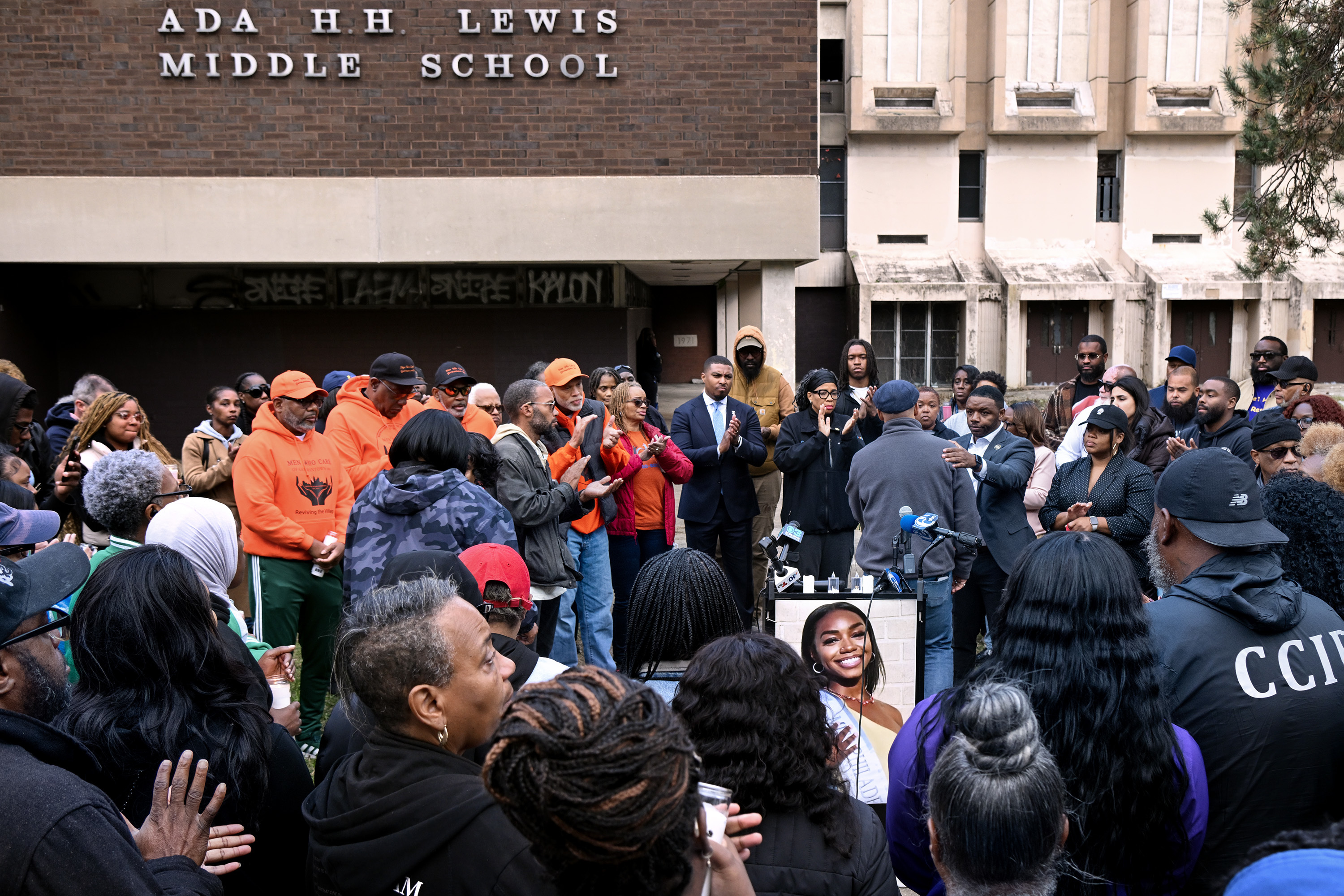
    Community members gather for a candlelight vigil in memory of Kada Scott on Monday at Ada H.H. Lewis Middle School.

    On top of the shock, Scott’s kidnapping and murder has renewed animus in some quarters about the Philadelphia School District‘s failure to repurpose the blighted property, one of dozens of schools shuttered by the district over the last 20 years.

    Since Lewis closed in 2008, local officials and civic leaders said the sprawling seven-acre campus has become a magnet for squatting, illegal dumping, and other criminal activity. City officials have cited the school district 10 times since 2020 for overgrown weeds, graffiti, and piles of trash that blanketed the property, public records show. And four years ago, the district passed on an opportunity to reverse course on the blight.

    A proposal to redevelop the land into new homes, championed by neighborhood leaders like Williams, sat before the school board for approval. But the district abandoned the plan at the eleventh hour without public explanation, which the developer alleged was due to meddling by City Councilmember Cindy Bass — a contention Bass denies.

    “The school district, for some reason, we don’t know why, they put a block on anything being built there,” Williams said.

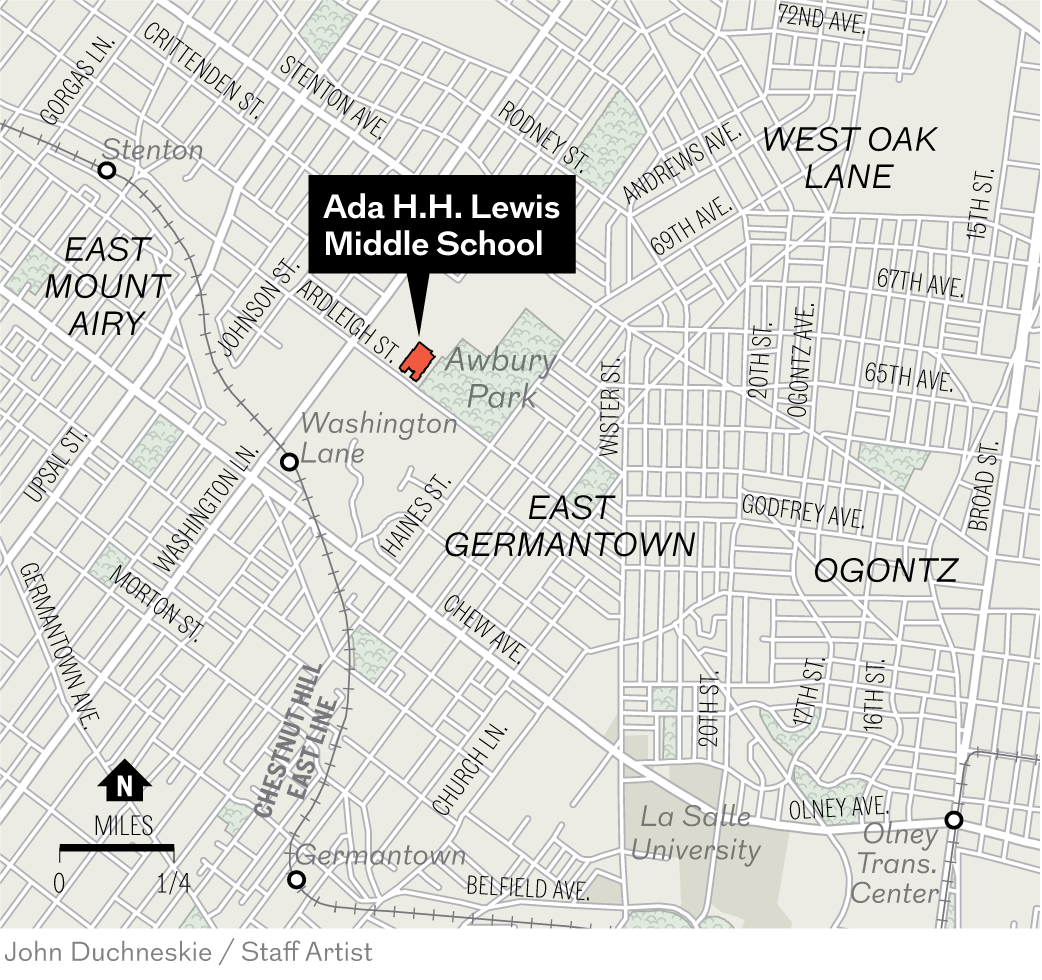
    Map of the former Ada H.H. Lewis Middle School in East Germantown

    Philadelphia Superintendent Tony B. Watlington Sr. extended “deepest sympathies” to Scott’s family and friends in a statement, and said the district’s operations and safety departments will review the vacant-property portfolio “to create and maintain safe and healthy spaces in every neighborhood.”

    While some call Lewis “abandoned,” the district is careful to call the building “vacant,” one of 20 such properties in the district’s portfolio. It says maintenance and inspection logs are kept about work on vacant properties; details were not immediately available.

    The debate over Lewis comes at a crucial time for the district: It is preparing to release recommendations about its stock of 300-plus buildings — and likely add to the list of decommissioned schools-turned-vacant public buildings. The district’s master planning process will contain recommendations for school closures and combining schools under one roof, officials have warned.

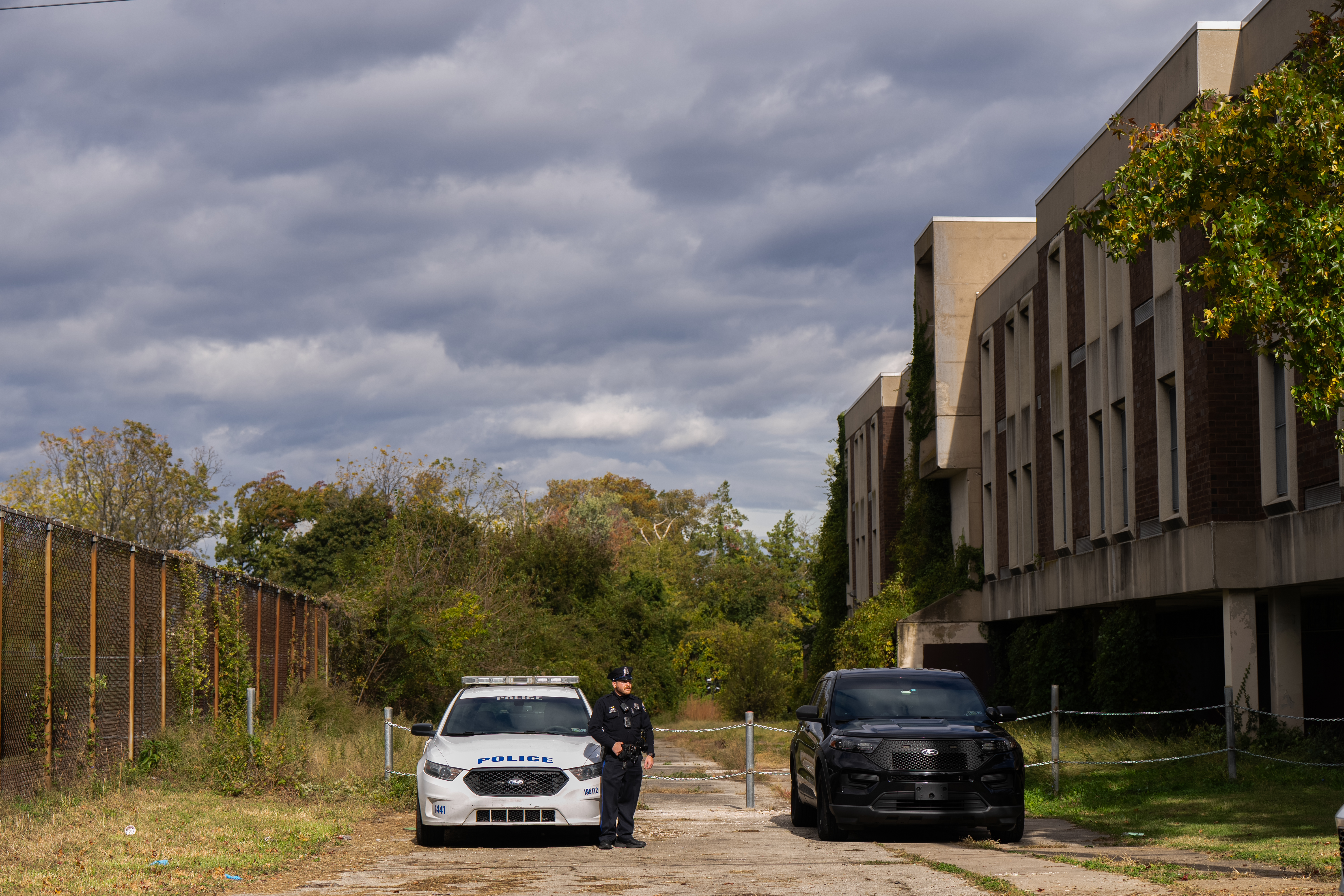
    Police at Ada H.H. Lewis Middle School.

    A fizzled redevelopment

    In 2011, then-City Controller Alan Butkovitz said the district’s vacant buildings were “catastrophes waiting to happen.

    Butkovitz, in a report released that year, said district inaction around such structures was dangerous and noted that the schools were magnets for criminal activity.

    Just before the pandemic hit in 2020, after years of pushback over Ada Lewis, the school district began accepting applications to redevelop the crumbling middle school. Germantown developer Ken Weinstein was one of three developers to place bids. He sought to buy the property for $1.4 million and build 76 new twin homes, at a density that neighbors felt complemented the surrounding area and resolved concerns about density brought by apartment buildings.

    Weinstein said he gathered letters of support from 60 neighborhood residents and elected officials, including U.S. Rep. Dwight Evans and then-State Rep. Stephen Kinsey. The school board seemed eager to move ahead and set a final vote for the proposal in May 2021.

    The vote never happened. The only explanation given that day was that “the Board had concern” about “what the long-term plan is for developing schools for the 21st century,” according to a district spokesperson.

    According to Weinstein, some school board members received calls from Bass asking them to table the vote. Bass has faced criticism for interfering in development projects, including other proposals made by Weinstein, as vacant properties languished for years in her district. Her district includes the Lewis property and parts of North and Northwest Philadelphia, where Weinstein has focused his development work.

    Bass, in an interview Monday, denied meddling in the vote. She acknowledged that she did not support Weinstein’s proposal because of the price of the homes — averaging around $415,000 — which she said would have triggered “immediate gentrification in the neighborhood.” But she said she had no involvement in the board’s reversal.

    “That was up to the school district,” Bass said. “I don’t sit on the school board.”

    While community groups in her district supported Weinstein’s project in 2021, Bass said she objected to market-rate housing as the sole alternative for East Germantown, arguing that it amounted to the district and developers saying “you should just take any old thing just so it’s not vacant.”

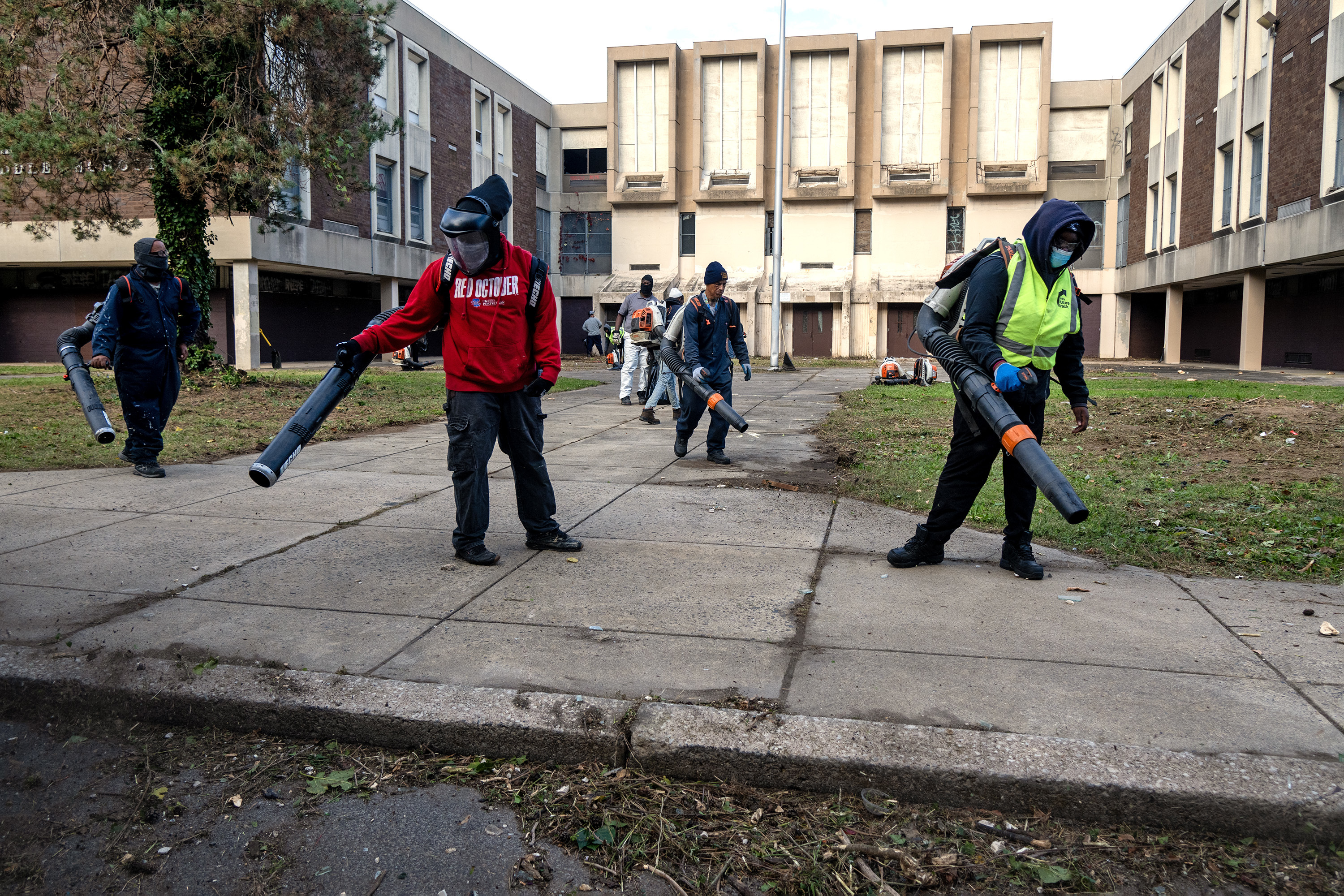
    City workers clean up in front of the vacant Ada H.H. Lewis Middle School Monday, just minutes before the start of a community candlelight vigil in memory of Kada Scott.

    A tragic turn for the property

    In a letter dated Friday, Bass called on the school district to demolish the vacant school, saying she was troubled by the evidence that led investigators to the property during the search for Scott.

    “The continued presence of this unsecured and deteriorating structure is simply unacceptable,” the Council member wrote in a statement, noting the site is now associated with “tragic violence.”

    Cell phone records and tips from the public first led police to the former Ada Lewis school last week, where they found Scott’s pink phone case and debit card, but nothing else. Then, late Friday, police received a new tip saying that they had missed something on their first search of the grounds, and that they should look along the wooden fence that divides the school from the neighboring Awbury Recreation Center. Officers returned to the property Saturday and found Scott’s body, buried in a shallow grave in a wooded area behind the school.

    Prosecutors expect to charge Keon King, 21, with the murder, though police continue searching for others who they believe may have helped dispose of evidence.

    Bass took office in 2012, when the school was already vacant. She said she pushed the school district for several years to take action, as nuisances piled up at the property. She said she still hopes that another “institution” could replace Lewis.

    “I think that having something that the community wants is not hard to figure out,” Bass said. “This is what the community’s interested in — they’re interested in another institution.”

    She said a proposal for a charter school is now in the works, though she said she was unable to provide details.

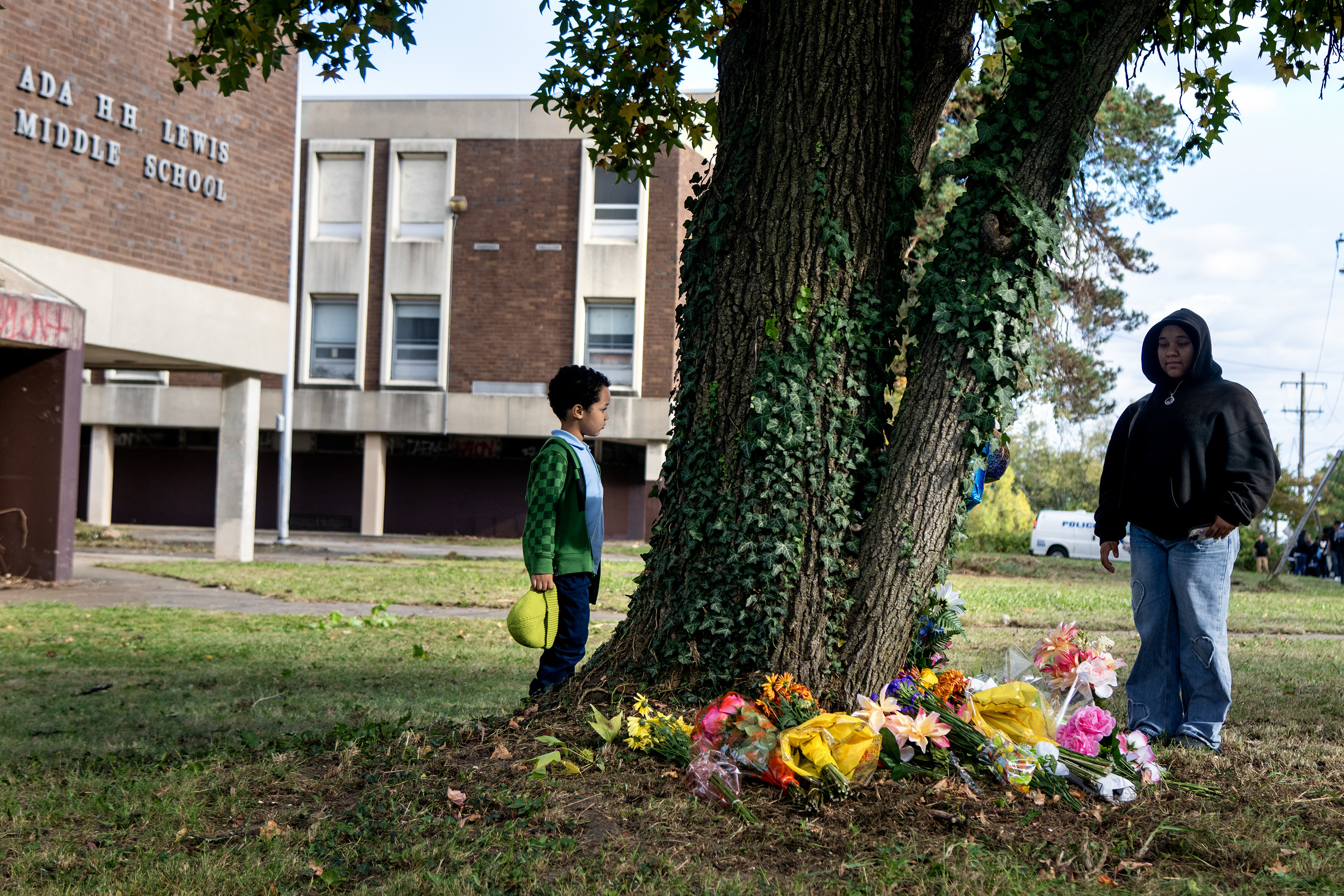
    Julius Peden, 5, and Jaihanna Williams Peden (right), 14, pause at a memorial for Kada Scott on Monday.

    A glut of vacant schools

    The school district still views Lewis as a potential “swing space” — a building that could be used to house students if another district building is closed due to environmental problems.

    There is precedent: The district has used other school buildings for such purposes, like Anna B. Pratt in North Philadelphia, which was also closed in 2013, to house early-childhood programs, and then students from other North Philadelphia schools whose buildings were undergoing renovation.

    Still, it remains unclear how much it would cost to bring the Lewis building back to an inhabitable state.

    The school system currently has about 70,000 more seats throughout the city than students enrolled. Though officials have said their first preference is to have closed schools reused for community benefit, it’s unlikely that all will be able to serve that purpose. And the timetable will surely be slow.

    City officials at times have expressed frustration with the pace at which the district is making decisions about how to manage its buildings. School leaders have said the wait is necessary given the district’s capacity and the need to make correct choices and not rush the process.

    Weinstein said the tragedy that culminated at Lewis reflected the conventional wisdom that blight breeds crime.

    “There’s always consequences to shutting down a proposal that the community supports,” Weinstein said. “In most cases, nothing bad happens. In this case, something very bad happened.”

    Staff writer Ellie Rushing contributed to this article.

  • Philly may see a new fee on paper bags — if it can get through City Hall

    Philly may see a new fee on paper bags — if it can get through City Hall

    Philadelphia lawmakers are for the third time trying to pass legislation requiring that stores charge customers a fee for paper bags. And for the third time, it’s facing opposition from the mayor.

    A City Council committee on Monday advanced legislation requiring all grocery stores, convenience shops, and other retailers in the city charge 10 cents per nonreusable bag. The goal is to update the city’s already existing ban on the plastic variety and encourage shoppers to bring their own bags.

    The full Council could vote on the new legislation in the coming weeks. It is cosponsored by a majority of Council members, meaning it is likely to pass the chamber.

    City Councilmember Mark Squilla, the architect of the plastic bag ban that first passed in 2019, said during the hearing Monday that he’s aiming to “change behavior.” The city says the use of paper bags has skyrocketed since the plastic bag ban took effect — studies show that while they are recyclable, unlike plastic, paper bags are still less energy efficient than reusable ones.

    Squilla’s original plastic bag ban legislation included a required 15-cent fee on paper bags, but he stripped it from the bill after opposition from former Mayor Jim Kenney’s administration. In 2023, Council passed legislation to institute it, but Kenney issued a pocket veto, meaning he left office without taking action on the legislation, effectively killing it.

    It wasn’t clear at the time if Mayor Cherelle L. Parker, who was the incoming mayor, would support the legislation if it were reintroduced. She made cleaning and greening the city a top campaign promise, and environmental advocates hoped she’d support efforts to reduce single-use bag reliance.

    But one of Parker’s top officials testified in opposition to the legislation Monday.

    Carlton Williams, the director of Parker’s Office of Clean and Green Initiatives, called Squilla’s effort well-intentioned. But he said charging bag fees could disproportionately impact low-income Philadelphians experiencing high grocery costs, “especially given the current economy.” He also said the fees could push shoppers out of the city and harm mom-and-pop businesses that already operate with low margins.

    Councilmember Mark Squilla takes his seat in Council chambers on Wednesday, Dec. 11, 2024, before a scheduled committee vote. Squilla authored legislation requiring stores charge a fee for paper bags.

    If the legislation passes Council, Parker could sign or veto it. She could also let it lapse into law without her signature. If she vetoed the legislation — it would be her first since taking office last year — Council could override her veto with 12 votes out of the 17-member chamber.

    When the paper bag bill was introduced in 2019, members of Kenney’s administration also said at the time that they were concerned that fees on paper bags would hurt the poorest Philadelphians. Former City Councilmember Maria Quiñones Sánchez similarly described it as akin to a regressive tax.

    However, proponents of the legislation said Monday that they don’t think the argument holds up.

    Maurice Sampson, the eastern Pennsylvania director of the environmental group Clean Water Action, said prices on essentials such as food could rise for everyone if stores absorb the costs of paper bags.

    “There is no foundation or basis,” he said, ”in the idea that fees on bags will hurt low-income people.”

  • Philly lawmakers want to ‘clamp down’ on smoke shops. Their landlords could be next.

    Philly lawmakers want to ‘clamp down’ on smoke shops. Their landlords could be next.

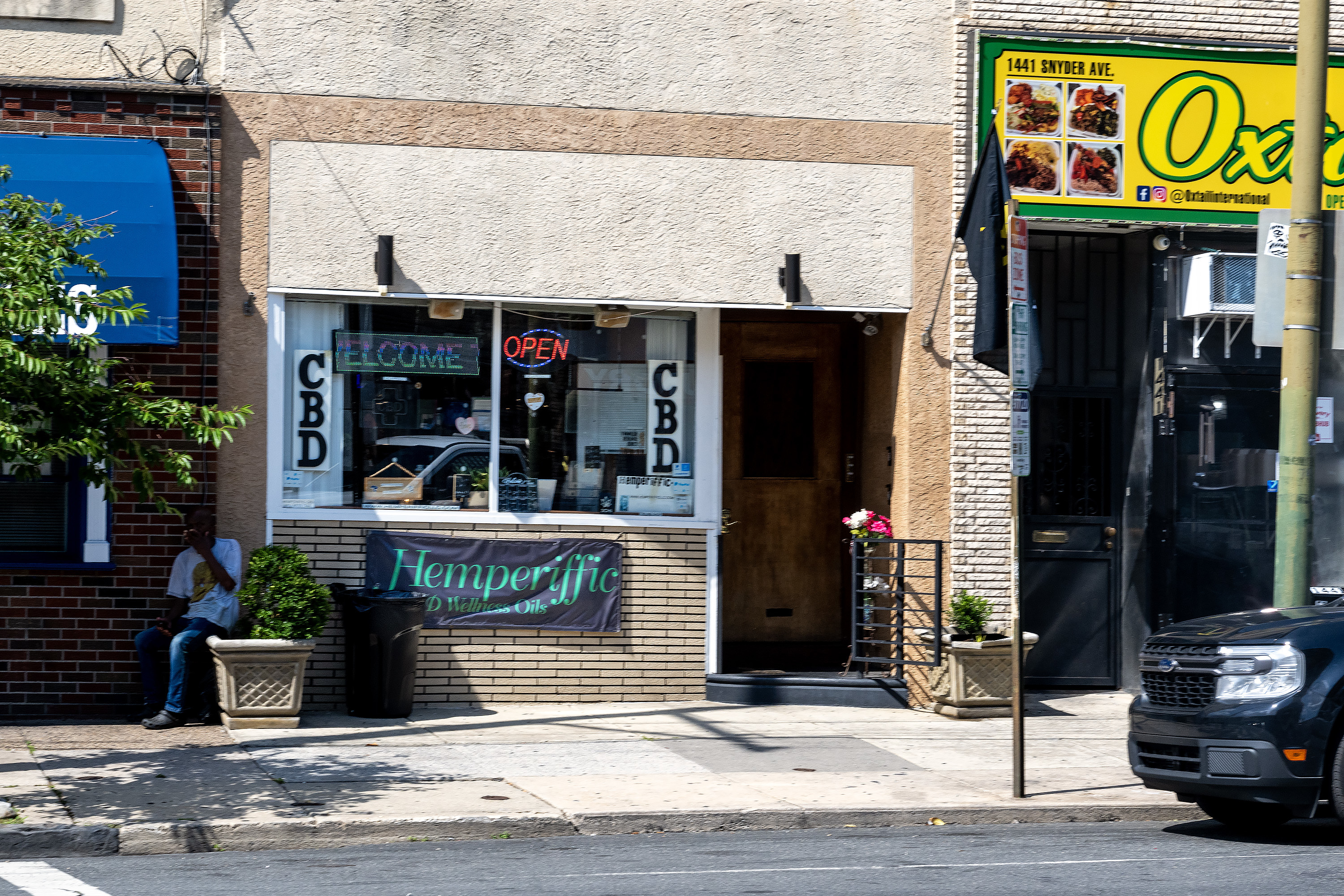
    There’s a smoke shop in North Philly peddling recreational drugs across the street from a daycare. A West Philly storefront that sells loose cigarettes on a residential block. A convenience store in Spring Garden that advertises urine to people looking to pass a drug test.

    These are among the so-called nuisance businesses that City Council members and neighborhood association leaders cited Monday as lawmakers advanced legislation to make it easier for the city to shut down stores that sell cannabis and tobacco products without licenses.

    And legislators said their next target could be the landlords who rent space to those businesses.

    “We have to work with our city departments and our state partners to clamp down on these businesses,” said City Council Majority Leader Katherine Gilmore Richardson, who represents the city at-large. “We’re just being inundated.”

    Members of Council’s Committee on Licenses and Inspections passed two bills Monday that city officials say seek to close loopholes store owners exploit to avoid being cited for failing to obtain proper permits.

    In introducing the legislation earlier this year, Gilmore Richardson cited an Inquirer report about Pennsylvania’s unregulated hemp stores, which sell products advertised as legal hemp that are often black market cannabis or contaminated with illicit toxins.

    One bill makes it easier for the city to shut down nuisance businesses by removing language that classifies some violations as criminal matters, requiring that the police investigate them as crimes rather than civil violations that are quicker to adjudicate.

    The second piece of legislation makes it illegal for businesses to essentially reorganize under a new name but conduct the same operations as a means of evading enforcement.

    Both pieces of legislation could come up for a full vote in the Democratic-dominated City Council in the coming weeks. Members of Mayor Cherelle L. Parker’s administration testified in favor of them, meaning the mayor is likely to sign both.

    A smoke shop in South Philadelphia.

    Neighborhood association leaders also testified Monday in favor of the changes, but several said more aggressive enforcement is needed. They said smoke shops in particular have popped up throughout their commercial corridors, as have convenience stores that don’t even have licenses to operate as businesses, let alone sell recreational drugs.

    “We’ve seen firsthand the selling of illegal drug paraphernalia and [loose cigarettes], many of which children walk past in order to get to the candy bars and seniors walk past to get to the milk,” said Heather Miller, of the Lawncrest Community Association. “We need to address this.”

    Elaine Petrossian, a Democratic ward leader in Center City and a community activist, called for “much” higher fines and penalties for landlords. She cited progress the municipal government has made in New York City, where authorities cracked down on building owners who knowingly rented space to tenants selling cannabis or tobacco without licenses to do so.

    Several lawmakers said they’d support a similar approach. Councilmember Mark Squilla, who represents a district that spans from South Philadelphia to Kensington, said landlords must be held “more accountable.”

    “If they had some skin in the game, maybe they’d think twice about renting to an illegal operation,” he said.

    Councilmember Jamie Gauthier, who represents parts of West Philadelphia, agreed. She said she recently attempted to meet with a building owner who rents space to a problematic smoke shop in her district, but was rebuffed.

    “He was like, ‘These people pay me rent, and that’s the extent to which I basically care,’” Gauthier said. “We need something that forces property owners to be more accountable than that, because neighbors are suffering.”

    Staff writers Max Marin and Ryan W. Briggs contributed to this article.

  • State Sen. Sharif Street has early fundraising lead in Philly congressional race, but his competitors are close behind

    State Sen. Sharif Street has early fundraising lead in Philly congressional race, but his competitors are close behind

    State Sen. Sharif Street has an early fundraising lead over his competitors in next year’s Democratic primary for a storied Philadelphia congressional seat, according to new campaign finance reports.

    But the race is in its early stages, and candidates who entered the race after Street still have plenty of time to catch up before the May 2026 primary.

    Street, the son of former Mayor John F. Street, entered the race for Pennsylvania’s 3rd Congressional District in early July, days after U.S. Rep. Dwight Evans (D., Philadelphia) announced he would not seek reelection. Street’s campaign launch coincided with the beginning of the campaign finance reporting period, allowing him three full months to solicit contributions and seek endorsements.

    He took in about $352,000 from July 1 through Sept. 30, according to the Federal Election Commission. His campaign spent $33,000 during that time, and he finished the period with $372,000 in cash on hand, which is also the most of any candidate in the race. (Street’s cash reserves are higher than his fundraising because he carried over money from a previous campaign account.)

    “Our strong fundraising results put us in a commanding position,” Street campaign manager Josh Uretsky said in a statement. “We’re building a strong campaign that will hit every neighborhood in the Third District by leveraging our broad-based coalition.”

    window.addEventListener(“message”,function(a){if(void 0!==a.data[“datawrapper-height”]){var e=document.querySelectorAll(“iframe”);for(var t in a.data[“datawrapper-height”])for(var r,i=0;r=e[i];i++)if(r.contentWindow===a.source){var d=a.data[“datawrapper-height”][t]+”px”;r.style.height=d}}});

    State Rep. Chris Rabb, an anti-establishment progressive, who raised $257,000, also announced his campaign in July.

    Rabb’s haul was notable for a candidate with little support among Philadelphia’s established political organizations, such as the deep-pocketed building trades unions that endorsed Street this week. As he has in past runs, Rabb said he is eschewing contributions from corporate-backed political action committees, and tapping into a national network of progressive small-dollar donors.

    “This is a robust, grassroots campaign that’s fueled and funded by a growing movement of Philadelphians and citizens far & wide who want a bold, independent-minded and accountable Democrat to represent the bluest congressional district in the nation,” Rabb said in a statement.

    His campaign spent $76,000, and carried forward $181,000.

    State Rep. Morgan Cephas, a West Philly Democrat who chairs the Philadelphia delegation to the state House, collected $156,000 in contributions, a respectable sum given that she entered the race about a month before the reporting deadline. Her campaign spent $37,000 and had $119,000 in cash.

    In a statement, Cephas said “the excitement about our campaign is palpable.”

    “I understand the problems of Philadelphia because I’ve lived them for the last 41 years,” Cephas said. “Together we can deliver real results for our community.”

    Political outsiders aim to shake up race

    David Oxman, a physician who lives in South Philadelphia, brought in $107,000, spent $35,000, and had a healthy $332,000 in the bank.

    “Since day one, this campaign has been fueled by healthcare professionals, small business owners, and working families across Philadelphia who are ready to take power back from leaders bought by corporate interests,” Oxman said in a statement.

    David Oxman, an intensive care doctor and medical school professor at Thomas Jefferson University Hospital, is running for Congress. Oxman, 58, of Bella Vista, joins a race that includes State Reps. Sharif Street and Chris Rabb to replace retiring U.S. Rep. Dwight Evans.

    The campaign for Temple University professor Karl Morris raised $28,000, spent $26,000, and had $12,000 in cash on hand.

    “As a scientist, teacher, and a non-politician running an outsider campaign, my focus is on connecting with everyday Philadelphians,” Morris, a computer scientist, said in a statement. “Career politicians and the donor class want politics as usual. I’m prepared to make sure everyone in Philadelphia receives equal benefits and equal protections.”

    One notable candidate, physician Ala Stanford, entered the race after the close of the reporting period and has not yet submitted a campaign finance filing. Stanford was a founder of the Black Doctors COVID-19 Consortium and has been endorsed by Evans.

    “In just a few weeks in the race, Dr. Stanford has generated significant momentum — in contributions, volunteer engagement, and community enthusiasm,” Stanford campaign manager Aaron Carr said in a statement.

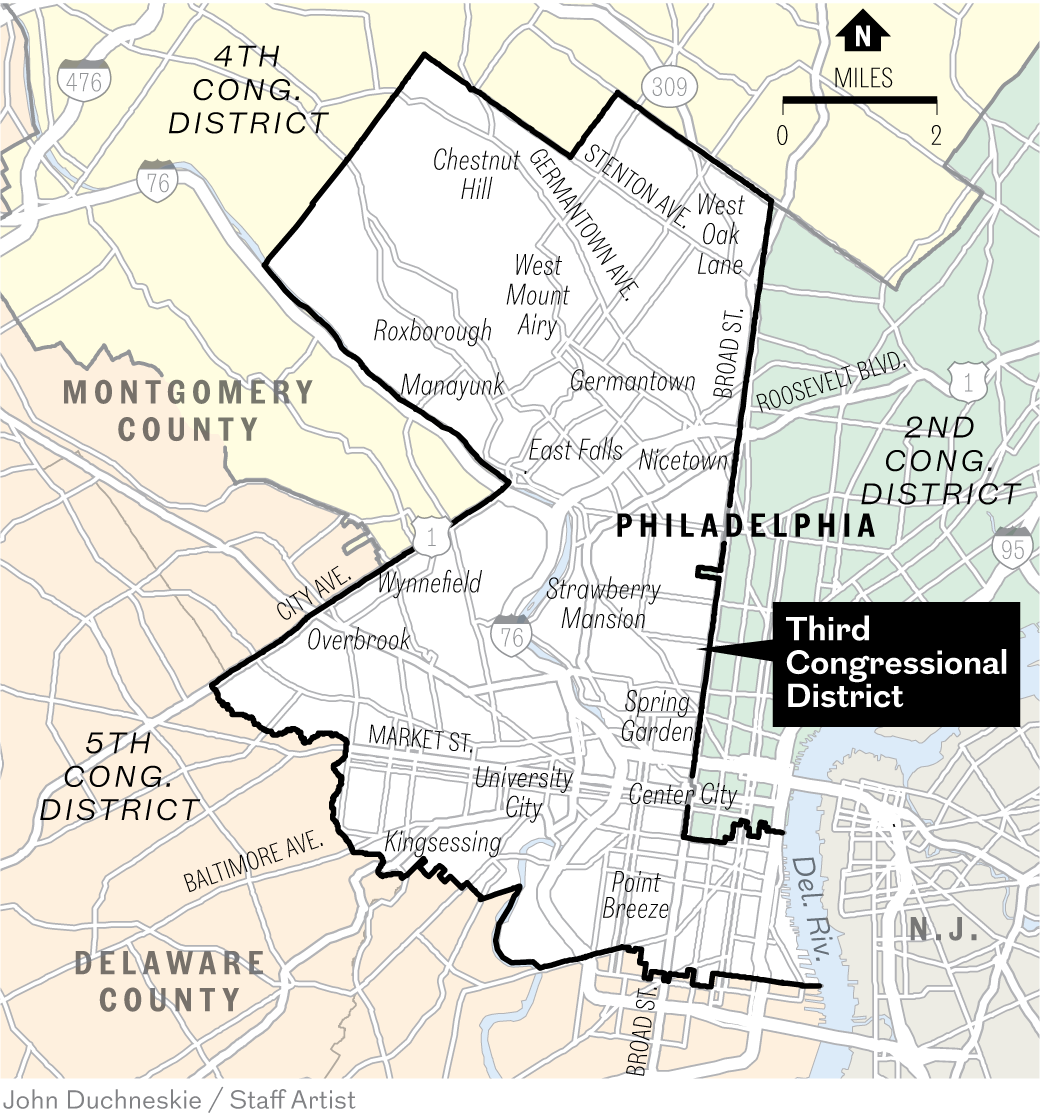
    Pennsylvania’s 3rd Congressional District, which includes parts of North, Northwest, West, and South Philadelphia, is one of the most Democratic seats in the nation. With Evans retiring from the seat he has held for nearly a decade, the field could still be in flux as more Philly politicians eye the potentially once-in-a-generation ticket to Washington.

    Map of Pennsylvania’s Third Congressional District.

    While the race remains competitive, Street’s early fundraising lead will help cement his status as the favorite of the local political establishment. Democratic City Committee chair Bob Brady said this week that party ward leaders will likely vote to endorse Street after this year’s election cycle wraps up next month.

    “We’re fully prepared to take advantage of this early lead,” Uretsky said.

    Brian Fitzpatrick outraises competitors in Bucks County congressional race

    In Pennsylvania’s 1st Congressional District, where Democrats have made ousting Republican U.S. Rep. Brian Fitzpatrick a top priority, the incumbent outraised his leading Democratic challenger by a nearly 4-1 ratio, bringing in $886,049 this quarter.

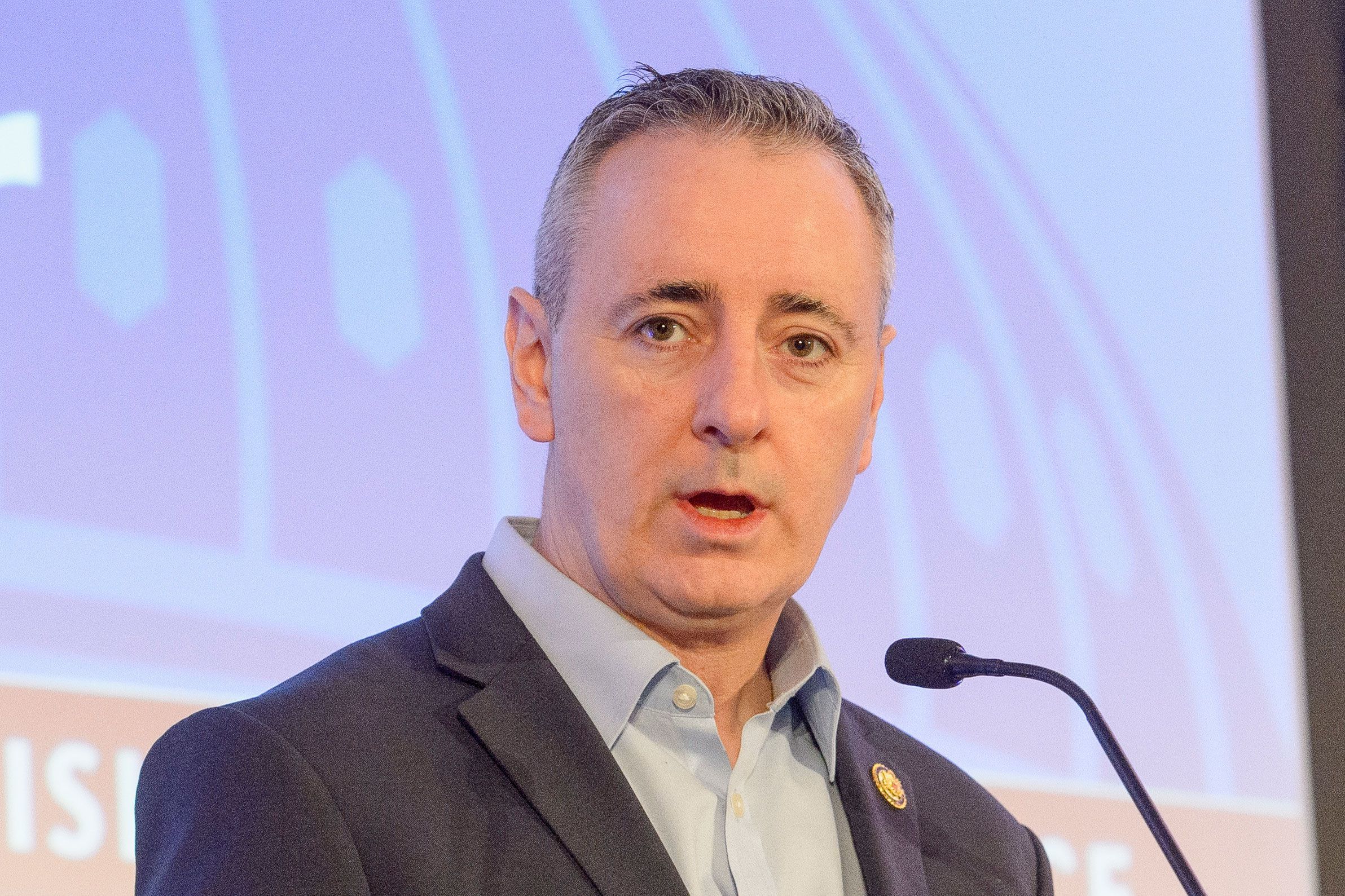
    Rep. Brian Fitzpatrick (R., Bucks and Montgomery) speaks during the opening session of the National Treasury Employees Union (NTEU) Legislative Conference in Washington in March.

    Unlike the deep-blue 3rd District, the fate of the 1st District will likely be decided in next year’s general election, and not the primary. The district, which includes all of Bucks County and a part of Montgomery County, is the only Philadelphia-area congressional seat represented by a Republican.

    Democratic County Commissioner Bob Harvie announced plans to challenge Fitzpatrick earlier this year.

    Harvie, viewed as the favorite to win the Democratic nomination, raised $217,745 last quarter. The other Democrat in the race, attorney Tracy Hunt, raised $36,692.

    This suburban content is produced with support from the Leslie Miller and Richard Worley Foundation and The Lenfest Institute for Journalism. Editorial content is created independently of the project donors. Gifts to support The Inquirer’s high-impact journalism can be made at inquirer.com/donate. A list of Lenfest Institute donors can be found at lenfestinstitute.org/supporters.