Philadelphia could soon become the first American city to establish its own retirement savings program for residents whose employers don’t offer one.
City Council is poised to pass legislation that would enable the plan, called PhillySaves, which is modeled on similar state-facilitated “auto-IRA” programs that have been increasingly established across the country.
The idea is that workers would be automatically enrolled in the city-managed plan and would contribute through payroll deductions at no cost to their employer. The plan would then follow employees, even as they change jobs.
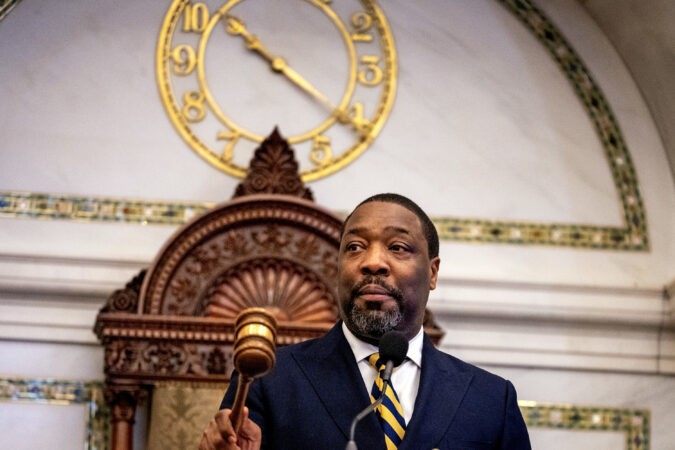
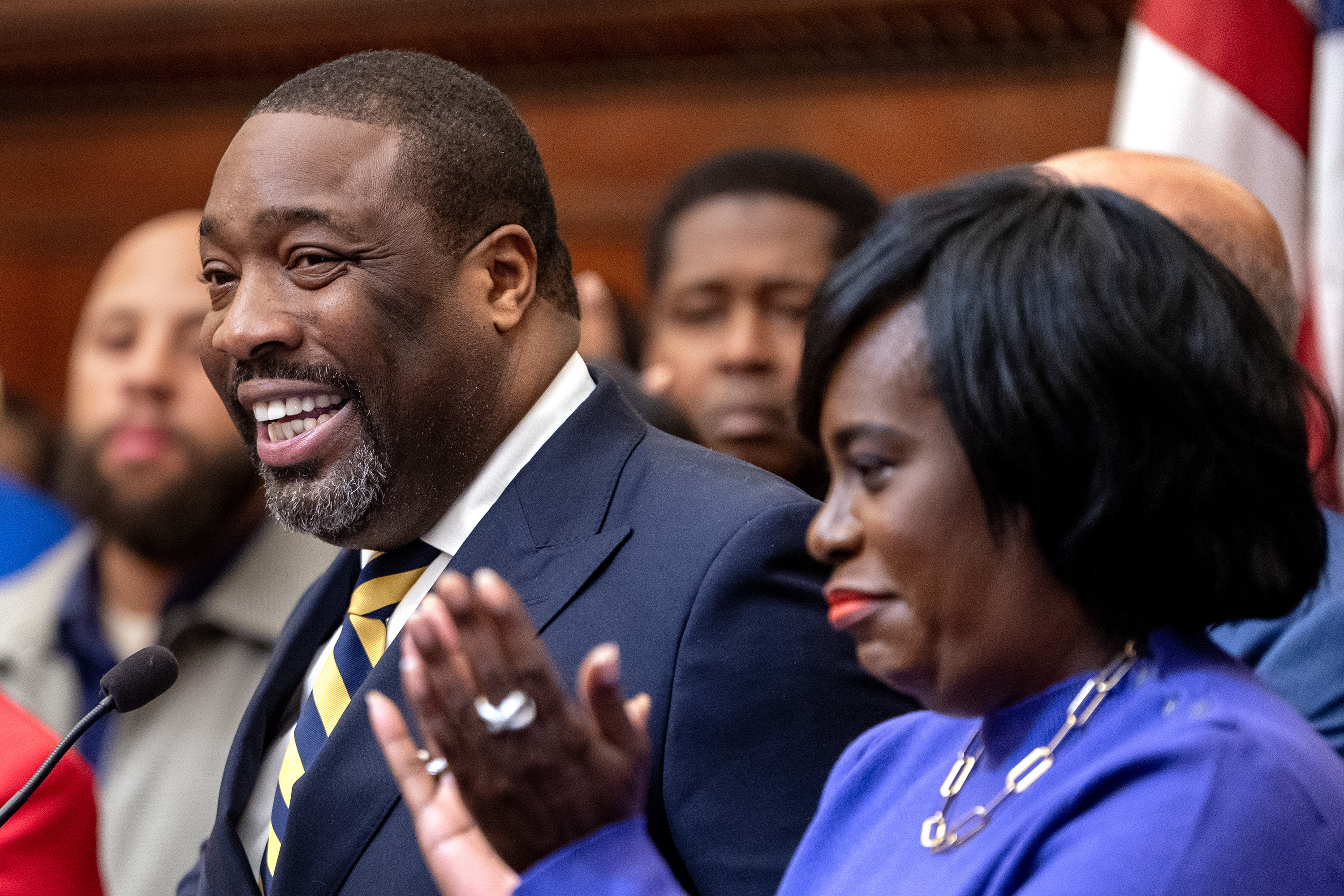
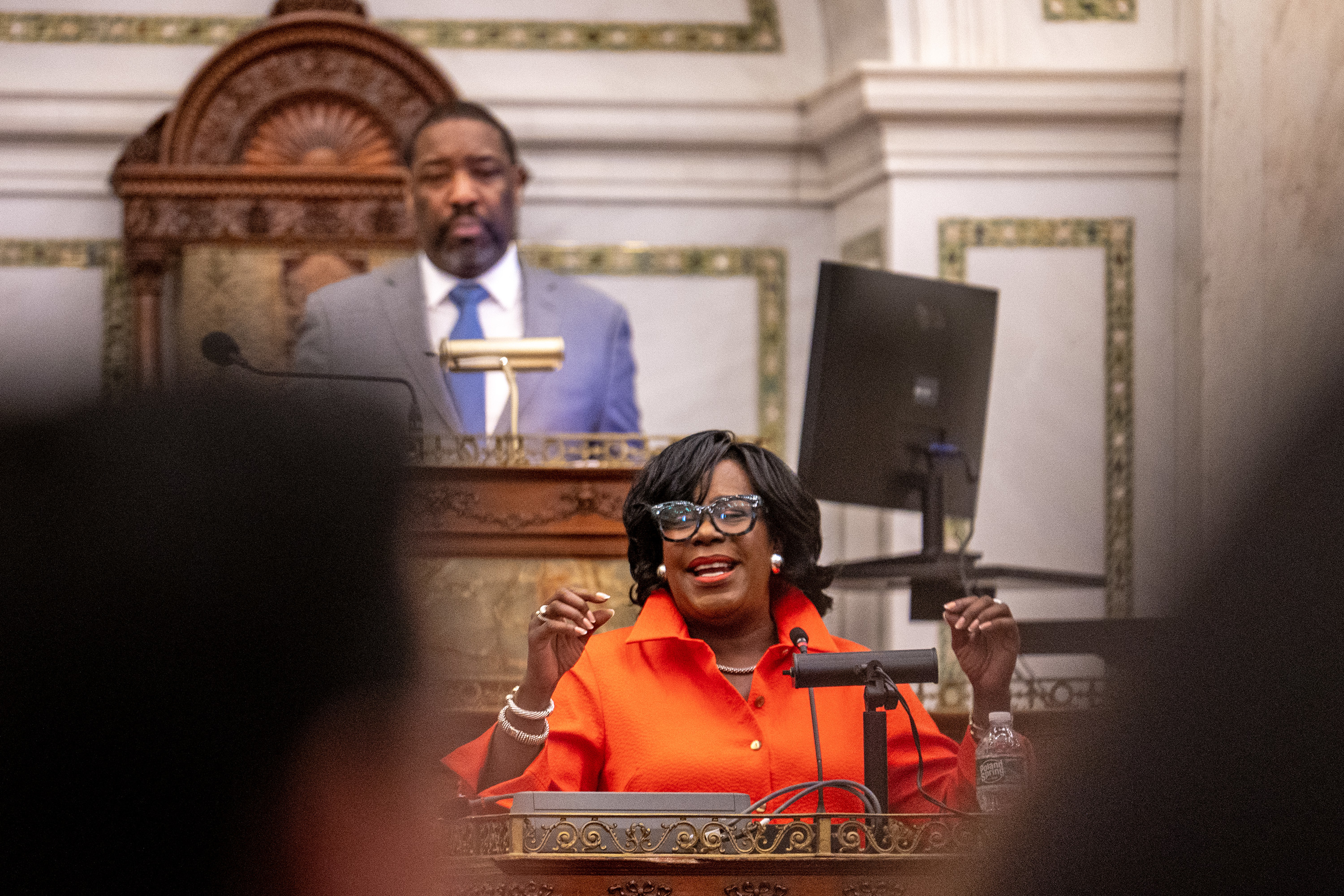
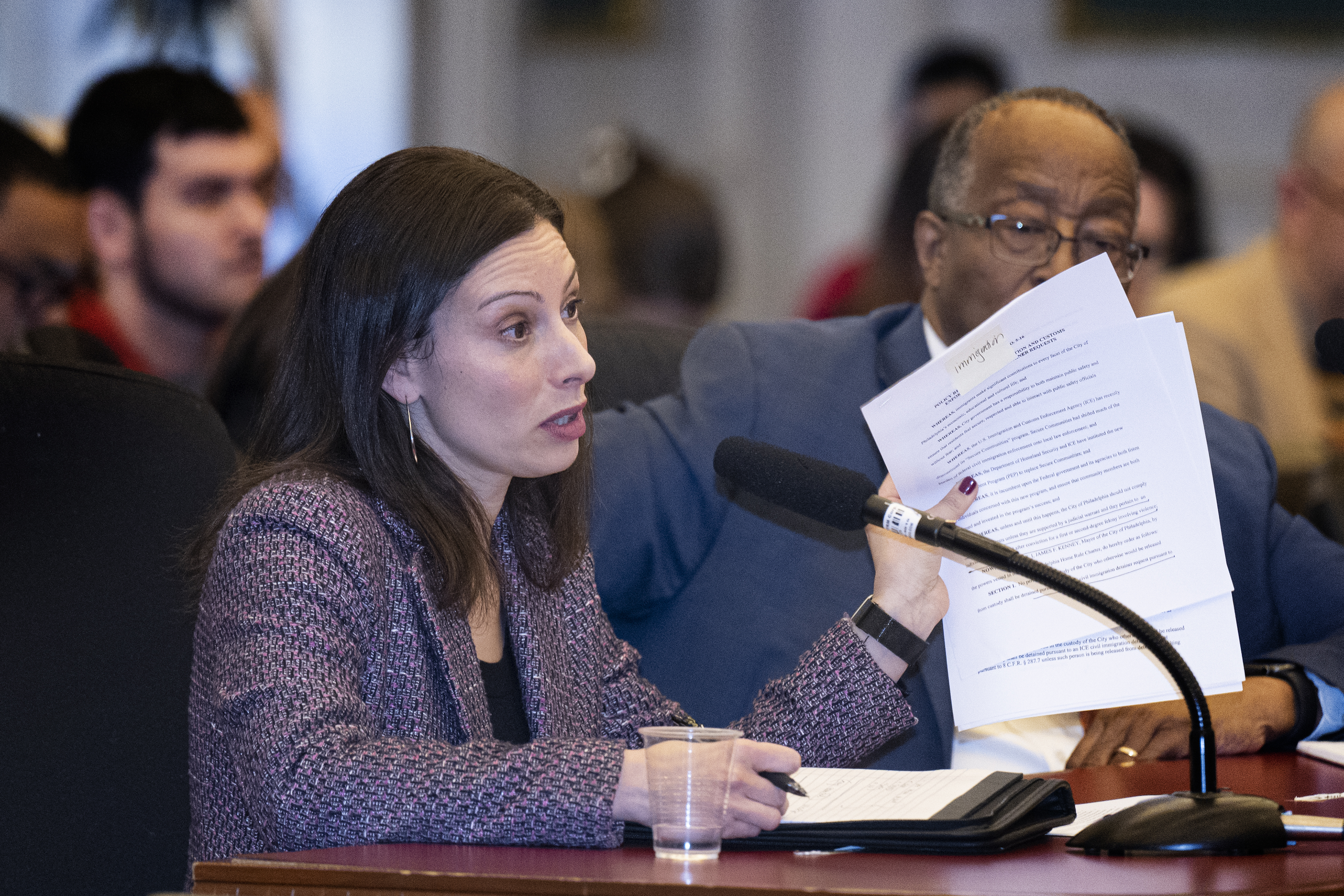
Council President Kenyatta Johnson, a Democrat, said during a committee hearing on the legislation last week that the program is an anti-poverty measure aimed at generating wealth for more than 200,000 Philadelphians who do not have access to a retirement savings plan through their job.
“We want to make sure we are lifting all Philadelphians out of poverty, building generational wealth, and ensuring our seniors are financially stable in retirement,” Johnson said.
A Council committee approved the legislation following a hearing last week, and the full Council is expected to pass it. Voters would have to approve the creation of an investment management board through a ballot question, which could come as early as the May primary election.
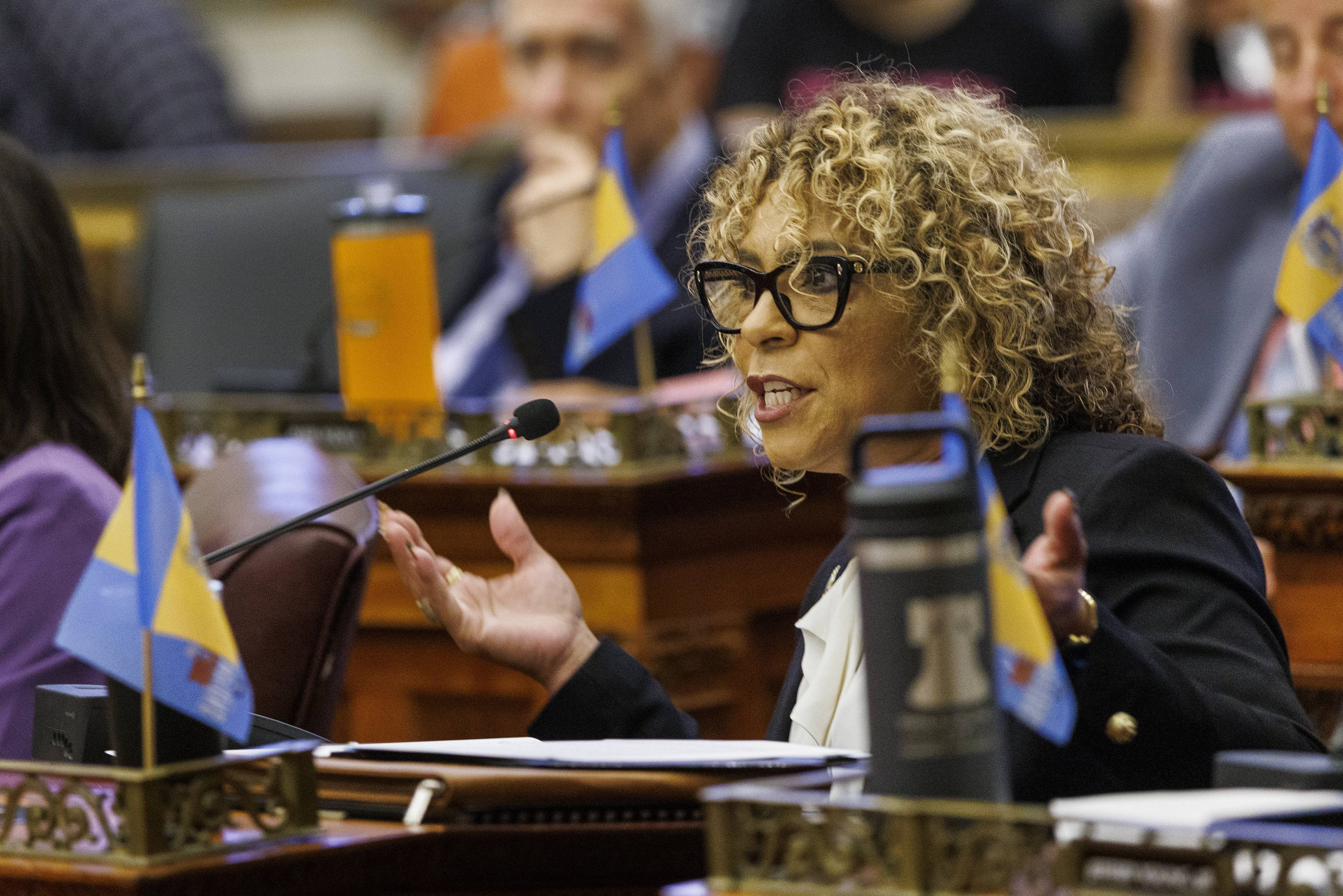
Councilmember Cindy Bass, a Democrat who represents parts of North and Northwest Philadelphia, called the plan a “game changer.”
“There was a time when you could retire just on Social Security alone,” she said. “That day has come and gone.”
How would the program work?
Workers would be automatically enrolled in the plan with a default contribution rate of 3 to 6% of their wages, however they can opt out or change their contributions at any time.
Employers that do not offer their own retirement plans would be required to sign up. Their only responsibility would be facilitating the payroll deductions for their employees. There is no matching program for employers or the city.
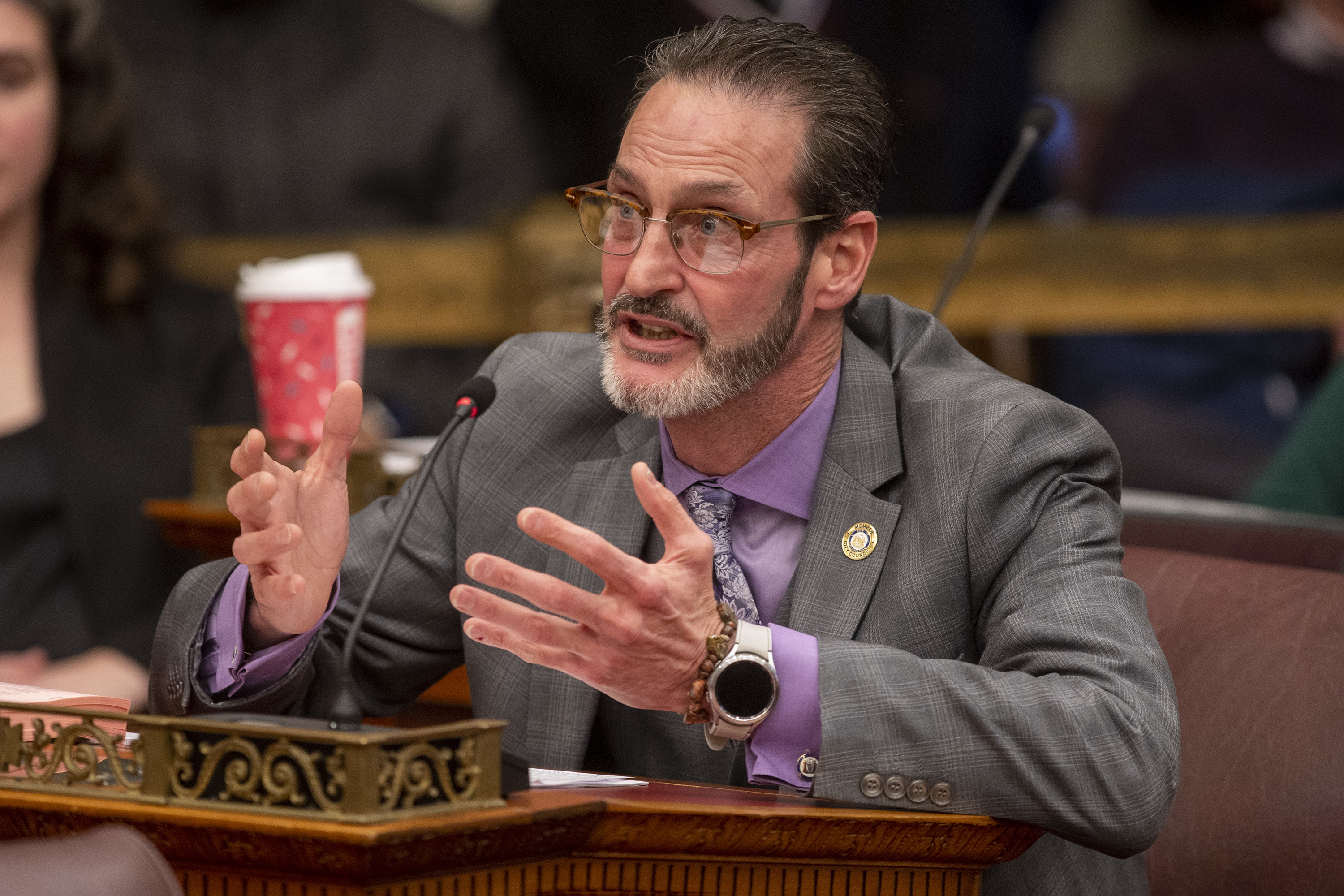
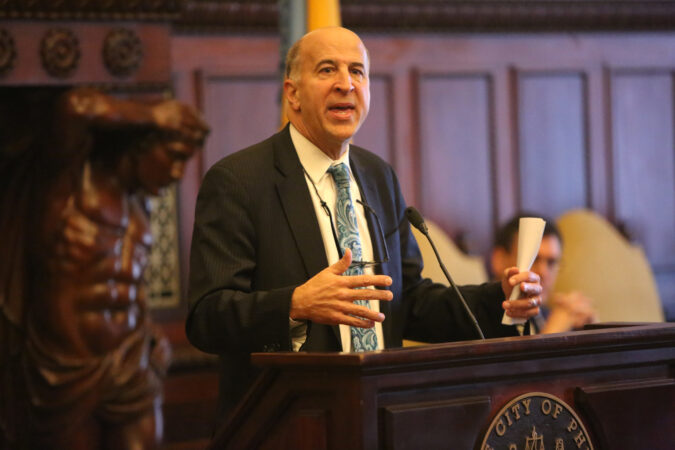
City Councilmember Mike Driscoll, a Democrat who represents parts of Northeast Philadelphia and is sponsoring the legislation, emphasized last week that there is “no cost” to employers and no fiduciary liability.
“The goal is to make it easy for employees who want to save,” he said, “and not burden employers who are already managing their many responsibilities.”
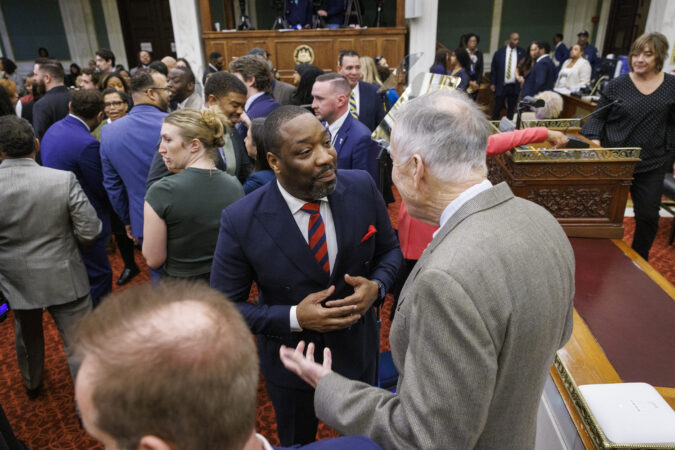
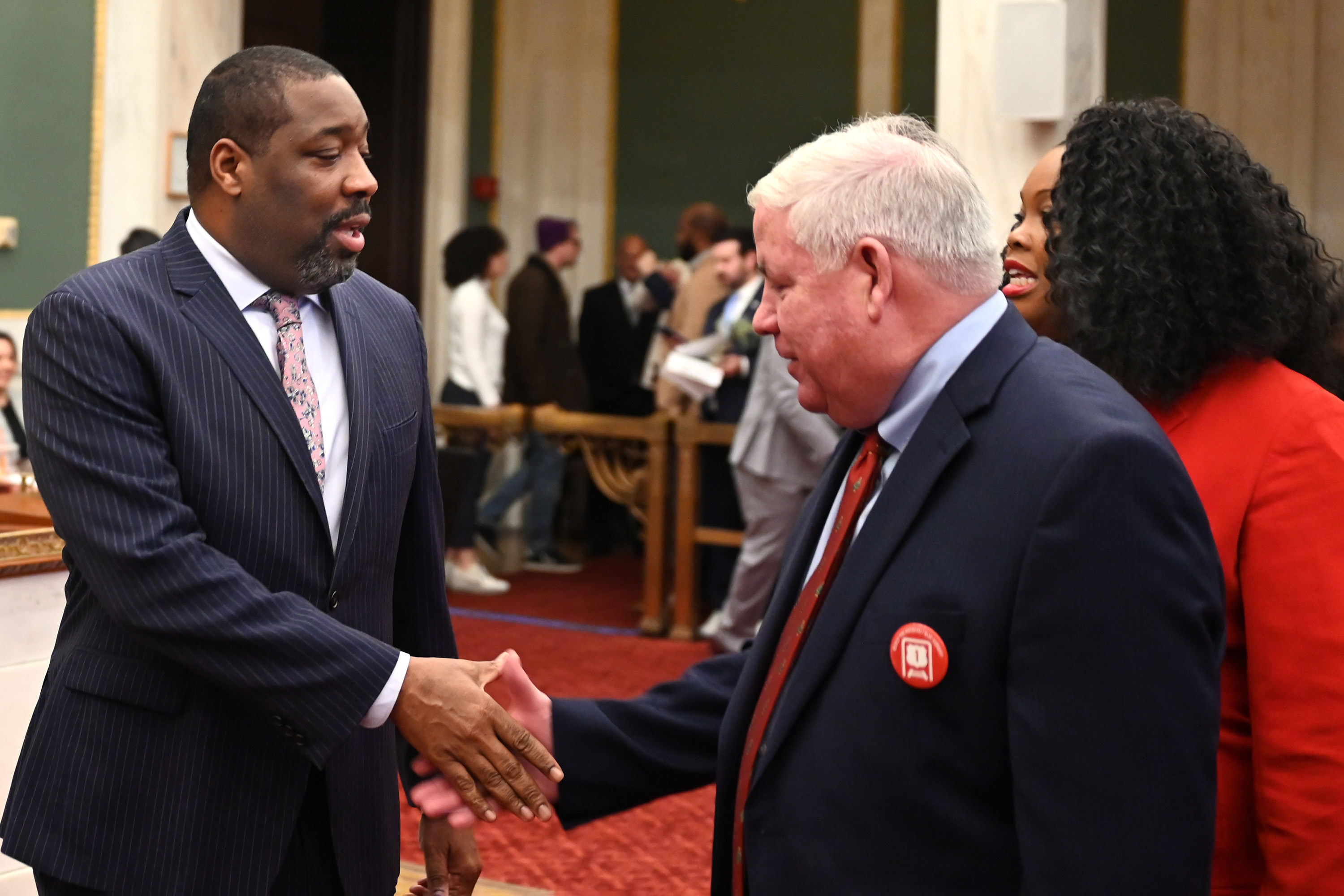
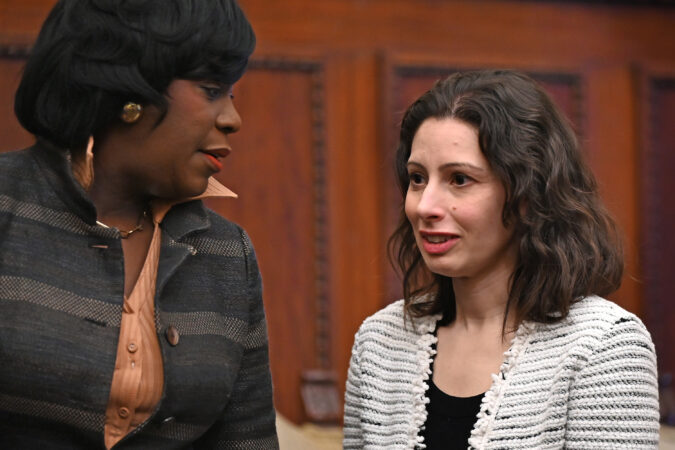
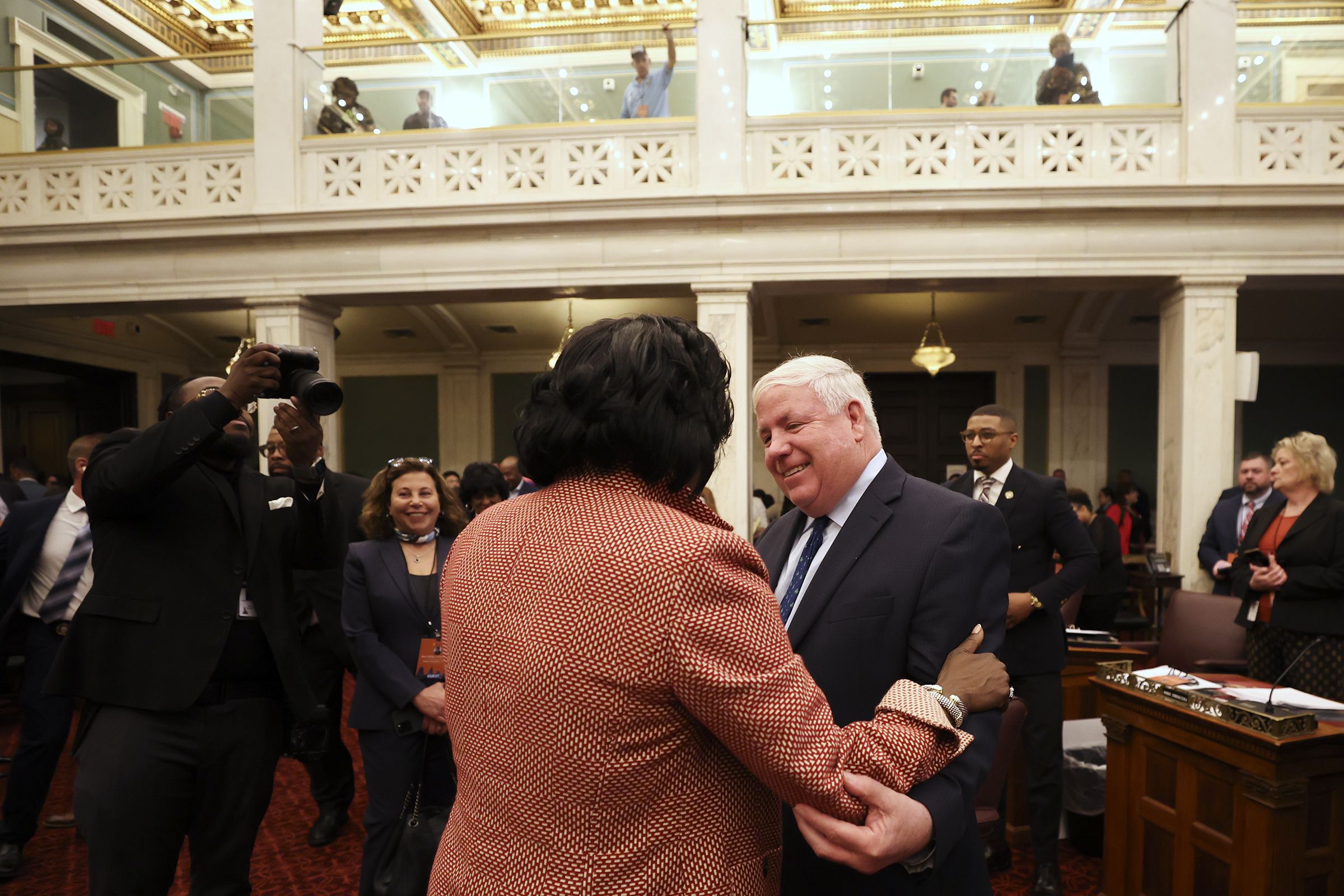
In this 2023 file photo, Council President Kenyatta Johnson (left) greets 6th District Councilmember Michael J. Driscoll (center) and Councilmember At-Large Katherine Gilmore Richardson (right) before the last City Council meeting of the year.
The legislation includes minimal fines for employers who don’t enroll employees. But Council members said the city will launch a significant public education and outreach campaign before levying fines.
Who is the program for?
Under the current version of the legislation — which could still be amended — the program applies to businesses with at least one employee. It must have been operating in Philadelphia for at least two years.
Auto-IRA plans are especially geared toward hourly workers who generally have fewer employer-covered benefits, such as 401(k) plans, as well as people who work for small businesses that can’t afford to provide retirement benefits.
Pennsylvania is not among them, but New Jersey launched a state-run retirement savings program last year. That plan, called RetireReady NJ, was first established in 2019 and signed into law by Gov. Phil Murphy, a Democrat.
It is more limited than Philadelphia’s would be, in that it only applies to businesses with at least 25 employees. Philadelphia’s would apply to businesses with just one.
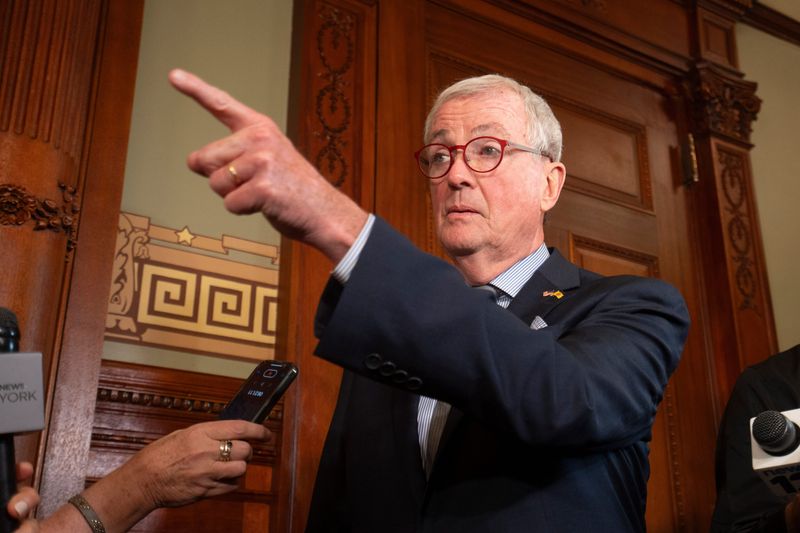
Gov. Phil Murphy speaks with members of the media after meeting with Governor-elect Mikie Sherrill at the governor’s office in Trenton on Nov. 5.
Two other cities — New York and Seattle — passed legislation enabling auto-IRA programs, but neither was implemented because both New York and Washington states enacted state-run programs that include the cities.
The Democratic-controlled Pennsylvania State House passed legislation in 2023 along party lines enabling a similar program called Keystone Saves, but it stalled in the Republican-controlled Senate.
The city would create a nine-member Retirement Savings Board, which would include four appointees by the mayor, four by the City Council president, and one by the city controller.
That board would be responsible for facilitating the program and may contract third-party consultants, financial advisers, actuaries, and other experts to manage the investments.
The program defaults to a Roth IRA, though people covered can elect to switch to a traditional IRA.
John Scott, director of the retirement savings project at Pew Charitable Trust, said during the Council hearing last week that Roth IRAs are often the default in auto IRA programs because participating employees can pull money out of those accounts at any time without taxes or penalty.
He said that’s especially appealing to workers “who sometimes have fluctuations in their work schedule or they might have a financial shock.”
“For many of these workers in these programs, this is really the first opportunity to save money,” Scott said. “So, you know, life happens. And sometimes they do need to pull that money out, and the Roth IRA is really the best vehicle to do that.”
When will this become reality?
Creating the board that will oversee the investments requires a change to Philadelphia’s Home Rule Charter, the city’s governing document.
If Council passes legislation and Mayor Cherelle L. Parker signs it — both are expected to support it — then voters could approve the change through a ballot question as early as May.
The legislation says the program must be launched by July 2027, however there are exceptions in the case of legal challenges or a state-level program superseding the city’s.
The fix was needed because Council earlier this week amended a separate but related piece of legislation — called the H.O.M.E. budget resolution — that sets the first-year spending levels for the housing programs funded or created by the initiative.
Council’s changes, which Parker largely opposed, were significant enough that the budget resolution no longer aligns with the bond authorization bill Council approved in June, meaning the administration cannot rely on the original legislation as its legal basis for taking out city debt.
The new bond bill introduced Thursday reflects Council’s changes, which include increasing the first-year H.O.M.E. budget from $194.6 million to $277.2 million and changing eligibility requirements for some programs to make sure the lowest-income Philadelphia households were prioritized.
“We want to make sure that this is a H.O.M.E. plan that supports everyone, but obviously members of Council had an issue and concern about making sure those most in need are supported throughout this process,” Johnson said.
The bill now heads to committee, and Johnson said negotiations could lead to further changes. Next week is Council’s final meeting of the year, and Johnson on Thursday ruled out adding an extra session, meaning the bill likely will not pass until January at the earliest.
“Working with Council President Johnson and the Members of City Council, we are laser-focused on building, repairing and restoring 30,000 units of housing and making H.O.M.E. a reality for the people of Philadelphia,” Parker said in a statement Thursday.
‘That’s my sister’: Johnson says relationship with Parker still strong
Parker-Johnson pact intact: The Council president on Thursday downplayed his spat with Parker that saw both issue pointed statements Tuesday night blaming the other for delays in issuing the bonds.
But Johnson said Thursday their relationship remains the same and has always involved disagreements — just not ones that have spilled out into public view.
City Council President Kenyatta Johnson and Mayor Cherelle L. Parker have maintained a close working relationship.
“That’s my sister,” Johnson said. “Most of the time, when we do have disagreements, y’all just don’t see it. We meet every week, so you don’t get a chance to see the back-and-forth. But at the end of the day, the mission is to move the city of Philadelphia forward together.”
Council makes it harder to open convenience stores and pharmacies in Kensington
The bill, authored by Councilmember Quetcy Lozada, forces any new “sundries, pharmaceuticals, and convenience sales” businesses in her 7th District — which covers much of Kensington and parts of North and Northeast Philadelphia — to get approval from the Philadelphia Zoning Board of Adjustment. That process is notoriously long and can be expensive for applicants.
Lozada has said that the bill is targeted at corner stores and smoke shops, not chain businesses like CVS and 7-Eleven.
The legislation is part of the body’s broader war on so-called nuisance businesses, which lawmakers say attract crime and disrupt neighborhoods. And it comes in addition to a controversial 11 p.m. business curfew in Lozada’s district that took effect earlier this year.
City Councilmember Quetcy Lozada represents Kensington.
It’s one of several legislative remedies lawmakers have undertaken to curb small businesses like smoke shops and convenience stores that have unregulated slot machine-like “skill games,” sell marijuana-like products, and peddle drug paraphernalia without a license to do so.
Seriously … no nuisances, please: Lozada was not the only lawmaker taking aim at “nuisance” businesses Thursday, when Council approved two bills by Majority Leader Katherine Gilmore Richardson on the same topic.
One measure makes it easier for the Philadelphia Department of Licenses and Inspections to issue stop-work and cease-operations orders to businesses violating city regulations. The other is aimed at closing loopholes that “let nuisance business owners avoid enforcement by changing their name or ownership, ensuring those with similar ownership or operations remain accountable for past violations,” Gilmore Richardson’s office said.
The measures, which were both approved 16-0, were aimed at stopping “the spread of dangerous and destructive businesses and the need for further action to address their impact on our communities,” Gilmore Richardson said.
“While I am encouraged by the steps we are taking today, I am also working on additional legislation to more aggressively crack down on these businesses and the bad actors behind them,” she said.
“Anybody that knew Paul will tell you he really was that guy, that guy who would give you the shirt off his back,” Harrity said. “He’s the only person I truly knew never lost faith in me, even when I was at my lowest 10 years deep in my addiction.”
Councilmember Curtis Jones Jr. thanked Harrity, who often gives impassioned speeches, for his heartfelt tribute to Staico.
“I want to shout out Jimmy Harrity for making crying in Council cool,” Jones said. “Nobody does it better, brother.”
Staff writer Jake Blumgart contributed to this article.
Philadelphia City Council on Tuesday amended the initial budget for Mayor Cherelle L. Parker’s signature housing initiative to direct more money to programs that will help the lowest-income Philadelphians, a move that sparked one of the most notable confrontations between Parker and city lawmakers since she took office almost two years ago.
The amendment, which followed a weekslong standoff between the executive and legislative branches, represents a rare act of defiance for a Council that has otherwise been largely compliant with Parker’s agenda, and it appeared at first to be a major win for Philly progressives.
But Parker is not giving up the fight, and she said Tuesday night that the amendment may have had unintended consequences that could hold up much of the housing initiative for months.
The changes to the legislation, she said, may trigger additional procedural steps that will prevent the city from issuing $400 million in bonds to fund the initiative until March or later. The mayor did not hold back from laying the blame for the delays at Council’s feet.
“The resolution that City Council passed out of the Committee of the Whole today contained language that our bond lawyers have repeatedly advised would prevent the administration from being able to issue the bonds,” Parker said in a statement. “That means homes are not being restored. It means homes are not being built or repaired.”
In an unusually blunt statement late Tuesday night, Council President Kenyatta Johnson pushed back against the administration’s analysis of the situation.
“Council’s responsibility is not to rubber-stamp legislation, but to ensure that any multi-billion-dollar public investment is legally sound and targeted to the Philadelphians who need it most,” Johnson said.
But he also vowed to have Council quickly introduce new legislation that could ameliorate the procedural problem Parker identified, tacitly conceding that additional legislation was needed hours after lawmakers approved the resolution with no mention of that possibility.
Johnson said Council would “resolve remaining legal and policy issues swiftly,” and that a new measure to legalize lawmakers’ most recent changes could be introduced this week.
Council wants “shovels in the ground” and “homes repaired,” he said, but ”refuses to rush into issuing $800 million in debt without iron-clad legal protections and clear guarantees.”
“Council members repeatedly raised concerns — directly and in good faith — about accountability, neighborhood equity, homeowner protections, and the long-term impact of the H.O.M.E legislation,” he said. “Council’s action today strengthened the H.O.M.E resolution, not sabotaged it.”
The late-night war of words between Parker and Johnson came hours after a celebratory Council committee meeting in which lawmakers took a victory lap for standing up to the administration.
After the vote, Councilmember JamieGauthier and Councilmember Rue Landau, respectively the chair and vice chair of the Committee on Housing, Neighborhood Development and the Homeless, said the amended resolution means “working and low-income families will finally be able to get the support they need sooner.”
“With roughly $30 million in federal homelessness funding at risk, it is more important than ever that this multiyear, $800 million investment begins by prioritizing the more than 200,000 Philadelphia households on the brink of losing their homes,” Gauthier and Landau said in a joint statement, referring to a federal policy change proposed by President Donald Trump’s administration that could cost the city millions in funding for anti-homelessness programs.
Council pushes for policy changes
Parker, who has long championed the city’s “middle neighborhoods,” structured her sweeping Housing Opportunities Made Easy, or H.O.M.E, initiative to ensure that the myriad programs funded or created by the program would be available to homeowners and renters at a variety of income levels.
But Johnson — in an unexpected break from his usual alignment with Parker — stood with Gauthier and other progressives who fought to ensure the neediest city residents were prioritized in the budget resolution, which sets the first-year spending allocations for H.O.M.E. The distribution of funding must be approved by Council before the administration can issue the first of two planned $400 million tranches of city bonds that will finance much of the initiative.
Council’s Committee of the Whole, which includes all members, approved the amendment and advanced the resolution in a pair of unanimous voice votes Tuesday afternoon following hours of testimony.
The measure would now head to the Council floor for a final passage vote in the next two weeks. Parker’s statement, however, could mean Council has additional work to do before getting the measure over the finish line. Johnson’s office said the vote is still scheduled for Dec. 11.
“The majority of the members of City Council want to focus on the issues of those who are poor here in the city of Philadelphia when it comes to housing and equality,” Johnson told reporters after the vote.
It’s unclear whether the vote represents a serious rupture in the tight relationship between Parker and Johnson, who have worked closely together since both took office in January 2024. Council approved the most important pieces of legislation Parker proposed as part of the H.O.M.E initiative earlier this year, and the changes adopted Tuesday do not alter the fundamentals of the program, which Parker hopes will achieve her goal of creating or preserving 30,000 units of housing in her first four-year term.
“We support the H.O.M.E. plan,” Johnson said. “And I think the mayor did a good job in investing close to $1 billion … in supporting the issue of housing inequality here in the city of Philadelphia. This amendment represents the will of the members. … We want to specifically focus on those who are the most least well-off, those who are poor.”
But after reading about Parker’s statement in the evening, Johnson’s attitude toward the administration sharpened. His lengthy statement included the most critical language the Council president has directed at the mayor since they were inaugurated.
Mayor Cherelle L. Parker unveils her long-awaited plan to build or preserve 30,000 units of housing during a special session of City Council Monday, Mar. 24, 2025. Council President Kenyatta Johnson is behind her.
Johnson rejected Parker’sclaim that the legislative delays could cause the popular Basic Systems Repair Program to temporarily run out of funding, saying that there is plenty of money in the current city budget to cover shortfalls.
“Threatening residents with a shutdown of the Basic Systems Repair Program and assigning blame does not move this process forward,” he said. “Collaboration and working together does.”
The amendment increases the first-year budget for spending the bond proceeds from $194.6 million to $277.2 million. The increased price tag, however, does not represent new money in the housing budget; it merely allows the administration to spend more of the $400 million in bond proceeds in the initiative’s first year.
The changes include increases in funding for housing preservation from $29.6 million to $46.2 million, and housing production from $24.3 million to $29.5 million. Additionally, the amendment boosted funding for homelessness prevention programs from $3.8 million to $8.8 million.
But perhaps more importantly, Council altered the income eligibility levels for several programs.
Parker, for instance, had proposed that the H.O.M.E. funding for the Basic Systems Repair Program, which subsidizes critical home improvements to prevent residents from being displaced by the costs of needed repairs, be open to any homeowner who makes Philadelphia’s area median income, or AMI, which is about $119,400 for a family of four.
Council’s amendment, however, requires 90% of the new funding to go to families making 60% of AMI or less, about $71,640 for a family of four.
The administration initially planned to issue the first $400 million in bonds this fall, and Parker sent Johnson’s office a first draft of the budget resolution in July. Council then delayed the committee vote on the resolution several times as Johnson negotiated with Parker on potential changes.
The amendment adopted Tuesday appears to largely mirror Gauthier’s priorities for the spending plan, rather than a negotiated compromise, the first sign that Johnson had moved forward despite not reaching a deal with Parker.
Parker’s plan to sell the initial round of bonds this fall appeared to be on schedule when Council in June approved the most important pieces of legislation associated with the H.O.M.E. initiative, including an $800 million bond authorization.
But lawmakers at that time inserted a provision into the bond legislation that required the administration to get Council approval of its H.O.M.E. budget each year before it can spend the bond proceeds. For the initiative’s first year, that provision means the city cannot take the bonds to market at all without Council signing off on the budget resolution, city Finance Director Rob Dubow has said.
The latest potential delay, which could set Parker’s schedule back months more, stems from the amendment approved in committee Tuesday.
Parker did not elaborate on the procedural issue that could cause the latest delay, but her comments indicated what it may be: Because the resolution, which dictates how the bond proceeds can be spent, now includes significant differences from the bond authorization bill Council approved months ago, the city may not be able to rely on the original bill as its legal basis for taking out debt and selling the bonds.
To make them align, Council may have to approve a new bond authorization bill, or abandon some of its changes to the spending resolution.
In his statement Tuesday night, Johnson indicated Council has chosen the former route.
“City Council is preparing to introduce an amendment to the H.O.M.E bond ordinance as early as this week’s Council session,” he said.
It’s unclear if the resolution could pass by the end of the year. But Johnson’s reference to the potential of the current city budget’s surplus covering shortfalls in housing programs indicates that might not be possible.
Council’s last meeting is scheduled for Dec. 11. Lawmakers can vote to suspend Council rules and fast-track legislation as needed.
This story was updated to include Council President Kenyatta Johnson’s response to Mayor Cherelle L. Parker’s statement.
Historic preservation advocates are sounding the alarm about legislation from Councilmember Mark Squilla, which they argue would weaken existing protections in Philadelphia.
The bill, introduced Nov. 20, would institute changes to the city’s Historical Commission, which regulates properties on the Philadelphia Register of Historic Places and ensures that they cannot be demolished or their exteriors substantially altered.
“This is the first time the [preservation] ordinance has been proposed for amendment in decades,” said Paul Steinke, executive director of the Preservation Alliance for Greater Philadelphia. “This is a developer-driven proposal that does not reflect any of the priorities of the preservation community.”
Proponents of the bill argue that it is simply meant to give more notice and power to property owners before their buildings are considered by the Historical Commission.
“The bill does nothing to decrease the power of the Historical Commission to protect important historic resources,” said Matthew McClure, who served as co-chair of the regulatory committee of Mayor Jim Kenney’s preservation task force.
“It is a modest good government piece of legislation,” said McClure, a prominent zoning attorney with Ballard Spahr. He emphasized that he was not speaking on behalf of a client.
The bill was introduced too late in this year’s Council session to receive a hearing. Squilla says it will be considered next year.
Currently, the interest group most supportive of the bill is the development industry. But even some preservation opponents are displeased with Squilla’s effort, arguing that it does too little for homeowners.
“Everybody’s talking, and I think they all agree to move forward with continued conversations to maybe tweak the language a little bit so everybody feels comfortable with it,” Squilla said.
At least one more stakeholder meeting will be held in December.
Tensions over preservation
Squilla’s proposal comes in the midst of heightened debate around preservation in Philadelphia, where the majority of buildings were constructed before 1960.
Over the last decade, the number of historically protected properties doubled, although well below 5% of the city’s buildings are covered. Preservationists oppose what they see as a demolition-first approach to development in the United States’ only World Heritage City.
These have provoked backlash among some homeowner groups and pro-development advocacy organizations, which see these regulations as increasing housing costs.
Members of the Philadelphians for Rational Preservation gathered at Seger Park in the Washington Square West neighborhood on July 27 to talk about their opposition to the Washington Square West Historic District.
Some property owners have grievances against the way the local nomination process works.
In Philadelphia, citizens are empowered to nominate buildings to the local register — giving buildings protection from demolition or exterior changes — without input from the property owner until the Historical Commission considers the case.
This practice persistently causes controversy, especially because there are few local incentives for homeowners whose properties get protected.
In some localities, preservation protections are promulgated exclusively by planners. In others, owner consent is required.
“The current historic nomination process is most often dictated by nongovernmental actors who operate without notice to property owners,” McClure said. “The administration’s bill is aimed at increasing transparency and basic fairness during the nomination process.”
Mayor Cherelle L. Parker’s administration did not respond to a request for comment.
What’s in the bill
Squilla’s bill is thick with new provisions to the local historic ordinance. A key aspect of the legislation gives property owners at least 30 days before a pending nomination of their building is considered by the commission and protections kick in.
While homeowners probably would not have time to radically alter the exterior of their house — and presumably wouldn’t demolish it — preservationists fear that developers will use the extra time to begin razing historic buildings.
“No one likes the notice provision the way it’s written; that’s freaking people out,” Steinke said. “We made clear why we think that’s a problem, and we were heard. Of course, the development community would love it to be the way it’s currently expressed in the bill.”
A Victorian home in the Spruce Hill historic district. Recently large new historic districts have been created to cover neighborhoods like Powelton Village, parts of Spruce Hill, and 1,441 properties in Washington Square West.
The delayed provision particularly worries preservationists in combination with a proposed requirement that the commission approve permits — including demolition or exterior design work — if “material commitments” were made to plans before the attempt to protect the historic building.
Other provisions include language to make it more difficult to protect land because it may house archaeological remains. It also limits the ability to consider a property for protection due to its relation to a landscape architect (as opposed to, say, a building designer).
Despite their animus toward existing preservation rules in the city, groups like 5th Square and Philadelphians for Rational Preservation called the legislation a sop to those who least need help.
“While this bill is a boon to developers, it doesn’t help ordinary Philadelphians,” said Jonathan Hessney of Philadelphians for Rational Preservation.
He argues that Squilla isn’t curbing historic districts that burden homeowners, “while at the same time risks allowing genuinely historic properties to be destroyed in the new 30-day race to demolish or deface it creates.”
A possible reform that some critics of the bill would like to see are flexible, tiered historic districts, where only a select group of buildings would be fully regulated. Demolition protections would still exist for many buildings, but most would not be subjected to oversight for changes like replacing a door or window.
“That was discussed as something that the preservation community would like to see that was mentioned in the original draft and then stripped out,” Steinke said.
Squilla said the pushback surprised him, given that negotiations have been held since June. He’s confident a compromise can be reached.
Beyond the Preservation Alliance — the advocacy group with the most funding and pull in City Hall — the bill has caused alarm among historic activists.
“It was a blindside to the progress that many stakeholders in the preservation community felt they were reaching with him,” said Arielle Harris, an advocate. “Squilla understands the preservation climate in the city — given that he was on the preservation task force — so this is out of left field.”
Mayor Cherelle L. Parker has said her administration relied on expert advice from a top law firm when it decided to end a Philadelphia policy prioritizing businesses owned by women or people of color in city contracting following recent court rulings that limited affirmative action-style government programs in hiring and contracting.
“I call them my genius attorneys because they all clerked for Supreme Court justices, and they handle the hardest cases throughout the country,” City Solicitor Renee Garcia, the city’s top lawyer, recently said of the New York-based firm Hecker Fink.
“And we went back and forth,” Garcia said. “Can we do this? Can we do this? What about this? What about that?”
But when it came time to replace the city’s old program with a new policy, the Parker administration didn’t adopt all of the suggestions it received from Hecker Fink, internal administration documents obtained by The Inquirer show.
Hecker Fink attorneys suggested that Philadelphia replace its old contracting system with one that favors “socially and economically disadvantaged” businesses, the documents show. Parker instead created a new policy favoring “small and local” companies.
The differences between Parker’s program and alternatives the city could have adopted are highly technical but hugely important, attorneys and researchers who study government contracting told The Inquirer.
Critics say the new policy indicates Philadelphia took the easy way out in the face of conservative legal attacks, instead of fighting to preserve the spirit of the old program: promoting equity and diversity in city contracting.
Parker, however, is adamant that her “small and local” policy will achieve that goal, given that many small companies in the city are owned by Black and brown Philadelphians who have faced discrimination.
“Our small and local business program is our disadvantage program,” Garcia said in a written statement. “Considering counsel’s advice, the City determined that a small and local business program is the best way to incorporate social and economic disadvantage in a way that is objective, content-neutral, consistent, demonstrable, and could be stood up very quickly.”
The documents, which include confidential legal memos from Hecker and internal administration emails, show how top city officials attempted to navigate a new legal landscape after the U.S. Supreme Court in 2023 upended decades of jurisprudence on affirmative action and other race-conscious policies.
Mayor Cherelle L. Parker said her “small and local” contracting policy will boost Philadelphia companies.
In early 2025, the Law Department provided a spreadsheet of line-by-line edits to the city’s Five Year Plan, a long-term budgeting document, to remove language about racial and gender-equity goals submitted by city departments.
When the Office of Community Empowerment and Opportunity, for instance, wrote that its mission involved “advancing racial equity,” the Law Department simply wrote, “remove racial,” as it did for several other agencies.
The edits signify a stark contrast to the city’s approach under former Mayor Jim Kenney, who in 2020, operating under very different circumstances, instructed all departments to craft comprehensive racial-equity plans.
There is no indication in the internal documents, which are primarily from 2024 and 2025, that Parker, the city’s first Black female mayor, or administration officials were eager to make those changes. And no city officials appeared in the documents to view the “small and local” policy as less aggressive or safer than the other options at Parker’s disposal when she replaced the city’s race-conscious contracting system.
But for Wendell R. Stemley, president of the National Association of Minority Contractors, the mayor’s choice was revealing.
“The cities that want to cave in on this issue without doing the hard work are just doing small [and] local, race- and gender-neutral,” Stemley said.
‘Disadvantaged’ vs. ‘small and local’
The documents obtained by The Inquirer show that Hecker recommended the city abandon its decades-old contracting system — responsible for allotting more than $370 million each year in city contracts to historically disadvantaged firms — due to the threat of potential legal challenges, as Parker and Garcia have said.
But they also show that the firm proposed replacing that policy with a system “setting mandatory goals for hiring socially and economically disadvantaged businesses or persons,” a race- and gender-neutral standard based on the federal Small Business Administration’s 8(a) business development program.
Like the city’s contracting policies, the federal program previously had a stated policy of aiding business owners who were members of specific historically disadvantaged groups, such as women and Black people. But a 2023 federal court ruling in Washington, D.C., prohibited the SBA from presuming that members of those groups had faced barriers and required 8(a) applicants to demonstrate social and economic disadvantages.
The change allowed the program to pass legal muster by not favoring race or gender groups, while still allowing the agency to consider whether each applicant had faced discrimination on an individual basis.
Hecker, a litigation and public interest firm, suggested that Philadelphia adopt a similar approach.
“Adopting mandatory goals for hiring socially or economically disadvantaged individuals or businesses, defined along the same race-neutral lines as in the SBA’s 8(a) program, would likely be defensible if challenged,” Hecker lawyers wrote in a May 5 memo to the city.
An internal administration memo analyzing the city’s options on May 16 said that Hecker “recommended taking a look at the federal SBA 8(a) Business Development Program as a model.”
“This is a program to recognize small and disadvantaged businesses,” the city’s memo said, adding that the SBA defines socially disadvantaged individuals as “those who have been subjected to racial or ethnic prejudice or cultural bias within American society because of their identities as members of groups and without regard to their individual qualities.”
The executive order governing the city’s old minority contracting program, which aimed to award 35% of contracts to historically disadvantaged firms, expired at the end of 2024, and the city quietly ended it at some point earlier this year.
The key difference between Parker’s program and the 8(a) model is that the city’s new policy gives no explicit consideration for social disadvantage, prejudice, or cultural bias.
Garcia, the city solicitor, firmly pushed back against the notion that the city had ignored Hecker’s advice on reshaping its contracting landscape and contended that the “small and local” policy will result in equitable outcomes because many of Philadelphia’s small businesses are owned by people of color and have faced discrimination and other barriers to growth.
“The City’s small and local business program … is more aggressive [than an SBA 8(a)-style policy] in that it is broadly applicable to small and local businesses, without creating unnecessary hurdles and confusion over the word ‘disadvantage’ or requiring onerous paperwork” for business owners to demonstrate their disadvantages, she said.
City Solicitor Renee Garcia is the Parker administration’s top lawyer.
Although Parker’s new program is not exclusively available to disadvantaged firms, Garcia said it “has built-in elements of social and economic disadvantaged programs like the SBA 8(a) and [U.S. Department of Transportation] programs, such as utilizing SBA business size standard caps, examining years in business, examining employee count, and personal net worth considerations.”
But Andre M. Perry, a senior fellow at the Brookings Institution, said that while the city may be intending to help disadvantaged businesses with its “small and local” approach, specifying that goal in writing is important. The mayor’s executive order does not use the word disadvantage.
“They are different,” said Perry, the author of Black Power Scorecard, an examination of access to property, education, and business success. “The downside of any approach that does not use some criteria for being disadvantaged is that you can ignore them.
“There is a history that suggests that you absolutely need some process to identify groups of people who have been ignored by the city. It’s certainly not a given that you will touch those communities that have been denied opportunities in the past under ‘small and local,’” Perry said.
‘Too early to tell’
Parker’s move to abandon the city’s goal of prioritizing businesses owned by women and Black and brown people has become the latest flashpoint in the debate over the centrist Democrat mayor’s approach to the new political reality under President Donald Trump’s second administration, as critics like progressive City Councilmember Kendra Brooks have accused her of “caving” to Trump.
Parker, however, said the city had little choice but to end the old system following Students for Fair Admissions v. Harvard, a 2023 Supreme Court ruling that prohibited affirmative action in college admissions and has had widespread consequences for race-conscious government programs.
“There were people who told us that leadership meant justifying the [old] law,” Parker said at a recent news conference announcing the contracting policy changes. “They said, ‘Forget about the Supreme Court ruling. Philadelphia should just continue functioning and operating its program even if your Law Department and these genius lawyers at [Hecker] who have clerked for Supreme Court justices [recommended abandoning it.]’
“I want to take some advice from somebody to interpret the Supreme Court ruling right for some folks who have worked there.”
The U.S. Supreme Court upended the legal landscape for race-conscious government programs with a 2023 case ending affirmative action in college admissions.
But Parker also said she felt that the city’s old system was “broken” long before the Harvard decision because it failed to achieve its goal of boosting the number of “Black and brown and women and disabled business owners” in Philadelphia.
Parker, who as a lawmaker worked on policies aimed at boosting economic opportunities for minority- and women-owned firms, said she was optimistic that pivoting to a focus on “small and local” firms would produce better results.
Parker has not publicly discussed suggested alternatives to her new policy, including the 8(a)-style approach.
Several government contracting attorneys and researchers interviewed by The Inquirer said that both “small and local” and “socially disadvantaged” programs have downsides and that the success of either would primarily depend on how well it is executed. Details are scant on what the new policy will actually look like, making it difficult to evaluate the potential impact.
But experts said choosing a policy that seeks to favor disadvantaged businesses rather than any small Philadelphia firm would indicate the mayor was fighting to maintain the spirit of the old program, which sought to boost companies owned by women and people of color who have long been underrepresented among business owners and government contractors.
“Adopting an 8(a)-style program with language prioritizing contracts for socially disadvantaged businesses would signal a desire to maintain the pre-2024 understanding that cities can procure goods deliberately, intentionally, in different ways, with preferences from disadvantaged businesses,” said Brett Theodos, a senior fellow at the Urban Institute who has written a paper about how governments can use contracting to promote equity, despite recent court decisions. “Having an (8)a-style [program] would signal that the mayor wanted to try something more.”
Parker has defended her policy shift by invoking the bona fides of the Hecker attorneys who worked with the city. She and other city officials have noted that one clerked for liberal U.S. Supreme Court Justice Sonia Sotomayor and now works for the American Civil Liberty Union — “not somebody who would have had a conservative mindset,” as Garrett Harley put it. (Those comments later prompted the ACLU-PA to distance itself from what it described as the city’s “DEI rollback.”)
To be sure, adopting a program in which contractors need to demonstrate social disadvantages, such as past instances of discrimination, has its own drawbacks.
Following the 2023 federal court decision, the SBA now requires 8(a) applicants to submit “social disadvantage narratives,” or essays, increasing administrative burdens and potentially favoring savvier contractors. The U.S. Department of Transportation has a similar essay-based approach.
The U.S. Small Business Administration’s 8(a) business development program is aimed at helping “socially and economically disadvantaged” firms.
“We have heard from our businesses it is already too hard to do business in Philadelphia; these kinds of additional requirements will exacerbate an already difficult and burdensome process,” Garcia said.
And despite being a race- and gender-neutral federal policy, the current 8(a) standard, which was adopted in President Joe Biden’s administration, may still be challenged in court.
The lawyers at Hecker Fink, however, believed that a Philadelphia version of the policy could withstand scrutiny.
“The next wave of conservative litigation in this space may target such programs, arguing that social or economic disadvantage is a proxy for race,” Hecker attorneys wrote in the May 2025 memo. “However, based on our assessment of the current legal landscape, the City would have a strong chance of defeating such challenges.”
Like many diversity, equity, and inclusion initiatives cast as discriminatory by the president, the 8(a) program has come under siege since Trump took office in January. On the agency’s website, hyperlinks to guidelines on how companies can demonstrate social disadvantage have gone dead, and the Trump administration has launched an audit of the program in the wake of an alleged bribery scheme.
None of those issues, however, address the question of whether a similar policy crafted for the city would be legally defensible. Despite Trump’s attacks, the current version of the 8(a) program’s focus on “socially disadvantaged” firms has not been overturned in court.
Regina Hairston, president and CEO of the African-American Chamber of Commerce of PA, NJ, and DE, said the organization will wait and see how Parker’s new policy shakes out.
“It’s too early to tell if the mayor’s policy is the right policy, but from what I’ve seen across the country, other cities are moving to [prioritize] small, medium enterprises,” Hairston said. “We don’t know if that’s the answer, but we will be monitoring it.”
Staff writer Anna Orso contributed to this article.
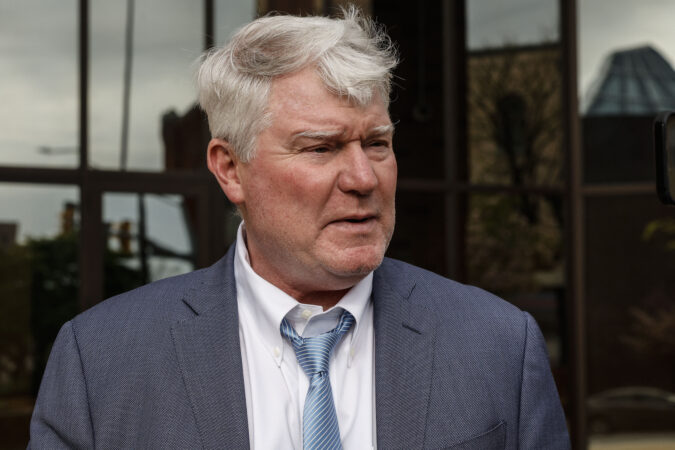
Convicted former labor leader John J. Dougherty is again asking a federal judge to cut short his six-year prison term, this time because he says the recent death of his father-in-law has left his gravely ill wife without a caregiver.
Dougherty made the request in a brief filed last month with U.S. District Judge Jeffrey L. Schmehl, writing that his wife, Cecilia — who for years has suffered from a debilitating brain injury — has been left “entirely alone and without any capable caregiver” since her father died from pancreatic cancer on Nov. 10.
Dougherty has previously argued that he should be granted compassionate release and allowed to serve the remainder of his sentence on house arrest to oversee his wife’s care — a request federal prosecutors have opposed.
In the latest request, Dougherty’s attorney, George Bochetto, wrote that Dougherty’s father-in-law, Joseph Conroy, had been serving as Cecilia Dougherty’s primary caregiver despite his own poor health and that Conroy’s death is “precisely the type of development” that warrants a change to Dougherty’s sentence.
Dougherty, Bochetto wrote, “remains the only person able and willing to provide his wife’s necessary care. No one besides Mr. Dougherty can fill the detrimental need that Mrs. Dougherty requires for survival.”
Federal prosecutors, however, said that Dougherty had previously asserted that Conroy was incapable of serving as Cecilia’s primary caretaker and that his newest motion for relief “directly contradicts” the representations he made in the last one.
“In short, the unfortunate passing of Mr. Conroy has no bearing at all on the circumstances,” prosecutors wrote in a reply brief filed last week.
Dougherty, 65, was once one of the state’s most powerful political figures, serving as the charismatic leader of Local 98 of the International Brotherhood of Electrical Workers with a wide range of connections in City Hall and Harrisburg.
Dougherty’s latest request for relief came several months after he first asked Schmehl for compassionate release.
In August, Bochetto filed an emergency brief saying that a trust fund established to pay for Cecilia Dougherty’s care was about to run out of money and that the couple’s adult daughters were not equipped to serve as permanent caregivers.
It also said Conroy, “once a limited source of support, is now medically incapacitated and permanently unable to contribute to her care in any way.”
Beyond detailing issues around the health of Dougherty’s wife, that filing said that Dougherty had also effectively run out of money and assets since he began serving his sentence at a federal penitentiary in Lewisburg and that he’d suffered from several new health issues while behind bars, including a chronic foot infection that made it hard for him to walk.
Prosecutors at the time wrote that they were sympathetic to the plight of Dougherty’s wife but that his absence from her life “does not distinguish this case from that of countless defendants whose loved ones suffer as a result of their crimes.”
It was not immediately clear when Schmehl might rule on Dougherty’s requested relief, or if he might take any additional action — such as scheduling a hearing — before doing so.
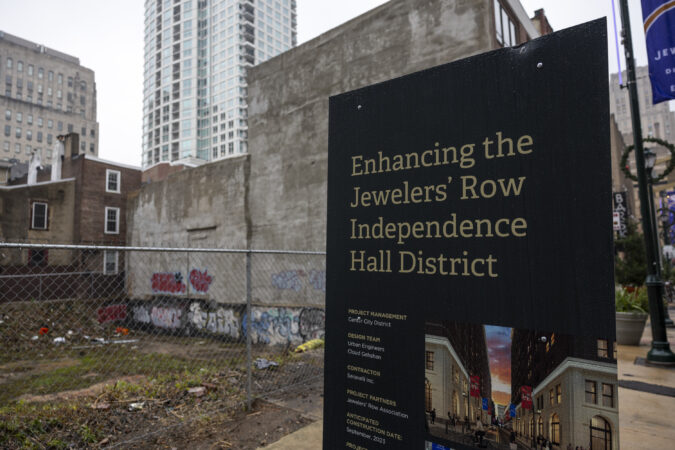
Mayor Cherelle L. Parker unveiled her planning process for the future of Market East earlier this month to a room packed with many of the city’s top developers, lobbyists, and business leaders.
Her news conference followed the announcement that the alliance between the Philadelphia 76ers and Comcast had plans to demolish buildings on the 1000 block of Market Street, without saying what they plan to do with the soon-to-be vacant space.
A Comcast executive’s promise to “turbocharge” development on the beleaguered corridor did not quiet dissent in the packed room from a group of historic preservationists who stood solemnly holding signs reading “No More Holes On Market Street” and “No Plan, No Demo.”
The moment captured a recurring dynamic in modern Philadelphia, a city where over 70% of buildings reportedly date to before 1960 but only 4.4% of them have a degree of protection from demolition by the Historical Commission.
Now two bills in City Council would require property owners to get a building permit for a new structurebefore they move forward with demolition.
“This bill is about putting commonsense guardrails in place,” said Councilmember Jeffery “Jay” Young, who represents much of North Philadelphia and part of Center City.
His bill, which covers his entire district, requires a building permit before a property owner can demolish a structure, with exceptions for dangerous buildings.
“It ensures property owners are prepared to move forward responsibly and that residents aren’t stuck living beside another empty lot with no timeline or plan,” Young said in a statement.
“This isn’t about slowing down development; it’s about preventing speculative demolition that destabilize blocks. This is about preserving communities,” Young said.
Councilmember Jamie Gauthier’s bill would enact similar rules for parts of University City, where higher education institutions are dominant, as part of a larger package of land-use regulations.
Builder and developer advocacy groups say the legislation is a potential new burden on a key economic sector that’s been flagging in recent years.
The Building Industry Association (BIA), the trade association for residential developers, cautioned that new regulations were especially unwelcome in a time of higher interest rates and high construction material prices, especially as Parker makes housing a centerpiece of her agenda.
“I’m not sure why Council would create more barriers for delivering new homes,” said Sarina Rose, president of the BIA and an executive with the Post Brothers development firm. “It’s a really bad time to do that. Unfortunately, some old buildings simply are not good fits for adaptive reuse.”
The BIA and its allies are backing legislation that would make it easier to demolish some older buildings for new construction.
Councilmember Mark Squilla introduced legislation the week before Thanksgiving that would weaken protections for structures nominated to the Philadelphia Register of Historic Places.
At the same time, Parker promises to pursue legislation in the next year to prompt adaptive reuse or demolition of underused buildings by offering a 20-year property tax abatement.
Demolition policy in other cities
In a city as old as Philadelphia, razing buildings is often a fraught process.
Currently the only safeguards against demolition come with a successful nomination to the Philadelphia Register of Historic Places, and in the handful of neighborhoods protected by conservation zoning overlays, property owners have to get building permits before demolition (a template for Gauthier and Young’s bills).
But given the city’s economic and demographic doldrums in the second half of the 20th century, municipal government enacted most of the demolitions of unsafe and abandoned buildings, usually in lower-income neighborhoods.
Mayor John F. Street’s Neighborhood Transformation Initiative, the centerpiece of his administration, spent half its $300 million (in George W. Bush-era dollars) on demolishing thousands of buildingsin the early 2000s.
That dynamic changed in the last decade, as low interest rates and a surge of new residents juiced real estate development to levels not seen in the city for generations. The private sector began to regularly outpace city government in demolition permits, as developers cleared the way for new projects.
Preservationists pushed back. Under Mayor Jim Kenney’s administration (2016-24), the movement demanded new policies such as a demolition review requirement. Before an applicable building could be razed, municipal authorities reviewed its historic merits and adaptive potential.
Similar policies of varying strength exist in cities from Santa Monica, Calif., to Chicago. In the latter case, it applies to buildings from before 1940 that were included in a citywide survey of historic places.
Demolition of New Light Beulah Baptist Church at 17th and Bainbridge Streets, a block below South Street.
During Kenney’s administration, a preservation task force called for a survey and demolition delay as in Chicago, but no elected officials championed the ideas.
Laws like the ones Gauthier and Young are proposing are less common but are used in municipalities like Spokane, Wash., and Pasadena, Calif. Similarregulationsexist for properties in Philadelphia’s conservation districts.
In Spokane, the regulations apply to buildings in the downtown core, those along commercial corridors and buildings on the National Register of Historic Places, which is more of an honorary designation that affords protections.
“You have to have that building permit in hand, plus you have to show us that you have the financial backing to build that replacement building,” said Megan Duvall, Spokane’s historic preservation officer. “If you also can’t show us that you have the construction loan in hand, we won’t allow you to demolish that building.”
Why City Council is acting now
The sudden renewal of interest in demolition policy began when St. Joseph’s University sold much of its West Philadelphia campus, acquired through a merger with University of the Sciences in 2022, to a charter school operator founded by student housing mogul Michael Karp.
After the sale, Gauthier proposed placing controls on the sprawling higher education footprint in her district.
As higher education comes under acute financial and demographic pressure, she fears that building sales by struggling universities could result in demolition and resale of newly vacant lots to developers without the wherewithal to complete projects or speculators with no desire to build quickly.
“The safety and quality-of-life in our neighborhoods should not be disrupted by incomplete or uncertain projects,” Gauthier said in a statement. “I believe requiring responsible development practices is a commonsense approach in today’s uncertain development market.”
Jeffery “Jay” Young outside Independence Hall.
Young’s bill covering much of North Philadelphia and parts of Center City followed the introduction of Gauthier’s legislation. Neither bill has been passed by City Council.
According to the Philadelphia Planning Commission, from January 2022 through November 2025 approximately 580 demolition permits were issued in Young’s district. The Department of Licenses and Inspections said that with a few tweaks, his proposed bill would be enforceable.
Young says his legislation was inspired by frequent calls from constituents who hate the vacant lots that dot their neighborhoods and are frustrated with promised development that never comes to fruition. Both bills exempt buildings in poor condition that are considered dangerous.
While welcoming this spate of demolition regulation, preservationists would prefer citywide policies, not district by district.
“These bills are important first steps, and this is the moment to build them into a modern, citywide framework consistent with approaches already used in several peer cities,” said RePoint, the preservation advocacy group that protested the mayor’s Market East announcement, in an unsigned statement.
Real estate industry backlash
At the same time, Philadelphia’s development industry is embarking on its own campaign to ease existing preservation rules and to push back against these new bills. Both Gauthier’s and Young’s bills have been critiqued by business groups and by the zoning lawyers who often represent developers.
“This is one-tenth of the city of Philadelphia, just based upon a political subdivision [that] changes every 10 years,” Matthew McClure, a prominent zoning attorney, said in testimony about Young’s bill before the Planning Commission. “It’s the exact opposite of planning.”
Groups including the Building Industry Association are backing a new bill from Squilla that the Preservation Alliance for Greater Philadelphia fears will stoke more demolitions.
It would require a new 30- to 60-day window before a building nominated to the local register of historic places could be given protection, which critics believe will incentivize owners to tear down empty buildings quickly.
The mayor’s proposed 20-year property tax abatement proposal for adaptive reuse projects also allows room for demolition if buildings are considered unadaptable, which preservationists fear will bring back the wrecking ball-forward incentives of the city’s earlier abatement policies.
In the last week, groups like the Preservation Alliance have pivoted from thinking about new demolition regulations to playing defense.
“We’re still trying to wrap our heads around it all,” said Paul Steinke, the Preservation Alliance’s executive director. “It’s a lot to take in, and it’s happening after a decade or so of a building boom where we lost a chunk of the historic fabric.”
Mayor Cherelle L. Parker has appointed nonprofit founder and Democratic ward leader Anton K. Moore as the city’s director of public engagement and neighborhood affairs.
Moore, who founded the South Philadelphia-based group Unity in the Community, effectively replaces Hassan Freeman, who was fired from the Parker administration about two months ago following a verbal altercation outside City Hall with City Councilmember Isaiah Thomas that the lawmaker described as “negative and disturbing.”
Freeman, who worked under Chief Deputy Mayor Sinceré Harris, was director of neighborhood and community engagement. Parker said she renamed the role to reflect added responsibilities while appointing Moore, whose work will now fall under Chief of Staff Tiffany W. Thurman’s portfolio.
The Office of Public Engagement and Neighborhood Affairs will manage the city’s 10 Neighborhood Community Action Centers, which are meant to be “neighborhood City Halls” where residents can access services closer to home. The centers are a major part of Parker’s efforts to follow through on her campaign promise to create a city government “residents can see, touch, and feel,” and there is one in each Council district.
Moore, the Democratic leader of the 48th Ward in South Philadelphia, has strong political connections, and his nonprofit work has been praised by numerous elected officials.
“This is the piece of the puzzle that we needed,” Parker said Monday at a City Hall news conference, before addressing Moore: “You now have an opportunity to do what you did in South Philly but you’ve got to do it all over the city.”
Moore’s salary is $195,000, according to the mayor’s office.
“We’re going to work, we’re going to have fun, and we’re going to deliver the services that the city of Philadelphia deserves,” Moore said.
Police Commissioner Kevin J. Bethel said he has worked with Moore, 39, on youth employment and engagement efforts and leaned on him as an “adviser of my process to help me understand what is going on in the streets.”
“There is nobody better connected to our community. There is nobody better trained to take on this task,” said Bethel, who later added he would “go through a wall for this kid.”
Founded in 2008, Unity in the Community provides a variety of services, including connecting residents with housing aid and students with scholarships, and its parent organization is Soul Food CDC. The group has partnered with 76ers player Joel Embiid to give residents Giant gift certificates and former teammateBen Simmons, now with the Los Angeles Clippers, to provide Christmas gifts to children.
The group also received $417,900 from a city anti-violence grant program founded during the surge in shootings and homicides that followed the onset of the coronavirus pandemic.
In a report about poor oversight of that program, The Inquirer in 2023 reported that Unity in the Community received about 60% more in funds than the $258,000 the group had applied for. The paper also found that a staffer for the Urban Affairs Coalition, which administered the grant program, raised questions about management of Unity in the Community’s project, expanding a youth carpentry training program in South Philadelphia.
The staffer wrote in a 2022 email he was “very concerned” about accounting issues, including $75,000 in funding for which the organization had not submitted invoices. Moore said in 2023 he would work to fix the paperwork errors and defended the group’s work.
His application for the anti-violence grant was supported by Thomas and State Sen. Anthony Williams (D., Philadelphia), an indication of Moore’s support among Philadelphia’s political class.
Council recently named a block in South Philly in his honor. He was appointed by former Gov. Tom Wolf to the Pennsylvania Commission on African American Affairs. At Monday’s news conference, Ryan Boyer, a Parker ally who leads the politically powerful Philadelphia Building & Construction Trades Council, heaped praise on Moore and joked that he “will be a great director of whatever the mayor called it.”
Parker’s chief of staff, Tiffany W. Thurman, praised Moore as “someone whose heart beats with the rhythm of our streets in every neighborhood.”
“Your mandate from the mayor is very clear: You are now the direct link between our administration and our neighborhoods,” Thurman said at the news conference.
Freeman’s dismissal followed a September incident in which he allegedly confronted Thomas at the lawmaker’s parking spot. In an email Thomas sent administration officials that was obtained by The Inquirer, Thomas wrote Freeman “spoke to me in a disrespectful manner, a hostile tone, and addressing me outside my name and title.”
Freeman did not immediately respond to a request for comment.
Parker declined to comment on the ordeal, except to say “some personnel adjustments were made.”
“I’m not looking back on anything associated with yesterday,” Parker said in an interview. “I’m thinking about how we are going to keep moving Philadelphia forward.”
Staff writer Ryan W. Briggs contributed to this article.
Philadelphia City Council is escalating its clash with some harm reduction providers, with lawmakers on a key committee voting Monday to ban mobile addiction services from parts of Kensington and its surrounding neighborhoods.
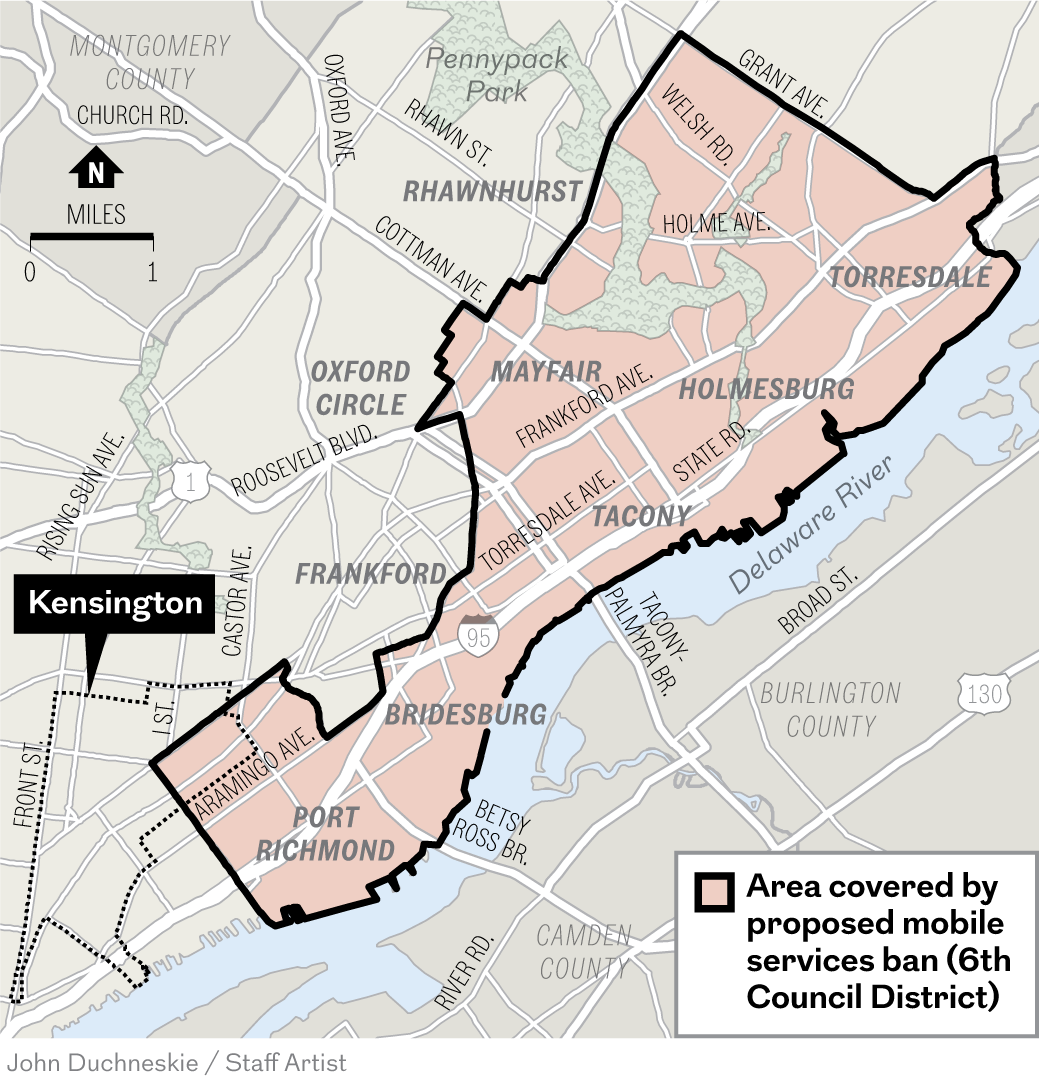
Members of Council’s Committee on Licenses and Inspections voted, 5-1, to advance the legislation, which covers the Lower Northeast-based 6th District, represented by Councilmember Mike Driscoll, the bill’s sponsor.
The area stretches from the eastern side of the intersection at Kensington and Allegheny Avenues — long the epicenter of the city’s opioid epidemic — north along the Delaware River and up to Grant Avenue.
The full Council could vote on the legislation as early as next month.
Map of the 6th Council District, the target of proposed legislation to ban mobile addiction services.
Some Kensington residents who have begged lawmakers for years to address the sprawling homelessness and addiction in the neighborhood said they support the legislation because the providers draw people who use drugs into residential areas.
“I have grandkids who can’t come and see me because of where grandmom lives at,” said Darlene Abner-Burton, a neighborhood advocate. “It’s not fair that we have to endure what we have to endure. No one should live like we do, and no one should go through what we go through.”
However, a half dozen harm reduction advocates testified that the legislation would not reduce homelessness or addiction, but would instead erect barriers to medical care that vulnerable people rely on and would lead to more overdose deaths.
“Every member of our community deserves dignity and compassion, not punishment,” said Kelly Flannery, policy director at the Positive Women’s Network, an advocacy organization for people with HIV.
Flannery called the measure a “cruel ban.”
Councilmember Mike Driscoll, who represents the 6th District and authored the legislation, greets Mayor Cherelle Parker after her first budget address in City Council in March 2024.
It’s the second time Council appeared poised to pass a bill aimed at restricting mobile service providers, which are groups that operate out of vans or trucks and offer a range of assistance to people in need, including first aid, free food, and overdose reversal medication.
Earlier this year, Council voted to pass restrictions on the providers operating in the nearby 7th District, which covers the western parts of Kensington.
But that bill — which passed the full Council 13-3 and was signed by Mayor Cherelle L. Parker — was not a blanket ban.
That legislation, authored by 7th District Councilmember Quetcy Lozada, requires providers obtain a license, and it limits organizations that provide medical services to specific areas designated by the city. Groups that offer nonmedical services like distributing food are prohibited from parking in one place for more than 45 minutes.
The city is expected to begin enforcing that law on Dec. 1.
Driscoll said he introduced his own legislation to ban the services from his district entirely because he was concerned that providers who faced restrictions in the 7th District would migrate into the neighborhoods he represents.
The only committee member to vote against Driscoll’s legislation Monday was Nicolas O’Rourke, a member of the progressive Working Families Party who represents the city at-large and also opposed the 7th District legislation.
Philadelphia stands to lose tens of millions of dollars in federal funds intended to fight homelessness under a plan issued by the Trump administrationthat advocates say could significantly disrupt permanent housing programs and return formerly homeless people to the streets.
TheU.S. Department of Housing and Urban Development releasedthe plan earlier this month,saying it would “restore accountability” and promote “self-sufficiency” in people by addressing the “root causes of homelessness, including illicit drugs and mental illness.”
Nationwide, advocates say, the HUD plan could displace 170,000 people by cutting two-thirds of the aid designated for permanent housing.
The number of individuals in Philadelphia at risk of losing stable housing hasn’t been tallied because the city’s Office of Homeless Services (OHS) is still reviewing the plan’s impact, said Cheryl Hill, the agency’s executive director.
Overall, there are 2,330 units of permanent housing, many of them financed by $47 million the city received from HUD last year, according to city officials.
A preliminary analysis by HopePHL, a local anti-homelessness nonprofit, estimates around 1,200 housing units with households of various sizes would lose federal aid and no longer be accessible to current residents, all of whom are eligible for the aid because they live with a physical or mental disability.
HUD plans to funnel most of the funding for permanent housing into short-term housing programs with requirements for work and addiction treatment. The agency also said that it’s increasing overall homelessness funding throughout the United States, from $3.6 billion in 2024 to $3.9 billion.
“This new plan is disastrous for homelessness in Philadelphia,” said Eric Tars, the senior policy director of the National Homelessness Law Center, who lives and works in Philadelphia. “The biggest immediate harm would be that those who were once homeless but are now successfully living in apartments will be forced out of their homes.”
Other critics say the policy is based on a failed model that strips away civil liberties and doesn’t address what scholars and people who run anti-homelessness agencies say is the main reason Americans are homeless: the dearth of affordable housing.
“We have broad concerns about what we’re seeing,” said Candice Player, vice president of Advocacy, Public Policy and Street Outreach for Project HOME, the leading anti-homelessness nonprofit in Philadelphia. “We are all in a very difficult position here.”
Amal Bass, executive director of the Homeless Advocacy Project, which provides legal services to those experiencing homelessness, agreed, saying the city is “bracing for homelessness to increase in Philadelphia as a result of these policy choices.”
The need to house thousands of people suddenly made homeless would force cities, counties, and states to spend money they may not have, according to a statement from the National Alliance to End Homelessness.
Asked for comment, a HUD spokesperson sent a statement saying the agency seeks to reform “failed policies,” and refutes claims that the changes will result in increased homelessness.
HUD hopes that current permanent housing shift to transitional housing will include “robust wraparound support services for mental health and addiction to promote self-sufficiency.”
The agency added that it wants to encourage the “12,000 religious organizations in Pennsylvania to apply for funding to help those experiencing homelessness.”
New restrictions on ‘gender ideology extremism’
The federal government funds local governments to address homelessness throughso-called Continuums of Care (CoC), local planning bodies that coordinate housing and other services. In Philadelphia, the CoC is staffed by the city’s Office of Homeless Services, and governed by an 18-member board, including homeless and housing service providers, and physical and behavioral health entities.
In its plan, HUD will require the local planning bodies to compete for funding, and will attach ideological preconditions that could affect how much money a community like Philadelphia receives.
For example, the new HUD plan “cracks down on DEI,” essentially penalizinga local boardfor following diversity, equity, and inclusion guidelines. HUD would also limit funding to organizationsthat support “gender ideology extremism“ — programs that “use a definition of sex other than as binary in humans.” And HUD will consider whetherthe localjurisdiction“prohibits public camping or loitering,” an anti-encampment mandate that advocates such as the Legal Defense Fund say criminalizes homelessness.
Funding for programs that keep people in permanent housing could be cut off as early as January, according to HUD documents.
Philly an early adopter of Housing First
The new HUD policy dovetails with the views of President Donald Trump, who signed an executive order in July that sought to make it easier to confine unhoused people in mental institutions against their will.
Trump has also said he wants municipalities to make urban camping illegal, helping to clear homeless encampments from streets and parks. He’s expressed a preference for moving people who are homeless from municipalities to “tent cities.”
Planners in Utah are working toward creating such a facility known as an “accountability center” that would confine people who are experiencing homelessness and force them to be treated for drug addiction or behavioral health issues.
HUD’s new direction is a repudiation of Housing First, which gives people permanent housing and offers services without making them stay in shelter and mandating treatment for drug abuse or behavioral health issues. Philadelphia was an early adopter and was the first U.S. city to use it specifically for people with opioid disorders, according to Project HOME, which was cofounded by Sister Mary Scullion, an early proponent of Housing First.
Time and again it’s been proven that “offering, rather than requiring, services to help those who are homeless, has greater effect,” said Michele Mangan, director of Compliance and Evaluation at Bethesda Project, which provides shelter, housing, and case management services to individuals experiencing homelessness in Philadelphia.
The administration’s move toward transitional housing and required treatment hasn’t worked before, according to Dennis Culhane, a social policy professor at the University of Pennsylvania who’s an expert in homelessness and assisted housing.
The people most in need of help couldn’t comply with clean and sober requirements and were evicted, he said.
“It’s a misguided approach that blames the victim and fails to address the lack of affordable housing,” Culhane said. On the other hand, Housing First has had an 85% success rate in helping to lead people out of homelessness, Culhane said.
He added that he “distrusts the administration’s motivation. It just wants people out of sight and moved into fantastical facilities with tents and alleged care because they’re seen as a nuisance.”
Ultimately, said Gwen Bailey, HopePHL’s vice president of programs, it’s not clear whether the Trump administration “thinks it’s doing the right thing. I don’t know their data.
“But in Philadelphia right now, today, I see all kinds of people facing frightening situations.”
Staff writer Sean Collins Walsh contributed to this article.