Category: Climate

  • It’s ‘Groundhog Day’ in Philly this week as snow and ice persist

    It’s ‘Groundhog Day’ in Philly this week as snow and ice persist

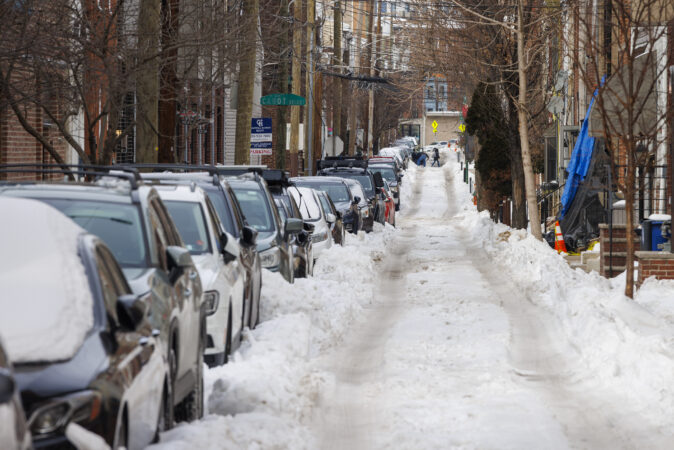
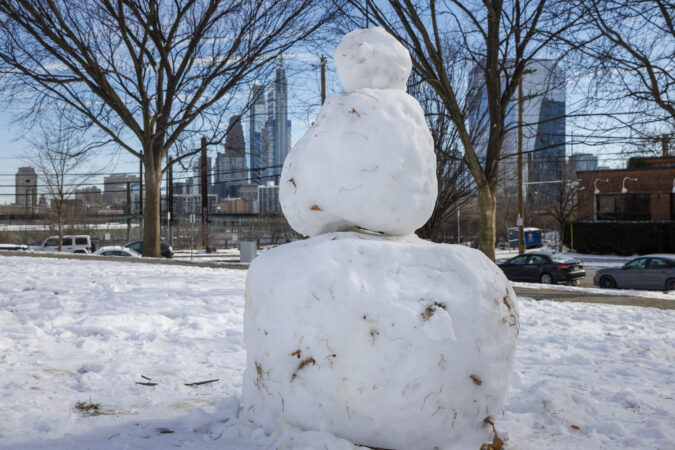
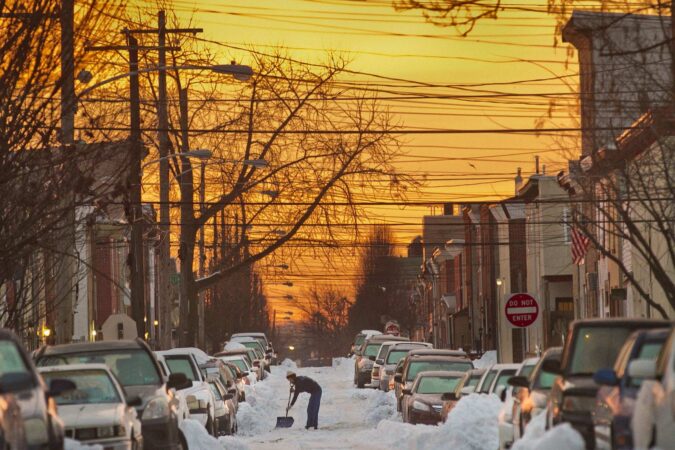
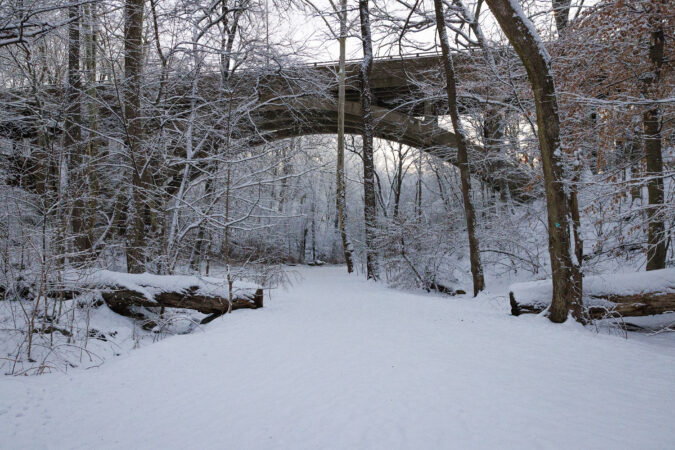
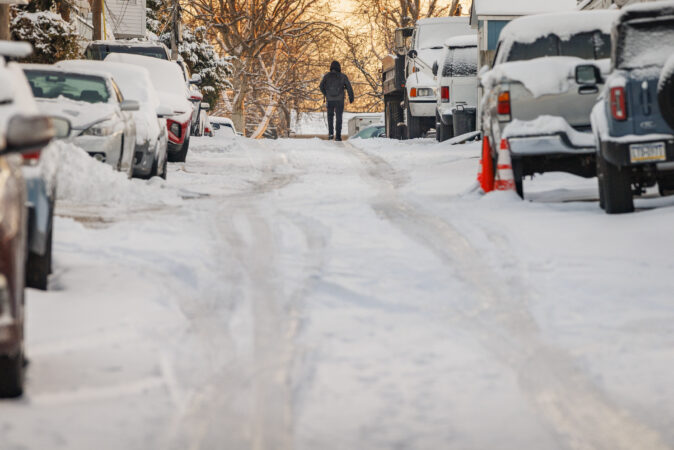
    If it appears that the tenacious meringue of snow and ice that landed on the region two weekends ago hasn’t budged, it hasn’t.

    Among Philadelphia winters, this one is approaching a rarefied status.

    Not long after Phil predictably saw his shadow in Punxsutawney, the National Weather Weather Service contractor at Philadelphia International Airport reported a snow depth of six inches on Monday.

    That marked the eighth consecutive day of a snow cover of at least six inches, a streak unmatched since February 2010 — which included a five-day period in which 44 inches of snow had fallen.

    And what’s out there now may get a fresh frosting on Tuesday night that could affect the Wednesday morning commute, and perhaps snow squalls on Friday with the approach of another Arctic front as the freezer reopens.

    Don’t be surprised if next Monday morning looks a lot like this one.

    “The snowpack is not going anywhere,” said Amanda Lee, meteorologist at the weather service office in Mount Holly.

    What explains the durability of the snow cover

    The primary factor locking in the regional glacier has been the obvious — the cold. Sunday marked the ninth consecutive day that temperatures failed to surpass freezing, the longest stretch since 2004. The temperature did reach above freezing at Philadelphia International Airport on Monday.

    Temperatures since Jan. 24 have averaged 14 degrees below normal in Philly. January temperatures ended up finishing 2.2 degrees below normal, even though the month had a nine-day warm spell in which the highs went past 55 on five days.

    In addition to the cold, the icy layers of sleet that have put a cap and a patent-leather sheen on the several inches of snow that fell Jan. 25, have limited melting. Ice is way slower to melt than snow.

    Eight days after an official 9.3 inches of snow and ice was measured officially, about two-thirds of it has survived.

    The forecast for the next several days

    The region is in for a modest — very modest — warming trend. Readings cracked freezing Monday, reaching 35 degrees at 4 p.m. and are forecast to top out near 32 on Tuesday and Wednesday, and hold in the upper 20s Thursday. Those readings still would be several degrees below normal.

    Some light snow is possible Tuesday night, “maybe up to an inch,” Lee said. The weather service on Monday was listing a 72% probability of something measurable — defined as 0.1 inches or more — falling in Philly.

    Given the cold and the solidly frozen paved surfaces, “it could make things slippery for the morning commute on Wednesday,” said Matt Benz, senior meteorologist with AccuWeather Inc.

    Friday afternoon, he said, the region could see snow squalls — brief, mini-blizzards that can come on without notice and reduce visibility dangerously.

    Then it’s back to the freezer with expected weekend lows in single digits and highs struggling to reach 20.

    For those ready for something completely different, NOAA’s Climate Prediction Center on Monday suggested the potential for significant pattern change, although this may require a little patience around here.

    Its extended outlook for the six-to-10 day period that begins Sunday has most of the nation warmer than normal, with odds strongly favoring below-normal readings in the Philadelphia-to-Boston corridor. But a “rapid warmup” in the Philly region is possible around mid-month, the climate center says.

    In the short term, it appears that Philly is in for a repetitive sequence evocative of the 1993 movie classic Groundhog Day.

    “We’ve had lots of very similar days,” Lee said.

    We’ve noticed.

  • The arctic cold persists, and so does Philly’s snowpack. Both may even go away some day.

    The arctic cold persists, and so does Philly’s snowpack. Both may even go away some day.

    It looks like the Philly region will evade any snow generated by that coastal “bomb cyclone” during the weekend, but the disruptive snowpack on the ground continues to melt at a glacial pace. Maybe ever slower.

    “For now, it’s not budging,” said David Robinson, the New Jersey state climatologist who is an international expert on snow cover.

    And, ironically, that has a whole lot to do with what happened in the hours right after the snow stopped around 11:30 a.m. Sunday.

    Add one of the more signifiant Arctic cold spells in Philadelphia’s period of record, and the entire region has endured a white and wintry week rarely experienced around here.

    As of Friday morning, the official snow depth at the airport still was 6 inches, about two-thirds of what was measured when the storm ended five days before.

    For perspective, the depth was 6 inches five days after a snowstorm in 2016 — after 22.4 inches had fallen.

    The cold won’t be as harsh during the workweek, but a thaw isn’t imminent, and some snow is possible Wednesday.

    Temperatures are forecast to drop deep into the single digits Saturday morning, flirting with records. It is not due to get into the 20s until Sunday, when backlash winds from the potent coastal storm are expected to drive wind chills below zero.

    Those winds may contribute to significant flooding at the Shore, where they could gust to 50 mph.

    About last Sunday in Philly

    About 7.5 inches of snow had fallen officially by 11:30 a.m. Sunday at Philadelphia International Airport, more in some other places, when it yielded to several hours of sleet that accumulated 2 to 3 inches, coating the snow with a sparkling, icy veneer.

    “You can’t help but recognize the beauty of it,” said Robinson, a Rutgers University geography professor and keeper of the Rutgers Snow Lab.

    While it may be an aesthetic pleasure, especially at night under the full “snow moon” rising this weekend, it has had a profoundly chilling effect on cleanup efforts.

    The sleet, liquid that freezes before it lands, literally put an ice cap on the snow. “Ice pellets are tougher to melt,” said PennDot’s Thomas Rogal, a maintenance supervisor for the Philadelphia district. In a melting race, a homely sleet ball wouldn’t have a chance against a six-sided snowflake.

    On Sunday, said Rogal, the sleet was a game-changer for the road crews. Instead of just plowing, crews were “scraping the road surfaces,” he said. Sleet added a stubborn stickiness to the mass of frozen material.

    It also contained about as much liquid as several inches of snow, said Robinson.

    The surprisingly cold temperatures, in the lower 20s and teens, inhibited the effectiveness of salt on Sunday. “The material just didn’t function,” said Rogal.

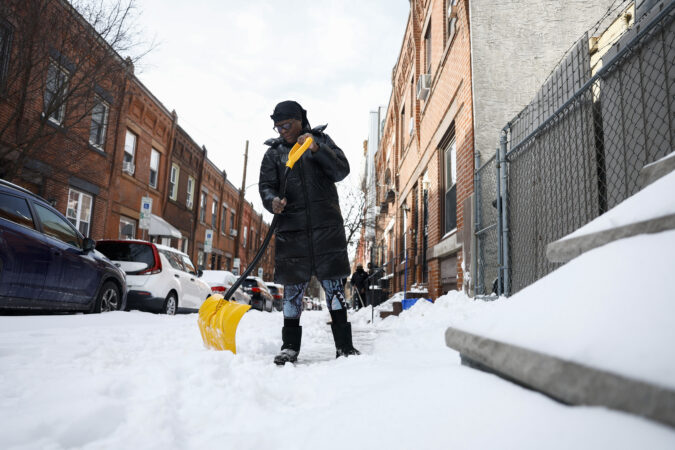
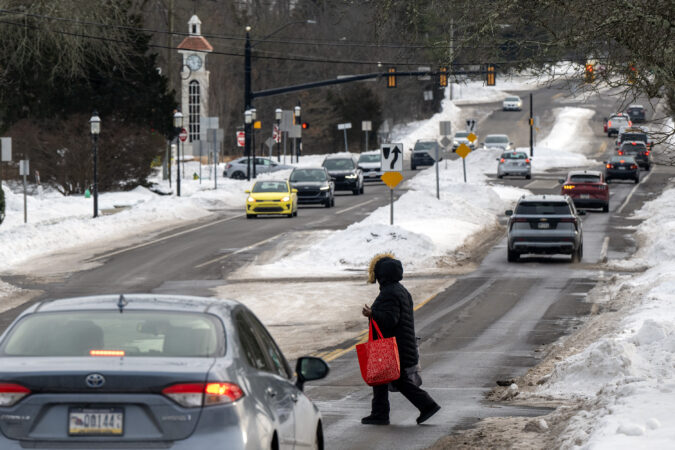
    In the city, the glacial mass has been especially disruptive, a royal, inconvenient pain for people living on side streets, for street crews, for anyone who has tried shoveling, and for the schools.

    In addition to the snow and ice challenges, the cold has stressed aging heating systems in the public schools, once they reopened.

    A thermometer in a Central High School classroom on Friday read 39 degrees. That’s colder than the normal high for the date in Philly — outdoors.

    When will all this go away?

    Philly hasn’t had a stretch of days like this in which the temperature has failed to reach 30 degrees since 1979, according to records tracked by the Pennsylvania state climatologist.

    And it likely is going to finish in the top 10 for consecutive days in which readings didn’t get past freezing, said Mike Silva, a meteorologist with the National Weather Service in Mount Holly.

    Low temperatures Thursday and Friday morning, 13 and 11, respectively, were several degrees above the forecasts. That probably was related to the winds at the airport, he said.

    It also may be related to the sleet, said Robinson: Ice doesn’t have quite the same chilling effect as fresh snow.

    Conditions Saturday morning — clear skies and lighter winds — should be more conducive for daytime heating (we use the term loosely) to radiate into space. Morning lows could approach the record of 3 degrees, set in 1948.

    Some moderation is expected with the workweek, but not much. “We were hoping to get to the mid-30s,” said Sliva, but “it looks like we may barely get to freezing.”

    Even at those temperatures, some melting should occur.

    The total daily solar energy beaming toward Philly now is about 30% higher than it was on Jan. 1, according to NASA’s calculations, and the sunrise-to-sunset time is increasing by about two minutes a day.

    Even the cold has a bright side, said PennDot’s Rogal. Potholes, it turns out, have something in common with a lot of humans: “They aren’t particularly fond of this weather.”

    “The freeze-thaw is what always gets us,” he said. “We’re actually in better shape when the cold sets and stays.”

    Even if it snows next week — “There’s a couple of systems that could affect us,” said Silva — based on 150 years of official record-keeping for Philly, it is going to warm up and the ground will reappear.

    Eventually.

  • A coastal ‘bomb’ and single-digit temperatures are expected this weekend in the Philly area

    A coastal ‘bomb’ and single-digit temperatures are expected this weekend in the Philly area

    It remains a long shot that a fresh layer of frosting will coat the hardening and tenacious snowpack, but evidently that street-congesting frozen mass isn’t exiting in the near future.

    As of Friday morning, it appeared that a potent coastal storm that is expected to qualify as a meteorological “bomb” was going to spare the Philadelphia region from another snowfall.

    But it is expected to have serious impacts on the New Jersey and Delaware beaches, with a combination of onshore gales and a tide-inciting full moon, forecasters are warning.

    On the mainland, it is poised to generate winds that would add sting to what has been one of the region’s most significant outbreaks of Arctic air in the period of record.

    Lows at Philadelphia International Airport both Thursday and Friday mornings — 13 and 11, respectively — were several degrees above what was forecast.

    But they are to drop into single digits Saturday morning, and flirt with a record. Wind chills during the weekend are expected be in the 10-below range, said Mike Silva, a meteorologist with the National Weather Service in Mount Holly.

    “Even though there might not be much or any snow in Philly,” he said, “it’s going to be cold, and we’re still going to have the wind impacts.”

    window.addEventListener(“message”,function(a){if(void 0!==a.data[“datawrapper-height”]){var e=document.querySelectorAll(“iframe”);for(var t in a.data[“datawrapper-height”])for(var r,i=0;r=e[i];i++)if(r.contentWindow===a.source){var d=a.data[“datawrapper-height”][t]+”px”;r.style.height=d}}});

    Is the snow threat off the table for Philly?

    Computer models continue to keep the storm far enough off the coast to preclude a major snowfall inland.

    But “it wouldn’t take much of a jog west to really mess up the forecast,” said Tom Kines, senior meteorologist with AccuWeather Inc. It’s been known to happen.

    On Friday morning, the National Weather Service was posting a 30% chance that Philly would get something measurable — technically 0.1 inches — Saturday night into Sunday, with about a 10%shot at an inch.

    The weather service was expecting an inch at the Shore, but with a slight chance of several inches.

    Forecasters are certain that a storm is going to blow up off the Southeast coast as frigid air that is penetrating all the way to Disney World interacts with the warm waters of the Gulf Stream.

    Gusts at the Shore during the day Sunday might be as high as 40 mph as the storm could reach “bomb” status.

    What exactly is a ‘bomb?’

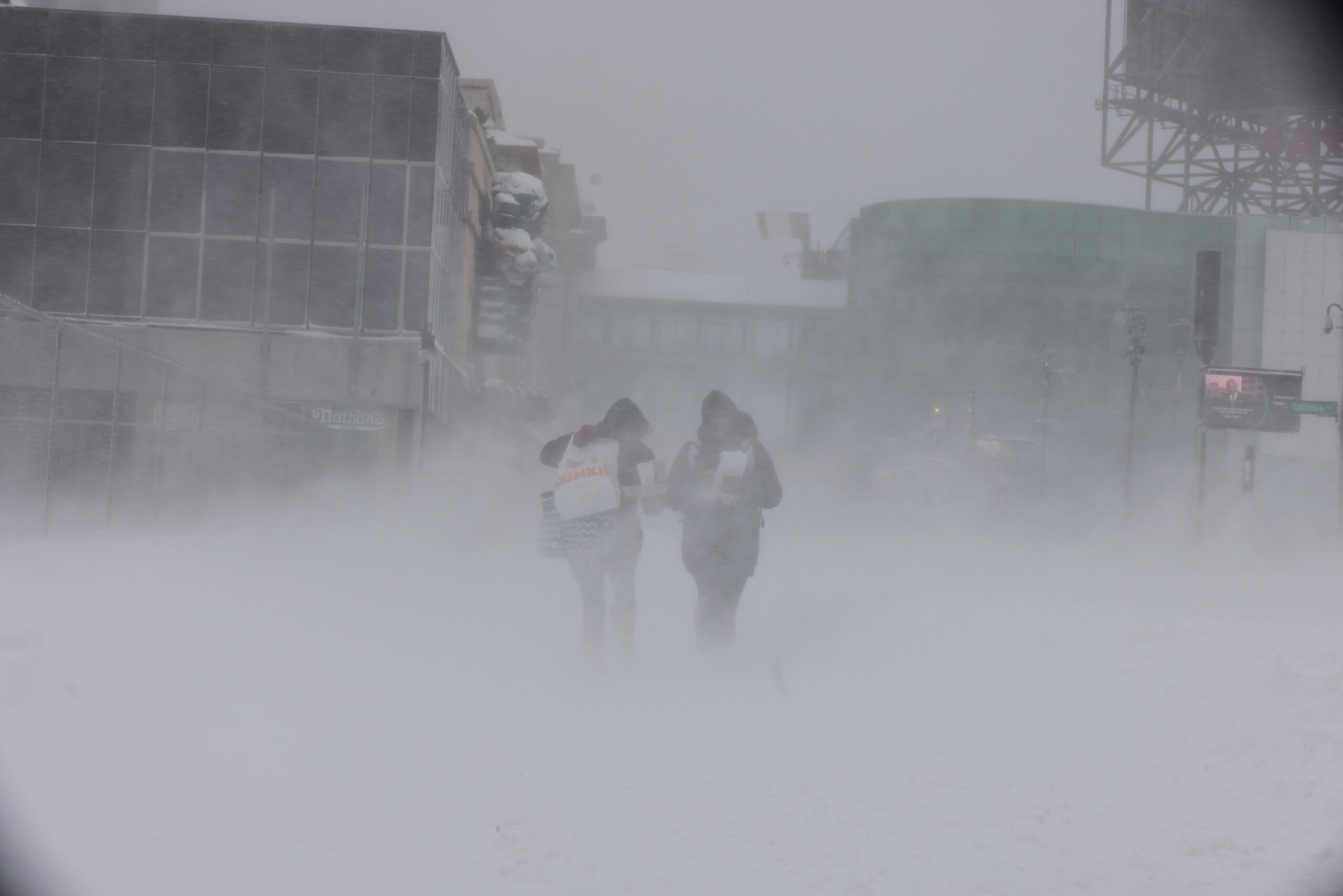
    Two brave souls endure the snow and winds from a meteorological bomb cyclone in Atlantic City in January 2022.

    The technical definition of a meteorological bomb is a drop in central barometric pressure of 0.7 inches in a 24-hour period, about a 2% to 3% change in the weight of the air. That might not seem like much, but it’s a big deal if you’re a column of air.

    Such a drop in pressure indicates a rapidly developing storm. Air is lighter in the centers of storms, as precipitation is set off by lighter warm air rising over denser cold air.

    As a weather term, bomb first appeared in an academic paper in 1980 by atmospheric scientists Frederick Sanders at the Massachusetts Institute of Technology and John Gyakum at McGill University.

    They found that the western Atlantic, in the proximity of the Gulf Stream, was one of two regions on the planet most prone to bombs. The other was the area near the Kuroshio Current in the far northwestern Pacific.

    Both are massive reservoirs of warmer waters that interact with cold air coming off land masses. Some of the European settlers in the colonial era learned about the effects the hard way, experiencing mega-storms that were alien to areas in England.

    Gyakum, who was Sanders’ graduate student at MIT, recalled Thursday that the duo took some blowback for using the word bomb.

    But with a cyclone of such ferocity, the term was worth using to draw the public’s attention to potential impacts, which sometimes exceed those of hurricanes, Gyakum said.

    He said he had no doubt this weekend’s storm would reach bomb status.

    While any heavy snows from this storm are likely to bypass the Philly region, some accumulating snow is possible the middle of next week, Kines said, although nothing in a league with what happened Sunday.

    When can Philly expect a thaw?

    Temperatures during the coming workweek are due to moderate, at least slightly, with highs around freezing Monday through Thursday, 10 to 12 degrees warmer than what is expected this weekend.

    The cold “certainly eases up,” Kines said.

    But that 9.3 inches of snow and sleet that accumulated Sunday evidently has taken a particular liking to the region. As for when it will disappear, he said: “It’s going to take a while.”

    The overall cold upper-air pattern looks to persist, said Paul Pastelok, AccuWeather’s long-range forecaster. And the extensive snow cover is going to have a refrigerant effect on temperatures.

    So when will it warm up and go away?

    “We’ll find out Monday,” Kines said. He was referring to Groundhog Day, of course, when Punxsutawney Phil will issue his extended forecast.

    Nevertheless, he said, meteorologists will be on call if needed.

    “It never hurts to get a second opinion,” he said.

  • Another weekend snow watch and ‘exceedingly rare’ cold are on tap for Philly

    Another weekend snow watch and ‘exceedingly rare’ cold are on tap for Philly

    Another weekend snow chance and more cold are in the forecasts. But the big difference between last week and this one in the Philadelphia region is a matter of degrees — about 10 of them.

    A coastal “bomb cyclone” could form during the weekend with significant impacts, at least at the Shore. Computers were still sorting out what effects, if any, it would have in Philly. On Thursday, however, they favored snow staying to the south and east, with only a 40% chance they got to I-95.

    In the meantime the cold will be epical by Philly standards.

    If the forecast holds, in addition to coming close to ending a 32-year zero-less streak, Philadelphia would have daily minimums of 5 degrees Fahrenheit or lower on the next two mornings.

    And it appears the city will have its first nine-day stretch in which the temperature failed to reach 30 degrees since 1979, based on analysis of temperature data from the Pennsylvania state climatologist.

    In issuing a cold weather advisory for wind chills as low as 10 below zero, the National Weather Service in Mount Holly noted that “it is exceedingly rare to get this combination of length and magnitude of an arctic airmass for this area.”

    Philadelphia’s forecast high on Thursday, 19, would be more than 10 degrees lower than the forecast for Anchorage, Alaska.

    Heading into the weekend, that subtly laminated lunar landscape with the one-horse-open-sleigh look in the fields and parks is almost certain to persist while bedeviling road-clearing efforts.

    Some snow is possible late Saturday or Sunday — and this is becoming a habit — in time for the rising of the full “Snow Moon,” which may be a problem for the Jersey Shore. The full moon will likely contribute to tidal flooding.

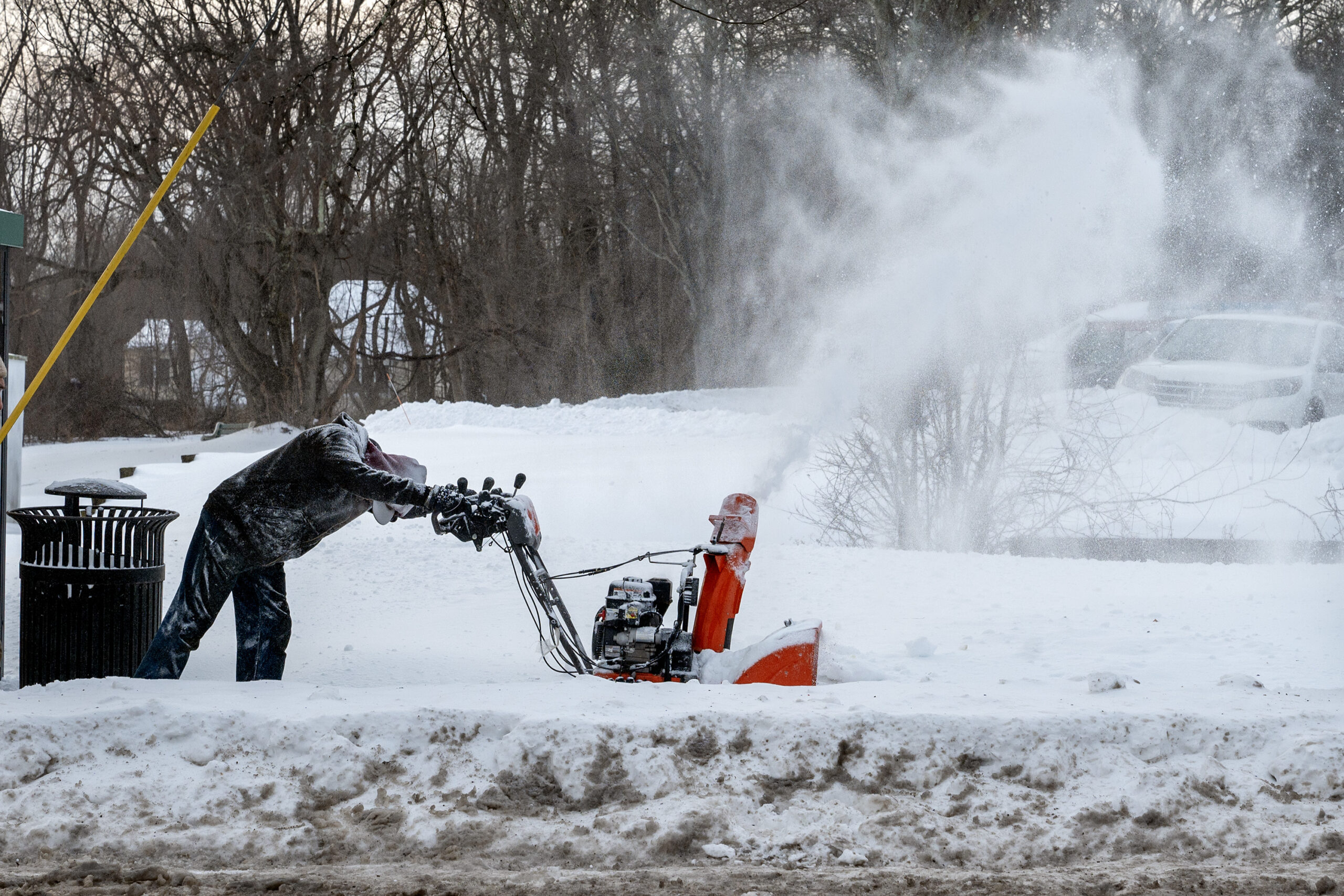
    Snow removal contractor Jordan Harlow clears the sidewalk in front of an apartment building on Main Street in Doylestown Wednesday, Jan. 28, 2026, following Sunday’s snowstorm. He said the layer of ice made it twice as difficult to use the snow blower.

    The snow outlook for the weekend

    On Wednesday only two things were certain about the latest threat: A major coastal storm is going to blow up during the weekend, and it’s not going to rain.

    “Everything looks like it’s going to come together,” said Paul Pastelok, the long-range forecaster for AccuWeather Inc.

    AccuWeather said it may intensify enough to qualify as a “bomb cyclone.”

    An early consensus among computer models was that the storm would stay too far offshore to generate a major snowfall in the immediate Philly area. Pastelok said it was looking for Philly to get “sideswiped” with a 1- to 3-inch event. However, that was very much subject to change.

    The weather service would not be making a first guess at potential accumulations until Thursday afternoon, said Alex Staarmann, a National Weather Service meteorologist in Mount Holly. In its forecast discussion Wednesday, it said that based on a consensus of the models, the Shore had a 35% to 50% chance of 6 inches of snow or more, with a 20% chance along I-95.

    More certain was the potential coastal flooding threat at the Shore with potent onshore winds coinciding with Sunday’s full moon.

    And while it may seem the atmosphere enjoys ruining weekends, it’s not uncommon for weather systems to fall into 3½- and seven-day cycles. That has to do with the spacing between weather systems, meteorologists say.

    Regardless of what happens during the weekend, the region is going to begin the workweek with snow on the ground.

    The snow is going to have more staying power than the average computer-model snow forecast.

    It’s not going to get a whole lot warmer anytime soon

    Even though it’s ice cold, as if developing a slow leak, the depth of the snow pack is actually decreasing, but ever so ponderously.

    That 9.3 inches of snow and sleet that accumulated Sunday was down to 6 inches at Philadelphia International Airport on Wednesday morning, Staarmann said.

    Compaction and sublimation, which is similar to evaporation, are lowering the depth, despite the cold. But Wednesday’s depth report was the same as Tuesday’s.

    And after what does or doesn’t happen Sunday, temperatures are forecast to remain below freezing at least until Feb. 4.

    No significant warm-up is in sight, and the National Oceanic and Atmospheric Administration’s Climate Prediction Center has odds strongly favoring below-normal temperatures until Feb. 11.

    The upper-air pattern continues to favor cold pouring into the Northeast.

    And more cold air is possible later in the month with a visit from the polar vortex, Pastelok said.

    Average temperatures in Philly finished 3.6 degrees below normal in December, and despite a 10-day warm spell earlier in the month, January is projected to finish at least 2 degrees below long-term averages.

    For Pastelok and other seasonal forecasters, it has been a tough winter.

    “We underestimated how cold the Northeast would be this year,” he said.

  • After Philly’s biggest snow in 10 years, a very big chill is coming

    After Philly’s biggest snow in 10 years, a very big chill is coming

    For the Philly region Monday it wasn’t so much a matter of digging out from the heftiest snowfall in a decade, it was more like a chipping, shaving, scraping, expletive-inducing, and ice-chunk hurling operation.

    Public transportation appeared to be getting back on track, and major roads were open for business with speed reductions removed, thanks to crews working through the weekend.

    But expect some side streets in the city and elsewhere to remain fit for sleigh rides this week and trash pickup to be delayed. City offices will be shut down again Tuesday, as will Philly school buildings, with Camden and more calling for a snow day or opting for remote learning.

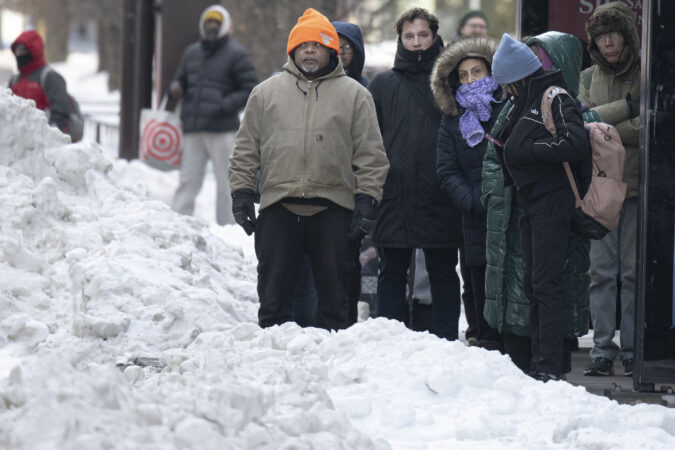
    And if you’re stepping outside, get used to that underfoot crunching sensation. The removal operation isn’t going to get much help this week from the atmosphere. It’s about to turn about as frigid as it ever gets around here. New Jersey officials are warning of “historic” demands on energy.

    “We’re going to be in the freezer all week,” said Mike Gorse, meteorologist at the National Weather Service Office in Mount Holly. Philly may have its first zero-degree reading in 32 years later in the week.

    It’s as if after recent wimpy winters, the Arctic is reacquainting with Philly and much of the rest of the East.

    And did we mention another snow threat for the weekend?

    “There’s a chance,” said Marc Chenard, meteorologist with NOAA’s Weather Prediction Center in iced-over College Park, Md., who was among those who had to chuck some frozen boulders before leaving for work Monday morning. “I had to chip it and carry it in pieces,” he said. Sound familiar?

    Why this storm was particularly challenging

    Snow totals for the biggest snowfall since Jan. 22-23, 2016, varied throughout the region; the inconveniences, not so much.

    A general 8 to 12 inches of snow and sleet accumulated while temperatures remained mostly in the teens Sunday, 10 degrees or more below forecast.

    A shallow layer of warmer air caused a changeover to sleet, and the tiny ice balls remained frozen for the entire trip through the stubbornly cold air near the surface. As much as 2 to 3 inches of sleet piled on, containing the same amount of liquid as several inches of snow.

    That added weight to the snowpack. Based on the amount of melted precipitation measured in the 9.3 inches at Philadelphia International Airport, the snowpack weighed about as much as a 12- to 15-inch pile of the pure flaky fluff.

    On a 200-square-foot driveway — a 10 by 20 — what fell Sunday weighed about 1,100 pounds. On a 100-square-foot sidewalk — 5 by 20 — that would be about 550 pounds.

    In addition, ice tends to be rather shovel resistant.

    This is going to be a memorably cold week in Philly

    The ice and snow isn’t going to give up easily. On Monday, temperatures topped out in the upper 20s, and that’s going to be warmest day of the week.

    Based on the forecast, it may not get above 28 degrees until next week, said Chenard, a cold streak the region hasn’t seen in decades.

    Chenard said the upper-air patterns remain in place to import Arctic air on winds from the northwest for at least the next several days.

    In fact, temperatures may have trouble getting out of the teens in Philly until the weekend, and Philly has a shot at reaching zero for the first time in 32 years.

    The forecast lows are in the single digits all week, and down to 1 degree on Friday morning and 2 degrees on Saturday, the National Weather Service says. Both would be record lows for the dates.

    The stubborn snow cover “absolutely” will increase the chances of the airport reaching zero for the first time since January 1994, Gorse said. Snow is ideal for radiating daytime warmth (such as it is) into space.

    Temperatures will moderate some on the weekend, he said, but that might come in advance of yet another storm.

    Said Chenard, “There will be coastal low. It’s a matter of how close it is.”

    window.addEventListener(“message”,function(a){if(void 0!==a.data[“datawrapper-height”]){var e=document.querySelectorAll(“iframe”);for(var t in a.data[“datawrapper-height”])for(var r,i=0;r=e[i];i++)if(r.contentWindow===a.source){var d=a.data[“datawrapper-height”][t]+”px”;r.style.height=d}}});

    One historic footnote in the Philly weather annals

    Philly’s official snowfall total for the winter stands at 15.7 inches, almost double normal for the date and double what fell all of last season.

    Sunday’s was not only the biggest snow in 10 years, it also set a record for a Jan. 25.

    It beat the 8.5 inches of Jan. 25, 2000, a day that the weather service just as soon would like to forget.

    The storm came as a surprise, just a week after a weather service honcho announced a computer upgrade that would bring the nation closer to a “no surprise” era.

    Expect surprises to continue.

    Staff writers Ximena Conde, Kristen A. Graham, Maddie Hanna, Rob Tornoe, and Nick Vadala contributed to this article.

  • Heavy snow and potentially dangerous icing are expected in Philly this weekend

    Heavy snow and potentially dangerous icing are expected in Philly this weekend

    After the coldest morning of the winter, Philadelphia could experience more snow this weekend than it did during the entire winter of 2024-25, accompanied by a potentially nasty mix of ice.

    The National Weather Service on Saturday was holding serve on its call for 8 to 12 inches in and around Philly, and those amounts may be tweaked depending on the best guesses on how much sleet and freezing rain enters the mix. AccuWeather Inc. was going with 6 to 10.

    Subtle changes to accumulation forecasts are likely, but that merely would mean, “We’re just getting a different blend of horrors,” said Mike Lee, a meteorologist in the Mount Holly office.

    One thing is certain: Whatever falls won’t melt. Temperatures dropped into single digits throughout the region, and got as low as 11 at the Philadelphia International Airport banana belt. . Temperatures won’t get above the mid-20s while anything is falling from the skies Sunday and early Monday.

    The weather service has issued a profoundly predictable winter storm warning, in effect from 7 p.m. Saturday until 1 p.m. Monday.

    Whatever the outcome, the storm still in its formative stage already has had significant impacts on the region and may have set an unofficial record for pre-storm buildup and preemptive closings.

    Philadelphia Mayor Cherelle L. Parker declared a state of emergency for Sunday, as did Pennsylvania Gov. Josh Shapiro and New Jersey Gov. Mikie Sherrill. PennDot is imposing speed restrictions. SEPTA is expecting issues.

    Some schools already were planning for multiple-day closings, as the snow and ice will be accompanied by one of the region’s more impressive cold snaps of the last several years.

    Were it not for the storm, in fact, the cold might be getting headlines.

    Wind chills Saturday morning are expected to drop below zero. Sunday’s high of 25 degrees may make it the warmest day of the week.

    It is likely that layers of snow and ice will harden into a frozen mass that the January sun won’t be able to do a whole lot about.

    As a public service, for now we will hold off on mentioning another potential storm threat.

    The latest on the timing of the storm in Philly

    While the weather service warning goes into effect 7 p.m. Saturday, flake sightings could hold off until daybreak Sunday, said Alex Staarmann, a weather service meteorologist.

    Snow may accumulate rapidly Sunday morning with temperatures in the teens. Models were suggesting sleet could mix in as soon as early afternoon, said Tom Kines, senior meteorologist with AccuWeather Inc.

    Temperatures in the bottom 5,500 feet of the atmosphere are going to remain well below freezing. However, as the coastal storm intensifies, its onshore winds from the northeast are forecast to import warmer air from over the ocean into the upper atmosphere, which would change the snow to sleet and rain.

    It’s possible the precipitation will flip back to all snow and accumulate maybe another inch early Monday, Staarmann said. But at that point it would have all the impact of drizzle in the ocean. The mass of snow and ice evidently will be vacationing in Philly for a while.

    “It will stick around for a week, maybe two weeks,” Staarmann said.

    How much for Philly?

    Just how much snow and ice would be on the ground remained unclear Friday. And it’s all but certain the projections are going to change. For the record, a grand total of 8.1 inches fell all of last season in Philly.

    Louis Uccellini, former head of the National Weather Service and one of the nation’s most prominent winter-storm experts, said some later modeling was cutting back on the ice in areas west of the city, suggesting the possibility of higher snow amounts.

    (function () {window.addEventListener(‘message’, function (e) { var message = e.data; var els = document.querySelectorAll(‘iframe[src*=”‘ + message.id + ‘”]’); els.forEach(function(el) { el.style.height = message.height + ‘px’; }); }, false); })();

    “It’s not that we’re getting 2 to 4 [inches],” said Staarmann. “We’re going to get a lot of snow.”

    However, some icing was a near certainty throughout the region.

    The ice potential for the Philly region

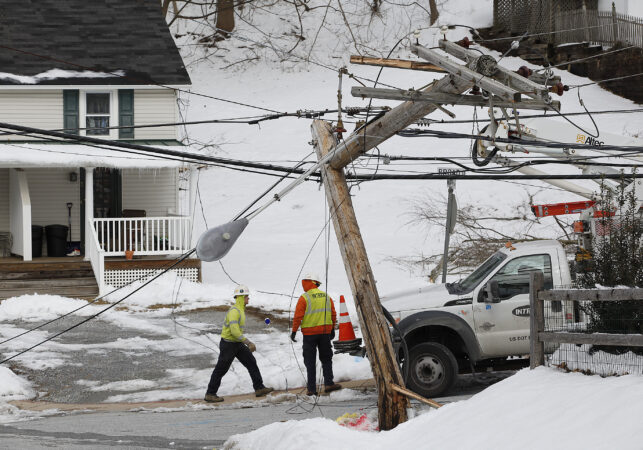
    The weather service is predicting a quarter-inch of freezing rain, which is probably about the last thing the people at Peco wanted to hear. Freezing rain is a greater threat to power lines and trees than sleet.

    Yes, Peco is well aware of the storm and has crews on standby, said spokesperson Candace Womack.

    Sleet develops when a partially melted snowflake or rain drop freezes on the way to the ground. It doesn’t accumulate efficiently like snowflakes. Freezing rain is rain that doesn’t turn to ice until it lands on a surface and freezes on contact.

    During a winter storm, both hold down snow accumulations. Typically, an inch of liquid precipitation can yield a foot of snow. A similar amount of liquid would yield about 4 inches of sleet.

    (function () {window.addEventListener(‘message’, function (e) { var message = e.data; var els = document.querySelectorAll(‘iframe[src*=”‘ + message.id + ‘”]’); els.forEach(function(el) { el.style.height = message.height + ‘px’; }); }, false); })();

    Both can fall when surface temperatures are well below freezing, if the upper air is warm enough.

    A big difference is that sleet bounces off surfaces, but ice gloms onto them, a menace to power lines and tree branches.

    An ice storm resulted in over 700,000 Peco outages in 2014, a winter record. In that case, freezing rain came 18 hours after a heavy snowfall.

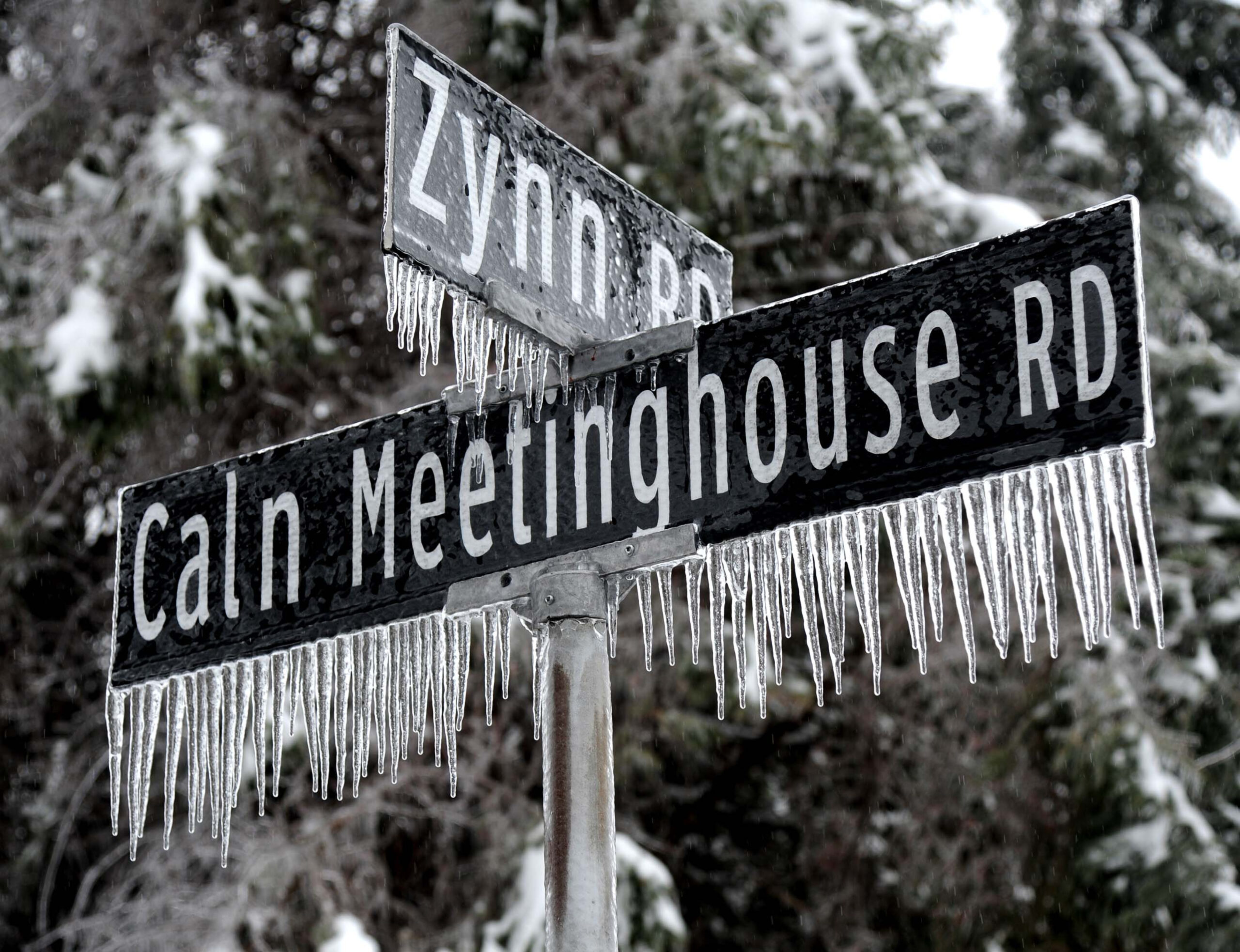
    An overnight freezing rain storm swept through the Philadelphia region Feb. 5, 2014, leaving downed trees and power lines in its wake, along with icicles everywhere as evidenced by these streets signs in Downingtown.

    When will the snow and ice disappear?

    The snow and ice are going to be around for as far as the computer models can see. Temperatures may not get above freezing the rest of the month, as NOAA’s Climate Prediction Center has the odds favoring below normal temperatures through Feb. 6.

    The U.S. model was indicating another storm threat for around Groundhog Day, a week from Monday, Uccellini said.

    Phil might want a pass this year.

  • DHS pauses cuts to FEMA as massive winter storm barrels in

    DHS pauses cuts to FEMA as massive winter storm barrels in

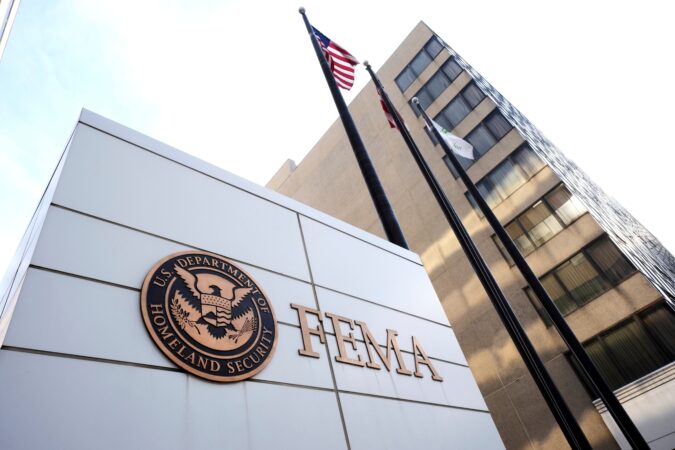
    The Department of Homeland Security has paused terminations of employees working on the Federal Emergency Management Agency’s disaster response as it ramps up preparations for a massive and life-threatening winter storm that will pummel half the country this weekend.

    Earlier this month, the Washington Post reported that the agency planned to terminate disaster response and recovery workers in waves. On New Year’s Eve, agency officials eliminated about 65 positions that were part of FEMA’s largest workforce, known as the Cadre of On-Call Response and Recovery (CORE) — staffers who are among the first on the ground after a disaster and often stick around for years to help communities recover.

    But on Thursday night, DHS’s head of human resources sent an email notifying teams that “just a few minutes ago,” FEMA headquarters decided the agency would halt their process of non-renewing dozens of federally funded employees. These roles, hired by FEMA for multiyear terms under the Stafford Act using the disaster relief fund, have been up for renewal on a rolling basis.

    Earlier that day, about 30 disaster workers received notices that their jobs would not be renewed. The pause then prompted human resources staff to backtrack, notifying those same workers that they still had jobs, according to the email and an official familiar with the process. Like others interviewed for this story, the official spoke on the condition of anonymity because they were not authorized to speak publicly about the matter.

    “I didn’t even know what was happening until it happened,” the official said, adding that as human resources initially emailed people informing them that their jobs would not be renewed, senior leaders were learning that FEMA was pausing terminations.

    In a statement, the Department of Homeland Security said that the agency regularly changes staffing levels for its disaster response and recovery efforts.

    “The CORE program consists of term-limited positions that are designed to FLUCTUATE based on disaster activity, operational NEED, and available funding,” the department said in its statement, which included text in all-caps.

    “FEMA’s National Response Coordination Center has been activated in response to a historic winter storm, in line with this mission FEMA is following standard protocol to ensure mission functions are being met,” it added.

    Officials would not comment on how long the pause would last.

    While states and local authorities handle most of their preparation and response to winter storms, FEMA will often deliver resources ahead of time, including generators and personnel if the potential for disaster seems high. Stafford Act employees, such as CORE members, will deploy to a state if they request an emergency or disaster declaration and the president approves it.

    The sudden shift in staffing direction has caught officials across the agency by surprise, six officials said. In recent weeks, their teams were told to prepare to lose a substantial number of people over the next few months.

    Since December, DHS has terminated more than 100 people across the agency who FEMA employs under the Stafford Act.

    Some were informed on New Year’s Eve; others were given only a day or two to turn in their equipment; and still more were cut after their supervisors sent detailed memos explaining why their roles remained vital to FEMA’s mission. The agency also lost veteran employees who oversaw finances for Hurricane Helene recovery, as well as civil engineers who assist states with mitigation and rebuilding roadways, bridges and schools. Some offices in the Midwest have lost experienced managers who typically help lead operations during emergencies and big disasters.

    On Wednesday, FEMA cut nearly 85 local hires from several regions, including a handful who were still working on Hurricane Helene recovery projects in North Carolina — a state now readying itself for potential power outages — according to two people with knowledge of the situation. FEMA’s call center in Puerto Rico lost many of their local hires Wednesday as well, one FEMA official said. If multiple states are hit hard enough and ask the president for federal assistance, those workers could have helped out, two officials said.

    The same day the department halted the terminations, Homeland Security Secretary Kristi L. Noem visited the agency’s headquarters to help guide national coordination and preparation for the sweeping storm. Noem, whose department oversees FEMA, also hosted a call Thursday morning with governors from 21 states that are bracing for dangerous, chilling weather. She assured them that DHS and FEMA will support them.

    “We can pre-deploy any needs that you may have, as far as generators or supplies to different parts of your state if you think you have a weakness in some area that’s going to be hit pretty hard,” Noem told the governors, reiterating that “if there is certain responses or requests specific to this event, feel free to reach out and use that contact information, and we’ll do all that we can to be helpful.”

    During the call, Karen Evans, FEMA’s agency’s interim administrator, and Gregg Phillips, who is now overseeing the Office of Response and Recovery, also offered their personal cell phone numbers in case any governor needs to get in touch with them immediately.

    Noem has instructed FEMA to be aggressive in preparing for the heavy snow and ice forecast to blanket a large portion of the United States and has promised a rapid and well-coordinated response, according to an official with knowledge of the situation. FEMA has delivered tens of thousands of meals and liters of water to various states, and it has positioned drivers who shuttle supplies outside distribution centers from Louisiana up to Pennsylvania.

    The decision to pause the terminations also coincides with the House’s approval Thursday of a spending bill that would fund FEMA’s disaster relief fund and help the agency “maintain staffing levels, including a reservist workforce and its Cadre of Response/Recovery Employees, necessary to fulfill the missions required under” federal law.

    Ahead of the storm, 10 officials from different parts of the agency who spoke to the Post said they were nervous about their ability to properly respond, given how their ranks have thinned over the past year, with the agency losing about 20% of its staff.

    Noem, who has exercised strict oversight over FEMA since taking over DHS, has repeatedly expressed a desire to shrink or eliminate the agency. The Post reported that she previously recommended cutting agency staffing by about half.

    In a previous statement, FEMA spokesperson Daniel Llargués said the agency had “not issued and is not implementing a percentage-based workforce reduction.”

    Employees in CORE roles are typically renewed every two to four years. When the end of an employee’s contracted term approaches, their supervisors typically seek approval to renew those roles. Most positions are usually reinstated, according to four current and former FEMA officials, in part because recovery work is long and complex.

    But in recent weeks, DHS’s process for renewing these temporary roles has changed frequently, according to officials with knowledge of the situation. Last week, supervisors in each region had to write memos justifying every role coming up for renewal this year, which would then be sent to FEMA’s temporary top official and then to Noem, according to two people familiar with the process. Guidance then shifted earlier this week. In a memo from Thursday, obtained by the Post, FEMA officials said that DHS will be making the calls without collecting justifications, and that “only extensions approved by DHS will be processed and they will be limited to 90 days.”

    One CORE employee said DHS suddenly cut her job without warning after her manager had submitted a memo urging to keep her on. Because some firings have been abrupt, some were not able to transition their work, she said.

    “And to be clear, I think most of us expected there to be staffing cuts this year,” the person said. “Just not in the bulldozer approach that didn’t take into account your job or performance.”
  • Snow, perhaps more than a foot, is all but certain this weekend for Philly

    Snow, perhaps more than a foot, is all but certain this weekend for Philly

    Based on what the computers and their human interpreters are saying, a key question this weekend will be whether measuring the snow in the Philly region will require a ruler or a yardstick.

    This no doubt will be a moving target, but on Friday morning, the National Weather Service in Mount Holly was seeing eight to 14 inches for Philly, said meteorologist Alex Staarmann. Several inches were possible even at the Jersey Shore.

    For Philly, that would be the first double-digit snowfall in 10 years.

    A wild card would be a potentially unpleasant atmospheric parfait that would add ice to the mix on Sunday, and computer models Friday were suggesting that mixing was likely near I-95 and in Delaware and South Jersey. However, the weather service expects that to yield to all snow Sunday night.

    While this is all quite a complicated meteorological setup, in essence Arctic air is pressing southward and it is going to interact with an impressively juicy storm to the south.

    “Having the Arctic front come through before the onset of wintry precipitation, that’s really concerning,” said Ray Kruzdlo, the staff hydrologist in the weather service office, where “it’s all hands on deck.”

    Below-zero windchills are expected Saturday morning, prompting a cold-weather advisory, and temperatures in Philly may stay below freezing the rest of the month.

    What time will the snow start and end?

    The timing and duration of precipitation aren’t among the strong suits of computer models.

    The weather service’s winter storm watch, which covers the entire region, all of Delaware, and most of Pennsylvania and New Jersey, is in effect from 7 p.m. Saturday until 1 p.m. Monday.

    The daytime Saturday “looks fine if you have to get out,” said Tom Kines, senior meteorologist with AccuWeather Inc.

    The weather service is listing the likeliest starting time as the early morning hours of Sunday, with snow likely into the early morning hours of Monday.

    Sunday is going to be one of the colder days of the winter with temperatures in the teens and lower 20s. The weather service introduces the possibility of freezing rain and sleet by 1 p.m., with a forecast temperature of 19 degrees.

    Wait, it can rain when it’s 19 degrees?

    Yes, it can rain when it’s below 20 degrees at the surface, and precipitation doesn’t get much more dangerous.

    Snow and sleet, liquid that freezes on the way down, can at least provide traction on the roads. Rain that freezes on contact becomes an ice sheet. Also, when freezing rain accumulates on fallen snow it can bring down trees and power lines.

    Peco has heard the storm rumors (who hasn’t?) and will have crews on call through the weekend, said spokesperson Candace Womack.

    The threat of ice is related to the possibility of warm layers of air, borne on onshore winds from the ocean, at levels of the atmosphere where precipitation is formed.

    That could well happen Sunday as the coastal storm intensifies, said Kruzdlo, and winds build from the Northeast, perhaps gusting past 20 mph. Any rain or sleet would encounter very cold air at the surface, locked and dammed in place by the Appalachian Mountains.

    “That’s the complexity of living where we are so close to the ocean,” Kruzdlo said. “We have tens of thousands of observations at the surface,” he added, but data from the upper atmosphere is wanting, adding challenges to forecasting changeovers.

    Along the I-95 corridor, storms of purely snow are the exceptions, Kruzdlo said.

    What are chances that the storm is a bust?

    In the chess matches between science and the nonlinear chaos of the atmosphere, chaos has been known to win.

    One of the more notable busts occurred in January 2015 when forecasts called for an I-95 East Coast snowstorm so ferocious that the mayor of New York imposed a curfew.

    Philly was supposed to get a foot or more, and ended up with an inch or two. That prompted the head of the Mount Holly weather service office to issue a public apology.

    His boss at the time, weather service head Louis Uccellini, said no apology was necessary: Science has its limits. Busts have been known to happen in the battle of science against nonlinear.

    This time around, meteorologists are all but certain something “impactful” is going to happen.

    Said Kruzdlo, the slim chance of this storm “not being significant is leaving us.”

  • A major winter storm is looking inevitable for Philly, with the snow expected to stick around

    A major winter storm is looking inevitable for Philly, with the snow expected to stick around

    The details are likely to remain elusive well into the weekend, but on Wednesday evidence was accumulating that the Philadelphia region could become a winter wonderland for the remainder of January.

    “We’re definitely going to get some snow,” said Alex Staarmann, a meteorologist with the National Weather Service in Mount Holly, which probably won’t make a first accumulation guess until Thursday afternoon. Snow could begin as early as Saturday night and continue into Monday.

    The weather service Thursday posted a winter-storm watch for the entire region — for all of Delaware and most of Pennsylvania and New Jersey — in effect from 7 p.m. Saturday until 1 p.m. Monday.

    At the weather office, “It’s all hands on deck,” said agency hydrologist Ray Kruzdlo Thursday. The “outside chance” that the region would be spared a major storm “is leaving us.”

    AccuWeather Inc. is calling for 6 to 10 inches for Philly, very much subject to change, said senior meteorologist Bob Larsen.

    Several inches of snow would be all but certain, the weather service said. Philadelphia could have a 75% chance of a foot or more, based on analysis of a blend of computer models, and a 50-50 shot of 18 inches or more. However, the individual models are having their usual squabbles, with the American being the snowiest.

    In any event, Staarmann said: “It could be a significant storm for most of the region.”

    And that applies to the rest of the Mid-Atlantic and Northeast. AccuWeather Inc. estimated that snow and ice during the weekend could affect half the nation’s population.

    Said Stephen Morgan, a meteorologist with Fox Weather: “It’s one of the most sprawling systems we’ve seen in several years.”

    Predictably, computer models have been using the map as a Ouija board, moving around the zones of the expected heaviest snows.

    Earlier in the week, it appeared that the region would be near the northern edge of the snowfall; on Wednesday, however, the models bumped the snow north, increasing the chances that snow could mix with sleet and freezing rain in Delaware and South Jersey.

    The snow could mix with sleet at the height of the storm even in the Philly region, the weather service said. That would hold down accumulations: Sleet is slow to accumulate. Conversely, since it is pure ice, it is slower to melt.

    Should any rain get mixed in, it would freeze on contact: The upper air may be warmer, but temperatures at the surface are forecast to be mostly in the teens Sunday.

    The amounts of snow and mixing would depend on the track of a storm that is forecast to develop off the Texas Gulf Coast and track through the Tennessee Valley and off the Mid-Atlantic coast on Sunday. That track ultimately will be determined by other moving parts in the atmosphere.

    As the storm intensifies, its onshore winds would import warmer air into the upper atmosphere, changing the snow to sleet and/or freezing rain, but the surface layers would remain quite cold, Larsen said.

    Despite the potential mixing, it is at least possible that Philly will get its first double-digit snowfall since Jan. 22, 2018, said Paul Dorian, a meteorologist with Arcfield Weather, based in Valley Forge.

    In the short term, Thursday may be a day to savor. It’s heading into the mid-40s, with nothing falling from the skies. The cold begins to filter in Friday, and highs will be in the teens Saturday.

    After the precipitation shuts off Sunday night or Monday, whatever has fallen won’t be in a hurry to disappear, Staarmann said.

    Temperatures might not get above freezing for several days after the snow stops, he said. Wind chills are expected to be in the single digits Monday morning, and below zero Tuesday.

    “This overall very cold weather pattern is likely to continue into next weekend, potentially beyond,” the weather service said.

    “The next couple of weeks will feature some of the worst weather winter has to offer,” Dorian said.

    Said Fox’s Morgan: “The overall pattern in the Northeast seems to be locked in to a colder than average at least to Groundhog Day.”

    Punxsutawney Phil might want a “do not disturb” sign this year outside his burrow.

  • A major snowstorm is looking more likely this weekend for Philly, and maybe a white week

    A major snowstorm is looking more likely this weekend for Philly, and maybe a white week

    Computer models continue to insist with a rather uncharacteristic certainty that the Philadelphia region and much of the Mid-Atlantic can expect a significant snowstorm during the weekend.

    Now, when have they ever been wrong?

    On Wednesday, models were in general agreement that Philly had a high likelihood of a snowfall of at least 6 inches, the National Weather Service said, with the potential for substantially more. It listed Sunday’s snow probability at 80%, unusually high for an event at least four days away.

    Whatever does or does not happen from here, the likes of Acme, Giant, Wegmans, Whole Foods, and Trader Joe’s thank you.

    “All the tools we have are starting to point toward something is going to happen,” said Mike Lee, a lead meteorologist at the weather service office in Mount Holly.

    “We know it’s going to get more people uneasy, but we want people to be aware.”

    It’s too early to make a guess on snow totals, his colleague, Alex Staarmann said.

    “We’re definitely going to get some snow. It could be a significant storm for most of the region. That’s all we can say at this point.”

    He added that it wouldn’t melt quickly with temperatures remaining below freezing for several days. Wind chills Monday night could fall below zero, he said.

    As for the chances that snow will snub the region this weekend (it’s been known to happen), Bob Oravec, lead forecaster with the National Oceanic and Atmospheric Administration’s Weather Prediction Center, said that’s highly unlikely. “Given the very good agreement in the numerical models, this has a very low chance of being a bust overall.”

    Early estimates for snow amounts vary from the prodigious to the prosaic.

    The big commercial services, AccuWeather Inc. and the Weather Channel, also are on board. In fact, although the storm remains a virtual concept, the Weather Channel already has affixed a name to it.

    When might snow arrive in the Philly area?

    Forecasters said the snow could begin as early as late Saturday, and continue into Monday.

    The snow would spread south to north.

    In the early going, it was uncertain which areas would receive the very heftiest amounts.

    The snow machine would be set off by dry polar air interacting with copious moisture to the south, which is likely to encounter resistance to the north.

    The big snows would occur between that dry wall to the north and a wall of ice and rain to the south, said Matt Benz, a senior meteorologist with AccuWeather.

    Whatever does fall in Philly likely would all snow, but it’s possible sleet could mix in south of the city.

    After temperatures moderate the next two days and climb into the mid-40s Thursday, the cold air is expected to pour into the region Friday. High temperatures Saturday through Monday may struggle to get past 20, with or without a snow cover.

    Is it possible that Philly will be flakeless?

    Of course.

    Snow forecast busts are part of the cost of doing winter business in the Philly region.

    Some of the key west-to-east moving features that will power the system have not yet made landfall, and thus have not been observed by land-based instruments.

    One piece of energy is over the Pacific, and another somewhere over Siberia, Benz said.

    “The pieces just aren’t moving that quickly,” he said. They may not make landfall over North America until Thursday, he added, and that could be present real issues for the machines and their human interpreters.

    Said Oravec: “Historically, when these features can better be identified by the weather balloon network across North America, the models forecasts improve and converge on a common solution.”

    Benz said it may take until Friday for computers to sort it all out with newly ingested data.

    Recall that the snow forecasts last weekend bedeviled forecasters on both Saturday and Sunday.

    Oravec said computer models are marvels and “do a great job at identifying large-scale patterns that are conducive for major winter storms.”

    But “some of the smaller details that can enhance the impacts are harder to model.”

    Perhaps the most important data point to consider: The prospective first flakes may not be in evidence until the very beginning of next week.