Category: Sixers/NBA

  • Without Tyrese Maxey, vintage Joel Embiid appears in Sixers’ win over Pacers: ‘I will if I have to’

    Without Tyrese Maxey, vintage Joel Embiid appears in Sixers’ win over Pacers: ‘I will if I have to’

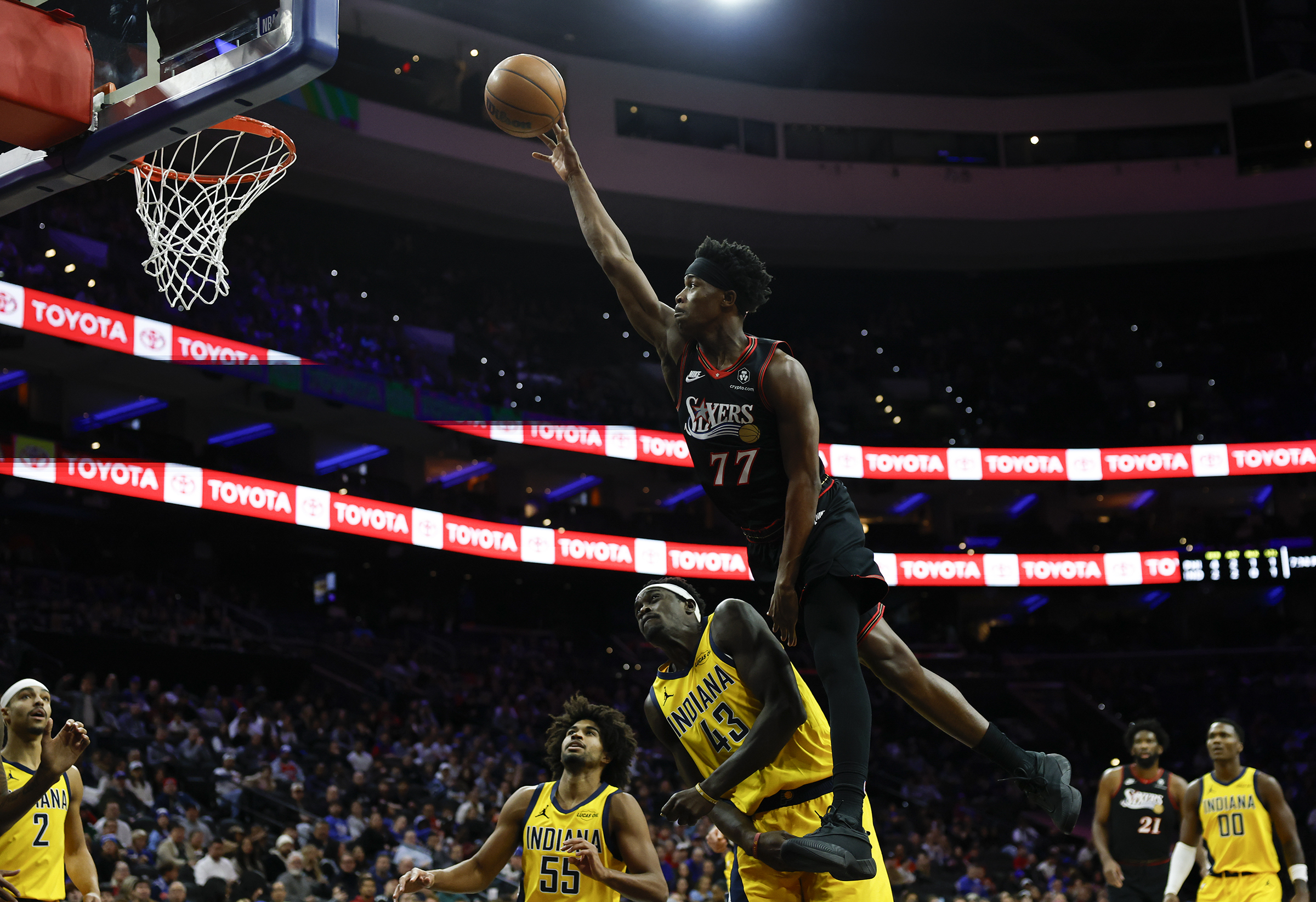
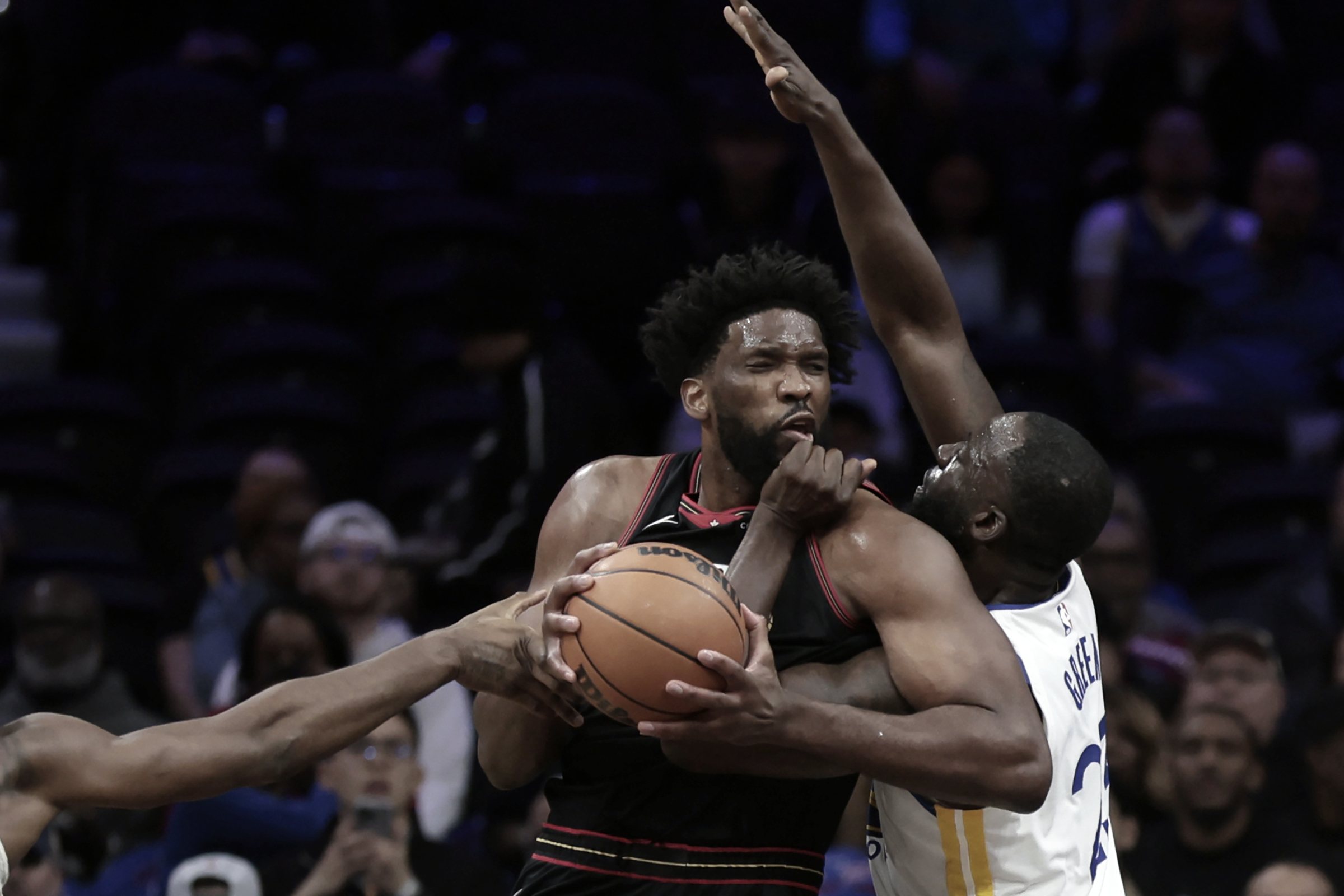
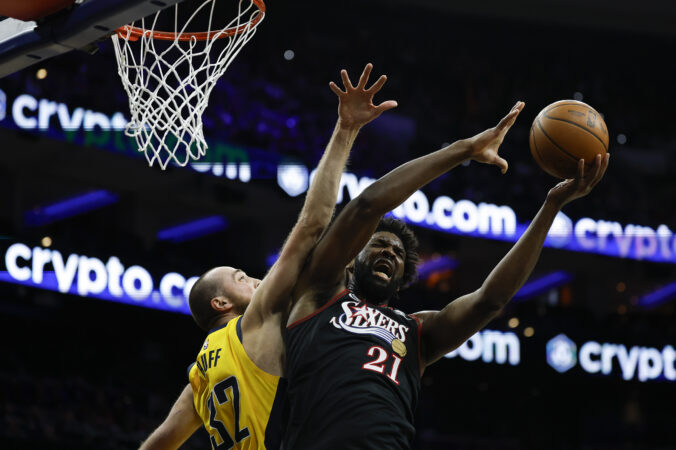
    Joel Embiid grabbed the offensive rebound and, before tumbling to the floor, muscled the put-back through contact and into the basket.

    And as the 76ers’ center stepped to the line to shoot the and-1 free throw, faint “M-V-P!” chants resurfaced inside Xfinity Mobile Arena.

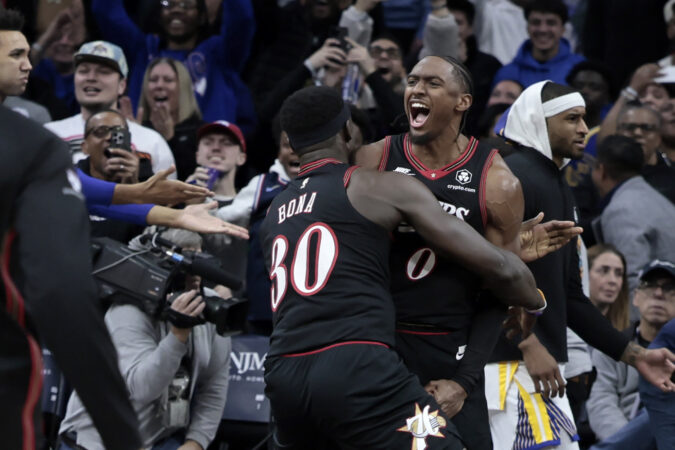
    That conversion highlighted Embiid’s best game of the season — 39 points, nine rebounds, and three assists in Friday’s 115-105 win over the Indiana Pacers — when his team needed the boost while playing without ill star guard Tyrese Maxey. The big man’s first 30-point outing in nearly a calendar year also served as a flashback to the player he used to be, before multiple knee surgeries curtailed his dominance on both ends of the floor.

    And a reminder of the player he can still be, at least every now and then?

    “I feel like I can do it,” Embiid said from his locker after the game. “I think the dynamics [are] obviously different, at times. I want to play more as a team, so making sure everybody’s involved. If someone has to sacrifice, I will. But in some occasions, when I’ve got it going or nights like tonight, it’s going to happen.

    “I don’t expect having to do this when everybody’s healthy. But I will if I have to.”
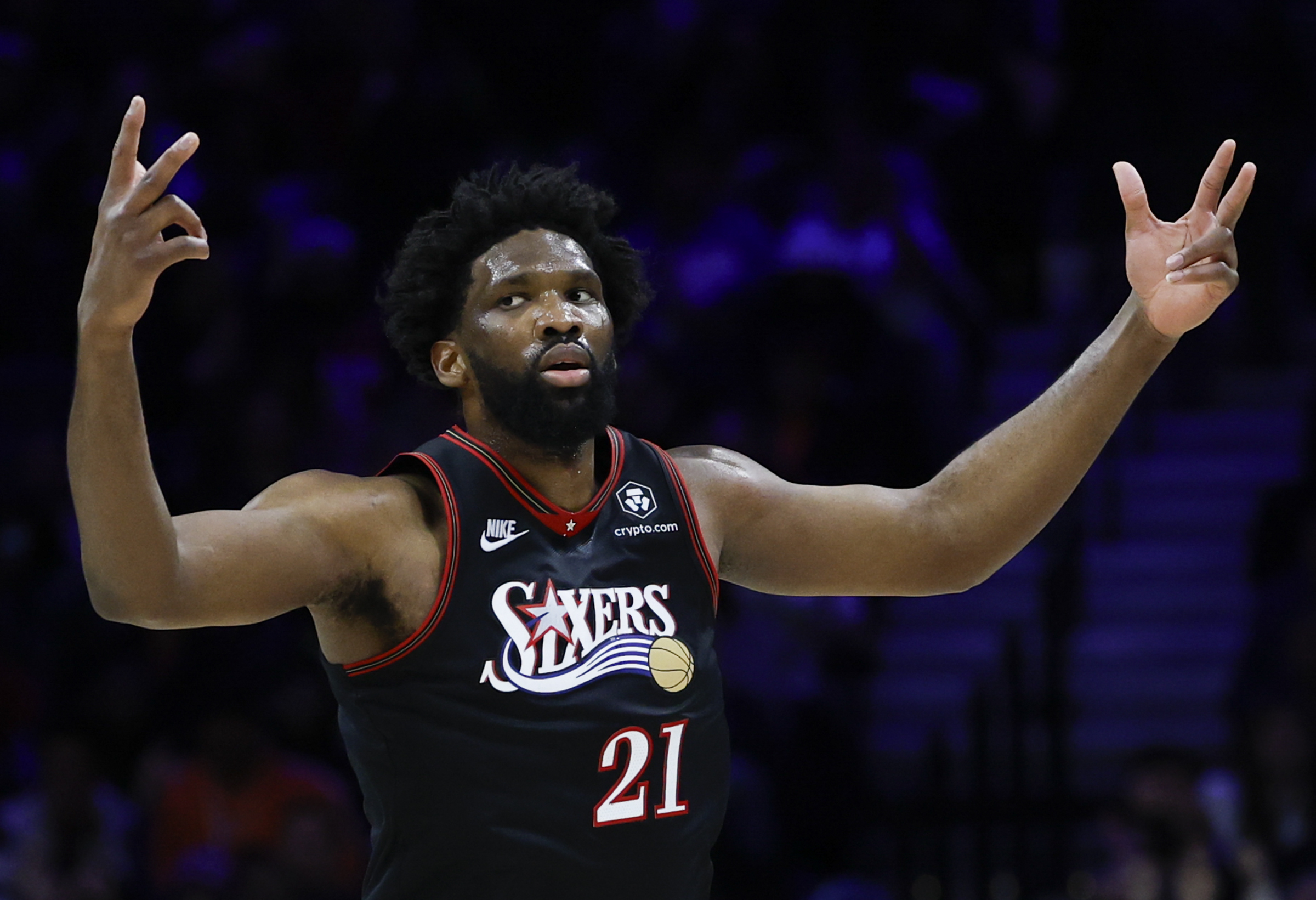
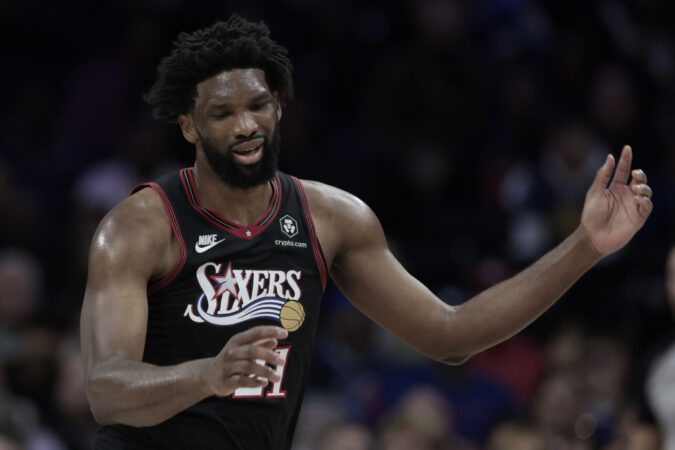
    Embiid reacts after scoring three of his 39 points against the Pacers.

    Embiid’s outburst came in his 10th appearance of an early season that already has been interrupted by scheduled missed games and a three-week absence due to a right (not left) knee issue. It also occurred after one of the worst shooting performances of his fabulous career, going 4 of 21 during Sunday’s loss against the Los Angeles Lakers.

    But Embiid shrugged that dud off in the immediate aftermath. Then, he utilized a rare four days between games to generate rhythm through team practices and individual workouts. The break also allowed a previously undisclosed finger issue that may have affected his shooting to heal, Embiid said during Friday’s postgame media session.

    “Obviously, it’s easier to be consistent when everything is going well physically,” said Embiid.

    Sixers coach Nick Nurse, meanwhile, added a “couple little wrinkles” to foster a variety of Embiid scoring avenues that the coach is “always trying to continue to seek,” he said.

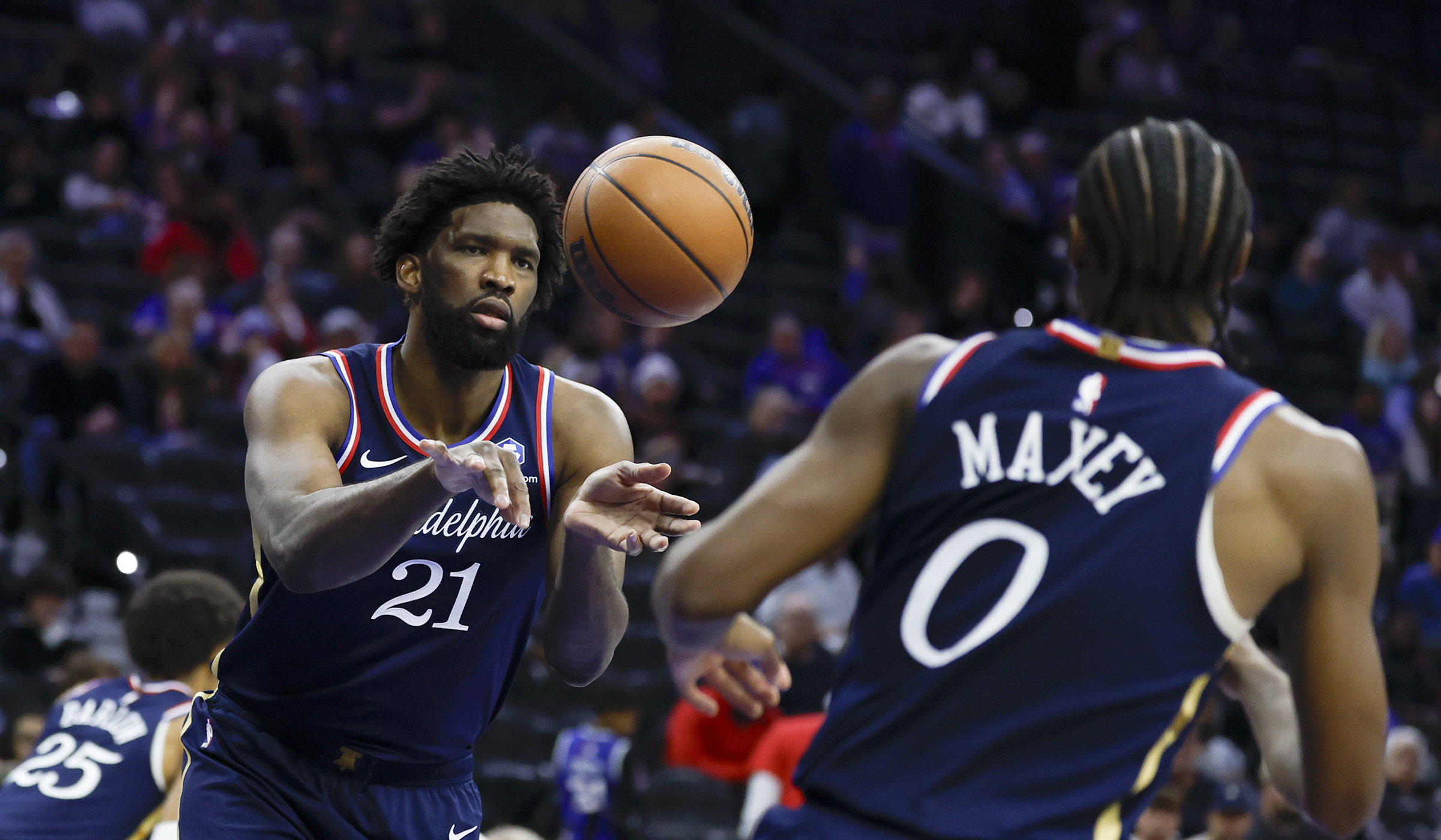
    Friday night, that manifested in post-ups from both blocks. And in pick-and-roll actions in the middle and on the side of the floor. And in Embiid directing teammates such as Dominick Barlow to cuts for easy dunks. And in Embiid driving to draw fouls — and 13 free-throw makes — with an aggressiveness that signals the center is at his best, Nurse said.

    “It came in a lot of different schemes [that the Pacers] threw at him,” Nurse said of Embiid’s performance Friday. “And I thought he read the different stuff pretty good most of the night.”
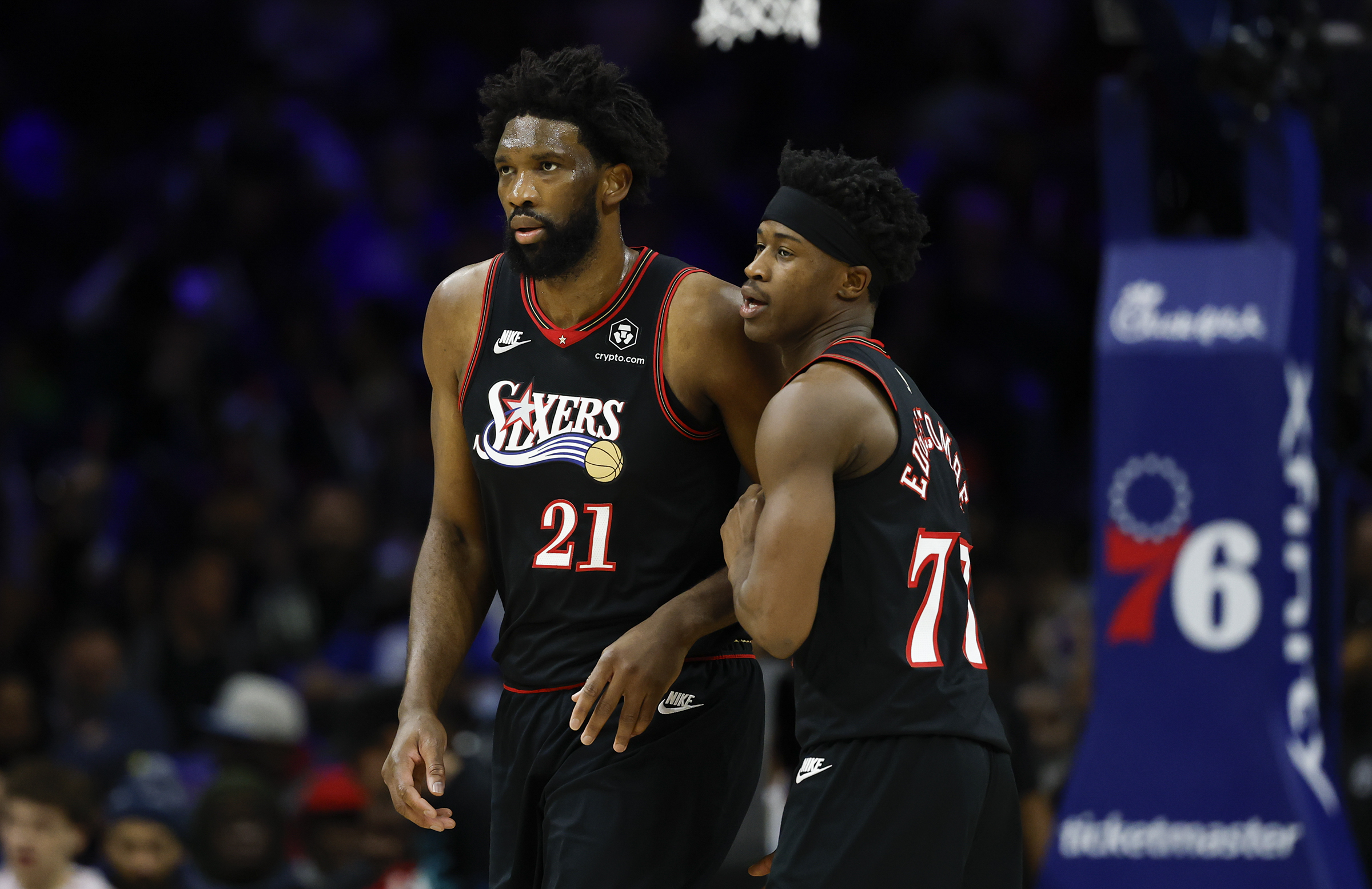
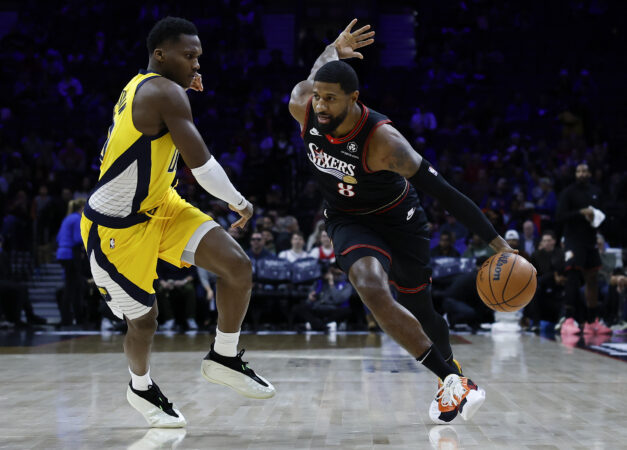
    VJ Edgcombe started at point guard Friday with Tyrese Maxey out.

    Embiid’s presence also helped unleash rookie VJ Edgecombe, who scored 14 of his 20 points in the first quarter while filling in for Maxey as the starting point guard. Embiid then amassed 15 points of his own in the second frame, including a step-back three-pointer that snapped a streak of 17 consecutive long-range misses.

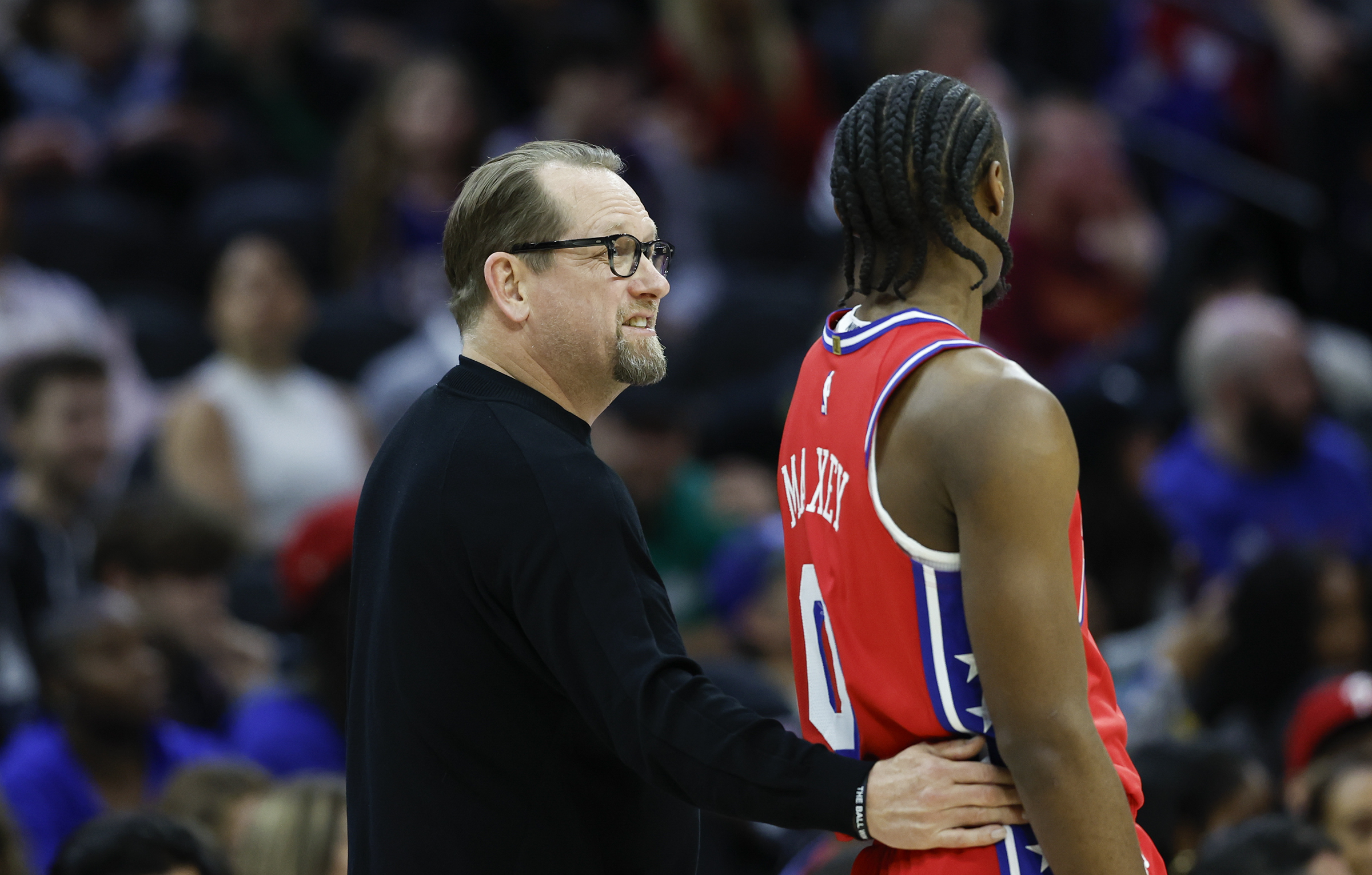
    During the third quarter, Embiid spun and scored early in the frame and later finished an off-balance and-1. And he complemented the Sixers’ stout down-the-stretch defense by sinking a baseline fadeaway jumper with less than a minute remaining, putting his team up by 10 points and earning a slap on the backside from Nurse.

    Perhaps nobody was happier to see this version of Embiid resurface than Maxey, who entered Friday ranked third in the NBA in scoring (31.5 points per game) and first in minutes played (39.9 per game). During the game, Maxey posted “GOOD PROCESS!!” on X, then fielded a postgame phone call from his teammate and close friend.

    Embiid also was spotted chopping it up with Edgecombe and Jared McCain in the postgame locker room, evidence of the connections forming during the Sixers’ 14-10 start.

    “I won’t lie,” Embiid said. “Last year, I wasn’t happy all the time coming to work because of everything that was going on, whether it was on and off the court. This year, it’s a little different. I’ve got a great group of guys. I’m happier coming in here.”

    Following a lengthy postgame treatment session, Embiid said his body feels “great” after playing a season-high 32 minutes. The real test, as always, will be how both knees respond Saturday morning. He reiterated the plan remains for him to take two days off between games, which means it would require at least a conversation in order for Embiid to be cleared to play Sunday at the Atlanta Hawks.

    “It’s up to them,” said Embiid, adding he was “consistently pushing” his body during the four days leading up to Friday’s game. “If I can, I’ll fight for it. If I can, I’ll play. But if I’m not allowed or if I can’t, then it is what it is.”

    But when the Sixers needed a boost from their former MVP while playing without Maxey for the first time this season, Embiid dropped a reminder of who he used to be.

    And can still be, at least occasionally?

    “People don’t understand how much work he does,” teammate Paul George said of Embiid, “ … when it comes to taking care of his body and trying to do whatever it takes to get on the floor and be available for us.

    “Just happy that it showed out, [that he] got back to his usual self.”
  • Joel Embiid scores season-high 39 points to lead Sixers to 115-105 win against Pacers

    Joel Embiid scores season-high 39 points to lead Sixers to 115-105 win against Pacers

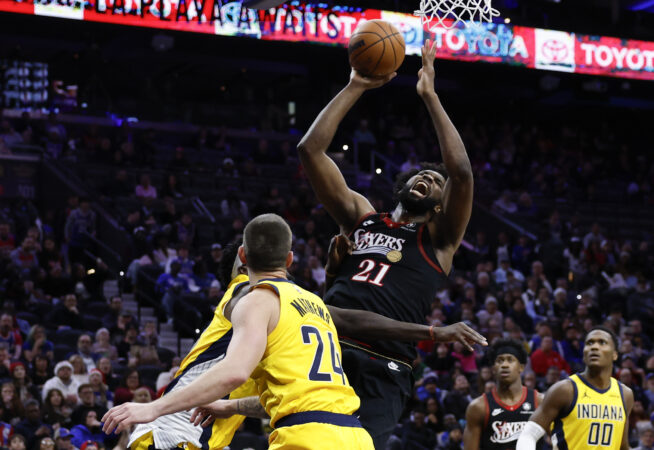
    PHILADELPHIA — Joel Embiid scored a season-high 39 points, Paul George had 23 and the 76ers beat the Indiana Pacers 115-105 on Friday night.

    VJ Edgecombe added 22 points for the 76ers, who played without Tyrese Maxey — the NBA’s third-leading scorer (31.5 points per game) sat out with an illness.

    Pascal Siakam had 20 points for the defending Eastern Conference champion Pacers, who dropped to 6-19.

    Siakham’s jumper with 8:24 remaining gave Indiana a 100-95 lead, but the Pacers missed nine consecutive shots — including three 3-pointers — after that as the 76ers went on a 13-2 run. The spurt was capped with Embiid’s offensive rebound and follow basket. The 2023 MVP was fouled on the play and made the free throw to push Philadelphia’s lead to 108-102.

    Embiid, the seven-time All-Star who has been beset with injuries the last 1 1/2 seasons, came in averaging 18.2 points while playing in just nine of Philadelphia’s 23 contests due to left and right knee issues. However, he looked more like himself on Friday, hitting a step-back 3-pointer at the first-half buzzer to give him 14 points inn the second quarter.

    Philadelphia improved to 6-4 with Embiid in the lineup.

    The 76ers had four days off since losing 112-108 at home to LeBron James and the Lakers on Sunday night, giving Embiid plenty of time for rest and recovery. He was upgraded after being probable on the pregame injury report.

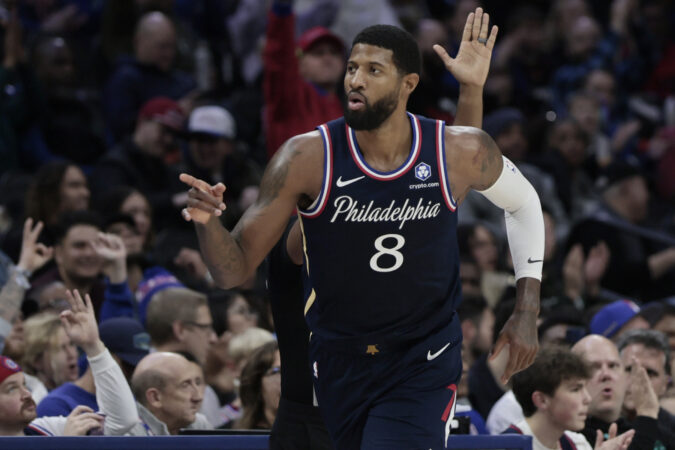
    George, who was drafted by Indiana and played there from 2010–2017, also looked more like the nine-time All-Star that he is by finishing with a season high in points following offseason knee surgery.

    Philadelphia was 33 for 43 on free throws while Indiana was 16 for 19. Indiana’s frustration with the disparity in attempts was apparent in the final minutes, as head coach Rick Carlisle received a technical foul with just over three minutes left and Siakham was assessed with one with 1:41 remaining.

  • Sixers takeaways: Paul George’s point-forward tilt, Joel Embiid’s big night, and more from win over Pacers

    Sixers takeaways: Paul George’s point-forward tilt, Joel Embiid’s big night, and more from win over Pacers

    Paul George is starting to live up to the hype.

    Joel Embiid can still have lethal scoring nights.

    VJ Edgecombe is back to playing at a high level. And he could do more if the 76ers keep him involved throughout.

    Those three things stood out in the Sixers’ 115-105 victory over the Indiana Pacers.

    George shows his worth

    George had to deal with the attention, scrutiny, and spotlight that came with signing a four-year, $211.5 million contract with the Sixers on July 6, 2024. He’s been mostly criticized over the past year while dealing with injuries and underperformances.

    But the 6-foot-8 forward’s team-first mentality and ability to adapt to various roles have been on full display in the nine games he’s played this season. And with Tyrese Maxey sidelined with an illness, George excelled in the point-forward role against the Pacers (6-19).

    He put his imprint on the game from the start, scoring the first two points of the night before assisting on the Sixers’ next two baskets.

    The nine-time All-Star ended the quarter with eight points and two assists before finishing the game with 23 and five, respectively. George also had six rebounds and a steal and served as a solid two-way player.

    “I’m comfortable with the ball,” George said. “I think more than anything, it’s just continue to prove to myself and remain confident as I continue to trust my body and gain confidence on the floor that my body can still produce. So it’s just adding to the confidence, and just chipping away at the work put into this season so far to get ready for this season.”

    He missed 14 games this season with left knee injury management and sat out another game with a sprained right ankle.

    On offense, the 35-year-old ran the team well, creating shots for himself and teammates against the Pacers. Defensively, George was active and made Indiana work hard for shots. He remained in constant communication with teammates on both sides of the ball.

    These are the things the Sixers (14-10) envisioned when signing him to the maximum-salary contract to form a Big Three with Embiid and Maxey.

    Embiid shines

    This was Embiid’s best game of the season.

    His 39 points were his highest regular-season total since he finished with a career-high 70 points against the San Antonio Spurs on Jan. 22, 2024. Embiid also finished with nine rebounds and three assists.

    The seven-time All-Star was asked if his performance proves “I still do this.”

    “I don’t know,” said Embiid, who averaged a career-low 18.2 points in his first nine games. “That’s for those people that don’t think I can do it. I can’t change their mind or opinion.

    “It feels good. Obviously, playing like that, I feel like I can do it.”

    He thinks the dynamics are different, at times. Embiid said he wants to play more as a team. He said that includes making sure everybody is involved.

    “If somebody has to sacrifice, I will,” he said. “But [on] some occasions, when I got it going, like tonight, it’s going to happen.

    “I don’t expect having to do this when everybody is healthy. But I will, if I have to.”

    Coach Nick Nurse thinks Embiid’s performance was as simple as finding an offensive rhythm.

    “But he worked at it this week, a lot,” Nurse said. “I think the practices helped, his own individual work away from practice certainly helped, which is a great sign that he’s doing that and feeling good or better-ish to do some of that.”

    After scoring just four points in the first quarter, he combined for 29 points over the second and third quarters.

    Sixers center Joel Embiid turned the clock back with 39 points and nine rebounds.

    For the game, he made 12 of 23 shots. His biggest basket came on a putback while being fouled with 2 minutes, 56 seconds remaining. He made the foul shot to give the Sixers a 108-102 lead.

    The 7-foot-2, 280-pounder later grabbed a huge defensive rebound on Pascal Siakam’s missed layup with 1:57 left. That led to George’s layup, which made it 112-105 at the 1:41 mark.

    The 2023 MVP made just 2 of 8 three-pointers, showing that he still needs to improve in that area. Embiid also needs to do a better job from the foul line, where he shot 13-for-18. But he did attack the basket more, which was part of a night where he moved better than in any game this season.

    “Again, I keep saying he’s best when he’s driving,” Nurse said. “And I think he drove it a lot to draw the foul early. That puts them in a tough situation of how to play him. And probably the best thing about it all, I mean, 39 is great, but it came at a lot of different schemes they threw at him.”

    This was an outstanding offensive performance, considering he was shooting career lows from the field (40.7%) and on three-pointers (21.4%) in the first nine games of the season.

    Pacers coach Rick Carlisle was asked if he was surprised by Embiid’s productivity.

    “Great player, perennial All-Star, on the Olympic team,” Carlisle said, “He’s a Hall of Fame guy. Who’s surprised? I’m not surprised.”

    If he and George continue to play this way once Maxey returns, the fifth-place Sixers should ascend in the Eastern Conference standings.

    Edgecombe must remain aggressive

    At the start of the season, Edgecombe was the overwhelming favorite for rookie of the year. But a heavy workload, a tweaked role, and a left calf strain slowed him down a bit … until recently.

    Now well-rested and healthy, Edgecombe is excelling once again. The 6-4 combo guard averaged 12.3 points on 44.8% shooting — making 6 of 12 three-pointers — in the three games heading into Friday’s contest. He followed that up with 22 points on 6-for-10 shooting, to go with four rebounds, five assists, and two steals.

    Sixers guard VJ Edgecombe performed better after nursing his calf injury.

    Edgecombe scored 14 of his points on 5-for-6 shooting in the first quarter. However, he attempted only four shots afterward, making one to score eight points.

    The third overall pick is playing well and showing that he can provide a key role. He just needs to remain in attack mode for four quarters. One can argue that his lack of aggressiveness stemmed from Embiid and George dominating the ball. However, he must stay involved.

  • Tyrese Maxey to miss Sixers’ game against Indiana Pacers with illness

    Tyrese Maxey to miss Sixers’ game against Indiana Pacers with illness

    Tyrese Maxey will miss Friday night’s game against the Indiana Pacers at Xfinity Mobile Arena with an illness. This comes after the 76ers point guard missed practice this week.

    “Obviously, that’s a huge challenge,” coach Nick Nurse said of not having Maxey. “Obviously, lots of minutes, lots of ball handling, lots of scoring against a team that likes to pressure a lot, play a lot of guards.

    “So I think the handling of the ball responsibilities got to get spread out between the rest of those guys. It’s going to be a good challenge for them.”

    Nurse declined to disclose who will start in Maxey’s place alongside shooting guard VJ Edgecombe. However, Quentin Grimes wore a blue practice jersey, which is usually reserved for starters, when the media was permitted on the arena floor after Friday morning’s shootaround.

    This will be Maxey’s first game missed this season. The 6-foot-2 point guard is the league’s third-leading scorer at 31.5 points per game. He’s also third in three-pointers made (84) and ninth in assists per game (7.2).

    Sixers Tyrese Maxey goes around Wizards # 27 Will Riley in the first half of the Washington Wizards at Philadelphia 76ers NBA game at Xfinity Mobile Arena in Philadelphia on Tuesday, Dec. 2, 2025.

    Maxey finished with a career-high 54 points along with nine assists, five rebounds, three steals, and three blocks in the Sixers’ 123-114 overtime road victory over the Milwaukee Bucks on Nov. 20.

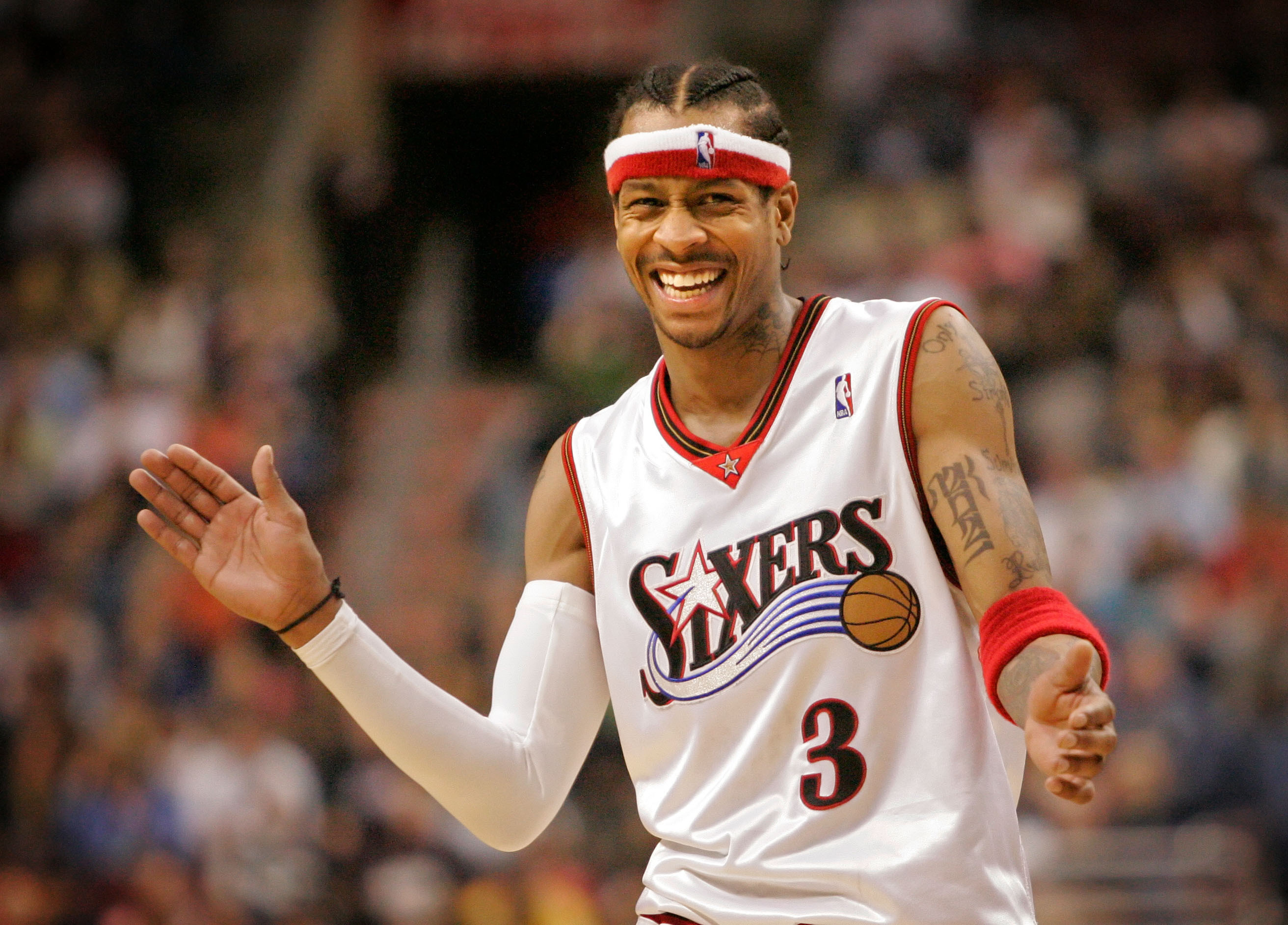
    Those 54 points tied Hall of Famer Allen Iverson for the ninth-most points scored in a regular-season game in team history. Iverson did it twice, on Dec. 18, 2004, and Jan. 6, 2001.

    Maxey joins Hall of Famer Wilt Chamberlain (March 18, 1968) as the only two players in franchise history to produce at least 50 points and nine assists in a single game.

    The Sixers will also be without Kelly Oubre Jr. (left knee LCL sprain), Trendon Watford (left adductor strain), and Hunter Sallis (right shoulder sprain). The Pacers are without Tyrese Haliburton (right Achilles’ tendon tear), Kam Jones (lower back stress reaction), Aaron Nesmith (left knee MCL sprain), Ben Sheppard (left calf strain), and Obi Toppin (right foot stress reaction).

  • TGI Fridays on City Avenue was a longtime Sixers hangout. Then Allen Iverson made it one of Philly’s hottest ‘clubs.’

    TGI Fridays on City Avenue was a longtime Sixers hangout. Then Allen Iverson made it one of Philly’s hottest ‘clubs.’

    In July 2024, Tim Hampton was working his shift at TGI Fridays when he spotted a familiar face.

    It was longtime Sixers player and coach Billy Cunningham. He was eating lunch with La Salle coach Fran Dunphy and two other Sixers alumni: former forward and coach Doug Collins, and former executive John Nash.

    Hampton smiled. Seeing the group brought back memories. There was a time, not long ago, when the chain restaurant on City Avenue hosted everyone from Charles Barkley to Maurice Cheeks to Moses Malone.

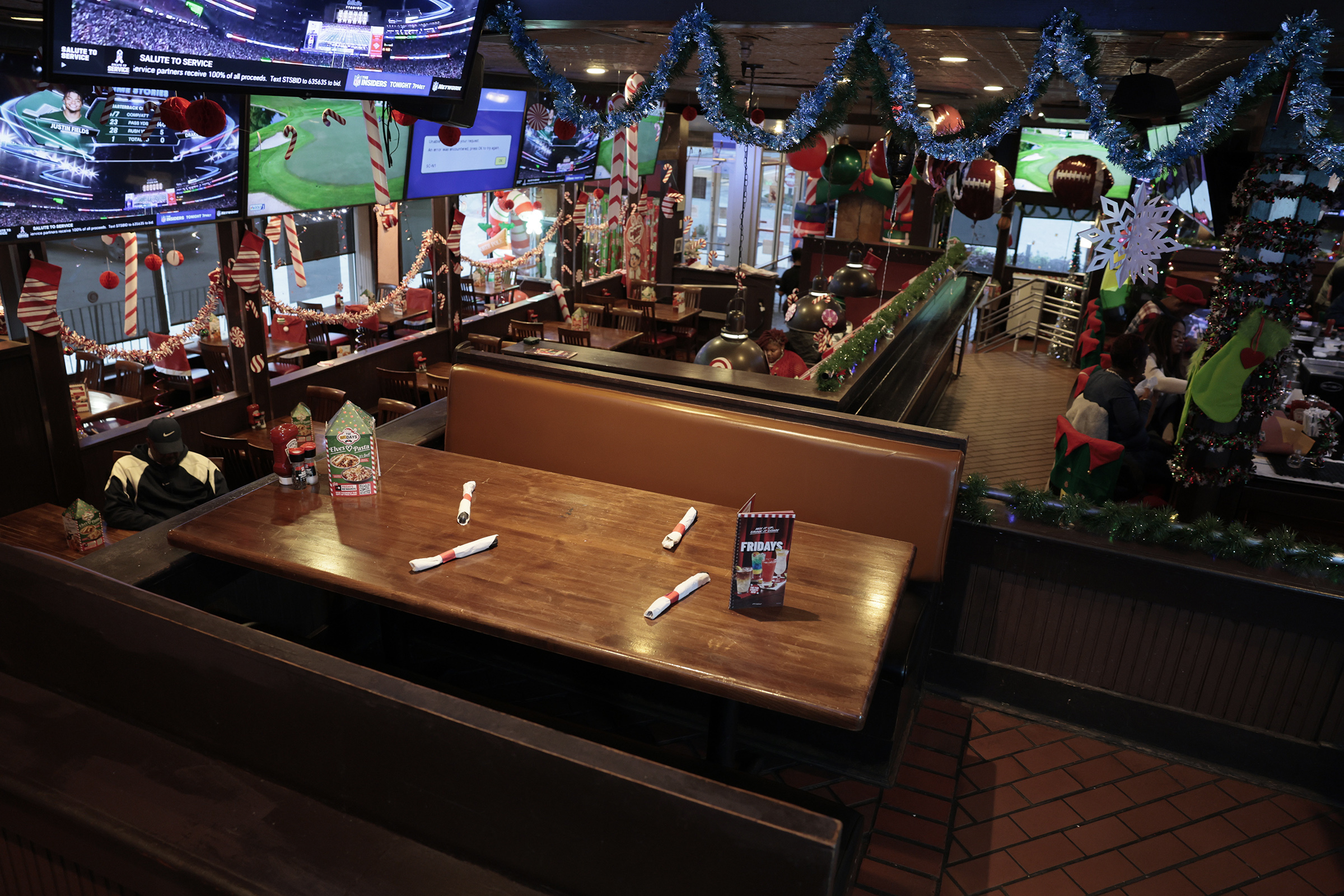
    This particular Fridays, which opened in 1981, was down the street from where the Sixers practiced, first at St. Joseph’s, and eventually, at Philadelphia College of Osteopathic Medicine. It became the team’s unofficial hangout spot, a place where they could grab meals in the afternoon or dinner and drinks at night.

    By the late 1990s, when Hampton was hired as a host, it had a long list of NBA clientele. Then, a rambunctious rookie named Allen Iverson came to town, and everything changed.

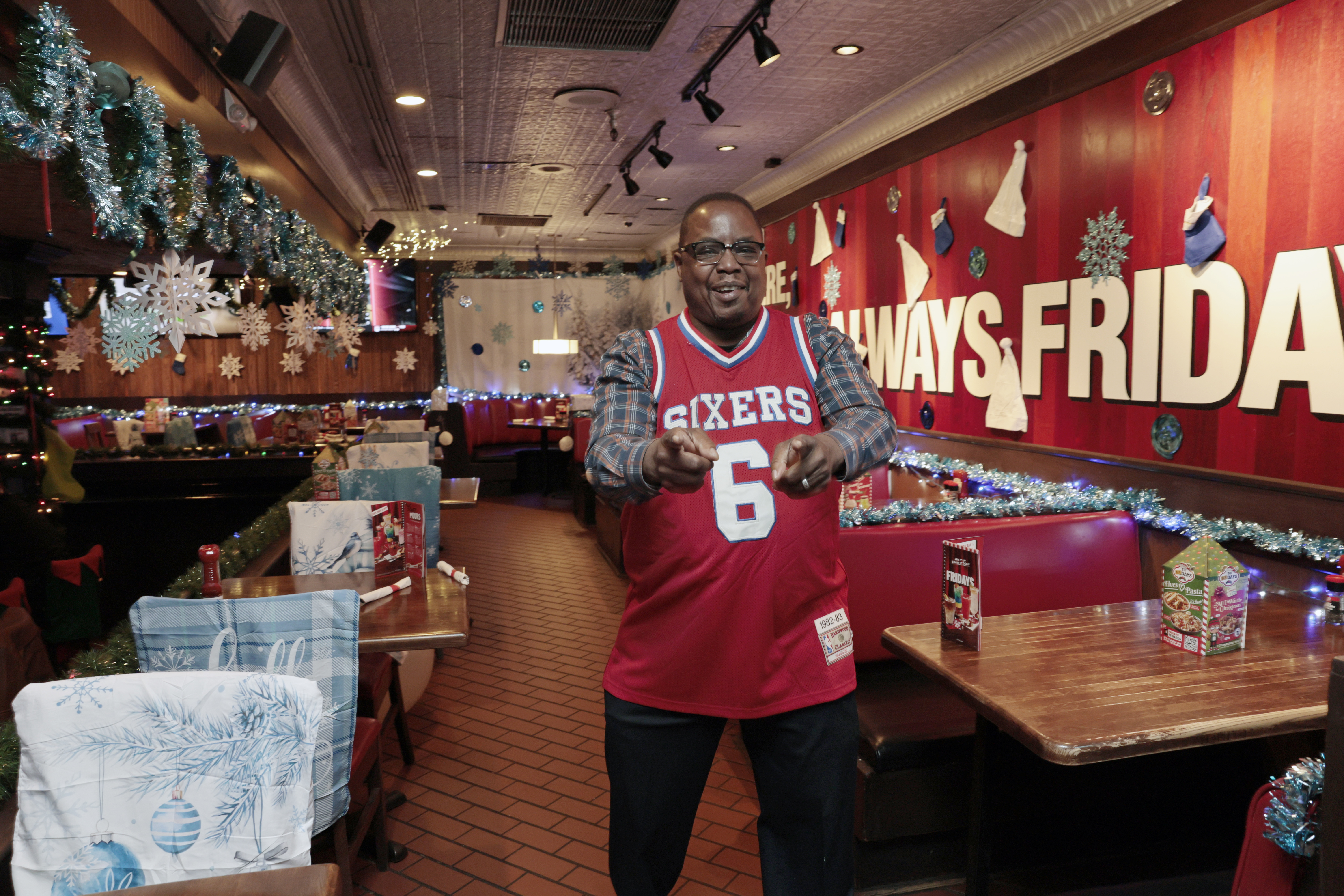
    TGI Fridays was incorporated into Philadelphia’s nightlife scene. People called it “Club Fridays.” Women would wear their shortest dresses and their highest heels. Men would don collared shirts and expensive jeans.

    Allen Iverson’s famous booth became part of the City Avenue TGI Fridays lore.

    At the center of it all was Iverson, who had a designated booth — “Table 70” — a special back entrance, and his own security detail.

    “It was exactly like a club,” said former Sixers forward Jumaine Jones. “They would come there with their best outfit on, like they was going to a party.

    “We gave Allen the nickname Mick Jagger. Because he was like a rock star. People wanted to be around him.”

    There were nights when wait times lasted for hours. Fans would line up around the block, all the way to the bus stop on City Avenue and Presidential Boulevard, just to catch a glimpse of the superstar. Those who were lucky enough to enter would hand napkins to their servers in the hopes that Iverson would sign them.

    And most of the time, he did. Despite the chaos, Hampton said that Iverson treated the employees and patrons of TGI Fridays with respect. He became friendly with the general manager, Jeff Tretina, the kitchen manager, Jerry Shott, and the rest of the staff.

    When the point guard was traded to the Nuggets in 2006, the longstanding relationship between the Sixers and the chain restaurant faded. But Iverson never forgot it. And neither did his Fridays “family.”

    “He could’ve chosen anywhere else to go,” Hampton said, “but he chose us.”

    TGI Fridays manager Tim Hampton remembers a time when “Club Fridays” would produce lines around the block.

    ‘Club Fridays’

    Hampton grew up at 33rd and Diamond in North Philadelphia, raised on Dr. J and George McGinnis. He studied business administration at Burlington County College in New Jersey and started working at the restaurant in 1999.

    The lifelong Sixers fan climbed his way from a host to a waiter to a cook, and eventually, to a general manager. He quickly realized that this was no ordinary Fridays.

    Employees would share stories of Barkley, Darryl Dawkins, Bobby Jones, and more. Players who’d patronized the restaurant during their careers, like Cheeks, would return after they’d joined the Sixers’ coaching staff.

    A big part of this was convenience. Fridays was an easy place to stop after practice, and had plenty of parking for big groups.

    There also wasn’t as much of a social barrier between players and fans as there is now. This was true even among some of the team’s celebrities.

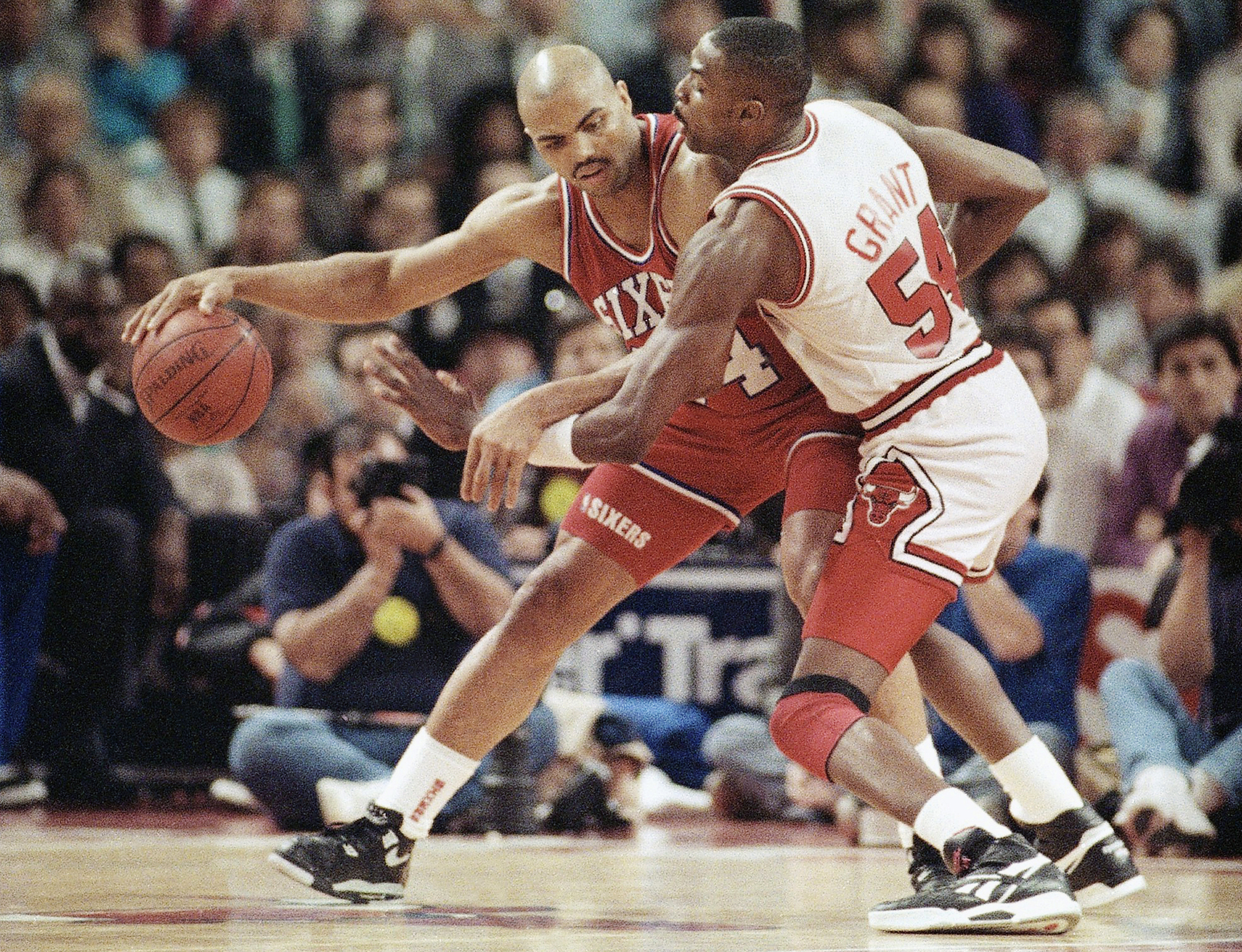
    While Allen Iverson gets much of the credit for launching the Sixers-Fridays legend, Charles Barkley was a loyal patron of the establishment first.

    Barkley and center Mike Gminski would go to the movies together in Philadelphia. They’d attend Phillies games and would sit out in the open, rather than a suite.

    Eating at a chain restaurant was not uncommon. And in the 1980s and 1990s, it looked a lot different from it did when Iverson was in town.

    There was no security at Fridays, no separate entrance, and no reserved table; just a group of extraordinarily tall men, squeezed into a four-person booth.

    “Pretty much everybody on the team used to go there or go somewhere,” Gminski said. “If anybody, it was probably Charlie [who went the most].

    “And after a while, it wasn’t really a thing seeing us. There were no cell phones. There were no pictures, no selfies.

    “We never really thought about shying away. We ate where everybody else ate.”

    Most of the players and staff would go to Fridays for lunch, and Bridget Foy’s in Society Hill for postgame drinks.

    It wasn’t until Iverson arrived in 1996 that Fridays turned into a nightly haunt. At first, people barely noticed he was there. Iverson would sit in his booth, eat his favorite dish — Cajun shrimp and chicken pasta — and lay low.

    Jumaine Jones, who was drafted by the Hawks in 1999 and traded to the Sixers shortly after, usually accompanied him. Iverson quickly gravitated to the small forward, loudly proclaiming that Jones was his “rookie.”

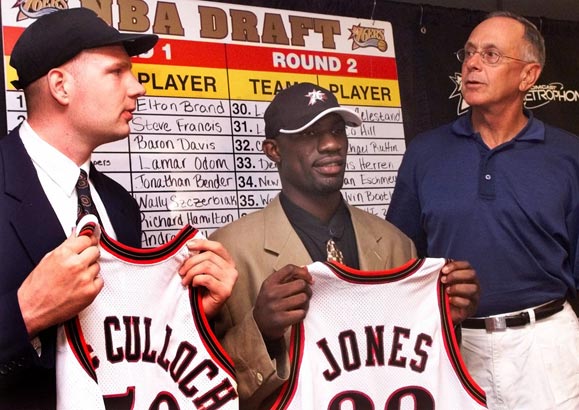
    Jumaine Jones (with fellow draft pick Todd MacCulloch and coach Larry Brown) was a familiar face at the City Line Fridays.

    They started hanging out off the court. Jones estimated that the two players went to Fridays “every day for two years.” Sometimes, he would go home to take a nap, and wake up a few hours later, only to realize that Iverson was still at the restaurant.

    “We probably spent more time at Fridays than we did at the gym,” Jones said.

    The rookie wasn’t complaining. If anything, it made Iverson seem more relatable.

    “I’d just come from being this broke college student,” he said. “So, to go to Fridays, it was like, ‘Oh, OK, that’s cool. He likes Fridays too!’

    “But it was funny that somebody who was making so much money liked Fridays. The fact that he didn’t change what he ate, and the things that he enjoyed doing, really made him human to me.”

    After the 2001 NBA Finals, when Iverson famously stepped over Lakers point guard Tyronn Lue, his celebrity grew to new heights. People started flocking to Fridays not to eat, but to see Iverson.

    The restaurant had to hire its own security for crowd management (in addition to Iverson’s detail). It changed its hours and staffing arrangements to accommodate the influx of people.

    “If it was a game day on a weekend, you pretty much figured he was coming,” said former manager Elan Walker. “We were closing at like 1 a.m. on weekends. So we were open late.

    “At most businesses your dinner is from 5 p.m. to 7 p.m., and you’re down to a skeleton crew by 10 o’clock. That wasn’t the case for us. We still had a full staff on at midnight. Because we were expecting a crowd.”

    Even though it was a foregone conclusion that Iverson would be at Fridays after a home game, he still liked to give the staff a heads up.

    So, he’d call the restaurant, or Tretina and Shott directly, to let them know he was coming.

    The point guard would roll up in his Rolls-Royce or his blue Bentley and step out with anyone from Jadakiss to Fat Joe.

    Allen Iverson’s magnetic presence helped make the City Line Fridays a destination.

    “You never knew who was going to be with A.I.,” said Jamilah Lawry, a friend of Iverson’s. “So that was really a huge element of surprise. Who does he have with him? Who’s going to get out of that car?

    “You didn’t know who was going to be in there. And you had to look good, because the man of your dreams could walk in. You know?”

    Lawry’s uncle, Jeff Lawry, owned Luxe Lounge and Club Roar at the time. Jamilah was familiar with Philadelphia nightlife.

    But to her, Fridays was the best of both worlds; a place where they could be themselves, in an exciting environment, without too many rules and regulations.

    “We’d watch the game, we’d talk loud,” she said. “We’d play too much. Those type of things. You know, you can’t go to Ocean Prime and do that. They’ll be like, ‘Hey, get out.’”

    “It was more of what we would call a Greek picnic type thing,” Lawry added. “There was nothing like Club Fridays. Except for Club McDonald’s on Broad Street. And that’s a whole other story.

    “If you didn’t want to go to the club, you’d go to Fridays, and that’s what would be going on.”

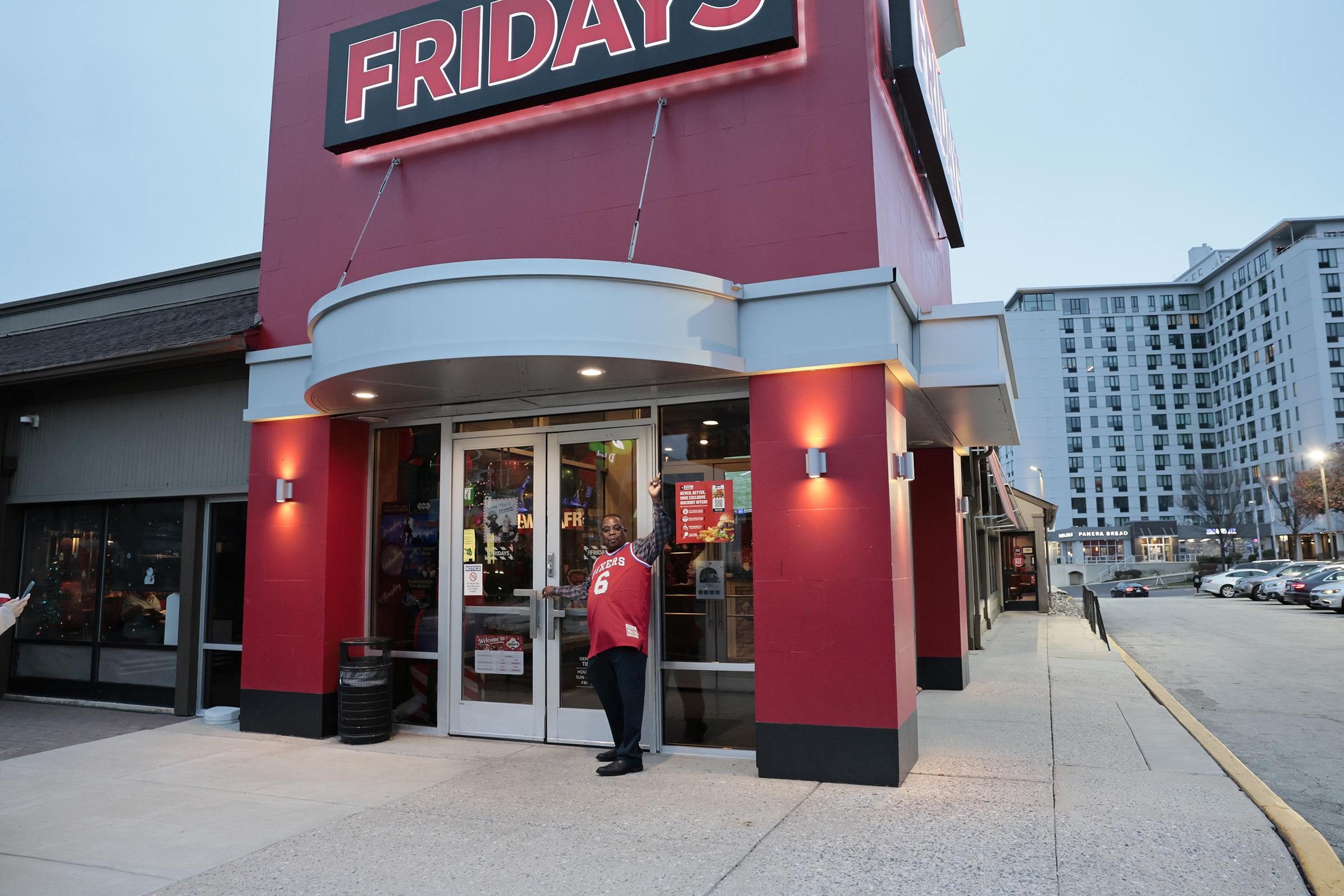
    TGI Fridays manager Tim Hampton is presiding over an establishment that might be undergoing a renaissance in the days ahead.

    ‘City Line Love’

    After Iverson retired in 2013, he rolled out a special-edition sneaker, in collaboration with Reebok and the Philadelphia-based retailer Ruvilla. It was called A Day in Philly.

    The tongue had a maroon and gray stripe along the top, as a nod to his favorite restaurant. He held the release party in November 2014 at TGI Fridays on City Avenue.

    The staff rolled a red carpet onto the sidewalk. Fifteen security guards roamed the grounds as police officers stood nearby.

    At one point, employees had to close the doors, because the restaurant had reached its occupancy level (475 people).

    Jadakiss and Styles P gave a surprise performance and a DJ held court after that. To Hampton, it felt like old times.

    “It was like a Renaissance moment,” he said. “I felt like I was part of history.”

    Now, over a decade later, he’s trying to recapture the magic. In November, Fridays’ corporate branch introduced a membership program called “Club Fridays,” that offers discounts and other perks.

    Hampton has asked Iverson if he’ll help the restaurant promote it. He has also reached out to a few current Sixers players to forge some new relationships.

    “We’re working on trying to get VJ Edgecombe and Tyrese Maxey to come here,” Hampton said. “Because we want to extend that City Line Love.

    “That’s our goal. To get the new Sixers in. We want them to know about the legendary 4000 City Line Avenue, because it is a legendary location.”

  • Flyers, Sixers team up to deliver $15,000 worth of equipment to Kensington recreation center: ‘I love giving back’

    Flyers, Sixers team up to deliver $15,000 worth of equipment to Kensington recreation center: ‘I love giving back’

    Kids heading in for hockey practice at Scanlon Recreation Center in Kensington on Wednesday were hit with a big holiday surprise.

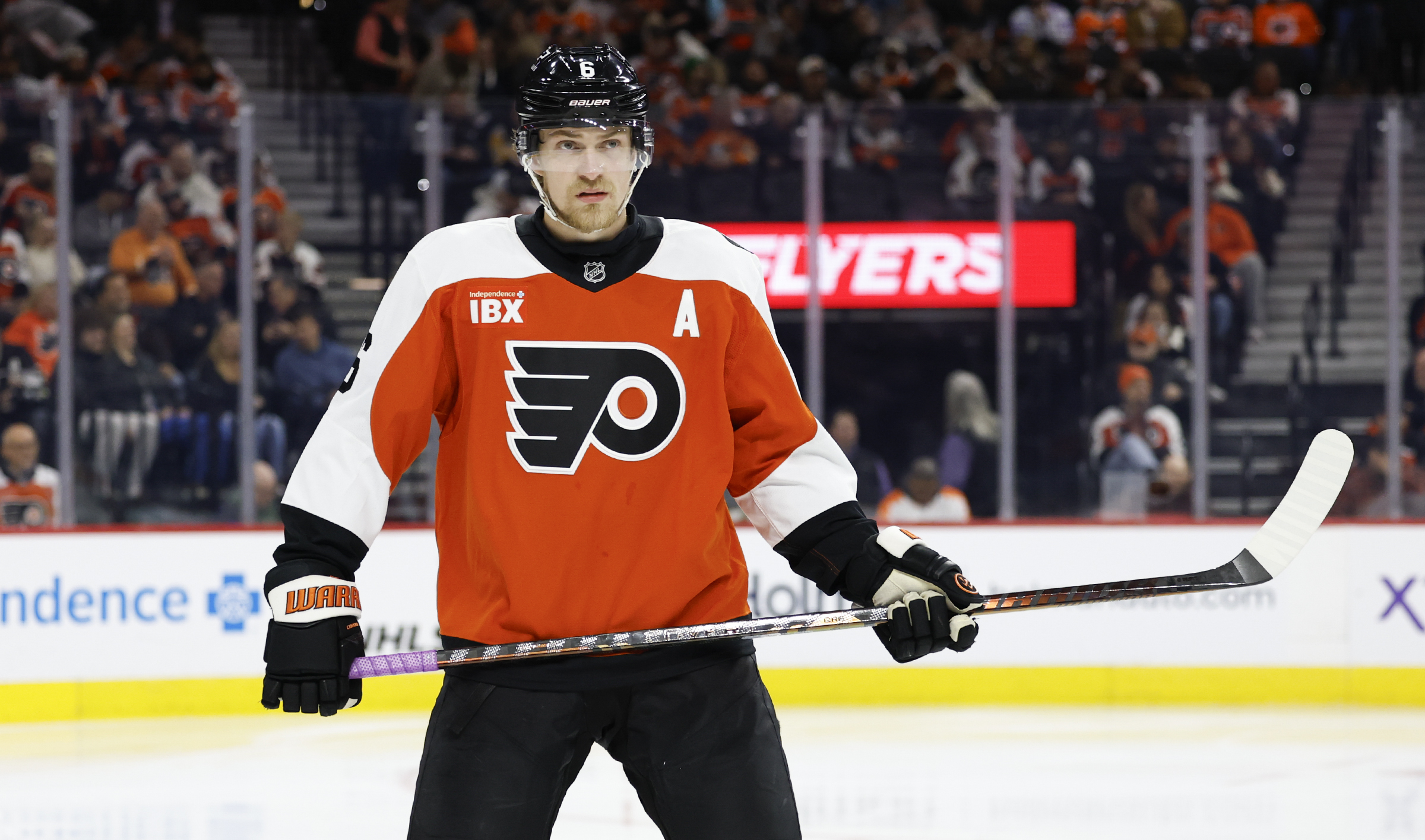
    Flyers defenseman Travis Sanheim and Sixers guard Quentin Grimes were both on hand to gift $15,000 worth of hockey and basketball equipment, including new skates, helmets, and basketballs, through a partnership between the two teams and Bank of America. Gritty was also on-site in a Santa costume, of course.

    “Sports is such a connector,” said Jim Dever, Bank of America Greater Philadelphia’s president. “No matter what your socio-economic level is, sports is just that. For us to make some dreams come through in an area that — certain sports are very expensive, so if we can help bridge that gap in some way, it’s just a great positive.”

    After distributing the gear, Grimes joined the prepractice pizza party, and interacted with the kids before they started their skate.

    “It’s the holiday season, I love giving back,” Grimes said. “I love being around the youth and to try to inspire them and give them some inspiration to always chase your dreams, and to give back for the holidays. It was really good, really fun.”

    Flyers defenseman Travis Sanheim hopped on the ice to skate with some of the young athletes taking part in the Ed Snider Youth Hockey & Education program at the rink on Wednesday.

    Then, Sanheim hopped on the ice to skate with some of the young athletes taking part in the Ed Snider Youth Hockey & Education program at the rink for a free skate.

    “It’s an expensive sport, so it’s hard for kids to get into, and so for us to allow them to have the gear to do it, it makes it easier for them to take it up,” Sanheim said. “I really hope that they enjoy it just as much as we do. We love the sport, and we were at their age when we started and took it up. So I hope we create hockey players out of this.”

    Wednesday’s donation was the first of a series of equipment donations across the Philadelphia area as part of the partnership between the Flyers, Sixers, and Bank of America, with equipment purchased from C&M Sporting Goods in Havertown.

  • The Sixers are injured at key spots. They still see reason to be optimistic about their East chances.

    The Sixers are injured at key spots. They still see reason to be optimistic about their East chances.

    Joel Embiid and Paul George are coping with injuries and poor shooting performances. Averaging a league-most 39.9 minutes, Tyrese Maxey could be on the verge of breaking down if not careful. Kelly Oubre Jr. and Trendon Watford aren’t healthy enough to practice.

    And still, there is optimism.

    The 76ers head into Friday night’s matchup against the Indiana Pacers at Xfinity Mobile Arena with a 13-10 record. They’re in sixth place in the Eastern Conference standings, 1 ½ games out of third place heading into Thursday night’s games.

    “You look at the East, it’s kind of clumped,” George said. “No one’s really pulled away yet, so we do have the opportunity to kinda write our future out from this point forward.

    “No pressure to the cause of it, but we do have an opportunity to kind of take advantage of the standings. We can look at every game as important if you want to make steps going forward, for sure.”

    The Sixers are favored to pick up a victory against the Pacers (6-18), who are tied for the league’s third-worst record.

    Afterward, their next five games are against the Atlanta Hawks, New York Knicks, Dallas Mavericks, Brooklyn Nets, and Chicago Bulls — teams with a combined record of 55-65.

    Sixers Joel Embiid is shooting career lows from the field (40.7%) and on three-pointers (21.4%), in addition to averaging a career-low 18.2 points in nine games this season.

    The Sixers will face the Hawks (14-11) on Sunday at State Farm Arena. After four days off, they’ll face the Knicks (17-7) at Madison Square Garden on Dec. 19 before hosting the Mavericks (9-16) the next night. The Sixers will then entertain the Nets (6-17) on Dec. 23 and kick off a five-game road trip against the Bulls (9-14).

    Facing just two teams with winning records will provide ample opportunity for the Sixers to ascend in the standings during their next six games.

    A practice-heavy week with few practices, along with this upcoming stretch, could enable George and Embiid to get into rhythm while building on-court chemistry with teammates.

    “I think we still have a number of guys, but, obviously, those two guys are at the top of the list that are still looking for rhythm and conditioning, but more probably rhythm,” coach Nick Nurse said. “You know it’s always a combination of those two things. And they had two good days [of practice].”

    However, through eight games played this season, George’s field-goal percentage (41.8%) and three-point percentage (34.9%) are both the second lowest of his career. He’s also averaging the fourth-fewest points (14.1 points) of his career.

    Meanwhile, Embiid is shooting career lows from the field (40.7%) and on three-pointers (21.4%), in addition to averaging a career-low 18.2 points in nine games this season.

    The 2023 MVP and seven-time All-Star has missed 14 games this season due to left and right knee injury management. Meanwhile, George missed 14 games with left knee injury management and sat out another game with a sprained right ankle.

    Their injuries and absences have put a heavy load on Maxey, who’s the league’s third-leading scorer at 31.5 points per game. He’s logging 39.9 minutes per game entering Thursday, with Los Angeles Lakers point guard Luka Dončić, who’s second in average minutes played, sitting 2.7 minutes behind him.

    Maxey logged a season-high 52:18 during the 142-134 double-overtime home loss to the Hawks on Nov. 30. He’s logged at least 38:08 minutes in 17 of the Sixers’ 23 games. Nine of those games involved him playing at least 41:24. With 59 games remaining, whether Maxey can hold up all season is worth considering.

    Sixers small forward Kelly Oubre Jr. has missed the past 11 games with a left-knee LCL sprain.

    Meanwhile, Oubre has missed the past 11 games with a left-knee LCL sprain. The 6-foot-8 small forward has left an enormous void to fill. Prior to injury, Oubre was averaging 16.8 points and doing a solid job of guarding the opposing team’s best perimeter player.

    The Sixers also miss Watford, who’s been a solid point forward. He finished with his lone career triple-double — 20 points, 17 rebounds, and 10 assists — in a 130-120 victory over the Toronto Raptors on Nov. 8. Watford, who’s averaging 8.9 points, 4.7 rebounds, and 3.6 assists, has missed the past six games with a left abductor strain.

    “There on the court doing some individual stuff, but doing stuff with the team,” Nurse said of Oubre and Watford.

    Despite injuries, the Sixers have been playing exciting basketball and given themselves a chance to win most games.

    “We have been doing a lot of great things late in games,” Nurse said. “There’s a lot that’s encouraging. I feel like we’re going [upward], just by the way we are playing, and with [improved] health and participating and guys being available, and it feels like we are heading in the right direction.”

    But the Sixers believe defensive improvement will help them ascend in the standings.

    As of Thursday afternoon, they were ranked 14th in the league in defensive rating (113.5). The Sixers were also eighth in three-point percentage defense (.343), 11th in field-goal percentage defense (.464), and 15th in scoring defense (116.1 points per game). One bright spot is that they are first in blocked shots (6.1 per game).

    “I think we’re a little ways away from where we need to be, but I think we’re getting there,” George said. “We’re making steps to be a better defensive team. Kelly, obviously, brings a lot. He’s still one of the best on-ball defenders. One of the best help-side defenders, and just that tenacity he plays with on the defensive end to get after it.

    “We’re gonna get a lot once he comes back, and then it’ll allow us to be more versatile with myself, with KO, with [Dominick] Barlow, Quentin [Grimes], the four of us taking the bulk of the defensive matchups. We’ll be really good, but I like where we’re at. It’s a good thing to have areas to improve in when you are going in the right direction.”

  • The NBA’s $525 million injury epidemic

    The NBA’s $525 million injury epidemic

    LOS ANGELES – Golden State Warriors Coach Steve Kerr sparked a moment of introspection for the NBA last month when he said his team’s medical staff believed modern basketball’s fast pace and heavy mileage were contributing to a rash of injuries. After bemoaning the lack of practice and recovery time, Kerr demurred when asked whether he thought the league would consider shortening its 82-game schedule in an attempt to protect player health.

    “The tricky part is all the constituents would have to agree to take less revenue,” Kerr said. “In 2025, in America, good luck in any industry. … That’s not happening.”

    Kerr’s doubt was well founded, because the NBA’s business is booming: Commissioner Adam Silver recently struck new media rights deals worth $76 billion over 11 years, the league’s 30 teams combined to generate a record $12.25 billion in revenue last season, and a record 16 players will earn at least $50 million in salary this season.

    But as the NBA’s top-line financial metrics continue to increase, so, too, do the skyrocketing costs associated with lost productivity for injured stars. Remarkably, if early trends hold, the NBA’s 30 highest-paid players, according to salary data compiled by ESPN, could combine to cost their teams more than $525 million in empty salary associated with games they do not play this season.

    Stephen Curry (who will earn $59.6 million) is sidelined with a quadriceps injury. Joel Embiid ($55.2 million) has missed more games than he has played because of recurring knee problems, Kawhi Leonard ($50 million) has already missed 10 games because of a foot injury, and Bradley Beal ($53.7 million including a contract buyout) played only six games before suffering a season-ending hip injury. LeBron James ($52.6 million) and Anthony Davis ($54.1 million) missed the first four weeks of the season because of injury, and Giannis Antetokounmpo ($54.1 million) and Ja Morant ($39.4 million) are out with muscle strains.

    Jayson Tatum, Damian Lillard, Tyrese Haliburton and Kyrie Irving are on the books for $204.4 million combined but have yet to play because of major injuries suffered last season. During one recent loss, the New Orleans Pelicans took the court without their five highest-paid players, who will combine to earn more than $140 million.

    Stephen Curry is currently sidelined with a quadriceps injury.

    Many of those absences have directly led to trouble in the standings. Haliburton’s Indiana Pacers, who reached the NBA Finals in June, have dropped to 14th in the Eastern Conference. Antetokounmpo’s Milwaukee Bucks are at risk of missing the playoffs for the first time since 2015-16 and must pay Lillard $113 million over the next five seasons after waiving him using the league’s stretch provision. And the Los Angeles Clippers, wobbly with Leonard and Beal missing time, are on track for their first losing season since 2010-11.

    “When you lose your best player and a top-10 player when he’s on the floor, it’s hard to make up for that,” Clippers Coach Tyronn Lue said last week. “I know a lot of people say ‘next man up,’ but if [Leonard] is making [$50] million and your next man up is making $400,000, it’s not really the same.”

    In two notable cases, star injuries have already contributed to major personnel changes. Without Davis and Irving, the Dallas Mavericks struggled out of the gate and fired general manager Nico Harrison less than a month into the season. And well before Zion Williamson’s latest injury, a hip strain that will keep him out for weeks, the Pelicans had crashed into the Western Conference’s basement and fired Willie Green after he coached just 12 games.

    “We have a lot of guys that are in street clothes,” Mavericks Coach Jason Kidd said shortly after Harrison’s firing. “We’ve got over, I think, $100 million sitting on the sideline.”

    More injuries, more problems

    The rise in star injuries goes well beyond this season’s most extreme examples of the Pacers, Clippers, Mavericks and Pelicans.

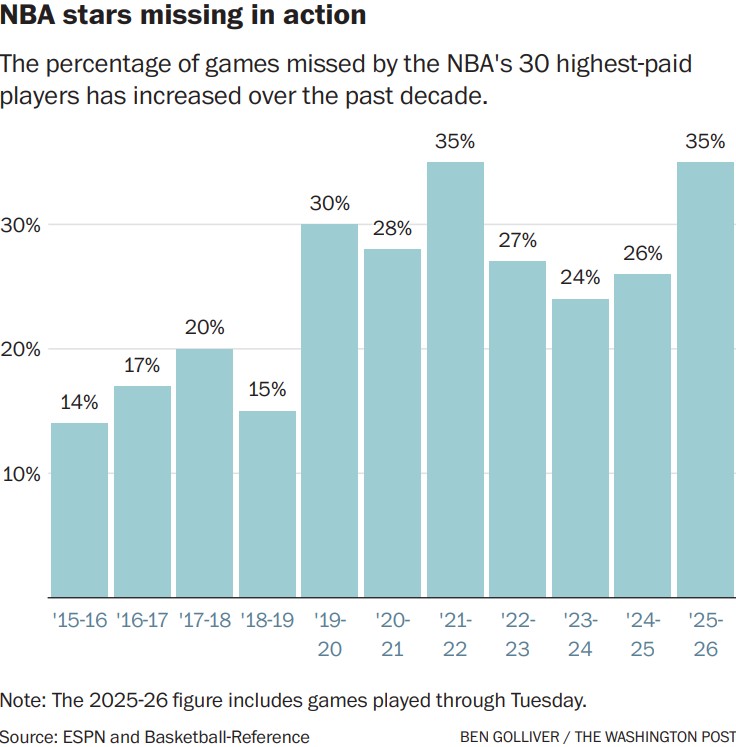
    Flash back one decade: During the 2015-16 season, NBA teams averaged 102.7 points, 24.1 three-point attempts and 95.8 possessions per game. That year, the league’s 30 highest-paid players combined to miss just 14 percent of their teams’ games.

    This season, teams entered Wednesday averaging 116.6 points, 36.9 three-point attempts and 100 possessions per game. The league’s highest-paid players have combined to miss 35 percent of their teams’ games. A faster, higher-scoring and more rigorous sport appears to be taxing players like never before.

    John DiFiori, the NBA’s director of sports medicine, said the league views the 2019-20 season as an “inflection point” for star injuries. During the four seasons before that campaign, which was interrupted by the coronavirus pandemic, the NBA’s 30 highest-paid players missed between 14 and 20 percent of their teams’ games. Since 2019-20, that number has jumped, ranging from 24 percent to 35 percent. The missed games rate has remained elevated in the years after the NBA stopped requiring players to sit out if they tested positive for the coronavirus.

    “Injury rates are going up,” DiFiori said. “When we look back at what we’ve been doing the last 10 or 12 years, it’s a moving target. The game doesn’t stay the same. We’re trying to reduce injuries, and the game is also changing. All these other factors, the pace of play and what players are doing in training, those are all moving targets. To wrap our arms around that is a challenge. It’s something we’re quite focused on. … [Teams are] spending a lot of time and money and bringing in a lot of expertise. Despite all of that, we’re seeing an increase in injuries. It’s not for teams’ lack of focus on it.”

    The percentage of games missed by the NBA's 30 highest-paid players has increased over the past decade.
    The percentage of games missed by the NBA’s 30 highest-paid players has increased over the past decade.

    The NBA instituted the Player Participation Policy (PPP) before the 2023-24 season to address what it calls “a statistically significant increase” in star absences and to curb “load management,” a strategy used by some teams to rest players throughout the season. With the NBA negotiating new media rights deals and debuting the NBA Cup in-season tournament to spark interest, then-league executive Joe Dumars met with all 30 teams to remind them that the NBA is an “82-game league.” To reinforce that message, the PPP mandated that players appear in at least 65 games to be eligible for end-of-season awards, and the league began fining teams if they rested healthy players for nationally televised games.

    The PPP enjoyed some initial success: The 30 highest-paid players missed just 24 percent of games in 2023-24, the league’s best mark since the pandemic. That progress proved short-lived, however; the availability of the NBA’s highest-paid players has regressed noticeably over the past three seasons. During the 2025 playoffs, Tatum, Lillard and Haliburton all suffered season-ending Achilles tendon injuries during a span of less than two months.

    Muscle strains have been another point of immediate concern. The Mavericks shocked the basketball world by trading franchise player Luka Doncic last season while he was recovering from a calf strain; Antetokounmpo, Davis, Morant and Victor Wembanyama are among the stars who have been sidelined by the same injury this season. Haliburton was still recovering from a calf strain when he tore his Achilles during Game 7 of the NBA Finals, but the NBA’s medical staff has yet to identify clear evidence that suggests a prior calf injury increases the risk of an Achilles tear.

    “When you have a small prevalence of injury, it’s hard to scientifically study that,” DiFiori said. “Typically over the last 15 years, we average about two Achilles tendon injuries per year. Last year, we had seven. That’s a lot. One year prior, also with a high pace of play, we had zero. We’re taking it very seriously. We’re concerned about it, but I don’t think we have our finger on what’s the driver here or what factors may have led to last season’s unusually high number.”

    More injuries, more money

    Kerr is hardly the only voice in the basketball and medical communities raising the alarm about the increase in injuries. A range of theories abound.

    The NBA cut its preseason to three weeks in 2017, reducing the amount of time players have to ramp up for game action to spread out the regular season more evenly and eliminate instances of four games in five nights. The league changed its shot clock reset to 14 seconds and emphasized greater freedom of movement for players to encourage faster and less restrictive play in 2018. The pandemic created calendar disruptions and shortened schedules in 2020-21 and 2021-22, and the NBA has tweaked its regular season schedule in each of the past three seasons to accommodate the NBA Cup in November and December.

    Aside from those legislative moves and the possibility of unintended consequences, the use of analytics has swept through the league and transformed the sport into a perimeter-dominated endeavor. Playing at a fast pace and shooting a high volume of three-pointers are now generally viewed as optimal strategies for underdogs hoping to increase variance against more talented opponents.

    The Pacers’ unexpected Finals run, driven by a breakneck offense and high-pressure defense, has spawned copycats. The results haven’t always been positive: The Portland Trail Blazers made waves by regularly deploying a full-court press to start the season, only to endure injuries to their guards in recent weeks.

    It’s also worth noting that a cohort of superstars such as Curry and James has remained highly productive late into their lengthy careers. While these older players have remained among the league’s biggest earners, their durability has tended to decrease as they proceed through their late 30s.

    On the flip side, a younger generation of high draft picks – such as Williamson, Morant, LaMelo Ball and Ben Simmons – has encountered recurring injuries before they reach their late 20s, which have typically been viewed as the prime years for basketball players. NBA executives have long expressed serious concerns that the modern generation of players is arriving to the NBA with preexisting injuries or risks that result from playing too many games at the youth level and specializing in only one sport.

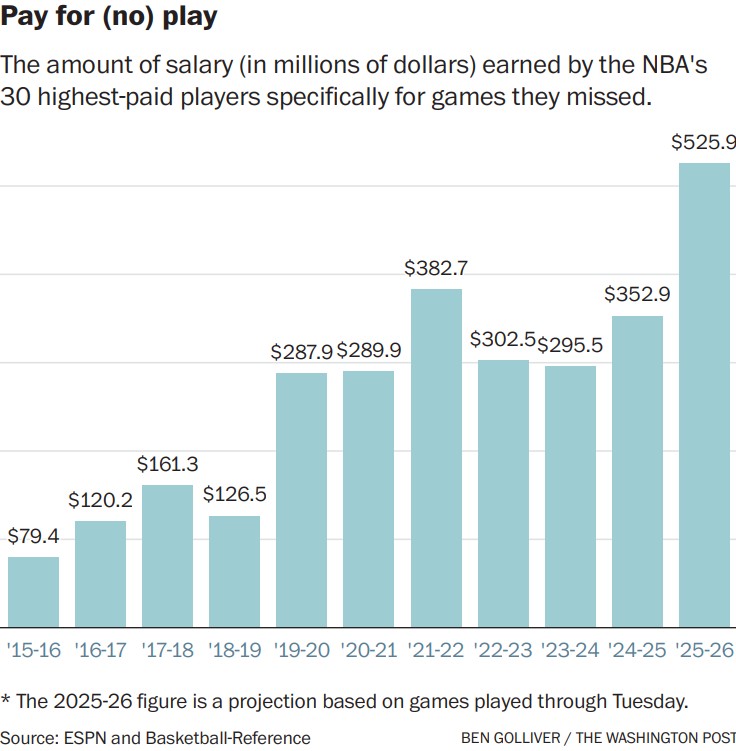
    The amount of salary (in millions of dollars) earned by the NBA's 30 highest-paid players specifically for games they missed.
    The amount of salary (in millions of dollars) earned by the NBA’s 30 highest-paid players specifically for games they missed.

    As the NBA and its fans continue to debate possible solutions, the injury epidemic has reached staggering heights when it comes to lost productivity. Back in 2015-16, the 30 highest-paid players combined to earn roughly $560 million. Because those players only combined to miss 14 percent of their teams’ games, their teams combined to pay roughly $79 million in empty salary.

    Last year, the empty salary mark reached more than $352 million. This season, with the 30 highest-paid players combining to earn more than $1.49 billion and missing 35 percent of their teams’ games entering Wednesday, the number is on pace to exceed $525 million.

    That would easily set a record for lost productivity. As Lue and Kidd might say, NBA teams could soon have a half-billion dollars sitting on the sideline.

  • How is Tyrese Maxey handling his heavy minutes? The Sixers star is ‘lost in the competitiveness’

    How is Tyrese Maxey handling his heavy minutes? The Sixers star is ‘lost in the competitiveness’

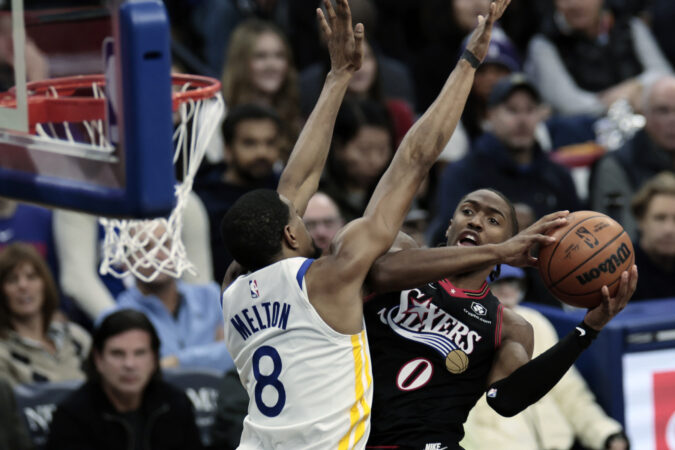
    When Tyrese Maxey flew down the court for his game-saving block on the Golden State Warriors’ De’Anthony Melton last week, it was not only an impressive burst of speed.

    “That’s conditioning, too,” Doc Rivers, the Milwaukee Bucks coach who formerly was with the 76ers, said while commending Maxey’s play the following day. “If you’re tired mentally or physically, you can’t make that play.”

    Maxey insists that, a quarter of the way through this season, he is not fatigued. But perhaps no Sixer is savoring this light stretch in the schedule before Friday night’s game with visiting Indiana more than their star point guard.

    Maxey entered Thursday leading the NBA in minutes played, averaging 39.9 in 23 games. That is three minutes greater than the next player with a comparable number of games logged (the Los Angeles Lakers’ Austin Reeves’ 36.9 minutes in 21).

    Maxey’s recent workloads have included playing the entire second half and overtime of a Nov. 20 win at the Milwaukee Bucks, when he scored a career-high 54 points. In a Nov. 30 double-overtime loss to the Orlando Magic, he played more minutes (52) than there are in a typical NBA game (48).

    No NBA player has averaged 40 minutes or more per game since Monta Ellis with Golden State in 2010-11 (40.3). So conventional wisdom says this pace for Maxey is not sustainable for the 82-game grind. Sixers coach Nick Nurse hopes having the team’s four rotation guards healthy — and productive — will ease Maxey’s load moving forward.

    Still, it has taken impressive physical fitness and mental fortitude for Maxey to pull this off for the season’s first seven weeks while playing at an All-NBA level. He entered Thursday ranked third in the league in scoring (31.5 points per game) and averaging a career-high 7.2 assists and 4.7 rebounds.

    “He’s a warrior,” teammate Paul George said. “There’s no question about it. He’s a fighter. … [There’s] a leadership about him. And when he’s out there, I play for him. I do everything I can to make the game easier for him. He’s our guy. It’s inspiring. Me, as a vet, it’s inspiring for a guy to consistently do it — and to be efficient with all the minutes that he’s been playing.”

    Nurse said Maxey’s relentless energy stems from him being “lost in the competitiveness” of the Sixers’ 13-10 start, that “it’s not like I’m sitting there saying, ‘Hey, you’ve got to come out.’ It’s the other way around. He doesn’t want to come out.”

    It’s also a responsibility to which Maxey has become accustomed. Last season, he led the NBA at 37.7 minutes per game in 52 games. In 2023-24, he ranked second in the league in that category, with 37.5 minutes in 70 games.

    Nurse’s top players racking up heavy minutes has also become a trademark of his coaching approach. Pascal Siakam, when he was a Toronto Raptor, led the NBA for two consecutive seasons, in 2021-23, while Fred VanVleet landed in the top five in both seasons. This season, fellow Sixers Kelly Oubre Jr. (34.8 minutes) and VJ Edgecombe (34.6) rank in the top 20, although their workloads have been diminished by injuries.

    Though there may not appear to be a massive difference between 37 and 40 minutes on the court, they add up game after game. Especially when Maxey is so active in generating the Sixers’ offense with the ball in his hands, and he has become more of a defensive playmaker.

    “He’s taken that challenge on a nightly basis, while being guarded by the best defender, usually,” George said Wednesday. “ … He’s doesn’t look for a night off, to go and sit in the corner and guard no one.”

    Maxey, 25, credits sports performance consultant Alexander Reeser with building foundational offseason strength and conditioning programs that “[push] me to my max limit, every day.” Maxey also has gained a reputation for his early morning on-court workouts, and for sometimes clocking in for as many as three sessions per day.

    Last season, Maxey added, was his first time “really locking in” on recovery, an effort to blend his present high performance with career longevity. Which means his routine between games in-season has become “very minimal work, for obvious reasons,” Nurse said.

    Maxey said the goal of his individual sessions is not “running around” to get to his spots on the floor to shoot — or to execute elaborate dribble combinations — which expend more energy. Instead, he drills passing, touch layups, floaters, and jumpers from the midrange and beyond the arc.

    “It’s the stuff you do after you do the move,” Maxey said. “Making sure it feels good.”

    Added Nurse: “He’s maturing a little bit, to have the confidence to just understand he can roll [in games] without having to have a big day on the floor on the off days.”

    Nurse has tinkered with when to rest Maxey, typically at the end of the first and/or third quarters or at the beginning of the second and/or fourth quarters. In that Nov. 20 game at Milwaukee, however, Maxey told Nurse, “Coach, let me go,” leading to him playing the final 29 minutes. Yet even within those lengthy on-court stretches, teammate Jared McCain has noticed Maxey going “straight to sit down” on the bench during timeouts.

    “Give him his time to breathe and rest,” McCain said. “[It’s] definitely a responsibility … [that] all the guards take, and something we’ve got to help him with.”

    Sixers coach Nick Nurse has started to lean on a three-guard lineup without Tyrese Maxey to give him much-needed time on the sideline.

    The Sixers’ new-look offense, after all, has been built around its four rotation guards — Maxey, Edgecombe, McCain, and Quentin Grimes — who can score, push the pace, and pass in a variety of lineup combinations. But only recently did that full group reach full strength.

    McCain got off to a rocky start after missing nearly a calendar year following knee and thumb surgeries, but now he looks like a threat to score from all three levels. Edgecombe, a hyper-athletic two-way player, missed three games with a calf injury. And, outside the backcourt, max players George and former MVP Joel Embiid remain limited after offseason knee surgeries.

    “That’s kind of part of the reason we spread the floor out and we’re moving the ball a lot more,” Nurse said of those guard-heavy looks last week. “We’re trying to get them to play downhill and off the catch. We just haven’t quite got to it yet. There’s glimpses of it. …

    “We’re just [spreading] them out, and they go back and forth and move the pieces a little bit and then, boom, one of them’s down the lane. I hope they make a good decision. They either take it forcibly to the rim, or they just kick it out to a shooter or start it all over again.”

    Perhaps the start of the second quarter of Sunday’s 112-108 loss to the Lakers offered some encouragement, when the Sixers turned a tie game into an eight-point advantage while Maxey rested for nearly six minutes. But their latest poor third quarter followed, and then LeBron James’ shot-making buried the Sixers down the stretch.

    That the vast majority of the Sixers’ games so far have been tight has also contributed to Maxey’s workload. They entered Wednesday having played the league’s third-most “clutch” games (16), which occurs when the score is within five points or less with five minutes remaining in the fourth quarter.

    So when the Sixers staged a rare blowout win over the Washington Wizards last week — and Maxey logged a season-low 29 minutes — he chuckled when asked if he could immediately play another game.

    “Yeah, I guess so,” he said.

    Maxey followed that up by amassing 40 minutes against the Warriors and 37 at the Bucks on back-to-back nights. Then, another 39 against the Lakers.

    After that game, how did Maxey plan to spend this lighter stretch in the schedule?

    “Rest,” he said. “Just rest.”

  • Sixers’ Joel Embiid and Paul George want to ‘be efficient’ while playing on the floor together

    Sixers’ Joel Embiid and Paul George want to ‘be efficient’ while playing on the floor together

    Paul George and Joel Embiid have only played two games together this season. So, following the 76ers’ optional practice on Wednesday, George was asked what the next step was for the pairing.

    “Just keep at it,” he said. “Keep getting opportunities on the floor together. Keep presenting healthy, and everything else just kind of roll it out once we get on the floor and continue to keep logging minutes.”

    Neither player shot the ball well during Sunday’s 112-108 loss to the Los Angeles Lakers at the Xfinity Mobile Arena.

    George made 3 of 8 shots — including going 1-for-3 on three-pointers — to finish with 12 points along with six rebounds, three assists, one steal, and a turnover in 32 minutes, 9 seconds. Meanwhile, Embiid missed 17 of 21 shots — including all six of his three-pointers — while scoring 16 points. The 7-foot-2 center also finished with seven rebounds, two assists, one block, and a steal.

    In their two games together, Embiid averaged 17 points while making 28.5% of his shots. Meanwhile, George averaged 14 points on 36% shooting.

    “Just, obviously, trying to be efficient,” George said of his biggest takeaway from playing alongside Embiid. “Trying to understand, still, spacing and key moments of being aggressive, and when I can be aggressive, look for mine, but understanding, like, he [hasn’t] played a ton either. So, he’s trying to find his rhythm. He’s trying to get in a flow, and I think both of us, on the court, are trying to do that at the same time.

    “So, more minutes. More understanding. He’ll know where I like the ball, where I’m aggressive, and vice versa.”

    Joel Embiid is averaging a career-low 18.2 points in nine games for the Sixers this season.

    But their struggles haven’t been limited to those two games.

    Through eight games played this season, George’s field-goal percentage (41.8%) and three-point percentage (34.9%) are both the second lowest of his career. He’s also averaging the fourth-fewest points (14.1 points) of his career.

    Meanwhile, Embiid is shooting career lows from the field (40.7%) and on three-pointers (21.4%), in addition to averaging a career-low 18.2 points in nine games this season.

    But George noted that Embiid had great looks at the basket on Sunday. He added they were shots the Sixers want him to take.

    “Shots, I’m sure he was comfortable with,” George said. “It’s just how the ball went that night, but that’s the game. He’s been working on his game. He’s been working on his rhythm, his timing. He’s been putting the extra work in.

    “So, we expect him to be on the reverse side of that. But it’s the game, man. It’s how it goes sometimes.”

    Sixers’ Joel Embiid and Tyrese Maxey shown together during a game against the Hawks on Nov. 30.

    Embiid has missed 14 games this season due to left and/or right knee injury management. Meanwhile, George missed 14 games with left knee injury management and sat out another game with a sprained right ankle.

    Not having games on Monday, Tuesday, Wednesday, and Thursday this week is bittersweet for the Sixers, especially Embiid and George. They’ve been able to rest and build rhythm heading into Friday’s home game against the Indiana Pacers.

    “We’ve taken advantage of these days off,” George said. “We’re in the gym today. We were in the gym yesterday. So, it hasn’t been ‘off’ for us. We’re still putting the work in to kind of be prepared and be ready and get our bodies going and try to stay sharp, but it is bittersweet. Especially, for us trying to get into a game time rhythm where we start to come back and then there’s a break in between, but it’s good.

    “Especially for the guys that have been playing a ton of minutes for them to get some time away. That’s where the sweet part comes in.”