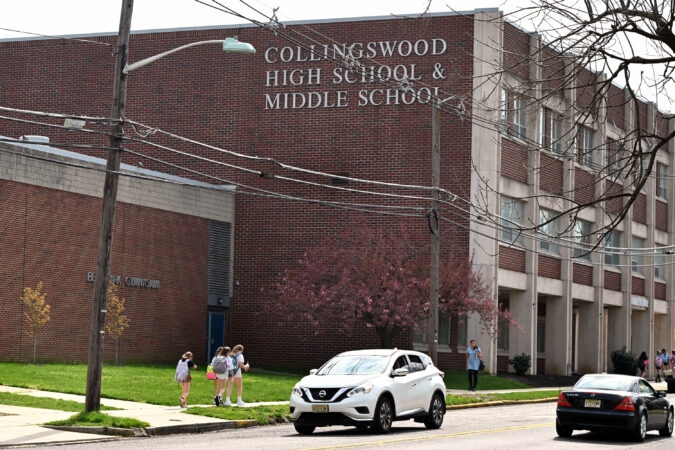
A new agreement between the Collingswood Board of Education and Collingswood Borough approved this week will open the door for a $10.5 million renovation of the school district’s athletic complex.
The three-person Collingswood Board of Commissioners voted in favor of the shared service agreement on June 17, and the 11-member Board of Education followed suit unanimously at its Monday meeting.
The agreement aims to update the school district’s recreation spaces and give the borough more access to school properties formerly closed to nonstudents, including auditoriums, classrooms, and athletic fields.
The public can now visit the district’s playgrounds and track facilities from 7 a.m. until dusk on days when students aren’t at school, including the summer months, weekends, and holidays. When school is back in session, those facilities will open when after-school activities end and close at dusk.
The new shared service agreement just lays out the formal framework for that collaboration and ensures the borough gets perks in return, like use of school property for July 4 celebrations and access to the new facilities.
Amy Henderson Riley, one of Collingswood’s commissioners, said the agreement gives the spending a dual purpose.
“When you work together, things can be kind of amazing. Everybody is being squeezed,” Henderson Riley said. “The word of the year is affordability.”
The project proposal, presented in October at a community forum on Collingswood’s recent 310-page recreation master plan, has a long list of goals. The district wants to convert the current grass football field into a multisport artificial turf field and build a new eight-lane track, along with adding a grass softball field, a concessions building, new bathrooms, a 1,500-seat grandstand, a student press box, and more improvements.
The firms involved so far include Remington & Vernick Engineers and Garrison Architects, Superintendent Fredrick McDowell said. A construction company won’t come on board until Collingswood and its school board publicize a bid package for construction work and review those bids at least 30 days later.
McDowell said Wednesday the goal is to start the project as soon as possible, though there’s no timeline yet for when the project could begin or wrap up. Students will continue to use existing facilities in the meantime.
A new grade school and park improvements
The remaining $4.5 million in bonded funds from the borough will likely be split between improvements to Knight Park, a 70-acre green space in the middle of Collingswood, and the potential acquisition of a new upper grade school.
The recreation presentation from October reported that $2.5 million of the $15 million bonded funds will go toward Knight Park upgrades.
Henderson Riley said her fellow commissioner Jim Maley is overseeing the steering committee for the Knight Park project. Maley did not return requests for comment.
The other $2 million could go to the acquisition of the former Good Shepherd Catholic School on Lees Avenue. The Collingswood School District has sought for years to convert Good Shepherd into an upper grade school building for fourth and fifth graders.
Henderson Riley said there is currently no information to share on the status of acquiring Good Shepherd.
The only way the school district could have afforded the athletic field renovations and these projects without collaboration with the borough is through a bond referendum, McDowell said, a vote at the ballot box to determine whether a school can borrow funds through the sale of bonds.
It would have also closed two elementary schools and allowed the district to acquire Good Shepherd and convert it into an upper grade school. The referendum would’ve raised Collingswood residents’ property taxes, since that’s how bonds are paid back.
One of those elementary schools, James Garfield Elementary, still closed due to budget cuts this week.
A nascent property tax relief program for New Jersey seniors has been at the center of budget negotiations between Gov. Mikie Sherrill and lawmakers as the state’sbudget deadline quickly approaches.
That program, called Stay NJ, is expected to undergo changes that would slice the income eligibility by more than half, kicking off seniors that made hundreds of thousands of dollars and started reaping the benefit this year.
The benefit is currently available to seniors making less than $500,000, but that cap would be lowered to $200,000 under an agreement between the governor and legislative leaders, according to reports of closed-door budget talks. Those making less money would be eligible for a larger refund under the arrangement.
The proposal is a compromise between Sherrill, who pushed for cuts to the program, and House Speaker Craig Coughlin (D., Middlesex), a key player in budget negotiations who has championed Stay NJ.
As the name suggests, Stay NJ was created in 2023 to incentivize New Jerseyans to remain in the Garden State by providing refunds to eligible seniorhomeowners. The program was designed to start payments in 2026, so the very first checks had just begun going out when the first term governor presented her early March budget proposal.
Here’s what to know about the status of the Stay NJ program.
Is there a budget deal?
Sherrill, Coughlin, and State Sen. President Nicholas Scutari (D., Union) announced Tuesday that they came to a budget “agreement.” The closed-door deal wasn’t made public, and legislators continue to iron out the details ahead of the deadline this coming Tuesday.
They said the budget agreement totals $60.7 billion, the same total Sherrill proposed in March. The governor has touted her proposal as “fiscally responsible,” though it’s still the highest price tag in the state’s history.
The joint statement mentioned few details but cited a handful of measures, including Stay NJ.
The state leaderssaid their agreement ensures the program “is a sustainable benefit retirees can count on.”
The propertytax relief program issues refund payments to eligible seniors in quarterly installments. The first Stay NJ payments were issued in February with an average of $600 each, according to the state treasurer’s office.
Under the current policy, eligible homeowners over 65 years old who make under $500,000 a year are eligible to get refunds for as much as half their property tax bills. The refunds are capped at $6,500 in a year.
What did Gov. Sherrill want to change about Stay NJ?
Sherrill wanted to slice the eligibility cap in half so only seniors with an annual household income below $250,000 would qualify.
She also wanted to lower the maximum benefit to $4,000.
“That’s a fairer, more efficient use of taxpayer money,” she said in her budget address in early March.
Stephen Sigmund, a spokesperson for Sherrill, said at the time of her proposal that 90% of Stay NJ recipients would keep their benefits.
The AARP expressed outrage at her proposal as New Jersey seniors struggle with the cost of living. But critics of the program who believe it directs too much state money to higher earners praised her for wanting to rein it in.
So what’s actually changing?
According to reports of the budget agreement, Sherrill and legislators agreed on a compromise.
Sherrill agreed to steer an additional $100 million funding to the program, NJ.com reported.
Meanwhile, legislative leaders agreed to lower the income threshold to qualify for the program to $200,000, even lower than what Sherrill initially suggested.
And as part of the new plan, those earning the least would get bigger deductions, according to the report.
Seniors making $100,000 or less would qualify for up to $6,500; those making between $100,000 and $150,000 would be eligible for up to $5,000, and those making $150,000 to $200,000 would qualify for up to $4,000, according to the report.
Coughlin said at an AARP town hall that Sherrill’s proposed cap across the board of $4,000 was “too low,” and that he would “stand up for Stay NJ,” New Jersey Monitor reported earlier this month.
Spokespeople for the governor did not respond to a request asking for confirmation of the plan.
OCEAN CITY, N.J. — The proposal to build a luxury hotel on the site of the closed Gillian’s Wonderland Pier on Ocean City’s Boardwalk got a long-sought boost Thursday, 6/25.
The City Council voted 5-2 to declare the site at 600 Boardwalk “in need of rehabilitation,” a designation sought by developer Eustace Mita.
Council will now begin a process of negotiating with Mita over what ultimately gets built on the property, which for decades attracted families to its rides and arcades.
Reached by text message, Mita called the action a “great vote for the populace of Ocean City ! A win for progress in the future of America’s greatest family resort.”
He added, “But this is only the first step in the process.”
Mita has proposed a seven-story luxury hotel, but a committee appointed by council to study the property suggested that a smaller hotel might be more suitable.
Council member Dave Winslow, originally opposed to the designation, said he now saw the rehabilitation designation as a way for the City Council to have more input in what ends up being built.
“There’s an urgency to restore the north end of the Boardwalk to its former glory,” Winslow said. “The designation gives zero approval to build anything. It puts the future development of the property in the hands of this governing body to make decisions on scope.”
Council President Terry Crowley Jr. also stressed that the designation was the beginning of a process. He said the council would be mindful of the conclusions of a Boardwalk committee that urged the smaller footprint with public entertainment along the Boardwalk, and which would be mindful of neighbors.
“We want a state-of-the-art product at that end of the Boardwalk,” he said.
The nearly three-hour meeting included numerous residents speaking against the resolution, suggesting there might be legal action taken if council passed it, and urging them to wait until July when a newly elected anti-hotel council member, Jim Kelly, will be sworn in.
A rendering of the proposed new Icona in Wonderland Resort, which is proposed to be built on the site of the old Wonderland Pier. The proposal for a 252-room resort includes saving the iconic Ferris wheel and carousel.
The meeting was moved to the city’s Music Pier to accommodate the number of people, and turned heated at times.
Several speakers asked that several council members recuse themselves, accusing them of conflict of interests. Others said declaring Boardwalk frontage in need of rehabilitation in a wealthy beach town was illogical.
“The rehabilitation designation was created to help struggling deteriorated communities revitalize themselves,” said resident Dave Hayes, during public comment. “It was never meant to apply to expensive beachfront properties so wealthy developers like Eustace Mita could further increase their profits.”
Numerous business owners on the Boardwalk and elsewhere in town urged the council to move forward on the project.
“It’s been the better part of a year,” said Caitlin Quirk, president of the Downtown Merchants Association. “You’ve done your due diligence. You’ve done your homework.”
While neighbors argued the hotel idea was not in keeping with the family entertainment of the Boardwalk, business owners said the entire economic viability of the boardwalk was at stake.
Mark Raab, whose family owns numerous Boardwalk properties, said one of the stores near the closed Wonderland has no tenant this summer and is boarded up.
“Next year, it’s even dimmer,” he said. “We have five storefronts up for lease, two definitely not coming back. This is a crossroads that we are enduring. Thousands of people are going to walk by that boarded-up store and wonder why. We are out of time.”
Council member Jody Levchuk, who runs Jilly’s Arcade on the Boardwalk, said all the planning reports point to “the demise of the north end of the Boardwalk” if action wasn’t taken.
Mita, who has proposed back in November 2024 turning the property into Icona in Wonderland, had sought the designation initially as a way to fast track his hotel idea.
That did not happen.
In January, the city’s planning board deadlocked on whether to recommend declaring the site in need of rehabilitation and sent it back to Council.
Mita in the meantime moved on to other projects, including a “Soul Sanctuary” Catholic retreat in Ireland on the former grounds of a notorious abbey.
The future of Wonderland has generated protracted and heated debate in the Shore town, with residents initially vowing to save Wonderland and later arguing that “big hotel” would be a “big mistake.”
While some cling to the idea that an amusement park could still be opened there, most opponents have tried to argue that Mita’s proposal is too big for the site, would compromise nearby residential neighborhoods, and is not in keeping with the Boardwalk town’s family vibe and need for family entertainment.
How big the hotel will be remains a topic to be negotiated now between the city and Mita, who bought the land from Mayor Jay Gillian and initially leased it back to him to continue to run Wonderland.
Gillian made the decision to close the 65-year-old institution in October 2024, saying it was no longer financially viable. He declared personal bankruptcy this year, in part from failed business ventures. Voters elected him to a fifth term in May.
Council member Tony Polcini said his yes vote was “to give hope to the people that work hard,” in seasonal businesses.
“The beach and the Boardwalk are a part of our livelihood and why our homes are worth so much,” he said. “I really truly feel that moving this process forward to a yes will allow us to negotiate and do what is best for Ocean City.”
Voting no were council members Keith Hartzell and Sean Barnes, who said the regular zoning and planning process would be a better way to move forward.
Consensa Francisca Silva Silva moved to Camden from Costa Rica more than two years ago knowing nobody. She lived on the street for two months, she said, and thenwas bouncing from house to house when a young man in the neighborhood told her to check out the Hispanic Women’s Resource Center in Camden, one of several such centers in the state.
She went. With help from the program, Silva received food, obtained a work permit, made a down payment for a studio apartment, and started a job at McDonald’s.
That statewide initiative is now facing detrimental cutsunder DemocraticGov. Mikie Sherrill’s budget proposal. The governor has proposed cutting nearly 80% ofits funding, and Silva worries that other immigrant women looking to improve their circumstances will not get the help she received.
“It was very hard to come here without knowing anyone, and it was really hard because at first I couldn’t find any work,” Silva, who is Nicaraguan, said in Spanish, translated by Jesselly De La Cruz, the executive director of the Latino Action Network Foundation, which funds the centers.
Sherrill and legislative leaders announced Tuesday they had come to an “agreement” on a budget totaling$60.7 billion, the same price tag Sherrill proposed in March. But it has not been made public and it is unclear how far into the details they have gotten. They have until Tuesday to figure it out.
And the process is still underway. State Sen. Nilsa Cruz-Perez, a Camden Democrat who sits on the Senate Budget and Appropriations Committee, has been a supporter of the centers.She was unable to speak Wednesday afternoon because she was in a committee budget hearing.
Client Consensa Francisca Silva Silva (right) participates in a workshop at the Hispanic Women’s Resource Center in Camden Thursday, June 11, 2026.
On a recent Thursday, Silva participated in a healthy life skills workshop in Spanish at the Camden center, where she learned about taking care of herself as summer temperatures get hotter in the city. About 20 adults clapped for one another with big smiles on their faces, and they received goody bags with sunscreen, lip balm, a towel to keep cool, and a little fan. A young girl played with magnetic tiles and a baby was kept calm, passed between women.
The governor proposed cutting funding for the center’s programs to$535,000, down from more than $2.5 million this year and more than $3 million in 2025. Murphy had proposed a similar cut last year, but the funding was restored during budget negotiations.
Hispanic Women’s Resource Centers were established through 1991 legislation to address the wage gap for Latinas. New Jersey is one of the states with the biggest wage gap for Latina workers, according to the National Women’s Law Center.
Staff members observe from back of the room during a workshop at the Hispanic Women’s Resource Center in Camden Thursday, June 11, 2026.
The Latino Action Network Foundation funds these resource centers in partnership with six nonprofits across 14 sites, including five in South Jersey. The Camden center is located at the nonprofit Healthy Families and Communities, and there are centers in Vineland in Cumberland County, Hammonton in Atlantic County, Pennsville in Salem County, and Rio Grande in Cape May County.
Sherrill’s proposal would “drastically cut” the number of resource centers, and sites in Hammonton and in Lakewood, in Ocean County, would likely be on the chopping block, De La Cruz said, adding that services would need to be cut in eight of 11 counties.
Martha Infante, 38, who lives in Pennsauken, said she was disoriented when she moved to South Jersey from the Dominican Republic. But through the Camden center, she found out how to apply for work online and learned basic English. She obtained coats for her daughters’ first U.S. winter, and a staffer accompanied her to a New Jersey Department of Motor Vehicles center to get her driver’s license.
“I came here and my mind was all over the place, I didn’t know where things were,” she said in Spanish.
She now works as a home health aide, thanks to training she got through the center, and even participated in a program where she learned about advocating for her community in Trenton.
“Don’t cut these funds, Gov. Sherrill,” she pleaded. “Don’t cut the funds! This is like a family. It’s like a home for the community.”
Client Martha Infante (left) talks with staff member Chailienisse Vega (right) after participating in a workshop at the Hispanic Women’s Resource Center in Camden Thursday, June 11, 2026.
Some of the women in the program are fleeing domestic violence and seeking financial independence. Others are struggling to get a work permit, or may have lost a family member who helped pay the bills to deportation. A lot of former “Dreamers” — undocumented immigrants who came to the U.S. as children — utilize the center as well, De La Cruz said.
The need for the centers has only escalated under President Donald Trump’s second administration, she said.
The social worker-turned-executive said she was surprised by the severity of Sherrill’s proposed cut, especially because of the governor’s efforts to push back against Trump’s immigration policies.
A 2023 Rutgers study funded by the Latino Action Network Foundation found that the most popular services at these resource centers were English-language classes and employment services, such as job referrals, assistance filling out applications, resume writing, and interview preparation.
Staff member Andreina Pardo pauses to stretch with participants as she leads a workshop at the Hispanic Women’s Resource Center in Camden Thursday, June 11, 2026.
“Aside from helping them with the technical aspects of job hunting, the assistance from the Centers seemed to provide a boost of confidence for many of the women, giving them an additional push to apply for positions even if they felt hesitant to do so at first,” the study said.
Gladys, 48, who declined to give her last name due to concerns over her safety, said in Spanish that the free English courses made her feel like she could “come up for air and breathe” after not being able to communicate.
The Camden resident had been an ecologist in Nicaragua and has gotten involved in the center’s community garden. She said she would love to pursue a career teaching children about the environment, but her plans are on hold because her work visa was canceled.
In the meantime, Gladys said, activities at the center like art classes have made her feel less alone. She has been able to connect with women in the same situation as her, and those who migrated to the U.S. earlier who can give her advice from their experiences.
“Maybe my circumstances don’t change, but my emotional well-being changes because I’m able to connect with others,” she said in Spanish.
Hispanic Women’s Resource Centers were established in 1991 to address the wage gap for Latinas in New Jersey, one of the states with the biggest gap for Latina workers.
Under Gov. Mikie Sherrill’s proposed budget, the statewide initiative could see its funding decrease by 80%.
These centers help women like Consensa Francisca Silva Silva who was able to obtain a work permit, make a down payment for an apartment, and start working thanks to the assistance she was able to receive for one of these centers in Camden.
“It was very hard to come here without knowing anyone, and it was really hard because at first I couldn’t find any work,” Silva said about her experience when she first arrived from Costa Rica.
Silva and other supporters worry immigrant women like her won’t get the support they need if the cuts go through.
Medford sent a clear message this week: No data centers here. Its council adopted the ordinance to prohibit them, despite not receiving any formal applications for a center.
“These are extra precautions to ensure that we don’t move forward in a direction that we can’t come back from until we know full well what the impacts of data centers will be,” Medford Mayor Michael Czyzyk said.
Council reserves the right to amend the ordinance to permit data centers in the future.
Medford is the latest South Jersey community to resist data centers, including Cherry Hill.
The New Jersey Supreme Court on Wednesday ordered prosecutors to fully disclose how police used facial recognition technology in a murder case, New Jersey Monitor reports.
The federal government ordered Chemours Co. to pay $450 million over illegal discharges of synthetic “forever chemicals” known as PFAS. According to the Associate Press, the company will pay penalties and provide mitigation efforts to prevent these types of discharges in North Carolina, West Virginia, and New Jersey.
Camden might get a new rooftop nightclub along the waterfront. The Club 9 SkyLounge is proposed for the rooftop deck of the Hinson Parking Garage on Delaware Avenue.
Yaxel Lendeborg, a 23-year-old forward who played for Pennsauken High School, was chosen by the Golden State Warriors in the first round of the NBA draft.
Moorestown Township established new rules for e-bikes, electric scooters, dirt bikes, and other motor-assisted devices. One of those rules is that they’re generally banned from sidewalks. The new ordinances takes effect on July 19.
🗓️ The best things to do this week
⚽ SoccerFest26 at the Waterfront: Residents and tourists will be able to celebrate the World Cup with match screenings, international food, soccer-based youth programming, live music, and various craft vendors. ⏰ Thursday, June 25-Saturday, June 27, various times 💵 Pay-as-you-go/RSVP required 📍 Wiggins Park, 2 Riverside Dr., Camden
🏳️🌈 Gloucester Township’s LGBTQ+ Pride Festival: The three-day Pride celebration will feature local vendors, film screenings, art, wellness sessions, and drag shows. ⏰ Friday, June 26-Sunday, June 28, various times throughout the weekend 💵 Pay-as-you-go 📍 Harmony Hall, 3 S. Black Horse Pike, Blackwood
🇺🇸 Freedom Fest: A Star Spangled Spectacular: The festival will include live performances, fireworks, food trucks, and more. ⏰ Saturday, June 27, 3 p.m. 💵 Pay-as-you-go 📍 Delran Community Park, 12 Hardford Rd., Delran
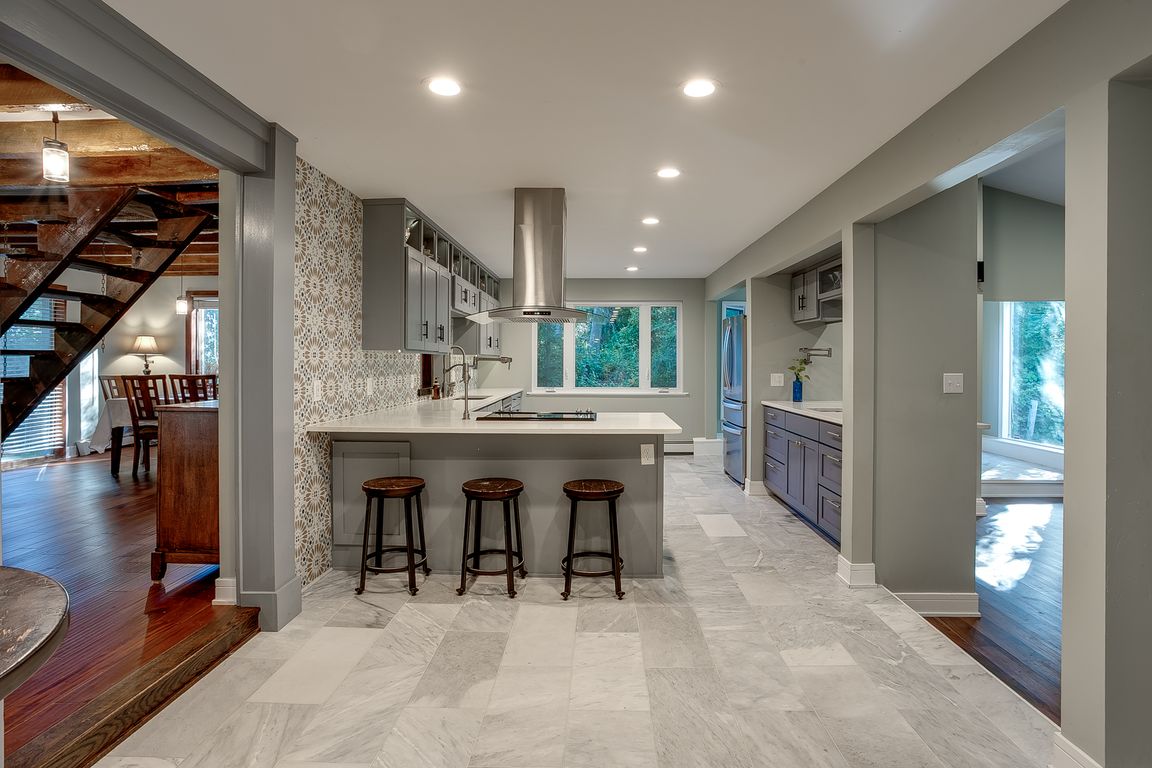
The four-bedroom, three-bathroom home has Colonial charm with the original deed dating back to 1842. It has a classic farmhouse exterior with modern amenities inside such as an updated kitchen. The home showcases exposed wood beams and hardwood flooring. There’s also an abundance of space including two large great rooms, and an expansive backyard with mature trees and patio areas.
Large-scale data centers will not be moving into Medford any time soon thanks to a new ordinance adopted unanimously by the Medford Township Council this week.
While the township has not yet received any formal applications for data centers, officials are taking steps like the ordinance passed Tuesday that specifically prohibits the land use within town limits as a chance to be proactive.
“These are extra precautions to ensure that we don’t move forward in a direction that we can’t come back from until we know full well what the impacts of data centers will be,” Medford Mayor Michael Czyzyk said at Tuesday’s public hearing.
The ordinance received support from Medford-area residents at the hearing but some questioned whether the township might be making its bed too early considering how quickly technology evolves, especially if there’s a chance to reap the rewards of a data center project without negatively impacting the surrounding community.
“If there’s no impacts to the residents and there’s only a financial benefit, I believe I would consider looking at that at that time, but we’re not there yet,” Czyzyk said.
While the ordinance constraints may seem all-limiting as it exists today, Czyzyk said, council maintains the authority to at any point amend the ordinance to permit data centers in the township’s redevelopment district.
“I definitely understand that things will evolve and there may be a time in the future that the term data center is something that is more amenable to the residents and the body that governs them,” Czyzyk said.
“I will feel comfortable with the vote I cast on this ordinance tonight knowing full well that today I feel that way and that there’s mechanisms in the future if things do change, a process will be undertaken to remedy that,” he said.
There are dozens of data centers currently operating throughout the state with major hubs located primarily in North Jersey urban centers like Secaucus and Newark. But more recently, developers have been eyeing spots in rural South Jersey as the industry expands to meet growing demands for generative AI.
Developers and other data-center proponents say the facilities bring in tax revenue, create jobs, make use of old industrial sites, and put towns on the cutting edge of a hot industry, all without straining school districts or emergency services.
Opponents, meanwhile, cite concerns about pollution, noise, power and water use, and the impact on their electric bills. Some also say they worry the AI boom is a bubble that could soon burst.
As concerns continue to grow among towns across the Garden State, representatives from more than 60 environmental, labor, and community groups sent a letter to New Jersey Gov. Mikie Sherrill last month calling for a statewide moratorium on the approval and construction of new facilities that use 20 megawatts or more of power.
So far in response to the public pressure, Sherrill has proposed a plan that would require new data centers to cover grid upgrades, utilize their own power generators, and publicly report resource usage.
While some municipalities like Medford have issued moratoriums on new data centers, no state governments have successfully done so, according to the National Conference of State Legislatures.
Clubgoers might soon have the chance to take in nighttime views of the Philadelphia skyline at a new rooftop nightclub along the Camden waterfront.
The Cloud 9 SkyLounge is proposed for the rooftop deck of the fourth-floor Hinson Parking Garage next to the Delaware River Port Authority office tower on Delaware Avenue.
The club would include a stage and dance floor, private cabanas, a pool deck, bar areas, a food truck zone, VIP parking, and more, according to the developer’s application to the city, which is still awaiting final consideration from Camden’s planning board.
So far, city officials have approved the new use for the property, said Joe Console, attorney for the Cloud 9 developers.
Now, the applicant will work on developing more detailed engineering reports, showing that the project complies with local regulations as it relates to traffic, noise, building capacity, and more, Console said. Once complete, the project will eventually be brought back before the planning board for review and final approval.
“Our vision is to create a world-class entertainment and hospitality destination that showcases the beauty of the Camden waterfront, the Philadelphia skyline, and the energy of the entire region,” Cloud 9 founder and CEO Kenneth Walden said. “We want visitors to experience something they would normally expect to find in cities like Miami, Las Vegas, New York, or Los Angeles — right here in Camden.”
As an adaptive reuse project instead of new development, the club would require no changes to the parking garage’s existing footprint, and the rooftop venue would be limited to temporary installations, according to the application.
Parking for the rooftop venue would also be self-contained within the existing parking structure. The developers said they do not anticipate any parking issues extending into the surrounding area.
A rendering shows the entry view of the proposed Cloud 9 SkyLounge rooftop deck of the Hinson Parking Garage on Delaware Avenue in Camden.
The parking garage is currently owned by the city’s parking authority and the rooftop would be rented to Cloud 9 starting at $5,000 per month, per the application documents. The venue would be open Thursday 6 p.m. to 1 a.m., Friday and Saturday 6 p.m. to 2 a.m., and Sunday 5 p.m. to 12 a.m.
“Cloud 9 was born from a simple belief: that Camden deserves extraordinary destinations just as much as any major city in the country,” Walden said. “For years, people have viewed Camden primarily through the lens of its challenges. I believe it is equally important to recognize its potential, its resilience, and the remarkable transformation taking place along the waterfront. Cloud 9 is intended to be part of that continued evolution.”
The property is located within the city’s mixed waterfront zoning district which is designed to help revitalize former industrial or vacant properties into pedestrian-friendly, mixed-use areas along the waterfront.
The venue’s developers included in their application that the project is “consistent with the overall vision of the [mixed waterfront zone] as it promotes: activation of underutilized urban space, enhancement of the waterfront entertainment environment, increased tourism and economic activity and adaptive reuse of existing infrastructure.”
The new nightlife destination would be within walking distance to some of the city’s other waterfront destinations such as Freedom Mortgage Pavilion, Wiggins Waterfront Riverstage, and Adventure Aquarium.
A rendering shows the beach view of the proposed Cloud 9 SkyLounge rooftop deck of the Hinson Parking Garage on Delaware Avenue in Camden.
The office for Camden Mayor Victor Carstarphen said that while they are aware of the proposed rooftop bar and lounge, they declined to comment specifically on the project or its details as it continues to make its way through the land development process.
“Camden is undergoing an unprecedented transformation as investment is taking place citywide. As a result, there is great interest from developers, and a wide variety of projects are being proposed in every part of the city,” said Vincent Basara, director of communications for the mayor’s office. “Camden is always open to new ideas and proposals. The success of this project will ultimately be based on the merit of the application. We are confident in the public process and the various reviews which are required.”
About a mile north on the other side of the Benjamin Franklin Bridge, the New Jersey Economic Development Authority is accepting mixed-use redevelopment proposals for a 16-acre waterfront parcel that was previously home to the former Riverfront Prison and Weeks Marine site in North Camden.
“Beyond the venue itself, I believe Cloud 9 can contribute to the city in several meaningful ways,” Walden said. “The project has the potential to create jobs, attract visitors from throughout New Jersey, Pennsylvania, Delaware, and beyond, generate additional economic activity for nearby businesses, and further strengthen Camden’s reputation as a destination worth visiting and investing in.”
The Cloud 9 SkyLounge was presented to the city’s zoning hearing board for final site plan approval on June 1 and will need to continue through the development process before finally being voted on by the city’s planning board. The exact timeline for this process varies by project, but a final vote on Cloud 9 is likely still weeks or even months away, as the application must go before the city’s planning board, though they will not officially discuss the project until at least the board’s July meeting.
This Fourth of July will be unlike any in recent memory. As the nation marks its 250th anniversary, Philadelphia and the surrounding region are packed with celebrations — and fireworks displays. From the city and suburbs to South Jersey and the Shore, there are dozens of opportunities to catch a show.
Whether you’re staying in Philadelphia, heading to the suburbs, or spending the holiday down the Shore, here’s where to find Fourth of July fireworks across the region.
Wawa Welcome America: 🕙 July 4, 5 p.m. 📍Christina Aguilera and Philadelphia native Jill Scott headline a concert followed by fireworks, 2600 Benjamin Franklin Parkway, Philadelphia, Pa., 19130, 🌐 july4thphilly.com
Conshohocken Fireworks Display: 🕙 July 3, 9:15 p.m., 📍The fireworks will take place at Sutcliffe Park, but the borough is closing the park and surrounding areas to the public due to the size of the display. (They advise you to watch the show from another vantage point in town.), 🌐 conshohockenpa.gov
More than a year after the small restaurant Jersey Kebab made national headlines and inspired widespread criticism of ICE when agents arrested the owners, their son is now fighting a similar battle.
The federal government informed Muhammed Emanet, who left Turkey when he was 12, of its intention to deny his request for a green card, with a 30-day window to present new or additional information to try to persuade the U.S. Citizenship and Immigrations Services to allow him to stay.
No one knows for sure what happens when the deadline comes up next week.
If he is deported, he’ll be separated from his wife and two young sons. Hundreds of letters have been signed and gathered on his behalf, attesting to his good character.
The recently launched Women’s Brain Health Initiative at the Rutgers Brain Health Institute seeks to better understand what researchers say has been historically under-studied — how hormonal changes affect the brain.
The focus is on hormonal shifts that occur throughout life such as puberty, menstruation, pregnancy, postpartum, and menopause.
The research and the public education will center information on women’s mental health, disease vulnerability, and brain function and development.
Officials from the Haddonfield Police Department charged a man from Maple Shade on Tuesday for allegedly damaging and stealing LGBTQ flags along Kings Highway in the business district, according to authorities.
New Jersey’s Office of Corrections Ombudsperson released a report on Tuesday detailing conditions at Bayside State Prison in South Jersey including overcrowding and unclean conditions, according to New Jersey Monitor.
New Jersey’s rent for office space is slightly more than the national average. Between January and May, $387 million in office sales were recorded in the state and 630,000 square feet of offices were under construction.
Camden County will conduct mosquito spraying this morning in Bellmawr, Camden,Clementon, Haddon Heights, Gloucester Township, Lawnside, Lindenwold, and Stratford, according to the county.
It’s not too early to think about October, apparently. According to 42 Freeway, Spirit Halloween seems to be coming to Deptford, Cherry Hill, and Mount Laurel.
Meet Yaxel Lendeborg, a Pennsauken High graduate who has had one of the most unconventional yet fastest basketball career trajectories from community college to becoming a national champion.
🧠Trivia time
Which former Eagle does a celebrity bartending fundraiser every year in South Jersey?
The son of the Jersey Kebab restaurant owners whose ICE arrests sparked wide condemnation last year now confronts his own battle to stay in the United States.
Muhammed Emanet, 26, said he is trying to be upbeat as he faces the prospect of being separated from his wife and two sons, ages 4 and 1, all American citizens.
“I try not to dwell on what I can’t control,” said Emanet, who with his parents operates the popular South Jersey eatery in Collingswood. “I still have a restaurant to run, employees that depend on me, customers, family. I have no other choice but to be positive.”
Still, his situation feels disorienting, as what seemed to be settled is now newly unsettled.
In spring the Department of Homeland Security ended its effort to deport Emanet, which seemed to clear the path for him to stay in the U.S. But this month, a different federal immigration agency told him it plans to deny his request for legal permanent residency, what is known as a green card.
That intended denial carries a 30-day window for Emanet, who came here from Turkey as a boy, to present new or additional evidence to try to change the minds of officials at U.S. Citizenship and Immigration Services.
The government also told him that under a new Trump administration policy, he and other immigrants who are pursuing green cards while living in the U.S. must leave the country and apply from their home nations. Emanet hasn’t been in Turkey since he was 12.
It’s unclear what will happen when the 30-day deadline expires around July 2.
Muhammed Emanet greets Elijah Brown, a friend from high school, and his family, at Jersey Kebab in Collingswood on Sunday.
A little more than a year ago, on Feb. 25, 2025, the small Mediterranean restaurant on Haddon Avenue generated national headlines. Immigration advocates and local leaders railed against what they saw as government injustice, after ICE agents arrested owners Celal Emanet and his wife, Emine.
Their arrests angered a South Jersey community that has long known the couple as caring people who offer free food to the hungry. A GoFundMe campaign to pay family costs and expenses raised $327,000, drawing donations from across the country and beyond, including from Ireland, Germany, and England.
Now, a community effort to help Muhammed Emanet is driving a new letter-writing campaign, with person after person attesting to his good character and his importance to his neighbors. Hundreds of letters have been signed and gathered to be presented on his behalf, said Lori Leonard, who organized the GoFundMe campaign last year.
“People are rallying behind Muhammed,” she said.
State Assemblyman Bill Moen, a Democrat who represents parts of Camden and Gloucester Counties, signed a letter of support. He said on social media that Emanet “has touched the lives of many people throughout South Jersey” as a husband, father, neighbor, friend, and businessperson.
“While I don’t make immigration decisions,” Moen said, “I do believe decision-makers should understand the character of the people whose lives are affected by those decisions.”
U.S. Rep. Donald Norcross, a South Jersey Democrat, met with the family soon after Emine Emanet was released from ICE detention, and as her son’s situation emerged this month he stressed in a statement that the family had been long “rooted in our community.”
In response to questions on Muhammed Emanet’s situation, USCIS said it does not comment on individual immigration cases.
Being removed to Turkey would likely separate Emanet from his wife and children for years. It also could subject him to reprisals from the Turkish regime, where repressive human-rights conditions under President Recep Tayyip Erdogan has driven an exodus.
Marriage to a U.S. citizen by someone who legally entered the country ― as Emanet did ― has long been a reliable route to an adjustment of status and acquisition of a green card.
But the Trump policy change announced in May said adjustment should be an “extraordinary” relief, one that depends on government discretion, not merely on having a valid marriage and submitting the proper forms. Failing to depart the U.S. under the policy can by itself be treated as a negative factor in the government’s decision-making.
Emanet’s immigration lawyer, Joseph Best, said that change in administration policy does not alter the law around eligibility for green cards.
“If USCIS follows the law,” Best said, “he will attain his lawful permanent resident status just as Congress intended. It is not some fluke or exceptional ‘ask’ here.”
Discretionary factors, he said, all favor Emanet, who was brought legally to the U.S. as a child, was admitted under a valid visa, and has no criminal history. He is loved in his community, and a key person in a successful family business that is known for helping others, Best said.
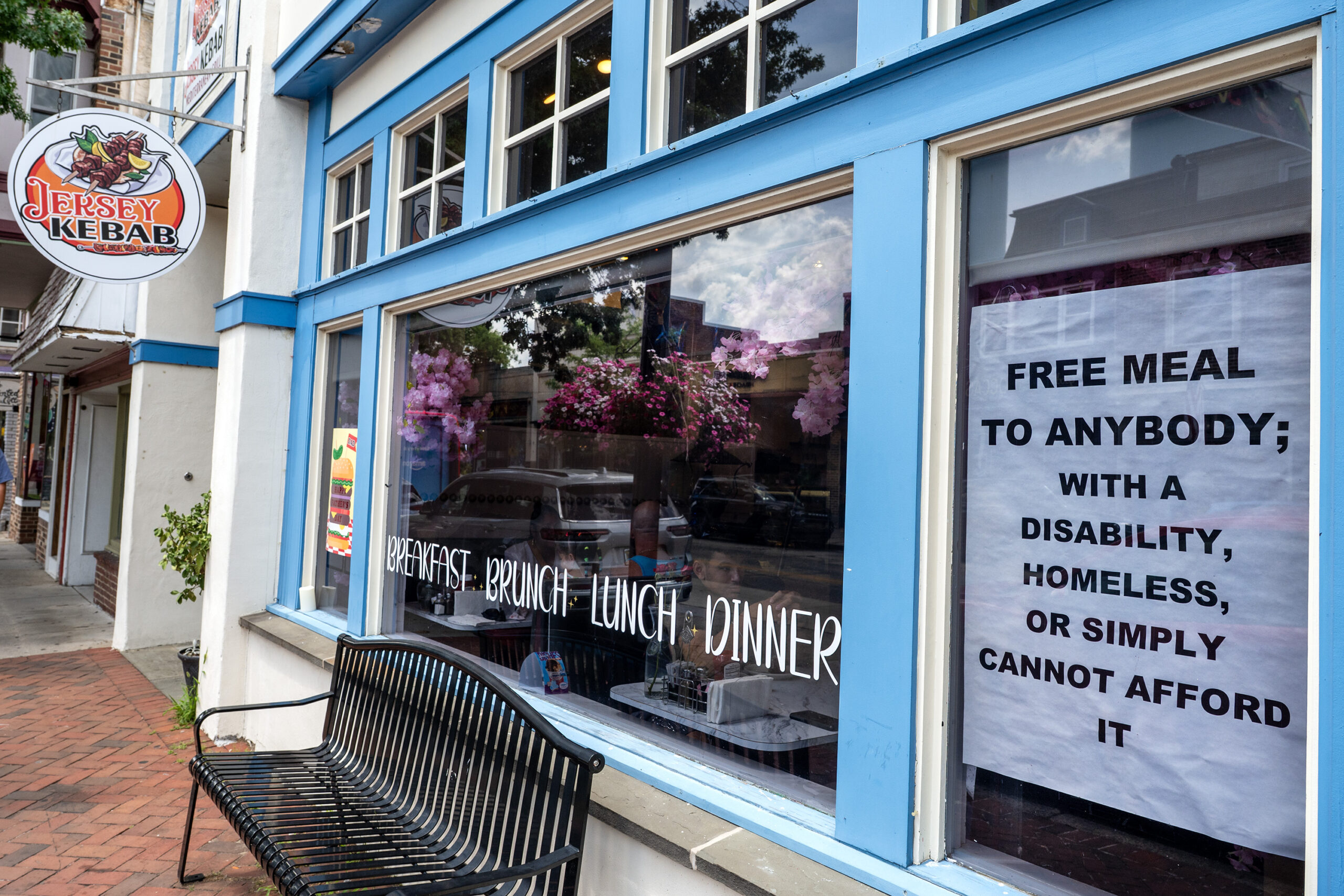
The Jersey Kebab restaurant in Collingswood where Muhammed Emanet works is seen on Sunday, June 21. It offers the same “Free Meal” policy as at the prior location in Haddon Township.
Celal and Emine Emanet came legally to the United States with two young children in 2008, entering under a religious visa that allowed the father to work at a New Jersey Islamic center.
They said that they sought green cards before that visa expired in 2013, but that the application has been in government limbo for years.
In 2021, they founded Jersey Kebab in Haddon Township, and the restaurant recently moved west on Haddon Avenue to a new location in Collingswood.
The couple’s immigration cases continue. Celal Emanet’s next hearing is scheduled for December, while his wife is to appear in April 2027.
The family stands among roughly 386,000 Turkish immigrants and people of Turkish ancestry who live in the United States, according to Inquirer computations of U.S. Census figures. That includes about 15,000 in Philadelphia and surrounding suburban Pennsylvania and New Jersey counties.
Turkey is a longtime U.S. ally, a rectangular land bridge between Europe and Asia that is surrounded by sea on three sides. It is a Muslim nation, a country of tea drinkers, the place where Julius Caesar is said to have immortally proclaimed “Veni, vidi, vici” ― “I came, I saw, I conquered” ― after a decisive battle victory near what is now the modern town of Zile.
Today, people are leaving the country amid economic instability and political purges, with many trying to get to the United States.
U.S. government apprehensions of Turkish nationals at the Mexican and Canadian borders surged from 67 in 2020 to more than 15,000 in 2022 and another 15,000-plus in 2023, dropping to 10,500 in 2024. Figures for 2025 were not immediately available.
President Donald Trump is expected to be in Turkey next month to attend the NATO summit in Ankara.
Muhammed Emanet works at his family’s restaurant, Jersey Kebab, in Collingswood on Sunday, June 21.
During Trump’s second term, USCIS has repeatedly paused the processing of applications for all types of immigration benefits, including those for legal permanent residency.
Last month, the administration announced it would require foreigners who are living in the U.S. and want to obtain green cards to leave the country to do so. The administration said they must now apply in their homelands, a departure from longstanding policy that has sowed confusion and concern.
For decades, foreign nationals who meet requirements have been able to complete the green-card process in the United States, including those married to U.S. citizens, holders of work and student visas, and refugees and asylum seekers.
USCIS spokesperson Zach Kahler said in a statement that entering the U.S. on a visa should not be a first step toward obtaining a green card, that tourists and temporary workers are permitted to come here for limited times.
“Our system is designed for them to leave when their visit is over,” he said.
Making people leave the country to apply for green cards “reduces the need to find and remove those who decide to slip into the shadows and remain in the U.S. illegally,” he said.
The administration instructed immigration officers to consider violations of immigration laws, including overstaying a visa, as negative factors in their decision-making.
Since the uproar, though, USCIS has seemed to walk back the policy, saying it would be implemented on a case-by-case basis. That could mean that some immigrants will be able to stay in the U.S. while they seek green cards.
Emanet said his immigration case started in 2020, when two plainclothes ICE officers arrived at the family home and said he was in the country illegally.
In spring, his attorney persuaded an immigration court in Newark to terminate Emanet’s court case ― with no opposition from the DHS Office of the Principal Legal Adviser, the ICE prosecutors. That termination seemed to clear the way for Emanet to adjust his status.
Instead, on June 3 he received a Notice of Intent to Deny from federal immigration officials, indicating they plan to reject his application to adjust his status. He is not sure what will happen when the 30-day deadline for new information expires.
“I have children here who need my support ― American citizens who depend on me,” Emanet said. “I thought I was that one, that I did everything exactly how I was supposed to, that I should receive my green card. … It feels like a punch in the gut.”