Category: Sports

Sports news, scores, and analysis

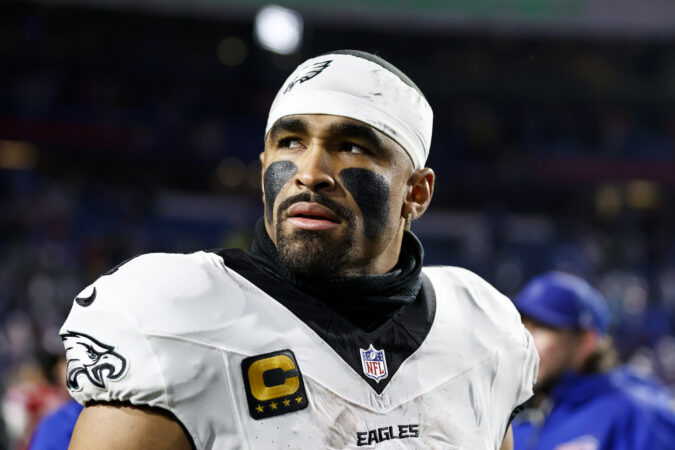
  • Eagles expected to rest Jalen Hurts and starters on Sunday vs. the Commanders

    Eagles expected to rest Jalen Hurts and starters on Sunday vs. the Commanders

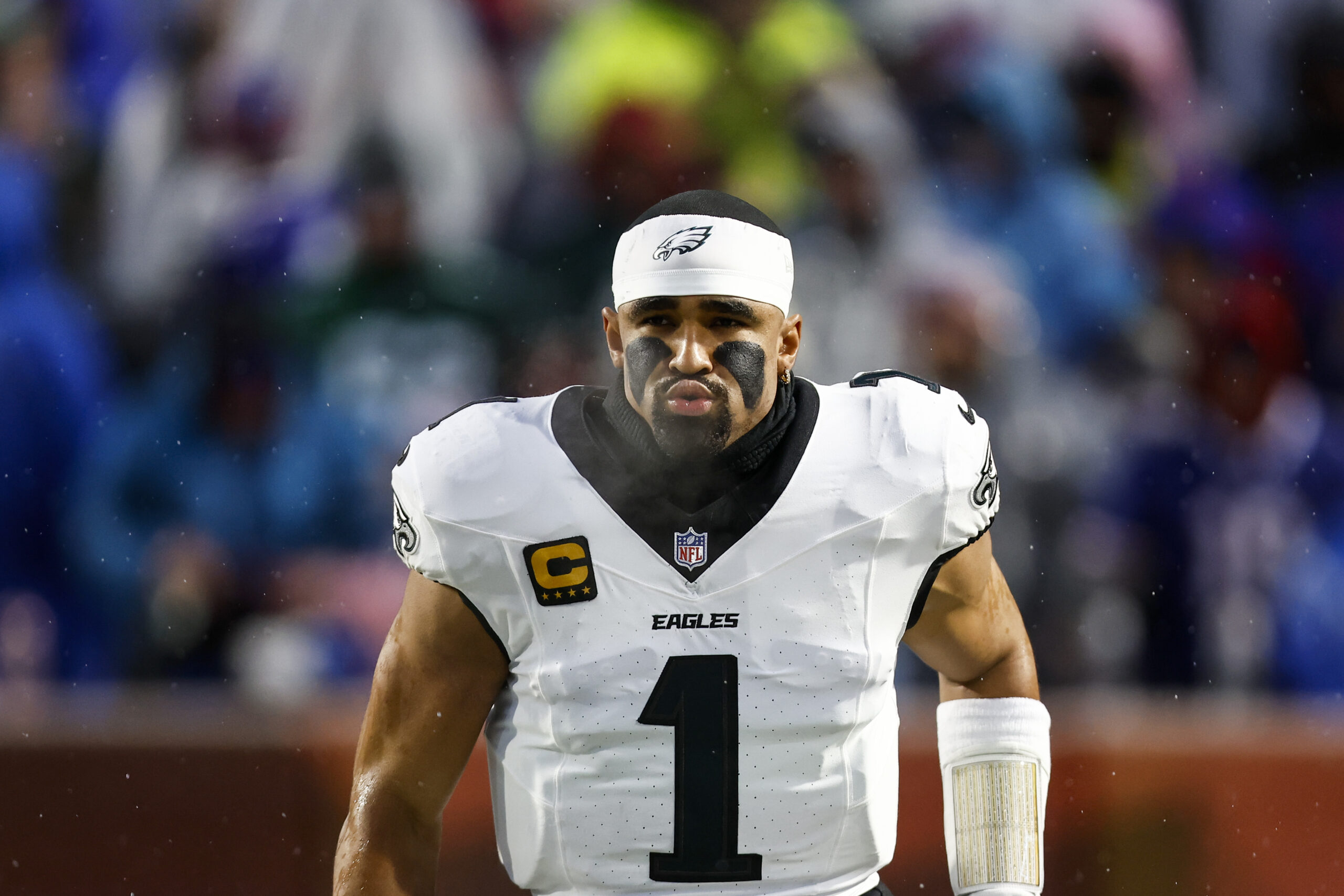
    The Eagles are expected to rest quarterback Jalen Hurts and most of their starters against the Washington Commanders on Sunday, NFL sources said Wednesday.

    Eagles coach Nick Sirianni declined to say whether he was resting his starters or not when asked during his Wednesday news conference. He said he wanted to first inform his players of his decision during a later team meeting before making it public.

    But the team later confirmed that some key starters will get the game off, some will play on a limited basis, and some will dress but not play. The Eagles will need to have a certain amount of players active to meet the league requirement.

    The decision to use the season finale as a “bye” week heading into the playoffs shouldn’t come as a surprise based on Sirianni’s other recent comments. The NFC East champion Eagles can still improve their seeding, but he emphasized on Monday the importance of giving players a week off.

    “If I look back and how beneficial some of the byes that we’ve had have been, that’s part of the reason why you think through it,” Sirianni said, a day after the Eagles beat the Bills, 13-12. “It’s a marathon of a season. You give your guys some rest, you get some time to think through some different things, even though you’re preparing for an opponent as you go.

    “Both times that I’ve been here that we’ve been to the Super Bowl, we’ve had that opportunity for a bye, and that’s ’22 and obviously ’24.”

    Sirianni took advantage of resting starters in those seasons, while in 2023, he did the opposite and played Hurts and most of his starters with the NFC East still on the line. The Eagles performed poorly in the first half at the Giants. Most of the starters were eventually pulled when it became apparent the Cowboys would win the division.

    The Eagles also suffered a significant injury in that game when wide receiver A.J. Brown left with a knee injury. He missed the first-round game at Tampa Bay, which the Eagles lost, 32-9. Hurts also dislocated a finger on his non-throwing hand in the Giants game.

    The Eagles offense has been struggling for most of this season, but it had more success in wins earlier this month over the Raiders and Commanders — two of the worst teams in the NFL.

    They had a solid first half at the Bills on Sunday but could do almost nothing in the second half and gained only 17 yards. Sirianni could use a rematch vs. Washington as an opportunity to give his offense some momentum heading into the postseason. Or it could backfire like it did two years ago.

    The 11-5 Eagles are the No. 3 seed and would host the 11-5, No. 6 seed Los Angeles Rams or the 12-4 San Francisco 49ers in the wild-card round. If they were to beat the Commanders and the 11-5 Bears were to lose to the eliminated Lions at home, the Eagles would be the No. 2 seed and would host the 9-6-1 Packers in Round 1.

    Sirianni may believe that No. 2 quarterback Tanner McKee and his backups can still beat the 4-12 Commanders. Washington is expected to start third-string quarterback Josh Johnson, who entered the first meeting with the Eagles when backup Marcus Mariota was knocked from the game.

    McKee and the Eagles reserves beat a poor Giants team playing most of its starters in last season’s finale.

  • Is anything real anymore? In 2025, even sports fans started to doubt.

    Is anything real anymore? In 2025, even sports fans started to doubt.

    It may be difficult to remember now — here at the end of 2025, with major sports so entwined with gambling as to make you wonder whether our games still exist to crown champions or merely as fodder for young, twitchy-fingered sportsbook customers — but not so long ago, sports leagues spoke of the gambling industry as if it were the devil itself.

    “It’s evil,” Bud Selig, then MLB’s commissioner, said in November 2012 of the dangers of gambling. “It creates doubt, and it destroys your sport.”

    “Gambling,” NFL Commissioner Roger Goodell said that same week when asked about threats to pro football’s integrity, “would be number one on my list.”

    Both statements were made under oath, in depositions pertaining to a lawsuit filed by America’s major sports leagues against the state of New Jersey over its plans to legalize sports gambling. Eventually, that case would wind up before the Supreme Court, which in 2018 handed down a landmark decision, Murphy v. NCAA, that effectively legalized sports betting nationwide.

    Faced with that new reality, those same American sports leagues didn’t merely shake hands with an industry they once regarded as the enemy; they leaped into bed with it — and in the process fundamentally altered the way sports are packaged, marketed, and consumed.

    Stadiums plastered with ads for sportsbooks. Broadcasts filled with gambling commercials and commentary on betting lines and odds. An ever-growing menu of live, in-game microbetting opportunities — effectively giving fans a casino in their pocket. In 2024 alone, Americans legally wagered a record $148 billion on sports, more than 95% of it online, and they will almost certainly surpass that figure in 2025.

    But 2025 may also be remembered as the year a reckoning began over the unholy marriage of sports and legalized gambling. Betting scandals rocked the NCAA, the NBA, and MLB. At the same time, the modern phenomenon of athletes being harassed and threatened online by angry bettors grew into something resembling an epidemic. In both cases, the driving force appeared to be the ubiquity and ease of prop bets — those focusing on a specific player’s events or performance as opposed to the outcome of a game.

    Largely as a result, the integrity of games — perhaps the most precious commodity in sports and the one that once united the leagues’ commissioners against gambling — is increasingly being called into question, a trend some are calling an existential threat to the long-term viability of sports.

    “It doesn’t matter if, as I believe, 99.99% of the competition is untainted by gambling,” longtime sports commentator Bob Costas said. “All you need are a few examples for people to make the leap of logic to ‘I can’t trust any of it.’ You have to literally put [the doubts] aside. You have to compartmentalize all of this stuff to have the same relationship you once had to what you’re watching.”

    This month, a Washington Post-University of Maryland poll of 1,032 American adults found plummeting support for sports gambling nationwide, compared with a similar poll conducted in 2022, and widespread concern about the possibility of fixed or rigged outcomes. Some of the largest drops in support for legalized gambling came from frequent sports consumers and those who bet on sports — the ones who know best the havoc it has wrought.

    Overall, 66% of respondents, including 72% of those who have gambled in the past five years, expressed concern that games could be fixed or rigged. If you think those numbers sound high, try this experiment: The next time you’re watching a big game, search for “rigged” along with one of the teams’ names on social media, and prepare to be amazed by the constant stream of users dropping that term as they decry each misplay or blown call.

    “The integrity of American sports is plummeting in terms of public perception,” Sen. Richard Blumenthal (D., Conn.) said in a telephone interview. Blumenthal co-sponsored a bill, the SAFE Bet Act, that, while focusing largely on the public health issues surrounding gambling, also would restrict some in-game prop bets. “Americans are becoming cynical and disgusted after all these repeated scandals involving big money corrupting sports.”

    ‘People have been too greedy’

    Americans long ago made peace with the post-reality media environment in which we are living. TikTok’s algorithm pumps fake videos into users’ feeds. Spotify is full of AI-generated pop songs interspersed with real ones. The federal government routinely disseminates altered videos. We can even accept feature-length documentaries “enhanced” with so-called “synthetic materials.” The financial success and relative lack of outrage suggest we have stopped trying to discern between real and fake. We have stopped caring.

    But sports are required to be different. Reality, above all else, is what they are selling. It is the last remaining entertainment enterprise that demands to be viewed live. Remove the authenticity of the competition and the credibility of the outcomes, and the whole thing collapses.

    Only in high-level sports — and only in the name of authenticity — would leagues ban specific drugs and even over-the-counter supplements because they might give one side an unfair advantage, or spend five minutes in the replay booth examining a play from seven different angles because it is imperative above all else to get the call right.

    “No matter how unfair life may be in other arenas,” Costas said, “people turn to sports and expect them to be completely fair.”

    The about-face on gambling is staggering. MLB once banned Mickey Mantle and Willie Mays for taking jobs as casino greeters. Now it tacitly accepts David Ortiz serving as a pitchman for DraftKings, offering new customers the chance to “win Big Papi’s money.”

    The major American sports leagues would never acknowledge that aligning themselves with the gambling industry equated to an abandonment of the mission of integrity or even a compromise.

    “Our highest priority has been protecting the integrity of the game” read a memo reportedly sent by the NFL to its 32 teams in the aftermath of this year’s NBA and MLB scandals.

    “Obviously, our number one priority,” MLB Commissioner Rob Manfred told reporters during this fall’s World Series, “is to protect the integrity of the game.”

    One bedrock axiom of the sports industry’s partnership with sportsbooks is the notion that it is far easier to catch cheaters under the regulated system of legalized sports betting than it was when everything was underground. The scandals making headlines, the industry says, only prove the system of regulation and monitoring is working.

    But experts in the field of sports integrity and gambling say the monitoring entities tasked with flagging suspicious activity can be commercially conflicted because they are the same entities providing the data feeds fueling global betting — a case of “the fox guarding the henhouse,” according to Nick Raudenski, a former criminal investigator for the Department of Homeland Security who now runs a sports integrity consultancy firm. “Integrity and independence,” he said, “have to be championed as fundamental sporting objectives, not a form of detrimental risk to be buried far from view.”

    “The people who should be guarding [sports leagues’] credibility are involved in multibillion-dollar deals with the very product that is bringing [the threat]. People have been too greedy, too fast on the legalization of sports gambling,” said Declan Hill, a professor at the University of New Haven and author of “The Fix: Soccer and Organized Crime.” “It desperately needs [enhanced] regulation. It desperately needs sports leagues to take a long step back.”

    ‘So easily lost and so hard to regain’

    With the benefit of hindsight, the current predicament may have been the inevitable result of rushing to deliver a known addictive product, via an addictive personal device, into the hands of a cohort — young, male sports fans — that is predisposed to risky behavior. Imagine if, at the end of Prohibition, the alcohol industry had the data to know which customers were most susceptible to getting hooked on booze and the technology to put it within reach of those customers anytime, anywhere.

    “This is the dance with the devil that the leagues are doing and have done,” Hill said. “It seemed really attractive at first … but now comes the payment. Now comes the cost.”

    Hill believes one problem is that we have not come to terms with the problem of gambling addiction among the athletes themselves — who, after all, largely come from the same demographic as the consumers targeted by the industry. One study found athletes were four times as likely as the general public to become addicted to gambling.

    Jontay Porter, the former NBA center who received a lifetime ban last year in part for feigning injuries to manipulate certain “under” bets on his performance — incidents that were caught in large part because of integrity monitors that flagged suspiciously large wagers on an obscure player — was addicted to gambling and deep in debt at the time of his transgressions, according to his lawyer.

    “Everything that makes an athlete great makes them susceptible to gambling addiction,” Hill said. “They never give up. They isolate themselves and obsess on overcoming great odds, on doing things people wouldn’t believe were possible. That’s great if you’re an athlete. But it makes you a lousy gambler.”

    The problem of “spot-fixing” — manipulating individual prop bets — has proved to be particularly insidious. Throwing a game or tilting a point spread requires scores of machinations, but prop bets can be swung in an almost undetectable manner by a single athlete: Just one missed free throw, one dropped pass or one double fault can make someone a fortune.

    These prop bets, as well as multi-bet parlays in which bettors stack props and get a much larger payoff if they all hit, have become the sportsbooks’ biggest moneymakers — which is another way of saying they are unlikely to be legislated out of existence despite recent efforts such as state bans of college athlete props and MLB convincing sportsbook partners to cap pitch-level props at $200 each.

    It remains to be seen whether 2025 — for all its upheaval, scandal. and shifting public sentiment — represents a turning point in the relationship between sports and gambling. If anything, the sports gambling industry is still growing, still reaching new customers — one study found gambling ads and logos were shown to viewers at a rate of one every 13 seconds during some broadcasts — and still exploring new products. One of the latest: the NHL’s recent partnerships with Kalshi and Polymarket, predictions markets that allow users to bet on yes-or-no outcomes ranging from sporting events to elections to who will win the latest season of “Survivor.” This fast-growing industry operates outside the licensing and regulatory systems that govern sportsbooks.

    But new and bigger industry models undoubtedly will bring new and bigger opportunities for corruption.

    “You ain’t seen nothing yet,” Hill said. “There is a wave of stuff to come.”

    If that’s the case, it’s fair to wonder how close we are to a breaking point. Already, recent polling, such as the Post-UMD one, suggests the accumulation of scandals has led many sports fans to question the legitimacy of what they are watching. Once the possibility of spot-fixing nestles in your mind, it can be hard to shake. Suddenly, every time a pitcher unleashes a fastball to the backstop, it’s only natural to wonder whether it was an honest mistake — or a dishonest one.

    Such questions, Blumenthal said ruefully of his own sports viewing, are “always in the back of my mind. There’s always something there if a pass is dropped or a pitch is missed. Trust and credibility are so easily lost and so hard to regain.”

  • Cooper DeJean’s bromance with Reed Blankenship, preparing for Josh Allen, and more ‘Hard Knocks’ highlights

    Cooper DeJean’s bromance with Reed Blankenship, preparing for Josh Allen, and more ‘Hard Knocks’ highlights

    The latest episode of Hard Knocks featured Christmas presents for the NFC East, with none bigger than the Eagles’ 13-12 win over the Buffalo Bills.

    The HBO documentary series, which releases new episodes every Tuesday, took a long look at Cooper DeJean, his relationship with Reed Blankenship, and the Birds’ preparation for their nail-biter win on Sunday.

    Here’s everything you may have missed from the latest episode of Hard Knocks:

    Jaxson Dart did not mince words about which team he considers the Giants’ biggest rival.

    A Giant pain

    Fans in Philadelphia might not be aware of it, but the Giants consider the Eagles their biggest rivals.

    During a fan holiday meet-and-greet labeled “Dart the Halls,” rookie quarterback Jaxson Dart was asked by a young fan which team he considers the Giants’ “most rivalrous team.”

    “The Eagles, for sure,” Dart responded to a chorus of oohs and ahhs.

    The Birds went 1-1 this season against their competition up north and lost at MetLife Stadium for Dart’s first win against an NFC East opponent on Oct. 9. Dart is a candidate for NFL Offensive Rookie of the Year, and Eagles fans can expect to see the former Mississippi star for years to come.

    Cooper DeJean’s Pro Bowl citation got some airtime in the latest episode of “Hard Knocks.”

    Who cares about the Pro Bowl?

    Hard Knocks began in a festive mood, showcasing the Giants, Dallas Cowboys, and Washington Commanders exchanging gifts and celebrating Pro Bowl nominations — which the teams had extra time to focus on after being eliminated from postseason contention.

    The playoff-bound Eagles, however, weren’t shown celebrating their five Pro Bowlers: DeJean, Quinyon Mitchell, Cam Jurgens, Zack Baun, and Jalen Carter. What was shown was the practice field, with some players congratulating one another in comical fashion.

    “Pro Bowler, Cooper DeJawn,” Blankenship said at practice. “Anything you want to say to the people?”

    “DeJean … It’s DeJean,” DeJean responded.

    Safety Reed Blankenship (left) warming up before the Eagles played the Bears at Lincoln Financial Field on Nov. 28.

    The Secon-dairy

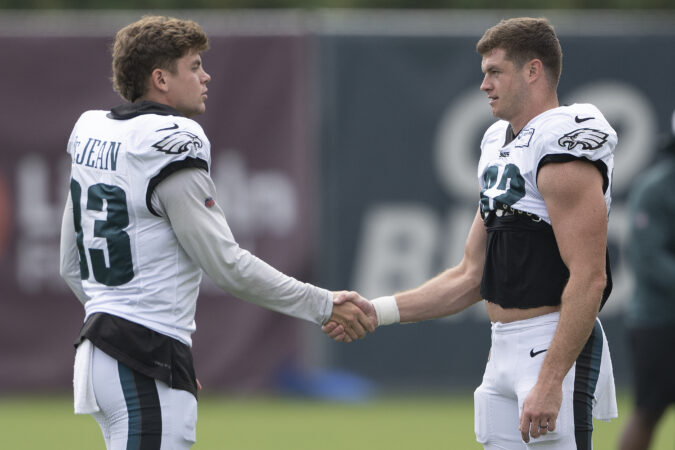
    DeJean and his partner-in-crime, Blankenship, took center stage in the episode, with their blossoming bromance on and off the field. From ripping the ball away from each other through WWE-style takedowns to practicing dance routines, the Eagles’ defensive stars appeared inseparable.

    “He’s an awesome teammate,” DeJean said. “He’s an awesome person to be around. Really welcomed me in and helped me learn the defense when I got here. It’s fun to watch him play and do his thing. I think our connection and our friendship has helped us play well together on the field.”

    Said Blankenship: “I’m so proud of him. We sit beside each other in meetings, and I feel like I’m the older brother. There’s not a lot of people like him. He is the best nickel in the league, and just having that communication allows us to play better.”

    The tandem started a podcast called Exciting Mics in June, a reference to the duo’s “Exciting Whites” nickname.

    Other nicknames have followed the pair, including “Secon-dairy,” which came after DeJean and Blankenship leaned into a new celebration.

    “We do have a milk-the-cow celly,” DeJean admitted.

    “We usually do our normal thumbs-down,” Blankenship said. “And I was like, ‘Dude, it’s like udders from a cow …’”

    Some observers have confused them for each other on the field — with Fox announcer Kevin Burkhardt and Bills safety Sam Franklin Jr. referring to Blankenship as Coop or DeJean during the game.

    “What up, Coop,” Franklin said.

    “I’m the other one, bruh,” Blankenship answered.

    The Eagles spent time last week addressing Josh Allen’s propensity for running up the middle.

    Getting ready

    Eagles coaches took great care in preparing the defense for the Bills offense, with Hard Knocks providing a glimpse into each defensive unit ahead of last Sunday.

    Bobby King, the Eagles’ inside linebackers coach, showed sumo wrestling clips to inspire his players to play physically, while Jeremiah Washburn, the inside linebackers and defensive line coach, focused on Bills quarterback Josh Allen’s ability to escape up the middle — something the defense effectively prevented on Sunday.

    “Lot of middle escapes,” Washburn said. “And he’s tough. But this is where most of his explosive runs come, is up the middle. It takes a group, fellas. It’s going to take a group because he doesn’t hit the ground easy, and so it’s just going to take a collective effort right there, fellas.

    “You can see again,” Washburn added, referring to a clip of Allen throwing on the run. “He’s got an arm, that’s what he does right there.”

    Defensive backs coach Christian Parker stressed the Bills’ versatility, with Allen leading the charge through the air and James Cook, the league’s leading rusher, dominating on the ground.

    “The key is going to be tackling in space,” Parker said. “Weather could be significant, but we’ve got to take great angles and we’ve got to rally to the football all night long.”

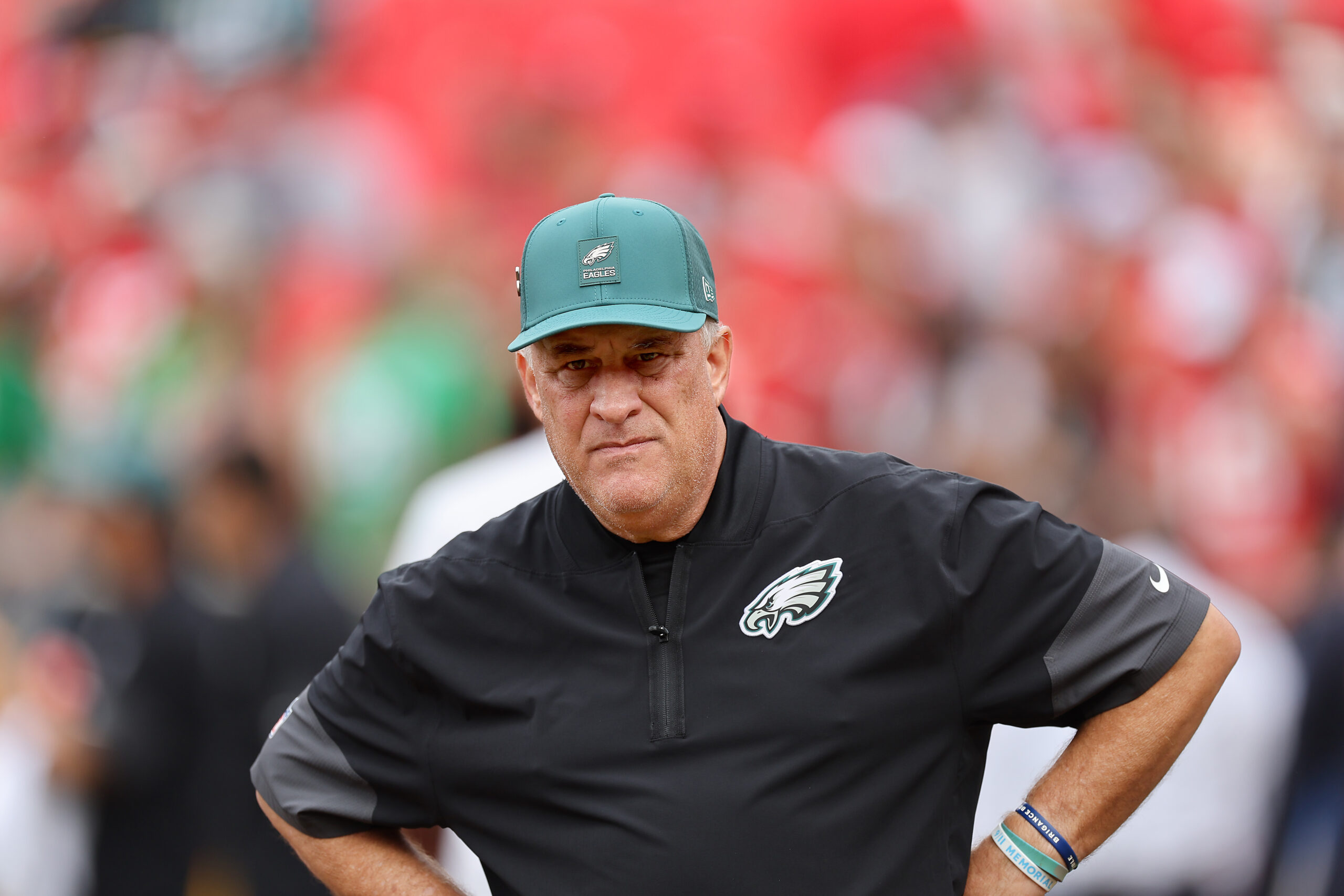
    As coaches worked to prepare the team, defensive coordinator Vic Fangio had a different approach to explaining the matchup when addressing the media.

    “You got Josh Allen,” Fangio said. “That’s all you need to say. You got Cook, that’s all you need to say. But once he gets in the open field, he’s got the speed to hit the home run. He’s patient, but once he sees it he hits it, and he’s really good, he’s elusive.”

    The Eagles held the reigning MVP without a touchdown and Cook to less than 100 rushing yards, and also recovered an Allen fumble and blocked an extra point in the win.

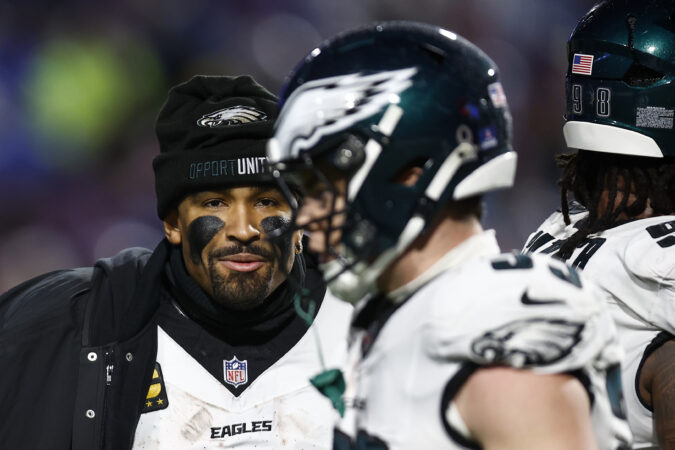
    Jalen Hurts warms up in the rain on Sunday.

    Offensive frustration

    You rarely hear Jalen Hurts speak vehemently, so when he does, it means more.

    When Hard Knocks featured a quick interaction between the reigning Super Bowl MVP and quarterbacks coach Scot Loeffler, it got viewers’ attention.

    “It’s going to rain,” Loeffler said. “Like there’s no if and … it’s going to rain. I don’t give a [expletive] if there’s bad weather or not, we need to get this going.”

    “We need to do that [expletive] 1,000%,” Hurts responded.

    Hurts, like many fans, seems to have grown frustrated with the production of the offense, which has failed to live up to last year’s standard and leads the league in three-and-out percentage.

    The Eagles had a lot to celebrate despite the low-scoring nature of Sunday’s contest.

    Highlight central

    The game had plenty of impressive plays, despite its low scoring, starting with A.J. Brown’s deep reception, followed by a Dallas Goedert score a few plays later.

    “The night is still young,” Hurts said from the sideline.

    “Yes sir,” Goedert responded.

    Despite the offense’s confidence, the Eagles failed to notch a touchdown for the rest of the game and were shut out in the second half as punter Braden Mann and the defense did the heavy lifting.

    DeJean and Blankenship continued to catch the eye of Hard Knocks cameras and were mic’d up throughout the game.

    “We’re a married couple, baby,” Blankenship said of himself and DeJean. “We are in a relationship.”

    The Eagles left victorious as Allen walked off the field with his head down following a failed two-point conversion. The episode ended with Nick Sirianni’s postgame speech, which pointed out the offense’s ineptitude.

    “Going on the road in the NFL and winning a game like this, that is [expletive] hard to do,” Sirianni said. “It’s a good football team. Defense, wow, wow. Offense, really good first half, right, we’ve got to figure out that second half. A lot to be thankful for. Let’s pray.”

  • Temple women hope tough early schedule has prepared them to be American Conference contenders

    Temple women hope tough early schedule has prepared them to be American Conference contenders

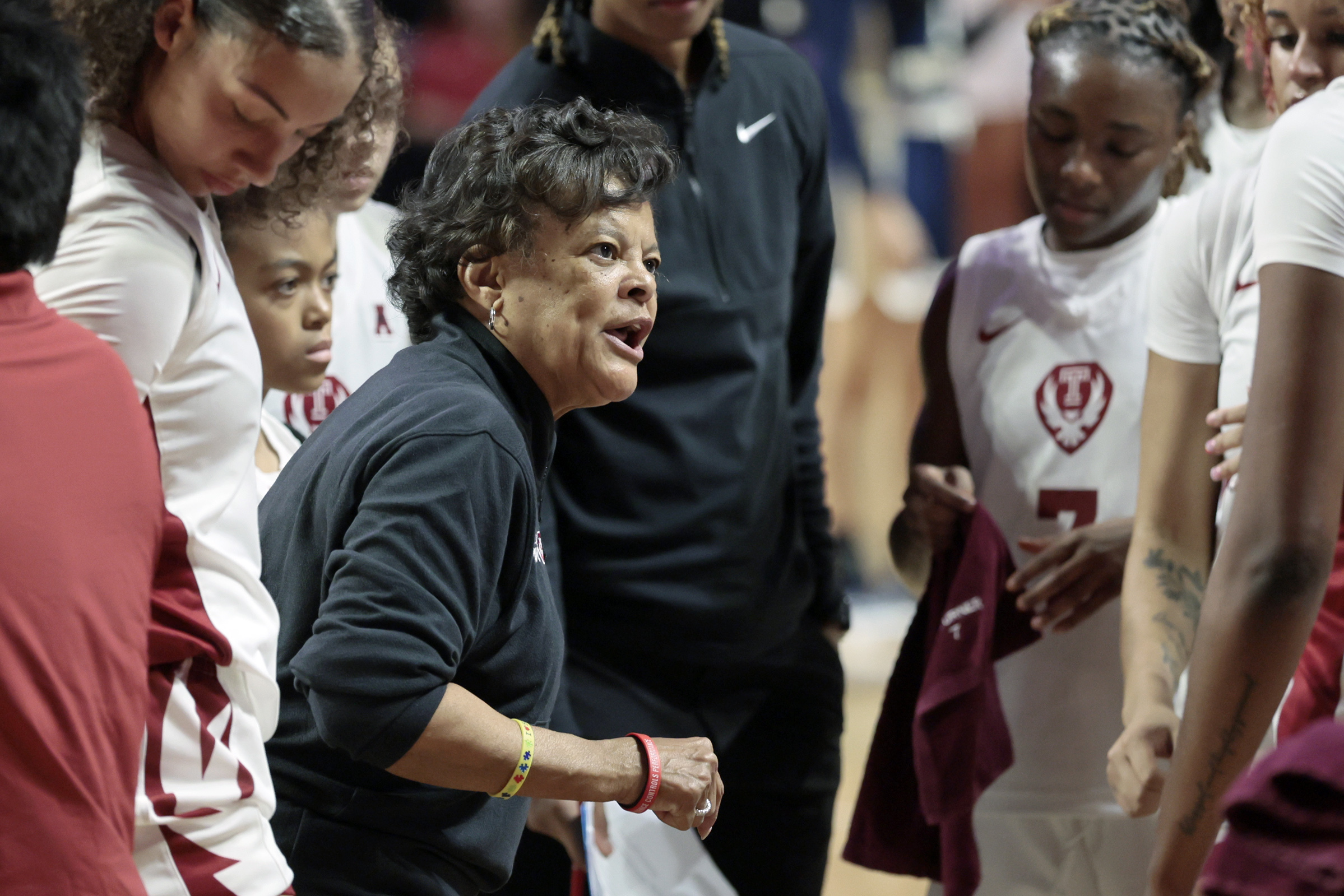
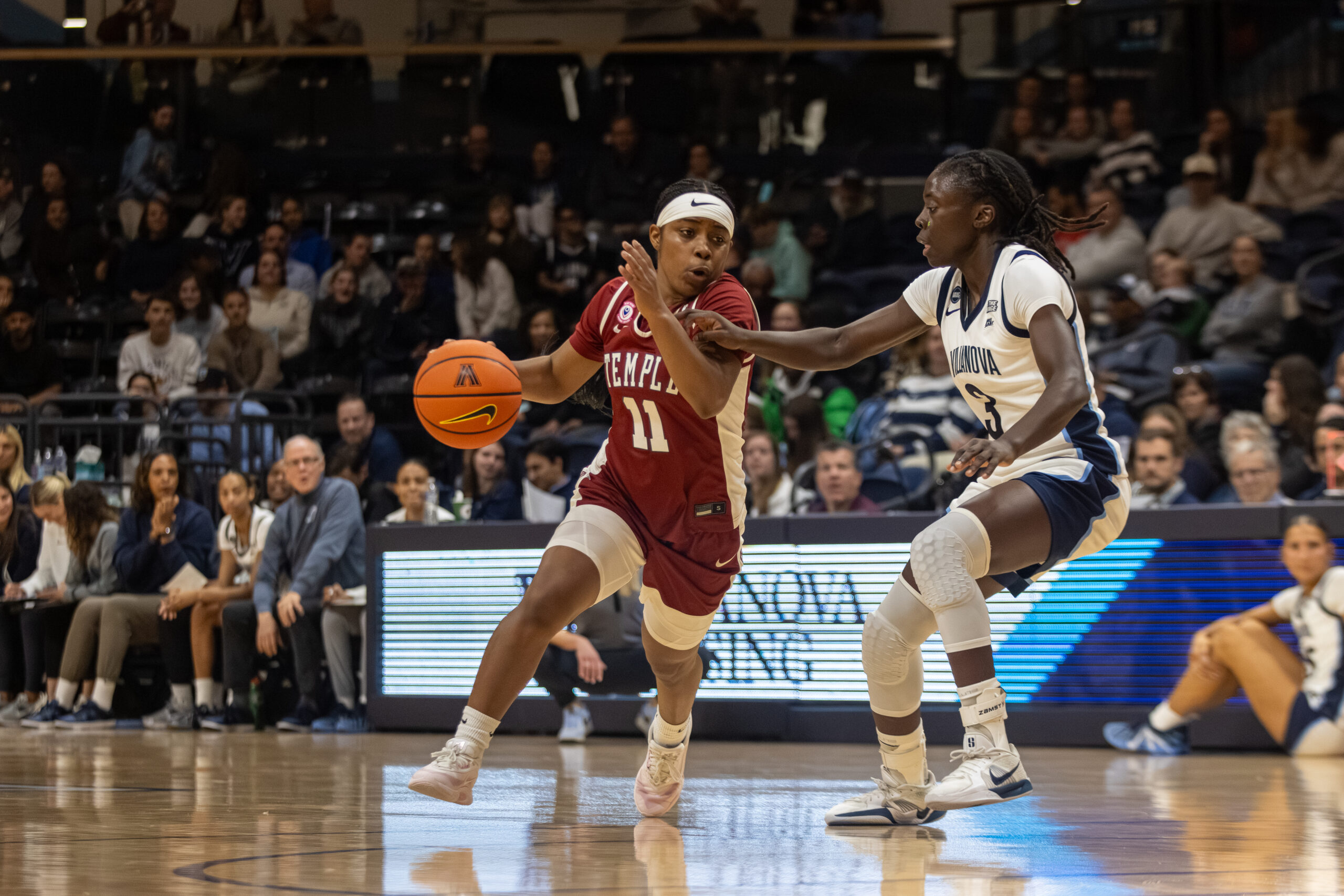
    Temple coach Diane Richardson knew she wanted her team to be battle-tested for American Conference play and crafted the Owls’ nonconference schedule to reflect that.

    Richardson lined up five teams coming off NCAA Tournament appearances. The Owls went 1-4 in those games, with their lone win coming at home against George Mason in the season opener on Nov. 3.

    The difficult schedule leaves Temple with a 6-6 record that does not scream conference title contender. However, with a similarly difficult slate at this time last year, the Owls were 6-5 but went on to win 13 conference games and finished fourth in the American.

    Now Richardson is hoping to see similar results. Temple has displayed more offensive firepower and improved rebounding numbers, but the key to success for the coach will be defense and starting games strong. The Owls’ quest for an American championship starts Saturday at home against the reigning regular-season champion, UTSA (2:30 p.m., ESPN+).

    “I’m feeling pretty good,” Richardson said. “I know our last outing with Princeton kind of showed us that we have the resiliency that we’ll need. I just wish that we would start out like that. But I’m feeling pretty good. We’ve gotten the tough part behind us, and now we enter into the second season, which is the most important.”

    Coach Diane Richardson’s Temple squad opens American Conference play on Saturday against the reigning regular-season champion, UTSA.

    Showing resilience

    Temple’s four losses against 2025 NCAA Tournament teams came by double digits, with its closest result an 87-77 loss at Princeton on Dec. 22. The Owls also showed flashes of fight and the ability to remain competitive in those games.

    In their 72-57 loss to Atlantic 10 favorite Richmond on Nov. 18, the Owls were down double digits early in the second quarter but battled back and were within striking distance until the final five minutes. Temple trailed by as many as 26 points in the fourth quarter against Princeton but cut the deficit to nine in the final minute.

    “Early on, we weren’t responding really well,” Richardson said. “… But I think as we got into the season, we started understanding that this is tough, and we have to be tougher. Coming toward the end of the nonconference season, I thought we played better, which is a plus for us going into conference play.”

    Before the season, Richardson wanted her team to play faster, but during nonconference play, she felt the Owls were not assertive on offense to begin games or played out of control, which led to an increase in turnovers.

    Temple also had to play its final four nonconference games without starting point guard Tristen Taylor, who suffered an ankle injury on the road trip to the Bahamas at the end of November. The Owls were 2-2 without her.

    Taylor was the Owls’ second-leading scorer at the time of her injury, averaging 10.1 points and leading them in assists (4.6). She also was second in the American in assist-to-turnover ratio at 2.1. Without its main ballhandler, Temple looked out of sync at times, especially in its 59-52 loss to Drexel in the Big 5 Classic on Dec. 7.

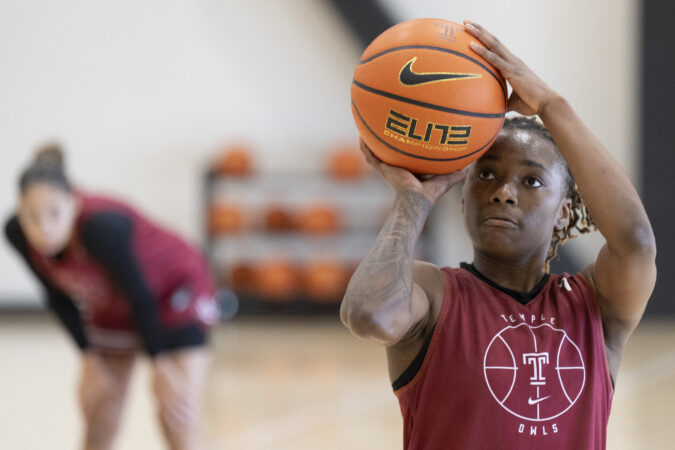
    The Owls leaned on guard Kaylah Turner, who ascended to one of the best players in the conference in Taylor’s absence.

    She averaged 23 points in the four games Taylor missed, including a career-high 36 points against Princeton. Turner, who is averaging 17.8 points this season, took on point guard duties and struggled with turnovers, but she still offered a steady presence at the top of the offense. Richardson expects Taylor back within the first two games of conference play. She believes Taylor and Turner can form the best backcourt in the conference.

    “In the scoring aspect, I do think I did well, but I feel like I could have done way better,” Turner said. “With playmaking and passing, that’s something I’m still working on. So I feel like I definitely could have improved that.”

    Tristen Taylor was averaging 10.1 points and 4.6 assists at the time of her injury.

    By the numbers

    Richardson was keen on her team playing faster on offense and improving its rebounding in the offseason. Nonconference play has shown offensive improvement and major strides on the glass for the Owls.

    Temple is averaging 70.1 points, a 3.4-point increase from its mark last year. Three players — Turner, Taylor and forward Jaleesa Molina — are averaging at least 10 points. Turner leads the American in scoring (17.8) and three-point percentage (.460) and is second in field-goal percentage (.450).

    The most notable improvement for the Owls has been their rebounding. Last season, Temple averaged 38.8 rebounds and had a rebounding margin of 0.8. This season, the Owls are averaging 39.8 rebounds but holding opponents to 33.9. The Owls give up the second-fewest rebounds in the conference and are fourth in rebounding margin.

    Molina and transfer forward Saniyah Craig have spearheaded the Owls’ efforts on the glass. Craig, who was the ninth-leading rebounder in the country last season while at Jacksonville, is averaging 8.9 rebounds, and Molina averages 8.4.

    “We’ve got to be hungry, and we’ve got to get every rebound,” Richardson said. “We’ve concentrated on that this week as well. So that’s going to be something that hopefully we’re good at.”

    Temple has struggled taking care of the ball. The Owls are averaging 19.6 turnovers, four more than last season, and have turned the ball over at least 20 times in five games, including their last three.

    Richardson knows the turnover numbers have to come down, but she believes that the key to a conference banner being raised in the Liacouras Center will come on defense.

    “You can miss shots, but you can always play defense,” Richardson said. “I think that oomph, that extra adrenaline turning people over defensively helps us offensively because it gives them more confidence. We want to compound our defense and make that our No. 1 thing.”

  • Three reassuring Eagles stats, and three reasons to worry ahead of the NFL playoffs

    Three reassuring Eagles stats, and three reasons to worry ahead of the NFL playoffs

    Just one game separates the Eagles from their playoff opener in what will be their fifth consecutive postseason appearance.

    Sunday’s game vs. Washington has potential for both intrigue and boredom with the Eagles resting most of their starters and the NFC’s second or third seed in play.

    The Eagles may just be looking ahead to the playoffs, so we’ll follow that path and focus our weekly glance at the numbers on what’s ahead.

    The confounding Eagles season continued with a 13-12 win against the Bills in Western New York. The Eagles seem simultaneously good enough to win it all and bad enough to score 11 points in a home loss in the wild-card round.

    There is reason to be confident the Eagles can make a run, and reason to believe this playoff appearance will be short-lived. Here are a few reassuring stats, and some concerning stats ahead of the postseason.

    Let’s start with the good stuff. It’s the holiday season …

    4

    That’s the amount of rushers the Eagles sent at Josh Allen each of the five times they sacked him Sunday at Highmark Stadium. This has been a trend of late. Sunday marked the third game in the last four that the Eagles had at least four sacks with a four-man rush.

    The Eagles, according to Next Gen Stats, have 18 sacks over their last four games utilizing four rushers. That was seven more than any other team in the NFL at the time Sunday’s game ended.

    Let’s couch the excitement a little bit and add the context that two of those games were against the Raiders and Commanders, and the previous contest came against a good Chargers team with a really bad offensive line. But doing what the Eagles did against the Bills with four rushers is remarkable. Only five teams allow pressure to the quarterback at a lower clip than the Bills’ 29.4% for the season.

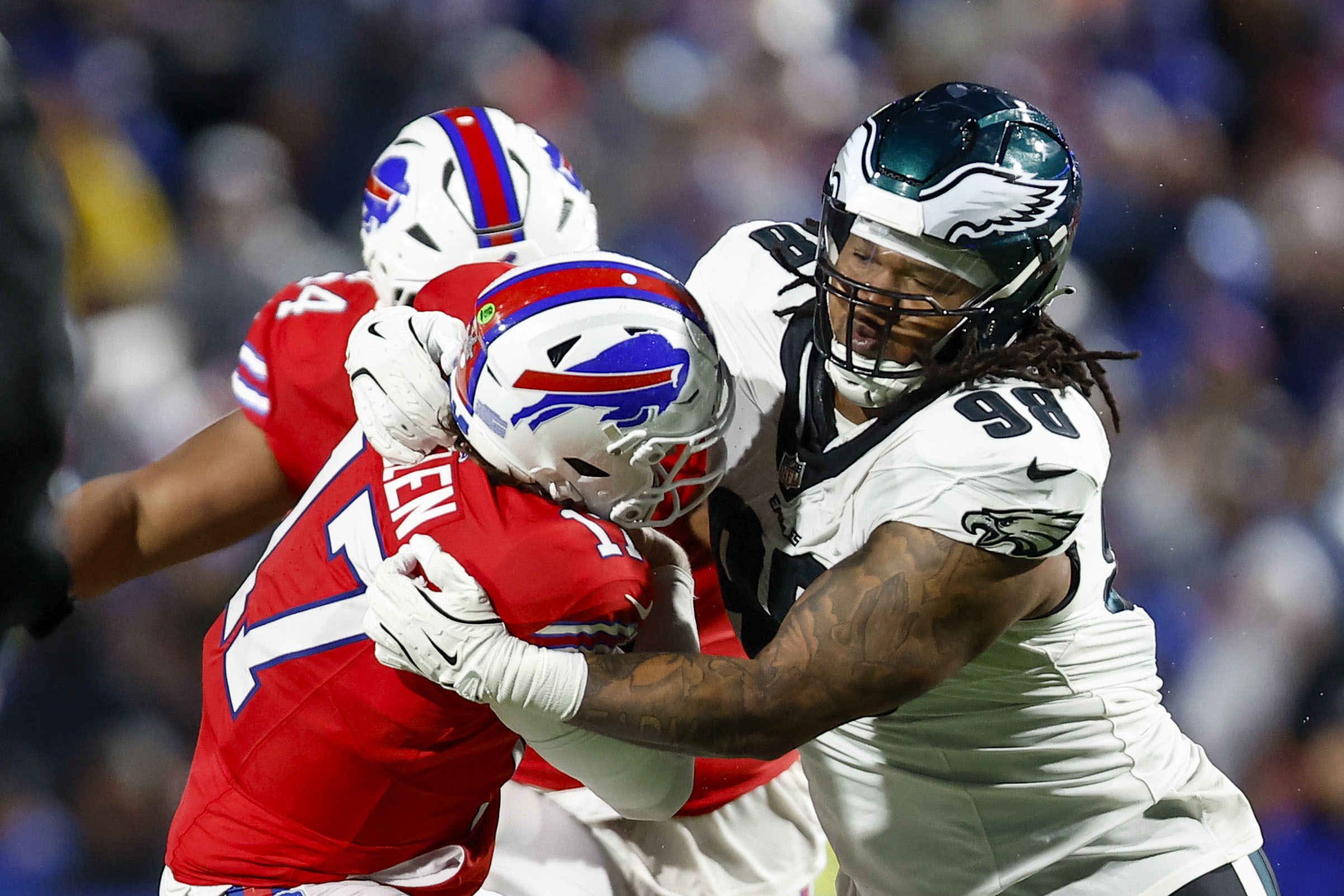
    Eagles defensive tackle Jalen Carter sacks Bills quarterback Josh Allen on Sunday.

    The Eagles’ success with four is a big deal, as we saw last year. Vic Fangio doesn’t dial up blitzes. The Eagles send extra rushers on just 19.5% of their defensive plays, the third-lowest rate in the NFL.

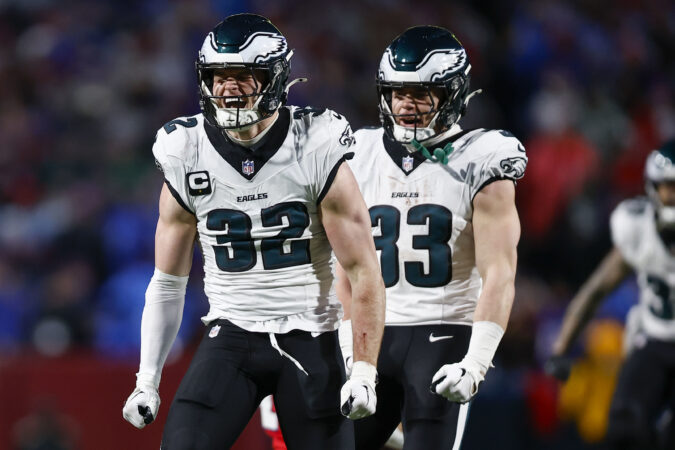
    If Jalen Carter is back back from his shoulder injuries, the Eagles, with the deadline acquisition of Jaelan Phillips, might just have a versatile pass-rushing front that can take them pretty far. The Eagles have one of the best outside corners in the league in Quinyon Mitchell, one of the best nickel players in Cooper DeJean, linebackers who can cover, and adequate safeties.

    This type of success rate with four gives the Eagles a numbers advantage beyond the line of scrimmage that works in their favor.

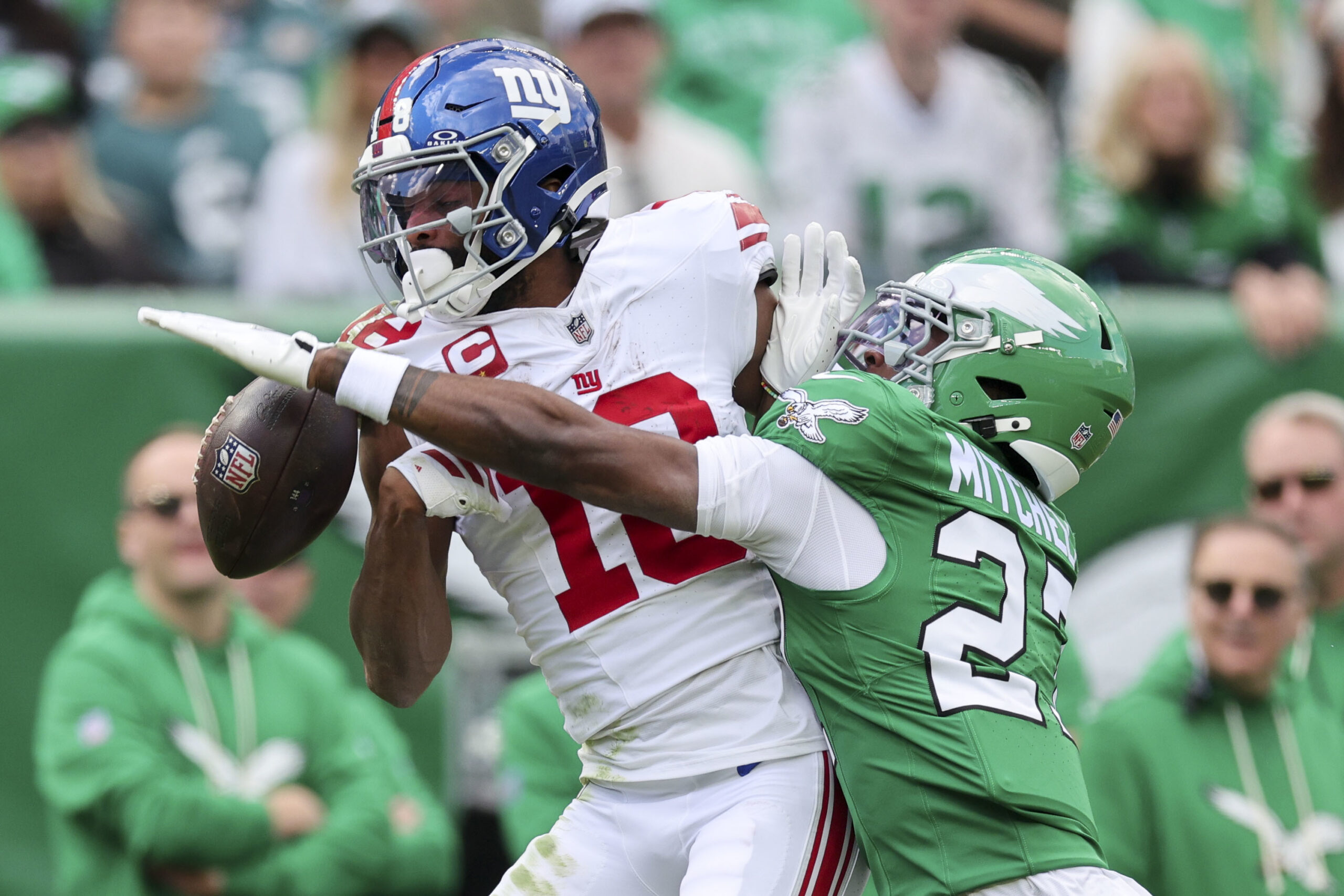
    Quinyon Mitchell breaks up a pass intended for New York Giants wide receiver Darius Slayton during the second quarter against the Giants on Oct. 26.

    42.4%

    So, the Eagles are humming up front, but let’s focus on the aforementioned Mitchell, who is having one heck of a second NFL season. He deserves his own section here because he will have the ability to take opposing receivers out of the game throughout the playoffs, and his coverage chops help the guys up front, too.

    Among all defensive backs with at least 10 games played, Mitchell leads the NFL in catch rate allowed (42.4%). According to Next Gen, Mitchell has been in coverage on 576 defensive snaps and has allowed just 36 catches on 85 targets for 451 yards. He has allowed one touchdown.

    Mitchell also leads qualified players in average target separation (1.8 yards).

    A dangerous Rams passing attack could be up first next week, and Mitchell and the Eagles front will be waiting.

    8-0

    There was one turnover in the game Sunday, a crucial and controversial fumble by Allen that flipped the field and led to an Eagles touchdown.

    That helped the Eagles improve to a league-best 8-0 when they win the turnover margin. They’re now 42-2 in the Nick Sirianni era when the turnover margin is in their favor.

    This is one way of sneaking an offensive stat in here from a unit that hasn’t provided a lot of reassurance this season. But even in doing so, it’s a stat the offense shares with the defense. The Eagles have forced a turnover in eight consecutive games and are tied with Chicago for the longest active streak.

    Jalen Hurts, meanwhile, has recovered nicely from his five-turnover disaster vs. the Chargers. He has six touchdown passes and no interceptions since that game.

    The offense lacks an identity, but taking care of the ball is one it can hang its helmet on. That’s not nothing when the defense is playing like it is.

    Reasons to worry

    We’re not going to sneak a defensive stat in here.

    40.1%

    The Eagles were shut out by the Bills in the second half. They ran 17 plays and netted 17 yards before Hurts took a knee to end the game. It wasn’t pretty.

    For the second time this season, Hurts didn’t complete a pass (in seven attempts) in the second half, and somehow the Eagles are 2-0 in those games. No other team has failed to complete a pass in the second half this season.

    The Eagles were often in third-and-long because they again couldn’t get their running game going — this time against one of the worst run defenses in the NFL. Saquon Barkley barely had space to move thanks to missed assignments from the offensive line and tight ends. The Eagles often ran into stacked boxes (they face the fourth-highest stacked-box rate in the league). Dallas Goedert playing fullback was an experiment that failed. Barkley had just 1.75 yards per carry in the second half.

    The Eagles’ success rate on the ground is 40.1%, which ranks 24th in the NFL. It’s been the root of the offense’s issues all season.

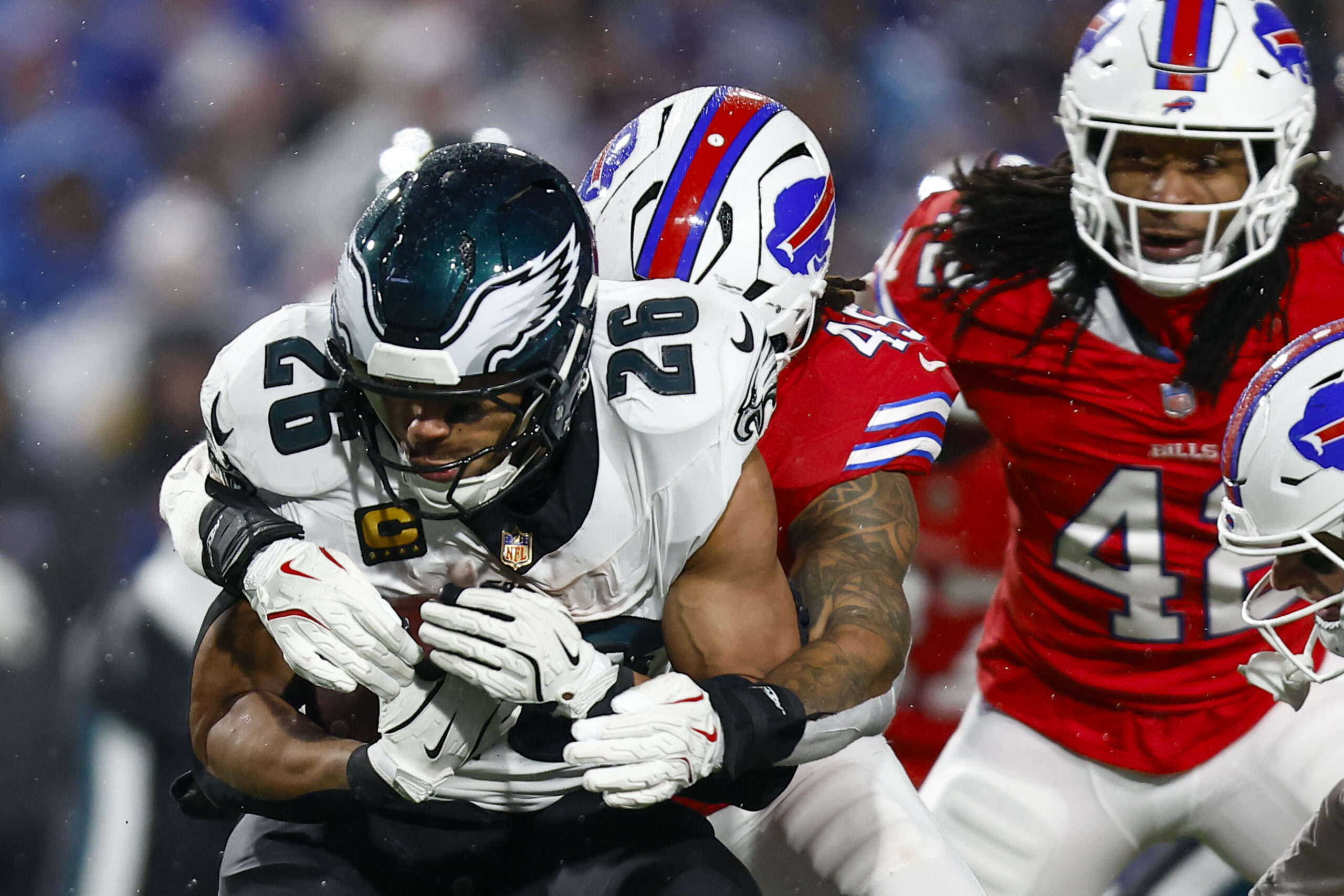
    Saquon Barkley is stopped by Bills outside linebacker Shaq Thompson in Week 17.

    Barkley had encouraging performances recently vs. the Commanders and Chargers, but Sunday was a step back, and considering there’s a real chance the starters rest Sunday, it’s a sour taste to enter the postseason with.

    The Eagles are probably going to need to be able to run the ball to win in the playoffs, and the lack of a running game makes them so much easier to defend.

    9.9

    Since their Week 9 bye, the Eagles have scored more than 21 points just twice in eight games, and those were against two of the worst teams in football (Commanders and Raiders).

    This isn’t a high-powered offense, and it’s one that particularly has trouble scoring in the second half. Sunday wasn’t an outlier. The Eagles average just 9.9 second-half points. That’s good for 25th in the NFL. The combined record of the teams below them: 32-80.

    Scoring in the second half might come in handy in the postseason.

    73.1%

    Jake Elliott went 2-for-2 Sunday, with field goal makes from 28 and 47 yards. He also made his lone point-after attempt.

    It was a nice rebound performance in bad weather from Elliott after a game against the Commanders in which he missed two field goals (plus a third that was negated by a penalty).

    But saying it’s been a shaky season from Elliott is probably putting it mildly. His conversion rate of 73.1% on field goals is the lowest of his nine-season NFL career. This, on the heels of a 77.8% campaign in 2024.

    An inept offense will make the margins slim, and the Eagles’ playoff life could at some point come down to a single kick.

  • The College Football Playoff’s top four seeds are in action this week. Here are some potential future Eagles to watch.

    The College Football Playoff’s top four seeds are in action this week. Here are some potential future Eagles to watch.

    The College Football Playoff continues with four more games this week, beginning with a New Year’s Eve matchup between Ohio State and Miami at the Cotton Bowl. The Buckeyes-Hurricanes showdown is the game in this round that will likely yield the most combined NFL draft prospects.

    On New Year’s Day, Alabama plays Indiana in the Rose Bowl, Ole Miss takes on Georgia in the Sugar Bowl, and Oregon and Texas Tech face off in the Orange Bowl.

    With plenty of draft hopefuls playing on big stages, here are the prospects the Eagles should be keeping an eye on from the top four seeds — Indiana, Ohio State, Georgia, and Texas Tech — who are set to make their 2025 CFP debuts.

    Monroe Freeling, tackle, Georgia

    The Georgia-to-Eagles pipeline could get another addition with the Bulldogs’ left tackle Freeling, who is an outstanding athlete at 6-foot-7, 315 pounds. The tackle, who is only a junior, is light on his feet in pass protection, moves well in space to block smaller and faster players, and is hard to get around in pass protection. According to Pro Football Focus, Freeling has allowed just nine pressures and two sacks in 423 pass blocking snaps this season.

    Freeling was banged up midway through the season and his play balance isn’t consistent from down to down, but the left tackle has a desirable skill set to contend with some of the best athletes at the NFL level, especially in pass protection. Should he declare, he will be in high demand for teams that need an offensive tackle — whether it’s next season or a few years from now.

    Kenyatta Jackson, edge rusher, Ohio State

    Part of a fearsome Ohio State defense, Jackson is having a breakout season in his fourth year in the program. At 6-6, 265 pounds, Jackson has a noticeable arm length advantage and uses it to challenge opponents. He plays multiple roles along the defensive line, lining up primarily at 4i (inside shoulder of tackles) and can wreak havoc as both a pass rusher and run defender.

    Jackson is at his best, though, from a standing alignment as a pass rusher, allowing him to get a running start and to create physical separation from offensive tackles. He projects as a Day 2 pick if he declares this year and would be a welcome addition to a talented Eagles edge rusher room.

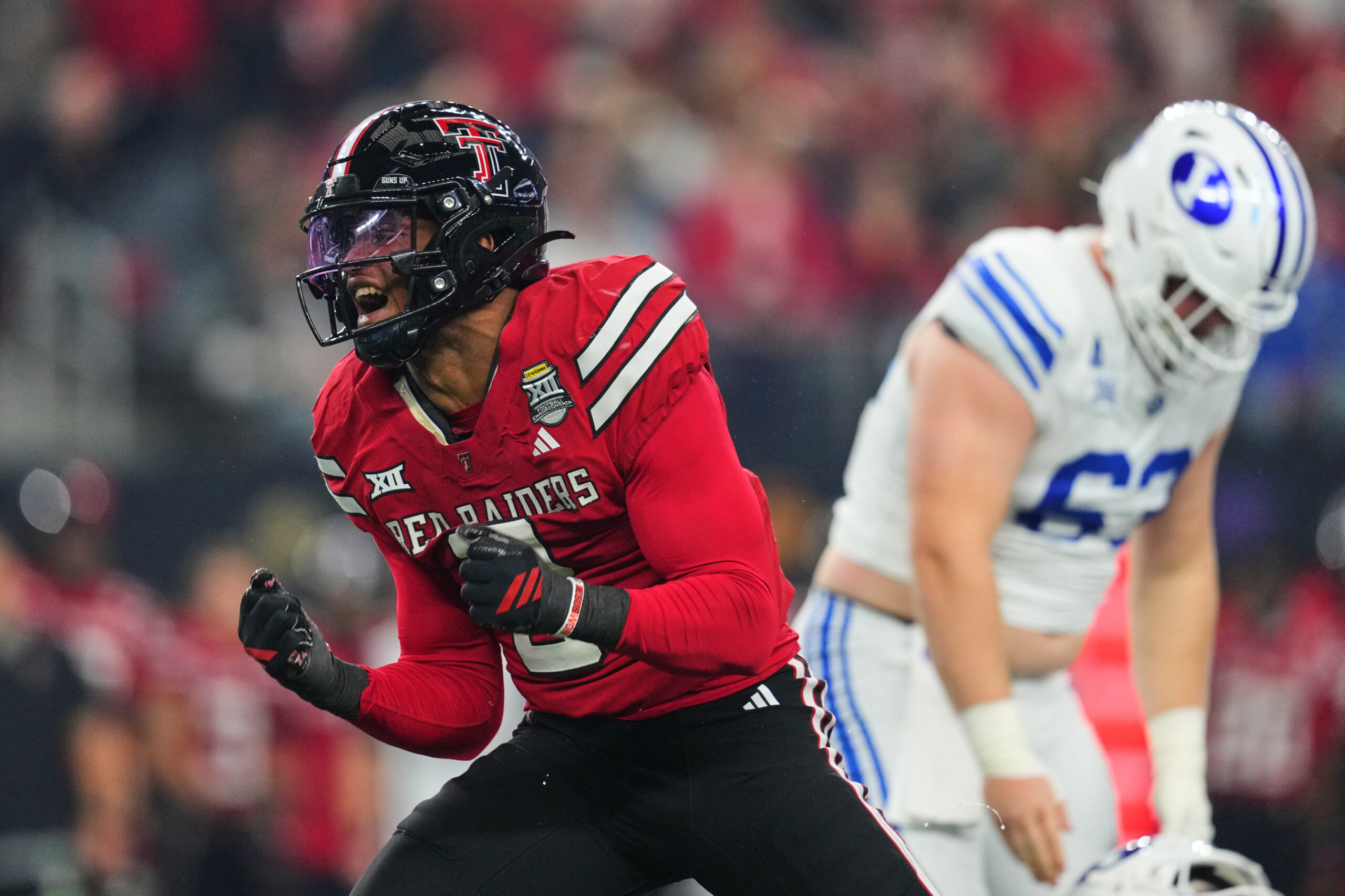
    Texas Tech defensive end Romello Height celebrates a defensive stop against BYU in the Big 12 Championship.

    Romello Height, edge rusher, Texas Tech

    At his fourth school in six years (Auburn, USC, Georgia Tech), Height is having the best season of his career with nine sacks and 10½ tackles for losses in 13 games. A high-effort, high-motor pass rusher, Height uses his length and ankle flexion to win on the outside shoulder of offensive tackles, and has a nice toolbox of pass-rush moves that includes a spin, an inside swim move, and a cross-chop.

    Height has a 23% pass-rush win rate, according to PFF, but struggles as a run defender holding his gap against offensive linemen. He’ll likely command a designated pass rushing role early in his NFL career. Despite being an older prospect, there’s a chance Height can go within the first two rounds, and he would be a nice addition to an Eagles pass rush that is already much stronger since trading for Jaelan Phillips.

    Jermaine Mathews, DB, Ohio State

    Mathews, who plays both outside corner and nickel for Ohio State, is just a junior who could return to school, but his versatility and ball skills make him an early-round candidate should he enter the draft. At 5-11, 190 pounds, Mathews excels in off man coverage and zone coverage looks, closing on the football with quickness while playing through the hands of receivers.

    According to PFF, Matthews has 398 snaps at outside corner vs. 159 at nickel. He struggled with penalties down the stretch and is susceptible to getting beaten deep without safety help, but he projects as a nickel who can eliminate timing routes over the middle of the field and into the boundary. His physicality in the running game could improve, too.

    Omar Cooper, WR, Indiana

    Quarterback Fernando Mendoza is the potential top pick in the 2026 draft and one of his weapons is Cooper, who has the speed to run by a secondary and is hard to bring down in the open field. Primarily operating from the slot, Cooper has strong hands at the catch point and terrific body control, evidenced by his clutch game-winning touchdown against Penn State in November.

    His ability to win in contested catch situations — he has made 6 of 12 catches while tightly defended, according to PFF — and vertical speed make him an ideal second or third receiver option in the NFL. For the Eagles, he could be a much-needed field stretcher who has the ability to create big gains with the ball in his hands and win in one-on-one situations.

    Terrance Carter Jr. TE, Texas Tech

    Tight end will eventually become a need for the Eagles, perhaps as soon as this offseason with Dallas Goedert set to become a free agent in the spring. Outside of Round 1, there will be a few players who interest the Eagles, and among them is Carter, the Louisiana-Lafayette transfer who is dynamic after the catch.

    Of his 552 receiving yards this season, 334 have come after the catch, according to PFF, and Carter is a matchup nightmare for linebackers and safeties. Though he’s not quite the same caliber of athlete as Georgia’s tight end duo of Lawson Luckie and Oscar Delp, or Oregon’s Kenyon Sadiq, Carter can still separate from secondary and second-level players.

    The tight end prospect, who could return to school, must clean up his drops — he has five in 2025 — and doesn’t add much as a blocker, but is a big-time receiving threat.

    Davison Igbinosun, DB, Ohio State

    There may not be a more improved player in Ohio State’s secondary this season than Igbinosun, the physical outside corner who makes life difficult for opposing receivers. Igbinosun, listed at 6-2, 193 pounds, likes to disrupt the timing of wide receivers in man coverage, and has the length and speed to defend vertical passes downfield.

    According to PFF, Igbinosun hasn’t allowed a touchdown across 331 coverage snaps and just 42.9% of his targets in coverage have been caught. He is feisty, competes at the catch point, and has excellent ball production this season (six pass breakups, two interceptions). Penalties continue to be a negative for him (21 over the last two years), but they have become far less of an issue in 2025.

    Though Adoree’ Jackson has held up much better down the stretch of this season manning the cornerback spot alongside Quinyon Mitchell for the Eagles, Igbinosun would be an upgrade from a ball production standpoint, though the team would have to be comfortable with his tendency to get too physical in man coverage situations.

  • To kick-start a generation of city kids playing soccer, it will take more than just a place to play

    To kick-start a generation of city kids playing soccer, it will take more than just a place to play

    In the backdrop of the excitement surrounding the FIFA World Cup coming to Philadelphia is the question of what impact the tournament will have on soccer in the region.

    World Cups have long had the potential to be transformative for the hosting nations. The last men’s edition in the United States, in 1994, helped spur Major League Soccer. The women’s editions in 1999 and 2003 also spawned leagues, but more importantly, they fueled the grassroots growth of the game, benefiting both girls and boys.

    Over the course of those years, the youth game has morphed into a pay-for-play structure in which the best clubs are generally the ones that come at a high price, giving youth athletes whose parents have expendable cash — many times in the thousands — the opportunity to play consistently and thus reap the benefits of year-round exposure through tournaments and showcases.

    U.S. Youth Soccer is a network that oversees more than 10,000 such clubs, with local branches such as the Eastern Pennsylvania Youth Soccer Association, which govern clubs and leagues across regions under the umbrella of USYS. The thing is, many of those clubs and leagues don’t come from inner-city areas like Philadelphia, where the next great American star could be waiting to be discovered.

    But to find that kid, they need a place to play, and in Philadelphia, finding a spot to play organized soccer at times can be equally as tricky.

    It is a need that the city, alongside several foundations and organizations, is working to address, recognizing that the World Cup’s visit to Philadelphia may lead more kids to give futból a try.

    If you build it …

    Ahead of the World Cup, Philadelphia Soccer 2026 committed $2 million to the U.S. Soccer Foundation to support youth soccer initiatives, including the development mini pitches across the state.

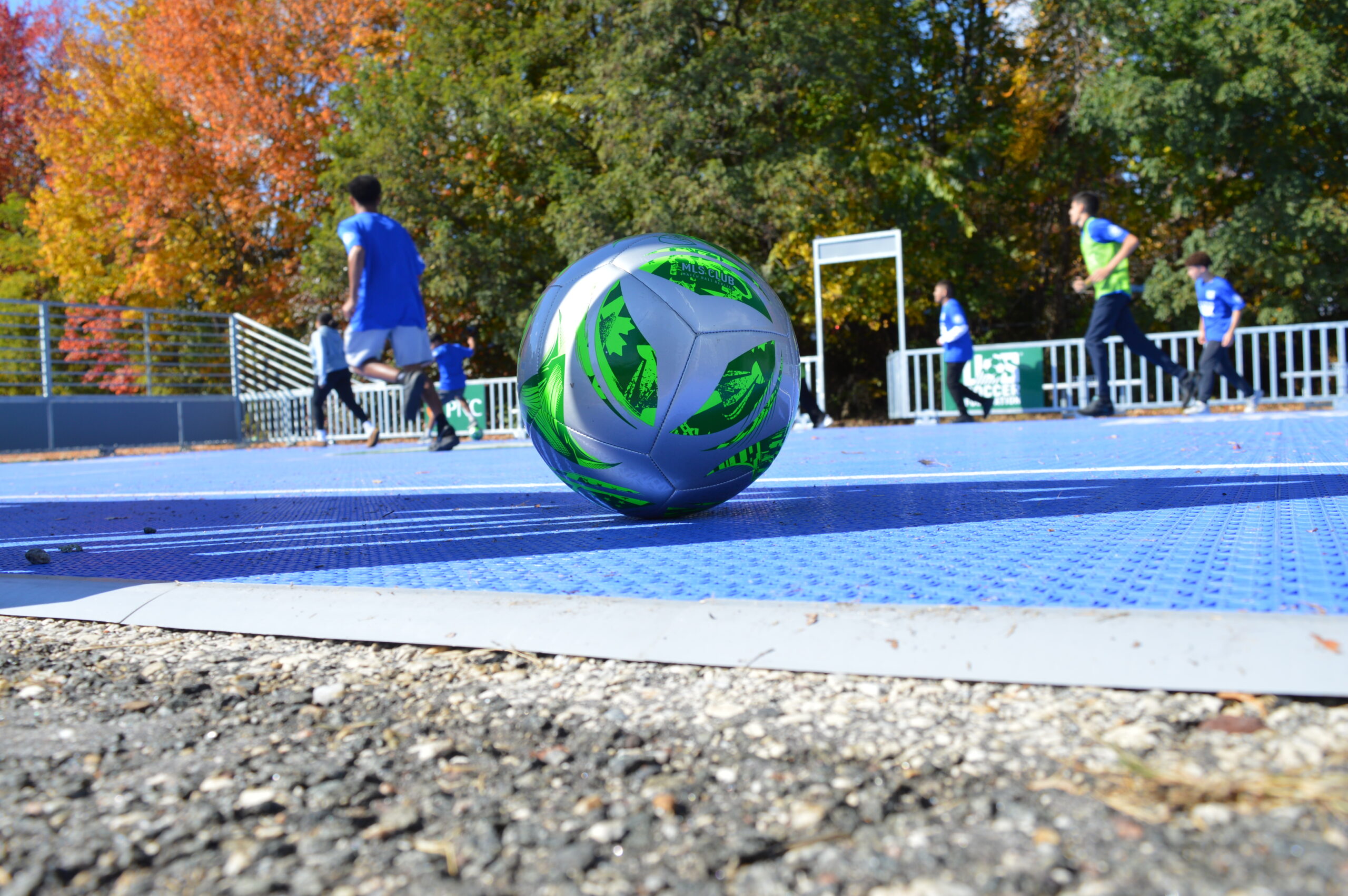
    In late fall, U.S. Soccer Foundation installed a pair of those mini-pitches in Philadelphia. The foundation, which was also created after the 1994 World Cup, has a goal to leave a lasting legacy in inner cities. It believes these mini-pitches offer not just a place to play but a place for local organizations to host programs.

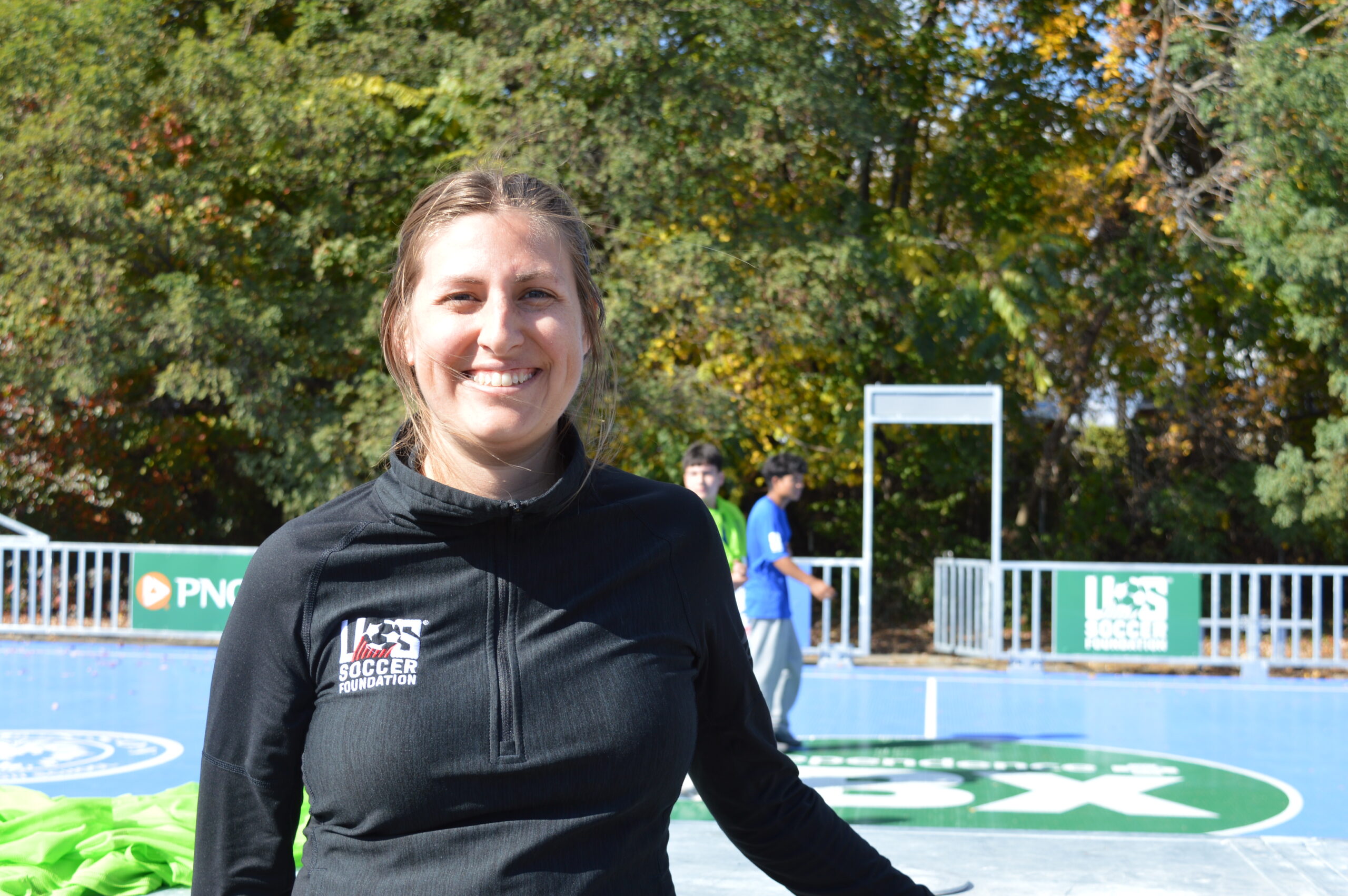
    Jen Arnold, vice president of communications and marketing at the U.S. Soccer Foundation, says that the foundation has a commitment to introducing the sport to more children in underserved areas.

    “When our current president and CEO [Ed Foster-Simeon] came into the role in 2008, he did a landscape analysis and showed it had grown … but in the suburbs and more affluent communities,” said Jen Arnold, vice president of communications and marketing for the U.S. Soccer Foundation.

    “So from the foundation standpoint, we want to make sure it’s growing equally across the ground. We’re here for the under-resourced communities, communities that might not have been part of that boom after 1994. We’re here to make sure that everyone can access the game.”

    Arnold spoke after the installation of one of the latest mini-pitches added to Philly’s soccer landscape, behind Swenson Arts and Technology High School in the Far Northeast. The installation was in collaboration with Independence Blue Cross, the School District of Philadelphia, and FIFA Philly 26, the local collective tasked with organizing Philly’s place in this summer’s World Cup.

    The fields, which cost $150,000 apiece to install, according to Arnold, are the latest additions to Philly’s sports landscape. They could be considered an addition to the city’s massive Rebuild program, a reported $500 million restoration project for area parks and playgrounds, of which $3.5 million was allocated to create 15 mini-pitches and two signature soccer fields across the city.

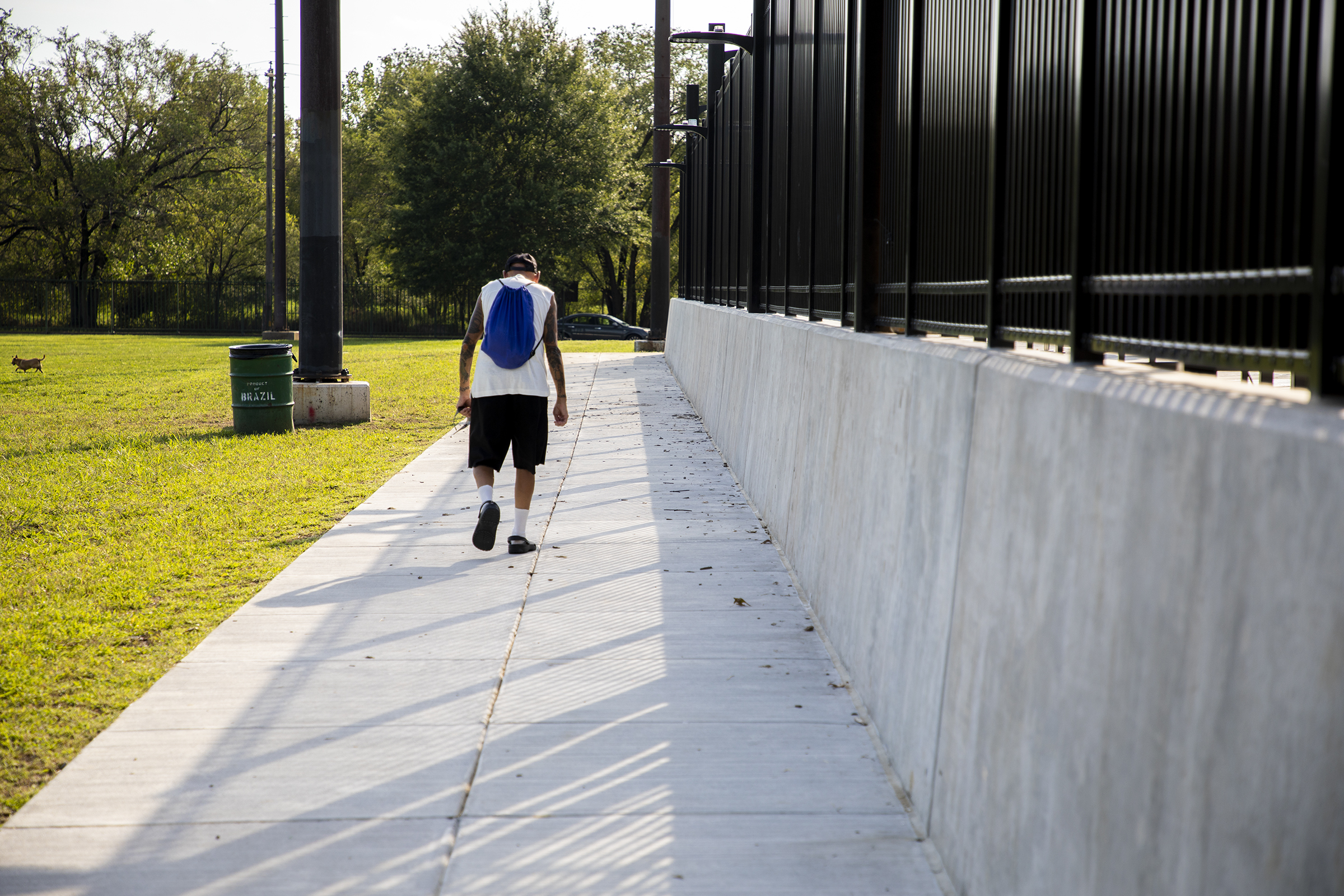
    Many recreation centers across the city are fenced off, only to be used under permit, which restricts the idea of open play, a key component of soccer.

    The idea is that these mini-pitches offer an opportunity for more children to be introduced to the game. They also offer a welcoming environment, unlike the scores of fields around the city that are fenced and kept under lock and key. Or recreation centers in which both indoor and outdoor surfaces get gobbled up often by other sports, or even pay-to-play youth and adult league soccer organizations, which serve to add to city coffers in exchange for monopolizing much-needed field time.

    But soccer organizers across the region believe that it’s not simply “If you build it, they will come.” It’s more like: “Build it and add programs and they might come.”

    That’s where the big challenge lies when it comes to introducing more city kids to soccer.

    … Will they come?

    For the better part of a decade, Dom Landry has made it a mission to bring soccer to North Philadelphia. A Philly native who played at St. Joseph’s University, Landry has dedicated time, intuition, and even his own dollars to introduce the sport to as many children in the city’s Fairhill section as possible.

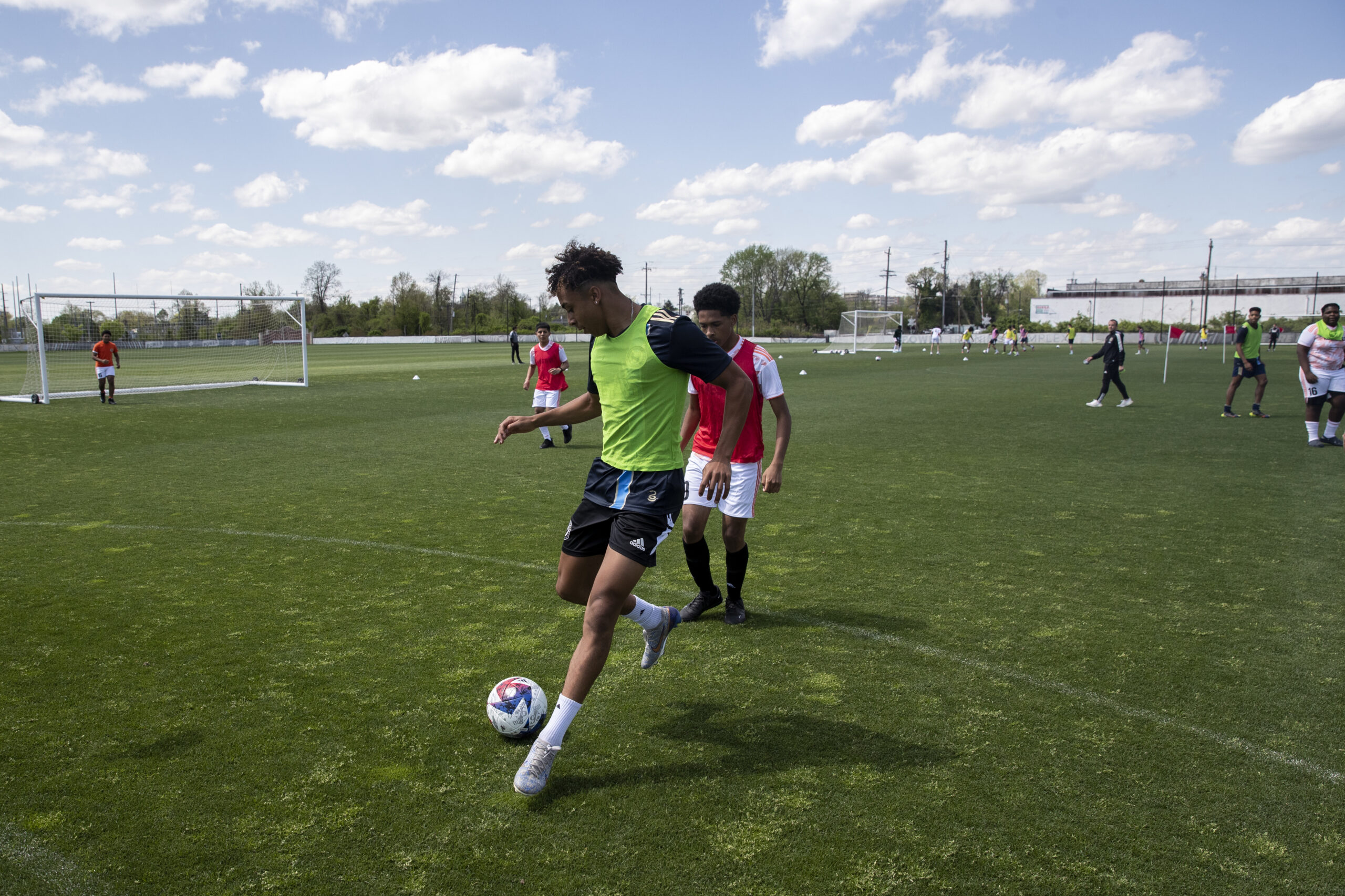
    Landry founded AC Fairhill, the neighborhood club created in 2015 with just “three kids and an old bag of balls,” according to Landry. It has since become a recognized club that competes in tournaments across the region. His is one of a few clubs directly from the inner city that have funneled children from North Philly streets to top clubs and academies.

    His desire mirrors what the U.S. Soccer Foundation says it’s looking to do in developing the infrastructure, but Landry notes that it goes way beyond plopping a shiny new field in the middle of an underserved neighborhood.

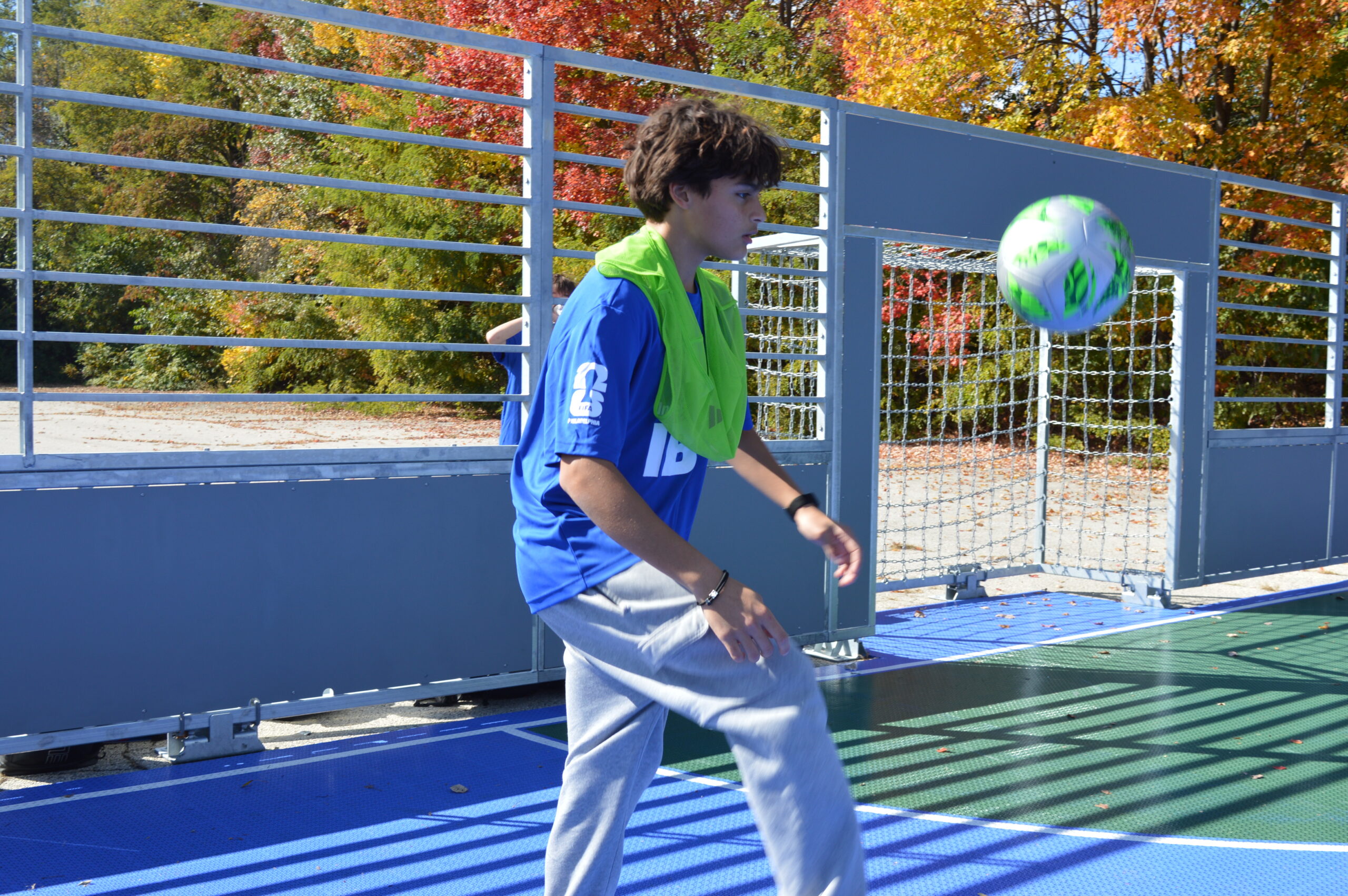
    Students at Swenson Arts and Technology School were the first to test out the new soccer mini-pitch that was installed at the rear of the school earlier this fall.

    “Putting infrastructure in for play is critically important, but it’s not the United States Soccer Federation or its foundation’s job to provide programming,” Landry said. “I know it’s part of their mission [at the U.S. Soccer Foundation], too, but it’s really the job of local organizations to bring the programming to those fields.

    “We don’t have the soccer culture here in America where kids are just going to grab a soccer ball and go to a soccer pitch because it was made; there has to be enough people to bring in that level of interest to them. It’s very much a multiprong approach, and these mini-fields are great, but they’re only scratching the surface.”

    Unlike other countries where soccer reigns supreme, in America it’s viewed as a sport for children, residing in the backdrop of football, baseball, and basketball. In other parts of the world, all that’s needed is a ball to get a game going, but here, it’s rare to see the sport being played without an organization tied to it.

    Having safe places to play is one thing, but experts say developing a love for the game in area children is up to organizers.

    ‘We need to do more’

    For Landry, it’s a simple thing that has been made to feel quite complex.

    “We have to teach kids how to love the sport,” Landry said. “Not necessarily just, like, go get cones and train, but have fun with the sport. Who’s going to be that coach, that parent who’s going to show a kid how to have fun with the sport, so they can go out with their friends and play it? To me, if anything, that’s the next step in the legacy and evolution of soccer here. But that ideology also tends to upset these clubs who spend a great deal of time in generating a living from it.”

    A host of organizations, both in the city and out, have taken soccer programming into schools, taking over gym classes or creating after-school outlets.

    To introduce the sport directly to more Black and brown youth, the annual Odunde Festival created a soccer pitch in the middle of South Street at this past summer’s event to get children and their families playing soccer, coupled with education on where they could find programs close to home.

    Jeremiah White III, a former professional soccer player turned entrepreneur, says he presented the idea to Odunde leadership and already has plans to grow Odunde Sports to align with this summer’s World Cup.

    Jeremiah White Jr. (right), with his son, Jeremiah III, kick-started Odunde Sports this past summer, a deriative of the larger Odunde Festival, designed to foster connection between community and sports, like soccer.

    “A big thing missing from soccer programming here is the importance of connection,” White said. “[When it comes to soccer in America], we tend to overvalue structural training, and in some cases disconnect training from culture entirely. It makes the game robotic and sucks out all of the passion. What kid is going to want to pick up a soccer ball over a basketball or a football, when that’s what they’re walking into?”

    It’s a well-known challenge, even one recognized by top youth organizations as a change agent.

    “The fields are great, but yeah, we need to do more,” said Chris Branscome, president and CEO of EPYSA, the organization that oversees club programming in the area. “Once they are built, you’ve got to get the kids there, you’ve got to program them. That’s perhaps the bigger piece of the puzzle: ensuring we have the opportunity to train more coaches and to deliver regular, consistent programming at these locations.

    “To me, that’s the big challenge we have over the next year.”

    It’s one that feels pretty integral once the noise the World Cup brings finally fades.

  • The thrill of victory and the exasperation of trying to feel good about it define the 2025 Eagles

    The thrill of victory and the exasperation of trying to feel good about it define the 2025 Eagles

    Quinyon Mitchell isn’t one of those cornerbacks who speaks as if he is paid by the word. That’s a good thing. Brevity is often a sign of a man with more important things on his mind. It also suffices, more often than not.

    For anybody who walked away from the Eagles’ 13-12 victory over the Bills on Sunday with an even greater sense of trepidation regarding the postseason, it might be helpful to consider the three short declarative sentences that Mitchell offered up as his interpretation of the proceedings.

    “We’re battle-tested,” the Eagles’ second-year cornerback said as he stood in the postgame swirl of a cramped visitor’s locker room at Highmark Stadium. “Just look at our schedule. Look at our opponents.”

    The sentiment is equal parts encouraging and maddening. Which is fitting, because the Eagles themselves are both of those things. It is their yin and their yang, their two mystical tadpoles, one of them midnight green, the other kelly green, chasing each other in a circle. The thrill of victory and the exasperation of trying to feel good about it.

    On the one hand, the scoreboard is the ultimate judge. On the other hand, why does the scoreboard have to say 13-12? And why does it have to feel so fitting?

    To anybody who possesses both a functioning brain and a reasonable amount of prior exposure to playoff football, the Eagles look like a team whose luck is destined to run out well before Super Bowl Sunday. The quarterback has not been good enough. Not even close. The play-calling has not been good enough to make up for the quarterback’s deficiencies. The defense has been good enough to make up for both of those things. But only barely.

    On Sunday, the result was the second time this season that the Eagles failed to complete a pass in the second half. Yet it was also the second time this season where they failed to complete a pass in the second half and still won the game.

    Yin and yang.

    Sunday was also the third time this season when the Eagles won a game in which they scored fewer than 17 points. They are just the fifth team to accomplish that feat over the last 15 seasons. Of the four teams that did it previously, three went on to lose in the wild card round. Yet the one exception was the 2012 Ravens, who went on to win the Super Bowl.

    Yin and yang.

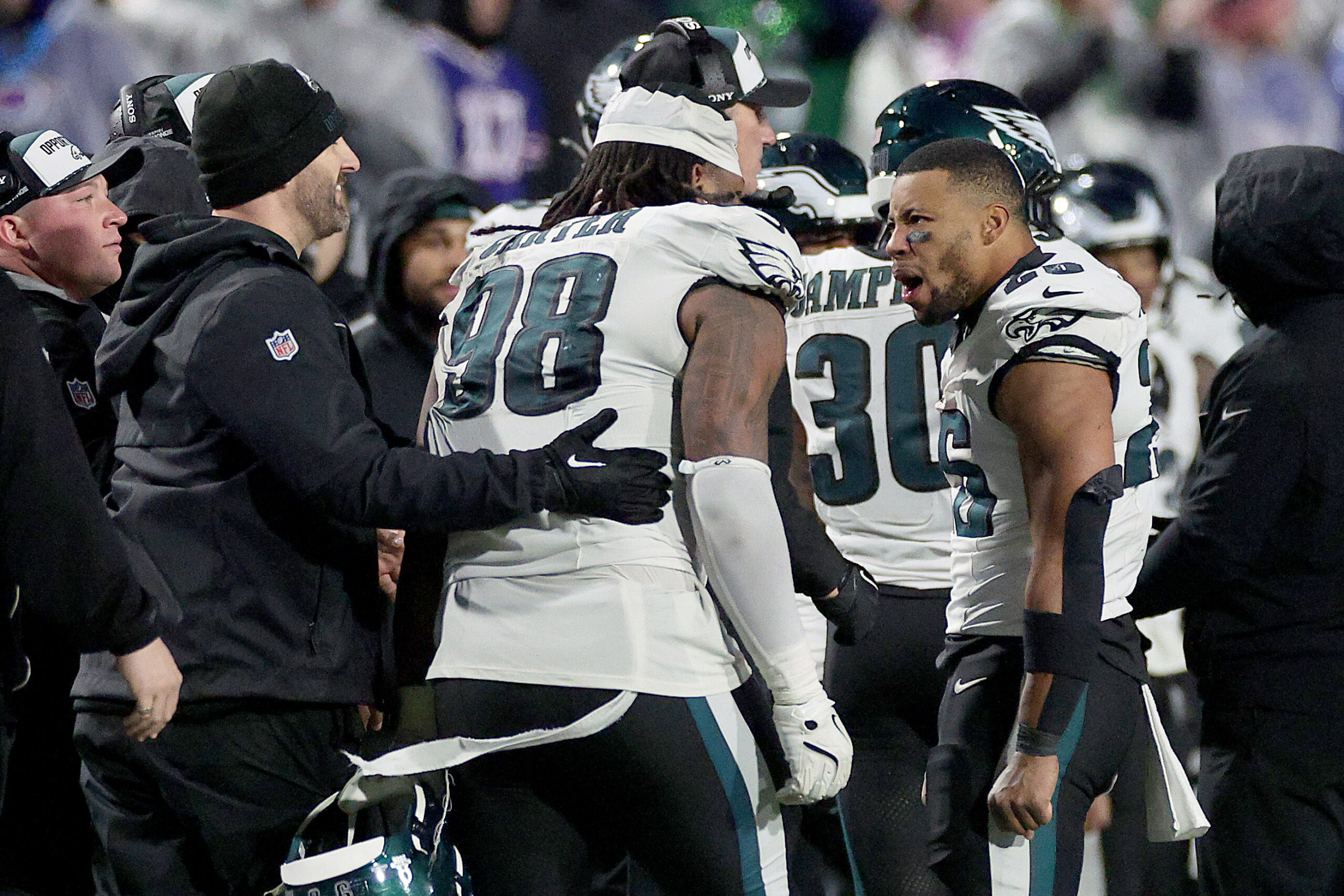
    Defensive tackle Jalen Carter (98) and running back Saquon Barkley celebrate after the Eagles stopped the Buffalo Bills on a two-point conversion attempt late in the fourth quarter Sunday.

    “I’ve never really been on a playoff team, but I can tell the difference just in the sense of these crunch time moments, being able to bend but don’t break,” said defensive end Jaelan Phillips, who had one of the Eagles’ five sacks against the Bills. “Obviously they had a little bit of a surge toward the end, but we were able to do what we needed to do offensively, defensively, and special teams wise to come out with the win. Gritty games like that are things you need to have to prepare yourself for the long haul.”

    The Eagles may not be the most dynamic team heading into the postseason, but they will be the most prepared.

    They have faced 10 of the top 13 quarterbacks in the NFL in terms of passing yards with a 3-1 record against the top three. They are 4-1 against the top seven QBR leaders. They have won games against five of the six quarterbacks who, along with Jalen Hurts, lead the NFL in wins over the last four seasons.

    Sunday was the 10th time in 16 games that the Eagles faced a team that ranked in the top 10 in the NFL in either offensive or defensive yards per play (as of Sunday).

    They have faced four of the NFL’s five highest-scoring offenses. They’ve faced five of the six quarterbacks who entered Sunday with the most passing yards, and three of the four who entered with the highest passer ratings. They have faced five of the seven defenses that entered Sunday with the highest rating, according to Pro Football Reference’s rating system.

    These have been the Eagles’ hallmarks throughout Hurts’ tenure at quarterback and Nick Sirianni’s at head coach. Sunday’s win over the Bills only added to a road record that is the best in the NFL since Sirianni’s arrival.

    “I think that’s a product of really good players and good coaches, and so it’s everything that goes into that, but good mental toughness,” Sirianni said Monday. “I think that really signifies your mental toughness, too.

    “We experienced some highs and some lows [on Sunday], and we were able to continue to be relentless in our approach handling ups and downs. They ended up making a critical mistake in the game and we didn’t, which ended up being the difference in that game. So again, coming down to fundamentals. Just great resilience by the guys in there, and we prepare for that as coaches and players.”

    Resilience is great. But even better is playing well enough to avoid the situations that test your resilience. That tension of opposites will determine the Eagles’ ultimate fate in the playoffs.

  • 🦅 Jekyll and Hyde | Sports Daily Newsletter

    🦅 Jekyll and Hyde | Sports Daily Newsletter

    Whether the Eagles rest their starters or not this week, they’re headed for the playoffs with a downright nasty defense and an offense that has lost its mojo.

    The positive side, thanks to Vic Fangio’s group: The Eagles have 18 sacks utilizing just four rushers over their last four games. And their shutdown cornerback, Quinyon Mitchell, has allowed only one touchdown in pass coverage all season.

    The downside, thanks to that offense: The Eagles’ success rate running the ball is a measly 40.1%, which ranks 25th in the league. Saquon Barkley’s 2,005-yard season seems like long ago. They have scored more than 21 points just twice in the last eight games, and those were against two of the worst teams in football (the Commanders and Raiders).

    Jeff Neiburg takes a closer look at the numbers on both sides of the ball, with three reassuring Eagles stats and three reasons to worry.

    Offensive coordinator Kevin Patullo is still trying to figure this thing out, of course. The offense fell apart in the second half against Buffalo in part because the running game went nowhere on first down and the Eagles kept finding themselves in second-and-long and third-and-long situations.

    “When you’re doing that, when that’s happening, it’s going to be very hard to move the ball,” Patullo said. It was indeed.

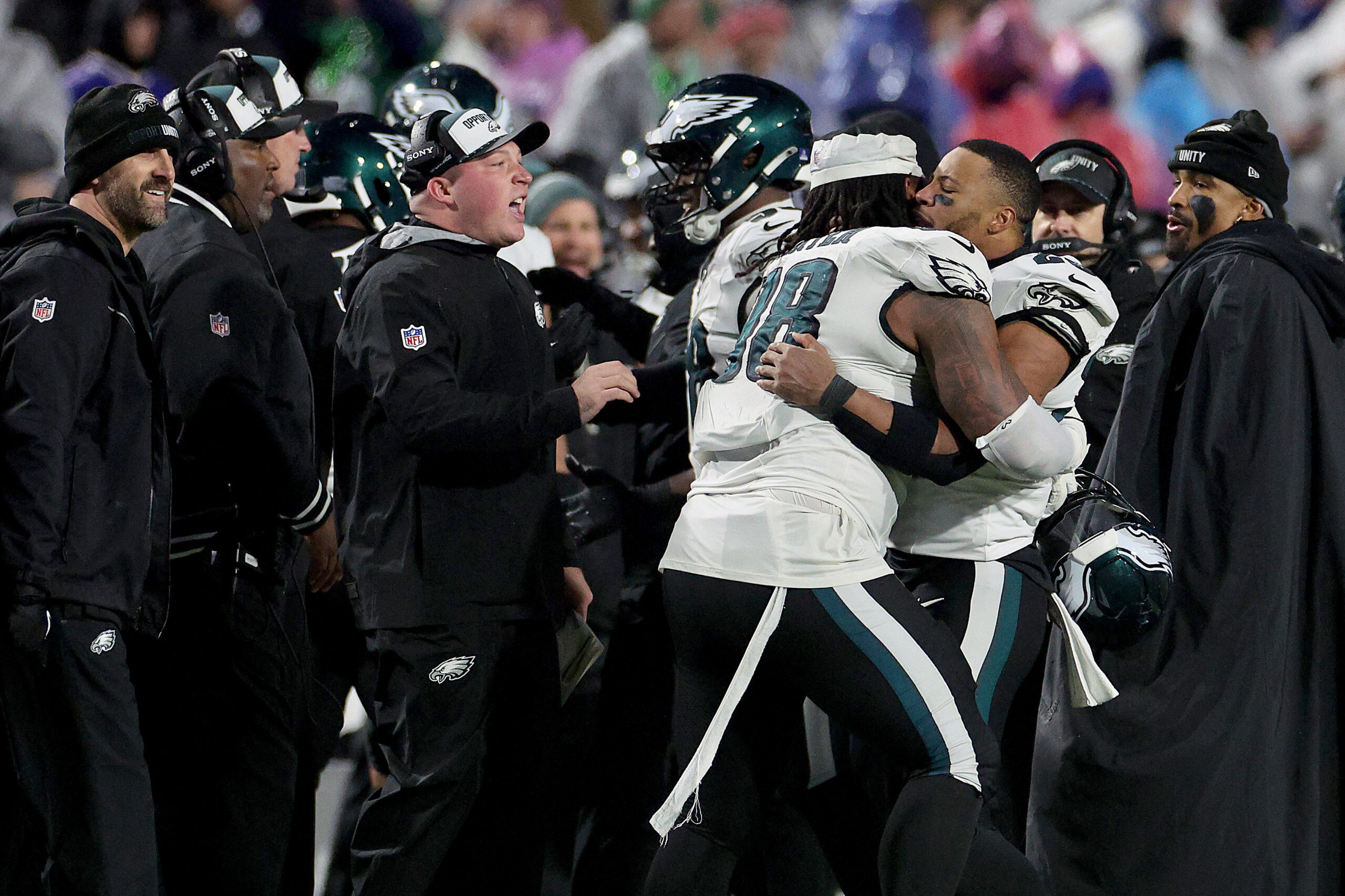
    The win on Sunday was a relief for the Eagles, and Nick Sirianni let off some steam afterward in a back-and-forth with Bills fans. The coach has come under fire for his exchanges with fans before.

    “Football is fun,” Sirianni said on 94 WIP when he was asked about it. “It’s OK to show emotion. It’s fun to show emotion. Like, it’s OK to be excited.”

    — Jim Swan, @phillysport, sports.daily@inquirer.com.

    If someone forwarded you this email, sign up for free here.

    A New Year’s break

    We at Sports Daily wish you a very happy new year. The newsletter will be taking Thursday and Friday off. Sports Daily will return to your inbox on Monday.

    McCain’s next step

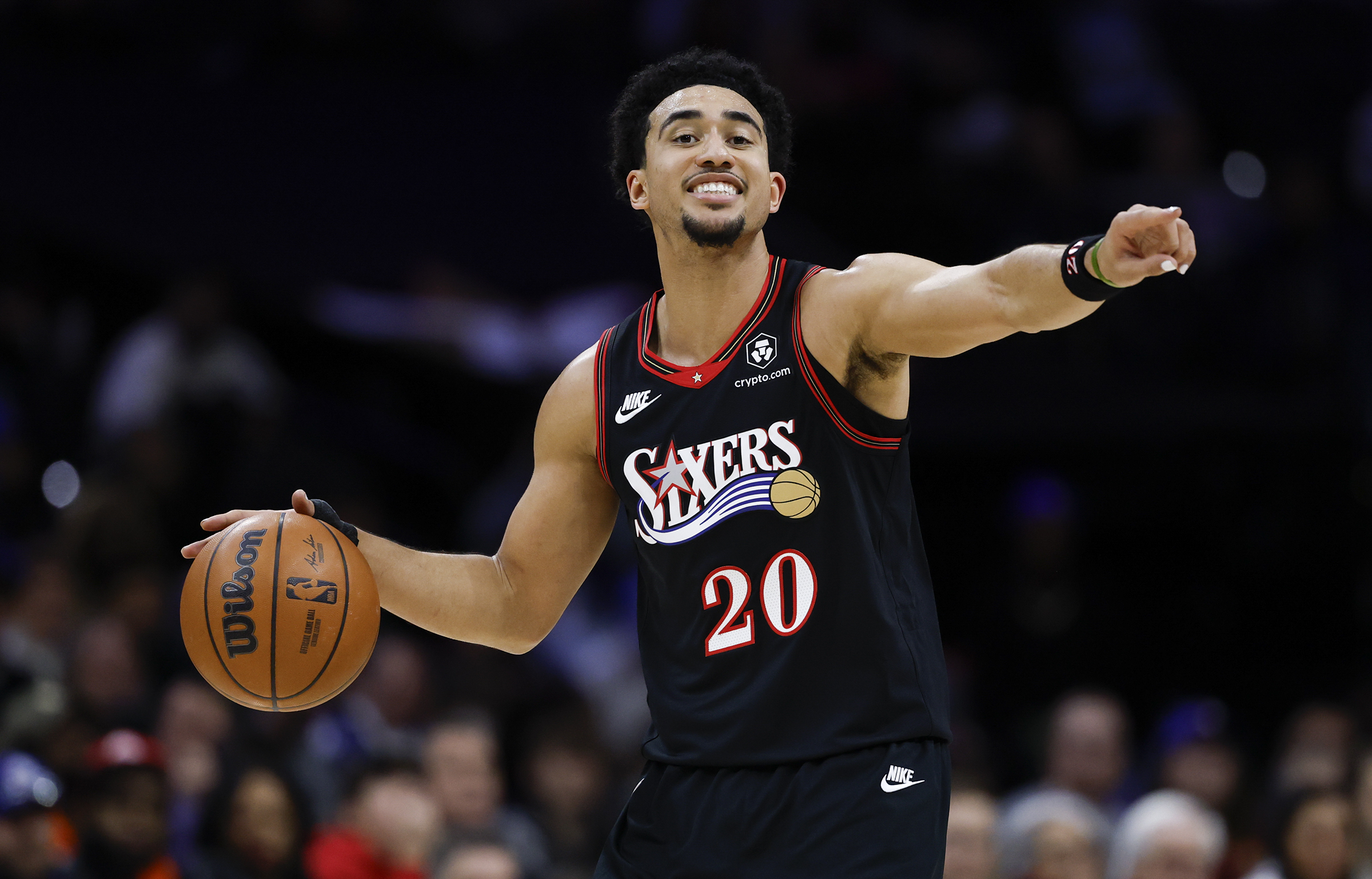
    Sixers guard Jared McCain has overcome the mental aspects of dealing with a knee injury.

    Jared McCain has spent an entire year away from the basketball court, first for a torn meniscus suffered in December 2024 and then for a torn ligament in his right thumb in September. He’s now physically healed, so how is the 76ers’ second-year guard dealing with the mental aspects of those injuries, particularly the left knee?

    “I’m doing great, probably the last step for me,” McCain said. “A lot of it is I like to rebound, and I have to jump as high as I can … when I’m trying to rebound. And you know, the past few games, I’ve been able to do that. I feel comfortable doing that.

    “But mentally, I’m great. I’m just trying to figure it out, still figuring it out, and it’s still a process.”

    Tyrese Maxey and Ja Morant put on a show in Memphis on Tuesday, but it was VJ Edgecombe who shined the brightest in a Sixers overtime win over the Grizzlies. Edgecombe hit the game-winning three-pointer to help the Sixers snap a three-game losing streak.

    Power-play problems

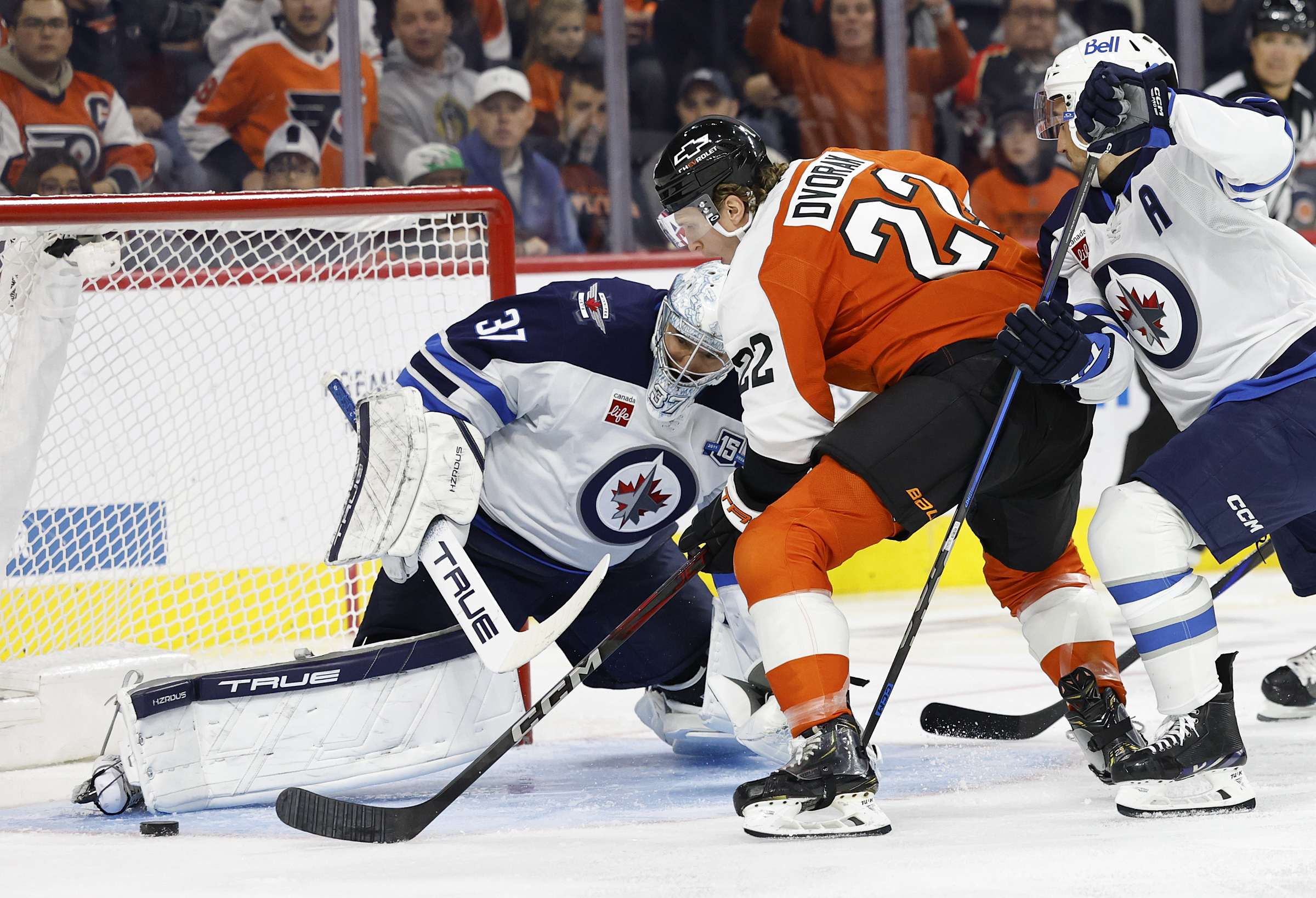
    Flyers center Christian Dvorak does a lot of his work in and around the crease. Rick Tocchet hopes that translates to the power play.

    The Flyers’ struggles on the power play are nothing new, as the team has finished dead last with the man advantage in three of the last four seasons. This season has been better — slightly anyway — as the Flyers rank 25th of 32 teams with a 16.3% success rate.

    But while Rick Tocchet likes some of his team’s puck movement, he believes the Flyers are leaving meat on the bone, particularly due to a lack of action in front of the net. His attempt at a solution? Adding Christian Dvorak to one of the team’s power-play units. Jackie Spiegel has more.

    The Flyers picked up a 6-3 win in Tocchet’s return to his old stomping grounds late Tuesday night. Six different Flyers scored to pick up a third win over their last four games.

    Top talent on display

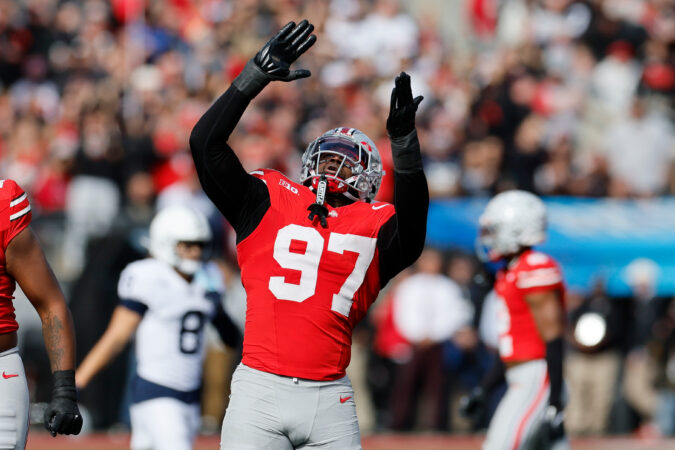
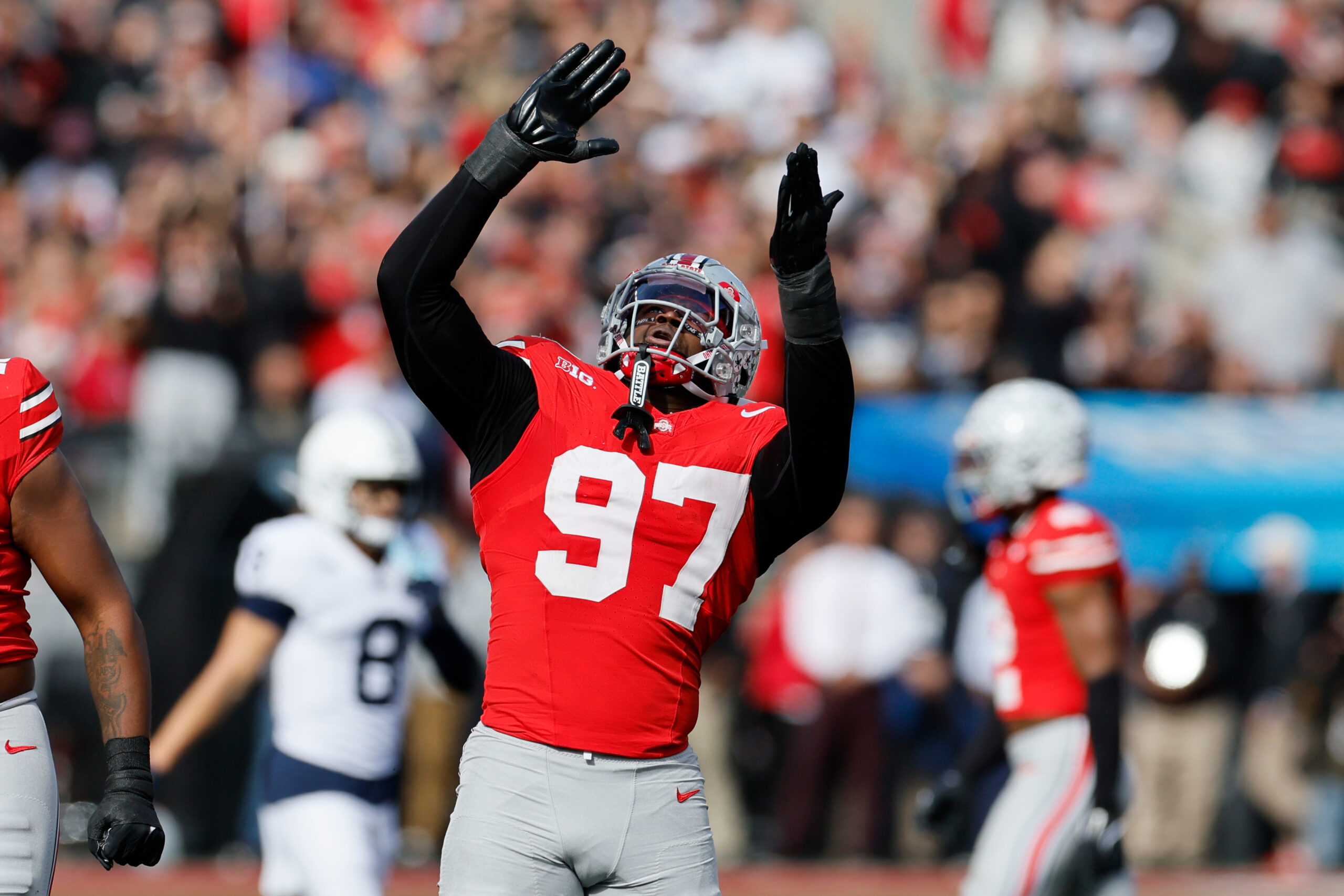
    Ohio State defensive lineman Kenyatta Jackson celebrating a sack against Penn State on Nov. 1. How would he look on the Eagles?

    The College Football Playoff quarterfinals get underway tonight as Ohio State faces Miami in the Cotton Bowl (7:30, ESPN). The eight remaining playoff teams are filled with NFL prospects, and Devin Jackson provides scouting reports on several players who could interest the Eagles. There’s a player from the Eagles’ favorite source of talent, Georgia, in the mix.

    A trade for the Union

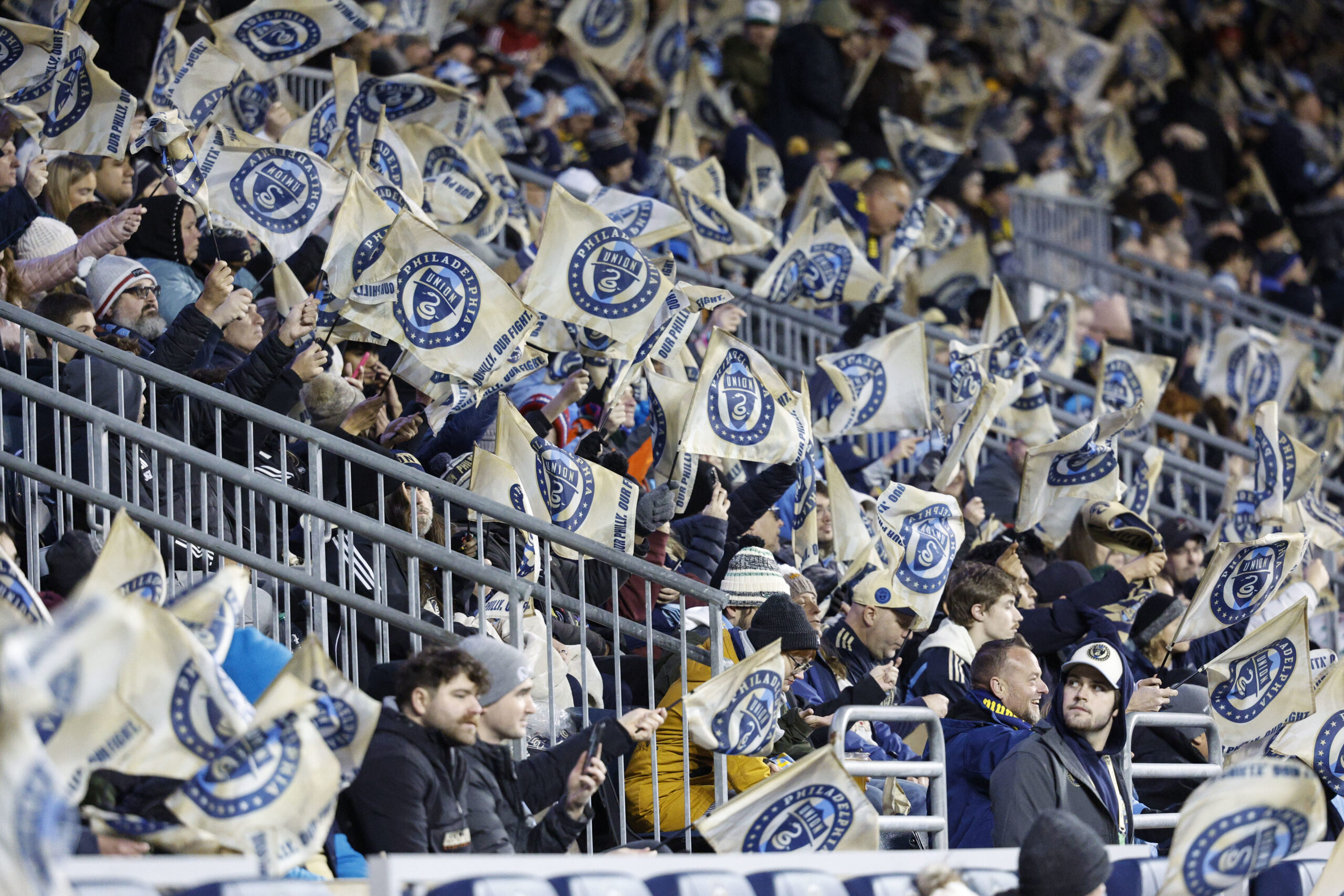
    The Union announced the addition of 19-year-old defender Finn Sundstrom to their roster on Tuesday.

    The Union’s season feels as if it just ended, but the team will start up again Jan. 17 with a trip to Marbella, Spain, in advance of preseason camp in Florida. A newcomer will join the group after the Union acquired 19-year-old defender Finn Sundstrom in a trade with D.C. United.

    Join us before kickoff

    Gameday Central

    Live from Lincoln Financial Field: Beat writers Jeff McLane and Olivia Reiner will preview the Eagles game against the Washington Commanders at 2:55 p.m. Sunday. Tune in to Gameday Central.

    Sports snapshot

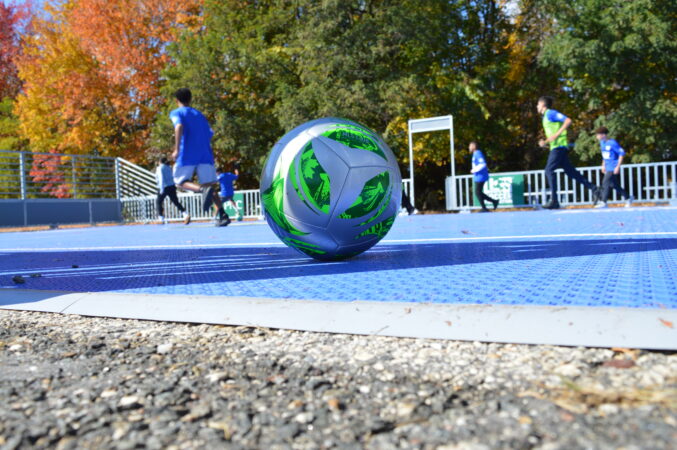
    The U.S. Soccer Foundation has committed $2 million to install soccer mini-fields like this one at Swenson Arts and Technology High School in Northeast Philly ahead of the 2026 FIFA World Cup.

    🧠 Trivia time answer

    Who was the MVP of Super Bowl XV when the Oakland Raiders beat the Eagles in 1981?

    Answer: A: Jim Plunkett. Steve O. was first with the correct answer.

    What you’re saying about the Eagles

    We asked: Should the Eagles play their starters on Sunday or rest them for the playoffs? Among your responses:

    Go for it. Keep the momentum. Get the win and keep moving forward. Only rest those who are playing with injuries. Play like the “Bringing the Heat” Eagles. — Everett S.

    Those who are healthy should play at least a half. Those who aren’t should take the week off. — Bill M.

    The Eagles should definitely have the starters playing on Sunday. The #2 seed has too many advantages this year. Also, this offense needs to continue to try and work out the inefficiency that is dragging it down. However, I would be watching the out of town scoreboard and if the Bears get up big on the Lions then I would start sitting stars for next week. — John P.

    Coordinator Vic Fangio’s Eagles defense looks primed for another playoff run.

    Shame the Bears game isn’t at 1 p.m. Just follow the money! Guaranteed, if there’s any chance of playing a divisional home game, probably worth millions and millions of dollars against maybe someone will get hurt what would you do? At 1600 hours it’ll be ALL HANDS ON DECK! — Ronald R.

    Yes and no. Play the healthy starters and rest those with nagging injuries. I believe it’s important to play and build confidence and momentum for the playoffs but it’s also good to give nagging injuries some time to heal. — Bob A.

    I don’t see any benefit to playing the starters any longer than a warmup. Doubtful that the Bears will lose to a defeated Lions team. We are who we are offensively and one more game won’t change that fact. — Bill B.

    I would like to see some starters get some rest, whether by sitting out the entire game or just playing for some of the game. Injuries are a major factor in late-season and postseason play — need to keep the Birds healthy first and foremost! — V.C.B.

    We compiled today’s newsletter using reporting from Jeff Neiburg, Olivia Reiner, Rob Tornoe, Keith Pompey, Jackie Spiegel, Devin Jackson, and Kerith Gabriel.

    By submitting your written, visual, and/or audio contributions, you agree to The Inquirer’s Terms of Use, including the grant of rights in Section 10.

    Thanks for reading Sports Daily today and all year long. I’ll see you in Monday’s newsletter, when we’ll know the Eagles’ first step in the playoffs. — Jim

  • Flyers pick up a 6-3 win over the Canucks in Rick Tocchet’s return to Vancouver

    Flyers pick up a 6-3 win over the Canucks in Rick Tocchet’s return to Vancouver

    VANCOUVER, British Columbia ― As the Flyers skated around the rink for warmups, a fan held up a sign that read “Toccquit,” in reference to Flyers coach Rick Tocchet opting to leave the Vancouver Canucks and finding a home in Philly.

    Whether it sparked the Orange and Black or not, the Flyers did what good teams do — defeat bad ones. And despite an iffy start, they skated away with a 6-3 win against the Canucks.

    It is the Flyers’ third win in four games, a stretch starting with a 5-2 win against the same Canucks on Dec. 22.

    Of course, in the penultimate game of 2025, the Flyers would trail 1-0. Since Jan. 1, Tuesday’s game was the 46th time in 82 games they’ve trailed 1-0, tied for the second-most in the NHL with the New York Rangers and Calgary Flames. But it is also their 19th win from such situations, which ties the Dallas Stars for the most in the calendar year.

    This season, they’ve trailed 26 times in 38 games, and have a 13-8-5 record.

    David Kämpf gave the Canucks a 1-0 lead 3 minutes, 45 seconds into the game on their eighth shot. The Flyers hadn’t registered one, and they got pinned after a breakout pass off a faceoff hit the back of Denver Barkey’s skate as Vancouver controlled the boards. Drew O’Connor created a separation between himself and Cam York and found Kämpf in front.

    But the Canucks played Monday night in Seattle and, despite beating the Kraken in a shootout, entered the night 30th in the NHL in points percentage. So the Flyers started to turn it up — with their play, their speed, and on the scoreboard.

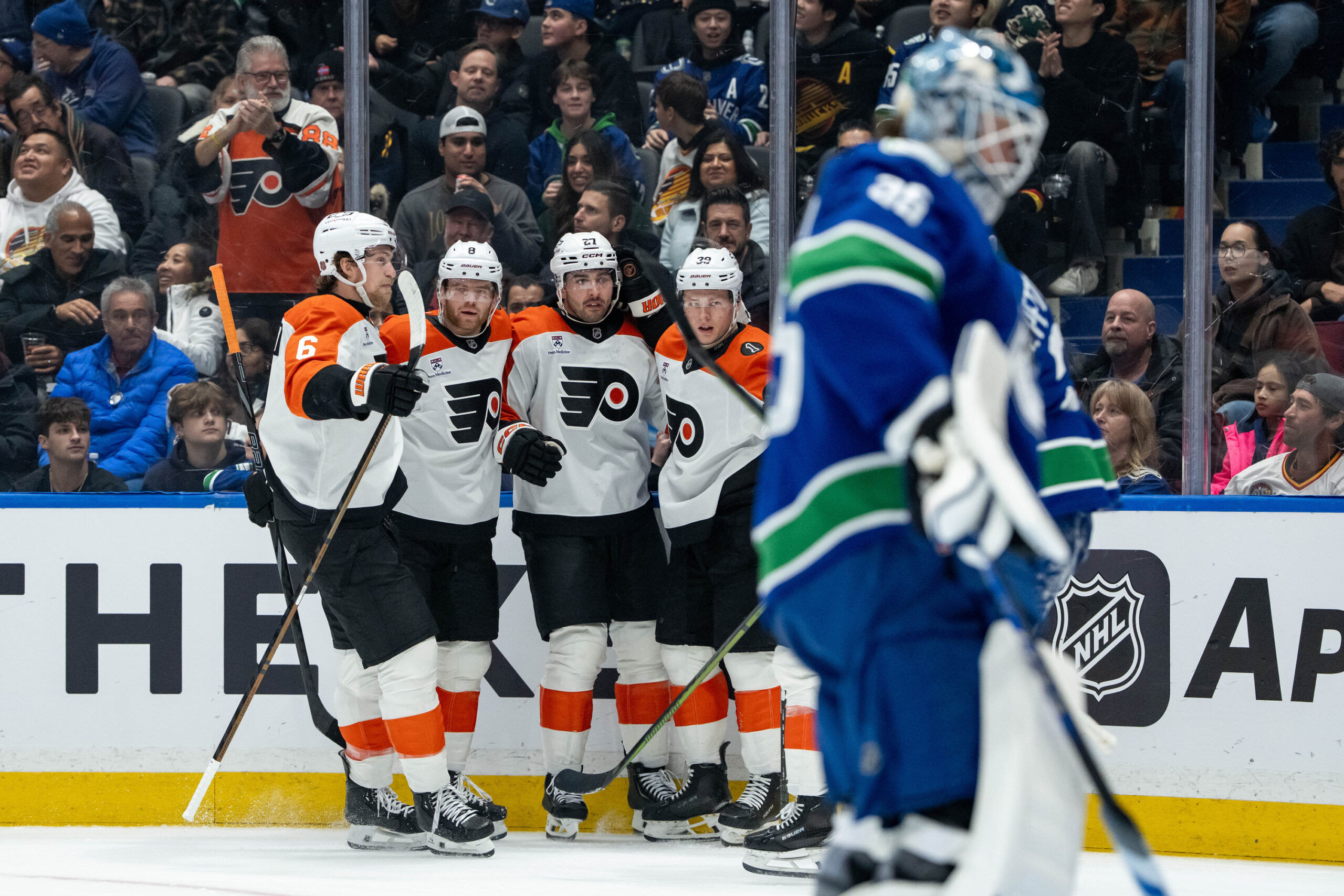
    Noah Cates (27) celebrates his goal against the Vancouver Canucks with Flyers teammates Travis Sanheim, Cam York, and Matvei Michkov in the first period.

    First, Noah Cates tied it up 12:02 into the game. Travis Konecny threw a big-time hit — one of 26 by the Flyers in the game — on Vancouver’s Conor Garland as he tried to carry the puck into the Flyers’ zone. It didn’t lead to the goal, but it forced the Canucks to regroup as the Flyers clogged the neutral zone.

    Travis Sanheim got the puck after it bounced down — Matvei Michkov forced the air pass — and gave it to Bobby Brink. He found Michkov on the right wing with the Russian actually knocking the puck down with one hand on his stick. He settled it, and, while drifting backward, fed the puck back to Cates, who wristed it short-side.

    Cates now has 10 goals on the season. Across the past seven games, since Cates, Brink, and Michkov became a line, the Minnesotan has three goals and six points.

    The trio wasn’t done, as Michkov fed Brink to make it 4-2 in the third period with Cates springing the duo from the Flyers’ end. Michkov settled the bouncing puck as Zeev Buium poked it back to him and then avoided the Canucks defenseman’s poke check.

    Michkov carried the puck wide on the left wing as Brink went right to the net — something Tocchet wanted to see more of from his club — and Brink opened up to direct it into the net.

    The assist was the 50th of Michkov’s career, and he now has 22 points in 38 games this season. Brink has 10 goals, two off his career-high.

    In between the third line’s scoring spree, Carl Grundström continued his hot streak, and Konecny scored his 12th of the season.

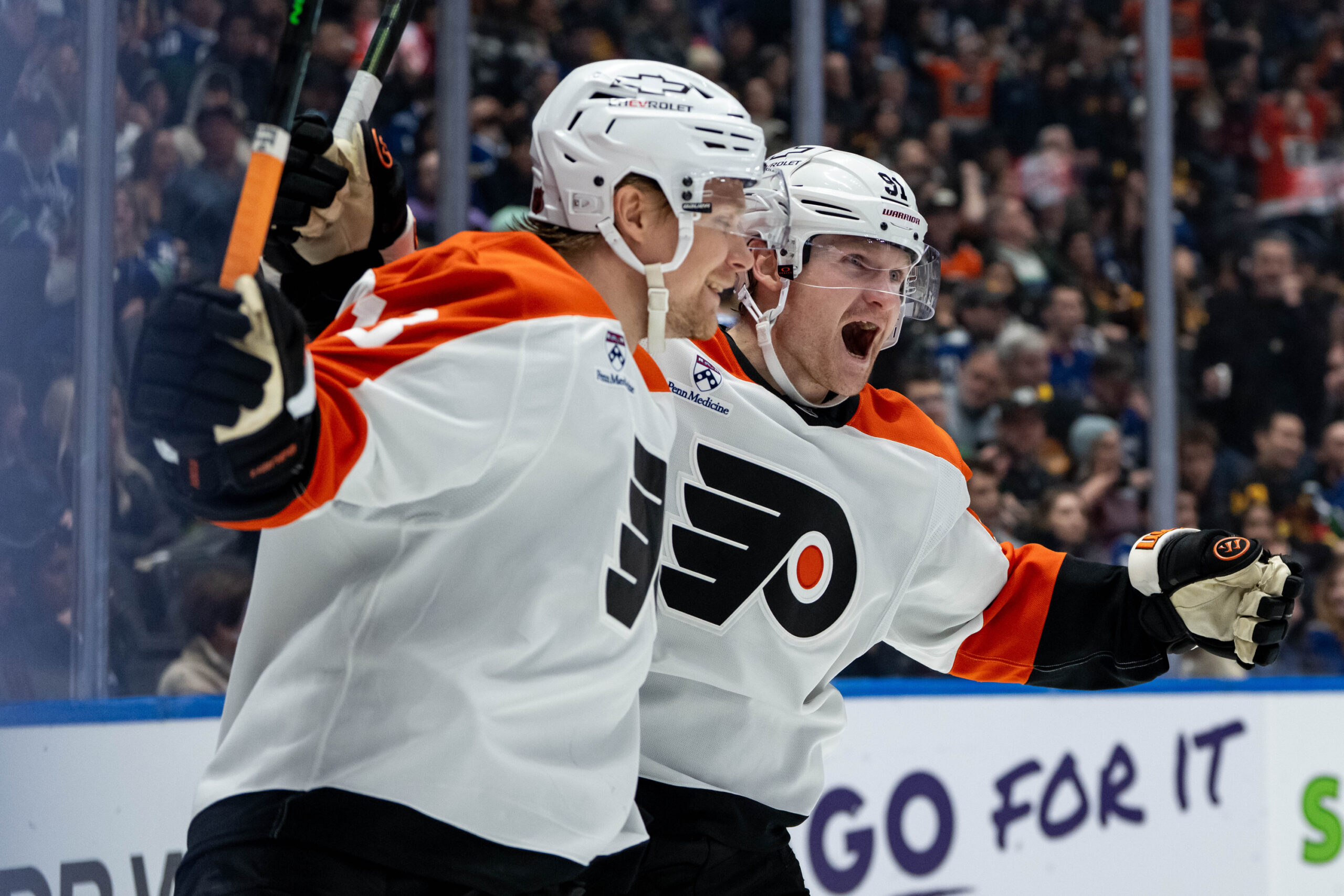
    Grundström made it 2-1 Flyers early in the second period. Sanheim moved the puck up to Nikita Grebenkin, who couldn’t control it inside the Canucks’ blue line but was able to push it down the right boards. Grundström skated down, corralled the puck, and scored into the top left corner from the bottom of the right circle. The Swede now has seven goals in 12 games with Philly and extended his goal-scoring streak to four games.

    Konecny made it 3-1 in the second with a nifty move atop the crease. Jamie Drysdale, who was flying all night, sent a shot-pass down to a wide-open Konecny in front. He tried to score on the backhand, flicking it on Canucks goalie Thatcher Demko, but was stopped.

    But there’s no quit in Konecny, and after turning to face the net, he realized not only did he have the puck, but he was still alone. While falling, he flicked it past Demko on the forehand to give him his 34th point in 38 games; he later added an assist on Christian Dvorak’s empty-netter to extend the Flyers’ lead to 6-3.

    Flyers’ Carl Grundstrom (right) celebrates his goal during the second period. He now has four straight games with a goal.

    Breakaways

    O’Connor scored for Vancouver in the third period to make it 3-2, and Tom Willander scored with under two minutes in regulation to make it 5-3. … Owen Tippett notched a short-handed empty-net goal to make it 5-2. It was his 12th goal of the season and third in the past five games. … Defenseman Noah Juulsen was a healthy scratch in his return to Vancouver. … Dan Vladař was stellar once again in net, stopping 32 shots, including Marco Rossi from right in front in the middle frame and Evander Kane on a breakaway in the third. … Nick Seeler dropped the gloves with Kane early in the first period after the Canucks forward hit him high along the end boards. They had to be separated again in the third period during a TV timeout. … Sean Couturier won 13 of the 17 face-offs he took, tying his season high winning percentage of 76.5, set Dec. 18 against the Buffalo Sabres.

    Up next

    The Flyers get right back to it with a New Year’s Eve matchup in the Canadian Rockies against the Flames (9:30 p.m., NBCSP)