After Penn’s disappointing 6-4 finish in football, which resulted in the departure of longtime coach Ray Priore, the program saw several upperclassmen enter the transfer portal as they ran out of Ivy League eligibility.
Some of those players moved on to bigger programs. As of now, seven former Quakers are committed to other schools.
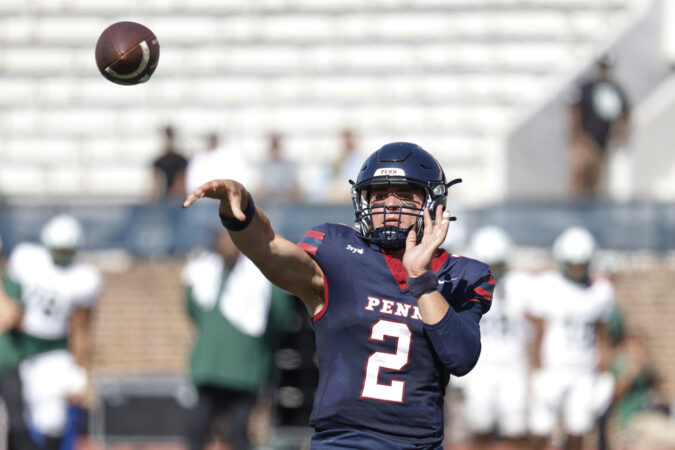
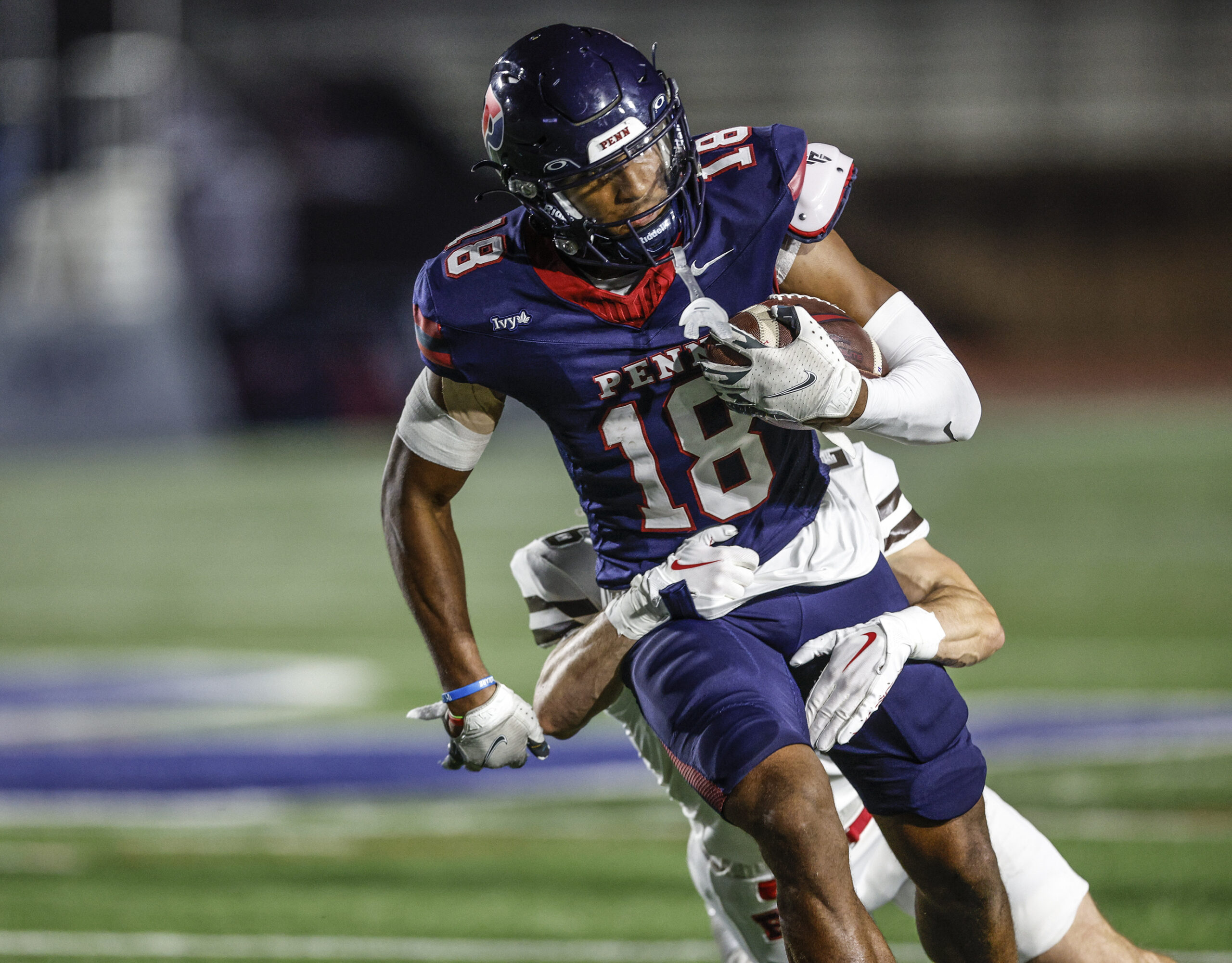
Headlining those transfers is a trio on offense: quarterback Liam O’Brien and wide receivers Jared Richardson and Bisi Owens.
O’Brien is heading to Cincinnati, Richardson looks to make an impact at Duke, and Owens will join Purdue.
“Having an opportunity at Penn to showcase what I could do and that translating into an opportunity like this,” O’Brien said, “I mean, the way college football is nowadays — it’s pretty much like the minor leagues to the pros. It’s almost like a childhood dream.”
The trio grew close in the summer after their freshman season at Penn but had to wait much longer before taking the field together.
Richardson and Owens excelled during their sophomore year, while O’Brien battled injuries and served as a backup to Aidan Sayin. O’Brien didn’t get his opportunity on the field until his junior year, when Sayin suffered a season-ending elbow injury against Yale in 2024.
“Penn is not a football-first school,” O’Brien said. “But you can make it one. The one thing Penn does is it provides you [with] opportunities to succeed in whatever you do, and both on and off the field. All of us have really taken advantage of that for good.”
In 2024, Liam O’Brien broke Penn’s record for passing touchdowns and total touchdowns in a game.
In his second start, O’Brien broke Penn’s record for passing touchdowns (six) and total touchdowns in a game (seven).
After a full offseason, O’Brien, Richardson, and Owens powered the Quakers offense in 2025, finishing third in the Ivy League in passing yards per game and second in offensive efficiency.
Richardson and Owens combined for the most yards (1,729) and touchdowns (17) among Ivy League wide receiver duos. Richardson ranked 13th in receiving yards (1,033), first in receptions per game (eight), and fourth in total receiving touchdowns (12) across all of the Football Championship Subdivision.
“We came in together,” Richardson said. “We worked our tails off. All of us being successful, it’s nothing short of special. It’s a blessing for each and all of us.”
New opportunity
O’Brien is already on Cincinnati’s campus, preparing for spring ball. He’ll be competing for the starting job as the Bearcats also brought in quarterback JC Frenchfrom Georgia Southern.
“The quarterback room is seeing a big change-up,” O’Brien said. “They lost their starter last year, lost their backup from last year. So they brought me in and brought in the quarterback from Georgia Southern. Right now, it’s an open job, and may the best man win.”
For Richardson, a quick exploration of Duke’s campus made him eager to cancel his other planned visits. He hopes to carve out a role for himself on a star-studded team that won an ACC championship this past season.
He also still has dreams of playing in the NFL.
Next season, Jared Richardson will play for Duke, which won the ACC Championship in 2025.
“It’s not going to be easy,” Richardson said. “I’m embracing that. I don’t want it to be easy. I want to leave a legacy. That’s my goal behind playing football. I want to provide my family with a life that they never got to have. So that’s what drives me. I’m not afraid of working hard, sweating a little bit. I just embrace the grind.”
For Owens, the chance to lead a young Purdue receiving corps was too good an opportunity to pass up. Plus, he wanted to make the leap to the Big 10.
“Getting to play in front of at least 60,000 people every week,” Owens said, “it’s a lot different than playing at Franklin Field, which gets 7,000 on a good day. It’s been a complete whirlwind the past couple of weeks, but all trending in the right direction, and definitely more excited than worried or nervous, because this is another challenge for me to take on.”
Goodbye, Penn
The three will be leaving Penn with Ivy League degrees, but according to them, the most valuable part of their experience in West Philadelphia was the relationships they formed.
“These Penn brothers are ones I will have for a lifetime,” Owens said. “I’m never going to forget that. So at the end of the day, Penn will always be my home.”
O’Brien and Richardson echoed that statement and emphasized how special their bond is.
“Building a relationship with these guys, it was awesome these past four years,” Richardson said. “It was a pleasure playing with Bisi and Liam, and these guys are my best friends. So I can’t wait to see what they do. I’ll be in their corner rooting for them.”
“It’s going to be fun to keep in touch with everyone after and throughout this year,” O’Brien added. “After this year, and after the fall season, and just compare experiences. See what it was like. See who does what at the next level. Because I think some of the guys are going to do big things.”
It’s finally happening, Eagles fans. It took eight years, but ESPN’s 30 for 30 documentary series is set to relive one of the most memorable moments in Eagles history: the Philly Special.
ESPN released the official trailer for the documentary, which is appropriately set to Boyz II Men’s “Motownphilly.” The film, titled The Philly Special, was produced by NFL Films and directed by Angela Zender and Shannon Furman. It will debut on Feb. 6 at 9 p.m. on ESPN and the ESPN app.
“Everybody loves the Rocky movies, but they were fiction,” Zender said in a release. “The amazing thing about The Philly Special is that it’s a real-life Rocky story. A group of five underdogs went up against the greatest dynasty in NFL history and pulled off an upset worthy of Hollywood. That underdog mentality is something that will resonate with people all over the country.”
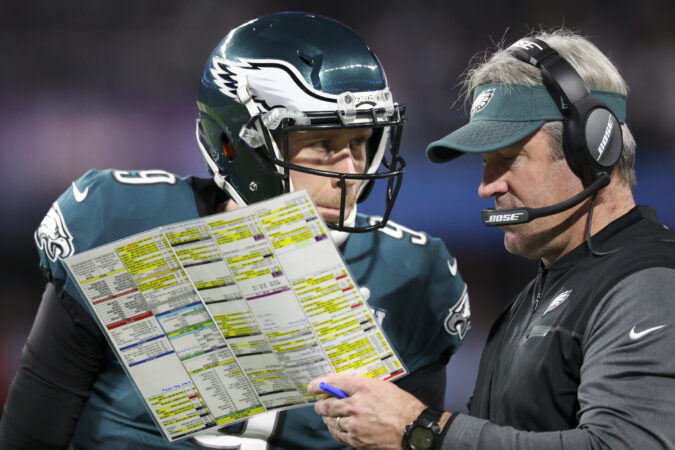
The film features several familiar faces to Philly fans, including former head coach Doug Pederson and the four Eagles players who touched the ball on that play in Super Bowl LII: Jason Kelce, Corey Clement, Trey Burton, and Nick Foles.
But there are many others: owner Jeffrey Lurie, former safety Malcolm Jenkins, former coach Chip Kelly, and former offensive coordinator Frank Reich. Several local and national media members also appear, including Angelo Cataldi, Ray Didinger, Sal Paolantonio, and Kyle Brandt.
With all that Philly flavor, it’s no surprise one of the directors is a Birds supporter.
“I grew up an Eagles fan, so The Philly Special has been a dream project,” Furman said in a release. “It was surreal to stand in front of the statue of Doug Pederson and Nick Foles at the Linc with the five men who made one of the most iconic plays in NFL history happen. There’s no doubt fans will enjoy reliving the Eagles’ first Super Bowl as much as I did.”
While it’s been the better part of a decade since the play helped lead the 2017 Eagles past Tom Brady and the New England Patriots dynasty — capping an improbable run for Foles, who took over as the starter less than two months earlier — it’s not hard to find reminders around the Philadelphia area, from the statue outside Lincoln Financial Field to a multistory mural to the name of a holiday band featuring Kelce and a pair of current Eagles players.
“It’s been everywhere and on everything, transcending football to become part of Philadelphia’s cultural identity,” ESPN said in its release describing the film. “It’s not just a play; it’s a rallying cry for a city used to being overlooked. While Philadelphia might be the birthplace of America, the sixth-most populous city in the country lives and dies with an underdog mentality — one epitomized by the Founding Fathers, Rocky Balboa … and the Philly Special.”
Two days before Super Bowl LX, there will likely be a few more reminders, as fans across the area tune in to relive the play — and learn the story behind it — one more time.
Philadelphia is ready to get its first taste of professional women’s basketball with Unrivaled hosting a doubleheader Friday at Xfinity Mobile Arena. In front of a sold-out crowd, the three-on-three tournament is set to have plenty of spectators for its first event outside the Miami area — making this the perfect time for Jordan Brand to debut its Heir Series 2 sneaker.
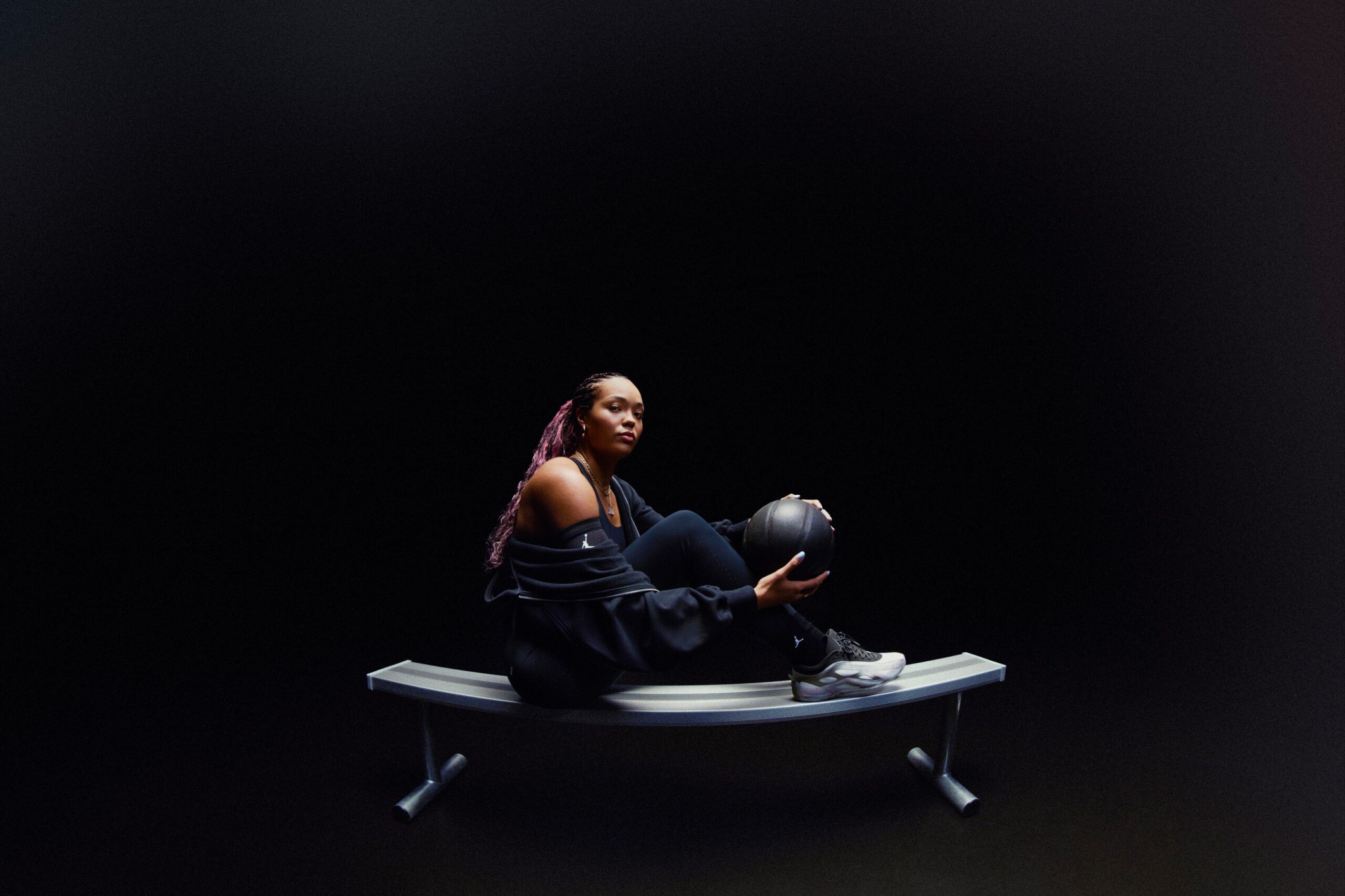
On Thursday, Jordan Brand unveiled the women’s basketball shoe with Minnesota Lynx forward Napheesa Collier as the face. The sneaker will make its on-court debut during Friday’s Unrivaled doubleheader in Philly with Jordan Brand athletes Dana Evans and Dominique Malonga.
The low silhouette is similar to the Heir Series 1, which is the lowest shoe in Jordan Brand’s basketball lineup. The sneaker was first introduced in 2024 and put emphasis on the running and cutting that’s central to women’s basketball.
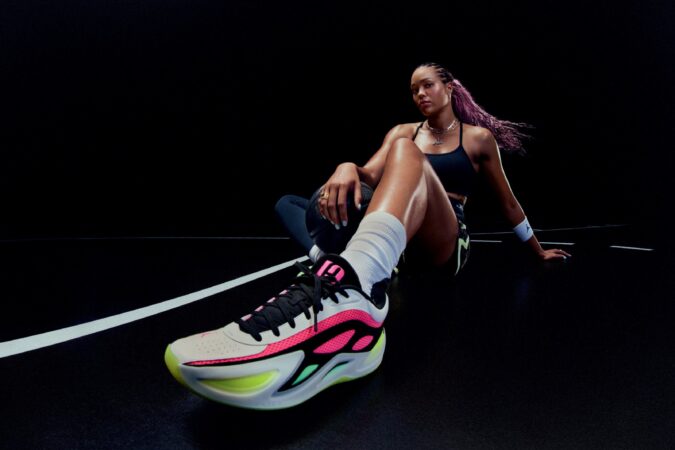
Five-time WNBA All-Star Napheesa Collier wearing Jordan Brand’s Heir Series 2 sneaker.
While the Heir Series 2 continues to share the same focus as its predecessor, it adds key improvements to enable more quickness in every step.
“With my footwork being an important part of my game, the Heir Series 2 is a performance shoe that provides the flexibility and stability for me to be a force on both ends of the floor,” said five-time WNBA All-Star Collier in a press release. “Everyone who follows my game knows I was a fan of the Heir Series, but the innovation in the Heir Series 2 has exceeded my expectations.”
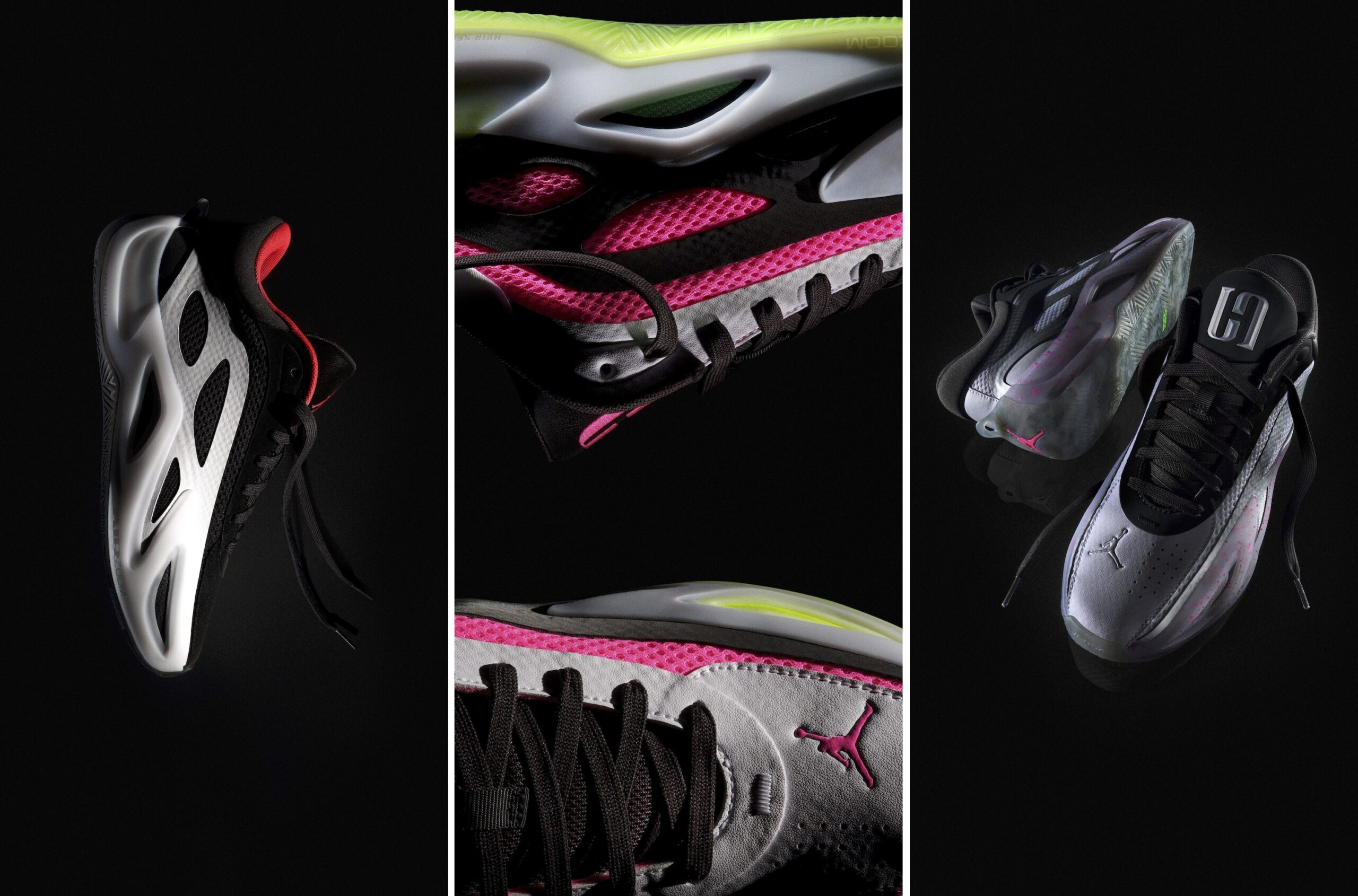
Some of its new features include a forefoot Air Zoom unit to provide standout responsiveness for speed, a thicker drop-in Cushlon 3.0 midsole that is wrapped in an additional layer of foam cushioning above the outsole for more comfort, a translucent TPU cage, and a rubber herringbone traction pattern for greater quickness and control.
The sneaker also includes a removable hair tie attached to the heel and features a series of bold colorways — including a pink, yellow, and green colorway, a white, black, and red colorway, and a gray and black colorway that includes speckled pink paint along the midsole.
The Jordan Heir Series 2 comes in three different colorways.
“Women’s basketball has a very important place in the sports landscape, and Jordan Brand is committed to helping the next generation of hoopers reach their greatness. We titled this series of footwear ‘Heir’ knowing that these amazing athletes are next up — here to claim the basketball throne as their own,” said Leo Chang, the senior creative director of Jordan Brand basketball and sport, in a press release.
“The Heir Series 2 is the next iteration of the basketball sneaker designed for her, by her. The new forefoot Air Zoom unit enables even more support and responsiveness, tailored to the beautiful playing style of the women’s game.”
The sneaker will be available globally on Feb. 20 at jordan.com and select retail locations.
FRISCO, Texas — Four days after a heartbreaking College Football Playoff national championship game loss, Levittown native David Blay was back in football pads.
Last week, Blay, whose five-year career spanned three schools and two levels of college football, practiced against some of the other draft-eligible prospects at the East-West Shrine Bowl.
His college career began locally at Division II West Chester, where he spent two years, then spanned two years at Louisiana Tech before he finished this past season with national runner-up Miami. Blay, a defensive lineman, played 22 snaps against Indiana in the College Football Playoff title game and finished with one tackle in the 27-21 loss.
Blay, a graduate of Harry S. Truman High School, gained a unique perspective in all three stops along the way, which included two years (his first at West Chester and first at Louisiana Tech) when he didn’t see the field much.
“For West Chester, time management, the process of doing things at certain times [at] the correct time, and doing the correct things,” Blay said about what he learned.
“And then for [Louisiana] Tech, they taught me the brotherhood aspect, because when I transferred into Louisiana Tech, about six or seven defensive linemen alone transferred in there at the same time. So it was like everybody had the same vision, the same goal. So it was easy to play against somebody I can call my brother.
“[With Miami], having camaraderie with the team wasn’t that hard. They’re outgoing guys, so bringing me in wasn’t that hard. Me, I’m more of — I guess you could say a quiet guy.”
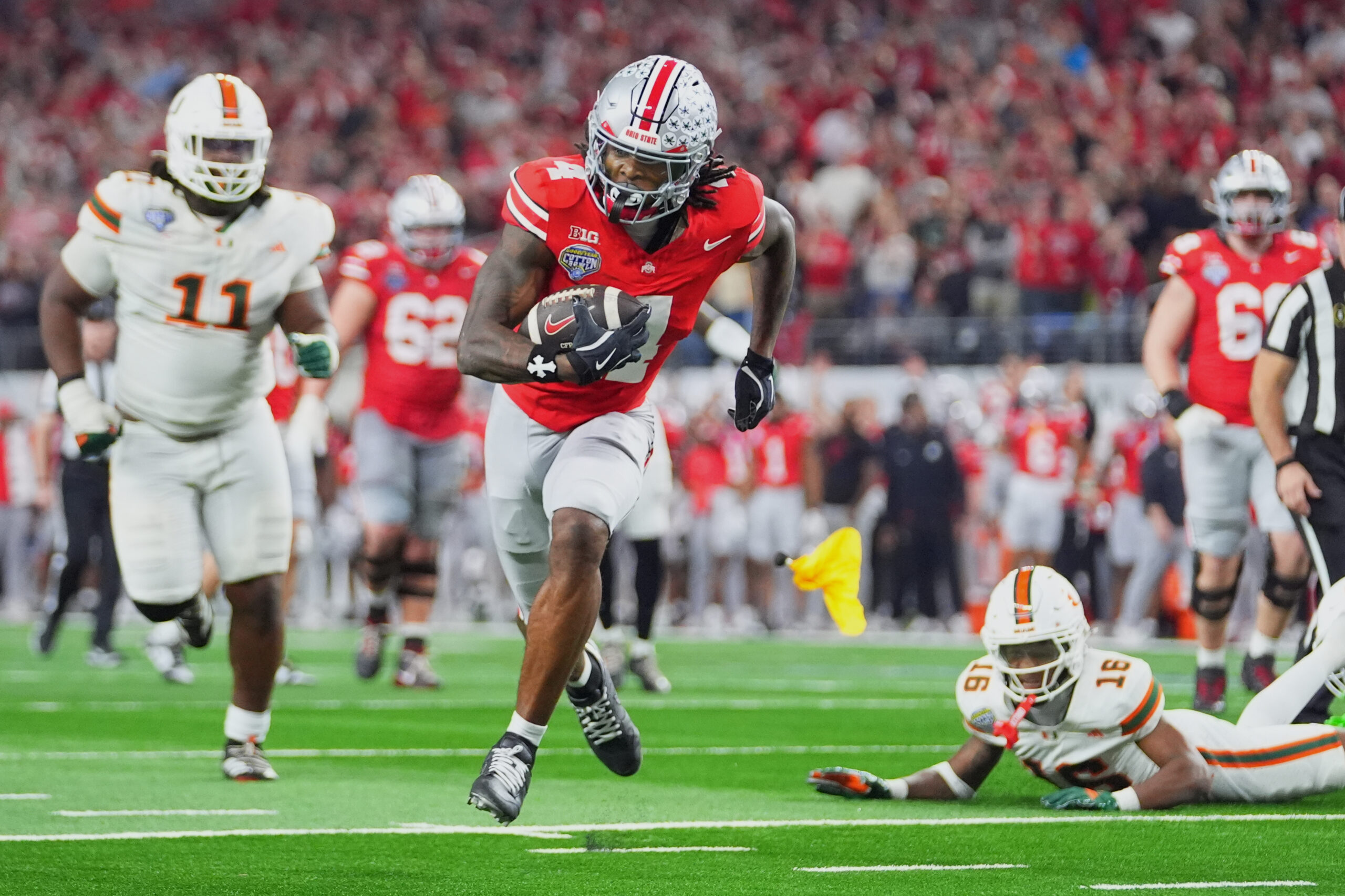
Miami and David Blay (11, at rear left) got past Jeremiah Smith (4) and Ohio State in the CFP quarterfinals on their way to an appearance in the title game.
At Miami, snaps weren’t easy to come by for Blay, with potential first-round NFL draft picks Rueben Bain and Akheem Mesidor manning the edge rusher positions and Ahmad Moten and Justin Scott starting in the interior.
Blay was on the field with Miami’s defense on 412 plays, according to Pro Football Focus. He played 443 defensive snaps in one fewer game in 2024 for Louisiana Tech.
But Blay, who amassed 95 tackles (23½ for losses) and 11½ sacks in four seasons at Louisiana Tech and West Chester, carved out a consistent rotational role on Miami’s D-line during a playoff run that Blay “will remember for the rest of my life.”
The 6-foot-2 and 302-pound lineman credits his discipline for refining his skills, which helped get him on the field at the Power Four level.
“In terms of getting on the field and playing, I just really had to be real technically sound,” said Blay, who had 28 tackles (2½ for losses) in 13 games with Miami. “Like I feel as if going to Miami, the big thing there was [to be] technical, technical, technical. That’s the difference between the levels in my head.”
Blay was joined by Indiana safety Louis Moore and Miami linebacker Wesley Bissainthe as players who appeared in the national championship game and also practiced at least one day at the Shrine Bowl. Indiana tight end Riley Nowakowski also traveled to Frisco to interview with NFL teams but did not practice.
Throughout his practice sessions at the Shrine Bowl, which wrapped up with the game on Tuesday night — the West won, 21-17, on a touchdown with 6 seconds left — Blay showed his strength capable of pushing the pocket as a pass rusher and standing his ground as a run defender against double-team blocks.
“I give those guys a lot of credit,” Shrine Bowl director Eric Galko said. “And Wesley [Bissainthe] and David [Blay] are coming in like everyone else, they’re banged up, but they just played 16 games, right? Not 12, like other guys have.
“And David’s done great, in the practice he had and in the interviews he has had, too. … I think David showed a lot of character — especially with the way the season ended, not on a victory, but on a loss — and he still said, ‘You know what? Now I’m on [to] the NFL.’ And to be focused here, I give the guy a lot of credit.”
Added Blay: “Just the aspect that we’re getting better every day [motivates me]. You’re never at your best; in a sense you can always get better. And I also say to my mom, I’m trying to get her to understand the aspects of the game and how it could change your life.”
Blay played his high school and the beginning of his college career about 30 miles from Lincoln Financial Field. An opportunity to play for his hometown Eagles would be “a dream scenario.”
“Being around the crib, I could go work out, go practice, go do my job, and then essentially come home to the people I’ve seen my whole entire life,” Blay said.
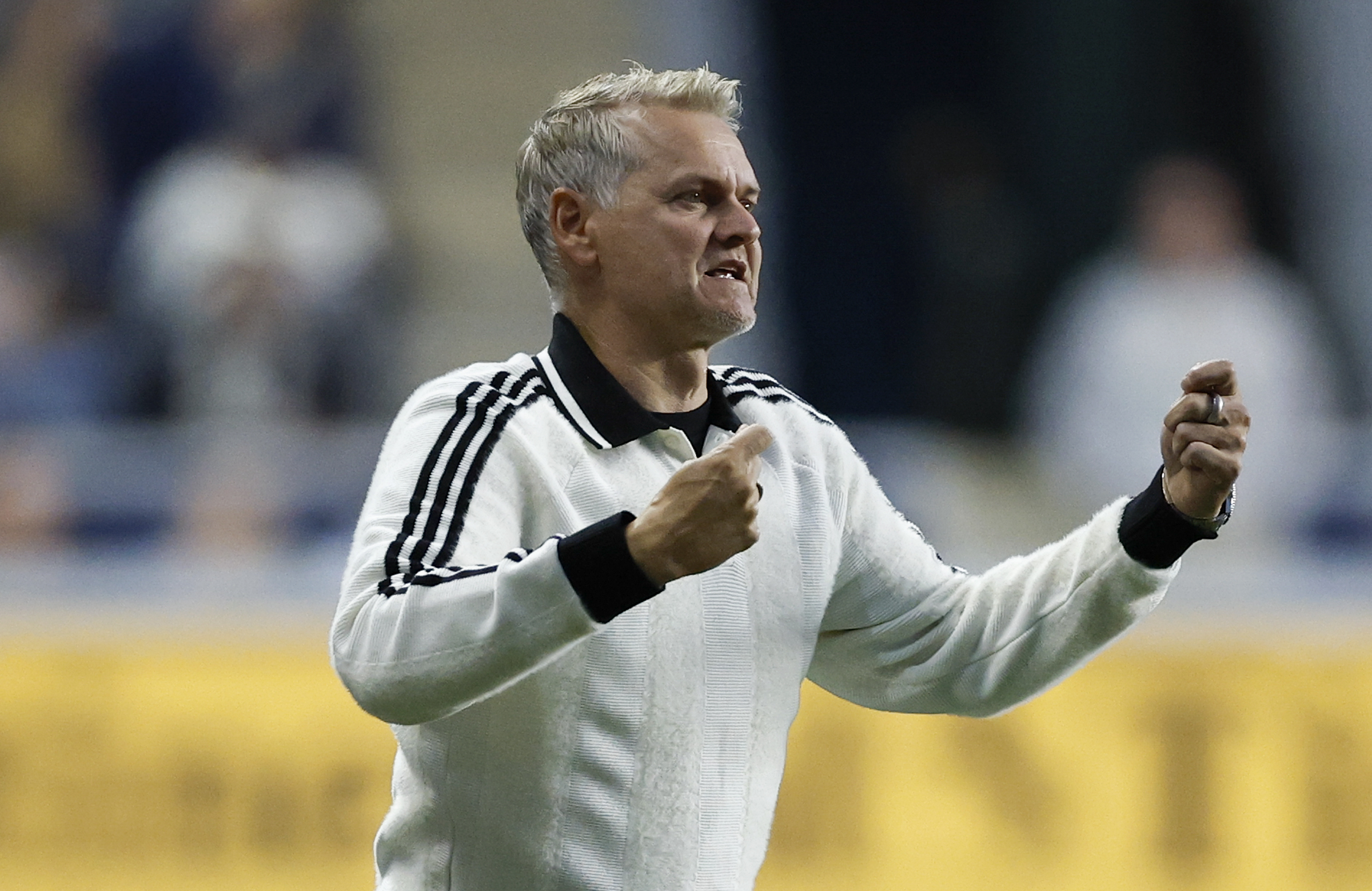
Bradley Carnell can be pretty reserved in public. It’s not that he doesn’t like being on camera, but you aren’t always going to get too much from him in a news conference.
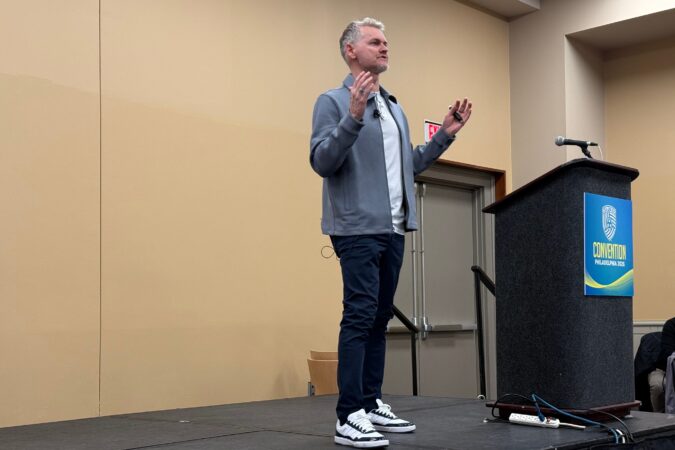
At the United Soccer Coaches convention a few weeks ago, the Union’s manager got a different opportunity. It was his first time at the longstanding event, and he spent an hour on stage talking about his coaching methods.
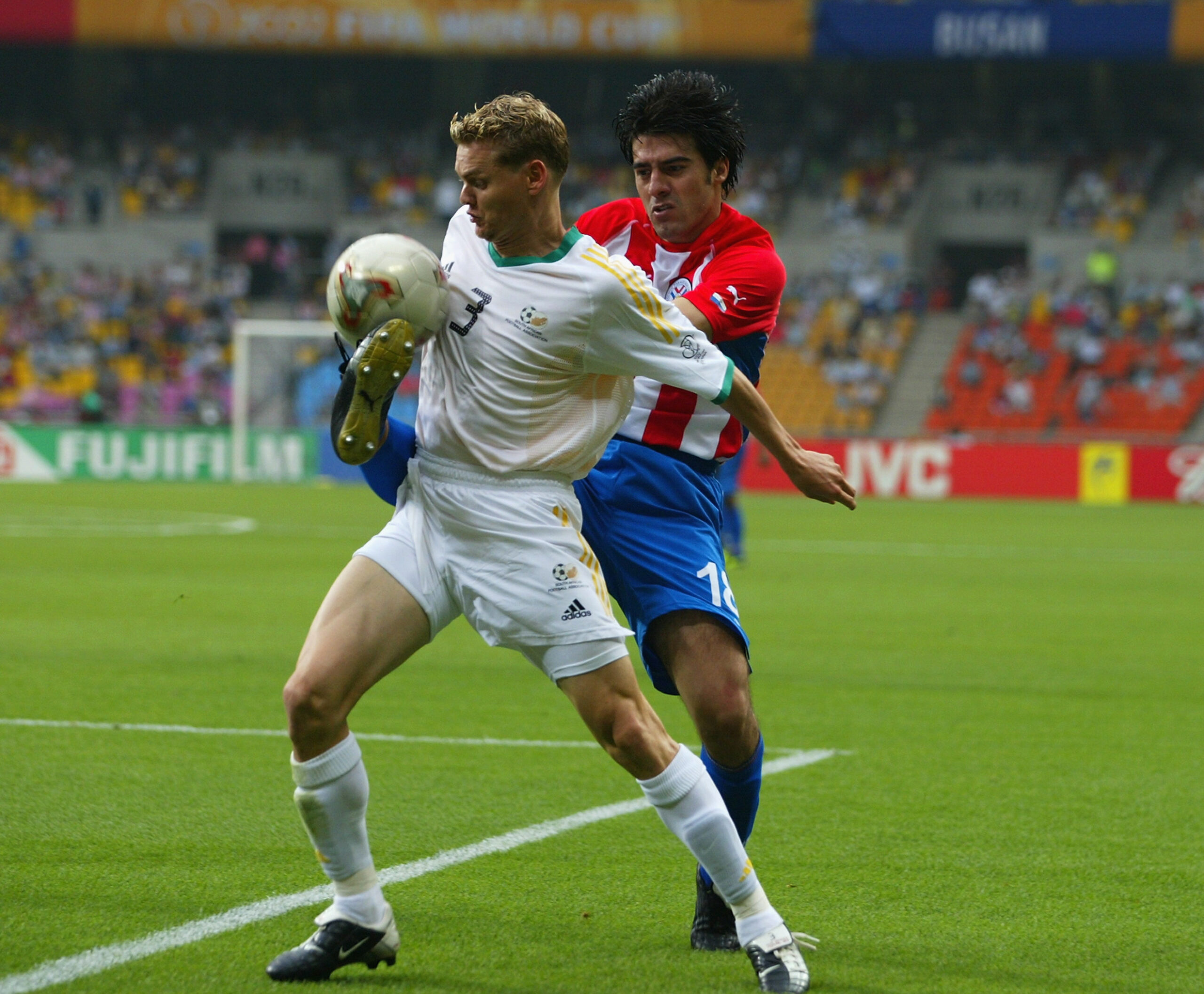
Carnell’s journey has taken him a lot of places. The Johannesburg, South Africa, native turned pro at age 16 in his home country, then at 21 moved to the first of four clubs he played for in Germany. He played 40 times for the Bafana Bafana, including at the World Cup in 2002.
After hanging up his cleats in 2011, Carnell started his coaching career at the University of Johannesburg. From there, he had two assistant jobs with South African pro clubs, then moved to the U.S. in 2017 to join the New York Red Bulls’ staff. He’s been in this country ever since, and the Union are his third coaching stop in MLS.
Bradley Carnell (left) playing for South Africa against Paraguay in the 2002 World Cup.
What has stayed constant over the years? One thing is how he sees the sport.
“Überzeugungstäter,” he said, a word learned while living in Germany. “A perpetrator. I’m a criminal of the game model that I’m presenting today.”
This produced some amused looks, and not just because of the multiple languages involved. Carnell was not surprised.
“I believe in it so much, and this is who I am,” he said. “Not because I’ve learned the game that way. It’s just because I live my life in a certain way.”
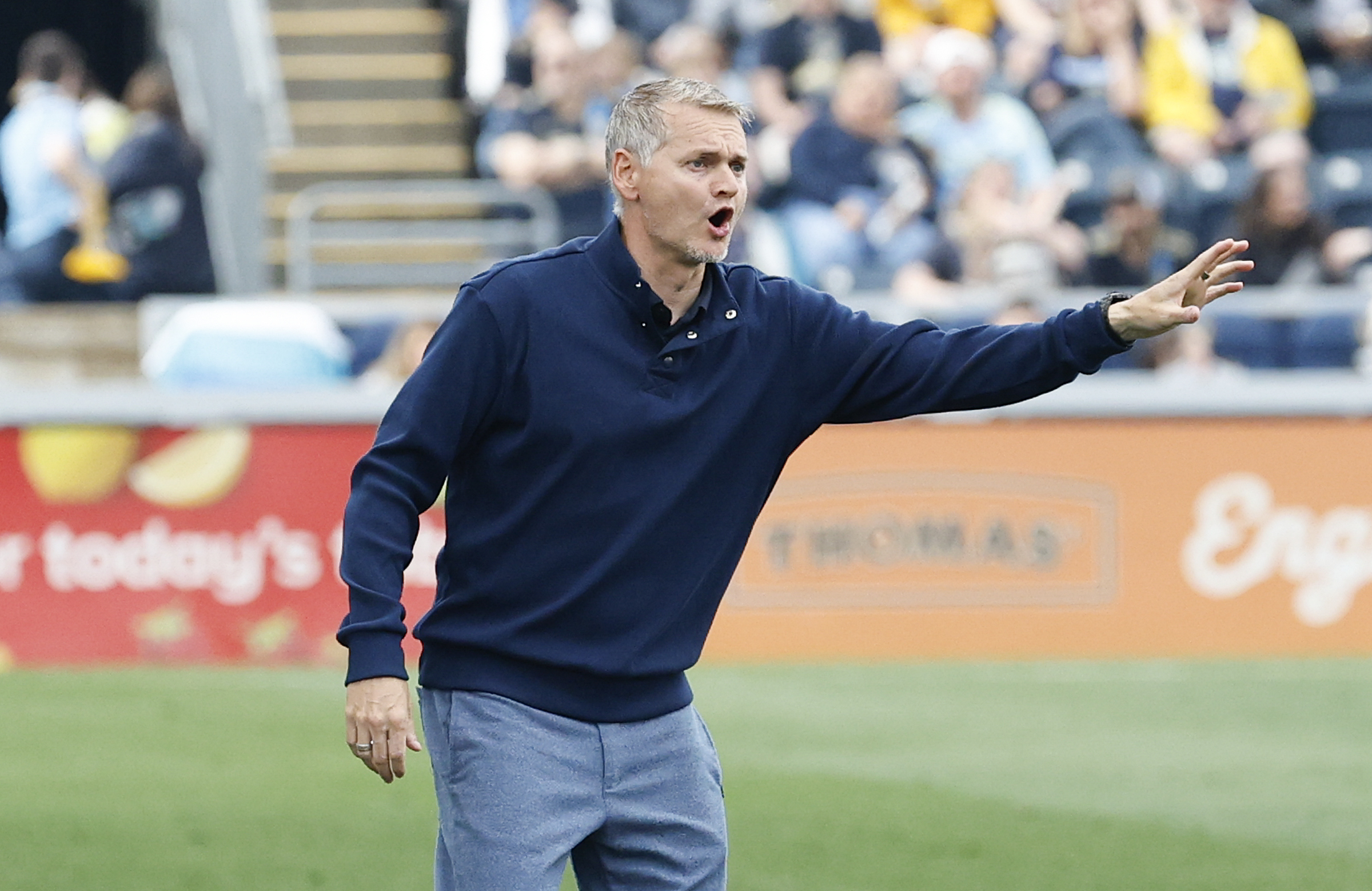
Bradley Carnell giving instructions to his players during a game last year.
You can get that sense at an average Union practice, where Carnell, 49, often is right in the middle of the fray.
“When setting up a game model, one, it’s based on previous experiences of your playing days: caching influences, but also DNA, how I live my life every single day,” he said. “Fast, energetic, proactive, on the front foot — these are all terms that are coming to life now because it’s just who I am. If I’m playing Monopoly with my family, I’m trying to win the game in the quickest way possible.”
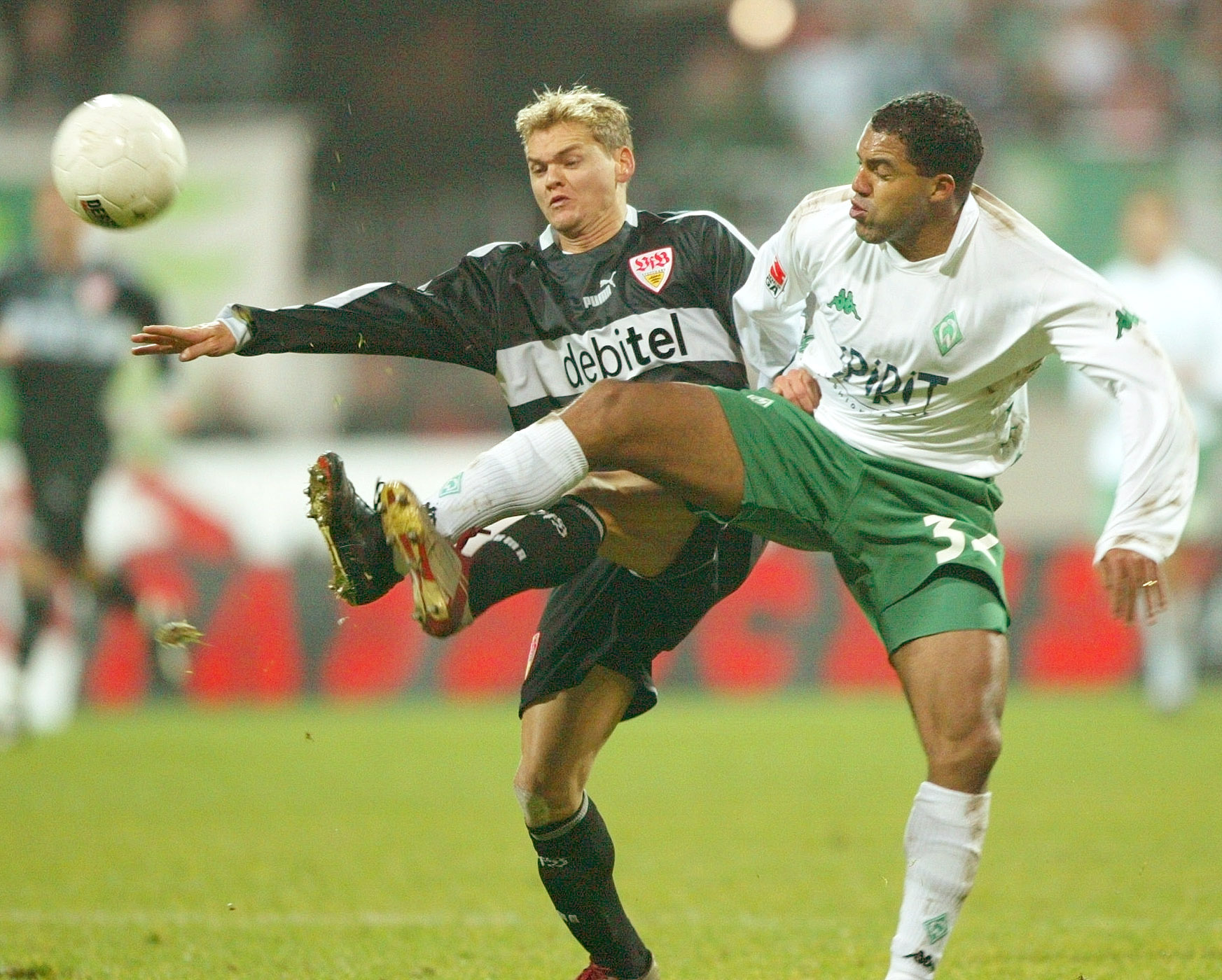
The manager who had the most influence on Carnell was Ralf Rangnick, who coached the young left back at German club VfB Stuttgart from 1999 to 2001. Ragnick is known as one of the founding fathers of “gegenpressing,” the high-octane tactics that spread all over Germany and eventually worldwide.
Those ideas have stayed in Carnell’s mind for a quarter of a century.
Bradley Carnell (left) during his playing days with German club VfB Stuttgart in 2002.
Inside the playbook
Carnell put up a slide that laid out four principles: “Hunting” to gain possession high up the field; “swarming” to regain the ball after losing it; “striking” to try to get to the opponent’s goal within 10 seconds; and “waves” of attacking moves.
He talked a lot over the course of his session about the defensive side of things, especially “rest defense”: how the centerbacks position themselves when their teammates have the ball up the field.
He also took an interesting question from the audience about man-to-man vs. zone defending.
“I don’t mind going one-for-one at the back,” Carnell said. “It’s not man-marking. So if they cross over the center back axis, I’m not going to say to you, ‘Go with him and track him all over the field.’”
If this brought the term “matchup zone” to anyone’s mind, it hasn’t been used much in soccer. But if it ever was going to be, the city that produced John Chaney would be an appropriate place to start.
The Union won the Supporters’ Shield and reached the second round of the playoffs in Bradley Carnell’s first year at the helm.
But the most interesting stuff, as it is for Union fans, was what he said about attacking.
Quality on the ball is valued over time on the ball, a point Union fans have certainly learned by now. And Carnell laid out his “baseline” for how he wants his team to score: 60% in transition, 30% on set pieces, and 10% in possession.
“We can go quick — I say [with] quality on the ball, you can always get quicker,” Carnell said. “But if you try to go too quick, then there’s going to be turnovers. So, progressive quality over speed. We can always learn to get quicker in this transitional phase of the game.”
Last year, the Union scored around 50% of their goals in transition, 30% from set pieces, and 20% in possession. That wasn’t quite what Carnell had aimed for. How did he react?
“We don’t see it as a failure,” he said. “We just see it as an adaptation. To every team you inherit, or every team you go to in terms of me joining here a year ago at the Philadelphia Union, we see certain trends, character traits in players, in how we can get this effectiveness.”
Bruno Damiani with the finish and @PhilaUnion takes the lead in a rainy D.C. ⚡️
The Union ranked well in some stats he likes. They were second leaguewide in shots taken within 10 seconds of gaining possession, at 2.84 per 90 minutes. They were also second in percentage of first passes of a possession that went forward in transition, at 45.5%. And they had the fewest passes per shot sequence, at 2.3 per 90 minutes.
“Reactions quicker than the opponent can get themselves organized against,” Carnell said.
He put up some tactical graphics on his slides to illustrate the plays he wants. He also showed some videos of notable plays that the Union made last year, and they really made the point.
Carnell said “one of my favorite moments of last year” was a goal the Union scored on May 30 at Montreal: a counterattacking dash that covered almost the entire field in 12 seconds in just the second minute of the game.
What a strike! Indiana Vassilev gives @PhilaUnion the early lead on the road!
Another goal Carnell liked came on April 19 at home against Atlanta. The visitors had the ball, but only briefly: Kai Wagner and Jovan Lukić teamed up to jam Brooks Lennon just short of the midfield line.
Danley Jean Jacques was nearby, and started dashing upfield. Three passes in eight seconds later, he had his first goal in a Union jersey.
“In our game model we’re saying, ‘Go put out the fire,’” Carnell said. “’Go win the ball as high as you can. Be brave. Be brave and hunt in numbers.”
St. Joseph’s built a 10-point lead with less than six minutes to play in an Atlantic 10 women’s game against La Salle on Wednesday night at John E. Glaser Arena.
Then the Hawks offense went silent and La Salle began to mount a comeback. An and-one layup plus a pair of free throws from Explorers guard Aryss Macktoon made it a four-point game with less than two minutes remaining.
But St. Joe’s (14-6, 5-4 A-10) warded off a La Salle comeback to earn a 69-65 victory. The Hawks outscored the Explorers by 26-3 in bench points and shot 44.8% from the field.
“I think what you saw was a game of runs,” St. Joe’s coach Cindy Griffin said. “There was a lot of great offense out there. Not a whole lot of defense at times. But I was really pleased with how we came out in the second half, especially in the third quarter. We got a little space and we were able to make plays down the stretch.”
Statistical leaders
St. Joe’s had a balanced scoring effort with seven players scoring at least seven points. Guard Gabby Casey led the way with 14 points, with 10 coming in the second half. Emily Knouse added 11 points on 3-for-5 shooting in three-pointers. Forward Cecilia Kay had a team-high seven rebounds.
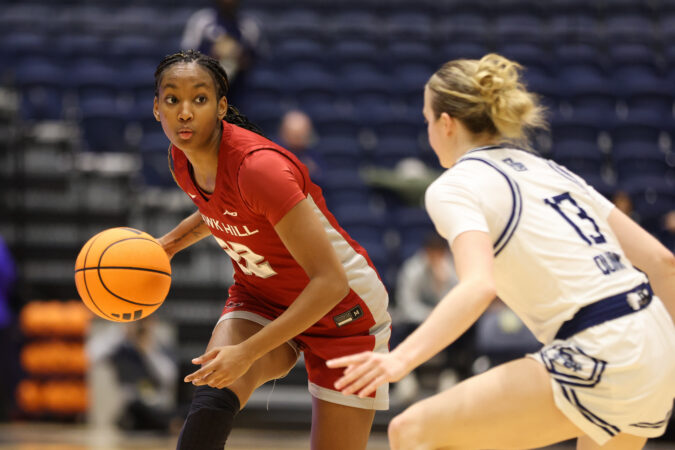
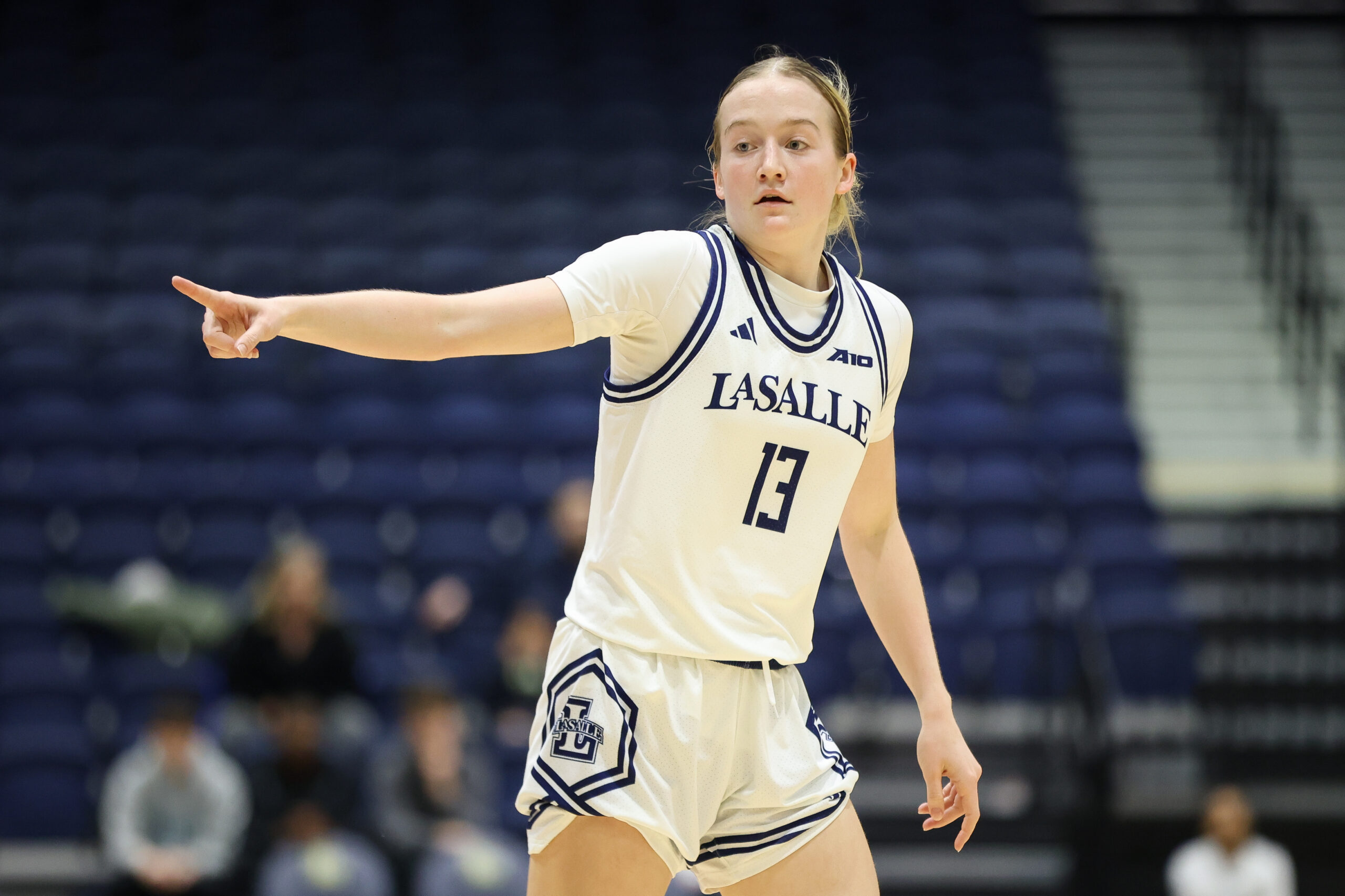
La Salle guard Joan Quinn finished with a game-high 18 points against St. Joe’s on Wednesday.
Guard Joan Quinn made 4 of 7 three-pointers and scored a game-high 18 points for La Salle (11-10, 4-6). Forward Kiara Williams contributed 17 points on 7-for-11 shooting and six rebounds. Macktoon, the Explorers’ leading scorer, was well guarded but managed 11 points and seven rebounds.
Stinson comes up clutch
After Macktoon’s and-one layup to cut St. Joe’s lead to four points, the Hawks were in desperate need of a basket to stunt the Explorers’ momentum. They turned to a player who was quiet offensively all game.
Forward Faith Stinson did not score for the first 38 minutes but scored her first points when it mattered most. She got free on a cut and guard Rhian Stokes (11 points) delivered a perfect pass that Stinson converted to halt La Salle’s run.
“You saw a senior post who had been there, done that,” Griffin said. “She came up big in the first game [against La Salle], and at the end of the day, we went to her, we found her. Rhian found her in the first game and I think that kind of sealed the game and it was just the same situation today.”
Big second half
The Hawks built a 24-17 lead with back-to-back three-pointers from Knouse, a freshman. However, the Explorers did not stay down long, thanks to Williams. She made two straight jumpers to cap an 11-2 run, which gave La Salle a two-point lead. The teams traded baskets to enter halftime tied at 32.
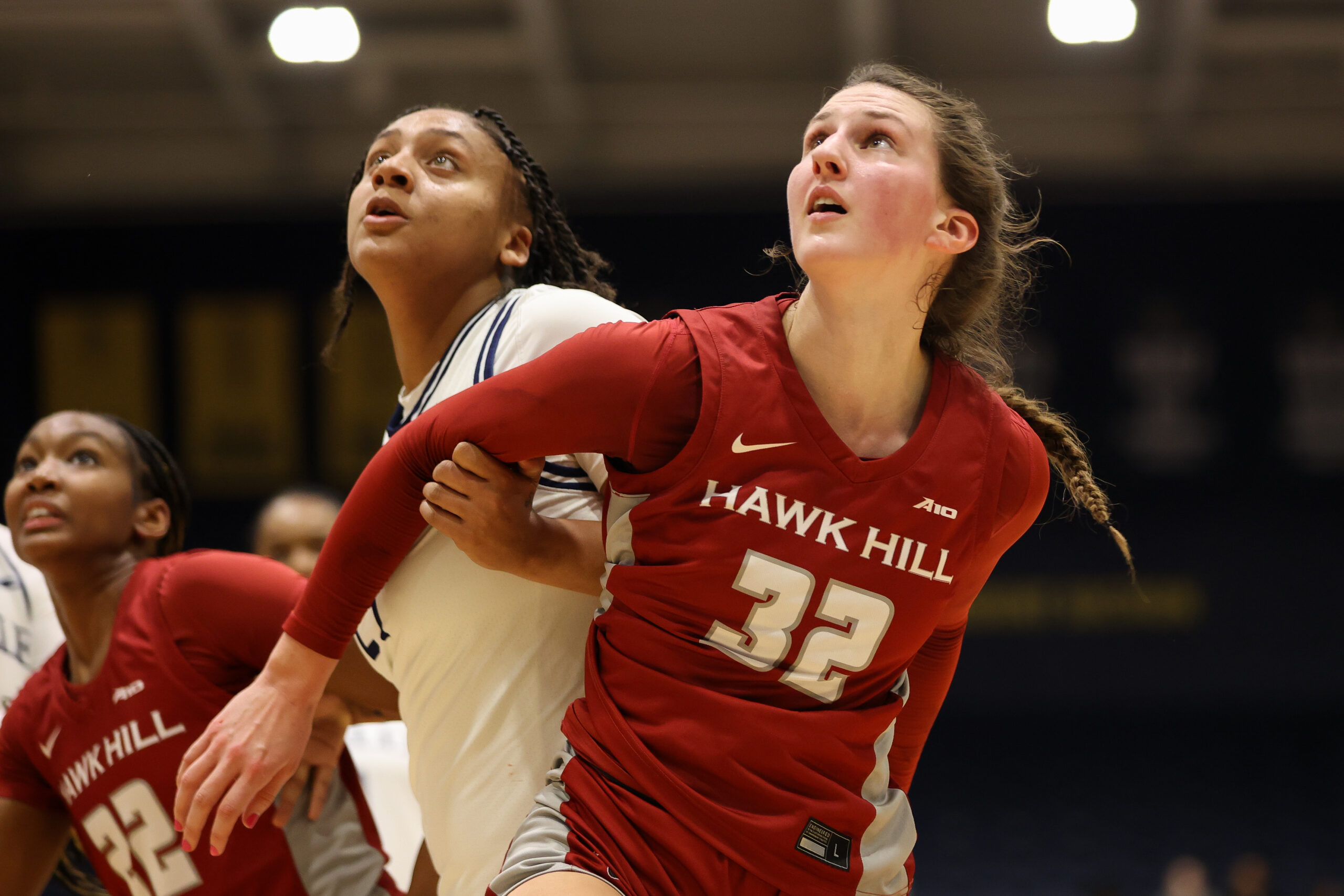
St. Joe’s forward Cecilia Kay (32) battles La Salle forward Kiara Williams for a rebound.
St. Joe’s jumped out to a 38-34 lead to open the third frame and never allowed La Salle to retake the lead. That lead ballooned to 10 halfway through the fourth quarter, and the Hawks’ strong second half helped them prevail.
“I think we came out and it didn’t really go our way, but then we showed up in the second half with our grit, our toughness and staying composed and staying together to really come out and take a force in the first three minutes of the second half,” Casey said. “I think that was just really great, and that gave us momentum throughout the game.”
Up next
St. Joe’s returns home to take on Davidson (15-7, 7-2) on Sunday (1 p.m., ESPN+), while La Salle will travel to face Duquesne (7-14, 0-10) on Saturday (2 p.m., ESPN+).
Temple had a chance to break its tie for second place in the American Conference on Wednesday night against Charlotte. The Owls trailed once in the second half and at one point held an eight-point lead.
It wasn’t enough, however, as the 49ers stormed back to hand Temple an 80-76 overtime loss at the Liacouras Center.
The Owls (13-8, 5-3) were within striking distance with 17 seconds remaining in overtime. Then Charlotte guard Dezayne Mingo drilled a three-pointer that pushed the 49ers (12-9, 6-2) lead to five and squandered the Owls’ comeback hopes as they missed their final four shots.
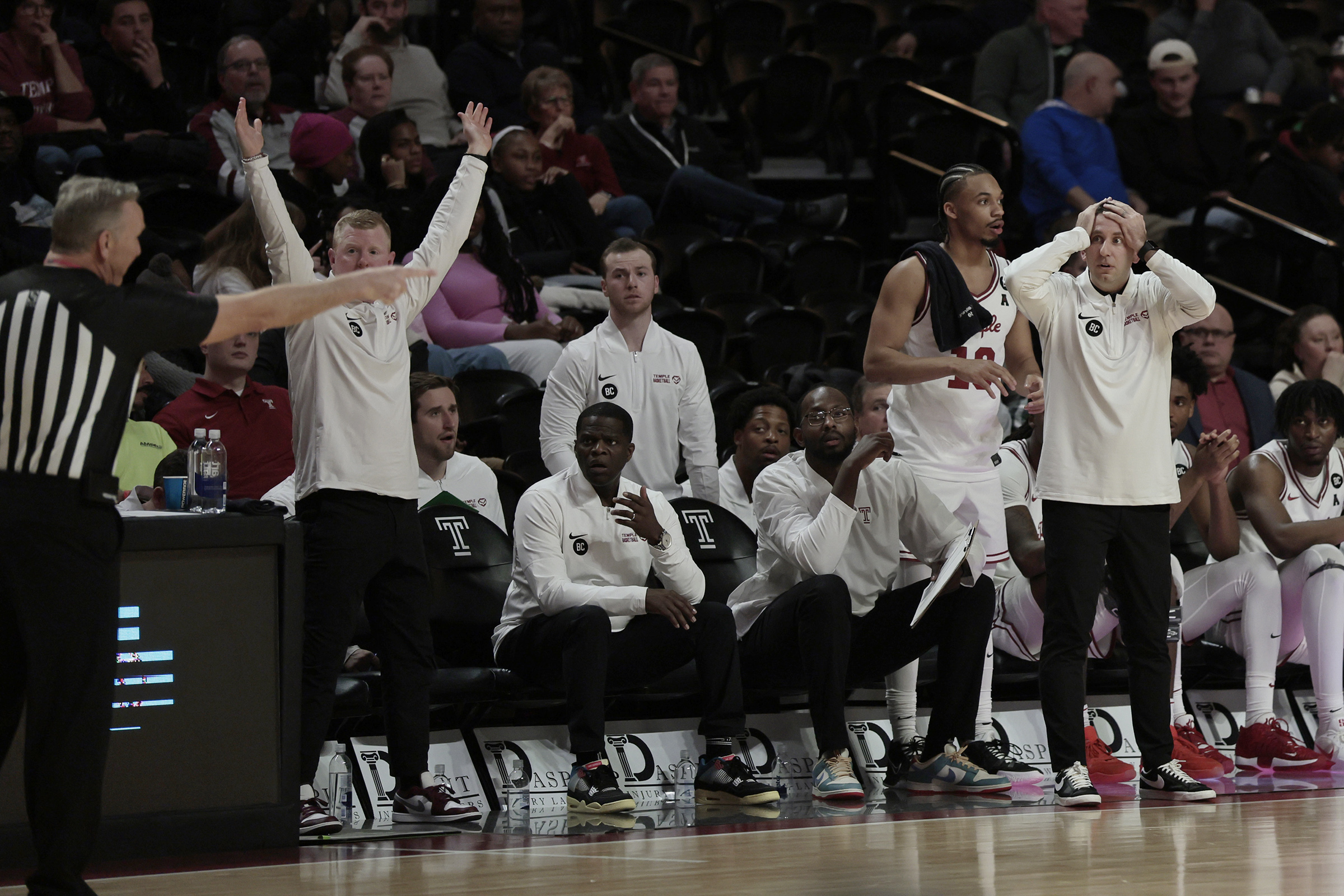
Temple coach Adam Fisher reacts to an official’s call against Charlotte on Wednesday.
“We won the first half, but the second half, we had a couple lapses,” said Temple coach Adam Fisher. “This is a team we knew [to] try to keep them in the 60s. Great credit to Charlotte. There’s a reason they’re 6-2 [and] towards the top of the league.”
Statistical leaders
Guard Derrian Ford led Temple with 21 points, while guard Jordan Mason added 20.
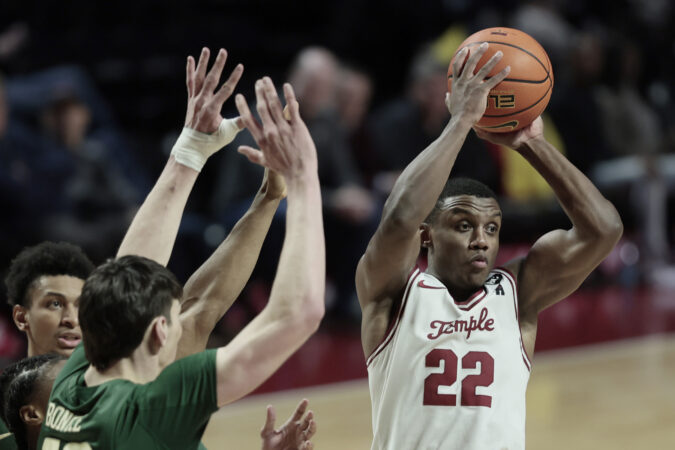
Charlotte center Anton Bonke stole the show with a career-high 25 points, breaking his previous high of 20, which he set against Temple on Dec. 30. Mingo also had 19 points off the bench while dishing out 10 assists.
Mason took charge of the Owls’ offense, and 14 of their first-half points were three-pointers.
Temple’s defense had to deal with the 49ers’ size and height advantage. When Bonke attacked the paint, the Owls found themselves in foul trouble. They finished with 20 personal fouls.
“Good job getting into some pick-and-roll spaces and they throw it up to him, and he’s huge,” Fisher said. “Great credit to him. He had 20 against us out there last time, when we won, we knew ‘Hey, they can’t make threes.’ When Harrison scores double figures, I think they’ve won every game. So they got a lot of weapons.”
However, Temple did limit the American’s third-best team in shooting to make 9 of 24 attempts in the first half, going 4 of 9 in three-pointers. Charlotte shot 53.8% in the second, but went 3-for-12 in three-pointers.
Temple kept up with Charlotte and trailed once in the second half and took an eight-point lead with under seven minutes remaining. But that advantage didn’t last.
Game-changing play
Temple had possession with 30 seconds remaining in regulation, leading 68-66, with a chance to put the game to rest. Guard Masiah Gilyard snagged a steal and it seemed like Temple would secure a victory.
Gilyard attempted a dagger three-pointer, but it went off the mark and after a scramble for the loose ball, it got into the hands of Mingo. He found guard Damoni Harrison, who converted a layup to send the game to overtime.
“It looked like almost a broken play,” Fisher said.
Temple never recovered, as it went 1-for-6 from the field in the extra period.
Up next
Temple will host South Florida (13-7, 5-2) on Saturday (8 p.m. ESPN+).
COLUMBUS, Ohio ― The Flyers traveled more than four hundred miles from where they’re known. Although they had a change in scenery, they carried many of their issues over from Monday.
Despite Dan Vladař’s spectacular saves in net, in his first game since getting injured against the Buffalo Sabres on Jan. 14, and the third career hat trick by Travis Konecny, the Flyers were handed a 5-3 loss by the Columbus Blue Jackets.
The Flyers have now lost nine of their last 11 games, including two straight in which they have been outscored a combined 9-3.
Sean Monahan scored with 3 minutes, 28 seconds left in regulation as he stood alone at the left post. The Flyers struggled to get the puck out, and Damon Severson sent the puck across from the right boards to the open winger. Mathieu Olivier scored an empty-netter to seal it for Columbus.
It was a delicate few opening seconds for the Flyers when, on the first shift, Charlie Coyle gave the Blue Jackets a 1-0 lead 38 seconds into the game. Trevor Zegras was on the boards and tried to pass to his centerman, Christian Dvorak, to start a breakout, but it went through, and Zach Werenski kept the puck in to Olivier.
The rugged forward then fed Coyle, who was honored before the game for reaching 1,000 games on Jan. 22, as he got behind the defense. Coyle scored over the glove of Vladař.
Later in the period, Konecny evened the game with his 18th goal of the season. It also tied him with Zegras for the points lead (46).
Zegras had the puck deep and tried to chip it to Konecny, but it popped all the way out to Noah Juulsen at the left point. The defenseman fed it across to Cam York, and he hit Konecny in the middle. He had room and skated down and snapped the puck past goalie Elvis Merzļikins.
The Flyers had a great chance to take a 2-1 lead with under 2 minutes left in the opening frame when, on a power play, Zegras skated through the Blue Jackets defense. He hit the puck off the heel of his blade, but the Flyers kept going, ultimately with Zegras getting another look at a wide-open net. His shot ended up hitting either the right post or the stick of Bobby Brink that was lying in the crease after he lost it during a commotion.
Columbus took the lead with 20 seconds to go in the period on a goal by Kirill Marchenko. Skating four-on-four, after the Flyers were called for too many men during the man advantage, the Blue Jackets skated down with Werenski and Owen Tippett chasing after the puck.
From one angle, it looked like Werenski interfered with Tippett. From another, it looked clean. Regardless, there was no call, and Werenski, who will represent the United States at the 2026 Milano Cortina Olympics, fed the puck from the right circle to Marchenko in the left for the one-timer.
Erik Gudbranson made it 3-1 less than two minutes into the second period when his point shot off a faceoff beat Vladař. It may have nicked Dvorak on the way in.
Despite allowing four goals, Vladař did not look rusty as he kept the Flyers in the game. He made a phenomenal standing pad save on Werenski as it looked like he batted the puck out of the air with 3:05 to go in the second.
And then in the third period, in between Konecny scoring again from the middle of the ice to make it 3-2, Vladař robbed Adam Fantilli sitting at the right post with his glove, and then did it again to Boone Jenner from the same spot. The first save on Fantilli was reviewed, but it confirmed Vladař’s magnificent save.
Konecny finished off the hat trick to tie the game at 3-3. He received a pass from Travis Sanheim from the left board as Konecny crashed down the right side.
This goal and his other in the final period came off a gutsy performance by the forward, who blocked a shot late in the second period and hobbled to the bench. He went down the tunnel right at the buzzer of the middle frame and didn’t get back to the bench until after the puck dropped for the third period.
Konecny now leads the Flyers in goals (20) and points (48).
“He’s hitting the holes, and he’s, we call it, race inside, and he races inside on them and beats people, and then obviously he’s got a good shot,” said Rick Tocchet.
“And he took one off the foot. He’s limping around. He might not play tomorrow. We don’t know. He [had] a lot of guts tonight.”
Breakaways
Defenseman Rasmus Ristolainen did not return following his second shift of the game, leaving with a lower-body injury. The Finn returned on Monday after missing six games. Tocchet did not have an update on him after the game. … Defenseman Emil Andrae was a healthy scratch, along with forwards Nic Deslauriers and Garnet Hathaway.
Up next
The Flyers will get right back to it in Boston on Thursday against the Bruins (7 p.m., NBCSP+).
Cailin Williams was always interested in hockey. Like most middle-school athletes, she just wanted to make friends and compete. It didn’t matter that she could barely skate — Williams just wanted to play.
But there was one issue: There was no league for her to play in.
In 2021, Comcast Spectator and the Flyers Training Center changed that. Together, they launched The Philadelphia Liberties, a youth hockey program for girls.
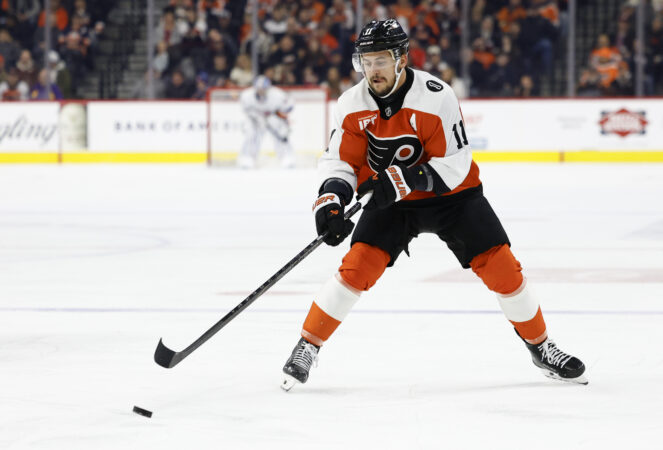
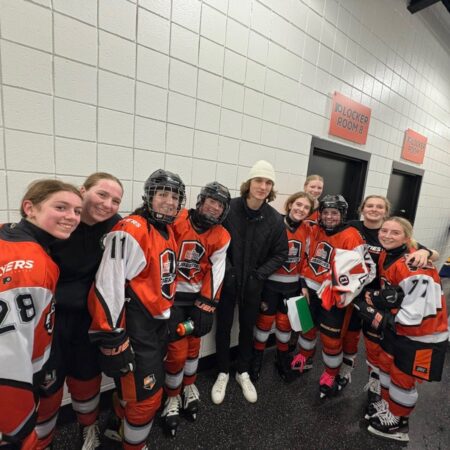
The girls train and practice out of the Flyers Training Center and often have a front-row view of Flyers practice. This past month, Flyers forward Trevor Zegras dropped in after a Liberties game to take pictures and meet some of the girls.
“I think it’s just something really cool to experience,” Williams, 16, said. “To be able to have this opportunity, knowing that I get to play when some people aren’t lucky enough to, and then I also get to share the same ice as professional players is really great.”
But it wasn’t necessarily a smooth start.
“We didn’t win one game [that first season],” said Flyers Training Center director of development Jeremy Hall. “Actually, I don’t know if we even scored a singular goal. But that first season was just something to get them started.”
Since then, the Liberties have only continued to expand. The organization started with just one team, but it now has three teams running across various age groups — 10U, 14U, and 19U — for a total of 53 girls in the program.
“We actually won a handful of games [the second season] and just really got some momentum going,” Hall said. “From that point forward, the growth in the last three to four years is honestly quite incredible to see where we’re at today, compared to where we were when we started. I’ve been in the rink here for 17 years, and I haven’t seen another program grow as fast and have had as much success as this one.”
Thank you to all of our staff, volunteers, and teams that make the Liberties Invitational an event we look forward to every year.
Four years ago the Invitational began with 7 teams. Since then this tournament has exceeded our wildest expectations pic.twitter.com/hR96VG6rrf
But the program’s goal wasn’t just getting more girls involved in hockey — it was about visibility for girls’ hockey in general.
In 2023, the program hosted the first Philadelphia Liberties Invitational, which featured seven teams. Three years later, the tournament hosted 45 teams ranging from 8U to 19U. And the visibility that has come from this expansion is setting up the players for a childhood full of opportunities.
These opportunities aren’t just limited to on the ice, though. Through the Flyers and Comcast, the girls have done ceremonial puck drops at Flyers games, have been invited to the White House to skate at the rink, and some players even met Jessica Campbell, an assistant coach for the Seattle Kraken and the first female coach in the NHL.
“Some of those opportunities come from [the Flyers’ Training Center] being our home,” Hall said. “That’s something that the girls definitely don’t downplay. They recognize that it’s a privilege.”
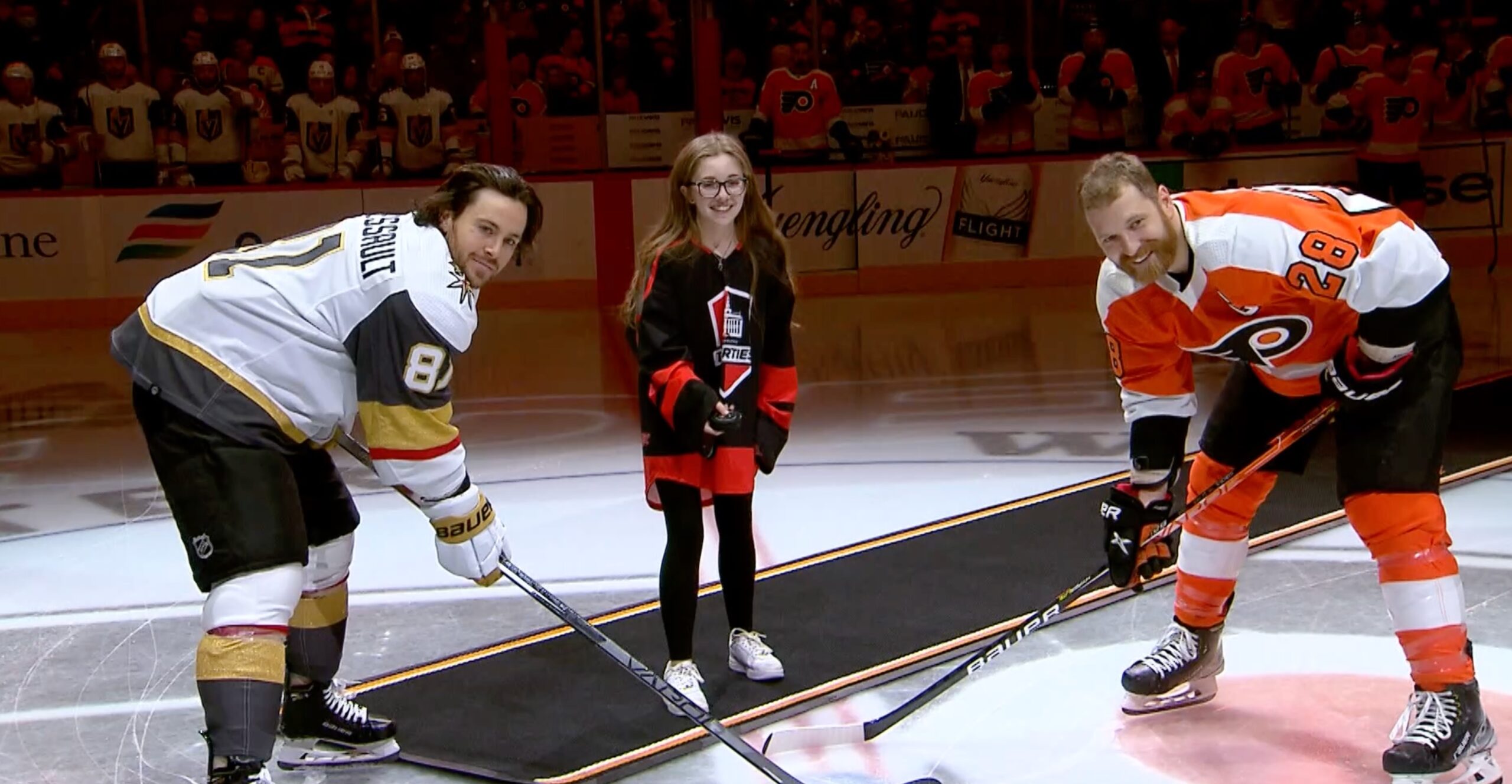
Philadelphia Liberties U16 player Emily Esposito does the ceremonial puck drop at a Flyers game against the Vegas Golden Knights on March 8, 2022, to celebrate International Women’s Day.
As the Liberties have expanded, girls’ hockey in general is on the same path.
“In the last two to three years, [girls’ hockey has] exponentially grown,” Flyers Training Center general manager Jay Freeman said. “Not only for us, but just in general, for the country.”
And that’s the goal of the Liberties: growth. In every possible way.
“I always tell my team that hockey is the most beautiful game in the world,” 19U coach Linda Rehmann said. “And any day you get to play it, you’re a lucky person. But the game is about more than what happens on the ice. Our organization is about growing good people, teaching life lessons that they’re going to take with them, adversity, teamwork, resilience, all kinds of things that I think when you’re in that intense, competitive sport environment, it just accelerates your learning process.”
Rehmann started her hockey journey in Canada when she was just 5 years old. She played with boys for the first seven years before making the transition to girls’ hockey.
Her journey led her to Cornell, where she won an Ivy League title as a sophomore and was cocaptain her senior year.
“Hockey played a huge role the first 22 years [of my life],” Rehmann said. “My whole life was basically centered around my hockey schedule, and I loved it. I really felt like it shaped who I became. I’m an engineer. Professionally, I feel very comfortable in rooms full of men, and I believe that competitive sport makes girls strong.”
Rehmann has been with the Liberties for the past three years, and that message of empowering girls and women has carried over to her athletes.
Congratulations to the New York Islanders and New Jersey Colonials!
After four days of non-stop action, the 4th annual Liberties Invitational has officially come to a close. pic.twitter.com/dS7ru89W9A
“Coach Linda, she’s been amazing,” Williams said. “I started out not really being able to skate very well, and now I can move, I’m doing good. I think a big part of it is having a really supportive group of coaches who are always there and want us to get better.”
Said Rehmann: “I’m getting a little bit teary just thinking about [how Liberties has changed these girls’ lives]. What we offer is a place where they can be themselves. They can be honest with each other; they can make mistakes.
“[They have social pressures in their lives], but at the rink, they can relax, they feel at home, they feel safe. I think that’s really what [this] is. [The Liberties] gives them a tremendous growth opportunity as an athlete. It shows that they’re willing to put [themselves] out there, try new things, and open [themselves] up to something else that [they] might otherwise not be willing to do.”
If you’ve never heard the parable of the “Prodigal Son,” you can watch it unfold in real time over the next few months on the PGA Tour.
LIV defector Brooks Koepka is back.
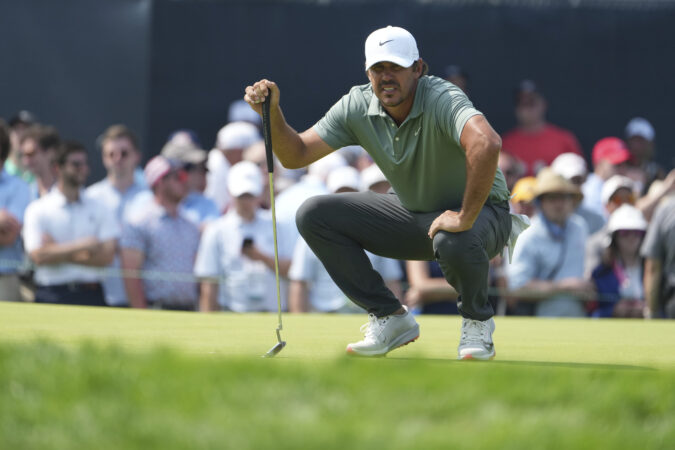
It’s the biggest moment in golf since Phil Mickelson announced he was joining the renegade league on June 6, 2022. Koepka, a five-time major championship winner, an all-American success story, is the first LIV player to kneel and beg forgiveness of the men that he betrayed.
This is biblical, if you will, in its importance to the golf world.
Briefly: Jesus, in Luke 15: 13-31, tells a tale in which the younger son of a rich man asks to have his inheritance immediately, so he can seek his fortune in the world. The son soon squanders the money, the economy collapses, and he hits rock bottom feeding pigs (sorry, LIV fans). The son then crawls back home, hoping his father will hire him as a servant. Instead, the father rejoices at his son’s return and calls for a feast, featuring a fatted calf.
In this analogy, Koepka is the son. New PGA Tour CEO Brian Rolapp is the father — or, perhaps the stepfather, considering Jay Monahan ran the Tour when Koepka followed dozens of other LIV defectors, all of whom Monahan banned, and who remain banned by Rolapp.
The feast of the fatted calf? That would be the Farmers Insurance Open, Koepka’s first tournament during his season of mild penance. It begins Thursday at Torrey Pines in San Diego. Harris English is the defending champion. Two-time major winner Xander Schauffele, ranked sixth, and U.S. Open champion J.J. Spaun, ranked seventh, lead a 147-player field that includes 25 of the top 50 players in the world.
But make no mistake: This is Brooks Koepka’s party.
But he’s bringing guests.
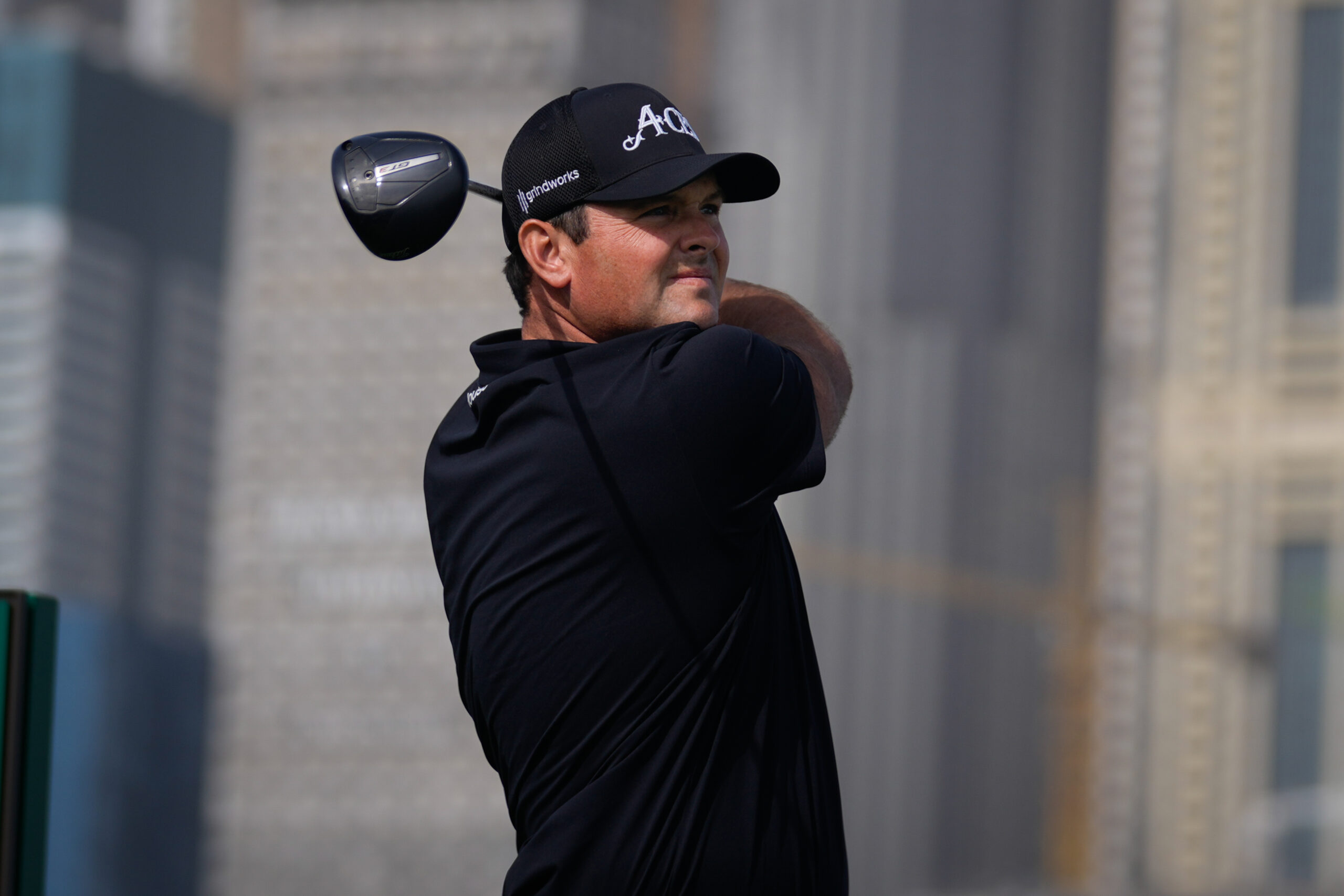
About 24 hours before Koepka’s marquee comeback tee time, golf’s biggest brat, LIV dud Patrick Reed, announced that he will return to the PGA Tour, too. Reed, who won just once on LIV, on Wednesday said in a statement that he will leave LIV and compete on the DP World Tour until Aug. 25, when he will be eligible to play in PGA Tour events. His DP performances have him ranked 29th in the world, which, along with his lifetime exemption as a Masters champion, virtually assures him entry to all four majors this year.
After careful thought and consideration, my family and I have decided that I will no longer compete on the LIV Golf Tour.
I am excited to announce that I am returning to the PGA TOUR as a past champion member for the 2027 season and am eligible to begin competing in PGA TOUR… pic.twitter.com/LFq61njCrh
The parameters of Reed’s imminent return are murky, and he has applied to return to the PGA Tour in 2027 as a past champion (he has nine wins), but he is not subject to the hastily constructed Returning Player Program (RPP) that Koepka’s interest spurred and targets only the biggest names on LIV.
One of the facets of the program produced a 147-player field at the Farmers. It would have been a 144-player field, but according to Rolapp’s RPP, the Tour couldn’t kick out an actual qualifier to add Koepka. However, adding Koepka made it necessary to add two other players to balance out the three-player groups. That meant alternates Lanto Griffin and Jackson Suber got spots.
The eventual return of Reed indicates that Rolapp is eager to build his business and to siphon talent from LIV, no matter how bad the optics or how minor the love. Reed, who won the Dubai Desert Classic last week on the DP World Tour, is a far less formidable presence than Koepka. Further, he has a reputation as a longtime cheater with a bad temper, a potty mouth, and little time for fellow competitors.
Patrick Reed, who won just once on LIV, is returning to the PGA Tour.
Rolapp might not kill the fatted calf for Reed, but, as Rolapp knows from his NFL days dealing with Bill Belichick and Tom Brady, every sport needs villains.
With a 12:32 p.m. EST tee time Thursday and a 1:38 p.m. tee time Friday, Koepka will be part of the featured group with Ludvig Åberg, an inoffensive rising Eurostar, and Max Homa, the PGA Tour’s social media genius.
The program is open to any LIV player who won a major from 2022-25 and has been away from the PGA Tour for at least two years, a group that includes only Koepka, Jon Rahm, Bryson DeChambeau, and Cameron Smith, all of whom have, so far, decided to stay with LIV. They have until Monday to change their minds, and then the application window closes.
So, for the foreseeable future, it’s the Brooks Koepka Returning Player Program.
As a punitive measure, the program restricts Koepka earning power from ancillary means, such as FedEx Cup bonus money and the Player Equity Program, for varied periods of time; makes sure that Koepka doesn’t bump anyone from any field; requires that he plays in at least 15 events this season; and demands a $5 million donation to charity.
None of this is especially “punitive” for the likes of Koepka, who reportedly made $165 million in signing bonus and winnings on LIV, added to his $43 million he made on the Tour.
Because it is the first real, tangible, important step into reconciling the best LIV players with the best players in the world, which is what fans deserve.
The Tour suffered from the absences of superb players in their primes such as Koepka, Rahm, DeChambeau, young Chilean star Joaquin Niemann, who has been the cream of the LIV Tour, and even Mickelson, whose game is garbage but whose name still would sell tickets on both the PGA and Champions tours.
The careers and games of all of the LIV players suffered, playing benign, inferior courses in 54-hole tournaments against laughable competition.
The game also lost personalities to LIV obscurity: Koepka’s surliness, Rahm’s earnestness, Dustin Johnson’s goofiness, Mickelson’s buttery condescension, and DeChambeau’s energetic petulance which, thanks to YouTube, has somehow transformed into energetic affability.
None of the LIV stars has sworn to never return to the PGA Tour, but no one is better suited to begin reconciliation than Koepka.
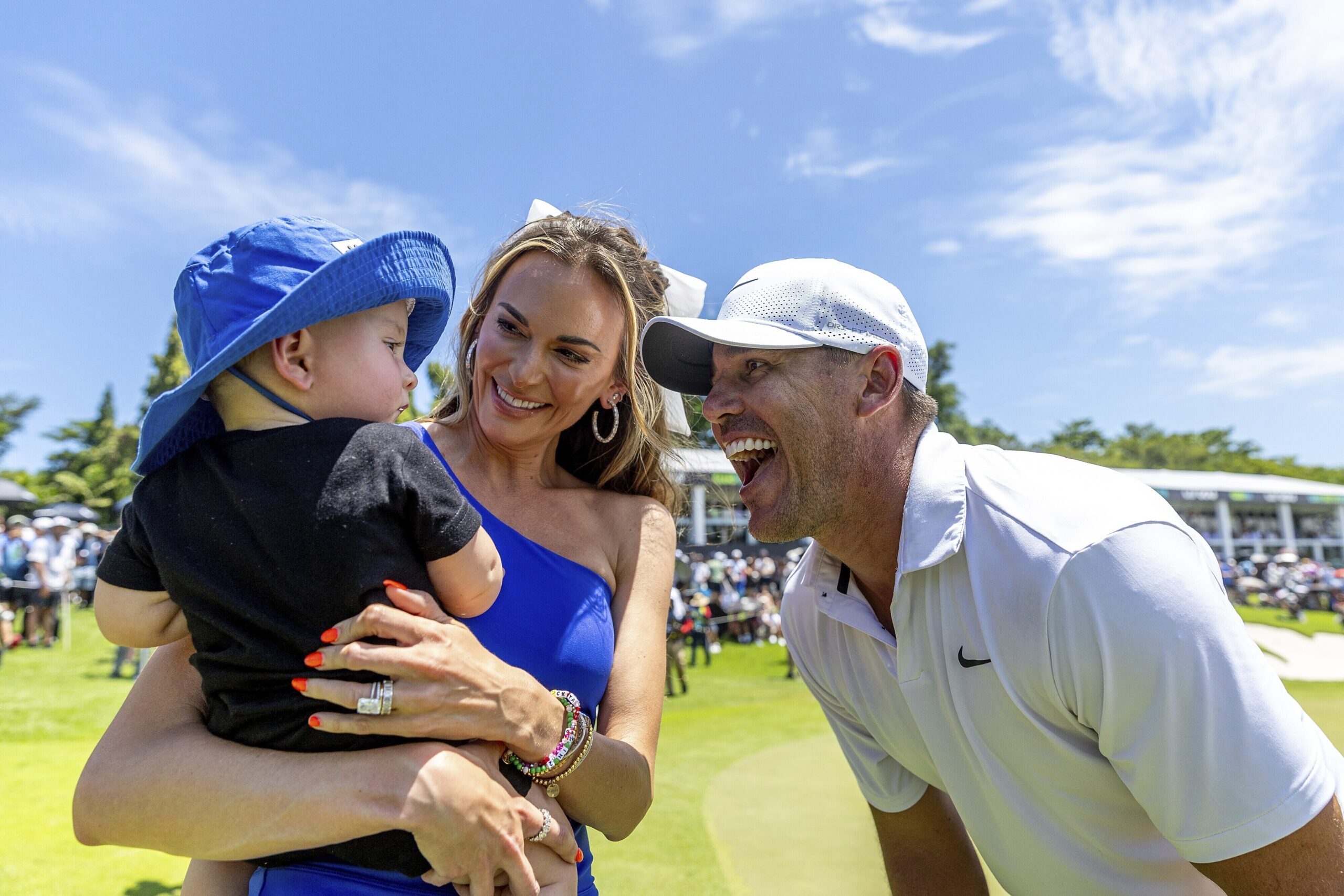
Brooks Koepka celebrates after a LIV win in 2024 with his wife, Jena Sims, and son Crew.
When he joined LIV in 2022, in contrast to most players who were clearly interested in only the sportswashing money offered by the Saudi-backed rival tour, Koepka was cast as a reluctant defector — a massive talent who feared that the injuries he’d been dealing with for months might derail the career of the most promising player since Rory McIlroy.
Koepka, mellowed by years of insignificance and decline, seemed repentant when he addressed his return at a Farmers news conference Tuesday. He was less like the Koepka who belligerently denied cheating at the 2023 Masters, when his caddie told Koepka’s playing partner which club Koepka had used, and more like the Koepka who, in 2018 at Shinnecock, won a second consecutive U.S. Open: reflective, appreciative, mature.
There are reasons for that.
Since winning the 2023 PGA Championship, which keeps him qualified for all majors, Koepka has finished inside the top 25 of his last eight majors just once. In 2025, he finished tied for 30th in the LIV rankings among just 52 regular players, many of them the definitions of “washed” and “obscure.” Koepka’s game is poor, and, at 35, time is running out.
His family life has changed, too. His wife, Jena Sims, suffered a miscarriage last fall.
Jena Sims has posted on Instagram that her and Brooks Koepka lost a pregnancy at 16 weeks earlier this year.
This is awful news and we’d just like to wish Jena, Brooks and Crew all the best 🙏 pic.twitter.com/NVsarKBVdD
Koepka, who has a 2½-year old son named Crew, enjoys fatherhood, and the international nature of the LIV Tour, combined with playing DP World Tour events in Europe to accumulate world golf ranking points, made a normal family life more difficult than he’d imagined.
“Just having my family around’s really important. I’ve grown up a lot over the last few years, and especially the last few months,” he said.
The timeline of his decision seems dubious on its face, both from him and the PGA Tour.
Koepka said Tuesday that he negotiated his release from LIV, finalized on Dec. 23, before contacting any PGA Tour entities regarding reinstatement. He said only then did he contact Tiger Woods, the chairman of the PGA Tour’s competition committee, and, voilá, just 19 days later, over the busiest holiday season of the calendar year, the PGA Tour had devised a comprehensive Return to Play protocol for the Koepka crowd.
It took five years for these guys to agree on how to limit golf ball flight. So, yeah.
The machinations that led to Koepka’s return are far less important than the reality of Koepka’s return. In many ways, Koepka was the PGA Tour’s biggest loss to LIV.
Rahm was more dynamic, DeChambeau was more interesting, Koepka was the best player, was the best athlete, was American, and was a major championship-winning machine.
Does McIlroy win eight times in Koepka’s absence? Does he complete the career Grand Slam last April if Koepka’s in good form?
More significantly, does Scottie Scheffler win 17 times, including three majors, if Koepka’s not honing his skills against Pat Perez on a burned-out course in Indiana? (Notably, Perez, Kevin Na, and Hudson Swafford also have been reinstated, sort of, pending unspecified penalties. Perez plans to join the Champions Tour when he turns 50 in March, pending penalties and fines.)
Maybe Koepka delays Scottie’s ascension, and maybe he slows Rory’s roll. Maybe not.
He isn’t likely to make much noise any time soon, especially at Torrey, where he’s missed four of five cuts at the Farmers.
At any rate, the game will be better for the presence of Koepka’s talent. His penalties aren’t nearly harsh enough, considering the hundreds of millions of dollars players like Sheffler, McIlroy, Rickie Fowler, Jordan Spieth, and Justin Thomas left on the table by declining LIV offers, but that isn’t Rolapp’s main objective.
Rolapp, the NFL’s former chief media and business officer, oversaw much of the growth of the most lucrative league in the history of the planet. Don’t expect Monday to be the last chance for the biggest LIV stars to return. Rolapp clearly will do anything he needs to do to accommodate the return of any player who can help the PGA Tour heal.
Just after noon on Thursday, Koepka, the prodigal son, begins that healing.