Category: Sports

Sports news, scores, and analysis

  • Flyers takeaways: Four signs the Orange and Black might be for real from the win over the Sabres

    Flyers takeaways: Four signs the Orange and Black might be for real from the win over the Sabres

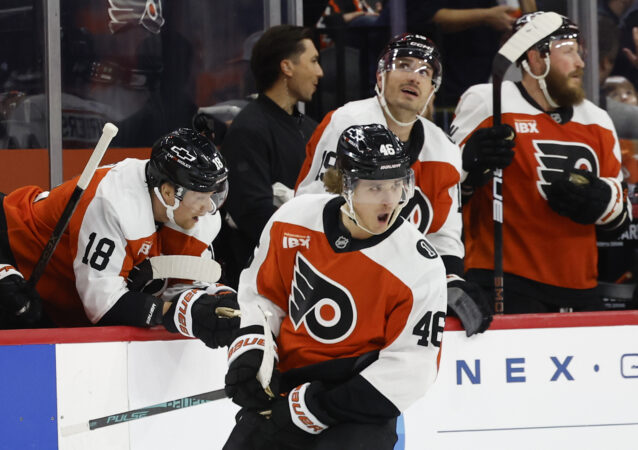
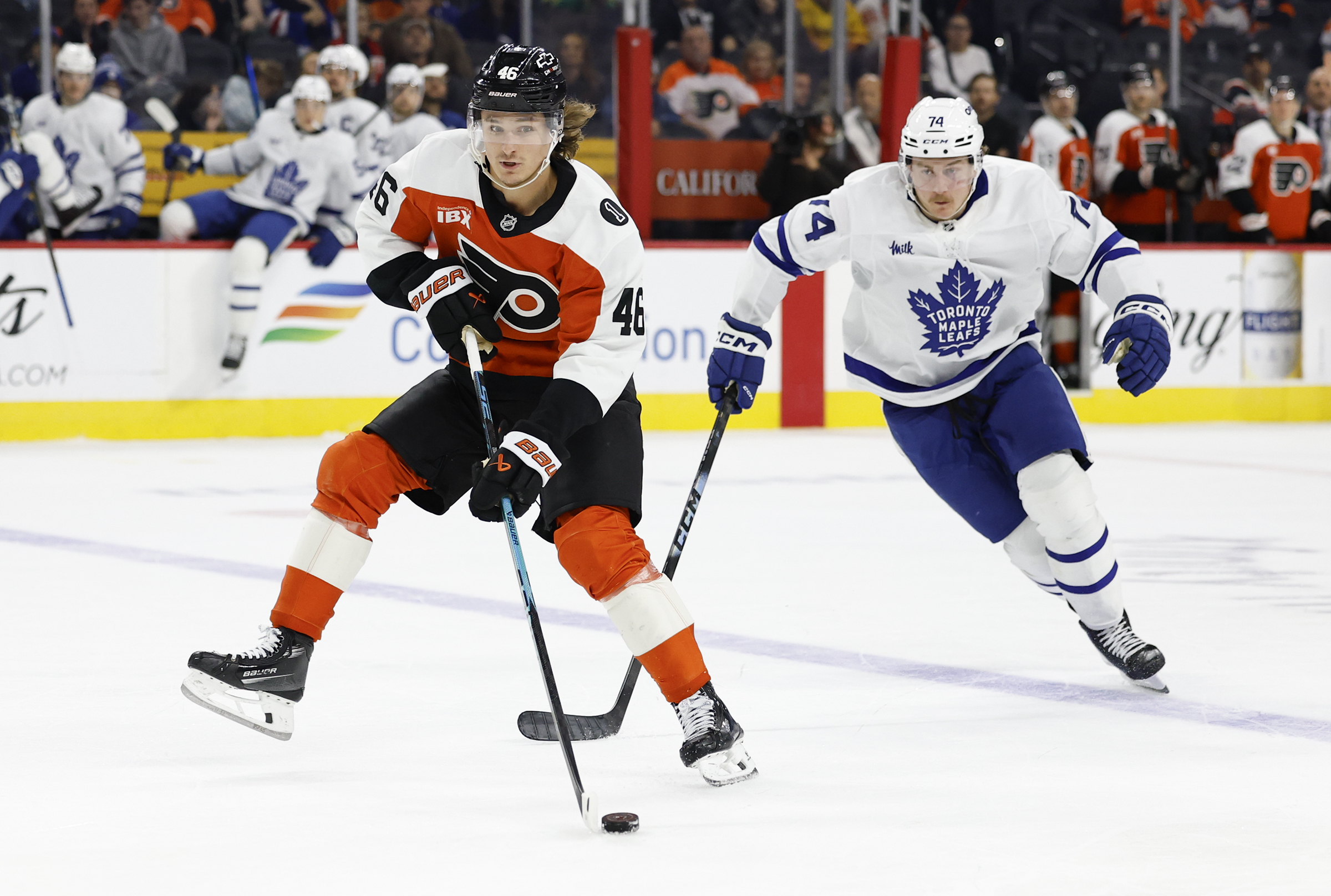
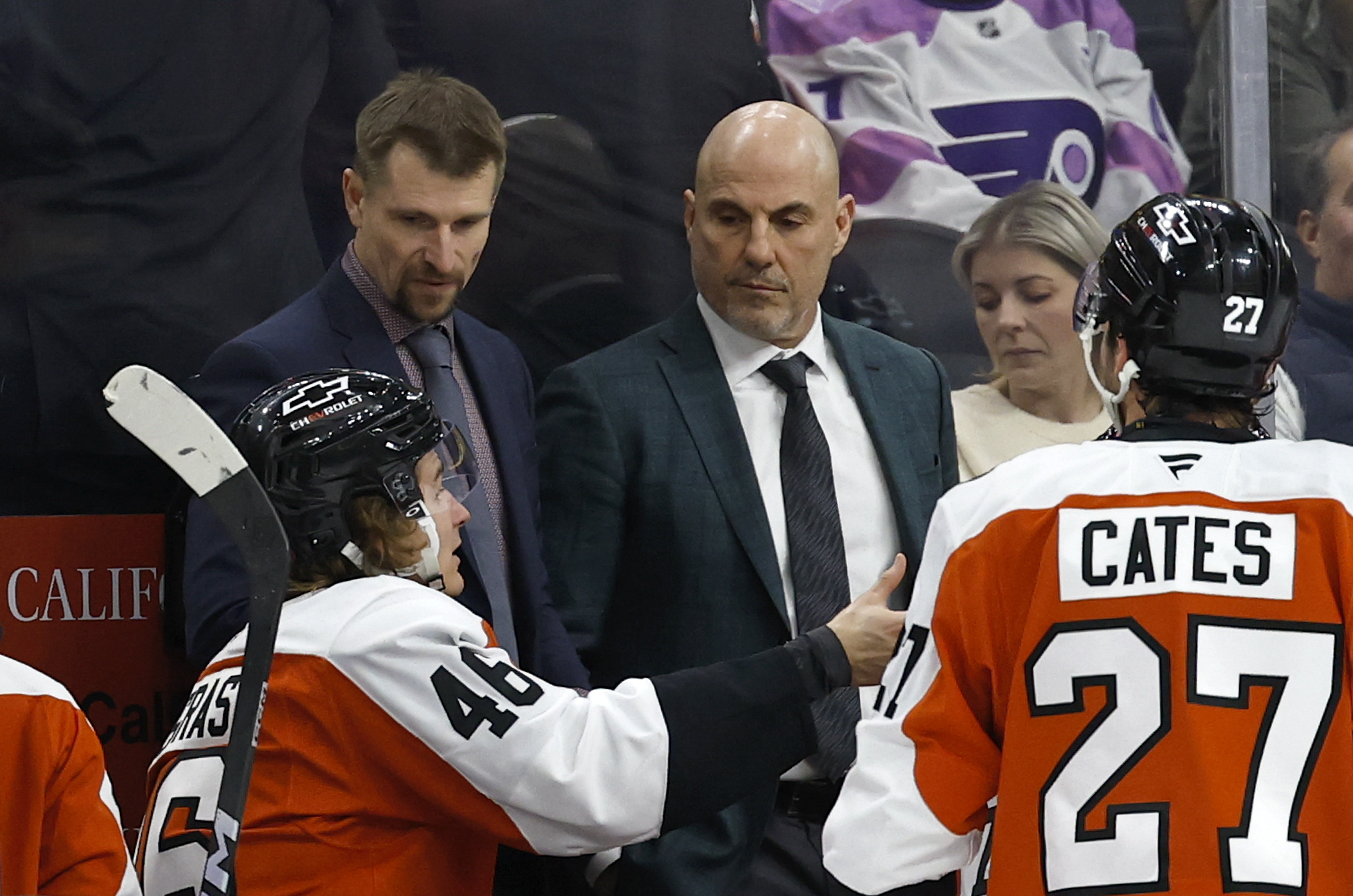
    The Flyers beat the Buffalo Sabres 5-2 on Wednesday night at Xfinity Mobile Arena.

    Here are four signs from the win that the Flyers may be for real.

    Good teams beat bad teams

    Two seasons ago, when the Flyers ranked among the best teams in the Eastern Conference, they lost 5-3 to the Ottawa Senators on Jan. 21.

    Yes, it was amid a five-game losing streak, but entering that game, the Senators were not just last in the conference; they were 23 points back in the standings from the Flyers. At the end of the season, the Flyers missed a playoff spot by three points, and that game could be circled as a missed opportunity.

    This season is still in its infancy, but the Flyers are maintaining a postseason spot and currently sit in third place in the Metropolitan Division. If they want to be a team to be reckoned with, they need to beat up on the bad teams. And the Sabres, who are ninth in the conference, are a bad team.
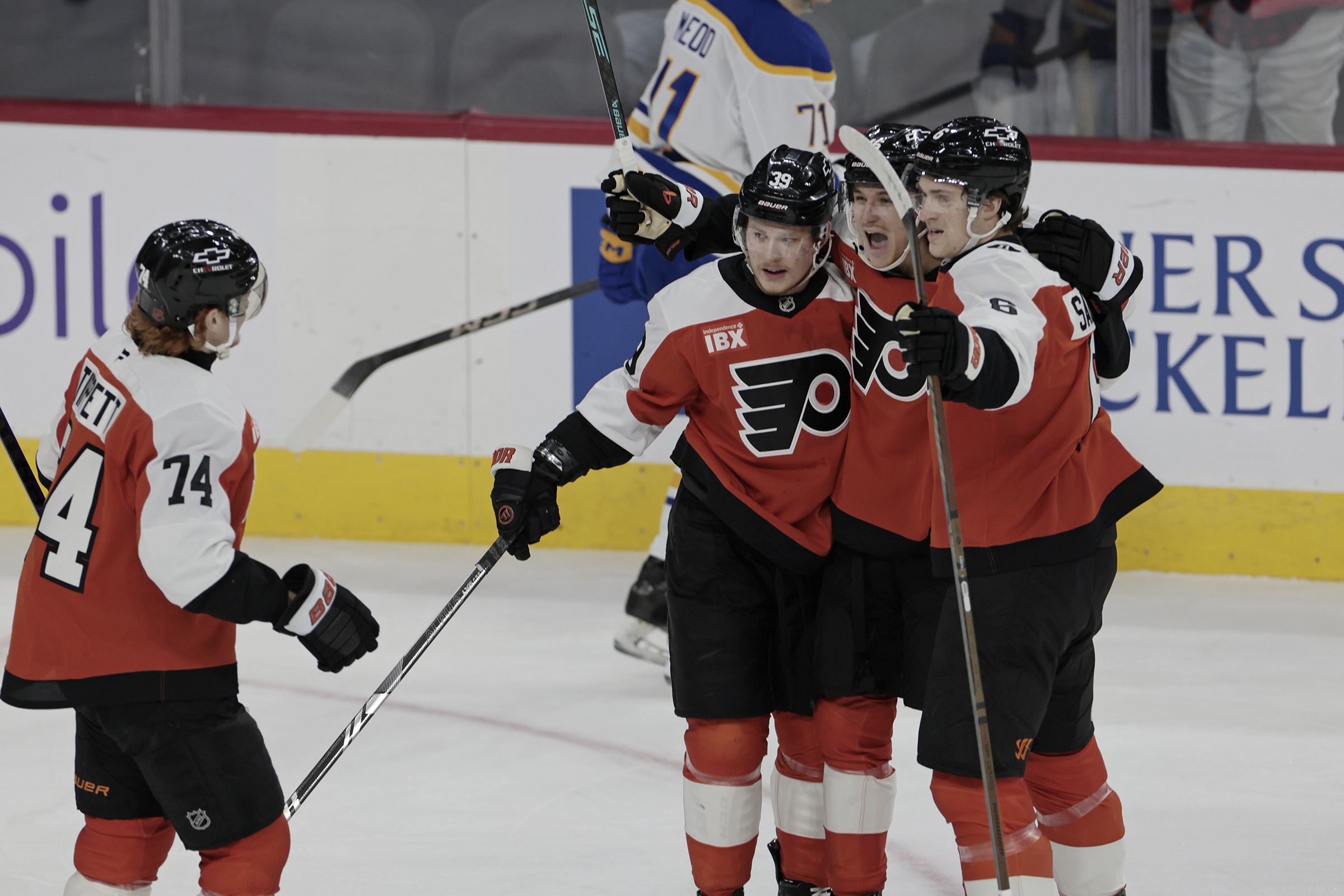
    The Flyers power play cashed in twice on Wednesday night against the Buffalo Sabres.

    Good teams stop losing streaks

    It wasn’t a losing streak, per se, but the Flyers lost one game for the fifth time this season and ended it there. The most they’ve lost this season is two straight, which hasn’t been seen during the first chunk of the season since 2011-12.

    So why hasn’t the losing snowballed like in years past?

    “I think that’s just showing our maturity as we’re growing. I think that we work really hard, practicing, trying to keep our momentum going. You practice hard, you play hard. So those things kind of translate,” alternate captain Travis Konecny said.

    “We also had some days off, too, right now, so that’s given us a little bit of our legs tonight, and we have a little stretch coming up here to get going again. So it’s kind of a combination of things, to be honest.”

    Good teams have balanced scoring

    Tyson Foerster, who officially went on injured reserve on Wednesday after sustaining an upper-body injury on Monday, was in the locker room after the game, high-fiving his teammates. But while he’s around, not having him on the ice leaves a pretty big hole in the lineup.

    Entering the night, he was the Flyers’ top goal scorer with 10 goals. At the end of it, he was tied with Zegras, with Tippett breathing down their necks after potting his ninth.

    “That’s a big hole that we have to fill with him out,” Tippett said of Foerster. “Obviously, you hate to see a guy like that go down, but anytime, all of us can kind of pitch in, and guys contribute throughout the lineup, it’s good to see. And, I think everyone kind of steps up a little bit when a guy like that’s out of the lineup.”

    But the best sign of the night was that Bobby Brink and Noah Cates both got on the board, with each logging an assist on the other’s goals.

    Brink’s goal came off a shot by Cates after he dropped it to the centerman — neither could remember if Cates called for the drop pass — and while it was his seventh of the year, it was just his second in the past 13 games.

    “Yeah, I mean, it’s not really fun scoring one point in 12 games,” said Brink, who is inching closer to his career high of 12 goals. “I mean, it’s one game, so probably should start scoring more in the other ones, too.”

    While Cates had been playing primarily with Foerster, he was reunited with Brink on Wednesday, and the chemistry was immediately rekindled. Brink fed Cates for the redirect and his sixth of the season. And they did so with Nikita Grebenkin, who finally moved up to the top nine, on the left wing.

    “He makes some good plays. He’s in good spots. He’s always flying out there and making plays,” said Cates of Grebenkin, who created the turnover and got an assist on Brink’s goal. “So just kind of, the more we play together, the more we can learn and build that chemistry and that trust. And I thought he was awesome tonight.”

    According to Natural Stat Trick, Tocchet rolled all four lines evenly, with each line getting roughly 6½ to 8½ minutes despite a disjointed game with a ton of penalties called. It’s important that, as the schedule gets heavier because of the pending Olympic break, the Flyers can continue to roll four lines and generate offense from throughout the lineup.

    Good teams score on the power play

    Last season, of the 16 teams that made the postseason, only the Los Angeles Kings, Carolina Hurricanes, Montreal Canadiens, Minnesota Wild, and Dallas Stars were in the bottom half of the league’s power play rankings. The two teams in the Stanley Cup Final, the Edmonton Oilers and champion Florida Panthers, clicked at 23.7% and 23.5%, respectively.

    The power play has been a thorn in the Flyers’ side for years, but right now, it’s out of the basement and tied for 18th with the Anaheim Ducks at 18.7%. It’s a critical step forward for the team to not just have confidence in their units but to know that it can help them either get back into games or extend leads.

    And if they don’t score, as they did twice on Wednesday night, going 2-for-5, it also helps build momentum in the game.

    With Foerster out for 2-3 months, one of the units now has Konecny, Zegras, Travis Sanheim, Matvei Michkov, and Tippett. Sean Couturier took a neutral zone faceoff and then went right to the bench for Zegras to hop on.

    They scored two goals.

    “Just moving it, I think try not to hold on to it too long. I thought Sanny did a great job tonight of being confident up top, moving the puck, and I think just being direct, trying to get shots to the net,” Konecny said.

    “When you look at a lot of the top power plays, other than some of the really skilled ones, you look at all the top power plays, it’s just like getting pucks to the net, deflections, having bodies there, outnumbering them. And I think we focused on doing that tonight a lot.”

    “We had some looks up top. Obviously, he got a few blocked, so we might have to change some angles there, but at least we’re shooting the puck,” added coach Rick Tocchet.

    “If it hits a shaft or something, I can live with it, but we’re getting more shots from the middle. … I’d like to see a little bit more movement earlier on the power play, but, being picky. But yeah, it was good for us tonight.”
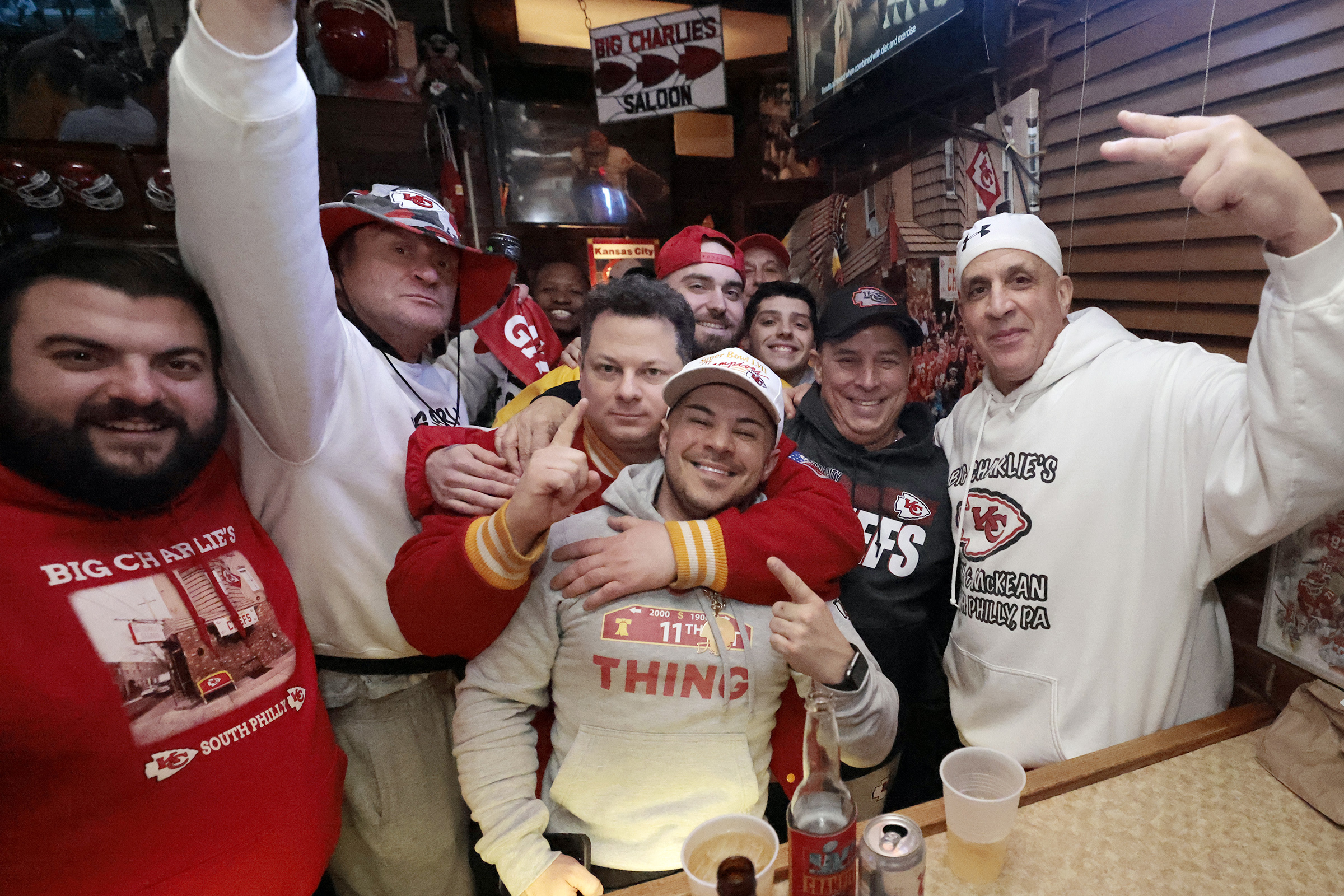
  • Paul Staico, owner of South Philly bar dedicated to Kansas City Chiefs, dies at 59

    Paul Staico, owner of South Philly bar dedicated to Kansas City Chiefs, dies at 59

    He became the bar’s owner before he could legally drink, taking it over at 16 years old when his dad died. The two-room corner bar with wood paneling and a jukebox soon became the place to watch the Kansas City Chiefs, a South Philadelphia haven to watch a Midwestern football team just a few blocks from where the Eagles play.

    But many of the people who packed Big Charlie’s Saloon every Sunday had a secret: They weren’t really all that crazy about the Chiefs.

    “I get heat for being a Chiefs fan,” said city councilman Jimmy Harrity, who does not miss a game at 11th and McKean Streets. “But I wasn’t a Chiefs fan. I’m a Paul Staico fan. If I could name three players, that’s a lot. I was there cheering for him. Some are there to watch the game. But for the most part, they were there for Paul.”

    Mr. Staico died suddenly Sunday morning, a few days after his bar stayed open on Thanksgiving night because the Chiefs were playing. He was 59.

    “It was sudden,” Harrity said. “Nobody saw it coming. He had no problems. No issues. The bar did well. I was with him the day before. I knew he wasn’t right, a little depressed. But I didn’t think it was like this. It was shocking to everyone. It’s so tragic. He didn’t deserve to go out like that. He protected people. He didn’t let bad eggs around.”

    Mr. Staico was born on March 10, 1966. He attended Bishop Neumann High School, boxed as a teenager, and stayed in shape as a bodybuilder. He looked like a linebacker but was as gentle as a kicker.

    Kansas City Chiefs fans, including Big Charlie’s Saloon owner Paul Staico (far right) celebrate their teams Super Bowl win at the bar in 2024.

    He became a Chiefs fan as a boy when his dad — Big Charlie — hit on a bet in 1970 for the Chiefs to win the Super Bowl. Big Charlie told his boy he would buy him a bike if the team in red won. The Chiefs won, giving Big Charlie’s boy a new ride and a new favorite team.

    The Chiefs fell off after that championship, but Mr. Staico remained loyal to his team. The South Philly Chiefs fan bought a satellite dish in 1986 to air games at Big Charlie’s, slowly converting his friends from the neighborhood like Anthony Mazzone to cheer for the red and gold instead of the Birds.

    The bar was dubbed “Arrowhead East” as Mr. Staico covered the walls in Chiefs memorabilia, turning the corner bar into a shrine for the team that helped him land that bike.

    Mr. Staico’s bar was packed shoulder-to-shoulder for big games (a back room is invite-only) and even shut down 11th Street a few times to watch the Chiefs outdoors on a projector screen.

    He paid a guy from the neighborhood to sweep the sidewalk every day and offered wisdom to anyone who sat at his bar.

    “We make people feel at home,” Mr. Staico said in an NFL Films feature about the bar. “It’s not like it’s just our thing. Everyone is invited.”

    Harrity moved into the neighborhood when he was 18, living in an apartment on Emily Street. He was an outsider — an Irish kid from Southwest Philly dating an Italian girl in deep South Philly — but Mr. Staico made him feel welcome. Harrity would walk his dog past Big Charlie’s and talk to Mr. Staico outside.

    “I didn’t drink. I was sober,” Harrity said. “The reason they have water in there is because I didn’t drink. He bought spring water so I’d have something to drink when I went in to watch the games. That’s the kind of guy he was. If you met him once, you were his best friend.”

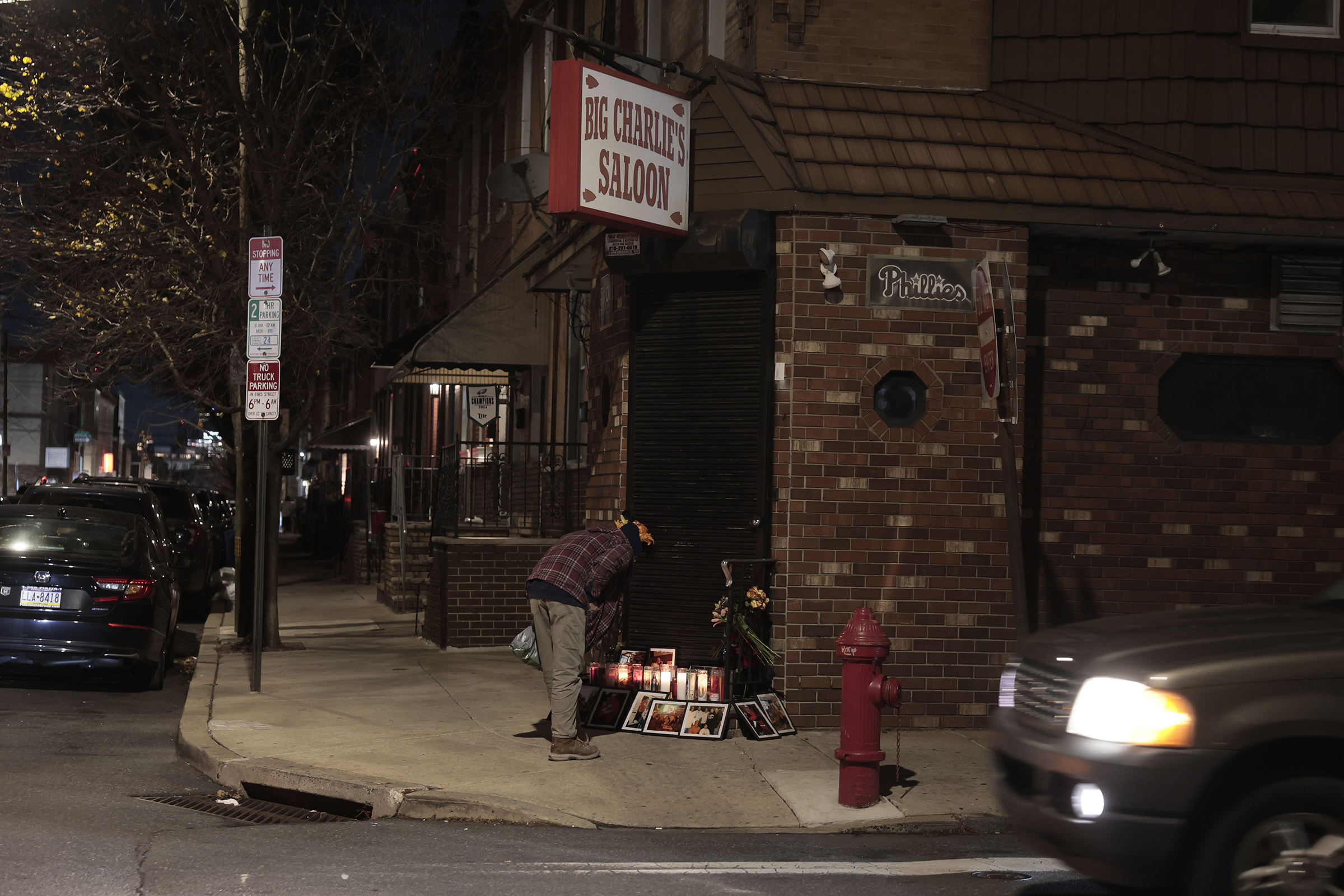
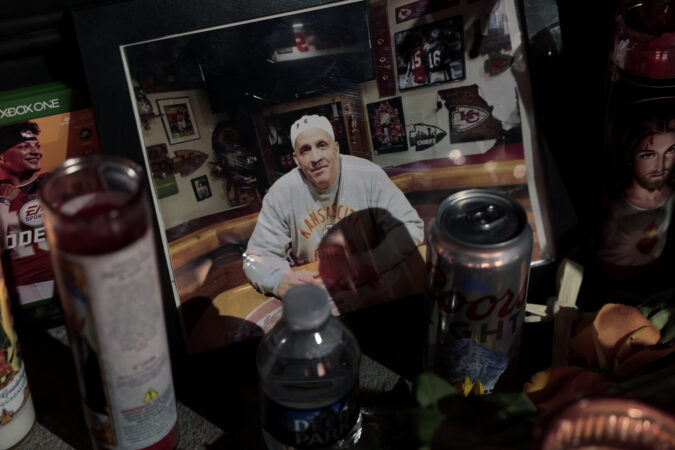
    A memorial appeared on the front step of Big Charlie’s Saloon, located at 1953 S. 11th St. in Philadelphia.

    The guys at Big Charlie’s root for the other Philly teams but not the Birds. They have Chiefs tattoos, Chiefs jerseys, and raised their children to be Chiefs fans.

    Charlie Staico’s winning bet spawned a generation of Chiefs fans. The allure of Big Charlie’s continued to grow, almost like a quirky roadside attraction. Is there really a spot in Eagles country devoted to a team from 1,100 miles away?

    NFL Films stopped by occasionally, TV news trucks pulled up whenever the Chiefs were gearing up for a Super Bowl run, and even some Chiefs players and coaches sat at the bar. The regulars made pilgrimages to Arrowhead Stadium and wore Big Charlie’s sweatshirts with pride. Mr. Staico’s South Philly bar was known as a place to watch the Chiefs, but the brick building was more than that to the people who filled it.

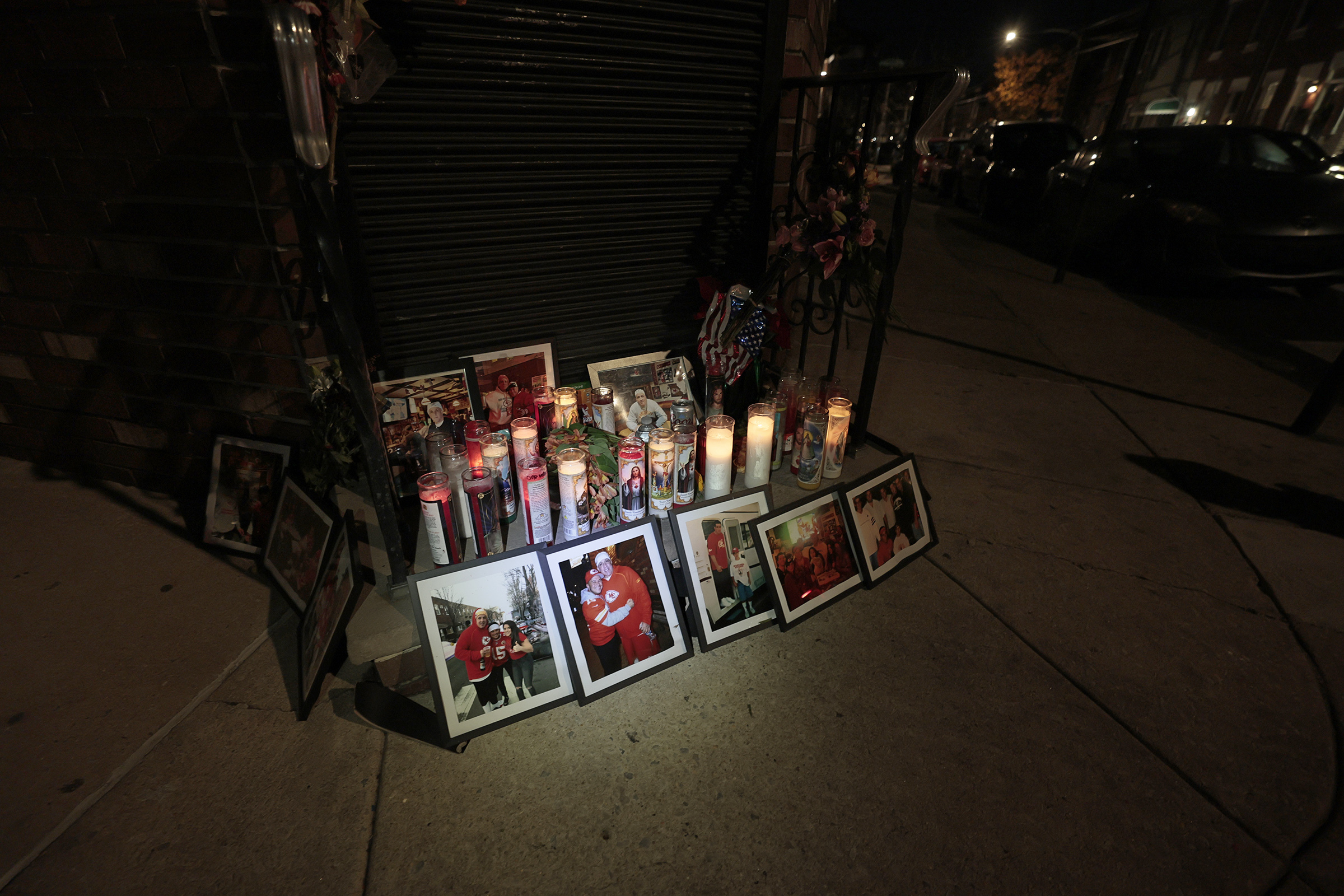
    Photos of Paul Staico are part of a memorial for the late owner of Big Charlie’s Saloon.

    “It started out with 10 of us in the back bar crying every game because the Chiefs stunk,” Harrity said. “Then it grew to 300, 400 people for the first game every year. That’s not because of the Chiefs. That’s because of Paul. He made you feel at home. He made you feel like part of the family. One time in there, and that was it. The kind of place where you walked in there, threw $20 down on the bar, bought a round, and didn’t pay for another drink all day. It was just a friendly place.”

    Mr. Staico is survived by his longtime girlfriend, Gloria Quinone; his sister, Linda Staico; and brother-in-law, Mark Mancini. A funeral service is planned for 11:30 a.m. Saturday at Epiphany of Our Lord Church at 11th and Jackson Streets.

  • Jordan Mailata named Eagles’ 2025 Walter Payton Man of the Year

    Jordan Mailata named Eagles’ 2025 Walter Payton Man of the Year

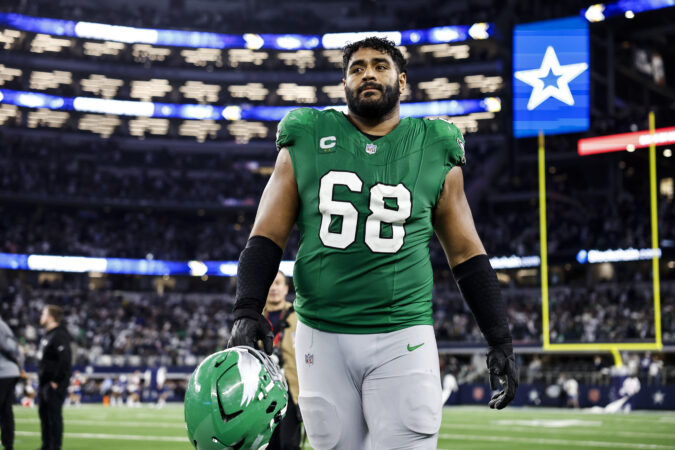
    Left tackle Jordan Mailata is the Eagles’ 2025 Walter Payton Man of the Year nominee, the team announced Thursday.

    The award recognizes players who excel on the field and make an impact off it. Mailata is one of 32 nominees (one from each team). The winner will be announced during the NFL Honors ceremony on Feb. 5 during Super Bowl week in the San Francisco area.

    Since the award was established in 1970, three Eagles have won it: Harold Carmichael in 1980, Troy Vincent in 2002, and Chris Long in 2018.

    “Jordan Mailata’s recognition as a Walter Payton NFL Man of the Year club winner is truly well deserved and speaks to his profound impact, both on and off the field,” Eagles owner Jeffrey Lurie said in a news release. “One of the highest honors bestowed upon players in the National Football League, this award celebrates those who proudly represent their teams with class and dignity — all in the name of the great Walter Payton. We congratulate Jordan and thank him for always being a person of high character who leads with kindness, compassion, and integrity.”

    The team also revealed how it informed Mailata of the honor earlier this week:

    Mailata is a converted rugby player from Australia who was a seventh-round pick by the Eagles in 2018 and has developed into a reliable long-term starter at left tackle. Besides his run of success on the field, Mailata, a second-team All-Pro selection in 2024, has been involved in multiple charitable endeavors. Mailata and his wife, Niki, were honored at the Philadelphia Children’s Alliance’s Bear Affair this year for their ongoing support.

    Mailata also supports the American Association for Cancer Research and has been involved in the Eagles Autism Foundation. Additionally, his “Jeff Stoutland University” vignette on Sunday Night Football that went viral in 2022 inspired the creation of an apparel line that has raised more than $200,000 for the foundation.

    Mailata also lent his singing chops to Christmas albums with Jason Kelce and Lane Johnson that have raised more than $10 million for local charities. Last year, the trio organized Operation Snowball, a project aimed at providing a gift to every student in the Philadelphia public school system thanks to funds raised by the singing group’s third album.

    The charitable beneficiary of each team’s WPMOY nominee will receive $40,000, and the nonprofit chosen by the national winner will receive $250,000. All donations are courtesy of the NFL Foundation and the Nationwide Foundation.

    Mailata will wear a Man of the Year decal on his helmet for the rest of the season.

  • Joel Embiid’s new Skechers, the brand’s first signature basketball shoe, have dropped: ‘It means a lot’

    Joel Embiid’s new Skechers, the brand’s first signature basketball shoe, have dropped: ‘It means a lot’

    After driving hours from Connecticut, 25-year-old Tristan Howard walked toward the back of Lapstone & Hammer with a large canvas covered in wrapping paper. He approached Sixers center Joel Embiid with the gift, and the former league MVP gladly accepted — opening the present on the spot.

    As the wrapping paper slowly fell to the floor, a painting of Embiid was revealed. The 7-foot center could be seen dunking on an opponent with one hand while holding his MVP trophy in the other, wearing sunglasses, sporting his Olympic gold medal — and of course, wearing his new Skechers shoe, the SKX JE1.

    “I know he’s a very powerful player,” Howard said. “So him dunking the ball is very important. And I know that he won a gold medal and was MVP. So, I wanted to incorporate that somehow. And then obviously the new shoe, I put that on him. I’m happy with how it came out.”

    Howard, who happens to be a New York sports fan, spent six hours the night before painting the gift for Embiid. It was one way the Sixers player was able to celebrate the launch of his latest sneaker and Skechers first-ever signature basketball shoe.

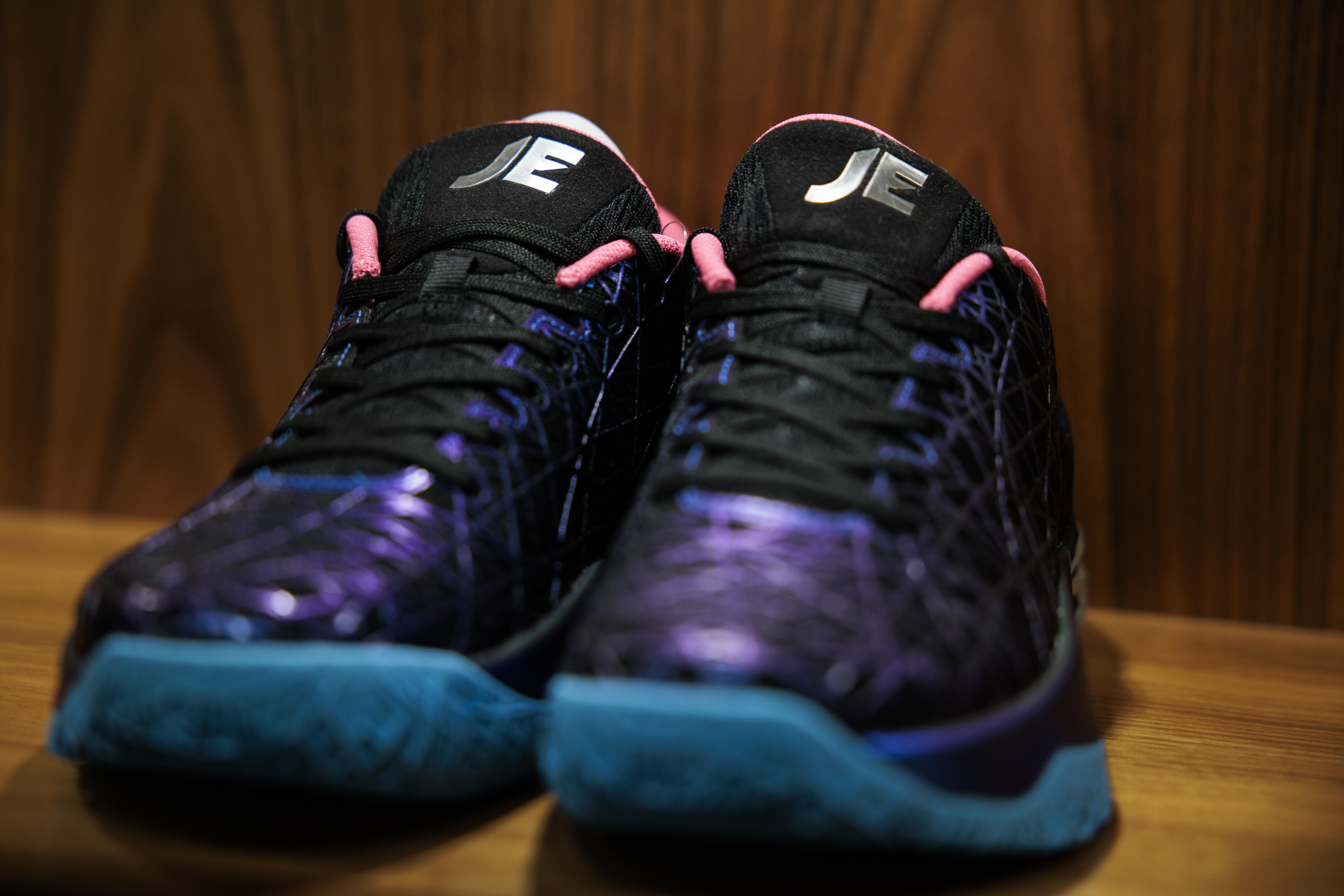
    Joel Embiid’s first signature shoe from Skechers, the SKX JE1, feature his initials on the tongue.

    “It means a lot [to have a signature shoe], especially when you look at where I come from, everything that I’ve been through, and what it took to get here,” Embiid said in a news release. “I always say, my life is a movie, everything happened so fast, one thing after another. Honestly, I wasn’t even supposed to be here. So, to be sitting here now, with my own shoe, it just shows that people believed in me. And that feels great. It’s truly amazing.”

    The shoe was released exclusively at Lapstone & Hammer on Saturday, just a day before Embiid debuted his new sneakers during the team’s loss to the Atlanta Hawks. Wednesday’s event gave fans another chance to purchase the shoes ahead of its global release on Thursday.

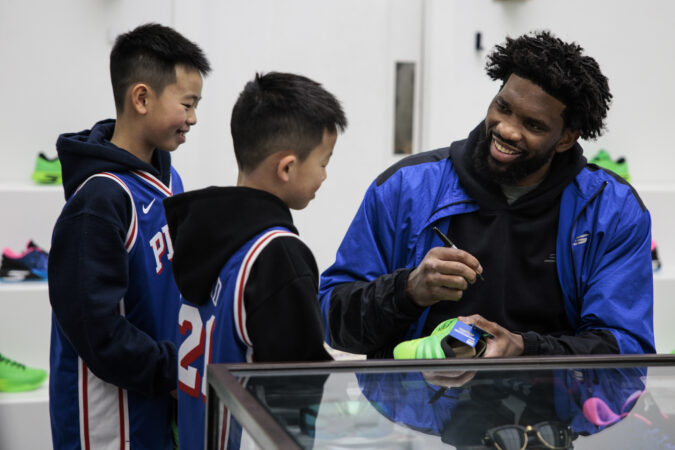
    And as a way to celebrate the release in the city, Embiid met with a number of those fans at the Center City store, signing sneakers and posing for photos. Sixers forward Jabari Walker, a fellow Skechers athlete, even made an appearance to show his support.

    “The message I want to send is that anything is possible,” Embiid added. “When you look at where I started, I wasn’t even supposed to play basketball — I was playing volleyball. And now, here I am. I’m just so thankful for all the opportunities I’ve had.

    “Like I said earlier, this shoe represents the belief that people had in me. It’s about showing that as long as you put the work in, you can achieve your goals — you can achieve anything you want. That’s what happened to me, and that’s what I want for others.”

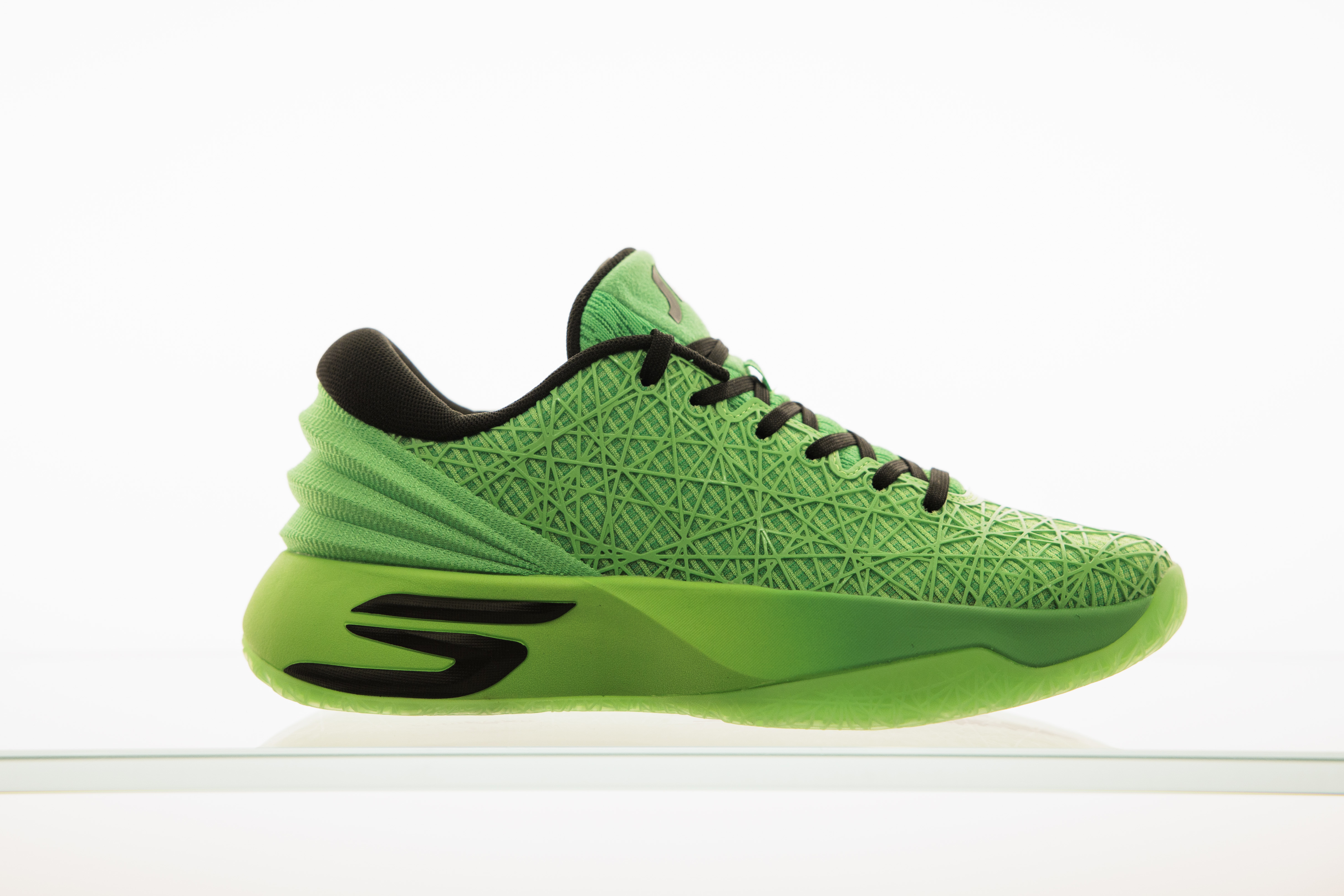
    A side view of the SKX JE1 shows the upper cage, as well as the three heel points that were a critical part of the shoe’s design.

    The design, according to Skechers, is inspired by Embiid’s non-traditional path to the NBA. It features an abstract multidirectional traction pattern with their signature Goodyear outsole and a mesh body with a 3D-printed silicon lockdown cage. The three heel points represent Embiid’s three keys of life: heritage, sports, and family.

    “I’ve been working with Skechers on fine-tuning every detail of the SKX JE1 and I’m excited to share it with the world,” Embiid said in the release. “Skechers strives for excellence in performance and comfort, so I couldn’t ask for a better partner in creating this signature shoe.”

    In addition to being on sale at Lapstone & Hammer, the SKX JE1s are now available at Skechers.com, select Skechers stores, and other specialty retailers. They retail for $130.

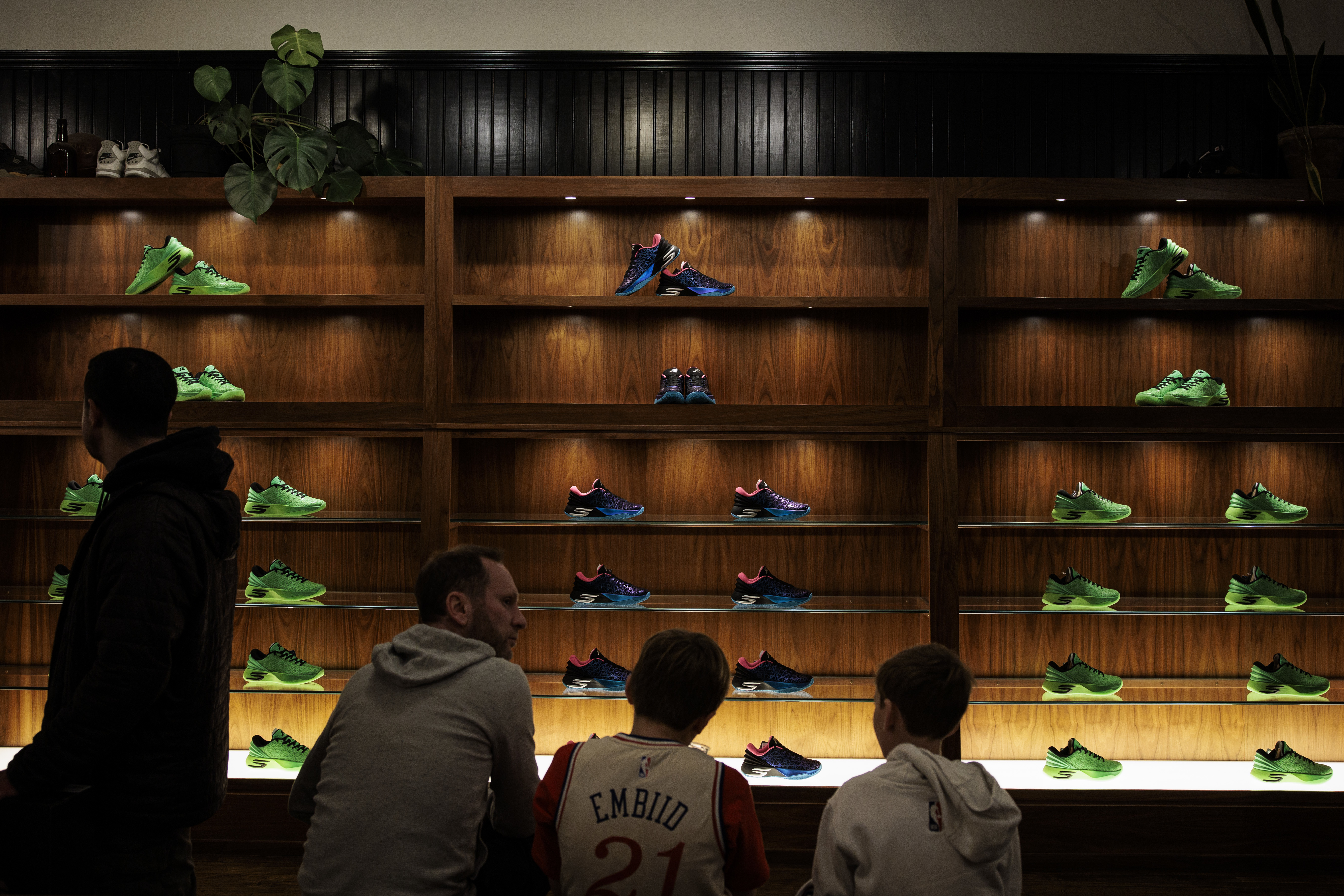
    Different designs of Joel Embiid’s SKX JE1 sneakers were on display during the release event at Lapstone & Hammer on Wednesday.
  • Kevin Willard may soon have his Massimino moment at Villanova, but does this Big 5 format make sense for all?

    Kevin Willard may soon have his Massimino moment at Villanova, but does this Big 5 format make sense for all?

    In 1991, a Villanova coach whose team had risen to national prominence was vilified for killing the Big 5 when the association of Philadelphia’s Division I hoops programs moved away from its round-robin format to a scaled-down version.

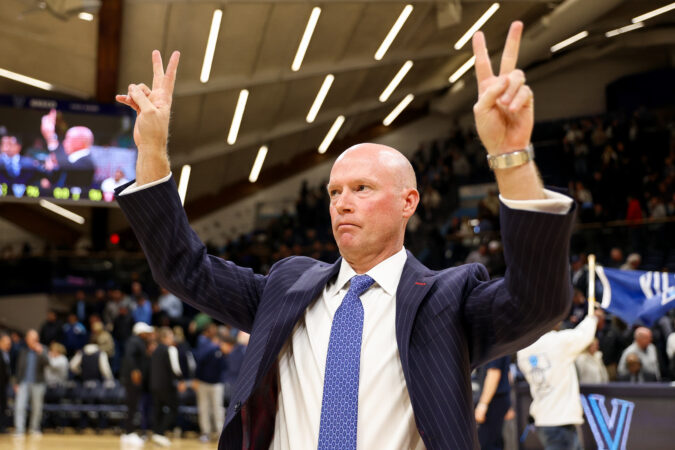
    Thirty-five years later, new Villanova coach Kevin Willard may soon face his Rollie Massimino moment.

    “It’s not going to go away,” Willard said of the Big 5 in an interview over the summer. “I think there’s ways to make things better.

    “I want to go through it and figure out what’s best for it.”

    On Saturday, Villanova will play for a Big 5 Classic championship vs. Penn. But what’s best for Villanova probably isn’t what’s best for the other five schools, and what’s best for Penn, St. Joseph’s, or Temple might not be what’s best for La Salle or Drexel.

    To be sure, the sport has changed greatly since 1991. The gap between Villanova and the other local programs has not just grown, it’s never been greater — with Jay Wright’s run of dominance and, more relevantly, the implementation of a payment structure in college sports. Villanova is the only Big 5 school in a power conference with a major television deal and probably can afford to spend more money on its men’s basketball roster than the other five Big 5 programs combined. It probably will be a 15-point favorite over Penn on Saturday in the title game.

    The money is at the heart of all of this. Forget your grandfather’s Big 5; this isn’t even your older brother’s Big 5. There are myriad reasons why the rivalries themselves aren’t the same, and they have been covered ad nauseam over the years: Young people don’t attend college basketball games the way they used to, the teams haven’t been very good, the transfer portal era has created a culture of mercenaries who travel from school to school year after year, and so on.

    Fran Dunphy, the man they call “Mr. Big 5,″ who still watches plenty of basketball in his retirement, had an entire row to himself at Glaser Arena for a large part of the La Salle home game vs. Villanova last month. The Palestra has been removed from the equation almost entirely. The Villanova-St. Joe’s rivalry won’t happen this season for the first time in nearly 30 years. All of that is to say things change and nothing lasts forever.

    But the financial component of it is why the current format of the Big 5 in its nascent stages — in which the six teams are divided into two rotating pods before playing two pool games to determine which teams match up in first-, third-, and fifth-place games during the Big 5 Classic tripleheader — seems unlikely to last very long.

    The House v. NCAA settlement that resulted in schools directly paying players has only increased the need for financial diligence.

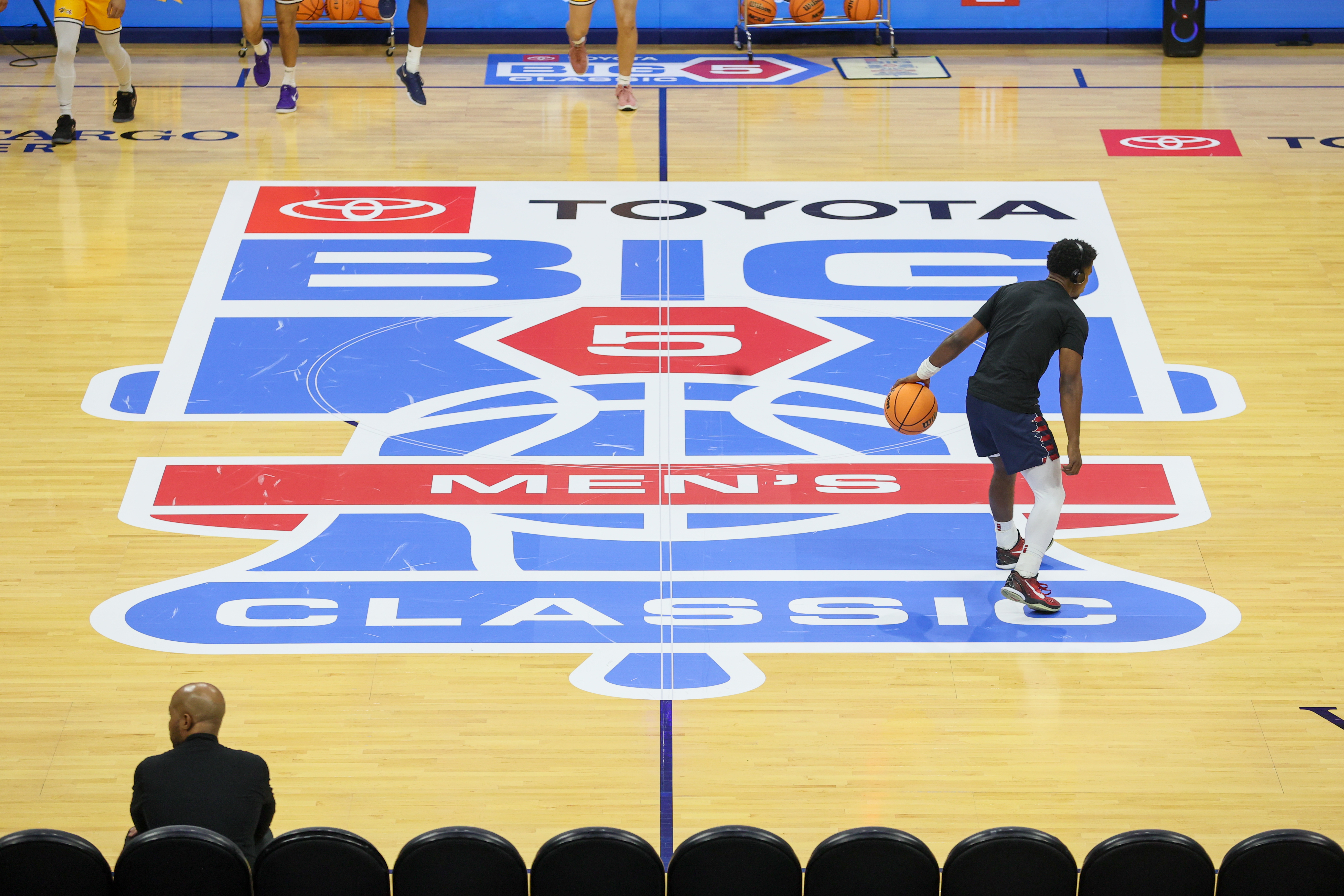
    Players warm up before the start of the Big 5 Classic games on Dec. 7, 2024.

    Villanova has to be considering the merits of keeping together an aging tradition vs. the cost of doing so, and it shouldn’t be alone in its considerations.

    Instead of taking a bus ride to Olney to play at La Salle and winning by 15 in a sleepy building, wouldn’t Villanova have been better off having a home game, even if that means spending something like $100,000 to have a lesser opponent come to Finneran Pavilion? Maybe it’s not a buy-game and is instead another opportunity to host a team like Pittsburgh, which Villanova will do on Dec. 13.

    Regardless of the replacement opponent, the current format means Villanova could be missing out on essentially two home games. One is the automatic road game from the two pod-play contests, the other is the Big 5 Classic itself, which divvies the pot from ticket sales seven ways between the six schools and the building.

    That’s hundreds of thousands of dollars in revenue Villanova isn’t bringing in. Sure, your reaction to that can be “boo-hoo,” but that could be the salary of a rotational player floating away for the sake of nostalgia.

    “When you play 20 conference games, playing an [Atlantic 10] road game every year is really difficult,” Willard said in June. “You’re also taking away a home game when revenue has become extremely important.”

    Which brings us to the other element of this, and why Villanova isn’t alone, even if the Main Line school again will be vilified publicly for whatever happens next to the Big 5 (if its competition, for example, ends up being something like a one-day-only event with rotating matchups).

    Let’s take Drexel or La Salle, for example. What if instead of playing two of these three Big 5 games, those schools got $100,000 to fly to a high-major program? A few hundred thousand may be a rotational player at Villanova, but that’s a starter or two at either of the aforementioned schools.

    It may be reductive to view all of this through that lens, but that’s the reality for these schools. Money is all that matters, and the toothpaste is out of the tube in that regard. There will be no going back, which means traditions, even new takes on them, can’t last forever.

    The new Big 5 format breathed some life into one that was getting stale, but it was agreed upon before the House settlement. The six athletic directors soon will have to put their heads together and figure out the best path forward.

    “Scheduling is as important as anything in college sports,” Willard said. “Scheduling is everything.”

    Massimino felt something similar in the early ’90s, too. That much hasn’t changed, but the financial implications certainly have.

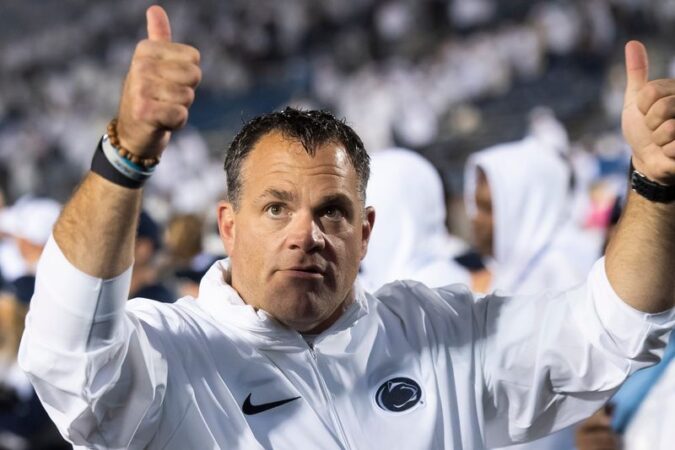
  • Penn State’s coaching search drags on. Who’s left?

    Penn State’s coaching search drags on. Who’s left?

    Fifty-three days ago, Penn State decided it needed new blood and energy injected into the program after a 3-3 start in James Franklin’s 12th season at the helm.

    Fresh off a College Football Playoff semifinal appearance and a program-record 13 wins, Penn State had expectations to again compete for a title. To say the least, that did not happen, and Franklin was fired as a result.

    The mid-season timing was meant for Penn State to get an early start on the coaching search. Athletic director Pat Kraft was adamant on Oct. 13 that “a new leader can help us win a national championship.”

    Fifty-three days ago, and counting.

    By the time the calendar changes to December, most college football teams want to have their head coach in place, if they do decide to make a change. Consider this: Penn State had a coaching opening before LSU, Florida, Colorado State, and Auburn, and those programs all hired their next coach before the Nittany Lions. South Florida, Kentucky, and Michigan State all had coaching changes happen last weekend and each hired a new coach by Wednesday’s early signing day for the 2026 recruiting class.

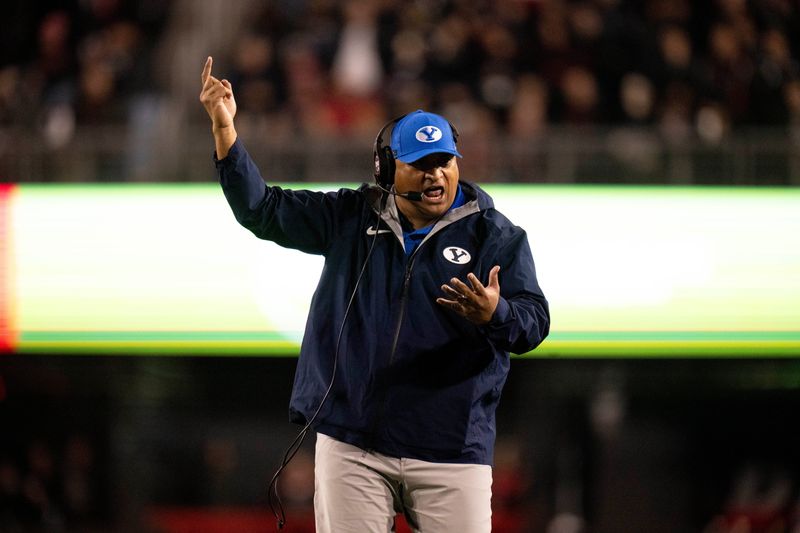
    BYU head coach Kalani Sitake was on Penn State’s radar before deciding to stay with the Cougars.

    Brigham Young’s Kalani Sitake emerged as a top candidate for the Penn State opening earlier this week before he decided to stay in Provo, Utah, and received a contract extension. Other candidates like Nebraska’s Matt Rhule, Georgia Tech’s Brent Key, Missouri’s Eli Drinkwitz, and Vanderbilt’s Clark Lea opted to sign extensions instead of jumping ship.

    There were opportunities to hire James Madison’s Bob Chesney (now heading to UCLA), a Kulpmont, Pa., native, and Ohio State offensive coordinator Brian Hartline (now heading to South Florida). Instead, the Nittany Lions chased after bigger targets, like Sitake, Texas A&M’s Mike Elko, and Alabama’s Kalen DeBoer to no avail. And Franklin not only got a new job at Virginia Tech, he took several former Penn State commits with him.

    Brian Daboll, the former New York Giants coach, is a candidate, per FootballScoop, but the coaching search has now passed early signing day, and Penn State has just two players committed to its 2026 recruiting class.

    The pool of candidates has shrunk considerably. The Nittany Lions’ current players and staff will have decisions to make in the coming week with a bowl game looming and the transfer portal opening next month. And at this point no matter who is hired, whether it’s Terry Smith getting an internal promotion or an outside candidate gets the job, the program will be relying heavily on the transfer portal.

    Villanova’s next test

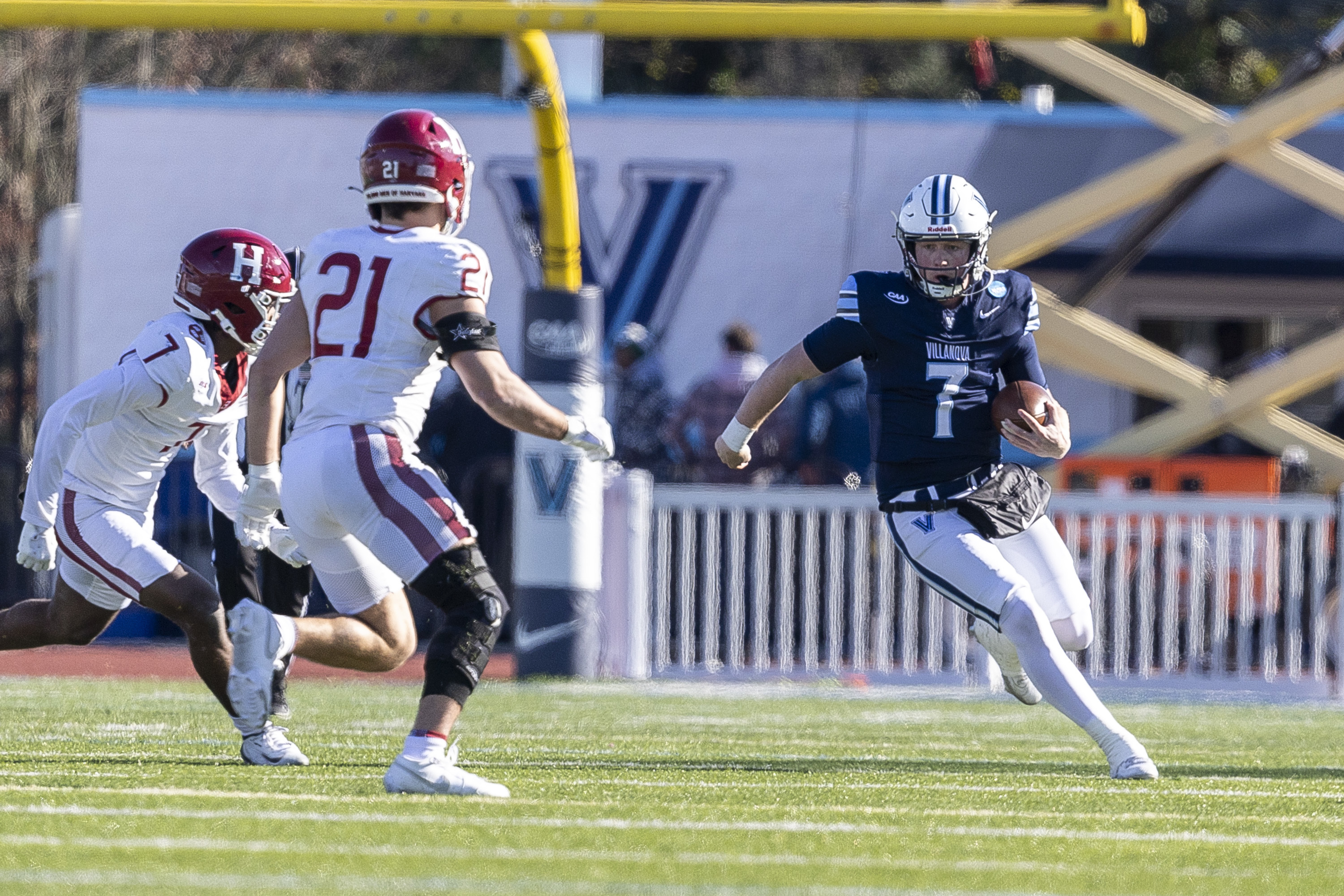
    After dominating Harvard at home last weekend, Villanova travels to Lehigh (12-0) on Saturday (noon, ESPN+) for a spot in the FCS playoff quarterfinals.

    The Wildcats (10-2) will need to slow down Lehigh’s No. 4-ranked rushing attack (235.3 yards per game), which is led by running back Luke Yoder (110.8 yards per game). Quarterback Hayden Johnson also brings a dual-threat element to Lehigh’s offense, rushing for 426 yards and four rushing touchdowns in addition to his 18 passing touchdowns and 62.5% completion percentage.

    Lehigh’s pass rush is among the most prolific in the FCS. The defense has collected 40 sacks, the fourth most nationally. Lehigh also has the stingiest run defense in the FCS, allowing just 73.7 rushing yards per game, and is the No. 2 scoring defense (13.9 points allowed).

    Pat McQuaide will lead Villanova’s high-powered offense against Lehigh on Saturday.

    As opposed to last week, when the Wildcats dominated Harvard with 319 rushing yards, the offense will likely need to win this game on the arm of Pat McQuaide. He was efficient in last week’s win, throwing for 193 yards and three touchdowns. Lehigh ranks 50th in the FCS in passing yards allowed per game (207.9), so there should be opportunities for McQuaide to find playmakers Luke Colella and Lucas Kopecky downfield.

    The winner will face either Tarleton State or North Dakota next weekend.

    Can Eastern U keep going?

    Fresh off its first-ever postseason victory, Eastern University (10-1) will host Susquehanna University on Saturday (noon, ESPN+) in its first ever playoff home game for a spot in the Division III quarterfinals. Head coach Billy Crocker is a former Villanova and Connecticut defensive coordinator who has quickly built up Eastern’s football program in its fourth year of existence.

    The offense is led by quarterback Brett Nabb, who ranks ninth in D-III in rushing yards and is Eastern’s top ball carrier with 1,307 yards. He had four touchdowns in last week’s 28-24 win over Franklin & Marshall.

    Susquehanna ranks 23rd in rushing yards allowed per game (81.1 yards). The River Hawks have played two high-scoring playoff games in consecutive weeks with wins over Washington and Jefferson College and Christopher Newport University, surrendering 28 or more points in each game.

    If Eastern wants to slow down Susquehanna’s high-scoring offense, which ranks 16th in scoring (43.3 points), it starts with the passing offense, which averages 273.2 yards. Eastern’s pass defense has been solid, allowing 158.1 passing yards per game, and its defense ranks top 30 in points allowed (15.8 points) and top 15 in total defense (249.3).

    The winner will face either Salisbury or Johns Hopkins next weekend.

    The BIG number

    33: The number of recruits for Temple’s early signing day class, finalized on Wednesday, which was more than Villanova, Penn State, and Penn combined. That number was also the Owls’ largest in program history, and was ranked the top class in the American Athletic Conference, according to 247Sports.

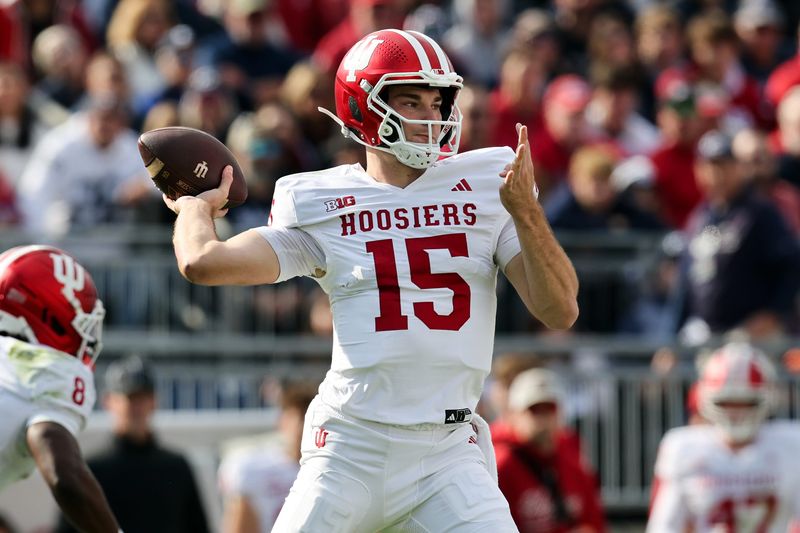
    Indiana quarterback Fernando Mendoza (15) is expected to go early in next year’s NFL draft.

    Game of the week

    Big Ten championship: No. 1 Ohio State vs. No. 2 Indiana (8 p.m., Fox29)

    Though both teams are CFP bound no matter the result, the two top-ranked teams in college football will square off in Indianapolis on Saturday night. Heisman hopeful Fernando Mendoza, Indiana’s quarterback, is a projected top 10 pick in the 2026 draft class.

    Ohio State’s defense is loaded with talent, from linebackers Arvell Reese and Sonny Styles to safety Caleb Downs.

  • Chargers preparing as if QB Justin Herbert will play vs. Eagles

    Chargers preparing as if QB Justin Herbert will play vs. Eagles

    EL SEGUNDO, Calif. — Los Angeles Chargers quarterback Justin Herbert did not practice Wednesday, two days after undergoing surgery to repair a broken bone in his nonthrowing hand.

    Coach Jim Harbaugh said the Chargers (8-4) are preparing as if Herbert will start against the Eagles on Monday, though he repeatedly stressed a formal determination on Herbert’s status would be made later in the week.

    “Not gonna practice, but he hasn’t missed a beat,” Harbaugh said. “Already back today in meetings and out on the field for walk-through.”

    Herbert said he had a plate and screws placed in his left hand Monday afternoon. He kept his hand out of sight in the pocket of his sweatshirt during a news conference Wednesday afternoon.

    “The doctors were happy with how they performed, so I guess that’s always a good thing,” Herbert said. “It’s just the next couple days of seeing how the swelling handles and what goes on from there.”

    Herbert, who was injured in the first quarter of a 31-14 win over the Las Vegas Raiders on Sunday, is treating this week as if he will play. He has only missed four games because of injury in six seasons with the Chargers, having been sidelined for the last four games in 2023 because of a broken finger on his right hand.

    “It’s obviously a situation where you’ll see how it goes throughout the week, and you’d love as much time as possible,” Herbert said. “I think having an extra day doesn’t hurt, so see how it goes and adjust from there, I guess.”

    Backup Trey Lance worked with the starting offense in practice. Harbaugh had previously said Lance, who was drafted third overall by the San Francisco 49ers in 2021, would see additional snaps in case he needed to play in situations where the Chargers might need to operate from under center, such as at the goal line or in short yardage.

    “Better to be prepared and not have your opportunity come than have your opportunity come and not be prepared,” Harbaugh said.

    The Chargers played exclusively out of the shotgun and pistol for the final three quarters after Herbert returned to the game with his hand in a hard cast and wearing a glove for additional protection.

    “We’ll be preparing the same exact game plan for both quarterbacks,” Harbaugh said.

    Herbert does expect to be able to try taking snaps from under center later this week. Herbert also believes he would be able to start even if he cannot practice, while admitting it would not be an ideal situation.

    “It’s definitely difficult in this league, but if that’s the case and Coach (Harbaugh) feels like I’ll give the best shot for the team, you know that I trust his decision,” Herbert said.

  • What will it take Roman Catholic and La Salle to come out as state champions?

    What will it take Roman Catholic and La Salle to come out as state champions?

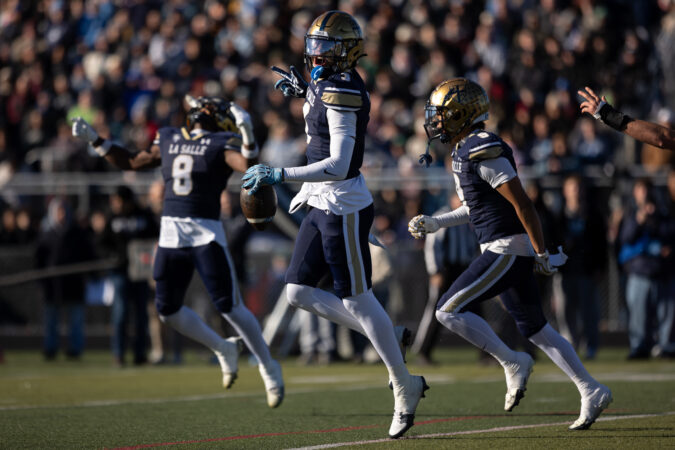
    Roman Catholic has never won a PIAA state football championship. La Salle College High School has not won a state championship in 16 years. Both stalwart Philadelphia Catholic League programs will get their chance to make their respective marks this weekend in the PIAA Class 5A and Class 6A championships at Cumberland Valley High School.

    In a rematch of last year’s 5A championship, Roman will face Harrisburg’s Bishop McDevitt, the alma mater of former Eagles LeSean McCoy and Ricky Watters, at 7 p.m. Friday. La Salle will follow on Saturday at 7 p.m. in the 6A final against Pittsburgh’s Central Catholic.

    As both programs near the title game, neither Roman Catholic coach Rick Prete nor La Salle coach Brett Gordon have brought up winning a state title to their teams.

    “We haven’t even mentioned the words ‘state championship’ all year,” Gordon said. “We want to stay on message. It’s been more of, ‘Let’s get into November playing our best football.’ I think we’re close. But I don’t think we’ve peaked. We hold a high standard.”

    Prete has stressed constant improvement all season.

    “Our message to the kids is that we didn’t play our best game in the state championship last year,” Prete said. “It bothered the coaching staff. It bothered the kids. It’s why our focus is playing a strong, clean game. We want to see what that looks like. The seniors this year want to do it for those kids who were in that game last year.”

    PIAA Class 5A final

    • (District 12) Roman Catholic (11-3) vs. (District 3) Bishop McDevitt (12-2)

    In last year’s Class 5A championship, Roman rebounded from a 21-3 deficit early in the third quarter to tie it in regulation before losing, 34-31, in overtime. McDevitt is on a 12-game winning streak, last losing in August. The Cahillites are on a seven-game winning streak, and have been so dominant that they have not played their starters for an entire game since their 40-39 overtime loss to St. Joseph’s Prep on Oct. 10.

    McDevitt has a first-year starting quarterback, junior Sebastian Williams. He has done a solid job filling the void left by the graduation of Pennsylvania’s all-time leading passer, Stone Saunders, now at Kentucky. Williams has thrown for 2,179 yards and 19 touchdowns against eight interceptions this season. He showed considerable poise in leading the Crusaders in the final minutes to a walk-off 31-28 victory over Peters Township in the state semifinals.

    Roman runs a no-huddle, up-tempo offense, ignited by Akron-bound senior quarterback Semaj Beals, who has passed for more than 12,000 career yards. He has two Temple-bound receivers in seniors Ash Roberts and Eyan Stead Jr., and a capable ground attack centered around sophomore tailback Trey Montgomery. Much will come down to the time Roman’s offensive line can provide Beals, who gets the ball out quickly.

    Senior tight end Giovanni DeSimmone, senior right tackle Gustavo Gomez, junior right guard Malik Cochran, senior center Khalif McNear, senior left guard Dom Ramos, and junior left tackle Sebastian Waddell believe they have a mission to accomplish since losing to McDevitt last December.

    “I know Roman is well-coached, Rick Prete does a great job, and I know they have a lot of guys back from last year,” said McDevitt coach Jeff Weachter, who has more than 300 career victories in 23 years. “They are explosive offensively, and they do a lot of different things on defense. They are physical. They run well. We have an idea what we’re up against with their up-tempo offense. They go fast. From what I understand, they are going even faster this year. That will be a little bit of an adjustment. It takes a little bit to get a feel for that. …This will be a great game.”

    Prete likes the experience his team has going into the title game. Last year was a mountain of firsts for the Cahillites, who accomplished their first state playoff appearance, first state playoff victories, and first appearance in the state title game.

    Roman was up 21-0 in the first quarter against Springfield in the state semifinals and was leading District 6 champion Hollidaysburg 48-0 in the first half of the state quarterfinals.

    “This is a group that knows what to expect and we know how to conduct ourselves; we are not just happy getting to the state championship again,” Prete said. “Starting with the offense, we are not forcing anything. Defensively, scheme-wise, we have been good at figuring out the strengths of other teams and what our strengths are. This is a young group that is playing very maturely.”

    Senior defensive back Justus Gaskin and junior linebacker Walter Hudson have been defensive standouts, and Stead has been a big contributor on the defensive side, too.

    Roman’s inherent bonus is getting great preparation for this stage during the regular Catholic League season against stellar programs, like St. Joe’s Prep and La Salle.

    “The Catholic League is the best in the state,” Prete said. “You have great coaches and great players, and your sense of everything is heightened. Playing great teams exposes your weaknesses. La Salle had the ball with a minute-something left down a score, with the ball in a Missouri quarterback’s hands [Gavin Sidwar] and a Notre Dame-bound receiver to throw to [Joey O’Brien]. We got a big stop. … As talented as McDevitt is, playing in the Catholic League allows us not to be surprised by the talent that we are going to see. McDevitt is a very formidable opponent, obviously the defending state champions.”

    PIAA Class 6A final

    • (District 12) La Salle (12-1) vs. (District 7) Central Catholic (13-1)

    Neither team has won a state championship under the Class 6A system, installed in the 2016 season. La Salle’s last state championship was in 2009 (24-7 over State College at 4A) — when the Explorers became the first Philadelphia Catholic League team to win a PIAA state football championship under late hall of fame coach Drew Gordon, Brett Gordon’s father.

    Central Catholic has not won a state title since 2015 (21-18 over Parkland at 4A). The Vikings are 0-4 in state championship games against Philadelphia area teams (losing to North Penn and St. Joe’s Prep three times, including a 35-6 defeat last year).

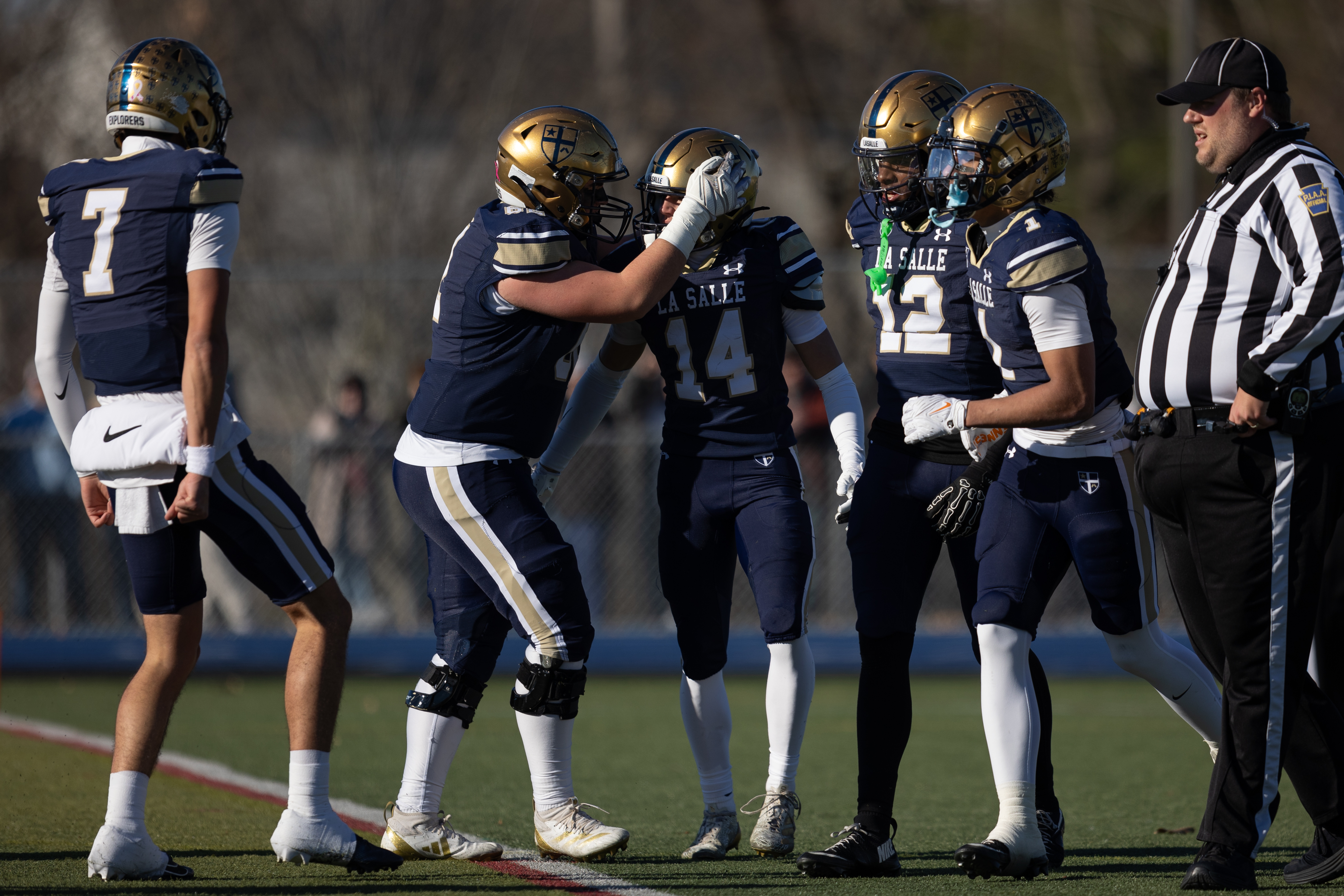
    Explorers wide receiver Jim Mahoney (14) celebrates with teammates after scoring a touchdown against North Penn on Nov. 29.

    This is a rematch of the season-opening game, won by La Salle, 23-6. Gordon and Central Catholic coach Ryan Lehmeier stressed that their teams are far different from the ones that faced each other on Aug. 22. The Vikings have an offensive line that averages 284 pounds. La Salle’s offensive line averages 283 pounds. The difference is, Central Catholic has won on the ground, and La Salle wins through the air, featuring Sidwar, O’Brien, senior receiver Jimmy Mahoney, junior receiver Owen Johnson, and senior tight end John-Patrick Oates, who is now heading to Virginia Tech and new Hokies coach James Franklin.

    In Central Catholic’s 32-14 win over Harrisburg in the state semifinals, the Vikings plowed ahead behind their massive front and sophomore tailback Chrys Black Jr., who rushed for 216 yards and three touchdowns. That template may be repeated, keeping La Salle’s potent offense off the field, and wearing down the Explorers’ defense.

    “From an overall health standpoint, I like where we are, but what I didn’t like is that we put the ball on the carpet three times, losing two [in La Salle’s 49-14 state semifinal win over North Penn last Saturday],” Gordon said. “It is not characteristic of who we are. It is safe to say, I like where we are going into this game. We were pressed by Prep and Imhotep. Central Catholic is good at every position. I told people all year long that Central Catholic was the best team we played this season. When you turn on the film, there is no one you can look at as a weakness. ”

    La Salle is receiving good interior work from 6-foot-2, 275-pound senior defensive tackle Jemel Williams, and Oates has blossomed into a quality edge rusher, where he may now play in college. Williams was disruptive in state playoff victories against run-oriented teams, including Easton and North Penn, while senior defensive end Ryan Fandozzi has been consistent all season.

    Since La Salle lost to Roman in late September, Sidwar has completed 78% of his passes, with 24 touchdowns and no interceptions.

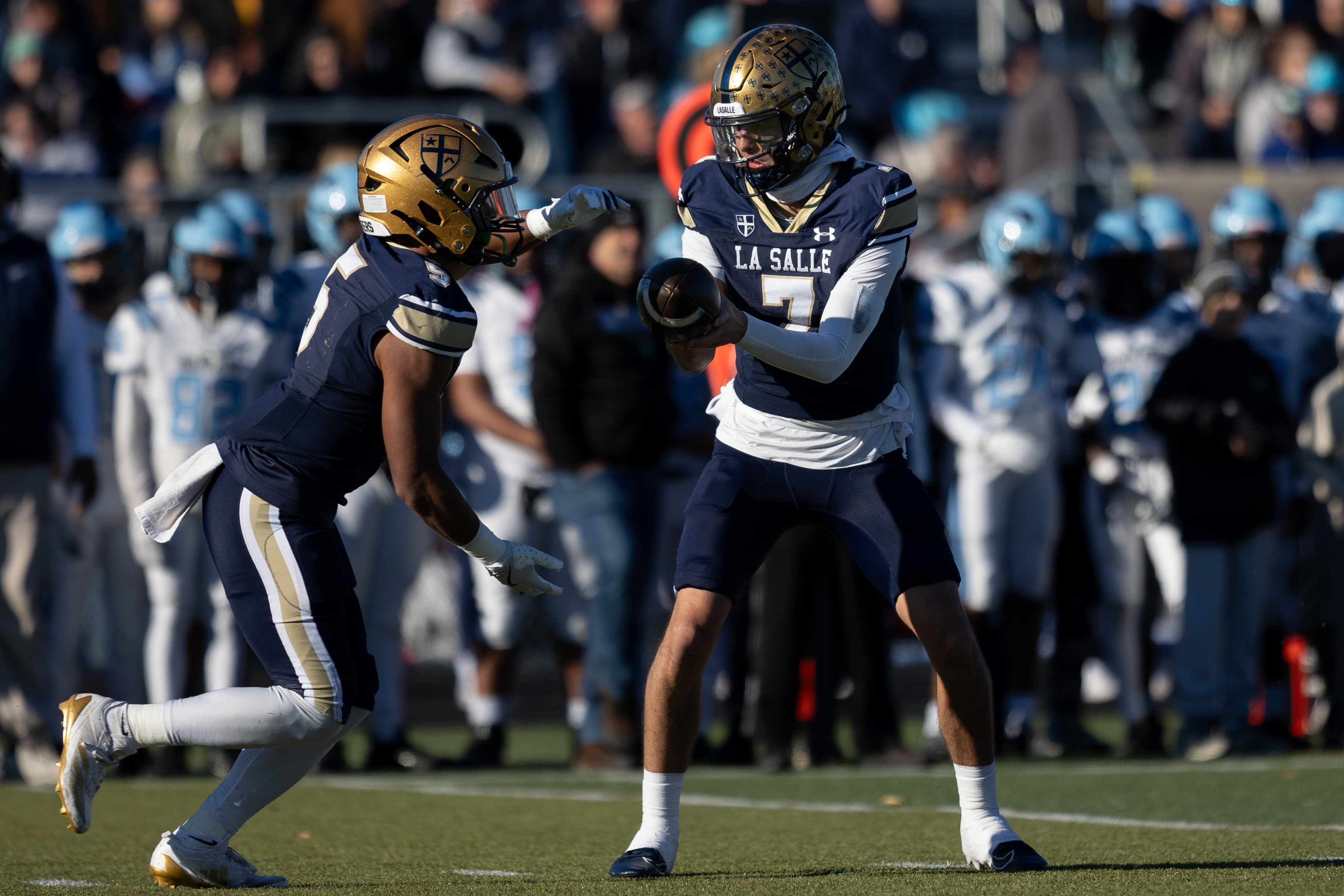
    Explorers quarterback Gavin Sidwar (7) hands the ball off to running back Desmond Ortiz during the PIAA Class 6A football semifinal game against North Penn on Nov. 29.

    Since the opening loss to La Salle, Lehmeier said his team matured this season.

    “Anytime you get this deep into a season, it means you pretty much have had success in all three phases of the game, and the point of emphasis against La Salle on Saturday is to play our style of football,” Lehmeier said. “Whether it’s the quarterback [Sidwar], or their young kid [Johnson] coming on, because I know Joey O’Brien gets a lot of press, they are pretty good. Their ability to spread the football and anytime you have a quarterback like that, it allows you to run that type of offense, which is hard to stop. They are obviously very impressive there. They do some great things on defense, too. They have tremendous football players.”

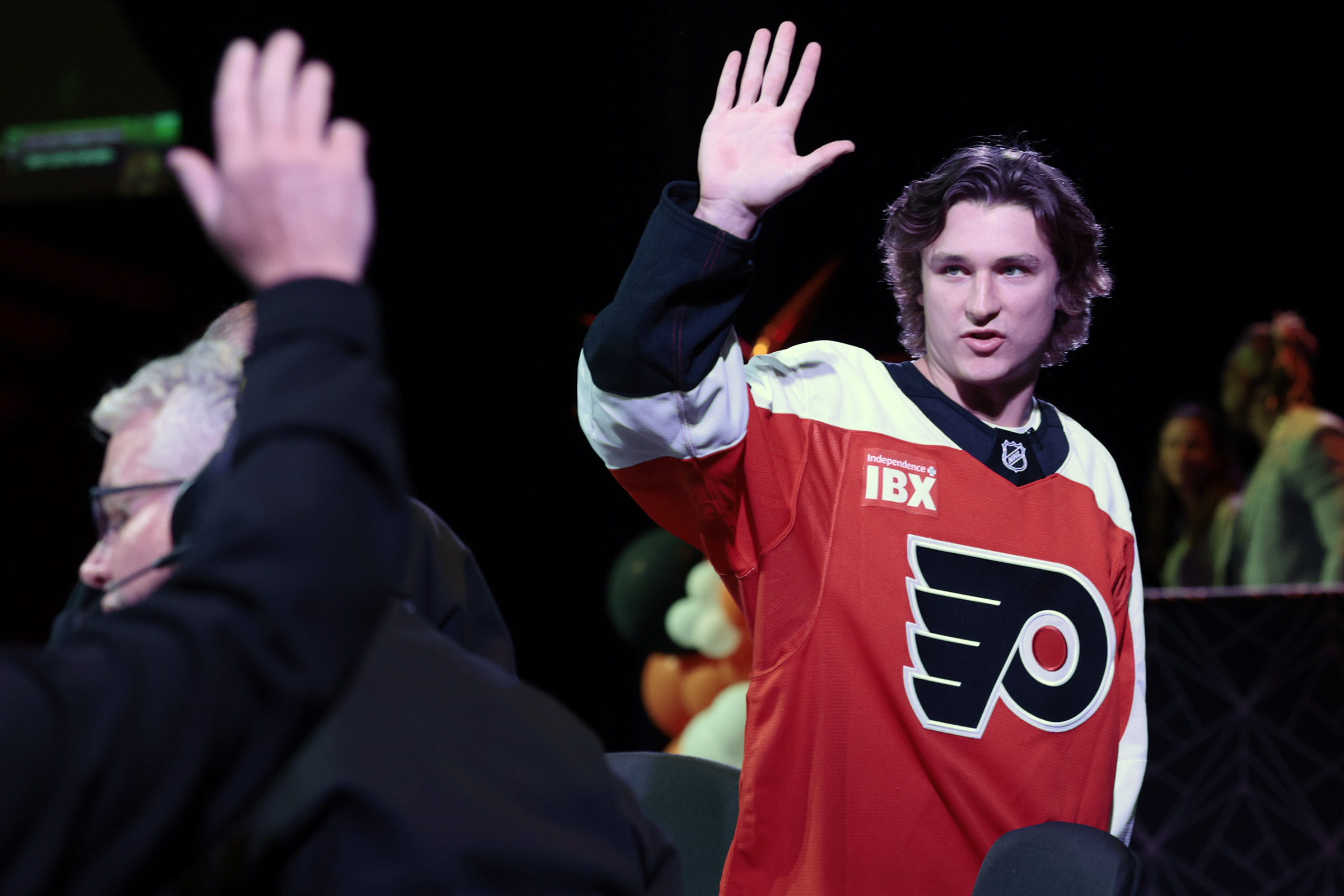
  • Trevor Zegras has fit in seamlessly with the Flyers. What will it cost to keep him long-term?

    Trevor Zegras has fit in seamlessly with the Flyers. What will it cost to keep him long-term?

    Looking back, it’s almost fitting.

    Trevor Zegras sat down for his first interview on Day 1 of training camp in September, sporting a Nirvana shirt.

    “Come as you are, as you were, as I want you to be,” the band’s frontman Kurt Cobain would sing.

    Well, the Flyers wanted Zegras to come as he is, as he was, and as they want him to be. There was no rush, but Zegras, who was acquired in June from the Anaheim Ducks in exchange for Ryan Poehling, a 2025 second-round pick, and a 2026 fourth-rounder, hurried up the process. Nevermind the past two years, he has trended in the right direction.

    “It’s fun to see the joy in his game again,” Flyers general manager Danny Brière said recently. “You can tell he’s having fun playing the game. I think for hockey players, it’s a big part of having success is that you’ve got to play with passion, you’ve got to play with enthusiasm, and I think that’s what we’re seeing in Trevor’s game.

    “I don’t know what happened in Anaheim, that’s not my business. But we see a young man who is having fun and making plays, going out there trying to make a difference. It’s been fun to watch, too, for our fans, adding another guy with high-end skill that can get you out of your seat.”

    ‘Here we are now, entertain us’

    The Flyers have long needed a game-breaker and a creative force to draw fans out of their seats again. Matvei Michkov brought some of those qualities last season, and the hope was that adding Zegras would infuse more.

    Twenty-six games into his tenure in orange and black, the 24-year-old has showcased the rare skill level that has long wowed fans. He is tied with Tyson Foerster, who was placed on injured reserve on Wednesday, atop the Flyers’ leaderboard with 10 goals and leads the team with 26 points.

    And although there might be some bruises on the fruit, he has helped the power play come in bloom as four of his goals and 11 of his points have come on a man advantage that is tied for 18th in the NHL. He’s also had a knack for the dramatic, scoring the game-winning goal in Saturday’s win over New Jersey, and clinching two other games via the shootout.

    Trevor Zegras’ trademark skill and swagger have popped from Day 1 with the Flyers.

    The kid who grew up idolizing Patrick Kane, aka “Showtime,” has stolen the show. He is a perfect 4-for-4 this season and ranks No. 1 all-time among players with at least 15 shootout attempts at 68% (17 goals on 25 shots).

    “Especially when you have Trevor Zegras on your team, you start almost with one up,” said Sean Couturier, captain of a Flyers team that is a perfect 5-0 in shootouts this season. “So we like our odds in shootouts.”

    But maybe the biggest difference for Zegras this year is that the coaching staff has confidence in him. Zegras is averaging 18 minutes, 14 seconds a night, the second-most among Flyers forwards, and his highest amount since the 2022-23 season.

    “He’s done a really nice job,” coach Rick Tocchet said last week in South Florida. “He moves his feet. He can make some plays out there. They’re hard to find, and he’s got to be a difference maker for us, which he is. He’s making some good plays for us.”

    After a tough few years under Greg Cronin in Anaheim, Trevor Zegras has found a coach in Rick Tocchet who believes in him.

    Heart-Shaped Box

    Although he says you have to prioritize the team game, Zegras notes that he is always building and working on his own game. He can often be spotted doing that on the ice long after practice is done.

    He’s also often on the ice talking to Tocchet, whom he affectionately has nicknamed Taco. It looks as if the two are either going over reads, structure, systems, and positioning. In October — after a win against the Seattle Kraken, no less — he texted Tocchet that he wanted to watch video with him, too.

    “It’s good,” Zegras said of his relationship with Tocchet. “He watches a lot of hockey, and he played for a long time. There’s just little stuff that he sees; it’s definitely good stuff, important stuff, and they’re usually really good points, so I try to listen.”

    “Unreal, coachable kid. You can tell him anything. We talked last game, I thought he didn’t really skate, didn’t do much, and he actually comes up to me, and he goes, ‘Man, I didn’t move my feet last game, I can really tell,’” Tocchet said, referencing the Nov. 24 game in Tampa Bay.

    The bench boss also likes that Zegras is correcting mistakes. He had a big turnover early in the Flyers’ 6-5 shootout win against the St. Louis Blues on Nov. 14 that led to a goal. How did he rebound? By playing a role in each of the Flyers’ goals in regulation and scoring the lone shootout tally.

    But while the good times are rolling, the big question remains: At five-on-five, is he a center or a winger?

    Right now, it’s a little bit of both.

    According to Natural Stat Trick, he’s played just 26 minutes, 46 seconds across the first 26 games of the season down the middle. He’s skated the majority of the season on a line with Christian Dvorak and Owen Tippett — although on Wednesday night, Travis Konecny was on their wing — with Zegras deployed in a hybrid center role.

    “Yeah, I don’t know what’s going to happen in the future, but I think it’s a great setup for him,” said Brière when asked if maybe a hybrid is best right now for a player who may be a natural centerman but has spent the last two seasons almost exclusively on the wing.

    “The way we have him with the centers that we have, it gives him the chance to take more chances on offense and not have to always come back and be the first player back, battling down deep in the defensive zone.

    “He has to do it at times — everybody at times gets caught being the first guy back — but he doesn’t have to do it every shift, and I think it opens him up, frees him up a little bit on the other side of things.”

    The hybrid role focuses on the play below the hashmarks in the defensive zone and being the high man, when applicable, in the offensive zone. It’s about being the first forward or F1 — and about faceoffs. Not really known for his faceoff prowess, Zegras is feeling more confident in the circle and has been getting help from Couturier.

    “Dvo’s great down low. Not that he needs [it], but I can switch maybe during the shift,” Zegras said before the Flyers’ win last week against the Florida Panthers, before adding with a smile, “or if he wants to maybe cheat on some faceoffs, and he ends up getting kicked out of them, I feel fine getting in there.”

    ‘Found my friends’

    While he’s no longer a teen, Zegras definitely has some spirit. Bounding into the locker room these days with his long flowing locks and a grin mixed in with some chatter, the 24-year-old looks rejuvenated on and off the ice.

    “Just extremely grateful that it ended up being Philly.” Gary Zegras, Trevor’s father, told The Inquirer during the dad’s trip in November. “The closeness is incredible. We get to come to the games, and we get to spend a lot of time down here. He’s got a lot of other family that have been coming to the games and friends in the area. So that’s great for him, and it’s also great for us, selfishly.

    “And then between management, between the coach, and the other players on the team, it’s just such a great fit. You just see the smile on his face, and you just can tell that he feels comfortable here, and it’s translating to — I know it’s early in the season — but he certainly looks a lot more like his old self. And I think a lot of that has to do with the environment, 100%.”

    Zegras has several familiar faces in the room, including his best buddies Jamie Drysdale, his teammate in Anaheim, and Cam York, whom he played with as a teenager at the United States National Team Development Program.

    “Just fun to have him around in the locker room. … Obviously, what he’s done has been really great for our team,“ York said. ”He’s added a lot of skill and good vibes, good mojo to the team, I think, and that goes a long way in this league.”

    Added Drysdale: “He’s a free spirit. He does his thing. We all love and appreciate him for it. He keeps it light, and he’s playing really good hockey. Yeah, we’re just lucky to have him, and he fits in perfectly here.”

    Zegras has found his spark again. But has he found a home, too?

    Of course, Brière had no comment when asked recently about a new contract for Zegras. The forward is a restricted free agent on July 1, and the general manager rarely signs players to extensions during the season. But, while it’s early, there is no doubt that Zegras is the type of talent and game-breaker the Flyers have been searching for the past several years.

    According to Puckpedia, the cost to keep him around begins at $5.75 million, the minimum qualifying offer the Flyers must give him to retain his rights. But with the salary cap rising, there is no doubt he will command a much higher number.

    Jamie Drysdale, Cam York, and Trevor Zegras (center) are best friends and are relishing getting to play together with the Flyers.

    A good comparable to Zegras is probably Shane Pinto. The Ottawa Senators center, who was drafted 23 spots below him in the 2019 NHL draft, just signed a four-year extension with an annual average value of $7.5 million. Zegras has eight more points than Pinto this season.

    He also has more points than other recent center signings like Utah’s Logan Cooley (eight years at $10 million per), his former Ducks teammate Mason McTavish (six years, $7 million), and Chicago’s Frank Nazar (seven years, $6.59 million). Dallas Stars forward Wyatt Johnston, who got four years at $8.4 million last season, is the only real comparable who has more points than Zegras so far this season.

    Two more worth noting are Utah’s JJ Peterka and Winnipeg’s Gabe Vilardi, who, like Zegras, are capable of playing center but have also played a lot of wing. Peterka signed this offseason for five years at a $7.7 million average annual value, and Vilardi got six years at $7.5 million.

    Factoring in his recent history and that all but Vilardi are younger than Zegras, the expectation is that he’ll get at least five years — which is the length York, who is also represented by Pat Brisson, signed for in July — and between $7.5 million and $8 million per year.

    Brière likes to wait; maybe he shouldn’t. If Zegras keeps trending the way he is — he is on pace for a career-high 32 goals and 82 points — it puts the past two years, and his injury concerns, in the rearview, and the ask could be closer to $9 million.

    Is that too much for a kid in his mid-20s who has found his game again and looks to be back on a star trajectory? Probably not. Does it truly matter if he’s that top center or the top winger? In reality, not really, because in the end, he’ll still be a critical piece of a Flyers team moving through a rebuild with the focus on being a Stanley Cup contender for years to come.

    Zegras loves playing in Philly. He loves the spotlight. It sounds like a happy marriage because, while for years and years, Zegras roamed, he now feels like he’s back home.

    And if he does stay for the long haul, it sounds like Flyers fans will be in nirvana.

    Trevor Zegras isn’t going anywhere but the Flyers would be wise to sign him now and try and save a few bucks.
  • Justin Crawford is set to debut with the Phillies in 2026. Here are a few prospects who could join him.

    Justin Crawford is set to debut with the Phillies in 2026. Here are a few prospects who could join him.

    In 2025, the Phillies had the second-oldest lineup in baseball.

    Collectively, the average age of Phillies hitters was 30.3 years old, ranking only behind the Dodgers’ 30.7. That number only stands to increase when their core reports to Clearwater, Fla., another year older in February — that is, unless the Phillies see an injection of youth. Which, according to president of baseball operations Dave Dombrowski, is the plan.

    “We also have some young players that we’re going to mesh into our club,” Dombrowski said in October. “I’m not going to declare that anybody has a job, but there will be some people that we’re really open-minded to be on the big league club next year.”

    There are several Phillies prospects poised to make their debuts in 2026. Here’s a breakdown of the position players on the farm most likely to make a major league impact in 2026. (An overview of pitching prospects can be found here.)

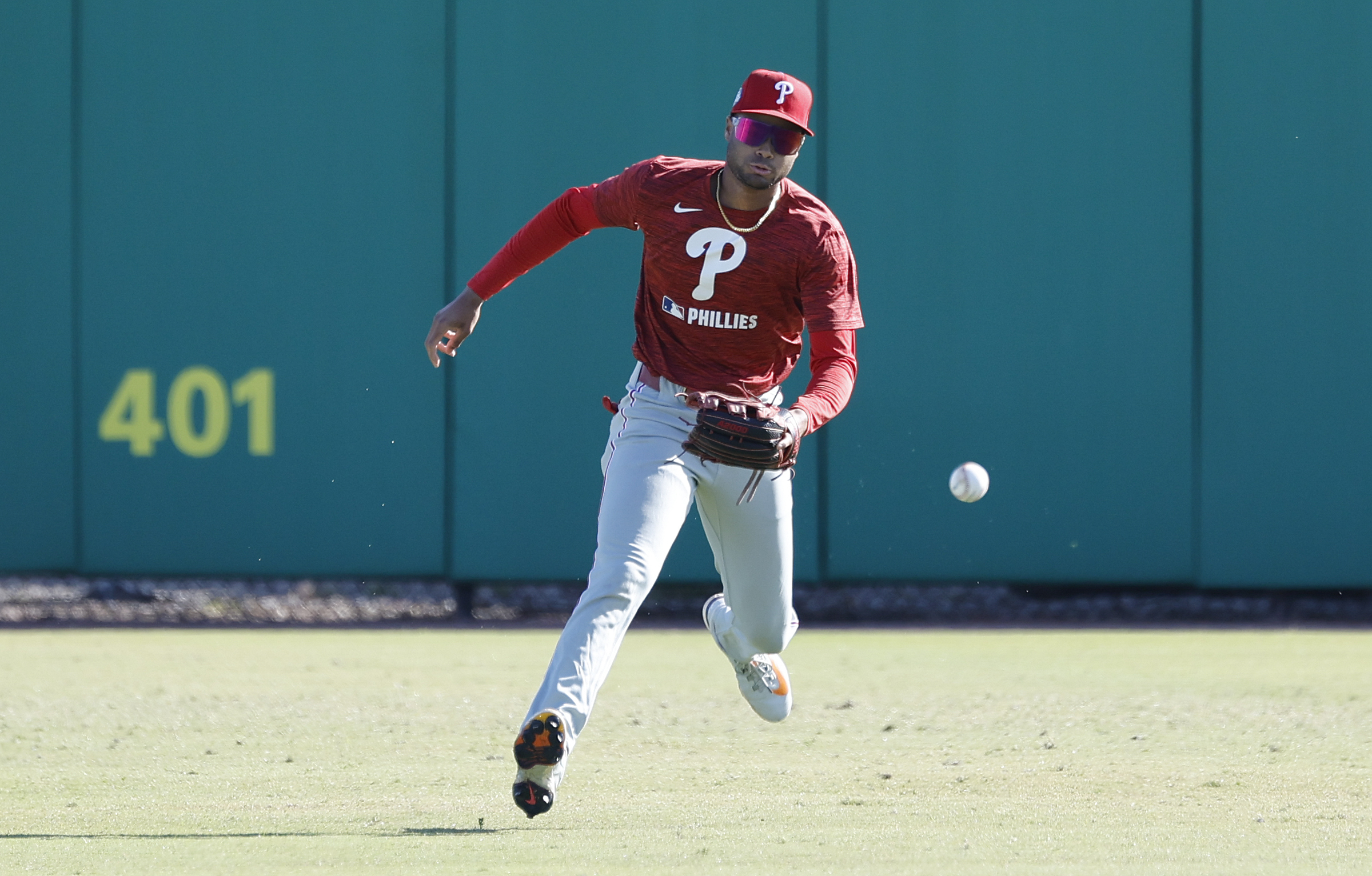
    Justin Crawford could wind up in center field or left field for the Phillies in 2026.

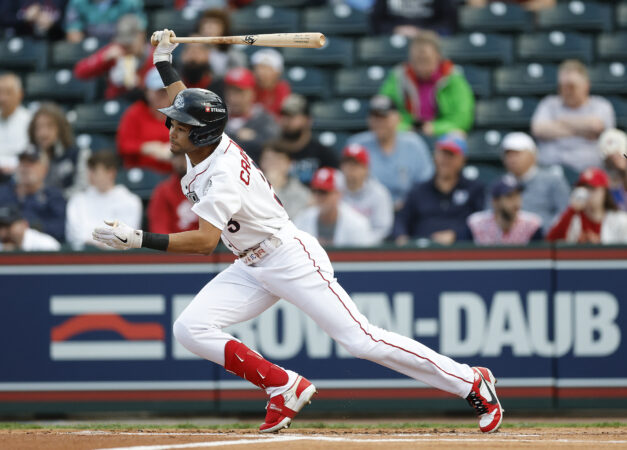
    Justin Crawford

    The Phillies have been saying it for a while: Justin Crawford is ready.

    There isn’t much left for the outfielder to prove at the triple A level after he hit .334 and stole 46 bases for Lehigh Valley. Crawford, who turns 22 next month, was blocked from a promotion in 2025 because of a lack of a path to regular playing time on the major league club. But with some outfield shuffling expected this offseason, he will have an opportunity in 2026, one he could seize as soon as opening day.

    “Crawford has a real strong chance to be with our club,” Dombrowski said at the general managers’ meetings last month. “We’re giving him that opportunity to be with our club.”

    The Phillies view Crawford internally as a center fielder, though he also played 30 games in left field at Lehigh Valley last season. Where his major league opportunity will come will likely depend on how the rest of the outfield picture shakes out after any free-agent additions or trades.

    Beyond youth, Crawford would add speed to the Phillies’ lineup. He has an 81.9% success rate in stolen base attempts throughout his three-year professional career, and last season hit 23 doubles and four triples. He doesn’t have an overwhelming amount of power, with just seven homers last season, and his ground-ball rate continues to be high, at 59.4% in 2025. Despite that, he has hit well at every minor league level, and the only test left is the biggest one.

    “I think [Crawford] more than anybody is looking forward to the 2026 opportunity he’s going to have in front of him,” Phillies farm director Luke Murton said on a recent episode of Phillies Extra, The Inquirer’s baseball show.

    Gabriel Rincones Jr.’s 18 home runs ranked second in the Phillies farm system last season, but all were against right-handed pitching.

    Gabriel Rincones Jr.

    At his year-end news conference in October, Dombrowski highlighted outfield prospect Gabriel Rincones Jr. as one of the young players in the system the Phillies were high on.

    “We really like Gabriel Rincones, who’s got a lot of pop in his bat, and really hits right-handed pitching even better,” Dombrowski said.

    The Phillies added Rincones to the 40-man roster to protect him from being selected in the Rule 5 draft on Dec. 10.

    Ranked No. 9 in the Phillies’ system by MLBPipeline, Rincones had a .240 batting average and a .799 OPS in 119 games at Lehigh Valley. His 18 home runs ranked second in the Phillies farm system, trailing Rodolfo Castro by one.

    All 18 of those came against right-handed pitching, though. Rincones struggles against lefties, with just a .107 batting average and a .323 OPS.

    If an opportunity were to arise for him in the majors, it would likely be strictly a platoon role — and the Phillies already have a left-handed outfield platoon bat in Brandon Marsh. But Rincones’ pop against righties could be of value to the major league club at some point in 2026.

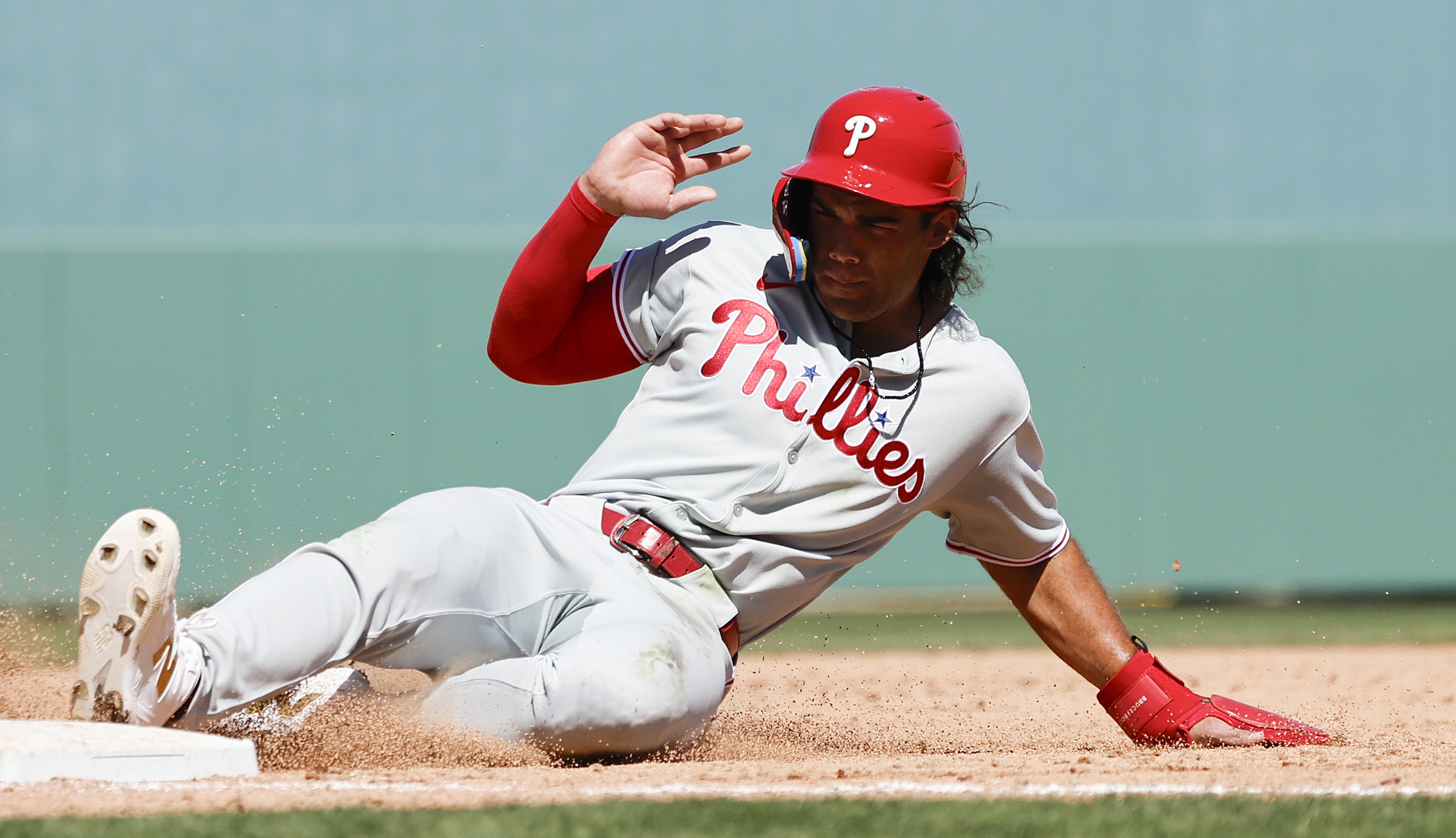
    Shortstop Aidan Miller led the Phillies farm system with 59 stolen bases last season.

    Aidan Miller

    Infield prospect Aidan Miller slashed .264/.392/.433 and led the Phillies farm system with 59 stolen bases in 116 games last season. Eight of those games were in triple A after a September promotion from double-A Reading, as Miller finished the season one step from the majors.

    When Miller’s big league opportunity arrives, though, he will need to have a chance to play every day to develop.

    Miller has played only shortstop in the minor leagues. But there isn’t exactly an opening there for the foreseeable future, with Trea Turner under contract through 2033 and coming off a resurgent defensive season.

    With Alec Bohm heading into free agency after the 2026 season — and once again surrounded by trade rumors — it seems the likeliest path for Miller to break into the Phillies infield will be third base.

    “We’d have to make sure that we properly prepared him to do that, and that’s still a discussion that we’ll have to have,” Dombrowski said in October of Miller changing positions. “But he’s a really good player and a good athlete.”

    Murton said on Phillies Extra that while the Phillies would not completely rule out Miller playing left field as a path to the majors, it’s “not something that I think we’ve kicked around too much recently.”

    Keaton Anthony

    Ranked No. 15 in the Phillies’ system, first baseman Keaton Anthony has flown relatively under the radar.

    Anthony, who was one of 26 Iowa student-athletes investigated for violating the NCAA’s sports betting policies in 2023, went undrafted that year. He was not charged, and the Phillies signed him as a free agent.

    Since then, Anthony has a career .324 minor league batting average and an .869 OPS. He won a Gold Glove in 2024 as the top defensive first baseman in the minors.

    Anthony, who slashed .323/.378/.484 this season, reached triple A in June. The 24-year-old right-hander’s approach is geared more toward contact and he doesn’t have a ton of power, with six homers last year. But Anthony hits line drives at a 33.5% clip.

    As a first baseman, Anthony has a very limited avenue to the majors as it stands. But he has some experience playing outfield in college.

    With a strong start to 2026, Anthony could potentially follow a similar trajectory as Otto Kemp in 2025. Kemp, who was also undrafted, was called up as an injury replacement in June. Despite having little outfield experience, Kemp ultimately saw some time in left field to keep his bat in the lineup.