If you’re a longtime Union fan, you know this year’s playoff format is going to be unlike any you’ve ever seen, and not in a good way. If you’re a new or casual follower who tunes into Saturday’s first-round opener against New England at Subaru Park (5 p.m., Apple TV, free), you might think you’ve landed on another planet.
Greetings, fellow Earthling. Let’s get right to the point.
There is no valid competitive reason for Major League Soccer’s latest postseason setup — one of far too many in the league’s 28-year history — to have a best-of-three first round and single games the rest of the way.
The real reasons for the invention are commercial, and the league has barely hidden from them. Nor have any number of players, coaches, front-office staffers, and anyone else willing to tell the truth without putting their names out there for fear of retribution.
The first reason is that the expanded postseason gives broadcaster Apple more games to sell to fans in its streaming package. That’s easy enough for anyone to understand and doesn’t require much more explanation — except for one angle we’ll get to in a bit.
The second reason is worse. While the last four years of single-game rounds all the way produced some terrific drama, they also produced complaints from the staff members of lower-seeded teams. They felt entitled to a home game just because their players made the playoffs, no matter their regular-season records. The complainers got what they wanted.
He said, he said
Who was complaining? No one quite said it aloud, but FC Cincinnati outed itself when the format change was announced.
“We are pleased that the new format will provide if we earn a postseason berth, the near-certain opportunity to bring a playoff atmosphere home to our fans this season,” co-CEO Jeff Berding told the Cincinnati Enquirer.
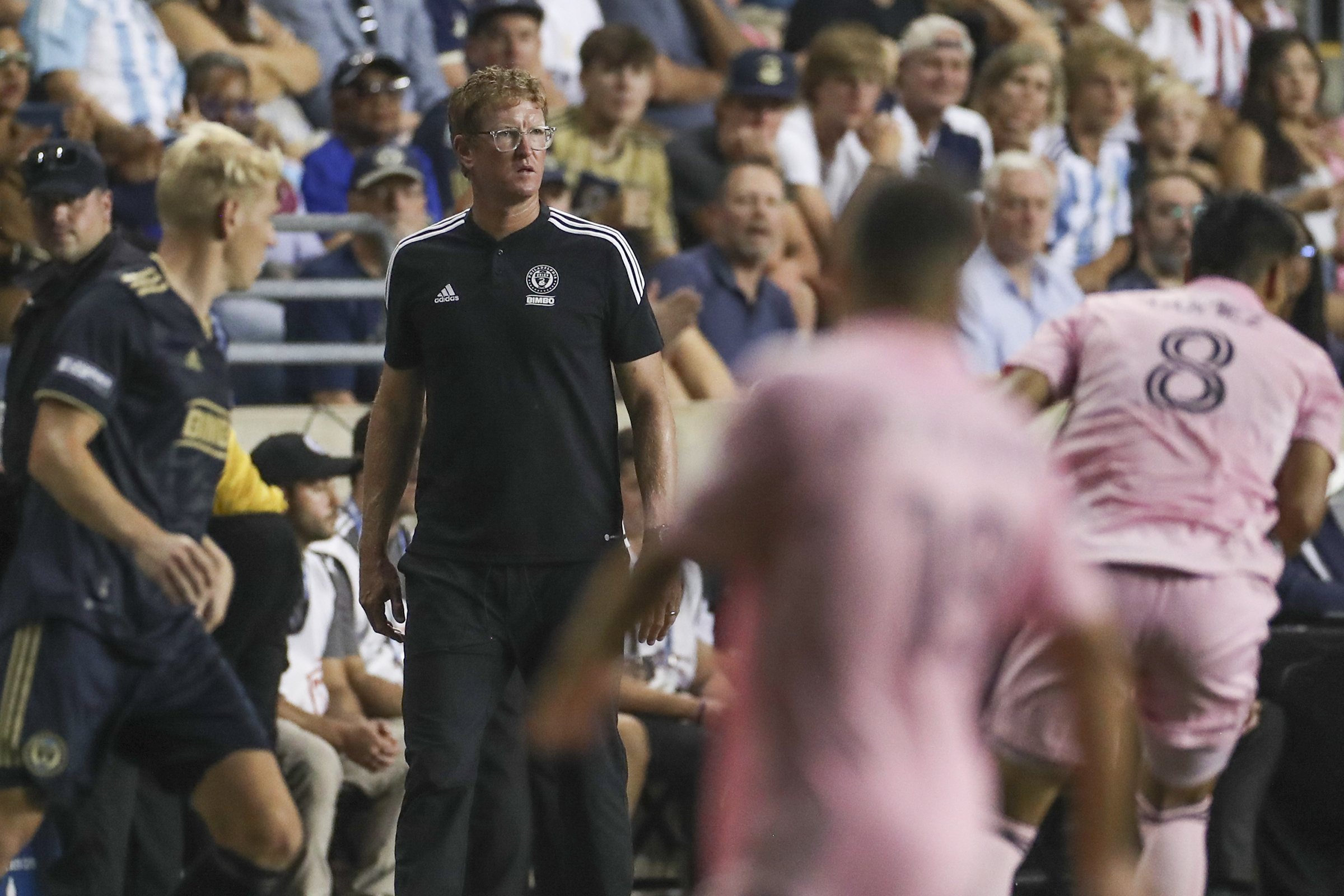
Contrast that with Union manager Jim Curtin, who said at the time: “It’s best to have [the] regular season mean as much as possible to teams. … The more you can incentivize having a good season and earning those home games, I think, the better.”
Or Los Angeles FC manager Steve Cherundolo, who said this week: “You sacrifice a fluid playoff system like we had last year, which everybody was very pleased with — the first time in 19 years the top seed in each conference played each other in the final. You couldn’t have planned it any better, you got a fantastic game in the end, so it makes perfect sense to go change everything.”
As fate would have it, the tables turned this year. The Union and LAFC fell back a bit, and Cincinnati won the Supporters’ Shield. In the prior format, Cincinnati wouldn’t be leaving home for the rest of the year. Now it must visit a New York Red Bulls team on a four-game winning streak. The first of those wins was in Cincinnati on Oct. 4, and the latest was Wednesday’s 5-2 rout of Charlotte FC in the Wild-Card round.
One might wonder from afar what Cincinnati thinks now — and what if Charlotte won on Wednesday instead? There’s a big difference between a less-than-full Red Bull Arena for a game on natural grass, which we’ll likely see Nov. 4, and a 70,000 crowd in Charlotte for a game on artificial turf, which we would have seen.
Paying a penalty
If it’s bad enough that the best-of-three format exists, the way to win a series has made it even worse. There’s no aggregate goals count like there is in European soccer’s traditional two-game series that MLS used to use. And any tied game will go straight to penalty kicks to produce a winner, instead of a first-to-five points format with a tiebreaker only at the end.
That’s an open invitation for teams to make these games as low-scoring and defensive as possible, then ride their luck in penalties. If a team forces two scoreless ties and wins both shootouts, it wins the series.
For a league that fights every day to convince soccer fans across America that it’s as entertaining as the rest of the world, that’s a recipe for big trouble. Especially when that league has to convince those fans to spend their hard-earned money on an Apple subscription after buying streaming packages of other networks to watch the UEFA Champions League, England’s Premier League, Mexico’s Liga MX, Spain’s La Liga, and more — plus a cable TV subscription to watch the big U.S. sports.
Should New York upset Cincinnati with two ugly games, will it be worthwhile for MLS to still have a New York media market team alive in the playoffs? It’s a trick question: Apple and MLS don’t produce viewership numbers as other outlets do, including Amazon for the NFL.
If there’s one reasonable argument for expanding the playoffs, it’s that the one-game-round format played out in less than a month, too little time to build up widespread interest.
That argument is easily countered, though. First, it was to MLS’s overall benefit that it could run the entire postseason between the October and November FIFA national team windows, reducing the burden on clubs and countries alike — and reducing the risk of a November injury that knocked a key player out for the year.
Creating more problems
Second, while it’s fair to say a long offseason doesn’t help MLS players’ fitness relative to their global counterparts, playing the title game in November makes it more palatable in cold-weather cities. (Apologies to the heavyweight teams in Los Angeles, but there are a lot of such cities in MLS. LAFC might even visit one of them for this year’s final on Dec. 9.)
Now add in a new factor with the expanded Concacaf Champions Cup, which will kick off in early February with 10 MLS teams participating. A December title game means the MLS Cup winner gets barely any offseason at all. The same goes for any other CCC qualifiers that make deep playoff runs.
There’s one more thing to note, and it’s one that especially pains me as someone who’s been following MLS since long before the Union existed. Since the league’s earliest days, there’s been a widespread lament about how few people pay attention to its regular season. It’s been heard by diehard fans, team and league business offices, broadcasters, and all the way up to the commissioner’s office. And it’s correct.
The one-game-round format made the regular season matter more than almost anything else MLS has ever done because regular season performance was the only way teams got playoff home games. Blowing out the playoff format feels like a reversal of so much hard-won progress.
Lionel Messi’s arrival in MLS papered over a lot of problems. But he’s not playing now. Only teams that earned their way into the playoffs are. Just as it’s the ultimate time for those teams to prove themselves, it’s also time for the league and Apple to prove they’ve got a playoff-worthy product.
If it doesn’t work, all those Messi jersey sales and viral videos won’t be enough to stop the truth from prevailing.