Inside the 76ers’ celebratory postgame locker room late Thursday, VJ Edgecombe received a phone call from Buddy Hield.
That would not normally occur between two players who had just faced off in a wild thriller. But it is not hyperbole to conclude that Edgecombe may never have made his game-winning plays against the Golden State Warriors — a steal, then a go-ahead putback in the final 8.2 seconds of a night that swung from Sixers blowout, to disastrous collapse, to chaotic 99-98 victory — without attending Hield’s basketball camps in their native Bahamas as a teenager.
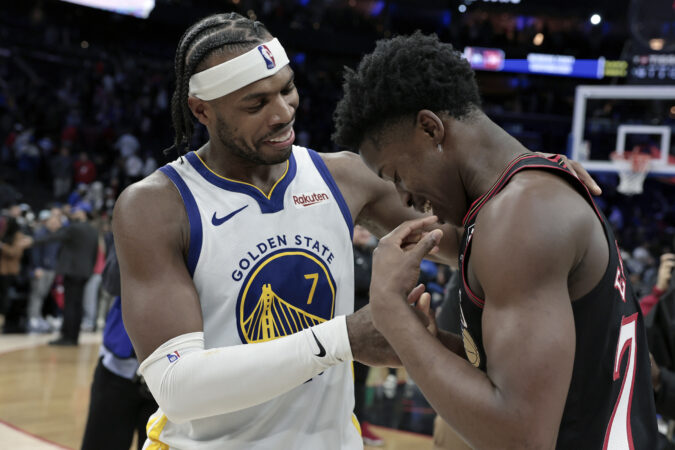
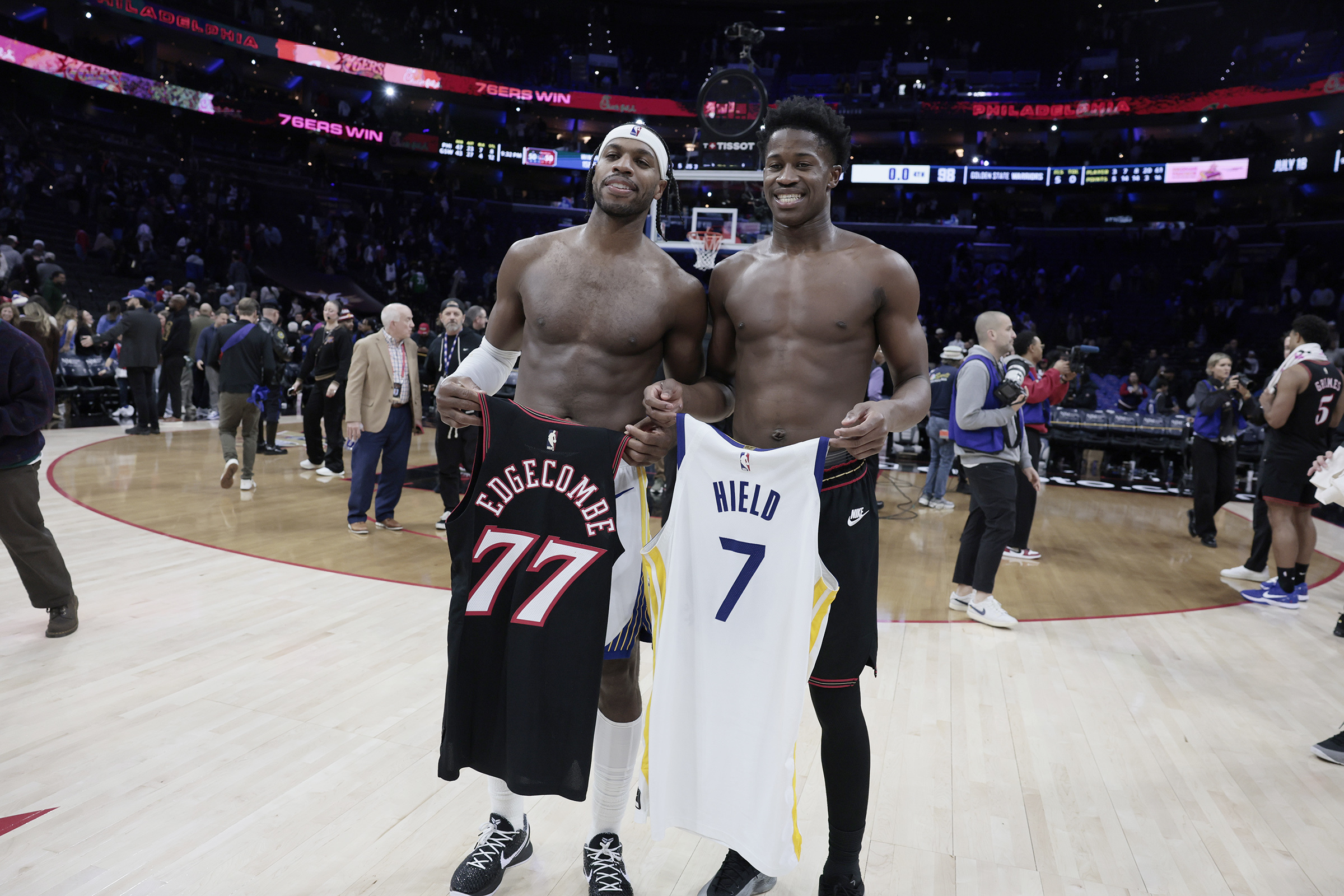
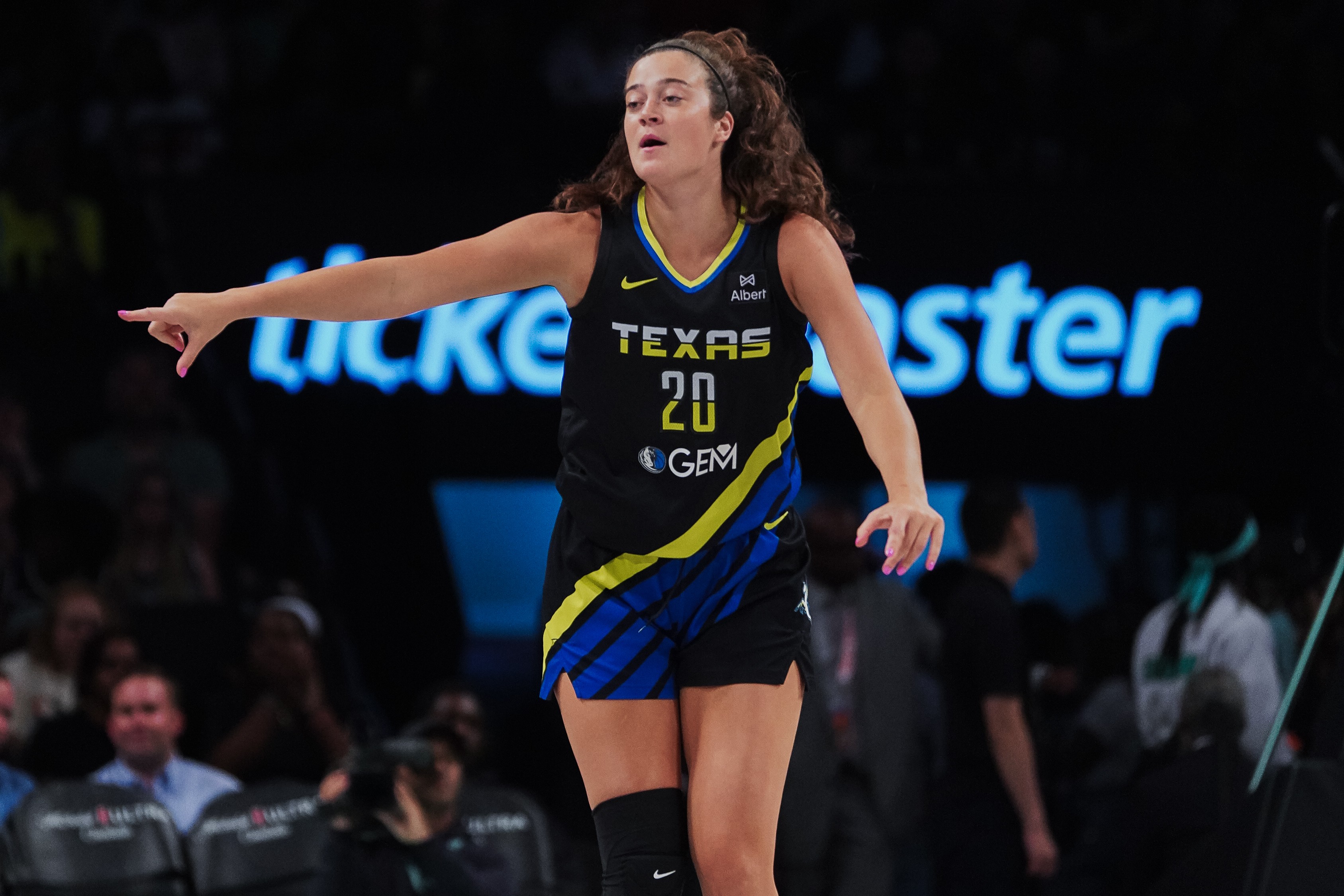
Thursday’s crazy finish capped the first night that Hield, a respected 10-year sharpshooter, and Edgecombe, an electric two-way rookie, shared the floor as NBA peers. Edgecombe finished with 10 points, six rebounds, five assists, and three steals; Hield with 14 points, eight rebounds, and two steals. And as the postgame hubbub continued to swirl around them, Edgecombe and Hield met at center court to exchange jerseys.
“I love Buddy with all my heart,” Edgecombe later told The Inquirer. “ … He always had faith in me, and always was teaching me little points about the game.”
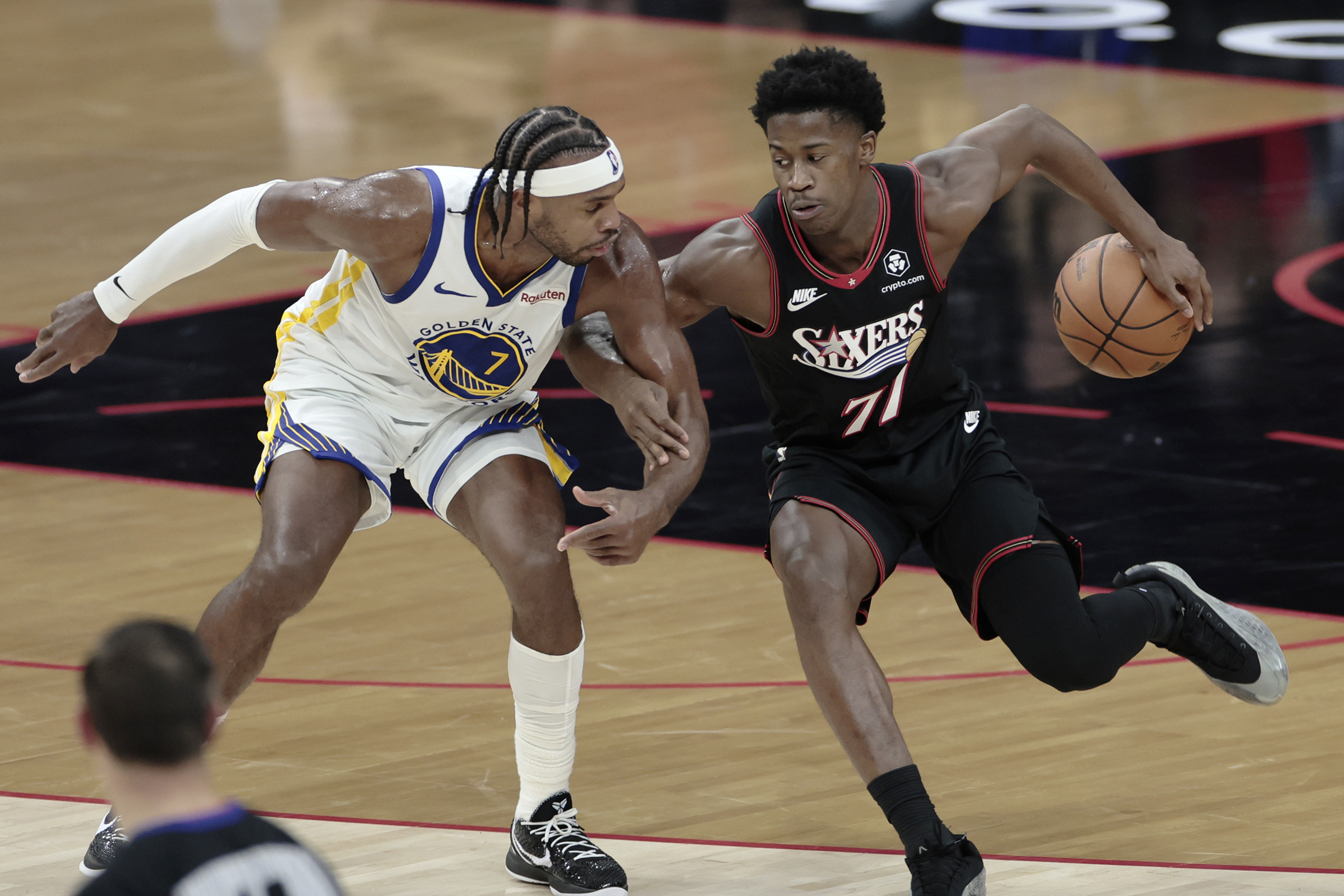
Good friends VJ Edgecombe of the Sixers and Buddy Hield of the Warriors play against each other on Thursday.
This Sixers-Warriors matchup was coincidentally full of reunions. Hield played 32 games for the Sixers after being acquired at the 2024 trade deadline. Tyrese Maxey’s game-saving block after Edgecombe’s bucket came against former teammate De’Anthony Melton, who spent a couple hours at Maxey’s home Wednesday to catch up as friends before making his season debut following knee surgery. Seth Curry and Al Horford are also former Sixers, and received drastically different receptions from the home crowd. So is Jimmy Butler, who sat out Thursday’s game with a knee injury.
But none of those players’ ties boast the roots of Edgecombe and Hield, who both described their relationship as little brother-big brother.
Edgecombe first attended Hield’s camp as a 13-year-old, aka the “smallest kid there” among a group of mostly high school juniors and seniors. But Hield immediately noticed Edgecombe’s skill and eagerness to be good. Then, Edgecombe hit a growth spurt and added muscle to his frame.
“The next year, I see him on the rim dunking on people,” Hield recalled to The Inquirer before Thursday’s game. “I was like, ‘Oh, [expletive]. He’s going to be really good.’”
Throughout the years, Hield kept in touch with Edgecombe to “[make] sure I was always good,” the rookie said. Hield would emphasize staying confident and working hard.
Then, Edgecombe and Hield became Bahamas teammates for the 2024 Olympics Qualifiers. On a roster that also included fellow Sixer Eric Gordon and Los Angeles Lakers center Deandre Ayton, Edgecombe provided “an aggressive downhill energy that we didn’t have,” Hield said. The team would allow a pre-college Edgecombe to run pick-and-roll after pick-and-roll, trusting that he would either draw a foul while attacking the basket or kick out to an open Hield at the three-point arc.
Golden State’s Buddy Hield (left) and the Sixers’ VJ Edgecombe exchanged jerseys after the Warriors played the Sixers on Thursday night.
Edgecombe’s performance in that high-pressure environment, while playing against grown men, helped ignite his ascension to coveted NBA Draft prospect. Then came his successful season at Baylor, an impressive pre-draft process, and becoming the Sixers’ pick at No. 3 overall.
“I was like, ‘Man, I watched this kid grow up,’” Hield said. “That’s kind of dope, you know what I mean?”
Through the first quarter of the regular season, Edgecombe has been one of the league’s top rookies.
He scored 34 points in a historic NBA debut. He has been an impact player on both ends of the floor for a 12-9 Sixers team that is now guard-heavy and stressing a fast-paced style. He regularly ignites the crowd with his high-flying athleticism. He entered Thursday averaging 14.7 points, 5.8 rebounds, 4.8 assists, and 1.4 steals in 17 games, before some recent limitations due to a calf issue.
Before Thursday’s matchup, a grinning Hield vowed he would “go at [Edgecombe] and test that water.” But other than a 27-second stretch to close the first quarter, they were never on the floor at the same time until that wild final frame. They approached each other when they came back to the court following the quarter break. Edgecombe trash-talked Hield’s “fake defense,” before playfully shoving him to create space to receive the inbound pass.
And though Edgecombe struggled for much of Thursday’s game, coach Nick Nurse put the rookie back in for crunch time. Edgecombe has already earned the Sixers’ trust with his knack for clutch plays.
So while preparing for a defensive possession with his team trailing, 98-97, with 10.1 seconds remaining, Edgecombe knew the Warriors were out of timeouts. He tried to read Pat Spencer’s eyes, because “people tend to telegraph their passes a lot.”
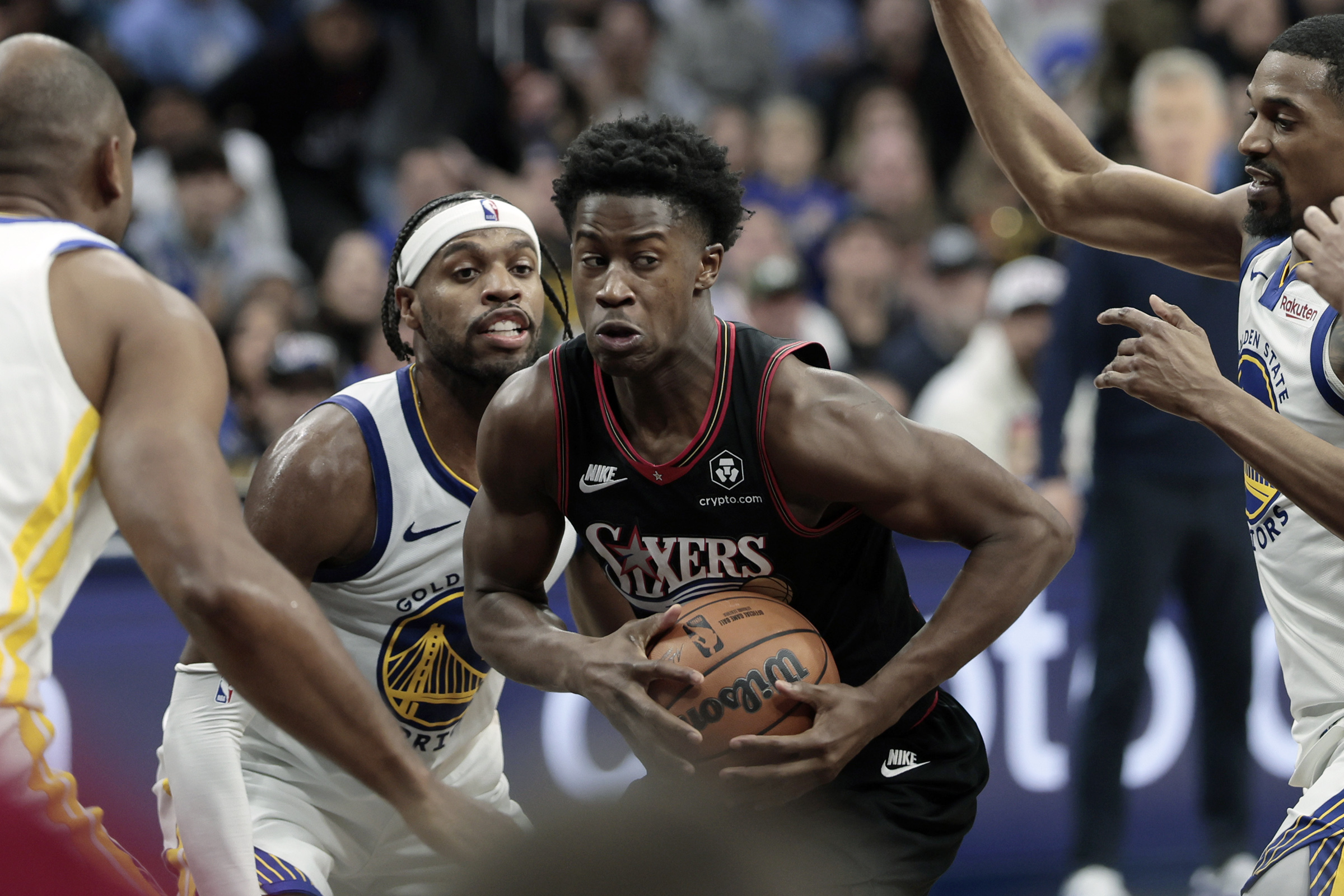
VJ Edgecombe did not have the best game of his rookie season against Buddy Hield (left) and the Warriors, but continued to make a substantial impact.
“He had to throw the ball somewhere,” Edgecombe said. “Everyone was just in that one little spot, and I just dove on the ball, to be honest.”
That gave the Sixers an opportunity for a final-possession shot, with Edgecombe making the inbound pass. His plan was to “give the ball to Tyrese, and get out of the way.” But when Maxey’s fadeaway jumper was tipped by Melton and began to fall well short of the rim, Edgecombe darted in to secure the putback.
Then Edgecombe sprinted the opposite direction as Melton attempted his own breakaway game-winner, and flexed after Maxey swatted the ball away.
“It’s what he does,” Maxey said of Edgecombe. “ … Whatever it takes for us to win the game, I know he’s going to make a play.”
Hield, meanwhile, had already entered the day proud that Edgecombe had become the latest Bahamian who, by making the NBA, could take care of his family and bring joy to his community and home country.
But after that wild finish — which capped the first time Edgecombe and Hield shared the floor as NBA peers — Hield needed to call his little brother.
“It brings more life to the youth, to uplift them,” Hield said of Edgecombe’s success. “For them to be like, ‘Yo, VJ did it. I can do it, too.’ They’re trying to write their stories, too.
“So I just hope he keeps on inspiring young kids, like I did for him.”
President Donald Trump smiles after drawing USA’s name Friday.
The U.S. men’s soccer team will open its 2026 World Cup group stage run against Paraguay on June 12 in Inglewood, Calif.
That will mean a meeting right out of the gate with a team the Americans just beat last month, 2-1, at Subaru Park in Chester.
The game will be played on the second day of the tournament, with co-host Mexico playing the opener against South Africa on June 11 at Mexico City’s fabled Estadio Azteca.
The Americans’ second group game will be against Australia in Seattle on June 19. That will also be a rematch of a recent game, a 2-1 U.S. win in suburban Denver in October.
Their group stage finale will be back in suburban Los Angeles against the winner of a four-team qualifying playoff between Turkey, Romania, Slovakia, and Kosovo. The playoff will take place in March.
Turkey will be favored on paper. If that’s the matchup, it would be another rematch, this one a 2-1 U.S. loss this past June, with an understrength American squad on the field.
Here’s the U.S. men’s soccer team 2026 World Cup group schedule:
June 12: vs. Paraguay in Inglewood, Calif.
June 19: vs. Australia in Seattle
June 25: vs. UEFA playoff winner in Inglewood, Calif.
The opening game for the U.S. is on June 12 in Los Angeles against Paraguay. Games to be played in Philadelphia will involve teams from groups C, E, I, and L.
window.addEventListener(“message”,function(a){if(void 0!==a.data[“datawrapper-height”]){var e=document.querySelectorAll(“iframe”);for(var t in a.data[“datawrapper-height”])for(var r,i=0;r=e[i];i++)if(r.contentWindow===a.source){var d=a.data[“datawrapper-height”][t]+”px”;r.style.height=d}}});
As the first 24 teams were named in Friday’s World Cup draw, a few surprises and early looks at who could be coming to Philly next summer.
For Philly, Brazil and Morocco were drawn in Group C with those two opening against each other. In Group E, Germany and Ecuador are the early entrants, France and Senegal are in Group I and England-Croatia in Group L.
The eye openers are a rematch between Mexico and South Africa, the opening match 2010 FIFA World Cup. Also, Spain will open its campaign in group H against Uruguay, and an England-Croatia rematch from the 2018 World Cup semifinal.
The USA opener is vs. Paraguay June 12 in Inglewood, Calif. The teams just met at Subaru Park last month, a 2-1 U.S. victory.
Mexico-South Africa will be the tournament’s opening game in Mexico City’s famed Estadio Azteca – 16 years after the nations met in the 2010 opener in South Africa.
Here are the nations that could be headed to Philly
Philly will host six World Cup games at Lincoln Financial Field.
Philly now knows the potential games headed here next summer as the potential nations in Groups C, E, I and L.
They are:
Group C: Brazil, Morocco Haiti, Scotland
Group E: Germany, Curacao, Ivory Coast, Ecuador
Group I: France, Senegal, FIFA Playoff No. 2, Norway
Group L: England, Croatia, Ghana, Panama
The final nation is Group I will be determined by a FIFA Playoff qualifier between Iraq, Bolivia and Suriname in March.
Kevin Hart, who ended the event on stage with Heidi Klum, Rio Ferdinand and other celebrities, said, “I know my guys back in Philadelphia are happy who could be coming to Philly next summer.”
He’d be correct.
The specific games will be set Saturday. Here’s a rundown of the World Cup games that will be played at the Linc:
Host countries draw first, but we already knew the results
President Donald Trump, Mexican President Claudia Sheinbaum, and Canadian Prime Minister Mark Carney holds their countries’ name during the draw.
As co-hosts, the U.S., Mexico, and Canada were pre-set into the group places they were drawn into among the 48 slots. The U.S. is D1, Mexico is A1, and Canada is C1.
We also already knew the dates and locations of those teams’ group games, though we don’t know the opponents yet.
The U.S. will play on June 12 in Inglewood, Calif., June 19 in Seattle, and June 25 back in Inglewood. Mexico will play on June 11, the tournament’s opening day, at Mexico City’s legendary Estadio Azteca – the site of the 1970 and 1986 finals — then in Guadalajara on June 18 and June 24 back in Mexico City. Canada will play June 12 in Toronto, then June 18 and 24 in in Vancouver.
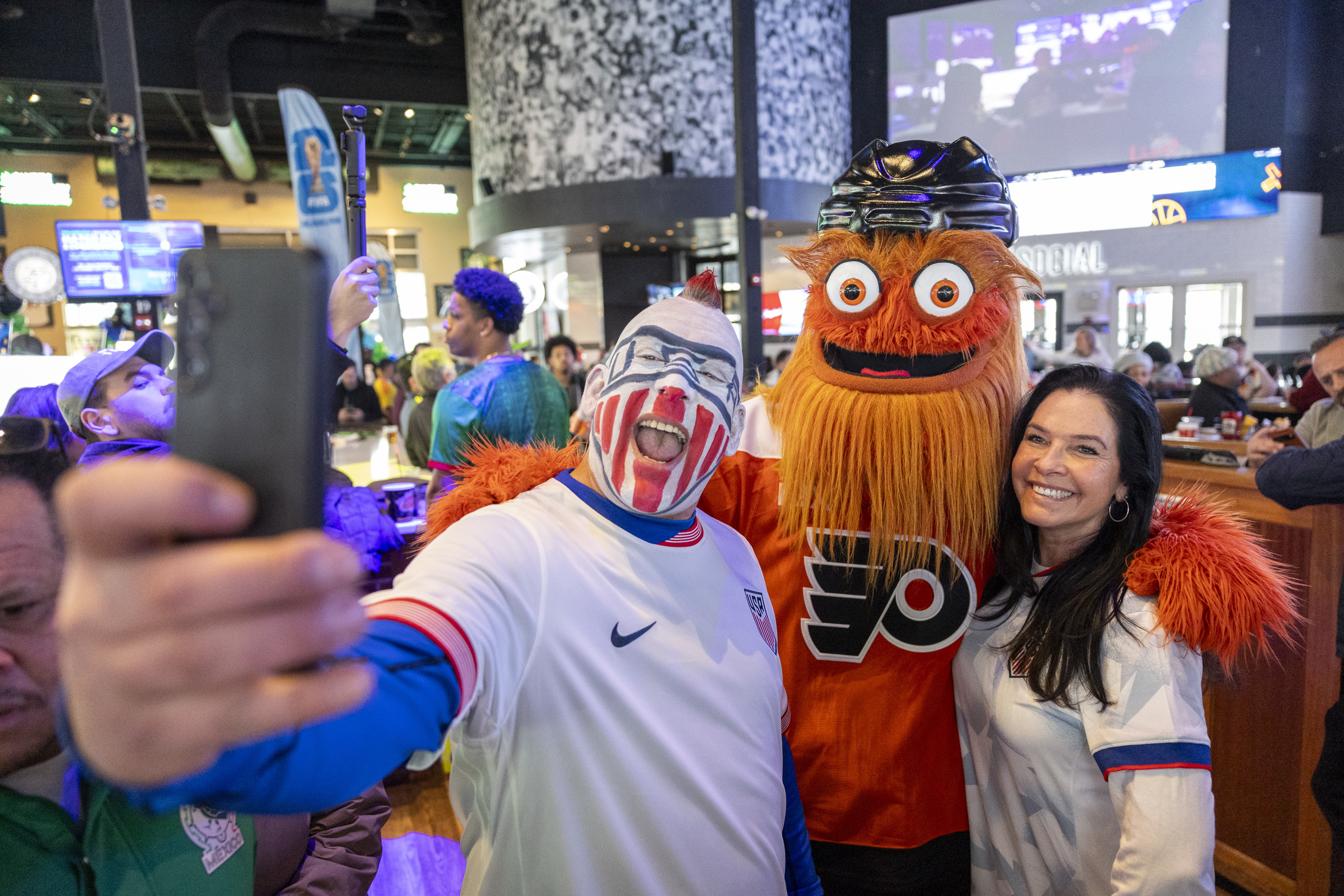
The Philly Sports Guy Jamie Pagliei, takes a selfie with Gritty at the FIFA World Cup drawing at Stateside Live! Friday.
Almost three hours from the John F. Kennedy Center for the Performing Arts, where the World Cup draw is hosted, Philadelphia sports fans gathered together as they waited in anticipation to learn the fates of their favorite teams — including Union season ticket holders Donna and Gary Brown.
“I’ve only been able to see the World Cup one other time and that was when we lived in Orlando and it was amazing,” Gary said. “But again, it’s our hometown now and our hometown team, so it just makes it even more special that it’s going to be here. It’s Philadelphia, it’s the workplace of our country, national team. … And it’s our country’s 250th birthday.”
If it feels to you that the draw is, to put it one way, drawn out… you aren’t alone. But it’s nothing new. World Cup draws have been spectacles for decades.
It was true the first time the United States hosted a men’s World Cup, the 1994 edition, and it remains true now. You don’t have to like it, and rest assured plenty of people with in the soccer world don’t. But it is what it is, and it won’t change any time soon.
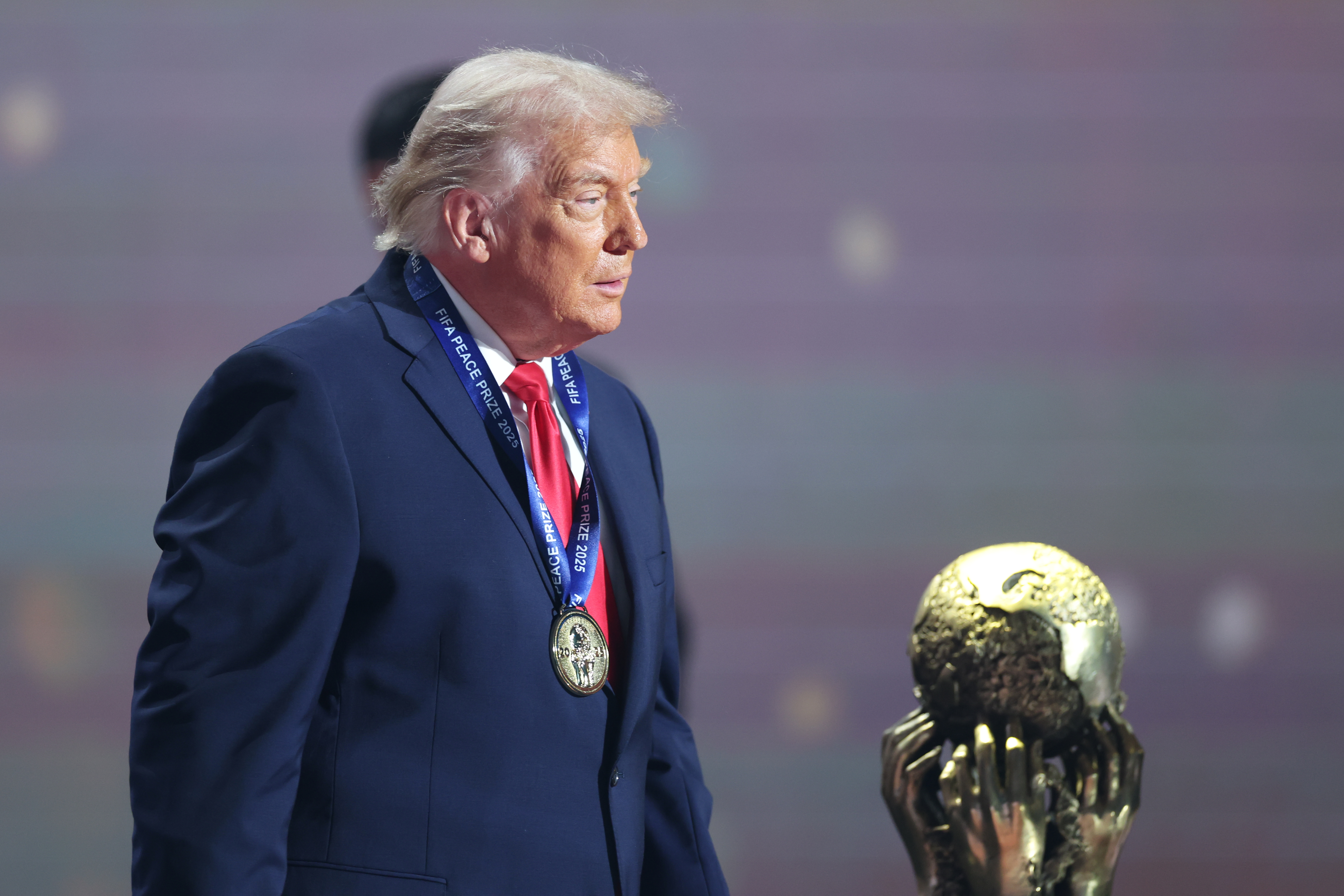
President Donald Trump is awarded the first-ever FIFA Peace Prize ahead of Friday’s World Cup draw.
President Donald Trump was awarded the first-ever FIFA Peace Prize ahead of the 2026 World Cup draw Friday.
“This is truly one of the great honors of my life,” Trump said during a brief speech.
FIFA said the award would be given to individuals who, through their unwavering commitment and their special actions, have helped to unite people all over the world.
Trump called the award “one of the great honors of his life,” as he went on to tout that peace accords he’s helped brokered in the Middle East, Africa and between Israel and Hamas has “saved millions and millions of lives.”
He then described his excitement for the World Cup coming to the United States, saying tickets — which are approaching 2 million sold, according to FIFA — were selling in record numbers, though there wasn’t data readily available to confirm that claim. Trump then quickly caught himself during his talk about tickets, stating that: “not to bring that up, because don’t want to bring a thing like that up, right now.”
World Cup tickets, and their exorbitant prices due to dynamic pricing models, have been major topics of discussion as well, given the confusing method for entering presales via lotteries.
FIFA has one more presale in which the lottery to enter is scheduled to open after Friday’s draw, before opening remaining tickets to the public early next year.
The announcement came about a month after Trump failed to receive the Nobel Peace Prize, which he claimed he deserved. It was announced by FIFA president Gianni Infantino, whom has developed a close relationship with Trump ahead of the World Cup.
“The FIFA Peace Prize is awarded annually,” Infantino said of the award, which was being given for the first time.
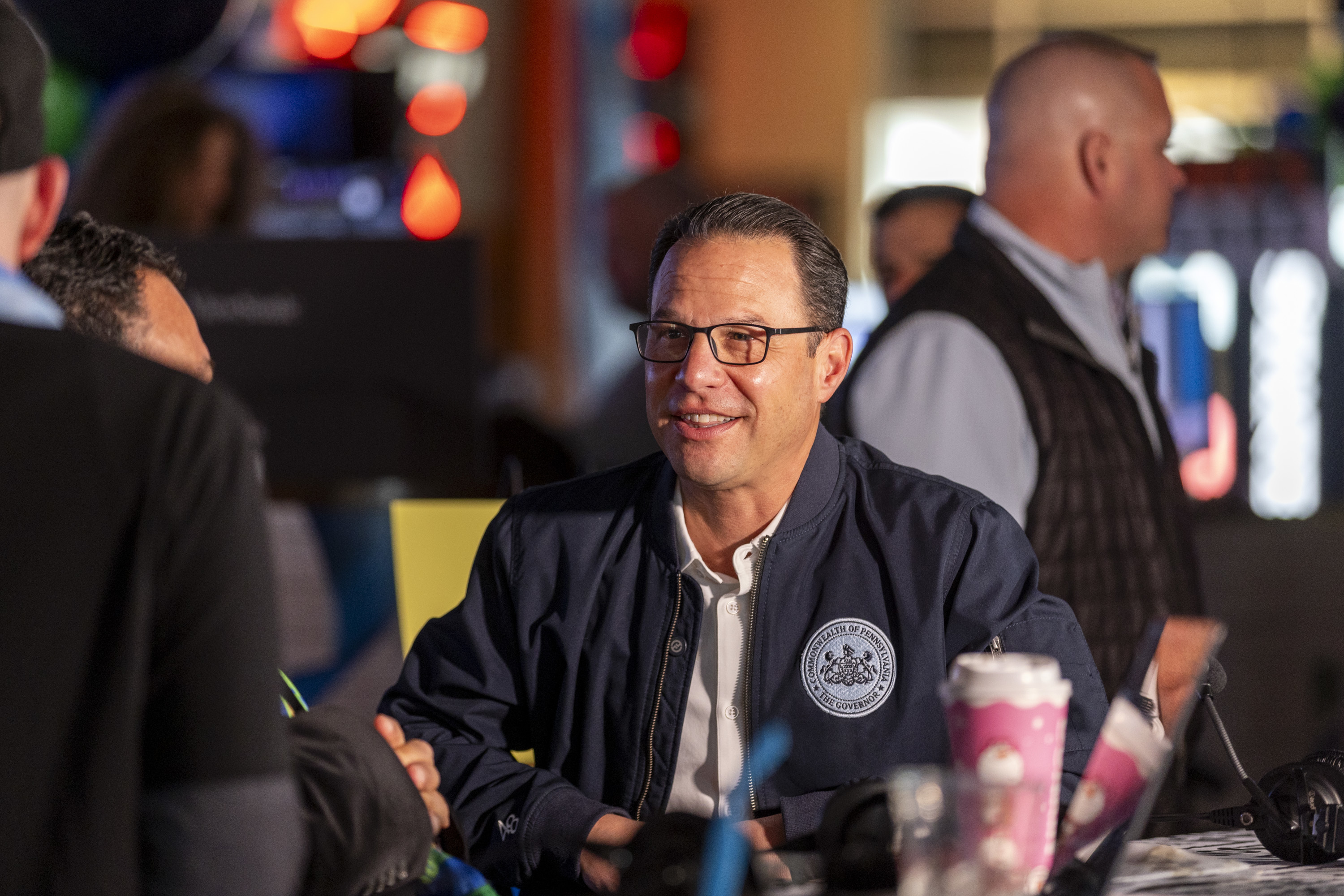
Governor Josh Shapiro attending the FIFA Philly draw at Stateside Live! in Philadelphia Friday.
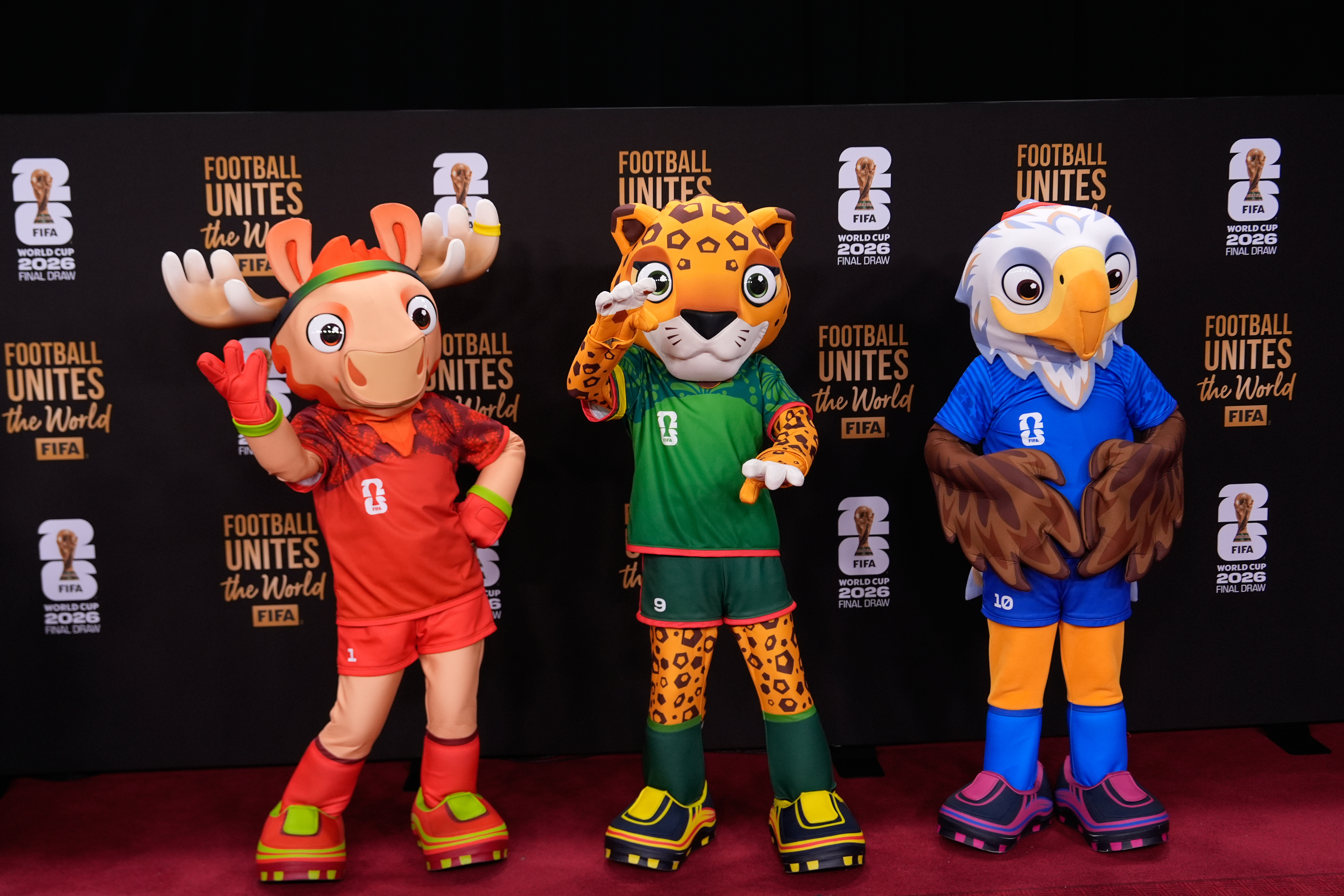
Friday morning at Stateside Live! felt like a fever dream for Philadelphia sports fans as Pennsylvania Gov. Josh Shapiro stood above guests on the second floor surrounded by Phang, Gritty, Swoop, and the Phanatic as they prepared for the Philadelphia Soccer 2026 World Cup draw watch party.
“We won this bid to host the FIFA World Cup next year because we’ve got the greatest fans on the face of the earth,” Shapiro said.
“The eyes of the world are going to be on Philly next year when we celebrate USA 250,” Shapiro added. “FIFA World Cup is gonna be great. And let’s pray for a USA-Mexico matchup on July 4th right here in the Philly.”
Unfortunately for Shapiro, the odds of that happening are slim to none.
Josh Shapiro at the Philadelphia Soccer 2026 World Cup final draw watch party pic.twitter.com/xn7c7ImeCq
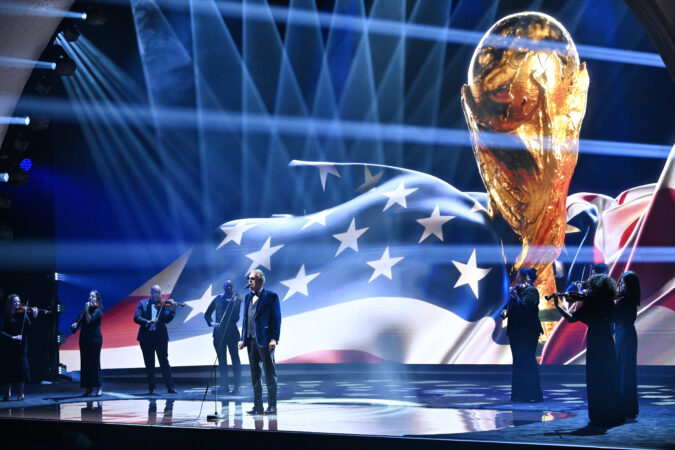
Inside the Kennedy Center, elected officials mix with former players
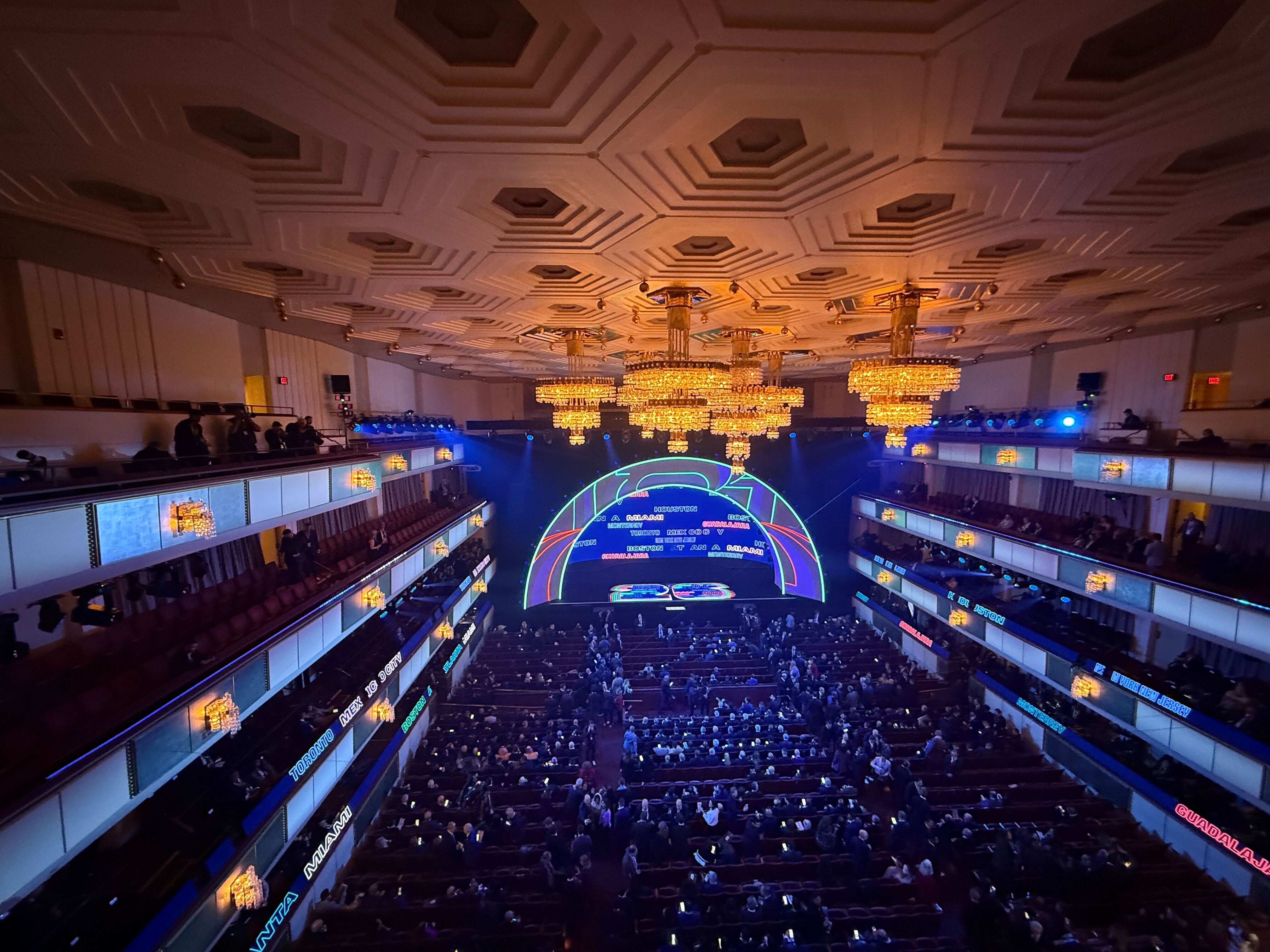
Spectators gather for the 2026 World Cup draw inside the Kennedy Center in Washington, D.C.
Hello from inside the Kennedy Center’s Concert Hall, a legendary space in the most-famous performing arts venue in America’s capital city. Just 15 of the over 900 credentialed media have seats in the hall for the World Cup draw, and I’m lucky to be one of them.
I must admit it’s a bit of a surreal feeling for me. I grew up in D.C. (sorry to anyone who thought I was a Philly native), and attended lots of concerts and musicals in this very space. To see it converted for a World Cup draw is a strange sight — and all the stranger by the inevitable politics surrounding this day.
While walking over from the media work area, I saw a lot of familiar faces: New Jersey Gov. Phil Murphy, U.S. Soccer Federation president Cindy Cone, sporting director Matt Crocker, former president Sunil Gulati, and MLS commissioner Don Garber.
Murphy is here on behalf of the New York/New Jersey local hosting committee, and there’s a slew of former U.S. players here either in the official delegation or as media. At a quick glance around, I saw Delran’s Carli Lloyd, Heather O’Reilly, Julie Ertz, Cobi Jones, Marcelo Balboa, and former Union centerback Oguchi Oneywu — now in the official world as U.S. Soccer’s deputy sporting director.
Plus, of course, famous soccer figures from all over the world, who were inevitably stopped all over for autographs. And in the hall, there was a brief moment of applause — though only scattered — when President Donald Trump walked in.
Trump, other dignitaries arrive for World Cup draw
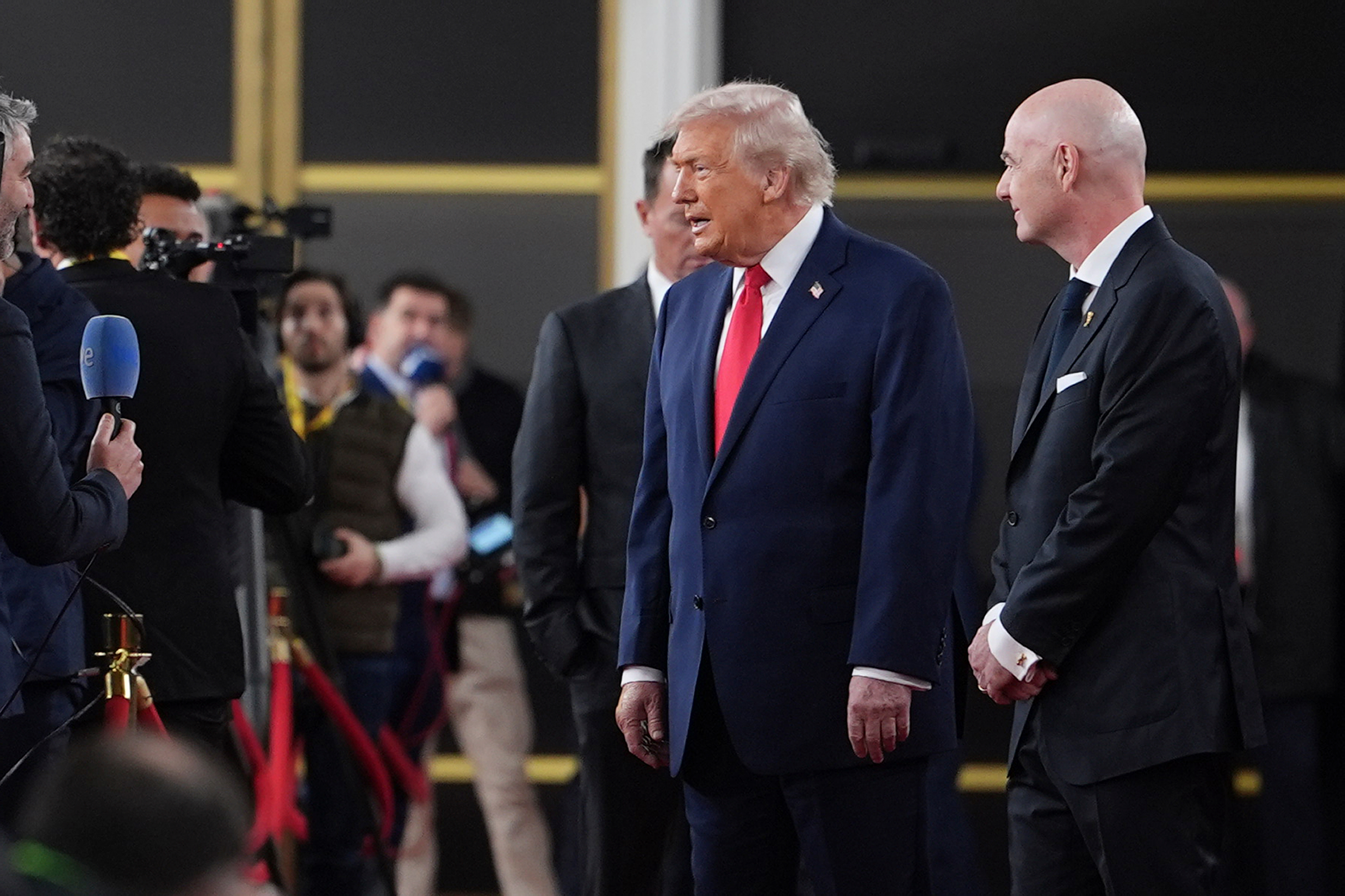
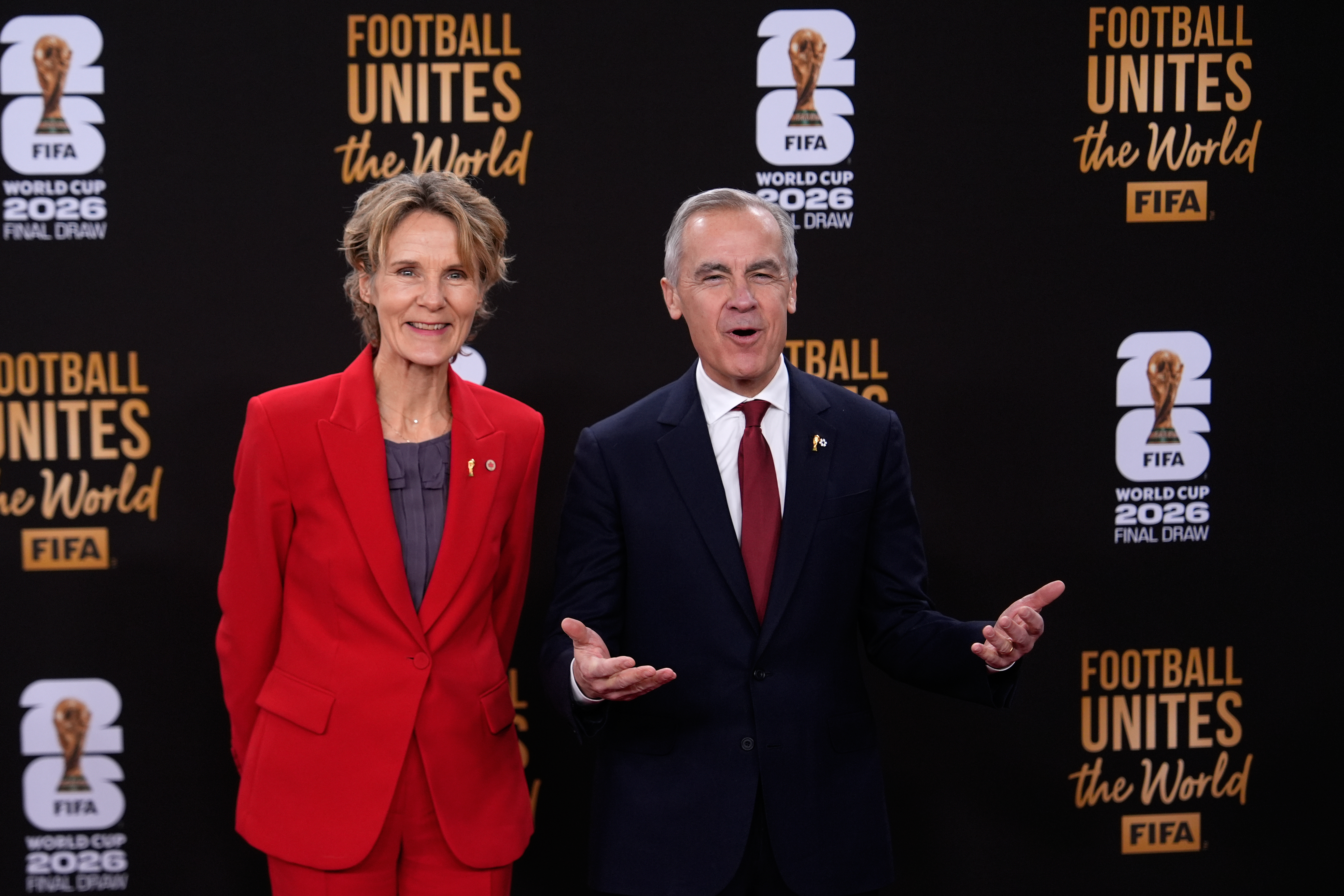
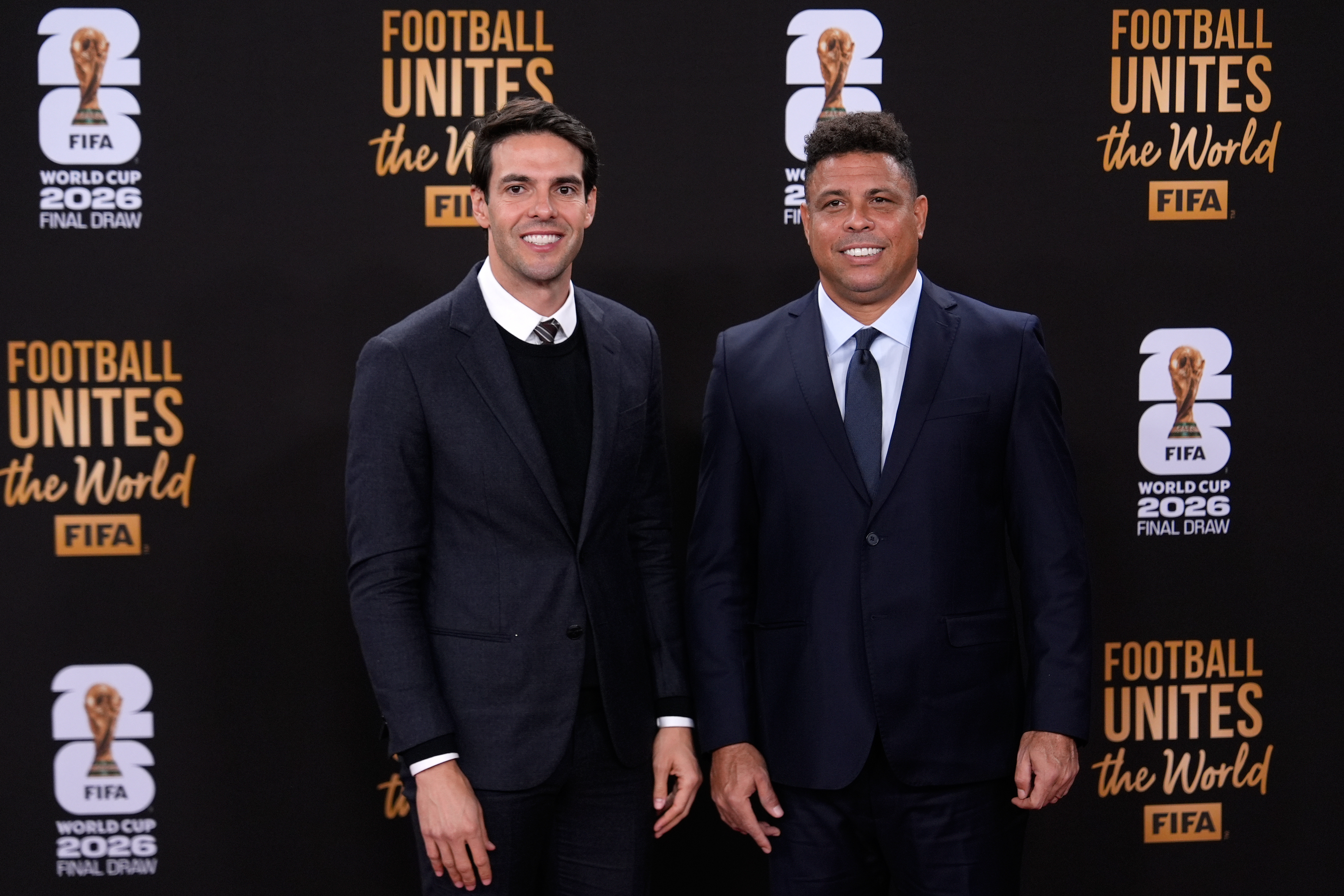
President Donald Trump and FIFA President Gianni Infantino arrive at the Kennedy Center. Canadian Prime Minister Mark Carney and wife Diana. Former Brazil players Kaka (left) and Ronaldo.
// Timestamp 12/05/25 10:55am
Trump still ‘talking to FIFA’ about moving World Cup cities, White House official says
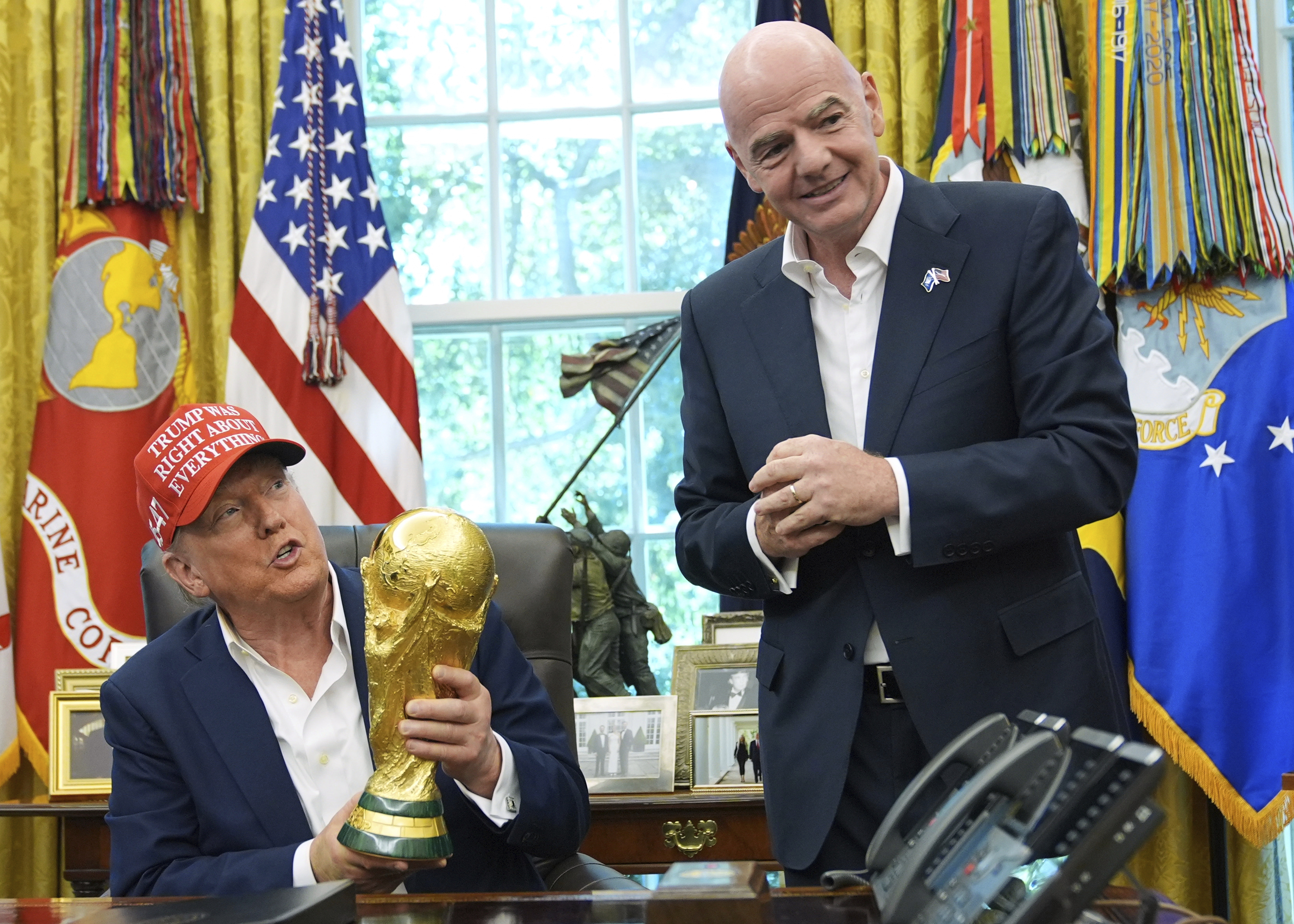
President Donald Trump holds the World Cup trophy alongside FIFA President Gianni Infantino.
President Donald Trump, who will attend Friday’s World Cup draw, continues to speak with FIFA about moving games out of cities controlled by Democrats, a White House official said on Fox News Friday.
“President Trump is very concerned about some of these blue cities’ high crime rates, and he’s talking to FIFA,” said Monica Crowley, White House chief of protocol, adding “no decisions have been made.”
“If any city we think is going to be even a little bit dangerous for the World Cup, or for the Olympics, but for the World Cup in particular, because they’re playing in so many cities, we won’t allow it to go,” Trump said. “We’ll move it around a little bit. But I hope that’s not going to happen.”
It would ultimately be FIFA’s decision to move games, a logistical challenge considering planning for the 2026 World Cup has been going on for years. FIFA president Gianni Infantino hasn’t indicated any potential moves, but has suggested he would consider shifting games from host cities if Trump made demands.
“I don’t think you can have this problem, but we’re going to move the event to someplace where it’s going to be appreciated and safe,” Infantino said in the White House last month when put on the spot by Trump.
We won’t know who’s playing in Philly until tomorrow. Here’s why.
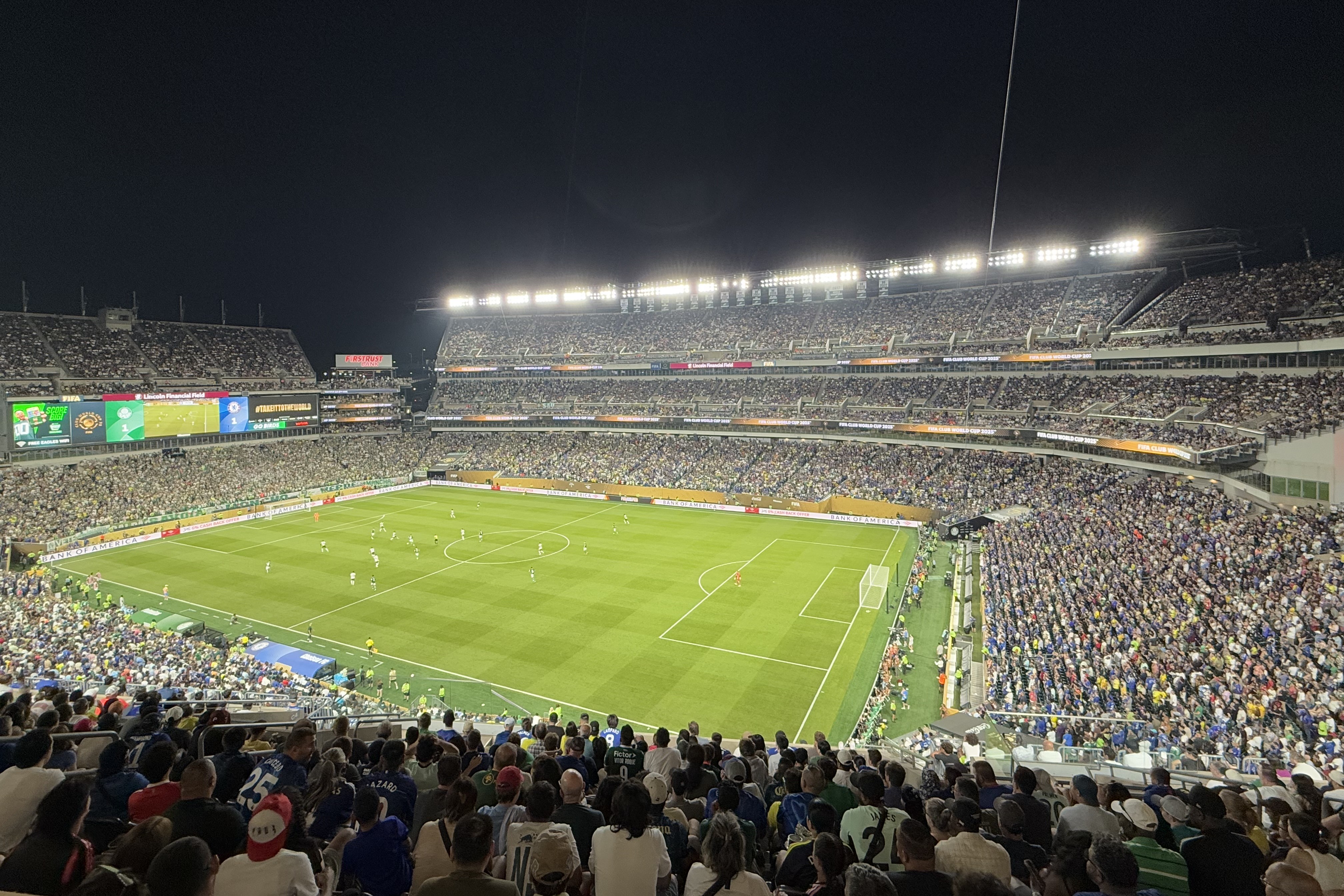
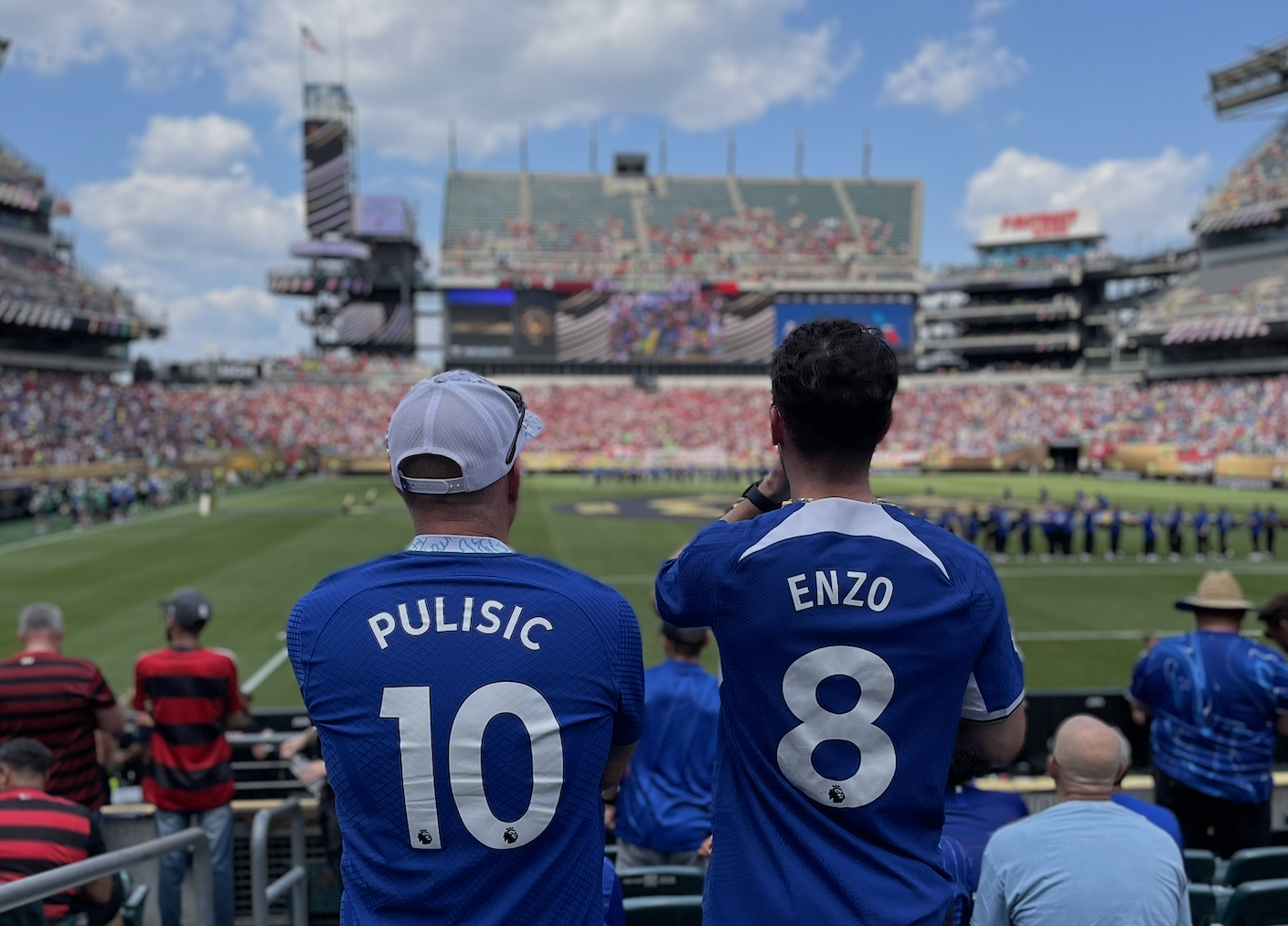
Chelsea and Flamengo fans during a FIFA Club World Cup match at the Linc in June.
FIFA’s decision to extend its draw over two days always felt by design.
On Friday, ahead of the World Cup draw that begins at noon, an official said that doing so was nothing more than trying to make the draw “into an event.”
Historically, FIFA would announce the venue pairings before the draw, so you’d know where teams would be after they fell into group pairings. For example, the nation slotted into Group A1 would play A4 making it easy to know where those nations would be playing even during the draw.
Friday’s presentation will only place nations into groups, with Saturday at noon the reveal of where those host nations will be.
“It’s to allow for greater discussion to take place on the exact locations,” said Brian Swanson, FIFA’s director of media relations. “In some parts of the world [where we’ve hosted previous World Cup draws], kickoff times are the big story in other parts [like the U.S.], we’re just looking to generate a bit of buzz.
“Historically, we just published a PDF of that information, but it’s 2025, so we thought let’s make it into something more fun.”
There are some who beg to differ.
“I mean let’s just get it over with,” a FIFA volunteer who overheard the conversation said. “Like I get why their doing this but the suspense, to me, isn’t necessary. Also, I’m Tunisian, I don’t want to wait a day to see who we play.”
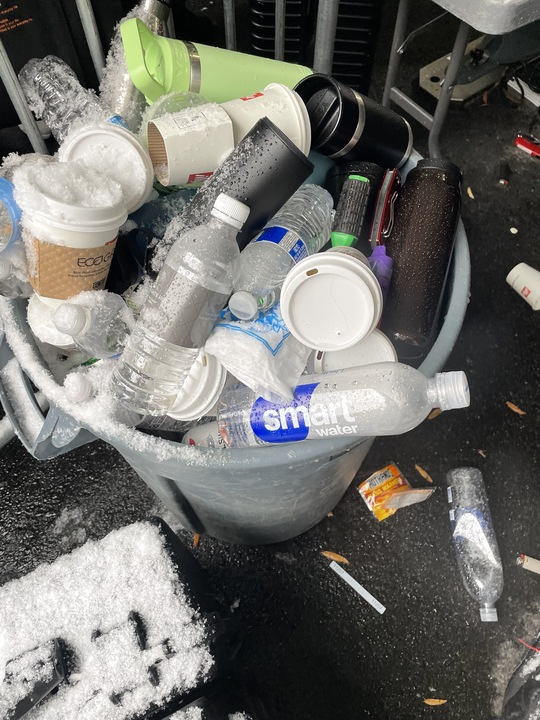
A trash can overflows with discarded items not allowed into Friday’s World Cup draw.
With heads of state from all three host nations scheduled to take in today’s FIFA World Cup draw, U.S. Secret Service is taking no chances with what is being allowed inside the Kennedy Center.
But what’s making its way into the trash cans outside is pretty hilarious. From Yeti coffee canisters valued at $30 on up to vape pens and cartridges, all had to get tossed before entering. One FIFA official joked to the Inquirer that he’d planned to collect it all and start a resale store.
Upsetting at least the media on hand is that at a briefing yesterday, FIFA relayed that bringing in canisters for water and coffee would be an approved item.
Sike.
But what’s even more confusing are the workers, guests and media from around the world who thought they’d be able to enter today’s event with pocket knives, pointers and even a Phillips head screwdriver, as observed outside one of the trash cans.
The draw kicks off at noon, but the early festivities have been the Secret Service members turned TSA, navigating what guests and media are trying to bring inside.
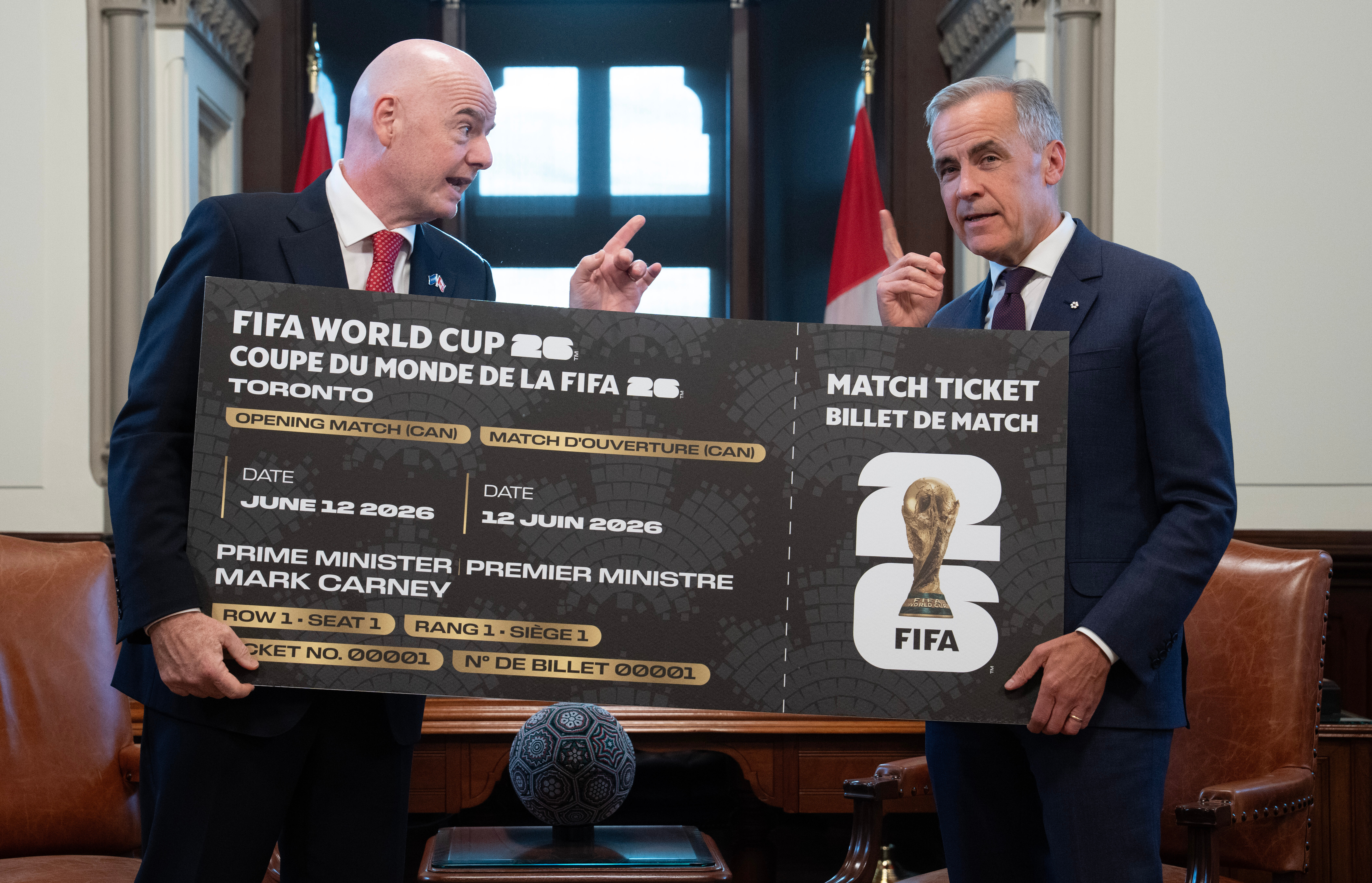
Canada Prime Minister Mark Carney (right) holds a novelty World Cup ticket alongside FIFA President Gianni Infantino.
Yes. Fans interested in buying tickets for World Cup matches at Lincoln Financial Field can enter ticket lotteries for individual group-stage games via FIFA’s random selection draw.
The lotteries will begin accepting entries on Dec. 11 at 11 a.m. and close at the same time on Jan. 13.
After the random selection draw phase of ticket sales has finished, any remaining inventory will be released on a first-come, first-served basis closer to the beginning of the tournament. Single-match and multimatch hospitality packages are also available through FIFA.
FIFA’s first-come, first-served phase will be the last opportunity for fans to buy tickets directly through FIFA. After that, tickets will be available only through resale on the secondary market.
— Owen Hewitt
// Timestamp 12/05/25 8:26am
Tight security as Trump, other dignitaries expected to attend today’s World Cup draw
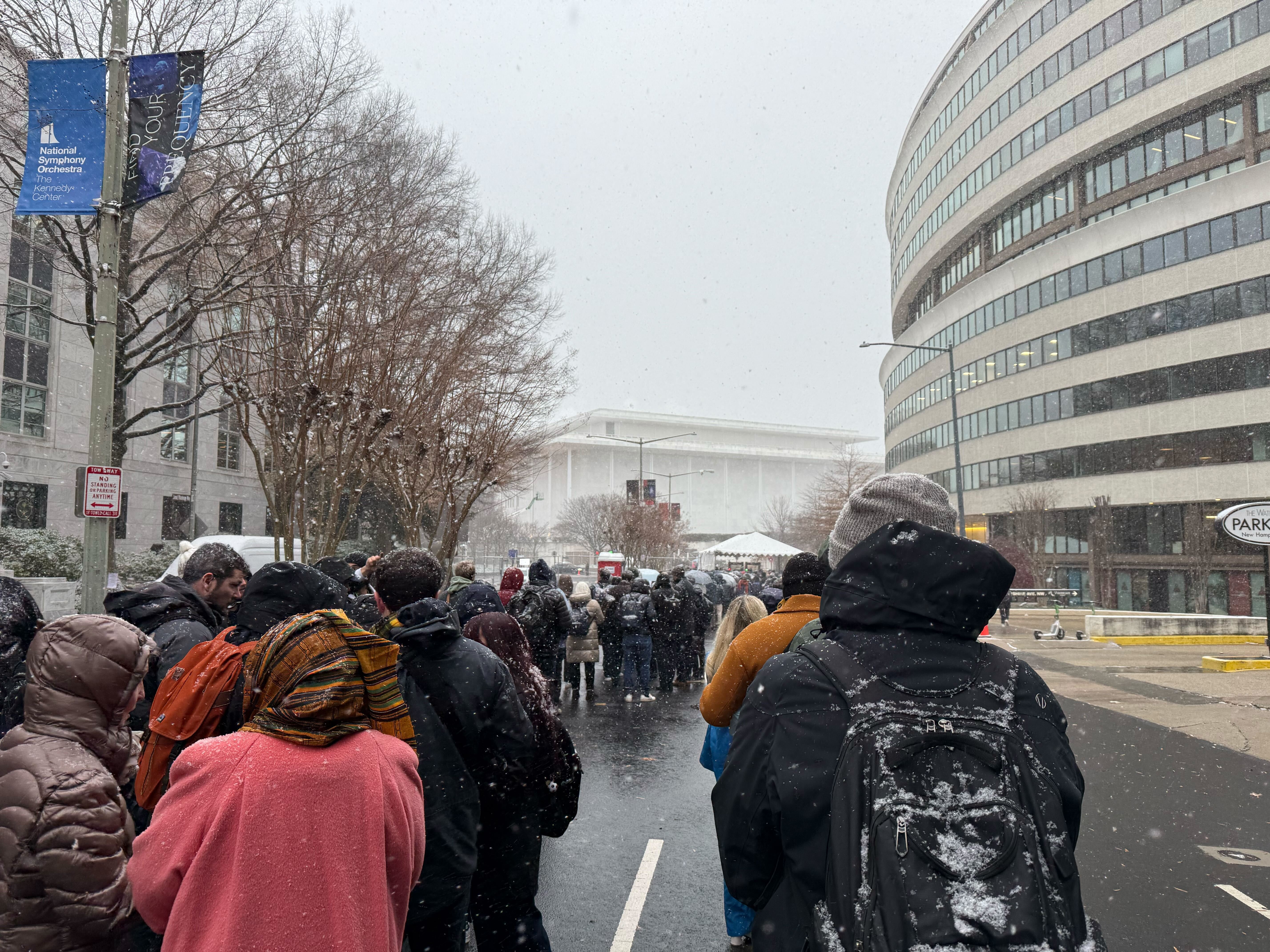
Snow falls in Washington, D.C. ahead of the 2026 World Cup Draw.
It was snowing as the sun rose over the nation’s capital Friday, a rare sight in December. The rest of the scene around the Kennedy Center was one this town is used to: rows of giant black SUVs for dignitaries, and fences lining many blocks of sidewalks.
I got to the security checkpoint just after 8 a.m., and there were already long lines to get in and many nearby streets were closed.
The checkpoint, by the way, was up the street near the Watergate hotel — made famous by former President Richard Nixon’s scandal in the 1970s. There have been plenty of jokes about that this week among the international media who’ve come to town.
But the security operation is no joke. It’s always been the way things work when the president — whoever the president is — wants to show up at a big sports event in D.C.
Even with that, a World Cup draw is different from other spectacles.
Today, the Kennedy Center will host dignitaries from the 42 national teams qualified for the World Cup so far, plus some from teams in the final qualifying playoffs; over 900 credentialed media members, spread across the Center’s many halls; and the tournament cohosts’ heads of state — U.S. President Donald Trump, Mexican President Claudia Sheinbaum, and Canadian Prime Minister Mark Carney.
It will be tight and tense inside, and some FIFA officials will no doubt wonder if they should have stood firm on having the draw in Las Vegas, where they wanted to have it until Trump said otherwise.
The World Cup draw, which will determine the groups for the round-robin stage of the tournament, will take place today at noon.
The event will be hosted by the Kennedy Center in Washington and broadcast live on Fox. Coverage of the draw will begin at 11:30 a.m. and conclude at 3 p.m.
FIFA’s event is expected to last about an hour and a half, with the draw itself accounting for about 45 minutes of that time.
Qualified nations have been divided into four pots based on their FIFA World Rankings positions. Pot 1 contains the nine best-qualified teams in the rankings, as well as the three cohosts.
The host nations have already been assigned to groups — Mexico will be in Group A, Canada will be in Group B, and the U.S. will be in Group D. The remaining teams will be assigned to the other nine groups, one team per group.
After all the teams in Pot 1 have been drawn, the draw will move to Pot 2, selecting one team for each of the 12 groups. The process will repeat with Pot 3 and Pot 4, resulting in 12 groups of four teams.
During the tournament, the top two teams in each group will advance to the knockout rounds. The top eight third-place finishers in the 12 groups will also advance, completing the Round of 32.
Though the draw determines tournament groups, FIFA is also looking ahead to the knockout rounds. FIFA will structure the knockout bracket so that the top four teams in its rankings — Spain, Argentina, France, and England — will not meet before the tournament semifinal, provided that they each finish first in their respective groups. It is the first time the World Cup will use a tennis-style bracket for knockouts.
Here’s a complete look at the pots that will be used Friday:
Pot 1: Canada (B1), Mexico (A1), U.S. (D1), Spain, Argentina, France, England, Brazil, Portugal, Netherlands, Belgium, Germany
Pot 2: Croatia, Morocco, Colombia, Uruguay, Switzerland, Japan, Senegal, Iran, South Korea, Ecuador, Austria, Australia
Pot 3: Norway, Panama, Egypt, Algeria, Scotland, Paraguay, Tunisia, Ivory Coast, Uzbekistan, Qatar, Saudi Arabia, South Africa
U.S. goalkeeper Matt Freese dives for a save during practice last month.
42 countries have already qualified for next year’s World Cup, including the United States, Canada, and Mexico, and will be included in today’s draw.
There are six spots remaining – four for the top teams in the European Federation’s 16-team playoff, and two for the top two finishers in FIFA’s intercontinental playoff tournament. Both take place in March.
Since those have not been determined yet, those six teams will be represented by placeholders in today’s draw.
Here are the countries that have already qualified for the 2026 World Cup:
Cohosts: Canada, Mexico, United States
Asian Football Confederation (AFC): Australia, Iran, Japan, Jordan, South Korea, Qatar, Saudi Arabia, Uzbekistan
Confederation of African Football (CAF): Algeria, Cape Verde, Ivory Coast, Egypt, Ghana, Morocco, Senegal, South Africa, Tunisia
Confederation of North, Central American and Caribbean Association Football (Concacaf): Curaçao, Haiti, Panama
South American Football Confederation (CONMEBOL): Argentina, Brazil, Colombia, Ecuador, Paraguay, Uruguay
Oceania Football Confederation (OFC): New Zealand
Union of European Football Associations (UEFA): Austria, Belgium, Croatia, England, France, Germany, Netherlands, Norway, Portugal, Scotland, Spain, Switzerland
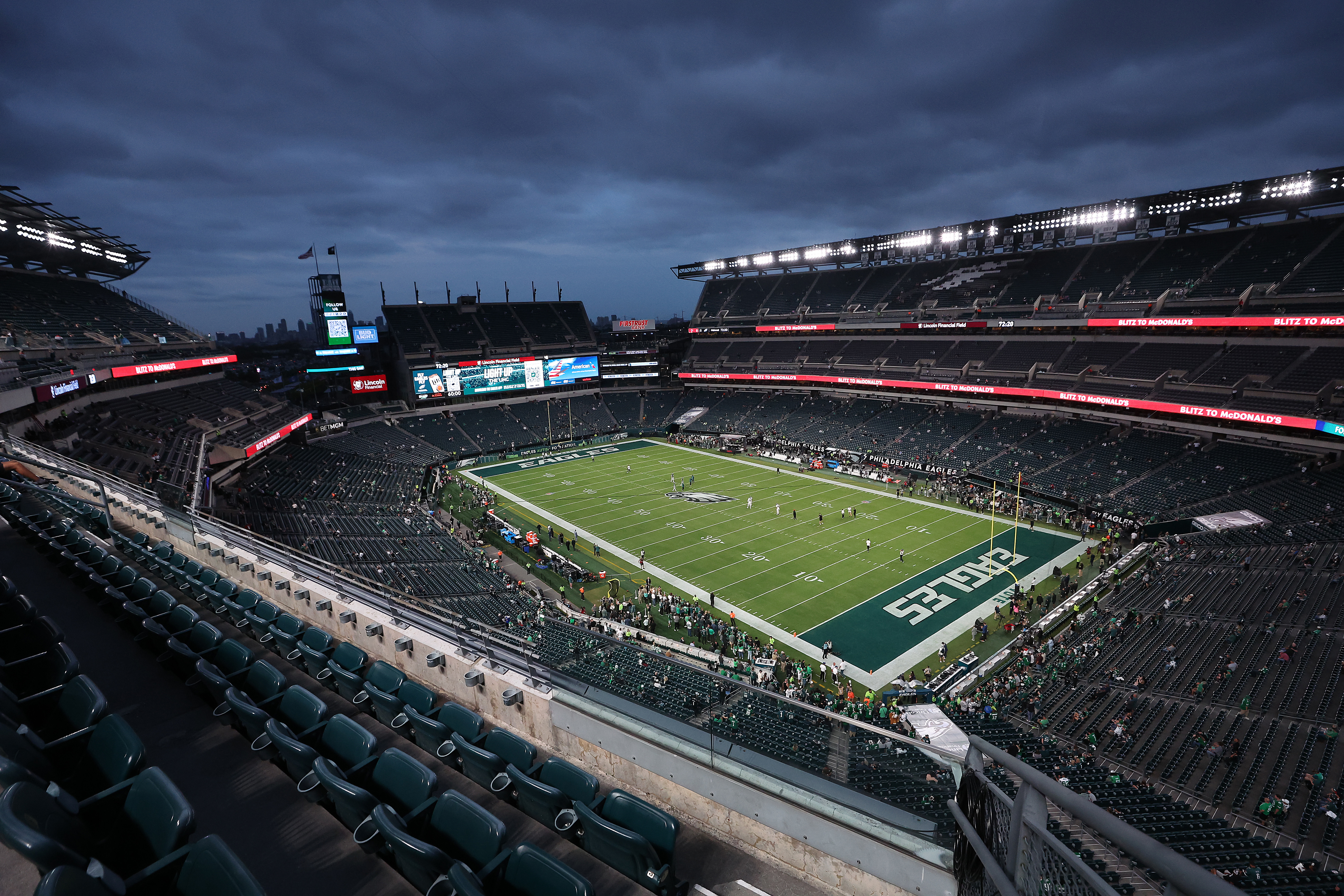
Lincoln Financial Field will hose six 2026 World Cup games.
We won’t know which counties will play in Philadelphia until Saturday, when FIFA releases its official schedule. But we’ll get a sense who might travel here.
Philadelphia will host six World Cup games at Lincoln Financial Field – five in the group stage, and one in the Round of 16. So we know counties ending up in Groups C, E, I, and L will play at the Linc (which unfortunately means no Team USA games during the group stage, since the U.S. has already been assigned Group D).
Here are the World Cup games scheduled to be played in Philly:
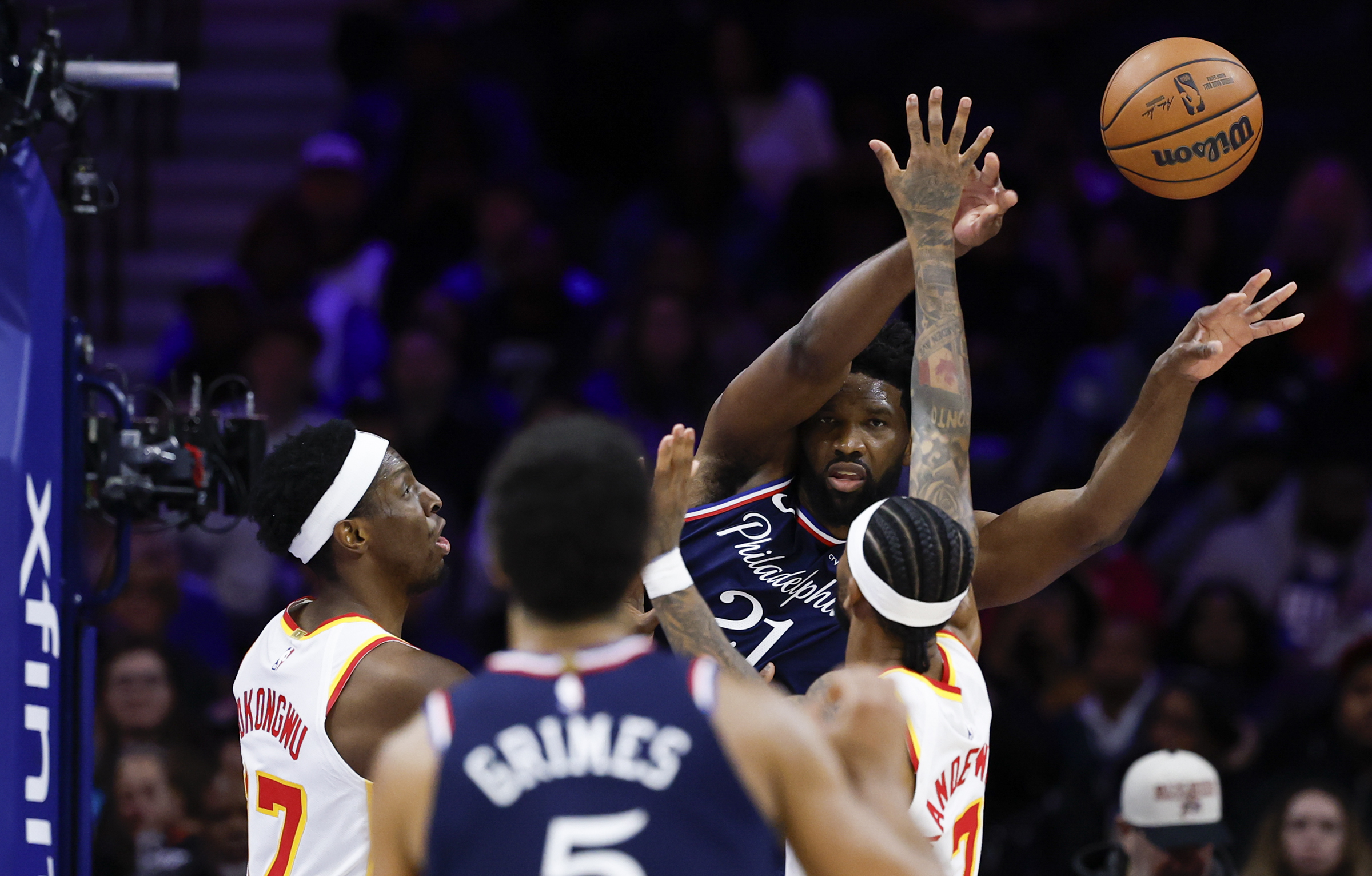
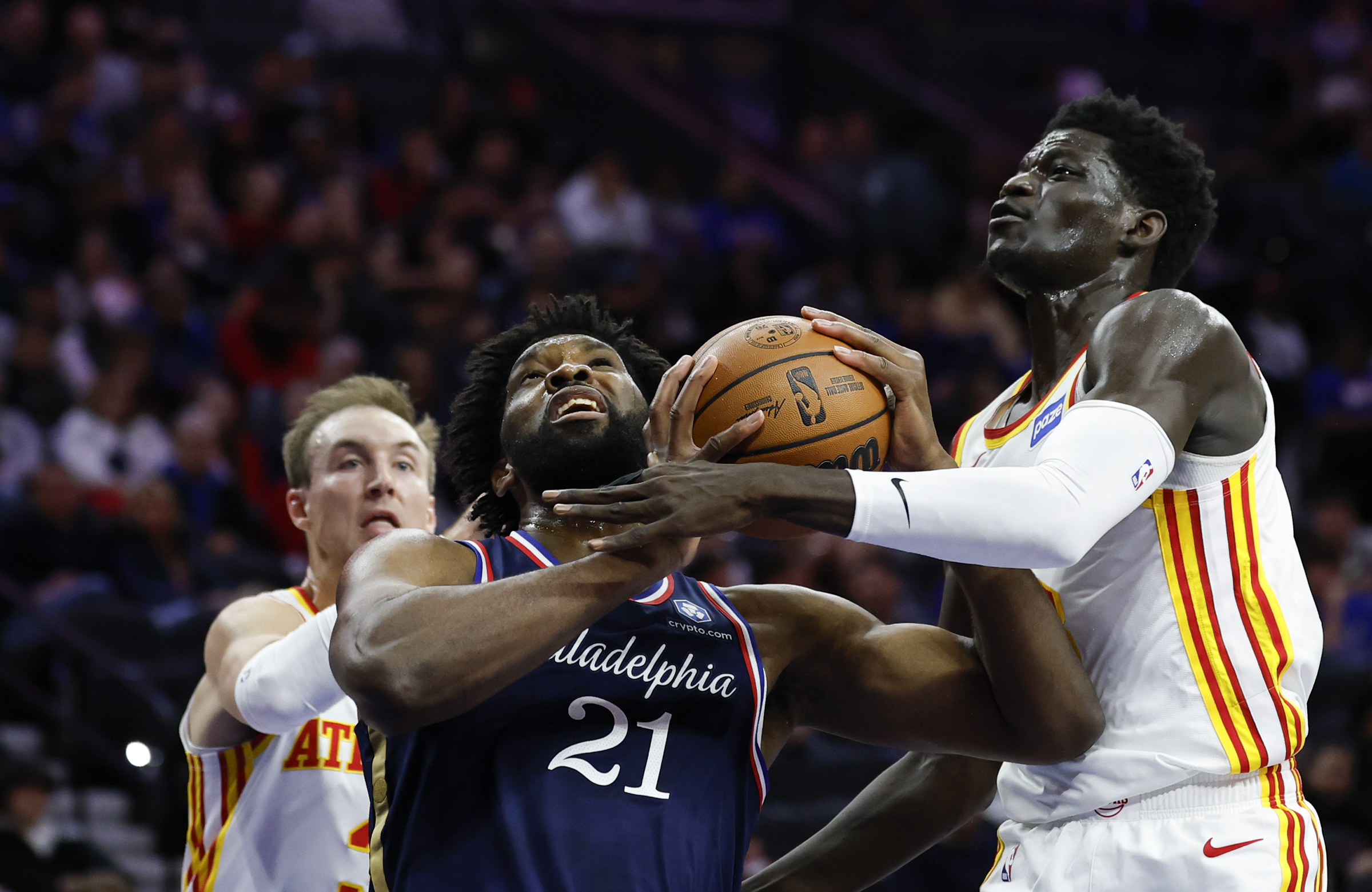
Each Friday, Inquirer photo editors pick the best Philly sports images from the last seven days. This week, we’ve got Trevor Zegras and the Flyers taking some hits, Nick Sirianni and the Eagles getting dealt a Black Friday loss, and Joel Embiid making moves — both on and off the court. …
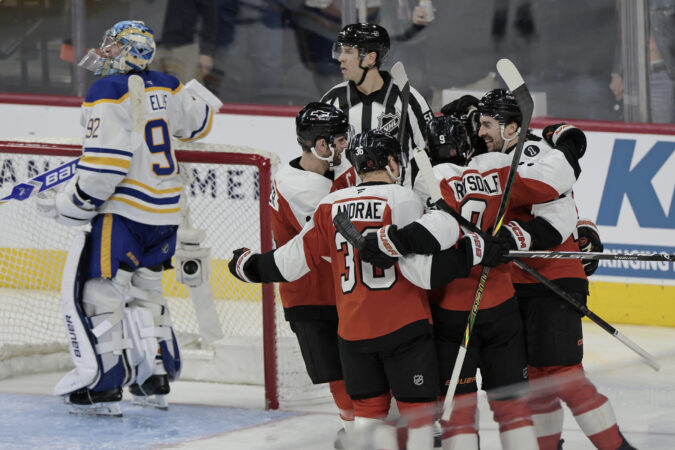
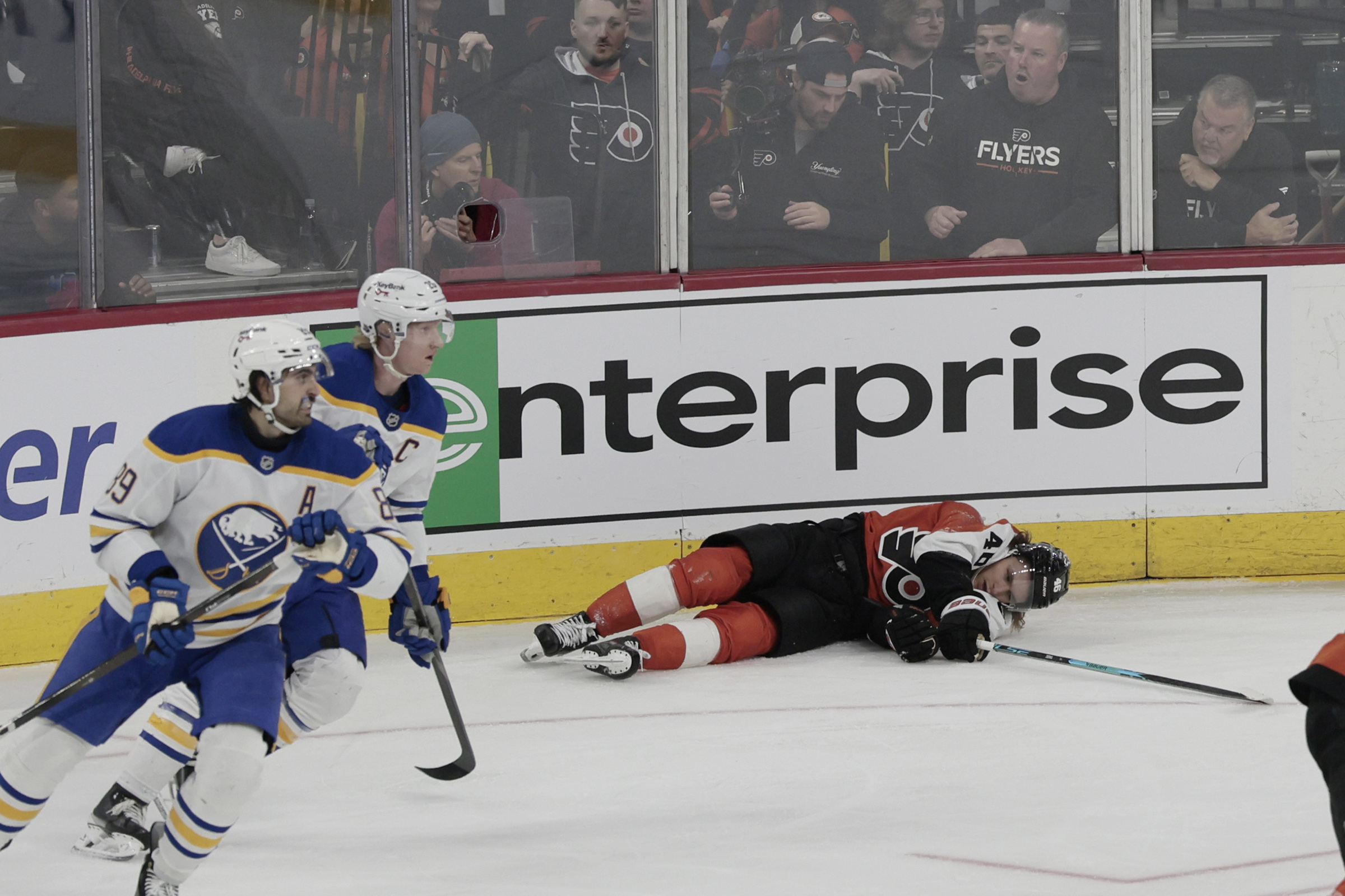
Flyers forward Trevor Zegras lays on the ice after being boarded by Buffalo’s Rasmus Dahlin in the second period. Zegras scored one of the Flyers’ five goals in Thursday’s win over the Sabres.
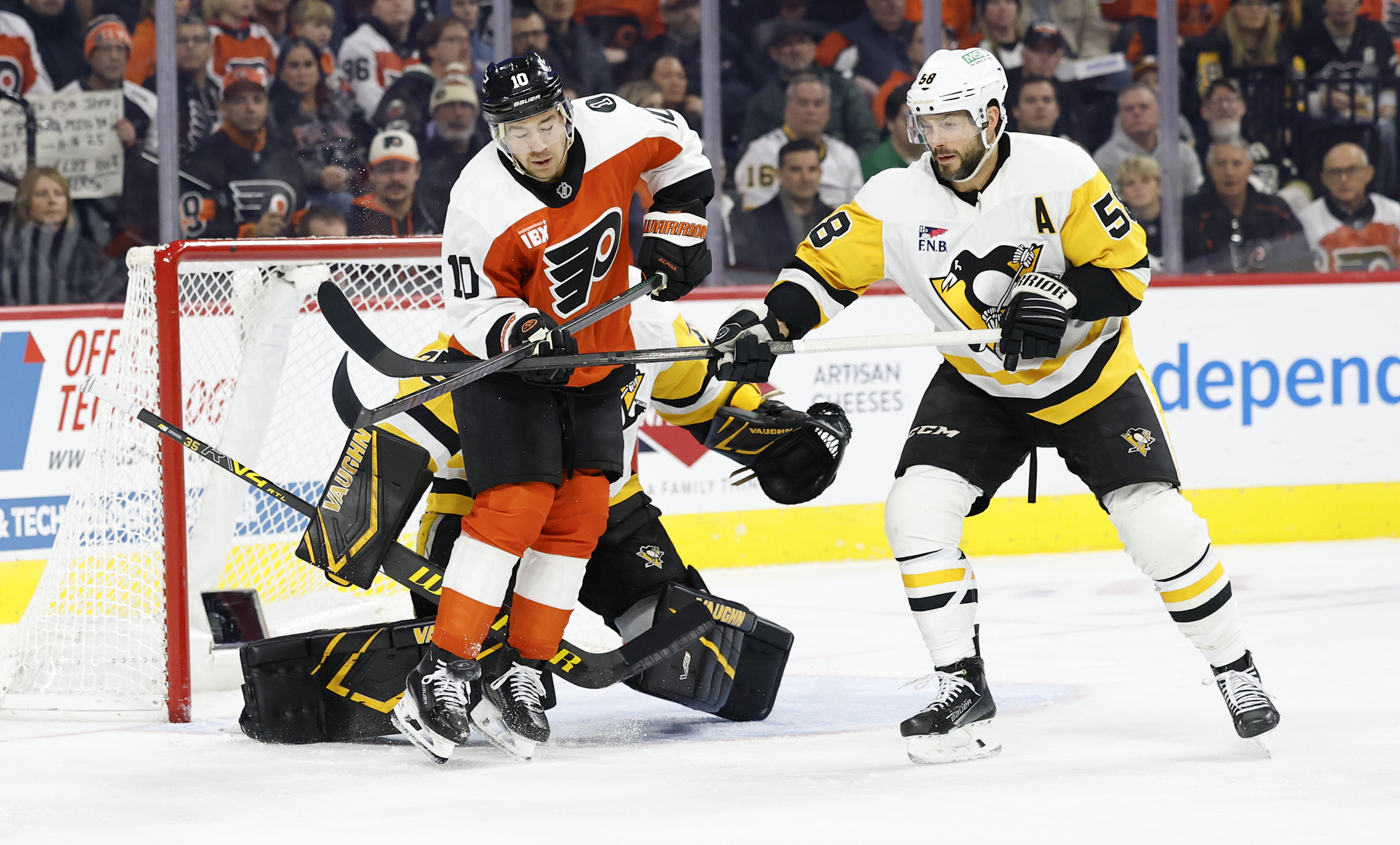
Flyers right wing Bobby Brink gets hit by the puck as he tries to settle in behind Pittsburgh Penguins defenseman Kris Letang and set a screen on goaltender Tristan Jarry. The 5-1 loss on Monday ended the team’s three-game winning streak.
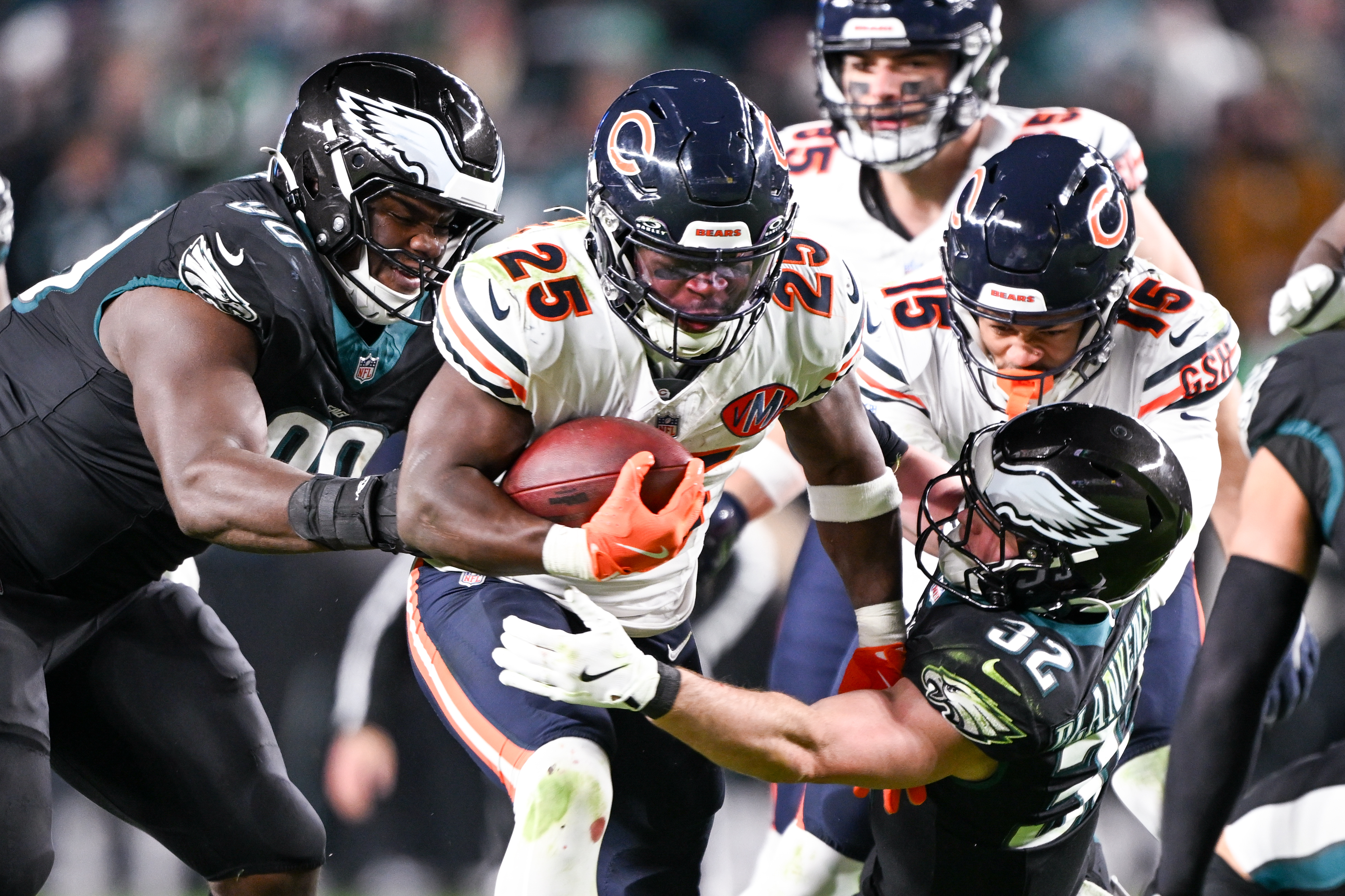
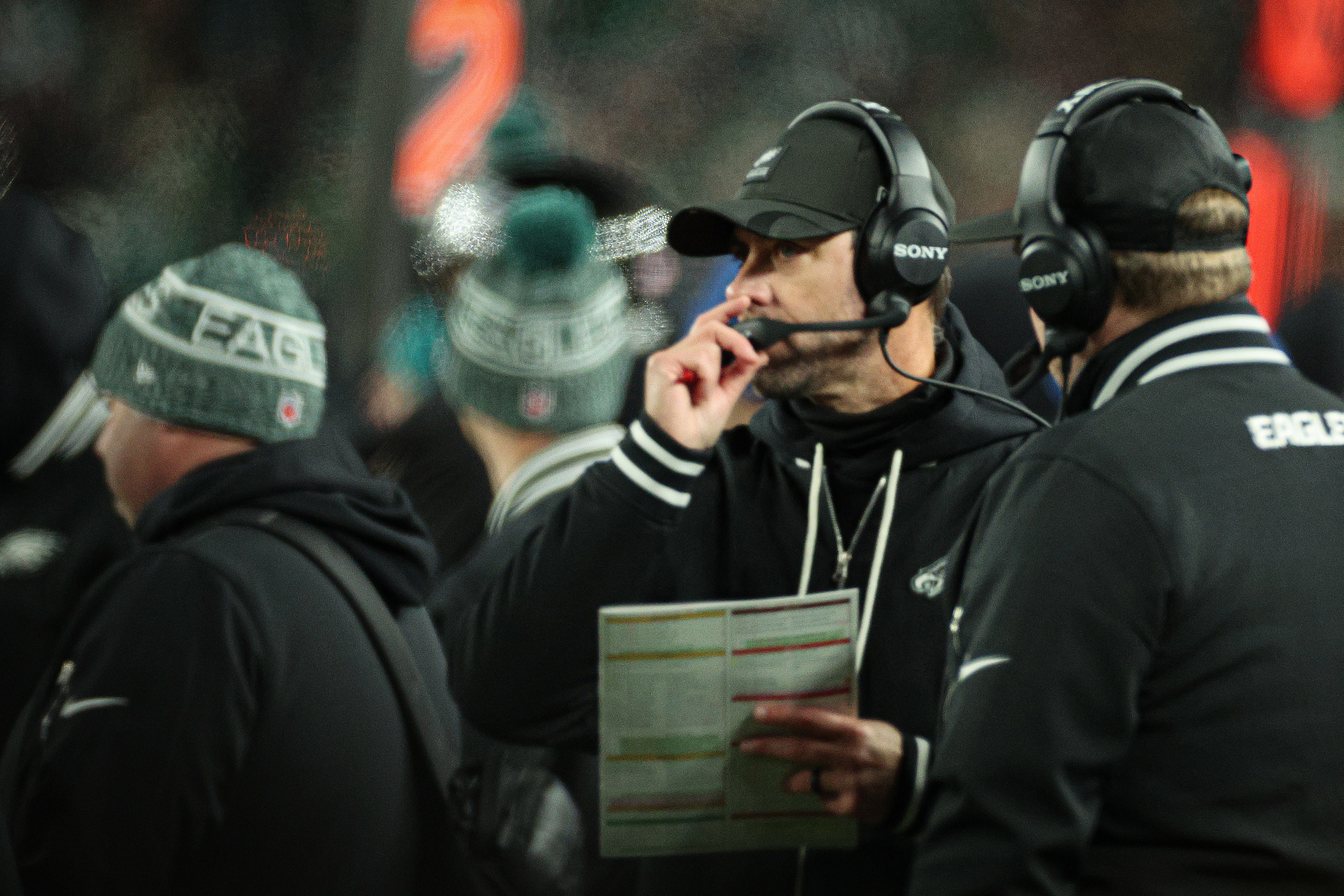
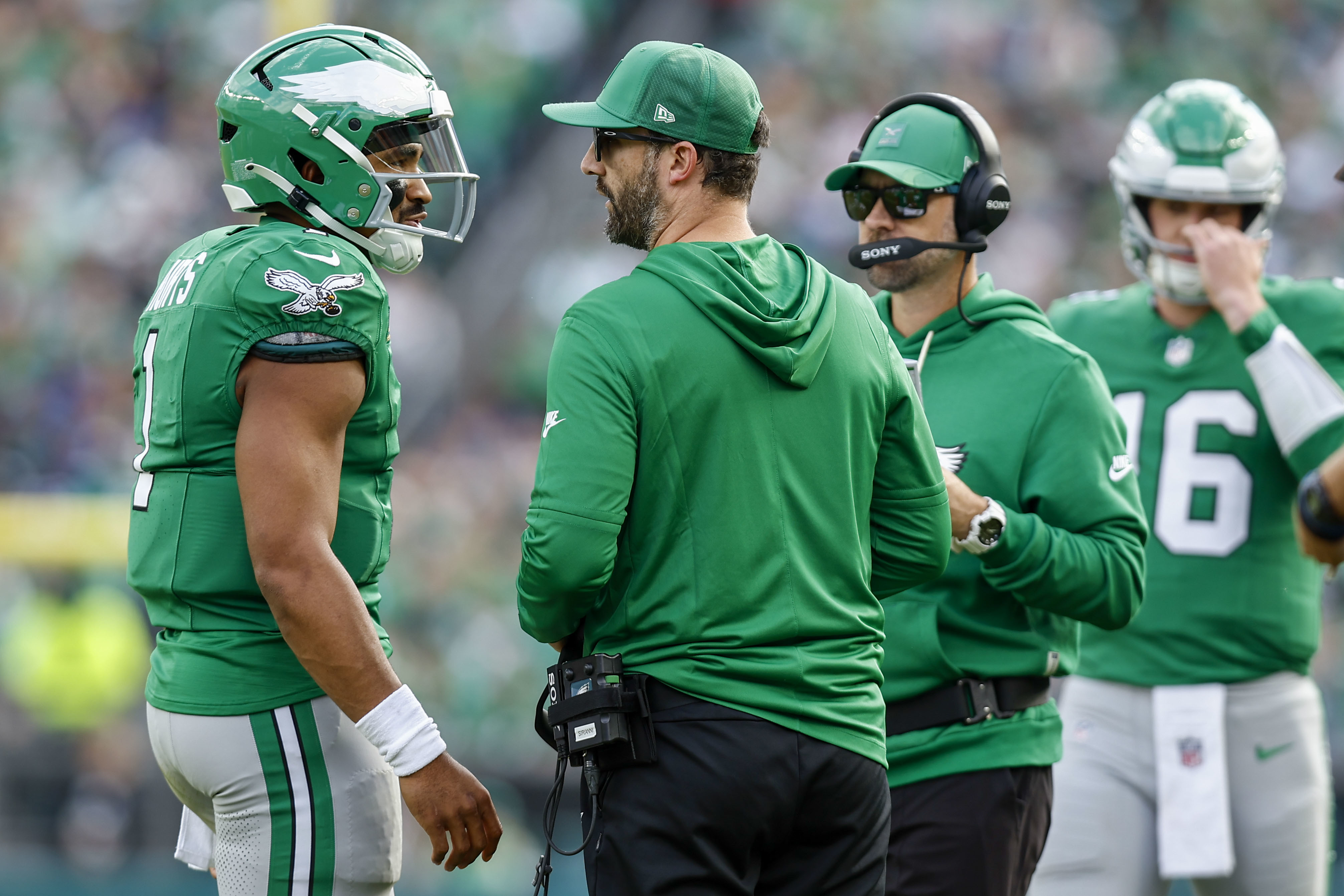
Eagles head coach Nick Sirianni reacts as he walks off the field after his team’s Black Friday loss to the Chicago Bears. The 24-15 loss was the Eagles’ second straight and their fourth in their last eight games.
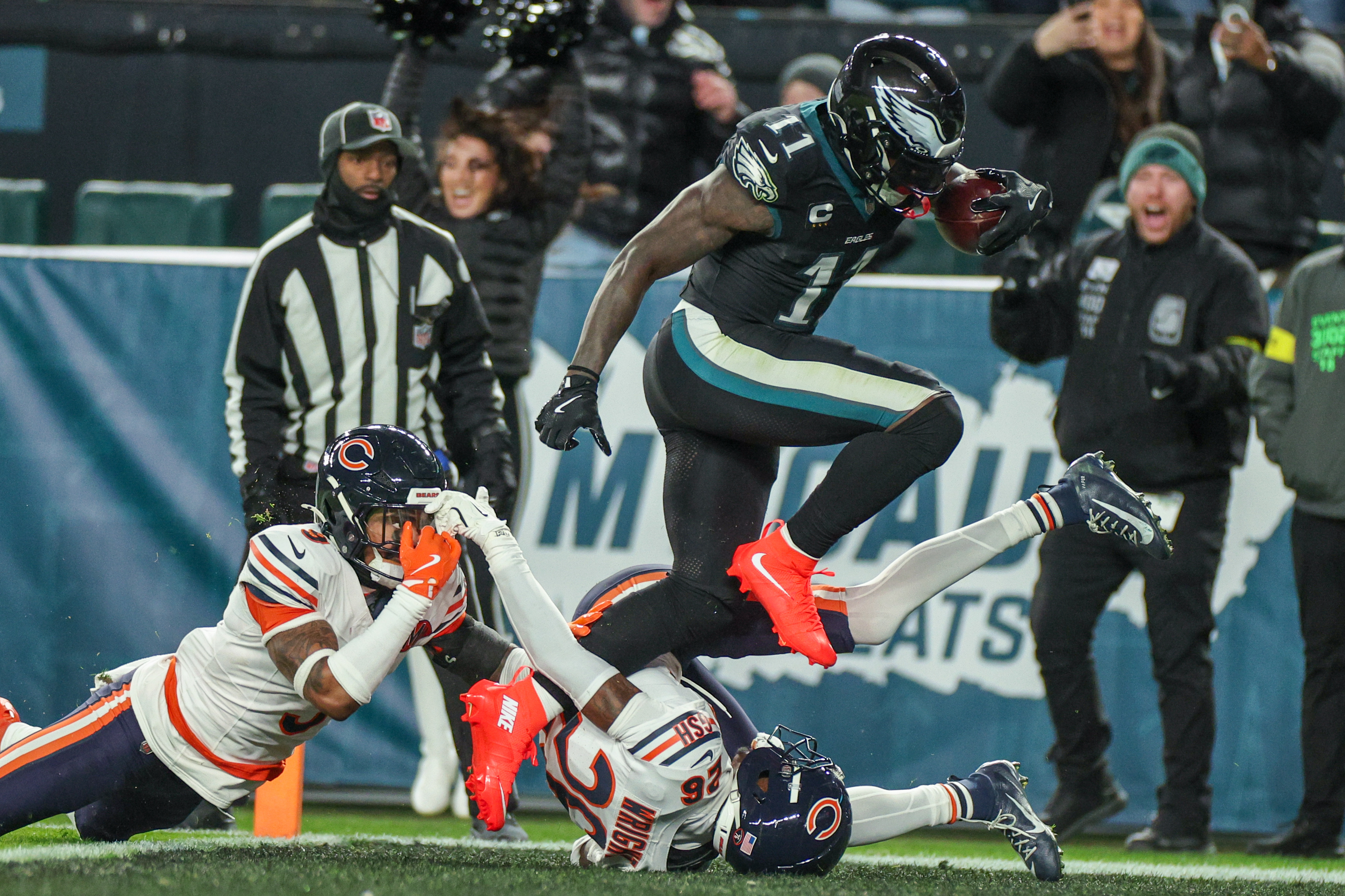
A.J. Brown had his best statistical game of the season against the Bears, and has three touchdowns in the Eagles’ last two games — but the Birds are 0-2 in those games.
First-year offensive coordinator Kevin Patullo has been the target of much of the criticism around the Eagles, with some crossing the line and vandalizing his N.J. home.
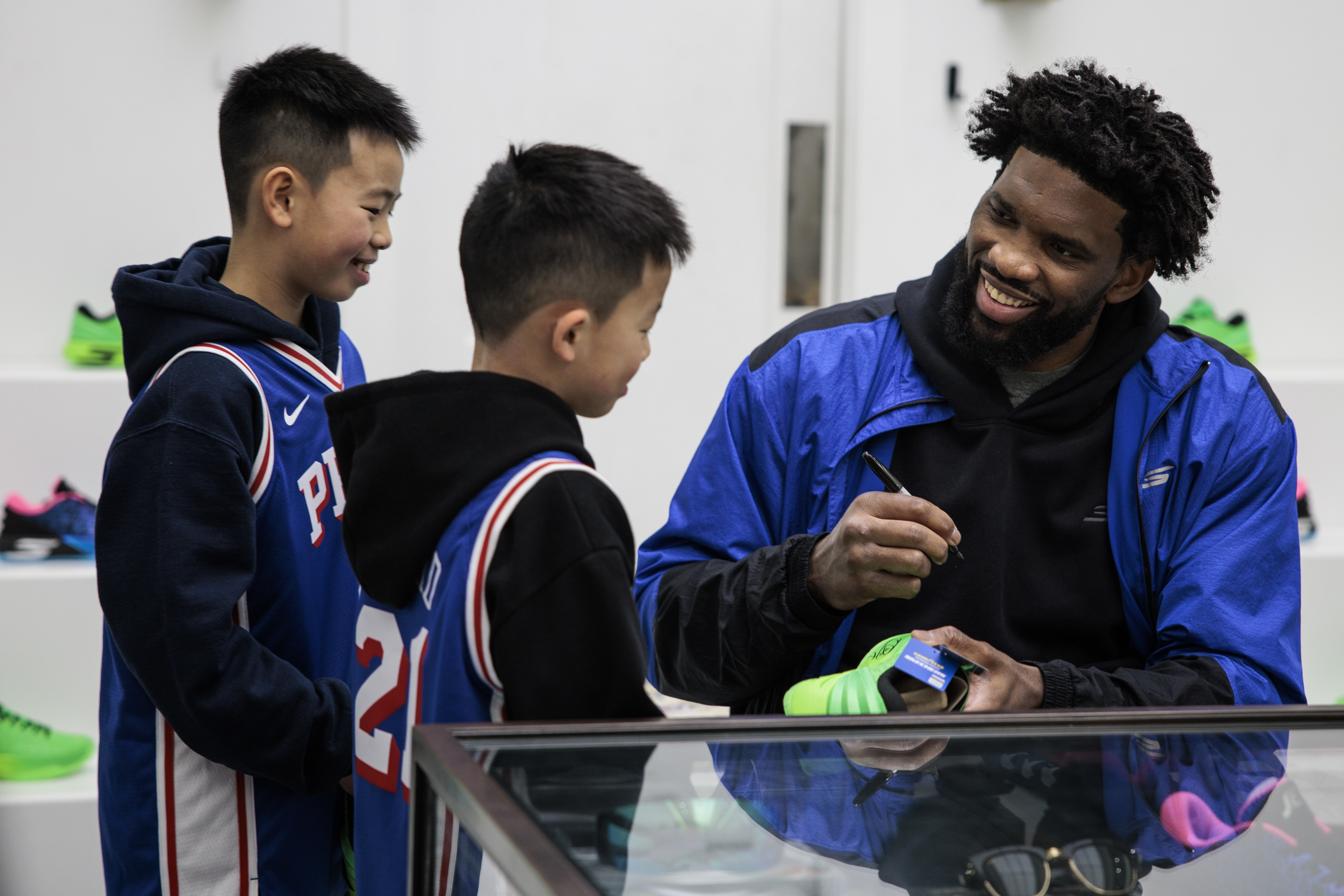
Joel Embiid signs autographs for Quentin Zheng, 10, left, and Mason Zheng, 9, center, during a release event for the Sixers center’s first signature shoe from Skechers, the SKX JE1, at Lapstone & Hammer on Wednesday.
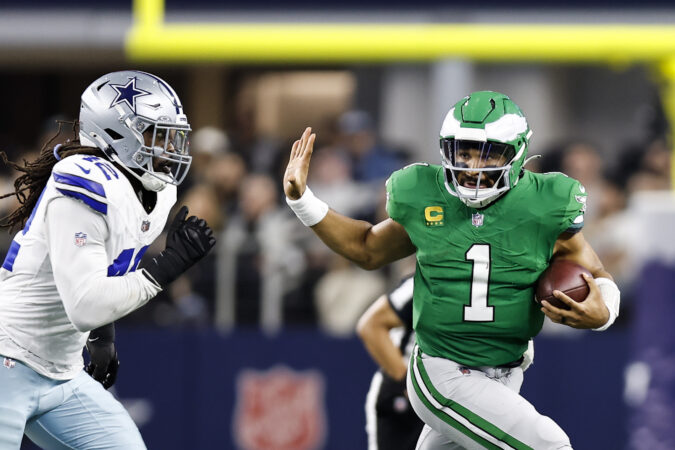
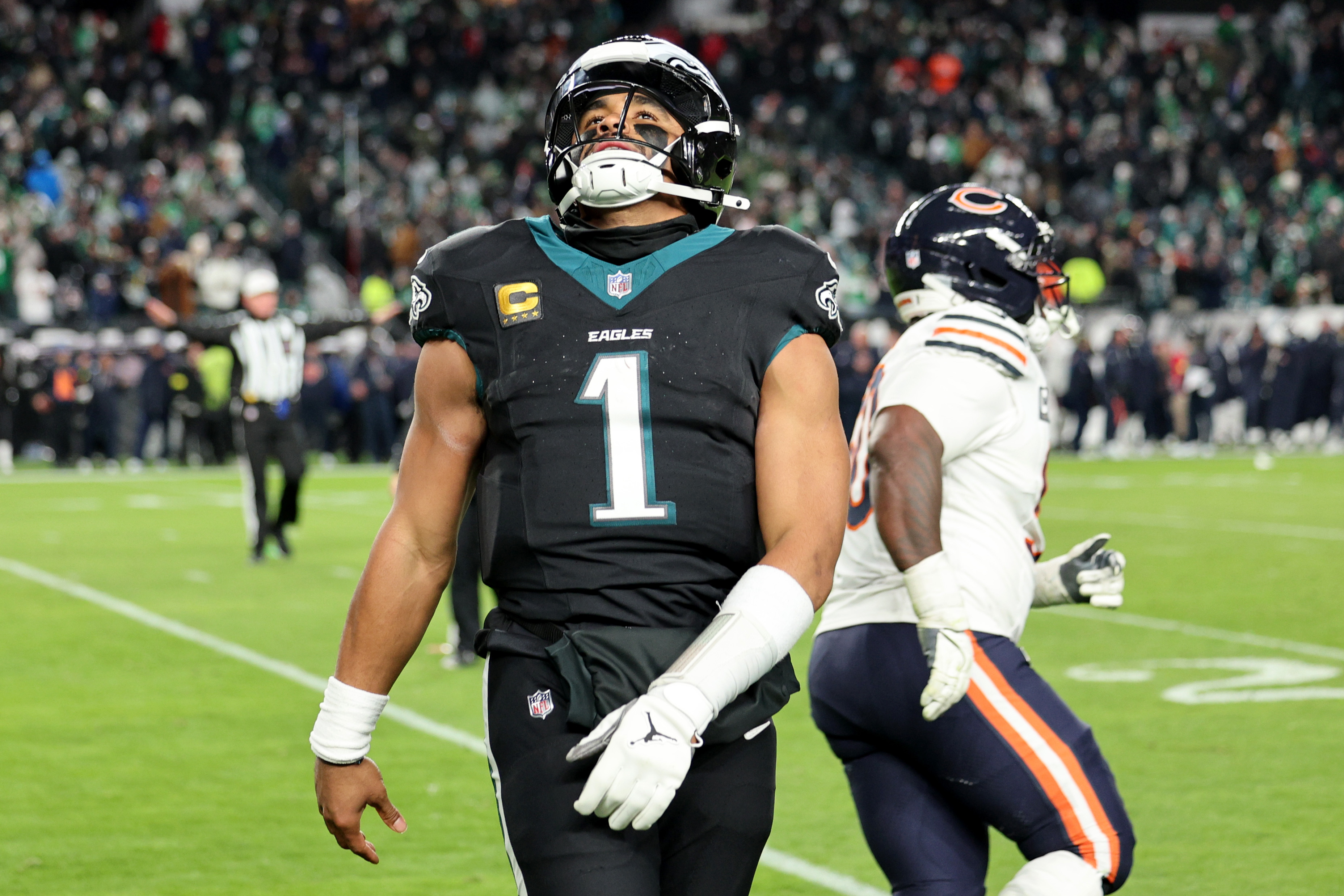
For one play during an otherwise dismal Black Friday loss to the Chicago Bears, Jalen Hurts gave the Eagles’ offense a jolt. The ball never even left his control.
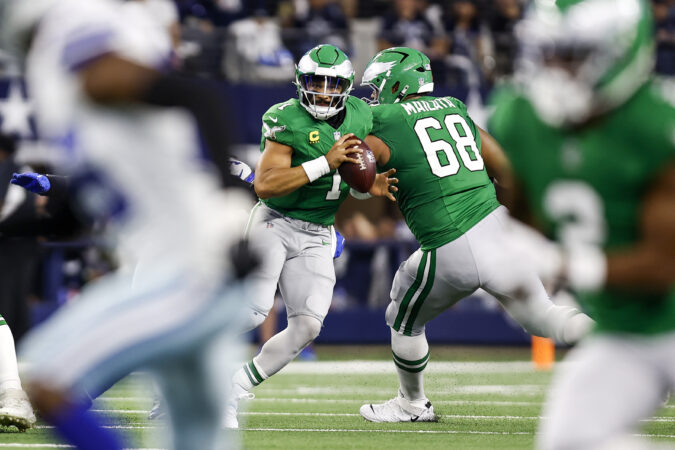
Rather, he tucked it into the crook of his left arm and dashed through a lane created on the left side of the offensive line by a pulling Cam Jurgens and Jordan Mailata. With neither linebacker in the picture — one was picked up by Jurgens on a blitz and the other ran with Saquon Barkley as he motioned out wide before the snap — Hurts dashed upfield unabated for 23 yards, the Eagles’ most explosive rushing play of the day.
It set up A.J. Brown’s 33-yard touchdown reception on the ensuing play, capping off the Eagles’ longest drive of the afternoon: 92net yards.
It was also like seeing a unicorn.
Designed runs have become rarities for Hurts in his fifth season as the Eagles’ starting quarterback. After averaging 3.6 designed runs per game in his first four seasons as the starter, Hurts has dropped to 1.1 designed runs per game in 2025, according to Pro Football Focus. Hurts has gone without a single designed run in six of this season’s 12 games.
On one hand, that drop-off should come as a surprise, seeing as Hurts once proclaimed himself a “triple threat” capable of dissecting defenses with his arm, his legs, and his mind. Among quarterbacks from 2021-2025, only Lamar Jackson boasts more rushing yards (3,531) than Hurts (3,108).
On the other, though, there is plenty of precedent for quarterbacks who rush less as they progress in their careers, either by choice or by physical limitation. Those examples include Hurts’ contemporaries such as Jackson (6.6 designed attempts per game before Year 5; 4.0 after) and Josh Allen (2.0; 1.6).
As evidenced by that 23-yard run on Friday, the 27-year-old Hurts can still burn defenders on the ground. His ability to serve as a run threat has historically forced opponents to defend all 11 players on the field, creating more opportunities in the run game as a whole.
Could the Eagles lean into the quarterback run game as one fix to help revitalize Kevin Patullo’s floundering offense that is running out of time to achieve consistency?
Hurts was asked after the Bears loss whether he would do anything different during the extended break before the Chargers game to help improve the offense. He was then asked whether he needed to use his legs more to fuel that improvement.
Flashing a slight smile, Hurts offered the same three-word answer to both questions.
“I’ll be working,” he said.
Nick Sirianni and Kevin Patullo must consider the risk to Jalen Hurts when the quarterback carries the football.
Why is Hurts rushing less?
Hurts is a full-time quarterback, part-time philosopher. His penchant for dropping philosophical sayings at the podium has become part of his brand, according to Mailata.
One of the sayings that Hurts helped popularize, “Keep the main thing the main thing,” offers a window into his approach. Winning, regardless of how it looks, is the most important facet of the game. Everything else is secondary.
So, when asked the week before the Bears game if he was open to more designed runs, Hurts emphasized that he is “open to doing whatever it takes to win.” Similarly, days later after the loss, Nick Sirianni seemed to refute the notion that Hurts wanted to run less this season by suggesting self-preservation is a factor in the decision to call fewer designed runs.
“We’re always thinking about how to protect Jalen and make sure that he is healthy for the long haul,” Sirianni explained.
It isn’t hard to fathom why the Eagles would want to protect their investment. Hurts is the highest-paid player on the team at $51 million on an average annual basis. As the offensive player with the ball in his hands on every down, he’s arguably the team’s most important player, too.
But Hurts has injured himself both in and out of the pocket throughout his NFL career, which has caused him to miss games. In 2021, he sprained his ankle when he was sacked in the Week 12 loss to the New York Giants. The injury forced him to sit out the following week’s game against the New York Jets and required offseason surgery.
His other two serious injuries occurred on designed runs. Hurts sprained his throwing shoulder in 2022 after getting tackled on a 3-yard zone-read keeper in Week 15 against the Chicago Bears. Hurts had plenty of wear-and-tear in that game, running the ball on 17 occasions on a frigid day at Soldier Field. While he finished (and won) that contest, he missed the next two.
Hurts also suffered a concussion in Week 16 in 2024 against the Washington Commanders on a play very similar to his 23-yard gain on Black Friday. After Hurts exited in the first quarter, the Eagles went on to lose their first game in roughly three months. He missed the final two games of the regular season in concussion protocol, though he likely wouldn’t have played in the season finale against the Giants anyway.
But the lack of carries for Hurts isn’t always in the Eagles’ control. Sometimes, that can be dictated by the defense.
While the Eagles run fewer run-pass options (7.4 per game, per Pro Football Reference) than they did in the past — especially compared to 2022, when they led the league with 10.9 — it was a substantial part of the game plan in the Week 5 loss to the Denver Broncos. More often than not, though, Hurts opted to throw. Sirianni explained in the aftermath that on those plays, “when you have that ability to get that to a playmaker in the flat, you take it.”
At the time, that game marked Hurts’ lowest rushing total of his career as the starter (one scramble, one kneel-down for a total of three yards).
“Sometimes when you’re calling those plays, he can run it, Saquon can run it, or we can throw it, so it’s kind of a three-way monster right there,” Patullo said. “It’s kind of a dealer’s choice, so it is just kind of a different kind of style, and it worked in that moment.”
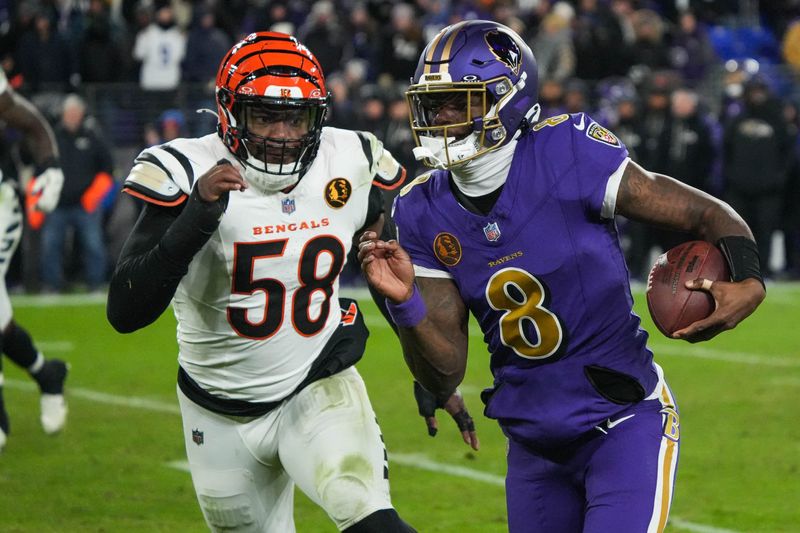
Lamar Jackson remains elusive, but has spent time in 2025 battling a myriad of injuries.
Hurts isn’t alone
Hurts is far from the only quarterback who has experienced a dip in runs as he has progressed in his career. Jackson is perhaps the best case study among active quarterbacks this season in his seventh full year as the Baltimore Ravens’ starting quarterback.
Jackson, 28, is averaging 4.7 carries per game, according to PFF (2.1 designed runs, 2.6 scrambles). He had already been on a downward trajectory after his first few seasons in the league, but this year is a new low for the two-time MVP quarterback.
Injuries have held Jackson back this year. He missed three games from Weeks 5-8 with a hamstring issue. He’s been active since Week 9, but over the past month, he has dealt with injuries to his knee, toe, and now his ankle. He has not participated in a full week of practice in a month.
Carson Wentz, the Eagles’ starter from 2016-20, was heralded for his athleticism, especially in 2017 when he was briefly the Eagles’ leading rusher through the first two weeks of the season. His asset became an issue, though, when he scrambled his way into an ACL tear later that season, marking the beginning of the end of his Eagles tenure. While his play style didn’t change upon his return in 2018, his efficacy deteriorated.
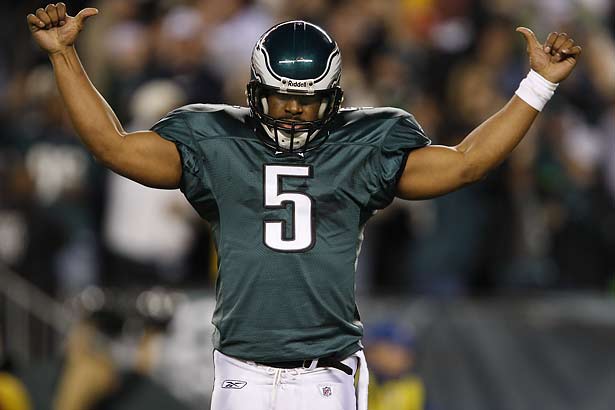
Donovan McNabb was celebrated as a runner early in his career but evolved into one of the NFL’s top pocket passers.
But injuries — and the threat of incurring them — aren’t the only factors at hand when it comes to the frequency of the quarterback run game. Donovan McNabb experienced a shift in his playing style throughout his 11-year tenure with the Eagles from 1999-2009. After posting 5.2 carries per game in his first four years as the full-time starter, McNabb averaged 2.9 over his final six in Philadelphia.
McNabb came up in an era when the “dual-threat” label on Black quarterbacks often came with racist undertones. Regardless of his detractors, McNabb’s emphasis on the passing game seemed to be more of a personal preference.
Even early in his career, before he leaned more into the passing game with the arrival of Terrell Owens in 2004, McNabb responded “no” when asked if he enjoys running.
“When I hear ‘running quarterback,’ that sort of upsets me,” McNabb said in 2000. “That takes away from my drop-back ability, my play-action ability and my ability to get the ball downfield. Any time that you talk about how athletic a quarterback is, and you continue to talk about his running ability, you sort of forget about him passing the ball.”
McNabb and Hurts aren’t one-for-one comparisons from a rushing perspective. McNabb was more of a scrambler, while Hurts has demonstrated a proficiency both in scrambles and designed runs. As passers, McNabb is arguably the best in franchise history. Hurts has had excellent games — including both Super Bowl performances — but is still working to find a sense of consistency in the passing game this season.
Jalen Hurts could help free things up for Saquon Barkley … and vice versa.
Uptick on the way?
Can the Eagles achieve some sort of middle ground, aiming to protect their quarterback while also injecting life into a listless offense, specifically the run game?
It’s been a tough season for Barkley and the Eagles’ rushing attack as a whole. The 2024 offensive player of the year has averaged 3.7 yards per attempt, a decrease of more than two full yards per carry from last season. His run blockers haven’t been doing him any favors, leaving him with 2.3 yards before contact per attempt (down from 3.8 last year).
Hurts could help through the use of his legs, according to Dan Orlovsky, the former NFL quarterback and ESPN analyst. Orlovsky said he expects to see more designed runs for Hurts in the last five games of the season. That increase is imperative if the offense wants to continue to live out of the shotgun, he explained.
According to Next Gen Stats, approximately 70% of the Eagles’ offensive plays occur when Hurts is lined up in the shotgun. That alignment can make a run game too predictable if the quarterback isn’t a threat on the ground, too.
“If you don’t, there’s really no reason for you to be in the shotgun, because the defense can see constantly what’s going on in the run,” Orlovsky said. “So their lack of running the quarterback this year … defenses fly to Saquon a lot more. They’re much less disciplined. They can constantly see the football. Those giveaways with Saquon’s alignment of what kind of run and when they’re running. And a lot of times, there’s 3 yards that aren’t taken advantage of from the quarterback run. So it’s had a negative impact on their ability to run the football.”
The Eagles broke that tendency briefly against the Bears. Hurts opted to keep the ball on a zone-read play that gained 3 yards. He read the unblocked defensive end who began to crash down hard on Barkley before pulling the ball and turning upfield. Instead of a handoff to Barkley for likely no gain or negative yards, Hurts created a positive play.
According to Smael Mondon, the Eagles’ fifth-round linebacker out of Georgia, an offense that runs out of the shotgun and boasts a quarterback who poses a threat on the ground “opens up the menu a lot.”
“If you don’t really have a running quarterback, like he’s not really a threat in the run game, then the menu kind of simplifies for what set you see in the backfield for what runs you could get,” Mondon said. “But if you got a quarterback that can run, then that menu of options of plays they could run kind of opens up even more. So it’s more things you’ve got to potentially have to defend. So it’s more stuff for a defense to think about.”
A quarterback run threat can also help with the offense’s “numbers disadvantage,” as backup Tanner McKee puts it. On a typical run play in which the quarterback hands the ball off to the running back, the offense has nine players that can block for the ball carrier. The defense has 11 who can tackle, putting the offense at a mathematical disadvantage.
There are different ways for quarterbacks to “get your block,” according to McKee, and keep defenses honest, including the use of play action and bootlegs. But a quarterback who keeps the ball for himself gains an actual blocker in the running back, minimizing the numbers disadvantage and, in theory, giving the offense a chance to rack up extra yardage.
Jalen Hurts vowed “I’ll be working” when asked about his methods to help fix the offense in the lead-up to the Chargers game.
An extra blocker means two extra gaps — the space between each blocker — for a linebacker like Mondon to fill.
“It just kind of makes it harder,” Mondon said. “Everybody has to fit perfect with QB designed runs, just ‘cause they’ve got that extra hat and extra two gaps in the game.”
Time is running out for the offense to hit its stride before heading into the playoffs. Still, Sirianni expressed an understanding that there’s a fine balance between keeping Hurts healthy and doing what it takes to win.
“You’re always thinking first about what the players do well, especially with your quarterback, how do you make sure that you’re keeping them safe on those?” Sirianni said. “Even when you think about those, there are quarterback runs you can run that are a little [safer] than another quarterback run. But it’s still football and you still [face] a risk with every snap that you take, and that’s on a drop back, too.
“But again, you look at the defenses, how you want to attack, you look at what you do well, how to protect the guys, and you’re just looking for the best way to go about that. I don’t think anybody wants to come out of a game with Jalen having 15 carries, designed carries. But again, we’re looking at everything, and we’ll see how that looks going forward.”
Growing up in a family of six in Poughkeepsie, N.Y., former Villanova women’s basketball star Maddy Siegrist said the closest thing she witnessed to a sports bet was when the Super Bowl rolled around. And even then, it was friendly wagers.
“It just wasn’t a thing in our house,” said Siegrist, who now plays for the WNBA’s Dallas Wings. “I didn’t grow up with people who bet. Plus, there were no apps or anything. I knew people that did boxes on the Super Bowl. That was the extent of my knowledge.”
Maddy Siegrist didn’t grow up around sports betting, but it’s now inextricably tied to her profession.
Since Siegrist went pro in 2023, however, legalized sports betting has infiltrated virtually every corner of sports. Siegrist said the WNBA benefits from the sports gambling population laying bets on games. That translates to more eyes watching women’s professional basketball, which generates a bigger fan base, which spurs continued growth of the sport and its brand.
But Siegrist, 25, is quick to point out a darker side to the sports-gambling intersection, “one of the rougher parts that people don’t think about,” she said.
Public vitriol directed at athletes is nothing new. But add the sports gambling component and a bettor’s ability to wager on virtually any aspect of a game or performance at the click of an app, and the result can be toxic. Often, negative fan reaction is the result of a losing bet, and social media has exacerbated the issue.
“Any pro athlete will kind of give you the same [story]: These are people betting from their house that you’re going to go under [a projected stat total] or your team’s going to win,” Siegrist said. “With the world of social media, just how much hate people get is truly amazing. I’m not a super controversial player. I don’t have the spotlight like some of my other teammates. But if you have a bad game or a good game, you can get anywhere from 50 to 100 [direct messages] or comments on your social media that are crazy.”
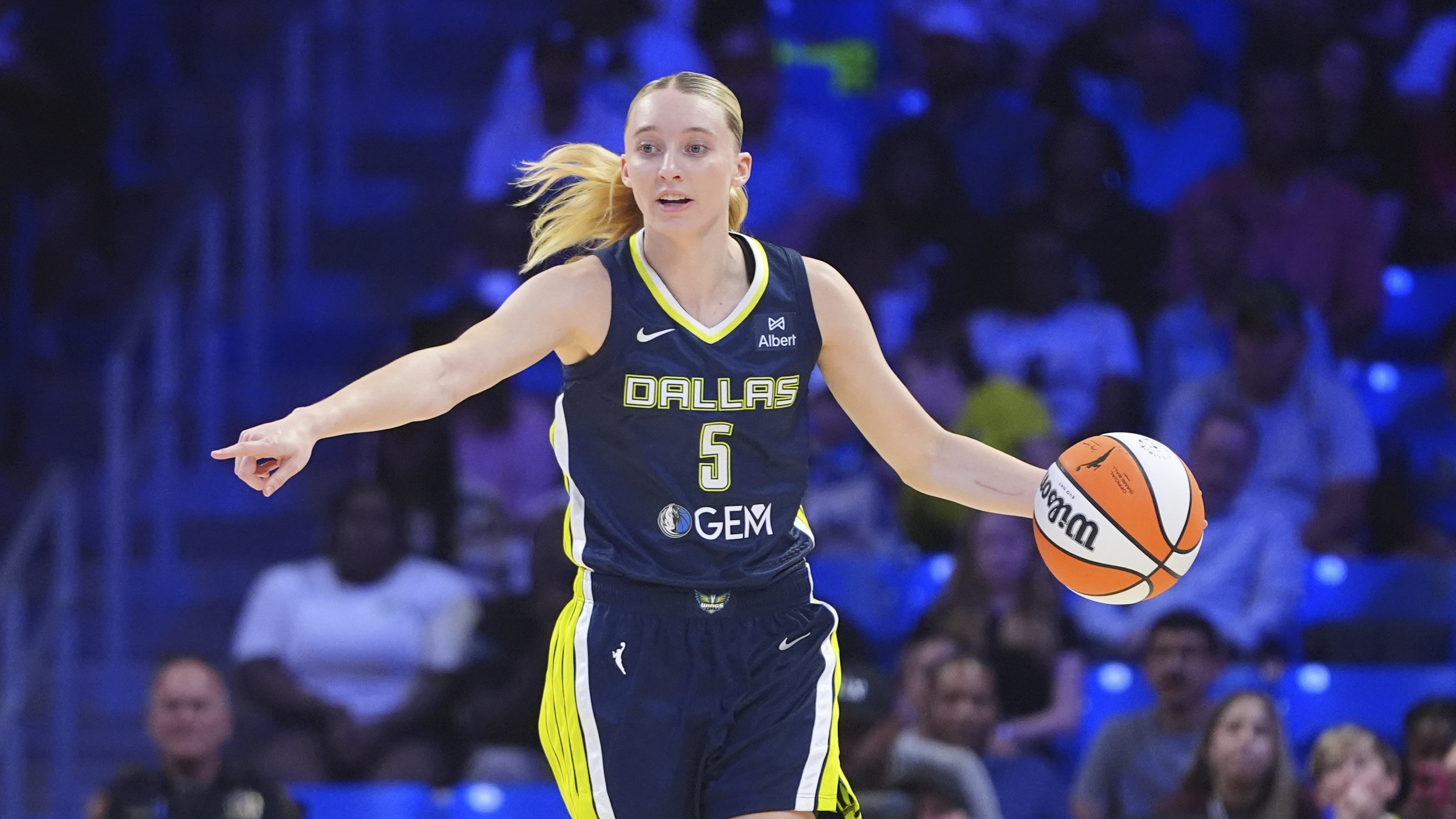
Dallas Wings guard Paige Bueckers, a teammate of Maddy Siegrist, is one of the WNBA’s brightest young stars.
Betting burden
No longer are the WNBA and college women’s basketball considered unattractive markets for sports gamblers. Players like Indiana Fever star Caitlin Clark and Paige Bueckers, Siegrist’s teammate on the Wings, are among the stars generating buzz, and, by extension, causing a spike in gambling activity on the sport.
Female athletes, professional and amateur, shoulder many challenges beyond maintaining elite performance on the court or field. That includes playing in the age of the ever-growing legalized sports betting industry — especially the proliferation of multimillion-dollar business partnerships between pro sports leagues like the WNBA and gaming companies like BetMGM.
And sports remain corrupted by the underworld of illegal gambling, where pro athletes can turn to a side hustle to try to score millions illicitly. The recent unsealing of the federal indictments that involve illegal gambling schemes, the NBA, and purported organized crime members is one such example, and Siegrist said she had followed those recent announcements.
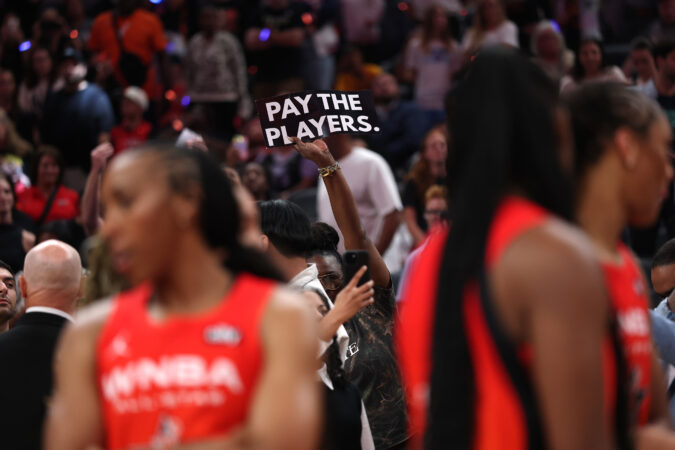
While the WNBA and the players’ union continue collective bargaining negotiations, there are developments regarding salary structure in the league’s latest proposal. The changes could temper a longstanding gripe by professional women’s basketball players: that their compensation is not commensurate with the gargantuan salaries made by male pro hoops players — as they shoulder the shared burden of scrutiny from bettors and fans alike.
According to a source with knowledge of the situation, the league’s latest proposal includes language that defines a maximum salary structure with a guaranteed $1 million base for 2026 and projected revenue sharing pushing total earnings for max-salary players to more than $1.2 million. This follows an agreement to extend the current labor agreement to Jan. 9
The average player’s salary is projected to exceed $500,000 in 2026, while the minimum salary is projected to be more than $225,000 — up from approximately $102,000 and $66,000, respectively, in 2025.
Once the WNBA season starts, Siegrist said she drastically reduces her social media use to keep her mind clear of clutter and keep the focus on basketball.
“You have to take it for what it is. Obviously, social media helps you build your brand, stay connected,” she said. “From that perspective, it’s great. It’s really allowed athletes to monetize off of themselves, and it gives fans a unique perspective into seeing these people’s lives, which I think is great.
“Twitter [now known as X] is the worst. I definitely try to not go on at all during the season. … Sometimes I like to scroll on TikTok, take my mind off stuff. But I don’t ‘like’ anything that has to do with the WNBA on TikTok. I think for me, it’s definitely a balance.”
The WNBA has taken steps to combat hate and negative fan behavior directed at the league’s players and personnel. Earlier this year, the league launched the “No Space for Hate” initiative, a “multidimensional platform designed to combat hate and promote respect across all WNBA spaces — from online discourse to in-arena behavior.”
One of the campaign’s goals is the use of artificial intelligence to safeguard the players’ and teams’ social media pages and to automatically detect, report, and delete hate speech and harassment.
“As interest in sports betting grows around the WNBA, we are taking clear, concrete steps to protect players and safeguard the integrity of the game. Player safety remains our highest priority,” the WNBA said in a statement. “We’ve enhanced security, expanded monitoring of online threats, and increased fan education. We are also working closely with our gaming partners to monitor betting activity and ensure our systems protect the game. These safeguards are constantly being reviewed and strengthened to ensure we keep the players safe and our game secure.”
Around the time the WNBA launched “No Space for Hate,” sportsbook behemoth BetMGM announced its partnership with the reigning champion Las Vegas Aces. BetMGM also is an authorized gaming partner with the league.
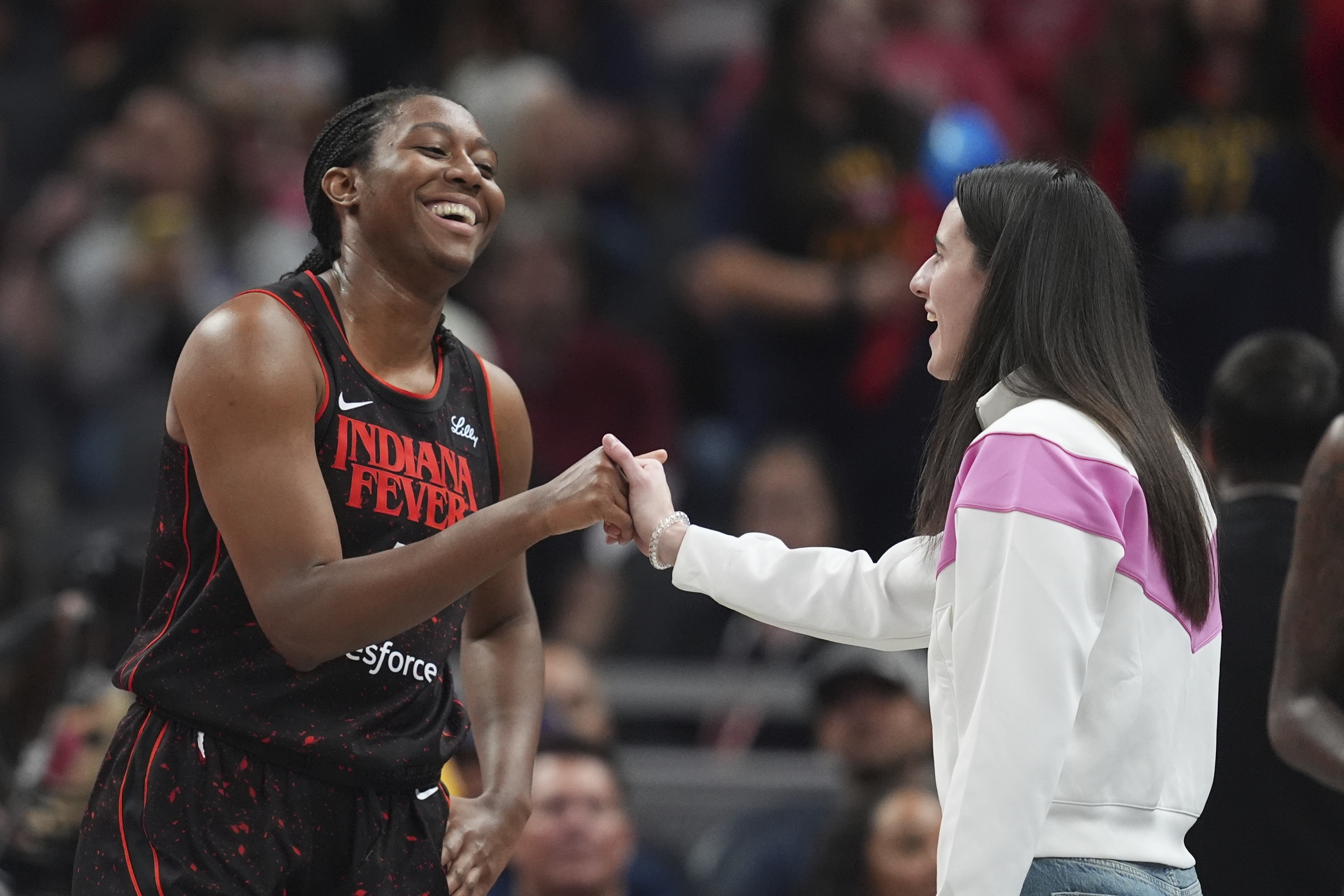
Even while injured, Caitlin Clark (right), here with another former top overall pick in Aliyah Boston, generates a ton of buzz around the WNBA.
“The NBA and WNBA are very different in terms of scale and seasonality — the NBA is a much bigger league, but both have shown strong year-over-year growth,” said BetMGM trading manager Christian Cipollini. “The WNBA benefits from its summer schedule when there’s less competition for attention, and star power like Caitlin Clark has driven a major uptick in engagement. Even after Clark’s injury this [2025] season, handle remained well above pre-Clark levels, which speaks to the league’s momentum.”
Cipollini said BetMGM — and the gaming industry as a whole — is committed to sports integrity.
“That includes athlete harassment, and we’re working with the leagues on this issue from several angles,” he said.
During his 42 years (1978-2020) as head coach of the Villanova women’s basketball team, Harry Perretta said gambling on women’s college basketball was never an issue for him and his players, simply because the interest wasn’t there. Of course, the bulk of Perretta’s Villanova coaching career unfolded before the 2018 Supreme Court ruling that legalized sports betting state to state.
“I guess you always might have bookies on campus. But I used to tell [players], ‘You really don’t want to get involved,’” said Perretta, 70. “People who get themselves in trouble are people who make bets without putting money down. Next thing you know, they’re behind the eight ball.”
There was that 1998 ’Nova-UConn women’s game, though. Nykesha Sales was on the cusp of becoming Connecticut’s career scoring leader before she sustained a devastating Achilles injury. But before UConn’s game against Villanova, Perretta and longtime UConn women’s coach Geno Auriemma agreed to let Sales score an uncontested basket after tipoff to reach the milestone. Villanova then was allowed to score its uncontested basket, before the “real” game began. Then-Big East commissioner Mike Tranghese also had agreed to the gesture.
“We let Sales score a basket, and I checked to see if there was an over/under on that game,” Perretta said. “I checked out of curiosity. When we let her score the two [points], and then Connecticut let us score two, I didn’t want anybody saying something crazy. There was no betting on that game, but I checked. That did go through my mind when that whole sequence occurred.”
In the final two years of Perretta’s Villanova tenure — during which he coached Siegrist, Perretta said he started to see a lot more betting lines on women’s college basketball games, particularly around the start of the NCAA Tournament. The dual salvos of legalized sports betting and amateur athletes securing name, image, and likeness deals had reshaped the sports landscape.
Siegrist — who married Perretta’s son Stephen, a Drexel assistant women’s basketball coach, in late October — said that going back to her ’Nova playing days, players were consistently educated on the dangers of associating with any illegal gambling operation or people within that culture.
“I have it ingrained from college and the NCAA, ‘No gambling ever, or else you’re not going to be able to play.’ I’ve tried to keep that mentality,” Siegrist said.
The bigger challenge, she said, is now balancing her career in the online sports wagering fishbowl.
“People are crazy. They’ll post something from five years ago and comment a hundred times, ‘You suck.’ It’s a pain to go through and delete it all,” Siegrist said. “The Wings pay a company to manage social media, the outside comments, and take them down right away if they’re threatening or hate[-related]. We’re going to see more and more of that, which I think is great.
“These leagues and organizations are just trying to protect their players. At the end of the day, everyone is just trying to play the game they love to the best of their abilities. When you try and focus on that, these are all ways to keep the main thing the main thing.”
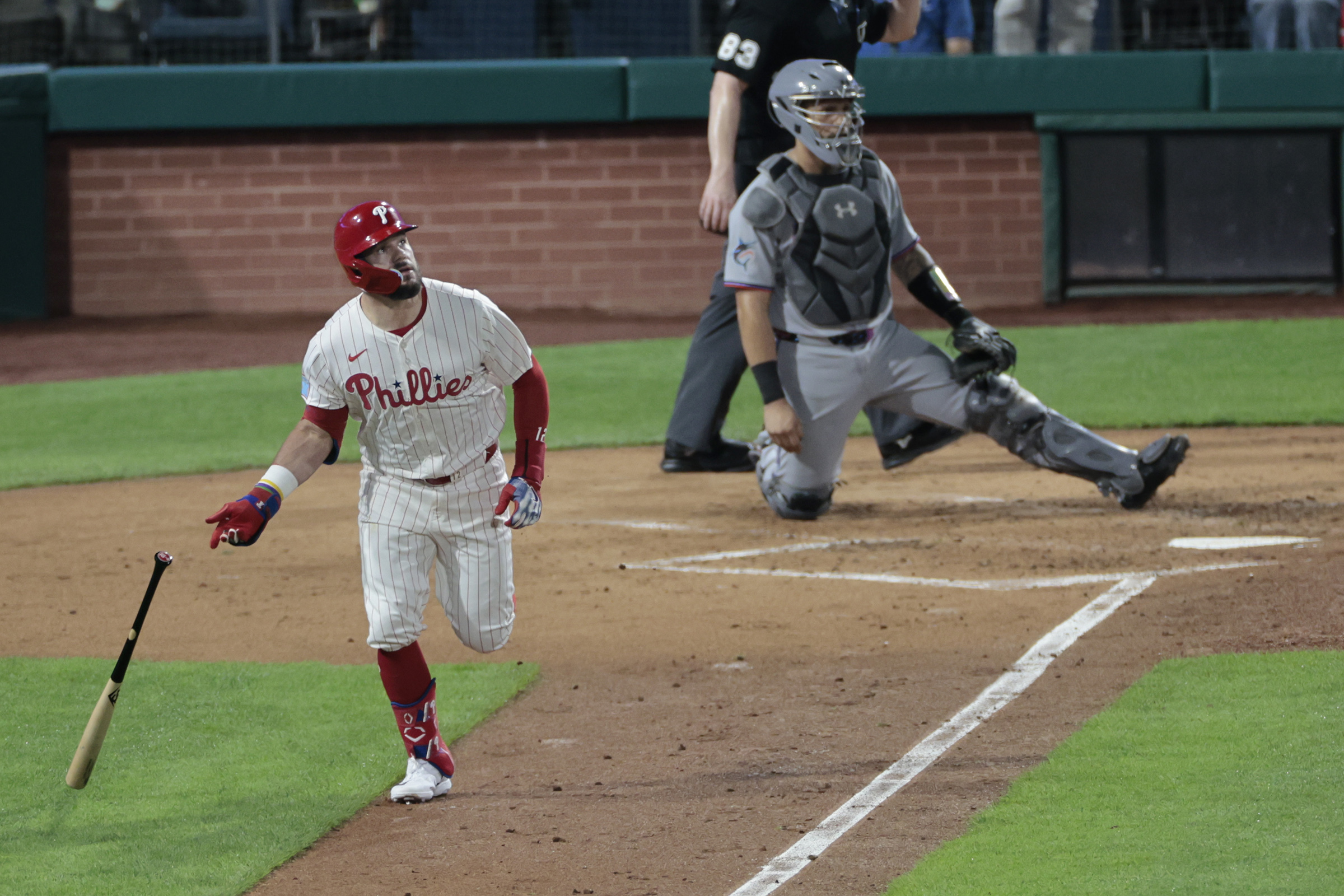
What would it mean to keep Kyle Schwarber in a Phillies uniform?
Just look at the names he is likely to pass on the franchise’s all-time home runs list by the end of 2026, his age-33 season.
Sitting at 187 dingers since joining the Phillies, Schwarber likely will pass Bobby Abreu (195) and Dick Allen (204) before the All-Star break. A month or two later, he could pass Jimmy Rollins (216) and Cy Williams (217).
By then, Schwarber will be in striking distance of three of the heaviest hitters in Phillies history, literally and figuratively.
Greg Luzinski, 223
Chase Utley, 233
Chuck Klein, 243
A repeat of Schwarber’s 56 homers in 2025 would leave him in a tie with Klein for fifth place all-time. Only Del Ennis (259) and Pat Burrell (251) would stand between him and Mike Schmidt (548) and Ryan Howard (382).
You can’t let a guy like that walk away. We know it. The Phillies know it. And, yeah, Schwarber’s agent knows it. Which is why we are here, in early December, on the eve of baseball’s annual winter meetings, still waiting for confirmation that the last of the Schwarbombs has yet to fall on South Philadelphia.
Do not fret, sweet children. Save your angst for the Eagles. The baseball offseason is in its opening laps. The pace car is still on the track. The top of the market has barely begun to percolate. Kyle Tucker, Bo Bichette, Alex Bregman, Cody Bellinger … all have yet to agree to terms. All will remain free agents for the foreseeable future. Exactly one position player has signed a multiyear contract. Schwarber and the Phillies are right where we should have expected them to be.
The one big deal to date actually bodes well for the Phillies. Josh Naylor’s five-year, $92.5 million contract with the Mariners suggests that the market won’t grow too outlandish for sluggers at nonpremium positions.
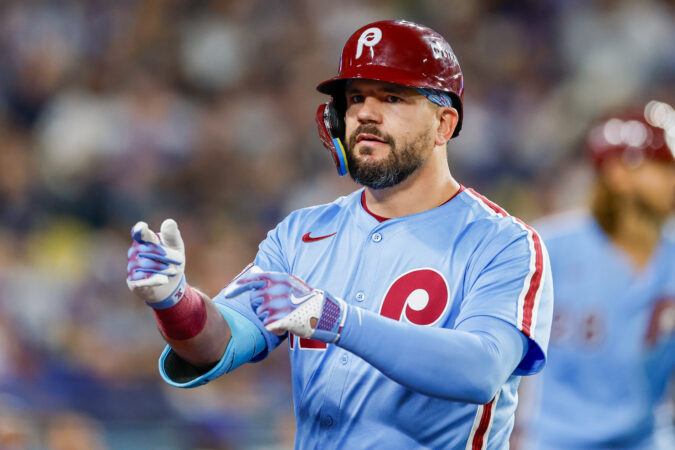
Kyle Schwarber will enter his age-33 season coming off a 56-homer campaign in 2025.
You can argue that Naylor barely qualifies as a slugger, with 88 home runs over the last four seasons. Whatever the semantics, he clearly is in a different power class. But there is some comparability here. Naylor’s 124 OPS+ from 2022 to 2025 is in a similar tier to Schwarber’s 134. He is also four years younger than Schwarber and has a good glove at first base.
The logic goes something like this: The same types of teams that would have interest in a hitter like Schwarber probably would have interest in a hitter like Naylor. If Naylor had signed for six years and $120 million or five years and $110 million, we might be sitting here wondering if it really would be wise for the Phillies to shell out the stupid money it would take to retain Schwarber. The answer probably still would be yes. But it’s nice not to have to consider it.
It’s fair to assume that the market will look as it has the past several seasons. There is a pretty hard limit on the amount teams are willing to spend on players who don’t add significant value on defense. Besides Juan Soto, the only hitters to sign for more than $95 million over the last three offseasons have played shortstop, center field, or starting pitcher (Shohei Ohtani). The last first baseman or designated hitter to sign for more than five years and $100 million was Freddie Freeman, who landed six years and $162 million from the Dodgers in 2022.
Schwarber can — and should — argue that he is a different case. A typical designated hitter doesn’t finish second in MVP voting. Schwarber’s power and consistency are transcendent enough to disregard positional archetypes. The only hitter with more home runs than his 187 over the last four seasons is Aaron Judge (210). He, Judge, and Ohtani (also at 187) stand alone. In terms of impact on a contender, Schwarber is much closer to Freeman than he is to Naylor. Six years and $150 million is a defensible ask.
The Phillies can argue that Schwarber’s age and positional limitations are legitimate factors. Just look at Pete Alonso, who is pretty close to a carbon copy of Schwarber at the plate. The Mets’ first baseman had to settle for a two-year, $54 million contract last offseason. Not only that, Alonso is on the market again after opting out of his deal. Or, consider Teoscar Hernández, who signed with the Dodgers for three years and $69 million last year. Schwarber is better than Hernández. But is he better than two Hernándezes? For the Phillies, four years and $100 million is a justifiable offer.
Hopefully, we’re just waiting for the two sides to split the difference. Five years and $125 million would be a steep price to pay to lock up the designated hitter position through Schwarber’s age-37 season. But then, Schwarber will be bigger than a 37-year-old designated hitter when that time comes. He will be one of the defining players of an era, one of the franchise’s all-time greats, a fixture in the community and a potential Hall of Famer. He may have passed Howard for second on the franchise home run list. He may be closing in on 500 for his career.
Can the Phillies afford to sign Schwarber?
The better question is whether they can afford not to.
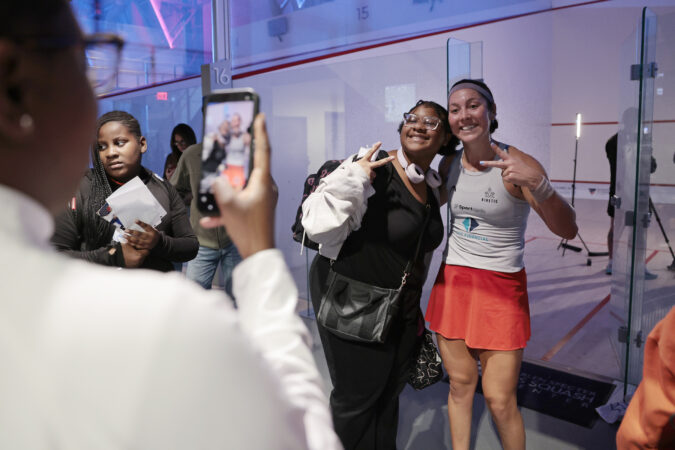
Before the 2018 Supreme Court ruling that legalized sports betting, professional squash player Amanda Sobhy said players were allowed to have their cellphones during matches to communicate with coaches.
After that landmark decision, the rules changed. Not that squash boasts a large betting handle (the amount of money wagered by sports bettors).
“I have never encountered anything remotely close to betting,” Sobhy said. “We’re too nice of a sport.”
Yes, U.S. gamblers probably aren’t scrambling online to lay down a wager on squash matches that feature Sobhy — No. 11 in the women’s squash world rankings — and another elite opponent. Even if a bettor wagers on a squash event, there are limited types of bets an individual can place. Predicting the match winner is the simplest bet.
But Sobhy said she hopes the tide changes, and that betting enthusiasts will turn their attention to the squash court, too.
“[Squash officials] know that’s a huge avenue to get more eyeballs onto the sport and get more people invested in it,” said Sobhy, 32. “I always say, to make a successful event, you basically need booze and betting. In a lot of events, we don’t have either. It’s a great sport, but when you don’t have people who know about the sport, and they’re trying to get into it, you need something else.”
Unlike some of her peers in other sports, Sobhy said squash affords a comfortable living — for men’s and women’s players — and that pro squash athletes would not be tempted to earn separate income through illicit gambling schemes, as was the case in the federal indictments unsealed in October, which involved illegal poker games and a prop betting scheme, and which named NBA coaches and current and former players as defendants.
“We’re very lucky as a sport. We are big enough where top players can make a living, and that’s their sole job,” said Sobhy, who resides in Florida after living in Philadelphia for several years after the pandemic. “We get sponsorships, and players can be OK financially. Our association [U.S. Squash] has been adamant for equal prize money in majors. Men and women have an equal amount of tournaments and opportunities. In order for the sport to grow, we need to work together and elevate as equals, rather than profiling only the men.”
Sobhy, a Harvard graduate who has won six national titles, said her sport is popular with bettors around the globe, but that interest hasn’t yet translated to the U.S. market, where the gaming industry has partnered with many pro sports leagues in multimillion dollar deals.
“You don’t have big American betting platforms engaged in squash,” Sobhy said. “Europeans and Brits bet on squash. I’m all for betting. You can’t be a cookie-cutter, safe sport but want the sport to be bigger at the same time. You have to be bold, take risks, be a bit more controversial. You have to elevate the platform to get more eyeballs. If we want squash to become bigger, we definitely need to get betting included.”
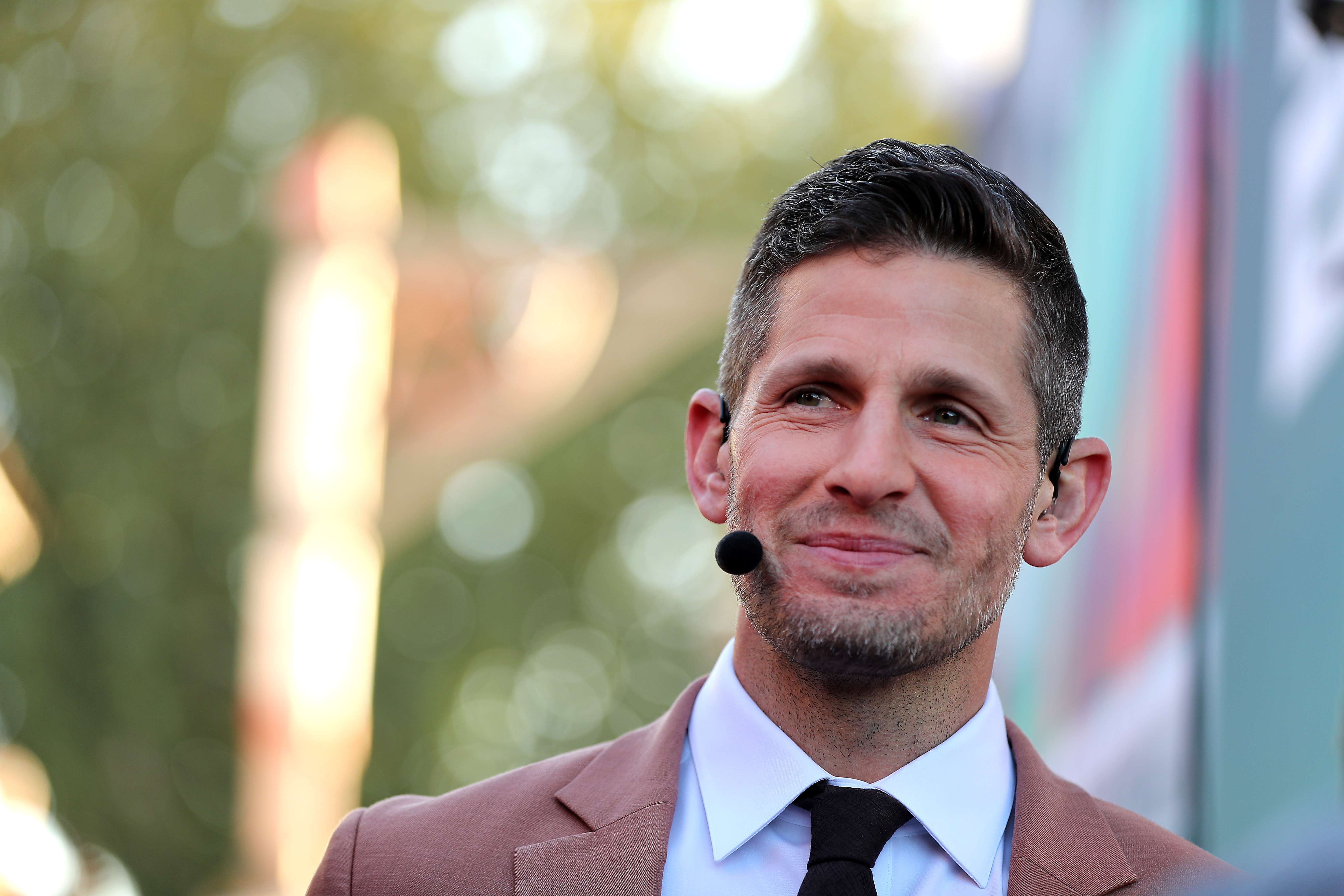
After losing back-to-back games to the Dallas Cowboys and Chicago Bears, the 8-4 Eagles have been under scrutiny from national media, including ESPN’s Dan Orlovsky, who thrashed the Eagles’ offense in advance of their Monday Night Football matchup with the 8-4 Los Angeles Chargers.
“They don’t do one thing well offensively,” Orlovsky said onThursday morning’s edition of Get Up. “If I had to use the words and give you adjectives to describe this offense over the course of the season: predictable, boring, stale, self-inflicting, uncreative, and unexplosive.”
Orlovsky has been studying the Eagles more closely this week, as he will be on the call of ESPN’s Monsters, Inc.-themed alternate broadcast, the network’s third animated Funday Football (ESPN2/Disney+). A few hours after ripping the Eagles on air, Orlovsky spoke with The Inquirer and raised many of the same concerns he did on Get Up about the Eagles’ offense, which has been struggling in Kevin Patullo’s first season as coordinator.
“They’re not what they were last year on offense,” Orlovsky said. “Last year, they were historically great when it came to running the football. That’s not reality. Their tailback was historically great. He just hasn’t had the same impact.”
The Eagles’ rushing attack, spearheaded by Saquon Barkley, ranks 22nd in rushing yards through the first 12 games of the season. Last year, the team ranked second in rushing yards and Barkley became the ninth NFL running back to record 2,000 yards in a season.
Dan Orlovsky, once a Jalen Hurts critic, says the Eagles offensive line has been one of the biggest reason’s behind the team’s offensive struggles.
Orlovsky says the key difference between last year’s offense and this year’s is the play of the offensive line.
“If you aren’t good up front, it’s really hard to consistently be good,” Orlovsky said. “Their offensive line has to play better.”
The Eagles have been without Lane Johnson for their last two games, as the two-time All-Pro tackle is recovering from a Lisfranc injury in his foot suffered in the team’s Week 11 win over Detroit.
But the Eagles’ struggles on the ground predate Johnson’s absence. The Eagles have rushed for more than 100 yards in five games this season and recorded more than 150 yards just twice. In 2024, the Eagles eclipsed 150-plus yards on the ground in 11 regular season games.
The inability to pick up yards on the ground on first down leads to longer yardage on second and third downs. The Eagles are converting 34.5% of their third-down plays, which is the fifth-worst conversion rate in the league.
“If you struggle as an offense on first down, it makes second down much harder, and then therefore third down much harder,” Orlovsky said. “Until they play better as an offensive line and play better offensively on first down, that’s not going to get fixed.”
Eagles guard Tyler Steen, left, center Cam Jurgens, middle, and guard Landon Dickerson make up 60% of the Eagles starting offensive line.
With five games left in the regular season, the Eagles hold a 1½ game lead over the 6-5-1 Cowboys in the NFC East. If the Eagles can hang onto their divisional lead and earn a playoff spot, Orlovsky says the team needs to be able to “control the game” to be considered as a contender to repeat as Super Bowl champions.
“[If] they can dictate to a defense what they want to do, then there’s no question,” Orlovsky said. “The group isn’t all that different than what it was last year.”
The struggles on offense, including down years from Barkley and Jalen Hurts, loom large over the final five games of the regular season. The talent remains largely the same, but 12 games into the season, Orlovsky doesn’t see the current version of the Eagles as a team with an identity.
“There’s a lot more question marks about their offense and why they’re struggling in comparison to what it was last year,” Orlovsky said. “But, they still are a talented group, and I think that they’re trying to figure out who they are.”
The banner made its way to the bottom of the student section, and a crew of security guards soon was hovering. Everyone had to go, they said.
“We were like ‘What?,’” said Luke Butler, who led the crew of Temple students that night at La Salle.
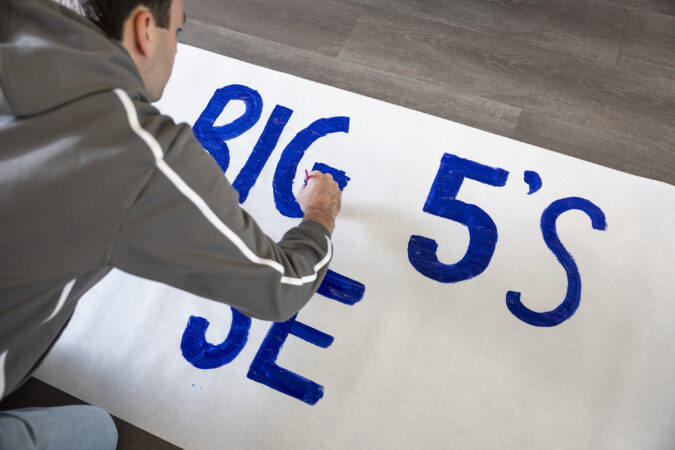
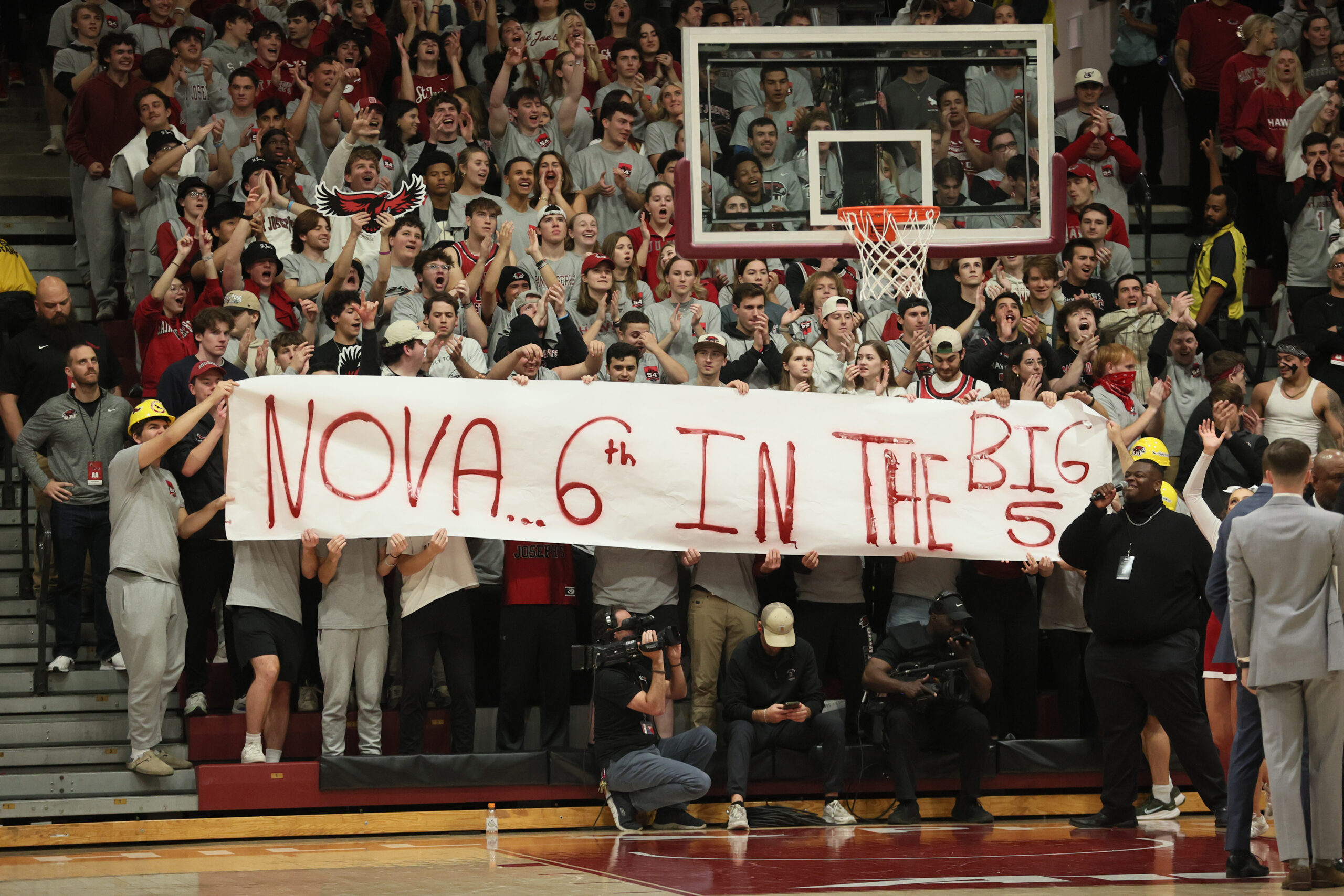
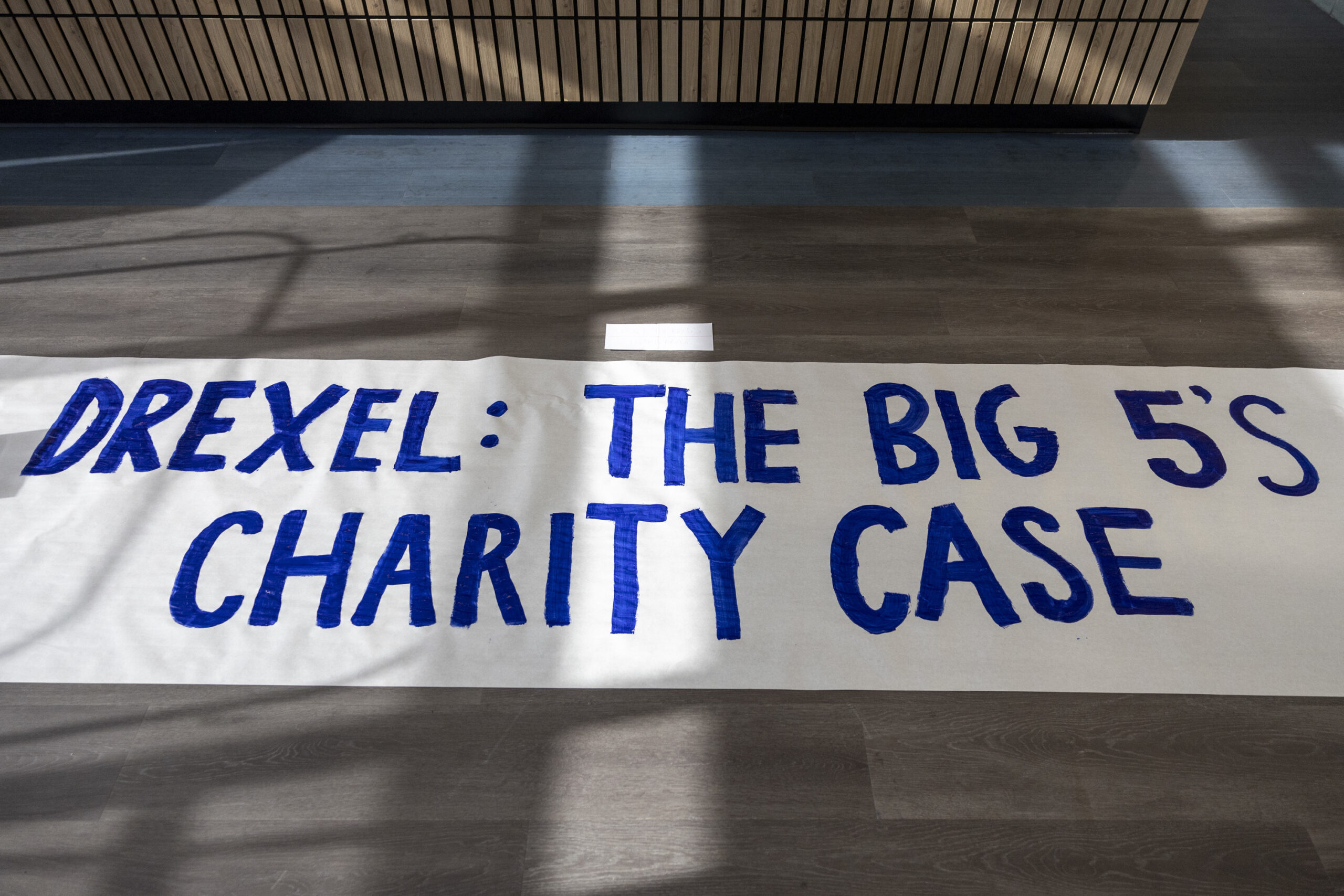
The fans — the Cherry Crusade — spent a few days crafting one-liners to paint onto 30-foot banners that would be rolled out during the Temple-La Salle basketball game. The “rollouts” have been a Big 5 tradition since the 1950s, even surviving a brief ban when the schools thought the messages had become too racy.
The rollouts often are a play on words or innuendoes that make light of the opposing school. You roll out your banner and then hold your breath while the other school shows theirs. Each student body takes turns dissing each other like kids in a schoolyard. The best rollouts, Butler said, are the ones that “twist the knife” just a little.
St. Joe’s students unveil a banner referring to Villanova finishing last in the Big 5 Classic last year.
But this one, Butler learned, twisted a little too much.
The Explorers entered that game in February 2010 on a seven-game losing streak, and Ash Wednesday had been two weeks earlier. Temple, down a point at halftime, raced away in the second half. And here came the rollout: “LA SALLE GAVE UP WINNING FOR LENT.”
The Temple students — the same crew who held a “funeral” a year later for the St. Joe’s Hawk — thought it was good banter. But a priest was offended, and security had instructions.
“They were like ‘Father is pissed. You basically affronted their faith, and they don’t want you in the building,’” Butler said. “That was a good example of a rollout where we said ‘This will get a good reaction.’ It did. It just wasn’t the reaction we were thinking of.”
70 years of rollouts
The rollouts trace back to the Palestra, when the building was the home of the Big 5 and basketball doubleheaders. The bleachers were filled, the basketball was good, and the crowds were lively. Philly was the center of the college basketball universe, and the Palestra was a scene.
The “rooters” who sat behind the baskets would roll out banners during the games about opposing schools. The messages were a chance for a student body to take a shot at their rivals from across the court. When La Salle students hung a dummy of their coach in the early 1960s from a campus flagpole, St. Joe’s rolled out a banner a week later that said “We Fly Flags on our Flagpole.”
The messages became more pointed, as the Daily News wrote in January 1966 that “the rollouts wandered from the realm of good taste.” The Big 5 athletic directors agreed to ban them, saying that “certain rollout subject matter has been offensive and detrimental to the best interests and continued success of the Palestra program.”
The president of the St. Joe’s student section protested the decision at the Big 5’s weekly luncheon, telling the athletic directors that they were ruining “the greatest spectator participation event in sports” and the rollouts were part of the “spectacular” that was basketball at the Palestra.
“It’s not a spectacular,” said Jack Ramsay, then the coach and athletic director for St. Joe’s. “We’re down there to play basketball. If the students want to join in, that’s fine.”
No longer allowed to roll out their messages, students at the Palestra began to shout what they would have written. Banner Ball gave way to Chorus Ball, the Daily News wrote. A year later, the students won, and rollouts were welcomed back to the Palestra as long as messaging was preapproved by the school’s athletic office.
The banners became as integral to a Big 5 game as a soft pretzel from the Palestra concession stand. You didn’t miss a basket during a doubleheader, but you also made sure you caught the dig the opposing students made during a timeout about your school.
The banners were the game within the game as the student sections planned their rollouts like a comedian preparing a stand-up skit. The jokes had to be fresh. How many times can you call the other coach ugly before it’s no longer funny? They had to be timely and tap into current events. That scandal involving a prominent alumni from the other school? Fair game. The football team stinks? That’ll work. A basketball player got arrested? There’s a rollout to be made.
And they had to be timed just right. You can’t come out swinging with your best bit. You have to build up the crowd with a few decent banners and then roll out the one you know will hit.
“You could tell from the other alumni if they were like, ‘Whatever,’ or if it really pissed them off,” Butler said. “Ultimately, that’s what you’re looking for. From brainstorming, to the making of them, to rolling them out, you’re looking for that reaction of them saying ‘Ugh.’”
A fading tradition
The rollouts, just like the Big 5, seem to be waning. Student attendance at local games is no longer what it was. The basketball programs have been down, the transfer portal has made players hard to identify, and conference realignment has introduced games with unfamiliar opponents.
Villanova — the lone Big 5 school to make an NCAA Tournament in the last five years — is the only team that regularly draws a large swath of students. Most schools fill up a student section for the marquee games but attract just a small group on most nights. Attracting students to a once-integral aspect of campus life has become a challenge.
Each school is trying to confront the decline of student participation, and Temple decided last year to revamp its student section. The Cherry Crusade does not have a student president, and the rollouts are made by athletic department staffers.
A banner made by the Olney Outlaw’s La Salle Student Section on Thursday.
They sold out their tickets two years ago when they reached the final of the Big 5 Classic and still fill the student section for a big game. The challenge has been to build a consistent presence.
“We want to find those passionate fans to bring back what the Cherry Crusade was,” said Katie Colbridge Ganzelli, Temple athletics’ marketing coordinator for on-campus initiatives. “They’re still there. We’re just trying to find those passionate students who want to be in charge of the student section like it used to be.”
Villanova’s rollouts earlier this week vs. Temple — “Rocky would’ve gone to Villanova,” one said — didn’t twist the knife. Penn’s student section is dormant, forcing the band to provide rollouts. The tradition seems to be fading across the Big 5, but credit La Salle for trying to keep the edge.
The school revived its student section this season, and the Olney Outlaws took aim at a Big 5 coach for being follically challenged and used another rollout to dunk on Villanova and St. Joe’s. They’re twisting the knife in Olney.
“We had noticed a lack of student engagement and thought this would be a fun way to get kids involved,” said Paige Mitchell, a senior marketing major who founded the Olney Outlaws. “I was working in the athletic department, and my boss at the time gave me a project to come up with something that would get everyone more engaged. It’s grown from there.”
Get your rollouts ready.
The road to the Toyota Big 5 Classic starts Saturday and ends at Xfinity Mobile Arena on December 6! 🏀 #Big5IsPhilly
The group of students — “I have a couple guys in the group who are pretty clever,” Mitchell said — brainstorm ideas for the rollout before they meet to paint their signs. They’re ready for Saturday, when La Salle plays Drexel in the Big 5 Classic.
“It’s stressful making sure they get rolled out at the right time,” said Mitchell, who’s also a center forward on the Explorers’ water polo team. “But I love seeing the way the students react. I have a couple friends who were sitting behind the rollout, and they’re blowing up my phone like, ‘What did it say?’ It’s just exciting.”
Perfectly Philly
Butler asked the La Salle security guard if he could talk to the priest, hoping he could ask for absolution. The priest was still steaming as Butler told him it was a misunderstanding. It was just some college kids making a joke, he said. The priest offered Butler penance: the Temple students could stay, but they had to hand over the rest of their banners.
But the Owls were going to clinch the Big 5 title that night, and the Cherry Crusade brought a rollout to celebrate it. Butler pleaded with the priest to allow them to keep that sign. He rolled it out to show the priest and security guard what it said. “Fine,” said the priest. The rollouts, once again, would not be banned. A perfectly Philly tradition lived on.
“There’s something in the Philly culture that rollouts hit a perfect vein,” Butler said. “The thing about people from here is that there is respect if you can dish it and you can take it. People love to twist that knife. When people did good rollouts against us, you were angry, but there was respect there.
“It’s making fun of people who appreciate it, but also hate it, and it gives you an opportunity to be a little bit of an a—. At the end of day, it’s all love. We all love Philly basketball, even though I’ll never root for St. Joe’s and I’ll never root for Villanova. But I still want them around. I want everyone to do well, so then the hate means something.”
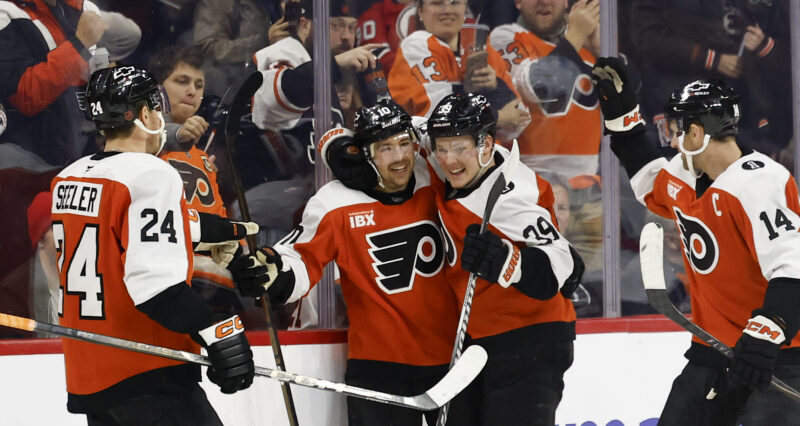
It’s the time of the year to be thankful and Flyers fans have several reasons to be overflowing with gratitude.
Or at least you would think so …
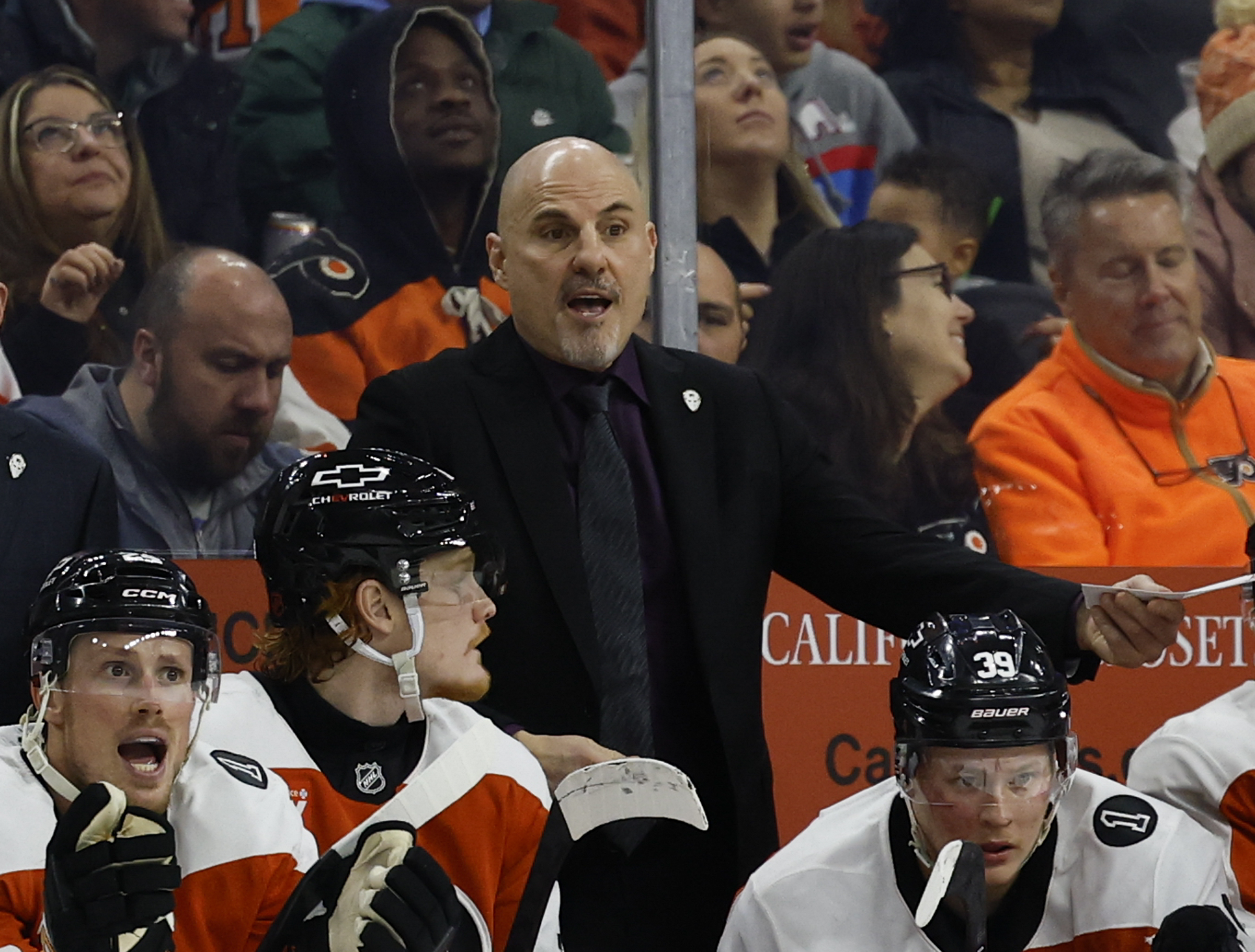
The Flyers, whose front office made clear its desire for the team to take a positive step forward in its rebuild this year and be more competitive, are 15-8-3 under new coach Rick Tocchet, and have the seventh-most points and the seventh-best points percentage in the NHL. If the season ended Thursday morning, the Flyers would occupy the third spot in the Metropolitan Division based on points percentage and be in the playoffs for the first time in five seasons.
“We expect more of a fight internally, and we hope that it’s going to make us better, it’s going to hopefully make us more competitive throughout the season, and maybe push to get closer to the playoffs,” general manager Danny Brière said in September. “At the end of the day, we want to make the playoffs.”
Beyond their record, the Flyers have struck gold with inexpensive offseason acquisitions Trevor Zegras and Dan Vladař, the former flashing his puck handling wizardry and superstar potential, and the latter playing like a bona fide Vezina Trophy candidate over the first third of the season. The Flyers’ checkered history between the pipes is well documented, but maybe, just maybe, Vladař, who is 28 and signed through next year, can bring some consistency to the position for the next few seasons. And in the 24-year-old Zegras, a restricted free agent at season’s end who leads the team with 26 points, the Flyers hope they have identified part of their long-term solution down the middle.
The positives don’t end there. Zegras’ close friends Cam York (24) and Jamie Drysdale (23) have leveled up after surviving John Tortorella’s wrath, and so had fellow first-rounder Tyson Foerster (23), who had 19 goals in his last 30 games dating back to last season before suffering an upper-body injury on Monday that will sideline him for two to three months. York was banged up on Wednesday but is listed as “day-to-day.”
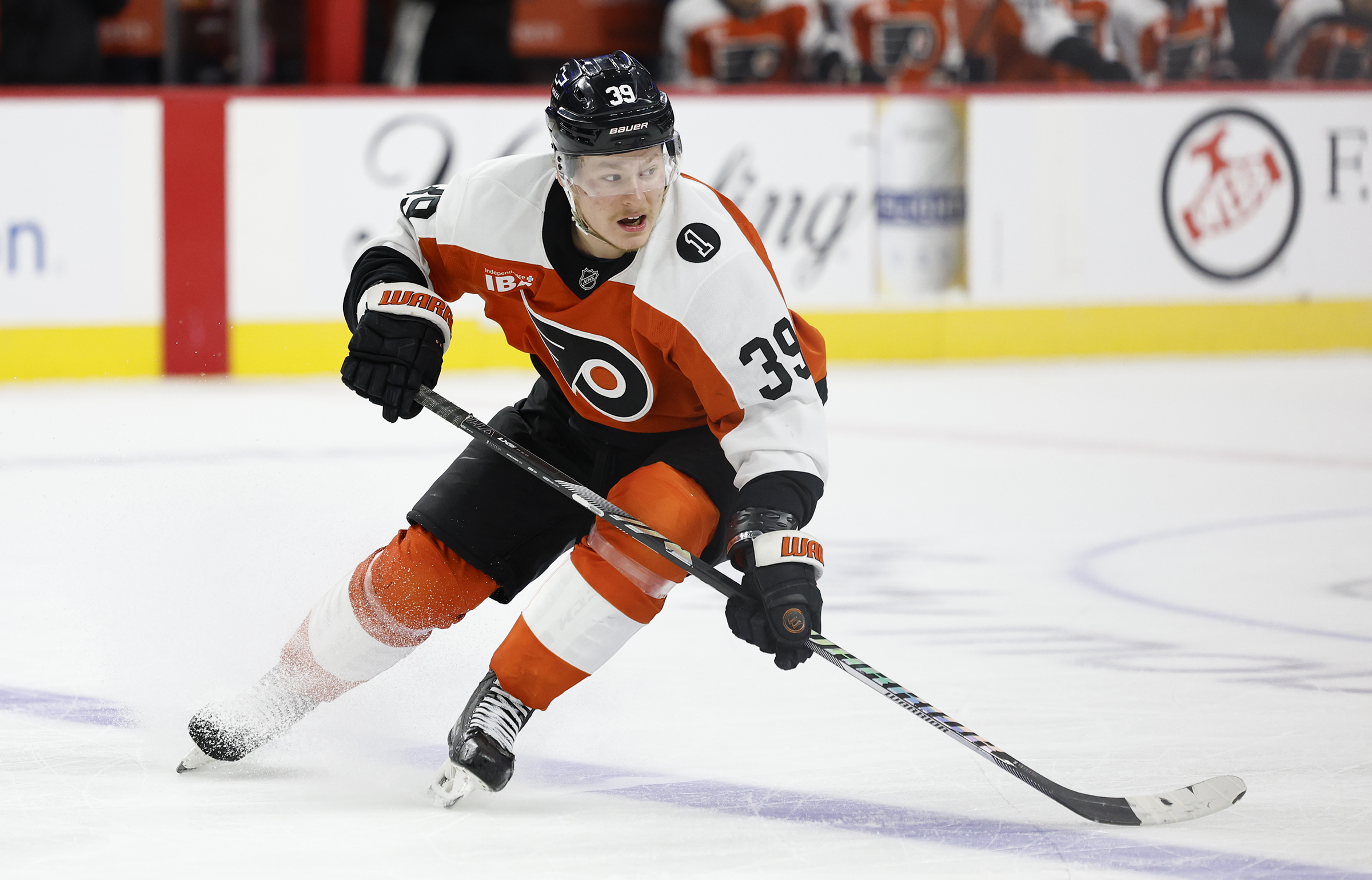
Owen Tippett, 26, has had more good moments than bad this season as he strives for consistency, while Matvei Michkov, who is still just 20, is coming on strong after a slow start. Noah Cates (26) and Bobby Brink (24) have also picked up where they left off last season, while the exciting Emil Andrae (23) looks to have made himself into an everyday NHL defenseman. In other words, the kids are getting better.
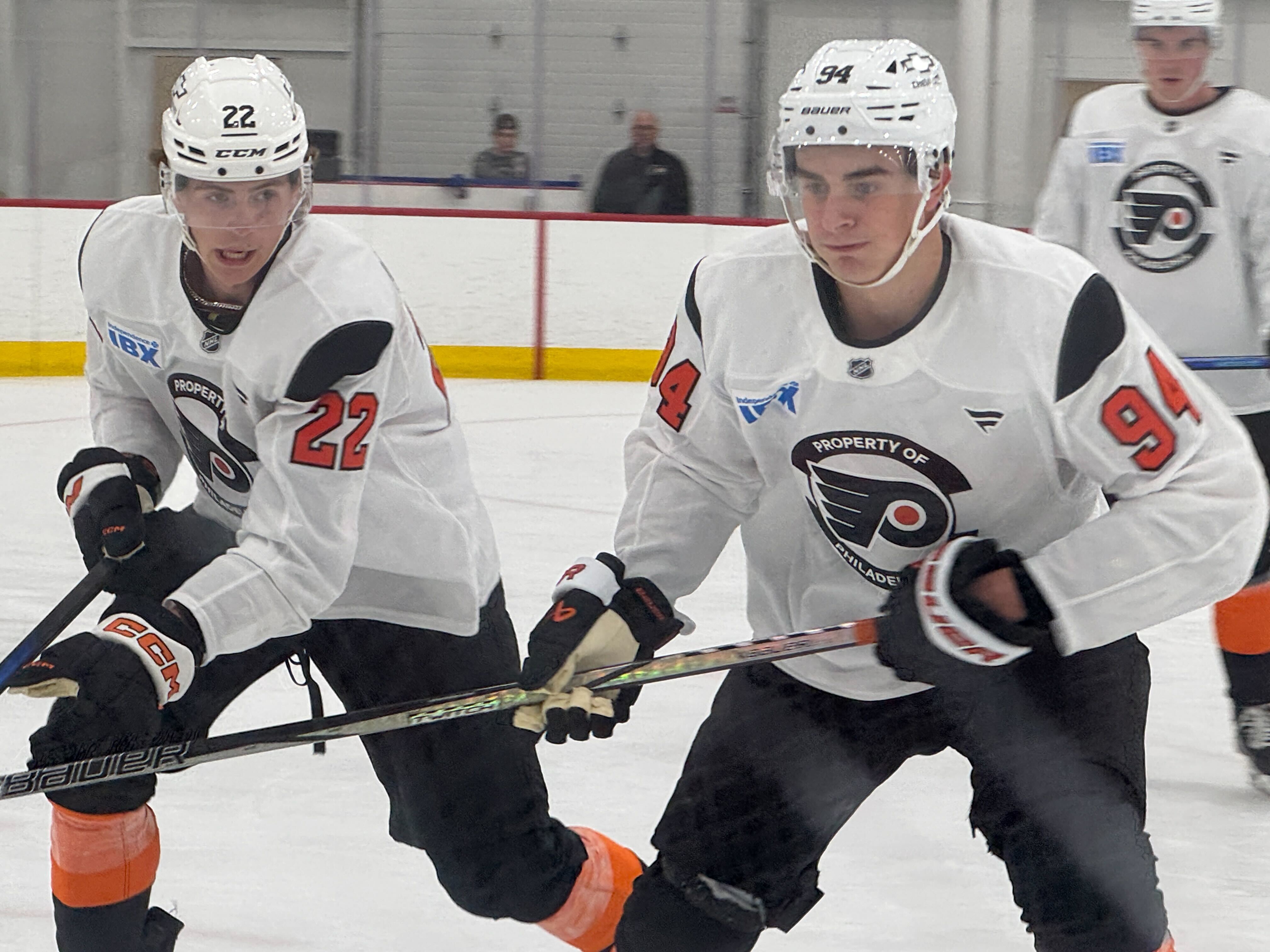
The Flyers have high hopes for 2025 first-round picks Porter Martone (right) and Jack Nesbitt (left).
The Flyers have more on the way as they boast a top-10 prospect pool in hockey and probably couldn’t have dreamed up better starts for their potential future stars. Porter Martone, the No. 6 overall pick in June, is dominating college hockey with Michigan State; Alex Bump and Denver Barkey are off to fast starts in their first full pro seasons with Lehigh Valley; and Egor Zavragin continues to put up historic numbers for a 20-year-old goalie in Russia. Even Jett Luchanko got the trade many felt he needed to further his development in the Ontario Hockey League. Martone, Bump, and Luchanko will all be expected to break camp with the Flyers next season.
So all is good in Flyers land, right?
Not if you scroll through X or find yourself wading through the ever dark and gloomy depths of Flyers Twitter:
“I hate Rick Tocchet hockey man…,“ tweeted @aftern_alex earlier this month.
or
“I DO NOT LIKE TOCCHET AT ALL. IF BREIRE AND JONES R ON BOARD WITH MICHKOV GETTING 13 MINUTES A GAME. FIRE THEM ALL,” wrote @Philly4everrr.
So why is a large portion of the fan base so unhappy amid the team’s surprising start? Well, it largely boils down to three things: (1) Tocchet’s style of play; (2) Michkov’s usage under Tocchet; and (3) the Flyers not tanking for a No. 1 center or No. 1 defenseman. Let’s explore those three points further.
Tocchet’s teams will never be confused with the ‘80s Edmonton Oilers, the ‘90s Pittsburgh Penguins, which he played on, or the Detroit Red Wings around the turn of the century. He’s a defensive coach first and has said as much. The Flyers are 25th in the NHL in scoring (2.85 goals per game) and are fourth-to-last in shots per game (25.2), which matches with previous Tocchet teams’ low volume of shots.
On the other hand, the Flyers are much improved defensively and have taken a lot of the “risk” out of their game. Some of that is thanks to better goaltending from Vladař, who has saved almost 11 goals above expected, per Money Puck. But the Flyers are also conceding fewer shots, high-danger chances, and rush attempts. They have allowed the eighth-fewest shots per game (26) and have surrendered the 13th-fewest high-danger shots at five-on-five (64), per Money Puck. They also rank 10th in the league in fewest expected goals against at five-on-five (54.9).
Flyers head coach Rick Tocchet has helped bring defensive stability to Broad Street.
Sure, everyone would love for the Flyers to score a few more goals and shoot a little more, but there also has to be an expected tradeoff there, as the Flyers last season were historically bad at keeping the puck out of their net (28th in goals against), and partly due to bad goalie environments had the league’s worst save percentage (.879). Tocchet’s philosophy centers around keeping opponents to the outside and allowing his goalies to see the initial shot, and the Flyers have largely executed that plan.
New coaches also tend to focus on laying a defensive foundation first and then building out from there. The Flyers, while improved, are far from a finished product offensively and weren’t this high-flying team that scored a ton of goals last year either — they averaged 2.83 goals per game. Making permanent judgments or broad assertions about Tocchet and the Flyers’ future after 26games and where the roster stands hardly seems fair.
The Michkov dilemma is probably the biggest criticism of Tocchet, as the Russian winger is ninth among Flyers in average ice time at 14 minutes, 51 seconds per game. There’s no way around saying Michkov started the season slowly — one goal in his first 13 games — as his conditioning was not up to par after an offseason ankle injury, and he made several ill-advised decisions with and without the puck. So it was hardly surprising to see him play less than other forwards.
Tocchet clearly wants the youngster to earn his ice time and kick some of his bad habits. He also wants to win games and, at times, has felt that he couldn’t trust Michkov in tight games when the team is protecting a lead. While it’s easy for fans to yell “Play Michkov more!” Tocchet has a responsibility to the rest of his players to hold everyone accountable and look out for the best interests of his team.
“I know he’s the lightning rod for everybody around here. He’s got to relax,” Tocchet said in mid-October. “He’s got to get himself into shape. He’s got to be in positions … you can’t just leave the zone. And it’s OK, he’s gotten better at it.”
Flyers right wing Matvei Michkov is coming on strong after a slow start.
Michkov has “gotten better at it” of late and has seen more ice time as a result. His better decisions with the puck and cheating less has coincided with his offensive uptick; he has four goals and seven points in his last seven games and is playing his best hockey of the season. Tocchet is rewarding Michkov’s improved play, as the Russian winger has skated at least 15:37 in three of his last four games.
While it can be frustrating to see a talent like Michkov playing less, it looks as if the message has been received and the winger will likely be better in the long run for it. That said, there needs to be a balance and Tocchet has to teach Michkov good habits without curbing his creativity or reprogramming such a talented player.
Despite what you may read online, Tocchet has no personal vendetta against Michkov or desire to see him fail. He simply wants him to play winning hockey and learn from his mistakes. While this relationship, language barrier included, remains a work in progress, don’t be surprised to see Michkov continue to get more ice time as the season wears on and for this to eventually become a whole lot of nothing.
Why aren’t they tanking?
Should the Flyers have tanked more and kept rebuilding for at least one more season, especially without obvious solutions for their future No. 1 center and No. 1 defenseman holes? This is a completely reasonable take, if not the most feasible one, considering how the roster is and was constructed.
Could the Flyers have bottomed out more and stripped their roster thinner over the past years to get more/better bites at the draft apple? I guess so, but they did largely do the latter.
Brière inherited many of the team’s salary cap problems and actually did some impressive work to get out from players like Ivan Provorov, Kevin Hayes, and Tony DeAngelo, and net high-end drafts picks and prospects in deals for Provorov, Sean Walker, Scott Laughton, Morgan Frost, Joel Farabee, and Andrei Kuzmenko. The only other three obvious and needle-moving subtractions would have been to trade well-paid veterans Sean Couturier, Travis Konecny, and Travis Sanheim. Rasmus Ristolainen is another player they might have moved, but bad injury timing has largely tied Brière’s hands there, not to mention the GM could still move him.
Flyers general manager Danny Briere has taken a patient and measured approach to rebuilding. Now, he wants the Flyers to take a step forward.
Given Couturier’s contract, which still has 4½ seasons remaining at a $7.75 million average annual value, he was and remains all but impossible to trade. Regarding Sanheim, Brière DID try to move him before his new deal kicked in but that move was nixed due to a St. Louis player opting not to waive his no-move clause. That nontrade might be the best move Brière didn’t make, as Sanheim has blossomed into a top-pairing defenseman and the Flyers’ leader on the backend. Whether the Flyers should have traded Konecny before extending him can be debated, but most teams usually try to hold onto 30-goal, almost-point-per-game players who are in their mid-20s and on an upward trajectory.
In other words, the Flyers largely carried out their rebuild the right way, they subtracted when it made sense, stockpiled assets, and didn’t jeopardize their long-term vision for short-term success, a la trading Walker amid pushing for the playoffs in 2023-24. But what about landing that all-important 1C and a 1D?
Those problems are not isolated to the Flyers, as those two holes, along with the starting goalie, are the three hardest to find. There is a shortage of true No. 1 centers across the league, and the teams that have them don’t usually like to give them up. The Flyers have also drafted centers in the top half of the past two drafts in Luchanko and Jack Nesbitt to try and address the position, and also have several young defensemen — York, Drysdale, Oliver Bonk, Spencer Gill — they believe could one day play in their top four.
Listening to Brière and president Keith Jones, the Flyers were prepared to pay up and probably envisioned finding that No. 1 center in what was once a rich 2026 free agent class. That crop has since dried up, but that doesn’t mean all hope has.
Armed with a deep prospect pool, future draft picks, including Toronto’s first in 2027, and a plethora of young wingers and defensemen, the Flyers have valuable pieces to package in a deal for a top-end center when one becomes available. Wouldn’t Tage Thompson look nice in burnt orange? Could things between William Nylander and Toronto turn sour? Might St. Louis be blown away to move on from Robert Thomas and tear it down? Is Quinton Byfield untouchable? The Flyers can bide their time for now and can feel good that they have the type of assets to compete with most offers.
Or on the backend, Norris Trophy winner Quinn Hughes, a huge fan of Tocchet from their time together in Vancouver, could soon be available. As could younger options like Bowen Byram, Brandt Clarke, and Šimon Nemec, for the right price.
The Flyers are set up well for the long term, whether they make the playoffs this season or not, so let’s just enjoy them for a while and see where this season goes. It’s been a long time since this city has had a hockey team it could be proud of. The complaining can wait.
Could Buffalo Sabres center Tage Thompson be the answer to the Flyers’ 1C conundrum?