Category: Sports

Sports news, scores, and analysis

  • What will the Flyers do ahead of the trade deadline? Here’s where Scott Laughton, Rasmus Ristolainen, and others stand.

    What will the Flyers do ahead of the trade deadline? Here’s where Scott Laughton, Rasmus Ristolainen, and others stand.

    PITTSBURGH — And just like that the NHL’s trade deadline is almost here.

    After a rambunctious two weeks focused on the 4 Nations Face-Off, all eyes are now turned to the league’s annual wheelin’ and dealin.’

    Flyers general manager Danny Brière could be busy before the clock strikes 3 p.m. on March 7 as he continues to shape the roster in his long-term vision. He already traded homegrown forwards Joel Farabee and Morgan Frost at the end of January, as he, and the brass, decide who is on the bus.

    So who is next to go, if anyone? We broke down the Flyers roster one week out from the trade deadline.

    Which Flyers are likely to be traded?

    Scott Laughton, C/LW: Every year Laughton is rumored to be on the trade block. The forward is well-equipped to handle the chatter by now, but could this be the year he is finally moved? A reliable two-way center who can also be productive on the wing and as a penalty killer, Laughton has versatility that is attractive to teams looking to make a Stanley Cup run. He also has one year left after this season at a $3 million cap hit and would not just be a rental for rumored landing spots, including Winnipeg, which the Flyers play on Saturday, and his hometown Toronto Maple Leafs. He also would bring value to any locker room.

    Rasmus Ristolainen, D: If coach John Tortorella had his way, the Flyers would keep the blueliner because, “If you trade him Friday, then on Saturday, you say, [expletive], I need a big, right-handed defenseman.” Ristolainen also has term — two years beyond this season at a $5.1 million clip — and, what Tortorella considers, a favorable contract. But there is no denying Ristolainen is a marquee trade chip for the Flyers as teams look to get bigger for the postseason.

    Erik Johnson, D: Johnson, who turns 37 next month, is a pending unrestricted free agent and could be a good option for a playoff team looking to add depth to its defensive core. Although he hasn’t played much this season, he has looked steady when called upon and has the postseason experience — i.e., a Stanley Cup — teams look for in a sixth or seventh blueliner.

    The Flyers have a decision to make with Rasmus Ristolainen, who is signed for two seasons beyond this one.

    Which Flyers could be traded if the price is right?

    Bobby Brink, RW: Tortorella recently said Brink, in a good way, “plays every game worrying about … just staying in his spot.” The forward has played well and is setting career highs while playing a better defensive game. He shouldn’t get moved, but his stock is on the rise.

    Nick Deslauriers, LW: The veteran enforcer has one more year after this season at $1.75 million. A good guy in the room, he hasn’t played much this season — he did miss a good chunk with an injury — but could be utilized for a team as a fourth liner who protects guys during the rough-and-tumble postseason.

    Garnet Hathaway, RW, and Nick Seeler, D: Every team, including the Flyers, wants guys like this. Should they be moved? No, but it may make sense if the return is well above the asking price.

    Andrei Kuzmenko, LW: Now on his third team in three years, the Russian winger comes with question marks. He has the skill but seems to start strong with clubs before stalling. Tortorella likes what he has seen in a few short weeks, and Kuzmenko’s coachability. But there could be suitors for a guy who can find the back of the net, so the Flyers could flip him. If they do, he is an unrestricted free agent this summer and could always return on a cheaper deal if both parties were so inclined.

    Egor Zamula, D: Is the defenseman going to be on the bus? That is the big question right now. He has shown growth at times but is still struggling to find his game and could be a good fit for a team looking to rebuild its blue line.

    Ivan Fedotov/Aleksei Kolosov, G: Although there is rampant speculation as to why Kolosov is still on the NHL roster, the Flyers cannot persist with the three-headed monster in net. One of the guys should either get sent down to the American Hockey League — Kolosov is waiver-exempt — or one should be traded.

    Which Flyers are unlikely to get traded?

    Sean Couturier, C: It’s no secret the former Selke Trophy winner hasn’t been the same since undergoing two back surgeries in 2022. The injuries came just after he had signed an eight-year, $62 million ($7.75 million average annual value) contract to become the face of the Flyers. Couturier is still a responsible defensive center, but no team is trading for a 32-year-old whose best hockey looks to be behind him, and who has five years remaining at his hefty cap hit.

    Emil Andrae, D: Limited in stature but not in heart and drive, Andrae is ready to become an NHL regular now. It should be with the Flyers, who need his puck-moving ability. The one exception would be if he’s part of a larger package to land the big-time center the Flyers need.

    Jamie Drysdale, D: Teams need guys like Drysdale, with his ability — like Andrae — to move the puck and generate offense from the back end. That said, he is still very much a work in progress. If they were to move him, the only positive for the Flyers is that he looked fantastic against the Pittsburgh Penguins on Tuesday night, especially when he broke up a pass intended for Sidney Crosby and then delivered the primary assist up the ice.
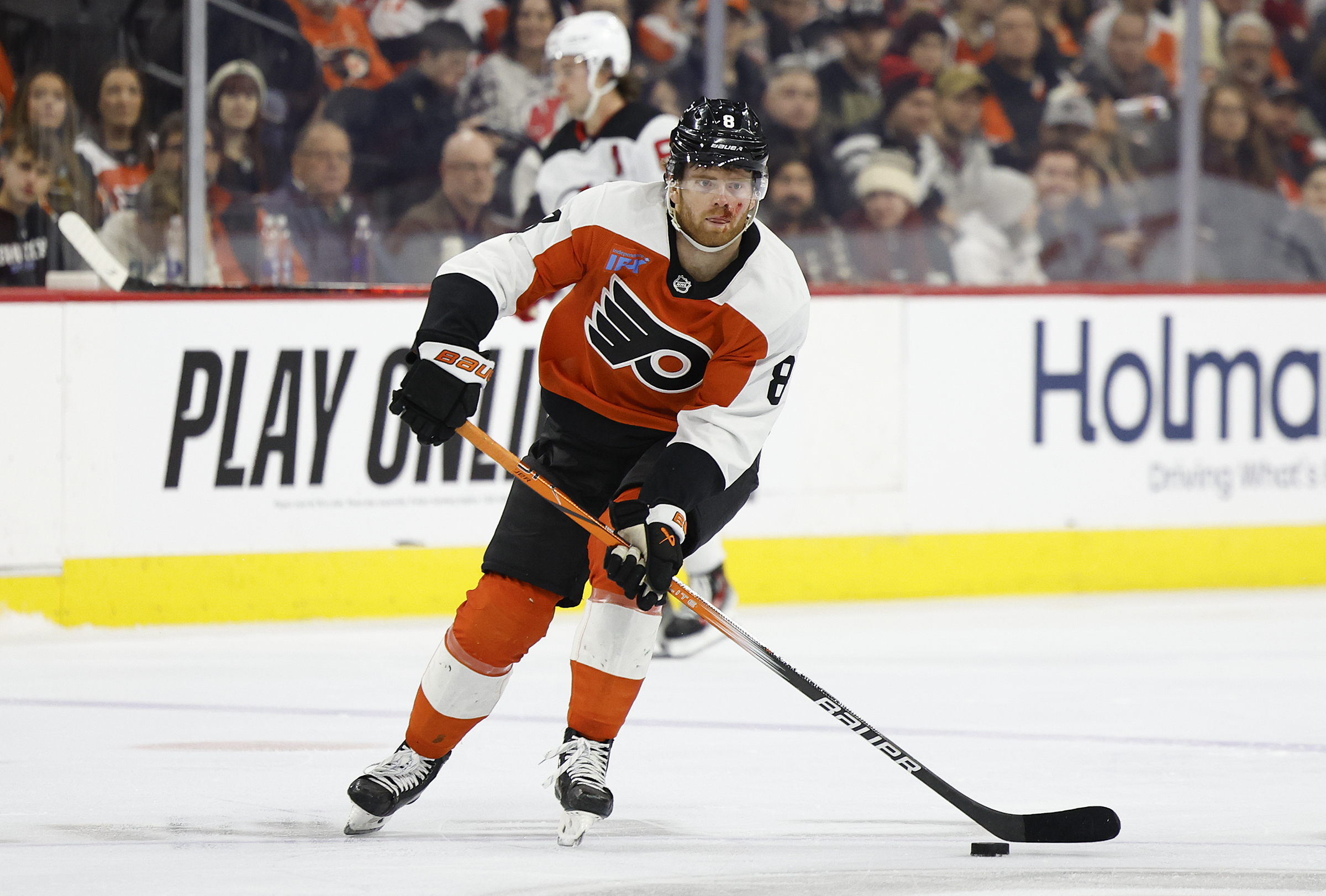
    Could Cam York be a surprise trade candidate ahead of March 7?

    Cam York, D: He was once thought to be untouchable, but York’s status is not as defined with the Flyers. After a stellar 2023-24, in which Tortorella called him the team’s best defender, he has struggled to find that level this season. He did deal with a shoulder injury early in the year that seemed to stunt his growth but has played better of late.

    Noah Cates, C, and Tyson Foerster, LW/RW: Highly unlikely, but they are both restricted free agents who are expected to earn big raises this summer after the seasons they are having. The Flyers need centers and Cates has finally emerged as a top-three pivot, so there’s a low probability he will be moved. Foerster’s chances are a bit higher as teams would love his defensive game with a big shot brimming under the surface.

    Ryan Poehling, C, and Owen Tippett, LW/RW: Very unlikely. When confident, Tippett is becoming the guy everyone expected with his speed and skill. He should score 30 goals consistently. Like Tippett, Poehling adds speed to the lineup and is the solid bottom-six center the Flyers have use for, especially if Laughton dealt.

    Jakob Pelletier, LW: The Flyers just got the winger, who has some upside as a former first-round pick. He’s a restricted free agent this summer and will be signed for cheap, so no reason to make a rash move — unless he’s part of that big center package we talked about it.

    Who on the Flyers is untouchable?

    Travis Konecny, RW: Signed to an eight-year extension last summer, the All-Star winger is just hitting his prime and his stride. Konecny has established himself as a bona fide top-line player and is on pace for a career-high 86 points.

    Matvei Michkov, RW: Obviously.

    Travis Sanheim, D: The other half of “The Travii” is having a breakout season, becoming one of the NHL’s top defensemen in terms of stamina and versatility. The top-pair blueliner boasts a rare combination of size (6-foot-4, 222 pounds) and skating ability, which he just showcased on the international stage. Sanheim, who turns 29 next month, also has a full no-trade clause through the 2026-27 season.

    Sam Ersson, G: People want to question whether he is a No. 1 goalie. Why? The Swede continues to prove he can carry the load of games and the weight of being among the NHL’s best. Just look at his stats since the Christmas break — 11-4-2 with a .912 save percentage — and that doesn’t include his stellar performance vs. the United States at the 4 Nations Face-Off.
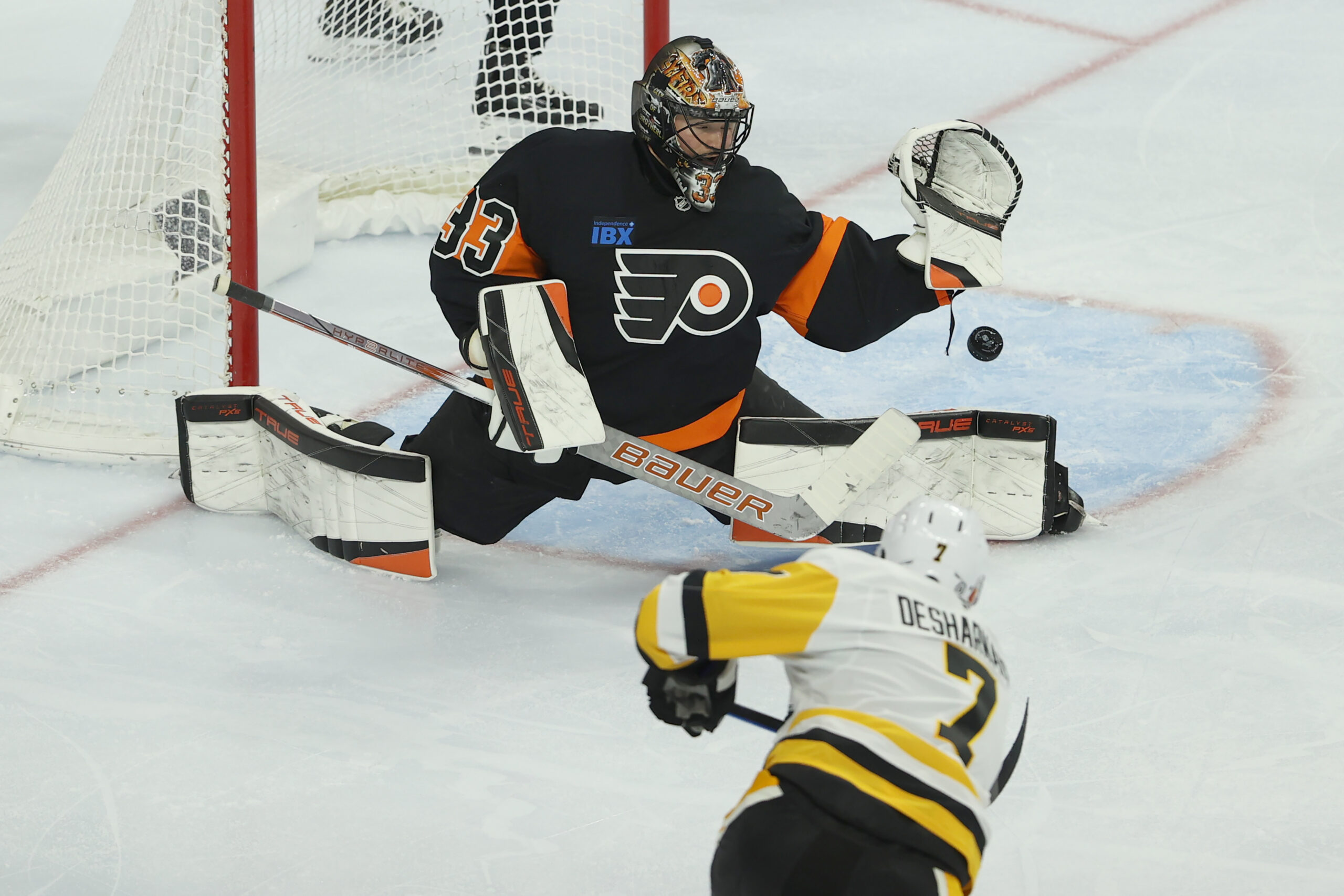
    Goalie Samuel Ersson has played himself into untouchable status, according to Jackie Spiegel.
  • MLS’s new playoff format is flawed, unpopular, and about to be exposed

    MLS’s new playoff format is flawed, unpopular, and about to be exposed

    If you’re a longtime Union fan, you know this year’s playoff format is going to be unlike any you’ve ever seen, and not in a good way. If you’re a new or casual follower who tunes into Saturday’s first-round opener against New England at Subaru Park (5 p.m., Apple TV, free), you might think you’ve landed on another planet.

    Greetings, fellow Earthling. Let’s get right to the point.

    There is no valid competitive reason for Major League Soccer’s latest postseason setup — one of far too many in the league’s 28-year history — to have a best-of-three first round and single games the rest of the way.

    The real reasons for the invention are commercial, and the league has barely hidden from them. Nor have any number of players, coaches, front-office staffers, and anyone else willing to tell the truth without putting their names out there for fear of retribution.

    The first reason is that the expanded postseason gives broadcaster Apple more games to sell to fans in its streaming package. That’s easy enough for anyone to understand and doesn’t require much more explanation — except for one angle we’ll get to in a bit.

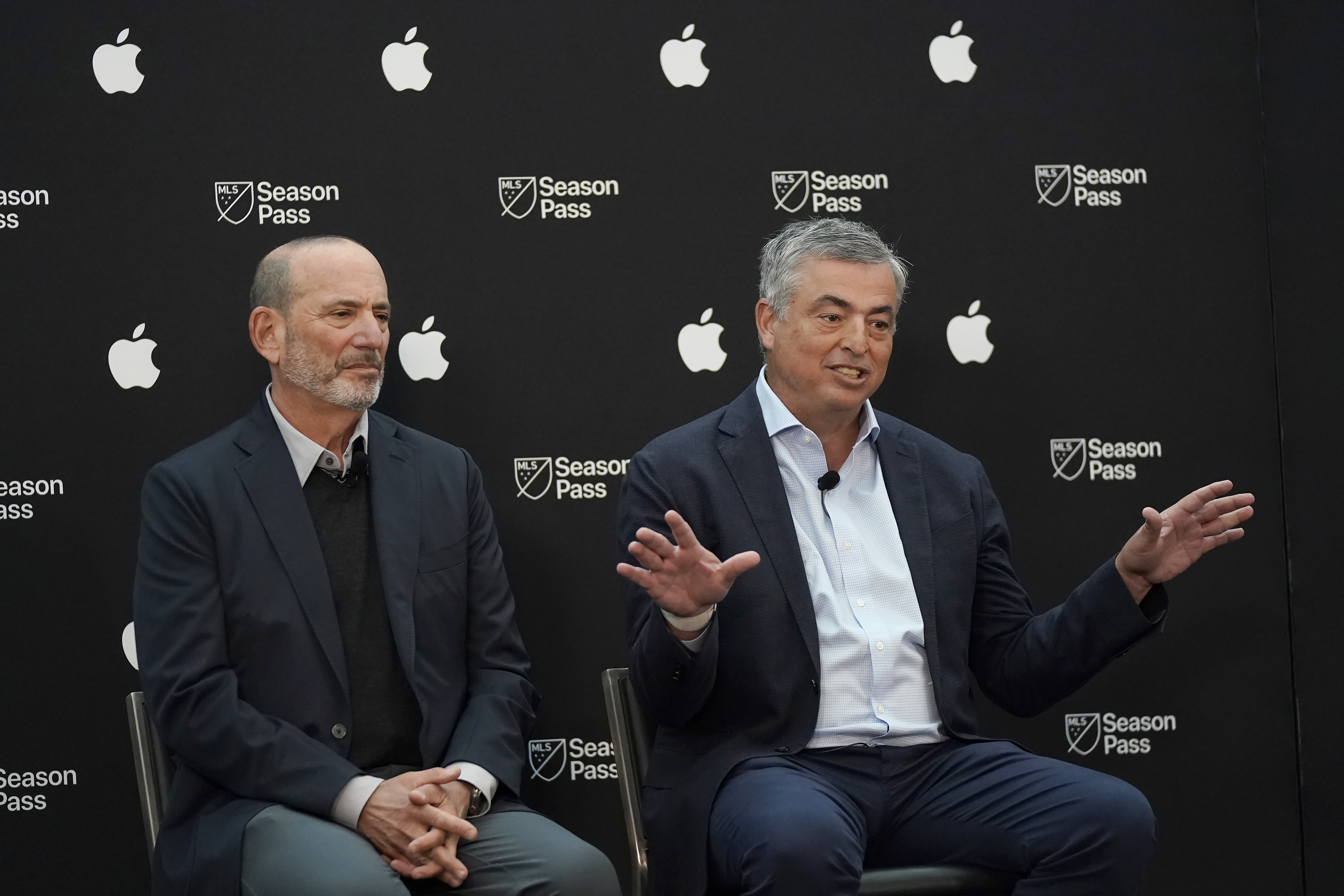
    Apple senior vice president of services Eddy Cue (right), who oversees Apple’s sports rights deals, with MLS commissioner Don Garber in January.

    The second reason is worse. While the last four years of single-game rounds all the way produced some terrific drama, they also produced complaints from the staff members of lower-seeded teams. They felt entitled to a home game just because their players made the playoffs, no matter their regular-season records. The complainers got what they wanted.

    He said, he said

    Who was complaining? No one quite said it aloud, but FC Cincinnati outed itself when the format change was announced.

    “We are pleased that the new format will provide if we earn a postseason berth, the near-certain opportunity to bring a playoff atmosphere home to our fans this season,” co-CEO Jeff Berding told the Cincinnati Enquirer.

    Contrast that with Union manager Jim Curtin, who said at the time: “It’s best to have [the] regular season mean as much as possible to teams. … The more you can incentivize having a good season and earning those home games, I think, the better.”

    Or Los Angeles FC manager Steve Cherundolo, who said this week: “You sacrifice a fluid playoff system like we had last year, which everybody was very pleased with — the first time in 19 years the top seed in each conference played each other in the final. You couldn’t have planned it any better, you got a fantastic game in the end, so it makes perfect sense to go change everything.”

    Union manager Jim Curtin (center) on the sideline during his team’s Leagues Cup game against Lionel Messi’s Inter Miami in August.

    As fate would have it, the tables turned this year. The Union and LAFC fell back a bit, and Cincinnati won the Supporters’ Shield. In the prior format, Cincinnati wouldn’t be leaving home for the rest of the year. Now it must visit a New York Red Bulls team on a four-game winning streak. The first of those wins was in Cincinnati on Oct. 4, and the latest was Wednesday’s 5-2 rout of Charlotte FC in the Wild-Card round.

    One might wonder from afar what Cincinnati thinks now — and what if Charlotte won on Wednesday instead? There’s a big difference between a less-than-full Red Bull Arena for a game on natural grass, which we’ll likely see Nov. 4, and a 70,000 crowd in Charlotte for a game on artificial turf, which we would have seen.

    Paying a penalty

    If it’s bad enough that the best-of-three format exists, the way to win a series has made it even worse. There’s no aggregate goals count like there is in European soccer’s traditional two-game series that MLS used to use. And any tied game will go straight to penalty kicks to produce a winner, instead of a first-to-five points format with a tiebreaker only at the end.

    That’s an open invitation for teams to make these games as low-scoring and defensive as possible, then ride their luck in penalties. If a team forces two scoreless ties and wins both shootouts, it wins the series.

    For a league that fights every day to convince soccer fans across America that it’s as entertaining as the rest of the world, that’s a recipe for big trouble. Especially when that league has to convince those fans to spend their hard-earned money on an Apple subscription after buying streaming packages of other networks to watch the UEFA Champions League, England’s Premier League, Mexico’s Liga MX, Spain’s La Liga, and more — plus a cable TV subscription to watch the big U.S. sports.

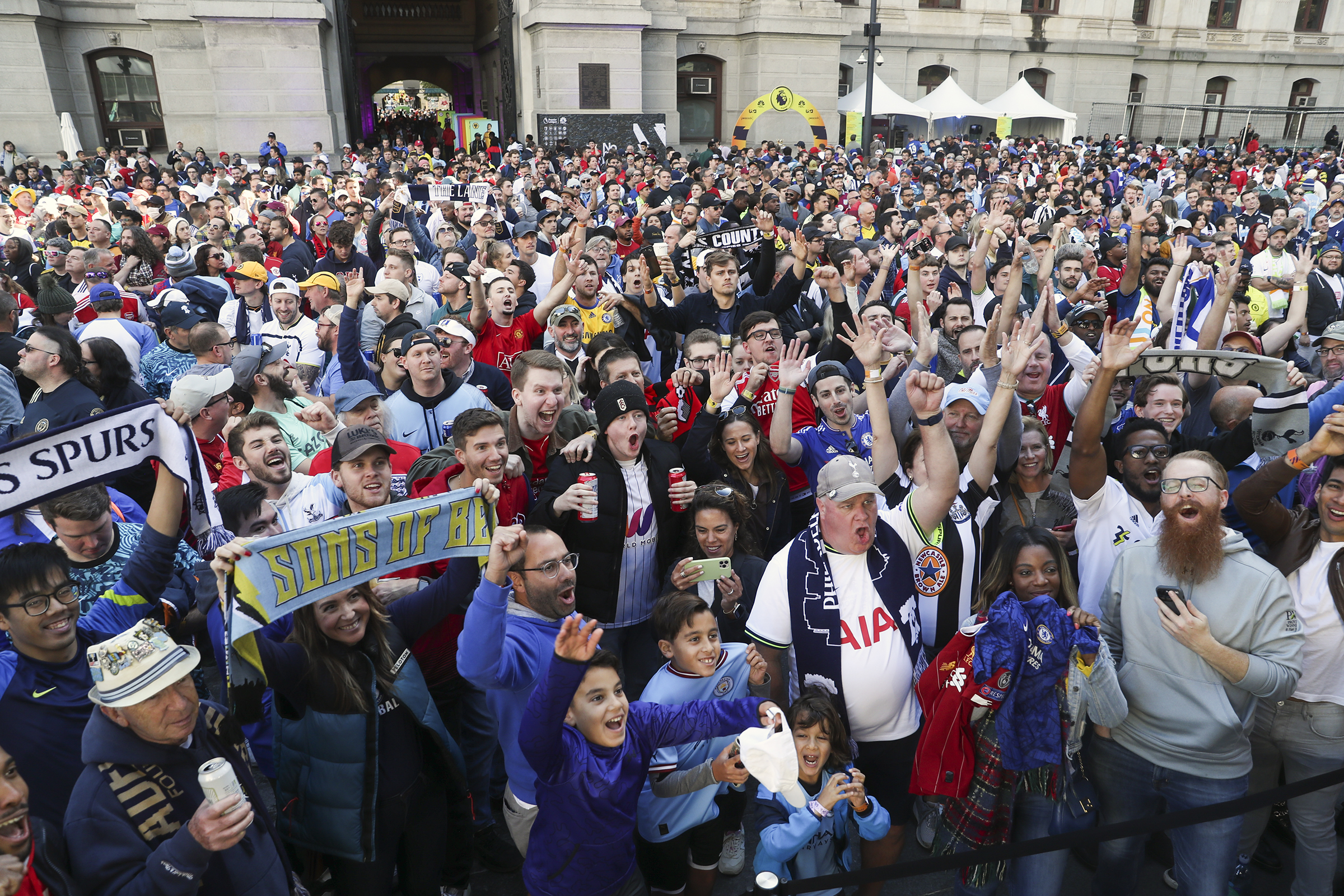
    In Philadelphia and across the country, MLS competes with the English Premier League and other soccer leagues for fans’ money and attention.

    Should New York upset Cincinnati with two ugly games, will it be worthwhile for MLS to still have a New York media market team alive in the playoffs? It’s a trick question: Apple and MLS don’t produce viewership numbers as other outlets do, including Amazon for the NFL.

    If there’s one reasonable argument for expanding the playoffs, it’s that the one-game-round format played out in less than a month, too little time to build up widespread interest.

    That argument is easily countered, though. First, it was to MLS’s overall benefit that it could run the entire postseason between the October and November FIFA national team windows, reducing the burden on clubs and countries alike — and reducing the risk of a November injury that knocked a key player out for the year.

    Creating more problems

    Second, while it’s fair to say a long offseason doesn’t help MLS players’ fitness relative to their global counterparts, playing the title game in November makes it more palatable in cold-weather cities. (Apologies to the heavyweight teams in Los Angeles, but there are a lot of such cities in MLS. LAFC might even visit one of them for this year’s final on Dec. 9.)

    Now add in a new factor with the expanded Concacaf Champions Cup, which will kick off in early February with 10 MLS teams participating. A December title game means the MLS Cup winner gets barely any offseason at all. The same goes for any other CCC qualifiers that make deep playoff runs.

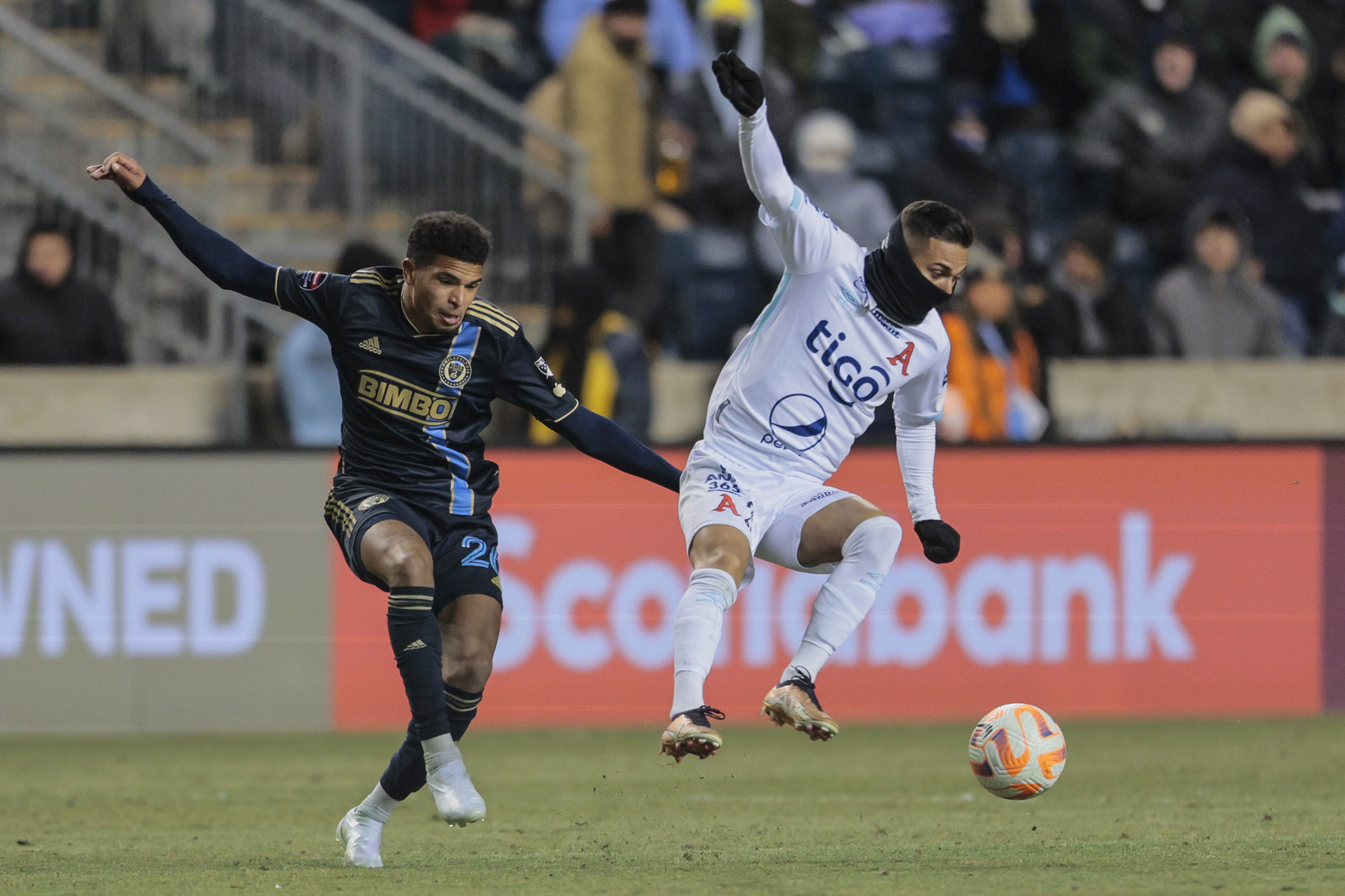
    Nathan Harriel (left) and the Union will be back in the Concacaf Champions Cup, the new (and more accurate) name for the Concacaf Champions League, in February.

    There’s one more thing to note, and it’s one that especially pains me as someone who’s been following MLS since long before the Union existed. Since the league’s earliest days, there’s been a widespread lament about how few people pay attention to its regular season. It’s been heard by diehard fans, team and league business offices, broadcasters, and all the way up to the commissioner’s office. And it’s correct.

    The one-game-round format made the regular season matter more than almost anything else MLS has ever done because regular season performance was the only way teams got playoff home games. Blowing out the playoff format feels like a reversal of so much hard-won progress.

    Lionel Messi’s arrival in MLS papered over a lot of problems. But he’s not playing now. Only teams that earned their way into the playoffs are. Just as it’s the ultimate time for those teams to prove themselves, it’s also time for the league and Apple to prove they’ve got a playoff-worthy product.

    If it doesn’t work, all those Messi jersey sales and viral videos won’t be enough to stop the truth from prevailing.

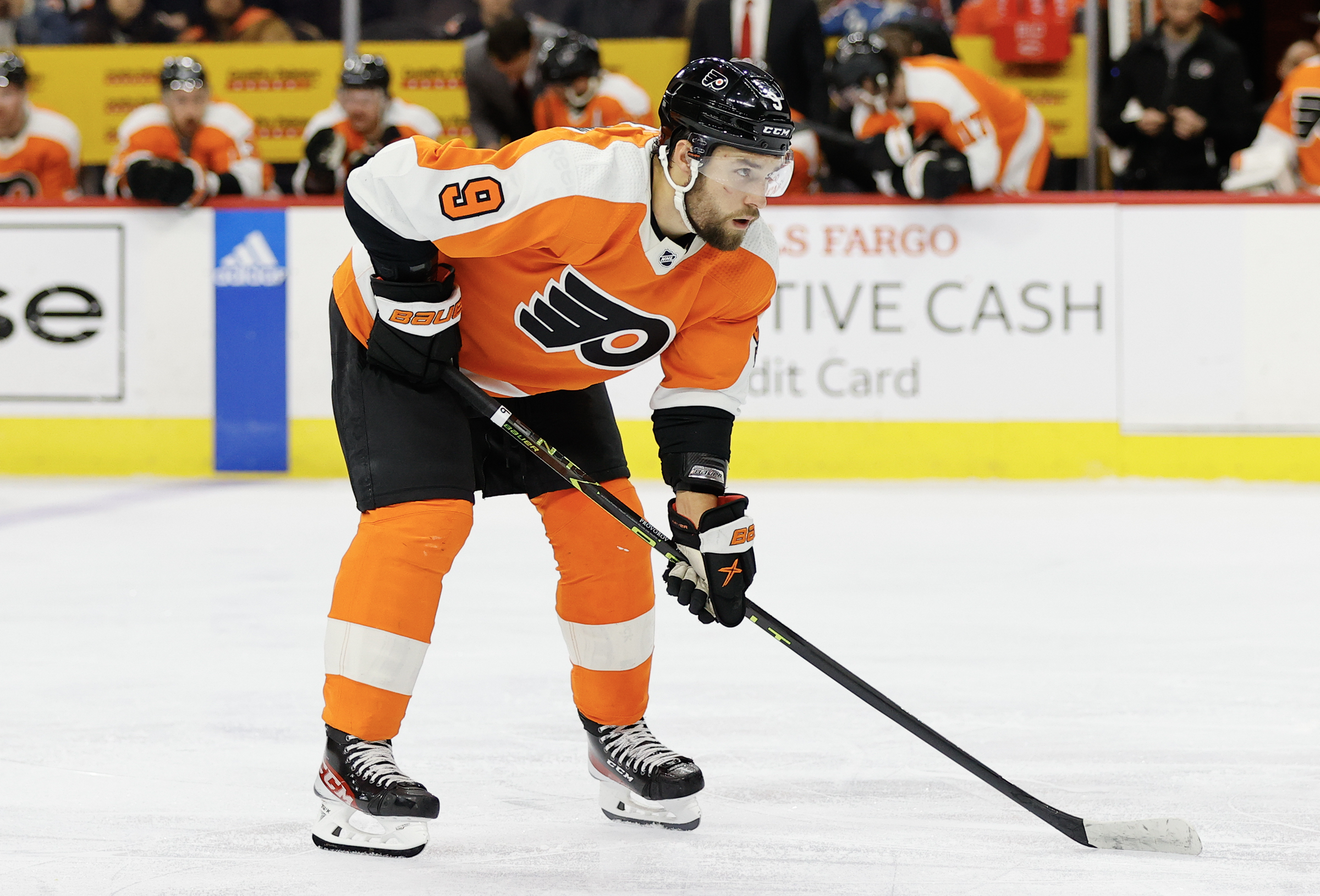
  • Ivan Provorov refused to wear Flyers’ Pride Night jerseys because of his religion. He’s getting Christianity all wrong.

    Ivan Provorov refused to wear Flyers’ Pride Night jerseys because of his religion. He’s getting Christianity all wrong.

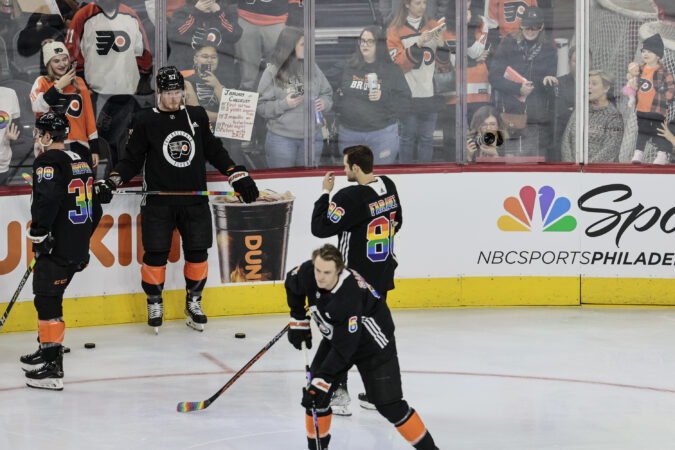
    On Tuesday, Flyers defenseman Ivan Provorov refused to wear a rainbow warmup jersey during the team’s LGBTQ Pride Night game against the Anaheim Ducks. He was the only player to do so. Provorov, who hails from Yaroslavl, Russia, cited his Russian Orthodox faith as the reason for abstaining from rainbows, telling reporters after the game that he had chosen “to stay true to myself and my religion.”

    As a queer woman, a former hockey player, a Christian, and an NHL fan, I am disappointed at the league and the Flyers’ response. In refusing to wear the Pride Night jersey, Provorov refused to acknowledge the humanity of LGBTQ people. And the league, in defending his stance, went right along with it.

    In a statement released Wednesday, the NHL said: “Clubs decide whom to celebrate, when and how — with league counsel and support. Players are free to decide which initiatives to support, and we continue to encourage their voices and perspectives on social and cultural issues.”

    In other words: There’s no problem with players being vocally antigay. Flyers head coach John Tortorella doubled down on the support of Provorov’s homophobia, telling reporters after the game: “This has to do with his belief and his religion. It’s one thing I respect about Provy, he’s always true to himself. That’s where I’m at with that.”

    Too few people understand that this tacit acceptance of discrimination — especially as it relates to sexuality and religion — is a matter of life or death for members of my community.

    Provorov is entitled to his personal convictions. He can believe that only marriages between a man and a woman can be blessed by God, or that homosexuality is a sin. But I wish he knew this: For other populations, when they adopt the church, the suicide rate decreases. For LGBTQ people, when they adopt the church, the suicide rate increases.

    Provorov should have donned that rainbow jersey and, yes, put rainbow tape on his hockey stick — not because he accepts gay marriage or because he’s eager to march in a Pride parade — but to stand up for LGBTQ people who are suffering. The defenseman had a chance to make a statement against bullying, against hatred, and against violence, without even opening his mouth. Instead, he chose not to step on the ice for warmups. That is shameful.

    I would recommend that Provorov, Tortorella, NHL leadership, and anyone who disagrees with me — take a moment to read the book Heavy Burdens by sociologist Bridget Eileen Rivera. In it, she shows how generations of LGBTQ people have been condemned and alienated by churches. That legacy has caused immeasurable harm to my community. It is a heavy burden to carry.

    Flyers defenseman Ivan Provorov sat out warmups on Tuesday night to avoid wearing the team’s Pride Night jerseys.

    Next, dive into Affirming: A Memoir of Faith, Sexuality, and Staying in the Church by Sally Gary. Gary is the executive director of CenterPeace, a nonprofit organization that helps members of the LGBTQ community feel a sense of belonging in the church — and provides resources for Christian leaders and parents of LGBTQ kids to respond to the queer community as Christ would: with love and acceptance.

    After that, I would recommend that Provorov sit down and spend time with his Bible.

    If Provorov truly wants to follow Jesus, the best thing to do is to stand up for the vulnerable. One of the first things Jesus said in announcing his ministry was: “The Spirit of the Lord is on me, because he has anointed me to proclaim good news to the poor. He has sent me to proclaim freedom for the prisoners and recovery of sight for the blind, to set the oppressed free, to proclaim the year of the Lord’s favor.” (Luke 4:18-19)

    That is how close the vulnerable were to Jesus’ heart. If Provorov’s Christianity does not center on helping the vulnerable — and I mean every vulnerable population — then he’s missing the mark.

    And LGBTQ people are one of the most vulnerable populations here in the United States, and in Russia. In December, Russian President Vladimir Putin signed a law that makes it illegal to spread “propaganda” about “non-traditional sexual relations.” Closer to home, the Central Bucks school board earlier this month banned teachers from hanging Pride flags.

    My heart goes out to Provorov. He’s trying to follow God with the knowledge and resources he has.

    In the Gospel of Matthew, Jesus had some of the strongest warnings for the most religious of his day. He warned his followers to be wary of those who “preach, but do not practice. They tie up heavy burdens, hard to bear, and lay them on people’s shoulders, but they themselves are not willing to move them with their finger.” (Matthew 23:3-4)

    I’m asking Provorov to move his finger. Clear these burdens. Reading the Bible with fresh eyes might open his mind.

    (And at least Gritty isn’t a homophobe. Bless that creature.)