Category: Sports

Sports news, scores, and analysis

  • When in New Jersey for the World Cup, do as the locals do. (Go to a mall.)

    When in New Jersey for the World Cup, do as the locals do. (Go to a mall.)

    EAST RUTHERFORD, N.J. — Benjamin Klevge, a soccer fan from Pamiers, France, had the front-facing camera open on his phone and a wide smile on his face. He crouched down, struggling to fit the Statue of Liberty into the frame.

    It wasn’t the actual Statue of Liberty, though. It was a 60-foot replica, encrusted with more than 1 million green jelly beans, towering above the entrance to a three-story candy store.

    And Klevge wasn’t in New York. He wasn’t even outdoors. He was roaming the gaping halls of the American Dream, a three-million-square-foot megamall in East Rutherford, N.J. He took more pictures in front of an indoor water park a few steps away as a Backstreet Boys song from the previous century played over the loudspeakers.

    “C’est magnifique,” he said, before switching to English. “It’s beautiful.”

    Fans who attended the opening match of this World Cup this month in Mexico City could wander a warren of neighborhood streets alive with music and the smell of grilled meat on their way to the iconic Estadio Azteca.

    Other citadels of soccer — whether Maracanã Stadium in Rio de Janeiro, which hosted the 1950 and 2014 finals, or Madrid’s Santiago Bernabéu, where the final was played in 1982 — are similarly embedded in dense, urban landscapes, helping to animate the heartbeats of their respective cities.

    Then there’s MetLife Stadium — or “New York New Jersey Stadium,” as World Cup officials have poetically rebranded it for the summer — which will host eight matches in this tournament, including the final.

    For fans accustomed to ballparks with more of the local flavor outside, it has become a punchline. They deride it as a remote island in a sea of asphalt, an inaccessible behemoth surrounded by swampland and a tangle of highway. And for the most part they’re right.

    But there’s another island out there.

    On Tuesday, before a match between France and Senegal, Klevge and thousands of others fans flooded the American Dream mall, which is connected to the stadium by an elevated footpath, and tried to make the best of an odd situation.
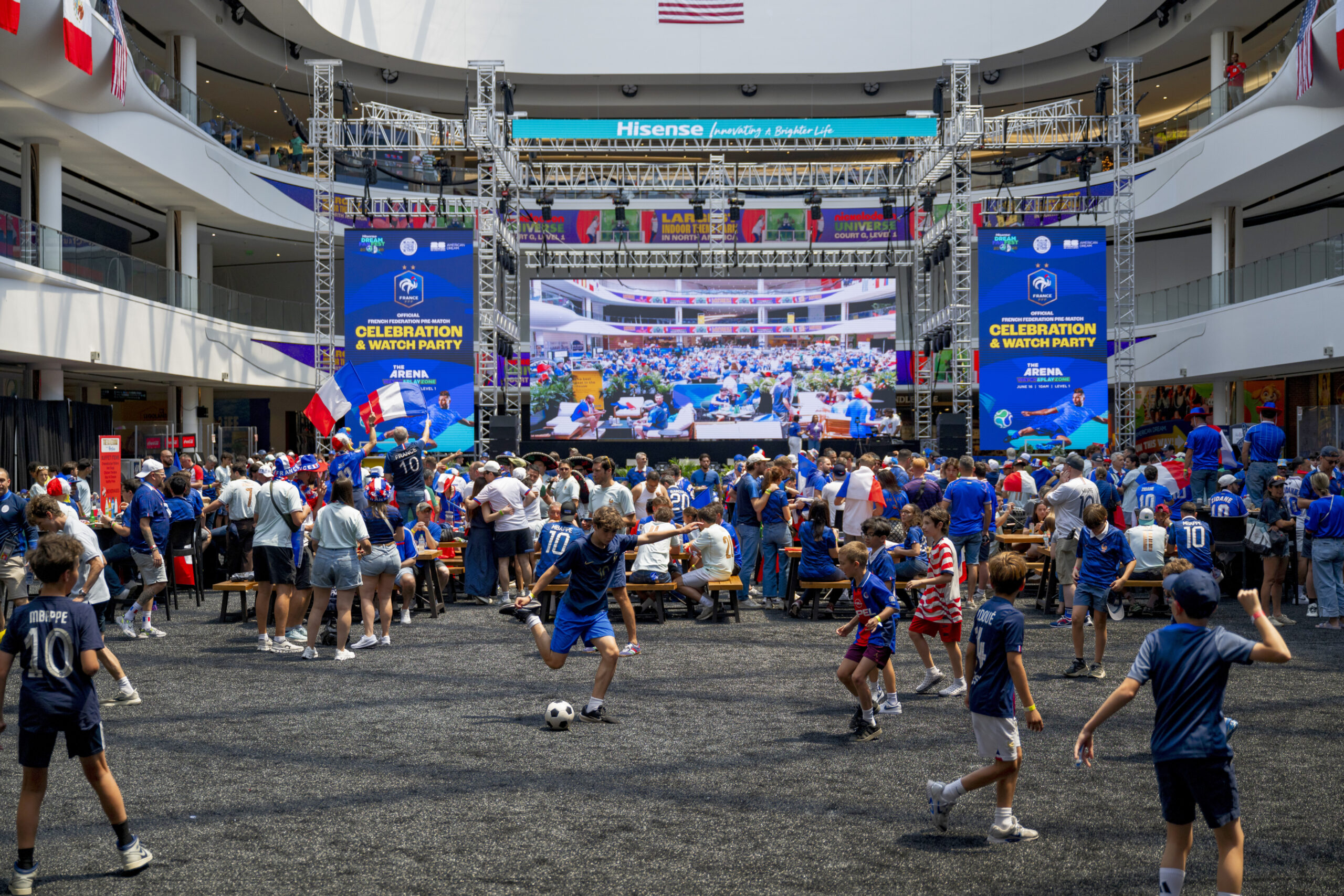
    Children from France kick play during a World Cup watch party at American Dream earlier this month.

    “Exit?” Klevge asked a reporter after taking his selfies and apologizing for his limited English. He tapped two fingers on his lips. “For smoking?”

    Erected in 2021, the American Dream is the second-largest shopping mall in the country. It has hundreds of stores, several dozen eateries and a host of attractions not commonly found indoors: a go-kart track, a water park, a ski slope and five roller coasters.

    This month, the air-conditioned cathedral to commerce represents the only public gathering space — besides the generic official “fan zones” immediately outside the stadium — accessible to the 82,500-capacity stadium by foot.

    “It’s kind of confusing. We’re just in a mall,” said Dawda Daye, 30, a Senegalese fan from Houston, who arrived there by taxi with his wife. “But it’s convenient, and everyone seems to be enjoying it and having fun.”

    Indeed, fans of both teams on Tuesday — just like the crowds supporting Brazil and Morocco over the weekend — seemed open to embracing the weirdness of the setting. The resulting rowdy energy was similar to the atmosphere at any major soccer match around the world — just entirely different.

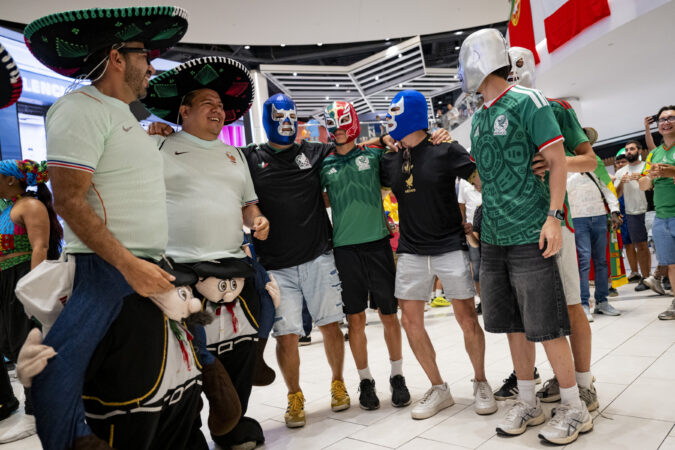
    Three hours before kickoff, four men in French jerseys juggled a plush soccer ball, purchased moments earlier from an Ikea kiosk, outside a Verizon store.

    A Senegalese drum troupe rapped out a mesmerizing beat for a swaying group of soccer fans marching near the cash register of a Mrs. Field’s cookie stand.

    The sunlit space normally containing the mall’s NHL regulation-size ice rink had been converted into a sort of simulation of a beer garden, filled with picnic tables where scores of fans clapped and sang. Above them towered a screen roughly the size of the penalty area on a soccer field that displayed a video feed of the very same picnic zone they were in — meaning the fans were cheering real-time images of themselves cheering.

    “In the U.S., everything is bigger,” said Benoit Berthier, 39, a Frenchman working in Montreal, who was eating a pastry at a cafe a few steps away. “But what they did inside is good. If you have one thing you know how to do in America, it’s entertain.”

    In a food court connected to H Mart, the Korean American grocery chain, two men wearing the jersey of Rayan Cherki, a young French star, blew into vuvuzelas as they squeezed between groups munching on traditional Korean snacks.

    On the third floor — there are five levels to the American Dream — a trio of Frenchman puzzled over a digital map of the shopping center, tapping on the screen to find a place to eat.

    “This kind of mall is unusual for French people,” said Gérald Grégoire, 52, one of the fans. “What’s most surprising is the size of the parking lot.”
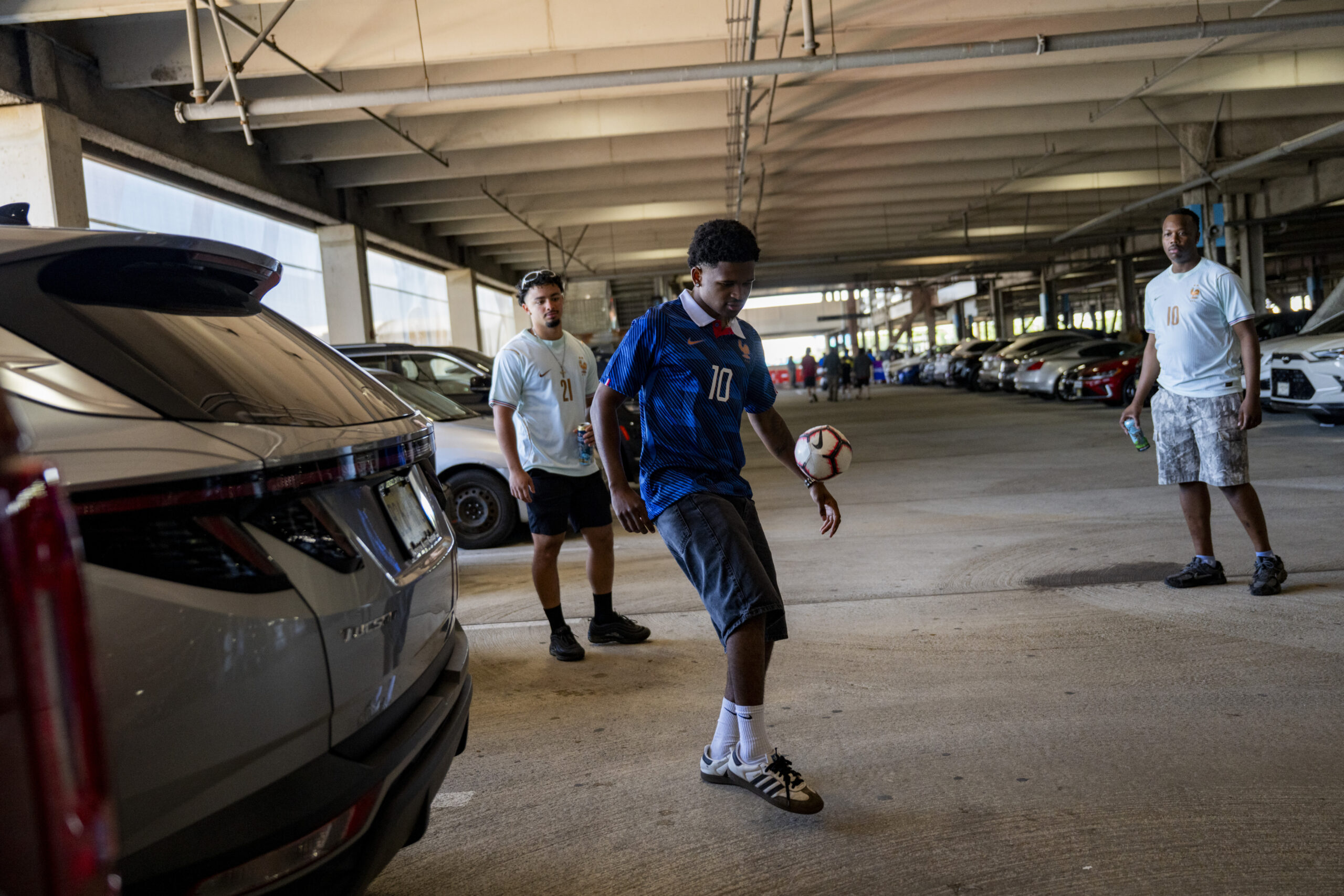
    Three friends kick a small soccer ball in the American Dream parking garage.

    During American football season, when the New York Jets and the New York Giants share MetLife Stadium, the parking lots there can hold close to 30,000 cars, a perfect setting for that quintessentially American sports tableau: tailgating.

    A handful of World Cup stadiums — like Lincoln Financial Field, where opposing fans played drinking games together before a match — are allowing tailgating this summer. MetLife is not one of them.

    “We heard there was no tailgating, so we said, ‘OK, we’re not going to the stadium, we’re going to the mall,’ ” said Carlos Orbe, 35, who was visiting from Tampa, Fla., with his fiancée, Julia Szenberg.

    Undeterred, the two grabbed a case of hard seltzers, took a cab to the American Dream and found some space between a row of parked cards in the mall’s indoor parking complex.

    They stood in a circle with a dozen or so other fans, sipping their drinks and periodically kicking a soccer ball that bounced their way. Asked about the people in the juggling circle, Szenberg, 36, who was born in Paris, shrugged.

    “We don’t know them,” she said. “But now they’re our family. This is the real American dream, happening in the mall parking garage.”

    This article originally appeared in The New York Times.
  • Bryce Harper and Kyle Schwarber put on a show in Phillies’ rout of the Mets: ‘What a night to be able to have’

    Bryce Harper and Kyle Schwarber put on a show in Phillies’ rout of the Mets: ‘What a night to be able to have’

    In three weeks, in the same sold-out ballpark, in front of another national television audience, Kyle Schwarber and Bryce Harper will probably be in the All-Star Game, maybe even the Home Run Derby.

    But they won’t put on a show like this.

    They can’t possibly.

    Can they?

    Whatever happens in the Bank’s All-Star closeup, take this to the bank: The Phillies’ stars put on dueling talent shows for the ages in Saturday night’s 15-3 demolition of the rival Mets. And, no, that isn’t mouth-agape hyperbole over feats we can’t believe we just saw.

    “They stole the show from me, that’s for sure,” ace Cristopher Sánchez said, laughing, after a one-run, six-inning gem reduced his ERA to 1.84. “It was perfect.”

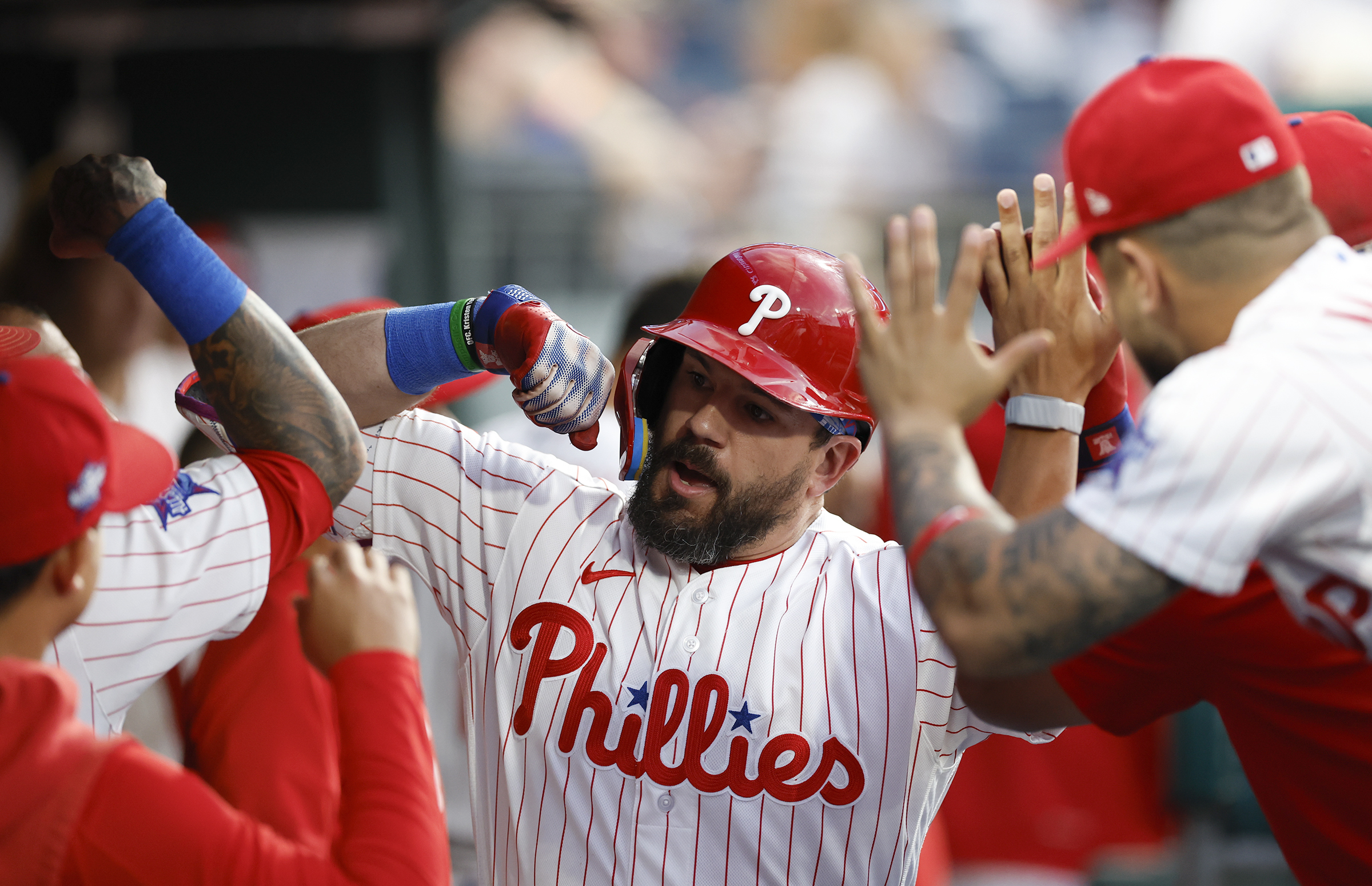
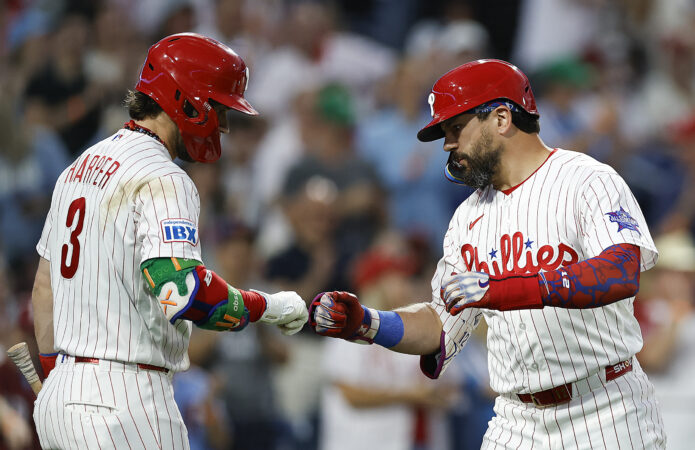
    It started with Schwarber, who became the fourth player in Phillies history (dating back to 1883, by the way) to smash two homers in one inning before adding a third later in the game for good measure.

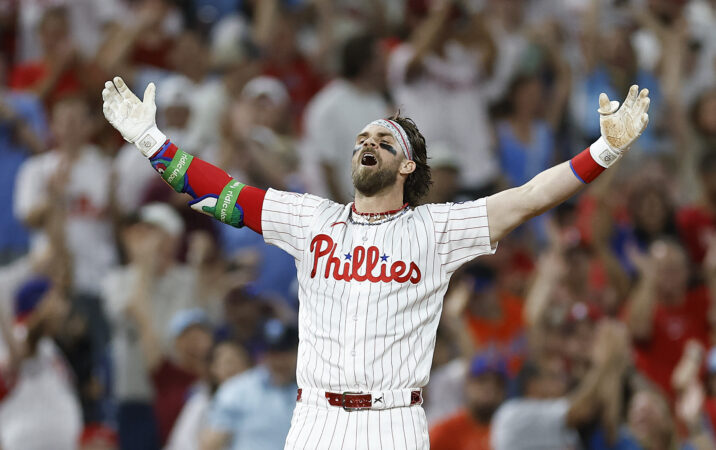
    Not to be outdone, Harper tripled in the fifth inning to hit for the cycle for the first time in a career that has spanned 15 seasons and will eventually take him to the Hall of Fame. And it took him only four at-bats, to boot.

    Only once before did teammates do those two things — at least three homers and a cycle — in one game: Lou Gehrig and Tony Lazzeri, Hall of Fame Yankees, in 1932.

    “We were wondering that in the dugout,” Harper said. “We didn’t think there was going to be two guys that did it. But to have those two names up against ours is pretty cool. It’s a pretty awesome moment for both of us.”

    Kyle Schwarber became the fourth Phillies player to homer twice in one inning when he did so in the third.

    Or as Schwarber put it, after he and Harper had four hits apiece in a 17-hit Phillies onslaught: “It was a pretty cool overall night, in general.”

    For Harper, it began a few minutes before 3 p.m. with something he rarely does. He took early batting practice on the field, an exercise he prefers to do underneath the stands in the controlled environment of the indoor cage.

    But Harper was in a 1-for-22 funk, even though he’s been mostly pleased with his approach at the plate. He swung mostly at strikes and hit balls hard, but as he said, “it feels like there’s a big, old glove out there.”

    So, Harper went out to the field with one objective.

    “I was trying to hit home runs,” he said. “Haven’t hit really many balls over the fence in a while, so I felt like just going out there and just trying to hit some balls in the third deck. Sometimes that helps.”

    OK, but hitting a fastball from Mets ace righty Freddy Peralta into the right-field seats on his first swing of the game for his first homer in 10 days?

    That’s absurd. But it fits with the night’s theme.

    Harper was using different lumber, too. He switched to a 34-inch, 35-ounce bat instead of his usual 34-inch, 31½-ounce model — “My heavy bat from the cage,” he said — because he thought he was out in front of too many pitches.

    “That bat’s from 2023, just an old, heavy bat that I swing every day in the cage,” Harper said. “It’s just my workout-routine bat. I said to [hitting coach Kevin] Long about a month ago, I was like, ‘Man, I should use this thing in a game,’ and I never did. Finally I was like, ‘Screw it. I’m going to do it today.

    “I don’t know if it translated to the game or anything else. But what a night to be able to have.”

    Tell Schwarber about it. He led off an eight-run third inning by golfing a 456-foot drive halfway up the second deck in right field. By the time Schwarber’s spot in the lineup came back around, the Phillies had an eight-run lead. It ballooned to 11-0 with another Schwarbomb, 457 feet to almost the same spot.

    “That was cool,” said Schwarber, who didn’t do anything unusual before the game. “First time I’ve done it in my career.”

    In fact, the only other Phillies players to do it were Andy Seminick (1949), Von Hayes (1985), and Trea Turner (2023).

    Why stop there? Schwarber tacked on a third homer in the seventh inning, skying a ball around the right-field foul pole. It marked the fifth time in his career that he hit at least three homers and raised his majors-leading total this season to 28.

    “That’s what he tries to do, man,” Harper said of the sport’s most prolific home-run hitter. “It’s way different. Just the way he kind of connects to the baseball. He uses the ground so well. He’s got such a simple, short swing. It’s pretty impressive, you know?”

    Almost as impressive as, say, scoring all the way from first base on Harper’s cycle-capping triple.

    Everyone in the dugout was aware of Harper’s pursuit of the cycle. After his first-inning homer, he was typically overaggressive in hustling to turn a single into a double on a liner to right-center before ripping a single in the third inning.

    “We kind of talked about it before, and I was like, ‘Hey, you’ve just got to aim at Monty’s Angle,’” Schwarber said, referring to the area where the wall juts out in left-center field. “And then he gets up there and he hits the ball to center field. I’m like, ‘I’m going to run through the stop sign.’

    “I was pretty predetermined on going, and I’m glad [third base coach Anthony Contreras] was on the same page, too, with sending me.”

    Not that they had much choice. Harper was intent on not stopping around second base, the helmet flying off his head between first and second.

    Harper joked that Schwarber was well-rested because he “jogged a lot tonight.” And when he slid into third, Harper raised both arms skyward, then pumped his right arm and doffed his helmet.

    It was only the 11th time in 144 seasons that a Phillies player hit for the cycle. J.T. Realmuto and Weston Wilson did it in 2023 and 2024, respectively. But it’s happened only five times in the last 63 years.

    And never to Harper. Well, not since college.

    “Super Regionals,” he said. “Seven-for-seven, four homers and a cycle.”

    Where does a cycle rank for a two-time MVP with 379 career homers?

    “It’s up there,” he said. “Doing that at the big-league level is really cool.”

    And it makes you wonder what Schwarber and Harper could possibly have in store for an All-Star encore. Neither will commit to the Home Run Derby until they know if they’ll be named to the All-Star team.

    But, really, is there any doubt?

    “A crowd like [Saturday] shows you how electric it’s going to be, for not only that [Home Run Derby] night but the whole week in general,” Schwarber said. “I think it’ll be really special to have the All-Star Game here in Philly, and our fans are going to be able to show up for that.”

    The Phillies’ biggest stars just gave everyone one heck of a preview.

  • Bryce Harper hits for first-career cycle in five innings, Kyle Schwarber hits three homers vs. Mets

    Bryce Harper hits for first-career cycle in five innings, Kyle Schwarber hits three homers vs. Mets

    Fifteen years into a career that will almost certainly take him to the Hall of Fame, Phillies star Bryce Harper did something he’s never done before.

    He hit for the cycle.

    And it took him only four at-bats.

    Harper tripled in the fifth inning of a 15-3 rout of the Mets, and upon sliding into third, he pumped his right arm, then raised both arms skyward. Harper homered in the first inning, then reached on a hustle double and a single in the Phillies’ eight-run third inning.

    “[Interim manager] Don [Mattingly] and all the coaches came up to me and were like, ‘Hey, if you get a chance, just go do it,’” Harper said. “So, kind of once I had their blessing to just go on any ball, it was kind of the perfect thing.”

    It marked the 11th time a Phillies player hit for the cycle. Harper joined Lave Cross (1894), Sam Thompson (1894), Cy Williams (1927), Chuck Klein (1931 and 1933), Johnny Callison (1963), Gregg Jefferies (1995), David Bell (2004), J.T. Realmuto (2023), and Weston Wilson (2024).

    “Doing that at the big-league level is really cool,” Harper said. “Got close a couple times, but being able to do that, having that moment is really, really cool.”

    The triple capped the cycle, but it wouldn’t have been complete without a signature double from Harper in the third inning. He shot a ball into the gap in right-center and aggressively took second base, never hesitating out of the box. It was the sort of baserunning for which he’s often criticized.

    “I don’t really care what people think about my baserunning because that’s how I’ve always played,” Harper said. “I’ve done it since I was 7 years old. I don’t really play a different way when I know I can try to get to second base. I’ve made mistakes on the bases. I’m going to. Little kids are going to do the same thing. And I’ll preach to them that they just play the game hard. If they get thrown out at second or third, then so be it. If I don’t do that tonight, then I don’t have the opportunity to hit for a cycle.”

    Not to be outdone, Kyle Schwarber crushed three homers, including two in the Phillies’ big third inning, to raise his majors-leading total to 28. He became the fourth Phillies player to homer twice in one inning. The others: Andy Seminick (1949), Von Hayes (1985), and Trea Turner (2023).

    Both of Schwarber’s third-inning homers landed halfway up the second deck in right field. The first was measured at 456 feet, the second at 457 feet.

    Harper entered with 13 career four-hits games, including two games with five hits. But he hadn’t hit for the cycle since 2010 at the College of Southern Nevada.

    So, when Harper hit a fastball from Mets lefty reliever Cionel Pérez into the gap in left-center field, he had no intention of stopping at second base. The helmet flew off his head between first and second. He went from the batter’s box to third base in 11.8 seconds.

    Schwarber, not known for his speed, even scored from first base.

    “We knew as soon as he hits it and it gets into the gap, that he’s going to go,” Schwarber said. “So, I was just trying to make sure I get home.”

    Said Harper: “He was busting it, so I appreciate it. I mean, he jogged a lot tonight.”

  • Phillies weighing options to fill Andrew Painter’s spot in starting rotation; Trea Turner returns to lineup

    Phillies weighing options to fill Andrew Painter’s spot in starting rotation; Trea Turner returns to lineup

    Andrew Painter has reported to Lehigh Valley, where he will work to improve a fastball that hasn’t overpowered many major-league hitters.

    The Phillies aren’t sure how long it will take.

    “We haven’t put a timetable on it,“ general manager Preston Mattingly said on The Inquirer’s Phillies Extra podcast. “It’s TBD at this point when he comes back. But I think we all know as an organization that we’re going to need him.”

    OK, but in the meantime, the Phillies must fill Painter’s spot. They don’t have many options. Starting pitching depth has been a concern since the offseason. It isn’t an organizational strength.

    But before the Phillies settle the fifth-starter question, they will slightly rearrange the rotation beyond co-aces Cristopher Sánchez and Zack Wheeler. Jesús Luzardo will move back one day to avoid overtaxing the bullpen by splitting up Painter’s spot and Aaron Nola.

    So, after Wheeler starts at home Sunday night against the Mets, the rotation will shape up like this for the upcoming series in Washington: Monday: No. 5 starter; Tuesday: Luzardo; Wednesday: Nola; Thursday: Sánchez.

    As for who will take the fifth (spot), the Phillies seem to have three choices:

    Bryse Wilson: Called up to fill Painter’s roster spot, Wilson threw 29 pitches in two scoreless innings of relief Thursday night against the Mets, which would line him up to start on short rest. The 28-year-old righty had a 6.29 ERA in triple A but also hadn’t allowed a run in 12 innings in his last three starts. He has appeared in 164 major-league games, including 57 starts.

    Alan Rangel is a candidate to join the Phillies’ starting rotation next week.

    Alan Rangel: Despite occasionally spotty command (27 walks in 70 innings), Rangel has been Lehigh Valley’s most consistent starter. He has a 3.99 ERA in 14 games (11 starts) and would be on regular rest Monday.

    Bullpen game/opener: The Phillies have more depth in the bullpen. Interim manager Don Mattingly said he isn’t inclined to pass the baton from reliever to reliever for nine innings. But the Phillies could use an opener before turning to a bulk pitcher, possibly Wilson or Rangel.

    “I don’t know about bullpen-heavy, but obviously there will be usage,” Mattingly said. “There’s no plan to just go two innings and then try to do the whole thing with a bullpen. It won’t be that kind of game. We’ll definitely have bulk in there.”

    The fifth spot in the rotation will come around four times before the All-Star break. Painter isn’t expected back until after the second half opens. He will throw multiple bullpen sessions before making his first start for Lehigh Valley, president of baseball operations Dave Dombrowski said.

    Painter has a 7.06 ERA and a 1-8 record (the Phillies are 3-9 in his starts). Opponents are batting .404 and slugging .660 against his fastball.

    The Phillies believe it stems mostly from his delivery. He tends to over-rotate toward the first-base side of the mound, rather than striding directly toward home plate, which has affected his ability to command the fastball.

    “Most of it is delivery-oriented,” Dombrowski said. “Because he’s done some things with his delivery, just going more directly to the plate rather than spinning off. He’s had more life, and you see it at times. He threw some pitches that were outstanding but not on a consistent basis.

    “So, the feeling is that when he does that, when he gives that effort going forward, his ball’s got more movement. He’s got more command of his pitches.”

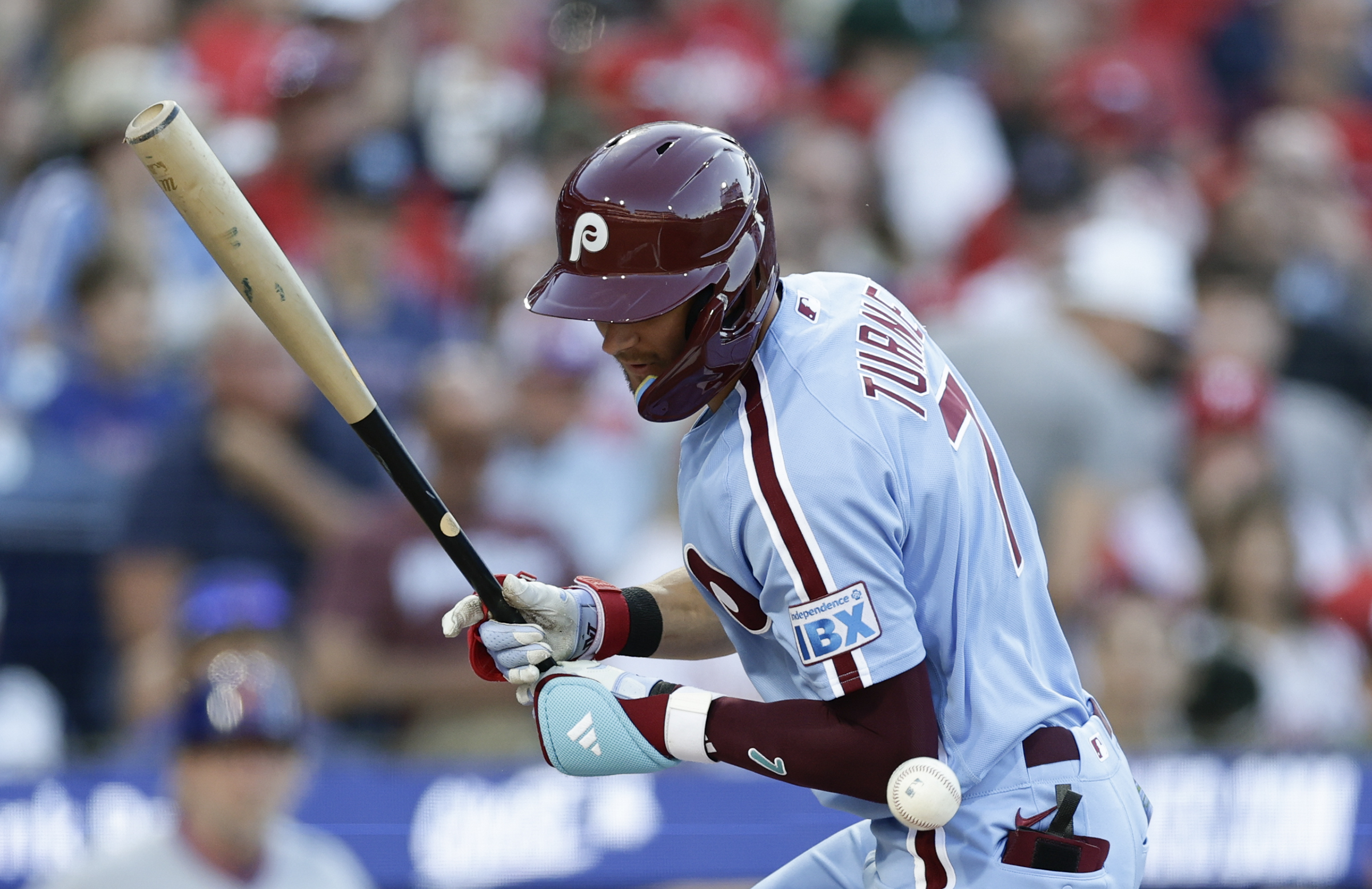
    Trea Turner is back in the lineup after suffering a bruised right calf on Thursday.

    Trea bien

    Trea Turner returned to the lineup Saturday — in his familiar leadoff spot — after leaving Thursday night’s game with a bruised right calf. He got hit by a pitch from Mets lefty Sean Manaea in the first inning.

    When Turner reported soreness and tightness, Mattingly took him out of the game. But after a day off Friday, Turner felt better.

    “For me, the biggest danger with that is him running differently, and then we’re into a hamstring or a hip [injury] or something like that,” Mattingly said. “So, wanted to make sure that he can run. That was his biggest issue, just pushing off. The off-day did him well.”

    Extra bases

    Lefty reliever Kyle Backhus (elbow) was scheduled to make his fifth injury rehab appearance for Lehigh Valley. The Phillies likely will reinstate him from the injured list early next week. Backhus could fill an important role in the bullpen, with lefty José Alvarado struggling and Tanner Banks getting sent back to the minors. … Gage Wood update: The Phillies’ top prospect has a 3.71 ERA, 25 strikeouts, and only five walks in 17 innings over five starts since his promotion to double A. … Wheeler (6-1, 2.01 ERA) will be opposed Sunday night by Mets lefty David Peterson (3-5, 5.91).

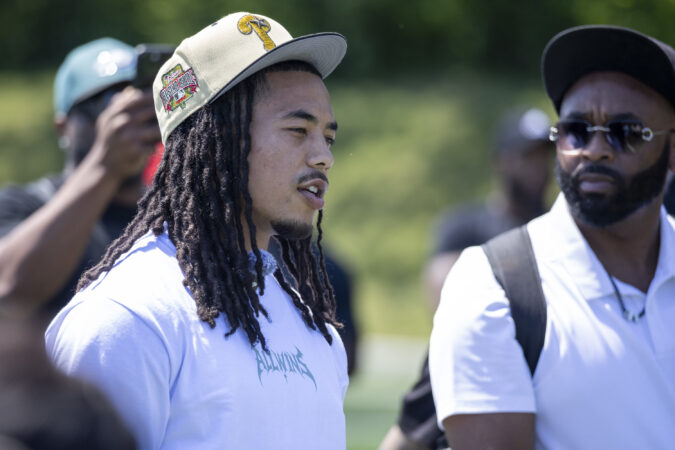
  • Eagles rookie Makai Lemon attends Open Door Abuse Awareness and Prevention football combine to inspire the youth

    Eagles rookie Makai Lemon attends Open Door Abuse Awareness and Prevention football combine to inspire the youth

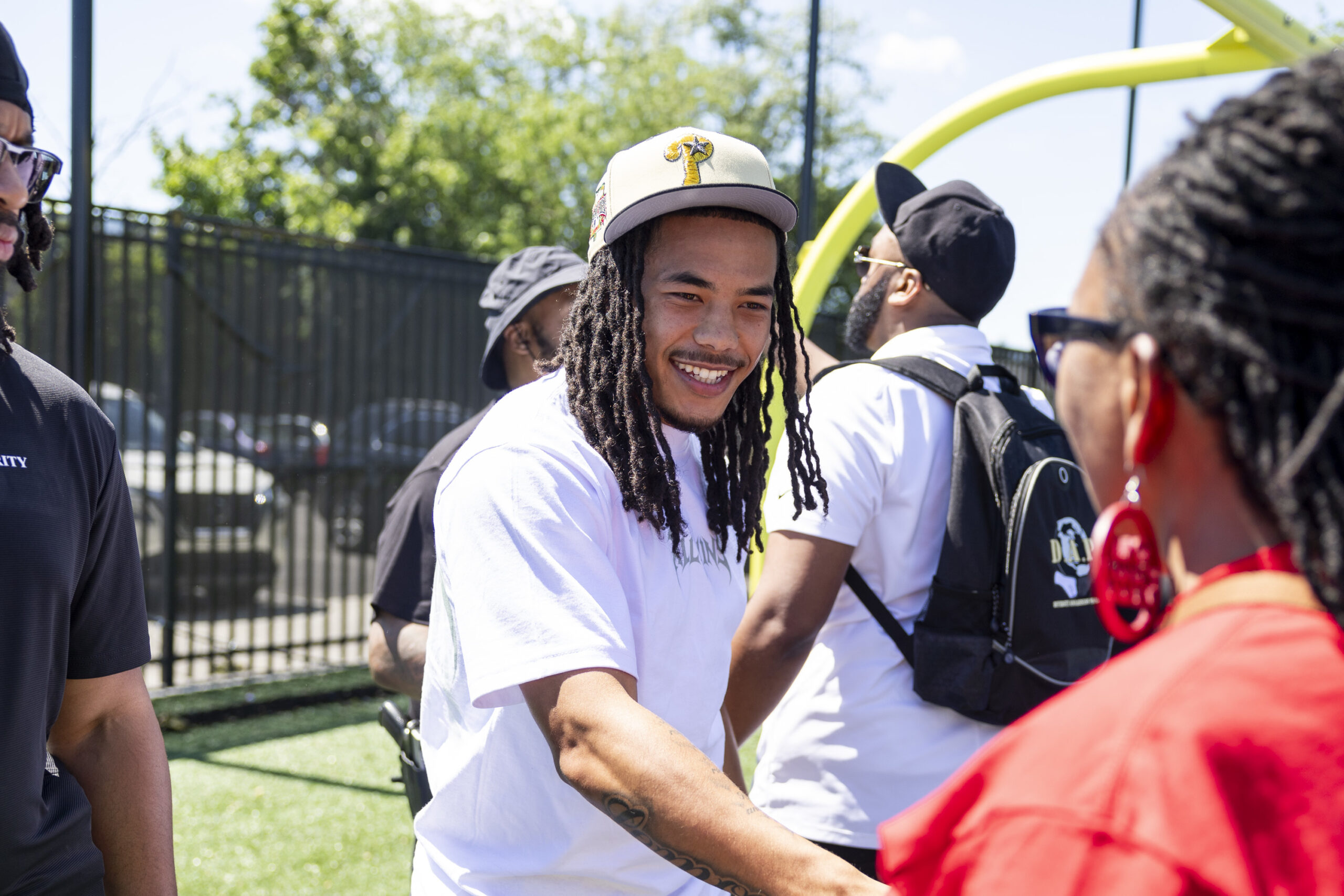
    Eagles wide receiver Makai Lemon has officially become a part of the Philadelphia community.

    As the invited guest for the Open Door Abuse Awareness and Prevention football combine for young athletes in honor of Juneteenth on Saturday, attendees welcomed Lemon with both words and actions, rushing to gates at Mastery Charter School to greet Philly’s newest Eagle. Author and social media personality Wallace Peeples, more commonly known as Wallo267, was also a guest at the event.

    The event combined athletic training with teaching emotional skills and was held at Mastery Charter for youth and high school football players.

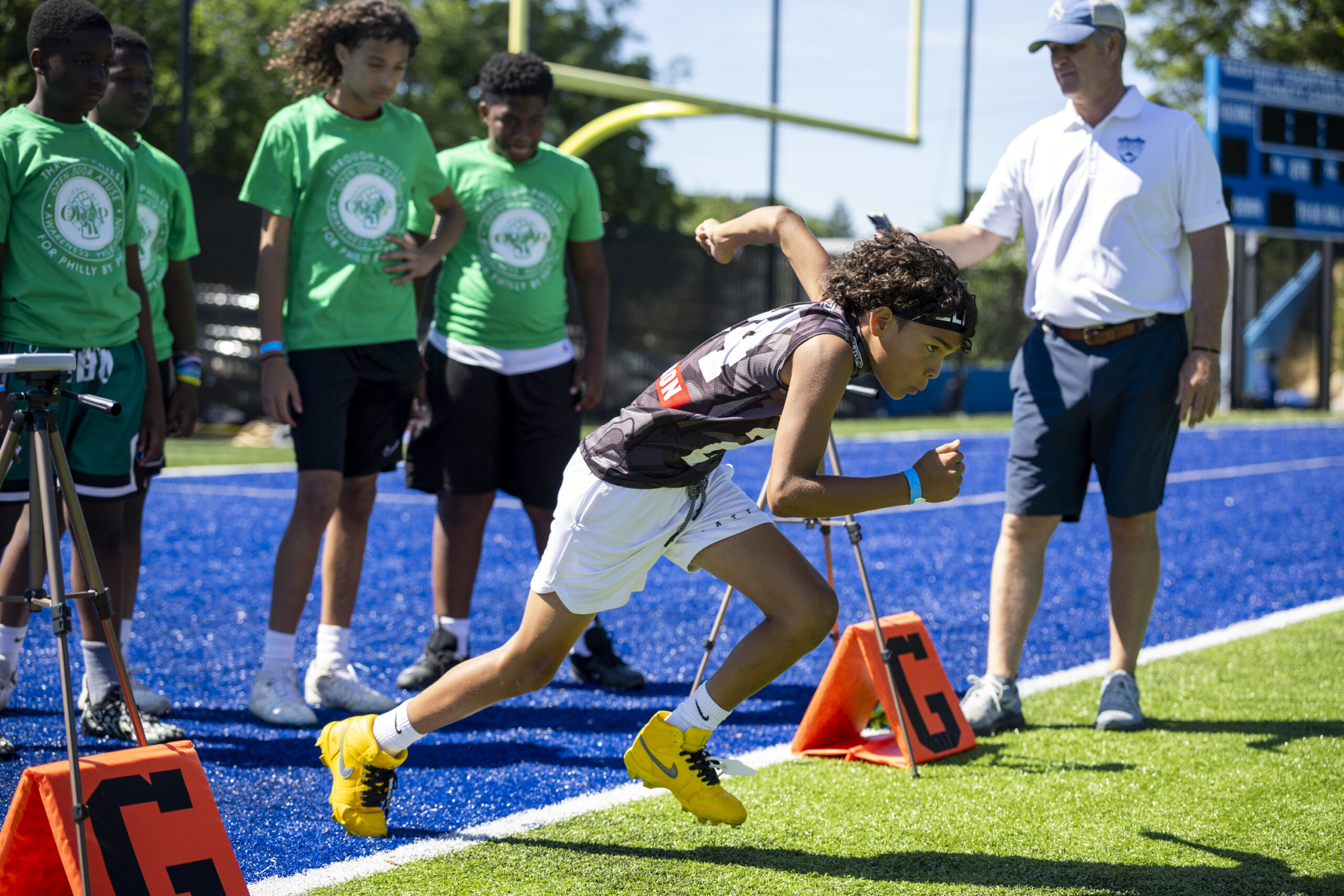
    Valencia Peterson, ODAAP’s founder, said that through its decade-long mission, the organization uses sports to share its message because of the captive audience it offers as athletes rotate through stations in agility, jumping, a 40-yard dash, and more.

    “It’s all about dosing the kids, giving them a little bit at a time over and over again of the same things,” Peterson said. “Just like a rep in football, you swing your arms enough, you know how to do it automatically when you’re on the field, and so that’s what it’s like.”

    Kamden Cintron, 11, participates in the 40-yard dash at the Open Door Abuse and Prevention youth football combine on Saturday.

    After completing the different stations, Peterson turned things over to Lemon and Peeples to say a few words and offer advice to the athletes.

    “This is a blessing. I’m just preaching to all the kids that it’s an opportunity that they shouldn’t take for granted,” Lemon said. “Super grateful, to be out here with all the kids.”

    Aliyoh Turay, 24, was in the same position as the kids Lemon spoke to on Saturday. Growing up in Philadelphia, Turay was a part of the ODAAP programs in high school. Now, he volunteers by helping at events like the combine and coaching.

    Turay said ODAAP was like a family that helped him grow and navigate adversity. He hopes the tools for self advocating and handling adversity will pass on to the next generation currently participating in these events.

    “Growing up some of us aren’t really taught how to speak up for ourselves and how to talk about what we’re going through and ask for help,” Turay said. “So, ODAAP has really been a tool I have used to grow and reach out for help and talk about what I was going through.”

    Bryant Paden, known throughout the city as “Coach Slice,” said the goal for these events is for the athletes to “learn, that it’ll grow in them, and that they’re beginning to teach it to the next generation.”

    Paden, Liberty Charter’s Pop Warner president, said that demonstrating skills of emotional intelligence, especially as the brain is still developing, allows participants to retain the message more.

    “We’re teaching them how to use their energy and their emotions in a positive way, even when competing in such a physical sport,” Paden said. “I think just saying it, it comes off as just words, and so we want to make sure that not only we’re saying it, we’re able to, throughout their growth, point out examples of people doing the right thing and the wrong thing, so that they can see the difference in the consequences.”

    Makai Lemon speaks with a parent at the Open Door Abuse and Prevention youth football combine on Saturday.

    In hopes of continuing this education after Saturday’s event, a free copy of Peeples’ book “Say Yes to You and No to Them” was given to each parent at the event, as well as each of the high school students attending.

    Peeples, who grew up in Philadelphia, said it was important to him to give back to the community and invest in its future, and hopes to see more athletes like Lemon doing the same in the future.

    “I hope that we start seeing more professional athletes in the community, because it’s not just about the community coming out there and cheering for you, it’s also about you showing up for the community in different ways,” Peeples said. “The big plays really start in the community and showing up for the community. That’s the biggest play that you can make.”

  • The joy the World Cup has brought to Philadelphia feels like the escape we didn’t know we needed

    The joy the World Cup has brought to Philadelphia feels like the escape we didn’t know we needed

    By the time you read this, Philadelphia will have hosted two matches in the FIFA World Cup and will be steadfastly preparing for a third in quick succession come Monday.

    France, a favorite by many to win the whole tournament, will take on Iraq in the second game of Group I, but if it’s anything like the previous two matches, the game itself will once again not be the story.

    Because for the past two games, the attraction has been that of the fans, and the unbridled passion people have for not just a team and its players, but the nation so many have bought jerseys for, the emblem they proudly wear above their heart, or in the middle of their chest.

    This spectacle of what will result in 104 matches of underdogs becoming story lines, a U.S. men’s national team exercising the type of dominance very few expected, has also seen Philly lead the way on the main stage, creating lasting memories for thousands of fans who have flocked to the city, all while becoming lore, in the process.

    In the lead-up to the World Cup, the story lines circulated the unforeseen, the question marks that surrounded what the World Cup’s return to the United States would look like.

    In the U.S., it arrived amid the backdrop of widespread deportations by Immigration and Customs Enforcement officials and travel bans on over 70 countries.

    It came on the heels of perceived rampant greed from FIFA, which enacted dynamic pricing for the first time, sending ticket prices soaring to the highest they’ve ever been. They opened the door for broadcasters to run advertisements midgame, under the guise of hydrating tired players.

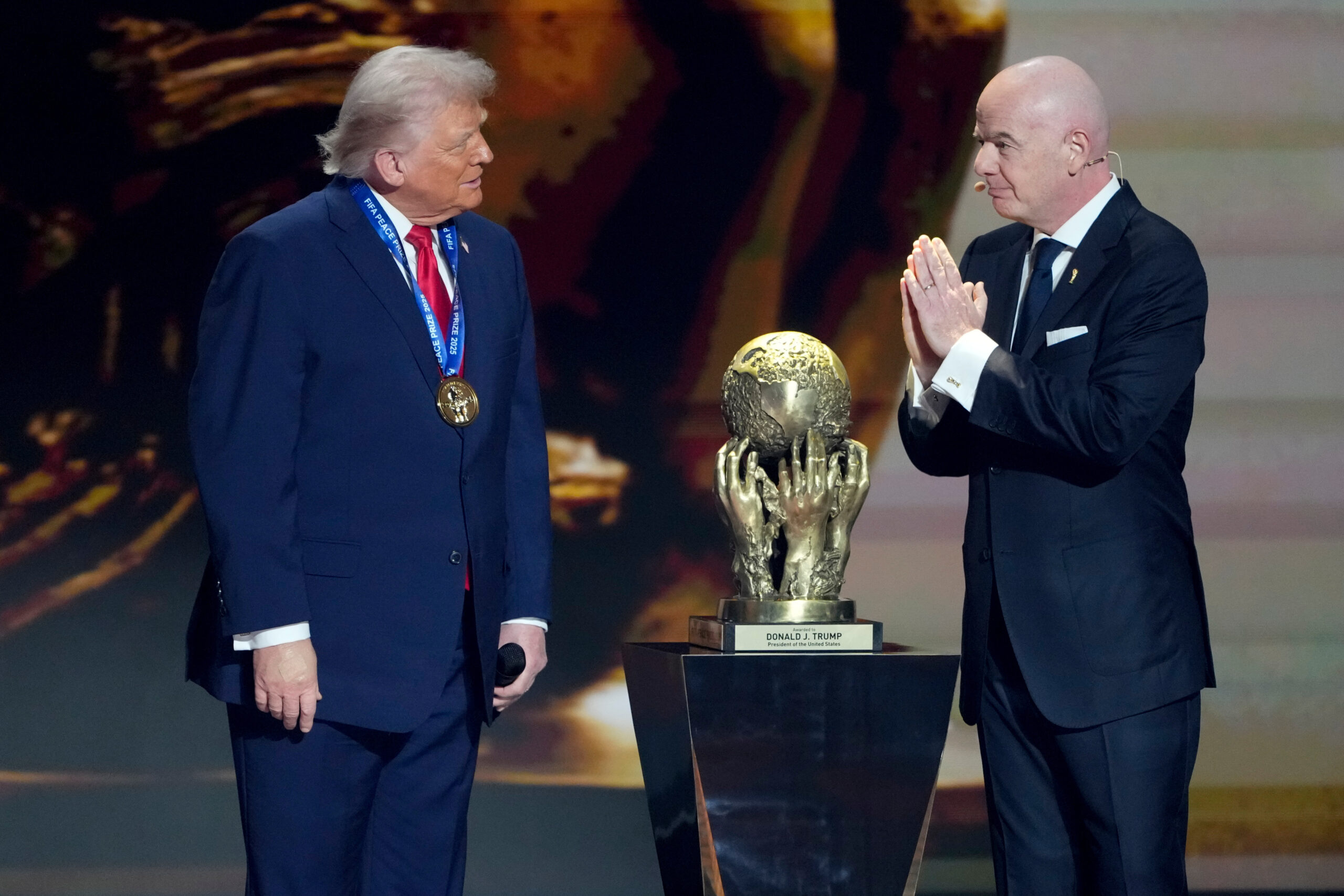
    FIFA president Gianni Infantino (right) gives President Donald Trump the inaugural FIFA Peace Prize at the World Cup draw last December.

    Let’s not forget the lobbying of the sitting U.S. president in the process, going as far as to create an inaugural peace prize for him while his administration destabilized governments and enabled a war in the Middle East.

    But look at how quickly all of that has fallen into the backdrop.

    Soccer in its purest form has provided an escape for a nation that desperately needed one. And what it’s also proved in the process is that people of different races, colors, and creeds don’t hate each other as much as their social media algorithms might suggest.

    Proof was on display right here in Philly in the form of fans who packed the stands over the last two matches.

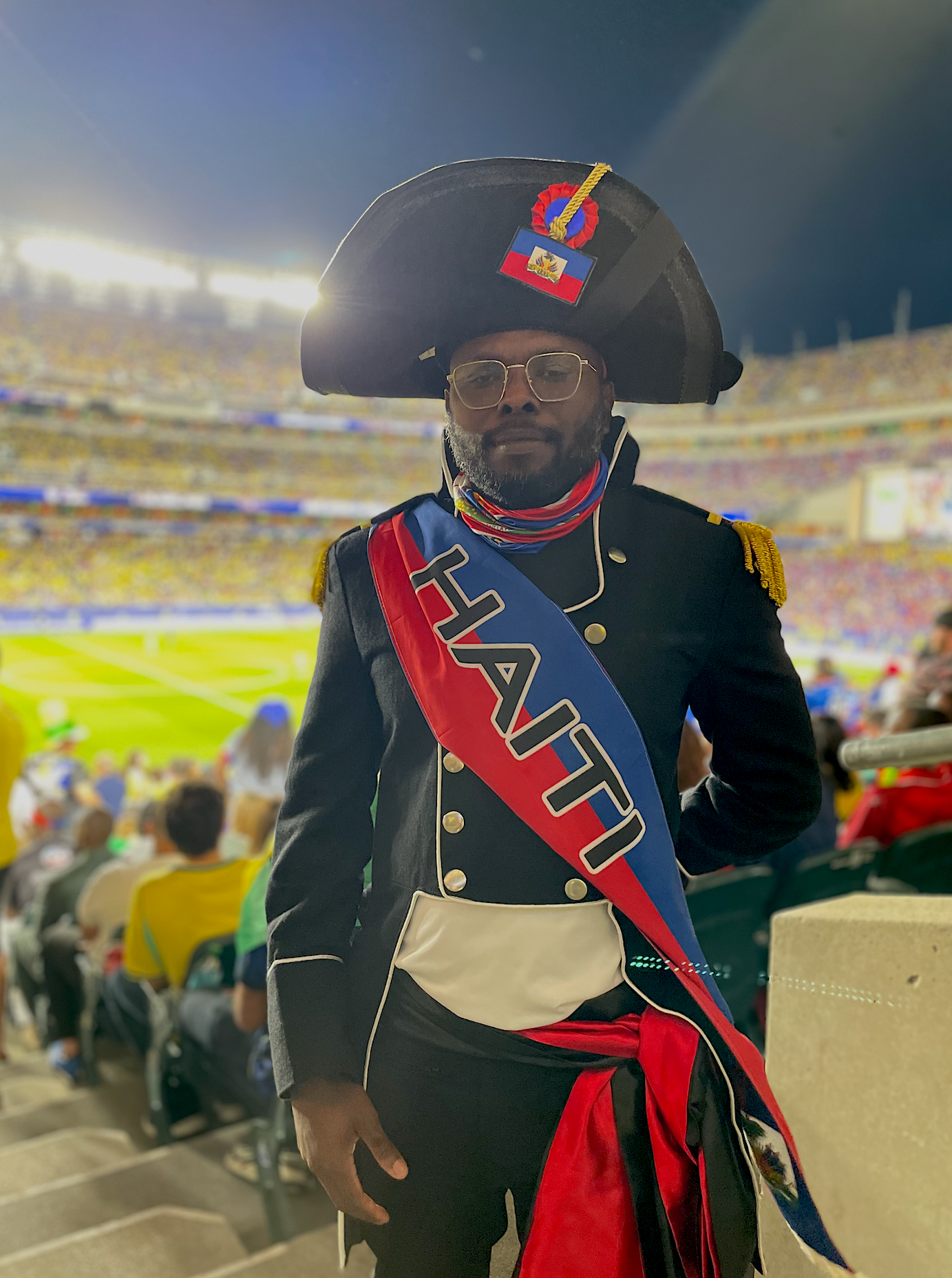
    Fans like Maxence Jeanty, a 41-year-old Haitian native living in Chicago who traveled to Philly from the Windy City, dressed in a suit depicting liberator Jean-Jacques Dessalines, a key figure of the Haitian Revolution.

    Maxence Jeanty, 41, a fan from Chicago arrived at the FIFA World Cup game between Brazil and Haiti, dressed as Jean-Jacques Dessalines, the leader of the Haitian revolution.

    “When I was growing up in Haiti as a kid, I watched the World Cup, and I’ll never forget watching the 1994 World Cup,” Jeanty said. “It’s been so long that my people haven’t made it to the World Cup that the choice was to choose either Brazil or Argentina [as the nation to support]. But now, we’re stepping on the field as equals, and no matter what happens, we’re stepping on the field as equals. The pride that brings to me and to every Haitian fan here, man, that’s indescribable.”

    We witnessed massive gatherings on the most iconic steps of our fair city from supporters who, like Jeanty, boarded planes just to be a part of the moment.

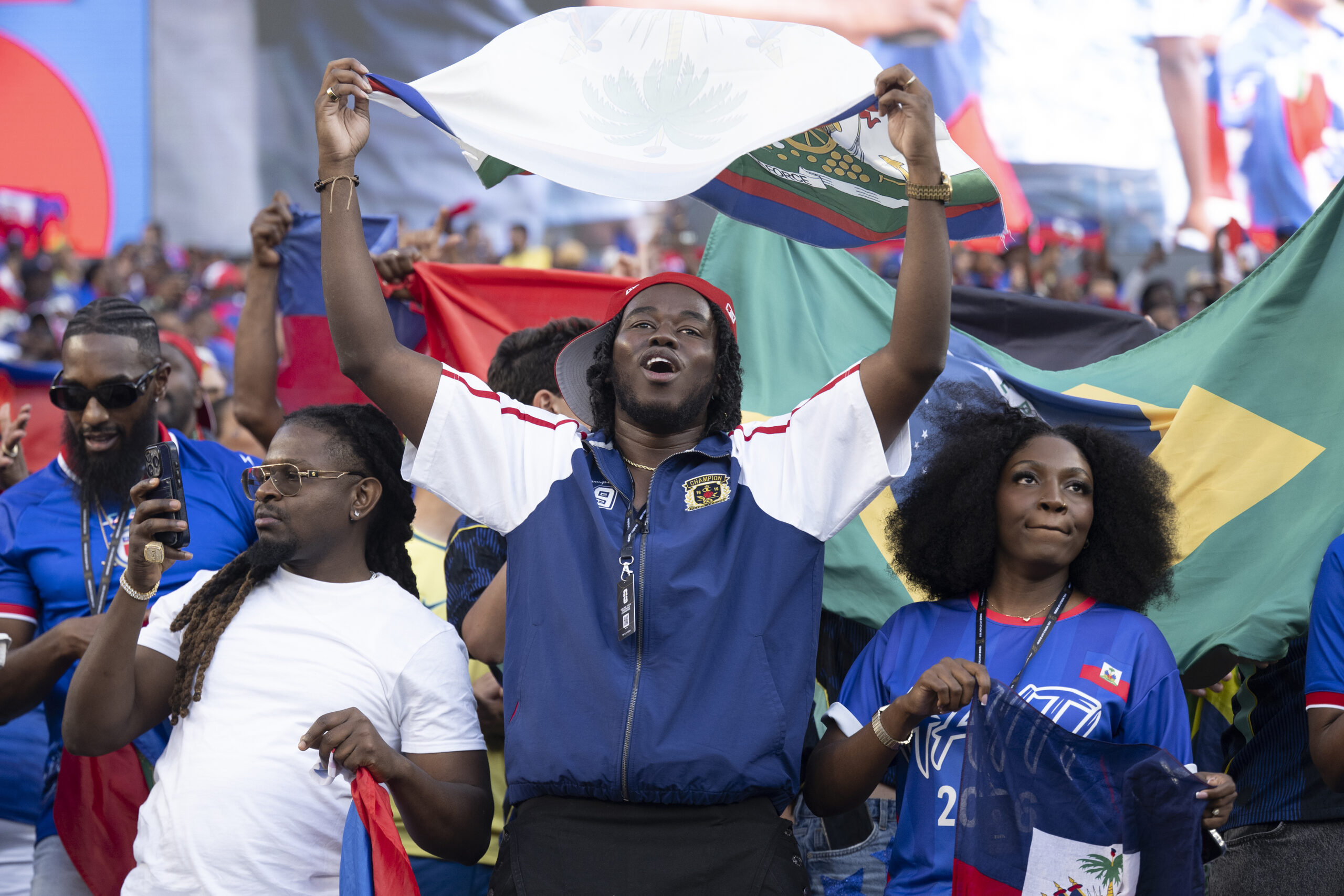
    Haiti fans celebrate during Friday’s FIFA World Cup Group C soccer match against Brazil.

    Only a week and a half in, the World Cup has become for so many a momentary cure for what ails, the escape we didn’t know we needed. Lifelong supporters hang onto every kick, and casual fans are amazed by the sights and sounds.

    Along the way, we’ve met supporters of other nations who’ve never met and have become instant friends. We saw dance parties on subway cars, in parking lots, and in the middle of streets.

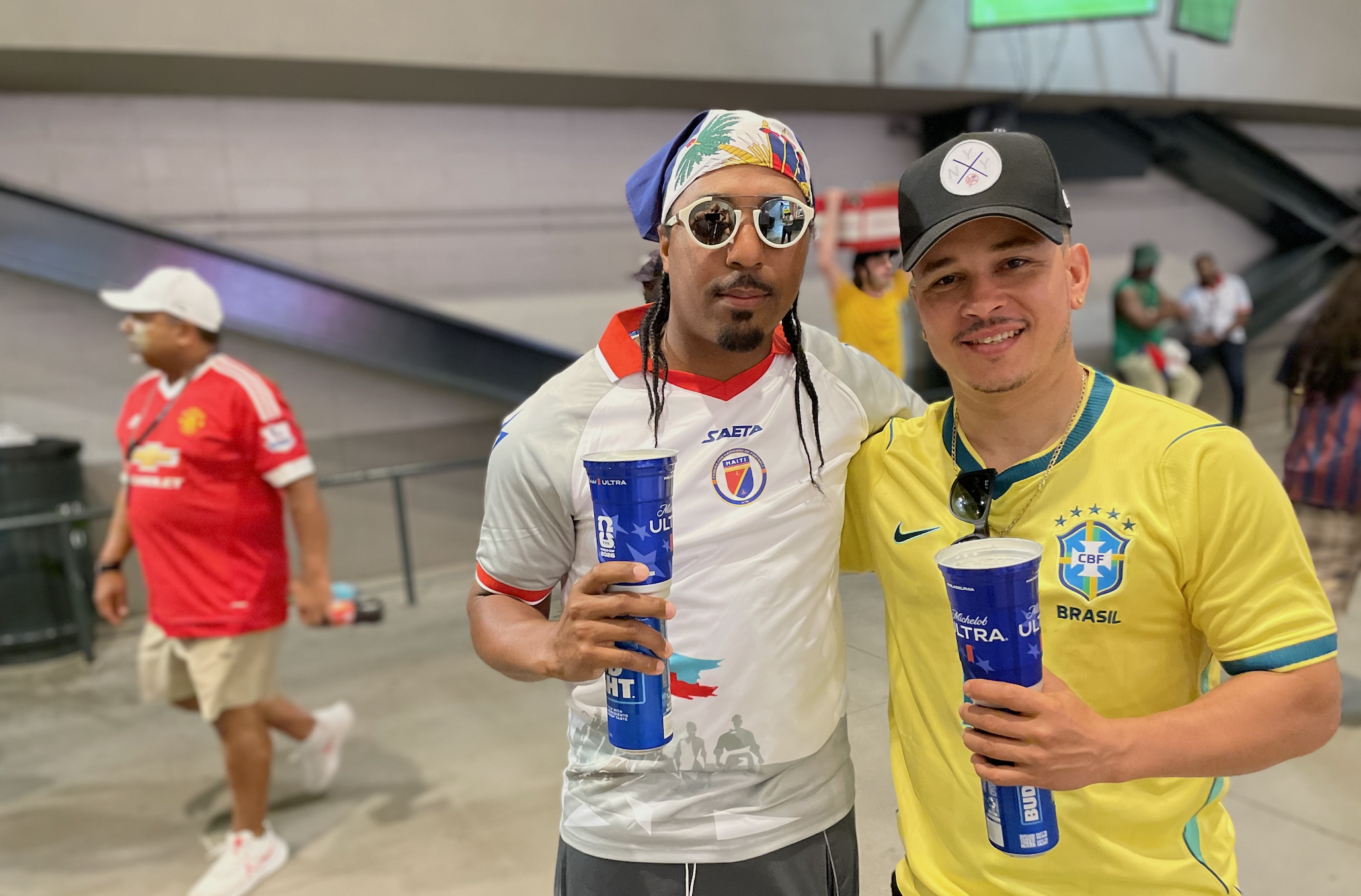
    Lucas Maninhu, 31, who arrived from New York and was draped in Brazil’s jersey, wanted to introduce me to his “new best friend,” a Haitian man who only wanted to go by Greguity. The two met in the parking lot on the day of the Brazil-Haiti match, struck up a conversation, walked into the stadium, and watched most of the game together.

    Brazil fan Lucas Maninhu (right) and Haitian fan Greguity met at the World Cup match in Philly between Brazil and Haiti. Both said they’ve become “best friends” in the process.

    “We met tonight,” Maninhu said. “We are here for different teams, but it doesn’t matter, tonight this is my boy. We’re all here for the same reason.”

    And look, FIFA knows this. It knows the unifying power this tournament has had on the masses since before the end of the Second World War.

    It’s why, despite laying the claim of being “Football for All,” this edition of the World Cup, from a financial perspective, has felt like football for the few.

    But those few continue to sell out arenas, flock to stadium stores to buy World Cup merchandise, and drink $7 purified water. Outside the stadium, games are setting broadcast records, and people are filling the bars and restaurants across North America. There’s money to be made all around.

    Let’s not forget the FIFA Fan Festivals, the official watch party situated in Philly at Lemon Hill. It’s made that neighborhood a noisy one, but it’s a good noise.

    Think about it. At its core, the first 10 days of the World Cup have allowed many Americans to take a sigh of relief, to have something to look forward to, or have on in the background while life is happening in real time.

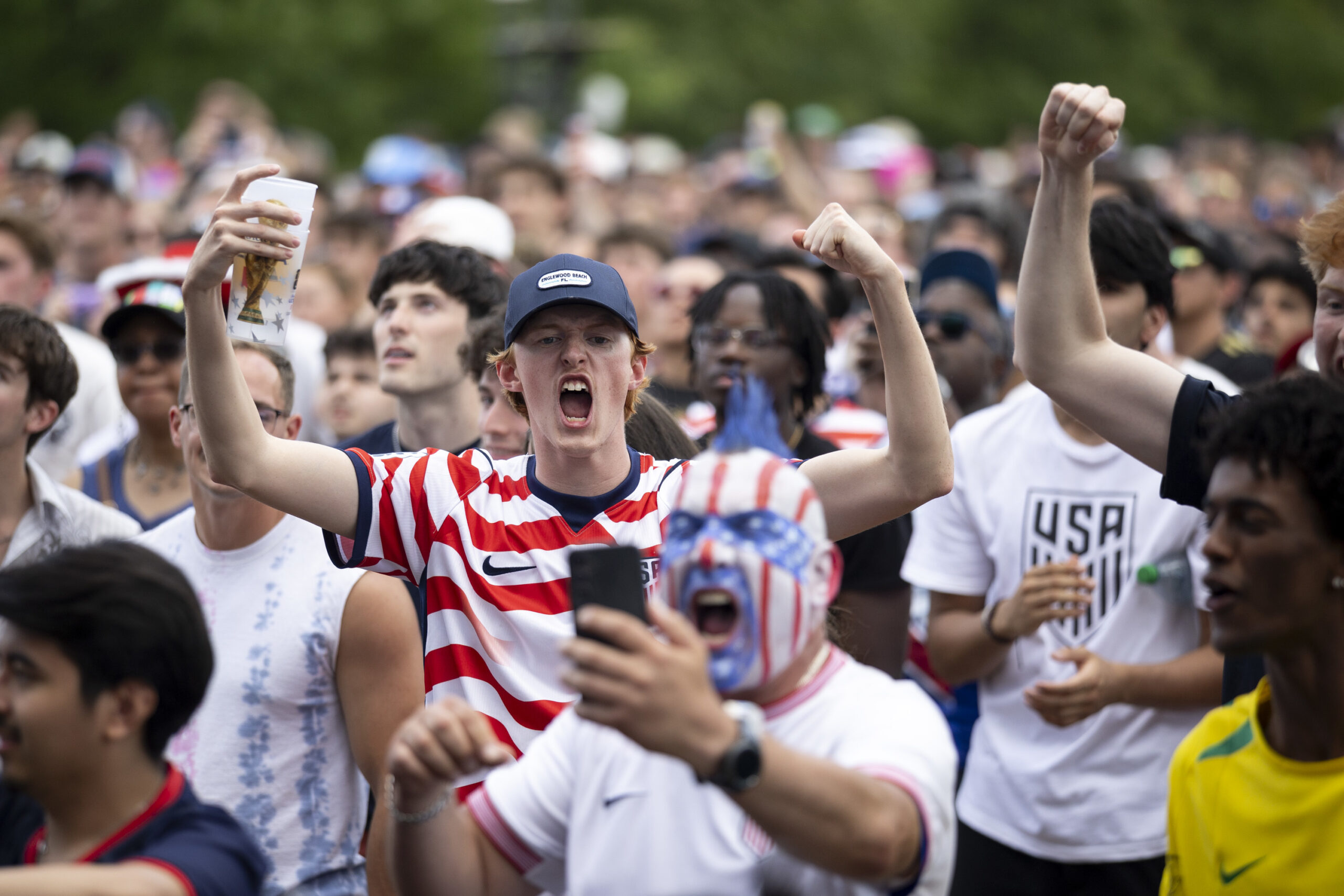
    Cam Gorman, 23, of Gilbertsville, Pa., cheering with Philly Sports Guy Jamie Pagliei (front, center) at the FIFA Fan Festival in Lemon Hill as the U.S. beat Australia on Friday.

    Here at home, you can try to equate the fervor to the Eagles winning it all in 2018, and then again in 2024, but it’s a different vibe, because this isn’t about wins or losses. To many fans, this is about the sheer joy that having the sport in their backyard has delivered.

    It feels like the reprieve America needed, and Philly’s place in all of it has not gone unnoticed.

  • Is Nick Sirianni ‘legendary’? Is Jalen Hurts salty? Is Julian Lurie a worthy heir? Eagles revelations abound.

    Is Nick Sirianni ‘legendary’? Is Jalen Hurts salty? Is Julian Lurie a worthy heir? Eagles revelations abound.

    It’s rare that, in the same week in June, you see three separate stories that pull back the curtain on the most secretive team in town, the Philadelphia Eagles.

    That’s what’s happened over the past few days. They sent NFL junkies into paroxysms of delight. They turned radio waves all atwitter with fresh meat during a typical time of famine.

    The most significant and best done of the three pieces involved a look at Julian Lurie, who will one day ascend to the throne occupied by his father Jeffrey, who has owned the Eagles since 1993. Jeff McLane of The Inquirer gave us our first look at the sensitive 31-year-old who already lends his voice to the team’s biggest decisions, just as a crown prince should do.

    Mike Silver was the most prolific and capable NFL profile writer when Sports Illustrated remained the industry standard 30 years ago, and he has not lost his fastball at the Athletic. Silver joined combustible coach Nick Sirianni at the Eagles’ annual playground construction project and walked away with superb detail regarding Sirianni‘s unlikely interview and subsequent hiring in 2021, all done from the beach, in flip-flops with a white board. But Silver also got an endorsement of Sirianni from superstar running back Saquon Barkley that sparked debate about how valuable and competent Sirianni is compared with his peers.

    Finally, our old friend (and sometimes colleague) Joe Santoliquito, a local freelancer who specializes in in-depth exposés and, apparently, in infuriating Eagles executives. He dropped a brief piece on the Bleeding Green Nation website about the most polarizing figure in the city. The story indicates that starting quarterback Jalen Hurts is upset that the Eagles seem willing to replace him if he struggles to produce better numbers for a third straight season.

    McLane‘s trademark thoroughness left little room for controversy or discussion despite the delicate nature of his subject, but that’s to be expected, since McLane is the best-sourced reporter in town.

    But Barkley’s contention to Silver that Sirianni is “legendary,“ and Santoliquito‘s revelation that Hurts is unhappy … well, those struck a nerve.

    Legendary?

    Only four coaches who have coached at least 60 games, including playoffs, have a better winning percentage than Sirianni. All of them — Guy Chamberlin, Vince Lombardi, John Madden, and George Allen — are in the Pro Football Hall of Fame.

    Sounds pretty legendary, right?

    Barkley thinks so, as he told Silver:

    “He doesn’t get enough credit at all, in my opinion. I don’t get why he doesn’t. Like, what he’s doing, in real time, is legendary.”

    Is it, though?

    A head coach’s primary job is to win games, to reach the playoffs, and to battle for a title. Sirianni has not missed the playoffs in any of his five seasons. He’s reached the Super Bowl twice. He’s won it once.

    Sirianni did all that winning while developing Hurts, a quarterback of limited skills but unlimited ambition — a mirror, in some ways, of Sirianni himself. But that’s a different topic for a different day. He won while handling malcontent receiver A.J. Brown. He won while handling distractions that Sirianni himself created, mainly jeering fans of both his opponents and his own team.

    Which brings us to the crux of the matter. Fairly, or not, the narrative surrounding Sirianni is that the team often wins in spite of its coach.

    He has been heavily involved in the offense three times: 2021, 2023, and 2025. Each time, it foundered. The other two seasons, the Eagles went to the Super Bowl and the offensive coordinators were hired away as head coaches.

    An elite defense and a legendary season from Barkley sent the Eagles to their second Super Bowl. Sirianni has no involvement with the defense, which was run by first-year coordinator Vic Fangio, and Sirianni is considered a pass-first coach.

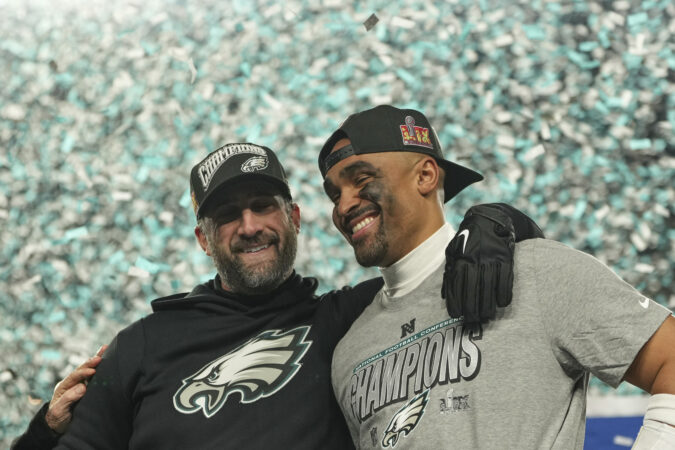
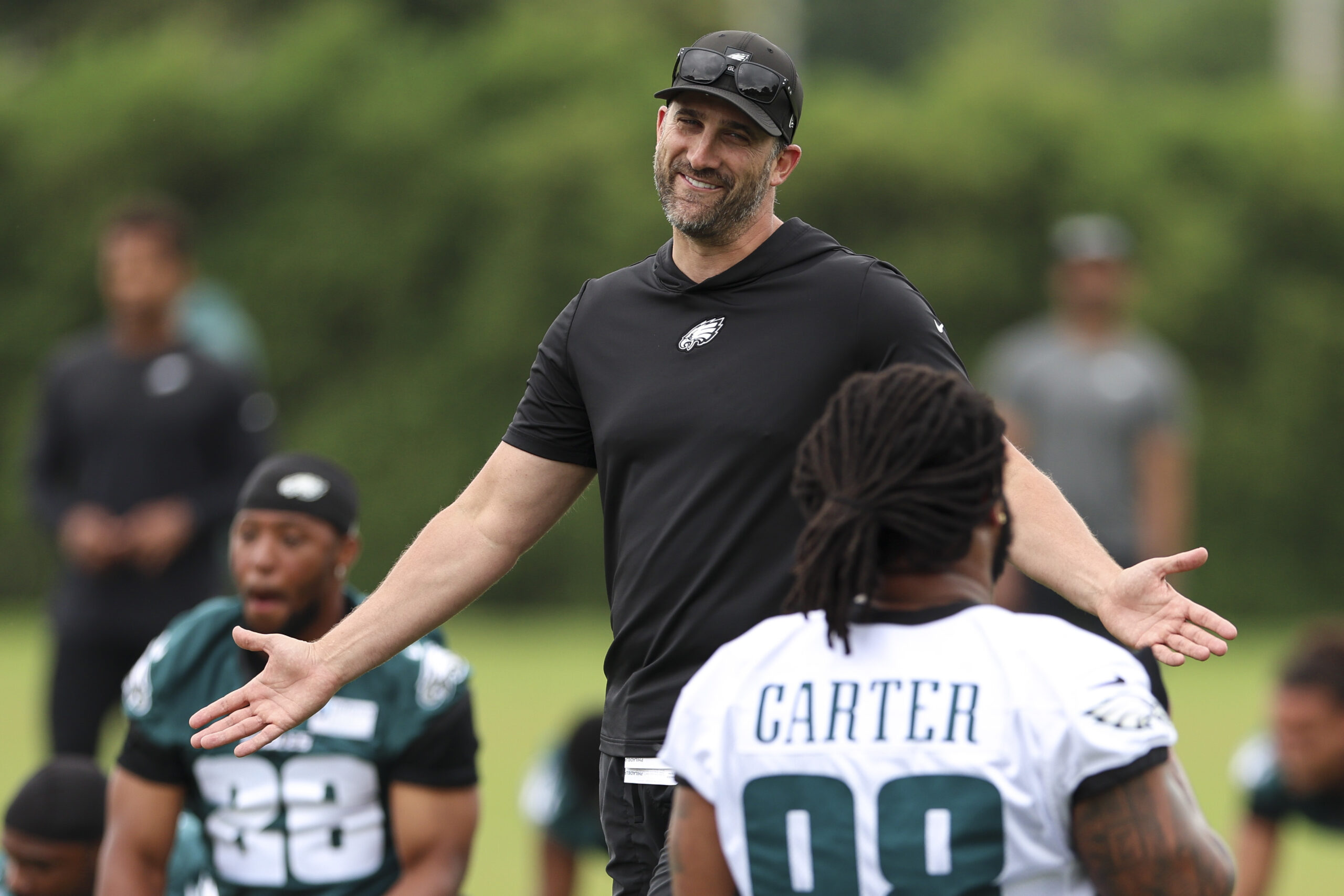
    The Eagles have made the playoffs in each of Nick Sirianni’s five seasons as coach.

    When Sirianni was hired in 2021, he was required to retain Jeff Stoutland, the assistant coach who ran the best overall offensive line in the NFL from 2013-2025. Stoutland, like Fangio, operated with almost complete autonomy, and he was the run-game coordinator to boot.

    Sirianni also took over a talent-heavy team from Doug Pederson, who was fired mainly because Carson Wentz didn’t want him around any more. Sirianni inherited a wealth of mature locker-room leaders with incredible pedigrees: elite tackles Lane Johnson and Jordan Mailata as well as center Jason Kelce; first-round receiver DeVonta Smith; defensive tackle Fletcher Cox; and defensive end Brandon Graham.

    Finally, general manager Howie Roseman has consistently replenished the talent pool — Jalen Carter, Quinyon Mitchell, Cooper DeJean, Jordan Davis, Zach Baun, Landon Dickerson, Cam Jurgens, and Brown — to the degree that it’s fair to wonder if any coach could have failed to win, and win big.

    So now you have a portrait of a coach with a sterling record but without a tangible identity. Nobody questions the character of Vince Lombardi, John Madden, or George Allen, and they all coached for at least a decade.

    It’s hard to call anybody “legendary” five years into a career. Very good? Sure. Excellent? Maybe.

    Legendary?

    Let’s let that one breathe.

    After all, Sirianni has always had stability at quarterback. Is that about to change?

    The 2026 season is shaping up to be a big one for Jalen Hurts.

    Hurt feelings?

    Like McLane, Santoliquito specializes in long-play reporting that coalesces into bombshell stories that cause a sensation. Such was the case in 2019, when his piece just after the disappointing 2018 season included Eagles sources who called Wentz “selfish,” “uncompromising,” and “egotistical,” with crippling insecurities. After the story ran, Santoliquito received death threats, had property vandalized, and was castigated by both the Eagles organization and by Wentz’s camp.

    I ripped him, too, for not giving the Eagles a fairer chance to respond. He admitted his error to me.

    Within weeks, however, Santoliquito’s reporting was largely confirmed … by Wentz himself.

    Unlike the landmark Wentz story, the recent article about Hurts was an opinion piece. The headline read, “Philadelphia better watch itself, or it will lose another superstar,” and Santoliquito wrote, “The fear here is that Philadelphia may be pushing another superstar out of the door.”

    On that: No athlete since Phillies slugger Dick Allen was “pushed out” of Philadelphia by either the fans, the team, or the media. Not future Hall of Fame third baseman Scott Rolen, who was traded after contract negotiations collapsed; not ace Curt Schilling or stud Charles Barkley, who embraced trades after the Phillies and Sixers proved unable to build around them; and not even, as Santoliquito suggested, Wilt Chamberlain, who sought the brighter lights and cooler culture of Los Angeles as the Sixers underwent seismic changes after the 1967-68 season.

    In this instance, Santoliquito, who has long been close to people in Hurts’ camp, relays signals from those contacts that Hurts is displeased that:

    1. The Eagles, who wrote the book on saving money with early contract extensions, have not offered Hurts an extension; and,
    2. The Eagles did not support him well enough when an ESPN story on April 1, citing sources on the team, painted Hurts as stubborn, uncoachable, and reluctant. The fallout from the story created a narrative that these traits have the Eagles considering moving on from Hurts if he struggles with the more complex scheme of new coordinator Sean Mannion.

    Two things.

    First: So what? So what if 2026 is a prove-it year for Hurts? If he plays well, he gets paid. Trust me, he won’t turn down cash. If he doesn’t play well he might get traded.

    Second: The Eagles were irate that, as in 2019, Santoliquito did not come to them for comment in a timely manner (or at all, in this instance). Broadly, that’s a fair point. However, it’s a strange complaint in this instance, since it’s irrelevant whether Eagles players, executives, and coaches actually sufficiently supported Hurts. They did have a few words of support to offer, but it was not overwhelming.

    What’s relevant is that Hurts, or his camp, feels that they didn’t support him enough.

    In Santoliquito’s opinion, that might cost the Eagles the services of Hurts at some point in the future.

  • ‘Two Delco-heads,’ Matt Freese and Auston Trusty, helped the USMNT make World Cup history

    ‘Two Delco-heads,’ Matt Freese and Auston Trusty, helped the USMNT make World Cup history

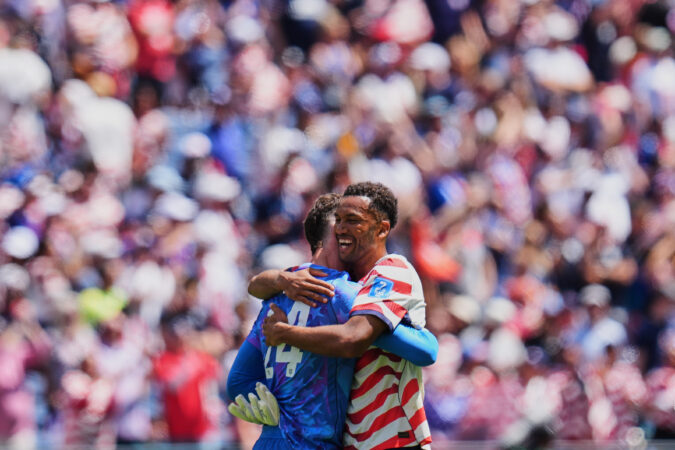
    SEATTLE — At the final whistle of the U.S. men’s soccer team’s 2-0 win over Australia on Friday, Auston Trusty walked over to Matt Freese to offer a big hug.

    They didn’t know that a photographer from the Associated Press was standing nearby to capture the moment. But soon enough, everyone found out.

    Yes, Delco was very much mentioned on the world’s biggest stage.

    “He came over to me and said, ‘Two Delco-heads just had a shutout in the World Cup together. That’s fate,’” the Wayne-born Freese said after his shutout in net. “And I laughed and I said, ‘Yeah, who would have thought?’”

    Perhaps Jim Curtin, or other coaches across the Union ranks who worked with the duo over the years. But not too many people beyond Chester, or Wayne in those days, since that was YSC Academy’s first home.

    “It’s obviously such a cool thing to have known him for so long, and I knew him outside of the soccer world too,” Freese said of Trusty. “We were just friends. So it’s incredible.”

    That wasn’t the only karmic coincidence of the day. Trusty made his World Cup debut in front of not just his wife, daughter, in-laws and cousins, but also two of his first youth soccer coaches with the old Nether United club in Nether Providence, Delaware County: Tor Hotham and John Waraksa.

    Like so many people around American soccer, they circled this day in this soccer-mad city and decided they had to be there. The reward was beyond measure.

    “To have them fly here, not knowing if I’m going to play or not, to come here and be here for this game where I actually make my World Cup debut, it’s just all meant to be,” Trusty said.

    The Media native beamed with pride again when he reflected on finally reaching this moment at age 27, 11 years after going to an under-17 World Cup with Christian Pulisic, Tyler Adams, Alejandro Zendejas, and Haji Wright.

    “When you’re a little kid, dreaming about the stadiums you play in and the atmospheres and everything involved, to play in a home turf World Cup, get minutes, it’s a dream come true,” Trusty said.

    Freese had his family in attendance too, plus his girlfriend’s family, and old friends from high school at Episcopal Academy. He shouted out one of the closest, Michael Hinkley, a soccer teammate back then who went on to play basketball at Dickinson.

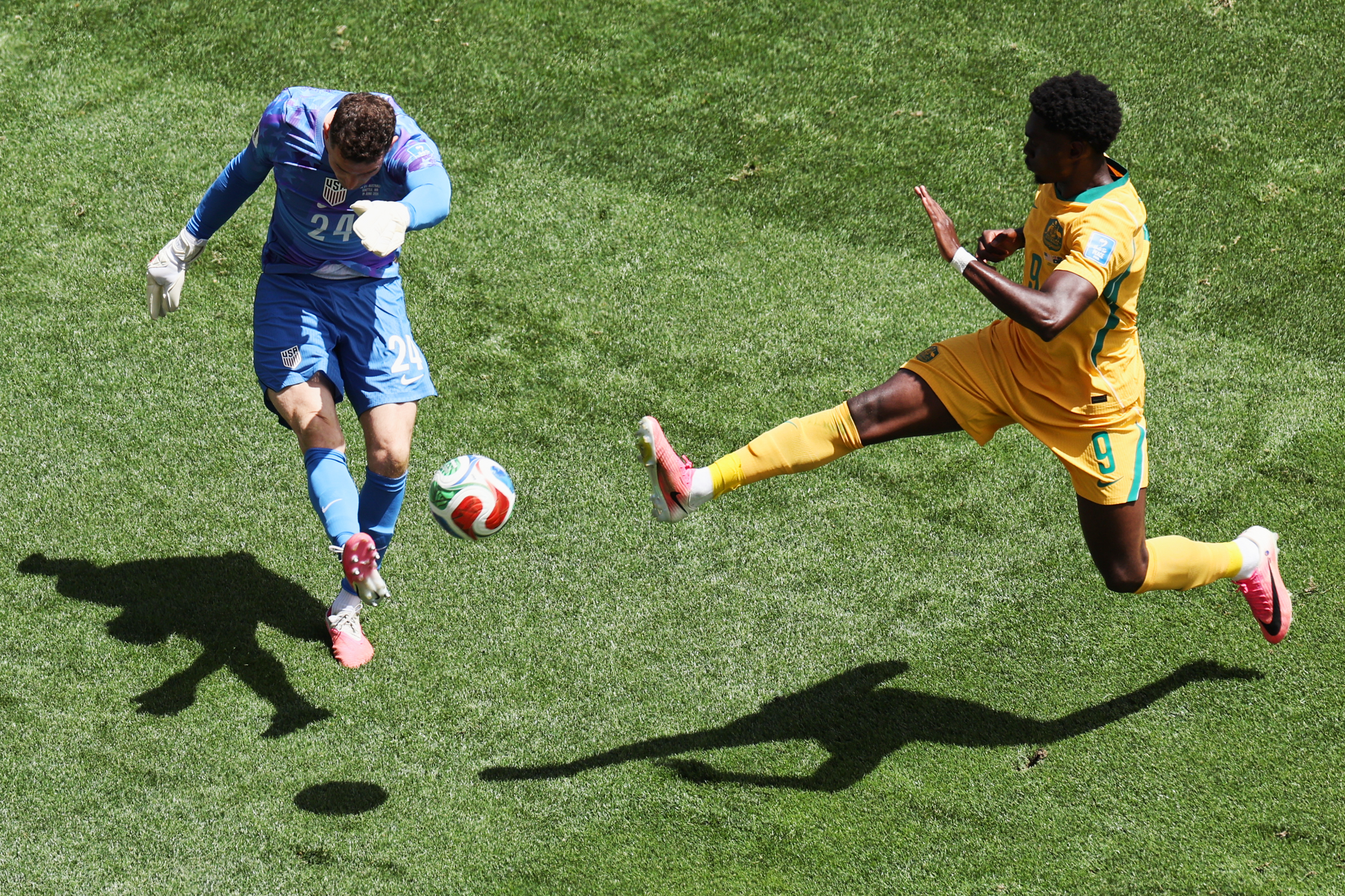
    Matt Freese (left) clearing the ball in front ofAustralia’s Mo Touré during the first half.

    “Obviously incredible support,” Freese said. “It means a lot to play in front of them, and play in front of everyone in this country.”

    That support fueled the U.S. team all day, with the stands full and roaring well before kickoff. Trusty said the atmosphere “gives you chills,” especially when the crowd sang The Star-Spangled Banner over the orchestral rendition on the speakers.

    “The atmosphere is one of those things you dream of,” Freese said. “I’ve heard ‘the 12th man’ is what they call the crowd here. It was definitely a 12th man for us — I think it was a 12th, 13th, 14th, 15th man for us today.”

    But things were getting dicey when Trusty and Joe Scally entered the game in the 80th minute as defensive reinforcements. Australia was gaining momentum even though it hadn’t scored, and an already physical game was getting even more fractious.

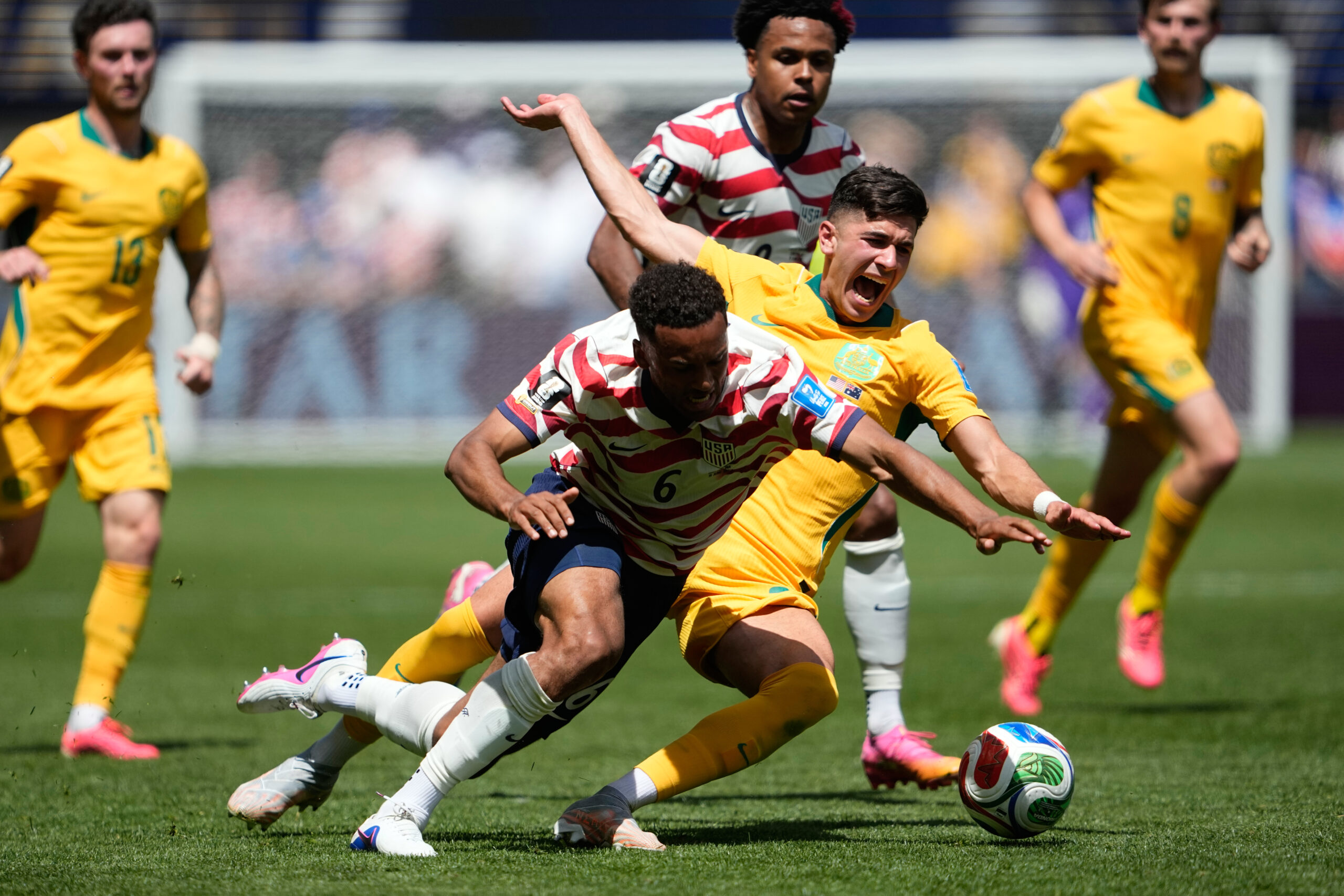
    Auston Trusty (left) tussling with Australia’s Cristian Volpato.

    It got especially chippy in the last few minutes, but those two and the rest of the Americans kept their heads and finished the job. They did so at both ends, ensuring Australia didn’t score while also keeping a foot on the gas pedal in attack.

    “Just keep the pressure up,” Trusty said. “They weren’t really pressing too much, they kind of had like a halfway-block [formation], and obviously in a back five [defensively], they want pressure on them. So just continue the press that we had and the movement we had, and really just keep momentum.”

    Mission accomplished on all counts. Not only did the U.S. men qualify for the knockout rounds before the group stage finale against Turkey, but the program has two wins in one World Cup group stage for the first time since the inaugural tournament in 1930. And thanks to Turkey’s loss at the end of the night, the U.S. clinched first place with a game to spare.

    “We came into the tournament wanting to make a statement,” Freese said. “The first part of that’s done, but, you know, there’s a lot more statements we want to make.”

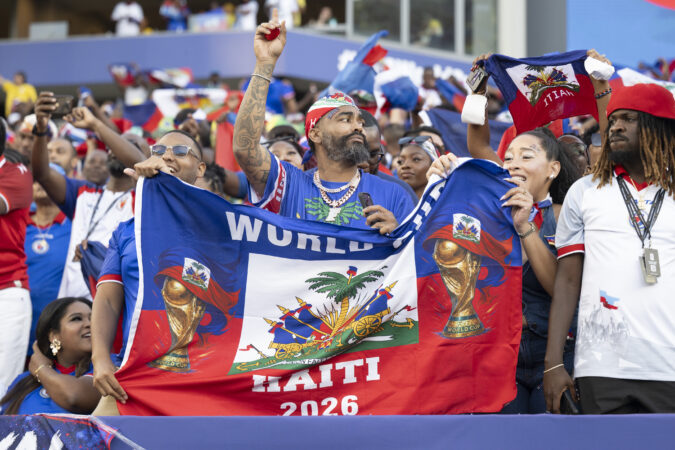
  • For Haiti, a lopsided World Cup loss to Brazil didn’t matter much. Just being here meant everything.

    For Haiti, a lopsided World Cup loss to Brazil didn’t matter much. Just being here meant everything.

    Luc Cherisson did not have to come as far and live as long and hard as so many who have been waiting to watch Haiti in the World Cup again. But he had his own way to make. The general manager of a rental-car business in Atlanta, an immigrant who left his homeland for America when he was just 20, Cherisson is 36 now, with a friendly face and an amiable disposition that suggest he is always happy to assist his customers with their SUV reservations. He flew into Philadelphia International Airport on Friday morning for his home country’s World Cup match against Brazil, and he would fly back to Atlanta on Saturday morning, a little hungover if a slight miracle materialized at Lincoln Financial Field.

    “Even if we lose, it’s still a win for me,” he said a few hours before the match, as he lingered in a parking lot outside Xfinity Mobile Arena. “And if Haiti wins, it will be a party all night.”

    There was no miracle. There was only an easy 3-0 victory for Brazil, though Cherisson and the thousands of Haitian natives and fans who attended the match may yet have caroused deep into the Philadelphia night, just for the sake of their home country’s presence here. This is Haiti’s first appearance in the World Cup since its only other one, in 1974. For Cherisson and those like him, for a nation long riven with poverty and corruption and violence, where roving gangs control the capital city of Port-au-Prince and practically govern the country, there is honor and glory merely in earning the right to be here.

    “It’s amazing,” Cherisson said. “It’s the biggest sporting event in the world. Just being part of the World Cup is fantastic.”

    It might sound silly and Pollyannish to regard just competing at the highest level and grandest stage of the world’s most popular sport as worthy of such pride. How much of FIFA’s multibillion-dollar budget goes toward orange slices and participation trophies? But one has to have just an inkling of the hold that soccer has in Haitian society to appreciate why Cherisson would pay a small fortune to travel to Boston to see Haiti’s 1-0 loss to Scotland last Saturday, to make that 24-hour trip into town for Friday night’s game, and to secure tickets for Haiti’s match against Morocco in Atlanta next Wednesday. Why no one at the Linc much cares that Haiti has now been outscored 18-2 in the five World Cup matches in its history. Why this all matters so much.

    The author Madison Smartt Bell, for instance, who in 2014 completed a trilogy of rich and gorgeously written historical novels about Toussaint Louverture and the Haitian Revolution, still owns a patch of land in the northern part of the country, not far from the forests where the revolution was conceived in 1791. One day, Bell saw several children scurrying around on rough, spiny ground, playing soccer not with a ball or even an empty can of condensed milk, but with a rock.

    On his next visit to Haiti, he brought them a regulation soccer ball. The children were ecstatic, but after 10 minutes, they paused their game for a moment. Something sharp had punctured and deflated the ball. So they went back to kicking and passing and shooting the stone.

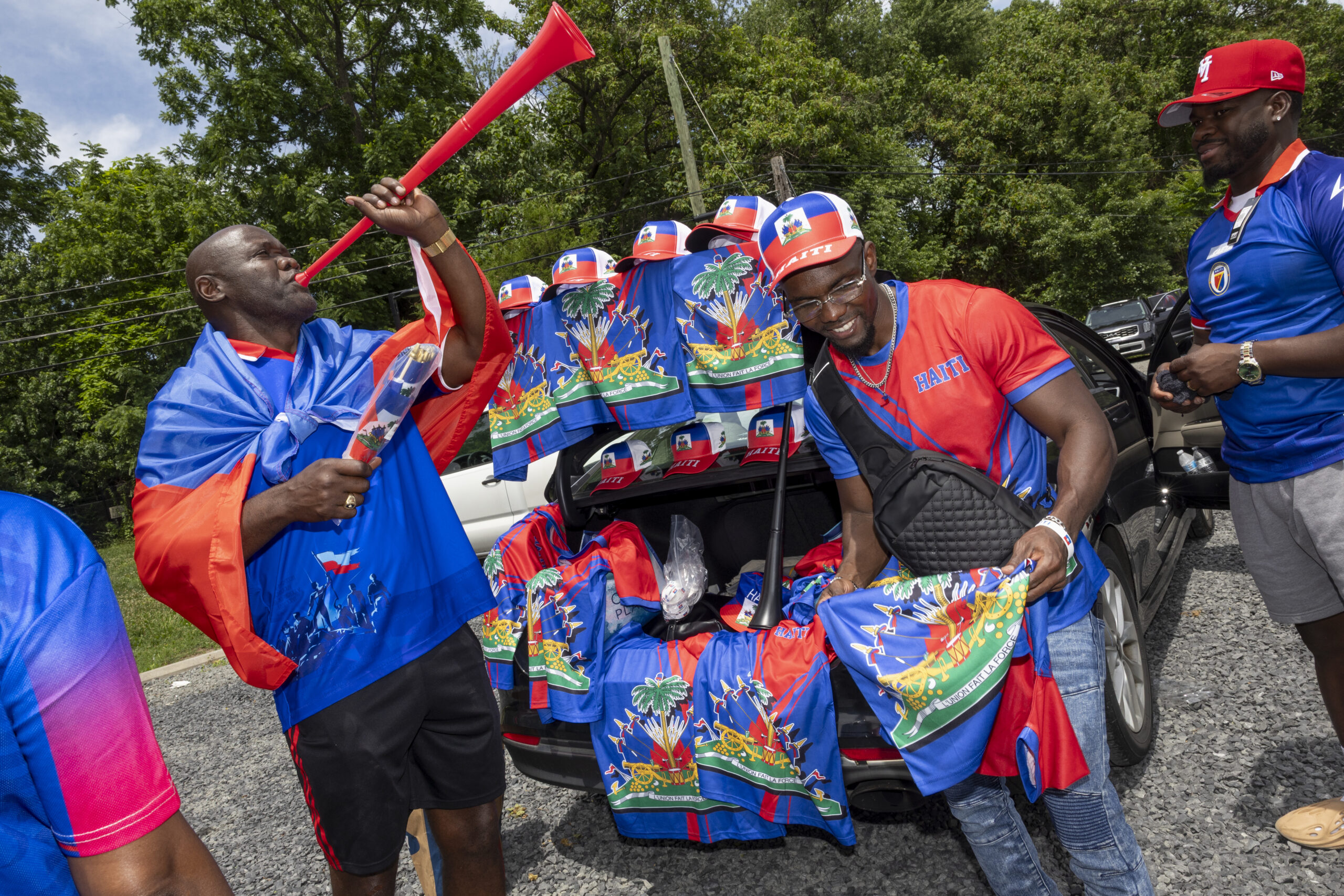
    A Haiti soccer fan blows a plastic horn outside of the Discovery Center in Philadelphia earlier on Friday.

    “I think that gives you some idea,” Bell said in an email, “of the importance of soccer in Haitian culture.”

    If that doesn’t, this might: Before Haiti’s first match in the ‘74 World Cup, against Italy, “extraordinary legends spread all throughout the country,” said Terry Rey, a Temple University professor of Latin American studies who has written extensively about Haiti and even lived there for six years in the 1990s. Customarily, because their national team had not qualified for the World Cup yet, Haitians divided their loyalties when the event commenced every four years. The poor rooted for Brazil, the elites for Argentina.

    But now Haiti, at last, was part of the spectacle. So peasants somehow found the funds to buy transistor radios and batteries so they could listen to the match. People painted and decorated tap taps, the vans and pickup trucks that are used as taxis in the country, with renditions of the team’s players. And when Haitian star Emmanuel Sanon scored the game’s first goal, “people will tell you there wasn’t a place in the entire nation where you didn’t hear someone screaming,” Rey said. Italy won the match, 3-1.

    Are these unfavorable final scores irrelevant to the Haitian people? No. It’s just that the sport itself carries so much meaning there, offers so cleansing a respite from all that ails the country. The 1994 World Cup began in July with Haiti trapped amid a period of tumult and persecution, its people under the thumb of a junta regime run by Raoul Cédras, the former head of Haiti’s military, who had taken power in a coup three years earlier. From January to June that year, there was no electricity available anywhere. Then, just in time for the World Cup, the lights went on. There was electricity, and there was cable TV. Cédras had bought the rights to broadcast the tournament, and the opportunity to watch it would quell any widespread desire for a revolt against the regime.

    “Haitians love soccer,” Rey said. “It’s just powerful.”

    They loved it Friday night, despite the lopsided outcome, despite another loss for a nation waiting for a win that would mean everything. Late into the match, late into the night, having traveled so far and still waiting so long, they were chanting and singing in the parking lots and stomping their feet in the stands and standing to cheer, happy to have reason to be proud. Funny. In a city where there is a long and treasured tradition of telling outsiders and interlopers to go kick rocks, this celebration was still joyous enough.

  • Mayor Cherelle L. Parker shops for kits, American fans cheer on USMNT, and other highlights from FIFA Fan Festival

    Mayor Cherelle L. Parker shops for kits, American fans cheer on USMNT, and other highlights from FIFA Fan Festival

    The United States’ dream start to the FIFA World Cup continued with a 2-0 win over Australia in Seattle that secured the Americans’ place in the knockout round.

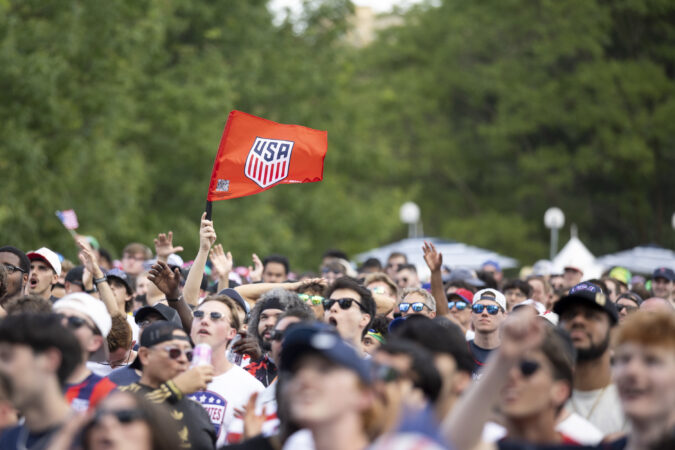
    Fans in Philadelphia packed the FIFA Fan Festival in Lemon Hill on Friday to take in the match.

    The crowd on hand for U.S.-Australia, the first World Cup match of the day on Friday, was in favor of the Stars and Stripes, but Haitian and Brazilian fans took in the spectacle before their squads’ scheduled meeting at Philadelphia Stadium (8:30 p.m., Fox29).

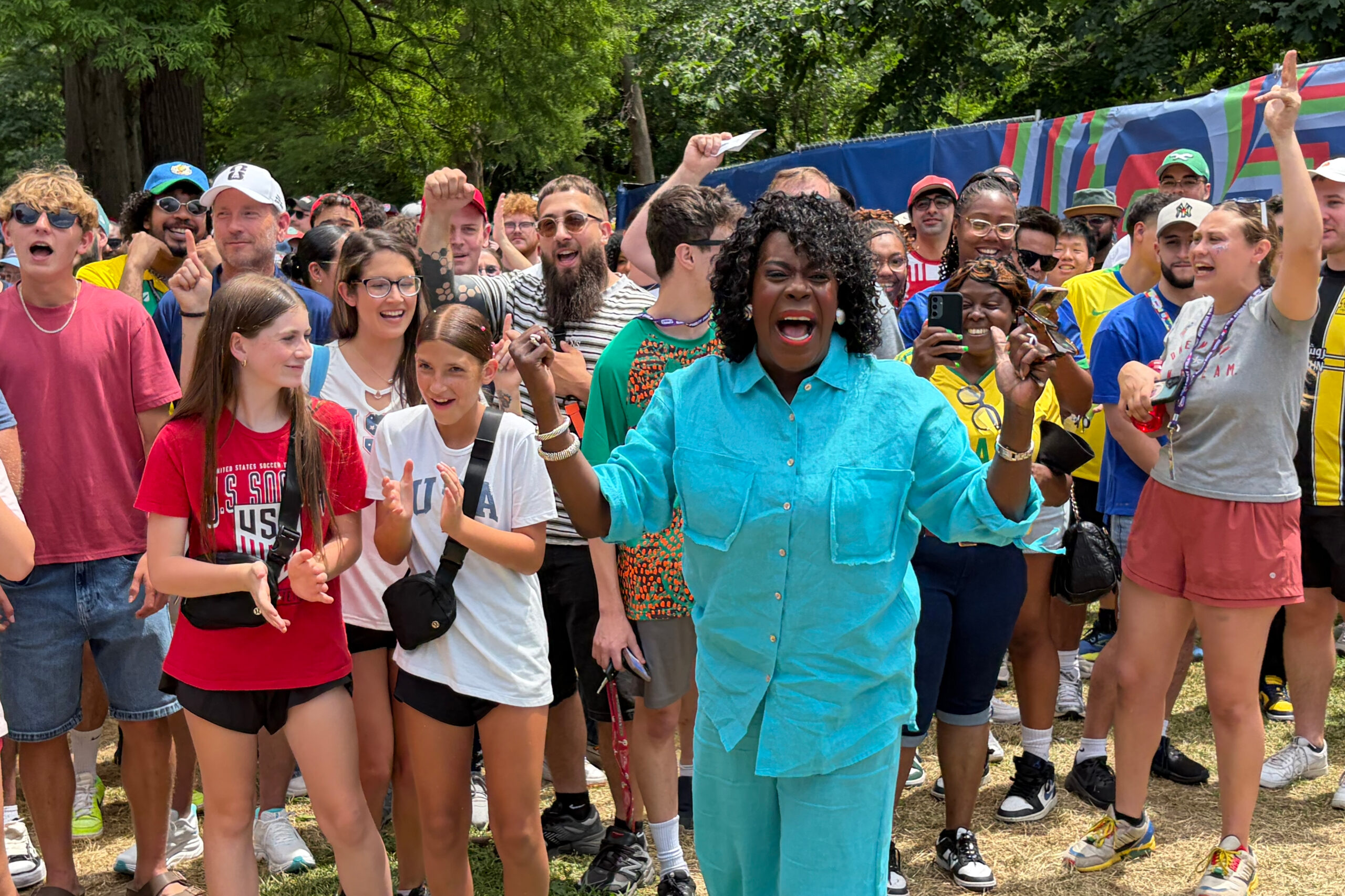
    Mayor Parker visits Fan Festival

    Mayor Cherelle L. Parker helped open the gates of the fan festival before the USMNT’s clash with Australia.

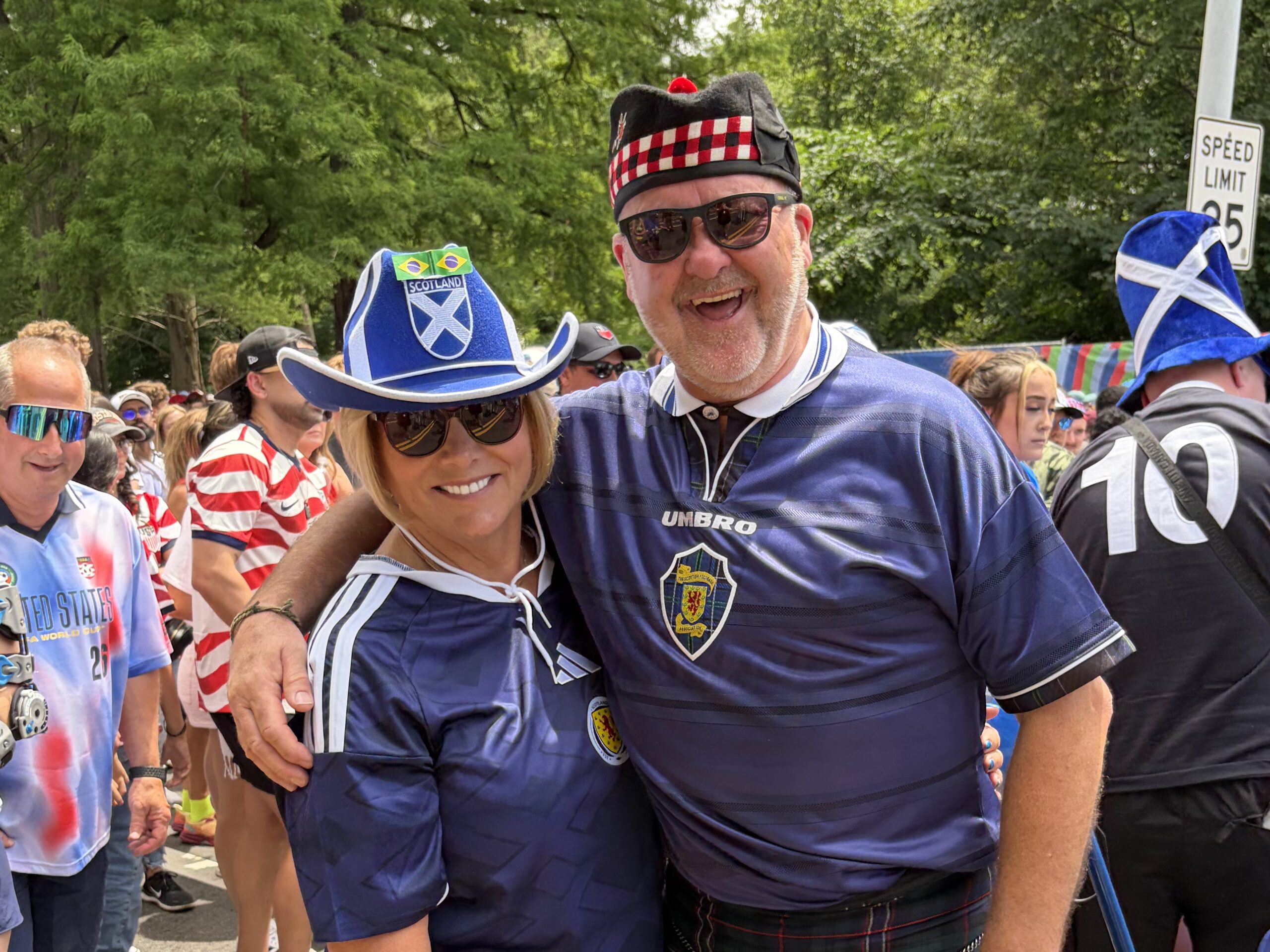
    Parker walked into the crowd waiting at the festival’s main gate and posed for photos with fans waiting in line, including one with a group of traveling Scottish supporters.

    Parker said she was appreciative that fans are showing up to the city and the festival “authentically, as themselves.”

    “We are a global culture, and we are one people,” Parker said. “What makes America and the world so amazing, is that all of us, no matter the fabric, no matter the patchwork in our quilt, we make up a global humanity, and an American community that’s representative of everyone. I’m excited about it all.”

    Philadelphia Mayor Cherelle L. Parker at the opening of the FIFA Fan Festival.

    After greeting fans waiting to get into the festival on Sedgley Drive, Parker greeted a few vendors inside the festival. She stopped at the Bank of America tent to make a bracelet — she chose a black band with all the Philly-specific charms and a World Cup trophy charm — then stopped into the FIFA store on the festival grounds.

    With the help of a few store associates, Parker picked out some kits and World Cup merchandise, including both Brazil jerseys, a sea foam France away jersey, a yellow Curaçao jersey, two World Cup logo shirts, and a stripes U.S. jersey.

    Parker said she’s enjoyed seeing soccer fans out and about in the city.

    “We were on the parkway, and Brazil was turning it out and up,” Parker said. “Everywhere we’ve been, they’re like, ‘Philadelphia is beautiful, the experience is great.’ You can be a visitor one time, but they’ll feel Philadelphia.

    “You have to feel the energy here. We are not like any other city in the nation. There is something special about Philadelphia, and being able to share that Philly-ness with the world is something really exciting.”

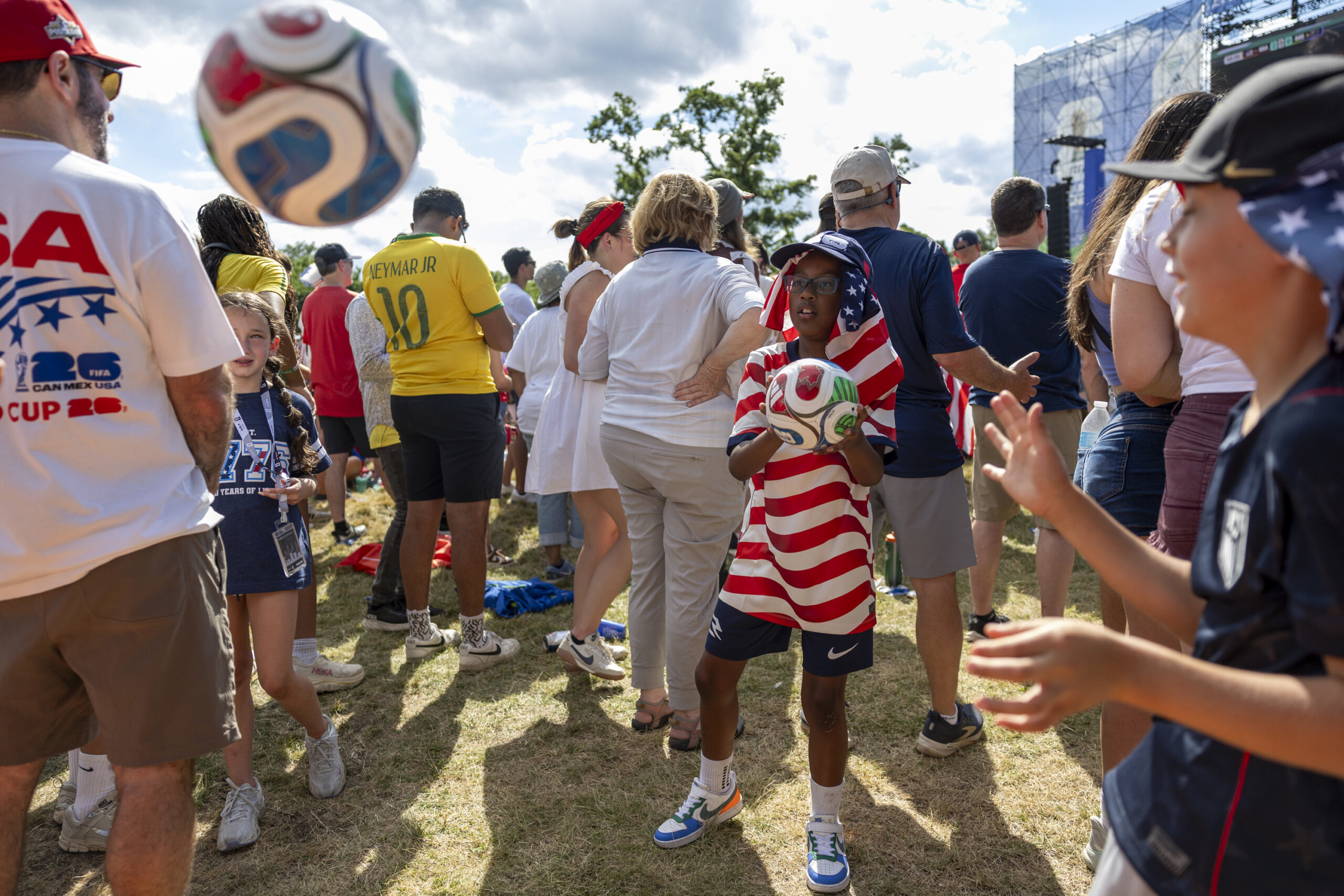
    Moses Bango, 8, (center), playing with his friends Rudy Townsend, 8, (right), and Quinn Medaglia, 9, (left), at the FIFA Fan Festival at Lemon Hill Park on Friday.

    Early arrivals

    A line to enter the festival had already formed an hour before it opened to spectators at 2 p.m.

    Friday was the first time a U.S. match coincided with a match being played in Philadelphia, making the fan festival a watch party for American fans and a prematch hangout for Brazilian and Haitian fans.

    The festival is free to the public with registration, but only 15,000 people can be on the festival grounds at once.

    The festival did not reach full capacity during the U.S. match, but it got close. Festival organizers said attendance peaked at 14,000.

    According to the festival, more than 100,000 people entered its grounds in its first three days of operation.

    Gus Sanchez, who stood near the front of the line on Friday afternoon, said he and his family arrived around noon after biking over from Northeast Philly.

    Sanchez said he wanted to watch the U.S. men’s team take on Australia with a crowd, leading him to come over to the festival.

    “It’s something I can’t explain,” Sanchez, 53, said. “Seeing people from different countries getting together, having fun, enjoying the game.”

    Most of the fans waiting to enter the festival were wearing U.S. garb, but fans of Haiti, Brazil, and even Scotland, which kicked off with Morocco at 6 p.m., were represented.

    Alex Nelson said he traveled from Prestwick, Scotland, about 30 miles south of Glasgow, to the U.S. to experience the environment of the World Cup.

    He arrived in Philadelphia from Boston, where the Scots played Haiti last Saturday, to take in Scotland-Morocco at the fan festival on Friday.

    Nelson, sporting a tartan kilt, said he’s loved his time in Philly so far.

    “Very clean city,” Nelson said. “Everybody has been so helpful. Everybody’s mixed in — the Brazilians, the Moroccans, USA, all mixed. That’s what it’s all about.”

    Alex Nelson poses with his wife before entering the FIFA Fan Festival on Friday afternoon.

    Match moments

    The lively crowd had plenty to celebrate, as the U.S. went up, 1-0, after Cameron Burgess knocked in an Australian own goal in the 11th minute.

    The crowd erupted as the States took the lead, with chants of “U-S-A” following a frenetic celebration.

    The crowd at the Fan Festival goes wild as the U.S. goes up, 1-0, on an Australian own goal.

    [image or embed]

    — Owen Hewitt (@oyounothing.bsky.social) June 19, 2026 at 3:14 PM

    American fans celebrated again as Alex Freeman doubled the States’ lead with a goal in the 43rd minute.

    Their celebration was placed on a temporary hold, as the goal was called offside on the field and disallowed, but after a Video Assistant Referee check confirmed Freeman’s goal counted, the crowd got another opportunity to cheer.

    Double celebration for Alex Freeman’s goal to put the U.S. up 2-0 before the half — once before the VAR, and once after

    [image or embed]

    — Owen Hewitt (@oyounothing.bsky.social) June 19, 2026 at 3:48 PM

    Fans looked on nervously as Australia angled to get back into the match in its final 20 minutes, and they shouted when the game got chippy in its closing moments.

    The U.S. is through to the knockouts, and the crowd at the Fan Festival is loving it:

    [image or embed]

    — Owen Hewitt (@oyounothing.bsky.social) June 19, 2026 at 5:23 PM

    The crowd celebrated as the full-time whistle blew, marking a 2-0 victory for the Americans.