Category: Sports

Sports news, scores, and analysis

  • World Cup exposes growing global rift over prediction markets

    World Cup exposes growing global rift over prediction markets

    This year’s World Cup is the first since prediction markets such as Kalshi and Polymarket exploded to popularity as a new way to bet on sports.

    Fans in the U.S. are free to collectively wager billions of dollars on the tournament, but a growing number of other countries are making it harder to access the platforms offering those bets. Whether fans can bet on how many goals Kylian Mbappé scores for France or who wins the tournament may depend on where they live. In some cases, fans may not be able to bet at all.

    In just the last few weeks, Spain, Indonesia, and India have joined the growing list of countries — including most of the European Union and large parts of Asia — that have put in place temporary or permanent measures to cut off access to the Kalshi and Polymarket websites and apps.

    Brazil shut down 27 prediction platforms in April, including Kalshi, whose co-founder, Luana Lopes Lara, is Brazilian, leaving the company scrambling shortly after it launched in the country.

    Regulators have intensified their scrutiny of prediction markets as the companies have expanded rapidly around the world, offering a new kind of financial contract that straddles the line between gambling and financial speculation.

    Some countries view the new types of financial contracts offered by the prediction markets as a form of gambling and subject them to betting laws. Others argue that they should fall under securities or derivatives rules. The start-ups have used the legal uncertainty around their new products to offer them to customers even as regulators struggle to catch up.

    “Prediction markets are entering the same phase every novel financial primitive eventually enters: first hobbyist market, then mass attraction, then legitimacy fights,” said Dovey Wan, founding partner of Primitive Ventures, a backer of prediction market platform Opinion Labs. “The recent bans mean the category has become important enough to regulate.”

    Prediction market operators argue their platforms provide valuable information by aggregating collective forecasts on everything from economic indicators to geopolitical events. Critics counter that the contracts can encourage excessive speculation, and also open new opportunities for insider trading, alongside the ethical issues created by making it possible to bet on the war and other matters of life and death.

    “Betting isn’t new,” said Chris Holland, partner at Singaporean consulting firm HM Strategy. “What’s new is the structure.” Because prediction market contracts are typically classified as derivatives, they fall outside gambling licensing frameworks, he added. “That gap is an open invitation to insiders.”

    Though Kalshi and Polymarket are by far the largest prediction companies, many more are expanding globally, including Opinion Labs, which is backed by Binance cofounder Changpeng Zhao’s family office YZi Labs, and Coinbase Ventures-backed Limitless.

    A number of exchanges have cut marketing deals with soccer leagues and teams ahead of the World Cup to increase their visibility around the tournament.

    The markets are big business, and growing. On Monday, Piper Sandl analyst Patrick Moley wrote that the World Cup was “like the Super Bowl every day,” and was driving record daily volumes on Kalshi.

    Polymarket recorded around $2.8 billion in notional trading volume across its international and U.S. exchanges in the first week of June, according to user-compiled data on Dune Analytics, up from $2.1 billion a week earlier. Kalshi reported about $4.5 billion over the same period, up from $4.2 billion.

    Creating a regulatory framework that restricts the sites is proving a challenge for country-specific regulators. The companies have been rapidly expanding around the world, unlike traditional gambling companies that are generally restricted to a specific jurisdiction. The use of virtual private-networks and cryptocurrencies make it easier to operate without going through local financial firms and regulators, and makes it difficult to completely shut the platforms down.

    India’s government said users were able to access “illegal and blocked” prediction markets and said “Polymarket and a few other similar sites” were enabling the use of virtual private networks to circumvent the national ban, The government asked internet providers to cut off access to the platforms.

    Polymarket and Kalshi’s terms of service already prohibit people from signing up in certain countries, including many that have recently taken steps to crack down on the sites. They’ve also strengthened safeguards against insider trading and market manipulation as prediction markets face growing scrutiny.

    Polymarket is partnering with blockchain analytics firm Chainalysis Inc. to help police its platform related to suspicious trades.

    “We welcome the opportunity to collaborate with Spain, Brazil, and other countries on a path forward that supports responsible innovation, transparency, and user protection in prediction markets,” a Polymarket spokesperson said in an email. The firm monitors for insider trading and other illegal activity, consistent with other markets, the spokesperson added.

    Opinion Labs has restricted access for users from various jurisdictions and blocked any sanctioned addresses, said Alex Chan, chief investment officer, in an emailed response. “We are working closely with a number of local authorities toward launching compliant local platforms.”

    Kalshi and Limitless didn’t respond to email seeking comments.

    For now, prediction markets remain legal in a patchwork of jurisdictions, but the direction of travel is becoming clearer: Governments are increasingly unwilling to let platforms operate in a regulatory gray zone.

    Emily Nicolle, Sidhartha Shukla, Alice French, Yian Lee, Betty Hou, Lulu Yilun Chen, and Amanda Wang contributed to this article.
  • Mauricio Pochettino keeps Christian Pulisic’s status a mystery ahead of USMNT-Australia

    Mauricio Pochettino keeps Christian Pulisic’s status a mystery ahead of USMNT-Australia

    SEATTLE — There was no surprise news about Christian Pulisic from U.S. men’s soccer team manager Mauricio Pochettino in his news conference before Friday’s game against Australia (3 p.m., Fox29, Telemundo 62). Pochettino did not rule the star playmaker in or out, and that was not surprising.

    “As you know, he was training in an individual way the whole week,” Pochettino said. “But like always, I think tonight, the day before the game, we have a meeting with our medical area, and we will assess the whole group, the players, and tomorrow we will communicate all the things that we can agree tonight.”

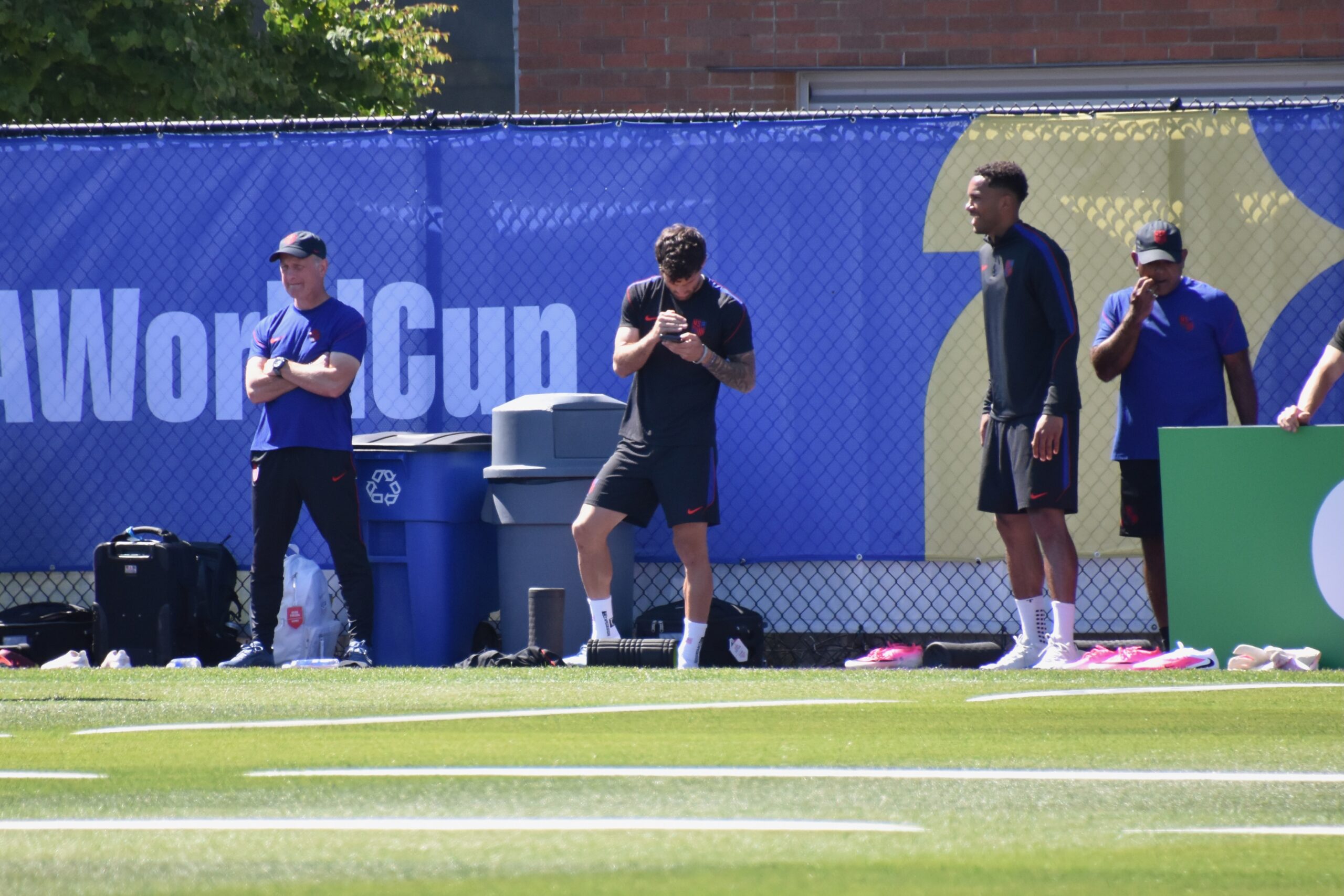
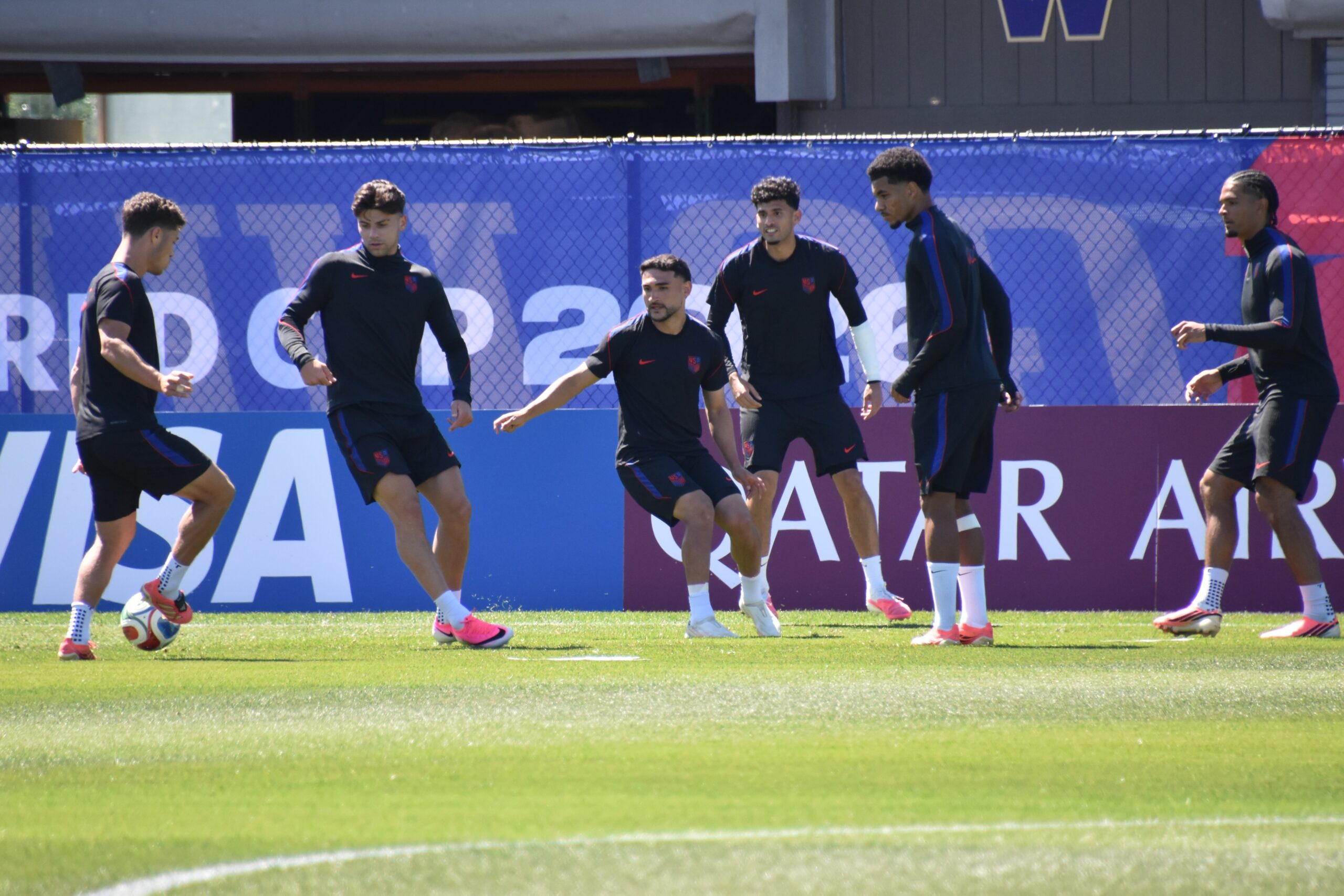
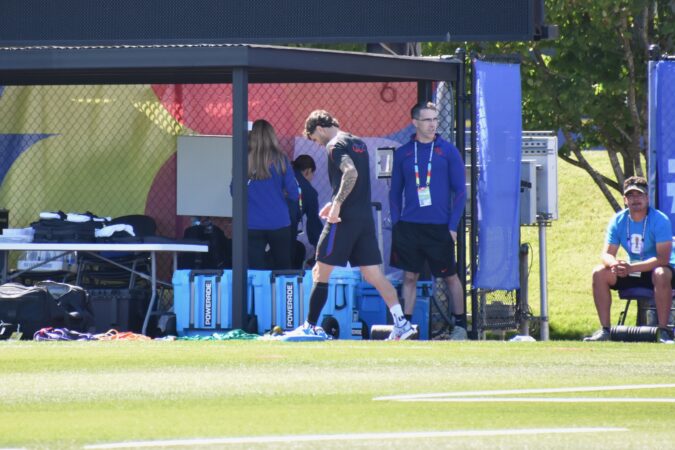
    Pulisic was seen briefly at the start of Thursday’s practice, then headed off to work on his own. When he arrived, he wasn’t wearing the sleeve over his injured left calf that he sported on Wednesday. But after a few minutes, he sat down on a bench by the sideline and put it on.

    “He is evolving, he is much better from [last] Friday,” Pochettino said. “I think at the moment we’ll see. … He’s doing a massive effort trying to be ready.”

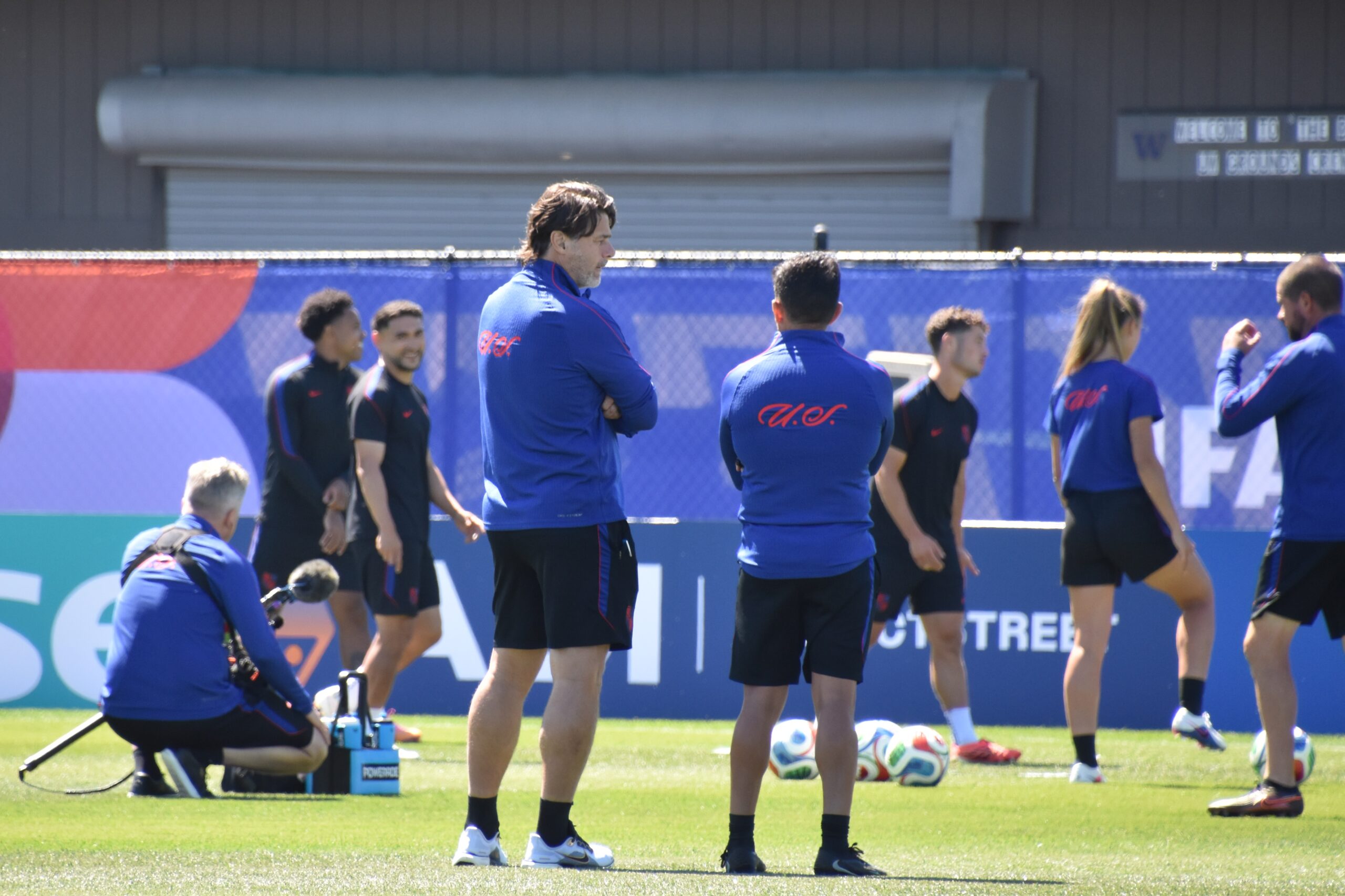
    Mauricio Pochettino (left) and his top assistant Jesús Pérez at Thursday’s practice.

    The manager also praised Pulisic for being “strong and with a great mentality” as the Hershey native works to be ready for kickoff.

    Asked who might play if Pulisic can’t go, Pochettino didn’t answer. This was no surprise either.

    “I will tell tomorrow if that is the situation,” he said. “At the moment, we are evaluating all the possibilities just in case, and then we will decide when we have the confirmation in one or another direction tonight.”

    What is no secret is that when these teams met in a friendly in suburban Denver in October, it was far from friendly on the field. Australia played a physical game, with a focus on Pulisic that forced him off the field injured in the 31st minute.

    When Christian Pulisic (center) first appeared Thursday, he wasn’t wearing the sleeve over his injured calf that he wore Wednesday. He put it on later.

    All of the U.S. players are ready for round two, and so is the manager.

    “I think we need to play on the edge of the line, not crossing the lines of the rules,” Pochettino said. “I think we are going to try, all, to be very close to this thin line. That allows us to take some advantage [with] the rules.”

    Later in the day, Australia manager Tony Popovic was asked if he expects this game to be similar to the last. He didn’t answer directly.

    “Since then we feel we’ve improved,” he said. “We’re a better team now than what we were in October and I’m sure the U.S. is as well.”

    Popovic also was asked if he expects Pulisic to play.

    “I’m sure he’ll play if he’s fit — he’s one of their best players, an outstanding footballer,” Popovic said. “We expect Christian to definitely play if he’s available, and if he’s not, we’ve looked at some of the players that have played when he hasn’t been there.”

    A soft spot for Argentina and Messi

    Pochettino grew up in Argentina, played 20 times for his country (including at the 2002 World Cup), and like many Argentines is fiercely proud of his roots. So of course he was thrilled to see the Albiceleste start its World Cup campaign by routing Algeria, 3-0, with a hat trick from Lionel Messi — whom Pochettino coached at Paris Saint-Germain in the 2021-22 season.

    “I am Argentino, and I really enjoyed the performance,” Pochettino said, quickly adding “but I’m going to give my life for the USA.”

    He didn’t have to worry about offending anyone this time.

    “I think it’s difficult to describe Messi,” Pochettino said. “Six World Cups, all that he achieved in his career in different clubs [in] collective and individual ways — woof. Is he the best? For sure, yes.”

    (Not that he was ever going to answer with Brazil’s Pelé, Argentina’s foil for decades; or Portugal’s Cristiano Ronaldo, Messi’s modern foil.)

    “Argentina is an amazing team,” Pochettino said of the reigning champions, noting his friendship with their manager Lionel Scaloni and some of his staff. “Lionel is, for me, the best coach today in this World Cup. … The fans — amazing.”

    The packed crowd of Argentina fans in Kansas City on Tuesday.

    He paused there to make a gesture showing the importance of Argentina’s legendary fan base, that has filled stadiums to the brim for decades. Kansas City’s Arrowhead Stadium was the latest to see the show, as a full house roared into the night.

    “And then the cherry [on top]? Messi,” Pochettino concluded.

    Big man on campus

    This isn’t Pochettino’s first trip to Seattle. In 2014, his first game with England’s Tottenham Hotspur was a friendly against the Sounders at the same stadium he’ll work Friday.

    “I saw the ambience and the atmosphere and the people, and I hear that they are very passionate people here,” he said. “I’m looking forward [to] tomorrow, to share all together a great night, I hope with a good result and good performance.”

    The vibrant scene in Seattle as Fox’s studio show goes on air:

    #USMNT

    [image or embed]

    — Jonathan Tannenwald (@jtannenwald.bsky.social) June 18, 2026 at 2:23 PM

    At one point during Thursday’s practice, Pochettino walked to the end of the field, then up a hill behind the net, took out his phone, and recorded a little video. What was that about?

    He joked in the news conference that it was “to see how everything looks without me,” mocking Argentines’ reputations for big egos. He also joked that he was watching for spies, though that line fell a little flat in a sport where spying actually happens.

    As it turned out, he was just taking a video for himself, with a view in front of him of Lake Washington and the facilities on a classically big-time American college campus. Though the U.S. team was only there for a short time, Pochettino appreciated the setting.

    “It was amazing, beautiful facilities,” he said. “We know that they were working for months, only for us to spend maybe an hour and a half, two hours. … Thank you to the people that made it possible to have, in perfect condition, the field and all the facilities.”

  • Mets jump on José Alvarado in seventh inning of Phillies’ 6-4 loss

    Mets jump on José Alvarado in seventh inning of Phillies’ 6-4 loss

    José Alvarado thought the inning was over.

    The Mets had already scored one run against the Phillies reliever to break the 3-3 tie in the seventh, and threatened for more with two runners on. But Marcus Semien fouled a cutter back into J.T. Realmuto’s glove for what Alvarado thought was an inning-ending strikeout, and he started to walk off the mound.

    Home plate umpire Brian Walsh checked the ball and found a dirt mark on it, proving that it had touched the ground before entering Realmuto’s glove. It gave the Mets second baseman a new life. And Semien made the most of it, sending Alvarado’s next pitch to the center field wall, above a jumping Justin Crawford.

    “It ends up being the right call,” interim manager Don Mattingly said. “Not a call I like, but the right call.”

    What was nearly an inning-ending strikeout instead became a bases-clearing triple, putting the Mets ahead to beat the Phillies, 6-4, in Thursday’s series opener. Alvarado, whose season ERA has risen to 6.58, was charged with the loss.

    Alvarado was nearly out of the inning even before that. He had allowed a leadoff single to start the seventh inning, but battled back to induce a line out and pop out, respectively, from Bo Bichette and Juan Soto, who had been the Mets’ most dangerous hitter all night. He then brought pinch-hitting Mark Vientos to a 1-2 count.

    But Alvarado lost his command, throwing three straight cutters in the dirt to walk Vientos. He allowed another pinch-hitter to reach when Eric Wagaman singled, bringing up Semien.

    “Hitters feel confident that they can hit against me right now,” Alvarado said through team interpreter Diego D’Aniello. “It seems like 100 mph is something they see a lot at this level. It’s not surprising anymore. They’re just hitting well against me right now.”

    All three hits Alvarado gave up on Thursday came on his sinker. Hitters are batting .333 against the pitch this year, and .268 on his cutter.

    After the Phillies optioned fellow lefty Tanner Banks earlier on Thursday, it is more crucial that Alvarado turns his season around. Alvarado and Tim Mayza are the Phillies’ only left-handed options on the roster, though Kyle Backhus (left elbow inflammation) is progressing on his rehab assignment and is nearing a return.

    “We’re a nick away from catching strike three, just touches the ground. So we just keep paying attention to him,” Mattingly said of Alvarado. “But, I mean, the ball’s coming out, it’s not like he’s down in velo or anything like that. Just got to get the ball to the right spots.”

    It didn’t help that the Phillies’ bats went cold after the fourth inning. After the Mets jumped out to an early lead against starter Aaron Nola, courtesy of a pair of solo homers from Soto and an RBI double A.J. Ewing hit over Brandon Marsh’s head in right field, the Phillies chipped away to tie it in the fourth.

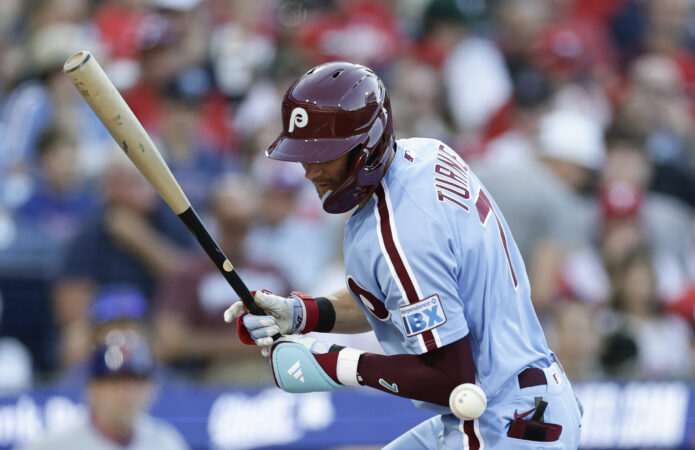
    Trea Turner was hit by a sweeper in the leg in the bottom of the first, and he scored on a single from Alec Bohm. Turner was later taken out of the game with a bruised right calf.

    “He said he had trouble on defense, felt like he was a liability on defense, so he couldn’t really move,” Mattingly said, adding that he hoped the day off Friday would help Turner be ready for Saturday night’s game.

    Bohm delivered another RBI in the third, doubling to drive in Kyle Schwarber and cut the Mets’ lead to 3-2. The Phillies’ designated hitter had reached first on a dropped third strike from Mets catcher Francisco Alvarez, and advanced to second when Alvarez botched the throw to first.

    In the fourth, Derek Hill tied the game at 3, singling up the middle to drive in Bryson Stott. But that proved to be the Phillies’ final hit until the ninth inning, as the bats fell mostly silent against the Mets bullpen.

    Phillies pitcher Aaron Nola allowed seven hits, but he limited the Mets to three runs to keep his team within striking distance.

    Nola allowed seven hits, but he limited the Mets to three runs to keep his team within striking distance. Seth Johnson and Bryse Wilson, who both had been recalled earlier on Thursday, each appeared in relief. Johnson retired the side in order in the sixth with a pair of strikeouts on his 99-mph fastball, while Wilson pitched a scoreless eighth and ninth after the Mets took the lead against Alvarado.

    “Seth was good tonight,” Mattingly said. “He’s been throwing the ball good in triple A, one of the best relievers in triple-A baseball. So stuff was good, threw in the strike zone, attacked, so it was good.”

    Down to their final out in the ninth, the offense showed a little life. Gabriel Rincones Jr., pinch-hitting for Hill, delivered the Phillies’ first hit since the fourth on an infield single to Bichette. Crawford followed it up with an RBI single to bring up Schwarber, representing the winning run with two on base.

    Schwarber worked a 2-2 count against Devin Williams, and hit a sharp liner, 104.6 mph off the bat, but it was straight at right fielder Brett Baty for the final out.

  • Phillies’ Trea Turner exits game vs. Mets after being hit by pitch

    Phillies’ Trea Turner exits game vs. Mets after being hit by pitch

    For the second time this week, Trea Turner left a game early after being hit by a pitch.

    The Phillies shortstop departed Thursday’s 6-4 loss to the Mets with a bruised right calf after taking a 79.2 mph sweeper off the leg from Sean Manaea in the first inning. Turner remained in the game initially as a baserunner, scoring a run, but was replaced at shortstop by Edmundo Sosa in the third inning.

    Sosa switched from left field, where he had started the game. Justin Crawford entered the game in center, sliding Derek Hill to right field and Brandon Marsh to left.

    “Got hit in a tough spot, right above the bottom of the calf towards the bottom, where he starts getting into the Achilles,” interim manager Don Mattingly said. “He was having trouble putting pressure, pushing off. … He said he was having trouble on defense, felt like he was a liability on defense, so he couldn’t really move. Day off [Friday], hopefully it’ll be good by the night game [Saturday]. We’ll see.”

    Turner exited Monday’s game against the Marlins with a bruised right wrist after getting drilled with a fastball, and sat out on Tuesday as it was still inflamed.

    In his return to the lineup Wednesday, Turner finished with three hits, and said he felt like he was “on a good track” at the plate.

  • An all-time World Cup home field advantage awaits the USMNT in soccer-crazed Seattle

    An all-time World Cup home field advantage awaits the USMNT in soccer-crazed Seattle

    SEATTLE — Like any sport, soccer is a game of players, tactics, skills, and decisions. But when it comes to emotions, no sport is like the world’s most famous one.

    Not for nothing did soccer resist the long march of analytics far longer than increasingly-global basketball, baseball, ice hockey, gridiron football, and others. (Americans might not know cricket, for example, but that bat-and-ball game has its own volume of statistics.)

    So, yes, we can talk about player matchups in Friday’s U.S.-Australia showdown for first place in Group D (3 p.m., Fox29, Telemundo 62). We can talk about the Socceroos’ impressive striker Nestory Irankunda and 6-foot-6 centerback Harry Souttar. And we can certainly talk about whether Christian Pulisic will shake off his calf strain in time.

    But it’s impossible to avoid this moment’s romantic side. The Emerald City is rich with a half-century of soccer history, from the NASL’s Sounders to the MLS version, always drawing big and passionate crowds. In recent years, the NWSL’s Reign have joined them, with their own robust fan base watching stars of the women’s game.

    Seattle fans show up in big numbers for soccer games at Lumen Field, the home of MLS’s Sounders and the NWSL’s Reign.

    For all that time — from hosting Pelé at the Kingdome to hosting Lionel Messi at Lumen Field, from Bobby Moore to Clint Dempsey, from Michelle Akers to Megan Rapinoe — Seattle’s soccer tapestry has missed one piece.

    Until this year, it had never hosted a World Cup.

    Now, at last, that hole is filled, and with style. Since the day in early 2024 when FIFA announced the U.S. would play a group game here, Seattle has been counting down to this moment, and so have fans across the country.

    A game in this city, with its stage towering over the south side of downtown, is a joy any time. But a World Cup game here is on American soccer’s bucket list. So it’s natural that U.S. and Sounders midfielder Cristian Roldan, in his 12th season with the only club of his career, has led the welcome committee for the squad.

    Cristian Roldan (center) at work on his old college field during Thursday’s practice.

    “I’ve told them that the city is ready, that the city is energized,” he said before Thursday’s practice at the University of Washington, his alma mater — with its own famed sports theaters in football’s Husky Stadium and basketball’s Palestra-like Hec Edmundson Pavilion.

    “We haven’t had a game here in a long time, and we’ve been desperate to host a World Cup game, a U.S. men’s national team game,” Roldan added. “So they’re going to feel the crowd, feel the energy, and it’s about feeding off it.”

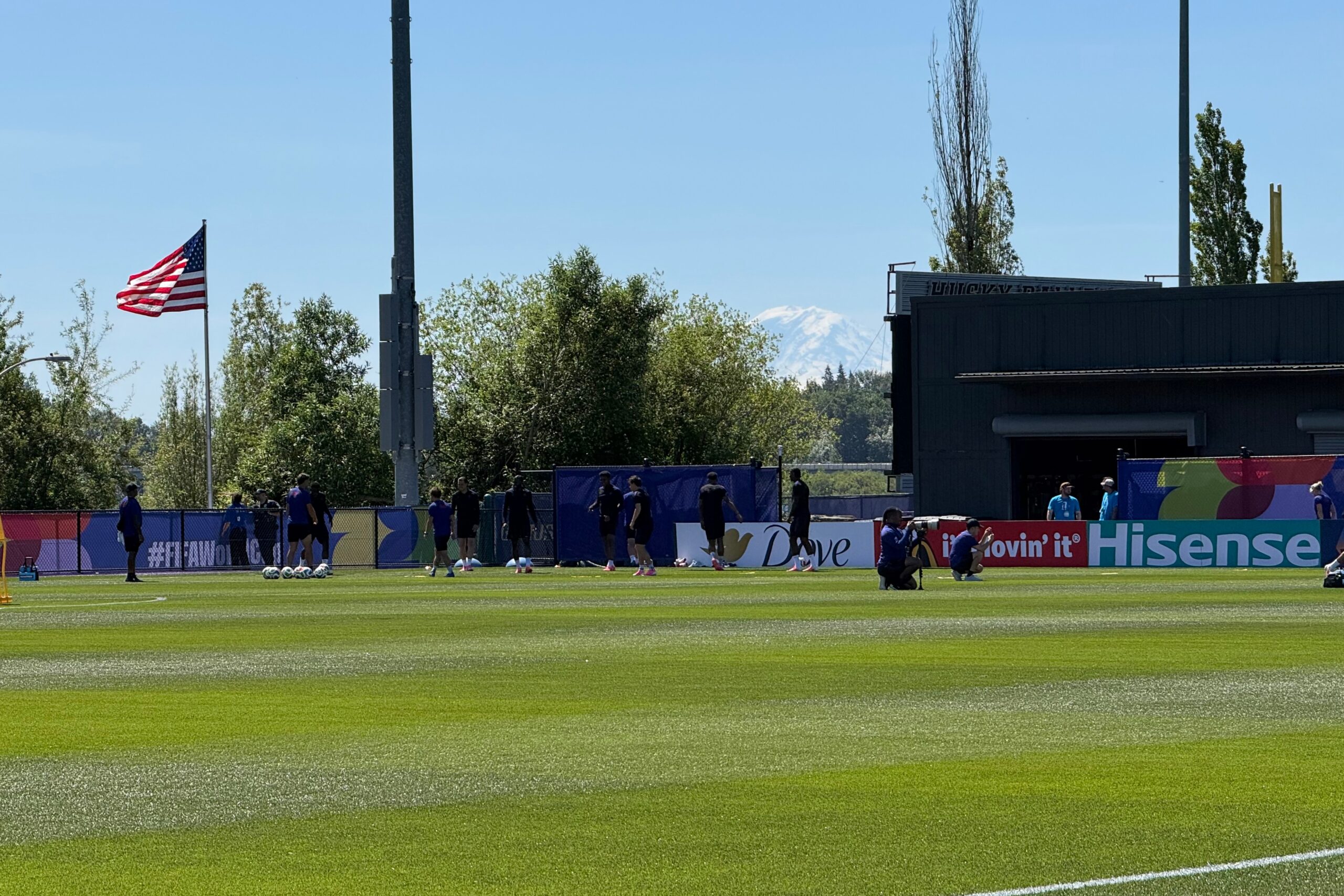
    He felt it even more as he set foot on his old college field, with glittering Lake Washington a stone’s throw away and Mount Rainier towering beyond. On the same day that Penn product Duke Lacroix returned to his alma mater in Philadelphia ahead of Haiti’s clash with Brazil on Friday, a similar scene unfolded thousands of miles west.

    “I’m thankful to have this full circle moment,” Roldan said. “I don’t think people realize how special it is for me to be here and enjoying this experience with the men’s national team.”

    Mount Rainier looming in the background over the scene at the U.S. team’s practice.

    Come lunchtime, a walk through downtown showed what awaits. Fans in U.S. jerseys were all over, from Pike Place Market (Seattle’s version of Reading Terminal) to the glistening waterfront.

    Fox’s studio show set up shop on one of the piers, with the ferries crossing Puget Sound as one backdrop and a boisterous crowd as another.

    It’s a different vibe from sprawling Los Angeles, and they’ll tell you that here as much as a visitor from out east naturally senses it.

    Everything will come together at noon local time on Friday, when a capacity crowd of just under 67,000 will roar the U.S. team onto the field.

    The vibrant scene in Seattle as Fox’s studio show goes on air:

    #USMNT

    [image or embed]

    — Jonathan Tannenwald (@jtannenwald.bsky.social) June 18, 2026 at 2:23 PM

    The players are excited to experience it, especially those who haven’t before. Because the stadium usually has artificial turf, the U.S. men haven’t been here since the 2016 Copa América Centenario, when grass was installed like it has been this summer. (The World Cup’s grass also helped bring the women’s team here in April, ending a nine-year drought.)

    “I’ve obviously spoken to ‘Roldy’ and other people who’ve said how much of a soccer culture Seattle has, and I’m really looking forward to experiencing that firsthand,” defender Antonee Robinson said. “The first game that was played in that stadium looked amazing. So I’m looking forward to being a part of it, too.”

    Roldan isn’t expected to start, and he knows it. But if he gets on the field as a substitute, the roar that rises will no doubt be as great as a U.S. goal.

    “I’m getting goosebumps just thinking about it,” he said. “This is a place that I call home, and I’ve called home for a while. … I’ve given my heart and soul to this club. To be able to see the field would be a dream come true, and I think it would be special not only for me, but I think for the city of Seattle as well.”

  • Rocky curse? Brazil supporters aren’t taking any chances ahead of World Cup clash with Haiti.

    Rocky curse? Brazil supporters aren’t taking any chances ahead of World Cup clash with Haiti.

    International soccer supporters, be warned — clothe the Rocky statue at your own risk.

    The fans of the Ecuadorian national team learned Sunday what many NFL fans already know about draping their colors over the statue of Rocky on the steps of the Philadelphia Art Museum.

    Ecuadorian supporters fitted Rocky with a yellow La Tri kit, then saw their team concede a 90th-minute winner in its FIFA World Cup group-stage opener against Ivory Coast on Sunday at Lincoln Financial Field (aka Philadelphia Stadium).

    The effects of the “Rocky curse” are well-documented when it comes to football, but it was relatively untested on the beautiful game. Ecuador lost, 1-0, to the Ivorian side, which entered the tournament ranked 10 spots behind La Tri in the FIFA World Ranking.

    With Brazil coming to Philly for a Group C match against Haiti on Friday (8:30 p.m., Fox29), Movimento Verde Amarelo, Brazil’s main supporters’ group, went to great lengths to ensure the yellow and green of the Canarinho stayed off the Rocky statue.

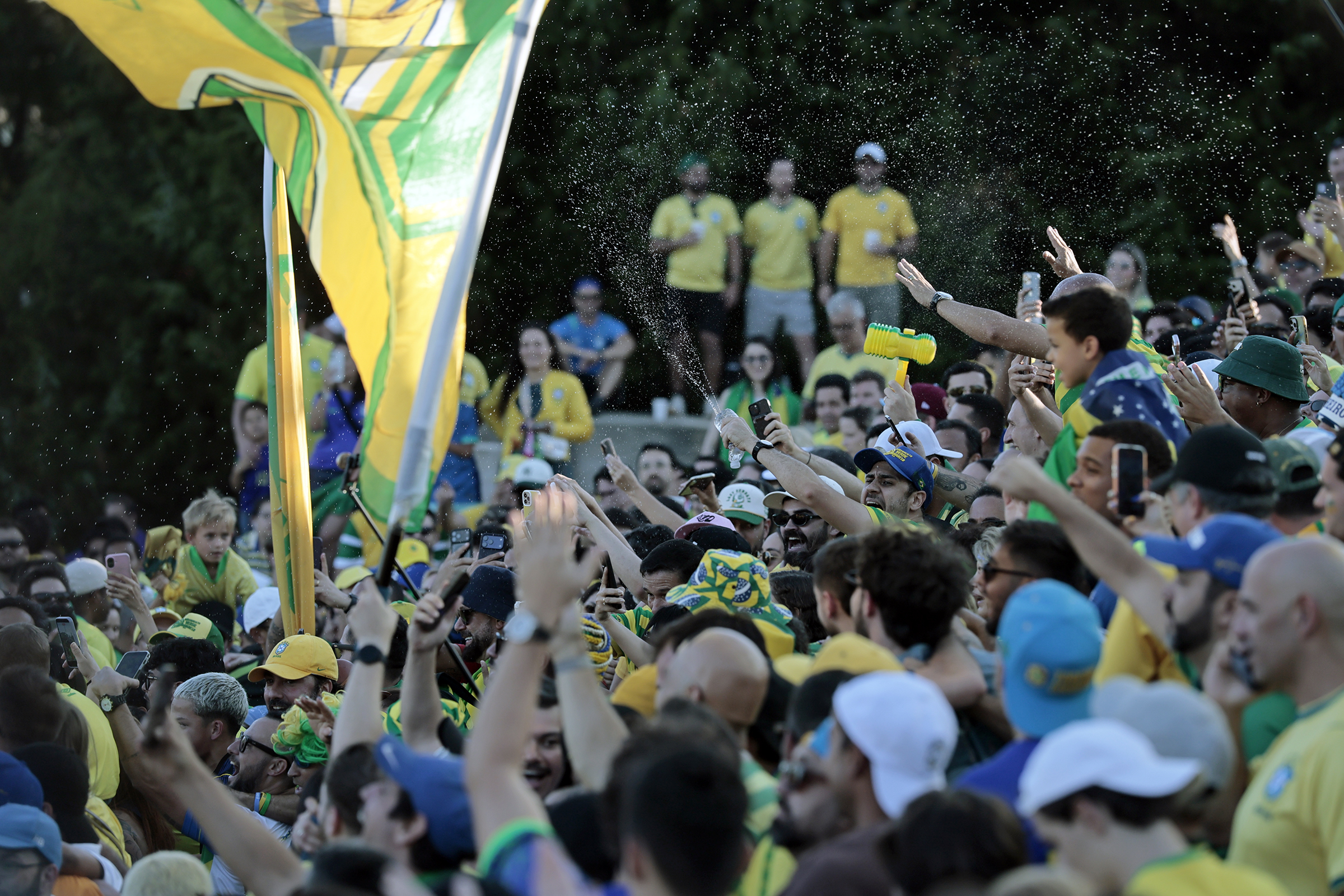
    The Rocky statue was roped off with a four-post retractable nylon stanchion, with four members of MVA, sunglasses on and earpiece in, standing at attention at each corner as Brazilian fans gathered for a rally in front of the Art Museum.

    The bodyguards discouraged fans from draping any Brazilian garb on the statue, holding signs that read:

    “Operation Rocky Protectors — Attention: it is forbidden to put Brazilian colors on the statue.”

    Matheus Henrique, 30, was one of the MVA members protecting the statue. Henrique, a native of Belém, Brazil, moved to Los Angeles a decade ago for college.

    On the eve of Friday’s FIFA World Cup Group C match between Brazil and Haiti, Brazil fans rally for their team on the Art Museum steps in Philadelphia on Thursday, June 18, 2026.

    Henrique is friends with the person who helped organize Brazil’s takeover of the steps and responded when a call went out for volunteers to guard the statue.

    “It’s a superstition, we heard,” Henrique said. “We’re enjoying the event as well.”

    There was plenty of enjoyment to go around for Brazilian supporters as they scaled the steps in front of the Rocky statue on Thursday evening. Fans danced, sang, set off smoke flares and drummed for hours, making The Oval feel more like Rio de Janeiro than Fairmount.

    And, thanks to the statue guards and forewarnings from MVA and Visit PA, Rocky remained shirtless throughout the evening.

    The MVA Instagram account posted a warning to its members to abstain from clothing the Rocky statue before Brazilian fans gathered at the steps on Thursday.

    “Attention Brazil Fans,” a translated version of the group’s post reads. “It is totally forbidden to put a Brazilian shirt on the Rocky Statue in Philly!!!!!”

    Meanwhile, Visit PA warned international fans about the Rocky curse.

    “Countless football teams (as in American Football, not Fútbol — same curse, different sport) have all dressed the Rocky Statue in their colors and gone on to lose,” its Instagram post read. “Ecuador dressed Rocky last weekend. Coincidence? Sadly, history says no.”

    Henrique was confident about Brazil’s match with Haiti, but he said the team needs all the luck it can get after starting the World Cup with a 1-1 draw against Morocco. Henrique said he had to chide a few people getting too close to the statue.

    “Some people don’t know,” Henrique said. “I didn’t know about the superstition until today. Let’s not play with luck. We need luck.”

    Henrique plans to watch Friday night’s match from the FIFA Fan Festival in Lemon Hill, but he feels as if he’s already done his part to help the Brazilians avoid an upset.

    Gonna Fly Now

    After successfully avoiding Rocky’s wrath, Brazil will enter Friday night’s match as favorites over Haiti, which dropped to No. 85 in the FIFA World Ranking after losing its opener to Scotland.

    Brazil, ranked No. 5 in the FIFA World Ranking, will be without national legend Neymar for the match. The 34-year-old winger, nursing a calf injury, was not among the group of players that arrived at the Sofitel in Center City on Thursday afternoon.

    On the eve of Friday’s World Cup match between Brazil and Haiti, Brazil fans rally for their team on the Art Museum steps in Philadelphia.

    Brazilian supporters welcomed players to the team’s hotel, creating a festive but crowded scene at 17th and Sansom around 4 p.m.

    Brazil’s team bus arrived to the hotel at 5:10 p.m., and a few Brazilian players, including Gabriel and Raphinha, greeted fans as they walked from the bus to the hotel.

    The Seleção will look to secure all three points against the Haitians at Philadelphia Stadium on Friday night. The team and its supporters can rest easy knowing it will not be the next victim of the Rocky curse.

  • Philadelphia is shrinking the rideshare virtual border around FIFA Fan Festival

    Philadelphia is shrinking the rideshare virtual border around FIFA Fan Festival

    The city is rolling back its geofence border around the FIFA Fan Festival to reduce the number of residential areas blocked from using rideshare.

    The Philadelphia Office of Transportation and Infrastructure Systems (OTIS) announced Thursday that it would shrink the geofence to exclude large residential buildings on Pennsylvania Avenue.

    The geofence, which blocks people within its borders from using rideshare services like Uber and Lyft, will now shrink to the south of Aspen Street, about half a block from its original border at 25th and Meredith Streets.

    “We’re continuing to work with the community, elected officials, and operational partners to improve the experience for everyone, including residents impacted by Lemon Hill festivities,” an OTIS spokesperson said.

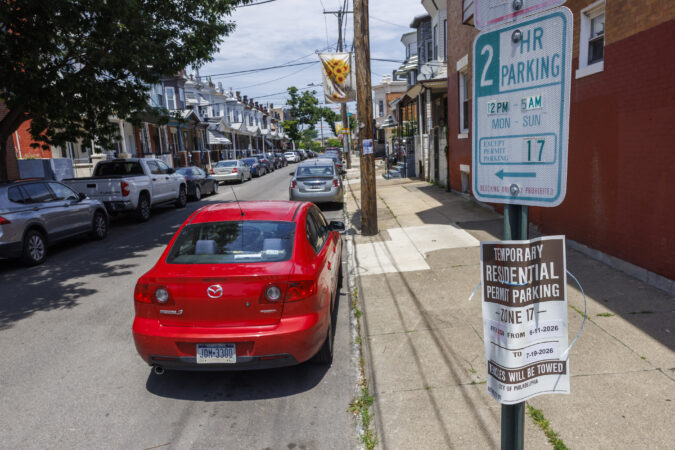
    Additionally, four blocks in Fairmount had been designated for rideshare pickups and drop-offs, but OTIS is reducing rideshare zones to two, allowing for more parking for permitted residents.

    The rideshare pickup/drop-off zones are now located only near Eastern State Penitentiary, at 23rd Street and Fairmount Avenue, and the 2200 block of Fairmount Avenue.

    This was well-received news for residents who live in the area and have been concerned about the geofence’s restriction on residents with mobility issues.

    Paul Stewart, an 86-year-old resident who lives in one of the large apartment buildings that initially had been geofenced, relies on Uber to visit his doctor at Thomas Jefferson University Hospital. But last week, when he planned to head to an appointment, he found he could not call a rideshare.

    “The geofence that includes my building and all the businesses in the immediate area will continue for 39 days,” Stewart said before the geofence rollback. “Many people take Uber to and from the restaurants and bars in this neighborhood so that they can have a few drinks and not worry about driving drunk.”

    Geofencing these large residential buildings and blocks was hindering everyday life, Stewart said. Now, he said, residents will be able to go about their business as they normally would.

    The geofence reduction is just one of the adjustments the city has been making as it manages the traffic and fans around the FIFA Fan Festival in Lemon Hill. Since at least May, residents have been requesting traffic-calming measures on residential blocks. The Philadelphia Parking Authority and OTIS installed additional barricades and signage last week.

  • Gameday Central: Sixers draft and offseason chat with ESPN’s Jeremy Woo

    Gameday Central: Sixers draft and offseason chat with ESPN’s Jeremy Woo

    Join Gina Mizell and ESPN NBA draft expert Jeremy Woo for a special edition of Gameday Central as they break down the latest Sixers draft rumors, top prospects, and the key decisions facing Philadelphia this offseason. Watch here.

  • Before Leon Rose built the Knicks, he was a gym rat at Cherry Hill East, and coached hoops at his local JCC

    Before Leon Rose built the Knicks, he was a gym rat at Cherry Hill East, and coached hoops at his local JCC

    Seth Friedman was watching the NBA Finals on Saturday night in Graduate Hospital when he heard a familiar refrain.

    It came from Leon Rose, the mild-mannered architect of the New York Knicks. His team had just won its first title since 1973.

    Rose, 65, was asked how he felt knowing he’d built a roster that had ended a 53-year-drought. The Knicks president shook his head, shrugged his shoulders, and pivoted to his players.

    He praised their brotherhood, their grit, their empathy. He talked about their care for one another, and their selflessness, and how it allowed them to reach new heights.

    Friedman, sitting on his couch next to his wife, began to tear up.

    “It sounded like he was talking to us,” he said, “back when we were 13 or 14 years old.”

    The setting was vastly different. Instead of holding two-a-days for high schoolers, Rose was standing on a platform in San Antonio, Texas, with a sparkling trophy beside him.

    But the message was nearly identical. Friedman listened to it himself when he played for Rose in the mid-2000s at his local Jewish community center.

    “He literally preached that same mentality,” Friedman said. “That family mentality.”

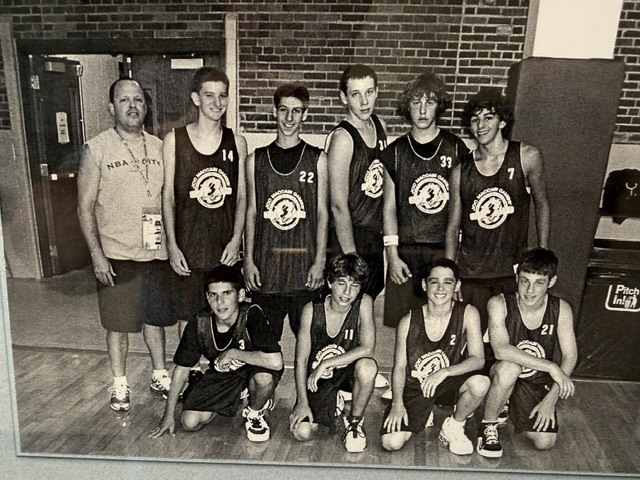
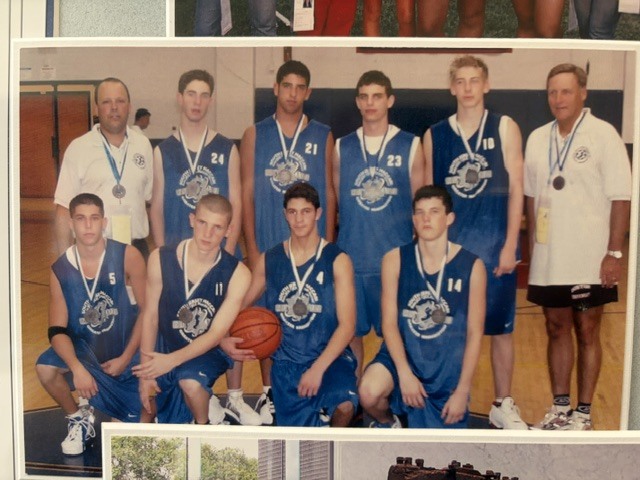
    Leon Rose coaching at the Katz JCC in 2005. Seth Friedman is pictured in the bottom row, second from the right.

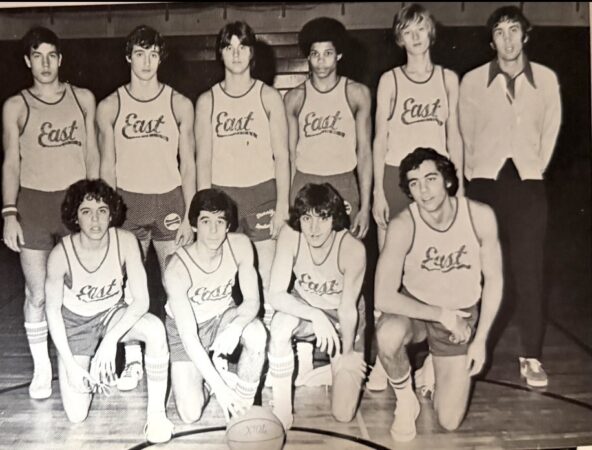
    For decades, the future Knicks president was a mainstay in his Cherry Hill basketball community. He played under head coach John Valore at Cherry Hill East from 1975 to 1979 and joined Valore’s staff in the early 1980s while studying at Temple’s law school.

    He moved on to work as an assistant coach through the late 1980s at Rutgers-Camden, a short commute from his day job at the Camden County prosecutor’s office.

    He’d leave collegiate coaching in 1988, but Rose would always find time for the sport, even as he ascended the ranks of the NBA. In the 1990s, while he transitioned to sports management, Rose often could be found playing pickup hoops at the Katz JCC in Cherry Hill.

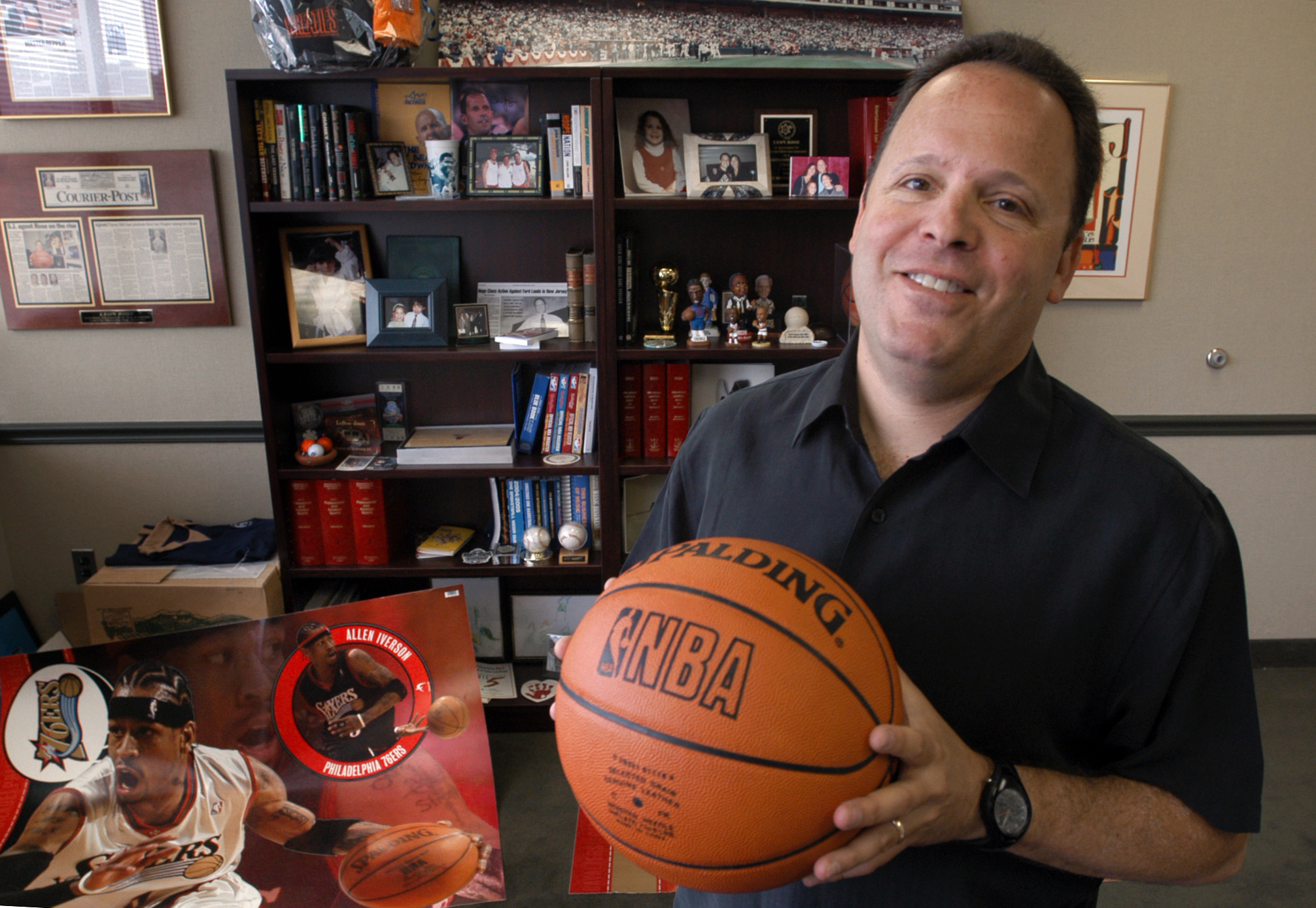
    By the mid 2000s, he’d assembled a Rolodex of star-studded clients, including Allen Iverson and LeBron James. But that didn’t keep him away from the gym. For the better part of a decade, Rose served as a volunteer coach at the Katz JCC, preparing teams to compete in the Maccabi Games.

    The Knicks executive has achieved a lot since then. But those who know him best say he is the same understated guy who’d wear baggy sweatshirts and run his team through tap drills and sprints.

    “He was Coach Leon,” Friedman said. “He was one of us. Even now, you see him down the Shore, and you’d never know that he’s the person that he is.”

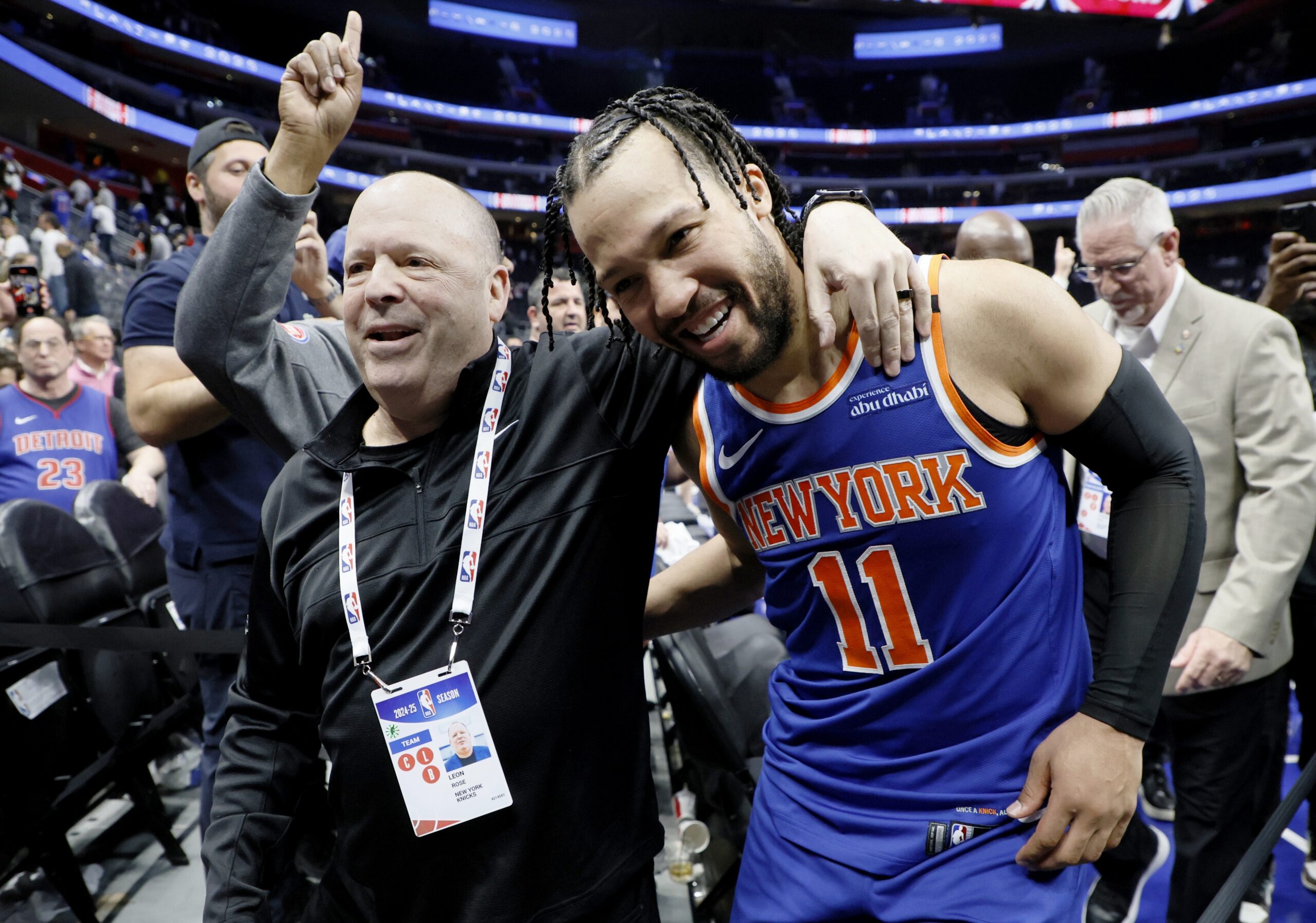
    New York Knicks Leon Rose (left) hugs guard Jalen Brunson (11) as they leave the court following a Game 6 win against the Pistons in the 2025 playoffs.

    ‘A gym rat’

    Valore met Rose in 1975 when he was coaching junior varsity at Cherry Hill East. The freshman was undersized compared to his teammates, but he played above his stature.

    If there was a loose ball, the point guard would dive for it. If there was a charge, he would take it. Valore admired his toughness. So when he got the varsity job in 1976-77, he decided to bring Rose with him.

    The sophomore made the most of his opportunity. Cherry Hill East was a relatively new program at the time and largely was viewed as a “doormat,” in Valore’s words. Rose helped change that, building an unselfish culture from the ground up.

    He wasn’t a vocal leader, but he showed interpersonal skills that would serve him later on. The future NBA executive was direct and honest. He could have difficult conversations with teammates if he needed to about roles and behavior on and off the court.

    Rose also set a standard through his style of play. Cherry Hill East was up against stiff competition in South Jersey from teams like Camden and Haddon Heights, which boasted players who were 6-foot-2, 6-3.

    The point guard was unafraid to battle them.

    “He was a player that had to compete harder and tougher than the person he competed against,” Valore said, “because he was 5-7, 5-8, 5-9. That shows you the toughness he had within him.”

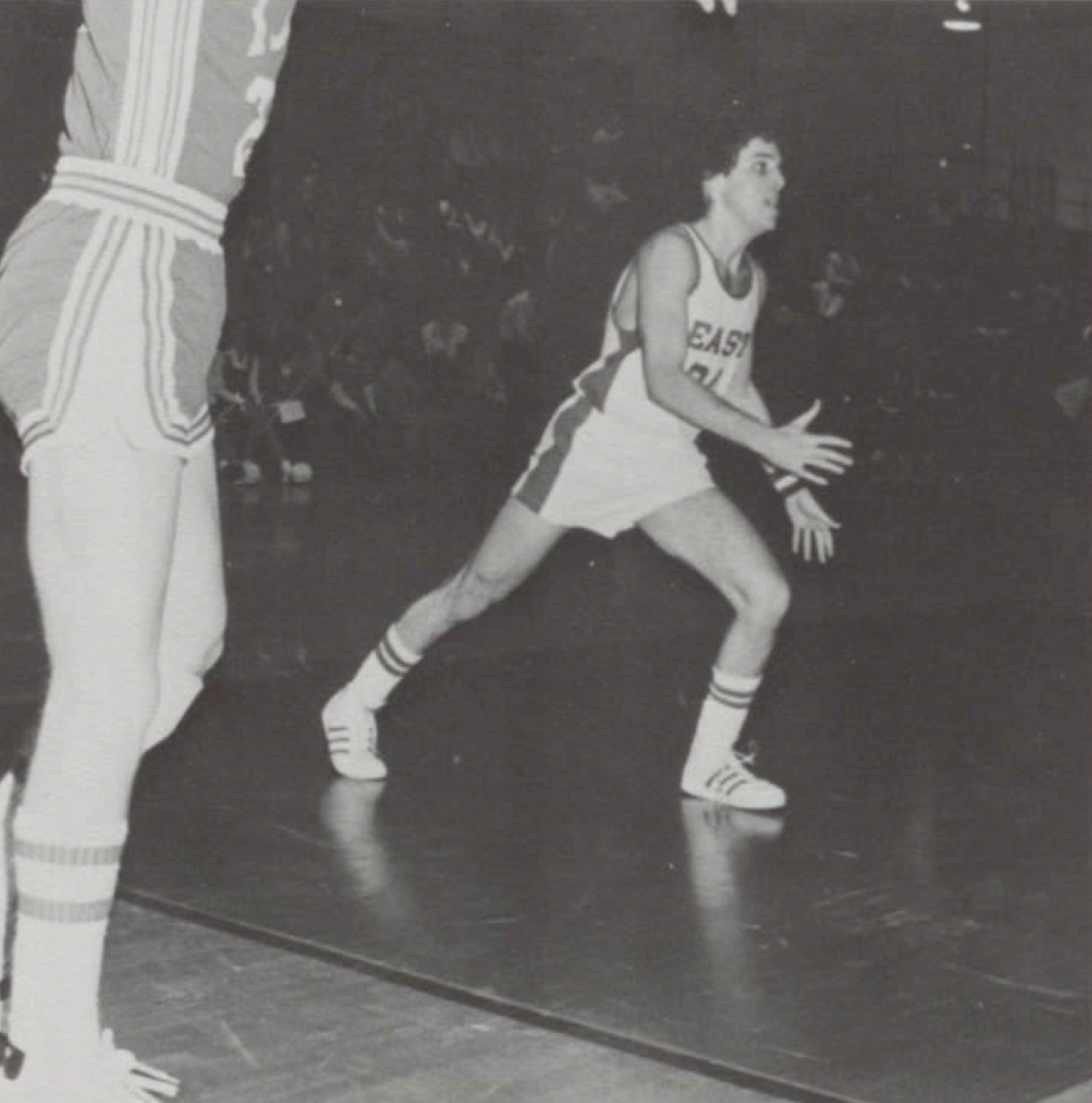
    Leon Rose at Cherry Hill East.

    Cherry Hill East’s culture quickly translated into wins. When Rose arrived, the varsity team finished just above .500. By the time he graduated, it was one of the best teams in its conference.

    But above all, Valore was most impressed by his pupil’s character. During a practice in 1979, the coach called his co-captain over. Valore’s wife, Joyce, had just given birth to their first child, J.C.

    The coach wanted Rose to be the boy’s godfather.

    “[Leon] was 17 years old,” he said, “and I saw everything I wanted to see. He was an exceptional person with relating to other people. He was something special.

    “He went back to his dad and explained the situation, and his dad gave the thumbs-up. And the rest is history.”

    After a few years studying and playing basketball at Dickinson College, Rose rejoined his high school team as an assistant coach in 1983. The 22-year-old was just as impactful on the bench as he’d been as a point guard.

    Over Rose’s three seasons with Cherry Hill East, the program produced four Division I players. One of those four, Nick Katsikis, ended up contributing to Seton Hall’s run to the 1989 NCAA championship game.

    Valore can see similarities in what Rose accomplished with the Knicks. When the agent was hired by James Dolan in 2020, the team was en route to its seventh straight losing season; “a doormat,” just like Cherry Hill East.

    Then Rose came along, and everything changed.

    “He was a gym rat,” Valore said. “He just loved the game.”

    Leon Rose coaching for the Katz JCC in 2004. Ed Vernick is pictured on the far right.

    From Maccabi gold to an NBA title

    Ed Vernick moved from Philadelphia to South Jersey in the early 1980s, the same time Rose was coaching with Valore.

    Unsurprisingly, the men became friends at the gym. Vernick was about to go on a trip to Ocean City and wanted a good place to work out. Rose overheard him talking, ripped off a piece of paper, and scribbled down an address.

    Vernick had no idea who the young lawyer was, but he took him up on his suggestion. A few days later, while he was running on a treadmill in that Ocean City gym, he saw Rose walking by.

    “He goes, ‘I just wanted to make sure you got here,’” Vernick said. “What a nice guy. I’m thinking, ‘Who does that?’ It was just one of those things that caught me.”

    About two decades later, when Rose was starting to coach basketball at the Katz JCC, he asked Vernick to be his assistant. Together, they spent the summer of 2004 preparing Cherry Hill-area kids for the Maccabi Games, a youth athletic competition for Jewish athletes from all over the world.

    Parents and players said Rose took this as seriously as the NBA Finals. He’d carefully craft his rosters, thinking hard about how each piece would fit.

    Once the team was constructed, he’d spend July running them into the ground with many of the methods Valore used at Cherry Hill East: switch drills, sprints, tap drills.

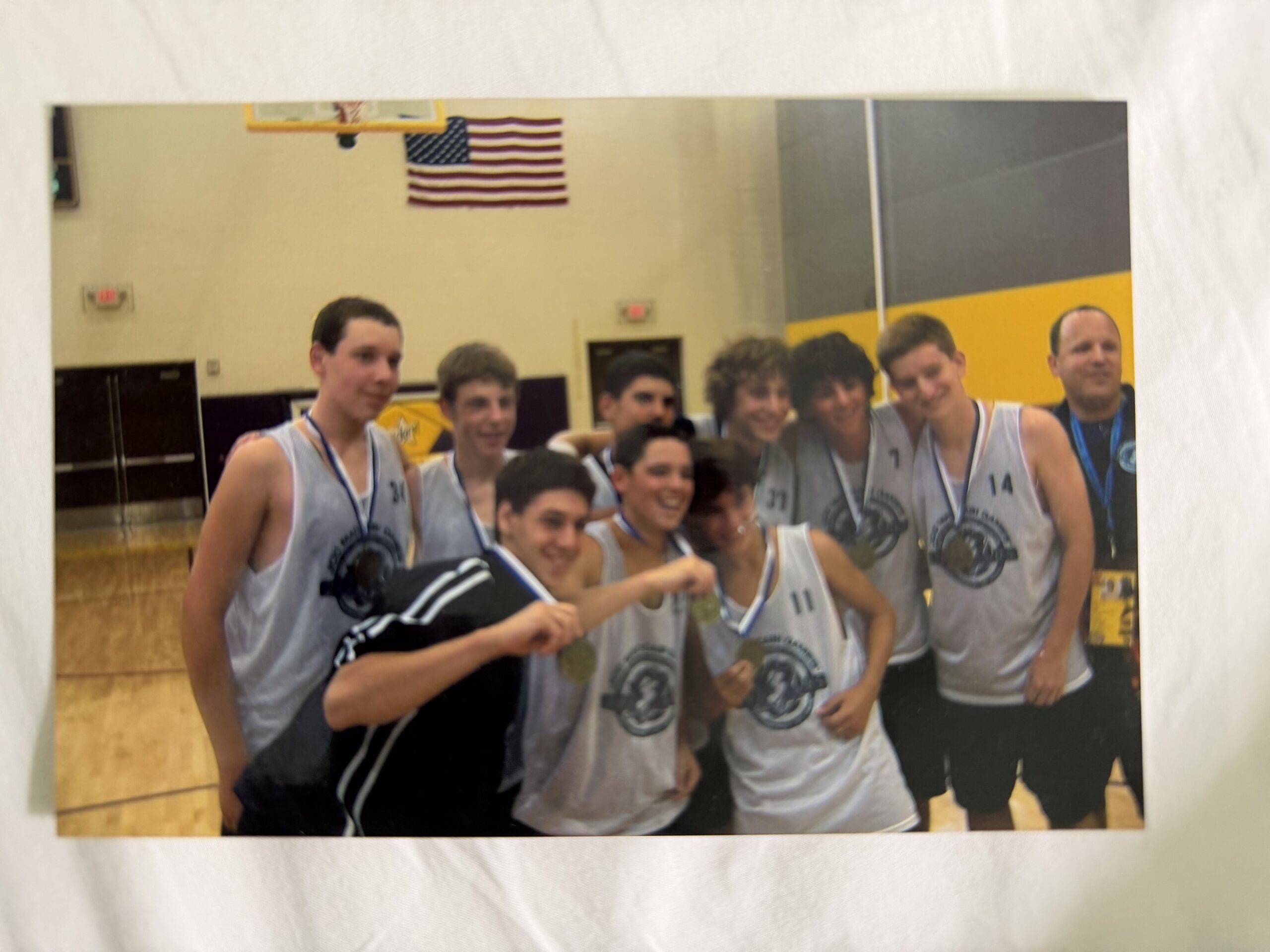
    Leon Rose coaching at the Katz JCC in 2005.

    The week before the Games was by far the toughest. Players would be required to train twice a day and would arrive at the gym at 6:30 a.m. and return at 2 p.m.

    “He got into us,” Friedman said. “But it got us ready. It got us prepared. It got us in shape. I hated it during it, but, looking back, those were memories I’ll never forget.”

    This was a major time investment for one of the most high-powered agents in the NBA, but Rose was deeply involved. He continued to coach before and after his son, Sam, and daughter, Brooke, were eligible to play.

    And he went far beyond what was expected of a volunteer. One year, Friedman said Rose took the team up to the Poconos for an exhibition game at Pine Forest Camp, which was known for its basketball program.

    “He’s driving us up to play an exhibition game like it’s an NBA team,” Friedman said. “He didn’t have to do that as a coach. But he did whatever he could to get us prepped and ready to win a gold medal.”

    About “80% of the team” came from Cherry Hill East, in Vernick’s estimation, and Rose often would be on the phone with Valore, asking about certain players.

    Like his former coach, Rose gravitated toward toughness, and that style emanated from the teams he built. In 2004, South Jersey’s 16-and-under Maccabi team faced Washington, D.C., for the gold medal.

    Leon Rose (in 2006) made his name as a superagent to the likes of Allen Iverson and LeBron James, but he did not flaunt that status to his young players.

    It was a low-scoring game, one that came down to the buzzer. Washington was bigger and more talented, but Rose’s group challenged every bucket.

    “I remember I could hear sneakers squeaking the whole game,” Vernick said, “and I just smiled. And I thought, ‘This is the way you play defense.’”

    South Jersey fell, 42-40, but it won gold the following year in Minneapolis.

    Rose spent six summers coaching at the JCC throughout the 2000s, winning two gold and two silver medals. He looked and acted like any other coach, donning Cherry Hill East basketball gear and sweatpants.

    He rarely — if ever — talked about who he represented, or what he did for work, but the players occasionally got a glimpse.

    When Friedman was a senior at Cherry Hill East, Rose arranged a surprise for his alma mater.

    It was March 2010. The Cleveland Cavaliers were in town. After practice, their coach swung by to talk to the high school basketball team and answer any questions they might have.

    It ended up being the coach who would lead the Knicks to a championship 16 years later.

    “He had Mike Brown come over,” Valore said. “He was fantastic. Off the cuff, not scripted. He gave a wonderful speech to the kids.”

    John Valore (left) and Zev Rose before a Knicks game in the early part of their 2026 playoff run.

    Cherry Hill at the Garden

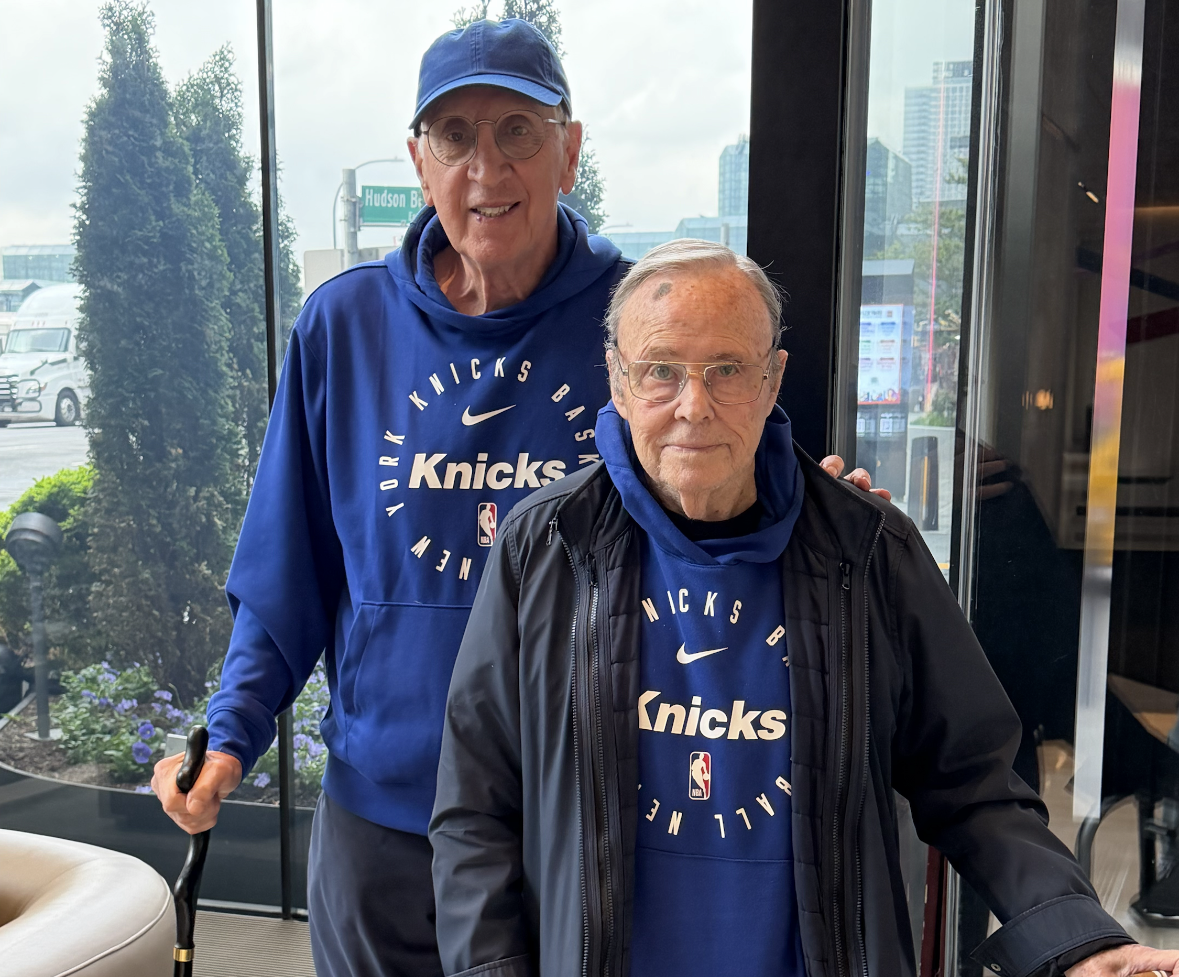
    Rose and his family now live in New York, but they’re never too far from Cherry Hill. His 88-year-old father, Zev, still resides in the area, and is a regular at the Katz JCC.

    Every once in a while, his son will send a limo to drive him and the 81-year-old Valore to Madison Square Garden. They were in the building for Game 4, sitting near the team president.

    At first, it looked bleak for New York. The Knicks fell behind early and trailed by 29 points in the third quarter. But they came storming back in the fourth and completed the comeback on an OG Anunoby tip-in.

    It was the largest comeback in NBA Finals history; a gritty win two coaches from Cherry Hill East would be proud of.

    Valore watched Game 5 at home in South Jersey. When it was over, just past midnight, the former coach texted his former player.

    The octogenarian kept his message brief. He thought about the undersized point guard who changed a culture when he was in high school.

    He thought about how he did it again, decades later, in New York; how hard he’d worked and the happiness he’d brought to his pocket of South Jersey.

    “Thank you,” Valore wrote to Rose, “and God bless.”

  • Winslow’s Jasmine Jackson emerges as one of the nation’s fastest hurdlers: ‘She is running with a purpose’

    Winslow’s Jasmine Jackson emerges as one of the nation’s fastest hurdlers: ‘She is running with a purpose’

    Jasmine Jackson sat on her couch at her home in Winslow Township, watching a broadcast of the nation’s fastest high school hurdlers competing at the 2025 Brooks PR Invitational. As she watched, she made it her goal to be on that track, competing in the race.

    After a year of training and dropping time, her invitation arrived in the mail, making her the first athlete in Winslow Township history to earn a spot in the prestigious event.

    “It was a big accomplishment when I got the invitation,” she said. “I was ecstatic. To know I was the first to do this showed it was a stepping stone to something even greater.”

    And something greater came at this year’s Brooks PR Invitational on June 7 in Renton, Wash.

    The Winslow Township High School sophomore claimed the 100-meter hurdles title with a time of 13.33 seconds. It came days after winning the New Jersey Meet of Champions and running a personal-best 13.28 seconds.

    Jasmine Jackson set a personal record in the 100-meter hurdles at the New Jersey Meet of Champions.

    Her personal record currently ranks No. 3 in state history, No. 3 all-time on the wind-legal list for sophomores, and No. 3 in the nation this season. Jackson continues to climb the ranks as one of the nation’s fastest hurdlers and wants to accomplish more.

    Her love for hurdling began at a young age. Jackson grew up going to the track with her dad, Tyree Jackson, who was a sprinter and relay runner at Camden High School and Rowan. He is now a track-and-field coach at Pennsauken.

    When she was 5, she saw a hurdle on the track and asked her dad if she could try to jump over it. Tyree initially said no, worried she might hurt herself, but she persistently asked, so he finally gave in.

    She cleared the hurdle with her right leg leading and left leg trailing, the form she still uses today.

    “It was perfect,” Tyree said.

    Starting out, however, he wasn’t convinced that hurdles would become her event.

    “There were a lot of times where I thought that maybe hurdles weren’t for her because she was too timid and scared to actually run through the hurdles,” he said.

    Tyree scoured the internet for drills and training ideas to help his daughter develop as a hurdler. His former teammates offered advice on technique and form, and they soon progressed from wickets to smaller hurdles. She joined Winslow Elite Track and Field at age 8 to keep improving.

    By 14 years old, Jasmine broke the national record for the 100-meter hurdles with a time of 13.72 seconds at the 58th AAU Junior Olympic Games in Greensboro, N.C. That race gave her a newfound confidence.

    “That race pushed her over the edge as far as her demeanor and her confidence level because in order for her to win and break the record, she had to beat some really talented athletes she had never beaten before,” Tyree said.

    And as her confidence has grown, her times have dropped.

    Part of that growth has come from racing against the nation’s best, including one of her biggest competitors, Nia Armstrong from Tampa, Fla. The hurdlers have developed a friendly rivalry over the years since they typically compete in the same races and push each other to faster times.

    “Whenever those two compete against each other, it’s like I don’t care who else is on the track, the race is going to be between them,” Tyree said.

    Before the Meet of Champions earlier this month, Jasmine was nervous. The meet featured the toughest competition she faced all season. But as she set up on the line, she reminded herself that she belongs here and is built for the moment.

    “I just tell myself I’ve been here before. It’s just a track. I know how to run. I know how to hurdle. I know what I’m capable of,” she said. “I believe in myself, I’m ready for this moment, and not to let an opportunity pass by because you might not get it again.”

    Developing self-belief in a mentally challenging sport, Jasmine says, has been one of her biggest areas of growth.

    “She’s always been good. She just didn’t have the confidence to know that she’s good,” said Shawnnika Brown, Jasmine’s high school coach. “Now, she is running with a purpose.”

    That purpose is reflected in her daily routine. Jasmine trains with her team after school, goes to the gym to lift weights, and does additional hurdle sessions with her dad on the weekends.

    Having Tyree as her coach has also been an important part of her success.

    “I try not to let the coach interfere with the father,” Tyree said. “I’ve learned how to talk to her and get her motivated to the best of my ability without her being upset with the father.”

    After Jasmine won at Brooks, Tyree let his daughter enjoy the moment before turning their attention to the next race.

    “She knows I’m going to focus on the flaws first before I celebrate her and give her roses because I sometimes have to be the coach first and then dad second,” he said.

    That approach is shaping one of the nation’s fastest high school hurdlers, but Jasmine’s goals go beyond state titles and national championships.

    Jasmine Jackson will compete at the New Balance Nationals at Franklin Field this weekend.

    “The ultimate goal is to go to the Olympics,” Jasmine said. “Knowing I have that goal in mind, no matter how I feel, I know I have to work for it. It’s not going to be given to me. I have to earn it.”

    For now, the 15-year-old can check the Brooks PR Invitational off her list. Up next is the New Balance Nationals running until Sunday at Franklin Field. Jasmine will run the 100-meter hurdles and 4×400-meter relay championship. She is looking to earn her first national title at the event.

    “I’m tired of being second at this event,” she said, laughing. “I’m going up against pretty tough girls, so it’s going to take a lot to win. I believe I can do it if I put my mind to it.”