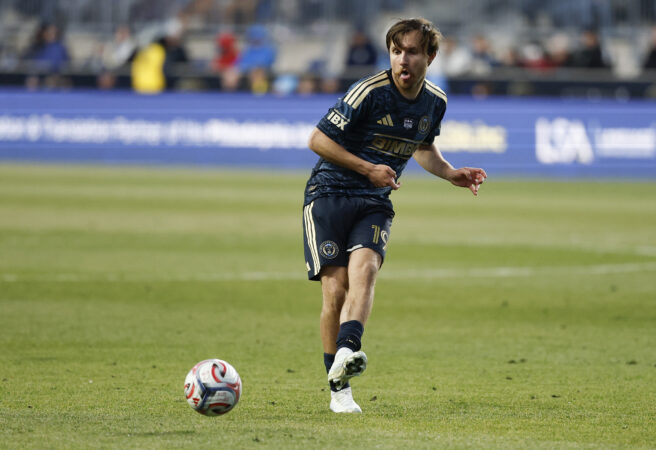
Indiana Vassilev is usually heard before he is seen.
Whether it’s walking onto the Union’s training pitch, sitting inside the locker room, or on this particular day, bellowing a teammate’s name in song as loud as he could down a quiet, empty corridor — his is an energy everyone within the club seems to accept.
Perhaps it’s in large part that all of that infectious, boisterous — and, in some cases, obnoxious — energy usually gets exorcised onto the pitch, where, since joining the team last season, he’s been the spark plug the Union have needed. People may forget that Vassilev arrived to the Union on a one-year guaranteed contract, with an option to extend into this season, and that certain performance metrics would play a huge part in the decision to retain him at the end of last season.
He came as a bit of a controversial choice, too, coming in essentially to do the work of former midfielder Daniel Gazdag. Gazdag, who departed as the team’s all-time leading goal scorer, was sent to Columbus last April, just a month and a half after Vassilev’s arrival.
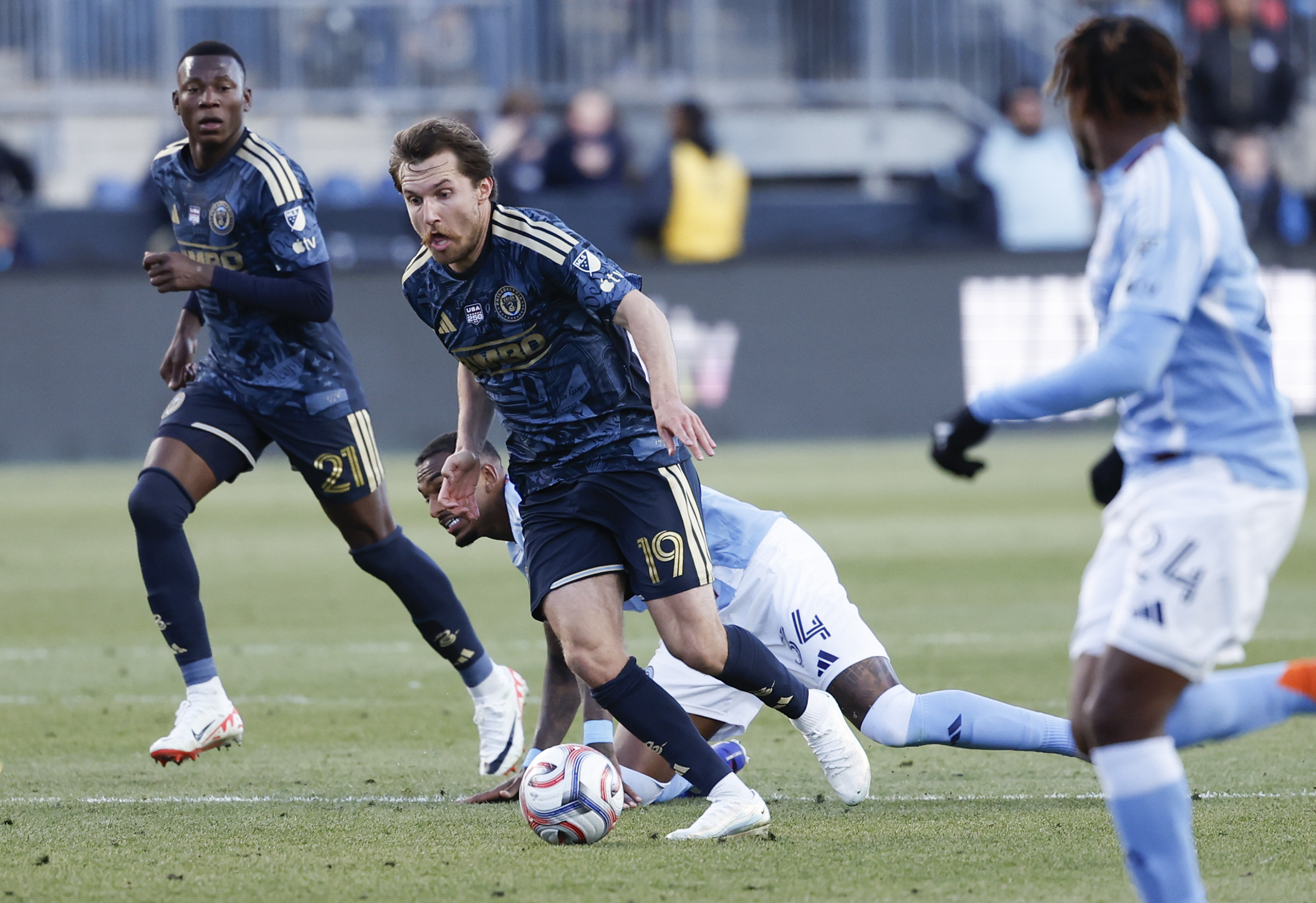
Union midfielder Indiana Vassilev runs with the soccer ball past New York City FC defender Raul Gustavo during the team’s match at Subaru Park on Sunday.
And while Vassilev hasn’t had the consummate goal scoring production Gazdag did, his unyielding work rate speaks for itself.
“I mean, I would love to say that I’m a goal scorer and I get a lot of assists, [but] that’s just not really what I do,” said Vassilev. “I’m just trying to get in dangerous areas and progress the play. We have guys who are very, very good at it, guys like [midfielder] Quinn [Sullivan], who score absolute bangers, and put it away. That’s not my role, and I’m OK with that.”
A pretty accurate representation of Vassilev’s role came in the team’s Major League Soccer home opener against New York City FC, in which he stepped up to score an 89th-minute penalty kick past goalkeeper and Wayne native Matt Freese. It underscored his immense work rate in that match. According to Opta statistics, over the last two matches, Vassilev’s passing in the final third has been nearly 82% effective, and in the open field, nearly 85% effective.
A true box-to-box midfielder, Vassilev is one of a few players on manager Bradley Carnell’s roster that has the freedom to roam, where man-marking isn’t as important as breaking up attacks and then pushing forward Union attacks.
“He’s a silent leader. OK, well, he’s not silent, trust me; he’s actually quite loud,” joked Carnell. “He jokes, but he goes about his business in the most distinguished way. He adds an immense amount of value on both sides of the ball. And I think he’s a good role model to have on the team … and he commits to everything we do. So, yeah, I think it’s safe to say he’s been really important.”
Important could also be construed as “fits” the ultra-pressing attack-the-ball minded system Carnell has employed since his arrival last year. It’s a style Carnell knew Vassilev would fit from his time as head coach of St. Louis City SC, in which he led to a record start as a Western Conference expansion team in its first MLS season.
It’s why it didn’t take Vassilev, who played under Carnell in St. Louis from 2023-24, long to retrofit himself into the Union. If you ask Vassilev, it was Carnell that brought him here, but the team comradery has fueled his intentions to remain in Chester.
“I’m a big locker room guy, I’m big about culture,” Vassilev said. “It was really easy for me to transition to, you know, this locker room and to feel comfortable and, I feel like once you feel more comfortable, you get to be your true self. And that happened quite quick for me because of how good the guys were in here.”
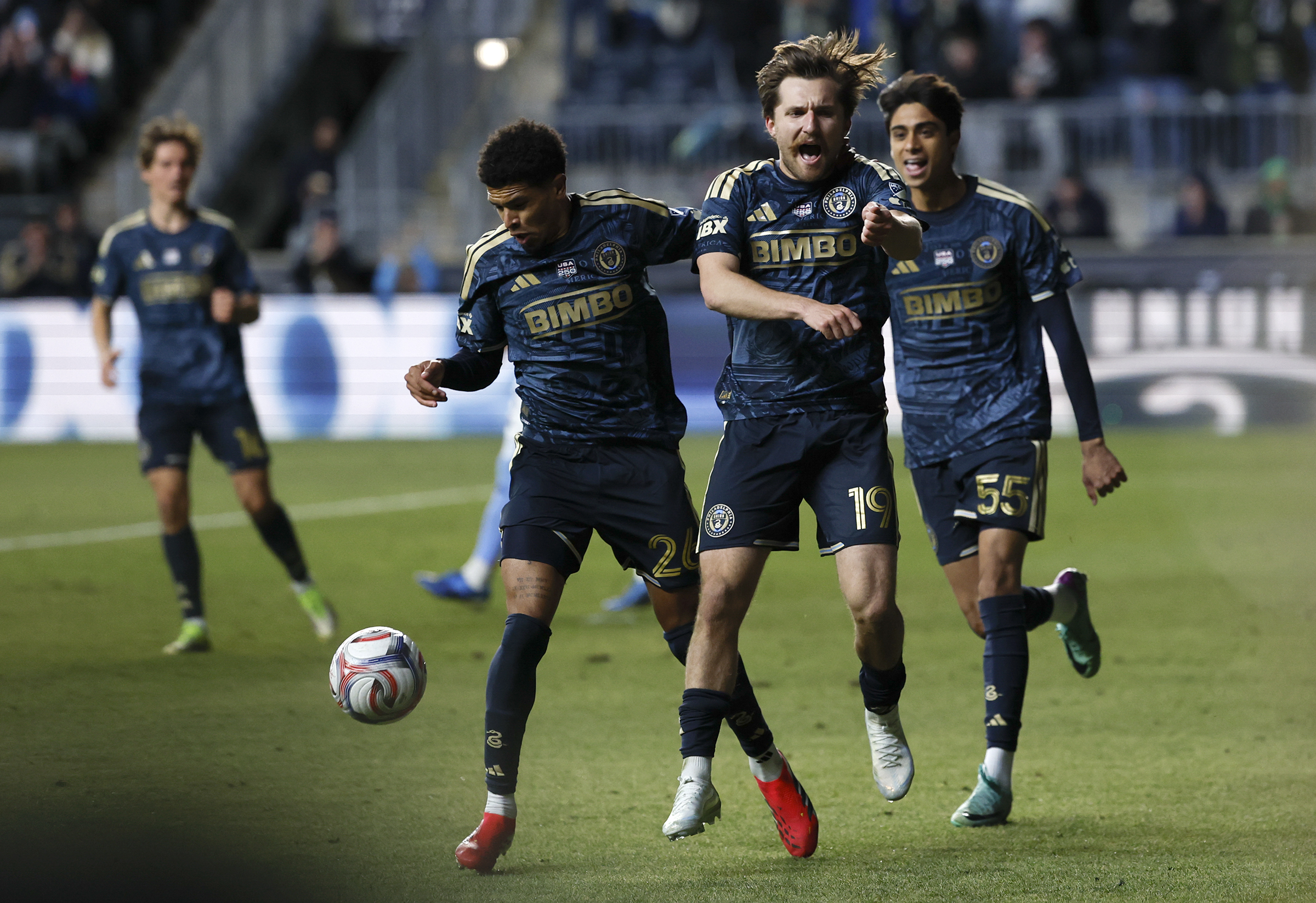
Union midfielder Indiana Vassilev (center) celebrates his second half penalty shot goal with teammates defender Nathan Harriel (left) and forward Sal Olivas against New York City FC on Sunday.
His transition period is over and Vassilev has remained a consistent part of the team’s lineup. Vassilev, a native of Savannah, Ga., has grown an affinity for Philadelphia.
“I love Savannah, Georgia, that’s where I was born and raised,” said Vassilev. “I love the South but Philly’s not too bad of a city. I actually really enjoy it. It’s firmly second in the places I’ve lived. I’m a Savannah guy, but Philly is cool and our fans are incredible.”
It’s still early to tell what the Union will amount to this season. The team bid farewell to several core players that were instrumental in bringing the club its second Supporters’ Shield last season and are trying to get new faces to jell into its system. But Vassilev said all of that comes in training, where according to him, those sessions can be even tougher than some matches.
“Our training environment is super, super intense,” he said. “Sometimes, you know, we fight, we argue, we kick each other. But of course, that’s what makes us so good. Our internal competition is so high. I think that’s, you know a big part of our success.”
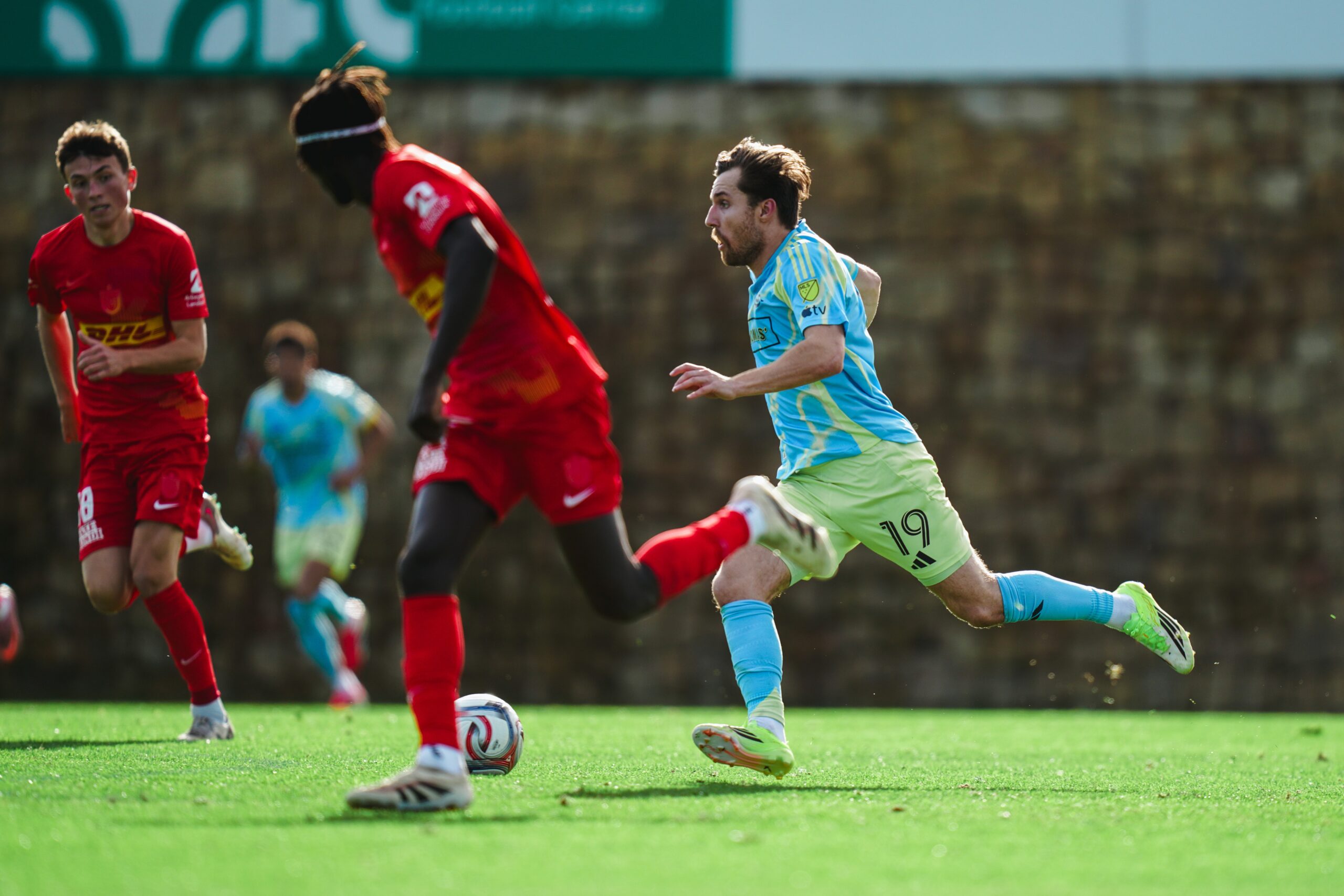
Indiana Vassilev (right) in action for the Union against FC Nordsjælland in a preseason soccer game at the Marbella Football Complex in Marbella, Spain.
That internal competition will need to intensify as the Union look to shake off an 0-2 start to its MLS campaign. Next up, San Jose visits Subaru Park on Saturday (7:30 p.m., Apple TV), before the second round of the Concacaf Champions Cup action resumes against Liga MX giant Club America on March 10 (7 p.m., FS2).
“He’s one of our 10s and I think all of our 10s play a special role in the system,” said Carnell, referring to the responsibilities of a playmaking midfielder. “Our 9s (forwards) and our 10s, I think they have to give so much more, and sometimes they don’t receive all the output that they’re giving, right?
“But I think we saw last season that over the course of the season, you’ve seen what benefits the whole team and what gets us, you know, some silverware and hopefully a deep run in the playoffs. His skills and leadership is a big part of that and some one that we believe has the tools to help us get there.”
Jabari Walker looked up at the scoreboard Wednesday night and accepted that the margin between the 76ers and lowly Utah Jazz remained close down the stretch.
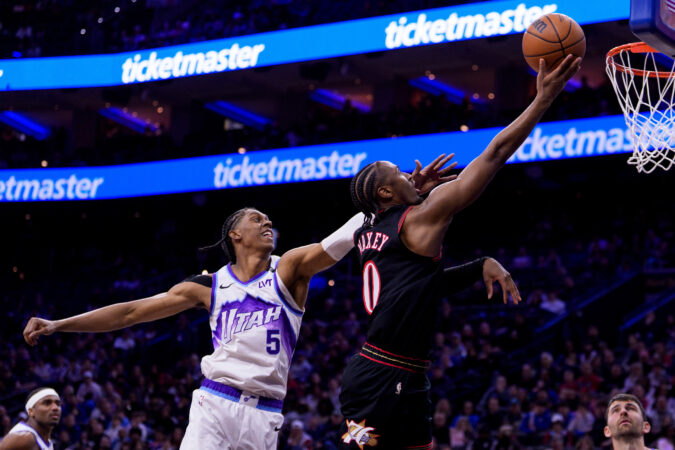
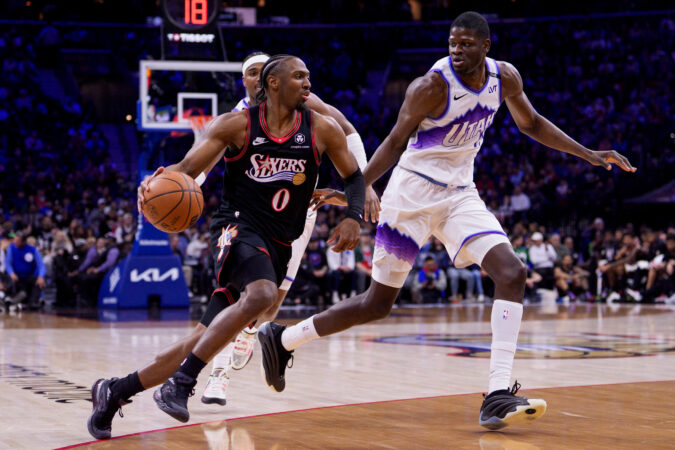
So the Sixers tightened up defensively, allowing just two points in the final 4 minutes, 51 seconds. They got a go-ahead scoring burst from Quentin Grimes in the final minute. And the Xfinity Mobile Arena crowd collectively exhaled when Utah’s Kyle Filipowski missed a three-pointer as the Sixers to escaped with a 106-102 victory.
The Sixers were severely shorthanded Wednesday, with rookie standout VJ Edgecombe (back bruise) joining the list of absent players that already included Joel Embiid (oblique strain), Paul George (suspension), and Kelly Oubre Jr. (illness). Yet they were facing an 18-44 Utah squad that recently was fined by the NBA for blatantly “tanking,” or attempting to lose to improve its draft lottery odds.
That Wednesday’s matchup went down to the wire could be characterized by outsiders as uninspired at best and flirting with an inexcusable disaster at worst. Coach Nick Nurse and All-Star point guard Tyrese Maxey, however, offered a different viewpoint.
“That’s a hell of a win, considering all the guys out,” Nurse said. “… We don’t care what they look like. Just pick off a win here and there.”
Added Maxey: “I’m living with where we’re at. I’m happy with where we’re at right now.”
The “win is a win” cliche is particularly true right now for the 34-28 Sixers, who cling to the sixth seed in a bunched-up middle of the Eastern Conference standings with 20 games remaining. The team that finishes in that spot will advance directly to the playoffs’ first round, while the teams that finish seventh through 10th must earn a spot through the play-in tournament.
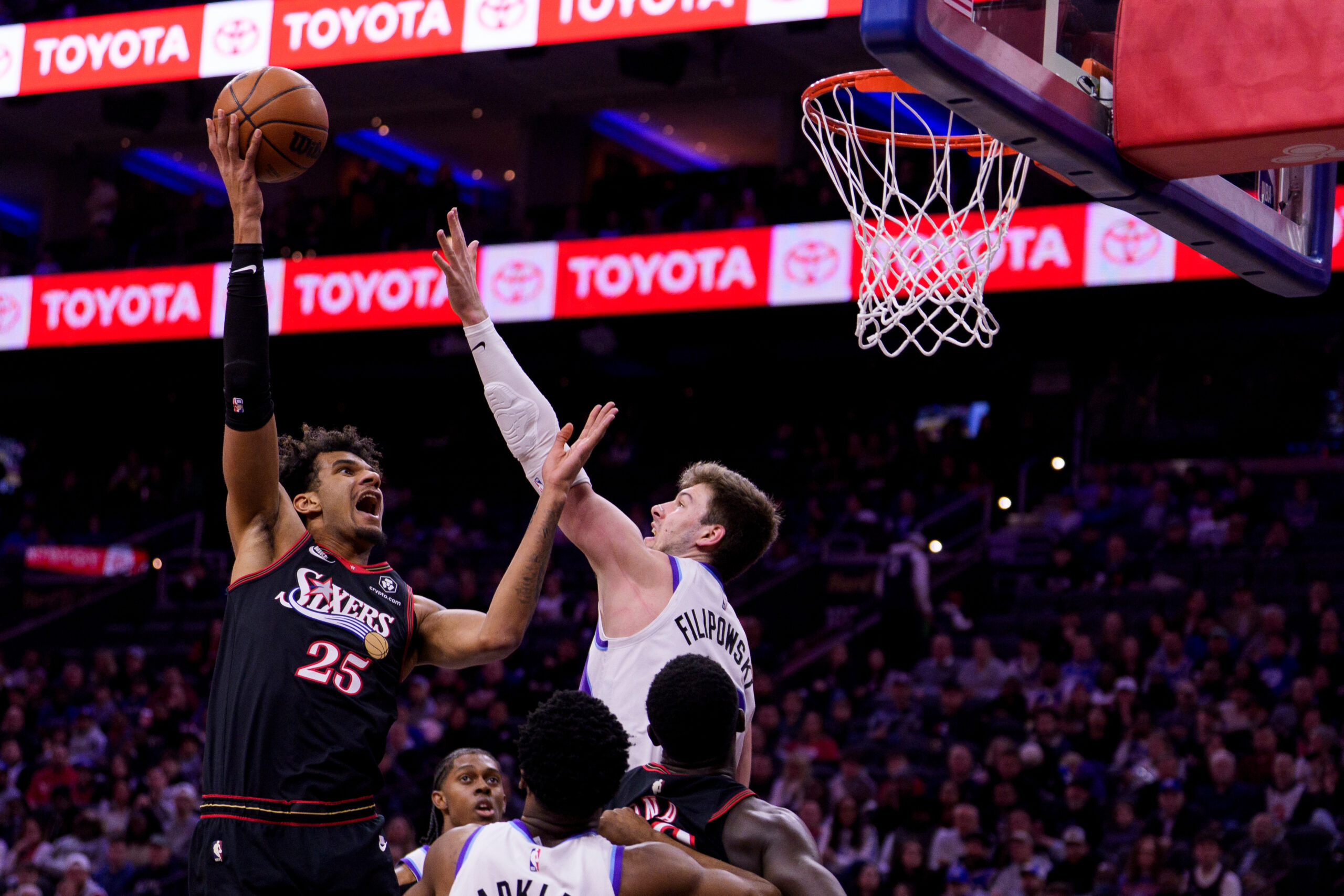
The Sixers’ Dom Barlow goes up for a shot against Utah’s Kyle Filipowski on Wednesday.
Following Tuesday’s 40-point faceplant against the San Antonio Spurs, which Grimes described as “kind of embarrassing,” the Sixers’ lead in the standings dwindled to a half-game on the seventh-seeded Orlando Magic and eighth-seeded Miami Heat. Wednesday’s victory bumped that margin back up to a full game and moved the Sixers to 1½ games behind the fifth-seeded Toronto Raptors.
The Sixers are 4-4 since the All-Star break, including impressive victories at the Minnesota Timberwolves and against the Heat but a horrid loss at the New Orleans Pelicans. All of those games have been played without George, whose suspension spans 10 more games, while six have been missing Embiid, whose recent injuries also include a stress reaction in his shin.
Maxey acknowledged after Tuesday’s blowout that the vibes have been up and down since the trade deadline, even directly addressing that he and the Sixers “miss” Jared McCain, who was dealt to the league-leading Oklahoma City Thunder.
“You can’t dwell on that,” Maxey said. “You’ve got to focus on the people that’s in this building. These are the people that are going to be with you for the rest of this season. …
“If you want to try to make a run at doing something special, then you’ve got to focus on that.”
After getting smacked by the Spurs, a home matchup against the Jazz appeared to be an ideal bounce back opportunity. Yet two nights prior, Utah hung with the Denver Nuggets, widely considered a Finals contender, before losing, 128-125. And after deliberately resting key players in prior fourth quarters, coach Will Hardy subbed his starters back in for Wednesday’s stretch run against the Sixers.
“They’re playing hard, and they’re playing the right way,” Maxey said of the Jazz. “You’ve got to actually beat them. They’re not just going to let you.”
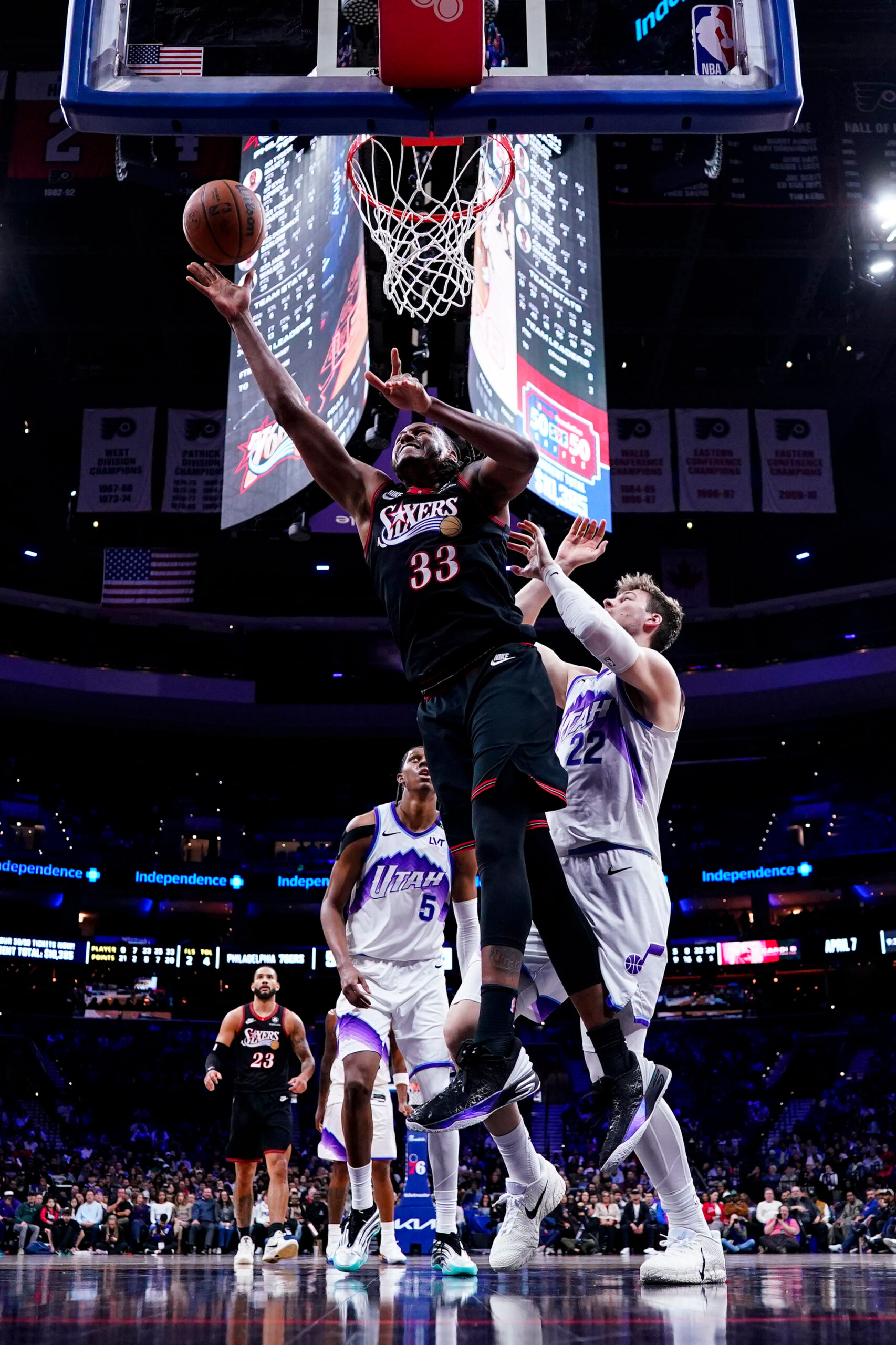
The Sixers’ Jabari Walker had 22 points and 10 rebounds against the Jazz.
The Sixers needed a massive boost from reserve big man Jabari Walker, who made his first six shots (including 4-of-4 from three-point range) and finished with 22 points and 10 rebounds. And legitimate guard minutes from recent two-way signee Tyrese Martin (eight points, two rebounds, two assists), whose play Nurse described as “just a little shy [of] excellent,” and Kyle Lowry, the pseudo-assistant coach who previously had played seven games all season.
Nurse started Adem Bona at center instead of Andre Drummond, who typically had held that role when Embiid was out but has been ineffective recently. Grimes became the Sixers’ closer, breaking down his defender to convert a layup and draw a foul on a nearly identical play.
“My teammates have a lot of trust in me,” Grimes said, “and my coaches have a lot of trust in me to make those plays.”
The Sixers’ opponents get significantly tougher from here. Up next is a Saturday trip to the Atlanta Hawks, who have already beaten the Sixers three times and have motivation to claw out of the East’s No. 10 seed. During the next week, the Sixers also will visit the Cleveland Cavaliers, who acquired former Sixer James Harden at the trade deadline and have ascended to the East’s fourth seed, along with the top-seeded Detroit Pistons.
As a tuneup for that rugged stretch, Wednesday’s outing against the Jazz was far from aesthetically pleasing. Yet the shorthanded Sixers won to keep their grip on the sixth seed, and Maxey will live with that for now.
“Guys took it personal at the end,” Walker said. “We knew how important this was for us, and we acted as professionals and got it done. …
“When it was crunch time, we locked in. We’ll learn a lot from this, but this was a big one of us.”
Although Flyers general manager Danny Brière has the experience of just two NHL trade deadlines in his pocket, if this year is anything like the previous two, expect the Flyers to make some noise.
The buzzer will go off on the wheelin’ and dealin’ at 3 p.m. on Friday, and Brière has already made one deal this week, sending Lehigh Valley of the American Hockey League defenseman Roman Schmidt to Minnesota for NHL/AHL forward Boris Katchoul.
Is it the start of something? Potentially, with players such as Rasmus Ristolainen rumored to be on the move.
Here’s a look back at what Brière did in the week leading up to the previous trade deadlines.
What did the Flyers do at the 2024 NHL trade deadline?
The 2024 trade deadline was at 3 p.m. March 8.
March 6 at 3:48 p.m.
Brière was patient, waiting weeks before finally accepting an offer for defenseman Sean Walker. Two days before the deadline, he acquired a 2025 first-round pick and center Ryan Johansen from the Colorado Avalanche for Walker and a 2026 fifth-round selection.
The Flyers initially agreed to retain 50% of the final year and a half of Johansen’s contract as a trade sweetener, but he was immediately placed on waivers for assignment to the AHL. The forward, citing a hip injury, refused to report to Lehigh Valley and never played for the Flyers and was placed on unconditional waivers Aug. 20, 2024, “for the purpose of terminating his contract due to a material breach.”
Walker played 18 regular-season and 11 playoff games for the Avalanche before signing with the Carolina Hurricanes on July 1, 2024. The 2025 first-round pick was packaged in the first-round swap at the draft that helped the Flyers snag Jack Nesbitt at No. 12.
Erik Johnson played just 39 games for the Flyers after getting acquired from Buffalo at the 2024 trade deadline.
March 8 at 2:12 p.m.
In a bit of a surprise move, the Flyers acquired Brière’s old teammate Erik Johnson, a defenseman, from the Buffalo Sabres for a 2024 fourth-round pick.
Johnson played 39 games for the Flyers. Eventually, the Sabres traded the pick to the Winnipeg Jets, who took Kevin He, the highest-drafted player born in China in NHL history at the time.
March 8 at 2:47 p.m.
The Flyers acquired forward Denis Gurianov from the Nashville Predators for Wade Allison.
A second-rounder in 2016, Allison played 75 games across three seasons for the Flyers but never really stuck at the NHL level. Gurianov played four games in Philly and, as an unrestricted free agent, opted to sign with the Kontinental Hockey League that summer.
What did the Flyers do at the 2025 NHL trade deadline?
The 2025 trade deadline was at 3 p.m. March 7.
March 7 at 12:45 p.m.
The Flyers acquired a third-round pick in the 2027 NHL draft from the Los Angeles Kings for forward Andrei Kuzmenko and a 2025 seventh-round pick. Philly retained 50% of his salary.
Kuzmenko was acquired by the Flyers at the end of January of that season from the Calgary Flames with Jakob Pelletier for Morgan Frost and Joel Farabee. He played in seven games, registering five points, and the pending unrestricted free agent looked like someone the Flyers could re-sign.
Instead, he was shipped out weeks later and signed a one-year deal on June 30, 2024, to stay in Hollywood. He has 18 goals and 42 points in 74 regular-season games and three goals and six points in six playoff games across his tenure with the Kings.
March 7 at 4 p.m.
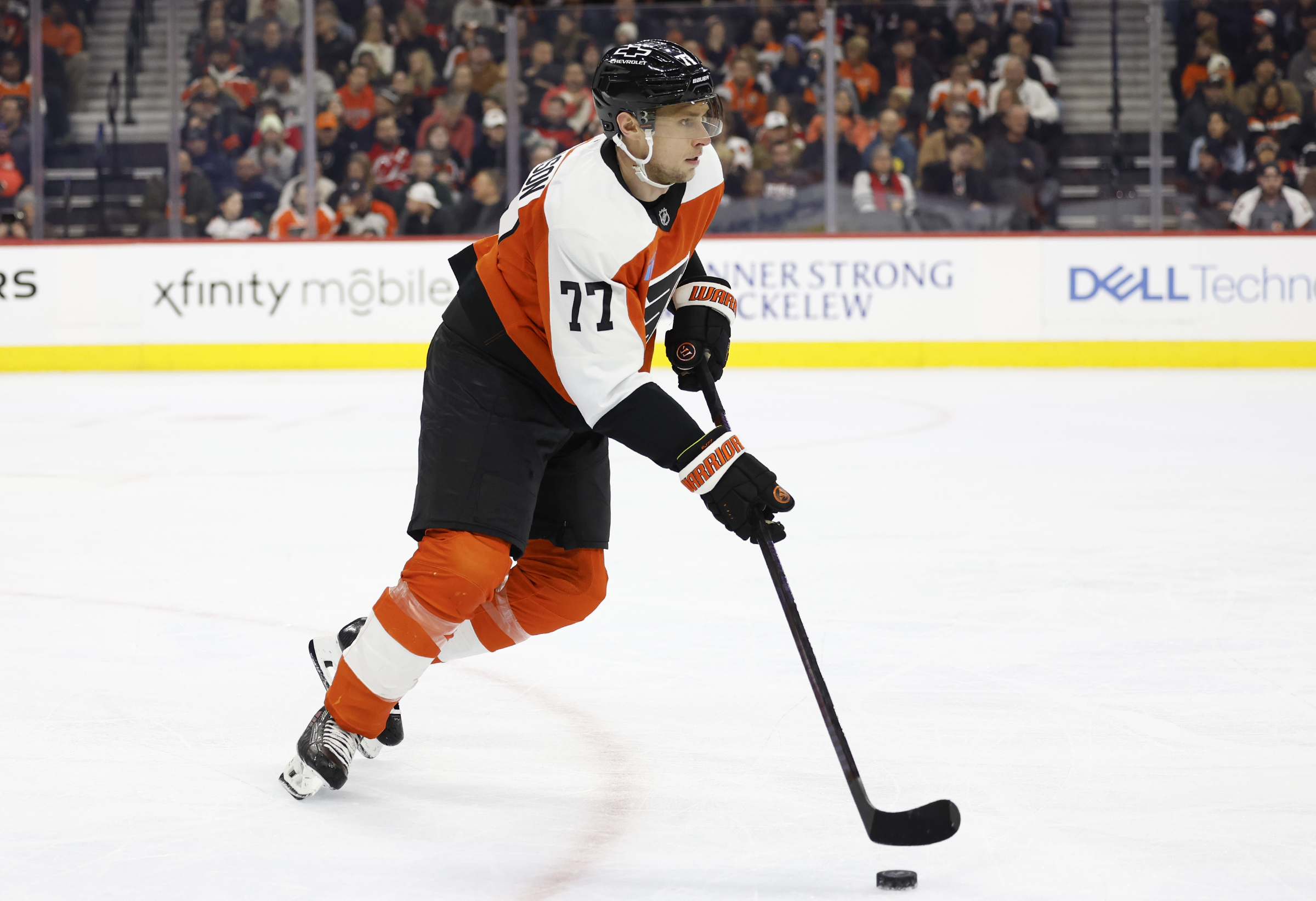
Although the trade had to be registered with league by 3 p.m. the Flyers officially announced at 4 p.m. that they acquired forward Nikita Grebenkin and a first-round pick in the 2027 NHL draft from the Toronto Maple Leafs for Ontario native Scott Laughton, a 2025 fourth-round pick, and a 2027 sixth-round pick.
In the deal, the Flyers retained 50% of Laughton’s salary, which comes off the books after this season. Toronto’s first-round pick is Top 10 protected; however, the Leafs are in a free fall, so, because they owe the Boston Bruins their 2026 pick from the Brandon Carlo deal, it could slide to 2027, as the 2026 pick is top-five protected.
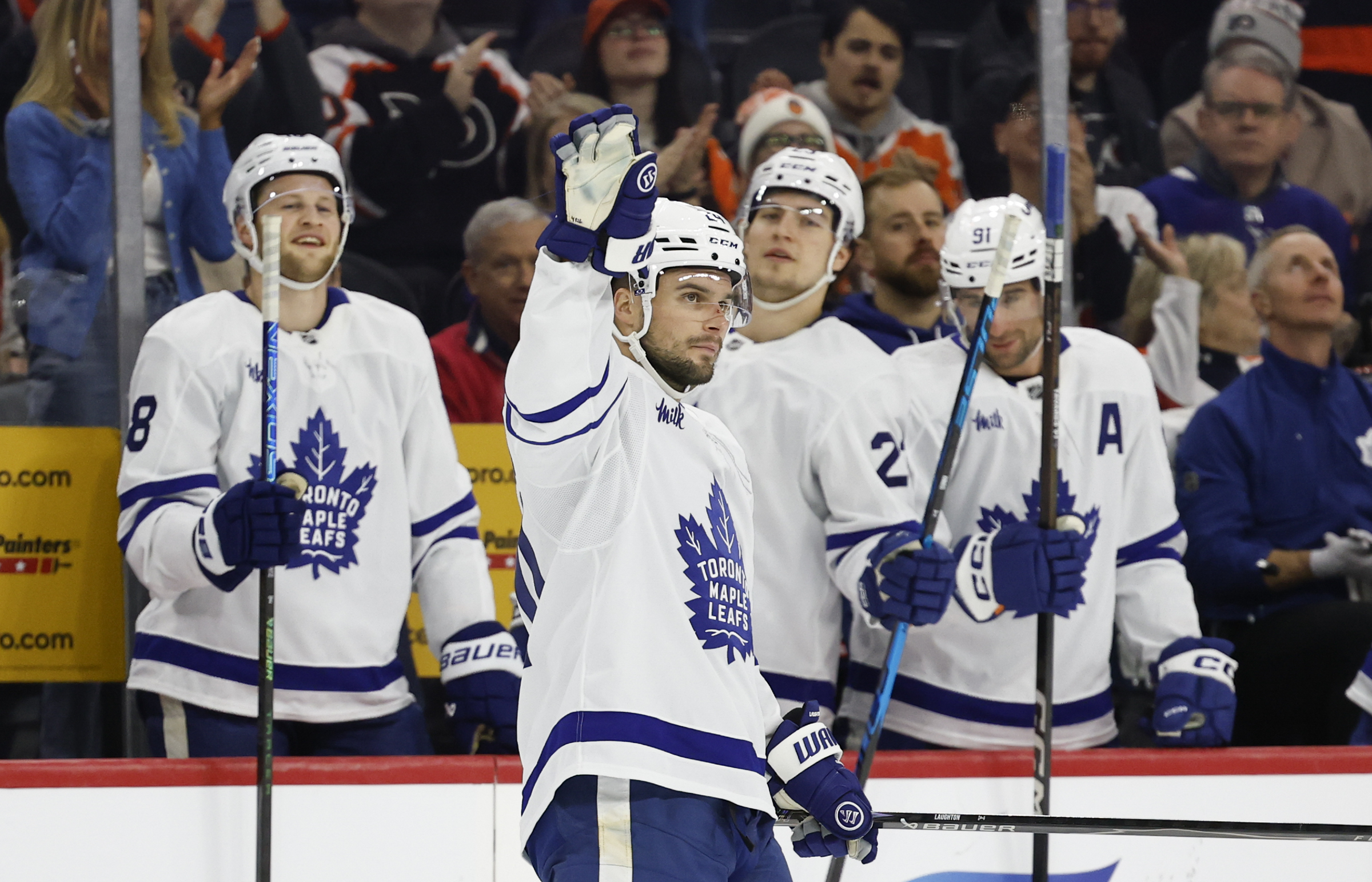
Scott Laughton (center) has 16 points in 63 regular-season games with the Maple Leafs since being traded by the Flyers at last year’s trade deadline.
Even before the trade was announced, the team was taking down banners at the Flyers Training Center with Laughton on them. A depth center, Laughton is rumored to be on the trade block now in Toronto — he was held out of the lineup on Wednesday for roster management — and has 16 points in 63 regular-season games and two assists in 13 playoff games with the Maple Leafs since being acquired.
Grebenkin played in the minors last season after being acquired, collecting seven points in 11 regular-season games and four points in seven playoff games for the Phantoms. He has spent the entire 2025-26 season with the Flyers and has 12 points in 46 games, including his first NHL goal, which tied the game at 4 in a 5-4 shootout win against the Montreal Canadiens on Nov. 4.
Smith, who was a pending unrestricted free agent, played 10 regular-season games for Lehigh Valley last season, registering a goal and an assist, and played in seven playoff games. He signed a professional tryout agreement with the Carolina Hurricanes for the 2025-26 training camp, earning a two-way deal in early October.
STATE COLLEGE, Pa. — It’s common for college football players to follow their head coach to a new gig. But it’s not always a given.
When Brian Kelly left Notre Dame to become LSU’s head coach in 2022, only one player followed him to Death Valley. It was a silent showcase of support.
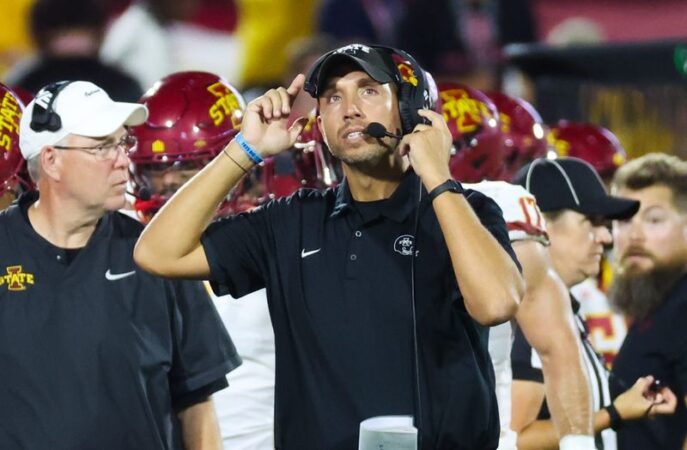
So when Matt Campbell left Iowa State in December to become Penn State’s coach, his players didn’t have to follow him. But they did, and they did so in droves.
“It just speaks to the type of guy Coach Campbell is,” said junior safety Marcus Neal Jr., an Iowa State transfer. “It shows that players really want to play for him. He’s a really good guy. I look at him as another father figure. I can go to him for anything, ask him for anything.”
Twenty-four Iowa State players transferred to Penn State, which marked the largest contingent of players in the 2026 transfer window to follow their head coach to a new school. The next closest team had 18 players follow former North Texas coach Eric Morris to Oklahoma State.
Why did so many Cyclones follow Campbell to Happy Valley? The answer is simple: He is who he says he is.
“Campbell is a great people person. He was the main reason I went to Iowa State,” said redshirt junior offensive lineman Trevor Buhr. “He’s genuine. When he says something, he does it. He is one of the best leaders I’ve ever met. He’s honest, and he’s true to himself. There’s no what-ifs. You’re getting what you’re getting from him, and it’s been consistent [since] the first time I talked to him.”
Campbell led the Cyclones to a 72-55 record during his 10-year run as coach. But it was his off-the-field leadership — what he does beyond football — that drove dozens of players and staff members to Penn State.
The 46-year-old coach has an open-door policy. Players can come and go from his office as they please. Those who played for him at Iowa State said his genuine personality and accountable leadership style made them comfortable to go to him, football-related or not.
That open-door policy extended to his house in Ames, Iowa, where his players would run pickup basketball games or eat a meal with other teammates.
And believe it or not, Campbell can hoop, too.
“Coach Campbell is a big relationships guy,” said senior defensive back Jamison Patton. “It’s an open-door policy. All the guys go over [to his house], and we know we’re going to hoop, hang out, get some food, just be around each other. The more we’re around each other, the more our relationship grows as a team, and especially with the coaches.”
Added Neal: “[Campbell] got a nice little shot on him. He gets picked up. You ain’t going to pick somebody up if they’re not good.”
Before Campbell officially accepted the Penn State job, he met with his Iowa State players to inform them of his decision and offered a heartfelt explanation on why he decided to leave. It was a moment of raw emotion that was difficult for Campbell, but he wanted to say goodbye in person.
Several players said that final meeting replicated the type of person Campbell is. And it’s why a large portion of his players knew instantly they would follow their coach to Happy Valley.
“There was never a doubt in my mind that I was going to go somewhere else,” said redshirt senior defensive back Jeremiah Cooper, who played four seasons under Campbell at Iowa State. “Once I hit the portal, I knew I was coming to Penn State. Coach Campbell changed my life, not just as a player, but as a man. He grows young men into men, and that’s all I can ask for as a coach and as a leader.”
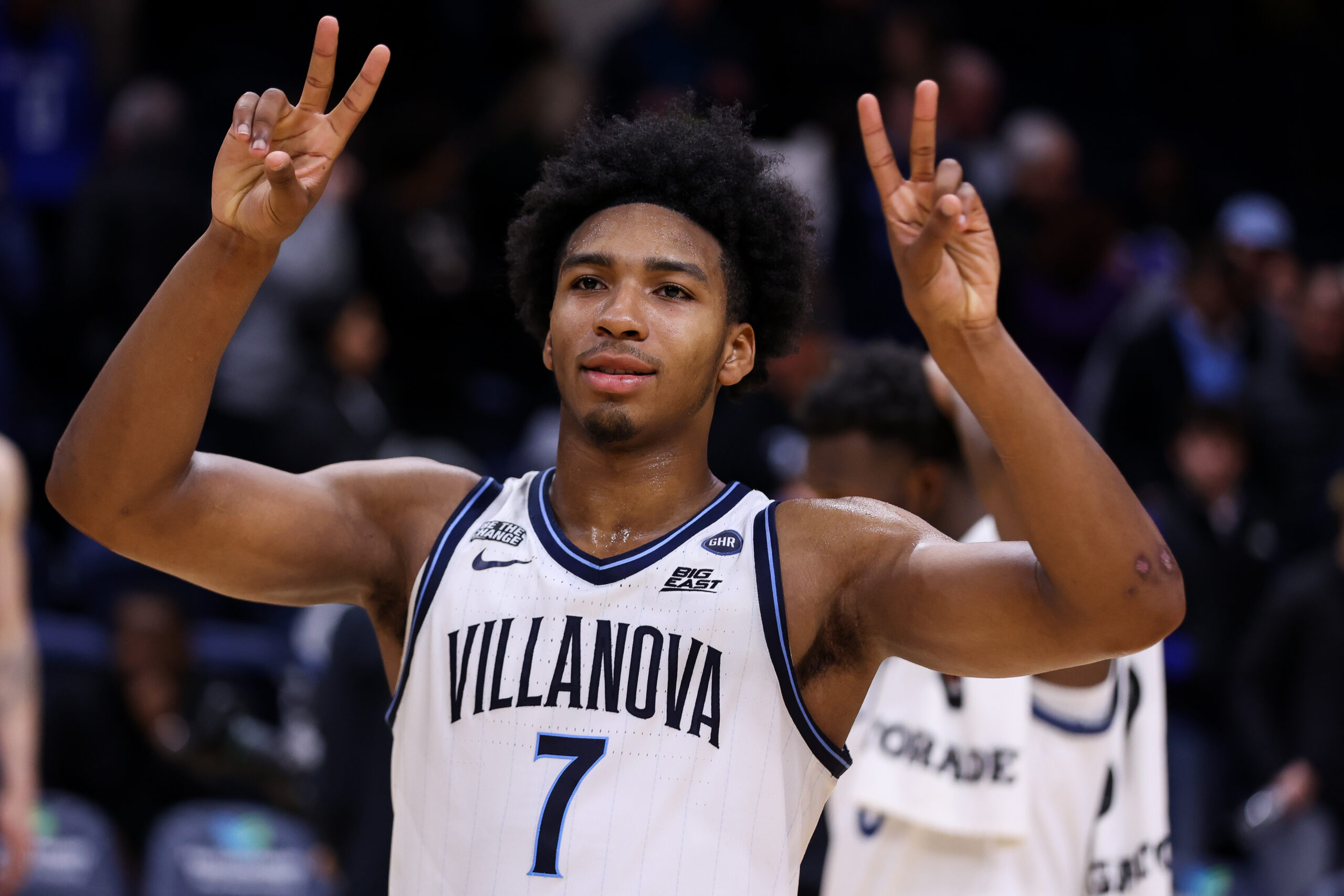
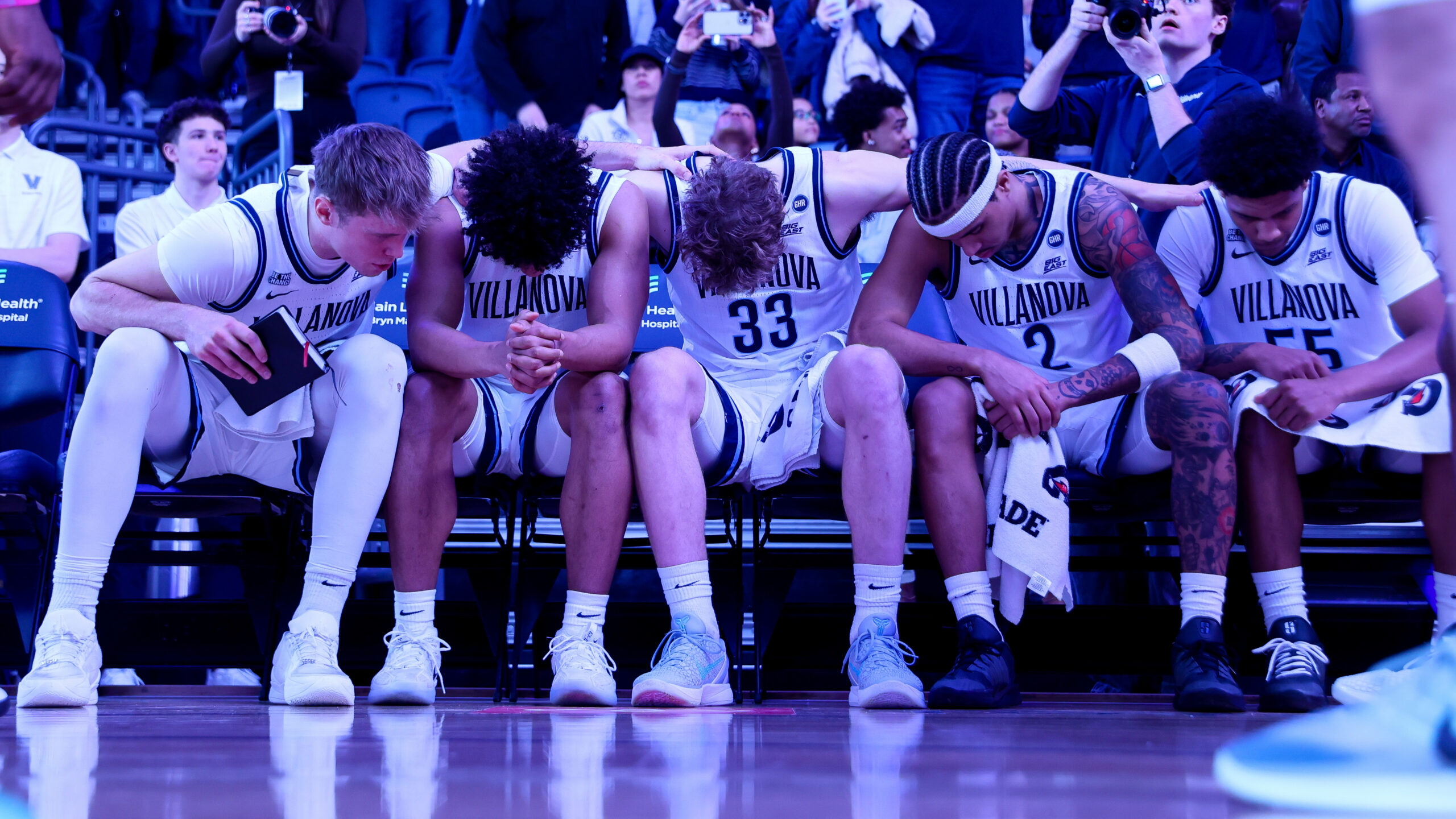
Villanova entered Wednesday with a 9-3 road record, but the last true road game of the season for the Wildcats came with a new wrinkle, and a new starting lineup after Matt Hodge suffered a season-ending ACL injury Saturday night vs. St. John’s.
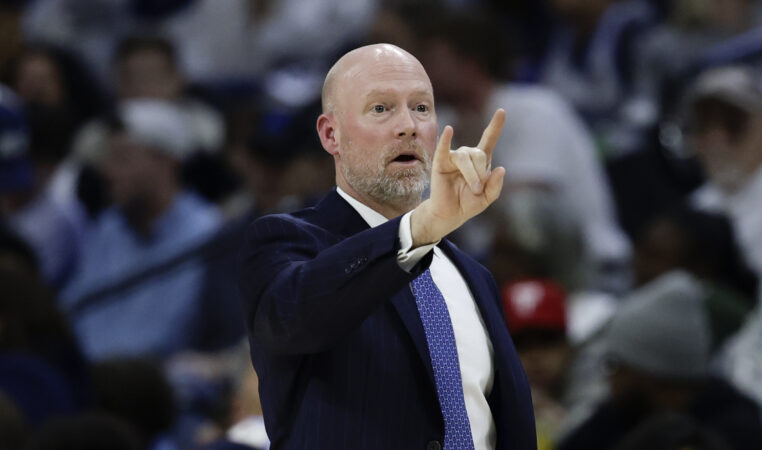
Villanova coach Kevin Willard said Tuesday that the injury hurt the Wildcats, but “it’s not catastrophic.” They had the right answers to make up for missing their sixth-leading scorer, Willard thought, and while a sloppy first half didn’t make him look like much of a prophet, a much better second half helped Villanova turn a tight game into a rout and an eventual 76-57 win over DePaul.
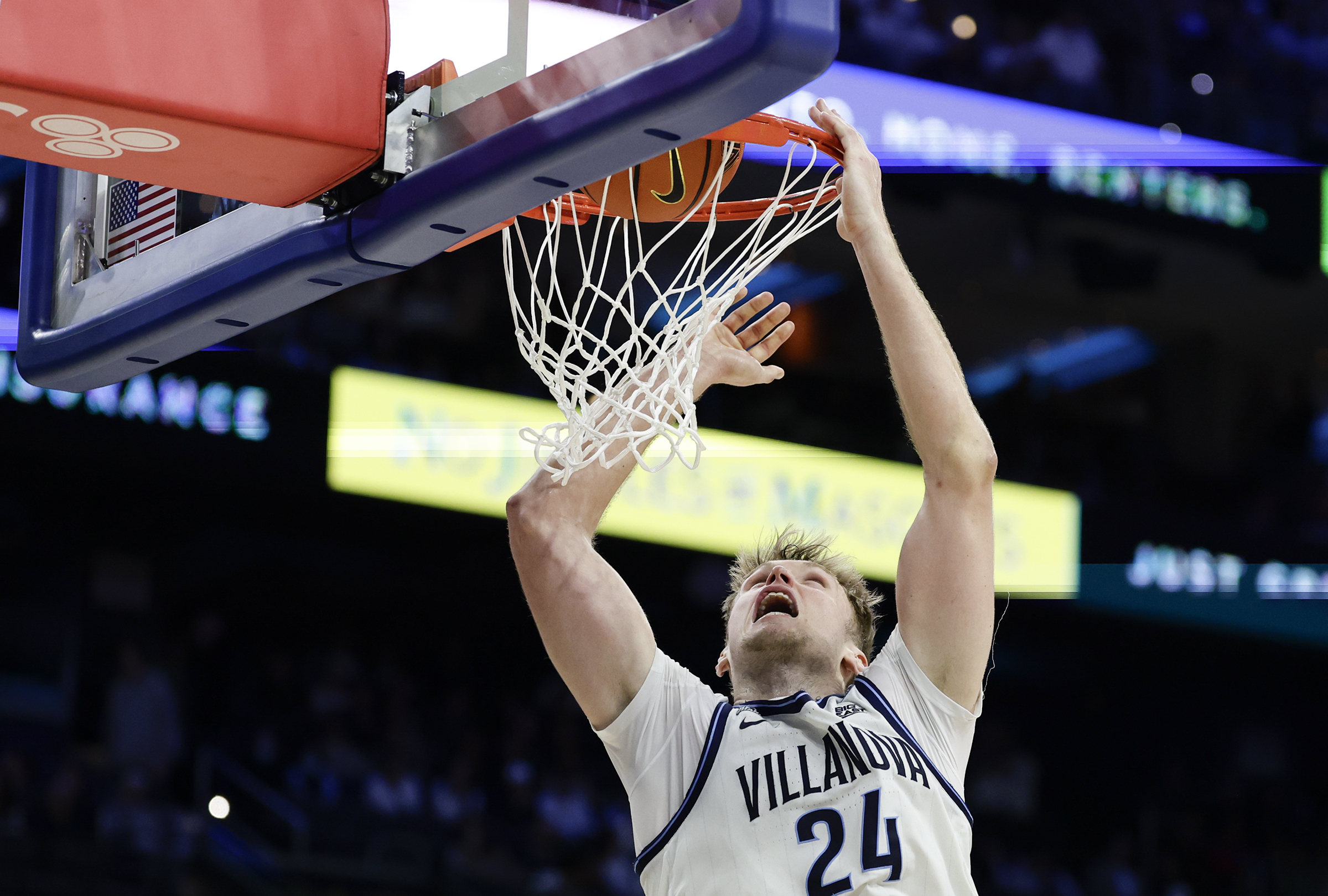
The Wildcats improved to 23-7 on the season and 14-5 in the Big East behind big nights from Tyler Perkins (20 points, six rebounds), Duke Brennan (15 points, 12 rebounds), and Devin Askew (14 points, five rebounds). It was their eighth conference road win, their most since 2016.
DePaul is the second-worst scoring offense in the Big East and ranks seventh of the 11 teams in three-point shooting (33.1%).
It’s on the defensive end where Hodge’s absence in the starting five won’t be felt in a major way. That’s not to say Hodge, a redshirt-freshman, hasn’t held his own, but inserting Malachi Palmer in the lineup gives Villanova more versatility. Palmer is two inches smaller than Hodge at 6-foot-6 and allows the Wildcats to effectively switch more, which was especially effective against DePaul’s pick-and-roll offense.
Malachi Palmer gave Villanova a major boost on the defensive end Wednesday night.
Villanova was aggressive on the ball defensively and created 16 DePaul turnovers, leading to 22 points off those turnovers. Villanova got its own good looks in the first half but shot just 27.6%. The Wildcats survived a slow start because they forced seven turnovers and limited DePaul to just 24 points. It was the third time this season Villanova allowed fewer than 25 points in an opening half.
In the second half, Willard deployed more matchup zone and dared DePaul to try to shoot its way to a win. The Blue Demons were just 2-for-16 from three-point range, and many of those were either well-contested or forced into the hands of low-percentage shooters.
Three Wildcats had at least two steals. Perkins had four, while Bryce Lindsay and Acaden Lewis had two apiece.
New-look rotation
Palmer, as expected, got the start and tied his season-high with 29 minutes, a mark he reached for the first time Saturday night in part because of Hodge’s injury early in the second half.
Palmer, a sophomore, looked a little jittery to start but settled in during the second half. He finished with 10 points on 3-for-9 shooting (1-for-4 from deep) and added five rebounds.
Askew was the first player off the bench as usual. Then freshman guard Chris Jeffrey and backup center Braden Pierce, a redshirt-freshman. Hodge’s absence will force Villanova into some awkward rotations when Palmer needs to rest. Willard had brief stretches with one big man and four guards on the floor, a unit that he won’t be afraid to roll with depending on matchups because of Perkins’ physicality and rebounding ability.
Villanova forward Duke Brennan finished with 15 points and 12 rebounds against DePaul.
What Villanova didn’t show Wednesday was a two-big look with Brennan and Pierce both on the floor. Willard said he’ll be willing to go to it, and the Wildcats have practiced it some, but DePaul did not have a ton of size to force Villanova to counter.
Brennan played 35 minutes for the fourth time in a game that ended in regulation. Palmer played 19 of the 20 minutes in the second half while Pierce (two minutes) and Jeffrey (one minute) played sparingly. They finished with five and three minutes, respectively. An eight-man rotation was effectively a six-player rotation. It worked fine Wednesday night, and may work fine again Saturday in the regular season finale vs. Xavier, but tougher tests await in the postseason.
No Stanford
Hodge being out meant Zion Stanford, a West Catholic graduate and Temple transfer, potentially was in line for more of a role. The junior had seemingly fallen out of the rotation and hadn’t played since Feb. 4.
But Stanford was not with the team in Chicago. He practiced Wednesday, according to sources, but didn’t travel with the team and the nature of his absence was unclear.
Willard told the broadcast after the game that he “got after” his team a little bit in two days of practice following what was the worst Villanova loss in 29 years.
Willard attributed the missed shots and carelessness offensively to still dealing with the emotional letdown of having Hodge out. But things settled down after halftime. The Wildcats changed up their defense and were much more efficient on the offensive end.
It’s no surprise that it was Askew, Brennan, and Perkins — a graduate student, a senior, and a junior — who helped lead the way in the second half.
One more, then the tournaments
The regular season ends Saturday with a noon home game vs. Xavier. A win would give Villanova 15 conference wins for the first time since 2021-22, Jay Wright’s final season. That possibility may be a little less daunting considering Xavier’s Tre Carroll, the Big East’s leading scorer (18 points per game), went down with an injury Tuesday night. His status for Saturday is not yet known.
The Wildcats are on their way to the NCAA Tournament for the first time since 2022, but first is the conference tournament next week in New York, where Villanova will be the No. 3 seed. They open up in the final game of the quarterfinals next Thursday (9:30 p.m.) vs. the winner of the No. 6 vs. No. 11 matchup.
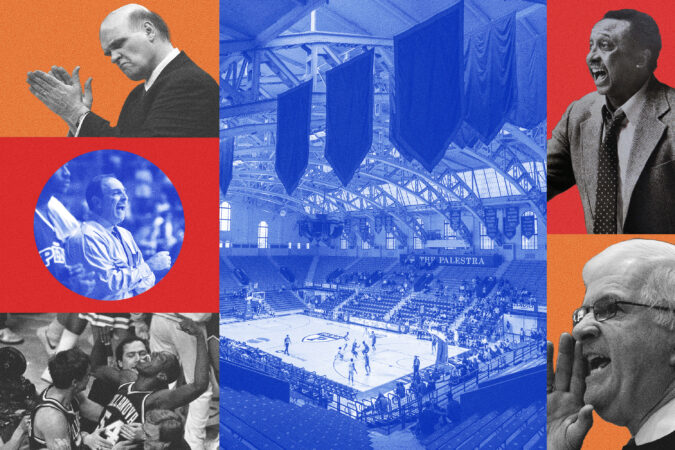
If you grew up in Philly, then you vividly remember when The Palestra was the Mecca for all things college basketball. Days spent patiently waiting for 7 p.m. weeknight tip-offs to see Temple, Villanova, St. Joseph’s, La Salle, and Penn battle it out for Big 5 supremacy.
Shoutout to Drexel, but the heyday we’re speaking of predates its inclusion into this storied city rivalry.
Those days were also synonymous with some of those programs being among the elite in NCAA basketball. When the allure of a school was about how many times they had gone dancing into March Madness, and not about how much they were offering.
So in today’s college hoops landscape, how big is the Big 5, really? That’s what columnist Mike Sielski unpacks in his latest piece that tips off (pun intended) our Thursday rundown.
You’ll need that umbrella again today as rain is in the forecast, but we’re expected to see temps reach into the upper 40s across the region.
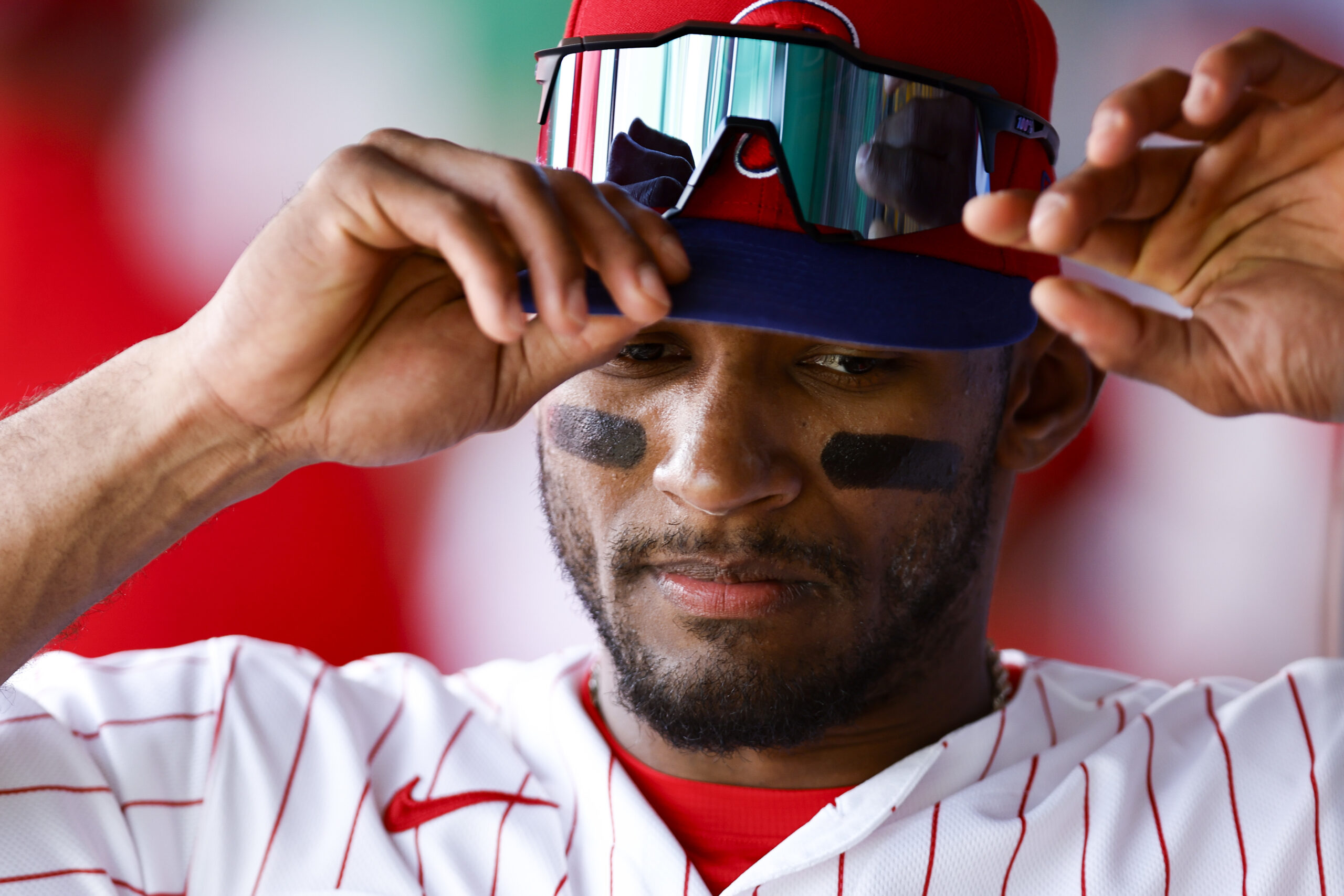
Phillies center fielder Johan Rojas is facing an 80-game suspension for reportedly taking a banned substance.
Johan Rojas was back in Phillies pinstripes less than 24 hours after he’d reportedly tested positive for a performance-enhancing drug. On Wednesday, a source told the Inquirer that the center fielder plans to appeal what’s anticipated to be an 80-game suspension.
Until then, he’s in Clearwater, working out and even taking part in Grapefruit League games. He was in the lineup for Wednesday’s exhibition game against Team Canada.
🏀 Applauding: Merrimack freshman guard and Father Judge alum Kevair Kennedy was named the men’s basketball player of the year in the Metro Atlantic Athletic Conference.
⚽ Sharing: Wrexham, the English soccer team owned by Philly’s Rob Mac, will play an exhibition game at Subaru Park on Aug. 2.
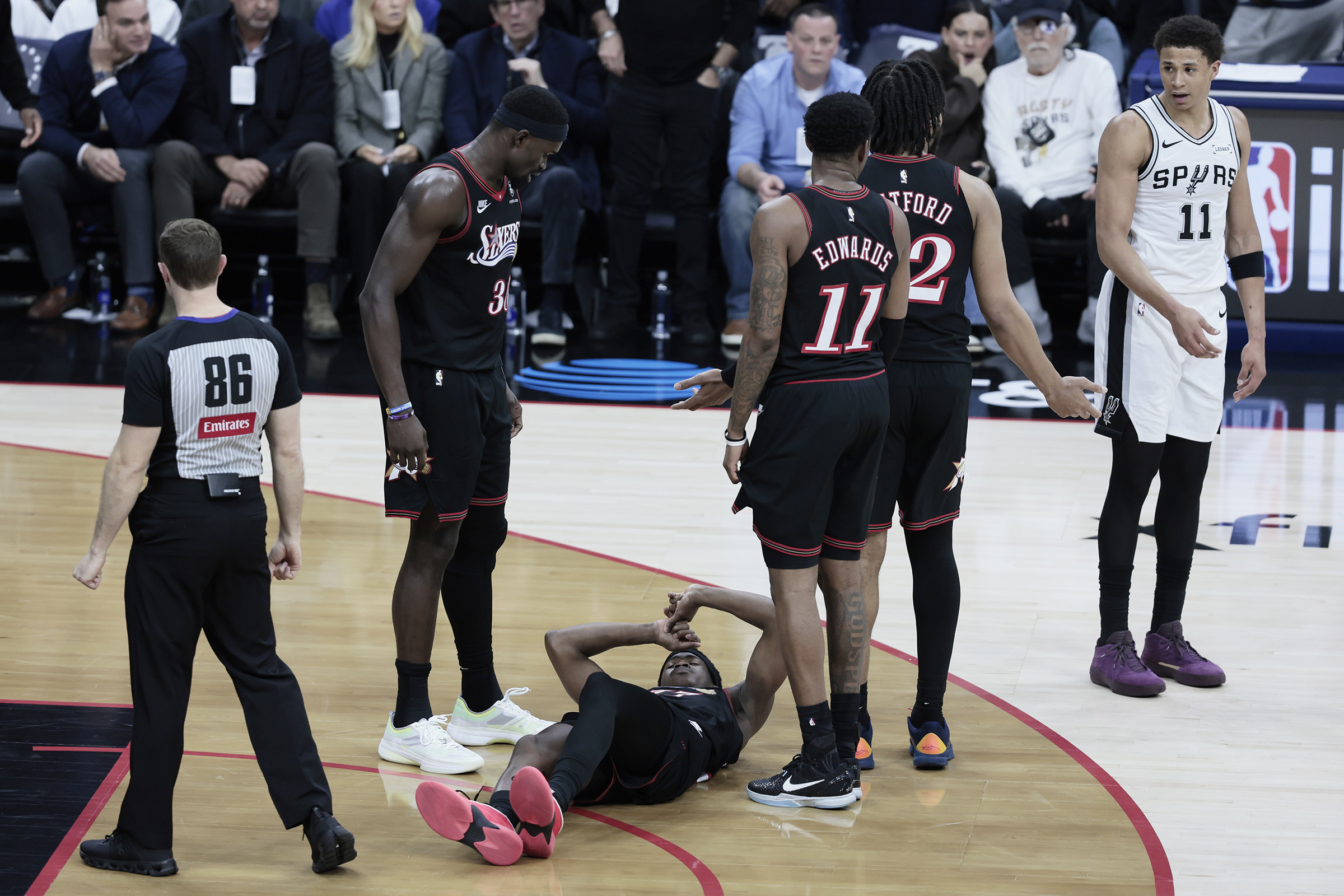
To make matters worse, the Sixers lost rookie VJ Edgecombe to a back injury during Tuesday’s loss.
There’s no shame in losing a game. In fact, there’s sometimes no shame in losing a game by 40. But there’s plenty shame in losing a game by 40 when you don’t play hard. That’s what the Sixers did this week, creating history in the process as the first team to lose three home games in the same season by at least 40, according to basketball-reference.com. The Inquirer’s Marcus Hayes takes a deeper look at the Sixers’ dubious milestone and the lack of effort that got them there.
The Sixers bounced back from an ugly showing on Tuesday by beating the “tanking” Utah Jazz on Wednesday night behind Tyrese Maxey’s 25 points.
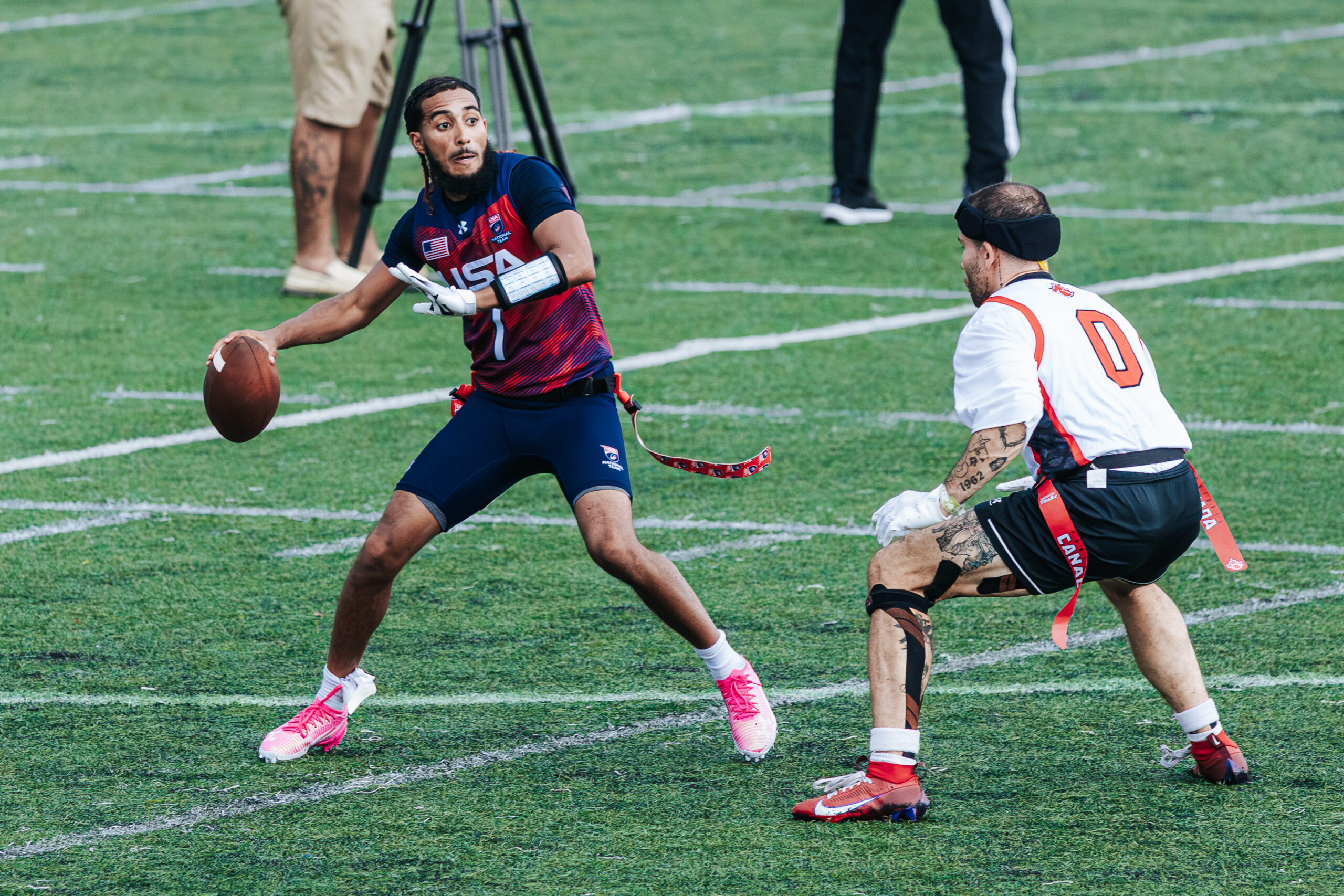
A flag football event under the Fanatics umbrella will look to relocate from its intended site in Saudi Arabla, due to escalating tensions in the Middle East.
Amid heightened tensions in the Middle East, Fanatics might opt to move its Flag Football Classic from Riyadh, Saudi Arabia, to somewhere in the United States, according to Front Office Sports.
Kevin Hart is scheduled to host the event organized by Tom Brady, which was said to feature Saquon Barkley along with other NFL notables. The event aims to raise awareness of the sport, which will be part of the Summer Games in 2028.
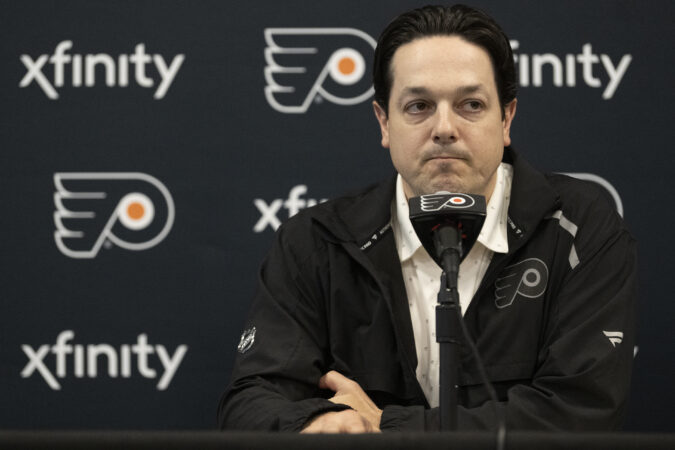
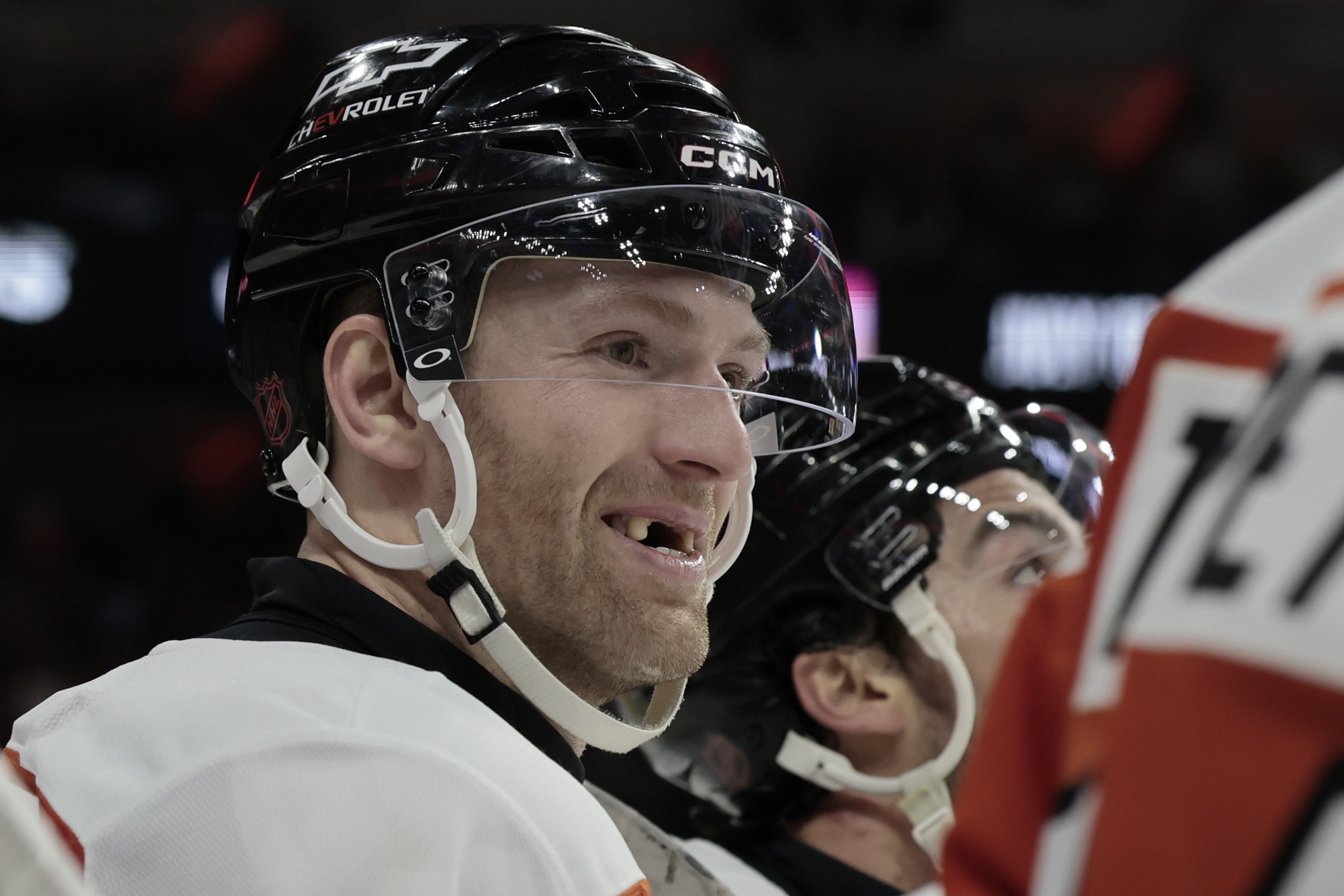
Flyers captain Sean Couturier is looking to remain all smiles ahead of Friday’s NHL trade deadline.
Phones will definitely be on silent for many players around the NHL, and for members of the Flyers, it’s no different.
The NHL trade deadline is fast approaching, with the final horn sounding on Friday at 3 p.m. But while everyone speculates and debates what Flyers general manager Danny Brière and management will do, the players are trying to stay in the moment.
“Focus on what we do on the ice and play some good hockey, try to win some games. Those are things that we don’t control,” said Flyers captain Sean Couturier. “It’s more you guys [the media] that talk about it and make big stories out of it. In the locker room, it’s not something we really talk about. We’ve got other things to focus on.”
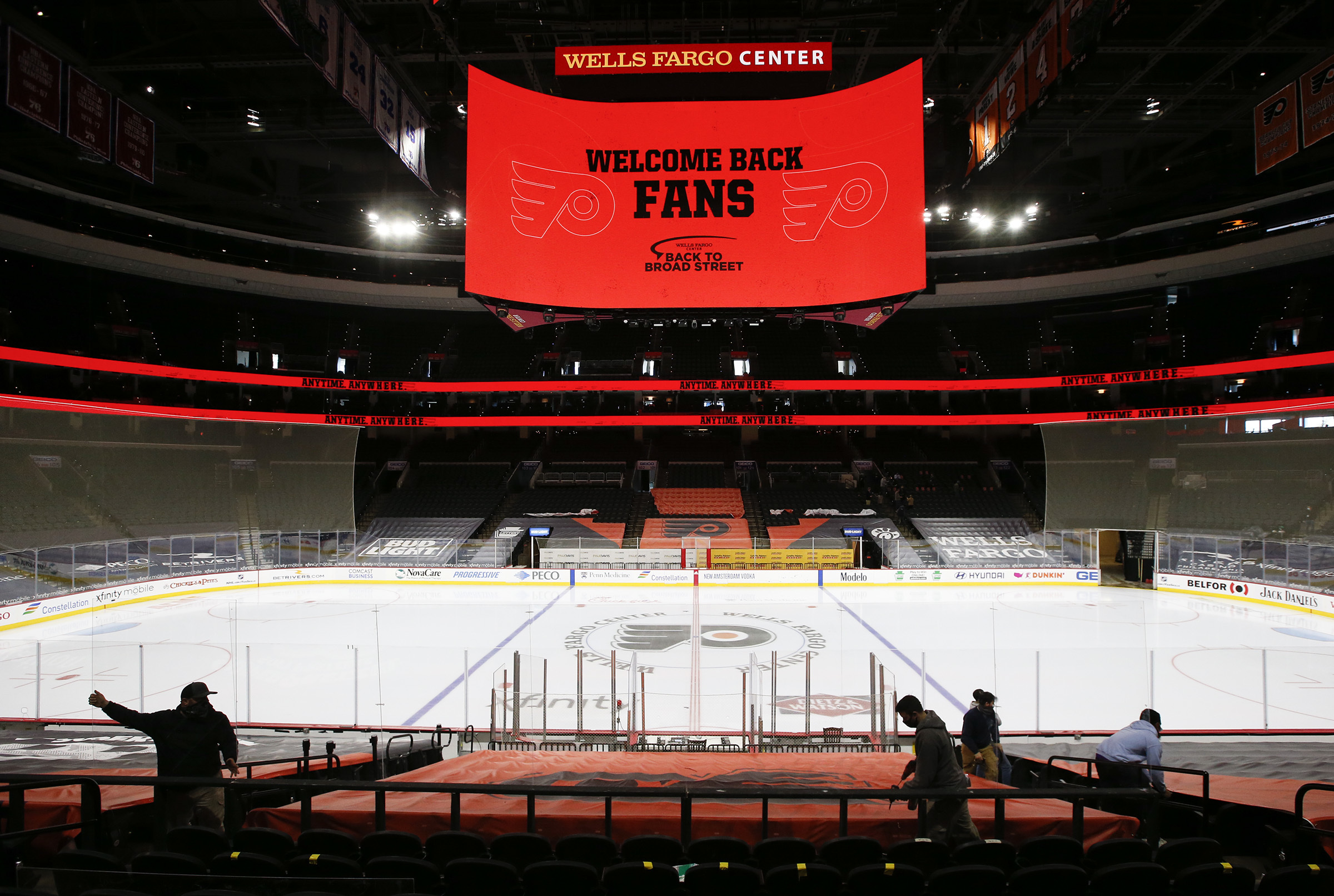
Wells Fargo Center workers prepare the arena for fans on Friday, March 5, 2021.
March 5, 2021: The Wells Fargo Center (now Xfinity Mobile Arena) began preparations to welcome just 3,100 fans back to the 21,000-seat arena after a 359-day shutdown of events due to the COVID-19 pandemic.
Standings, stats, and more
Want to know more details from last night’s Sixers-Jazz game? Here’s a place to access your favorite Philadelphia teams’ statistics, schedules, and standings in real time.
What you’re saying about the Phillies
We asked: What are your thoughts on Rojas’ potential suspension and how it will impact the Phillies?
Why didn’t we keep Harrison Bader! — Joanne G.
I have not pictured Rojas as a major part of the Phillies outfield plans. Pinch runner or defensive sub as needed was going to be his role. Why are so many of the players who continue to think they can get away with taking these banned substances Latino? Are they getting bad advice regarding this in their native countries? — Everett S.
Given their history of violations, the Phillies need to include a special PED clause in all their contracts, in addition to the standard MLB boilerplate. As for Rojas, it’s time to trade or release him. He’s always been too cool for school. And now the cool kid is a druggie. Let’s move on. — Tom O’D.
Johan Rojas’ suspension is unfortunate, but not devastating to the Phillies. He was a non-factor the second half of last year, finishing the season in AAA, and it was uncertain if he would make the big league team this year. This places much more pressure on rookie Justin Crawford. — Bob C.
We compiled today’s newsletter using reporting from Alex Coffey, Gina Mizell, Mike Sielski, Ariel Simpson, Devin Jackson, Jonathan Tannenwald, Marcus Hayes, Jackie Spiegel, Gustav Elvin, and Ryan Mack.
By submitting your written, visual, and/or audio contributions, you agree to The Inquirer’s Terms of Use, including the grant of rights in Section 10.
Thanks for reading. Here’s hoping we prepared you for all those watercooler sports conversations today. Enjoy them; we’ll see you tomorrow. — Kerith
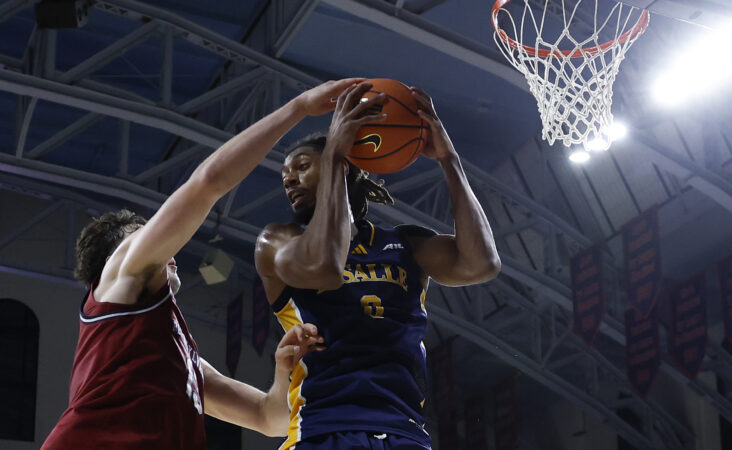
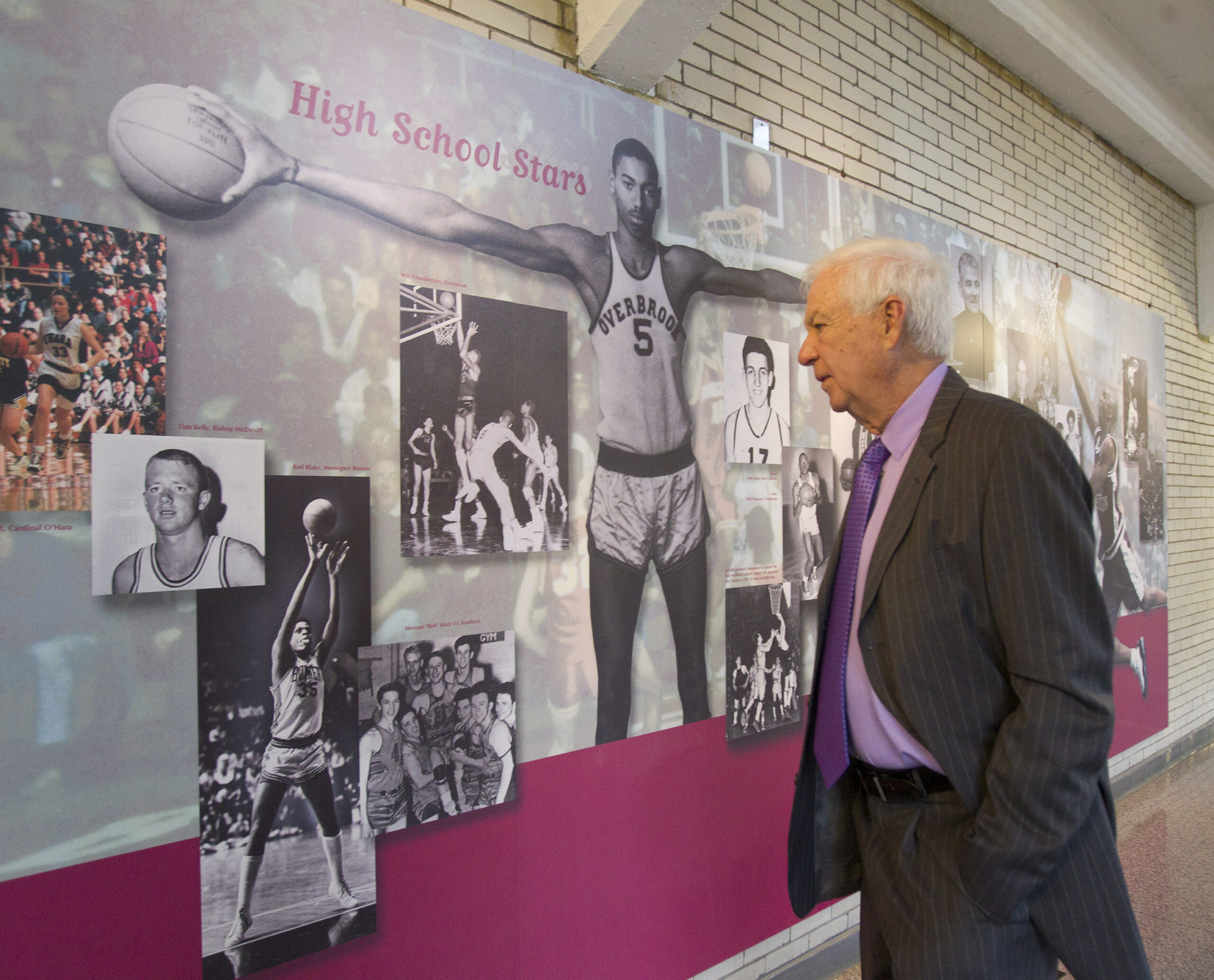
One afternoon in early December, Bill Raftery and Tim Legler, both La Salle alumni, returned to campus for an hourlong panel discussion about their careers in sports media, only to have the conversation shift to a topic with broader implications.
It was a point of pride for the university to welcome back Raftery, who has been college basketball’s preeminent analyst for more than a quarter-century, and Legler, who has reached a comparable status at ESPN with his insights into the NBA. But 33 minutes into the event, the first question from an audience member wasn’t about the origins of Raftery’s trademark catchphrases (The kiss! … Onions! … Laundry on the deck!) or Legler’s game-film breakdowns.
Bill Raftery, now broadcaster, graduated from La Salle and was inducted into the Big 5 Hall of Fame.
“Can we bring the Big 5 back to its glory?” a man in the auditorium asked. “Because it was a national thing, right? It wasn’t just a Philly thing.”
These days, most people who follow college basketball, if they’re being honest, have to acknowledge that the Big 5 isn’t much of anything anymore. The round-robin rivalries among La Salle, Penn, St. Joe’s, Temple, Villanova, and more recently Drexel have lost most of their juice.
That white-hot competition, fueled by the benign hatred that only proximity and familiarity can ignite, used to define Philadelphia hoops. It has cooled. Now, just one school, Villanova, enters each season with the baseline expectation that it will qualify for the NCAA Tournament, and the pipeline of local recruits that once sustained these programs has all but dried up.
window.addEventListener(“message”,function(a){if(void 0!==a.data[“datawrapper-height”]){var e=document.querySelectorAll(“iframe”);for(var t in a.data[“datawrapper-height”])for(var r,i=0;r=e[i];i++)if(r.contentWindow===a.source){var d=a.data[“datawrapper-height”][t]+”px”;r.style.height=d}}});
Three of the six schools — Drexel, La Salle, and Penn — don’t have a Philadelphia native on their rosters. Interest in the city series has plummeted. A 2022 doubleheader at the Palestra drew an official attendance of just 3,300 people. And the Big 5 Classic, conjured in the aftermath of that alarming display of indifference, hasn’t revitalized the rivalries or restored any prestige to them.
While this season has seen an uptick in the programs’ quality of play — Villanova is virtually assured of an at-large bid, and Penn, St. Joe’s, and perhaps Drexel could be strong enough to win their conference tournaments — that improvement hasn’t been enough to stem the dismal tide.
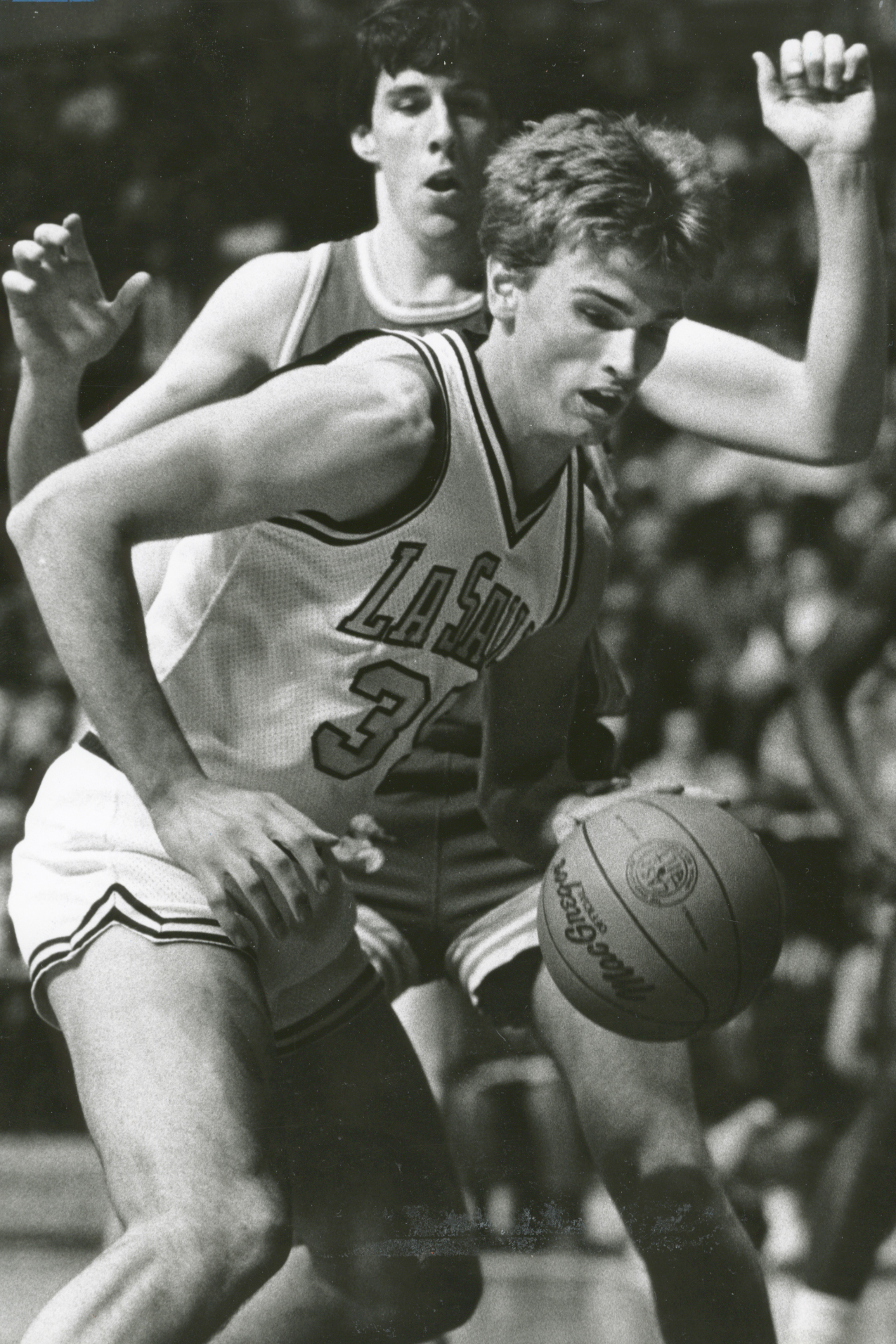
Tim Legler, who led La Salle to the 1988 NCAA Tournament, said the Big 5 was once a “transformative” environment to play in.
For their part, the panelists at La Salle mustered some nostalgia but weren’t optimistic. Legler, who grew up in Richmond, Va., remembered attending a Palestra doubleheader on a recruiting trip and marveling at the atmosphere: the streamers, the cheering, the chanting.
“I turned to my parents and said, ‘This is the environment I want to play college basketball in,’” he said. “It was literally that transformative.”
Still, he had no solution for salvaging the Big 5, and neither did Raftery, who suggested that smaller programs throughout the NCAA would soon be casualties of this new era of college basketball.
“They’re trying to freeze [out] a lot of programs and leagues,” he said, “and I can envision maybe two or three conferences. They’ll run the whole thing, and the networks will pay for it. That’s the way it is.”
It’s convenient to point to the sport’s lurch into modernity — into the era of Name, Image, and Likeness; of pay-for-play; of the permeable membrane of the transfer portal — as the cause of the decline. And it’s true: With the exception of Villanova, which is ensconced in the Big East and supported by engaged donors with deep pockets, college hoops’ evolution has made everything more difficult for the other, more vulnerable programs in the city. But this train has been rumbling down the tracks for a while, and its arrival should compel a reevaluation of the Big 5’s history, of the decisions and unstoppable forces that led it here, to the brink.
To those Baby Boomers and GenXers weaned on the Big 5’s traditions, it’s surely incomprehensible and saddening to hear Raftery contemplate a world without it. But if the institution as Philadelphia knew it is fading away — and it appears to be, if it hasn’t already — the proper question isn’t Can it be saved? That one has been asked and is on its way to being answered.
No, the better questions to chew on are these: How did the Big 5 survive, and at times thrive, as long as it did? And did any of the attempts over the years to preserve it and its identity actually contribute to its downfall?
Villanova has become the only school in the Big 5 that enters each season with the baseline expectation that it will qualify for the NCAA Tournament.
The seeds of rebirth and decline
It’s tempting to picture the Big 5’s history as an unbroken string of unforgettable nights at the Palestra, great teams playing great games inside a gym packed to its uppermost corners with 9,000 people, give or take a few rascals who managed to sneak in for free. There were hundreds of such nights, to be sure. But it’s striking to put that past into a wider context and see how much certain changes and trends fostered and then jeopardized everything that made the Big 5 wonderful and unique.
Those fond memories often gloss over a relatively fallow period for the Big 5 during the 1970s. Villanova had three consecutive losing seasons from 1972 to 1975. Temple went 16-37 over the ’74-75 and ’75-76 seasons and qualified for the NCAA Tournament once in an 11-year span from 1972 to 1983. St. Joe’s went 8-17 in ’74-75, the first of six straight seasons in which the Hawks missed the NCAAs. Penn was the exception, and La Salle held its own, but a Daily News back-page photo captured the overall listlessness perfectly: Harry “Yo-Yo” Shiffern, the lovable vagrant who was the city series’ unofficial mascot, fast asleep during a Palestra doubleheader.
The Big 5 was in a collective funk, and it took a few pivotal developments to snap it back to prominence and position it to flourish further.
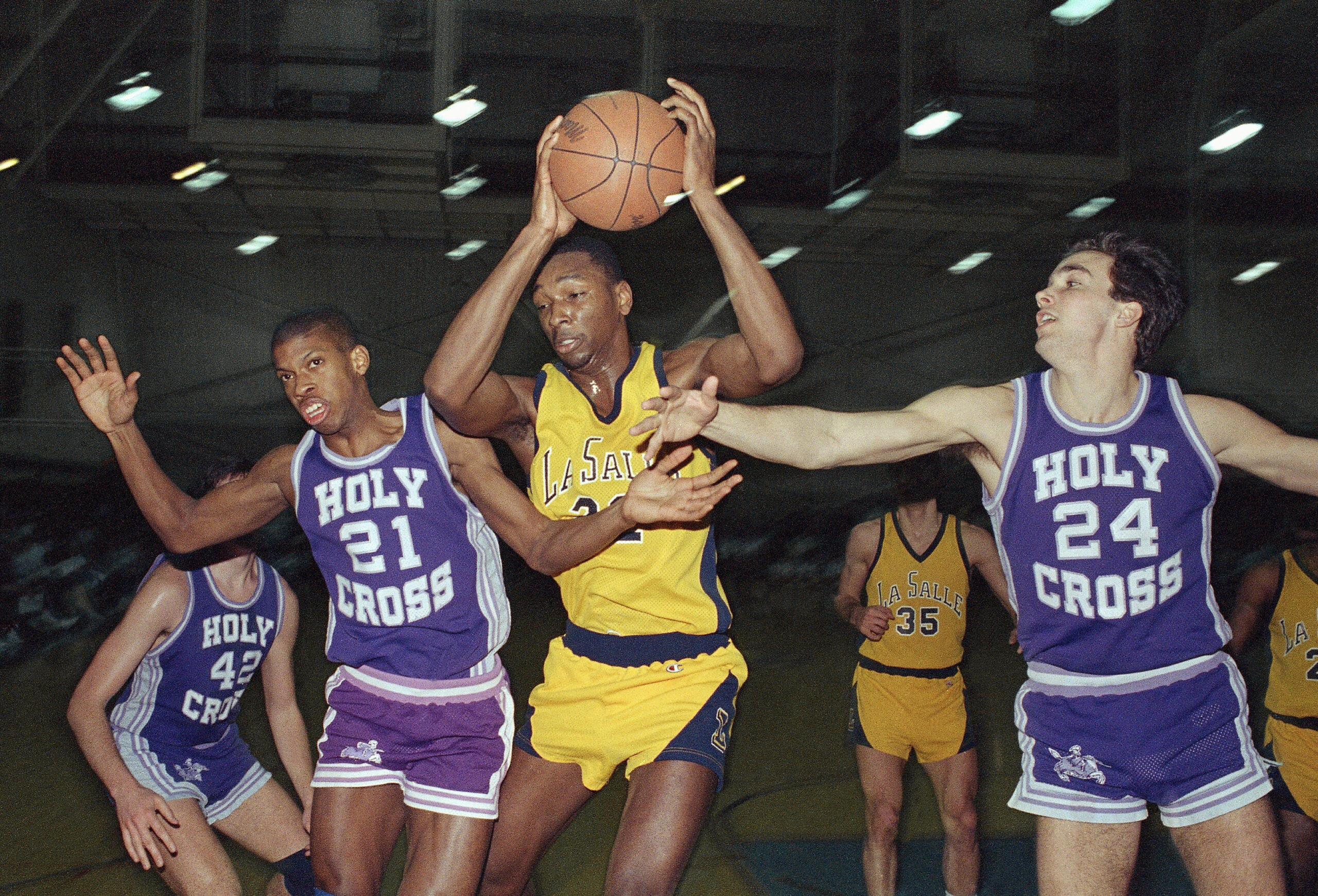
Lionel Simmons (center) is the Big 5’s all-time leading scorer and fifth in NCAA history with 3,217 career points.
College basketball’s landscape was flatter then. The NCAA Tournament went to 32 participants in 1975 and to 40 in 1979, and many of the qualifying programs were mid-majors. During the ’70s, each of these teams reached the Final Four: Jacksonville, St. Bonaventure, New Mexico State, Western Kentucky, Marquette, UNC Charlotte — and, in ’79, Penn. The Quakers upset North Carolina, Syracuse, and St. John’s before Magic Johnson and Michigan State pulverized them in the national semis. But their run was the most improbable of the decade, and their timing was impeccable.
The following season, after a star turn at the Pan-American Games in Puerto Rico, La Salle’s Michael Brooks was named the Kodak National Player of the Year. As terrific as Brooks’ senior campaign was — he averaged more than 24 points and 11 rebounds, scoring 51 points in a triple-overtime loss at BYU — his candidacy for the honor was buoyed by Indiana’s Bob Knight, who had coached him at the Pan-Am Games and touted him to reporters.
“If I were allowed to start my own team tomorrow,” Knight said in January 1980, “the first person I would pick would be Michael Brooks.”
Such praise from the best, the most famous, and the most temperamental coach in the country carried weight, and Knight’s words elevated the reputations of both Brooks and Philadelphia basketball. That ascendance continued in March 1981, when St. Joe’s, under Jim Lynam, won the East Coast Conference tournament, knocked off top-ranked DePaul in the second round of the NCAAs, and advanced to the regional final before losing to the eventual national champs: Knight, Isiah Thomas, and the Hoosiers.
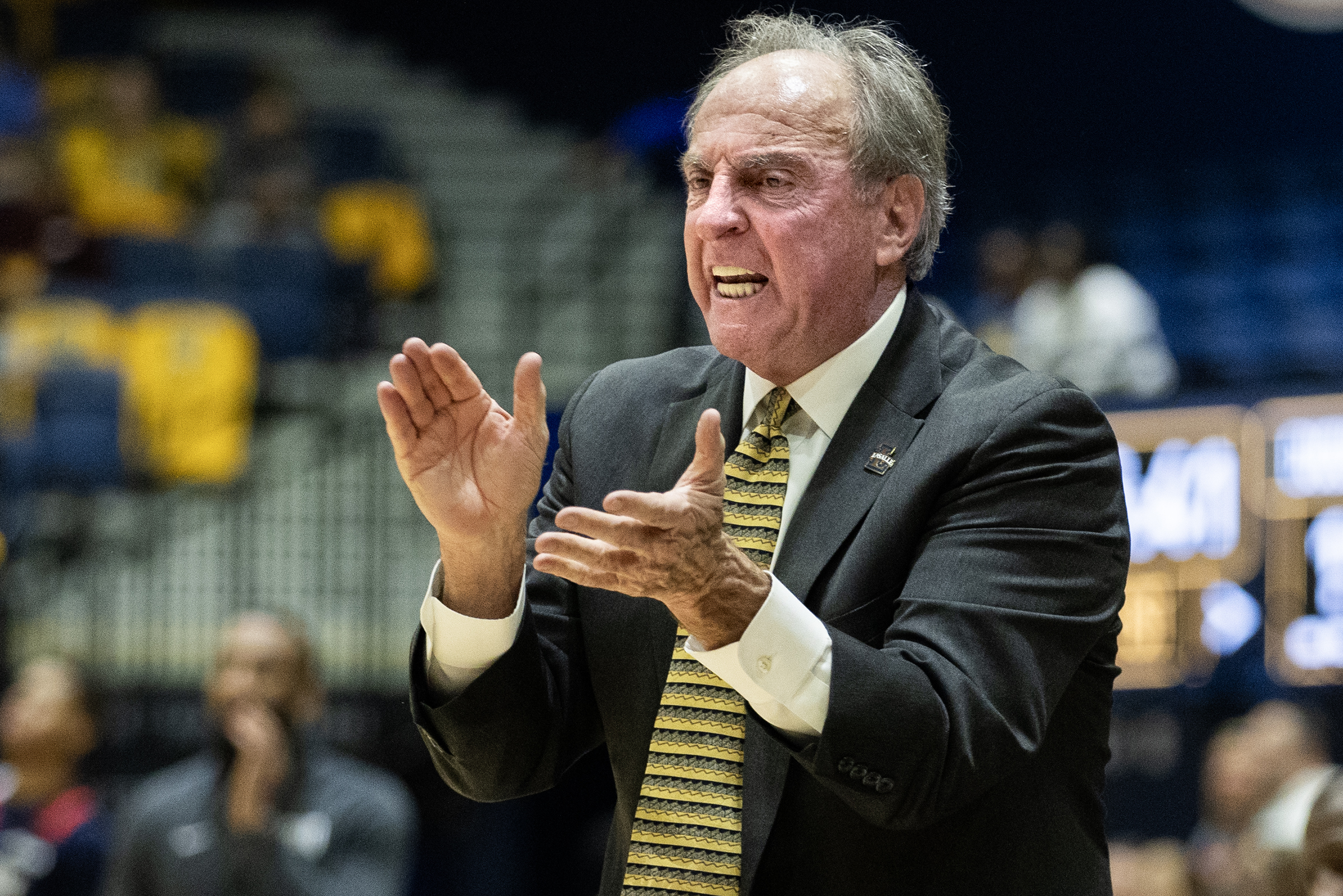
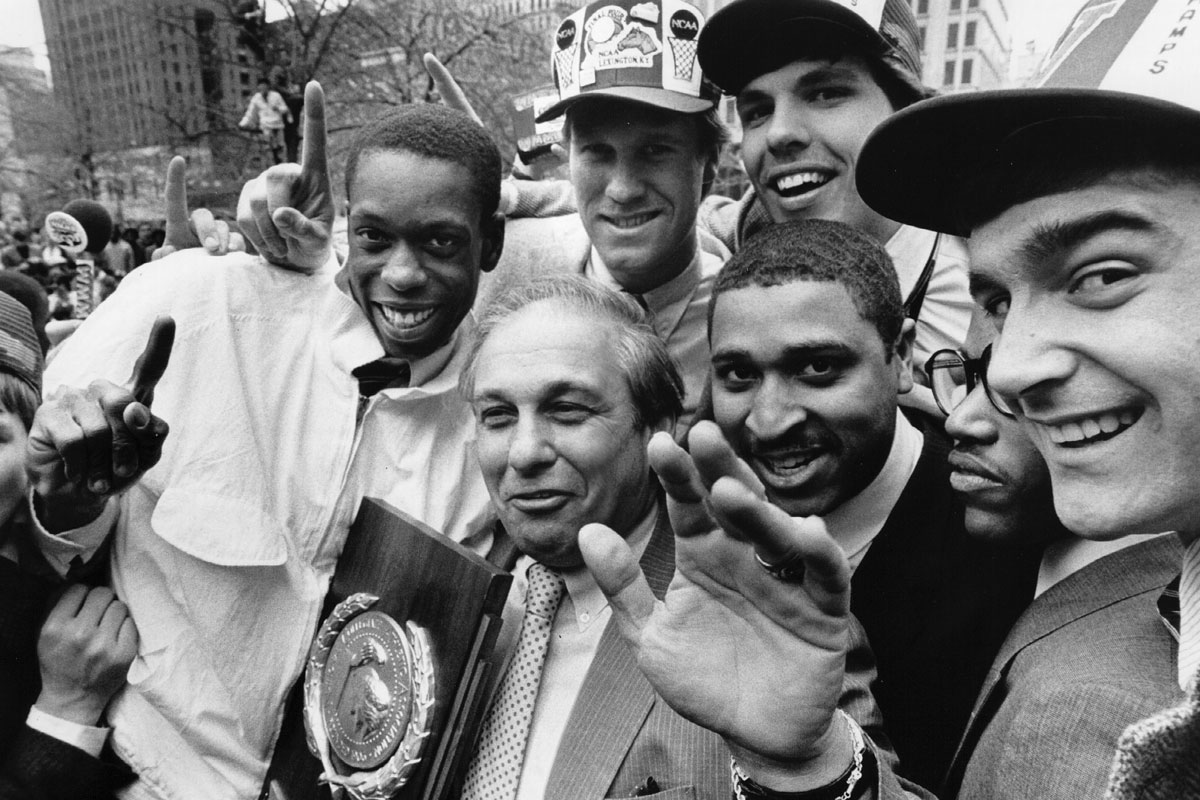
Fran Dunphy coached more than 1,000 games as a Division I head coach.Villanova coach Rollie Massimino gathers in Center City with players Ed Pinckney, Wyatt Maker, Chuck Everson, Dwight Wilbur, Veltra Dawson, and Brian Harrington in 1985 after winning the national title.
So the Big 5 was on its way back, regaining relevance among casual college hoops fans and among the sport’s cognoscenti. The two most significant factors in its renaissance, though, happened off the court. In March 1980, Villanova left the Eastern Eight and jumped to the Big East. And in August 1982, Temple hired John Chaney as its head coach.
Those moves and the rewards they wrought thrust those two programs, and in turn the entire Big 5, into a higher realm. Villanova won the national championship in 1985 — an underdog triumphant, a marvelous story enhanced by the Wildcats’ status as a program in a major conference in a sport whose vast national reach was still expanding: Magic vs. Larry Bird in ’79, North Carolina State surviving and advancing in ’83, Dick Vitale, CBS, ESPN, Big Monday, Selection Sunday, March Madness consuming a month’s worth of America’s attention.
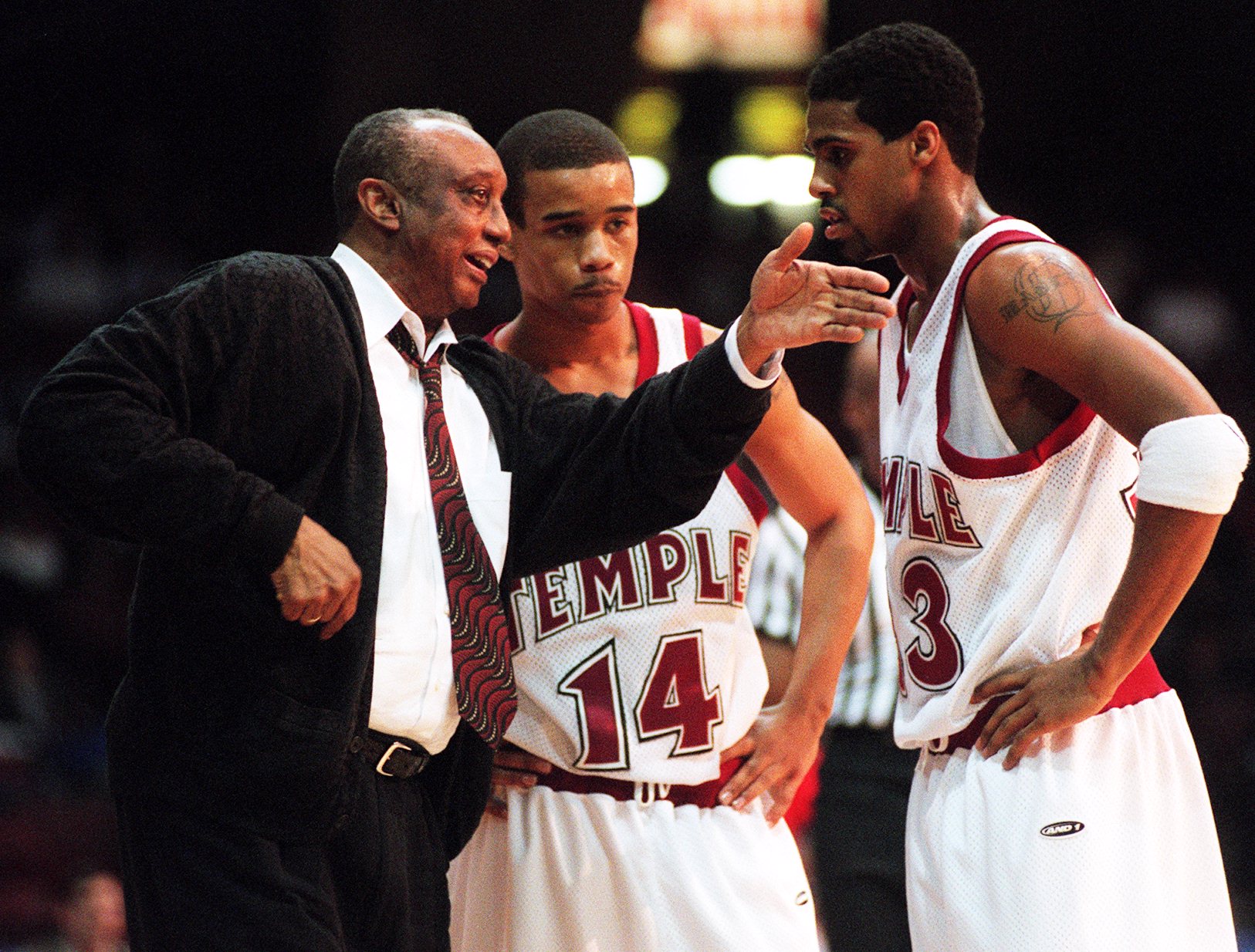
Chaney was this wild-eyed, lesson-teaching, justice-preaching wizard, confounding opponents with his matchup-zone defense, crafting the hardest schedule in the nation every year to battle-test his teams, leading the Owls to a No. 1 ranking in 1988 and three Elite Eight appearances in a six-year span.
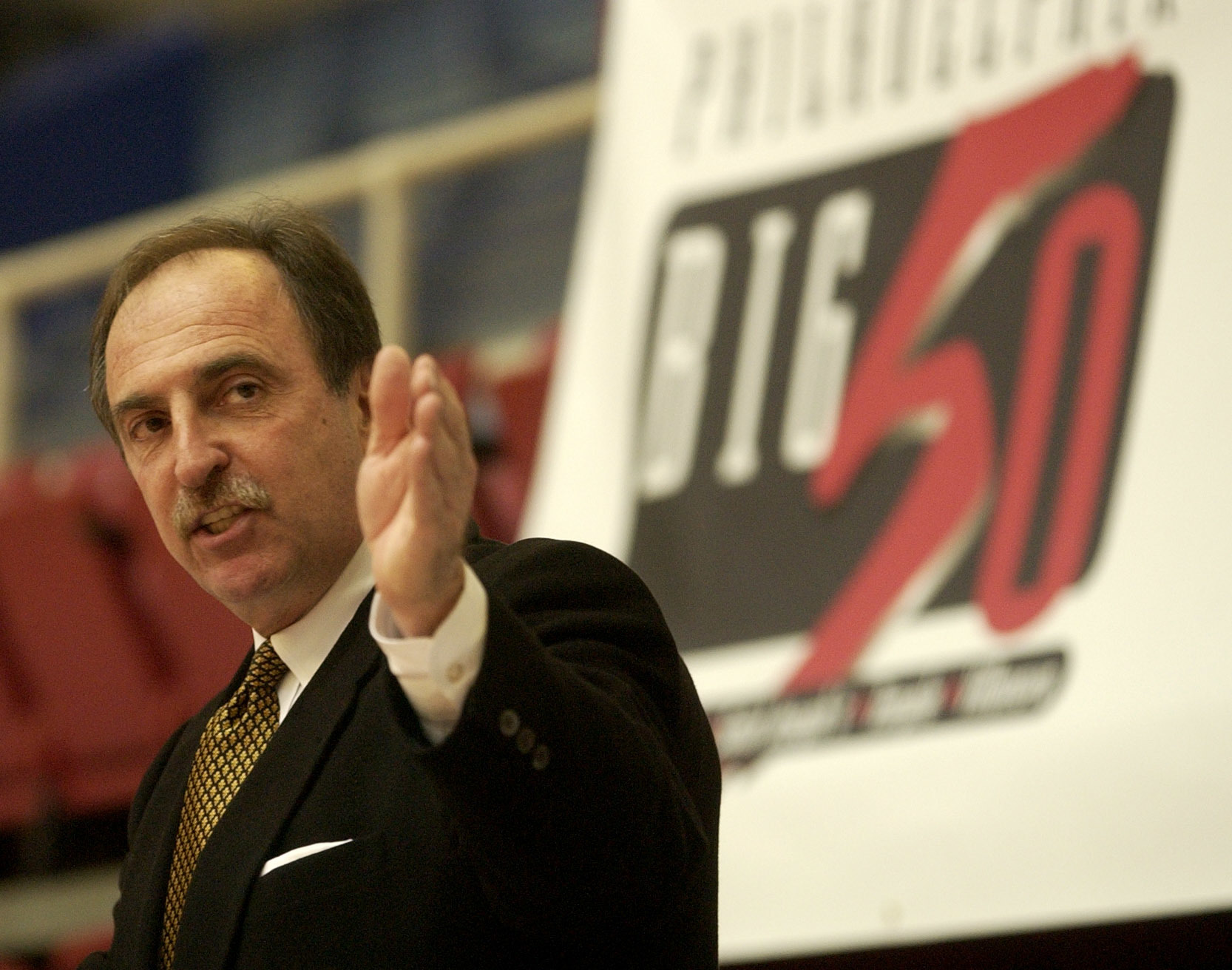
Fran Dunphy led Penn to a 69-14 record and three NCAA Tournament appearances from 1992 to 1995.
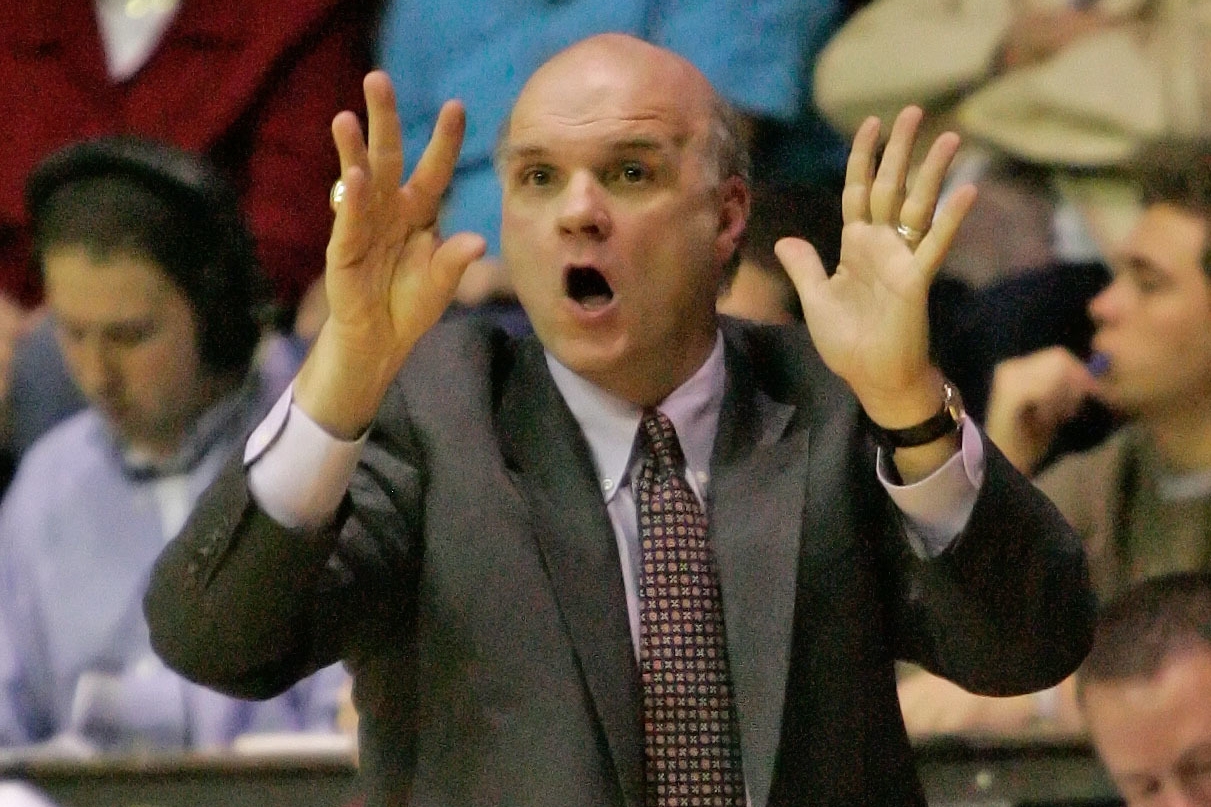
Nestled in the Metro Atlantic Athletic Conference (MAAC) with schools of similar profiles, La Salle went to the NCAA Tournament four times and the NIT twice in Speedy Morris’s first six years as head coach and had another national player of the year: Lionel Simmons. From 1992 to 1995, Penn dominated the Ivy League under Fran Dunphy: a 69-14 record, three NCAA Tournament appearances and a first-round victory over Nebraska, Jerome Allen and Matt Maloney forming one of the best backcourts in the country. St. Joe’s went 26-7 and advanced to the Sweet 16 in 1996-97, the season that introduced that notorious wallflower Phil Martelli to the rest of the country.
Former Temple coach John Chaney with players Lynn Greer and Quincy Wadley.
Hard circumstances and poor decisions
The factors that damaged the Big 5 were legion. Some applied to just one or two programs. Some applied to all of them. Some were mistakes, bad choices. Some were unavoidable and beyond the programs’ control.
Start with La Salle. Given an opportunity in 1990 to build an 8,000-seat on-campus basketball arena — Tom Gola offered to raise the funding for it — the university said no. Then its leadership made what is commonly considered the disastrous decision to relocate from the MAAC to the Midwestern Collegiate Conference. The program has never recovered.
Look at Temple. Chaney, a singular presence and attraction, retired in 2006. Though Dunphy, his successor, guided the Owls to six consecutive NCAA Tournament appearances, the university’s quest for football dollars led it to leave the Atlantic 10 for the American Athletic Conference — and abandon its basketball-first identity.
Again: individual schools, individual issues. But those problems were byproducts of college basketball’s overall reshaping during the 1980s and ’90s. In retrospect, the most infamous moment in Big 5 history — the dissolution of the round-robin, at the insistence of Villanova and coach Rollie Massimino, after the 1990-91 season — was an acknowledgment of those changes, and the attempts to preserve the Big 5 as it had always been would inevitably fail.
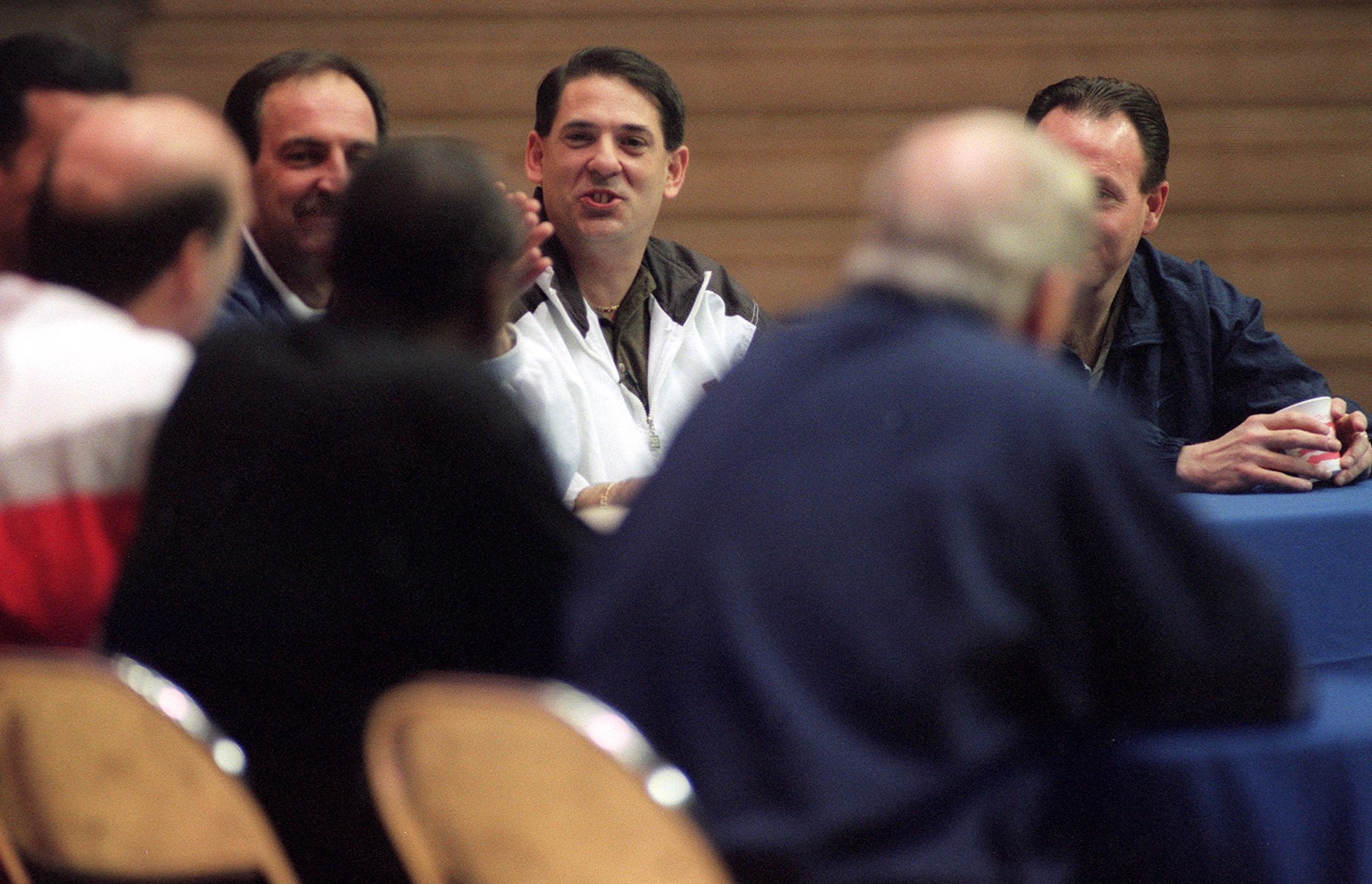
Phil Martelli led St. Joe’s to go 26-7 and advanced to the Sweet 16 in 1996-97.Former Villanova coach Steve Lappas jokes with the other Big 5 coaches during a taping of the Comcast basketball show in 1997.
When Villanova pushed to cut back on city series games and Temple pushed for more of those matchups to be played at campus sites other than the Palestra, they weren’t merely trying to make things easier for themselves. They were responding and reacting to college basketball’s new conditions for success.
Sneaker companies had begun financing all-star camps, AAU programs, and college programs. Now coaches didn’t have to rely on local high school teams to find players, and great Philly players were no longer making their names solely in the Public League, the Philadelphia Catholic League, or the Sonny Hill League. They were traveling to play AAU. They were seeing other cities, meeting other coaches. They weren’t as likely to stay home to play college ball.
“The most important recruiting device is recognition,” Chaney told author Bob Lyons in Palestra Pandemonium: A History of the Big Five, “and recognition comes from national TV. … They don’t know what the Big 5 is outside of this area. They knew who Villanova was when they won the national championship, so you could always attach yourself to them. But it wasn’t going to get you very far because no one knew the history and tradition of the Big 5.”
In that way and others, the inherent parochialism of the Big 5 worked against it. For instance, Dave Gavitt, the founding commissioner of the Big East, struck a deal in 1980 with ESPN, then a fledgling sports network hungry for programming, for the exclusive rights to televise the conference’s games. That arrangement made it difficult, if not impossible, for Villanova and any other Big East school to be involved in a 7 p.m./9 p.m. Palestra doubleheader and for a national television audience to watch that doubleheader.
“We needed the game between Villanova and Georgetown at 8 p.m. to go on our network,” Gavitt told Lyons. “We couldn’t clear games at 7 p.m. because of the game shows that all the local stations carried.”
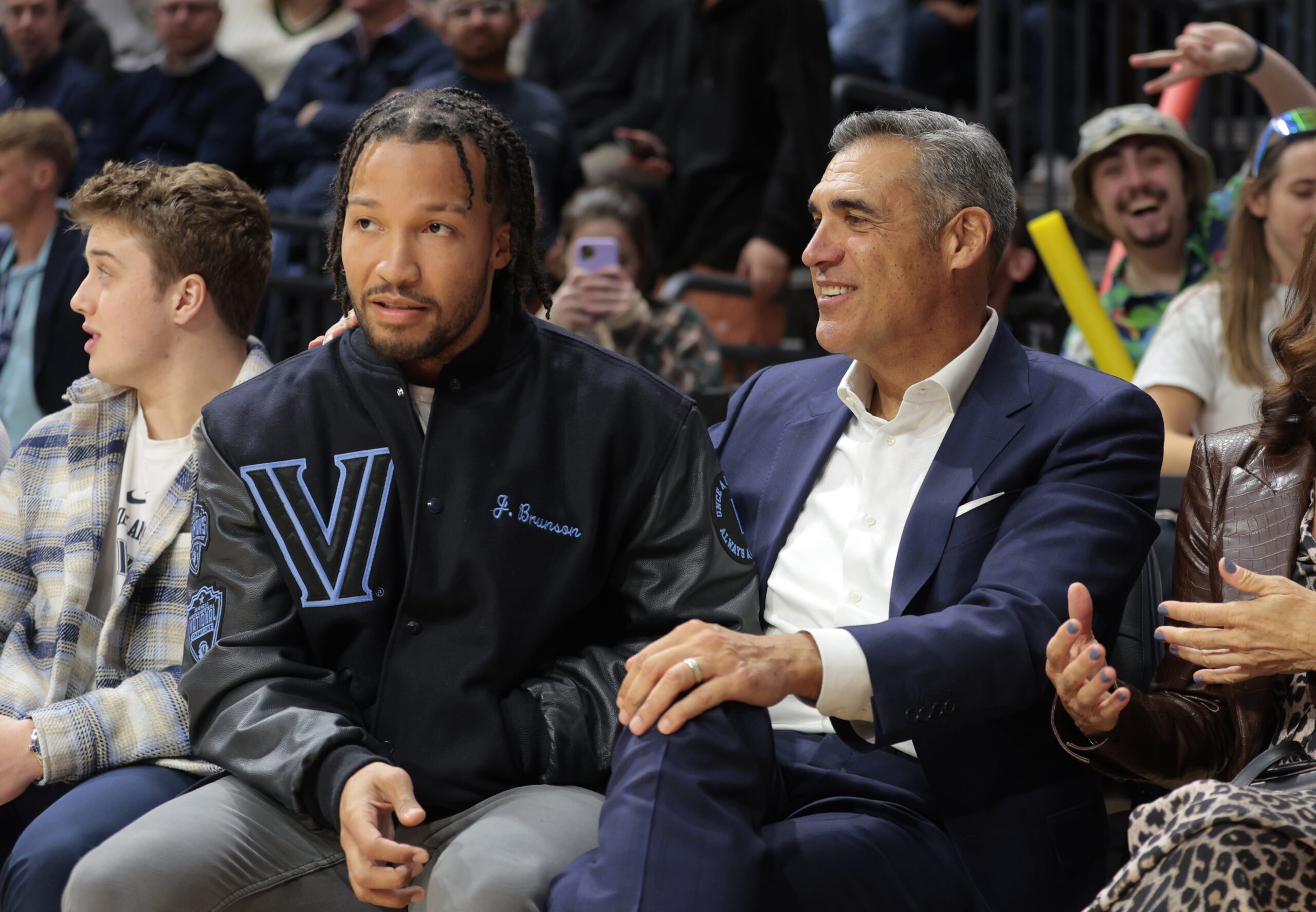
Jalen Brunson and former Villanova coach Jay Wright at the Finneran Pavilion on Feb. 8, 2023.
As it was, the Big 5 had a TV deal of its own, with the Philly-based premium cable channel PRISM, starting in 1978. Yet the PRISM commitment actually limited the exposure of some of the Big 5’s schools.
During the 1989-90 season, as one example, the Atlantic 10 wanted to place a Temple-La Salle game on ESPN so that it would be telecast nationally. “ESPN,” Lyons wrote, “subsequently refused to carry it, however, because it did not want to black it out in PRISM’s trading area.”
So hoops fans in the Delaware Valley could watch the game at home, but no one else could. At a time when college basketball was becoming more accessible, the Big 5 was cutting itself off from everyone who wasn’t already familiar with it.
That history might seem ancient. It’s not. Wright’s tenure and the economics of the sport have placed Villanova on a separate tier from the other programs. And now that he, Chaney, Dunphy, Martelli, and Morris — the local legends who were the backbone of the Big 5 — aren’t coaching anymore, the remaining infrastructure hasn’t been strong enough to restore the teams to excellence and maintain the intensity of the rivalries.
It’s a shame, but it was only a matter of time. Yes, the Big 5 was a Philly thing. Yes, it was a national thing. Yes, it was a glorious thing. And now it’s gone, and all the wistfulness and wishful thinking in the world won’t change the hard and inescapable truth: That glory isn’t coming back.
The 2026 NFL free agency period begins on Monday, when “legal tampering” will give way to a number of reported deals across the league. Free agency will officially begin on Wednesday, and the Eagles will be players — though how aggressive general manager Howie Roseman and Co. will be remains to be seen. With limited available cap space and the specter of a possible A.J. Brown trade adding to the uncertainty, how the Eagles handle this period elicits a wide range of possibilities.
The Inquirer’s Eagles reporting team of Jeff McLane, Olivia Reiner, and Jeff Neiburg got together for a roundtable ahead of next week’s festivities.
What’s one practical free agent move you could see the Eagles making next week, given their cap space and personnel situation?
McLane: Dallas Goedert is slated to become an unrestricted free agent for the first time in his career, but even if he signs with another team, the Eagles won’t have a clean break from their longtime tight end. They still have an approximate $20 million dead money charge from a void year added to Goedert’s contract. That’s a lot of money to eat for a productive player they may want to keep. The Eagles, more than any other team, have been comfortable kicking cash into future years. But Roseman can’t be reckless, and if trading Brown becomes a reality, the general manager would have around $45 million more in dead money on the books.
Could franchise staple Dallas Goedert run it back in Philly after his career touchdown year?
Brown’s return, though, could warrant Goedert coming back for a ninth season. He put up solid numbers, catching 60 passes for 591 yards and a team-high 11 touchdowns, despite the Eagles’ pass offense inconsistencies.
Was Goedert as dynamic as in years past after the catch? No. But he wasn’t given as many chances to run in space. The new Shanahan-McVay parts of the offense could accentuate Goedert’s post-catch abilities. The bigger question is whether he can run block like he once did. The Eagles weren’t happy with his output there. You have to wonder if taking a $4.25 million pay cut last season affected his effort, or occasional lack thereof. Goedert will have suitors on the open market. Is he worth as much as the Ravens’ Mark Andrews, who signed a three-year, $39 million deal in December? If so, it seems unlikely the Eagles re-sign Goedert, unless he wants to end his career in Philly and takes less.
The draft is believed to be deep at the position and there are other avenues to finding a No. 1 tight end — perhaps a trade? — but there’s an argument to be made for keeping Goedert.
Reiner: Re-signing Braden Mann. This seems like the football equivalent of a layup (a check down, perhaps). Mann, 28, is coming off the single best season by an Eagles punter in franchise history. He averaged 49.9 gross yards per punt, making his Eagles career average a franchise-leading 49.5. His net yards per punt (subtracting return yardage) finished within the top 10 in the NFL (43.1; No. 9 in the NFL).
Mann often helped flip the field during a season in which he was forced to punt a lot (72 punts, tied for No. 4). He deserves an extension, which wouldn’t break the bank. The Eagles are just a few years removed from their previous punter woes and they shouldn’t go back down that path by starting over with new contenders for the gig.
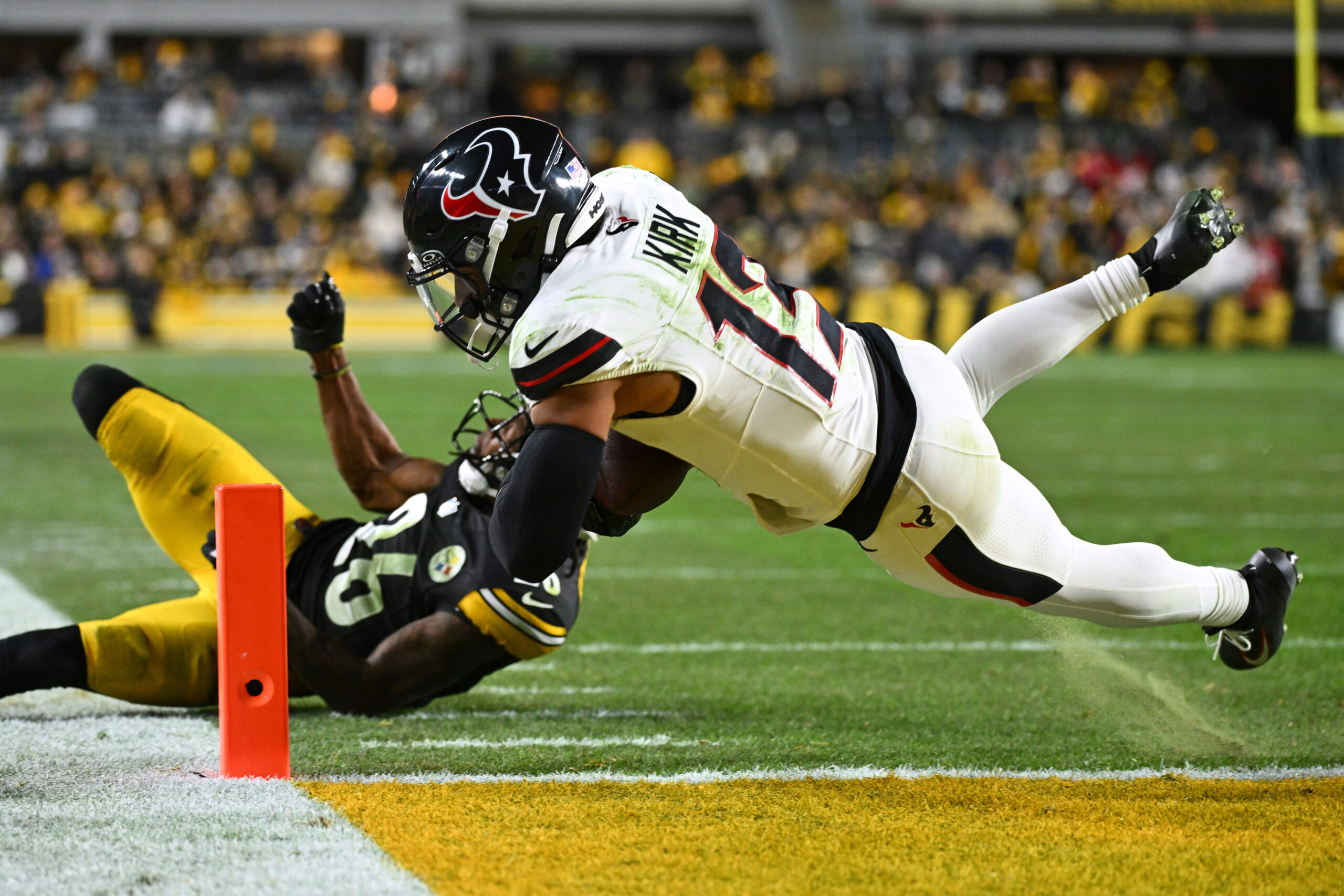
Is Christian Kirk (13) a free agent wideout possibility for the Birds?
Neiburg: Signing Christian Kirk to a relatively cheap contract given his talent. This is with or without Brown on the roster. Kirk has been limited by injuries over the last few seasons and ran routes with a crowded receiving corps in Houston. But he had a stretch of really good football from 2021 through 2023, tallying 2,877 yards on 218 catches, 16 of them for touchdowns. Kirk’s alignment favors the slot, but he has played plenty on the outside. The Eagles need to infuse the unit with more young talent, but Kirk, 29, could help bridge the gap, and if Brown is traded he would give the Eagles an experienced running mate for DeVonta Smith.
What’s a bolder, but perhaps less likely move you could see the Eagles making?
McLane: Trade for Maxx Crosby. If the Eagles decide they can’t afford Jaelan Phillips, they could be in the market for a top-end edge rusher. Crosby qualifies as a difference maker and would be an upgrade over Phillips or the returning Jalyx Hunt and Nolan Smith. It would cost a lot, of course. The Raiders are said to want two first-rounders and a player (Smith?) in return. But elite edge rushers are rarely available and Crosby’s existing contract isn’t a backbreaker. He has four remaining years at around $29 million per season, but only next season’s $30 million base salary is guaranteed. (editor’s note: Crosby was traded to the Ravens Friday night).
Crosby has made it clear he wants out of Las Vegas. He has expressed his fondness for the Eagles and Philadelphia as a sports town. Perhaps he would be willing to adjust his deal to expedite a trade. Roseman may be cautious for various reasons. Crosby turns only 29 in August, but he’s logged more snaps than almost any defensive end over the last five seasons. He’s also coming off back-to-back season-ending injuries that required surgery to repair his ankle and a torn meniscus in his left knee. That’s why I think the Raiders’ reported asking price is unrealistic.
There will be competition for Crosby, but the Eagles aren’t likely to repeat the mistake of going into another season with just Hunt and Smith on the edge. Phillips was a good trade deadline acquisition, but a tepid pass rush was an under-the-radar reason why the Eagles defense struggled in the second half of the playoff loss to the 49ers.
Jaelan Phillips is a top-5 NFL free agent who could end up with a huge deal in a location other than Philadelphia.
Reiner: Re-signing Phillips. He might be the Eagles’ top priority among their own group of pending free agents, but he isn’t a slam dunk to return. At 26 years old, he slotted in nicely to Vic Fangio’s defense in a short period of time at a premium position. He made an impact on the pass rush despite posting unassuming sack numbers (two in eight games). He stayed healthy for all 17 games in 2025, with the Eagles and the Miami Dolphins, one year removed from a partially torn ACL (and two years removed from a torn Achilles).
But the Eagles ought to be realistic about a potential extension. Phillips was a net-positive addition last season, but he was not a game-wrecker. The Eagles likely won’t be inclined to pay him as such, given their lack of cap space in 2026 and their need to extend key defensive players both this offseason and in years to come. The Eagles will likely set a walkaway number for Phillips and move on if another team outbids them.
Neiburg: Trading Brown … and trading for his replacement. Trading Brown is pretty bold in itself, but if it happens, the Eagles have a big hole to fill. There’s no doubt DeVonta Smith can handle all that comes with being the focal point of the passing game, but the roster is bereft of receiver depth, and if the Eagles aren’t thrilled with the free agent market — like, say, Kirk or someone like Romeo Doubs are more expensive than they prefer — they could go the trade route and trade from their roster or draft picks to acquire a receiver. Who could be available? Here are a couple of names to target via trade: Jacksonville’s Brian Thomas Jr. and Buffalo’s Keon Coleman.
Does Sean Mannion scheme require a tailoring of the team’s offensive personnel?
How much do you think the team’s offensive staff changes will inform their free agent and draft approaches?
McLane: Aside from the quarterback position, the offensive line is the most likely to be affected by the expected scheme changes. New offensive coordinator Sean Mannion is bringing with him a Shanahan-McVay system that will alter blocking in the run game. Will there be a complete whitewash? No. But the Eagles are likely to shift from less mid-zone to more wide-zone blocking. Those terms might not indicate how different the techniques are, but the former emphasizes more reactionary blocking and winning at the point of attack, while the latter features O-linemen firing off the ball and blocking at an angle.
Asked how the changes may affect his evaluations, Roseman conceded he may be looking for more agile O-linemen. The Eagles already have athletic freaks up front, although injury-riddled left guard Landon Dickerson may not qualify as such.
I don’t think Roseman will do much at the position in free agency. He does have decisions on reserves Fred Johnson and Brett Toth. I don’t think the scheme change rules out either for a return. But they don’t have an advocate in former offensive line coach Jeff Stoutland anymore. His replacement, Chris Kuper, won’t likely have as big a voice as Stoutland in personnel. But the Eagles are almost guaranteed to expend a high draft pick on an O-lineman with right tackle Lane Johnson closer to retirement than ever.
NFL Network’s Daniel Jeremiah recently projected seven first-round O-linemen in the 2026 draft and then a drop-off in terms of talent. Maybe one of the top guys slips into the second round and there’s a chance to pick up value, but I’d be surprised if Roseman didn’t expend the Eagles’ No. 23 overall pick — or more in a move up — to secure Lane Johnson’s expected successor.
Neiburg: It should inform the approach plenty. Especially when it comes to how they address the tight end position. Roseman knows he has long appreciated the receiving component of the tight end, but the new scheme will require a lot better blocking than the Eagles got last year and even in prior seasons from the players behind Goedert. As Jeff mentions, it’s possible Goedert returns in 2026 in free agency, but the Eagles would need to slot players behind him who block a lot better than Grant Calcaterra. One name I could see fitting in well is Jake Tonges, who doesn’t offer a ton in the pass game but was an elite blocker for the 49ers.
A.J. Brown’s situation could have an impact on the team’s free agency approach.
Reiner: Given the expected shift in run-game philosophy under Mannion, the tight end and offensive line additions could reflect those changes. I think the prospective wide receiver additions will have layered influences, especially as it relates to Brown’s future. Naturally, the Eagles’ need at receiver becomes much more pressing if (big if) they decide to move the star receiver before the start of the season.
Otherwise, aside from adding a WR3, the Eagles don’t need to overhaul their receiving corps to fit the scheme. If we’re looking to the Packers offense for clues about what the Eagles might look like in 2026, we can expect to see more under-center play action, pre-snap motion, and misdirection as a means of scheming open space in the passing game. That space helps receivers generate yards after the catch and explosive plays downfield.
The prosperity of the scheme seems to be rooted more in its design, not so much in the raw talent of its players, a departure from Eagles offenses past. That isn’t to say the Eagles aren’t looking for talented receivers, but more so that the prototype of a talented receiver isn’t likely to change dramatically.
Besides A.J. Brown, who else could the Eagles trade?
McLane: This may seem like a reach, but I could envision a world in which Nolan Smith is being floated on the trade market, assuming either Phillips, Crosby or some edge rusher equivalent is on the roster by the draft. Smith hasn’t been a bust — far from it. A shoulder injury limited him during his rookie season, but he blossomed in the second half of his sophomore year. Tricep woes sent him to injured reserve last season and he finished with just three sacks and 11 quarterback hits. He’s good at setting the edge and has a high motor, but he’s undersized and struggles to win consistently as a pass rusher.
Hunt has a higher ceiling, is one year younger and was drafted two rounds after Smith. It’s going to be tough for Roseman to pay both, especially with defensive tackles Jordan Davis and Jalen Carter slated for possible extensions this offseason.
Is Nolan Smith Jr.’s long-term future with the team set in stone?
The Eagles could pick up the fifth-year option (around $15 million) on Smith’s first-round rookie contract after the draft. That isn’t an exorbitant amount for a premium position player. He has potential he hasn’t tapped into. But I’d be worried about his durability. And there will be the occasional casualty after strong drafts on the defensive side and upcoming deals for All-Pro cornerbacks Quinyon Mitchell and Cooper DeJean.
Reiner: Tanner McKee. Ahead of the combine, Roseman expressed just how much he values the backup quarterback position and the importance of having a competent player in the role. McKee certainly fits the bill despite his limited action in his lone year as the full-time backup. But the soon-to-be-26-year-old quarterback is going into the final year of his rookie deal. If Roseman doesn’t see a future for him in Philadelphia beyond next season, would he be inclined to move McKee at the peak of his value to the team?
This offseason is a seller’s market at quarterback. The draft lacks high-end talent beyond Fernando Mendoza, who doesn’t have the cachet of other recent No. 1 overall picks. The free-agent market is led by Kyler Murray and Malik Willis. If McKee has a market among teams that want him to compete for the starting gig, the Eagles ought to entertain offers. But Roseman would need to get a strong return for McKee, all the while feeling comfortable about a replacement plan in 2026 for Jalen Hurts’ backup. Perhaps they liked what they saw from Sam Howell in practice enough to warrant a low-cost extension and make him the full-time No. 2.
Neiburg: Sydney Brown. The Eagles have a few candidates in their secondary who are due for a change of scenery, and Brown might be at the top of the list. The Eagles need help at safety, but they won’t be lining up with Drew Mukuba and Brown at the back of the secondary to start the 2026 season. Brown, who has one year left on his rookie deal, will be a backup again, and will see some work on special teams. But if you can convince a team to part with a Day 3 pick to acquire a player who isn’t part of your long-term plans, you have to do it.
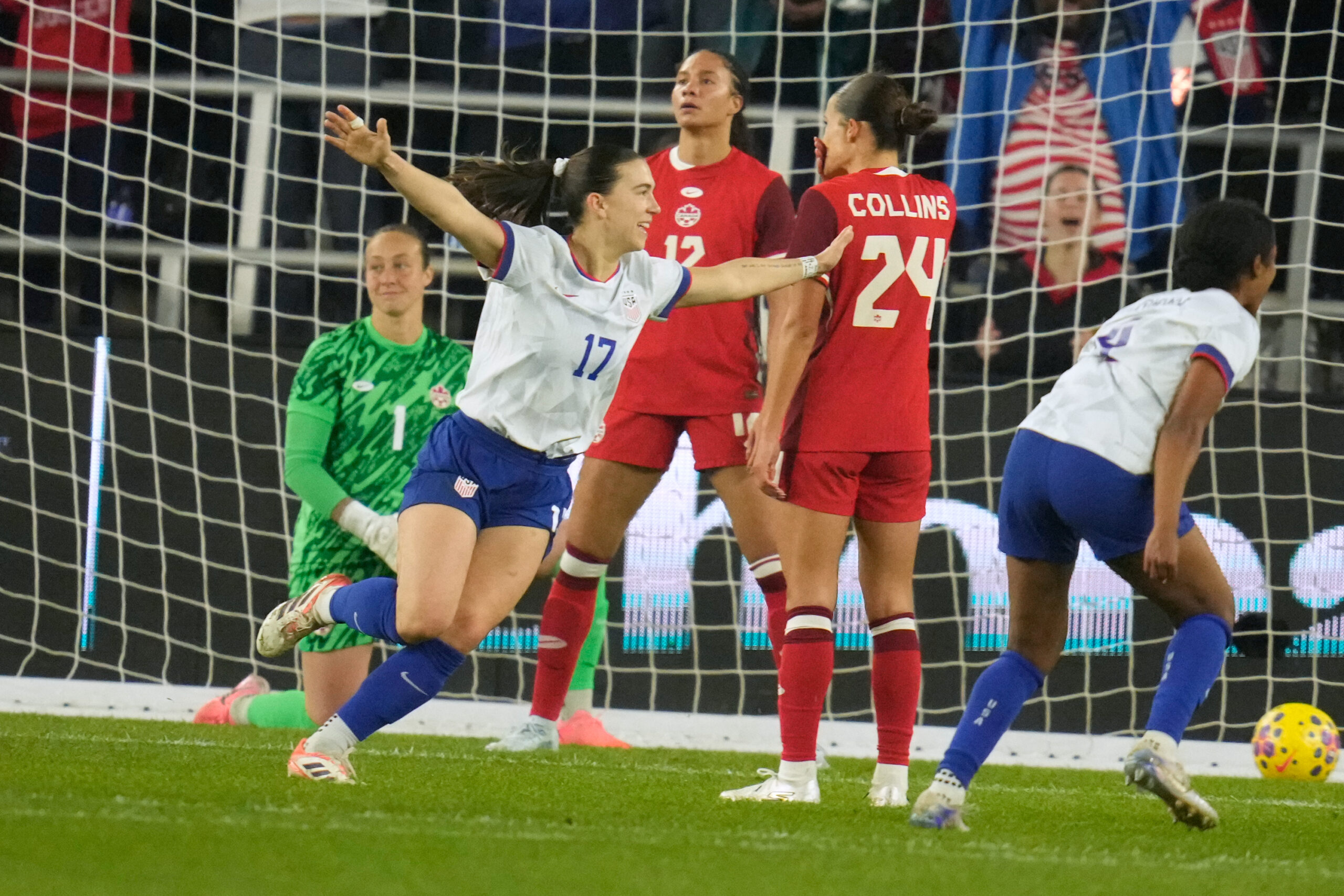
COLUMBUS, Ohio — Ally Sentnor scored in the 55th minute and the United States beat Canada 1-0 on Wednesday in the SheBelieves Cup tournament, the Americans’ seventh straight shutout.
Sentnor scored her seventh international goal off a corner from Rose Lavelle, gathering the ball on a bounce before punching it past two defenders and Canada goalkeeper Kailen Sheridan.
The U.S. hasn’t allowed a goal since a 3-1 win over Portugal last October, a stretch of 714 minutes.
“Honestly, our goal was just to win the game,” Sentnor said. “I think going into a rivalry game, we knew what was going to happen. It was going to be on the line and Canada gave us an incredible performance, and we really had to work for this win.”
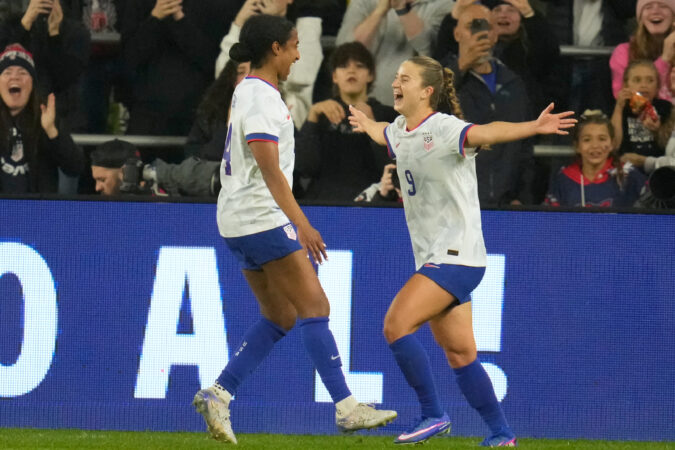
United States midfielder Sam Coffey (left) celebrates a goal by teammate Ally Senator in the second half of a SheBelieves Cup soccer match against Canada on Wednesday.
The United States sat atop the SheBelieves table with two wins, ahead of Canada and Colombia with one each. The Colombians defeated Argentina 1-0 in the early match Wednesday at ScottsMiracle-Gro Stadium.
The United States is 55-4-9 against Canada since their first meeting in 1986. The U.S. won the last meeting, 3-0, in July.
The Canadians’ last win in the series came at the Tokyo Olympics in 2021. Jessie Fleming converted a penalty in a 1-0 semifinal victory. Canada went on to win the gold medal.
U.S. coach Emma Hayes included Trinity Rodman in the starting lineup despite Rodman taking a hit in the back late in Sunday’s 2-0 SheBelieves victory over Argentina in Nashville. Rodman struggled with a nagging back injury last year.
Canada, which defeated Colombia 4-1 in the tournament opener, was without captain Fleming because of an illness.
The game was scoreless after the first half despite the United States dominating possession by nearly 70%.
Sentnor, who plays professionally for the Kansas City Current, broke the stalemate with her third goal of the year. The 22-year-old was named U.S. Soccer’s young player of the year in 2024.
Canada coach Casey Stoney felt her team showed “huge progress” from the last time the Canadians faced the United States, but was disappointed about conceding on a set piece.
“I think we were competitive throughout the game. I think we kept our distances better, we had good discipline,” Stoney said. “I think we had moments in their box where we can have a little bit more composure.”
Colombia will play the United States on Saturday in the tournament finale in Harrison, New Jersey. Canada plays Argentina in the early game.
It is the 11th annual SheBelieves Cup hosted by the United States. Canada was making its fourth appearance in the tournament.
Quentin Grimes hit two tiebreaking free throws with 16.4 seconds remaining, Tyrese Maxey scored 25 points and the short-handed 76ers beat the Utah Jazz 106-102 on Wednesday night.
Grimes finished with 16 points and Jabari Walker had 22 points for the Sixers, who were without Joel Embiid, VJ Edgecombe, and suspended Paul George.
Keyonte George scored 30 points for the Jazz, who have lost seven in a row.
Philadelphia, which entered in sixth place in the Eastern Conference playoff race, trailed 100-94 with 4 minutes, 51 seconds left after George hit a three. But Utah missed its next six field goals, and Philadelphia tied it at 100 on Adem Bona’s follow dunk with 1:50 left.
Isaiah Collier’s layup 46 seconds later put the Jazz ahead by two points, but Grimes tied it on a drive with 46.8 seconds remaining. After George misfired on a long-range shot for Utah, Grimes converted both free throws after being fouled. Utah coach Will Hardy did not call timeout, and a wide-open look from long distance by Kyle Filipowski was off.
Sixers’ Dom Barlow (left) attempts a layup past Utah Jazz’s Kyle Filipowski during the first half of Wednesday’s game.
Embiid missed his third straight game with a strained right oblique. Edgecombe suffered a lower back contusion in Tuesday’s 131-91 loss to the Spurs.
Jazz rookie Ace Bailey scored 12 points.
Jaren Jackson Jr. (left knee injury recovery), Walker Kessler (left shoulder injury recovery), Lauri Markkanen (right hip impingement), Jusuf Nurkic (nose injury recovery) and Vince Williams Jr. (left knee injury management) were out for Utah.
The Sixers travel to Atlanta on Saturday (6 p.m., NBCSP) to face the Hawks to begin a two-game road trip. After facing the Hawks, the Sixers will play in Cleveland on Monday (7 p.m., NBCSP).