Category: Sports

Sports news, scores, and analysis

  • Ranking the NFL color analysts: Tom Brady shines while Tony Romo struggles (just like old times)

    Ranking the NFL color analysts: Tom Brady shines while Tony Romo struggles (just like old times)

    Tony Romo, as quarterback of America’s Team, went 0-2 head-to-head against Tom Brady.

    Brady, as quarterback of the best team in NFL history, finished his career with seven Super Bowl rings in 10 trips, nine of them with the New England Patriots. Romo never even made it to a conference final.

    When they retired, to the delight of Eagles fans who hated them with equal vigor, each took his fame and fortune and headed to the broadcast booth.

    There, Brady still dominates Romo.

    That was never more apparent than Sunday, when Romo ruined the broadcast portion of an already ugly AFC championship game on CBS. Immediately afterward, Brady burnished a brilliant NFC title game for Fox. As on the field, the contrast in the booths was hideously stark.

    With only one game to go, it seems like a good time to review that most controversial of TV entities: NFL in-game analysts. Mike Tirico, broadcasting’s version of the vanilla milkshake, and Cris Collinsworth, who’s my No. 3, will present Super Bowl LX in two weeks on NBC. It will be fine, but it will be hard.

    Color commentary is vastly more difficult than you can imagine. I’ve done it a few times as an emergency replacement for a basketball broadcast, and, in the parlance of social media, I sucked.

    The job requires research, alertness, rhythm with a partner, familiarity with every coach, and mastery of the game’s history. It requires knowledge of rules, of strategy, of game-day procedures, of tendencies, of strengths and of weaknesses.

    Then, in real time, you have to explain what’s happening to millions of mildly inebriated fans, most of whom wouldn’t know a naked blitz from a naked blintz.

    It’s like a cardiologist describing heart surgery to Grey’s Anatomy fans.
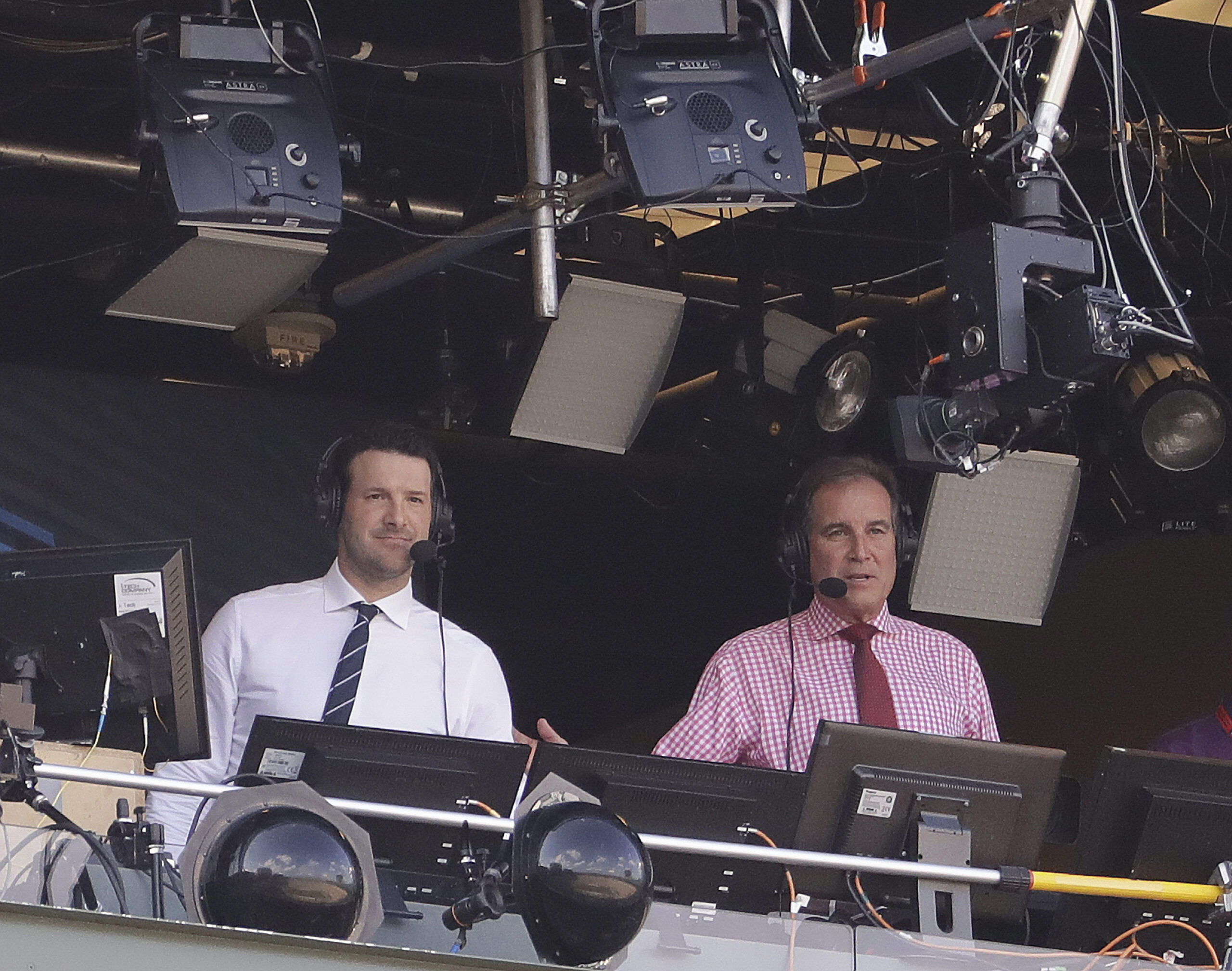
    Tony Romo (left) turned heads early in his broadcast career, but his strengths have become less evident.

    The bashing of NFL booth analysts has become a weekend sport on social media. Keyboard warriors armed with pimple patches and analytics dissect every misspoken word or overlooked strategy, and they attack with verve and glee.

    That said, for years we were spoiled by masters of the craft, none better than Pat Summerall and his partner, the granddaddy of authentic commentary, John Madden, unburdened by the precision of high-definition television and, for the most part, by replay review. It was a simpler, better time.

    My job keeps me busy most football weekends. As a result, I’m not free to watch many other NFL games, and so I am less familiar with the flat-screen visitors to man caves and dens on weekends and Monday nights. However, thanks to Thursday Night Football, other prime-time and Sunday-morning broadcasts, and the Eagles’ recent abrupt exit from the playoffs, for the past few months I’ve been able to catch a few games.

    And … man, was I disappointed.

    Expectations

    I covered Romo and Brady extensively as players. It was hard to dislike Romo and impossible to like Brady. Now, it’s hard to listen to Romo and impossible to dislike Brady.

    I expected Romo to be a star.

    Having covered him extensively and having found him to be comfortable, affable, and knowledgeable, I was delighted with his “Romo-stradamus” debut with CBS in 2017. He seemed to correctly predict every big play call, then offer pointed commentary as to why it worked or why it didn’t.

    He seldom does that now. Instead, he constantly offers banal observations in the most excited of tones, often contradictory and seldom helpful. It’s just a lot of hyperbolic blather, never worse than in the moments after he talked over Jim Nantz following Patrick Mahomes’ game-winning touchdown pass in Super Bowl LVIII.

    On the other hand, I expected Brady to be a flop.

    I covered Robo-Tom in four of his Super Bowls, as well as many other big games, including the Battle of the Unbeatens in Indianapolis in 2007, when he and Randy Moss beat Peyton Manning. I was embedded in New England before the AFC championship game after the 2017 season. Never once did Brady give me any reason to expect he would be anything more than a wax statue in the broadcast booth.

    Wrong.

    Excellence

    It pains me to say that after an uneven debut in the 2024 season, which culminated with an unremarkable Super Bowl LIX broadcast of the Eagles’ win, Brady is getting better every week. As part of Fox’s first team, he often will correctly identify a penalty in real time so, when the play ends, he immediately reports who committed the penalty long before the official announces it. Troy Aikman used to do this with regularity, less so now. Collinsworth and Kirk Herbstreit often get this right, too.

    Brady’s voice sounds like it belongs to a JV basketball player, but he gets his point across. Brady just seems to know more about the game than the rest of the color commentators; or, at least, Brady seems to care more about teaching the game to viewers.

    His concise, clear dissertation on throwing techniques in windy conditions during the Eagles’ windy wild-card loss Jan. 11 was perhaps the best explanatory moment in the history of NFL broadcast booths.

    He was equally brilliant with his explanation Sunday of why Seahawks receiver Jaxon Smith-Njigba’s route-running is so efficient: “He maintains the same shoulder plane when he runs his route, so it’s really hard for any defensive back to get a bead on what he’s doing.”

    Madden, a college lineman and then an offensive line coach, introduced America to the intricacies of trench warfare. Collinsworth is great at diagnosing coverages. Romo, meanwhile, seldom provides a level of detailed technique insight for any position, much less quarterback, receiver, and defensive back, the positions with which he should be most familiar.
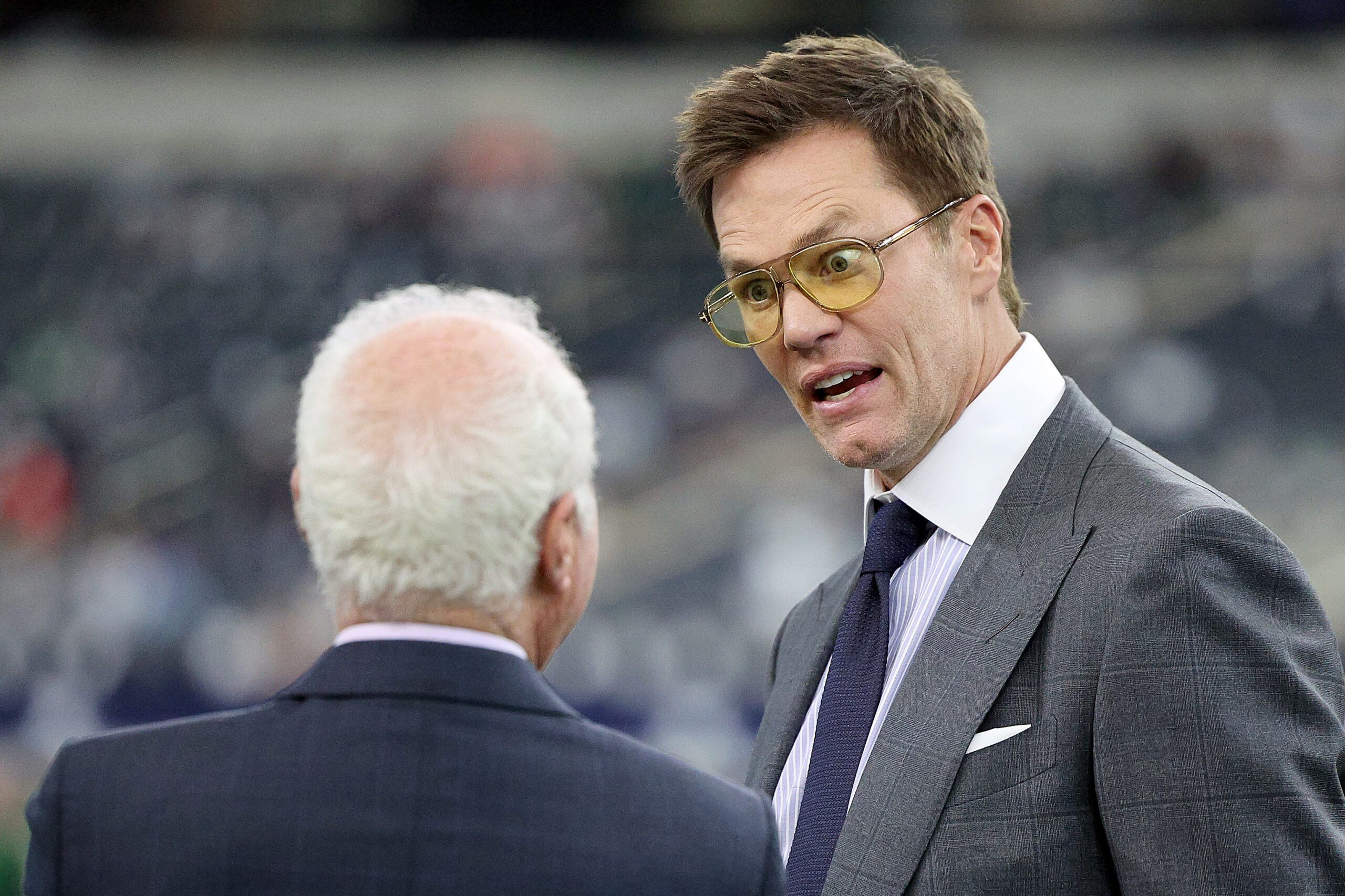
    Should Tom Brady’s ownership stake in the Raiders be an issue in his broadcast work?

    Why these two?

    Why does any of this matter? Why pick on Romo, in particular?

    Because Romo is in the middle of a 10-year, $180 million deal that expires after the 2030 season, which makes him the second-highest-paid NFL analyst. CBS reported that it just enjoyed its best season ever, and the network debunked rumors that his future might be in peril. So, at 45, he isn’t going anywhere.

    Fox, meanwhile, was roundly criticized for giving Brady a 10-year, $375 million contract that began in 2024, which made him the highest-paid booth analyst in sports despite his complete lack of experience.

    They’re at the top of the food chain. At least Brady belongs there.

    Incredibly, this was just his second season in the booth. Brady still lacks the strategic chops of, say, Greg Olsen, whom Brady replaced as Fox’s No. 1 color commentator last year, but Brady’s already better than Romo ever was.

    Should Brady continue to be allowed to own part of the Las Vegas Raiders while acting as an analyst? That’s an entirely different conversation. Have at it. I generally figure that leagues can do whatever they want, within the constraints of the law. Besides, any insider information Brady gleaned during his weekly preparation as a Fox analyst certainly didn’t help the Raiders much. They went 7-27 the last two seasons.

    As for his primary vocation: Will Brady, who is 48, be the G.O.A.T. in the booth, as he was on the field?

    Probably.
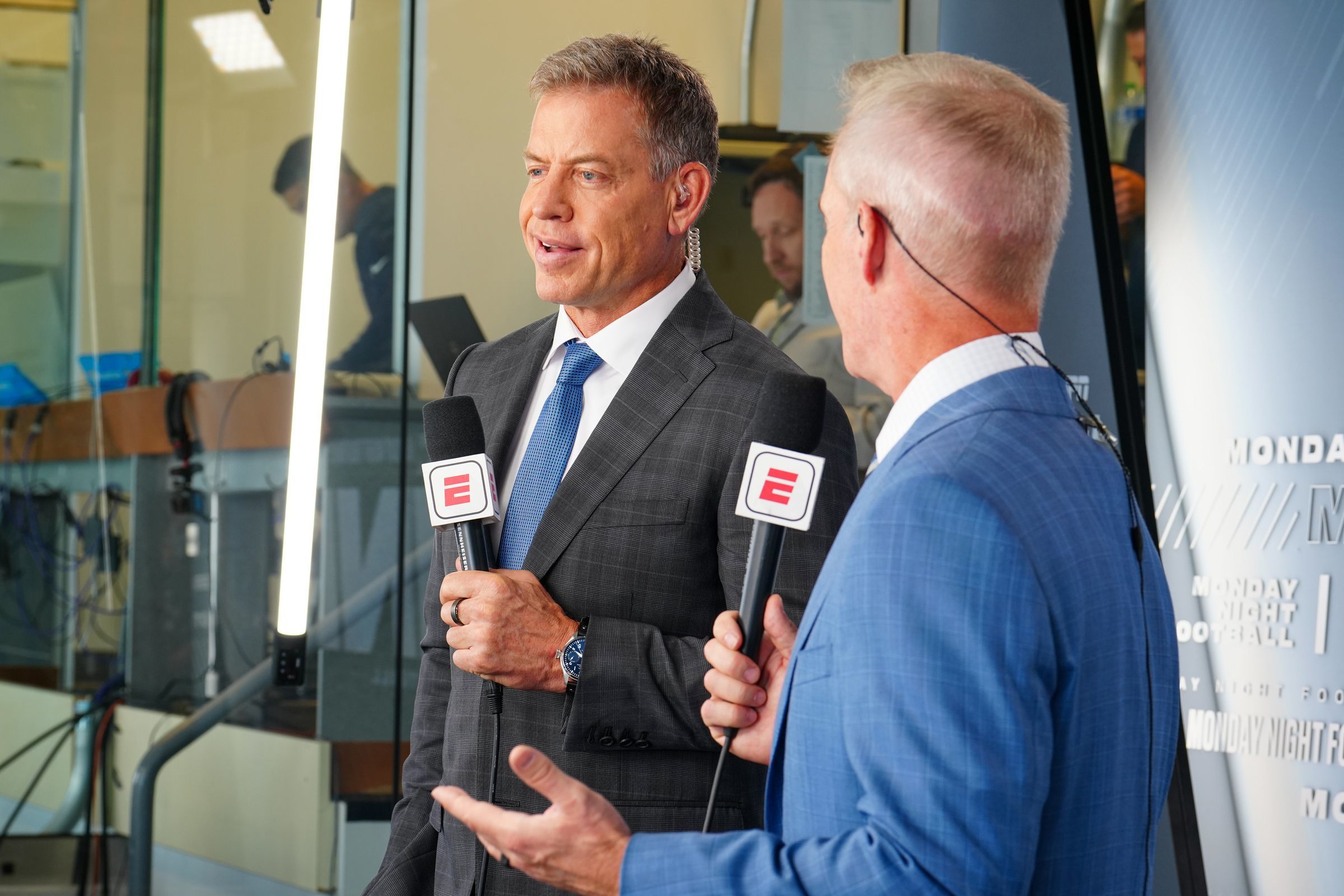
    Even some of those who disliked Troy Aikman (left) as a player can begrudgingly acknowledge his strengths as a color analyst.

    The ranking

    Madden remains unmatched.

    ESPN’s Aikman remains the best and easiest listen in my book, and has been for most of the last 25 years. Then, Brady.

    Collinsworth annoys people, but I think that’s a byproduct of his natural smarminess, because he’s a perfect complement to Tirico’s earnestness.

    I think I’m in the minority when I say I enjoyed Herbstreit on Amazon Prime, at least I did early this year. In the fourth year of a five-year deal, the college football mainstay seemed to come into his own as an NFL commentator this fall. However, he routinely travels thousands of miles every week covering both pro and college ball, and the toll began to show in his commentary later in the NFL season. He’s a free agent after next season, and he’ll be 57. Hopefully, Herbstreit will dial things back and concentrate on the NFL.

    Romo now comes in last.

    This feels a little like punching down. Romo seems to be doing his level best. Maybe he’s a victim of the lofty expectations his early years created. Maybe he’s been coached to be more expressive and less technical.

    Romo’s current slump reminds me of the point in his career when, after a promising first six seasons as a starter, he led the NFL in interceptions in 2012. Romo then had his best season in 2014 before injury forced him to the booth.

    Maybe he can rebound in this career, too.

    But, as in the NFL, Romo will never catch the G.O.A.T.
  • ‘Phillies Extra’ Q&A: Rob Thomson on managing the Bo Bichette aftermath, Nick Castellanos, and more

    ‘Phillies Extra’ Q&A: Rob Thomson on managing the Bo Bichette aftermath, Nick Castellanos, and more

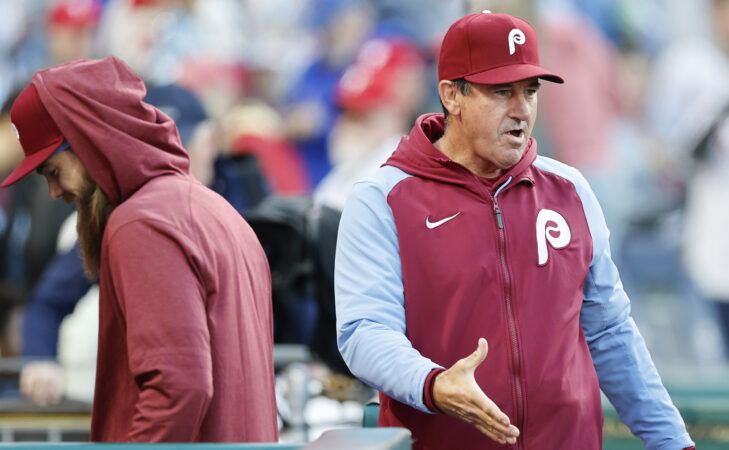
    Later this week, Rob Thomson will gas up his truck near his home in Ontario and begin the drive to Clearwater, Fla., for spring training.

    “As you go further south, it gets warmer and warmer, and you really feel like baseball’s back,” the Phillies manager said. “And I’m really looking forward to it.”

    First, Thomson was a guest on Phillies Extra, The Inquirer’s baseball podcast. He discussed a variety of topics, including how the organization will get over its collective disappointment at not signing Bo Bichette, the value of J.T. Realmuto, moving on from Nick Castellanos, and more.

    Watch the full interview below and subscribe to the Phillies Extra podcast on Spotify or Apple Podcasts.

    Q: You pushed back the other day on the notion that the Phillies are “running it back.” I think the question heading into the 2026 season is not so much about running it back. I think the question that people should be asking is, are you better today than you were at the end of last season? How do you feel about that?

    A: I think it’s to be determined, but I feel better about it. You know, we lose Ranger [Suárez in free agency to the Red Sox], and that’s a big loss. But that’s part of the business, too. I do feel really good about our bullpen. We lose Matty Strahm, who was a big part of our bullpen, but the addition of Brad Keller, who can get both sides out, the addition of Jonathan Bowlan, who I think is a really good two-inning guy that can get righties out. We got some stuff for him to get lefties out. This left-hander, Kyle Backhus, he looks really good. He’s really interesting. He’s got a really low arm slot. So I’m really excited to see these guys. I think we’ve got a really good fit here.

    I’m excited to see Adolis García. I think there’s a chance he bounces back. I think with Adolis — and I can’t speak for him — but in being with Texas last year, with the expectations they had, with all the injuries they had to [Corey] Seager and [Marcus Semien], and I’m wondering if he didn’t try to put the team on his back and put a little bit too much pressure on himself. So maybe he can come in here and just kind of slide into the group and get back to where he was.

    I’m excited about [Justin] Crawford. We heard all about him last year [in triple A]. Everybody kept asking me, ‘When’s he coming? When’s he coming?’ It just didn’t happen. But now it looks like it’s going to happen, so I’m excited about that. The speed, the small ball, the on-base ability, it’s really exciting to me to have him hit at the bottom of the lineup and turn the lineup over.

    And with Andrew Painter on his second year coming off Tommy John [surgery], I think this is the year where he probably gets really close to being back to normal. And if he’s close to being back to normal, he’s really something. So, there’s a lot of really good things going on.

    I think because of the Bichette thing, a lot of that stuff gets overlooked a little bit, and I understand that. But I certainly don’t want the people of Philadelphia to think that we’ve gone in a different direction, and we’re not committed to excellence, committed to winning, and committed to winning world championships because that will never change. We are fully committed to all of that. And we’ve just got to get to the playoffs, but we’ve got a really good club, and we’ve got to play better in the playoffs.

    Q: If the Phillies signed Bichette, a lot of dominoes would’ve fallen in line behind that. Realmuto might not be here; Alec Bohm might not be here. What’s your read on everyone’s mindset in the aftermath of not signing Bichette and where guys stand in terms of knowing, ‘OK, I’m here now and this is what it’s going to be?’

    A: Yeah, it’s a good question. And I think for the most part, professional athletes and our guys, because we’ve got a pretty experienced club, they understand the business side of it. They understand that things happen and things don’t happen, and they have to just keep moving forward and just stay focused on what they need to do and what they can control because they’ve been through it quite a bit — trade, free agency, trade rumors. So, it’s all part of the business. I think they understand that. And now that we’re past that, I think they’re ready to go.

    Q: You were a catcher. Is there an example you can give that maybe illustrates why Realmuto is such an asset in terms of game-calling and handling a pitching staff? And what you might have missed if things had gone differently with Bichette and J.T. wound up somewhere else?

    A: I was looking through it the other day, just OPS numbers with J.T. catching with our pitchers. ERA numbers with J.T. catching with our pitchers, and it’s really amazing how good it is. And obviously, our pitchers are good. But when you can stand out on the mound and you can relax and you understand, and you know that guy behind the plate has spent two hours prior to the game preparing for me, for that guy standing on the mound, it gives you a lot of confidence. And you can measure the caught-stealing rate of 30%, so that’s still really good. I don’t know what the receiving numbers are, but it seems like he’s really good.

    The way he runs the game, and he can slow down the heartbeat of the team and the heartbeat of the game just by his presence, just by when he goes to the mound, when he calls timeout. You can’t measure all of that. And I’ve said it before, I’ve had [Jorge] Posada, I’ve had Brian McCann, I’ve had Pudge Rodríguez, I’ve had Russell Martin. He’s as good, if not better than all of them. He’s kind of in the same mold with Russell Martin, as far as the body, what kind of shape he’s in, his durability. So, I know J.T. is 35, but he’s playing like he’s in his late 20s. That’s the type of body he’s got and the energy that he brings. He brings so much, and I’m so happy that we have him back. I really am.

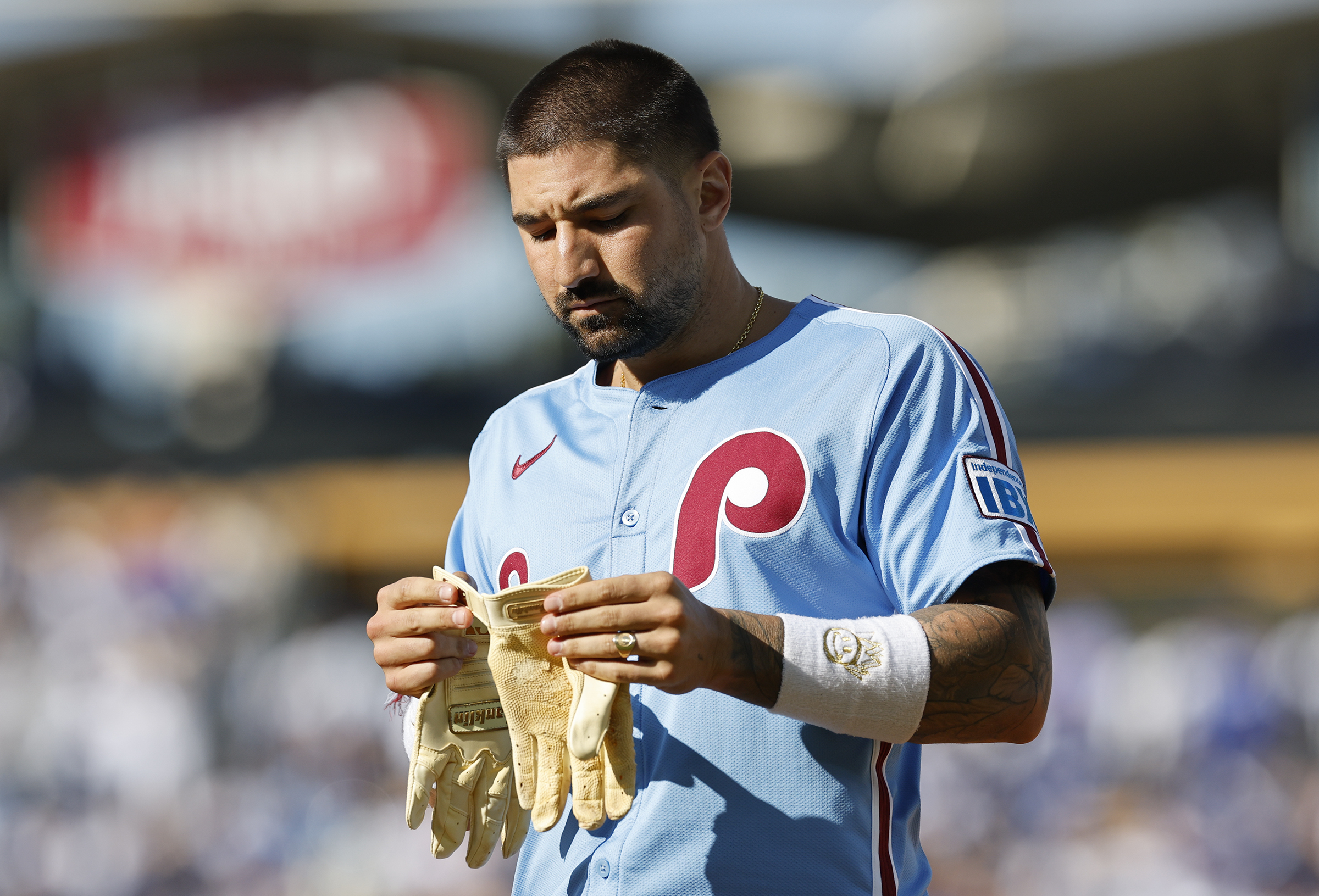
    Right fielder Nick Castellanos is not in the Phillies’ plans for 2026.
    Q: Dave Dombrowski said the other day that the plan is still to move Nick Castellanos, one way or another. I wonder if you could reflect on all that happened with Nick last season, from the situation in the dugout in Miami in June to reducing his playing time in the summer and then September, and the comments that he made. You pride yourself on communicating with players. Was it difficult to navigate that situation last year and make sure that it didn’t cause a larger disruption?

    A: Yeah, you always try to keep the noise down because there’s always little things that happen, and I feel terrible that any player would feel like I didn’t communicate well enough, because I pride myself on that. I want players to not be confused. I want them to understand exactly what’s going on, and if there’s something going on with them that my door is always open, and I expect them to come in and they need to communicate with me, too, because I don’t know. I’m not a mind reader. So, it was just a difficult situation. The thing with Nick, the bottom line is, he wants to play every day. He wants to play every inning, every day, and you can’t fault him for that. I think I respect him a great deal, just for being that guy.

    Q: Is there an idea yet of when Zack Wheeler might get on a mound? And do you have an idea for his state of mind coming off this pretty big surgery five months or so ago? Where does he stand in terms of his confidence level that he could come back and be Zack Wheeler?

    A: He feels really good, and I’m really encouraged by it. I don’t have a date when he’s going to get on the mound, but he’s getting stronger. The ball flight keeps getting better every time he throws a baseball. The release point is getting more consistent every time he throws. He’s got certain goals, like he wants to start the season with us. Whether that’s going to happen or not, that’s up to the trainers and the medical people and the doctors. But he wants to be an All-Star. He’s got goals. So, that’s good. He’s got a carrot out there that he’s after, so that’s good. This whole rehab process could take up to eight months, generally. I think he’s probably going to be a little bit ahead of that. Whether he’s on our opening-day roster, I’m not really sure. Don’t want to push him, for sure, because we want a healthy Zack Wheeler. We want him back to normal, and I believe he’s going to get there.

  • VJ Edgecombe’s athleticism is electric. But his basketball IQ is driving the Sixers rookie’s early success.

    VJ Edgecombe’s athleticism is electric. But his basketball IQ is driving the Sixers rookie’s early success.

    As John Buck watched the final seconds of the Dec. 4 matchup between the 76ers and Golden State Warriors, he was unsurprised by how VJ Edgecombe reacted to teammate Tyrese Maxey’s deep fadeaway jumper with 2.5 seconds remaining.

    Edgecombe instantly sensed where the ball might be if the shot fell short, Buck said, then “slithered” into that space, elevated, and grabbed the partially blocked attempt to convert a game-winning putback.

    “How many guards just stand there and watch the ball get shot and hope it goes in?” said Buck, who coached Edgecombe at Long Island Lutheran High School in Brookville, N.Y. “VJ was moving into the spot where it may have missed.”

    Yes, Edgecombe’s athleticism is electric. Yes, the rookie’s three-point shooting has been a pleasant surprise. But perhaps what Sixers coach Nick Nurse and teammates have raved most about Edgecombe so far is his beyond-his-years basketball IQ.

    That natural feel helped put Edgecombe in position to be one of the NBA’s top rookies — on Monday night he was named to the Rising Stars roster for All-Star Weekend — along with an immediate starter for a Sixers team in the thick of the Eastern Conference playoff picture, and a player already with a knack for clutch fourth-quarter moments on both ends of the floor. When asked recently about this aspect of his game, Edgecombe agreed it has “played a lot” into his early NBA success.

    “If you watch the game,” Edgecombe told The Inquirer at his locker last week, “you understand the game, understand the flow of the game, the importance of possessions, I rely on my IQ a lot. That’s the most [important part] of the game, the mental part.

    “I just try to make sure I’m locked in mentally, to make certain plays and be decisive.”

    So what are the origins of such a trait? Matter-of-factly, Edgecombe says, “I watch so much basketball.”

    As a child in Bimini, the Bahamas, he initially spent the bulk of his free time playing the sport on dirt courts and makeshift hoops outside. But once his mother bought him a tablet as a middle schooler, YouTube became an endless supply of player highlights and archived games. He could utilize his already “really good memory” while transitioning from watching for entertainment to studying. He even discovered some of Maxey’s film from his time playing for South Garland High School in the Dallas suburbs.

    “He didn’t believe me,” Edgecombe said, explaining how he told Maxey after they became Sixers teammates. “And I had to literally tell him my basketball knowledge.”

    When Edgecombe moved to the United States and eventually joined Long Island Lutheran’s nationally ranked program, he received access to online scouting reports with full games or clips from opponents. While Buck said he needed to “beg” some players to spend time reviewing that film while walking down the aisle during bus rides to games, Edgecombe’s commitment to that preparation was “elite.”

    That gave Edgecombe the confidence to make suggestions about defensive coverages or individual assignments during timeouts, Buck said. And to better leverage his supreme physical gifts.

    Buck witnessed it on blocks, when Edgecombe could pin the ball on the glass because he beat the shooter to the spot. Or in his timing on offensive rebounds. Or whenever he got into a shooting rhythm because he picked the correct moments to fire away, later prompting Buck to chuckle when NBA scouts called to ask about his three-point potential as a professional. The early returns vindicate that reaction, with Edgecombe entering Monday 12-of-22 on “clutch” NBA three-pointers, including an overtime game-winner at Memphis in late December.

    “There are players who are extremely athletic,” Buck told The Inquirer by phone earlier this month, “but you don’t see it in the flow of a game, or you see it rarely. … With [Edgecombe], it would show up in so many ways.”

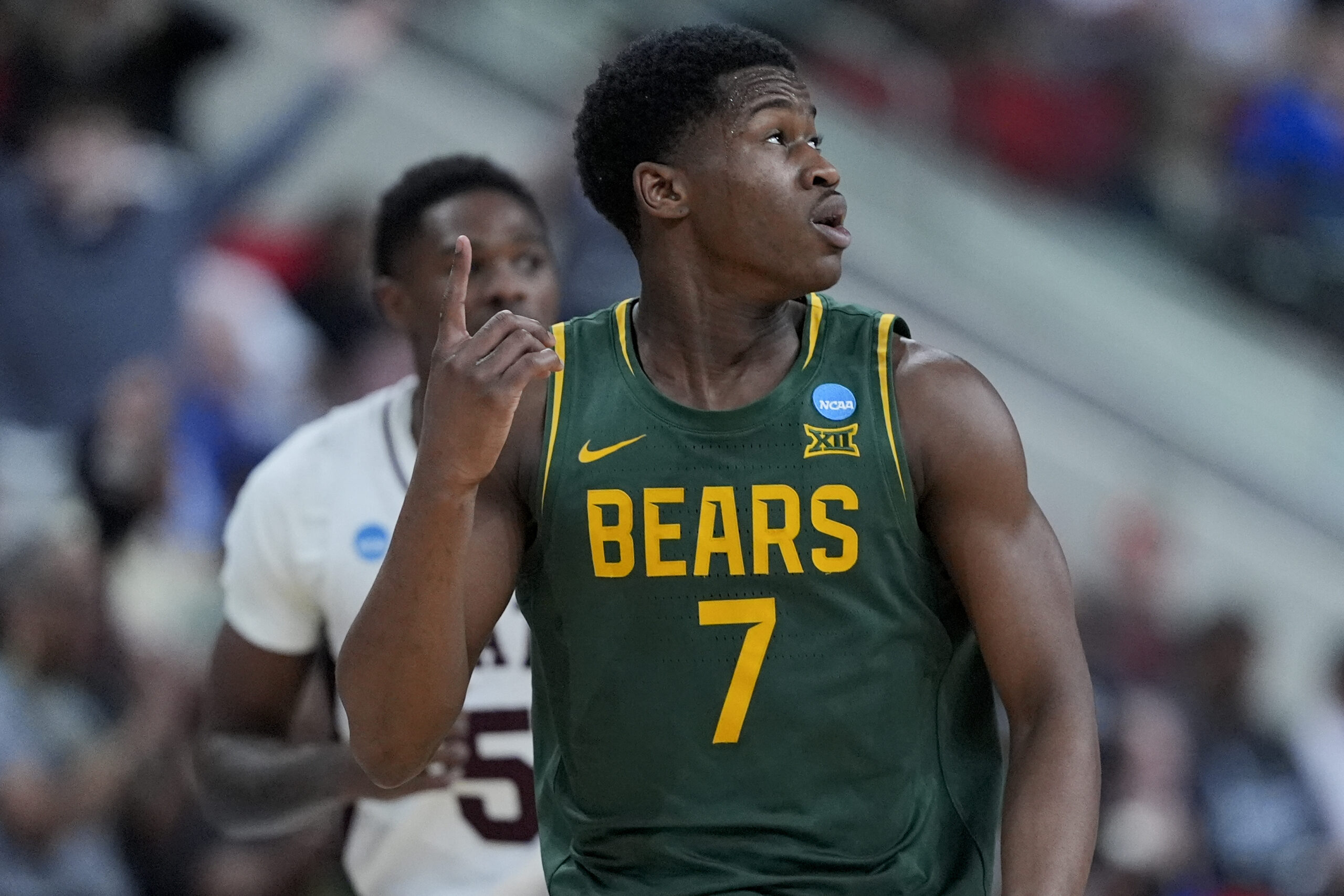
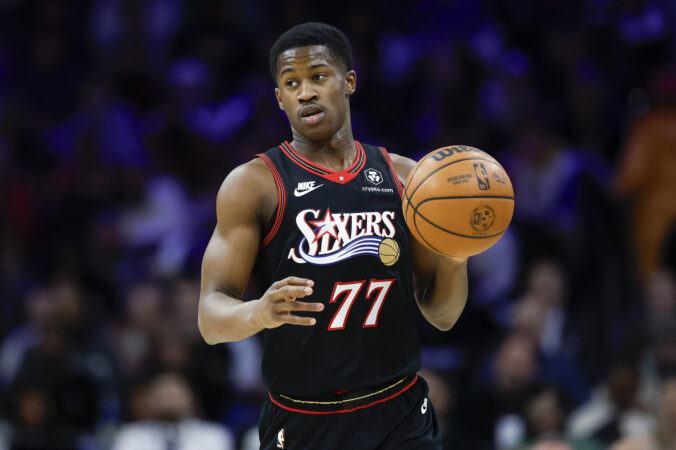
    Guard VJ Edgecombe spent one season with Baylor before becoming the No. 3 pick in the 2025 NBA draft.

    Another coach who valued Edgecombe’s IQ: Baylor’s Scott Drew.

    During Edgecombe’s lone college season, Drew recognized his “boldness” to speak up during practices, “wisdom” to be accurate with his question or suggestion, and “heart” to keep it centered on the team. Most freshmen in his program, Drew added, only learn one position that first season. Edgecombe could play every spot but center, offering the Bears flexibility to use him as a lead ballhandler or as a power forward in four-guard lineups.

    “It allows a coach to have an opportunity to steal a couple baskets by putting in new plays [and] doing things that are harder to guard,” Drew said last week. “And in one-, two-, three-possession games, if you have enough of those plays, you win a lot of those games.”

    When Edgecombe first arrived in Philly, Nurse also asked himself, “How did he get like this?”

    Nurse quickly recognized Edgecombe had already “absorbed a lot of basketball — and, probably, a little bit obsessively” because of his interest in the game’s history. That is not as common as an outsider might think for a player born in 2005, but was apparent to Nurse when Edgecombe marveled while walking into Chicago’s United Center for the first time.

    Edgecombe’s inquisitive nature during practices also has continued at the NBA level. While still building out schemes throughout the first half of the season, Nurse said, Edgecombe could already identify future wrinkles. Edgecombe said he typically first goes to a teammate to clarify if such additions are possible, then to coaches to get their point of view.

    “I just want to make sure my team is in the best possible [situation],” said Edgecombe, who entered Monday averaging 15.6 points, 5.3 rebounds, 4.2 assists, and 1.5 steals.

    Added Nurse: “I answer them a lot with, ‘We’re getting to that.’ … Then you kind of quickly explain, ‘Yeah, we can do that, and here’s what happens. That’ll be coming when we need it — and when we see it and when we can polish and can put it in.’”

    On the court, that IQ has translated to Edgecombe immediately taking on some ballhandling responsibilities — and committing only two combined turnovers when Maxey missed two games with an illness. Veteran forward Paul George has been most impressed with Edgecombe’s defensive savvy, recognizing when to make sharp rotations or well-timed playmaking risks. Edgecombe’s feel also shows up in how he spaces the floor on offense, clocks when a teammate has not gotten a shot recently, and balances when to be aggressive with the ball in his hands or facilitate.

    “He could be a guy that just takes off,” Nurse added, “and jumps in the air and figures it out three or four seconds later. But he doesn’t do that. He makes pretty good basketball plays.”

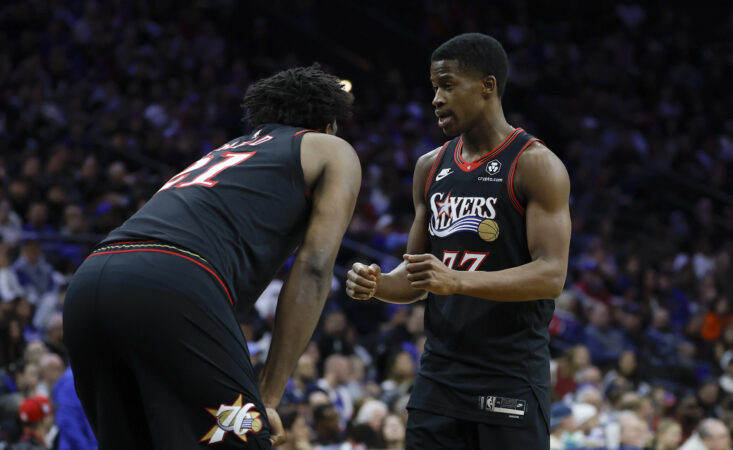
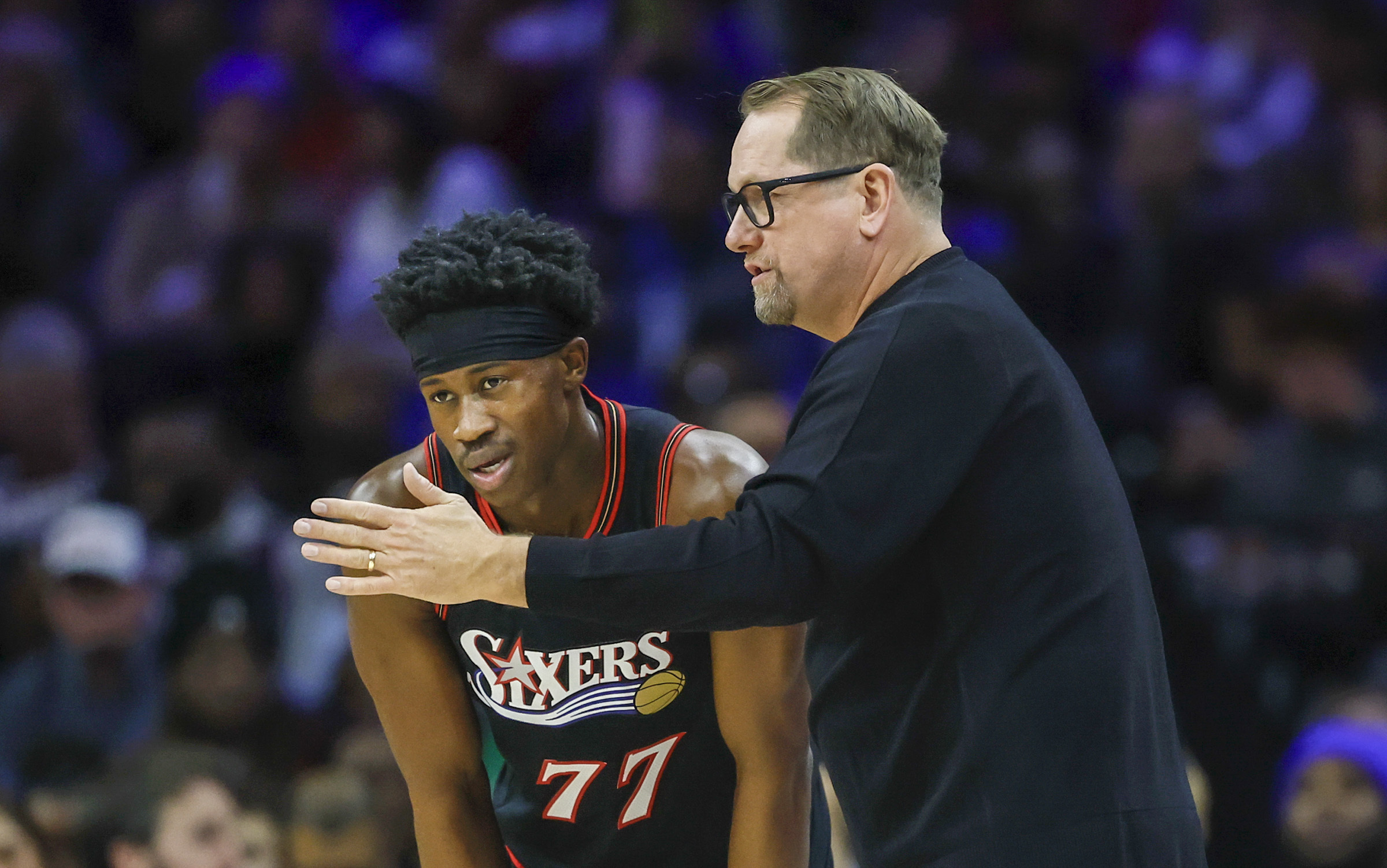
    Sixers coach Nick Nurse has been impressed by guard VJ Edgecombe’s ability to absorb information.

    That is why Nurse has reiterated that he still wants more out of Edgecombe, even as the Sixers’ roster has returned to full strength. Following a Jan. 16 loss to the Cleveland Cavaliers, Maxey told Edgecombe in the locker room that taking only five shots “is not going to cut it for us.” Nurse also has shown Edgecombe film examples of more opportunities to attack the rim or create space for a pull-up jumper.

    “He’s just a little too unselfish for me,” Nurse said. “I know that sounds funny, but we need him to use those gifts a little bit more. … I’m like, ‘That was a great move. You only did it once last night. I need like eight of those.’”

    Edgecombe acknowledged last week that he is “still learning” but does feel the game slowing down. And he flashed that knack during Saturday’s loss to the New York Knicks. In less than five seconds of the game’s final minute, he buried a three-pointer, forced a jump ball on a tie-up with Jalen Brunson, made two free throws after being fouled to cut the Sixers’ deficit to three points — and nearly drew an off-ball foul on Brunson before the ensuing inbounds pass, but that call was overturned on a coach’s challenge.

    Buck is not exactly shocked that such high-IQ play is fueling Edgecombe’s rookie season. He saw it in that heads-up putback against Golden State. And in a game-winning three-pointer in Memphis.

    And, behind the scenes, when Edgecombe paid an impromptu visit to a Long Island Lutheran practice just before his rookie season began.

    “We’re running a set, and he kind of waves me over,” Buck recalled. “And he’s like, ‘Hey, Coach. I think the spacing for this guy right here should be a little bit different to maximize the play.’ That’s just not normal for a 19-, 20-year-old guy to be coming to practice, not just kind of chilling or being there to be there. But kind of saying, ‘Hey, let me look at this. I think there’s a way to improve that.’”

    Now, Edgecombe is applying that as an NBA rookie, to a degree drawing raves from his coach and teammates.

    “He’s not out there looking lost or forcing anything,” George said. “He kind of just lets the game come to him. And that right there makes the greats, greats. …

    “The game just evolves around them, and that’s kind of what he has.”

  • Former FIFA president Sepp Blatter joins chorus telling fans to ‘stay away’ from the World Cup

    Former FIFA president Sepp Blatter joins chorus telling fans to ‘stay away’ from the World Cup

    Pleas to consider boycotting the World Cup in the United States this summer are rising amid President Donald Trump’s fraying relationship with Europe.

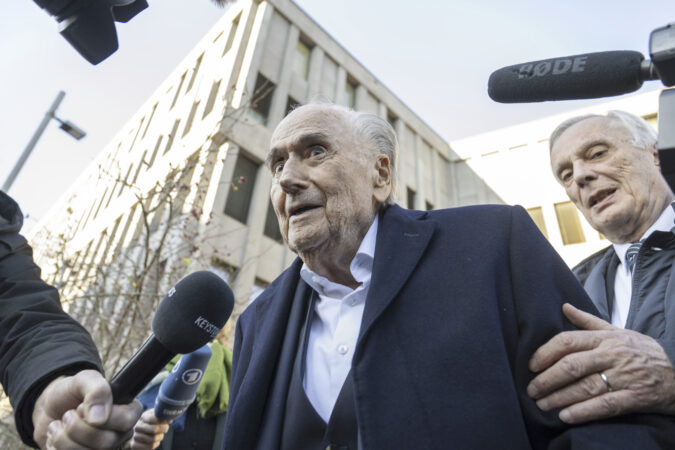
    Sepp Blatter, the controversial former president of FIFA, advised football fans in a social media post on Monday to “stay away” from America and the World Cup.

    Elsewhere, Oke Göttlich, president of the Bundesliga club St. Pauli and a vice president of the German Football Association, said that the time had come to “seriously consider and discuss” a boycott, according to an interview in the Hamburger Morgen Post.

    A spokesperson for FIFA declined to comment.

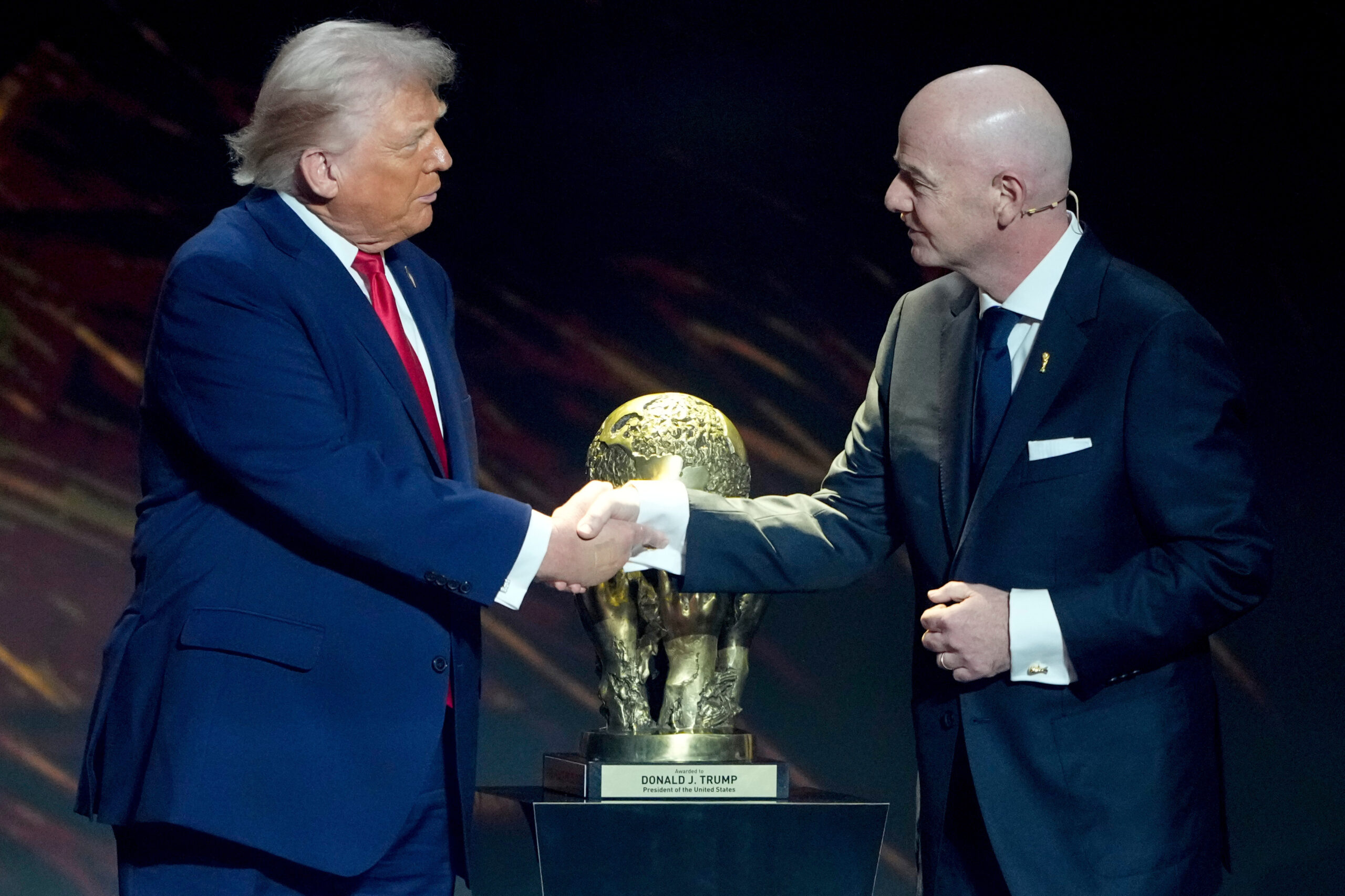
    FIFA president Gianni Infantino (right) gave U.S. president Donald Trump the inaugural “FIFA Peace Prize” at last month’s World Cup draw.

    The U.S. is co-hosting the World Cup with Canada and Mexico for about five weeks starting in June. The tournament has already been criticized for exorbitant ticket prices. Now Trump’s policies, including a desire to take control of Greenland from fellow NATO member Denmark, are increasing debate about boycotting the event in response.

    “What were the justifications for the boycotts of the Olympic Games in the 1980s?” Göttlich told the German newspaper, referring to several countries skipping the Olympics in Moscow after the former USSR invaded Afghanistan.

    “By my reckoning, the potential threat is greater now than it was then,” Göttlich said. “We need to have this discussion.”

    Opposition has also come from British politicians and Mark Pieth, who led a committee to oversee reforms at FIFA last decade. He’s said that fans should boycott the World Cup because of America’s increasing authoritarianism.

  • MLS strikes a deal with prediction market Polymarket, says it’s about protecting the integrity of games

    MLS strikes a deal with prediction market Polymarket, says it’s about protecting the integrity of games

    Major League Soccer announced Monday that it has started a partnership deal with Polymarket, a prediction market platform that’s similar to sports betting but not quite the same.

    Prediction markets work by having users choose from two possible outcomes for an event, and they are given a percentage likelihood of each. That plus how much money people put down translates into how much money they make if their pick is correct.

    Polymarket is one of a few such platforms, with Kalshi the other big one. The concept has been controversial for many reasons, the biggest being that although prediction markets resemble sports betting, they’re regulated separately from traditional sports betting firms.

    The reason behind that is the platforms’ claim that they offer “financial contracts” instead of bets. Those contracts are overseen by the federal government’s Commodity Futures Trading Commission, while sports betting is regulated by each state.

    As a result, prediction markets are legal nationwide, although a judge in Massachusetts this month issued an injunction stopping Kalshi from taking sports bets in the state.

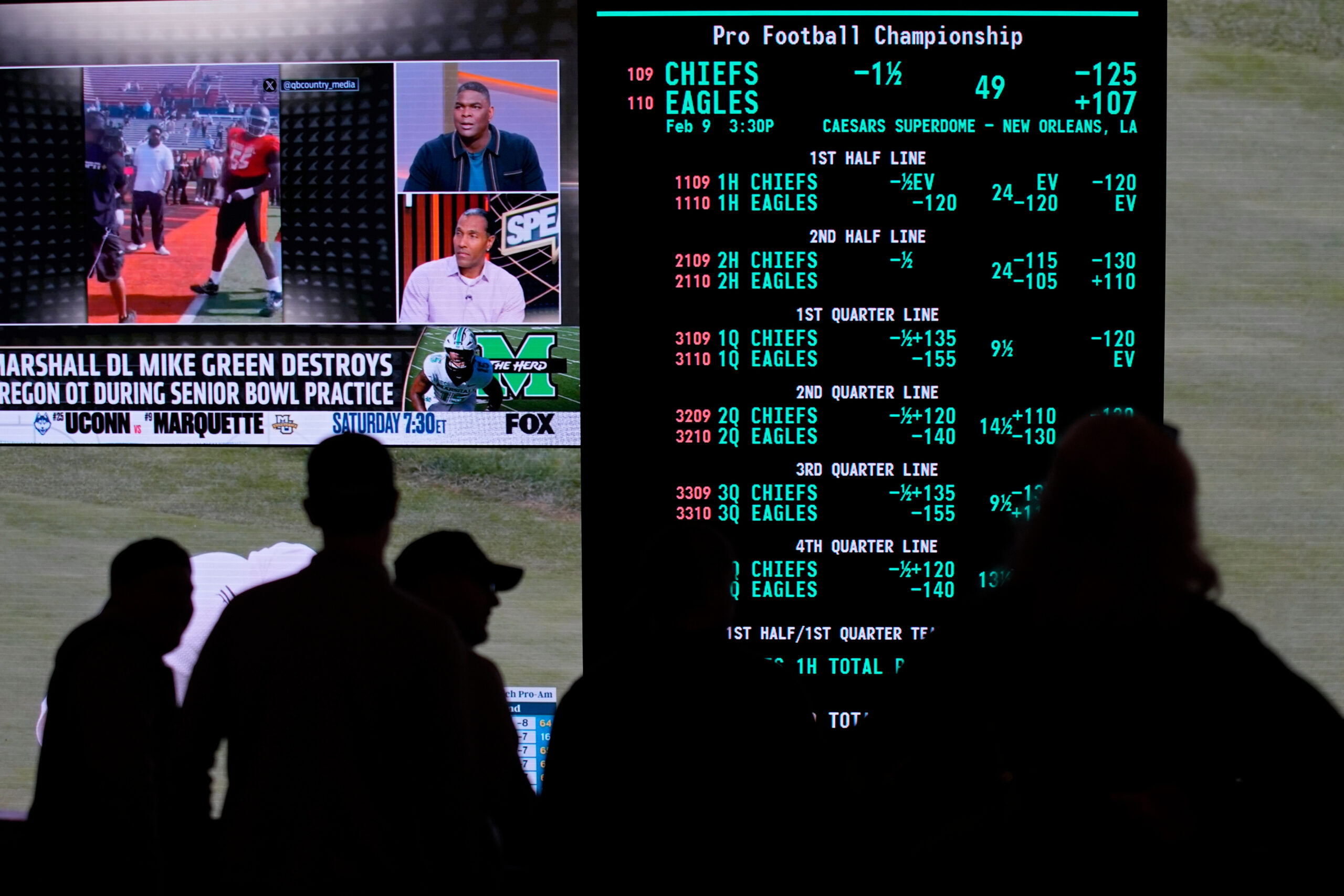
    Sports betting as some fans might be more used to seeing, at a casino in Las Vegas last fall.

    In the announcement, which also covers the Leagues Cup that MLS runs with Mexico’s Liga MX, MLS deputy commissioner Gary Stevenson said: “Partnering with Polymarket allows us to integrate prediction markets as a new fan engagement format and position MLS as an early leader among global soccer properties.”

    The announcement’s text also said the deal “includes safeguards designed to protect the integrity of MLS and Leagues Cup matches, including independent monitoring of trading activities and collaboration on MLS and Leagues Cup markets offered.”

    Another MLS executive, senior vice president of emerging ventures Chris Schlosser, told The Inquirer that the deal is just as much about preserving the integrity of games.

    “All of the major prediction markets have markets on MLS — they all offer trading on the league,” he said. “And so we felt like we really needed to lean in on the integrity side and create a framework for protection.”

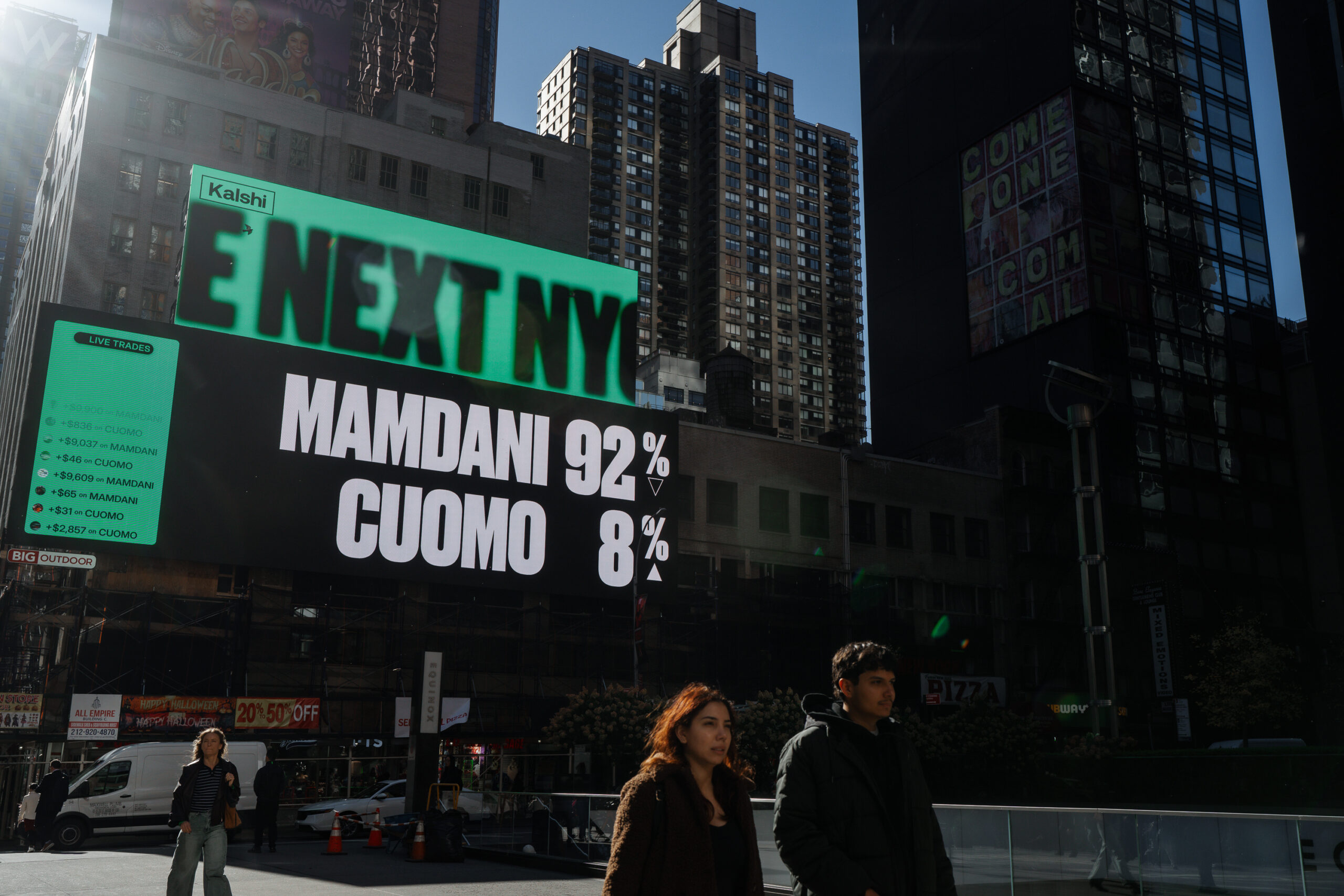
    A big billboard in New York that Kalshi bought to show off its prediction for last year’s mayoral race in the city.

    The ‘best shot’ at ‘ensuring integrity’

    Schlosser said MLS and Polymarket will create an “authorized prediction market” status similar to the “authorized gaming operator” status that various sports betting firms have from MLS and other sports leagues.

    “The goal,” he added, “is to get those with any any prediction market that has a CFTC license.”

    Doing so will “codify a whole number of integrity principles for us,” he said. “Things like approval over markets, things like working with a league on restricted individuals, league staff, club staff, players, referees, owners to make sure that they’re not trading on the sport of soccer.”

    “Markets” in this case refers to the offers that prediction markets give the public.

    Schlosser notably did not mention players at first. Asked if players have been banned from using prediction markets until now, he said: “Until we updated the guidelines and rules, no, and we needed to make sure that the prediction markets would actually work with us to prohibit that trading.”

    FIFA, world soccer’s governing body, has a code of ethics that bans players, officials, and agents from “either directly or indirectly, betting, gambling, lotteries or similar events or transactions related to football matches or competitions.”

    Schlosser said that a third-party entity will be employed to “monitor all trading volume on league markets and report any strange occurrences,” and that entity will be involved in any needed investigations.

    “It’s a multipronged approach, and we think it gives us the best shot at ensuring the integrity of the competition,” he said.

    Controversy over prop bets

    There is particular concern among outsiders about the proliferation of prop bets, just as there is in sports around the world. American sports fans need only look at the recent federal charges against college athletes accused of betting on basketball games here and in China, with some players from Philadelphia schools allegedly involved.

    Prop bets in soccer could come on whether a player will draw a yellow or red card, or miss a penalty kick, or take a certain number of shots — or something as small as committing a foul in a certain minute. A recent report by sports investigation website PlayTheGame.org cataloged how unlicensed companies around the world are using FIFA’s in-house streaming platform, FIFA+, to offer in-play bets on games shown there from lower-level leagues worldwide.

    FIFA’s headquarters in Zurich, Switzerland.

    FIFA also recently struck a deal with global sports data provider Stats Perform “to distribute official betting data and livestreams” to gamblers worldwide.

    MLS has had some small scandals over the years with players breaking the league’s rules on traditional sports betting. Prediction markets open up another area of risk, especially since they’re legal nationwide. (Polymarket is not legal in Canada, which has three MLS teams.)

    “The prop bets that really can concern us are the bets that are easily single-player controlled,” Schlosser said, listing the ones mentioned above and a few more. “Those are the kinds of things that concern us, and actually that concerns us in all gaming.”

    Traditional sports betting is currently legal in some form in 40 states and the District of Columbia. In 2023, MLS started writing to 41 states and territories asking for a ban on prop bets for players getting yellow or red cards. Thirty-three states agreed and banned the bets, and eight states did not.

    A list of the states in each column was not available when this article was published.

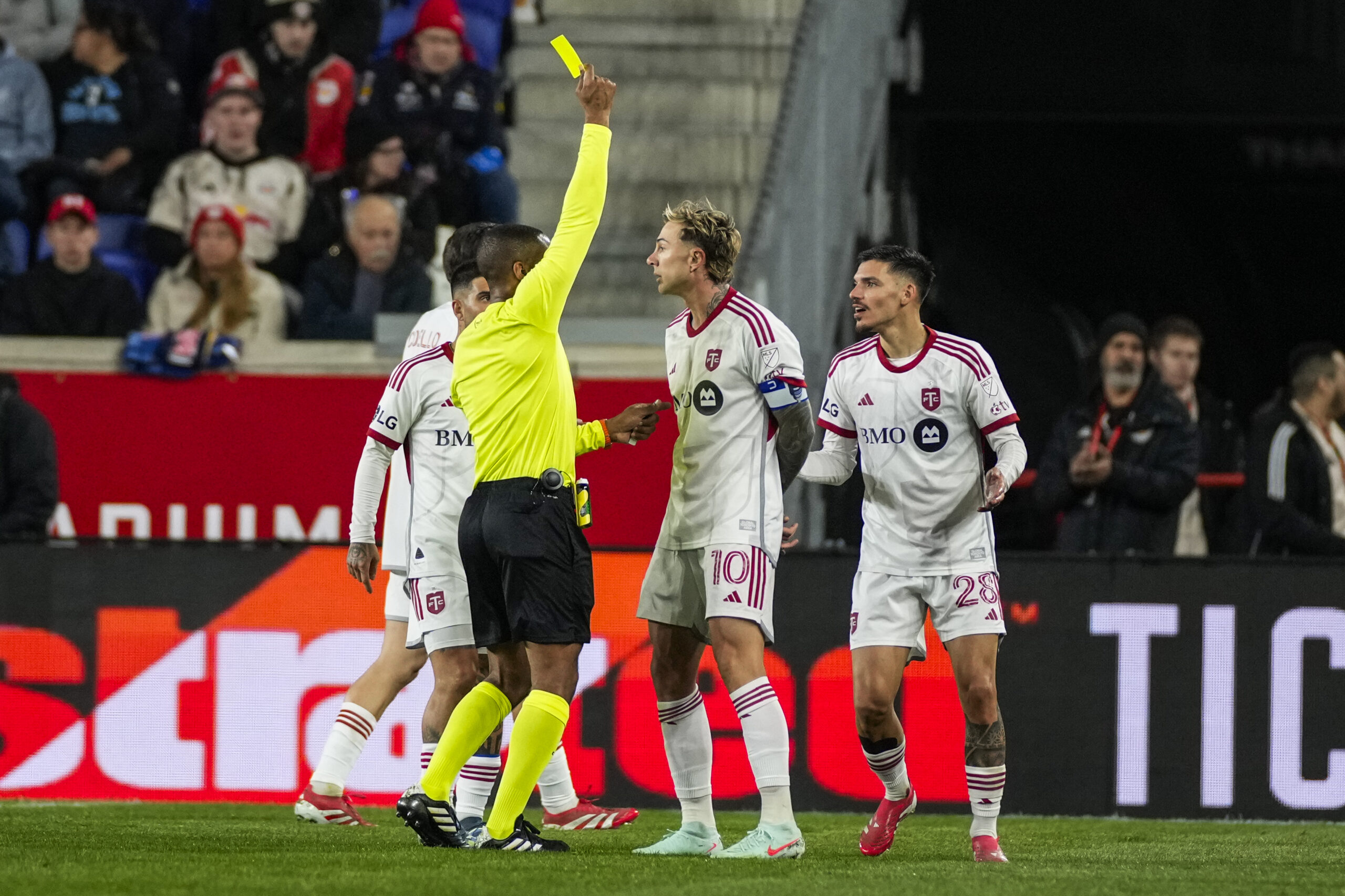
    A referee gives a yellow card to a player in an MLS game last year.

    “Even in sports betting, we’re not always successful in getting the framework that we want,” Schlosser said. “At least in these prediction market agreements, we have, I’d say, a broader right of consultation and approval over the markets that are going to be listed on MLS. And we feel that’s a strong protection to eliminate the markets that may be problematic.”

    Becoming more popular, and controversial

    The popularity of prediction markets has skyrocketed in recent times. The Financial Times reported last month that from early 2024 through November 2025, the total value of wagers on the platform rose from $100 million per month to over $13 billion.

    But that rise has come with many controversies. The first is claims that there aren’t enough regulations to stop insider trading, a matter that has arisen in the platforms offering bets on political events — which is controversial enough on its own.

    The industry has deep ties to cryptocurrencies. Polymarket accepts deposits through the Polygon blockchain along with traditional U.S. dollars and credit cards.

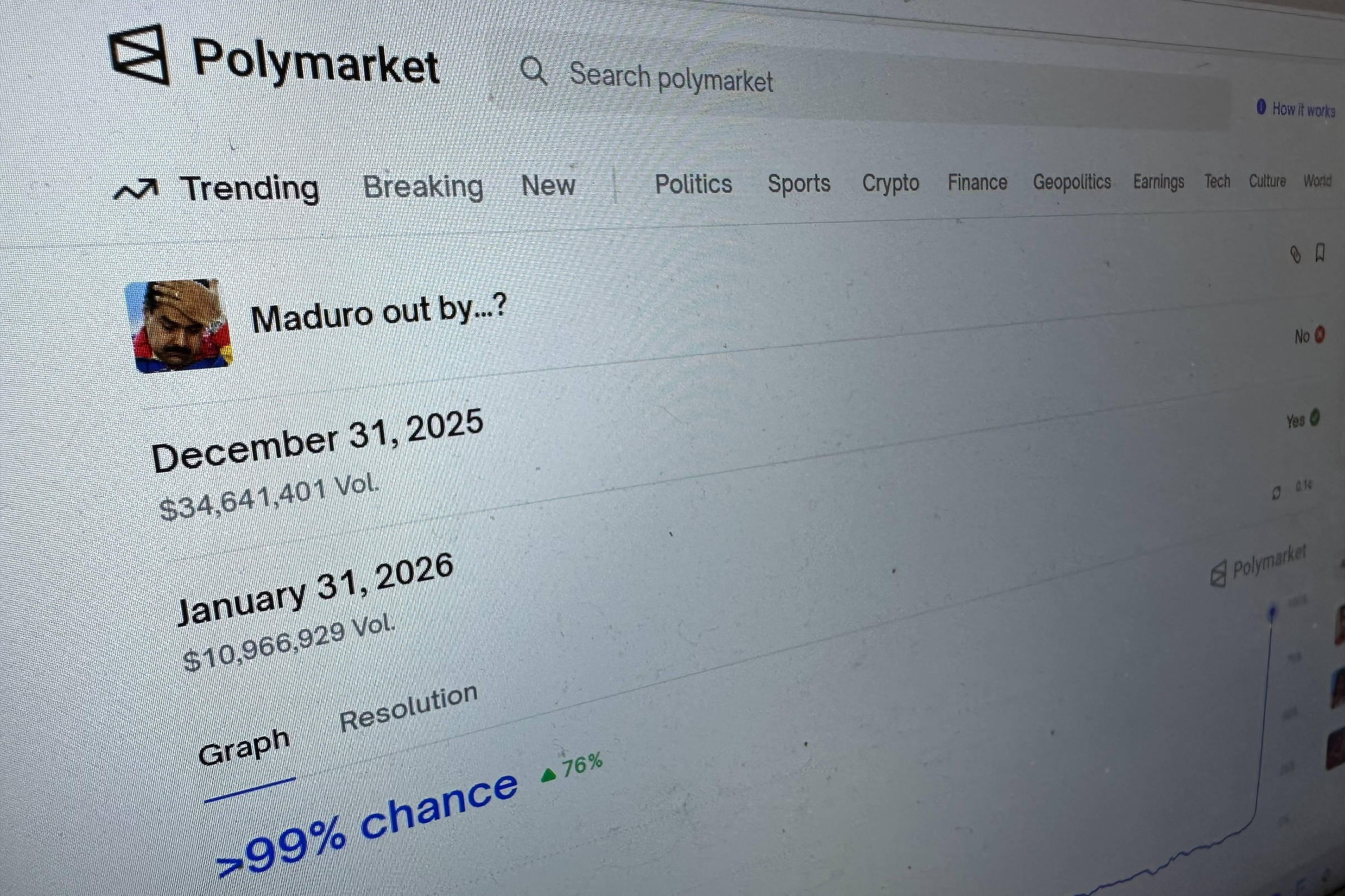
    Polymarket and other prediction markets take bets on a wide range of subjects, including politics.

    During Joe Biden’s administration, the CFTC accused Polymarket of running an illegal exchange, leading to a settlement in which the company agreed to wind down its U.S. operations. But after Donald Trump returned to the White House, the CFTC backed off a probe into the company and it returned to operation.

    Polymarket also now has one of President Trump’s sons, Donald Trump Jr., on its advisory board.

    Is there a risk of reputational damage to MLS, whether over the expansion of direct ties to betting or Polymarket’s ties to the Trumps? Monday’s announcement did not seem popular with fans on social media, many of whom sent their reactions to this reporter’s post of the news.

    “I can’t speak to any of that, but what I can say is we felt like we had a duty to act in the space to protect the integrity of our competitions,” Schlosser said. “These guys have markets on MLS, they have active trading, and it’s growing quickly. In that world, we can’t just stick our head in the sand.”

    With that in mind, he continued, the league decided that “this is the best way we saw to ensure that we could actively protect the integrity of the league. That really is the foundation of everything we’ve done in this space.”

  • Sixers’ VJ Edgecombe selected to compete in Rising Stars Challenge

    Sixers’ VJ Edgecombe selected to compete in Rising Stars Challenge

    It was no surprise that VJ Edgecombe was chosen Monday to play in the Rising Stars Challenge as part of NBA All-Star Weekend.

    The event will showcase some of the league’s top first- and second-year players along with premier NBA G-League talent in a mini-tournament, with four teams playing three games on Feb. 13 at the Intuit Dome in Inglewood, Calif.

    The 76ers’ rookie shooting guard has been expected to take part in the event since the beginning of his breakout season. His selection was made official Monday on Peacock before the tipoff of the nationally televised game between the Orlando Magic and Cleveland Cavaliers.

    The selected NBA players will be drafted onto three teams at 7 p.m. Tuesday on Peacock, while the fourth team will be composed of G League players.

    The other rookie selections are Dylan Harper (San Antonio Spurs), Cedric Coward (Memphis Grizzlies), Tre Johnson (Washington Wizards), Egor Dёmin (Brooklyn Nets), Kon Knueppel (Charlotte Hornets), Jeremiah Fears (New Orleans Pelicans), Collin Murray-Boyles (Toronto Raptors), Cooper Flagg (Dallas Mavericks), and Derik Queen (Pelicans).

    Matas Buzelis (Chicago Bulls), Alex Sarr (Wizards), Stephon Castle (Spurs), Reed Sheppard (Houston Rockets), Donovan Clingan (Portland Trail Blazers), Cam Spencer (Grizzlies), Kyshawn George (Wizards), Jaylon Tyson (Cleveland Cavaliers), Ajay Mitchell (Oklahoma City Thunder), Kel’el Ware (Miami Heat), and Jaylen Wells (Grizzlies) are the second-year players selected.

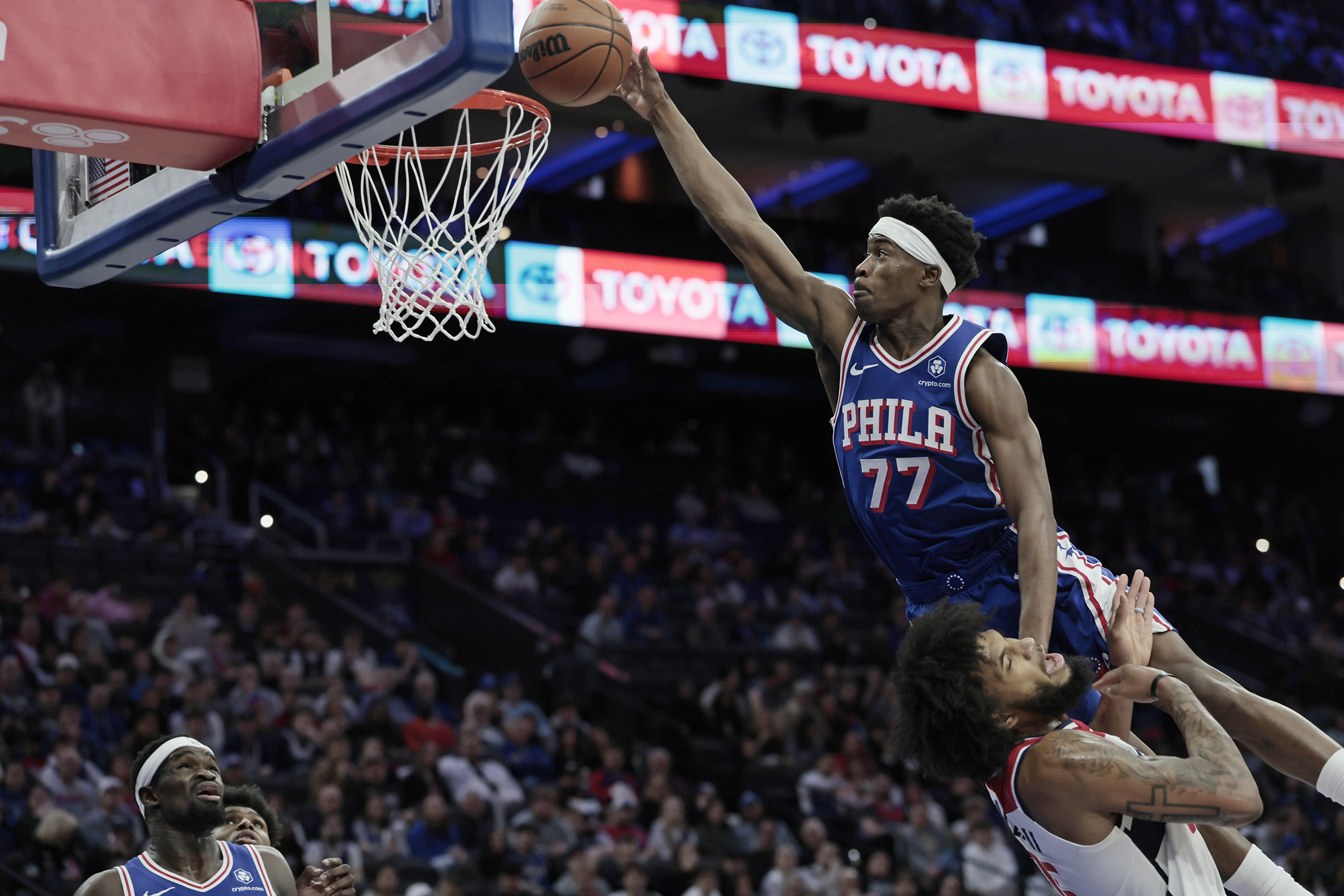
    Sixers rookie VJ Edgecombe rising for a dunk over the Wizards’ Marvin Bagley earlier this month.

    Meanwhile, the G-League selections are Ron Harper Jr. (Maine Celtics), Sean East II (Salt Lake City Stars), Alijah Martin (Raptors 905), Tristen Newton (Rio Grande Valley Vipers), David Jones Garcia (Austin Spurs), Yang Hansen (Rip City Remix), and Yanic Konan Niederhauser (San Diego Clippers).

    Edgecombe, who was selected third in June’s NBA draft, has been one of the league’s top rookies.

    On opening night, the 20-year-old produced 34 points on 13-for-26 shooting to go with seven rebounds in the Sixers’ 117-116 victory over the Boston Celtics at TD Garden. It was the third-highest scoring debut in NBA history behind Wilt Chamberlain’s 43 points on Oct. 24, 1959, and Frank Selvy’s 35 on Nov. 30, 1954. He also has had two game-winning baskets. The first one came Dec. 4 against the Golden State Warriors at Xfinity Mobile Arena. He scored a putback with 0.9 seconds left after Golden State’s De’Anthony Melton blocked Tyrese Maxey’s shot.

    After that play, Maxey blocked Melton’s layup attempt at the buzzer, enabling the Sixers to escape with a 99-98 victory. But Edgecombe set the play in motion because he was in the right place at the right time.

    The second winning basket came when Edgecombe buried a 25-foot three-pointer with 1.7 seconds left in overtime to give the Sixers a 139-136 victory over the Memphis Grizzlies on Dec. 30 at FedExForum.

    The Bahamian was averaging 15.6 points, 5.3 rebounds, 4.2 assists, and 1.5 steals heading into Monday’s game against the Charlotte Hornets at the Spectrum Center.

  • Hornets take a 50-point lead for 2nd time this month, roll past 76ers 130-93

    Hornets take a 50-point lead for 2nd time this month, roll past 76ers 130-93

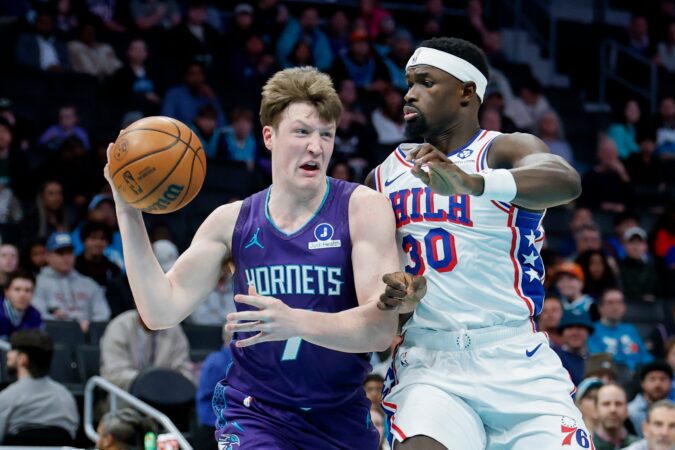
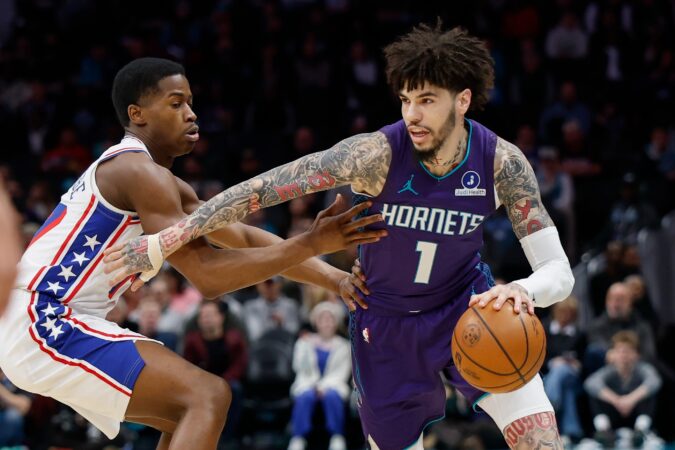
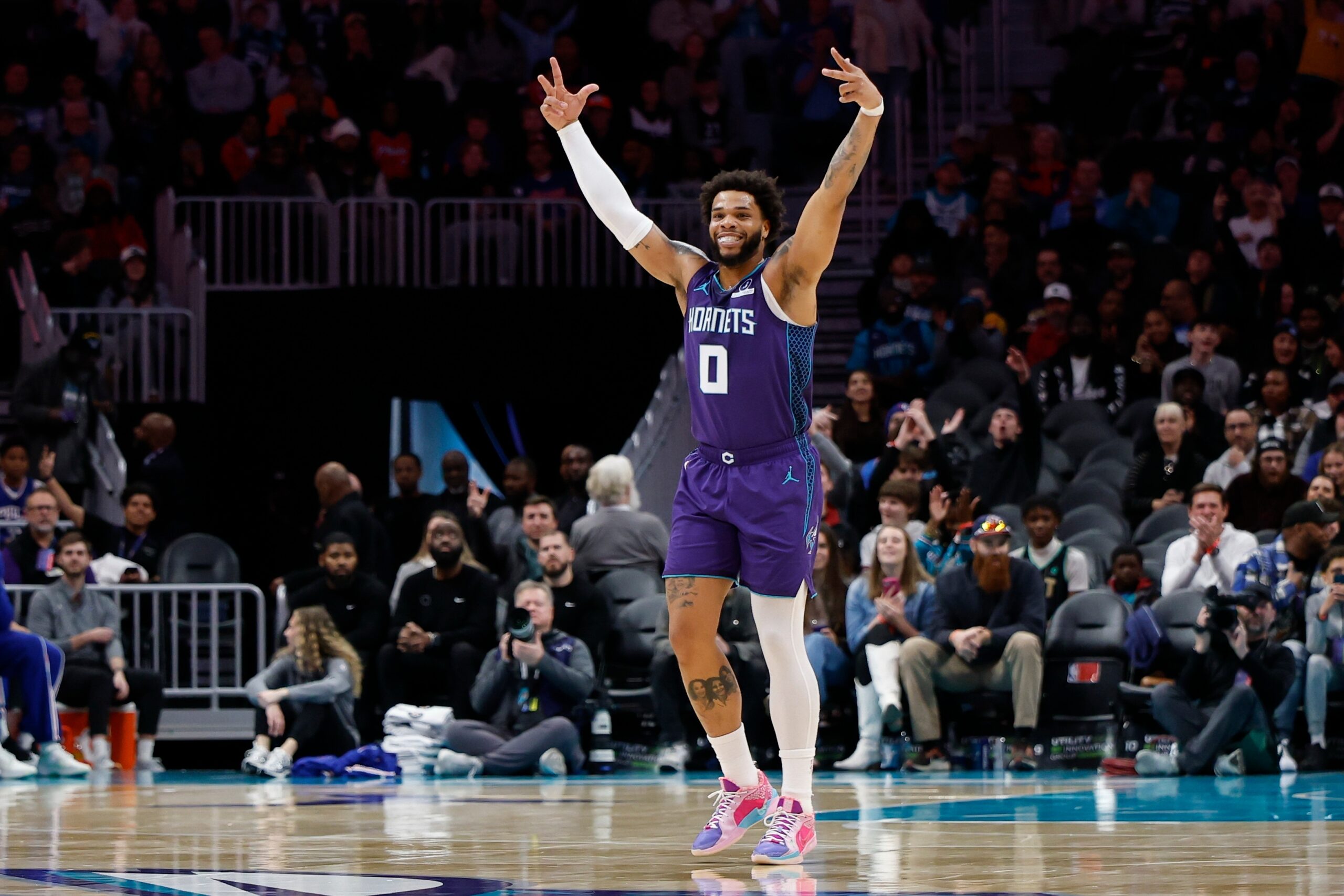
    CHARLOTTE, N.C. (AP) — Brandon Miller scored 30 points, and the Charlotte Hornets took a 50-point lead for the second time this month on the way to rolling past the 76ers 130-93 on Monday afternoon.

    All five Hornets starters finished in double figures. Kon Knueppel and Moussa Diabate scored 12, LaMelo Ball added 11, and Miles Bridges finished with 10 for Charlotte, which has won three straight games for the first time this season.

    It was 28-22 after one quarter — and then Charlotte outscored Philadelphia 81-37 over the next two quarters, taking a 109-59 lead into the fourth.

    Kelly Oubre Jr. scored 17 for Philadelphia. Jared McCain added 16 and Quentin Grimes had 14 for the 76ers, while Tyrese Maxey was held to a season-low six points on 3-for-12 shooting in 25 minutes. Maxey’s scoring average dropped a full half-point to 29.4 per game.

    Charlotte became the first team since Phoenix in February 2009 to lead by 50 or more points in two separate games within the same calendar month. The Hornets led Utah by 57 on their way to a 150-95 win on Jan. 10.

    The Hornets had one other lead of 50 or more points in the NBA’s play-by-play era, which goes back to 1996. It’s now happened twice more in a span of just over two weeks.

    The game was moved up to a 3 p.m. start because of extreme weather conditions in the Charlotte area, all related to Winter Storm Fern.

    Ryan Kalkbrenner had 13 points and nine rebounds off the bench for Charlotte. Philadelphia outscored the Hornets 34-21 in the fourth quarter and still took its second-worst loss of the season. The 76ers lost to Orlando by 41 on Nov. 25.

    Up next

    The 76ers host the Milwaukee Bucks on Tuesday (8 p.m., NBCSP).

  • Sixers takeaways: Joel Embiid, Paul George sorely missed, guards struggle, and more from embarrassing loss to Hornets

    Sixers takeaways: Joel Embiid, Paul George sorely missed, guards struggle, and more from embarrassing loss to Hornets

    The 76ers find themselves in dire predicaments when Joel Embiid and Paul George are both sidelined. On Monday, the squad’s performance was downright embarrassing without the two maximum-salary players.

    Tyrese Maxey and VJ Edgecombe must play much better than they showed against the Charlotte Hornets.

    And the Sixers must improve their three-point shooting.

    Those things stood out in a 130-93 loss to the Hornets on Monday at the Spectrum Center.

    Struggling without Embiid and George

    Embiid and George missed this matchup because they are not yet cleared to play on back-to-back days as both deal with left knee injury management.

    They are expected to return for Tuesday’s game against the Milwaukee Bucks at Xfinity Mobile Arena. But the Sixers (24-21) looked lost on both ends of the floor against Charlotte (19-28) without the standouts.

    The Hornets did a great job of attacking the rim. On defense, Charlotte challenged everything the Sixers attempted. For their part, the Sixers appeared flat and in need of better communication on both ends of the floor without their stars.

    The Sixers struggled through 33.3% shooting — missing 11 of 14 three-pointers — in the first half. During that time, the Hornets scored 38 points in the paint, a fact that was likely impacted by Embiid’s absence. As a result, the Hornets took a 69-44 advantage into intermission. The 25-point margin was the Sixers’ second-biggest halftime deficit of the season.

    Nick Nurse’s team also struggled at the start when Embiid and George both missed the game against the Toronto Raptors on Jan. 11. The Sixers shot 37.8% while making just 2 of 14 three-pointers and trailing by double digits in the first half of that game. They mounted a second-half comeback before losing in overtime against Toronto.

    But on Monday, the Hornets opened the third quarter with a 9-0 run and led by as many as 50 points late in the period.

    The Sixers made just 38.9% of their shots in the game while surrendering 56.6% to Charlotte. Hornets wing Brandon Miller led all scorers with 30 points. Meanwhile, Moussa Diabaté put together a personal slam-dunk contest and finished with 12 points on 6-for-7 shooting.

    Hornets forward Miles Bridges reacts during the first half. His team rode a 41-22 second-quarter performance to a big win over the Sixers.

    The Sixers must find a way to play when undermanned. They can’t use the absences of Embiid and George as an excuse for losing to one of the league’s worst teams in epic fashion.

    A couple of weeks ago, the Sixers lost to a Denver Nuggets squad playing without its entire starting lineup. Denver found a way to win, and the Sixers must do the same.

    But against Charlotte, they lacked energy and cohesion.

    More needed from guard tandem

    Maxey and Edgecombe had one of their worst games of the season as a pairing.

    Maxey, who was named an All-Star starter last week, finished with a season-low six points on 3-for-12 shooting, along with seven assists and three turnovers in 25 minutes, 18 seconds. Edgecombe, a standout rookie, had nine points while making 2 of 11 shots to go with six rebounds, one assist, and two turnovers in 25:44. They were tied at minus-36. With the game out of hand, Maxey and Edgecombe sat out the fourth quarter.

    This was a shockingly bad performance by Maxey, who entered Monday as the NBA’s third-leading scorer at 29.9 points. Meanwhile, Edgecombe is a rookie of the year candidate. They must play better for the Sixers to be victorious, especially in games when Embiid and George are sidelined.

    Three-point shooting blues

    The Sixers struggled, once again, from three-point distance.

    For the game, they made just 9 of 30 shots for 30% from deep.

    This comes after the Sixers shot a combined 32.0% in their previous 10 games. They were ranked 16th for the season at 35.4% heading into the game. But they’ve been in a funk in most of their recent games from behind the arc.

  • Flyers hope to carry the momentum from their road trip out west home after two days off

    Flyers hope to carry the momentum from their road trip out west home after two days off

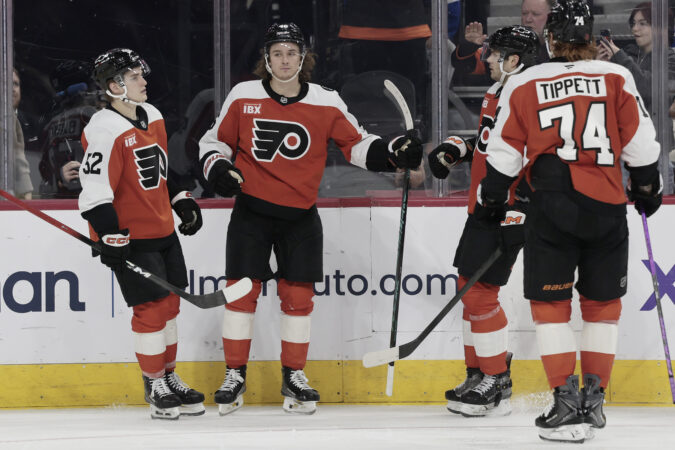
    After the Flyers’ successful road trip out west, the team returned to Philly, only to be kept off the ice for the next two days, thanks in part to the weekend’s snowstorm.

    The team didn’t practice Saturday and canceled practice Sunday, so Monday’s morning skate marked the first time the team had been on the ice since Friday’s 7-3 win over Colorado.

    The Flyers this season are 9-10-4 following a win, which coach Rick Tocchet described as “not that great.” The challenge of coming back after a win is mental, not physical, he said, and doubly so with the time off.

    “If you’re off for two days, first of all, what are you doing on the days off?” Tocchet said. “First of all, you’re resting your legs, which is great. Are you doing something? I’m sure some guys did something to move around, not lay on a couch, but there’s a mental game. You should use these two days as actually a rest. You should have a lot of legs instead of the opposite, rusty.”

    Although some of the guys may have spent their Sundays shoveling snow in their driveways, which Tocchet approved.

    “You get the squats in there, I mean, why not?” Tocchet joked. “I don’t want them doing it for four hours or something, but yeah, why not? I think a lot of people were out there shoveling yesterday.”

    Tocchet said Monday’s divisional matchup with the New York Islanders (7 p.m., NBCSP), who are currently third in the Metro, is a “maturity game” for the group.

    After earning five of a possible six points on the road trip, the Flyers hope they can maintain that level of play during the upcoming stretch, when they play three teams in the Islanders, Columbus Blue Jackets, and Boston Bruins that they could be competing with for a playoff spot come April.

    “I think we just needed a reset,” Travis Konecny said. He pointed to Colorado, the league’s top team, losing six of its last nine before Sunday’s win over Toronto. “Every team goes through a little streak, and we just had a little reset and got back to it.”

    Flyers goaltender Dan Vladar is getting close to returning from his lower-body injury. He has not played since Jan. 14.

    The schedule has not been friendly to the Flyers so far this year in terms of getting in more practice time, Tocchet said, and there won’t be many opportunities before the Olympic break (Feb. 6-24) to get back on the ice for practice, with the upcoming back-to-back on Wednesday and Thursday, and the Flyers’ charity carnival on Sunday.

    The young Flyers roster is improving in the mental aspect of the game, but the weeks to come will be a test of how much progress the group has made.

    “Every team’s got to go through it, and you’ve got to be ready for it, and that’s mental reps, when you don’t go on the ice, being ready,” Tocchet said.

    Breakaways

    Dan Vladař was on the ice for morning skate. The goalie hasn’t played since Jan. 14 against Buffalo, and is on injured reserve with a lower-body injury. Tocchet said he is likely to make a start this week. … Rasmus Ristolainen was also on the ice for skate and is expected to return to the lineup against the Islanders after missing six games with an upper-body injury.

  • Reports: Former Phillies outfielder Harrison Bader agrees to deal with Giants

    Reports: Former Phillies outfielder Harrison Bader agrees to deal with Giants

    Harrison Bader reached an agreement with the Giants on a two-year, $20.5 million contract, according to multiple reports on Monday.

    The center fielder posted a career year offensively in 2025, slashing .277/.347/.449 over 146 games. The Phillies acquired Bader from the Twins at the trade deadline to bolster their outfield, in exchange for two prospects, outfielder Hendry Mendez and right-handed pitcher Geremy Villoria.

    Bader, 31, was immediately a popular member of the Phillies clubhouse in the second half of the season, with several of his teammates adopting his catchphrases and signature crop top. He suffered a groin strain while running the bases during Game 1 of the National League Division Series and was limited to pinch-hitting in Games 2 and 4.

    He declined his end of his $10 million mutual option following the season, becoming a free agent.

    Following Bader’s departure, the Phillies’ outfield is set to look quite different on opening day. Max Kepler remains unsigned after receiving an 80-game suspension for testing positive for a performance-enhancing drug, and president of baseball operations Dave Dombrowski has said the club plans to find a “change of scenery” for right fielder Nick Castellanos.

    The Phillies signed Adolis García to a one-year, $10 million contract, and they expect to give top outfield prospect Justin Crawford the opportunity to earn the starting center fielder job in 2026. Crawford was extended a non-roster invite to major league spring training on Friday.