Category: Sports

Sports news, scores, and analysis

  • Why has Matvei Michkov been playing his less-favored left wing? Here’s what Rick Tocchet had to say

    Why has Matvei Michkov been playing his less-favored left wing? Here’s what Rick Tocchet had to say

    DENVER ― There’s been a lot of discourse regarding Matvei Michkov.

    It ranges from his ice time to his spot on the power play to his deployment at certain times during the game. The latest one is about which wing he plays on.

    When he was drafted to the NHL, and for most of his first season with the Flyers, Michkov played on the right wing. This year, like at the end of last season when he played on a line with Sean Couturier and Travis Konecny, he’s largely been skating on the left.

    “Yeah, I mean, listen, he’s struggling, so you’re looking for all different things,” coach Rick Tocchet said about moving him across the ice. “But the bottom line is, we got him to play with some pace. That’s it. I know everybody wants him to score and all that stuff. You’ve got to be [in] positions to score.”

    Traditionalists will tell you that Michkov should be playing on the left side anyway as a left-handed shot. A lot of it is more about where to line up on faceoffs and in defensive-zone coverage, as a left-handed stick will be able to use the walls and protect the puck to get it out on the left side.

    A left-handed left wing is preferable to many coaches in the defensive zone because it typically pits a lefty against a right-shot defenseman, so they have their stick on the same side — and in the shooting lane — as the defenseman when they try to close them down.

    “Whether it’s right or left, it really doesn’t matter. It’s just to line up,” Tocchet said. “When you’re in the offensive zone, it doesn’t matter where you [start]. So I think everybody makes a big deal. But through the neutral zone, for me, the faster you can go on your forehand is the better [side]. But that doesn’t mean you can’t go to the other side.”

    Across the first 14 games of the season, Michkov lined up on the right side. He had two goals and seven points while averaging 14 minutes, 52 seconds a night. The first of those goals came in Game 4 of the season, and his second came in Game 14 on Nov. 6 against the Nashville Predators.

    The next game, on Nov. 8 at home against the Ottawa Senators, he lined up on the left side with Couturier and Bobby Brink. He has stayed on that side of the ice since, regardless of his linemates — although he is back with Brink, but now with Noah Cates as the center.
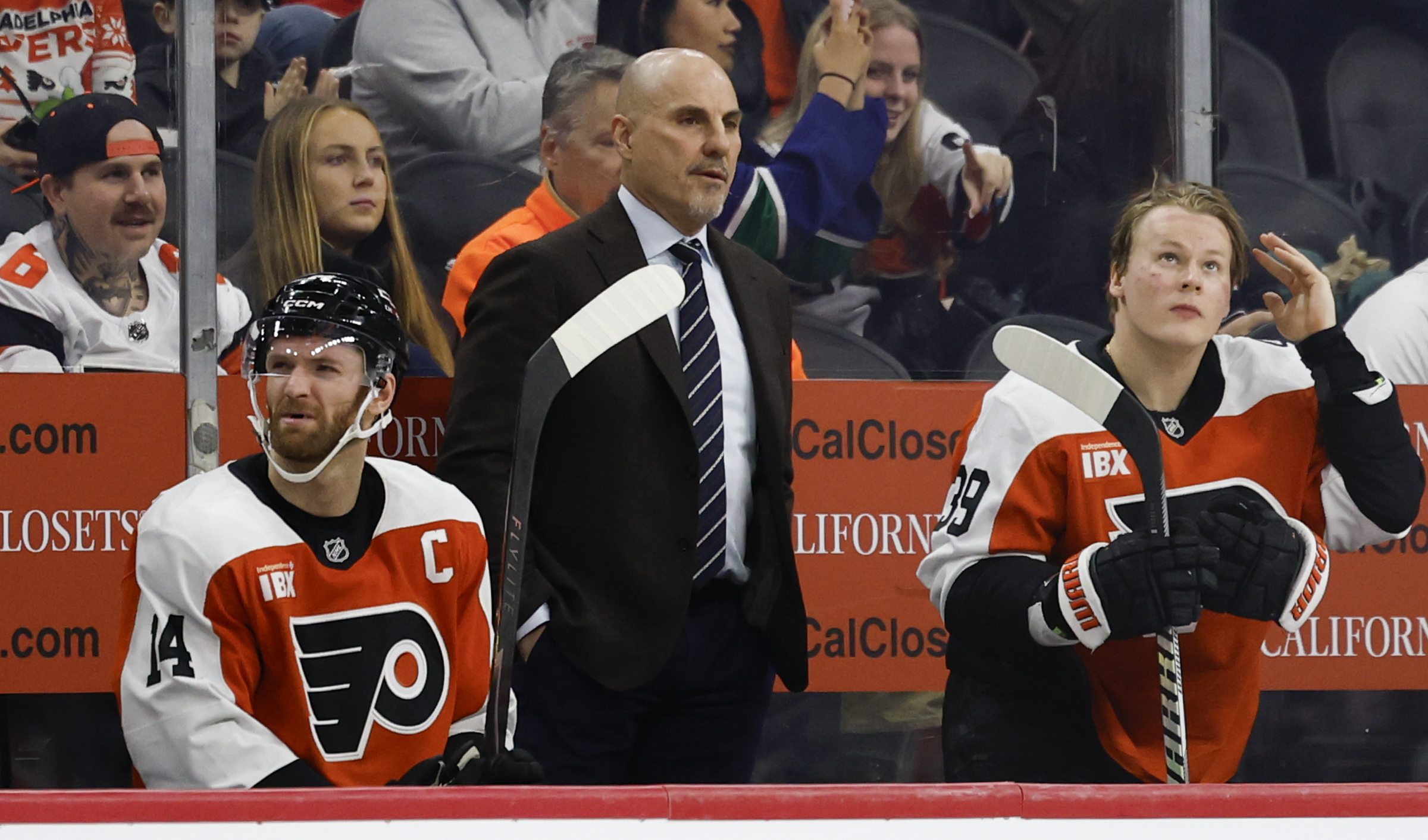
    Flyers head coach Rick Tocchet and winger Matvei Michkov have had there disagreements about deployment and responsibilities this season.

    At the onset of the switch, it seemed to be working too, as the 21-year-old winger had five goals at five-on-five in the first 10 games and six overall. But over the next 24 contests, he managed just two. Across the past 34 games since switching to left wing, Michkov has 17 points (eight goals, nine assists). He missed one game in January after taking a puck off his foot and has been skating on average 14:30 a night.

    “I think there’s been some [better] pace in his game, but I think there’s more,” said Tocchet. “I know he had like [seven] shots last game, but a lot of them are just from the outside, just thrown on the goalie. I want more from him. I want him to do a deep delay, get out of there, move your feet, things like that.”
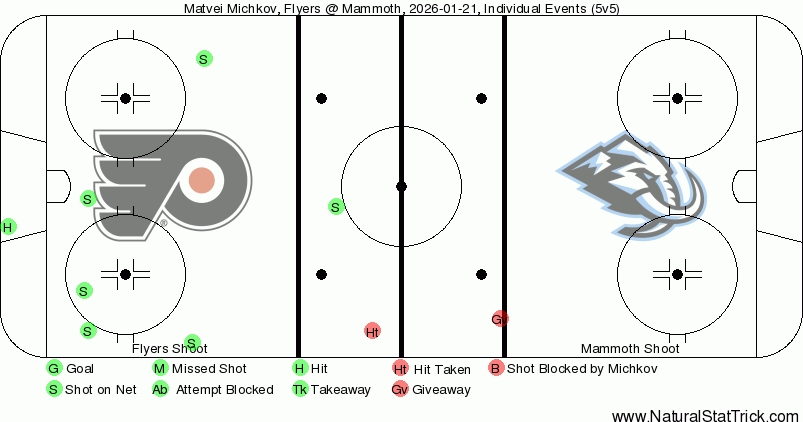
    Matve Michkov’s event map during five-on-five from Wednesday’s loss to the Utah Mammoth.

    When delving into the analytics, he is producing at the same 0.50 points per game clip when on the left and right, but he has gone from 0.14 goals per game to 0.24 goals per game since the shift. His shooting percentage has also risen from 7.7% to 11.1%, while his shots per game have risen from 1.86 to 2.12.

    According to Natural Stat Trick, at five-on-five, he has also seen his individual shot attempts rise from 2.43 to 3.41 per game, his individual high-danger shot attempts go from 0.71 to 1.03, and his individual scoring chances from 1.5 to 1.82.

    Although there are several factors to look at aside from shifting right to left — e.g., linemates, time on ice, the fact that he’s probably in better shape now that he’s further removed from his offseason ankle injury — statistically, he seems to have been slightly better on the left.

    But regardless of side, Michkov’s production hasn’t been anywhere near as good as last year, when the talented youngster averaged 0.79 points per game and led all rookies with 26 goals. The Flyers will hope that starts to change as they close in on the Olympic break (Feb. 6-24).

    Breakaways

    Nicolas Deslauriers and Hunter McDonald stayed on the ice late, with the veteran showing the youngster some fighting techniques. … Dan Vladař shared a net with Aleksei Kolosov at morning skate as he inches closer to a return from an undisclosed injury. … Sam Ersson (7-8-5, .858 save percentage) was to start in goal against the Colorado Avalanche on Friday night.
  • Amid controversy, the NWSL stands firm on the High Impact Player rule

    Amid controversy, the NWSL stands firm on the High Impact Player rule

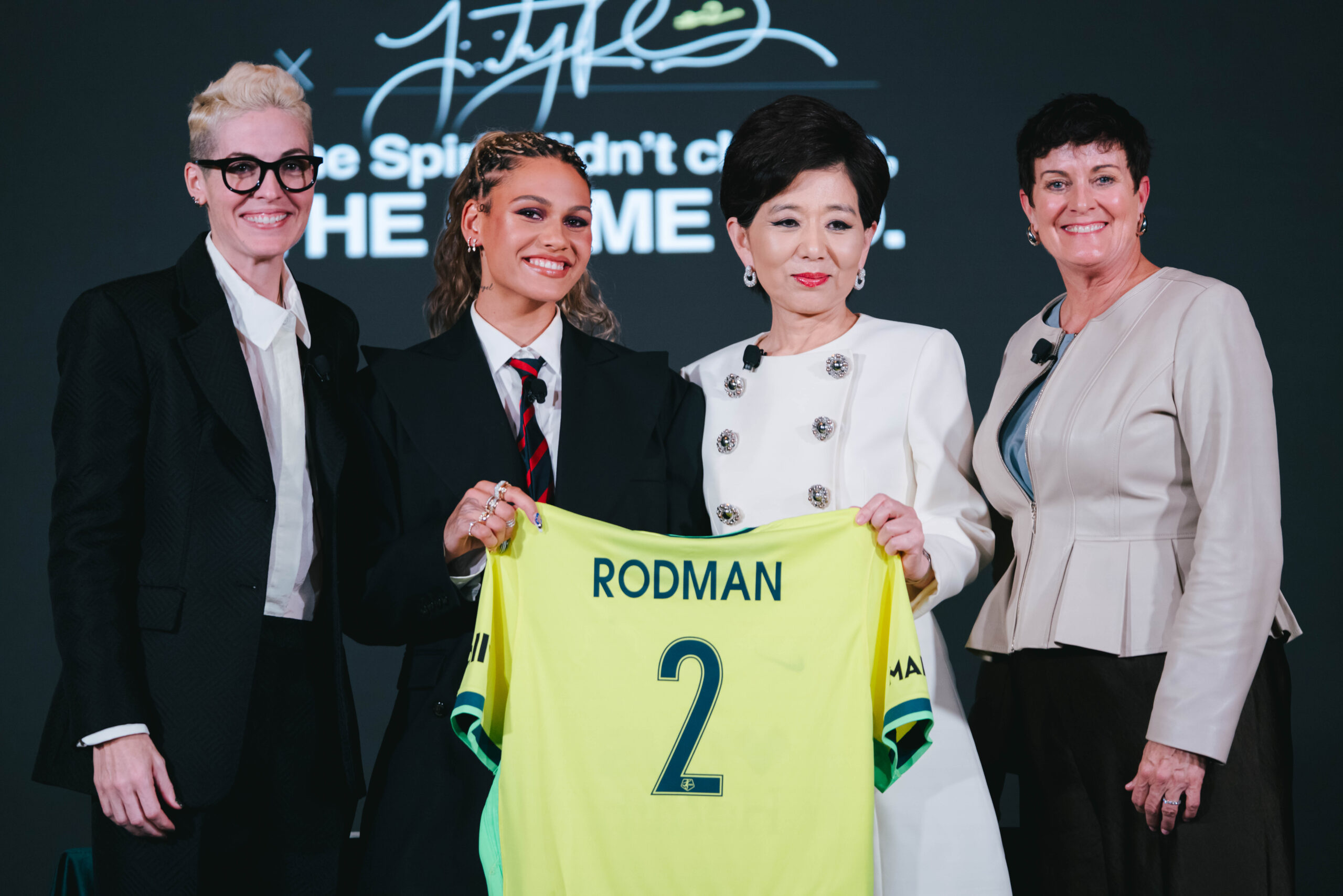
    Though Trinity Rodman’s contract saga has at last been resolved with her re-signing, the controversy over the NWSL’s High Impact Player rule likely won’t die down soon.

    It remains the subject of a grievance by the NWSL Players Association, which claims the rule should have been collectively bargained; and it remains unpopular with many fans, for a variety of reasons.

    The league’s commissioner, Jessica Berman, does not mind being the main target of that ire.

    “I very much stand behind the decision and the process,” she told The Inquirer in an interview on Friday. “We intentionally negotiated for the right to do exactly what we did, which is to develop a specific rule for a specific classification of players which there is a reduced salary cap charge, so long as we consult in good faith with the Players’ Association. And I want to reinforce that’s exactly what we did in this context.”

    The NWSLPA disagreed.

    NWSL Players Association Statement on League’s Unilateral Implementation of the High Impact Player Rule:

    [image or embed]

    — NWSL Players Association (@nwslplayers.bsky.social) December 23, 2025 at 1:43 PM

    “At no point in time in CBA negotiations or any time prior to the end of 2025 did [the] NWSL articulate a plan to impose a separate pot of funds with a new cap and eligibility criteria that were unrelated to roster classifications by any name,” NWSLPA executive director Meghann Burke told The Inquirer via email. “We disagree with NWSL’s representation that it consulted with the NWSLPA.”

    Burke claimed that the first “written communication” she got on the proposal came on Dec. 11, and the union registered its objections after multiple board meetings in the ensuing days. The league announced the rule on Dec. 23, and said it will take effect on July 1.

    Washington Spirit superstar Trinity Rodman’s threat to leave the NWSL in free agency sparked the league to adopt the High Impact Player rule.

    Berman acknowledged the grievance in saying that “as in all labor relations in professional sports and otherwise, the union and the league can disagree,” and the league will follow the established procedures for resolving disputes.

    “We are very confident in our position,” she said. “We have been contemplating different iterations of a potential rule or policy like this for a long time, and for that reason, we negotiated into the CBA the specific right to move forward with this if and when we believed it was appropriate.”

    How the HIP rule works

    If there’s enough money going around to give each of the 15 clubs $1 million from the HIP pot, why not just raise the salary cap by the same amount?

    “At some point, the board and NWSL are going to have to realize that increasing the cap — while retaining it — is in their own best interests,” said Burke, whose union has been loudly calling to raise the cap. “Until then, we stand ready to enforce the terms that were negotiated.”

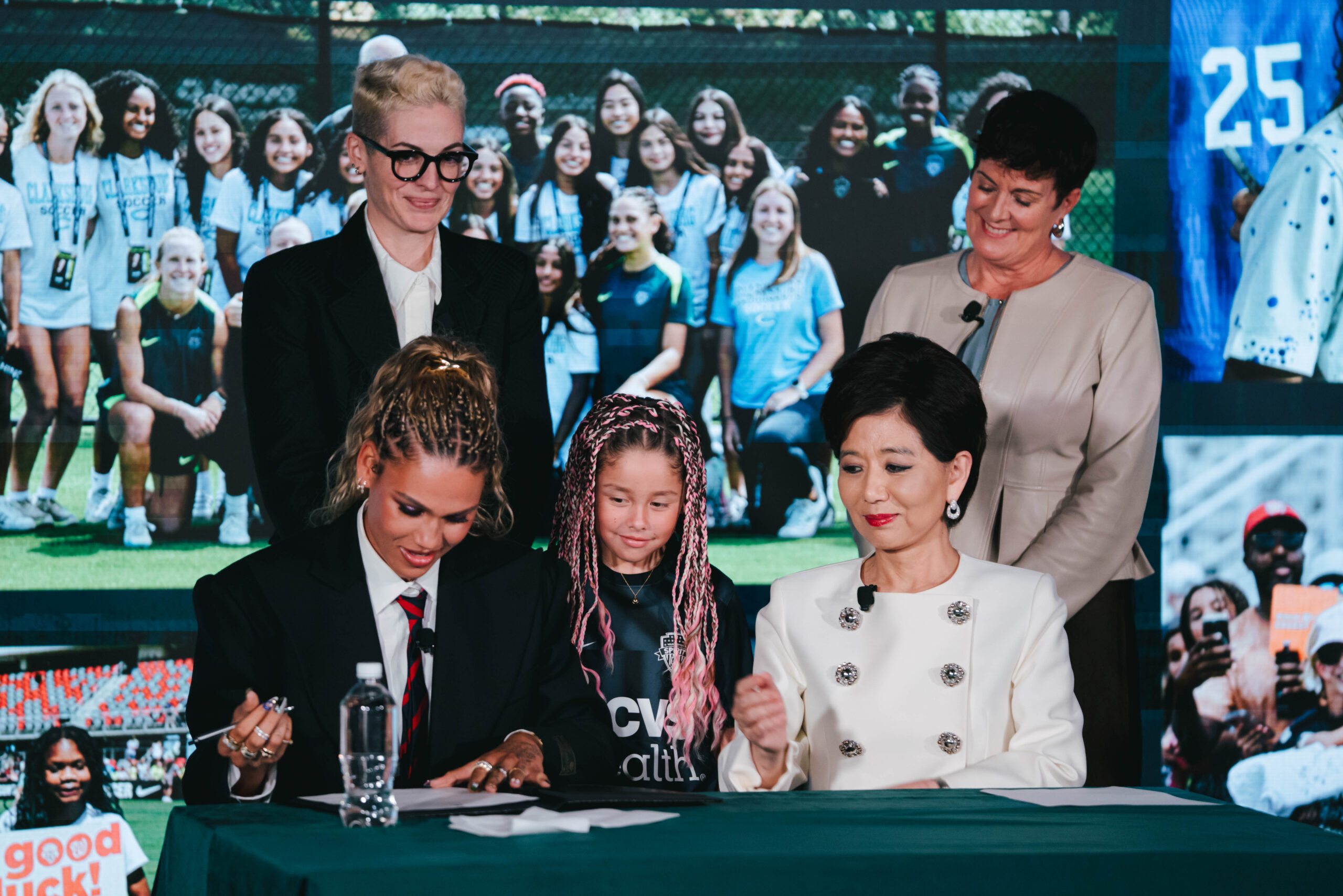
    Trinity Rodman (bottom left) signing her new contract on Thursday.

    Berman started the league’s case by bringing vice president of player affairs, Stephanie Lee on the call to give more context.

    Lee, who previously worked in the front offices of Gotham FC, the Utah Royals, and the Seattle Reign, noted that a player who gets HIP money must have a salary cap charge of at least 12% of the teamwide base cap, which for this year is $3.5 million.

    Teams also can’t get cap relief from the rule unless they hit the cap in the first place. Up to that point, the player’s salary is charged to the regular payroll.

    “As they roster build throughout the year and through [transfer] windows and different transactions, there’s flexibility there to how they designate players and take advantage of that HIP [money],” Lee said. “It’s not something that they have to decide at the beginning of executing a player’s contract.”

    A league spokesperson added that teams can retroactively apply the money to a player when they hit the cap by signing other players, so they can go over the cap to keep everyone they want to.

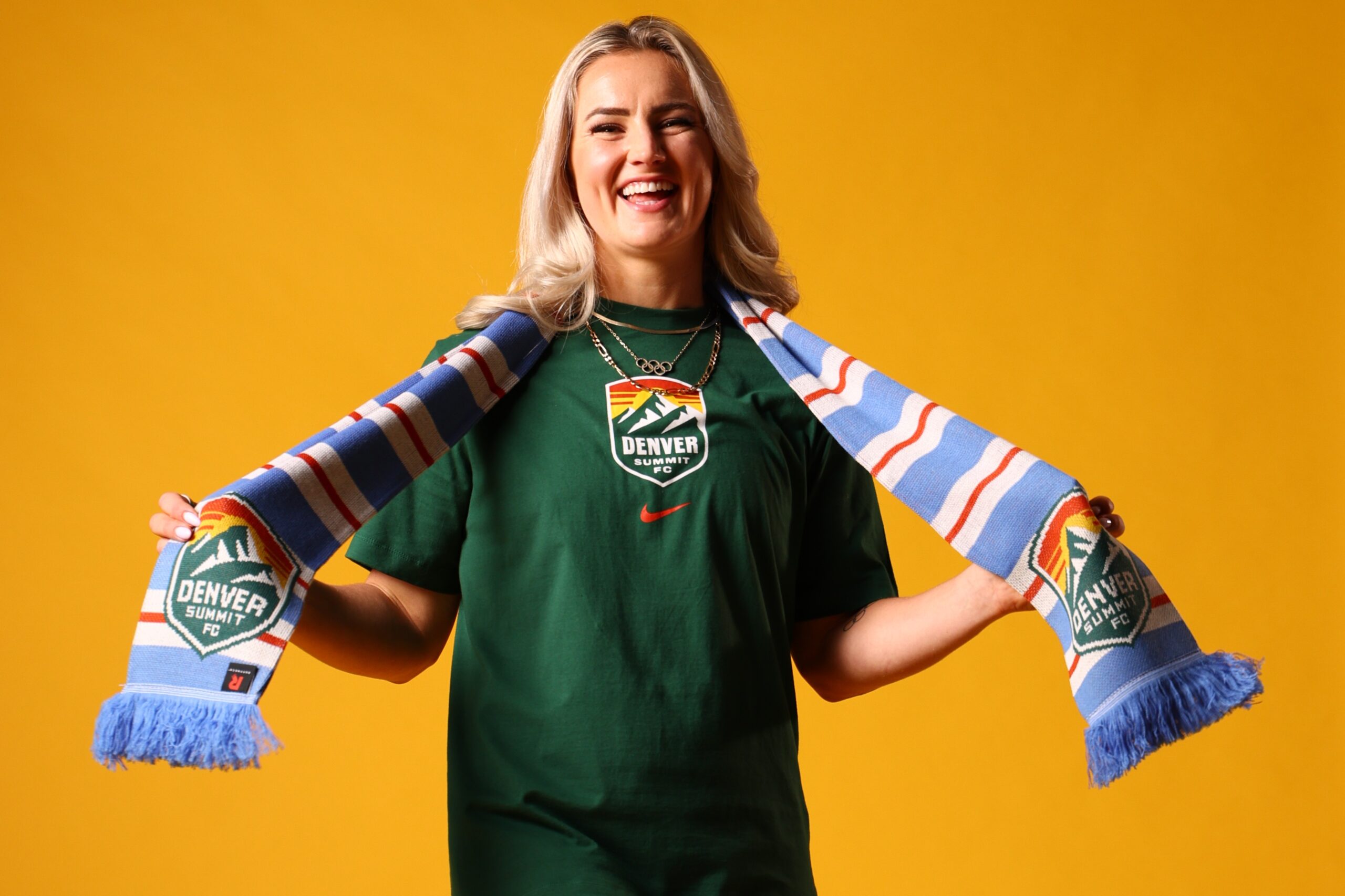
    U.S. women’s national team captain Lindsey Heaps is expected to be paid through the HIP rule when she joins her hometown Denver Summit in the summer.

    Why limit who can get the money?

    Then there are the criteria the league laid down to limit which players are “high impact,” from media and marketing rankings to U.S. national team playing time. This also is widely unpopular.

    But there’s also a question at a higher level: Why have criteria in the first place? Why not let teams spend the money on whoever they want, as MLS now does with its Designated Player rule, and let teams potentially make mistakes?

    “It is the league’s, and in this case our — my — responsibility to be responsible stewards of capital in service of growing the business,” she said. “In this circumstance where we have unlocked the ability for our clubs to spend an incremental $115 million [combined through 2030], it is our job to make sure that it is going to have a relationship to growing our revenue. That growth in revenue will also feed the revenue-sharing mechanism that was negotiated into our most recent CBA, which means that we are incentively aligned with our players to grow this business.”

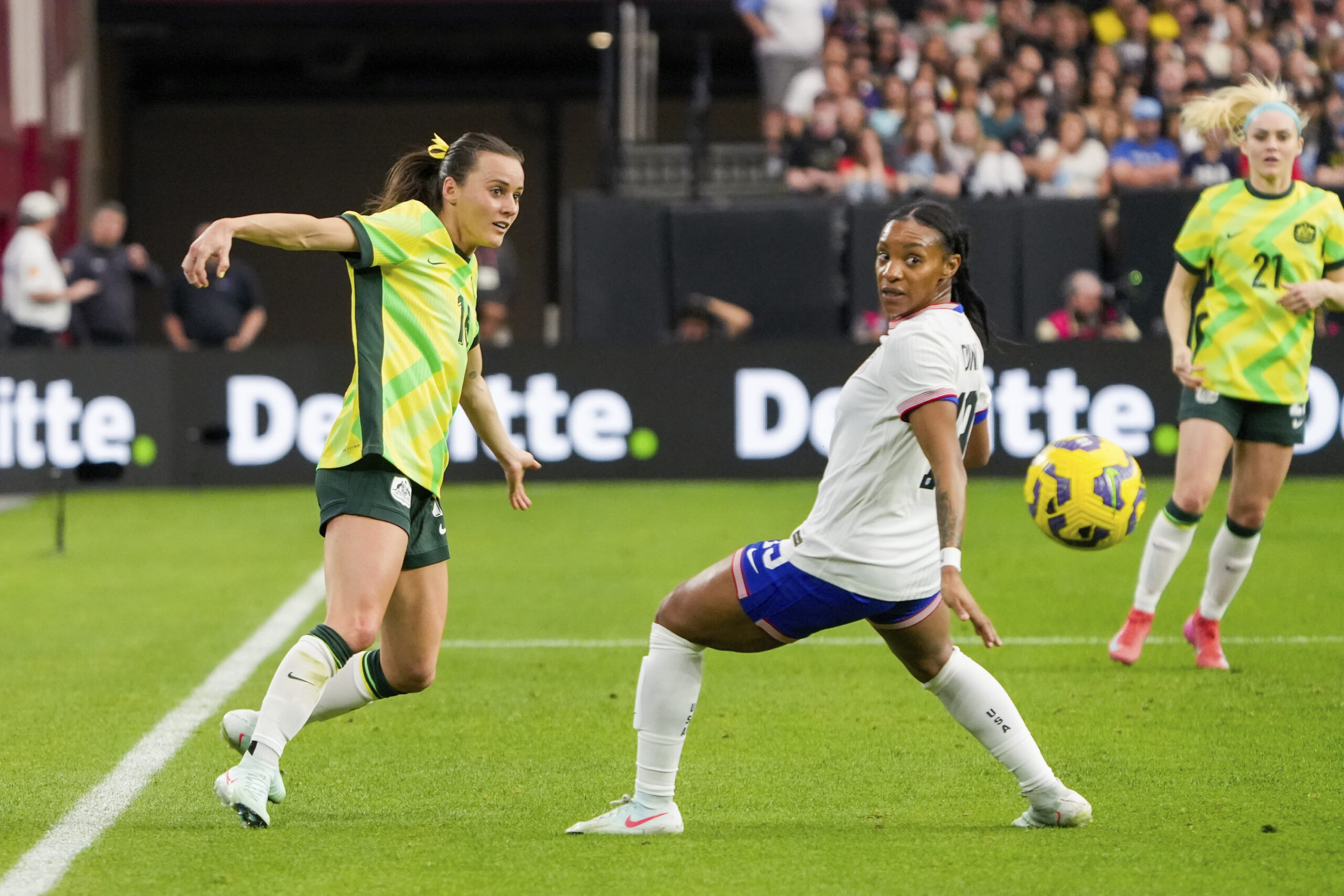
    U.S. veteran Crystal Dunn (right) is one of the most notable players who is not eligible for HIP money.

    Burke strongly disagreed.

    “Nothing in the CBA,” she wrote, “permits [the] NWSL to create an additional pot of funds (with an entirely new and separate cap) which only some players are eligible for based on ill-conceived criteria unilaterally determined by NWSL, including and especially when those criteria violate the non-discrimination clause in our CBA.”

    Does Berman see a day when the league would loosen the reins?

    “In the most general sense, we will always analyze the health of our business and the health of the game in the NWSL,” Berman said. “If we believe that there are business reasons for us to modify our rules, we will.”

    Jaedyn Shaw (left) is another notable American who isn’t currently eligible for HIP status.

    She stood firm again in saying “we feel like we’ve enabled our clubs to invest significantly.” And as she chose her words, she made it clear that the league will push those clubs to invest in specific ways.

    “This particular mechanism, that was very prescriptive in what it was developed to address, is important in that it is supposed to help us to target top players,” she said. “Which, as you’ve heard me say many times, is in service of us being the best league in the world. In order for us to be the best league in the world, we need to compete for the best players, and we want this policy to guide the behavior of our clubs so that they can compete financially to attract and retain top players.”

    ‘The most strategic mechanism’

    It’s no secret that there’s a fair amount of variance in how much money NWSL teams have in the bank. Nor is it a secret that Washington Spirit owner Michele Kang sits at the higher end of the scale. She had long been ready to spend big on Rodman, and Rodman’s agent has said the three-year deal is worth over $2 million per season.

    But when Kang first put a contract proposal on the table, Berman vetoed it for violating the league’s salary rules. A source with knowledge of the offer told The Inquirer that the Spirit would not have been able to pay Rodman and also meet the league requirement of a 20-player roster, even if all the others were on the league’s minimum salary.

    Michele Kang (second from right) with, from right to left, Trinity Rodman, Spirit president of soccer operations Haley Carter, and CEO Kim Stone.

    That has led some outsiders to wonder how much resistance there was elsewhere in the league to raising the cap and whether the HIP rule might have been an easier sell. A two-thirds majority of team owners is required to pass a vote.

    “It is in our best judgment that the HIP rule is the most strategic mechanism for us to advance the business,” Berman said.

    Burke took particular objection to this.

    “A rule that has been adopted with such a singular focus on generating revenue is not even about soccer, building a competitive roster to win NWSL games, or meeting a team’s performance needs,” she said, “which are obvious functions of a team when they are constructing a roster.”

    Catarina Macario might be the next U.S. star to get HIP money, as there’s speculation she might come to the NWSL in the summer.

    Another milestone in all this is expected to arrive when the current European season ends in the summer. There’s been much speculation that U.S. national team star Catarina Macario could come home from England’s Chelsea, and Spanish superpower Barcelona reportedly has nine players on expiring contracts — including stars who’ve fueled the club’s three Champions League titles in the last six years.

    Will the NWSL be willing to hit the gas pedal to bring them over?

    “We developed this rule very intentionally to put our clubs in a position to compete financially with top clubs around the world for top players, and we believe it will put us in a position to do that effectively,” Berman said. “Without naming specific clubs or naming specific players, it is our expectation that when we look back on this, we will have a list of players that we’ve been able to attract and retain by virtue of enacting this rule.”

  • Camden man sentenced to prison for stealing A.J. Brown’s car last year

    Camden man sentenced to prison for stealing A.J. Brown’s car last year

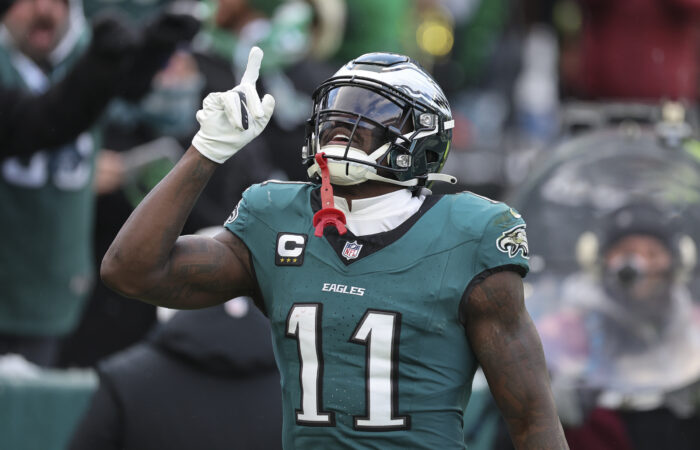
    On Friday, the New Jersey man charged with stealing Eagles receiver A.J. Brown’s car accepted a plea deal in Camden court and was sentenced to five years in prison, as first reported by NJ.com and confirmed to The Inquirer by the Camden County Prosecutors Office.

    Luis Segurra, 26, pleaded guilty to third-degree receiving stolen property, second-degree unlawful possession of a weapon, and fourth-degree resisting arrest in Camden County Superior Court on Friday — all charges related to the theft of Brown’s luxury vehicle from his home in Haddonfield last April.

    Segurra, who was also reportedly sentenced to fourth-degree theft stemming from an unrelated crime in Burlington County, declined to speak before his sentencing.

    On top of the five-year sentence, Segurra is ordered to stay away from Brown and his Haddonfield residence as part of the plea deal, NJ.com reported, adding that Segurra will be eligible for parole after serving one year of the sentence.

    On April 21, Brown awoke to his car, reportedly a 2022 Mercedes GLE Maybach, missing from his property. He took to social media, asking to cut a deal with the thief, who has been identified as Segurra.

    “Just bring the whip back, bro,” Brown said on his Instagram story, after first posting a plea on X asking the thief to return his car. “I won’t press charges. Just bring the whip back and you can go on about your day … You were smooth with it though. Pulled up at 3:42, you got up out of there at 3:45, you’re fast on your feet. I’m going to show you how fast I am on my feet. Real talk. This is about to get done today.”

    He wasn’t lying. Mere hours after his social media posts, Brown took to Instagram to say that his car had been returned, but by the police, not the thief.

    “I’m out here grinding for the Philadelphia Eagles, and I’ve got to look for my car,” Brown said in a follow-up post, filmed at the NovaCare Complex. “But see, we’ve already got the whip. I told you to just turn the car back in, and now you’ve got to deal with the consequences, man. I’ll tell y’all a funny joke. This morning, when I was talking to the police, my little son comes up and goes, ‘Da-da, Paw Patrol!’ I said, ‘Everybody’s got jokes this morning.’ Now the joke’s on you.”

    According to reports, Brown’s vehicle was equipped with a GPS. Brown tracked the vehicle on his own, and then passed on the location to law enforcement, who recovered it in Camden. Segurra, who was in the car at the time law enforcement discovered it, attempted to flee but was unsuccessful.

    This past season, Brown led the Eagles in receptions with 78 and was one of team’s two 1,000-yard receivers. During the Eagles’ 23-19 loss to the 49ers in the wild-card round, he was caught in a heated moment with Eagles head coach Nick Sirianni on the sideline, leading to offseason trade rumors. Brown declined to speak to the media on two separate occasions after the game.

    While he’s kept a low profile since the end of the season, Brown was recently spotted in Florida purchasing candy from a stranger on the street. In addition to paying for a couple snacks, Brown, who was with his fiancée and young son, gave the kid several hundred dollars in cash to purchase a PlayStation 5.

  • Source: White Sox add former Phillie Seranthony Domínguez to their bullpen

    Source: White Sox add former Phillie Seranthony Domínguez to their bullpen

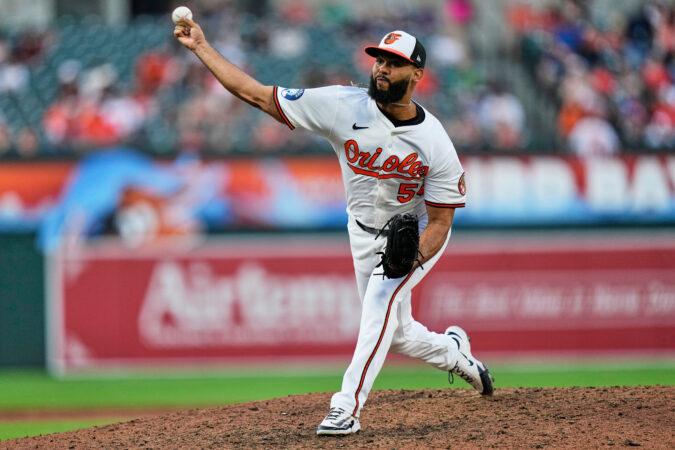
    CHICAGO — The Chicago White Sox added former Phillies reliever Seranthony Domínguez to their bullpen on Friday, agreeing to a $20 million, two-year contract with the right-hander, according to a person familiar with the deal.

    The person spoke to The Associated Press on condition of anonymity because the move was pending a physical.

    Domínguez, 31, played for Baltimore and Toronto last year, going 4-4 with a 3.16 ERA and two saves in 67 games. He was traded to the Blue Jays on July 29.

    Chicago had some additional payroll flexibility after trading center fielder Luis Robert Jr. to the New York Mets on Tuesday night. Domínguez likely will close games with his new team.

    The rebuilding White Sox finished last in the AL Central last year with a 60-102 record, a 19-game improvement from the previous season. They signed Japanese slugger Munetaka Murakami to a $34 million, two-year contract in December, and speedy infielder Luisangel Acuña came over in the Robert trade.

    The White Sox also have a promising group of young position players that includes Colson Montgomery, Kyle Teel and Chase Meidroth.

    Domínguez made his major league debut with the Phillies in 2023. He is 23-23 with a 3.50 ERA and 40 saves in 322 career games. He also has 360 strikeouts in 306 innings.

    Domínguez pitched in 12 postseason games in 2025, helping Toronto reach the World Series. He went 2-0 with a 3.18 ERA.

  • Villanova’s Luke Colella and Temi Ajirotutu declare for 2026 NFL draft

    Villanova’s Luke Colella and Temi Ajirotutu declare for 2026 NFL draft

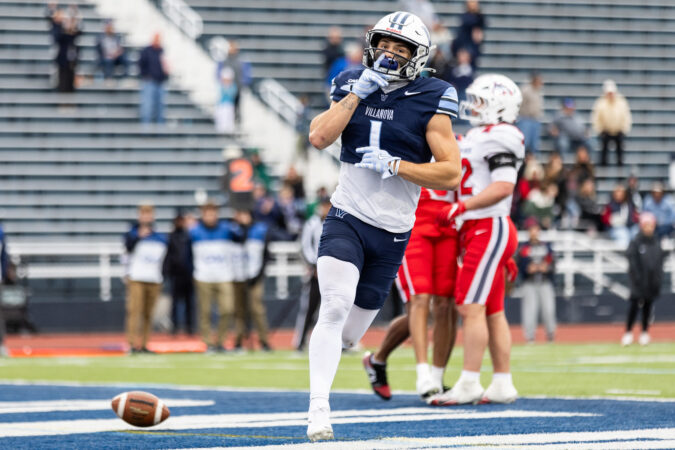
    Villanova receiver Luke Colella and left guard Temi Ajirotutu have declared for the 2026 NFL draft.

    “This journey has been filled with hard work, sacrifice, adversity, and growth,” Colella wrote in his announcement on Wednesday. “Every setback and every challenge made me stronger and taught a valuable lesson. With faith in God, gratitude for everyone who has supported me, and confidence in the work I’ve put in, I am proud to officially declare for the 2026 NFL Draft.”

    Colella transferred to Villanova from Princeton for his final year of eligibility. He finished with a team-leading 77 receptions for 1,071 yards and eight touchdowns with the Wildcats.

    At Princeton, he collected 93 receptions for 1,188 yards and 11 touchdowns across three seasons.

    Ajirotutu, a graduate student, played his entire five-year college career at Villanova. He emerged as a starter in 2022 and was named third team All-CAA in 2023.

    Last season, Ajirotutu played in four games before missing the remainder of the year with a medical redshirt. He earned an honorable mention on the AP FCS All-America team this past season, when he played in all 15 games.

    With the help of Colella and Ajirotutu, Villanova made an appearance in the FCS semifinals for the first time since 2010. The Wildcats fell to Illinois State, 30-14.

    The last Villanova player to get drafted was Buffalo Bills cornerback Christian Benford, who was selected in the sixth round in 2022.

    The 2026 NFL Scouting Combine will take place on Feb. 23 to March 2, and this year’s draft will be held April 23-25 in Pittsburgh.

  • Justin Crawford, Aidan Miller among nonroster players invited to Phillies spring training

    Justin Crawford, Aidan Miller among nonroster players invited to Phillies spring training

    Justin Crawford and Aidan Miller highlight the 27 nonroster players the Phillies have invited to major league spring training in Clearwater, Fla. next month.

    Crawford is ranked as the Phillies’ No. 3 prospect by MLBPipeline and is expected to get an opportunity to be their opening-day center fielder. The 22-year-old slashed .334/.411/.452 in 112 games at triple-A Lehigh Valley last season.

    Miller, a 21-year-old shortstop, is ranked the Phillies’ No. 2 prospect. He spent most of 2025 with double-A Reading, leading the Eastern League in walks (73) and stolen bases (52), before a September promotion to triple A. He finished the year with a .264/.392/.433 slash line across both levels.

    Other top prospects who earned invites include infielder Aroon Escobar (Phillies’ No. 5 prospect) and outfielder Dante Nori, the Phillies’ 2024 first-round pick.

    The full list of invitees:

    • Left-handed pitchers: Génesis Cabrera, Tucker Davidson, Tim Mayza, and Andrew Walling.
    • Right-handed pitchers: Andrew Bechtold, Jonathan Hernandez, Michael Mercado, Trevor Richards, and Bryse Wilson.
    • Catchers: Kehden Hettiger, Mark Kolozsvary, Paul McIntosh, René Pinto, and Caleb Ricketts.
    • Infielders: Keaton Anthony, Christian Cairo, Carson DeMartini, Aroon Escobar, Aidan Miller, Liover Peguero, Bryan Rincon, and José Rodríguez.
    • Outfielders: Dylan Campbell, Justin Crawford, Bryan De La Cruz, and Dante Nori.
    • Infielder/outfielder: Felix Reyes.
  • There’s a mystery candidate for the Eagles’ offensive coordinator job. Here’s how the interview went.

    There’s a mystery candidate for the Eagles’ offensive coordinator job. Here’s how the interview went.

    “Hey, Howie, thanks for making the time.”

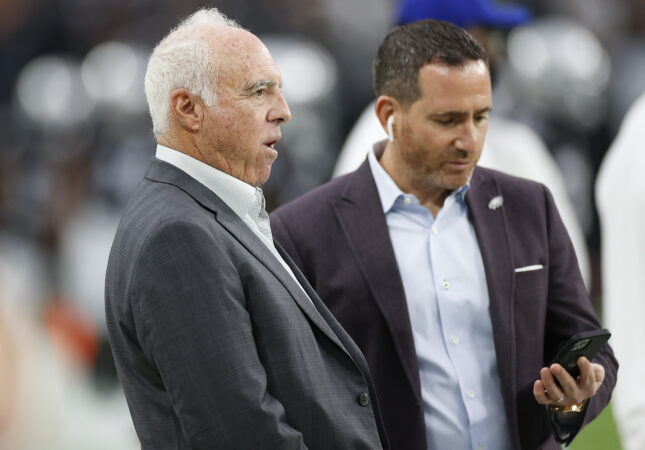
    “You got it. Have a seat. How’s your day been so far?”

    “Good. Just finished up with Mr. Lurie. I’m very appreciative that you all were willing to have me in to talk.”

    “Of course!”

    “I mean, it’s not often you see an NFL FRANCHISE SEEKING OFFENSIVE COORDINATOR posting on LinkedIn. And I wasn’t even sure if that Easy Apply link actually worked!”

    “Hey, you never know where you’ll find the right candidate. We like to cast a wide net. So why don’t you tell me why you think you’re the right person to be the next offensive coordinator of the Philadelphia Eagles.”

    “Sure. Well, I think I have the experience necessary to thrive in the position.”

    “How so?”

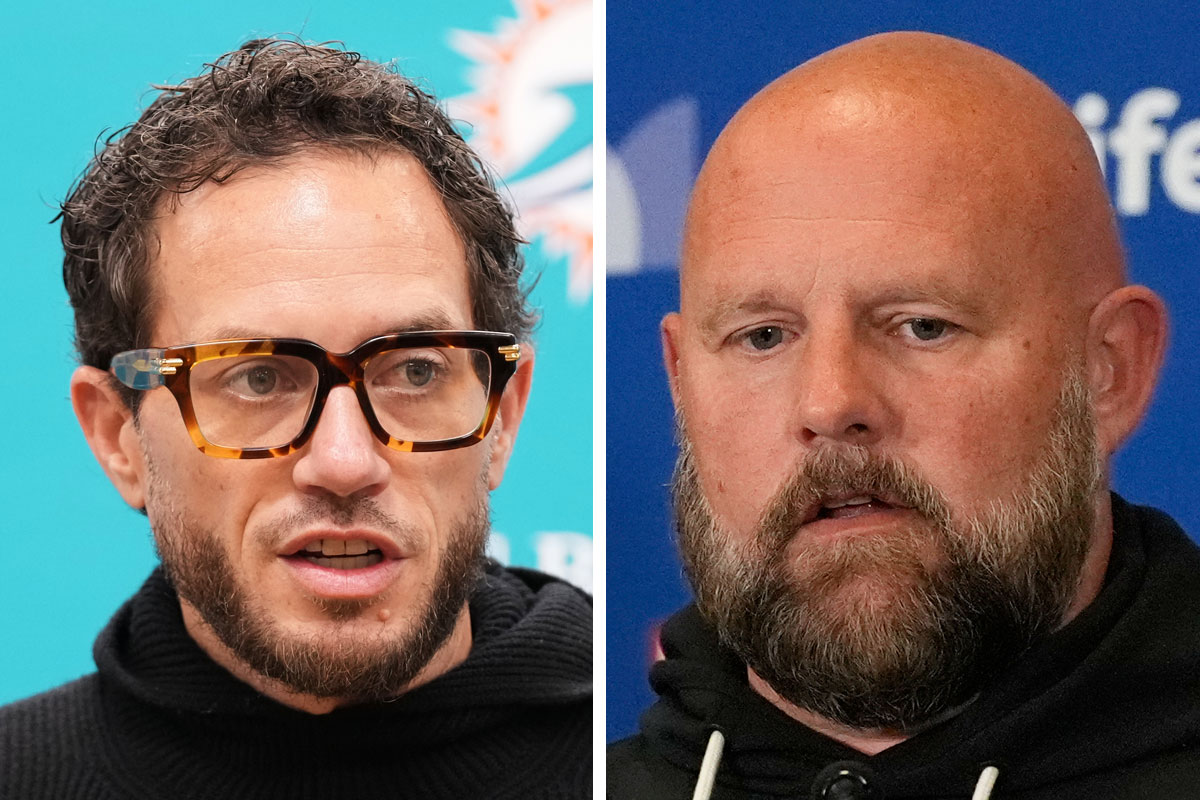
    Mike McDaniel (left) is off the board and Brian Daboll seems unlikely, but head coach experience might still be on the Eagles’ OC checklist.

    “I mean, my resumé kind of speaks for itself. I’ve been a quarterbacks coach, a wide receivers coach, and an offensive coordinator. I’ve called plays. I’ve been part of winning organizations. I know you respect the coaches and offensive minds I’ve worked for and learned from.”

    “True. That’s absolutely true.”

    “And, to be frank, Howie, I’m open to exploring a new role that will allow me to flex my coaching muscles in a way that I haven’t in a long time.”

    “Totally get that.”

    “And the idea of taking on this particular role with the Eagles would be a challenge that I’d relish.”

    “You want to take on all the challenges and problems and obstacles that come with this job?”

    “Definitely.”

    “We have a quarterback who seems like he doesn’t want to run the ball anymore, even though running the ball was a big part of what has made him really good — even great — when he has been really good.”

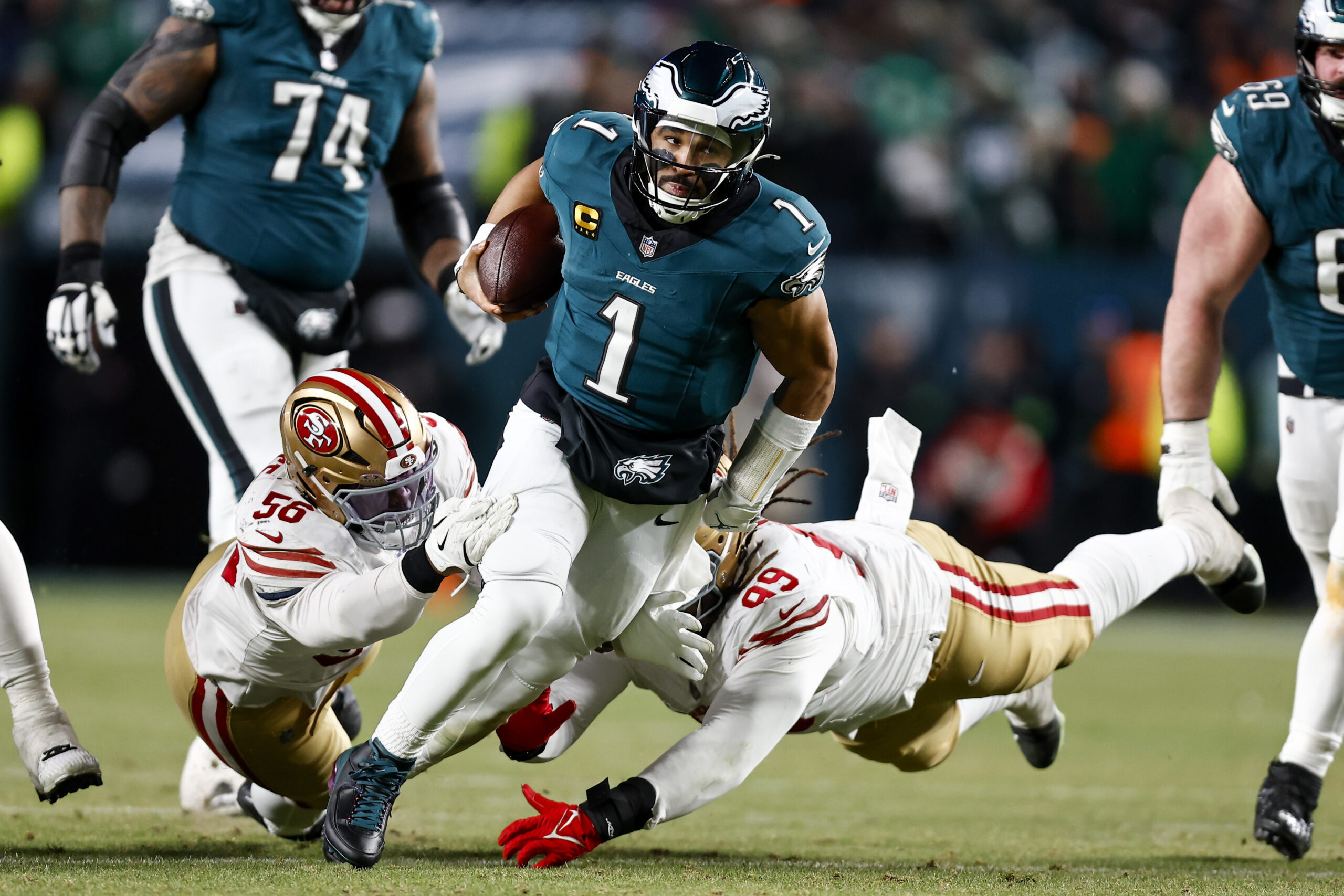
    Can the Eagles’ mystery OC candidate devise a plan to get the most out of Jalen Hurts’ legs?

    “I know. I’ve been watching Jalen. I think I can help him. I think someone has to help him.”

    “He doesn’t throw the ball over the middle of the field, either.”

    “Seen it. Thought about it. Have plans to change it.”

    “What about the pressure that comes with this job? I mean, you saw what happened to the last guy, right?”

    “I did. Hey, Philadelphia is a passionate sports town. Nothing better. My kids and I already have tons of Phillies and Sixers apparel. We’re in.”

    “As I’m sure you know, we cannot guarantee you egg-free housing.”

    “I know.”

    “It’s one of the … charming consequences, I guess you’d call it … of being an Eagles coach.”

    Have the Eagles found the offensive coordinator candidate with a proper understanding of the fan base’s passions?

    “Oh, you don’t have to tell me. I’ve coached at the Linc often enough to get a sense of it. Even had some spirited conversations with some fans about it. The atmosphere around here can be intimidating, I know, and man, those folks can say some things that get your back up. But I’m at the stage of my career where I think I can handle it.”

    “All right. Well, as you know by now, I’m sure, we operate a bit differently from a lot of other teams around the league.”

    “You sure do.”

    “We view the head coach as more of a conduit between those of us at the top of the leadership pyramid and the locker room.”

    “Yep.”

    “Our head coach doesn’t call plays, for instance. That will be the new OC’s responsibility.”

    “Well aware.”

    “I mean, we’re not inherently opposed to the idea of having a head coach call the plays for the offense. But we’ve realized over the last few years that investing our coordinators with a lot of say-so over the direction of their units is the way to go. Look at Vic. Look how that’s worked out. Our goal is to find someone who fits that mold. There’s a certain … gravitas … that comes with being a coordinator here in 2026. You call the formations and plays. You oversee that side of the ball with near-unfettered discretion. In some ways, whoever we end up hiring as our new OC will have more power than our head coach.”

    “That’s one of the reasons I want the job.”

    “I can understand that. And I have to say, your resumé and experience show that you’re willing to be flexible. You definitely do what’s asked of you.”

    “I try.”

    “OK. So, Jeffrey and I will talk. We’ll ‘confab,’ as it were. Lots to get to in the meantime, of course. Draft prep. Free agency prep. Super Bowl week — San Fran! Are you going? The chowder in a bread bowl at Hog Island is a must-do. And don’t fret. When we reach our decision, we’ll let you know.”

    “I understand. Thanks so much for the time, Howie. I’ll talk to you soon, I hope.”

    “You got it, Nick.”

  • St. Joe’s men’s and Drexel women’s basketball move games due to Philly’s expected winter storm

    St. Joe’s men’s and Drexel women’s basketball move games due to Philly’s expected winter storm

    With heavy snow expected this weekend, two Big 5 basketball programs are moving their tipoff times.

    The St. Joseph’s men’s team was slated to take on Davidson at 6 p.m. on Saturday at Hagan Arena. Now, the Hawks will be starting at 2 p.m. to avoid interference with potential snowfall on Saturday night.

    The Drexel women moved its Sunday matchup against Towson at the Daskalakis Athletic Center to Saturday at 6 p.m., which will now be a homecoming doubleheader with the men’s team, which faces Northeastern at 2 p.m.

    The women’s team will play back-to-back days, as the Dragons host Stony Brook at 6 p.m. Friday.

    The Philadelphia region will be under a winter storm watch from 7 p.m. Saturday until midday Monday. As of Friday, the area is expected to receive anywhere from eight to 14 inches of snow.

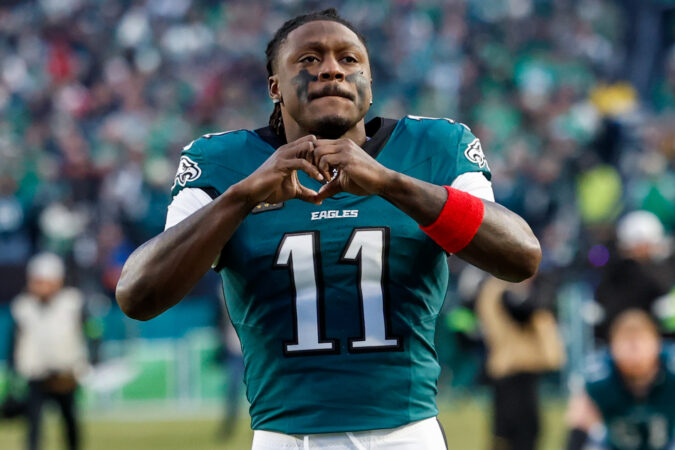
  • A.J. Brown buys candy from a kid on a Miami street, then gives him money to buy a PlayStation 5

    A.J. Brown buys candy from a kid on a Miami street, then gives him money to buy a PlayStation 5

    While Eagles wide receiver A.J. Brown made headlines during the season for his behavior, his attitude made headlines for a different reason this week. After the Eagles’ 23-19 loss to the San Francisco 49ers on Jan. 11, Brown has remained relatively mum, especially following him jawing back and forth with coach Nick Sirianni.

    Then Brown popped up Thursday, but for different reasons — gifting a PlayStation 5 to a stranger.

    The receiver was seen in Florida making a kid’s day. While with his fiancé, Kelsey Riley, and his son, A.J. Brown Jr., he pulled his car to the side of the road, where a kid was selling candy. Riley rummaged through the assortment of candy, which included Nerd Gummy Clusters, Sour Patch Kids, and M&M’s before picking a bag of Gummy Bears.

    Brown, on the other hand, pulled out a wad of cash before asking Riley a question.

    “How much is a PS5 these days?” Brown said.

    Riley responded that they typically are in the $500-600 range, prompting Brown to hand the kids several hundred dollars so that he could buy one for himself. Although Brown Jr., was less than impressed, pleading for an apple in the video .

    But before departing back into Brown’s car, Brown and the kid took a picture together.

  • Amid college basketball’s gambling scandal, concerns that mid-major players could be vulnerable

    Amid college basketball’s gambling scandal, concerns that mid-major players could be vulnerable

    Rollie Massimino “did not mess around” when it came to drawing up defensive schemes against Patrick Ewing … or warding off gambling temptations that might filter through to his Villanova players.

    “When we were playing, we had an FBI agent who was a former ’Nova basketball player give talks about gambling,” said Chuck Everson, a member of Massimino’s 1985 Wildcats title team that took down heavily favored Georgetown.

    “Rollie did not mess around with that stuff. It wasn’t that far removed from the Boston College [point-shaving] scandal. Rollie brought in the FBI to talk to us. Coach Mass did a great job of teaching us, and it wasn’t all basketball; it was life lessons. And with gambling, it was, ‘Don’t do that.’

    “To this day, I have never called DraftKings, or anything like that. I attribute that to being scared straight with Coach Mass.”

    Everson, 61, played in an era when sports betting wasn’t legal in most of the country. These days, things are quite different. College athletes are compensated by their schools or through lucrative name, image, and likeness deals, and the legal/illegal gambling culture infiltrates every level of sports.

    Last Thursday in Philadelphia, federal authorities announced a sweeping criminal indictment and related filings against 26 people on charges related to manipulating NCAA games and Chinese professional games through bribes, some as high as five figures.

    It is the fourth federal criminal indictment that involves gambling and sports unsealed in the last six months, and the latest alleged gambling scheme involves one of the storied Big 5 programs: La Salle.

    According to the indictment, at least one of the purported rigged games took place in 2024 in Philadelphia between La Salle and St. Bonaventure.

    There are at least 39 players from 17 NCAA Division I schools who are alleged to have been involved in the scheme, but the indictment may underscore other, more troubling concerns.

    Players at mid-major or smaller Division I programs might earn a fraction in NIL money compared to what their counterparts at elite programs take in, and therefore might be more susceptible to the temptations of illicit paydays. As one former federal prosecutor put it, this alleged scheme might be one of many dominoes waiting to fall.

    “Anything that interferes with the integrity of sporting events, you’re going to get action by prosecutors,” said Edward McDonald, who prosecuted those involved in the Boston College point-shaving case in the late ’70s. McDonald, now senior counsel at the Dechert law firm, thinks that mid-major schools, like La Salle and some others in the Big 5, could be particularly vulnerable to gambling and bribery schemes.

    “These smaller schools, the compensation to players is not as great [compared to larger programs], even for the better players on the team,” said McDonald, who learned of the Boston College scam through his investigations of organized crime family members with the Justice Department (and played himself in the Martin Scorsese-directed mob film Goodfellas).

    “Players going to big-time schools are making 10 times more. A player [at a smaller program] might not be having a good season or might think they’re not going to play in the NBA or professionally, and they might say, ‘What the hell, I might as well cash in now.’”

    Prop bets on a La Salle game

    According to the court filings, one of the defendants, Jalen Smith, and former LSU and NBA player Antonio Blakeney (who is “charged elsewhere,” according to the indictment), attempted to recruit players on the La Salle men’s basketball team for the point-shaving scheme.

    The fixers offered the La Salle players payments to underperform and influence the first half of a game against St. Bonaventure on Feb. 21, 2024, according to the filings.

    Prosecutors allege that before the game at Tom Gola Arena, defendants who acted as fixers placed bets totaling approximately $247,000 on the Bonnies to cover the first-half spread. A $30,000 wager was made in Philadelphia at a FanDuel sportsbook, according to the indictment. But those bets failed after La Salle covered the spread.

    “Neither the university, current student-athletes, or staff are subjects of the indictment,” La Salle wrote in a statement. “We will fully cooperate as needed with officials and investigations.”

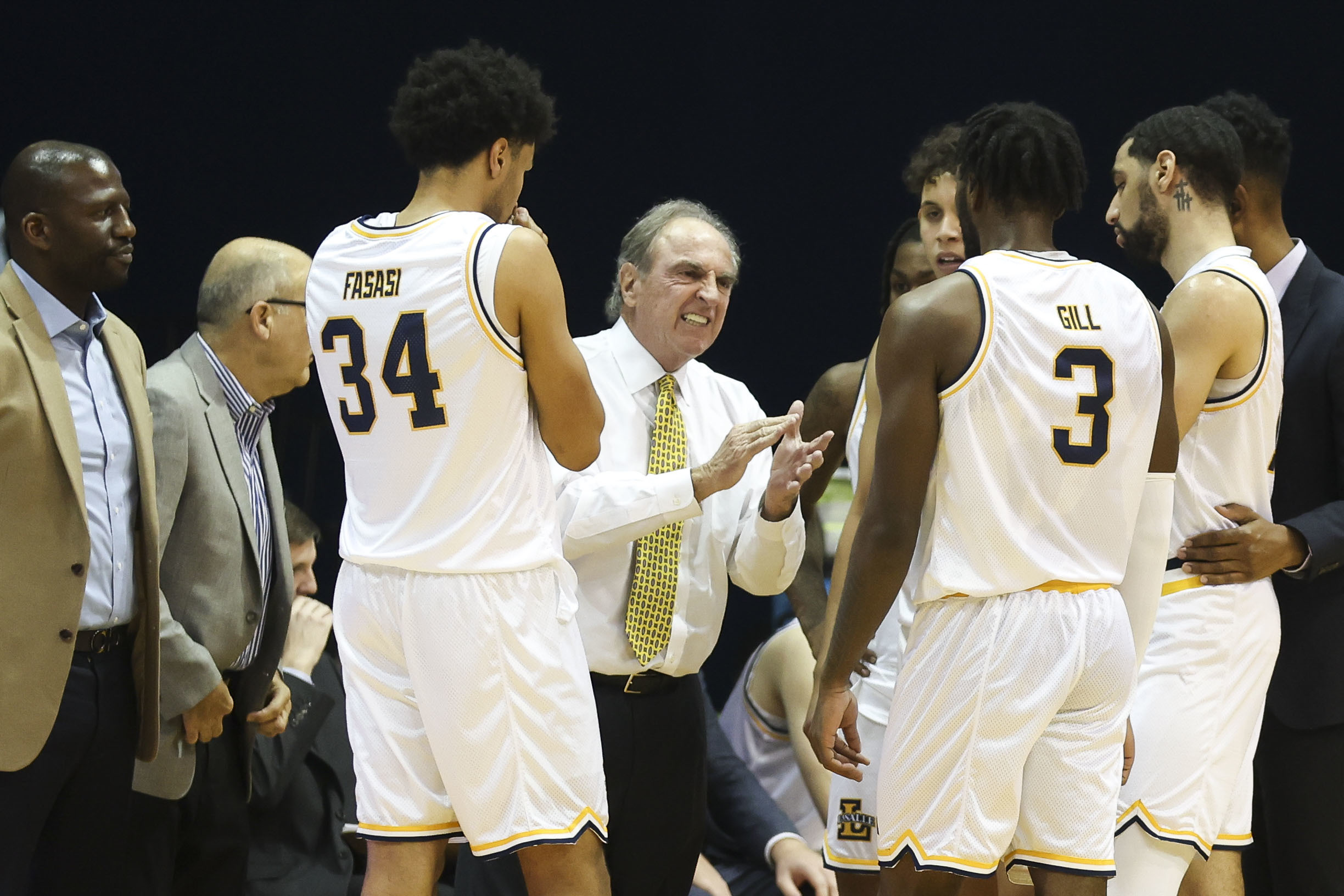
    La Salle coach Fran Dunphy directing the Explorers in November 2023. Dunphy retired after last season.

    Ohio Gov. Mike DeWine told The Inquirer that several years ago he received complaints from a number of college coaches in his state about online abuse directed at players and threatening calls from gamblers who had lost big.

    “I called up [NCAA president] Charlie Baker, and asked him, ‘What do you think of prop betting?’” DeWine said. “He said, ‘We don’t like it.’ And I said, ‘Give me a letter that says that.’

    “Under Ohio law, if I can get a letter from a league saying, ‘Don’t bet on certain things,’ that gives me the ability to go to my Casino Commission and they can [enact rules] without any legislation. Charlie sent the letter, I took that to the commission, and that stopped collegiate prop betting.”

    The Ohio Casino Control Commission granted the NCAA’s request to prohibit proposition bets on collegiate sports in February 2024, but the decision affected only Ohio.

    “It doesn’t really eliminate the problem,” DeWine said.

    The ban in Ohio is only a drop in the bucket against a sea of pro-gambling momentum, legislation, and, most significantly, lucrative revenue streams.

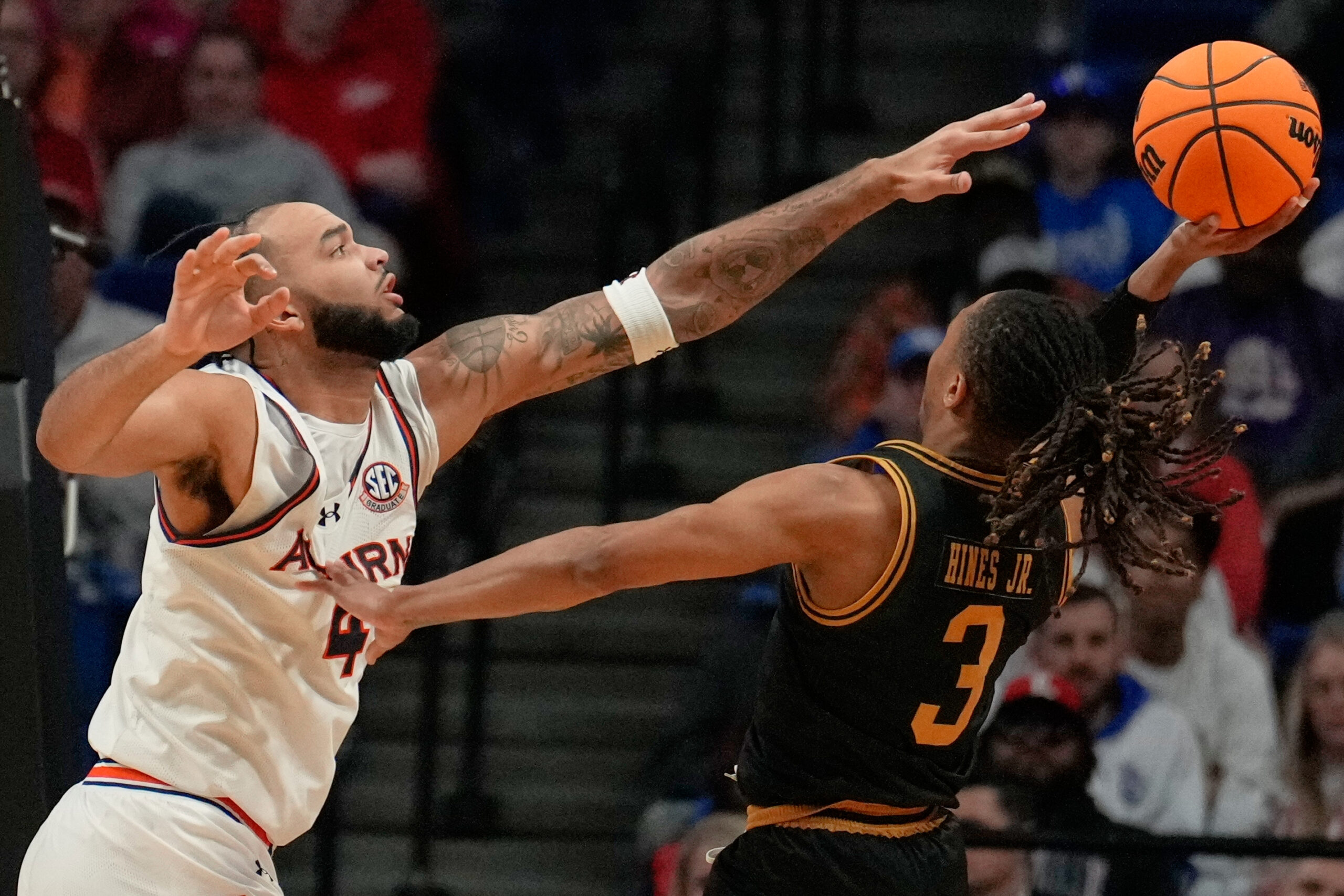
    CJ Hines, a guard who was dismissed from Temple’s basketball team on Jan. 16, allegedly participated in a point-shaving scheme during the 2024-25 season while playing for Alabama State, according to the indictment. Hines transferred to Temple in May but didn’t play this season after the university announced that he was under investigation for eligibility concerns before his enrollment.

    Former Alabama State guard CJ Hines (3) averaged 14.1 points in 35 starts last season.

    The Atlantic 10 Conference — which includes La Salle and St. Joseph’s — weighed in on the latest gambling indictment.

    “Any activity that undermines the integrity of competition has no place in college athletics,” commissioner Bernadette V. McGlade said in a release. “The Atlantic 10 and its member institutions will continue to work closely with the proper authorities to combat illegal activities.”

    A St. Joe’s spokesperson added: “St. Joseph’s University has not been approached by federal investigators or any other entity about suspicious sports wagering activity involving St. Joe’s student-athletes or team.”

    Villanova, which plays in the powerful Big East Conference, has numerous resources and protocols in place to address the sports wagering issue.

    Handbooks, which include NCAA rules on gambling, are distributed annually to athletes, who also must sign a sports wagering document before being declared eligible. The athlete must acknowledge he or she won’t engage in activities that influence the outcome or win-loss margins of any game.

    In 2021, 2023, and 2025, Villanova brought in speakers who have a history with sports gambling to talk with athletes about the risks and dangers associated with it. Villanova’s athletic compliance office meets twice annually with every athlete to review NCAA compliance standards, including its rules on sports wagering.

    Former Villanova basketball star Maddy Siegrist told The Inquirer last year that her college alma mater ingrained in her mind the potential devastating consequences of gambling, values that she continues to adhere to as a WNBA player.

    ‘The integrity of sports is at risk’

    Even after the 2018 Supreme Court ruling that legalized sports wagering state to state, the honesty and integrity component still comes into question when so much is riding on any sports wager.

    DeWine, the Ohio governor, is taking a proactive role in trying to address malfeasance in the gaming culture.

    “I’m writing letters to all other major [sports] leagues,” DeWine said. “They need to get on this. If they sit back, they’re making a huge mistake. I think the integrity of sports is at risk. I’m continuing to urge these leagues to take care of business, because they’re the ones that are going to get hurt.”

    But McDonald said that with the flurry of recent indictments involving sports and gambling, “you have to wonder how pervasive [the illegal gambling problem] really is.”

    “This could very well be the tip of the iceberg,” McDonald said.