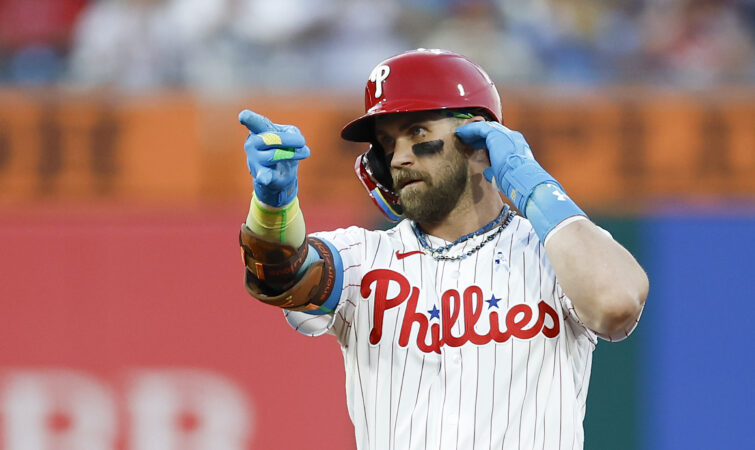
Bryce Harper is not shy about showing love to the Philadelphia area, and his latest cleats are no exception.
On Tuesday, Under Amour released the UA Harper 11, the Phillies star’s 11th signature cleat with the company. And the first colorway, named “All Lines Lead Home,” is inspired by SEPTA and its colorful map, symbolizing the “many paths players, fans, and visitors take to reach the city,” the brand wrote in a release.
The low-top cleats feature a knit sock collar and a metallic silver base with streaks of color across it to symbolize SEPTA’s different routes. The colors include orange (for the Broad Street Line), blue (Market/Frankford Line), red (PATCO), light green (trolleys), and purple (Norristown High Speed Line). There also is a replica of the SEPTA map on the cleat’s tongue. The bottom of the cleat spikes are half red and half blue, similar to the SEPTA logo, and the tongue pull loop has Philly’s “215″ area code on it.
“Inspired by the Philly lines that bring fans together on game day and the player at the center of it all — the UA Harper 11 brings crazy new traction and signature Bryce attitude,” Under Armour wrote under the listing of Harper’s cleat on its website.
Harper’s “All Lines Lead Home” cleats also will be part of a Yard Icon collection at Under Armour and release in the five colorways representing Philly’s transit lines.
In addition to new cleats for Harper (right), Under Armour also released new “All Lines” colorways for its UA Yard Icon cleats, featuring fellow big-league stars (from left) Konnor Griffin, Juan Soto, Gunnar Henderson, Freddie Freeman, and Bobby Witt Jr.
The “All Lines Lead Home” cleats — which can be preordered for $140 (shipping is expected later this month, according to the website) — are the latest cleat collaboration from Harper that pays tribute to the region. Earlier this year, Harper released the “Mad House” colorway of his Under Armour Harper 10s, which referenced the Jersey Shore. In the past, he’s also paid homage to Wawa with his “Gottahava Harper” PE cleats, which were released during HoagieFest two years ago. And, of course, he’s continued his love affair with the Phillie Phanatic, rocking fuzzy Harper 3s inspired by the mascot’s colors last year.
Harper and Under Armour reached a contract extension in January, and the arrival of a new signature cleat shows the company’s commitment to keeping him as the face of its baseball endeavors. The Phillies’ first baseman has been with Under Amour since 2011.
The release of Harper’s new footwear also coincides with next week’s MLB All-Star Game, in which the former MVP will participate for the ninth time in his career, and third time as a Phillie. The brand also announced it “will bring Harper’s cleats to life” through a fan experience at 1190 Market St. during All-Star week, which starts Saturday.
So as the baseball world prepares to descend on Philly for the midsummer classic, it appears Harper’s new cleats are correct: all routes do indeed lead to the Bank.
Tyrese Maxey averaged the most minutes in the NBA last season, and VJ Edgecombe wasn’t far behind in 11th place.
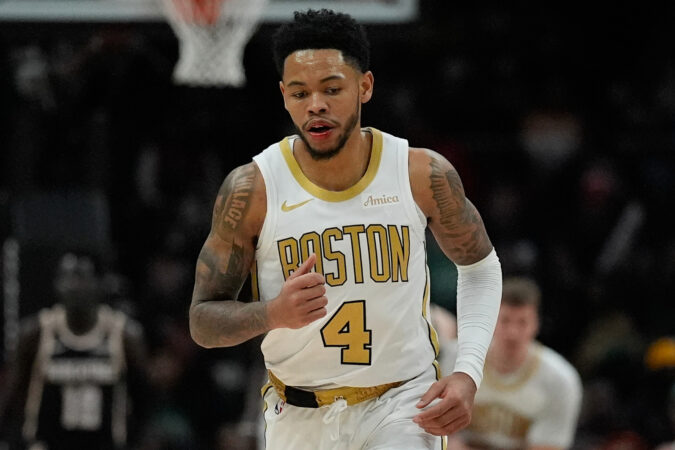
Lightening their workload and building a deeper lineup was a key focus of Mike Gansey’s first offseason as Sixers president of basketball operations. That process has started in earnest by bringing in Anfernee Simons to serve as the third guard off the bench.
“Helping them out as much as I can, whether it’s handling the ball or being off the ball and giving them space to work,” Simons said, “whether it’s giving them a break and letting me go out there and have the ball in my hands, just doing anything it takes for us to be successful as a team.”
After spending his first seven seasons in Portland primarily as a starter, Simons was traded to the Boston Celtics ahead of the 2025-26 season and took on a bench role.
“At first it was just me figuring out what the game needs at that time,” Simons said, “whether it’s going out there and just being aggressive instantly [when] we’re struggling to score the ball, or whether it’s feeling out the game, just continuing to compete on the defensive end, and letting my shots come to me.”
He averaged 14.2 points in 24.5 minutes for Boston in 49 appearances before being traded to the Chicago Bulls at the deadline. Simons’ season ended soon after because of a wrist injury, which he said will not impact him heading into next season.
Simons also should help the Sixers’ three-point shooting, something the team struggled with for most of last season. The Sixers attempted 35.3 threes per game, which rated 21st in the NBA, and made 34.9% of them, which ranked 23rd.
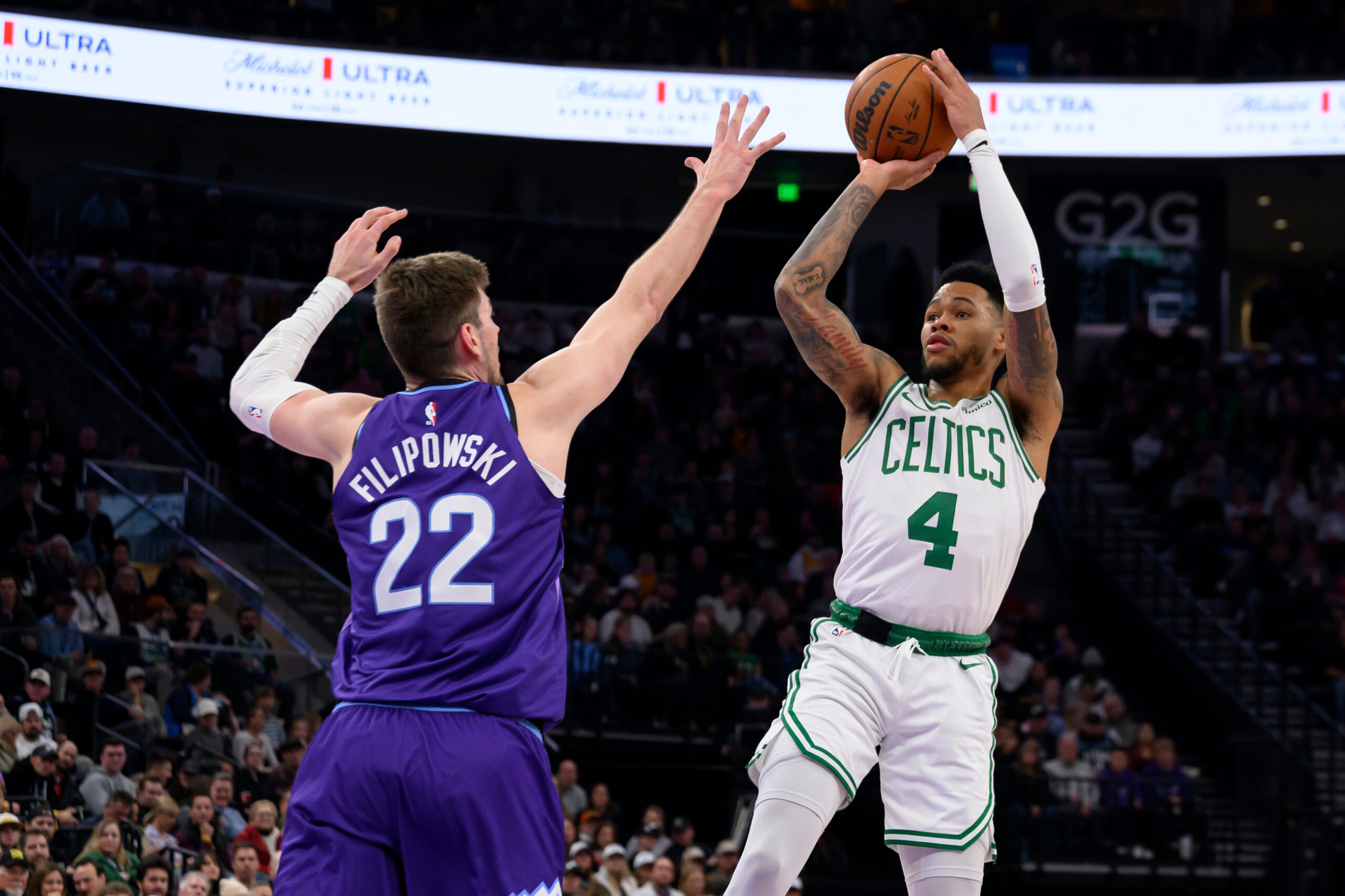
Anfernee Simons made 39.5% of his three-point attempts with the Boston Celtics last season.
Simons shot 39.5% from three on 6.7 attempts per game with Boston, which was more per game than every Sixer last season except Maxey and Paul George. That three-point shooting threat also opens the floor for Joel Embiid down low, with Simons as another catch-and-shoot option out wide.
“He’s a force in himself,” Simons said. “Most of the time, the attention is always going to be on him … I love to get catch-and-shoots, if that’s what the game allows me to get. It just makes it easier for everybody else, and it’ll be an easier job for me to be able to go out there and just space the floor for him.”
Simons also has experience playing with fellow new Sixer Jaylen Brown in Boston. After Simons was traded to Chicago at the deadline, Brown spoke glowingly of Simons as a teammate.
Simons, who’s 6-foot-3, knows he could spend time alongside Maxey (6-2) or Edgecombe (6-4). The Sixers also could move Brown (6-6) to power forward at times like they did with George last year. With a smaller lineup, he stressed the importance of being locked in and aligned defensively to counteract the height disadvantage, and said Brown is the “epitome” of a two-way player.
“He is going to guard the best player and go out there and give you 30,” Simons said. “I think that’s what makes him special, what makes him different. He’s going to come in and bring that championship mentality from Day 1 and try to instill that in the team.”
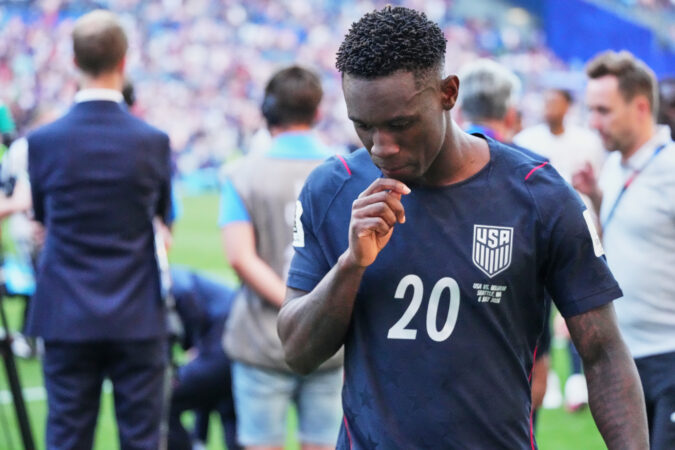
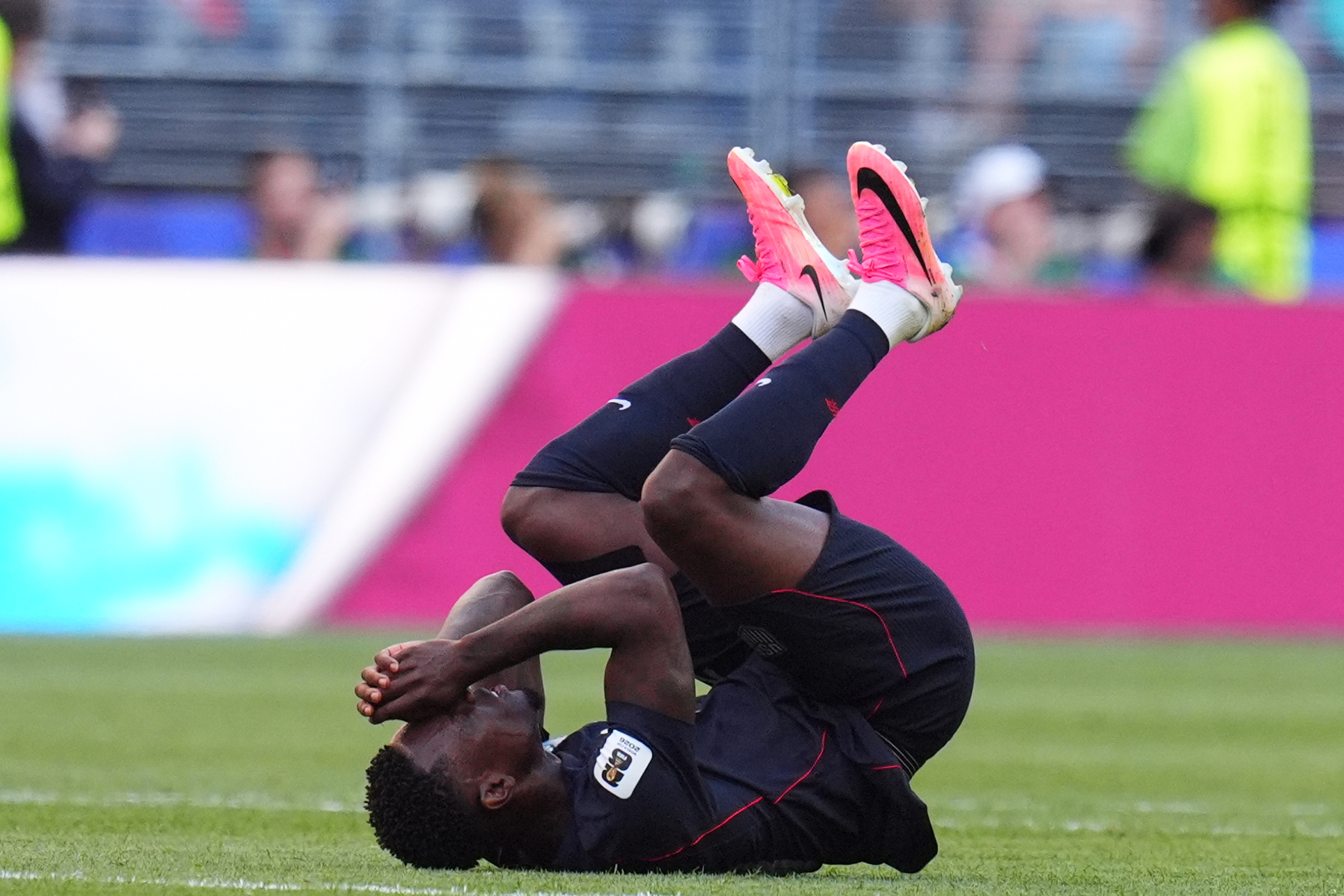
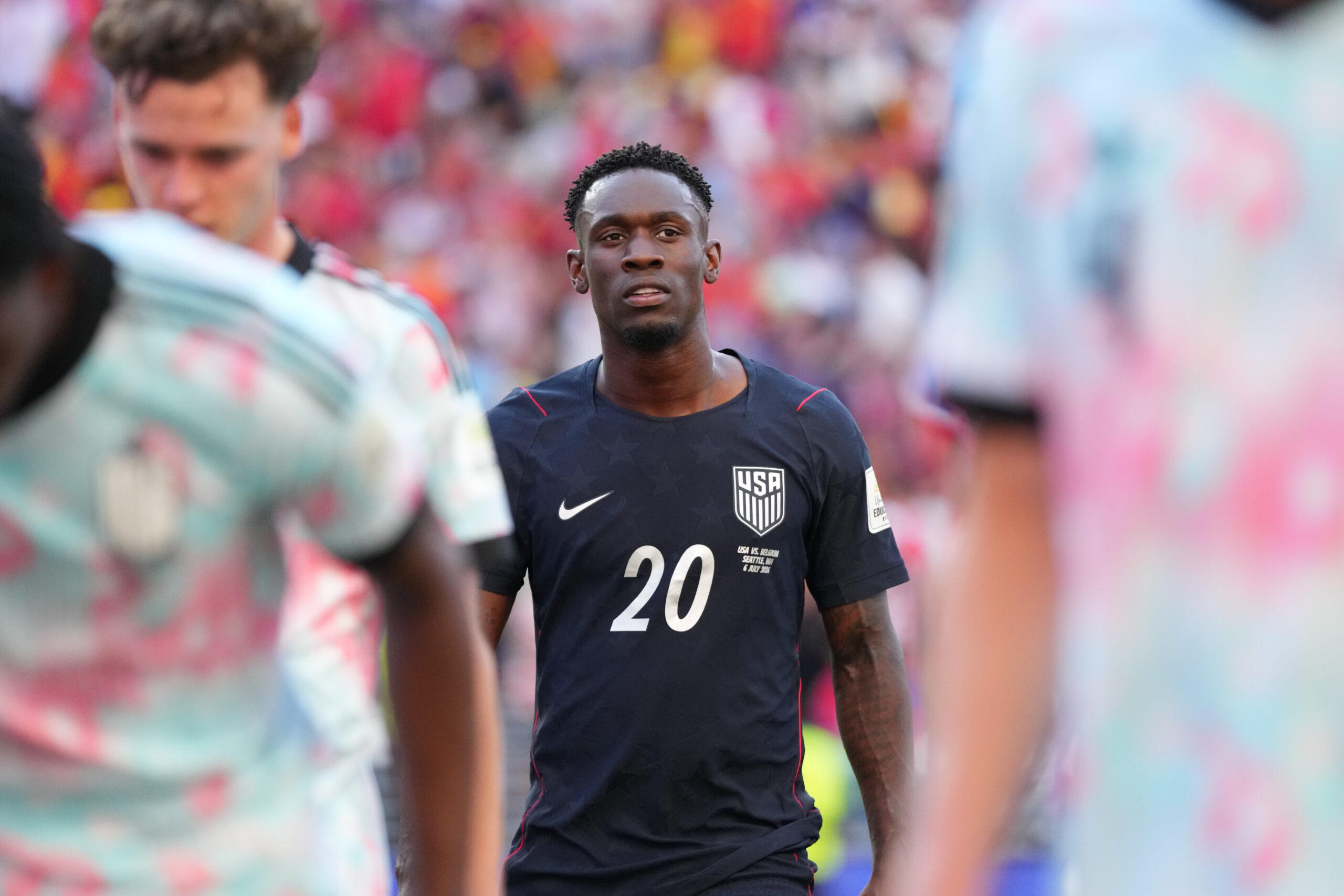
SEATTLE — Even many who think Folarin Balogun’s red card was justified don’t blame him for the global fallout over the last few days.
It isn’t his fault that he’ll be forever known as the player President Donald Trump lobbied FIFA president Gianni Infantino to get back on the field.
“When that decision’s overturned, of course it’s going to be controversial,” he said, “So for me, it’s something that didn’t really surprise me too much. But as a player, my job is just to go out there and focus on my job.”
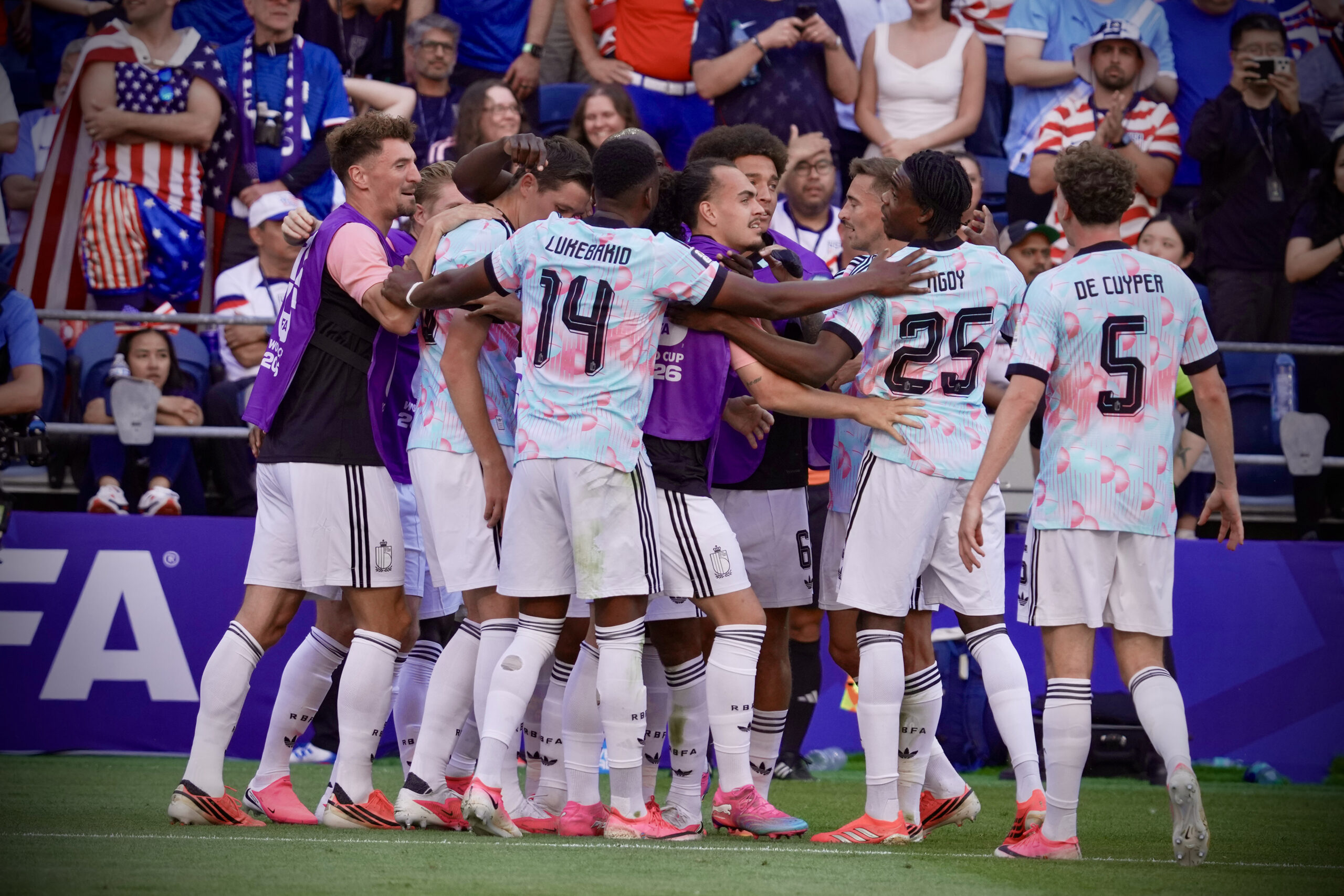
Folarin Balogun reacts after Belgium’s third goal, which blew the game open.
“I can only be honest, you know. I don’t think we had a good game today collectively,” he said. “We played well in the other games. We were very intense; we were able to generate energy with the crowd. And today, we didn’t give the crowd a lot to cheer for. That’s the most disappointing thing — that’s the part that hurts the most for me, personally.”
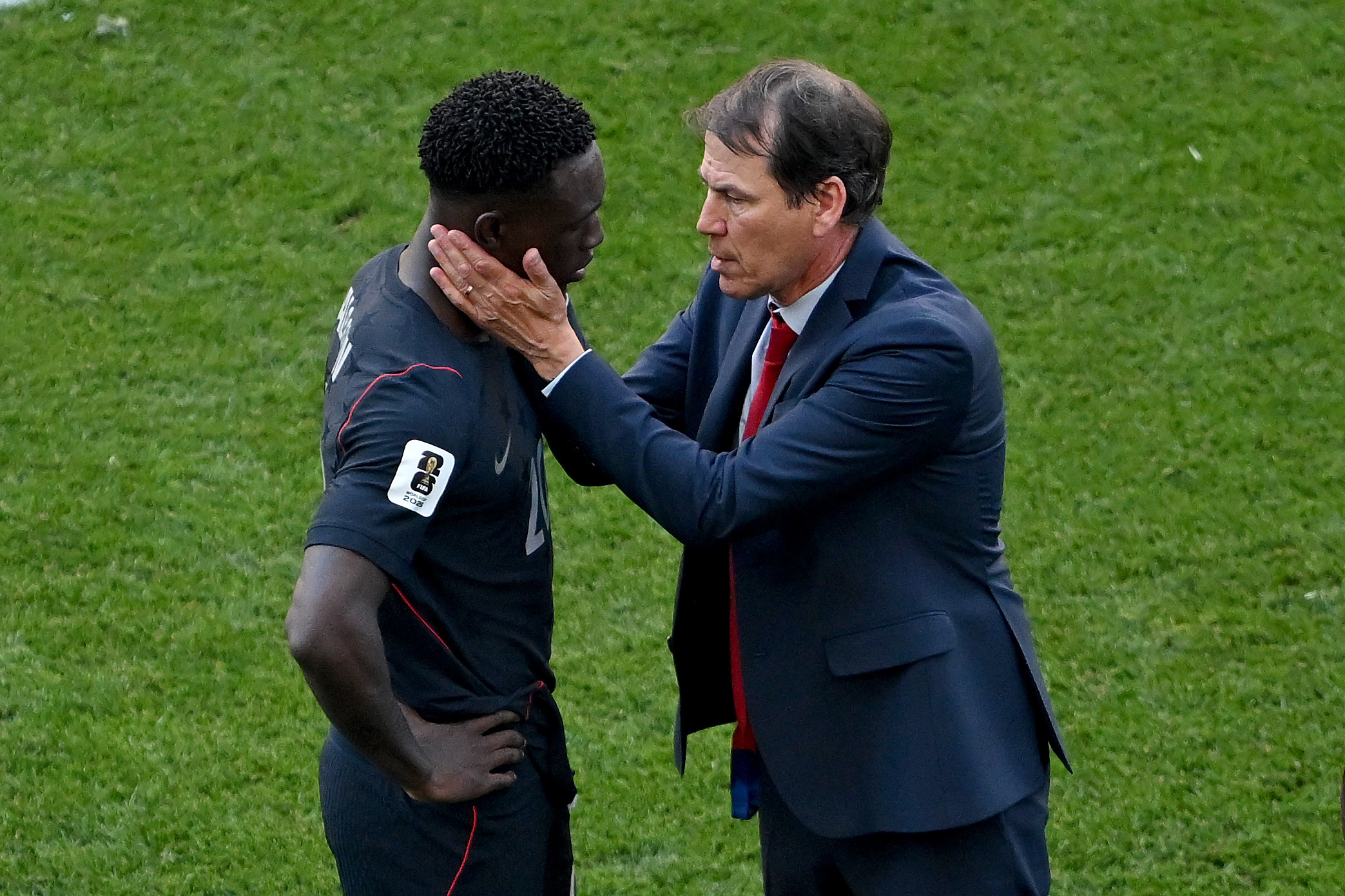
And he acted with grace again when he went to speak with Belgium manager Rudi Garcia, whom he has known for a while, after the final whistle.
“This is a game, there’s winners and losers, and similar to when I was given the red card, you have to handle it in the right way,” he said. “So, us losing today again, of course there’s huge disappointment. But for me, I wanted to just say congratulations to Belgium and Rudi Garcia and wish them good luck for the rest of the tournament.”
Belgium manager Rudi Garcia (right) consoling Folarin Balogun in their conversation after the game.
Garcia returned the favor in his postgame news conference.
“This wasn’t his fault,” he said. “He isn’t the one to blame, that’s what I told him. I appreciated that he came to see me.”
How much did the scandal motivate Belgium? Any team could draw easy motivation from saying Trump and FIFA stacked the deck, so let’s go beat the U.S.
“No, we just wanted to win the game on the field,” veteran goalkeeper Thibaut Courtois said. “It was a bit bizarre, it wasn’t the fault of the U.S. team or Balogun. … Whether he played or not, it was important for us to win.”
Not all of his teammates were so polite.
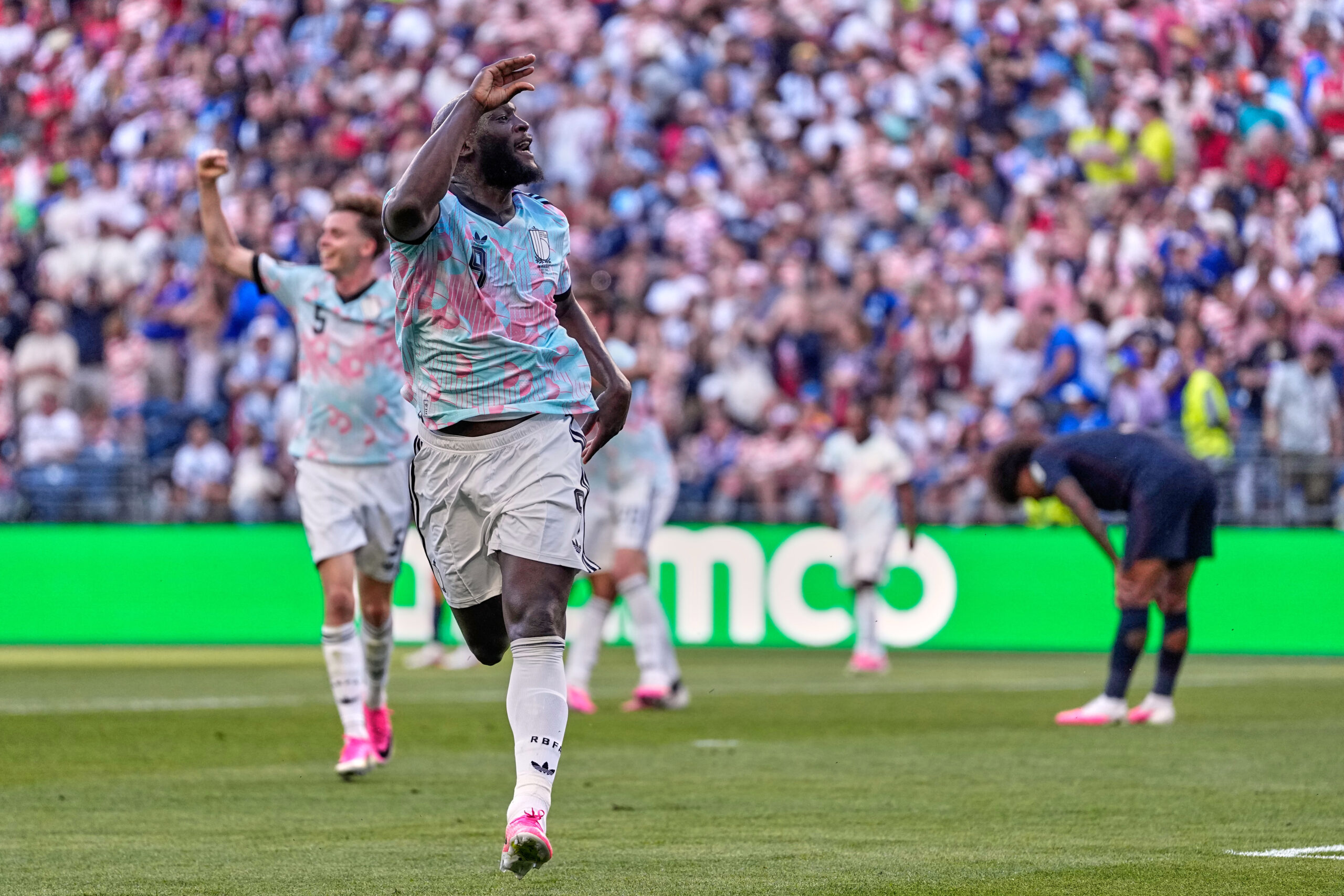
Belgium’s Romelu Lukaku gave the universal gesture to talk less after scoring his team’s fourth goal.
“There’s always a justice somewhere in life,” midfielder Nicolas Raskin said. “And the fact that something happened like that, you can call it what you want, but we don’t think that was fair. And I think today, it just brought us a little bit of luck that we needed to win the game.”
One of the Red Devils’ biggest stars, midfielder Youri Tielemans, had stronger words about why his team “had a fire in us” throughout the game.
“Of course we aren’t going to hide it,” he told Belgian TV network RTBF. “We had a meeting about it when we got the news, and afterward, we said we have no excuse. Whether he plays or not, it’s up to us to show that we should talk on the field, and that’s what we did today. So I’m very happy, and very proud of the team.”
When Romelu Lukaku scored his team’s fourth goal to cap the 4-1 win, he gave the universal “talk less” gesture to the crowd. The team then got together for a celebration that midfielder Axel Witsel acknowledged was a version of “the Trump dance.” Then they did it again in the postgame locker room.
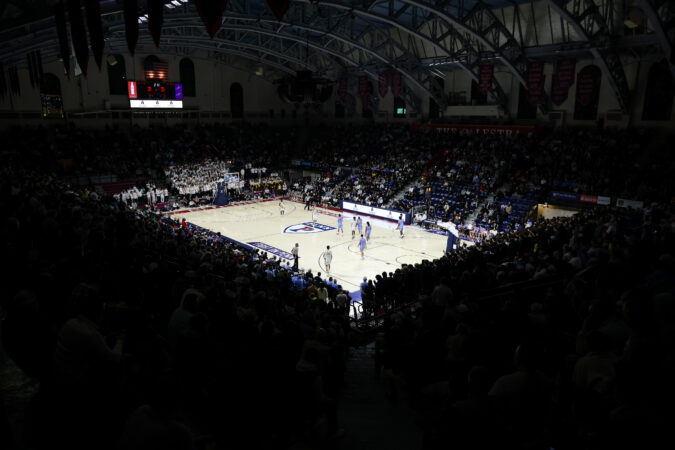
With this year marking the Palestra’s 100th anniversary, the fifth annual Cathedral Classic is expanding.
The multiteam event, which previously was a four-team round robin, will boast five teams this year: host Penn, La Salle, Bucknell, Buffalo, and Towson. The classic also is shifting from three days to two and no longer will crown a winner.
The two days of doubleheaders span Thanksgiving weekend, Nov. 27-28, and open with La Salle vs. Bucknell at 3:30 p.m., then Penn vs. Towson (6 p.m.). The next day, Towson takes on Buffalo (3:30 p.m.), and Penn will face Bucknell (6 p.m.).
“The Penn men’s basketball program is excited to celebrate 100 years of the Palestra with the return of the Cathedral Classic,” Penn coach Fran McCaffery said in a release. “There is no better way to honor our historic arena than with a weekend of great basketball games.”
The stage is set 🙌
Don’t miss the 5th annual Cathedral Classic at the Palestra on Thanksgiving weekend! pic.twitter.com/Qih5QryT2Y
La Salle coach Darris Nichols added: “We’re grateful for the opportunity to play at the Palestra during its 100th anniversary. Honoring the venue’s legacy was important to us when we first talked about this year’s schedule, and we’re excited to take on a good Bucknell team.”
Last season, Hofstra was crowned the tournament’s champion after defeating Penn to finish 3-0 in the round robin. However, for Big 5 fans, the most memorable game was on Day 2, when the Quakers faced La Salle. In that matchup, Penn erased a 15-point deficit to defeat the Explorers, 73-71.
SEATTLE — The hype around this World Cup didn’t just start when the last one ended four years ago. It took off as soon as the U.S. was picked as host, on the eve of the 2018 edition for which they failed to qualify.
By the time this summer arrived, there was enough evidence to believe these players could make the history they dreamed of, wanting to do things no U.S. men’s team had done before on soccer’s biggest stage.
So a bar was set for them. The program had just one knockout game win in its history. Winning two would mean a quarterfinal berth. It also presumably would mean toppling a giant somewhere along the way.
Once the draw was made last fall, the name of that giant was Belgium, the nation that sent the U.S. home in 2014. That made an easy measuring stick for this generation. If they were that much better, they’d do what their predecessors hadn’t.
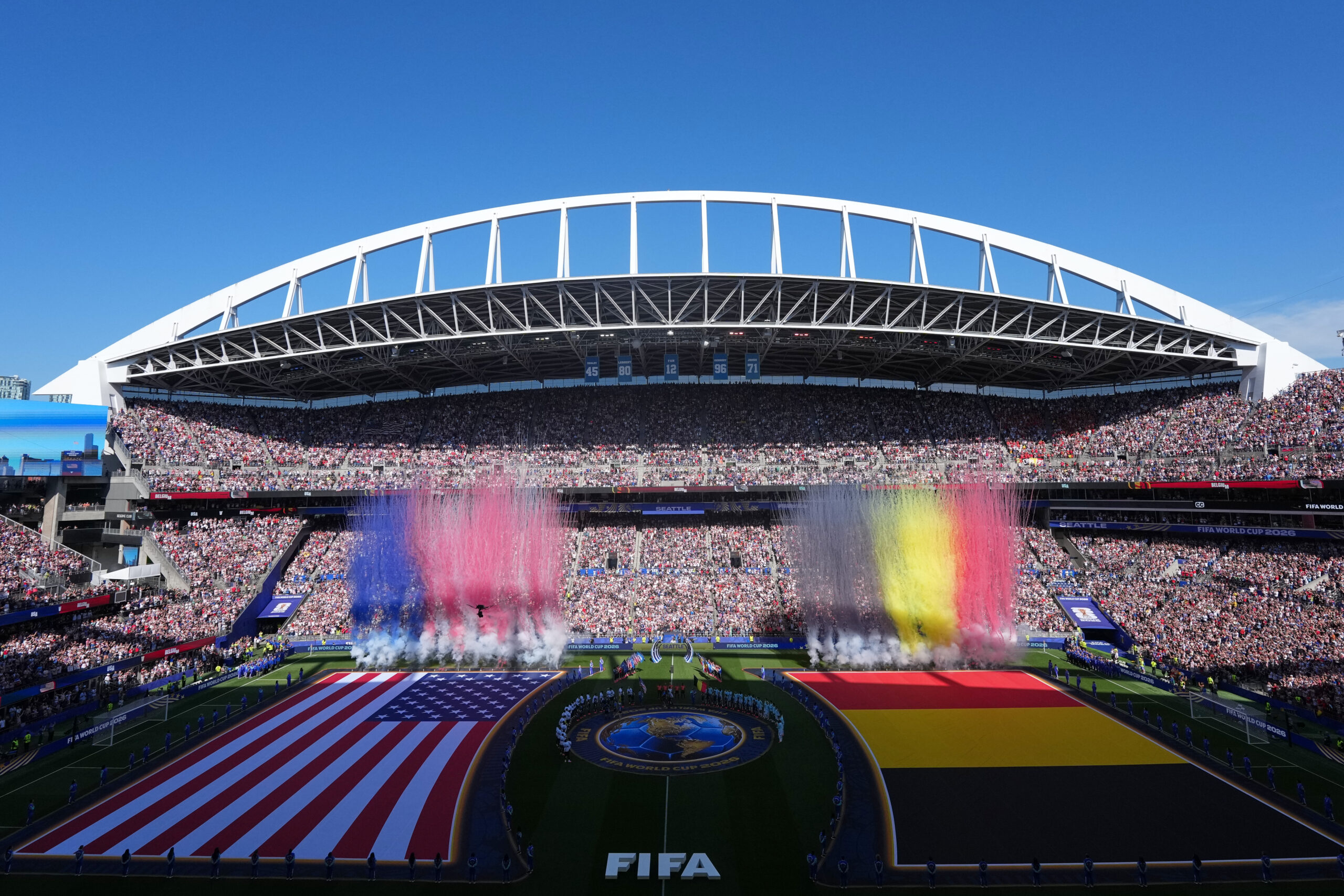
The scene just after the national anthems in Seattle, when the packed crowd of U.S. fans hoped for a historic win.
For this game turned out to not be just about Balogun on the American side. The whole squad blew it on the biggest stage, and they knew it.
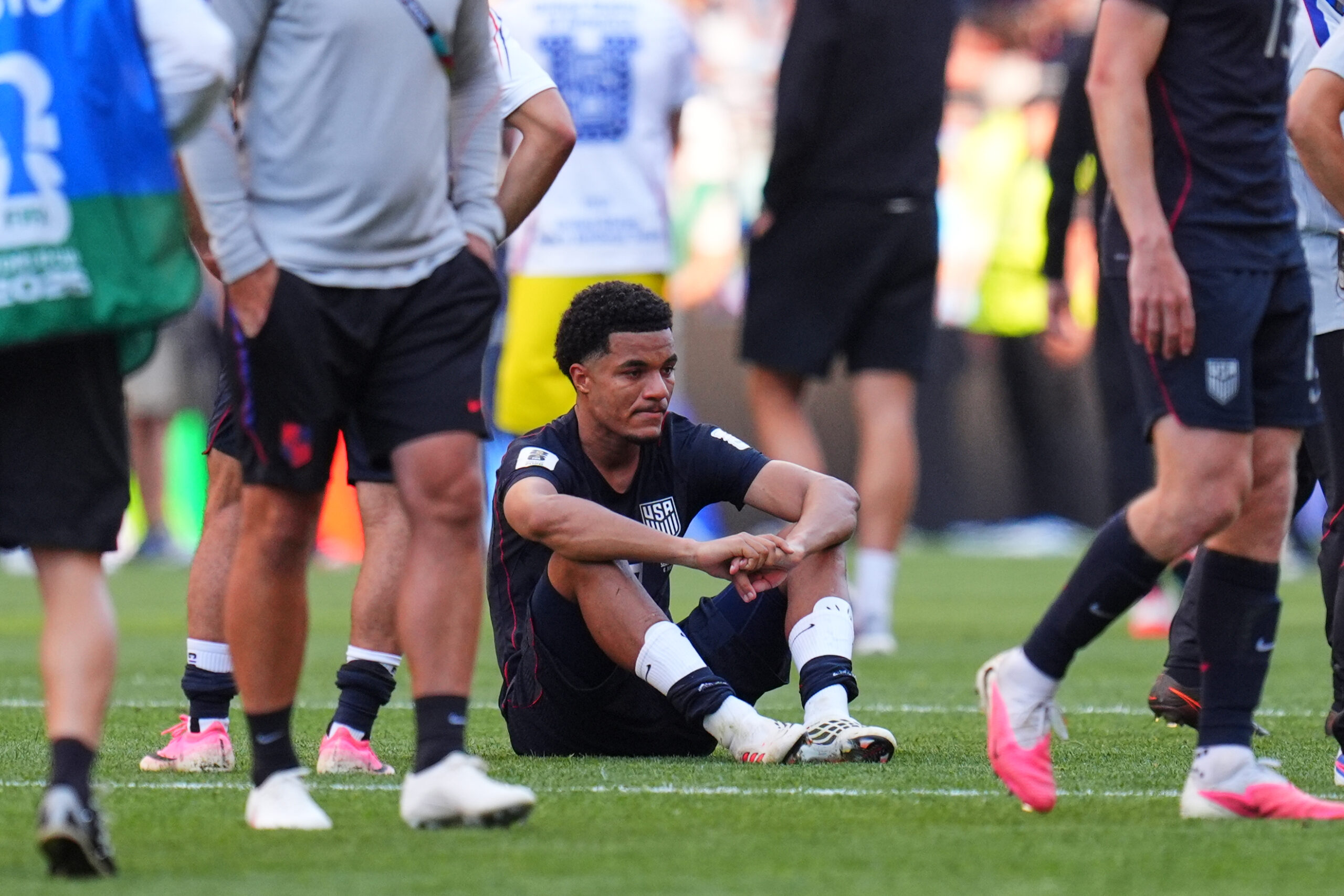
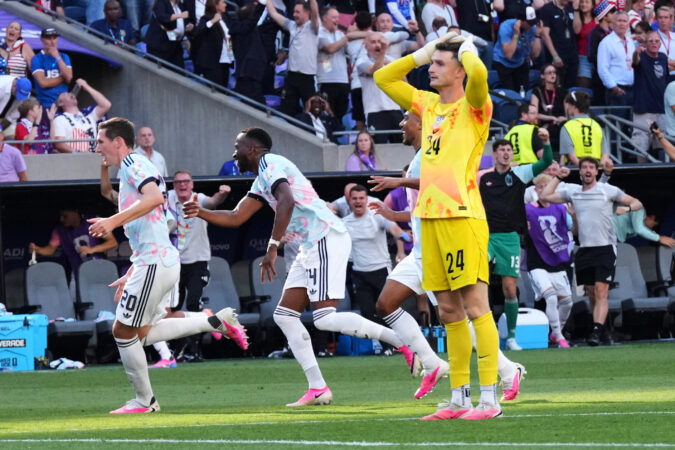
“This moment hurts more, stings more, than probably any other moment in my life,” Wayne-born goalkeeper Matt Freese said after a horror game, especially on Belgium’s third goal that blew the game open, when he was stripped of the ball after straying out of his 18-yard box.
“Yes, it stings,” midfielder Tyler Adams said. “This was a moment to have the opportunity to advance and really try and do something special, and we fell short.”
Asked why the team was so flat, he answered: “It’s a great question. I wish I had the answer right now. I don’t know.”
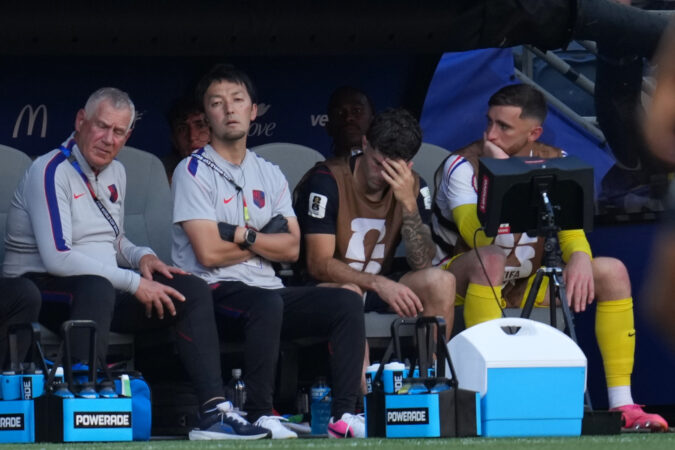
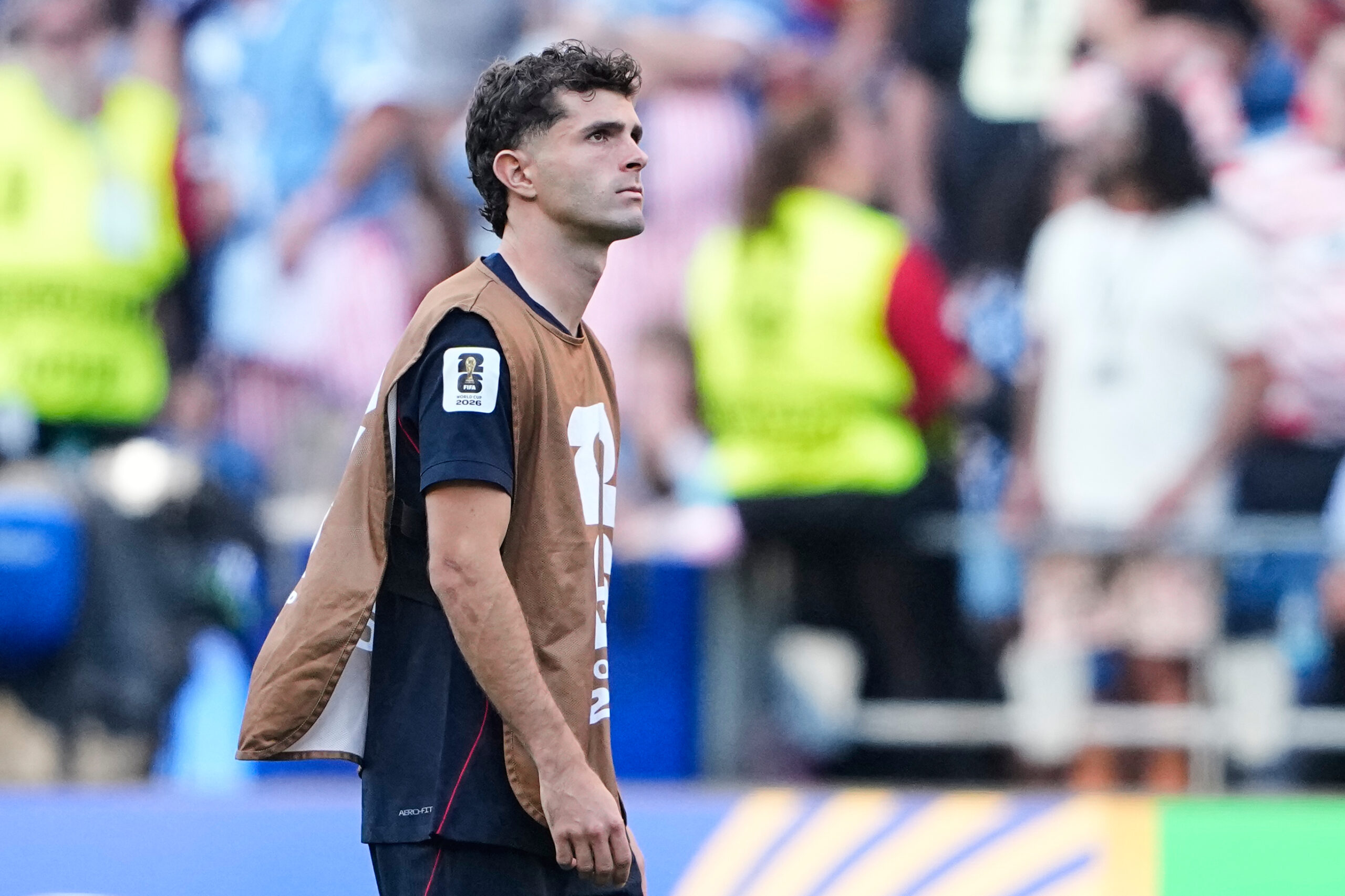
Christian Pulisic tried to lift the mood, but he took some tough questions after leaving a game injured for the second time in this tournament. Along with that, the team’s most important attacker didn’t play the entirety of any game, though at least in the Bosnia win he played 88 minutes.
Christian Pulisic played 224 minutes across four games in this World Cup.
“I didn’t quite have the moments I was hoping to, to try to help us to really push and get over this next step of beating a really good team,” he said. “So I’m disappointed with myself, of course, but I’m going to try to stay positive. I did a lot of good things, and the team did as well.”
Gio Reyna also was underwhelming. After earning enough of Pochettino’s affection to make the World Cup team, he played just 131 minutes over the five games, took two shots, created one chance, and scored a goal that was beautiful, but in a game that already was won.
“If we lose to Bosnia, it’s obviously a big disappointment, and then if we win today, it’s probably a very big achievement for the group,” he said. “So it felt like we kind of just almost did what was expected. … It’s hard to say, I guess, what’s needed to make the next steps to really push through.”
One thing would be the biggest stars delivering in the biggest moments. That has happened for Kylian Mbappé’s France, Lionel Messi’s Argentina, Jude Bellingham’s England, and Erling Haaland’s Norway.
But it did not happen for the United States.
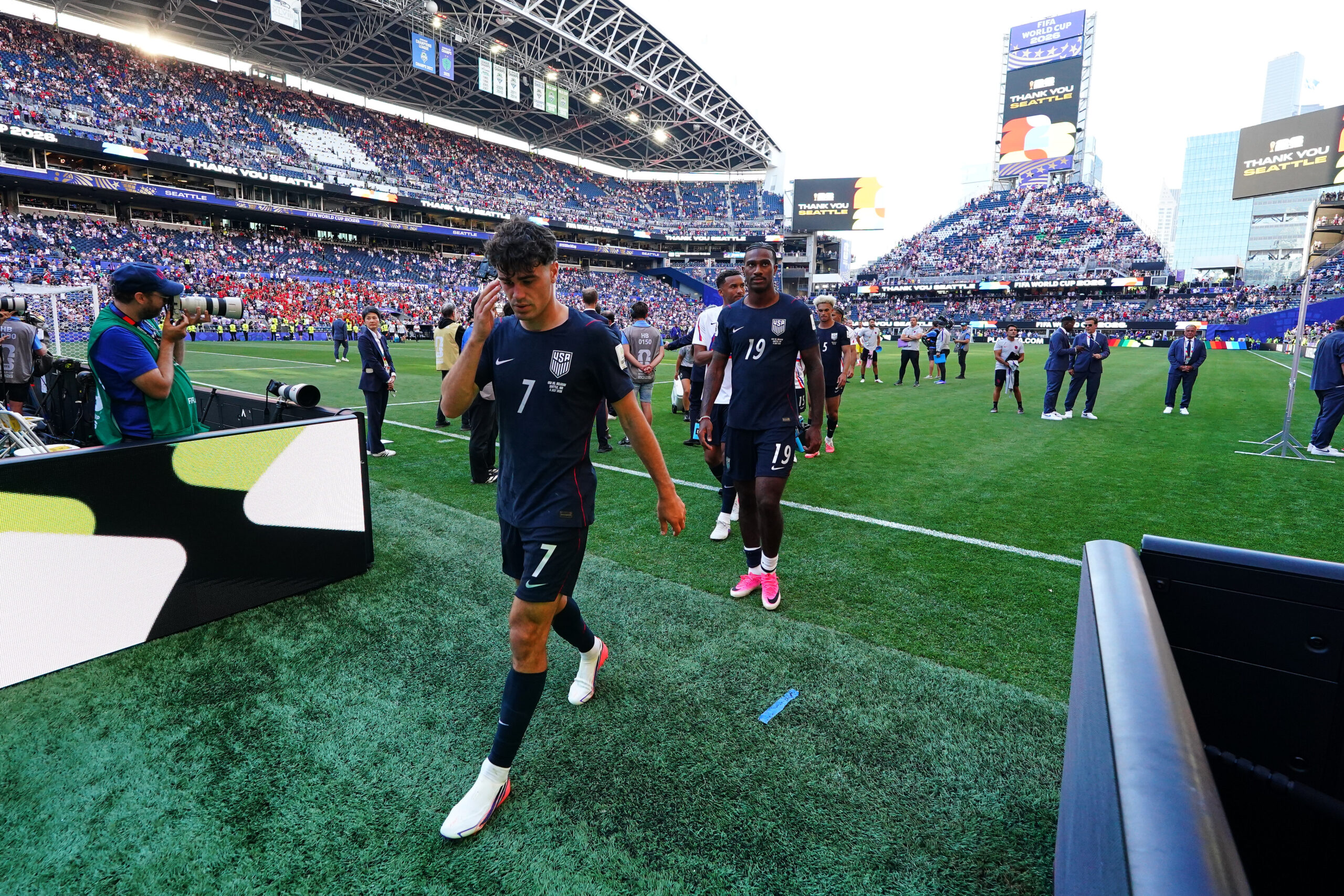
Gio Reyna (left) walks off the field after the loss to Belgium.
Will it be worth splashing cash on another big name? Or, since he wasn’t clearly better in the biggest moments than his American predecessors, should there be a serious conversation about whether it’s necessary?
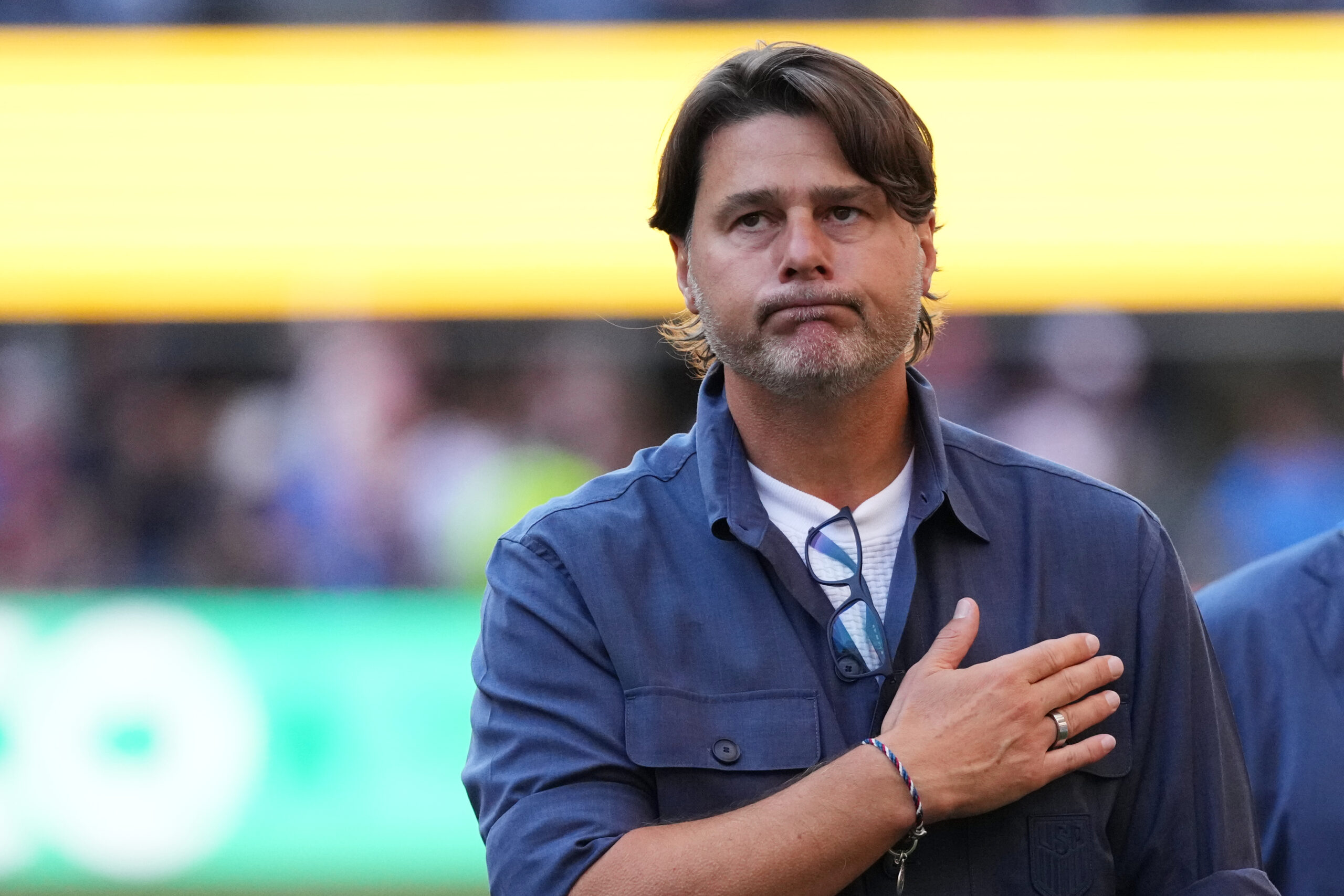
Mauricio Pochettino’s gesture of thanks to U.S. fans after the final whistle.
Former Los Angeles FC manager (and longtime stalwart U.S. player) Steve Cherundolo also is on the list. New Jersey native Pellegrino Matarazzo, who has made his coaching name at European clubs, is too, though he might want more time overseas before coming home. Former Union coach Jim Curtin would be on the list if he hadn’t just been hired by Austin FC.
But will the donors lean on U.S. Soccer to go for another famous name?
One of those donors, Scott Goodwin, has quite a few friends in the soccer world — and some at the White House, too: The New York Times reported that he called them to complain about Balogun’s red card.
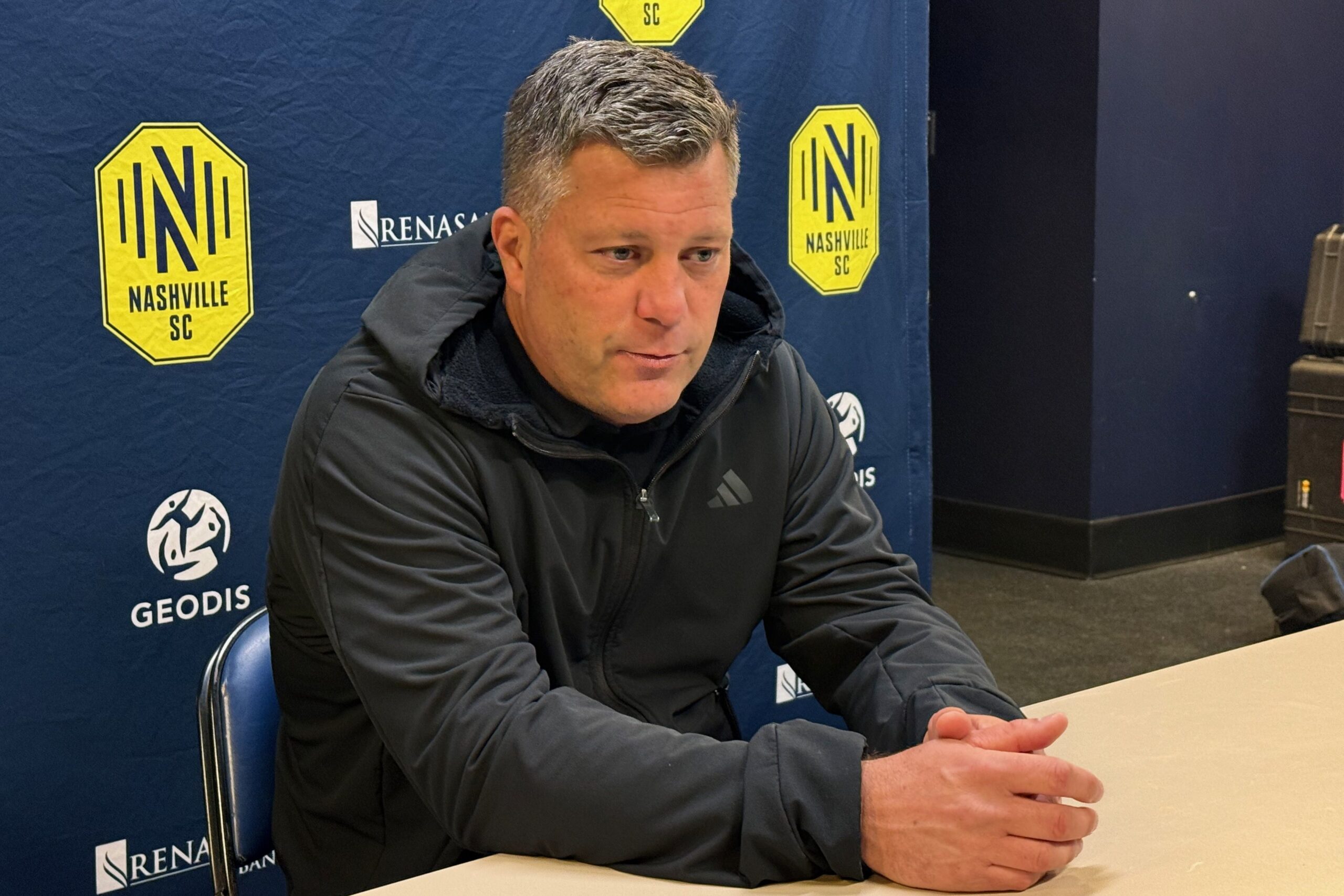
B.J. Callaghan talking with the media when Nashville SC visited the Union earlier this year.
Two years ago, Goodwin called his soccer friends to complain about the U.S. team’s flop at the Copa América. They included two former U.S. players who remain well-known in soccer circles, MLS executive Alecko Eskandarian and broadcaster-turned-investor Kyle Martino.
Goodwin was so angry at the U.S. team’s performance that he said, as he recalled to the New York Post last month: “This is a chance to get an amazing coach.”
Then, as The Athletic put it just before the World Cup started, “To Goodwin, there were three names that fit the bill: Klopp, Pochettino and Manchester City’s Pep Guardiola.”
None of them were American. None had ever coached in the United States. Was there an implicit view there that no American could be good enough for the job?
Good questions for U.S. Soccer CEO JT Batson and chief operating officer Dan Helfrich: Do they think the difference between a big-name foreigner and a qualified American is worth another $6 million bet? And how much sway will the donors hold this time?
U.S. Soccer declined to make leadership available to the media on Tuesday. A spokesperson told The Inquirer that there might be an availability in the coming days.
And what about a second term for Pochettino, who’s now out of contract? The players grew attached to him, but that happens with almost any manager. He has talked with U.S. Soccer about another term, but there also have been plenty of hints that he’d like to go back to Europe.
“I think now, because we were talking with the federation, it’s about to rest a little bit, to think, to have conversation, and then see what the decision is from the federation and from us,” Pochettino said Monday night. “I think we’ve built a very good relationship, but now is not a moment to talk about that. … For sure, in the next weeks, we can start to talk — if the federation wants to talk.”
Late Tuesday morning, U.S. Soccer issued a statement about its side of those talks.
“We had positive conversations with Mauricio before the World Cup about the future,” the federation said. “We agreed we would continue those conversations following a chance to rest and reflect post-World Cup.”
It hinted at the future, but only barely.
“We have a great deal of respect and gratitude for Mauricio, his staff and everyone part of the program,” it said. “We have shared excitement about our potential and also shared clarity about the amount of work at all levels still required to achieve our ambition.”
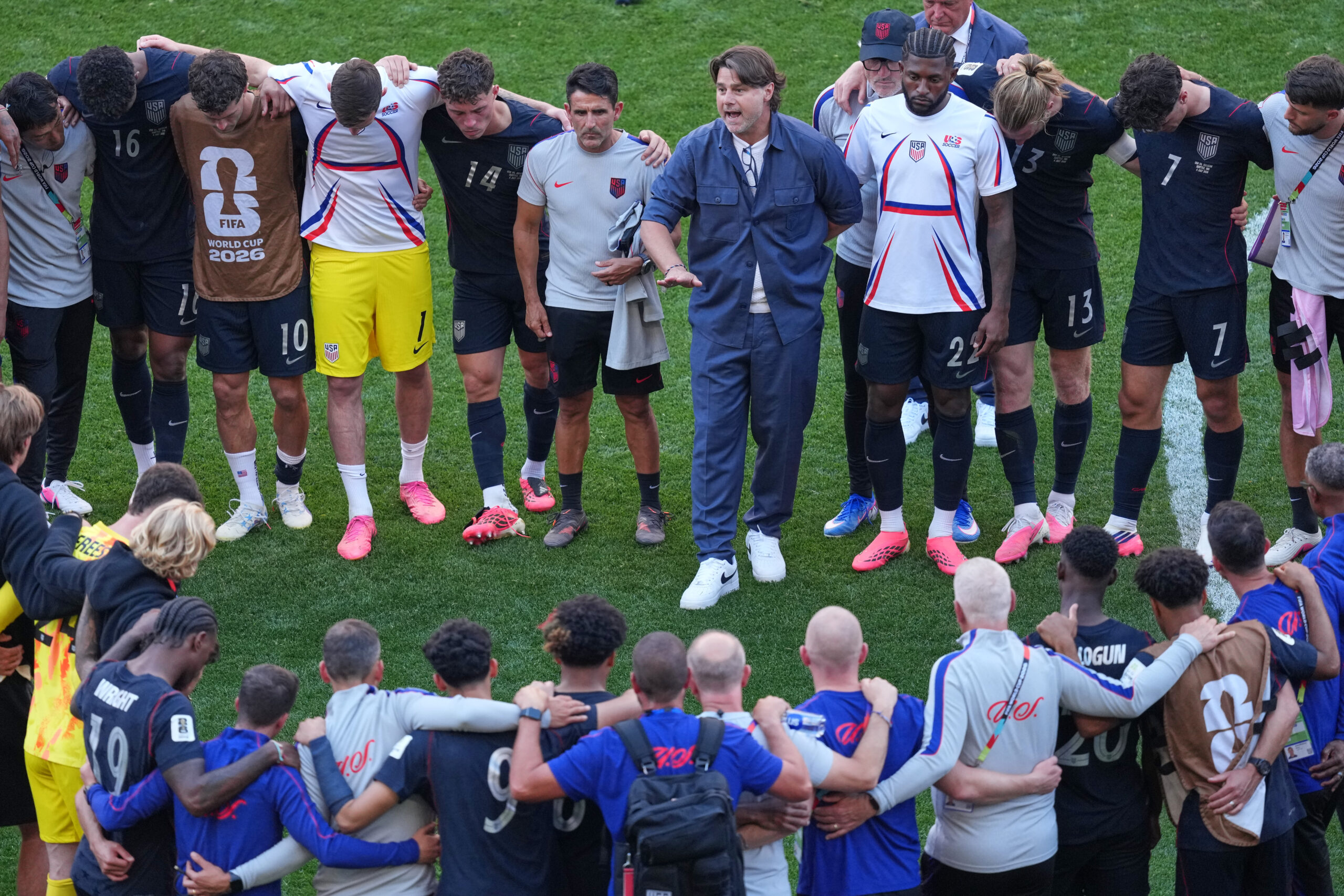
Mauricio Pochettino (center) addressing players and staff after the loss.
If the Phillies end up taking a pitcher with the No. 36 pick in the upcoming draft, the MLB network will have the perfect analyst on hand to break it down.
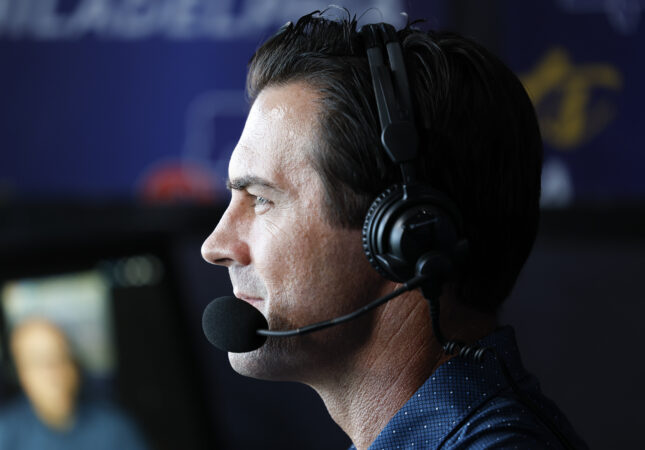
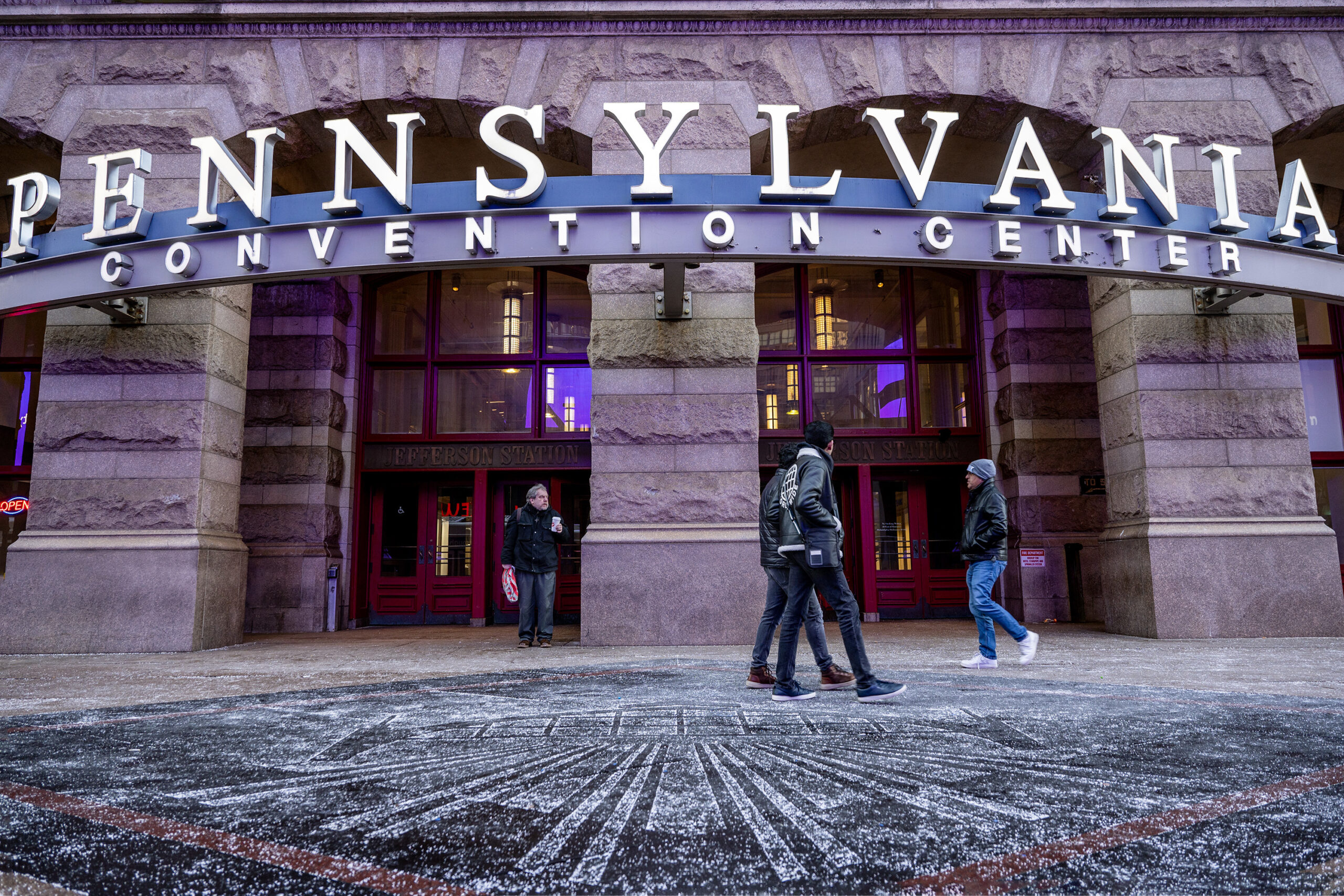
Cole Hamels, the 2008 World Series MVP and current NBC Sports Philadelphia broadcaster, is joining MLB Network’s live coverage of the 2026 MLB draft, which kicks off Saturday afternoon at 1 p.m. at the Pennsylvania Convention Center.
Longtime MLB Network coordinating producer Chris Roenbeck, who is working his fourth draft, said they’re always looking to add a “special wrinkle” to their coverage. With this year’s draft taking place in Philadelphia, the stars aligned to add Hamels to their broadcast.
“When we started brainstorming months ago, we quickly thought of Cole, given his decorated career with the Phillies and being a first-round pick,” Roenbeck said. “We’ll go to him early and often for pitching insights, relying on his unique perspective, which will only enhance our broadcast.”
Hamels is the only new addition to MLB’s Network’s draft coverage, which will be hosted by Greg Amsinger and feature analysis by Mark DeRosa, Harold Reynolds, and former Colorado Rockies general manager Dan O’Dowd.
“We’re beyond excited to have Cole part of our draft team,” Amsinger said, noting Hamels’ “draft experience and pitching expertise will take our show to the next level.”
“Certainly, we would love to have him every weekend,” Alexandra Matcham, the vice president of content for NBC Sports Philadelphia, told The Inquirer in March.
Hamels won’t be the only Philly addition. The opening of MLB Network’s draft coverage will be voiced by Black Thought (aka Tariq Trotter), lead MC of the Philly hip hop group The Roots.
NBC will broadcast the first 10 picks of the MLB draft
The 2026 MLB draft will take place at the Pennsylvania Convention Center in Center City.
Hamels and company will be on hand to discuss the Phillies’ No. 32 pick, but MLB Network won’t air the first 10 picks of the draft
Why? Because NBC will be broadcasting the first hour and a half of this year’s MLB draft as part of their three-year TV rights deal with MLB, taking over for ESPN.
As a result, the MLB draft will begin at 1 p.m. Saturday on NBC before coverage shifts to MLB Network at 2:30 p.m., picking things up with the No. 11 pick.
NBC will carry MLB Network’s production, so you won’t see Mike Tirico and crew this weekend.
The entire draft will stream on Peacock, which will simulcast MLB Network’s coverage after NBC cuts away to cover the American Century Championship, often described as the Super Bowl of celebrity golf tournaments.
The draft streaming on Peacock is good news for YouTube TV subscribers, where MLB Network has remained dark for three years due to a contract dispute. The network is also available to stream as part of MLB+, beginning at $5.99 per month.
The MLB Network has broadcast the draft since 2009. ESPN was the first network to broadcast the draft, which aired the first round live on ESPN2 in 2007.
Quick hits
Malik Tillman reacts after the U.S. was eliminated from the World Cup by Belgium Monday.
“This doesn’t have to be the last soccer you watch for the next four years.” That was John Strong, Fox’s lead World Cup announcer, pleading with American fans after the U.S. was eliminated from the World Cup by Belgium Monday.
Credit to Delran native and two-time World Cup champ Carli Lloyd, who wasn’t afraid to criticize U.S. star Christian Pulisic after the United States’ disappointing loss.
On a brighter note for American football fans, the NFL preseason is less than a month away. The annual Pro Football Hall of Fame game, featuring the Arizona Cardinals and Carolina Panthers, kicks off Aug. 6. The Eagles’ first preseason game against the Baltimore Ravens is one week later on Aug. 15.
If you didn’t believe it before, you need to understand it now: Donald Trump never should have picked up that phone, never should have put in that call to one of his toadies, FIFA president Gianni Infantino, and never should have tried to exert his icky influence in a sport rife with corruption.
The 4-1 loss by the U.S. men’s national team to Belgium on Monday night at Lumen Field in Seattle was a fitting result. It was an embarrassing end to the World Cup for the home country. It was cosmic payback for a club that hoped to benefit from a president who wanted to strongarm Team USA into the quarterfinals and found out that sports can resist even an autocrat’s attempts to stack the deck.
Sometimes, once you show you’re willing to wallow in the mud, you can never wash the stain away. The justifications for the Trump administration’s overtures to FIFA to wipe out the one-game suspension for Folarin Balogun — and for FIFA’s acquiescence — were oh-so easy and obvious: This is FIFA.
U.S. forward Folarin Balogun (20) was the center of attention against Belgium in the World Cup’s round of 16 on Monday.
This is an organization with a history of scandal and corruption so long and detailed that Robert Caro could only begin to chronicle it. This kind of back-scratching and deal-making is nothing new at soccer’s highest level. This is how things work, and everyone knows it and holds their nose against the stench, and all the complaints from Belgium and the other countries left in the World Cup were nothing but rank hypocrisy.
If another national team were in the same situation that the USMNT found itself after Balogun was hit with that questionable (at best) red card last Wednesday against Bosnia and Herzegovina, its president or prime minister would have done the same thing Trump did, right? Any means necessary in an every-country-for-itself system, right?
Wrong. The corrective to dishonor and dishonesty isn’t to do more dishonorable things. Yet that was the remedy that Trump sought and put Team USA in the position of accepting. No, Balogun never deserved a red card and the subsequent suspension. Yes, it was a terrible call. But terrible calls happen at all levels of sports, because sports — at least until the gamblers and robots take them over completely — are officiated and overseen by human beings, and errors and mistakes are part of the game.
Stuff happens, and you deal with it as best as you can, and no one gets a do-over days later just because Donald Trump says so. His actions wouldn’t have been appropriate in youth soccer — imagine a parent of a punished player pressuring a league’s commissioner to lift a suspension and the commissioner giving in — let alone in the biggest sporting event on the globe.
What’s more, Trump and those who supported or tolerated his interference in The Balogun Affair apparently never stopped to consider that he might be damaging his own national team’s chances. In that 2-0 victory over Bosnia, Balogun’s teammates not only survived the final 26-plus minutes of the match without him but also scored shorthanded to extend their lead.
They had become underdogs. They had acquired the momentum that comes with being a team that had to fight adversity and had given a strong indication that it could overcome it.
But once FIFA reversed its decision, that entire narrative — that sense that the USMNT might use Balogun’s suspension as inspiration and triumph in the face of an unjust call — disappeared. Now, the USMNT wasn’t the tough, resilient bunch that could withstand the absence of its best player. Now it was so out of its depth without Balogun that it needed the shady political boss to cut a deal in the smoke-filled room to bail it out.
Belgium players react after their team scored one of four goals against the United States in Monday’s round-of-16 World Cup match.
Well, the Americans fit that pathetic profile Monday night. They allowed Belgium to take an early lead, then gave up the winning goal just 61 seconds after Malik Tillman tied the game at 1, then conspired to commit a crushing gaffe when goalkeeper Matt Freese played the ball outside the box, burped it up, and watched Hans Vanaken roll a shot past him for a two-goal Belgium edge.
They were outplayed, outmatched, and outclassed, their performance all the more humiliating for the strings that their president had pulled for them, for the message that he had sent about their chances.
Donald Trump told the world that these athletes needed a man willing to act like a mob boss to make things easier for them, that the USMNT wasn’t strong enough to take home victory on its own and without his help. It turned out he was right. He treated them like losers, and on Monday night, they met his expectations.
It’s a little past 3 p.m. on the Friday before the Fourth of July. The Flyers’ development camp had wrapped up a few hours ago, and all that seemed to be on the agenda were new contracts for their four restricted free agents, including Trevor Zegras and Jamie Drysdale.
Then the notifications went off. The text messages. The emails.
Six words sent the hockey world afire: “We have tendered an offer sheet.”
What is the offer sheet the Flyers tendered to Carlsson?
An offer sheet is tendered to a player on another team who is a restricted free agent and who was provided a qualifying offer. In this case, the Ducks, who own Carlsson’s rights, had until July 1, the start of free agency, to negotiate an exclusive contract without worry of an offer sheet.
The Flyers’ offer is a five-year contract worth an average annual value of $18 million. According to a league source, it is front-loaded with a heavy signing bonus — and signing bonuses every ensuing year of the deal. Carlsson would receive the league minimum in base salary every year.
According to PuckPedia, the final year has a no-movement clause.
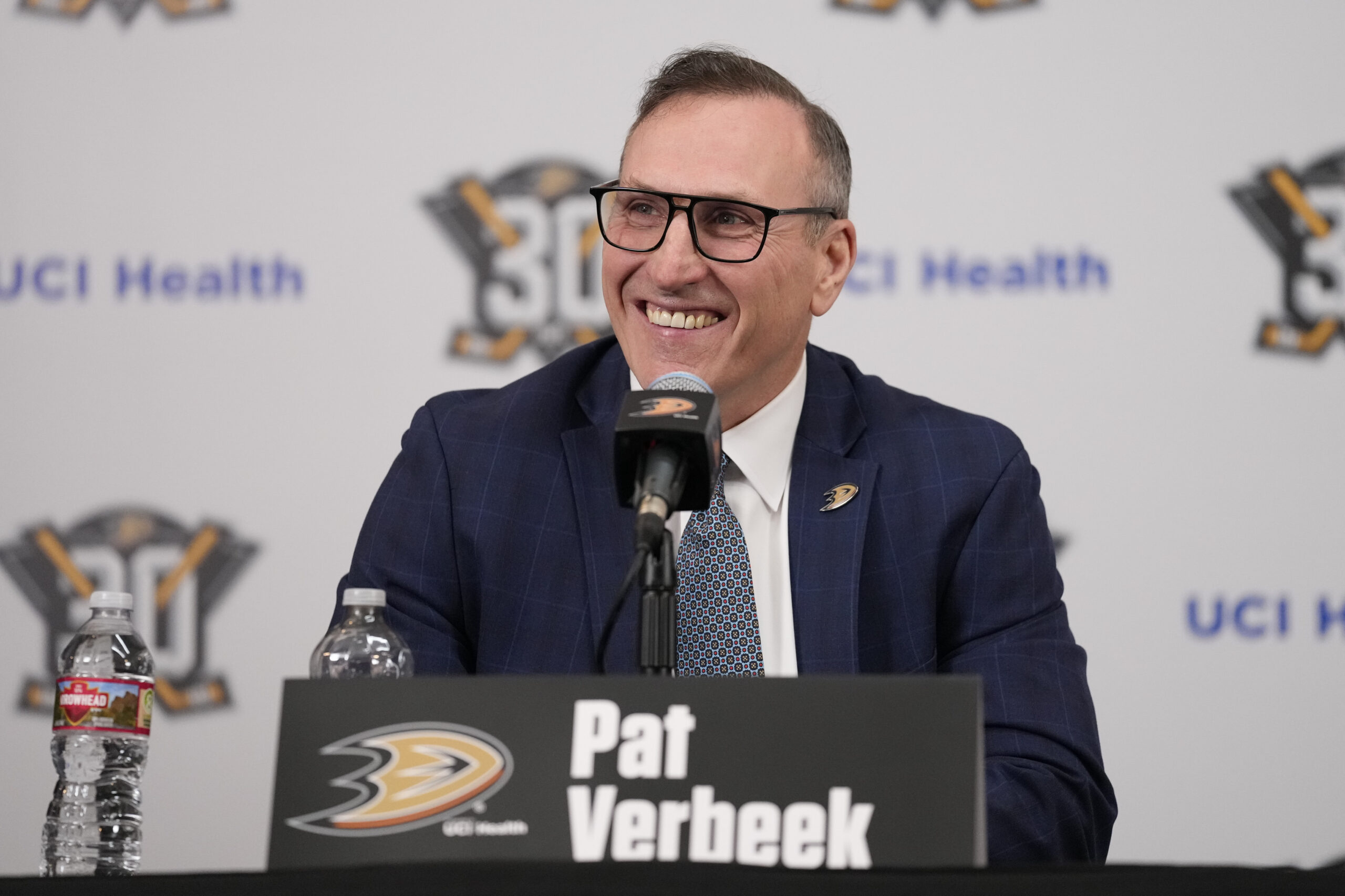
Anaheim Ducks general manager Pat Verbeek must consider the team’s next move on Leo Carlsson.
The announcement means that Carlsson, 21, has accepted the offer. It would make him the highest-paid player in AAV in the NHL and would walk him directly to unrestricted free agency.
It all comes just two days after Flyers general manager Danny Brière made some interesting comments on the first day of free agency, like stating that if the organization has an opportunity to make the roster better, “we’ll jump on it,” and “There’s a chance, and a good chance, that we take a little bit of a step back this year.”
Was that a tell with the first part and a sleight of hand on the second as the Flyers try to get the first-line center they’ve been craving for years?
According to the collective bargaining agreement, the Ducks have seven days to match the offer, which means they have until 3 p.m. Friday.
If they match, the Ducks must meet the structure of the contract and pay Carlsson the signing bonuses — something Anaheim rarely doles out — along with taking on the $18 million salary cap hit.
It could come down to the final day, and it should be noted that the Utah Mammoth are weighing a similar decision after the New Jersey Devils tendered an offer sheet to Barrett Hayton. That offer sheet is for one year, $4.775 million, and Utah must decide by Wednesday.
The interesting part is that Sportsnet insider Elliotte Friedman reported on Thursday that he had heard “over the past few hours Anaheim guaranteed it will match any attempt on Leo Carlsson.” The clock is ticking.
The two teams could still work out a side trade for Carlsson to preempt Anaheim’s decision to match, but if the Ducks match, they would be unable to trade him for one year.
What compensation would the Ducks receive from the Flyers?
If the Ducks do not match the offer sheet, they will receive four first-round picks in the next four drafts from the Flyers. The compensation is based on the amount of the offer, and because it is over $11,939,166.
Since Philly has all its own picks moving forward — it is not permitted to use the first-rounder it is receiving from the Toronto Maple Leafs as compensation here — the Ducks would receive the Flyers’ first-round picks in 2027, 2028, 2029 and 2030. Had the Flyers already traded one of their picks in the next four drafts, they would have been required to provide the 2031 first-rounder for the missing year.
The Flyers are one of 28 teams that still have four picks in the next five years to tender an offer sheet. Having just made the postseason for the first time since 2020, the hope is that the four picks the Flyers would give to Anaheim would be in the 20s or worse, and not a lottery pick. The Flyers’ expectation is that it would not be a player as highly valued as Carlsson, who is a first-line center.
Leo Carlsson’s offer sheet brings about potential roster construction complications for the Ducks and Flyers.
How does the Carlsson offer sheet impact the Flyers and Ducks?
If the Ducks match
According to PuckPedia, the Flyers would have a smidge over $29.5 million in cap space; however, that number includes center Jett Luchanko‘s contract ($941,667), and Brière told The Inquirer in early June that the expectation is he will be in Lehigh Valley of the American Hockey League. They do have to re-sign restricted free agents Drysdale, Zegras, Nikita Grebenkin, and Hunter McDonald, who is expected to be in the minors.
The Ducks would then be the ones saddled with an $18 million AAV. The problem? As of Monday night, they have just under $10 million in cap space after signing Pavel Mintyukov to a five-year deal with an AAV of $7.2 million. They still have to sign restricted free agent forward and ex-Flyers draft pick Cutter Gauthier, who scored 41 goals this past season, and defenseman Tyson Hinds. Anaheim could try to move out some players like Chris Kreider, Frank Vatrano, and Alex Killorn; however, they all have modified no-trade clauses, so trade partners are limited. Troy Terry could also be placed on long-term injured reserve, but that would impact the Ducks’ salary cap at the deadline and next season.
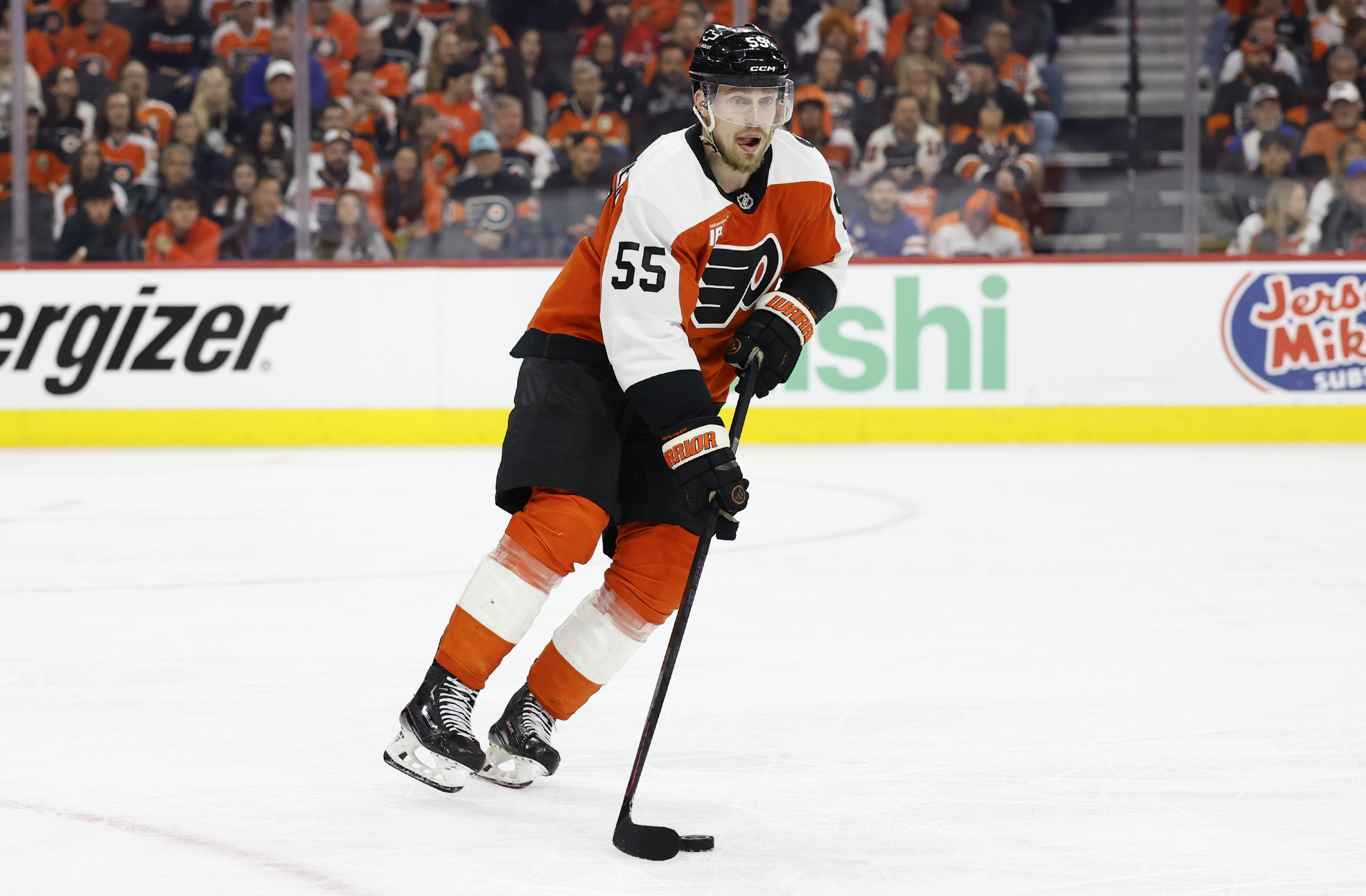
Fitting Leo Carlsson’s salary into the roster could mean trade talks for Rasmus Ristolainen escalate.
If the Ducks do not match
The Flyers would be the ones saddled with an $18 million AAV and would have a little over $12.5 million in cap space — with Luchanko being sent down — to sign Zegras and Drysdale to NHL contracts. Grebenkin could land in the minors to start, along with McDonald, so those contracts would not impact the cap space. Zegras and Drysdale’s new deals are expected to combine for in the neighborhood of $15 million, so if the Flyers do land Carlsson, they would likely have to move out a contract or two. Does Rasmus Ristolainen finally get moved, or does a forward get moved to help stabilize things up front?
The Ducks would probably still have to move out a contract to sign Gauthier, who will likely ask for more than $10 million.
What would Carlsson bring to the Flyers?
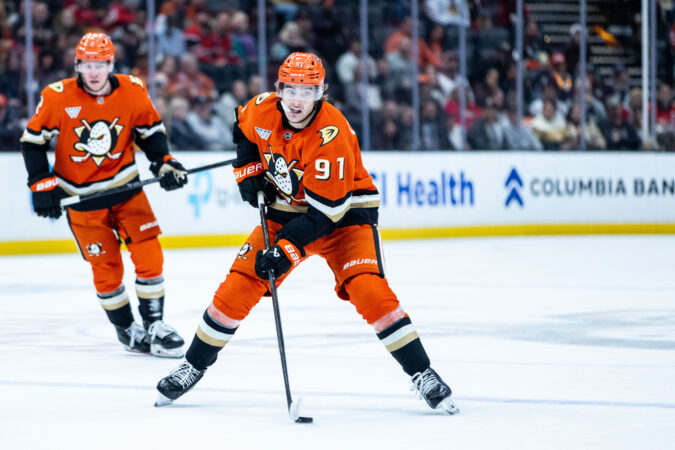
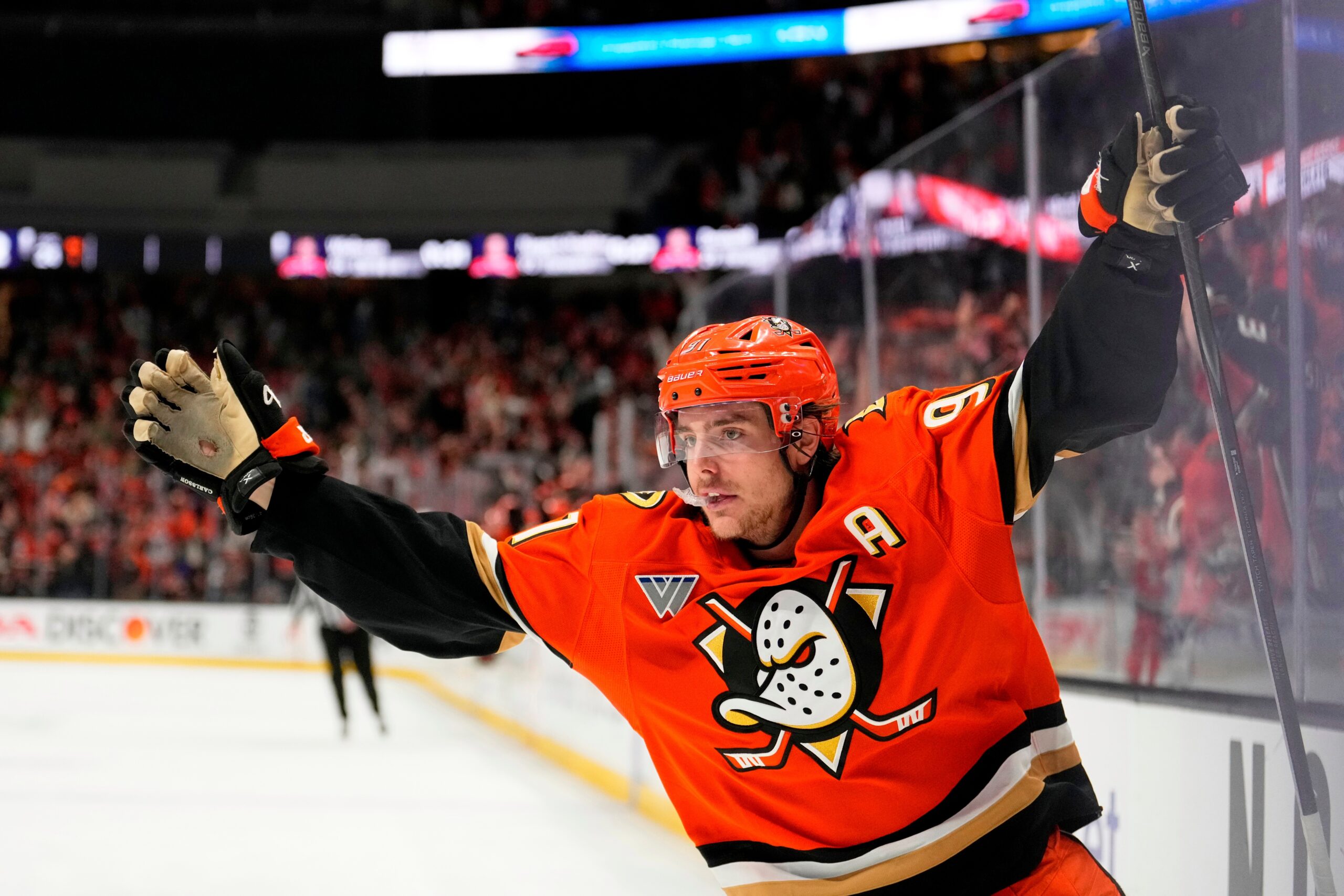
Although some would argue the amount is an overpayment, Carlsson is a 6-foot-3, 208-pound dynamic center coming off a breakout season in which he had 29 goals and 67 points in 70 games. He missed time after sustaining a Morel-Lavallée lesion in his left thigh in mid-January but returned after the Olympic break and scored 11 goals and 23 points in 26 games. According to Physiopedia, a Morel-Lavallée lesion is “due to shearing forces which separate the skin and subcutaneous tissue from the deep fascia.”
The 21-year-old ex-teammate of Zegras and Drysdale has size, speed, playmaking ability, and a lethal shot. Selected second overall in the 2023 NHL draft, Carlsson had four goals and 11 points in 12 playoff games last season, his first postseason experience. Across 201 career games, he has 141 points (61 goals and 80 assists) with a 14.7 shooting percentage, and he should be able to help the Flyers’ dismal power play after scoring four goals and 18 points last season with the man advantage. He would have tied Matvei Michkov for second in power-play goals, and the 18 points would have been the second-most on the Flyers behind Zegras.
Carlsson is a No. 1 center with tremendous upside given his young age. The Flyers have needed a top-line pivot since trading Claude Giroux, who, despite some rumblings of a reunion, appears to be staying in Ottawa with the Senators. Carlsson would fit in quite nicely with right winger Porter Martone on the top line, and then, more than likely, speedster Owen Tippett on the left.
Did Carlsson’s offer sheet impact Zegras’ and Drysdale’s negotiations?
The long and short of it all is … kinda.
Obviously, Zegras and Drysdale have not signed their new contracts yet, and it feels like everything is on hold until the decision about Carlsson is made. As mentioned, they are expected to combine for a figure in the neighborhood of $15 million, and there is still the question of whether Zegras will be paid like a winger or a center; typically, centers get paid more.
Hearings are scheduled to run from July 20 to Aug. 1, and until they begin, the team and player can still negotiate a deal. If it does go to the arbitrator, they can award only a one- or two-year contract. Because it was a player’s choice, the Flyers will select the term length, and if Philly selects a two-year contract, the player will walk to unrestricted free agency. If it is for one year, the player would be a restricted free agent next summer.
Could Adam Fantilli be a Plan B for the Flyers?
What is Plan B if the Ducks match?
Finding a true No. 1 center has long been the Flyers’ goal, so what happens if they do not get Carlsson? According to Aaron Portzline of The Athletic, there have been rumblings that the Flyers could pivot to Adam Fantilli of the Columbus Blue Jackets.
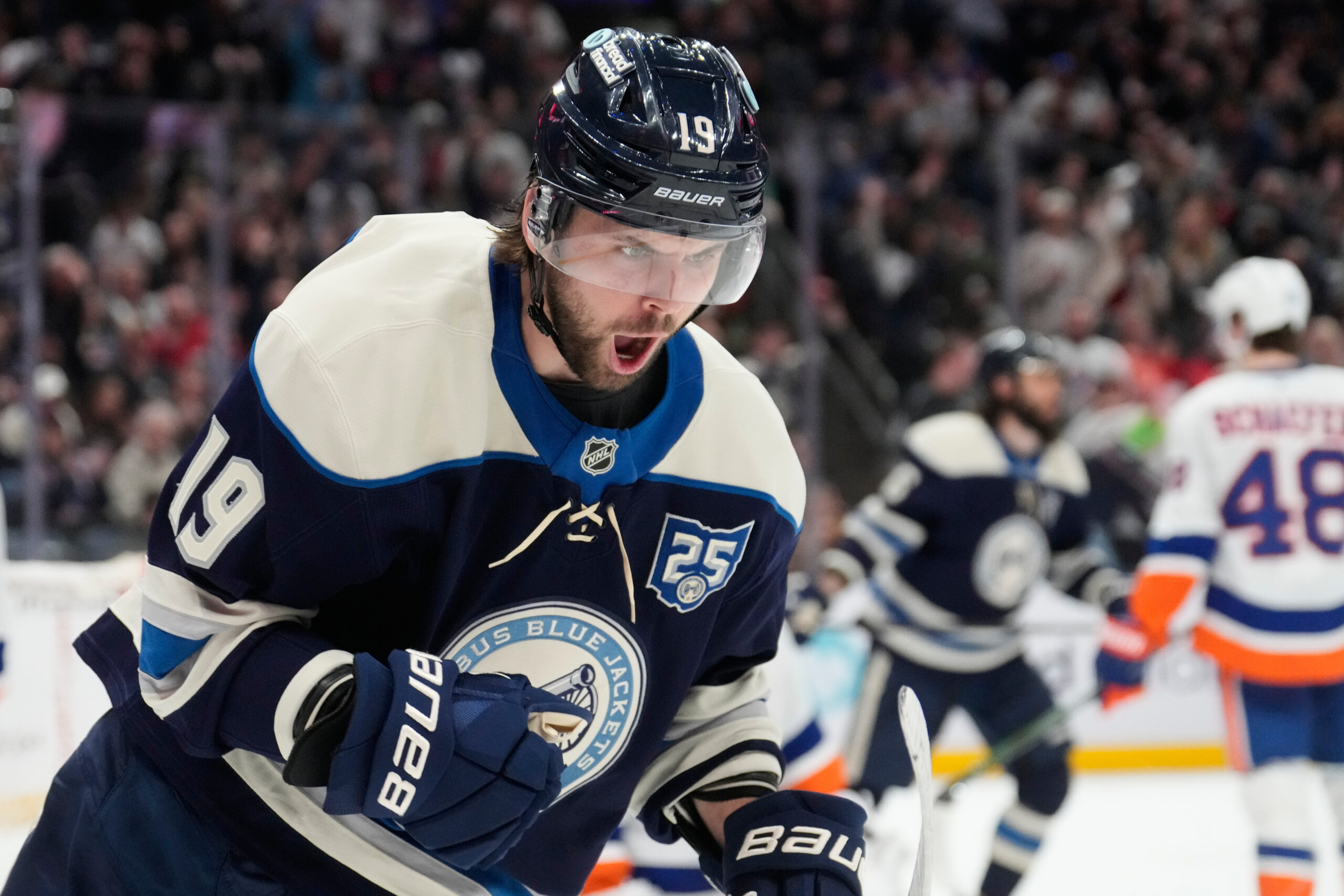
Fantilli, 21, is a restricted free agent center, so they could try either another offer sheet or a trade. The Canadian center just registered career highs in assists (35), points (59), power-play goals (four), power-play points (13), average time on ice (18 minutes, 54 seconds), and face-off winning percentage (49.8%). Across his 213 career games, Fantilli has 140 points (67 goals, 73 assists).
In a world full of blowhard self-promoters who lack expertise in anything outside hat-backward bro-chat, it’s refreshing to hear smart guys talk about interesting stuff in plain words.
That’s what you’ll get when you find Episode 12 of the Negotiation Warriors podcast on YouTube. On the podcast, former Chicago Bears executive Cliff Stein spends 75 minutes discussing the evolution of NFL front-office practices with a certain former Eagles and Cleveland Browns executive.
The episode is titled “The Salary Cap Godfather with Joe Banner.”
This is not hyperbole.
Banner entered the NFL in 1994 as the salary cap and free agency became the league’s most important drivers of roster construction. Banner was, simply, smarter and braver than almost everybody else making those decisions. It was he who designed the template for salary-cap management, free-agent pursuit, and, to a degree, the maximization of early- and late-round draft pick evaluation.
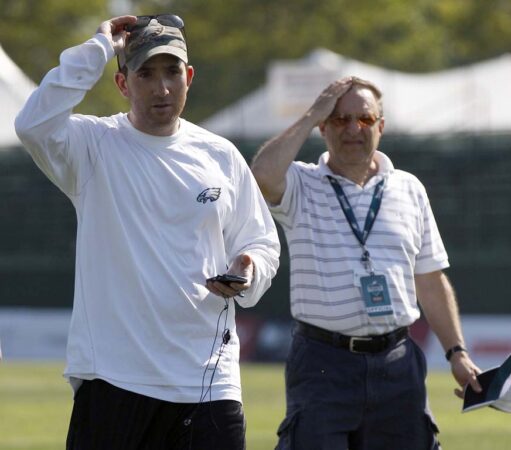
Banner (with an assist from his then-administrative assistant, Lee Ann Hartley, who gets name-dropped in the episode), also invented Howie Roseman, who since has led the Eagles to three Super Bowls, two championships, and today generally is considered the NFL’s top executive.
But everybody has a godfather.
Banner served a similar role to Stein, a North Philly kid who played receiver for Ron Cohen at George Washington High School and rose from fringe-player agent to the role of senior vice president for 22 years with the Bears, until regime change in 2023 ended his tenure.
Stein, 59, then became a consultant for college programs dealing with NIL challenges, helped develop software called Front Office 360 to help schools manage their salary caps, and, of course, started the pod. He’s already hosted super-agents Drew Rosenhaus and Peter Schaffer, and he has about 30 more in the bank. None, he said, was as rewarding as the Banner pod.
“He’s not known as a very tall man, but he is a giant when it comes to negotiations,” Stein says, introducing Banner in anatomically and metaphorically appropriate terms.
Why Banner? Why now?
Because the business of the NFL was uncharted territory in the mid-’90s. Banner was Magellan. Now semiretired and semiforgotten by a generation that uses his methods but has no appreciation of their origins, it is important to Stein to shine light on Banner’s massive contribution, from negotiating stadium deals to navigating the cap to assigning values to players on the front and back ends of their careers.
“My biggest takeaway was the value of a negotiator in the role of a GM, and to show that’s what he was doing,” Stein said.
Banner’s one of the most respected sports executives, one of the most brilliant minds and canniest negotiators the NFL has ever seen. Some would even call him the Godfather.
From North Philly to the South Side
Stein got his business and law degrees at Temple, then began work as a union lawyer in 1994 when he also got his NFL agent’s license. Three years later he partnered with Jerrold Colton, continued his law practice, and acted as agent for a few low-level players such as former Eagles offensive lineman Jerry Crafts and kick returner Michael “Beer Man” Lewis, the 29-year-old Arena Football League speedster who delivered Budweiser but did not play college football. The Eagles cut Lewis in 2000, but he eventually reached the Pro Bowl with the Saints.
In 2002, the Bears solicited Stein’s application to be their contract negotiator. He spent much of the next 22 years in that role and several others as senior vice president and general counsel, a vital adviser for Bears executives and ownership, until Kevin Warren was hired as president in 2023 and dismissed him.
Banner was instrumental in nurturing Stein’s development.
The podcast is 75 minutes of two of the deepest sorts of sports insiders discussing not only the inner workings of the NFL’s well-cloaked business models and practices but also the origins of those practices in the salary-cap, free-agency world, the very creation of which they played a crucial role.
Detail-oriented pod
That’s the word that keeps popping up: detail. Banner’s philosophy in preparing to negotiate: be detailed. The key trait in every hire Banner makes or recommends: obsession with detail.
Stein learned from Banner, and the stories in the podcast episode are clinically detailed.
They discuss how, under Banner, the Eagles used principals of analytics years before the Moneyball revolution coalesced in the later 2000s.
The most poignant anecdote involves Roseman’s biggest hit. In 2004, as a low-level assistant — director of football administration — Roseman, in his fifth year with the organization, was eager to add a kid named Jason Peters. At that time, Peters not only was a rookie tight end, but he was on the Buffalo Bills’ practice squad. It would have cost the Eagles nothing to acquire him except a minimum salary. Coach Andy Reid didn’t want to use the roster spot for Peters.
Four years later, again at the insistence of Roseman, who now was vice president of player personnel, Banner traded three picks for Peters, gave him a six-year, $60 million contract, and watched him go to seven of the next eight Pro Bowls.
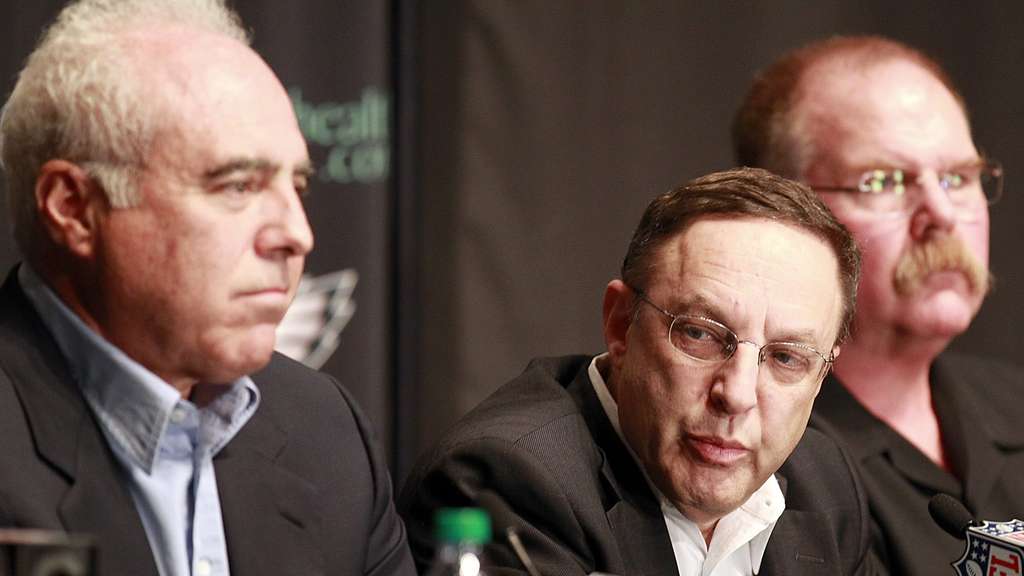
Joe Banner (center) and Jeffrey Lurie (left) came to the Eagles in 1994.
Banner had more stories Sunday afternoon, stories that didn’t make the pod. Such as:
Lurie bought the Birds in 1994, the same year Stein got into the agent game. As newcomers, Banner thought it would be wise to introduce himself and Lurie by entertaining the adversaries.
In October 1994, at the owners’ meetings in Chicago, Banner and Lurie hosted a cocktail hour for the Eagles’ agents at the time. This was tantamount to Abraham Lincoln, in 1863, inviting Jefferson Davis and his generals to Thanksgiving dinner. The other owners and league office were furious.
Banner claimed ignorance.
“We were flagrantly breaking the ‘rules,’” Banner said, “But we honestly didn’t realize how bad a line we were crossing.”
When Stein was with the Bears, they regularly crossed that line.
Later in the podcast, in addressing the number of front-office executives who began their careers under Banner, Stein recalled his introduction to Roseman.
For months, Hartley had received and rebuffed Roseman’s daily letters pleading to join the Eagles — a plea he sent to virtually every other team, too — in any capacity. Roseman’s persistence impressed her, which, Stein said, was key: “I knew that if someone like Lee Ann likes you, you’re going to get the respect of Joe Banner and Jeffrey Lurie.”
In 2000, after Jets GM Mike Tannenbaum met and vetted Roseman — a Fordham Law graduate, just like Stein — Banner finally relented and gave Howie an interview.
“I think I saw a little of me in him,” Banner said.
Banner then fired his current numbers guy and hired Roseman, who took up residency on the corner of Hartley’s desk outside of Banner’s office on the fourth floor of Veterans Stadium. And the rest, as they say, is history.
Fast forward
Stein says he’s content to continue his life in Chicago to be near his two grown children, unless some team comes at him with an offer he can’t refuse. For now, he’s eager to plumb the podcast depths. He says he’s gotten a commitment from an executive who said he’d never do a podcast but changed his mind after seeing the Rosenhaus pod.
Until then, Stein is positively giddy at the chance that the Eagles might make Hartley available for an episode. She now is the vice president and senior adviser to Lurie; essentially, the job she used to do for the president she now does for the owner.
Imagine the stories she could tell.
“I’m going to do a behind-the-scenes on someone who knows everything about the business, part of the NFL population that never gets credit,” Stein said. “To have her as a potential guest? I mean, she’s half the reason Howie got hired!”
As for Banner, he left the Eagles in 2012 to become Cleveland’s CEO, but he was out by 2014. He’s been an adjunct professor at Villanova, a role in which Stein, still in Illinois, now serves at Northwestern. Banner has acted as a consultant on dozens of NFL coach and executive searches; cofounded the 33rd Team group of football consultants with Tannenbaum; acted as an adviser during the 2021 NFL CBA negotiations; and has sat on the board of Patricof Co, a venture capital firm that caters to pro athletes.
In his dotage, Banner, like so many, splits time between Maine and Florida, enjoys his grandchildren, and hopes to stay relevant and appreciated.
The pod, and maybe this column, will serve that end.
“I gotta say, I feel like that 45-year-old golfer who’s leading the Masters after the first round,” Banner said with a chuckle.
Well, Jack Nicklaus won it at the age of 46. Banner might not be the Nicklaus of the NFL, but he’s at least the Fred Couples of the boardrooms.
Coming out of the holiday weekend, the 76ers and NBA at large are still on LeBron James Watch.
Free agency’s initial wave also is over, with players beginning to officially sign new contracts after the moratorium lifted. The Sixers’ new deals with Dean Wade and Anfernee Simons were officially announced Monday afternoon, as was the blockbuster trade for All-NBA forward Jaylen Brown.
Those moves leave the Sixers with only a veteran’s minimum contract available to fill their final full-time roster spot. One two-way slot also is available.
It is still possible, however, to find productive players on those types of small deals. Kelly Oubre Jr. joined the Sixers on a veteran’s minimum contract in September of 2023, before three productive seasons. Last year, Dominick Barlow signed a two-way contract in the middle of summer league, before becoming a part-time starting forward and getting converted to a standard deal.
If James decides to play elsewhere, here is a breakdown of still-available free agents that could fill that spot instead:
Trendon Watford
After the Sixers declined the team option for 2026-27 in Watford’s contract, the versatile forward remains uncommitted to a new team. Perhaps he has already signaled his plans to move on no matter what, after he posted Future’s song “Ain’t Coming Back” on his Instagram story shortly after his option was declined. But if he lingers on the market, could a return to Philly be possible? Though Watford was not a consistent member of the Sixers’ rotation, his close friendship with All-NBA guard Tyrese Maxey is a perk.
The Sixers declined Trendon Watford’s option this summer but he remains unattached to a team.
Bruce Brown
Brown played a critical role on the Denver Nuggets’ 2023 NBA championship team. Though his return to Denver last season did not feature the same scoring impact, he is still regarded as an offensive connector and played in all 82 games. He averaged 7.9 points, 3.9 rebounds, and 2.1 assists last season.
Khris Middleton
Once an All-Star and running mate for Giannis Antetokounmpo on the Milwaukee Bucks’ 2021 title team, the 34-year-old Middleton has been derailed by injuries in recent seasons but still flashes ability to get his own shot. He averaged 10.2 points on 42% shooting, along with 3.7 rebounds and 2.8 assists, in a 2025-26 season split between the Washington Wizards and Dallas Mavericks.
DeMar DeRozan
DeRozan, who was reportedly waived by the rebuilding Sacramento Kings on Monday, is still a professional scorer. The six-time All-Star is expected to choose a contender as his next destination after averaging 18.4 points on nearly 50% shooting along with 4.1 assists in 77 games last season. Though deadly from the midrange, the 36-year-old DeRozan has never been a high-volume three-point shooter.
If the Sixers are a tad wary of the raw, unpredictable play of Adem Bona (whose $2.3 million salary for 2026-27 becomes guaranteed Tuesday) and free-agency addition Ariel Hukporti, Richards is a capable veteran option at backup center. He averaged 5.8 points and 5.1 rebounds in 14.6 minutes last season split between the Phoenix Suns and Chicago Bulls.
Guerschon Yabusele
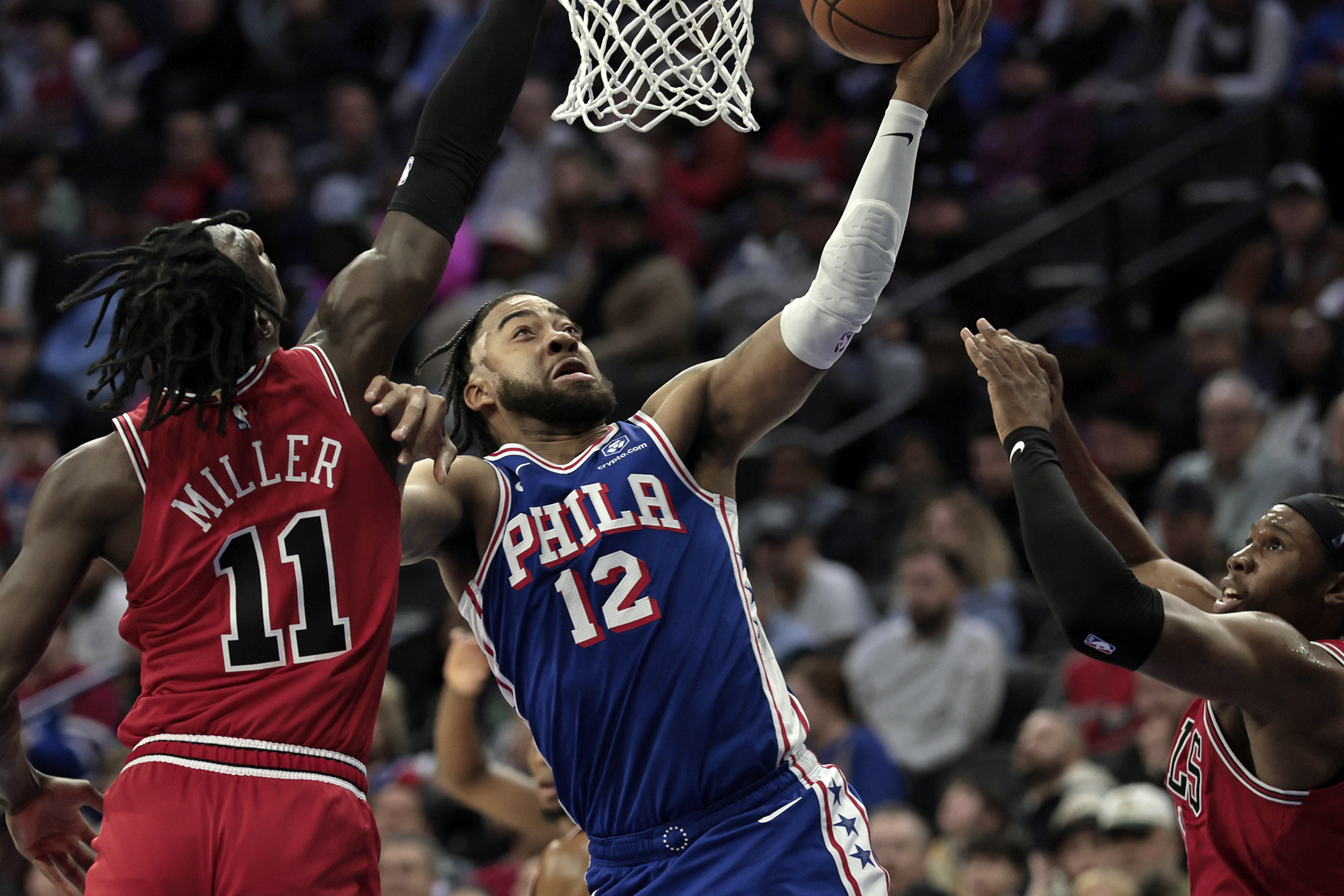
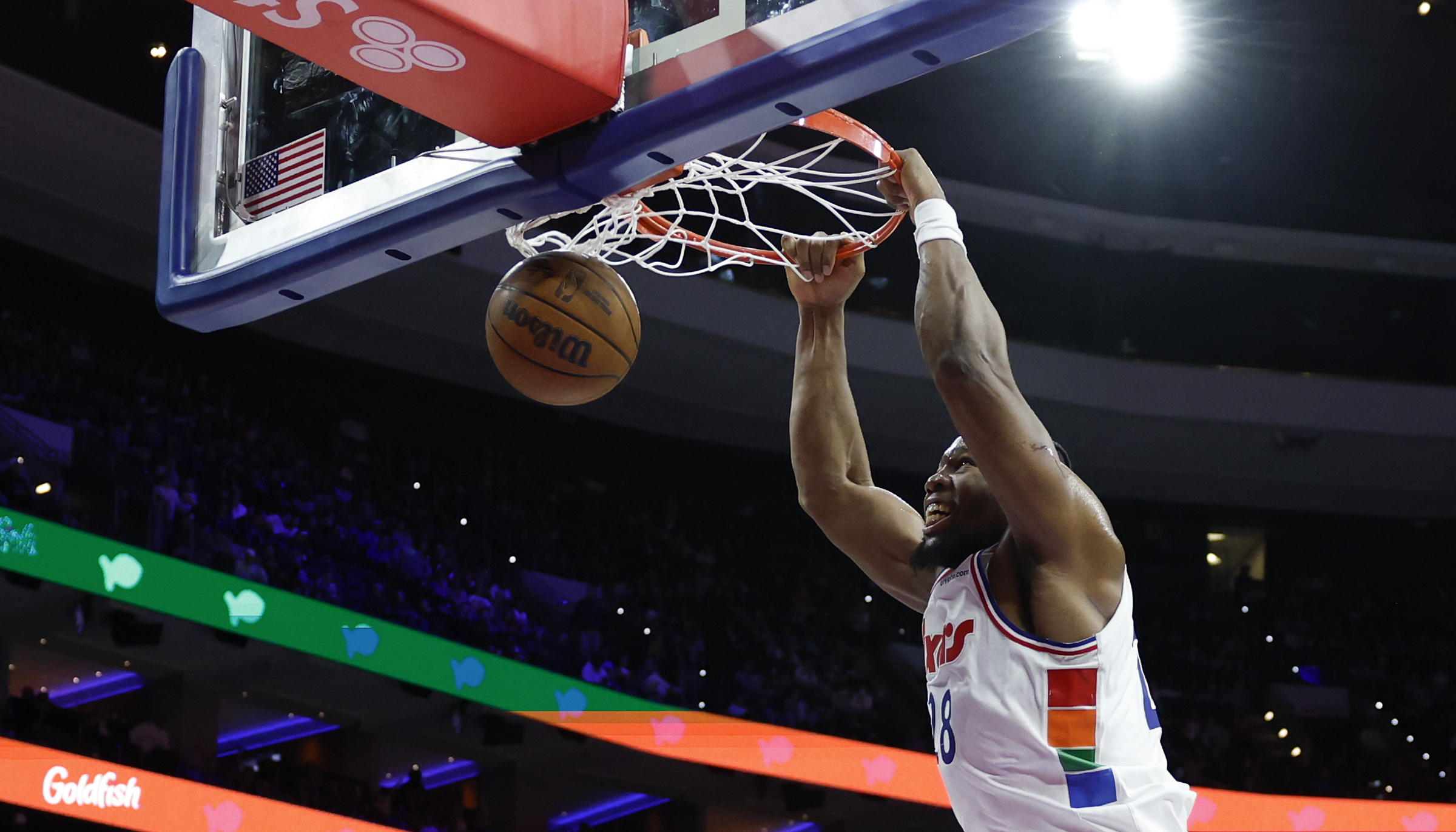
A rare feel-good story during the Sixers’ disastrous 2024-25 season, Yabusele parlayed his NBA comeback into a pay raise with the New York Knicks. To say things did not work out in New York is an understatement, and he was traded at the deadline to the Bulls. Could he successfully slide back into a complementary frontcourt role with the Sixers? Or will his performance two seasons ago go down as a career anomaly on a bad team?
Guerschon Yabusele had a stellar season for the Sixers in 2024-25 but did not see similar success with the New York Knicks.
Kevon Looney
A Bob Myers connection, Looney spent his first 10 NBA seasons developing into a well-regarded big man on the Golden State Warriors dynasty teams. The 30-year-old only played in 21 games last season for the New Orleans Pelicans, but is another beloved locker room presence.
Nico Batum
The Los Angeles Clippers declined Batum’s $5.9 million team option last weekend, making him an unrestricted free agent. Sixers coach Nick Nurse (and Joel Embiid) had an affinity for Batum’s veteran savvy during his time with the Sixers in the 2023-24 season, when he swung the play-in game against the Miami Heat with his three-point shooting and even became the team’s designated inbounds passer. But he is 37 years old and feels deep family connections to Los Angeles and the West Coast.
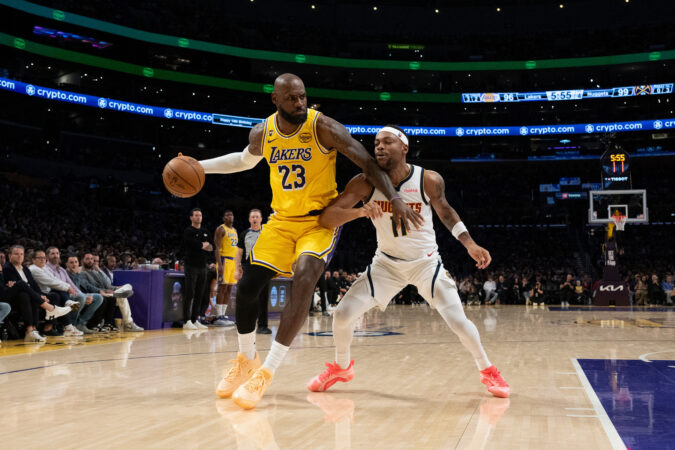
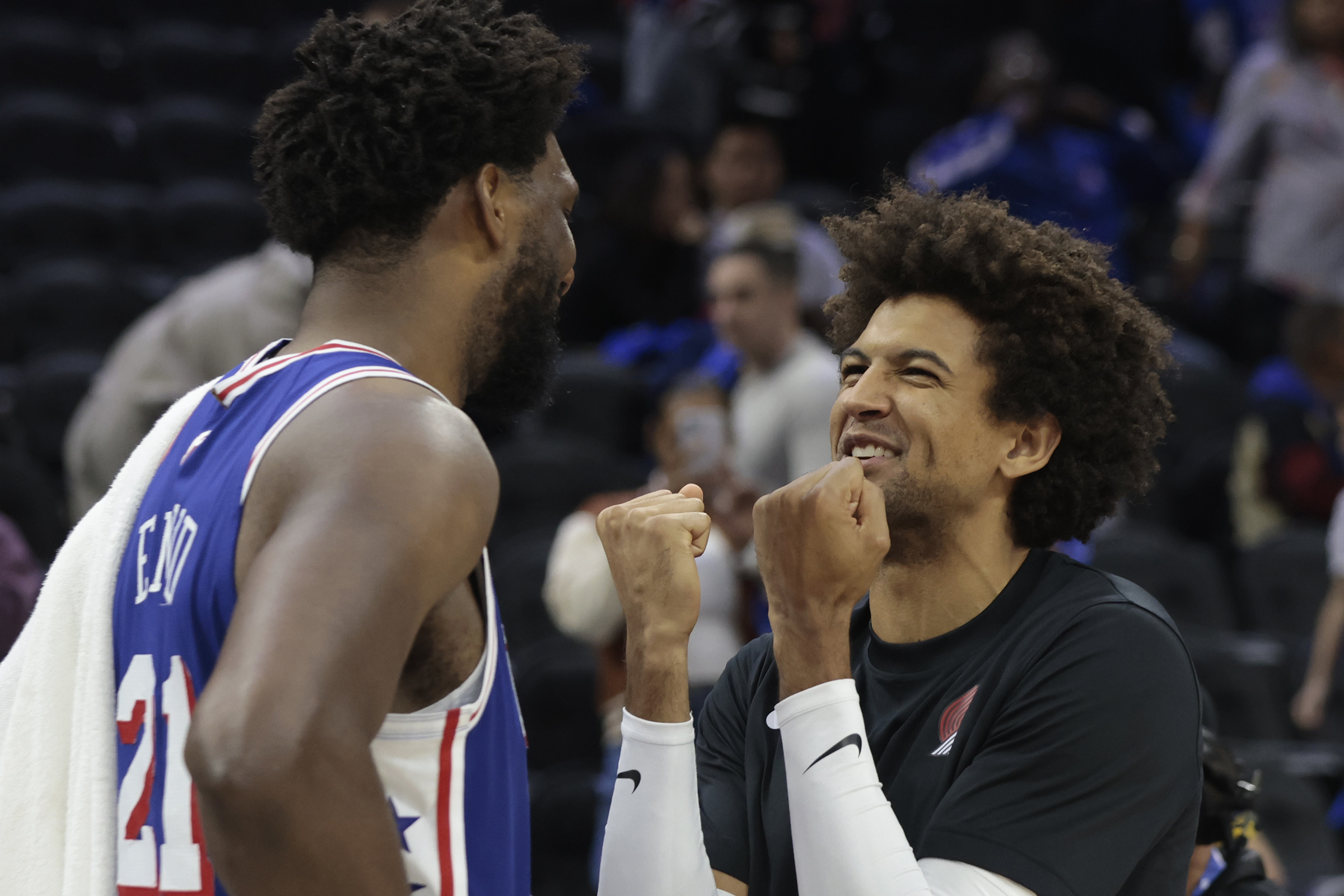
Matisse Thybulle
The former Sixers wing was once a member of the NBA’s All-Defensive Team before being traded at the 2023 deadline. He went through injury struggles in parts of four seasons with the Portland Trail Blazers but had a strong finish to 2025-26. He averaged 2.0 steals and shot 39.8% on 3.3 three-point attempts in 30 regular-season games, and played double-digit minutes in three of Portland’s five playoff games against the San Antonio Spurs.
Matisse Thybulle has been affected by injuries over four seasons with the Portland Trail Blazers after serving as a key defensive cog in Philly.
KJ Martin
The former Sixer is a non-shooter but hyper-athletic forward who is a lob threat with defensive versatility. He also displayed ability as a small-ball center, and in playing in the short roll alongside Maxey. Last season, he played for the Ningbo Rockets of the Chinese Basketball Association.
Gary Payton II
Another Myers connection, Payton has been a physical defender even going back to his college days. The 33-year-old averaged 7.5 points, 3.6 rebounds, and 1.7 assists in 73 games for the Warriors last season.
Amir Coffey
Coffey boasts prototypical wing size at 6-foot-7 and 210 pounds. He also is a career 38.2% shooter from beyond the arc, including when he connected on nearly 41% on 3.4 attempts in 72 games for the Los Angeles Clippers in 2024-25.
Ben Simmons
Obligatory inclusion of Simmons, who recently told Men’s Health that he is attempting an NBA comeback and would consider a return to the Sixers.