Category: Sports

Sports news, scores, and analysis

  • Roman Catholic alumnus Brian Wanamaker has an incurable cancer. It hasn’t stopped him from turning Texas Wesleyan into a winner.

    Roman Catholic alumnus Brian Wanamaker has an incurable cancer. It hasn’t stopped him from turning Texas Wesleyan into a winner.

    About once a month, Brian Wanamaker drives to a cancer treatment center near his home in Crowley, Texas. He sits on a hospital bed as nurses inject needles into his arm and stomach; one for chemotherapy, the other to boost his immune system.

    He can be there anywhere from one to four hours. Wanamaker is asleep throughout, but he doesn’t wake up rested. His stomach burns. His body feels fatigued.

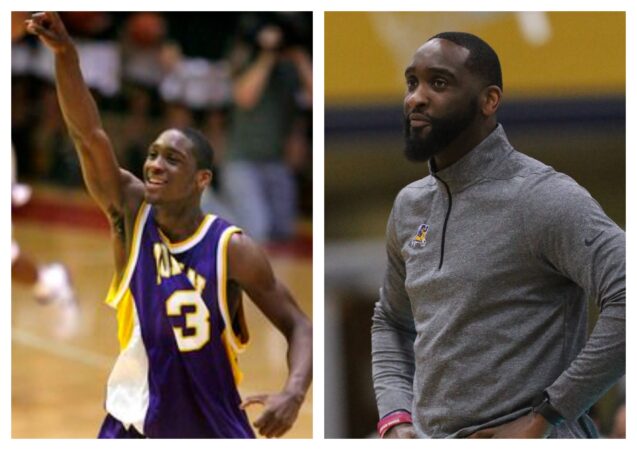
    After it’s over, he often goes straight to the gym at Texas Wesleyan University, where the North Philadelphia native coaches the NAIA men’s basketball program. Sometimes, he even beats his players to practice.

    Since 2022, when Wanamaker was diagnosed with multiple myeloma, he has been balancing his job with the limitations of an incurable cancer. It is not easy. The head coach takes six pills a day to keep the disease in remission for as long as possible.

    His doctors advise him not to engage in stressful activities (even if running a college basketball team is antithetical to this). Then, there is the matter of his schedule. Texas Wesleyan plays games mostly on Thursdays and Saturdays.

    It doesn’t allow much time to undergo chemotherapy and fully recover. But the coach has an answer for that, too. He receives treatment early on Mondays, so he doesn’t feel sick later in the week.

    If the Rams are on the road, he’ll reschedule.

    “It’ll come back,” Wanamaker said of multiple myeloma. “But right now, I do maintenance.”

    The 36-year-old doesn’t talk like someone who is worried about the future. If anything, his job has helped him stay grounded in the present. Coaching was a lifelong goal of Wanamaker’s, ever since he was a boy playing in the Sonny Hill League.

    This is where he and his twin brother, Brad, first saw how basketball could change a life. Their coach, Rasool Hajj, was an alumnus of and former volunteer assistant coach at Roman Catholic High School. He helped the twins connect with the program, and they enrolled in 2003.
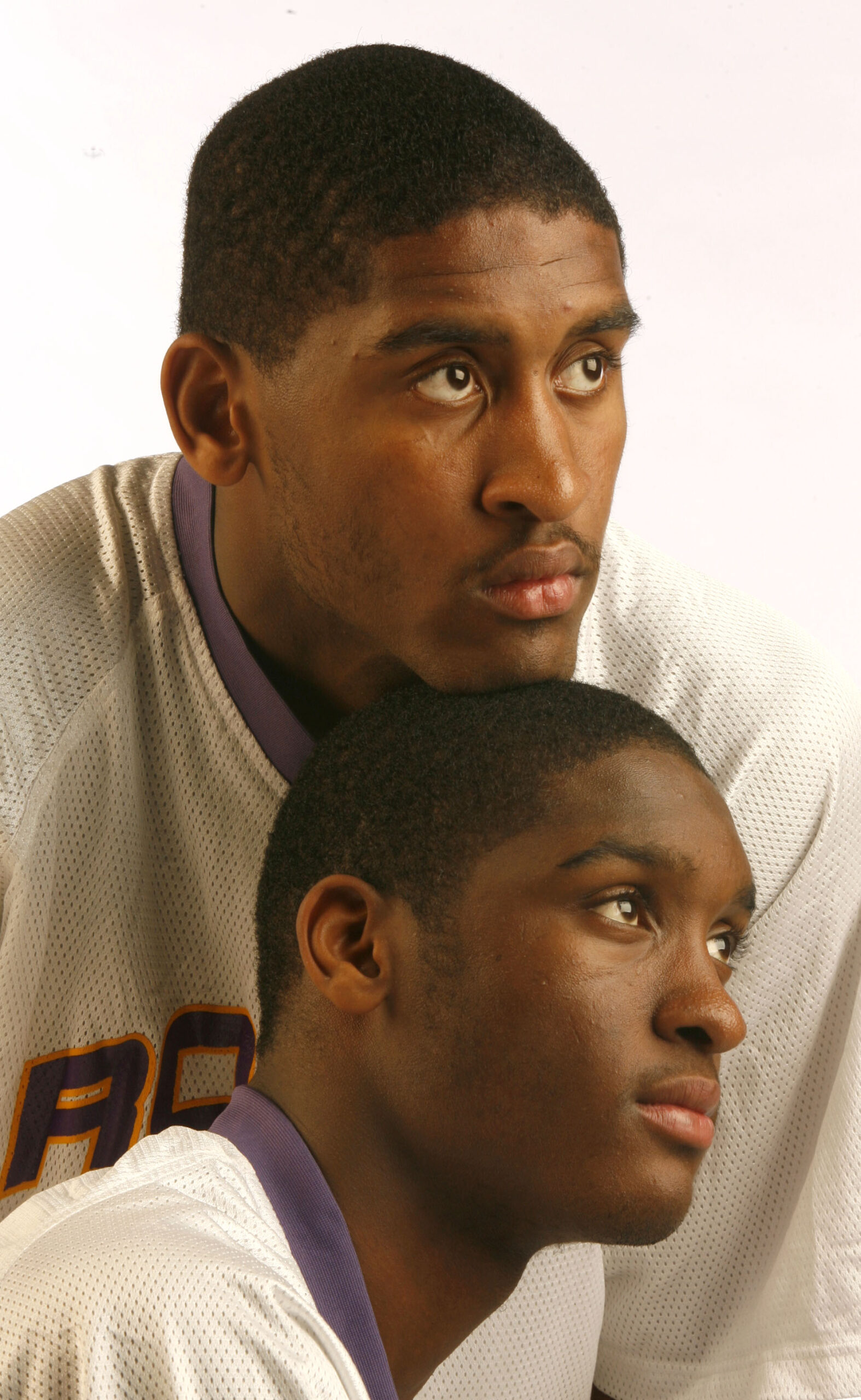
    Brad and Brian Wanamaker (bottom) were stars at Roman Catholic High School and went on to play professional basketball.

    The Wanamaker brothers quickly became standout players. In 2007, they led Roman to a Catholic League championship under coach Dennis Seddon. After that, their careers took divergent paths.

    Brad starred in college at Pittsburgh en route to a seven-year stint in Europe, followed by a four-year stretch in the NBA. Brian struggled with injuries in college and bounced around, eventually finding a permanent home as a player at Texas Wesleyan.

    He spent a few years playing overseas but returned to the school as an assistant coach in 2019. The Philadelphia native was named head coach in 2024 and has made an immediate impact, leading the Rams to a 38-20 record since taking over.

    He models his approach after Hajj’s. He checks on players’ mental health before berating them for a mistake. He routinely asks how things are going at home and at school.

    The team is encouraged to be vulnerable and learn from one another, rather than to react in real time. Wanamaker tells the players to focus on “the person,” because everyone is going through something.

    “But I also talk to them about reality,” Wanamaker said. “Yes, everybody wakes up with an excuse they can use, and it’s real. But you can either use it or you can fight through it. You know?”
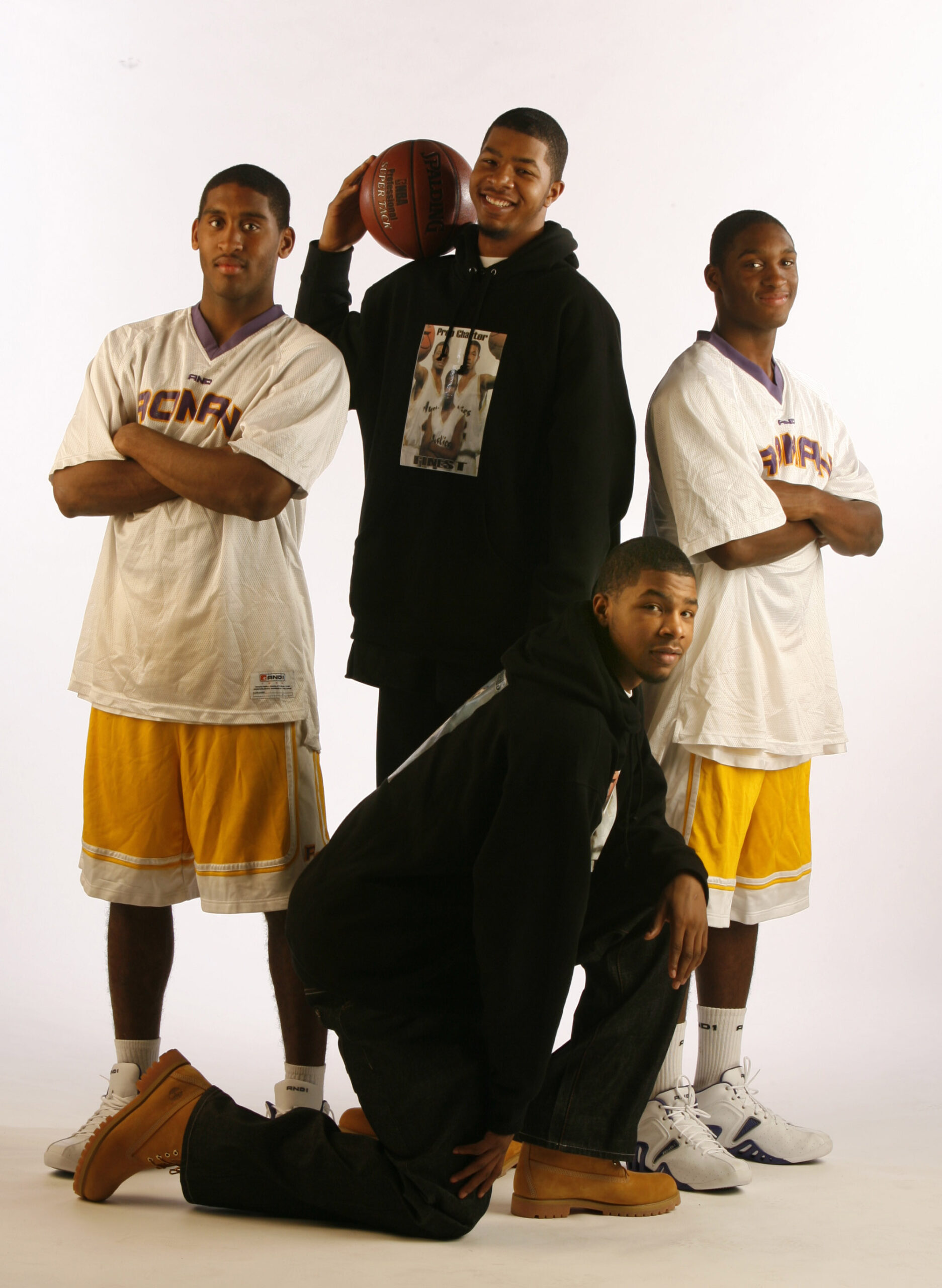
    Brad (left) and Brian (right) Wanamaker with fellow basketball-playing twins, Markieff (top center) and Marcus Morris (kneeling) of Prep Charter in 2006.

    A North Philly upbringing

    Brian and Brad grew up in a three-story house on 19th Street between Norris and Diamond. They were the second and third of five siblings — Brad is 1 hour, 11 minutes older than Brian — and shared a bedroom on the top level.

    This had its shortcomings. The roof had holes, so when it rained, the boys put pots on the floor. Their neighborhood was perilous at times, and from an early age, they became aware of the poverty, gun violence, and drug use around them.

    But their childhood was still full of joy. Nineteenth Street was home to a lot of young kids, many of them Brian and Brad’s age. They rode bikes, played tag, and staged impromptu football games outside.

    Basketball was their favorite sport. The twins ventured to courts all over the city in search of the fiercest pickup battle: 16th and Berks, 16th and Susquehanna, 25th and Diamond, 22nd and Norris.

    They’d shoot hoops before and after school. Local elders would organize basketball tournaments between blocks with trophies for the winners. In seventh grade, a friend, Saleem Elam, asked if they played AAU basketball.

    Neither brother knew what that was. But they soon attended a tryout, held their own against more experienced players, and made the team. Before long, they were playing in leagues throughout the area — Gustine Lake, Sonny Hill, Belfield.

    The Sonny Hill League was where they met Hajj, who seemed to be part basketball coach, part social worker. He allowed the twins to reimagine the bounds of what a coach could do, a template they’d lean on later in their careers.
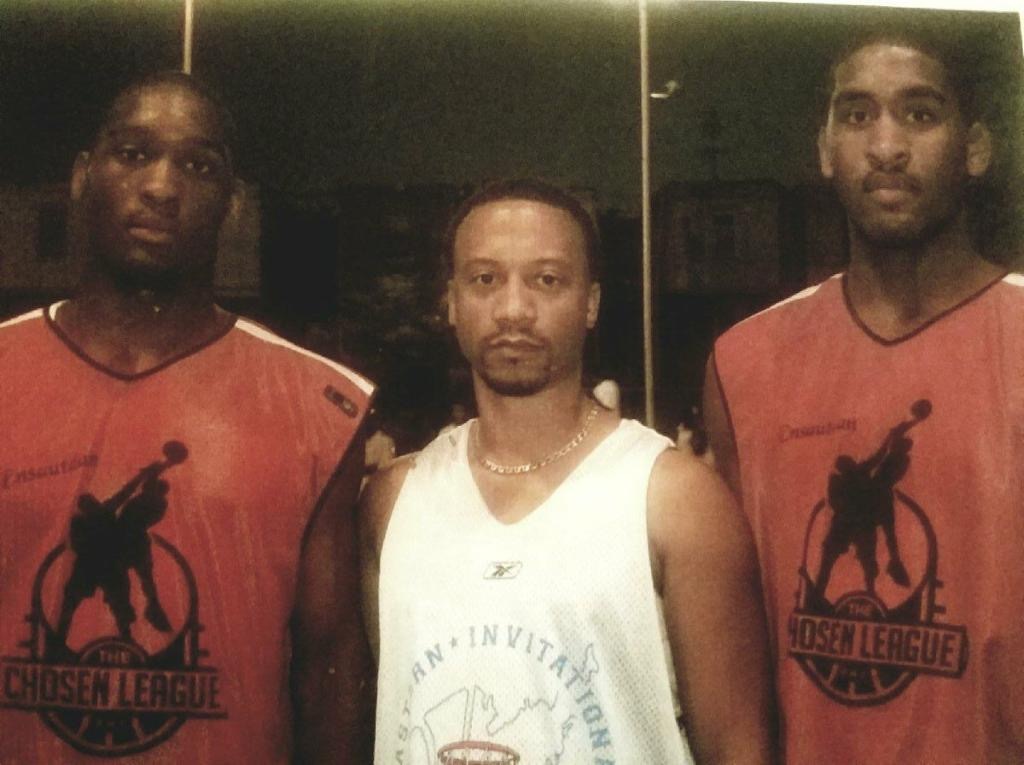
    The Wanamaker Brothers looked to Rasool Hajj (center) as a coach and mentor.

    “He helped a lot of kids, but also a lot of families,” Brian said. “He helped parents get jobs. He would give people money if they needed it for something. He was always there. He was almost like a big brother to us.”

    Hajj became a mentor to the twins. At the time, they were attending Gillespie Junior High School, which closed in 2011. Brian and Brad seemed to learn all the wrong lessons, like how to cut class and replace it with extra gym time.

    Teachers wouldn’t enforce the rules, so to the twins, there was no reason to follow them.

    “There wasn’t a lot of learning,” Brad said. “Not a lot of structure. I’d go to one class — Ms. Brown, because she knew my dad. So, I’m like, ‘I got to make sure I go to her class.’

    “I’d go to homeroom and get marked absent for the day. Then I’m in my brother’s class, I’m at his lunch, I’m playing cards [with him].”

    Hajj, who recognized the twins’ untapped potential, introduced them to Seddon and the other Roman Catholic coaches. That break altered their lives.

    The high school brought a level of discipline that the Wanamakers weren’t used to. And when they arrived as freshmen, it was a tough adjustment.

    Brian walked through the doors in September 2003 and looked at the students around him.

    “We wanted to leave because we didn’t know it was an all-boys school,” Brian said. “We was like, ‘What? There’s no girls in the school?’ We were so confused.”
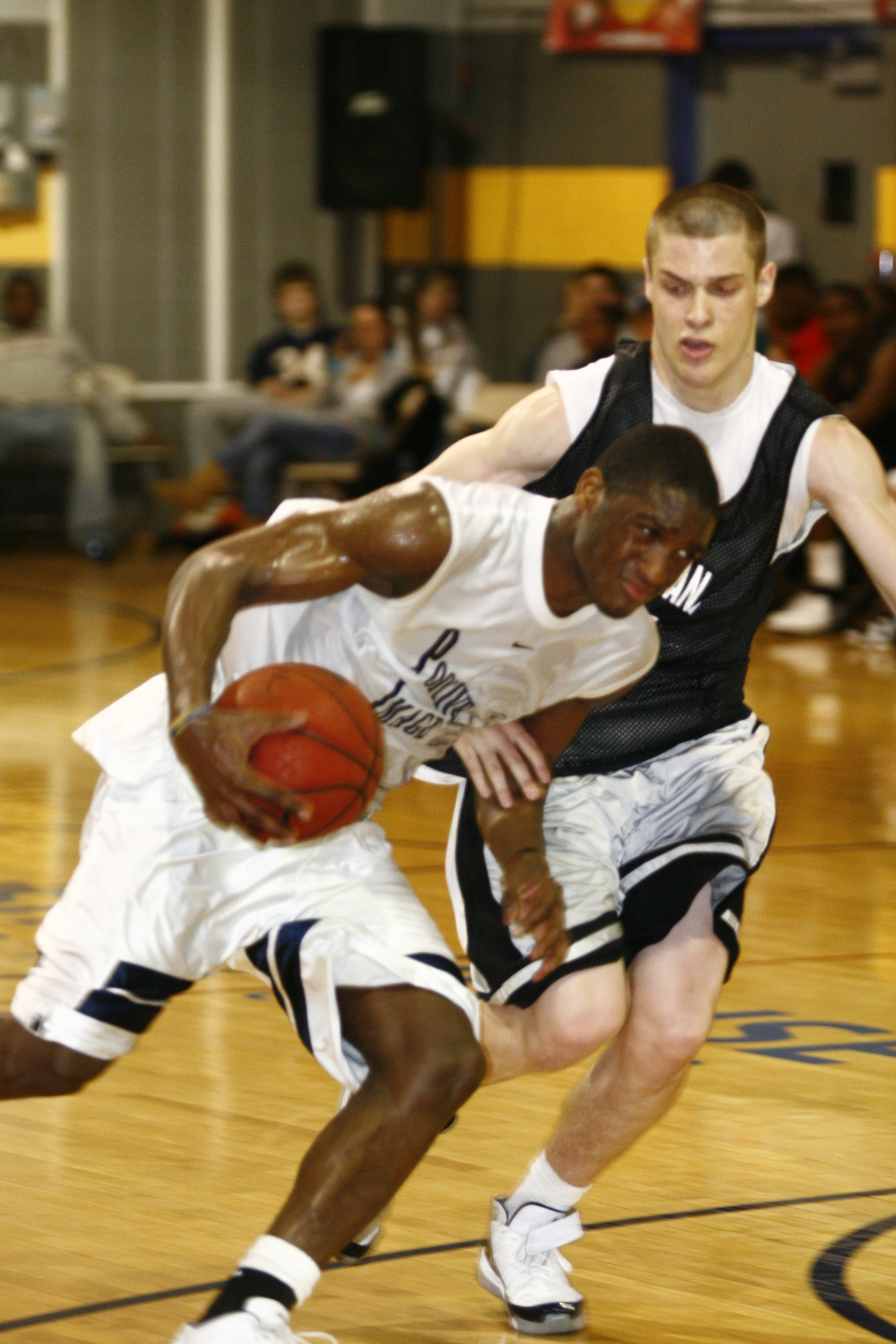
    Brian Wanamaker and his brother were standout AAU players who had to adjust to Roman Catholic on and off the court.

    They racked up demerits for every conceivable offense, from untucked shirts to facial stubble. Both brothers failed a class in their first semester and were ruled ineligible for the first half of the basketball season.

    Because they were on academic probation, they had to go to summer school, wearing slacks, long-sleeved collared shirts, and ties in the sweltering heat. The lesson stuck.

    “It just was like, ‘We got to be doing the right thing,’” Brad said.

    In sophomore year, Brad started on varsity, and Brian on JV (with some varsity appearances mixed in). They fed off each other in practice and in games.

    The players had different strengths. Brian, a 6-foot-2 combo guard, was a better defender and three-point shooter. Brad, a 6-4 shooting guard, was a “laid-back killer” who could score from midrange.

    Brian showed all of his emotion. He wasn’t above “mugging a player,” in Brad’s telling, and wasn’t afraid of getting a technical foul. He’d scream and yell. Brad, by contrast, was quiet.

    But occasionally, he would give his brother some in-game feedback.

    “He’d be like, ‘Hey, play your role!’” Brian said. “He’d be like, ‘Pass it to me. Pass me the ball, and you play defense!’”

    Added Brad: “He’d go, ‘Shoot the ball!’ And I’d tell him, ‘Calm down! I need you out here!’ Because sometimes he gets too emotional. And I’m like, ‘Before you get a technical foul, I need you to calm down.’”
    Brian Wanamaker helped Roman win the Catholic League title.

    The brothers racked up accolades, especially in 2006-07, their senior season. Brian was named second-team All-Catholic and All-City, as well as Defensive Player of the Year. Brad was named the Daily News’ Player of the Year, and was first-team All-State, All-City and All-Catholic as well.

    The Cahillites parlayed this success into a historic campaign. The twins led Roman Catholic to a 28-3 record and its first Catholic League championship since 2000.

    Rival Neumann Goretti, the No. 1 seed from the Catholic League South, came into the final favored. And the game, played at the Palestra, was close until the very end.

    Brad had to sit for a stretch midway through the third quarter after picking up his fourth foul. Without its best player, Roman was at a disadvantage. Brian made sure everyone knew their defensive assignments, so the undermanned Cahillites could stay within striking distance.

    His brother returned early in the fourth quarter, and spurred his team to a 17-4 run. With just over a minute remaining in the game, Brian hit a layup to widen Roman’s lead to 58-54. It finished with a 59-56 comeback win.

    “I think [Brian] pointed to our student section,” said Brad, now the head coach at Roman Catholic. “We still have the picture at my mom and dad’s house. It was in the newspaper. It was a moment.”
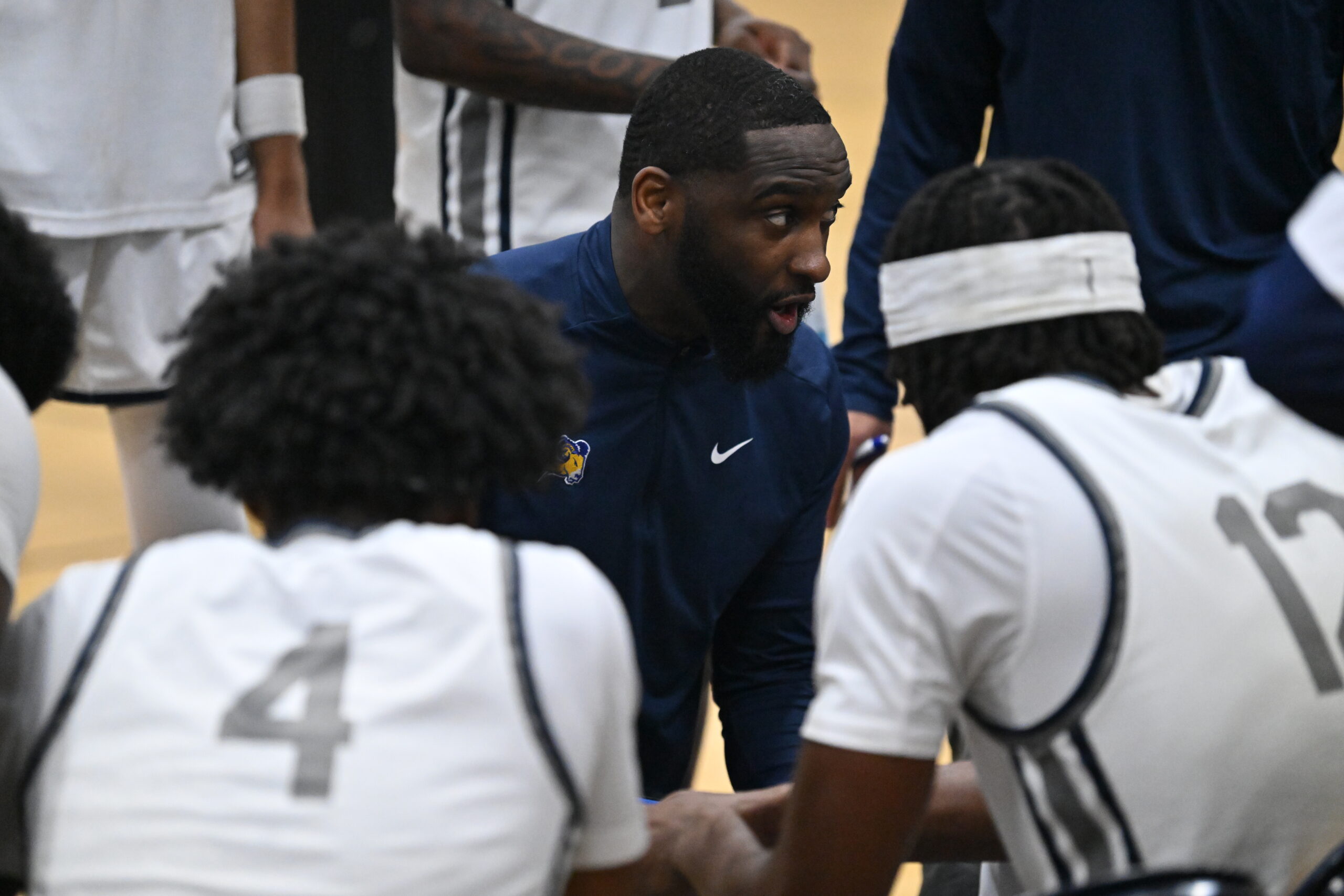
    Brian Wanamaker coaching at Texas Wesleyan University.

    Coaching through chemo

    After graduating, Brad played for Pitt when it was one of the top men’s basketball programs in the country. Brian bounced around; first to Central Connecticut State, then to Lon Morris Junior College in Jacksonville, Texas, and, finally, to Texas Wesleyan in 2009.

    He struggled with foot injuries almost every year of his college career. This made it difficult to get steady playing time. But at Wesleyan, he found a fit.

    A former coach had recommended the school to him, and Wanamaker initially was skeptical. He’d never heard of it. The campus was in Fort Worth, Texas, about 1,500 miles away from home.

    “I didn’t know what Texas Wesleyan was,” he said. “My first semester, I played basketball, stayed in my room, and didn’t talk to teammates, coaches, anyone. I was just like, ‘Why am I here?’”

    By his second semester, he realized this would be his last opportunity to play in college. So he decided to embrace the program and was happy he did. Wanamaker felt he could be himself in a way he couldn’t at his previous two stops.

    During the summer of 2010, Brian visited Brad at Pitt and trained with him and his teammates. He returned to campus in the fall more confident than ever.

    That season, he was named a first-team NAIA All-American and Red River Athletic Conference Player of the Year, averaging 19.1 points, 5.7 rebounds, and 5.0 assists.

    The combo guard was drafted into what then was the NBA D-League and ended up playing six seasons in Germany and Lithuania. He returned to Texas Wesleyan in 2019 to finish his degree and work as an assistant coach.
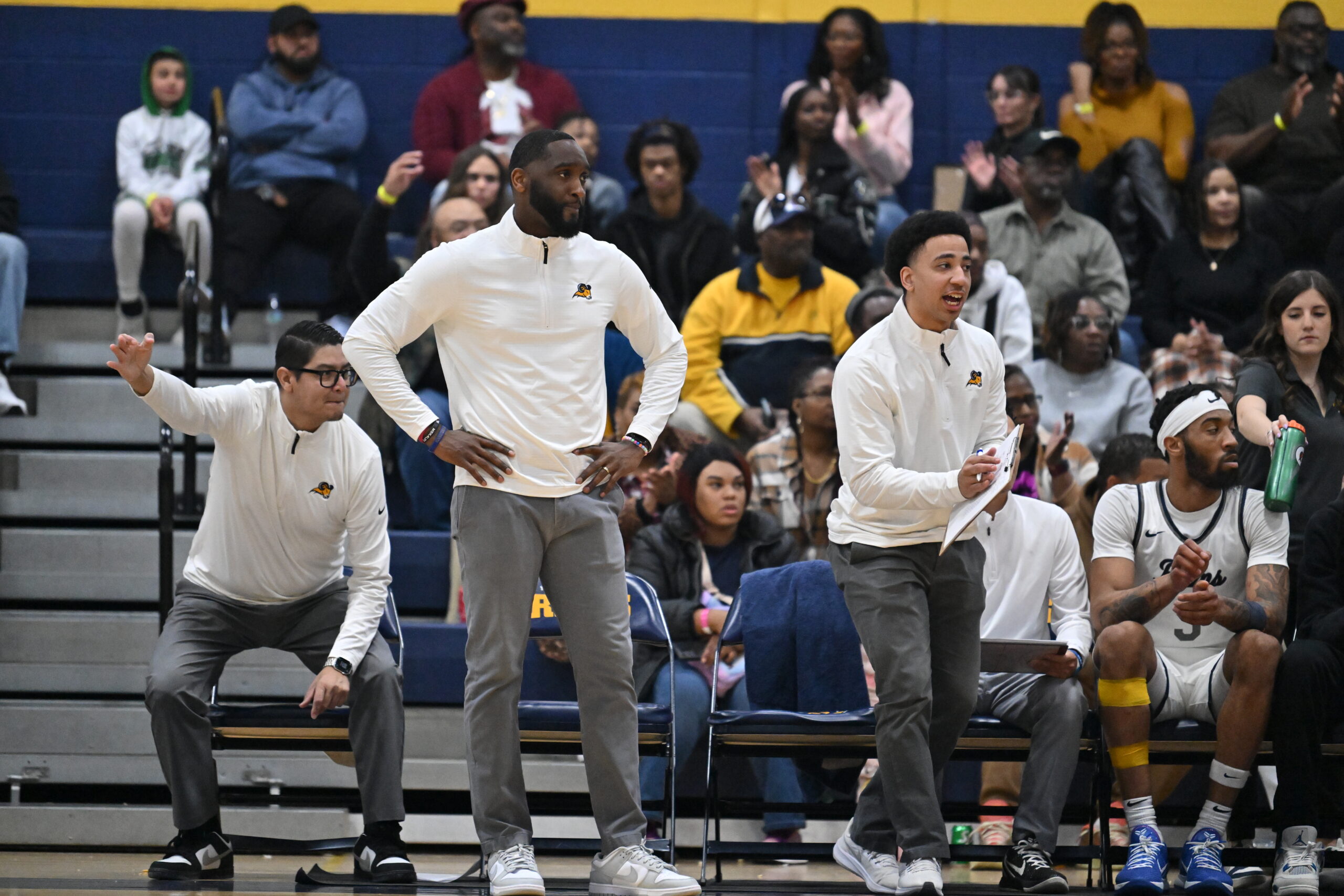
    Brian Wanamaker returned to Texas Wesleyan as a coach and has endured a trying off-court experience while leading the Rams program.

    In late 2021, during his second season coaching, Wanamaker started to feel back pain. At first, he thought it was workout-related. Maybe he’d pulled or strained a muscle.

    But the pain worsened, to the point where he had to stop exercising. He couldn’t sleep in a bed anymore because it would hurt his back, so he would lie flat on the floor.

    Wanamaker underwent all sorts of testing, but the doctors didn’t find anything. They hypothesized that his pain was stress-related.

    “And I would tell them,” he said, “‘I’m not stressed.’”

    In September, after a litany of visits, his primary care doctor received MRI results that showed tumors all over Wanamaker’s back. He went to the hospital for further testing, and was told he had multiple myeloma, a cancer formed in plasma cells that is treatable but has no known cure.

    He was a statistical anomaly. The disease is predominantly diagnosed in people 65 years or older. According to the American Cancer Society, only 1% of cases are found in those younger than 35.

    Wanamaker was 33.

    “That was really hard,” he said. “Because, obviously, when you hear cancer, you think death. And then you hear, ‘No cure.’ It was hard for me to process.”
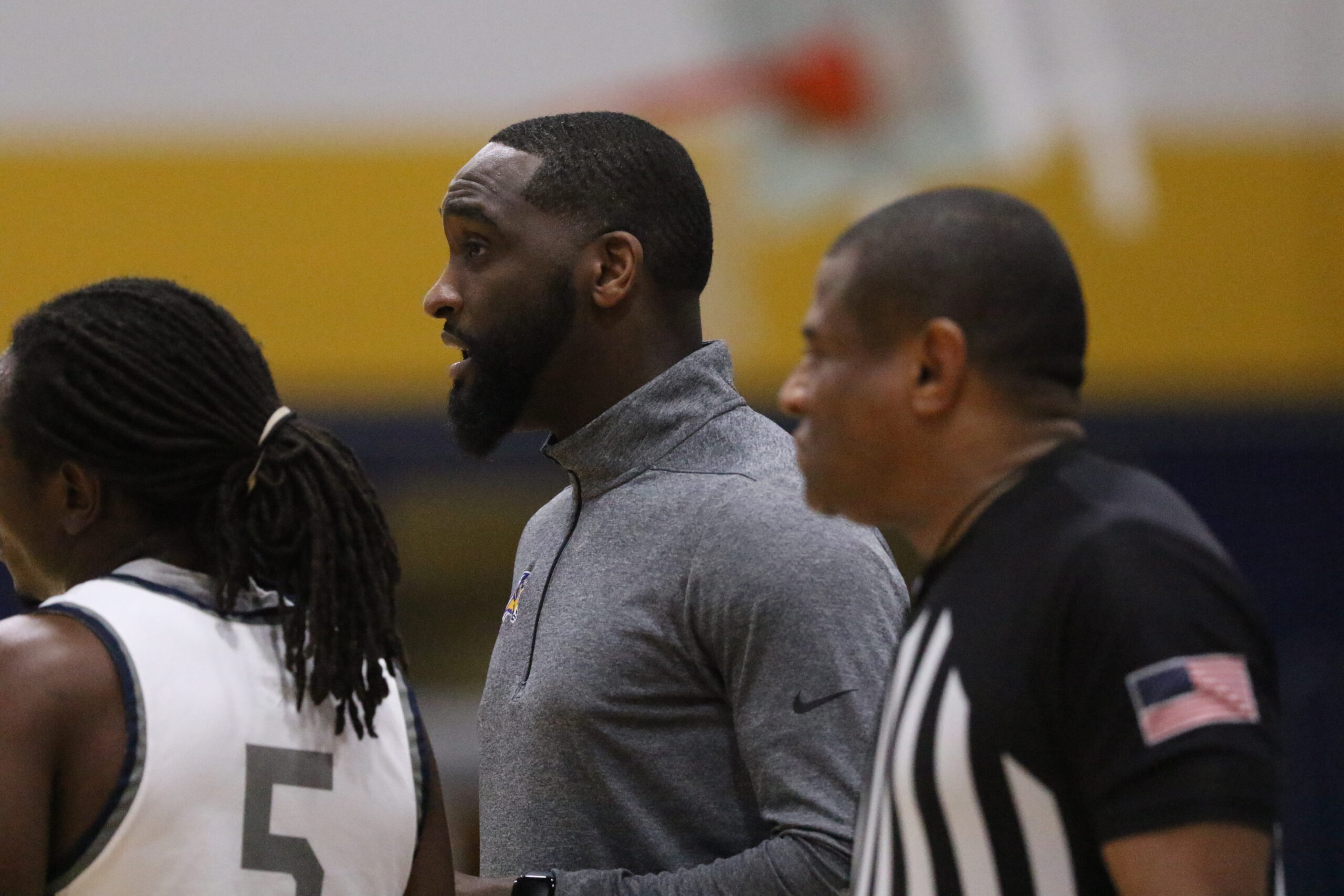
    Brian Wanamaker will lead Texas Wesleyan in the Sooner Athletic Conference Tournament starting Wednesday.

    The next day, the coach started seven months of chemotherapy. Many on the team assumed he would be out for the rest of the year.

    But Wanamaker was back in the gym that week, helping at practice and eventually sitting on the bench during games.

    He had little energy and often felt sick. His immune system was at a higher risk than usual. But Wanamaker felt he needed to do it. So every day, he’d drive to Texas Oncology for his treatment, and would head to Texas Wesleyan afterward.

    “I was probably more than half-asleep,” he said. “I was going through what I was going through, but I knew as a coach, players are going through stuff, too. It was just being there for them.”

    Guard Akili Vining had recently lost his father to cancer. Point guard Matthias Nero had gotten into a severe car accident, which led to the death of his close friend.

    Wanamaker was acutely aware of their struggles and those of other players. He decided to pour himself into his team.

    “Coach B would probably text me every day,” Nero said. “He would make sure I was in the right headspace, to see if I needed help. He’d pull me aside and just tell me, ‘If you need anything — this isn’t about basketball. This is about the future and your mental health.’”

    Wanamaker received a blood transfusion in May 2023. His father and brother visited him in the hospital shortly after. Seeing him hooked up to a cluster of machines was difficult.

    “It was like, ‘I can’t lose my brother,’” Brad said. “‘Not the person I came into this world with.’”
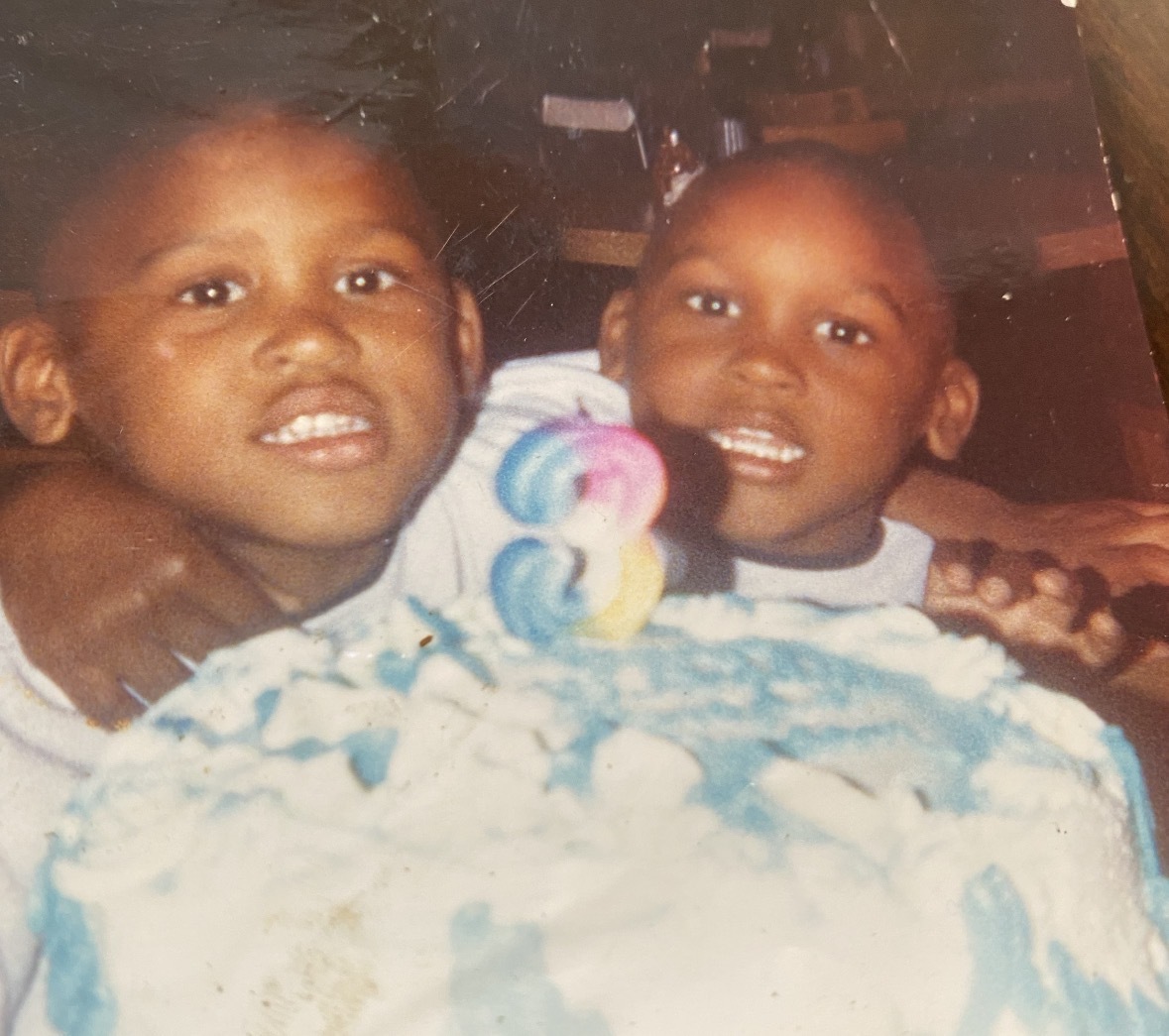
    Brad Wanamaker (left) has had to monitor his twin brother’s condition from afar.

    Eventually, Brian’s chemotherapy schedule was reduced from daily to monthly treatments. Through it all, he rarely missed a practice or a game, which became a source of inspiration for his team.

    The players could see their coach had changed. He’d lost hair and weight, and his skin looked dull. Sometimes, he’d arrive with a bandage on his arm to cover a needle mark.

    But he was showing up, just like they were.

    “If he can fight though chemo,” Vining told a local TV affiliate, “I can fight through practice.”
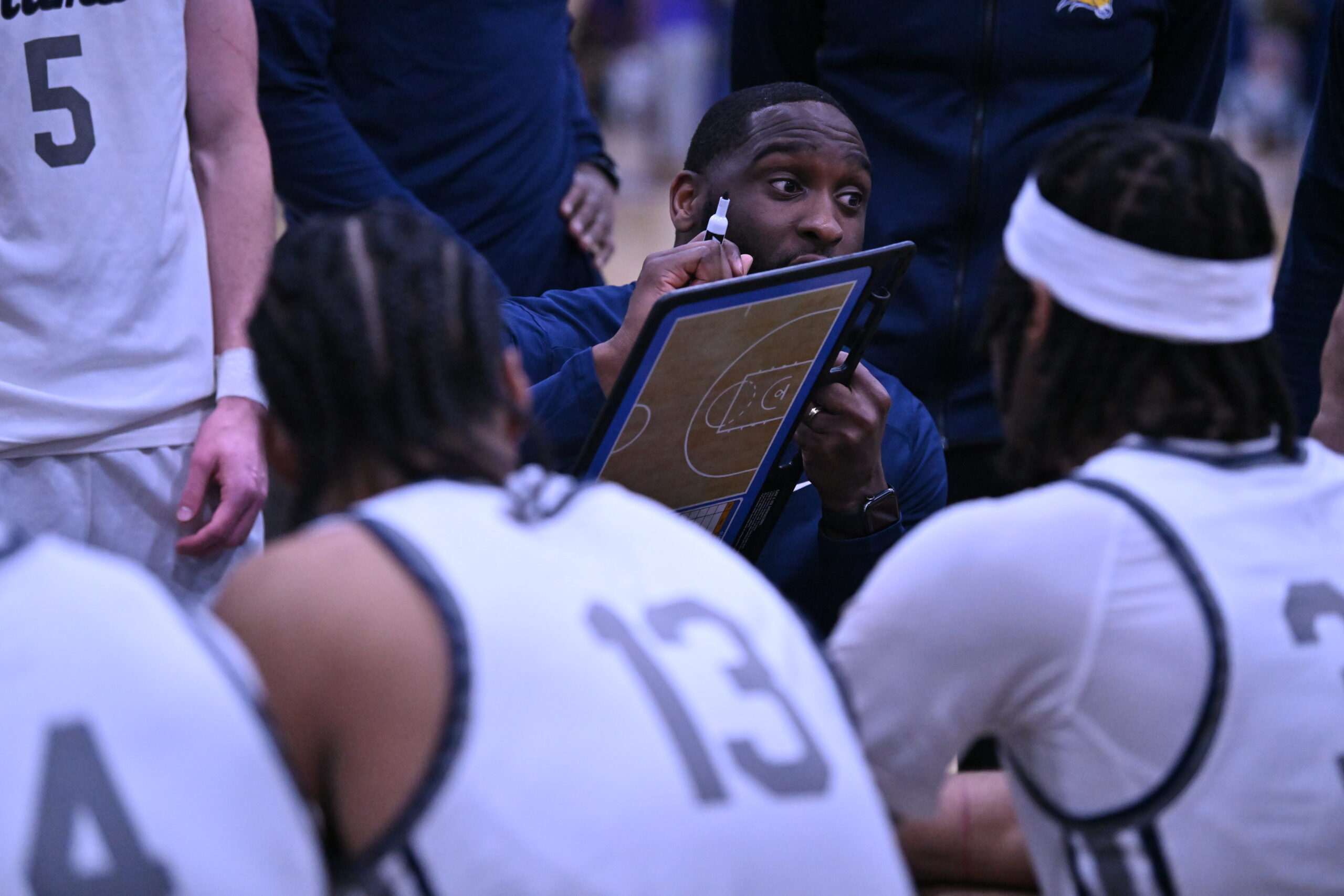
    Brian Wanamaker has won the respect of his players by caring about them as players and people.

    ‘People are going to say I cared’

    In April 2024, Wesleyan’s head coach, Brennen Shingleton, resigned to work for a business in Fort Worth. Wanamaker was named interim coach but also applied for the full-time job.

    He wasn’t alone. Athletic director Ricky Dotson said he received “a ton” of applications, from former NBA assistants to former Division I head coaches. He narrowed it down to four finalists, interviewing them throughout the spring.

    Despite the high caliber of candidates, Wanamaker still set himself apart. It wasn’t just that he was familiar with the team. It was that the players respected him, and looked to the Philadelphia native as a role model.

    Dotson knew the coach’s character. He could see that this would not be a surface-level job for him. By the end of the interviews, he was convinced that Wanamaker was the best choice, even with the uncertainty about his health.

    “I just never really doubted that he would be able to do it,” Dotson said. “And he’s moved right on through.”

    That June, Wanamaker was officially named head coach. He immediately got to work, targeting bigger, more athletic players in hopes of building a hard-nosed, physical team.

    One such player was Khalil Turner, a 6-8 guard from Northeast Philly who had shuffled through four colleges before taking a two-year hiatus. Like Wanamaker, Turner was a Hajj disciple in need of a new home.

    The former Sonny Hill coach was confident that Wesleyan would be the right fit.

    “Listen, man, I got a place for you,” Hajj told him. “It’s a Philly coach. He’s going to treat you like family. All you’ve got to do is just go out there and put the work in, and everything is going to fall into place.”

    The two initially butted heads, usually over inconsequential things. Turner said that one day, in practice, they almost got into a physical fight. But Wanamaker never gave up on him. He didn’t suspend Turner or revoke his scholarship.
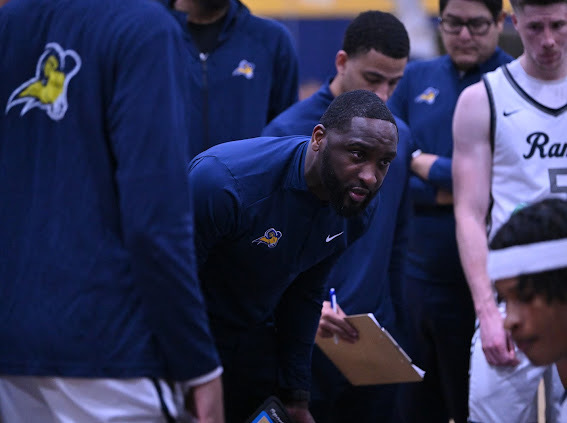
    Brian Wanamaker connected with another former Philly star, Khalil Turner, who arrived in Fort Worth.

    Eventually, the guard began to open up about his personal struggles. He had a family member who was sick at home. He told the coach that he needed a job to make some extra money. Wanamaker found him one at a local laundromat.

    Now, Turner says they are “best buds.” Last year, when the incoming freshmen arrived on campus, the senior guard was the first to explain Wanamaker’s predicament.

    “We told them, ‘Hey, Coach is dealing with this,’” Turner said. “‘So from time to time, he might be a little moody. But this is why he’s moody. He’s worried about his chemo. So don’t stress him out too much.’

    “The vets feel like if Coach is giving his all, with his chemo, we should give it our all every day in practice,” Turner added, “and every day on the court. He’s going above and beyond for us, so we should do the same.”

    After consecutive losing seasons, the Rams now look like a different team. They have adopted some of Wanamaker’s characteristics, playing a faster, tougher brand of basketball.

    They set hard screens and make hard cuts. They dive on the floor for loose balls and swarm opposing offenses. And they are seeing results.

    In 2024-25, Texas Wesleyan went 19-11, earning an NAIA National Tournament berth. This year, it is 19-9.

    But Wanamaker isn’t just focused on the numbers.

    He knows his players have changed as people, too. They are more emotionally available. They are better able to communicate their feelings. They are less reactionary than when they first arrived.

    And to the Philadelphia native, that is more valuable than anything.

    “It gives me my purpose,” he said. “And no matter what happens, I know that, when it’s all said and done, people are going to say I cared.”
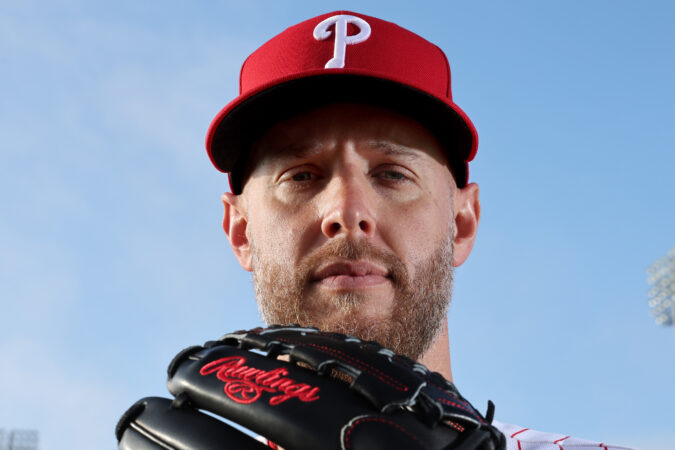
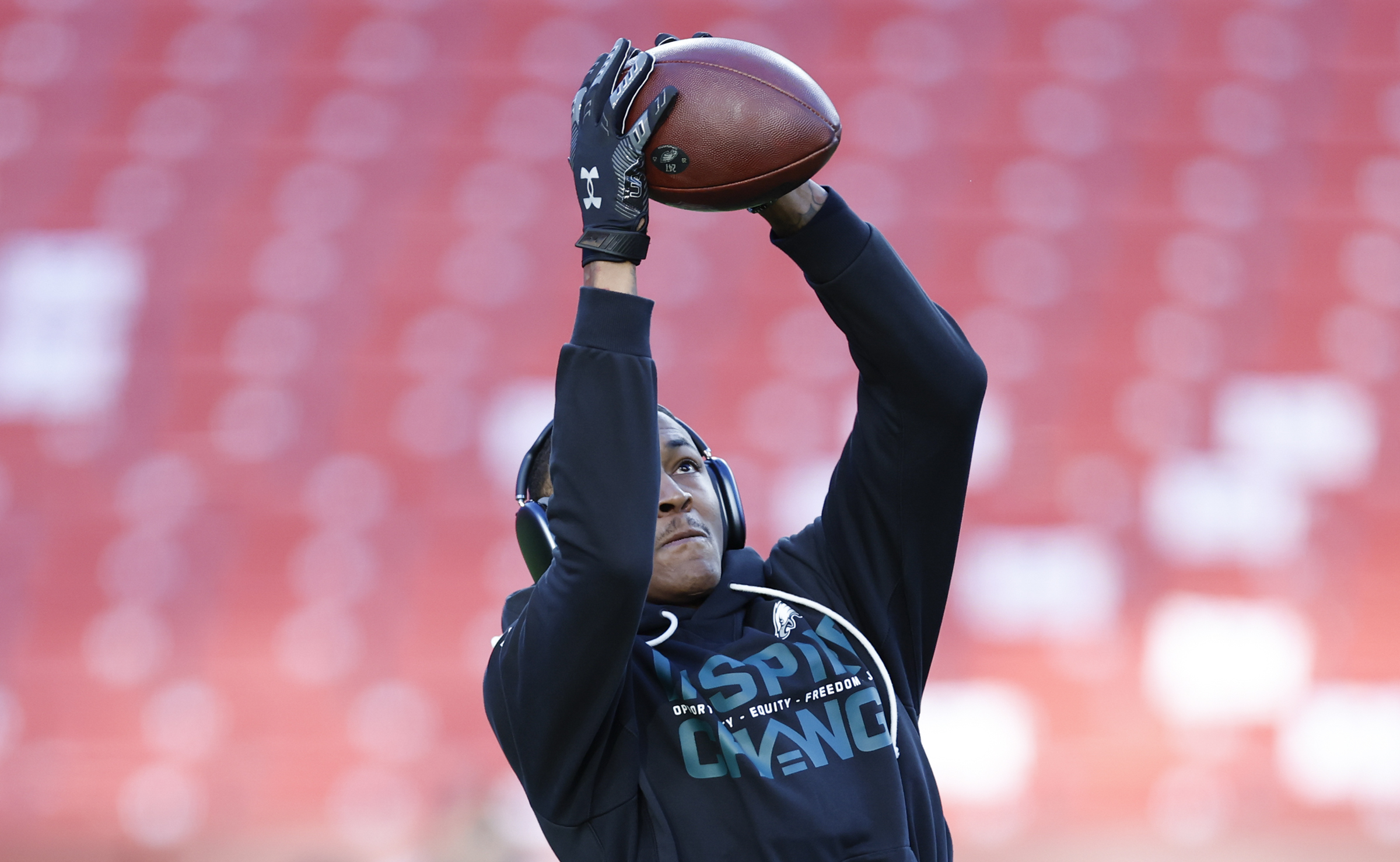
  • ⚾ Wheeler wants in | Sports Daily Newsletter

    ⚾ Wheeler wants in | Sports Daily Newsletter

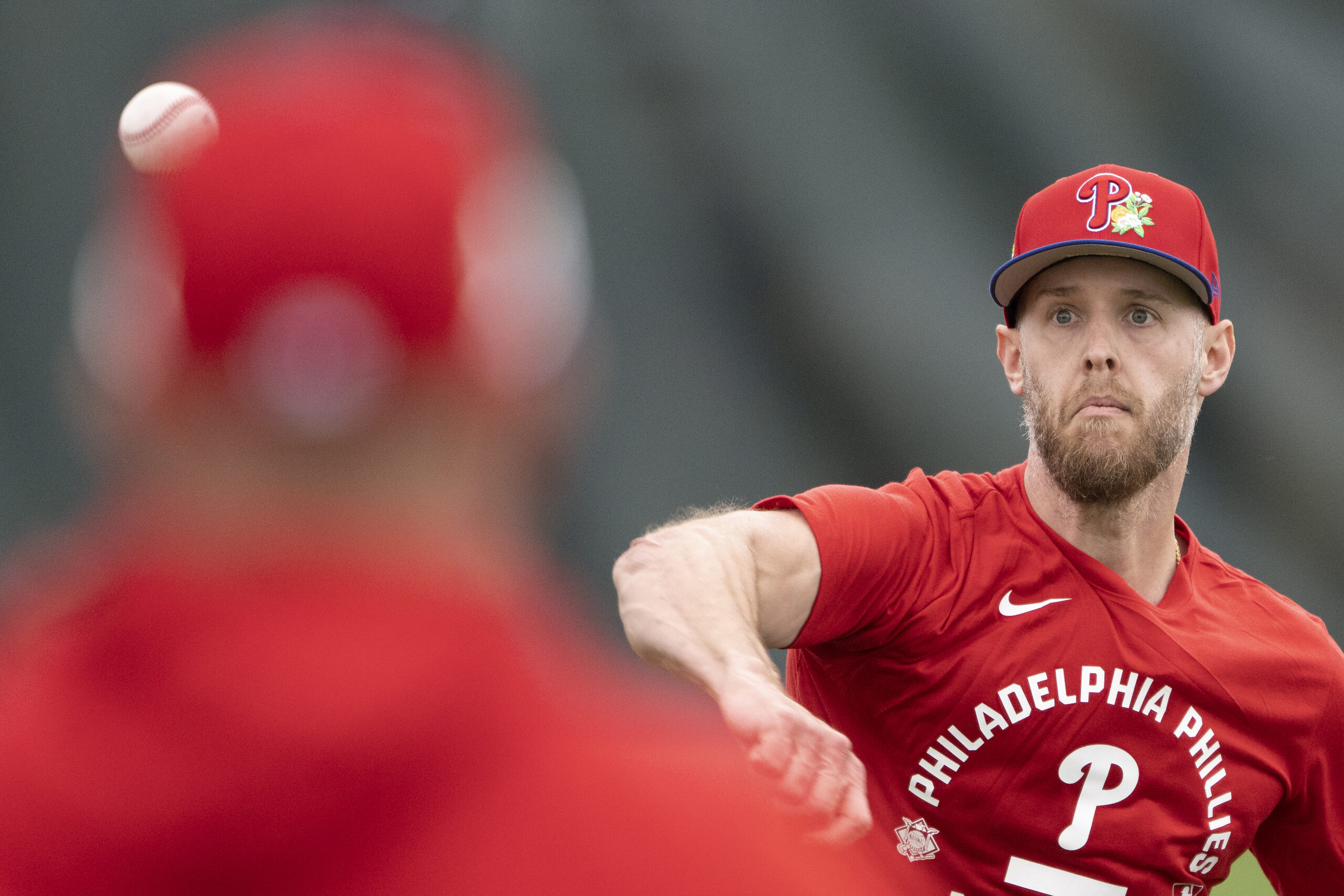
    To listen to what he had to go through this offseason just to get back on the mound, it’s possible no Philly athlete has gone through more than Phillies ace Zack Wheeler.

    Oh, you thought we forgot about Joel Embiid with that last statement? Come on now, you know we track his every move.

    But today, we’re talking about Wheeler, who underwent thoracic outlet decompression surgery, which is as complex as it sounds, and for Wheeler wasn’t without complication.

    However, he’s back, throwing, and although being on the mound for opening day looks unlikely, he says he’s not worried about the surgery or the setback it has caused in his return. In part because this isn’t his first rodeo with injuries derailing his time on the mound.

    It’s what we’re leading off (pun intended) your Wednesday with, courtesy of our Phillies beat writer Scott Lauber.

    Speaking of today, we might get some of this snow to melt a bit with temperatures expected to reach into the 40s across the region under partly cloudy skies.

    — Kerith Gabriel, @phillysport, sports.daily@inquirer.com.

    If someone forwarded you this email, sign up for free here.

    ❓What’s your favorite athlete comeback story? Email us back for a chance to be featured in the newsletter.

    Don’t forget about DeVonta

    Eagles wide receiver DeVonta Smith is coming off a strong season, but there’s an opportunity for him to truly raise his profile in 2026.

    As headlines continue to swirl around Sean Mannion’s plans for the offense and whether A.J. Brown fits in any of it, news around fellow Eagles wideout DeVonta Smith has been relatively obscure this offseason.

    But that doesn’t mean there aren’t grand plans for the team’s other star receiver. Now five seasons into his time as an Eagle, Smith might be ready to take it up another notch.

    “I think he continually gets better,” coach Nick Sirianni said. “I think you saw him have a great year this year. And even when a guy appears not to have as good a year, you’re always looking at it like, ‘Is his arrow on the rise? Is his arrow on the fall?’ And even if a guy doesn’t have his best year, he still can be on the rise. Well, I think we saw DeVonta have a great year, and I think you just continue to see him play better and better. ”

    Inquirer writer Olivia Reiner dives into the intangibles that surround Smith and what the plans for him look like heading into this season.

    What we’re …

    🏐 Introducing: Meet Casey Burford, the new head coach of Rowan’s volleyball team, a program still reeling from the passing of previous coach Deana Jespersen, who died from breast cancer last year.

    🎧 Listening: The latest Inquirer unCovering the Birds podcast, which teed up what to expect heading into this week’s scouting combine.

    😮 Realizing: Sean Mannion’s grand plans for a new scheme as he gets set to lead the Eagles as offensive coordinator next season.

    ⚽ Sharing: The lessons learned by Delran native Carli Lloyd as she gets set for her second time as a lead studio analyst for Fox’s coverage of the FIFA World Cup later this summer.

    🤔 Wondering: What’s the move for hosting FIFA playoff matches and games of the World Cup in Mexico, with civil unrest now unfolding?

    He’s back, balling?

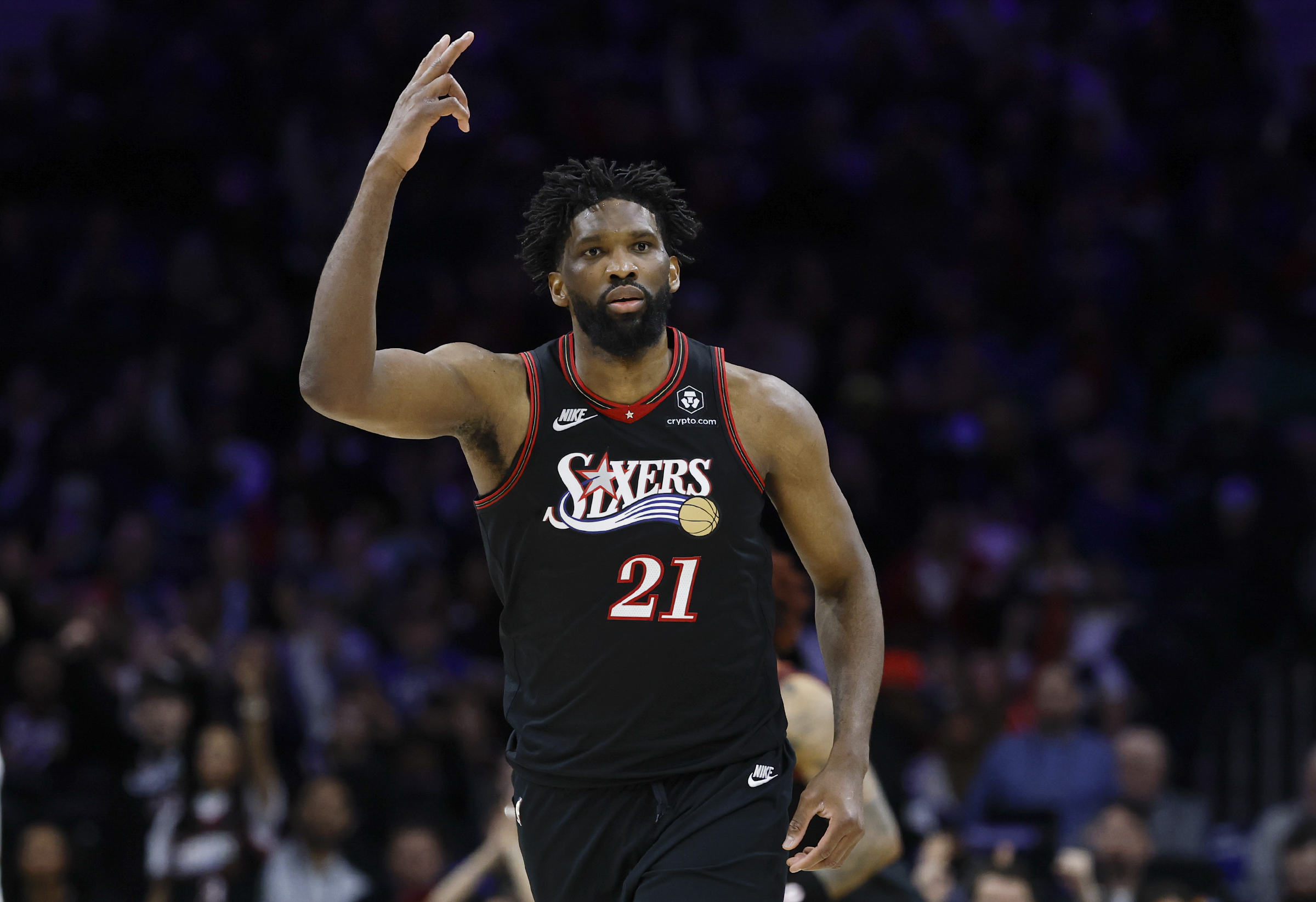
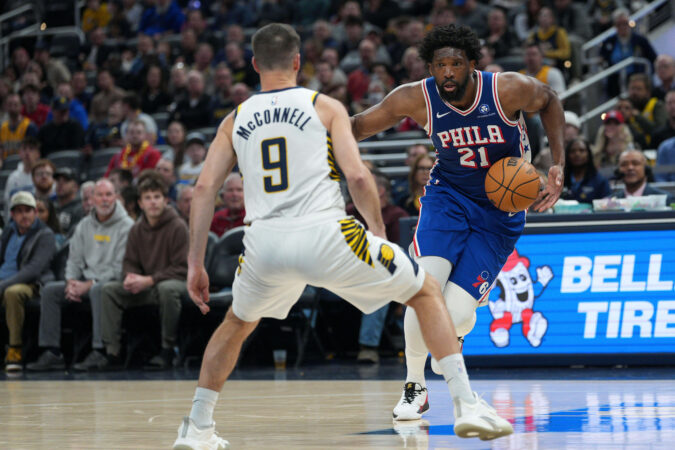
    Joel Embiid returned to the Sixers lineup last night for the first time in five games after sitting out with shin soreness.

    We brought up Joel Embiid earlier, and it was partly due to the fact that he returned to the floor for last night’s game against the Pacers in Indianapolis.

    It was the star center’s return after missing five games with shin soreness, coupled with continued management of his right knee. He was a noticeable loss, considering that, preinjury, he averaged 30 points on 52.7% shooting, 8.0 rebounds, and 4.5 assists over his last 20 games from Dec. 23 through Feb. 7.

    So how’d he do last night? Embiid scored 27 points in a Sixers blowout win over the Pacers to close out a three-game road trip.

    Next up for Embiid and the Sixers are the Miami Heat at the Xfinity Mobile Arena on Thursday (7 p.m., NBCSP), followed by a road test against Boston on Sunday (8 p.m., NBCSP).

    Ready to go

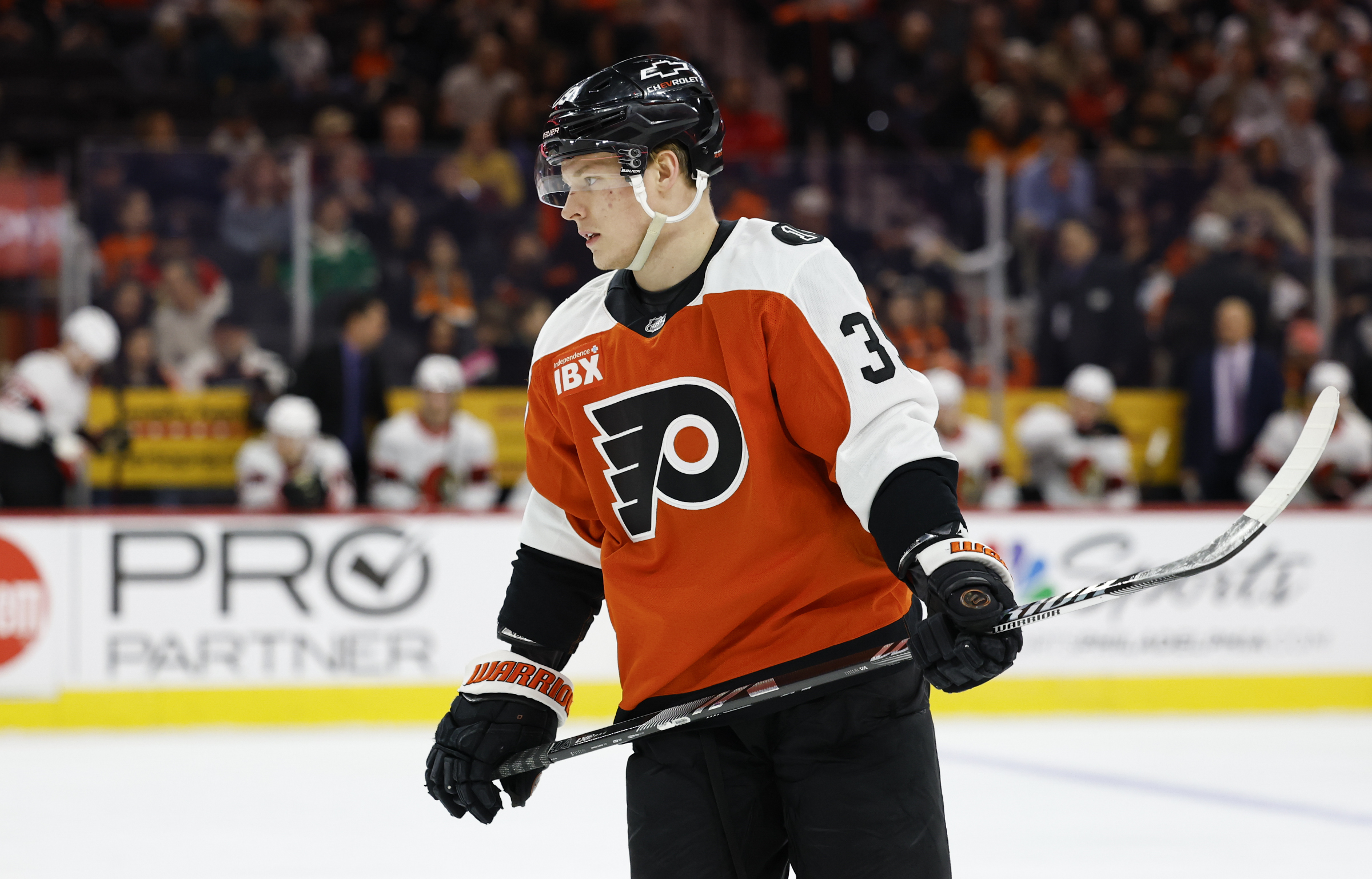
    Flyers right wing Matvei Michkov says he feels “light on the ice” after taking in two-a-day training sessions during the Olympic break.

    The NHL season reconvenes for the Flyers tonight in Washington, with one player ready to see whether all the work he put in during the Olympic break will pay off against the Capitals (7 p.m., ESPN).

    On Tuesday, Matvei Michkov was adamant that the break wasn’t spent off the ice but on it, with two-a-day personal practices featuring strength and conditioning training coinciding with his ice time. But it wasn’t a Rocky IV training montage as some of that training took place in the Dominican Republic.

    “I was training every day. Was not resting,” the winger said through team translator Slava Kuznetsov about how he spent his Olympic break.

    Flyers writer Jackie Spiegel has more on Michkov and his plans for the second half of the season in a push for the playoffs.

    Now or ’Nova

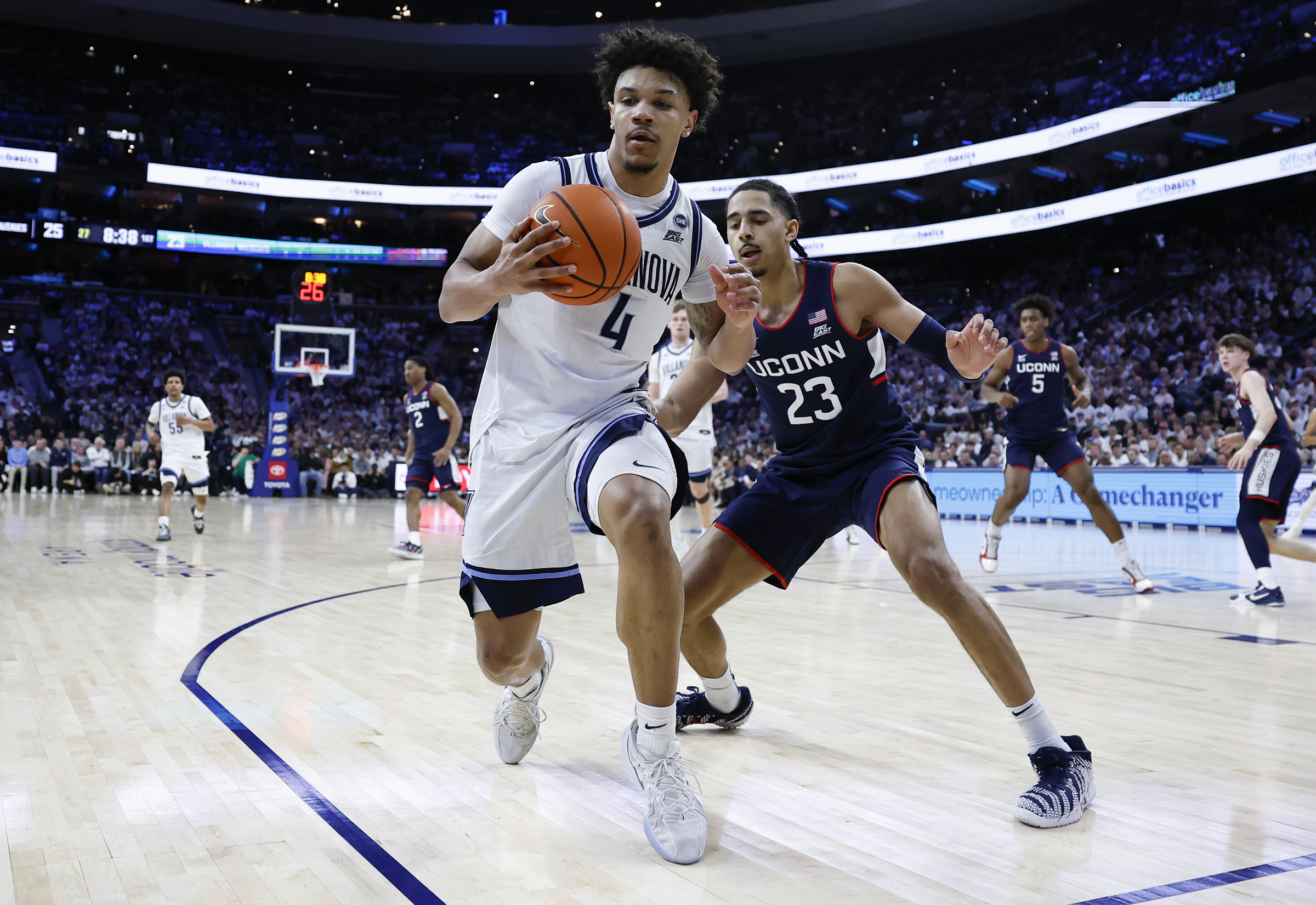
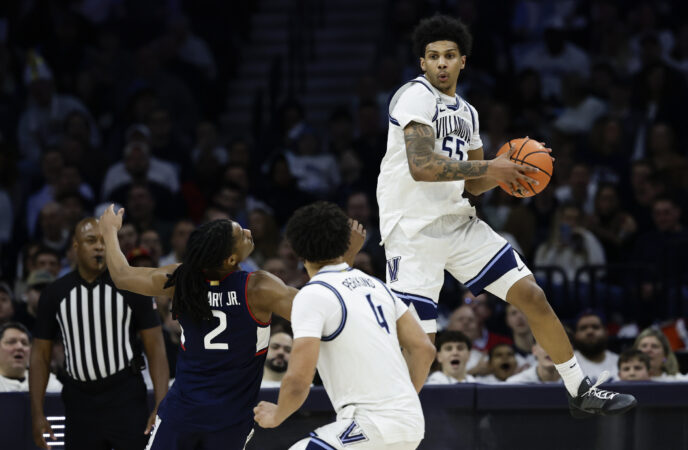
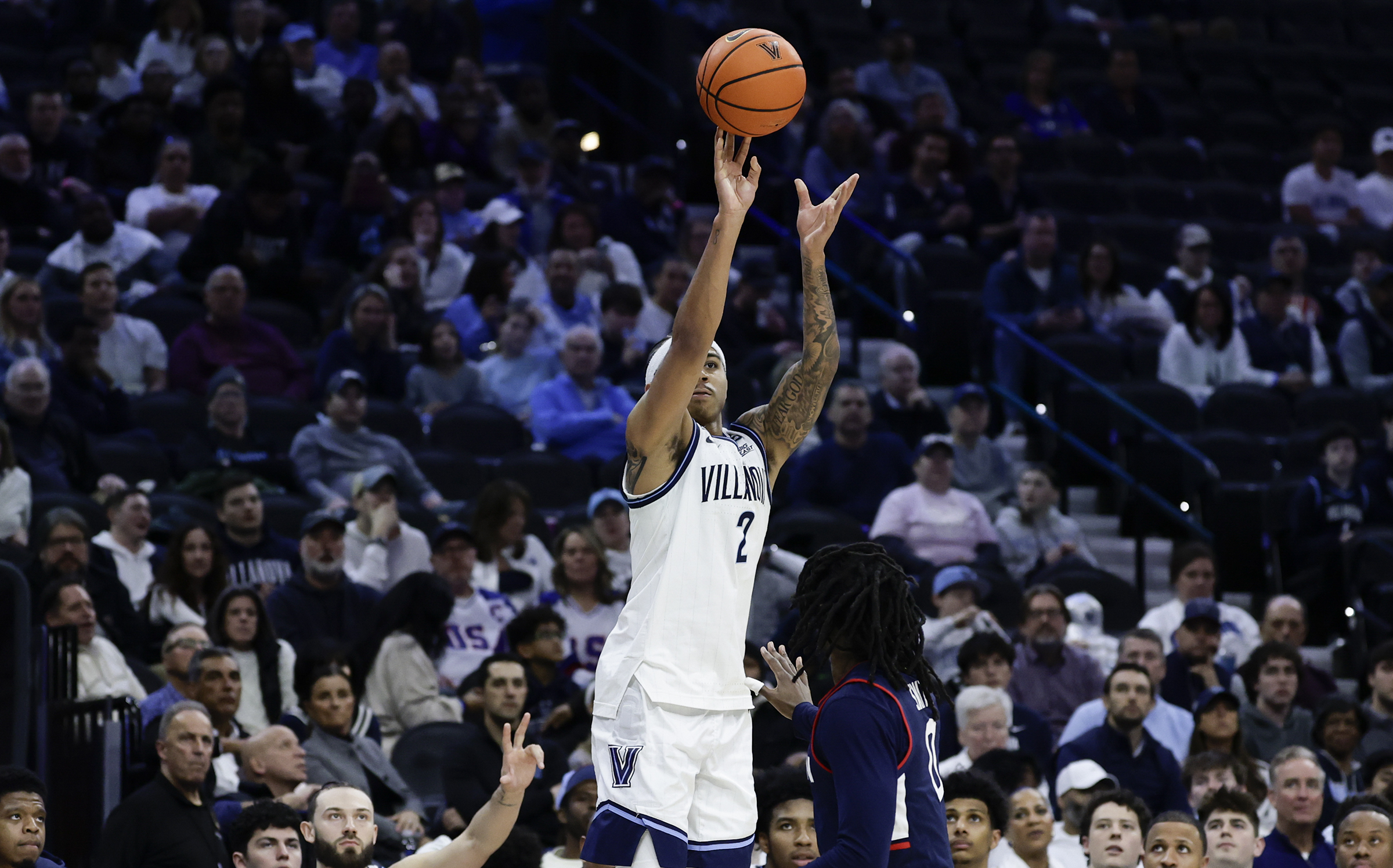
    Villanova guard Tyler Perkins, seen here against UConn, will be a major player for the Wildcats down the stretch in a run to March Madness.

    Right now, Villanova is in pretty solid shape.

    Despite a weekend loss to now-No. 6 Connecticut, the Wildcats are 21-6, 12-4 in the Big East. Barring the unforeseen, they have all but ensured themselves the No. 3 seed in the conference tournament, which begins in two weeks at Madison Square Garden.

    Just four regular-season games remain until then, and coupled with a strong showing in the Big East tournament, Villanova could find a return to the Big Dance for the first time since 2022. But these next few weeks are crucial, and Inquirer writer Jeff Neiburg examines five key things the Wildcats need to do to ensure they’ll be a part of the Madness this time next month.

    It all gets started tonight as Villanova hosts Butler (15-13, 6-11) at the Finneran Pavilion (7 p.m., FS1).

    On this date

    Feb. 25, 1972: The Phillies benefited from a salary dispute between pitcher Steve Carlton and the St. Louis Cardinals, who traded Carlton to Philly for pitcher Rick Wise.

    David Murphy’s take …

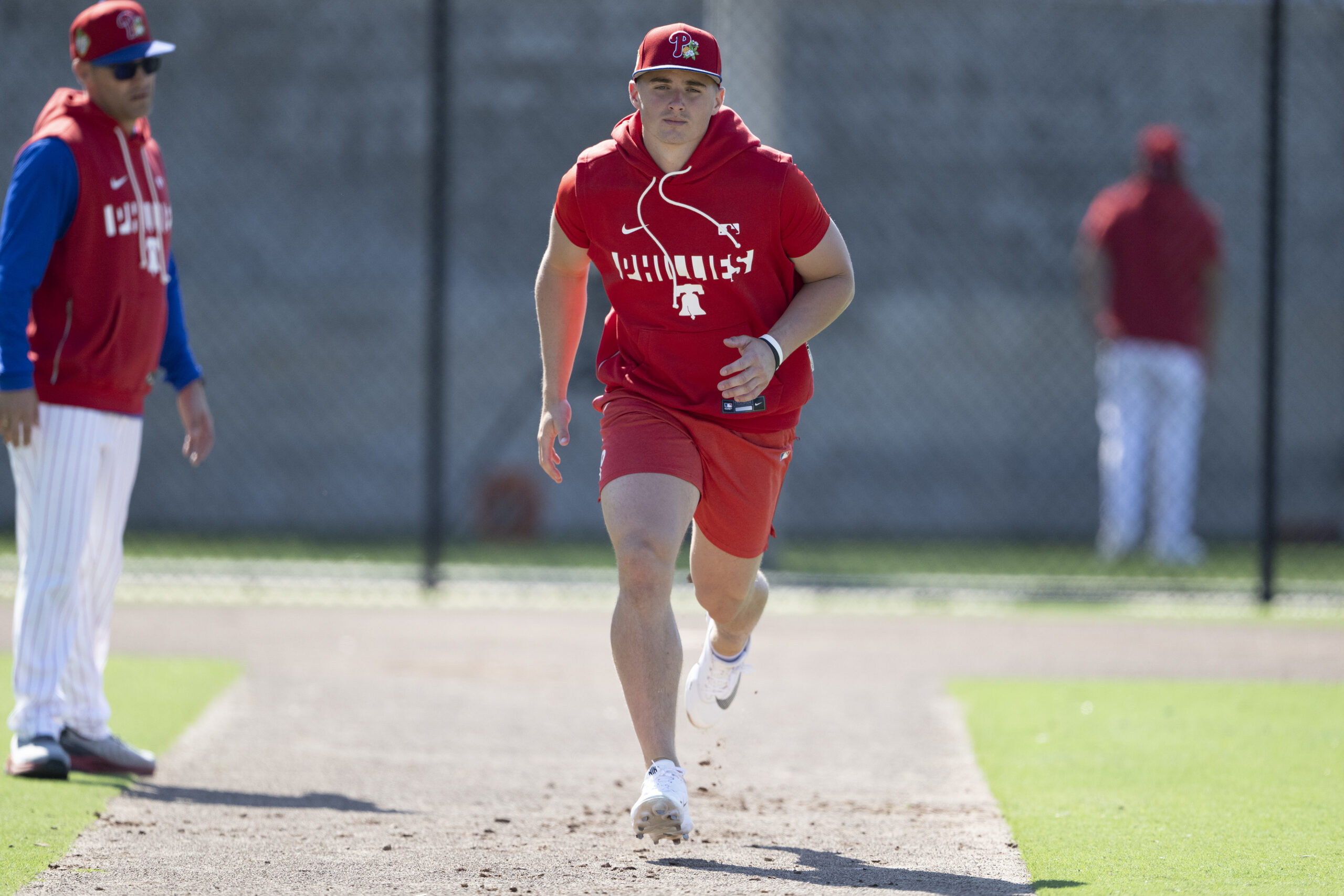
    The Phillies continue to work closely with top prospect Aidan Miller during spring training in Clearwater.

    “Two weeks into spring training, the Phillies aren’t going out of their way to disguise their hopes for their top prospect. The whole organization seems to understand that a certain degree of aggression is required in order to overtake the Dodgers in the National League and survive the Mets and Braves in the NL East.” — The latest from Inquirer columnist David Murphy takes a look at why the Phillies aren’t wasting time getting top prospect Aidan Miller up to speed.

    🧩 Unscramble the anagram

    LABE REKLDR

    Which Phillies hurler said he’s come to grips with being a reliever, but one who’s ready to prove he isn’t a just one-year wonder? Think you know? Take a guess and click here to see if you’re correct.

    🧠 Trivia time answer

    We asked: Who was the first Phillie to homer from both sides of the plate in a game?

    Answer: C: Steve “Jet” Jeltz was the first among the lot. And kudos to reader Carol B. for being the first to provide the answer.

    What you’re saying about the Phillies

    We asked: Which rookie will have the best season for the Phillies?

    I think and hope Justin Crawford will be the most successful of our rookies. Center field has been an up-and-down position for quite a few years, with Marsh, Rojas, Bader, and others not quite looking like the next Richie Ashburn, Gary Maddox, or Victorino. And of course, look to Painter and maybe later in the season, Miller becoming a strong contributor. — Everett S.

    Justin Crawford is well-positioned to shine in 2026. He anchors the outfield in center and has an opportunity to climb the batting order. His power was on display in the opening spring training game, going 2-for-3. His speed will energize the bottom portion of the lineup. — Bob C.

    We compiled today’s newsletter using reporting from David Murphy, Kerith Gabriel, Owen Hewitt, Jeff McLane, Olivia Reiner, Jeff Neiburg, Jackie Spiegel, and Scott Lauber.

    By submitting your written, visual, and/or audio contributions, you agree to The Inquirer’s Terms of Use, including the grant of rights in Section 10.

    Thanks for allowing me to get your day started. Jim picks up the ball tomorrow to get your Thursday off to a running start.— Kerith

  • Bryce Harper and Scott Boras are right. Here’s a wild stat that makes their point.

    Bryce Harper and Scott Boras are right. Here’s a wild stat that makes their point.

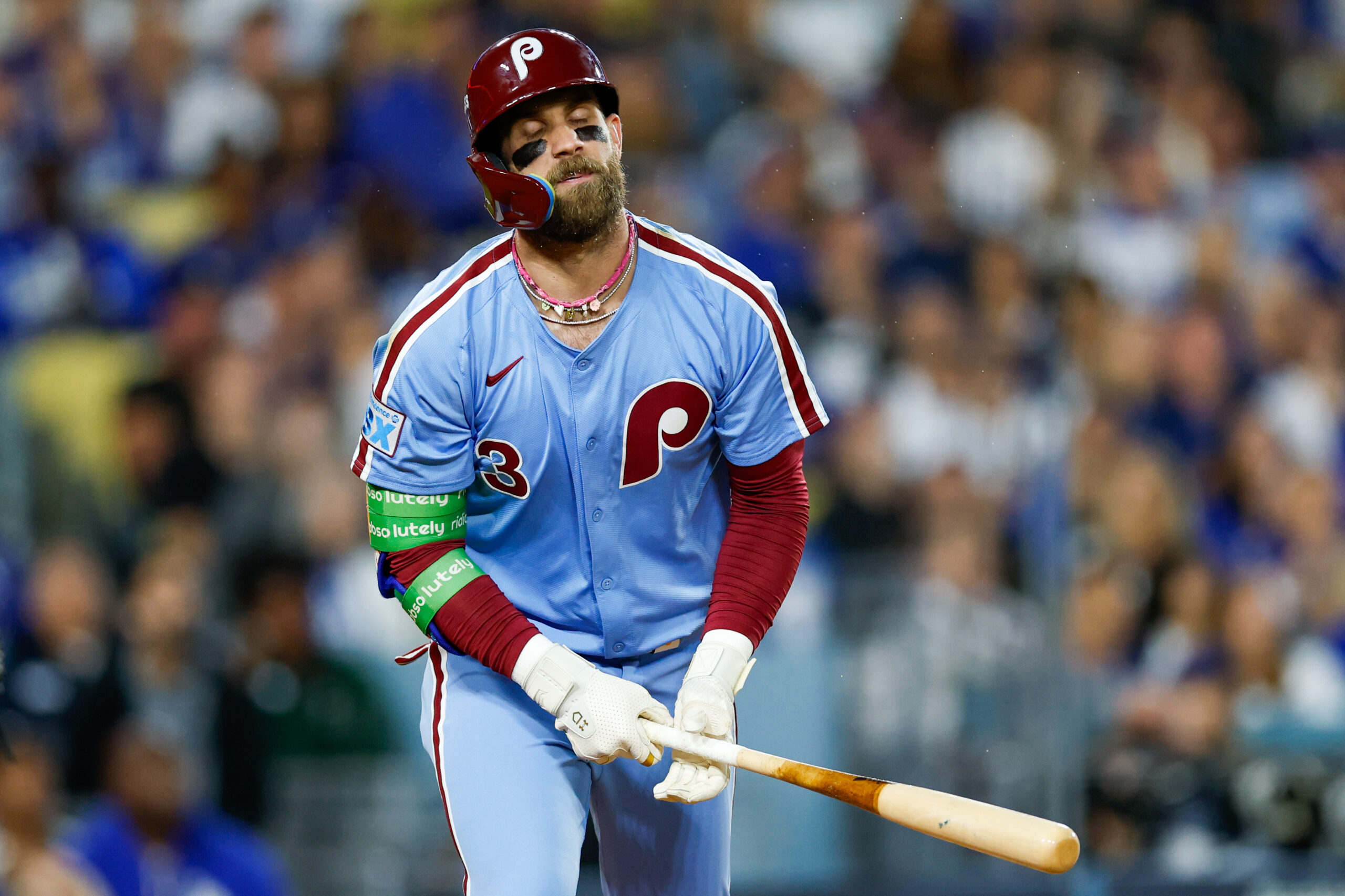
    No man is an island. Unless that man is Bryce Harper and he has just reached base.

    Last season, there wasn’t a lonelier lot in life than to be a Phillies superstar standing on first, second, or third. Only four players in the majors reached base as many times as Harper did and scored fewer runs. The 72 runs he did score were the fewest of his career in a season with at least 500 plate appearances. Only one player in the majors last year failed to score more than 72 runs while posting an OPS of at least .800 in 580-plus plate appearances. It was Harper. In fact, he was the only player to do it since 2023. That’s not some hocus-pocus bit of cherry-picked math. Fifty-nine players meet our criteria (.800 OPS, 580 PAs). Harper’s 2025 campaign ranked dead last in runs scored.

    Not since E.T. have we seen someone with such otherworldly attributes struggle this hard to get home.

    We’ve heard a lot of chatter about lineup protection this offseason. Scott Boras broached the topic back in October. Harper himself weighed in last week. Their focus was on pitchers pitching around Harper in order without the threat of reprisal from those due up next.

    “I think the four spot has a huge impact,” Harper said when he arrived in Clearwater, Fla., for spring training. “I think the numbers in the four spot weren’t very good last year for our whole team. I think whoever’s in that four spot is going have a big job to do, depending on who’s hitting three or who’s hitting two.”

    Neither Harper nor his agent spoke much about the issue of him rotting on base like an unsold ham on Easter Monday. But it’s just as important, if not more so.

    Last season, Phillies hitters had 366 plate appearances when Harper was on base. That’s not including his home runs. We’re limiting ourselves to the plate appearances when Harper was physically standing on base, hoping for a teammate to drive him home. In those 366 plate appearances, the hitters behind Harper combined for a whopping .227 batting average, .290 on base percentage, and .342 slugging percentage. Of the 180 times he reached base without driving himself in (i.e., without hitting a home run), he ended up crossing home just 45 times.

    In 366 plate appearances (not including home runs), the hitters behind Bryce Harper combined for a whopping .227 batting average, .290 on base percentage, and .342 slugging percentage.

    That’s a remarkably low percentage. Three out of four times that Harper reached base, the inning ended with him jogging back to the dugout. That’s a remarkably low percentage compared to most other hitters of his ilk. Even more troublesome is the fact that Kyle Schwarber’s percentage wasn’t much better. But we’ll get to that in a second.

    First, let’s remind ourselves of the real-world situations that these numbers tabulate. Harper didn’t have a great NLDS against the Dodgers. But he did reach base six times. That was tied for second on the team behind Alec Bohm. Bohm reached base 10 times and scored three runs. J.T. Realmuto reached base six times and scored three runs. Harper reached base six times and scored one run.

    It’s an imperfect example. In the NLDS, Harper mostly expired on first base after arriving there with two outs. You could write it off to circumstance if not for the body of evidence. In the 2025 regular season, no player in the majors was stranded as often as Harper, once you account for where he hits in the order. His driven-in percentage (25%) ranked dead last among players who regularly hit in the top-third of the order (minimum 500 plate appearances).

    The table below shows the 34 players who had at least 500 plate appearances in an average batting order position between the two-hole (2.0) and three-hole (3.0). Their run percentage is the number of times they reached base and later scored.

    Just as concerning as Harper in dead last is Schwarber a mere two spots ahead of him. Of the 34 qualified hitters, Schwarber and Harper ranked 32nd and 34th in scoring percentage. Put another way, Schwarber and Harper’s teammates ranked dead last in their ability to drive them in.

    Between Schwarber and Harper is Cal Raleigh, whose Mariners advanced to last year’s ALCS and put up a sporting effort. Meanwhile, Toronto’s Bo Bichette scored at a below-average rate. The Blue Jays made the World Series. It isn’t completely unheard of for upper-middle-of-the-order hitters to drive in more runs than they score, given the drop-off in quality behind them. But the Phillies have two players at the bottom of the list. We’re talking about the upper two-thirds of their order. And they aren’t just below-average. They are virtual outliers. The only other team that has two players in the bottom half of this list is the Angels. Nobody wants to be mentioned in the same breath as the Angels. If you are comparable to the Angels in a certain regard, it’s a sure sign the regard needs fixing.

    If Harper sounds a little cranky this spring, think about how it feels to reach base and not score. And then think about the fact that the Phillies still don’t have a viable solution. Is it any wonder that Harper is acting like he woke up on the wrong side of the red-light therapy sleeping bag?

  • The Eagles Autism Foundation raised more than $10 million last year. It’s needed ‘now more than ever,’ Jeffrey Lurie says.

    The Eagles Autism Foundation raised more than $10 million last year. It’s needed ‘now more than ever,’ Jeffrey Lurie says.

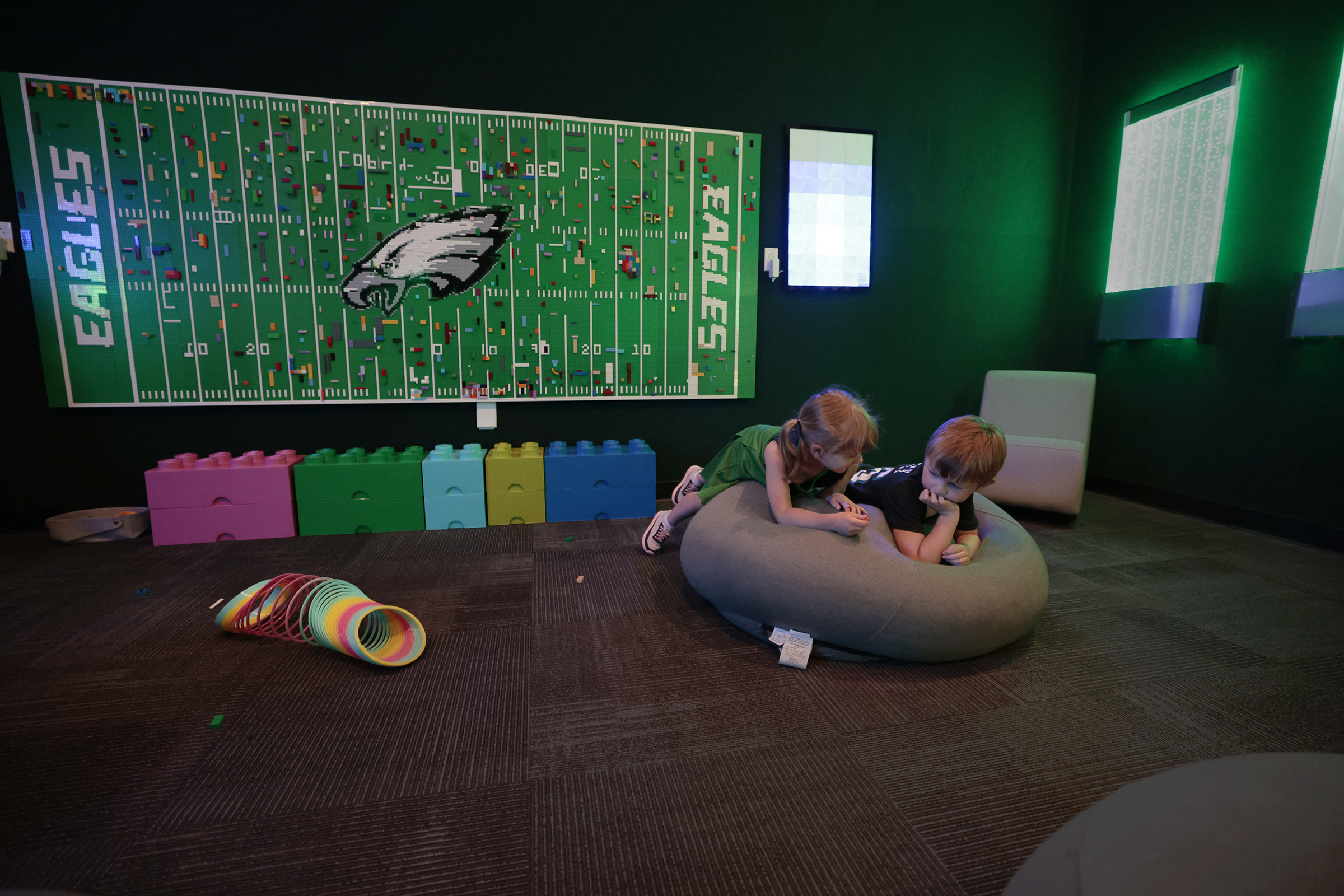
    With its soft motion-sensor lights, bubble walls, beanbag chairs, and custom tactile artwork, the sensory room at Lincoln Financial Field showcases the Eagles Autism Foundation’s work to create an inclusive environment for those with autism.

    There’s more work behind the scenes that many don’t get the chance to see. This year, the Eagles Autism Foundation is contributing $10.8 million in funding to 54 research and community projects specializing in autism research and care, the largest amount raised to date by the foundation.

    “This was a huge milestone for us. It was the first year we raised over $10 million,” said Ryan Hammond, executive director of the Eagles Autism Foundation.

    “The fact that we can be a model to an inclusive fan experience, inclusive recreation opportunities, inclusive employment, all of those things are just as important as the science,” she said. “We’re impacting people every day by feeling included — whether it’s a family seeing our mascot wearing headphones and their son wearing headphones, they feel seen.”

    The funding comes from foundation-related initiatives throughout the year, including the Eagles Autism Challenge and events like Jason Kelce’s annual celebrity bartending event in Sea Isle City.

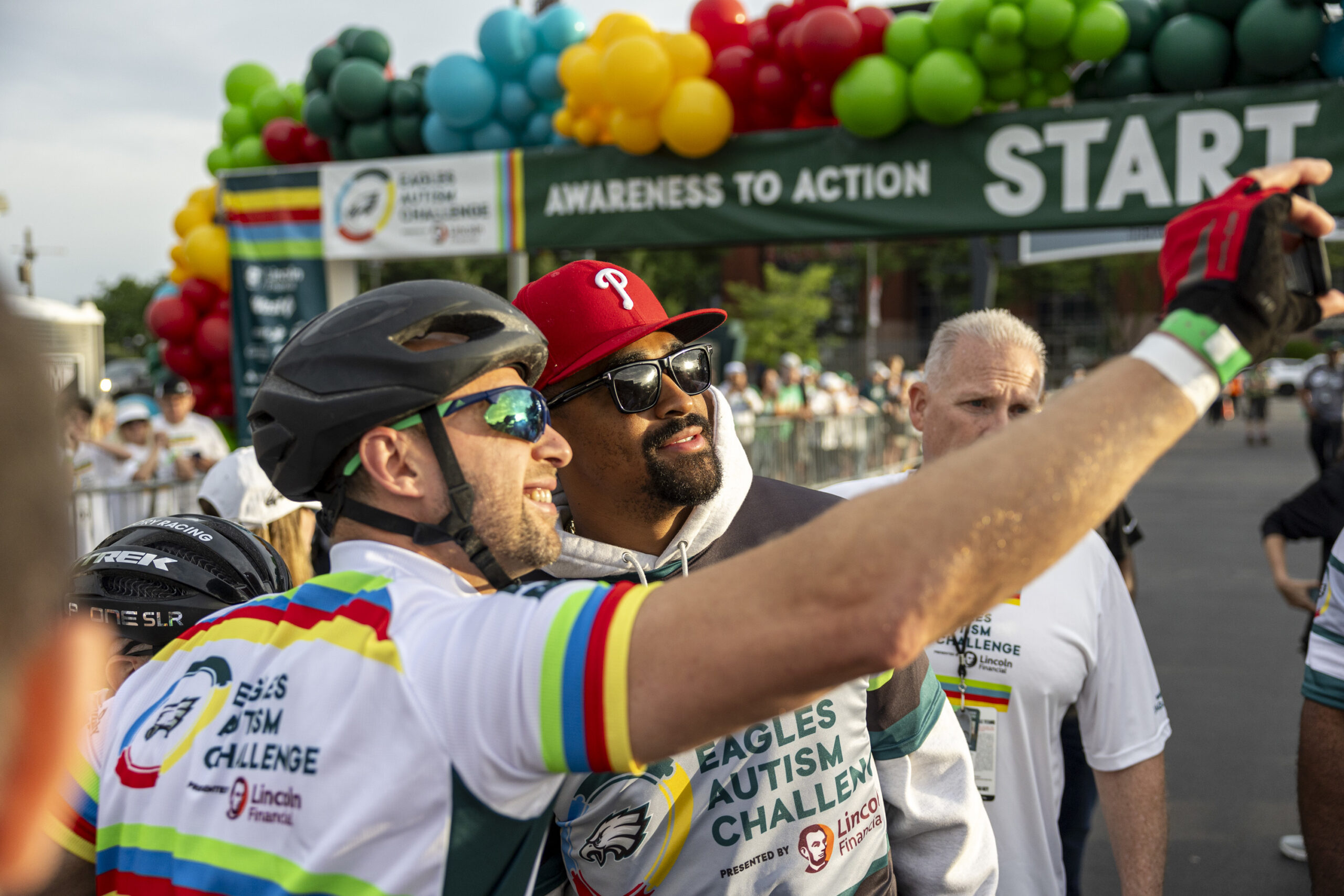
    Eagles Jalen Hurts (right) takes a selfie with Aaron Greenfield of Plymouth Meeting at the eighth annual Eagles Autism Challenge in May.

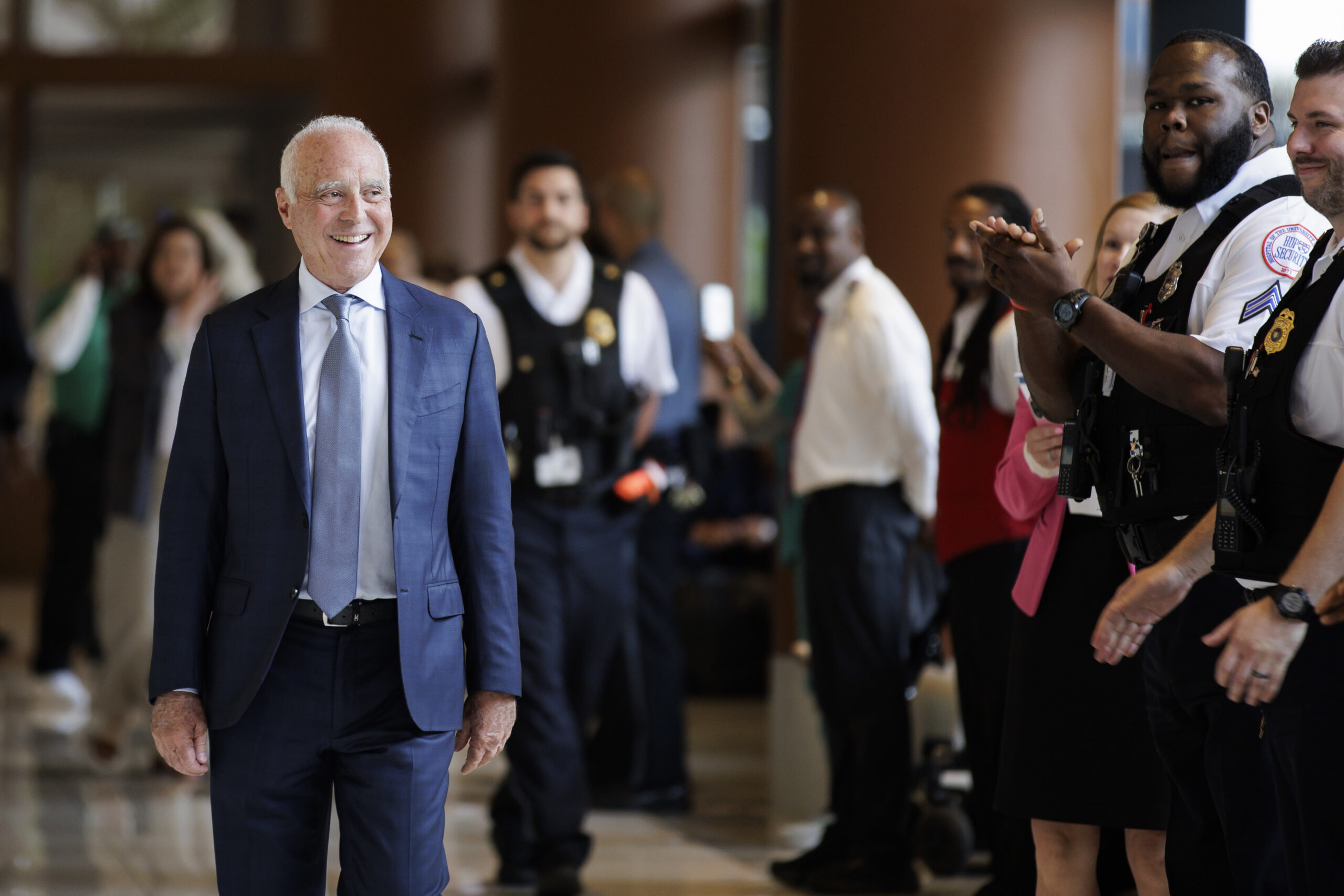
    “It is rewarding to know that our financial investment this year will support the next generation of scientific researchers and leaders who are all working hard to accelerate treatment for the autism community,” Eagles owner Jeffrey Lurie said. “While we are proud to celebrate another record-setting year for the Eagles Autism Foundation, it comes at an unfortunate time where too many institutions are having their funding cut. Now more than ever, we need to invest in science and prioritize those who need our help.”

    In the last year, President Donald Trump’s administration has cut funding for autism research, with one of the biggest cuts occurring at the Department of Education.

    “To know that we were making [our] largest investment in science at a time that it’s the most needed is a point of not only pride, but motivation to continue to support and serve this community,” Hammond said. “Funding science is critical, and a lot of institutions are faced with challenges with losing funding from the federal government.”

    As the foundation grows, so does the interest from potential research partners. This year, the Eagles Autism Foundation received a record 267 letters of intent for research grant funding. A scientific adviser helped review each letter, taking innovation and measurable outcomes into consideration to narrow the pool to 52 proposals.

    Each proposal was assigned to an independent team of scientists for review. Then, Dr. Emanuel DiCicco-Bloom, who serves as the foundation’s scientific adviser and chairman of its review panel, and others participated in a two-day discussion at Lurie’s home to negotiate the strengths, weaknesses, and challenges of each project.

    “Being able to go through this process that’s not only rigorous but also transparent makes me feel like we’re doing a service on behalf of every single person who agreed to support our mission,” Hammond said. “I’m filled with hope that these projects are really going to change someone’s life.”

    Added Lurie: “We are beyond grateful for Dr. DiCicco-Bloom and his esteemed panel of colleagues for putting in the time, once again, to evaluate these projects and drive meaningful progress in autism research.”

    Eagles owner Jeffery Lurie and his family donated $50 million to Children’s Hospital of Philadelphia and Penn Medicine to create the Lurie Autism Institute last year.

    This year, the foundation will fund 13 pilot grants, four postdoctoral fellowships, and three translational grants that include a three-year investment for research. The four postdoctoral fellowships will support the work at the Children’s Hospital of Philadelphia and the University of Pennsylvania, both partners in the Lurie Autism Institute, which was founded last year after the Lurie family donated $50 million to CHOP and Penn Medicine.

    In addition to funding autism research, grants were given to dozens of local projects that provide an immediate need in the community and align with the Eagles Autism Foundation’s mission.

    Since 2018, the Eagles Autism Foundation has invested more than $40 million in 223 research projects and community grants. To Hammond, this is just the beginning.

    “Honestly, the sky is really the limit,” Hammond said. “What we’ve been able to see in such a short time has been incredible. … We’re continuing to drive a more inclusive future for everyone.”

    Savannah Laycock of Quakertown and Brennan Sim of Atco play in the Eagles’ sensory room at Lincoln Financial Field.

    Where is all the money going?

    The Eagles Autism Foundation will divide the $10.8 million in funds among 54 research and community projects:

    Research institutions

    Local: The A.J. Drexel Autism Institute, Children’s Hospital of Philadelphia (two postdoctoral fellowships and a translational grant), and the University of Pennsylvania (two postdoctoral fellowships).

    National/global: Boston Children’s Hospital, Boston Children’s Hospital — Harvard Medical School, Children’s Hospital of Los Angeles, Children’s National, Cold Spring Harbor Laboratory, Icahn School of Medicine at Mount Sinai, Stanford University, Stony Brook University, University of California San Francisco, University of Geneva, University of Iowa, University of Minnesota Twin Cities, University of North Carolina at Chapel Hill, University of Wisconsin-Madison.

    Community projects and initiatives

    Local: KIPP Philadelphia Public Schools, A Step Up Academy, Common Space, Huddle Up for Autism, KultureCity Barefoot Country Music Fest, Coffee Closet with Barista Jake, Office for People with Disabilities (City of Philadelphia), Penn State Health, Philadelphia Orchestra, Philadelphia Zoo, Saint Joseph’s University, CASA Youth Advocates, Special Olympics Pennsylvania, SPIN, St. Christopher’s Hospital for Children, St. John of God Community Services, Stratford Friends School, TGR Learning Lab, Timothy School, Theatre Horizon, Thomas Jefferson University, and Variety — The Children’s Charity of the Delaware Valley, Comprehensive Learning Center, Devereux Advanced Behavioral Health, Elwyn Foundation, KultureCity Super Bowl LIX, Melmark, Neurodiversity Employment Network, No Limits Café, Pathway School, Potential Inc., Raise the Bar Family Services, Shore Medical Center, Special Equestrians.

  • Zack Wheeler’s outlook might be a mystery, but he says there’s no reason he can’t ‘be who I am’ in 2026

    Zack Wheeler’s outlook might be a mystery, but he says there’s no reason he can’t ‘be who I am’ in 2026

    CLEARWATER, Fla. — It’s a long, scary-sounding procedure — venous thoracic outlet decompression surgery — so let’s just ask Zack Wheeler to explain what it entailed on that Tuesday in September at a St. Louis hospital.

    OK, Zack, don’t spare any details.

    “Basically all they do,” the Phillies ace said Tuesday, “is go in, chop the bone, get rid of that [rib] because that’s what’s causing it, get rid of the blood clot, and then open up the vein. My vein closed back, I think two different times, so they had to go back and open it. If it happened again, I think they were just going to do a stent. But so far, so good.

    “And that’s really about it, honestly.”

    Oh, is that all?

    Five months later, there’s a matter-of-factness with which Wheeler talks about all of this, from the onset of symptoms on the eve of an Aug. 15 start in Washington to the tension-filled days and weeks that followed.

    Maybe it’s because the 35-year-old righty endured injury-related misery early in his major-league career. In the spring of 2015, he suffered a torn elbow ligament and had Tommy John surgery. Setbacks in his recovery led to a second procedure and caused him to miss two seasons.

    Compared to that, Wheeler says this is “not that bad.”

    “Knock on wood,” he added, tapping the side of his locker.

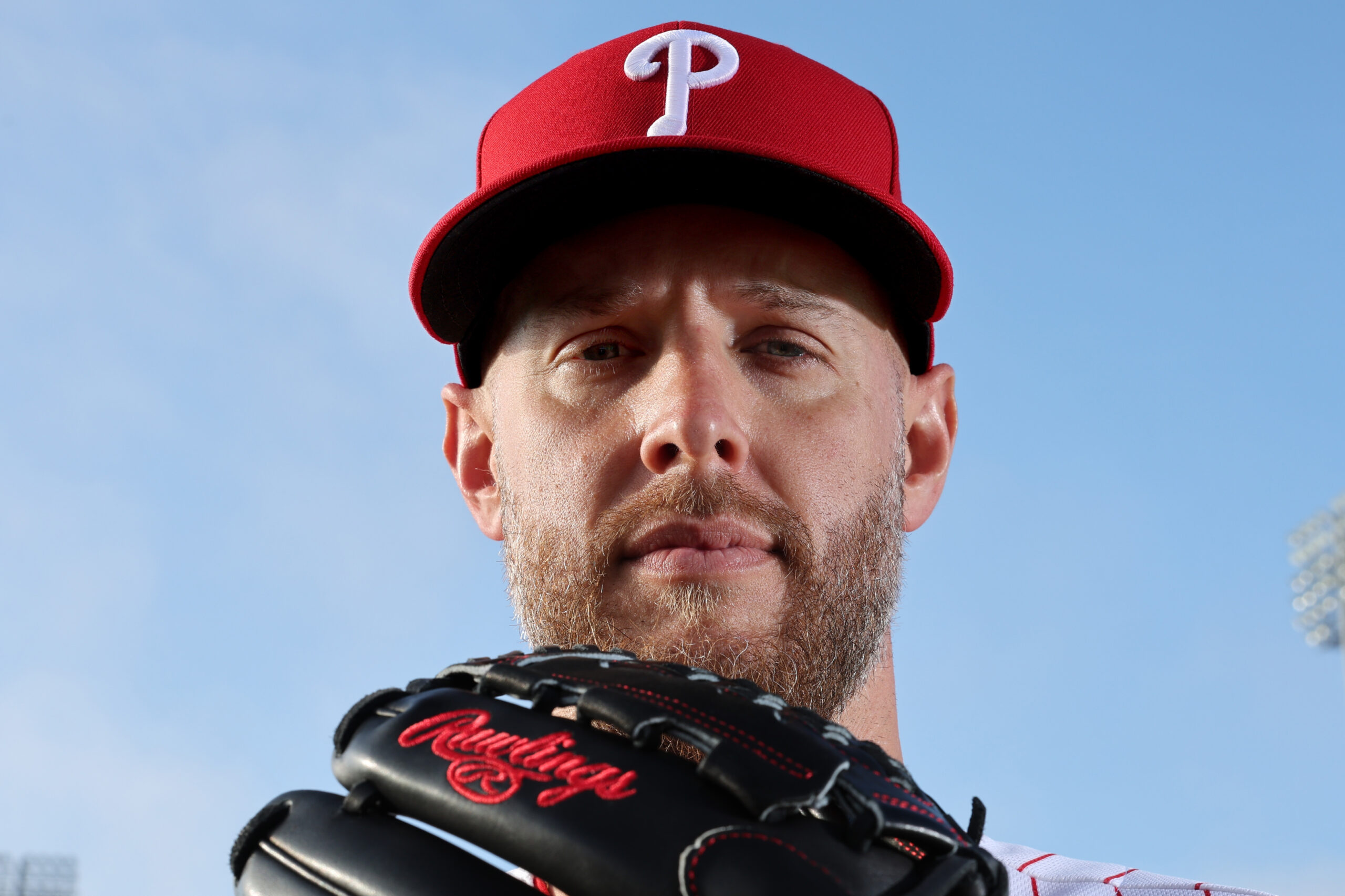
    Since he signed with the Phillies in 2020, Zack Wheeler leads all major-league pitchers with 28.6 wins above replacement, according to Fangraphs.

    Wheeler remains in the long-toss phase of his comeback, playing catch from as far as 120 feet. He’s inching closer to throwing from the mound. The standard buildup will follow: bullpen sessions, facing hitters in live batting practice, more bullpen sessions, and a few starts in the minor leagues.

    Although Wheeler won’t be ready in time for opening day, he and the Phillies believe he will pitch a lot of innings this season. But beneath the optimism is an underlying mystery raised the other day by none other than Bryce Harper.

    “We have no idea what Wheels is going to look like,” Harper said. “We all hope that Wheels comes back and is Zack Wheeler because there’s nobody better in baseball when he’s going good. But we have no idea.”

    In classic Wheeler fashion, he insists he isn’t worried.

    “I don’t think there’s any reason why I wouldn’t be who I am,” he said. “It’s not like a major surgery. I just got a rib taken out. It might sound like a crazy situation, or crazy surgery, or whatever, but mentally, I’m not really stressed about it. Physically, I’m not really stressed about it.”

    Not since that Friday night in D.C., at least, when a late-night consultation by the Nationals team physicians after a five-inning start led to the next-day diagnosis of a blood clot near his right shoulder.

    In detailing for the first time those few days in August, Wheeler said he felt “like a full feeling” as he went through arm exercises in the training room on Aug. 14. He chalked it up as “something wacky,” and went outside to play catch. The sensation didn’t subside.

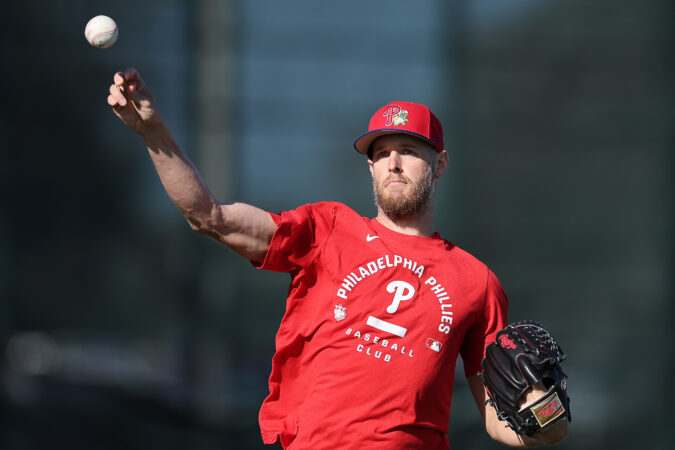
    Phillies pitcher Zack Wheeler was diagnosed with a blood clot near his right shoulder after a start in Washington on Aug. 15 of last season.

    When they work out, Phillies pitchers often wear a cuff that partially restricts blood flow to help the arm recover. As Wheeler put it, “your veins start popping up.”

    “That’s literally what I felt like,” he said.

    Only he wasn’t wearing the cuff.

    Wheeler said he reported the issue to head athletic trainer Paul Buchheit, with whom he has developed a close relationship since both joined the Phillies in the 2019-20 offseason. He also told Buchheit about “a little bubble in my armpit” that looked like a lymph node.

    Everything checked out in the training room. Wheeler said the “full feeling” went away, then returned the next day in the bullpen before his start, then went away again. He held the Nationals to two runs in five innings, threw 97 pitches, and topped out at 95.7 mph, a 1.5-mph gain over his previous start.

    But the bubble was still there.

    “Paul was like, ‘Let’s just get it checked out,’” Wheeler said. “The D.C. doctors came over, and they’re like, ‘Uh, it’s not a lymph node. You need to go get that checked out tomorrow morning, first thing.’ And that was kind of what started the whole thing.”

    Doctors diagnosed the blood clot. Wheeler went back to Philadelphia and underwent a venogram, a test to detect blood flow in his veins. The conclusion: The clot was caused by a vein that got compressed between Wheeler’s rib cage and collarbone.

    If anything, Wheeler actually felt relieved.

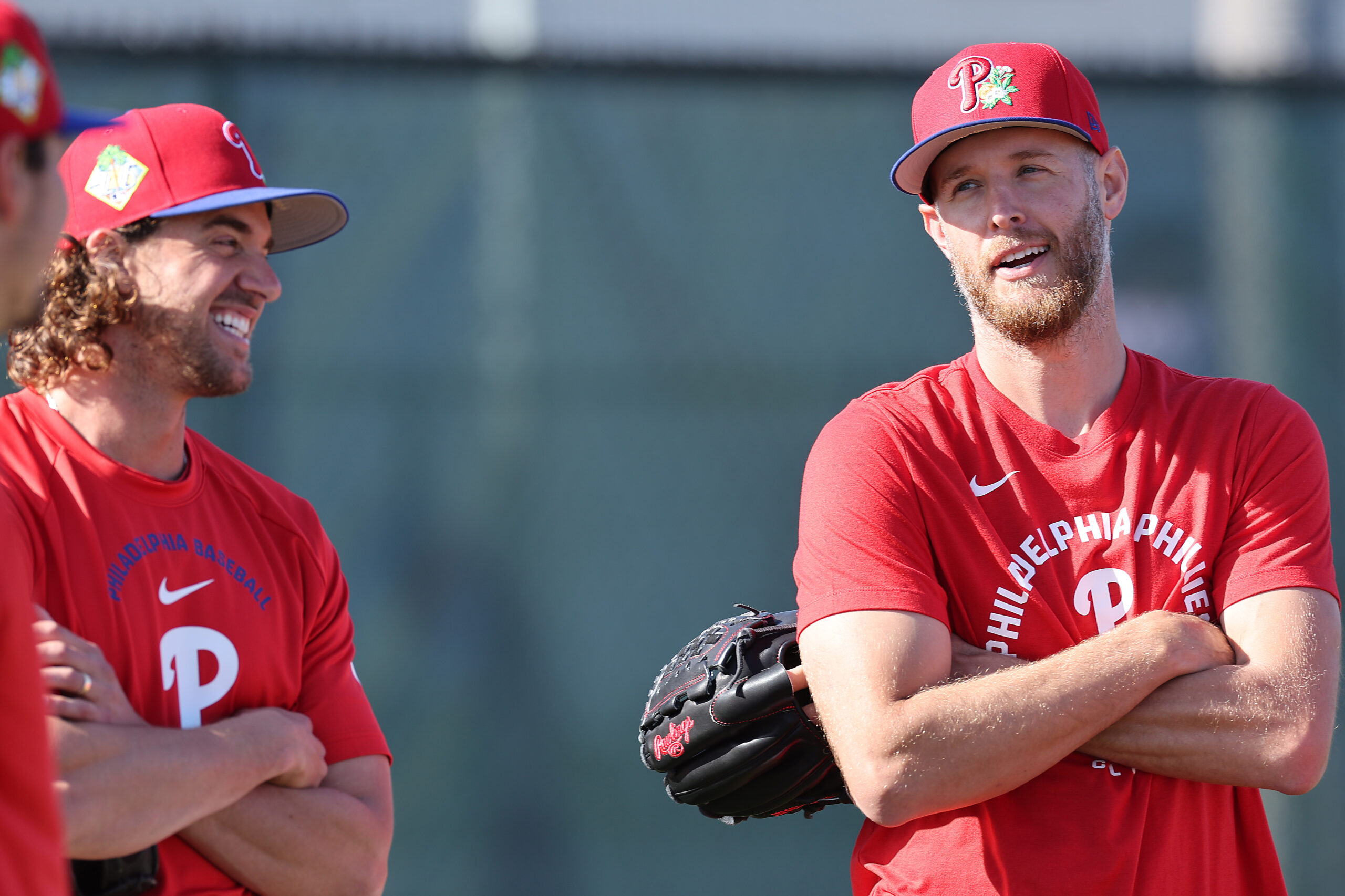
    Phillies pitcher Aaron Nola (left) listens as Zack Wheeler jokes around during spring training in Clearwater, Fla.

    “Even though like the whole blood clot thing was pretty serious, I didn’t even find it that scary,” he said. “Maybe I’m just naive to it. But I didn’t get a blood clot because of my health or anything like that. It’s just two bones were pinching together. That’s why it happened. So, that kind of eased the thoughts in my head.”

    Wheeler underwent a thrombolysis on Aug. 18 at Thomas Jefferson University Hospital to remove the clot and open the vein. After taking blood thinners for five weeks, Wheeler had surgery Sept. 23 to remove the rib. The vein had closed again and a second clot was forming.

    It was “nothing out of the ordinary,” according to Wheeler, who said his St. Louis-based vascular surgeon, Robert W. Thompson, warned that the vein might not stay open until after they removed the rib.

    “Just from hearing what they were saying, if it stayed open, hooray. But I don’t think they really expected it to,” Wheeler said. “The rib was still there. The clavicle is obviously still there.”

    Before Wheeler left the hospital, doctors went in again to make sure the vein hadn’t closed again. It had not.

    Then came the hard part: weeks of physical therapy and rehab, including a strict diet of what Wheeler described as “small amounts and healthy stuff,” not easy for an unabashed fast-food and junk-food lover. He’s unsure how much weight he lost but said it was “a good bit.”

    “You can’t have fats or something like that,” said Wheeler, who rejoined the team Oct. 4 for pregame introductions before Game 1 of the division series against the Dodgers. “I lost a lot of weight doing that because I could barely eat, really.

    “It was pretty painful that first week. It was rough. But since then it’s been pretty smooth sailing.”

    Wheeler spent most of the winter in Philadelphia, rehabbing under Buchheit’s supervision. There’s a history of pitchers returning from this particular form of thoracic outlet syndrome. Among the success stories: Merrill Kelly, at age 31, had surgery in September 2020, made it back by April 2021, and is still going.

    So, while outsiders — and even some of his teammates — wonder if Wheeler will be Wheeler again after a procedure that he insists wasn’t as scary as it sounds, he puts in the work each day with his usual nonchalance.

    “I mean, it might be a little thought, but at the same time, you can’t worry about that kind of stuff,” Wheeler said. “There’s no hesitation at all.”

  • Five things to watch as Villanova plays its final four regular-season games before the Big East tournament

    Five things to watch as Villanova plays its final four regular-season games before the Big East tournament

    Inside a sold-out Xfinity Mobile Arena on Saturday night, Villanova endured a 40-16 UConn run over a 20-minute stretch that turned the biggest home game of the season into a blowout loss.

    The loss dropped the Wildcats to 21-6 and 12-4 in the Big East, and, barring the unforeseen, all but ensured them the No. 3 seed in the conference tournament, which begins in two weeks at Madison Square Garden.

    Just four games separate the Wildcats from the postseason, starting with a home game Wednesday night vs. Butler (15-13, 6-11). A trip to the NCAA Tournament, which would snap a three-season drought, is basically a foregone conclusion, but, as Saturday showed, there are things that need to be corrected if Villanova wants to finish the season strong and threaten to get to the second weekend.

    Here are five things to watch in the final four games of the regular season.

    The second unit

    It was a rough night all around vs. the fifth-ranked team in the country on Saturday, but it was especially difficult for much of Villanova’s second unit. Sophomore wing Malachi Palmer was minus-17 in 18 minutes. Devin Askew, who has provided a big boost as a veteran ball handler and scorer off the bench, was minus-16 in 18 minutes. Backup center Braden Pierce was minus-13 in 11 minutes.

    Plus-minus numbers never tell the whole story. But Villanova caused eight turnovers in the first half and couldn’t take advantage in part because the second unit struggled offensively. The two-man game with Askew and Pierce, for example, was ineffective.

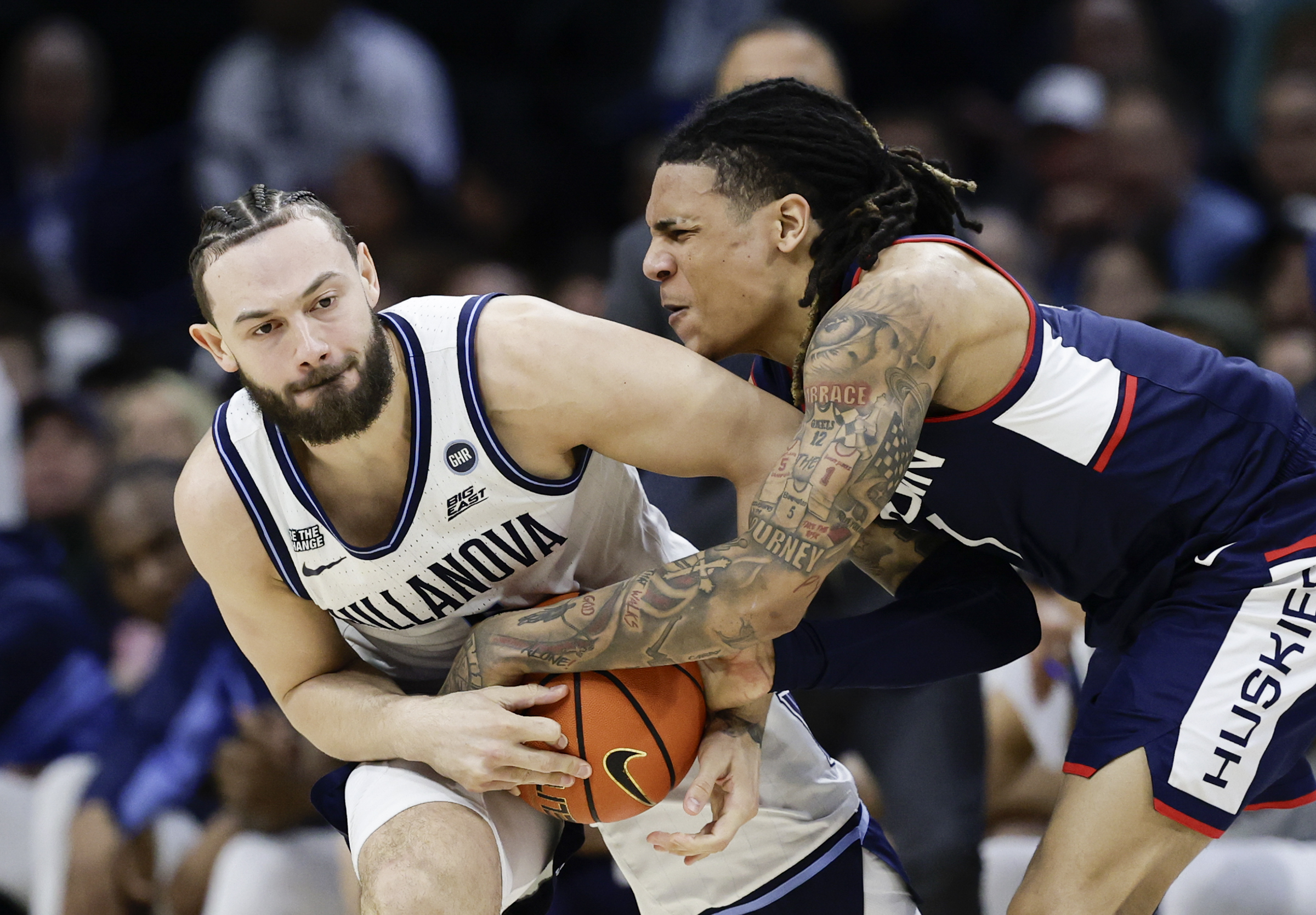
    Villanova guard Devin Askew and UConn’s Solo Ball fight for possession in Saturday’s matchup.

    Pierce has made some strides in recent weeks filling in for Duke Brennan when the starter needs rest. Palmer emerged in the second half of the season as a reliable reserve on both ends. Freshman Chris Jeffrey returned from injury and has occasionally provided a spark. Askew, meanwhile, has been the reason Villanova has won a few games. But the 23-year-old guard is 9-for-44 from the floor (20.4%) over the last five games and has not made up for it by creating efficient offense and generating assists.

    Villanova coach Kevin Willard talked recently about needing to figure out which lineups to get out there at the right times now that his team is healthier and the bench has expanded. Perhaps we’ll see some new wrinkles over the next two weeks.

    Bryce Lindsay’s shot

    Lindsay got the weight of the world off his shoulders when he made 4 of 8 three-point shots and scored 15 points during an overtime win at Xavier last week. Before that, Lindsay was 13-for-65 (20%) in the previous 11 games.

    Lindsay’s shooting prowess helped Villanova to a 9-2 start through nonconference play, but when his shot wasn’t falling, it wasn’t as easy to justify playing him 30-plus minutes, which Villanova asked of him when he had it going earlier in the season. Villanova’s offensive analytics are much better with Lindsay on the floor than off, even when his shot isn’t falling. But his perimeter defense can leave a little to be desired in critical moments of the game.

    Villanova guard Bryce Lindsay shoots the basketball over UConn’s Malachi Smith on Saturday.

    Everything is easier for Villanova when Lindsay’s shot is going in. Willard would probably be wise to try to get Lindsay going over the next four games. The coach said the redshirt sophomore guard was feeling the mental side of his slump but was confident that Lindsay would be a big boost going into the postseason.

    Free throw woes

    Villanova has missed at least five foul shots in each of its last 10 games. The Wildcats missed eight and almost lost to a Xavier team with five conference wins last week. They missed 13 on Feb. 10 and almost suffered a home loss to Marquette because of it.

    After that game, Willard pointed to a young team shooting important free throws in bigger college basketball games for the first time and needing to work its way through it.

    Two weeks from now, the lights get even brighter.

    Bouncing back

    Villanova “didn’t come out with enough urgency” after it left the locker room following halftime trailing UConn by just two, leading scorer Tyler Perkins said.

    It led to an embarrassing loss in front of the home crowd, and Willard said his team seems to have a better mentality on the road than it does at home.

    Villanova guard Tyler Perkins grabs the basketball in front of UConn’s Jayden Ross on Saturday.

    “We’ve really struggled at home at times just playing well for good stretches,” he said. “Some of it is a little bit of youth. This is really only our second time in this building. The crowd was unbelievable. They were into it. I think some shots that we’ve been making, we were a little juiced up and missed some shots early.”

    He also said that “every once in a while you get your [butt] kicked.” That’s happened only once or twice (depending how you’d classify the home loss to St. John’s on Jan. 17), but the last time the Wildcats were blown out, an 89-61 loss to No. 3 Michigan on Dec. 9, they responded with a dominant home win over Pittsburgh and two tough road wins at Wisconsin and Seton Hall.

    “It’s not the end of the world,” Willard said.

    Bouncing back starts Wednesday, when the Wildcats have a chance to also play well in front of a home crowd.

    The seed line

    With a road game at St. John’s looming on Saturday, Wednesday night’s game vs. a Butler team that Villanova blew out on the road on Jan. 3 isn’t one to fool around with.

    Bracket Matrix, the website that tracks all of the NCAA Tournament bracket projections, shows Villanova as the top No. 7 seed in the bracket with an average seeding of 7.04. Losing to Butler at home would probably be a seed-line loss, and dropping back into the 8-9 range means the possibility of having to face a No. 1 seed on opening weekend.

    There’s some runway left, and moving up a seed line — or two, pending a big run at the Garden — is still possible. It’s just a bad time of year to fall backward.

  • Sixers dominate Pacers, 135-114, in Joel Embiid’s return to the lineup

    Sixers dominate Pacers, 135-114, in Joel Embiid’s return to the lineup

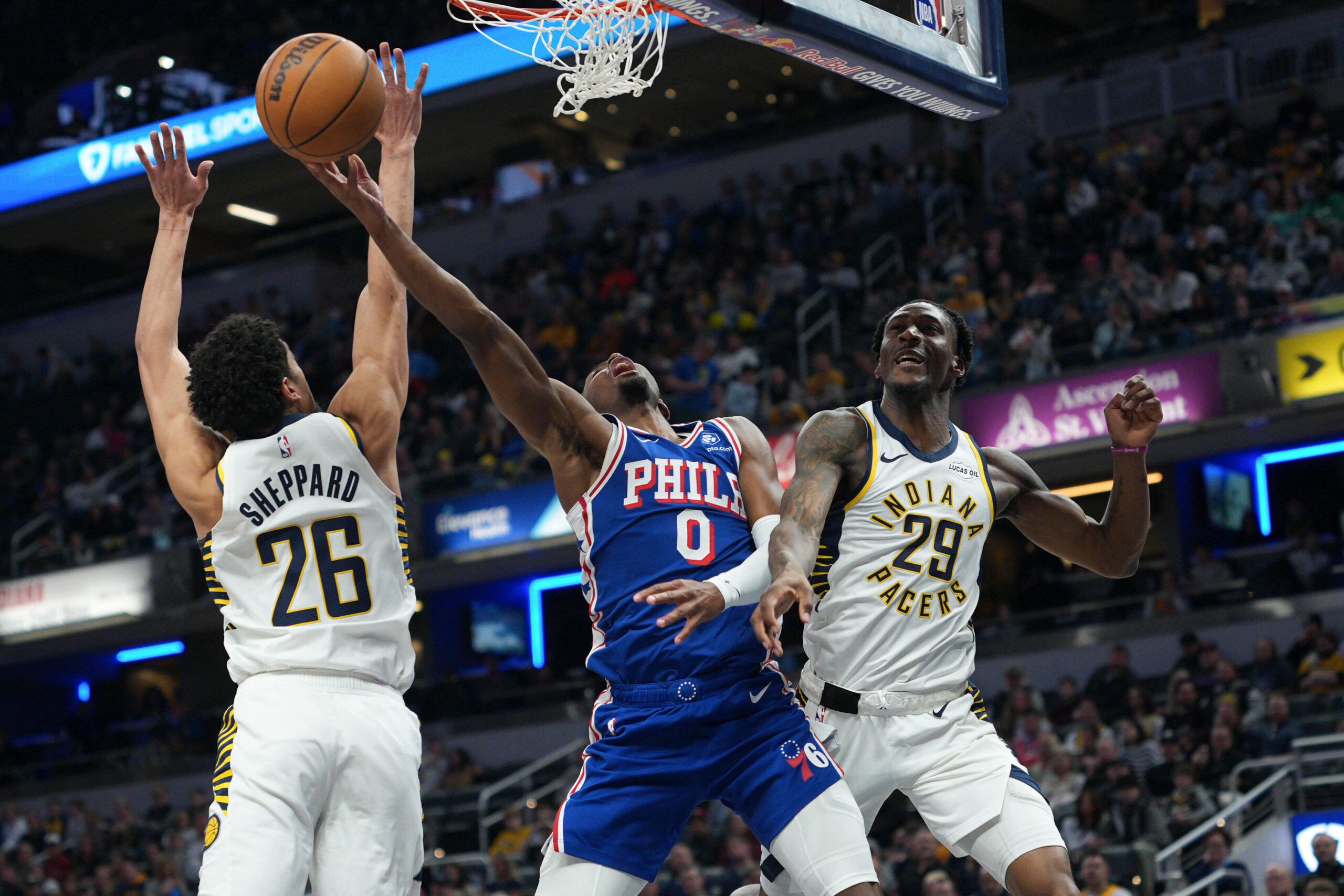
    INDIANAPOLIS — Joel Embiid had 27 points in his return to the lineup after missing five games with right shin soreness and right knee injury management, Tyrese Maxey scored 32 points, and the 76ers beat the Indiana Pacers 135-114 on Tuesday night.

    Embiid scored 20 points in the first half, sinking 11 of 17 shots in 26 minutes. VJ Edgecombe chipped in with 23 points on 9-of-13 shooting for the 76ers, who shot 58%.

    Andrew Nembhard and Micah Potter each scored 23 for the Pacers. Quenton Jackson had 15 points and rookie Kam Jones added a career-high 13 points.

    Pacers leading scorer Pascal Siakam was out with a left wrist sprain. The Pacers also were without Aaron Nesmith, who missed his third consecutive game with right ankle sprain.

    Indiana shot 42% from the field and committed 16 turnovers. The Sixers held a 44-41 rebounding edge with Maxey leading the way with nine rebounds. Jarace Walker had 10 rebounds for the Pacers.

    The 76ers showed their dominance inside with a 82-52 edge in points in the paint.

    Sixers guard Tyrese Maxey (center) had a game-high 32 points against Indiana.

    The Pacers led 38-30 after the first quarter, but the 76ers answered with a 17-0 spurt to open the second quarter and take a 47-38 lead. Philadelphia shot 64% to take a 75-65 lead at halftime.

    Maxey scored 13 points in the third quarter as the 76ers took complete control, expanding the lead to 106-85 after three quarters.

    The Sixers led by 28 points in the fourth quarter before emptying the bench. They will return to Xfinity Mobile Arena next to face the Miami Heat on Thursday (7 p.m., NBCSP).

  • Joel Embiid will return to the Sixers lineup vs. Pacers after missing five games

    Joel Embiid will return to the Sixers lineup vs. Pacers after missing five games

    INDIANAPOLIS — Joel Embiid will return for the 76ers’ Tuesday game at the Indiana Pacers, the team said.

    Embiid had missed the Sixers’ previous five games with shin soreness and to manage an injury in his right knee. The shin soreness surfaced during the mid-February All-Star break while participating in a management program for his right knee injury, which first emerged earlier in the season.

    Embiid had progressed to 4-on-4 on-court work on Sunday and participated in most of Tuesday’s shootaround, coach Nick Nurse said during his pregame news conference.

    Before this absence, Embiid was enjoying a dominant resurgence that put him in consideration to be an All-Star reserve. The former NBA Most Valuable Player had averaged 30 points on 52.7% shooting, 8.0 rebounds, and 4.5 assists in his last 20 games played from Dec. 23 through Feb. 7.

    Prior to this season, Embiid struggled to stay healthy following multiple surgeries on his left knee. He played in only 19 games last season, and missed nearly two months of the 2023-24 season.

    Following Tuesday’s game, the Sixers next host the Miami Heat on Thursday before a marquee road matchup at the Boston Celtics on Sunday night.

  • Unhappy with his game, Matvei Michkov got to work over the break: ‘I was training every day’

    Unhappy with his game, Matvei Michkov got to work over the break: ‘I was training every day’

    The Flyers’ season restarts Wednesday in Washington, and Matvei Michkov is ready to go.

    “I was training every day. Was not resting,” the winger said through team translator Slava Kuznetsov about how he spent his Olympic break.

    Michkov said he did two-a-days off the ice for seven days during the break. One session focused on strength and another on conditioning and stamina while he stayed off the ice. He also posted pictures and videos on Instagram on Feb. 16, showing him working out on vacation in the Dominican Republic, and said he had a trainer with him.

    “Last year, the 4 Nations [Face-Off] was not too long a break, so I was just resting,” he said when asked about his impressive stretch after the February 2025 tournament. “This time, I was not planning to rest. I was not happy with the way the game was going, so I was working the entire break.

    “My emotions depend on how the hockey goes, so that’s why I decided to work instead of the rest.”

    In mid-October, the Spittin’ Chiclets podcast reported that sources said Michkov was “out of shape,“ and coach Rick Tocchet revealed the same day that Michkov had suffered an ankle injury in the offseason that impacted his training. In November, the 21-year-old Russian attributed his slow start — one goal in his first 13 games, and now 13 across 55 — to his failure to train well over the summer.

    Over the past several weeks, The Inquirer has spoken with former and current NHL players about the conditioning and strength needed to endure the grind of the 82-game season, especially one as condensed as this one.

    They all agreed that while not 100% impossible, it is incredibly difficult to build strength and conditioning during the season. A large part of that is because of the lack of time to recover when players need to be ready to play a physical game at a consistent level. This season, even more so, makes it tough to have an extra day to “run myself into the ground,” as one player put it, because the next day is a game or practice.

    In-season programs are built to maintain instead of build, with even maintaining still difficult to achieve. Conditioning and stamina do go up as games build because of the constant stress of the game on the body, but strength goes down for everyone. The work has to be done in the summer, and Michkov, who was “a little bit behind the eight ball” as Tocchet said earlier this season, reiterated Tuesday that he has learned from his mistakes.

    Flyers coach Rick Tocchet and Matvei Michkov haven’t always agreed on the winger’s role and ice time this season.

    “The NHL is hard work,” he said. “If you take a four-month break, it can reflect [in] your game. You have to concentrate on hockey all the time, and you cannot take even a month of [a] break. You have to be smart when you train in the break, don’t take [an] injury, but training must go.”

    As for working with Tocchet, another topic that swirls around Michkov due to his current role and ice time, the sophomore forward said they have the “common relationship” between coach and player.

    He said he was also unaware of the media chatter before the break, specifically around Tocchet’s comments on the PHLY podcast at the Flyers Charities Carnival regarding Michkov’s minutes and how general manager Danny Brière wanted “to address a little bit of the noise that is going around” while denying a rift between the two.

    “I’ll play as much time as I’m [being] given, and I have to do my job. That’s the only thing I care about,” said Michkov, who is averaging more than two minutes fewer this season compared to last.

    “The way the [coach] plays me, that’s the way he decides to play, so I’ll play. I’m a player, and I have to concentrate 100% on what I’ve been doing at that moment.”

    A left-handed left wing is preferable to many coaches in the defensive zone because it typically pits a lefty against a right-shot defenseman, so they have sticks on the same side — and in the shooting lane — as the defenseman when they try to close them down.

    Another aspect of Tocchet’s decision-making that has drawn criticism is his switching of the left-handed Michkov off his preferred position of right wing to the left side. Some traditionalists will tell you that Michkov should be playing on the left side anyway, especially in defensive-zone coverage, as a left-handed stick will be able to use the walls and protect the puck to get it out on the left side.

    Tocchet said in January that it’s just to line up and not a big deal in the offensive zone, “but through the neutral zone, for me, the faster you can go on your forehand is the better [side]. But that doesn’t mean you can’t go to the other side.”

    Asked about the adjustment, Michkov responded: “I’m always playing [on] the right, I was always happy. Now I’m playing on the left [and] it’s a new role. If the coach sees me there, I have to adapt as quick as I can. But, for me, on the right, I can create a lot more moments. Now I have to switch everything to the left and do the same thing.”

    Regardless, Michkov says he is feeling 100% and “very light on the ice.” His focus is not on the noise but the last stretch of games as the Flyers try to make up ground in the Eastern Conference and gain a spot in the Stanley Cup playoffs.

    “I’m sure every single player is looking [to win] those games,” he said.

    “Twenty-six games left; it’s hard work. Everybody wants to make the playoffs, and that’s our goal on the ice — for me, for coaches, and for staff as well — everybody’s thinking about the group and how to win those games and make the playoffs.”

    Breakaways

    Rasmus Ristolainen rejoined the Flyers on Tuesday after an impressive Olympic performance in Milan. He said he roomed with Mikko Rantanen in the Athletes’ Village and is just happy he didn’t lose his bronze medal after the game. … Assistant coach Todd Reirden said Travis Sanheim was at the Flyers Training Center on Tuesday and is expected to play against the Washington Capitals on Wednesday (7 p.m., NBCSP). He took a different route home from Italy than Tocchet, who flew on the charter to Miami and was unable to make it to Philly because of the weather. Tocchet will join the team in Washington.

  • Howie Roseman addresses Jaelan Phillips, Brandon Graham, and other potential free agents ahead of the combine

    Howie Roseman addresses Jaelan Phillips, Brandon Graham, and other potential free agents ahead of the combine

    INDIANAPOLIS — Howie Roseman opened his session with Eagles reporters last week in Philadelphia ahead of the NFL scouting combine by laying out a basic blueprint for building a championship-caliber roster: Draft well, re-sign your best homegrown talent, add here and there in free agency, and hopefully rinse and repeat.

    But in setting those parameters, Roseman was also managing expectations for how the Eagles will approach their 19 unrestricted free agents, those who will reach the market next month, and how the general manager will navigate a tightening salary cap after years of pushing cash into future years.

    On Tuesday at the combine, Roseman was asked about specific players whose contracts are up, and some still under contract who aren’t guaranteed to return next season — not that the GM would ever promise that any player will be back (see: wide receiver A.J. Brown).

    Roseman, conversely, didn’t rule out the return of anyone he was asked about, even though he made clear last week that the Eagles will have to say goodbye to many of their free agents, a group that includes some starters they drafted.

    Edge rusher Jaelan Phillips would seem to be a priority signing, even if he’s projected to be one of the more sought-after free-agent commodities when the new league year opens on March 11. The Eagles had Phillips for only two-plus months but praised his work.

    “You certainly see his fit with Coach [Vic] Fangio in our defense, which a lot of times when you’re talking about free agency is a big part of free agency,” Roseman said. “How is this guy gonna fit into our defense? So you see that there, you’ve been with the guy. He’s got tremendous character, tremendous work ethic.

    “And then all the things that you’re doing, you’re trying to balance the other factors that go along with that to try to come down with a value.”

    In other words, the Eagles will negotiate, but they might be willing to only go so far. If they can’t bring the 26-year-old Phillips back, they may need to find other avenues at the position. Nolan Smith Jr., Jalyx Hunt, and Jose Ramirez, who signed a futures contract after the season, are the only Eagles edge rushers currently under contract.

    “We usually take seven or eight guys to camp. We only have three on the roster right now,” Roseman said. “So definitely think we’ll have to address it. It’s a priority position for us.”

    Aside from Phillips, Josh Uche, Azeez Ojulari, Ogbo Okoronkwo, and Brandon Graham are all slated to become free agents. Roseman didn’t rule out welcoming back the 37-year-old Graham, who came out of retirement in early November, for an unprecedented 17th season in midnight green.

    “Brandon Graham is always welcome in Philadelphia,” Roseman said. “Obviously, when I think about what he’s done for us as a player, as a person, and then last year, even when he came back in, the versatility that he showed, coming in in the end of the year and reducing inside and playing defensive tackle, just an all-time Eagles great, future Eagles Hall of Famer.”

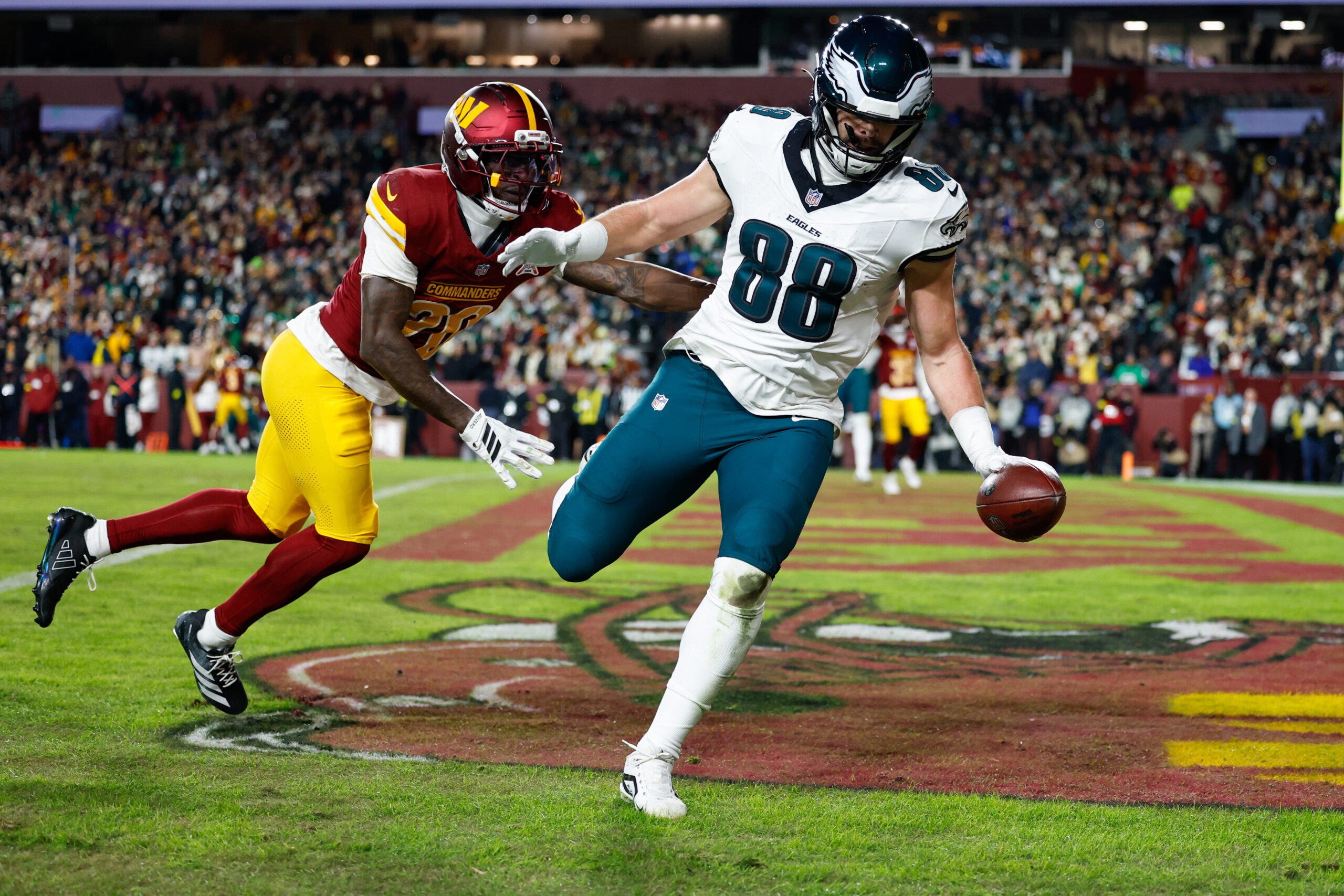
    Dallas Goedert led the Eagles in touchdowns but might have played his last game with the team.

    Roseman speaks on Goedert, Blankenship, other free agents, extension candidates

    Roseman had the following to say about the Eagles’ three other free agents who started last season:

    On tight end Dallas Goedert:

    “Tremendous player and person for the Philadelphia Eagles. Really glad we were able to figure it out and bring him back to Philadelphia this year and for the season and [be] tremendously productive for us. Just a huge asset for our offense to have him on our football team. Again, we got to put the whole puzzle together. To sit here — we got a lot of other free agents, too — and say, ‘Hey, we’re definitely going to get this guy back …’ When we get this late, obviously, the market dictates a lot of that, as well. But we’ll certainly sit down with his agent here over the next couple of days and have a conversation.”

    Goedert isn’t the Eagles’ only free agent tight end. Grant Calcaterra and Kyle Granson will be unrestricted in a few weeks. Roseman said last week he needed to do a better job of evaluating the position in prioritizing hybrids who can also block. He has a chance to remake the position, with new offensive coordinator Sean Mannion expected to implement the Kyle Shanahan-Sean McVay scheme.

    On safety Reed Blankenship and linebacker Nakobe Dean:

    “Really proud of Reed, undrafted free agent, and played in two Super Bowls, four years, four playoff appearances. Was a captain this year for our team, tremendous player, tremendous person.”

    Roseman wasn’t asked directly about linebacker Nakobe Dean, but when the topic of 2025 first-rounder Jihaad Campbell stepping back into a starting role was brought up, he brought up Dean.

    “Obviously, we have a free agent at that position, a guy that we drafted, a guy that we think is a really good player, and unbelievable character,” Roseman said. “And so, all those decisions here [will be] made in the next couple of weeks.”

    Still, it seems unlikely that Dean will be back. Blankenship’s future in Philly seems more dependent upon his leaguewide value or whether the Eagles can afford Phillips.

    On potential contract extensions across the defensive line:

    The Eagles also have three defensive players available for extensions three years into their rookie deals: defensive tackles Jalen Carter and Moro Ojomo along with linebacker Nolan Smith Jr.

    The Eagles picked up the fifth-year option for defensive tackle Jordan Davis last offseason rather than extend him, and their gamble paid off after he took a jump in Year 4. Davis may be the most likely of the quartert to have his contract reworked this offseason.

    “That’s another guy, obviously, that you draft, you develop, tremendous character and continues to get better,” Roseman said. “That’s a group of a lot of players that we have, that we have tremendous confidence in, and the puzzle is trying to keep as many of them together as we possibly can.”

    Howie Roseman expressed confidence in up-and-down kicker Jake Elliott.

    On Jake Elliott:

    Kicker Jake Elliott is under contract for three more seasons, but he has become increasingly inconsistent after having a career year in 2023. Elliott has been under 80% in field goal efficiency the last two years. Roseman gave him a strong endorsement, however.

    “Jake has been a tremendous kicker for us since we got him off practice squad in Cincinnati in 2017,” Roseman said. “Tremendously clutch. Have a lot of confidence in him as a player, as a kicker, as a person, captain on our team, and continue to believe in him as our place kicker.”

    At cornerback, the Eagles have two of the best at their respective positions: outside corner Quinyon Mitchell and nickel corner Cooper DeJean. The third spot was unsettled until veteran Adoree’ Jackson settled into the spot in the second half of the season.

    But he is also a free agent and the Eagles are unlikely to spend with Mitchell and DeJean likely to warrant big extensions next offseason.

    “When you look at Q and Coop leading that group — two All-Pro players, guys who we want to be part of Philadelphia Eagles for a long time,” Roseman said. “Coop, he can play anything. He can play outside corner, he can play nickel, he could play at an All-Pro level anywhere. So having him gives you some flexibility.

    “And so, we’ll go into the offseason looking to add to that position. Adoree’ did a really nice job for us last year and got better throughout the course of the year. … He’s a free agent and we’ll just kind of see how the offseason plays out.”