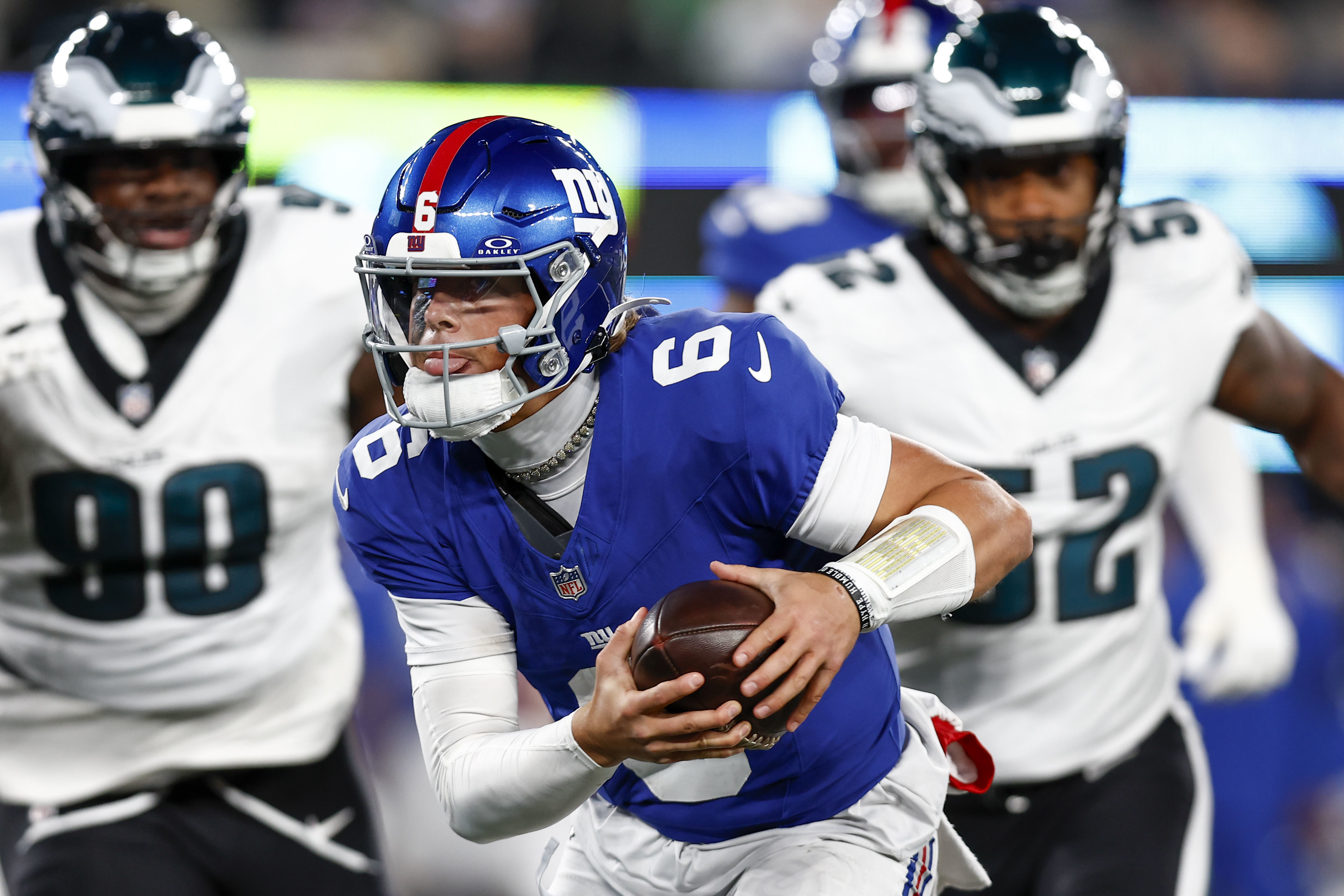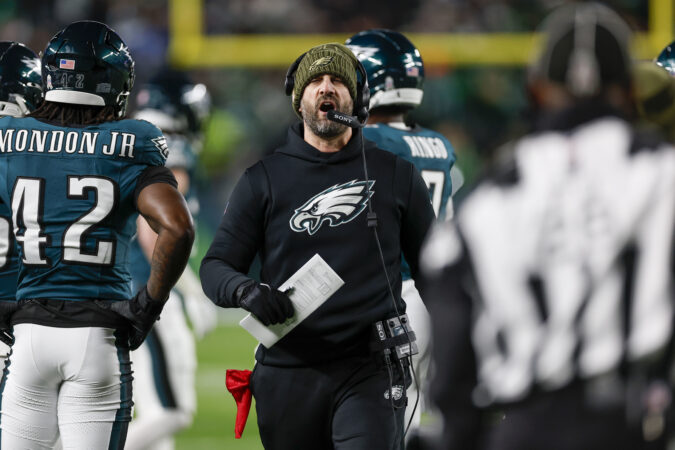
Category: Sports Columnists

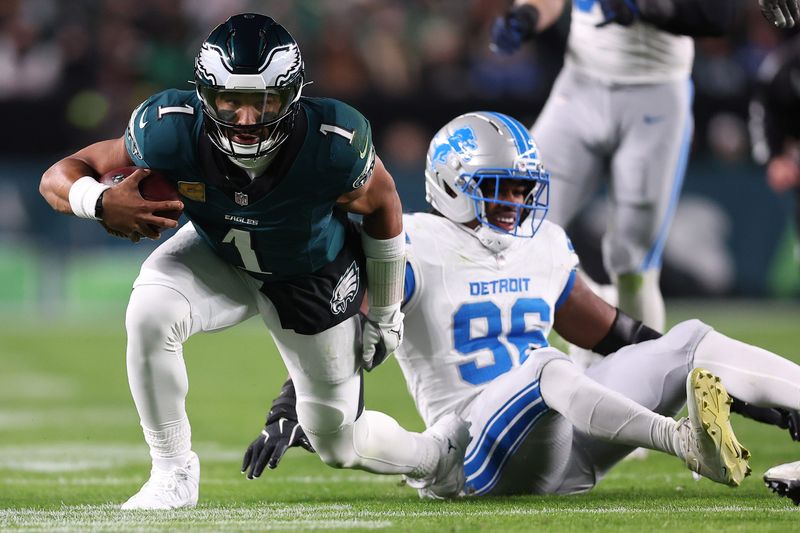
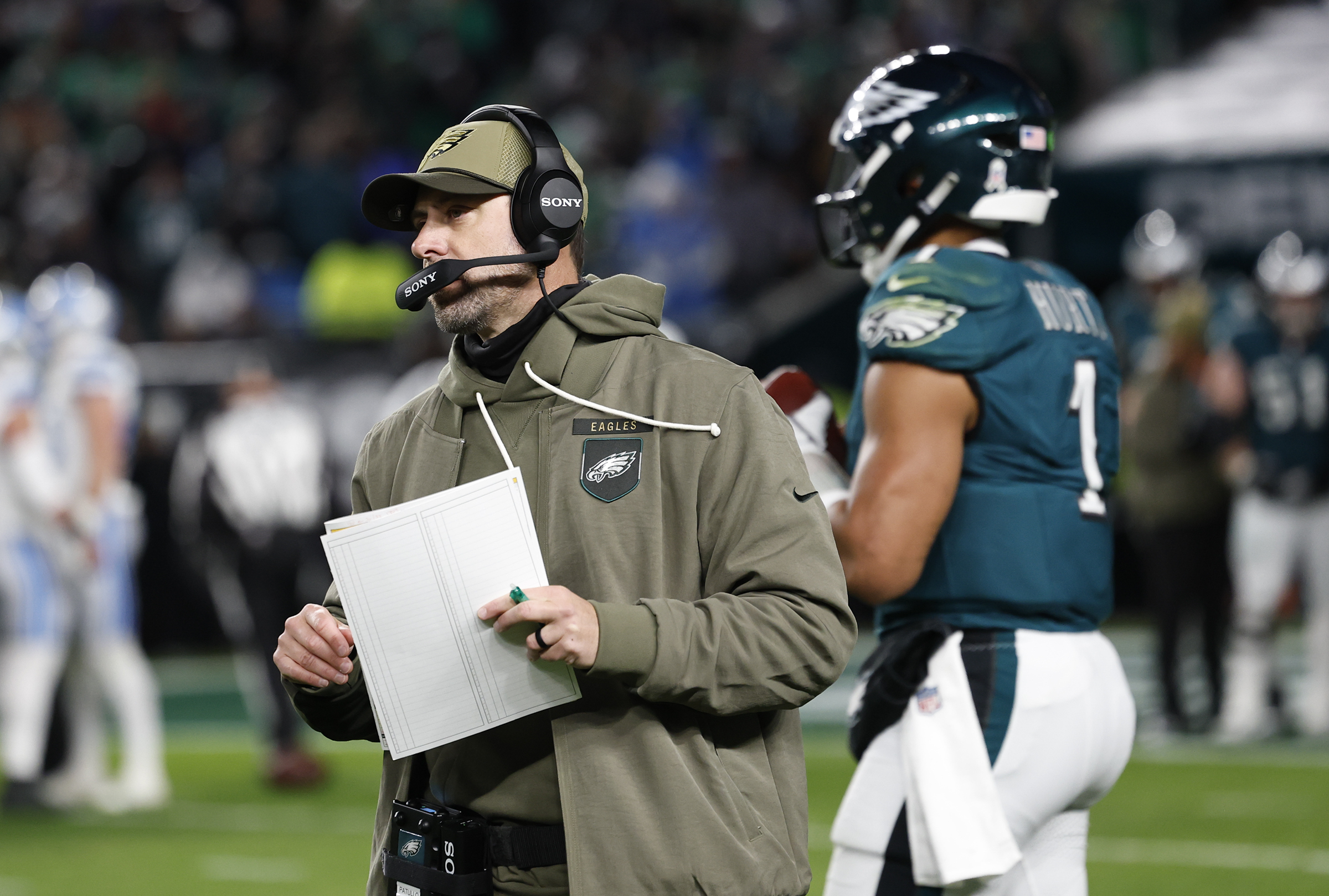
  • The Eagles had problems with the Tush Push against the Lions. Nick Sirianni has to adjust his coaching accordingly.

    The Eagles had problems with the Tush Push against the Lions. Nick Sirianni has to adjust his coaching accordingly.

    Seven hundred and twenty-four days ago, Nick Sirianni stared into a bank of TV cameras and dared the NFL — hell, dared the whole world — to stop the play that the Eagles had mastered and no one else in pro football had. It was late October 2023, and while holding a seven-point lead against the Miami Dolphins, the Eagles ran a quarterback sneak, a Tush Push, on fourth-and-1 with 10 minutes, 1 second left in regulation. That wasn’t the striking part. Neither, really, was the fact that Jalen Hurts powered forward for a first down. The striking part was that the Eagles were on their own 26-yard line, a set of circumstances that made a bold postgame assertion from Sirianni all the more memorable.

    “If everybody could do it,” he said that night, “everybody would do it.”

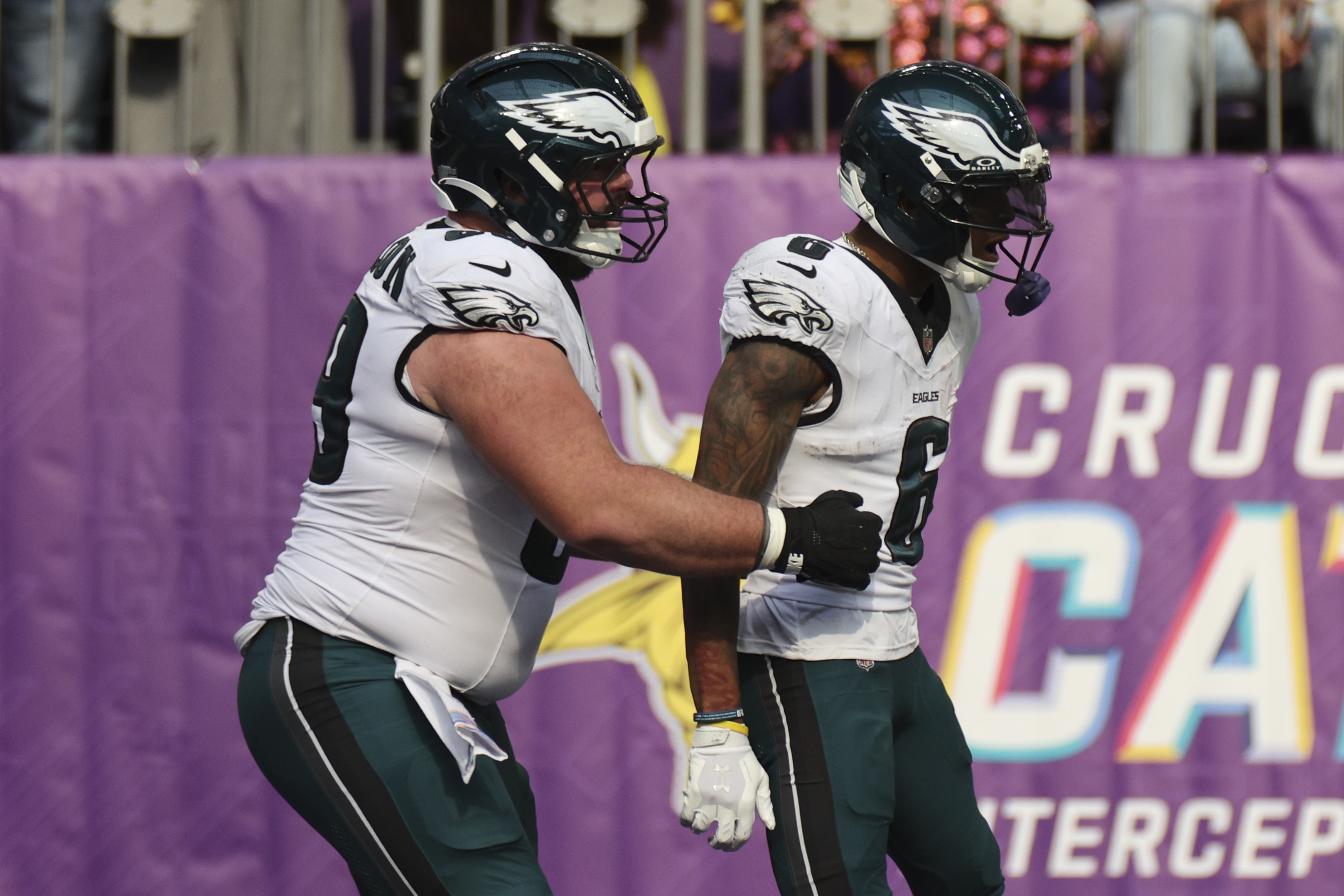
    Well, there the Eagles were Sunday night, and for once, the Tush Push was an issue for them. For once, it wasn’t automatic. For once, its magic was gone, and of all the ramifications of the Eagles’ 16-9 victory over the Detroit Lions, that relative demystifying of their signature, unstoppable play was among the most concerning. For these last few years, the Tush Push had given them an innovative and significant advantage over their opponents, had meant the Eagles really needed just 9 yards to get a first down, because the 10th yard was a fait accompli.

    Nothing was that easy Sunday. The Eagles succeeded just once — Hurts’ second-quarter touchdown, the team’s only one of the game — in their six sneak attempts. They false-started. They were stuffed. With 2:54 left in regulation, with the Eagles up 10 and facing fourth-and-1 from their own 29-yard line — a situation similar to the one they confronted against the Dolphins in ’23 — Hurts went nowhere, and that failure invited the Lions back into the game by handing them at least a chance to cut the lead to a single score.

    “I’d do it again over and over,” tackle Jordan Mailata said. “I’d take us any day. Now, we’ve got to go back and watch that play and see what went wrong. But I’d still take us any day of the week. When you have a defense like ours, it does make it easier to go for it on fourth down. There’s the trust and faith in the guys up front, but also, if we don’t get it, there’s the trust and faith in the guys on defense.”

    That was the knee-jerk justification for a call that, in the context of this particular game and the condition of this particular Eagles offensive line, Sirianni never should have made. When he had the Eagles go for it from their own 26 nearly two years ago, his decision was surprising because it was so unconventional at the time. He was correct then: The Eagles were the only team that could run the Tush Push with so high a rate of success, and they could because of the players they had blocking on the play: Jason Kelce, Lane Johnson, Mailata, all healthy.
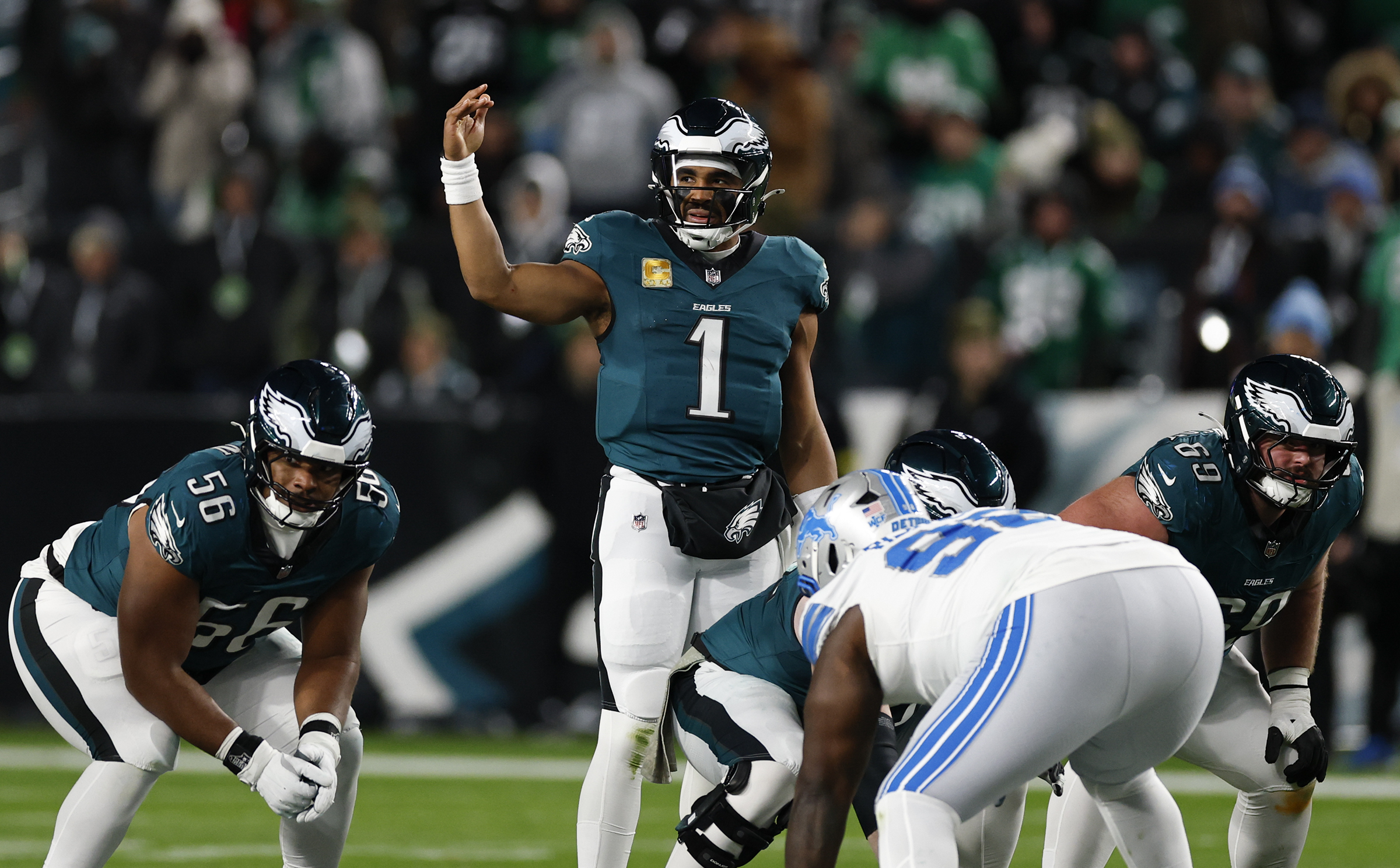
    Jalen Hurts has been frequently working behind a different version of the O-line than the dominant one that patented the Tush Push.

    Sunday was so far from that same scenario. Johnson was ruled out at halftime with a foot injury, and center Cam Jurgens, having missed the previous two games with a knee injury and already playing through the painful effect of offseason back surgery, had exited, too, with 5:06 to go. So two backups, Fred Johnson and Brett Toth, were subbing for them. And the NFL and its officials and a chorus of complainers are now watching every twitch and subtle hint of movement every time the Eagles run the Tush Push. And now a play that was once a slam dunk is something closer to a midrange jump shot.

    “They’re homing in on it,” Hurts said. “They’re very strict on the guard and the center and how they operate. They’ve got their eyes on it, and we’ve got to go out there and be as clean as possible.”

    This sliver of doubt when it comes to the Tush Push might seem a small matter. It isn’t. The play’s reliability was a tangible symbol of the strength of the Eagles offense: the manner with which they controlled the line of scrimmage. Lane Johnson’s warning last month, after a loss to the New York Giants, about the offense becoming “predictable” was in that sense silly. No offense in the NFL last season was more predictable than the Eagles’. Everyone knew Saquon Barkley was getting the ball, and still no one could stop it.

    This season, the worry for a team that is 8-2 and atop the NFC is simple: That inevitable dominance hasn’t been there, and that reality has to change the calculus when it comes to the Eagles’ trademark aggressiveness in their play-calling. They could afford to go for it anytime, anywhere in short-yardage situations when they had the best collection of blockers in the league. The line’s regression should compel Sirianni to coach the team he has right now, not the one he used to have or the one he wished he had, and over the rest of the season, he has to weigh how much he asks of a defense that is carrying the Eagles, that allowed them to get away with two subpar offensive performances against two playoff-caliber teams.

    “Always. Always. You always think about those things,” he said. “You think about how it plays in-game, but you also think about your past experiences. Everything is taken into account. But you definitely think about how it’s playing in-game. … Any time we don’t get a fourth-down conversion, I’m going to put that on myself. I’m always going to be hypercritical of myself. Obviously, if I had known we weren’t going to get it, I would have punted it.”

    He couldn’t have known it, but he could have suspected it, and he has to start asking himself a question that he once didn’t have to contemplate. Of course, if everybody could do the Tush Push, everybody would. But what if the Eagles can’t?
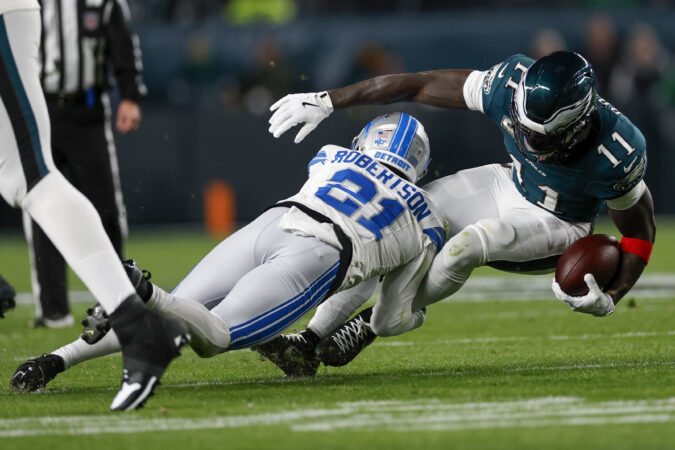
  • A.J. Brown was right. The Eagles offense is still a bleep show. They need to fix it soon.

    A.J. Brown was right. The Eagles offense is still a bleep show. They need to fix it soon.

    A.J. Brown was wrong about one thing.

    The Eagles offense isn’t a bleep show.

    It isn’t any kind of show at all.

    At this point, it’s just plain ol’ bleep.

    If that sounds harsh, well, harsh is a pretty good word to describe the experience of watching the Eagles offense right now. The play-calling lacks imagination. The run-blocking lacks the dominance that was once its hallmark. The quarterback has always lacked aggression. Now, he lacks accuracy, too.

    That’s not an ideal formula. There are all kinds of ways you can shrug off the staggering ineptitude the Eagles displayed while muddling their way to a 16-9 win over the Detroit Lions on Sunday night. It’s an easy thing to do when your defense consistently forces opponents to play bleepier than you. The Eagles are 8-2, with the best Super Bowl odds in the NFC, and victories over four of the five teams whose odds are just behind theirs. That stuff matters. But you can’t shrug off the one question that every team with Super Bowl aspirations must constantly ask itself.

    Are we a championship team in our current form?

    That the Eagles can even think about answering yes is a testament to how good they are everywhere outside of offensive execution.

    Brown said it best on Sunday night.

    “This team is resilient,” said the Eagles’ wide receiver, who broke free of his recent on-field anonymity with 11 targets and seven catches, albeit for only 49 yards. “Show up, work hard, find a way, no matter what it looks like.”

    Brown is right. And he has been right all along. The Eagles are a very good team. Winning football games is important. But so is progress. Right now, the Eagles are a long way off from being the best team they can be.

    Nothing that we saw from them on Sunday night suggests their fundamental problem has been solved. It isn’t just that the Eagles aren’t scoring enough points. It’s that they don’t appear to be getting any better.

    They have scored 17 or fewer in four of their last six games, including a combined 26 in their last two. Are they capable of winning a Super Bowl in their current form? Absolutely. But you can’t ignore how different their current form is from the one that saw them win the Super Bowl last season.

    For the second straight game, and for the fifth time this season, the Eagles failed to crack 300 yards of total offense. That only happened three times all last season. Heck, it only happened five times in 2023.

    There are plenty of mitigating circumstances. Last week’s game in Green Bay was played in real feel temperatures that dropped into the teens. Sunday’s win over the Lions featured a steady wind with wild gusts above 30 miles per hour. In both games, the Eagles lost All-Pro right tackle Lane Johnson to an injury (most recently, his foot, which sidelined him for all of the second half Sunday night).

    Coordinator Kevin Patullo is among those seeking answers to the team’s offensive issues.

    The schedule has been brutal. The Lions defense entered Sunday ranked seventh in the NFL in yards per play allowed. The Eagles had already faced three of the six teams who ranked above Detroit (Denver Broncos, Green Bay Packers, Los Angeles Rams).

    “We want to be better than what we were tonight, but every game’s played a little bit differently,” coach Nick Sirianni said. “Every game is played to win, but do we have to clean up things on offense? Of course we do. As good as the defense played, we’re going to have to clean up things on defense. As good as the special teams played, we’re going to have to clean up things on special teams. But on offense, there’s some shooting ourselves in the foot that’s happening and some of those things are things that, we always talk about [things that] take no talent, and we have such good talent that we have to be able to master the things that take no talent so our talent can shine.”

    Give them credit for trying something new. They tried to force the ball to Brown, which is something that he and plenty of Eagles fans have been lobbying for in recent weeks. His 11 targets were more than he had in the last two games combined, including last week’s three-target, two-catch nothingburger in Green Bay.

    The concerning thing is that nothing else changed. Brown’s seven catches went for just 49 yards. The Eagles scored just one touchdown. Even on a night when Jared Goff was out of sync and the Lions went 0-for-5 on fourth down, Detroit’s offense looked like the more highly evolved unit. The pinnacle came in the second quarter, when Goff hit Amon-Ra St. Brown for 34 yards and then Jameson Williams for a 40-yard touchdown. The 74 yards the Lions gained on two plays were more than the Eagles had gained all game to that point.

    There were plenty of stretches last season when the Eagles looked like that sort of offense. Brown was always at the center of it, it seemed.

    Jalen Hurts and the Eagles offense must find a rhythm if they wish to make a run at another Super Bowl.

    The Eagles need to find a way to make Sunday night a building block. Good things happen when you target even a diminished Brown. The final example came with 1:47 left, with the Eagles one play away from turning the ball back over to the Lions for a chance at a wholly unearned game-tying touchdown drive. On third-and-8 from the Eagles 37, Jalen Hurts forced a pass to a tightly covered Brown, and Lions cornerback Rock Ya-Sin panicked. Instead of watching Hurts’ pass sail wide of its mark and short of the sticks, he reached out toward Brown and drew a flag. It was a questionable call, but the end result gave the Eagles a first down, and kept the Lions offense on the sidelines for the rest of the game.

    “We’re always trying to get A.J. involved,” Sirianni said. “Always, always, always, always. The game play is played differently each and every week of what happens. I don’t think I’ve been shy about saying this. The game plan’s always going to start in the passing game with him and [WR] DeVonta [Smith] and [TE] Dallas [Goedert], and so we’re always trying to do that and get him the football. That’s the way the game played out a little bit today.”

    At some point, it will need to play out better. Let’s hope that point comes soon.

  • Vic Fangio and Howie Roseman have rebuilt the Eagles defense that won a Super Bowl

    Vic Fangio and Howie Roseman have rebuilt the Eagles defense that won a Super Bowl

    It’s the goal-line stand that will have everyone talking, and rightly so, since it was the sort of set of plays from which hard-nosed, November NFC football is made.

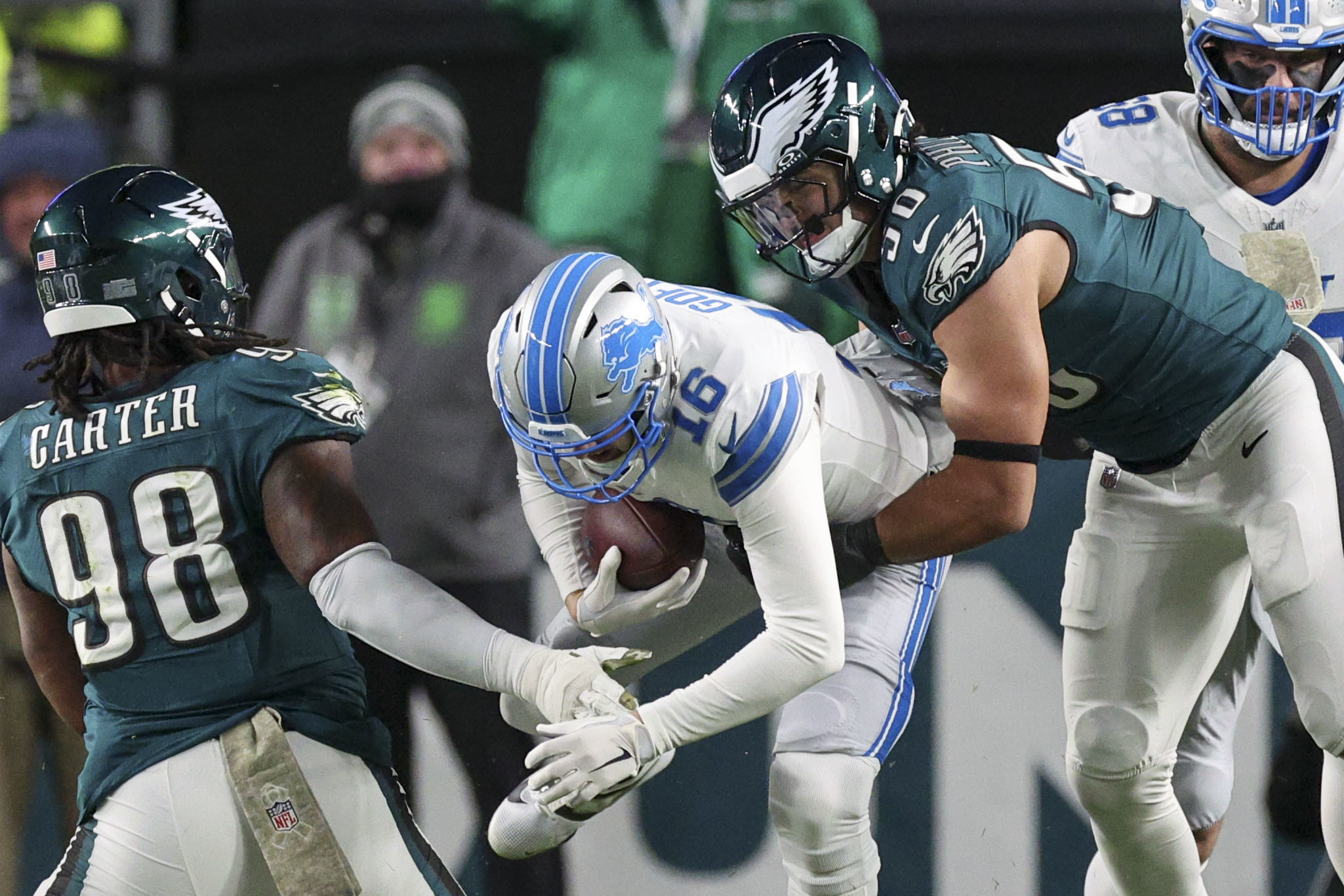
    The Lions had the ball, second-and-goal from the 6, trailing by seven points, late third quarter. Safety Reed Blankenship hit Jahmyr Gibbs on first down for just 2 yards. Defensive tackle Jalen Carter limited Gibbs to 1 yard on the next play. Deadline addition Jaelan Phillips pressured Jared Goff and forced an incompletion on fourth down.

    The Lions never got inside the 29-yard line again.

    The Eagles won, 16-9, Sunday night at Lincoln Financial Field despite an offense aptly described by wideout A.J. Brown as a “bleep-show.”

    Why?

    Because that Eagles defense, which led them to a Super Bowl win nine months ago, suddenly, again, is elite.

    “The defense is [bleeping] balling right now,” said grateful offensive tackle Jordan Mailata.

    But, elite?

    Nakobe Dean, who shined all night, paused and considered.

    “We gotta continue to get better,” he said.

    They’d just held the Packers to seven at Lambeau Field, then allowed the NFC’s highest-scoring offense its fewest points in 16 games, counting playoffs. The Eagles travel to Dallas on Sunday, where the Cowboys are shaking in their boots.

    Really, how much better can the Eagles’ defense get?

    After a virtuoso performance in Game 9 last Monday night at Green Bay, the defense — constructed by general manager Howie Roseman and coordinated by Vic Fangio — delivered a tour de force six nights later. Zones and man, blitzes and stunts, batted passes and sacks and so much more.

    Most important: Sixteen points surrendered against two very good quarterbacks who play for playoff-likely teams that are above .500.

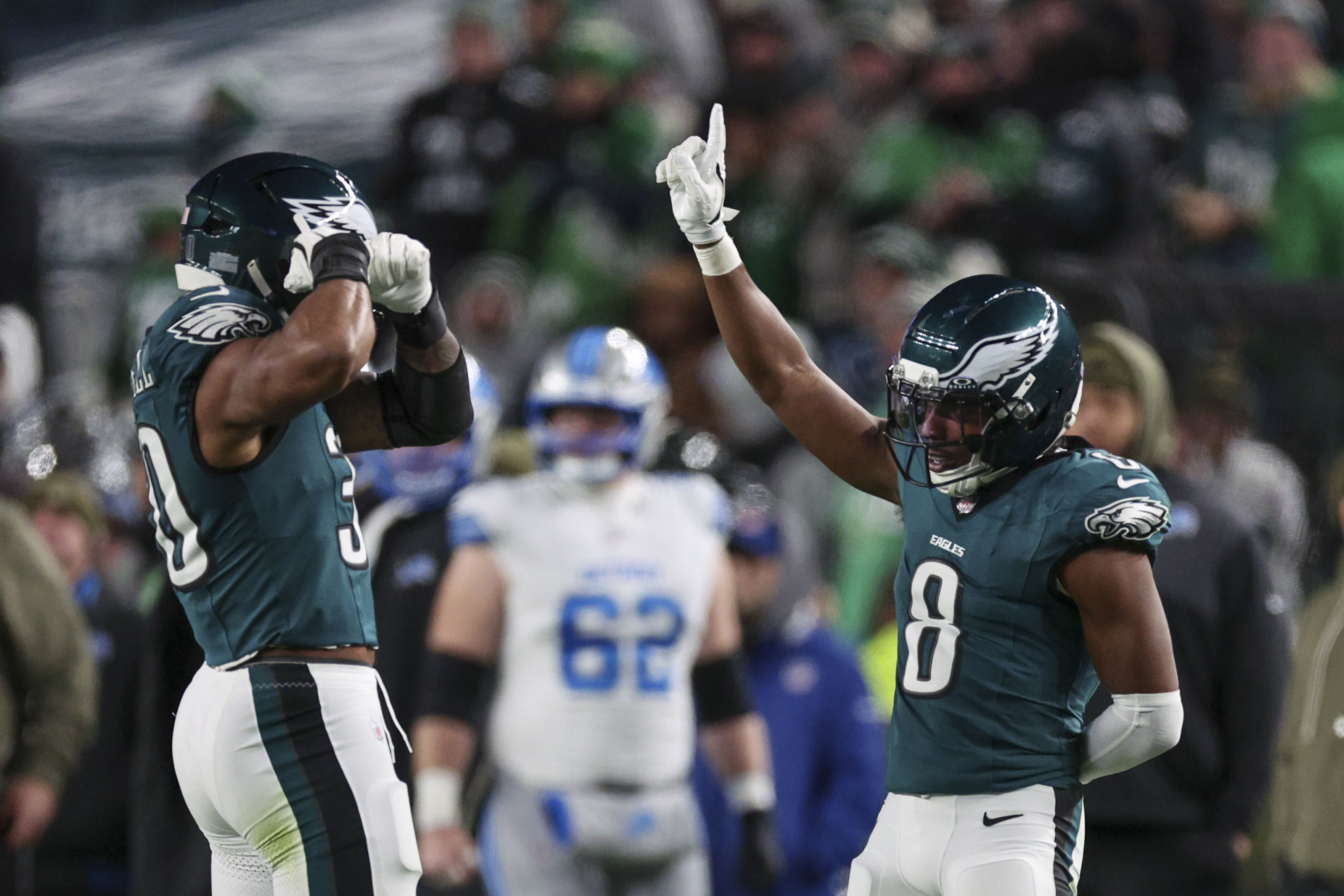
    Linebacker Jihaad Campbell (left) celebrates with Adoree’ Jackson after the cornerback broke up a pass in the fourth quarter.

    Two touchdowns in eight quarters.

    Good job, Vic.

    But …

    Bravo, Howie.

    Bravissimo!

    “You saw those guys, all those guys, out there making plays,” said quarterback Jalen Hurts, appreciatively.

    Phillips, Carter, and Dean featured all night. Among them, only Carter had featured before Game 5, since Dean was hurt and Phillips was in Miami, and frankly, Carter didn’t feature much, since he wasn’t in shape until Game 6.

    Sunday marked the first game that the Eagles defense played as it originally was comprised. Thanks to Roseman, it also featured reinforcements.

    For the first time this season both Dean, the middle linebacker, and defensive end Nolan Smith started without snap-count limitations; Smith had been hurt, too.

    “Holy [bleep],” Mailata said. “Them coming back — game-changer. Really a game-changer.

    They were joined by Philips, a pricey trade-deadline pass rusher who’d debuted brilliantly Monday night in Green Bay, and by old friend Brandon Graham, who’d unretired four weeks earlier and also had played his first game as a 2025 Eagle in Green Bay.

    Not coincidentally, the Eagles surrendered just seven points to the Packers, their stingiest performance of the season … by 10 points. The seven-point allowance was 17 fewer than the Packers’ average, which ranked 14th.

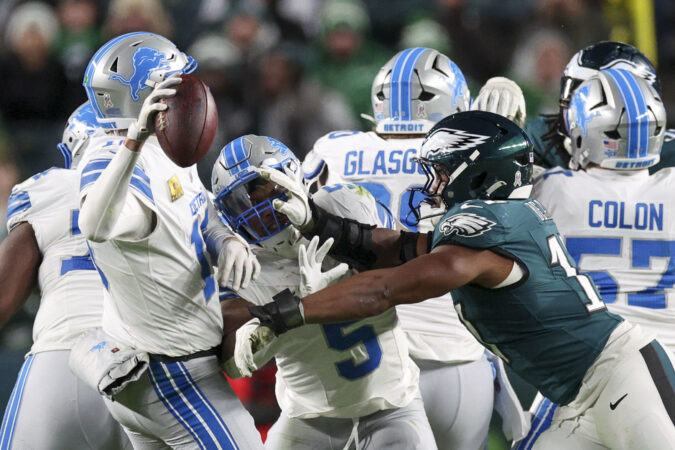
    Eagles linebacker Jalyx Hunt goes after Detroit Lions quarterback Jared Goff in the fourth quarter at Lincoln Financial Field.

    The Lions averaged 31.4 points entering Sunday night, second-best in the league. They scored 22 fewer than they averaged.

    The Lions entered with a pedestrian 37.5% third-down conversion rate, but ranked fourth in fourth-down conversions at 72.2%.

    They converted 3 of 13 third downs, or 23%.

    They converted zero of 5 fourth downs, or, yep, 0%.

    “Those are turnovers in our mind,” coach Nick Sirianni said. “Five-for-five, the way we look at it.”

    How?

    Playmakers all over Lincoln Financial Field, wearing the midnight green.

    First series: Dean covered the running back out of the backfield, Jordan Davis pushed the pocket and deflected the pass, and Cooper DeJean intercepted it. That led to a field goal.

    Second series: Phillips sacked Goff, which led to a punt.

    Third series: Carter dropped David Montgomery for a 2-yard gain on third down, which led to a punt.

    Eagles edge rusher Jaelan Phillips sacks Lions quarterback Jared Goff as Jalen Carter moves in.

    Fourth series: On fourth-and-1, Moro Ojomo grabbed Gibbs low, Carter hit him high, and they stoned him at the line of scrimmage.

    Fifth series: Dean hit Goff on third down, which forced an incompletion that forced fourth down, and the Lions tried a fake punt and failed.

    Then, a Detroit touchdown on two long passes. Nobody’s perfect.

    The Eagles came close.

    Dean, a linebacker, covered star wideout Amon-Ra St. Brown and helped force a turnover on downs.

    Then, the goal-line stand.

    Later in the second half, Dean would blanket Jameson Williams. On the next play, he’d sack Goff.

    Phillips had another pressure.

    Jalyx Hunt pressured Goff twice in three plays with just under six minutes to go.

    If there was a standout, well, it was Dean’s day, but name them all. Carter, Phillips. Ojomo for a minute. Cornerback Quinyon Mitchell — superb.

    They all were good. So, so good.

    Just like Vic called it. Just like Howie built it.

  • Are the refs now favoring the Eagles? Plus, the Birds’ red-zone success and a new Tush Push controversy

    Are the refs now favoring the Eagles? Plus, the Birds’ red-zone success and a new Tush Push controversy

    Here’s a novel thought:

    The refs are actually favoring the Eagles.

    After decades of paranoia and conspiracy theories that cast the Birds as victims of perceived favoritism shown to such rivals as the Cowboys, Patriots, and Chiefs, consider what happened for the Eagles on Sunday against the Giants. Honestly, no fan base feels persecuted more than the Eagles’, whose owner, Jeffrey Lurie, is still bitter about the obvious defensive holding call by James Bradberry that cost them a Super Bowl win three years ago.

    These days, things are skewing Philly.

    The NFL continues to allow the Eagles to run the Tush Push, but that play earned another strike against it when the owners meet next spring.

    Assuming a team introduces another proposal to ban the controversial short-yardage play — which has been assailed as an injury risk, which is ridiculous, and has been assailed as a penalty magnet, which is legitimate — Sunday’s debacle will add fuel to whatever fire remains from last spring’s 22-10 vote, which was two ballots shy of a ban.

    Facing fourth-and-1 at the Giants’ 11 early in the second quarter, Jalen Hurts and his line surged forward and Hurts peeled off slightly to the left. Floating on a sea of humanity, Hurts clearly never stopped moving toward the line to gain, and as he reached the ball forward, Giants linebacker Kayvon Thibodeaux stripped him of the ball and recovered it.

    The play was not reviewable because forward progress is not a reviewable issue.

    The larger issue here is that officials don’t seem to be able to consistently rule correctly on a number of areas, among them: whether the defense moves too early; whether the defense lines up in the neutral zone; whether the offensive line moves early; or whether the offense lines up in the neutral zone.

    Sunday, they didn’t properly gauge forward progress, even with the runner in plain view.

    The final was 38-20, but the call was enormous in the context of the game. Instead of losing the ball to a Giants team that had just completed a 52-yard touchdown drive, the Eagles retained possession and scored a touchdown two plays later to make it 14-7.

    It was just the first seven-point swing the officials delivered to the home team.

    Early in the fourth quarter, with New York facing fourth-and-11 and trailing by 18, Giants receiver Darius Slayton and Eagles cornerback Quinyon Mitchell engaged in routine hand-fighting during Slayton’s route. Slayton disengaged in a normal fashion, caught the pass, and romped for a 68-yard touchdown.

    But no.

    Slayton was called for offensive pass interference. Brutal call. In fact, a penalty probably should have been called on Mitchell.

    Instead of cutting the lead to 11, the Giants had to punt.

    The Eagles are tied for 11th in total penalties called, and they’re seventh in total penalty yards, but most of the calls are inarguable, and, objectively, they seem to be getting away with lots of shenanigans. This was true Sunday.

    Yes, the Eagles won by 18, and they dominated all day, but they were gifted that 14-point swing. These two were the kinds of crucial calls that the Eagles and other Chiefs opponents lately have claimed gave unfair advantage to Kansas City; the kinds of calls the Patriots under Bill Belichick seemed to get all the time; and the kinds of calls America’s Team has gotten for 50 years in Dallas.

    The Eagles are getting those calls now … right?

    The Giants agreed, at least for Sunday. Said Thibodeaux:

    “They said they called the forward progress before he reached the ball out. Sounds like some [B.S.] to me.”

    Me too.

    Eagles tight end Dallas Goedert scoring a fourth-quarter touchdown against the Giants.

    Seeing red with Goedert

    Under Nick Sirianni, the Eagles have never finished outside the top 10 in red-zone efficiency. But with the combination of Sirianni and offensive coordinator Kevin Patullo, who had served as Sirianni’s passing-game coordinator the last four years, the Birds have never been better.

    The Eagles are 6-2 in large part because they’ve converted 17 of their 20 trips inside the opponents’ 20-yard line into touchdowns. That’s 85%, which is about 11 percentage points better than the Ravens’ rate last season, which is the best conversion rate by any team over an entire season since Sirianni arrived.

    Why are they so efficient?

    Because the Eagles have a spectacular offensive line; a strong, fast quarterback; a lethal play in the Tush Push; a superstar running back; two star receivers; and, for my money, the most important red-zone weapon: an elite tight end.

    Also: superb play-calling. Example:

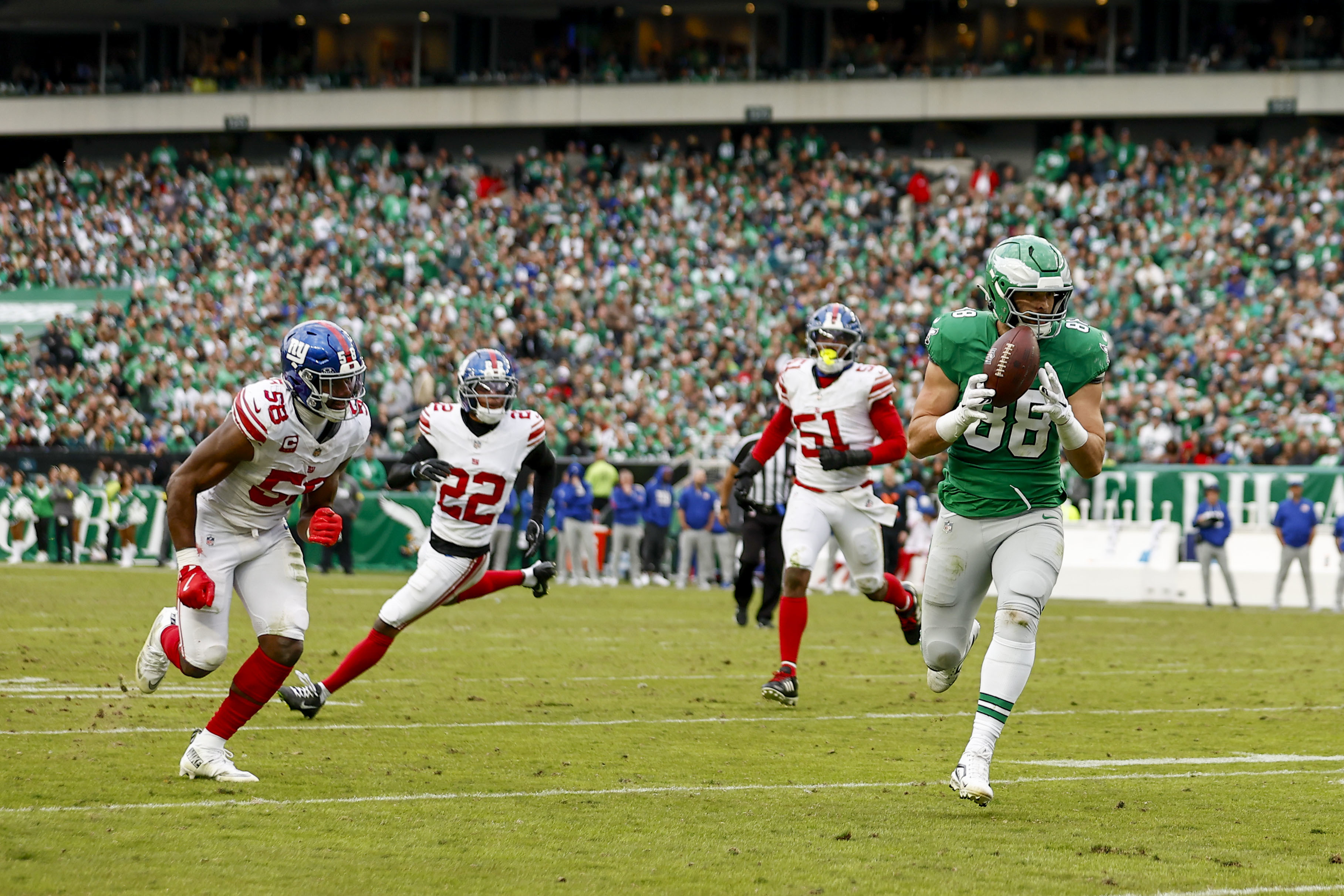
    On second-and-8 from the Giants’ 17-yard line, Patullo called a run-pass option. Hurts kept it. At the same time, tight end Dallas Goedert swung from the left side of the line to the right, broke upfield, and was wide-open for a touchdown.

    So many moving parts worked in perfect synchronization. It was the Eagles’ prettiest play of the season.

    “Ultimately, Kevin has to call the plays that he feels give us the best chance to win there,” Sirianni said after the Eagles went 3-for-3 in the red zone on Sunday. “I think we’ve done a good job of being efficient down there, though. … We’ve kept the ball moving forward. Jalen’s played really good football down there, and Dallas has obviously been really good down there.”

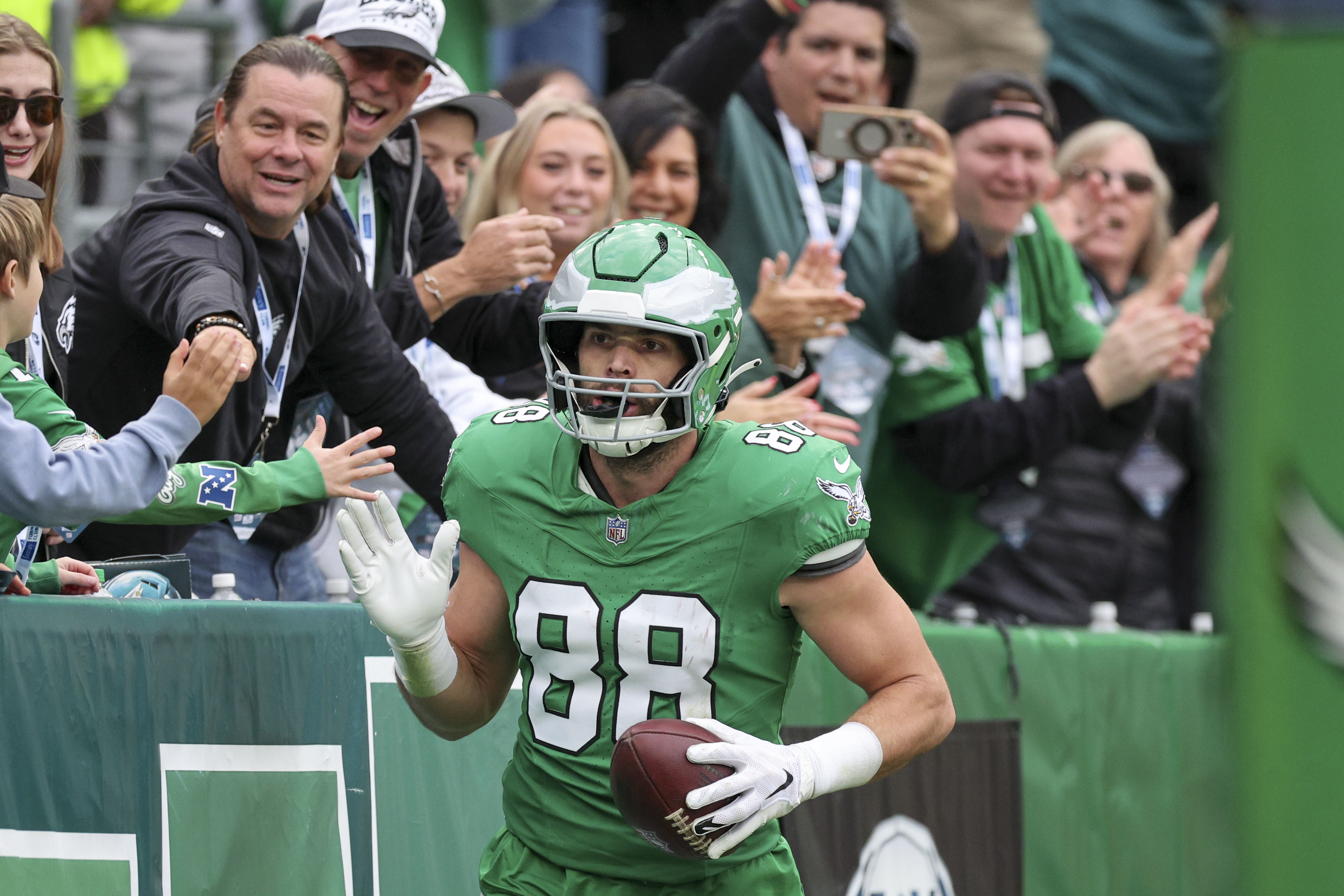
    Goedert had two touchdown catches in Sunday’s win over the Giants. His seven TD catches are first among tight ends and already are a career high.

    “They’ve been letting me get the ball and use my big body,” Goedert said. “We can score in a lot of different ways.”

    He certainly can. His 35 touchdowncatches (including playoffs) in about 7½ seasons as an Eagle rank second among franchise tight ends behind Zach Ertz, who caught 40 (including playoffs) in about 8½ seasons.

    “He’s a hell of a player,“ Hurts said. ”He’s a big-time target and in a sense, he’s due. He’s due. He does a lot of dirty work in this offense.”

    It might be tough to call Goedert’s number with Hurts, running back Saquon Barkley, and receivers A.J. Brown and DeVonta Smith, but the Eagles are winning because Goedert is finding the end zone more than anyone else under Patullo.

    “KP has a really good feel in the red zone,” said Hurts.

    So does DG.

    Mixed emotionals

    After being embarrassed by owner Woody Johnson, who said, “If we can just complete a pass, it would look good” after seven weeks of bad quarterback play, Jets quarterback Justin Fields played well Sunday in a comeback win over the Bengals.

    Fields had been benched at halftime the week before in favor of Tyrod Taylor, but Taylor’s bruised knee sidelined him Sunday and gave Fields another chance. Fields played well enough to win: 21-for-32, 244 yards, one touchdown. Afterward, during an emotional press availability, he admitted that the pressures of his turbulent career, culminating in Johnson’s criticisms, broke him down.

    “This week, I found myself in my closet, crying on the ground, laying down,” Fields said.

    As you might assume, Johnson, formerly Donald Trump’s ambassador to the United Kingdom, is not a pleasant bloke. In an annual survey conducted by the players’ association, his 2024 team gave his club the league’s only overall “F,” and his franchise has been a punch line for years.

    However, if Johnson’s cruel, candid, but ultimately accurate assessment of the quarterback play worked, well …

    Coach Shane Steichen’s Colts are 7-1.

    Extra points

    Shane Steichen, in his third year in Indianapolis, continued his romp to Coach of the Year honors when his Colts beat the Titans and moved to 7-1. Since becoming the Eagles’ OC in 2021, Steichen’s teams have been in the top 10 in rushing, with the Eagles finishing No. 1 in 2021. This year, behind league-leading running back Jonathan Taylor, the Colts rank sixth. … Right behind Steichen in the running for COY: Mike Vrabel, whose Patriots reached 6-2 with a win over the Browns. Second-year quarterback Drake Maye leads the NFL with a 118.7 passer rating. … In that game, Browns defensive lineman Myles Garrett recorded five sacks, bringing him to 10 for the season, tied for the league lead. … Aaron Rodgers failed to join Peyton Manning, Tom Brady, Brett Favre, and Drew Brees as quarterbacks who have beaten all 32 teams when his Steelers lost to the Packers, the team that drafted him. … The Cowboys, with their No. 2-ranked offense and second-to-last defense, lost in Denver and fell to 3-4-1. That means the Eagles are the only team in the NFC East with a winning record — remarkable, since the division was considered one of the best before the season began.

  • The Eagles had two games to get themselves right before their bye. They did that and then some.

    The Eagles had two games to get themselves right before their bye. They did that and then some.

    It was just 17 days ago that the Eagles lost for the second straight time, lost to the New York Giants by 17 points at MetLife Stadium, lost in so humiliating a fashion that their All-Pro right tackle called out the play-calling as predictable and their star wide receiver admitted that with more than 11 minutes left in the game he had already resigned himself to defeat. It was bad.

    Two seasons before, it had been worse. Two seasons before, the Eagles had lost back-to-back games to the San Francisco 49ers and the Dallas Cowboys, and those pathetic performances triggered the kind of midseason change that reveals a franchise’s leadership has started to panic. The defensive coordinator was demoted. A Bill Belichick acolyte was promoted. And what began as a pebble rolling down a hill turned into an avalanche: six losses in seven games, a head coach whose job was in jeopardy, a collapse whose psychological residue remained on this team for a long time.

    Maybe, after their 38-20 victory Sunday in their rematch against the Giants, the Eagles can assure everyone that they’ve scraped away the last of that sticky stuff from 2023. Their Super Bowl win in February took care of most of it, but burping up that late lead against the Denver Broncos on Oct. 5 and getting manhandled by Jaxson Dart and Cam Skattebo four days later brought up all those bad memories again. The Eagles were 4-2 but reeling, still formidable but vulnerable, and it was fair to wonder whether they could straighten themselves out over their two games before their bye week.

    They did. They won a challenging road game against the Minnesota Vikings, then handled an inferior opponent Sunday. Now they enter their 15-day break with a 6-2 record, with a stranglehold on the NFC East, and — despite several injuries to key players, despite the ever-present mist of controversy around A.J. Brown — without the worry that their season was spiraling out of control.

    “I don’t think from an inside perspective there was ever any like, ‘Oh man, this is like ’23,’” coach Nick Sirianni said. “You know what I mean? But were there lessons learned in ’23? Absolutely. We continue to try to learn lessons from ’24 and ’25.

    “I always like our process off of a bye week and during a bye week. That’s my job as a coach. We’ve still got a lot of things to fix and clean up, but that’s what this week will be about: the players resting, looking at stuff themselves, and then us really grinding it out this week to put ourselves in a position to move on through the rest of the season.”

    It would be easy to argue that the Eagles are mentally tougher now than they were then; that they have a more talented, more cohesive collection of players; that Sirianni is a better head coach with a better coaching staff; that Jalen Hurts is a better quarterback. All those assertions are true, but they can feel intangible and opaque. The explanations for why a team regresses (as the Eagles did late in the 2023 season), improves (as they did in 2024), or stabilizes itself (as they’ve done over their last two games) often come down to the schematic and tactical adjustments that the team tries to make. They come down to concrete changes in the way the team does things.

    Take one example that went awry. When the Eagles decided in December ‘23 that they needed a new defensive coordinator, when they replaced Sean Desai with Matt Patricia, they failed to take a vital factor into consideration. Patricia’s defensive scheme was a lot of things, but simple wasn’t one of them, and there was little chance that the players would learn it well enough in time to thrive within it.

    “I still remember we used to come in here before games, and he’d have an entire greaseboard — it looked like a 15-foot-long greaseboard — and the entire thing was written up with all the calls,” Eagles center Brett Toth said after Sunday’s game. “And to see that, it’s like, ‘Wow.’ That’s tough on anyone to try to switch to midseason.

    “It’s a very hybrid defense. Anything with the Patriots is going to be very complex, high-IQ stuff. To have to learn and install that in the middle of the season, it’s a huge ask. This is chess. Football is 11-man chess.”

    Now take another, more recent, more successful example: the Eagles’ use, at long last, of under-center snaps and play-action passes. There’s no getting around the fact that their offense has been more dynamic overall — and their running game back to its old dominant self against the Giants — partially because putting Hurts under center allows Kevin Patullo to call a wider variety of plays. They didn’t have to rewrite the playbook. A new wrinkle was all they needed.

    “It’s not necessarily that you stick a guy under the center or you’re playing from the shotgun or you’re in a pistol,” said Hurts, who over his last two games has completed 34 of his 43 passes for 505 yards and seven touchdowns. “It’s about what you’re doing when you’re under center, how we’re leveraging what we do, how we’re leveraging the guys, what spots are we putting guys in when we’re in these different positions. We just want to continue to build off it.”

    Seventeen days ago, the idea that the Eagles would be building off anything heading into their bye seemed tenuous at best. The defending champs had staggered. The Giants had embarrassed them. And the memory of that awful ending to 2023 was fresh again. Now? It seems deeper in the distance, and they have a chance to make sure it stays there.

  • Sad-sack Giants lost this one before it started. Next time, don’t poke the bear (or Saquon)

    Sad-sack Giants lost this one before it started. Next time, don’t poke the bear (or Saquon)

    Two weeks ago, Brian Daboll stood in front of his locker room and labeled a blowout win over the Eagles as “The Standard.”

    Since then, the Giants head coach has become reacquainted with The Usual.

    The Eagles accomplished their biggest objective on Sunday afternoon. It was to leave no doubt. Jaxson Dart would not be high-fiving any referees. Kayvon Thibodeaux would not be telling anybody to “[bleep] the Eagles.” And the Giants social media team most definitely would not be sharing any victorious videos of Daboll making grandiose proclamations to his players.

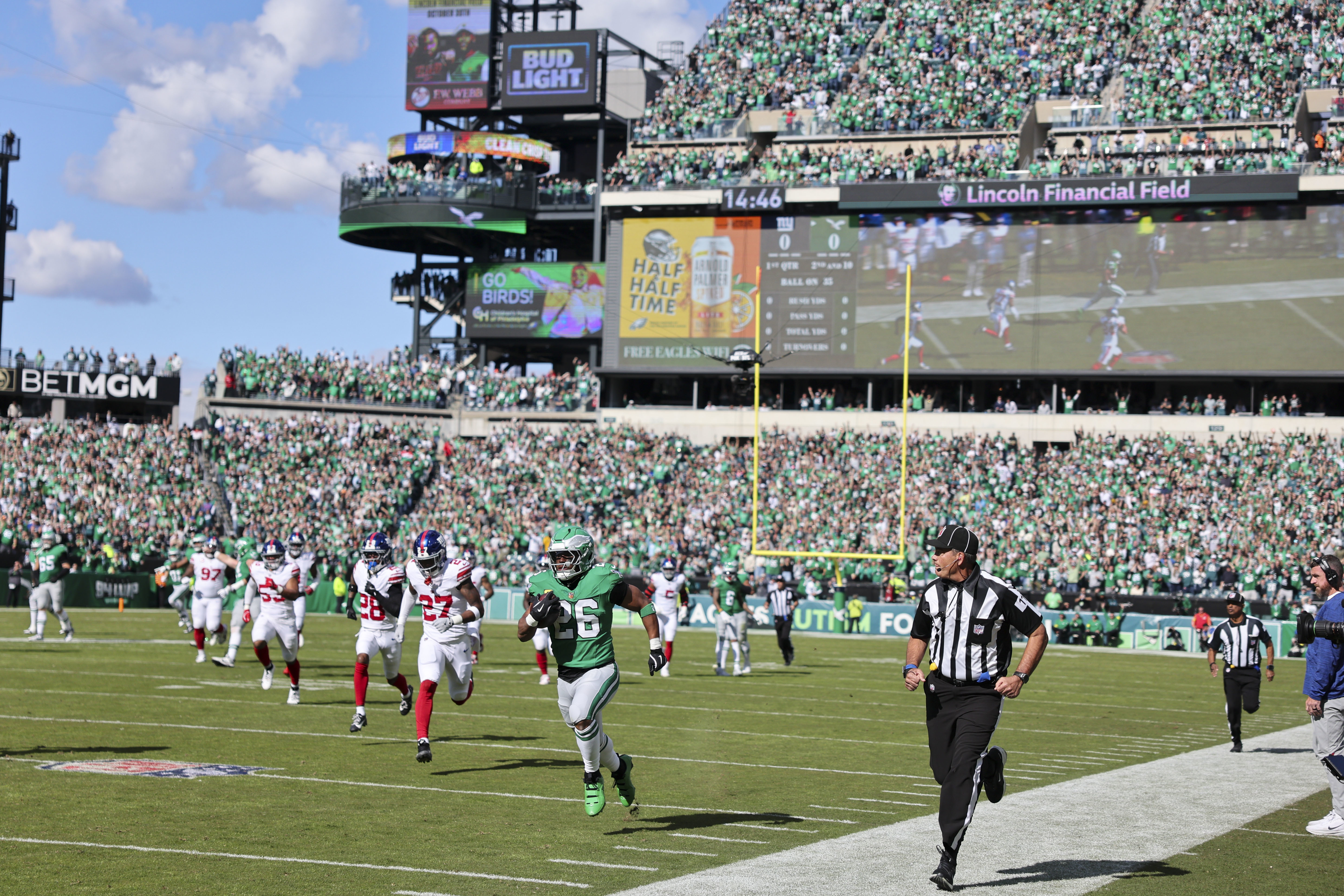
    “For sure, we definitely saw how they celebrated when they beat us last time,” running back Saquon Barkley said after his 65-yard touchdown run on the second play from scrimmage catapulted the Eagles to a 38-20 win on Sunday.

    It is never wise to poke the bear, but it is especially unwise to poke the bear when you know you will be seeing the bear again in 17 days. If you are going to do it, you’d better pack some extra whistles. Or, failing that, some A.1.

    What the Giants seem to have forgotten is that they are not a good football team. In fact, they are the kind of football team that makes a sport of their not being good. Ten days after they stunned the Eagles with a 34-17 rout on Thursday Night Football, they raced out to a 19-point lead over the Broncos and then allowed 25 points in the last six minutes to lose, 33-32. It takes a special team to lose a game in that fashion. But, then, the Giants are a special team. They lose games the way Bob Ross painted pictures. With breathtaking creativity and speed.

    On Sunday, the movable object met the unstoppable force. The Eagles came out in their kelly green uniforms and they did it in vintage fashion. On their second play of the game, the offensive line opened up a weakside lane so wide that Barkley and Tank Bigsby both could have run through it. Never has a 65-yard touchdown looked so inevitable. Nor did the 189 yards that followed from Barkley and Bigsby. After the game, more than one Eagles offensive lineman noted how good the Giants’ front four was. You got the sense that they were noting it with glee.

    “We came in, we made the adjustments based off of what they gave us the last game, and we called plays to win,” guard Landon Dickerson said.

    The rest of the NFC can blame the Giants if this was the game in which the Eagles truly got their groove back. They entered Week 8 having gone five straight weeks without breaking 90 yards rushing. Not once had they reached 400 total yards of offense. On Sunday, they finished with 276 and 427. Barkley and Bigsby both cracked 100 yards and averaged 10-plus yards per carry. This, on an afternoon when Jalen Hurts threw four touchdown passes.

    “For us, it wasn’t about a weight being lifted off our shoulders,” said left tackle Jordan Mailata. “We just wanted to be the more physical team. It didn’t matter what it looked like.”

    It shouldn’t surprise anybody at this point.

    The Eagles have won a lot of games over the last four years by rag-dolling opponents, often saving their best for teams that have previously offended their sensibilities. We saw it in last year’s NFC championship game, when they road-graded the Commanders for 229 yards on the ground one month after Washington handed them one of their three regular-season losses. We saw it in last year’s Super Bowl, when they avenged their last-second loss two years earlier, to an extent that was almost uncomfortable.

    Give the Giants credit. They are a more competitive team than they have been throughout most of Daboll’s tenure at the helm. For all of Dart’s weird Gen-Z energy, he clearly has the touch and poise that can win behind a competent offensive line. Rival NFL general managers should take notice if Act I ends up going the way of Baker Mayfield in Cleveland. He has a keen sort of talent that cannot be measured or quantified, although it probably cannot make up for wholesale dysfunction around him. You saw it even on Sunday, when he kept the Giants within striking distance despite relentless pressure and a no-name receiving corps and a gruesome injury to running back Cam Skattebo.

    But the Eagles are operating on a different level. It is easy to lose sight of that fact given that they are operating on a lesser level than last season. The last couple of weeks have left little doubt, though. At 6-2 headed into the bye, they remain the most complete team in the NFC.

    More than anything, Sunday’s win was a reminder that rumors of Barkley’s demise have been greatly exaggerated. Even after his 65-yard touchdown run, the veteran running back gained 85 yards on his last 13 carries before leaving the game with what was labeled a groin injury but mostly was precaution.

    “I wasn’t worried about it,” Barkley said. “I came off, but I’ve dealt with this before. Nothing crazy. It’s a long season. I try my best to listen to the trainers, listen to the coaches.”

    Did he fight to go back in?

    “I went out swinging,” he said. “Let’s say that.”

    With these Eagles, you wouldn’t expect anything else.

  • ‘KP was just dying on the cross for us.’ Kevin Patullo’s offense is finally rolling as Eagles head into bye week

    ‘KP was just dying on the cross for us.’ Kevin Patullo’s offense is finally rolling as Eagles head into bye week

    It took a few weeks with the new coordinator, but he figured it out, and the offense started producing.

    A few months later, the Eagles won Super Bowl LIX.

    That was last year.

    Kellen Moore introduced a radically new scheme. It took five weeks, give or take, for the Eagles to work out the kinks, and Moore was criticized the entire time. That was with a relatively stable roster, especially along the offensive line. The offense developed a run-first personality, emphasized ball security, beat the Chiefs in the Super Bowl, and earned Moore the head coaching job in New Orleans.

    Fast-forward a few months, and no one in the Eagles organization took more heat over the first seven weeks than Kevin Patullo, Moore’s successor and head coach Nick Sirianni’s longtime majordomo.

    Patullo has never been a coordinator before and inherited much of Moore’s simple scheme and elite personnel, but that personnel did not practice together even once for the entirety of training camp. Eight games into the season, the same five offensive linemen have not started and finished two games in a row.

    “You need continuity,” left tackle Jordan Mailata insisted.

    Excuses? Maybe.

    Explanations? Definitely.

    Eagles running back Saquon Barkley scores a touchdown on a 65-yard run in the first quarter against the Giants.

    At any rate, Patullo’s offense averaged 23.6 points in the first six games of the season. After Sunday’s 38-20 win against the Giants, it is averaging 33.0 points in the last two games.

    Moore’s offense averaged just 21.2 points through the first five games last season. It takes offenses time to synchronize.

    “There’s always a period of trying to figure things out,” said quarterback Jalen Hurts, who has now had five offensive coordinators in six NFL seasons.

    “Yeah,” said left guard Landon Dickerson, “remember last year, our start, and everyone wanted Kellen Moore fired?”

    Then, Moore’s offense synchronized.

    With the Eagles entering the bye week with a 6-2 record, consider Patullo’s offense synchronized. The guys finally get it. He’s a bit scarred, but he’s still standing.

    “What Kevin’s done a really good job of is being able to block out anything that can be a distraction to him and working like crazy to put himself in the best position to call the best game that he can each week, regardless of what’s going on,” said Sirianni, himself a weary recipient of the fury of this impatient fan base.

    “We knew KP was getting a chunk of the blame, but we knew, as a locker room, it was us,” Mailata said. “KP was just dying on the cross for us.”

    He’s been resurrected.

    This looks like an offense with a plan and a direction.

    Even more significantly, over the last two weeks, incorporating under-center snaps, play-action, and run-pass option, it looks like an unpredictable, diverse offense.

    Perhaps most significantly, it scored 38 points and produced four touchdown passes without the services of perpetual malcontent A.J. Brown, the best and least mollified receiver in franchise history. Brown missed the game with a mysterious hamstring injury. (Also, on social media, he repeatedly has hinted that he would like to be traded. The Eagles have a bye next week. The trade deadline is Nov. 4, which means missing Sunday’s game ensured that Brown would not incur further(?) injury by sitting out. But that’s a different discussion.)

    It’s foolish to think the offense, despite Sunday’s success, would be better without Brown. It’s wiser to admit that, with Brown, Sunday would have been even better, after seven weeks of twists and tweaks.

    “You realize what you’re bad at, what you’re good at, and where you need to help,” Mailata said. “Kevin’s doing a great job of adapting play calling to, you know, guys we have available and teams we’re playing.”

    He pointed to the plays on which Fred Johnson reported as an extra tackle, the first two of which resulted in a 65-yard touchdown run for Saquon Barkley, then an 18-yard run for Tank Bigsby. Patullo also called passing plays on two of Johnson’s insertions.

    Tight end Dallas Goedert celebrates with Eagles fans after his second touchdown catch of the game on Sunday.

    The Eagles also increased their league lead in red-zone efficiency, now at 85% after scoring touchdowns on all three trips inside the Giants’ 20-yard line.

    Sunday proved that the offense can be dominant; at least, it can be dominant against a plucky, inconsistent Giants team that fell to 2-6. It clearly built on a similarly competent performance in Minneapolis the previous week against a Vikings club that was 3-2 entering the game.

    In that game, Hurts compiled a perfect 158.3 passer rating, with 326 yards, three touchdowns, and no interceptions. It was the best game of his career as a passer.

    Sunday, Hurts’ rating was 141.5, with 179 yards, four touchdowns, and no interceptions. It was the second-best day of his career as a passer.

    Two weeks ago, the Eagles were concerned that Patullo’s offense might never jell. Now they can breathe easier during their week off.

    “Sense of relief, yeah,” Mailata said. “I think it does help with the confidence going into the bye week, that we’ve strung along two great games — one game dominant passing, and then the next game dominant in the run game.”

    On Sunday the passing was easier partly because the Giants’ secondary was thinned by injury and partly because the Eagles’ running game erupted.

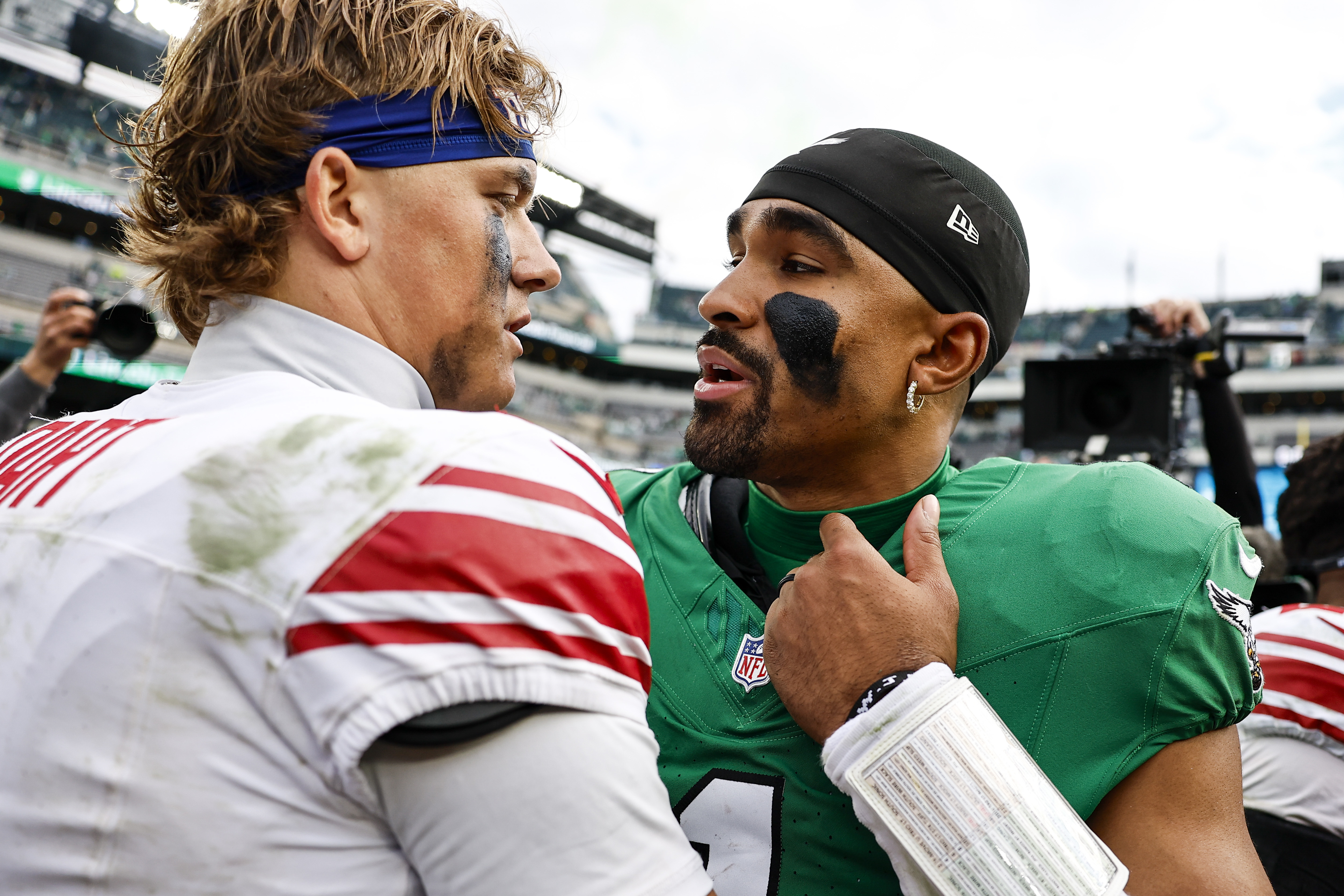
    Eagles quarterback Jalen Hurts talks with Giants quarterback Jaxson Dart (left) after the game at the Linc.

    Barkley’s first touch, the second play of the game, was that 65-yard touchdown run. He finished with 150 rushing yards, more than any other two games combined this season. Barkley suffered a minor groin injury, which gave more touches to Bigsby, who gained 104 yards, the second-best total of his career.

    The running game produced a total of 276 yards, almost 120 more yards than the Eagles’ previous season high and the first time in five weeks they broke the 100-yard mark.

    Again, they did it without Brown, one of their more potent weapons in history. They did it with Brett Toth starting his first NFL game at center, where he is replacing Pro Bowler Cam Jurgens. They did it against a Giants team that dominated them in East Rutherford just over two weeks ago.

    How’d ya’ll do it, Jalen?

    Same as every year:

    “Just got to be persistent.”

  • Brandon Graham’s return to the Eagles, a can’t-miss podcast about a Philly sports villain, and other thoughts

    Brandon Graham’s return to the Eagles, a can’t-miss podcast about a Philly sports villain, and other thoughts

    First and final thoughts, rapid-fire style …

    The Philadelphia region, at least the healthy portion of the population that cares deeply about the Eagles, went gaga this week over the news that Brandon Graham was coming out of retirement and re-signing with the team. That reaction was, of course, expected and understandable.

    Graham was a terrific player, a favorite of the fans who rooted for him and the media who covered him. He made the most significant defensive play in franchise history. And he was now authoring a new chapter to his story — that of the old, beloved hero, riding back into town to save the day.

    But those syrupy-sweet sentiments didn’t change the reality that the Eagles’ defense needed some saving. Ahead of Sunday’s matchup against the Giants, the Eagles rank 25th in the NFL in sacks, 22nd in pressure percentage, and 24th in rushing yards allowed per attempt. Yes, they’ve been missing Nolan Smith, and his eventual return should help, but even with him active, their defense would be thin up front.

    Look at it this way, from a colder, more clinical perspective: This week, the Eagles acquired a 37-year-old defensive end who retired after last season — a season in which he tore his triceps, sat out nine weeks, returned to play in the Super Bowl, then re-tore his triceps despite lining up for just 13 snaps in that game.

    If this player’s name weren’t Brandon Graham, we’d be focused a lot more on how desperate this team was to improve its lousy pass rush and find a defensive end who can set the edge.

    Sixers start with a win

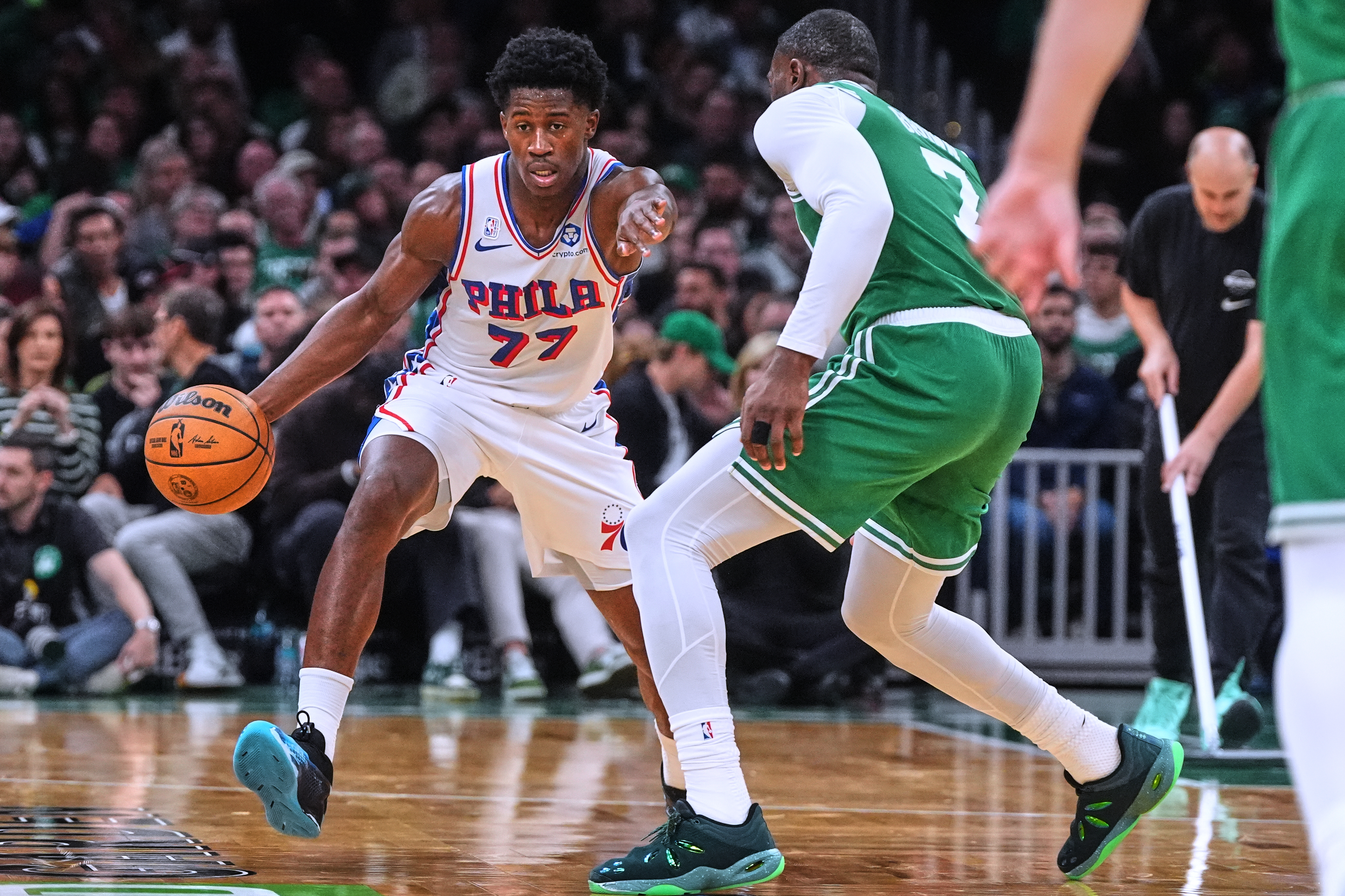
    The 76ers’ season-opening victory over the Celtics on Wednesday in Boston was significant not just because VJ Edgecombe announced his presence with 34 points or because Tyrese Maxey dropped 40, but also because it felt like a transitional moment for the franchise and its future.

    Rookie guard VJ Edgecombe had a sensational debut in Boston with 34 points.

    Joel Embiid did not play at all over the game’s final 9 minutes, 18 seconds, and when he did play, he spent most of his time on the perimeter, running two-man action with Maxey and heaving long three-pointers. Perhaps he simply needs more time and more games to get back into playing shape, but for at least that night, the Sixers were better — freer, younger, more athletic — when he wasn’t on the floor.

    Recommended listening

    The latest episode of the podcast Pablo Torre Finds Out, in which the host and one of his correspondents, author and reporter Dave Fleming, dive into the (often-exaggerated and self-aggrandized) background and football expertise of Mike Lombardi.

    A former NFL executive and longtime acolyte of Bill Belichick, Lombardi is now the general manager of the University of North Carolina’s football program and is one of the sources of the controversy and ridicule that now surround the Tar Heels.

    Around here, though, Lombardi probably is best known for his regular appearances on WIP during Doug Pederson’s tenure as the Eagles’ coach — and for saying, less than a year before Super Bowl LII, that Pederson was “was less qualified to coach a team than anyone I’ve ever seen.”

    The episode is devastating for the way Fleming and Torre marshal facts and insights to demonstrate what some of us who have followed the Eagles for a long time have known for a long time: that Mike Lombardi is pretty much full of it.

    Bits and pieces

    A.J. Brown will not play Sunday. Which means somebody had better keep an eye on Jahan Dotson’s Instagram page. … Maybe, for all those years, Ben Simmons just had the under on himself. …

    Over his first seven games this season, Sean Couturier led the Flyers in points (eight) and, among their forwards, ice time (19:42 per game). It sure seems that he still has whatever John Tortorella thought he didn’t. … The only way the last four weeks could have gone worse for James Franklin is if a ground ball back to the mound had caromed off his ankle.

    The Eagles will be without A.J. Brown this week because of his hamstring injury.

    I don’t want to talk about it

    The Toronto Blue Jays are in the World Series for the first time in 32 years. The last time they were there, on Oct. 23, 1993, a group of friends and I were attending a Flyers game when we abruptly left in the middle of the third period, sprinted to my tuna-can ’85 Chevy Cavalier parked outside the Spectrum, piled in, and raced back to St. Katharine’s Hall at La Salle University … all to catch the final three innings of Game 6.

    The rest of my memories of that night are hazy and not worth mentioning.

  • The arrests in the NBA gambling scandal are proof that the new world is better than the old

    The arrests in the NBA gambling scandal are proof that the new world is better than the old

    One thing nobody will dispute is that Thursday was a victory for the scolds. All at once, they logged on, and logged in, and limbered up their Twitter fingers and sent them dancing across the keyboard like Herbie Hancock on the ivories.

    A good old-fashioned gambling scandal was erupting, and they weren’t going to let it pass without imparting some grave moral lessons.

    Look here, they said. The most important indictment announced by the U.S. Attorney’s Eastern District of New York office on Thursday wasn’t the one that laid out the charges against NBA guard Terry Rozier for his alleged role in a prop-bet-fixing scheme, or the one that detailed NBA head coach Chauncey Billups’ alleged involvement in rigging illegal poker games.

    No, the important indictment was the metaphorical one handed down against the NBA itself. For embracing legalized sports gambling. For partnering with online sportsbooks like DraftKings. For prioritizing profit over the integrity of the game.

    This wasn’t just criminals allegedly doing as criminals allegedly do. It was the inevitable end result of the NBA’s embrace of an industry that should not exist.

    Again, according to the scolds.

    But the scolds are wrong. In fact, their interpretation of Thursday’s events, and of last year’s Jontay Porter guilty plea in a separate investigation, is the exact opposite of the real lesson to draw. A world where people can gamble openly with reputable companies that operate within the jurisdiction of federal law enforcement and in cooperation with sports leagues is a world where any bad actors are likely to be caught. That is not the world as it used to be.

    We all remember the old world, right? Pete Rose, Paul Hornung and Alex Karras, the Black Sox, Boston College and CCNY. These were some of the biggest individual or institutional names of their eras, all of them involving serious wagers on the outcomes of games over an extended period of time, most of them in concert with the criminal underworld.

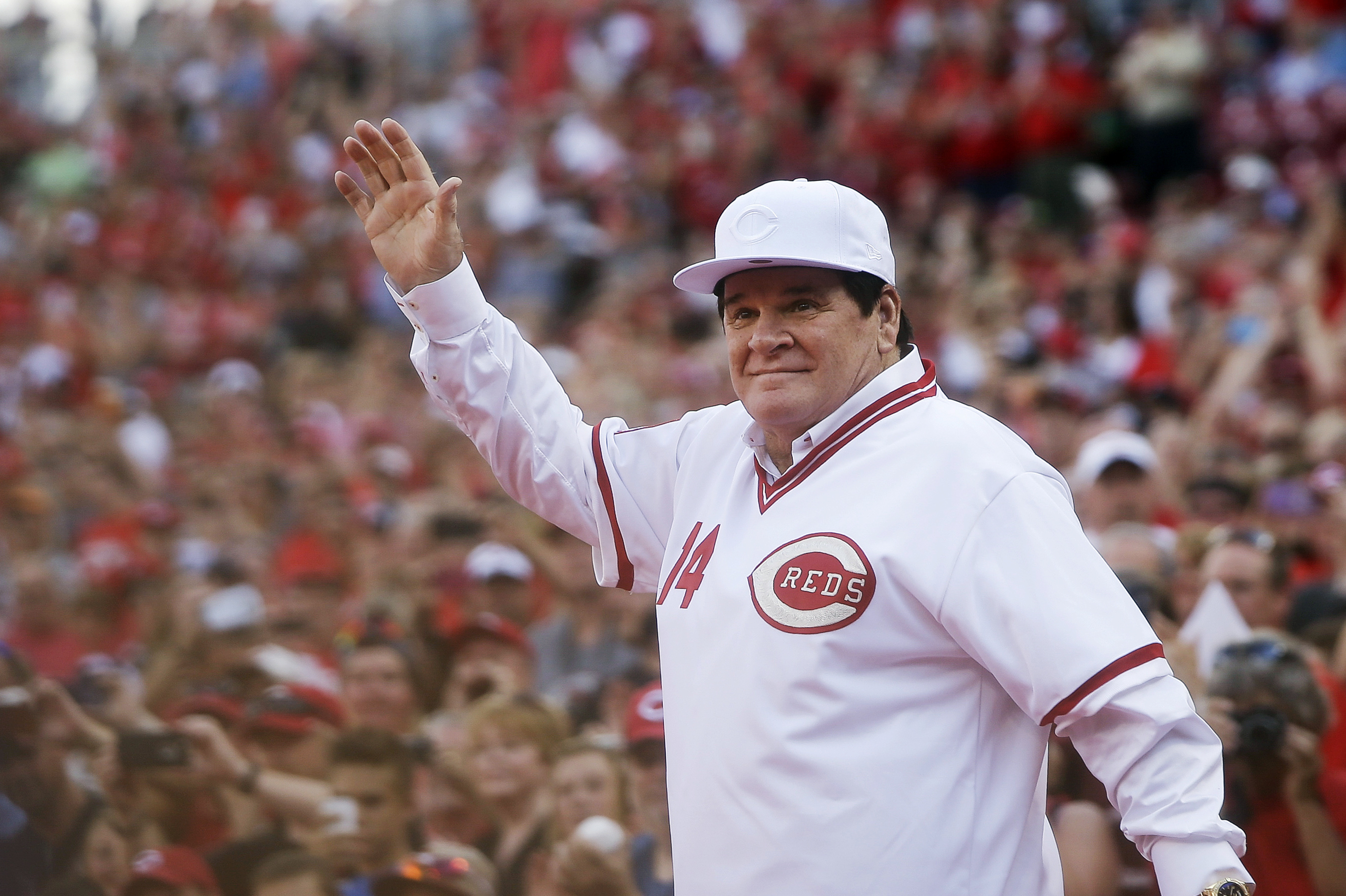
    Pete Rose, who was banned from baseball for 35 years for betting on the sport, was reinstated last May.

    The responsibility of protecting the integrity of games fell primarily on sports executives. Karras and Hornung, two of the NFL’s biggest stars in the 1960s, were suspended for a season as a result of commissioner Pete Rozelle’s investigation into players’ ties with bettors.

    Nobody knows the old world as well as the NBA. Two decades ago, the league found itself mired in the biggest scandal of them all when it learned that referee Tim Donaghy had spent four years wagering on games that he officiated. Donaghy, a Delco native who attended Cardinal O’Hara, later claimed that 80% of his bets ended up cashing.

    His gambling was eventually uncovered by an FBI investigation that resulted in prison time, but only after he’d inflicted four years’ worth of reputational damage on the league.

    Compare the Donaghy scandal to what the feds laid out in their indictments on Thursday. Rozier is alleged to have provided nonpublic information to gamblers who bet on at least seven games between March 2023 and March 2024.

    The indictment involving Rozier also includes mention of a “Co-Conspirator 8″ who provided gamblers with information about Portland Trailblazers personnel decisions, although Billups was not explicitly named. (Billups’ charges stem from a separate case involving the rigging of illegal poker games.)

    The Rozier case stems from an earlier investigation into Porter, a then-Toronto Raptors player who later admitted in court that he manipulated his performance in two games. (Porter was banned from the NBA in the spring of 2024 and is currently awaiting sentencing in his case).

    I don’t mean to minimize the seriousness of the cases involving Rozier, Billups, and Porter. Rozier and Billups deserve to join Porter with lifetime bans, and Billups should be removed from the Hall of Fame.

    NBA commissioner Adam Silver and the league need to do some serious self-scouting to figure out if there is anything they can do beyond wielding heavy-handed punishment as a deterrent.

    The scolds are correct in at least one regard. The NBA and its fellow sports leagues should seriously reconsider the extent to which they have encouraged the integration of betting with their telecasts and live events. The rise in popularity of betting on individual player props and so-called same-game parlay promotions has created a huge new front of incentives and avenues for malfeasance, packaged and promoted in a way that can feel more like fantasy sports than gambling.

    It is more than fair to suggest that commissioners should create more distance between themselves and the sportsbooks, particularly when it comes to marketing.

    The NBA’s increasingly close relationship with sportsbooks has brought in significant revenue but also led to additional problems.

    Let’s not lose sight of the real issue. The leagues had no choice but to accept the reality of legal sports gambling. In the years before its adoption in the United States, overseas sportsbooks were exploding in popularity. Daily Fantasy cash games were already legal. Sports gambling was going to achieve critical mass at some point in the United States.

    The decision that the leagues had to make was whether they wanted to help create a world where it could be regulated and policed most effectively.

    We saw that world play out in Porter’s case. The gambling syndicate that attempted to profit from his prop bets was flagged due to the irregular nature of the wagers. The ability to detect abnormal betting patterns is the single biggest weapon in the fight against sports-fixing, and it should be the single biggest deterrent to anybody who attempts to engage in it.

    The legalization of sports gambling is shifting all of the money that used to be wagered in the underworld onto audited books overseen by billion-dollar companies with sophisticated detection methods in place. It would be silly for a league like the NBA not to encourage that sort of framework in favor of one where forensic accounting is nearly impossible.

    The cases of Rozier, Billups, and Porter are an indication that the world still isn’t perfect. But it is silly to suggest that stuff like this was less prevalent in the old world. We were just less likely to find out about it.

  • Jalen Carter, Landon Dickerson, Nakobe Dean among five reasons Eagles will win the rematch vs. Giants

    Jalen Carter, Landon Dickerson, Nakobe Dean among five reasons Eagles will win the rematch vs. Giants

    Nobody saw it coming. Not even the Giants.

    “Quite honestly, nobody really expected us to put up a performance like this,” Giants quarterback Jaxson Dart said afterward.

    Maybe we should have.

    One of the more shocking upsets in recent Eagles history happened at MetLife Stadium on Oct. 9, when the 1-4 Giants got their second win over the 4-1 Eagles, who were defending Super Bowl champions and the winners of the last seven truly meaningful games against their closest NFC East rivals.

    Should it have been so shocking?

    After all, the Giants’ losses came at the Commanders, who had the services of since-injured quarterback Jayden Daniels; at the Cowboys, who have the No. 1 offense; at home against the Chiefs, a current dynasty; and at the Saints, where Dart, in his second start, committed three of the Giants’ five turnovers.

    Further, the Eagles played without two Pro Bowl players, defensive tackle Jalen Carter and guard Landon Dickerson, and they lost top cornerback Quinyon Mitchell in the second quarter.

    So, maybe the Giants weren’t so bad, and, clearly, the Eagles weren’t as deep as they needed to be.

    A lot has changed in two weeks. That should make all the difference come Sunday afternoon.

    1. Dickerson is healthy

    Dickerson was the seventh-best guard in the league last season, according to Pro Football Focus, when he was named to his third straight Pro Bowl and played in his second Super Bowl in three seasons. He has dealt with knee surgery that cost him most of training camp, a back injury that limited him in September, and an ankle injury that cost him the Giants game. He’s still ranked in the middle of the pack.

    Eagles guard Landon Dickerson celebrates with wide receiver Devonta Smith after Smith’s touchdown in Minnesota on Sunday.

    Dickerson was his healthiest this season last Sunday in Minneapolis, and the resulting grade showed it. Even with fifth-year backup Brett Toth playing at center for the first time next to him, Dickerson dominated.

    Toth was Dickerson’s replacement in the loss to the Giants. Things did not go well.

    2. Carter is healthy

    The Eagles built their defense around Carter, who has succeeded Fletcher Cox as the franchise’s core defensive player. Carter’s injured heel cost him the game against the Giants, but the 10 days between the Giants game and the trip to Minnesota not only gave the heel time to heal (heh heh), it also allowed his sprained right shoulder to strengthen.

    The shoulder cost him time in training camp and, intermittently, during the regular season. It also made him a horrific tackler: the worst, in fact, among all NFL defenders, according to PFF.

    Also, he’s finally in good enough shape to be effective for more than half an NFL game. Of course, there’s no viable reason he should not have been in better shape to start the season.

    You don’t run on your shoulder.

    3. Jalen Hurts found his rhythm

    In Minnesota, Hurts and his top three receivers, A.J. Brown, DeVonta Smith, and Dallas Goedert, finally appeared to be in sync. Hurts threw for 326 yards and had a perfect 158.3 passer rating for the first time in his career.

    Much had been made about the ineffectiveness of the passing game through the first six games, but, as we warned when the season began, injuries to Brown and Smith kept the passing attack from practicing as a complete unit the entire preseason, which is why the preseason (and preseason games) exist. Hurts is always gun-shy. He’s much more gun-shy when he’s not comfortable. Last Sunday, for the first time, he looked comfortable.

    Also, the team changed offensive coordinators for the third consecutive season.

    Also, the offensive line has played just one of seven games from start to finish with its starters intact, and that’s why the Eagles won at Kansas City.

    New York Giants quarterback Jaxson Dart scrambles during an Oct. 9 matchup with the Eagles.

    4. Familiarity

    There’s a little more tape on Dart, whose elusiveness and fearlessness are a formidable combination. Combine that with unpredictability, and you get a kid who will make a lot of plays but will also make a lot of mistakes.

    A lot of the tape on Dart shows Eagles defenders getting roasted.

    Don’t expect much more of that sort of tape from Sunday’s game.

    5. Return of the Macks

    Nobody commanded more respect in the Eagles locker room last season than 15-year veteran defensive end Brandon Graham. His return from retirement Tuesday will resound whether or not he takes a snap on Sunday.

    A close second: third-year linebacker Nakobe Dean. Before he injured his pectoral muscle in the playoffs last season, he ranked 10th among all linebackers in overall defense, seventh as a pass rusher, according to PFF, and his impact as a tackler in his return Sunday was dynamic: He had six tackles, three solos, and a tackle for loss … on just 23% of the defensive snaps.