SEPTA expects to receive about $5.5 million from a federal appropriation to offset the cost of providing transit service in Philadelphia during the FIFA World Cup.
The regional transportation authority projects it will spend $21.5 million for additional transit runs and extended service hours during the World Cup as well as a the celebration of the nation’s 250th birthday, officials said.
On Tuesday, the U.S. Department of Transportation announced about $100 million in funding to 11 cities and regions hosting FIFA championship matches, apportioned by formula.
“We are going to pull out all the stops to serve those big events — while also not missing a beat for our riders who rely on SEPTA every day,“ General Manager Scott Sauer said in a statement. He thanked the region’s congressional delegation and U.S. DOT for the ”much-needed investment to support this historic year.“
SEPTA said it would spend $18 million for overtime for transit operators and Transit Police, cleaning expenses, longer customer service hours and ambassadors to help people navigate the system.
Other extra operating costs for the events:
$1 million on safety and security, for portable surveillance equipment and a communications system to send police where they’re needed most.
$825,000 for signage, including World Cup branded signage, website and app upgrades to help visitors get around, as well as translation services.
Another $1.3 million will be spent on support services, SEPTA said.
Congress earmarked the money to help World Cup host cities and regions in this year’s federal budget, but improvements are required to benefit the general public, not just soccer fans.
“With the world coming to Philadelphia in 2026, we have a responsibility to be ready,” U.S. Rep. Brendan Boyle (D., Pa) said.
The federal largesse will “strengthen our transit system so it can handle the surge in ridership during the World Cup,” Boyle said. “Just as importantly, these improvements will benefit Philadelphians long after the tournament.”
In addition to the extra spending on operations, SEPTA said it is investing about $30 million for infrastructure upgrades in advance of 2026 events, including improvements at Broad Street Line and Market-Frankford Line rail stations expected to be primary hubs for event goers.
The projects include:
Roof replacement and platform resurfacing at NRG Station on the Broad Street Line, which serves Lincoln Financial Field and Citizens Bank Ballpark, where the Major League All-Star game will be held this summer.
Upgrades to the Second Street Station headhouse on the Market-Frankford Line.
Fern Rock Transportation Center lighting and painting.
Realignment of the fare line at City Hall Station on the BSL, as well as platform resurfacing and new LED lighting.
Could the white E-ZPass transponder on your windshield become a relic?
Well, not yet.
But New Jersey Turnpike officials will soon test out E-ZPass stickers in turnpike authority fleet vehicles, spokesperson Tom Feeney said Wednesday. The New Jersey Turnpike Authority also operates the Garden State Parkway.
“If there are no problems,” Feeney added, “we will make a plan to introduce them to NJ E-ZPass customers.”
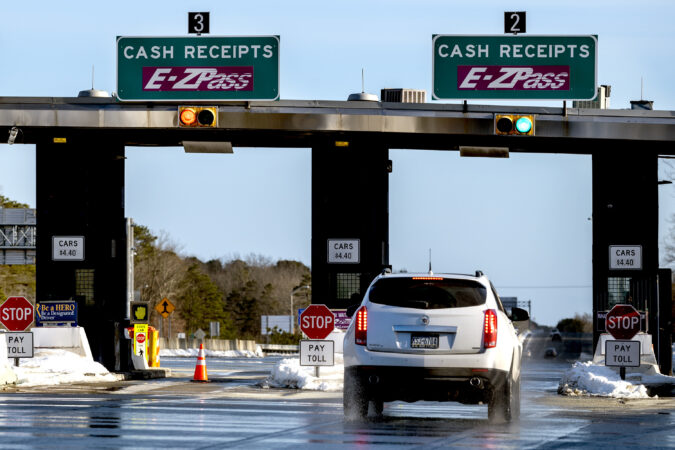
Drivers approach the Williamstown entrance ramp to the Atlantic City Expressway in 2022.
Both devices are equipped with digital chips, which are read by overhead gantries on the highways. The technology allows drivers to keep moving and be digitally charged for tolls.
This week, the Massachusetts Department of Transportation rolled out E-ZPass stickers, free of charge for new customers and those who need to replace their transponders, according to several local news reports.
Massachusetts officials estimate the switch will save the state more than $7 million a year, since the stickers’ production cost is a fraction of the cost of the transponders, according to a recent report from WBUR, the Boston NPR affiliate.
In New Jersey, officials spent $8.4 million in 2022 to replace the batteries of 920,000 E-ZPass transponders, according to NJ.com.
News of the Garden State’s E-ZPass sticker test comes two months after the Atlantic City Expressway went cashless, with the Garden State Parkway and the New Jersey Turnpike set to follow. Across the river, the Pennsylvania Turnpike has been cashless since 2020.
SEPTA general manager Scott A. Sauer on Thursday was given a three-year contract with an annual salary of $395,000 as chief executive of the regional transit agency where he has worked for more than 35 years.
Board members approved the deal for Sauer, 54, who became interim general manager in late 2024 and then helped guide SEPTA through one of its toughest years, packed with crises over the budget, service cuts, and emergency repairs to Regional Rail cars after several caught fire.
Sauer was named permanent general manager June 2, 2025, and the contract approved Thursday was made effective on that day. When it expires in 2028, the contract automatically renews for two one-year extensions unless either party declines.
“I’d like to take a moment to thank this board for their continued confidence in me,” Sauer said. “I appreciate it.” He said members’ support and advice would be “the envy of any chief executive.”
Sauer would be eligible for cost-of-living pay increases under the contract, dependent on whether there are annual raises for all of SEPTA’s supervisory, administrative, and management employees.
Sauer had been making $300,879.
Sauer began as a trolley operator in 1990, following in the footsteps of his late father, Robert, who worked for the former Philadelphia Transportation Co. and SEPTA, its successor, for over three decades.
At SEPTA, the younger Sauer later became a transportation manager and safety officer. In 2013, he was promoted to assistant general manager of system safety.
Four years later, he was the assistant general manager for operations, including vehicle maintenance and station upkeep.
In 2022, Sauer was named SEPTA’s chief operating officer, with infrastructure maintenance, the Transit Police, engineering, and capital projects added to his portfolio.
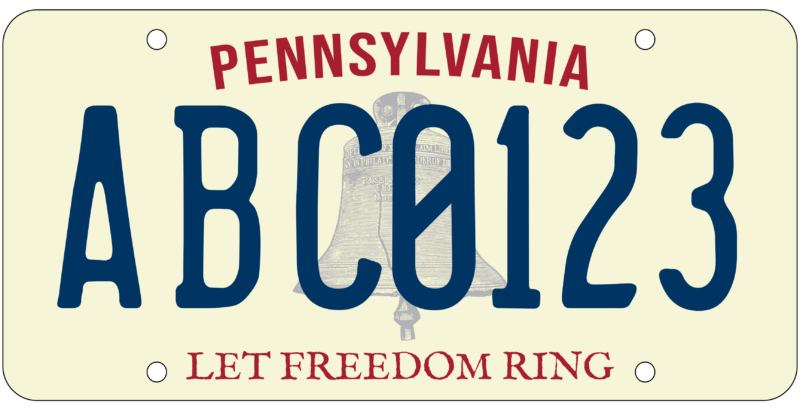
Some Pennsylvanians are getting tolls that don’t belong to them. Two digits in the new U.S. 250th anniversary license plate are behind it.
The position of a tiny line on the Let Freedom Ring plates is making the automatic license plate recognition system struggle to distinguish between 0 and 8.
The slash through the zero was added to help both the system and the human eye differentiate between zero and the letter O, said Leanne Trindel, a PennDot spokesperson.
Developed with the state police and the Pennsylvania Turnpike, it was a best practice recommendation by the American Association of Motor Vehicle Administrators, Trindel said.
But, the automatic license plate recognition system is having a hard time discerning between the slashed zero from the number 8, said Marissa Orbanek, the Pennsylvania Turnpike Commission press secretary.
Although no significant complaints have come, the turnpike is working on addressing the problem, Orbanek said. As part of the routine procedures, the system is tested daily, but fixing the issue will take some time.
“This process isn’t an easy fix,” Orbanek said. “It requires time, repeated exposure, and continuous analysis to ensure the technology can learn and adapt effectively.”
Orbanek couldn’t provide a definitive timeline for fixing the issue, but she stressed the importance of allowing technology time to learn the characters on the plates and adapt .
In the meantime, drivers with the new plate getting tolls that don’t belong to their plate number can call 1-877-736-6727 or reach out to the agency listed on the notice.
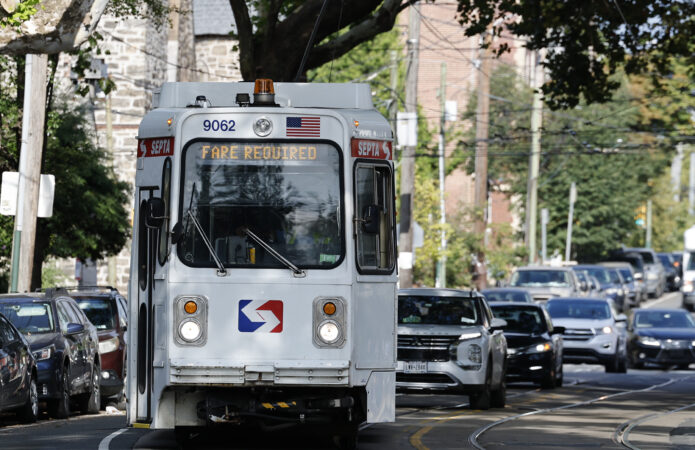
Beginning Monday, people who illegally park in SEPTA trolley lanes and stops could be caught in the act by automated enforcement cameras, the Philadelphia Parking Authority announced Thursday.
Plans call for installing AI-camera systems on 30 trolleys across the six lines in the city to identify and ticket the owners of vehicles obstructing the streetcars or making it hard for passengers to board by blocking stops.
Violations will carry a $51 fine as of April 1. Before then, warnings will be mailed instead of tickets.
Parking violations are the enemies of surface transit, slowing buses and trolleys, making them less reliable and putting riders in danger.
SEPTA, PPA, and the Philadelphia Office of Transportation and Infrastructure Systems are collaborating on the effort. It uses camera systems made installed and maintained by Hayden AI, a San Francisco-based tech company.
“A single illegally parked vehicle can disrupt service for thousands of riders and create unsafe boarding conditions that force passengers into moving traffic,” PPA executive director Rich Lazer said in a statement.
“This is more than a minor inconvenience,” he said.
Legislation sponsored by Councilmember Mark Squilla and enacted in 2023 authorized using cameras mounted on buses and trolleys to enforce no-parking rules in Philadelphia.
“One of the most annoying things about this city is people stopping their cars wherever they want to stop them, in bus lanes, double parking. It just screws everything up,” then-Mayor Jim Kenney said at a news conference.
According to a 2019 study SEPTA commissioned from Econsult Solutions, Center City congestion causes 1.7 million hours of passenger delays per year, adding $15.4 million to yearly operating costs.
And then there is the almost incalculable cost to people who depend on buses and trolleys.
“In a city where 42% of Black residents and 50% of impoverished households do not own a car, efficient public transit is paramount to creating a strong transportation network that better provides economic opportunity for all,” said Christopher Puchalsky, director of policy and strategic initiatives for OTIS.
In some situations, SEPTA bus operators can steer around parked cars. Trolleys, running on fixed rails, don’t have any real flexibility when they are boxed out of their lanes.
SEPTA officials say bus speeds have improved on routes using the cameras. An average of about 14,746 violations are issued each month, according to PPA.
The cameras use artificial intelligence to determine if a car is stopped or parked to obstruct transit lanes and stops. Then, the systems transmit the vehicle’s license plate number and precise location to the Philadelphia Parking Authority using cloud technology.
“Keeping trolley zones clear isn’t just about enforcing parking rules — it’s about keeping Philadelphia moving,” said Marty Beard, CEO of Hayden AI. He added that Philadelphia will be the first city to deploy the cameras on trolleys.
The dreaded courtesy-tow system, the bane of so many Philadelphia drivers, looks to be finally getting an overhaul, with the city promising — in writing — to use its “reasonable best efforts” to stop losing your cars.
If that happens, gone will be the days of parking a Hyundai on 15th Street, only to find it the following week in the middle of Washington Avenue with $120 worth of parking tickets on the windshield.
Who could forget the guy who was forced to pay nearly $1,000 to get his BMW off the auction block after it was courtesy towed into a loading zone, then impounded by the Philadelphia Parking Authority?
And the women who were pulled over by police in other states for driving their own “stolen” cars, even though they had actually been courtesy towed in Philly months earlier.
Now, a less infuriating system could be in the works.
After a protracted legal battle in federal court — and six years’ worth of Inquirer stories — lawyers for the city have tentatively agreed to fix the problem.
The city said in a settlement agreement filed in federal court last week that it will pay $750,000 to 36 courtesy-tow victims and start requiring tow truck drivers who participate in the city’s vehicle relocation program to keep track of where they unhook them. U.S. District Judge Joshua D. Wolson still has to sign off on the agreement.
“They will have a handheld device to record where they are deposited and that will go to a website,” said Joseph Kohn of Kohn, Swift & Graf, which represented the plaintiffs along with attorney David Rudovsky.
Under the terms of the agreement, the city is expected to partner with the Philadelphia Parking Authority (PPA), which already uses such technology, to create a citywide system similar to those in Chicago, Phoenix, and other cities that maintain online databases of towed vehicles.
What is a courtesy tow?
“Courtesy towing” is a Philly term to describe what the city formally calls “relocation towing.” It’s a notoriously dysfunctional process for moving legally parked vehicles to make room for things like special events, utility work, or construction.
Some cars go missing for days or weeks. Others disappear forever.
Example of a courtesy tow gone wrong (it often goes wrong):
You legally park at the curb near your home in an area covered by your parking permit. That block, unbeknownst to you, subsequently becomes a temporary no-parking zone, say, for a construction project. When you return a couple days later, your car is gone. No one at the police department or any other branch of city government has any idea where it is.
You’re on your own.
This happens because the city allows private towing companies to handle much of the work, and those companies either fail to notify the police department where they dropped off the vehicles, or the information gets lost somewhere within an antiquated system of handwritten logs and fax machines. There is little accountability.
To add insult to injury, some of the towing companies will drop off vehicles in no-parking zones. Then the PPA comes along and starts ticketing those vehicles, unaware that they had been courtesy-towed to that location.
Lastly, the coup de grâce: Drivers who appeal those tickets are typically unsuccessful because they can’t prove to a hearing officer or a judge that they hadn’t parked there.
Julia Sheppard, photographed in 2021 after she spent a month looking for her Mazda sedan, which had been “courtesy towed.” Then a Temple law student, Sheppard had to pay towing fees because she couldn’t document the city’s involvement.
The problem got so bad that Comedy Central’s The Daily Show dedicated a segment to it in 2024.
But Mary Henin wasn’t laughing when she had guns in her face during a trip to the New Jersey Shore in May 2020. Long Beach Island police ordered her and a friend out of her Nissan, claiming it had been stolen. She was handcuffed and sat by the side of the road for 45 minutes until police could determine that the car was hers.
“It was horrible,” Henin, a public defender, recalled on Monday. “We’re lucky we were only just detained at the end of the day.”
Turns out, Henin’s car had been courtesy-towed months earlier for tree trimming. When she was unable to find it, she reported it stolen, as police often advise drivers. Henin later found it a few blocks from her West Philadelphia home and reported that to police, but they never took it out of the stolen-vehicle database.
The same thing happened a year later to Julia Lipkis, another Philadelphia courtesy-tow victim. She was pulled over by police in Virginia and wrongly accused of driving a stolen car.
Mary Henin, a public defender in Philadelphia, was pulled over by police in New Jersey and ordered out of her car at gunpoint. She sat in handcuffs trying to explain to officers that her car wasn’t stolen, but was only in the stolen-car database because it had been courtesy towed in Philadelphia.
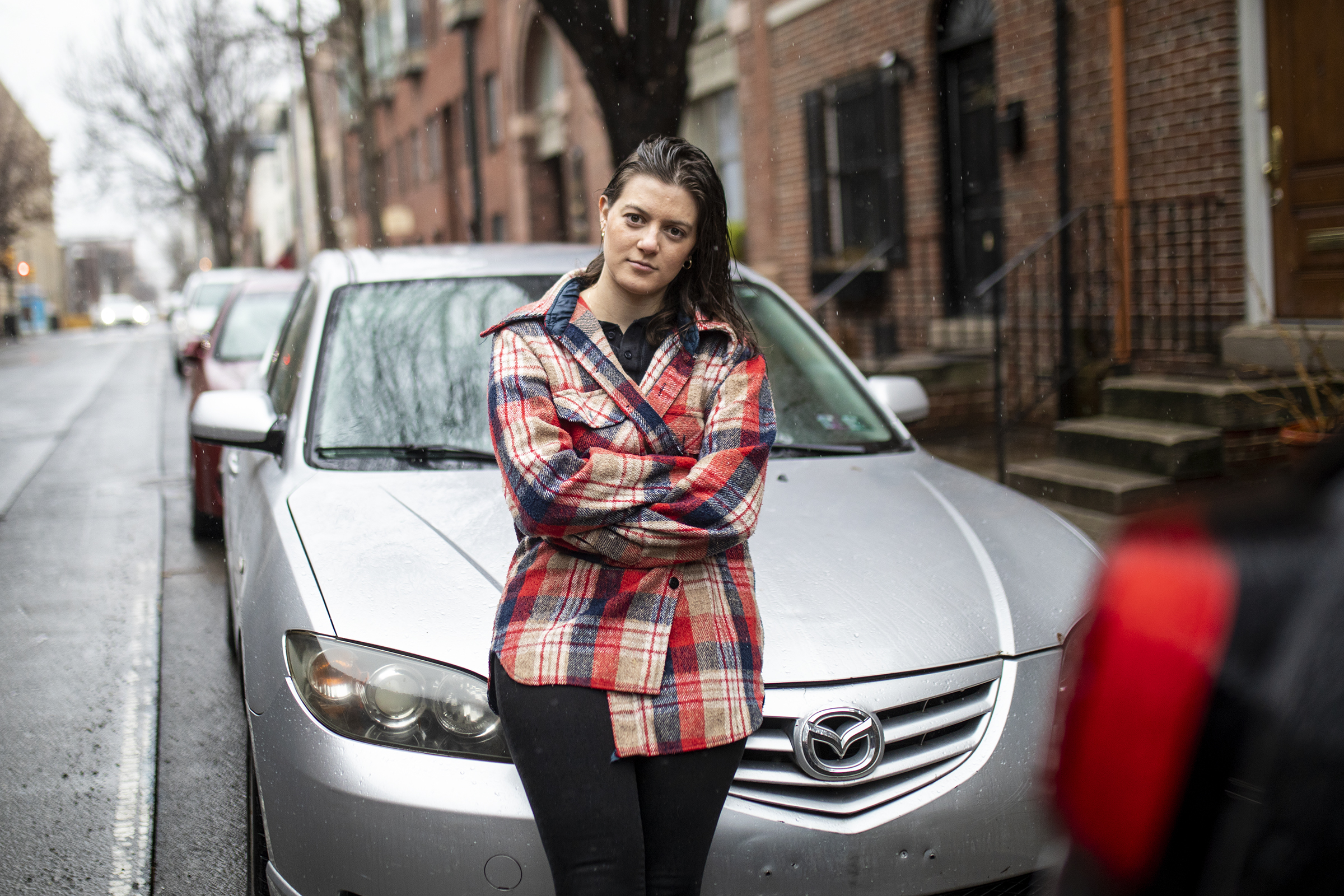
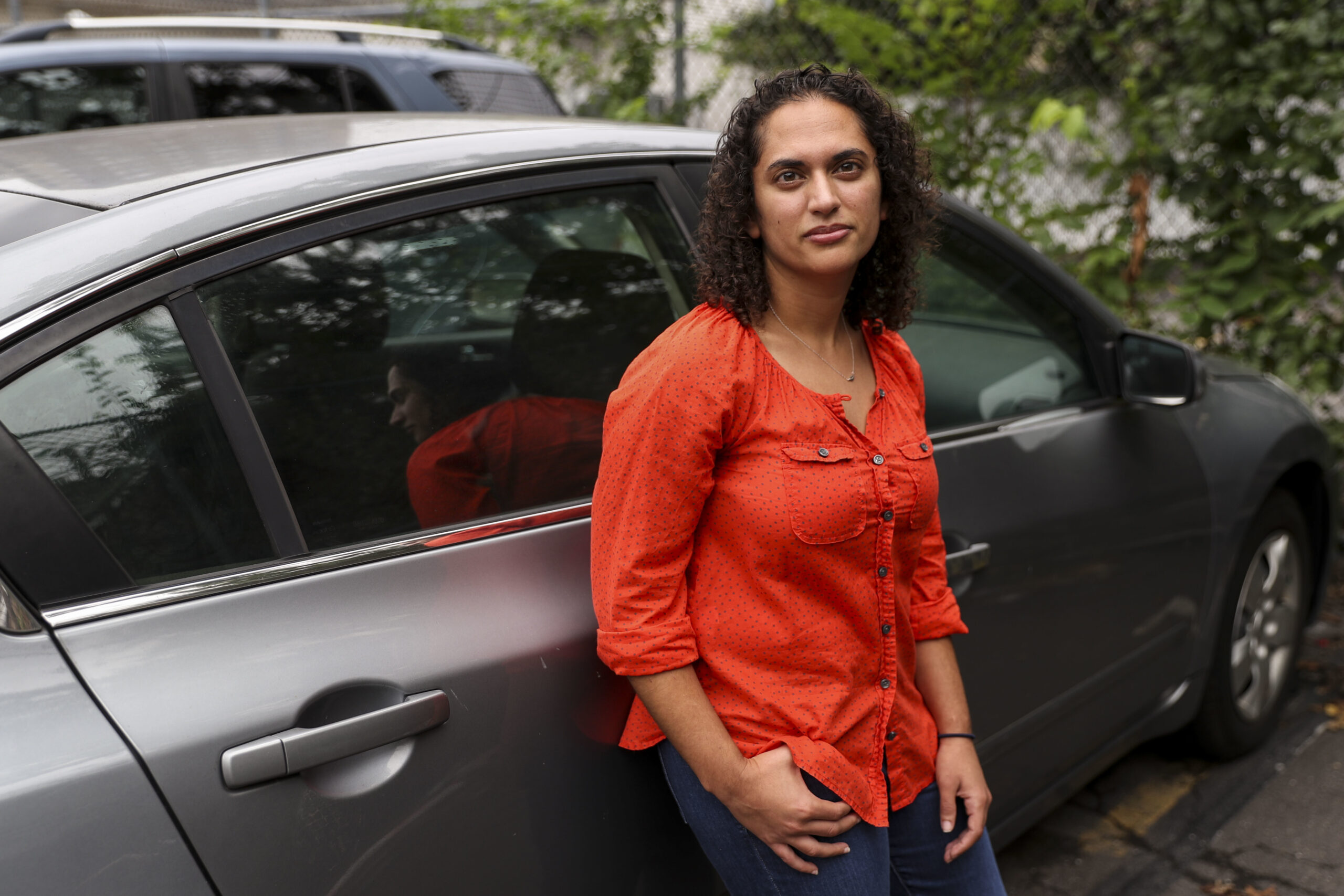
posed for a portrait near her car in Philadelphia, Pa. on Thursday, August 13, 2020. Henin’s car was courtesy towed and then reported stolen when it couldn’t be found. It was later found, but remained on the stolen vehicle list, leading to her being stopped and handcuffed until the issue was resolved.
Henin was one of the original plaintiffs in a federal lawsuit filed in 2021 alleging that the courtesy-tow process is a violation of the Fourth and Fourteenth Amendments.
“It’s a taking of property and a due-process violation,” said Kohn, the plaintiffs’ lawyer. He said he first learned of the problem in The Inquirer.
Under the proposed new system outlined in the settlement, the PPA would first put stickers on cars before they are courtesy towed, so its parking enforcement officers will know not to issue citations if a vehicle ends up in a no-parking or metered area.
Henin said she’s relieved that the city has finally moved forward with fixes to a system that has been broken for so long.“ I’m just hoping we can see them implemented quickly,” she said.
Ava Schwemler, a spokesperson for the city’s Law Department, declined on Wednesday to comment on the settlement.
“While the litigation has been settled, we remain at work finalizing all of the process changes that will follow,” Schwemler wrote by email. “The city will provide additional information in the near future about the changes that are occurring.”
PPA spokesperson Marty O’Rourke said the parking authority is willing to assist the city “in any way that it can.”
“At this point, there has been no formal operational agreement with the PPA,” O’Rourke said.
‘Bureaucratic nightmare’
It’s not clear when courtesy towing in Philadelphia got so bad. The Inquirerbegan reporting on drivers’ Kafkaesque experiences in January 2020, but the problem likely goes back much further.
City Hall has consistently ignored the problem, and, for years, refused to acknowledge that it even exists.
When Henin and three other vehicle owners filed their suit, the city tried to settle the case by offering them each $15,000, instead of fixing the systemic issues. Two plaintiffs took the money, but Henin and another driver moved forward with the suit.
Dozens more drivers with similar stories later came forward and filed a second lawsuit. They considered pursuing a class-action case.
Still, the city would not budge. In legal filings, lawyers for the city argued that it wasn’t responsible for the missing vehicles because they had been towed by private companies.
“[T]hey do not claim an injury that is fairly traceable to the city,” Anne Taylor, chief deputy city solicitor, wrote of the plaintiffs in 2023.
In the fall of 2024, there was a glimmer of hope. City Council passed a resolution to “hold hearings to investigate” the practice of courtesy-towing.
“Philadelphia drivers have been frustrated with the bureaucratic nightmare of getting their vehicles back, with some viewing courtesy-towing as little more than a money-making scheme,” read the resolution, which was introduced by Councilmember Jeffery Young.
Those hearings led to … nothing. They never even happened. No one has explained why.
In a pair of rulings in late 2024 and early 2025, U.S. District Judge Mitchell S. Goldberg rejected the city’s arguments to have the case thrown out. The two lawsuits were later consolidated.
Goldberg ruled that because the city distributes the temporary no-parking signs that precede most courtesy-tows, it has a duty to keep track of the vehicles, whether they are towed by the police department, the parking authority, or a private company.
“I just don’t understand how a big city can have this issue,” Danielle Ditommaso, 27, whose Volkswagen Jetta was courtesy-towed from the Ben Franklin Parkway in 2022, told The Inquirer last year.
She never saw the car again.
Aarthi Manohar, co-counsel on the federal lawsuit, said she couldn’t comment on negotiations with the city or what led to the settlement. She commended the drivers who brought the case for sticking it out for five years.
“They knew the city could and should do better,” Manohar said. “They were willing to wait nearly half a decade.”
The Atlantic City International Airport will soon offer even more southbound flights.
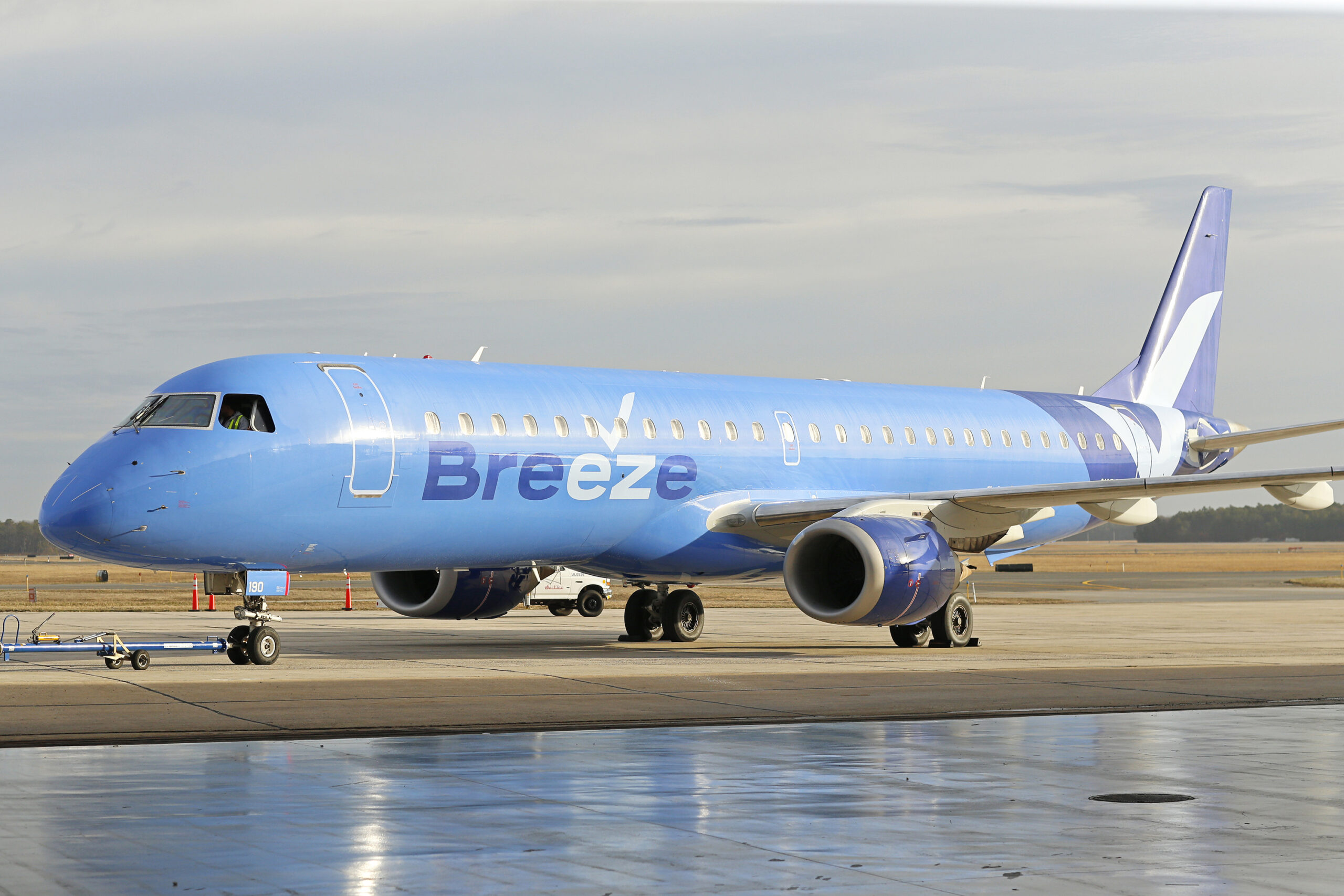
Breeze Airways, a budget carrier founded in 2021, is set to add direct flights between A.C. and Tampa twice a week starting this summer, the company announced Tuesday.
The routes will be offered on Wednesdays and Saturdays beginning July 1, according to Breeze, and fares for a one-way ticket will start at $79 per person.
The airline announced the new route to and from the Jersey Shore along with more than a dozen other nonstop flights nationwide.
Breeze Airways is adding nonstop flights from Atlantic City to Tampa twice a week starting in July.
“The addition of these new cities and routes will give even more travelers the opportunity to save precious hours that would otherwise be spent flying through hubs or driving,” David Neeleman, Breeze Airways’ founder and CEO, said in a statement, noting his company’s mission to offer affordable airfare in underserved markets. Neeleman has founded four other airlines, including JetBlue.
Last month, Breeze announced new nonstop service from Atlantic City to Charleston, S.C., and Raleigh-Durham, N.C., as well as a flight to Tampa, Fla., that includes a stopover.
The Charleston flights are set to be offered on Wednesdays and Saturdays starting May 6. And the Raleigh-Durham and stopover Tampa routes are scheduled for Thursdays and Sundays starting June 11.
All Breeze flights out of Atlantic City can be booked online now at flybreeze.com.
Breeze Airways is a private company, so it is not required to publicly report its finances. Last year, however, the airline announced that it had turned a profit for the first time in the fourth quarter of 2024, a period in which the company generated more than $200 million in revenue.
The Utah-based carrier has expanded in recent years, now operating more than 300 routes, including seasonal flights, to 86 cities in the U.S., Mexico, and the Caribbean.
Breeze is one of only a few major airlines that operate a dozen or so flights in and out of Atlantic City every day, depending on the season.
American Airlines allows passengers to go through security in Atlantic City and then get on a bus to catch flights at the Philadelphia International Airport.
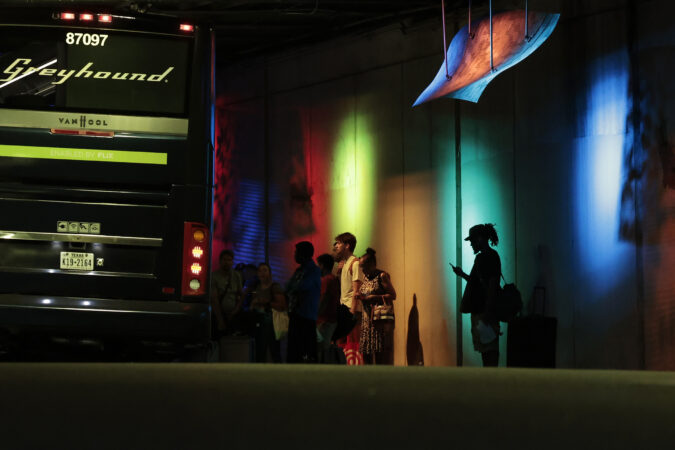
Lights shine from a window of the abandoned Greyhound intercity bus terminal on Filbert Street as construction crews demolish fixtures and begin renovations ahead of a May reopening.
While the old depot is ready for crowds of travelers attending high-profile special events this year, the city Department of Planning and Development has identified three possible locations for a permanent intercity bus station.
Officials sifted through 208 possible locations over the past two years before zeroing in on the three sites:
Eighth and Arch Streets: A pair of parking lots on Arch Street near Eighth Street next to the African American Museum. The lots, at 701-709 and 721-737 Arch St., are owned by the city and Parkway Corp.
15th and Vine Streets: The Philadelphia Gateway Garage at 1540 VineSt. along with an adjoining parking lot. They are owned by the Pennsylvania Department of Transportation and the Philadelphia Parking Authority.
Near 30th Street Station: A parking lot just north of 30th Street Station, at 2931 ArchSt., near the Cira Centre office tower.
On Wednesday, the city Planning Commission is holding a public open house at Independence Visitors Center from 6to8 p.m. People can learn about the sites, share their ideas, and ask questions about the future home of an intercity bus facility.
There’s also an online survey collecting opinionsaboutwhat the intercity bus station needs andwhere it should go, due March 13.
The former Greyhound terminal at 1001 FilbertSt. “is not a long-term solution for the city’s intercity bus needs,” city officials say, though it will provide a safe and comfortable indoor station for travelers, as opposed to the current, haphazard outdoor curbside loading zones along Spring Garden Street near Columbus Boulevard.
It is scheduled to reopen in plenty of time for eventscelebrating America’s 250th birthday and World Cup soccer tournament matches in the summer.
The city says its goal is a modern “transportation hub” with amenities for travelers and bus operators and, ideally, some development built around the facility. It would be owned by the city.
“Public ownership means it won’t be closed down by a landlord or private bus company,” the planning department said in a statement. In addition, the forever depot “could be designed to have housing in the floors above the station or retail spaces within the station. These uses could help support … construction and operation.”
Why was Philly’s Greyhound terminal moved?
Greyhound ran the terminal at 10th and Filbert for more than three decades but pulled out in June 2023, ending its lease with the owners amid the bus company’s push to cut costs by shedding real estate it owned or rented nationwide.
Other intercity bus carriers have done the same, operating from curbsides in a number of cities.
When those plans fell through, the building was empty again, while Greyhound, its parent company FlixBus, and family-owned Peter Pan Bus Lines were operating at curbside on the 600 block of Market Street. That site, chosen by city officials, lacked benches, bathrooms, or shelter for customers.
Traffic was a mess, and SEPTA had to reroute some of its metro bus routes for a time.
In November 2023, Greyhound and the other carriers moved operations to a corner in Northern Liberties along Spring Garden Street with more space than the Market Street block. City officials promised it was temporary, but the “station” is still there, with attendant trash and disruptions to local business.
Consultants and city planners picked 35 potential sites for closer analysis. They were looking for places that could accommodate a multistory, mixed-used development in addition to a station and that were close to Center City or University City, transit, and highway ramps.
Strengths: Proximity to several transit stops and to I-676 and I-95, as well as the potential to build public parking above the station and to use the African American Museum building when that entity moves to the Parkway.
Challenges: The ownership, split between the city and a private corporation, could require coordinating with the Federal Detention Center there on the southwest corner, and buses may need to be routed through Chinatown.
Challenges: Amtrak owns the property, however, and the city would have to coordinate with the company to develop over the railroad tracks and the structural work needed to strengthen the lot and ramps for heavy bus traffic. PennDot also has said there would have to be substantial work to the entrance and exit ramps to the Schuylkill Expressway.
What’s next?
The city plans to consider the feedback it gets Wednesday, update the schematics, and then hold another public event later in the year. It hopes to have a final report by the end of 2026 that names the site.
And then begins the long process of acquiring the site, designing the project, and figuring out how to pay for it.
Wrangling a big transportation project takes deft timing: scheduling the planning and construction stages in proper order, obtaining environmental approvals, and lining up financing from local, state, and federal sources.
Now officials are trying to figure out how best to keep the project moving while replacing the lost $159 million federal grant.
“This is a pretty unprecedented situation,” said Jesse Buerk, associate director of capital programs and project development for the Delaware ValleyRegional Planning Commission (DVRPC).
“I’ve never seen it before, where a project is funded and it’s moving along through the process, and then the funds are completely rescinded,” he said, speaking at the recent committee meeting.
It wasn’t just Philadelphiaor the Chinatown Stitch project that got nixed. That legislation rescinded $3.2 billion that had been awarded but not yet spent through the Biden-era program, 55 projects across the nation aimed at mitigating the impact of highway projects on marginalized communities.
President Donald Trump’s administration targeted equity and access transportation projects as wasteful “DEI”-style spending.
But at a meeting earlier this month, the DVRPC’s Regional Technical Committee voted to table the city’s request to study it further.
Several suburban residents on the technical committee, composed of experts from the eight counties in the region and the state governments of Pennsylvania and New Jersey, had raised concerns about spending up to $12.5 million on the design work without having construction money locked up.
“This request is a significant gamble if you’re not able to recoup those reconnecting communities [funds],” said Brian E. Styche, a transportation planner for Chester County. “We would just like more time to discuss what the plan B is.”
DVRPC’s board of directors is scheduled to discuss the city proposal on Thursday.
Christopher Puchalsky, policy director for the city’s Office of Transportation and Infrastructure Systems, said he understood the concerns: “I don’t think there’s any arguing with the fact there’s some amount of risk.”
Alternative construction funding
The city was able to complete planning and engineering work with $8.4 million of the grant. It needs to secure final design funding before federal environmental review and approval, Puchalsky said.
Not being able to move forward would add additional delay to the project, he said.
The city is exploring alternatives for construction money, including the possibility of tax-increment financing for at least some of the funds, Puchalsky said.
That form of financing uses property tax revenue for development in a specific local district.
“There’s just enormous community support and political support for this project that a lot of the folks have been waiting 40 years for,” he said.
What is the Stitch?
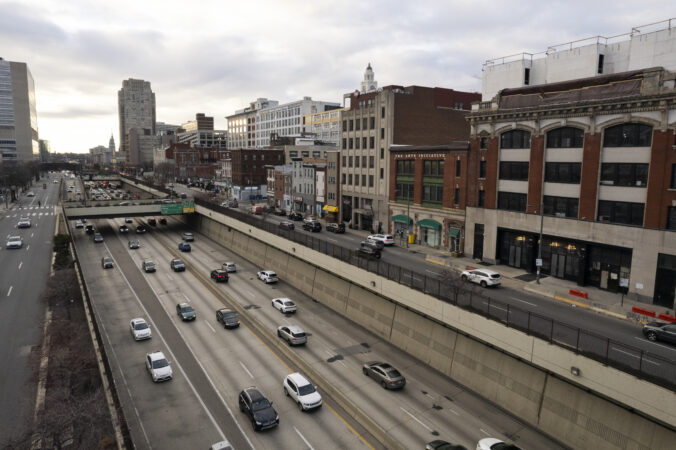
The Chinatown Stitch project involves building a cap over I-676 from just east of 10th Street to 13th Street, allowing for a park as well as more developable land. It would reconnect the north and south sides of the neighborhood, which are split by the interstate.
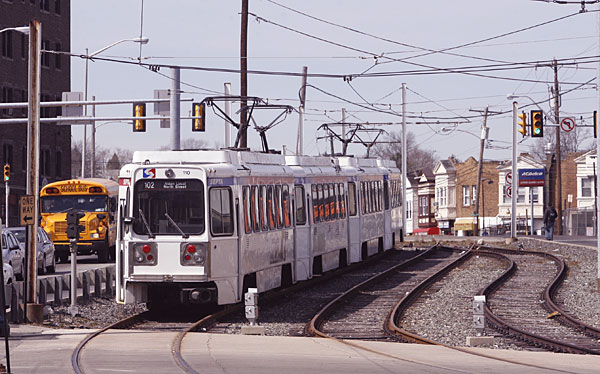
Rides on the two trolley lines serving Delaware County promise to be safer but longer with a modern signal system scheduled to go live on Monday, SEPTA said.
The upgraded signals on the D1 and D2 trolley lines will require operators to make more gradual accelerations and decelerations. They will also enforce speed limits and stop signals with automatic braking if needed.
“It will reduce the possibility of operator error,” SEPTA general manager Scott A. Sauer said. “They won’t be able to speed and risk derailment. They won’t be able to violate stop signals or misaligned switches.”
But the computer won’t replace the judgment of the people operating a trolley, Sauer said. Operators will get an alert, and the system provides backup if they cannot correct it in time, he said.
Trips will be up to 15 minutes longer on the D1 route and 10 minutes on the D2 route, depending on where a passenger boards and gets off the trolley.
The trolleys operate between Media and the 69th Street Transportation Center in Upper Darby, and between Sharon Hill and the transit hub. They were formerly called Routes 101 and 102.
SEPTA accounted for the increased Delaware County trolley travel times in the new schedules, which begin Monday.
It took about a decade and $75 million to install the system, called Communications-Based Train Control, on the Delco trolleys, said John Frisoli, SEPTA’s top rail signals engineer. Radios communicate between the control system and the trolleys.
A similar system has operated in the Center City trolley tunnel since 2005. SEPTA has been adding safety features to its rail-signal systems for about 20 years, including the installation of Positive Train Control on Regional Rail, which controls train speed and applies automatic brakes to prevent crashes caused by human error.