Category: Transportation

  • Philly’s Logan Circle set to have new sidewalks, ADA ramps, and a restored fountain this spring

    Philly’s Logan Circle set to have new sidewalks, ADA ramps, and a restored fountain this spring

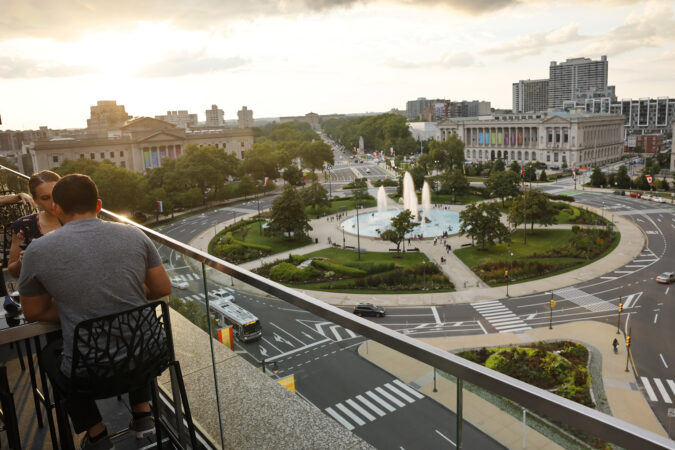
    Drivers in Philadelphia’s Logan Square neighborhood should expect new delays as the city continues to prepare for America’s 250th birthday next summer.

    Construction is set to cause lane closures in both directions on weekdays from Dec. 1 until May 19, Pennsylvania Department of Transportation officials said in a statement.

    During this time, workers will be reconstructing Logan Circle’s 15-foot-wide outer sidewalk, as well as eight ADA curb ramps, according to the city.

    “This project will improve the safety and accessibility for Logan Square residents and the increased number of visitors during 2026 events,” city officials said Saturday.

    Drivers won’t be able to use the interior lane around Logan Circle, the left inbound lane on the Benjamin Franklin Parkway, and the left lane on 19th Street north of the circle, according to the city.

    The work is set to occur between 7 a.m. and 3:30 p.m. on weekdays, according to PennDot, and will be weather dependent.

    “Motorists are advised to allow extra time when traveling through the work area because backups and delays will occur,” PennDot officials said.

    During construction, pedestrians will also be unable to use the sidewalk around the circle or access Swann Memorial Fountain at its center, according to the city.

    The beloved 101-year-old fountain hasn’t been fully operational since 2023 due to vandalism. Philadelphia Parks and Recreation Commissioner Susan Slawson said in September that the city is making repairs, with plans to have the fountain completely restored by May 2026.

  • Philly wants to set its own speed limits, and other highlights of the city’s new Vision Zero report

    Philly wants to set its own speed limits, and other highlights of the city’s new Vision Zero report

    Philadelphia can’t set the speed limits on roads within its own borders. Only the state can.

    So city transportation officials want to persuade Harrisburg to give it the power to set speed limits more appropriate to the density of Philadelphia.

    That is a top action item in the city’s new Vision Zero report, released Tuesday, which will guide traffic safety efforts for the next five years.

    “We’re looking to work with the state legislature to make our roads safer,” said Christopher Puchalsky, director of policy and strategic initiatives at the Philadelphia Office of Transportation and Infrastructure Systems.

    In Pennsylvania, as in many states, speed limits are based on the 85th percentile rule. Engineers measure speeds in a study area and set the limit based on how fast 85% of the drivers there are traveling.

    “It just sort of got adopted and enshrined in law,” Puchalsky said of the principle developed from studies of rural roads in the 1950s and ’60s.

    In recent years, traffic engineers, many states, and federal agencies in charge of traffic safety have been moving away from the approach and toward speeds that help prevent injuries and deaths.

    “It’s one of those things we’ll look back on and say, ‘Why did people think that was a good method?’” Puchalsky said. “And we’ll all scratch our heads — or at least our grandchildren will scratch their heads.”

    Pennsylvania’s legislature would need to amend the state’s vehicle code to grant Philadelphia the authority.

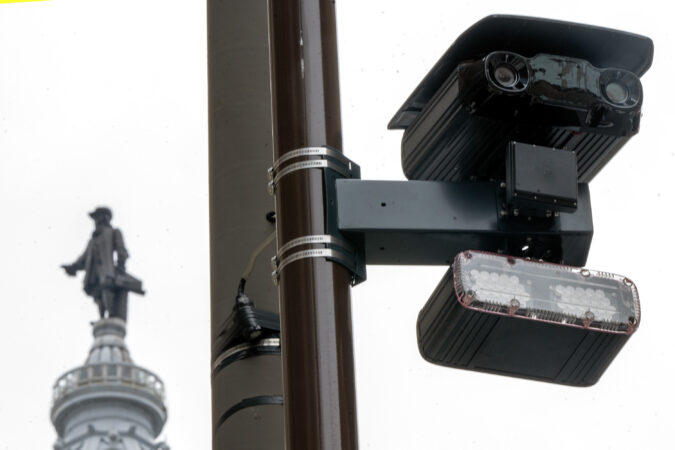
    Similarly, the city wants to expand the use of automated speed enforcement cameras and red-light enforcement cameras. That would also require legislation.

    The speed cameras on Roosevelt Boulevard are now permanent, and the city was authorized to put them on five other dangerous roads on a trial basis.

    Speed cameras also went up on most of Broad Street.

    Here are other takeaways from the Vision Zero report:

    Traffic deaths are still high in Philly

    In 2024, 120 people were killed in vehicle crashes in the city. The number of fatalities has been trending down slightly since 2020, but that figure is still 41% higher than it was in 2015, when the Vision Zero program began.

    “I think we’ve unfortunately hit a higher set-point post pandemic than we would like,” said Kelley Yemen, director of multimodal planning for the city. “We’re seeing encouraging news with this year, but we’ve got two months to go and are holding our breaths.”

    Yemen said the city has seen a 20% reduction in crashes on corridors where Vision Zero has been able to do traffic-calming projects such as installing speed cushions, implementing road diets that slow drivers, and installing separated bike lanes.

    “As we get further out from the pandemic, we’re also hoping we reset some cultural norms on our streets, whether it’s through automated speed enforcement, red-light cameras, or working with [the police department],” she said.

    The size of Philly’s problem

    Philadelphia is an old, dense city with a robust transit system, similar to New York and Boston. But its rate of traffic-related deaths per 100,000 people is many times New York’s — and most closely resembles that of Los Angeles, the Vision Zero report noted, citing federal data from 2019 through 2023.

    Philadelphia had 8.48 traffic deaths per 100,000 people, and Los Angeles had 8.11 per 100,000 residents.

    “We are still reviewing the plan, but our initial reaction is that the goals set forth are not transformational enough to address the climbing traffic death statistics,” said Jessie Amadio, an organizer with Philly Bike Action.

    “Vision Zero safety interventions work in the places they are installed,” but annual progress is too slow, she said.

    Factors that make a crash severe

    Speeding was the leading contributing factor in serious injury and fatal crashes between 2020 and 2024, present in 19%, the report said. Drivers impaired by alcohol or drugs were involved in 8% of the crashes, and 8% ran a red traffic light. Distracted driving was responsible in 4% of crashes, and running stop signs in 2%.

    People walking or using a personal mobility device were involved in 6% of crashes from 2002 through 2024 but were 40% of those who were killed, the report found.

    Thirty-eight percent of people who died were in motor vehicles.

    What were residents’ biggest concerns and asks?

    The Philadelphia Office of Transportation and Infrastructure Systems heard from about 3,000 city residents about their biggest concerns and preferred responses, said Marco Gorini, the Vision Zero program manager.

    Speeding was the topmost concern, cited by 24% of the people participating, followed by drivers running red lights and stop signs, cited by 23%.

    People were reached at roundtables involving more than 80 community groups, by online services, and through a polling firm that randomly queried 1,500 Philadelphians representative of the city’s overall population.

    Participants supported tough enforcement by automated cameras and police against those violations by wide margins.

    Infrastructure-related changes work best to protect people and change driver behavior, residents said, and they clamored for more traffic-calming measures and street redesigns, according to Gorini. They want to prioritize changes around schools, senior centers, and public parks.

    Besides enforcement and traffic-slowing infrastructure, residents expressed strong support for more safety education — instruction for high school students on safe driving (76%) and education for young students on safe walking and biking (71%).

    And another thing: People want transparency with safety efforts.

    “It’s very important that we regularly report on the state of traffic safety in Philadelphia and the results of Vision Zero interventions,” Gorini said. “This ensures accountability and helps the public understand what the issues are and how efforts to address them are going.”

    Next steps

    The city will be developing a spending plan for new safety projects for the next annual budget, due in the first quarter of 2026. And figuring how to pay for them from city funds and state and federal grants.
  • Regional Rail service snarled late into Tuesday night because of earlier disabled trains, SEPTA says

    Regional Rail service snarled late into Tuesday night because of earlier disabled trains, SEPTA says

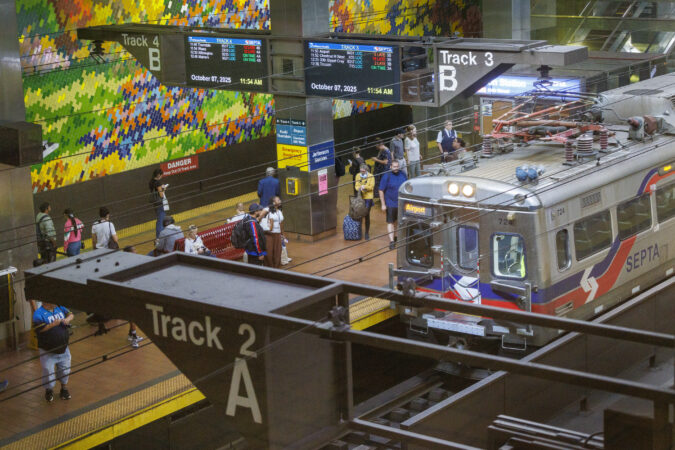
    Regional Rail service through Center City was snarled early Tuesday evening — and late into the night — because of disabled trains blocking a tunnel, SEPTA said.

    “We had a brief power outage at about 4:15 that started this. The power was back within 10 minutes, but we had three trains that could not restart,” said SEPTA spokesperson Andrew Busch.

    “We are in the process of transferring those customers to other trains, but it is causing major delays,” Busch said.

    Busch later added that the afternoon power outage originated with Amtrak.

    Shortly before 10:20 p.m., SEPTA reported on social media that service “remains significantly delayed due to earlier overhead power loss in Center City. Expect delays of up to 45 minutes.”

  • Lawsuit accuses PPA of failing to pay its security officers for mandatory breaks

    Lawsuit accuses PPA of failing to pay its security officers for mandatory breaks

    The Philadelphia Parking Authority violated federal and Pennsylvania labor law by requiring the security officers in the agency’s impound lots to work during their mandatory 30-minute meal and rest breaks, according to a proposed class action lawsuit.

    The complaint was filed Monday in Philadelphia’s federal court by Terrez McCleary, who has been working for the PPA as a security officer since 2018. The suit does not say how many security officers are part of the class.

    McCleary staffs a security booth in a PPA impound, which requires her to control pedestrian and car traffic; go on security rounds; and respond to any safety issue, the suit says. During her eight-hour workday, the guard has to take a 30-minute unpaid break. But PPA doesn’t relieve her of her duties during that time, according to the complaint.

    “Put simply, the PPA requires Plaintiff and other security officers to work for 30 minutes without pay,” the lawsuit says.

    Had PPA counted the breaks toward security officers’ time sheets, many would have worked more than 40 hours a week, the complaint says. By not counting the 30-minute chunks, the PPA deprived its staffers of overtime pay.

    The proposed class action asks that the court award PPA’s security officers all the wages they lost due to the imposed break over the last three years, alongside an unspecified amount of damages.

    PPA declined to comment on the litigation.

    The lawsuit will have to be certified as a class action by a federal judge, which is not a forgone conclusion.

    Two Philadelphia Police Department chief inspectors filed a class-action lawsuit in August 2024, alleging they were denied overtime pay for emergencies for over a decade. In September, they asked a judge to certify their case as a class action representing 230 ranking officers.

    District Judge Mark Kearney denied the request earlier this month, explaining that it could not evaluate the claims for 230 officers without individually assessing the circumstances of each one.

    Jeremy Abay, the Pond Lehocky Giordano lawyer representing McCleary, said that the lawsuit fits a class action because the affected security officers would have the half hour deducted on their payroll records.

    “The class here is baked into their job duty,” Abay said. “Here these folks were at their post; they had to be at their post, and they have that .5 deduction on their payroll records.”

  • SEPTA won $43 million for diesel-electric hybrid buses from the Trump administration

    SEPTA won $43 million for diesel-electric hybrid buses from the Trump administration

    Since taking office for his second term, President Donald Trump has moved to cancel tax incentives and spending for clean-energy technology and prioritized expanded production of oil and natural gas.

    But the federal government apparently is not 100% out of the green fuels business.

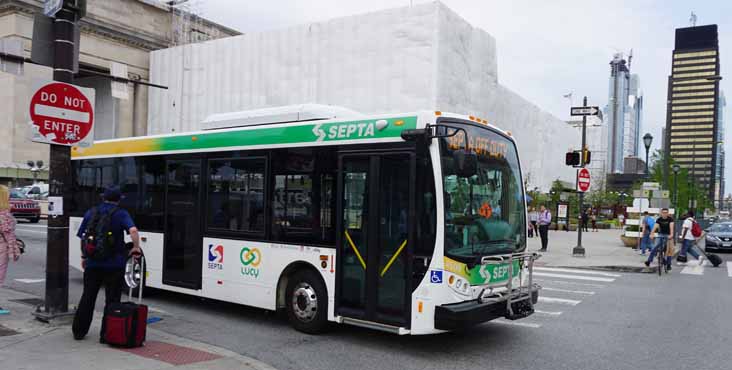
    Last week, SEPTA won a $43 million grant from the Federal Transit Administration to replace 35 diesel-powered 30-foot buses with an equal number of cleaner diesel-electric hybrid buses that are 32 feet long.

    The money comes from the FTA’s Bus Low- and No-Emission grant program.

    When the new buses are delivered, expected to be in 2028, SEPTA no longer will have diesel-only buses in its fleet.

    Most SEPTA buses are 40 feet long or 60-foot articulated models (the ones with the accordion in the middle). The shorter hybrids will be used on the LUCY Loop in University City and Routes 310, 311, 312, and Route 204, which runs from Eagleville to Paoli Station.

    “These new hybrid buses will increase operational efficiency and help ensure that SEPTA can continue to provide reliable service for customers,” general manager Scott Sauer said.

    SEPTA applied for the grant in July, a spokesperson said.

    “This is a major win for Philadelphia,” U.S. Rep. Brendan Boyle of Philadelphia said. “These new hybrid buses will mean more reliable service, a stronger transit system, and cleaner air for the hundreds of thousands of riders who depend on SEPTA every day.”

    Boyle, a Democrat, said the money came from President Joe Biden’s bipartisan infrastructure law, which Boyle helped champion. The grants were given from the fiscal year 2025 federal budget.

    “Delivering new-and-improved bus infrastructure is yet another example of how America is building again under President Trump,” U.S. Transportation Secretary Sean P. Duffy said in a statement. “More people travel by bus than any other form of public transportation.”

    SEPTA’s grant was part of $1.1 billion distributed from the fiscal year 2025 federal budget. The U.S. Department of Transportation said in the announcement that $518 million would be added to the low- and no-emission bus grant program from the fiscal 2026 budget.

  • Gov. Shapiro allocated $220 million to SEPTA to get Regional Rail back on track

    Gov. Shapiro allocated $220 million to SEPTA to get Regional Rail back on track

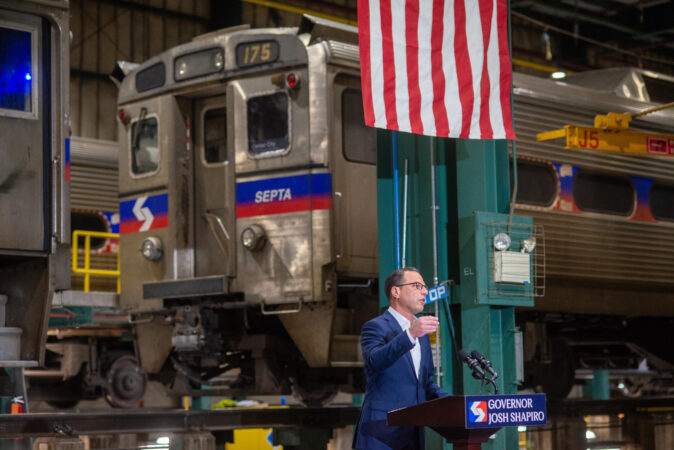
    Gov. Josh Shapiro is sending $220 million to SEPTA as it repairs fire-prone Silverliner IV Regional Rail cars and a damaged overhead power system in the trolley tunnel that together have brought commuting chaos.

    With the new capital funds, SEPTA will be able to restore Regional Rail to its normal capacity within a few weeks.

    Shapiro has directed PennDot to transfer money set aside for emergencies from the Public Transit Trust Fund to SEPTA, his office said.

    SEPTA’s increasing needs

    He announced the aid Monday at the transit agency’s train yard and maintenance shop in Frazer, Chester County.

    Federal regulators on Oct. 1 ordered SEPTA to inspect and repair, as needed, all of its Silverliner IV fleet after five train fires involving the 50-year-old cars.

    Delays, cancellations, station skips, and overcrowded Regional Rail trains running with fewer than the normal number of cars have been regular challenges for riders during six weeks of inspections and repairs focused on electrical components of the 223 Silverliner IVs.

    Earlier this month, the Federal Transit Administration ordered SEPTA to inspect its trolley power system after four incidents, including two times trolleys stalled in the Center City tunnel, requiring 415 passengers to be evacuated.

    The budget impasse

    Shapiro said he was forced to act for the second straight year because Senate Republicans wouldn’t support additional recurring funding for mass transit operations in the state budget.

    “They’ve come up with a ton of excuses, but they haven’t come up with the funding,” Shapiro said.

    Last November, he redirected $153 million in federal highway funding to SEPTA following a similar impasse in passing state transit subsidies.

    After the governor decided in September that no budget agreement on transit funding was possible, PennDot allowed SEPTA to tap $394 million in state money allocated for future capital projects to pay for two years of operating expenses.

    The transit agency was facing a $213 million recurring deficit in its operating budget.

    In late August, SEPTA had canceled 32 bus lines and significantly curtailed other service as part of a “doomsday scenario” the agency said was caused by lack of new state funding.

    Riders were inconvenienced, a lawsuit was filed, and a Philadelphia judge ordered the cuts to be reversed.

    Then the $394 million reprieve arrived.

    Yet the problems with the rail cars and trolleys served to underscore the risks of using capital funds for day-to-day operations.

    “A history of chronic underinvestment has led us to this point,” said Chester County Commissioner Marian D. Moskowitz, who is vice chair of SEPTA’s board.

    She noted that SEPTA has a much smaller capital budget than other large transit agencies.

    What this money will do

    In addition to the repairs, $17 million of the new state money announced Monday is intended to pay for the lease of 10 Silverliner IV rail cars from Maryland’s commuter railroad and the possible purchase of 20 cars from Montreal.

    Highlights of SEPTA’s plans for the $220 million:

    • $95 million for electrical system upgrades, overhauled propulsion motors and more on the Silverliner IV train cars and the newer Silverliner V models.
    • $48.4 million to update the overhead catenary wires in the trolley tunnel, along with three new catenary-maintenance cars for the tunnel and along trolley lines, and on long Regional Rail lines.
    • $51.5 million to upgrade 13 escalators at SEPTA stations, install AI-powered inspection cameras to catch potential problems earlier, and technology improvements at SEPTA’s Control Center
    • $8 million to install replacement parts for Broad Street Line and Norristown High Speed Line cars.

    “These funds are going to make a significant difference in our efforts to overcome the current crises,” SEPTA general manager Scott Sauer said, and to help avoid future ones.

    He thanked the governor and pledged “a comprehensive effort to identify potential problems sooner before they grow and lead to delays, cancellations, or shutdowns.”

    Shapiro had proposed an increase in the share of general sales-tax revenue devoted to transit subsidies over five years.

    Leaders of the GOP-controlled Senate said the $1.5 billion price tag was too high and proposed shifting capital money to operating subsidies for the state’s transit systems and roads — an idea partially reflected in the Shapiro administration’s temporary solution.

    “I am glad the Governor continues to take our advice and use existing resources to support public transit,” Senate Majority Leader Joe Pittman (R., Indiana) said in a statement.

    “It’s unfortunate that just one year ago, he took $153 million of funding from critical [road] infrastructure projects to fund transit, neglecting the needs of those who use our roadways every single day,” Pittman said.

    Republicans also argued that SEPTA had been mismanaged and needs change.

    As the next state budget cycle nears, the debate is likely to continue.

    “I want you to know I’m going to be a continue to be a governor who supports mass transit, who gives a damn about SEPTA, who cares about those 800,000 people that rely on SEPTA every single day,” Shapiro said.

  • Your guide to Philly’s 2025 Thanksgiving Day Parade

    Your guide to Philly’s 2025 Thanksgiving Day Parade

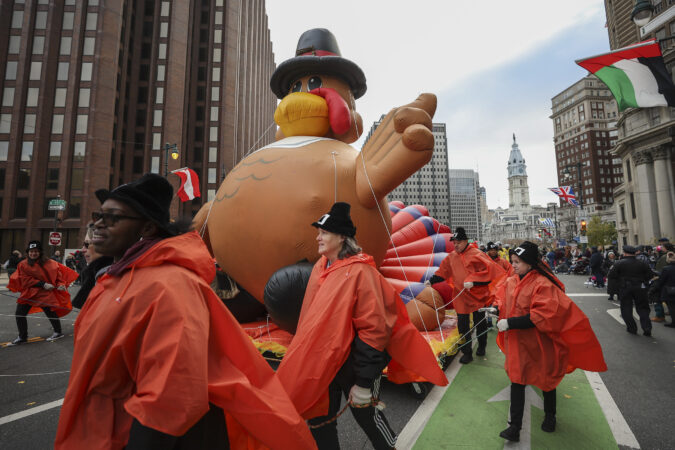
    When you think of a Thanksgiving parade do you immediately picture the Macy’s Thanksgiving Day Parade in New York City? Well, you shouldn’t! Not when Philadelphia has its very own parade that happens to be the oldest Thanksgiving parade in the country. New York City may have Snoopy, but we have Red Fraggle from Fraggle Rock, OK? And if that’s not hip enough for you, we also have Peppa friggin’ Pig. Take that, Charlie Brown.

    Now in its 106th year, the 2025 6abc Dunkin’ Thanksgiving Day Parade will be stacked with performers and stars like Kelly Ripa and, did we already mention, Red Fraggle from Fraggle Rock? The cast of Abbott Elementary will be there too.

    Whether you plan on attending in person, or catching it on television, here is everything you need to know about the nation’s first (and best) Thanksgiving Day parade. Happy Thanksgiving, Philly.

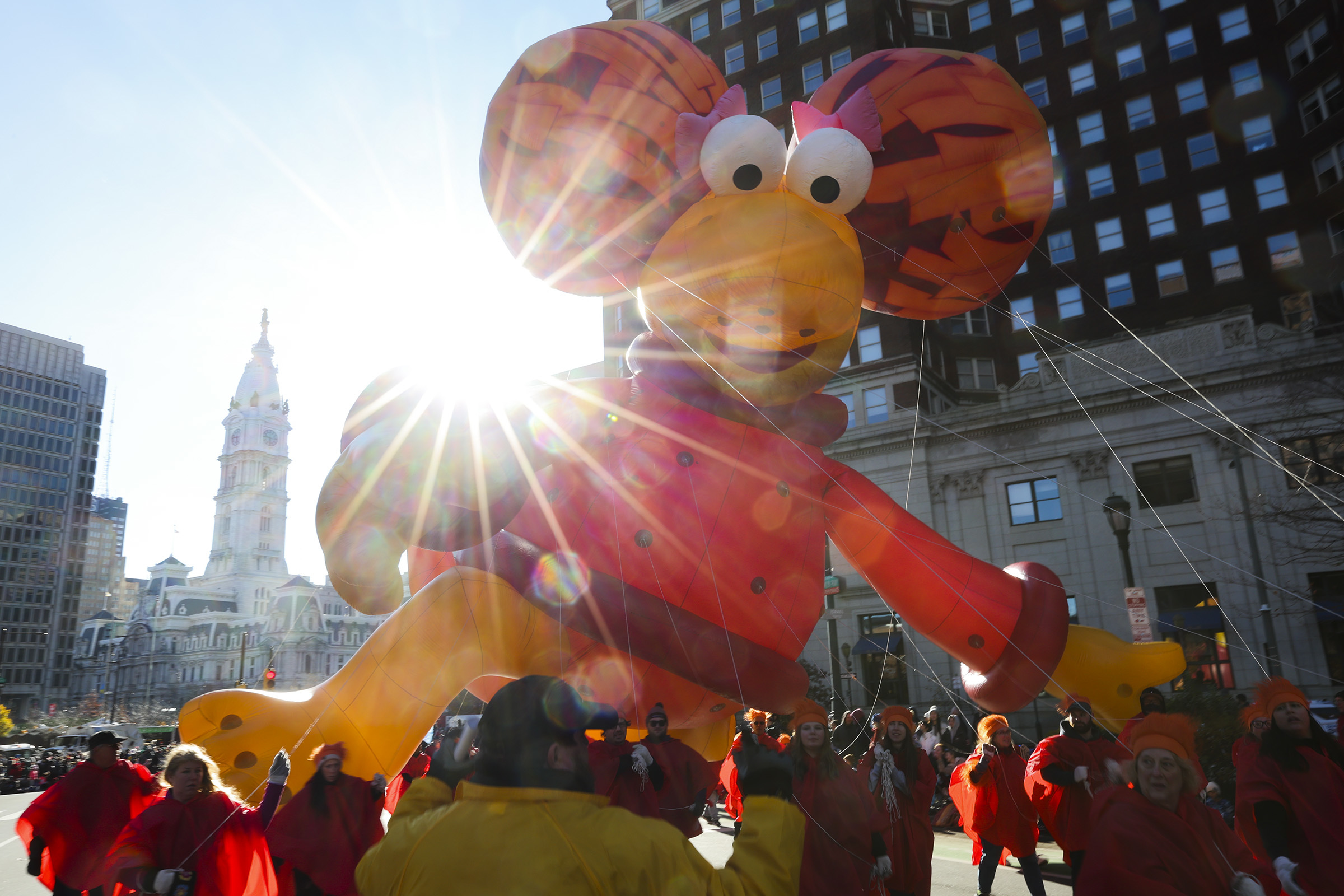
    Red Fraggle from the hit TV show “Fraggle Rock ” makes her way down 16th Street toward the Parkway during the 6abc Dunkin’ Thanksgiving Day Parade in 2023.

    Parade route

    This year’s 6abc Dunkin’ Thanksgiving Day Parade broadcast starts at 8:30 a.m., with the parade kicking off at 9 a.m.

    The route starts at 20th Street and John F. Kennedy Boulevard and heads east toward 16th Street, where it turns left and heads north to the Benjamin Franklin Parkway. From there, the parade follows the Parkway west to Eakins Oval and the Philadelphia Art Museum, where it concludes. The parade is free to attend.

    Weather

    Thanksgiving is still a few days away, but early reports from Weather.com are calling for partly cloudy skies with highs hovering in the mid-40s and lows in the 30s.

    Make sure to check the National Weather Service the day before Thanksgiving for the most accurate forecast.

    Thanksgiving parade road closures

    The following street closures will be in effect on Thursday, Nov. 27:

    Midnight to noon

    • 20th Street between JFK Boulevard and Market Street

    2 a.m. to 11 a.m.

    • 20th Street between the Ben Franklin Parkway and Race Street

    5 a.m. to noon

    • 20th Sreet between JFK Boulevard and Arch Street

    6 a.m. to noon

    • 20th Street between Market Street and the Ben Franklin Parkway

    7:30 a.m. until the end of the parade

    Full parade route, including:

    • JFK Boulevard from 30th Street to 16th Street
    • 20th Street from Market Street to the Ben Franklin Parkway
    • 16th Street from JFK Boulevard to the Ben Franklin Parkway
    • Ben Franklin Parkway to the Art Museum

    Parking

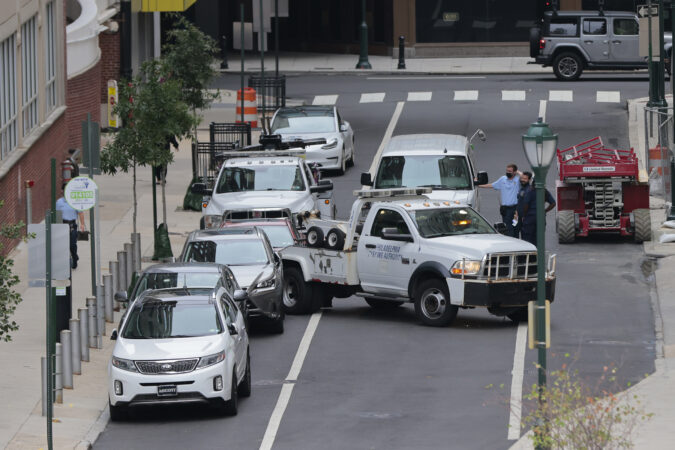
    There will be “Temporary No Parking” signs posted in areas on and around the parade route starting Wednesday, Nov. 26, at 6 p.m., the Office of Special Events said. Cars parked in prohibited parking areas will be relocated. If you believe your car has been relocated, The Inquirer has a guide on what to do when you’ve been “courtesy towed.”

    Metered parking elsewhere in the city is free on Thanksgiving. Additionally, you can check the Philadelphia Parking Authority’s website for a list of parking garages and parking lots around the parade route.

    SEPTA service

    The parade route is blocked off to traffic, impacting SEPTA’s bus service from 2 a.m. until 5 p.m. on Thursday, Nov. 27.

    Routes affected during this time include Route 2, Route 7, Route 17, Route 27, Route 31, Route 33, Route 38, Route 43, Route 44, Route 48, Route 49, Route 124, Route 125, L1 OWL.

    For detailed information about route detours, check SEPTA’s System Status Page at septa.org. You can also follow real-time updates on the agency’s System Status website, via TransitView on the SEPTA app, or on X at @SEPTA_Bus.

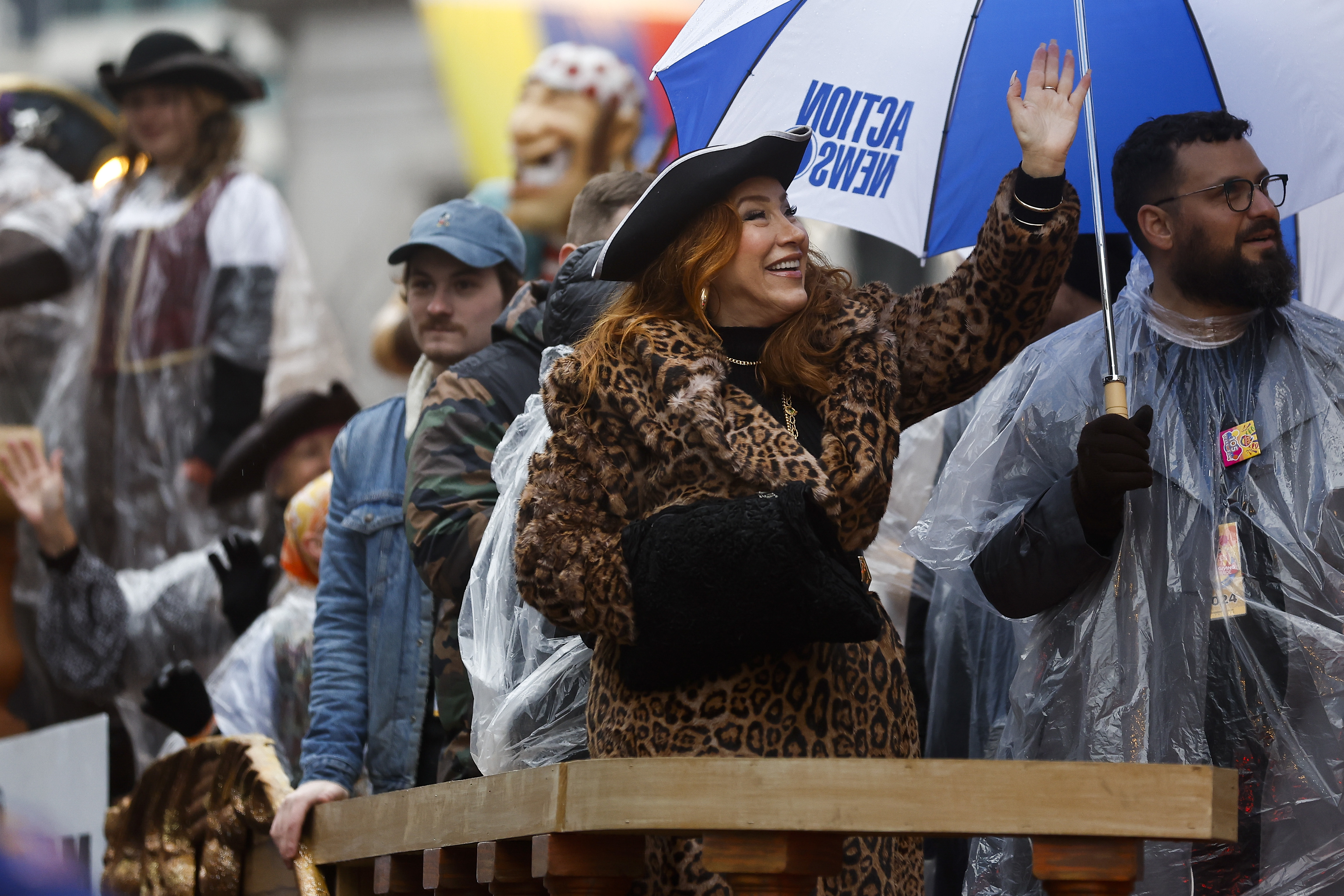
    Actor Lisa Ann Walter, from “Abbott Elementary,” waves to the crowd during the 105th Thanksgiving Day Parade in 2024 in Philadelphia.

    Parade floats and performers

    Guests this year include the aforementioned Kelly Ripa and Mark Consuelos, Ryan Seacrest, Vanna White from Wheel of Fortune, former NFL quarterback Troy Aikman, and Good Morning America weather forecaster Sam Champion. There will also be performances from the iconic funk group Cameo and Motown legends the Four Tops.

    As for the floats, you saw our note about Red from Fraggle Rock, right? What more could you want?

    Where to watch

    If you’re looking to attend the parade, you can watch from anywhere along its route, for free.

    Some favorite spots to watch include the Franklin Institute, the Philadelphia Museum of Art, Eakins Oval, and Logan Circle.

    How to watch from home

    The parade will air live from 8:30 a.m. until noon on 6abc and can be streamed via the station’s website, the 6abc Philadelphia News App, or on Disney+ and ABCNewsLive beginning at 9 a.m.

  • Trolley tunnel to remain closed until at least Nov. 30

    Trolley tunnel to remain closed until at least Nov. 30

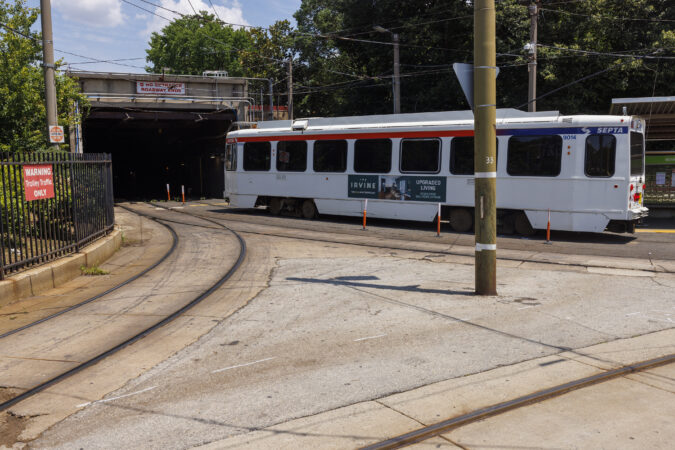
    SEPTA is extending its trolley tunnel closure through at least Nov. 30, hoping to use the extra time over the Thanksgiving holiday to complete repairs to the overhead catenary power system.

    The tunnel has been shut down for most of the last two weeks as crews work on the problem.

    Riders should use the Market-Frankford El to travel through Center City, catching the trolleys at 40th and Market Streets.

    “My wife, daughter and I are totally dependent on the trolley to get us to work and school, and with a prolonged trolley-tunnel diversion, the system has become unreliable and, frankly, unusable,” Will Tung, a Southwest Philly resident, told the SEPTA board during public comments at its Thursday meeting.

    Trolley ridership is typically lower during the week of the Thanksgiving holiday so the closure should be less of a disruption, spokesperson Andrew Busch said.

    SEPTA is contending with glitches in the connection between the overhead catenary wires in the tunnel and the pole that conducts electricity to the vehicle.

    The issue led to two trolleys becoming stranded in October, with a total of 415 passengers needing to be evacuated.

  • Free SEPTA fares for low-income riders could end next year. Advocates are pushing to save it.

    Free SEPTA fares for low-income riders could end next year. Advocates are pushing to save it.

    SEPTA’s 21.5% increase in transit fares and service cuts fell hardest on disadvantaged Philadelphians this year, showing an urgent need to make the city’s Zero Fare program permanent, City Councilmember Nicolas O’Rourke argues.

    He touted his proposal to dedicate 0.5% of the city budget each year to pay for the initiative that provides free SEPTA passes to people living in poverty.

    O’Rourke’s proposed Transit Access Fund would be written into the City Charter “so it can’t be yanked away at a moment’s notice when somebody wants to shift something around in the budget,” he told about 150 people in a town hall at the Friends Center on Cherry Street.

    O’Rourke, Democratic State Sen. Nikil Saval, and the advocacy group Transit Forward Philadelphia called the meeting to push for affordable public transportation and ways to sustainably fund SEPTA after Harrisburg’s failure to provide new state money for mass transit agencies.

    Their affordability agenda is in keeping with the message in Democratic wins for governor in New Jersey and Virginia, as well as Zohran Mamdani’s election as mayor of New York.

    A broad coalition and patience are needed in Pennsylvania, Saval said. ” Every major political win comes from months, years, sometimes decades, of work,” he said.

    Earlier this year, Mayor Cherelle L. Parker’s budget would have eliminated funding for Zero Fare, a two-year pilot program launched in 2023. Money was restored after backlash.

    “We pushed back hard,” said O’Rourke, a member of the Working Families Party. “People with the least income are paying a larger share of their money just to get around. That’s upside down.”

    Funding is not guaranteed after June 30, when the current budget expires, however.

    If enacted, a Transit Access Fund would generate an estimated $34 million in the 2026-2027 fiscal year, O’Rourke’s office calculates.

    That would generate enough money — between $20 million to $25 million, according to managers of the Zero Fare program — to give free SEPTA passes to 60,000 Philadelphians at or below the federal poverty standard.

    O’Rourke and his staff also are considering using the remaining $10 million to $14 million for matching grants to help businesses, landlords and housing developments to join the SEPTA Key Advantage program, which provides subsidized transit passes.

    People living at or below the federal poverty standard are eligible for the Zero Fare SEPTA passes. For 2025, that is $15,650 for an individual and $32,150 for a family of four.

    Philadelphia’s poverty rate was 19.7% in 2024, the latest figure available, according to the U.S. Census.

    To win sustainable state funding for SEPTA, activists need to break through the narrative that urban and rural areas of Pennsylvania are hopelessly divided on transit.

    This year, the Transit for All PA coalition campaigned for more state dollars for transit systems in every county of the state. About 45,000 people representing every legislative district participated.

    “When we’re made to feel like we’re on opposite sides of the fight, our numbers become smaller and we focus on the wrong targets,” said Saval.

    “It’s not the person in Schuylkill County frustrated about potholes and road conditions that’s to blame for lack of transit funding” he said. “That person deserves to get safely where they need to go, too.”

  • SEPTA trolley tunnel will stay closed until next week

    SEPTA trolley tunnel will stay closed until next week

    Philadelphia’s trolley tunnel has been closed for most of the last two weeks as SEPTA contends with glitches in the connection between the overhead catenary wires and the pole that conducts electricity to the vehicle.

    The tunnel will remain closed at least until next week for repairs, and city trolleys will operate from West Philadelphia. Riders can take the Market-Frankford El to get to and from Center City to 40th and Market Streets.

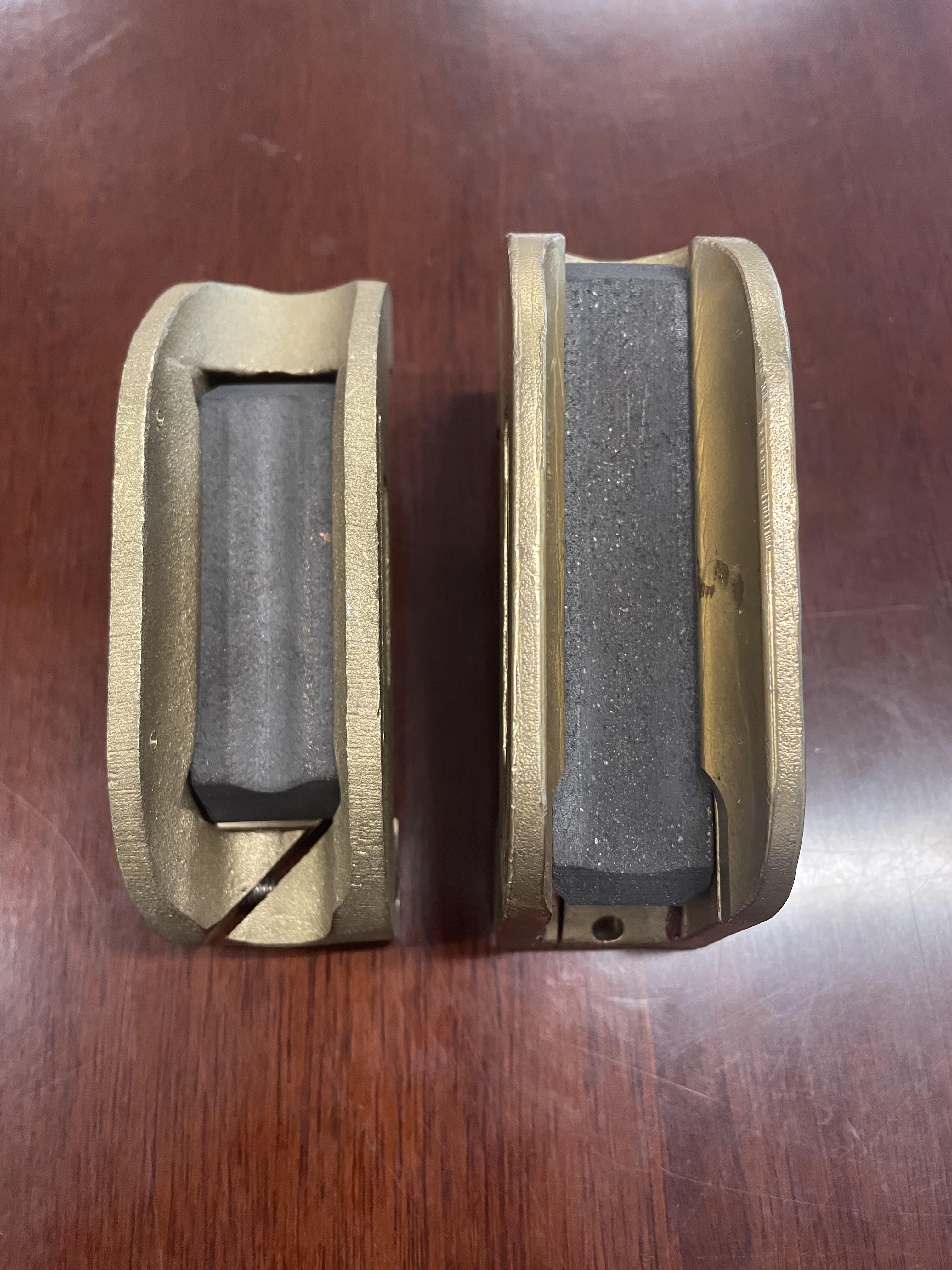
    At issue is a U-shaped brass part called a slider that carries carbon, which coats the copper wires above that carry electricity.

    “There’s a lot of friction and heat. The carbon acts as a lubricant,” said John Frisoli, deputy chief engineer for SEPTA.

    A 3-inch slider (left) and a 4-inch slider, which coats electric-powered wires with carbon to reduce friction. When they fail, trolleys are stranded.

    Earlier in the fall, SEPTA replaced 3-inch sliders with 4-inch models in an effort to reduce maintenance costs, but the carbon in the longer units wore out sooner than they should have, causing metal-on-metal contact between the trolley and the copper wires.

    Soon after, there were two major incidents when trolleys were stranded in the tunnels. On Oct. 14, 150 passengers were evacuated from one vehicle and 300 were evacuated from a stalled trolley on Oct. 21.

    SEPTA went back to the 3-inch sliders.

    On Nov. 7, SEPTA shut down the tunnel to deal with the issue, which had cropped up again, then reopened it on the morning of Nov. 13, thinking it was solved. But it discovered further damage to the catenary system and the tunnel was closed at the end of the day.

    “It’s just unfortunate that we’re dealing with the damage that decision caused,” said Kate O’Connor, assistant general manager for engineering, maintenance, and construction.

    The transit agency is running test trolleys and has found minimal wear of the wires rather than the extensive wear earlier, O’Connor said. Her department is working on a plan to replace wires by sections and will continue test runs until it’s determined the tunnel is safe for passenger traffic again, she said.

    “We have far more traffic in the tunnel than on the street — all five routes use it — and the overhead system there is more rigid,” O’Connor said.

    Trolleys have been unaffected traveling on the street. Jason Tarlecki, acting chief deputy engineer for power, said that the wires have “a lot more upward flexibility to absorb the shock,” he said, leading to less friction.

    The Federal Transit Administration on Oct. 31 ordered SEPTA to inspect the overhead catenary system along all its trolley routes.

    The directive came in response to four failures of the catenary system in September and October, including the tunnel evacuations.