Category: Associated Press

  • Rod Paige, 92, nation’s first Black  secretary of education

    Rod Paige, 92, nation’s first Black secretary of education

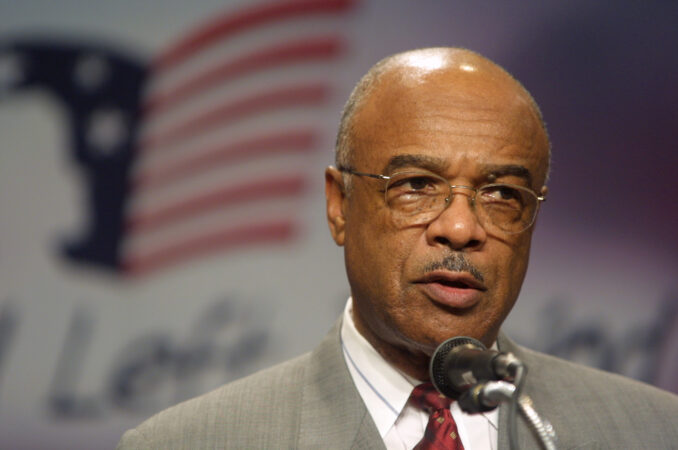
    Rod Paige, an educator, coach, and administrator who rolled out the nation’s landmark No Child Left Behind law as the first African American to serve as U.S. education secretary, died Tuesday.

    Former President George W. Bush, who tapped Mr. Paige for the nation’s top federal education post, announced the death in a statement but did not provide further details. Mr. Paige was 92.

    Under Mr. Paige’s leadership, the Department of Education implemented No Child Left Behind policy that in 2002 became Bush’s signature education law and was modeled on Mr. Paige’s previous work as a schools superintendent in Houston. The law established universal testing standards and sanctioned schools that failed to meet certain benchmarks.

    “Rod was a leader and a friend,” Bush said in his statement. “Unsatisfied with the status quo, he challenged what we called ‘the soft bigotry of low expectations.’ Rod worked hard to make sure that where a child was born didn’t determine whether they could succeed in school and beyond.”

    Roderick R. Paige was born to two teachers in the small Mississippi town of Monticello, which had roughly 1,400 inhabitants. The oldest of five siblings, Mr. Paige served a two-year stint the U.S. Navy before becoming a football coach at the high school and then junior college levels. Within years, Mr. Paige rose to head coach of Jackson State University, his alma mater and a historically Black college in the Mississippi capital city.

    There, his team became the first — with a 1967 football game — to integrate Mississippi Veterans Memorial Stadium, once an all-white venue.

    After moving to Houston in the mid-1970s to become head coach of Texas Southern University, Mr. Paige pivoted from the playing field to the classroom and education — first as a teacher, and then as administrator and eventually the dean of its college of education from 1984 to 1994.

    Amid growing public recognition of his pursuit of educational excellence, Mr. Paige rose to become superintendent of the Houston Independent School District, then one of the largest school districts in the country.

    He quickly drew the attention of Texas’ most powerful politicians for his sweeping educational reforms in the diverse city. Most notably, he moved to implement stricter metrics for student outcomes, something that became a central point for Bush’s 2000s bid for president. Bush — who later would dub himself the “Education President” — frequently praised Mr. Paige on the campaign trail for the Houston reforms he called the “Texas Miracle.”

    And once Bush won election, he tapped Mr. Paige to be the nation’s top education official.

    As education secretary from 2001 to 2005, Mr. Paige emphasized his belief that high expectations were essential for childhood development.

    “The easiest thing to do is assign them a nice little menial task and pat them on the head,” he told the Washington Post at the time. “And that is precisely what we don’t need. We need to assign high expectations to those people, too. In fact, that may be our greatest gift: expecting them to achieve, and then supporting them in their efforts to achieve.”

    While some educators applauded the law for standardizing expectations regardless of student race or income, others complained for years about what they consider a maze of redundant and unnecessary tests and too much “teaching to the test” by educators.

    In 2015, House and Senate lawmakers agreed to pull back many provisions from “No Child Left Behind,” shrinking the Education Department’s role in setting testing standards and preventing the federal agency from sanctioning schools that fail to improve. That year, then-President Barack Obama signed the sweeping education law overhaul, ushering in a new approach to accountability, teacher evaluations, and the way the most poorly performing schools are pushed to improve.

    After serving as education secretary, Mr. Paige returned to Jackson State University a half century after he was a student there, serving as the interim president in 2016 at the age of 83.

    Into his 90s, Mr. Paige still publicly expressed deep concern, and optimism, about the future of U.S. education. In an opinion piece appearing in the Houston Chronicle in 2024, Paige lifted up the city that helped propel him to national prominence, urging readers to “look to Houston not just for inspiration, but for hard-won lessons about what works, what doesn’t and what it takes to shake up a stagnant system.”


  • Chile holds an election that could deliver its most right-wing president since dictatorship

    Chile holds an election that could deliver its most right-wing president since dictatorship

    SANTIAGO, Chile — Ultra-conservative José Antonio Kast secured a thumping victory in Chile’s presidential runoff election Sunday, defeating the candidate of the leftist governing coalition and setting the stage for the country’s most right-wing government in 35 years of democracy.

    With over 95% of the vote counted, Kast won more than 58% of the votes as Chilean voters overwhelmingly embraced his pledge to crack down on increased crime, deport hundreds of thousands of immigrants without legal status, and revive the sluggish economy of one of Latin America’s most stable and prosperous nations.

    His challenger, communist candidate Jeannette Jara who served as leftist President Gabriel Boric’s popular labor minister, had just over 41% support.

    “Democracy spoke loud and clear,” Jara wrote on social media, saying that she called Kast to concede defeat and congratulate him on his successful campaign.

    Kast’s supporters erupted into cheers in the street, shouting his name and honking car horns.

    His campaign spokesperson, Arturo Squella, declared victory from the party headquarters in Chile’s capital of Santiago.

    “We are very proud of the work we’ve done,” he told reporters. “We feel very responsible for this tremendous challenge of taking charge of the crises that Chile is going through.”

    Kast’s election represents the latest in a string of votes that have turfed out incumbent governments across Latin America, vaulting mainly right-wing leaders to power from Argentina to Bolivia.

    On the surface, the two candidates in this tense presidential runoff could not have been more different, fundamentally disagreeing on weighty matters of the economy, social issues, and the very purpose of government.

    A lifelong member of Chile’s Communist Party who pioneered significant social welfare measures in Boric’s government and hails from a working-class family that protested against the 1973-1990 military dictatorship, Jara was a dramatic foil to her rival.

    Kast, in contrast, is a devout Catholic and father of nine whose German-born father was a registered member of Adolf Hitler’s Nazi party and whose brother served in the dictatorship. He had previously struggled to win over moderate voters in two failed presidential bids.

    His moral conservatism, including fierce opposition to same-sex marriage and abortion without exception, had been rejected by many in the increasingly socially liberal country. The admiration he has expressed for the bloody military dictatorship of Gen. Augusto Pinochet also sparked widespread condemnation in his campaign against President Boric four years ago.

    But in the past few years, fears about uncontrolled migration and organized crime have roiled the country. Enthusiasm for a hardline approach to crime spread, dominating the election and boosting Kast’s law-and-order platform.

    It remains uncertain whether Kast, an admirer of U.S. President Donald Trump, can implement his more grandiose promises.

    That includes slashing $6 billion in public spending over just 18 months without eliminating social benefits, deporting over 300,000 immigrants in Chile who don’t have legal status, and expanding the powers of the army to fight organized crime in a country still haunted by Gen. Augusto Pinochet’s military dictatorship from 1973 to 1990.

    For one, Kast’s far-right Republican Party lacks a majority in Congress, meaning that he’ll need to negotiate with moderate right-wing forces that could bristle at those proposals. Political compromises could temper Kast’s radicalism, but also jeopardize his position with voters who expect him to deliver quickly on his law-and-order promises.

    At each rally, Kast had taken to ticking off the number of days remaining until Chile’s March 11 presidential inauguration, warning immigrants without papers that they should get out before they “have to leave with just the clothes on their backs.”

    Jorge Rubio, 63, a Chilean banker in Santiago, said he and like-minded Chileans are “also counting down the days,” adding, “That’s why we’re voting for Kast.”

    Boric’s left-wing government was under fire

    As the pandemic shuttered borders, transnational criminal organizations like Venezuela’s Tren de Aragua took over migrant smuggling networks to gain a foothold in Chile, long considered among Latin America’s safest countries. Homicides hit a record high in 2022, the first year of President Gabriel Boric’s tenure.

    Boric’s approval rating plunged from 50% to 30% within just months of him taking office, and never fully recovered.

    Kast insisted that Boric’s government was too soft on immigration, which the far-right politician argues is the main cause of crime. The data does not necessarily support his narrative. But relentless tabloid and television coverage does, Chileans say.

    “Unlike this government, Kast understands that migration means insecurity,” said Manuel Troncoso, 54, after voting at a high school down the street from President Boric’s home. “You see in the news how the people committing the worst crimes come from other countries.”

    Others say that while Boric failed to fulfill his flagship promise to transform Chile’s market-led economy, the firebrand former student protest leader elected in 2021 succeed in refocusing his agenda to address the country’s security crisis. He sent the military to reinforce Chile’s northern border, stiffened penalties for organized crime, and created the first public security ministry.

    “I actually thought this government would be worse. I have to admit it has improved security,” said Mariano Jara, 55, emerging from a polling station.

    He said he voted for Kast because “there’s always more that can be done. There’s room to get tougher.”

    Chile’s homicide rate has actually fallen in the last two years, and is now on par with the rate in the United States. But that hasn’t changed citizens’ widespread feeling of insecurity.

    According to a recent Gallup survey, just 39% of people feel safe walking alone at night. That’s about the same as in Ecuador, which is now in the midst of a violent, drug-driven crime wave.

    Crime and migration overshadow concerns

    As Boric’s former minister of labor, Jara became popular as the architect of the administration’s most important welfare measures.

    As she voted in her family’s working-class neighborhood of Conchali, supporters shouted out her accomplishments, including shortening the workweek to 40 hours, increasing the minimum wage, and overhauling the pension system. “Forty hours!” they chanted.

    But those accomplishments didn’t win Jara new supporters. Many centrists were put off by her lifelong membership in Chile’s Communist Party.

    To woo security-minded voters, Jara vowed to reinforce borders, register undocumented migrants, and tackle money laundering.

    “To me, she represents continuity, and Kast represents Trump,” said María Rojo, 71, waving at Jara as she drove off from the polling station. “Of course, that’s why I support her. I know others feel the opposite.”

    Kast’s supporters now include many Chileans who previously spurned him over deeply conservative values. They say they’re willing to trade abstract human rights concerns for increased safety on the streets.

    “It’s not very nice to hear that he’s going to separate immigrant children from their parents, it’s sad,” said Natacha Feliz, a 27-year-old immigrant from the Dominican Republic, referring to a recent interview in which Kast warned that immigrant parents without legal status who didn’t self-deport would be obliged to hand their kids over to the state.

    “But this is happening everywhere, not just in Chile,” she said. “Let’s just hope that our security situation improves.”

  • Hamas confirms the death of a top commander in Gaza after Israeli strike

    Hamas confirms the death of a top commander in Gaza after Israeli strike

    JERUSALEM — Hamas on Sunday confirmed the death of a top commander in Gaza, a day after Israel said it had killed Raed Saad in a strike outside Gaza City.

    The Hamas statement described Saad as the commander of its military manufacturing unit. Israel had described him as an architect of the Oct. 7, 2023, attack that sparked the war in Gaza, and asserted that he had been “engaged in rebuilding the terrorist organization” in a violation of the ceasefire that took effect two months ago.

    Israel said it killed Saad after an explosive device detonated and wounded two soldiers in the territory’s south.

    Hamas also said it had named a new commander but did not give details, adding that it had the right to “respond to the occupation’s aggression.”

    The strike on Saturday west of Gaza City killed four people, according to an Associated Press journalist who saw their bodies arrive at Shifa Hospital. Another three were wounded, according to Al-Awda hospital. Hamas in its initial statement described the vehicle struck as a civilian one.

    Israel and Hamas have repeatedly accused each other of truce violations.

    Israeli airstrikes and shootings in Gaza have killed at least 391 Palestinians since the ceasefire took hold, according to Palestinian health officials.

    Israel has said recent strikes are in retaliation for militant attacks against its soldiers, and that troops have fired on Palestinians who approached the Yellow Line between the Israeli-controlled majority of Gaza and the rest of the territory.

    On Sunday, Israel’s military said it had killed a “terrorist” who crossed the line and approached troops in northern Gaza.

    Israel has demanded that Palestinian militants return the remains of the final hostage, Ran Gvili, from Gaza and called it a condition of moving to the second and more complicated phase of the ceasefire. That lays out a vision for ending Hamas’ rule and seeing the rebuilding of a demilitarized Gaza under international supervision.

    The initial Hamas-led 2023 attack on southern Israel killed around 1,200 people and took 251 hostages. Almost all hostages or their remains have been returned in ceasefires or other deals.

    Israel’s two-year campaign in Gaza has killed more than 70,660 Palestinians, roughly half of them women and children, according to the territory’s Health Ministry, which does not distinguish between militants and civilians in its count. The ministry, which operates under the Hamas-run government, is staffed by medical professionals and maintains detailed records viewed as generally reliable by the international community.

  • Father and son accused in attack that killed at least 15 people at  Hanukkah celebration on Sydney’s Bondi Beach

    Father and son accused in attack that killed at least 15 people at Hanukkah celebration on Sydney’s Bondi Beach

    SYDNEY — Two gunmen opened fire during a Hanukkah celebration on Sydney’s Bondi beach, killing 15 people, including a child, officials said Monday, in what Prime Minister Anthony Albanese called an act of antisemitic terrorism that struck at the heart of the nation. The shooters were father and son, authorities said.

    The massacre at one of Australia’s most popular beaches followed a wave of antisemitic attacks that have roiled the country over the past year, although the authorities didn’t suggest those and the shooting Sunday were connected. It was the deadliest shooting in almost three decades in a country with strict gun control laws.

    One gunman, a 50-year-old man, was fatally shot by police. The other shooter, his 24-year-old son, was wounded and was being treated at a hospital, said Mal Lanyon, New South Wales police commissioner.

    Police said one gunman was known to security services, but Lanyon said authorities had no indication of a planned attack.

    Those killed were aged between 10 and 87 years old, New South Wales Premier Chris Minns told reporters. At least 42 others were being treated at hospitals on Monday morning, several of them in a critical condition.

    “What we saw yesterday was an act of pure evil, an act of antisemitism, an act of terrorism on our shores in an iconic Australian location, Bondi Beach, that is associated with joy, associated with families gathering, associated with celebrations,” Australian Prime Minister Anthony Albanese said Monday.

    “It is forever tarnished by what has occurred.”

    Shooting targeted a Jewish celebration

    “This attack was designed to target Sydney’s Jewish community,” New South Wales Premier Chris Minns said.

    The violence erupted at the end of a summer day when thousands had flocked to Bondi Beach, including hundreds gathered for the Chanukah by the Sea event celebrating the start of the eight-day Hanukkah festival.

    Chabad, an Orthodox Jewish movement that runs outreach around the world and sponsors public events during major Jewish holidays, identified one of the dead as Rabbi Eli Schlanger, assistant rabbi at Chabad of Bondi and an organizer of the event.

    Israel’s Foreign Ministry confirmed the death of an Israeli citizen, but gave no further details.

    Police said emergency services were called to Campbell Parade in Bondi about 6:45 p.m. responding to reports of shots being fired. Video filmed by onlookers showed people in bathing suits running from the water as shots rang out. Separate footage showed two men in black shirts firing with long guns from a footbridge leading to the beach, as sirens wailed and people cried out in the background.

    One dramatic clip broadcast on Australian television showed a man appearing to tackle and disarm one of the gunmen, before pointing the man’s weapon at him, then setting the gun on the ground.

    Minns called the man, named by relatives to Australian media as fruit shop owner Ahmed al Ahmed, a “genuine hero.”

    Witnesses fled and hid as shots rang out

    Arsen Ostrovsky, a lawyer attending the Hanukkah ceremony with his wife and daughters, was grazed in the head by a bullet. Ostrovsky said he moved from Israel to Australia two weeks ago to work for a Jewish advocacy group.

    “What I saw today was pure evil, just an absolute bloodbath. Bodies strewn everywhere,” he told the Associated Press in an email from the hospital. “It was like reliving Oct. 7 all over.”

    “I never thought would be possible here in Australia.”

    Lachlan Moran, 32, from Melbourne, told the AP he was waiting for his family when he heard shots. He dropped the beer he was carrying and ran.

    “I sprinted as quickly as I could,” Moran said. He said he heard shooting off and on for about five minutes. “Everyone just dropped all their possessions and everything and were running and people were crying and it was just horrible.”

    Australian leader expresses shock and grief

    Albanese told reporters in the capital, Canberra, that he was “devastated” by the massacre.

    “This is a targeted attack on Jewish Australians on the first day of Hanukkah, which should be a day of joy, a celebration of faith. An act of evil, antisemitism, terrorism that has struck the heart of our nation,” Albanese said.

    He vowed the violence would be met with “a moment of national unity where Australians across the board will embrace their fellow Australians of Jewish faith.”

    King Charles III said he and Queen Camilla were “appalled and saddened by the most dreadful antisemitic terrorist attack.” United Nations Secretary-General António Guterres said on X he was horrified, and his “heart is with the Jewish community worldwide.”

    U.S. Secretary of State Marco Rubio said in a post on X: “The United States strongly condemns the terrorist attack in Australia targeting a Jewish celebration. Antisemitism has no place in this world.”

    Police in cities around the world, including London, said they would step up security at Jewish sites.

    Antisemitic attacks have roiled Australia

    Australia, a country of 28 million people, is home to about 117,000 Jews, according to official figures. Antisemitic incidents, including assaults, vandalism, threats, and intimidation, surged more than threefold in the country during the year after Hamas attacked Israel on Oct. 7, 2023, and Israel launched a war on Hamas in Gaza in response, the government’s Special Envoy to Combat Antisemitism Jillian Segal reported in July.

    Last year, the country was rocked by antisemitic attacks in Sydney and Melbourne. Synagogues and cars were torched, businesses and homes graffitied, and Jews attacked in those cities, where 85% of the nation’s Jewish population lives.

    Albanese in August blamed Iran for two of the attacks and cut diplomatic ties to Tehran.

    Pastor Matt Graham was conducting a service at Bondi Anglican Church when panicked people began entering for shelter. He said antisemitism has been brewing in Sydney’s eastern suburbs, including Bondi, where the Jewish community is centered.

    “I’m surrounded by antisemitic graffiti constantly. I think for our community in the east (of Sydney), and as a Christian, I just want to declare I stand with the people of Israel,” Graham told the Australian Broadcasting Corp.

    Israel urged Australia’s government to address crimes targeting Jews. Prime Minister Benjamin Netanyahu said he warned Australia’s leaders months ago about the dangers of failing to take action against antisemitism. He claimed Australia’s decision — in line with scores of other countries — to recognize a Palestinian state “pours fuel on the antisemitic fire.”

    “Your government did nothing to stop the spread of antisemitism in Australia … and the result is the horrific attacks on Jews we saw today,” Netanyahu said.

    His office on Monday released safety recommendations for Israelis traveling abroad. It recommends they avoid large gatherings that don’t have security, especially events at synagogues and Hanukkah gatherings. It also calls for heightened awareness at Jewish and Israeli sites.

    Shooting deaths in Australia are rare

    Mass shootings in Australia are extremely rare. A 1996 massacre in the Tasmanian town of Port Arthur, where a lone gunman killed 35 people, prompted the government to drastically tighten gun laws, making it much more difficult to acquire firearms.

    Significant mass shootings this century included two murder-suicides with death tolls of five people in 2014 and seven in 2018, in which gunmen killed their own families and themselves.

    In 2022, six people were killed in a shootout between police and Christian extremists at a rural property in Queensland state.

  • As gerrymandering battles sweep country, supporters say partisan dominance is ‘fair’

    As gerrymandering battles sweep country, supporters say partisan dominance is ‘fair’

    When Indiana adopted new U.S. House districts four years ago, Republican legislative leaders lauded them as “fair maps” that reflected the state’s communities.

    But when Gov. Mike Braun recently tried to redraw the lines to help Republicans gain more power, he implored lawmakers to “vote for fair maps.”

    What changed? The definition of “fair.”

    As states undertake mid-decade redistricting instigated by President Donald Trump, Republicans and Democrats are using a tit-for-tat definition of fairness to justify districts that split communities in an attempt to send politically lopsided delegations to Congress. It is fair, they argue, because other states have done the same. And it is necessary, they claim, to maintain a partisan balance in the House of Representatives that resembles the national political divide.

    This new vision for drawing congressional maps is creating a winner-take-all scenario that treats the House, traditionally a more diverse patchwork of politicians, like the Senate, where members reflect a state’s majority party. The result could be reduced power for minority communities, less attention to certain issues, and fewer distinct voices heard in Washington.

    Republican Sen. Rand Paul of Kentucky fears that unconstrained gerrymandering would put the United States on a perilous path, if Democrats in states such as Texas and Republicans in states like California feel shut out of electoral politics. “I think that it’s going to lead to more civil tension and possibly more violence in our country,” he said Sunday on NBC’s Meet the Press.

    Although Indiana state senators rejected a new map backed by Trump and Braun that could have helped Republicans win all nine of the state’s congressional seats, districts have already been redrawn in Texas, California, Missouri, North Carolina, and Ohio. Other states could consider changes before the 2026 midterms that will determine control of Congress.

    “It’s a fundamental undermining of a key democratic condition,” said Wayne Fields, a retired English professor from Washington University in St. Louis who is an expert on political rhetoric.

    “The House is supposed to represent the people,” Fields added. “We gain an awful lot by having particular parts of the population heard.”

    Redistricting is diluting community representation

    Under the Constitution, the Senate has two members from each state. The House has 435 seats divided among states based on population, with each state guaranteed at least one representative. In the current Congress, California has the most at 52, followed by Texas with 38.

    Because senators are elected statewide, they are almost always political pairs of one party or another. Pennsylvania and Wisconsin are the only states now with both a Democrat and a Republican in the Senate. Maine and Vermont each have one independent and one senator affiliated with a political party.

    By contrast, most states elect a mixture of Democrats and Republicans to the House. That is because House districts, with an average of 761,000 residents, based on the 2020 census, are more likely to reflect the varying partisan preferences of urban or rural voters, as well as different racial, ethnic, and economic groups.

    This year’s redistricting is diminishing those locally unique districts.

    In California, voters in several rural counties that backed Trump were separated from similar rural areas and attached to a reshaped congressional district containing liberal coastal communities. In Missouri, Democratic-leaning voters in Kansas City were split from one main congressional district into three, with each revised district stretching deep into rural Republican areas.

    Some residents complained their voices are getting drowned out. But Govs. Gavin Newsom (D., Calif.) and Mike Kehoe (R., Mo.) defended the gerrymandering as a means of countering other states and amplifying the voices of those aligned with the state’s majority.

    All is “fair” in redistricting

    Indiana’s delegation in the U.S. House consists of seven Republicans and two Democrats — one representing Indianapolis and the other a suburban Chicago district in the state’s northwestern corner.

    Dueling definitions of fairness were on display at the Indiana Capitol as lawmakers considered a Trump-backed redistricting plan that would have split Indianapolis among four Republican-leaning districts and merged the Chicago suburbs with rural Republican areas. Opponents walked the halls in protest, carrying signs such as “I stand for fair maps!”

    Ethan Hatcher, a talk radio host who said he votes for Republicans and Libertarians, denounced the redistricting plan as “a blatant power grab” that “compromises the principles of our Founding Fathers” by fracturing Democratic strongholds to dilute the voices of urban voters.

    “It’s a calculated assault on fair representation,” Hatcher told a state Senate committee.

    But others asserted it would be fair for Indiana Republicans to hold all of those House seats, because Trump won the “solidly Republican state” by nearly three-fifths of the vote.

    “Our current 7-2 congressional delegation doesn’t fully capture that strength,” resident Tracy Kissel said at a committee hearing. “We can create fairer, more competitive districts that align with how Hoosiers vote.”

    When senators defeated a map designed to deliver a 9-0 congressional delegation for Republicans, Braun bemoaned that they had missed an “opportunity to protect Hoosiers with fair maps.”

    Disrupting an equilibrium

    By some national measurements, the U.S. House already is politically fair. The 220-215 majority that Republicans won over Democrats in the 2024 elections almost perfectly aligns with the share of the vote the two parties received in districts across the country, according to an Associated Press analysis.

    But that overall balance belies an imbalance that exists in many states. Even before this year’s redistricting, the number of states with congressional districts tilted toward one party or another was higher than at any point in at least a decade, the AP analysis found.

    The partisan divisions have contributed to a “cutthroat political environment” that “drives the parties to extreme measures,” said Kent Syler, a political-science professor at Middle Tennessee State University. He noted that Republicans hold 88% of congressional seats in Tennessee, and Democrats have an equivalent in Maryland.

    “Fairer redistricting would give people more of a feeling that they have a voice,” Syler said.

    Rebekah Caruthers, who leads the Fair Elections Center, a nonprofit voting rights group, said there should be compact districts that allow communities of interest to elect the representatives of their choice, regardless of how that affects the national political balance. Gerrymandering districts to be dominated by a single party results in “an unfair disenfranchisement” of some voters, she said.

    “Ultimately, this isn’t going to be good for democracy,” Caruthers said. ”We need some type of détente.”

  • Attacker who killed U.S. troops in Syria was a recent recruit to security forces, official says

    Attacker who killed U.S. troops in Syria was a recent recruit to security forces, official says

    BEIRUT — A man who carried out an attack in Syria that killed three U.S. citizens had joined Syria’s internal security forces as a base security guard two months earlier and was recently reassigned amid suspicions that he might be affiliated with the Islamic State group, a Syrian official told the Associated Press Sunday.

    The attack Saturday in the Syrian desert near the historic city of Palmyra killed two U.S. service members and one American civilian and wounded three others. It also wounded three members of the Syrian security forces who clashed with the gunman, interior ministry spokesperson Nour al-Din al-Baba said.

    Al-Baba said that Syria’s new authorities had faced shortages in security personnel and had to recruit rapidly after the unexpected success of a rebel offensive last year that intended to capture the northern city of Aleppo but ended up overthrowing the government of former President Bashar Assad.

    “We were shocked that in 11 days we took all of Syria and that put a huge responsibility in front of us from the security and administration sides,” he said.

    The attacker was among 5,000 members who recently joined a new division in the internal security forces formed in the desert region known as the Badiya, one of the places where remnants of the Islamic State extremist group have remained active.

    Attacker had raised suspicions

    Al-Baba said the internal security forces’ leadership had recently become suspicious that there was an infiltrator leaking information to IS and began evaluating all members in the Badiya area.

    The probe raised suspicions last week about the man who later carried out the attack, but officials decided to continue monitoring him for a few days to try to determine if he was an active member of IS and to identify the network he was communicating with if so, al-Baba said. He did not name the attacker.

    At the same time, as a “precautionary measure,” he said, the man was reassigned to guard equipment at the base at a location where he would be farther from the leadership and from any patrols by U.S.-led coalition forces.

    On Saturday, the man stormed a meeting between U.S. and Syrian security officials who were having lunch together and opened fire after clashing with Syrian guards, al-Baba said. The attacker was shot and killed at the scene.

    Al-Baba acknowledged that the incident was “a major security breach” but said that in the year since Assad’s fall “there have been many more successes than failures” by security forces.

    In the wake of the shooting, he said, the Syrian army and internal security forces “launched wide-ranging sweeps of the Badiya region” and broke up a number of alleged IS cells.

    A delicate partnership

    The incident comes at a delicate time as the U.S. military is expanding its cooperation with Syrian security forces.

    The U.S. has had forces on the ground in Syria for over a decade, with a stated mission of fighting IS, with about 900 troops present there today.

    Before Assad’s ouster, Washington had no diplomatic relations with Damascus and the U.S. military did not work directly with the Syrian army. Its main partner at the time was the Kurdish-led Syrian Democratic Forces in the country’s northeast.

    That has changed over the past year. Ties have warmed between the administrations of U.S. President Donald Trump and Syrian interim President Ahmad al-Sharaa, the former leader of an Islamist insurgent group Hayat Tahrir al-Sham that used to be listed by Washington as a terrorist organization.

    In November, al-Sharaa became the first Syrian president to visit Washington since the country’s independence in 1946. During his visit, Syria announced its entry into the global coalition against the Islamic State, joining 89 other countries that have committed to combating the group.

    U.S. officials have vowed retaliation against IS for the attack but have not publicly commented on the fact that the shooter was a member of the Syrian security forces.

    Critics of the new Syrian authorities have pointed to Saturday’s attack as evidence that the security forces are deeply infiltrated by IS and are an unreliable partner.

    Mouaz Moustafa, executive director of the Syrian Emergency Task Force, an advocacy group that seeks to build closer relations between Washington and Damascus, said that is unfair.

    Despite both having Islamist roots, HTS and IS were enemies and often clashed over the past decade.

    Among former members of HTS and allied groups, Moustafa, said, “It’s a fact that even those who carry the most fundamentalist of beliefs, the most conservative within the fighters, have a vehement hatred of ISIS.”

    “The coalition between the United States and Syria is the most important partnership in the global fight against ISIS because only Syria has the expertise and experience to deal with this,” he said.

    Later Sunday, Syria’s state-run news agency SANA reported that four members of the internal security forces were killed and a fifth was wounded after gunmen opened fire on them in the city of Maarat al-Numan in Idlib province.

    It was not immediately clear who the gunmen were or whether the attack was linked to the Saturday’s shooting.

  • Zelensky offers to drop NATO bid for security guarantees but rejects US push to cede territory

    Zelensky offers to drop NATO bid for security guarantees but rejects US push to cede territory

    BERLIN — Ukrainian President Volodymyr Zelensky on Sunday voiced readiness to drop his country’s bid to join NATO in exchange for Western security guarantees, but rejected the U.S. push for ceding territory to Russia as he held talks with U.S. envoys on ending the war.

    Zelensky sat down with U.S. President Donald Trump’s special envoy Steve Witkoff and Trump’s son-in-law Jared Kushner. The Ukrainian leader posted pictures of the negotiating table with German Chancellor Friedrich Merz sitting next to him facing the U.S. delegation.

    Responding to journalists’ questions in audio clips on a WhatsApp group chat before the talks, Zelensky said that since the U.S. and some European nations had rejected Ukraine’s push to join NATO, Kyiv expects the West to offer a set of guarantees similar to those offered to the alliance members.

    “These security guarantees are an opportunity to prevent another wave of Russian aggression,” he said. “And this is already a compromise on our part.”

    Russian President Vladimir Putin has cast Ukraine’s bid to join NATO as a major threat to Moscow’s security and a reason for launching the full-scale invasion in February 2022. The Kremlin has demanded that Ukraine renounce the bid for the alliance membership as part of any prospective peace settlement.

    Zelensky emphasized that any security assurances would need to be legally binding and supported by the U.S. Congress, adding that he expected an update from his team following a meeting between Ukrainian and U.S. military officials in Stuttgart, Germany.

    Washington has tried for months to navigate the demands of each side as Trump presses for a swift end to Russia’s war and grows increasingly exasperated by delays. The search for possible compromises has run into major obstacles, including control of Ukraine’s eastern Donetsk region, which is mostly occupied by Russian forces.

    Tough obstacles remain

    Putin wants Ukraine to withdraw its forces from the part of the Donetsk region still under its control among the key conditions for peace, a demand rejected by Kyiv.

    Zelensky said that the U.S. had floated an idea for Ukraine to withdraw from the Donetsk and create a demilitarized free economic zone there, a proposal he rejected as unworkable.

    “I do not consider this fair, because who will manage this economic zone?” he said. “If we are talking about some buffer zone along the line of contact, if we are talking about some economic zone and we believe that only a police mission should be there and troops should withdraw, then the question is very simple. If Ukrainian troops withdraw 5–10 kilometers, for example, then why do Russian troops not withdraw deeper into the occupied territories by the same distance?”

    Zelensky described the issue as “very sensitive” and insisted on a freeze along the line of contact, saying that “today a fair possible option is we stand where we stand.”

    Putin’s foreign affairs adviser Yuri Ushakov told the business daily Kommersant that Russian police and national guard would stay in parts of the Donetsk region even if they become a demilitarized zone under a prospective peace plan.

    Ushakov warned that a search for compromise could take a long time, noting that the U.S. proposals that took into account Russian demands had been “worsened” by alterations proposed by Ukraine and its European allies.

    Speaking to Russian state TV in remarks broadcast Sunday, Ushakov said that “the contribution of Ukrainians and Europeans to these documents is unlikely to be constructive,” warning that Moscow will “have very strong objections.”

    Ushakov added that the territorial issue was actively discussed in Moscow when Witkoff and Kushner met with Putin earlier this month. “The Americans know and understand our position,” he said.

    Zelensky said he spoke with French President Emmanuel Macron on Sunday just before the talks with Trump’s envoys, thanking him on X for his support and adding that “we are coordinating closely and working together for the sake of our shared security.”

    Macron vowed on X that “France is, and will remain, at Ukraine’s side to build a robust and lasting peace — one that can guarantee Ukraine’s security and sovereignty, and that of Europe, over the long term.”

    Merz, who has spearheaded European efforts to support Ukraine alongside Macron and U.K. Prime Minister Keir Starmer, said Saturday that “the decades of the ‘Pax Americana’ are largely over for us in Europe and for us in Germany as well.”

    He warned that Putin’s aim is “a fundamental change to the borders in Europe, the restoration of the old Soviet Union within its borders.”

    “If Ukraine falls, he won’t stop,” Merz warned on Saturday during a party conference in Munich.

    Putin has denied plans to restore the Soviet Union or attack any European allies.

    Russia, Ukraine exchange aerial attacks

    Ukraine’s air force said that Russia overnight launched ballistic missiles and 138 attack drones at Ukraine. The air force said 110 had been intercepted or downed, but missile and drone hits were recorded at six locations.

    Zelensky said Sunday that hundreds of thousands of families were still without power in the south, east, and northeast regions and work was continuing to restore electricity, heat, and water to multiple regions following a large-scale attack the previous night.

    The Ukrainian president said that in the past week, Russia had launched over 1,500 strike drones, nearly 900 guided aerial bombs, and 46 missiles of various types at Ukraine.

    Russia’s Defense Ministry said that air defenses downed 235 Ukrainian drones late Saturday and early Sunday.

    In the Belgorod region, a drone injured a man and set his house ablaze in the village of Yasnye Zori, regional Gov. Vyacheslav Gladkov said.

    Ukrainian drones struck an oil depot in Uryupinsk in the Volgograd region, triggering a fire, according to regional Gov. Andrei Bocharov.

    In the Krasnodar region, the Ukrainian drones attacked the town of Afipsky, where an oil refinery is located. Authorities said that explosions shattered windows in residential buildings, but didn’t report any damage to the refinery.

  • Egypt reveals restored colossal statues of pharaoh in Luxor

    Egypt reveals restored colossal statues of pharaoh in Luxor

    LUXOR, Egypt — Egypt on Sunday revealed the revamp of two colossal statues of a prominent pharaoh in the southern city of Luxor, the latest in the government’s archaeological events that aim at drawing more tourists to the country.

    The giant alabaster statues, known as the Colossi of Memnon, were reassembled in a renovation project that lasted about two decades. They represent Amenhotep III, who ruled ancient Egypt about 3,400 years ago.

    “Today we are celebrating, actually, the finishing and the erecting of these two colossal statues,” Mohamed Ismail, secretary-general of the Supreme Council of Antiquities, told the Associated Press ahead of the ceremony.

    Attempts to revive a prestigious temple

    Ismail said the colossi are of great significance to Luxor, a city known for its ancient temples and other antiquities. They’re also an attempt to “revive how this funerary temple of king Amenhotep III looked like a long time ago,” Ismail said.

    Amenhotep III, one of the most prominent pharaohs, ruled during the 500 years of the New Kingdom, which was the most prosperous time for ancient Egypt. The pharaoh, whose mummy is showcased at a Cairo museum, ruled between 1390–1353 BC, a peaceful period known for its prosperity and great construction, including his mortuary temple, where the Colossi of Memnon are located, and another temple, Soleb, in Nubia.

    The colossi were toppled by a strong earthquake in about 1200 BC that also destroyed Amenhotep III’s funerary temple, said Mohamed Ismail, secretary-general of the Supreme Council of Antiquities.

    They were fragmented and partly quarried away, with their pedestals dispersed. Some of their blocks were reused in the Karnak temple, but archaeologists brought them back to rebuild the colossi, according to the Antiquities Ministry.

    In the late 1990s, an Egyptian German mission, chaired by German Egyptologist Hourig Sourouzian, began working in the temple area, including the assembly and renovation of the colossi.

    “This project has in mind … to save the last remains of a once-prestigious temple,” she said.

    A pharaoh facing the rising sun

    The statues show Amenhotep III seated with hands resting on his thighs, with their faces looking eastward toward the Nile and the rising sun. They wear the nemes headdress surmounted by double crowns and the pleated royal kilt, which symbolizes the pharaoh’s divine rule.

    Two other small statues on the pharaoh’s feet depict his wife, Tiye.

    The colossi — 48 feet and 45 feet respectively — preside over the entrance of the king’s temple on the western bank of the Nile. The 86-acre complex is believed to be the largest and richest temple in Egypt and is usually compared to the temple of Karnak, also in Luxor.

    The colossi were hewn in Egyptian alabaster from the quarries of Hatnub, in Middle Egypt. They were fixed on large pedestals with inscriptions showing the name of the temple, as well as the quarry.

    Unlike other monumental sculptures of ancient Egypt, the colossi were partly compiled with pieces sculpted separately, which were fixed into each statue’s main monolithic alabaster core, the ministry said.

    Eye on tourism

    Sunday’s unveiling in Luxor came just six weeks after the inauguration of the long-delayed Grand Egyptian Museum, the centerpiece of the government’s bid to boost the country’s tourism industry and bring cash into the troubled economy. The mega project is located near the famed Giza Pyramids and the Sphinx.

    The tourism sector, which depends heavily on Egypt’s rich pharaonic artifacts, has suffered during years of political turmoil and violence following the 2011 uprising. In recent years, the sector has started to recover after the coronavirus pandemic and amid Russia’s war on Ukraine — both countries are major sources of tourists visiting Egypt.

    “This site is going to be a point of interest for years to come,” said Tourism and Antiquities Minister Sherif Fathy, who attended the unveiling ceremony. “There are always new things happening in Luxor.”

    A record number of about 15.7 million tourists visited Egypt in 2024, contributing about 8% of the country’s GDP, according to official figures.

    Fathy, the minister,has said about 18 million tourists are expected to visit the country this year, with authorities hoping for 30 million visitors annually by 2032.

  • Police have person of interest in custody over Brown University shooting that killed 2, wounded 9

    Police have person of interest in custody over Brown University shooting that killed 2, wounded 9

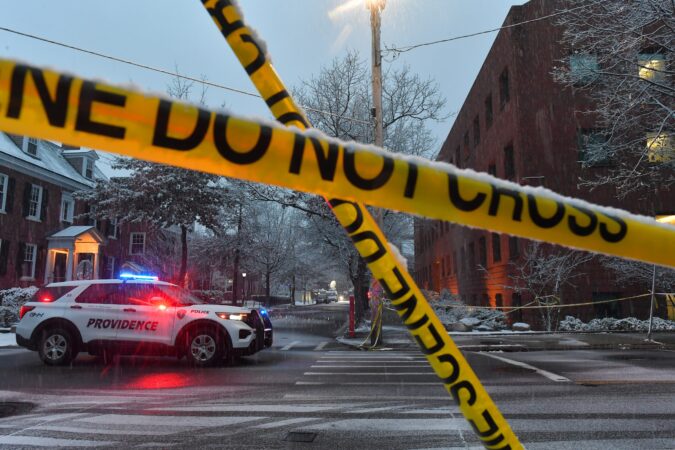
    PROVIDENCE, R.I. — A person of interest was in custody Sunday after a shooting during final exams at Brown University that killed two students and wounded nine others, though key questions remained unanswered more than 24 hours after the attack.

    The attack Saturday afternoon set off hours of chaos across the Ivy League campus and surrounding Providence neighborhoods as hundreds of officers searched for the shooter and urged students and staff to shelter in place. The lockdown, which stretched into the night, was lifted early Sunday, but authorities had not yet released information about a potential motive.

    The person of interest is a 24-year-old man from Wisconsin, according to two people familiar with the matter. The people were not authorized to publicly discuss details of the investigation and spoke to the Associated Press on condition of anonymity.

    Col. Oscar Perez, the Providence police chief, said Sunday afternoon that no one has been charged yet. Perez, who also said no one else was being sought, declined to say whether the detained person had any connection to Brown.

    The person was taken into custody at a Hampton Inn hotel in Coventry, R.I., about 20 miles from Providence, where police officers and FBI agents remained Sunday, blocking off a hallway with crime scene tape as they searched the area.

    The shooting occurred during one of the busiest moments of the academic calendar, as final exams were underway. Brown canceled all remaining classes, exams, papers, and projects for the semester and told students they were free to leave campus, underscoring the scale of the disruption and the gravity of the attack.

    College President Christina Paxson teared up while describing her conversations with students both on campus and in the hospital.

    “They are amazing and they’re supporting each other,” she said at an afternoon news conference. “There’s just a lot of gratitude.”

    The gunman opened fire inside a classroom in the engineering building, firing more than 40 rounds from a 9 mm handgun, a law enforcement official told the Associated Press. Two handguns were recovered when the person of interest was taken into custody and authorities also found two loaded 30-round magazines, the official said. The official was not authorized to discuss the investigation publicly and spoke to AP on the condition of anonymity.

    One student of the nine wounded students had been released from the hospital, said Paxson. Seven others were in critical but stable condition, and one was in critical condition.

    Some businesses remain closed in shocked city

    Providence leaders said residents would notice a heavier police presence, and many area businesses announced Sunday that they would remain closed. A scheduled 5K run was postponed until next weekend.

    Mayor Brett Smiley invited residents to gather Sunday evening in a city park where an event had been scheduled to light a Christmas tree and Hanukkah menorah.

    “For those who know at least a bit of the Hanukkah story, it is quite clear that if we can come together as a community to shine a little bit of light tonight, there’s nothing better that we can be doing,” he told reporters.

    Smiley said he visited some of the wounded students and was inspired by their courage, hope, and gratitude. One told him that active shooting drills done in high school proved helpful.

    “The resilience that these survivors showed and shared with me, is frankly pretty overwhelming,” he said. “We’re all saddened, scared, tired, but what they’ve been through is something different entirely.”

    Exams were underway during shooting

    Investigators were not immediately sure how the shooter got inside the first-floor classroom at the Barus & Holley building, a seven-story complex that houses the School of Engineering and physics department. The building includes more than 100 laboratories and dozens of classrooms and offices, according to the university’s website.

    Engineering design exams were underway. Outer doors of the building were unlocked but rooms being used for final exams required badge access, Smiley said.

    Emma Ferraro, a chemical engineering student, was in the lobby working on a final project when she heard loud pops coming from the east side. Once she realized they were gunshots, she darted for the door and ran to a nearby building where she waited for hours.

    Surveillance video released by police showed a suspect, dressed in black, walking from the scene.

    Former “Survivor” contestant just left the building

    Eva Erickson, a doctoral candidate who was the runner-up earlier this year on the CBS reality competition show Survivor, said she left her lab in the engineering building 15 minutes before shots rang out.

    The engineering and thermal science student shared candid moments on Survivor as the show’s first openly autistic contestant. She was locked down in the campus gym following the shooting and shared on social media that the only other member of her lab who was present was safely evacuated.

    Brown senior biochemistry student Alex Bruce was working on a final research project in his dorm across the street from the building when he heard sirens outside.

    “I’m just in here shaking,” he said, watching through the window as armed officers surrounded his dorm.

    Students hid under desks

    Students in a nearby lab turned off the lights and hid under desks after receiving an alert, said Chiangheng Chien, a doctoral student in engineering who was about a block from where the shooting occurred.

    Mari Camara, 20, a junior from New York City, was coming out of the library and rushed inside a taqueria to seek shelter. She spent more than three hours there, texting friends while police searched the campus.

    “Everyone is the same as me, shocked and terrified that something like this happened,” she said.

    Brown, the seventh-oldest higher education institution in the U.S., is one of the nation’s most prestigious colleges, with roughly 7,300 undergraduates and more than 3,000 graduate students.

    Crystal McCollaum, of Chicopee, Mass., was staying at the hotel where the person of interest was taken into custody. She was with her daughter to attend a cheerleading competition in Providence, but after hearing about the shooting, she thought they would be safer staying outside the city.

    “It was just weird and scary,” she said.

  • The holiday shopping season comes with tons of extra emissions. Here’s how to do it sustainably

    The holiday shopping season comes with tons of extra emissions. Here’s how to do it sustainably

    We’re in the thick of the holiday shopping season, and U.S. residents are expected to shatter the spending record again this year. The National Retail Federation forecasts that 2025 will be the first time we collectively spend more than $1 trillion on year-end gifts.

    A lot of materials, energy, packaging, and gasoline have gone into making and moving those gifts. All of those processes release planet-warming gases into the atmosphere.

    But a lot of that environmental impact is avoidable. Making, baking, thrifting, and avoiding traditional wrapping paper are all more planet-friendly ways to give. We’ve got tips on how to do them all.

    Homemade doesn’t have to be difficult

    Sure, if you’ve got the skill to turn a wooden bowl or needlepoint a Christmas stocking, those gifts are guaranteed to be unique and meaningful. But not all of us have the knowledge or time.

    Sandra Goldmark, associate dean of Columbia Climate School’s Office of Engagement and Impact, said one of her favorite options is an act of service for a loved one. One year, for example, her husband organized all her passwords for her.

    “It was not something easy to wrap and put under the tree, but believe me, it was meaningful and really helped me more than any additional object cluttering up my home could have,” she said.

    Another winner: food. If, say, you have a long list of recipients, buy ingredients in bulk and pack them in Mason jars. Cookie mix, soup mix, sourdough starter, and spice mixes are all easily sealed and transported that way. Add some ribbon and a sprig of cedar, and it’s festive. Homemade baked goods and snacks are other options.

    “It’s inexpensive, but it takes care and time and attention,” said sustainable-living educator Sarah Robertson-Barnes.

    Give experiences instead of buying more stuff

    The advice here starts out simple: Buy less stuff. The best way to give gifts more sustainably is to buy fewer new things, said Goldmark.

    Stockings can be a common spot for toys that break quickly before going straight to the landfill. Instead, you can fill stockings with things that your friends or family need anyway, like toothbrushes or body wash, or traditional treats like fruit and chocolates.

    Giving someone an experience is another popular option. That might mean a pair of concert tickets, a spa day, a gift card to a favorite local restaurant, a local news subscription, or a membership to a local garden or zoo that the recipient can use over and over. Research has indicated that experiences strengthen relationships better than material gifts do.

    “There is so much that you could do by just saying, ‘I would prefer if you just made me a nice meal or took me out for some sort of adventure,’” said Atar Herziger, environmental psychologist and assistant professor at Technion — Israel Institute of Technology.

    Experiences also come with less packaging. Herziger cautions, though, that travel can have a high impact especially if it involves planes. So she recommends local options such as a nearby hike or a staycation.

    And if you’re unsure what experience your loved one would prefer? Herziger said don’t overcomplicate it — just ask.

    Go vintage

    Secondhand gifts are easier on the planet because they involve less manufacturing, packaging, and shipping. Robertson-Barnes looks to Facebook Marketplace or her local Buy Nothing group to find items that she would have otherwise bought new.

    “I bet somebody has the thing that you’re looking for and they would love to get rid of it,” she said.

    Still, for some recipients, secondhand gifts are taboo.

    “We do have a weird cultural thing where new is better and used is gross,” said Robertson-Barnes, who suggested reframing used gifts as “vintage.”

    Similarly, Herziger said secondhand options might be received better when they’re items that can’t be bought new, such as a family heirloom or a collectible that isn’t produced anymore.

    Goldmark looks to thrift stores for smaller toys or mugs. Record stores, used book stores, furniture stores, and antique shops are other options. And of course big names like eBay and Goodwill can have rare and unique finds, too.

    If buying secondhand simply won’t work for a recipient, Goldmark said to focus on items that are high-quality, long-lasting, repairable, and really needed. That ensures that it’s worth investing in and reduces the chance that it gets returned. Look to buy locally, rather than ordering online, to reduce how far it travels.

    The wrapping matters, too

    Millions of pounds of wrapping paper end up in the landfill every year. Much of it is blended with plastic to make it shiny or sparkly, so it can’t be recycled.

    Not sure whether your wrapping paper is recyclable? Check your local recycler’s website for guidelines, or try a simple test by crumpling it into a ball. If it holds its shape, it’s more likely recyclable. Also, if it rips as easily as printer paper or gets soggy like a saturated brown grocery bag, those are good signs it’s recyclable, too.

    Robertson-Barnes said if you already have wrapping paper on hand, you should use it rather than waste it. But once it’s gone, she recommends reusable wrapping cloths such as furoshiki, a traditional Japanese fabric for presenting gifts.

    Some experts also recommend gift bags as long as they’re reused — and not tossed.

    Another cheaper and more planet-friendly alternative to wrapping paper is newspaper or brown paper bags. Tie them off with reusable ribbon, a couple pinecones or a candy cane, and suddenly it’s festive.

    Plus, brown paper is a blank canvas with endless opportunities for customization. “If you’ve got kids, then their drawings are wonderful packaging materials. They make the best wrapping paper,” Herziger said.