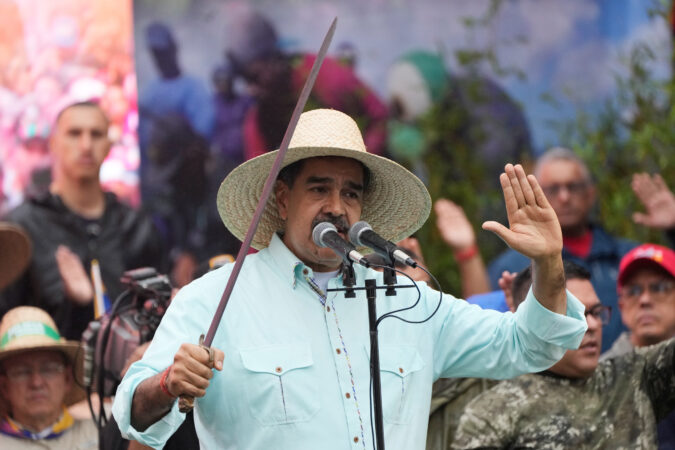
WASHINGTON — The U.S. imposed sanctions on three nephews of Venezuelan President Nicolás Maduro, among others, on Thursday as President Donald Trump looks to inflict further pressure on the South American nation.
The new sanctions on Franqui Flores, Carlos Flores and Efrain Campo come a day after Trump announced that the U.S. had seized an oil tanker off the coast of Venezuela. Also included in the sanctions are Panamanian businessman Ramon Carretero, six firms and six Venezuela-flagged ships accused of transporting Venezuelan oil.
Carretero is accused of facilitating oil shipments on behalf of the Venezuelan government, and the Treasury says he has had business dealings with the Maduro-Flores family, including partnering in several companies together.
The Treasury’s Office of Foreign Assets Control published the list of sanctions on Thursday.
The sanctions are meant to deny them access to any property or financial assets held in the U.S., and the penalties are intended to prevent U.S. companies and citizens from doing business with them. Banks and financial institutions that violate that restriction expose themselves to sanctions or enforcement actions.
Treasury Secretary Scott Bessent said in a statement that “Nicolas Maduro and his criminal associates in Venezuela are flooding the United States with drugs that are poisoning the American people.”
“Under President Trump’s leadership, Treasury is holding the regime and its circle of cronies and companies accountable for its continued crimes,” he said.
This is not the first time Maduro’s family has been involved in a political tit-for-tat with the U.S.
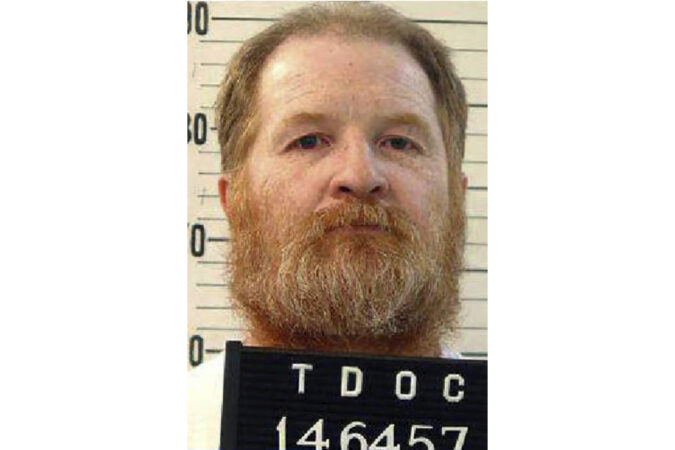
In October 2022, Venezuela freed seven imprisoned Americans in exchange for the United States releasing Flores and Campo, who had been jailed for years on narcotics convictions. The pair were arrested in Haiti in a Drug Enforcement Administration sting in 2015 and convicted the following year in New York.
Carlos Flores had been sanctioned in July 2017 but was removed from Treasury’s list in 2022 during the Biden administration years in an effort to promote negotiations for democratic elections in Venezuela.
The U.S.’s latest actions against Venezuela follow a series of deadly strikes the U.S. has conducted on alleged drug-smuggling boats in the Caribbean Sea and eastern Pacific Ocean, which have killed at least 87 people since early September.
Trump has justified the attacks as a necessary escalation to stem the flow of drugs into the United States and asserted the U.S. is engaged in an “armed conflict” with drug cartels.
Putin’s backing
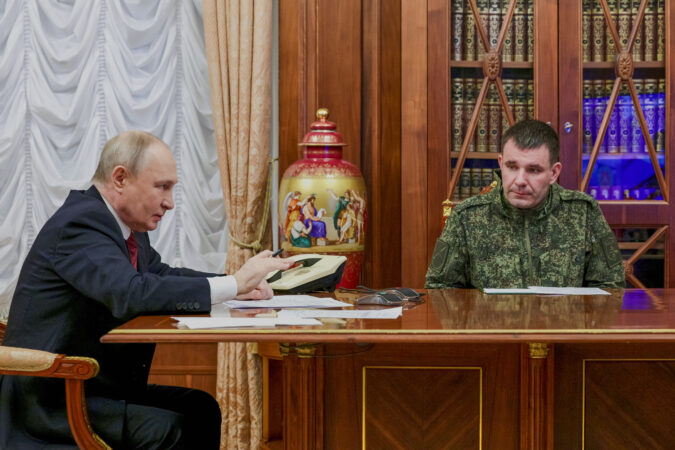
Russian President Vladimir Putin expressed “solidarity with the Venezuelan people” on Thursday amid growing tensions between Maduro and the Trump administration.
The Kremlin said in a statement that Putin spoke with Maduro by phone and reaffirmed his support for the Venezuelan leader’s policy of “protecting national interests and sovereignty in the face of growing external pressure.”
During testimony before Congress on Thursday, Homeland Security Secretary Kristi Noem linked the seizure of the vessel to the Trump administration’s anti-drug efforts in the region. The U.S. has built up its largest military presence in the region in decades and launched a series of deadly strikes on alleged drug-smuggling boats.
Maduro has insisted the real purpose of the U.S. military operations is to force him from office. Venezuela’s government said the tanker seizure “constitutes a blatant theft and an act of international piracy.”
The South American country’s government said that Putin had “categorically reaffirmed his support” for Maduro in their call.
It said in a statement that Putin had told Maduro that direct communication between Moscow and Caracas would “remain permanently open” and Russia would continue to support Venezuela “in its struggle to assert its sovereignty, international law, and peace throughout Latin America.”
Like his predecessor, the late President Hugo Chávez, Maduro has forged a close relationship with Russia, which has offered Venezuela help, ranging from coronavirus vaccines to the design of a cryptocurrency. In 2018, it also briefly dispatched a pair of nuclear-capable Tu-160 bombers to the airport outside Venezuela’s capital amid soaring Russia-U.S. tensions.
Last year, two Russian naval ships docked in the Venezuelan port of La Guaira after exercises in the Atlantic Ocean that Moscow said were to “show the flag” in remote, important regions.
In Belarus, authoritarian President Alexander Lukashenko, a Putin ally, met with the Venezuelan ambassador to Russia, Jesus Rafael Salazar Velázquez, on Thursday, for the second time in just over two weeks.
Details of what was discussed were not revealed, but Belarus’ state news agency Belta quoted Lukashenko as saying that the diplomat was expected to discuss “certain issues” with Maduro after their first meeting on Nov. 25 and to travel to Belarus again, so that they could reach “a certain decision.”
During the November meeting, Lukashenko extended an invitation to Maduro to visit Belarus, and said that he would try and find the time to visit Venezuela, too.