Category: Associated Press

  • USA Hockey cruises past Slovakia to set up dream gold-medal matchup vs. Canada

    USA Hockey cruises past Slovakia to set up dream gold-medal matchup vs. Canada

    MILAN — Zach Werenski and his U.S. teammates tried not to look ahead to a potential gold-medal game against Canada at the Olympics. After each went unbeaten in group play, there was no way the North American rivals could meet before the final, but there was work left to do.

    After routing Slovakia 6-2 in the semifinals on Friday night, the much-anticipated but never guaranteed U.S.-Canada showdown for gold is on.

    “It’s the matchup everyone wanted,” Werenski said after his three-assist performance against Slovakia. “Now that it’s finally here, we can kind of shift our focus to Canada.”

    The two top seeds in the tournament, who went in as the favorites, will meet Sunday. It comes a year after the U.S. and Canada played two memorable games against each other at the 4 Nations Face-Off.

    “It’s the final that we wanted and the team that we wanted to play,” winger Matt Boldy said. “It’s exciting for the fans and for hockey and everything like that.’’

    That NHL-run event ended a drought of nearly a decade without an international tournament featuring the best hockey players in the world. Three fights in the first 9 seconds of the first meeting put the 4 Nations in the spotlight, and the epic final won by Canada in overtime only built the anticipation for the Olympics.

    “Now that it’s all set in stone, everything happens for a reason,” said Brady Tkachuk, who along with brother Matthew and J.T. Miller, was involved in the 4 Nations fisticuffs. “We’ll be looking forward to this one. You guys have been talking about it for a while. Now you get to enjoy it.”

    After Canada did its part by rallying to beat Finland earlier in the day, the U.S. had no trouble against the Slovaks, who made an improbable run and were simply overmatched. They’ll face the Finns for bronze on Saturday night, looking for just the second hockey medal in the country’s history after getting the first with a third-place finish in Beijing in 2022.

    The U.S. is playing for gold after the semifinals were a much easier go than the quarterfinals against Sweden, when overtime was needed to survive a scare. Dylan Larkin, Tage Thompson, Jack Hughes, and Jack Eichel scored the four goals on 23 shots that chased Samuel Hlavaj out of Slovakia’s net past the midway point of the second period.

    Thompson, one of just a handful of newcomers who did not play at the 4 Nations, exited later in the second after blocking a shot and did not return. Coach Mike Sullivan said Thompson “was held out for precautionary reasons more than anything.”

    “We’ll see how he recovers, but I anticipate him being ready for game time,” Sullivan said.

    Hughes got his second goal of the game just after a power play expired, and Brady Tkachuk scored on a breakaway with just over nine minutes left to provide some more breathing room.

    The U.S. cruised in the semifinals with a 6-2 win over Slovakia. They’ll face Canada on Sunday for gold.

    “That was definitely one of our strongest games, for sure,” said Quinn Hughes, who, along with brother Jack, has been among the best U.S. players in Milan. “For the most part, we played really well. A little bit looser there in the third, but it’s a 5-0 game and you want to get out safe and feel good for the next game.”

    Goaltender Connor Hellebuyck did his job as his teammates outshot Slovakia by a substantial margin. Everything he has done at the Olympics has validated Sullivan’s decision to go with Hellebuyck as the U.S. starter over Jake Oettinger and Jeremy Swayman.

    The U.S. last reached the final in 2010, when it lost to Canada in overtime on Sidney Crosby’s famous golden goal. Crosby’s status is uncertain this time after getting injured in the quarterfinals Wednesday and not playing Friday against Finland.

    The last U.S. men’s hockey gold came in 1980 with the “Miracle on Ice” in Lake Placid.

    “It definitely motivates us,” Werenski said. “We’ve talked about. We’re well aware of it. I don’t think it’s pressure. It’s fun. It’s exciting.”

  • Supreme Court strikes down Trump’s sweeping tariffs, sparking fierce pushback and vow of new levies

    Supreme Court strikes down Trump’s sweeping tariffs, sparking fierce pushback and vow of new levies

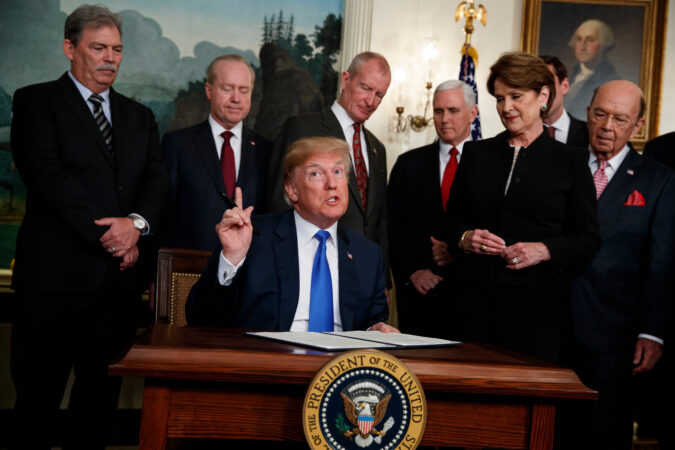
    WASHINGTON — The Supreme Court struck down President Donald Trump’s far-reaching global tariffs on Friday, handing him a stinging loss that sparked a furious attack on the court he helped shape.

    Trump said he was “absolutely ashamed” of some justices who ruled 6-3 against him, calling them “disloyal to our Constitution” and “lapdogs.” At one point he even raised the specter of foreign influence without citing any evidence.

    The decision could have ripple effects on economies around the globe after Trump’s moves to remake post-World War II trading alliances by wielding tariffs as a weapon.

    But an unbowed Trump pledged to impose a new global 10% tariff under a law that’s restricted to 150 days and has never been used to apply tariffs before.

    “Their decision is incorrect,” he said. “But it doesn’t matter because we have very powerful alternatives.”

    The court’s ruling found tariffs that Trump imposed under an emergency powers law were unconstitutional, including the sweeping “reciprocal” tariffs he levied on nearly every other country.

    Trump appointed three of the justices on the nation’s highest court during his first term, and has scored a series of short-term wins that have allowed him to move ahead with key policies.

    Tariffs, though, were the first major piece of Trump’s broad agenda to come squarely before the Supreme Court for a final ruling, after lower courts had also sided against the president.

    The majority found that it is unconstitutional for the president to unilaterally set and change tariffs because taxation power clearly belongs to Congress. “The Framers did not vest any part of the taxing power in the Executive Branch,” Chief Justice John Roberts wrote.

    Justices Brett Kavanaugh, Samuel Alito, and Clarence Thomas dissented.

    “The tariffs at issue here may or may not be wise policy. But as a matter of text, history, and precedent, they are clearly lawful,” Kavanaugh wrote. Trump praised his 63-page dissent as “genius.”

    The court majority did not address whether businesses could get refunded for the billions they have collectively paid in tariffs. Many companies, including the big-box warehouse chain Costco, have already lined up in lower courts to demand refunds. Kavanaugh noted the process could be complicated.

    “The Court says nothing today about whether, and if so how, the Government should go about returning the billions of dollars that it has collected from importers. But that process is likely to be a ‘mess,’ as was acknowledged at oral argument,” he wrote.

    The Treasury had collected more than $133 billion from the import taxes the president has imposed under the emergency powers law as of December, federal data show. The impact over the next decade has been estimated at some $3 trillion.

    The tariffs decision doesn’t stop Trump from imposing duties under other laws. Those have more limitations on the speed and severity of Trump’s actions, but the president said they would still allow him to “charge much more” than he had before.

    Vice President JD Vance called the high court decision “lawlessness” in a post on X.

    Questions about what Trump can do next

    Still, the ruling is a “complete and total victory” for the challengers, said Neal Katyal, who argued the case on behalf of a group of small businesses.

    “It’s a reaffirmation of our deepest constitutional values and the idea that Congress, not any one man, controls the power to tax the American people,” he said.

    It wasn’t immediately clear how the decision restricting Trump’s power to unilaterally set and change tariffs might affect trade deals with other countries.

    “We remain in close contact with the U.S. Administration as we seek clarity on the steps they intend to take in response to this ruling,” European Commission spokesman Olof Gill said, adding that the body would keep pushing for lower tariffs.

    The Supreme Court ruling comes after victories on the court’s emergency docket have allowed Trump to push ahead with extraordinary flexes of executive power on issues ranging from immigration enforcement to major federal funding cuts.

    The Republican president had long been vocal about the tariffs case, calling it one of the most important in U.S. history and saying a ruling against him would be an economic body blow to the country. But legal opposition crossed the political spectrum, including libertarian and pro-business groups that are typically aligned with the GOP. Polling has found tariffs aren’t broadly popular with the public, amid wider voter concern about affordability.

    While the Constitution gives Congress the power to levy tariffs, the Trump administration argued that a 1977 law allowing the president to regulate importation during emergencies also allows him to set import duties. Other presidents have used the law dozens of times, often to impose sanctions, but Trump was the first president to invoke it for tariffs.

    “And the fact that no President has ever found such power in IEEPA is strong evidence that it does not exist,” Roberts wrote, using an acronym for the International Emergency Economic Powers Act.

    Trump set what he called “reciprocal” tariffs on most countries in April 2025 to address trade deficits that he declared a national emergency. Those came after he imposed duties on Canada, China, and Mexico, ostensibly to address a drug trafficking emergency.

    A series of lawsuits followed, including a case from a dozen largely Democratic-leaning states and others from small businesses selling everything from plumbing supplies to women’s cycling apparel.

    The challengers argued the emergency powers law doesn’t even mention tariffs and Trump’s use of it fails several legal tests, including one that doomed then-President Joe Biden’s $500 billion student loan forgiveness program.

    Justices reject use of emergency powers for tariffs

    The three conservative justices in the majority pointed to that principle, which is called the major questions doctrine. It holds that Congress must clearly authorize actions of major economic and political significance.

    “There is no exception to the major questions doctrine for emergency statutes,” Roberts wrote. The three liberal justices formed the rest of the majority, but didn’t join that part of the opinion.

    The Trump administration had argued that tariffs are different because they’re a major part of Trump’s approach to foreign affairs, an area where the courts should not be second-guessing the president.

    But Roberts, joined by Justices Neil Gorsuch and Amy Coney Barrett, brushed that aside, writing that the implications for international relations don’t change the legal principle.

    Small businesses celebrated the ruling, with the National Retail Federation saying it provides “much needed certainty.”

    Illinois toy company Learning Resources was among the businesses challenging the tariffs in court. CEO Rick Woldenberg said he expected Trump’s new tariffs but hoped there might be more constraint in the future, both legal and political. “Somebody’s got to pay this bill. Those people that pay the bill are voters,” he said.

    Ann Robinson, who owns Scottish Gourmet in Greensboro, N.C., said she was “doing a happy dance” when she heard the news.

    The 10% baseline tariff on U.K. goods put pressure on Robinson’s business, costing about $30,000 in the fall season. She’s unsure about the Trump administration’s next steps, but said she’s overjoyed for now. “Time to schedule my ‘Say Goodbye to Tariffs’ Sale!”


  • Cuba’s healthcare system pushed to the brink by U.S. fuel blockade, Cuban minister says

    Cuba’s healthcare system pushed to the brink by U.S. fuel blockade, Cuban minister says

    HAVANA — Cuba’s debilitated healthcare system has been pushed to the brink of collapse by the U.S. blockading the country’s oil supply, a Cuban official said Friday.

    The country’s medical system was already perpetually crisis-stricken along with the island’s economy, with lack of supplies, staff, and medicine long being the norm. But the turmoil has reached a new extreme in recent weeks. Ambulances are struggling to find fuel to respond to emergencies. Persistent outages have plagued deteriorated hospitals. Flights bringing vital supplies have been suspended as Cuba’s government says it’s now unable to refuel airplanes in its airports.

    Experts and some leaders of other countries have warned that the island could be on the verge of a humanitarian crisis.

    In an interview with the Associated Press, Cuba’s Health Minister José Ángel Portal Miranda said that U.S. sanctions are no longer just crippling the island’s economy, they’re threatening “basic human safety.”

    “You cannot damage a state’s economy without affecting its inhabitants,” Portal said. “This situation could put lives at risk.”

    According to Portal, 5 million people in Cuba living with chronic illnesses will see their medications or treatments affected. This includes 16,000 cancer patients requiring radiotherapy and another 12,400 undergoing chemotherapy.

    Cardiovascular care, orthopedics, oncology, and treatment for critically ill patients who require electrical backup are among the most impacted areas, he said. Kidney disease treatments and emergency ambulance services have also been added to the list of impacted services.

    The energy crisis Cuba has been grappling with for years entered new extremes last month when President Donald Trump signed an executive order that would impose a tariff on any country that sells or provides oil to Cuba. It came just weeks after Trump deposed Venezuelan President Nicolás Maduro and announced no more Venezuelan oil would go to Cuba.

    Cuba, which produces only 40% of its own fuel and largely depends on oil to power the island, has long relied on allies like Venezuela, Mexico, and Russia to fill its energy deficit. But those shipments have now dried up.

    Trump has openly said that his larger hope is to push regime change in Cuba by intensifying economic pressure on the island, which has already struggled to cope with decades of U.S. sanctions.

    Cuban people — who the U.S. government has said it seeks to defend — are the ones feeling the harsh ripple effects of the U.S. fuel blockade as hardship mounts every day. Buses have slashed routes, gas has been put under strict rationing and is only being sold in foreign currency, and endemic blackouts have reached a new extreme.

    “There’s been a drastic change since January,” said Aniliet Rodríguez, a 25-year-old pregnant woman who was admitted that month to a maternal care center for an extreme case of anemia. “There’s no bread, no milk for nutrition … . There are no medicines.”

    Cuba’s healthcare system follows a universal and free model, providing local clinics on nearly every block and state subsidized medicine. But it’s also entered a state of crisis in recent years, especially since the COVID-19 pandemic. Thousands of doctors being paid state wages that can hardly afford them a carton of eggs have emigrated from the country and hospitals have rapidly deteriorated.

    Medicine shortages have forced many to buy them on the black market instead.

    Such problems are expected to worsen in the coming weeks even though Cuba’s government has struggled to adjust to the new reality, Portal said. Solar panels have been installed in clinics while authorities prioritize care to children and the elderly.

    But he also said they have placed restrictions on some more energy-reliant technologies like CT scans and laboratory tests, noting doctors will have to rely on more basic methods to treat patients, effectively cutting many off from high levels of care.

    “We are facing an energy siege with direct implications for the lives of Cubans, for the lives of Cuban families,” Portal said.

  • House Speaker Mike Johnson denies request for Rev. Jesse Jackson to lie in honor in U.S. Capitol

    House Speaker Mike Johnson denies request for Rev. Jesse Jackson to lie in honor in U.S. Capitol

    WASHINGTON — The late Rev. Jesse Jackson will not lie in honor in the United States Capitol Rotunda after a request for the commemoration was denied by the House Speaker Mike Johnson’s office due to past precedent.

    Johnson’s office said it received a request from the family to have Jackson’s remains lie in honor at the Capitol, but the request was denied, because of the precedent that the space is typically reserved for former presidents, the military, and select officials.

    The civil rights leader died this week at the age of 84. The family and some House Democrats had filed a request for Jackson to be honored at the U.S. Capitol.

    Amid the country’s political divisions, there have been flare-ups over who is memorialized at the Capitol with a service to lie in state, or honor, in the Rotunda. During such events, the public is generally allowed to visit the Capitol and pay their respects.

    Recent requests had similarly been made, and denied, to honor Charlie Kirk, the slain conservative activist, and former Vice President Dick Cheney.

    There is no specific rule about who qualifies for the honor, a decision that is controlled by concurrence from both the House and Senate.

    The Jackson family has announced scheduled dates for memorial services beginning next week that will honor the late reverend’s life in Chicago, Washington, D.C., and South Carolina. In a statement, the Jackson family said it had heard from leaders in both South Carolina, Jackson’s native state, and Washington offering for Jackson to be celebrated in both locations. Talks are ongoing with lawmakers about where those proceedings will take place. His final memorial services will be held in Chicago on March 6 and 7.

    Typically, the Capitol and its Rotunda have been reserved for the “most eminent citizens,” according to the Architect of the Capitol’s website. It said government and military officials lay in state, while private citizens in honor.

    In 2020, Rep. John Lewis, another veteran of the Civil Rights movement, was the first Black lawmaker to lie in state in the Capitol Rotunda after a ceremony honoring his legacy was held outside on the Capitol steps due to pandemic restrictions at the time.

    Later that year, then-House Speaker Nancy Pelosi allowed services for Supreme Court Justice Ruth Bader Ginsburg at the Capitol’s Statuary Hall after agreement could not be reached for services in the Capitol’s Rotunda.

    It is rare for private citizens to be honored at the Capitol, but there is precedent — most notably Civil Rights icon Rosa Parks, in 2005, and the Rev. Billy Graham, in 2018.

    A passionate civil rights leader and globally-minded humanitarian, Jackson’s fiery speeches and dual 1984 and 1988 presidential campaigns transformed American politics for generations. Jackson’s organization, the Rainbow PUSH Coalition, became a hub for progressive organizers across the country.

    His unapologetic calls for a progressive economic agenda and more inclusive policies for all racial groups, religions, genders and orientations laid the groundwork for the progressive movement within the Democratic Party.

    Jackson also garnered a global reputation as a champion for human rights. He conducted the release of American hostages on multiple continents and argued for greater connections between civil rights movements around the world, most notably as a fierce critic of the policies of Apartheid South Africa.

  • All truckers and bus drivers will be required to take commercial driver’s license tests in English

    All truckers and bus drivers will be required to take commercial driver’s license tests in English

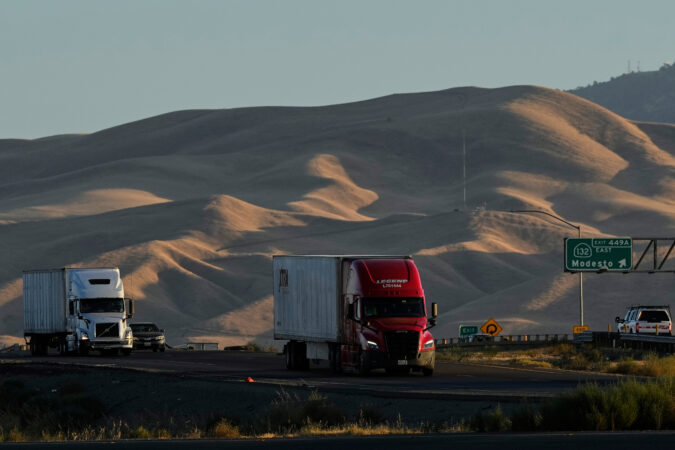
    All truckers and bus drivers will have to take their commercial driver’s license tests in English as the Trump administration expands its aggressive campaign to improve safety in the industry and get unqualified drivers off the road.

    Transportation Secretary Sean Duffy announced the latest effort Friday to ensure that drivers meet the federal requirements to understand English well enough to read road signs and communicate with law enforcement officers. Florida already started administering its tests in English.

    Currently, many states allow drivers to take their license tests in other languages even though they are required to demonstrate English proficiency. California offered tests in 20 other languages. Duffy said that a number of states have hired other companies to administer commercial driver’s licenses tests, and those companies aren’t enforcing the standards that drivers are supposed to meet to demonstrate their driving and English skills.

    These latest enforcement efforts come just days after the Transportation Department said 557 driving schools should close because they failed to meet basic safety standards. The department has been aggressively going after states that handed out commercial driver’s licenses to immigrants who shouldn’t have qualified for them ever since a fatal crash in August.

    A truck driver who Duffy says wasn’t authorized to be in the U.S. made an illegal U-turn and caused a crash in Florida that killed three people. Other fatal crashes since then, including one in Indiana that killed four members of an Amish community earlier this month, have only heightened concerns.

    Duffy says truckers should be well qualified

    States are expected to ensure drivers can speak English before giving them a commercial license, and then law enforcement is supposed to check driver’s language skills during any traffic stops or inspections. Drivers who can’t communicate effectively are supposed to be pulled off the road. A recent federal effort involving 8,215 inspections led to nearly 500 drivers being disqualified because of their English skills. California initially resisted enforcing the English rules, but the state recently pulled more than 600 drivers off the highways.

    Duffy said every American wants drivers who get behind the wheel of a big rig to be well-qualified to handle those vehicles. But he said that for too long the problems in the trucking industry were “allowed to rot and no one’s paying attention to it for decades.”

    “Once you start to pay attention, you see that all these bad things have been happening. And the consequence of that is that Americans get hurt,” Duffy said. “When we get on the road, we should expect that we should be safe. And that those who drive those 80,000-pound big rigs, that they are well-trained, they’re well-qualified, and they’re going to be safe.”

    More efforts to crack down on fraudulent companies

    The campaign will also now expand to prevent fraudulent trucking companies from getting into the business while continuing to go after questionable schools and ensure states are complying with all the regulations for handing out commercial licenses.

    Duffy said that the registration system and requirements for trucking companies will be strengthened while Federal Motor Carrier Safety Administration inspectors conduct more spot checks of trucks and commercial driver’s license schools.

    Officials are also trying to make sure that the electronic logging devices drivers use are accurate, and that states are following all the regulations to ensure drivers are qualified to get commercial licenses.

    ‘Chameleon carriers’ avoid enforcement

    Currently, companies only have to pay $300 and show proof of insurance to get registered to operate, and then they might not be audited until a year or more later. And even then the audits might be done virtually, which makes it less likely to identify fraudulent companies.

    That has made it easy for fraudulent companies that are known in the industry as “chameleon carriers” to register multiple times under different names and then simply switch names and registration numbers to avoid any consequences after crashes or other violations.

    Dan Horvath, who is the chief operating officer for the American Trucking Associations trade group, said this longstanding problem has made it far too easy for companies that have been ordered to shut down to just change their name and registration number and keep operating the same way.

    “What we think at ATA has happened over the years is that we have a lack of true enforcement and intervention with motor carriers that are in operation,” Horvath said. Only a small fraction of trucking companies ever undergo a full compliance review with an in-person inspection, he said.

    Past enforcement efforts

    After that Indiana crash, the Federal Motor Carrier Safety Administration knocked the company that employed the driver out of service and pulled the DOT numbers assigned to two other companies that were linked to AJ Partners. Tutash Express and Sam Express in the Chicago area were also disqualified, and the Aydana driving school that the trucker involved in the crash attended lost its certification.

    Immigration authorities arrested that driver because they said the 30-year-old from Kyrgyzstan entered the country illegally. Authorities say he pulled out and tried to go around a truck that had slowed in front of him, and his truck slammed into an oncoming van.

    In December, the Federal Motor Carrier Safety Administration took action to decertify up to 7,500 of the 16,000 schools nationwide, but that included many defunct operations.

    Duffy said the companies involved in that Indiana crash were all registered at the same apartment. In other cases, there might be hundreds of these chameleon companies registered at a single address.

  • Which Trump tariffs did the Supreme Court strike down? Here’s what to know

    Which Trump tariffs did the Supreme Court strike down? Here’s what to know

    NEW YORK — The nation’s highest court struck down some of President Donald Trump’s most sweeping tariffs on Friday, in a 6-3 decision that he overstepped his authority when using an emergency powers law to justify new taxes on goods from nearly every country in the world.

    Trump has launched a barrage of new tariffs over the last year. Despite Friday’s ruling, many sectoral levies remain in place — and the president has already said that he’ll turn to other options for more import taxes, including plans to impose a new 10% tariff globally. But the Supreme Court decision upends a core set of tariffs that Trump rolled out using the 1977 International Emergency Economic Powers Act, or IEEPA.

    IEEPA authorizes the president to broadly regulate commerce after declaring a national emergency. Over the years, presidents have turned to this law dozens of times, often to place sanctions on other countries. But Trump was the first to use it to implement tariffs.

    Here’s a look at the now-overturned tariffs Trump imposed using IEEPA — and other levies that still stand today.

    ‘Liberation Day’ tariffs

    Trump used IEEPA to slap import taxes on nearly every country in the world last spring. On April 2, which Trump called Liberation Day, he imposed “reciprocal” tariffs of up to 50% on goods from dozens of countries — and a baseline 10% tariff on just about everyone else.

    The 10% tax kicked in early April. But the bulk of Liberation Day’s higher levies got delayed by several months, and many rates were revised over time (in some cases after new “framework” agreements). Most went into effect Aug. 7.

    The national emergency underlying these tariffs, Trump argued at the time, was the long-running gap between what the U.S. sells and what it buys from the rest of the world. Still, goods from countries with which the U.S. runs a trade surplus also faced taxes.

    Major trading partners impacted by Liberation Day tariffs include South Korea, Japan and the European Union — which combined export a range of products to the U.S., like electronics, cars, and car parts and pharmaceuticals. Following trade talks, Trump’s rates on most goods stood at 15% for the EU, Japan and South Korea ahead of Friday. But just last month, Trump threatened to hike levies on certain South Korean products to 25% — and countries worldwide still face sector-specific, non-IEEPA tariffs.

    ‘Trafficking tariffs’ on Canada, China and Mexico

    At the start of his second term, Trump used IEEPA to impose new tariffs on America’s three biggest trading partners: Mexico, Canada, and China.

    To justify these tariffs, Trump declared a national emergency ostensibly over undocumented immigration and the trafficking of drugs like fentanyl and the chemicals made to use it. The levies were first announced at the start of February 2025, but went into effect over time — and were at times delayed, reduced or heightened through further retaliation.

    Ahead of Friday’s decision, “trafficking tariffs” on Canadian and Mexican imports were 35% and 25%, respectively, for goods that don’t comply with the 2020 United States-Mexico-Canada Agreement. China, meanwhile, faced a 10% fentanyl-related tariff. That’s down from 20% imposed by Trump earlier last year. Chinese goods also once saw sky-high levies after Liberation Day, but rates had since come down during trade talks.

    Top U.S. imports from China include mobile phones and other electronics, as well as clothing, toys and household appliances. Meanwhile, Canada and Mexico are both major sources of cars and auto parts. Canada is also the U.S.’s largest supplier of crude oil. And Mexico is a key exporter of fresh produce, beverages and more.

    Tariffs on Brazil over Bolsonaro trial

    Trump also used IEEPA to slap steep import taxes on Brazilian imports over the summer, citing the country’s policies and criminal prosecution of former President Jair Bolsonaro.

    Brazil already faced Trump’s 10% baseline Liberation Day rate. The Bolsonaro-related duties added another 40%, bringing total levies to 50% on many products ahead of Friday.

    The U.S. has actually run a consistent trade surplus with Brazil over the years. But top exports from the country include manufactured products, crude oil and agricultural products like soybeans and sugar.

    Tariffs on India linked to Russian oil

    India has faced additional IEEPA tariffs, too. After Liberation Day, Trump slapped a 25% levy on Indian imports — and later added another 25% for the country’s purchases of Russian oil, while also citing the emergency powers law, bringing the total to 50%.

    But earlier this month, the U.S. and India reached a trade framework deal. Trump said Prime Minister Narendra Modi agreed to stop buying Russian oil, and that he planned to lower U.S. tariffs on its ally to 18%. Meanwhile, India said it would “eliminate or reduce tariffs” on all U.S. industrial goods and a range of agricultural products.

    India’s top exports to the U.S. include pharmaceuticals, precious stones, clothing and textiles.

    What are other non-IEEPA tariffs that countries still face today?

    Despite the Supreme Court knocking down sweeping import taxes Trump imposed with IEEPA, most countries still face steep tariffs from the U.S. on specific sectors.

    Citing national security threats, Trump has used another law — Section 232 of the 1962 Trade Expansion Act — to slap levies on steel, aluminum, cars, copper, and lumber worldwide. He began to roll out even more Section 232 tariffs in September, on kitchen cabinets, bathroom vanities and upholstered furniture.

    Amid pressure to lower rising prices, Trump has rolled back some of his tariffs recently. Beyond trade frameworks, that’s included adding exemptions to specific levies and scrapping import taxes for goods like coffee, tropical fruit and beef.

    Still, Trump has threatened more sectoral levies are on the way. And following Friday’s decision, he said that he would sign an executive order to enact a 10% global tariff — using another federal law, known as Section 122. Those tariffs would be limited to just 150 days, unless they are extended legislatively.

  • Trump warns he’s considering limited strikes as Iranian diplomat says proposed deal is imminent

    Trump warns he’s considering limited strikes as Iranian diplomat says proposed deal is imminent

    WASHINGTON — President Donald Trump warned on Friday that limited strikes against Iran are possible even as the country’s top diplomat said Tehran expects to have a proposed deal ready in the next few days following nuclear talks with the United States.

    In response to a reporter’s question on whether the U.S. could take limited military action as the countries negotiate, Trump said, “I guess I can say I am considering that.” A few hours later, he told reporters that Iran “better negotiate a fair deal.”

    Earlier Friday, Iranian Foreign Minister Abbas Araghchi said in a TV interview that his country was planning to finalize a draft deal in “the next two to three days” to send to Washington.

    “I don’t think it takes long, perhaps, in a matter of a week or so, we can start real, serious negotiations on the text and come to a conclusion,” Araghchi said on MS NOW’s “Morning Joe” show.

    The tensions between the longtime adversaries have ramped up as the Trump administration pushes for concessions from Iran and has built up the largest U.S. military presence in the Middle East in decades, with more warships and aircraft on the way.

    On Friday, the USS Gerald R. Ford carrier strike group passed through the Strait of Gibraltar and entered the Mediterranean Sea after being sent by Trump from the Caribbean, according to images of the ship by maritime photographers posted to social media.

    Both Iran and the U.S. have signaled that they are prepared for war if talks on Tehran’s nuclear program fizzle out. “We are prepared for diplomacy, and we are prepared for negotiation as much as we are prepared for war,” Araghchi said Friday.

    Ali Vaez, an Iran expert at the International Crisis Group, said Iran “would treat any kinetic action as an existential threat.”

    Vaez said he doesn’t think Iran’s leaders are bluffing when they say they would retaliate, while they likely believe they could maintain their hold on power despite any U.S. airstrikes.

    What Iran and the U.S. are negotiating

    Trump said a day earlier that he believes 10 to 15 days is “enough time” for Iran to reach a deal following recent rounds of indirect negotiations, including this week in Geneva, that made little visible progress. But the talks have been deadlocked for years after Trump’s decision in 2018 to unilaterally withdraw the U.S. from Iran’s 2015 nuclear deal with world powers. Since then, Iran has refused to discuss wider U.S. and Israeli demands that it scale back its missile program and sever ties to armed groups.

    Araghchi also said Friday that his American counterparts have not asked for zero enrichment of uranium as part of the latest round of talks, which is not what U.S. officials have said publicly.

    “What we are now talking about is how to make sure that Iran’s nuclear program, including enrichment, is peaceful and will remain peaceful forever,” he said.

    He added that in return, Iran will implement some confidence-building measures in exchange for relief on economic sanctions.

    In response to Araghchi’s claim, a White House official said Trump has been clear that Iran cannot have nuclear weapons or the capacity to build them and that it cannot enrich uranium. The official wasn’t authorized to comment publicly and spoke on condition of anonymity.

    Tehran has long insisted that any negotiations should only focus on its nuclear program and that it hasn’t been enriching uranium since U.S. and Israeli strikes last June on Iranian nuclear sites. Trump said at the time that the strikes had “obliterated” Iran’s nuclear sites, but the exact damage is unknown as Tehran has barred international inspectors.

    Although Iran insists its nuclear program is peaceful, the U.S. and others suspect it is aimed at eventually developing weapons.

    What Congress has to say

    Trump’s comments have faced pushback from some lawmakers who say the president should get Congress’ approval before any strike.

    Democratic Sen. Tim Kaine of Virginia said Friday that he has filed a war powers resolution that would require that step. Though it has no chance of becoming law — in part because Trump himself would have to sign it — some bipartisan consensus has arisen recently among senators who forced votes on previous resolutions on military action in Venezuela.

    None of those resolutions passed, but they were successful in showing how lawmakers are troubled by some of Trump’s aggressive foreign policy maneuvers.

    “If some of my colleagues support war, then they should have the guts to vote for the war, and to be held accountable by their constituents, rather than hiding under their desks,” Kaine said in a statement.

  • NASA targets March for first moon mission by Artemis astronauts after fueling test success

    NASA targets March for first moon mission by Artemis astronauts after fueling test success

    CAPE CANAVERAL, Fla. — NASA aims to send astronauts to the moon in March after acing the latest rocket fueling test.

    Officials announced the decision Friday, two weeks ahead of the first targeted launch opportunity on March 6.

    “This is really getting real, and it’s time to get serious and start getting excited,” said Lori Glaze, NASA’s exploration systems development chief.

    Administrator Jared Isaacman noted that launch teams made “major progress” between the first countdown rehearsal, which was disrupted by hydrogen leaks earlier this month, and the second test, which was completed with exceptionally low seepage Thursday night.

    The test was “a big step toward America’s return to the lunar environment,” Isaacman said on the social media platform X. Astronauts last ventured to the moon more than half a century ago.

    While more work remains at the pad, officials expressed confidence in being ready to launch four astronauts on the Artemis II lunar fly-around as soon as March 6 from Florida’s Kennedy Space Center. To keep their options open, the three Americans and one Canadian prepared to go into the mandatory two-week health quarantine Friday night in Houston.

    The space agency has only five days in March to launch the crew aboard the Space Launch System rocket, before standing down until the end of April. February’s opportunities evaporated after dangerous amounts of liquid hydrogen leaked during the first fueling demonstration.

    Technicians replaced two seals, leading to Thursday’s successful rerun. The countdown clocks went all the way down to the desired 29-second mark.

    The removed Teflon seals had some light scratches but nothing else noticeable that could have caused such heavy leakage, officials said.

    A bit of moisture also was found in the area that could have contributed to the problem. The fixes worked, with barely any leakage detected, said launch director Charlie Blackwell-Thompson.

    Commander Reid Wiseman and two of his crew monitored Thursday’s operation alongside launch controllers. The astronauts will be the first to fly to the moon since Apollo 17 closed out NASA’s first chapter in moon exploration in 1972.

    Still ahead is the flight readiness review, scheduled for late next week. If that goes well, the astronauts will fly back to Kennedy around the beginning of March for a real countdown.

    “Every night I look up at the moon and I see it and I get real excited because I can really feel she’s calling us, and we’re ready,” Glaze said.

    The nearly 10-day mission is considered a test flight with astronauts soaring atop the 322-foot SLS rocket for the first time. The only other SLS flight, in 2022, had no one on board.

    The next mission in the series, Artemis III, will attempt to land a pair of astronauts near the moon’s south pole in a few years.

    Given all the details still to be worked out for that mission — including whether Elon Musk’s SpaceX or Jeff Bezos’ Blue Origin will provide the lunar lander — Glaze said it will be months, perhaps even a year, before NASA selects that first moon-landing crew.

  • Trump administration eases limits on coal plants for emitting mercury, other toxins

    Trump administration eases limits on coal plants for emitting mercury, other toxins

    WASHINGTON — The Environmental Protection Agency on Friday weakened limits on mercury and other toxic emissions from coal-fired power plants, the Trump administration’s latest effort to boost the fossil fuel industry by paring back clean air and water rules.

    Toxic emissions from coal- and oil-fired plants can harm the brain development of young children and contribute to heart attacks and other problems in adults. The plants are also a major source of greenhouse gas emissions that drive climate change. The EPA announced the move at a massive coal plant next to the Ohio River in Louisville, Ky.

    “The Trump EPA’s action follows the rule of law and will reduce of cost of generating baseload power, lowering costs and improving reliability for consumers,” EPA Deputy Administrator David Fotouhi said in a statement. The agency said the change should save hundreds of millions of dollars.

    The final rule reverts the industry to standards first established in 2012 by the Obama administration that have reduced mercury emissions by nearly 90%. The Biden administration had sought to tighten those standards even further after the first Trump administration had moved to undermine them.

    Coal-fired power plants are the largest single human source of mercury pollutants. Power plants release the mercury into the atmosphere, which then falls in rain or simply by gravity, entering the food chain through fish and other items that people consume.

    Environmental groups said the tightened rules have saved lives and made communities that live near coal-fired power plants healthier. But industry groups argued that the tougher standards, along with other rules that limited emissions from coal plants, made operating them too expensive.

    They accused the Biden administration of piling on so many requirements that it would drive a rush of plant retirements.

    “The reliability of the electric grid is in a better place because of the administration’s swift repeal of this rule. As crafted, the rule would have dealt a crippling blow to power plants that are essential to maintaining grid reliability,” said Jim Matheson, CEO of the National Rural Electric Cooperative Association.

    The coal industry’s outlook has changed dramatically in the last year.

    In March, the EPA promoted the “biggest deregulatory action in U.S. history,” announcing their intention to peal back dozens of environmental protections. The Biden administration’s focus on climate change was over — EPA Administrator Lee Zeldin said the actions marked “the death of the ‘green new scam.’” Fossil fuel rules were big targets, including major efforts to reduce carbon emissions from coal plants and mandate greenhouse gas reporting. The Trump administration has also extended deadlines for dozens of coal-fired power plants to comply with certain Clean Air Act rules.

    Beyond fewer environmental protections, the Trump administration has issued emergency orders halting the planned shutdown of several coal plants. Officials say the plants produce consistent power during major storms or at other times when need is high. Removing coal would reduce the grid’s reliability, especially at time when a rush of new data centers is demanding more than ever from the grid, they say. Officials have dismissed concerns about higher customer costs from keeping coal plants operating, their plentiful emissions, and their significant contribution to climate change.

    And earlier this month, the EPA revoked a finding that climate change is a threat to public health, which has long been the basis for U.S. action to regulate greenhouse gas emissions. Recently, President Donald Trump hosted a group of coal miners who honored him as the “Undisputed Champion of Beautiful, Clean Coal.”

    Activists say favoring coal makes little sense at a time when renewables are cleaner, cheaper, and reliable.

    Gina McCarthy, who headed the EPA under former President Barack Obama, said the Trump administration will be remembered for helping the coal industry at the expense of public health.

    “By weakening pollution limits and monitoring for brain-damaging mercury and other pollutants, they are actively spiking any attempt to make America – and our children – healthy,” said McCarthy, who is also the chair of the climate action group America Is All In.

    Associated Press writer Matthew Daly contributed.

  • Police search Andrew Mountbatten-Windsor’s former home a day after his arrest

    Police search Andrew Mountbatten-Windsor’s former home a day after his arrest

    LONDON — Police searched the former home of Andrew Mountbatten-Windsor again on Friday, a day after he was arrested and held in custody for nearly 11 hours on suspicion of misconduct in having shared confidential trade information with the late convicted sex offender Jeffrey Epstein.

    In another blow for the former Prince Andrew, the British government is considering formally removing him from the line of succession to the crown. Despite losing his status as prince and facing a police investigation, Andrew remains eighth in line to the throne. That can only be changed with new legislation.

    When the king stripped his brother of his titles in the fall, the government said passing a new law would not be a good use of Parliament’s time.

    But that view has changed and the government is now considering legislation once the police investigation is finished. James Murray, the government’s chief secretary to the treasury, said “the government is considering any further steps that might be required, and we’re not ruling anything out.”

    The last time a royal was removed from the line of succession was after the abdication of King Edward VIII in 1936, when the law was changed to strike him and any descendants from the list.

    Removing Andrew would also require agreement from more than a dozen other countries, including Jamaica, Canada, and Australia, that have the British monarch as head of state.

    Following one of the most tumultuous days in the modern history of Britain’s royal family, the former prince was back at his new residence on the Sandringham estate, King Charles III‘s private retreat, around 115 miles northeast of London.

    Police have concluded their search there, but are still searching Royal Lodge, his 30-room former home in the parkland near Windsor Castle, just west of the capital, where the king’s younger brother had lived for decades until his eviction earlier this month. Unmarked vans, believed to be police vehicles, have been entering the grounds Friday morning.

    The search is expected to continue for several days.

    Mountbatten-Windsor, who was pictured slouched in the back of his chauffeur-driven car following his release Thursday evening from a police station near Sandringham, remains under investigation, which means he has neither been charged nor exonerated by Thames Valley Police, the force responsible for areas west of London.

    Arrest was years in the making

    His arrest follows years of allegations over his links with Epstein, who died by suicide in a New York jail in 2019.

    The accusation at the heart of his arrest is that Mountbatten-Windsor — who was known as Prince Andrew until October when his brother stripped him of his titles and honors and banished him from Royal Lodge — shared confidential trade information with the disgraced financier when he was a trade envoy for the U.K.

    Emails released last month by the U.S. Department of Justice appeared to show Mountbatten-Windsor sharing reports of official visits to Hong Kong, Vietnam, and Singapore, and sending Epstein a confidential brief on investment opportunities in Afghanistan.

    Thames Valley Police has previously said it was also reviewing allegations that a woman was trafficked to the U.K. by Epstein to have a sexual encounter with Andrew. Thursday’s arrest had nothing to do with that.

    Other police forces are also conducting their own investigations into Epstein’s links to the U.K., including the assessment of flight logs at airports, large and small. They are coordinating their work within a national group.

    On Friday, London’s Metropolitan Police said it was assessing, with the help of U.S. counterparts, whether the capital’s airports, which include Heathrow, “may have been used to facilitate human trafficking and sexual exploitation.”

    It also said that it’s asking past and present officers who protected Mountbatten-Windsor to “consider carefully” whether they saw or heard anything that may be relevant to the investigations.

    As of now, it said no new criminal allegations have been made regarding sexual offenses within its jurisdiction.

    Mountbatten-Windsor has consistently denied any wrongdoing in his association with Epstein but has not commented on the most recent allegations that have emerged with the release of the so-called Epstein files.

    Arrest was sudden, investigation will take time

    Police swept into the grounds of Mountbatten-Windsor’s home to arrest him at 8 a.m. Thursday — his 66th birthday — before taking him to Aylsham police station for questioning.

    It’s not known what he told them. He may have said nothing, or “no comment,” as is his right.

    Experts said that misconduct in a public office is notoriously difficult to prove.

    “Firstly, it must be determined if Andrew Mountbatten-Windsor was in a role within government that constitutes the title of public officer,” said Sean Caulfield, a criminal defense lawyer at Hodge Jones & Allen. “There is no standard definition to clearly draw on.”

    The Crown Prosecution Service will ultimately make a decision about charging Mountbatten-Windsor.

    Andrew Gilmore, a partner at Grosvenor Law, said that prosecutors will apply the two-stage test known as the “Code for Crown Prosecutors.”

    “That test is to determine whether there is a more realistic prospect of a conviction than not based on the evidence and whether the matter is in the public interest,” he said. “If these two tests are met, then the matter will be charged and proceed to court.”

    Arrest is not just unusual, it’s historic

    Mountbatten-Windsor was the first royal since King Charles I nearly four centuries ago to be placed under arrest. That turned into a seismic moment in British history, leading Charles’ beheading and the temporary abolition of the monarchy.

    Mountbatten-Windsor’s arrest is arguably one of the gravest crises for the House of Windsor since its establishment more than 100 years ago. Arguably, only the abdication of King Edward VIII in 1936, and the death of Diana, Princess of Wales, in 1997, have been as grave for the institution of the British monarchy in modern times.

    In a statement Thursday, the king said the “law must take its course,’’ but that as ”this process continues, it would not be right for me to comment further on this matter.’’

    The allegations are not related to Epstein’s sex trafficking

    The allegations being investigated Thursday are separate from those made by Virginia Giuffre, who claimed she was trafficked to Britain to have sex with the prince in 2001, when she was just 17. Giuffre died by suicide last year.

    Still, Giuffre’s sister-in-law Amanda Roberts said that she was overjoyed when she got a phone call at 3 a.m. telling her the news of the arrest. But those feelings of elation were quickly complicated by the realization that she couldn’t share the feelings of “vindication” with Giuffre.

    “We can’t tell her how much we love her, and that everything that she was doing is not in vain,” Roberts added tearfully.