Category: Associated Press

  • More winter weather leads to heavy snow, canceled flights and, in Florida, falling iguanas

    More winter weather leads to heavy snow, canceled flights and, in Florida, falling iguanas

    MEMPHIS, Tenn. — A huge swath of the U.S. from the Gulf Coast into New England was mired in extra-cold temperatures Sunday after a bomb cyclone brought heavy snow and hundreds of flight cancellations to North Carolina, flurries and falling iguanas in Florida, and more misery for thousands who are still without power from last weekend’s ice storm in the South.

    About 150 million people were under cold weather advisories and extreme cold warnings in the eastern portion of the U.S., with wind chills near zero to single digits in the South and the coldest air mass seen in South Florida since December 1989, said Peter Mullinax, a meteorologist with weather prediction center in College Park, Md.

    The Tampa-St. Petersburg area in Florida saw snow flurries. and temperatures dropped into the 20s in the Panhandle and 30s in South Florida on Sunday morning, Mullinax said. That left cold-stunned iguanas lying motionless on the ground. Iguanas in South Florida go dormant in the cold and, though they usually wake when temperatures warm, the reptiles can die after more than a day of extreme cold.

    The cold also left ice on strawberries and oranges in the state. Farmers in Florida sometimes spray water on fruit trees and berry plants to protect them from the cold.

    Meanwhile, the bomb cyclone, known to meteorologists as an intense, rapidly strengthening weather system, contributed to nearly a foot of snow in and around Charlotte, North Carolina’s largest city. The snowfall represented a top-five snow event all time there, Mullinax said.

    Flight cancellations exceeded 2,800 in the U.S. on Saturday, with another 1,500 on Sunday, according to FlightAware, a flight tracking and data company. About 800 of those Sunday cancellations were for flights departing or arriving at Charlotte Douglas International Airport.

    The storm caused an hourslong mess on Interstate 85 northeast of the city, after a crash left dozens of semitractors and other vehicles backed up into the evening, according to the State Highway Patrol. More than 1,000 traffic collisions and two road deaths were reported, North Carolina Gov. Josh Stein said Sunday.

    “It’s an impressive cold shot, for sure, and there are daily records that are being seen down in the South,” Mullinax said.

    Snow blanketed the neighborhood of Lee Harrison, an insurance agent in a town outside of Greenville, N.C., and he planned to take his three daughters sledding in the backyard.

    “We’re not going to drive anywhere,” Harrison said. “It’s thick enough that I would not feel comfortable driving with our family.”

    More than 110 deaths connected to the wintry weather and storms have been reported around the U.S. since late January. In Tennessee and Mississippi, two states struck last weekend by a storm carrying snow and ice, more than 97,000 customers were still without electricity on Sunday, according to the outage tracking website poweroutage.us. Another 29,000 didn’t have power on Sunday in Florida.

    Nashville Electric Service said it expects 90% of its customers to have power restored Tuesday, with 99% getting electricity back by next Sunday, two weeks after the ice and snowstorm hit.

    Gov. Bill Lee said he shared “strong concerns” with leadership of the utility, which has defended its response and said the storm was unprecedented.

    Mississippi officials said it was the state’s worst winter storm since 1994. About 80 warming centers were opened and National Guard troops delivered supplies by truck and helicopter.

    Mullinax said parts of the Carolinas are going to be “digging out” for several days as they contend with gusty winds and bitterly cold wind chills. Heading into Tuesday and Wednesday, light snow could fall in the Ohio Valley and the mid-Atlantic, from Washington, D.C., and possibly into New York City, he said.

  • Trump says feds won’t intervene during protests in Democratic-led cities unless asked to do so

    Trump says feds won’t intervene during protests in Democratic-led cities unless asked to do so

    ABOARD AIR FORCE ONE — President Donald Trump said Saturday that he has instructed Homeland Security Secretary Kristi Noem not to intervene in protests occurring in cities led by Democrats unless local authorities ask for federal help amid mounting criticism of his administration’s immigration crackdown.

    On his social media site, Trump posted that “under no circumstances are we going to participate in various poorly run Democrat Cities with regard to their Protests and/or Riots unless, and until, they ask us for help.”

    He provided no further details on how his order would affect operations by U.S. Immigration and Customs Enforcement and DHS personnel, or other federal agencies, but added: “We will, however, guard, and very powerfully so, any and all Federal Buildings that are being attacked by these highly paid Lunatics, Agitators, and Insurrectionists.”

    Trump said that in addition to his instructions to Noem he had directed “ICE and/or Border Patrol to be very forceful in this protection of Federal Government Property.”

    Later Saturday night, Trump said to reporters as he flew to Florida for the weekend that he felt Democratic cities are “always complaining.”

    “If they want help, they have to ask for it. Because if we go in, all they do is complain,” Trump said.

    He predicted that those cities would need help, but said if the leaders of those cities seek it from the federal government, “They have to say, ‘Please.’”

    The Trump administration has already deployed the National Guard, or federal law enforcement officials, in a number of Democratic areas, including Washington, Los Angeles, Chicago, and Portland, Ore. But Saturday’s order comes as opposition to such tactics has grown, particularly in Minnesota’s Twin Cities region.

    Trump said Saturday night that protesters who “do anything bad” to immigration officers and other federal law enforcement “will have to suffer” and “will get taken care of in at least an equal way.”

    “You see it, the way they treat our people. And I said, you’re allowed, if somebody does that, you can do something back. You’re not going to stand there and take it if somebody spits in your face,” Trump said.

    Minnesota Attorney General Keith Ellison and the mayors of Minneapolis and St. Paul have challenged a federal immigration enforcement surge in those cities, arguing that DHS is violating constitutional protections.

    A federal judge says she won’t halt enforcement operations as the lawsuit proceeds. State and local officials had sought a quick order to halt the enforcement action or limit its scope. Justice Department lawyers have called the lawsuit “legally frivolous.”

    The state, particularly Minneapolis, has been on edge after federal officers fatally shot two people in the city: Renee Good on Jan. 7 and Alex Pretti on Jan. 24. Thousands of people have taken to the streets to protest the federal action in Minnesota and across the country.

    Trump’s border czar, Tom Homan, has suggested the administration could reduce the number of immigration enforcement officers in Minnesota — but only if state and local officials cooperate. Trump sent Homan to Minneapolis following the killings of Good and Pretti, seeming to signal a willingness to ease tensions in Minnesota.

    The president on Saturday night said he intended to speak to Homan and Noem on Sunday and he seemed to endorse the idea of immigration agents wearing body cameras or having their interactions filmed.

    Trump was asked by a reporter if he thought it was a good thing having lots of cameras capturing incidents with law enforcement.

    “I think it would help law enforcement but I’d have to talk to them,” Trump said.

    He went on and added: “That works both ways. But overall, I think it’s 80% in favor of law enforcement.”

  • Cavs trade Friends’ Central grad De’Andre Hunter to the Kings in three-team deal

    Cavs trade Friends’ Central grad De’Andre Hunter to the Kings in three-team deal

    The Cleveland Cavaliers acquired guards Keon Ellis and Dennis Schroder from Sacramento in a three-team deal that sends forward De’Andre Hunter to the Kings.

    A person familiar with the trade said Saturday night that the Chicago Bulls will get former 76ers forward Dario Saric from Sacramento along with two second-round picks. The person spoke on condition of anonymity because the teams hadn’t announced the trade.

    ESPN first reported the deal. Hunter grew up in Philadelphia and starred at Friends’ Central.

    The 28-year-old Hunter was the fourth overall pick in 2019 and has spent his career in Atlanta and Cleveland. He is averaging 14 points for the Cavs this season and has been in double-digits in all eight of his seasons in the NBA. Hunter has two remaining years left on his contract worth about $48 million.

    The trade helps Cleveland save salary and money in the luxury tax and gives it more depth with both Ellis and Schroder. The Cavs are currently in fifth place in the Eastern Conference after winning seven of the last nine games.

    Ellis is in the final year of a three-year $5.1 million and gives Cleveland a good defender and three-point shooter. Ellis’ playing time had diminished this season with the Kings but is a 41.6% shooter from three-point range in his career. He is averaging 5.6 points in 17.6 minutes.

    The 32-year-old Schroder signed a three-year, $44.4 million contract this summer. He is averaging 12.8 points and 5.3 assists this season.

    Sacramento currently has the worst record in the NBA at 12-38 and is looking to rebuild in the first year under general manager Scott Perry.

    Saric has played in only five games this season.

  • 5-year-old Liam Conejo Ramos and father return to Minnesota from Texas detention facility

    5-year-old Liam Conejo Ramos and father return to Minnesota from Texas detention facility

    A 5-year-old boy and his father detained by immigration officers in Minnesota and held in Texas have been released following a judge’s order. They have returned to Minnesota, according to the office of Texas Rep. Joaquin Castro.

    The two were detained in a Minneapolis suburb on Jan. 20. They were taken to a detention facility in Dilley, Texas.

    Katherine Schneider, a spokesperson for the Democratic congressman, confirmed Adrian Alexander Conejo Arias and his son had arrived home.

    Images of the young boy wearing a bunny hat and Spider-Man backpack and surrounded by immigration officers drew outrage about the Trump administration’s crackdown in Minneapolis.

    Neighbors and school officials say that federal immigration officers used the preschooler as “bait” by telling him to knock on the door to his house so that his mother would answer. The Department of Homeland Security has called that description of events an “abject lie.” It said the father fled on foot and left the boy in a running vehicle in their driveway.

  • Carlos Alcaraz beats Novak Djokovic for Australian Open title

    Carlos Alcaraz beats Novak Djokovic for Australian Open title

    MELBOURNE, Australia — Carlos Alcaraz is 22, he’s the youngest man ever to win all four of the major titles in tennis, and he had to achieve what no man previously has done to complete the career Grand Slam in Australia.

    The top-ranked Alcaraz dropped the first set of the Australian Open final in 33 minutes Sunday as Novak Djokovic went out hard in pursuit of an unprecedented 25th major title, but the young Spaniard dug deep to win 2-6, 6-2, 6-3, 7-5.

    “Means the world to me,” Alcaraz said. “It is a dream come true for me.”

    Djokovic had won all 10 of his previous finals at Melbourne Park and, despite being 38, gave himself every chance of extending that streak to 11 when he needed only two sets to win.

    Alcaraz rose to the challenge.

    “Tennis can change on just one point. One point, one feeling, one shot can change the whole match completely,” he said. “I played well the first set, but you know, in front of me I had a great and inspired Novak, who was playing great, great shots.”

    A couple of unforced errors from Djokovic early in the second set gave Alcaraz the confidence.

    He scrambled to retrieve shots that usually would be winners for Djokovic, and he kept up intense pressure on the most decorated player in men’s tennis history. There were extended rallies where each player hit enough brilliant shots to usually win a game.

    Djokovic has made an art form of rallying from precarious positions. Despite trailing two sets to one, he went within the width of a ball in the fourth set’s ninth game of turning this final around.

    After fending off six break points in the set, he exhorted the crowd when he got to 30-30. The crowd responded with chants of “Nole, Nole, Nole!”

    When Djokovic earned a breakpoint chance — his first since the second set — he whipped up his supporters again. But when Djokovic sent a forehand long on the next point, Alcaraz took it as a reprieve.

    A short forehand winner, a mis-hit from Alcaraz, clipped the net and landed inside the line to give him game point. Then Djokovic hit another forehand long.

    Alcaraz responded with a roar, and sealed victory by taking two of the next three games.

    As he was leaving the court, Alcaraz signed the lens of the TV camera with a recognition: “Job finished. 4/4 Complete.”

    Teamwork

    After paying tribute at the trophy ceremony to Djokovic for being an inspiration, Alcaraz turned to his support team. He parted ways with longtime coach Juan Carlos Ferrero at the end of last season and Samuel Lopez stepped up to head the team.

    “Nobody knows how hard I’ve been working to get this trophy. I just chased this moment so much,” Alcaraz said. “The pre-season was a bit of a roller coaster emotionally.

    “You were pushing me every day to do all the right things,” he added. “I’m just really grateful for everyone I have in my corner right now.”

    Djokovic’s praise

    Djokovic joked about this showdown setting up a rivalry over the next 10 years with Alcaraz, but then said it was only right to hand the floor over to the new, 16 years his junior, champion.

    “What you’ve been doing, the best word to describe is historic, legendary,” he said. “So congratulations.”

    Both players were coming off grueling five-set semifinal wins — Alcaraz held off No. 3 Alexander Zverev on Friday; Djokovic’s win over two-time defending Australian Open champion Jannik Sinner ended after 1:30 a.m. Saturday — yet showed phenomenal fitness, athleticism, and stamina for just over three hours in pursuit of their own historic achievements.

    Djokovic won the last of his 24 Grand Slam singles titles at the 2023 U.S. Open, his push for an unprecedented 25th has now been blocked by Alcaraz or Sinner for nine majors.

    Rafa in the house

    Djokovic and Rafael Nadal played some epic matches, including the longest match ever at the Australian Open that lasted almost six hours in 2012.

    Nadal was in the stands Sunday, and both players addressed the 22-time major winner.

    “He’s my idol, my role model,” Alcaraz said. To complete the career Slam “in front of him, it made even more special.”

    Djokovic, addressing Nadal directly as the “legendary Rafa,” joked that there were “too many Spanish legends” in Rod Laver.

    “It felt like it was two against one tonight,” he said.

    One for the ages

    At 22 years and 272 days, Alcaraz is the youngest man to complete a set of all four major singles titles. He broke the mark set by Don Budge in the 1938 French championships, when he was 22 years and 363 days.

    He’s the ninth man to achieve the career Grand Slam, a list that also includes Djokovic, Nadal and Roger Federer.

    Alcaraz now has seven major titles — his first in Australia along with two each at Wimbledon and the French and U.S. Opens.

  • Judge orders U.S. to release 5-year-old and dad taken into custody in Minnesota crackdown

    Judge orders U.S. to release 5-year-old and dad taken into custody in Minnesota crackdown

    SAN ANTONIO — A judge on Saturday ordered the U.S. to release a 5-year-old boy and his father from a Texas detention center where they were taken after being detained in a Minneapolis suburb last month.

    Images of Liam Conejo Ramos, with a bunny hat and Spiderman backpack being surrounded by U.S. Immigration and Customs Enforcement officers, sparked even more outcry about President Donald Trump’s immigration crackdown in Minnesota. It also led to a protest at the family detention center and a visit by two Texas Democratic members of Congress.

    U.S. District Judge Fred Biery, who was appointed by former Democratic President Bill Clinton, said in his ruling “the case has its genesis in the ill-conceived and incompetently-implemented government pursuit of daily deportation quotas, apparently even if it requires traumatizing children.”

    Stephen Miller, the White House chief of staff for policy, has said there’s a target of 3,000 immigration arrests a day. It’s that figure which the judge seemed to describe as a “quota.”

    Biery had previously ruled that the boy and his father, Adrian Conejo Arias, could not be removed from the U.S., at least for now.

    Biery also included in his ruling a photo of Liam Conejo Ramos and references to two lines in the Bible: “Jesus said, ’Let the little children come to me, and do not hinder them, for the kingdom of heaven belongs to such as these,” and “Jesus Wept.”

    Spokespersons from the U.S. Department of Justice and U.S. Department of Homeland Security did not immediately reply to requests for comment.

    Neighbors and school officials say that federal immigration officers in Minnesota used the preschooler as “bait” by telling him to knock on the door to his house so that his mother would answer. The Department of Homeland Security has called that description of events an “abject lie.” It said the father fled on foot and left the boy in a running vehicle in their driveway.

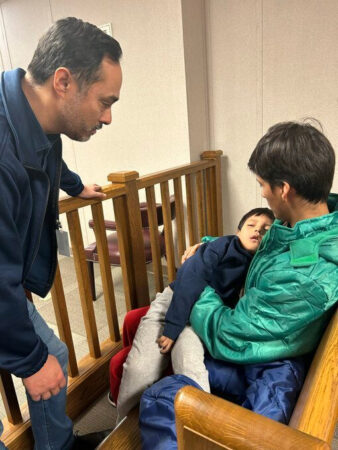
    During the Jan. 28 visit with Reps. Joaquin Castro and Jasmine Crockett, the boy slept in the arms of his father, who said Liam was frequently tired and not eating well at the detention facility housing about 1,100 people, according to Castro.

    Detained families report poor conditions like worms in food, lack of clean water, and poor medical care at the detention center since its reopening last year. In December, a report filed by ICE acknowledged they held about 400 children longer than the recommended limit of 20 days.

  • ICE claim that a man shattered his skull running into wall triggers tension at a Minnesota hospital

    ICE claim that a man shattered his skull running into wall triggers tension at a Minnesota hospital

    MINNEAPOLIS — Intensive care nurses immediately doubted the word of federal immigration officers when they arrived at a Minneapolis hospital with a Mexican immigrant who had broken bones in his face and skull.

    Immigration and Customs Enforcement agents initially claimed Alberto Castañeda Mondragón had tried to flee while handcuffed and “purposefully ran headfirst into a brick wall,” according to court documents filed by a lawyer seeking his release.

    But staff members at Hennepin County Medical Center determined that could not possibly account for the fractures and bleeding throughout the 31-year-old’s brain, said three nurses familiar with the case.

    “It was laughable, if there was something to laugh about,” said one of the nurses, who spoke to the Associated Press on the condition of anonymity because they were not authorized to discuss patient care. “There was no way this person ran headfirst into a wall.”

    The explanation from ICE is an example of recent run-ins between immigration officers and healthcare workers that have contributed to mounting friction at Minneapolis hospitals. Workers at the Hennepin County facility say ICE officers have restrained patients in defiance of hospital rules and stayed at their sides for days. The agents have also lingered around the campus and pressed people for proof of citizenship.

    Since the start of Operation Metro Surge, President Donald Trump’s immigration crackdown in Minnesota, ICE officers have become such a fixture at the hospital that administrators issued new protocols for how employees should engage with them. Some employees complain that they have been intimidated to the point that they avoid crossing paths with agents while at work and use encrypted communications to guard against any electronic eavesdropping.

    Similar operations have been carried out by federal agents in Los Angeles, Chicago, and other cities, where opponents have criticized what they say are overly aggressive tactics. It’s not clear how many people have required hospital care while in detention.

    Injuries appeared inconsistent with ICE account

    The AP interviewed a doctor and five nurses who work at HCMC, who spoke on condition of anonymity to talk about Castañeda Mondragón’s case and conditions inside the hospital. The AP also consulted with an outside physician who affirmed his injuries were inconsistent with an accidental fall or running into a wall.

    ICE’s account of how he was hurt evolved during the time that federal officers were at his bedside. At least one ICE officer told caregivers that Castañeda Mondragón “got his (expletive) rocked” after his Jan. 8 arrest near a St. Paul shopping center, the court filings and a hospital staff member said. His arrest happened a day after the first of two fatal shootings in Minneapolis by immigration officers.

    The situation reached a head when ICE insisted on using handcuffs to shackle his ankles to the bed, prompting a heated encounter with hospital staff, according to the court records and the hospital employees familiar with the incident.

    At the time, Castañeda Mondragón was so disoriented he did not know what year it was and could not recall how he was injured, one of the nurses said. ICE officers believed he was attempting to escape after he got up and took a few steps.

    “We were basically trying to explain to ICE that this is how someone with a traumatic brain injury is — they’re impulsive,” the nurse said. “We didn’t think he was making a run for the door.”

    Security responded to the scene, followed by the hospital’s CEO and attorney, who huddled in a doctor’s office to discuss options for dealing with ICE, the nurse said.

    “We eventually agreed with ICE that we would have a nursing assistant sit with the patient to prevent him from leaving,” the nurse said. “They agreed a little while later to take the shackles off.”

    The Department of Homeland Security, which includes ICE, did not respond to repeated requests for comment on Castañeda Mondragón’s injuries. A deportation officer skirted the issue in the court documents, saying that during the intake process at an ICE detention center, it was determined he “had a head injury that required emergency medical treatment.”

    Gregorio Castañeda Mondragón said his older brother is from Veracruz, Mexico, and worked as a roofer. He has a 10-year-old daughter living in his hometown who he helps support.

    According to his lawyers, Alberto Castañeda Mondragón entered the U.S. in 2022 with valid immigration documents. Minnesota incorporation filings show he founded a company called Castañeda Construction the following year with an address listed in St. Paul.

    He appears to have no criminal record. His lawyers told a court that Castañeda Mondragón was racially profiled during the crackdown, and that officers determined only after his arrest that he had overstayed his visa.

    “He was a brown-skinned, Latino Spanish speaker at a location immigration agents arbitrarily decided to target,” his lawyers wrote in a petition seeking his release from ICE custody.

    Hours after arrest, immigrant has eight skull fractures

    Castañeda Mondragón was initially taken to an ICE processing center at the edge of Minneapolis. Court records include an arrest warrant signed upon his arrival by an ICE officer, not an immigration judge.

    About four hours after his arrest, he was taken to a hospital emergency room in suburban Edina with swelling and bruising around his right eye and bleeding. A CT scan revealed at least eight skull fractures and life-threatening hemorrhages in at least five areas of his brain, according to court documents. He was then transferred to HCMC.

    Castañeda Mondragón was alert and speaking, telling staff he was “dragged and mistreated by federal agents,” though his condition quickly deteriorated, the documents show.

    The following week, a Jan. 16 court filing described his condition as minimally responsive and communicative, disoriented, and heavily sedated.

    AP shared the details of Castañeda Mondragón’s injuries with Lindsey C. Thomas, a board-certified forensic pathologist who worked as a medical examiner in Minnesota for more than 30 years. She agreed with the assessment of hospital staff.

    “I am pretty sure a person could not get these kinds of extensive injuries from running into a wall,” Thomas said, adding that she would need to see the CT scans to make a more definitive finding.

    “I almost think one doesn’t have to be a physician to conclude that a person can’t get skull fractures on both the right and left sides of their head and from front to back by running themselves into a wall,” she said.

    ICE officers stay with hospitalized detainees for days

    ICE officers have entered the hospital with seriously injured detainees and stayed at their bedside day after day, staffers said. The crackdown has been unsettling to hospital employees, who said ICE agents have been seen loitering on hospital grounds and asking patients and employees for proof of citizenship.

    Hospital staff members said they were uncomfortable with the presence of armed agents they did not trust and who appeared to be untrained.

    The nurses interviewed by AP said they felt intimidated by ICE’s presence in the critical care unit and had even been told to avoid a certain bathroom to minimize encounters with officers. They said staff members are using an encrypted messaging app to compare notes and share information out of fear that the government might be monitoring their communications.

    The hospital reminded employees that ICE officers are not permitted to access patients or protected information without a warrant or court order.

    “Patients under federal custody are first and foremost patients,” hospital officials wrote in a bulletin outlining new protocols. The hospital’s written policy also states that no shackles or other restraints should be used unless medically necessary.

    “We have our policies, but ICE personnel as federal officers don’t necessarily comply with those, and that introduces tension,” said a doctor who spoke on condition of anonymity because they were not authorized to comment for the hospital.

    Hospital spokesperson Alisa Harris said ICE agents “have not entered our facilities looking for individuals.”

    On Saturday, more than two weeks after Castañeda Mondragón was arrested, a U.S. District Court judge ordered him released from ICE custody.

    “We are encouraged by the court’s order, which affirms that the rule of law applies to all people, in every corner of our country, including federal officers,” said Jeanette Boerner, director of Hennepin County Adult Representation Services, which filed the lawsuit on Castañeda Mondragón’s behalf.

    To the surprise of some who treated him, Castañeda Mondragón was discharged from the hospital Tuesday. A hospital spokesperson said she had no information about him.

    The Justice Department filed court documents this week affirming Castañeda Mondragón is no longer in custody. Prosecutors did not respond to a request for comment on the man’s injuries.

    Castañeda Mondragón has no family in Minnesota and co-workers have taken him in, the man’s brother said. He has significant memory loss and a long recovery ahead. He won’t be able to work for the foreseeable future, and his friends and family worry about paying for his care.

    “He still doesn’t remember things that happened. I think (he remembers) 20% of the 100% he had,” said Gregorio Castañeda Mondragón, who lives in Mexico. “It’s sad that instead of having good memories of the United States, you’re left with a bad taste in your mouth about that country because they’re treating them like animals.”


  • New cache of Epstein documents yields details on his ties to the rich and powerful

    New cache of Epstein documents yields details on his ties to the rich and powerful

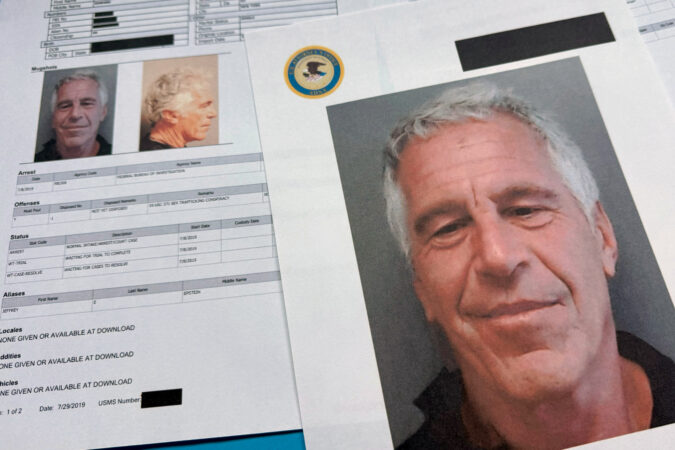
    NEW YORK — Newly disclosed government files on Jeffrey Epstein are offering more details about his interactions with the rich and famous after he served time for sex crimes in Florida, and on how much investigators knew about his abuse of underage girls when they decided not to indict him on federal charges nearly two decades ago.

    The documents released Friday include Epstein’s communications with former White House advisers, an NFL team co-owner, and billionaires including Bill Gates and Elon Musk.

    President Donald Trump’s Department of Justice said it would be releasing more than 3 million pages of documents along with more than 2,000 videos and 180,000 images under a law intended to reveal most of the material it collected during two decades of investigations involving the wealthy financier.

    The files, posted to the department’s website, included documents involving Epstein’s friendship with Britain’s Andrew Mountbatten-Windsor, formerly known as Prince Andrew, and Epstein’s email correspondence with onetime Trump adviser Steve Bannon, New York Giants co-owner Steve Tisch, and other prominent contacts with people in political, business, and philanthropic circles.

    Other documents offered a window into various investigations, including ones that led to sex trafficking charges against Epstein in 2019 and his longtime confidant Ghislaine Maxwell in 2021, and an earlier inquiry that found evidence of Epstein abusing underage girls but never led to federal charges.

    Draft indictment detailed Epstein’s abuse

    The FBI started investigating Epstein in July 2006 and agents expected him to be indicted in May 2007, according to the newly released records. A prosecutor wrote up a proposed indictment after multiple underage girls told police and the FBI that they had been paid to give Epstein sexualized massages.

    The draft indicated prosecutors were preparing to charge not just Epstein but also three people who worked for him as personal assistants.

    According to interview notes released Friday, an employee at Epstein’s Florida estate told the FBI in 2007 that Epstein once had him buy flowers and deliver them to a student at Royal Palm Beach High School to commemorate her performance in a school play.

    The employee, whose name was blacked out, said some of his duties were fanning $100 bills on a table near Epstein’s bed, placing a gun between the mattresses in his bedroom, and cleaning up after Epstein’s frequent massages with young girls, including disposing of used condoms.

    Ultimately, the U.S. attorney in Miami at the time, Alexander Acosta, signed off on a deal that let Epstein avoid federal prosecution. Epstein pleaded guilty instead to a state charge of soliciting prostitution from someone under age 18 and got an 18-month jail sentence. Acosta was Trump’s first labor secretary in his earlier term.

    Epstein offers to set Andrew up on a date

    The records have thousands of references to Trump, including emails in which Epstein and others shared news articles about him, commented on his policies or politics, or gossiped about him and his family.

    Mountbatten-Windsor’s name appears at least several hundred times, including in Epstein’s private emails. In a 2010 exchange, Epstein appeared to try and set him up for a date.

    “I have a friend who I think you might enjoy having dinner with,” Epstein wrote.

    Mountbatten-Windsor replied that he “would be delighted to see her.” The email was signed “A.”

    Epstein, whose emails often contain typographical errors, wrote later in the exchange: “She 26, russian, clevere beautiful, trustworthy and yes she has your email.”

    Concerns over how DOJ handled records

    The Justice Department is facing criticism over how it handled the latest disclosure.

    One group of Epstein accusers said in a statement that the new documents made it too easy to identify those he abused but not those who might have been involved in Epstein’s criminal activity.

    “As survivors, we should never be the ones named, scrutinized, and retraumatized while Epstein’s enablers continue to benefit from secrecy,” it said.

    Meanwhile, Maryland Rep. Jamie Raskin, the top Democrat on the House Judiciary Committee, pressed the department to let lawmakers review unredacted versions of the files as soon as Sunday. He said in a statement that Congress must assess whether the redactions were lawful or improperly shielded people from scrutiny.

    Epstein’s ties to powerful on display

    The released records reinforced that Epstein was, at least before he ran into legal trouble, friendly with Trump and former President Bill Clinton. None of Epstein’s victims who have gone public has accused Trump, a Republican, or Clinton, a Democrat, of wrongdoing. Both men said they had no knowledge Epstein was abusing underage girls.

    Epstein killed himself in a New York jail in August 2019, a month after being indicted.

    In 2021, a federal jury in New York convicted Maxwell, a British socialite, of sex trafficking for helping recruit some of his underage victims. She is serving a 20-year prison sentence.

    U.S. prosecutors never charged anyone else in connection with Epstein’s abuse. One victim, Virginia Roberts Giuffre, sued Mountbatten-Windsor, saying she had sexual encounters with him starting at age 17. The now-former prince denied having sex with Giuffre but settled her lawsuit for an undisclosed sum.

    Giuffre died by suicide last year at age 41.

  • Senate passes Trump-backed government funding deal, sending it to House

    Senate passes Trump-backed government funding deal, sending it to House

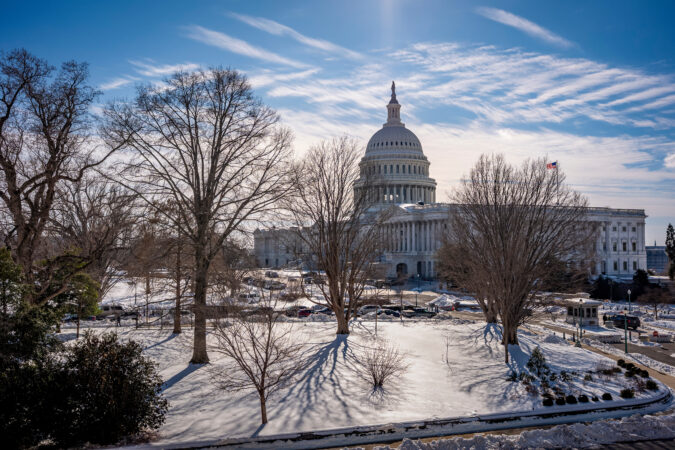
    WASHINGTON — The Senate voted Friday to fund most of the government through the end of September while carving out a temporary extension for Homeland Security funding, giving Congress two weeks to debate new restrictions on federal immigration raids across the country.

    With a weekend shutdown looming, President Donald Trump struck the spending deal with Senate Democrats on Thursday in the wake of the deaths of two protesters at the hands of federal agents in Minneapolis. Democrats said they would not vote for the larger spending bill unless Congress considers legislation to unmask agents, require more warrants and allow local authorities to help investigate any incidents.

    “The nation is reaching a breaking point,” Senate Democratic leader Chuck Schumer said after the vote. ”The American people are demanding that Congress step up and force change.”

    As lawmakers in both parties called for investigations into the fatal shootings, Trump said he didn’t want a shutdown and negotiated the rare deal with Schumer, his frequent adversary. Trump then encouraged members of both parties to cast a “much needed Bipartisan ‘YES’ vote.”

    The bill passed 71-29 and will now head to the House, which is not due back until Monday. That means the government could be in a partial shutdown temporarily over the weekend until they pass it.

    Speaker Mike Johnson, who held a conference call Friday with GOP lawmakers, said he expects the House to vote Monday evening. But what is uncertain is how much support there will be for the package.

    Johnson’s right flank has signaled opposition to limits on Homeland Security funds, leaving him reliant on Democrats who have their own objections to funding U.S. Immigration and Customs Enforcement without immediate restraints.

    Two-week debate over ICE

    It was unclear how involved Trump will be in the negotiations over new restrictions on immigration arrests — or if Republicans and Democrats could find any points of compromise.

    Senate Democrats will not support an extension of Homeland Security funding in two weeks “unless it reins in ICE and ends violence,” Schumer said. “If our colleagues are not willing to enact real change, they should not expect Democratic votes.”

    Similarly, House Democratic Leader Hakeem Jeffries told reporters that any change in the homeland bill needs to be “meaningful and it needs to be transformative.”

    Absent “dramatic change,” Jeffries said, “Republicans will get another shutdown.”

    Senate Majority Leader John Thune, R-S.D., said the two sides will “sit down in good faith,” but it will be “really, really hard to get anything done,” especially in such a short amount of time.

    “We’ll stay hopeful, but there are some pretty significant differences of opinion,” Thune said.

    Democrats demand change

    Irate Democrats have asked the White House to “end roving patrols” in cities and coordinate with local law enforcement on immigration arrests, including requiring tighter rules for warrants.

    They also want an enforceable code of conduct so agents are held accountable when they violate rules. Schumer said agents should be required to have “masks off, body cameras on” and carry proper identification, as is common practice in most law enforcement agencies.

    Alex Pretti, a 37 year-old ICU nurse, was killed by a border patrol agent on Jan. 24, two weeks after protester Renee Good was killed by an ICE officer. Administration officials, including Homeland Security Secretary Kristi Noem, originally said Pretti had aggressively approached officers, but multiple videos contradicted that claim.

    Republican pushback

    The president’s concessions to Democrats prompted pushback from some Senate Republicans, delaying the final votes and providing a preview of the coming debate over the next two weeks. In a fiery floor speech, Trump ally Sen. Lindsey Graham of South Carolina warned that Republicans should not give away too much.

    “To the Republican party, where have you been?” Graham said, adding that ICE agents and Border Patrol agents have been “slandered and smeared.”

    Several Republicans have said that if Democrats are going to push for restrictions on ICE, they will push for restrictions on so-called “sanctuary cities” that they say do not do enough to enforce illegal immigration.

    “There no way in hell we’re going to let Democrats knee cap law enforcement and stop deportations in exchange for funding DHS,” said Missouri Sen. Eric Schmitt, R-Mo., ahead of the vote.

    Still, some Republicans said they believe that changes to ICE’s operations were necessary, even as they were unlikely to agree to all of the Democrats’ requests.

    “I think the last couple of days have been an improvement,” said Kentucky Sen. Rand Paul. “I think the rhetoric has been dialed down a little bit, in Minnesota.”

    Last-minute promises

    After Trump announced the deal with Democrats, Graham held the spending bills up for almost a day until Thune agreed to give him a vote on his sanctuary cities bill at a later date.

    Separately, Graham was also protesting a repeal of a new law giving senators the ability to sue the government for millions of dollars if their personal or office data is accessed without their knowledge — as happened to him and other senators as part of the so-called Arctic Frost investigation into the Jan. 6, 2021, attack by Trump supporters at the Capitol.

    The spending bill, which was passed by the House last week, would repeal that law. But Graham said Thune had agreed to consider a separate bill that would allow “groups and private citizens” who were caught up in Jack Smith’s probe to sue.

  • Trump administration approves new arms sales to Israel worth $6.67 billion

    Trump administration approves new arms sales to Israel worth $6.67 billion

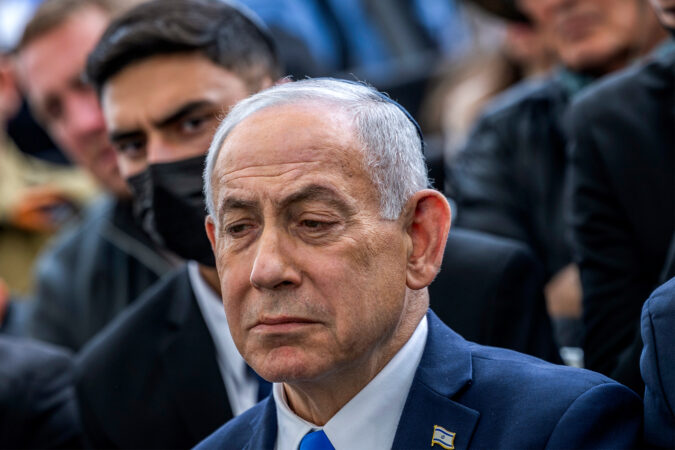
    WASHINGTON — The Trump administration has approved a massive new arms sales package to Israel totaling $6.67 billion, including 30 Apache attack helicopters and related equipment and weapons, as well as 3,250 light tactical vehicles.

    The State Department announced the four separate sales to Israel late Friday amid rising tensions in the Middle East over the possibility of U.S. military strikes in Iran.

    The sales also were announced as President Donald Trump pushes ahead with his ceasefire plan for Gaza that is intended to end the Israel-Hamas conflict and reconstruct and redevelop the Palestinian territory after two years of war left it devastated, with tens of thousands dead.

    The Apache helicopters, which will be equipped with rocket launchers and advanced targeting gear, are the biggest part of the total package, coming to $3.8 billion, according to the State Department, which notified Congress of its approval of the sales on Friday.

    The next largest portion is the light tactical vehicles, which will be used to move personnel and logistics “to extend lines of communication” for the Israel Defense Forces and will cost $1.98 billion, it said.

    Israel will spend an additional $740 million on power packs for armored personnel carriers it has had in service since 2008, the department said. The remaining $150 million will be spent on a small but unreported number of light utility helicopters to complement similar equipment it already has, it said.

    In separate but nearly identical statements, the department said none of the new sales would affect the military balance in the region and that all of them would “enhance Israel’s capability to meet current and future threats by improving its ability to defend Israel’s borders, vital infrastructure, and population centers.”

    “The United States is committed to the security of Israel, and it is vital to U.S. national interests to assist Israel to develop and maintain a strong and ready self-defense capability,” the statements said.