Category: Entertainment Wires

  • Rob Reiner’s son Nick arrested after director and his wife found dead at their Los Angeles home

    Rob Reiner’s son Nick arrested after director and his wife found dead at their Los Angeles home

    LOS ANGELES — Rob Reiner’s younger son, Nick Reiner, was in jail Monday after being booked for what investigators believe was the fatal stabbing of the director-actor and his wife at their Los Angeles home a day earlier, authorities said.

    It was not immediately clear what charges Nick Reiner, 32, would face. A police statement said he was being held without bail and the case will be presented to the district attorney’s office on Tuesday.

    Representatives for the Reiner family did not immediately respond to a request for comment, and it wasn’t immediately clear if Nick Reiner had an attorney who could speak on his behalf.

    Nick Reiner has spoken publicly of his struggles with addiction. By 18, he had cycled in and out of treatment facilities with bouts of homelessness and relapses in between. Rob and Nick Reiner explored their difficult relationship and Nick Reiner’s struggles with drugs in a semi-autobiographical 2016 film, Being Charlie.

    Rob and Michele Singer Reiner were found dead Sunday afternoon at their home in Los Angeles, and investigators believe they were stabbed, a law enforcement official told The Associated Press. The official, who was briefed on the investigation, could not publicly discuss the details and spoke to the AP on condition of anonymity.

    Nick Reiner was arrested Sunday around 9:15 p.m., police said.

    The Los Angeles Fire Department said it responded to a medical aid request shortly after 3:30 p.m. Sunday and found a 78-year-old man and 68-year-old woman dead inside. Reiner turned 78 in March.

    Detectives with the Robbery Homicide Division were investigating an “apparent homicide” at Reiner’s home, police Capt. Mike Bland said Sunday.

    Reiner was long one of the most prolific directors in Hollywood, and his work included some of the most memorable movies of the 1980s and ’90s, including This Is Spinal Tap, A Few Good Men, When Harry Met Sally, and The Princess Bride.

    His role as Michael “Meathead” Stivic in Norman Lear’s 1970s TV classic All in the Family, as a liberal foil to O’Connor’s Archie Bunker, catapulted him to fame and won him two Emmy Awards.

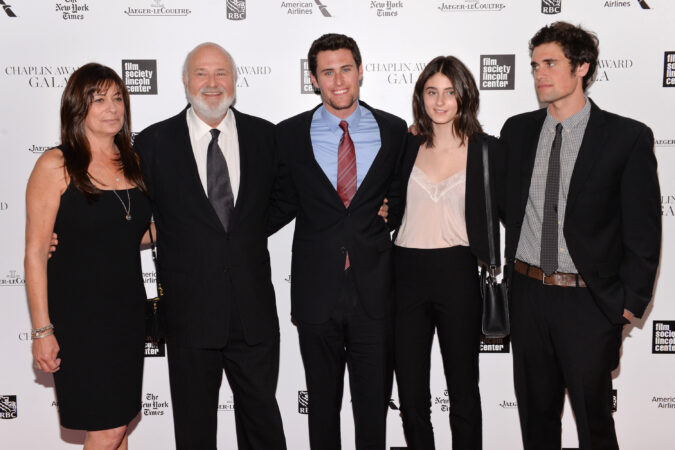
    The son of comedy legend Carl Reiner, Rob Reiner was married to photographer Michele Singer Reiner since 1989. The two met while he was directing When Harry Met Sally and had three children together: Nick, Jake, and Romy.

    Relatives of Lear, the legendary producer who died in 2023, said their deaths left them bereft.

    “Norman often referred to Rob as a son, and their close relationship was extraordinary, to us and the world,” said a Lear family statement. “Norman would have wanted to remind us that Rob and Michele spent every breath trying to make this country a better place, and they pursued that through their art, their activism, their philanthropy, and their love for family and friends.”

    Los Angeles Mayor Karen Bass called it a devastating loss for the city.

    “Rob Reiner’s contributions reverberate throughout American culture and society, and he has improved countless lives through his creative work and advocacy fighting for social and economic justice,” Bass said in a statement. “An acclaimed actor, director, producer, writer, and engaged political activist, he always used his gifts in service of others.”

    Reiner was previously married to actor-director Penny Marshall from 1971 to 1981. He adopted her daughter, Tracy Reiner. Carl Reiner died in 2020 at age 98 and Marshall died in 2018.

    Killings are rare in the Brentwood neighborhood. The scene is about a mile from the home where O.J. Simpson’s wife Nicole Brown Simpson and her friend Ron Goldman were killed in 1994.

  • Son Nick arrested after Rob Reiner and his wife found dead in Los Angeles home, AP source says

    Son Nick arrested after Rob Reiner and his wife found dead in Los Angeles home, AP source says

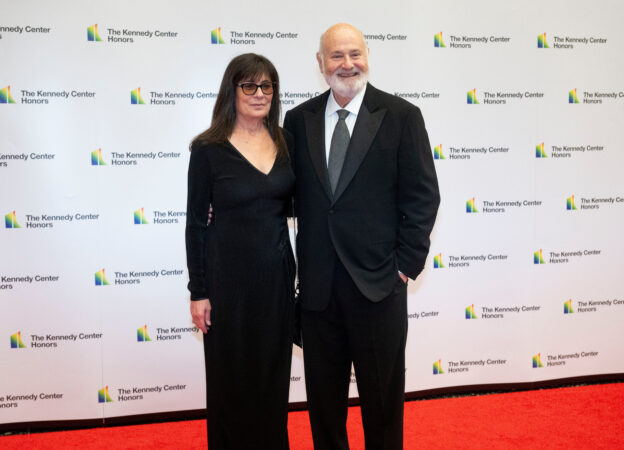
    LOS ANGELES — Rob Reiner’s son, Nick Reiner, was in police custody Monday after deaths of the director-actor and his wife Michele, a law enforcement official told The Associated Press.

    Online jail records show Nick Reiner, 32, was booked by Los Angeles police and remained in jail on Monday. It was not immediately clear what charges he would face. The online records showed a $4 million bail had been set.

    The law enforcement official, who was briefed on the investigation, confirmed that he was being held, but could not publicly discuss the details and spoke to AP on condition of anonymity.

    Representatives for Reiner’s family did not immediately respond to a request for comment and it wasn’t immediately clear if Nick Reiner had an attorney who could speak on his behalf.

    Rob and Michele Weiner were found dead Sunday at their home in Los Angeles, and investigators believe they suffered stab wounds, the law enforcement official said.

    The Los Angeles Fire Department said it responded to a medical aid request shortly after 3:30 p.m. and found a 78-year-old man and 68-year-old woman dead inside. Reiner turned 78 in March.

    Detectives with the Robbery Homicide Division were investigating an “apparent homicide” at Reiner’s home, said Capt. Mike Bland with the Los Angeles Police Department.

    Los Angeles authorities have not confirmed the identities of the people found dead at the residence in the upscale Brentwood neighborhood on the city’s west side that’s home to many celebrities.

    Reiner was long one of the most prolific directors in Hollywood, and his work included some of the most memorable movies of the 1980s and ’90s, including “This is Spinal Tap,” “A Few Good Men,” “When Harry Met Sally” and “The Princess Bride.”

    His role as Meathead in Norman Lear’s 1970s TV classic “All in the Family,” alongside Carol O’Connor’s Archie Bunker, catapulted him to fame and won him two Emmy Awards.

    The son of comedy legend Carl Reiner, Rob Reiner was married to photographer Michele Singer Reiner since 1989. The two met while he was directing “When Harry Met Sally” and had three children together: Nick, Jake and Romy.

    Relatives of Lear, the legendary producer who died in 2023, said they were bereft by the news.

    “Norman often referred to Rob as a son, and their close relationship was extraordinary, to us and the world,” said a Lear family statement. “Norman would have wanted to remind us that Rob and Michele spent every breath trying to make this country a better place, and they pursued that through their art, their activism, their philanthropy, and their love for family and friends.”

    Messages to Reiner’s representatives were not immediately returned Sunday night.

    Los Angeles Mayor Karen Bass called Reiner’s death a devastating loss for the city.

    “Rob Reiner’s contributions reverberate throughout American culture and society, and he has improved countless lives through his creative work and advocacy fighting for social and economic justice,” Bass said in a statement. “An acclaimed actor, director, producer, writer, and engaged political activist, he always used his gifts in service of others.”

    Reiner was previously married to actor-director Penny Marshall from 1971 to 1981. He adopted her daughter, Tracy Reiner. Carl Reiner died in 2020 at age 98 and Marshall died in 2018.

    Killings are rare in the Brentwood neighborhood. The scene is about a mile from the home where O.J. Simpson’s wife Nicole Brown Simpson and her friend Ron Goldman were killed in 1994.

  • Egypt reveals restored colossal statues of pharaoh in Luxor

    Egypt reveals restored colossal statues of pharaoh in Luxor

    LUXOR, Egypt — Egypt on Sunday revealed the revamp of two colossal statues of a prominent pharaoh in the southern city of Luxor, the latest in the government’s archaeological events that aim at drawing more tourists to the country.

    The giant alabaster statues, known as the Colossi of Memnon, were reassembled in a renovation project that lasted about two decades. They represent Amenhotep III, who ruled ancient Egypt about 3,400 years ago.

    “Today we are celebrating, actually, the finishing and the erecting of these two colossal statues,” Mohamed Ismail, secretary-general of the Supreme Council of Antiquities, told the Associated Press ahead of the ceremony.

    Attempts to revive a prestigious temple

    Ismail said the colossi are of great significance to Luxor, a city known for its ancient temples and other antiquities. They’re also an attempt to “revive how this funerary temple of king Amenhotep III looked like a long time ago,” Ismail said.

    Amenhotep III, one of the most prominent pharaohs, ruled during the 500 years of the New Kingdom, which was the most prosperous time for ancient Egypt. The pharaoh, whose mummy is showcased at a Cairo museum, ruled between 1390–1353 BC, a peaceful period known for its prosperity and great construction, including his mortuary temple, where the Colossi of Memnon are located, and another temple, Soleb, in Nubia.

    The colossi were toppled by a strong earthquake in about 1200 BC that also destroyed Amenhotep III’s funerary temple, said Mohamed Ismail, secretary-general of the Supreme Council of Antiquities.

    They were fragmented and partly quarried away, with their pedestals dispersed. Some of their blocks were reused in the Karnak temple, but archaeologists brought them back to rebuild the colossi, according to the Antiquities Ministry.

    In the late 1990s, an Egyptian German mission, chaired by German Egyptologist Hourig Sourouzian, began working in the temple area, including the assembly and renovation of the colossi.

    “This project has in mind … to save the last remains of a once-prestigious temple,” she said.

    A pharaoh facing the rising sun

    The statues show Amenhotep III seated with hands resting on his thighs, with their faces looking eastward toward the Nile and the rising sun. They wear the nemes headdress surmounted by double crowns and the pleated royal kilt, which symbolizes the pharaoh’s divine rule.

    Two other small statues on the pharaoh’s feet depict his wife, Tiye.

    The colossi — 48 feet and 45 feet respectively — preside over the entrance of the king’s temple on the western bank of the Nile. The 86-acre complex is believed to be the largest and richest temple in Egypt and is usually compared to the temple of Karnak, also in Luxor.

    The colossi were hewn in Egyptian alabaster from the quarries of Hatnub, in Middle Egypt. They were fixed on large pedestals with inscriptions showing the name of the temple, as well as the quarry.

    Unlike other monumental sculptures of ancient Egypt, the colossi were partly compiled with pieces sculpted separately, which were fixed into each statue’s main monolithic alabaster core, the ministry said.

    Eye on tourism

    Sunday’s unveiling in Luxor came just six weeks after the inauguration of the long-delayed Grand Egyptian Museum, the centerpiece of the government’s bid to boost the country’s tourism industry and bring cash into the troubled economy. The mega project is located near the famed Giza Pyramids and the Sphinx.

    The tourism sector, which depends heavily on Egypt’s rich pharaonic artifacts, has suffered during years of political turmoil and violence following the 2011 uprising. In recent years, the sector has started to recover after the coronavirus pandemic and amid Russia’s war on Ukraine — both countries are major sources of tourists visiting Egypt.

    “This site is going to be a point of interest for years to come,” said Tourism and Antiquities Minister Sherif Fathy, who attended the unveiling ceremony. “There are always new things happening in Luxor.”

    A record number of about 15.7 million tourists visited Egypt in 2024, contributing about 8% of the country’s GDP, according to official figures.

    Fathy, the minister,has said about 18 million tourists are expected to visit the country this year, with authorities hoping for 30 million visitors annually by 2032.

  • The holiday shopping season comes with tons of extra emissions. Here’s how to do it sustainably

    The holiday shopping season comes with tons of extra emissions. Here’s how to do it sustainably

    We’re in the thick of the holiday shopping season, and U.S. residents are expected to shatter the spending record again this year. The National Retail Federation forecasts that 2025 will be the first time we collectively spend more than $1 trillion on year-end gifts.

    A lot of materials, energy, packaging, and gasoline have gone into making and moving those gifts. All of those processes release planet-warming gases into the atmosphere.

    But a lot of that environmental impact is avoidable. Making, baking, thrifting, and avoiding traditional wrapping paper are all more planet-friendly ways to give. We’ve got tips on how to do them all.

    Homemade doesn’t have to be difficult

    Sure, if you’ve got the skill to turn a wooden bowl or needlepoint a Christmas stocking, those gifts are guaranteed to be unique and meaningful. But not all of us have the knowledge or time.

    Sandra Goldmark, associate dean of Columbia Climate School’s Office of Engagement and Impact, said one of her favorite options is an act of service for a loved one. One year, for example, her husband organized all her passwords for her.

    “It was not something easy to wrap and put under the tree, but believe me, it was meaningful and really helped me more than any additional object cluttering up my home could have,” she said.

    Another winner: food. If, say, you have a long list of recipients, buy ingredients in bulk and pack them in Mason jars. Cookie mix, soup mix, sourdough starter, and spice mixes are all easily sealed and transported that way. Add some ribbon and a sprig of cedar, and it’s festive. Homemade baked goods and snacks are other options.

    “It’s inexpensive, but it takes care and time and attention,” said sustainable-living educator Sarah Robertson-Barnes.

    Give experiences instead of buying more stuff

    The advice here starts out simple: Buy less stuff. The best way to give gifts more sustainably is to buy fewer new things, said Goldmark.

    Stockings can be a common spot for toys that break quickly before going straight to the landfill. Instead, you can fill stockings with things that your friends or family need anyway, like toothbrushes or body wash, or traditional treats like fruit and chocolates.

    Giving someone an experience is another popular option. That might mean a pair of concert tickets, a spa day, a gift card to a favorite local restaurant, a local news subscription, or a membership to a local garden or zoo that the recipient can use over and over. Research has indicated that experiences strengthen relationships better than material gifts do.

    “There is so much that you could do by just saying, ‘I would prefer if you just made me a nice meal or took me out for some sort of adventure,’” said Atar Herziger, environmental psychologist and assistant professor at Technion — Israel Institute of Technology.

    Experiences also come with less packaging. Herziger cautions, though, that travel can have a high impact especially if it involves planes. So she recommends local options such as a nearby hike or a staycation.

    And if you’re unsure what experience your loved one would prefer? Herziger said don’t overcomplicate it — just ask.

    Go vintage

    Secondhand gifts are easier on the planet because they involve less manufacturing, packaging, and shipping. Robertson-Barnes looks to Facebook Marketplace or her local Buy Nothing group to find items that she would have otherwise bought new.

    “I bet somebody has the thing that you’re looking for and they would love to get rid of it,” she said.

    Still, for some recipients, secondhand gifts are taboo.

    “We do have a weird cultural thing where new is better and used is gross,” said Robertson-Barnes, who suggested reframing used gifts as “vintage.”

    Similarly, Herziger said secondhand options might be received better when they’re items that can’t be bought new, such as a family heirloom or a collectible that isn’t produced anymore.

    Goldmark looks to thrift stores for smaller toys or mugs. Record stores, used book stores, furniture stores, and antique shops are other options. And of course big names like eBay and Goodwill can have rare and unique finds, too.

    If buying secondhand simply won’t work for a recipient, Goldmark said to focus on items that are high-quality, long-lasting, repairable, and really needed. That ensures that it’s worth investing in and reduces the chance that it gets returned. Look to buy locally, rather than ordering online, to reduce how far it travels.

    The wrapping matters, too

    Millions of pounds of wrapping paper end up in the landfill every year. Much of it is blended with plastic to make it shiny or sparkly, so it can’t be recycled.

    Not sure whether your wrapping paper is recyclable? Check your local recycler’s website for guidelines, or try a simple test by crumpling it into a ball. If it holds its shape, it’s more likely recyclable. Also, if it rips as easily as printer paper or gets soggy like a saturated brown grocery bag, those are good signs it’s recyclable, too.

    Robertson-Barnes said if you already have wrapping paper on hand, you should use it rather than waste it. But once it’s gone, she recommends reusable wrapping cloths such as furoshiki, a traditional Japanese fabric for presenting gifts.

    Some experts also recommend gift bags as long as they’re reused — and not tossed.

    Another cheaper and more planet-friendly alternative to wrapping paper is newspaper or brown paper bags. Tie them off with reusable ribbon, a couple pinecones or a candy cane, and suddenly it’s festive.

    Plus, brown paper is a blank canvas with endless opportunities for customization. “If you’ve got kids, then their drawings are wonderful packaging materials. They make the best wrapping paper,” Herziger said.

  • Affable comedy acting legend Dick Van Dyke turns 100 years old

    Affable comedy acting legend Dick Van Dyke turns 100 years old

    Comedy icon Dick Van Dyke celebrated his 100th birthday on Saturday, hitting the century mark some six decades after he sang and danced with Julie Andrews in Mary Poppins and starred in his self-titled sitcom.

    “The funniest thing is, it’s not enough,” Van Dyke said in an interview with ABC News at his Malibu, Calif., home. “A hundred years is not enough. You want to live more, which I plan to.”

    As part of the celebration of Van Dyke’s birthday this weekend, theaters around the country are showing a new documentary about his life, Dick Van Dyke: 100th Celebration.

    Van Dyke became one of the biggest actors of his era with The Dick Van Dyke Show, which ran from 1961-66 on CBS; appeared with Andrews as a chimney sweep with a Cockney accent in the 1964 Disney classic Mary Poppins; and, in his 70s, played a physician-sleuth on Diagnosis: Murder.

    Also a Broadway star, Van Dyke won a Tony Award for Bye Bye Birdie to go with a Grammy and four Primetime Emmys. In 1963, he starred in the film version of Bye Bye Birdie.

    Just last year, he became the oldest winner of a Daytime Emmy, for a guest role on the soap Days of Our Lives.

    In the 1970s, he found sobriety after battling alcoholism and spoke out about it at a time when that was uncommon to do.

    Now that he has hit triple digits, Van Dyke said he’s gotten some perspective on how he used to play older characters.

    “You know, I played old men a lot, and I always played them as angry and cantankerous,” he told ABC News. “It’s not really that way. I don’t know any other 100-year-olds, but I can speak for myself.”

    He recently imparted wisdom about reaching the century mark in his book, 100 Rules for Living to 100: An Optimist’s Guide to a Happy Life. He credited his wife, 54-year-old makeup artist and producer Arlene Silver, with keeping him young.

    “She gives me energy. She gives me humor, and all kinds of support,” he told ABC News.

    Van Dyke was born in West Plains, Mo., in 1925, and grew up “the class clown” in Danville, Ill., while admiring and imitating the silent film comedians.

    He told ABC News he started acting when he was about 4 or 5 years old in a Christmas pageant. He said he was the baby Jesus.

    “I made some kind of crack, I don’t know what I said, but it broke the congregation up,” he said. ”And I liked the sound of that laughter.”

    And what’s hard about being 100?

    “I miss movement,” he told ABC News. “I’ve got one game leg from I don’t know what.”

    “I still try to dance,” he said with a laugh.

  • A guide to good manners at the retail counter this holiday season

    A guide to good manners at the retail counter this holiday season

    As shoppers flood stores across the country during the year’s biggest shopping season, retail workers are bracing for what many describe as the most demanding — and often demoralizing — stretch of the job.

    “It magnifies everything,” said Nick Leighton, host of the podcast Were You Raised by Wolves?, which he cohosts with comedian Leah Bonnema. Together, they dissect etiquette and the subtleties of social behavior.

    “People are stressed, they’re busy, they’re frazzled,” he said. “When that happens, we tend to forget other people exist.”

    Whether it’s gridlocked parking lots or shelves picked clean, the holiday retail environment can become a pressure cooker where manners evaporate quickly.

    November and December have long driven retail sales, prompting companies to hire large numbers of seasonal workers to manage the surge. These workers often absorb the brunt of shoppers’ frustration. Some customers treat employees as extensions of a corporation rather than as people.

    This year, there might be even fewer employees to handle crowds of holiday shoppers. Companies say they could cut back on seasonal workers because of economic uncertainty, while at the same time, shoppers are expected to spend more than they did last year.

    “Yelling at a worker isn’t doing anything,” Leighton noted. “Everyone else is busy, too. … Your shopping isn’t more important than the next person’s.”

    Here are some expert suggestions on how customers can be kinder, more polite, and more empathetic toward the people helping to execute all those holiday lists.

    Manners apply everywhere

    People who behave courteously generally do so everywhere, while those who are rude in stores often have similar issues in their personal lives, etiquette consultants say.

    “We do not pay retail workers to be a therapist, a social worker, or a punching bag. It’s not appropriate, and it’s not fair,” said Jodi R.R. Smith, president of Mannersmith Etiquette Consulting in Massachusetts. Long before she advised companies on etiquette, Smith worked several holiday seasons at a Hallmark store.

    Plan your shopping trip and leave time

    Smith advises shoppers to plan ahead — knowing who is on their list, which stores they need to visit and when they will go. “Set yourself up for success,” she said. “Bring water or a snack. Do not go hungry.”

    Timing matters as well. “Ask yourself, ‘When is the best time to go?’” she said. “Weekends are busier, lines are longer, and parking is tighter. If possible, go on a Wednesday morning when the store opens.”

    Establish a little rapport

    Smith suggests making friendly eye contact with workers, offering a greeting, and using humor to diffuse tense moments. If someone in line becomes irritable, she said, a gentle joke about needing a nap can reset the mood.

    “We don’t have control over others’ behavior, but we certainly do over ours,” she said.

    Shoppers can help reduce frustration by asking questions — and recognizing that workers may not have all the answers, said Elizabeth Medeiros, 59, who spent more than 35 years in retail in New York and the Boston area.

    Some companies are acting preemptively. Delta Air Lines is encouraging kindness between customers and employees with a “Centennial Cheer” program. It says it will recognize “100,000 acts of kindness” with Holiday Medallion cards, which can be redeemed for gifts.

    Manage expectations

    Customers often assume store employees can control everything from inventory and discounts to restocking speed and even the behavior of other shoppers, she said.

    They can’t.

    “Customers are focused, especially during the holidays,” said Medeiros, a former district sales manager and longtime store manager. “They’re checking off lists and looking for deals, and anything that interferes with that throws them off.”

    Holiday work is already tough for staff under the best of circumstances, she noted. “Everyone is often stretched thin. Breaks get skipped, shifts get extended unexpectedly, and six-day workweeks become common.”

    As Smith puts it: “Clerks are not the CEO. Don’t expect someone making hourly wages in December to change a store policy you don’t like.”

    Training workers to defuse tension

    Adam Lukoskie, executive director of the National Retail Federation Foundation, emphasized that most customer interactions remain positive.

    “In the news you might see a couple of incidents, but most experiences are OK,” he said. “We work hard to provide a high-quality environment.”

    The industry has invested in new training programs to prepare workers for tense encounters, Lukoskie said.

    The foundation’s RISE Up skills-training courses now reach more than 80,000 people annually. “It gives associates the tools to provide customer service and to understand that an angry customer is usually mad at the problem, not at them,” he said.

    Above all, he said, shoppers should reframe how they view the person behind the counter.

    “Act as if the person helping you is your daughter or son, or your mother or father. Not just someone there to do a task for you.”

  • Christine Choy, indie filmmaker who led seminal documentary on the killing of Vincent Chin, has died

    Christine Choy, indie filmmaker who led seminal documentary on the killing of Vincent Chin, has died

    Christine Choy, a trailblazer for Asian Americans in independent film and whose documentary on the fatal beating of Vincent Chin was nominated for an Academy Award, has died. She was 73.

    Ms. Choy died Sunday, according to a statement from JT Takagi, executive director of Third World Newsreel, a filmmaking collective Choy helped establish in the 1970s. No cause of death was given.

    “She was a prolific filmmaker who made significant films that helped form our Asian American and American film history,” Takagi said on the organization’s website.

    Chin, a Chinese American who grew up in Detroit, was celebrating his bachelor party in 1982 when two white autoworkers attacked him. At that time, Japanese auto companies were being blamed for job losses in the U.S. auto manufacturing industry. The attackers were motivated by their assumption Chin was Japanese. His death and the lack of prison time for the two assailants is considered a galvanizing moment for Asian Americans fighting anti-Asian hate.

    Renee Tajima-Peña, co-director of Who Killed Vincent Chin?, met Ms. Choy around 1980 through Third World Newsreel. They decided to collaborate on a documentary a year after Chin’s death after seeing how little coverage it received.

    Tajima-Peña recalls bonding with Ms. Choy and other crew during freezing Detroit winter nights while waiting for witnesses in Chin’s death and evenings spent with Chin’s mother’s over home-cooked meals.

    “We were in constant motion during the production with Chris always the picture of cool — sunglasses, stylishly slim, cigarette in hand. And yes she was brash and outspoken — her cigarettes may have had filters but her language didn’t,” Tajima-Peña said in an email to the Associated Press on Friday. “But, her audaciousness was all a part of the package.”

    Their production was lauded for bringing more attention to Chin’s slaying and went on to earn an Oscar nomination for best documentary feature in 1989. In 2021, it was chosen for preservation in the National Film Registry by the Library of Congress.

    Ms. Choy was a full-time professor at New York University’s Tisch School of the Arts up until her death. She was praised as someone who enjoyed mentoring young auteurs and students at NYU and Third World Newsreel.

    In a statement, Dean Rubén Polendo called her “a triumphant force in documentary filmmaking whose works penetrated America’s social conscience.”

    “Christine’s loss is felt deeply across the Tisch community, where her unparalleled legacy survives through her pioneering work as an artist and educator,” Polendo said.

    Born in China, Ms. Choy grew up with a Korean father and a Chinese mother. She immigrated to New York City as a teen. Being there in the 1960s, Ms. Choy learned about the Civil Rights Movement up-close. That would shape her passion for social justice, according to her NYU faculty biography.

    She moved to Los Angeles and earned a directing certificate from the American Film Institute. But she eventually moved back to New York and, in 1972, helped create Third World Newsreel. The group’s mission was to advance films about social justice and marginalized communities, particularly people of color. Ms. Choy’s early documentaries included subjects such as New York City’s Chinatown and race relations in the Mississippi Delta.

    Ms. Choy received several awards and fellowships over the years including Guggenheim and Rockefeller fellowships. She also taught at other universities including Yale, Cornell and City University in Hong Kong.

    Plans for funeral services were not immediately known.

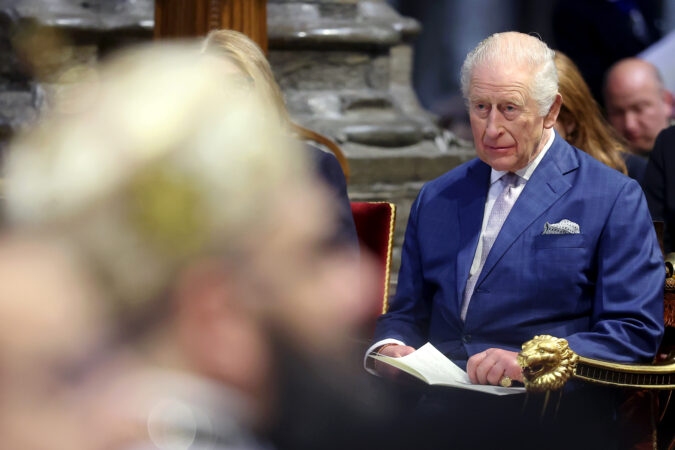
  • King Charles III says his cancer treatment is being reduced as he promotes benefits of screening

    King Charles III says his cancer treatment is being reduced as he promotes benefits of screening

    LONDON — King Charles III said Friday that early diagnosis and treatment will allow doctors to reduce his cancer treatment in the new year as he encouraged others to take advantage of screening programs that can detect the disease early when it is easiest to treat.

    Charles, 77, revealed the positive outlook in a recorded message broadcast on British television as part of a campaign to promote such screening, which increases the likelihood of successful treatment.

    “Early diagnosis quite simply saves lives,” the king said.

    “I know, too, what a difference it has made in my own case, enabling me to continue leading a full and active life even while undergoing treatment,” he added.

    Buckingham Palace said his treatment is moving to a “precautionary phase” and his condition will be monitored to ensure his continued recovery.

    Friday’s message is the latest example of how Charles has used his own story to promote cancer awareness and treatment since he announced his diagnosis in February 2024. That seems to have paid off, with British cancer charities saying the number of people seeking information about cancer jumped after the king revealed he was undergoing treatment.

    But the king has never revealed what type of cancer he has or the kind of treatment he is receiving. The palace said this was an intentional decision designed to ensure his message reaches the widest possible audience.

    “The advice from cancer experts is that, in his determination to support the whole cancer community, it is preferable that His Majesty does not address his own specific condition but rather speaks to those affected by all forms of the disease,” the palace said in a statement.

    The king’s cancer was discovered after treatment for an enlarged prostate. While doctors ruled out prostate cancer, tests revealed “a separate issue of concern,” palace officials said last year.

    Charles suspended his public appearances for about two months after his diagnosis so he could focus on his treatment and recovery. But he continued with state business and retained his constitutional role as head of state.

    The king returned to the public eye in April of last year with a visit to a cancer-treatment center at University College Hospital in central London, where he met with staff and shared stories with fellow cancer patients.

    “It’s always a bit of a shock, isn’t it, when they tell you,” he said, sympathizing with one patient as chemotherapy drugs dripped into her arm.

    Charles’ decision to disclose his diagnosis was a departure for Britain’s royals, who have traditionally considered their health to be a personal matter and shared few details with the public.

    “As I have observed before, the darkest moments of illness can be illuminated by the greatest compassion,’’ he said. “But compassion must be paired with action. This December, as we gather to reflect on the year past, I pray that we can each pledge, as part of our resolutions for the year ahead, to play our part in helping to catch cancer early.

    “Your life — or the life of someone you love — may depend upon it,” he said.

  • Best-selling British writer Joanna Trollope has died at 82

    Best-selling British writer Joanna Trollope has died at 82

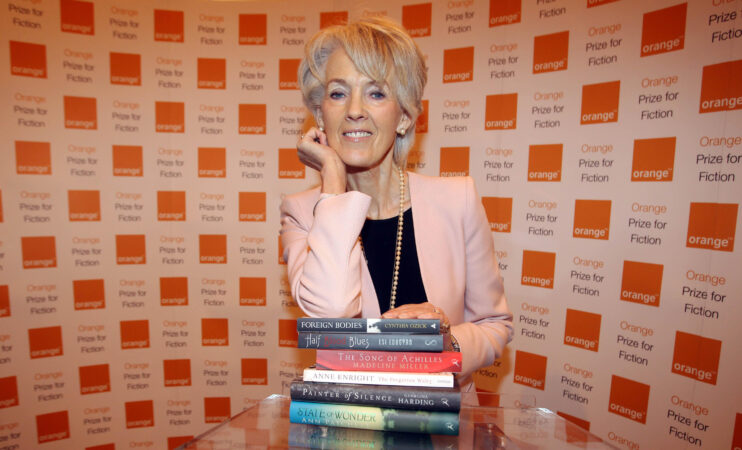
    LONDON — British writer Joanna Trollope, whose best-selling novels charted domestic and romantic travails in well-heeled rural England, has died, her family said Friday. She was 82.

    Ms. Trollope’s daughters, Antonia and Louise, said the writer died peacefully at her home in Oxfordshire, southern England, on Thursday.

    Ms. Trollope wrote almost two dozen contemporary novels, including The Rector’s Wife, Marrying the Mistress, Other People’s Children, and Next of Kin. They were often dubbed “Aga sagas,” after the old-fashioned Aga ovens found in affluent country homes.

    Ms. Trollope disliked the term, noting that her books tackled uncomfortable subjects including infidelity, marital breakdown, and the challenges of parenting.

    “That was a very unfortunate phrase and I think it’s done me a lot of damage,” she once said. ”It was so patronizing to the readers, too.”

    Ms. Trollope’s most recent novel, Mum & Dad, examined the “sandwich generation” of middle-aged people looking after both children and elderly parents.

    Ms. Trollope also published 10 historical novels under the pseudonym Caroline Harvey.

    Ms. Trollope, a distant relative of Victorian novelist Anthony Trollope, was born in Minchinhampton in the west of England in 1943. She studied English at Oxford University, then worked in Britain’s Foreign Office and as a teacher before becoming a full-time writer in 1980. She became a household name after The Rector’s Wife was adapted for television in 1991.

    Ms. Trollope’s novel Parson Harding’s Daughter won a novel of the year award from the Romantic Novelists’ Association in 1980. In 2010, the association gave her a lifetime achievement award for services to romance.

    In 2019, she was made a Commander of the Order of the British Empire, or CBE, by Queen Elizabeth II.

    Her literary agent, James Gill, called Ms. Trollope “one of our most cherished, acclaimed and widely enjoyed novelists.

    “Joanna will be mourned by her children, grandchildren, family, her countless friends and — of course — her readers,” Gill said.

  • WTF? Embracing profanity is one thing both political parties seem to agree on

    WTF? Embracing profanity is one thing both political parties seem to agree on

    WASHINGTON — As he shook President Barack Obama’s hand and pulled him in for what he thought was a private aside, Vice President Joe Biden delivered an explicit message: “This is a big f— deal.” The remark, overheard on live microphones at a 2010 ceremony for the Affordable Care Act, caused a sensation because open profanity from a national leader was unusual at the time.

    More than 15 years later, vulgarity is now in vogue.

    During a political rally Tuesday night in Pennsylvania that was intended to focus on tackling inflation, President Donald Trump used profanity at least four times. At one point, he even admitted to disparaging Haiti and African nations as “shithole countries” during a private 2018 meeting, a comment he denied at the time. And before a bank of cameras during a lengthy cabinet meeting last week, the Republican president referred to alleged drug smugglers as “sons of bitches.”

    While the Biden incident was accidental, the frequency, sharpness, and public nature of Trump’s comments are intentional. They build on his project to combat what he sees as pervasive political correctness. Leaders in both parties are seemingly in a race now to the verbal gutter.

    Vice President JD Vance called a podcast host a “dips—” in September. In Thanksgiving remarks before troops, Vance joked that anyone who said they liked turkey was “full of s—.” After one National Guard member was killed in a shooting in Washington last month and a second was critically injured, top Trump aide Steven Cheung told a reporter on social media to “shut the f— up” when she wrote that the deployment of troops in the nation’s capital was “for political show.”

    Among Democrats, former Vice President Kamala Harris earned a roar of approval from her audience in September when she condemned the Trump administration by saying “these motherf— are crazy.” After Trump called for the execution of several Democratic members of Congress last month, Sen. Chris Murphy (D., Conn.) said it was time for people with influence to “pick a f— side.” Senate Democratic leader Chuck Schumer of New York said the administration cannot “f— around” with the release of the Jeffrey Epstein files. Democratic Rep. Jasmine Crockett, who on Monday announced her Senate campaign in Texas, did not hold back earlier this year when asked what she would tell Elon Musk if given the chance: “F— off.”

    The volley of vulgarities underscore an ever-coarsening political environment that often plays out on social media or other digital platforms where the posts or video clips that evoke the strongest emotions are rewarded with the most engagement.

    “If you want to be angry at someone, be angry at the social media companies,” Utah Gov. Spencer Cox, a Republican, said Tuesday night at Washington National Cathedral, where he spoke at an event focused on political civility. “It’s not a fair fight. They’ve hijacked our brains. They understand these dopamine hits. Outrage sells.”

    Cox, whose national profile rose after calling for civility in the wake of conservative activist Charlie Kirk’s assassination in his state, approved an overhaul of social media laws meant to protect children. A federal judge has temporarily blocked the state law.

    Tough political talk is nothing new

    Tough talk is nothing new in politics, but leaders long avoided flaunting it.

    Recordings from Democrat Lyndon B. Johnson’s administration, for instance, revealed a crude, profane side of his personality that was largely kept private. Republican Richard Nixon bemoaned the fact that the foul language he used in the Oval Office was captured on tape. “Since neither I nor most other Presidents had ever used profanity in public, millions were shocked,” Nixon wrote in his book In the Arena.

    “Politicians have always sworn, just behind closed doors,” said Benjamin Bergen, a professor at the University of California-San Diego’s Department of Cognitive Science and the author of What the F: What swearing reveals about our language, our brains, and ourselves. “The big change is in the past 10 years or so, it’s been much more public.”

    As both parties prepare for the 2026 midterm elections and the 2028 presidential campaign, the question is whether this language will become increasingly mainstream. Republicans who simply try to imitate Trump’s brash style do not always succeed with voters. Democrats who turn to vulgarities risk appearing inauthentic if their words feel forced.

    For some, it is just a distraction.

    “It’s not necessary,” said GOP Rep. Don Bacon of Nebraska, who is retiring next year after winning five elections in one of the most competitive House districts. “If that’s what it takes to get your point across, you’re not a good communicator.”

    There are risks of overusing profanity

    There also is a risk that if such language becomes overused, its utility as a way to shock and connect with audiences could be dulled. Comedian Jerry Seinfeld has talked about this problem, noting that he used swear words in his early routines but dropped them as his career progressed because he felt profanity yielded only cheap laughs.

    “I felt like well I just got a laugh because I said f— in there,” he said in a 2020 interview on the WTF podcast with fellow comedian Marc Maron. “You didn’t find the gold.”

    White House spokesperson Liz Huston said Trump “doesn’t care about being politically correct, he cares about making America great again. The American people love how authentic, transparent, and effective the President is.”

    But for Trump, the words that have generated the most controversy are often less centered in traditional profanity than slurs that can be interpreted as hurtful. The final weeks of his 2016 campaign were rocked when a tape emerged of him discussing grabbing women by their genitals, language he minimized as “locker room talk.” His “shithole” remark in 2018 was widely condemned as racist.

    More recently, Trump called Bloomberg reporter Catherine Lucey “piggy,” comments that his press secretary, Karoline Leavitt, defended as evidence of a president who is “very frank and honest.” Trump’s use of a slur about disabled people prompted an Indiana Republican whose child has Down syndrome to come out in opposition to the president’s push to redraw the state’s congressional districts.

    On rare occasions, politicians express contrition for their choice of words. In an interview with The Atlantic published last week, Pennsylvania Gov. Josh Shapiro, a Democrat, dismissed Harris’ depiction of him in her book about last year’s presidential campaign by saying she was “trying to sell books and cover her a—.”

    He seemed to catch himself quickly.

    “I shouldn’t say ‘cover her a—,” he said. “I think that’s not appropriate.”