
Category: Entertainment Wires

  • Roblox steps up age checks and groups younger users into age-based chats

    Roblox steps up age checks and groups younger users into age-based chats

    Roblox is stepping up its age-verification system for users who want to chat with other players and implementing age-based chats so kids, teens, and adults will only be able to communicate with people around their own age.

    The moves come as the popular gaming platform continues to face criticism and lawsuits over child safety and a growing number of states and countries are implementing age-verification laws.

    The company had previously announced the age-estimation tool, which is provided by a company called Persona, in July. It requires players to take a video selfie that will be used to estimate their age. Roblox says the videos are deleted after the age check is processed. Users are not required to submit a face scan to use the platform, only if they want to chat with other users.

    Roblox doesn’t allow kids under 13 to chat with other users outside of games unless they have explicit parental permission — and unlike different platforms, it does not encrypt private chat conversations, so it can monitor and moderate them.

    While some experts have expressed caution about the reliability of facial age-estimation tools, Matt Kaufman, chief safety officer at Roblox, said that between the ages of about 5 to 25, the system can accurately estimate a person’s age within one or two years.

    “But of course, there’s always people who may be well outside of a traditional bell curve. And in those cases, if you disagree with the estimate that comes back, then you can provide an ID or use parental consent in order to correct that,” he said.

    After users go through the age checks, they will be assigned to age groups ranging from under 9, 9 to 12, 13 to 15, 16 to 17, 18 to 20, and over 21. Users will then be able to chat with their age group or similar age groups, depending on their age and the type of chat.

    Roblox said it will start enforcing age checks in Australia, New Zealand, and the Netherlands in the first week of December and the rest of the world in early January.

    A growing number of tech companies are implementing verification systems to comply with regulations or ward off criticism that they are not protecting children. This includes Google, which recently started testing a new age-verification system for YouTube that relies on AI to differentiate between adults and minors based on their watch histories. Instagram is testing an AI system to determine if kids are lying about their ages.

    “While we welcome the new age ID measures as a step forward, it remains to be seen how effective it will be and whether Roblox will stay the course on a voluntary measure once public scrutiny fades,” said Shelby Knox, director of online safety campaigns at the advocacy group ParentsTogether. “We have to remember this comes from a platform that has historically been slow to address systemic predatory behavior despite being marketed to and used by very young children.”
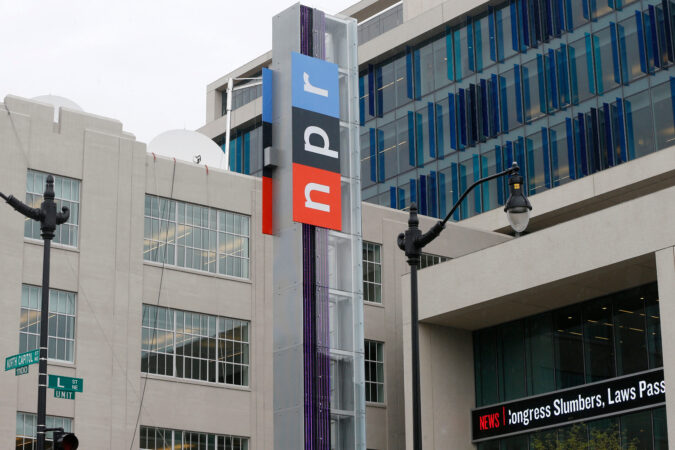
  • Court settlement calls for NPR to get $36 million in government funds to operate U.S. public radio system

    Court settlement calls for NPR to get $36 million in government funds to operate U.S. public radio system

    WASHINGTON — National Public Radio will receive approximately $36 million in grant money to operate the nation’s public radio interconnection system under the terms of a court settlement with the federal government’s steward of funding for public broadcasting stations.

    The settlement, announced late Monday, partially resolves a legal dispute in which NPR accused the Corporation for Public Broadcasting of bowing to pressure from President Donald Trump to cut off its funding.

    On March 25, Trump said at a news conference that he would “love to” defund NPR and PBS because he believes they are biased in favor of Democrats.

    NPR accused the CPB of violating its First Amendment free speech rights when it moved to cut off its access to grant money appropriated by Congress. NPR also claims Trump, a Republican, wants to punish it for the content of its journalism.

    On April 2, the CPB’s board initially approved a three-year, roughly $36 million extension of a grant for NPR to operate the “interconnection” satellite system for public radio. NPR has been operating and managing the Public Radio Satellite System since 1985.

    But corporation officials reversed course and announced that the federal funds would go to a entity called Public Media Infrastructure. NPR claimed the CPB was under mounting pressure from the Trump administration when the agency redirected the money to PMI, a media coalition that didn’t exist and wasn’t statutorily authorized to receive the funds.

    CPB attorneys denied that the agency retaliated against NPR to appease Trump. They had argued that NPR’s claims are factually and legally meritless.

    On May 1, Trump issued an executive order that called for federal agencies to stop funding for NPR and PBS. The settlement doesn’t end a lawsuit in which NPR seeks to block any implementation or enforcement of Trump’s executive order. U.S. District Judge Randolph Moss is scheduled to preside over another hearing for the case on Dec. 4.

    The settlement says NPR and CPB agree that the executive order is unconstitutional and that CPB won’t enforce it unless a court orders it to do so.

    NPR, meanwhile, agreed to drop its request for a court order blocking CPB from disbursing funds to PMI under a separate grant agreement.

    Katherine Maher, NPR’s president and CEO, said the settlement is “a victory for editorial independence and a step toward upholding the First Amendment rights of NPR and the public media system.”

    Patricia Harrison, the corporation’s CEO, said CPB is pleased that the litigation is over “and that our investment in the future through PMI marks an exciting new era for public media.”

    On Aug. 1, CPB announced it would take steps toward closing itself down after being defunded by Congress.

  • FIFA opens second phase of World Cup ticket sales

    FIFA opens second phase of World Cup ticket sales

    FIFA began the process of selling another 1 million tickets for next year’s World Cup on Monday, with the opening of a new ticket draw marking the start of the tournament’s second phase of sales.

    The World Cup will take place this summer in 16 cities across the U.S., Canada, and Mexico, including in Philadelphia, where six matches will be played at Lincoln Financial Field.

    This draw, which runs through 11 a.m. Friday, includes a domestic exclusivity time slot for residents of the three host countries. Fans from those countries, whose entries are selected out of this draw, will have the opportunity to buy single-match tickets for games taking place inside their home nation.

    The phase is open to all fans, regardless of which country they live.

    “We already have seen massive interest from around the world for this tournament, and especially from within the host countries as Canada, Mexico and the United States prepare to host the biggest FIFA World Cup yet,” said Heimo Schirgi, the tournament’s chief operating officer. “This second phase, with its host country domestic exclusivity time slot, will allow us to say ‘thank you’ to these local fans, while ensuring global opportunity as well.”

    Those fans from the U.S, Canada and Mexico who enter the draw before it closes Friday have a chance to receive, through what FIFA says is a randomized process, a time slot during which they can buy tickets starting on Nov. 12. Those slots will be issued through Nov. 15. Fans who win those chances will receive word at least 48 hours before their time slot opens.

    Residents of the three host countries — the U.S., Canada and Mexico, in that order — purchased more tickets than those from any other nation in the initial phase of ticketing. England, Germany, Brazil, Spain, Colombia, Argentina and France, in that order, rounded out the top 10.

    Once the domestic exclusivity time slot ends, more fans will be eligible to obtain a purchasing slot starting on Nov. 17. Additional tickets will be made available in subsequent phases, FIFA said.

    FIFA announced earlier this month that more than 1 million tickets have already been sold for next year’s World Cup, with people from 212 countries and territories having already purchased. So far, 28 of the 48 spots for teams in the field have been filled.

    The start of ticket sales doesn’t take away from how there are unique questions for consumers heading into the tournament, particularly about how they’ll get visas, if necessary, to visit the U.S. as the country cracks down on immigration. An international friendly match between defending World Cup champion Argentina — featuring Lionel Messi — and Puerto Rico was moved from Chicago to Fort Lauderdale, Fla., because of lagging ticket sales that some believe were in response to the immigration crackdown.

    Based on the listed stadium attendance figures, there are roughly 7.1 million seats to fill for the 104 matches for the tournament around 16 North American venues. It is unknown how many of those seats will be available for sale to the public.

    Ticket data has shown that the lowest-priced seats — set at $60 — were available for at least 40 matches. Almost all seats for the vast majority of matches were set at a much higher price. The opening match for the U.S., to be played at Inglewood, Calif., had prices ranging from $560 to $2,735 when sales opened. On the resale site, at least one ticket for that opening U.S. match on June 12 was listed for more than $60,000 earlier this month.

    Fans with the option to purchase could choose seats in one of four categories; Category 1 is what FIFA officials call the best seats, Category 4 is somewhere around the tops of stadiums. Ticket costs are expected to fluctuate as soccer’s biggest event utilizes dynamic pricing for the first time.

  • OpenAI launches Atlas web browser to compete with Google Chrome

    OpenAI launches Atlas web browser to compete with Google Chrome

    OpenAI introduced its own web browser, Atlas, on Tuesday, putting the ChatGPT maker in direct competition with Google as more internet users rely on artificial intelligence to answer their questions.

    Making its popular AI chatbot a gateway to online searches could allow OpenAI, the world’s most valuable startup, to pull in more internet traffic and the revenue made from digital advertising. It could also further cut off the lifeblood of online publishers if ChatGPT so effectively feeds people summarized information that they stop exploring the internet and clicking on traditional web links.

    OpenAI has said ChatGPT already has more than 800 million users but many of them get it for free. The San Francisco-based company also sells paid subscriptions but is losing more money than it makes and has been looking for ways to turn a profit.

    OpenAI said Atlas launches Tuesday on Apple laptops and will later come to Microsoft’s Windows, Apple’s iOS phone operating system and Google’s Android phone system.

    OpenAI CEO Sam Altman called it a “rare, once-a-decade opportunity to rethink what a browser can be about and how to use one.”

    But analyst Paddy Harrington of market research group Forrester said it will be a big challenge “competing with a giant who has ridiculous market share.”

    OpenAI’s browser is coming out just a few months after one of its executives testified that the company would be interested in buying Google’s industry-leading Chrome browser if a federal judge had required it to be sold to prevent the abuses that resulted in Google’s ubiquitous search engine being declared an illegal monopoly.

    But U.S. District Judge Amit Mehta last month issued a decision that rejected the Chrome sale sought by the U.S. Justice Department in the monopoly case, partly because he believed advances in the AI industry already are reshaping the competitive landscape.

    OpenAI’s browser will face a daunting challenge against Chrome, which has amassed about 3 billion worldwide users and has been adding some AI features from Google’s Gemini technology.

    Chrome’s immense success could provide a blueprint for OpenAI as it enters the browser market. When Google released Chrome in 2008, Microsoft’s Internet Explorer was so dominant that few observers believed a new browser could mount a formidable threat.

    But Chrome quickly won over legions of admirers by loading webpages more quickly than Internet Explorer while offering other advantages that enabled it to upend the market. Microsoft ended up abandoning Explorer and introducing its Edge browser, which operates similarly to Chrome and holds a distant third place in market share behind Apple’s Safari.

    Perplexity, another smaller AI startup, rolled out its own Comet browser earlier this year. It also expressed interest in buying Chrome and eventually submitted an unsolicited $34.5 billion offer for the browser that hit a dead end when Mehta decided against a Google breakup.

    Altman said he expects a chatbot interface to replace a traditional browser’s URL bar as the center of how he hopes people will use the internet in the future.

    “Tabs were great, but we haven’t seen a lot of browser innovation since then,” he said on a video presentation aired Tuesday.

    A premium feature of the ChatGPT Atlas browser is an “agent mode” that accesses the laptop and effectively clicks around the internet on the person’s behalf, armed with a users’ browser history and what they are seeking to learn and explaining its process as it searches.

    “It’s using the internet for you,” Altman said.

    Harrington, the Forrester analyst, says another way of thinking about that is it’s “taking personality away from you.”

    “Your profile will be personally attuned to you based on all the information sucked up about you. OK, scary,” Harrington said. “But is it really you, really what you’re thinking, or what that engine decides it’s going to do? … And will it add in preferred solutions based on ads?”

    About 60% of Americans overall — and 74% of those under 30 — use AI to find information at least some of the time, making online searches one of the most popular uses of AI technology, according to findings from an Associated Press-NORC Center for Public Affairs Research poll taken over the summer.

    Google since last year has automatically provided AI-generated responses that attempt to answer a person’s search query, appearing at the top of results.

    Reliance on AI chatbots to summarize information they collect online has raised a number of concerns, including the technology’s propensity to confidently spout false information, a problem known as hallucination.

    The way that chatbots trained on online content spout new writings has been particularly troubling to the news industry, leading The New York Times and other outlets to sue OpenAI for copyright infringement and others, including The Associated Press, to sign licensing deals.

    A study of four top AI assistants including ChatGPT and Google’s Gemini released Wednesday showed nearly half their responses were flawed and fell short of the standards of “high-quality” journalism.

    The research from the European Broadcasting Union, a group of public broadcasters in 56 countries, compiled the results of more than 3,000 responses to news-related questions to help ascertain quality responses and identify problems to fix.