Category: Entertainment Wires

  • Four smart moves to cut your 2025 tax bill under new rules

    Four smart moves to cut your 2025 tax bill under new rules

    The One Big Beautiful Bill Act made some long-awaited permanent changes to the tax code. It also introduced short-term tax breaks that come with strict limits and phaseouts, and many of them are only available through 2028 or 2029. Here are four ways to get the most out of the OBBBA’s temporary provisions as you file your 2025 taxes and plan ahead.

    Don’t dismiss itemizing your deductions

    The OBBBA temporarily boosts the state and local tax deduction cap, or SALT, from $10,000 to $40,000 (for married couples filing jointly and single filers). This higher cap applies from 2025 through 2029.

    Run the numbers: For 2025, the standard deduction is $31,500 for married couples and $15,750 for singles. If your total itemized deductions — including mortgage interest, charitable giving, and state and local taxes (up to the new $40,000 cap) — add up to more than your standard deduction, you should itemize.

    Watch your income: The new $40,000 SALT cap isn’t for everyone. It begins to phase out if your modified adjusted gross income is over $500,000 (for all filers). If your MAGI reaches $600,000, your SALT deduction reverts to the original $10,000 limit.

    Maximize the new targeted deductions — if you qualify

    The OBBBA introduced several temporary above-the-line deductions (available whether you itemize or not) to help middle-income workers. But they have very strict income and benefit limits.

    The qualified overtime pay deduction: Capped at $25,000 for married couples filing jointly and $12,500 for singles. Only the extra “half-time” portion of your time-and-a-half pay qualifies for the deduction. For a married couple, this benefit begins to disappear if your MAGI hits $300,000 and is entirely gone once your MAGI reaches $550,000.

    The qualified tips income deduction: Allows you to write off qualified tip income up to $25,000 per tax return, whether you file as married or single. The deduction is only available for tips that are formally reported on a Form W-2 or Form 1099. It phases out sharply for higher earners, starting at a MAGI of $300,000 for married couples and $150,000 for singles, and is fully eliminated at $550,000 and $400,000, respectively.

    The auto loan interest deduction: This temporary deduction allows you to write off up to $10,000 of interest paid on a loan for a new, personal-use vehicle with final assembly in the United States. (Leases are excluded.) It starts to phase out at $200,000 for married couples and $100,000 for singles and is completely gone by $250,000 and $150,000.

    Seniors, time your 2026 Roth conversions carefully

    If you are 65 or older, the OBBBA offers a new, temporary deduction for seniors of up to $12,000 for married couples ($6,000 per eligible spouse) and $6,000 for single filers. This is a welcome tax break, but it’s fragile.

    Beware the MAGI trap: This deduction begins to disappear for married couples with a MAGI over $150,000 and for singles over $75,000.

    Model Roth conversions for 2026: If you are a senior who is close to the $150,000 MAGI limit, a Roth conversion done in 2026 could push your income over the threshold, causing you to lose this entire $12,000 deduction. Work with your adviser to model any planned 2026 conversions.

    Optimize income to qualify for the best breaks

    Many of the OBBBA’s most valuable, temporary provisions are income-sensitive, particularly those new targeted deductions and the elevated SALT cap. Keep these rules in mind for 2025 filing and 2026 tax planning.

    If you are nearing any of the income phaseouts (like the $300,000 for tips/overtime, or the $500,000 for the elevated SALT cap), consider deferring income until 2026. This might include:

    • Postponing the sale of highly appreciated stock to avoid a large capital gain.
    • Delaying the exercise of nonqualified stock options.
    • Maximizing your 401(k) and health savings account contributions to reduce your current-year MAGI.
    • Holding off on large Roth conversions.

    A proactive approach to these expiring OBBBA provisions is essential for year-end. Don’t let the technical limitations and phaseouts catch you by surprise. With a little planning now, you can lock in significant tax savings.

    This article was provided to the Associated Press by Morningstar. For more personal finance content, go to https://www.morningstar.com/personal-finance.

    Sheryl Rowling, CPA, is an editorial director, financial adviser for Morningstar.

  • What to know about student loan repayment plans and collections

    What to know about student loan repayment plans and collections

    NEW YORK — It’s been a confusing time for people with student loans. Collections restarted, then were put on hold. At the same time, borrowers had to stay on top of changes to key forgiveness plans.

    Last year, the long-contested SAVE plan introduced by the Biden administration ended with a settlement agreement. President Donald Trump’s “Big Beautiful Bill” introduced new borrowing limits for graduates and raised challenges to the Public Service Loan Forgiveness program. While several changes for student loan borrowers will take effect this summer, other key questions remain unresolved.

    More than 5 million Americans were in default on their federal student loans as of September, according to the Education Department. Millions are behind on loan payments and at risk of default this year.

    Borrowers “genuinely struggle to afford their loans and then to hear that the administration is making it more expensive and taking away some of the tools and resources that help folks afford their loans is really, it’s panic-inducing,” said Winston Berkman-Breen, legal director at Protect Borrowers.

    Last month, the Education Department announced that it would delay involuntary collections for student loan borrowers in default until the department finalizes its new loan repayment plans. The date for this is still unclear.

    If you’re a student loan borrower, here are some key things to know.

    If you were enrolled in the SAVE plan

    The SAVE plan was a repayment plan with some of the most lenient terms ever. Soon after its launch it was challenged in court, leaving millions of student loan borrowers in limbo. Last December, the Education Department announced a settlement agreement to end the SAVE plan. What is next for borrowers who were enrolled in this repayment plan is yet to be determined.

    “Seven and a half million borrowers who are currently enrolled in SAVE need to be moved to another plan,” Berkman-Breen said.

    As part of the agreement, the Education Department says it will not enroll new borrowers, will deny pending applications, and will move all current SAVE borrowers into other repayment plans.

    The Education Department is expected to develop a plan for borrowers to transition from the SAVE plan, yet borrowers should be proactive about enrolling in other repayment plans, said Kate Wood, a lending expert at NerdWallet.

    If you are looking to enroll in an income-driven repayment plan

    Borrowers can apply for the following income-driven plans: the Income-Based Repayment Plan, the Pay as You Earn plan, and the Income-Contingent Repayment plan.

    “They all have similar criteria, and they function similarly. Your payment is set as a percentage of your income, not how much you owe, so it’s usually a lower payment,” Berkman-Breen said.

    The payment amount under income-driven plans is a percentage of your discretionary income, and the percentage varies depending on the plan. Since many people are looking to switch plans, some applications to income-driven repayment plans might take longer to process, said Jill Desjean, director of policy analysis at the National Association of Student Financial Aid Administrators.

    You can find out which repayment plan might work best for you by logging on to the Education Department’s loan simulator at studentaid.gov/loan-simulator/.

    If you’re working toward your Public Service Loan Forgiveness

    There are no changes to the Public Service Loan Forgiveness Program yet. Last year, the Trump administration announced plans to change the eligibility requirements for participating nonprofits.

    The policy seeks to disqualify nonprofit workers if their work is deemed to have “substantial illegal purpose.” The Trump administration said it’s necessary to block taxpayer money from lawbreakers, while critics say it turns the program into a tool of political retribution.

    The proposal says illegal activity includes the trafficking or “chemical castration” of children, illegal immigration, and supporting foreign terrorist organizations. This move could cut off some teachers, doctors, and other public workers from federal loan cancellation.

    “This is something that obviously is very stressful, very nerve-wracking for a lot of people, but given that we don’t know exactly how this is going to be enforced, how these terms are going to be defined, it’s not really something that you can try to plan ahead for now,” Wood said.

    While this policy is currently being challenged by 20 Democrat-led states, it’s expected to take effect in July. In the meantime, Wood recommends that borrowers enrolled in the PSLF program continue making payments.

    If your student loans are in default

    Involuntary collections on federal student loans will remain on hold. The Trump administration announced earlier this month that it is delaying plans to withhold pay from student loan borrowers who default on their payments.

    Federal student loan borrowers can have their wages garnished and their federal tax refunds withheld if they default on their loans. Borrowers are considered in default when they are at least 270 days behind on payments.

    If your student loans are in default, you can contact your loan holder to apply for a loan rehabilitation program.

    “They essentially come up with a payment plan where you’re making a reduced payment,” Woods. “After five successful payments on that rehabilitation plan, wage garnishment will cease.”

    If you’re planning to attend graduate school

    Trump’s “Big Beautiful Bill” has changed the amount graduate students can borrow from federal student loans. Graduate students could previously borrow loans up to the cost of their degree; the new rules cap the amount depending on whether the degree is considered a graduate or a professional program.

    Wood said that if you’re starting a new program and taking out a loan after July 1, you will be subject to the new loan limits.

    Under the new plan, students in professional programs would be able to borrow up to $50,000 per year and up to $200,000 in total. Other graduate students, such as those pursuing nursing and physical therapy, would be limited to $20,500 a year and up to $100,000 total.

    The Education Department is defining the following fields as professional programs: pharmacy, dentistry, veterinary medicine, chiropractic, law, medicine, optometry, osteopathic medicine, podiatry and theology.

    If you want to consolidate your loan

    The online application for loan consolidation is available at studentaid.gov/loan-consolidation. If you have multiple federal student loans, you can combine them into a single loan with a fixed interest rate and a single monthly payment.

    The consolidation process typically takes around 60 days to complete. You can only consolidate your loans once.

  • L.A. Olympics leader Wasserman will sell talent agency in wake of Epstein emails discovery

    L.A. Olympics leader Wasserman will sell talent agency in wake of Epstein emails discovery

    LOS ANGELES — Casey Wasserman, the chairperson of the 2028 Los Angeles Olympics organizing committee, is selling his eponymous talent agency in the wake of the release of emails between himself and Ghislaine Maxwell.

    Wasserman’s emails with Maxwell were revealed by his appearance in recently released government files on Jeffrey Epstein. Wasserman, whose agency represents some of the top pop music artists in the world, has not been accused of any wrongdoing.

    The recently released documents revealed that in 2003 he swapped flirtatious emails with Maxwell, who would years later be accused of helping Epstein recruit and sexually abuse his victims. Wasserman said in a Friday evening memo to his staff that he has begun the process of selling the company, according to a company spokesperson who provided the memo to the Associated Press.

    Wasserman’s memo to staff said that he felt he had become a distraction to the company’s work.

    “During this time, Mike Watts will assume day-to-day control of the business while I devote my full attention to delivering Los Angeles an Olympic Games in 2028 that is worthy of this outstanding city,” the memo stated.

    The memo arrived days after the LA28 board’s executive committee met to discuss Wasserman’s appearance in the Epstein files. The committee said it and an outside legal firm conducted a review of Wasserman’s interactions with Epstein and Maxwell with Wasserman’s full cooperation.

    The committee said in a statement: “We found Mr. Wasserman’s relationship with Epstein and Maxwell did not go beyond what has already been publicly documented.” The statement also said Wasserman “should continue to lead LA28 and deliver a safe and successful games.”

    Wasserman has said previously that he flew on a humanitarian mission to Africa on Epstein’s private plane at the invitation of the Clinton Foundation in 2002. Exchanges between Wasserman and Maxwell in the files include Wasserman telling Maxwell: “I think of you all the time. So, what do I have to do to see you in a tight leather outfit?”

    His agency, also called Wasserman, has lost clients over the Maxwell emails. Singer Chappell Roan and retired U.S. women’s soccer legend Abby Wambach are among them.

    Wasserman said in his memo to staff that his interactions with Maxwell and Epstein were limited and he regrets the emails.

    “It was years before their criminal conduct came to light, and, in its entirety, consisted of one humanitarian trip to Africa and a handful of emails that I deeply regret sending. And I’m heartbroken that my brief contact with them 23 years ago has caused you, this company, and its clients so much hardship over the past days and weeks,” the memo said.

  • Journalist Don Lemon pleads not guilty to civil rights charges in Minnesota church protest

    Journalist Don Lemon pleads not guilty to civil rights charges in Minnesota church protest

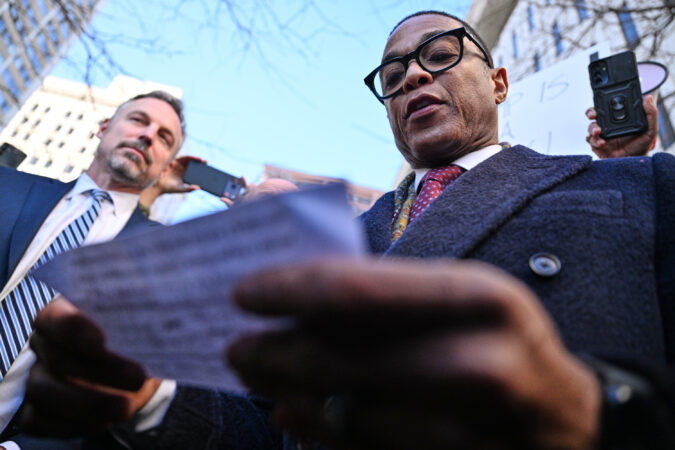
    ST. PAUL, Minn. — Former CNN host turned independent journalist Don Lemon pleaded not guilty to federal civil rights charges Friday, following a protest at a Minnesota church where an Immigration and Customs Enforcement official is a pastor. Four others also pleaded not guilty in the case.

    Lemon insists he was at the Cities Church in St. Paul to chronicle the Jan. 18 protest but was not a participant. The veteran journalist vowed to fight what he called “baseless charges” and protect his free speech rights.

    “For more than 30 years, I’ve been a journalist, and the power and protection of the First Amendment has been the underpinning of my work. The First Amendment, the freedom of the press, are the bedrock of our democracy,” Lemon said outside the courthouse after his arraignment. “And like all of you here in Minnesota, the great people of Minnesota, I will not be intimidated, I will not back down.”

    Dozens of supporters gathered outside the courthouse, chanting “Pam Bondi has got to go” and “Protect the press.”

    ‘We the people have to stand for our rights’

    Civil rights attorney Nekima Levy Armstrong was among the other defendants who pleaded not guilty Friday. The prominent local activist was the subject of a doctored photo posted on official White House social media that falsely showed her crying during her arrest. The picture is part of a deluge of AI-altered imagery that has circulated since the fatal shootings of Renee Good and Alex Pretti by federal officers in Minneapolis amid President Donald Trump’s administration’s immigration crackdown.

    Levy Armstrong echoed Lemon’s defiant words after the hearing.

    “We the people have to stand for our rights. We have to stand for the Constitution. We have to stand for our First Amendment rights to freedom of the speech, some freedom of assembly, and freedom of the press,” she said.

    “Today we have the federal government trying to weaponize the Department of Justice in order to silence us, in order to prevent us from speaking the truth,” Levy Armstrong said. ”They are trying to prevent us from calling out a manifest injustice.”

    All of the defendants have been charged under the FACE Act

    Protesters interrupted a service at the Southern Baptist church last month, chanting “ICE out” and “Justice for Renee Good,” referring to the 37-year-old mother of three who was fatally shot by an ICE officer in Minneapolis.

    In total, nine people have been charged under the 1994 Freedom of Access to Clinic Entrances Act in relation to the church protest. The FACE Act prohibits interference or intimidation of “any person by force, threat of force, or physical obstruction exercising or seeking to exercise the First Amendment right of religious freedom at a place of religious worship.”

    Two more defendants accused in the protest are scheduled for arraignment next week, including another independent journalist, Georgia Fort.

    Penalties can range up to a year in prison and up to a $10,000 fine.

    Attorneys for journalists seek to pierce veil of grand jury secrecy

    Lawyers for Lemon and Fort filed a joint motion with the court Friday seeking transcripts of the normally secret grand jury proceedings that resulted in the indictments against the nine defendants. They maintained that Lemon and Fort were at the church protest in their capacity as journalists covering the story.

    The defense attorneys noted that several judges — including the chief federal judge for Minnesota — found no probable cause to support the complaints that prosecutors first tried to file against the two journalists, so they refused to sign arrest warrants for Lemon or Fort before the government turned to the grand jury.

    They said those refusals raise serious concerns about whether the government made misleading or inaccurate statements of law and/or facts to the grand jury. And they expressed concern that President Donald Trump, Attorney General Pam Bondi and other Justice Department officials put undue pressure on prosecutors to charge them.

    “In the United States of America, we do not prosecute journalists for doing their job. That happens in Russia, China, Iran and other authoritarian regimes. And yet the government sold this unconstitutional mess to the grand jury,” they wrote. “Disclosure of the grand jury proceedings is necessary to ensure the government did not mislead or mis-instruct it.”

    The attorneys also said prosecutors told them they will oppose the motion.

    Protest provoked conservative religious backlash

    Renee Carlson, an attorney with True North Legal, which is representing Cities Church, said in a statement that by pleading not guilty Lemon and others are “doubling down on their claim that the press can do whatever they want under the auspices of journalism.”

    “The First Amendment does not protect premeditated schemes to violate the sanctity of a sanctuary, disrupt worship services, or intimidate children,” Carlson said. “There is no ‘press pass’ to trespass on church property or conspire to invade religious worship.”

    The church protest drew sharp complaints from conservative religious and political leaders. White House press secretary Karoline Leavitt warned in a social media post at the time: “President Trump will not tolerate the intimidation and harassment of Christians in their sacred places of worship.” Even clergy who oppose the administration’s immigration enforcement tactics expressed discomfort.

    Former federal prosecutor is part of Lemon’s legal team

    One of Lemon’s attorneys who was in court Friday is Joe Thompson, one of several former prosecutors who have left the Minnesota U.S. Attorney’s Office in recent weeks citing frustration with the Trump administration’s immigration enforcement crackdown in the state and the Justice Department’s response to the killing of Good and Pretti.

    Thompson had led the sprawling investigation of major public program fraud cases for the prosecutors office until he resigned last month. The Trump administration has cited the fraud cases, in which most defendants have come from the state’s large Somali community, as justification for its immigration crackdown.

  • Search for Nancy Guthrie now seeks nearby security videos from the month before she vanished

    Search for Nancy Guthrie now seeks nearby security videos from the month before she vanished

    TUCSON, Ariz. — Investigators in Arizona want residents near Nancy Guthrie ‘s home to share surveillance camera footage of suspicious cars or people they may have noticed in the month before she disappeared.

    The alert went across a 2-mile (3.2-kilometer) radius in neighborhoods close to where the mother of “Today” show host Savannah Guthrie went missing 12 days ago, the Pima County Sheriff’s Department said Thursday.

    It asked for video of “anything neighbors deem out of the ordinary or important to our investigation” since the beginning of January.

    Federal and local officers have been going door-to-door in Tucson neighborhoods around 84-year-old Nancy Guthrie’s house while also looking for clues around her other daughter’s nearby home, which she had visited just hours before disappearing.

    Investigators have recovered and are analyzing several pieces of evidence, including a pair of gloves, the sheriff’s department said.

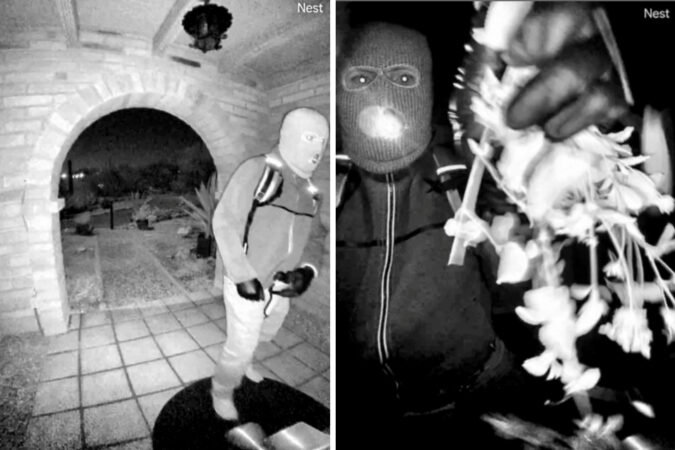
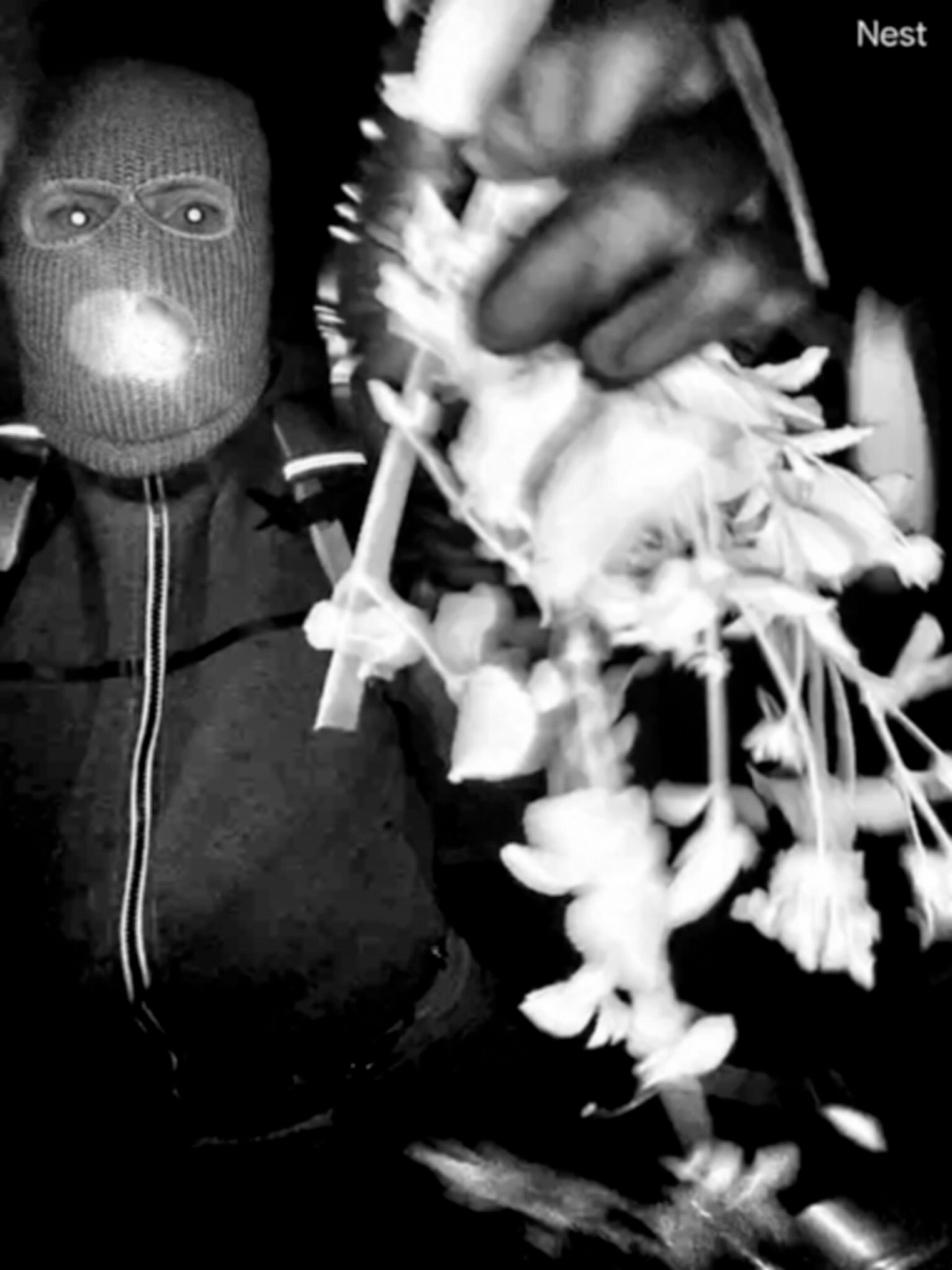
    Authorities on Thursday briefly put up a tent in front of Nancy Guthrie’s entryway where her blood was discovered in the early days of the investigation, and where a doorbell camera captured images of a masked person the night she went missing. The FBI released descriptors of that person Thursday, whom it now calls a suspect, in a post on X.

    The post describes the suspect as a 5-foot-9-inch or 5-foot-10-inch male with an average build, and included photos from multiple angles of a black, 25-liter “Ozark Trail Hiker Pack” backpack, which the agency said is the brand and model the suspect was wearing.

    “We hope this updated description will help concentrate the public tips we are receiving,” the FBI said, noting the thousands of tips it has gotten since Nancy Guthrie’s disappearance.

    FBI Phoenix also announced it has hiked its reward to $100,000 for information on Guthrie’s disappearance.

    Authorities have said Guthrie was taken against her will. She’s been missing since Feb. 1, and authorities say she takes several medications and there’s concern she could die without them.

    While much of the nation remains engrossed by the mysterious disappearance, Savannah Guthrie on Thursday shared on Instagram a vintage home video of her mom with two children sharing pink flowers, writing “we will never give up on her. thank you for your prayers and hope.”

    On Wednesday, FBI agents carrying water bottles to beat the desert heat walked among rocks and vegetation at Nancy Guthrie’s home. They also fanned out across a nearby neighborhood, knocking on doors and searching through cactuses, brush and boulders.

    “They were just asking some general questions wondering if there was anything, any information we could shed on the Nancy Guthrie issue. Wanted to look around the property and after that, cameras and such,” Ann Adams, a neighbor of Nancy Guthrie’s oldest daughter, Annie Guthrie, told The Associated Press on Wednesday.

    “They did ask specifically for the 31st of January and the morning of the first of February and then they wanted to know if we saw anything suspicious on cameras since then,” Adams said.

    Several hundred detectives and agents are now assigned to the investigation, which is expanding in the area, the Pima County Sheriff’s Department said.

    Two investigators emerged from daughter Annie Guthrie’s home Wednesday with a paper grocery sack and a white trash bag. One, still wearing blue protective gloves, also took a stack of mail from the roadside mailbox.

    Adams, the neighbor, said she was out walking her dog earlier this week when, “it started to get really busy and then I heard about them searching, looked down the street, I saw them slowly moving this way.”

    Savannah Guthrie and her two siblings have indicated a willingness to pay a ransom. But it’s not known whether ransom notes demanding money with deadlines that have already passed were authentic.

  • FBI combs desert terrain for clues in Nancy Guthrie’s disappearance

    FBI combs desert terrain for clues in Nancy Guthrie’s disappearance

    TUCSON, Ariz. — Fresh surveillance images from Nancy Guthrie’s porch the night she went missing, coupled with intense police activity across Arizona and the detention of a man had raised hopes that authorities were nearing a major break.

    But then the man was released after questioning, leaving it unclear Wednesday where the investigation stood into last week’s disappearance of Guthrie, the 84-year-old mother of “Today” show host Savannah Guthrie.

    FBI agents carrying water bottles to beat the 80-degree F (26.7-degree C) heat walked among rocks and desert vegetation at Guthrie’s Tucson-area home. They also fanned out across a neighborhood about a mile (1.6 kilometers) away, knocking on doors and searching through cactuses, bushes and boulders.

    Several hundred detectives and agents are now assigned to the investigation, which is expanding in the area, the Pima County Sheriff’s Department said.

    In a nearby neighborhood, two investigators emerged from daughter Annie Guthrie’s home with a paper grocery sack and a white trash bag. One, still wearing blue protective gloves, also took a stack of mail from the roadside mailbox. They drove away without speaking to reporters.

    Barb Dutrow, who was jogging through a neighborhood where teams were searching, said an FBI agent told her they were looking for anything that might have been tossed from a car. Dutrow, who was visiting from Louisiana for a convention, said she “can’t imagine the feeling of the family of having their mother taken.”

    A day earlier, authorities said they had stopped a man near the U.S.-Mexico border, just hours after the FBI released videos of a person wearing a gun holster, ski mask and backpack and approaching Nancy Guthrie’s home in Tucson. The man told media outlets early Wednesday that he was released after several hours and had nothing to do with Guthrie’s disappearance last week.

    Authorities have not said what led them to stop the man Tuesday but confirmed he was released. The sheriff’s department said its deputies and FBI agents also searched a location in Rio Rico, a city south of Tucson where the man lives.

    It was the latest twist in an investigation that has gripped the nation since Nancy Guthrie disappeared on Feb. 1. Until Tuesday, it seemed authorities were making little headway in determining what happened to her or finding who was responsible.

    The black and white images released by the FBI showing a masked person trying to cover a doorbell camera on Guthrie’s porch marked the first significant break in the case. But the images did not show what happened to her or help determine whether she is still alive.

    FBI Director Kash Patel said investigators spent days trying to find lost, corrupted or inaccessible images.

    Even though the images do not show the person’s face, investigators are hopeful someone will know who was on the porch. More than 4,000 calls came into the Pima County sheriff’s tip line within the past 24 hours, the department said Wednesday afternoon.

    Authorities have said for more than a week that they believe Nancy Guthrie was taken against her will. She was last seen at home Jan. 31 and reported missing the next day. DNA tests showed blood on her porch was hers, authorities said.

    Savannah Guthrie posted the new surveillance images on social media and said the family believes their mother is still alive.

    The longtime NBC host and her two siblings have indicated a willingness to pay a ransom.

    It is not known whether ransom notes demanding money with deadlines that have already passed were authentic, and whether the family has had any contact with whoever took Guthrie.

    TMZ reported it received a message Wednesday from someone claiming to know the kidnapper’s identity and that they unsuccessfully tried to reach Savannah Guthrie’s brother and sister. The person asked for bitcoin in exchange for the information, TMZ said. The FBI did not immediately respond to a message.

    Authorities have said Nancy Guthrie takes several medications and there was concern from the start that she could die without them.

  • James Van Der Beek, the ‘Dawson’s Creek’ star who later mocked his own hunky persona, has died at 48

    James Van Der Beek, the ‘Dawson’s Creek’ star who later mocked his own hunky persona, has died at 48

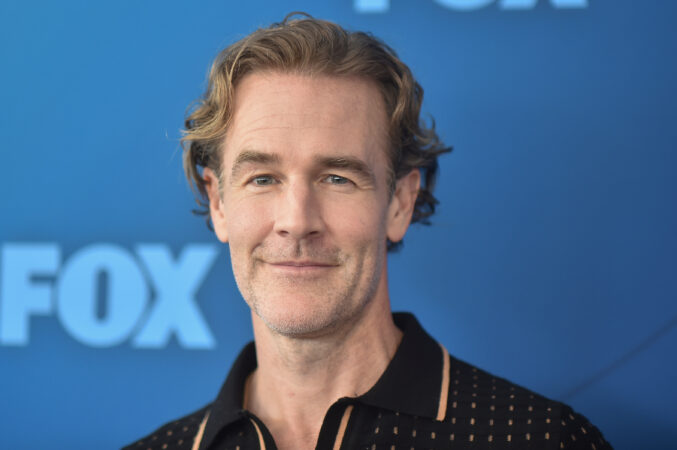
    NEW YORK — James Van Der Beek, a heartthrob who starred in coming-of-age dramas at the dawn of the new millennium, shooting to fame playing the titular character in Dawson’s Creek and in later years mocking his own hunky persona, has died. He was 48.

    “Our beloved James David Van Der Beek passed peacefully this morning. He met his final days with courage, faith, and grace. There is much to share regarding his wishes, love for humanity and the sacredness of time. Those days will come,” the statement read. “For now we ask for peaceful privacy as we grieve our loving husband, father, son, brother, and friend.”

    Mr. Van Der Beek revealed in 2024 that he was being treated for colorectal cancer.

    Mr. Van Der Beek made a surprise video appearance in September at a Dawson’s Creek reunion charity event in New York City after previously dropping out due to illness.

    He appeared projected onstage at the Richard Rodgers Theatre during a live reading of the show’s pilot episode to benefit F Cancer and Mr. Van Der Beek. Lin-Manuel Miranda subbed for him on stage. “Thank you to every single person here,” Mr. Van Der Beek said.

    Forever tied to ‘Dawson’s Creek’

    A one-time theater kid, Mr. Van Der Beek would star in the movie Varsity Blues and on TV in CSI: Cyber as FBI Special Agent Elijah Mundo, but was forever connected to Dawson’s Creek, which ran from 1998 to 2003 on The WB.

    The series followed a high school group of friends as they learned about falling in love, creating real friendships and finding their footing in life. Mr. Van Der Beek, than 20, played 15-year-old Dawson Leery, who aspired to be a director of Steven Spielberg quality.

    Dawson’s Creek, with the moody theme song Paula Cole’s I Don’t Want To Wait, helped define The WB as a haven for teens and young adults who related to its hyper-articulate dialogue and frank talk about sexuality. And it made household names of Mr. Van Der Beek, Joshua Jackson, Katie Holmes and Michelle Williams.

    The show caused a stir when one of the teens embarked on a racy affair with a teacher 20 years his senior and when Holmes’ character climbs through Dawson’s bedroom window and they curl up together. Racier shows like Euphoria and Sex Education owe a debt to Dawson’s Creek.

    Mr. Van Der Beek sometimes struggled to get out from under the shadow of the show but eventually leaned into lampooning himself, like on Funny Or Die videos and on Kesha’s Blow music video, which included his laser gun battle with the pop star in a nightclub and dead unicorns.

    “It’s tough to compete with something that was the cultural phenomenon that Dawson’s Creek was,” he told Vulture in 2013. “It ran for so long. That’s a lot of hours playing one character in front of people. So it’s natural that they associate you with that.”

    A popular GIF and ‘Varsity Blues’

    More than a decade after the show went off the air, a scene at the end of the show’s third season became a GIF. Dawson was watching as his soul mate embarks on a love affair with his best friend and burst into tears.

    “It wasn’t scripted that I was supposed to cry; it was just one of those things where it’s a magical moment and it just happens in the scene,” he told Vanity Fair. He seemed exasperated when he told the Los Angeles Times: “All of a sudden, six years of work was boiled down to one seven-second clip on loop.” (Mr. Van Der Beek himself recreated the GIF in 2011 for Funny or Die and gave it a second life.)

    While still on Dawson’s Creek, Mr. Van Der Beek hosted Saturday Night Live — the musical guest was Everlast — and landed a plumb role in Varsity Blues, playing a second-string high school quarterback who leaps into the breach when the star suffers an injury.

    Mr. Van Der Beek’s character, Mox, turns out to not be a football fanatic, preferring to read Kurt Vonnegut and yearning for the college education which will allow him to escape the jock mentality of his Texas town. “I don’t want your life,” he screams at one point. Critic Roger Ebert called him “convincing and likable.”

    After ‘Dawson’s Creek’

    Some of his projects after Dawson’s Creek include co-creating and playing Wesley “Diplo” Pentz, a dull but likable music producer in the mockumentary satire on Viceland, What Would Diplo Do? In 2019, he made it to the semifinals of ABC’s Dancing with the Stars and played a balding, out-of-shape ex-boyfriend on How I Met Your Mother.

    “The more you make fun of yourself and don’t try to go for any kind of respect, the more people seem to respect you,” he told Vanity Fair in 2011. “I’ve always been a clown trapped in a leading man’s body.”

    Between 2003 and 2013, he made appearances in shows like Criminal Minds, One Tree Hill, and How I Met Your Mother” He played himself with a crackpot intensity in the Krysten Ritter-led ABC drama Don’t Trust the B— in Apartment 23, and the short-lived CSI spinoff CSI: Cyber and CBS’s Friends With Better Lives.

    He’s also appeared in a number of movies, such as Kevin Smith’s 2001 comedy Jay and Silent Bob Strike Back and its 2019 sequel, Jay and Silent Bob Reboot. He also was in the Bret Easton Ellis adaptation of “The Rules of Attraction” in 2002 opposite Jessica Biel and Kate Bosworth.

    In 2025, he was unmasked as Griffin on The Masked Singer, after singing a cover of John Denver’s Take Me Home, Country Roads, and I Had Some Help by Post Malone and Morgan Wallen.

    Early life as a theater kid

    Mr. Van Der Beek, who was raised in Cheshire, Conn., started acting at 13 after suffering a concussion playing football that prevented him from playing for a year on doctor’s orders. He landed the role of Danny Zuko in his school production of Grease.

    He stuck with theater, landing at 16 in 1994 an off-Broadway role in Finding the Sun by Pulitzer Prize-winner Edward Albee and one of the sons in a revival of Shenandoah at the prestigious Goodspeed Opera House in his home state.

    He earned a scholarship to New Jersey’s Drew University but left school early when he got Dawson’s Creek. In 2024, he returned to campus to accept an honorary degree for his “selfless service and exemplary commitment to the mission of Drew,” the university said.

    Drew University President Hilary Link welcomed Mr. Van Der Beek with a popular quote from his Dawson’s Creek character: “Edge is fleeting,” she said, “but heart lasts forever. So on this morning, we pay tribute to that heart.”

    He is survived by his wife, Kimberly, and six children, Olivia, Joshua, Annabel, Emilia, Gwendolyn and Jeremiah.

  • Kennedy Center head warns staff of cuts and ‘skeletal’ staffing during renovation closure

    Kennedy Center head warns staff of cuts and ‘skeletal’ staffing during renovation closure

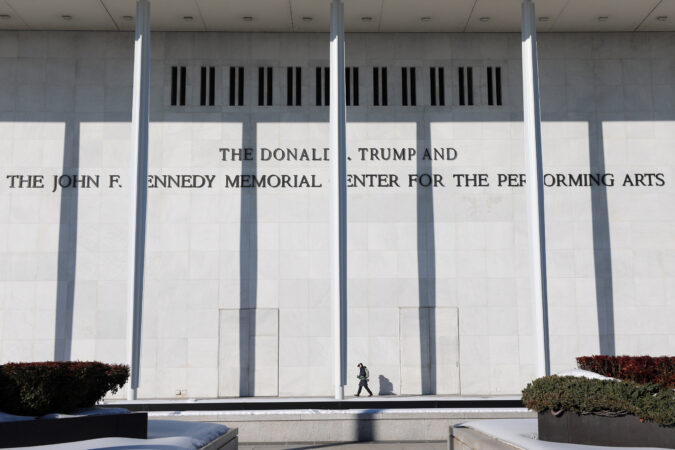
    As the Trump administration prepares to close the Kennedy Center for a two-year renovation, the head of Washington’s performing arts center has warned its staff about impending cuts that will leave “skeletal teams.”

    In a Tuesday memo obtained by The Associated Press, Kennedy Center president Richard Grenell told staff that “departments will obviously function on a much smaller scale with some units totally reduced or on hold until we begin preparations to reopen in 2028,” promising “permanent or temporary adjustments for most everyone.”

    A Kennedy Center spokesperson declined comment Wednesday.

    Over the next few months, he wrote, department heads would be “evaluating the needs and making the decisions as to what these skeletal teams left in place during the facility and closure and construction phase will look like.” Grenell said leadership would “provide as much clarity and advance notice as possible.”

    The Kennedy Center is slated to close in early July. Few details about what the renovations will look like have been released since President Donald Trump announced his plan at the beginning of February. Neither Trump nor Grenell have provided evidence to support claims about the building being in disrepair, and last October, Trump had pledged it would remain open during renovations.

    It’s unclear exactly how many employees the center currently has, but a 2025 tax filing said nearly 2,500 people were employed during the 2023 calendar year. A request for comment sent to Kennedy Center Arts Workers United, which represents artists and arts professionals affiliated with the center — wasn’t immediately returned.

    Leading performers and groups have left or canceled appearances since Trump ousted the center’s leadership a year ago and added his own name to the building in December. The Washington Post, which first reported about Grenell’s memo, has also cited significant drops in ticket revenue that — along with private philanthropy — comprises the center’s operating budget. Officials have yet to say whether such long-running traditions as the Mark Twain Award for comedy or the honors ceremony for lifetime contributions to the arts will continue while the center is closed.

    The Kennedy Center was first conceived as a national cultural facility during the Eisenhower administration, in the 1950s. President John F. Kennedy led a fundraising initiative, and the yet-to-be-built center was named in his honor following his assassination. It opened in 1971 and has become a preeminent showcase for theater, music and dramatic performances, enjoying bipartisan backing until Trump’s return to office last year.

    “This renovation represents a generational investment in our future,” Grenell wrote. “When we reopen, we will do so as a stronger organization — one that honors our legacy while expanding our impact.”

  • A person has been detained for questioning in the disappearance of Nancy Guthrie, AP sources say

    A person has been detained for questioning in the disappearance of Nancy Guthrie, AP sources say

    TUCSON, Ariz. — A person has been detained for questioning in the disappearance of Nancy Guthrie, according to two people familiar with the matter.

    The people said the person was detained in an area south of Tucson on Tuesday. They did not immediately provide additional details, and it wasn’t clear if the person being questioned is the person captured on surveillance video from outside Guthrie’s house released earlier Tuesday.

    The people were not authorized to discuss details of an ongoing investigation and spoke to The Associated Press on condition of anonymity.

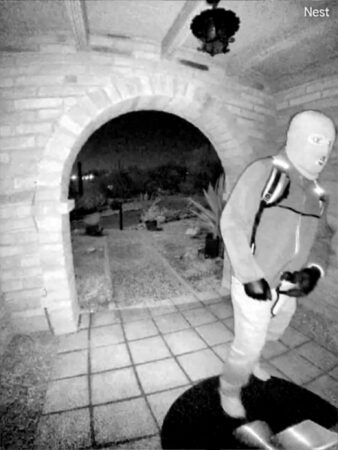
    The FBI released surveillance images of a masked person with a handgun holster outside Guthrie’s front door the night she vanished, offering the first major break in a case that has gripped the nation for more than a week.

    The person wearing a backpack and a ski mask can be seen in one of the videos tilting their head down and away from a doorbell camera while nearing an archway at the home of the mother of “Today” show host Savannah Guthrie.

    The footage shows the person holding a flashlight in their mouth and trying to cover the camera with a gloved hand and part of a plant ripped from Nancy Guthrie’s yard.

    The videos — less than a combined minute in length — gave investigators and the public their first glimpse of who was outside Nancy Guthrie’s home just outside Tucson, but the images did not show what happened to her or help determine whether the 84-year-old is still alive.

    FBI Director Kash Patel said the “armed individual” appeared to “have tampered with the camera.” It was not entirely clear whether there was a gun in the holster.

    The videos were pulled from data on “back-end systems” after investigators spent days trying to find lost, corrupted or inaccessible images, Patel said.

    “This will get the phone ringing for lots of potential leads,” said former FBI agent Katherine Schweit. “Even when you have a person who appears to be completely covered, they’re really not. You can see their girth, the shape of their face, potentially their eyes or mouth.”

    By Tuesday afternoon, authorities were back near Nancy Guthrie’s neighborhood, using vehicles to block her driveway. A few miles away, law enforcement was going door-to-door in the area where daughter Annie Guthrie lives, talking with neighbors as well as walking through a drainage area and examining the inside of a culvert with a flashlight.

    Investigators have said for more than a week that they believe Nancy Guthrie was taken against her will. She was last seen at home Jan. 31 and reported missing the next day. DNA tests showed blood on her porch was hers, authorities said.

    She has high blood pressure and issues with mobility and her heart, and she needs daily medication, officials have said.

    This image provided by the FBI shows surveillance images at the home of Nancy Guthrie the night she went missing in Tucson, Ariz. (FBI via AP)

    Authorities initially could not pull images from camera

    Until now, authorities have released few details, leaving it unclear if ransom notes demanding money with deadlines already passed were authentic, and whether the Guthrie family has had any contact with whoever took Nancy Guthrie.

    Savannah Guthrie posted the new surveillance images on social media Tuesday, saying the family believes Nancy Guthrie is still alive and offering phone numbers for the FBI and county sheriff. Within minutes, the post had thousands of comments.

    Investigators had hoped cameras would turn up evidence right away about how Nancy Guthrie disappeared from her home in an secluded neighborhood.

    But the doorbell camera was disconnected early on Feb. 1. While software recorded movement at the home minutes later, Nancy Guthrie did not have an active subscription, so Pima County Sheriff Chris Nanos had initially said none of the footage could be recovered. Officials continued working to get the footage.

    Savannah Guthrie expressed desperation a day ago

    Heartbreaking messages by Savannah Guthrie and her family shifted from hopeful to bleak as they made pleas for whoever took Nancy Guthrie. In a video just ahead of a purported ransom deadline Monday, Savannah Guthrie appeared alone and spoke directly to the public.

    “We are at an hour of desperation,” she said. “We need your help.”

    Much of the nation is closely following the case involving the longtime anchor of NBC’s morning show.

    White House press secretary Karoline Leavitt said President Donald Trump watched the new surveillance footage and was in “pure disgust,” encouraging anyone with information to call the FBI.

    The FBI this week began posting digital billboards about the case in major cities from Texas to California.

    Connor Hagan, a spokesperson for the FBI, said Monday that the agency was not aware of ongoing communication between Guthrie’s family and any suspected kidnappers. Authorities also had not identified any suspects, he said.

    Videos from Guthrie siblings appealed directly to whoever took their mom

    Three days after the search began, Savannah Guthrie and her two siblings sent their first public appeal to whoever took their mother, saying, “We want to hear from you, and we are ready to listen.”

    In the recorded video, Guthrie said her family was aware of media reports about a ransom letter, but they first wanted proof their mother was alive. “Please reach out to us,” they said.

    The next day, Savannah Guthrie’s brother again made a plea, saying, “Whoever is out there holding our mother, we want to hear from you. We haven’t heard anything directly.”

    Then over the past weekend, the family posted another video — one that was more cryptic and generated even more speculation about Nancy Guthrie’s fate.

    “We received your message, and we understand. We beg you now to return our mother to us so that we can celebrate with her,” said Savannah Guthrie, flanked by her siblings. “This is the only way we will have peace. This is very valuable to us, and we will pay.”

  • Somalia welcomes its first bowling alley as the middle class and diaspora returnees grow

    Somalia welcomes its first bowling alley as the middle class and diaspora returnees grow

    MOGADISHU, Somalia — In a city long defined by conflict, Somalia‘s capital of Mogadishu now echoes with the crash of pins at the country’s first modern bowling alley.

    It’s the latest sign of revival in the once-thriving Indian Ocean port shaped by 35 years of civil war and militant bombings. Millions of people were forced to flee what became one of the world’s most dangerous cities. Those who remained avoided public spaces as the al-Qaeda-linked group al-Shabab waged an insurgency against the Somali state.

    In recent years, improved security measures against al-Shabab, an expanded government presence and growing private investment have allowed daily life to reemerge. Cafes line newly reopened streets, beaches draw evening crowds, and traffic congestion, once unimaginable, now clogs key intersections.

    The Feynuus Bowling Center opened last year and draws many locals and Somalis returning from the diaspora, who bring investment and business ideas after years of sending billions of dollars in remittances from abroad.

    On a recent evening, young Somalis gathered in groups, laughing and filming each other on their phones while music played. Many from the diaspora are visiting Mogadishu for the first time in years, or the first time ever.

    “I couldn’t believe Mogadishu has this place,” said Hudoon Abdi, a Somali-Canadian on holiday, as she prepared to take her turn to bowl.

    “I’m enjoying it. Mogadishu is actually safe,” she said, urging others to visit.

    Mogadishu remains vulnerable to militant attacks, however, with security measures like checkpoints and heavily guarded zones part of daily life. Non-Somalis remain largely confined to a compound at the international airport.

    But residents say the ability to gather for recreation signals an important psychological shift. Such venues provide a welcoming environment for a younger generation eager for safe spaces to socialize.

    Abukar Hajji returned from the United Kingdom on holiday after many years away and found the difference between what he imagined and what he experienced eye-opening.

    “When I was flying from the U.K., I believed it was a scary place, like a war-torn country,” he said. “Everyone told me, ‘Good luck,’ but when I came and saw it with my own eyes, I didn’t want to leave.”

    Sadaq Abdurahman, the manager of the bowling center, said the idea for the business emerged from a growing demand among young people for recreational facilities.

    “It has created employment opportunities for at least 40 youths,” he said.

    According to the Somali National Bureau of Statistics, Somalia’s unemployment rate stands at 21.4%.

    The bowling alley has private security guards, bag checks, and surveillance cameras, reflecting the precautions common at public venues in Mogadishu.

    Urban planners and economists say businesses like the bowling alley signal a broader shift in Mogadishu’s recovery, as private sector growth increasingly complements international aid and government-led rebuilding efforts.

    Ahmed Khadar Abdi Jama, a lecturer in economics at the University of Somalia, said innovative businesses are responding to the needs of diaspora returnees and the growing middle class, “which in turn adds to the expected increase in Somalia’s GDP.”

    Outside the bowling alley, traffic hummed and neon signs flickered, other reminders of Mogadishu’s fragile transformation.