Category: Entertainment Wires

  • Comedy trailblazer Tom Dreesen, Sinatra’s longtime opening act, dies at 86

    Comedy trailblazer Tom Dreesen, Sinatra’s longtime opening act, dies at 86

    LOS ANGELES — Tom Dreesen, who along with partner Tim Reid formed one of America’s first interracial stand-up comedy duos and later spent years as Frank Sinatra’s opening act, died Wednesday. He was 86.

    Dreesen died at his home in Los Angeles, according to publicist Lori De Waal. A cause of death was not provided.

    After meeting in Chicago, Dreesen and Reid, who was Black, formed “Tim and Tom” in 1969. Against a backdrop of simmering racial tension, they used humor to address social issues and promote understanding between audiences of different backgrounds. They worked together until the mid-1970s. Reid went on to solo success playing DJ Venus Flytrap on the popular TV sitcom WKRP in Cincinnati, where Dreesen was a guest star.

    “When I was a kid I found an album he and his comedy partner did called Tim and Tom and took it home and played it and it was one of the albums that changed the course of my life. So great,” comedian and filmmaker Mike Binder wrote on X.

    After splitting with Reid, Dreesen honed a solo comedy act, making over 500 national TV appearances, including 60 visits to The Tonight Show Starring Johnny Carson. He also was a frequent guest and sometime guest host on The Late Show with David Letterman. Their friendship dated to the early 1970s when both worked at the Comedy Store in West Hollywood, Calif.

    Dreesen’s final TV appearance came last week on Comics Unleashed with Byron Allen, which replaced Stephen Colbert’s canceled CBS late-night show.

    Dreesen was Sinatra’s opening act for 14 years and became close with the entertainer.

    “If he loved you, he worshipped the ground you walked on,” Dreesen told the Desert Sun newspaper in 2014. ”In a lot of ways, he was like a father to me. I didn’t have a father that really cared that much where I was and what I did. But Frank would give me advice and counsel, and then he was a buddy in a lot of ways. I thought the world of him.”

    Dressen also toured with Sinatra’s fellow Rat Pack member Sammy Davis Jr., as well as Liza Minnelli, Smokey Robinson, Gladys Knight, and Tony Orlando.

    “He was one of the most brilliant comedians of all time. Tonight, he’ll once again be opening for Dean, Frank and Sammy,” Deana Martin, a daughter of Dean Martin, posted on X.

    In 2008, Dreesen co-wrote the book Tim and Tom: An American Comedy Act in Black and White and in 2020 he authored his memoir.

    Dreesen acted in such TV shows as Columbo, Murder, She Wrote, and Touched by an Angel. His film roles included Spaceballs, Man on the Moon, and Trouble With the Curve, as well as the HBO movies The Rat Pack and Lansky.

    Dreesen was active in charitable work, motivational speaking, and veterans’ causes, including serving as ambassador for the Gary Sinise Foundation.

    “America lost one of our great comedians and patriots, and I lost a dear friend,” Sinise posted on X.

    He was born on Sept. 11, 1939, in Chicago and raised as one of eight children in suburban Harvey. He enlisted in the U.S. Navy at age 17 and after getting out in 1960 he returned home to work a series of jobs, including selling insurance.

    Dreesen is survived by daughters Amy and Jennifer from his marriage to Maryellen Subock, which ended in divorce in 1984, as well as seven grandchildren. He was preceded in death by his son Tommy.

  • Actor James Tolkan of ‘Top Gun’ and ‘Back to the Future’ fame dies at 94

    Actor James Tolkan of ‘Top Gun’ and ‘Back to the Future’ fame dies at 94

    Actor James Tolkan, known for his roles as a cigar-chomping naval commander in Top Gun and a gruff high school administrator in Back to the Future, has died. He was 94.

    Mr. Tolkan died Thursday in Lake Placid, N.Y., where he lived, his booking agent, John Alcantar, said Saturday. A brief obituary published on the “Back to the Future” website said Mr. Tolkan died “peacefully,” but no cause of death was given.

    In Back to the Future, Mr. Tolkan portrayed the bow tie-wearing vice principal Gerald Strickland, who eyeballed students for trouble in the halls of the fictitious Hill Valley High School — in particular Marty McFly, played by Michael J. Fox.

    “You got a real attitude problem, McFly,” Mr. Tolkan’s character says in the 1985 film. “You’re a slacker. You remind me of your father when he went here. He was a slacker, too.”

    Mr. Tolkan also appeared in Top Gun as commanding officer Tom “Stinger” Jardian. Near the end of the film, when Jardian asks Tom Cruise’s character, Capt. Pete “Maverick” Mitchell, about his choice for future duty, Mitchell replies that he wants to be a Top Gun instructor.

    “God help us,” Mr. Tolkan’s character replies, laughing.

    Born in Calumet, Mich., Mr. Tolkan graduated from high school in Arizona and served in the Navy during the Korean War. He eventually made his way to New York, where he spent a quarter century acting in theater roles. He was a member of the original ensemble cast of Glengarry Glen Ross.

    Mr. Tolkan is survived by his wife of 54 years, Parmelee Welles, who said in a statement that her husband also was an avid art collector and adored animals.

  • Major historical documents start journey across U.S. as part of nation’s 250th anniversary celebration

    Major historical documents start journey across U.S. as part of nation’s 250th anniversary celebration

    Some of the United States’ most important historical documents are embarking on a first-of-its kind journey as part of the country’s 250th anniversary commemoration.

    Typically housed in highly controlled vaults under the watch of preservation experts at the National Archives, documents such as the 1783 Treaty of Paris that formally ended the Revolutionary War and the 1774 Articles of Association that urged colonists to boycott British goods are rarely moved.

    But those documents, signed by George Washington, John Adams, Benjamin Franklin, and other American revolutionary leaders, will be making their way across the country and put on display for free at local museums.

    “It’s tangible history, and tangible history inspires,” said Jim Byron, senior adviser to the acting archivist of the United States. “These documents have not traveled, and they’ve certainly not traveled collectively, ever. They are here in vaults.”

    The Boeing 737 “Freedom Plane” transporting the documents is just one of many events and activities planned across the country to mark America’s forthcoming 250th anniversary celebrating the signing of the Declaration of Independence on July 4, 1776, in Philadelphia. A congressionally chartered commission, America 250, and a separate White House-led initiative, called Freedom 250, are both coordinating events, an overlap that has faced some criticism in Washington.

    Among the planned activities are a fleet of mobile museums driving across the country, a story collection initiative, and a Great American State Fair on the National Mall in Washington. President Donald Trump has even announced plans for a “Patriot Games” sporting event featuring high school athletes and a UFC mixed-martial arts fight at the White House.

    The “Freedom Plane” departed Ronald Reagan Washington National Airport on Monday en route to its first stop in Kansas City, Mo., where the documents are being transferred to the National WWI Museum and Memorial. The records include a rare original engraving of the Declaration of Independence printed in 1823 from a copperplate of the original; the Oaths of Allegiance, signed in 1778 by George Washington, Alexander Hamilton, and other officers of the Continental Army; and a rare draft copy of the U.S. Constitution that includes handwritten notes by the delegates.

    Other planned stops will be in Atlanta, Los Angeles, Houston, Denver, Miami, the Detroit suburb of Dearborn, and Seattle.

    “The reality that these documents are leaving D.C. and coming to the heartland is fantastic,” said Matt Naylor, president and CEO of the National World War I Museum and Memorial, where they will be on display for a little over two weeks starting Friday. “There’s a lot of excitement about that and a lot of talk in and around the city about what that means.”

    Naylor said the early response has been overwhelming. Local schools have already booked visits for more than 5,000 schoolchildren.

    “That’s indicating that there’s a lot of enthusiasm for this,” he said.

    The “Freedom Plane” tour was inspired in part by the “American Freedom Train” that toured 48 states in 1975 and 1976 as part of the country’s Bicentennial celebration. It carried various pieces of American history, including the original Louisiana Purchase documents, Judy Garland’s dress from The Wizard of Oz, and Jesse Owens’ gold medals from the 1936 Olympic Games.

  • Vatican removes salty white film coating Michelangelo’s ‘The Last Judgment’

    Vatican removes salty white film coating Michelangelo’s ‘The Last Judgment’

    VATICAN CITY — Michelangelo’s The Last Judgement is getting a facial, with restorers removing a chalky white film of salt that has accumulated over the Renaissance masterpiece since its last major renovation three decades ago.

    The Vatican on Saturday gave the media a sneak peak to the cleaning operation, which is taking place on a floor-to-ceiling scaffolding that has obscured the imposing fresco of heaven and hell that dominates the front of the Sistine Chapel.

    The cleaning operation is expected to be completed by Easter, in the first week of April. The public can continue to visit in the meantime, but will have to settle for a reproduction of The Last Judgment superimposed on a screen that covers the scaffolding.

    Vatican Museum officials on Saturday described a simple but important cleaning operation to remove the white film of salt that has accumulated on the fresco thanks to the nearly 25,000 people who pass through the Vatican Museums each day.

    “This salt is created because, above all, when we sweat, we emit lactic acid, and unfortunately lactic acid reacts with the calcium carbonate present on the wall,” said Fabio Moresi, in charge of the scientific research team at the Vatican Museums that is overseeing the cleaning.

    Climate change also has a role to play, since the visitors who do come tend to sweat more, creating even more humidity that reacts with the fresco, he said.

    Vatican Museums chief Barbara Jatta described the film as a “cataract” that is easy enough to remove: Restorers dip sheets of Japanese rice paper into distilled water and apply them to the fresco, and carefully wipe away the salt film.

    Viewed up close on Saturday on the scaffolding, the difference between before and after is remarkable: Sections of the fresco that haven’t been cleaned look as if they are coated in a chalky dust; the cleaned sections show the vibrant colors and detail of the original. On the figure of Jesus, for example, at the center of the fresco, a privileged visitor can see how Michelangelo painted his hair and the wounds of his crucifixion.

    The Sistine Chapel is named after Pope Sixtus IV, an art patron who oversaw the construction of the main papal chapel in the 15th century.

    But it was a later pontiff, Pope Julius II, who commissioned Michelangelo to paint the famous ceiling, the Creation of Adam showing God’s outstretched hand, between 1508 and 1512. A later pontiff, Pope Clement VII, commissioned Michelangelo in 1533 to return to paint The Last Judgment.

    The other frescos of the Sistine Chapel, where Pope Leo XIV was elected in May, undergo yearly cleaning with restorers working at night on cherry-pickers that can be removed each morning before the public arrives.

    But such machines can’t access all of The Last Judgement because the fresco is located behind the altar, which is itself raised up on marble steps. That logistical impediment required the mounting of a fixed scaffolding to access the full fresco to clean it.

    The Sistine Chapel underwent a complete restoration between 1979 and 1999, when centuries of smoke, grime, and wax buildup was removed. The Vatican has left small patches of the pre-restored fresco intact to show the difference, which are now visible on the upper floors of the scaffolding and show a nearly blackened wall.

    Rather than radically reduce the number of visitors who can access the Sistine Chapel, the Vatican is studying ways to address humidity levels, through filtration systems and other technologies, so that the salty film doesn’t form again.

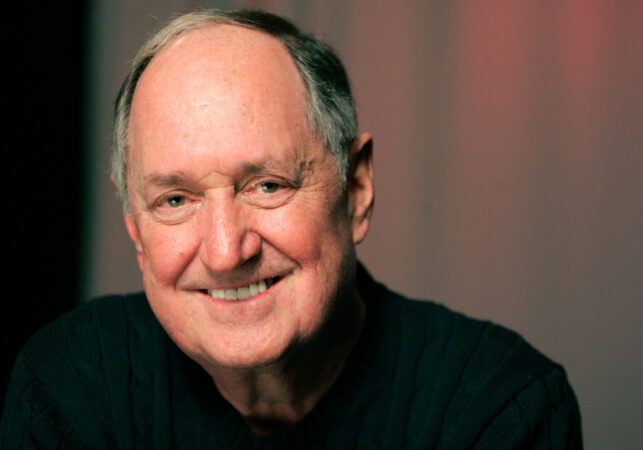
  • Neil Sedaka, the singer-songwriter behind dozens of hits of the 1960s and ’70s, has died at 86

    Neil Sedaka, the singer-songwriter behind dozens of hits of the 1960s and ’70s, has died at 86

    NEW YORK — Neil Sedaka, the hitmaking singer-songwriter whose boyish soprano and bright melodies made him a top act in the early years of rock and roll and led to a second run of success in the 1970s, has died.

    Mr. Sedaka, whose hits included “Breaking Up Is Hard to Do” and “Laughter in the Rain,” died Friday at age 86.

    “Our family is devastated by the sudden passing of our beloved husband, father and grandfather, Neil Sedaka,” his family said in a statement. “A true rock and roll legend, an inspiration to millions, but most importantly, at least to those of us who were lucky enough to know him, an incredible human being who will be deeply missed.”

    No other details of his death were immediately available.

    A key member of the Brill Building songwriting factory, Mr. Sedaka teamed with lyricist and boyhood neighbor Howard Greenfield on songs that reflected the teen innocence of the post-Elvis, pre-Beatles era of the late 1950 and early 1960s, including “Happy Birthday Sweet Sixteen,” “Calendar Girl,” and “Oh! Carol,” a lament for his high school sweetheart, Carole King.

    After a long dry spell, he reemerged with such smashes as “Laughter in the Rain” and “Bad Blood.” The Captain & Tennille’s cover of his “Love Will Keep Us Together” was a chart-topper in 1975.

    Short and dark-haired, with a big smile and high-pitched voice, he was a Juilliard-trained, Brooklyn-born son of a Jewish taxi driver who began performing as a teen and kept at it for decades.

    Mr. Sedaka still played dozens of concerts a year well into his 80s. He retained the enthusiasm and broad vocal range of his youth and never tired of the standards he had sung hundreds of times.

    “Past 70, Pavarotti told me the vocal cords are not what they used to be. I’m very fortunate that my voice has held,” he told the Associated Press in 2012. “It’s nice to be a legend, but it’s better to be a working legend.”

    Mr. Sedaka’s songs sold millions worldwide and have been covered by a range of performers, from Elvis Presley and Frank Sinatra to The 5th Dimension and Nickelback. Mr. Sedaka helped propel the career of Connie Francis with “Stupid Cupid” and “Where the Boys Are,” the latter for the soundtrack of the movie with the same name. The Captain & Tennille received a best-album Grammy thanks largely to “Love Will Keep Us Together” and included a nod to Mr. Sedaka at the end of the song, when Toni Tennille exclaimed “Sedaka’s back!”

    Growing up in Brooklyn, loving performing

    Mr. Sedaka grew up in Brooklyn’s Brighton Beach neighborhood, pampered by his grandparents, aunts, and mother in a two-bedroom apartment he shared with 11 relatives. He has a street there named in his honor, Neil Sedaka Way.

    But his music compensated for his unpopularity as a kid, he once recalled. His talent was recognized by a second-grade teacher who urged his homemaker mother, Eleanor, to buy him a piano. She went to work in a department store to pay for a secondhand upright and managed his career for years, as did his wife, Leba.

    Mr. Sedaka loved songwriting and never quit, but he craved performing.

    “Once a performer, always a performer. It’s that adrenaline rush. It’s like a natural high when you’re in front of an audience, and if you get that standing ovation, it’s infectious,” he told the AP.

    At 16, Mr. Sedaka was chosen by Arthur Rubenstein in a contest as the city’s best high school piano student and performed on a classical radio station as a prize. It was the same year he discovered rock and roll, when he performed a song, “Mr. Moon,” he had written with Greenfield, his classmate at Abraham Lincoln High School.

    “I sang it in the auditorium for a ballyhoo show and I remember there was a bit of a riot. The kids were jumping and screaming,” Mr. Sedaka said. “After that I was able to go into the sweet shop with the tough kids with the leather jackets.”

    After high school, and then Juilliard, Mr. Sedaka and Greenfield were signed to Don Kirshner’s Aldon Music, where they scored their first hit with Francis, “Stupid Cupid.”

    Sedaka churns out hits, until the Beatles

    In 1958, at age 19, Mr. Sedaka signed with RCA Victor Records and his first single, “The Diary,” enjoyed modest success. He began touring and promoting his songs through regular TV appearances on Dick Clark’s American Bandstand and Shindig!

    At the Brill Building, Mr. Sedaka and Greenfield were joined by other up-and-coming writers and lyricists including King, Neil Diamond, and Paul Simon.

    “Neil Sedaka was so talented, and he inspired me to follow my dream of being a songwriter,” King said on her Facebook page Friday. “With love and gratitude and condolences to his family.”

    Micky Dolenz of the Monkees also paid tribute to Mr. Sedaka, saying on Instagram that he was “one of those rare songwriters who could do it all.”

    From 1959 to 1962, Mr. Sedaka had 10 records in the Top 10, including “Calendar Girl,” “Oh! Carol,” “Happy Birthday Sweet Sixteen,” and “Next Door to an Angel.” But in the mid-1960s, the Brill Building sound, influenced by the doo-wop groups of the New York City streets, was pushed off the charts by the Beatles -led British Invasion and the psychedelic and protest music that followed. Mr. Sedaka would endure 13 years “in the wilderness,” as he described it to the AP.

    Sedaka’s unlikely comeback, with help from Elton John

    Mr. Sedaka was among the lucky, however, enjoying a renaissance that began in the mid-’70s thanks to the patronage of Elton John, whom he met at a party after Mr. Sedaka moved his wife and two kids to England to take advantage of his lingering popularity there. John signed him to his fledgling, U.S.-based Rocket Records label, providing him a chance at more hits with the album Sedaka’s Back.

    At Rocket, Mr. Sedaka and a new writing partner, Philip Cody, topped charts with “Bad Blood” and the joyous “Laughter in the Rain.” He also achieved a rare feat with “Breaking Up Is Hard to Do.” His original up-tempo version went No. 1 in 1962. He rerecorded it as a slow ballad in 1975 and that, too, went No. 1.

    He recorded five albums from 1972 to 1976. They included hits “Standing on the Inside,” “That’s Where the Music Takes Me,” and “Our Last Song Together,” about his breakup with Greenfield, with whom he began writing songs when Mr. Sedaka was only 13 and Greenfield 16.

    He was inducted into the Songwriters Hall of Fame, but the Rock & Roll Hall of Fame eluded him despite a fan petition drive.

    Mr. Sedaka married wife Leba in 1962. They had two children. Daughter Dara recorded a duet with dad in 1980, “Should’ve Never Let You Go.” It was a hit, but she never joined him in the music business. Son Marc is a film and television writer.


  • Penguin Press founder Ann Godoff, a powerhouse editor of bestsellers and prizewinners, dies at 76

    Penguin Press founder Ann Godoff, a powerhouse editor of bestsellers and prizewinners, dies at 76

    NEW YORK — Ann Godoff, a leading book publisher for more than 30 years with an eye for timely and timeless works from Alexander Hamilton and Midnight in the Garden of Good and Evil to current bestsellers by Gisèle Pelicot and California Gov. Gavin Newsom, has died. She was 76.

    Ms. Godoff died of cancer Tuesday in Albany, N.Y., according to a statement from Penguin Press, which she had founded in 2003.

    “Ann’s impact on American book culture over the past four decades is incalculable,” Penguin Press publisher Scott Moyers said in a statement. “An editor of immense range in fiction, nonfiction, and poetry, Ann shepherded into print innumerable New York Times bestsellers, multiple winners of every major award, and works that have appeared on all manner of best books lists — of the year, the decade, and the century.”

    A onetime NYU film student who studied under then-faculty member Martin Scorsese, sold cars and assisted on Dr. Joyce Brothers’ television show, Ms. Godoff was a late bloomer who didn’t begin her publishing career until her early 30s and soon revealed uncommon gifts for spotting and cultivating talent. As a rising editor at Random House in the 1990s, she published such debut phenomena as John Berendt’s Midnight in the Garden of Good and Evil and Caleb Carr’s The Alienist.

    She also worked with Salman Rushdie, E.L. Doctorow, and Arundhati Roy and had lasting relationships with Michael Pollan and Ron Chernow, whose books with Ms. Godoff have included a Pulitzer Prize-winning biography of George Washington and the Hamilton biography that was the basis for the prizewinning stage musical.

    “Ann supervised me with a rather light touch and never got lost in the details,” Chernow wrote in an email to the Associated Press.

    “She was no less gifted in fashioning a design for the book — everything from the cover art to the paper stock — with a look fully consistent with my portrait of the character,” he added. “Everything was of a piece and that was carried straight through to the marketing and publicity. I always felt myself in the most capable hands.”

    Ms. Godoff was eventually promoted to president and editor-in-chief of Random House, and her stature was so high that when she was forced out in 2003 amid corporate restructuring, her departure set off debates — evergreen in the industry — over the feared decline of literary publishing.

    But Penguin soon signed her up to lead the new Penguin Press imprint. Chernow, Pollan, and other authors moved there with her, and she continued to publish bestsellers and critical favorites, including such Pulitzer Prize winners as Steve Coll’s Ghost Wars and John Lewis Gaddis’ George F. Kennan.

    When Random House and Penguin merged into Penguin Random House in 2013, Ms. Godoff was under the same roof as her old company. Right up to the time of her death, she was shaping the public conversation. Pelicot’s A Hymn to Life recounts her horrifying marriage and how she came to be a leading voice against sexual violence, while Newsom’s Young Man in a Hurry is widely seen as a building block for a 2028 presidential run.

    Ms. Godoff was born in 1949 in New York City, grew up in New York and California, and graduated from Bennington College. She started out at Simon & Schuster in the early 1980s as an assistant to Alice Mayhew, the renowned editor of Bob Woodward and Doris Kearns Goodwin among others. After serving as editor-in-chief at Atlantic Monthly Press, Ms. Godoff joined Random House in 1991.

    Her marriage to Malcolm Drummond ended in divorce in 2012 after a long separation. The same year, Godoff married her partner, the writer-photographer Annik LaFarge. Besides LaFarge, her survivors include her brother, Peter Godoff.

    Ms. Godoff was never the outsized personality of such Random House predecessors as Bennett Cerf and Harold Evans. She was regarded by many as serious, hard-working and committed, known for saying “The book will abide.” But she was competitive, and she didn’t mind making news. She paid a reported $8 million for Cold Mountain author Charles Frazier’s next novel, a sum many found excessive at the time, and a comparable amount for a memoir by former Federal Reverse Chairman Alan Greenspan.

    Bestselling author Roger Lowenstein, whose seven books have all been published by Ms. Godoff, wrote in an email to the AP that she was an exacting but precise editor. He remembered a “blistering memo” from her while shaping the manuscript for Ways and Means: Lincoln and His Cabinet and the Financing of the Civil War, a prizewinning history published in 2022. His final draft was 90 pages shorter and he couldn’t think of a “single word” that he regretted being cut.

    “She generally reserved her praise, at least in my case, until the end of the process, often in letters that arrived unexpected in the mail,” he wrote. “Nothing was ever sweeter, because one worked so hard to get there, and because you knew that she meant it.”

  • Daniela Petroff, AP’s longtime fashion and Vatican reporter, has died at 80

    Daniela Petroff, AP’s longtime fashion and Vatican reporter, has died at 80

    ROME — Daniela Petroff, who helped shape the Associated Press’ fashion and Vatican coverage for nearly four decades with style, authority and wit, has died in Rome. She was 80.

    Ms. Petroff died Tuesday at home, where she was recovering from a fall, said her husband, Victor Simpson, the retired AP Rome bureau chief.

    Ms. Petroff worked for the Chicago Tribune and Time magazine in Rome before moving onto the AP as a Vatican reporter and Milan fashion correspondent. She launched what became a mainstay of the AP’s culture report, covering the four weeks of menswear and womenswear each year.

    In 1985, the Simpsons endured an unfathomable tragedy: Their 11-year-old daughter, Natasha, was killed during the Dec. 27, 1985, terrorist attack at Rome’s airport that also wounded their son, Michael. When their youngest daughter, Debbie, was born two years later, Pope John Paul II called to congratulate Ms. Petroff.

    In announcing Ms. Petroff’s death, Simpson wrote that she had gone to sleep after lunch and decided not to wake up, “to finally embrace again her beloved Natasha.”

    Led AP’s Milan fashion coverage

    Fluent in Italian, German, French and English, Ms. Petroff spearheaded AP’s Milan fashion coverage just as Giorgio Armani was becoming an international figure, setting the pace for other reporters with informative, succinct, fact-based dispatches that stayed away from opinion and reviews.

    “She had a gift for putting the facts into kind of a very artful context,” said Lisa Anderson, who covered Milan fashion for the Chicago Tribune for nearly a decade starting in the mid-1980s. “She looked at that industry, which often takes itself too seriously, with a lot of amusement as well as respect, which is probably the right combination of qualities to approach fashion reporting.”

    Ms. Petroff’s last AP byline appeared in September, when her authoritative profile of Armani was published following the designer’s death.

    “Starting with an unlined jacket, a simple pair of pants and an urban palette, Armani put Italian ready-to-wear style on the international fashion map in the late 1970s, creating an instantly recognizable relaxed silhouette that has propelled the fashion house for half a century,” Ms. Petroff wrote.

    She covered the rise of Gianni Versace, Gucci in the Tom Ford era, Karl Lagerfeld at Fendi, and the Missoni fashion dynasty, and often put her fashion knowledge and smart wordsmithing to work on the Vatican beat.

    In one 2014 story about Pope Francis’ new batch of cardinals, she mused: “But with the ‘slum pope’ now calling the sartorial shots, fashionistas and Vaticanistas are wondering how his new cardinals — who hail from some of the poorest places on Earth, including Haiti, Burkina Faso and Ivory Coast — will dress themselves for their new role.”

    In between those assignments, Ms. Petroff covered some of the biggest cultural events in Italy, including the 2003 reopening of Venice’s La Fenice opera house after a devastating fire. “True to its namesake the phoenix, La Fenice has risen up from the ashes,” she wrote at the reopening.

    Early life in Paris, New York

    Born in 1945 in Mecklenburg, Germany, Ms. Petroff grew up first in Paris and then New York, where she attended the all-girl Convent of the Sacred Heart Catholic school. An only child, her parents and she moved to Rome for Ms. Petroff’s final two years of high school, which she completed at Marymount International School.

    After attending Manhattanville College in New York, Ms. Petroff returned to Rome and graduated from La Sapienza University with a degree in modern languages. In Rome, she soon met the new AP news editor, Victor Simpson. They were married in 1973.

    A childhood friend from New York, Gail Willett Bejarano, recalled ice-skating in Central Park, afterschool ice cream at Schraftt’s, and pushing the rules with the nuns at Sacred Heart. While Ms. Petroff was a top student, she was also part of the posse of girls who would go to ogle the boys at nearby Loyola, “hike your uniform up and put lipstick on, all forbidden,” Bejarano recalled.

    After retiring from AP in 2017, Ms. Petroff dedicated herself to her alma mater, Marymount, where she served as chair of the board.

    A private funeral is scheduled Thursday. A memorial service is planned for Monday at Marymount.

    In addition to Simpson, Ms. Petroff is survived by her son, Michael, and daughter, Debbie.

  • Robert Carradine, ‘Revenge of the Nerds’ and ‘Lizzie McGuire’ star, has died at 71

    Robert Carradine, ‘Revenge of the Nerds’ and ‘Lizzie McGuire’ star, has died at 71

    Robert Carradine, the youngest of his prolific Hollywood family and whose biggest hit was the 1984 comedy Revenge of the Nerds, has died at 71.

    In a Tuesday statement, his family said he lived with bipolar disorder for two decades. His brother told Deadline that Mr. Carradine died by suicide.

    “We want people to know it, and there is no shame in it,” Keith Carradine told Deadline. “It is an illness that got the best of him, and I want to celebrate him for his struggle with it, and celebrate his beautiful soul. He was profoundly gifted, and we will miss him every day.”

    Known for both his film and television work, Robert Carradine worked steadily in the industry for over 40 years. Though he collaborated with some of the most respected directors of the day, he never gained the worldwide recognition of his more famous siblings Keith Carradine (also the father of Martha Plimpton) and half brother David Carradine, who died in 2009.

    Robert Carradine, a Los Angeles native and son to character actor John Carradine, was introduced to audiences with roles on the television series Bonanza in 1971 and in the John Wayne western The Cowboys in 1972.

    Despite his family background, acting wasn’t his first calling, though.

    “I always had a passion to be a race car driver, and that’s what I thought I was going to do, and at some penultimate moment … I think I was sitting with my brother David when The Cowboys was being cast, and they were interested in David as the bad guy, and he didn’t want to be the guy that shot John Wayne in the back,” Mr. Carradine recalled in a 2013 interview with Popdose. “But he said, ‘You know, it is called The Cowboys, and they’re meeting all these young guys. Why don’t you go in?’”

    In addition to starring in a short-lived television spinoff of The Cowboys, and appearing alongside David Carradine in his popular ABC series Kung Fu, he would go on to nab roles in Martin Scorsese’s Mean Streets, Hal Ashby’s Vietnam drama Coming Home, and Samuel Fuller’s World War II film The Big Red One.

    The heights of his brother David’s success eluded Robert Carradine, but the two could often be seen in the same projects, including in Walter Hill’s The Long Riders and Paul Bartel’s Cannonball.

    Robert Carradine’s biggest hit would come in 1984 with the off-color comedy Revenge of the Nerds, in which he played head nerd Lewis Skolnick, with his abrupt, infectious, and guttural laugh. He reprised the role for the big-screen sequel and two made-for-television follow-ups, and continued to pay homage to the beloved character with a guest role on the series Robot Chicken and as a co-host (with Revenge of the Nerds co-star Curtis Armstrong) of the pop culture competition show King of the Nerds, which aired for three seasons.

    In the late 1980s and 1990s, according to the family statement, Mr. Carradine realized his racing ambitions and was a driver for Lotus. In the 2000s, Mr. Carradine gained small-screen success in The Disney Channel’s Lizzie McGuire as the eponymous character’s father.

    “It’s really hard to face this reality about an old friend,” Hilary Duff, who played Lizzie McGuire, wrote on Instagram. “There was so much warmth in the McGuire family and I always felt so cared for by my on-screen parents. I’ll be forever grateful for that. I’m deeply sad to learn Bobby was suffering.”

    Work remained consistent even if the projects diminished in prestige and quality. Then Quentin Tarantino, ever the champion of fading character actors, cast Mr. Carradine in Django Unchained as one of the trackers in the 2012 film after seeing a “very furry” photograph, as Mr. Carradine told Popdose.

    In 2015, Mr. Carradine was cited for a Colorado crash that injured him and his wife, Edith Mani. They later divorced, after more than 25 years of marriage.

    Mr. Carradine’s survivors include his three children, actor Ever Carradine, Marika Reed Carradine, and Ian Alexander Carradine.

    “Whenever anyone asks me how I turned out so normal, I always tell them it’s because of my dad. I knew my dad loved me, I knew it deep in my bones, and I always knew he had my back,” Ever Carradine wrote on Instagram. “I think it’s partly because we basically grew up together. Twenty years age difference really isn’t that much, and while I never ever thought of him as a sibling, I did always think of him as my partner. We were in it together.”

    This story includes discussion of suicide. If you or someone you know needs help, the national suicide and crisis lifeline in the U.S. is available by calling or texting 988.

  • Milan Cortina Olympics were the most-watched Winter Games since 2014 with 96% more viewers than Beijing

    Milan Cortina Olympics were the most-watched Winter Games since 2014 with 96% more viewers than Beijing

    The Milan Cortina Olympics averaged 23.5 million viewers in the United States, making them the most-watched Winter Games since 2014 with a 96% larger audience than the Beijing Games four years ago.

    NBCUniversal said the average includes combined audiences on NBC, Peacock, CNBC, USA Network and other digital platforms. It covered the live afternoon (2-5 p.m. EST) and prime-time (8-11 p.m. EST/PST) windows.

    The figures are based on Nielsen’s Big Data + Panel ratings (through Feb. 19), Nielsen’s early figures for the final three days (Feb. 20-22) and digital data from Adobe Analytics.

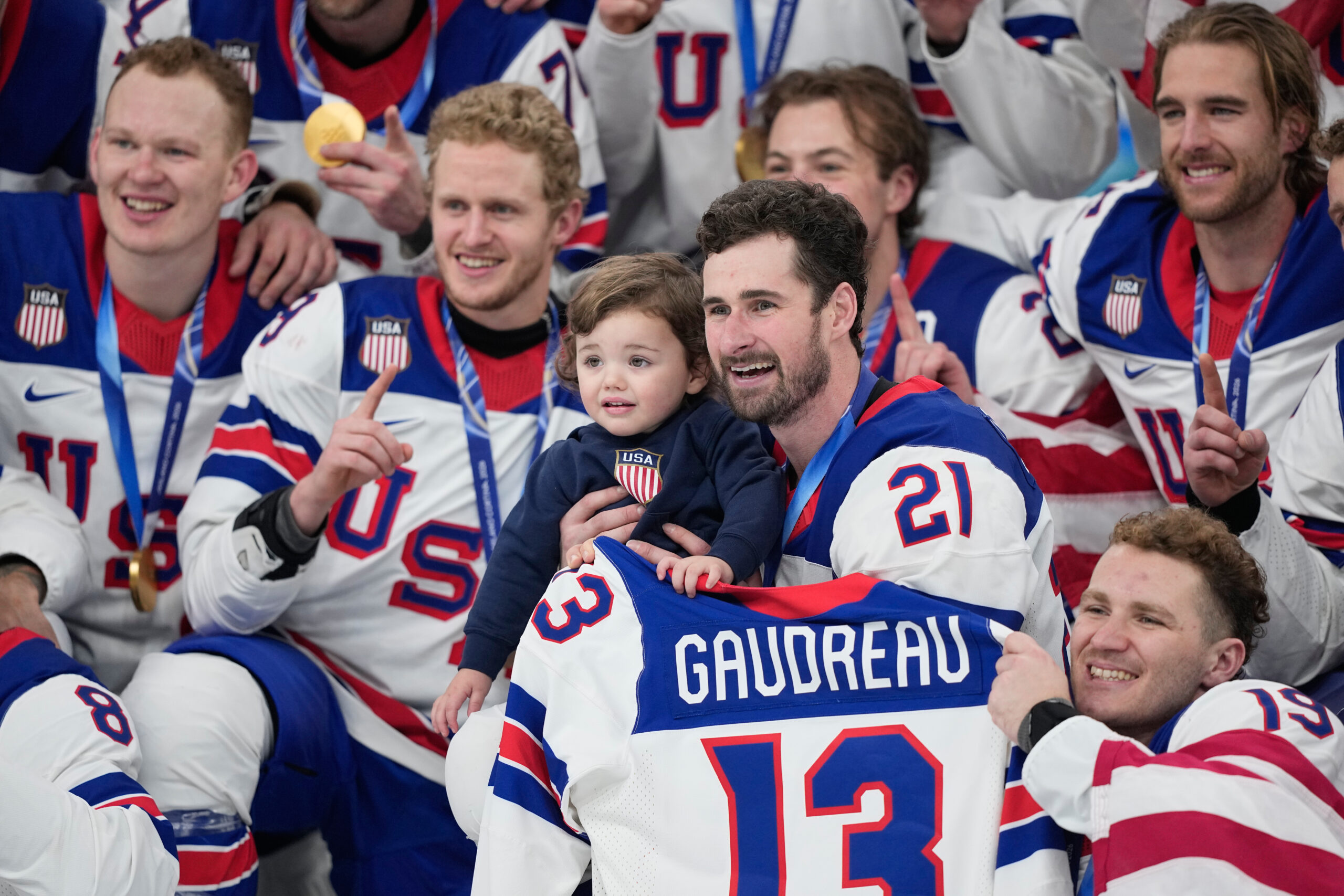
    Viewership numbers for the United States’ 2-1 overtime victory over Canada in men’s hockey on Sunday morning were not expected until Tuesday. The Canadian Broadcasting Corporation said on Monday that 8.7 million were watching in Canada when Jack Hughes scored the golden goal in overtime. The celebration that followed included American players carrying the jersey (and eventually the children) of late South Jersey hockey star Johnny Gaudreau, who was killed along with his brother by an alleged drunk driver while biking near their family home in Salem County.

    “I feel in so many ways that these Winter Olympics exceeded our expectations. We were reminded that the Olympics are the most exciting, unpredictable and biggest stage in sports,” said Molly Solomon, the executive producer of NBC’s Olympics coverage. “And what I think came together in Italy was that the settings were stunningly beautiful, the access we had to the athletes and their lives was unprecedented. And then you take the technology, the first-person view drones, the audio, and it took the audience inside the stories in fresh, meaningful ways.

    “And Team USA, I mean, the results, you’ve seen the numbers for the medals and things. America wants to see how their team’s performing, and it’s the best performance in an overseas Olympics. Everything lived up to the billing, and some of the superstars had riveting, dramatic performances. Not all of them gold, but that’s the Olympics, right?”

    Dylan Larkin (21) holds Johnny, the son of the Johnny Gaudreau while posing with teammates after Team USA beat Canada in overtime to claim its first men’s hockey gold medal since 1980.

    NBC broadcast the Super Bowl, the Olympics, and the NBA All-Star Game in February, the first time a network had all three in one month. It also premiered “Sunday Night Basketball” on Feb. 1.

    According to Nielsen, 215.6 million U.S. viewers tuned in for at least one of those events. Audience reach numbers have been higher under Nielsen’s new rating system since the minimum viewing requirement was reduced from 5 to 3 minutes.

    Super Bowl 60 averaged 125.6 million viewers across NBC, Peacock, and Telemundo, the second-most-watched program in U.S. history. The All-Star Game had its highest audience in 15 years, averaging 8.8 million, and the Lakers-Knicks game on Feb. 1 averaged 4.5 million.

    “I have to say it’s probably better than we expected. This doesn’t happen through luck or happenstance. This happens through just really good planning and then execution across the month. So really happy overall and I don’t think it could have gone better, honestly,” NBC Sports President Rick Cordella said.

  • Rob Reiner’s son pleads not guilty to murder in the killing of his parents

    Rob Reiner’s son pleads not guilty to murder in the killing of his parents

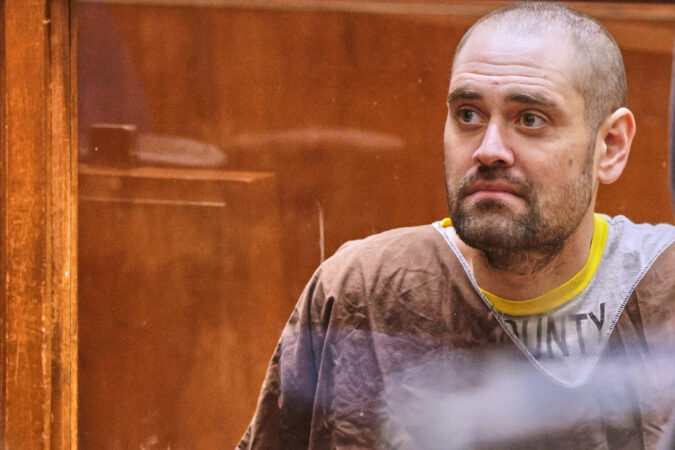
    LOS ANGELES — Nick Reiner, the 32-year-old son of Hollywood luminary Rob Reiner and Michele Singer Reiner, pleaded not guilty Monday to two counts of first-degree murder more than two months after their deaths, denying for the first time that he fatally stabbed his parents.

    Reiner’s attorney, Deputy Public Defender Kimberly Greene, entered the plea on his behalf as he stood behind glass in an enclosed custody area of the packed Los Angeles courtroom.

    The third of Rob Reiner’s four children, Nick Reiner has been held without bail since his arrest hours after beloved actor-director Reiner and photographer and producer Singer were found dead on Dec. 14 at their home in the upscale Brentwood section of Los Angeles.

    Reiner appeared in court with a shaved head and light facial hair, wearing brown jail clothes. He talked to his lawyer briefly through the glass before the judge began the hearing. At one point a low door in the enclosure was opened and they crouched down and spoke face-to-face. During the hearing, he spoke only to answer “yes” when the judge asked if he waived his right for next steps of the case to proceed speedily.

    Reiner was not wearing the suicide prevention smock he wore in his first court appearance in December days after his parent’s killings. It was the third time he had been set to enter a plea, but issues surrounding the high-stakes, closely watched case, including a surprising change in defense lawyers, kept it from happening until Monday.

    The judge told Reiner to return to court April 29 for the scheduling of a preliminary hearing where prosecutors will present evidence and a new judge will decide if it’s enough for Reiner to go to trial.

    The case will now be handled by longtime Los Angeles Superior Court Judge Sam Ohta. He has had many prominent murder, manslaughter, and public corruption cases in his courtroom in recent years, but none have drawn the national media attention this case has.

    District Attorney Nathan Hochman said outside court that his office still hasn’t decided whether it will seek the death penalty for Reiner. Hochman said the death penalty decision “goes through a very rigorous process. We will be looking at all aggravating and mitigating circumstances.”

    Reiner’s not guilty plea is common for criminal defendants at this stage of the case, whatever their longer-term plan might be.

    Reiner’s former attorney, the high-profile private lawyer Alan Jackson, had to quit the case at the previous hearing, citing reasons beyond his and his client’s control that ethics wouldn’t let him reveal. But in parting, he adamantly declared that “pursuant to the laws of California, Nick Reiner is not guilty of murder,” a stance made official by Reiner’s plea Monday.

    Authorities have said nothing about possible motives, and leaks in the case have been virtually nonexistent on both sides, leaving some of the most basic questions about the killing unanswered publicly.

    Rob Reiner, 78, and Michele Singer Reiner, 70, died from “multiple sharp force injuries,” the LA County Medical Examiner said in initial findings. Authorities said they were killed hours before the bodies were discovered. A court order has prevented the public release of more details.

    Deputy District Attorney Habib Balian said Monday that his office is still awaiting the full autopsy report from the medical examiner, but all other evidence has been turned over to the defense.

    Rob Reiner was a prolific director whose work included some of the most memorable and endlessly watchable movies of the 1980s and ’90s. His credits included This is Spinal Tap, Stand By Me, A Few Good Men, and When Harry Met Sally… , during whose production he met photographer Michele Singer and married her soon after.