Category: Entertainment Wires

  • Catherine O’Hara, Emmy-winning comedian of ‘Schitt’s Creek’ and ‘SCTV’ fame, has died at 71

    Catherine O’Hara, Emmy-winning comedian of ‘Schitt’s Creek’ and ‘SCTV’ fame, has died at 71

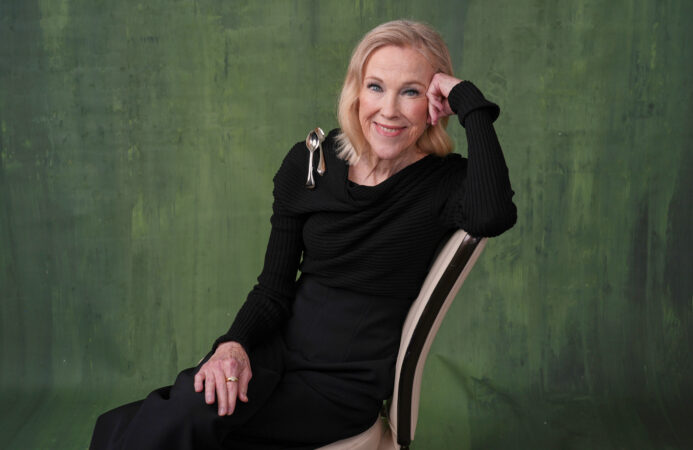
    LOS ANGELES — Catherine O’Hara, a gifted Canadian-born comic actor and SCTV alum who starred as Macaulay Culkin’s harried mother in two Home Alone movies and won an Emmy as the dramatically ditzy wealthy matriarch Moira Rose in Schitt’s Creek, died Friday. She was 71.

    Ms. O’Hara died at her home in Los Angeles “following a brief illness,” according to a statement from her representatives at Creative Artists Agency. Further details were not immediately available.

    Ms. O’Hara’s career was launched with the Second City comedy group in Toronto in the 1970s. It was there that she first worked with Eugene Levy, who would become a lifelong collaborator — and her Schitt’s Creek costar. The two would be among the original cast of the sketch show SCTV, short for “Second City Television.” The series, which began on Canadian TV in the 1970s and aired on NBC in the U.S., spawned a legendary group of esoteric comedians that Ms. O’Hara would work with often, including Martin Short, John Candy, Andrea Martin, Rick Moranis, and Joe Flaherty.

    Ms. O’Hara would win her first Emmy for her writing on the show.
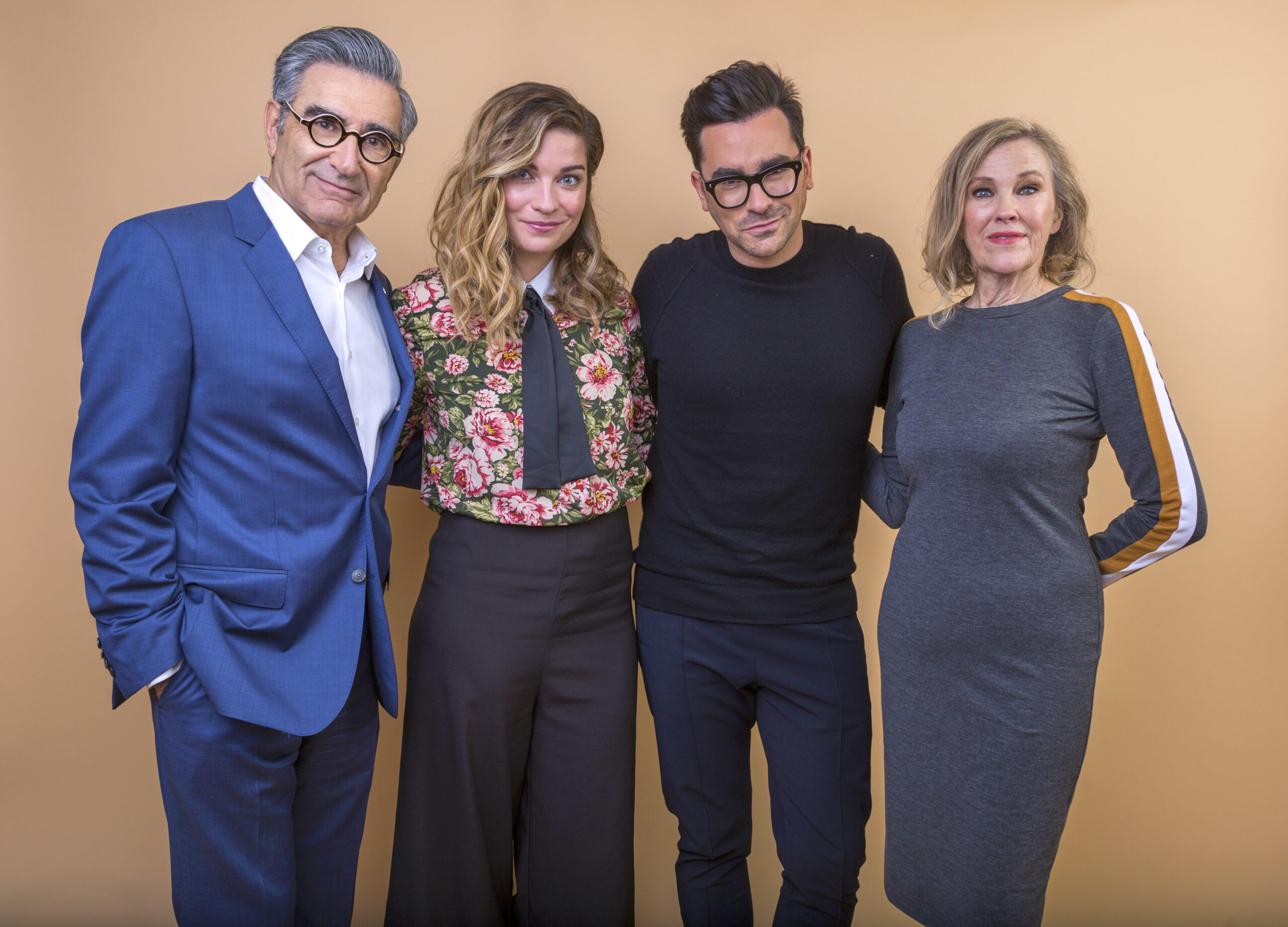
    Eugene Levy (from left), Annie Murphy, Daniel Levy, and Catherine O’Hara, cast members in the series “Schitt’s Creek,” pose for a 2018 portrait.

    Her second, for best actress in a comedy series, came four decades later, for Schitt’s Creek, a career-capping triumph and the perfect personification of her comic talents. The small CBC series created by Levy and his son, Dan, about a wealthy family forced to live in a tiny town would dominate the Emmys in its sixth and final season. It brought Ms. O’Hara, always a beloved figure, a new generation of fans and put her at the center of cultural attention.

    She told the Associated Press that she pictured Moira, a former soap opera star, as someone who had married rich and wanted to “remind everyone that (she was) special, too.” With an exaggerated Mid-Atlantic accent and obscure vocabulary, Moira spoke unlike anyone else, using words like “frippet,” “pettifogging” and “unasinous,” to show her desire to be different, Ms. O’Hara said. To perfect Moira’s voice, Ms. O’Hara would pore through old vocabulary books, “Moira-izing” the dialogue even further than what was already written.

    Ms. O’Hara also won a Golden Globe and two SAG Awards for the role.

    At first, Hollywood didn’t entirely know what to do with Ms. O’Hara and her scattershot style. She played oddball supporting characters in Martin Scorsese’s 1985 After Hours and Tim Burton’s 1988 Beetlejuice — a role she would reprise in the 2024 sequel.

    She played it mostly straight as a horrified mother who accidentally abandoned her child in the two Home Alone movies. The films were among the biggest box office earners of the early 1990s and their Christmas setting made them TV perennials. They allowed her moments of unironic warmth that she didn’t get often.

    Her co-star Culkin was among those paying her tribute Friday.

    “Mama, I thought we had time,” Culkin said on Instagram alongside an image from Home Alone and a recent recreation of the same pose. “I wanted more. I wanted to sit in a chair next to you. I heard you. But I had so much more to say. I love you.”

    Meryl Streep, who worked with O’Hara in Heartburn, said in a statement that she “brought love and light to our world, through whipsmart compassion for the collection of eccentrics she portrayed.”

    Roles in big Hollywood films didn’t follow Home Alone, but Ms. O’Hara would find her groove with the crew of improv pros brought together by Christopher Guest for a series of mockumentaries that began with 1996’s Waiting for Guffman and continued with 2000’s Best in Show, 2003’s A Mighty Wind, and 2006’s For Your Consideration.

    Best in Show was the biggest hit and best-remembered film of the series. She and Levy play married couple Gerry and Cookie Fleck, who take their Norwich terrier to a dog show and constantly run into Cookie’s former lovers along the way.

    “I am devastated,” Guest said in a statement to the AP. “We have lost one of the comic giants of our age.”

    Born and raised in Toronto, Ms. O’Hara was the sixth of seven children in a Catholic family of Irish descent. She graduated from Burnhamthorpe Collegiate Institute, an alternative high school. She joined Second City in her early 20s, as an understudy to Gilda Radner before Radner left for Saturday Night Live. (Ms. O’Hara would briefly be hired for “SNL” but quit before appearing on air.)

    Nearly 50 years later, her final roles would be as Seth Rogen’s reluctant executive mentor and freelance fixer on The Studio and a dramatic turn as therapist to Pedro Pascal and other dystopia survivors on HBO’s The Last of Us. Both earned her Emmy nominations. She would get 10 in her career.

    “Oh, genius to be near you,” Pascal said on Instagram. “Eternally grateful. There is less light in my world.”

    Earlier this month, Rogen shared a photo on Instagram of him and Ms. O’Hara shooting the second season of “The Studio.”

    She is survived by her husband, Bo Welch, a production designer and director who was born in Yardley; sons Matthew and Luke; and siblings Michael O’Hara, Mary Margaret O’Hara, Maureen Jolley, Marcus O‘Hara, Tom O’Hara, and Patricia Wallice.

  • What travelers can expect as Southwest Airlines introduces assigned seats

    What travelers can expect as Southwest Airlines introduces assigned seats

    Southwest Airlines passengers made their final boarding-time scrambles for seats on Monday as the carrier prepared to end the open-seating system that distinguished it from other airlines for more than a half‑century.

    Starting Tuesday, customers on Southwest flights will have assigned seats and the option of paying more to get their preferred seat closer to the front of a plane or seats with extra legroom. The airline began selling tickets shaped by the new policy in July.

    Here’s what travelers can expect as Southwest does away with another of its signature features and becomes more like other airlines:

    Goodbye, A/B/C groups

    Under the open-seat system, Southwest customers could check in starting exactly 24 hours before departure to secure places in boarding lines at departure gates.

    Early check-ins were placed in the coveted “A” boarding group, essentially guaranteeing they would find an open window or aisle seat. Others landed in “B” or “C,” the likelihood of only middle seats being available rising the longer they waited to check in.

    The Dallas-based airline’s unusual seating process began as a way to get passengers on planes quickly and thereby reduce the time that aircraft and crews spent on the ground not making money. It helped Southwest operate more efficiently and to squeeze a few more flights into the daily schedule; the system also was a key reason Southwest remained profitable every year until the coronavirus pandemic.

    The open-seating arrangement became less democratic over time, however, as Southwest also had starting allowing passengers to pay extra for spots near the front of the line.

    Hello, assigned seating

    An eight‑group boarding structure is replacing the find-your-own-seat scrum. Instead of numbered metal columns at departure gates, passengers will file through two alternating lanes once it’s time for their group to board.

    The airline said its gate areas will be converted in phases starting Monday night, a process that could take about two months to complete. Columns that remain standing past Tuesday will have their numbers removed or covered in the meantime.

    Southwest is selling tickets at fares with different seating choices, including standard seats assigned at check‑in or paid preferred and extra‑legroom seats selected at booking. For certain flights, passengers also will have the option of paying for priority boarding beginning 24 hours before departure.

    How it will work

    Newly designed boarding passes will show seat assignments and boarding groups, according to Southwest. A reservation made for nine or fewer people, including families, will assign those passengers to the same boarding group.

    Southwest says the boarding groups are based on seat location, fare class, loyalty tier status, and the airline’s credit card rewards benefits. Passengers who purchase seats with extra legroom will be placed in groups 1-2. Customers with premium fares and the airline’s “most loyal travelers” will also have access to preferential seats and earlier boarding, the carrier said, while those with basic fares will likely be placed in groups 6-8.

    Other changes

    With the switch to assigned seating also comes a revision of the airline’s policy for customers who need extra room. Under the new rule — also effective Tuesday — travelers who do not fit within a single seat’s armrests will be required to purchase an additional seat in advance.

    That represents a change from the airline’s previous policy that allowed passengers the choice to purchase a fully refundable extra seat before arriving at the airport, or request a free one at the gate. Under the updated policy, refunds are still possible but no longer guaranteed and depend on seat availability and fare class.

    In May 2025, Southwest also ended its decades‑old “bags fly free” policy, replacing it with baggage fees for most travelers.

    The changes mark one of the biggest transformations in the airline’s history, as it alters its longstanding customer perks to bring it more in line with the practices of other larger U.S. carriers.

    Why all the change?

    The shift comes amid pressure from investors to increase profitability.

    “We have tremendous opportunity to meet current and future customer needs, attract new customer segments we don’t compete for today, and return to the levels of profitability that both we and our shareholders expect,” Southwest CEO Robert Jordan said last year.

    When the Texas-based airline first announced plans in 2024 to switch to assigned seating, it said studies on seating options showed that customer preferences had changed over the years, with the vast majority of travelers saying they now want to know where they are sitting before they get to the airport.

    Jordan said at the time that open seating was the top reason surveyed travelers cited for choosing another airline over Southwest.

  • Sleep-tracking devices have limits. Experts want users to know what they are

    Sleep-tracking devices have limits. Experts want users to know what they are

    Your watch says you had three hours of deep sleep. Should you believe it?

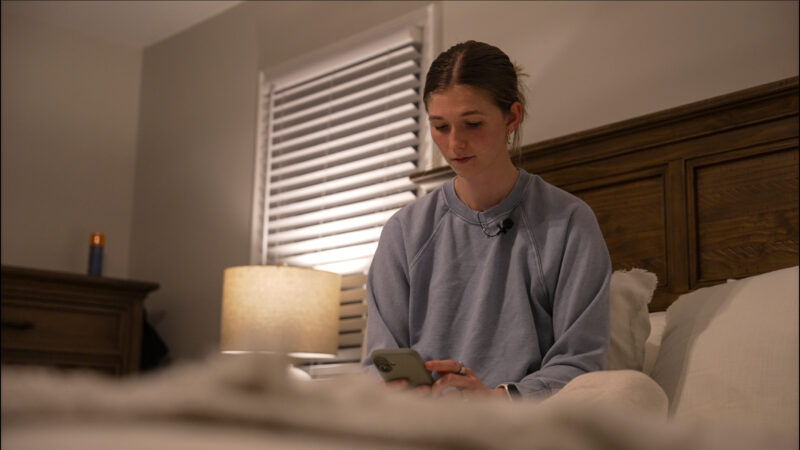
    Millions of people rely on phone apps and wearable devices like rings, smartwatches, and sensors to monitor how well they’re sleeping, but these trackers don’t necessarily measure sleep directly. Instead, they infer states of slumber from signals like heart rate and movement, raising questions about how reliable the information is and how seriously it should be taken.

    The U.S. sleep-tracking devices market generated about $5 billion in 2023 and is expected to double in revenue by 2030, according to market research firm Grand View Research. As the devices continue to gain popularity, experts say it is important to understand what the devices can and cannot tell you, and how their data should be used.

    Here’s a look at the technology — and why one expert thinks its full potential has yet to be realized.

    What your sleep tracker actually measures

    Whether it’s an Apple Watch, a Fitbit, an Oura Ring or one of innumerable other competitors, health and fitness trackers largely take the same basic approach by recording the wearer’s movements and heart rate while at rest, according to Daniel Forger, a University of Michigan math professor who researches the science behind sleep wearables.

    The algorithms used by major brands have become highly accurate for determining when someone is asleep, Forger said. The devices are also somewhat helpful for estimating sleep stages, though an in-lab study would be more precise, he said.

    “If you really want to know definitively how much non-REM sleep you’re having vs. REM sleep, that’s where the in-lab studies really excel,” Forger said.

    The sleep numbers that matter most — and the ones that don’t

    Dr. Chantale Branson, a neurologist and professor at the Morehouse School of Medicine, said she frequently has patients showing up with sleep scores from fitness trackers in hand, sometimes fixated on granular details such as how much REM sleep they got on a certain night.

    Branson says those patients are taking the wrong approach: the devices help highlight trends over time but should not be viewed as a definitive measure of one’s sleep health. Nor should any single night’s data be seen as significant.

    “We would have believed them with or without the device and worked on trying to figure out why they can’t sleep — and that is what the wearables do not do,” she said.

    Branson said she thinks people who check their sleep statistics every morning would be better served by spending their efforts on “sleep hygiene,” including by creating a relaxing bedtime routine, avoiding screens before bed, and making sure their sleep environment is comfortable. She advises those concerned about their sleep to consult a clinician before spending money on a wearable.

    Forger takes a more favorable view toward the devices, which he says help keep the overlooked importance of sleep front of mind. He recommends them even for people without significant sleep issues, saying they can offer insights that help users fine-tune their routines and feel more alert during the day.

    “Seeing if your biological clock is in sync is a huge benefit because even if you’re giving yourself the right amount of time, if you’re sleeping at the wrong times, the sleep won’t be as efficient,” Forger said.

    How sleep data can drive better habits

    Kate Stoye, an Atlanta-area middle school teacher, bought an Oura Ring last summer, having heard positive things from friends who used it as a fertility tracker: “It’s so accurate,” she said. Stoye found the ring to be just as helpful with tracking her sleep. After noticing that the few nights she drank alcohol coincided with poorer sleep quality, she decided to give up alcohol.

    “I don’t see much reason to drink if I know that it’s going to affect how I feel,” said Stoye, who always wears her device except when she is playing tennis or needs to charge it.

    Another trend she says she detected in the ring’s data: the importance of not eating too late if she wants to get good rest.

    “I always struggle with going to bed, and it’s often because I eat late at night,” Stoye said. “I know that about myself, and it knows it too.”

    When sleep tracking becomes a problem

    Mai Barreneche, who works in advertising in New York City, used to wear her Oura Ring constantly. She said it helped her develop good sleep habits and encouraged her to maintain a daily morning exercise regimen. But as a metric-driven person, she became “obsessed” enough with her nightly sleep scores that it began to cause her anxiety — a modern condition that researchers have dubbed “orthosomnia.”

    “I remember I would go to bed thinking about the score I was going to get in the morning,” Barreneche said.

    Barreneche decided not to wear her ring on a beach vacation a few years ago, and when she returned home, she never put it back on. She said she has maintained the good habits the device pointed her toward, but no longer wants the stress of monitoring her nightly scores.

    Branson, of the Morehouse School of Medicine, said she’s observed similar score-induced anxiety as a recurring issue for some patients, particularly those who set goals to achieve a certain amount of REM sleep or who shared their nightly scores with friends using the same device. Comparing sleep types and stages is ill-advised since individual needs vary by age, genetics, and other factors, she said.

    “These devices are supposed to help you,” Branson said. ”And if you feel anxious or worried or frustrated about it, then it’s not helpful, and you should really talk to a professional.”

    The future of wearables

    Forger thinks the promise of wearables has been underestimated, with emerging research suggesting the devices could one day be designed to help detect infections before symptoms appear and to flag sleep pattern changes that may signal the onset of depression or an increased risk of relapse.

    “The body is making these really interesting and really important decisions that we’re not aware of to keep us healthy and active and alert at the right times of day,” he said. “If you have an infection, that rhythm very quickly starts to disappear because the body goes into overdrive to start fighting the infection. Those are the kind of things we can pick up.”

    The technology could be particularly useful in low-resource communities, where wearables could help health issues to be identified more quickly and monitored remotely without requiring access to doctors or specialized clinics, according to Forger.

    “There’s this really important story that’s about to come out: About just how understanding sleep rhythms and sleep architecture is going to generally improve our lives,” he said.

  • ‘One Battle After Another’ leads the pack in nominations for U.K.’s BAFTA film awards

    ‘One Battle After Another’ leads the pack in nominations for U.K.’s BAFTA film awards

    LONDON — Paul Thomas Anderson’s politically charged action thriller “One Battle After Another” leads the race for the British Academy Film Awards, securing 14 nominations Tuesday including acting nods for five of its cast.

    Ryan Coogler’s blues-steeped vampire epic “Sinners” is close behind with 13 nominations for Britain’s equivalent of the Oscars, while Chloé Zhao’s Shakespearean family tragedy “Hamnet” and Josh Safdie’s ping-pong odyssey “Marty Supreme” have 11 apiece.

    Guillermo del Toro’s reimagining of “Frankenstein” and Norwegian family drama ”Sentimental Value” each got eight nominations, rounding out a six-pack of leading contenders for both the British and Hollywood Academy Awards.

    The best film nominees are “One Battle After Another,” “Hamnet,” “Marty Supreme,” “Sinners” and “Sentimental Value.”

    BAFTA Chief Executive Jane Millichip said the nominations recognized “films like ‘One Battle After Another,’ ‘Sinners,’ tackling really big societal issues — the moral ambiguity of activism, Black identity,” alongside films exploring “the most intimate side of family relationships.”

    “They’re all doing it in quite different ways: Strong flavors, really bold storytelling,” she said.

    Best leading actor contenders are Robert Aramayo for playing a man with Tourette’s syndrome in biographical drama “I Swear,” Timothée Chalamet for “Marty Supreme,” Leonardo DiCaprio for “One Battle After Another,” Ethan Hawke for Broadway biopic “Blue Moon,” Michael B. Jordan for “Sinners” and Jesse Plemons for “Bugonia.”

    The leading actress category includes awards-season favorite Jessie Buckley for her performance as Agnes Hathaway, wife of William Shakespeare, in “Hamnet.” She’s up against Rose Byrne for “If I Had Legs I’d Kick You,” Kate Hudson for “Song Sung Blue,” Chase Infiniti for “One Battle After Another,” Renate Reinsve for “Sentimental Value” and Emma Stone for dystopian tragicomedy “Bugonia.”

    “One Battle” actors Teyana Taylor, Benicio del Toro and Sean Penn are all nominated for supporting performances.

    The Associated Press was recognized in the best documentary category with a nomination for Mstyslav Chernov’s harrowing Ukraine war portrait “2000 Meters to Andriivka,” co-produced by the AP and PBS Frontline.

    The winners will be announced at a Feb. 22 ceremony in London hosted by actor Alan Cumming. The U.K. prizes — officially called the EE BAFTA Film Awards — often provide clues about who will triumph at Hollywood’s Academy Awards, held this year on March 15.

    This year, unusually, Oscar nominations were announced first, with “Sinners” securing a record 16 nominations, followed by 13 for “One Battle After Another.”

    The British academy has recognized several performers overlooked by the Oscars, including supporting actor nominees Paul Mescal for “Hamnet” and Odessa A’zion for “Marty Supreme.”

    The BAFTAs also have a distinctly British accent, with a separate category of best British film. Its 10 nominees include “The Ballad of Wallis Island,” “Pillion,” “I Swear” and “Bridget Jones: Mad About the Boy.”

    Most BAFTA winners are chosen by 8,500 members of the U.K. academy of industry professionals, with one – the Rising Star Award – selected by public vote from a shortlist of nominees. This year’s rising star contenders are Infiniti, Aramayo, “Sinners” star Miles Caton and British actors Archie Madekwe and Posy Sterling.

    Like other major movie awards, Britain’s film academy has introduced changes in recent years to increase diversity. In 2020, no women were nominated as best director for the seventh year running, and all 20 nominees in the lead and supporting performer categories were white. The voting process was changed to add a longlist round before the final nominees are selected.

    Zhao is the only female nominee in the best director category, alongside Anderson, Safdie, Cooger, Yorgos Lanthimos for “Bugonia” and Joachim Trier for “Sentimental Value.” Across all categories including documentaries and shorts, 25% of the directing nominees are women.

  • Geoffrey Mason, 85, TV producer of 1972 Munich Olympics hostage crisis

    Geoffrey Mason, 85, TV producer of 1972 Munich Olympics hostage crisis

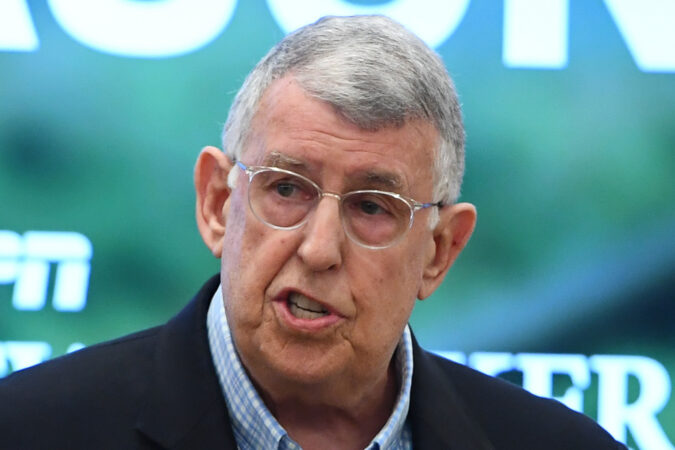
    Geoffrey Mason, who had a five-decade career in sports television and was best known as the coordinating producer for ABC’s coverage of the 1972 Munich Olympic Games hostage crisis, has died. He was 85.

    ESPN said Mr. Mason died Sunday in Naples, Fla. He died of natural causes, according to his family.

    “Geoff was a giant visionary in television, never seeking credit. He preferred leading and mentoring teams, connecting people to projects, and was devoted to people and recovery of all sorts. He was a great teacher and mentor to everyone who came in his orbit,” former ESPN President Steve Bornstein said.

    Over the course of his career, Mr. Mason worked on eight Olympics. As a young producer on Sept. 5, 1972, he was in the control room in Munich, Germany, when the Palestinian militant group Black September stormed the Olympic village and took Israeli Olympic team members hostage.

    ABC provided continuous coverage for 22 hours, culminating in a failed rescue attempt in which six Israeli coaches and five athletes died. Jim McKay broke the news with, “They’re all gone.”

    Mr. Mason was a consultant on the script and every aspect of production for the 2024 feature film September 5, which recreates what it was like in the ABC control room that day. The international broadcast center in Munich was 100 yards away from where the hostage crisis was taking place in the Olympic village.

    The movie recreates the moment when West German police stormed the control room and pointed guns at Mr. Mason’s face. This happened because one of ABC’s cameras was showing a tactical squad taking position on the roof above the hostages. Mr. Mason ended up cutting off the camera’s feed.

    It is estimated that nearly 900 million people worldwide at some point viewed ABC’s coverage.

    “Geoff told me that day there was no chance to think. Their singular goal was to stay on the air to keep the story going, to do their job as sports broadcasters,” said John Magaro, who played Mr. Mason, in 2025. “Once the clock starts ticking, there’s no chance to think.”

    Mr. Mason’s career was largely spent with ABC and ESPN, but he also worked for NBC, Fox, NFL Network, and other television entities. He began as a production associate at ABC Sports in 1967, working on Wide World of Sports and the 1968 Winter and Summer Olympics. Over the years, he earned 24 Emmy Awards and was inducted into the Sports Broadcasting Hall of Fame in 2010.

    He also worked on Super Bowl 25, Monday Night Football, the World Series, horse racing’s Triple Crown, the Indianapolis 500, and the FIFA Men’s and Women’s World Cup tournaments.

    He is also known for his coverage of the 1986-87 America’s Cup from Fremantle, Australia.

    “Geoff Mason was a friend and a colleague who had a storied career, touching just about every corner of the sports television industry,” said Bob Iger, CEO of the Walt Disney Company, which owns ABC and ESPN. “He had a passion for the business, which was evidenced in his prodigious work ethic and the constant love and enthusiasm he exhibited on everything he worked on.”

    Mr. Mason was selected by Jim Valvano as a founding board member of the V Foundation for Cancer Research and was a longtime board member of the Hazelden Betty Ford Foundation. He delivered a eulogy during Betty Ford’s funeral in 2011.

    “Geoffrey was a force of nature in our industry for six decades, but more important is all the help he gave to so many people through his association with the Betty Ford Center. He changed so many lives personally and professionally,” said former CBS Sports chairperson Sean McManus, who worked with Mr. Mason at both ABC and NBC.

    Mr. Mason was a veteran of the U.S. Navy and graduated from Duke University with a bachelor of arts degree in sociology in 1963. Survivors include wife Chris, son Geoff Jr., and brother David.

  • TikTok finalizes a deal to form a new American entity

    TikTok finalizes a deal to form a new American entity

    TikTok has finalized a deal to create a new American entity, avoiding the looming threat of a ban in the United States that has been in discussion for years on the platform now used by more than 200 million Americans.

    The social video platform company signed agreements with major investors including Oracle, Silver Lake, and the Emirati investment firm MGX to form the new TikTok U.S. joint venture. The new version will operate under “defined safeguards that protect national security through comprehensive data protections, algorithm security, content moderation and software assurances for U.S. users,” the company said in a statement Thursday. American TikTok users can continue using the same app.

    President Donald Trump praised the deal in a Truth Social post, thanking Chinese leader Xi Jinping specifically “for working with us and, ultimately, approving the Deal.” Trump add that he hopes “that long into the future I will be remembered by those who use and love TikTok.”

    Adam Presser, who previously worked as TikTok’s head of operations and trust and safety, will lead the new venture as its CEO. He will work alongside a seven-member, majority-American board of directors that includes TikTok’s CEO Shou Chew.

    The deal ends years of uncertainty about the fate of the popular video-sharing platform in the United States. After wide bipartisan majorities in Congress passed — and President Joe Biden signed — a law that would ban TikTok in the U.S. if it did not find a new owner in the place of China’s ByteDance, the platform was set to go dark on the law’s January 2025 deadline. For a several hours, it did. But on his first day in office, President Donald Trump signed an executive order to keep it running while his administration sought an agreement for the sale of the company.

    “China’s position on TikTok has been consistent and clear,” Guo Jiakun, a Chinese Foreign Ministry spokesperson in Beijing, said Friday about the TikTok deal and Trump’s Truth Social post, echoing an earlier statement from the Chinese embassy in Washington.

    Apart from an emphasis on data protection, with U.S. user data being stored locally in a system run by Oracle, the joint venture will also focus on TikTok’s algorithm. The content recommendation formula, which feeds users specific videos tailored to their preferences and interests, will be retrained, tested and updated on U.S. user data, the company said in its announcement.

    The algorithm has been a central issue in the security debate over TikTok. China previously maintained the algorithm must remain under Chinese control by law. But the U.S. regulation passed with bipartisan support said any divestment of TikTok must mean the platform cuts ties — specifically the algorithm — with ByteDance. Under the terms of this deal, ByteDance would license the algorithm to the U.S. entity for retraining.

    The law prohibits “any cooperation with respect to the operation of a content recommendation algorithm” between ByteDance and a new potential American ownership group, so it is unclear how ByteDance’s continued involvement in this arrangement will play out.

    “Who controls TikTok in the U.S. has a lot of sway over what Americans see on the app,” said Anupam Chander, a professor of law and technology at Georgetown University.

    Oracle, Silver Lake, and MGX are the three managing investors, each holding a 15% share. Other investors include the investment firm of Michael Dell, the billionaire founder of Dell Technologies. ByteDance retains 19.9% of the joint venture.

  • ‘Sinners’ makes Oscars history with 16 nominations

    ‘Sinners’ makes Oscars history with 16 nominations

    Ryan Coogler’s blues-steeped vampire epic Sinners led all films with 16 nominations to the 98th Academy Awards on Thursday, setting a record for the most in Oscar history.

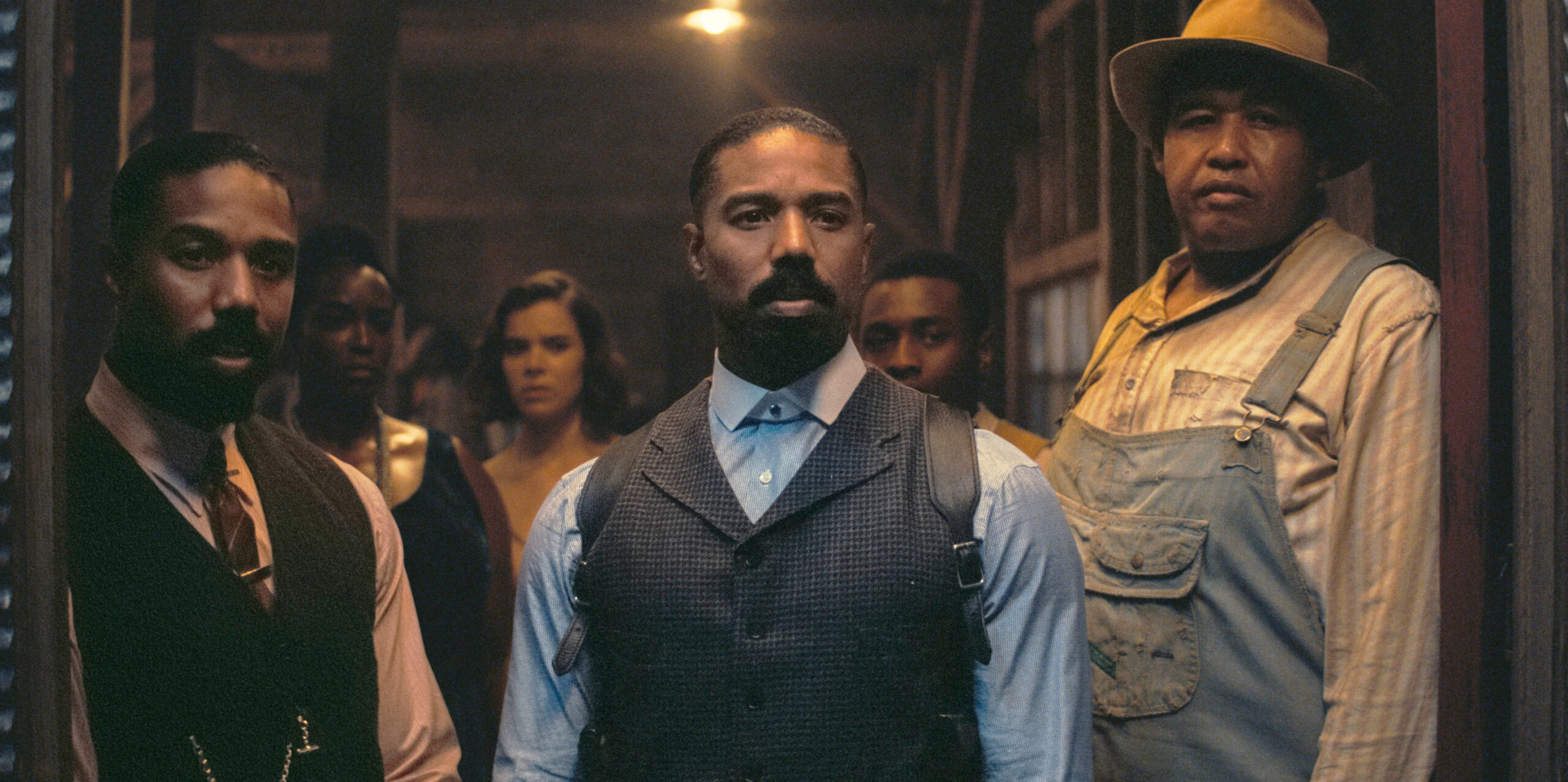
    Academy of Motion Picture Arts and Sciences voters showered Sinners with more nominations than they had ever bestowed before, breaking the 14-nomination mark set by All About Eve, Titanic, and La La Land. Along with best picture, Coogler was nominated for best director and best screenplay, and double-duty star Michael B. Jordan was rewarded with his first Oscar nomination, for best actor.

    Paul Thomas Anderson’s father-daughter revolutionary saga One Battle After Another, the favorite coming into nominations, trailed in second with 13 of its own. Four of its actors — Leonardo DiCaprio, Teyana Taylor, Benicio del Toro, and Sean Penn — were nominated, though newcomer Chase Infiniti was left out in best actress.

    Double-duty “Sinners” star Michael B. Jordan was rewarded with his first Oscar nomination for best actor.

    In those two top nominees, the film academy put its full force behind a pair of visceral and bracingly original American epics that each connected with a fraught national moment. Coogler’s Jim Crow-era film — the rare horror movie to win the academy’s favor — conjures a mythical allegory of Black life. In One Battle After Another, a dormant spirit of rebellion is revived in an out-of-control police state.

    Both are also Warner Bros. titles. In the midst of a contentious sale to Netflix, the 102-year-old studio had one of its best Oscar nominations mornings ever, with 30 nods. As the fate of Warner Bros., which Netflix is buying for $72 billion, hangs in the balance amid a challenge from Paramount Skydance, Hollywood is bracing for potentially the largest realignment in the film industry’s history.

    A coronation for Coogler

    For Coogler, the 39-year-old filmmaker of Fruitvale Station and Black Panther, it was a crowning moment. One of Hollywood’s most esteemed yet humble filmmakers, Coogler has called Sinners — a film that he will own outright 25 years after its release — his most personal movie.

    “I wrote this script for my uncle who passed away 11 years ago,” Coogler said in an interview Thursday morning. “I got to imagine that he’s listening to some blues music right now to celebrate.”

    Reached by phone an hour after the nominations were read, Coogler — speaking alongside his wife and producer Zinzi Evans and producer Sev Ohanian — was still trying to process the movie’s record-breaking haul.

    “I love making movies. I’m honored to wake up every day and do it. I was writing last night. That’s why I didn’t get too much sleep,” said Coogler, chuckling. ”Honestly, bro, I still feel a little bit asleep right now.”

    The other top nominees

    The 10 films nominated for best picture are Bugonia, F1, Frankenstein, Hamnet, Marty Supreme, One Battle After Another, The Secret Agent, Sentimental Value, Sinners, and Train Dreams.

    Guillermo del Toro’s lush Mary Shelley adaptation Frankenstein, Josh Safdie’s period Ping-Pong odyssey Marty Supreme, and Joachim Trier’s family drama Sentimental Value all scored nine nominations. Chloé Zhao’s speculative Shakespeare drama Hamnet collected eight nods. With the notable exception of del Toro, those filmmakers filled up a best director category of Anderson, Coogler, Safdie, Trier, and Zhao, who in 2021 became the first woman of color to ever win the award.

    The nine nods for Marty Supreme included a third best actor nod for 30-year-old Timothée Chalamet, the favorite in the category he narrowly missed winning last year for A Complete Unknown. With Jordan and Chalamet, the nominees are Leonardo DiCaprio for One Battle After Another, Ethan Hawke for Blue Moon and Wagner Moura for The Secret Agent.

    Nominated for best actress was the category favorite, Jessie Buckley (Hamnet), along with Rose Byrne (If I Had Legs I’d Kick You), Kate Hudson (Song Sung Blue), Renate Reinsve (Sentimental Value) and two-time winner Emma Stone, who landed her sixth nomination, for Bugonia.

    ‘KPop’ leads a field light on big hits

    The year’s most-watched movie, with more than half a billion views on Netflix, KPop Demon Hunters, scored nominations for both best song (“Golden”) and best animated feature. Sony Pictures developed and produced the film, but, after selling it to Netflix, watched it become a worldwide sensation.

    Blockbusters otherwise had a difficult morning. Universal Pictures’ Wicked: For Good was shut out entirely. While Avatar: Fire and Ash notched nominations for costume design and visual effects, it became the first Avatar film not nominated for best picture. The biggest box-office hit nominated for Hollywood’s top award instead was F1, an Apple production that landed four nominations. The streamer partnered with Warner Bros. to distribute the racing drama.

    This year, the Oscars are introducing a new category for casting. That new honor helped Sinners and One Battle After Another pad their already impressive stats. Along with those two films, the nominees are Hamnet, Marty Supreme, and The Secret Agent.

    An international shift continues

    The academy, which has expanded its overseas membership in recent years, also continued its tilt toward international films. Every category included one international nominee. For the eighth year in the row, a non-English-language film was nominated for best picture. More non-English performances were nominated than ever before.

    The top nominee of them all was Trier’s Norwegian drama Sentimental Value. It cleaned up in the supporting actor categories, with nods for Stellan Skarsgård, Inga Ibsdotter LilIeaas, and Elle Fanning. Also nominated for best supporting actress, in addition to Taylor: Amy Madigan for Weapons and Wunmi Mosaku for Sinners. In supporting actor, the nominees included Jacob Elordi for Frankenstein and, in a surprise that likely dislodged Paul Mescal of Hamnet, Delroy Lindo for Sinners.

    A competitive best international feature category mirrored the turbulent state of the world. That included the Iranian revenge drama and Palme d’Or winner It Was Just an Accident, by the often-imprisoned filmmaker Jafar Panahi. He’s spoken passionately against the ongoing crackdown of demonstrators in his home country. France nominated the film.

    Also nominated: the Tunisian entry The Voice of Hind Rajab, about volunteers at the Palestine Red Crescent Society; the timely Brazilian political thriller The Secret Agent; the apocalyptic Spanish road movie Sirât; and Sentimental Value. Four of those nominees came from one independent distributor: Neon. The company, which has had an enviable streak of Palme d’Or wins, was second only to Warner Bros. with a collective 16 nominations.

    The 98th Academy Awards will take place on March 15 at the Dolby Theatre in Los Angeles and will be televised live on ABC and Hulu. YouTube’s new deal to exclusively air won’t take effect until 2029. This year, Conan O’Brien will return as host.

  • Valentino, 93, fashion designer to the jet set

    Valentino, 93, fashion designer to the jet set

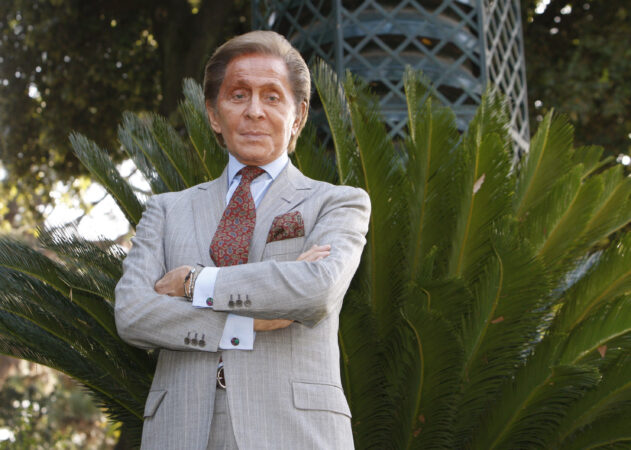
    MILAN — Valentino Garavani, the jet-set Italian designer whose high-glamour gowns — often in his trademark shade of “Valentino red” — were fashion show staples for nearly half a century, has died at home in Rome, his foundation announced Monday. He was 93.

    “Valentino Garavani was not only a constant guide and inspiration for all of us, but a true source of light, creativity and vision,″ the foundation founded by Mr. Garavani and his partner, Giancarlo Giammetti, said in a statement posted on social media.

    Universally known by his first name, Valentino, Mr. Garavani was adored by generations of royals, first ladies, and movie stars, from Jackie Kennedy Onassis to Julia Roberts and Queen Rania of Jordan, who swore the designer always made them look and feel their best.

    “I know what women want,” he once remarked. “They want to be beautiful.”

    Though Italian-born and despite maintaining his atelier in Rome, he mostly unveiled his collections in Paris, and spoke French with his Italian partner Giammetti, an entrepreneur.

    Alessandro Michele, the current creative director of the Valentino fashion house, wrote in Instagram that he continues to feel Mr. Garavani’s “gaze” as he works on the next collection, which will be presented March 12 in Rome, departing from the usual venue of Paris. Michele remembered Mr. Garavani as “a man who expanded the limits of the possible” and possessing “a rare delicacy, with a silent rigor and a limitless love for beauty.’’

    Another of Mr. Garavani’s successors, Pierpaolo Piccoli, placed a broken heart emoji under the announcement of his death. Former supermodel Cindy Crawford wrote that she was “heartbroken,” and called Valentino “a true master of his craft.’’

    Condolences also came in from the family of the late designer Giorgio Armani, who died in September at the age of 91, and Donatella Versace, who posted two photos of Mr. Garavani, saying “he will forever be remembered for his art.’’

    Italian Premier Giorgia Meloni remembered Mr. Garavani as “an indisputable maestro of eternal style and elegance of Italian high fashion.”

    Never one for edginess or statement dressing, Mr. Garavani made precious few fashion faux pas throughout his nearly half-century-long career, which stretched from his early days in Rome in the 1960s through to his retirement in 2008.

    His fail-safe designs made Mr. Garavani the king of the red carpet, the go-to man for A-listers’ awards ceremony needs. His sumptuous gowns have graced countless Academy Awards, notably in 2001, when Roberts wore a vintage black and white column to accept her best actress statue. Cate Blanchett also wore Valentino — a one-shouldered number in butter-yellow silk — when she won the Oscar for best supporting actress in 2004.

    Mr. Garavani was also behind the long-sleeved lace dress Jacqueline Kennedy wore for her wedding to Greek shipping magnate Aristotle Onassis in 1968. Kennedy and Mr. Garavani were close friends for decades, and for a spell the one-time U.S. first lady wore almost exclusively Valentino.

    He was also close to Diana, Princess of Wales, who often donned his sumptuous gowns.

    Beyond his signature orange-tinged shade of red, other Valentino trademarks included bows, ruffles, lace, and embroidery; in short, feminine, flirty embellishments that added to the dresses’ beauty and hence to that of the wearers.

    Perpetually tanned and always impeccably dressed, Mr. Garavani shared the lifestyle of his jet-set patrons. In addition to his 152-foot yacht and an art collection including works by Picasso and Miro, the couturier owned a 17th century chateau near Paris with a garden said to boast more than a million roses.

    Mr. Garavani and his longtime partner Giammetti flitted among their homes — which also included places in New York, London, Rome, Capri, and Gstaad, Switzerland — traveling with their pack of pugs. The pair regularly received A-list friends and patrons, including Madonna and Gwyneth Paltrow.

    “When I see somebody and unfortunately she’s relaxed and running around in jogging trousers and without any makeup … I feel very sorry,” the designer told RTL television in a 2007 interview. “For me, woman is like a beautiful, beautiful flower bouquet. She has always to be sensational, always to please, always to be perfect, always to please the husband, the lover, everybody. Because we are born to show ourselves always at our best.”

    Mr. Garavani was born into a well-off family in the northern Italian town of Voghera on May 11, 1932. He said it was his childhood love of cinema that set him down the fashion path.

    “I was crazy for silver screen, I was crazy for beauty, to see all those movie stars being sensation, well dressed, being always perfect,” he explained in the 2007 television interview.

    After studying fashion in Milan and Paris, he spent much of the 1950s working for established Paris-based designer Jean Desses and later Guy Laroche before striking out on his own. He founded the house of Valentino on Rome’s Via Condotti in 1959.

    From the beginning, Giammetti was by his side, handling the business aspect while Mr. Garavani used his natural charm to build a client base among the world’s rich and fabulous.

    After some early financial setbacks — Mr. Garavani’s tastes were always lavish, and the company spent with abandon — the brand took off.

    Early fans included Italian screen sirens Gina Lollobrigida and Sophia Loren, as well as Hollywood stars Elizabeth Taylor and Audrey Hepburn. Legendary American Vogue editor-in-chief Diana Vreeland also took the young designer under her wing.

    Over the years, Mr. Garavani’s empire expanded as the designer added ready-to-wear, menswear, and accessories lines to his stable. Mr. Garavani and Giammetti sold the label to an Italian holding company for an estimated $300 million in 1998. Mr. Garavani would remain in a design role for another decade.

    In 2007, the couturier feted his 45th anniversary in fashion with a 3-day-long blowout in Rome, capped with a grand ball in the Villa Borghese gallery.

    Mr. Garavani retired in 2008 and was briefly replaced by fellow Italian Alessandra Facchinetti, who had stepped into Tom Ford’s shoes at Gucci before being sacked after two seasons.

    Facchinetti’s tenure at Valentino proved equally short. As early as her first show for the label, rumors swirled that she was already on her way out, and just about one year after she was hired, Facchinetti was indeed replaced by two longtime accessories designers at the brand, Maria Grazia Chiuri and Pierpaolo Piccioli.

    Chiuri left to helm Dior in 2016, and Piccioli continued to lead the house through a golden period that drew on the launch of the Rockstud pump with Chiuri and his own signature color, a shade of fuchsia called Pink PP. He left the house in 2024, later joining Balenciaga, and has been replaced by Michele, who revived Gucci’s stars with romantic, genderless styles.

    Valentino is owned by Qatar’s Mayhoola, which controls a 70% stake, and the French luxury conglomerate Kering, which owns 30% with an option to take full control in 2028 or 2029. Richard Bellini was named CEO last September.

    A public viewing will be held at the Valentino Garavani and Giancarlo Giammetti Foundation on Wednesday and Thursday, and a funeral will be held Friday in the Basilica di Santa Maria degli Angeli e dei Martiri in central Rome.

  • Valentino Garavani, an Italian fashion designer known for his signature shade of red, has died at 93

    Valentino Garavani, an Italian fashion designer known for his signature shade of red, has died at 93

    ROME — Valentino Garavani, the jet-set Italian designer whose high-glamour gowns — often in his trademark shade of “Valentino red” — were fashion show staples for nearly half a century, has died at home in Rome, his foundation announced Monday. He was 93.

    “Valentino Garavani was not only a constant guide and inspiration for all of us, but a true source of light, creativity and vision,″ the foundation said in a statement posted on social media.

    His body will repose at the foundation’s headquarters in Rome on Wednesday and Thursday. The funeral will be held Friday at the Basilica Santa Maria degli Angeli e dei Martiri in Rome’s Piazza della Repubblica.

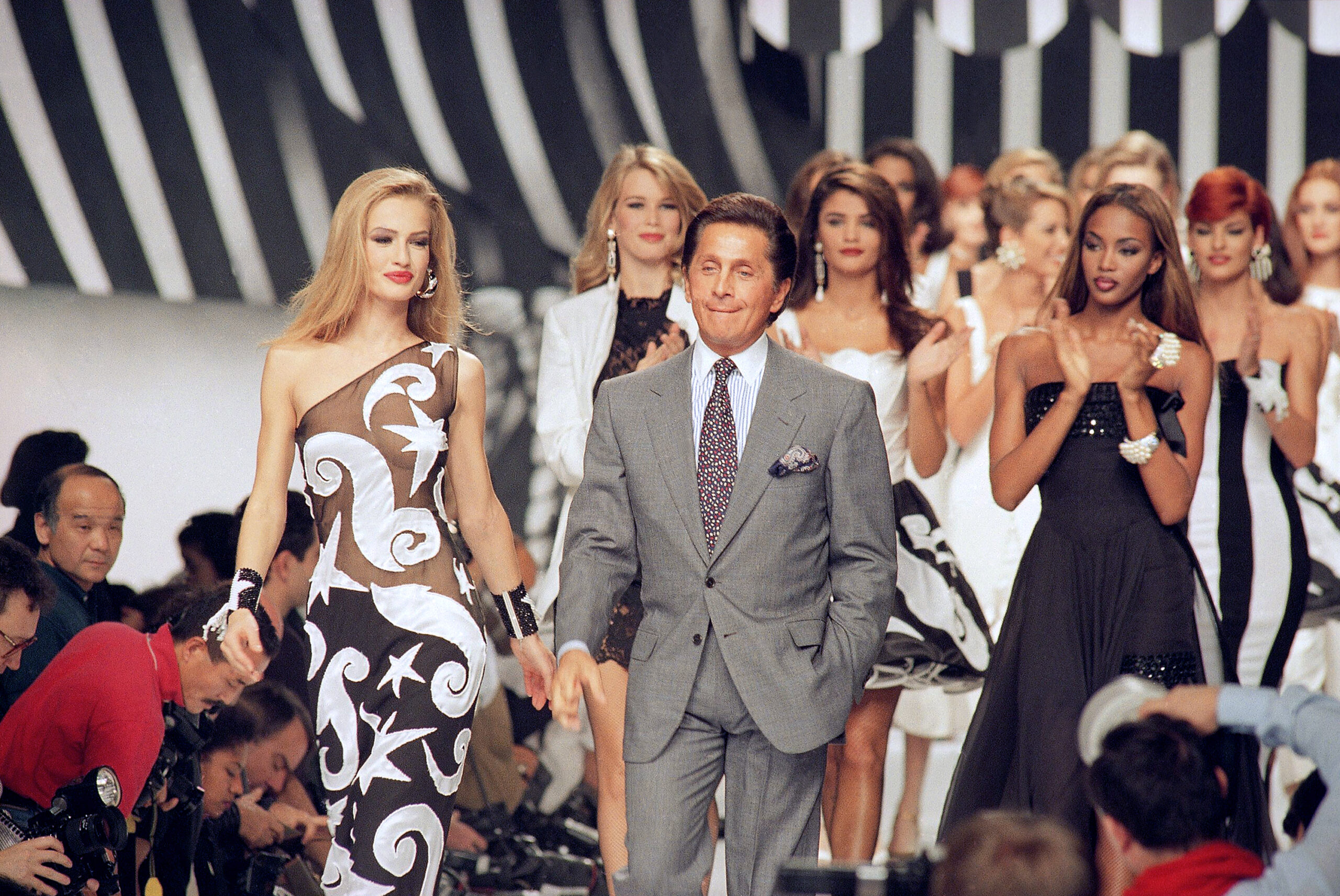
    Italian fashion designer Valentino Garavani walks the catwalk with his models after a fashion show on October 20, 1991 in Paris, France.

    Universally known by his first name, Valentino was adored by generations of royals, first ladies and movie stars, from Jackie Kennedy Onassis to Julia Roberts and Queen Rania of Jordan, who swore the designer always made them look and feel their best.

    “I know what women want,” he once remarked. “They want to be beautiful.”

    Never one for edginess or statement dressing, Valentino made precious few fashion faux-pas throughout his nearly half-century-long career, which stretched from his early days in Rome in the 1960s through to his retirement in 2008.

    His fail-safe designs made Valentino the king of the red carpet, the go-to man for A-listers’ awards ceremony needs. His sumptuous gowns have graced countless Academy Awards, notably in 2001, when Roberts wore a vintage black and white column to accept her best actress statue. Cate Blanchett also wore Valentino — a one-shouldered number in butter-yellow silk — when she won the Oscar for best supporting actress in 2004.

    Valentino was also behind the long-sleeved lace dress Jacqueline Kennedy wore for her wedding to Greek shipping magnate Aristotle Onassis in 1968. Kennedy and Valentino were close friends for decades, and for a spell the one-time U.S. first lady wore almost exclusively Valentino.

    He was also close to Diana, Princess of Wales, who often donned his sumptuous gowns.

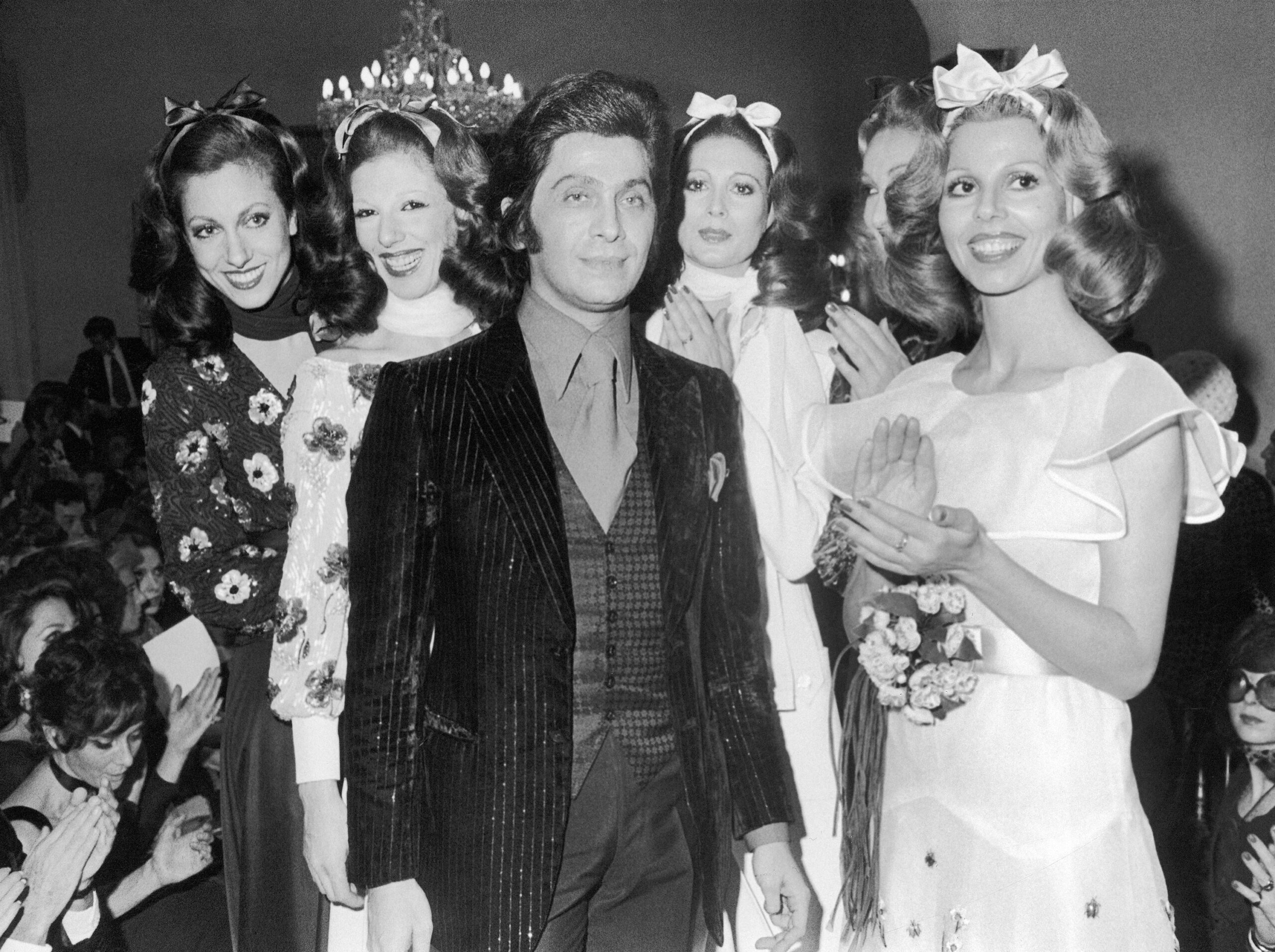
    Models flank Italian fashion designer Valentino Garavani in Rome, Italy, at the end of the fashion show for his spring-summer collection on Jan. 20, 1971.

    Beyond his signature orange-tinged shade of red, other Valentino trademarks included bows, ruffles, lace and embroidery; in short, feminine, flirty embellishments that added to the dresses’ beauty and hence to that of the wearers.

    Perpetually tanned and always impeccably dressed, Valentino shared the lifestyle of his jet-set patrons. In addition to his 152-foot (46-meter) yacht and an art collection including works by Picasso and Miro, the couturier owned a 17th-century chateau near Paris with a garden said to boast more than a million roses.

    Valentino and his longtime partner Giancarlo Giammetti flitted among their homes — which also included places in New York, London, Rome, Capri and Gstaad, Switzerland — traveling with their pack of pugs. The pair regularly received A-list friends and patrons, including Madonna and Gwyneth Paltrow.

    “When I see somebody and unfortunately she’s relaxed and running around in jogging trousers and without any makeup … I feel very sorry,” the designer told RTL television in a 2007 interview. “For me, woman is like a beautiful, beautiful flower bouquet. She has always to be sensational, always to please, always to be perfect, always to please the husband, the lover, everybody. Because we are born to show ourselves always at our best.”

    Valentino was born into a well-off family in the northern Italian town of Voghera on May 11, 1932. He said it was his childhood love of cinema that set him down the fashion path.

    “I was crazy for silver screen, I was crazy for beauty, to see all those movie stars being sensation, well dressed, being always perfect,” he explained in the 2007 television interview.

    After studying fashion in Milan and Paris, he spent much of the 1950s working for established Paris-based designer Jean Desses and later Guy Laroche before striking out on his own. He founded the house of Valentino on Rome’s Via Condotti in 1959.

    From the beginning, Giammetti was by his side, handling the business aspect while Valentino used his natural charm to build a client base among the world’s rich and fabulous.

    After some early financial setbacks — Valentino’s tastes were always lavish, and the company spent with abandon — the brand took off.

    Early fans included Italian screen sirens Gina Lollobrigida and Sophia Loren, as well as Hollywood stars Elizabeth Taylor and Audrey Hepburn. Legendary American Vogue editor-in-chief Diana Vreeland also took the young designer under her wing.

    Over the years, Valentino’s empire expanded as the designer added ready-to-wear, menswear and accessories lines to his stable. Valentino and Giammetti sold the label to an Italian holding company for an estimated $300 million in 1998. Valentino would remain in a design role for another decade.

    In 2007, the couturier feted his 45th anniversary in fashion with a 3-day-long blowout in Rome, capped with a grand ball in the Villa Borghese gallery.

    Valentino retired in 2008 and was briefly replaced by fellow Italian Alessandra Facchinetti, who had stepped into Tom Ford’s shoes at Gucci before being sacked after two seasons.

    Facchinetti’s tenure at Valentino proved equally short. As early as her first show for the label, rumors swirled that she was already on her way out, and just about one year after she was hired, Facchinetti was indeed replaced by two longtime accessories designers at the brand, Maria Grazia Chiuri and Pier Paolo Piccioli.

    Chiuri left to helm Dior in 2016, and Piccioli continued to lead the house through a golden period that drew on the launch of the Rockstud pump with Chiuri and his own signature color, a shade of fuchsia called Pink PP. He left the house in 2024, later joining Balenciaga, and has been replaced by Alessandro Michele, who revived Gucci’s stars with romantic, genderless styles.

    Valentino is owned by Qatar’s Mayhoola, which controls a 70% stake, and the French luxury conglomerate Kering, which owns 30% with an option to take full control in 2028 or 2029. Richard Bellini was named CEO last September.

    Valentino has been the subject of several retrospectives, including one at the Musee des Arts Decoratifs, which is housed in a wing of Paris’ Louvre Museum. He was also the subject of a hit 2008 documentary, “Valentino: The Last Emperor,” that chronicled the end of his career in fashion.

    In 2011, Valentino and Giammetti launched what they called a “virtual museum,” a free desktop application that allows viewers to feast their eyes on about 300 of the designer’s iconic pieces.

  • Thousands of fans celebrate life of Grateful Dead guitarist Bob Weir in San Francisco

    Thousands of fans celebrate life of Grateful Dead guitarist Bob Weir in San Francisco

    SAN FRANCISCO — Thousands of people gathered Saturday at San Francisco’s Civic Center to celebrate the life of Bob Weir, the legendary guitarist and founding member of the Grateful Dead who died last week at age 78.

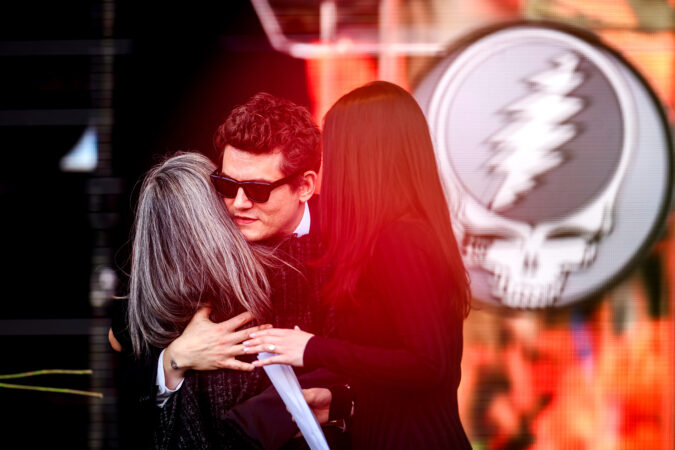
    Musicians Joan Baez and John Mayer spoke on a makeshift stage in front of the Bill Graham Civic Auditorium after four Buddhist monks opened the event with a prayer in Tibetan. Fans carried long-stemmed red roses, placing some at an altar filled with photos and candles. They wrote notes on colored paper, professing their love and thanking him for the journey.

    Several asked him to say hello to fellow singer and guitarist Jerry Garcia and bass guitarist Phil Lesh, also founding members who preceded him in death. Garcia died in 1995; Lesh died in 2024.

    “I’m here to celebrate Bob Weir,” said Ruthie Garcia, who is no relation to Jerry, a fan since 1989. “Celebrating him and helping him go home.”

    Saturday’s celebration brought plenty of fans with long dreadlocks and wearing tie-dye clothing, some using walkers. But there were also young couples, men in their 20s, and a father who brought his 6-year-old son in order to pass on to the next generation a love of live music and the tight-knit Deadhead community.

    The Bay Area native joined the Grateful Dead — originally the Warlocks — in 1965 in San Francisco at just 17 years old. He wrote or co-wrote and sang lead vocals on Dead classics including “Sugar Magnolia,” “One More Saturday Night,” and “Mexicali Blues.” He was generally considered less shaggy looking than the other band members, although he adopted a long beard like Garcia’s later in life.

    The Dead played music that pulled in blues, jazz, country, folk, and psychedelia in long improvisational jams. Their concerts attracted avid Deadheads who followed them on tours. The band played on decades after Garcia’s death, morphing into Dead & Company with John Mayer.

    Darla Sagos, who caught an early flight out of Seattle Saturday morning to make the public mourning, said she suspected something was up when there were no new gigs announced after Dead & Company played three nights in San Francisco last summer. It was unusual, as Weir’s calendar often showed where he would be playing next.

    “We were hoping that everything was OK and that we were going to get more music from him,” she said. “But we will continue the music, with all of us and everyone that’s going to be playing it.”

    Sagos and her husband, Adam Sagos, have a 1-year-old grandson who will grow up knowing the music.

    A statement on Weir’s Instagram account announced his passing Jan. 10. It said he beat cancer, but he succumbed to underlying lung issues. He is survived by his wife and two daughters, who were at Saturday’s event.

    His death was sudden and unexpected, said daughter Monet Weir, but he had always wished for the music and the legacy of the Dead to outlast him.

    American music, he believed, could unite, she said.

    “The show must go on,” Monet Weir said.