Category: Entertainment Wires

  • As a shooting unfolded at Brown, students turned to anonymous app for answers before official alerts

    As a shooting unfolded at Brown, students turned to anonymous app for answers before official alerts

    PROVIDENCE, R.I. — When a gunman began firing inside an academic building on the Brown University campus, students didn’t wait for official alerts warning of trouble. They got information almost instantly, in bits and bursts — through phones vibrating in pockets, messages from strangers, rumors that felt urgent because they might keep someone alive.

    On Dec. 13 as the attack at the Ivy League institution played out during finals week, students took to Sidechat, an anonymous, campus-specific message board used widely at U.S. colleges, for fast-flowing information in real time.

    An Associated Press analysis of nearly 8,000 posts from the 36 hours after the shooting shows how social media has become central to how students navigate campus emergencies.

    Fifteen minutes before the university’s first alert of an active shooter, students were already documenting the chaos. Their posts — raw, fragmented, and sometimes panicked — formed a digital time capsule of how a college campus experienced a mass shooting.

    As students sheltered in place, they posted while hiding under library tables, crouching in classrooms and hallways. Some comments even came from wounded students, like one posting a selfie from a hospital bed with the simple caption: #finalsweek.

    Others asked urgent questions: Was there a lockdown? Where was the shooter? Was it safe to move?

    It would be days before authorities identified the suspect and found him dead in New Hampshire of a self-inflicted gunshot wound, later linking him to the killing of a Massachusetts Institute of Technology professor.

    Here’s a look at how the shooting unfolded.

    Stream of collective consciousness

    Described by Harvard Magazine as “the College’s stream of collective consciousness,” Sidechat allows anyone with a verified university email to post to a campus feed. On most days, the Brown feed is filled with complaints about dining hall food, jokes about professors, and stress about exams — fleeting posts running the gamut of student life.

    On the Saturday afternoon just before the shooting, a student posted about how they wished they could “play Minecraft for 60 hours straight.” Then, the posts abruptly shifted.

    Crowds began pouring out of Brown’s Barus and Holley building, and someone posted at 4:06 p.m.: “Why are people running away from B&H?”

    Others quickly followed. “EVERYONE TAKE COVER,” one wrote. “STAY AWAY FROM THAYER STREET NEAR MACMILLAN 2 PEOPLE JUST GOT SHOT IM BEING DEAD SERIOUS,” another user wrote at 4:10 p.m.

    Dozens of frantic messages followed as students tried to fill the information gap themselves.

    “so r we on lockdown or what,” one student asked.

    By the time the university alert was sent at 4:21 p.m., the shooter was no longer on campus — a fact Brown officials did not yet know.

    “Where would we be without Sidechat?” one student wrote.

    A university spokesperson said Brown’s alert reached 20,000 people minutes after the school’s public safety officials were notified shots had been fired. Officials deliberately didn’t use sirens to avoid sending people rushing to seek shelter into harm’s way, said the spokesperson, Brian E. Clark, who added Brown commissioned two external reviews of the response with the aim of enhancing public safety and security.

    Long hours of hiding

    Long after the sun had set, students sheltered in dark dorm rooms and study halls. Blinds were closed. Doors were barricaded with dressers, beds, and mini fridges.

    “Door is locked windows are locked I’ve balanced a metal pipe thing on the handle so if anyone even tries the handle from the outside it’ll make a loud noise,” one student wrote.

    Students reacted to every sound — footsteps in hallways, distant sirens, helicopters overhead. When alerts came, the vibrations and ringtones were jarring. Some feared that names of the dead would be released — and that they would recognize someone they knew.

    Law enforcement moved through campus buildings, clearing them floor by floor.

    A student who fled Barus and Holley asked whether anyone could text his parents to let them know he had made it out safely. Others said they had left phones behind in classrooms when they fled, unable to reach frantic loved ones. Ironically, those closest to the shooting often had the least information.

    Many American students expressed emotions hovering between numbness and heartbreak.

    “Just got a text from a friend I haven’t spoken to in nearly three years,” one student wrote. “Our last messages? Me checking in on her after the shooting at Michigan State.” Multiple students replied, saying they’d had similar experiences.

    International students posted about parents unable to sleep on the other side of the world.

    “I just want a hug from my mom,” one student wrote.

    Anxiety sets in

    As the hours dragged on, students struggled with basic needs. Some described urinating in trash cans or empty laundry detergent bottles because they were too afraid to leave their rooms. Others spoke of drinking to cope.

    “I was on the street when it happened & suddenly I felt so scared,” one student wrote. “I ran and didn’t calm down for a while. I feel numb, tired, & about to throw up.”

    Another wrote: “I’m locked inside! Haven’t eaten anything today! I’m so scared i don’t even know if I get out of this alive or dead.”

    Some students posted into the early morning, more than 10 hours into the lockdown, saying they couldn’t sleep. Sidechat also documented acts of kindness, including a student going door to door with macaroni and cheese cups in a dark dorm.

    Information, and its limits

    Students repeatedly asked the same questions — news? sources? — and challenged one another to verify what they saw before reposting it.

    “Frankly I’d rather hear misinformation than people not report stuff they’ve heard,” one student wrote.

    Others pushed back, sharing a Google Doc that would grow to 28 pages where students could find the most updated, verified information. Some posted police scanner transcriptions or warned against relying on artificial intelligence summaries of the developing situation. Professors — who rarely post on the app — joined the feed, urging caution and offering reassurance.

    “If you’re talking about the active situation please add a source!!!” one student wrote.

    But “reliable information,” students noted, often arrived with a delay.

    Within about 30 minutes of the shooting, posts incorrectly claimed the shooter had been caught. Reports of more gunshots — later proven false — continued into the night and the next day, fueling fear and frustration. Asked one student, what are police doing “RIGHT NOW”?

    Replies came quickly.

    “They are trying their best,” one person responded. “Be grateful,” another added. “They are putting their lives in danger at this moment for us to be safe.”

    A campus changed

    Students awoke Sunday to a campus they no longer recognized. It had snowed overnight — the first snowfall of the academic year.

    In post after post, students called the sight unsettling. What was usually a celebration felt instead like confirmation something had irrevocably shifted.

    “It truly hurt seeing the flakes fall this morning, beautiful and tragic,” one student wrote.

    Even as the lockdown lifted, many said they were unsure what to do — where they could go, whether dining halls were open, whether it was safe to move.

    “What do I do rn?” one student posted. “I’m losing my mind.”

    Students walked through fresh snow in a daze, heading to blood donation centers. Others noticed flowers being placed at the campus gates and outside Barus and Holley.

    Many mourned not only the two students killed, but the innocence they felt had been stripped from their campus.

    “Will never see the first snow of the season and not think about those two,” one student wrote.

    With the lockdown ended, students returned to their dorms as Sidechat continued to fill with grief and reflection. Many said Brown no longer felt the same.

    “Snow will always be bloody for me,” one person posted.

  • Attorney for Rob Reiner’s son resigns but says his client is not guilty of murder under state law

    Attorney for Rob Reiner’s son resigns but says his client is not guilty of murder under state law

    LOS ANGELES — The high-profile private attorney for Nick Reiner resigned from his case Wednesday for reasons he said he could not reveal, and he later told reporters that under California law his client is definitely not guilty of murder in the killing of his parents, Rob Reiner and Michele Singer Reiner.

    “Circumstances beyond our control and more importantly circumstances beyond Nick’s control have dictated that, sadly, it’s made it impossible to continue our representation,” lawyer Alan Jackson said as he stood with his team outside a Los Angeles courthouse.

    But, Jackson added, after weeks of investigation, “what we’ve learned, and you can take this to the bank, is that pursuant to the laws of this state, pursuant to the law of California, Nick Reiner is not guilty of murder. Print that.”

    Jackson would not specify what he meant and took no questions at the brief news conference, but it was the first direct statement from a Nick Reiner representative about his guilt or innocence in the 3 1/2 weeks since the killings.

    He spoke after a hearing where Reiner was supposed to be arraigned and enter a plea to two charges of first-degree murder. Instead, after meeting with the Judge Theresa McGonigle in chambers, Jackson, at his own request, was replaced by a public defender and the plea hearing was postponed to Feb. 23.

    Jackson does not say why he has to quit case

    Jackson said that for legal and ethical reasons, he could not reveal why he had to resign. He first appeared in court representing Nick Reiner at a hearing a few days after the beloved actor-director and his wife of 36 years were found dead with stab wounds in their home in the upscale Brentwood section of Los Angeles. Jackson did not say how he was hired — or who hired him. Generally, defendants use public defenders when they can’t pay for a private attorney.

    Jackson has become one of the most prominent defense attorneys in the nation in recent years after his defense of clients including Harvey Weinstein, Kevin Spacey and Karen Read at her intensely followed trials in Massachusetts.

    Deputy Public Defender Kimberly Greene took over as Reiner’s attorney during the hearing.

    “The Public Defender’s Office recognizes what an unimaginable tragedy this is for the Reiner family and the Los Angeles community,” LA County Public Defender Ricardo D. Garcia said in a rare public statement on a case from the office. “Our hearts go out to the Reiner family as they navigate this difficult time. We ask for your patience and compassion as the case moves through the legal process.”

    A Reiner family spokesperson said in a statement after Wednesday’s hearing that “They have the utmost trust in the legal process and will not comment further on matters related to the legal proceedings.”

    Nick Reiner appears in jail clothes, without suicide prevention smock

    During Wednesday’s hearing, Reiner stood behind glass in a custody area of the courtroom wearing brown jail garb and with his hair shaved. Two deputies stood behind him. Jackson and his team stood in front of him on the other side of the glass. At one point, Reiner stood on his tiptoes to peer over the lawyers’ heads to look at the audience. He spoke only to agree to the delayed arraignment.

    McGonigle approved the use of cameras inside the courtroom but said photos and video could not be taken of the defendant. Reiner did not wear the suicide prevention smock he had on at his initial court appearance on Dec. 17.

    Reiner, 32, the third of Rob Reiner’s four children, has been held without bail since his arrest hours after his parents were found dead on Dec. 14.

    Jackson says he ‘dropped everything’ to represent Reiner

    Jackson, a former LA County prosecutor, had given no indication of the plans for his defense.

    He said that just hours after Nick Reiner’s arrest, he and his team were in New York when they got a call about representing him. He did not say who called him.

    “We dropped everything,” Jackson said. “For the last three weeks, we have devoted literally every waking hour to protecting Nick and his interests. We’ve investigated this matter top to bottom, back to front.”

    He said they remain “deeply, deeply committed” to him and said, “We’re not just convinced; we know that the legal process will reveal the true facts.”

    Rob Reiner, 78, and Michele Singer Reiner, 70, were killed early on the morning of Dec. 14, and they were found in the late afternoon, authorities said. The LA County Medical Examiner said in initial findings that they died from “multiple sharp force injuries.” A court order has prevented the release of more details. Police have said nothing about possible motives.

    Prosecutors have said they have not yet decided whether to seek the death penalty for Nick Reiner.

    Rob Reiner was a prolific director whose work included some of the most memorable and endlessly watchable movies of the 1980s and ’90s. His credits included “This is Spinal Tap,” “Stand By Me,” “A Few Good Men,” and “When Harry Met Sally …,” during whose production he met Michele Singer, a photographer, and married her soon after.

    A decade ago, Nick Reiner publicly discussed his struggles with addiction and mental health after making a movie with his father, “Being Charlie,” that was very loosely based on their lives.

  • New dietary guidelines urge Americans to avoid processed foods and added sugar

    New dietary guidelines urge Americans to avoid processed foods and added sugar

    Americans should eat more whole foods and protein, fewer highly processed foods and less added sugar, according to the latest edition of federal nutrition advice released Wednesday by the Trump administration.

    Health Secretary Robert F. Kennedy Jr. and Agriculture Secretary Brooke Rollins issued the 2025-2030 U.S. Dietary Guidelines for Americans, which offer updated recommendations for a healthy diet and provide the foundation for federal nutrition programs and policies. They come as Kennedy has for months stressed overhauling the U.S. food supply as part of his Make America Healthy Again agenda.

    “My message is clear: Eat real food,” Kennedy said at a White House briefing.

    The guidelines emphasize consumption of fresh vegetables, whole grains and dairy products, long advised as part of a healthy eating plan. Officials released a new graphic depicting an inverted version of the long-abandoned food pyramid, with protein, dairy, healthy fats and fruits and vegetables at the top and whole grains at the bottom.

    But they also take a new stance on “highly processed” foods, and refined carbohydrates, urging consumers to avoid “packaged, prepared, ready-to-eat or other foods that are salty or sweet, such as chips, cookies and candy.” That’s a different term for ultraprocessed foods, the tasty, energy-dense products that make up more than half the calories in the U.S. diet and have been linked to chronic diseases such as diabetes and obesity.

    The new guidance backs away from revoking long-standing advice to limit saturated fats, despite signals from Kennedy and Food and Drug Commissioner Marty Makary that the administration would push for more consumption of animal fats to end the “war” on saturated fats.

    Instead, the document suggests that Americans should choose whole-food sources of saturated fat — such as meat, whole-fat dairy or avocados — while continuing to limit saturated fat consumption to no more than 10% of daily calories. The guidance says “other options can include butter or beef tallow,” despite previous recommendations to avoid those fats.

    Guidelines were due for an update

    The dietary guidelines, required by law to be updated every five years, provide a template for a healthy diet. But in a country where more than half of adults have a diet-related chronic disease, few Americans actually follow the guidance, research shows.

    The new recommendations drew praise from some prominent nutrition and medical experts.

    “There should be broad agreement that eating more whole foods and reducing highly processed carbohydrates is a major advance in how we approach diet and health,” said Dr. David Kessler, a former FDA commissioner who has written books about diet and nutrition and has sent a petition to the FDA to remove key ingredients in ultraprocessed foods.

    “The guidelines affirm that food is medicine and offer clear direction patients and physicians can use to improve health,” said Dr. Bobby Mukkamala, president of the American Medical Association.

    Other experts were relieved that the guidelines didn’t go against decades of nutrition evidence linking saturated fat to heart disease, but they were critical of the guidelines’ focus on meat and dairy as a primary source of protein instead of plant-based sources.

    “Overall, if people eat the way these are recommended, they will be eating more calories, not less,” said Marion Nestle, a nutritionist and food policy expert who advised previous editions of the guidance.

    The new document is just 10 pages, upholding Kennedy’s pledge to create a simple, understandable guideline. Previous editions of the dietary guidelines have grown over the years, from a 19-page pamphlet in 1980 to the 164-page document issued in 2020, which included a four-page executive summary.

    The guidance will have the most profound effect on the federally funded National School Lunch Program, which is required to follow the guidelines to feed nearly 30 million U.S. children on a typical school day.

    The Agriculture Department will have to translate the recommendations into specific requirements for school meals, a process that can take years, said Diane Pratt-Heavner, spokesperson for the School Nutrition Association. The latest school nutrition standards were proposed in 2023 but won’t be fully implemented until 2027, she noted.

    Science advisers didn’t make ultraprocessed food recommendations

    The new guidelines largely rejected the advice of a 20-member panel of nutrition experts convened by the Biden administration, who met for nearly two years to review the latest scientific evidence on diet and health. Kennedy had criticized the expertise of the panel members and suggested that they had ties to the food industry that influenced their advice.

    Instead, the new guidance relied on a new set of experts revealed Wednesday in supporting documents. Of the 10 experts who led the new scientific review under Kennedy, five reported financial ties to beef, pork or dairy industries or to makers of infant formula or supplements.

    The new group rejected more than half the recommendations of the previous panel, the documents showed.

    That previous panel didn’t make recommendations about ultraprocessed food. Although a host of studies have shown links between ultraprocessed foods and poor health outcomes, the nutrition experts had concerns with the quality of the research and the certainty that those foods, and not other factors, were causing the problems.

    The recommendations on highly processed foods drew cautiously positive reactions. The FDA and the Agriculture Department are already working on a definition of ultraprocessed foods, but it’s expected to take time.

    Not all highly processed foods are unhealthy, said Dr. David Ludwig, an endocrinologist and researcher at Boston Children’s Hospital.

    “I think the focus should be on highly processed carbohydrates,” he said, noting that processing of protein or fats can be benign or even helpful.

    More protein recommended

    The guidelines made a few other notable changes, including a call to potentially double protein consumption.

    The previous recommended dietary allowance called for 0.8 grams of protein per kilogram of body weight — about 54 grams daily for a 150-pound person. The new recommendation is 1.2 to 1.6 grams of protein per kilogram of body weight. An average American man consumes about 100 grams of protein per day, or about twice the previously recommended limit.

    Makary said the new advice supersedes protein guidance that was based on the “bare minimum” required for health.

    Ludwig also noted that the earlier recommendation was the minimum amount needed to prevent protein deficiency and said higher amounts of protein might be beneficial.

    “A moderate increase in protein to help displace the processed carbohydrates makes sense,” he said.

    Officials with the American Heart Association, however, called for more research on protein consumption and the best sources for optimal health.

    “Pending that research, we encourage consumers to prioritize plant-based proteins, seafood and lean meats and to limit high-fat animal products including red meat, butter, lard and tallow, which are linked to increased cardiovascular risk,” the group said in a statement.

    Avoid added sugars

    The guidelines advise avoiding or sharply limiting added sugars or non-nutritive sweeteners, saying “no amount” is considered part of a healthy diet.

    No one meal should contain more than 10 grams of added sugars, or about 2 teaspoons, the new guidelines say.

    Previous federal guidelines recommended limiting added sugars to less than 10% of daily calories for people older than 2, but to aim for less. That’s about 12 teaspoons a day in a 2,000-calorie daily diet. Children younger than 2 should have no added sugars at all, the older guidance said.

    In general, most Americans consume about 17 teaspoons of added sugars per day, according to the U.S. Centers for Disease Control and Prevention.

    Alcohol limits removed

    The new guidelines roll back previous recommendations to limit alcohol to one drink or less per day for women and two drinks or less per day for men.

    Instead, the guidance advises Americans to “consume less alcohol for better health.” They also say that alcohol should be avoided by pregnant women, people recovering from alcohol use disorder and those who are unable to control the amount they drink.

  • Warner Bros rejects Paramount takeover again and tells shareholders to stick with Netflix bid

    Warner Bros rejects Paramount takeover again and tells shareholders to stick with Netflix bid

    NEW YORK — Warner Bros. again rejected a takeover bid from Paramount and told shareholders Wednesday to stick with a rival offer from Netflix.

    Warner’s leadership has repeatedly rebuffed Skydance-owned Paramount’s overtures — and urged shareholders just weeks ago to back the sale of its streaming and studio business to Netflix for $72 billion. Paramount, meanwhile, has made efforts to sweeten its $77.9 billion hostile offer for the entire company.

    Warner Bros. Discovery said Wednesday that its board determined Paramount’s offer is not in the best interests of the company or its shareholders. It again recommended shareholders support the Netflix deal.

    “Paramount’s offer continues to provide insufficient value, including terms such as an extraordinary amount of debt financing that create risks to close and lack of protections for our shareholders if a transaction is not completed,” Warner Bros. Discovery Chair Samuel Di Piazza Jr. said in a statement. In contrast, he added, the company’s agreement with Netflix “will offer superior value at greater levels of certainty.”

    Paramount did not immediately respond to a request for comment. The company’s hostile bid is still on the table. Warner shareholders currently have until Jan. 21 to “tender” their shares.

    Late last month, Paramount announced an “irrevocable personal guarantee” from Oracle founder Larry Ellison — who is the father of Paramount CEO David Ellison — to back $40.4 billion in equity financing for the company’s offer. Paramount also increased its promised payout to shareholders to $5.8 billion if the deal is blocked by regulators, matching Netflix’s breakup fee.

    In its Wednesday letter to shareholders, Warner expressed concerns about a potential deal with Paramount. Warner said it essentially considers the offer a leveraged buyout, which includes a lot of debt, and also pointed to operating restrictions that it said were imposed by Paramount’s offer and could “hamper WBD’s ability to perform” throughout a transaction.

    The battle for Warner and the value of each offer grows complicated because Netflix and Paramount want different things. Netflix’s proposed acquisition includes only Warner’s studio and streaming business, including its legacy TV and movie production arms and platforms like HBO Max. But Paramount wants the entire company — which, beyond studio and streaming, includes networks like CNN and Discovery.

    If Netflix is successful, Warner’s news and cable operations would be spun off into their own company, under a previously-announced separation.

    A merger with either company could take over a year to close — and will attract tremendous antitrust scrutiny along the way. Due to its size and potential impact, it will almost certainly trigger a review by the U.S. Justice Department, which could sue to block the transaction or request changes. Other countries and regulators overseas may also challenge the merger. And politics are expected to come into play under President Donald Trump, who has made unprecedented suggestions about his personal involvement on whether a deal will go through.

    Trade groups across the entertainment industry have continued to sound the alarm about both deals.

    In a statement addressed to a Congressional antitrust subcommittee on Wednesday, Cinema United — which represents more than 60,000 movie screens worldwide — reiterated it was “deeply concerned” that Netflix’s acquisition could harm both moviegoers and people who work in theaters, pointing to the streaming giant’s past reliance on its online platform. The group said its concerns were “no less serious” for Paramount’s bid — warning of consequences of further consolidation overall, which it said could result in job losses and less diversity in filmmaking.

  • NYC’s Mamdani sworn in on a Quran full of symbolism

    NYC’s Mamdani sworn in on a Quran full of symbolism

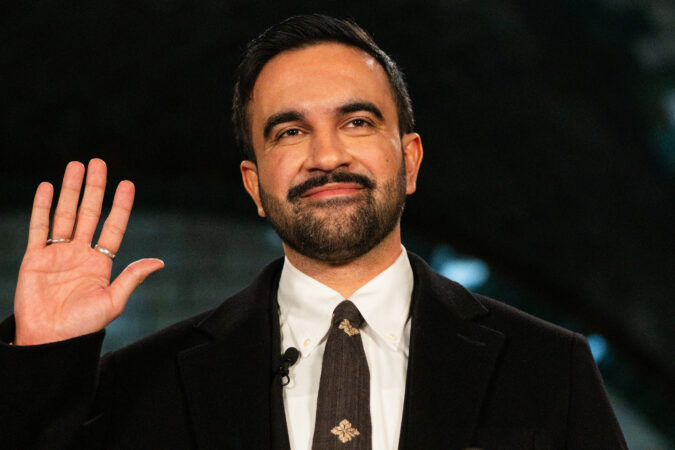
    NEW YORK — Incoming Mayor Zohran Mamdani took his midnight oath of office on a centuries-old Quran, marking the first time a mayor of New York City used Islam’s holy text to be sworn in and underscoring a series of historic firsts for the city.

    Mamdani, a 34-year-old Democrat, became mayor in a long-closed subway station beneath City Hall, the first Muslim, first South Asian, and first African-born person to hold that position.

    These milestones — as well as the historical Quran — reflect the longstanding and vibrant Muslim residents of the nation’s most populous city, according to a scholar who helped Mamdani’s wife, Rama Duwaji, select one of the books.

    Most of Mamdani’s predecessors were sworn in on a Bible, although the oath to uphold the federal, state, and city constitutions does not require the use of any religious text.

    And while he has focused heavily on the issue of affordability during his campaign, Mamdani was outspoken about his Muslim faith. He frequently appeared at mosques across the five boroughs as he built a base of support that included many first-time South Asian and Muslim voters.

    This photo provided by the New York Public Library shows the Schomburg Quran.

    A look at the three Qurans that Mamdani used

    Two Qurans were to be used during the subway ceremony: his grandfather’s Quran and a pocket-sized version that dates to the late 18th or early 19th century. It is part of the collection at the New York Public Library’s Schomburg Center for Research in Black Culture.

    That copy of the Quran symbolizes the diversity and reach of the city’s Muslims, said Hiba Abid, the library’s curator for Middle Eastern and Islamic Studies.

    “It’s a small Quran, but it brings together elements of faith and identity in New York City history,” Abid said.

    For a subsequent swearing-in ceremony at City Hall on the first day of the year, Mamdani used both his grandfather’s and grandmother’s Qurans. The campaign hasn’t offered more details on those heirlooms.

    One Quran’s long journey to Mamdani’s hand

    The manuscript was acquired by Arturo Schomburg, a Black Puerto Rican historian whose collection documented the global contributions of people of African descent. While it is unclear how Schomburg came into possession of the Quran, scholars believe it reflected his interest in the historical relationship between Islam and Black cultures in the United States and across Africa.

    Unlike ornate religious manuscripts associated with royalty or elites, this copy of the Quran is modest in design. It has a deep red binding with a simple floral medallion and is written in black and red ink. The script is plain and readable, suggesting it was created for everyday use rather than ceremonial display.

    Those features indicate the manuscript was intended for ordinary readers, Abid said, a quality she described as central to its meaning.

    “The importance of this Quran lies not in luxury, but in accessibility,” she said.

    Because the manuscript is undated and unsigned, scholars relied on its binding and script to estimate when it was produced, placing it sometime in the late 18th or early 19th century during the Ottoman period in a region that includes what is now Syria, Lebanon, Israel, the Palestinian territories and Jordan.

    Abid said the manuscript’s journey to New York mirrors Mamdani’s own layered background. Mamdani is a South Asian New Yorker who was born in Uganda, and Duwaji is American-Syrian.

    Identity and controversy

    The meteoric rise of a Muslim democratic socialist also brought a surge of Islamophobic rhetoric, amplified by national attention on the race.

    In an emotional speech days before the election, Mamdani said the hostility had only strengthened his resolve to be visible about his faith.

    “I will not change who I am, how I eat, or the faith that I’m proud to call my own,” he said. “I will no longer look for myself in the shadows. I will find myself in the light.”

    The decision to use a Quran has drawn fresh criticism from some conservatives. U.S. Sen. Tommy Tuberville of Alabama, a Republican, wrote on social media, “The enemy is inside the gates,” in response to a news article about Mamdani’s inauguration. The Council on American-Islamic Relations, a civil-rights group, has designated Tuberville as an anti-Muslim extremist based on past statements.

    Such backlash is not new. In 2006, Keith Ellison, a Democrat from Minnesota who was the first Muslim elected to Congress, faced condemnation from conservatives after he chose to use a Quran for his ceremonial oath.

    Following the inauguration, the Quran will go on public display at the New York Public Library. Abid said she hopes attention surrounding the ceremony — whether supportive or critical — will prompt more people to explore the library’s collections documenting Islamic life in New York, ranging from early 20th century Armenian and Arabic music recorded in the city to firsthand accounts of Islamophobia after the Sept. 11 attacks.

    “This manuscript was meant to be used by ordinary readers when it was produced,” Abid said. “Today it lives in a public library where anyone can encounter it.”

  • France grants citizenship to George and Amal Clooney and their twins Ella and Alexander

    France grants citizenship to George and Amal Clooney and their twins Ella and Alexander

    PARIS — Call them Monsieur and Madame Clooney.

    France’s government says that George Clooney, his wife Amal, and their twins Ella and Alexander have been awarded French citizenship.

    The naturalizations of the Kentucky-born movie star and his family were announced last weekend in the Journal Officiel, where French government decrees are published.

    The government notice indicated that human rights lawyer Amal Clooney was naturalized under her maiden name, Amal Alamuddin. It also noted that George Clooney’s middle name is Timothy.

    The couple purchased an estate in France in 2021. In an interview with Esquire in October, Clooney described their “farm in France” as their primary residence — a decision the 64-year-old actor and his 47-year-old wife made with their children in mind.

    “I was worried about raising our kids in LA, in the culture of Hollywood,” he told the magazine. “I don’t want them to be walking around worried about paparazzi. I don’t want them being compared to somebody else’s famous kids.”

    Growing up away from the spotlight in France, “they’re not on their iPads, you know?” he said. “They have dinner with grown-ups and have to take their dishes in. They have a much better life.”

    Representatives for George Clooney did not respond to the Associated Press’ request for comment Monday. It wasn’t clear whether he retained his American citizenship. Amal Clooney was born in Lebanon and raised in the United Kingdom. The 8-year-old twins were born in London.

    The French government’s Interior Ministry did not explain why the Clooneys were entitled to French citizenship but said in a statement to the AP that the couple “followed a rigorous procedure” with security checks and interviews required as part of the naturalization process.

    Non-French residents of France have multiple possible routes to becoming naturalized, including if they are deemed to have abilities and talents that would enable them to render what the government describes as “important services to France.”

    In recent media interviews when he was promoting Jay Kelly, Clooney said that he is trying to teach himself French using a language-learning app but that it remains “horrible, horrible.” He said that his wife and children speak the language perfectly.

    “They speak French in front of me so that they can say terrible things about me to my face and I don’t know,” he joked, speaking to French broadcaster Canal+.

    French media have reported that the Clooneys live part-time in their luxury 18th-century villa outside the town of Brignoles in southern France, where they can keep a lower profile and their children are protected from unauthorized photographs by French privacy laws.

    Brignoles Mayor Didier Brémond told broadcaster BFMTV on Tuesday that the Clooneys are “a very simple and very accessible family” and noted that the actor shops in town and attended the opening of its cinema. Their decision to become French citizens testified to “his love for our country,” the mayor said.

    “Here, he wants to live normally and that’s what he is trying to do,” he said.

  • Gospel singer Richard Smallwood has died at 77, leaving a legacy that inspired many in music

    Gospel singer Richard Smallwood has died at 77, leaving a legacy that inspired many in music

    Richard Smallwood, a gospel singer and recording artist nominated eight times for Grammy Awards, has died. He was 77.

    Mr. Smallwood died Tuesday of complications of kidney failure at a rehabilitation and nursing center in Sandy Spring, Md., his representative Bill Carpenter announced.

    Mr. Smallwood had health issues for many years, and music gave him the strength to endure, Carpenter said in an interview.

    “Richard was so dedicated to music, and that was the thing that kept him alive all these years,” he said. “Making music that made people feel something is what made him want to keep breathing and keep moving and keep living.”

    Mr. Smallwood’s songs were performed and recorded over the years by artists such as Whitney Houston, Stevie Wonder, Destiny’s Child, and Boyz II Men. Houston brought his music to film by performing “I Love the Lord” in the 1996 movie The Preacher’s Wife, according to Mr. Smallwood’s biography at the Gospel Music Hall of Fame.

    Mr. Smallwood “opened up my whole world of gospel music,” singer and songwriter Chaka Khan wrote on Facebook after his death.

    “His music didn’t just inspire me, it transformed me,” she said. “He is my favorite pianist, and his brilliance, spirit, and devotion to the music have shaped generations, including my own journey.”

    Mr. Smallwood was born Nov. 30, 1948, in Atlanta and began to play piano by ear by the age of 5, according to biographic materials provided by Carpenter. By age 7, he was taking formal lessons. He had formed his own gospel group by the time he was 11.

    He was primarily raised in Washington, D.C., by his mother, Mabel, and his stepfather, the Rev. Chester Lee “C.L.” Smallwood. His stepfather was the pastor of Union Temple Baptist Church in Washington.

    Mr. Smallwood was a music pioneer in multiple ways at Howard University in Washington, where he graduated cum laude with a music degree. He was a member of Howard’s first gospel group, the Celestials. He was also a founding member of the university’s gospel choir, according to an obituary from Carpenter.

    After college, Mr. Smallwood taught music at the University of Maryland and went on to form the Richard Smallwood Singers in 1977, bringing a contemporary sound to traditional gospel music. He later formed Vision, a large choir that fueled some of his biggest gospel hits, including “Total Praise.”

    “Total Praise” became a modern-day hymn that touched people from all types of backgrounds and walks of life, Carpenter said by phone Wednesday.

    “You can go into any kind of church — a Black church, a white church, a nondenominational church — and you might hear that song,” he said. “Somehow it found its footing throughout the whole Christian world. If he never wrote anything else, that would have put him in the modern hymn book.”

    Wonder performed “Total Praise” at the funeral of the Rev. Dr. Martin Luther King Jr.’s son Dexter Scott King at Ebenezer Baptist Church in Atlanta on Feb. 10, 2024.

    In recent years, mild dementia and other health issues prevented Mr. Smallwood from recording music, and members of his Vision choir helped care for him.

    His legacy will live on “through every note and every soul he touched,” Khan said.

    “I am truly looking forward to singing with you in heaven,” she said.

  • Isiah Whitlock Jr., actor from ‘The Wire,’ ‘Veep,’ and Spike Lee films, has died at 71

    Isiah Whitlock Jr., actor from ‘The Wire,’ ‘Veep,’ and Spike Lee films, has died at 71

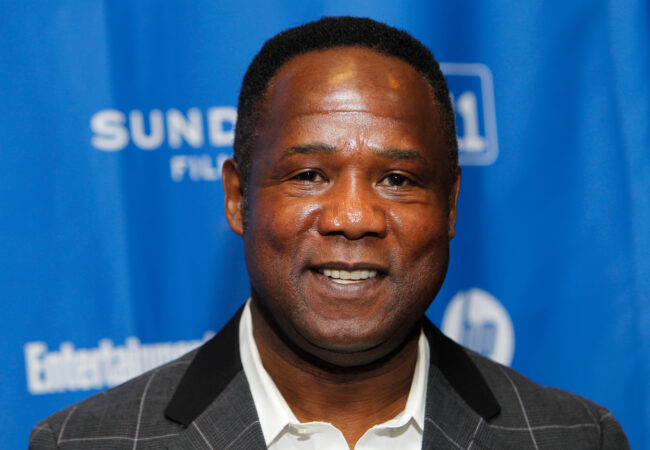
    Isiah Whitlock Jr., an actor who made frequent memorable appearances on the HBO series The Wire and Veep and in five films with director Spike Lee, died Tuesday. He was 71.

    Mr. Whitlock’s manager Brian Liebman told the Associated Press in an email that the actor died in New York after a short illness.

    Mr. Whitlock played openly corrupt State Sen. Clay Davis on 25 episodes across the five seasons of The Wire.

    Davis, a fan-favorite character, was known for his profane catchphrase — “sheee-it” — delivered by Mr. Whitlock in moments of triumph and blunt honesty. The actor first used the phrase in his first film with Lee, 2002’s The 25th Hour, when his detective character discovers a cache of drugs hidden in a couch.

    “It’s a big, big, big loss,” Lee said in a phone call with the AP on Tuesday night. “I’m going to miss him for the rest of my life.”

    Mr. Whitlock went on to appear in five other Lee films, including 2004’s She Hate Me, 2012’s Red Hook Summer, 2015’s Chi-Raq, 2018’s BlacKkKlansman, and 2020’s Da 5 Bloods.

    “We vibed over all those years,” Lee said. “We clicked from the jump.”

    Lee said he has especially sweet memories of the extended time he spent with Mr. Whitlock shooting Da 5 Bloods on location in Thailand, and he fondly remembered the last time he saw Mr. Whitlock — Lee and his daughter, Satchel, sat with him at a screening of Kiss of the Spider Woman earlier this year.

    “He was just a beautiful, beautiful soul,” Lee said. “If you were around him, he made everybody feel good in his presence. He would radiate. I would put that over his acting.”

    Lee pointed to Mr. Whitlock’s comic talents both on screen and off.

    “He was hilarious,” Lee said. “That was just his nature, he made people laugh. Everybody was in on the joke.”

    Mr. Whitlock is the second significant star of The Wire to die in recent weeks after the death of actor James Ransone.

    A native of South Bend, Ind., Mr. Whitlock went to Southwest Minnesota State University, where he played football and studied theater. Injuries pushed him to study acting, and he moved to San Francisco to work in theater.

    He began appearing in small television guest roles on shows including Cagney and Lacy in the late 1980s, and he had very small roles in the 1990 films Goodfellas and Gremlins 2: The New Batch.

    After The Wire, Whitlock moved on to another HBO show, the political satire Veep, where he played Secretary of Defense George Maddox for three seasons. The character ran against Julia Louis-Dreyfus′ Selina Meyer in presidential primaries.

    The Wire creator David Simon also paid tribute to Mr. Whitlock in a post on Bluesky.

    “As fine an actor as he was,” Simon said, “Isiah was an even better spirit and the greatest gentleman.”

  • New York subway ends its MetroCard era and switches fully to tap-and-go fares

    New York subway ends its MetroCard era and switches fully to tap-and-go fares

    NEW YORK — When the MetroCard replaced the New York City subway token in 1994, the swipeable plastic card infused much-needed modernity into one of the world’s oldest and largest transit systems.

    Now, more than three decades later, the gold-hued fare card and its notoriously finicky magnetic strip are following the token into retirement.

    The last day to buy or refill a MetroCard is Dec. 31, 2025, as the transit system fully transitions to OMNY, a contactless payment system that allows riders to tap their credit card, phone, or other smart device to pay fares, much like they do for other everyday purchases.

    Transit officials say more than 90% of subway and bus trips are now paid using the tap-and-go system, introduced in 2019.

    Major cities around the world, including London and Singapore, have long used similar contactless systems. In the U.S., San Francisco launched a pay-go system earlier this year, joining Chicago and others.

    MetroCards upended how New Yorkers commute

    The humble MetroCard may have outlasted its useful life, but in its day it was revolutionary, says Jodi Shapiro, curator at the New York Transit Museum in Brooklyn, which opened an exhibit earlier this month reflecting on the MetroCard’s legacy.

    Before MetroCards, bus and subway riders relied on tokens, the brass-colored coins introduced in 1953 that were purchased from station booths. When the subway opened in 1904, paper tickets cost just a nickel, or about $1.82 in today’s dollars.

    “There was a resistance to change from tokens to something else because tokens work,” Shapiro said on a recent visit to the museum, housed underground in a decommissioned subway station. “MetroCards introduced a whole other level of thinking for New Yorkers.”

    The Metropolitan Transportation Authority launched public campaigns to teach commuters how to swipe the originally blue-colored cards correctly, hoping to avoid the dreaded error message or lost fares. Officials even briefly toyed with the idea of an quirky mascot, the Cardvaark, before coming to their senses.

    The cards quickly became collectors items as the transit system rolled out special commemorative editions marking major events, such as the “Subway Series” between baseball’s New York Mets and the New York Yankees in the 2000 World Series. At the time, a fare cost $1.50.

    Artists from David Bowie and Olivia Rodrigo to seminal New York hip hop acts, such as Wu-Tang Clan, the Notorious B.I.G., and LL Cool J, have also graced the plastic card over the years, as have iconic New York TV shows like Seinfeld and Law & Order.

    “For me, the most special cards are cards which present New York City to the world,” said Lev Radin, a collector in the Bronx. “Not only photos of landmarks, skylines, but also about people who live and make New York special.”

    Perfecting the correct angle and velocity of the MetroCard swipe also became something of a point of pride separating real New Yorkers from those just visiting.

    During her failed 2016 presidential campaign, Hillary Clinton, a former U.S. Senator from New York, took an excruciating five swipes at a Bronx turnstile. In fairness, her chief Democratic opponent at the time, U.S. Sen. Bernie Sanders of Vermont, a native Brooklynite, didn’t even appear to realize tokens had been discontinued.

    Cost savings and lingering concerns

    Unlike the MetroCard rollout, OMNY has required little adjustment.

    Riders reluctant to use a credit card or smart device can purchase an OMNY card they can reload, similar to a MetroCard. Existing MetroCards will also continue to work into 2026, allowing riders to use remaining balances.

    MTA spokespersons declined to comment, pointing instead to their many public statements as the deadline approaches.

    The agency has said the changeover saves at least $20 million annually in MetroCard-related costs.

    The new system also allows unlimited free rides within a seven-day period because the fare is capped after 12 rides. It’ll max out at $35 a week once the fare rises to $3 in January.

    Still, new changes come with tradeoffs, with some critics raising concerns about data collection and surveillance.

    Near Times Square on a recent morning, Ronald Minor was among the dwindling group of “straphangers” still swiping MetroCards.

    The 70-year-old Manhattan resident said he’s sad to see them go. He has an OMNY card but found the vending machines to reload it more cumbersome.

    “It’s hard for the elders,” Minor said as he caught a train to Brooklyn. “Don’t push us aside and make it like we don’t count. You push these machines away, you push us away.”

    John Sacchetti, another MetroCard user at the Port Authority stop, said he likes being able to see his balance as he swipes through a turnstile so he knows how much he’s been spending on rides.

    “It’s just like everything else, just something to get used to,” he said as he headed uptown. ”Once I get used to it, I think it’ll be OK.”

  • Brigitte Bardot, 1960s French sex symbol turned militant animal rights activist, has died at 91

    Brigitte Bardot, 1960s French sex symbol turned militant animal rights activist, has died at 91

    PARIS — Brigitte Bardot, the French 1960s sex symbol who became one of the greatest screen sirens of the 20th century and later a militant animal rights activist and far-right supporter, has died. She was 91.

    Ms. Bardot died Sunday at her home in southern France, according to Bruno Jacquelin, of the Brigitte Bardot Foundation for the protection of animals. Speaking to the Associated Press, he gave no cause of death, and said that no arrangements had been made for funeral or memorial services. She had been hospitalized last month.

    Ms. Bardot became an international celebrity as a sexualized teen bride in the 1956 movie And God Created Woman. Directed by her then husband Roger Vadim, it triggered a scandal with scenes of the long-legged beauty dancing on tables naked.

    At the height of a cinema career that spanned more than two dozen films and three marriages, Ms. Bardot came to symbolize a nation bursting out of bourgeois respectability. Her tousled blond hair, voluptuous figure, and pouty irreverence made her one of France’s best-known stars, even as she struggled with depression.

    Such was her widespread appeal that in 1969 her features were chosen to be the model for “Marianne,” the national emblem of France and the official Gallic seal. Bardot’s face appeared on statues, postage stamps, and coins.

    ‘’We are mourning a legend,’’ French President Emmanuel Macron said in an X post.

    Ms. Bardot’s second career as an animal rights activist was equally sensational. She traveled to the Arctic to blow the whistle on the slaughter of baby seals. She also condemned the use of animals in laboratory experiments, and she opposed Muslim slaughter rituals.

    “Man is an insatiable predator,” Ms. Bardot told the Associated Press on her 73rd birthday, in 2007. “I don’t care about my past glory. That means nothing in the face of an animal that suffers, since it has no power, no words to defend itself.”

    Her activism earned her compatriots’ respect and, in 1985, she was awarded the Legion of Honor, the nation’s highest recognition.

    Turn to the far right

    Later, however, she fell from public grace as her animal protection diatribes took on a decidedly extremist tone. She frequently decried the influx of immigrants into France, especially Muslims.

    She was convicted and fined five times in French courts of inciting racial hatred, in incidents inspired by her opposition to the Muslim practice of slaughtering sheep during annual religious holidays.

    Ms. Bardot’s 1992 marriage to fourth husband Bernard d’Ormale, a onetime adviser to far-right National Front leader Jean-Marie Le Pen, contributed to her political shift. She described Le Pen, an outspoken nationalist with multiple racism convictions of his own, as a “lovely, intelligent man.”

    In 2012, she supported the presidential bid of Marine Le Pen, who now leads her father’s renamed National Rally party. Le Pen paid homage Sunday to an “exceptional woman” who was “incredibly French.”

    In 2018, at the height of the #MeToo movement, Ms. Bardot said in an interview that most actors protesting sexual harassment in the film industry were “hypocritical,” because many played “the teases” with producers to land parts.

    She said she had never had been a victim of sexual harassment and found it “charming to be told that I was beautiful or that I had a nice little ass.”

    Privileged but ‘difficult’ upbringing

    Brigitte Anne-Marie Bardot was born Sept. 28, 1934, to a wealthy industrialist. A shy child, she studied classical ballet and was discovered by a family friend who put her on the cover of Elle magazine at age 14.

    Bardot once described her childhood as “difficult” and said that her father was a strict disciplinarian who would sometimes punish her with a horse whip.

    Vadim, a French movie producer who she married in 1952, saw her potential and wrote And God Created Woman to showcase her provocative sensuality, an explosive cocktail of childlike innocence and raw sexuality.

    The film, which portrayed Ms. Bardot as a teen who marries to escape an orphanage and then beds her brother-in-law, had a decisive influence on New Wave directors Jean-Luc Godard and François Truffaut, and came to embody the hedonism and sexual freedom of the 1960s.

    The film was a box-office hit, and it made Ms. Bardot a superstar. Her girlish pout, tiny waist and generous bust were often more appreciated than her talent.

    “It’s an embarrassment to have acted so badly,” Ms. Bardot said of her early films. “I suffered a lot in the beginning. I was really treated like someone less than nothing.”

    Ms. Bardot’s unabashed, off-screen love affair with co-star Jean-Louis Trintignant eradicated the boundaries between her public and private life and turned her into a hot prize for paparazzi.

    Ms. Bardot never adjusted to the limelight. She blamed the constant media attention for the suicide attempt that followed 10 months after the birth of her only child, Nicolas. Photographers had broken into her house two weeks before she gave birth to snap a picture of her pregnant.

    Nicolas’ father was Jacques Charrier, a French actor who she married in 1959 but who never felt comfortable in his role as Monsieur Bardot. Ms. Bardot soon gave up her son to his father, and later said she had been chronically depressed and unready for the duties of being a mother.

    “I was looking for roots then,” she said in an interview. “I had none to offer.”

    In her 1996 autobiography Initiales B.B., she likened her pregnancy to “a tumor growing inside me,” and described Charrier as “temperamental and abusive.”

    Ms. Bardot married her third husband, West German millionaire playboy Gunther Sachs, in 1966, and they divorced three years later.

    Among her films were A Parisian (1957); In Case of Misfortune, in which she starred in 1958 with screen legend Jean Gabin; The Truth (1960); Private Life (1962); A Ravishing Idiot (1964); Shalako (1968); Women (1969); The Bear and the Doll (1970); Rum Boulevard (1971); and Don Juan (1973).

    With the exception of 1963’s critically acclaimed Contempt, directed by Godard, Ms. Bardot’s films were rarely complicated by plots. Often they were vehicles to display Ms. Bardot in scanty dresses or frolicking nude in the sun.

    “It was never a great passion of mine,” she said of filmmaking. “And it can be deadly sometimes. Marilyn [Monroe] perished because of it.”

    Ms. Bardot retired to her Riviera villa in St. Tropez at the age of 39 in 1973 after The Woman Grabber. As fans brought flowers to her home Sunday, the local St. Tropez administration called for “respect for the privacy of her family and the serenity of the places where she lived.”

    Middle-aged reinvention

    She emerged a decade later with a new persona: An animal rights lobbyist, her face was wrinkled and her voice was deep following years of heavy smoking. She abandoned her jet-set life and sold off movie memorabilia and jewelry to create a foundation devoted exclusively to the prevention of animal cruelty.

    Depression sometimes dogged her, and she said that she attempted suicide again on her 49th birthday.

    Her activism knew no borders. She urged South Korea to ban the sale of dog meat and once wrote to U.S. President Bill Clinton asking why the U.S. Navy recaptured two dolphins it had released into the wild.

    She attacked centuries-old French and Italian sporting traditions including the Palio, a free-for-all horse race, and campaigned on behalf of wolves, rabbits, kittens, and turtle doves.

    “It’s true that sometimes I get carried away, but when I see how slowly things move forward … my distress takes over,” Ms. Bardot told the AP when asked about her racial hatred convictions and opposition to Muslim ritual slaughter,

    In 1997, several towns removed Bardot-inspired statues of Marianne after the actor voiced anti-immigrant sentiment. Also that year, she received death threats after calling for a ban on the sale of horse meat.

    Environmental campaigner Paul Watson, who was beaten on a seal hunt protest in Canada alongside Ms. Bardot in 1977 and campaigned with her for five decades, acknowledged that “many disagreed with Brigitte’s politics or some of her views.”

    “Her allegiance was not to the world of humans,” he said. “The animals of this world lost a wonderful friend today.”

    Ms. Bardot once said that she identified with the animals that she was trying to save.

    “I can understand hunted animals, because of the way I was treated,” Ms. Bardot said. “What happened to me was inhuman. I was constantly surrounded by the world press.”