Category: Entertainment Wires

  • Virtual reality opens doors for older people to build closer connections in real life

    Virtual reality opens doors for older people to build closer connections in real life

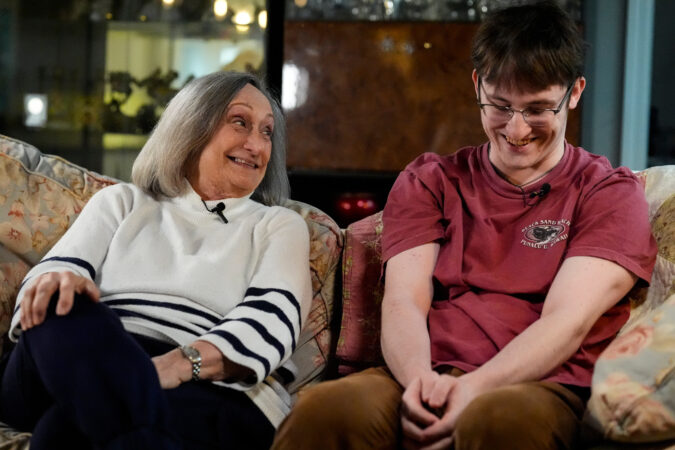
    LOS GATOS, Calif. — Like many retirement communities, the Terraces serves as a tranquil refuge for a nucleus of older people who no longer can travel to faraway places or engage in bold adventures.

    But they can still be thrust back to their days of wanderlust and thrill-seeking whenever caregivers at the community in Los Gatos, Calif., schedule a date for residents — many of whom are in their 80s and 90s — to take turns donning virtual reality headsets.

    Within a matter of minutes, the headsets can transport them to Europe, immerse them in the ocean depths, or send them soaring on breathtaking hang-gliding expeditions while they sit by one another. The selection of VR programming was curated by Rendever, a company that has turned a sometimes isolating form of technology into a catalyst for better cognition and social connections in 800 retirement communities in the United States and Canada.

    A group of Terraces residents who participated in a VR session earlier this year found themselves paddling their arms alongside their chairs as they swam with a pod of dolphins while watching one of Rendever’s 3D programs. “We got to go underwater and didn’t even have to hold our breath!” exclaimed 81-year-old Ginny Baird following the virtual submersion.

    During a session featuring a virtual ride in a hot-air balloon, one resident gasped, “Oh, my God!” Another said with a shudder: “It’s hard to watch!”

    The Rendever technology can also be used to virtually take older adults back to the places where they grew up as children. For some, it will be the first time they have seen their hometowns, virtually or otherwise, in decades.

    A virtual trip to her childhood neighborhood in New York City’s Queens borough helped sell Sue Livingstone, 84, on the merits of the VR technology even though she still is able to get out more often than many residents of the Terraces, which is located in Silicon Valley, about 55 miles south of San Francisco.

    “It isn’t just about being able to see it again. It’s about all the memories that it brings back,” Livingstone said. “There are a few people living here who never really leave their comfort zones. But if you could entice them to come down to try out a headset, they might find that they really enjoy it.”

    Adrian Marshall, the Terraces’ community life director, said that once word about a VR experience spreads from one resident to another, more of the uninitiated typically become curious enough to try it out — even if it means missing out on playing Mexican Train, a dominoes-like board game that is popular in the community.

    “It turns into a conversation starter for them. It really does connect people,” Marshall said of Rendever’s VR programming. “It helps create a human bridge that makes them realize they share certain similarities and interests. It turns the artificial world into reality.”

    Rendever, a privately owned company based in Somerville, Mass., hopes to build upon its senior living platform with a recent grant from the National Institutes of Health that will provide nearly $4.5 million to study ways to reduce social isolation among seniors living at home and their caregivers.

    Some studies have found VR programming presented in a limited viewing format can help older people maintain and improve cognitive functions, burnish memories, and foster social connections with their families and fellow residents of care facilities. Experts say the technology may be useful as an addition to — not a replacement for — other activities.

    “There is always a risk of too much screen time,” said Katherine “Kate” Dupuis, a neuropsychologist and professor who studies aging issues at Sheridan College in Canada. “But if you use it cautiously, with meaning and purpose, it can be very helpful. It can be an opportunity for the elderly to engage with someone and share a sense of wonder.”

    For older people, VR headsets may be an easier way to interact with technology than fumbling around with a smartphone or another device that requires navigating buttons or other mechanisms, said Pallabi Bhowmick, a researcher at the University of Illinois Urbana-Champaign who is examining the use of virtual reality with older adults.

    “The stereotypes that older adults aren’t willing to try new technology needs to change, because they are willing and want to adapt to technologies that are meaningful to them,” Bhowmick said. “Besides helping them to relieve stress, be entertained, and connect with other people, there is an intergenerational aspect that might help them build their relationships with younger people who find out they use VR and say, ‘Grandpa is cool!’”

    Rendever CEO Kyle Rand’s interest in helping his own grandmother deal with the emotional and mental challenges of aging pushed him down a path that led him to cofound the company in 2016 after studying neuroengineering at Duke University.

    “What really fascinates me about humans is just how much our brain depends on social connection and how much we learn from others,” Rand said. “A group of elderly residents who don’t really know each other that well can come together, spend 30 minutes in a VR experience together, and then find themselves sitting down to have lunch together while continuing a conversation about the experience.”

    It’s a large enough market that another VR specialist, Dallas-based Mynd Immersive, competes against Rendever with services tailored for senior living communities.

    Besides helping create social connections, the VR programming from both Rendever and Mynd has been employed as a possible tool for potentially slowing down the effects of dementia. That’s how another Silicon Valley retirement village, the Forum, sometimes uses the technology.

    Bob Rogallo, a Forum resident with dementia that has rendered him speechless, seemed to be enjoying taking a virtual hike through Glacier National Park in Montana as he nodded and smiled while celebrating his 83rd birthday with his wife of 61 years.

    Sallie Rogallo, who does not have dementia, said the experience brought back fond memories of the couple’s visits to the park during the more than 30 years they spent cruising around the U.S. in their recreational vehicle.

    “It made me wish I was 30 years younger so I could do it again,” she said of the virtual visit to Glacier. “This lets you get out of the same environment and either go to a new place or visit places where you have been.”

    In another session at the Forum, 93-year-old Almut Schultz laughed with delight while viewing a virtual classical music performance at the Red Rocks Amphitheatre in Colorado and later seemed to want to play with a puppy frolicking around in her VR headset.

    “That was quite a session we had there,” Schultz said with a big grin after she took off her headset and returned to reality.

  • King Charles III calls for kindness and unity in Christmas message amid global conflicts

    King Charles III calls for kindness and unity in Christmas message amid global conflicts

    LONDON — On a Christmas Day when the war in Ukraine casts a shadow over Europe, concerns over immigration divide societies, and some politicians fan anger and resentment, Britain’s King Charles III called on people to focus on kindness instead of conflict.

    Delivering his annual holiday address from Westminster Abbey, Charles said Thursday the Christmas story of wise men and shepherds traveling through the night to find their savior shows how we can find strength in the “companionship and kindness of others.”

    “To this day, in times of uncertainty, these ways of living are treasured by all the great faiths and provide us with deep wells of hope, of resilience in the face of adversity,” Charles said. “Peace through forgiveness, simply getting to know our neighbors, and by showing respect to one another, creating new friendships.”

    “In this, with the great diversity of our communities, we can find the strength to ensure that right triumphs over wrong,” he added.

    The speech, which concluded with a Christmas carol sung by a Ukrainian choir, came as European leaders have been rallying support for Ukraine amid signs that President Donald Trump is losing patience with America’s traditional European allies. At home, British politics have become increasingly bitter as Prime Minister Keir Starmer’s government struggles to control unauthorized migration and bolster creaking public services.

    Charles, the titular head of the Church of England, chose Westminster Abbey as the site of his Christmas Day broadcast to underscore the theme of pilgrimage that ran through the speech. The abbey, known as the site of coronations and royal weddings, is also the focus of an annual pilgrimage honoring Edward the Confessor, an early king of England who was canonized as a saint in 1161.

    Pilgrimage is a word less used today, but it is of particular significance for our modern world, and especially at Christmas,” he said. “This is about journeying forward into the future, while also journeying back to remember the past and learn from its lessons.”

    Charles and his family made their own pilgrimage on foot earlier in the day to St. Mary Magdalene Church on the king’s private Sandringham Estate, about 100 miles north of London.

    Charles and Queen Camilla, along with Prince William and his wife, Kate, and their children, Princes George and Louis and Princess Charlotte, and their extended family, walked to the church and greeted the crowds of people after the service.

    Events earlier this year marking the 80th anniversary of the end of World War II underscored the need to learn from the past, Charles said. While there are fewer and fewer living veterans of that conflict, we must remember the courage and sacrifice of those who fought the war and the way communities came together “in the face of such great challenge,” he said.

    “These are the values which have shaped our country and the Commonwealth,” he said. “As we hear of division, both at home and abroad, they are the values of which we must never lose sight.”

    The monarch’s annual holiday message is watched by millions of people in the U.K. and across the Commonwealth, a voluntary association of 56 independent nations, most of which have historic ties to Britain. The prerecorded speech is broadcast at 3 p.m. London time, when many families are enjoying their traditional Christmas lunch.

    The speech is one of the rare occasions when Charles, 77, is able to voice his own views and does not seek guidance from the government.

    This year’s address came just two weeks after Charles made a deeply personal television appearance in which he said “good news” from his doctors meant that he would be able to reduce his treatment for cancer in the new year.

    The king was diagnosed with a still-undisclosed form of cancer in early 2024. Buckingham Palace says his treatment is now moving to a “precautionary phase” and his condition will be monitored to ensure his continued recovery.

    The speech was accompanied by a video of members of the royal family, from the king to grandchildren George, Louis, and Charlotte, meeting with the public and carrying out their royal duties.

    That included scenes from the king’s historic trip to the Vatican as he works to forge closer relations between the Church of England and the Catholic Church.

    The event was the first time since King Henry VIII severed ties with Rome that the leaders of the two Christian churches, divided for centuries over issues that now include the ordination of female priests in the Church of England, had prayed together.

    The king’s message was clear: Even if some years had passed, there is always hope to start over. Peace is possible.

  • Mohammad Bakri, renowned and controversial Palestinian actor and filmmaker, dies at 72

    Mohammad Bakri, renowned and controversial Palestinian actor and filmmaker, dies at 72

    TEL AVIV, Israel — Mohammad Bakri, 72, a Palestinian director and actor who sought to share the complexities of Palestinian identity and culture through a variety of works in both Arabic and Hebrew, has died, his family announced.

    Mr. Bakri was best known for Jenin, Jenin, a 2003 documentary he directed about an Israeli military operation in the northern West Bank city the previous year during the second Palestinian intifada, or uprising. The film, focusing on the heavy destruction and heartbreak of its Palestinian residents, was banned by Israel.

    Mr. Bakri also acted in the 2025 film All That’s Left of You, a drama about a Palestinian family through more than 76 years, alongside his sons, Adam and Saleh Bakri, who are also actors. The film has been shortlisted by the Academy Awards for the best international feature film.

    Over the years, he made several films that spanned the spectrum of Palestinian experiences. He also acted in Hebrew, including at Israel’s national theater in Tel Aviv, and appeared in a number of famous Israeli films in the 1980s and 1990s. He studied at Tel Aviv University.

    Mr. Bakri, who was born in northern Israel and held Israeli citizenship, dabbled in both film and theater. His best-known one-man show from 1986, The Pessoptimist, based on the writings of the Palestinian author Emile Habiby, focused on the intricacies and emotions of someone who has both Israeli and Palestinian identities.

    During the 1980s, Mr. Bakri played characters in mainstream Israeli films that humanized the Palestinian identity, including Beyond the Walls, a seminal film about incarcerated Israelis and Palestinians, said Raya Morag, a professor at the Hebrew University of Jerusalem who specializes in cinema and trauma.

    “He broke stereotypes about how Israelis looked at Palestinians, and allowing someone Palestinian to be regarded as a hero in Israeli society,” she said.

    “He was a very brave person, and he was brave by standing to his ideals, choosing not to be conformist in any way, and paying the price in both societies,” Morag said.

    Mr. Bakri faced some pushback within Palestinian society for his cooperation with Israelis. After Jenin, Jenin, he was plagued by almost two decades of court cases in Israel, where the film was seen as unbalanced and inciting.

    In 2022, Israel’s Supreme Court upheld a ban on the documentary, saying it defamed Israeli soldiers, and ordered Mr. Bakri to pay tens of thousands of dollars in damages to an Israeli military officer for defamation.

    Jenin, Jenin was a turning point in Mr. Bakri’s career. In Israel, he became a polarizing figure and he never worked with mainstream Israeli cinema again, Morag said. “He was loyal to himself despite all the pressures from inside and outside,” she added. “He was a firm voice that did not change during the years.”

    Local media quoted Mr. Bakri’s family as saying he died Wednesday after suffering from heart and lung problems. A cousin, Rafic, told the Arabic news site Al-Jarmaq that Mr. Bakri was a tenacious advocate for the Palestinians who used his works to express support for his people.

    “I am certain that Abu Saleh will remain in the memory of Palestinian people everywhere and all people of the free world,” he said, using Mr. Bakri’s nickname.

  • A look at aging baby boomers in the United States

    A look at aging baby boomers in the United States

    The oldest baby boomers — once the vanguard of an American youth that revolutionized U.S. culture and politics — turn 80 in 2026.

    The generation that twirled the first plastic hula hoops and dressed up the first Barbie dolls, embraced the TV age, blissed out at Woodstock and protested and fought in the Vietnam War — the cohort that didn’t trust anyone over age 30 — now is contributing to the overall aging of America.

    Boomers becoming octogenarians in 2026 include actor Henry Winkler and baseball Hall of Famer Reggie Jackson, singers Cher and Dolly Parton and presidents Donald Trump, George W. Bush, and Bill Clinton.

    The aging and shrinking youth of America

    America’s population swelled with around 76 million births from 1946 to 1964, a spike magnified by couples reuniting after World War Two and enjoying postwar prosperity.

    Boomers were better educated and richer than previous generations, and they helped grow a consumer-driven economy. In their youth, they pushed for social change through the Civil Rights Movement, the women’s rights movement and efforts to end the Vietnam War.

    “We had rock ‘n’ roll. We were the first generation to get out and demonstrate in the streets. We were the first generation, that was, you know, a socially conscious generation,” said Diane West, a metro Atlanta resident who turns 80 in January. “Our parents played by the rules. We didn’t necessarily play by the rules, and there were lots of us.”

    As they got older they became known as the “me” generation, a pejorative term coined by writer Tom Wolfe to reflect what some regarded as their self-absorption and consumerism.

    “The thing about baby boomers is they’ve always had a spotlight on them, no matter what age they were,” Brookings demographer William Frey said. “They were a big generation, but they also did important things.”

    By the end of this decade, all baby boomers will be 65 and older, and the number of people 80 and over will double in 20 years, Frey said.

    The share of senior citizens in the U.S. population is projected to grow from 18.7% in 2025 to nearly 23% by 2050, while children under 18 decline from almost 21% to a projected 18.4%.

    Without any immigration, the U.S. population will start shrinking in five years. That’s when deaths will surpass births, according to projections from the Congressional Budget Office, which were revised in September to account for the Trump administration’s immigration crackdown. Population growth comes from immigration as well as births outpacing deaths.

    The aging of America is being compounded by longer lives due to better healthcare and lower birth rates.

    The projected average U.S. life expectancy at birth rises from 78.9 years in 2025 to 82.2 years in 2055, according to the CBO. And since the Great Recession in 2008, when the fertility rate was 2.08, around the 2.1 rate needed for children to numerically replace their parents, it has been on a steady decline, hitting 1.6 in 2025.

    Younger generations miss boomer milestones

    Women are having fewer children because they are better educated, they’re delaying marriage to focus on careers and they’re having their first child at a later age. Unaffordable housing, poor access to childcare and the growing expenses of child-rearing also add up to fewer kids.

    University of New Hampshire senior demographer Kenneth Johnson estimates that the result has been 11.8 million fewer births, compared to what might have been had the fertility rate stayed at Great Recession levels.

    “I was young when I had kids. I mean that’s what we did — we got out of college, we got married and we had babies,” said West, who has two daughters, a stepdaughter and six grandchildren. “My kids got married in their 30s, so it’s very different.”

    A recent Census Bureau study showed that 21st century young adults in the U.S. haven’t been adulting like baby boomers did. In 1975, almost half of 25-to-34-year-olds had moved out of their parents’ home, landed jobs, gotten married and had kids. By the early 2020s, less than a quarter of U.S. adults had hit these milestones.

    West, whose 21-year-old grandson lives with her, understands why: They lack the prospects her generation enjoyed. Her grandson, Paul Quirk, said it comes down to financial instability.

    “They were able to buy a lot of things, a lot cheaper,” Quirk said.

    All of her grandchildren are frustrated by the economy, West added.

    “You have to get three roommates in order to afford a place,” she said. ”When we got out of college, we had a job waiting for us. And now, people who have master’s degrees are going to work fast food while they look for a real job.”

    Implications for the economy

    The aging of America could constrain economic growth. With fewer workers paying taxes, Social Security and Medicare will be under more pressure. About 34 seniors have been supported by every 100 workers in 2025, but that ratio grows to 50 seniors per 100 working-age people in about 30 years, according to estimates released last year by the White House.

    When West launched her career in employee benefits and retirement planning in 1973, each 100 workers supported 20 or fewer retirees, by some calculations.

    Vice President JD Vance and Tesla CEO Elon Musk are among those pushing for an increase in fertility. Vance has suggested giving parents more voting power, according to their numbers of children, or following the example of Hungary’s Viktor Orban in giving low-interest loans to married parents and tax exemptions to women who have four children or more.

    Frey said programs that incentivize fertility among U.S. women hardly ever work, so funding should support pre-kindergarten and paid family leave.

    “I think the best you can do for people who do want to have kids is to make it easier and less expensive to have them and raise them,” he said. “Those things may not bring up the fertility rate as much as people would like, but at least the kids who are being born will have a better chance of succeeding.”

  • ‘60 Minutes’ pulls story about Trump deportations from its lineup

    ‘60 Minutes’ pulls story about Trump deportations from its lineup

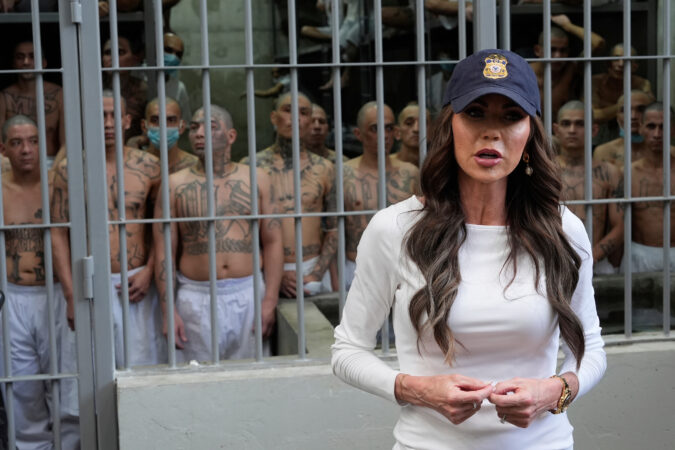
    CBS News abruptly pulled an investigative 60 Minutes segment on the Trump administration’s deportations of Venezuelan migrants to El Salvador’s CECOT prison after the administration refused to grant an interview, according to a correspondent who shared her concerns in an email obtained by the Washington Post.

    The decision came directly from the network’s editor in chief, Bari Weiss, according to an internal email sent to producers from the segment’s correspondent, Sharyn Alfonsi, who called the decision tantamount to handing the White House a “kill switch.”

    “If the administration’s refusal to participate becomes a valid reason to spike a story, we have effectively handed them a ‘kill switch’ for any reporting they find inconvenient,” Alfonsi wrote.

    Weiss defended the decision in a Monday morning editorial meeting.

    “As of course you all have seen, I held a 60 Minutes story, and I held that story because it wasn’t ready,” Weiss told staffers, according to a person who attended the meeting and spoke on the condition of anonymity to share nonpublic comments. “The story presented very powerful testimony of abuse at CECOT, but that testimony has already been reported on by places like the Times. The public knows that Venezuelans have been subjected to horrific treatment in this prison. So to run a story on this subject, two months later, we simply need to do more.”

    She continued: “And this is 60 Minutes. We need to be able to make every effort to get the principals on the record and on camera. To me, our viewers come first, not a listing schedule or anything else, and that is my North Star, and I hope it’s the North Star of every person in this newsroom.”

    The segment’s production team had sent questions and requested comment from the White House, the State Department, and the Department of Homeland Security for the story, according to the email. But the administration declined to grant the journalists an interview.

    “Government silence is a statement, not a VETO,” Alfonsi wrote. “Their refusal to be interviewed is a tactical maneuver designed to kill the story.”

    “The 60 Minutes report on ‘Inside CECOT’ will air in a future broadcast,” a CBS News spokesperson said in a statement. “We determined it needed additional reporting.” Alfonsi did not respond to a request for comment.

    The segment, titled “Inside CECOT,” was set to cover the Trump administration’s deportations of Venezuelan migrants to Centro de Confinamiento del Terrorismo (CECOT), one of El Salvador’s most notorious prisons. The network had teased the segment for days, but by Sunday the trailer and promotional materials had been removed from CBS News’ website.

    The original preview said that Alfonsi spoke with released prisoners, who describe “brutal and torturous conditions” inside the prison.

    Hundreds of Venezuelans who have been deported to El Salvador under President Donald Trump’s immigration crackdown have endured systematic torture and abuse — including sexual assault — during their detention, according to a November report by Human Rights Watch. The report said conditions at CECOT breached the United Nations’ minimal rules for the treatment of prisoners.

    In the email to her team, Alfonsi wrote that she learned Saturday that Weiss killed the story, which she says was screened five times and cleared by both the standards department and the network’s attorneys.

    Weiss was named CBS’s top editor this fall after David Ellison’s newly formed Paramount Skydance bought the Free Press, the opinion website she founded, for $150 million. While the two properties are still technically separate, Weiss runs both. Her early days at the network have been marked by rapid changes, including restructuring and layoffs. Weiss launched a town hall series including an interview with Erika Kirk, the widow of conservative activist Charlie Kirk. Earlier in December, CBS promoted Tony Dokoupil, who has co-anchored CBS Mornings since 2019, to anchor CBS Evening News, one of the most prominent jobs in television journalism. Ellison is the son of Oracle co-founder Larry Ellison, one of the world’s richest people and a Trump political ally.

    In the email, Alfonsi said the sources in the segment “risked their lives to speak with us.” She added: “We have a moral and professional obligation to the sources who entrusted us with their stories.”

    “If the standard for airing a story becomes ‘the government must agree to be interviewed,’ then the government effectively gains control over the 60 Minutes broadcast. We go from an investigative powerhouse to a stenographer for the state,” Alfonsi wrote.

    “It is factually correct,” she added. “In my view, pulling it now — after every rigorous internal check has been met — is not an editorial decision, it is a political one.”

    Democratic critics of Weiss were swift to condemn what they characterized as censoring a story to appease the Trump administration.

    “What is happening to CBS is a terrible embarrassment and if executives think they can build shareholder value by avoiding journalism that might offend the Mad King they are about to learn a tough lesson,” Sen. Brian Schatz (D., Hawaii) wrote on X. “This is still America and we don’t enjoy bullshit like this.”

    Sen. Edward J. Markey (D., Mass.) said in a social media post that it’s a “sad day for 60 Minutes and journalism,” and said that the Trump administration’s involvement in approving Skydance’s $8 billion deal to buy Paramount led to this. Skydance agreed to concessions to get the deal approved by the Republican-controlled Federal Communications Commission, chaired by Brendan Carr.

    The company promised a review of CBS content, appointed an ombudsman with Republican Party ties to interrogate claims of bias, and said it would refrain from diversity initiatives. Carr had previously threatened to block any mergers for companies engaged in diversity, equity, and inclusion practices.

    “This is what government censorship looks like,” Markey wrote. “Trump approved the Paramount-Skydance merger. A few months later, CBS’s new editor in chief kills a deeply reported story critical of Trump.”

  • ‘60 Minutes’ pulled a story about Trump deportations from its lineup

    ‘60 Minutes’ pulled a story about Trump deportations from its lineup

    An internal CBS News battle over a “60 Minutes” story critical of the Trump administration has exploded publicly, with a correspondent charging it was kept off the air for political reasons and news chief Bari Weiss saying Monday the story did not “advance the ball.”

    Two hours before airtime Sunday, CBS announced that the story where correspondent Sharyn Alfonsi spoke to deportees who had been sent to El Salvador’s notorious CECOT prison, would not be a part of the show. Weiss, the Free Press founder named CBS News editor-in-chief in October, said it was her decision.

    The dispute puts one of journalism’s most respected brands — and a frequent target of President Donald Trump — back in the spotlight and amplifies questions about whether Weiss’ appointment was a signal that CBS News was headed in a more Trump-friendly direction.

    Alfonsi, in an email sent to fellow “60 Minutes” correspondents said the story was factually correct and had been cleared by CBS lawyers and its standards division. But the Trump administration had refused to comment for the story, and Weiss wanted a greater effort made to get their point of view.

    “In my view, pulling it now after every rigorous internal check has been met is not an editorial decision, it is a political one,” Alfonsi wrote in the email. She did not immediately respond to requests for comment from The Associated Press.

    Alfonsi said in the email that interviews were sought with or questions directed to — sometimes both — the White House, State Department and Department of Homeland Security.

    “Government silence is a statement, not a VETO,” Alfonsi wrote. “Their refusal to be interviewed is a tactical maneuver designed to kill the story. If the administration’s refusal to participate becomes a valid reason to spike a story, we have effectively handed them a ‘kill switch’ for any reporting they find inconvenient.”

    “Spike” is a journalist’s term for killing a story. But Weiss, in a statement, said that she looked forward to airing Alfonsi’s piece “when it’s ready.”

    Speaking Monday at the daily CBS News internal editorial call, Weiss was clearly angered by Alfonsi’s memo. A transcript of Weiss’ message was provided by CBS News.

    “The only newsroom I’m interested in running is one in which we are able to have contentious disagreements about the thorniest editorial matters with respect and, crucially, where we assume the best intent of our colleagues,” Weiss said. “Anything else is completely unacceptable.”

    She said that while Alfonsi’s story presented powerful testimony about torture at the CECOT prison, The New York Times and other outlets had already done similar work. “To run a story on this subject two months later, we need to do more,” she said. “And this is ‘60 Minutes.’ We need to be able to get the principals on the record and on camera.”

    It wasn’t clear whether Weiss’ involvement in seeking administration comment was sought. She reportedly helped the newscast arrange interviews with Jared Kushner and Steve Witkoff this past fall to discuss Trump’s Middle East peace efforts. Trump himself was interviewed by Norah O’Donnell on a “60 Minutes” telecast that aired on Nov. 2.

    Trump has been sharply critical of “60 Minutes.” He refused to grant the show an interview prior to last fall’s election, then sued the network over how it handled an interview with election opponent Kamala Harris. CBS’ parent Paramount Global agreed to settle the lawsuit by paying Trump $16 million this past summer. More recently, Trump angrily reacted to correspondent Lesley Stahl’s interview with Trump former ally turned critic Marjorie Taylor Greene.

    “60 Minutes” was notably tough on Trump during the first months of his second term, particularly in stories done by correspondent Scott Pelley. In accepting an award from USC Annenberg earlier this month for his journalism, Pelley noted that the stories were aired last spring “with an absolute minimum of interference.”

    Pelley said that people at “60 Minutes” were concerned about what new ownership installed at Paramount this summer would mean for the broadcast. “It’s early yet, but what I can tell you is we are doing the same kinds of stories with the same kind of rigor, and we have experienced no corporate interference of any kind,” Pelley said then, according to deadline.com.

  • Gil Gerard, 82, TV’s ‘Buck Rogers’ star

    Gil Gerard, 82, TV’s ‘Buck Rogers’ star

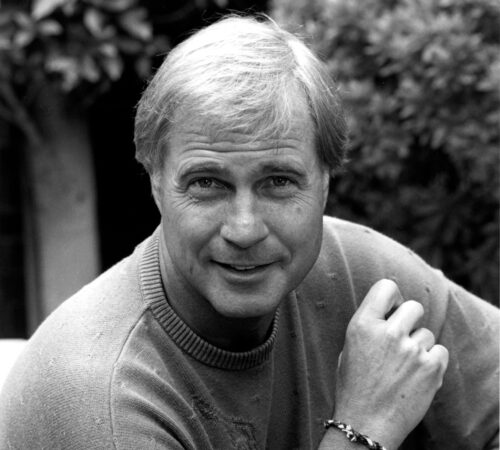
    Gil Gerard, who played television’s hunky sci-fi hero William “Buck” Rogers soon after the Star Wars franchise took hold in the late 1970s, has died. He was 82.

    Mr. Gerard died Tuesday in hospice as a result of a rare, aggressive form of cancer, said his manager, Tina Presley Borek. His wife, Janet Gerard, posted a posthumous Facebook message he left behind for fans that read in part:

    “Don’t waste your time on anything that doesn’t thrill you or bring you love. See you out somewhere in the cosmos.”

    Mr. Gerard starred in NBC’s campy Buck Rogers in the 25th Century, which ran for two seasons from 1979 to 1981. A theatrical film based on the series also delighted youngsters and their parents alike. It was Buck Rogers’ second turn on TV after a show in the 1950s, a radio series, and a 1939 film serial.

    The story was based on Philip Francis Nowlan’s serialized 1928 pulp novella Armageddon 2419 A.D. Nowlan’s character was named Anthony Rogers. The name was changed when the story began running in newspapers as a comic strip.

    “My life has been an amazing journey,” Mr. Gerard wrote in his social media post. “The opportunities I’ve had, the people I’ve met and the love I have given and received have made my 82 years on the planet deeply satisfying.”

    As the TV story goes, Rogers was a 20th century NASA pilot who was placed in frozen animation when his ship was hit by a meteor storm. He pops awake 500 years later in the year 2491. He gazes upon a futuristic, domed Earth with all its threats, including aliens, space pilots, and the evil Draconians.

    He had helpers: the robot sidekick Twiki and a beautiful space pilot, Wilma Deering, played by Erin Gray.

    A native of Little Rock, Arkansas, Mr. Gerard worked steadily in TV commercials. He was featured in a number of other TV shows and movies, including starring roles in the 1982 TV movie Hear No Evil as Dragon and the short-lived Sidekicks in 1986.

    In 1992, he hosted the reality series Code 3, following firefighters responding to emergency calls around the U.S. There were many guest appearances in the 1990s, including on Days of Our Lives.

    Mr. Gerard and Gray were together again in 2007 for the TV film Nuclear Hurricane. They also returned to the Buck Rogers universe as Rogers’ parents in the pilot episode of James Cawley’s Buck Rogers Begins internet video series in 2009.

    Mr. Gerard spoke openly about addictions to drugs, alcohol, and compulsive overeating. He was the subject of a one-hour documentary, Action Hero Makeover, in 2007 after his weight ballooned to 350 pounds.

    Done by Adrienne Crow, then a longtime companion, for the Discovery Health Channel, the film documented his progress after gastric bypass surgery.

    Mr. Gerard was married and divorced four times before Janet. He had a son, actor Gilbert Vincent Gerard, with model and actor Connie Sellecca. Their divorce included a bitter custody battle for “Gib,” who was born in 1981. Sellecca was granted main custody.

    “My journey has taken me from Arkansas to New York to Los Angeles, and finally, to my home in North Georgia with my amazing wife, Janet, of 18 years,” Mr. Gerard wrote in the post put on Facebook after his death.

    “It’s been a great ride, but inevitably one that comes to a close as mine has.”

  • Sony buys a majority stake in the ‘Peanuts’ comic for $457 million from Canada’s WildBrain

    Sony buys a majority stake in the ‘Peanuts’ comic for $457 million from Canada’s WildBrain

    Happiness is taking control of a beloved comic strip.

    Sony is buying a 41% stake in the Charles M. Schulz comic Peanuts and its characters including Snoopy and Charlie Brown from Canada’s WildBrain in a $457 million deal, the two companies said Friday.

    The deal adds to Sony’s existing 39% stake, bringing its shareholding to 80%, according to a joint statement. The Schulz family will continue to own the remaining 20%.

    “With this additional ownership stake, we are thrilled to be able to further elevate the value of the Peanuts brand by drawing on the Sony Groupʼs extensive global network and collective expertise,” Sony Music Entertainment President Shunsuke Muramatsu said.

    Peanuts made its debut Oct. 2, 1950, in seven newspapers. The travails of the “little round-headed kid” Charlie Brown and pals including Linus, Lucy, Peppermint Patty, and his pet beagle Snoopy eventually expanded to more than 2,600 newspapers, reaching millions of readers in 75 countries.

    The strip offers enduring images of kites stuck in trees, Charlie Brown trying to kick a football, tart-tongued Lucy handing out advice for a nickel, and Snoopy taking the occasional flight of fancy to the skies. Phrases such as “security blanket,” “good grief” and “happiness is a warm puppy” are a part of the global vernacular. Schulz died in 2000.

    Sony acquired its first stake in Peanuts Holdings LLC in 2018 from Toronto-based WildBrain Ltd. In Friday’s transaction, Sony’s music and movie arms signed a “definitive agreement” with WildBrain to buy its remaining stake for $630 million Canadian dollars ($457 million).

    Rights to the Peanuts brand and management of its business are handled by a wholly-owned subsidiary of Peanuts Holdings.

    WildBrain also owns other kids’ entertainment franchises including Strawberry Shortcake and Teletubbies.

  • Trump’s handpicked board votes to rename Washington performing arts center the Trump Kennedy Center

    Trump’s handpicked board votes to rename Washington performing arts center the Trump Kennedy Center

    WASHINGTON — President Donald Trump’s handpicked board voted Thursday to rename Washington’s leading performing arts center as the Trump Kennedy Center, the White House said, in a move that made Democrats fume, saying the board had overstepped its legal authority.

    Congress named the center after President John F. Kennedy in 1964, after his assassination. Donald A. Ritchie, who served as Senate historian from 2009-2015, said that because Congress had first named the center it would be up to Congress to “amend the law.”

    Ritchie said that while Trump and others can “informally” refer to the center by a different name, they couldn’t do it in a way “that would [legally] stick.”

    But the board did not wait for that debate to play out, immediately changing the branding on its website to reflect the new name.

    House Democratic leader Hakeem Jeffries told reporters that legislative action was needed, “and we’re going to make that clear.” The New York Democrat is an ex officio member of the board because of his position in Congress.

    Trump has teased the name change for some time

    “The Kennedy Center Board of Trustees voted unanimously today to name the institution The Donald J. Trump and The John F. Kennedy Memorial Center for the Performing Arts,” said Roma Daravi, the institution’s vice president for public relations.

    She said the vote recognized that Trump saved the center from “financial ruin and physical destruction,” a pair of claims denied by the venue’s ousted leadership.

    “The new Trump Kennedy Center reflects the unequivocal bipartisan support for America’s cultural center for generations to come,” Daravi said.

    Press secretary Karoline Leavitt announced the vote on social media, attributing it to the “unbelievable work President Trump has done over the last year in saving the building. Not only from the standpoint of its reconstruction, but also financially, and its reputation.”

    Trump, a Republican who’s chairman of the board, said at the White House that he was “surprised” and “honored” by the vote.

    “The board is a very distinguished board, most distinguished people in the country and I was surprised by it and I was honored by it,” he said.

    Trump had already been referring to the center as the “Trump Kennedy Center.” Asked Dec. 7 as he walked the red carpet for the Kennedy Center Honors program whether he would rename the venue after himself, Trump said such a decision would be up to the board.

    Earlier this month, Trump talked about a “big event” happening at the “Trump Kennedy Center” before saying, “excuse me, at the Kennedy Center,” as his audience laughed. He was referring to the FIFA World Cup soccer draw for 2026, in which he participated.

    A name change won’t sit well with some Kennedy family members.

    Maria Shriver, a niece of John F. Kennedy, referred to the legislation introduced in Congress to rebrand the Kennedy Center as the Donald J. Trump Center for the Performing Arts as “insane” in a social media post in July.

    “It makes my blood boil. It’s so ridiculous, so petty, so small minded,” she wrote. “Truly, what is this about? It’s always about something. ‘Let’s get rid of the Rose Garden. Let’s rename the Kennedy Center.’ What’s next?”

    Trump earlier this year turned the Kennedy-era Rose Garden at the White House into a patio by removing the lawn and laying down paving stones.

    Another Kennedy family member, Robert F. Kennedy Jr., serves in Trump’s cabinet as secretary of the Department of Health and Human Services.

    Trump showed scant interest in the Kennedy Center during his first term as president, but since returning to office in January he has replaced board members appointed by Democratic presidents with some of his most ardent supporters, who then elected him as board chairman.

    He also has criticized the center’s programming and its physical appearance and has vowed to overhaul both.

    Trump secured more than $250 million from the Republican-controlled Congress for renovations of the building.

    He attended opening night of the musical Les Misérables, and last week he served as host of the Kennedy Center Honors program after not attending the show during his first term as president. The awards program is scheduled to be broadcast by CBS and Paramount+ on Dec. 23.

    Sales of subscription packages are said to have declined since Trump’s takeover of the center, and several touring productions, including Hamilton, have canceled planned runs there. Rows upon rows of empty seats have been seen in the Concert Hall during performances by the National Symphony Orchestra.

    Some performers, including actor Issa Rae and musician Rhiannon Giddens, have scrapped scheduled appearances, and Kennedy Center consultants including musician Ben Folds and singer Renée Fleming have resigned.

  • Rob and Michele Reiner’s son appears in court on murder charges while siblings speak of their loss

    Rob and Michele Reiner’s son appears in court on murder charges while siblings speak of their loss

    LOS ANGELES — Nick Reiner made his first court appearance Wednesday in Los Angeles on two counts of first-degree murder in the killing of his parents, actor-director Rob Reiner and his wife Michele Singer Reiner, while the couple’s other two children made their first public statement on their crushing loss.

    Nick Reiner, 32, did not enter a plea as he appeared from behind glass in a custody area in the large Los Angeles courtroom where newly charged defendants are arraigned. He was in shackles and wearing a blue, padded suicide prevention smock used in jail.

    His arraignment was postponed until Jan. 7 at his attorney’s request. He spoke only to say “yes, your honor” to agree to the date. He is being held without bail.

    Jake and Romy Reiner talk about their ‘unimaginable pain’

    His older brother Jake Reiner and younger sister Romy Reiner released their statement through a family spokesperson.

    “Words cannot even begin to describe the unimaginable pain we are experiencing every moment of the day,” they said. “The horrific and devastating loss of our parents, Rob and Michele Reiner, is something that no one should ever experience. They weren’t just our parents; they were our best friends.”

    The brother and sister said they are “grateful for the outpouring of condolences, kindness, and support we have received not only from family and friends but people from all walks of life. We now ask for respect and privacy, for speculation to be tempered with compassion and humanity, and for our parents to be remembered for the incredible lives they lived and the love they gave.”

    Medical Examiner says ‘sharp force injuries’ killed couple

    Also Wednesday, the LA County Medical Examiner listed the primary cause of death for both Rob and Michele Reiner as “multiple sharp force injuries” as the office released its investigators’ initial findings.

    The office said more investigation is needed before further details will be revealed, but the bodies can now be released to the family.

    The cause of death was consistent with police describing the couple as having stab wounds.

    Nick Reiner’s attorney urges caution

    After the court hearing, Nick Reiner’s attorney, Alan Jackson, called the case “a devastating tragedy that has befallen the Reiner family.” He said the proceedings will be very complex and asked that the circumstances be met “not with a rush to judgment, not with jumping to conclusions.”

    Jackson declined to answer shouted questions from dozens of reporters surrounding him and has not addressed the guilt or innocence of his client.

    Nick Reiner was charged Tuesday with killing Rob Reiner, 78, and Michele Singer Reiner, 70.

    They were killed sometime in the early morning hours of Sunday, the District Attorney’s Office said. They were found dead late in the afternoon in their home in the upscale Brentwood neighborhood on the west side of Los Angeles, authorities said.

    Nick Reiner did not resist when he was arrested hours later in the Exposition Park area near the University of Southern California, about 14 miles from the crime scene, police said.

    The two counts of first-degree murder come with special circumstances of multiple murders and an allegation that the defendant used a dangerous weapon, a knife. The additions could mean a greater sentence.

    District Attorney Nathan Hochman said at a Tuesday news conference that his office has not yet decided whether to seek the death penalty.

    Meg Ryan and others remember the Reiners

    Rob Reiner was the Emmy-winning star of the sitcom All in the Family who went on to direct films including Stand by Me, The Princess Bride, and When Harry Met Sally …, whose star Meg Ryan paid tribute to the Reiners on Wednesday.

    “Thank you, Rob and Michelle, for the way you believe in true love, in fairy tales, and in laughter. Thank you for your faith in the best in people, and for your profound love of our country,” Ryan said in an Instagram post. “I have to believe that their story will not end with this impossible tragedy.”

    Rob Reiner met Michele Singer Reiner during the shooting of the classic rom-com, and he said the meeting inspired him to change the film to have a happy ending.

    Ryan’s co-star Billy Crystal, a close friend of Rob Reiner for decades, was part of a group that also included Albert Brooks, Martin Short, and Larry David that released a statement mourning and celebrating the couple Tuesday night.

    “They were a special force together — dynamic, unselfish and inspiring,” the statement said. “We were their friends, and we will miss them forever.”

    Rob Reiner has another daughter, Tracy Reiner, from his first marriage, to actor-director Penny Marshall.

    The lawyers on the Reiner case

    Nick Reiner’s attorney Jackson is a high-profile defense attorney and former LA County prosecutor who represented Harvey Weinstein at his Los Angeles trial and Karen Read at her intensely followed trials in Massachusetts. He was a central figure in the HBO documentary on the Read case.

    On the other side will be Deputy District Attorney Habib Balian, whose recent cases included the Menendez brothers’ attempt at resentencing and the trial of Robert Durst.

    Authorities have not said anything about a motive for the killings and would give few details when asked at the news conference.