Category: Nation World News Wires

  • 2 U.S. service members, one American civilian killed in ambush in Syria, U.S. Central Command says

    2 U.S. service members, one American civilian killed in ambush in Syria, U.S. Central Command says

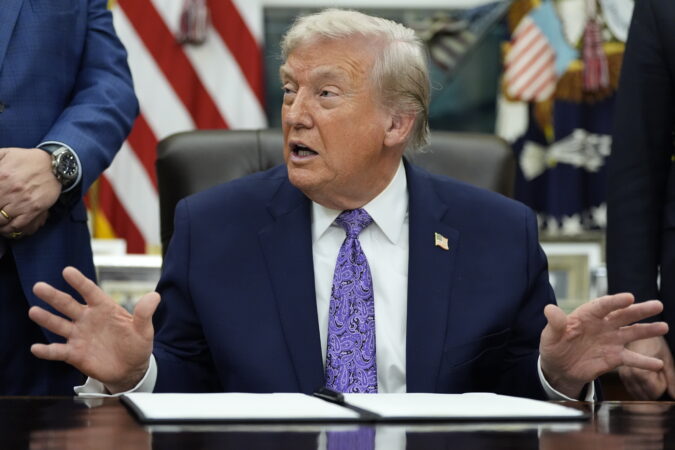
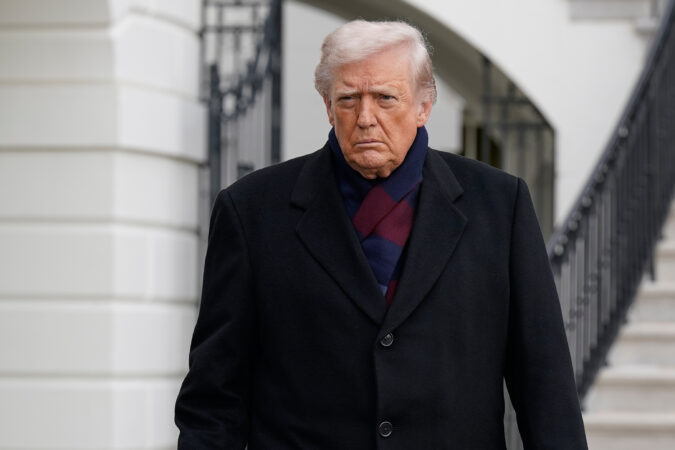
    DAMASCUS, Syria — President Donald Trump said Saturday that “there will be very serious retaliation” after two U.S. service members and one American civilian were killed in an attack in Syria that the United States blames on the Islamic State group.

    “This was an ISIS attack against the U.S., and Syria, in a very dangerous part of Syria, that is not fully controlled by them,” he said in a social media post.

    The American president told reporters at the White House that Syria’s president, Ahmed al-Sharaa, was “devastated by what happened” and stressed that Syria was fighting alongside U.S. troops. Trump, in his post, said al-Sharaa was “extremely angry and disturbed by this attack.”

    The two service members killed were members of the Iowa National Guard, according to a person briefed on the situation who was granted anonymity because they did not have permission to speak publicly.

    U.S. Central Command said three service members were also wounded in an ambush Saturday by a lone IS member in central Syria. Trump said the three “seem to be doing pretty well.” The U.S. military said the gunman was killed.

    The attack on U.S. troops in Syria was the first with fatalities since the fall of President Bashar Assad a year ago.

    “There will be very serious retaliation,” Trump said on his Truth Social platform.

    The Pentagon’s chief spokesperson, Sean Parnell, said the civilian killed was a U.S. interpreter. Parnell said the attack targeted soldiers involved in the ongoing counterterrorism operations in the region and is under active investigation.

    The shooting took place near historic Palmyra, according to the state-run SANA news agency, which earlier said two members of Syria’s security force and several U.S. service members had been wounded. The casualties were taken by helicopter to the al-Tanf garrison near the border with Iraq and Jordan.

    The Britain-based Syrian Observatory for Human Rights said the attacker was a member of the Syrian security force.

    Syria’s Interior Ministry spokesperson Nour al-Din al-Baba said a gunman linked to IS opened fire at the gate of a military post. He added that Syrian authorities are looking into whether the gunman was an IS member or only carried its extreme ideology. He denied reports that suggested that the attacker was a security member.

    Later al-Baba clarified that the attacker was a member of the Internal Security force in the desert, adding that he “did not have any command post” within the forces nor was he a bodyguard for the force commander.

    Al-Baba added in an interview with state TV that some 5,000 members have joined Internal Security forces in the desert and they are evaluated on a weekly basis. He added that three days ago, an evaluation was made of the attacker and it turned out that he might have extreme ideology. A decision was expected to be issued regarding him on Sunday but “the attack occurred on a Saturday which is a day off for state institutions.”

    U.S. Defense Secretary Pete Hegseth posted on X: “Let it be known, if you target Americans — anywhere in the world — you will spend the rest of your brief, anxious life knowing the United States will hunt you, find you, and ruthlessly kill you.”

    The U.S. has hundreds of troops deployed in eastern Syria as part of a coalition fighting IS.

    The U.S. had no diplomatic relations with Syria under Assad, but ties have warmed since the fall of the five-decade Assad family rule. Al-Sharaa made a historic visit to Washington last month where he held talks with Trump. It was the first White House visit by a Syrian head of state since the Middle Eastern country gained independence from France in 1946 and came after the U.S. lifted sanctions imposed on Syria during the Assads’ rule.

    Al-Sharaa led the rebel forces that toppled Bashar Assad in December 2024 and was named the country’s interim leader in January. Al-Sharaa once had ties to al-Qaida and had a $10 million U.S. bounty on his head.

    Last month, Syria joined the international coalition fighting against the IS as Damascus improves its relations with Western countries following the ouster of Assad when insurgents captured his seat of power in Damascus.

    IS was defeated on the battlefield in Syria in 2019 but the group’s sleeper cells still carry out deadly attacks in the country. The United Nations says the group still has between 5,000 and 7,000 fighters in Syria and Iraq.

    U.S. troops, which have maintained a presence in different parts of Syria — including Al-Tanf garrison in the central province of Homs — to train other forces as part of a broad campaign against IS, have been targeted in the past. One of the deadliest attacks occurred in 2019 in the northern town of Manbij when a blast killed two U.S. service members and two American civilians as well as others from Syria while conducting a patrol.

  • Belarus frees Nobel Prize laureate Bialiatski, opposition figure Kolesnikova as U.S. lifts sanctions

    Belarus frees Nobel Prize laureate Bialiatski, opposition figure Kolesnikova as U.S. lifts sanctions

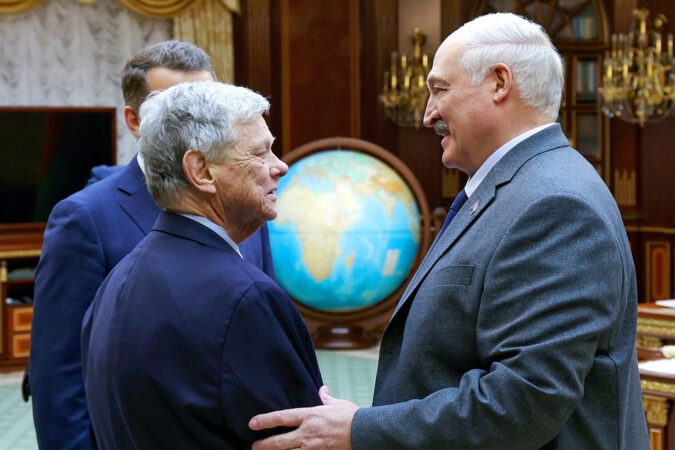
    VILNIUS, Lithuania — Belarus freed Nobel Peace Prize laureate Ales Bialiatski, key opposition figure Maria Kolesnikova, and dozens of other prisoners on Saturday, capping two days of talks with Washington aimed at improving ties and getting crippling U.S. sanctions lifted on a key Belarusian agricultural export.

    The U.S. announced earlier Saturday that it was lifting sanctions on Belarus’ potash sector. In exchange, President Alexander Lukashenko pardoned 123 prisoners, Belarus’ state news agency, Belta, reported.

    A close ally of Russia, Minsk has faced Western isolation and sanctions for years. Lukashenko has ruled the nation of 9.5 million with an iron fist for more than three decades, and the country has been repeatedly sanctioned by the West for its crackdown on human rights and for allowing Moscow to use its territory in the 2022 invasion of Ukraine. Belarus has released hundreds of prisoners since July 2024.

    John Coale, the U.S. special envoy for Belarus who met with Lukashenko in Minsk on Friday and Saturday, described the talks to reporters as “very productive” and said normalizing relations between Washington and Minsk was “our goal,” Belta reported.

    “We’re lifting sanctions, releasing prisoners. We’re constantly talking to each other,” Coale said, adding that the relationship between the U.S. and Belarus was moving from “baby steps to more confident steps” as they increased dialogue, according to the Belarusian news agency.

    Among the 123 prisoners were a U.S. citizen, six citizens of U.S. allied countries, and five Ukrainian citizens, a U.S. official told the Associated Press in an email. The official, who spoke on condition of anonymity to discuss private diplomatic negotiations, described the release as “a significant milestone in U.S.-Belarus engagement” and “yet another diplomatic victory” for U.S. President Donald Trump.

    The official said Trump’s engagement so far “has led to the release of over 200 political prisoners in Belarus, including six unjustly detained U.S. citizens and over 60 citizens of U.S. Allies and partners.”

    Bialiatski, Kolesnikova among those freed

    Pavel Sapelka, an advocate with the Viasna rights group, confirmed to the AP that Bialiatski and Kolesnikova were among those released.

    Bialiatski, a human rights advocate who founded Viasna, was in jail when he was awarded the Nobel Peace Prize in 2022 along with the prominent Russian rights group Memorial and Ukraine’s Center for Civil Liberties. He was later convicted of smuggling and financing actions that violated public order — charges that were widely denounced as politically motivated — and sentenced to 10 years in 2023.

    Bialiatski told the AP by phone Saturday that his release after 1,613 days behind bars came as a surprise — in the morning, he was still in an overcrowded prison cell.

    “It feels like I jumped out of icy water into a normal, warm room, so I have to adapt. After isolation, I need to get information about what’s going on,” said Bialiatski, who seemed energetic but pale and emaciated in post-release videos and photos.

    He vowed to continue his work, stressing that “more than a thousand political prisoners in Belarus remain behind bars simply because they chose freedom. And, of course, I am their voice.”

    Kolesnikova, meanwhile, was a key figure in the mass protests that rocked Belarus in 2020, and is a close ally of an opposition leader in exile, Sviatlana Tsikhanouskaya.

    Known for her close-cropped hair and trademark gesture of forming a heart with her hands, Kolesnikova became an even greater symbol of resistance when Belarusian authorities tried to deport her in September 2020. Driven to the Ukrainian border, she briefly broke away from security forces at the frontier, tore up her passport and walked back into Belarus.

    The 43-year-old professional flutist was convicted in 2021 on charges including conspiracy to seize power and sentenced to 11 years in prison.

    Others who were freed

    Among the others who were released, according to Viasna, was Viktar Babaryka — an opposition figure who had sought to challenge Lukashenko in the 2020 presidential election, widely seen as rigged, before being convicted and sentenced to 14 years in prison on charges he rejected as political.

    Viasna reported that the group’s imprisoned advocates, Valiantsin Stefanovic and Uladzimir Labkovich, and prominent opposition figure Maxim Znak were also freed. But it later said it was clarifying its report about Stefanovic’s release, and Bialiatski told the AP that Stefanovic had not been freed, though he hopes he will be soon.

    Most of those released were sent to Ukraine, Franak Viachorka, Tsikhanouskaya’s senior adviser, told the AP.

    “I think Lukashenko decided to deport people to Ukraine to show that he is in control of the situation,” Viachorka said.

    Eight or nine others, including Bialiatski, were being sent to Lithuania on Saturday, and more prisoners will be taken to the Baltic country in the next few days, Viachorka said.

    Ukrainian authorities confirmed that Belarus had handed over 114 civilians. Ukrainian President Volodymyr Zelensky confirmed that five of them are Ukrainian nationals.

    Freed Belarusian nationals “at their request” and “after being given necessary medical treatment” will be taken to Poland and Lithuania, Ukrainian authorities said.

    Lukashenko wants rapprochement with the West

    When U.S. officials last met with Lukashenko in September, Washington said it was easing some of the sanctions on Belarus. Minsk, meanwhile, released more than 50 political prisoners into Lithuania, pushing the number of prisoners it had freed since July 2024 past the 430 mark.

    “The freeing of political prisoners means that Lukashenko understands the pain of Western sanctions and is seeking to ease them,” Tsikhanouskaya, the opposition leader in exile, told the AP on Saturday.

    She added: “But let’s not be naive: Lukashenko hasn’t changed his policies, his crackdown continues and he keeps on supporting Russia’s war against Ukraine. That’s why we need to be extremely cautious with any talk of sanctions relief, so that we don’t reinforce Russia’s war machine and encourage continued repressions.”

    Tsikhanouskaya also described European Union sanctions against Belarusian potash fertilizers as far more painful for Minsk that the U.S. ones, saying that while easing U.S. sanctions could lead to the release of political prisoners, European sanctions should be used to push for long-term, systemic changes in Belarus and the end of the war in Ukraine.

    Sanctions have hit key export hard

    Belarus, which previously accounted for about 20% of global potash fertilizer exports, has faced sharply reduced shipments since Western sanctions targeted state producer Belaruskali and cut off transit through Lithuania’s port in Klaipeda, the country’s main export route.

    “Sanctions by the U.S., EU and their allies have significantly weakened Belarus’ potash industry, depriving the country of a key source of foreign exchange earnings and access to key markets,” Anastasiya Luzgina, an analyst at the Belarusian Economic Research Center BEROC, told the AP.

    “Minsk hopes that lifting U.S. sanctions on potash will pave the way for easing more painful European sanctions; at the very least, U.S. actions will allow discussions to begin,” she said.

    The latest round of U.S.-Belarus talks also touched on Venezuela, as well as Russia’s ongoing invasion of Ukraine, Belta reported.

    Coale told reporters that Lukashenko had given “good advice” on how to address the Russia-Ukraine war, saying that Lukashenko and Russian President Vladimir Putin were “longtime friends” with “the necessary level of relationship to discuss such issues.”

    “Naturally, President Putin may accept some advice and not others,” Coale said.

    The U.S. official told the AP that “continued progress in U.S.-Belarus relations” also requires steps to resolve tensions between Belarus and neighboring Lithuania, which is a member of the EU and NATO.

    The Lithuanian government this week declared a national emergency over security risks posed by meteorological balloons sent from Belarus.

    The balloons forced Lithuania to repeatedly shut down its main airport, stranding thousands of people. Earlier this year, Lithuania temporarily closed its border with Belarus, and Belarusian authorities responded by threatening to seize up to 1,200 Lithuanian trucks they said were stuck in Belarus.

    The U.S. official said improving ties between U.S. and Belarus will require “positive action to stop the release of smuggling balloons from Belarus that affect Lithuanian airspace and resolve the impoundment of Lithuanian trucks.”

  • This holiday season isn’t very merry for consumers, an AP-NORC poll finds

    This holiday season isn’t very merry for consumers, an AP-NORC poll finds

    WASHINGTON — This holiday season isn’t quite so merry for American shoppers as large shares are dipping into savings, scouring for bargains, and feeling like the overall economy is stuck in a rut under President Donald Trump, a new AP-NORC poll finds.

    The vast majority of U.S. adults say they’ve noticed higher than usual prices for groceries, electricity, and holiday gifts in recent months, according to the survey from the Associated Press-NORC Center for Public Affairs Research.

    Roughly half of Americans say it’s harder than usual to afford the things they want to give as holiday gifts, and similar numbers are delaying big purchases or cutting back on nonessential purchases more than they would normally.

    It’s a sobering assessment for the Republican president, who returned to the White House in large part by promising to lower prices, only to find that inflation remains a threat to his popularity just as it did for Democrat Joe Biden’s presidency. The poll’s findings look very similar to an AP-NORC poll from December 2022, when Biden was president and the country was grappling with higher rates of inflation. Trump’s series of tariffs have added to inflationary pressures and generated anxiety about the stability of the U.S. economy, keeping prices at levels that many Americans find frustrating.

    The president has insisted there is “no” inflation and the U.S. economy is booming, as he expressed frustration that the public feels differently.

    “When will people understand what is happening?” Trump said Thursday on Truth Social. “When will Polls reflect the Greatness of America at this point in time, and how bad it was just one year ago?”

    Most U.S. adults, 68%, continue to say the country’s economy is “poor,” which is unchanged from December 2024, before Trump returned to the presidency.

    Americans are feeling strained as they continue to see high prices

    White House officials plan to send Trump barnstorming across the country in hopes of bucking up people’s faith in the economy before next year’s midterm elections. But the president this week in Pennsylvania defended the price increases tied to his tariffs by suggesting that Americans should buy fewer dolls and pencils for children. His message is a jarring contrast with what respondents expressed in the poll, even among people who backed him in the 2024 election.

    Sergio Ruiz, 44, of Tucson, Ariz., said he is using more buy now, pay later programs to spread out over time the expense of gifts for his children. He doesn’t put a huge emphasis on politics, but he voted for Trump last year and would like to see lower interest rates to help boost his real estate business. He believes that more Americans having higher incomes would help to manage any affordability issues.

    “Prices are up. What can you do? You need to make more money,” Ruiz said.

    The poll found that when they do shop, about half of Americans are finding the lowest price more than they would normally. About 4 in 10 are dipping into their savings more than at other times.

    Democrats are more likely than Republicans to say they’re cutting back on expenses or looking for low prices, but many Republicans are budgeting more than usual as well. About 4 in 10 Republicans are looking for low prices more than they usually would, while a similar share are shopping for nonessential items less than usual.

    Views are largely similar to when Biden was president

    People felt similarly dismal about holiday shopping and the economy when Biden was president in 2022. Inflation had spiked to a four-decade high that summer. Three years later, inflation has eased substantially, but it’s still running at 3%, a full percentage point above the Federal Reserve’s target as the job market appears to have entered a deep freeze.

    The survey indicates that it’s the level of prices — and not just the rate of inflation — that is the point of pain for many families. Roughly 9 in 10 U.S. adults, 87%, say they’ve noticed higher than usual prices for groceries in the past few months, while about two-thirds say they’ve experienced higher prices than usual for electricity and holiday gifts. About half say they’ve seen higher than normal prices for gas recently.

    The findings on groceries and holiday gifts are only slightly lower than in the 2022 poll, despite the slowdown from an inflation rate that hit a four-decade peak in the middle of that year.

    Consumer spending has stayed resilient despite the negative sentiments about the economy, yet Trump’s tariffs have caused changes for shoppers such as Andrew Russell.

    The 33-year-old adjunct professor in Arlington Heights, Ill., said he used to shop for unique gifts from around the globe and buy online. But with the tariffs, he got his gifts locally and “this year, I only bought things that I can pick up in person,” he said.

    Russell, who voted Democratic in last year’s election, said he worries about the economy for next year. He thinks the investment in artificial intelligence has become a bubble that could burst, taking down the stock market.

    Little optimism about an economic rebound in 2026

    Few people expect the situation to meaningfully improve next year — a sign that Trump has done little to instill much confidence from his mix of tariffs, income tax cuts, and foreign trips to attract investments. Trump has maintained that the benefits from his policies will begin to snowball in 2026.

    About 4 in 10 U.S. adults expect next year will be economically worse for the country. Roughly 3 in 10 say conditions won’t change much. Only about 2 in 10 think things will get better, with Republicans being more optimistic.

    The belief that things will get better has slipped from last year, when about 4 in 10 said that 2025 would be better than 2024.

    Millicent Simpson, 56, of Cleveland, said she expects the economy to be worse for people like her who rely on Medicaid for healthcare and the Supplemental Nutrition Assistance Program. Simpson voted Democratic last year and blames Trump for the greater economic pressures that she faces going into the winter.

    “He’s making it rough for us,” she said. “He’s messing with the government assistance for everybody, young and old.”

    The AP-NORC poll of 1,146 adults was conducted Dec. 4-8 using a sample drawn from NORC’s probability-based AmeriSpeak Panel, which is designed to be representative of the U.S. population. The margin of sampling error for adults overall is plus or minus 4 percentage points.

  • Christine Choy, indie filmmaker who led seminal documentary on the killing of Vincent Chin, has died

    Christine Choy, indie filmmaker who led seminal documentary on the killing of Vincent Chin, has died

    Christine Choy, a trailblazer for Asian Americans in independent film and whose documentary on the fatal beating of Vincent Chin was nominated for an Academy Award, has died. She was 73.

    Ms. Choy died Sunday, according to a statement from JT Takagi, executive director of Third World Newsreel, a filmmaking collective Choy helped establish in the 1970s. No cause of death was given.

    “She was a prolific filmmaker who made significant films that helped form our Asian American and American film history,” Takagi said on the organization’s website.

    Chin, a Chinese American who grew up in Detroit, was celebrating his bachelor party in 1982 when two white autoworkers attacked him. At that time, Japanese auto companies were being blamed for job losses in the U.S. auto manufacturing industry. The attackers were motivated by their assumption Chin was Japanese. His death and the lack of prison time for the two assailants is considered a galvanizing moment for Asian Americans fighting anti-Asian hate.

    Renee Tajima-Peña, co-director of Who Killed Vincent Chin?, met Ms. Choy around 1980 through Third World Newsreel. They decided to collaborate on a documentary a year after Chin’s death after seeing how little coverage it received.

    Tajima-Peña recalls bonding with Ms. Choy and other crew during freezing Detroit winter nights while waiting for witnesses in Chin’s death and evenings spent with Chin’s mother’s over home-cooked meals.

    “We were in constant motion during the production with Chris always the picture of cool — sunglasses, stylishly slim, cigarette in hand. And yes she was brash and outspoken — her cigarettes may have had filters but her language didn’t,” Tajima-Peña said in an email to the Associated Press on Friday. “But, her audaciousness was all a part of the package.”

    Their production was lauded for bringing more attention to Chin’s slaying and went on to earn an Oscar nomination for best documentary feature in 1989. In 2021, it was chosen for preservation in the National Film Registry by the Library of Congress.

    Ms. Choy was a full-time professor at New York University’s Tisch School of the Arts up until her death. She was praised as someone who enjoyed mentoring young auteurs and students at NYU and Third World Newsreel.

    In a statement, Dean Rubén Polendo called her “a triumphant force in documentary filmmaking whose works penetrated America’s social conscience.”

    “Christine’s loss is felt deeply across the Tisch community, where her unparalleled legacy survives through her pioneering work as an artist and educator,” Polendo said.

    Born in China, Ms. Choy grew up with a Korean father and a Chinese mother. She immigrated to New York City as a teen. Being there in the 1960s, Ms. Choy learned about the Civil Rights Movement up-close. That would shape her passion for social justice, according to her NYU faculty biography.

    She moved to Los Angeles and earned a directing certificate from the American Film Institute. But she eventually moved back to New York and, in 1972, helped create Third World Newsreel. The group’s mission was to advance films about social justice and marginalized communities, particularly people of color. Ms. Choy’s early documentaries included subjects such as New York City’s Chinatown and race relations in the Mississippi Delta.

    Ms. Choy received several awards and fellowships over the years including Guggenheim and Rockefeller fellowships. She also taught at other universities including Yale, Cornell and City University in Hong Kong.

    Plans for funeral services were not immediately known.

  • King Charles III says his cancer treatment is being reduced as he promotes benefits of screening

    King Charles III says his cancer treatment is being reduced as he promotes benefits of screening

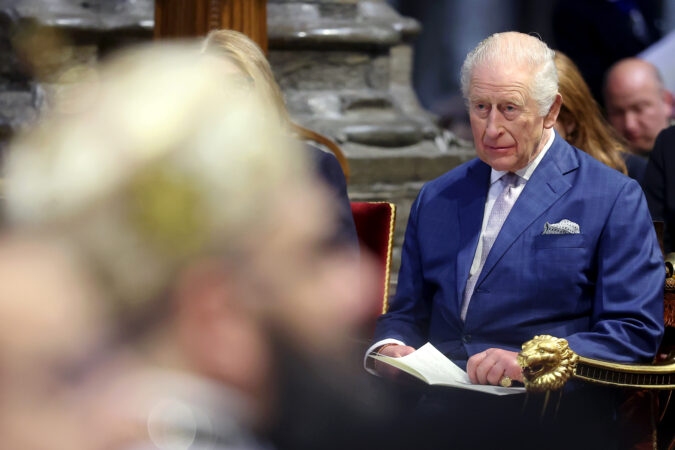
    LONDON — King Charles III said Friday that early diagnosis and treatment will allow doctors to reduce his cancer treatment in the new year as he encouraged others to take advantage of screening programs that can detect the disease early when it is easiest to treat.

    Charles, 77, revealed the positive outlook in a recorded message broadcast on British television as part of a campaign to promote such screening, which increases the likelihood of successful treatment.

    “Early diagnosis quite simply saves lives,” the king said.

    “I know, too, what a difference it has made in my own case, enabling me to continue leading a full and active life even while undergoing treatment,” he added.

    Buckingham Palace said his treatment is moving to a “precautionary phase” and his condition will be monitored to ensure his continued recovery.

    Friday’s message is the latest example of how Charles has used his own story to promote cancer awareness and treatment since he announced his diagnosis in February 2024. That seems to have paid off, with British cancer charities saying the number of people seeking information about cancer jumped after the king revealed he was undergoing treatment.

    But the king has never revealed what type of cancer he has or the kind of treatment he is receiving. The palace said this was an intentional decision designed to ensure his message reaches the widest possible audience.

    “The advice from cancer experts is that, in his determination to support the whole cancer community, it is preferable that His Majesty does not address his own specific condition but rather speaks to those affected by all forms of the disease,” the palace said in a statement.

    The king’s cancer was discovered after treatment for an enlarged prostate. While doctors ruled out prostate cancer, tests revealed “a separate issue of concern,” palace officials said last year.

    Charles suspended his public appearances for about two months after his diagnosis so he could focus on his treatment and recovery. But he continued with state business and retained his constitutional role as head of state.

    The king returned to the public eye in April of last year with a visit to a cancer-treatment center at University College Hospital in central London, where he met with staff and shared stories with fellow cancer patients.

    “It’s always a bit of a shock, isn’t it, when they tell you,” he said, sympathizing with one patient as chemotherapy drugs dripped into her arm.

    Charles’ decision to disclose his diagnosis was a departure for Britain’s royals, who have traditionally considered their health to be a personal matter and shared few details with the public.

    “As I have observed before, the darkest moments of illness can be illuminated by the greatest compassion,’’ he said. “But compassion must be paired with action. This December, as we gather to reflect on the year past, I pray that we can each pledge, as part of our resolutions for the year ahead, to play our part in helping to catch cancer early.

    “Your life — or the life of someone you love — may depend upon it,” he said.

  • Navy investigation finds Osprey safety issues were allowed to grow for years

    Navy investigation finds Osprey safety issues were allowed to grow for years

    WASHINGTON — After a spate of deadly accidents that have claimed the lives of 20 service members in the past four years, a Navy report acknowledges that the military failed to address a growing series of issues with the V-22 Osprey aircraft since it took flight almost 20 years ago.

    “The cumulative risk posture of the V-22 platform has been growing since initial fielding,” according to the report by Naval Air Systems Command released Friday. It added that the office in charge of the aircraft “has not promptly implemented … fixes to mitigate existing risks.”

    “As a result, risks continue to accumulate,” the report said.

    The Associated Press reported last year that the most serious types of accidents for the Osprey, which is the only aircraft to fly like a plane but convert to land like a helicopter, spiked between 2019 and 2023 and that, unlike other aircraft, the problems did not level off as the years passed. The V-22 Ospreys are built at Boeing’s Ridley Park helicopter plant, and final assembly is done at a Bell helicopter plant in Texas.

    “As the first and only military tilt-rotor aircraft, it remains the most aero-mechanically complex aircraft in service and continues to face unresolved legacy material, safety, and technical challenges,” the report said.

    Commissioned in 2023 by NAVAIR, the Navy command responsible for the purchase and maintenance of aircraft, the investigation reveals that the Osprey not only has the “second highest number of catastrophic risks across all Naval Aviation platforms” but that those risks have gone unresolved for an average of more than 10 years.

    By contrast, the average across other aircraft in the Navy’s inventory is six years.

    The Navy’s response

    Vice Adm. John Dougherty, commander of NAVAIR, said the service is “committed to improving the V-22’s performance and safeguarding the warfighters who rely on this platform.” He offered no details on any actions taken for years of failing to address the Osprey’s risks.

    The command did not respond to questions about what, if any, accountability measures were taken in response to the findings.

    The lack of details on accountability for missteps also came up when the Navy recently released investigations into four accidents during a U.S.-led campaign against Yemen’s Houthi rebels. A senior Navy official, who spoke to reporters on the condition of anonymity to offer more candid details, said that he didn’t believe the service had an obligation to make accountability actions public.

    Risks were allowed to build up, the report says

    The investigation lays much of the responsibility for the problems on the Osprey’s Joint Program Office. Part of the mission for this office, which operates within NAVAIR, is making sure the aircraft can be safely flown by the Marine Corps, the Navy and the Air Force, all of which use different versions of the aircraft for different missions.

    The report found that this office “did not effectively manage or address identified risks in a timely manner, allowing them to accumulate,” and it faced “challenges” in implementing safety fixes across all three services.

    Two major issues involve the Osprey’s complicated transmission. The aircraft has a host of gearboxes and clutches that, like a car’s transmission, are crucial to powering each propeller behind the Osprey’s unique tilting capability. The system also helps connect the two sides of the aircraft to keep it flying in the event of engine failure.

    One problem is an issue in which the transmission system essentially shreds itself from the inside due to a power imbalance in the engines. That brought down a Marine Corps Osprey, killing five Marines in California in 2022.

    The other issue is a manufacturing defect in the gears within the transmission that renders them more brittle and prone to failure. That was behind the crash of an Air Force Osprey off the coast of Japan in November 2023 that killed eight service members.

    The report reveals that this manufacturing issue went back to 2006 but the Osprey’s Joint Program Office did not formally assess or accept this risk until March 2024.

    Besides these mechanical issues, the report found that the program office failed to ensure uniform maintenance standards for the aircraft, while determining that 81% of all the accidents that the Ospreys have had on the ground were due to human error.

    Recommendations for the issues revealed

    The report offers a series of recommendations for each of the issues it uncovered. They range from rudimentary suggestions like consolidating best maintenance practices across all the services to more systemic fixes like developing a new, midlife upgrade program for the Osprey.

    While fixes for both mechanical issues are also in the report, it seems that it will take until 2034 and 2033 for the military to fully deal with both, respectively.

    Naval Air Systems Command did not reply when asked if it had a message for troops who will fly in the aircraft in the meantime.

    Watchdog also releases Osprey report

    The Government Accountability Office, an independent watchdog serving Congress, made similar conclusions and recommendations in a separate report released Friday.

    The GAO blamed most Osprey accidents on part failures and human error while service members flew or maintained the aircraft. It determined that the military hasn’t fully “identified, analyzed, or responded” to all of the Osprey’s safety risks.

    The GAO said the Pentagon should improve its process for addressing those risks, while adding more oversight to ensure they are resolved. Another recommendation is for the Navy, Air Force and Marines to routinely share information on hazards and accidents to help prevent mishaps.

  • House Democrats release photos of Trump, Clinton, and Andrew from Epstein’s estate

    House Democrats release photos of Trump, Clinton, and Andrew from Epstein’s estate

    WASHINGTON — House Democrats released a selection of photos from the estate of Jeffrey Epstein on Friday, including some of Donald Trump, Bill Clinton, and the former Prince Andrew.

    The 19 photos initially released by Democratic lawmakers on the House Oversight Committee were a small part of more than 95,000 they received from the estate of Epstein, who died in a New York jail cell in 2019 while awaiting trial on sex trafficking charges. They released roughly 70 more photos later Friday, including images of his home, Epstein taking a bath, a photo of him with a swollen lip, and a photo of him posing with a book about the scandal.

    The photos released Friday were separate from the case files that the Department of Justice is now under compulsion to release, but anticipation is growing as the Trump administration faces a deadline next week to produce the Epstein files that have been the source of conspiracy theories and speculation for years.

    The photos were released without captions or context and included a black-and-white image of Trump alongside six women whose faces were blacked out.

    This undated, redacted photo released by Democrats on the House Oversight Committee shows Donald Trump standing with a group of women.

    Rep. Robert Garcia, the top Democrat on the House Oversight Committee, did not say whether any of the women in the photos was a victim of abuse, but he added, “Our commitment from day one has been to redact any photo, any information that could lead to any sort of harm to any of the victims.”

    White House spokesperson Abigail Jackson accused Democrats of “selectively releasing cherry-picked photos with random redactions to try and create a false narrative” and called it part of a “Democrat hoax against President Trump.”

    Many of the photos have already circulated in the public. Democrats pledged to continue to release photos in the days and weeks ahead, as they look to pressure Trump over his Republican administration’s earlier refusal to release documents in the Epstein probe. Garcia said his staff had looked through about a quarter of the images it had received from Epstein’s estate, which included photos that were sent to him or that he had in his possession.

    “Donald Trump right now needs to release the files to the American public so that the truth can come out and we can actually get some sense of justice for the survivors,” Garcia added.

    This undated, redacted photo released by Democrats on the House Oversight Committee shows Steve Bannon (left) talking with Jeffrey Epstein.

    Trump, once a close friend of Epstein, has said that he parted ways with him long before he faced the sex trafficking charges. Clinton, too, has minimized his relationship with Epstein, acknowledging that he traveled on Epstein’s private jet but saying through a spokesperson that he had no knowledge of the late financier’s crimes. Clinton also has never been accused of misconduct by Epstein’s known victims. However, Republicans on the House committee are pushing him and Hillary Clinton to testify in their investigation.

    A spokesperson for the Republican-controlled committee also said that nothing in the documents the committee has received shows “any wrongdoing” by Trump.

    Andrew lost his royal titles and privileges this year amid new revelations of his ties to Epstein, though he has denied wrongdoing.

    The photo release also included images of the right-wing political operative Steve Bannon, billionaires Richard Branson and Bill Gates, filmmaker Woody Allen, former Treasury Secretary Larry Summers, and law professor Alan Dershowitz. The men have denied any wrongdoing in their associations with Epstein, who kept many high-profile figures in his circle of friends.

    Amid an earlier release of emails between Summers and Epstein, Summers stepped away from his teaching position at Harvard University and faced other fallout to his standing in academic circles.

    Allen has faced allegations from his adopted daughter, Dylan Farrow, of molesting her as a child. He has denied the allegations.

    Some lawmakers, however, believe that other high-powered figures could be implicated in Epstein’s abuse if the full case files from the Justice Department are released.

    Rep. Thomas Massie, a Kentucky Republican who was instrumental in passing a bill to require the public release of the files, said it was a good sign that the Department of Justice has sought to have grand jury material released from several courts.

    “The grand jury material is just a small fraction of what the DOJ needs to release, because the FBI and DOJ probably has evidence that they chose not to take to the grand jury because the evidence they’re in possession of would implicate other people, not Epstein or Maxwell,” he said.

  • Thai and Cambodian leaders have agreed to renew a ceasefire after days of deadly clashes, Trump says

    Thai and Cambodian leaders have agreed to renew a ceasefire after days of deadly clashes, Trump says

    WASHINGTON — President Donald Trump said Friday that Thai and Cambodian leaders have agreed to renew a truce after days of deadly clashes had threatened to undo a ceasefire the U.S. administration had helped broker earlier this year.

    Trump announced the agreement to restart the ceasefire in a social media posting following calls with Thai Prime Minister Anutin Charnvirakul and Cambodian Prime Minister Hun Manet.

    “They have agreed to CEASE all shooting effective this evening, and go back to the original Peace Accord made with me, and them, with the help of the Great Prime Minister of Malaysia, Anwar Ibrahim,” Trump said in his Truth Social posting.

    Thai and Cambodian officials offered no immediate comment following Trump’s announcement. Anutin, after speaking with Trump but before the U.S. president’s social media posting, said he reiterated to Trump that Thailand’s position was to keep fighting until Cambodia no longer poses a threat to its sovereignty.

    Trump, a Republican, said that Ibrahim played an important role in helping him push Thailand and Cambodia to once again agree to stop fighting.

    “It is my Honor to work with Anutin and Hun in resolving what could have evolved into a major War between two otherwise wonderful and prosperous Countries!” Trump added.

    The original ceasefire in July was brokered by Malaysia and pushed through by pressure from Trump, who threatened to withhold trade privileges unless Thailand and Cambodia agreed. It was formalized in more detail in October at a regional meeting in Malaysia that Trump attended.

    Despite the deal, the two countries carried on a bitter propaganda war and minor cross-border violence continued.

    The roots of the Thai-Cambodian border conflict lie in a history of enmity over competing territorial claims. These claims largely stem from a 1907 map created while Cambodia was under French colonial rule, which Thailand maintains is inaccurate. Tensions were exacerbated by a 1962 International Court of Justice ruling that awarded sovereignty to Cambodia, which still riles many Thais.

    Thailand has deployed jet fighters to carry out airstrikes on what it says are military targets. Cambodia has deployed BM-21 rocket launchers with a range of 19-25 miles.

    According to data collected by public broadcaster ThaiPBS, at least six of the Thai soldiers who were killed were hit by rocket shrapnel.

    The Thai army’s northeastern regional command said Thursday that some residential areas and homes near the border were damaged by BM-21 rocket launchers from Cambodian forces.

    The Thai army also said it destroyed a tall crane atop a hill held by Cambodia where the centuries-old Preah Vihear temple is located, because it allegedly held electronic and optical devices used for military command and control purposes.

    Trump has repeatedly made the exaggerated claim that he has helped solve eight conflicts, including the one between Thailand and Cambodia, since returning to office in January, as evidence of his negotiating prowess. And he’s not been shy about his desire to be recognized with a Nobel Peace Prize.

    In an exchange with reporters later Friday, Trump credited his administration with doing a “a very good job” with its push to stem the renewed fighting.

    “And we got it, I think, straightened out today,” Trump said as he hosted members of the 1980 U.S. men’s hockey team in the Oval Office. “So Thailand and Cambodia is in good shape.”

    Another ceasefire that Trump takes credit for working out, between the Democratic Republic of Congo and Rwanda, is also under strain — just after the leaders of the African nations traveled to Washington to sign a peace deal.

    A joint statement released by the International Contact Group for the Great Lakes expressed “profound concern” over the situation in Congo’s South Kivu region, where new deadly violence blamed on the Rwandan-backed M23 militia group has exploded in recent days.

    The Great Lakes contact group — which includes Belgium, Britain, Denmark, France, Germany, the Netherlands, Sweden, Switzerland, the United States, and the European Union — has urged all sides “to uphold their commitments” under the deal signed last week and “immediately de-escalate the situation.”

    And Trump’s internationally endorsed plan to end the Israel-Hamas war in Gaza is still not finalized and in limbo, with sporadic fighting continuing while a critical second phase remains a work in progress.

  • Chileans are divided in a presidential runoff tilted toward the far right

    Chileans are divided in a presidential runoff tilted toward the far right

    SANTIAGO, Chile — Ask many Chileans how their country fared in the past several years and they’ll describe a descent into disaster: Venezuelan gangs surged across porous borders, bringing unprecedented kidnappings and contract killings to one of the region’s safest nations. A social uprising unleashed violent chaos on once-sleepy streets. An economy long vaunted for its rapid growth sputtered into a stall.

    These are the voters who hope to elect their country’s most right-wing president since its military dictatorship on Sunday.

    Former lawmaker José Antonio Kast, 59, they argue, can bring back the simple, stable life that Chileans lost to rising crime, uncontrolled migration, and left-wing excesses. Kast’s rival in this runoff presidential election is their worst fear: a communist.

    “We need to go back in time to when Chile meant peace and quiet, when there weren’t so many Venezuelans and Colombians in the streets, when you didn’t have to look over your shoulder every second,” said Ernesto Romero, 70, shucking corn at his vegetable stall in Chile’s capital of Santiago.

    A deeply polarized electorate

    Ask the same question to other Chileans and they’ll recount an opposite reality: A shorter workweek, higher minimum wage, and more generous pension system made one of Latin America’s most unequal countries more livable, they say. The homicide rate declined in the last two years, official figures show. A defiant foreign policy — outspoken about Venezuelan President Nicolas Maduro‘s repression, President Donald Trump’s crackdown on immigrants, and Israel’s actions against Palestinians — made Chile a regional champion of democracy and human rights.

    These are the voters who hope, against heavy odds, to elect their country’s most left-wing president since its return to democracy in 1990.

    Jeannette Jara, 51, they argue, can save Chile from the wave of far-right populism that has upended politics across the world. Jara’s rival is their worst fear: the son of a Nazi party member with a fondness for Gen. Augusto Pinochet’s brutal dictatorship.

    “We need to go forward,” said Lucía Poblete, a 32-year-old engineer at Jara’s rally late Wednesday. “Kast will erase all the progress we’ve made for women, for labor rights, for civil freedoms.”

    The chasm between Chilean perspectives on the status quo underscores not only the depth of Chile’s divisions but also the stakes of Sunday’s showdown, which Kast is expected to win after 70% of voters backed right-leaning parties in the first round.

    Kast vows to make Chile safe again

    Today, Kast is hoping the third time’s the charm, and his presidential run has so far been a much more effective endeavor than the previous two. That’s largely thanks to fears of organized crime and immigration driving voters to the right.

    “Jara seems more grounded, more sensible. But it’s not the time for that. It’s time for drastic measures, for shows of force,” said Eduardo Marillana, 48, a former Jara supporter who jumped ship for Kast after his truck was stolen a few weeks ago. “Whether we like it or not, we need the far right now.”

    In 2021, the Catholic father of nine lost the runoff election to current President Gabriel Boric, a former firebrand student protest leader who rattled investors with his promises to “bury neoliberalism” but appealed to millions of ordinary Chileans sick of fiscal austerity, angry about social inequality, and eager to reexamine Chile’s traumatic past.

    Kast’s family ties to the Nazi party sparked an uproar at the time — as did his apparent nostalgia for Gen. Pinochet (who he said “would vote for me if he were alive”) and his fierce opposition to same-sex marriage and abortion without exception.

    This time, Kast has dodged questions about his social views, pivoting to the more politically palatable issues of insecurity and mass migration that have ginned up voter anxiety and boosted the right from Washington to Paris.

    Taking a page from Trump’s playbook, Kast vows mass deportations of the estimated 337,000 migrants in Chile without legal status — mostly Venezuelans who arrived from their crisis-stricken country in the last seven years.

    Studying the crime-fighting tactics of El Salvador’s popular autocratic president, Nayib Bukele, Kast proposes boosting the power of police and expanding maximum-security prison capacity.

    Borrowing from Argentina’s radical libertarian President Javier Milei, Kast aims to slash red tape, shrink the public payroll, and cut state spending by $6 billion within just 18 months of taking office.

    His economic team on Thursday pushed back against criticism that such a budget cut was unrealistic — or unnecessary as Chile’s budget strains pale next to Argentina’s economic shambles.

    But it acknowledged to the Associated Press that it might be “preferable to allow for an adjustment over a longer period.”

    Underdog Jara faces tough odds

    Perhaps at any other moment, Jara would have a lot going for her.

    She engineered Boric’s most significant welfare measures as his minister of labor. Her humble origins selling hot dogs and toilet paper to get through school makes for a compelling up-from-nothing story rare in Chile’s elite circles of power. She has a strong record of negotiating with rivals to get things done.

    But experts say it’ll take a miracle for her to pry a victory from Kast.

    “There are just too many things stacked against her,” said Robert Funk, associate professor of political science at the University of Chile.

    The most glaring: being a communist. Although her proposals to boost foreign investment and promote fiscal restraint hardly smack of communism, analysts say her membership in the party since age 14 undercuts efforts to lure moderate conservatives.

    “Just the name ‘Communist Party scares people,” said Lucía Dammert, a sociologist and Boric’s first chief of staff.

    Then there’s the challenge of representing a government with a 30% approval rating in a country where citizens have voted out incumbent leaders at every election since 2005. Add to that the difficulty of appearing tough on crime next to Kast.

    “This campaign is among the most difficult I’ve ever run, by far,” Ricardo Solari, Jara’s campaign strategist and a former minister, told the AP.

    What keeps Jara in the game, he insisted, is her appeal as a bulwark against the sort of right-wing radicalism that has eroded the rule of law elsewhere.

    “The right exaggerates insecurity to convince people that the only possible response is extreme force,” Solari said. “We’ve seen elsewhere in Latin America that when that happens, ultimately what gets imprisoned is democracy itself.”

  • Iran arrests Nobel Peace Prize laureate Narges Mohammadi, supporters say

    Iran arrests Nobel Peace Prize laureate Narges Mohammadi, supporters say

    DUBAI, United Arab Emirates — Iran has arrested Nobel Peace Prize laureate Narges Mohammadi, her supporters said Friday.

    A foundation in her name said she was detained in Mashhad, about 420 miles northeast of the capital, Tehran, while attending a memorial for a human rights lawyer recently found dead under unclear circumstances.

    A local official reportedly acknowledged arrests had been made, but did not directly name Mohammadi, 53. It wasn’t clear if authorities would immediately return her to prison, where she had been serving a sentence until her temporary release in December 2024 for medical purposes.

    However, her detention comes as Iran has been cracking down on intellectuals and others as Tehran struggles with sanctions, an ailing economy and the fear of a renewed war with Israel. Arresting Mohammadi may spark increased pressure from the West at a time when Iran repeatedly signals it wants new negotiations with the United States over its nuclear program — something that has yet to happen.

    Activist detained at ceremony for dead lawyer

    Her supporters on Friday described her as having been “violently detained earlier today by security and police forces.” They said other activists had been arrested as well at a ceremony honoring Khosrow Alikordi, a 46-year-old Iranian lawyer and human rights advocate who had been based in Mashhad.

    “The Narges Foundation calls for the immediate and unconditional release of all detained individuals who were attending a memorial ceremony to pay their respects and demonstrate solidarity,” a statement read. “Their arrest constitutes a serious violation of fundamental freedoms.”

    Alikordi was found dead earlier this month in his office, with officials in Razavi Khorasan describing his death as a heart attack. However, a tightening security crackdown coincided with his death, raising questions. Over 80 lawyers signed a statement demanding more information.

    “Alikordi was a prominent figure among Iran’s community of human rights defenders,” the New York-based Center for Human Rights in Iran said Thursday. “Over the past several years, he had been repeatedly arrested, harassed and threatened by security and judicial forces.”

    Footage purportedly of the ceremony showed Mohammadi on a microphone, calling out to the crowd gathered without wearing a hijab, or headscarf. She started the crowd chanting the name Majidreza Rahnavard, a man whom authorities hanged from a crane in a public execution in 2022.

    Footage published by her foundation also showed her without a hijab, surrounded by a large crowd.

    Hasan Hosseini, the city governor of Mashhad, said prosecutors ordered security officials to temporarily detain a number of participants at the ceremony after the chanting of “norm-breaking” slogans, Iranian state television reported.

    Hosseini described the detentions as preventive to protect those there from others in the crowd, but did not address claims that security forces used violence in making the arrests.

    Other anti-government chants could be heard in purported video footage of the event.

    Mohammadi had been on furlough for months

    Supporters had warned for months that Mohammadi was at risk of being put back into prison after she received a furlough in December 2024 over medical concerns.

    While that was to be only three weeks, Mohammadi’s time out of prison lengthened, possibly as activists and Western powers pushed Iran to keep her free. She remained out even during the 12-day war in June between Iran and Israel.

    Mohammadi still kept up her activism with public protests and international media appearances, including even demonstrating at one point in front of Tehran’s notorious Evin prison, where she had been held.

    Mohammadi had been serving 13 years and nine months on charges of collusion against state security and propaganda against Iran’s government. She also had backed the nationwide protests sparked by the 2022 death of Mahsa Amini, which have seen women openly defy the government by not wearing the hijab.

    Mohammadi suffered multiple heart attacks while imprisoned before undergoing emergency surgery in 2022, her supporters say. Her lawyer in late 2024 revealed doctors had found a bone lesion that they feared could be cancerous that later was removed.

    “Mohammadi’s doctors recently prescribed an extension of her medical leave for at least six more months to conduct thorough and regular medical examinations, including monitoring the bone lesion which was removed from her leg in November, physiotherapy sessions to recover from the surgery and specialized cardiac care,” the Free Narges Coalition said in late February 2025.

    “The medical team overseeing Mohammadi’s health has warned that her return to prison — especially under stressful conditions of detention and without adequate medical facilities — could severely worsen her physical well-being.”

    An engineer by training, Mohammadi has been imprisoned 13 times and convicted five. In total, she has been sentenced to over 30 years in prison. Her last incarceration began when she was detained in 2021 after attending a memorial for a person killed in nationwide protests.