Category: Nation World News Wires

  • Trump says he ‘insisted’ to Netanyahu that U.S. talks with Iran continue as Israel wants them expanded

    Trump says he ‘insisted’ to Netanyahu that U.S. talks with Iran continue as Israel wants them expanded

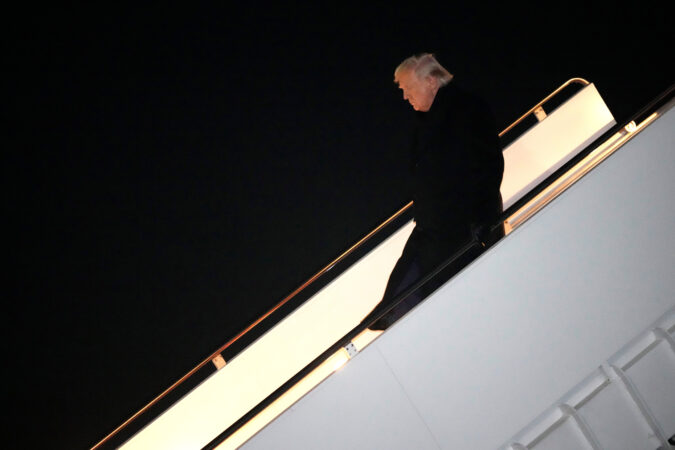
    WASHINGTON — President Donald Trump met privately with Israeli Prime Minister Benjamin Netanyahu on Wednesday and said he’d insisted that negotiations with Iran continue as the U.S. pushes for a nuclear deal with Tehran.

    Netanyahu spent nearly three hours at the White House, but he entered and left out of the view of reporters and he and Trump didn’t take questions. In a subsequent post on his social media site, however, the president called it “a very good meeting” and said “there was nothing definitive reached, other than I insisted that negotiations with Iran continue to see whether or not a Deal can be consummated.”

    “If it can, I let the Prime Minister know that will be a preference,” Trump wrote. “If it cannot, we will just have to see what the outcome will be.”

    He added, “Last time Iran decided that they were better off not making a Deal” and were hit by U.S. airstrikes.

    “Hopefully this time they will be more reasonable and responsible,” Trump wrote.

    In a statement, Netanyahu’s office said the two leaders had discussed negotiations with Iran as well as developments in Gaza and around the region and they had “agreed to continue their close coordination and relationship.”

    Wednesday’s meeting was their seventh during Trump’s second term and took place as both the U.S. and Iran are projecting cautious optimism after holding indirect talks in Oman on Friday about how, once again, to approach negotiations over Iran’s nuclear program.

    Trump said on reaching an agreement with Iran in a Tuesday interview with Fox Business Network’s Larry Kudlow: “I think they’d be foolish if they didn’t. We took out their nuclear power last time, and we’ll have to see if we take out more this time.”

    “It’s got to be a good deal,” he said then. “No nuclear weapons, no missiles.”

    Netanyahu pushes for more in Iran talks

    Netanyahu’s office said prior to the meeting that he wants the U.S.-Iran talks to include limits on Tehran’s ballistic missile program and its support for militant groups such as Hamas and Hezbollah.

    “I will present to the president our outlook regarding the principles of these negotiations — the essential principles which, in my opinion, are important not only to Israel, but to everyone around the world who wants peace and security in the Middle East,” Netanyahu said Tuesday before leaving Israel.

    But it remains unclear how much influence Netanyahu will have over Trump’s approach toward Iran. Trump initially threatened to take military action over Iran’s bloody crackdown on nationwide protests in January, then shifted to a pressure campaign in recent weeks to try to get Tehran to make a deal over its nuclear program.

    Iran is still reeling from the 12-day war with Israel in June. The devastating series of airstrikes, including the U.S. bombing several Iranian nuclear sites, killed nearly 1,000 people in Iran and almost 40 in Israel.

    Trump has said repeatedly that U.S. strikes had “obliterated” Iran’s nuclear capabilities, although the extent of the damage remains unclear. Satellite photos of nuclear sites have recently captured activity, prompting concern that Iran could be attempting to salvage or assess damage at the sites.

    Israel has long called for Iran to cease all uranium enrichment, dial back its ballistic missile program, and cut ties to militant groups across the region. Iran has always rejected those demands, saying it would only accept some limits on its nuclear program in return for sanctions relief.

    Washington has built up military forces in the region, sending an aircraft carrier, guided-missile destroyers, air defense assets and more to supplement its presence. Arab and Islamic countries, including Turkey and Qatar, have been urging both sides to show restraint, warning that any strike or retaliation could have destabilizing consequences for a region already strained by the Israel-Hamas war in Gaza.

    Gaza was also a topic

    In his post, Trump said he and Netanyahu had “also discussed the tremendous progress being made in Gaza, and the Region in general.”

    Trump plans to hold the first meeting next week of his Board of Peace, which was initially framed to oversee future steps of the U.S.-brokered Gaza ceasefire plan but has taken shape with Trump’s ambitions of resolving other global crises.

    Earlier Wednesday, Netanyahu met with Secretary of State Marco Rubio at Blair House, across the street from the White House, and agreed to be part of the board.

    On Iran, Trump said Friday that his special envoy, Steve Witkoff, and son-in-law Jared Kushner had “very good” talks and more were planned this week. But the Republican president kept up the pressure, warning that if Iran did not make a deal over its nuclear program, “the consequences are very steep.”

    Abbas Araghchi, Iran’s foreign minister, made similar comments, saying there will be consultations on “next steps.” He also said the level of mistrust between the two longtime adversaries remains a “serious challenge facing the negotiations.”

    He signaled that Iran would stick to its position that it must be able to enrich uranium — a major point of contention with Trump.

    Netanyahu met with Witkoff and Kushner shortly after arriving in Washington on Tuesday evening and they gave him an update on the talks held with Iran in Oman, the prime minister’s office said.

    Araghchi said in November that Iran was no longer enriching uranium due to the damage from last year’s war.

    Before the war, Iran had been enriching uranium up to 60% purity, a short, technical step away from weapons-grade levels. The U.N. nuclear watchdog, the International Atomic Energy Agency, had said Iran was the only country in the world to enrich to that level that was not armed with the bomb.

    Iran has been refusing requests by the IAEA to inspect the sites bombed in the June war. Even before that, Iran has restricted IAEA inspections since Trump’s decision in 2018 to unilaterally withdraw the U.S. from Iran’s 2015 nuclear deal with world powers.
  • Several ICE agents were arrested in recent months, showing risk of misconduct

    Several ICE agents were arrested in recent months, showing risk of misconduct

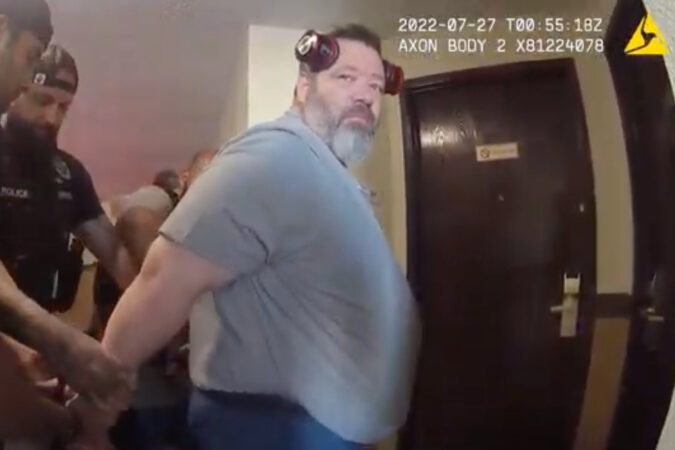
    Investigators said one immigration enforcement official got away with physically assaulting his girlfriend for years. Another admitted he repeatedly sexually abused a woman in his custody. A third is charged with taking bribes to remove detention orders on people targeted for deportation.

    At least two dozen U.S. Immigration and Customs Enforcement employees and contractors have been charged with crimes since 2020, and their documented wrongdoing includes patterns of physical and sexual abuse, corruption, and other abuses of authority, a review by The Associated Press found.

    While most of the cases happened before Congress voted last year to give ICE $75 billion to hire more agents and detain more people, experts say these kinds of crimes could accelerate given the sheer volume of new employees and their empowerment to use aggressive tactics to arrest and deport people.

    The Trump administration has emboldened agents by arguing they have “absolute immunity” for their actions on duty and by weakening oversight. One judge recently suggested that ICE was developing a troubling culture of lawlessness, while experts have questioned whether job applicants are getting enough vetting and training.

    “Once a person is hired, brought on, goes through the training and they are not the right person, it is difficult to get rid of them and there will be a price to be paid later down the road by everyone,” said Gil Kerlikowske, who served as commissioner of U.S. Customs and Border Protection from 2014 to 2017.

    Almost every law enforcement agency contends with bad employees and crimes related to domestic violence and substance abuse are long-standing problems in the field. But ICE’s rapid growth and mission to deport millions are unprecedented, and the AP review found that the immense power that officers exercise over vulnerable populations can lead to abuses.

    Department of Homeland Security Assistant Secretary Tricia McLaughlin said that wrongdoing was not widespread in the agency, and that ICE “takes allegations of misconduct by its employees extremely seriously.” She said that most new hires had already worked for other law enforcement agencies, and that their backgrounds were thoroughly vetted.

    “America can be proud of the professionalism our officers bring to the job day-in and day-out,” she said.

    Could become a ‘countrywide phenomenon’

    ICE announced last month that it had more than doubled in size to 22,000 employees in less than one year.

    Kerlikowske said ICE agents are particularly “vulnerable to unnecessary use-of-force issues,” given that they often conduct enforcement operations in public while facing protests. With the number of ICE detainees nearly doubling since last year to 70,000, employees and contractors responsible for overseeing them are also facing challenging conditions that can provide more opportunities for misconduct.

    The Border Patrol doubled in size to more than 20,000 agents from 2004 to 2011 — six years longer than ICE took. It was embarrassed by a wave of corruption, abuse, and other misconduct by some of the new hires. Kerlikowske recalled cases of agents who accepted bribes to let cars carrying drugs enter the U.S. or who became involved in human trafficking.

    He and others say ICE is poised to see similar problems that will likely be broader in scope, with less oversight and accountability.

    “The corruption and the abuse and the misconduct was largely confined in the prior instance to along the border and interactions with immigrants and border state residents. With ICE, this is going to be a countrywide phenomenon as they pull in so many people who are attracted to this mission,” said David Bier, director of immigration studies at the Cato Institute, a libertarian think tank.

    Bier, who has helped publicize some of the recent arrests and other alleged misconduct by ICE agents, said he has been struck by the “remarkable array of different offenses and charges that we’ve seen.”

    AP’s review examined public records involving cases of ICE employees and contractors who have been arrested since 2020, including at least 17 who have been convicted and six others who are awaiting trial. Nine have been charged in the last year, including an agent cited last month for assaulting a protester near Chicago while off-duty.

    Some of the most serious crimes were committed by veteran ICE employees and supervisors rather than rookies.

    While federal officials have justified ICE’s aggression, the behavior of agents is drawing scrutiny from cellphone-wielding observers and prosecutors in Democratic-led jurisdictions. Local agencies are looking into last month’s fatal shootings in Minneapolis of protesters Renee Good and Alex Pretti by federal agents, as well as the killing of Keith Porter by an off-duty ICE agent in Los Angeles on New Year’s Eve.

    Arrests have made local headlines

    Around the country, the cases have attracted unwelcome headlines for ICE, which has spent millions of dollars publicizing the criminal rap sheets of those they arrest as the “worst of the worst.”

    Among them:

    — The assistant ICE field office supervisor in Cincinnati, Samuel Saxon, a 20-year ICE veteran, has been jailed since his arrest in December on charges that he attempted to strangle his girlfriend.

    Saxon had abused the woman for years, fracturing her hip and nose and causing internal bleeding, a judge found in a ruling ordering him detained pending trial. “The defendant is a volatile and violent individual,” the judge wrote of Saxon, whose attorneys didn’t return a message seeking comment. ICE said he is considered absent without leave.

    — “I’m ICE, boys,” an ICE employment eligibility auditor told police in Minnesota in November when he was arrested in a sting as he went to meet a person he thought was a 17-year-old prostitute. Alexander Back, 41, has pleaded not guilty to attempted enticement of a minor. ICE said Back is on administrative leave while the agency investigates.

    — When officers in suburban Chicago found a man passed out in a crashed car in October, they were surprised to discover the driver was an ICE officer who had recently completed his shift at a detention center and had his government firearm in the vehicle. They arrested Guillermo Diaz-Torres for driving under the influence. He’s pleaded not guilty and has been put on administrative duty pending an investigation.

    — After an ICE officer in Florida was stopped for driving drunk with his two children in the car in August, he tried to get out of charges by pointing to his law enforcement and military service. When that failed, he demanded to know whether one of the deputies arresting him was Haitian and threatened to check the man’s immigration status, body camera video shows.

    “I’ll run him once I get out of here and if he’s not legit, ooh, he’s taking a ride back to Haiti,” Scott Deiseroth warned during the arrest.

    Deiseroth, who was sentenced to probation and community service, is on administrative leave pending the outcome of an internal investigation. “He did something stupid. He owned up to it,” said his attorney, Michael Catalano. “He’s very sorry about the whole thing.”

    Several cases of force and abuse

    The AP’s review found a pattern of charges involving ICE employees and contractors who mistreated vulnerable people in their care.

    A former top official at an ICE contract facility in Texas was sentenced to probation on Feb. 4 after acknowledging he grabbed a handcuffed detainee by the neck and slammed him into a wall last year. Prosecutors had downgraded the charge from a felony to a misdemeanor.

    In December, an ICE contractor pleaded guilty to sexually abusing a detainee at a detention facility in Louisiana. Prosecutors said the man had sexual encounters with a Nicaraguan national over a five-month period in 2025 as he instructed other detainees to act as lookouts.

    Outside Chicago, an off-duty ICE agent has been charged with misdemeanor battery for throwing to the ground a 68-year-old protester who was filming him at a gas station in December. McLaughlin has said the agent acted in self-defense.

    Other charges cited corruption

    Another pattern that emerged in AP’s review involved ICE officials charged with abusing their power for financial gain.

    An ICE deportation officer in Houston was indicted last summer on charges that he repeatedly accepted cash bribes from bail bondsmen in exchange for removing detainers ICE had placed on their clients targeting them for deportation.

    ICE said the officer was “indefinitely suspended” in May 2024, before his arrest one year later. He has pleaded not guilty to seven counts of accepting bribes and was released from custody while awaiting trial.

    Prosecutors say a former supervisor in ICE’s New York City office provided confidential information about people’s immigration statuses to acquaintances and made an arrest in exchange for gifts and other gain. He was arrested in November 2024, has pleaded not guilty and is awaiting trial.

    Two Utah-based ICE investigators were sentenced to prison last year for a scheme in which they made hundreds of thousands of dollars stealing synthetic drugs known as “bath salts” from government custody and selling them through government informants.

    Using badges to dodge consequences

    The wrongdoing often included the use of ICE resources and credentials to try to avoid arrest or receive favorable treatment.

    In 2022, ICE supervisor Koby Williams was arrested in a sting by police in Othello, Washington, while going to a hotel room to meet who he thought was a 13-year-old girl he’d arranged to pay for sex.

    Williams had driven his government vehicle, which was filled with cash, alcohol, pills, and Viagra, and was carrying his ICE badge and loaded government firearm. The 22-year ICE veteran offered a rationale that turned out to be a lie: that he was there to “rescue” the girl as part of a human trafficking investigation. Williams is serving prison time for what prosecutors called a “reprehensible” abuse of power.

    “With a duty to protect and serve,” they wrote, “defendant sought to exploit and victimize.”

  • Homeland Security officials voice concerns about looming shutdown

    Homeland Security officials voice concerns about looming shutdown

    WASHINGTON — A disruption in reimbursements to states for disaster relief costs. Delays in cybersecurity response and training. And missed paychecks for the agents who screen passengers and bags at the nation’s airports, which could lead to unscheduled absences and longer wait times for travelers.

    Those were just some of the potential ramifications of a looming funding lapse at the Department of Homeland Security, according to officials who testified before a House panel on Wednesday.

    Congress has approved full-year funding for the vast majority of the federal government, but it only passed a short-term funding patch for the Department of Homeland Security that extends through Friday. In response to the killing of two American citizens in Minneapolis and other incidents, Democrats have insisted that any funding bill for the department come with changes to immigration enforcement operations.

    Finding agreement on the issue of immigration enforcement will be exceedingly difficult. But even though lawmakers in both parties were skeptical, a White House official said that the administration was having constructive talks with both Republicans and Democrats. The official, granted anonymity to speak about ongoing deliberations, stressed that President Donald Trump wanted the government to remain open and for Homeland Security services to be funded.

    Meanwhile, Republicans are emphasizing that a Homeland Security shutdown would not curtail the work of the agencies Democrats are most concerned about. Trump’s tax and spending cut bill passed last year gave Immigration and Customs Enforcement about $75 billion to expand detention capacity and beef up enforcement operations.

    “Removal operations will continue. Wall construction will continue,” said Rep. Mark Amodei, the Republican chairman of the House Appropriations subcommittee on Homeland Security.

    Rather, agencies such as the Transportation Security Administration, the Secret Service, Coast Guard, and Federal Emergency Management Agency would take the biggest hit, he said. Officials from those agencies appeared before the House subcommittee to explain the potential impact of a Homeland Security shutdown.

    Rep. Henry Cuellar, the ranking Democrat on the panel, said the tragic loss of two American citizens in Minneapolis — Renee Good and Alex Pretti — should concern every lawmaker. He said that strong borders and a respect for human life are not competing values.

    “When enforcement actions lead to outcomes like that, we have an obligation to ask the hard question and to make sure our laws and policies are working as intended,” Cuellar said.

    He said on Homeland Security funding that “we were almost there. We were there, Democrats and Republicans and everybody, but the second shooting brought different dynamics. I think we can get there to address that.”

    Essential work continues

    About 90% of the department’s employees would continue working in a shutdown, but they would do so without pay. Vice Admiral Thomas Allan of the U.S. Coast Guard said law enforcement and emergency response missions continue during a shutdown, but that the possibility of missed paychecks creates significant financial hardships.

    “Shutdowns cripple morale and directly harm our ability to recruit and retain the talented Americans we need to meet growing demands,” Allan said.

    Ha Nguyen McNeill, of the Transportation Security Administration, shared a similar concern. She estimated about 95% of the agency’s 61,000 workers would continue to work, but potentially go without a paycheck depending upon the length of a shutdown. She noted that they just went through a lengthy shutdown last fall.

    “We heard reports of officers sleeping in their cars at airports to save money on gas, selling their blood and plasma and taking on second jobs to make ends meet,” she said. “…Some are just recovering from the financial impact of the 43-day shutdown. Many are still reeling from it. We cannot put them through another such experience.”

    Homeland Security also includes the agency charged with working to protect the public and private sector from a broad range of cyber threats. Madhu Gottumukkala, acting director of that agency, said a shutdown would “degrade our capacity to provide timely and actionable guidance to help partners defend their networks.”

    “I want to be clear, when the government shuts down, cyber threats do not,” he said.

    Long-term impact

    Gregg Phillips, an associated administrator at FEMA, said its disaster relief fund has sufficient balances to continue emergency response activities during a shutdown, but would become seriously strained in the event of a catastrophic disaster. He said that while the agency continues to respond to threats like flooding and winter storms, long-term planning and coordination with state and local partners is “irrevocably impacted.”

    For example, he said a lapse would disrupt training for first responders at the National Disaster & Emergency Management University in Maryland.

    “The import of these trainings cannot be measured,” Phillips said. “And their absence will be felt in our local communities.”

    At the Secret Service, “the casual observer will see no difference,” said Matthew Quinn, the agency’s deputy director. But he said reform efforts taking place at the Secret Service are affected.

    “Delayed contracts, diminished hiring and halted new programs will be the result,” Quinn said.

  • Kennedy Center head warns staff of cuts and ‘skeletal’ staffing during renovation closure

    Kennedy Center head warns staff of cuts and ‘skeletal’ staffing during renovation closure

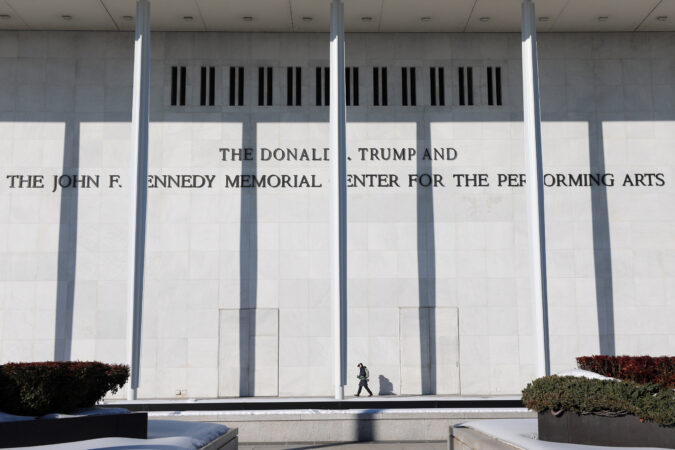
    As the Trump administration prepares to close the Kennedy Center for a two-year renovation, the head of Washington’s performing arts center has warned its staff about impending cuts that will leave “skeletal teams.”

    In a Tuesday memo obtained by The Associated Press, Kennedy Center president Richard Grenell told staff that “departments will obviously function on a much smaller scale with some units totally reduced or on hold until we begin preparations to reopen in 2028,” promising “permanent or temporary adjustments for most everyone.”

    A Kennedy Center spokesperson declined comment Wednesday.

    Over the next few months, he wrote, department heads would be “evaluating the needs and making the decisions as to what these skeletal teams left in place during the facility and closure and construction phase will look like.” Grenell said leadership would “provide as much clarity and advance notice as possible.”

    The Kennedy Center is slated to close in early July. Few details about what the renovations will look like have been released since President Donald Trump announced his plan at the beginning of February. Neither Trump nor Grenell have provided evidence to support claims about the building being in disrepair, and last October, Trump had pledged it would remain open during renovations.

    It’s unclear exactly how many employees the center currently has, but a 2025 tax filing said nearly 2,500 people were employed during the 2023 calendar year. A request for comment sent to Kennedy Center Arts Workers United, which represents artists and arts professionals affiliated with the center — wasn’t immediately returned.

    Leading performers and groups have left or canceled appearances since Trump ousted the center’s leadership a year ago and added his own name to the building in December. The Washington Post, which first reported about Grenell’s memo, has also cited significant drops in ticket revenue that — along with private philanthropy — comprises the center’s operating budget. Officials have yet to say whether such long-running traditions as the Mark Twain Award for comedy or the honors ceremony for lifetime contributions to the arts will continue while the center is closed.

    The Kennedy Center was first conceived as a national cultural facility during the Eisenhower administration, in the 1950s. President John F. Kennedy led a fundraising initiative, and the yet-to-be-built center was named in his honor following his assassination. It opened in 1971 and has become a preeminent showcase for theater, music and dramatic performances, enjoying bipartisan backing until Trump’s return to office last year.

    “This renovation represents a generational investment in our future,” Grenell wrote. “When we reopen, we will do so as a stronger organization — one that honors our legacy while expanding our impact.”

  • Grand jury refuses to indict Democratic lawmakers in connection with illegal military orders video

    Grand jury refuses to indict Democratic lawmakers in connection with illegal military orders video

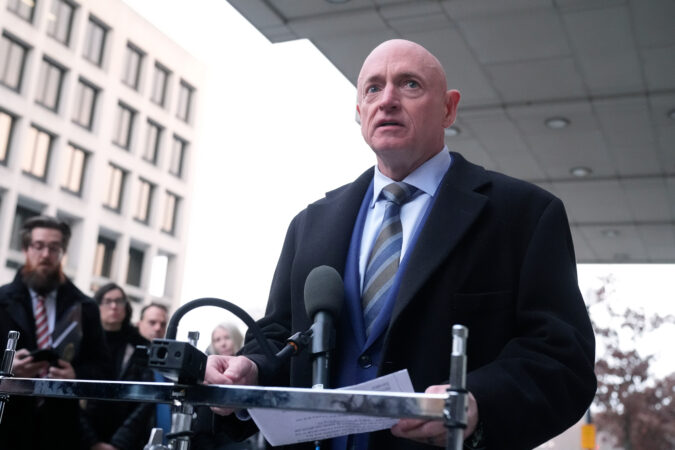
    WASHINGTON — A grand jury in Washington refused Tuesday to indict Democratic lawmakers in connection with a video in which they urged U.S. military members to resist “illegal orders,” according to a person familiar with the matter.

    The Justice Department opened an investigation into the video featuring Democratic Sens. Mark Kelly and Elissa Slotkin and four other Democratic lawmakers urging U.S. service members to follow established military protocols and reject orders they believe to be unlawful. All the lawmakers previously served in the military or at intelligence agencies.

    Grand jurors in Washington declined to sign off on charges in the latest of a series of rebukes of prosecutors by citizens in the nation’s capital, according to the person, who spoke on the condition of anonymity because they were not authorized to publicly discuss the matter. It wasn’t immediately clear whether prosecutors had sought indictments against all six lawmakers or what charge or charges prosecutors attempted to bring.

    Grand jury rejections are extraordinarily unusual, but have happened repeatedly in recent months in Washington as citizens who have heard the government’s evidence have come away underwhelmed in a number of cases. Prosecutors could try again to secure an indictment.

    Spokespeople for the U.S. attorney’s office and the Justice Department didn’t immediately respond to requests for comment Tuesday.

    The FBI in November began contacting the lawmakers to schedule interviews, outreach that came against the backdrop of broader Justice Department efforts to punish political opponents of the president. President Donald Trump and his aides labeled the lawmakers’ video as “seditious” — and Trump said on his social media account that the offense was “punishable by death.”

    Besides Slotkin and Kelly, the other Democrats who appeared in the video include Reps. Jason Crow of Colorado, Chrissy Houlahan of Pennsylvania, Maggie Goodlander of New Hampshire and Chris Deluzio of Pennsylvania.

    Slotkin, a former CIA analyst who represents Michigan, said late Tuesday that she hopes this ends the Justice Department’s probe.

    “Tonight we can score one for the Constitution, our freedom of speech, and the rule of law,” Slotkin said in a statement. “But today wasn’t just an embarrassing day for the Administration. It was another sad day for our country,” she said.

    Kelly, a former Navy pilot who represents Arizona, called the attempt to bring charges an “outrageous abuse of power by Donald Trump and his lackies.”

    “Donald Trump wants every American to be too scared to speak out against him,” Kelly said in a post on X. “The most patriotic thing any of us can do is not back down.”

    In November, the Pentagon opened an investigation into Kelly, citing a federal law that allows retired service members to be recalled to active duty on orders of the defense secretary for possible court-martial or other punishment. Defense Secretary Pete Hegseth has censured Kelly for participating in the video and is trying to retroactively demote Kelly from his retired rank of captain.

    The senator is suing Hegseth to block those proceedings, calling them an unconstitutional act of retribution. During a hearing last week, the judge appeared to be skeptical of key arguments that a government attorney made in defense of Kelly’s Jan. 5 censure by Hegseth.

  • Shooter in British Columbia, Canada, killed 9 people at a school and home, police say

    VANCOUVER, British Columbia — A shooting at a school in remote northern British Columbia left seven people dead, while two more were found dead at a nearby home, Canadian authorities said Tuesday. A woman believed by police to be the shooter was also found dead, apparently from a self-inflicted wound.

    The Royal Canadian Mounted Police said more than 25 people were wounded, including two who were airlifted to hospital with life-threatening injuries, after the shooting at Tumbler Ridge Secondary School.

    School shootings are rare in Canada, which has strict gun control laws.

    The town of Tumbler Ridge in the Canadian Rockies is more than 1,000 kilometers (600 miles) northeast of Vancouver, near the provincial border with Alberta. The provincial government website lists Tumbler Ridge Secondary School as having 175 students from Grades 7 to 12.

    British Columbia Premier David Eby told reporters that police officers reached the school within two minutes.

    A video showed students walking out of the school with their hands raised as police vehicles surrounded the building and a helicopter circled overhead.

    Police found six people dead, a statement said. A seventh person died while being transported to a hospital, and two more were found dead at a residence the authorities believe was connected to the attack. A suspect appeared to have died of a “self-inflicted injury.”

    RCMP Superintendent Ken Floyd told reporters that investigators had identified a female suspect but would not release a name, and that the shooter’s motive remained unclear. He added that police are still investigating the connection between the shooter and the victims.

    Tumbler Ridge Mayor Darryl Krakowka said the whole community is grieving.

    “I broke down,” he said, saying it was “devastating” to learn how many had died in the community of 2,700, which he called a “big family.”

    “I have lived here for 18 years,” Krakowka said. “I probably know every one of the victims.”

    The Rev. George Rowe of the Tumbler Ridge Fellowship Baptist Church went to the recreation center where the victims’ families were awaiting more information.

    “It was not a pretty sight. Families are still waiting to hear if it’s their child that’s deceased and because of protocol and procedure, the investigating team is very careful in releasing names,” Rowe said. “The big thing tonight was my having to walk away and the families still waiting to find out. It is so difficult. Other pastors and counselors are there, so they are not alone.”

    Rowe once taught at the high school and his three children graduated from there.

    “To walk through the corridors of that school will never be the same again,” he said.

    Canadian Prime Minister Mark Carney said in a social media post that he was devastated by the shooting.

    “I join Canadians in grieving with those whose lives have been changed irreversibly today, and in gratitude for the courage and selflessness of the first responders who risked their lives to protect their fellow citizens,” he wrote.

    Carney’s office said he is suspending a planned trip to Halifax, Nova Scotia and Munich, Germany. He was set to announce a long-awaited defense industrial strategy in Halifax on Wednesday before heading to Europe for the Munich Security Conference.

    Eby, the province’s premier, told reporters he had spoken to Carney after what he called the “unimaginable tragedy.”

    “I know it’s causing us all to hug our kids a little bit tighter tonight,” he said. “I’m asking the people of British Columbia to look after the people of Tumbler Ridge tonight.”

    Canada’s government has responded to previous mass shootings with gun control measures, including a recently broadened ban on all guns it considers assault weapons.

    Tuesday’s shootings were Canada’s deadliest rampage since 2020, when a gunman in Nova Scotia killed 13 people and set fires that left another nine dead.

  • A person has been detained for questioning in the disappearance of Nancy Guthrie, AP sources say

    A person has been detained for questioning in the disappearance of Nancy Guthrie, AP sources say

    TUCSON, Ariz. — A person has been detained for questioning in the disappearance of Nancy Guthrie, according to two people familiar with the matter.

    The people said the person was detained in an area south of Tucson on Tuesday. They did not immediately provide additional details, and it wasn’t clear if the person being questioned is the person captured on surveillance video from outside Guthrie’s house released earlier Tuesday.

    The people were not authorized to discuss details of an ongoing investigation and spoke to The Associated Press on condition of anonymity.

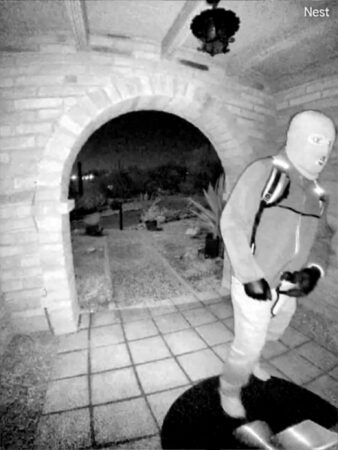
    The FBI released surveillance images of a masked person with a handgun holster outside Guthrie’s front door the night she vanished, offering the first major break in a case that has gripped the nation for more than a week.

    The person wearing a backpack and a ski mask can be seen in one of the videos tilting their head down and away from a doorbell camera while nearing an archway at the home of the mother of “Today” show host Savannah Guthrie.

    The footage shows the person holding a flashlight in their mouth and trying to cover the camera with a gloved hand and part of a plant ripped from Nancy Guthrie’s yard.

    The videos — less than a combined minute in length — gave investigators and the public their first glimpse of who was outside Nancy Guthrie’s home just outside Tucson, but the images did not show what happened to her or help determine whether the 84-year-old is still alive.

    FBI Director Kash Patel said the “armed individual” appeared to “have tampered with the camera.” It was not entirely clear whether there was a gun in the holster.

    The videos were pulled from data on “back-end systems” after investigators spent days trying to find lost, corrupted or inaccessible images, Patel said.

    “This will get the phone ringing for lots of potential leads,” said former FBI agent Katherine Schweit. “Even when you have a person who appears to be completely covered, they’re really not. You can see their girth, the shape of their face, potentially their eyes or mouth.”

    By Tuesday afternoon, authorities were back near Nancy Guthrie’s neighborhood, using vehicles to block her driveway. A few miles away, law enforcement was going door-to-door in the area where daughter Annie Guthrie lives, talking with neighbors as well as walking through a drainage area and examining the inside of a culvert with a flashlight.

    Investigators have said for more than a week that they believe Nancy Guthrie was taken against her will. She was last seen at home Jan. 31 and reported missing the next day. DNA tests showed blood on her porch was hers, authorities said.

    She has high blood pressure and issues with mobility and her heart, and she needs daily medication, officials have said.

    This image provided by the FBI shows surveillance images at the home of Nancy Guthrie the night she went missing in Tucson, Ariz. (FBI via AP)

    Authorities initially could not pull images from camera

    Until now, authorities have released few details, leaving it unclear if ransom notes demanding money with deadlines already passed were authentic, and whether the Guthrie family has had any contact with whoever took Nancy Guthrie.

    Savannah Guthrie posted the new surveillance images on social media Tuesday, saying the family believes Nancy Guthrie is still alive and offering phone numbers for the FBI and county sheriff. Within minutes, the post had thousands of comments.

    Investigators had hoped cameras would turn up evidence right away about how Nancy Guthrie disappeared from her home in an secluded neighborhood.

    But the doorbell camera was disconnected early on Feb. 1. While software recorded movement at the home minutes later, Nancy Guthrie did not have an active subscription, so Pima County Sheriff Chris Nanos had initially said none of the footage could be recovered. Officials continued working to get the footage.

    Savannah Guthrie expressed desperation a day ago

    Heartbreaking messages by Savannah Guthrie and her family shifted from hopeful to bleak as they made pleas for whoever took Nancy Guthrie. In a video just ahead of a purported ransom deadline Monday, Savannah Guthrie appeared alone and spoke directly to the public.

    “We are at an hour of desperation,” she said. “We need your help.”

    Much of the nation is closely following the case involving the longtime anchor of NBC’s morning show.

    White House press secretary Karoline Leavitt said President Donald Trump watched the new surveillance footage and was in “pure disgust,” encouraging anyone with information to call the FBI.

    The FBI this week began posting digital billboards about the case in major cities from Texas to California.

    Connor Hagan, a spokesperson for the FBI, said Monday that the agency was not aware of ongoing communication between Guthrie’s family and any suspected kidnappers. Authorities also had not identified any suspects, he said.

    Videos from Guthrie siblings appealed directly to whoever took their mom

    Three days after the search began, Savannah Guthrie and her two siblings sent their first public appeal to whoever took their mother, saying, “We want to hear from you, and we are ready to listen.”

    In the recorded video, Guthrie said her family was aware of media reports about a ransom letter, but they first wanted proof their mother was alive. “Please reach out to us,” they said.

    The next day, Savannah Guthrie’s brother again made a plea, saying, “Whoever is out there holding our mother, we want to hear from you. We haven’t heard anything directly.”

    Then over the past weekend, the family posted another video — one that was more cryptic and generated even more speculation about Nancy Guthrie’s fate.

    “We received your message, and we understand. We beg you now to return our mother to us so that we can celebrate with her,” said Savannah Guthrie, flanked by her siblings. “This is the only way we will have peace. This is very valuable to us, and we will pay.”

  • Gov. Tim Walz says federal immigration crackdown in Minnesota could end within days

    Gov. Tim Walz says federal immigration crackdown in Minnesota could end within days

    MINNEAPOLIS — Gov. Tim Walz said Tuesday that he expects the federal immigration crackdown in Minnesota will end in “days, not weeks and months,” based on his recent conversations with top Trump administration officials.

    The Democratic governor said at a news conference that he spoke Monday with border czar Tom Homan and with White House chief of staff Susie Wiles on Tuesday morning. Homan took over the Minnesota operation in late January after the second fatal shooting by federal officers and amid growing political backlash and questions about how the operation was being run.

    “We’re very much in a trust but verify mode,” Walz said. He added that he expected to hear more from the administration “in the next day or so” about the future of what he said has been an “occupation” and a “retribution campaign” against the state.

    While Walz said he’s hopeful at the moment because “every indication I have is that this thing is winding up,” he added that things could change.

    “It would be my hope that Mr. Homan goes out before Friday and announces that this thing is done, and they’re bringing her down and they’re bringing her down in days,” Walz said. “That would be my expectation.”

    Officials with the Department of Homeland Security did not immediately reply to a request for comment on the governor’s remarks.

    Walz said he has no reason not to believe Homan’s statement last week that 700 federal officers would leave Minnesota immediately, but the governor added that still left 2,300 on Minnesota’s streets. Homan at the time cited an “increase in unprecedented collaboration” resulting in the need for fewer federal officers in Minnesota, including help from jails that hold inmates who could be deported.

    The governor also indicated that he expects the state will get “cooperation on joint investigations” into the shooting deaths of Renee Good and Alex Pretti by federal officers, but gave no details. That’s been a point of friction between federal authorities and state investigators, who complain that they have been frozen out of those cases so far with no access to evidence.

    Walz called the news conference primarily to denounce the economic impact of the enforcement surge. He spoke at The Market at Malcolm Yards, a food hall where owner Patty Wall said the entire restaurant sector of the local economy has become “collateral damage” from the surge.

    Matt Varilek, the governor’s employment and economic development commissioner, said Malcolm Yards would normally be bustling, but is now struggling because employees and customers are afraid to come due to the crackdown.

    “So it is great news, of course, that the posture seems to have changed at the federal level toward their activities here in Minnesota,” Varilek said. “But, as the governor said, it’s a trust-but-verify situation. And frankly, the fear that has been sown, I haven’t really noticed any reduction in that.”

    Even as Walz was expressing optimism that the crackdown would end soon, federal officers made a highly visible arrest inside the lobby of the main county building in downtown Minneapolis.

    After a short foot chase, ICE officers grabbed a man who had arrived for a court appearance on charges of possessing over 50 pounds of methamphetamine.

    The county’s top prosecutor, Hennepin County Attorney Mary Moriarty, protested that the arrest was “disruptive and disturbing to many” and left staffers in the building afraid to leave their offices for fear of being racially profiled.

    The man could go unpunished on the state drug charges if he’s deported first.

    “Using local government courthouses for federal civil immigration enforcement interferes with the administration of justice, prevents witnesses from testifying and robs victims of their opportunity to seek justice,” Moriarty said in a statement. She has also objected to earlier arrests by ICE officers of people making court appearances there.

  • Trump administration takes down a rainbow flag at the Stonewall National Monument

    Trump administration takes down a rainbow flag at the Stonewall National Monument

    NEW YORK — The Trump administration has stopped flying a rainbow flag at the Stonewall National Monument, angering activists who see the change as a symbolic swipe at the country’s first national monument to LGBTQ+ history.

    The multicolored flag, one of the world’s most well known emblems of LGBTQ+ rights, was quietly removed in recent days from a flagpole on the National Park Service-run site, which centers on a tiny park in Manhattan’s Greenwich Village. It’s across the street from the Stonewall Inn, the gay bar where patrons’ rebellion against a police raid helped catalyze the modern LGBTQ+ rights movement.

    The park service said it’s simply complying with recent guidance that clarifies longstanding flag policies and applies them consistently. A Jan. 21 park service memo largely restricts the agency to flying the flags of the United States, the Department of the Interior and the POW/MIA flag.

    LGBTQ+ rights activists including Ann Northrop don’t buy the explanation.

    “It’s just a disgusting slap in the face,” she said by phone Tuesday as advocates planned a rally and some city and state officials vowed to raise the flag again.

    One of them, Manhattan Borough President Brad Hoylman-Sigal, called the removal “petty and vindictive.”

    “On one level, removing a flag seems extremely, I guess, pedestrian. But the symbolism of doing it here at Stonewall is what is so profoundly disappointing and frightening,” said Hoylman-Sigal, a Democrat and the first openly LGBTQ+ person to hold his office.

    A rainbow flag still appears on a city-owned pole just outside the park, and smaller ones wave along its fence. But advocates fought for years to see the banner fly high every day on federal property, and they saw it as an important gesture of recognition when the flag first went up in 2019.

    “That’s why we have those flag-raisings — because we wanted the national sanction to make it a national park,” said Northrop, who co-hosts a weekly cable news program called “GAY USA.” She spoke at a flag-related ceremony at the monument in 2017.

    The flag is the latest point of contention between LGBTQ+ activists and President Donald Trump’s administrations over the Stonewall monument, which Democratic former President Barack Obama created in 2016. Activists were irritated when, during the Republican Trump’s first administration, the park service kept a bureaucratic distance from the raising of the rainbow flag on the city’s pole.

    Then, soon after Trump returned to office last year and declared that his administration would recognize only two genders, the government scrubbed verbal references to transgender people from the park service website for the Stonewall monument.

    The park service didn’t answer specific questions Tuesday about the Stonewall site and the flag policy, including whether any flags had been removed from other parks.

    “Stonewall National Monument continues to preserve and interpret the site’s historic significance through exhibits and programs,” the agency said in a statement.

  • Annual governors gathering with White House unraveling after Trump excludes Democrats

    Annual governors gathering with White House unraveling after Trump excludes Democrats

    WASHINGTON — An annual meeting of the nation’s governors that has long served as a rare bipartisan gathering is unraveling after President Donald Trump excluded Democratic governors from White House events.

    The National Governors Association said it will no longer hold a formal meeting with Trump when governors are scheduled to convene in Washington later this month, after the White House planned to invite only Republican governors. On Tuesday, 18 Democratic governors also announced they would boycott a traditional dinner at the White House.

    “If the reports are true that not all governors are invited to these events, which have historically been productive and bipartisan opportunities for collaboration, we will not be attending the White House dinner this year,” the group wrote. “Democratic governors remain united and will never stop fighting to protect and make life better for people in our states.”

    Oklahoma Gov. Kevin Stitt, a Republican and the chairman of the NGA, said in a letter Monday to fellow governors obtained by The Associated Press that the White House intends to limit invitations to the association’s annual business meeting, scheduled for February 20, to Republican governors only.

    “Because NGA’s mission is to represent all 55 governors, the Association is no longer serving as the facilitator for that event, and it is no longer included in our official program,” Stitt wrote.

    The NGA is scheduled to meet in Washington from Feb. 19-21. Representatives for Stitt, the White House and the NGA didn’t immediately comment on the letter.

    Brandon Tatum, the NGA’s CEO, said in a statement last week that the White House meeting is an “important tradition” and said the organization was “disappointed in the administration’s decision to make it a partisan occasion this year.”

    The governors group is one of the few remaining venues where political leaders from both major parties gather to discuss the top issues facing their communities. In his letter, Stitt encouraged governors to unite around common goals.

    “We cannot allow one divisive action to achieve its goal of dividing us,” he wrote. “The solution is not to respond in kind, but to rise above and to remain focused on our shared duty to the people we serve. America’s governors have always been models of pragmatic leadership, and that example is most important when Washington grows distracted by politics.”

    Signs of partisan tensions emerged at the White House meeting last year, when Trump and Maine’s Gov. Janet Mills traded barbs.

    Trump singled out the Democratic governor over his push to bar transgender athletes from competing in girls’ and women’s sports, threatening to withhold federal funding from the state if she did not comply. Mills responded, “We’ll see you in court.”

    Trump then predicted that Mills’ political career would be over for opposing the order. She is now running for U.S. Senate.

    The back and forth had a lasting impact on last year’s conference and some Democratic governors did not renew their dues last year to the bipartisan group.