Category: Nation World News Wires

  • Supreme Court seems likely to uphold state bans on transgender athletes in girls and women’s sports

    Supreme Court seems likely to uphold state bans on transgender athletes in girls and women’s sports

    WASHINGTON — The Supreme Court on Tuesday appeared ready to deal another setback to transgender people and uphold state laws barring transgender girls and women from playing on school athletic teams.

    The court’s conservative majority, which has repeatedly ruled against transgender Americans in the past year, signaled during more than three hours of arguments it would rule the state bans don’t violate either the Constitution or the federal law known as Title IX, which prohibits sex discrimination in education.

    More than two dozen Republican-led states have adopted bans on female transgender athletes. Lower courts had ruled for the transgender athletes who challenged laws in Idaho and West Virginia.

    The legal fight is playing out against the backdrop of a broad effort by President Donald Trump to target transgender Americans, beginning on the first day of his second term and including the ouster of transgender people from the military and declaring that gender is immutable and determined at birth.

    The justices are evaluating claims of sex discrimination lodged by transgender people versus the need for fair competition for women and girls, the main argument made by the states.

    Justice Brett Kavanaugh, who coached his daughters in girls basketball, seemed concerned about a ruling that might undo the effects of Title IX, which has produced dramatic growth in girls and women’s sports. Kavanaugh called Title IX an “amazing” and “inspiring” success.

    Some girls and women might lose a medal in a competition with transgender athletes, which Kavanaugh called a harm “we can’t sweep aside.”

    The three liberal justices seemed focused on trying to marshal a court majority in support of a narrow ruling that would allow the individual transgender athletes involved in the cases to prevail.

    A ruling for West Virginia and Idaho would effectively apply to the other two dozen Republican-led states with similar laws.

    But the justices soon might be asked to decide about the laws in an additional roughly two dozen states, led by Democrats, that allow transgender athletes to compete on the teams that match their gender identity.

    The outcome also could influence separate legal efforts by the Trump administration and others seeking to bar transgender athletes in states that have continued to allow them to compete.

    The transgender athletes’ cases

    In the Idaho case, Lindsay Hecox, 25, sued over the state’s first-in-the-nation ban for the chance to try out for the women’s track and cross-country teams at Boise State University in Idaho. She didn’t make either squad because “she was too slow,” her lawyer, Kathleen Hartnett, told the court Tuesday, but she competed in club-level soccer and running.

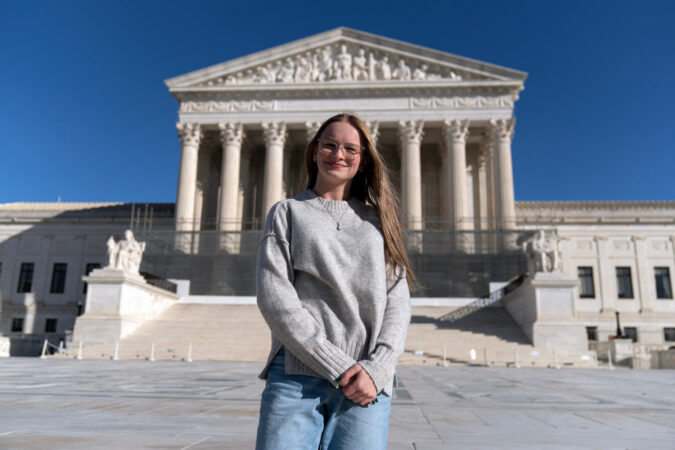
    Becky Pepper-Jackson, a 15-year-old high school sophomore, was in the courtroom Tuesday. She has been taking puberty-blocking medication, has publicly identified as a girl since age 8 and has been issued a West Virginia birth certificate recognizing her as female. She is the only transgender person who has sought to compete in girls sports in West Virginia.

    Pepper-Jackson has progressed from a back-of-the-pack cross-country runner in middle school to a statewide third-place finish in the discus in just her first year of high school.

    Prominent women in sports have weighed in on both sides. Tennis champion Martina Navratilova, swimmers Summer Sanders and Donna de Varona and beach volleyball player Kerri Walsh-Jennings are supporting the state bans. Soccer stars Megan Rapinoe and Becky Sauerbrunn and basketball players Sue Bird and Breanna Stewart back the transgender athletes.

    In 2020, the Supreme Court ruled LGBTQ people are protected by a landmark federal civil rights law that prohibits sex discrimination in the workplace, finding that “sex plays an unmistakable role” in employers’ decisions to punish transgender people for traits and behavior they otherwise tolerate.

    But last year, the six conservative justices declined to apply the same sort of analysis when they upheld state bans on gender-affirming care for transgender minors.

    Chief Justice John Roberts signaled Tuesday he sees differences between the 2020 case, in which he supported the claims of discrimination, and the current dispute.

    The states supporting the prohibitions on transgender athletes argue there is no reason to extend the ruling barring workplace discrimination to Title IX.

    Idaho’s law, state Solicitor General Alan Hurst, said, is “necessary for fair competition because, where sports are concerned, men and women are obviously not the same.”

    Lawyers for Pepper-Jackson argue that such distinctions generally make sense, but that their client has none of those advantages because of the unique circumstances of her early transition. In Hecox’s case, her lawyers want the court to dismiss the case because she has forsworn trying to play on women’s teams.

    NCAA president Charlie Baker told Congress in 2024 that he was aware of only 10 transgender athletes out of more than a half-million students on college teams. But despite the small numbers, the issue has taken on outsize importance.

    Baker’s NCAA and the U.S. Olympic and Paralympic Committees banned transgender women from women’s sports after Trump, a Republican, signed an executive order aimed at barring their participation.

    The public generally is supportive of the limits. An Associated Press-NORC Center for Public Affairs Research poll conducted in October 2025 found that about 6 in 10 U.S. adults “strongly” or “somewhat” favored requiring transgender children and teenagers to only compete on sports teams that match the sex they were assigned at birth, not the gender they identify with, while about 2 in 10 were “strongly” or “somewhat” opposed and about one-quarter did not have an opinion.

    About 2.1 million adults, or 0.8%, and 724,000 people age 13 to 17, or 3.3%, identify as transgender in the U.S., according to the Williams Institute at the UCLA School of Law.

    A decision is expected by early summer.
  • Actor-director Timothy Busfield turns himself in to face child sex abuse charges in New Mexico

    Actor-director Timothy Busfield turns himself in to face child sex abuse charges in New Mexico

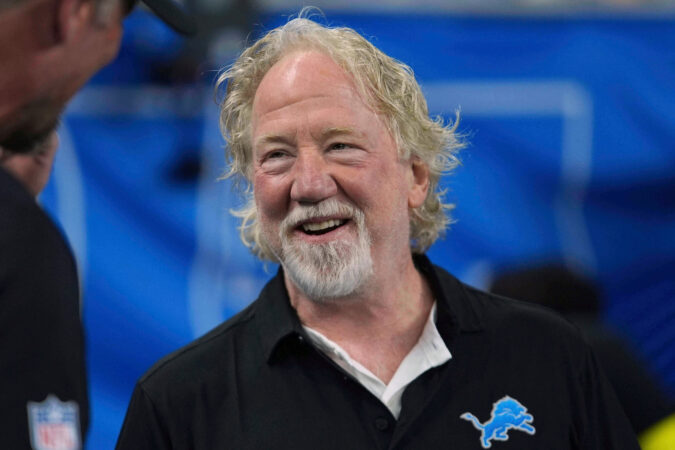
    ALBUQUERQUE, N.M. — Director and Emmy Award-winning actor Timothy Busfield turned himself to authorities on Tuesday to face child sex abuse charges in New Mexico.

    His apprehension comes after authorities in Albuquerque issued a warrant for his arrest on Jan. 9 on two counts of criminal sexual contact of a minor and one count of child abuse. The charges stem from allegations that Busfield inappropriately touched a young boy on the set of the TV series The Cleaning Lady that he was directing.

    Busfield was being booked by Albuquerque police on the charges, said Gilbert Gallegos, spokesperson for the city police department.

    A criminal complaint filed by an investigator with the Albuquerque Police Department says the boy reported that he was 7 years old when Busfield touched him three or four times on private areas over his clothing. Busfield allegedly touched him five or six times on another occasion when he was 8, the complaint said.

    The child was reportedly afraid to tell anyone because Busfield was the director and he feared he would get mad at him, the complaint said.

    The boy’s twin brother told authorities he was touched by Busfield but did not specify where. He said he didn’t say anything because he didn’t want to get in trouble.

    Busfield denied the allegations last fall when interviewed by authorities as part of the investigation, the complaint said. He suggested that the boys’ mother was seeking revenge for her children being replaced on the series. He also said he likely would have picked up and tickled the boys, saying the set was a playful environment.

    Busfield’s attorney did not immediately return a message seeking comment Tuesday. A video obtained by TMZ showed Busfield in front of a window with the Albuquerque skyline in the backdrop. He said he arrived in the city after driving 2,000 miles.

    “I’m going to confront these lies. They’re horrible. They’re all lies,” Busfield said.

    The mother of the twins — who are identified only by their initials in court records — reported to Child Protective Services that the abuse occurred between November 2022 and spring 2024, the complaint said.

    The investigation began in November 2024, when the investigator responded to a call from a doctor at the University of New Mexico Hospital in Albuquerque. The boys’ parents had gone there at the recommendation of a law firm, the complaint said.

    According to the complaint, one of the boys has been diagnosed with post-traumatic stress disorder and anxiety. A social worker documented him saying he has had nightmares about Busfield touching him.

    The Cleaning Lady aired for four seasons on Fox, ending in 2025. The show was produced by Warner Bros., which according to the complaint conducted its own investigation into the abuse allegations but was unable to corroborate them.

    Busfield, who is married to actor Melissa Gilbert, is known for appearances in The West Wing, Field of Dreams, and Thirtysomething, the latter of which won him an Emmy for outstanding supporting actor in a drama series in 1991.

  • Trump cancels meetings with Iranian officials and tells protesters ‘help is on its way’

    Trump cancels meetings with Iranian officials and tells protesters ‘help is on its way’

    WASHINGTON — President Donald Trump said on Tuesday that he’s cutting off the prospect of talks with Iranian officials amid a protest crackdown, telling Iranian citizens “help is on its way.”

    Trump did not offer any details about what the help would entail, but it comes after the Republican president just days ago said Iran wants to negotiate with Washington after his threat to strike the Islamic Republic, where the death toll from nationwide protests has spiked to more than 2,000, according to human rights monitors.

    But Trump, with his latest message on social media, appeared to make an abrupt shift about his willingness to engage with the Iranian government.

    “Iranian Patriots, KEEP PROTESTING – TAKE OVER YOUR INSTITUTIONS!!!” Trump wrote in a morning post on Truth Social, which he later amplified during a speech at an auto factory in Michigan. “Save the names of the killers and abusers. They will pay a big price. I have cancelled all meetings with Iranian Officials until the senseless killing of protesters STOPS. HELP IS ON ITS WAY.”

    Trump, in an exchange with reporters during the factory visit, demurred when asked what kind of help he would provide.

    “You’re going to have to figure that one out,” he said.

    He also said he didn’t have accurate numbers on the death toll in Iran but added: “I think it’s a lot. It’s too many, whatever it is.”

    The president has repeatedly threatened Tehran with military action if his administration found the Islamic Republic was using deadly force against antigovernment protesters. Trump on Sunday told reporters he believed Iran is “starting to cross” that line and has left him and his national security team weighing “very strong options” even as he said the Iranians had made outreach efforts to the U.S.

    And on Monday, the president’s team offered guarded hope that a diplomatic solution could be found.

    “What you’re hearing publicly from the Iranian regime is quite different from the messages the administration is receiving privately, and I think the president has an interest in exploring those messages,” White House press secretary Karoline Leavitt told reporters Monday. “However, with that said, the president has shown he’s unafraid to use military options if and when he deems necessary, and nobody knows that better than Iran.”

    Also on Monday, Trump said he would slap 25% tariffs on countries doing business with Tehran “effective immediately,” but the White House has not provided details on that move. China, the United Arab Emirates, Turkey, Brazil and Russia are among economies that do business with Tehran.

    Vice President JD Vance, Secretary of State Marco Rubio and key White House National Security Council officials began meeting Friday to develop options for Trump, ranging from a diplomatic approach to military strikes.

    Iran, through the country’s parliamentary speaker, has warned that the U.S. military and Israel would be “legitimate targets” if Washington uses force to protect demonstrators.

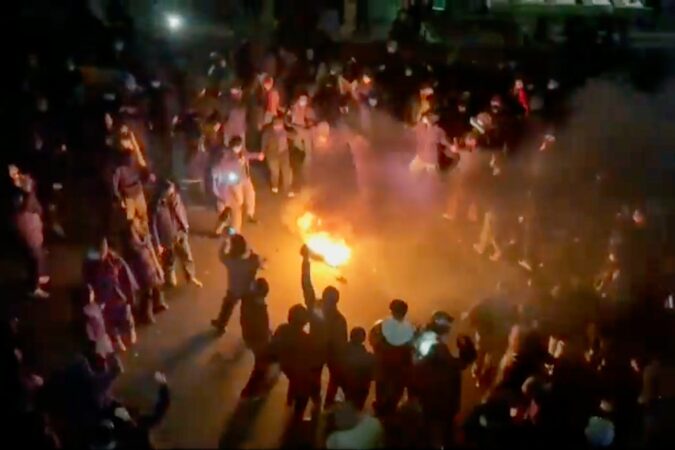
    More than 600 protests have taken place across all of Iran’s 31 provinces, the Human Rights Activists News Agency reported Tuesday. The activist group said about 1,850 of the dead were protesters and 135 were government-affiliated. It said more than 16,700 people had been detained.

    Understanding the scale of the protests has been difficult. Iranian state media has provided little information about the demonstrations. Online videos offer only brief, shaky glimpses of people in the streets or the sound of gunfire.

    Iranian state television appeared to acknowledge the high death toll on Tuesday. A TV report said the country had ‘a lot of martyrs’ in the nationwide protests and quoted Ahmad Mousavi, the head of the Martyrs Foundation.

    The anchor read a statement that laid blame on “armed and terrorist groups, which led the country to present a lot of martyrs to God.”

    Trump’s push on the Iranian government to end the crackdown comes as he is dealing with a series of other foreign policy emergencies around the globe.

    It’s been just over a week since the U.S. military launched a successful raid to arrest Venezuela’s Nicolás Maduro and remove him from power. The U.S. continues to mass an unusually large number of troops in the Caribbean Sea.

    Trump is also focused on trying to get Israel and Hamas onto the second phase of a peace deal in Gaza and broker an agreement between Russia and Ukraine to end the nearly four-year war in Eastern Europe.

    But advocates urging Trump to take strong action against Iran say this moment offers an opportunity to further diminish the theocratic government that’s ruled the country since the Islamic revolution in 1979.

    Russia’s Foreign Ministry on Tuesday called the threats “categorically unacceptable.”

    The ministry warned in a statement that any such strikes would have “disastrous consequences” for the situation in the Middle East and global security. It also criticized what it called “brazen attempts to blackmail Iran’s foreign partners by raising trade tariffs.”

    The statement noted that the protests in Iran had been triggered by social and economic problems resulting from Western sanctions. It also denounced “hostile external forces” for trying to “exploit the resulting growing social tension to destabilize and destroy the Iranian state” and charged that “specially trained and armed provocateurs acting on instructions from abroad” sought to provoke violence.

    The ministry voiced hope that the situation in Iran will gradually stabilize and advised Russian citizens in the Islamic Republic not to visit crowded places.

    The demonstrations are the biggest Iran has seen in years — protests spurred by the collapse of Iranian currency that have morphed into a larger test of supreme leader Ayatollah Ali Khamenei’s repressive rule.

    Iran appeared to ease some restrictions on its people and, for the first time in days, allowed them to make phone calls abroad via their mobile phones on Tuesday. It did not ease restrictions on the internet or permit texting services to be restored as the death toll from days of bloody protests against the state rose to at least 2,000 people, according to activists.

    Although Iranians were able to call abroad, people outside the country could not call them, several people in the capital told The Associated Press.

    The witnesses, who spoke on condition of anonymity, said SMS text messaging still was down and internet users inside Iran could not access anything abroad, although there were local connections to government-approved websites.

    It was unclear if restrictions would ease further after authorities cut off all communications inside the country and to the outside world late Thursday.

    United Nations officials said Tuesday that the more than 500 U.N. staff members in Iran are safe and accounted for as of Monday.

    Stephane Dujarric, the U.N. spokesperson, told reporters that many staff were working from home given the unrest that has spread throughout the country and killed hundreds of protesters.

    The U.N. country team in Iran has 46 international staff and 448 national staff.

  • Fewer Americans sign up for Affordable Care Act health insurance as costs spike

    Fewer Americans sign up for Affordable Care Act health insurance as costs spike

    NEW YORK — Fewer Americans are signing up for Affordable Care Act health insurance plans this year, new federal data shows, as expiring subsidies and other factors push health expenses too high for many to manage.

    Nationally, around 800,000 fewer people have selected plans compared to a similar time last year, marking a 3.5% drop in total enrollment so far. That includes a decrease in both new consumers signing up for ACA plans and existing enrollees re-upping them.

    The new data released Monday evening by the Centers for Medicare and Medicaid Services is only a snapshot of a continuously changing pool of enrollees. It includes sign-ups through Jan. 3 in states that use Healthcare.gov for ACA plans and through Dec. 27 for states that have their own ACA marketplaces. In most states, the period for shopping for plans continues through Jan. 15 for plans that start in February.

    But even though it’s early, the data builds on fears that expiring enhanced tax credits could cause a dip in enrollment and force many Americans to make tough decisions to delay buying health insurance, look for alternatives or forgo it entirely.

    Experts warn that the number of people who have signed up for plans may still drop even further, as enrollees get their first bill in January and some choose to cancel.

    Healthcare costs at the center of a fight in Congress

    The declining enrollment comes as Congress has been locked in a partisan battle over what to do about the subsidies that expired at the start of the new year. For months, Democrats have fought for a straight extension of the tax credits, while Republicans have insisted larger reforms are a better way to root out fraud and abuse and keep costs down overall. Last week, in a remarkable rebuke of Republican leadership, the House passed legislation to extend the subsidies for three years. The bill now sits in the Senate, where pressure is building for a bipartisan compromise.

    Up until this year, President Barack Obama’s landmark health insurance program had been an increasingly popular option for Americans who don’t get health coverage through their jobs, including small business owners, gig workers, farmers, ranchers and others.

    For the 2021 plan year, about 12 million people selected an Affordable Care Act plan. Enhanced tax credits were introduced the following year and four years later enrollment had doubled to over 24 million.

    This year’s sinking sign-ups — sitting at about 22.8 million so far — mark the first time in the past four years that enrollment has been down from the previous year at this point in the shopping window.

    The loss of enhanced subsidies means annual premium costs will more than double for the average ACA enrollee who had them, according to the healthcare research nonprofit KFF. But extending the subsidies would also be expensive for the country. Ahead of last week’s House vote, the nonpartisan Congressional Budget Office estimated that extending the subsidies for three years would increase the nation’s deficit by about $80.6 billion over the decade.

    Americans begin looking for other options

    Robert Kaestner, a health economist at the University of Chicago, said some of those who abandon ACA plans may have other options, such as going on a partner’s employer health plan or changing their income to qualify for Medicaid. Others will go without insurance at least temporarily while they look for alternatives.

    “My prediction is 2 million more people will lack health insurance for a while,” Kaestner said. ”That’s a serious issue, but Republicans would argue we’re using government money more efficiently, we’re targeting people who really need it and we’re saving $35 billion a year.”

    Several Americans interviewed by The Associated Press have said they’re dropping coverage altogether for 2026 and will pay out of pocket for needed appointments. Many said they are crossing their fingers that they aren’t affected by a costly injury or diagnosis.

    “I’m pretty much going to be going without health insurance unless they do something,” said 52-year-old Felicia Persaud, a Florida entrepreneur who dropped coverage when she saw her monthly ACA costs were set to increase by about $200 per month. “It’s sort of like playing poker and hoping the chips fall and try the best that you can.”

  • Greenland official calls it ‘unfathomable’ that the U.S. is considering taking over the island

    Greenland official calls it ‘unfathomable’ that the U.S. is considering taking over the island

    NUUK, Greenland — A senior Greenland government official said Tuesday it’s “unfathomable” that the United States is discussing taking over a NATO ally and urged the Trump administration to listen to voices from the Arctic island’s people.

    Naaja Nathanielsen, Greenland’s minister for business and mineral resources, said people in Greenland are “very, very worried” over the administration’s desire for control of Greenland.

    She spoke a day before a key meeting in Washington between foreign ministers of the semi-autonomous Danish territory and Denmark and top U.S. officials, at a time of increased tensions between the allies over the stepped-up U.S. rhetoric.

    “People are not sleeping, children are afraid, and it just fills everything these days. And we can’t really understand it,” Nathanielsen said at a meeting with lawmakers in Britain’s Parliament.

    Earlier, a Danish government official confirmed that Denmark provided U.S. forces in the east Atlantic with support last week as they intercepted an oil tanker for alleged violations of U.S. sanctions.

    The official, who was not authorized to comment publicly on the sensitive matter and spoke on the condition of anonymity, declined to provide details about what the support entailed.

    The U.S. interception in the Atlantic capped a weeks-long pursuit of the tanker that began in the Caribbean Sea as the U.S. imposed a blockade in the waters of Venezuela aimed at capturing sanctioned vessels coming in and out of the South American country.

    The White House and Pentagon did not immediately respond to requests for comment. Danish support for the U.S. operation was first reported by Newsmax.

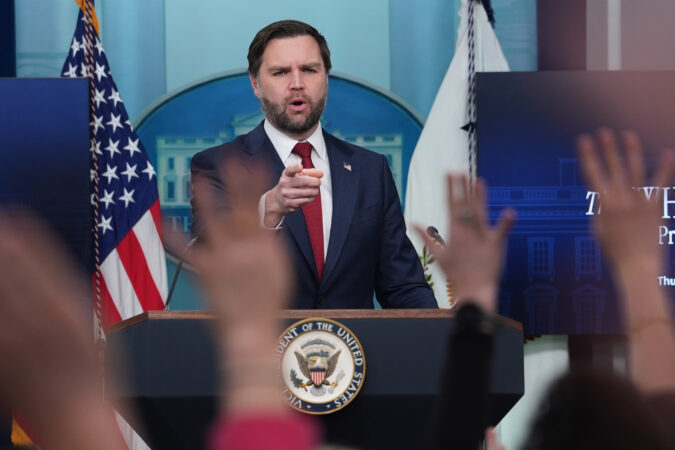
    Vice President JD Vance and Secretary of State Marco Rubio will meet with the foreign ministers of Denmark and Greenland on Wednesday at the White House to discuss Trump’s interest in acquiring Greenland, according to a U.S. official and two sources familiar with the plans who spoke on condition of anonymity because the meeting has not yet been formally announced.

    Denmark’s foreign minister, Lars Løkke Rasmussen, said earlier that Vance would host a meeting with him and his Greenlandic counterpart, Vivian Motzfeldt, in Washington this week, with Rubio in attendance.

    At a joint news conference with Danish Prime Minster Mette Frederiksen in Copenhagen, Greenlandic Prime Minister Jens-Frederik Nielsen reiterated that Greenland isn’t for sale, Danish media reported. Nielsen said Greenland doesn’t want to be owned or ruled by the U.S.

    Frederiksen also underlined Denmark’s willingness to invest in Arctic security. She said it hasn’t been easy to stand up to unacceptable pressure from a close ally and there are many indications that the most difficult part lies ahead.

    Nathanielsen, the minister, said of Greenland’s people: “We have no intentions of becoming American … but we have worked towards more collaboration with the Americans for many, many years.”

    “We feel betrayed. We feel the rhetoric is offensive,” she added, “but also bewildering.”

    NATO Secretary-General Mark Rutte refused to be drawn into the dispute, insisting that it was not his role to get involved.

    “I never, ever comment when there are discussions within the alliance,” Rutte said, at the European Parliament in Brussels. “My role has to be to make sure we solve issues.”

    He said that the 32-nation military organization must focus on providing security in the Arctic region, which includes Greenland. “When it comes to the protection of the High North, that is my role.”

    Tensions have grown this month as Trump and his administration push the issue and the White House considers a range of options, including military force, to acquire Greenland. Trump reiterated his argument that the U.S. needs to “take Greenland,” otherwise Russia or China would, in comments aboard Air Force One on Sunday.

    He said he’d rather “make a deal” for the territory, “but one way or the other, we’re going to have Greenland.”

    Nathanielsen said Greenlanders understand that the U.S. sees Greenland as part of its national security sphere.

    “We get it. We want to work with it,” she said, adding that “we understand the need for increased monitoring in the Arctic as a consequence of the growing geopolitical insecurity.”

    Nathanielsen said Greenland understands the need to “shake things up, to make things different … But we do believe that it can be done without the use of force.”

    She said “it is just unfathomable to understand” that Greenland could be facing the prospect of being sold or annexed.

    A bipartisan U.S. congressional delegation is headed to Copenhagen for meetings on Friday and Saturday in an attempt to show unity between the United States and Denmark.

    Nathanielsen said she thinks the people of Greenland have a say in their own future.

    “My deepest dream or hope is that the people of Greenland will get a say no matter what,” she said. ”For others this might be a piece of land, but for us it’s home.”

  • Trump says Iran wants to negotiate as the death toll in protests rises to at least 646

    Trump says Iran wants to negotiate as the death toll in protests rises to at least 646

    DUBAI, United Arab Emirates — U.S. President Donald Trump said Iran wants to negotiate with Washington after his threat to strike the Islamic Republic over its crackdown on protesters in nationwide demonstrations that activists said Monday had left at least 646 people dead.

    Iran had no direct reaction to Trump’s comments, which came after the foreign minister of Oman — long an interlocutor between Washington and Tehran — traveled to Iran this weekend. It also remains unclear just what Iran could promise, particularly as Trump has set strict demands over its nuclear program and its ballistic missile arsenal, which Tehran insists is crucial for its national defense.

    Iranian Foreign Minister Abbas Araghchi, speaking to foreign diplomats in Tehran, insisted “the situation has come under total control” in remarks that blamed Israel and the U.S. for the violence, without offering evidence.

    “That’s why the demonstrations turned violent and bloody, to give an excuse to the American president to intervene,” Araghchi said, in comments carried by Al Jazeera. The Qatar-funded network has been allowed to report live from inside Iran, despite the internet being shut off.

    However, Araghchi said Iran was “open to diplomacy.” Iranian Foreign Ministry spokesperson Esmail Baghaei said that a channel to the U.S. remained open, but talks needed to be “based on the acceptance of mutual interests and concerns, not a negotiation that is one-sided, unilateral, and based on dictation.”

    Meanwhile, pro-government demonstrators flooded the streets on Monday in support of the theocracy, a show of force after days of protests directly challenging the rule of 86-year-old Supreme Leader Ayatollah Ali Khamenei. Iranian state television aired chants from the crowd, which appeared to number in the tens of thousands, who shouted “Death to America!” and “Death to Israel!”

    Others cried out: “Death to the enemies of God!” Iran’s attorney general has warned that anyone taking part in protests will be considered an “enemy of God,” a death-penalty charge.

    On Monday, the U.S. State Department and the U.S. Virtual Embassy Iran issued an urgent warning to U.S. citizens in Iran to “leave now,” citing the surge in violence and communications blackout.

    Trump acknowledges proposal for talks

    Trump and his national security team have been weighing a range of potential responses against Iran, including cyberattacks and direct strikes by the U.S. or Israel, according to two people familiar with internal White House discussions who weren’t authorized to comment publicly and spoke on condition of anonymity.

    “The military is looking at it, and we’re looking at some very strong options,” Trump told reporters on Air Force One on Sunday night. Asked about Iran’s threats of retaliation, he said: “If they do that, we will hit them at levels that they’ve never been hit before.”

    Meanwhile, Trump announced Monday that countries doing business with Iran will face 25% tariffs from the United States. Trump announced the tariffs in a social media posting, saying they would be “effective immediately.”

    It was the first direct action from the president, who believes exacting tariffs can be a useful tool in prodding friends and foes on the global stage to bend to his will.

    Brazil, China, Turkey, the United Arab Emirates, and Russia are among economies that do business with Tehran.

    The White House did not immediately offer any further details on the new tariffs.

    Trump said that his administration was in talks to set up a meeting with Tehran, but cautioned that he may have to act first as reports of the death toll in Iran mount and the government continues to arrest protesters.

    “I think they’re tired of being beat up by the United States,” Trump said. “Iran wants to negotiate.”

    Iran, through the country’s parliamentary speaker, warned Sunday that the U.S. military and Israel would be “legitimate targets” if Washington uses force to protect demonstrators.

    More than 10,700 people also have been detained over the two weeks of protests, said the U.S.-based Human Rights Activists News Agency, which has been accurate in previous unrest in recent years and gave the latest death toll early Tuesday. It relies on supporters in Iran crosschecking information. It said 512 of the dead were protesters and 134 were security force members.

    With the internet down in Iran and phone lines cut off, gauging the demonstrations from abroad has grown more difficult. The Associated Press has been unable to independently assess the toll. Iran’s government hasn’t offered overall casualty figures.

    Those abroad fear the information blackout is emboldening hard-liners within Iran’s security services to launch a violent crackdown. Protesters flooded Tehran’s streets on Saturday night into Sunday morning. Online videos purported to show more demonstrations Sunday night into Monday, with a Tehran official acknowledging them in state media.

    At 2 p.m. Monday, Iranian state television showed images of demonstrators thronging Tehran toward Enghelab Square, or “Islamic Revolution” Square, in the capital. It had been airing statements all morning from Iranian government, security, and religious leaders to attend the demonstration.

    It called the rally an “Iranian uprising against American-Zionist terrorism,” without addressing the underlying anger in the country over the nation’s ailing economy. State television aired images of such demonstrations around the country, trying to signal it had overcome the protests.

    Fear pervades Iran’s capital

    In Tehran, a witness told the AP that the streets were empty at the sunset call to prayers each night. By the Isha, or nighttime prayer, the streets are deserted.

    Part of that stems from the fear of getting caught in the crackdown. Police sent the public a text message that warned: “Given the presence of terrorist groups and armed individuals in some gatherings last night and their plans to cause death, and the firm decision to not tolerate any appeasement and to deal decisively with the rioters, families are strongly advised to take care of their youth and teenagers.”

    Another text, which claimed to come from the intelligence arm of the paramilitary Revolutionary Guard, also directly warned people not to take part in demonstrations.

    The witness spoke on condition of anonymity due to the ongoing crackdown.

    The demonstrations began Dec. 28 over the collapse of the Iranian rial currency, which trades at more than 1.4 million to $1, as iran’s economy is squeezed by international sanctions in part levied over its nuclear program. The protests intensified and grew into calls directly challenging Iran’s theocracy.

    Video shows corpses outside capital

    Meanwhile, video circulating online purports to show dozens of bodies in a morgue on the outskirts of Iran’s capital.

    People with knowledge of the facility and the U.S.-based Human Rights Activists News Agency said Monday that the video shows the Kahrizak Forensic Medicine Center.

    In the footage, people are seen walking by dozens of bodies in bags laid out in a large room, attempting to identify those there. In some cases, bodies can be seen lying outside on blue tarps. A large truck can be seen in part of the footage.

  • Minnesota and the Twin Cities sue the federal government to stop the immigration crackdown

    Minnesota and the Twin Cities sue the federal government to stop the immigration crackdown

    MINNEAPOLIS — Minnesota and its two largest cities sued the Trump administration Monday to try to stop an immigration enforcement surge that led to the fatal shooting of a Minneapolis woman by a federal officer and evoked outrage and protests across the country.

    The state, joined by Minneapolis and St. Paul, said the Department of Homeland Security is violating the First Amendment and other constitutional protections. The lawsuit seeks a temporary restraining order to halt the enforcement action or limit the operation.

    “This is, in essence, a federal invasion of the Twin Cities in Minnesota, and it must stop,” state Attorney General Keith Ellison said at a news conference. “These poorly trained, aggressive, and armed agents of the federal state have terrorized Minnesota with widespread unlawful conduct.”

    Homeland Security is pledging to put more than 2,000 immigration officers into Minnesota and says it has made more than 2,000 arrests since December. Immigration and Customs Enforcement has called the surge its largest enforcement operation ever.

    The lawsuit accuses the Republican Trump administration of violating free speech rights by targeting a progressive state that favors Democrats and welcomes immigrants.

    “They’re targeting us based on what we look and sound like. Our residents are scared. And as local officials, we have a responsibility to act,” said St. Paul Mayor Kaohly Her, who was born in Laos.

    Feds say they’re protecting the public

    In response, Homeland Security spokesperson Tricia McLaughlin accused Minnesota officials of ignoring public safety.

    “President Trump’s job is to protect the American people and enforce the law — no matter who your mayor, governor, or state attorney general is,” McLaughlin said. “That’s what the Trump administration is doing; we have the Constitution on our side on this, and we look forward to proving that in court.”

    The government also faces a new lawsuit over over a similar crackdown in Illinois. More than 4,300 people were arrested last year in Operation Midway Blitz as patrols of masked agents swept the Chicago area. The lawsuit by the city and state says the campaign had a chilling effect, making residents afraid to leave home or use public services.

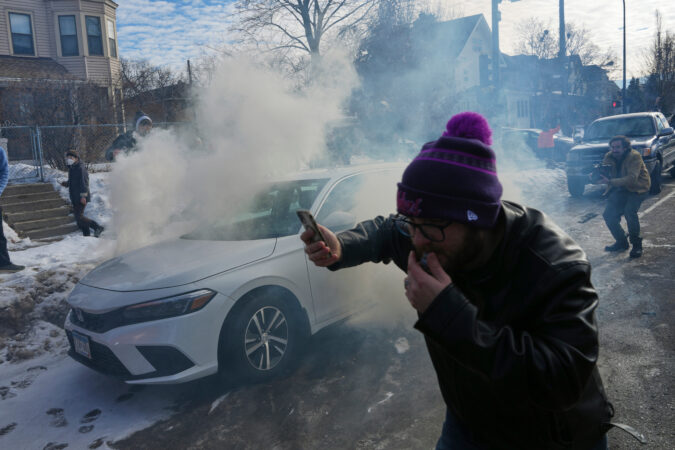
    Since the deployment in the Twin Cities, whistle-burst warnings by grassroots activists are commonly heard when agents flood streets. Witnesses have regularly posted video of federal officers using tear gas to discourage the public from following them.

    Earlier Monday, agents fired tear gas to break up a crowd of people who showed up to see the aftermath of a car crash in Minneapolis, just a few blocks from where Renee Good was fatally shot.

    A crowd emerged to witness a man being questioned by agents who had rear-ended his car. Agents used tear gas to try to discourage the group, then drove off as people screamed, “cowards!”

    “I’m glad they didn’t shoot me or something,” Christian Molina told reporters.

    Standing near his mangled fender, he wondered aloud: “Who’s going to pay for my car?”

    It was another tense scene following the death of Good on Jan. 7. There were dozens of protests or vigils across the U.S. to honor the 37-year-old mother of three and to passionately criticize the Trump administration’s tactics.

    Trump administration officials have repeatedly defended the immigration agent who shot her, saying Good and her vehicle presented a threat. But that explanation has been widely panned by Minnesota Gov. Tim Walz and others based on videos of the confrontation.

    Students walk out of school

    Hundreds of students walked out of Roosevelt High School in Minneapolis, where federal agents had deployed tear gas on students and staff last week. Adults wearing safety vests cleared traffic, and many parents who are Roosevelt alumni showed up in old school wear.

    Marchers held signs that said, “ICE out” and “Welcome to Panem,” a reference to the dystopian society from the Hunger Games book series.

    Meanwhile, in Portland, Ore., federal authorities filed charges against a Venezuelan national who was one of two people shot there by U.S. Border Patrol on Thursday. The U.S. Justice Department said the man used his pickup truck to strike a Border Patrol vehicle and escape the scene with a woman.

    They were shot and eventually arrested. Their wounds were not life-threatening. The FBI said there was no video of the incident, unlike the Good shooting.

  • Why the Federal Reserve has historically been independent of the White House

    Why the Federal Reserve has historically been independent of the White House

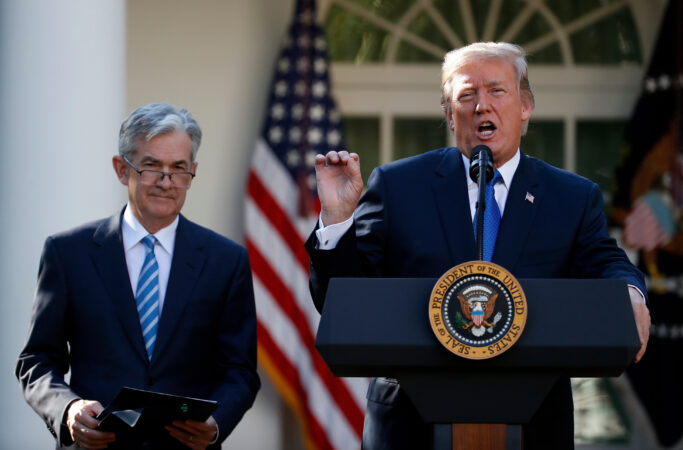
    WASHINGTON — The Justice Department has threatened the Federal Reserve with a criminal indictment over the testimony of Fed Chair Jerome Powell this summer regarding its building renovations, Powell said over the weekend.

    It is a major escalation by the administration after repeated attempts by President Donald Trump to exert greater control over the independent institution.

    Trump has repeatedly attacked Powell for not cutting its short-term interest rate, and even threatened to fire him. Powell’s caution has infuriated Trump, who has demanded the Fed cut borrowing costs to spur the economy and reduce the interest rates the federal government pays on its debt. That anger has not subsided even after the Fed cut interest rates in three of the final four months of 2025.

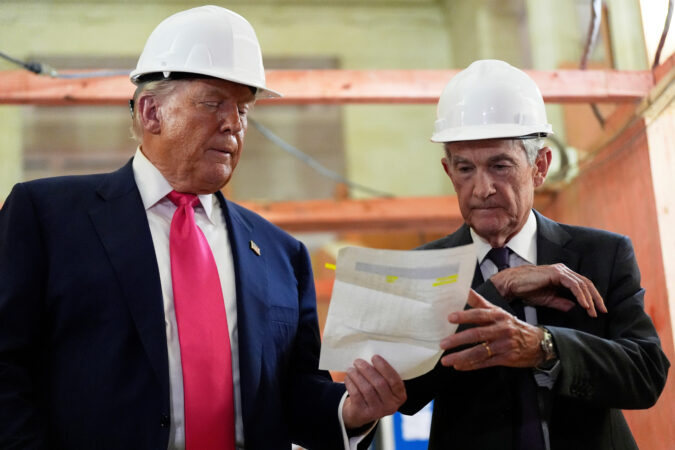
    Trump has also accused Powell of mismanaging the U.S. central bank’s $2.5 billion building renovation project. In a sharp departure from his previous responses to attacks by Trump, Powell described the threat of criminal charges as simple “pretexts” to undermine the Fed’s independence when it comes to setting interest rates.

    Trump is already seeking to fire Federal Reserve Governor Lisa Cook over unproven allegations that she committed mortgage fraud. The allegation was made over the summer by Bill Pulte, a Trump appointee to the Federal Housing Administration.

    Here are some reasons why the independence of the U.S. Federal Reserve is guarded so closely.

    Why the Fed’s independence matters

    The Fed wields extensive power over the U.S. economy. By cutting the short-term interest rate it controls — which it typically does when the economy falters — the Fed can make borrowing cheaper and encourage more spending, accelerating growth and hiring. When it raises the rate — which it does to cool the economy and combat inflation — it can weaken the economy and cause job losses.

    Economists have long preferred independent central banks because they can more easily take unpopular steps to fight inflation, such as raise interest rates, which makes borrowing to buy a home, car, or appliances more expensive.

    The importance of an independent Fed was cemented for most economists after the extended inflation spike of the 1970s and early 1980s. Former Fed Chair Arthur Burns has been widely blamed for allowing the painful inflation of that era to accelerate by succumbing to pressure from President Richard Nixon to keep rates low heading into the 1972 election. Nixon feared higher rates would cost him the election, which he won in a landslide.

    Paul Volcker was eventually appointed chair of the Fed in 1979 by President Jimmy Carter, and he pushed the Fed’s short-term rate to the stunningly high level of nearly 20%. (It is currently 3.6%, the lowest it has been in nearly three years.) The eye-popping rates triggered a sharp recession, pushed unemployment to nearly 11%, and spurred widespread protests.

    Yet Volcker didn’t flinch. By the mid-1980s, inflation had fallen back into the low single digits. Volcker’s willingness to inflict pain on the economy to throttle inflation is seen by most economists as a key example of the value of an independent Fed.

    Investors are watching closely

    An effort to fire Powell would almost certainly cause stock prices to fall and bond yields to spike higher, pushing up interest rates on government debt and raising borrowing costs for mortgages, auto loans, and credit card debt. The interest rate on the 10-year Treasury is a benchmark for mortgage rates.

    All major U.S. markets slid Monday at the opening bell, bond yields edged higher, and the value of the U.S dollar declined.

    Most investors prefer an independent Fed, partly because it typically manages inflation better without being influenced by politics, but also because its decisions are more predictable. Fed officials often publicly discuss how they would alter interest rate policies if economic conditions changed.

    If the Fed was more swayed by politics, it would be harder for financial markets to anticipate — or understand — its decisions.

    While the Fed controls a short-term rate, financial markets determine longer-term borrowing costs for mortgages and other loans. And if investors worry that inflation will stay high, they will demand higher yields on government bonds, pushing up borrowing costs across the economy.

    In Turkey, for example, President Recep Tayyip Erdogan forced the central bank to keep interest rates low in the early 2020s, even as inflation spiked to 85%. In 2023, Erdogan allowed the central bank more independence, which has helped bring down inflation, but short-term interest rates rose to 50% to fight inflation, and remain high.

    Fed’s independence doesn’t mean it’s unaccountable

    Fed chairs like Powell are appointed by the president to serve four-year terms and have to be confirmed by the Senate. The president also appoints the six other members of the Fed’s governing board, who can serve staggered terms of up to 14 years.

    Those appointments can allow a president over time to significantly alter the Fed’s policies. Former President Joe Biden appointed four of the current seven members: Powell, Cook, Philip Jefferson, and Michael Barr. A fifth Biden appointee, Adriana Kugler, stepped down unexpectedly on Aug. 1, about five months before the end of her term. Trump has already nominated his top economist, Stephen Miran, as a potential replacement, though he will require Senate approval. Cook’s term ends in 2038, so forcing her out would allow Trump to appoint a loyalist sooner.

    Trump will be able to replace Powell as Fed chair in May, when Powell’s term expires. Yet 12 members of the Fed’s interest-rate setting committee have a vote on whether to raise or lower interest rates, so even replacing the chair doesn’t guarantee that Fed policy will shift the way Trump wants.

    Congress, meanwhile, can set the Fed’s goals through legislation. In 1977, for example, Congress gave the Fed a “dual mandate” to keep prices stable and seek maximum employment. The Fed defines stable prices as inflation at 2%.

    The 1977 law also requires the Fed chair to testify before the House and Senate twice every year about the economy and interest rate policy.

    Could Trump fire Powell before his term ends?

    The Supreme Court last year suggested in a ruling on other independent agencies that a president can’t fire the chair of the Fed just because he doesn’t like the chair’s policy choices. But he may be able to remove him “for cause,” typically interpreted to mean some kind of wrongdoing or negligence.

    It’s a likely reason the Trump administration has zeroed in on the building renovation, in hopes it could provide a “for cause” pretext. Still, Powell would likely fight any attempt to remove him, and the case could wind up at the Supreme Court.

  • FBI: Suspect in Mississippi synagogue fire targeted house of worship because of its ‘Jewish ties’

    FBI: Suspect in Mississippi synagogue fire targeted house of worship because of its ‘Jewish ties’

    JACKSON, Miss. — A suspect in an arson fire at a historic Mississippi synagogue admitted to targeting the house of worship because of its “Jewish ties” and was turned in to authorities by his father who had observed burn marks on his son’s ankles, hands, and face, the FBI said Monday.

    Stephen Pittman was charged with maliciously damaging or destroying a building by means of fire or an explosive. The suspect confessed to lighting a fire inside the building, which he referred to as “the synagogue of Satan,” according to an FBI affidavit filed in U.S. District Court in Mississippi on Monday.

    There was no attorney listed for Pittman in the court docket Monday.

    The fire ripped through the Beth Israel Congregation in Jackson shortly after 3 a.m. on Saturday. No congregants or firefighters were injured. Security camera footage released Monday by the synagogue showed a masked and hooded man using a gas can to pour a liquid on the floor and a couch in the building’s lobby. More than five decades earlier, the synagogue was bombed by the Ku Klux Klan because of its rabbi’s outspoken support for civil rights.

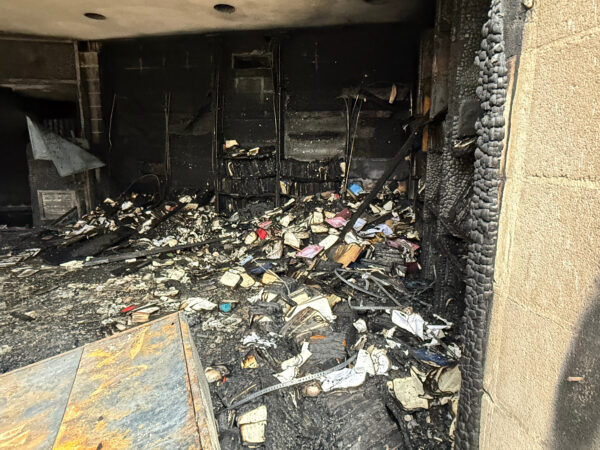
    The weekend fire badly damaged the 165-year-old synagogue’s library and administrative offices. Five Torahs — the sacred scrolls with the text of the first five books of the Hebrew Bible — located inside the sanctuary were being assessed for smoke damage. Two Torahs inside the library, where the most severe damage was done, were destroyed. One Torah that survived the Holocaust was behind glass and was not damaged in the fire, according to the congregation.

    The suspect’s father contacted the FBI and said that his son had confessed to setting the building on fire. Pittman had texted his father a photo of the rear of the synagogue before the fire, with the message, “There’s a furnace in the back.” His father had pleaded with his son to return home, but “Pittman replied back by saying he was due for a homerun and ‘I did my research,’” the affidavit said.

    During an interview with investigators, Pittman said he stopped at a gas station on his way to the synagogue to purchase the gas used in the fire. He also took the license plate off of his vehicle at the gas station. He used an ax to break out a window of the synagogue, poured gas inside and used a torch lighter to start the fire, the FBI affidavit said.

    The FBI later recovered a burned cell phone believed to be Pittman’s and took possession of a hand torch that a congregant had found.

    Yellow police tape on Monday blocked off the entrances to the synagogue building, which was surrounded by broken glass and soot. Bouquets of flowers were laid on the ground at the building’s entrance — including one with a note that said, “I’m so very sorry.”

    The congregation’s president, Zach Shemper, has vowed to rebuild the synagogue and said several churches had offered their spaces for worship during the rebuilding process.

    With just several hundred people in the community, it was never particularly easy being Jewish in Mississippi’s capital city, but members of Beth Israel took a special pride in keeping their traditions alive in the heart of the Deep South.

    With the exception of the cemetery, every aspect of Jewish life in Jackson was under Beth Israel’s roof. The midcentury modern building not only housed the congregation but also the Jewish Federation, a nonprofit provider of social services and philanthropy that is the hub of Jewish institutional life in most U.S. cities. The building also was home to the Institute of Southern Jewish Life, which provides resources to Jewish communities in 13 southern states. A Holocaust memorial was outdoors behind the synagogue building.

    Because Jewish children throughout the South have attended summer camp for decades in Utica, Miss., about 30 miles southwest of Jackson, many retain a fond connection to the state and its Jewish community.

    “Jackson is the capital city, and that synagogue is the capital synagogue in Mississippi,” said Rabbi Gary Zola, a historian of American Jewry who taught at Hebrew Union College in Cincinnati. “I would call it the flagship, though when we talk about places like New York and Los Angeles, it probably seems like Hicksville.”

    Beth Israel as a congregation was founded in 1860 and acquired its first property where it built Mississippi’s first synagogue after the Civil War. In 1967, the synagogue moved to its current location, where it was bombed by local Ku Klux Klan members not long after relocating. Two months after that, the home of the synagogue’s leader, Rabbi Perry Nussbaum, was bombed because of his outspoken opposition to segregation and racism.

    At a time when opposition to racial segregation could be dangerous in the Deep South, many Beth Israel congregants hoped the rabbi would just stay quiet, but Nussbaum was unshakable in believing he was doing the right thing by supporting civil rights, Zola said.

    “He had this strong, strong sense of justice,” Zola said.

  • DOJ investigation of Fed Chair Powell sparks backlash, support for Fed independence

    DOJ investigation of Fed Chair Powell sparks backlash, support for Fed independence

    WASHINGTON — The Trump administration’s criminal investigation of Federal Reserve Chair Jerome Powell appeared on Monday to be emboldening defenders of the U.S. central bank against the efforts of President Donald Trump to control the Fed.

    The backlash reflected the bigger stakes of a contest about the fate of the Fed’s independence, the balance of power within the federal government, and the path of the U.S. economy. Trump has long publicly lashed out against Powell for not slashing the Fed’s benchmark interest rates to his liking, but the prospect of a criminal indictment was a step too far for an institution that has an outsized influence on both inflation and the job market.

    Several Republican senators have condemned the Department of Justice’s subpoenas of the Fed, which Powell revealed Sunday and characterized as “pretexts” to pressure him to sharply cut interest rates as Trump has demanded. Powell also said the Justice Department has threatened criminal indictments over his June testimony to Congress about the cost and design elements of a building renovation.

    Republican Sen. Dave McCormick of Pennsylvania objects to the Justice Department’s investigation of Powell.

    “I think the Federal Reserve renovation may well have wasted taxpayer dollars, but the proper place to fix this is through Congressional oversight,” McCormick said in a statement.

    He said he believes strongly in an independent Fed, and he also agrees with Trump that Powell “has been slow to cut interest rates.”

    But, he said, “I do not think Chairman Powell is guilty of criminal activity.”

    Trump has repeatedly used investigations — which might or might not lead to an actual indictment — to attack his political rivals, including Fed governor Lisa Cook, New York Attorney General Letitia James, and James Comey, the former FBI director.

    White House press secretary Karoline Leavitt told reporters that Trump did not direct his Justice Department to investigate Powell.

    “One thing for sure, the president’s made it quite clear, is Jerome Powell is bad at his job,” Leavitt said. ”As for whether or not Jerome Powell is a criminal, that’s an answer the Department of Justice is going to have to find out.”

    A bipartisan group of former Fed chairs and top economists on Monday compared the Trump administration’s actions to moves made in more impoverished countries. Some analysts said that the financial market’s muted response reflects a widespread belief that Powell could successfully fend off the allegations that his description to lawmakers of the Fed’s $2.5 billion project was criminal.

    “I think this is ham-handed, counterproductive, and going to set back the president’s cause,” said Jason Furman, an economist at Harvard and former top adviser to President Barack Obama. It could also unify the Fed’s interest-rate setting committee in support of Powell, and it means “the next Fed chair will be under more pressure to prove their independence.”

    The subpoenas apply to the price tag of renovating Fed buildings, including its marble-clad headquarters in Washington, D.C. They come at an unusual moment when Trump was teasing the likelihood of announcing his nominee this month to succeed Powell as the Fed chair, after Trump last summer played down the idea that the Fed’s renovation costs were a fireable offense.

    While Powell’s term as chairperson ends in May, he has a separate term as a Fed governor until January 2028. Trump’s moves could make it more likely that Powell will stay on the Fed’s governing board after his term as chairperson ends in May in order to defend the Fed’s independence from politics in making its decisions on interest rates, Furman said.

    While an interest-rate cut was already considered unlikely at the Fed’s next meeting in about two weeks, the news of the Justice Department investigation likely means that the Fed would avoid cuts at the next meeting in order to send the message that it cannot be pressured by politics, economists said.

    Powell quickly found a growing number of defenders among Republicans in the Senate, who will have the choice of whether to confirm Trump’s planned picks for Fed chair.

    Sen. Thom Tillis, a North Carolina Republican and member of the Senate Banking panel, said late Sunday in response to the subpoenas that he would oppose any of the Trump administration’s nominees for the Fed, including to replace Powell.

    “If there were any remaining doubt whether advisers within the Trump Administration are actively pushing to end the independence of the Federal Reserve, there should now be none,” Tillis said.

    Sen. Lisa Murkowski, an Alaska Republican, backed Tillis’ approach Monday.

    “After speaking with Chair Powell this morning, it’s clear the administration’s investigation is nothing more than an attempt at coercion,” Murkowski said. She voted against the White House’s nomination of Stephen Miran to the Fed’s board in September, which was barely approved by a 48-47 vote. Miran continues to be Trump’s chairperson of the White House Council of Economic Advisers, although he is on leave due to his post at the Fed.

    Trump has for the past year sought to pressure Powell into having the Fed slash its benchmark interest rates — a move that reflects a fundamental break over whether inflation still poses any risk to the U.S. economy.

    Powell maintains that inflation is still elevated in the aftermath of Trump’s tariffs and has moved cautiously, whereas Trump claims that inflation is no longer a worry and rates should be dramatically slashed.

    “I have carried out my duties without political fear or favor, focused solely on our mandate of price stability and maximum employment,” Powell said in a Sunday night video disclosing the subpoenas. “Public service sometimes requires standing firm in the face of threats.”

    If Powell stays on the board after his term as chair ends in May, the Trump administration would be deprived of the chance to fill another seat on the board.

    Powell has declined at several news conferences to answer questions about his plans.

    Asked on Monday by reporters if Powell planned to remain a Fed governor, Kevin Hassett, director of the White House National Economic Council and a leading candidate to become Fed chair, said he was unaware of Powell’s plans.

    “I’ve not talked to Jay about that,” Hassett said.

    Powell, jettisoning the cautious approach he has taken since Trump began attacking him last year for not cutting rates sharply enough, said on Sunday the subpoenas were a “pretext” to force the Fed to cut its key short-term interest rate.

    Sen. Kevin Cramer, a Republican from North Dakota and a frequent Powell critic, said Monday that he does not think that the Fed chair is “a criminal” and said he hopes that “this criminal investigation can be put to rest quickly,” according to CNBC.

    The bipartisan group of former Fed chairs and top economists said in their Monday letter that the White House’s legal actions and the possible loss of Fed independence could hurt the broader economy.

    “This is how monetary policy is made in emerging markets with weak institutions, with highly negative consequences for inflation and the functioning of their economies more broadly,” the statement said. “It has no place in the United States whose greatest strength is the rule of law, which is at the foundation of our economic success.”

    The statement was signed by former Fed chairs Ben Bernanke, Janet Yellen, and Alan Greenspan, as well as former Treasury Secretaries Henry Paulson and Robert Rubin.

    Still, Trump’s pressure campaign had been building for some time. The president relentlessly criticized and belittled Powell, attempting to blame him for some of the discontent over the economy that followed the president’s own tariff announcements.

    Trump appeared to preview the shocking news of the subpoenas at a Dec. 29 news conference. The president said his administration would “probably” sue Powell for “gross incompetence” on the cost of renovations, calling it the “highest price of construction per square foot in the history of the world.”

    “He’s just a very incompetent man,” Trump said. “But we’re going to probably bring a lawsuit against him.”