Category: Nation World News Wires

  • Justice Department charges man who squirted vinegar on Rep. Ilhan Omar

    Justice Department charges man who squirted vinegar on Rep. Ilhan Omar

    MINNEAPOLIS — The Justice Department has charged a man who squirted apple cider vinegar on Democratic U.S. Rep. Ilhan Omar at an event in Minneapolis, according to court papers made public Thursday.

    The man arrested for Tuesday’s attack, Anthony Kazmierczak, faces a charge of forcibly assaulting, opposing, impeding and intimidating Omar, according to a complaint filed in federal court.

    Authorities determined that the substance was water and apple cider vinegar, according to an affidavit. After Kazmierczak sprayed Omar with the liquid, he appeared to say, “She’s not resigning. You’re splitting Minnesotans apart,” the affidavit says. Authorities also say that Kazmierczak told a close associate several years ago that “somebody should kill” Omar, court documents say.

    Kazmierczak appeared briefly in federal court Thursday afternoon. His attorney, Jean Brandl, told the judge her client was unmedicated at the time of the incident and has not had access to the medications he needs to treat Parkinson’s disease and other serious conditions he suffers from.

    U.S. Magistrate Judge Dulce Foster ordered that Kazmierczak remain in custody and told officials he needs to see a nurse when he is transferred to the Sherburne County Jail.

    Kazmierczak also faces state charges in Hennepin County for terroristic threats and fifth-degree assault, Hennepin County Attorney Mary Moriarty announced Thursday.

    “This was a disturbing assault on Rep. Omar, who is frequently the target of vilifying language by fellow elected officials and members of the public,” Moriarty said. “The trust of our community in the federal government keeping politics out of public safety has been eroded by their actions. A state-level conviction is not subject to a presidential pardon now or in the future.”

    The attack came during a perilous political moment in Minneapolis, where two people have been fatally shot by federal agents during the White House’s aggressive immigration crackdown.

    Kazmierczak has a criminal history and has made online posts supportive of President Donald Trump, a Republican.

    Omar, a refugee from Somalia, has long been a fixture of Trump’s anti-immigrant rhetoric. After she was elected seven years ago, Trump said she should “go back” to her country. He recently described her as “garbage” and said she should be investigated. During a speech in Iowa earlier this week, shortly before Omar was attacked, he said immigrants need to be proud of the United States — “not like Ilhan Omar.”

    Omar blamed Trump on Wednesday for threats to her safety.

    “Every time the president of the United States has chosen to use hateful rhetoric to talk about me and the community that I represent, my death threats skyrocket,” Omar told reporters.

    Trump accused Omar of staging the attack, telling ABC News, “She probably had herself sprayed, knowing her.”

    Kazmierczak was convicted of felony auto theft in 1989, has been arrested multiple times for driving under the influence and has had numerous traffic citations, Minnesota court records show. There are also indications he has had significant financial problems, including two bankruptcy filings.

    In social media posts, Kazmierczak criticized former President Joe Biden and referred to Democrats as “angry and liars.” Trump “wants the US is stronger and more prosperous,” he wrote. “Stop other countries from stealing from us.”

    In another post, Kazmierczak asked, “When will descendants of slaves pay restitution to Union soldiers’ families for freeing them/dying for them, and not sending them back to Africa?”

    Threats against members of Congress have increased in recent years, peaking in 2021 following the Jan. 6 attack on the U.S. Capitol by a mob of Trump supporters before dipping slightly, only to climb again, according to the most recent figures from the U.S. Capitol Police.

    Officials said they investigated nearly 15,000 “concerning statements, behaviors, and communications directed against Members of Congress, their families, staff, and the Capitol Complex” in 2025.

  • Trump says he’s instructed U.S. officials to reopen Venezuelan airspace for commercial travel

    Trump says he’s instructed U.S. officials to reopen Venezuelan airspace for commercial travel

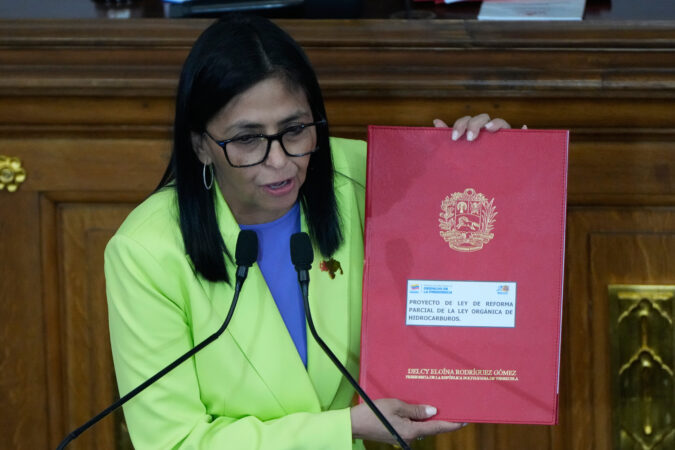
    WASHINGTON — President Donald Trump said Thursday he has informed Venezuela’s acting president, Delcy Rodríguez, that he will open up all commercial airspace over the Venezuela and Americans will soon be able to visit.

    Trump said he instructed his transportation secretary, Sean Duffy, and U.S. military leaders to take steps to open the airspace for travel by the end of the day.

    “American citizens will be very shortly able to go to Venezuela, and they’ll be safe there,” the Republican president said.

    Venezuela’s government did not immediately comment.

    While the State Department continued to warning Americans against traveling to Venezuela, at least one U.S. airline announced its intention to soon resume direct flights between the countries.

    American Airlines was the last U.S. airline flying to Venezuela when it suspended flights in 2019 that it operated between Miami and the capital, Caracas, as well as the oil hub city of Maracaibo. The airline said Thursday it would share additional details about the return to service in the coming months as it works with federal authorities on security assessments and necessary permissions.

    “We have a more than 30-year history connecting Venezolanos to the U.S., and we are ready to renew that incredible relationship,” Nat Pieper, American’s chief commercial officer, said in a statement. “By restarting service to Venezuela, American will offer customers the opportunity to reunite with families and create new business and commerce with the United States.”

    Before Venezuela came undone in the mid-2010s, it was not uncommon for Venezuelans to take weekend leisure trips to Miami. U.S. airlines stopped flying to Venezuela before the Department of Homeland Security in 2019 ordered an indefinite suspension, arguing that conditions in Venezuela threatened the “safety and security of passengers, aircraft, and crew.”

    Earlier this week, Trump’s administration notified Congress that it was taking the first steps to possibly reopen the shuttered U.S. Embassy in Caracas as it explores restoring relations with the country after the U.S. military raid that ousted then-President Nicolás Maduro. In a notice to lawmakers dated Monday and obtained by The Associated Press, the State Department said it was sending in a regular and growing contingent of temporary staffers to conduct “select” diplomatic functions.

    “We are writing to notify the committee of the Department of State’s intent to implement a phased approach to potentially resume Embassy Caracas operations,” the department said in separate but identical letters to 10 House and Senate committees.

    Diplomatic relations between the two countries collapsed in 2019.

    Even as Trump suggested Americans will be safe in Venezuela, his State Department kept in place its highest-level travel advisory: “Do not travel,” a warning of a high risk of wrongful detention, torture, kidnapping and more.

    The department did not immediately respond to a message inquiring whether it would be changing that warning.

    In November, as Trump was ramping up pressure on Maduro, the American president said the airspace “above and surrounding” Venezuela should be considered as “closed in its entirety.”

    The Federal Aviation Administration, which has jurisdiction generally over the United States and its territories, told pilots to be cautious flying around Venezuela because of heightened military activity.

    After that FAA warning, international airlines began canceling flights to Venezuela.

    The FAA issued a similar 60-day warning in January, urging U.S. aircraft operators to “exercise caution” when flying over the eastern Pacific Ocean near Mexico, Central America, and parts of South America. The warning was issued after Maduro’s capture but came as the U.S. has threatened to continue military strikes on alleged drug trafficking boats in the area.

    The FAA on Thursday said it was lifting four Notices to Airmen (NOTAMs) for the region that it said were “issued as precautionary measures and are no longer necessary.”

    “Safety remains our top priority,” the FAA said in a statement, “And we look forward to facilitating the return of regular travel between the U.S. and Venezuela.”

  • A shadow network in Minneapolis defies ICE and protects immigrants

    A shadow network in Minneapolis defies ICE and protects immigrants

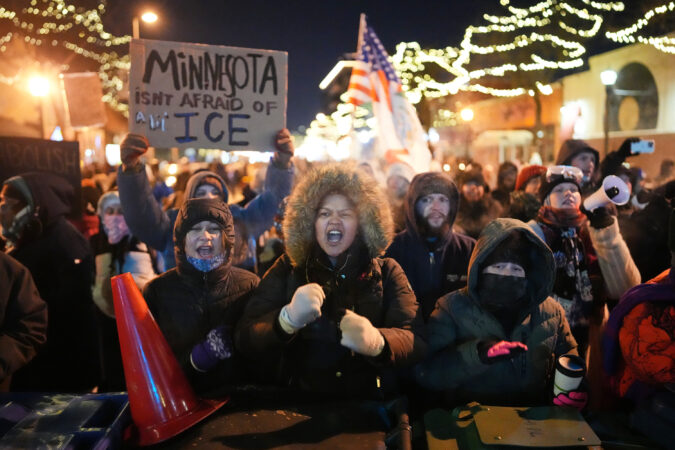
    MINNEAPOLIS — If there’s been a soundtrack to life in Minneapolis in recent weeks, it’s the shrieking whistles and honking horns of thousands of people following immigration agents across the city.

    They are the ever-moving shadow of the Trump administration’s Operation Metro Surge.

    They are teachers, scientists and stay-at-home parents. They own small businesses and wait tables. Their network is sprawling, often anonymous and with few overall objectives beyond helping immigrants, warning of approaching agents or filming videos to show the world what is happening.

    And it’s clear they will continue despite the White House striking a more conciliatory tone after the weekend killing of Alex Pretti, including the transfer of Gregory Bovino, the senior Border Patrol official who was the public face of the immigration crackdown.

    “I think that everyone slept a little better knowing that Bovino had been kicked out of Minneapolis,” said Andrew Fahlstrom, who helps run Defend the 612, a hub for volunteer networks. “But I don’t think the threat that we’re under will change because they change out the local puppets.”

    The surge begins

    What started with scattered arrests in December ramped up dramatically in early January, when a top ICE official announced the “largest immigration operation ever.”

    Masked, heavily armed agents traveling in convoys of unmarked SUVs became commonplace in some neighborhoods. By this week, more than 3,400 people had been arrested, according to Immigration and Customs Enforcement. At least 2,000 ICE officers and 1,000 Border Patrol officers were on the ground.

    Administration officials insist they are focusing on criminals in the U.S. illegally, but the reality in the streets has been far more aggressive. Agents have stopped people, seemingly randomly, to demand citizenship papers, including off-duty Latino and Black police officers and city workers, area officials say.

    They smashed through the front door of a Liberian man and detained him without a proper warrant, even though he’d been checking in regularly with immigration officials. They have detained children along with their parents and used tear gas outside a high school in an altercation with protesters after detaining someone.

    To be sure, federal agents are barely a presence in many areas, and most people have never smelled a whiff of tear gas. But the crackdown rippled quickly through immigrant-heavy neighborhoods. Patients are avoiding life-saving medical care, doctors said. Thousands of immigrant children are staying home. Immigrant businesses shut down, cut their hours or kept their doors locked to everyone but regular customers.

    Pushback comes quickly

    Activist groups rapidly organized across deeply liberal Minneapolis-St. Paul and some suburbs. Small armies of volunteers began making food deliveries to immigrants afraid to leave their homes. They drove people to work and stood watch outside schools.

    They also created interlocking webs of dozens, perhaps hundreds, of rapid response networks — sophisticated systems involving thousands of volunteers who track immigration agents, communicating with encrypted apps like Signal.

    Tracking often means little more than quietly reporting the movement of convoys to dispatchers and recording the license plates of possible federal vehicles.

    But it’s not always quiet. Protester caravans regularly form behind immigration convoys, creating mobile protests of anger and warning that weave through city streets.

    When agents stop to arrest or question someone, the networks signal the location, summoning more people who sound warnings with whistles and honking, film what’s happening and call out legal advice to people being detained.

    Trump’s border czar, Tom Homan, warned Thursday that activists will continue to “be held accountable.”

    “Justice is coming,” he told reporters.

    Many protesters come expecting trouble

    Sometimes it all can feel performative, whether it’s Bovino in body armor tossing a smoke grenade, or young activists who rarely take off their helmets and gas masks, even when law enforcement is nowhere to be seen.

    But crowds often lead to real confrontations, with protesters screaming at immigration agents. Agents respond only sometimes, but when they do it’s often with punches, pepper spray, tear gas and arrests.

    Those confrontations worry some in the activist world.

    Take the recent afternoon in south Minneapolis, where dozens of protesters, some in gas masks, clashed with immigration agents in south Minneapolis. Protesters screamed at agents, threw snowballs and tried to block their vehicles. Agents responded by shoving protesters who got too close, firing pepper balls and finally throwing tear gas grenades and driving away. Demonstrators without masks wretched in the streets as volunteers handed out bottles of water to flush their eyes.

    By then, even many of the people in the protest weren’t sure what started it, including the city council member who soon arrived.

    Minneapolis has a long tradition of progressivism, and Jason Chavez is a proud part of that.

    He bristled when asked about the confrontation.

    “I didn’t see anybody ‘confronting,’” said Chavez. “I saw people alerting neighbors that ICE was in their neighborhood. And that’s what neighbors should continue to do.”

    Tracking immigration in an immigrant neighborhood

    To understand this world, talk to a woman known in the rapid response networks only by her nickname, Sunshine. She asked that her real name not be used, fearing retaliation.

    A friendly woman who works in health care, she has spent hundreds of hours in her slightly beat-up Subaru patrolling an immigrant St. Paul enclave of taquerias and Asian grocery stores, watching for signs of federal agents. She can spot an idling SUV from the tiniest hint of exhaust, an out-of-state license plate from a block away, and quickly distinguish an undercover St. Paul police car from an unmarked immigration vehicle.

    On the messaging apps, she’s simply Sunshine. She knows the real names of few other people, even after working with some for weeks on end.

    She hates what is happening, and feels deeply for people living in fear. She worries the Trump administration wants to push the nation into civil war, and believes she has no choice except to patrol — “commuting” it’s often called, half-jokingly — every day.

    “Sometimes people just want to pick up their kid and walk their dog and go to work. And I get that. I get that desire,” she said while driving through the neighborhood last week. “I just don’t know if that’s the world we live in anymore.”

    She runs constant equations in her head: Should she report an immigration vehicle to the network’s dispatcher, or honk her horn as a warning? Would honking unnecessarily scare residents who are already afraid? Are agents leading her around? Are federal vehicles moving to launch a raid, or are they distracting observers while other agents make arrests elsewhere?

    She is careful and avoids confrontation. She also finds hope in the community that has been created, and how offers to volunteer exploded after the Jan. 7 killing of Renee Good by an ICE agent. And she understands the anger of the people who face off against agents.

    “My strategy, my approach, my risk calculation is different than other peoples’. And at the same time, the vitriol, the frustration, I get it,” she said. “And sometimes it feels good to see someone unleash that.”

    Not everyone agrees. Nationally, some activist groups avoid protest strategies that could lead to clashes.

    “Loud does not equal effective,” a group in a heavily immigrant Maryland county said in a recent social media post, explaining why their volunteers don’t use whistles.

    The Montgomery County Immigrant Rights Collective notes that it isn’t suggesting how other groups should operate, and that “local conditions should guide your local tactics.” But it warns its own members that whistling can “escalate already volatile ICE agents who don’t respect our rights” and “increase the likelihood of aggression toward bystanders or the detained person.”

    “This is not an action movie,” the post says. “You are not in a one-on-one fight with ICE.”

  • Trump says he asked Putin not to target Kyiv for 1 week during brutal cold spell

    Trump says he asked Putin not to target Kyiv for 1 week during brutal cold spell

    KYIV, Ukraine — President Donald Trump said Thursday that President Vladimir Putin has agreed not to target the Ukrainian capital and other towns for one week as the region experiences frigid temperatures. There was no immediate confirmation from the Kremlin that Putin has agreed to such a pause.

    Russia has been pounding Ukraine’s critical infrastructure, hoping to wear down public resistance to the war while leaving many around the country having to endure the dead of winter without heat.

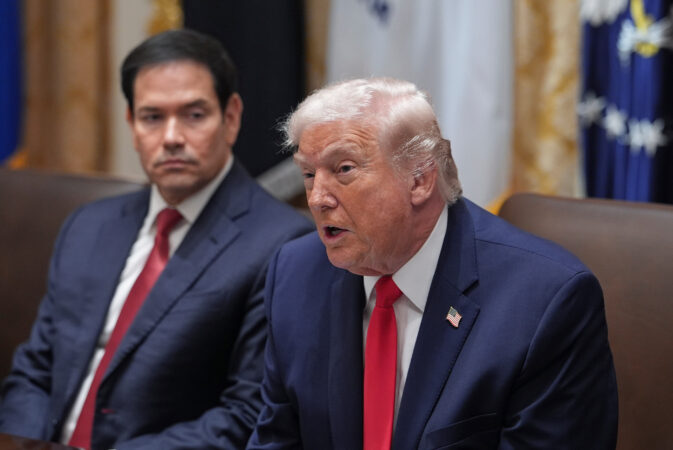
    “I personally asked President Putin not to fire on Kyiv and the cities and towns for a week during this … extraordinary cold,” Trump said during a Cabinet meeting at the White House, adding that Putin has “agreed to that.”

    Kremlin spokesman Dmitry Peskov was asked earlier Thursday whether a mutual halt on strikes on energy facilities was being discussed between Russia and Ukraine, and he refused to comment on the issue.

    Ukrainian President Volodymyr Zelensky late Wednesday had warned that Moscow was planning another large-scale barrage despite plans for further U.S.-brokered peace talks at the weekend.

    Trump said he was pleased that Putin has agreed to the pause. Kyiv, which has grappled with severe power shortages this winter, is forecast to enter a brutally cold stretch starting Friday that is expected to last into next week. Temperatures in some areas will drop to minus-22 Fahrenheit, the State Emergency Service warned.

    “A lot of people said, ‘Don’t waste the call. You’re not going to get that.’” the president said of his request of Putin. “And he did it. And we’re very happy that they did it.”

    Zelensky, for his part, thanked Trump for his effort and welcomed the “possibility” of a pause in Russian military action on Kyiv and beyond. “Power supply is a foundation of life,” Zelensky said in his social media post.

    Trump did not say when the call with Putin took place or when the ceasefire would go into effect. The White House did not immediately respond to a query seeking clarity about the scope and timing of the limited pause in the nearly four-year war.

    Russia has sought to deny Ukrainian civilians heat and running water over the course of the war, which began with Russia’s full-scale invasion on Feb. 24, 2022. Ukrainian officials describe the strategy as “weaponizing winter.”

    Last year was the deadliest for civilians in Ukraine since 2022 as Russia intensified its aerial barrages behind the front line, according to the U.N. Human Rights Monitoring Mission in the country.

    The war killed 2,514 civilians and injured 12,142 in Ukraine — 31% higher than in 2024, it said.

    A Russian drone attack killed three people in Ukraine’s southern Zaporizhzhia region overnight and caused a major blaze in an apartment building, officials said Thursday.

    Firefighters also worked through the night to put out fires in the central Dnipropetrovsk region, where two people were injured, officials said.

    Zelensky said Ukrainian intelligence reports indicate Russia is assembling forces for a major aerial attack. Previous large attacks, sometimes involving more than 800 drones as well as cruise and ballistic missiles, have targeted the Ukrainian power grid.

    The ongoing attacks discredit the peace talks, Zelensky said. “Every single Russian strike does,” he said late Wednesday.

    Russia’s daily bombardment of civilian areas behind the roughly 600-mile front line has continued despite international condemnation and attempts to end the fighting.

    Ukraine is working with SpaceX to address the reported use of its Starlink satellite service by Russian attack drones, Ukrainian Defense Minister Mykhailo Fedorov said Thursday on the Telegram messaging app.

    He said his team contacted the American aerospace company run by Elon Musk and “proposed ways to resolve the issue.” Starlink is a global internet network that relies on around 10,000 satellites orbiting Earth.

    Fedorov thanked Musk and SpaceX President Gwynne Shotwell for their “swift response and the start of work on resolving the situation.”

    Musk and SpaceX have sought to steer a delicate course in the war.

    Shotwell said a year after the invasion that SpaceX was happy to provide Ukrainians with connectivity “and help them in their fight for freedom.” At the same time, the company sought to restrict Ukraine’s use of Starlink for military purposes, she said.

    Negotiations between the two sides are poised to resume on Sunday amid doubts about Moscow’s commitment to a settlement.

    The European Union’s top diplomat accused Russia of not taking the talks seriously, calling Thursday in Brussels for more pressure to be exerted on Moscow to press it into making concessions.

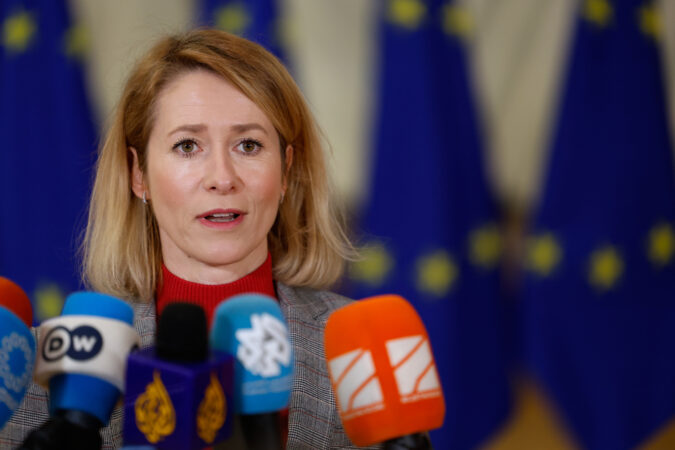
    “We see them increasing their attacks on Ukraine because they can’t make moves on the battlefield. So, they are attacking civilians,” Kaja Kallas said of Russia at a meeting of EU foreign ministers.

    She stressed that Europe, which sees its own future security at stake in Ukraine, must be fully involved in talks to end the war. The push for a settlement has been led over the past year by the Trump administration, and European leaders fear their concerns may not be taken into account.

    Steve Witkoff, Trump’s special envoy, said Thursday “a lot of progress” was made in recent three-way talks and expressed optimism that more headway can be made when the parties meet again in the coming days.

    “I think the people of Ukraine are now hopeful and expecting that we are going to deliver a peace deal sometime soon,” Witkoff added.

    The number of soldiers killed, injured or missing on both sides during the war could reach 2 million by spring, with Russia suffering the largest number of troop deaths for any major power in any conflict since World War II, according to an international think tank report published Tuesday.

  • Israel returns Palestinian bodies, marking last exchange between Israel and Hamas

    Israel returns Palestinian bodies, marking last exchange between Israel and Hamas

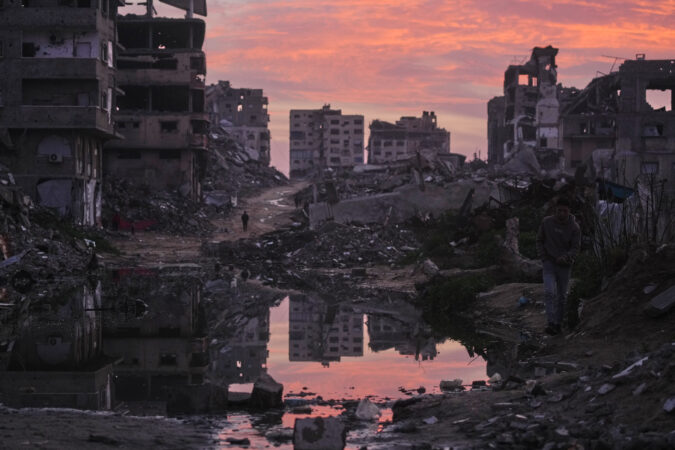
    DEIR AL-BALAH, Gaza Strip — Israel turned over the bodies of 15 Palestinians on Thursday, just days after recovering the remains of the last Israeli hostage, a Gaza Health Ministry official said.

    It marks the last hostage-detainee exchange between Israel and Hamas carried out as part of the first phase of the U.S.-brokered ceasefire reached in October.

    The Red Cross said that it helped facilitate the return of the bodies. They were taken to Shifa Hospital in Gaza City, health ministry spokeperson Zaher al-Wahidi said.

    The return of all remaining hostages, living or dead, had been a key part of the first phase in the ceasefire that paused the war.

    Israel agreed to return 15 Palestinian bodies for each hostage recovered, according to the ceasefire terms. It’s unclear if the bodies released Thursday were of Palestinian detainees who died in Israeli custody or bodies taken from Gaza by Israeli troops during the war.

    Israel has released roughly 2,000 Palestinian prisoners under the ceasefire deal, many of whom were seized by Israeli troops during the more than two-year war and held without being charged. It also has released the bodies of 360 Palestinians back to Gaza, where officials have struggled to identify them.

    The Gaza health ministry, part of the Hamas-run government, has posted photos of the deceased for families to identify. Of the bodies handed back by Israel, about 100 have been identified by families, al-Wahidi said.

    On Monday, Israel announced that it found and identified the remains of the last Israeli hostage, police officer Ran Gvili, following an extensive search at a cemetery in northern Gaza.

    The attack by Hamas-led militants on Israel on Oct. 7, 2023, which launched the war, killed about 1,200 people and saw 251 taken hostage. Gvili, a 24-year-old police officer known affectionately as “Rani,” was killed while fighting Hamas militants.

    The return of his body closed a painful chapter for the country and cleared the way for the next and more challenging phase of the ceasefire, which calls for deploying an international security force, disarming Hamas, pulling back Israeli soldiers and rebuilding Gaza.

    Deaths continue in Gaza

    While U.S. envoy Steve Witkoff announced the launch of the second phase of the ceasefire deal earlier this month, Israeli fire and strikes continue to kill Palestinians across Gaza almost daily.

    Israeli fire killed two Palestinians on Thursday in southern Gaza’s Khan Younis area, according to Nasser hospital, where the bodies were taken. Health officials said that the two men were killed in areas that aren’t Israeli-controlled.

    Another Israeli strike in central Gaza killed one Palestinian and wounded others, according to Al-Aqsa martyrs hospital, where the casualties were taken.

    Israel’s military said that it carried out a “precise strike” on Thursday that targeted a suspect planning to attack its troops in the southern Gaza Strip.

    The Gaza Health Ministry said that 492 Palestinians have been killed since the ceasefire. The ministry doesn’t distinguish between civilians and combatants in its figures. The ministry maintains detailed casualty records that are seen as generally reliable by U.N. agencies and independent experts.

    The Israeli military has said that some of those killed in recent months were along the ceasefire line that splits Israeli-held areas and most of Gaza’s Palestinian population, and that it has targeted those posing a threat to its troops.

    Rafah border crossing

    For Palestinians separated from their families by the war and the tens of thousands of people outside Gaza seeking to return home, the reopening of the Rafah crossing along the border with Egypt can’t come soon enough.

    The crossing is expected to reopen soon, Israeli officials have said, but how many people will be allowed to enter and leave Gaza remains unclear.

    Preparations are underway to allow the departure of a limited number of medical evacuees who were wounded in the war and need to travel abroad for medical care.

    But Israeli Prime Minister Benjamin Netanyahu has said that crossing won’t be open to goods for now. The crossing, Gaza’s main gateway to the outside world, has been largely closed since May 2024.

  • EU lists Iran’s paramilitary Revolutionary Guard as terrorist organization over protest crackdown

    EU lists Iran’s paramilitary Revolutionary Guard as terrorist organization over protest crackdown

    BRUSSELS — The European Union agreed Thursday to list Iran’s paramilitary Revolutionary Guard as a terrorist organization over Tehran’s bloody crackdown on nationwide protests, the bloc’s top diplomat said, in a largely symbolic move that adds to international pressures on the Islamic Republic.

    The EU’s foreign policy chief, Kaja Kallas, said foreign ministers in the 27-nation bloc unanimously agreed on the designation, which she said will put the regime “on the same footing” with al-Qaeda, Hamas and the Islamic State group.

    “Those who operate through terror must be treated as terrorists,” Kallas said.

    Meanwhile, Iran faces the threat of military action from President Donald Trump in response to the killing of peaceful demonstrators and over possible mass executions. The American military has moved the USS Abraham Lincoln and several guided-missile destroyers into the Mideast. It remains unclear whether Trump will decide to use force.

    Activists say the crackdown has killed at least 6,443 people. “Any regime that kills thousands of its own people is working toward its own demise,” Kallas said.

    For its part, Iran has said it could launch a preemptive strike or broadly target the Mideast, including American military bases in the region and Israel.

    Iran issued a warning to ships at sea Thursday that it planned to run a drill next week that would include live firing in the Strait of Hormuz, potentially disrupting traffic through a waterway that sees 20% of all the world’s oil pass through it.

    Other countries, including the U.S. and Canada, have designated the Guard as a terrorist organization.

    Terrorist group label a ‘symbolic act’

    Iranian Foreign Minister Abbas Araghchi dismissed the designation as a “PR stunt” and said Europe would be affected if energy prices surge as a result of the sanctions.

    “Several countries are presently attempting to avert the eruption of all-out war in our region. None of them are European,” he wrote on X.

    France originally objected to listing the Revolutionary Guard as a terrorist organization over fears it would endanger French citizens detained in Iran, as well as diplomatic missions, but the country reversed course. French Foreign Minister Jean-Noël Barrot told the Foreign Affairs Council on Thursday in Brussels that France supports more sanctions on Iran and the listing “because there can be no impunity for the crimes committed.”

    “In Iran, the unbearable repression that has engulfed the peaceful revolt of the Iranian people cannot go unanswered,” he said.

    Edouard Gergondet, an lawyer focused on sanctions with the firm Mayer Brown, said the Revolutionary Guard will be notified of the listing and given the opportunity to comment before the measure is formally adopted.

    Kristina Kausch, a deputy director at the German Marshall Fund, said the listing is “a symbolic act” showing that for the EU “the dialogue path hasn’t led anywhere, and now it’s about isolation and containment as a priority.”

    “The designation of a state military arm, of an official pillar of the Iranian state, as a terrorist organization, is one step short of cutting diplomatic ties,” she said.

    The EU on Thursday also sanctioned 15 top officials and six organizations in Iran, including those involved in monitoring online content, as the country remains gripped by a three-week internet blackout by authorities.

    The sanctions mean that affected officials and organizations will have their assets frozen and their travel to Europe banned, according to Barrot.

    The Revolutionary Guard holds vast business interest across Iran, and sanctions could allow its assets in Europe to be seized.

    Iran already struggles under the weight of multiple international sanctions from countries including the U.S. and Britain.

    Iran’s rial currency fell to a record low of 1.6 million to $1 on Thursday. Economic woes sparked the protests, which broadened into a challenge to the theocracy before the crackdown.

    Guard emerged from 1979 revolution

    The Guard emerged from Iran’s 1979 Islamic Revolution as a force meant to protect its Shiite cleric-overseen government and was later enshrined in its constitution. It operated in parallel with the country’s regular armed forces, growing in prominence and power during a long and ruinous war with Iraq in the 1980s. Though it faced possible disbandment after the war, Supreme Leader Ayatollah Ali Khamenei granted it powers to expand into private enterprise, allowing it to thrive.

    The Guard’s Basij force likely was key in putting down the demonstrations, starting in earnest from Jan. 8, when authorities cut off the internet and international telephone calls for the nation of 85 million people. Videos that have come out of Iran via Starlink satellite dishes and other means show men likely belonging to its forces shooting and beating protesters.

    Iranian men once reaching the age of 18 are required to do up to two years of military service, and many find themselves conscripted into the Guard despite their own politics.

    Strait of Hormuz drill planned

    In other developments, a notice to mariners sent Thursday by radio warned that Iran planned to conduct “naval shooting” in the Strait of Hormuz on Sunday and Monday. Two Pakistani security officials, speaking on condition of anonymity because they were not authorized to talk to journalists, also confirmed the warning had been sent.

    Iran did not immediately acknowledge the drill. The hard-line Keyhan newspaper raised the specter of Tehran attempting to close the strait by force.

    “Today, Iran and its allies have their finger on a trigger that, at the first enemy mistake, will sever the world’s energy artery in the Strait of Hormuz and bury the hollow prestige of billion-dollar Yankee warships in the depths of the Persian Gulf,” the newspaper said.

    Such a move would likely invite U.S. military intervention. American military officials did not immediately respond to a request for comment.

    Elsewhere, Iranian opposition leader Mir Hossein Mousavi, whose Green Movement rose to challenge Iran’s disputed 2009 presidential election, again called for a constitutional referendum to change the country’s government. A previous call failed to take hold.

    WHO says doctors detained, health services attacked

    In other developments, at least five doctors have been detained and multiple health workers assaulted while treating injured patients in Iran since the protests began, the World Health Organization said Thursday.

    The statement from WHO offered some of the first information to emerge about the country’s medical system as journalists and human rights organizations struggle to assess the toll of the crackdown.

    WHO Director General Tedros Adhanom Ghebreyesus wrote on X that a hospital in the western city of Ilam came under attack, and authorities deployed tear gas inside a hospital in Tehran. At least 50 paramedics were hurt at 10 emergency medical posts and over 200 ambulances were damaged, he said.

    The U.S.-based Human Rights Activists News Agency reported that the violence in Iran has killed at least 6,443 people in recent weeks, with many more feared dead. Its count included at least 6,058 protesters, 214 government-affiliated forces, 117 children and 54 civilians who were not demonstrating. More than 47,208 have been arrested, it added.

    The group verifies each death and arrest with a network of activists on the ground, and it has been accurate in multiple rounds of previous unrest in Iran. The communication cutoff imposed by Iranian authorities has slowed the full scale of the crackdown from being revealed, and The Associated Press has been unable to independently assess the death toll.

    Iran’s government as of Jan. 21 put the death toll at a far lower 3,117, saying 2,427 were civilians and security forces and labeled the rest “terrorists.” In the past, Iran’s theocracy has undercounted or not reported fatalities from unrest.

    That death toll exceeds that of any other round of protest or unrest in Iran in decades and recalls the chaos surrounding the 1979 Islamic Revolution.

  • Trump’s wide ambitions for Board of Peace sparks new support for the United Nations

    Trump’s wide ambitions for Board of Peace sparks new support for the United Nations

    UNITED NATIONS — President Donald Trump’s latest attempt to sidestep the United Nations through his new Board of Peace appears to have inadvertently backfired after major world powers rejected U.S. aspirations for it to have a larger international mandate beyond the Gaza ceasefire and recommitted their support for the over 80-year-old global institution.

    The board to be chaired by Trump was originally envisioned as a small group of world leaders overseeing his plan for Gaza’s future. But the Republican president’s ambitions have expanded to envisioning the board as a mediator of worldwide conflicts, a not very subtle attempt to eclipse the Security Council, which is charged with ensuring international peace and security.

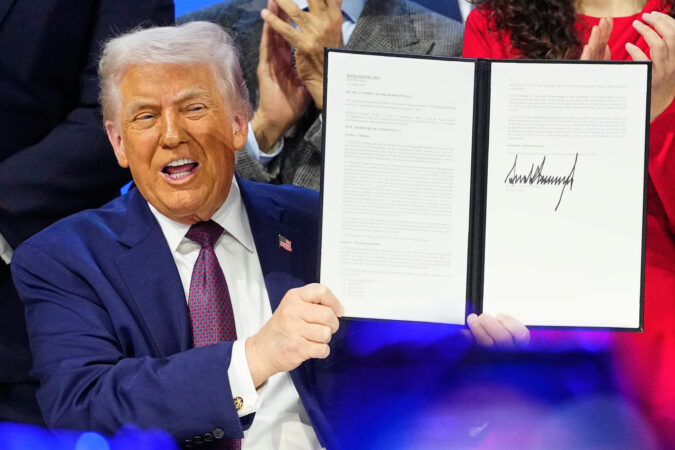
    The board’s charter also caused some dismay by stating Trump will lead it until he resigns, with veto power over its actions and membership.

    Secretary of State Marco Rubio tried to ease concerns by saying the board’s focus right now is only on the next phases of the Gaza ceasefire plan.

    “This is not a replacement for the U.N., but the U.N. has served very little purpose in the case of Gaza other than the food assistance,” Rubio said at a congressional hearing Wednesday.

    But Trump’s promotion of a broadened mandate and his floating of an idea that the Board of Peace “might” replace the U.N. have put off major players and been dismissed by U.N. officials.

    “In my opinion, the basic responsibility for international peace and security lies with U.N., lies with the Security Council,” Secretary General Antonio Guterres said Thursday. “Only the Security Council can adopt decisions binding on all, and no other body or other coalition can legally be required to have all member states to comply with decisions on peace and security.”

    In Security Council statements, public speeches and behind closed doors, U.S. allies and adversaries have dismissed Trump’s latest plan to overturn the post-World War II international order with what he describes as a “bold new approach to resolving global conflict.”

    “The U.S. rollout of the much broader Board of Peace charter turned the whole exercise into a liability,” according to the International Crisis Group’s Richard Gowan, a U.N. watcher and program director. “Countries that wanted to sign on to help Gaza saw the board turning into a Trump fan club. That was not appealing.”

    “If Trump had kept the focus of the board solely on Gaza, more states, including some more Europeans, would have signed up,” he said.

    Key Security Council members haven’t signed on

    The four other veto-wielding members of the Security Council — China, France, Russia, and the United Kingdom — have refused or have not indicated whether they would join Trump’s board, as have economic powers such as Japan and Germany.

    Letters sent this month inviting various world leaders to be “founding members” of the Board of Peace coincided with Trump’s vow to take over Greenland, a semiautonomous territory of NATO ally Denmark, and punish some European countries that resisted. That was met with stark rebuttal from Canada, Denmark and others, who said Trump’s demand threatened to upend an alliance that has been among the West’s most unshakeable.

    Shortly after, Trump pulled a dramatic reversal on Greenland, saying he had agreed with the NATO secretary-general on a “framework of a future deal” on Arctic security.

    Amid the diplomatic chaos, British Prime Minister Keir Starmer, who at the time had not responded to Trump’s Board of Peace invitation, met with Guterres in London and reiterated “the UK’s enduring support for the UN and the international rules-based system,” according to a statement.

    Starmer emphasized the U.N.’s “pivotal role in tackling global problems which shape lives in the UK and all over the world.” The United Kingdom later declined to join the board.

    France, Spain, and Slovenia declined Trump’s offer by mentioning its overlapping and potentially conflicting agenda with the U.N.

    French President Emmanuel Macron said last week that the board goes beyond “the framework of Gaza and raises serious questions, in particular with respect to the principles and structure of the United Nations, which cannot be called into question.”

    Spain would not join because the board excluded the Palestinian Authority and because the body was “outside the framework of the United Nations,” Prime Minister Pedro Sánchez said.

    Some countries are urging a stronger U.N.

    America’s adversaries also have shunned the board.

    “No single country should dictate terms based on its power, and a winner-takes-all approach is unacceptable,” China’s U.N. ambassador, Fu Cong, said at a Security Council meeting Monday.

    He called for the United Nations to be strengthened, not weakened, and said the Security Council’s status and role “are irreplaceable.”

    In a clear reference to the Board of Peace, Fu said, “We shall not cherry-pick our commitments to the organization, nor shall we bypass the U.N. and create alternative mechanisms.”

    So far, about 26 of some 60 invited countries have joined the board, and about nine European countries have declined. India did not attend Trump’s signing ceremony at the World Economic Forum meeting in Davos, Switzerland, last week but is reportedly still deciding what to do. Trump revoked Canadian Prime Minister Mark Carney’s invitation.

    “It’s hardly surprising that very few governments want to join Trump’s wannabe-U.N., which so far looks more like a pay-to-play club of human rights abusers and war crimes suspects than a serious international organization,” said Louis Charbonneau, U.N. director for Human Rights Watch. “Instead of handing Trump $1 billion checks to join his Board of Peace, governments should work on strengthening the U.N.”

    Eight Muslim nations that agreed to join the board issued a joint statement that supported its mission in Gaza and advancement of Palestinian statehood. Turkey, Saudi Arabia, Egypt, Jordan, Indonesia, Pakistan, Qatar and the United Arab Emirates made no mention of Trump’s global peacemaking plan.

    The Crisis Group’s Gowan said their focus could be a way to “get a foothold in discussions of Gaza” at the start, as Trump’s ceasefire plan has already faced several setbacks.

    “I remain unconvinced that this is a real long-term threat to the U.N.,” Gowan said.

  • Trump’s border czar suggests a possible drawdown in Minnesota but only after ‘cooperation’

    Trump’s border czar suggests a possible drawdown in Minnesota but only after ‘cooperation’

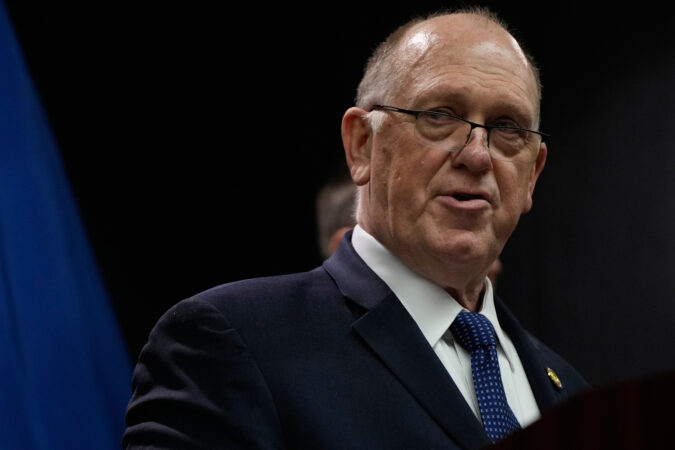
    MINNEAPOLIS — The number of immigration enforcement officers in Minnesota could be reduced, but only if state and local officials cooperate, President Donald Trump’s border czar said Thursday, noting he has “zero tolerance” for protesters who assault federal officers or impede the ongoing operation in the Twin Cities.

    Tom Homan addressed reporters for the first time since the president sent him to Minneapolis following last weekend’s fatal shooting of protester Alex Pretti.

    The news conference comes after President Donald Trump seemed to signal a willingness to ease tensions in the Minneapolis and St. Paul area after Saturday’s deadly shooting, the second this month. But Homan also emphasized that the administration isn’t backing away from its crackdown on illegal immigration.

    Vowing to stay until the “problem’s gone,” he seemed to acknowledge missteps while warning protesters they could face consequences if they interfere with federal officers.

    “I do not want to hear that everything that’s been done here has been perfect. Nothing’s ever perfect,” Homan said.

    He added later: “But threatening law enforcement officers, engaging and impeding, and obstruction, and assault is never OK, and there will be zero tolerance.”

    Homan also hinted at the prospect of drawing down many of the roughly 3,000 federal officers taking part in the operation, but he seemed to tie that to cooperation from state and local leaders and a reduction in what he cast as interference from protesters.

    “When the violence decreases, we can draw down the resources,” he said. “The drawdown is going to happen based on these agreements. But the drawdown can happen even more if the hateful rhetoric and the impediment and interference will stop.”

    He also said he would oversee internal changes in federal immigration law enforcement, but he gave few specifics.

    “The mission is going to improve because of the changes we’re making internally,” he said. “No agency organization is perfect. And President Trump and I, along with others in the administration, have recognized that certain improvements could and should be made.”

    Despite Trump softening his harsh rhetoric about Minnesota officials — he said this week they were on a “similar wavelength” — there was little sign on the ground Wednesday of any big changes in the crackdown.

    Pretti, 37, was fatally shot Saturday in a scuffle with the Border Patrol. Earlier this month, 37-year-old Renee Good was shot in her vehicle by an Immigration and Customs Enforcement officer.

    On Thursday, Homan doubled down on the need for jails to alert ICE to inmates who can be deported, and that transferring such inmates to the agency while they’re still in jail is safer because it would mean fewer officers having to be out on the streets looking for immigrants in the country illegally. ICE has historically relied on cooperation from local and state jails to notify the agency about such inmates.

    “Give us access to illegal aliens, public safety threats in the safety and security of a jail,” he said.

    Homan acknowledged that immigration enforcement operations in Minnesota haven’t been perfect, but he was also adamant that the administration isn’t surrendering its mission.

    He also seemed to suggest a renewed focus on what ICE calls “targeted operations” designed to focus its efforts on apprehending immigrants who have committed crimes. He said the agency would conduct “targeted strategic enforcement operations” prioritizing “public safety threats.”

    Homan’s arrival in Minnesota followed the departure of the Trump administration’s on-the-ground leader of the operation, Greg Bovino. Homan didn’t give a specific timeline for how long he would stay in Minnesota.

    “I’m staying until the problem’s gone,” he said, adding that he has met elected officials and law enforcement leaders across the city and state, seeking to find common ground and suggested that he’s made some progress.

    Operation Metro Surge began in December with scattered arrests, as Trump repeatedly disparaged the state’s large Somali community. But the operation ramped up dramatically after a right-wing influencer’s January report on Minnesota’s sprawling human services fraud scandal, which centers around the Somali community.

    Federal officials announced thousands of immigration agents were being deployed, with FBI Director Kash Patel saying they would “dismantle large-scale fraud schemes exploiting federal programs.”

    But talk of the scandals was almost immediately forgotten, with federal authorities instead focusing on immigrants in the country illegally and so-called sanctuary agreements that limit cooperation between local law enforcement agencies and jails with immigration authorities.

  • A former Illinois deputy is sentenced to 20 years in prison for killing Sonya Massey

    A former Illinois deputy is sentenced to 20 years in prison for killing Sonya Massey

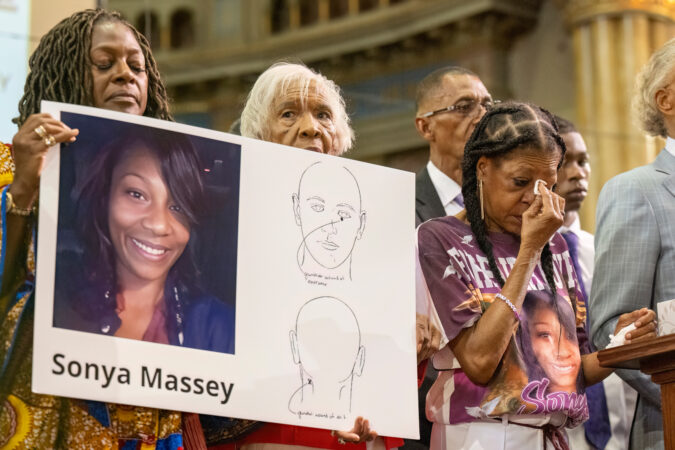
    SPRINGFIELD, Ill. — A former Illinois sheriff’s deputy was sentenced Thursday to 20 years in prison for fatally shooting Sonya Massey, who had dialed 911 to report a possible prowler outside her Springfield home.

    Sean Grayson, 31, was convicted in October. Grayson, who is white, received the maximum possible sentence. He has been incarcerated since he was charged in the killing.

    He apologized during the sentencing, saying he wished he could bring Massey back and spare her family the pain he caused.

    “I made a lot of mistakes that night. There were points when I should’ve acted, and I didn’t. I froze,” he said. “I made terrible decisions that night. I’m sorry.”

    But Massey’s parents and two children — who lobbied for the maximum sentence — said their lives had changed dramatically since the killing. Her two children said they had to grow up without a mother, while Massey’s mother said she lived in fear. They asked the judge to carry out justice in her name.

    “Today, I’m afraid to call the police in fear that I might end up like Sonya,” her mother Donna Massey said.

    When the judge read the sentence, the family reacted with a loud cheer: “Yes!” The judge admonished them.

    After the hearing, Massey’s relatives thanked the public for the support and listening to their stories about Massey.

    “Twenty years is not enough,” her daughter Summer told reporters.

    In the early morning hours of July 6, 2024, Massey — who struggled with mental health issues — summoned emergency responders because she feared there was a prowler outside her Springfield home.

    According to body camera footage, Grayson and sheriff’s Deputy Dawson Farley, who was not charged, searched Massey’s yard before meeting her at her door. Massey appeared confused and repeatedly said, “Please, God.”

    The deputies entered her house, Grayson noticed the pot on the stove and ordered Farley to move it. Instead, Massey went to the stove, retrieved the pot and teased Grayson for moving away from “the hot, steaming water.”

    From this moment, the exchange quickly escalated.

    Massey said: “I rebuke you in the name of Jesus.”

    Grayson drew his sidearm and yelled at her to drop the pan. She set the pot down and ducked behind a counter. But she appeared to pick it up again.

    That’s when Grayson opened fire on the 36-year-old single mother, shooting her in the face. He testified that he feared Massey would scald him.

    Grayson was charged with three counts of first-degree murder, which could have led to a life sentence, but a jury convicted him of the lesser charge. Illinois allows for a second-degree murder conviction if evidence shows the defendant honestly thought he was in danger, even if that fear was unreasonable.

    Massey’s family was outraged by the jury’s decision.

    “The justice system did exactly what it’s designed to do today. It’s not meant for us,” her cousin Sontae Massey said after the verdict.

    Massey’s killing raised new questions about U.S. law enforcement shootings of Black people in their homes. Civil rights attorney Ben Crump negotiated a $10 million settlement with Sangamon County for Massey’s relatives.

    The case also generated a U.S. Justice Department inquiry that was settled when the county agreed to implement more de-escalation training; collect more use-of-force data; and forced the sheriff who hired Grayson to retire. The case also prompted a change in Illinois law requiring fuller transparency on the backgrounds of candidates for law enforcement jobs.

    Grayson’s attorneys had filed a motion for a new trial, which Judge Ryan Cadigan dismissed at the start of the sentencing.

  • Trump signals interest in easing tensions, but Minneapolis sees little change on the streets

    Trump signals interest in easing tensions, but Minneapolis sees little change on the streets

    MINNEAPOLIS — President Donald Trump seemed to signal a willingness to ease tensions in Minneapolis after a second deadly shooting by federal immigration agents, but there was little evidence Wednesday of any significant changes following weeks of harsh rhetoric and clashes with protesters.

    The strain was evident when Trump made a leadership change by sending his top border adviser to Minnesota to take charge of the immigration crackdown. That was followed by seemingly conciliatory remarks about the Democratic governor and mayor.

    Trump said he and Gov. Tim Walz, whom he criticized for weeks, were on “a similar wavelength” following a phone call. After a conversation with Mayor Jacob Frey, the president praised the discussion and declared that “lots of progress is being made.”

    But on city streets, there were few signs of a shift. Immigration enforcement operations and confrontations with activists continued Wednesday in Minneapolis and St. Paul.

    A group of protesters blew whistles and pointed out federal officers in a vehicle on a north Minneapolis street. When the officers’ vehicle moved, a small convoy of activists followed in their cars for a few blocks until the officers stopped again.

    When Associated Press journalists got out of their car to document the encounter, officers with the federal Bureau of Prisons pushed one of them, threatened them with arrest and told them to get back in their car despite the reporters’ identifying themselves as journalists. Officers from multiple federal agencies have been involved in the enforcement operations.

    From their car, the AP journalists saw at least one person being pepper sprayed and one detained, though it was unclear if that person was the target of the operation or a protester. Agents also broke car windows.

    Attorney General Pam Bondi, who is visiting Minnesota, said 16 people were arrested Wednesday on charges of assaulting, resisting or impeding law enforcement in the state. She said more arrests were expected.

    “NOTHING will stop President Trump and this Department of Justice from enforcing the law,” Bondi said in a social media post.

    Messages seeking comment were left with Immigration and Customs Enforcement and the Border Patrol.

    Woman tells agents knocking on door: ‘They’re good neighbors’

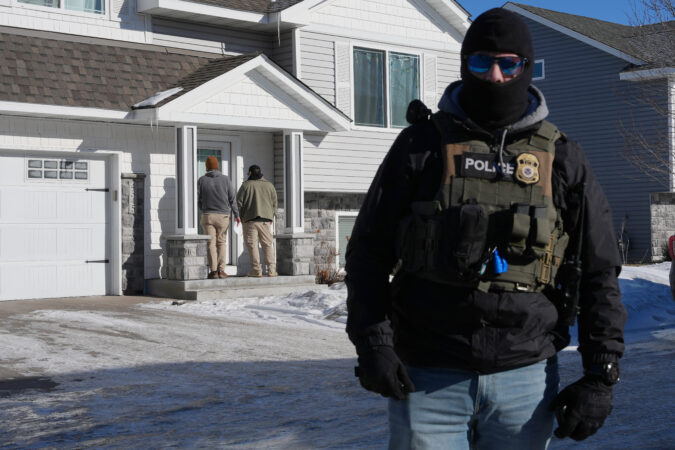
    On Wednesday afternoon in the Minneapolis suburb of Brooklyn Center, half a dozen agents went to a house in a small residential neighborhood.

    One agent knocked on the door of the home repeatedly. Another told the AP they were seeking a man who had been twice deported and was convicted of domestic abuse. The agent said the man had run into the home and the agents lacked a judicial warrant to get inside.

    Some federal immigration officers are asserting sweeping power to forcibly enter people’s homes without a judge’s warrant and instead are using a more narrow administrative warrant to arrest migrants considered illegally present or otherwise deportable. The key difference is whether agents can forcibly enter a private property to make an arrest, as they were captured on video doing in Minneapolis earlier this month.

    A handful of activists blew whistles at the agents in Brooklyn Center. One agent said: “They’d rather call the police on us than to help us. Go figure.”

    As the agents were preparing to leave, a woman called out to them saying, “You need to know they’re good neighbors.”

    Kari Rod told the AP that she didn’t know these neighbors well, but they had come to her garage sale, kept their yard clean, and waved hello when she drove by. She didn’t believe enforcement agents to be speaking the truth about whom they arrest, including another neighbor whom she said was deported to Laos last summer.

    “I don’t trust a single thing they said about who they are,” Rod said. “From my interactions, I know them way better than anyone else does, any one of those federal agents.”

    Immigrants are ‘still very worried’

    Many immigrant families are still fearful of leaving their homes, and Latino businesses are still closed, said Daniel Hernandez, who owns the Minneapolis grocery store Colonial Market. He also runs a popular Facebook page geared toward informing the Hispanic community in the Twin Cities.

    While Colonial Market is open, all but one of the dozen immigrant-run businesses that rented space inside to sell clothes, jewelry, and toys have closed since late December, and none has plans to reopen, Hernandez said.

    “The reality is the community is still very worried and afraid,” Hernandez said.

    Hernandez referenced Border Patrol commander Gregory Bovino, who helped lead the administration’s crackdown in the Twin Cities and who has reportedly been assigned elsewhere.

    Bovino “was removed, but the tactics so far are still the same,” Hernandez said. “Nobody now is trusting the government with those changes.”

    The federal enforcement extended to the city’s Ecuadoran consulate, where a federal law enforcement officer tried to enter before being blocked by employees.

    Judge warns ICE about not complying with federal orders

    In Minnesota federal court, the issue of ICE not complying with court orders came to the fore as Chief Judge Patrick Schiltz said the agency had violated 96 court orders in 74 cases since Jan. 1.

    “This list should give pause to anyone — no matter his or her political beliefs — who cares about the rule of law,” he wrote. “ICE has likely violated more court orders in January 2026 than some federal agencies have violated in their entire existence.”

    Schiltz earlier this week ordered ICE’s acting director to personally appear in his courtroom Friday after the agency failed to obey an order to release an Ecuadorian man from detention in Texas. The judge canceled the order after the agency freed the man.

    The judge, who was appointed by President George W. Bush, warned ICE that future noncompliance may result in future orders requiring the personal appearances of Acting Director Todd Lyons or other government officials.

    ICE didn’t immediately respond to an email seeking comment.

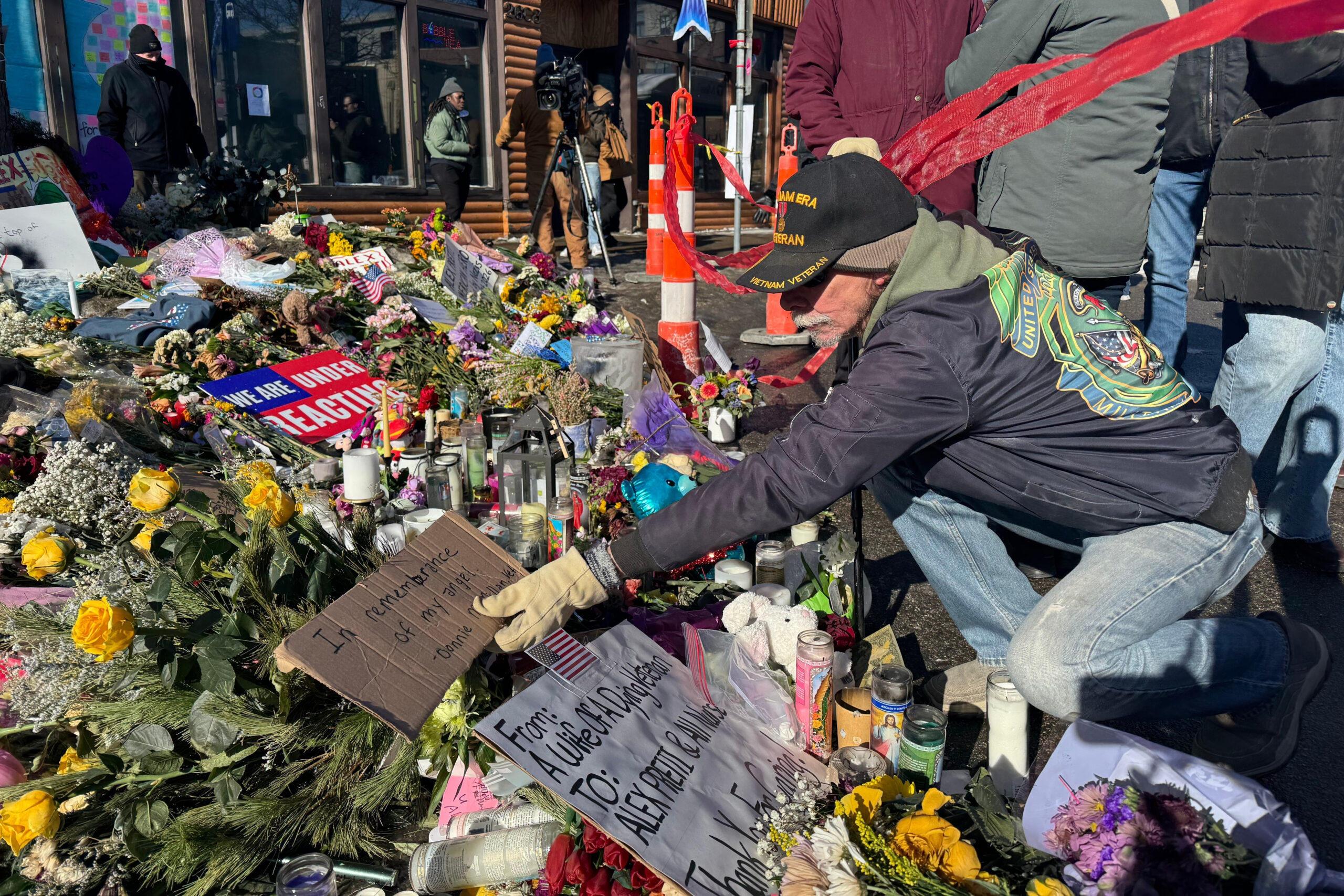
    Vietnam War veteran Donnie McMillan places a sign that says “In remembrance of my angel” at a memorial set up at the location where VA nurse Alex Pretti was shot by federal agents in Minneapolis.

    Veteran visits sidewalk memorial

    Elsewhere on Wednesday, Donnie McMillan placed a cardboard sign reading “In remembrance of my angel” at the makeshift memorial where Alex Pretti was shot.

    The Vietnam veteran knelt to pay his respects and saluted to honor the nurse whom he said he remembered seeing during his frequent visits to the VA hospital where Pretti worked.

    “I feel like I’ve lost an angel right here,” McMillan, 71, said, pointing to the growing sidewalk memorial covered in flowers, candles, and signs.

    “This is not the way we should operate,” McMillan said. “I respect everybody, but I respect my angel more, and now he’s no longer with us.”

    Also Wednesday, the Department of Homeland Security said two federal agents involved in Pretti’s death have been on leave since Saturday, when the shooting happened.

    U.S. Rep. Ilhan Omar, a Democrat, spoke to journalists one day after a man attacked her during a town-hall meeting by squirting a strong-smelling substance on her as she denounced the Trump administration.

    “What is unfolding in our state is not accidental. It is part of a coordinated effort to target Black and brown, immigrant and Muslim communities through fear, racial profiling, and intimidation,” Omar said. ”This administration’s immigration agenda is not about law enforcement — it is about making people feel they do not belong.”