Category: Nation World News Wires

  • Attorney for Rob Reiner’s son resigns but says his client is not guilty of murder under state law

    Attorney for Rob Reiner’s son resigns but says his client is not guilty of murder under state law

    LOS ANGELES — The high-profile private attorney for Nick Reiner resigned from his case Wednesday for reasons he said he could not reveal, and he later told reporters that under California law his client is definitely not guilty of murder in the killing of his parents, Rob Reiner and Michele Singer Reiner.

    “Circumstances beyond our control and more importantly circumstances beyond Nick’s control have dictated that, sadly, it’s made it impossible to continue our representation,” lawyer Alan Jackson said as he stood with his team outside a Los Angeles courthouse.

    But, Jackson added, after weeks of investigation, “what we’ve learned, and you can take this to the bank, is that pursuant to the laws of this state, pursuant to the law of California, Nick Reiner is not guilty of murder. Print that.”

    Jackson would not specify what he meant and took no questions at the brief news conference, but it was the first direct statement from a Nick Reiner representative about his guilt or innocence in the 3 1/2 weeks since the killings.

    He spoke after a hearing where Reiner was supposed to be arraigned and enter a plea to two charges of first-degree murder. Instead, after meeting with the Judge Theresa McGonigle in chambers, Jackson, at his own request, was replaced by a public defender and the plea hearing was postponed to Feb. 23.

    Jackson does not say why he has to quit case

    Jackson said that for legal and ethical reasons, he could not reveal why he had to resign. He first appeared in court representing Nick Reiner at a hearing a few days after the beloved actor-director and his wife of 36 years were found dead with stab wounds in their home in the upscale Brentwood section of Los Angeles. Jackson did not say how he was hired — or who hired him. Generally, defendants use public defenders when they can’t pay for a private attorney.

    Jackson has become one of the most prominent defense attorneys in the nation in recent years after his defense of clients including Harvey Weinstein, Kevin Spacey and Karen Read at her intensely followed trials in Massachusetts.

    Deputy Public Defender Kimberly Greene took over as Reiner’s attorney during the hearing.

    “The Public Defender’s Office recognizes what an unimaginable tragedy this is for the Reiner family and the Los Angeles community,” LA County Public Defender Ricardo D. Garcia said in a rare public statement on a case from the office. “Our hearts go out to the Reiner family as they navigate this difficult time. We ask for your patience and compassion as the case moves through the legal process.”

    A Reiner family spokesperson said in a statement after Wednesday’s hearing that “They have the utmost trust in the legal process and will not comment further on matters related to the legal proceedings.”

    Nick Reiner appears in jail clothes, without suicide prevention smock

    During Wednesday’s hearing, Reiner stood behind glass in a custody area of the courtroom wearing brown jail garb and with his hair shaved. Two deputies stood behind him. Jackson and his team stood in front of him on the other side of the glass. At one point, Reiner stood on his tiptoes to peer over the lawyers’ heads to look at the audience. He spoke only to agree to the delayed arraignment.

    McGonigle approved the use of cameras inside the courtroom but said photos and video could not be taken of the defendant. Reiner did not wear the suicide prevention smock he had on at his initial court appearance on Dec. 17.

    Reiner, 32, the third of Rob Reiner’s four children, has been held without bail since his arrest hours after his parents were found dead on Dec. 14.

    Jackson says he ‘dropped everything’ to represent Reiner

    Jackson, a former LA County prosecutor, had given no indication of the plans for his defense.

    He said that just hours after Nick Reiner’s arrest, he and his team were in New York when they got a call about representing him. He did not say who called him.

    “We dropped everything,” Jackson said. “For the last three weeks, we have devoted literally every waking hour to protecting Nick and his interests. We’ve investigated this matter top to bottom, back to front.”

    He said they remain “deeply, deeply committed” to him and said, “We’re not just convinced; we know that the legal process will reveal the true facts.”

    Rob Reiner, 78, and Michele Singer Reiner, 70, were killed early on the morning of Dec. 14, and they were found in the late afternoon, authorities said. The LA County Medical Examiner said in initial findings that they died from “multiple sharp force injuries.” A court order has prevented the release of more details. Police have said nothing about possible motives.

    Prosecutors have said they have not yet decided whether to seek the death penalty for Nick Reiner.

    Rob Reiner was a prolific director whose work included some of the most memorable and endlessly watchable movies of the 1980s and ’90s. His credits included “This is Spinal Tap,” “Stand By Me,” “A Few Good Men,” and “When Harry Met Sally …,” during whose production he met Michele Singer, a photographer, and married her soon after.

    A decade ago, Nick Reiner publicly discussed his struggles with addiction and mental health after making a movie with his father, “Being Charlie,” that was very loosely based on their lives.


  • New dietary guidelines urge Americans to avoid processed foods and added sugar

    New dietary guidelines urge Americans to avoid processed foods and added sugar

    Americans should eat more whole foods and protein, fewer highly processed foods and less added sugar, according to the latest edition of federal nutrition advice released Wednesday by the Trump administration.

    Health Secretary Robert F. Kennedy Jr. and Agriculture Secretary Brooke Rollins issued the 2025-2030 U.S. Dietary Guidelines for Americans, which offer updated recommendations for a healthy diet and provide the foundation for federal nutrition programs and policies. They come as Kennedy has for months stressed overhauling the U.S. food supply as part of his Make America Healthy Again agenda.

    “My message is clear: Eat real food,” Kennedy said at a White House briefing.

    The guidelines emphasize consumption of fresh vegetables, whole grains and dairy products, long advised as part of a healthy eating plan. Officials released a new graphic depicting an inverted version of the long-abandoned food pyramid, with protein, dairy, healthy fats and fruits and vegetables at the top and whole grains at the bottom.

    But they also take a new stance on “highly processed” foods, and refined carbohydrates, urging consumers to avoid “packaged, prepared, ready-to-eat or other foods that are salty or sweet, such as chips, cookies and candy.” That’s a different term for ultraprocessed foods, the tasty, energy-dense products that make up more than half the calories in the U.S. diet and have been linked to chronic diseases such as diabetes and obesity.

    The new guidance backs away from revoking long-standing advice to limit saturated fats, despite signals from Kennedy and Food and Drug Commissioner Marty Makary that the administration would push for more consumption of animal fats to end the “war” on saturated fats.

    Instead, the document suggests that Americans should choose whole-food sources of saturated fat — such as meat, whole-fat dairy or avocados — while continuing to limit saturated fat consumption to no more than 10% of daily calories. The guidance says “other options can include butter or beef tallow,” despite previous recommendations to avoid those fats.

    Guidelines were due for an update

    The dietary guidelines, required by law to be updated every five years, provide a template for a healthy diet. But in a country where more than half of adults have a diet-related chronic disease, few Americans actually follow the guidance, research shows.

    The new recommendations drew praise from some prominent nutrition and medical experts.

    “There should be broad agreement that eating more whole foods and reducing highly processed carbohydrates is a major advance in how we approach diet and health,” said Dr. David Kessler, a former FDA commissioner who has written books about diet and nutrition and has sent a petition to the FDA to remove key ingredients in ultraprocessed foods.

    “The guidelines affirm that food is medicine and offer clear direction patients and physicians can use to improve health,” said Dr. Bobby Mukkamala, president of the American Medical Association.

    Other experts were relieved that the guidelines didn’t go against decades of nutrition evidence linking saturated fat to heart disease, but they were critical of the guidelines’ focus on meat and dairy as a primary source of protein instead of plant-based sources.

    “Overall, if people eat the way these are recommended, they will be eating more calories, not less,” said Marion Nestle, a nutritionist and food policy expert who advised previous editions of the guidance.

    The new document is just 10 pages, upholding Kennedy’s pledge to create a simple, understandable guideline. Previous editions of the dietary guidelines have grown over the years, from a 19-page pamphlet in 1980 to the 164-page document issued in 2020, which included a four-page executive summary.

    The guidance will have the most profound effect on the federally funded National School Lunch Program, which is required to follow the guidelines to feed nearly 30 million U.S. children on a typical school day.

    The Agriculture Department will have to translate the recommendations into specific requirements for school meals, a process that can take years, said Diane Pratt-Heavner, spokesperson for the School Nutrition Association. The latest school nutrition standards were proposed in 2023 but won’t be fully implemented until 2027, she noted.

    Science advisers didn’t make ultraprocessed food recommendations

    The new guidelines largely rejected the advice of a 20-member panel of nutrition experts convened by the Biden administration, who met for nearly two years to review the latest scientific evidence on diet and health. Kennedy had criticized the expertise of the panel members and suggested that they had ties to the food industry that influenced their advice.

    Instead, the new guidance relied on a new set of experts revealed Wednesday in supporting documents. Of the 10 experts who led the new scientific review under Kennedy, five reported financial ties to beef, pork or dairy industries or to makers of infant formula or supplements.

    The new group rejected more than half the recommendations of the previous panel, the documents showed.

    That previous panel didn’t make recommendations about ultraprocessed food. Although a host of studies have shown links between ultraprocessed foods and poor health outcomes, the nutrition experts had concerns with the quality of the research and the certainty that those foods, and not other factors, were causing the problems.

    The recommendations on highly processed foods drew cautiously positive reactions. The FDA and the Agriculture Department are already working on a definition of ultraprocessed foods, but it’s expected to take time.

    Not all highly processed foods are unhealthy, said Dr. David Ludwig, an endocrinologist and researcher at Boston Children’s Hospital.

    “I think the focus should be on highly processed carbohydrates,” he said, noting that processing of protein or fats can be benign or even helpful.

    More protein recommended

    The guidelines made a few other notable changes, including a call to potentially double protein consumption.

    The previous recommended dietary allowance called for 0.8 grams of protein per kilogram of body weight — about 54 grams daily for a 150-pound person. The new recommendation is 1.2 to 1.6 grams of protein per kilogram of body weight. An average American man consumes about 100 grams of protein per day, or about twice the previously recommended limit.

    Makary said the new advice supersedes protein guidance that was based on the “bare minimum” required for health.

    Ludwig also noted that the earlier recommendation was the minimum amount needed to prevent protein deficiency and said higher amounts of protein might be beneficial.

    “A moderate increase in protein to help displace the processed carbohydrates makes sense,” he said.

    Officials with the American Heart Association, however, called for more research on protein consumption and the best sources for optimal health.

    “Pending that research, we encourage consumers to prioritize plant-based proteins, seafood and lean meats and to limit high-fat animal products including red meat, butter, lard and tallow, which are linked to increased cardiovascular risk,” the group said in a statement.

    Avoid added sugars

    The guidelines advise avoiding or sharply limiting added sugars or non-nutritive sweeteners, saying “no amount” is considered part of a healthy diet.

    No one meal should contain more than 10 grams of added sugars, or about 2 teaspoons, the new guidelines say.

    Previous federal guidelines recommended limiting added sugars to less than 10% of daily calories for people older than 2, but to aim for less. That’s about 12 teaspoons a day in a 2,000-calorie daily diet. Children younger than 2 should have no added sugars at all, the older guidance said.

    In general, most Americans consume about 17 teaspoons of added sugars per day, according to the U.S. Centers for Disease Control and Prevention.

    Alcohol limits removed

    The new guidelines roll back previous recommendations to limit alcohol to one drink or less per day for women and two drinks or less per day for men.

    Instead, the guidance advises Americans to “consume less alcohol for better health.” They also say that alcohol should be avoided by pregnant women, people recovering from alcohol use disorder and those who are unable to control the amount they drink.

  • ICE officer kills a Minneapolis driver in a deadly start to Trump’s latest immigration operation

    ICE officer kills a Minneapolis driver in a deadly start to Trump’s latest immigration operation

    MINNEAPOLIS — An Immigration and Customs Enforcement officer shot and killed a Minneapolis driver on Wednesday during the Trump administration’s latest immigration crackdown on a major American city — a shooting that federal officials said was an act of self-defense but that the mayor described as reckless and unnecessary.

    The 37-year-old woman was shot in the head in front of a family member in a snowy residential neighborhood south of downtown Minneapolis, just a few blocks from some of the oldest immigrant markets and about a mile (1.6 kilometers) from where George Floyd was killed by police in 2020.

    Her killing after 9:30 a.m. was recorded on video by witnesses, and the shooting quickly drew a crowd of hundreds of angry protesters. By evening, hundreds were there for a vigil to mourn the death and urge the public to resist immigration enforcers.

    Homeland Security Secretary Kristi Noem, while visiting Texas, described the incident as an “act of domestic terrorism” carried out against ICE officers by a woman who “attempted to run them over and rammed them with her vehicle. An officer of ours acted quickly and defensively, shot, to protect himself and the people around him.”

    In a social media post, President Donald Trump made similar accusations against the woman and defended ICE’s work.

    Protesters gather near the scene of the fatal shooting involving federal law enforcement agents Wednesday in Minneapolis.

    Hours later, at an evening news conference in Minnesota, Noem didn’t back down, claiming the woman was part of a “mob of agitators.” She said the veteran officer who fired his gun had been rammed and dragged by an anti-ICE motorist in June.

    “Any loss of life is a tragedy, and I think all of us can agree that in this situation, it was preventable,” Noem said, adding that the FBI would investigate.

    But Minneapolis Mayor Jacob Frey blasted Noem’s version of what happened as “garbage” and criticized the federal deployment of more than 2,000 officers to the Twin Cities of Minneapolis and St. Paul as part of the immigration crackdown.

    “What they are doing is not to provide safety in America. What they are doing is causing chaos and distrust,” Frey said, calling on the immigration agents to leave. “They’re ripping families apart. They’re sowing chaos on our streets, and in this case, quite literally killing people.”

    “They are already trying to spin this as an action of self-defense. Having seen the video myself, I wanna tell everybody directly, that is bullshit,” the mayor said.

    Frey said he had a message for ICE: “Get the f— out of Minneapolis.”

    A shooting caught on video

    Videos taken by bystanders with different vantage points and posted to social media show an officer approaching an SUV stopped across the middle of the road, demanding the driver open the door and grabbing the handle. The Honda Pilot begins to pull forward and a different ICE officer standing in front of the vehicle pulls his weapon and immediately fires at least two shots into the vehicle at close range, jumping back as the vehicle moves toward him.

    It was not clear from the videos if the vehicle made contact with the officer. The SUV then sped into two cars parked on a curb nearby before crashing to a stop. Witnesses screamed obscenities, expressing shock at what they’d seen. After the shooting, emergency medical technicians tried to administer aid to the woman.

    “She was driving away and they killed her,” said resident Lynette Reini-Grandell, who was outdoors recording video on her phone.

    The shooting marked a dramatic escalation of the latest in a series of immigration enforcement operations in major cities under the Trump administration. The death of the Minneapolis driver was at least the fifth linked to immigration crackdowns.

    The Twin Cities have been on edge since DHS announced Tuesday that it had launched the operation, which is at least partly tied to allegations of fraud involving Somali residents. Noem confirmed Wednesday that DHS had deployed more than 2,000 officers to the area and said they had already made “hundreds and hundreds” of arrests.

    A large throng of protesters gathered at the scene after the shooting, where they vented their anger at the local and federal officers who were there, including Gregory Bovino, a senior U.S. Customs and Border Patrol official who has been the face of crackdowns in Los Angeles, Chicago and elsewhere.

    In a scene that hearkened back to the Los Angeles and Chicago crackdowns, bystanders heckled the officers, chanting “Shame! Shame! Shame!” and “ICE out of Minnesota,” and blew whistles that have become ubiquitous during the operations.

    Governor calls for calm

    Minnesota Gov. Tim Walz said he’s prepared to deploy the National Guard if necessary. He said a family member of the driver was there to witness the killing, which he described as “predictable” and “avoidable.” He also said like many, he was outraged by the shooting, but he called on people to keep protests peaceful.

    “They want a show. We can’t give it to them. We cannot,” the governor said during a news conference. “If you protest and express your First Amendment rights, please do so peacefully, as you always do. We can’t give them what they want.”

    Minneapolis Police Chief Brian O’Hara briefly described the shooting to reporters but, unlike federal officials, gave no indication that the driver was trying to harm anyone.

    “This woman was in her vehicle and was blocking the roadway on Portland Avenue. … At some point a federal law enforcement officer approached her on foot and the vehicle began to drive off,” the chief said. ”At least two shots were fired. The vehicle then crashed on the side of the roadway.”

    There were calls on social media to prosecute the officer who shot the driver. Commissioner Bob Jacobson of the Minnesota Department of Public Safety said state authorities would investigate the shooting with federal authorities.

    “Keep in mind that this is an investigation that is also in its infancy. So any speculation about what has happened would be just that,” Jacobson told reporters.

    The shooting happened in the district of Democratic Rep. Ilhan Omar, who called it “state violence,” not law enforcement.

    For nearly a year, migrant rights advocates and neighborhood activists across the Twin Cities have been preparing to mobilize in the event of an immigration enforcement surge. From houses of worship to mobile home parks, they have set up very active online networks, scanned license plates for possible federal vehicles and bought whistles and other noisemaking devices to alert neighborhoods of any enforcement presence.

  • Rubio plans to meet with Danish officials next week to talk about U.S. interest in Greenland

    Rubio plans to meet with Danish officials next week to talk about U.S. interest in Greenland

    U.S. Secretary of State Marco Rubio said he plans to meet with Danish officials next week after the Trump administration doubled down on its intention to take over Greenland, the strategic Arctic island that is a self-governing territory of Denmark.

    Since the capture of former Venezuelan leader Nicolás Maduro, President Donald Trump has revived his argument that the United States needs to control the world’s largest island to ensure its own security in the face of rising threats from China and Russia in the Arctic.

    Danish Foreign Minister Lars Løkke Rasmussen and his Greenland counterpart, Vivian Motzfeldt, had requested a meeting with Rubio, according to a statement posted Tuesday to Greenland’s government website. Previous requests for a meeting were not successful, the statement said.

    Rubio told a select group of U.S. lawmakers that it was the Republican administration’s intention to eventually purchase Greenland, as opposed to using military force.

    The remarks, first reported by The Wall Street Journal, were made in a classified briefing Monday evening on Capitol Hill, according to a person with knowledge of his comments who was granted anonymity because it was a private discussion.

    On Wednesday, Rubio told reporters in Washington that Trump has been talking about acquiring Greenland since his first term. “That’s always been the president’s intent from the very beginning,” Rubio said. “He’s not the first U.S. president that has examined or looked at how we could acquire Greenland.”

    European leaders express concern

    The leaders of France, Germany, Italy, Poland, Spain and the United Kingdom joined Danish Prime Minister Mette Frederiksen in issuing a statement this week reaffirming that the mineral-rich island, which guards the Arctic and North Atlantic approaches to North America, “belongs to its people.” Frederiksen warned that a U.S. takeover would amount to the end of NATO.

    “The Nordics do not lightly make statements like this,” Maria Martisiute, a defense analyst at the European Policy Centre think tank, told The Associated Press on Wednesday. “But it is Trump whose very bombastic language bordering on direct threats and intimidation is threatening the fact to another ally by saying, ‘I will control or annex the territory.’”

    Rubio, who was on Capitol Hill for a classified briefing Wednesday with the entire U.S. Senate and House, did not directly answer reporters’ questions about whether the administration was willing to risk the NATO alliance by potentially moving ahead with a military option regarding Greenland.

    “I’m not here to talk about Denmark or military intervention, I’ll be meeting with them next week, we’ll have those conversations with them then, but I don’t have anything further to add to that,” Rubio said. He added that every president retains the option to address national security threats to the United States through military means.

    White House press secretary Karoline Leavitt said Tuesday that using the military to acquire Greenland was an option, though she told reporters Wednesday that “the president’s first option always has been diplomacy.”

    Some Republican senators said they saw strategic value in Greenland, but they stopped short of supporting military action to acquire it.

    Kansas Sen. Roger Marshall said he hoped “we can work out a deal,” while North Dakota Sen. John Hoeven said some of the discussion about taking Greenland by force has been “misconstrued.”

    “One of the things about President Trump, you may have noticed, is he keeps our adversaries off balance by making sure they don’t know what we’re going to do,” Hoeven said.

    But Alaska Sen. Lisa Murkowski said she hated “the rhetoric around either acquiring Greenland by purchase or by force,” adding, “I think that it is very, very unsettling.”

    Democratic Sen. Jeanne Shaheen of New Hampshire and Republican Sen. Thom Tillis of North Carolina, co-chairs of the bipartisan Senate NATO Observer Group, said the U.S. needs to honor its treaty obligations to Denmark.

    “Any suggestion that our nation would subject a fellow NATO ally to coercion or external pressure undermines the very principles of self-determination that our Alliance exists to defend,” the senators said in a joint statement.

    ‘This is America now’

    Thomas Crosbie, an associate professor of military operations at the Royal Danish Defense College, said an American takeover would not help Washington’s national security.

    “The United States will gain no advantage if its flag is flying in Nuuk versus the Greenlandic flag,” he told the AP. “There’s no benefits to them because they already enjoy all of the advantages they want. If there’s any specific security access that they want to improve American security, they’ll be given it as a matter of course, as a trusted ally. So this has nothing to do with improving national security for the United States.”

    Denmark’s parliament approved a bill in June to allow U.S. military bases on Danish soil. It widened a previous military agreement, made in 2023 with the Biden administration, in which U.S. troops had broad access to Danish air bases in the Scandinavian country. Denmark’s foreign minister has said that Denmark would be able to terminate the agreement if the U.S. tries to annex all or part of Greenland.

    In the event of military action, the U.S. Department of Defense operates the remote Pituffik Space Base, in northwestern Greenland, and the troops there could be mobilized.

    Crosbie said he believes the U.S. would not seek to hurt the local population or engage with Danish troops.

    “They don’t need to bring any firepower. They don’t need to bring anybody,” Crosbie said Wednesday. “They could just direct the military personnel currently there to drive to the center of Nuuk and just say, ‘This is America now,’ right? And that would lead to the same response as if they flew in 500 or 1,000 people.”

    The danger in an American annexation, he said, lies in the “erosion of the rule of law globally and to the perception that there are any norms protecting anybody on the planet.”

    He added: “The impact is changing the map. The impact I don’t think would be storming the parliament.”

  • U.S. seeks to assert its control over Venezuelan oil with tanker seizures and sales worldwide

    U.S. seeks to assert its control over Venezuelan oil with tanker seizures and sales worldwide

    WASHINGTON — President Donald Trump’s administration on Wednesday sought to assert its control over Venezuelan oil, seizing a pair of sanctioned tankers transporting petroleum and announcing plans to relax some sanctions so the U.S. can oversee the sale of Venezuela’s petroleum worldwide.

    Trump’s administration intends to control the distribution of Venezuela’s oil products globally following its ouster of President Nicolás Maduro in a surprise nighttime raid. Besides the United States enforcing an existing oil embargo, the Energy Department says the “only oil transported in and out of Venezuela” will be through approved channels consistent with U.S. law and national security interests.

    That level of control over the world’s largest proven reserves of crude oil could give the Trump administration a broader hold on oil supplies globally in ways that could enable it to influence prices. Both moves reflect the Republican administration’s determination to make good on its effort to control the next steps in Venezuela through its vast oil resources after Trump pledged the U.S. will “run” the country.

    Vice President JD Vance said in an interview the U.S. can “control” Venezuela’s “purse strings” by dictating where its oil can be sold.

    “We control the energy resources, and we tell the regime, you’re allowed to sell the oil so long as you serve America’s national interest,” Vance said in an interview to air on Fox News Channel’s “Jesse Watters Primetime.”

    The vice president added, “And that’s how we exert incredible pressure on that country without wasting a single American life.”

    Secretary of State Marco Rubio suggested that the oil taken from the sanctioned vessels seized in the North Atlantic and the Caribbean Sea would be sold as part of the deal announced by Trump on Tuesday under which Venezuela would provide up to 50 million barrels of oil to the U.S.

    Venezuela’s interim authorities “want that oil that was seized to be part of this deal,” Rubio told reporters after briefing lawmakers Wednesday about the Maduro operation. “They understand that the only way they can move oil and generate revenue and not have economic collapse is if they cooperate and work with the United States.”

    Seizing 2 more vessels

    U.S. European Command said on social media that the merchant vessel Bella 1 was seized in the North Atlantic for “violations of U.S. sanctions.” The U.S. had been pursuing the tanker since last month after it tried to evade a blockade on sanctioned oil vessels around Venezuela.

    Homeland Security Secretary Kristi Noem revealed U.S. forces also took control of the M Sophia in the Caribbean Sea. Noem said on social media that both ships were “either last docked in Venezuela or en route to it.”

    The two ships join at least two others that were taken by U.S. forces last month — the Skipper and the Centuries.

    The Bella 1 had been cruising across the Atlantic nearing the Caribbean on Dec. 15 when it abruptly turned and headed north, toward Europe. The change in direction came days after the first U.S. tanker seizure of a ship on Dec. 10 after it had left Venezuela carrying oil.

    When the U.S. Coast Guard tried to board the Bella 1, it fled. U.S. European Command said a Coast Guard vessel had tracked the ship “pursuant to a warrant issued by a U.S. federal court.”

    As the U.S. pursued it, the Bella 1 was renamed Marinera and flagged to Russia, shipping databases show. A U.S. official, who spoke on the condition of anonymity to discuss sensitive military operations, said the ship’s crew had painted a Russian flag on the side of the hull.

    The Russian Foreign Ministry said it had information about Russian nationals among the Marinera’s crew and, in a statement carried by Russia’s state news agencies Tass and RIA Novosti, demanded that “the American side ensure humane and dignified treatment of them, strictly respect their rights and interests, and not hinder their speedy return to their homeland.”

    Separately, a senior Russian lawmaker, Andrei Klishas, decried the U.S. action as “blatant piracy.”

    The Justice Department is investigating crew members of the Bella 1 vessel for failing to obey Coast Guard orders and “criminal charges will be pursued against all culpable actors,” Attorney General Pam Bondi said.

    “The Department of Justice is monitoring several other vessels for similar enforcement action — anyone on any vessel who fails to obey instructions of the Coast Guard or other federal officials will be investigated and prosecuted to the fullest extent of the law,” Bondi said on X.

    The ship had been sanctioned by the U.S. in 2024 on allegations of smuggling cargo for a company linked to Lebanese militant group Hezbollah, which is backed by Iran.

    Easing some sanctions to sell Venezuela’s oil

    The Trump administration, meanwhile, is “selectively” removing sanctions to enable the shipping and sale of Venezuelan oil to markets worldwide, according to an outline of the policies published Wednesday by the Energy Department.

    The sales are slated to begin immediately with 30 million to 50 million barrels of oil. The U.S. government said the sales “will continue indefinitely,” with the proceeds settling in U.S.-controlled accounts at “globally recognized banks.” The money would be disbursed to the U.S. and Venezuelan populations at the “discretion” of Trump’s government.

    Venezuelan state-owned oil company PDVSA said it is in negotiations with the U.S. government for the sale of crude oil.

    “This process is developed under schemes similar to those in force with international companies, such as Chevron, and is based on a strictly commercial transaction, with criteria of legality, transparency and benefit for both parties,” the company said in the statement.

    The U.S. plans to authorize the importation of oil field equipment, parts and services to increase Venezuela’s oil production, which has been roughly 1 million barrels a day.

    The Trump administration has indicated it also will invest in the electricity grid to increase production and the quality of life for people in Venezuela, whose economy has been unraveling amid changes to foreign aid and cuts to state subsidies, making necessities, including food, unaffordable to millions.

    Meanwhile, Trump abruptly changed his tone about Colombian President Gustavo Petro. Trump said Wednesday that they had exchanged a friendly phone call and he had invited the leader of the South American country to the White House. Trump had said earlier this week that “Colombia is very sick too” and accused Petro of “making cocaine and selling it to the United States.”

    Ships said to be part of a shadow fleet

    Noem said both seized ships were part of a shadow fleet of rusting oil tankers that smuggle oil for countries facing sanctions, such as Venezuela, Russia and Iran.

    After the seizure of the now-named Marinera, which open-source maritime tracking sites showed was between Scotland and Iceland earlier Wednesday, the U.K. defense ministry said Britain’s military provided support, including surveillance aircraft.

    “This ship, with a nefarious history, is part of a Russian-Iranian axis of sanctions evasion which is fueling terrorism, conflict, and misery from the Middle East to Ukraine,” U.K. Defense Secretary John Healey said.

    The capture of the M Sophia, on the U.S. sanctions list for moving illicit cargos of oil from Russia, in the Caribbean was much less prolonged.

    The ship had been “running dark,” not having transmitted location data since July. Tankers involved in smuggling often turn off their transponders or broadcast inaccurate data to hide their locations.

    Samir Madani, co-founder of TankerTrackers.com, said his organization used satellite imagery and surface-level photos to document that at least 16 tankers had left the Venezuelan coast since Saturday, after the U.S. captured Maduro.

    The M Sophia was among them, Madani said, citing a recent photo showing it in the waters near Jose Terminal, Venezuela’s main oil export hub.

    Windward, a maritime intelligence firm that tracks such vessels, said in a briefing to reporters the M Sophia loaded at the terminal on Dec. 26 and was carrying about 1.8 million barrels of crude oil — a cargo that would be worth about $108 million at current price of about $60 a barrel.

  • Warner Bros rejects Paramount takeover again and tells shareholders to stick with Netflix bid

    Warner Bros rejects Paramount takeover again and tells shareholders to stick with Netflix bid

    NEW YORK — Warner Bros. again rejected a takeover bid from Paramount and told shareholders Wednesday to stick with a rival offer from Netflix.

    Warner’s leadership has repeatedly rebuffed Skydance-owned Paramount’s overtures — and urged shareholders just weeks ago to back the sale of its streaming and studio business to Netflix for $72 billion. Paramount, meanwhile, has made efforts to sweeten its $77.9 billion hostile offer for the entire company.

    Warner Bros. Discovery said Wednesday that its board determined Paramount’s offer is not in the best interests of the company or its shareholders. It again recommended shareholders support the Netflix deal.

    “Paramount’s offer continues to provide insufficient value, including terms such as an extraordinary amount of debt financing that create risks to close and lack of protections for our shareholders if a transaction is not completed,” Warner Bros. Discovery Chair Samuel Di Piazza Jr. said in a statement. In contrast, he added, the company’s agreement with Netflix “will offer superior value at greater levels of certainty.”

    Paramount did not immediately respond to a request for comment. The company’s hostile bid is still on the table. Warner shareholders currently have until Jan. 21 to “tender” their shares.

    Late last month, Paramount announced an “irrevocable personal guarantee” from Oracle founder Larry Ellison — who is the father of Paramount CEO David Ellison — to back $40.4 billion in equity financing for the company’s offer. Paramount also increased its promised payout to shareholders to $5.8 billion if the deal is blocked by regulators, matching Netflix’s breakup fee.

    In its Wednesday letter to shareholders, Warner expressed concerns about a potential deal with Paramount. Warner said it essentially considers the offer a leveraged buyout, which includes a lot of debt, and also pointed to operating restrictions that it said were imposed by Paramount’s offer and could “hamper WBD’s ability to perform” throughout a transaction.

    The battle for Warner and the value of each offer grows complicated because Netflix and Paramount want different things. Netflix’s proposed acquisition includes only Warner’s studio and streaming business, including its legacy TV and movie production arms and platforms like HBO Max. But Paramount wants the entire company — which, beyond studio and streaming, includes networks like CNN and Discovery.

    If Netflix is successful, Warner’s news and cable operations would be spun off into their own company, under a previously-announced separation.

    A merger with either company could take over a year to close — and will attract tremendous antitrust scrutiny along the way. Due to its size and potential impact, it will almost certainly trigger a review by the U.S. Justice Department, which could sue to block the transaction or request changes. Other countries and regulators overseas may also challenge the merger. And politics are expected to come into play under President Donald Trump, who has made unprecedented suggestions about his personal involvement on whether a deal will go through.

    Trade groups across the entertainment industry have continued to sound the alarm about both deals.

    In a statement addressed to a Congressional antitrust subcommittee on Wednesday, Cinema United — which represents more than 60,000 movie screens worldwide — reiterated it was “deeply concerned” that Netflix’s acquisition could harm both moviegoers and people who work in theaters, pointing to the streaming giant’s past reliance on its online platform. The group said its concerns were “no less serious” for Paramount’s bid — warning of consequences of further consolidation overall, which it said could result in job losses and less diversity in filmmaking.

  • Trump invites Colombian president to White House after threatening his country with military strike

    Trump invites Colombian president to White House after threatening his country with military strike

    WASHINGTON — President Donald Trump abruptly changed his tone Wednesday about his Colombian counterpart, Gustavo Petro, saying they had exchanged a friendly phone call and he’d even invited the leader of the South American country to the White House.

    “It was a Great Honor to speak with the President of Colombia, Gustavo Petro, who called to explain the situation of drugs and other disagreements that we have had,” Trump posted on his social media site. “I appreciated his call and tone, and look forward to meeting him in the near future.”

    He wrote that the upcoming meeting would take place at the White House.

    That came mere days after Trump said in the wake of the U.S. operation to oust Venezuelan President Nicolás Maduro over the weekend that “Colombia is very sick too” and accused Petro of “making cocaine and selling it to the United States.”

    In comments to reporters aboard Air Force One on Sunday, Trump added of Petro, “He’s not going to be doing it very long, let me tell you.” Asked whether U.S. intervention was possible, Trump responded, ”Sounds good to me.”

    Trump now suddenly warming to Petro is especially surprising since Colombia’s president called the U.S. operation in Venezuela an “abhorrent” violation of Latin American sovereignty. He also suggested it was committed by “enslavers” and constituted a “spectacle of death” comparable to Nazi Germany’s 1937 carpet bombing of Guernica, Spain.

    Colombia has long been among America’s staunchest Latin American allies, a pillar of Washington’s counternarcotics strategy abroad. For three decades, the U.S. has worked closely with Colombia, the world’s largest producer of cocaine, to arrest drug traffickers, fend off rebel groups and boost economic development in rural areas.

    Still, before Trump’s conciliatory post, tensions had been rising between the U.S. and Colombia for months.

    The Trump administration imposed sanctions in October on Petro, his family and a member of his government over accusations of involvement in the global drug trade. Colombia is considered the epicenter of the world’s cocaine trade.

    Trump began his monthslong pressure campaign on Maduro by ordering dozens of lethal strikes on alleged drug smuggling boats launched from Venezuela in the Caribbean. He eventually expanded the operations to also target suspected vessels in the eastern Pacific that came from Colombia.

    The U.S. in September added Colombia, the top recipient of American assistance in the region, to a list of nations failing to cooperate in the drug war for the first time in almost 30 years. The designation led to a slashing of U.S. assistance to the country.

    “He has cocaine mills and cocaine factories,” Trump said of Petro on Sunday. ”He’s not going to be doing it.”

  • Fewer than a dozen homes have been rebuilt a year after being burned down in LA-area wildfires

    Fewer than a dozen homes have been rebuilt a year after being burned down in LA-area wildfires

    LOS ANGELES — On the first anniversary of the most destructive wildfires in the LA area, the scant home construction projects stand out among the still mostly flattened landscapes.

    Fewer than a dozen homes have been rebuilt in Los Angeles County since the Jan. 7, 2025, Palisades and Eaton fires erupted, killing 31 people and destroying about 13,000 homes and other residential properties. The fires burned for more than three weeks and clean-up efforts took about seven months.

    For those who had insurance, it’s often not enough to cover the costs of construction. Relief organizations are stepping in to help, but progress is slow.

    Among the exceptions is Ted Koerner, whose Altadena home was reduced to ash and two chimneys. With his insurance payout tied up, the 67-year-old liquidated about 80% of his retirement holdings, secured contractors quickly, and moved decisively through the rebuilding process.

    Shortly before Thanksgiving, Koerner was among the first to finish a rebuild in the aftermath of the fires, which were fueled by drought and hurricane-force winds.

    But most do not have options like Koerner.

    The streets of the coastal community of Pacific Palisades and Altadena, a community in the foothills of the San Gabriel Mountains, remain lined with dirt lots. In the seaside city of Malibu, foundations and concrete piles rising out of the sand are all that’s left of beachfront homes that once butted against crashing ocean waves.

    Neighborhoods are pitch black at night, with few streetlamps replaced. Even many homes that survived are not inhabited as families struggle to clear them of the fire’s toxic contaminants.

    Koerner was driven in part by fear that his beloved golden retriever, Daisy Mae, now 13 years old, might not live long enough to move into a new home, given the many months it can take to build even under the best circumstances.

    He also did not have to wait for his insurance payout to start construction.

    “That’s the only way we were going to get it done before all of a sudden my dog starts having labored breathing or something else happens,” Koerner said.

    Once construction began, his home was completed in just over four months.

    Daisy Mae is back lying in her favorite spot in the yard under a 175-year-old Heritage Oak. Koerner said he enjoys his morning coffee while watching her and it brings tears to his eyes.

    “We made it,” he said.

    Many fear they can’t afford to rebuild

    About 900 homes are under construction, potentially on pace to be completed later this year.

    Still, many homeowners are stuck as they figure out whether they can pay for the rebuilding process.

    Scores of residents have left their communities for good. More than 600 properties where a single-family home was destroyed in the wildfires have been sold, according to real estate data tracker Cotality.

    “We’re seeing huge gaps between the money insurance is paying out, to the extent we have insurance, and what it will actually cost to rebuild and/or remediate our homes,” said Joy Chen, executive director of the Eaton Fire Survivors Network, a group of 10,000 fire survivors mostly from Altadena.

    By December, less than 20% of people who experienced total home loss had closed out their insurance claims, according to a survey by the Department of Angels, a nonprofit that formed after the disaster to advocate for recovery efforts.

    About one-third of insured respondents had policies with State Farm, the state’s largest private insurer, or the California FAIR plan, the insurer of last resort. They reported high rates of dissatisfaction with both, citing burdensome requirements, lowball estimates, and dealing with multiple adjusters.

    In November, Los Angeles County opened a civil investigation into State Farm’s practices and potential violations of the state’s Unfair Competition law. Chen said the group has seen a flurry of substantial payouts since then.

    State Farm spokesperson Tom Hartman said in an email to the Associated Press on Wednesday that the company has addressed more than 13,500 claims and issued more than $5 billion in payments. He called the investigation a “distraction” and said the company is committed to helping.

    Without answers from insurance, households can’t commit to rebuilding projects that can easily exceed $1 million.

    “They’re worried about getting started and running out of money,” Chen said.

    An uncertain future

    Jessica Rogers discovered only after the Palisades fire destroyed her home that her coverage had been canceled.

    The mother of two’s fallback was a low-interest loan from the Small Business Administration, but the application process was grueling. After losing her job because of the fire and then having her identity stolen, her approval for $550,000 came through last month.

    She is still weighing how she’ll cover the remaining costs and says she wonders: “Do I empty out my 401(k) and start counting every penny in a penny jar around the apartment?”

    Rogers — now executive director of the Pacific Palisades Long Term Recovery Group — estimates there are hundreds like her in Pacific Palisades who are “stuck dealing with FEMA and SBA and figuring out if we could piecemeal something together to build our homes.”

    Also struggling to return home are the community’s renters, condo owners, and mobile homeowners. Meanwhile, many are also dealing with their trauma.

    “It’s not what people talk about, but it is incredibly apparent and very real,” said Rogers, who still finds herself crying at unexpected moments.

    A slow start

    That so few homes have been rebuilt a year after the wildfires echoes the recovery pattern of a December 2021 blaze that erupted south of Boulder, Colo., destroying more than 1,000 homes.

    “At the one-year mark, many lots had been cleared of debris and many residents had applied for building permits, said Andrew Rumbach, co-lead of the Climate and Communities Program at Urban Institute. “Around the 18-month mark is when you start to see really significant progress in terms of going from handfuls to hundreds” of homes rebuilt.

    Time will bring the scope of problems into focus.

    “You’re going to start to see some real inequality start to emerge where certain neighborhoods, certain types of people, certain types of properties are just lagging way far behind, and that becomes the really important question in the second year of a recovery: Who’s doing well and who is really struggling and why?” Rumbach said.

    That’s a key concern in Altadena, which for decades drew aspiring Black homeowners who otherwise faced redlining and other forms of racial discrimination when they sought to buy a home in other LA-area communities. In 2024, 81% of Black households in Altadena owned their homes, nearly twice the national Black homeownership rate.

    But recent research by UCLA’s Latino Policy & Politics Institute found that, as of August, 7 in 10 Altadena homeowners whose property was severely damaged in last year’s wildfire had not begun taking steps to rebuild or sell their home. Among these, Black homeowners were 73% more likely than others to have taken no action.

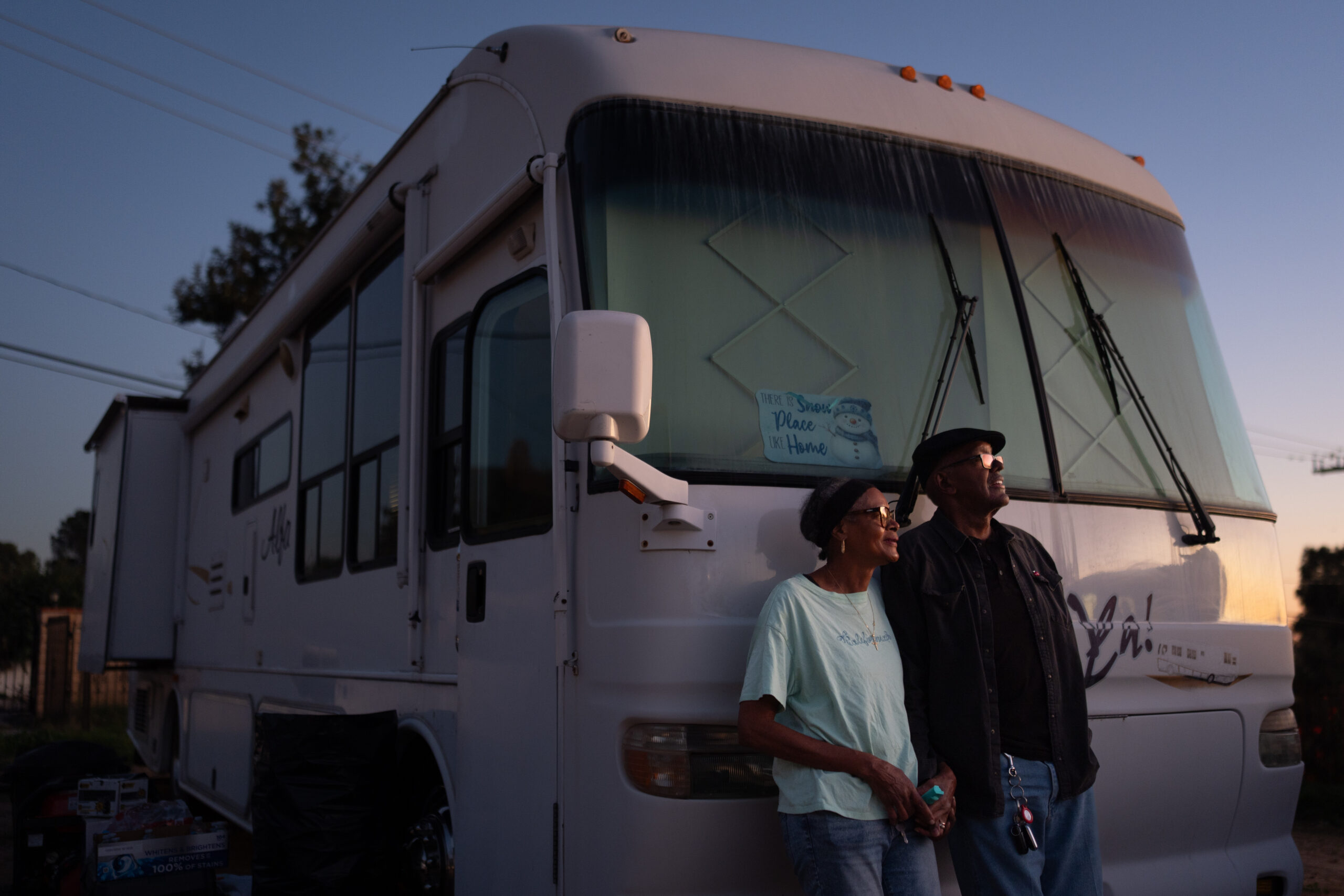
    Al and Charlotte Bailey, who lost their home in the Eaton Fire, have been living in an RV parked on the property where their house once stood in Altadena, Calif.

    Determined to rebuild

    Al and Charlotte Bailey have been living in an RV parked on the empty lot where their home once stood.

    The Baileys are paying for their rebuild with funds from their insurance payout and a loan. They’re also hoping to receive money from Southern California Edison. Several lawsuits claim its equipmentsparked the wildfire in Altadena.

    “We had been here for 41 years and raised our family here, and in one night it was all gone,” said Al Bailey, 77. “We decided that, whatever it’s going to cost, this is our community.”

  • House takes step toward extending Affordable Care Act subsidies, overpowering GOP leadership

    House takes step toward extending Affordable Care Act subsidies, overpowering GOP leadership

    WASHINGTON — Overpowering Speaker Mike Johnson, a bipartisan coalition in the House voted Wednesday to push forward a measure that would revive an enhanced pandemic-era subsidy that lowered health insurance costs for roughly 22 million people, but that had expired last month.

    The tally of 221-205 was a key test before passage of the bill, which is expected Thursday. And it came about because four GOP centrist lawmakers joined with Democrats in signing a so-called discharge petition to force the vote. After last year’s government shutdown failed to resolve the issue, they said doing nothing was not an option as many of their constituents faced soaring health insurance premiums beginning this month.

    Rep. Mike Lawler (R., N.Y.), one of the Republicans who crossed party lines to back the Democratic proposal, portrayed it as a vehicle senators could use to reach a compromise.

    “No matter the issue, if the House puts forward relatively strong, bipartisan support, it makes it easier for the senators to get there,” Lawler said.

    Republicans go around their leaders

    If ultimately successful in the House this week, the voting would show there is bipartisan support for a proposed three-year extension of the tax credits that are available for those who buy insurance through the Affordable Care Act, also known as Obamacare. The action forcing a vote has been an affront to Johnson and GOP leaders who essentially lost control of their House majority as the renegade lawmakers joined Democrats for the workaround.

    But the Senate is under no requirement to take up the bill.

    Instead, a small group of members from both parties are working on an alternative plan that could find support in both chambers and become law. One proposal would be to shorten the extension of the subsidy to two years and make changes to the program.

    Senate Majority Leader John Thune (R., S.D.) said any plan passing muster in the Senate will need to have income limits to ensure that it’s focused on those who most need the help and that beneficiaries would have to at least pay a nominal amount for their coverage.

    That way, he said, “insurance companies can’t game the system and auto-enroll people.” Finally, Thune said there would need to be some expansion of health savings accounts, which allow people to save money and withdraw it tax-free as long as the money is spent on qualified medical expenses.

    Democrats are pressing the issue

    It’s unclear the negotiations will yield a bill that the Senate will take up. Democrats are making clear that the higher health insurance costs many Americans are facing will be a political centerpiece of their efforts to retake the majority in the House and Senate in the fall elections.

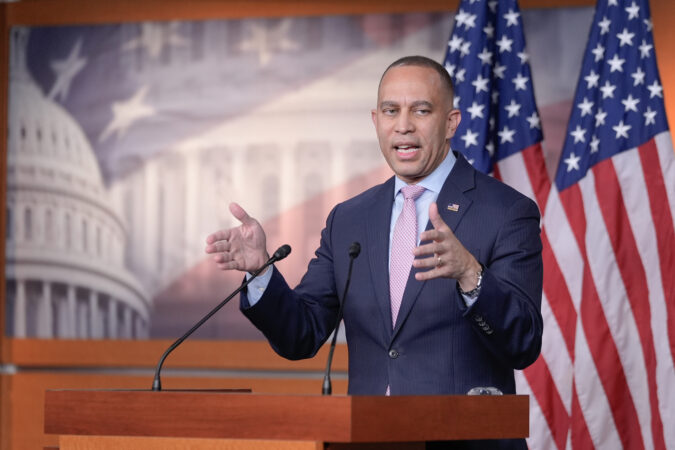
    Democratic Leader Hakeem Jeffries, who led his party’s effort to push the healthcare issue forward, particularly challenged Republicans in competitive congressional districts to join if they really wanted to prevent steep premium increases for their constituents. Before Wednesday’s vote, he called on colleagues to “address the healthcare crisis in this country and make sure that tens of millions of people have the ability to go see a doctor when they need one.”

    Republican Reps. Brian Fitzpatrick, Robert Bresnahan, and Ryan Mackenzie, all from Pennsylvania, and Lawler signed the Democrats’ petition, pushing it to the magic number of 218 needed to force a House vote. All four represent key swing districts whose races will help determine which party takes charge of the House next year.

    Johnson (R., La.) had discussed allowing more politically vulnerable GOP lawmakers a chance to vote on bills that would temporarily extend the subsidies while also adding changes such as income caps for beneficiaries. But after days of discussions, the leadership sided with the more conservative wing of the party’s conference, which has assailed the subsidies as propping up a failed program.

    Lawmakers turn to discharge petitions to show support for an action and potentially force a vote on the House floor, but they are rarely successful. This session of Congress has proven an exception.

    A vote requiring the Department of Justice to release the Jeffrey Epstein files, for instance, occurred after Reps. Ro Khanna (D., Calif.) and Thomas Massie (R. Ky.) introduced a petition on the Epstein Files Transparency Act. The signature effort was backed by all House Democrats and four Republicans.

  • Driver shot in Minneapolis is at least the fifth person killed in U.S. immigration crackdown

    Driver shot in Minneapolis is at least the fifth person killed in U.S. immigration crackdown

    The fatal shooting Wednesday of a woman by an immigration officer in Minneapolis was at least the fifth death to result from the aggressive U.S. immigration crackdown the Trump administration launched last year.

    The Department of Homeland Security said the officer fired in self-defense as the woman tried to run down officers with her vehicle. Minneapolis Mayor Jacob Frey said video of the incident showed it was reckless and unnecessary. It occurred as the federal agency escalates immigration enforcement operations in Minnesota by deploying an anticipated 2,000 agents and officers.

    Last September, Immigration and Customs Enforcement shot and killed another person outside Chicago. Two people have died after being struck by vehicles while fleeing immigration authorities. And a California farmworker fell from a greenhouse and broke his neck during an ICE raid last July.

    No officers or agents have been charged in the deaths.

    Cook from Mexico shot during a traffic stop

    ICE agents fatally shot Silverio Villegas González during a traffic stop Sept. 12 in suburban Chicago. Relatives said the 38-year-old line cook from Mexico had dropped off one of his children at day care that morning.

    At the time, the Department of Homeland Security said federal agents were pursuing a man with a history of reckless driving who entered the country illegally. They alleged Villegas González evaded arrest and dragged an officer with his vehicle.

    Homeland Security said the officer opened fire fearing for his life and was hospitalized for “serious injuries.” However, local police body camera videos showed the agent who shot Villegas González walking around afterward and dismissing his own injuries as “nothing major.”

    Homeland Security has said the death remains under investigation.

    Another shooting, this one nonfatal, occurred in Chicago last fall. Marimar Martinez survived being shot five times by a Border Patrol agent but was charged with a felony after Homeland Security officials accused her of trying to ram agents with her vehicle. The case was dismissed after videos emerged that Martinez’s attorneys said showed an agent steering his vehicle into Martinez’s truck.

    Farmworker fell from greenhouse roof during ICE raid

    Immigration authorities were rounding up dozens of farmworkers July 10 at Glass House Farms in southern California when Jaime Alanis fell from the roof of a greenhouse and broke his neck. The 57-year-old laborer from Mexico died at a hospital two days later.

    Relatives said Alanis had spent a decade working at the farm, a licensed cannabis grower that also produces tomatoes and cucumbers, located in Camarillo about an hour east of Los Angeles. They said he would send his earnings to his wife and daughter in Mexico.

    During the raid, Alanis called family to say he was hiding. Officials said he fell about 30 feet from the greenhouse roof.

    The Department of Homeland Security said Alanis was never in custody and was not being chased by immigration authorities when he climbed onto the greenhouse.

    Man struck on California freeway after running from Home Depot

    A man running away from immigration authorities outside a Home Depot store in southern California died after being hit by an SUV while he tried to cross a nearby freeway on Aug. 14.

    Police in Monrovia northeast of Los Angeles said ICE agents were conducting enforcement operations when the man fled on foot to Interstate 210. He was running across the freeway’s eastbound lanes when an SUV hit him while traveling 50 or 60 mph. He died at a hospital.

    The man killed was later identified by the National Day Laborer Organizing Network as 52-year-old Roberto Carlos Montoya Valdez of Guatemala.

    The Department of Homeland Security said Montoya Valdez wasn’t being pursued by immigration authorities when he ran.

    Gardener from Honduras killed on Virginia interstate

    A pickup truck fatally struck Josué Castro Rivera on a highway in Norfolk, Virginia, as he tried to escape immigration authorities during a traffic stop Oct. 23.

    Castro Rivera, 24, of Honduras, was heading to a gardening job with three passengers when ICE officers pulled over his vehicle, according to his brother, Henry Castro.

    State and federal authorities said Castro Rivera ran away on foot and was hit by a pickup truck on Interstate 264.

    The Department of Homeland Security said Castro Rivera’s vehicle was stopped as part of a “targeted, intelligence-based” operation and that Castro Rivera had “resisted heavily and fled.”

    His brother said Castro Rivera came to the U.S. four years earlier and worked to send money to family in Honduras.