Category: Nation World News Wires

  • Federal officers detain a 5-year-old boy who school official says was used as ‘bait’

    Federal officers detain a 5-year-old boy who school official says was used as ‘bait’

    A 5-year-old boy arriving home from preschool in Minnesota was taken by federal agents along with his father to a detention facility in Texas, school officials and the family’s lawyer said, making him the fourth student from his Minneapolis suburb to be detained by immigration officers in recent weeks.

    Federal agents took Liam Conejo Ramos from a running car while it was in the family’s driveway on Tuesday afternoon, Columbia Heights Public Schools Superintendent Zena Stenvik said during a news conference Wednesday. The officers then told him to knock on the door to his home to see if other people were inside, “essentially using a 5-year-old as bait,” she said.

    Stenvik said the family has an active asylum case and has not been ordered to leave the country.

    “Why detain a 5-year-old?” she asked. “You cannot tell me that this child is going to be classified as a violent criminal.”

    Department of Homeland Security spokesperson Tricia McLaughlin said in a statement that “ICE did NOT target a child.”

    She said Immigration and Customs Enforcement was conducting an operation to arrest the child’s father, Adrian Alexander Conejo Arias, who McLaughlin said is from Ecuador and in the U.S. illegally. He ran, “abandoning his child,” she said.

    “For the child’s safety, one of our ICE officers remained with the child while the other officers apprehended Conejo Arias,” McLaughlin said, adding that parents are given the choice to be removed with their children or have them placed with a person of their choosing.

    Liam Conejo Ramos, 5, is detained by U.S. Immigration and Customs Enforcement officers after arriving home from preschool Tuesday in a Minneapolis suburb.

    Stenvik said another adult who lives at the home was outside when the father and son were taken, but agents wouldn’t leave Liam with that person. DHS didn’t immediately respond to an email Thursday asking if Conejo Arias had asked to keep his son with him.

    Liam and his father were being held in a family holding cell in Texas, Marc Prokosch, the family’s lawyer, said during the news conference.

    “Every step of their immigration process has been doing what they’ve been asked to do,” Prokosch said of the family’s asylum claim. “So this is just cruelty.”

    During a Thursday visit to Minneapolis where he met with local leaders, Vice President JD Vance said he heard the “terrible story” about Liam but later learned the boy was only detained, not arrested.

    “Well, what are they supposed to do? Are they supposed to let a 5-year-old child freeze to death? Are they not supposed to arrest an illegal alien in the United States of America?” said Vance, noting that he’s the parent of a 5-year-old.

    Vance wasn’t asked about why immigration officers allegedly wouldn’t leave the boy with the other adult who lives at the home and offered to take him.

    Minnesota has become a major focus of immigration sweeps by DHS-led agencies. Greg Bovino, a U.S. Customs and Border Protection official who has been the face of the crackdowns in Minneapolis and other cities, said immigration officers have made about 3,000 arrests in Minnesota in the last six weeks.

    Julia Decker, policy director at the Immigrant Law Center of Minnesota, said advocates have no way of knowing whether the government’s arrest numbers and descriptions of the people in custody are accurate.

    Liam is the fourth student from Columbia Heights Public Schools who has been detained by ICE in recent weeks, said Stenvik. A 17-year-old student was taken Tuesday while heading to school, and a 10-year-old and a 17-year-old have also been taken, she said.

    The district is made up of five schools and about 3,400 students from pre-K to 12th grade, according to its website. The majority of the students come from immigrant families, according to Stenvik.

    She said they’ve noticed their attendance drop over the past two weeks, including one day where they had about one-third of their students out from school.

    Ella Sullivan, Liam’s teacher, described him as “kind and loving.”

    “His classmates miss him,” she said. “And all I want is for him to be safe and back here.”

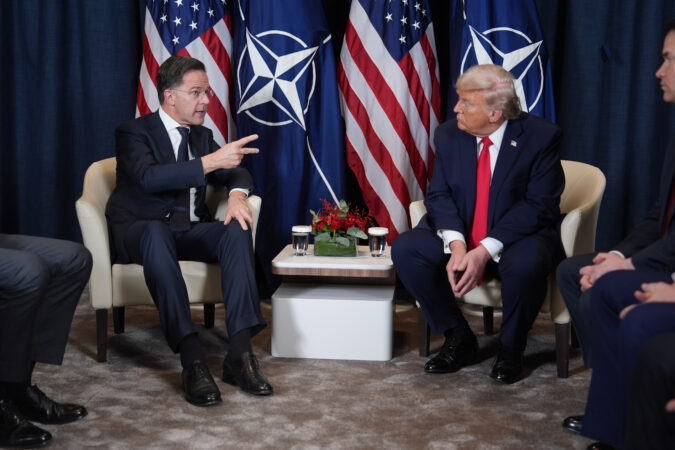
  • NATO chief Mark Rutte shows he’s a ‘Trump whisperer’ with Greenland diplomacy

    NATO chief Mark Rutte shows he’s a ‘Trump whisperer’ with Greenland diplomacy

    THE HAGUE, Netherlands — For days it seemed there was no way out of the latest standoff between Europe and the United States: President Donald Trump insisted he must have Greenland — and would settle for nothing short of total ownership.

    Even after he dropped the threat of force in a speech in Davos, Switzerland, on Wednesday, the impasse remained. Enter: Mark Rutte.

    The NATO secretary-general may have been instrumental in persuading Trump to scrap the threat of slapping punitive tariffs on eight European nations to press for U.S. control over Greenland — a stunning reversal shortly after insisting he wanted to get the island “including right, title and ownership.”

    In a post on his social media site, Trump said he had agreed with Rutte on a “framework of a future deal” on Arctic security at the World Economic Forum in Davos, potentially defusing tensions that had far-reaching geopolitical implications.

    Little is known about what the agreement entails or how crucial Rutte’s intervention was, and Trump could change course again. But for now, Rutte has earned his reputation as a “Trump whisperer.”

    That’s only the latest nickname for the man long known as “Teflon Mark” during his domination of Dutch politics for a dozen years.

    ‘Trump whisperer’

    Rutte’s reputation for successfully charming the U.S. president took flight last year when he referred to Donald Trump as “daddy” during an alliance summit in The Hague and sent him a flattering text message.

    Matthew Kroenig, vice president and senior director of the Atlantic Council’s Scowcroft Center for Strategy and Security, said the dramatic scenes in Davos underscored Rutte’s ability to keep NATO’s most powerful leader on board.

    “I think Secretary-General Rutte has emerged as one of Europe’s most effective diplomats and Trump whisperers,” Kroenig said. “He does seem to have a way of speaking to Trump that keeps the United States and the Trump administration engaged in NATO in a constructive way.”

    Rutte’s success in dealing with Trump appears to revolve around his willingness to use charm and flattery while revealing little of what the two leaders discuss. It’s a tactic that Rutte used to marshal coalition partners in nearly 13 years as Dutch prime minister.

    Trump himself highlighted Rutte’s effusive friendliness before he set off for Davos this week, publishing a text message from the NATO chief on his Truth Social platform. In it, Rutte addresses “Mr. President, dear Donald” and praises Trump for his diplomacy in Syria, Gaza and Ukraine.

    “I am committed to finding a way forward on Greenland. Can’t wait to see you. Yours, Mark,” the message ended.

    Teflon Mark

    Rutte became a poster boy for Dutch consensus politics while leading four often fractious ruling coalitions on his way to becoming the Netherlands’ longest-serving leader, surviving a number of domestic political scandals over the years and earning the nickname “Teflon Mark” because the fallout never seemed to stick to him for long.

    The back cover of a 2016 book about Rutte by Dutch journalist Sheila Sitalsing, who followed him when he was prime minister, calls him “a phenomenon.”

    “With indestructible cheerfulness he navigates the fragmented political landscape, recklessly forges the most extraordinary alliances and steadily works towards a new Netherlands,” it adds.

    Rutte and his government resigned in 2021 to take responsibility for a childcare allowance scandal in which thousands of parents were wrongly accused of fraud. But he bounced back to win national elections two months later with a slightly larger share of the vote and began his fourth and last term in office.

    In another scandal that he survived, Rutte said in an interview that he couldn’t recall being informed about the Dutch bombing of Hawija that killed dozens of Iraqi civilians in 2015. In 2022, he survived a no-confidence motion in parliament in a debate about deleting messages from his old-school Nokia cell phone. Critics accused him of concealing state activity — but he insisted the messages just took up too much space in his phone.

    Opposition lawmaker Attje Kuiken quipped: “It appears that the prime minister’s phone memory is used just as selectively as the prime minister’s own memory.”

    His winning smile and enduring optimism, along with his habit of riding his bicycle to work while chomping on an apple seemed to help cement his popularity in the Netherlands, where such down-to-earth behavior is prized. When his last coalition collapsed in 2023 in a dispute over reining in migration, Rutte again leaned on that image, driving an old Saab station wagon to a royal palace to hand his resignation to King Willem-Alexander.

    From The Hague to Brussels

    Just landing the NATO chief’s job showed how adept Rutte is at navigating turbulent geopolitical waters. He managed to convince entrenched doubters, including Hungarian Prime Minister Viktor Orbán and Turkish President Recep Tayyip Erdogan, to back his candidacy.

    “It took a very long time. It’s a complicated process, but it’s an honor that it appears to have happened,” Rutte told reporters after securing all the support he needed to become secretary-general.

    Rutte’s soft diplomatic skills were seen as a key asset for the leader of the 32-nation alliance as it faced Trump’s repeated criticism while navigating how to support Ukraine in the war against Russia.

    Several hours before Trump made his dramatic reversal on Greenland, Finnish President Alexander Stubb — another European leader credited with having a way with Trump — was asked during a panel discussion on European security in Davos “who or what can diffuse the tensions” over Greenland?

    “Oh, Mark Rutte,” Stubb said, to laughter in the audience and among the panel that included the Dutchman himself.

  • Venezuela opens debate on an oil sector overhaul as Trump seeks role for U.S. firms

    Venezuela opens debate on an oil sector overhaul as Trump seeks role for U.S. firms

    CARACAS, Venezuela — Venezuela’s legislature opened debate Thursday on a bill to loosen state control over the country’s vast oil sector in the first major overhaul since the late socialist leader Hugo Chávez nationalized parts of the industry in 2007.

    The legislation would create new opportunities for private companies to invest in the oil industry and establish international arbitration for investment disputes.

    Following the U.S. capture of former President Nicolás Maduro earlier this month, the Trump administration has ramped up pressure on acting President Delcy Rodríguez and other allies of the ousted leader to invite greater investment from U.S. energy companies in Venezuela’s flagging oil industry.

    A draft of the proposed legislation, a copy of which was seen by The Associated Press, represents a sharp turn away from the resource nationalism of Chávez, who accused multinationals of colonial exploitation and considered the country’s oil wealth to be state property.

    In apparent response to demands from U.S. oil executives, the proposed legislation would allow private companies to independently operate oil fields, market their own crude output and collect the cash revenues despite remaining, on paper, minority partners to the state oil company.

    “The operating company shall assume the comprehensive management of the execution of the activities, at its sole cost, expense and risk,” the draft says, adding that portions of production volumes “may be directly commercialized by the operating company, once governmental obligations have been fulfilled.”

    Crucially, the bill also would let companies settle legal disputes through arbitration in international courts rather than only local courts.

    The legislation also would keep the current 30% royalty rate, but let the government cut royalties and taxes to as low as 15% for expensive or hard-to-develop oil projects, so that companies would be more willing to invest.

    The president of Venezuela’s National Assembly and the acting president’s brother, Jorge Rodríguez, told lawmakers at the start of Thursday’s debate that the bill aims to “allow an accelerated increase in production” of oil in Venezuela.

    “Oil under the ground is useless,” he said, referring to the need to boost oil production and open up new exploration opportunities.

    Pushed by Delcy Rodríguez, the bill is expected to advance swiftly through the ruling party-dominated legislature. Lawmakers concluded the initial discussion of the bill on Thursday after around two hours and advanced the legislation to a second round of debate, yet to be scheduled.

    During the session, Orlando Camacho, a lawmaker and head of Venezuela’s national Fedeindustria business association, told the assembly that the bill would ensure that Venezuela’s oil industry “remains the engine of the country.”

    The proposed legal guarantees — ensuring that foreign companies can bring claims against Venezuela before international bodies — are necessary to attract private investment, he said.

    Even as President Donald Trump looks to lure American companies to reboot Venezuela’s oil sector, many remain concerned about the financial and legal risks of pouring billions of dollars into the country.

    Plenty of investors have been burned before, their assets seized as Chávez nationalized parts of Venezuela’s lucrative oil industry in 2007. Firms like Exxon have been trying to get the Venezuelan government to compensate them for their billions of dollars in losses ever since, to no avail.

    The current political uncertainty also worries investors. There is no timeline for holding democratic elections in Venezuela after Maduro’s ouster as Rodríguez, long Maduro’s loyal second in command, seeks to consolidate control. The Trump administration also hasn’t said when it will lift the crippling sanctions imposed to weaken Maduro’s government, which further restrict foreign operations in the country’s oil sector.

  • 3 people involved in a Minnesota church protest are arrested

    3 people involved in a Minnesota church protest are arrested

    MINNEAPOLIS — A prominent civil rights attorney and at least two other people involved in an anti-immigration enforcement protest that disrupted a service at a Minnesota church have been arrested, Trump administration officials said Thursday, even as a judge rebuffed related charges against journalist Don Lemon.

    The developments unfolded as Vice President JD Vance arrived in the state.

    Attorney General Pam Bondi announced the arrest of Nekima Levy Armstrong in a post on X. On Sunday, protesters entered the Cities Church in St. Paul, where a local official with U.S. Immigration and Customs Enforcement serves as a pastor. Bondi later posted on X that a second person had been arrested, followed by a third arrested announced by FBI Director Kash Patel.

    The Justice Department quickly opened a civil rights investigation after the group interrupted services by chanting “ICE out” and “Justice for Renee Good,” referring to the 37-year-old mother of three who was fatally shot by an ICE officer in Minneapolis earlier this month.

    “Listen loud and clear: WE DO NOT TOLERATE ATTACKS ON PLACES OF WORSHIP,” the attorney general wrote on X.

    Cities Church belongs to the Southern Baptist Convention and lists one of its pastors as David Easterwood, who leads the local ICE field office. Many Baptist churches have pastors who also work other jobs.

    Attorneys representing the church hailed the arrests.

    “The U.S. Department of Justice acted decisively by arresting those who coordinated and carried out the terrible crime,” said Doug Wardlow, director of litigation for True North Legal, which calls itself a public interest civil rights firm, in a statement.

    Meanwhile, a magistrate judge rejected federal prosecutors’ bid to charge Lemon related to the church protest, a person familiar with the matter said Thursday.

    The person spoke on the condition of anonymity because they were not authorized to publicly discuss the ongoing investigation.

    Lemon, a former NBC10 reporter and anchor, was among those on who entered the church. Lemon has said he is not affiliated with the protest organizers and was there chronicling as a journalist.

    “Once the protest started in the church we did an act of journalism which was report on it and talk to the people involved, including the pastor, members of the church and members of the organization,” Lemon said in a video posted on social media. “That’s it. That’s called journalism.”

    It wasn’t immediately clear what the Justice Department would do after the judge’s decision. Authorities could return to a magistrate judge to again seek a criminal complaint or an indictment against Lemon before a grand jury.

    CNN, which fired Lemon in 2023, first reported the ruling.

    Vance threatens the protesters with prison

    Levy Armstrong, a civil rights attorney and prominent local activist, had called for the pastor affiliated with ICE to resign, saying his dual role poses a “fundamental moral conflict.”

    “You cannot lead a congregation while directing an agency whose actions have cost lives and inflicted fear in our communities,” she said Tuesday. “When officials protect armed agents, repeatedly refuse meaningful investigation into killings like Renee Good’s, and signal they may pursue peaceful protesters and journalists, that is not justice — it is intimidation.”

    Prominent leaders of the Southern Baptist Convention have come to the church’s defense, arguing that compassion for migrant families affected by the crackdown cannot justify violating a sacred space during worship.

    Vance, speaking in Toledo ahead of his Minnesota visit, warned the church protesters: “Those people are going to be sent to prison so long as we have the power to do so. We’re going to do everything we can to enforce the law.”

    Arrests follow DOJ civil rights investigation

    A longtime activist in the Twin Cities metropolitan area, Levy Armstrong has helped lead local protests after the high-profile police-involved killings of Black Americans, including George Floyd, Philando Castile and Jamar Clark. She is a former president of the NAACP’s Minneapolis branch.

    Homeland Security Secretary Kristi Noem posted a photo on X of Levy Armstrong with her arms behind her back next to a person wearing a badge. Noem said she faces a charge under a statute that bars threatening or intimidating someone exercising a right.

    FBI Director Kash Patel posted on X that Chauntyll Louisa Allen, the second person Bondi said was arrested, is charged under the Freedom of Access to Clinic Entrances Act, which prohibits physically obstructing or using the threat of force to intimidate or interfere with a person seeking reproductive health services or seeking to participate in a service at a house of worship. Patel said William Kelly has also been arrested.

    It’s unclear which attorneys would represent Allen and Kelly.

    Saint Paul Public Schools, where Allen is a member of the board of education, is aware of her arrest but will not comment on pending legal matters, according to district spokesperson Erica Wacker.

    Allen and Levy Armstrong are part of a community of Black Minnesota activists who have protested the deaths of African Americans at the hands of police.

    Kelly defended the protest during a news conference Tuesday, criticizing the church for its association with a pastor who works for ICE.

    The Justice Department’s swift investigation into the church protest stands in contrast to its decision not to open a civil rights investigation into the killing of Good. Deputy Attorney General Todd Blanche said last week there was “no basis” for a civil rights investigation into her death.

    Administration officials have said the officer acted in self-defense and that the driver of the Honda was engaging in “an act of domestic terrorism” when she pulled toward him. But the decision not to have the department’s Civil Rights Division investigate marked a sharp departure from past administrations, which have moved quickly to probe shootings of civilians by law enforcement officials.

    The Justice Department has separately opened an investigation into whether Minnesota officials impeded or obstructed federal immigration enforcement though their public statements. Prosecutors this week sent subpoenas to the offices of Gov. Tim Walz, Attorney General Keith Ellison, Minneapolis Mayor Jacob Frey, St. Paul Mayor Kaohly Her and officials in Ramsey and Hennepin counties, according to a person familiar with the matter.

    VP visits Minnesota

    Vance, a Republican, arrived amid tense interactions between federal immigration law enforcement authorities and residents. State and local elected officials have opposed the crackdown that has become a major focus of Department of Homeland Security sweeps.

    His visit comes less than a month after Good was killed. He has called Good’s death a “tragedy of her own making.”

    Vance said early Thursday that the “far left” has decided the U.S. shouldn’t have a border.

    “If you want to turn down the chaos in Minneapolis, stop fighting immigration enforcement and accept that we have to have a border in this country. It’s not that hard,” Vance said.

    A federal appeals court this week suspended a decision that barred immigration officers from using tear gas or pepper spray against peaceful protesters in Minnesota. The 8th U.S. Circuit Court of Appeals froze the ruling that had barred retaliation, including detaining people who follow agents in cars.

    After the court’s stay, U.S. Border Patrol official Greg Bovino, who has commanded the administration’s big-city immigration campaign, was seen on video repeatedly warning protesters on a snowy Minneapolis street “Gas is coming!” before tossing a canister that released green smoke into the crowd.

    Bovino, speaking Thursday during a news conference, urged better cooperation from local and state officials in Minnesota, and blamed an “influx of anarchists” for the anti-ICE sentiment.

    “The current climate confronting law enforcement … is not very favorable right now in Minneapolis,” he said. The Associated Press left messages for the Minneapolis Police Department requesting its response to Bovino’s comments.


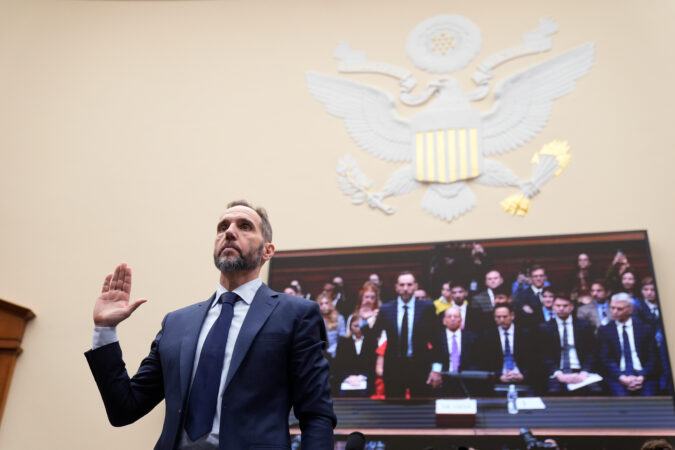
  • Jack Smith defends his Trump investigations at a public congressional hearing

    Jack Smith defends his Trump investigations at a public congressional hearing

    WASHINGTON — Former Justice Department special counsel Jack Smith on Thursday defended his investigations of Donald Trump at a public congressional hearing in which he insisted that he had acted without regard to politics and had no second thoughts about the criminal charges he brought.

    “No one should be above the law in our country, and the law required that he be held to account. So that is what I did,” Smith said of Trump.

    Smith testified behind closed doors last month but returned to the House Judiciary Committee for a public hearing that provided the prosecutor with a forum to address Congress and the country more generally about the breadth of evidence he collected during investigations that shadowed Trump during the 2024 presidential campaign and resulted in indictments. The hourslong hearing immediately split along partisan lines as Republican lawmakers sought to undermine the former Justice Department official while Democrats tried to elicit damaging testimony about Trump’s conduct and accused their GOP counterparts of attempting to rewrite history.

    “It was always about politics,” said Rep. Jim Jordan of Ohio, the committee’s Republican chairman.

    “Maybe for them,” retorted Rep. Jamie Raskin, the panel’s top Democrat, during his own opening statement. “But, for us, it’s all about the rule of law.”

    The hearing was on the mind of Trump himself as he traveled back from the World Economic Forum in Davos, Switzerland, with the president posting on his Truth Social account that Smith was being “DECIMATED before Congress” — presumably reference to the Republican attacks he faced. Trump said Smith had “destroyed many lives under the guise of legitimacy.”

    Smith told lawmakers that he stood behind his decisions as special counsel to bring charges against Trump in separate cases that accused the Republican of conspiring to overturn the 2020 presidential election after he lost to Democrat Joe Biden and hoarding classified documents at his Mar-a-Lago estate in Palm Beach, Fla., after he left the White House.

    “Our investigation developed proof beyond a reasonable doubt that President Trump engaged in criminal activity,” Smith said. “If asked whether to prosecute a former president based on the same facts today, I would do so regardless of whether that president was a Republican or a Democrat.”

    Republicans, Smith spar over phone records

    Republicans from the outset sought to portray Smith as an overly aggressive, hard-charging prosecutor who had to be “reined in” by higher-ups and the courts as he investigated Trump. They also seized on revelations that the Smith team had collected and analyzed phone records of more than a half-dozen Republican lawmakers who were in contact with Trump on Jan. 6, 2021, as his supporters stormed the Capitol in a bid to halt the certification of his 2020 election loss.

    The records revealed the length and time of the calls but not the content of the communications, but Rep. Brandon Gill, a Texas Republican, said the episode showed how Smith had “walked all over the Constitution.”

    “My office didn’t spy on anyone,” Smith said, explaining that collecting phone records is a common prosecutorial tactic and necessary in this instance to help prosecutors understand the scope of the conspiracy.

    Smith describes a wide-ranging conspiracy on 2020

    Under questioning, Smith described what he said was a wide-ranging conspiracy to overturn the results of the election that Trump lost to Democrat Joe Biden and alleged how the Republican refused to listen to advisers who told him that the contest had in fact not been stolen. After he was charged, Smith said, Trump tried to silence and intimidate witnesses.

    Smith said one reason he felt confident in the strength of the case that prosecutors had prepared to take to trial was the extent to which it relied on Republican supporters of Trump.

    “Some of the most powerful witnesses were witnesses who, in fact, were fellow Republicans who had voted for Donald Trump, who had campaigned for him and who wanted him to win the election,” Smith said.

    The hearing unfolded against the backdrop of an ongoing Trump administration retribution campaign targeting the investigators who scrutinized the Republican president and amid mounting alarm that the Justice Department’s institutional independence is eroding under the sway of the president.

    In a nod to those concerns, Smith said: “I believe that if we don’t call people to account when they commit crimes in this context, it can endanger our election process, it can endanger election workers and, ultimately, our democracy.”

    Smith was appointed in 2022 by Biden’s Justice Department to oversee investigations into Trump, who has denied any wrongdoing. Both investigations produced indictments against Trump, but the cases were abandoned by Smith and his team after Trump won back the White House because of longstanding Justice Department legal opinions that say sitting presidents cannot be indicted.

    GOP says Smith wanted to wreck Trump’s White House bid

    Republicans for their part repeatedly denounced Smith, with California Rep. Kevin Kiley accusing him of seeking “maximum litigation advantage at every turn” and “circumventing constitutional limitations to the point that you had to be reined in again and again throughout the process.”

    Another Republican lawmaker, Rep. Ben Cline of Virginia, challenged Smith on his efforts to bar Trump from making incendiary comments about witnesses. Smith said the order was necessary because of Trump’s efforts to intimidate witness, but Cline asserted that it was meant to silence Trump in the heat of the presidential campaign.

    And Jordan, the committee chairman, advanced a frequent Trump talking point that the investigation was driven by a desire to derail Trump’s candidacy.

    “We should never forget what took place, what they did to the guy we the people elected twice,” Jordan said.

    Smith vigorously rejected those suggestions and said the evidence placed Trump’s actions squarely at the heart of a criminal conspiracy to undo the 2020 election.

    “The evidence here made clear that President Trump was by a large measure the most culpable and most responsible person in this conspiracy,” Smith said. “These crimes were committed for his benefit. The attack that happened at the Capitol, part of this case, does not happen without him. The other co-conspirators were doing this for his benefit.”

  • The decision to move ISIS prisoners from Syria to Iraq came at the request of Baghdad, officials say

    The decision to move ISIS prisoners from Syria to Iraq came at the request of Baghdad, officials say

    BAGHDAD — The decision to move prisoners of the Islamic State group from northeast Syria to detention centers in Iraq came after a request by officials in Baghdad that was welcomed by the U.S.-led coalition and the Syrian government, officials said Thursday.

    American and Iraqi officials told The Associated Press about the Iraqi request, a day after the U.S. military said that it started transferring some of the 9,000 IS detainees held in more than a dozen detention centers in northeast Syria controlled by the Kurdish-led Syrian Democratic Forces, or SDF, in northeast Syria.

    The move to start transferring the detainees came after Syrian government forces took control of the sprawling al-Hol camp — which houses thousands of mostly women and children — from the SDF, which withdrew as part of a ceasefire. Troops on Monday seized a prison in the northeastern town of Shaddadeh, where some IS detainees escaped and many were recaptured, state media reported.

    The SDF said on Thursday that government forces shelled al-Aqtan prison near the northern Syrian city of Raqqa with heavy weapons, while simultaneously imposing a siege around the prison using tanks and deploying fighters.

    Al-Aqtan prison, where some IS prisoners are held, was surrounded by government forces earlier this week and negotiations were ongoing on the future of the detention facility.

    Concerns about escapes

    With the push by government forces into northeast Syria along the border with Iraq, Baghdad became concerned that some of the detainees might become a danger to Iraq’s security, if they managed to flee from the detention centers amid the chaos.

    An Iraqi security official said that the decision to transfer the prisoners from Syria to Iraq was an Iraqi decision, welcomed by the U.S.-led coalition and the Syrian government. The official said that it was in Iraq’s security interest to detain them in Iraqi prisons rather than leaving them in Syria.

    Also Thursday, a senior U.S. military official confirmed to the AP that Iraq “offered proactively” to take the IS prisoners rather than the U.S. requesting it of them.

    A Syrian foreign ministry official said that the plan to transfer IS prisoners from Syria to Iraq had been under discussion for months before the recent clashes with the SDF.

    All three officials spoke on condition of anonymity because they weren’t authorized to comment publicly.

    Over the past several years, the SDF has handed over to Iraqi authorities foreign fighters, including French citizens, who were put on trial and received sentences.

    The SDF still controls more than a dozen detention facilities holding around 9,000 IS members, but is slated to hand the prisons over to government control under a peace process that also is supposed to eventually merge the SDF with government forces.

    U.S. Central Command said that the first transfer on Wednesday involved 150 IS members, who were taken from Syria’s northeastern province of Hassakeh to “secure locations” in Iraq. The statement said that up to 7,000 detainees could be transferred to Iraqi-controlled facilities.

    Iraq has beefed up patrols along its border with Syria. On Thursday, tanks lined up along the frontier in the northern province of Sinjar.

    Members of the Yazidi minority in Sinjar have been particularly fearful of a repeat of 2014 when IS militants overran the area and launched particularly brutal attacks on Yazidis, considered by the extremist group to be heretics. Militants killed Yazidi men and boys and sold women into sexual slavery or forced them to convert and marry militants.

    Stark warning

    IS declared a caliphate in 2014 in large parts of Syria and Iraq, attracting large numbers of fighters from around the world.

    The militant group was defeated in Iraq in 2017, and in Syria two years later, but IS sleeper cells still carry out deadly attacks in both countries. As a key U.S. ally in the region, the SDF played a major role in defeating IS.

    Also Thursday, the SDF accused the government of violating a four-day truce declared on Tuesday. It said Syrian government forces pounded the southern outskirts of the northern town of Kobani, which recently became besieged after the government’s push in the northeast over the past two weeks.

    A commander with the Kurdish women’s militia in Syria, speaking from inside Kobani, told reporters during an online news conference that living conditions there are deteriorating.

    Nesrin Abdullah of the Women’s Protection Units, or YPJ, said that if the fighting around Kobani continues, thousands of people “will be massacred.”

    She said that there was no electricity or running water in the town, which a decade ago became the symbol of resistance against IS. The militants at the time besieged it for months before being pushed back.

    “The people here are facing a genocide,” she said. “We have many people in hospitals, and hospitals cannot continue if there is no electricity.”

    U.N. Assistant Secretary-General Khaled Khiari told the U.N. Security Council Thursday that clashes were taking place in parts of Hassakeh province and also on the outskirts of Kobani, an enclave controlled by the SDF, and that the situation on the ground elsewhere was “very tense.”

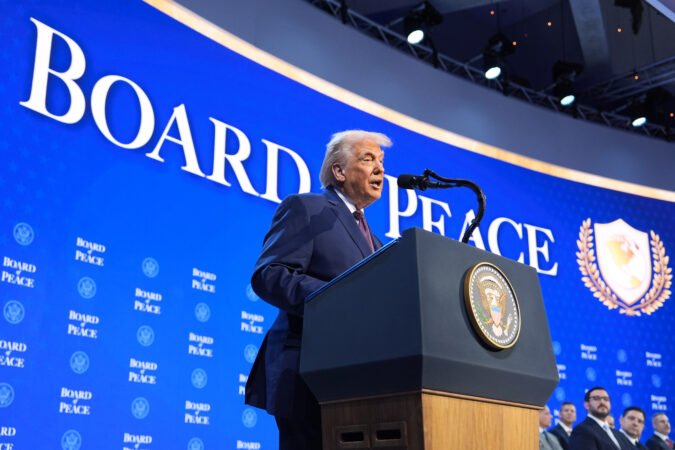
  • Trump rolls out his Board of Peace, but many top U.S. allies aren’t participating

    Trump rolls out his Board of Peace, but many top U.S. allies aren’t participating

    DAVOS, Switzerland — President Donald Trump on Thursday inaugurated his Board of Peace to lead efforts at maintaining a ceasefire in Israel’s war with Hamas, insisting that “everyone wants to be a part” of the body he said could eventually rival the United Nations — despite many U.S. allies opting not to participate.

    In a speech at the World Economic Forum, Trump sought to create momentum for a project to map out a future of the war-torn Gaza Strip that has been overshadowed this week, first by his threats to seize Greenland, then by a dramatic retreat from that push.

    “This isn’t the United States, this is for the world,” he said, adding, “I think we can spread it out to other things as we succeed in Gaza.”

    The event featured Ali Shaath, the head of a new, future technocratic government in Gaza, announcing that the Rafah border crossing will open in both directions next week. But there was no confirmation of that from Israel, which said only that it would consider the matter next week.

    The Gaza side of the crossing, which runs between Gaza and Egypt, is currently under Israeli military control. Shaath, an engineer and former Palestinian Authority official from Gaza, is overseeing the Palestinian committee set to govern the territory under U.S. supervision.

    The new peace board was initially envisioned as a small group of world leaders overseeing the ceasefire, but it has morphed into something far more ambitious — and skepticism about its membership and mandate has led some countries usually closest to Washington to take a pass.

    Trump tried not to let those not participating ruin his unveiling party, saying 59 countries had signed onto the board — even though heads of state, top diplomats and other officials from only 19 countries plus the U.S. actually attended the event. He told the group, ranging from Azerbaijan to Paraguay to Hungary, “You’re the most powerful people in the world.”

    Trump has spoken about the board replacing some U.N. functions and perhaps even making that entire body obsolete one day. But he was more conciliatory in his remarks on the sidelines of the forum in the Swiss alps.

    “We’ll do it in conjunction with the United Nations,” Trump said, even as he denigrated the U.N. for doing what he said wasn’t enough to calm some conflicts around the globe.

    Secretary of State Marco Rubio said some countries’ leaders have indicated they plan to join but still require approval from their parliaments.

    Why some countries aren’t participating

    Big questions remain, however, about what the eventual board will look like.

    Russian President Vladimir Putin said his country is still consulting with Moscow’s “strategic partners” before deciding to commit. The Russian was hosting Palestinian President Mahmoud Abbas on Thursday in Moscow.

    Others are asking why Putin and other authoritarian leaders had even been invited to join. Britain’s foreign secretary, Yvette Cooper, said her country wasn’t signing on “because this is about a legal treaty that raises much broader issues.”

    “And we do also have concerns about President Putin being part of something which is talking about peace, when we have still not seen any signs from Putin that there will be a commitment to peace in Ukraine,” she told the BBC.

    Norway and Sweden have indicated they won’t participate. France declined after its officials stressed that while they support the Gaza peace plan, they were concerned the board could seek to replace the U.N.

    Canada, Ukraine, China, and the executive arm of the European Union also haven’t committed. Trump calling off the steep tariffs he threatened over Greenland could ease some allies’ reluctance, but the issue is still far from settled.

    The Kremlin said Thursday that Putin plans to discuss his proposal to send $1 billion to the Board of Peace and use it for humanitarian purposes during his talks with Abbas — if Russia can use of those assets the U.S. had previously blocked.

    Others voice reservations

    The idea for the Board of Peace was first laid out in Trump’s 20-point Gaza ceasefire plan and even was endorsed by the U.N. Security Council.

    But an Arab diplomat in a European capital said that Middle Eastern governments coordinated their response to Trump’s invitation to join the Board of Peace and that it was crafted to limit the acceptance to the Gaza plan as mandated by the U.N. Security Council.

    Speaking on the condition of anonymity to discuss the matter more freely, the diplomat said the announced acceptance is “preliminary” and that the charter presented by the U.S. administration contradicts in some parts the United Nations’ mission. The diplomat also said that other major powers are unlikely to support the board in its current form.

    Months into the ceasefire, Gaza’s more than 2 million Palestinians continue to suffer the humanitarian crisis unleashed by more than two years of war. And violence in Gaza continues.

    Key to the truce continuing to hold is the disarming of Hamas, something that the militant group that has controlled the Palestinian territory since 2007 has refused to do, despite Israel seeing it as non-negotiable. Trump on Thursday repeated his frequent warnings that the group will have to disarm or face dire consequences.

    He also said the war in Gaza “is really coming to an end” while conceding, “We have little fires that we’ll put out. But they’re little,” and they had been “giant, giant, massive fires.”

    Iran looms large

    Trump’s push for peace also comes after he threatened military action this month against Iran as it carried out a violent crackdown against some of the largest street protests in years, killing thousands of people.

    Trump, for the time being, has signaled he won’t carry out any new strikes on Iran after he said he received assurances that the Islamic government would not carry out the planned hangings of more than 800 protesters.

    But Trump also made the case that his tough approach to Tehran — including strikes on Iran’s nuclear facilities in June last year — was critical to the Israel-Hamas ceasefire deal coalescing.

    Meanwhile, Trump also spoke behind closed doors for about an hour with Ukrainian President Volodymyr Zelensky and called the discussion “very good” without mentioning major breakthroughs. Trump’s special envoy Steve Witkoff and his son-in-law Jared Kushner are expected in Moscow for talks aimed at ending Russia’s nearly 4-year-old war in Ukraine.

    Zelensky later addressed the Davos forum and said there would be two days of trilateral meetings involving the U.S., Ukraine and Russia in the United Arab Emirates starting Friday — following the U.S. talks in Moscow.

    “Russians have to be ready for compromises because, you know, everybody has to be ready, not only Ukraine, and this is important for us,” Zelensky said.

  • ‘Sinners’ makes Oscars history with 16 nominations

    ‘Sinners’ makes Oscars history with 16 nominations

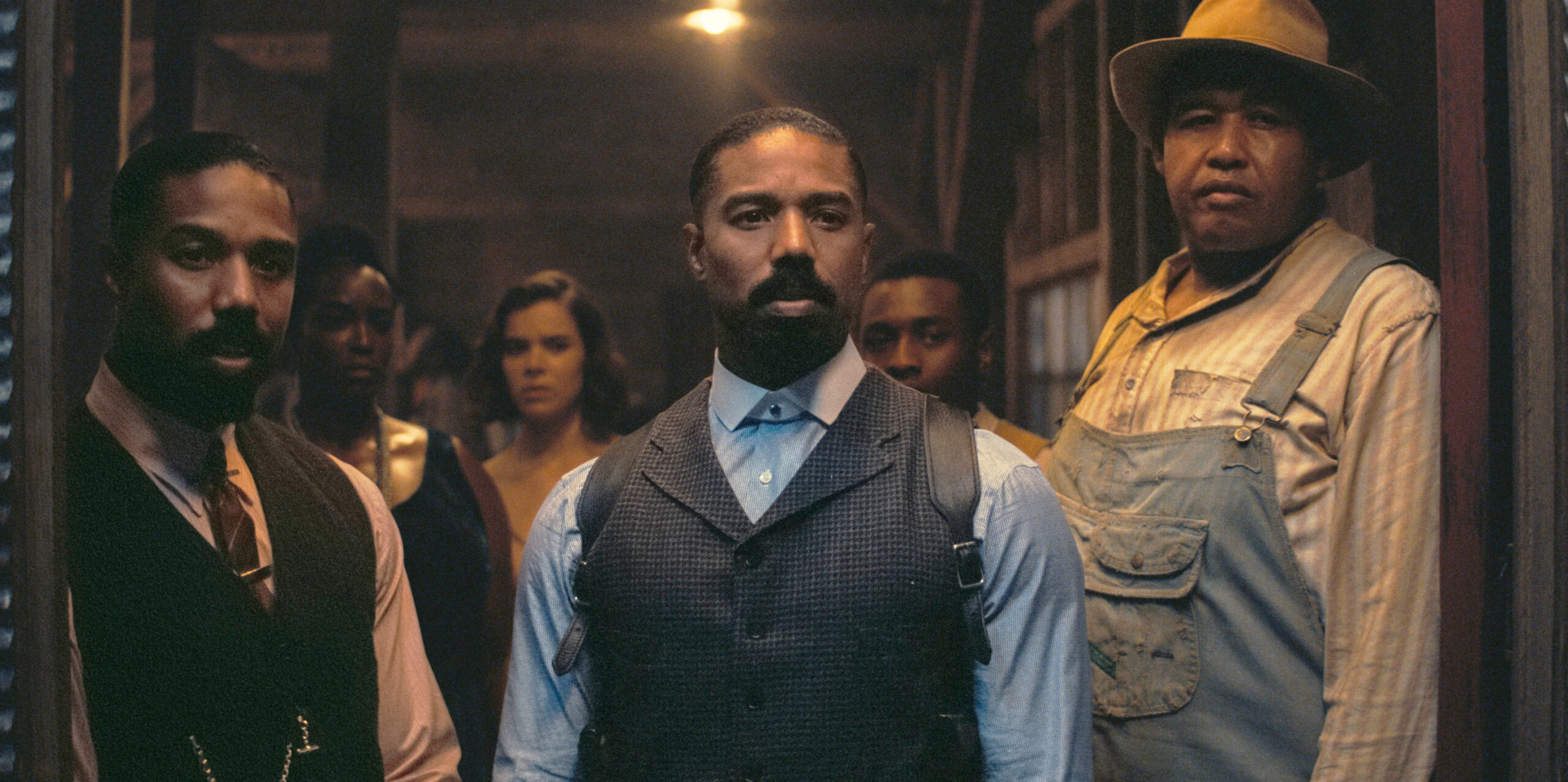
    Ryan Coogler’s blues-steeped vampire epic Sinners led all films with 16 nominations to the 98th Academy Awards on Thursday, setting a record for the most in Oscar history.

    Academy of Motion Picture Arts and Sciences voters showered Sinners with more nominations than they had ever bestowed before, breaking the 14-nomination mark set by All About Eve, Titanic, and La La Land. Along with best picture, Coogler was nominated for best director and best screenplay, and double-duty star Michael B. Jordan was rewarded with his first Oscar nomination, for best actor.

    Paul Thomas Anderson’s father-daughter revolutionary saga One Battle After Another, the favorite coming into nominations, trailed in second with 13 of its own. Four of its actors — Leonardo DiCaprio, Teyana Taylor, Benicio del Toro, and Sean Penn — were nominated, though newcomer Chase Infiniti was left out in best actress.

    Double-duty “Sinners” star Michael B. Jordan was rewarded with his first Oscar nomination for best actor.

    In those two top nominees, the film academy put its full force behind a pair of visceral and bracingly original American epics that each connected with a fraught national moment. Coogler’s Jim Crow-era film — the rare horror movie to win the academy’s favor — conjures a mythical allegory of Black life. In One Battle After Another, a dormant spirit of rebellion is revived in an out-of-control police state.

    Both are also Warner Bros. titles. In the midst of a contentious sale to Netflix, the 102-year-old studio had one of its best Oscar nominations mornings ever, with 30 nods. As the fate of Warner Bros., which Netflix is buying for $72 billion, hangs in the balance amid a challenge from Paramount Skydance, Hollywood is bracing for potentially the largest realignment in the film industry’s history.

    A coronation for Coogler

    For Coogler, the 39-year-old filmmaker of Fruitvale Station and Black Panther, it was a crowning moment. One of Hollywood’s most esteemed yet humble filmmakers, Coogler has called Sinners — a film that he will own outright 25 years after its release — his most personal movie.

    “I wrote this script for my uncle who passed away 11 years ago,” Coogler said in an interview Thursday morning. “I got to imagine that he’s listening to some blues music right now to celebrate.”

    Reached by phone an hour after the nominations were read, Coogler — speaking alongside his wife and producer Zinzi Evans and producer Sev Ohanian — was still trying to process the movie’s record-breaking haul.

    “I love making movies. I’m honored to wake up every day and do it. I was writing last night. That’s why I didn’t get too much sleep,” said Coogler, chuckling. ”Honestly, bro, I still feel a little bit asleep right now.”

    The other top nominees

    The 10 films nominated for best picture are Bugonia, F1, Frankenstein, Hamnet, Marty Supreme, One Battle After Another, The Secret Agent, Sentimental Value, Sinners, and Train Dreams.

    Guillermo del Toro’s lush Mary Shelley adaptation Frankenstein, Josh Safdie’s period Ping-Pong odyssey Marty Supreme, and Joachim Trier’s family drama Sentimental Value all scored nine nominations. Chloé Zhao’s speculative Shakespeare drama Hamnet collected eight nods. With the notable exception of del Toro, those filmmakers filled up a best director category of Anderson, Coogler, Safdie, Trier, and Zhao, who in 2021 became the first woman of color to ever win the award.

    The nine nods for Marty Supreme included a third best actor nod for 30-year-old Timothée Chalamet, the favorite in the category he narrowly missed winning last year for A Complete Unknown. With Jordan and Chalamet, the nominees are Leonardo DiCaprio for One Battle After Another, Ethan Hawke for Blue Moon and Wagner Moura for The Secret Agent.

    Nominated for best actress was the category favorite, Jessie Buckley (Hamnet), along with Rose Byrne (If I Had Legs I’d Kick You), Kate Hudson (Song Sung Blue), Renate Reinsve (Sentimental Value) and two-time winner Emma Stone, who landed her sixth nomination, for Bugonia.

    ‘KPop’ leads a field light on big hits

    The year’s most-watched movie, with more than half a billion views on Netflix, KPop Demon Hunters, scored nominations for both best song (“Golden”) and best animated feature. Sony Pictures developed and produced the film, but, after selling it to Netflix, watched it become a worldwide sensation.

    Blockbusters otherwise had a difficult morning. Universal Pictures’ Wicked: For Good was shut out entirely. While Avatar: Fire and Ash notched nominations for costume design and visual effects, it became the first Avatar film not nominated for best picture. The biggest box-office hit nominated for Hollywood’s top award instead was F1, an Apple production that landed four nominations. The streamer partnered with Warner Bros. to distribute the racing drama.

    This year, the Oscars are introducing a new category for casting. That new honor helped Sinners and One Battle After Another pad their already impressive stats. Along with those two films, the nominees are Hamnet, Marty Supreme, and The Secret Agent.

    An international shift continues

    The academy, which has expanded its overseas membership in recent years, also continued its tilt toward international films. Every category included one international nominee. For the eighth year in the row, a non-English-language film was nominated for best picture. More non-English performances were nominated than ever before.

    The top nominee of them all was Trier’s Norwegian drama Sentimental Value. It cleaned up in the supporting actor categories, with nods for Stellan Skarsgård, Inga Ibsdotter LilIeaas, and Elle Fanning. Also nominated for best supporting actress, in addition to Taylor: Amy Madigan for Weapons and Wunmi Mosaku for Sinners. In supporting actor, the nominees included Jacob Elordi for Frankenstein and, in a surprise that likely dislodged Paul Mescal of Hamnet, Delroy Lindo for Sinners.

    A competitive best international feature category mirrored the turbulent state of the world. That included the Iranian revenge drama and Palme d’Or winner It Was Just an Accident, by the often-imprisoned filmmaker Jafar Panahi. He’s spoken passionately against the ongoing crackdown of demonstrators in his home country. France nominated the film.

    Also nominated: the Tunisian entry The Voice of Hind Rajab, about volunteers at the Palestine Red Crescent Society; the timely Brazilian political thriller The Secret Agent; the apocalyptic Spanish road movie Sirât; and Sentimental Value. Four of those nominees came from one independent distributor: Neon. The company, which has had an enviable streak of Palme d’Or wins, was second only to Warner Bros. with a collective 16 nominations.

    The 98th Academy Awards will take place on March 15 at the Dolby Theatre in Los Angeles and will be televised live on ABC and Hulu. YouTube’s new deal to exclusively air won’t take effect until 2029. This year, Conan O’Brien will return as host.

  • Iconic Coney Island hot dog hawker Nathan’s Famous is sold for $450 million

    Iconic Coney Island hot dog hawker Nathan’s Famous is sold for $450 million

    Nathan’s Famous, which opened as a 5-cent hot dog stand in Coney Island more than a century ago, has been sold to packaged meat giant Smithfield Foods in an all-cash $450 million deal, the companies announced Wednesday.

    Smithfield, which has held rights to produce and sell Nathan’s products in the U.S. and Canada and at Sam’s Clubs in Mexico since 2014, will acquire all of Nathan’s outstanding shares for $102 each.

    Like almost every food company, Nathan’s has been under significant inflationary pressure. Nathan’s sales costs of branded products rose 27% compared with last year in its most recent quarter, the company said in a filing with the U.S. Securities and Exchange Commission. There was a 20% increase in the average cost per pound of hot dogs, it said.

    Nathan Handwerker opened the first Nathan’s hot dog stand on Coney Island in 1916 with a $300 loan, according to the company. After opening a handful of other locations around New York over the years, the Handwerker family sold the Nathan’s Famous business to investors in 1987. The franchise has continued to expand.

    Nathan’s has an outsized cultural presence in the U.S. both because of its history and the famous, or infamous, hot dog-eating contest held at its flagship Coney Island shop, where contestants from around the world gather every July 4 to see who can down the most hot dogs in 10 minutes.

    The restaurant sits on the same lot where Handwerker opened his first hot dog stand.

    American Joey Chestnut is the reigning Nathan’s hot dog-eating champion after eating 70.5 hot dogs and buns last year. Chestnut has won 17 of the last 19 events, setting a record in 2021 after wolfing down 76 hot dogs and buns.

    While the first recorded hot dog-eating contest was held in 1972, Nathan’s says informal contests began the year the stand opened early in the 20th century. It says the 2025 contest was its 103rd.

    Smithfield said Wednesday that the event, which has been televised on ESPN with a crowd estimated at 30,000 at Coney Island each year, will continue.

    Smithfield said it expects to achieve annual savings of about $9 million within two years of closing the deal.

    “As a long-time partner, Smithfield has demonstrated an outstanding commitment to investing in and growing our brand while maintaining the utmost quality and customer service standards,” said Nathan’s CEO Eric Gatoff.

    Nathan’s board of directors, which own or control nearly 30% of the outstanding shares of Nathan’s Famous common stock, approved the buyout and agreed to recommend to its shareholders to vote in favor of the deal.

    Smithfield, which also owns the Gwaltney bacon and Armour frozen meat brands, rang up more than a billion dollars in operating profit in 2024 on sales of $14.1 billion.

    Smithfield shares closed down 1.1% Wednesday.

    In fiscal 2025, Nathan’s reported profit of $24 million on revenue approaching $150 million. Its acquisition is expected to close in the first half of this year.

  • Trump pushes for lower rates and ban on investor home purchases in bid to make homes more affordable

    Trump pushes for lower rates and ban on investor home purchases in bid to make homes more affordable

    President Donald Trump‘s plans for bringing homeownership within reach of more Americans involve pushing for lower interest rates on home loans and credit cards, and banning large institutional investors from buying single-family homes.

    In his address Wednesday at the World Economic Forum in Davos, Switzerland, Trump outlined four policies his administration is pursuing in a bid to make homeownership more affordable. Each had been previously mentioned by him or his administration in recent weeks, part of a broader push to address affordability generally, a hot-button issue with voters heading into the midterms.

    The U.S. housing market has been in a sales slump dating back to 2022, when mortgage rates began to climb from pandemic-era lows. The combination of higher mortgage rates, years of skyrocketing home prices and a chronic shortage of homes nationally following more than a decade of below-average home construction have left many aspiring homeowners priced out of the market. Sales of previously occupied U.S. homes remained stuck last year at 30-year lows.

    In his remarks, Trump stressed the need to lower interest rates on home loans and credit cards in order to give aspiring homebuyers more financial flexibility to save up for a down payment on a home and more purchasing power when it comes time to buy.

    “We can drop interest rates to a level, and that’s one thing we do want to do,” said Trump. “That’s natural. That’s good for everybody. You know, the dropping of the interest rate, we should be paying a much lower interest than we are.”

    Trump noted that he has directed the federal government to buy $200 billion in mortgage bonds, a move he said would help reduce mortgage rates. Trump said earlier this month that Fannie Mae and Freddie Mac have $200 billion in cash that would be used to buy mortgage bonds. However, some economists have said such a move would likely have only a minimal impact on mortgage rates.

    Trump, who spent much of last year demanding that the Federal Reserve lower interest rates, also reiterated that he will be announcing a new Fed chair soon to replace Jerome Powell, whose term as chair is due to end in May.

    “I think they’ll do a very good job,” he said.

    Still, Fed rate cuts don’t always translate into lower mortgage rates. That’s what happened in the fall of 2024 after the central bank cut its main rate for the first time in more than four years. Instead of falling, mortgage rates marched higher, eventually cresting above 7% in January this year. At that time, the 10-year Treasury yield was climbing toward 5%.

    More recently, the average rate on a 30-year mortgage was at 6.06% last week, its lowest level in more than three years, according to mortgage buyer Freddie Mac.

    While lower mortgage rates help boost homebuyers’ purchasing power, the biggest hurdle many aspiring homeowners face is being able to save up for a down payment.

    To that end, Trump said he is asking Congress for legislation that would mandate credit card issuers cap interest rates at 10% for one year — after the industry ignored his demand earlier this month that they implement the cap by Jan. 20. The average rate on credit cards is around 21%, according to the Federal Reserve Bank of New York.

    Trump also reiterated that he wants to block large institutional investors from buying single-family homes, so that Americans don’t have to compete with such well-funded rivals when they shop for a home.

    “Homes are built for people, not for corporations, and America will not become a nation of renters,” he said.

    While touting his plans to open up the housing market to more Americans, Trump stressed that he didn’t want to take any actions that would tip the housing market too far in favor of buyers at the expense of millions of homeowners who have benefited from strong home equity gains.

    “Every time you make it more and more and more affordable for somebody to buy a house cheaply, you’re actually hurting the value of those houses, obviously, because the one thing works in tandem with the other,” he said, adding: “Now, if I want to really crush the housing market, I could do that so fast that people could buy houses, but you would destroy a lot of people that already have houses.”

    Trump didn’t specify which policies would cause that to happen.

    Trump issued an executive order late Tuesday directing his administration to review the laws that govern how big institutional investors make large purchases of single-family homes and determine whether such investors are engaging in anti-competitive practices.

    The order, which exempts companies that build homes for rent, also includes provisions to give ordinary home shoppers the opportunity to buy foreclosed homes before investors do and bars government housing agencies from guaranteeing, insuring, or otherwise facilitating large institutional investors from buying single-family homes.

    Still, it’s unclear how the administration will define a large investor. And while some metro areas, like Atlanta and Phoenix, have a larger share of corporate-owned single-family homes for rent, the vast majority of rental houses are owned by small individual investors, which wouldn’t be barred from buying more homes.

    “It probably won’t make a noticeable impact on the housing market,” said Daryl Fairweather, chief economist at Redfin.

    Trump was expected to give more details about his housing policy in the speech, but devoted most of it to other subjects. Kevin Hassett, director of Trump’s National Economic Council, told Bloomberg that Trump was just “foreshadowing” an upcoming policy announcement. The White House is reportedly considering a new way for Americans with a 401(k) retirement savings plan to fund the down payment on a home, among other policies.